
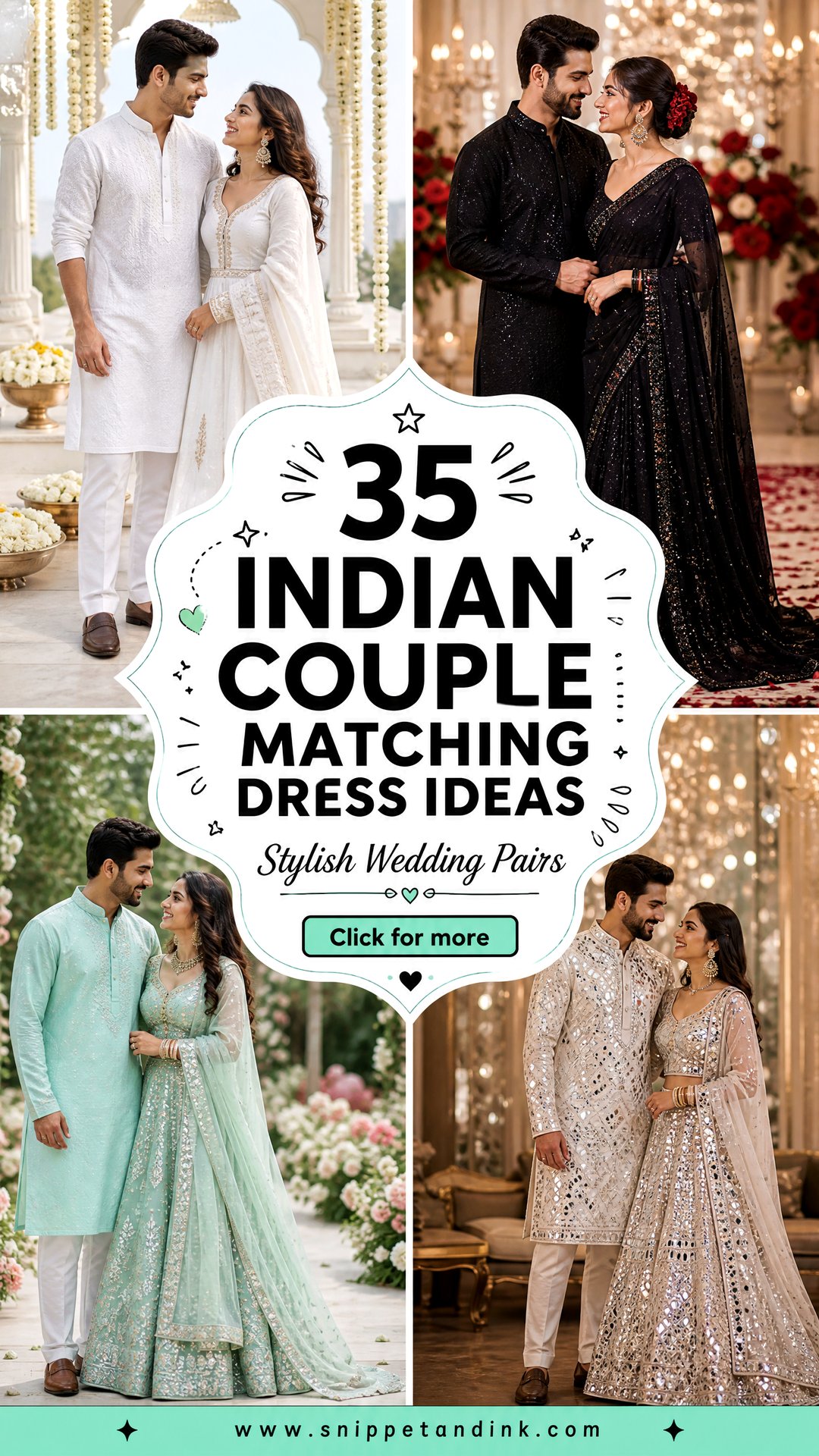
Most couples who come to me want to look like a pair without looking like a uniform. Head-to-toe identical color rarely gets them there. What works is a shared thread: the same embroidery on her blouse and his jacket, a stole cut from her dupatta’s border, or two shades that sit next to each other on the color wheel. I dress the groom to the bride’s outfit, so below each pairing you’ll find what she wears, what he wears, and how I’d keep the two balanced, from engagements and haldi to the wedding and reception.
Her Outfit First, Then His: How I Sequence a Couple’s Shopping
Bridal wear takes longer to make and has more decisions in it, so I always finalize her outfit before we commit to his. Once her lehenga or saree is ordered, ask the designer for a small swatch of the main fabric and the border. That swatch goes with the groom to every fitting.
Dyed silks rarely match exactly between two workshops. Two maroons that look identical in a shop can be clearly different under the warm lights of a reception hall. I compare swatches in daylight, under warm bulbs and with a phone flash before signing off. If a true match isn’t possible, I’d move the groom one shade lighter or deeper on purpose rather than land a near miss.
- Order her outfit first and get a fabric swatch and border sample
- Choose his color and fabric from the swatch, not from photos on a screen
- Ask her designer whether spare border or fabric can be supplied for his stole or jacket
- Book his final fitting within a week of hers, so both are checked together
1. Red Lehenga And Red Sherwani
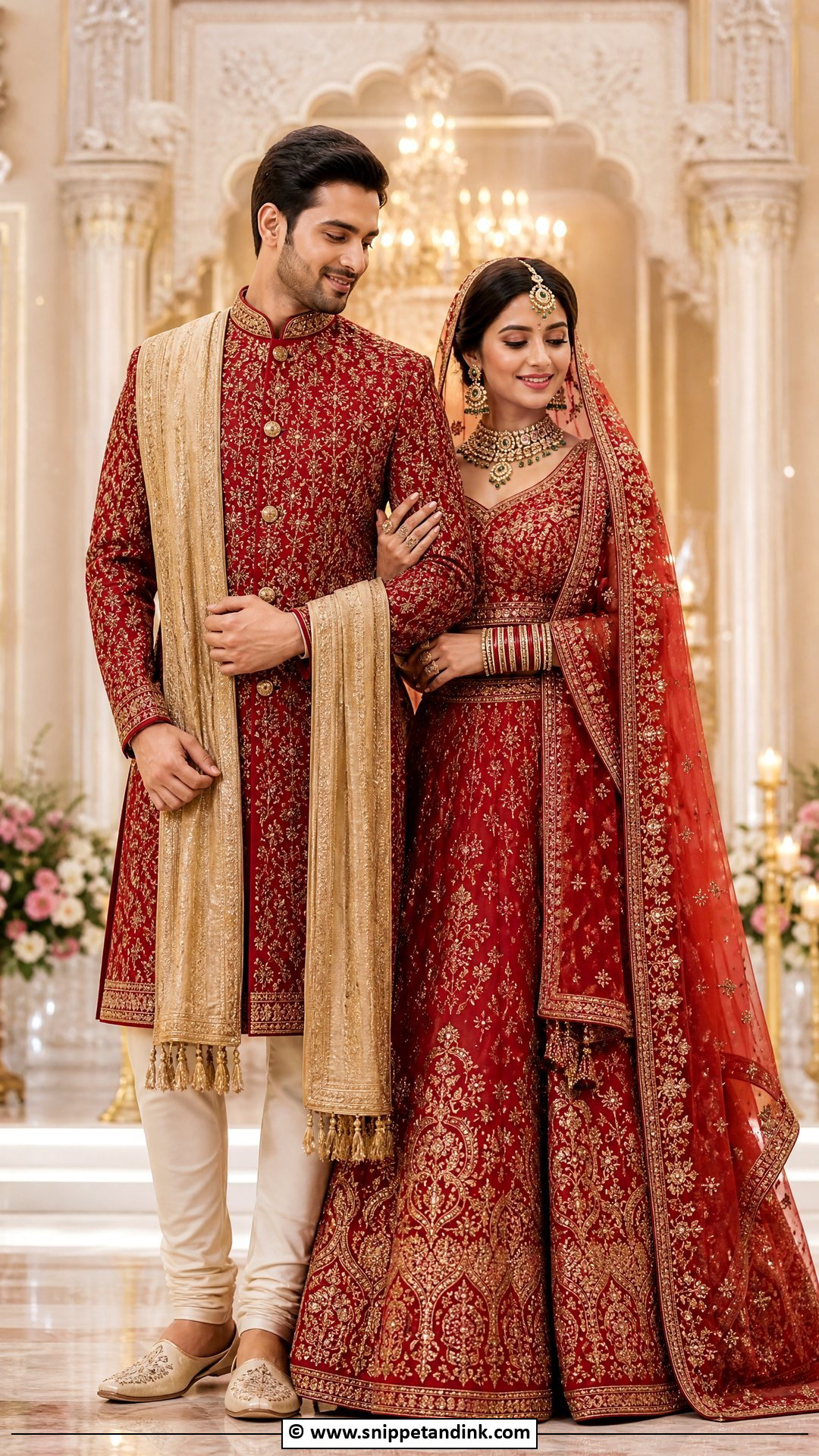
Red on red is the most traditional pairing and the easiest to get wrong. If her lehenga carries dense zardozi and his sherwani does too, the photos read as one solid block of red. I keep the groom’s embroidery lighter and let a cream churidar and gold stole break up his silhouette. Her red silk or velvet with a matching dupatta, statement earrings and bangles, his sherwani and mojaris, gold accessories on both: that’s the ceremony look families tend to love most.
2. Ivory Lehenga And Ivory Sherwani
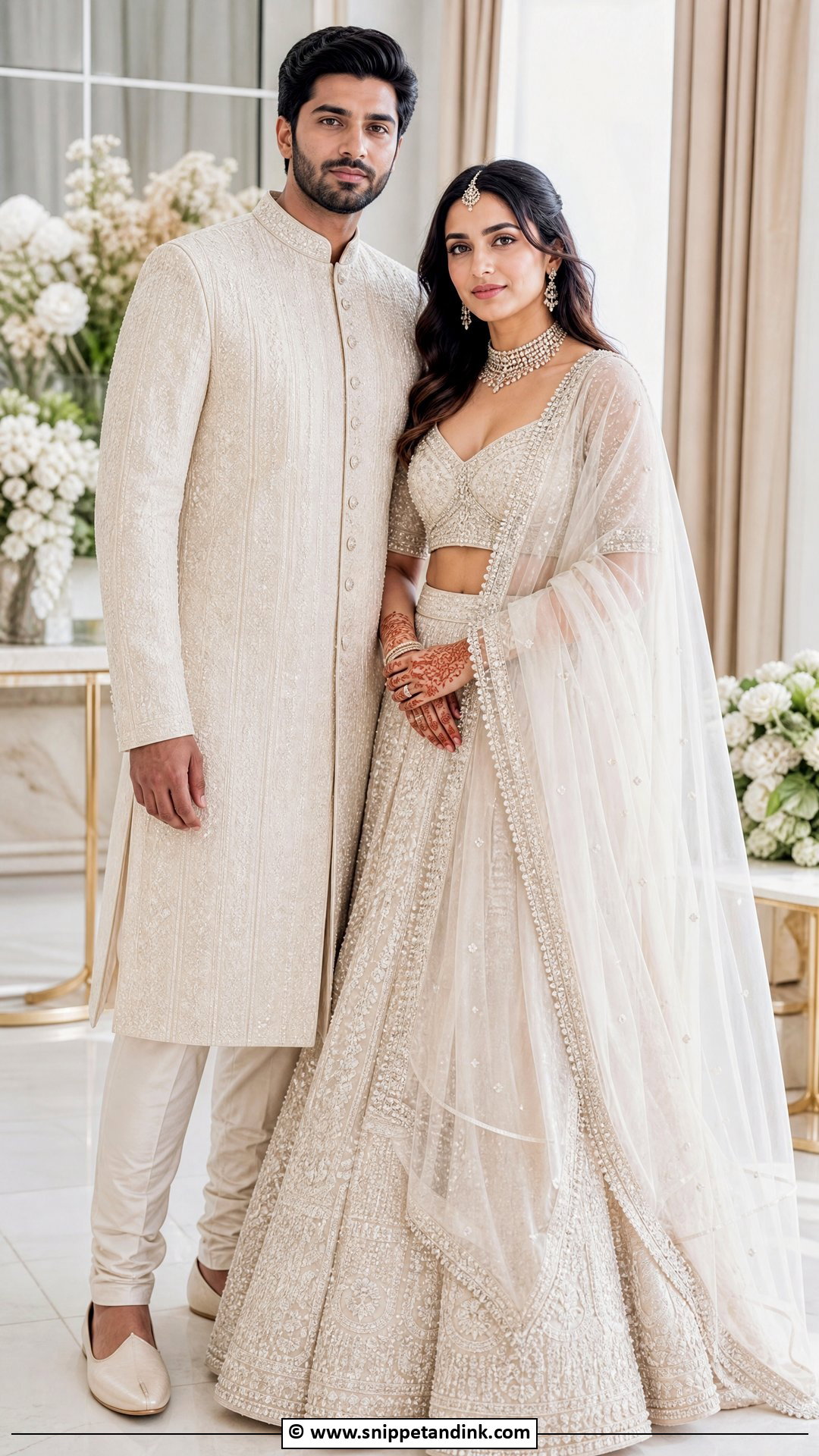
Ivory on ivory works only when the textures differ. Two flat ivory fabrics look like one pale shape in daylight. I’d put her in organza or silk with pearl, sequin or thread detail and a sheer dupatta, and him in jacquard or brocade with tonal embroidery and tan or ivory mojaris. A touch of gold, champagne or pastel pink in jewelry and pocket squares adds depth. It suits a daytime ceremony, an engagement or reception portraits in soft light.
3. Pastel Pink Lehenga And Pink Kurta
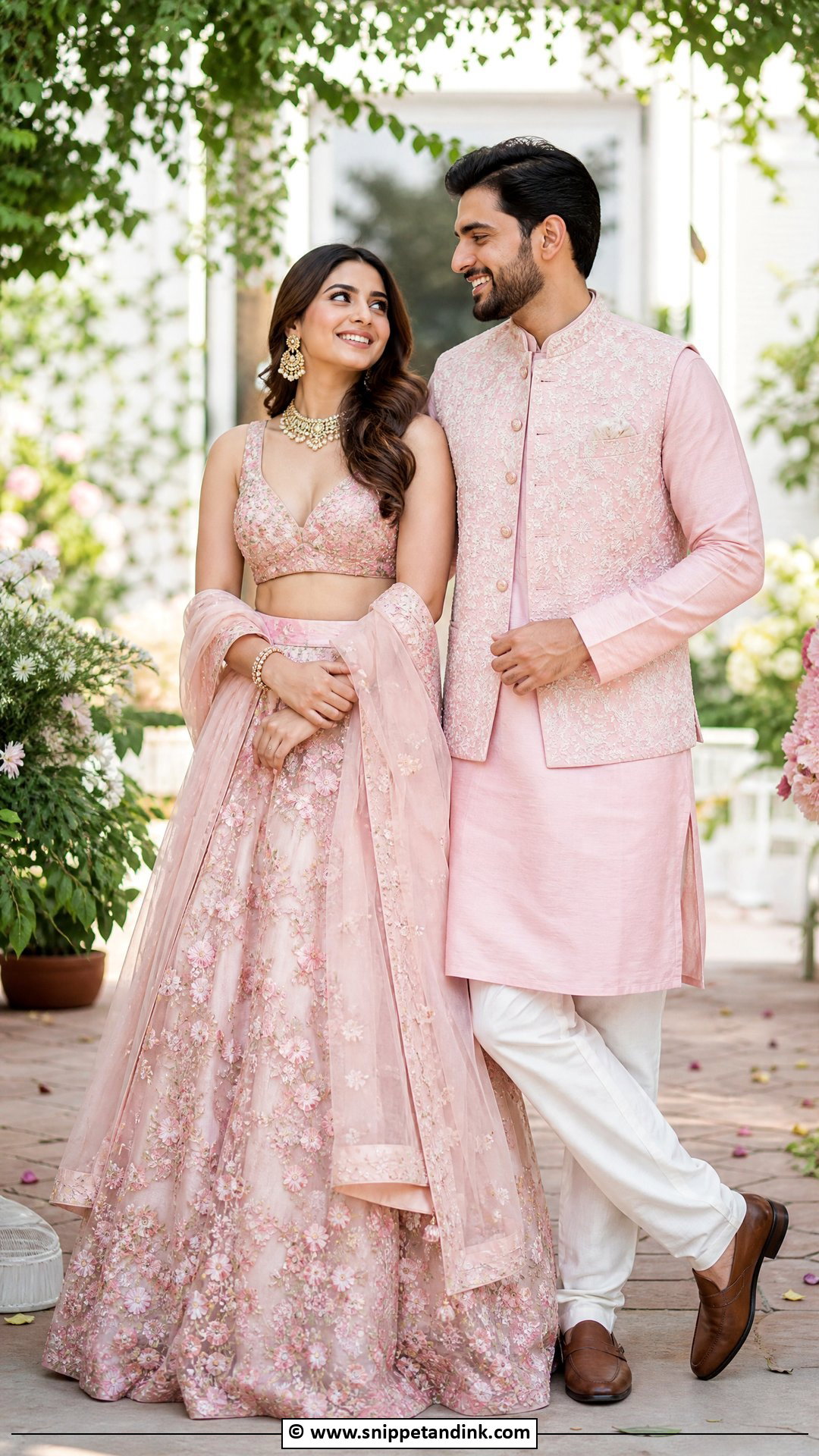
When both partners wear the same pink, I change the fabric rather than the shade. Her blush lehenga in organza with floral embroidery and a light dupatta; his kurta in cotton silk with a white pajama and an embroidered Nehru jacket. The different surfaces catch light differently, so the outfits relate without merging. Tan juttis on him and block heels on her keep both comfortable for a roka, a mehendi or a family brunch. Small gold details make it festive.
4. Yellow Haldi Couple Dress
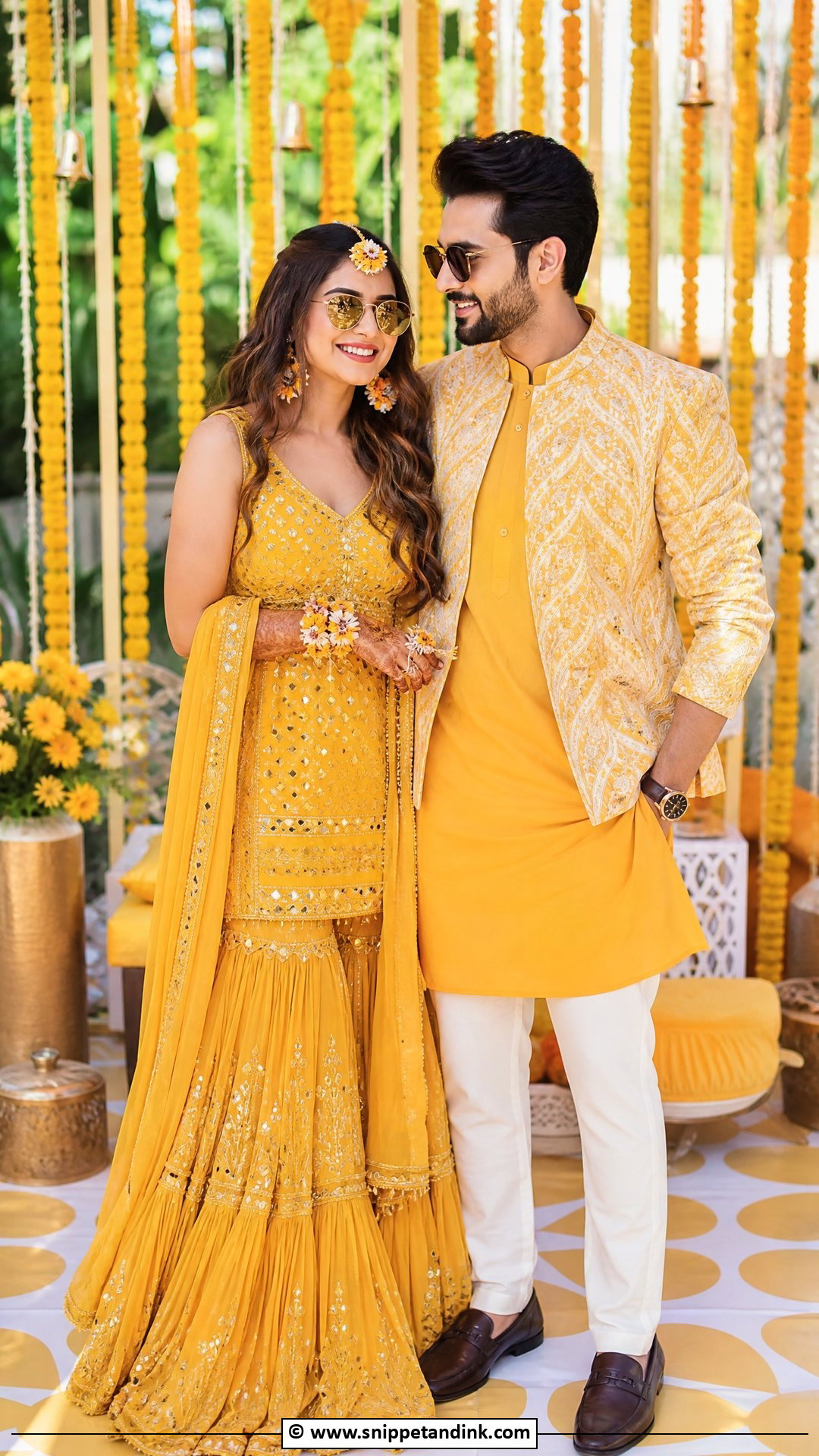
Turmeric paste stains silk permanently, so I’d never dress a groom in anything precious for this one. A yellow Haldi couple dress pairing works best in cotton, linen or a cheap light silk: a sharara, lehenga or anarkali with mirror work for her, a yellow kurta with a white pajama and a printed jacket for him. White, green and orange accents look cheerful. Leave the expensive juttis at home and wear flats you won’t mind ruining.
5. Green Mehendi Couple Outfit
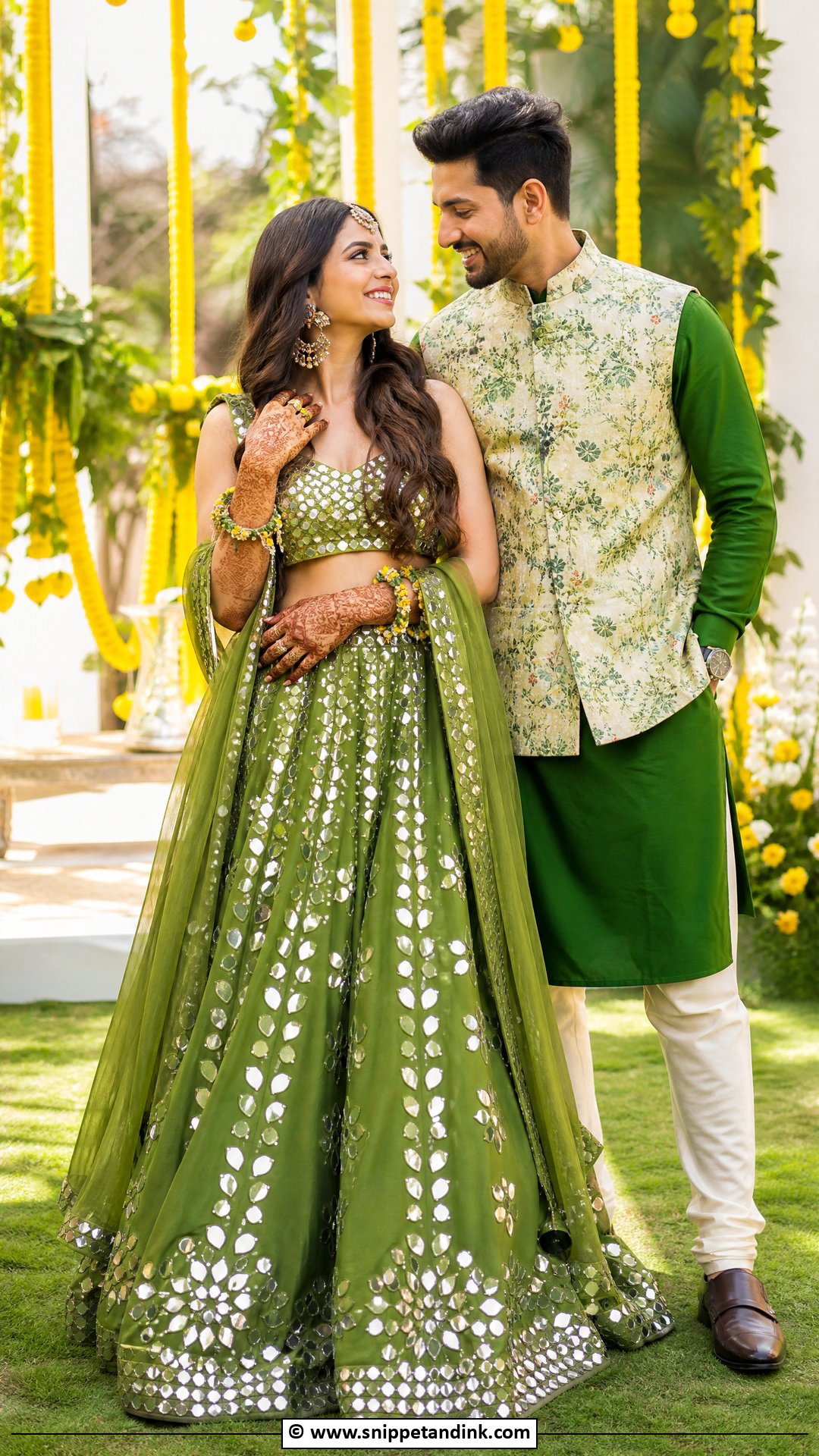
Her hands will be wet with henna for hours, so a green Mehendi couple outfit needs to let her sit without fussing. A green lehenga, sharara or anarkali with mirror work, gota patti or floral embroidery is ideal. For him, a green kurta and cream pajama with a printed Nehru jacket in her exact shade connects the two. Emerald on her, a jacket that picks it up on him, oxidized jewelry, juttis and a potli bag complete it for garden events and family dancing.
6. Royal Blue Saree And Blue Bandhgala
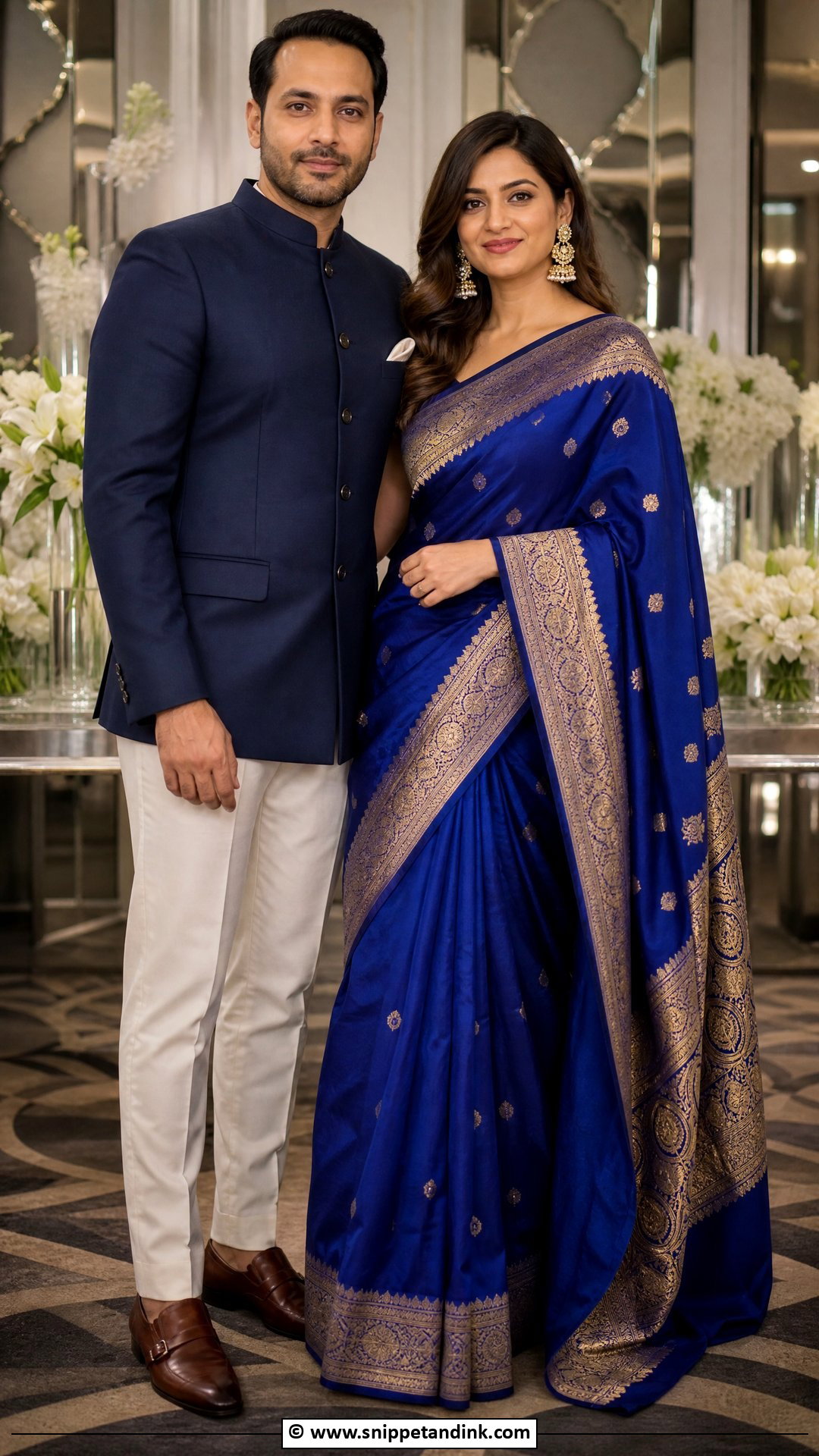
Royal blue is a color men often feel more comfortable in than red, and it photographs richly at night. Her royal blue silk saree with a gold border, traditional jewelry and a sleek bun; his matching bandhgala with black or cream trousers and formal ethnic shoes. I always make the finishes different: shiny silk on her, matte wool-blend or suiting fabric on him, with subtle buttons. Gold, antique silver or pearls for both, and it’s ready for a reception or formal dinner.
7. Maroon Lehenga And Maroon Sherwani
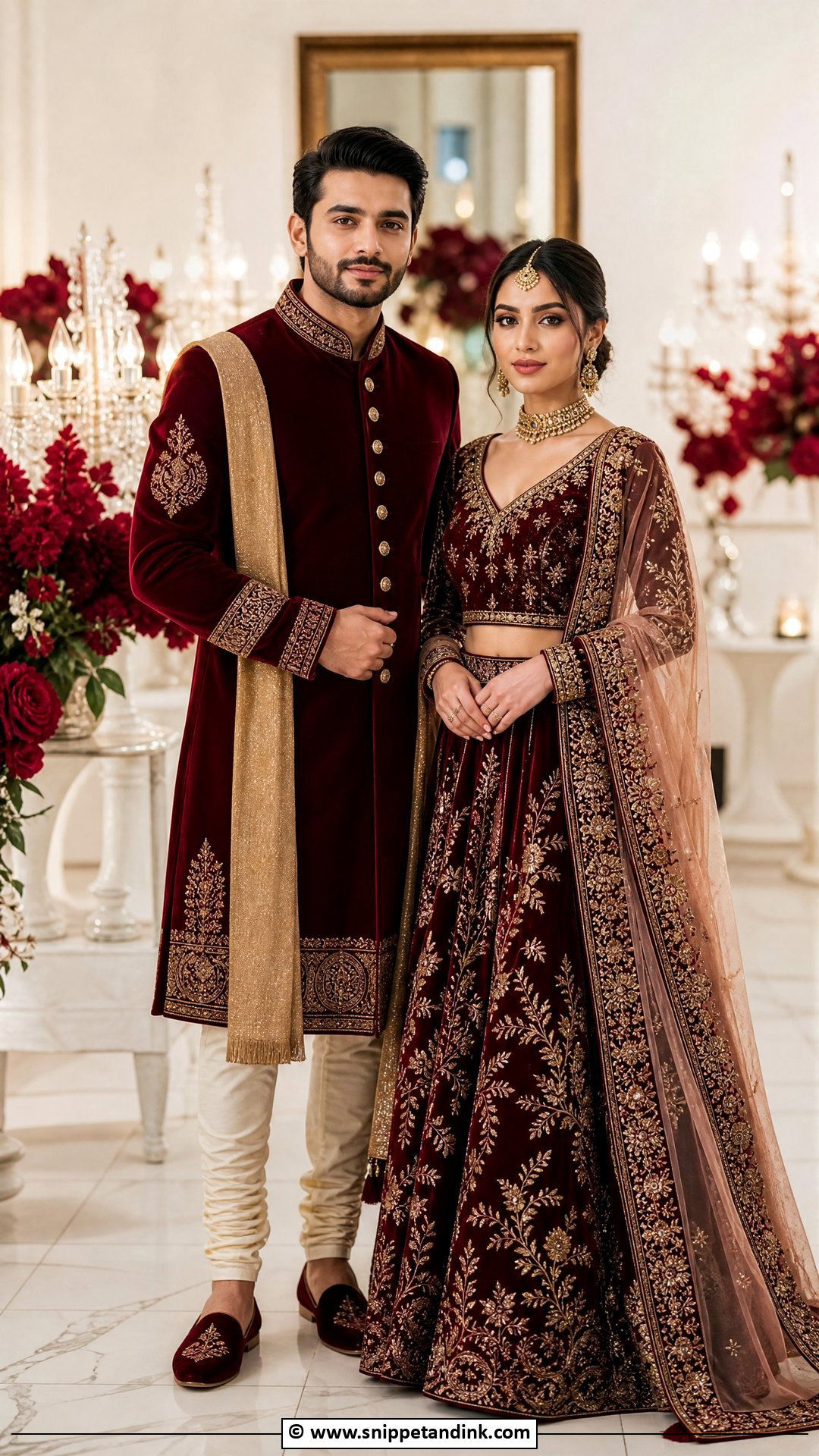
Maroon is warm and forgiving, and it suits a wide range of skin tones on both partners. Her maroon velvet or silk with zari, matching dupatta and layered necklace; his maroon sherwani with a cream churidar, matching stole and mojaris. Cream, gold or antique bronze as supporting tones keeps it from feeling heavy. Velvet in a heated hall is hot work, so for him I’d often suggest raw silk instead, which holds the same depth of color with far less weight.
8. White Kurta And White Anarkali
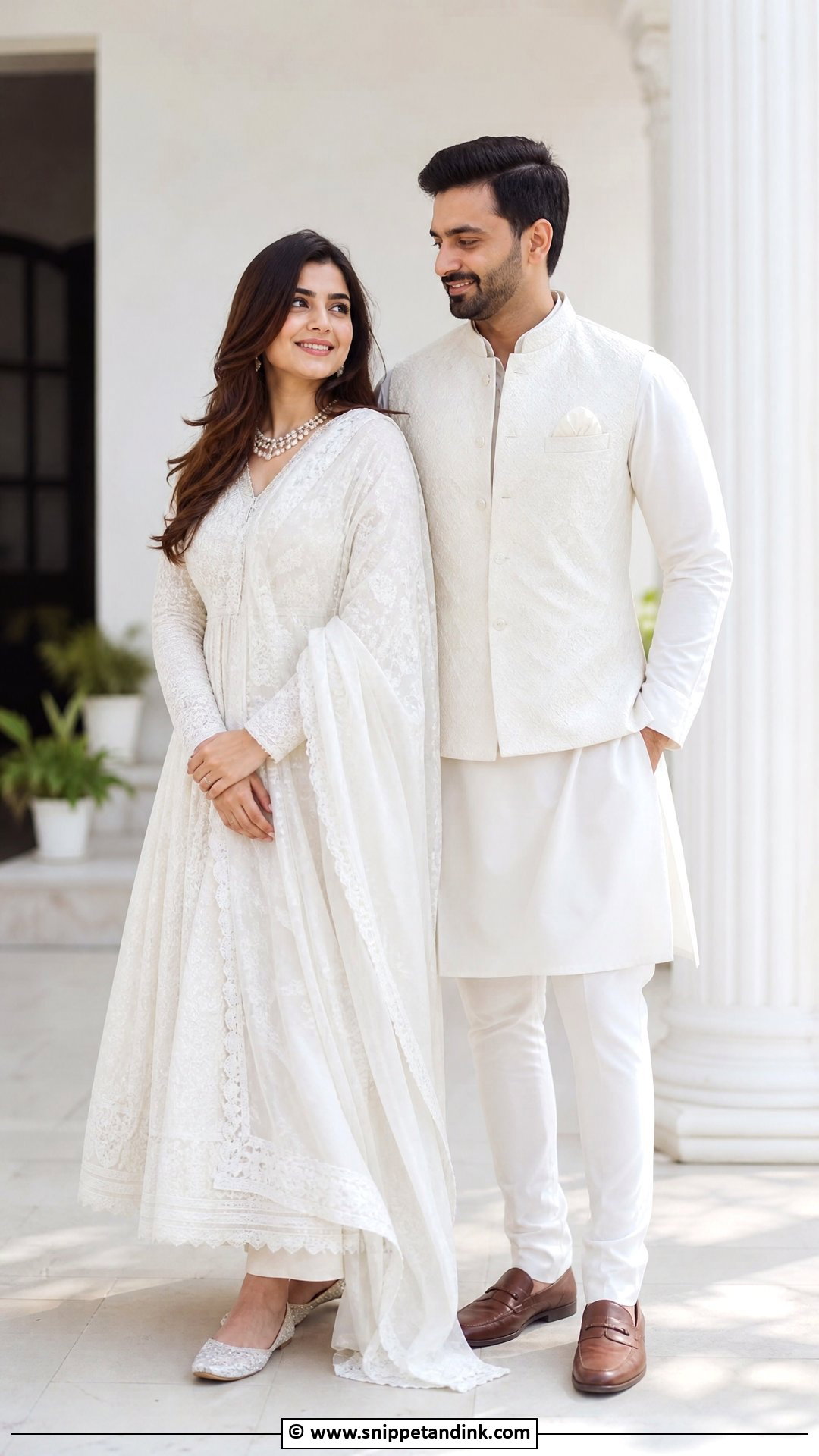
All-white is serene, but it shows every crease and every under-tailored seam. Her white anarkali with chikankari, silver embroidery or light mirror work, jhumkas and juttis; his white kurta pajama with a subtle embroidered jacket. Get both pressed on the morning and fitted properly beforehand, since a loose kurta in white reads underdressed rather than relaxed. Pastel dupattas, silver jewelry or ivory footwear add softness for a daytime puja or summer gathering.
9. Black Saree And Black Kurta
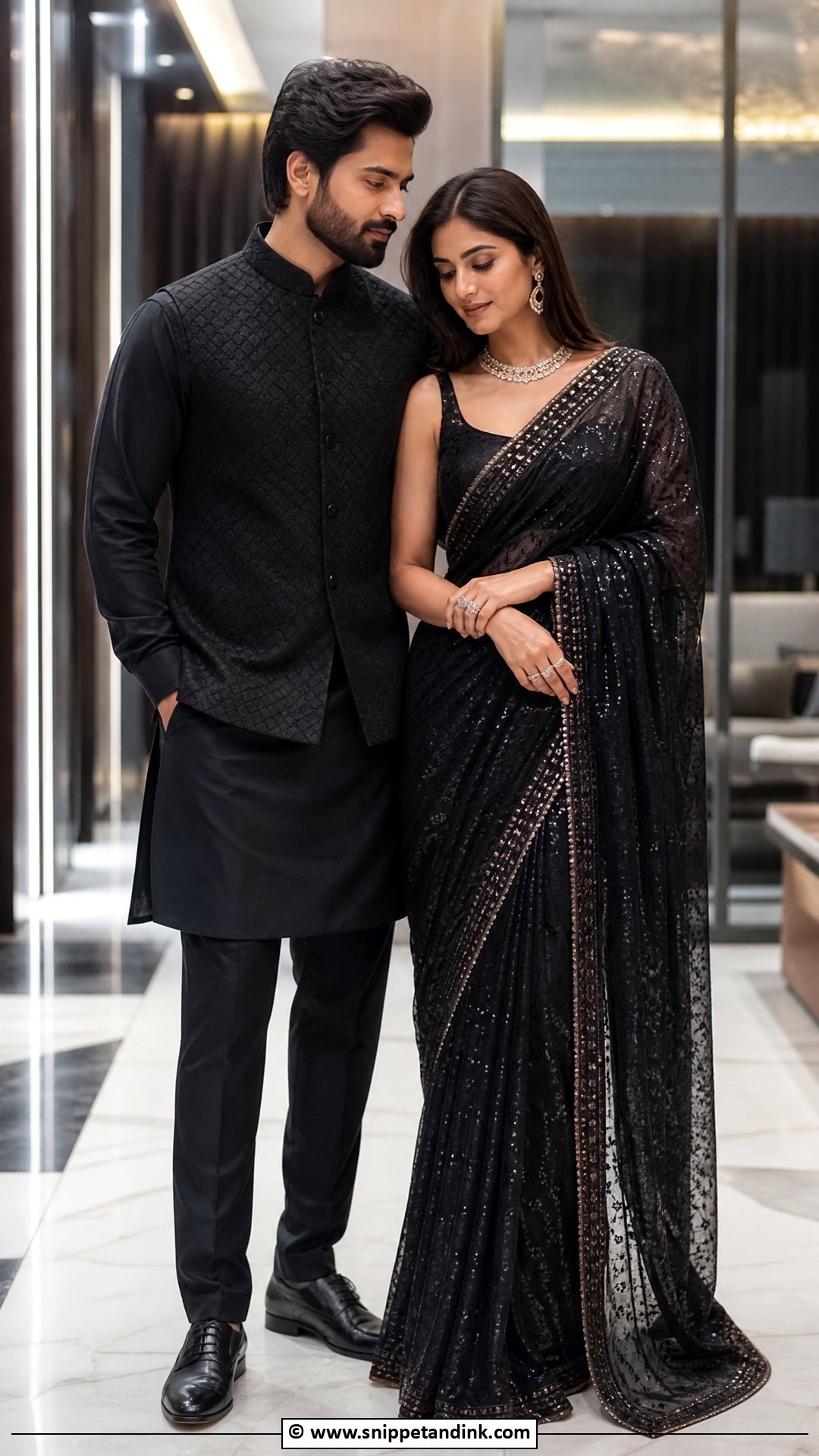
Black needs richness in the fabric to feel festive, or it reads like office wear. Silk, georgette, velvet or brocade lifts it. Her black saree with sequins, a metallic border or embroidery, statement earrings and heels; his black kurta with a matching pajama or trousers and a textured Nehru jacket. Add gold, silver or a single jewel tone, such as an emerald pocket square, to connect them. Some families avoid black at auspicious ceremonies, so I’d save it for a reception or party.
10. Gold Lehenga And Gold Sherwani
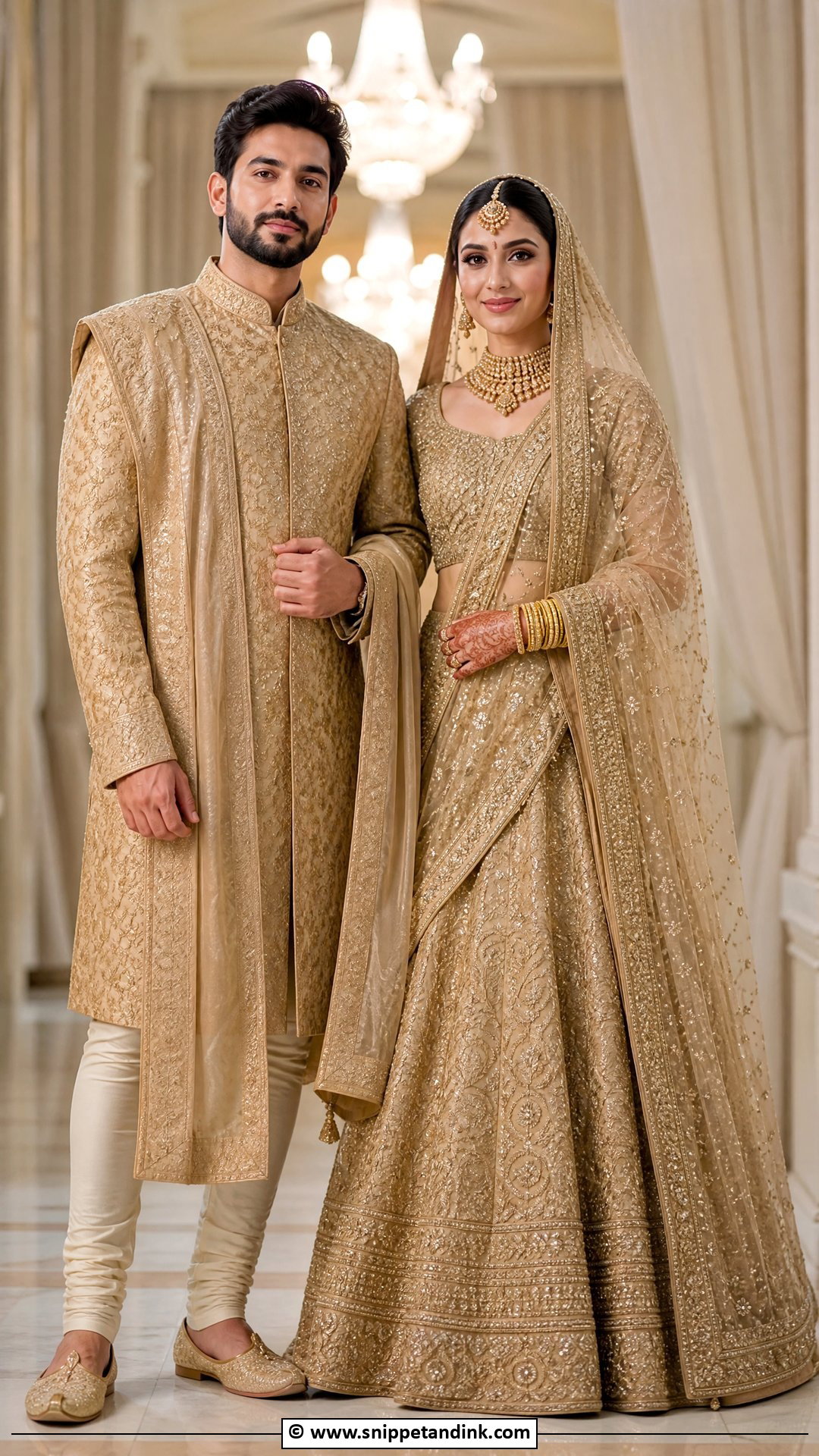
Gold on gold is grand, and the fit decides whether it looks expensive or costume. Her gold lehenga with zari, sequins or beadwork and a soft dupatta; his gold sherwani with a cream churidar and embroidered mojaris. Keep silhouettes clean and skip extra colors; champagne, ivory or beige accents are enough. A shiny polyester gold flares under flash, so look for brocade or tissue with a soft sheen instead.
11. Peach Lehenga And Peach Kurta
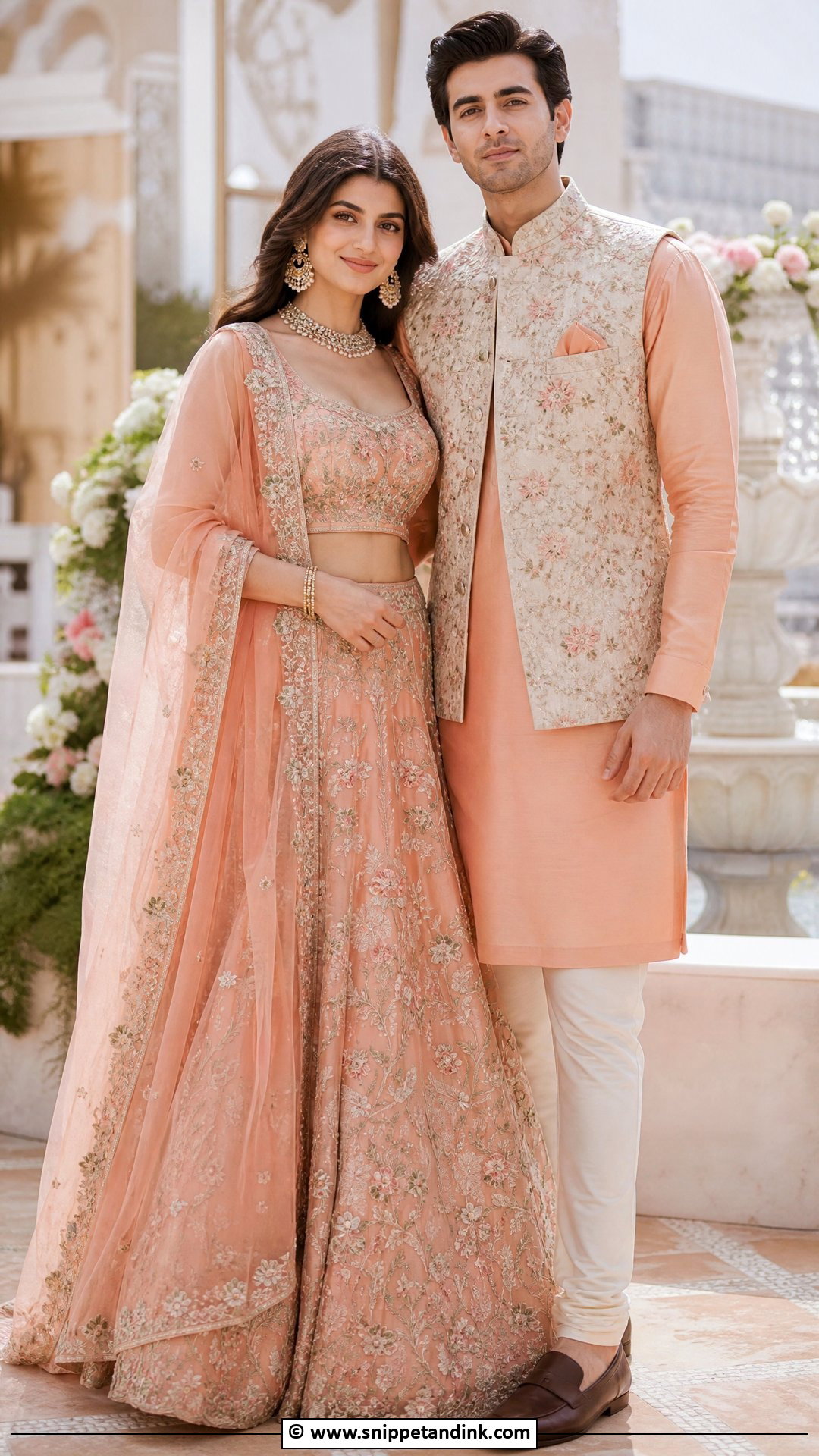
Peach is a kind color on camera because it warms the skin without overpowering it. Her peach lehenga with floral embroidery, pearls or delicate mirror work; his peach kurta with an ivory pajama and a beige or floral Nehru jacket. Gold, mint, ivory and soft pink all pair well. Light accessories suit it: pearl earrings, a pastel potli, tan juttis. I’d put this pairing on the shortlist for any summer engagement or intimate daytime function.
12. Lavender Lehenga And Lavender Kurta
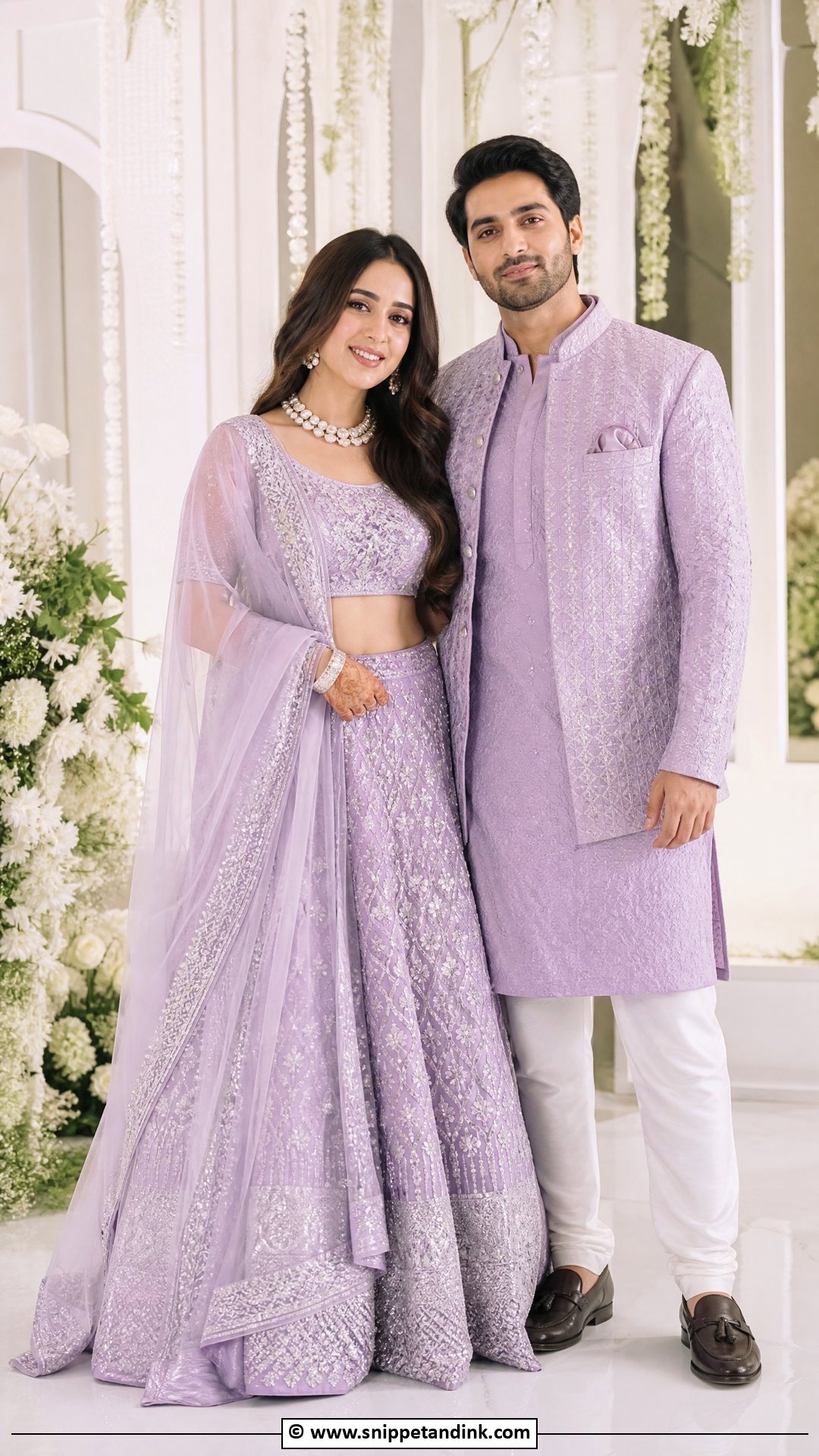
Lavender only connects the two outfits if one detail repeats. Her lavender lehenga with silver embroidery, organza layers or floral threadwork; his lavender kurta with a white pajama and a matching or slightly deeper jacket. I’d repeat the silver buttons, the floral motif, or the trim on her dupatta and his stole. Silver jewelry, pearls and white footwear keep the palette clean for an engagement party, a spring event or a daytime reception.
13. Emerald Green Saree And Green Sherwani
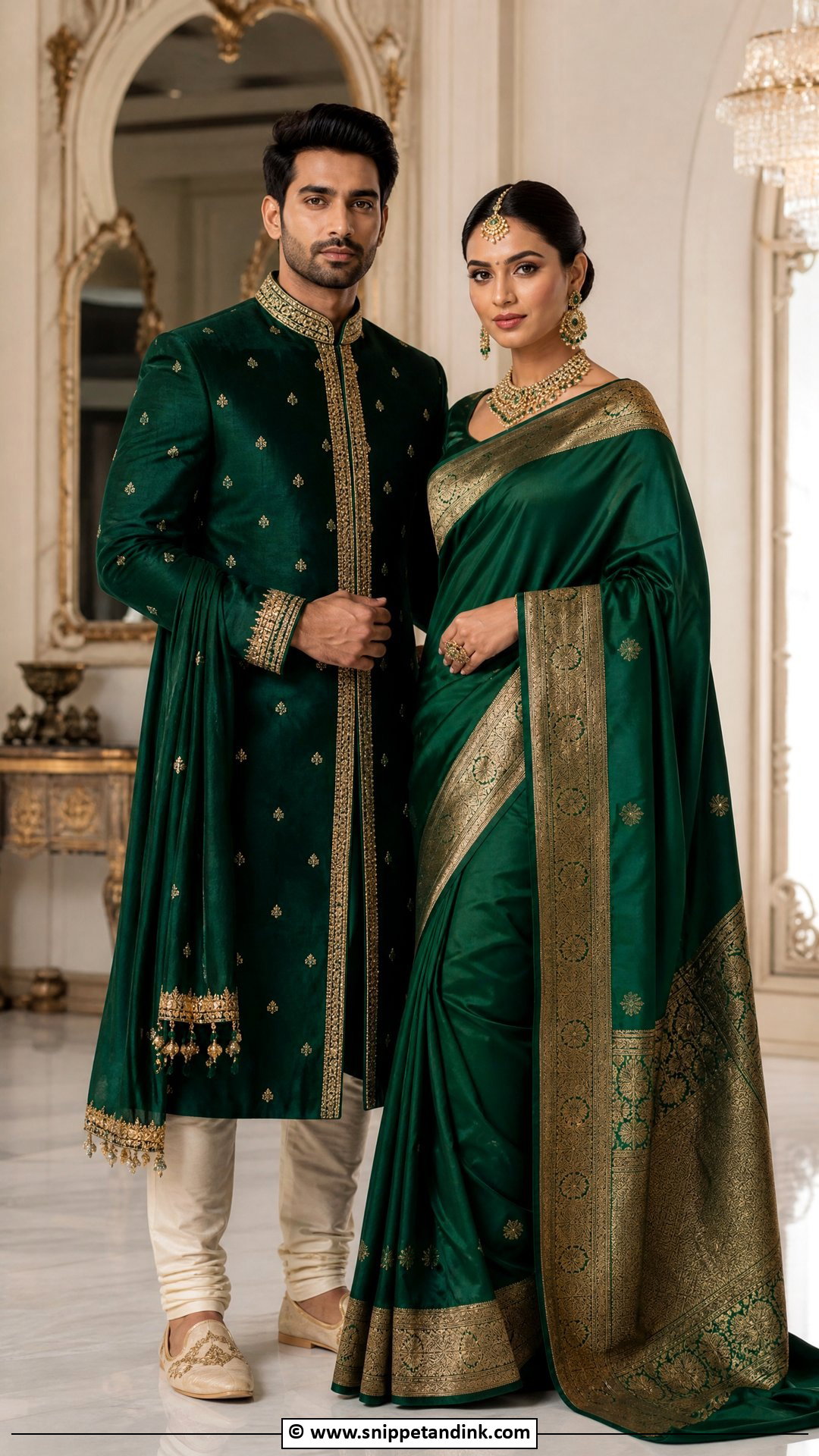
Emerald looks royal next to gold and grounds a couple well in photos. Her emerald silk or satin saree with a gold border and temple or kundan jewelry; his emerald sherwani, or a green embroidered jacket over a cream kurta for something lighter. If both wear green, contrast the textures: fluid and glossy on her, structured and matte on him. Cream keeps the strong shade in check. It fits a reception, a wedding ceremony or a formal family event.
14. Navy Blue Lehenga And Navy Kurta
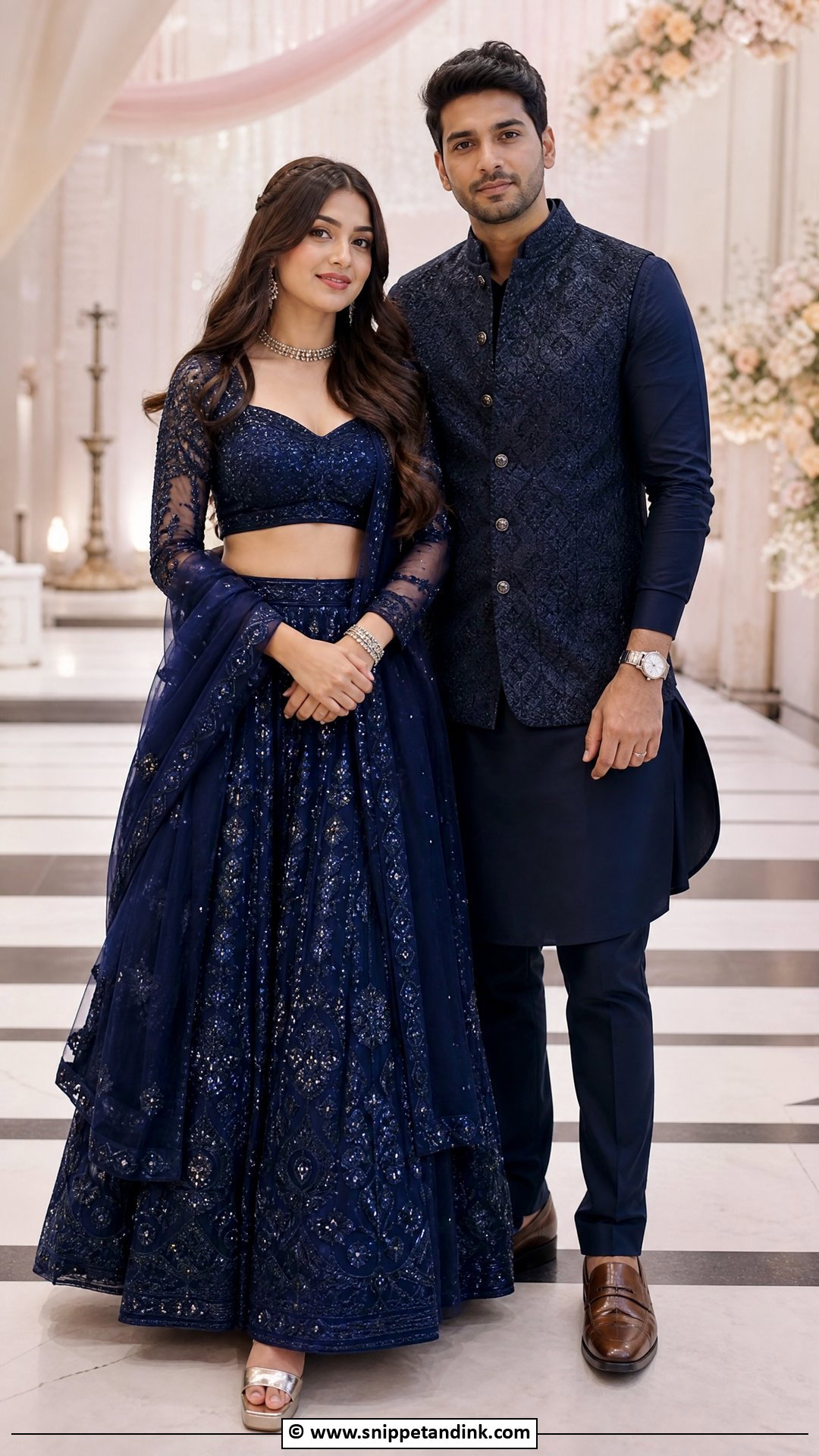
Navy suits grooms who prefer understatement, and it’s one of the few colors that looks equally right with silver and gold. Her navy lehenga with silver, gold or sequin work, a dupatta and metallic heels; his navy kurta pajama with a brocade Nehru jacket or embroidered stole. Choose silver for a cooler, modern look, gold for a warmer traditional one, and make sure both partners use the same metal. It works for a sangeet or an evening dinner.
15. Orange Lehenga And Orange Kurta
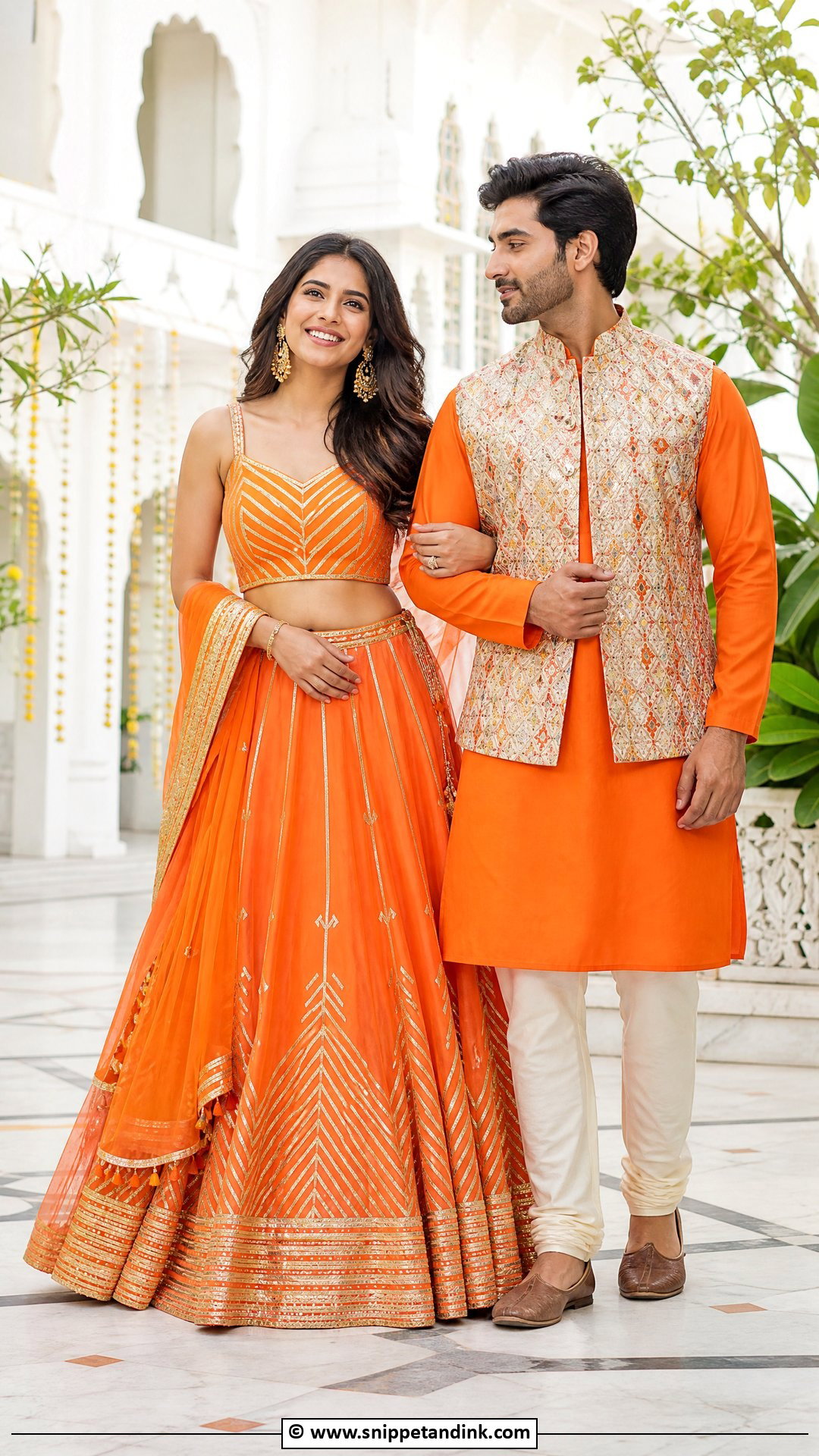
Orange is joyful in daylight and can tip into loud quickly, so I nearly always break it up on the groom. Her orange lehenga with gota patti, mirror work or floral embroidery; his orange kurta with a cream pajama and a printed jacket carrying orange accents. Ivory, beige, mustard or soft gold calm it down. Floral jewelry, juttis, bangles and a potli suit a haldi, mehendi or garden celebration.
16. Beige Saree And Beige Bandhgala
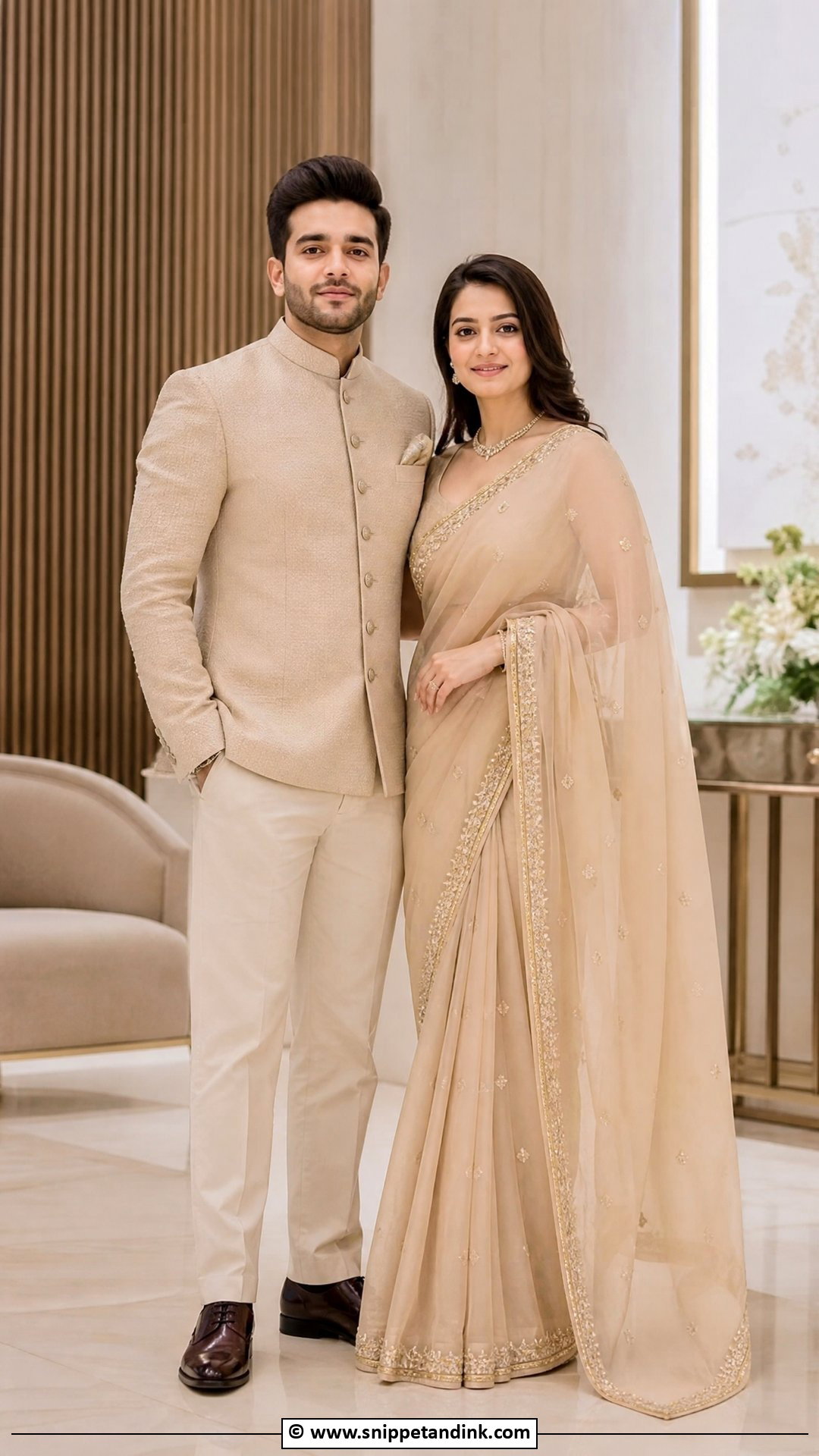
Beige is quiet luxury, and quiet fabrics need texture to hold interest. Her beige silk, tissue or organza saree with gold details and delicate jewelry; his beige bandhgala with cream trousers and polished ethnic shoes. Brocade, jacquard, pearls and metallic thread add depth. I usually add one deeper accent to tie them together, such as emerald jewelry on her and a brown or emerald pocket square on him. It suits an engagement party or a formal reception.
17. Mint Green Lehenga And Mint Kurta
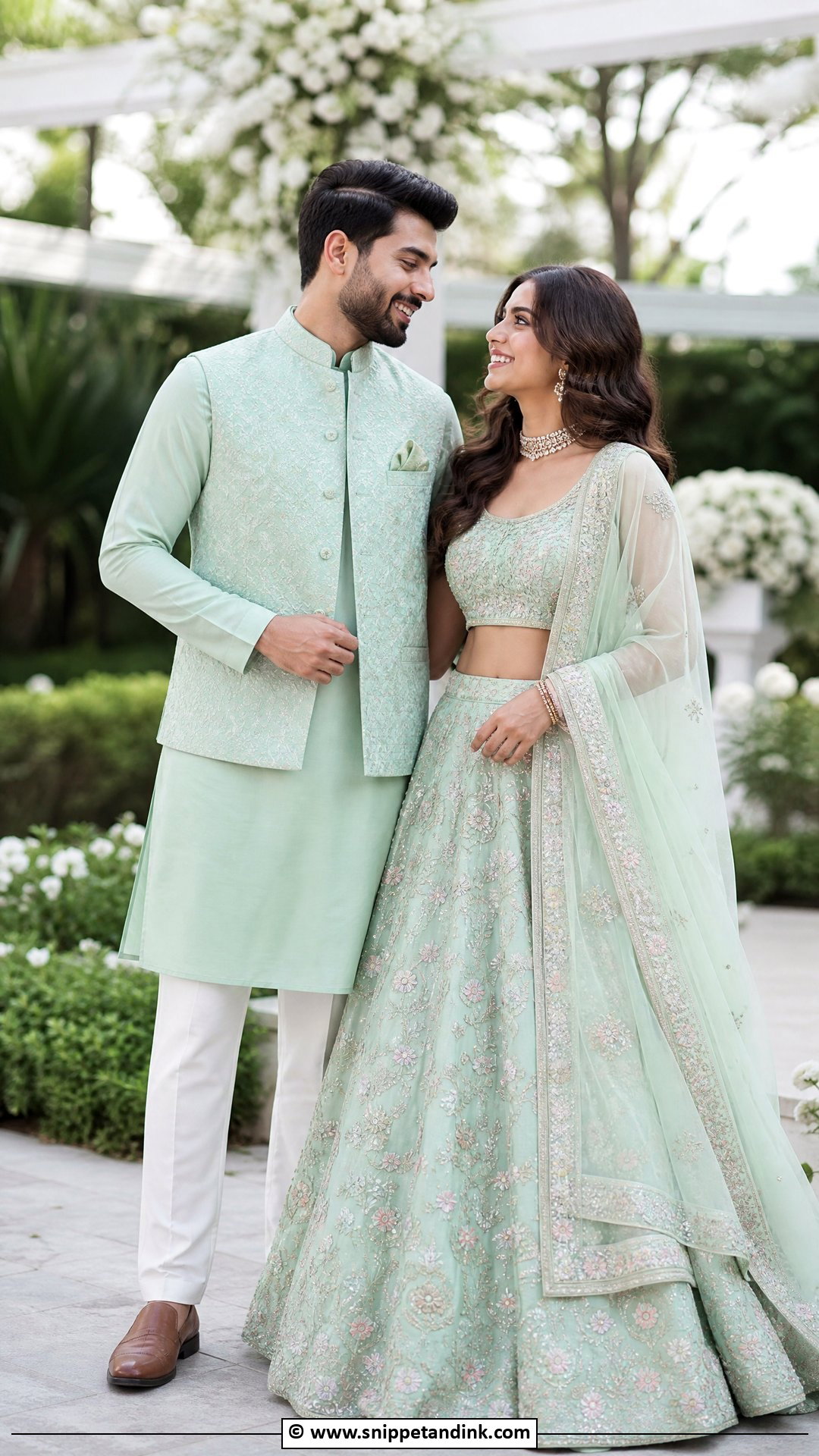
Mint is light and fresh, and it washes out easily on paler skin, so test it in daylight on both of you first. Her mint lehenga with silver embroidery, floral motifs or delicate sequins; his mint kurta with a white pajama and a coordinating Nehru jacket. Silver, pearl, white and pastel pink accessories suit it. For a closer link, I’d match his jacket embroidery to her blouse, or repeat her dupatta’s border on his stole.
18. Wine Lehenga And Wine Sherwani
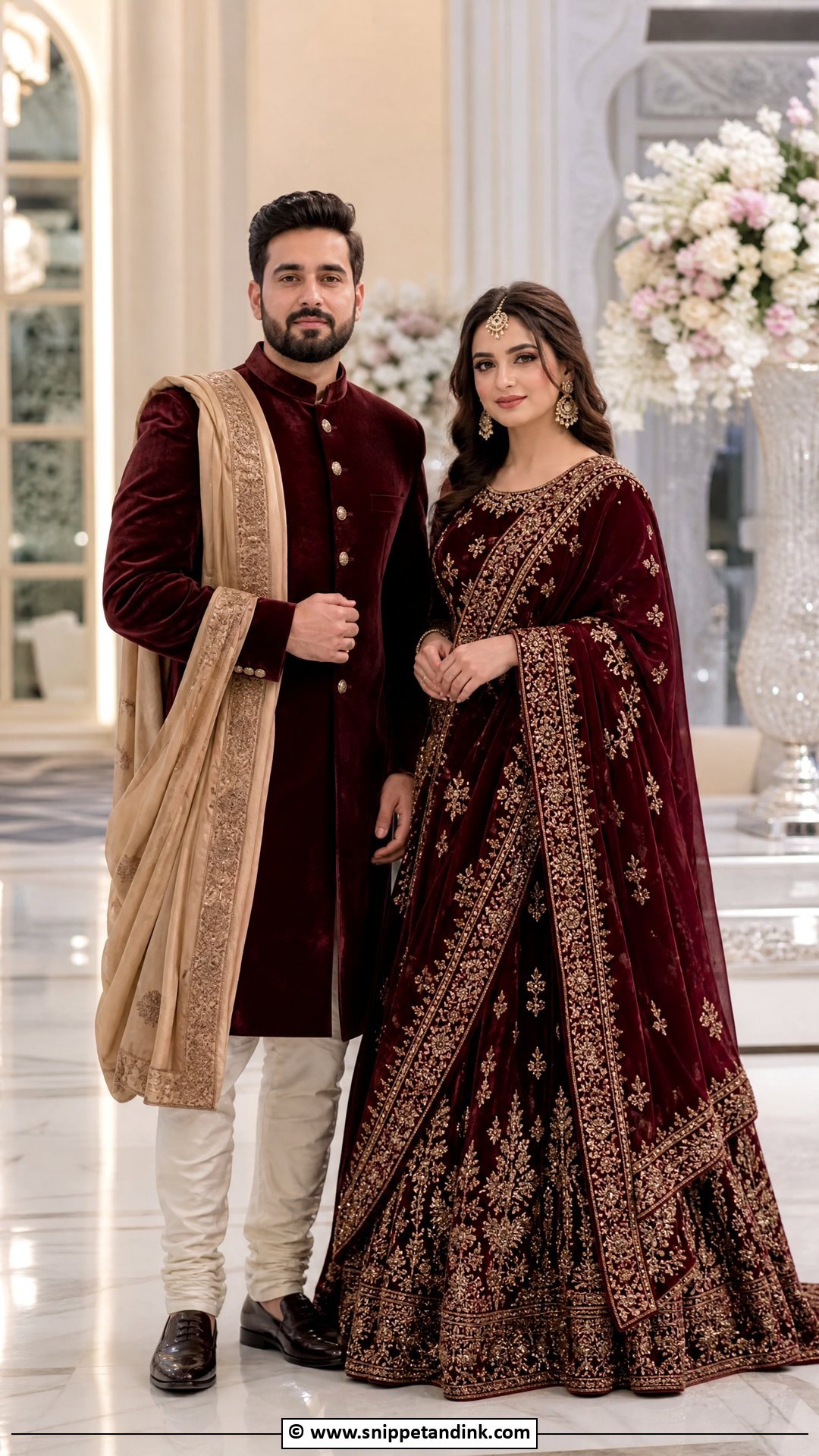
Wine and burgundy give the depth of maroon with a cooler, more modern undertone. Her burgundy lehenga in velvet with zari or subtle sequins; his burgundy sherwani with a cream churidar and a gold or beige stole. Antique gold jewelry suits the shade best. Because the color is so strong, I keep his styling refined: a structured sherwani, no extra prints and elegant footwear, so the couple reads coordinated rather than costumed at a winter wedding or reception.
19. Teal Saree And Teal Kurta
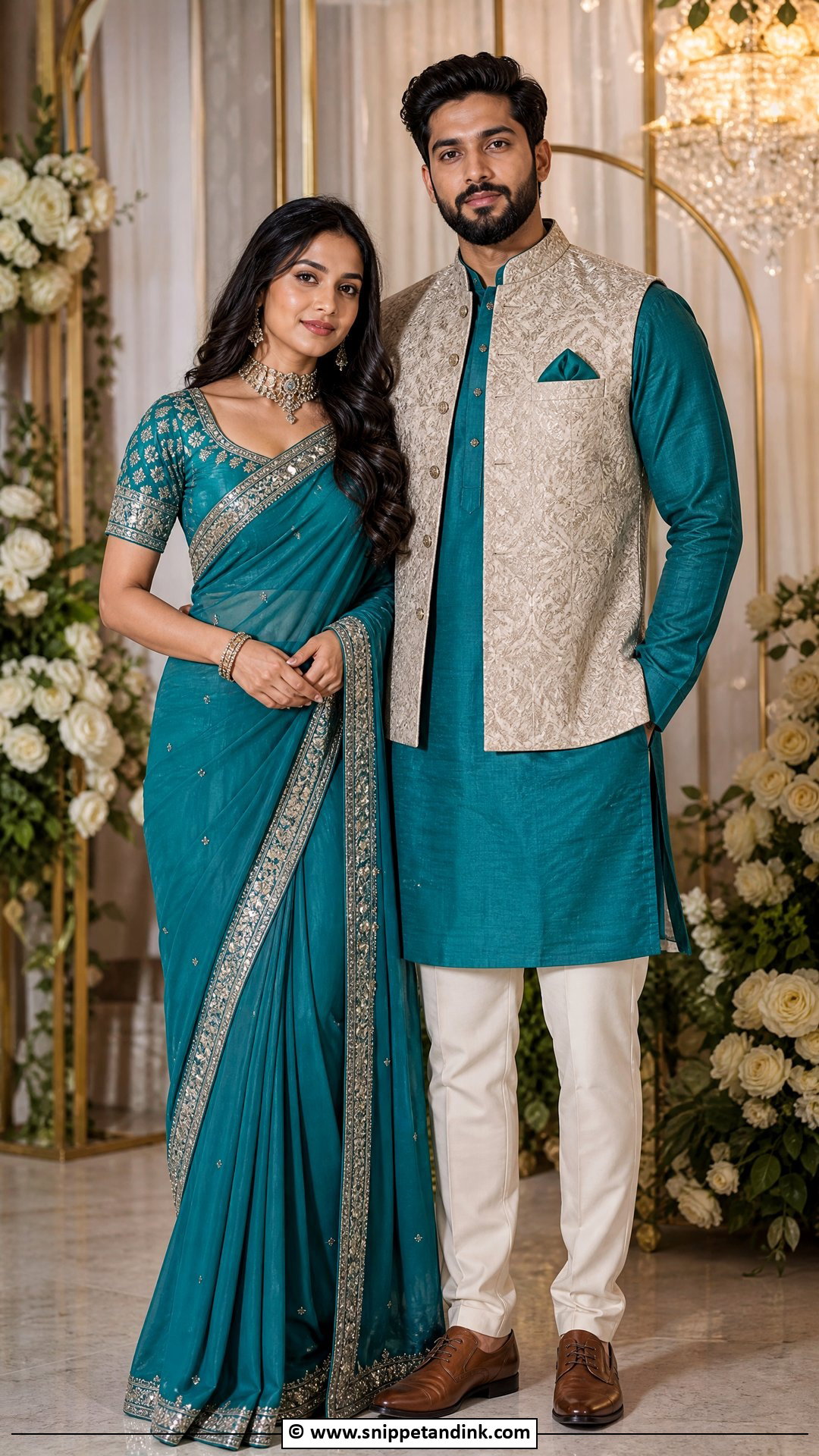
Teal sits between blue and green and is a refreshing alternative to both. Her teal silk or georgette saree with a metallic border, earrings, bangles and heels; his teal kurta with a cream pajama and a neutral embroidered jacket. Gold makes teal warm and traditional; silver keeps it modern. For a softer match, I’d keep his kurta teal and his jacket beige or ivory, so the color shows at the collar and cuffs only.

20. Mustard Yellow Saree And Mustard Kurta
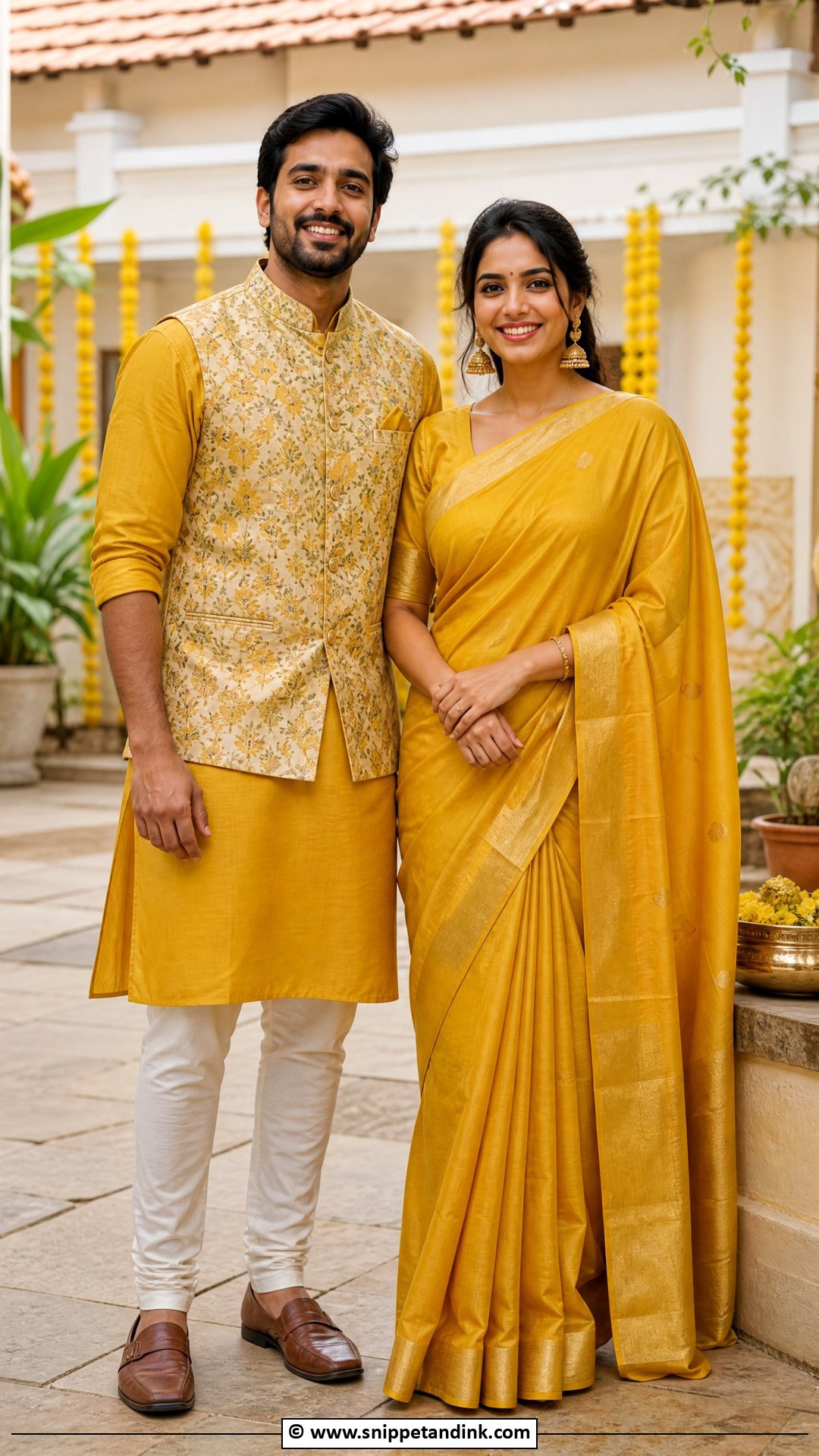
Mustard reads more grown-up than bright yellow and stays cheerful. A mustard yellow saree in silk or cotton with a gold border, jhumkas, bangles and embroidered flats pairs well with his mustard kurta, white pajama and printed Nehru jacket. Maroon, green, ivory or antique gold accents add depth. For daytime outdoor functions, choose breathable fabrics on both, because a polyester kurta in direct sun is miserable within an hour.
21. Floral Lehenga And Floral Nehru Jacket
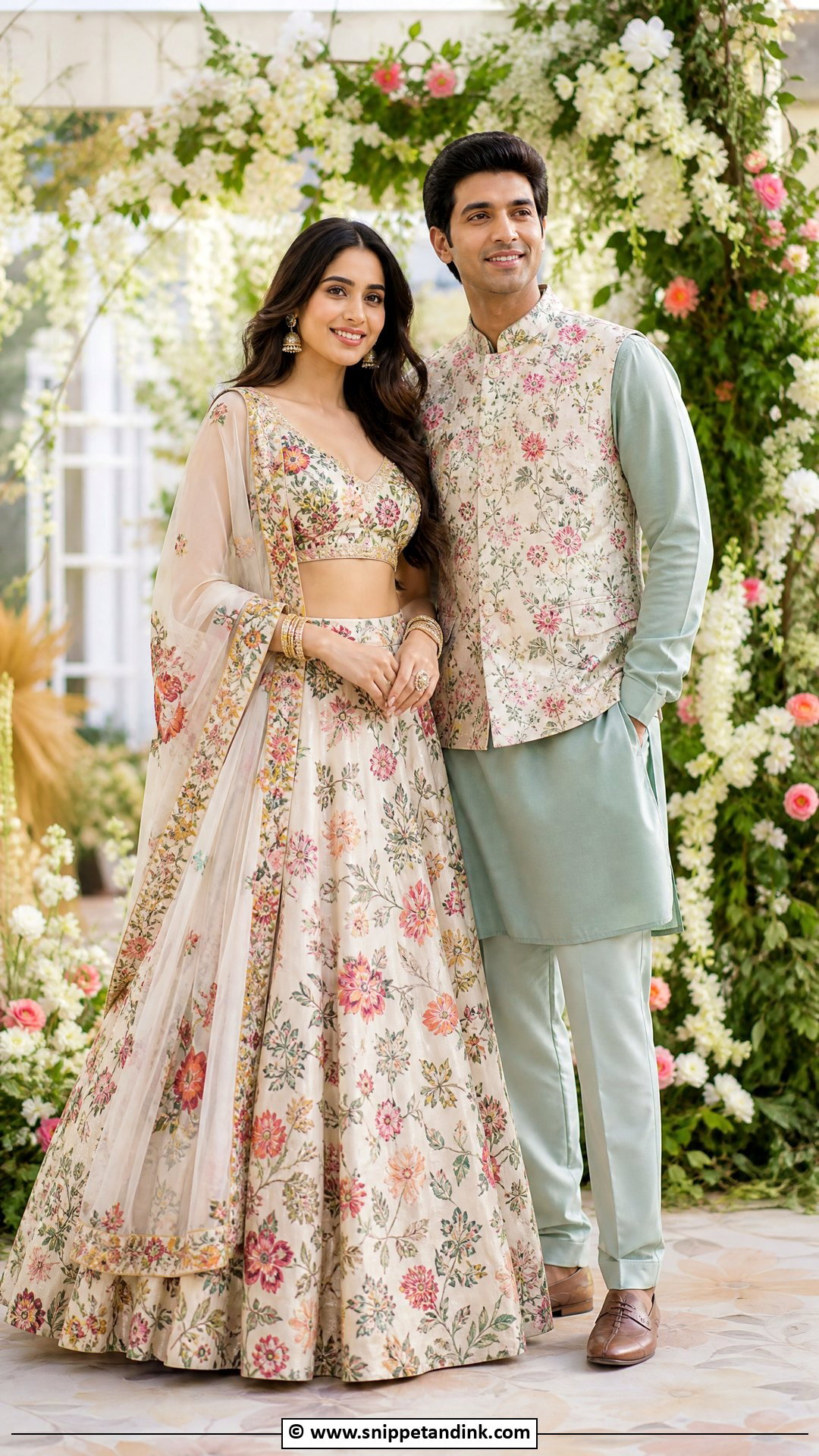
Florals work best when one partner wears them fully and the other borrows them as an accent. Her floral printed or embroidered lehenga with a simple blouse and dupatta; his solid kurta pajama with a Nehru jacket in the same print or palette. If the print is custom, ask the designer for an extra meter of her fabric to make his jacket. Pearl jewelry, juttis and a small potli keep it light for a mehendi or garden brunch.
22. Mirror Work Lehenga And Mirror Work Kurta
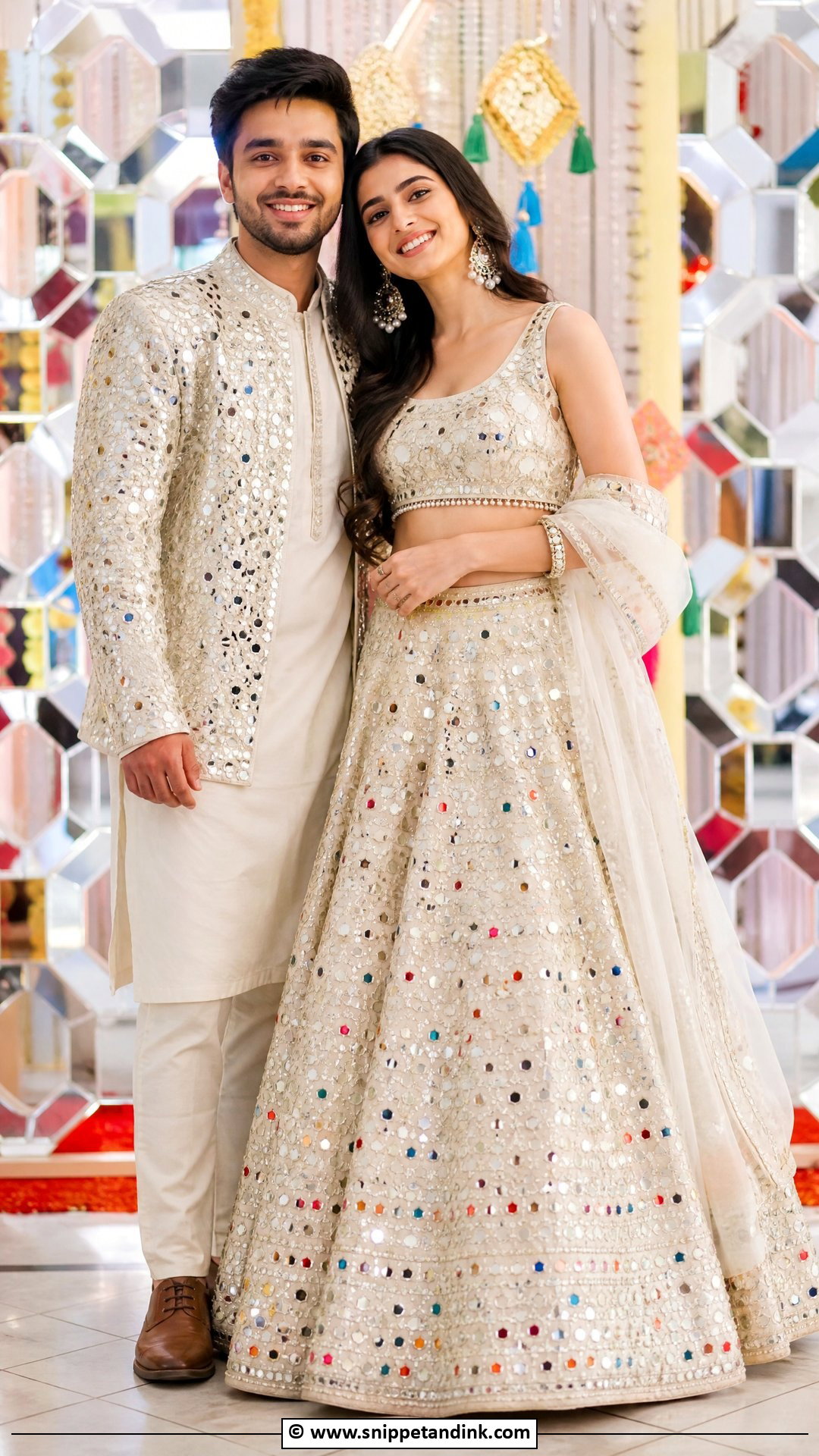
Mirror work multiplies under stage lights, so two fully mirrored outfits can be too much. Her mirror work lehenga with a matching dupatta, statement earrings and comfortable heels; his solid kurta with a jacket carrying mirror accents. Choose one base color from ivory, green, pink, blue or yellow and stick to it. Keep extra accessories to a minimum, and check that the mirrors on his jacket won’t scratch her bare arms when you dance.
23. Silk Saree And Silk Kurta
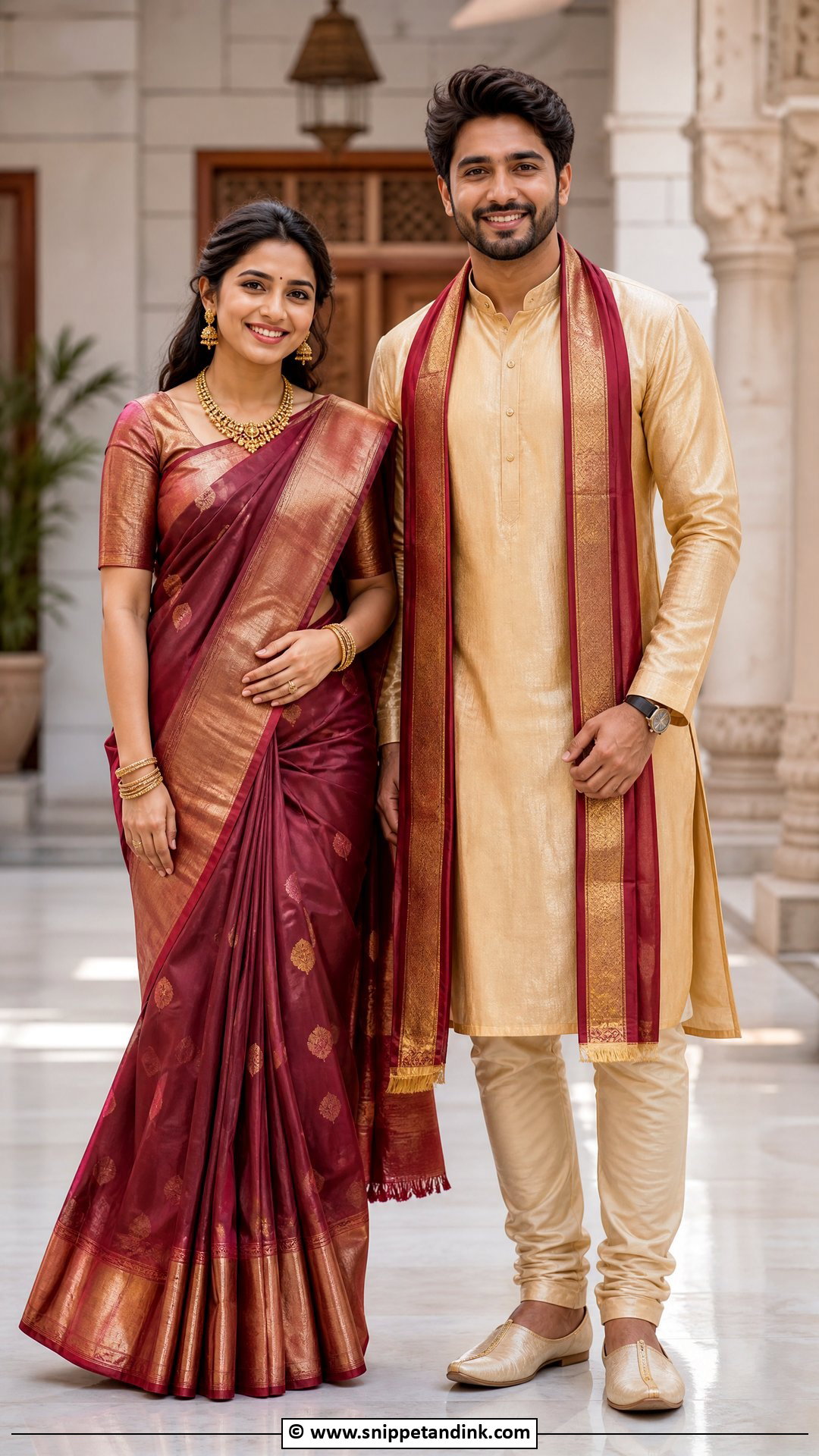
Silk on silk connects naturally, and matching borders make the link obvious. Her silk saree with a zari border, temple jewelry, bangles and elegant sandals; his silk kurta, churidar and a stole in the same or complementary color. Red, green, gold, royal blue and ivory all suit traditional ceremonies, especially South Indian ones. I’d ask the weaver whether a matching border can be supplied for his stole; many can do this if you ask early enough.
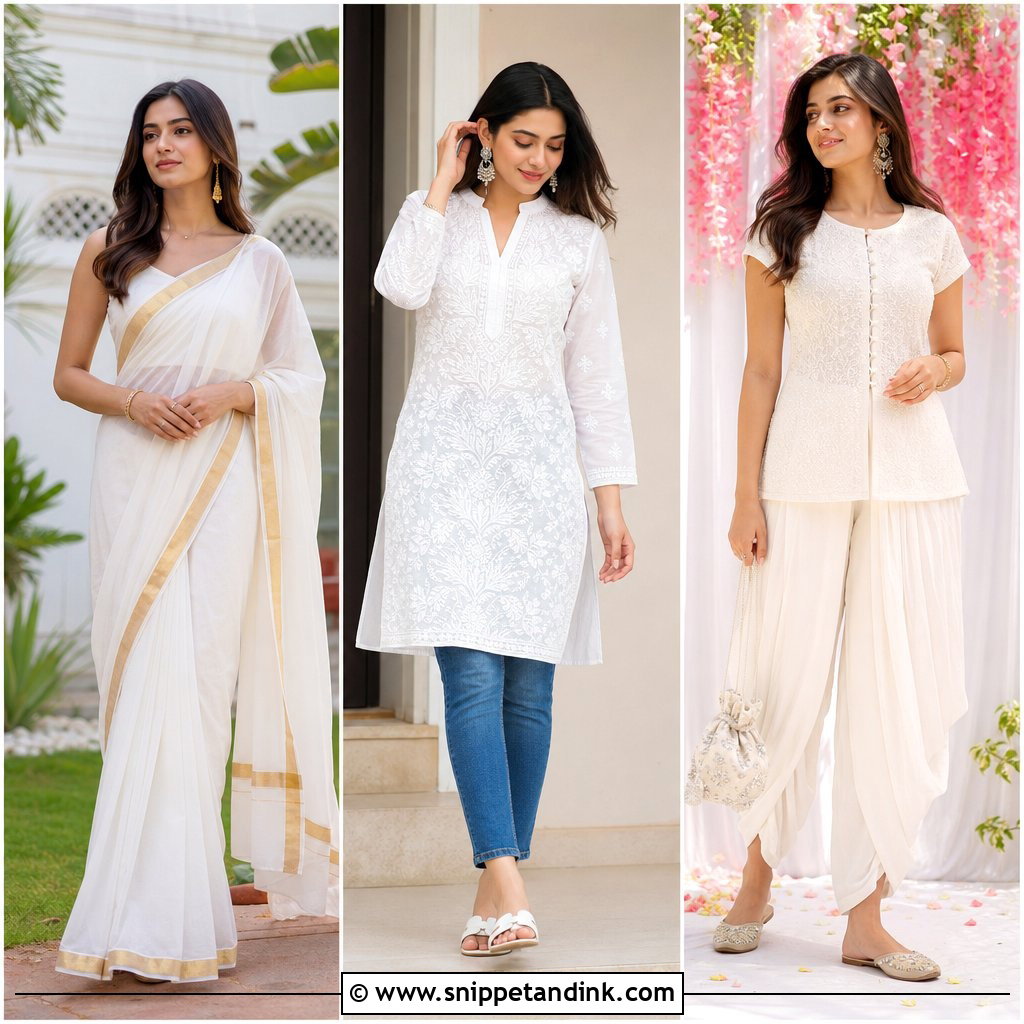
24. Chikankari Anarkali And Chikankari Kurta
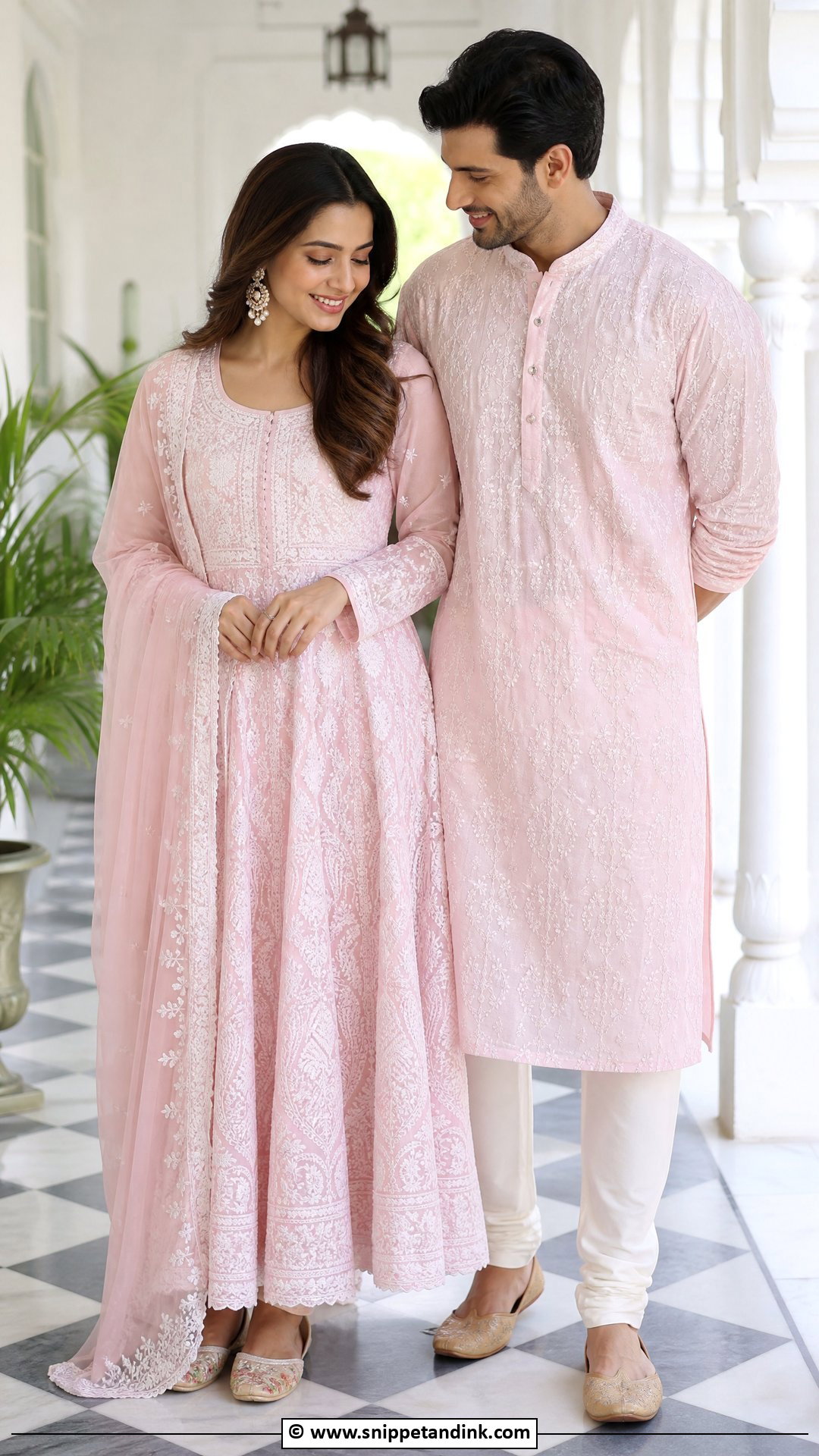
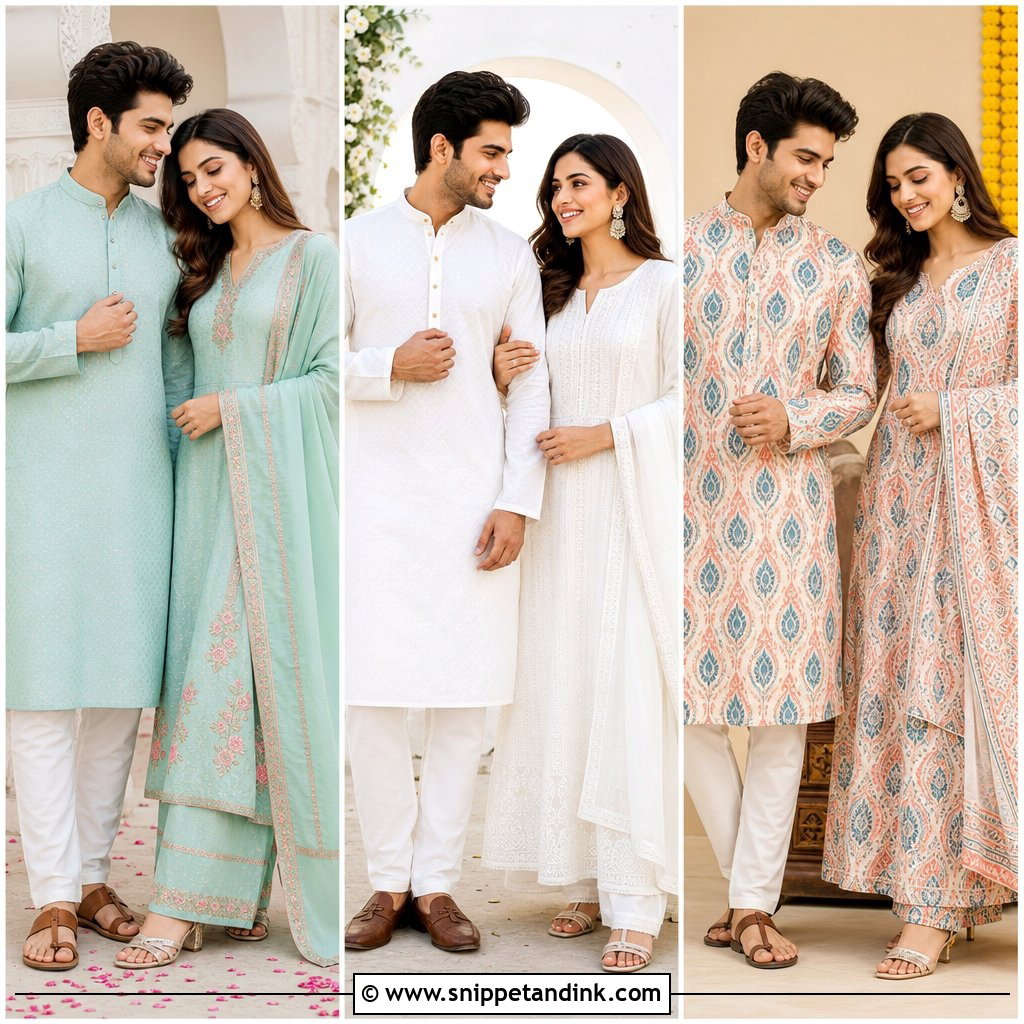
Chikankari is fine hand embroidery and comfortable in heat, which makes it one of the few matching looks I’d suggest for a summer daytime event. Her white, pastel or soft-colored chikankari anarkali with a matching dupatta and pearl jewelry; his chikankari kurta, slim pajama and simple juttis. Pastel accessories keep it soft; metallic accents make it more formal. Keep the silhouettes flowing and the fabric breathable, and handle it gently, since fine chikankari snags easily.


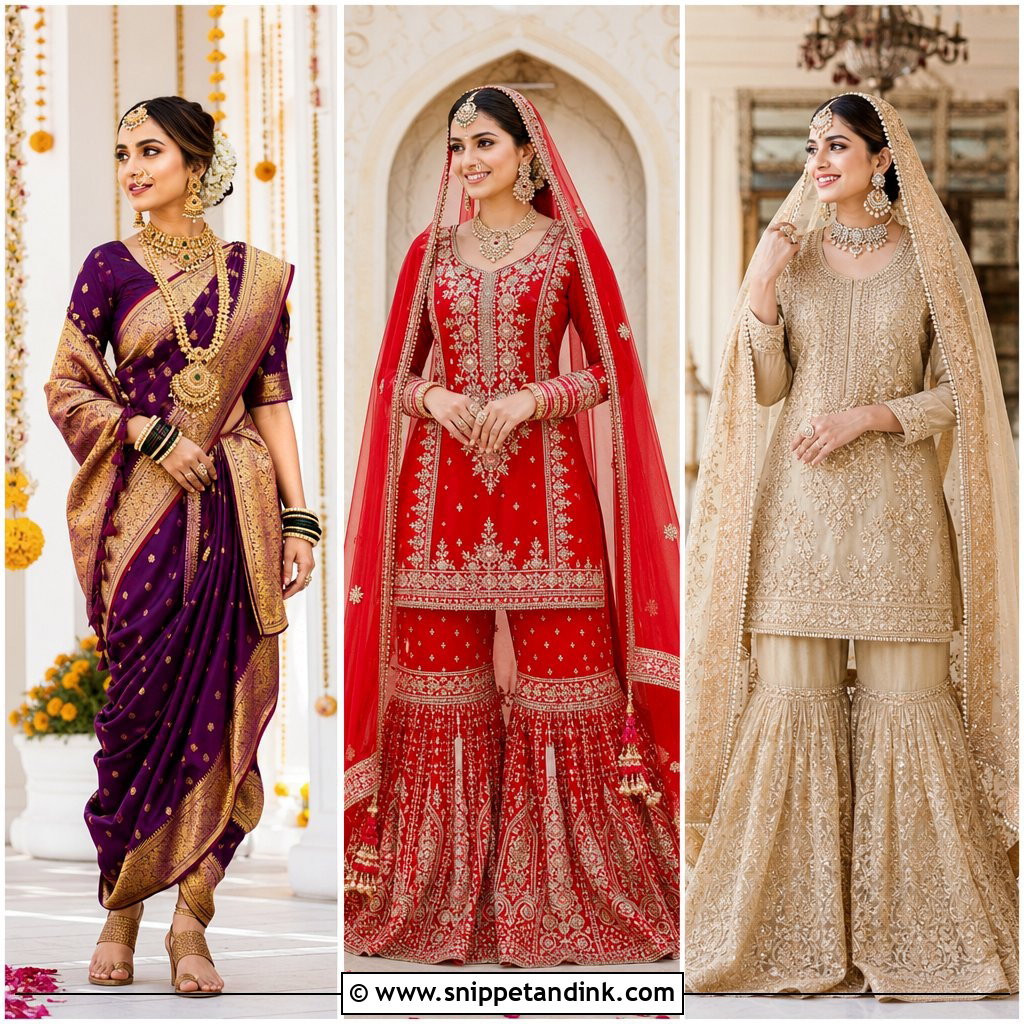

25. Sharara Set And Matching Kurta
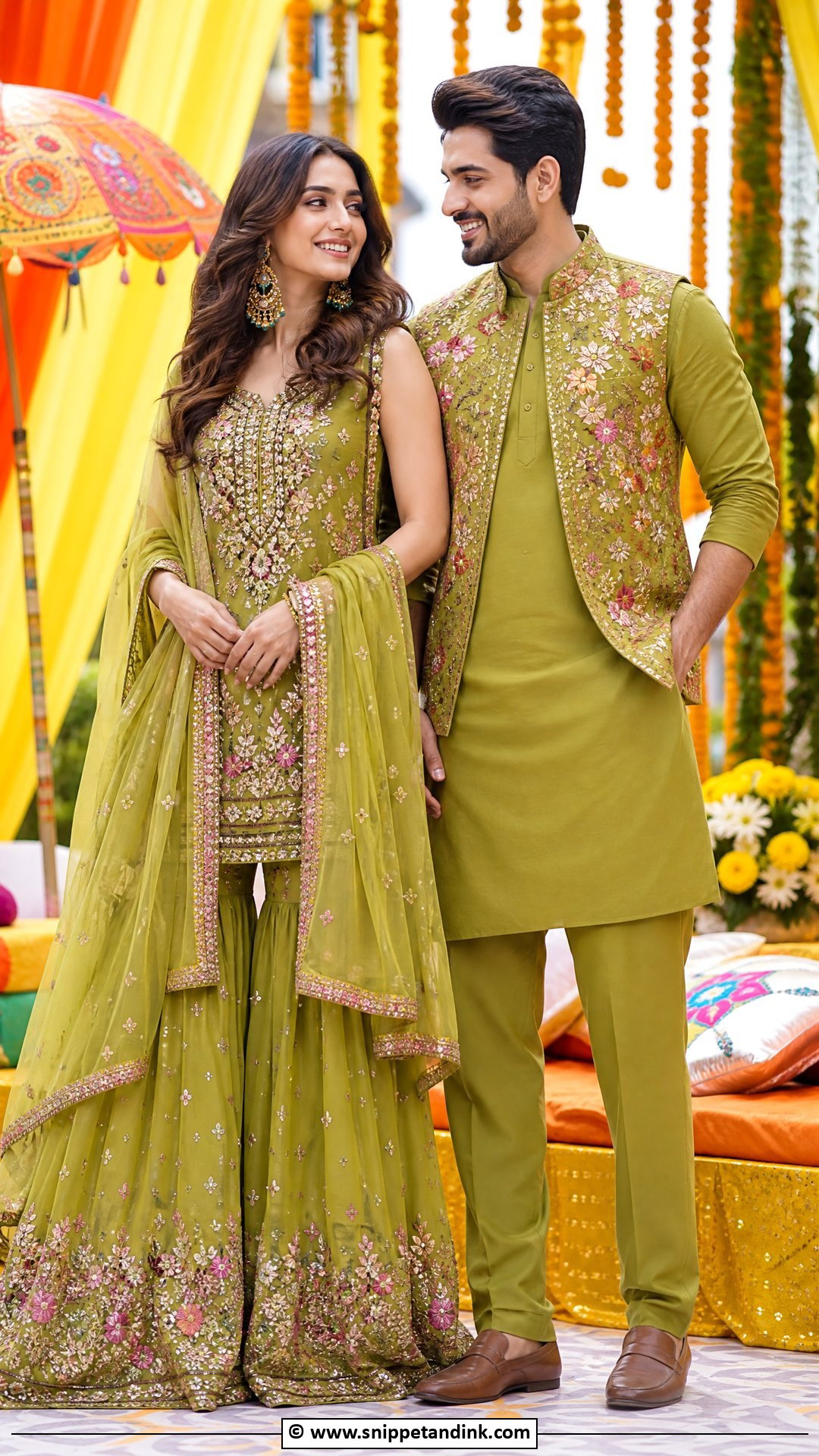
A sharara gives her volume and drama without a heavy lehenga, and his outfit can take its cue from her trim. Her embroidered sharara with a short kurti, dupatta, statement earrings and juttis; his kurta in the same color family with a jacket matching her embroidery or dupatta border. Green, pink, yellow, peach or ivory all suit a mehendi, sangeet or festive gathering.
26. Anarkali Suit And Matching Sherwani
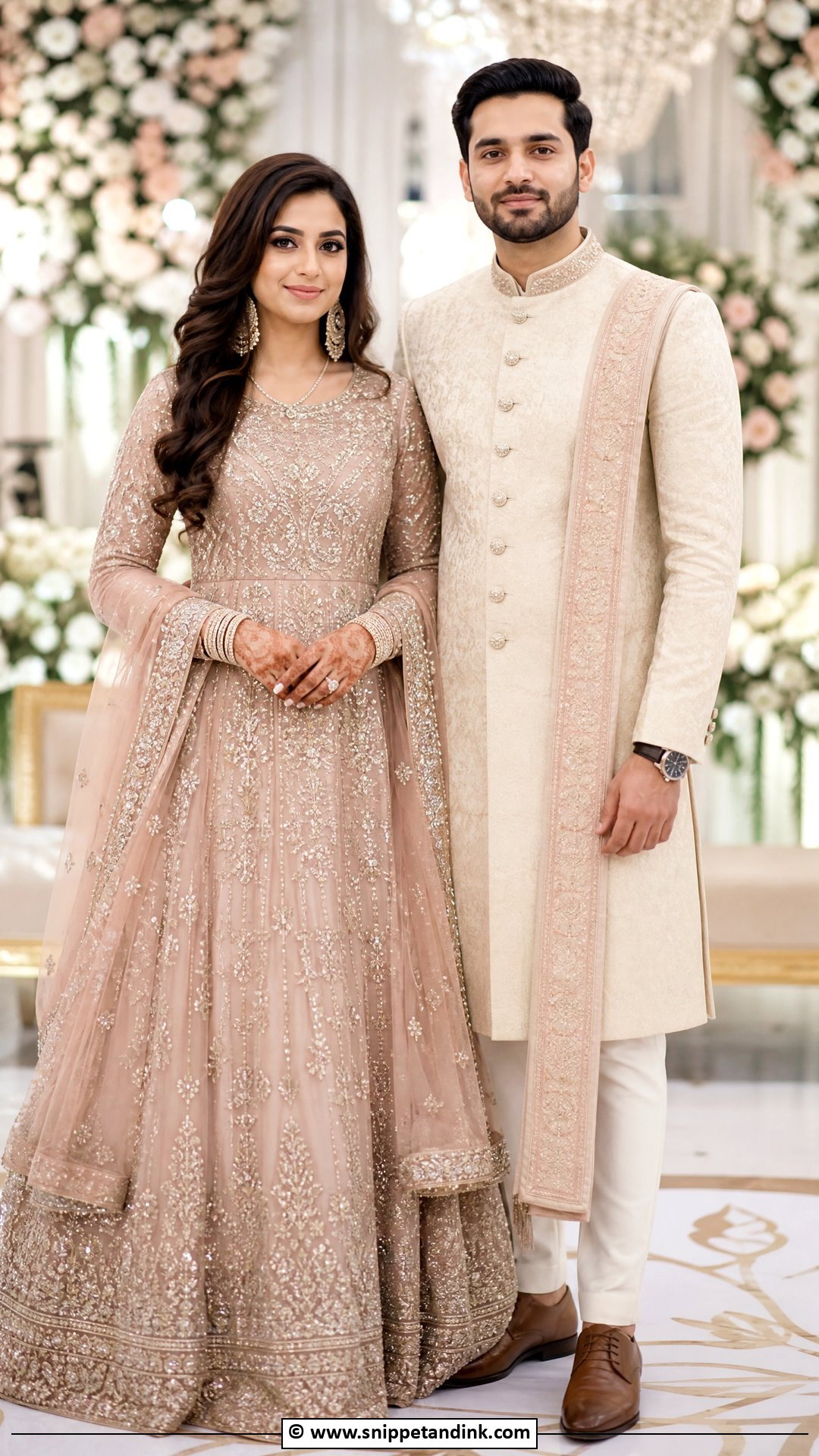
An anarkali flows; a sherwani holds structure. The contrast between them is what makes this pairing look balanced. Her floor-length anarkali with embroidery, a dupatta, bangles and embellished heels; his sherwani in the same shade or a complementary neutral with matching embroidery. If her outfit is heavily worked, I keep his cleaner with a matching stole. Jewel tones or soft pastels both suit engagements, wedding functions and formal family events.
27. Indo Western Lehenga And Indo Western Suit
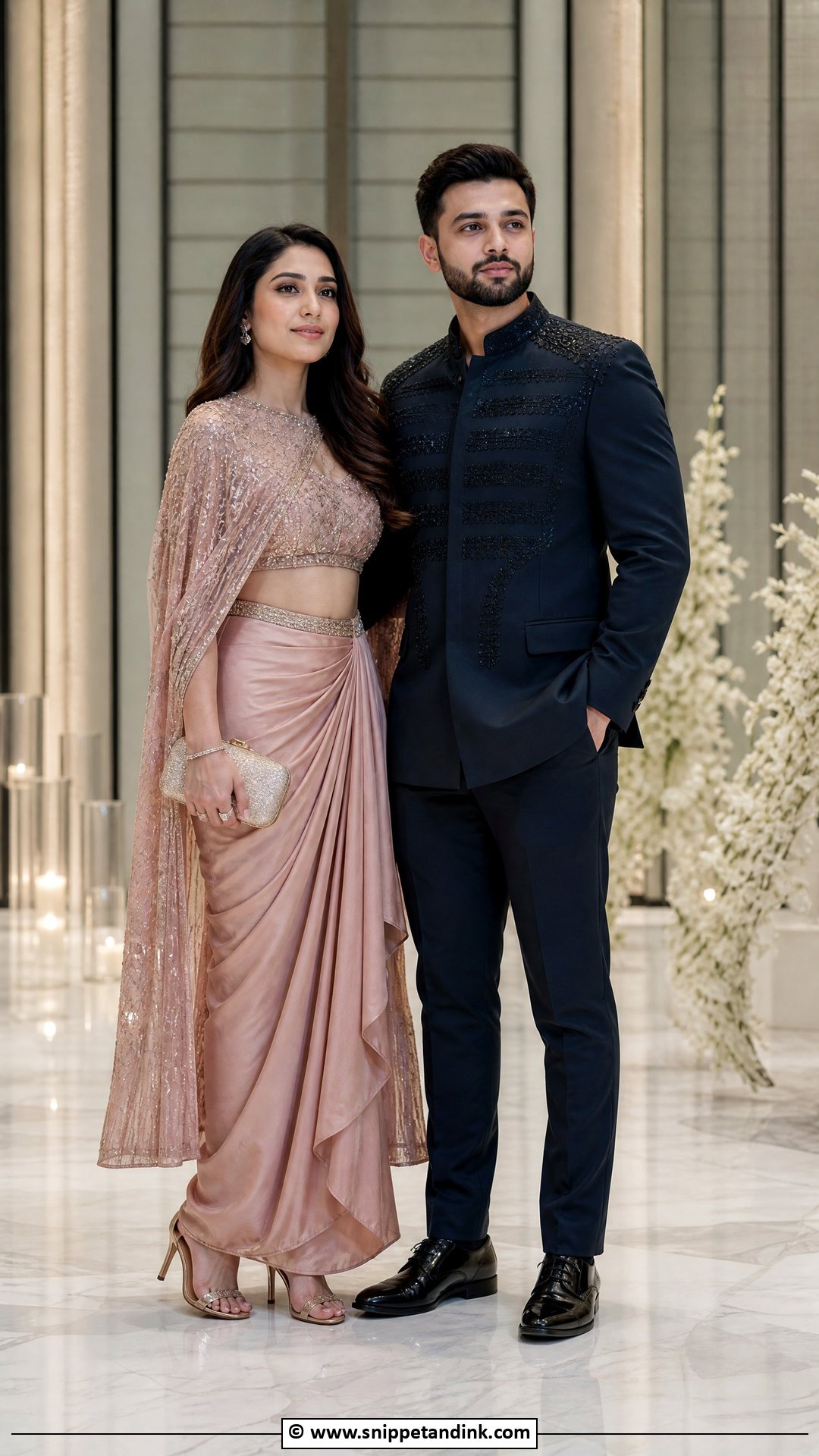
Indo-western only works with sharp tailoring. Her pre-draped lehenga, cape blouse or jacket-style lehenga with sleek jewelry and heels; his Indo-western suit, asymmetric kurta or structured jacket over tapered trousers. Pick a shared palette such as black and gold, ivory and beige, or navy and silver. It suits receptions, cocktail evenings and sangeet events. Have his trousers hemmed with the shoes he’ll wear; tapered legs pooling on the shoe ruin the line.
28. Velvet Lehenga And Velvet Sherwani
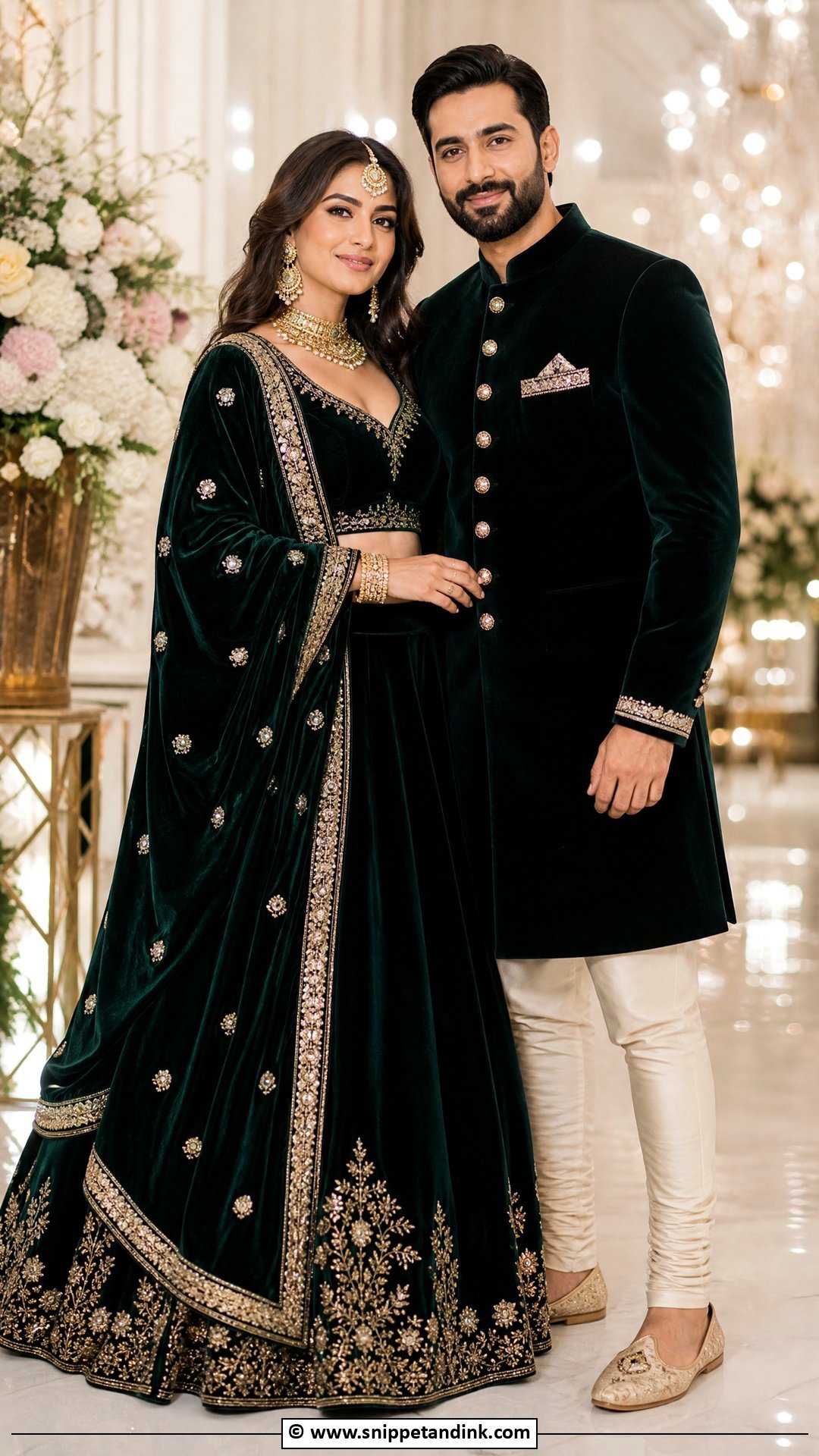
Velvet is warm, rich and heavy, so it really only belongs at winter evening events. Her velvet lehenga in maroon, emerald, navy or deep purple with gold jewelry and a dupatta; his velvet sherwani, or a velvet jacket over a kurta if he runs hot. The fabric does so much on its own that the embroidery can be light. Cream, gold or antique bronze accents balance it. Fit both carefully, since velvet shows every pull and wrinkle.
29. Banarasi Saree And Banarasi Sherwani
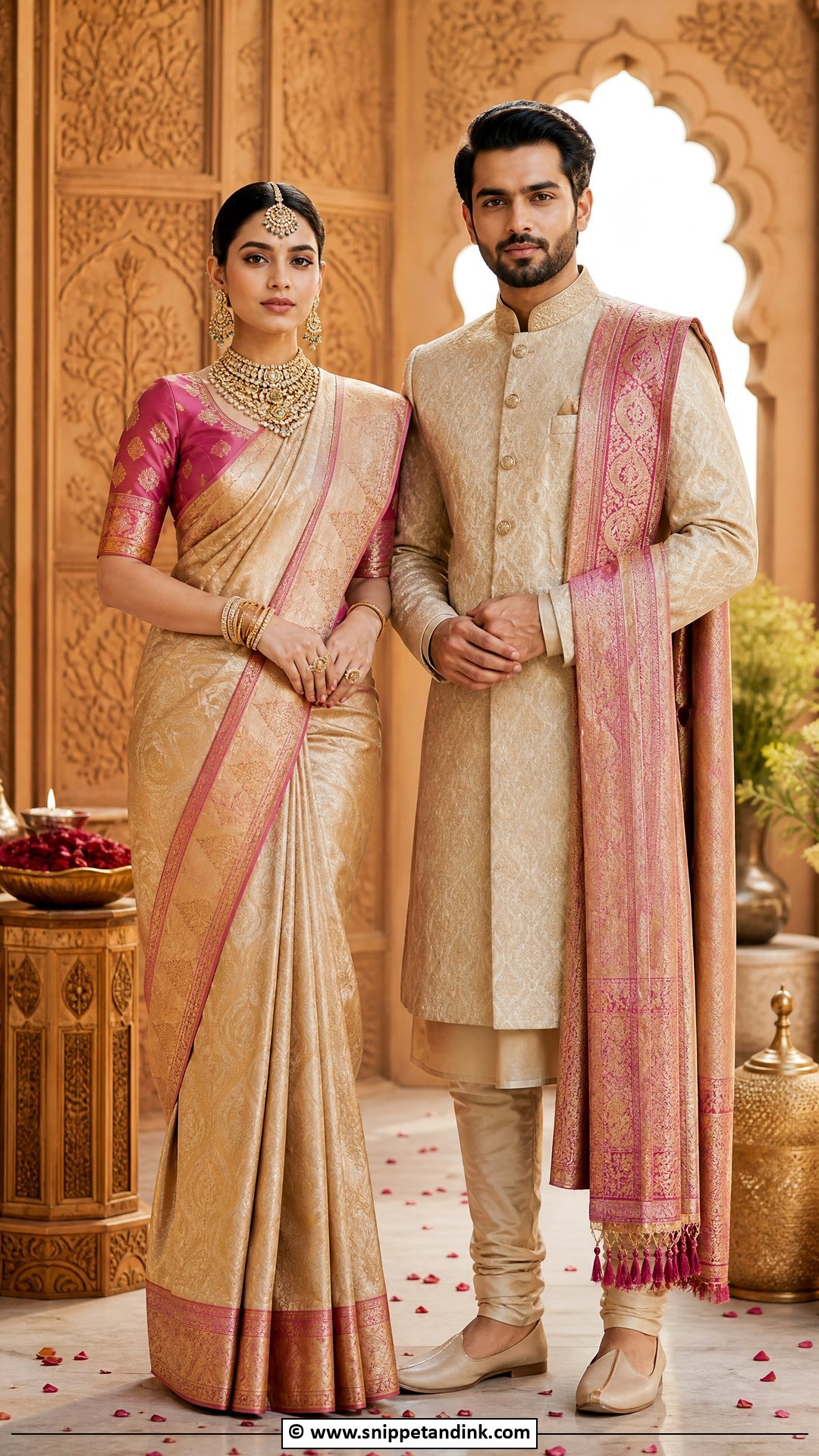
You don’t need both outfits cut entirely from Banarasi brocade. Her Banarasi silk saree in red, green, purple or gold with classic jewelry and a neat drape is the anchor. For him, a sherwani or jacket with brocade details is enough: a Banarasi stole, collar, cuffs or a jacket panel. I find a brocade collar on an otherwise plain sherwani ties a couple together very neatly at weddings and family ceremonies.
30. Pastel Couple Dress For Engagement
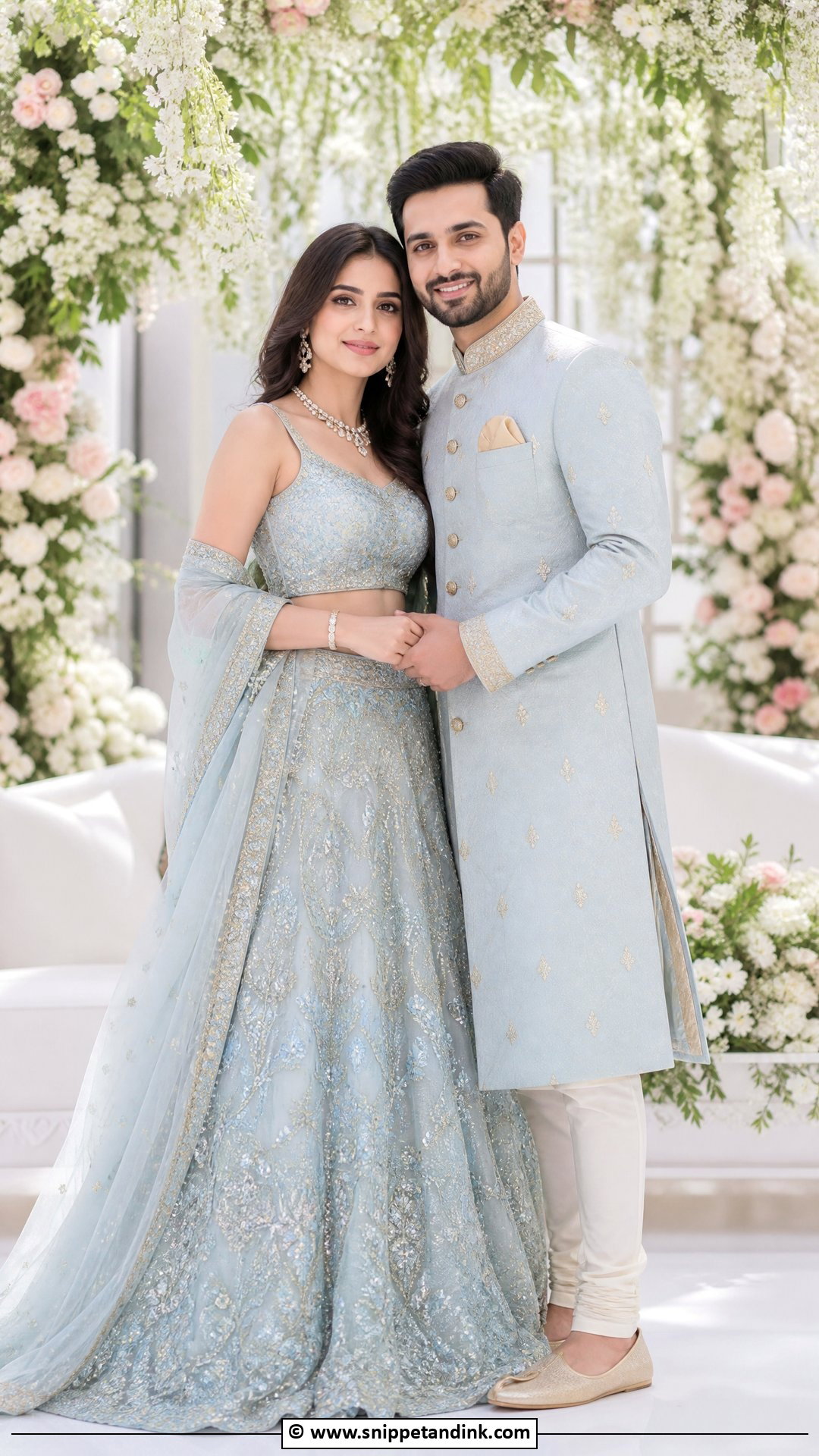
Pastels can wash out on camera, and engagements are photographed heavily. A pastel couple dress for engagement looks best with texture: embroidery, jacquard, sequins or layered fabric. Her pastel lehenga, saree or anarkali in blush, mint, lavender, powder blue or peach; his pastel kurta set, sherwani or bandhgala in the same family. Pearls, silver, champagne or light gold accessories suit both, for a daytime engagement or an outdoor venue.
31. Red Saree And Cream Sherwani
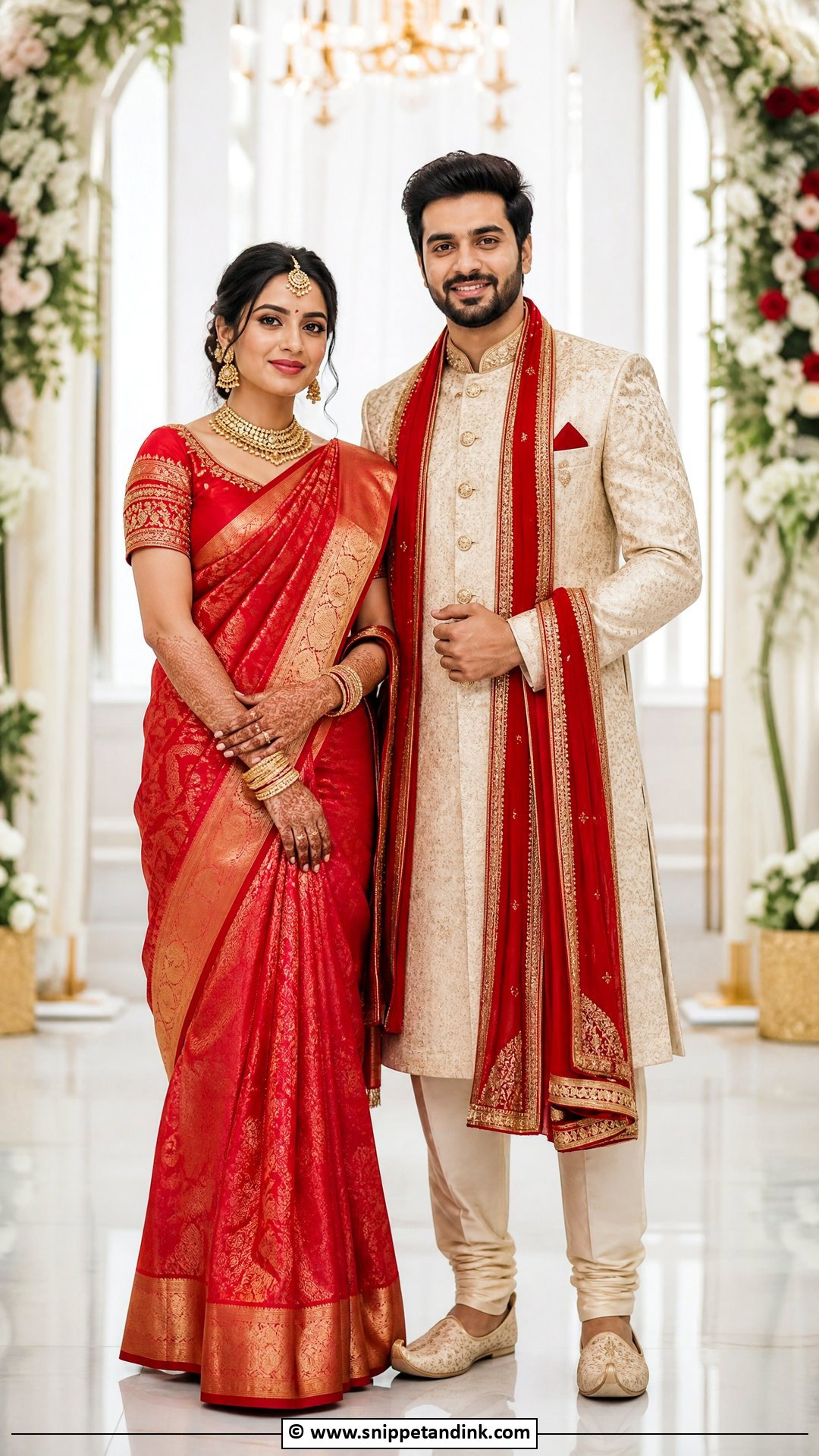
Red with cream is my default when one partner wants a bold outfit and the other wants something classic. Her red silk, georgette or Banarasi saree with gold jewelry and a matching clutch; his cream sherwani with a red stole, red pocket square or red embroidery. The red repeats just enough on him to link the two. Gold on both ties it together at a wedding, reception or traditional ceremony.
32. Green Lehenga And Cream Kurta
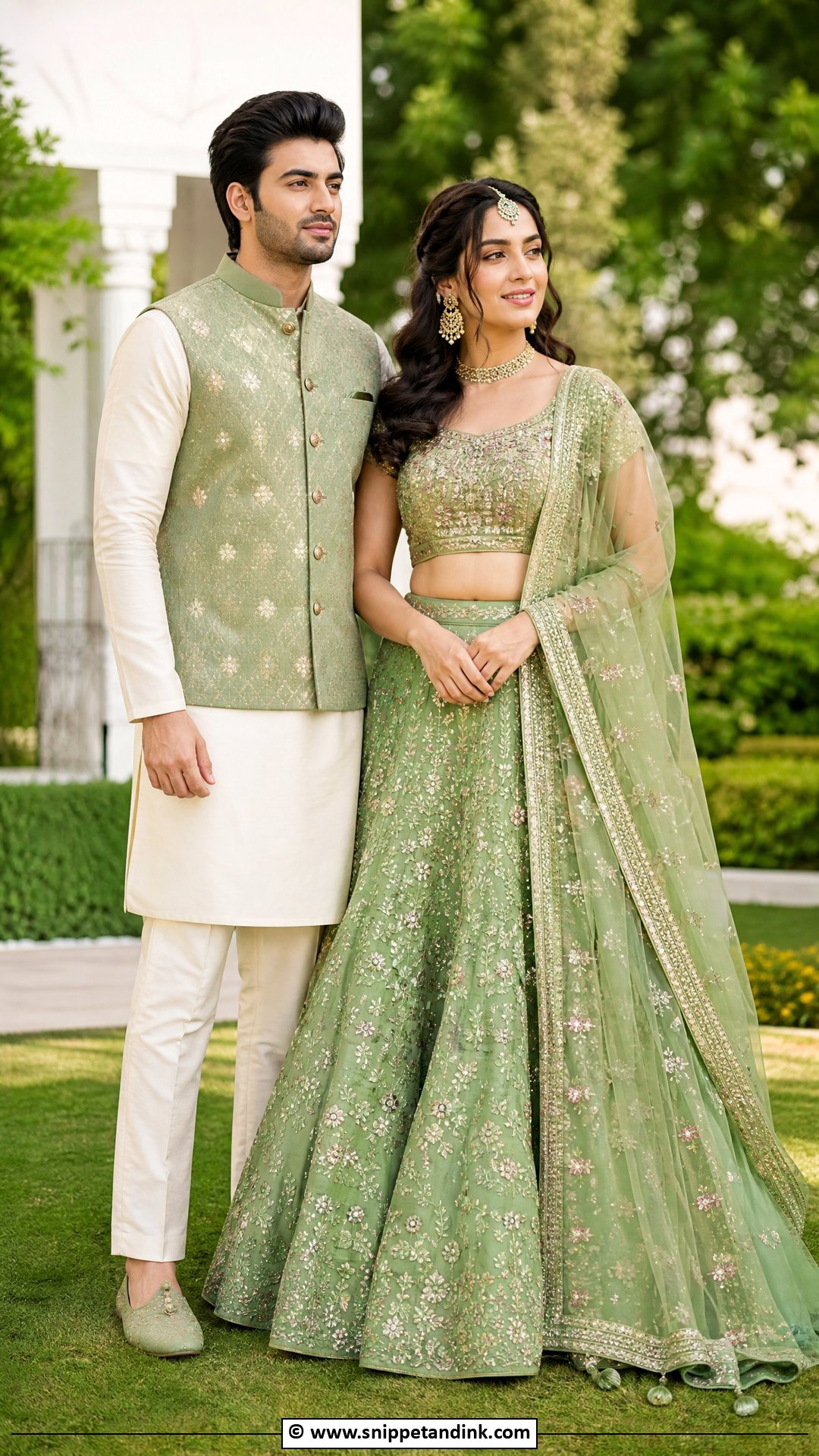
Green with cream is easy to style and balanced in photos. Her green lehenga with gold or mirror work, a dupatta, jewelry and festive footwear; his cream kurta pajama with a green Nehru jacket or stole. Choose emerald, mint, sage or mehendi green depending on the occasion. Repeating the same gold trim on her dupatta and his jacket finishes it neatly for a mehendi, engagement or family gathering.
33. Blue Lehenga And Grey Bandhgala
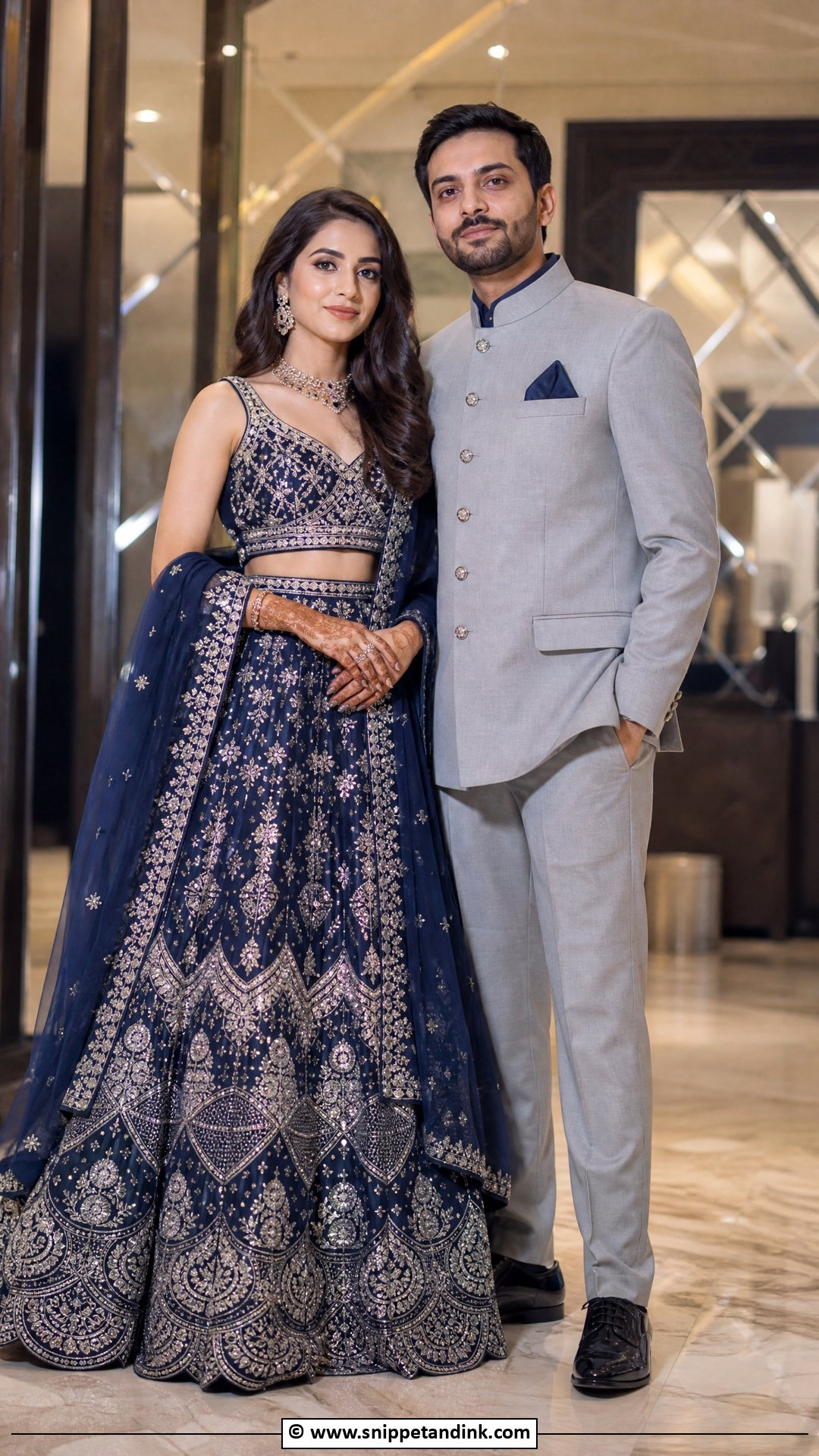
Grey is underrated for grooms. It sits calmly next to blue and keeps the pairing from feeling too matched. Her blue lehenga in navy, powder blue or royal blue with silver embroidery and a soft dupatta; his grey bandhgala with matching trousers and a blue pocket square or stole. Silver accessories, polished shoes and clean hair make a refined couple at a reception or formal evening event. Choose a mid or charcoal grey; pale grey can look washed out next to rich blue.
34. Printed Kurta And Printed Lehenga
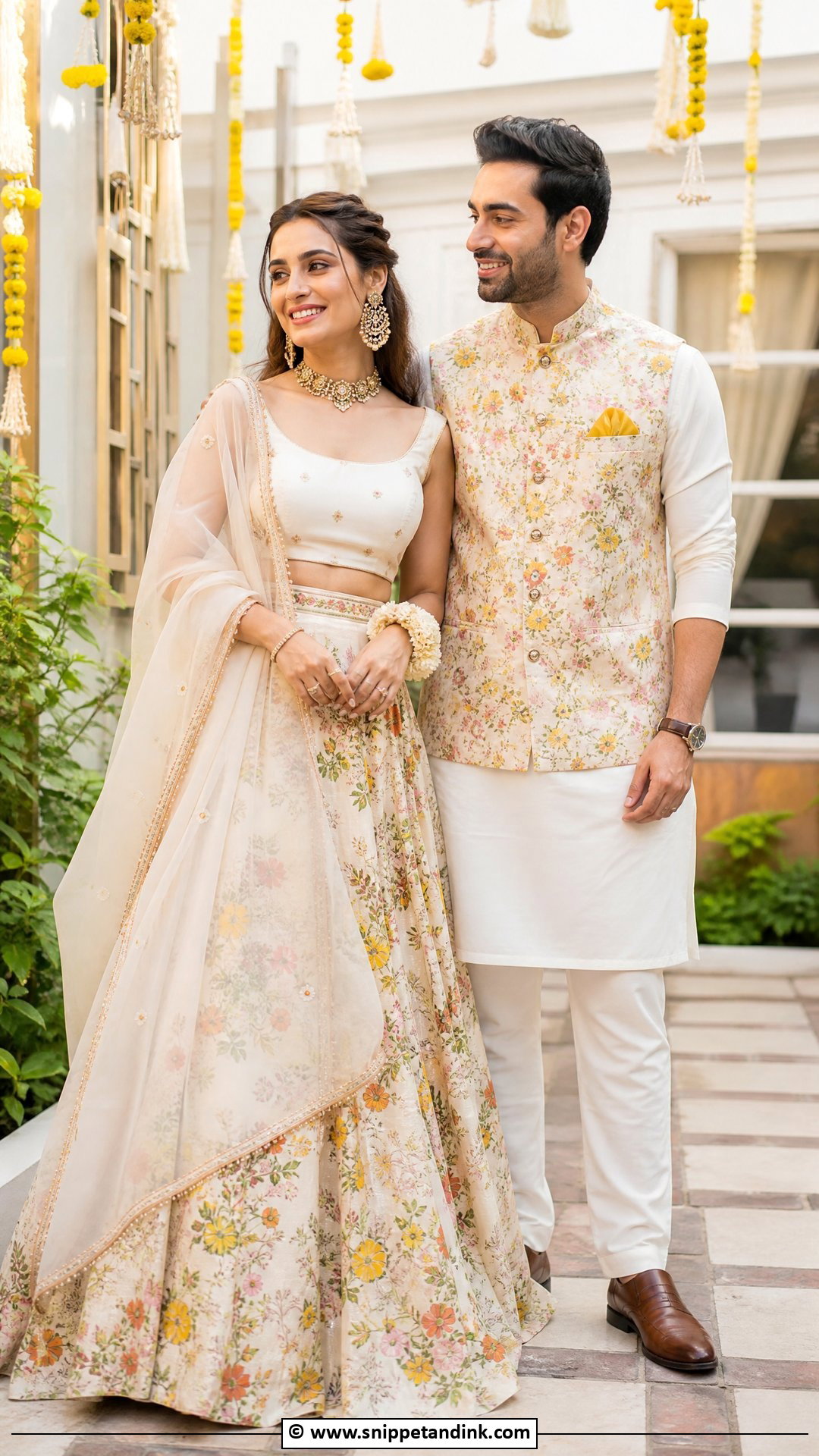
Prints are relaxed and playful, so I’d keep the mix simple: one print, two ways. Her printed lehenga with a simple blouse and light dupatta; his printed kurta, or a solid kurta with a jacket in her print. Florals, block prints, paisleys and geometric motifs all suit a mehendi, festive lunch or destination event. Simple accessories, comfortable juttis and breathable fabrics keep it easy to wear.
35. Matching Kurta Pajama And Salwar Suit
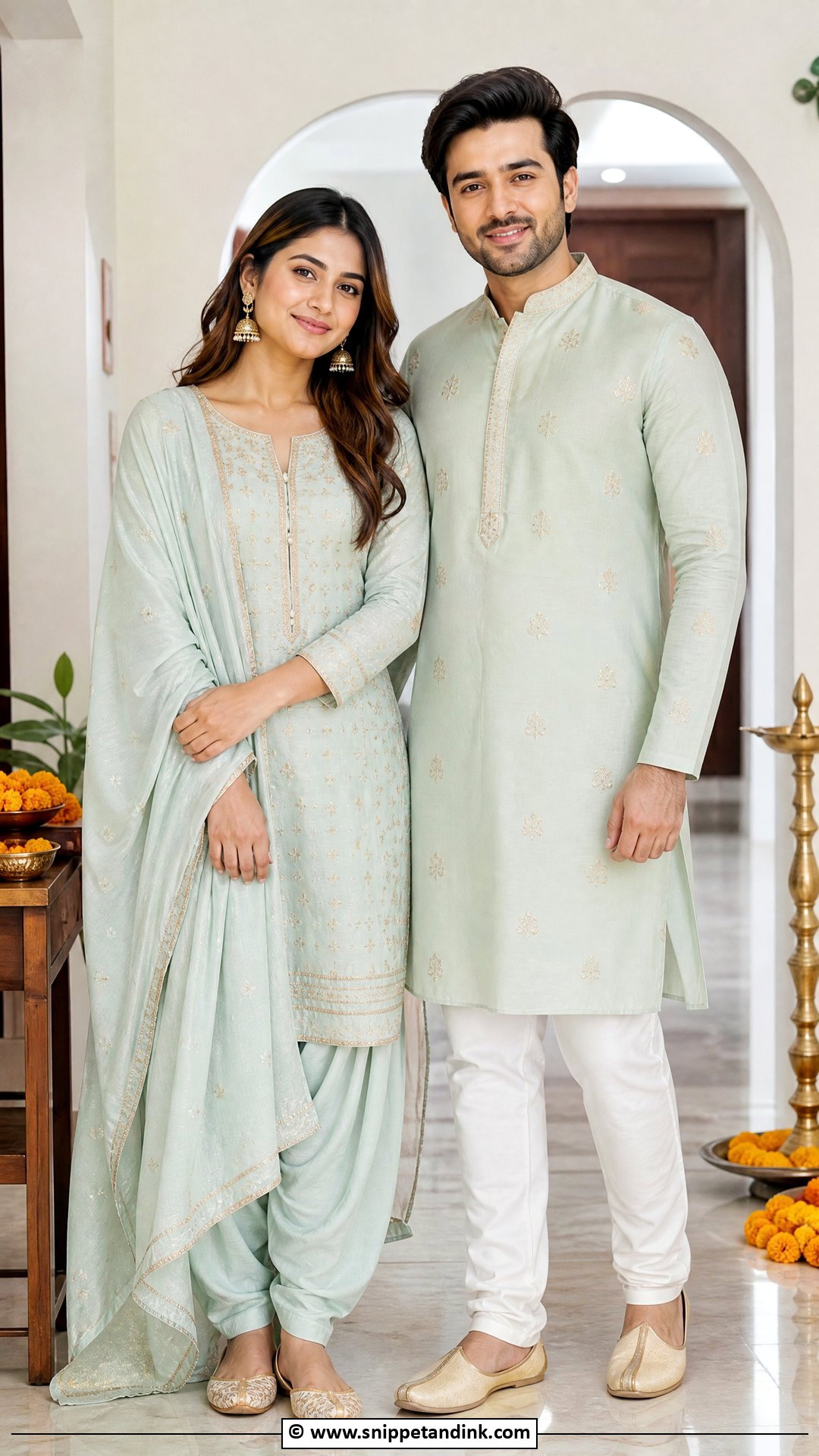
Kurta pajama with a salwar suit is the easiest couple look to plan, and the one most families will have the fabric for already. Her salwar suit, straight kurta set or palazzo suit with a dupatta and traditional jewelry; his kurta pajama in the same color or fabric family. Cotton silk, chanderi, georgette or jacquard depending on formality. A coordinated dupatta and stole border is enough to look planned for a festival, small ceremony or casual function.
Sherwani Fit Details Grooms Usually Overlook
In my experience grooms spend far less time on fit than brides do, and it shows in photos. These are the checks I make at every final fitting.
- Sleeves end at the wrist bone, so a little of the kurta cuff or a watch shows
- The sherwani closes over the chest without pulling between buttons when he sits
- Churidar gathers sit neatly at the ankle rather than bunching halfway up the calf
- The hem falls to the knee or just below; too long looks borrowed on shorter grooms
- Mojaris are worn at home for a few evenings, since new leather rubs at the heel
Heels, Safas and Standing Side by Side in Photos
Couples are photographed shoulder to shoulder all day, so I look at the pair together, not just each outfit alone. A safa adds height and a strong block of color right next to her face, so I match it to her dupatta or keep it a neutral that won’t fight with her jewelry. If she plans to wear heels for the reception, his trouser length and her lehenga hem should both be set with those shoes on. A quick photo of the two of you standing together at the final fitting shows balance problems far more clearly than any mirror.
Two Outfits, One Shared Detail
Couple coordination can be traditional, modern, subtle or bold. You can match through color, fabric, embroidery, borders, accessories or simply mood. A lehenga with a sherwani feels grand, a saree with a bandhgala looks refined, and kurta sets, anarkalis, shararas and Indo-western pieces suit lighter functions. What matters most is that both of you look equally dressed for the same occasion and can move, sit and celebrate comfortably. Pick breathable fabrics for daytime, richer textures for evenings, and one detail that connects you.
You'll Like These Ideas:


Leave a Reply