
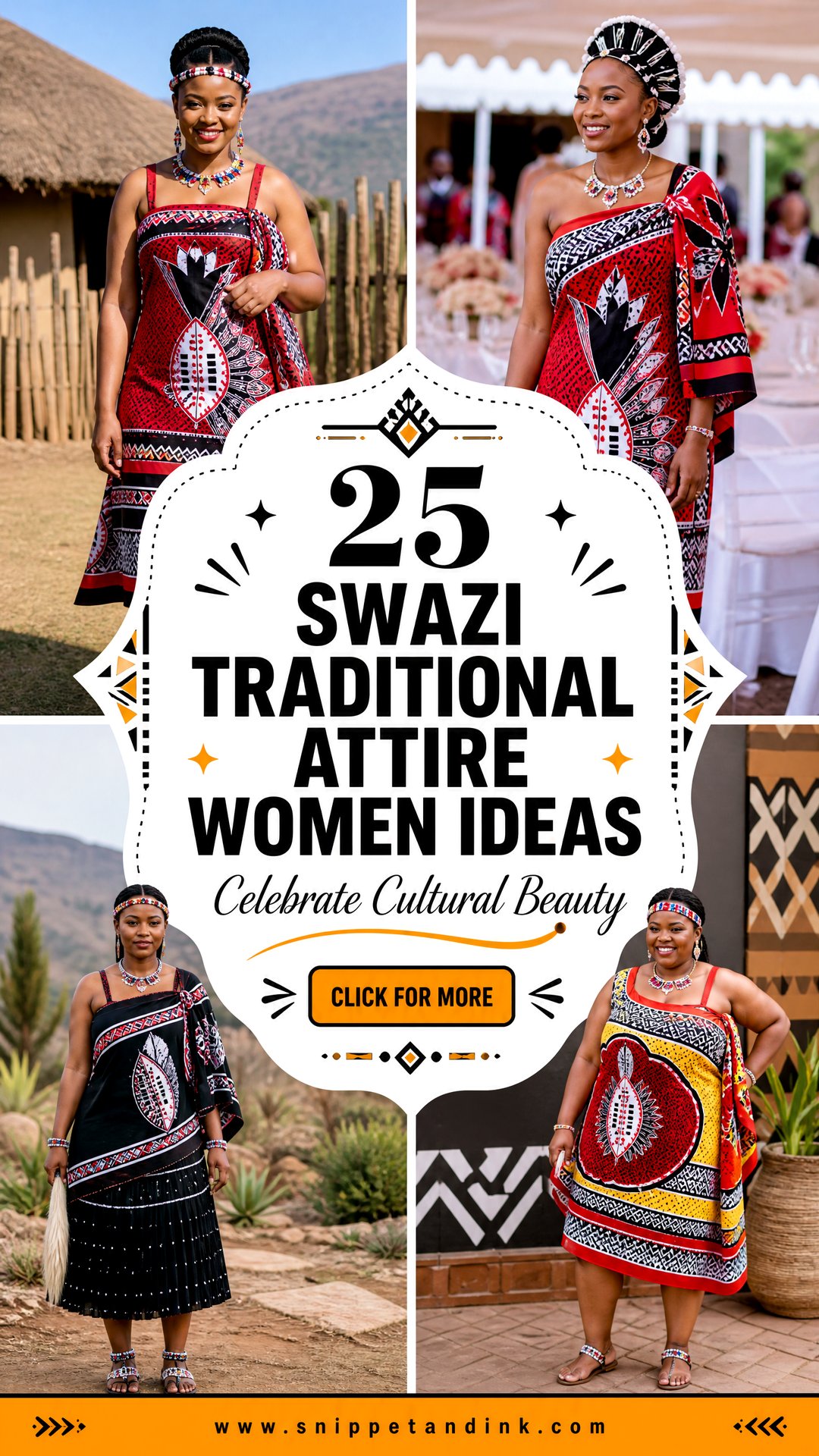
Dressing a woman in Swazi attire starts with one piece of cloth. The lihiya (plural emahiya) is a printed wrap worn knotted across the body or tied as a skirt, and beadwork, headwraps, shawls and sandals build out from there. In Eswatini, what a woman wears can also signal her age, whether she is married, and which ceremony she is attending, so I never style these outfits on looks alone. Think of each one as a full head-to-toe plan: wrap cloth, skirt layer, beads, footwear and head covering. My collection of Swazi traditional attire women ideas below covers cultural celebrations, heritage days, photoshoots and family gatherings, with notes on where each one is and isn’t appropriate.
Tying Emahiya So It Stays Put Through Hours of Greeting and Dancing
Most of the trouble I see with emahiya isn’t the colour or the beads. It’s a knot that slips by midday. Cotton print cloth is smooth and has no stretch, so a loose tie keeps working itself free every time you raise an arm or sit down. A few habits fix almost all of it.
- Start with the base layer on. A fitted top or vest gives the cloth something to grip and stops the knot rubbing your skin raw over a long day.
- Fold before you tie. A narrow fold along the top edge gives the cloth a clean line and a stronger corner to knot with.
- Knot at the shoulder, not the neck. A knot sitting on top of the shoulder bone holds; one sitting near the neck drags the whole drape sideways.
- Tie skirts at the side of the hip. A front knot loosens every time you sit, while a side knot stays flatter and tighter.
- Hide a safety pin. One pin under the knot, fastened through to the base layer, is my insurance for dancing.
Practise the whole outfit once at home, including sitting, standing and lifting both arms. If a relative usually ties the cloth for you, ask her to show you the knot slowly so you can redo it yourself after the ceremony.
1. Swazi Emahiya Wrap Outfit
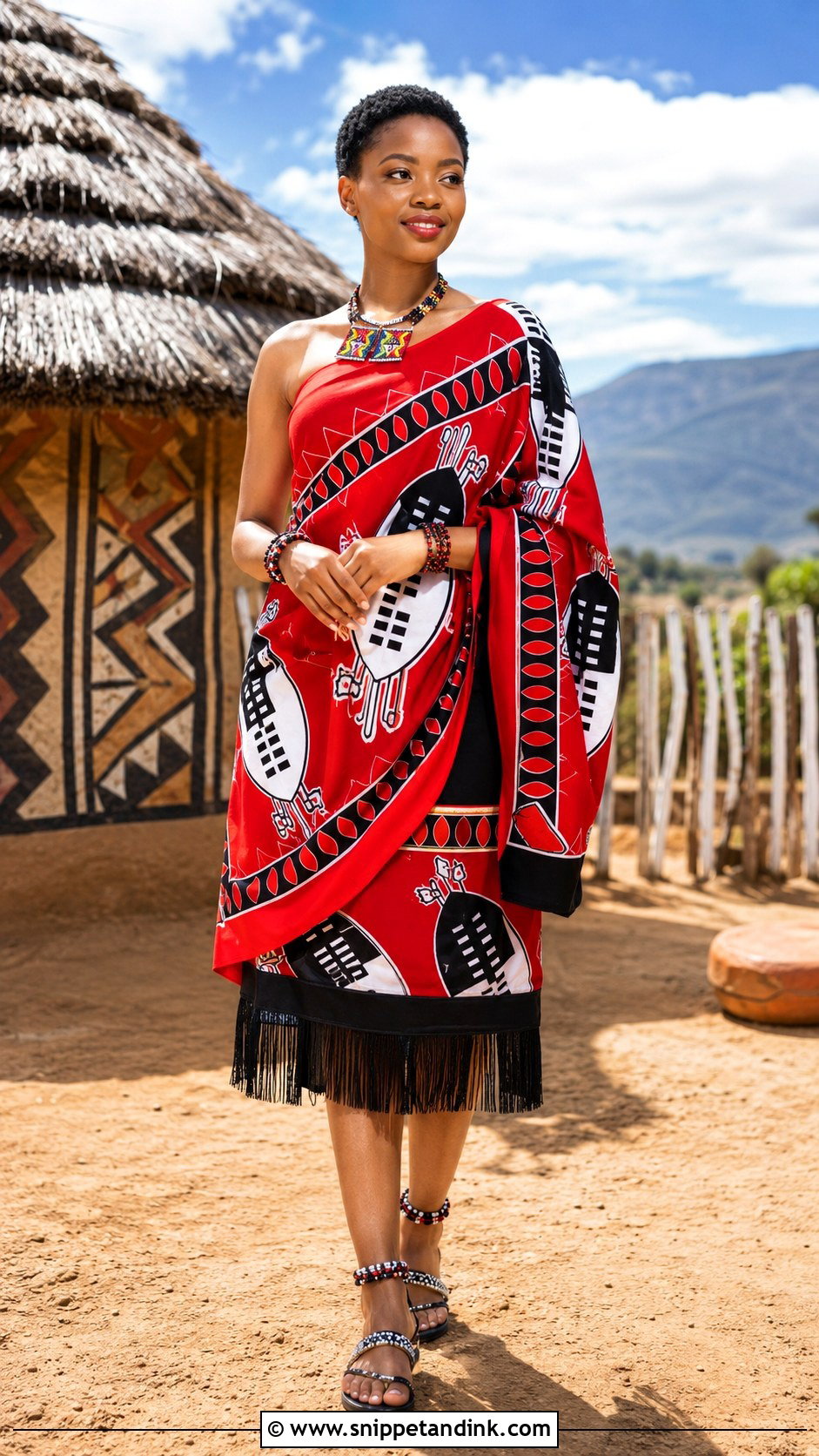
The emahiya wrap is where I start every woman who is new to the attire. A bold printed cloth goes across one shoulder and is knotted there, so the fabric falls in a clean diagonal line over the torso. Underneath, a simple fitted top keeps it modest and stops the knot rubbing bare skin. A matching wrap skirt or a plain black skirt lets the print lead. Beaded necklaces, small earrings, flat sandals and natural hair or a neat headwrap finish it. Heritage events, family gatherings and school cultural days all suit it.
2. Swazi Lihiya Skirt Outfit
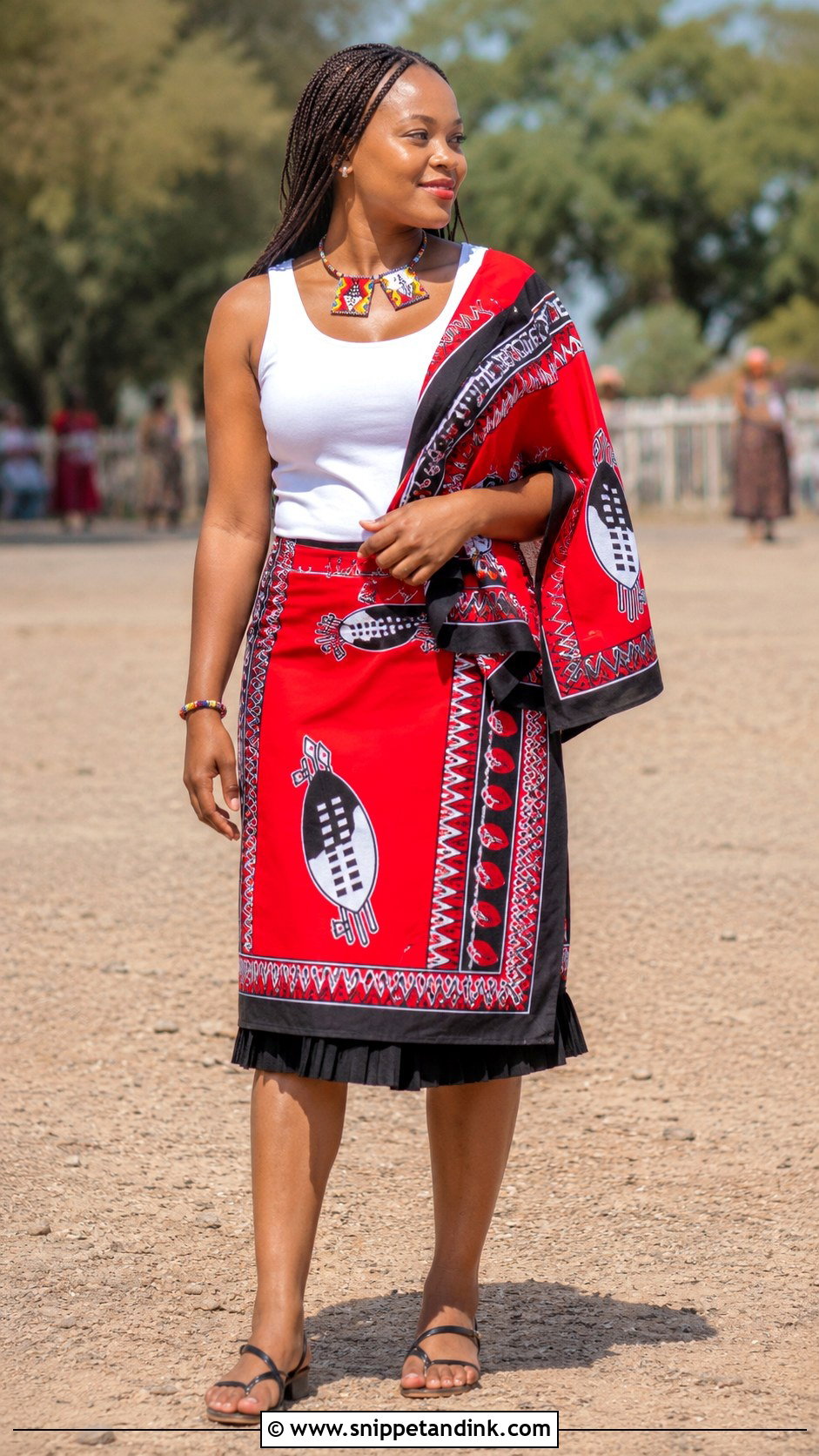
Tied at the waist, the lihiya becomes a skirt that moves well and needs almost no adjusting. I pair it with a plain fitted top in black, white or red so the print does the talking. The knot is the weak point: tie it at the side of the hip rather than the front, where it pulls loose every time you sit. Add a second cloth over the shoulder when the occasion calls for a more traditional appearance. Beaded bracelets, a ligcebesha-inspired necklace and leather or beaded sandals complete it.
3. Swazi Traditional Wedding Guest Outfit
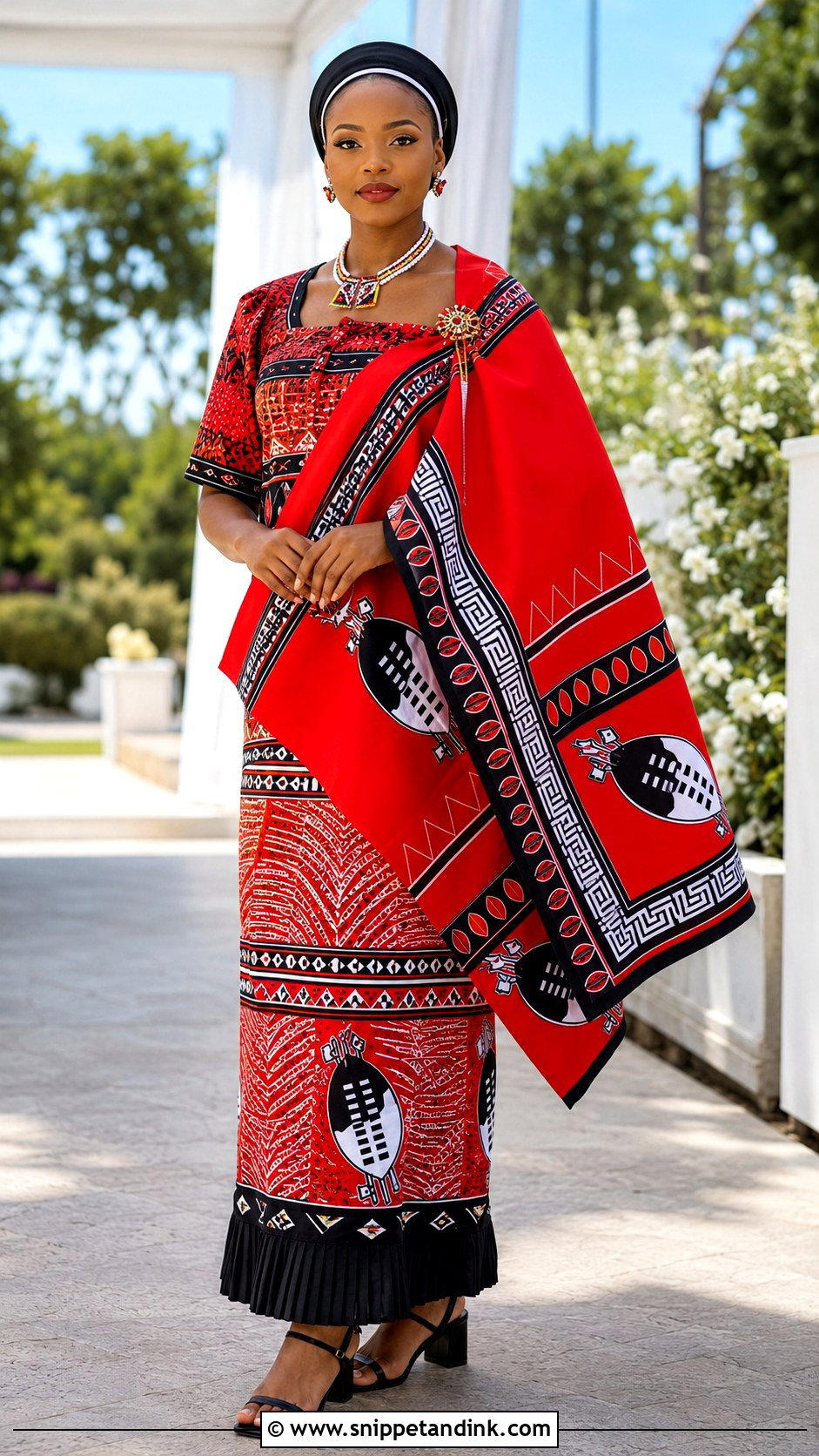
As a wedding guest, your outfit should celebrate without competing with the bride or her family’s customs. A bright emahiya across the shoulder with a long coordinated wrap skirt is a safe, graceful foundation. Pick polished beads, a neat headwrap and sandals or low block heels, because ceremonies run long and involve a lot of standing, greeting and dancing. A tailored blouse in a colour pulled from the cloth gives a modern touch. If you’re not part of the bridal party, I’d keep the beadwork modest and leave the most elaborate pieces to the women at the centre of the day.
4. Swazi Umhlanga Inspired Outfit
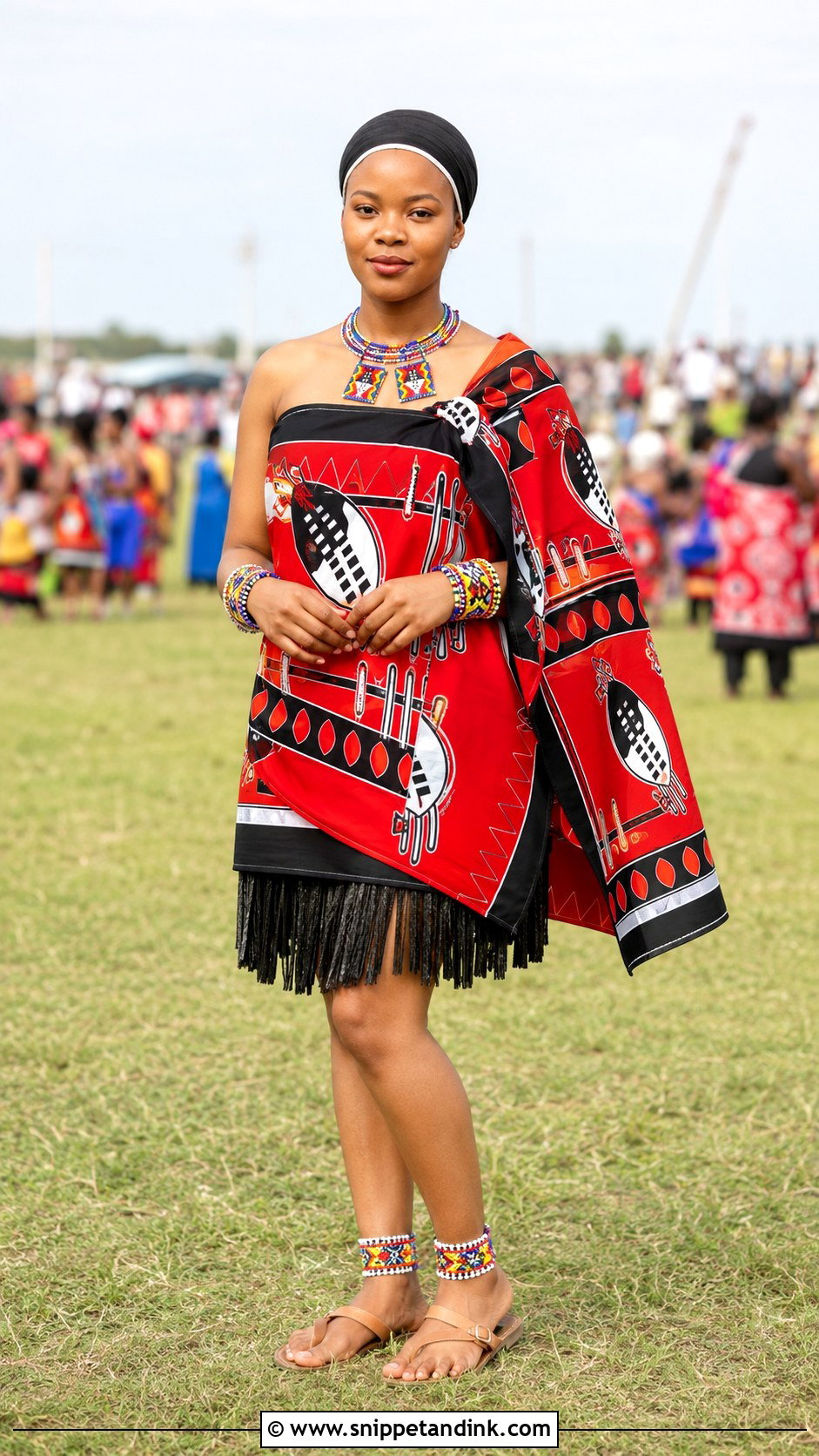
Umhlanga, the Reed Dance, is a ceremony for young unmarried women, and its bright beadwork and short skirts belong to that context. An outfit inspired by it should borrow the colour and energy, not copy the ceremonial dress. A shorter emahiya wrap skirt over a comfortable base, colourful beaded necklaces, bracelets and anklets, and a narrow sash across the shoulder capture the feel. Flat sandals are the only sensible footwear here. For modern events I add a fitted top for coverage and keep hair braided or tied back neatly.
5. Swazi Married Woman Traditional Outfit
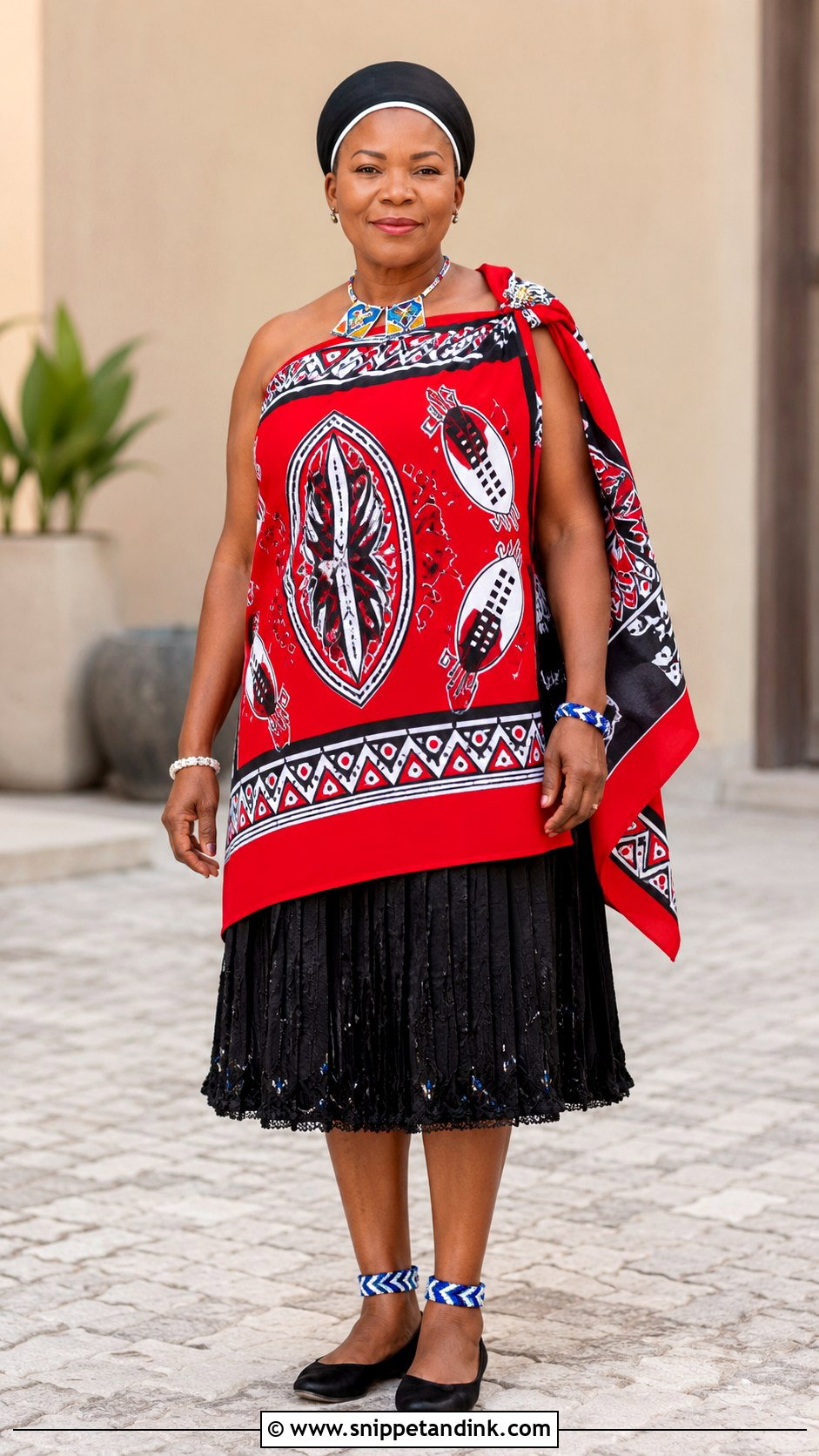
A married woman’s outfit is noticeably more covered. Traditionally she wears the sidvwaba, a black pleated skirt once made from cowhide, with a lihiya over the upper body and a head covering. A black wrap skirt can echo that silhouette for heritage occasions. Deeper colours such as black, maroon, navy and earth tones give a formal mood, and structured beads with flat shoes keep the whole outfit dignified. Before dressing for a family ceremony, I always suggest asking an older relative what the household expects, since customs vary from family to family.
6. Swazi Beaded Necklace Outfit
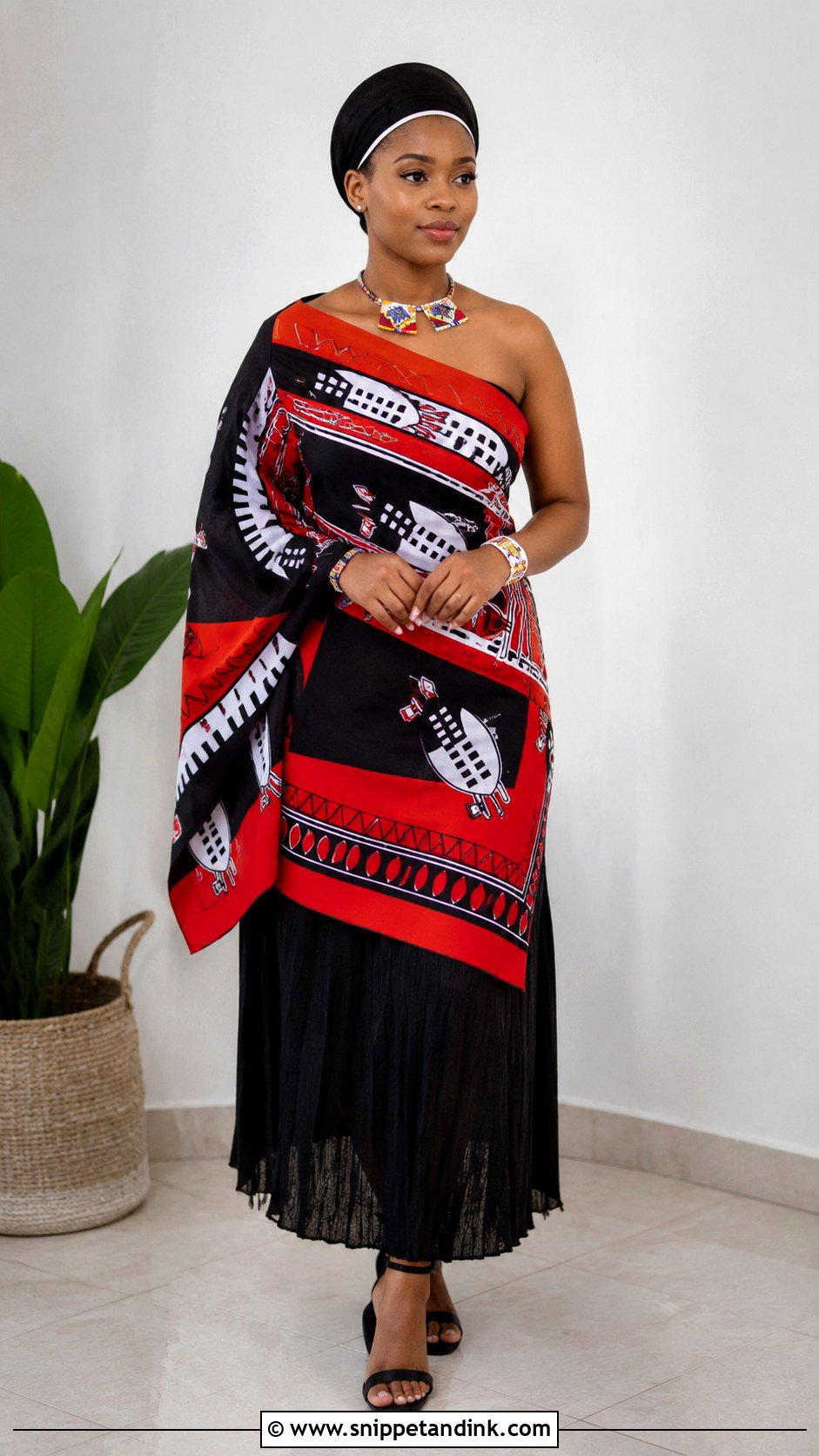
Here the beadwork is the focal point and the cloth plays support. Start with a clean emahiya across the shoulder and a matching or neutral skirt, then add one colourful ligcebesha-inspired necklace. If the necklace is wide, earrings must be small, or the neck and face become crowded in close photos. Neat braids or natural hair suit this best. Ankle beads or slim bangles carry the beading down the body. Cultural festivals and portrait sessions show it off, because the beads read clearly on camera.
7. Swazi Headwrap And Emahiya Outfit
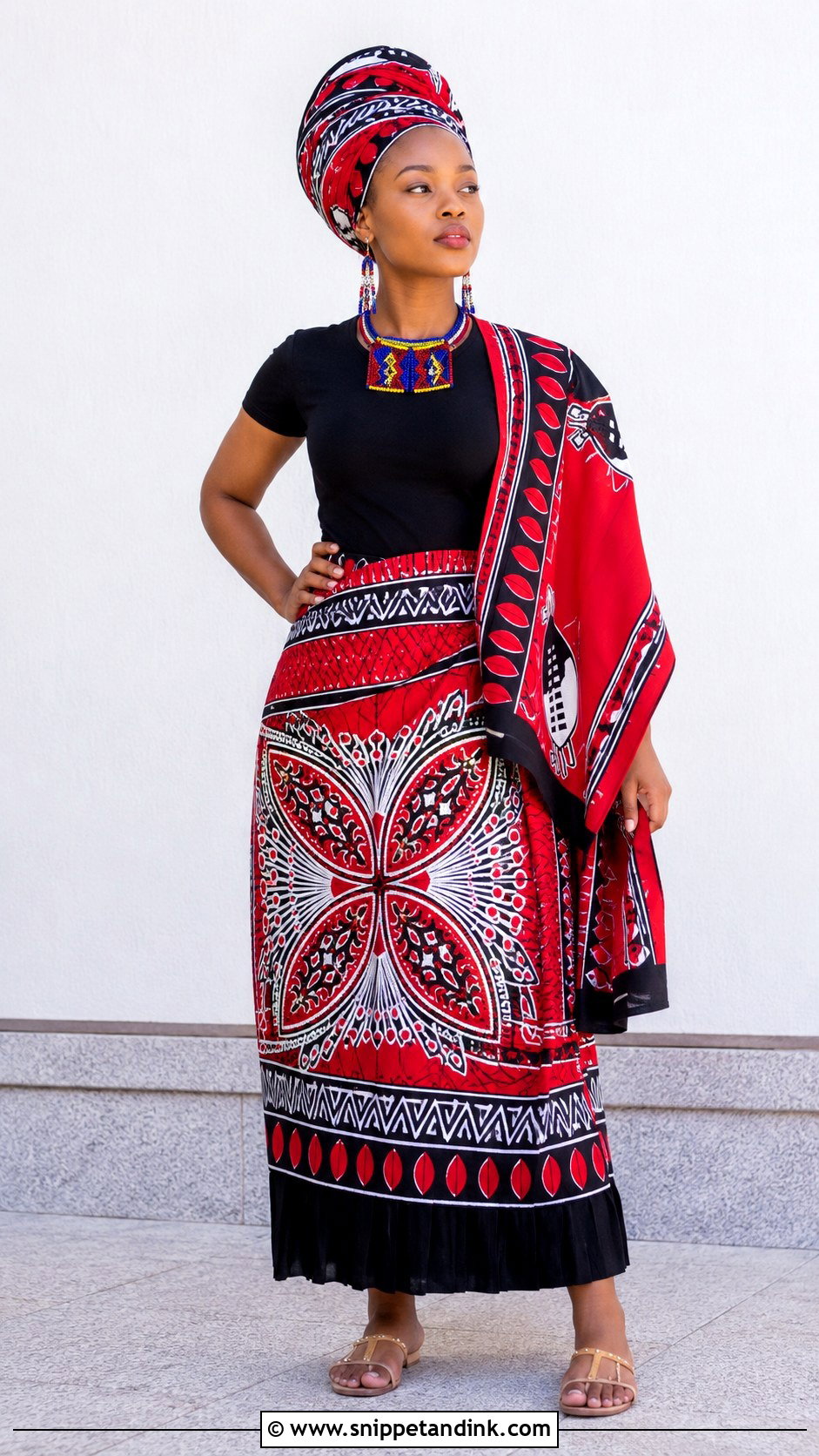
A headwrap and emahiya outfit depends on colour matching more than anything else. I pick the headwrap from a shade already in the print, never a new colour, so the head and body read as one outfit. Wrap the cloth across the body or around the waist over a fitted top and long skirt, which keeps everything secure. A smooth, structured wrap looks formal; a soft knot looks relaxed. The extra height from the wrap flatters most faces in photographs, and beaded earrings and simple sandals are all it needs.
8. Swazi Black Skirt Emahiya Outfit
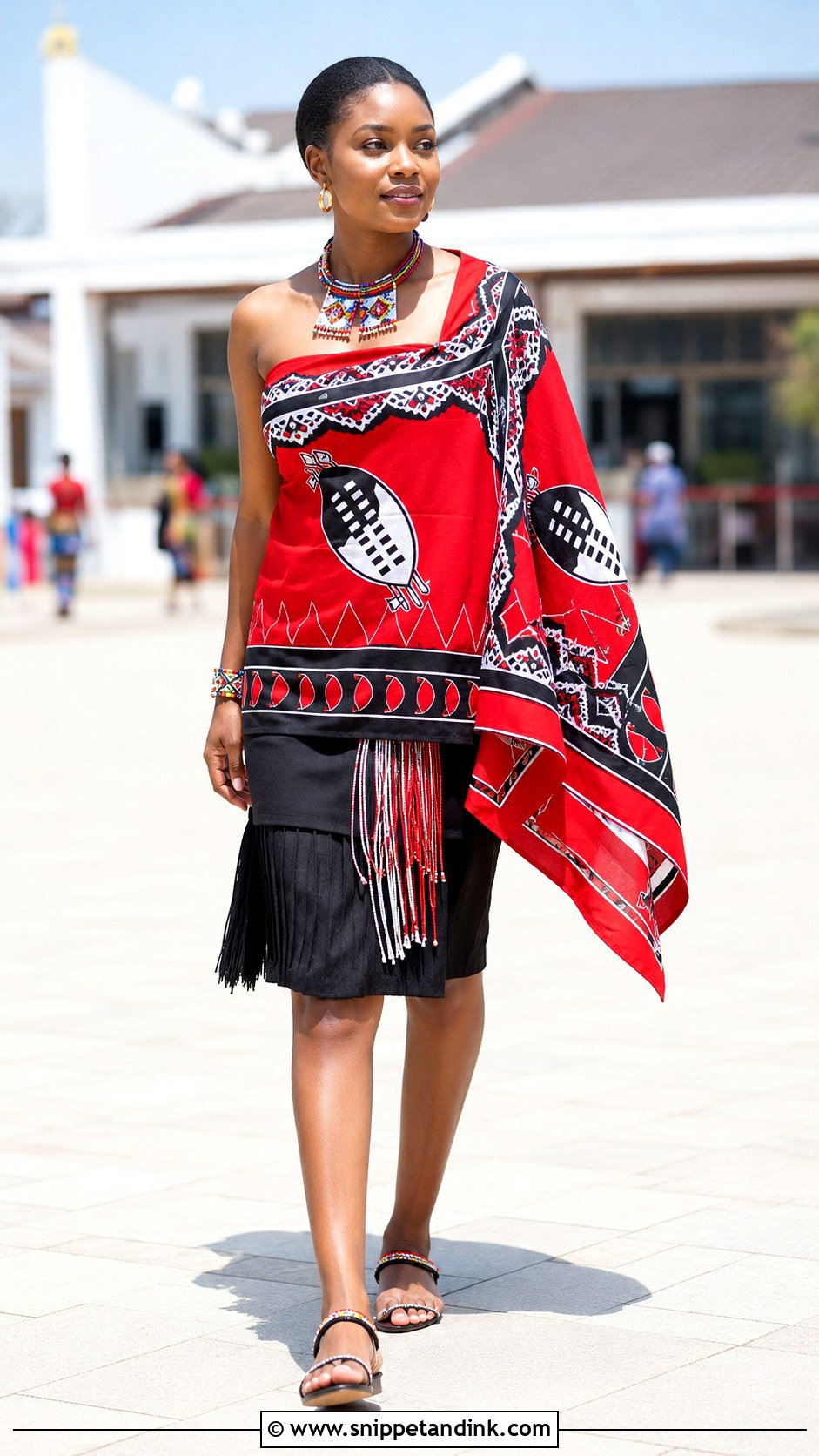
A black skirt is the quickest way to make a printed emahiya look sharp. It grounds busy colours and gives the eye somewhere to rest. Wear the cloth across one shoulder so it drapes diagonally over the torso, then add black sandals, beaded jewelry and either a matching headwrap or a simple hairstyle. I recommend this to women attending mixed cultural events, where the familiar black base looks neat beside other guests’ outfits while the cloth keeps the Swazi identity clear.
9. Swazi Red Emahiya Outfit
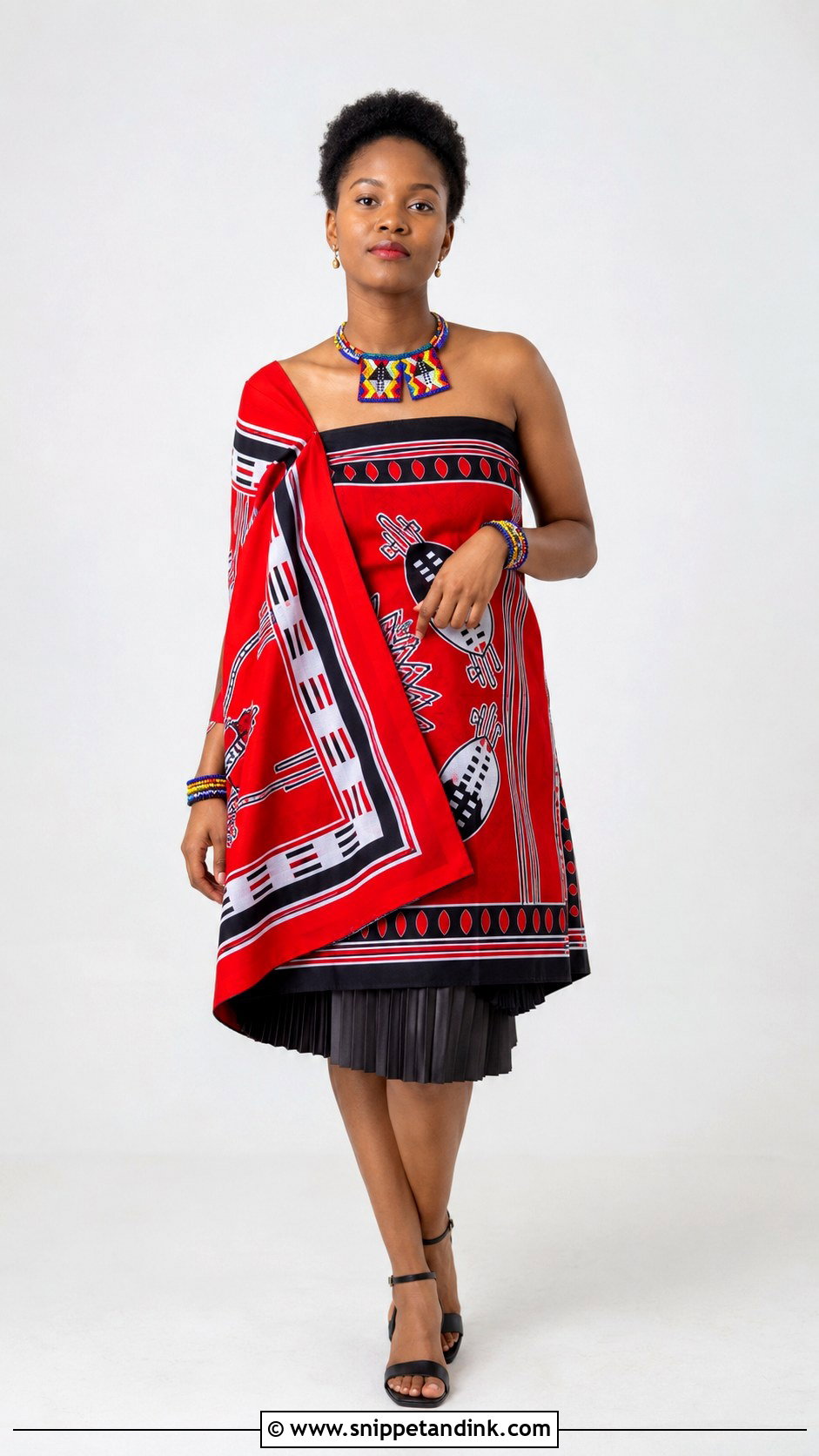
Red is proud and festive, and it’s the first thing anyone notices in a group photo. Balance it with black, white or tan underneath, usually a black wrap skirt and layered beads. Gold-tone earrings or natural wood pieces soften it. Watch your makeup: a strong red lip against a red cloth often looks flat in pictures, so I suggest a neutral or berry tone instead. Flat sandals keep it comfortable for outdoor events and long celebrations.
10. Swazi Blue Emahiya Outfit
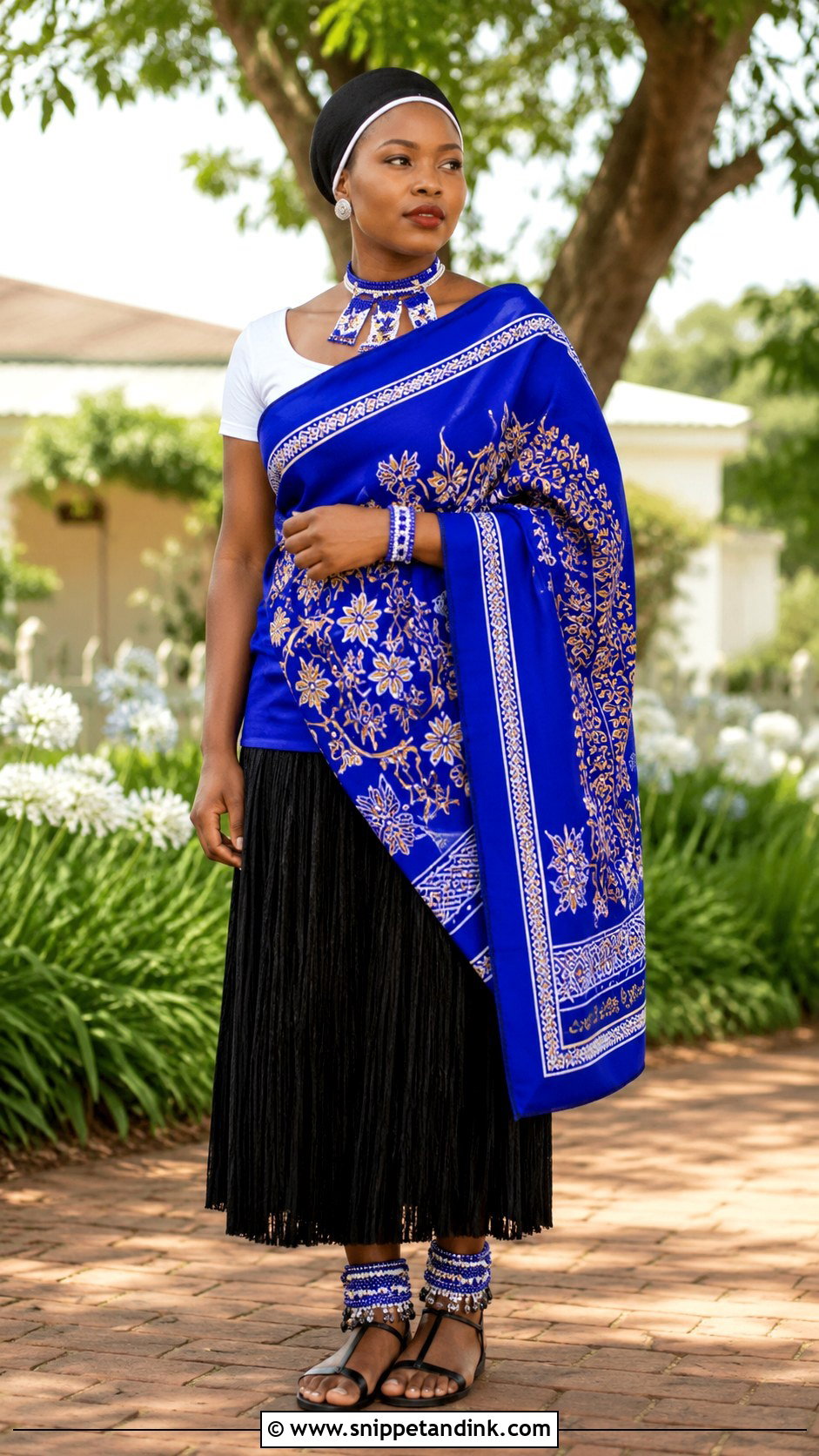
Blue cloth is calmer, and it suits both daytime and evening events. I pair it with a white blouse or black fitted top and a long skirt or wrap skirt for a graceful shape. Silver-tone jewelry, white beads or blue beadwork follow the cooler palette. Women who prefer less colour impact often feel more at ease in blue than in red. It also stands out well against green outdoor settings and plain walls. Flat sandals or low heels, depending on the venue.
11. Swazi White Top Emahiya Outfit
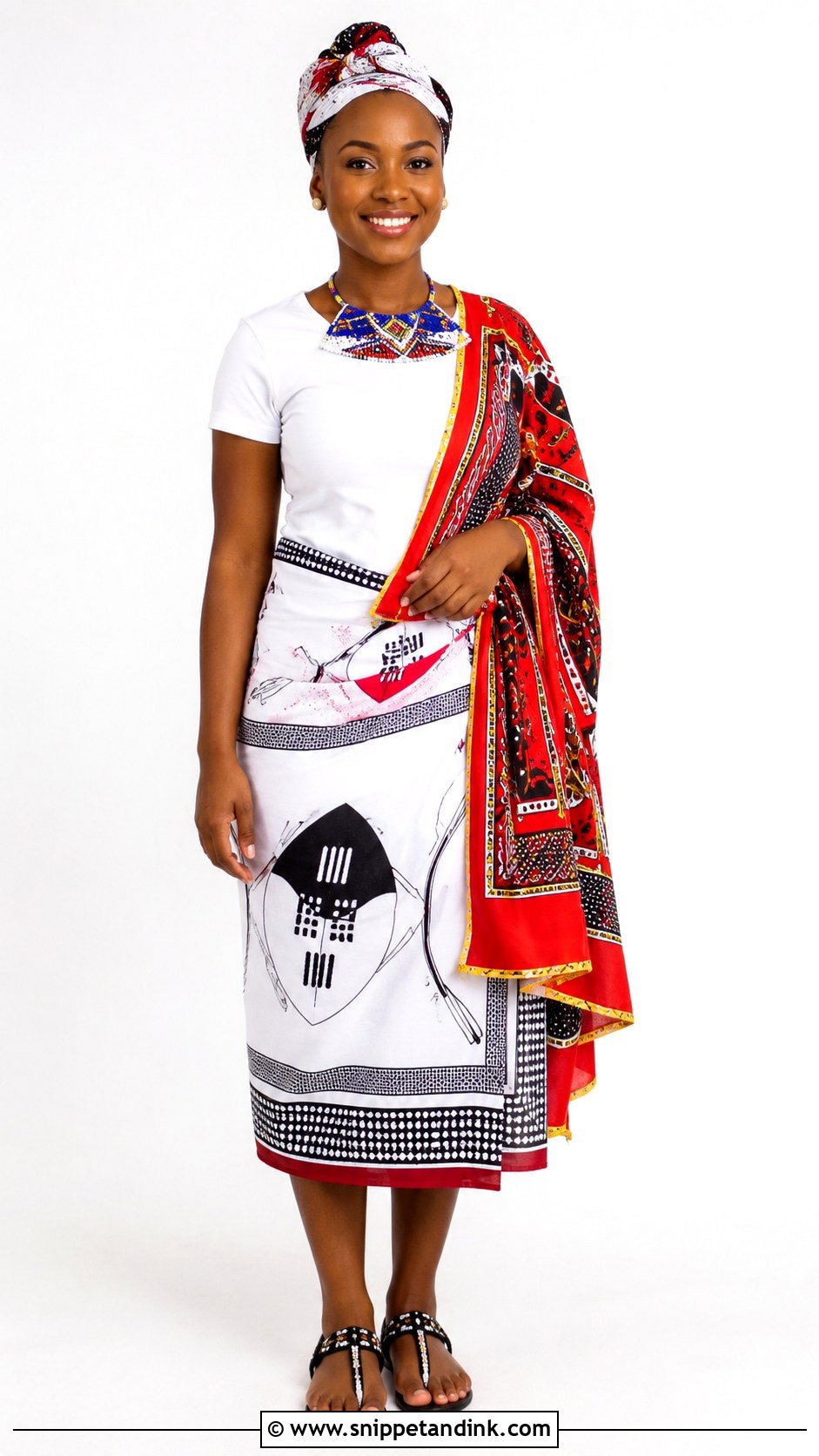
A white top is the easiest base for a beginner, because it never clashes with the print. Whatever the emahiya holds, red, blue, black, yellow or green, a white top gives it room. Wrap the cloth over one shoulder and pair it with a matching or plain black skirt. Keep the top fitted or neatly tucked; a loose white shirt bunches under the knot and looks untidy. Beaded necklaces, a simple headwrap and sandals finish it. School cultural days and daytime community events suit it well.
12. Swazi Modern Dress With Emahiya Outfit
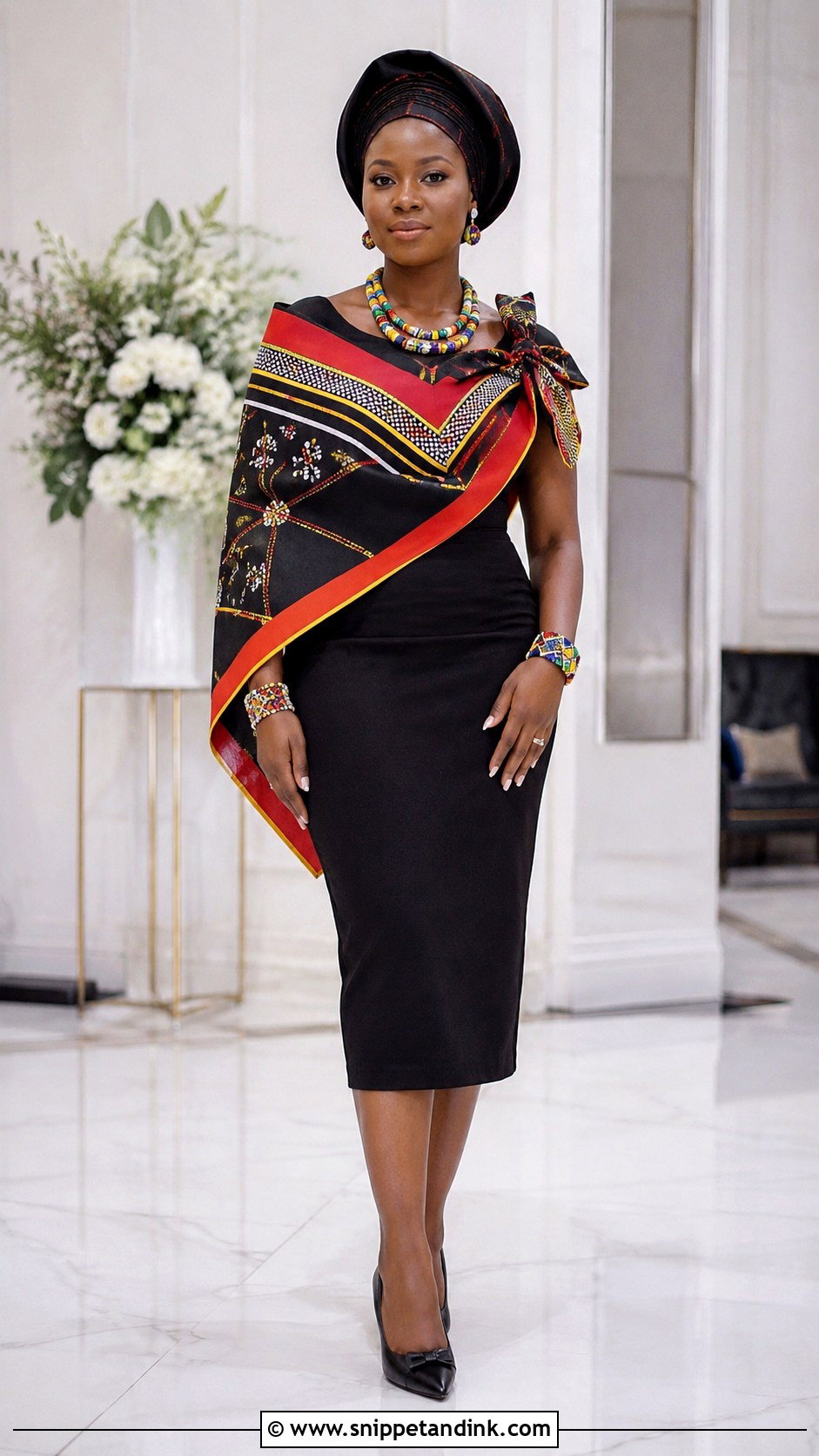
For women who want coverage and comfort, a plain midi dress with an emahiya draped across the shoulder like a ceremonial wrap is a sensible choice. Black, white, red or navy all work, but the dress must be plain; a printed dress fights the cloth and the outfit looks confused. Add beaded jewelry, a headwrap and low heels or sandals so the traditional influence stays clear. Receptions, heritage events and professional cultural programmes are its natural fit.
13. Swazi Two Piece Emahiya Outfit
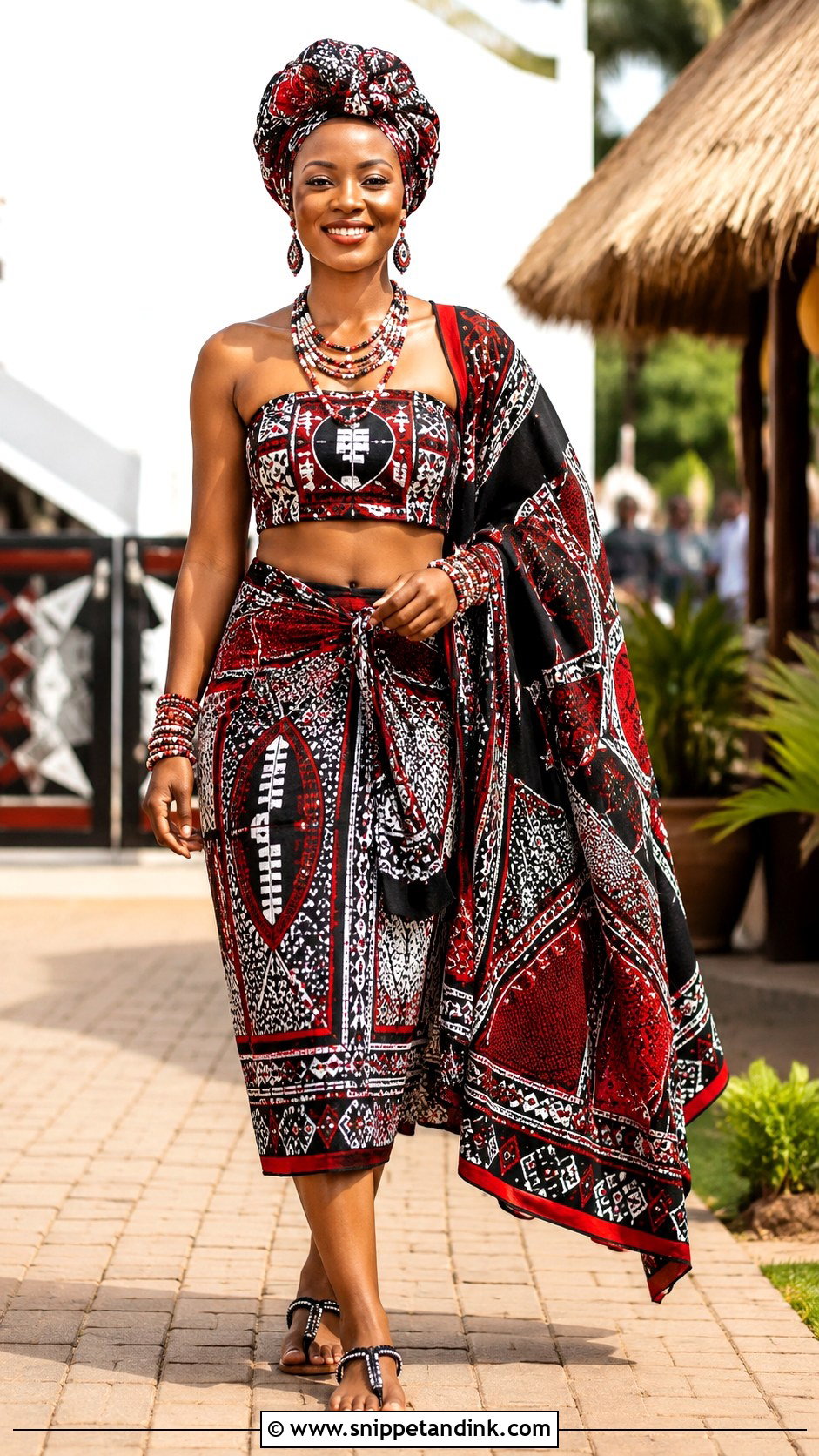
A two piece emahiya outfit uses matching cloth for a sewn top and a wrap or straight skirt. The practical advantage is that tailored pieces stay in place far better than loose wraps. When I brief a seamstress for one, I ask her to match the print at the side seams so the pattern doesn’t break across the body. A shoulder drape adds a more traditional finish. Beaded accessories, sandals and a neat headwrap complete it.
14. Swazi Long Skirt Traditional Outfit
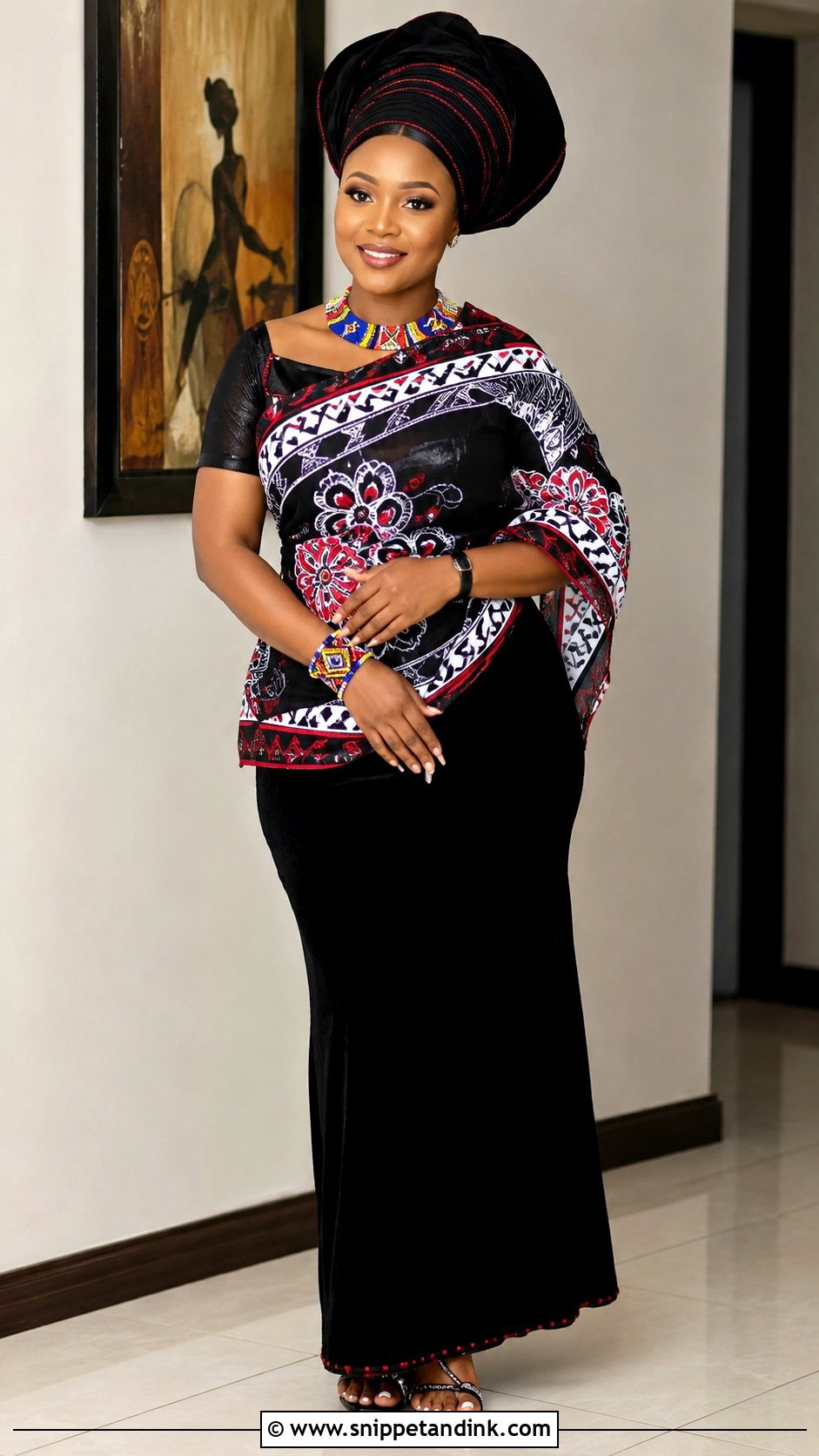
A long skirt traditional outfit reads as mature and composed. Choose a long skirt in black or matching emahiya print, then layer a lihiya across the upper body over a fitted top so the wrap sits smoothly. A beaded necklace, bracelets and a headwrap finish it. Check the hem length with the shoes you’ll actually wear, since a long skirt that drags on grass or a courtyard floor gets dirty fast. Family introductions, cultural ceremonies and heritage dinners suit it.
15. Swazi Short Wrap Skirt Outfit
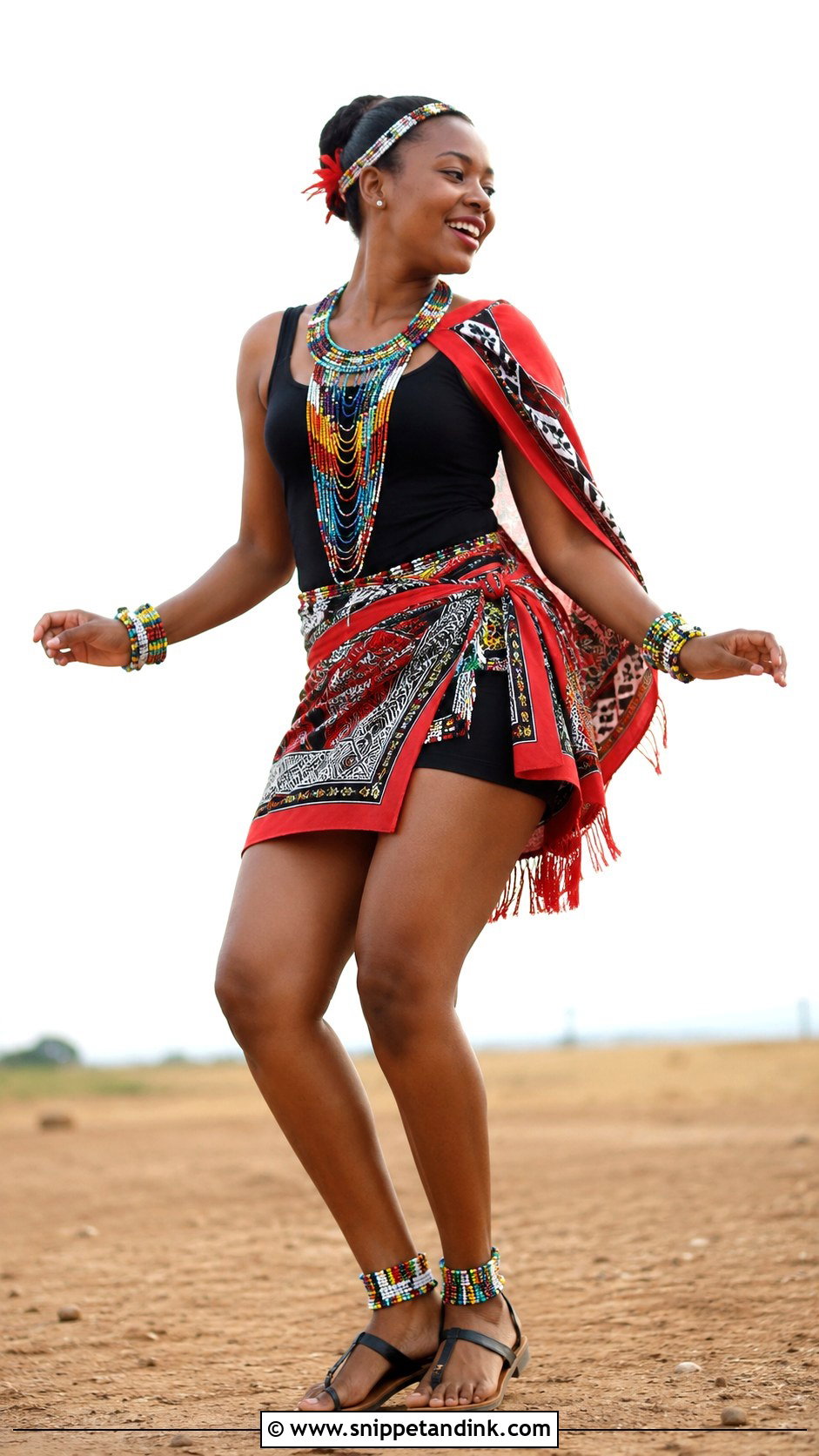
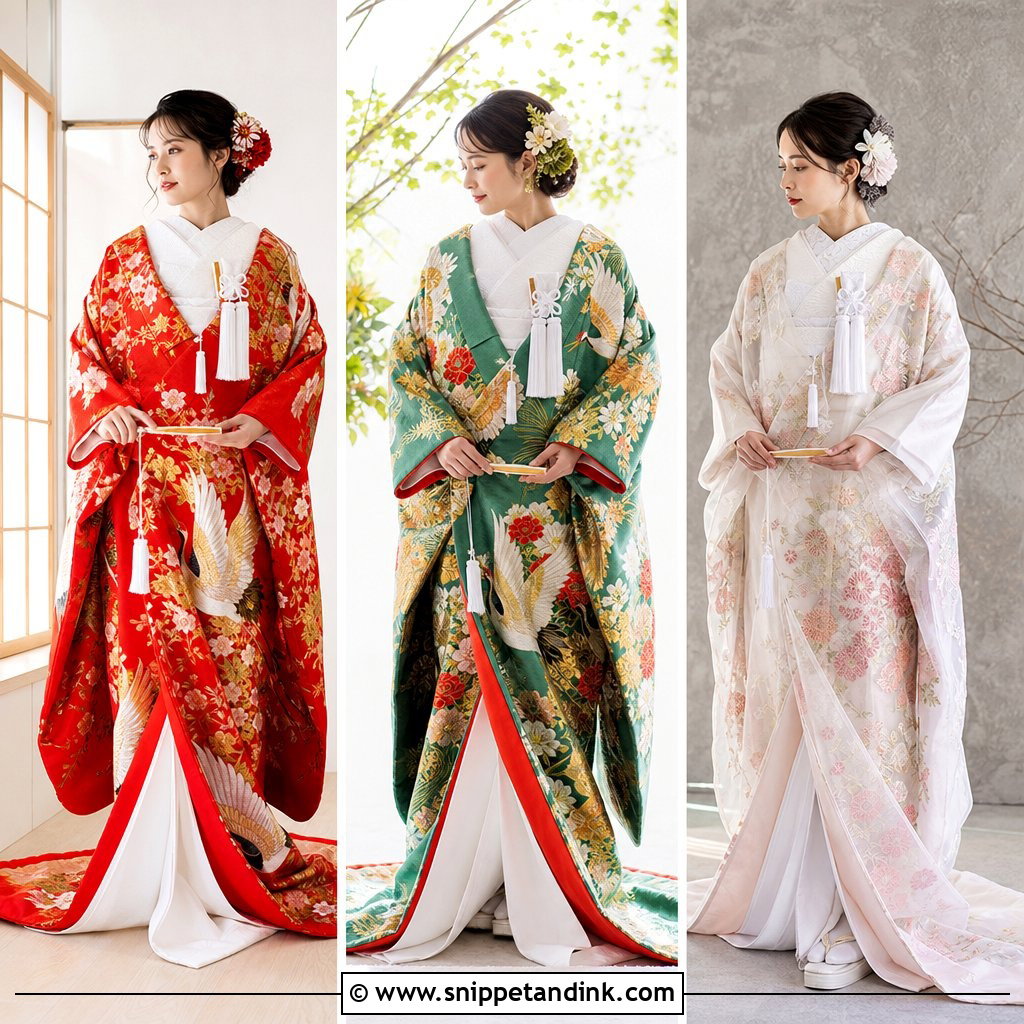
A short wrap skirt is youthful and easy to move in, which is why it shows up at performances and dance-led events. Wear it over a comfortable base layer with a fitted top in a solid colour, and add a narrow sash at the shoulder for a traditional note. Beaded anklets and bracelets move with you. Flat sandals are the only practical footwear. If modesty matters for the setting, leggings, a longer under-skirt or a tunic top adjusts it quickly. Keep it for informal programmes and photoshoots rather than family ceremonies.
16. Swazi Cultural Festival Outfit
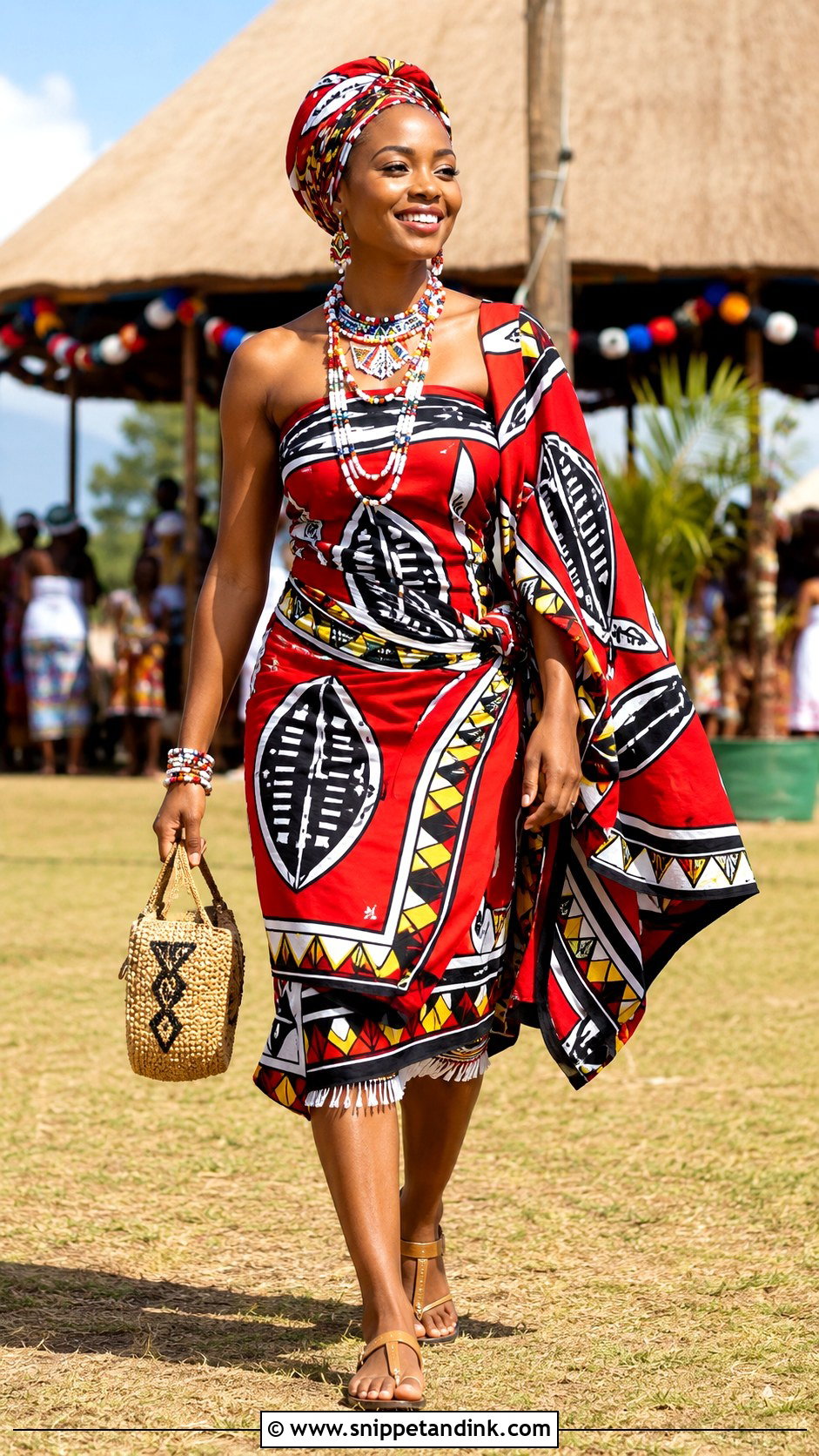
Festivals mean hours outdoors, so I dress for heat and walking first and colour second. An emahiya wrap skirt with a matching shoulder cloth, layered beadwork and a headwrap that’s pinned rather than just tucked will survive dancing. Choose breathable base layers and sandals with a back strap. A small woven or beaded bag holds essentials without breaking the look. Red, black, blue and white together are striking, but coordinated is better than perfectly matched.
17. Swazi Heritage Day Outfit
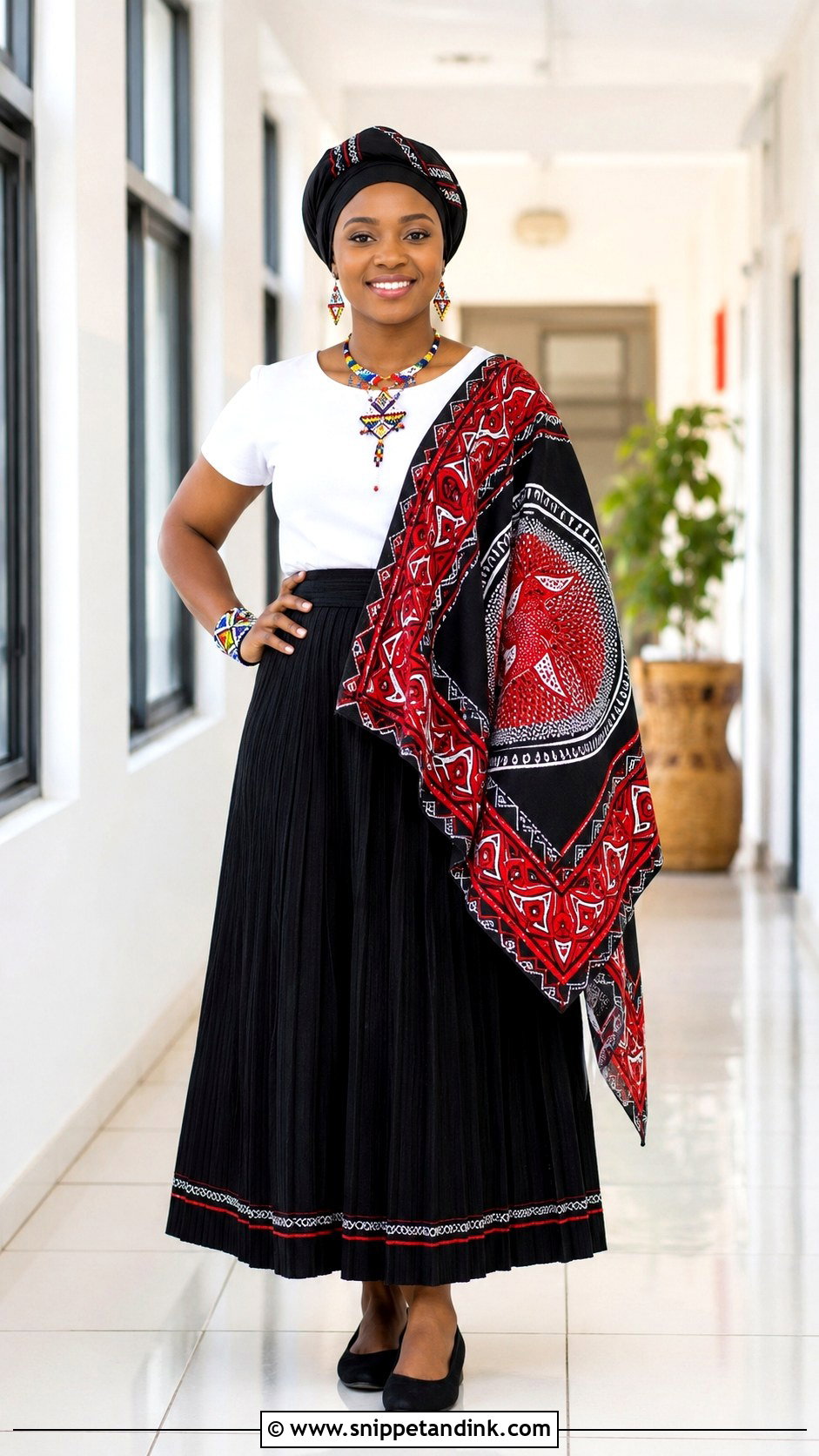
Heritage day outfits for school or the office have to work in a modern setting. A printed emahiya over a simple top, paired with a long skirt, tailored black trousers or a wrap skirt depending on the dress code, does exactly that. Beaded jewelry and a headwrap make the cultural reference clear. For formal workplaces I’d choose low heels or clean flats; for casual ones, sandals. If colleagues ask about it, the outfit is simple enough to explain in a sentence, which matters more than people think.
18. Swazi Photoshoot Traditional Outfit
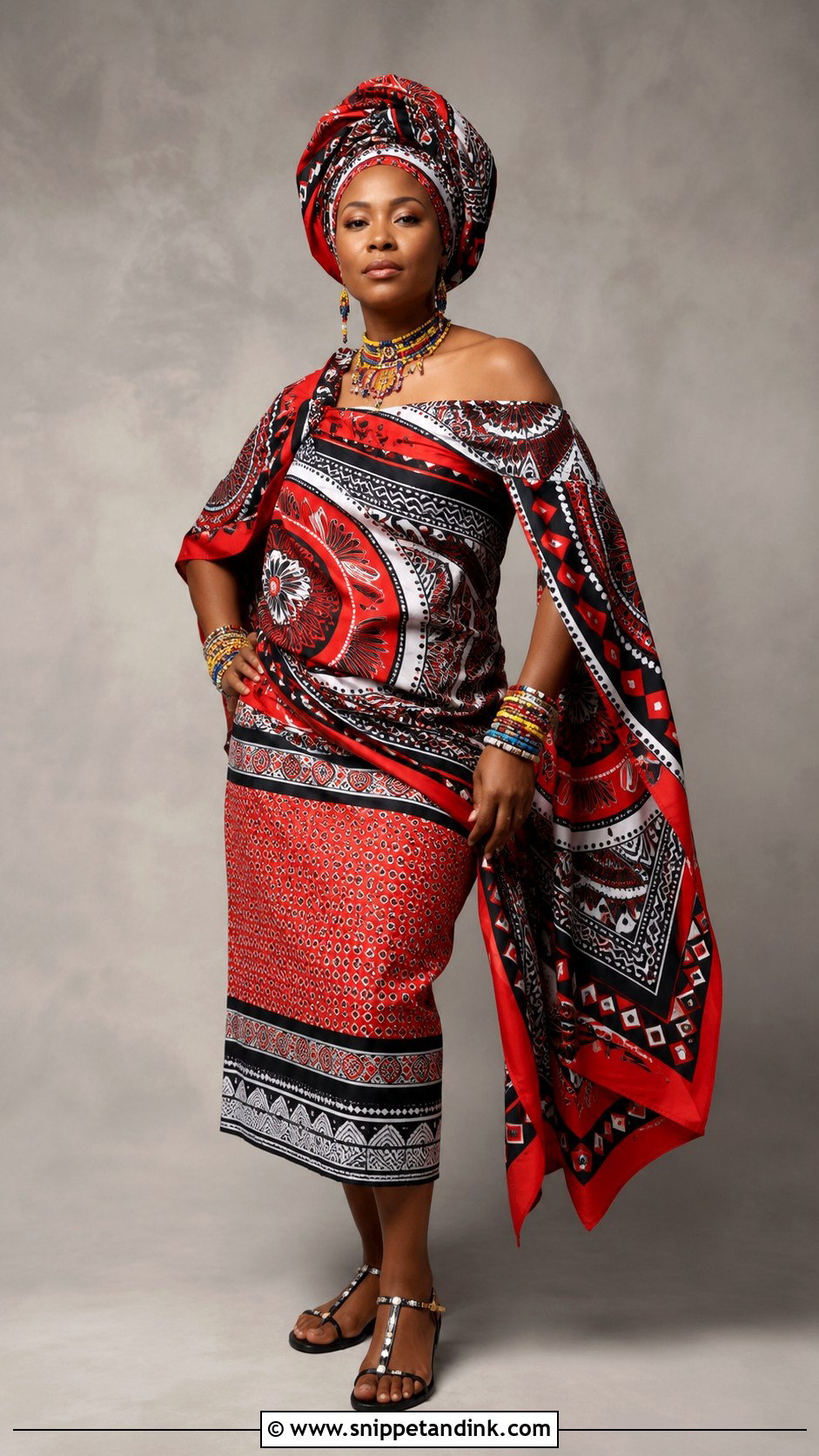
For a photoshoot, cloth that looked neat in the mirror can slip within ten minutes of posing, so I pin or tuck every layer before the first frame. Choose an emahiya with bold patterning and style it across one shoulder over a matching wrap skirt. Layer beads so they show in both close-ups and full-length shots. A headwrap adds height; sandals keep it grounded. Open grassland, a plain studio backdrop or a neutral wall keeps the attention on the outfit.
19. Swazi Graduation Traditional Outfit
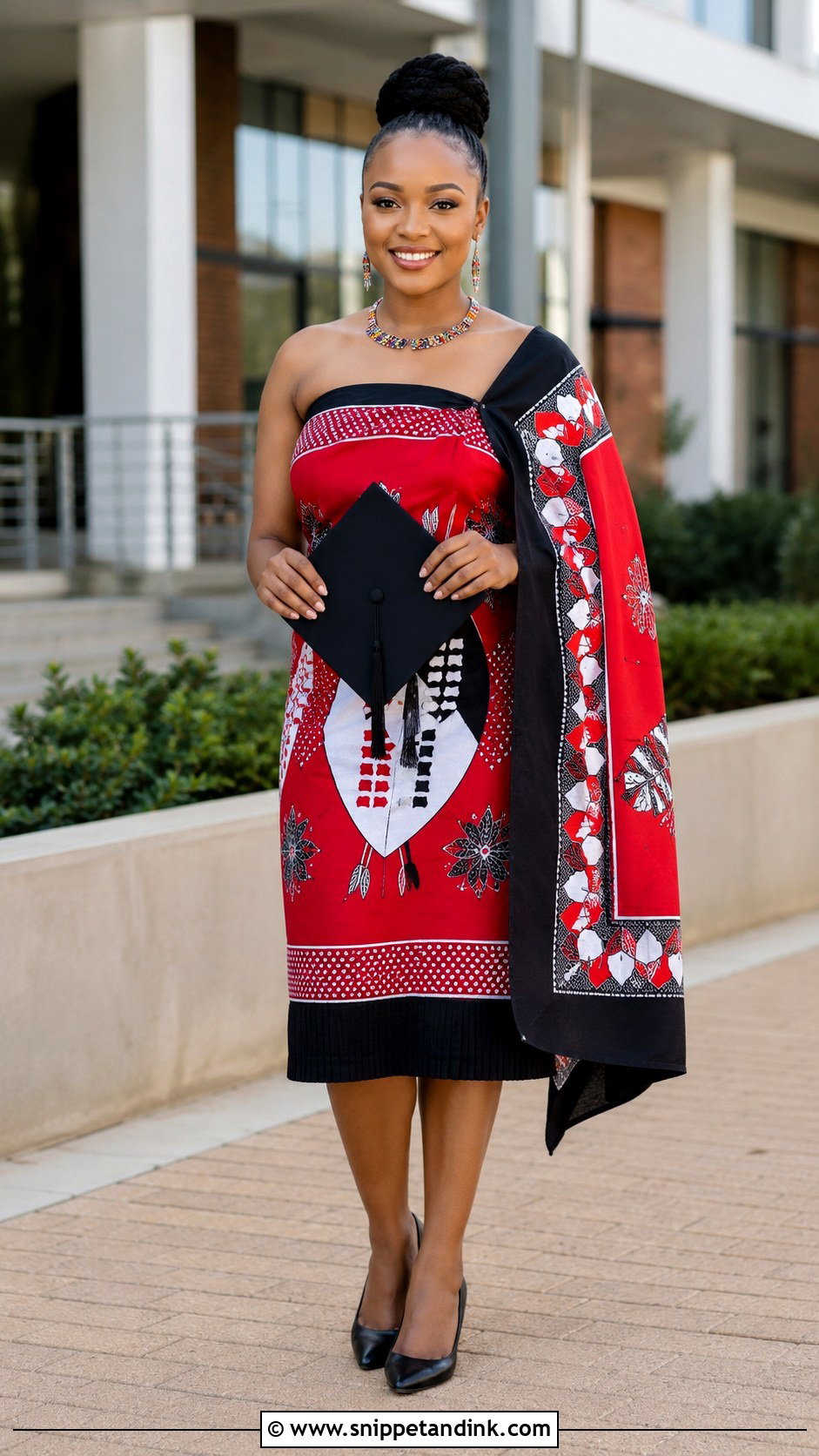
Graduation is one of the occasions where an emahiya drape over a modern dress or skirt suit makes the most sense. Pick a cloth colour that sits well with your academic gown if one will be worn over it, and keep the neckline clear, since gown hoods sit there. Small beaded earrings or a fine necklace are enough. Low heels or flats are a must for crossing a stage. Pin the drape securely so it doesn’t slide when you shake hands and accept your certificate.
20. Swazi Family Ceremony Outfit
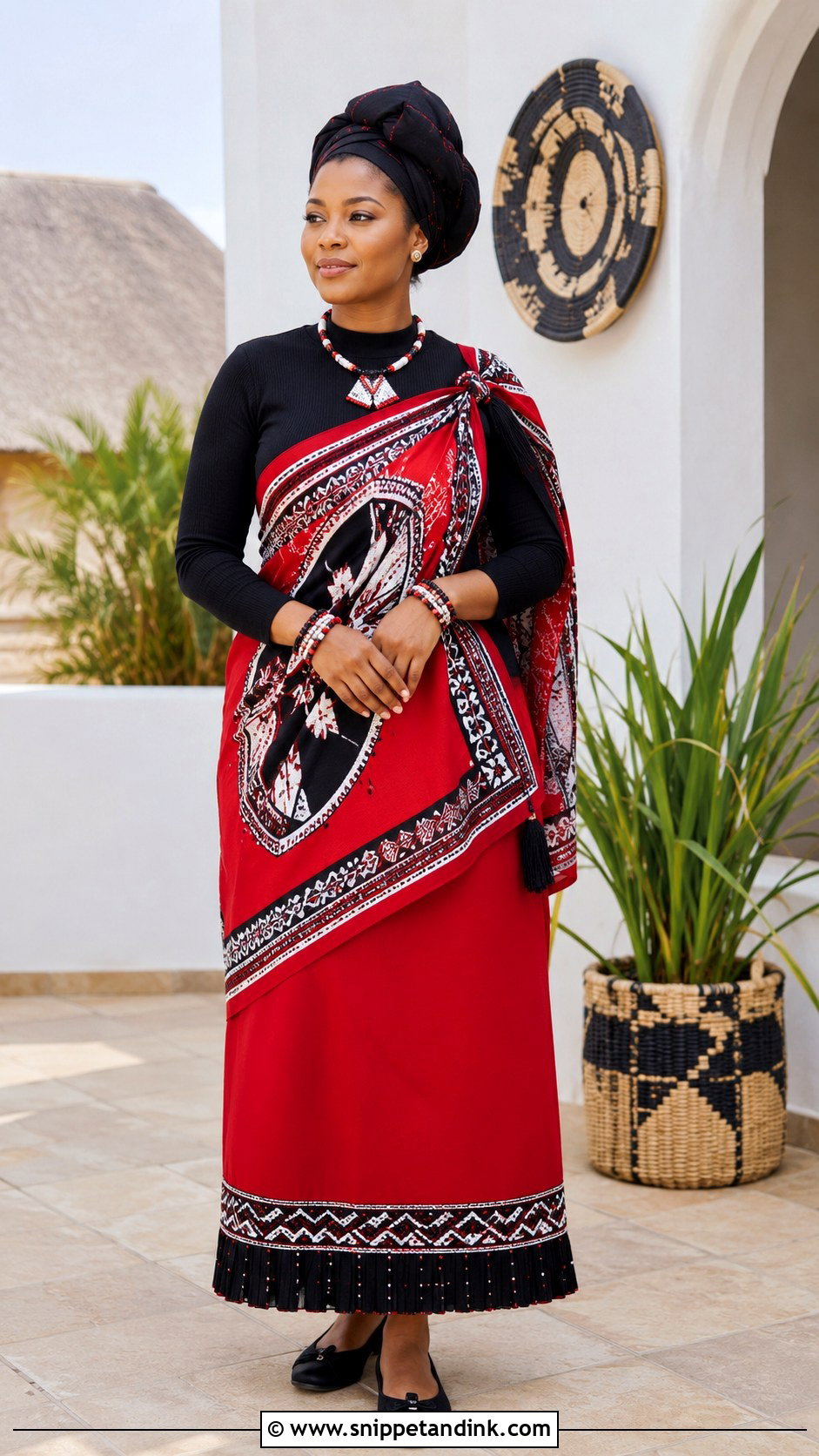
Family ceremonies call for respect above fashion, because you’ll be greeting elders and relatives all day. A long skirt with a lihiya across the upper body is the safe choice, plus a headwrap if the household expects covered styling. Keep beadwork modest. Sandals or flats should handle grass, courtyard ground and indoor floors. Earth tones, black, red and deep blue all fit. When I’m unsure of a family’s expectations, I dress a woman more conservatively, since it’s easy to remove a layer and impossible to add one.
21. Swazi Mother And Daughter Outfit
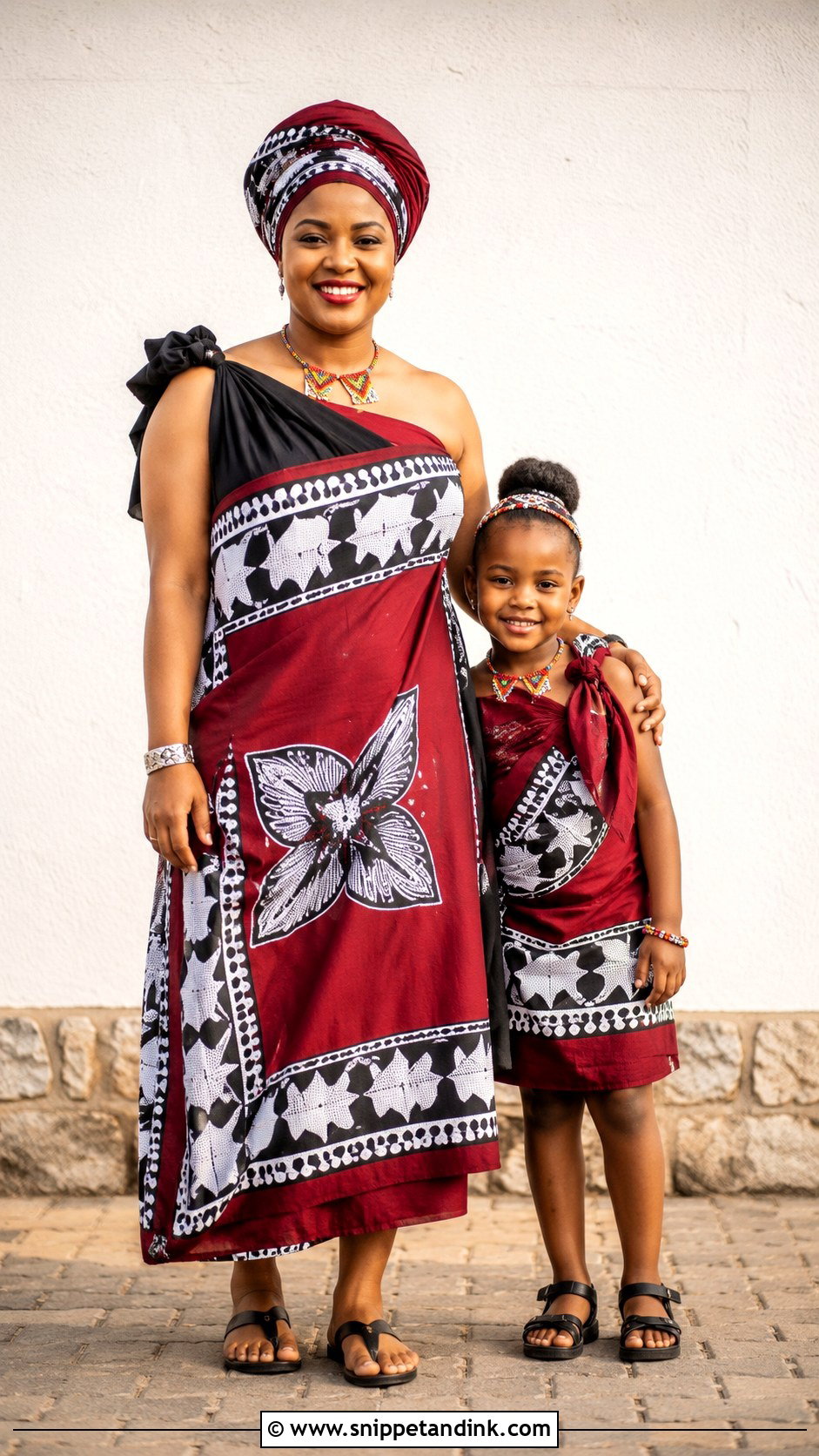
Mother and daughter outfits work best when the colour connects them but the cut suits each age. The mother wears a longer skirt with a shoulder-draped emahiya; the daughter wears a shorter wrap or a simpler cloth. For children, I avoid long bead strands that can catch or snap during play and choose short, sturdy pieces instead. Comfortable sandals for both. Heritage photos and cultural days suit this pairing, and nobody needs to be dressed identically for it to look planned.
22. Swazi Plus Size Traditional Outfit
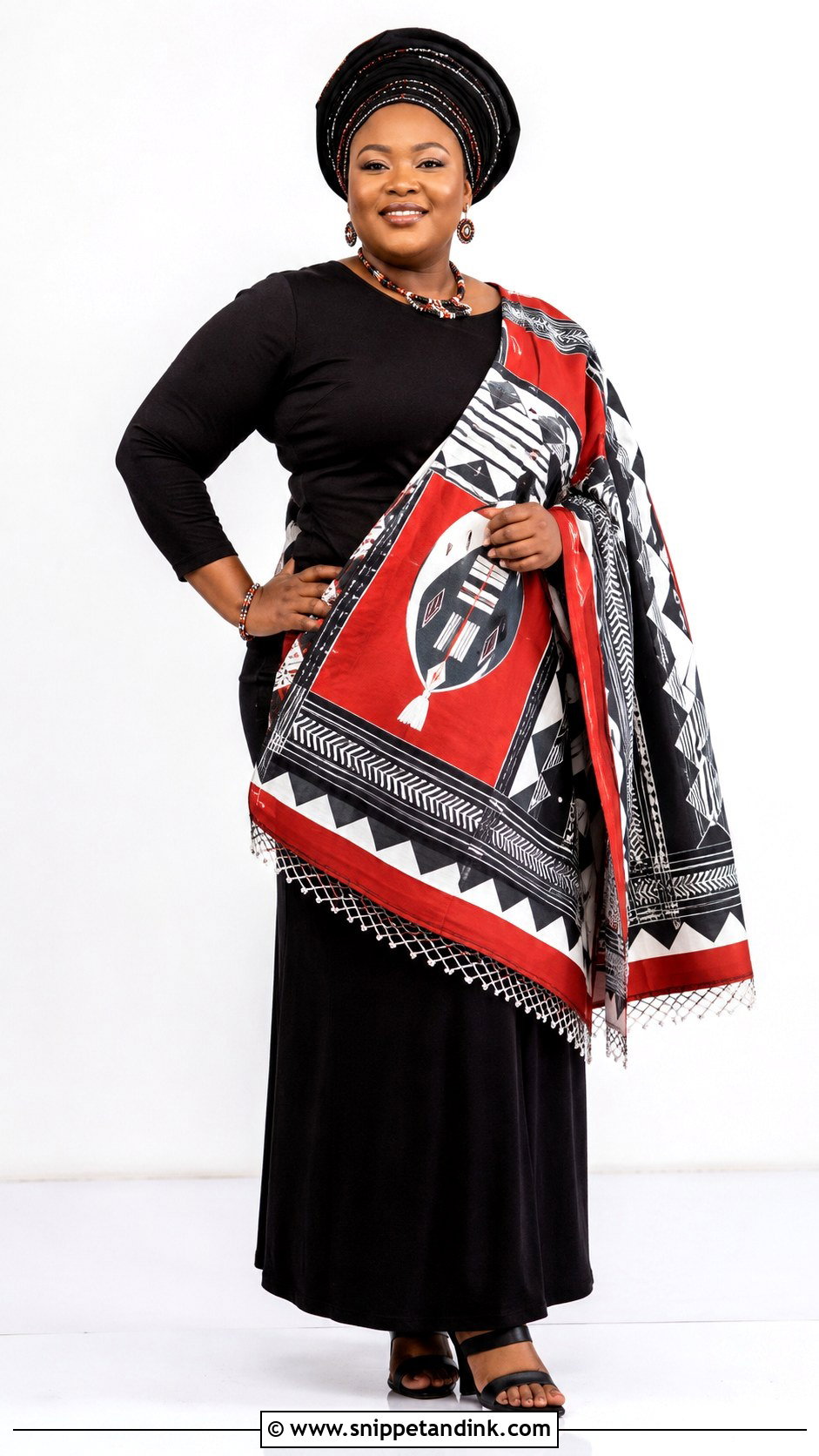
For a plus size traditional outfit, the size of the cloth matters most. A wider emahiya gives a better drape and full coverage, while a standard one stretched across the body pulls at the knot and creates a tight line. A smooth stretchy top underneath stops bulk. Wear the wrap diagonally for shape, or over both shoulders for more coverage. Medium-scale beads balance the proportions, and bold prints sit well on fuller figures when the base pieces are plain. Supportive sandals or low heels complete it.
23. Swazi Simple Traditional Outfit
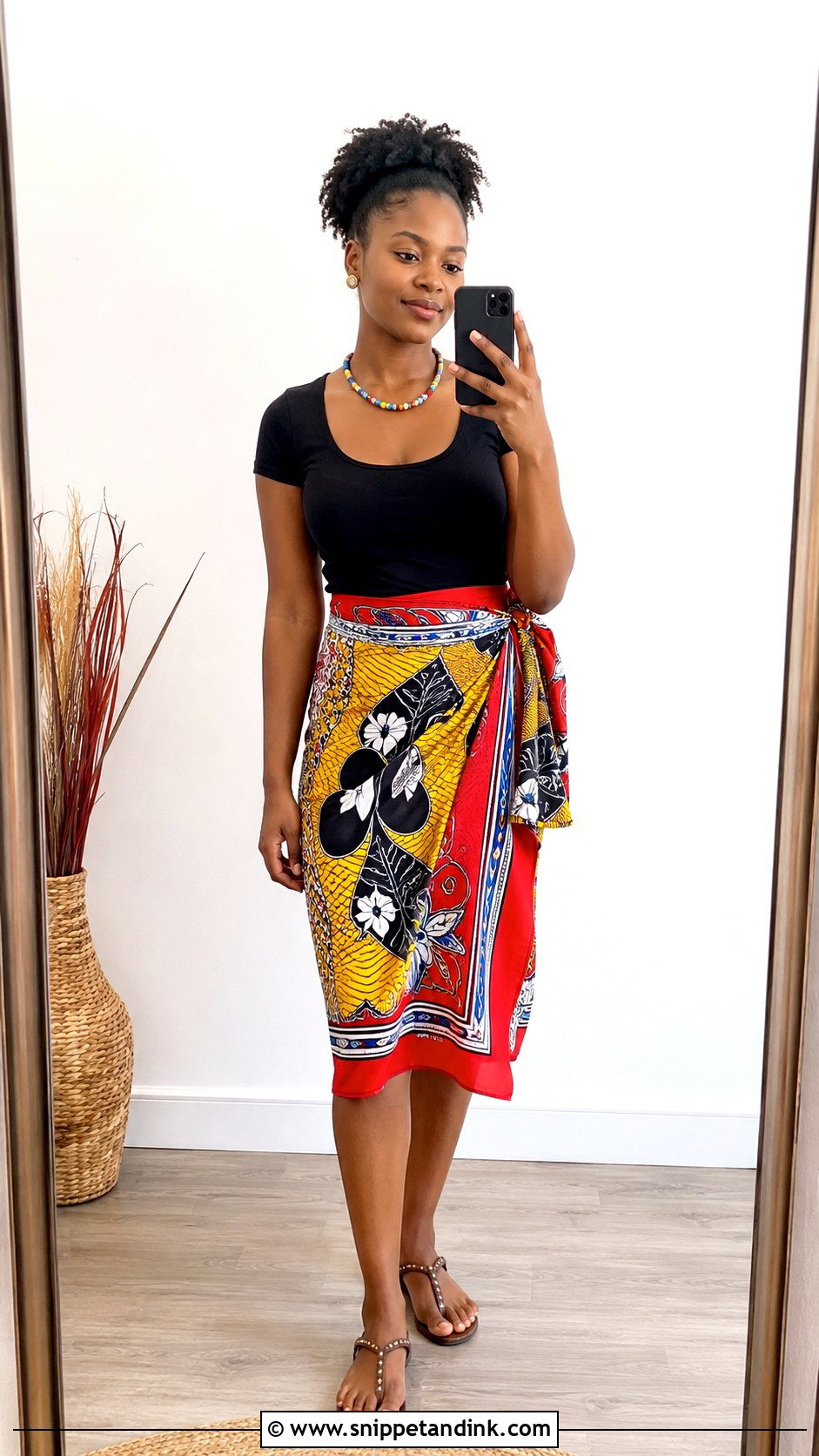
Trying Swazi attire for the first time? This is the version I’d start with. One emahiya as a skirt, a plain top in black, white or navy, a single beaded necklace, small earrings and flat sandals. That’s it. Add a second cloth over the shoulder if the event is more traditional. What makes it look right is clean wrapping and balanced colour, plus a neat hairstyle or soft headwrap.
24. Swazi Elegant Traditional Outfit
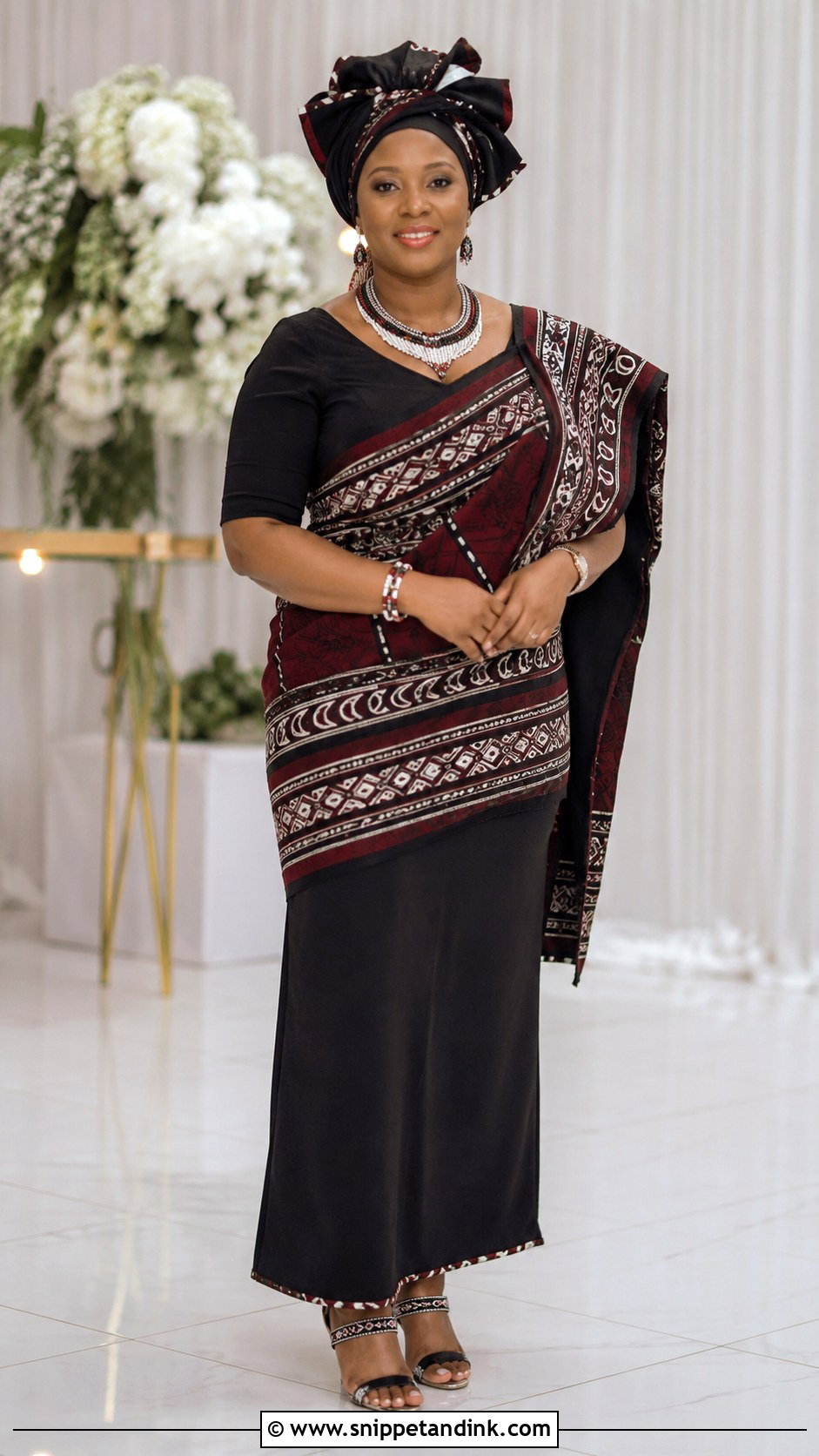
For a formal cultural event, quality shows. Choose an emahiya with rich colour and crisp printing, and pair it with a long black skirt, fitted blouse and a carefully tied shoulder drape. A structured headwrap, polished beads and low heels or dressy sandals finish it. This outfit isn’t about wearing the most pieces; it’s about every piece being pressed, tied neatly and placed with care. I iron the cloth along its fold lines the night before, because creases show clearly in formal photos. Receptions and important family occasions are where it belongs.
25. Swazi Casual Traditional Outfit
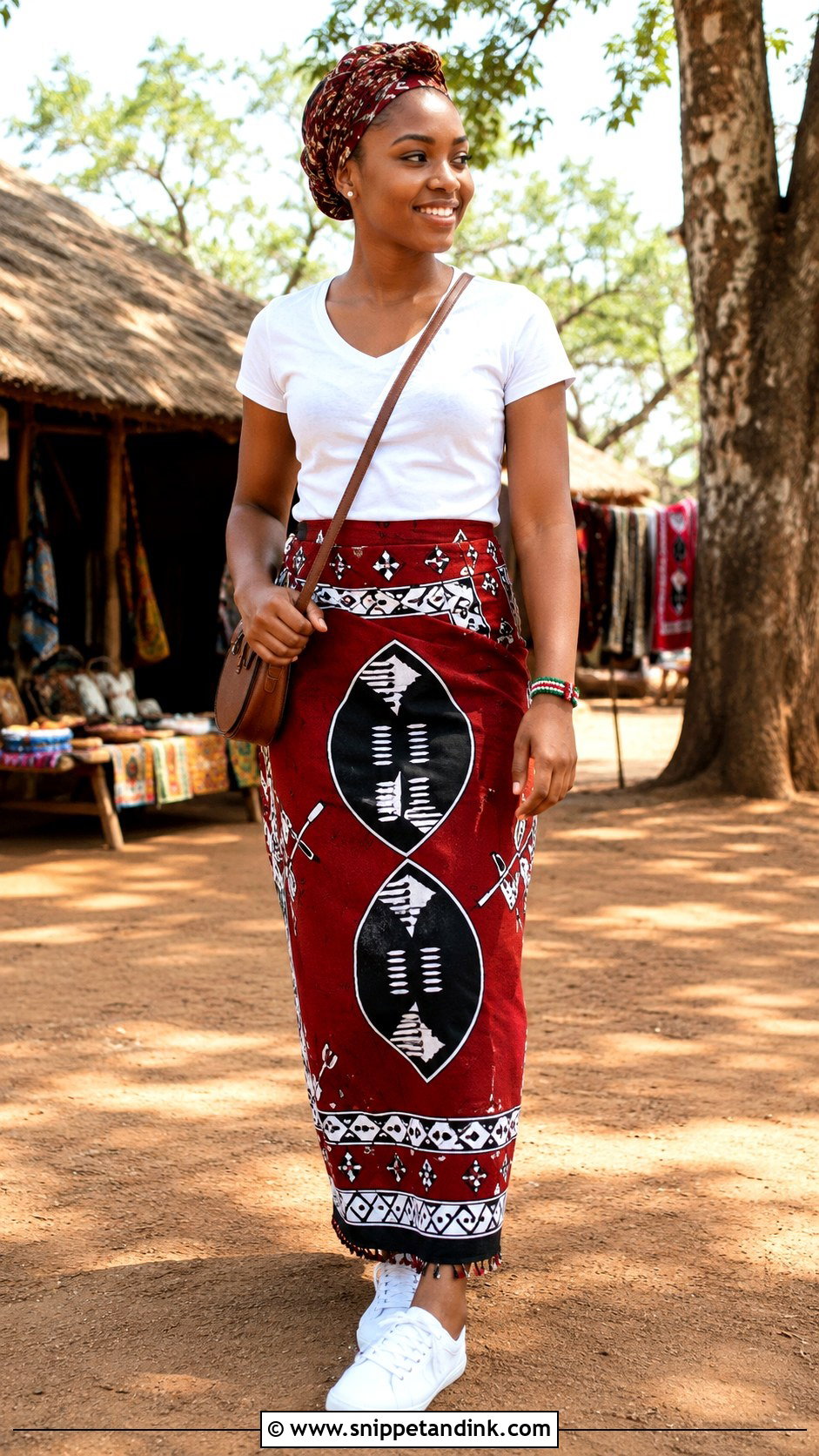
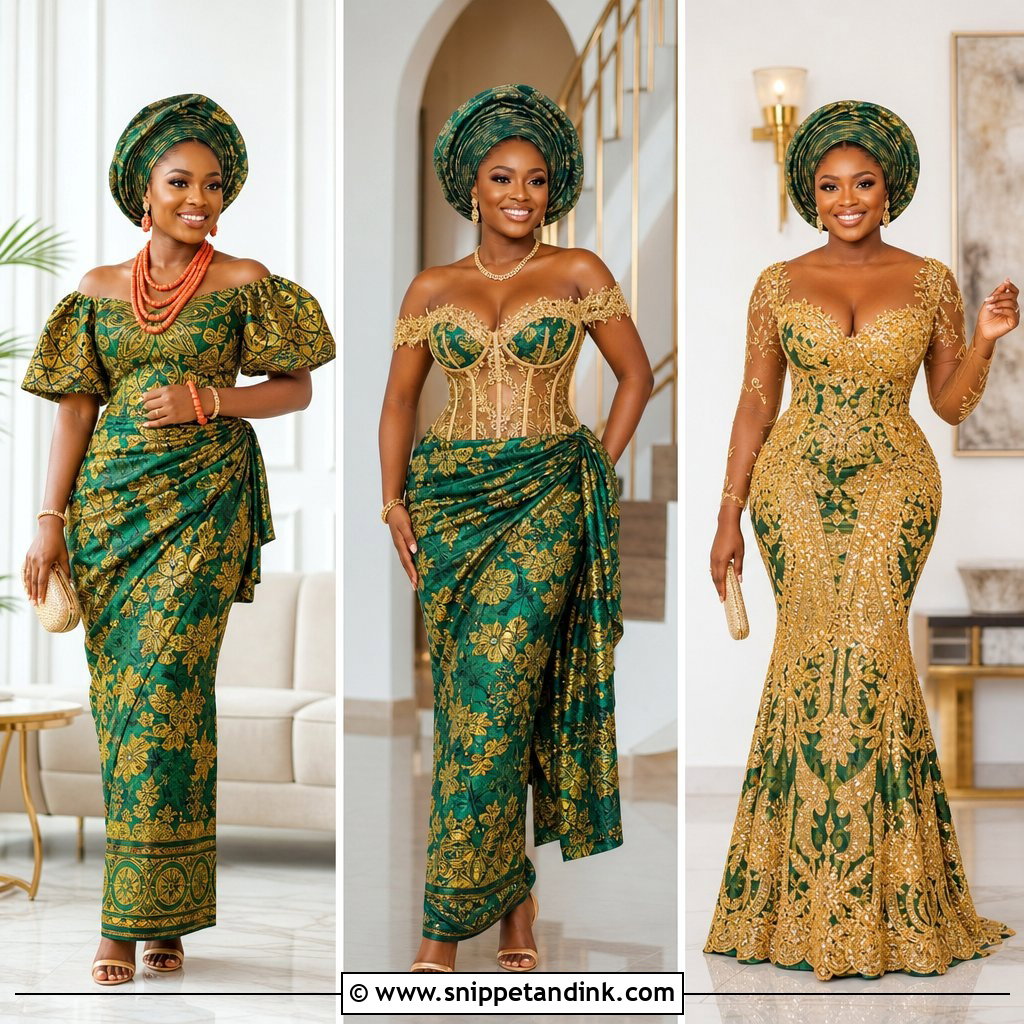
Casual heritage dressing is relaxed, but it still shouldn’t look like a costume. Wrap an emahiya as a skirt over a plain T-shirt or fitted top, add sandals, a small beaded bracelet and natural hair or a casual headwrap. Clean sneakers can replace sandals for a street-style twist, as long as the cloth stays the main feature. Cultural markets, creative events and relaxed family days suit it. Keep movement easy and styling clean.
Dressing as a Guest at an Umtsimba or Family Ceremony
The traditional Swazi wedding, umtsimba, is a family and community event with its own order of songs, gifts and rituals, and the bride’s family and the groom’s family each have roles. Guests dress to support that, not to stand out from it. My advice for women attending one, especially for the first time:
- Ask the host family what’s expected. Some households want married women’s heads covered at all times; others are more relaxed.
- Respect what belongs to others. The sidvwaba and certain beadwork mark married women, and the bride’s ochre and attire are hers alone, so don’t borrow them as styling details.
- Dress for the ground. Ceremonies often move between homestead yards, grass and halls, so flat shoes with a back strap beat heels every time.
- Plan for sitting on mats or low benches. A long wrap skirt that lets you sit modestly matters more than a perfect drape.
Looking after the cloth and the beads afterward
Printed emahiya cloth is usually cotton and washes well, but bright dyes can bleed the first few times, so I wash new cloth alone in cold water and dry it out of direct sun. Beadwork should never go in the wash. Wipe it with a barely damp cloth, let it dry flat, and store each piece separately so strands don’t tangle and threads don’t snap.
Wearing the Cloth With Its Meaning Intact
Swazi attire gives women many ways to celebrate culture, from a single emahiya wrap to long skirt looks, headwrap pairings, beadwork and modern dress combinations. What matters most is knowing what the clothing means and dressing for the occasion, your age group, and the expectations of the family or community you’re joining. Bold red cloth, calm blue prints, black skirt pairings and coordinated family looks all have their place. Wear the cloth with care, tie it well, and ask when you’re not sure.
You'll Like These Ideas:


Leave a Reply