
Shopping for bridal attire starts out exciting and turns overwhelming somewhere around the third appointment, usually because everything looks good on a hanger. What narrows it down is less about taste than about context: the venue floor, the season, how long you’ll be standing, and whether you plan to dance or mostly sit. The twenty outfits below run from ball gowns and slip dresses to suits, short dresses and a reception change, each styled with shoes, jewelry and a veil. Copy one exactly or borrow details from several. I’ll flag where each look tends to go wrong as well as where it shines, because in my experience that’s what usually decides it.
Matching Fabric Weight to the Month You’re Marrying In
Silhouette gets the attention in fitting rooms, but the weight and weave of the fabric decide how you’ll feel at hour six. I ask for the date and the venue before I pull a single sample, because a gown that’s comfortable in an air-conditioned October ballroom can be miserable at an August garden ceremony.
Warm months and outdoor heat
Chiffon, georgette, light organza and soft tulle breathe and don’t trap heat against the body. Ask what the lining is made of, since a synthetic lining under a lace bodice can feel like cling film in humid weather. Heavy satin and mikado hold heat and can show perspiration, which is worth knowing before you fall for one.
Cold months and drafty venues
Satin, mikado, crepe and heavier lace look right in low winter light and keep you warmer. Long sleeves, a cape, a faux fur stole or a tailored coat solve the outdoor portraits. Velvet is a lovely winter option, but it marks when crushed, so it needs careful handling in the car.
Spring and autumn swings
Shoulder seasons are the trickiest because the temperature moves so much between noon and night. My advice is to dress for the afternoon peak and plan a cover-up for the evening, not the other way round. There’s only so much you can take off a gown once you’re in it.
1. Bridal Ball Gown With Cathedral Veil
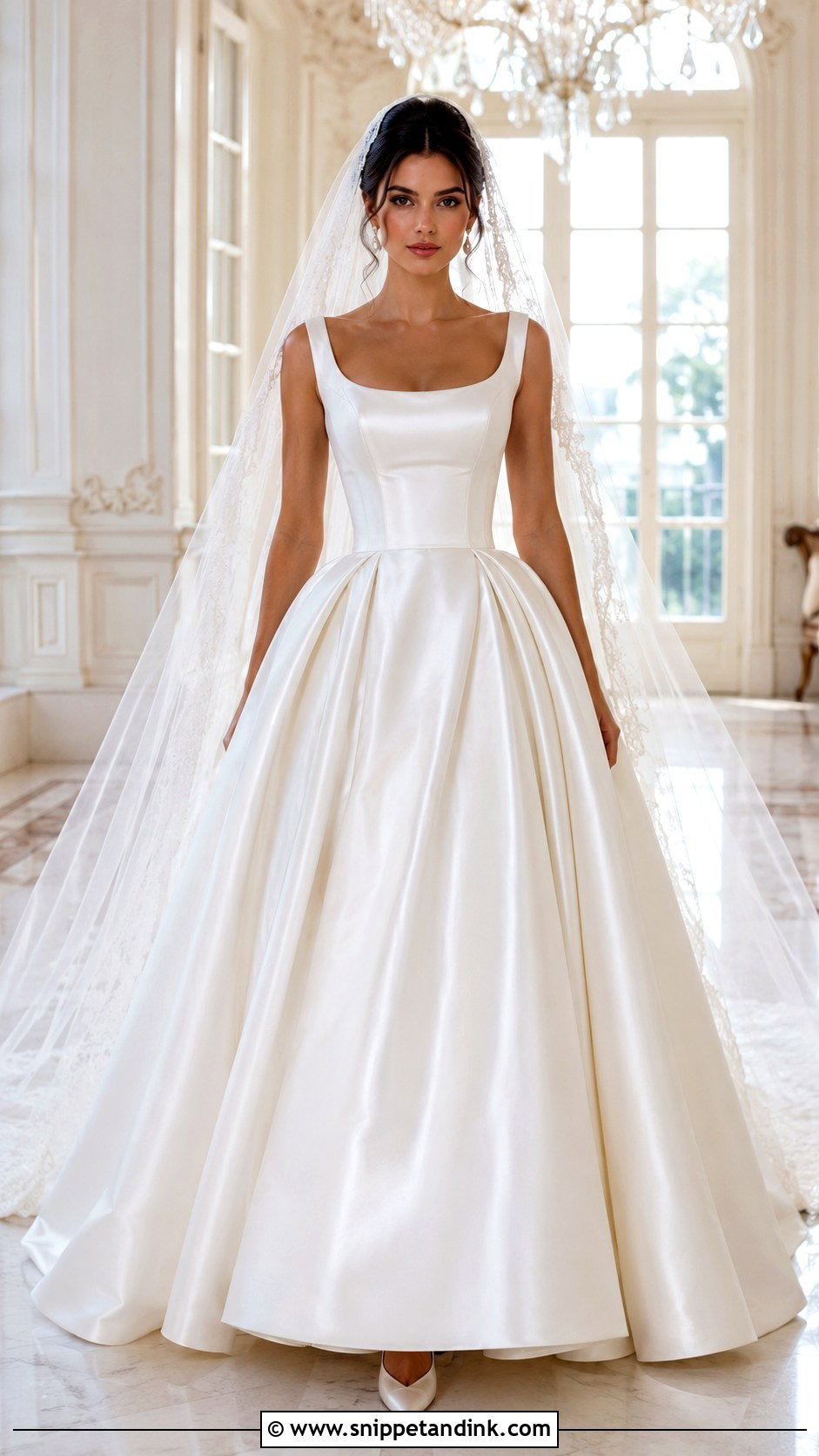
Ball gowns are about the waist. A defined waist and a structured skirt give the classic shape; satin or mikado holds it architecturally, while layered tulle moves more softly. With that much skirt below, the bodice has to do real work, and wide straps or an off-the-shoulder line help anchor it. Pointed pumps, pearl drops and a cathedral veil reaching past the train complete it. Go delicate on the necklace, or skip it. A low chignon keeps the veil comb and bodice visible. One practical note from fittings: a full skirt needs a bustle plan, so ask how many points it takes and who on your side will learn to do it. Ballrooms and historic estates give the skirt and veil the room they need.
2. Bridal A-Line Gown With Pearl Accessories
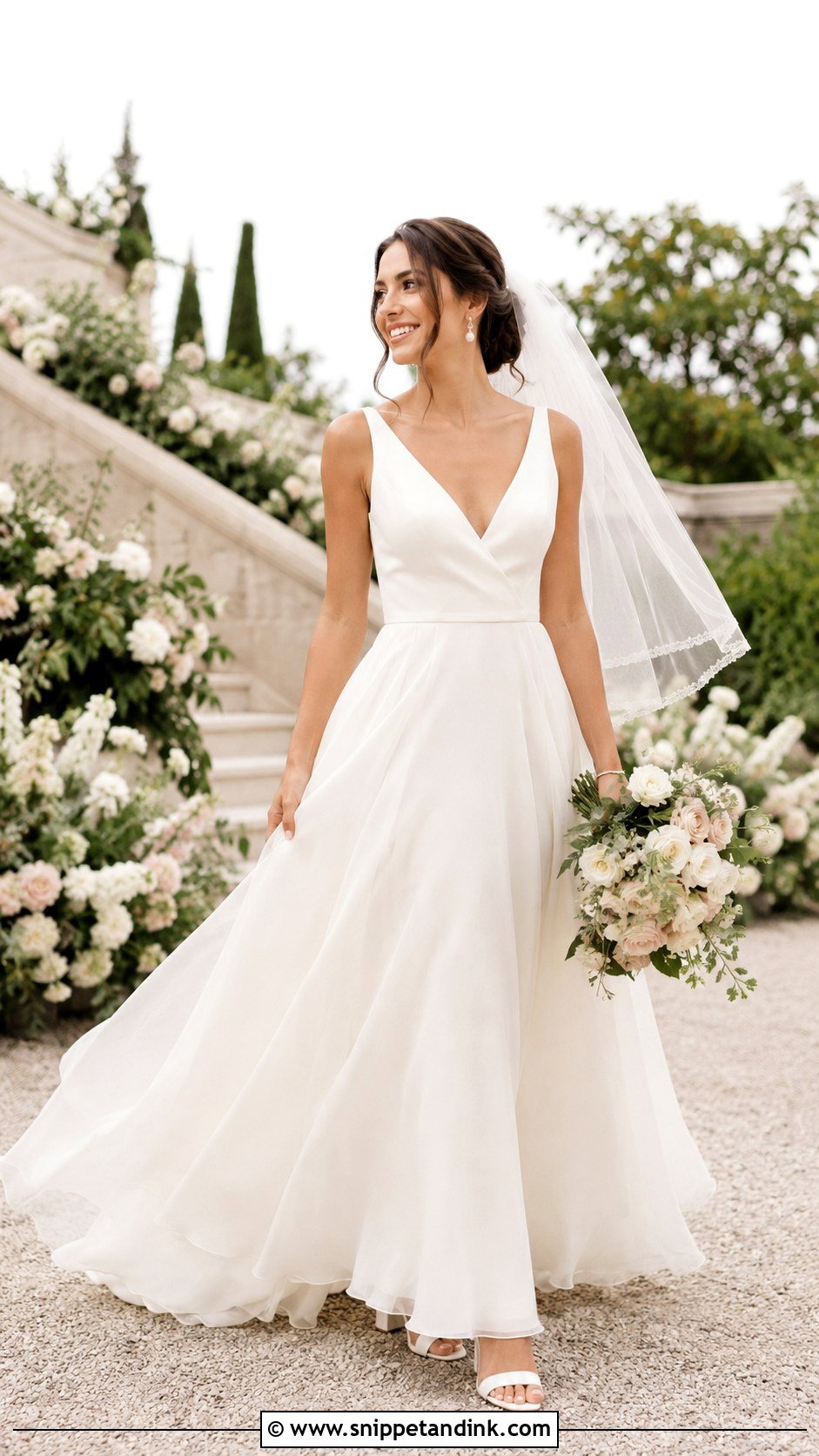
Could there be a more forgiving silhouette than an A-line? Fitted through the top and widening gradually, it balances most proportions without squeezing anything. In chiffon, organza or lightweight satin it moves well from ceremony to reception. A V-neck lengthens the torso visually, and wider straps mean you aren’t relying on the bodice alone for support. I’d style it with pearl earrings, a slim pearl bracelet and a fingertip veil with a plain finished edge, plus ivory block-heel sandals for stability. A softly pinned hairstyle and a compact bouquet keep it calm. The one trap is organza, which creases in a car, so plan a quick steam after you arrive. Garden ceremonies and hotel weddings both suit it.
3. Bridal Satin Slip Dress With Minimal Heels
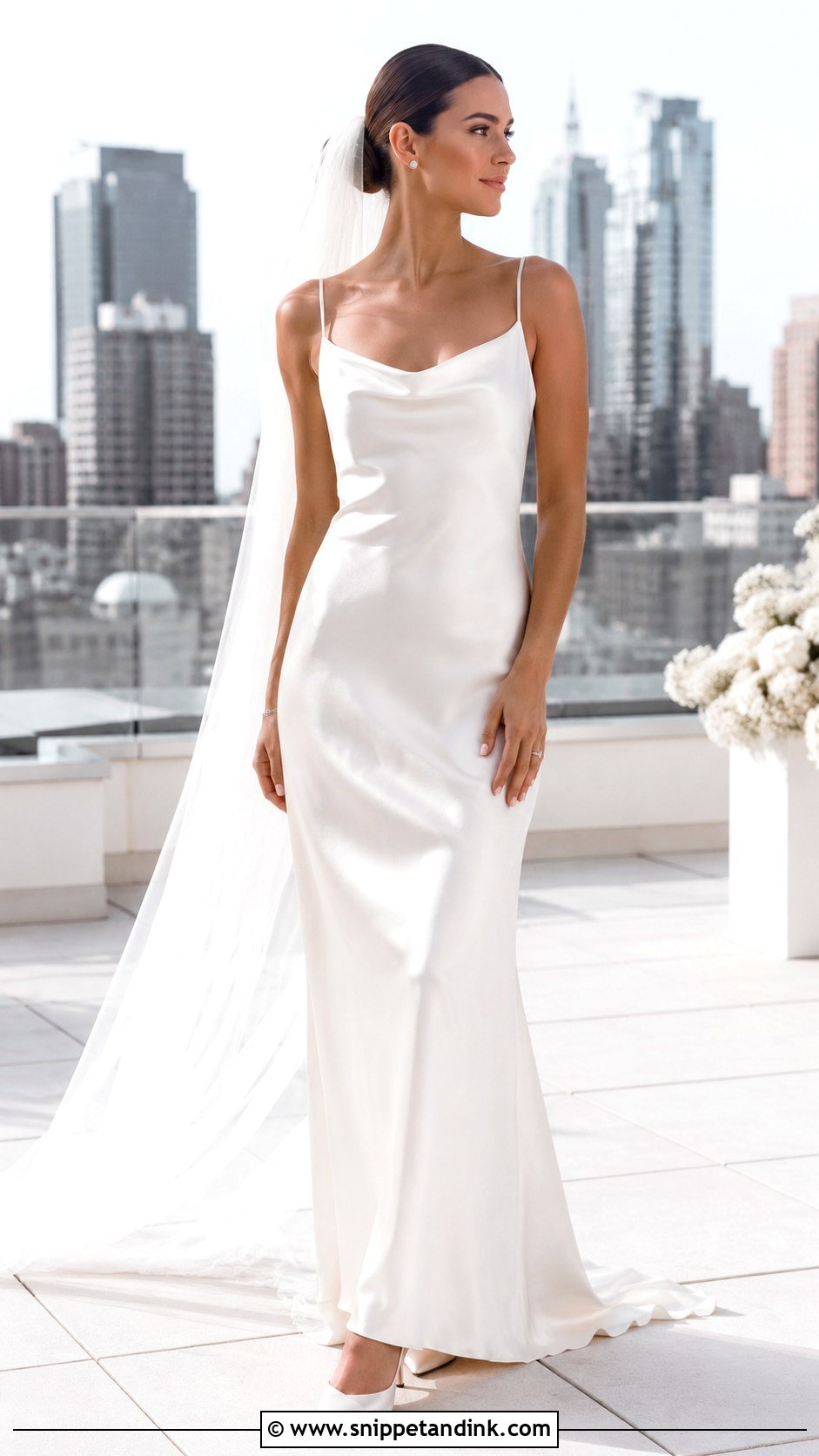
Satin does all the talking here, so heavy embellishment isn’t needed. A bias-cut skirt, narrow straps and a softly draped neckline make the whole dress, which means fabric quality shows instantly. Thicker satin or a lined construction gives more structure and coverage, and I’d always take it over a thin satin that clings. Sleek ivory kitten heels, small diamond studs and a fine tennis bracelet keep it minimal. A floor-length veil adds ceremony drama; remove it for the reception and add a hair comb or small structured bag instead. Underwear is the make-or-break item. Bias satin shows every edge, so bring your exact undergarments to each fitting. Rooftops and intimate dinners are its natural setting.
4. Bridal Lace Gown With Long Sleeves
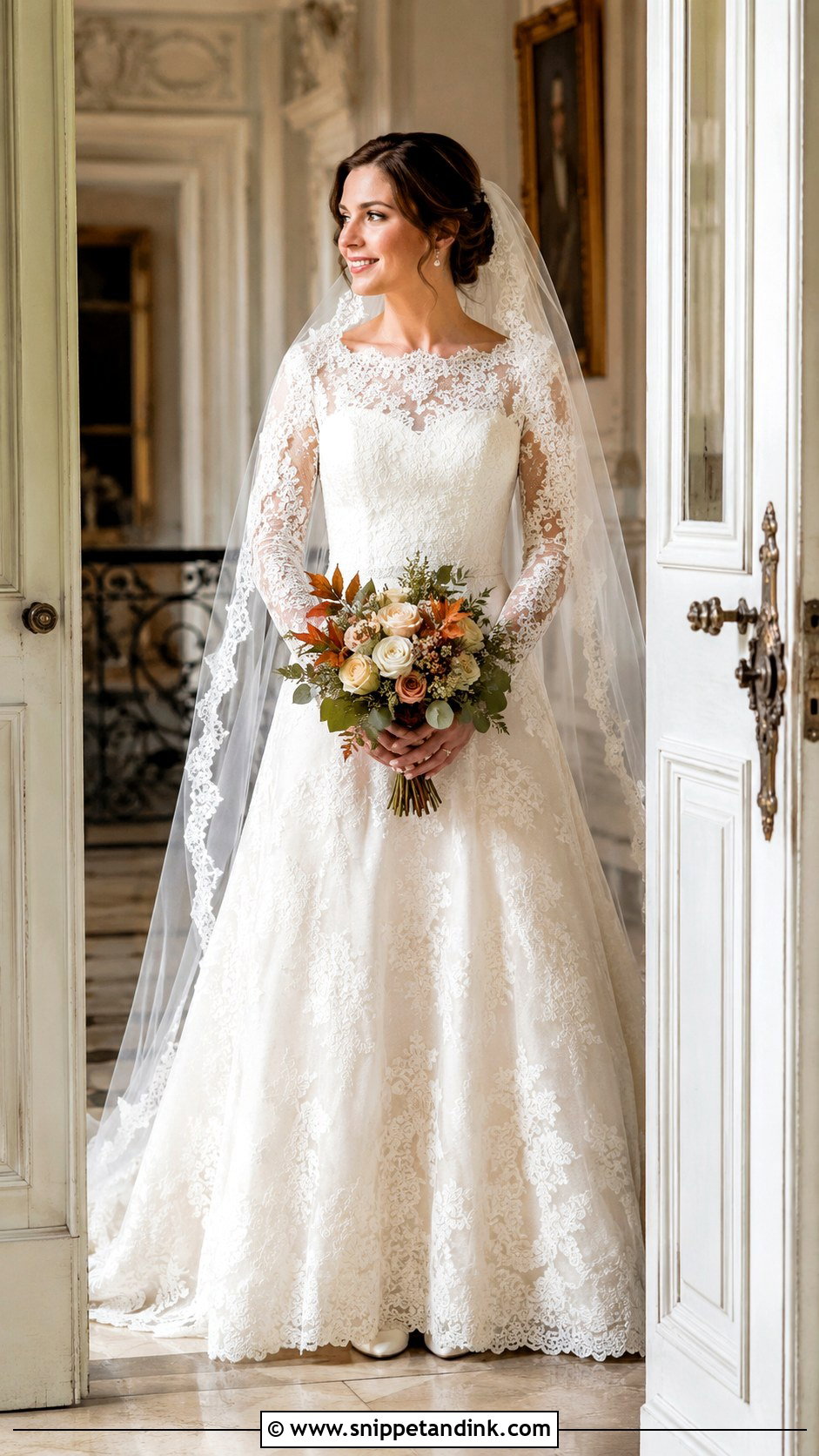
Fine lace with long sleeves gives coverage and texture together. A fitted lace bodice with a lined front and sheer sleeves, balanced by an A-line or softly flared skirt, is the classic build. Floral lace reads traditional; geometric lace reads modern. Closed-toe ivory pumps, pearl or crystal studs and a light veil with a matching lace edge finish it, and a high neckline means no necklace. A low bun, smooth ponytail or half-up style keeps the neck clear. I’m often asked whether long sleeves can work in summer. They can, if the lace is open and the lining breathes, but a tightly woven lace sleeve in heat is hard going, so test it in a warm room first.
5. Bridal Mermaid Gown With Statement Earrings
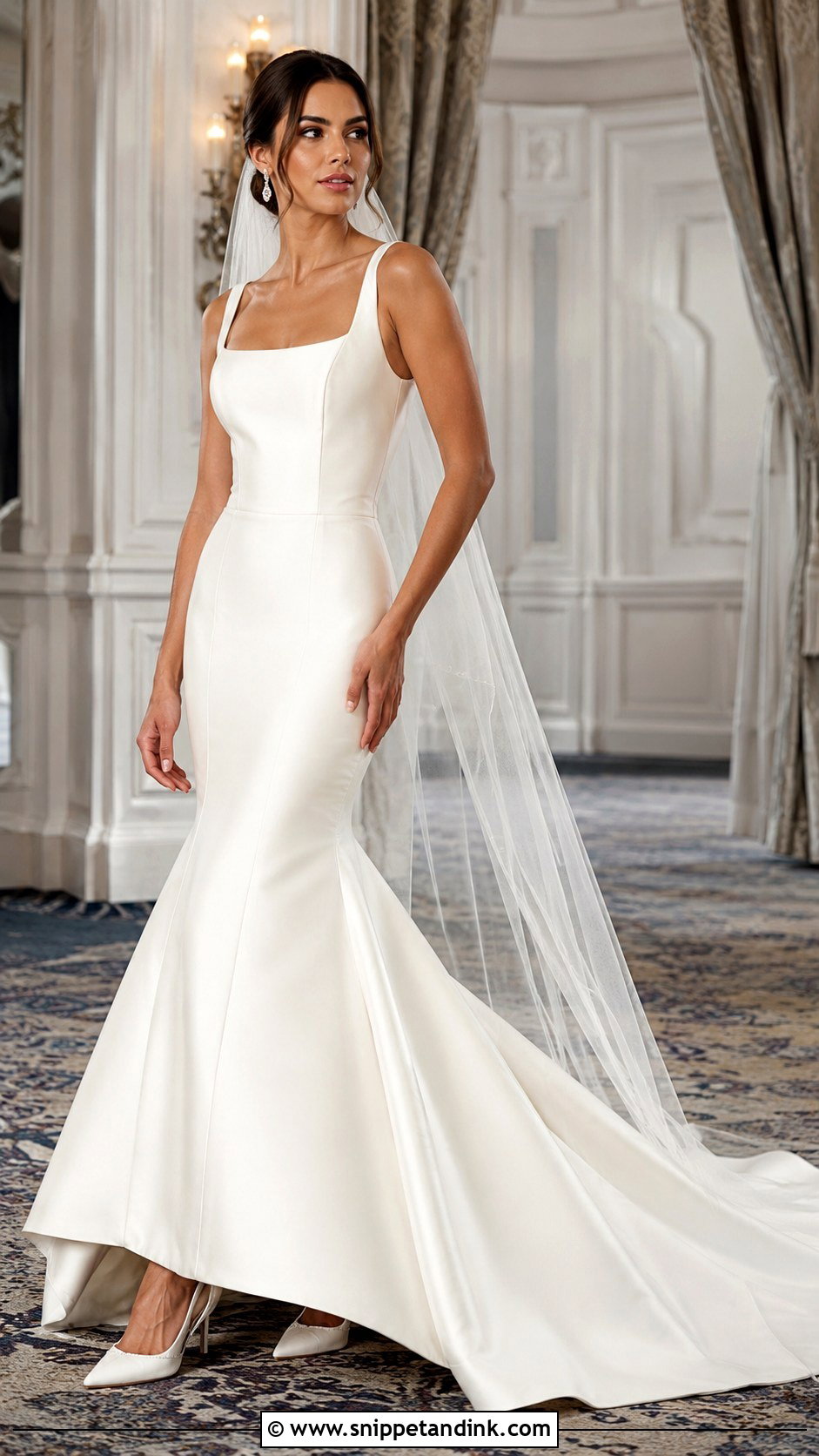
Mermaids follow the body to around the knee and then flare, and that flare point is what I adjust most. Stretch crepe gives a smooth modern finish; lace adds dimension. A structured bodice with internal support keeps the shape while still letting you move. Pointed pumps, sparkly drop earrings and a simple chapel-length veil finish it, and other jewelry should stay quiet. A side-parted wave or sleek updo polishes the look. Before committing, sit, walk and climb stairs in the sample. Of all the shapes here, this is the one most likely to make steps awkward, and some brides find the restriction fine for the ceremony but tiring by evening.
6. Bridal Sheath Dress With Chapel Veil
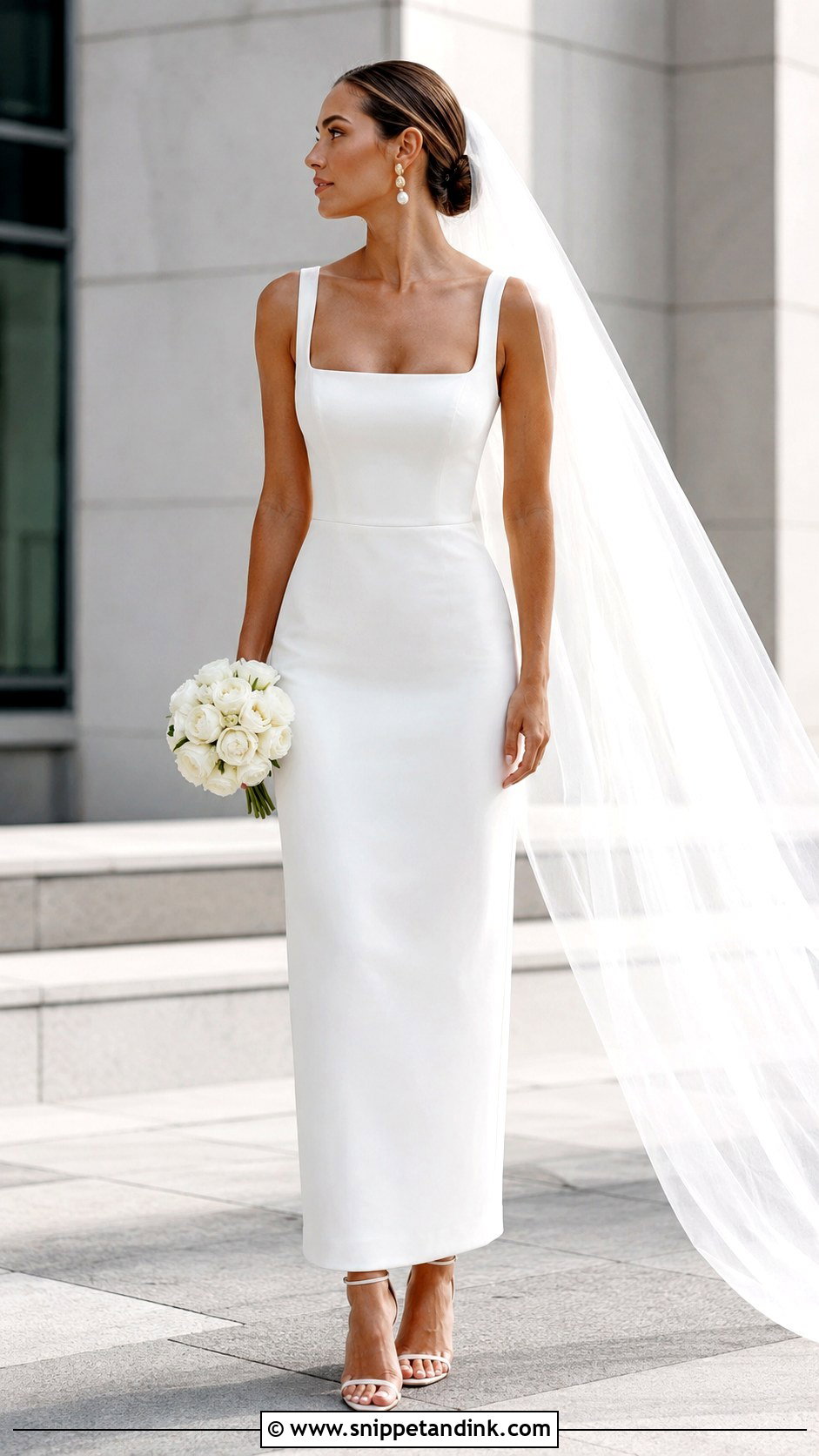
A sheath gives a streamlined line that still feels ceremonial. It follows the body without a mermaid’s flare, so it’s easier in smaller rooms and on stairs. Matte crepe gives a crisp finish; satin adds shine and softness. Pick a square, boat or clean V-neckline for the coverage you want. A chapel veil, slim ankle-strap heels and sculptural pearl earrings complete it, with a neat bun or shoulder-length waves. Because a sheath has nowhere to hide, I spend most of the fitting on the back seam and the hip line, where small pulls show first. Detachable sleeves or a tailored white coat handle a cool evening. Courthouses, galleries and restaurants suit its sharp lines.
7. Bridal Tea-Length Dress With Mary Jane Heels
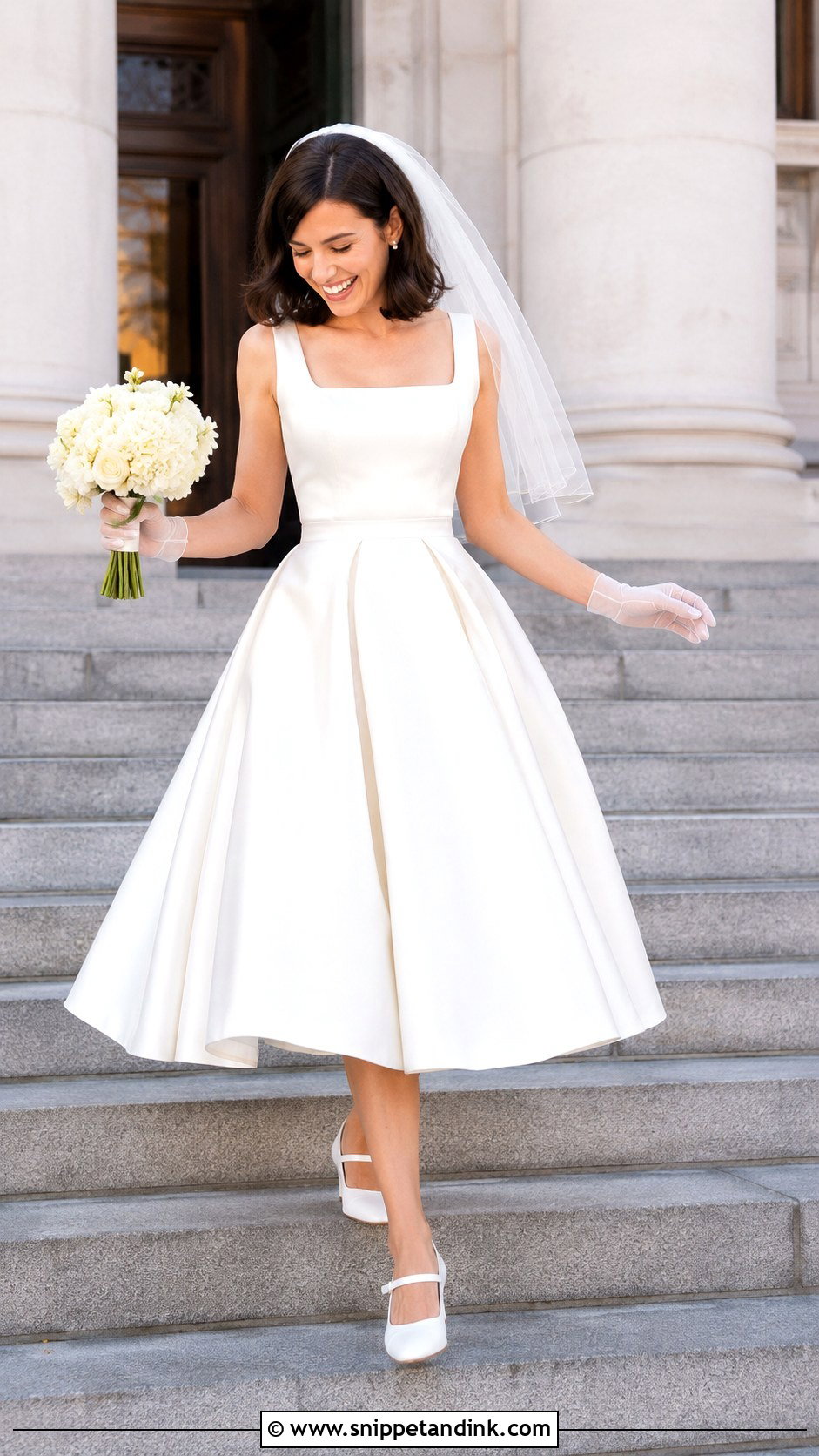
Tea-length dresses put your shoes on display and free your legs for dancing. With the hem between knee and ankle, walking across grass or cobblestones is far easier than in a floor-length skirt. A structured satin bodice with a full skirt brings vintage influence; a softer chiffon version feels airier. White Mary Janes or pointed slingbacks fit the proportions, and the strap on a Mary Jane genuinely helps keep a heel on through a long day. Add pearl studs, short gloves and a shoulder-length or birdcage veil. A curled bob, low bun or half-up style stops it feeling stiff. Courthouse ceremonies, brunch receptions and second weddings all suit it.
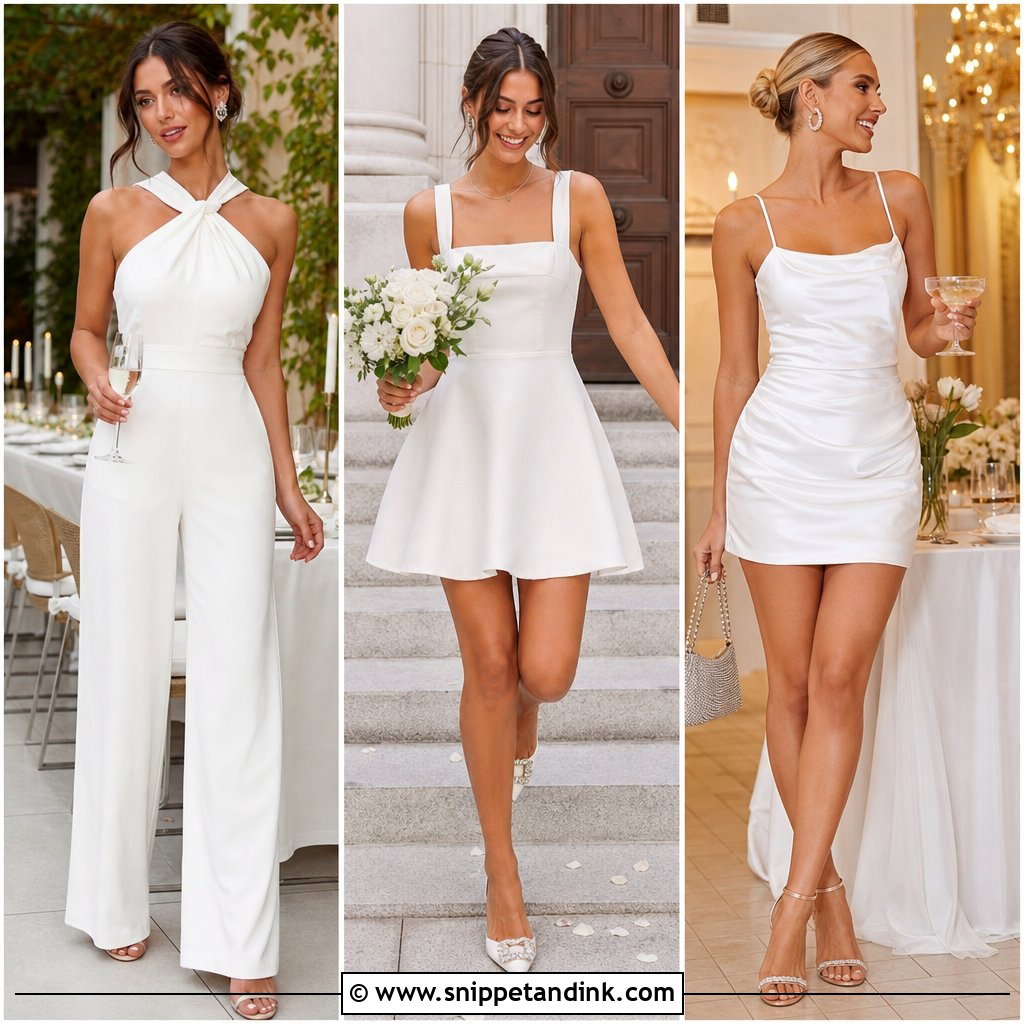
8. Bridal Mini Dress With Bow Heels
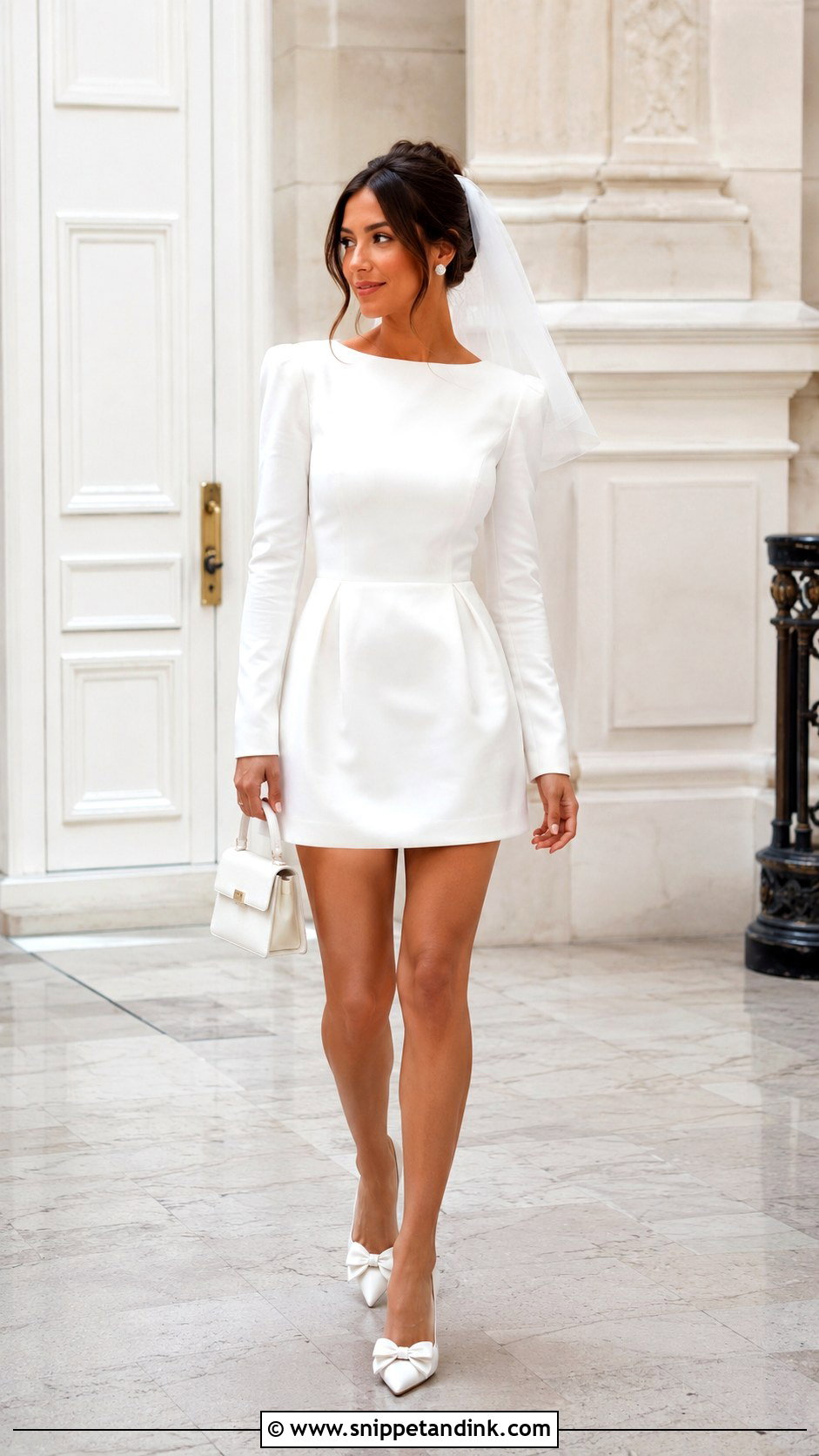
Short dresses are easy to move in and hard to get wrong, as long as the structure is there. A structured shift, fitted blazer dress or short A-line in satin, crepe or embellished fabric all hold their shape. Long sleeves balance a short hem, and a square or bateau neckline adds coverage. Bow-accented heels, sheer tights when it’s cool and sparkling studs complete it, while a short veil, oversized bow or padded headband supplies the bridal signal. Carry a small top-handle bag for essentials. My test: sit, cross your legs and stand again in front of a mirror. If the hem needs tugging every time, go a little longer.
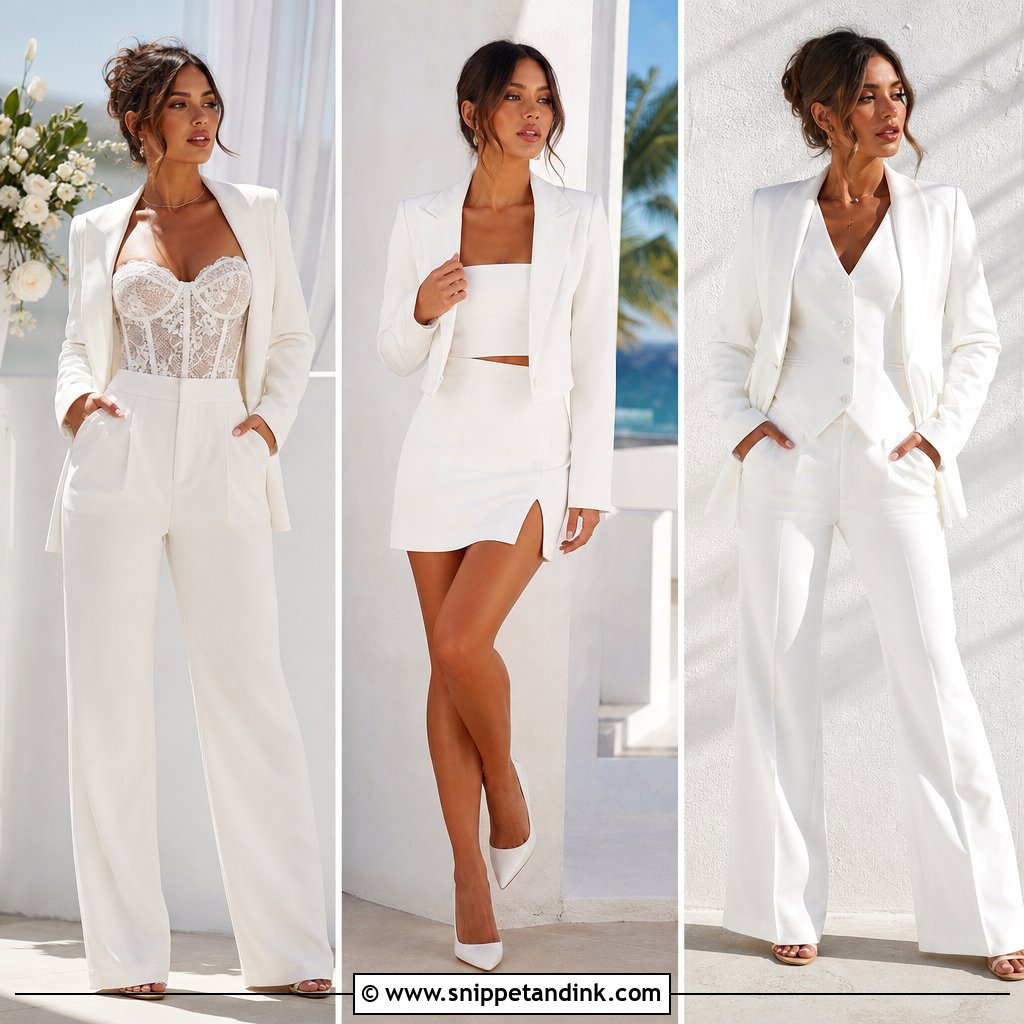
9. Bridal Pantsuit With Pointed-Toe Pumps
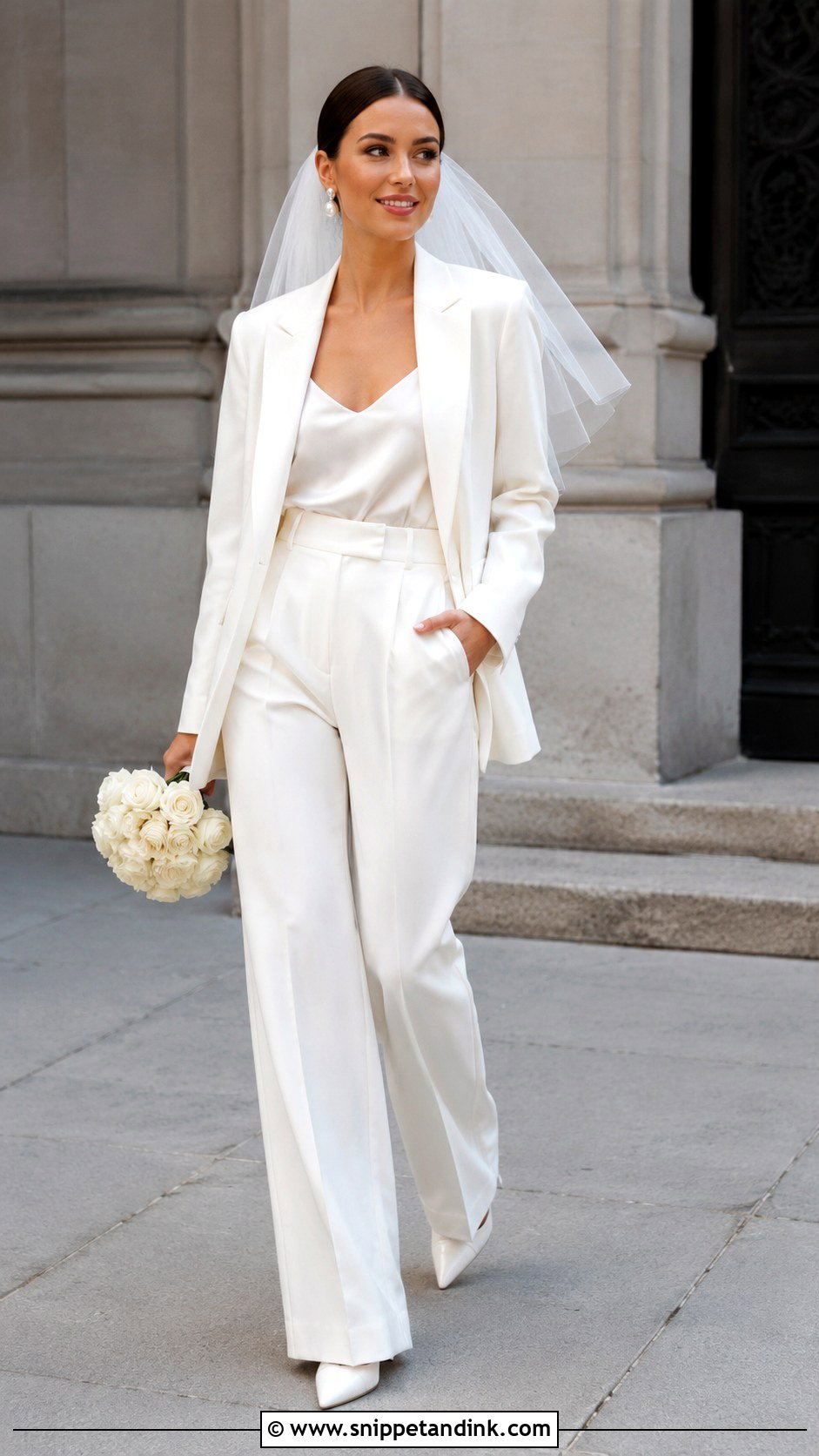
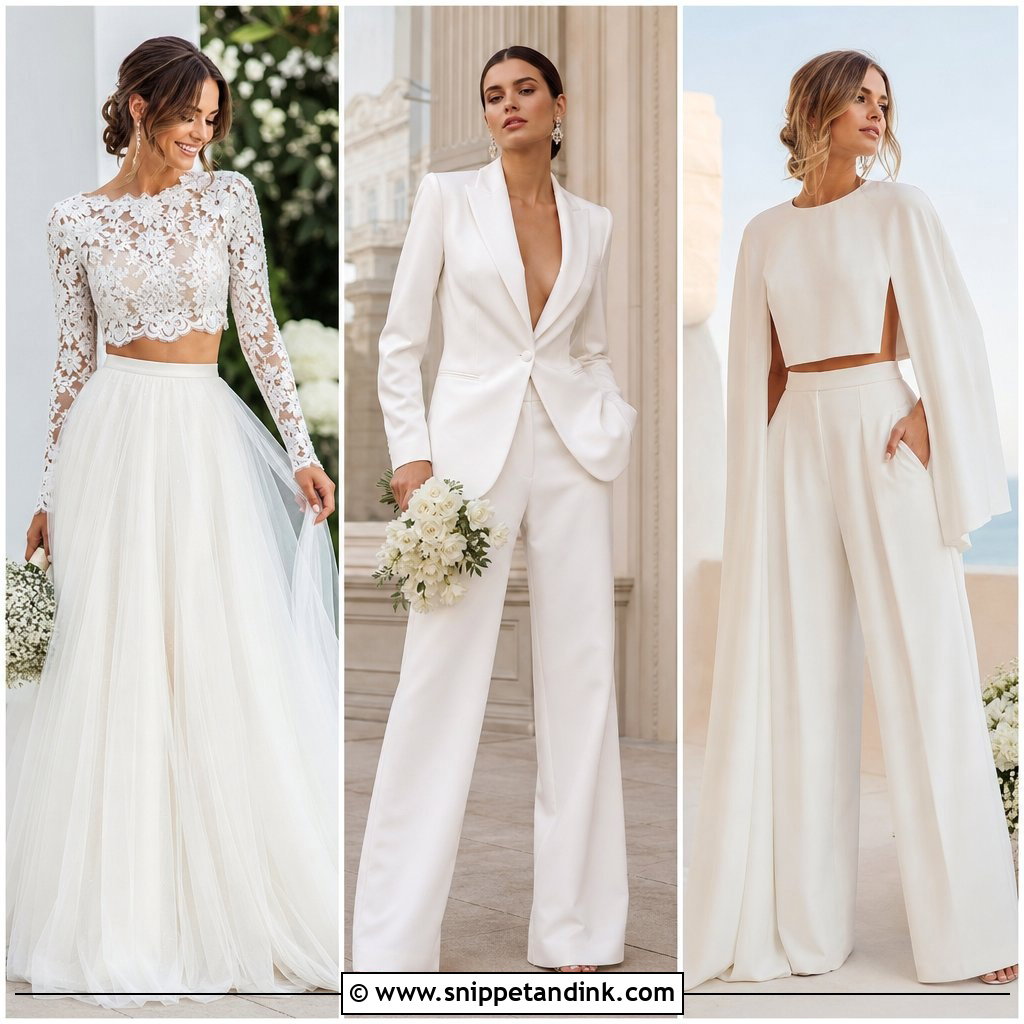
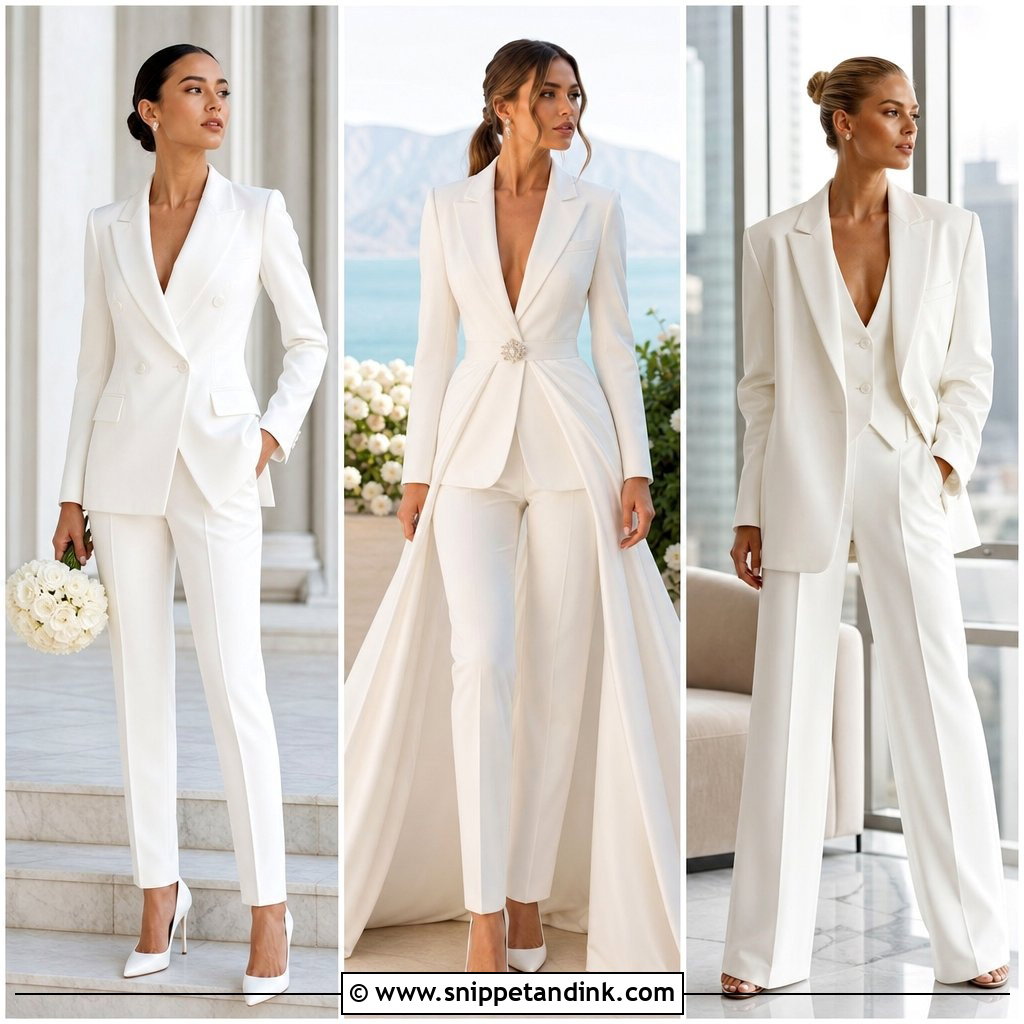
Tailoring is a confident alternative to a gown, and fit is everything. I’d pair a fitted or softly oversized blazer with high-rise trousers that skim the top of the shoe. Crepe, satin or lightweight wool can all work depending on the season; wool holds a crease better and suits colder months. Under the jacket goes a silk camisole, a corset-style top or a modest lace shell. Pointed pumps lengthen the trouser line, and pearl earrings with a sleek clutch add classic notes. A low ponytail or polished bun matches the structure. For more ceremony impact, add a waist-length tulle veil or a removable overskirt. Check the jacket buttoned while seated; one that pulls at the button when you sit needs letting out.
10. Bridal Jumpsuit With Detachable Train
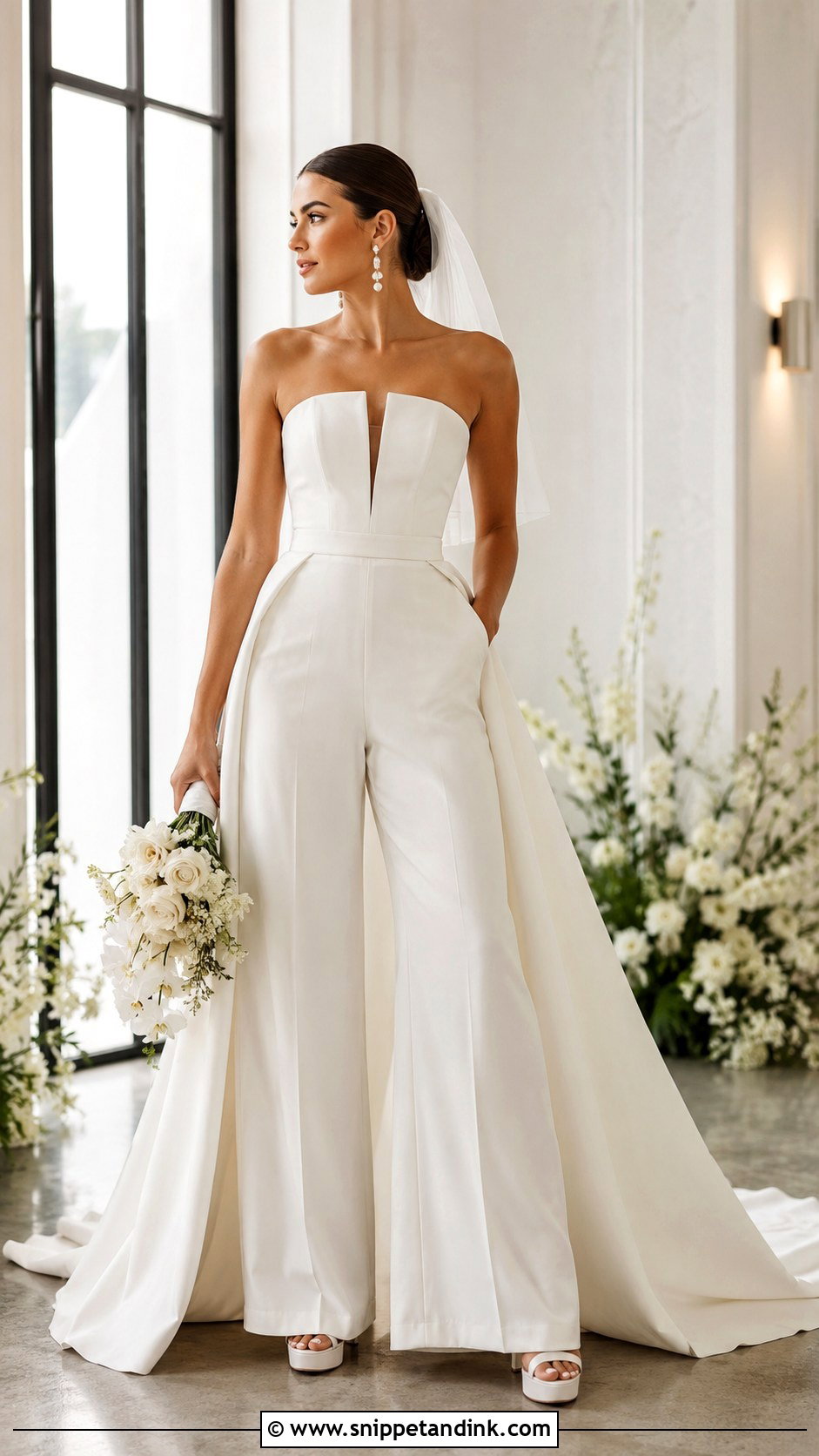
Picture walking in with the drama of a gown and dancing later in trousers. A bridal jumpsuit with a detachable train gives you exactly that. Wide-leg pants and a defined waist make a long line, and a structured strapless, one-shoulder or sleeved bodice provides the support you need. The train goes on for the ceremony and comes off for the reception. Platform sandals, statement earrings and a sleek bun finish it, with a short veil if you want softness. I test the train attachment with the bride walking briskly, because a heavy train pulls on the waistband and can drag a jumpsuit down at the back. Destination and city weddings suit its practicality.
11. Bridal Two-Piece Skirt Set With Block Heels
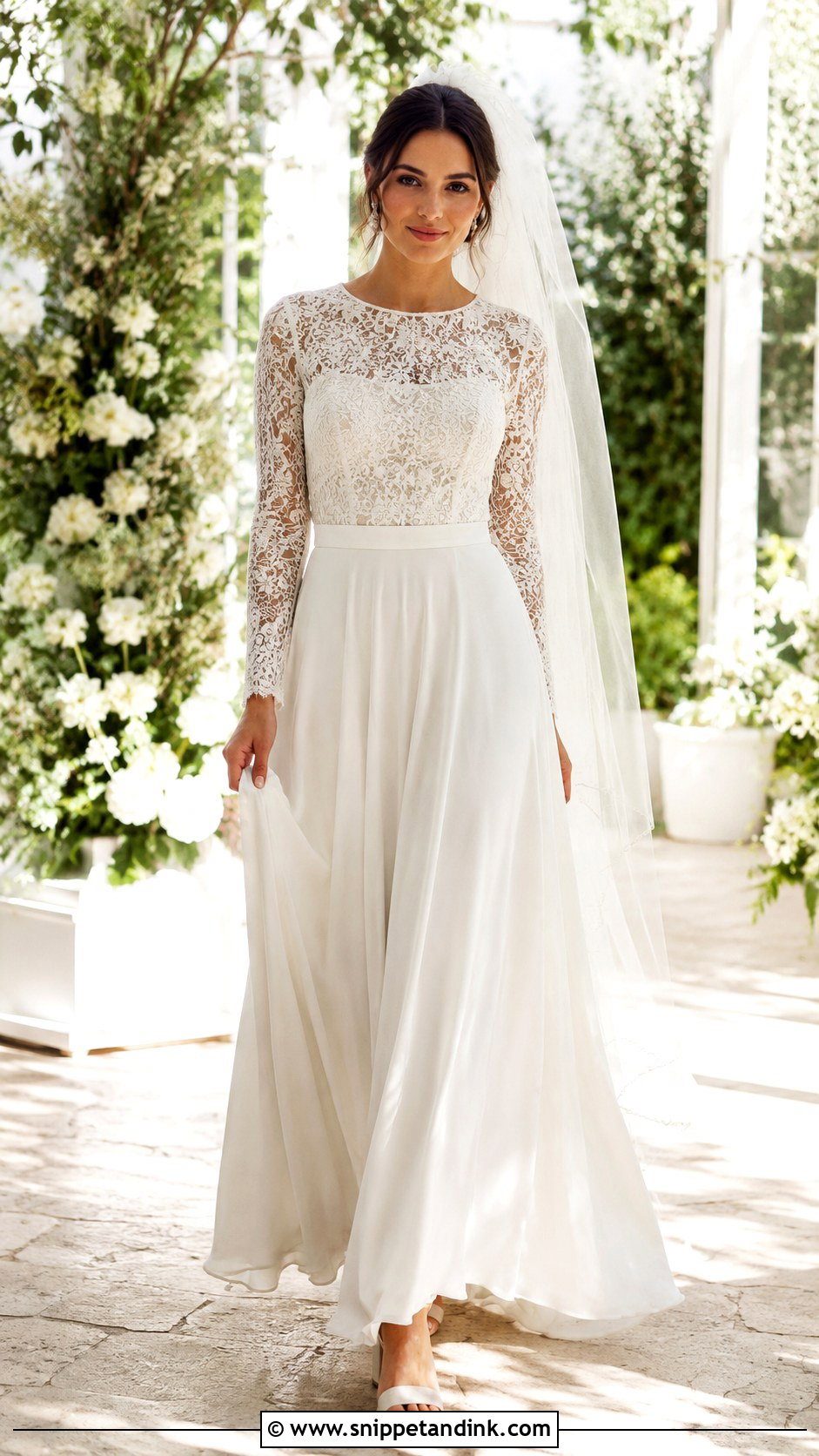
Separates give you control over fit, proportion and fabric in a way a single dress can’t. A fitted lace, satin or crepe top meets a high-waisted full skirt at the natural waist. The top can have long sleeves, a square neckline or a cropped cut with only a narrow line of skin showing. A chiffon skirt flows; structured satin gives more volume. Block-heel sandals, fine drop earrings and a fingertip veil complete it, and a floral comb can step in when the veil comes off. I suggest separates whenever a bride is two different sizes top and bottom, since altering one dress across that gap is expensive and rarely perfect. Gardens, coastal venues and lofts suit the relaxed formality.
12. Bridal Basque Waist Gown With Opera Gloves
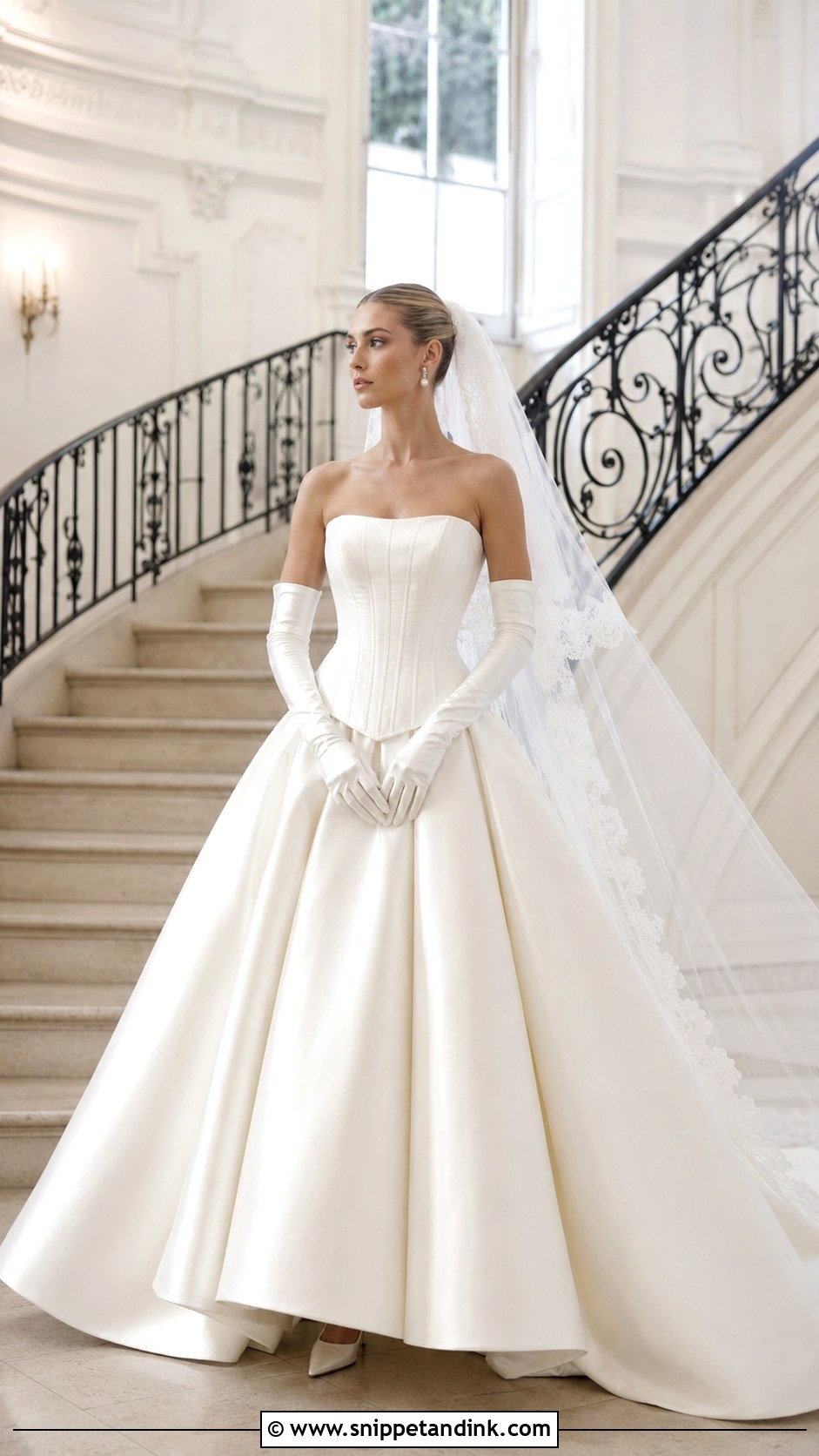
A Basque waist dips into a V below the natural waist, lengthening the torso and giving a sculpted outline. Paired with a full satin or tulle skirt, it reads regal. A strapless neckline keeps the line clean, and detachable straps add security if you’re worried about slipping. Opera gloves, pearl earrings and pointed satin pumps carry the formality. A cathedral or chapel veil with a plain edge suits the proportions without competing with the bodice; wear the hair in a smooth bun or waved updo. The alterations are delicate. The point of the V has to lie flat against the body, and if it’s even slightly off it pinches every time you sit.
13. Bridal Square Neck Gown With Short Veil
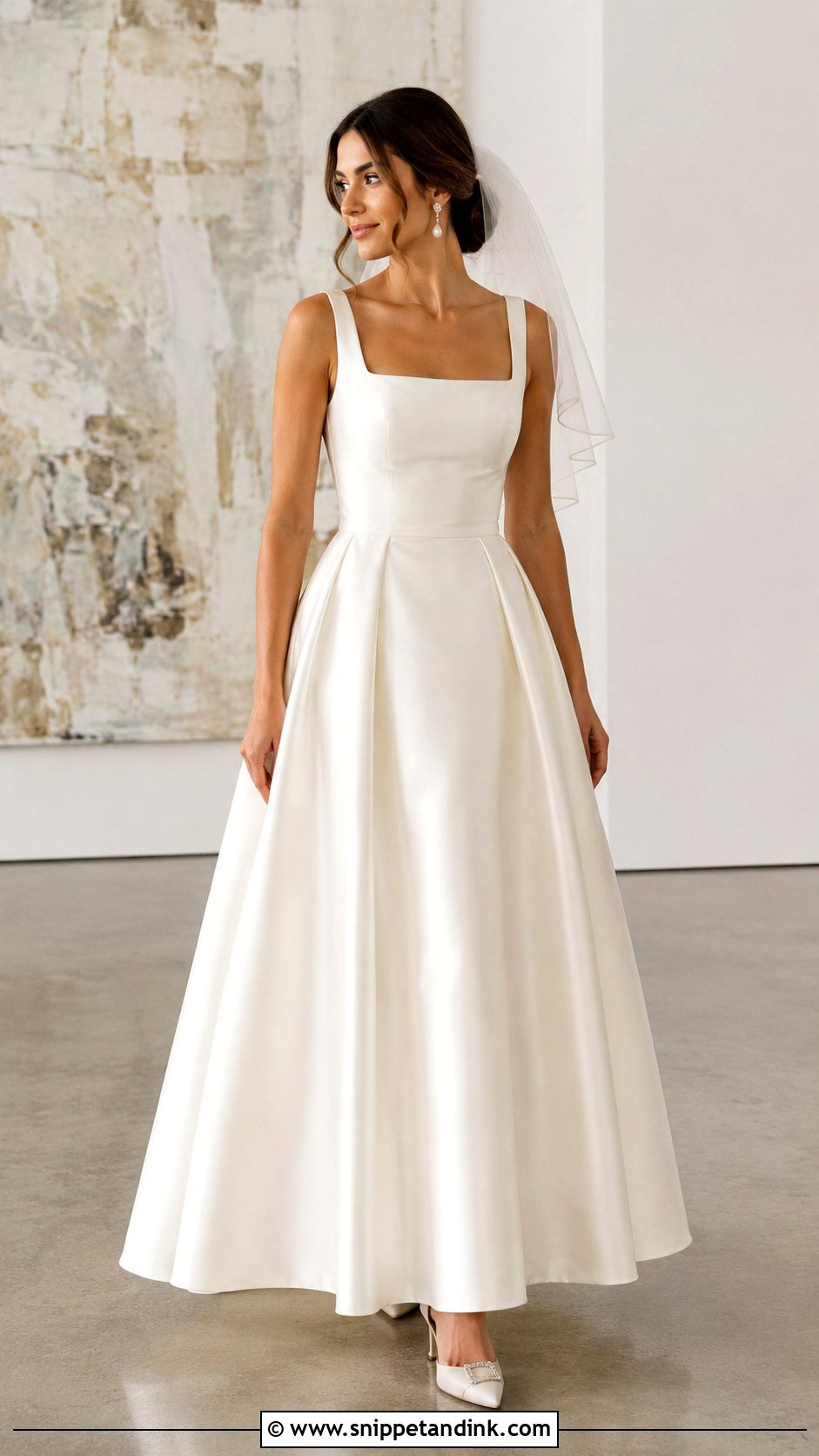
A square neckline frames the collarbone with clean lines and pairs well with wide straps, cap sleeves or fitted long sleeves. An A-line skirt softens it; a column skirt keeps it minimal. Satin and crepe sharpen the neckline, while delicate lace gives a gentler version. A short veil, slim drop earrings and low pointed heels complete it, and a neat updo keeps the hair from hiding the neckline. If you want a necklace, choose a fine chain with a small pendant that sits inside the open shape. The fitting detail I watch is the corners. On a wide square neck they can gape when you lean forward, so I check it with the bride bending as if signing the register.
14. Bridal Off-the-Shoulder Gown With Drop Earrings
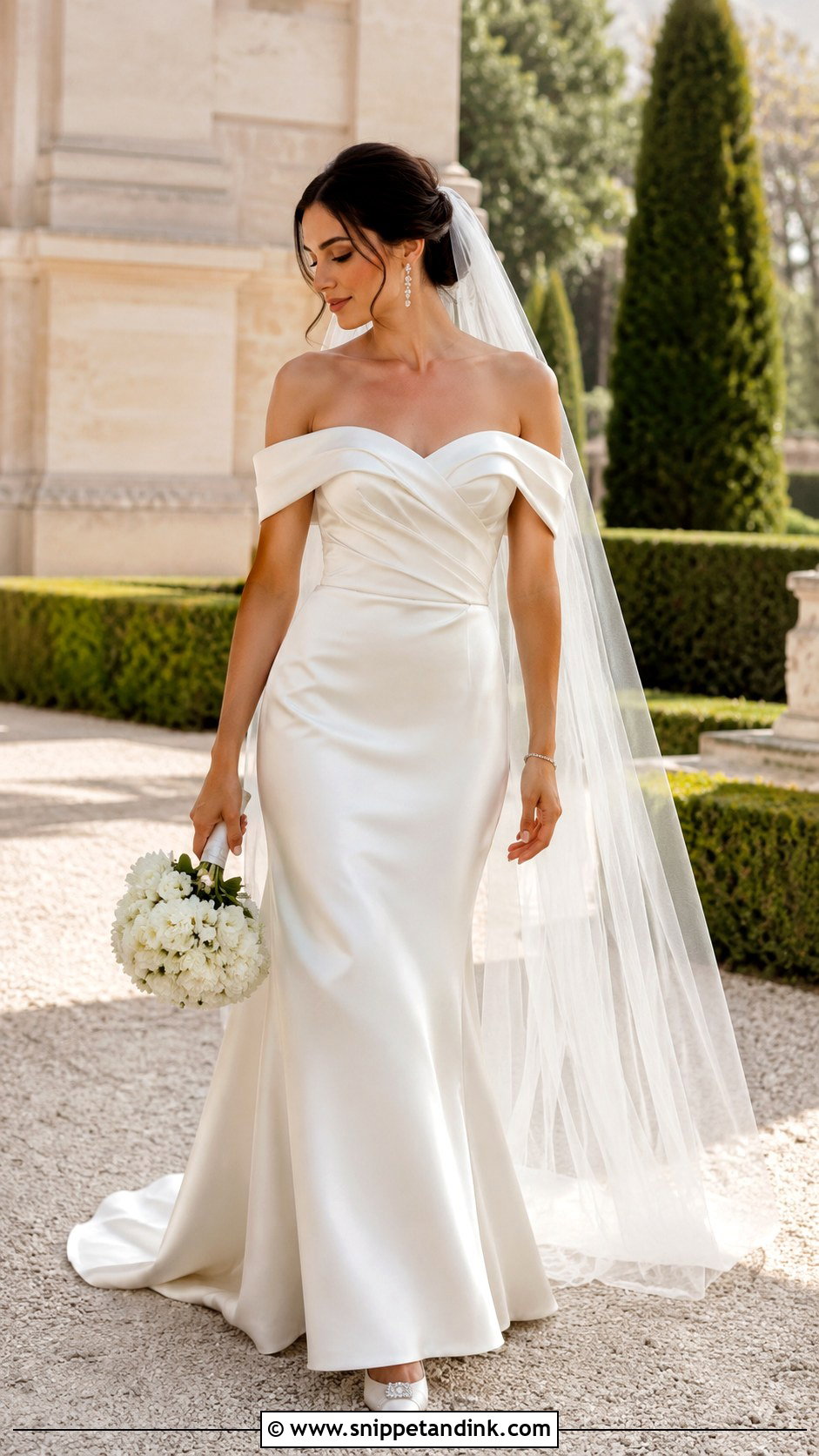
Off-the-shoulder necklines show the collarbone and soften the upper body, but they need an internal corset to stay put; without one you’ll be adjusting all day. A folded satin neckline looks modern, while lace sleeves or draped tulle feel more delicate. Crystal drop earrings, a fine bracelet and pointed heels complete it, and I’d leave the neck bare. A low chignon with a chapel veil placed just above the bun keeps everything visible. Arms are the issue on the dance floor. Off-shoulder sleeves limit how high you can lift them, so I have brides try their first-dance moves at the fitting and ease the sleeve slightly if needed.
15. Bridal High-Neck Gown With Sleek Bun
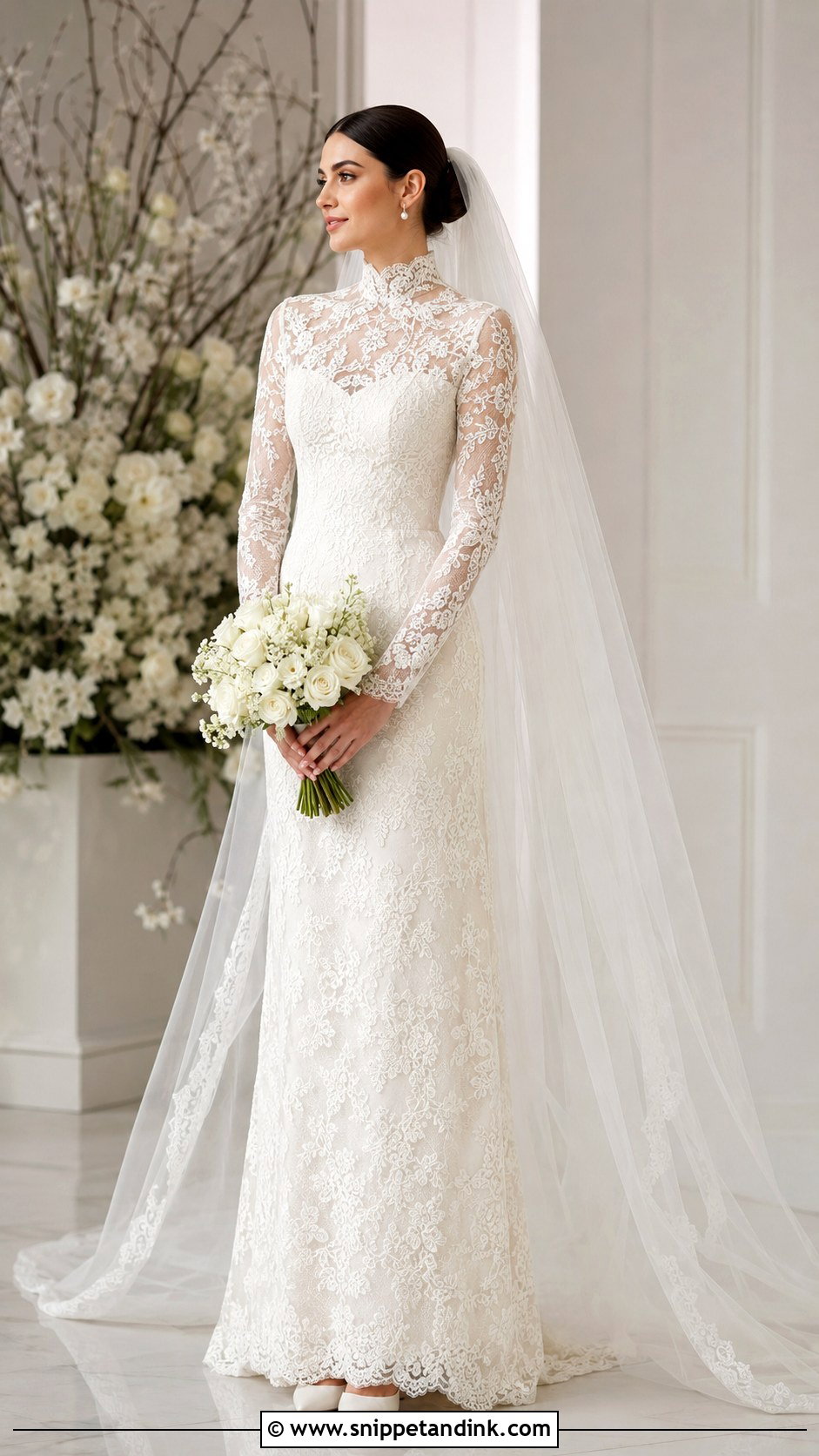
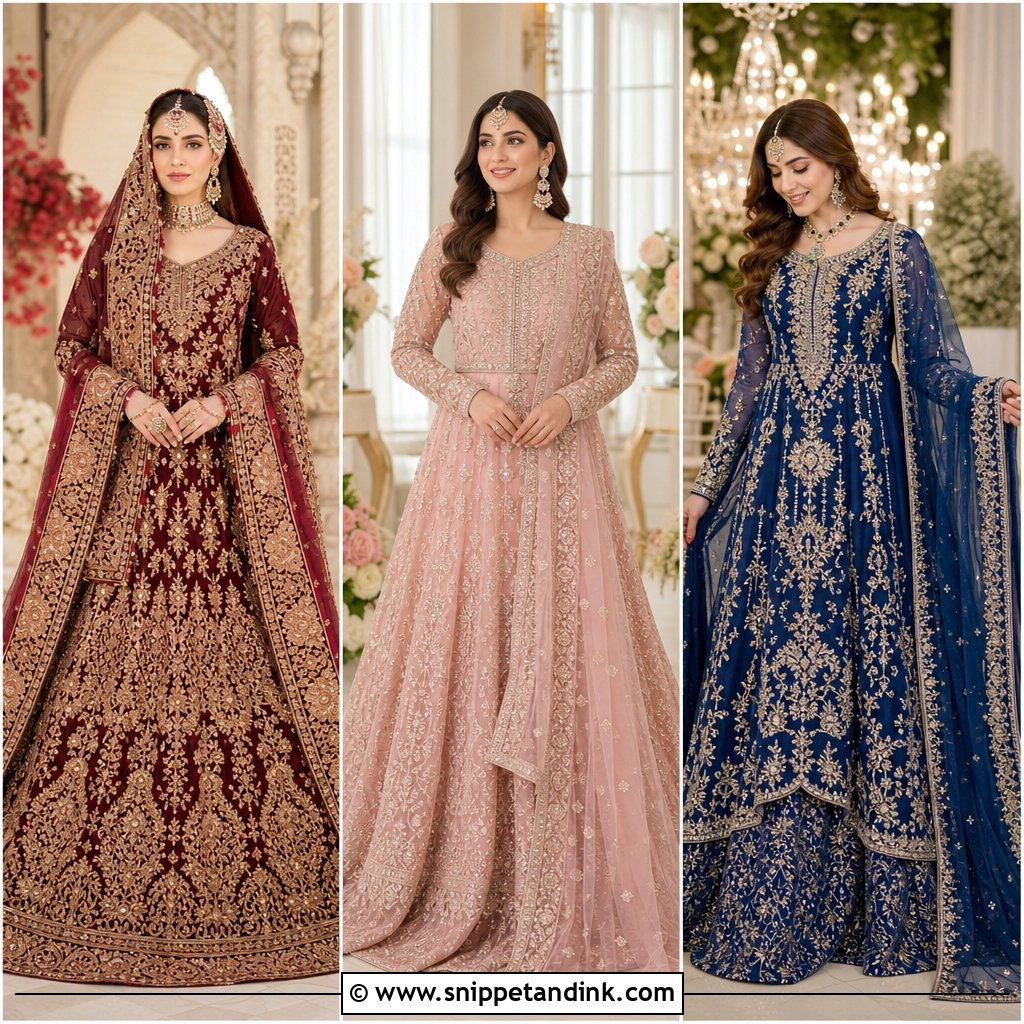
A high neck frames the face and gives graceful coverage. Smooth crepe makes a modern column; detailed lace leans heritage. Sleeveless keeps it light, while fitted long sleeves read more formal. The neckline is already the focal point, so skip the necklace and wear small pearl, crystal or diamond earrings. Closed-toe pumps and a long veil attached beneath a sleek bun let the neckline show front and back. A defined waist or well-placed seams stop the dress looking straight up and down. The detail I always check is the closure: high necks usually fasten at the back with button loops or a hook, and you need someone who can do it up without fumbling.
16. Bridal Floral Appliqué Gown With Sheer Veil
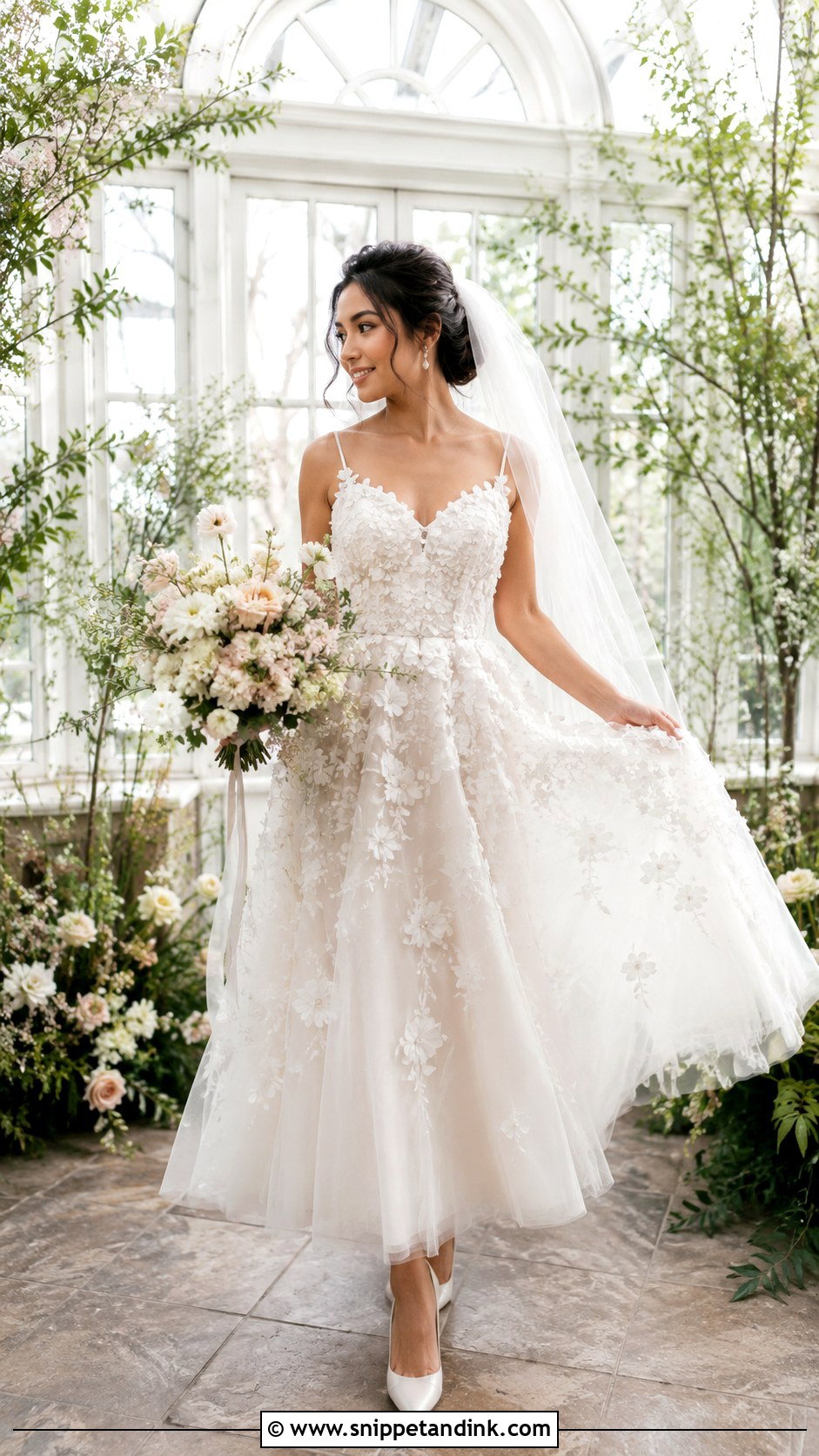
Dimensional flowers turn a plain gown into something with real texture. I like them concentrated on the bodice and scattered more thinly down the skirt, which keeps the balance right. A light tulle base makes the flowers look as if they’re floating and keeps the dress comfortable. Simple satin pumps, small pearl earrings and a sheer veil without lace or trim complete it, since restraint stops the outfit getting crowded. Loose waves, a low textured bun or a soft half-up style all work. Talk to your florist about the bouquet early. A limited palette sits well against the gown; a mixed, multi-colored bouquet ends up fighting the appliqués.
17. Bridal Cape Gown With Crystal Heels
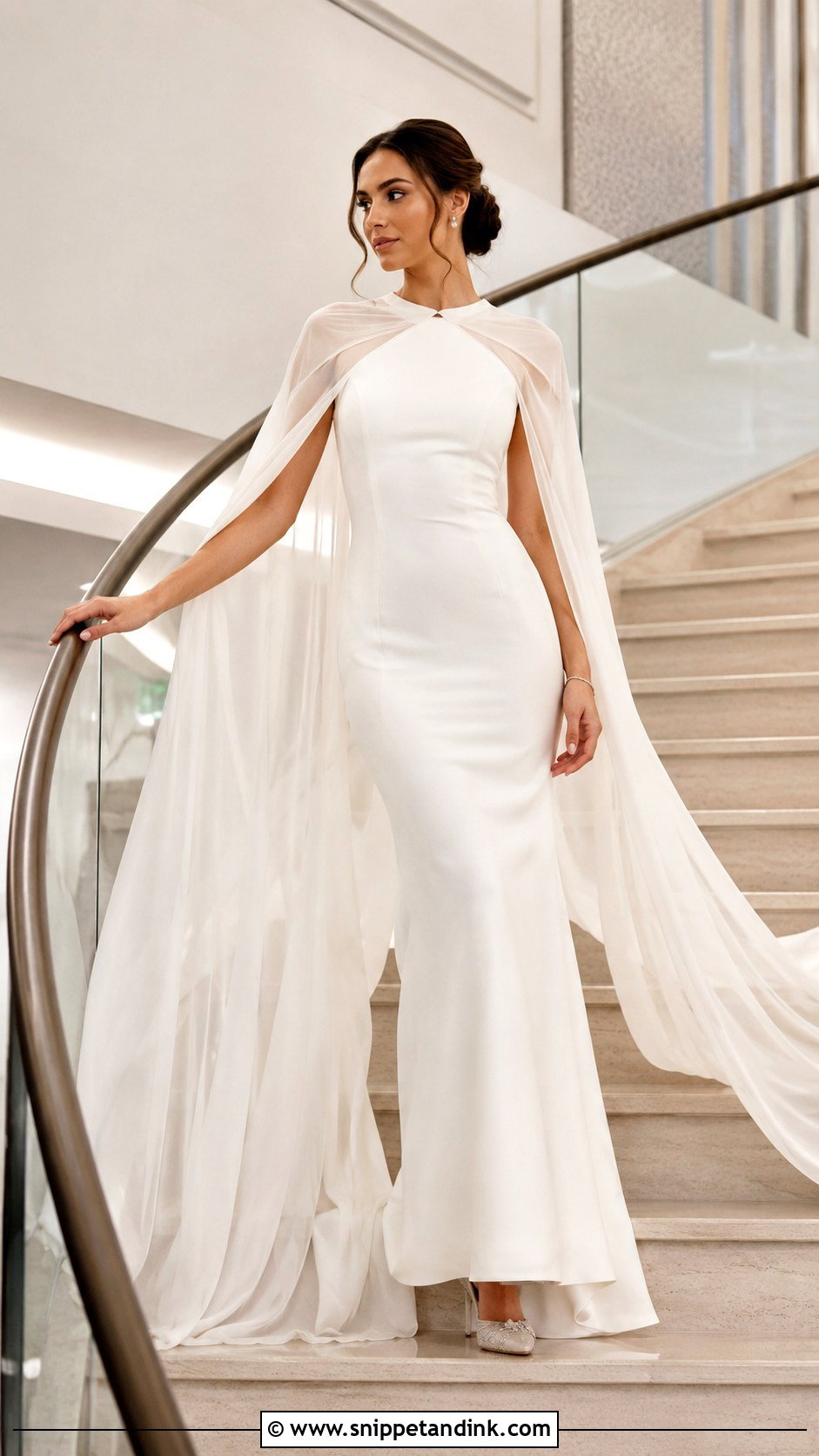
A cape brings movement and ceremony drama in place of a veil. Start with a fitted crepe, satin or lightly beaded gown in a simple shape, then add a detachable cape that fastens at the shoulders or neckline and falls to the floor. Sheer tulle feels soft; heavier crepe feels architectural. Crystal heels, stud earrings and a slim bracelet complete it. Keep the hair smooth and secure so it doesn’t tangle in the fastening, which is a real nuisance when the cape comes off. Leave it on for portraits and the ceremony, then remove it for the reception. A heavier crepe cape also adds warmth on a winter date, with shoulder coverage that doesn’t need fitted sleeves.
18. Bridal Boho Gown With Flat Sandals
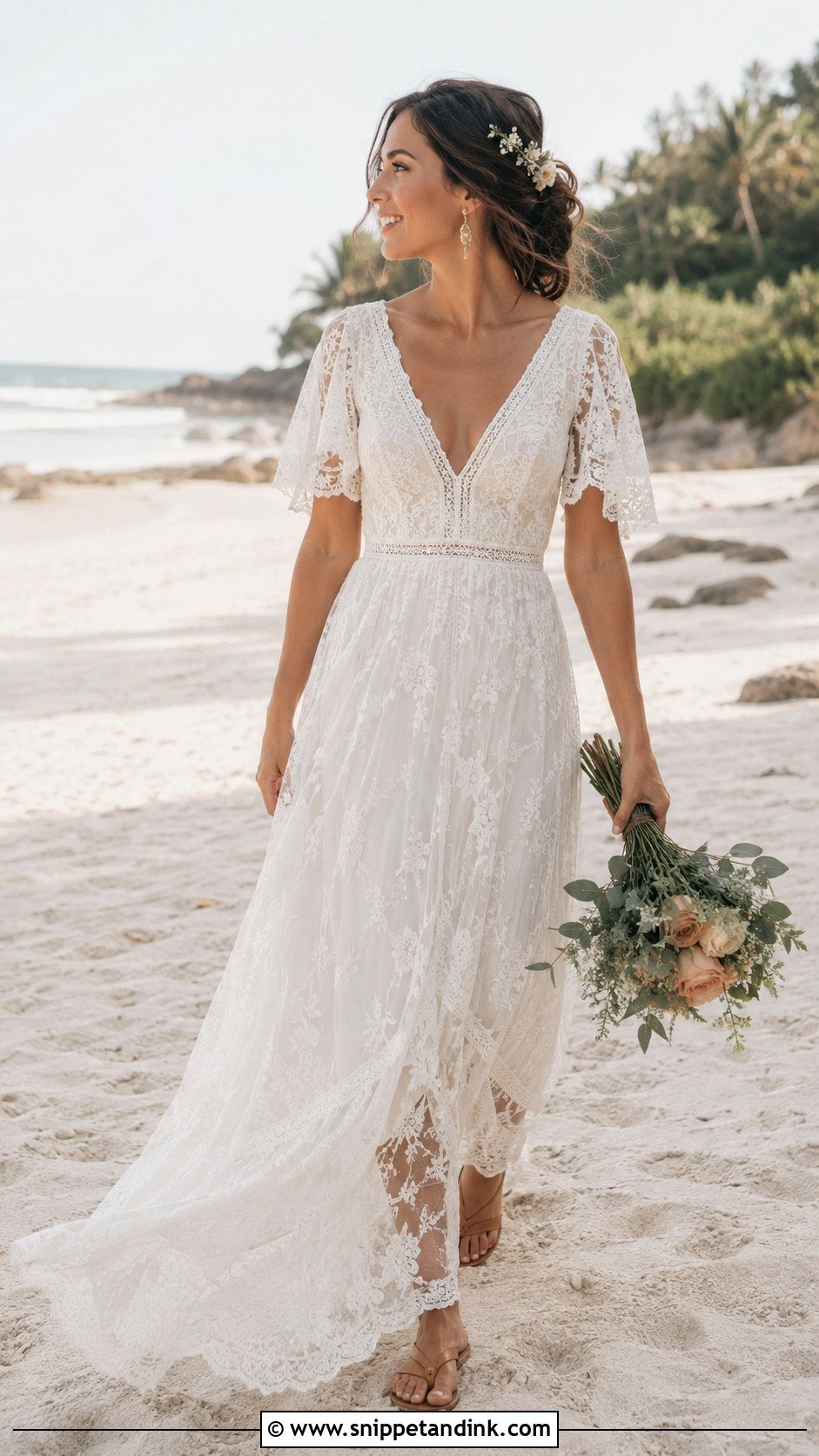
Boho dresses depend on fabric that moves: chiffon or lace with flutter sleeves, an easy waist and a skirt that lifts in a breeze. Crochet-style lace, subtle embroidery or small botanical details add interest without weight. Flat leather sandals, delicate gold earrings and a light veil or floral comb complete it, with a loose braid, textured bun or natural waves. I’d avoid a long train on grass, sand or uneven ground. It picks up stains and grit within the first hour and drags on the walk back up the aisle. A short sweep train, or a hem that just grazes the ground, is far more practical for beaches, woodland and desert venues.
19. Bridal Blush Gown With Rose Gold Accessories
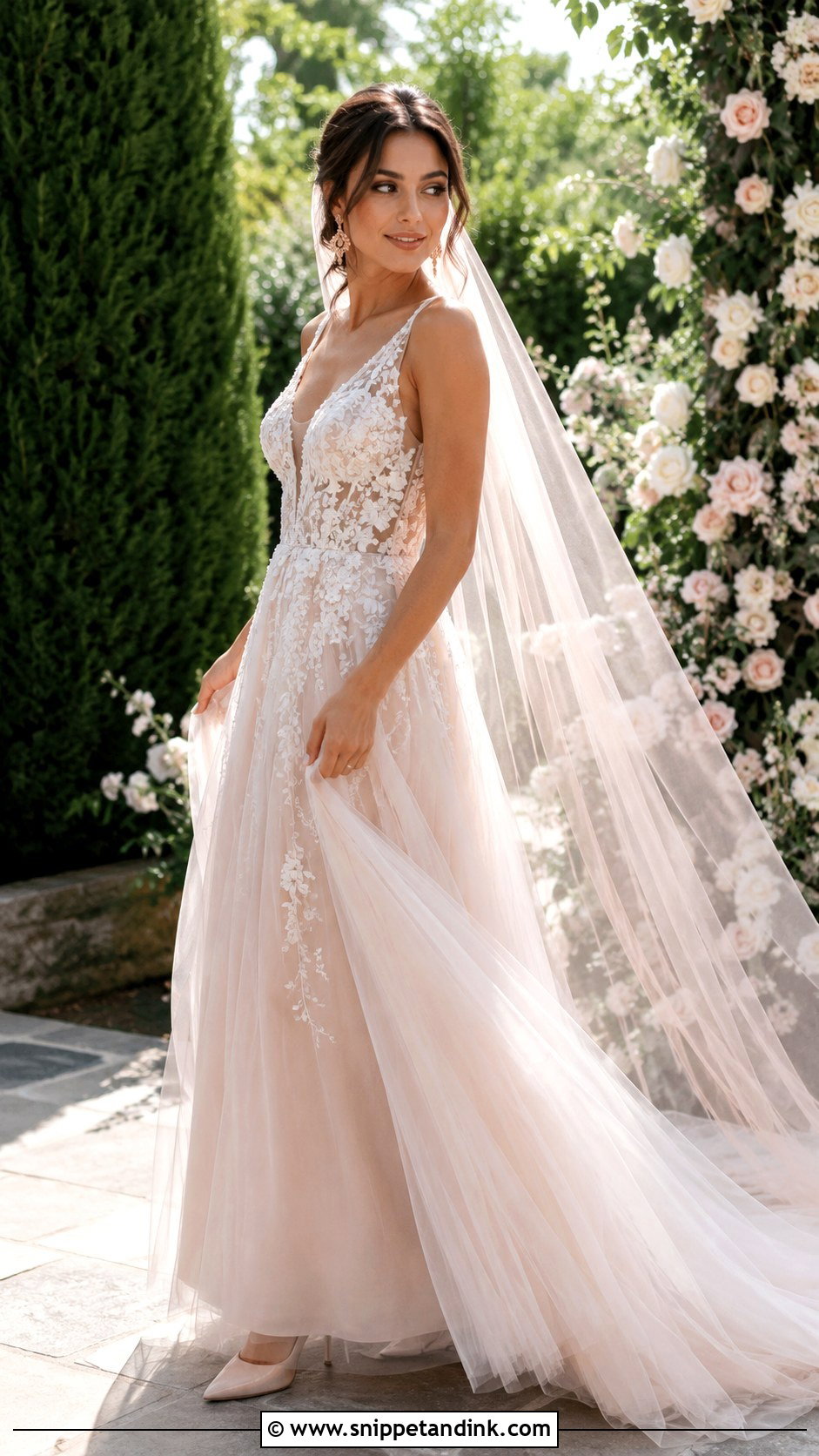
White isn’t the only color that reads as bridal. Blush brings warmth while staying romantic and formal: layers of blush tulle make an airy ball gown, and rose-toned satin gives a smooth modern line. The shade is where I take the most care. A blush too close to your skin tone can wash you out in photos, so I hold fabric against the face in daylight before anything is ordered. Rose gold earrings, neutral heels and a sheer ivory or matching blush veil complete it. Keep the bouquet mostly neutral so the gown’s color stays noticeable, and finish with a waved updo or polished low bun.
20. Bridal Reception Dress With Platform Sandals
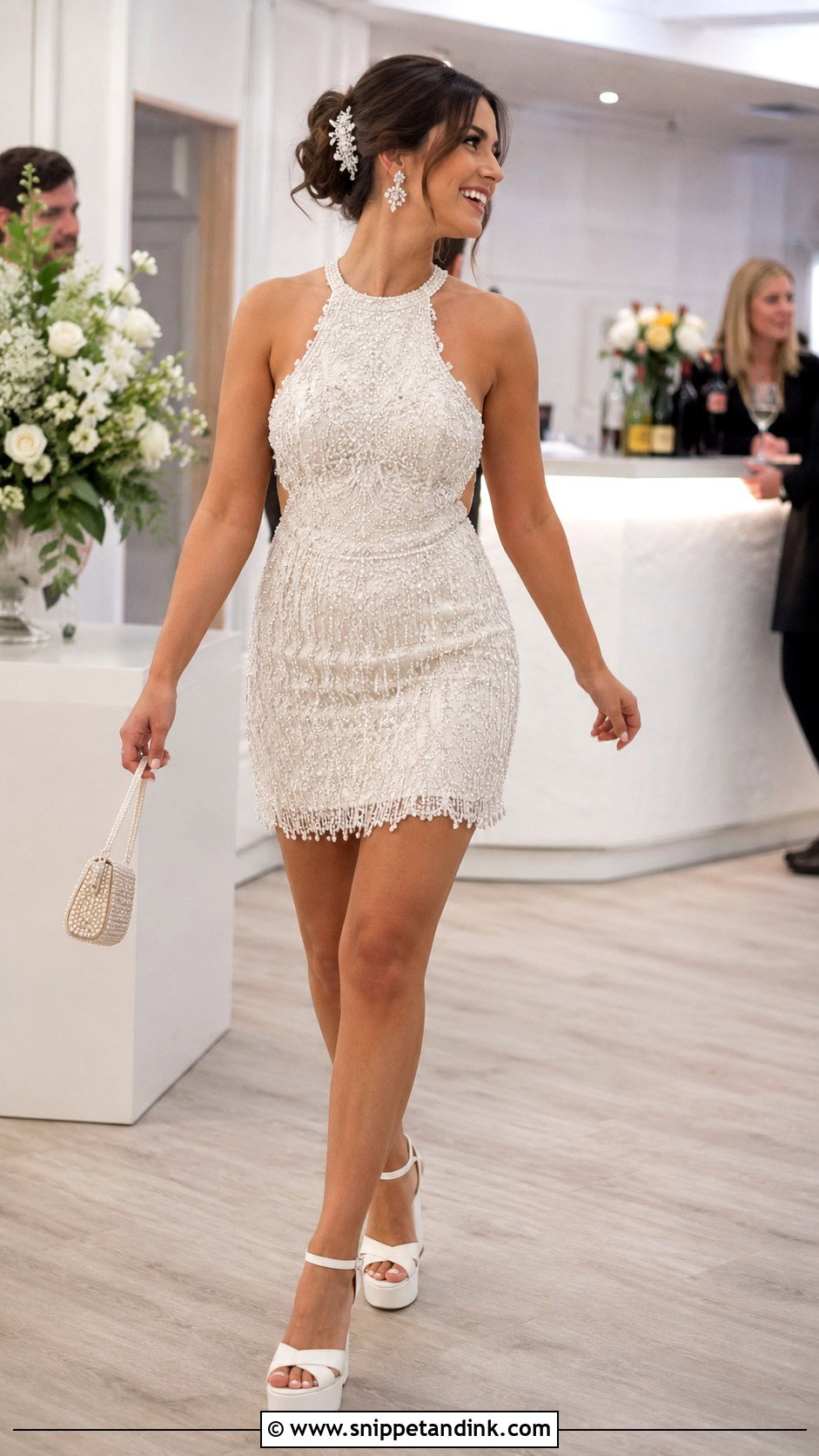
Once the formal photos are done and the music starts, a lighter dress makes the rest of the night much easier. A beaded mini, feather-trimmed midi, sleek column or short satin design can all stay connected to the ceremony look. I like repeating one detail, such as pearls, lace or the same neckline, so the change feels planned. Supportive platform sandals or low block heels beat shoes you’ll want to kick off within the hour. Statement earrings and a compact wristlet carry the essentials. Swap the long veil for a short one, a hair bow or a sparkly comb. Time the change, too: getting out of a laced or buttoned gown can take a good while, so build it into the schedule and have someone with you.
Getting Into the Dress Without a Crease or a Rush
Almost every dress comes out of its bag creased, however carefully it was packed. Hang it the night before somewhere it can drop freely, off the floor and out of direct sun, then steam it on the morning, keeping the steamer moving and a little away from delicate fabric. Satin water-spots easily, so test a steamer that spits on an inside seam first, or ask the atelier whether they offer a final press.
What goes in my dressing kit
- Safety pins in two sizes and a small sewing kit with white and ivory thread
- Fashion tape for straps and necklines that want to wander
- White chalk to hide a small mark on ivory or white fabric
- Clear nail polish to stop a run in tights
- Blister plasters and a pair of flat shoes for later
- A clean pale towel to drape over the bodice during makeup touch-ups
Once hair and makeup are done, step into the dress rather than pulling it over your head, and if it has to go over, cover your face with a thin scarf first. Allow at least half an hour for dressing, longer for corset lacing or a long row of buttons. It’s the step nearly everyone underestimates.
The Dress You Dismiss on the Hanger Might Be the One
Fashion matters less than fit, comfort and how you want to feel walking in. The outfits above cover traditional ceremonies, courthouses, outdoor settings, formal receptions and modern celebrations, and plenty of brides end up somewhere they didn’t expect. Save your favorites, but try at least one shape you’d normally dismiss. Good alterations can turn a promising dress into one that feels personal. Before the wedding, put the whole outfit on together with the real shoes, underwear, veil and jewelry. If it all works while you sit, walk and hug, you’ll stop thinking about the dress and simply enjoy the day.
You'll Like These Ideas:



Leave a Reply