
Bridal abayas now cover a wide range: plain crepe, pearl-covered pieces, embroidered capes, airy organza and flowing cuts with detachable trains. The fabric decides more than people expect. Its weight controls how the abaya moves, how opaque it stays under a flash and how warm you’ll be by the evening. When I style an abaya bride, I start with the venue and season, then build the hijab, inner dress, shoes and jewelry around the one piece. The twenty outfits below are grouped so you can compare white, ivory, metallic detail and soft color side by side.

Crepe, Satin, Chiffon or Organza? How Each Abaya Fabric Behaves
Photos can’t tell you how a fabric feels at hour eight. Here’s what I tell brides about the four I see most often in bridal abayas.
- Crepe is opaque, drapes straight and resists creasing when you sit. It’s the most forgiving base, but plain crepe shows poor seams, so tailoring matters.
- Satin reflects light and looks formal. It shows creases from car journeys and every pucker in a seam, and lighter satins can turn sheer under flash.
- Chiffon is airy and cool but always needs a lining. Layers lift in wind, and the edges fray if a heel catches them.
- Organza is crisp and holds volume. It’s lovely as an embroidered overlay, scratchy if it touches bare skin, and it creases sharply in storage.
For a summer daytime nikah, I’d lean toward lined chiffon or a light crepe. For a winter evening reception, satin or a heavier crepe holds its shape better and keeps you warmer.
1. White Satin Bride Abaya
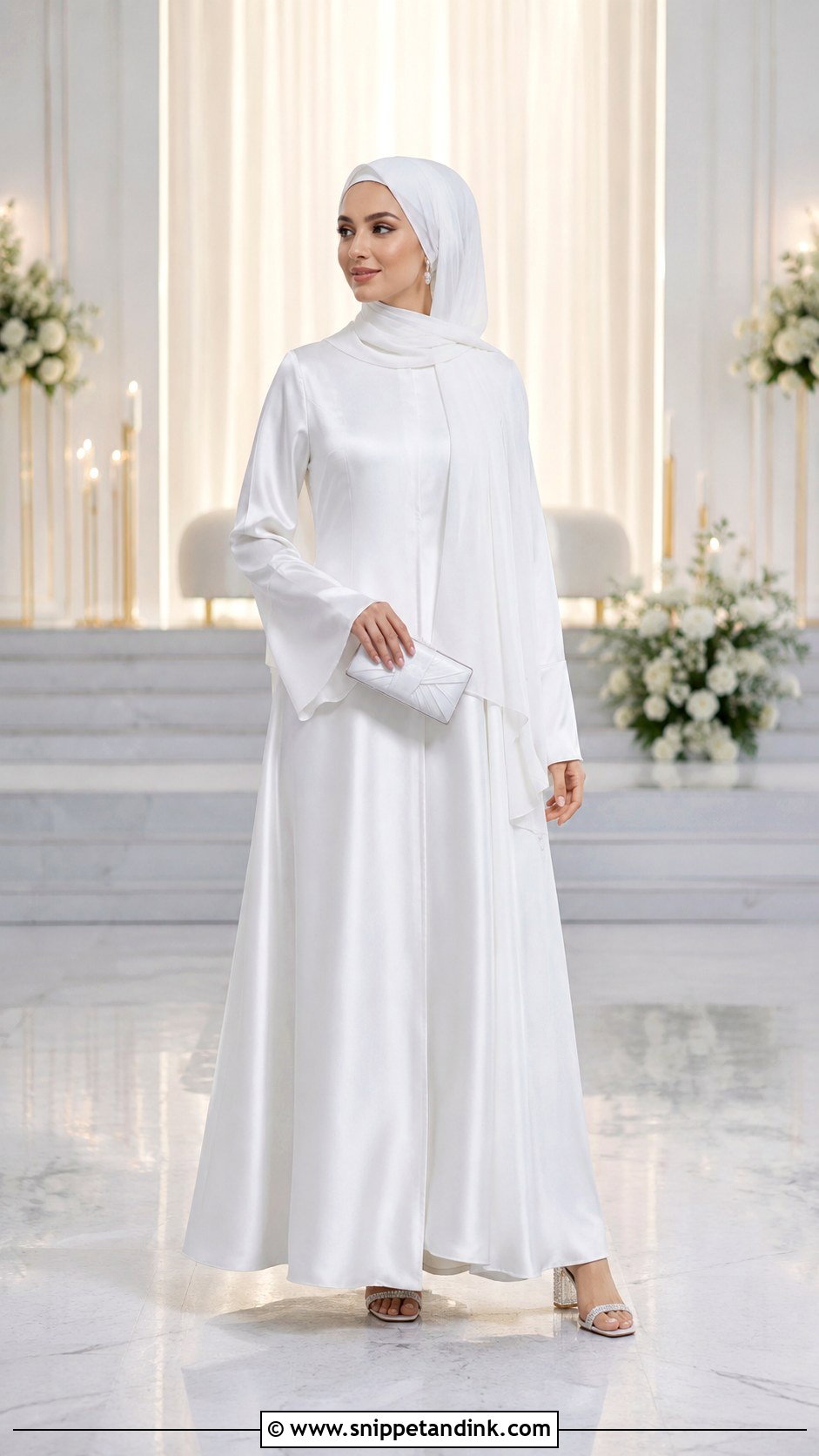
Satin gives an abaya a clean glow under formal lighting, which is why it’s a favorite for an evening nikah. I’d choose a fluid satin in a softly structured A-line so it falls straight rather than clinging at the hip. Long cuffed sleeves, a high neck and covered buttons keep it refined. Pair it with a matte chiffon hijab so the head doesn’t add more shine. Satin can look thinner under a camera flash than in a mirror, so take a flash photo at the fitting to check the coverage.
2. Ivory Embroidered Bride Abaya
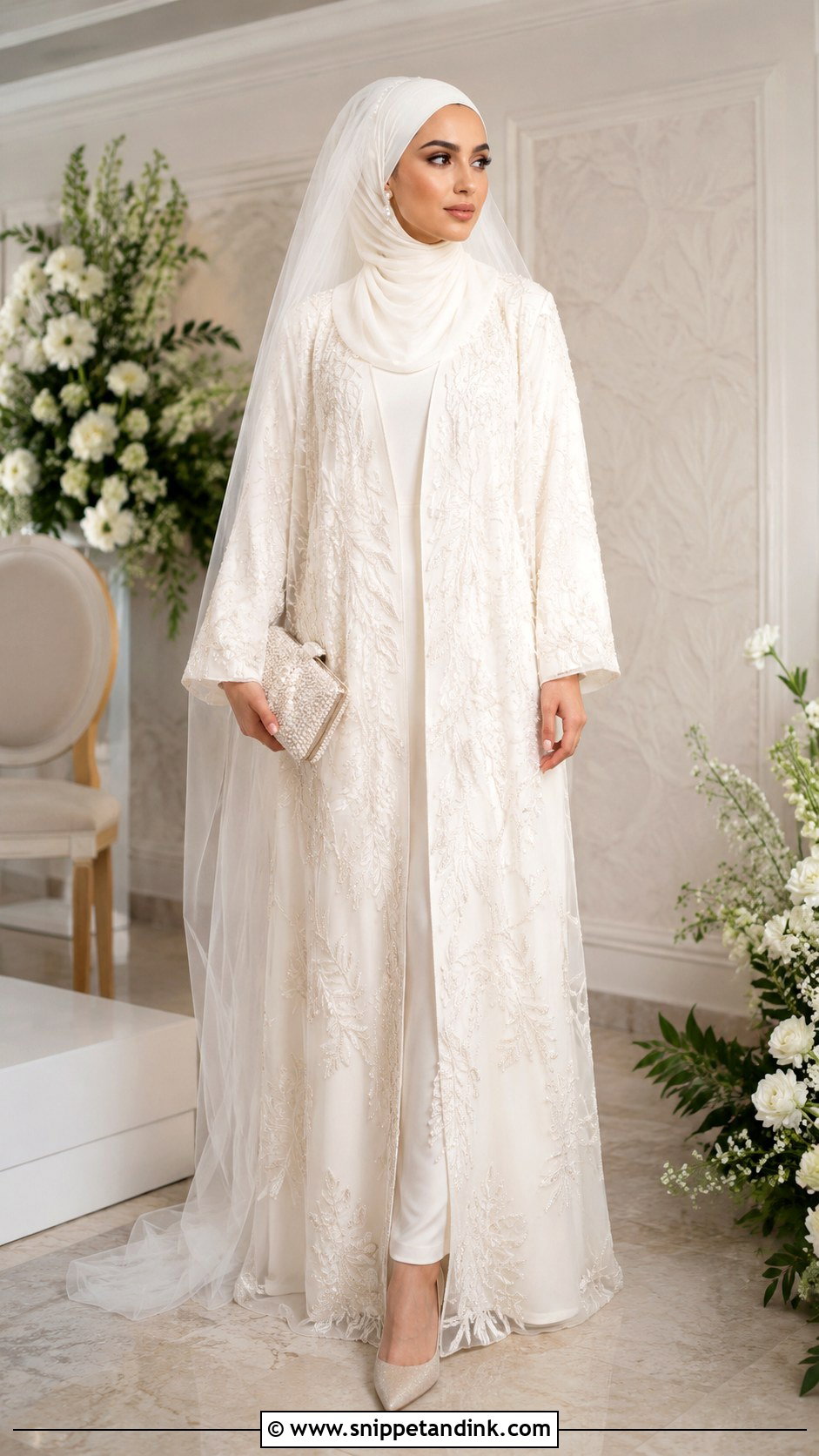
Ivory sits more kindly than bright white against wood, cream décor and gold detail. Look for tonal embroidery at the bodice, cuffs and hem in vines, geometric borders or arabesques. A matching ivory slip underneath stops any show-through and lets the stitching lie flat. Style it with a lightweight chiffon hijab in the same undertone. For custom work, I always ask for a stitched sample first, because silver, beige and gold threads read very differently against ivory than they do on the spool.
3. White Lace Bride Abaya
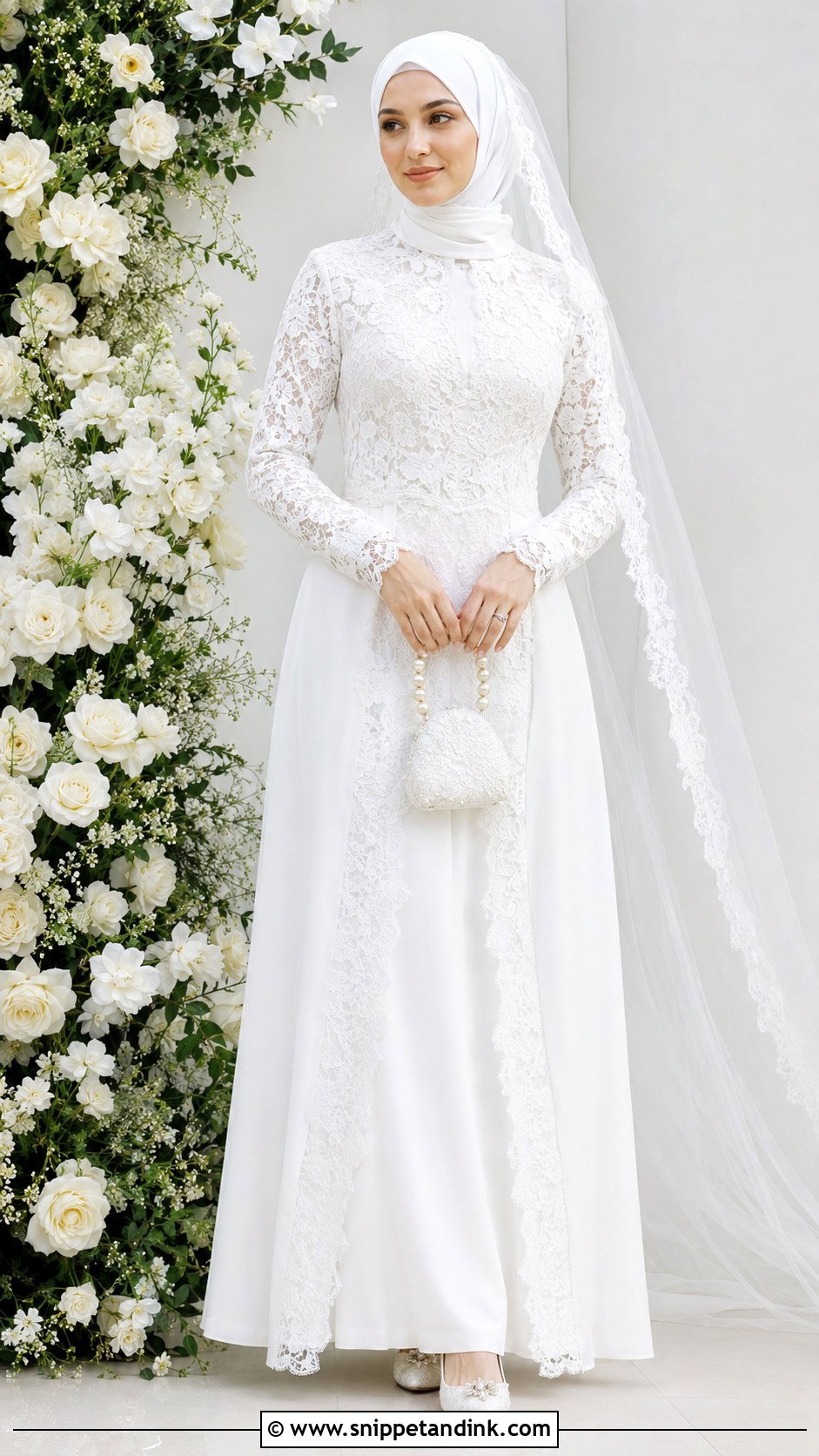
Putting lace on the sleeves and bodice, with a plain crepe or satin skirt, is the balance I recommend; all-over lace on an abaya gets heavy and busy. Floral lace looks romantic, geometric lace reads cleaner. A smooth white hijab keeps texture away from the face, and a lace-edged veil can repeat the pattern. Feel the lace at the cuffs and neckline: scratchy lace at the wrist is miserable after a few hours of handshakes. Loose motifs also catch on bouquet wire and bracelets.
4. Pearl Bride Abaya
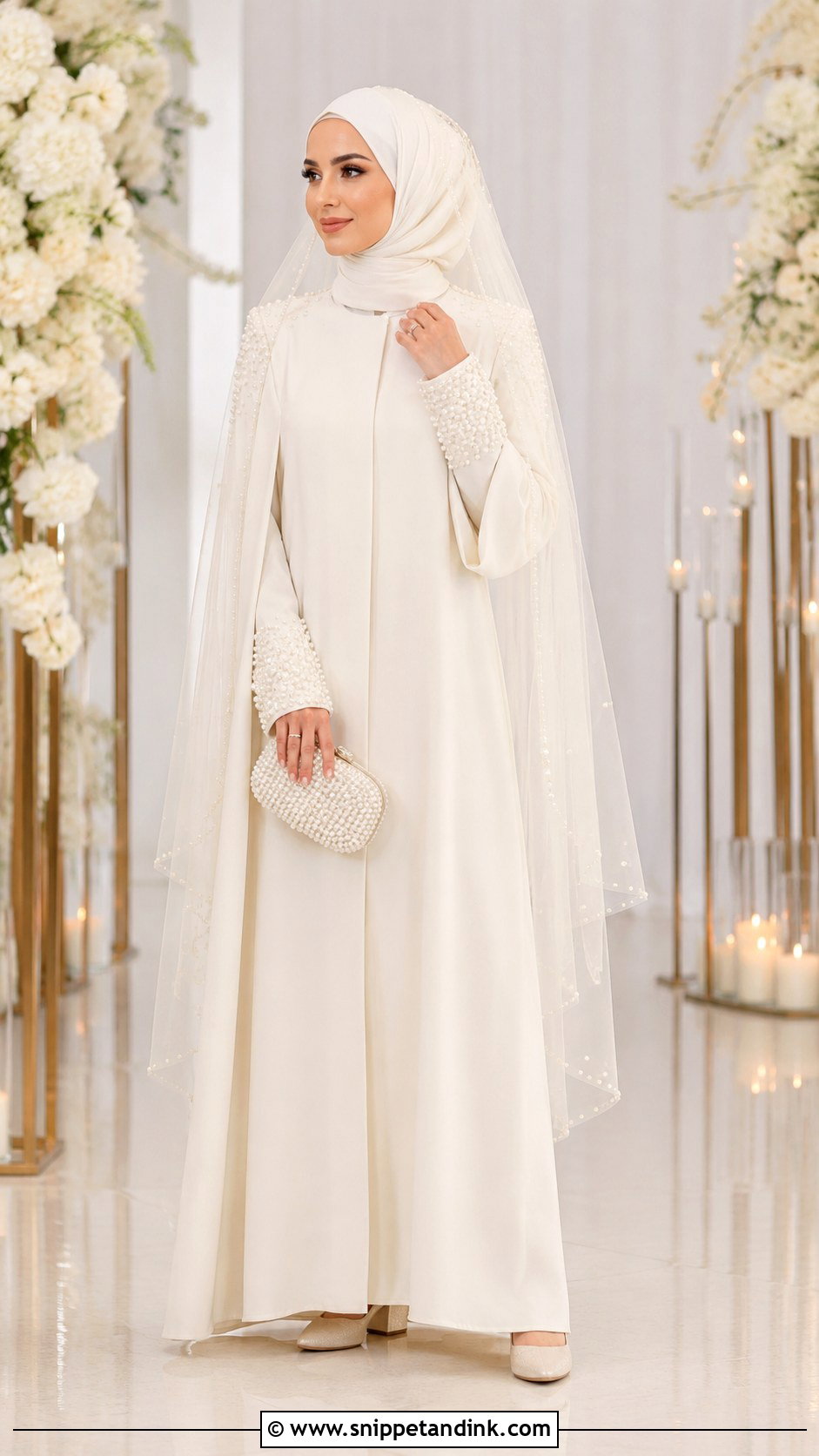
Pearls are best kept to the shoulders, cuffs and front opening rather than scattered everywhere. That way you get definition without the extra weight dragging the shoulders down. A plain crepe inner dress gives the embellished outer layer a smooth base. A pearl-edged hijab or a veil with widely spaced pearls continues the idea; skip big necklaces entirely. Before buying, I turn the sleeve inside out and check the pearls are sewn, not glued. Glued pearls pop off at the wrists within an hour of hugging.
5. Cape Bride Abaya
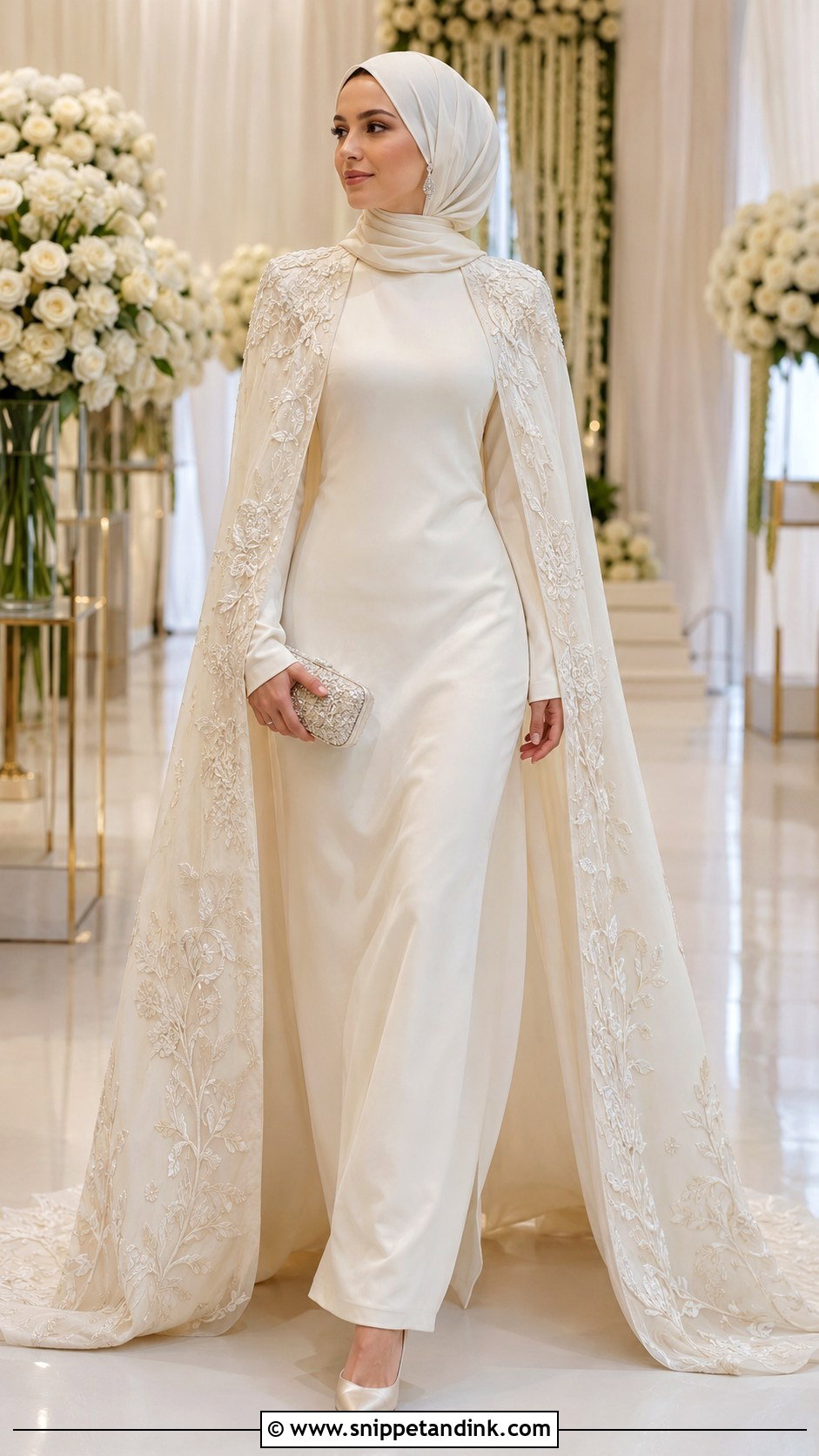
A cape gives the entrance its drama while the abaya underneath stays simple. Start with a long-sleeve inner abaya in ivory crepe or matte satin, then add a floor-length shoulder cape in chiffon, organza or embroidered tulle. Wrap the hijab neatly before the cape goes on so the neckline lies smooth under it. A detachable cape is my usual advice because you can take it off for dinner. The cape should clear the floor as you walk, and the shoulder fastening needs to stay put through every hug.
6. Floral Organza Bride Abaya
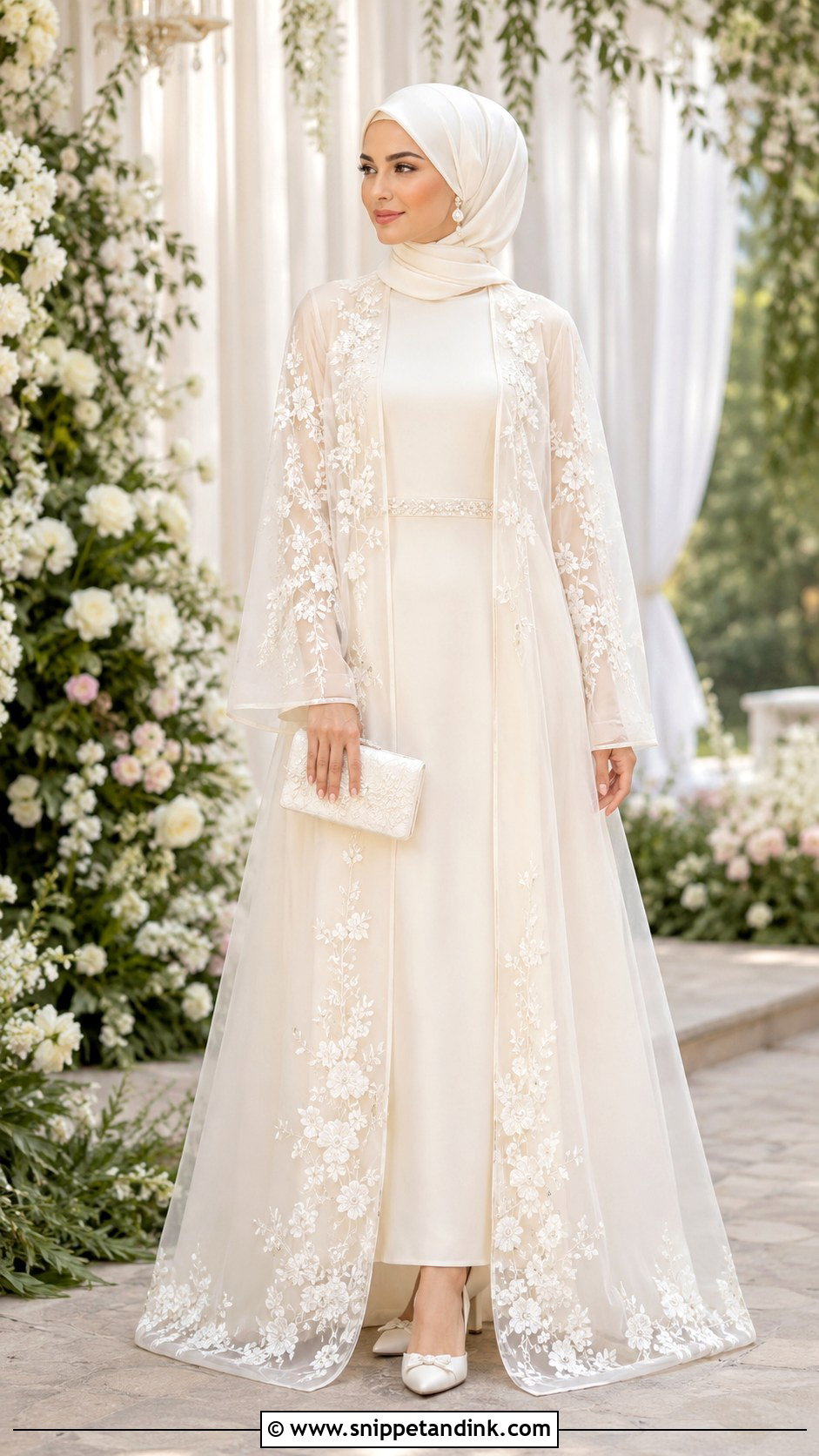
Organza gives detail without dense beading. A floral organza bride abaya works best as a sheer embroidered outer layer over a fully lined crepe dress, with the flowers kept near the hem, sleeves or shoulders. A plain ivory hijab keeps the overlay as the focus. Organza holds creases and volume stubbornly, so steam it on low and leave it on a padded hanger until you dress. If total opacity matters, confirm the lining runs right through the sleeves, since many designs stop it at the elbow.
7. Layered Chiffon Bride Abaya
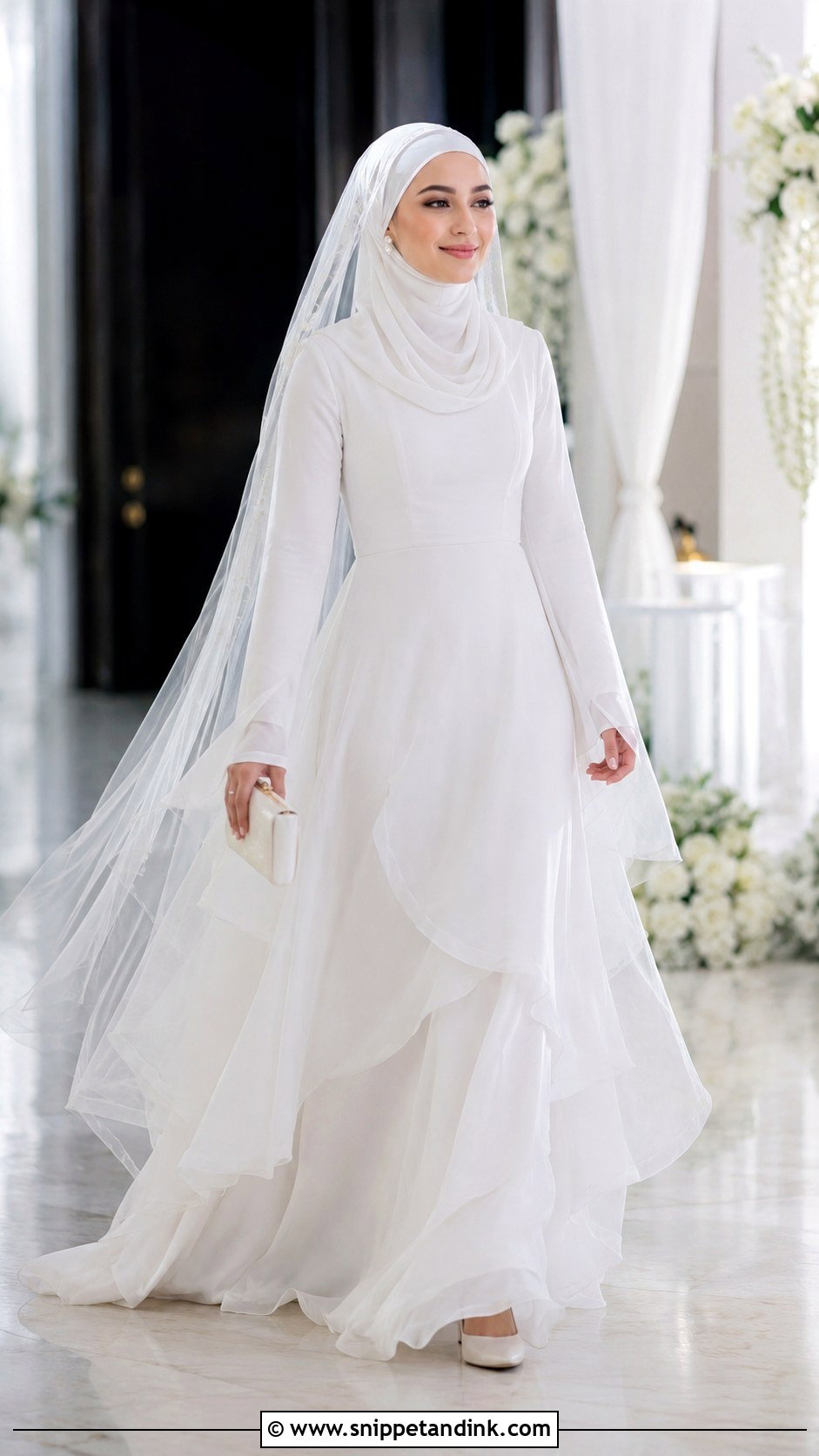
Layered chiffon over a crepe base moves softly when you walk, but it has a habit of lifting in any breeze. That’s why I ask the maker for weighted hems on outdoor ceremonies. Two or three layers on a gently flared cut give movement without bulking the waist. Bell sleeves look graceful; fitted cuffs are more practical for signing the nikah contract and shaking hands. Keep the chiffon hijab the same shade as the layers so the whole outfit moves as one color.
8. Minimalist Crepe Bride Abaya
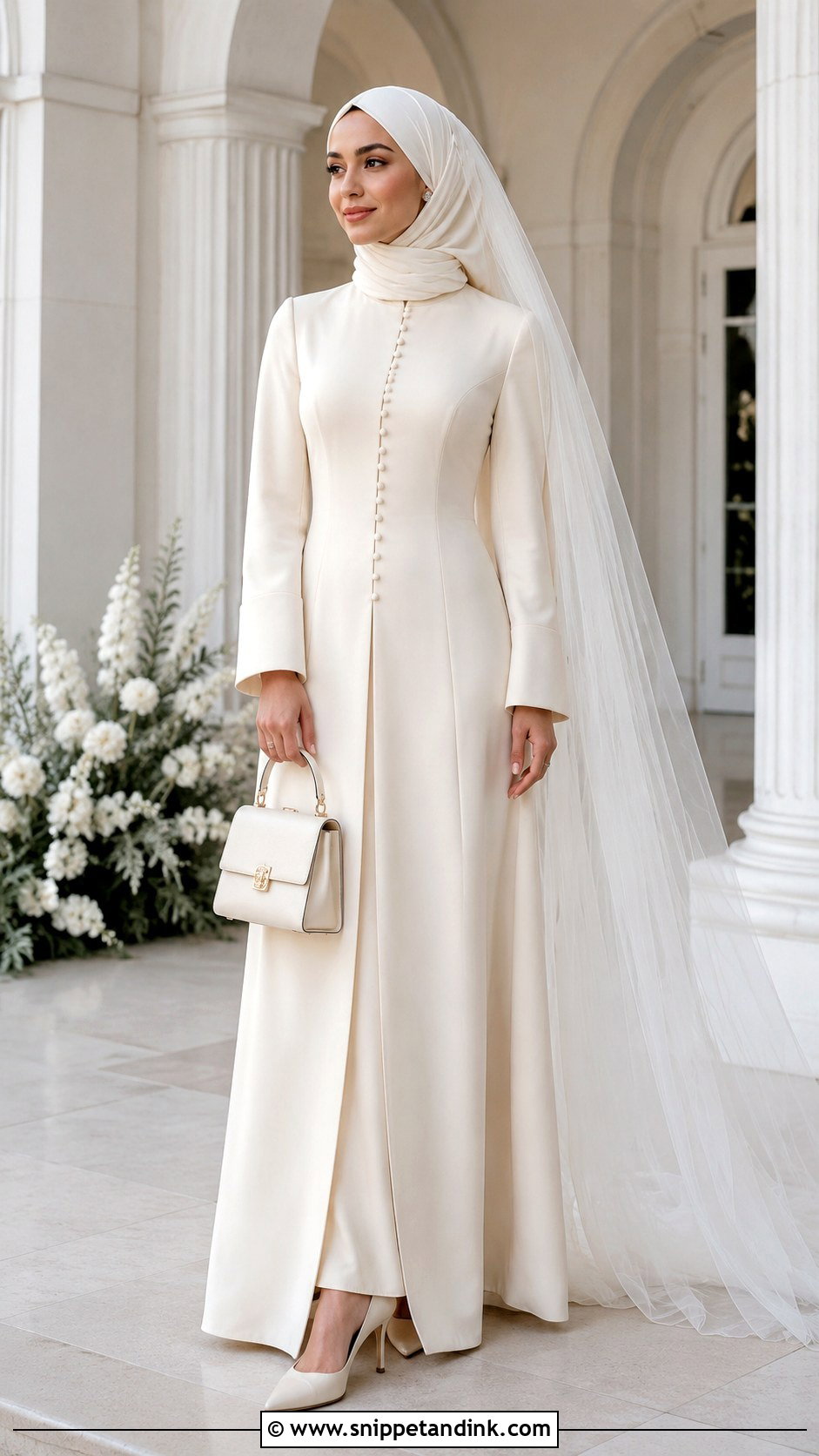
With almost no decoration, every flaw in a crepe abaya shows. Choose a high-quality opaque crepe with clean seams and a gently tailored shape, then let covered buttons, curved cuffs or a narrow waist seam provide the detail. A matching crepe or chiffon hijab with a neat, low wrap keeps the line clean. A plain cathedral veil adds ceremony drama without changing the abaya. At the final fitting, I check the shoulder seam, sleeve length and hem with the exact shoes, because on a plain garment half an inch is visible.
9. Gold Embroidered Bride Abaya
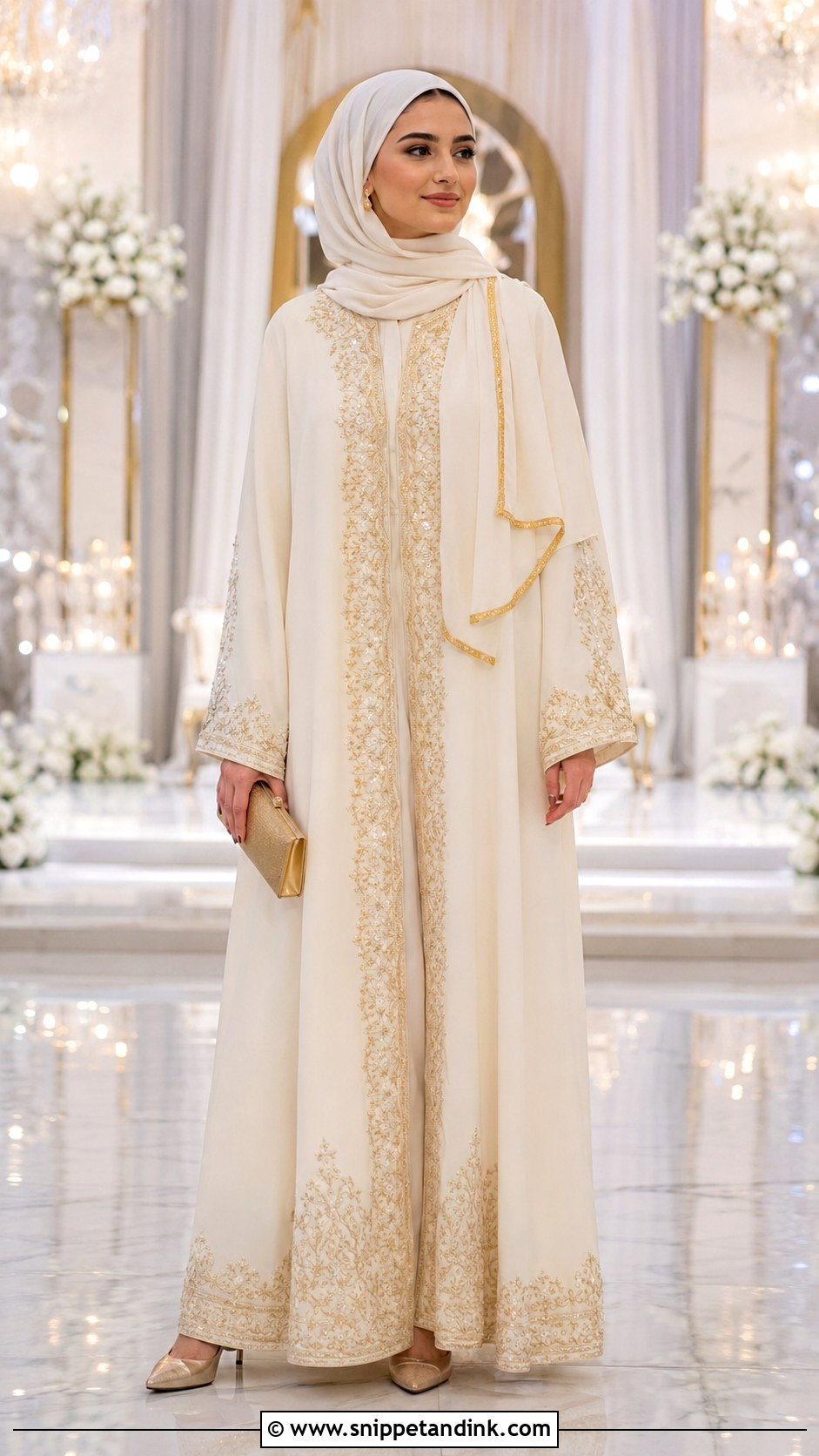
Gold thread warms ivory, cream and champagne fabrics instantly. Keep it to fine work around the neckline, cuffs, front panels and lower hem; balanced placement looks luxurious, while all-over gold can tip into costume. An ivory inner dress and a hijab with a narrow gold border keep the palette tight. If the neckline is heavily worked, skip the necklace. Metallic thread can be stiff and scratchy on the inside, so sit down and raise your arms during the fitting and feel for any rough patches against the skin.
10. Silver Beaded Bride Abaya
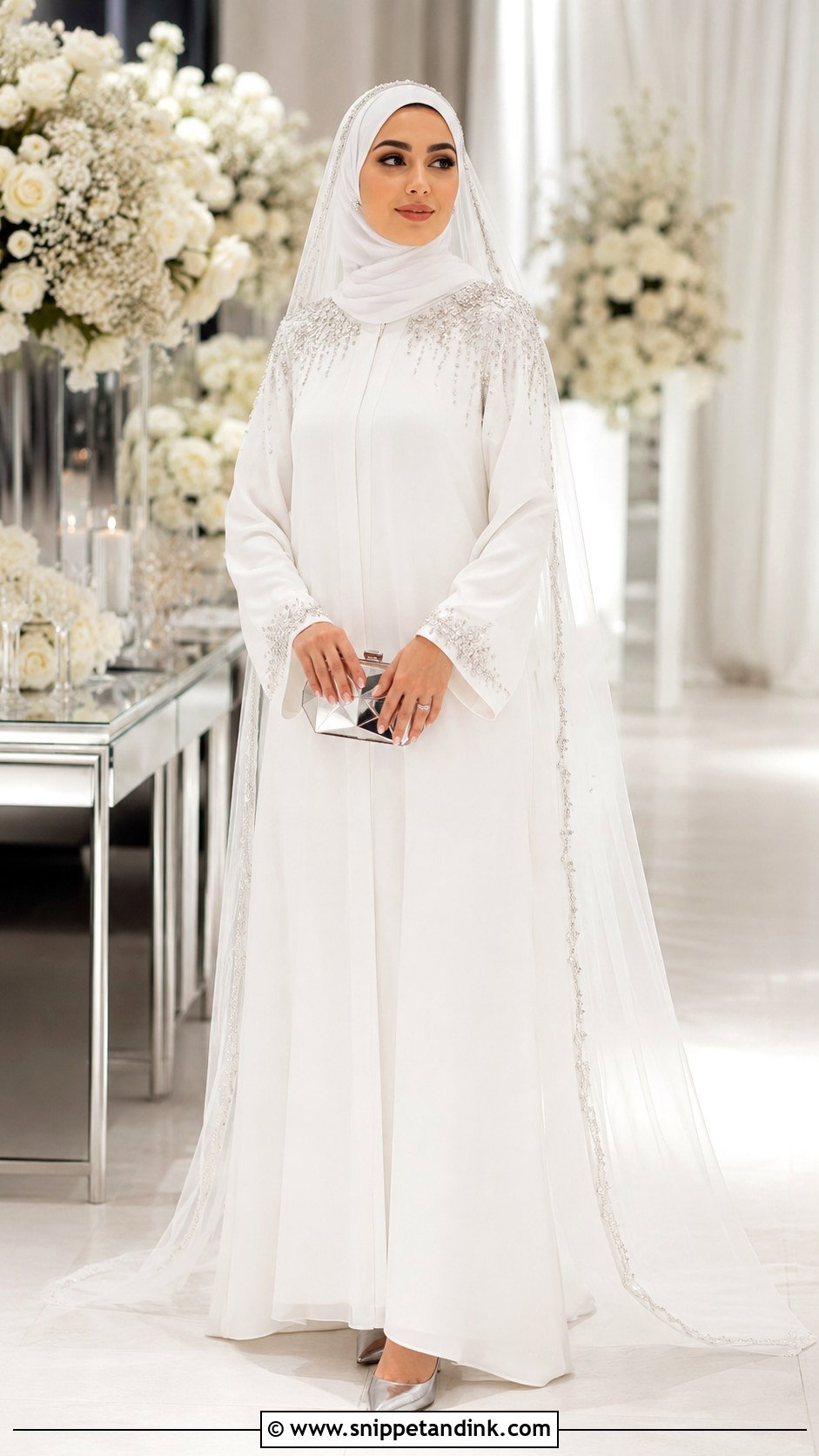
Silver beading in narrow lines across the shoulders and cuffs gives a crisp, cool finish on white or pale gray crepe. Add crystals sparingly; heavy beading weighs the fabric down quickly. A smooth white hijab and a sheer veil with a fine silver edge complete it. I always look at how the beadwork is attached and whether it puckers the fabric around it. A reinforced lining under the decorated areas keeps the abaya from sagging out of shape by the end of the night.
11. Champagne Bride Abaya
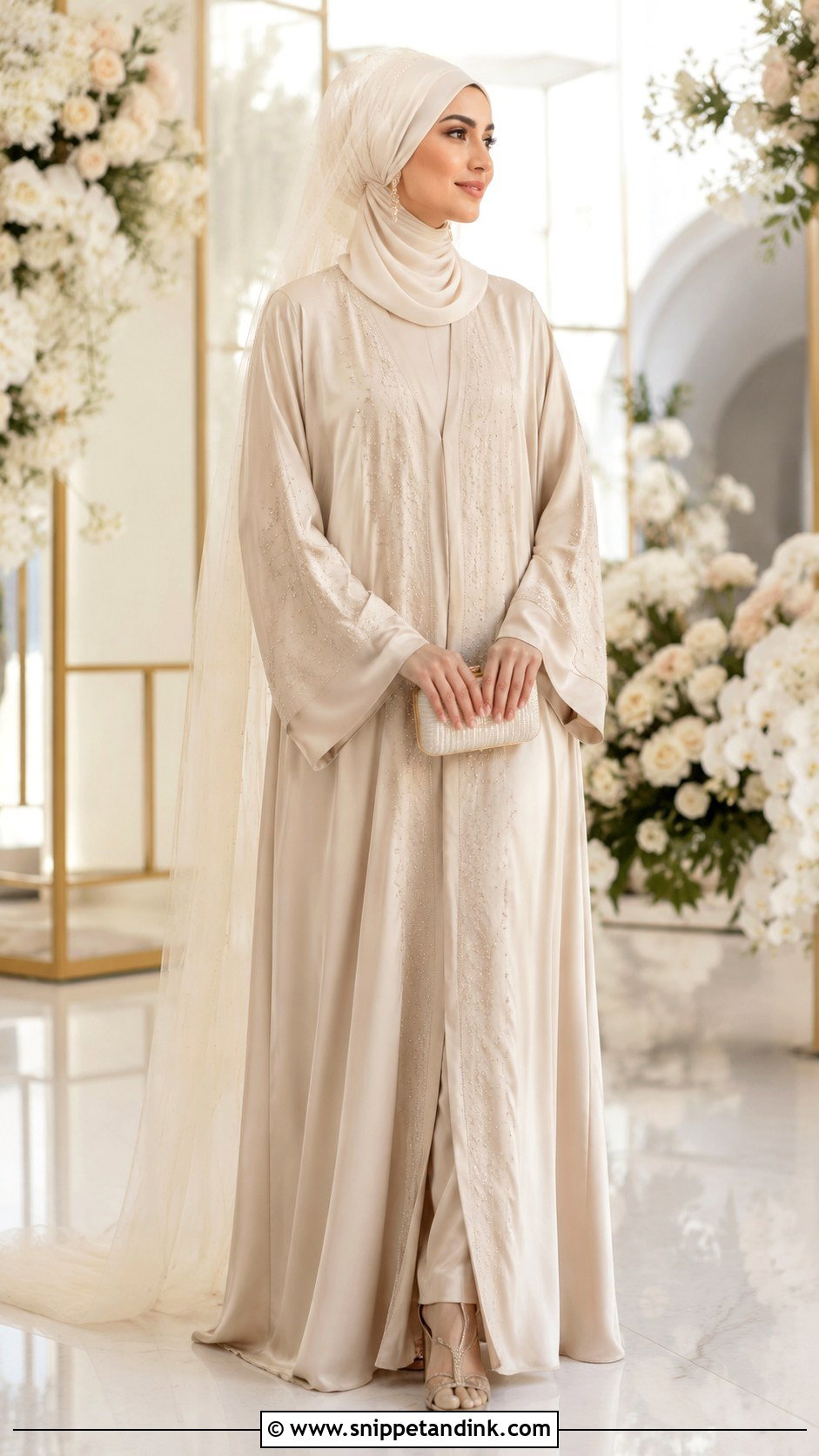
Champagne is the shade I suggest to brides who find white harsh against their skin. Matte satin, a silk blend or lined chiffon all work, depending on season. Tonal beading or soft ivory embroidery adds depth without breaking the neutral palette. A cream hijab frames the face; a champagne veil carries the color from head to toe. The catch is that champagne fabrics lean beige, pink or gold depending on their undertone. Check every layer in daylight and indoors, including the sleeves and inner dress, or the mismatch will show in photos.
12. Blush Pink Bride Abaya
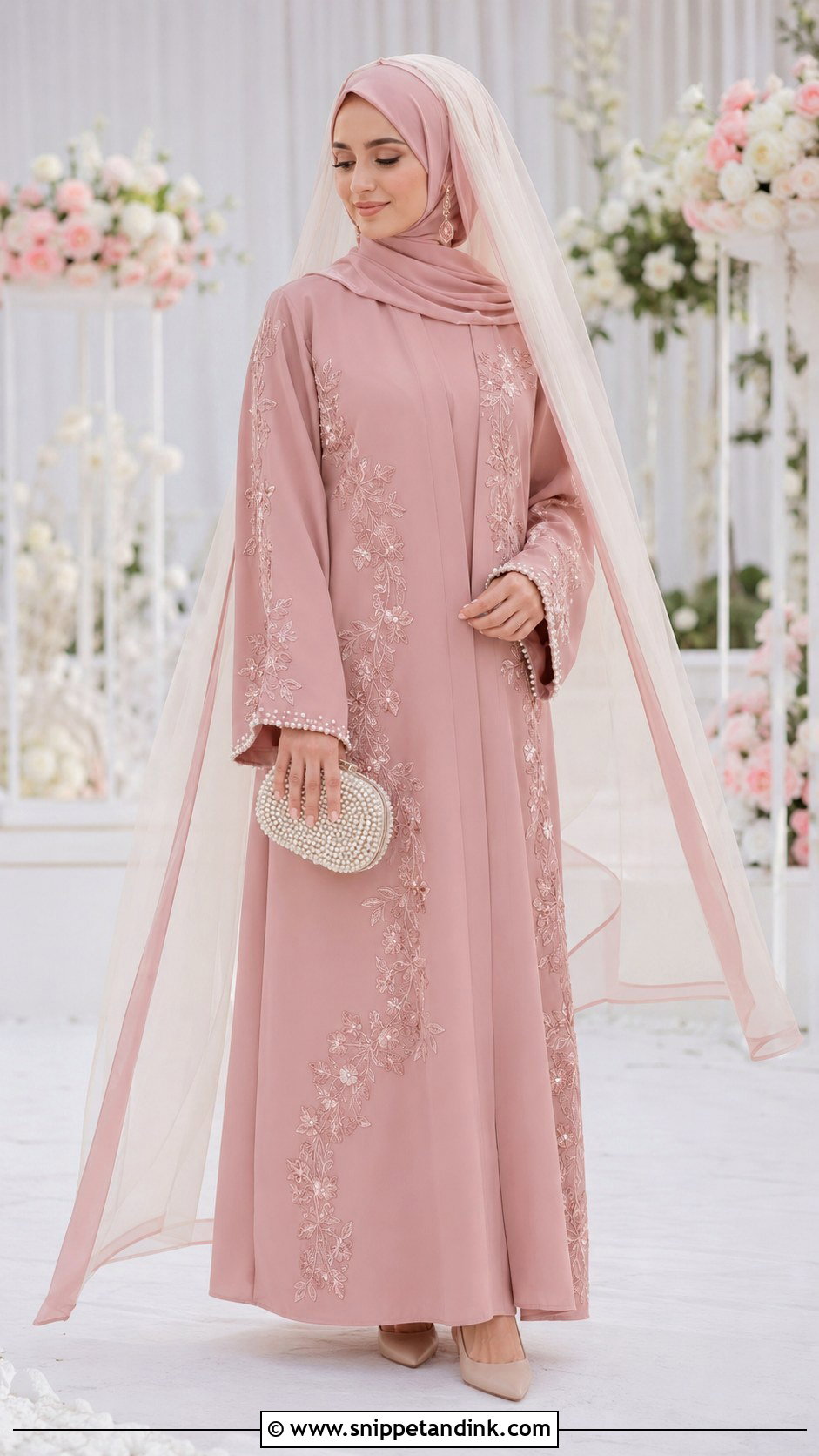
Dusty blush looks bridal; bright pink rarely does. A flowing crepe abaya with tonal floral embroidery, pearl cuffs or a sheer chiffon cape gives enough detail to mark you out as the bride. Pair it with a matching blush hijab, or an ivory one for gentle contrast. For a veil, I’d use ivory tulle with a blush border rather than trying to match a third pink; three pinks almost never agree. Blush suits bright daytime settings and neutral floral décor.
13. Sage Green Bride Abaya
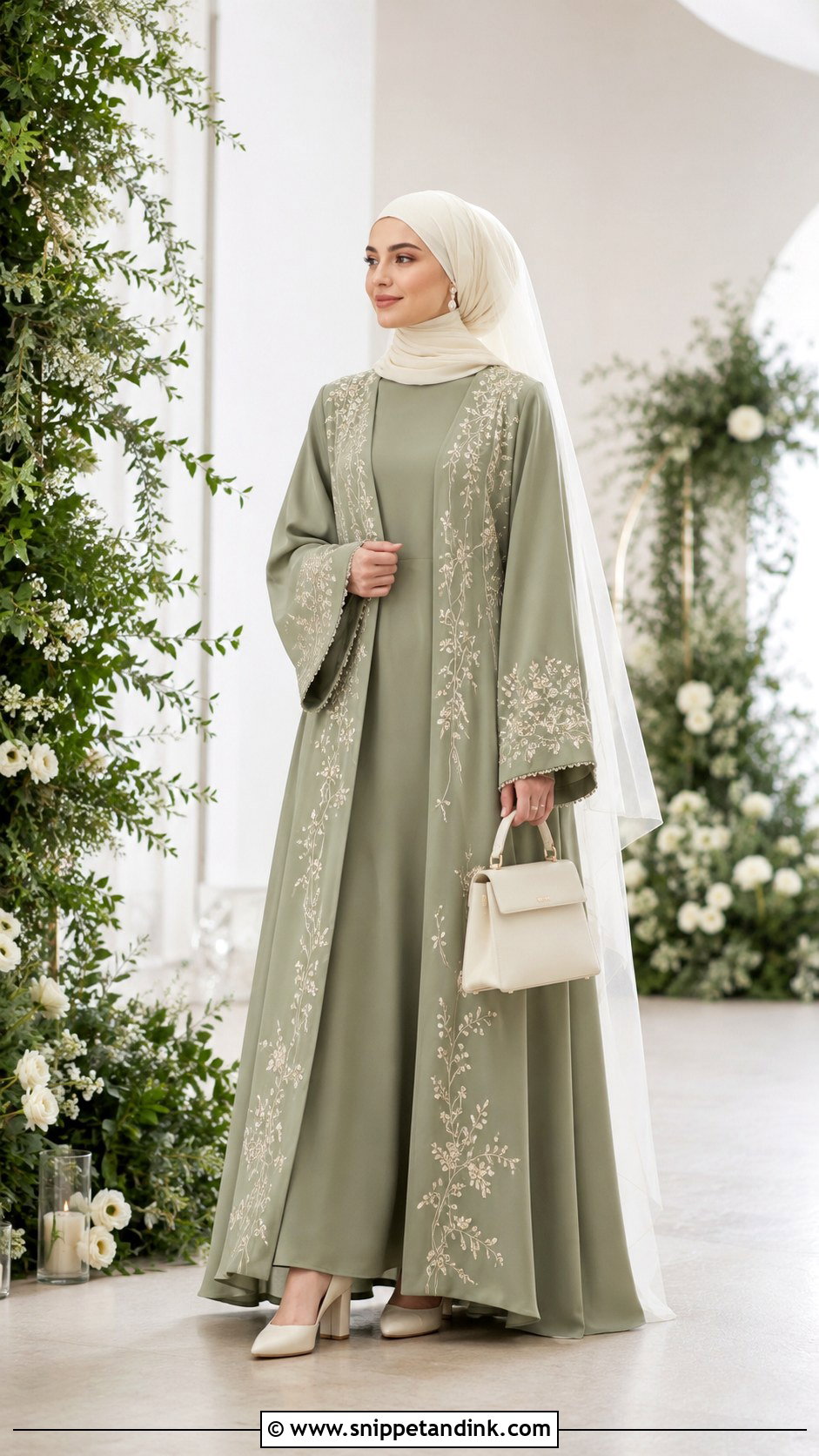
Sage green is calm and unexpected for a bride. Choose a muted sage abaya in crepe or satin with ivory embroidery along the sleeves and hem, and a matching sage inner dress under an open front. An ivory chiffon hijab, a light veil and cream block heels brighten the green. Bring a swatch shopping, because sage leans gray, blue or yellow depending on the dye. I’d stop at three elements: sage, ivory and pearl. It sits naturally in gardens and botanical venues.
14. Lavender Bride Abaya
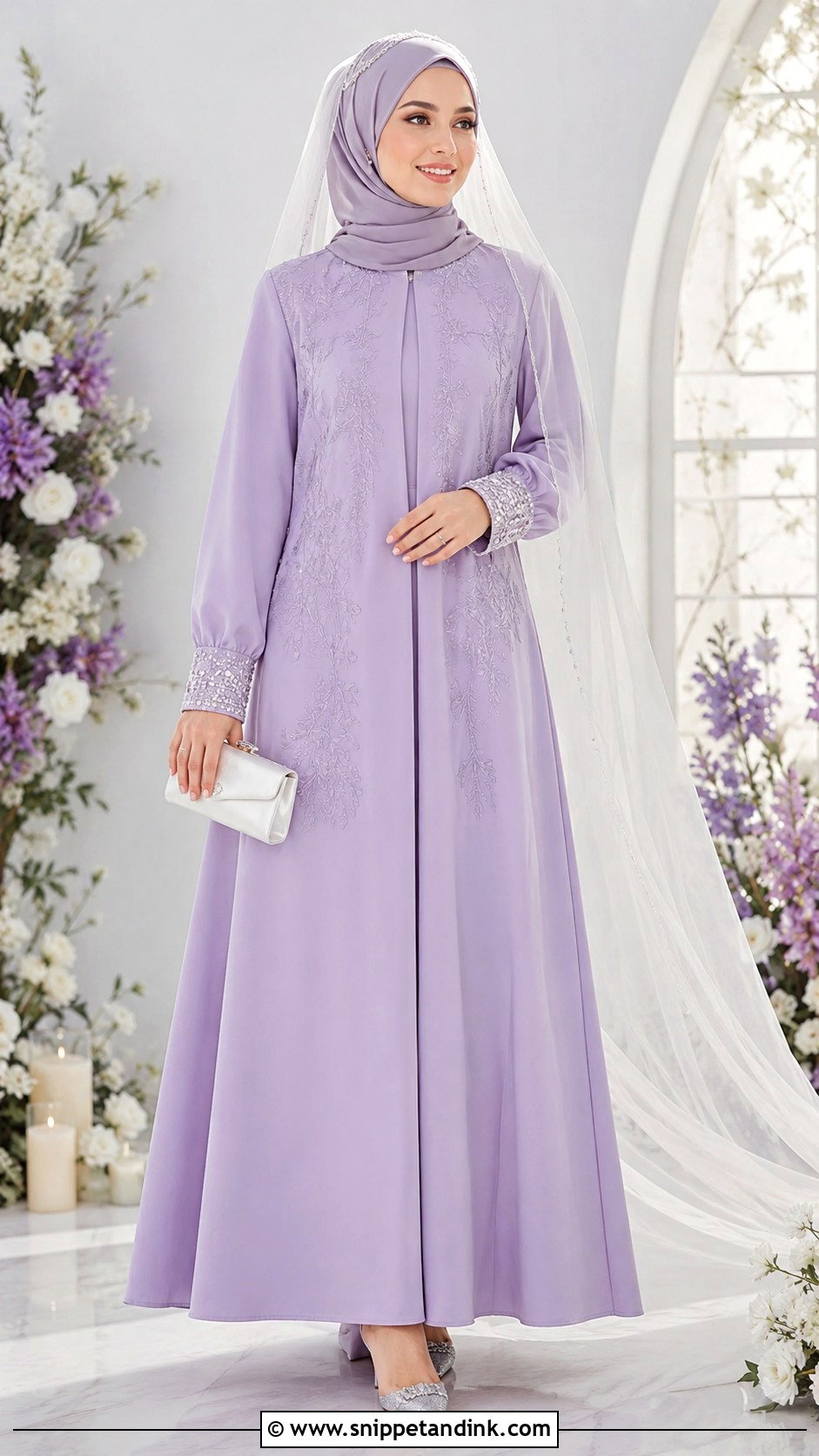
Lavender is a cool pastel, and it shifts more than any other color I work with. Choose a pale lavender abaya in a fluid A-line with tone-on-tone embroidery; silver beading at the cuffs or shoulders adds light. A matching chiffon hijab and an ivory veil keep it clearly bridal. For something quieter, swap crystals for pearls and pick a matte fabric. Compare every layer in the same light. An open abaya over a bright white underdress can look sharper than you expect, so match the inner dress to the lavender instead.

15. White And Gold Kaftan Bride Abaya
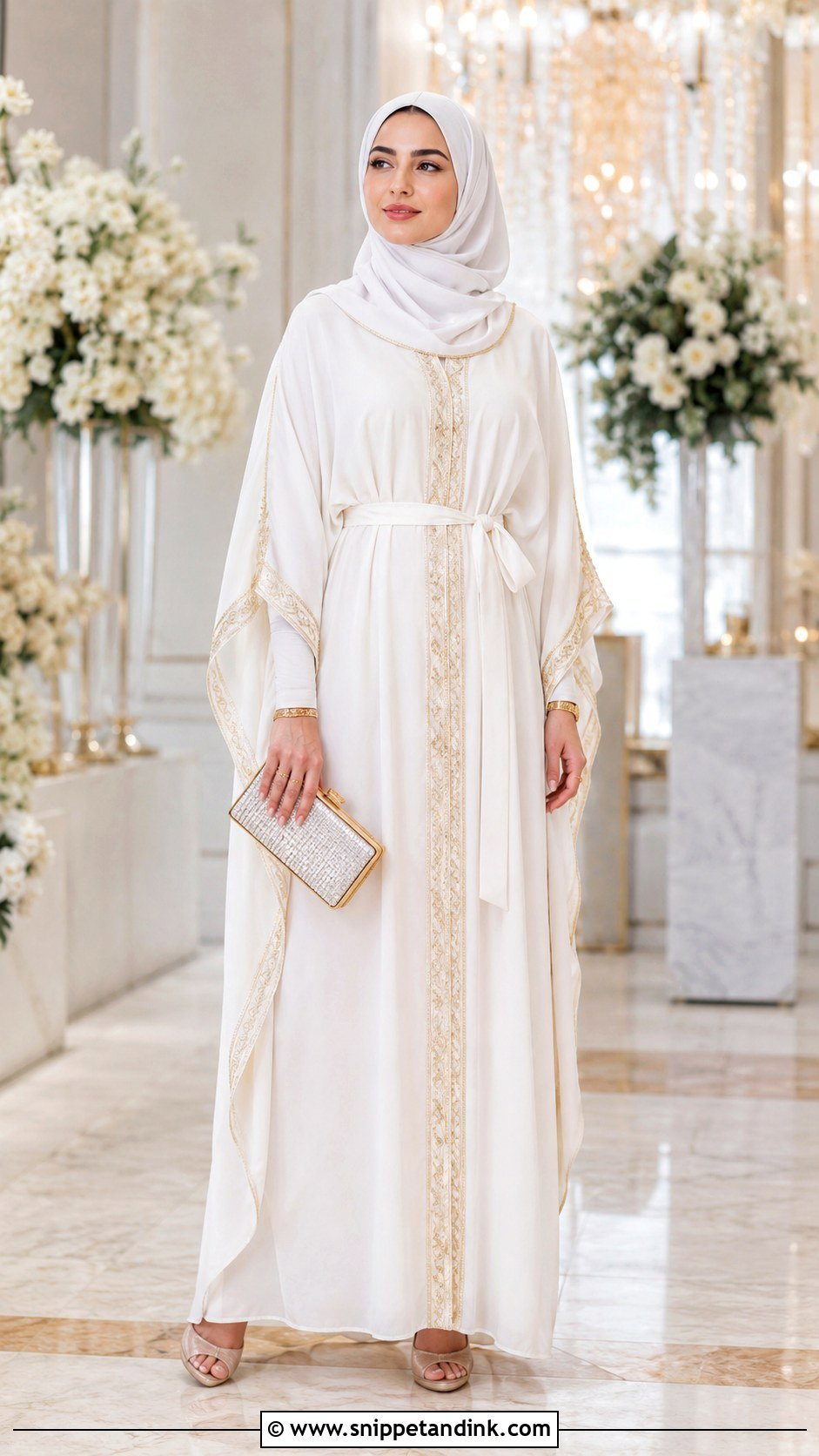
A white and gold kaftan bride abaya is relaxed in shape and ceremonial in detail. Look for wide sleeves, a defined center panel and narrow gold embroidery along the neckline and borders. A fabric belt can shape it but should sit comfortably. Wide kaftan sleeves fall back when you raise your arms, so I add fitted inner sleeves for coverage. Set the hem while wearing your wedding shoes so it floats just above the floor.
16. Pleated Bride Abaya
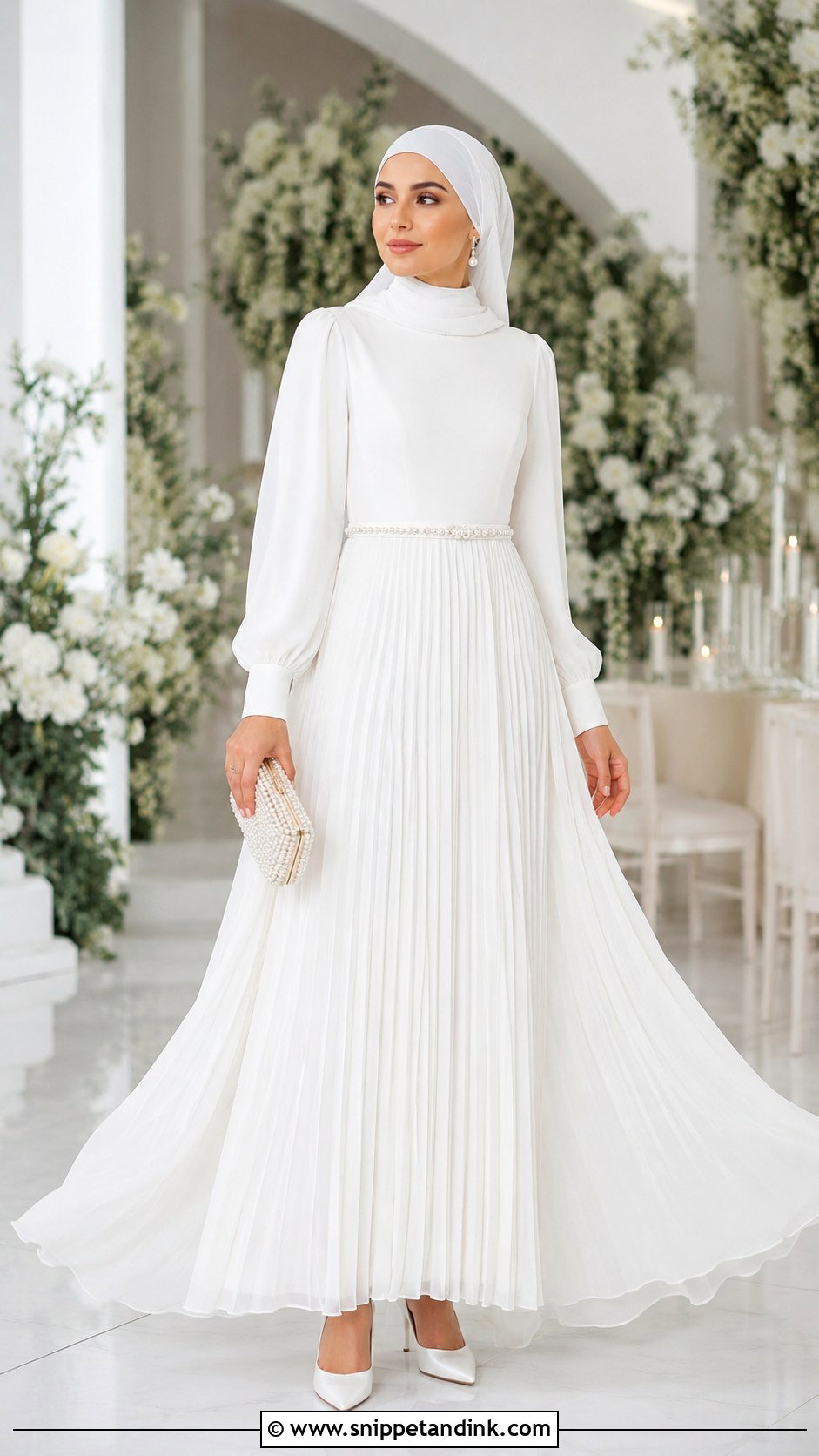
Permanent pleats are heat-set, and the wrong iron can flatten them for good. Ask the maker how to steam and clean the piece before you buy it. Look for fine vertical pleats through the skirt, back panel or cape sleeves, which add movement without beads or lace. White chiffon over an opaque crepe lining stays light. A smooth bodice and fitted cuffs balance the flow. When you try it on, walk, sit and turn, then check the pleats fall back into line.
17. Open Front Bride Abaya
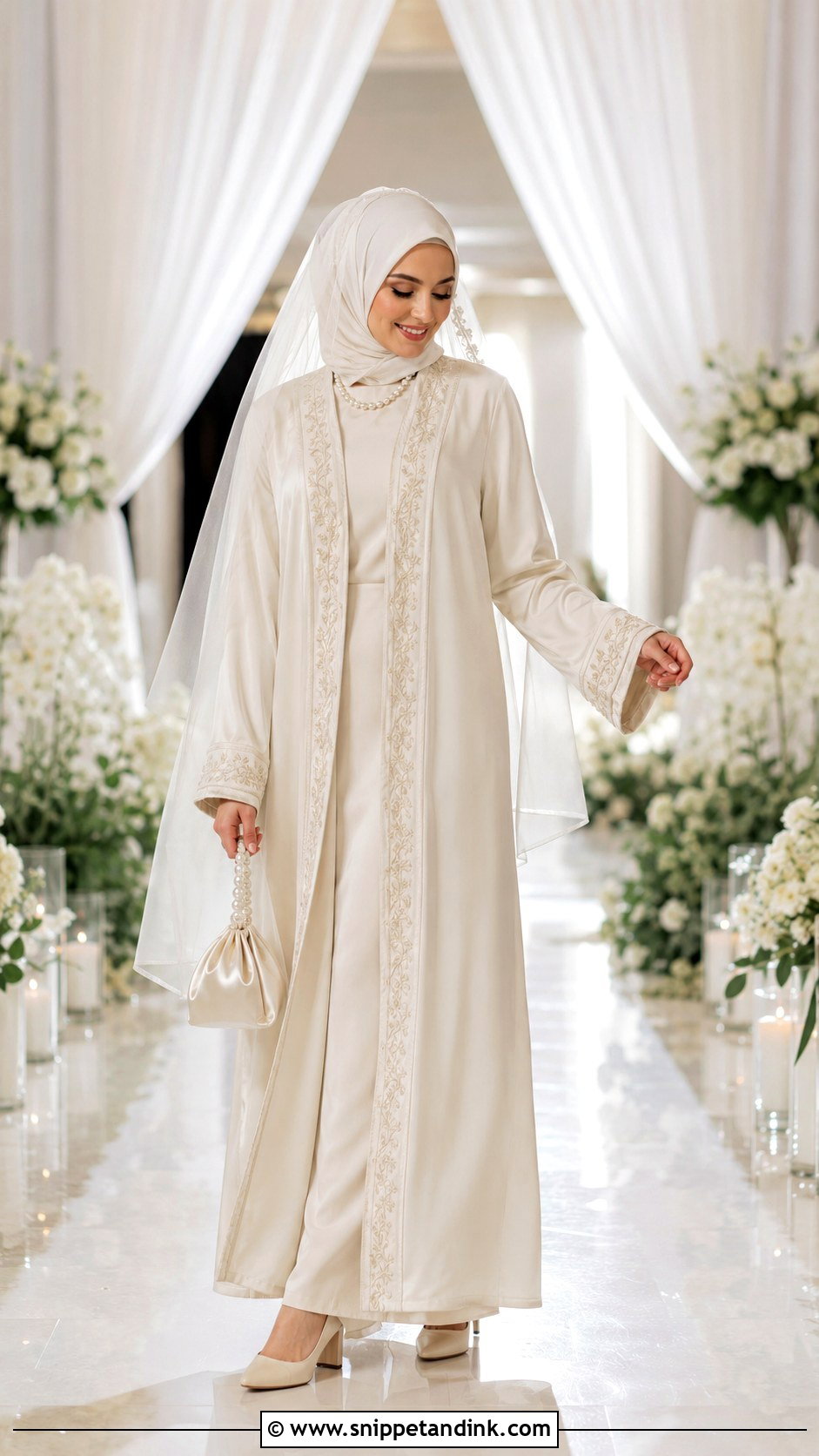
An open-front abaya is really two garments, and you can wear the inner dress again afterward. Start with an ivory inner dress with long sleeves and a high neck, then layer a matching open abaya with lace borders, pearl buttons or embroidered edges. A concealed hook at the waist keeps the front from swinging wide. Both layers stay visible, so they must share the same undertone. Walk toward a mirror in it; the panels should move evenly and not open further than you want.
18. Bride Abaya With Detachable Train
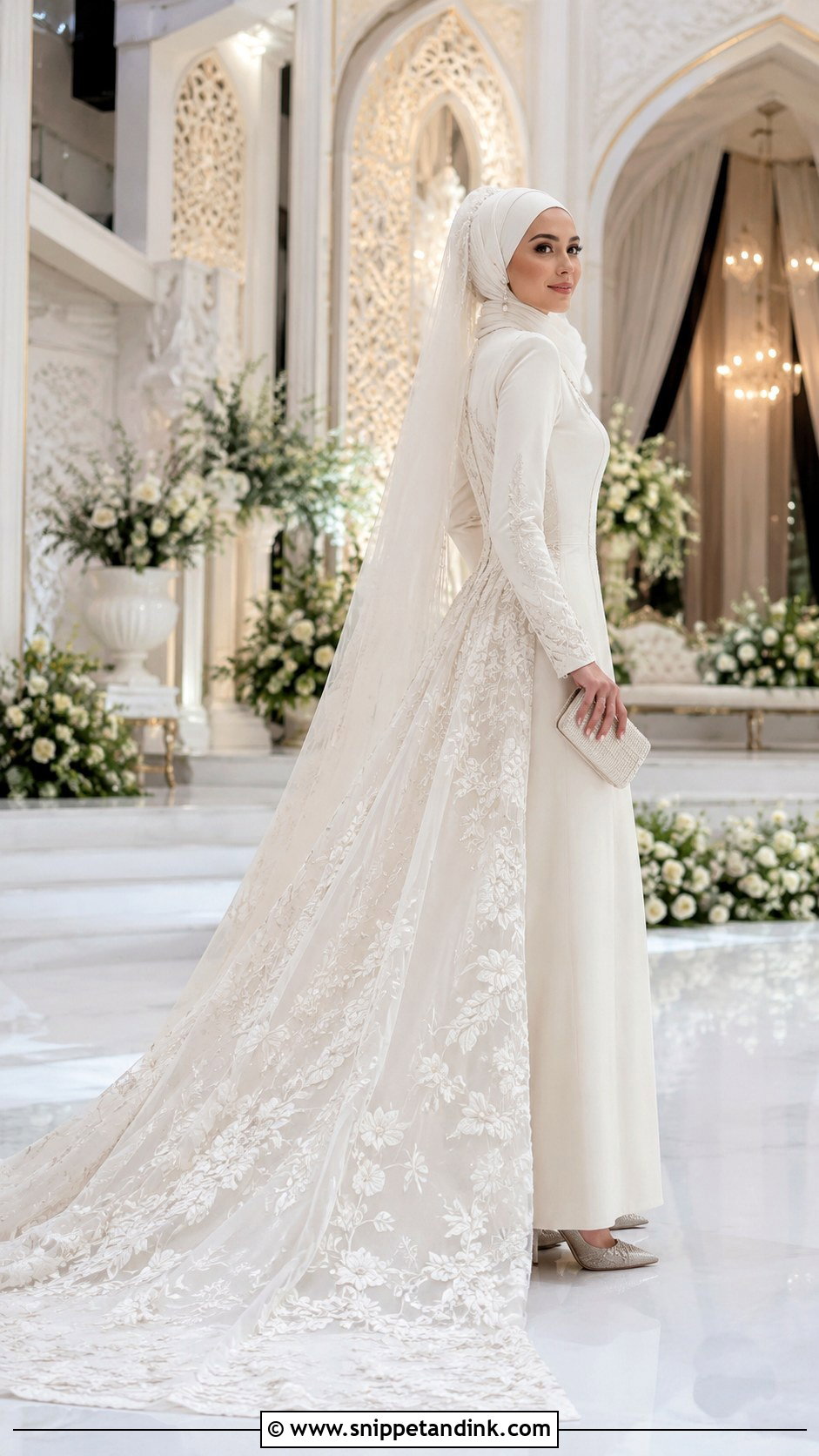
A detachable train gives you the ceremony entrance and then gets out of the way for the reception. Choose a fitted-shoulder abaya in ivory crepe or matte satin, with a train attaching at the waist or upper back in embroidered tulle, layered chiffon or matching satin. If the train is full, you can skip the veil. Practice removing it before the wedding and pick one person to handle it. The fastening has to lie flat and release without pulling the abaya’s fabric out of shape.
19. Crystal Cuff Bride Abaya
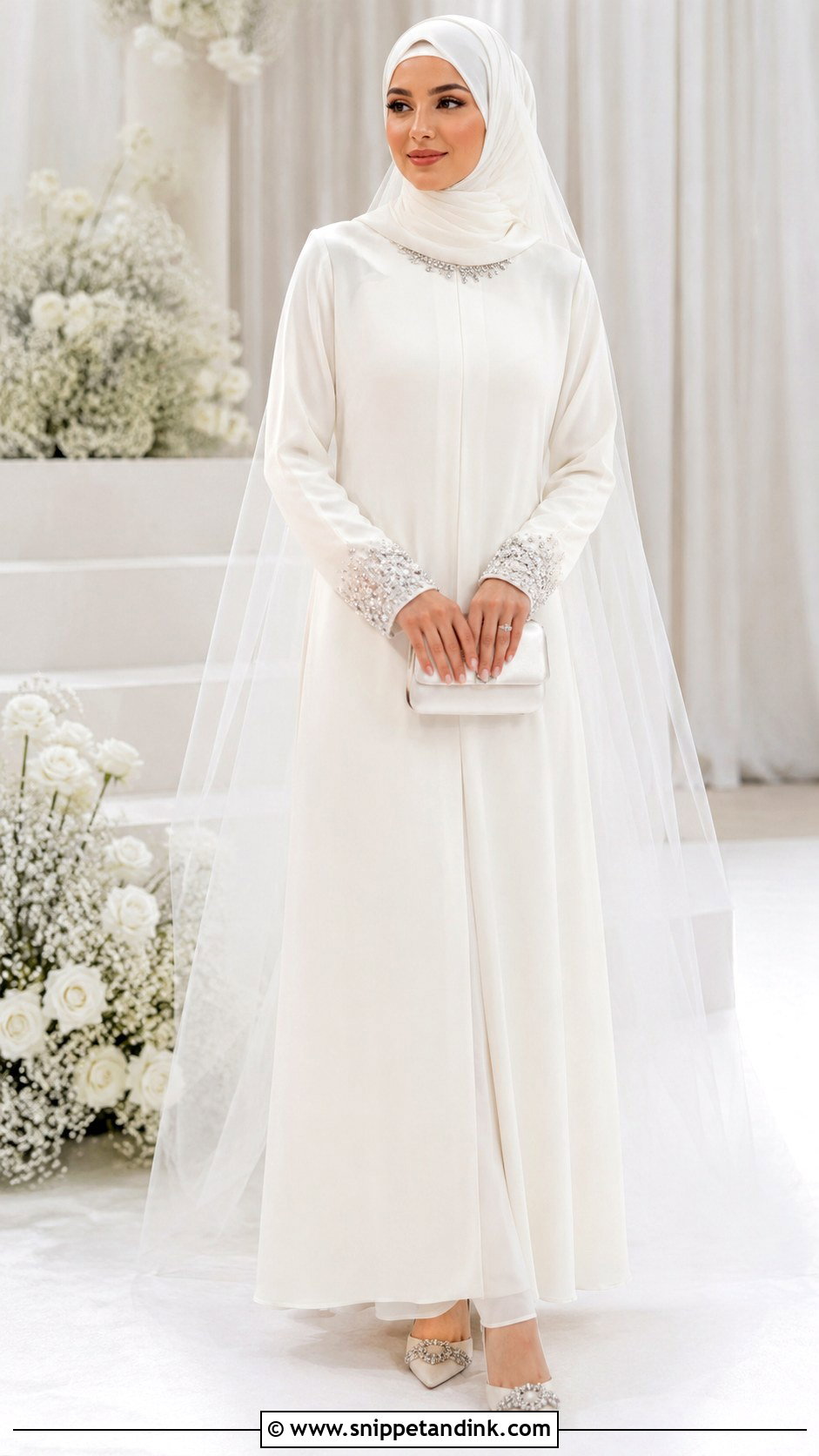
Crystal cuffs put all the sparkle in one place, which suits an otherwise plain abaya. Choose clean ivory or white crepe with crystals around the cuffs and perhaps a narrow border at the neckline. Leave bracelets at home; they snag on the stones. Your hands move constantly during a wedding, so bend your wrists and elbows at the fitting. A soft inner facing behind the crystals stops them scratching, and properly stitched stones survive a long day where glued ones won’t.
20. Personalized Embroidered Bride Abaya
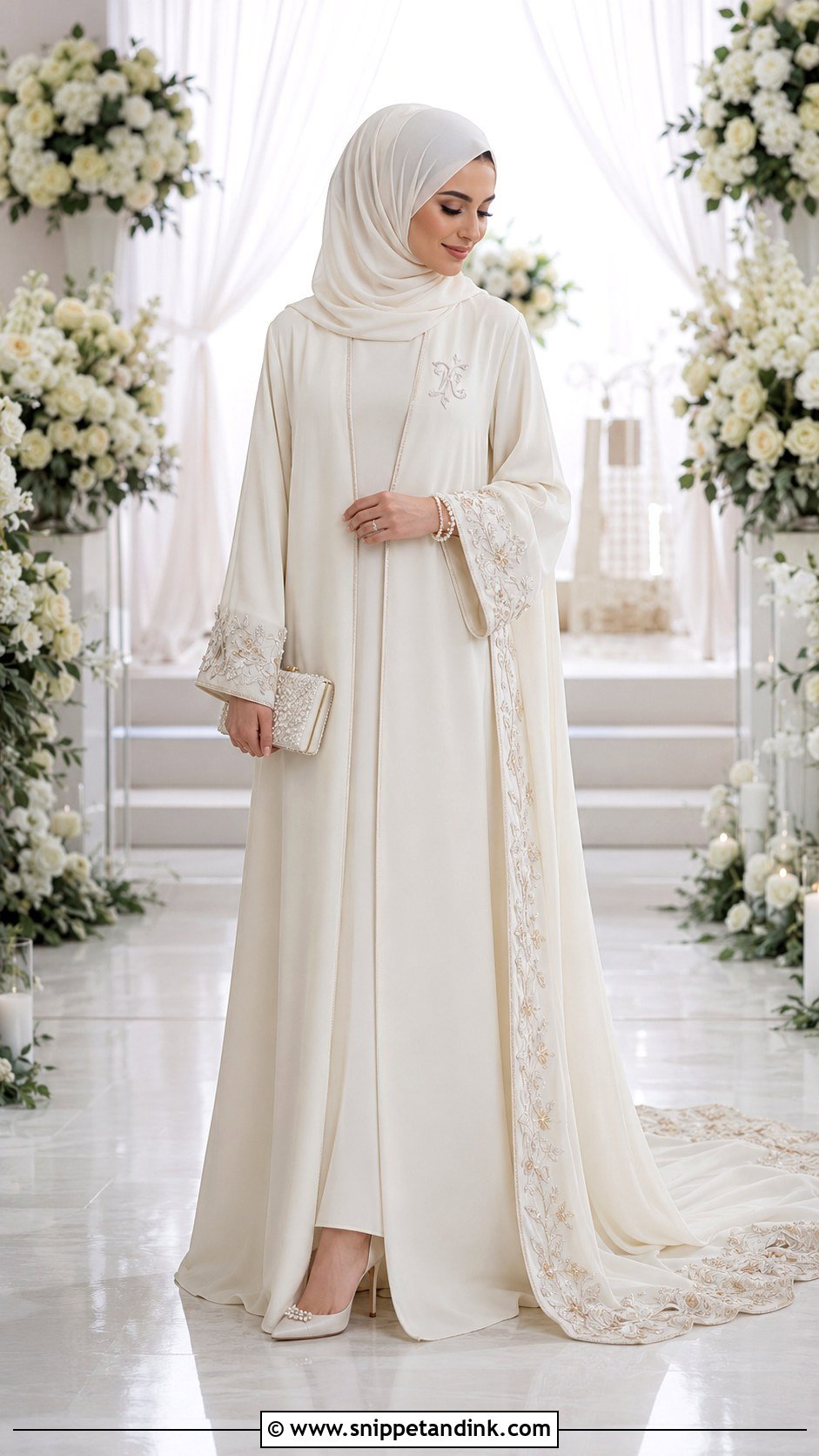
Personal embroidery makes an abaya a keepsake. Discreet initials, the wedding date, a family motif or a pattern drawn from your heritage can sit on the cuffs, inside the cape, near the hem or along a detachable train. Keep the rest of the embellishment quiet so the custom detail reads as intentional. I’d always approve a stitched sample for thread color, scale and lettering before production; screen mock-ups never show how thread catches light.
After the Nikah: Cleaning and Storing an Embellished Abaya
Make-up on the inner collar, food on the cuffs and a dusty hem are normal by the end of a wedding. What you do in the following weeks decides whether the abaya is still wearable for a daughter or a sister later on.
- Don’t rub stains on the day. Blot gently and leave anything oily for a specialist; rubbing pushes foundation deeper into crepe and frays chiffon.
- Book a cleaner who handles beaded and embroidered bridal pieces within a few weeks. Old stains, especially sugary drinks, can yellow over time even when they look invisible now.
- Ask them to check every pearl and crystal and to remove anything glued that might discolor.
- Store heavily beaded abayas folded flat in acid-free tissue, padding the folds, since hanging lets the weight stretch the shoulders. Light crepe or chiffon pieces can hang on a padded hanger.
- Use a breathable cotton garment bag or an archival box, never the plastic cover from the shop, and keep it somewhere dark and dry.
Take it out once a year, refold along new lines, and look for any thread or pearl that’s come loose. Five minutes of care saves a costly repair later.
Start With the Fabric, Then the Embellishment
Minimalist crepe, lace, pearls, pastels, capes and custom embroidery all have a place in a bridal abaya. Start with the silhouette and fabric that suit your venue and season, then build the hijab, inner dress, veil, shoes and jewelry around it. Walk, sit and raise your arms in the finished outfit, and look at every color in daylight and indoor light. Good tailoring and restrained accessories keep an abaya modest, comfortable and unmistakably bridal.
You'll Like These Ideas:


Leave a Reply