
A sleek low bun looks like the simplest thing I do on a wedding morning, and it is the style that shows every shortcut. There’s nowhere to hide a lumpy section or a bump at the crown, so the work is in the brushing, the tension and where the pins go. Done well, it keeps your face open, gives earrings and a neckline room, and anchors a veil better than almost anything else. The variations below change the part, the shape at the nape and what goes into the hair, and I’ve noted where each one tends to struggle.
Prep the Night Before Decides How Smooth the Bun Looks
Brides often assume freshly washed hair is best for a slick style. For most textures it isn’t. Squeaky clean hair is slippery, it fights pins, and flyaways stand up the moment it dries. I ask most brides to wash the evening before, use a conditioner through the lengths only, and skip any heavy oil at the roots.
- Straight and fine: day-old hair holds pins far better. A light dusting of texture powder at the nape gives grip without dulling the surface.
- Wavy or frizz-prone: I blow-dry it smooth with a round brush on the morning, section by section, because wave left in the hair will spring back up along the hairline as the day warms.
- Curly and coily: you don’t need heat straightening to wear this style. Stretched hair, a firm gel or edge control along the hairline, and a soft brush give a slick finish while the bun keeps its natural fullness.
- Layered cuts: short layers pop out at the nape. A small amount of wax on the fingers before smoothing tucks them in.
Tension is the other thing I watch. A bun pulled tight enough to look glassy at 8 a.m. can give you a headache by the speeches. I keep the elastic just firm enough to hold and get the sleek look from product and brushing, not from yanking.
1. Sleek Low Bun With Middle Part
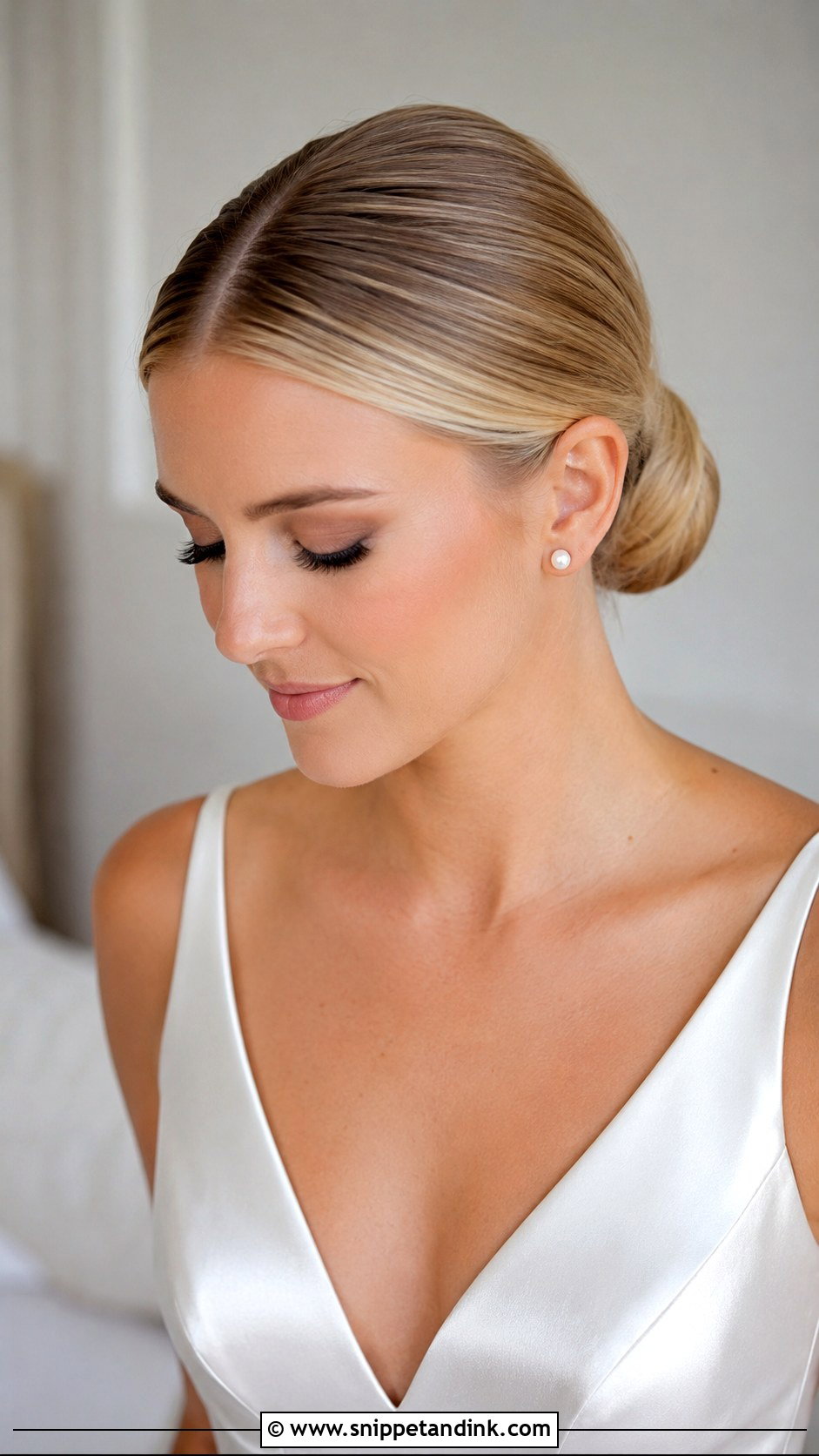
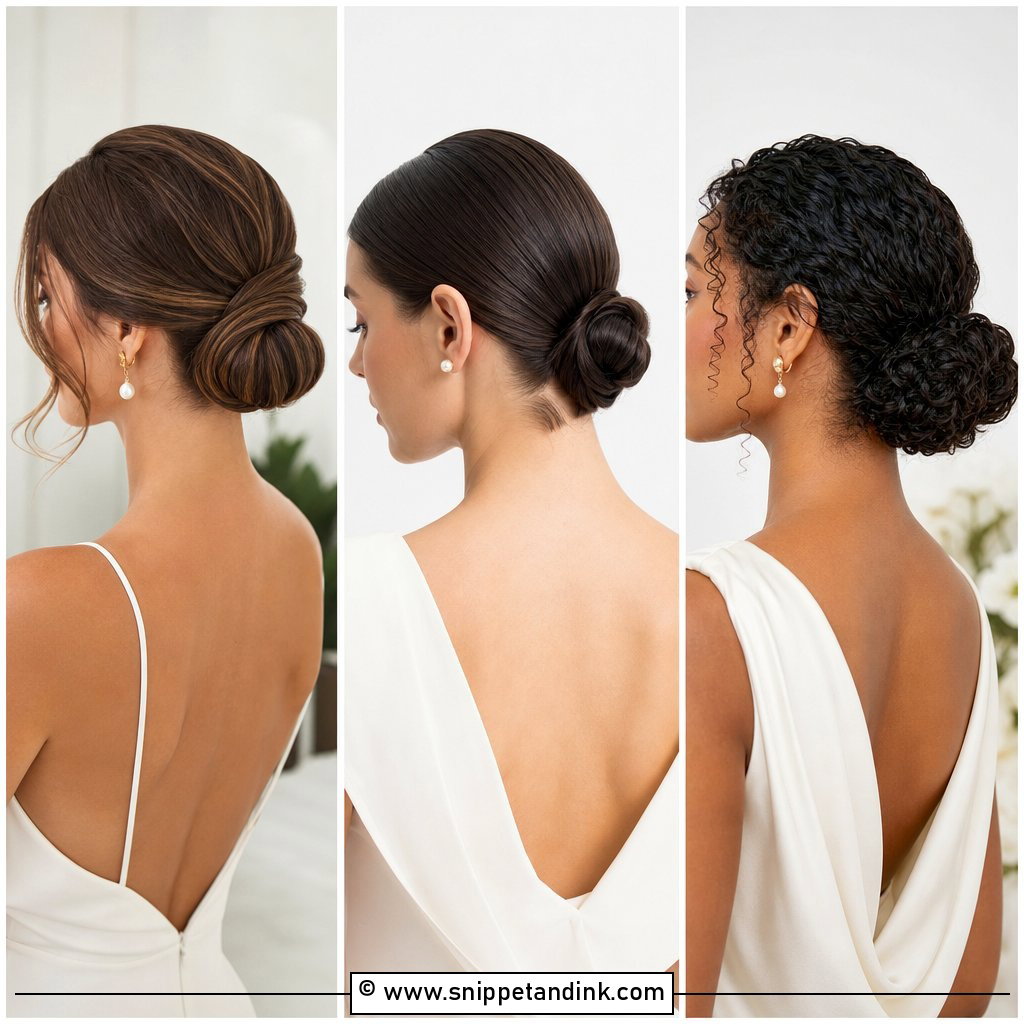
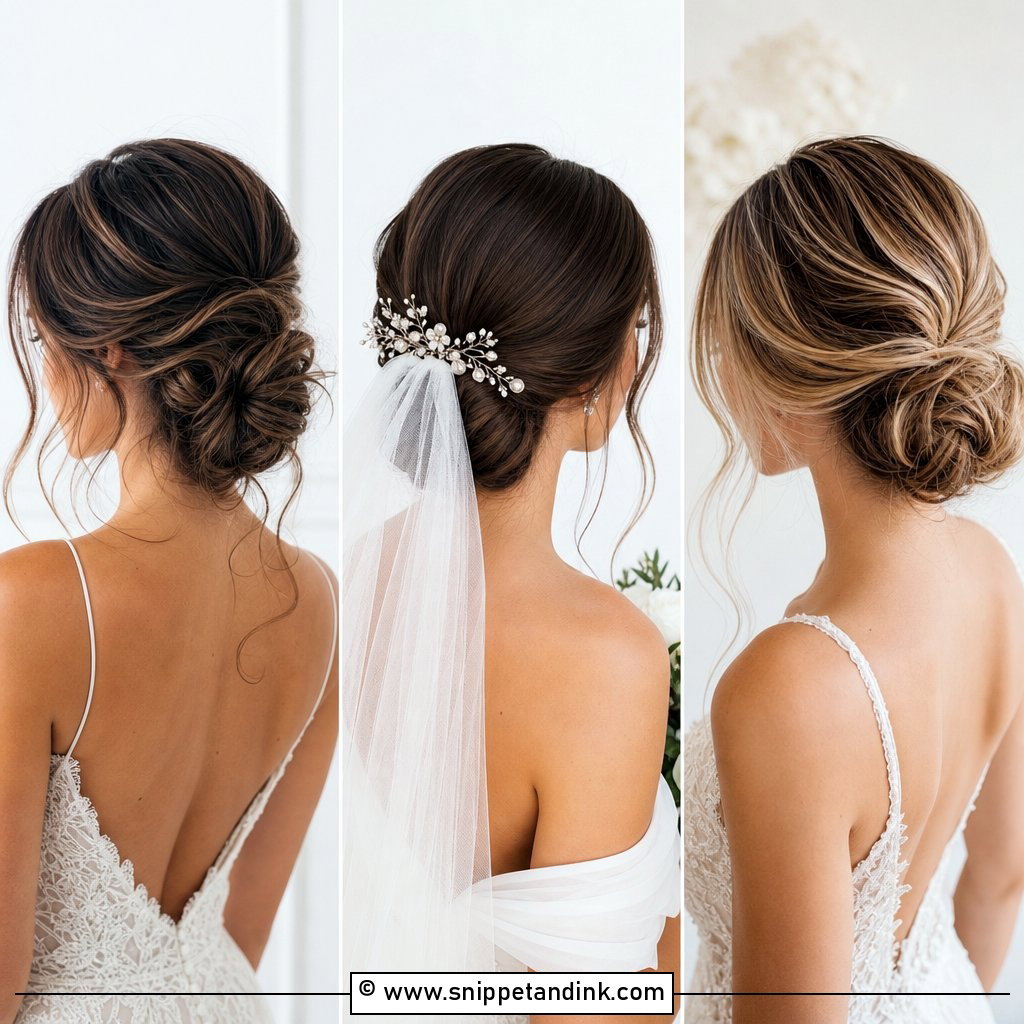
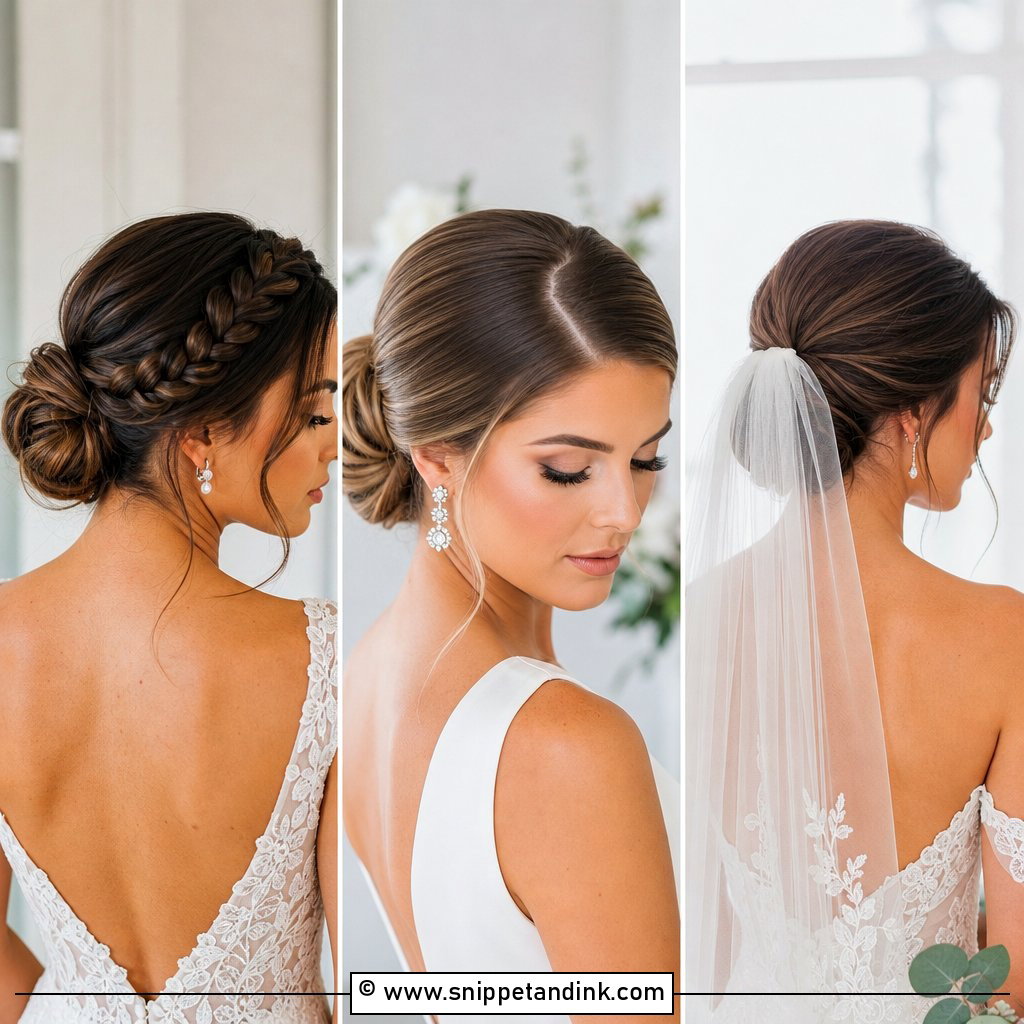
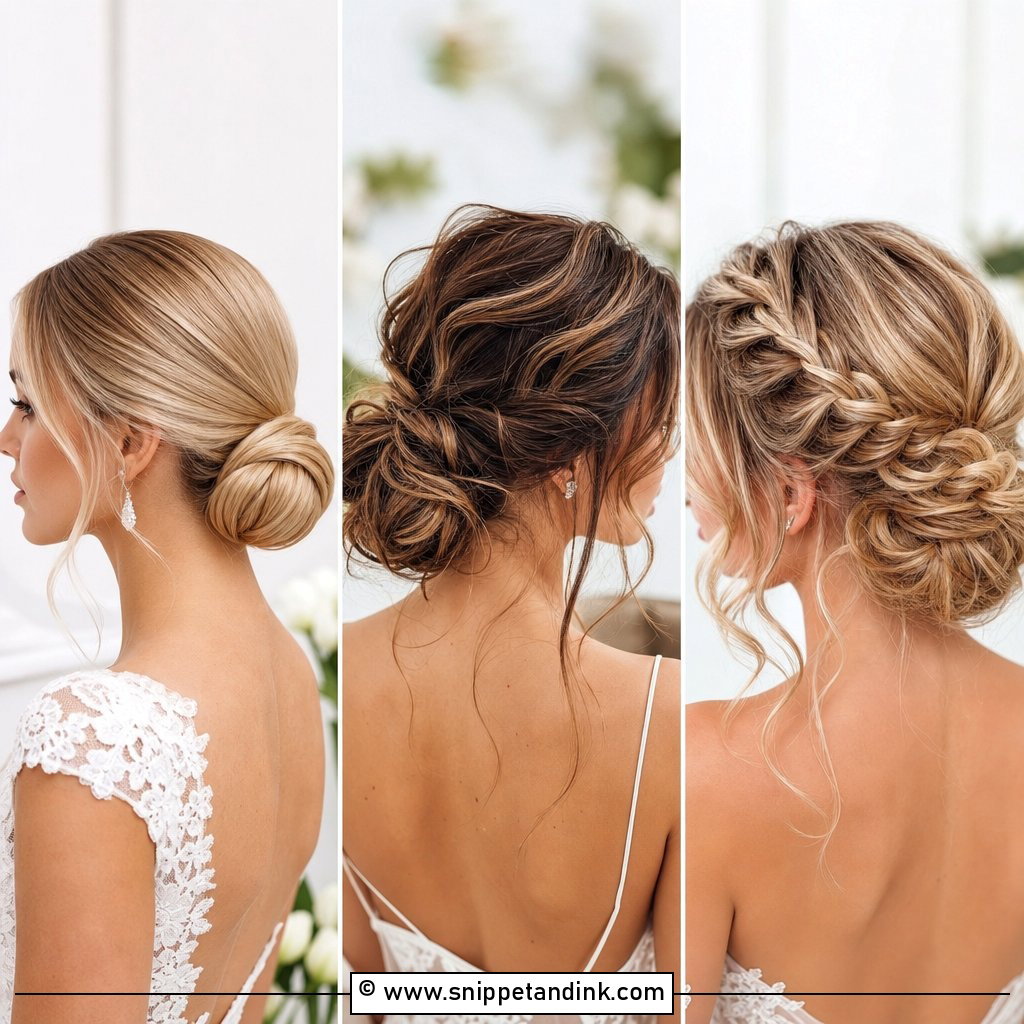
The center part is the version I get asked for most, and it’s the least forgiving. If your face or hairline is slightly uneven, a dead-center part will show it, so at the trial I often move it a few millimetres to wherever it sits naturally. I smooth with a cream on damp hair, blow it flat, then brush toward the nape with a boar bristle brush before securing. It suits strapless gowns, square necklines and high necks, and a veil tucked under the bun keeps the whole thing clean.
2. Sleek Low Bun With Side Part
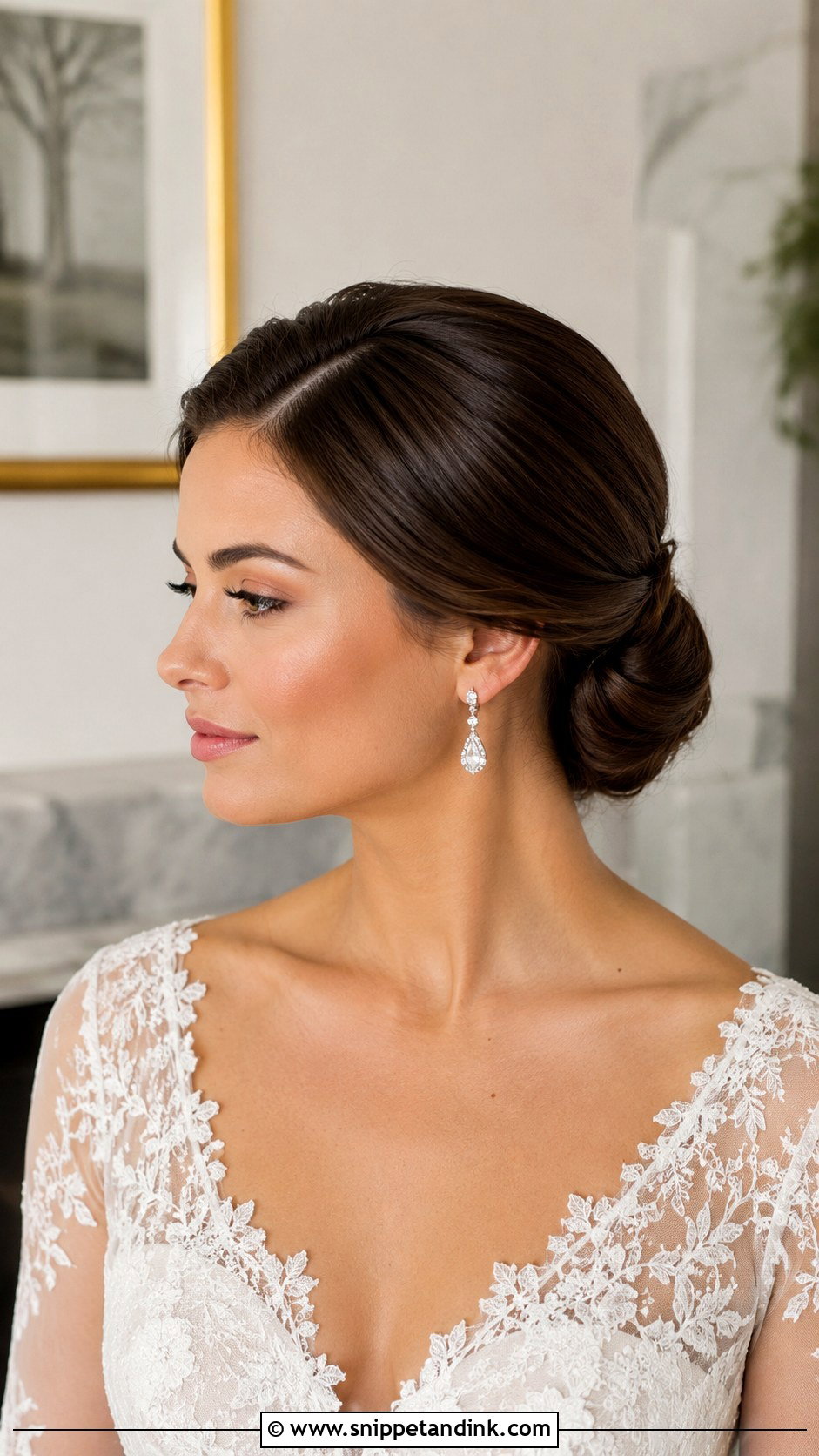
A side part buys you softness without letting anything loose. The deeper side sweeps across the forehead, which helps brides who feel exposed with everything pulled straight back. I usually set that sweep with a flat wave pressed in with clips while the hair cools, so it keeps its curve after hours of hugging. You can set the bun at the nape or shift it a couple of inches toward the side opposite the part to balance the weight. Drop earrings sit well here, and a veil goes above the bun.
3. Sleek Low Chignon Bridal Hair
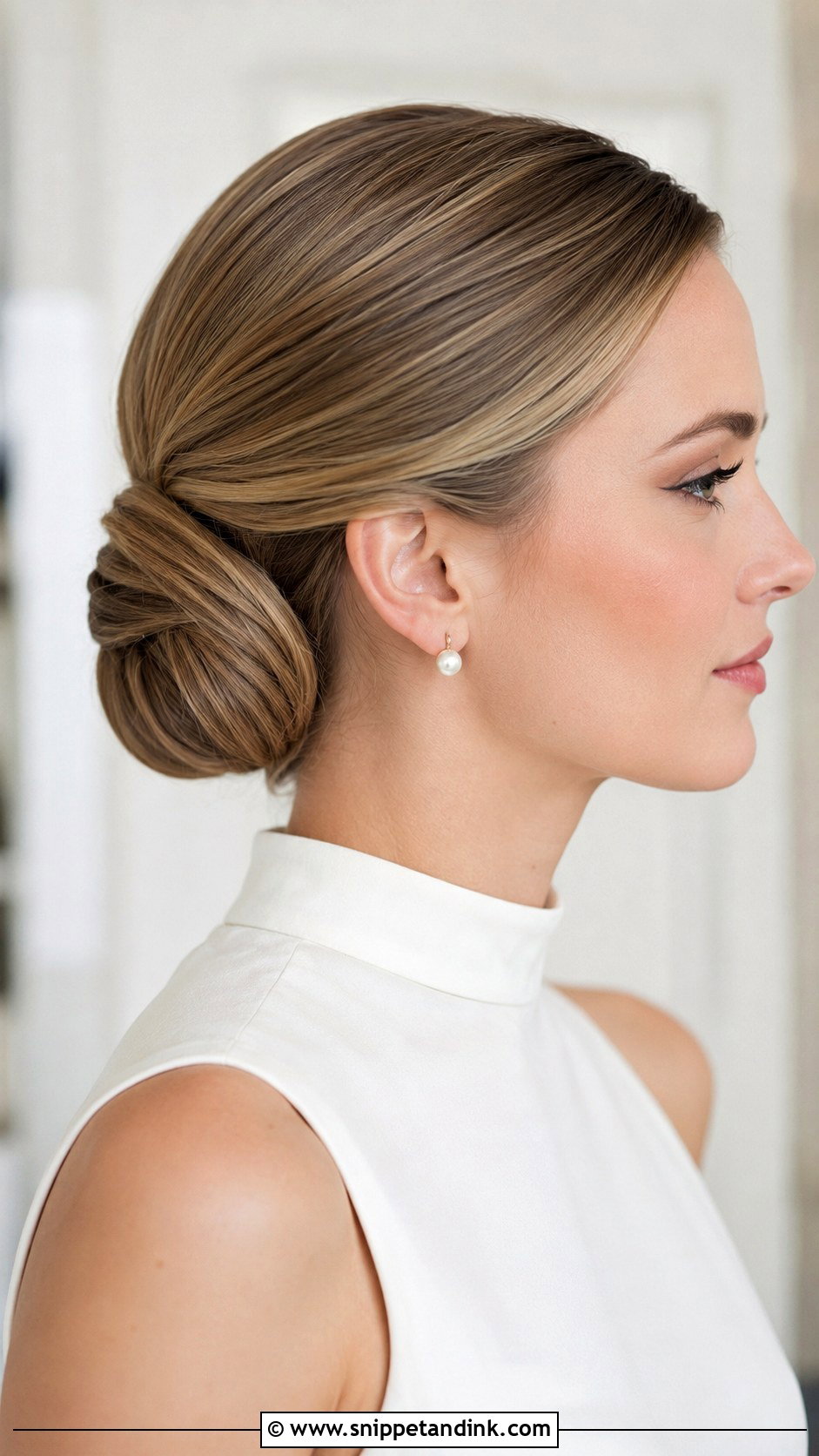
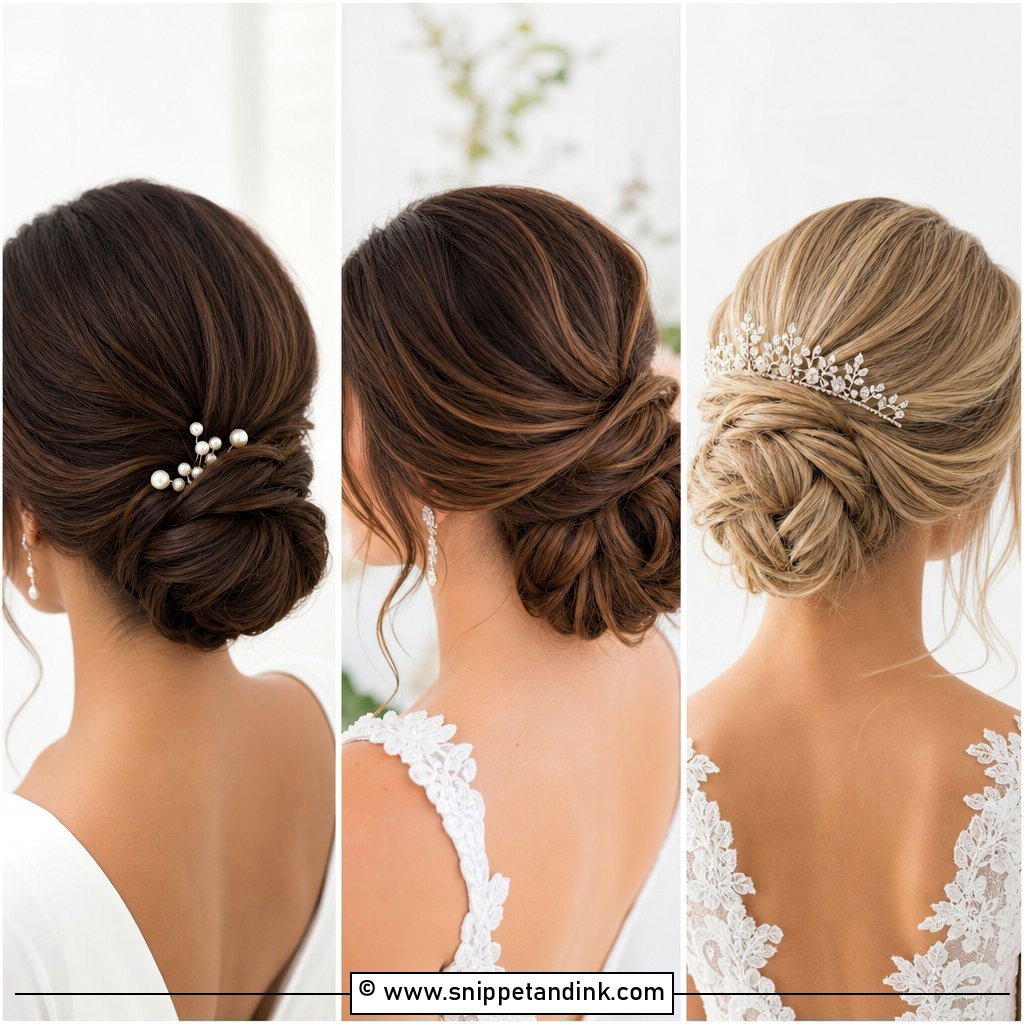
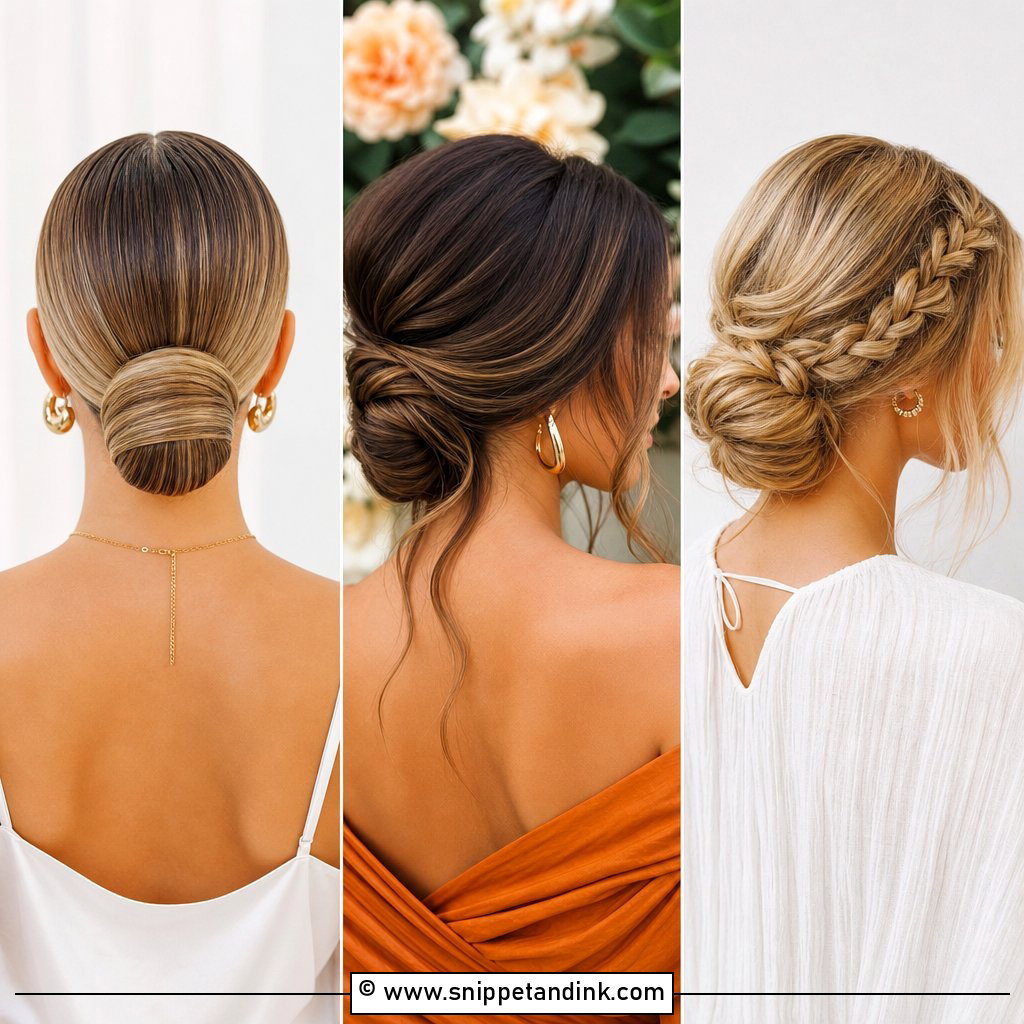
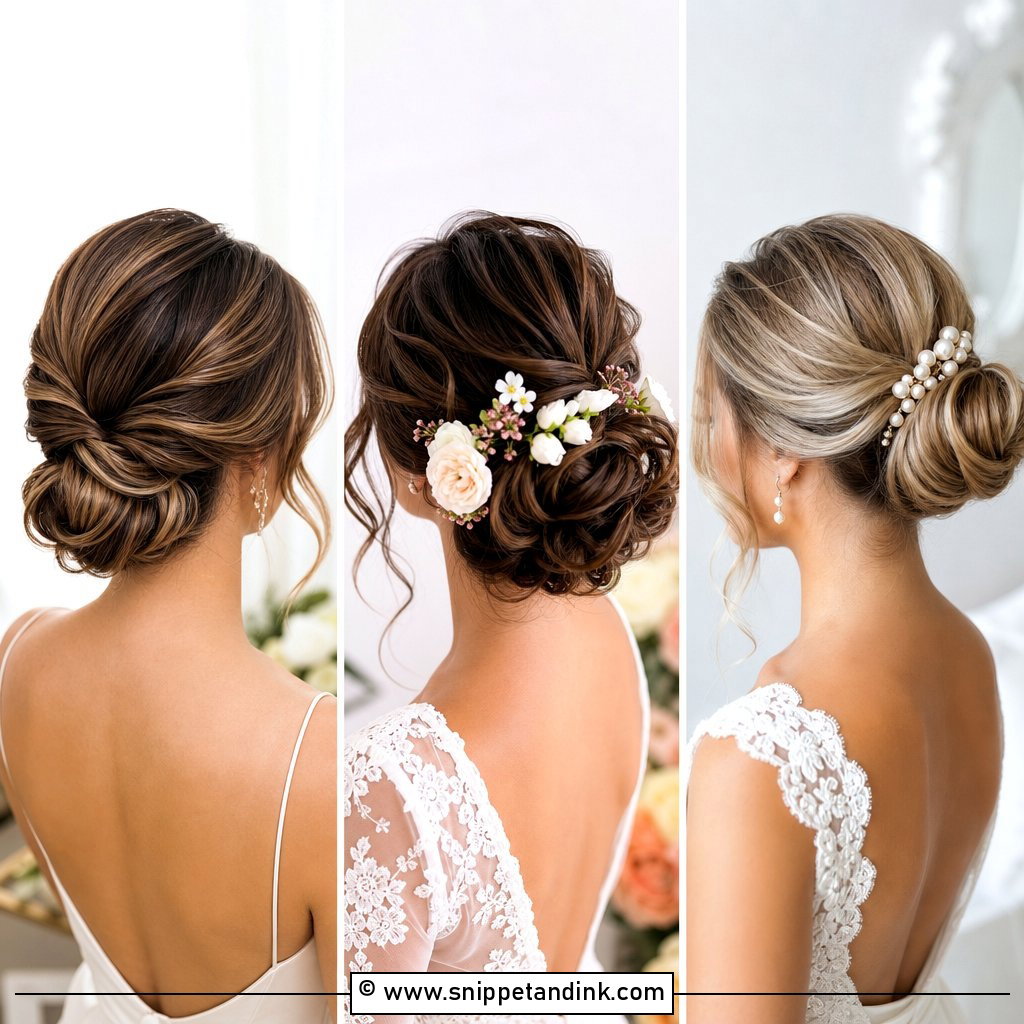
A chignon is folded or rolled rather than wound into a coil, so the shape at the nape is longer and flatter than a round bun. That matters under a veil: the comb grips into a firm, dense base instead of sliding off a smooth sphere. I build it over a small elastic base and pin each fold through to that base, never just into other hair. It suits formal ceremonies and portraits shot from behind, and a single pearl comb is about as much decoration as it needs.
4. Sleek Low Bun With Pearl Pins
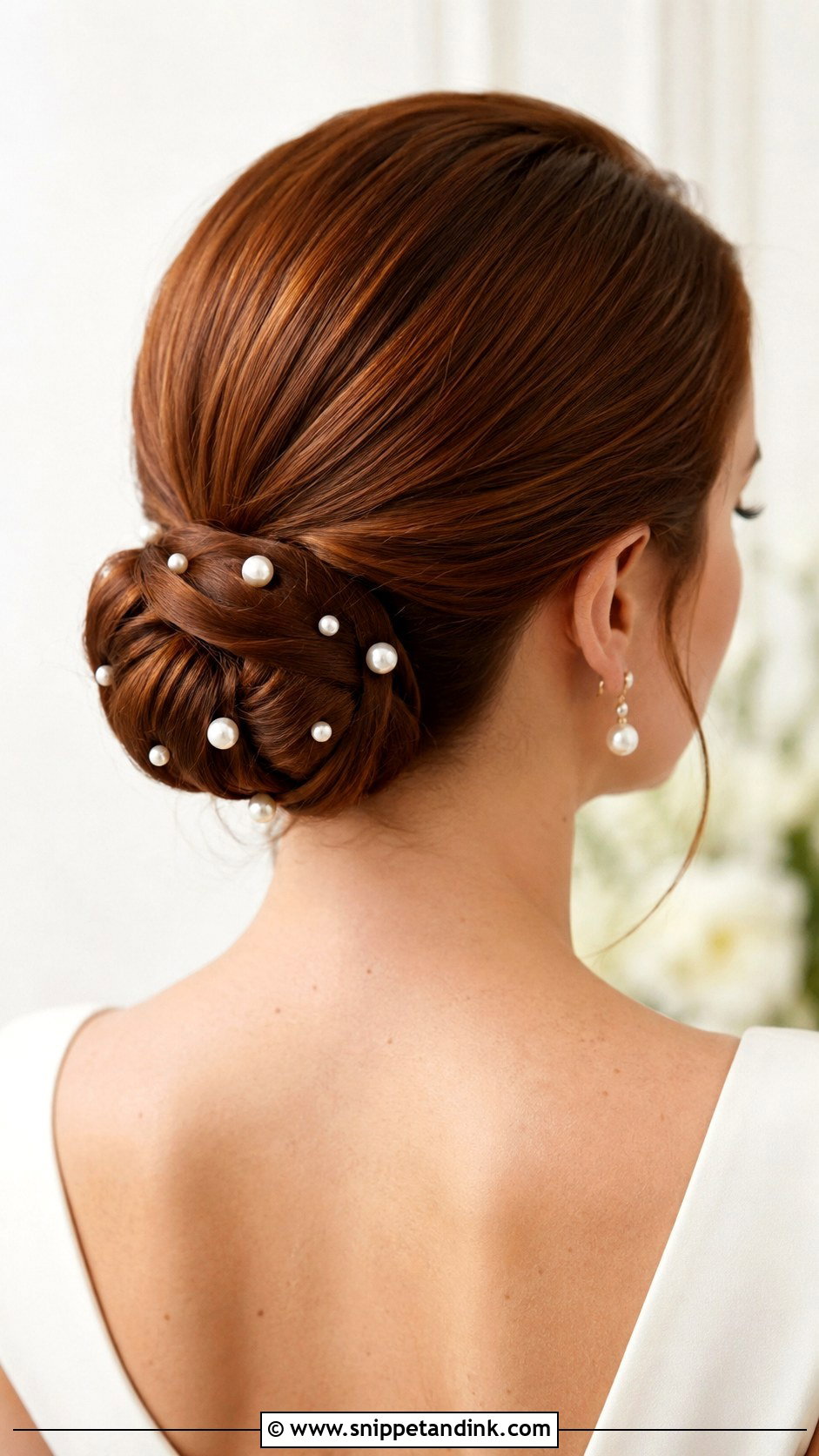
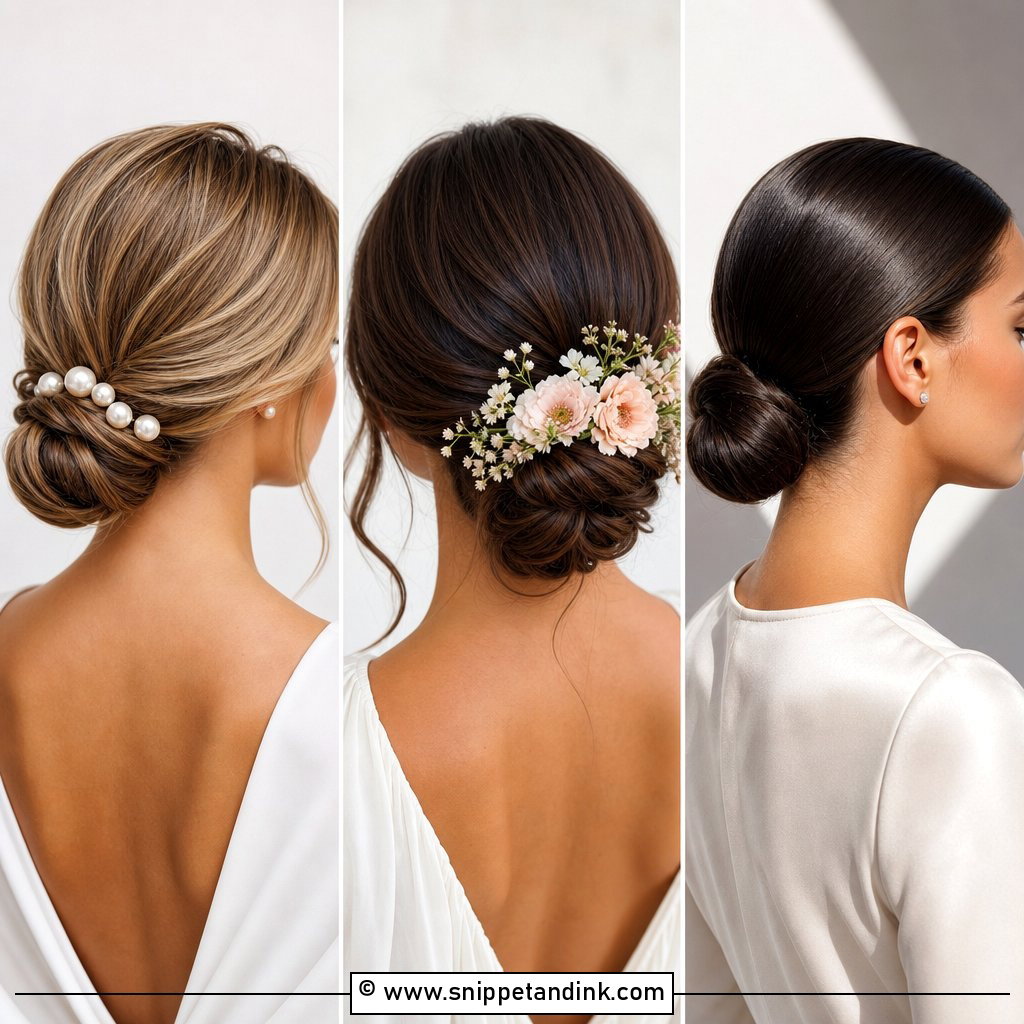
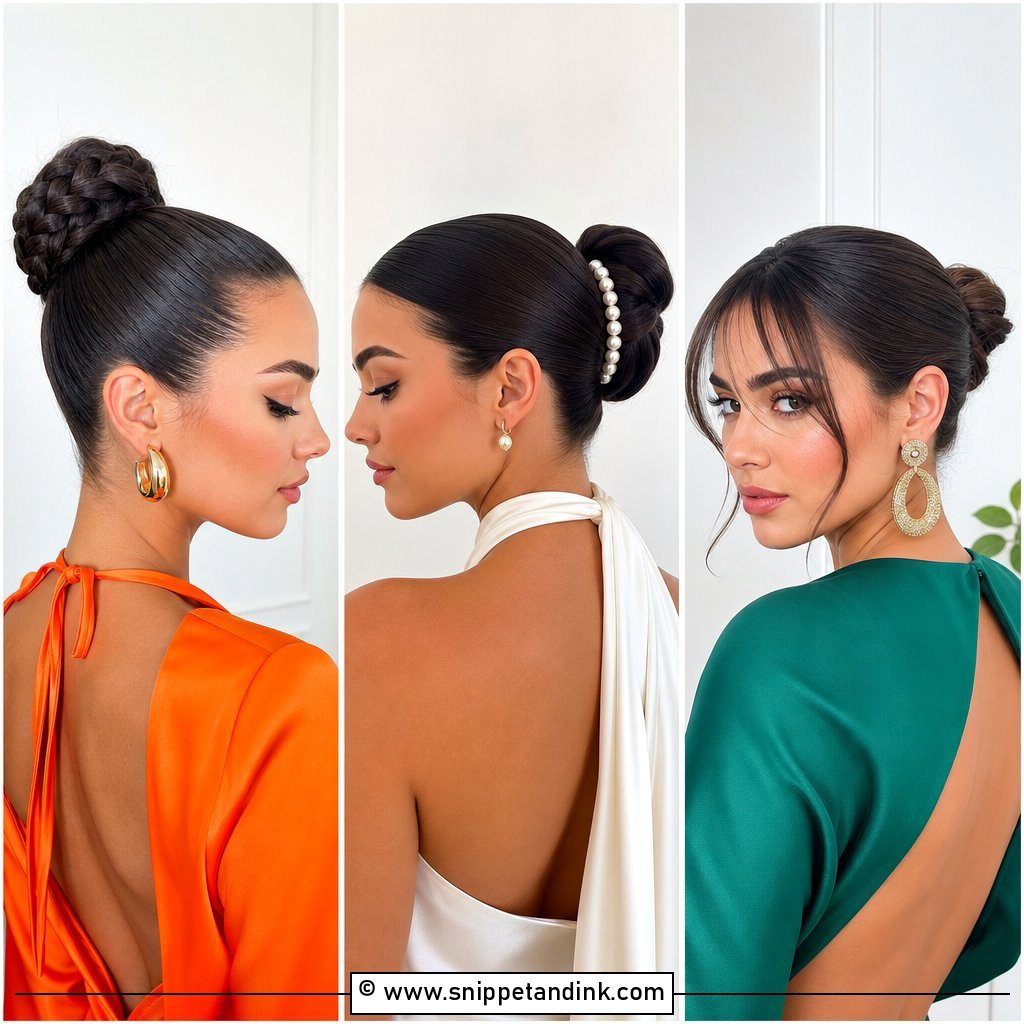
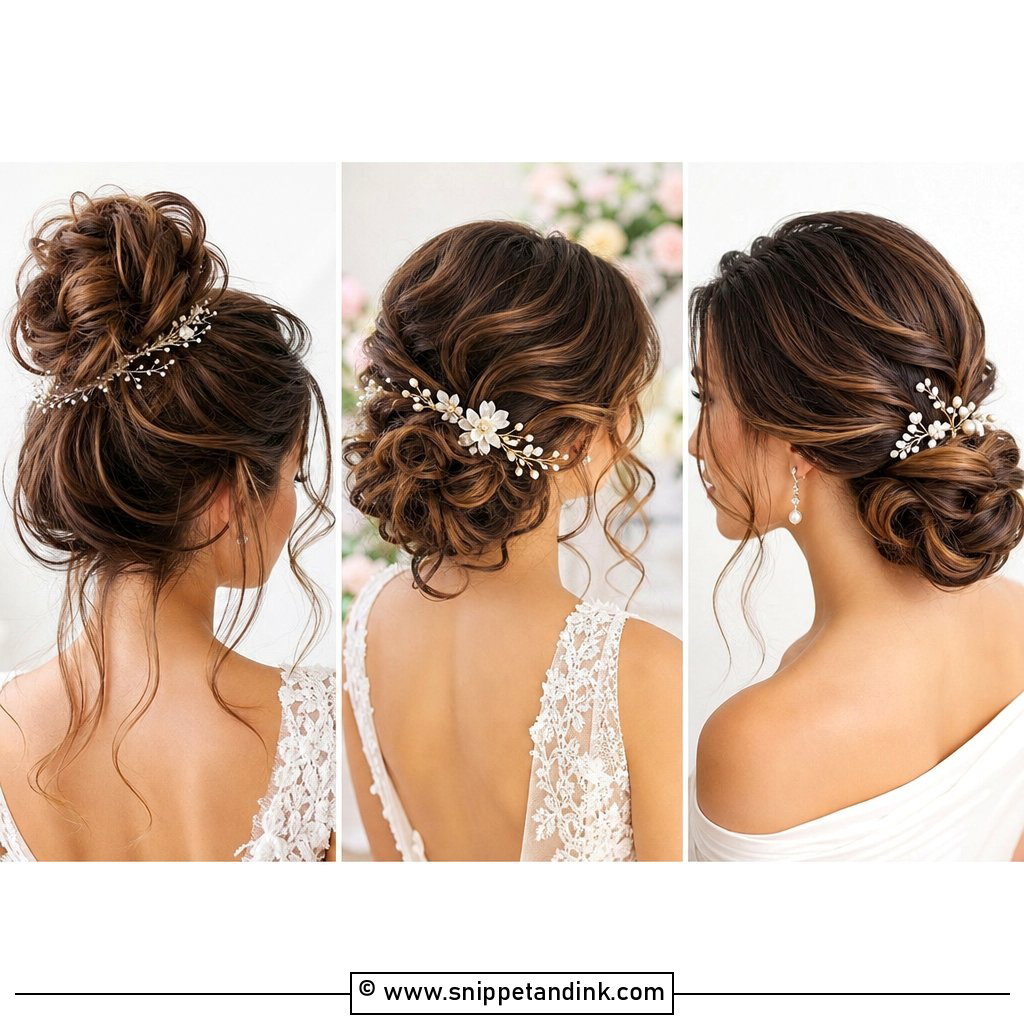
Pearl pins add detail without breaking the smooth surface. I place them after the bun is fully set and sprayed, sliding each one in along the direction of the hair so it doesn’t lift a section. Grouped near the base they look intentional; scattered too widely they can look like they fell there. Keep the bun compact if you’re also wearing pearl earrings or a pearl-trim veil, otherwise the hair starts competing with the jewelry.
5. Sleek Low Bun With Veil
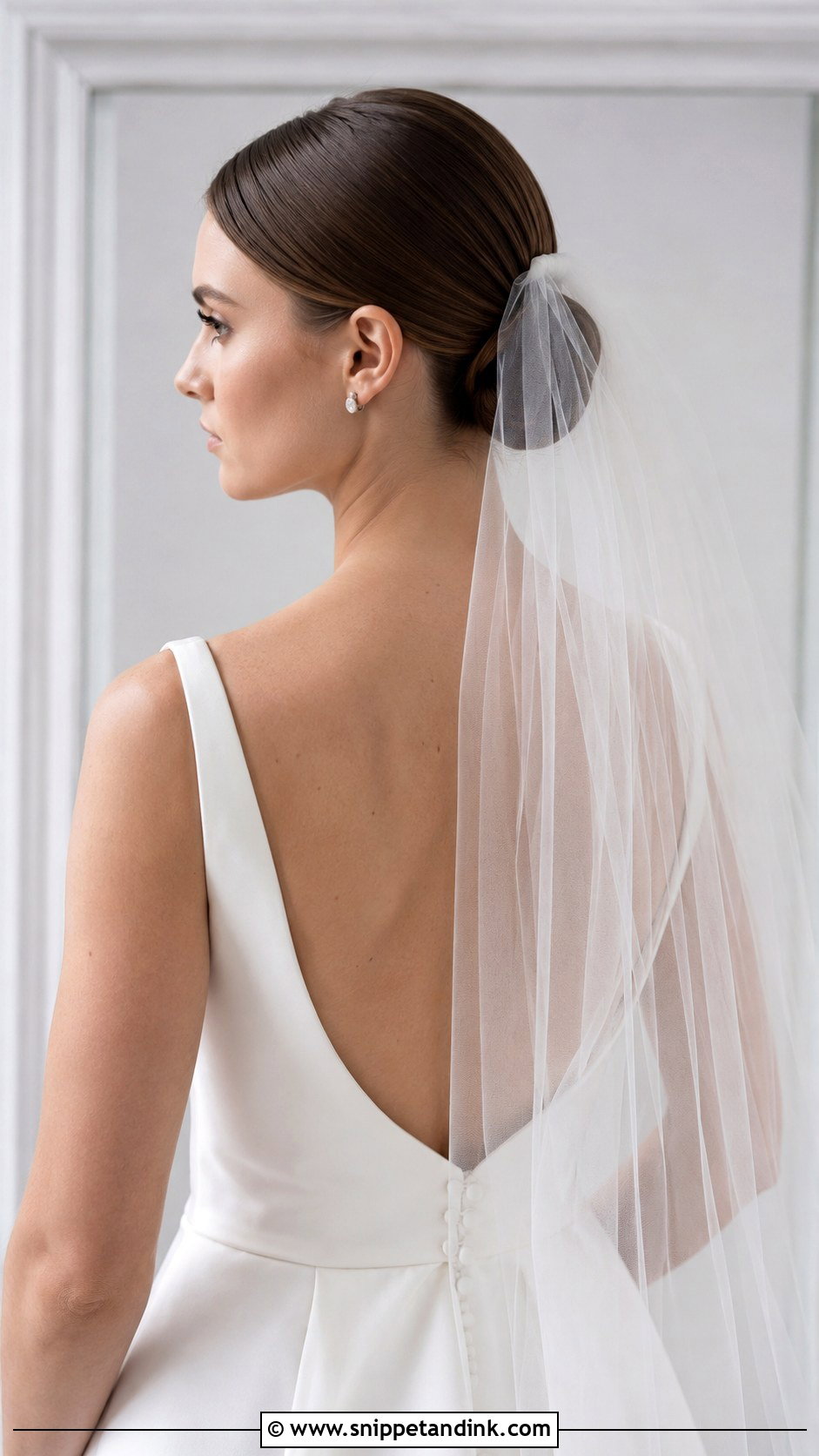
A veil is where this bun earns its place. A low bun gives the comb something dense to bite into, and because the hair is already smooth, nothing gets tangled in the tulle. Above the bun reads more traditional; underneath it looks cleaner and modern, and it is easier to remove for the reception without disturbing the shape. I cross two bobby pins through the comb teeth into the base so it holds through wind and hugs. It works with cathedral, fingertip, or chapel-length veils, though a cathedral length pulls hard, so that’s the one I test most carefully at the trial.
6. Sleek Low Bun With Face Framing Pieces
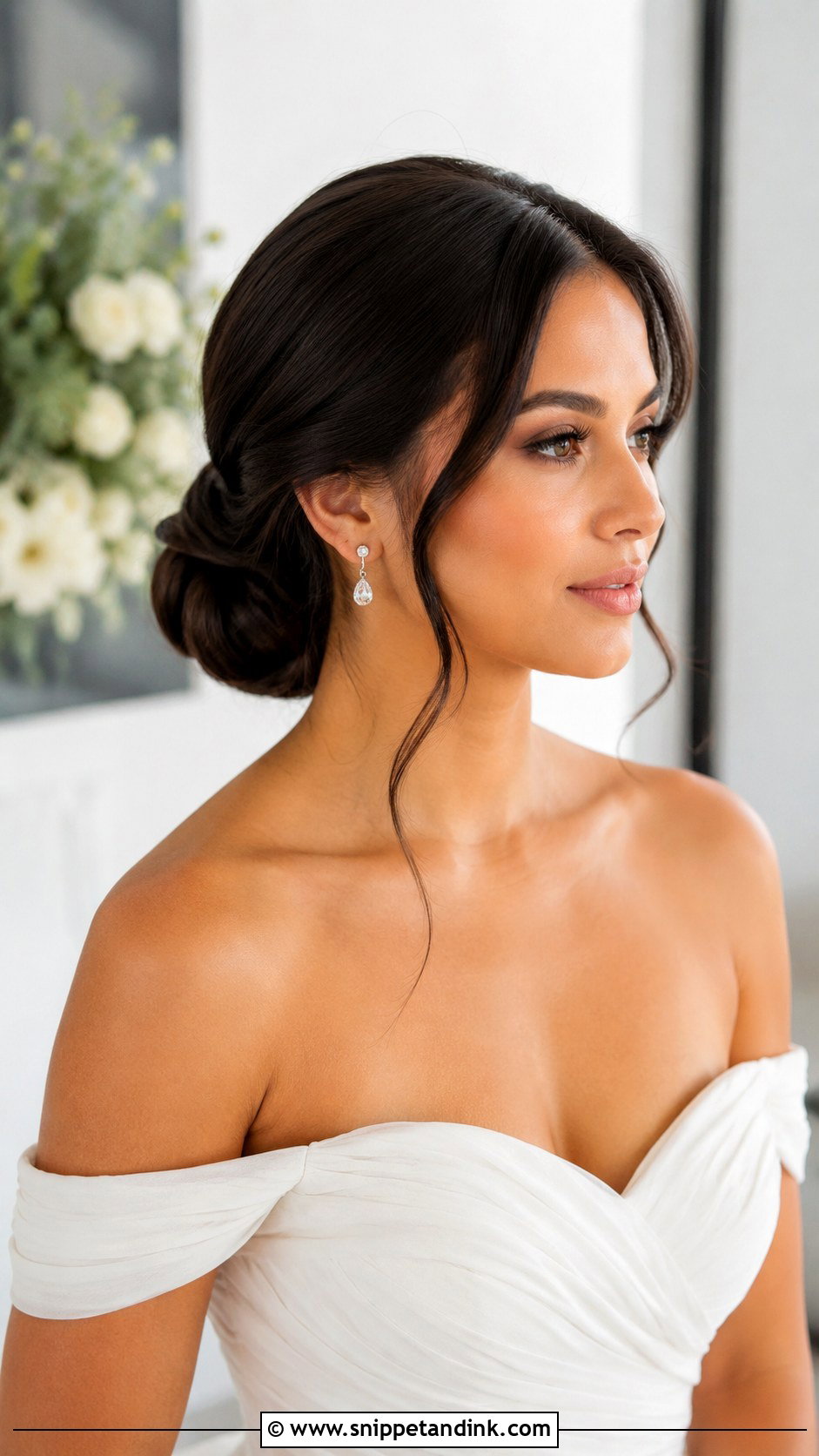
Face-framing pieces solve a common trial problem: the smooth bun looks right from behind, but in the mirror you feel bare. I cut nothing; I just leave two thin sections from the front hairline out before brushing the rest back. They get a loose bend from a flat iron, a mist of flexible spray, and that’s it. The mistake is leaving them too thick. On a humid day a thick piece frizzes and starts to look like the bun is coming down, so I keep them finer than most people expect.
7. Sleek Low Bun With Hair Comb
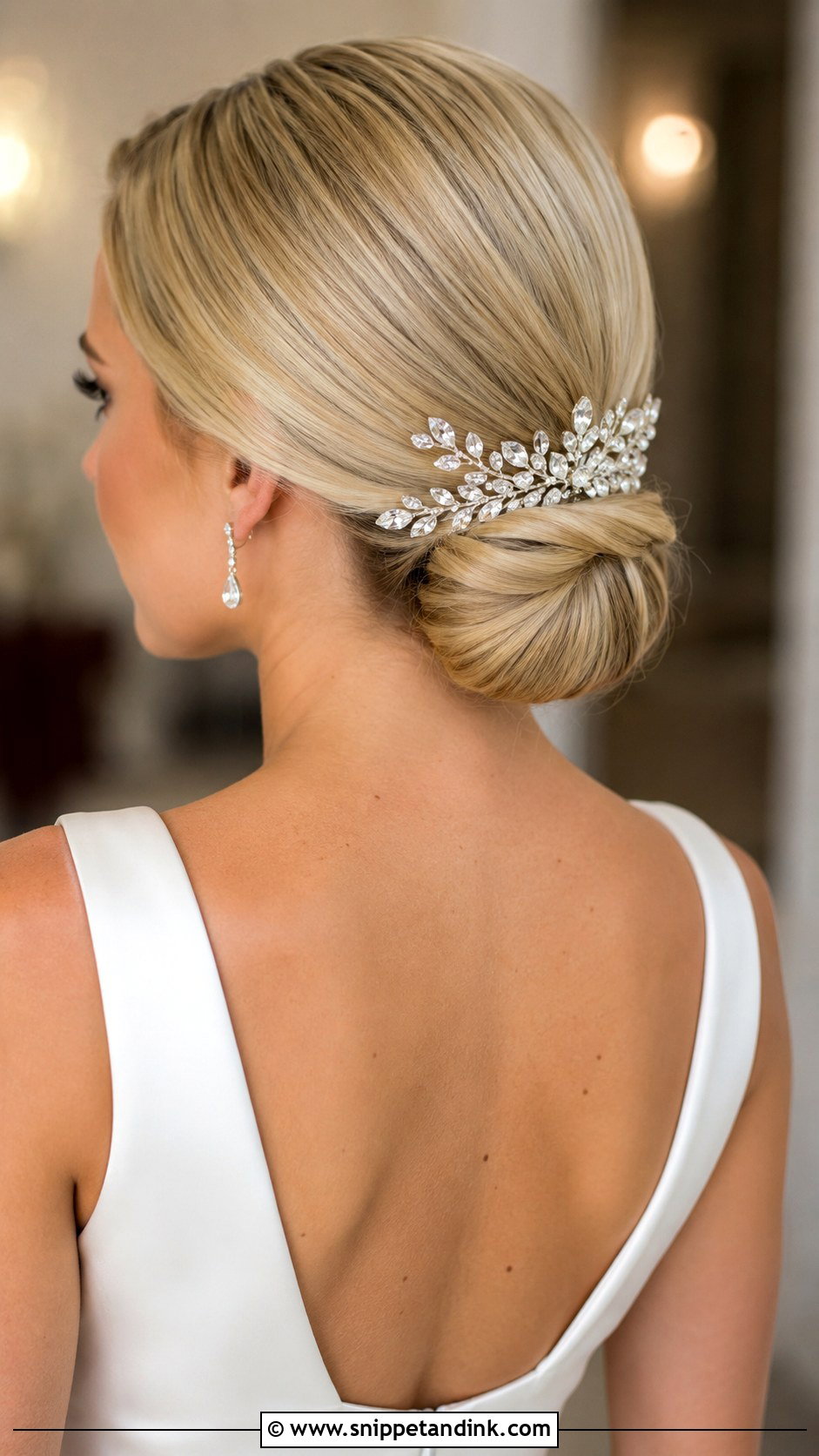
A comb gives the back of the bun a focal point, which matters because guests spend the ceremony looking at the back of your head. It can sit directly above the bun, slide into one side, or double as the veil anchor. I pick the comb at the trial with the dress fabric in mind: crystal can look harsh against matte crepe, while gold tones warm up ivory. The bun underneath has to be tight and compact, because a comb pushed into soft hair tilts forward within an hour.
8. Sleek Low Twisted Bun
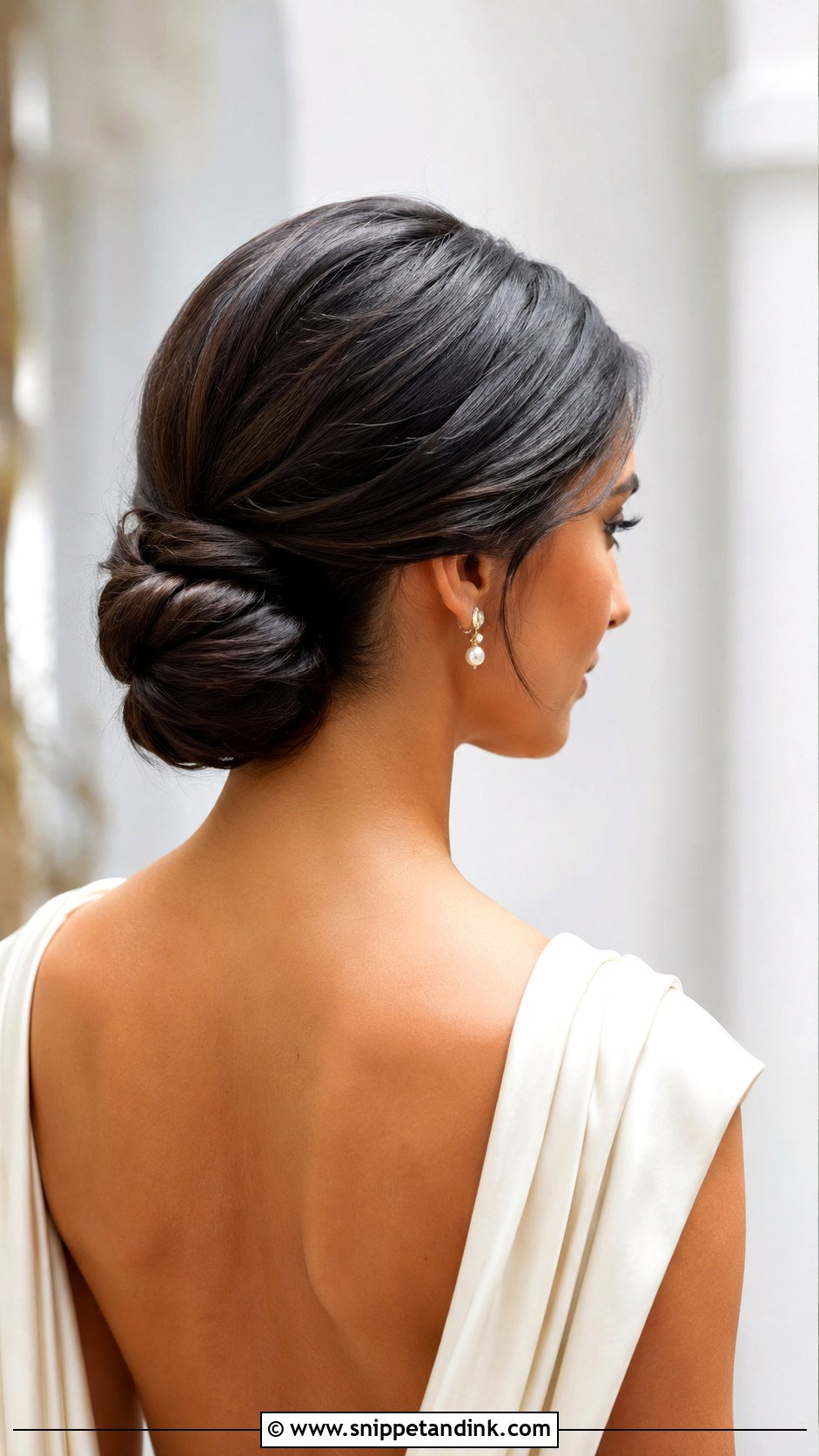
Twisting the lengths before pinning adds a spiral you can actually see from the side, which is where most candid photos catch you. It needs at least shoulder-length hair to wrap enough times to look deliberate. I twist each section away from the face and pin into the base as I go, rather than twisting everything and pinning at the end, because one loose twist unravels the rest. The front can stay center-parted or sweep to one side.
9. Sleek Low Bun For Long Hair
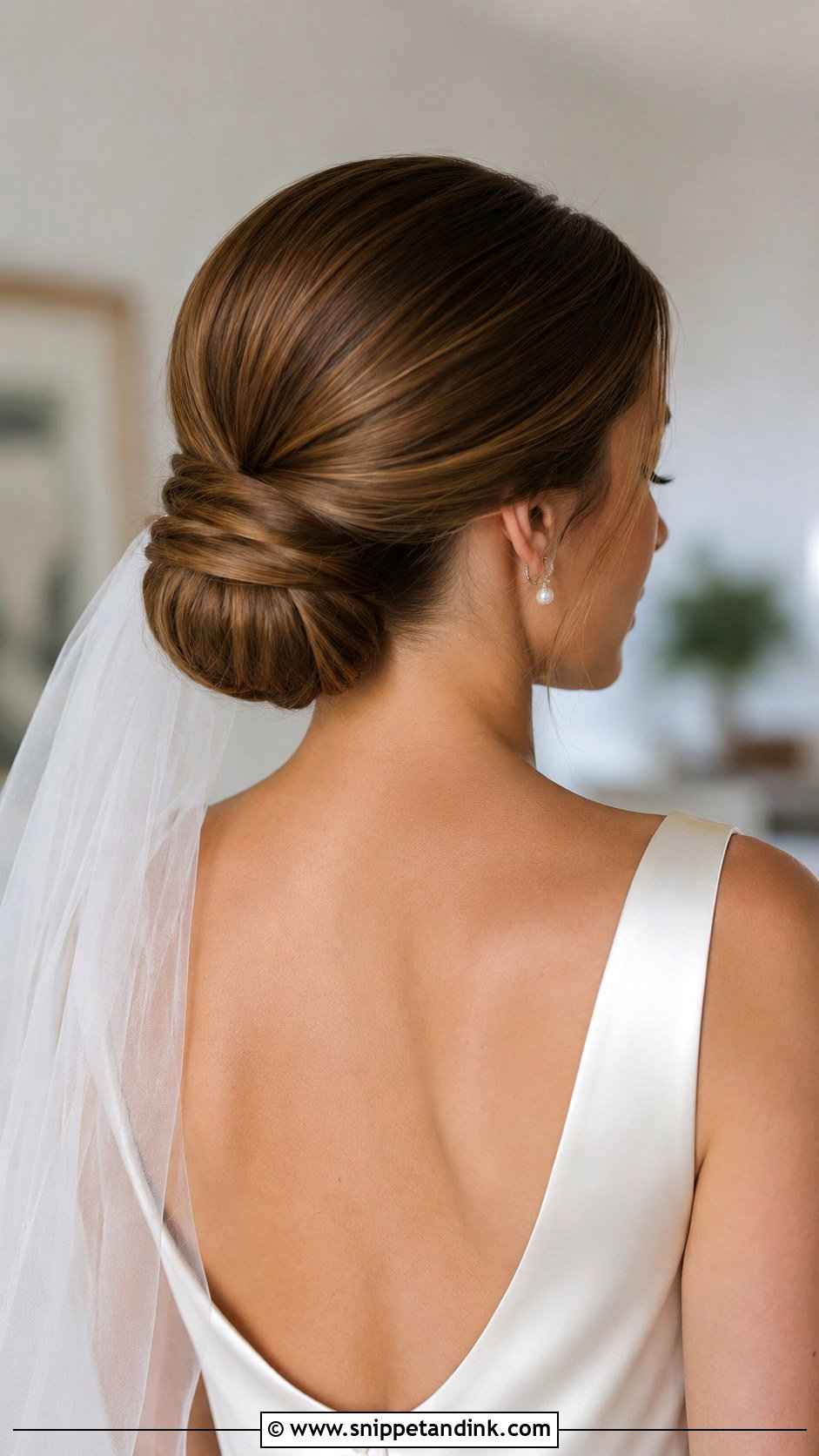
Long hair sounds like an advantage, and it is, until the bun gets heavy. Very long or thick lengths can pull the whole style down by mid-afternoon and give some brides a headache from the weight. I deal with it by splitting the length into two or three smaller coils pinned flat against each other, so the load spreads across the base instead of hanging from one point. Done that way it holds through long ceremonies and stays tidy under a long veil, with room for statement earrings.
10. Sleek Low Bun For Thin Hair
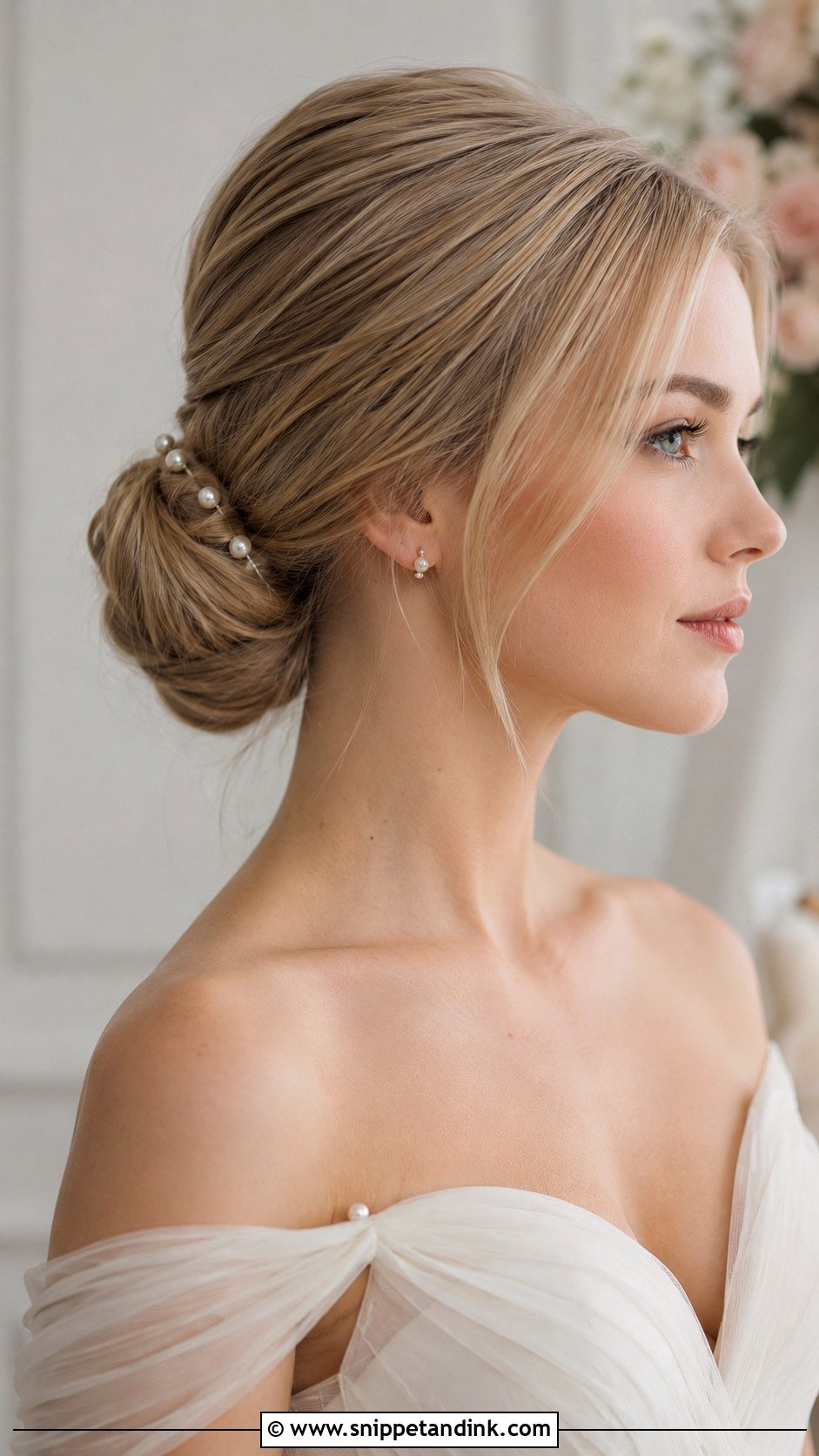
Fine hair can wear a sleek bun, but the bun itself usually needs help. I add light backcombing underneath the top layer at the crown, use a small padding piece matched to the hair colour, or clip in a weft at the nape to give the wrap more to work with. The front shouldn’t be pulled taut, because tension on fine hair shows the scalp at the part and temples. A slightly wider, flatter bun reads fuller from behind than a tight round one. Small pearls and a soft veil sit well on top without weighing it down.
11. Sleek Low Bun With Floral Pins
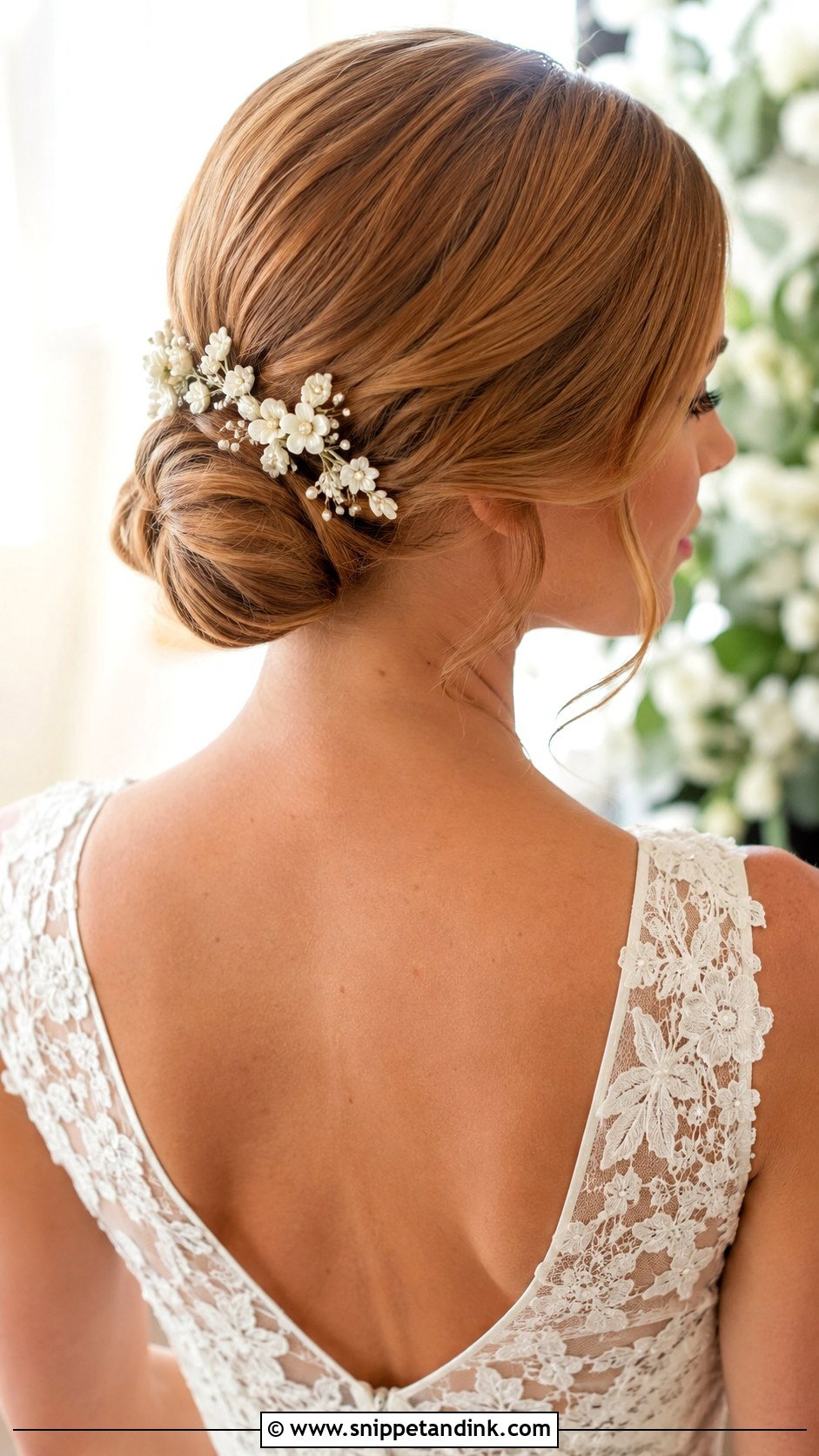
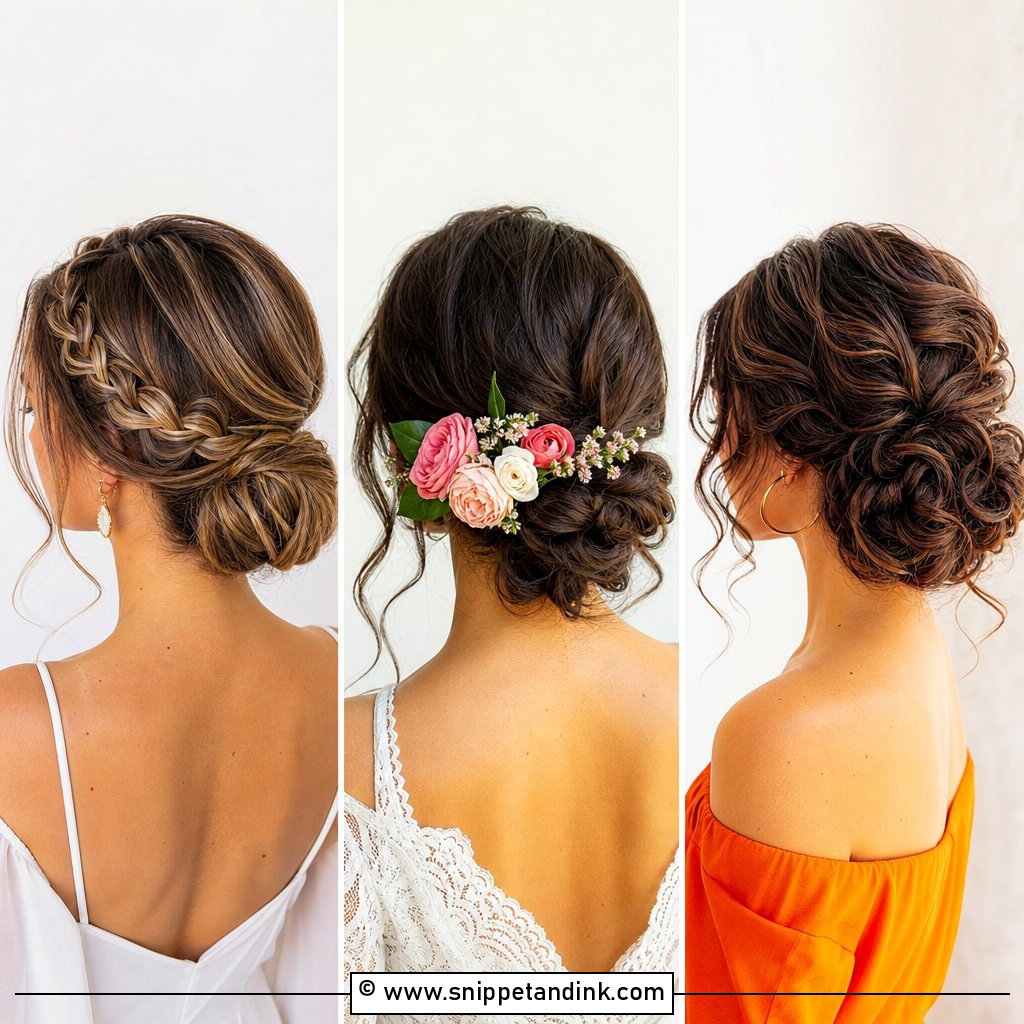
Floral pins give a romantic detail without committing to a crown. Small fresh blooms wilt fast against a warm scalp, so I wire tiny sprigs with sturdy petals or use good silk flowers, and I add them last. Clustered on one side of the bun they look placed; dotted all around they look busy. They suit spring weddings, outdoor ceremonies and gowns with lace or embroidered details, and ivory or white flowers keep it bridal rather than festival.
12. Sleek Low Bun With Braided Detail
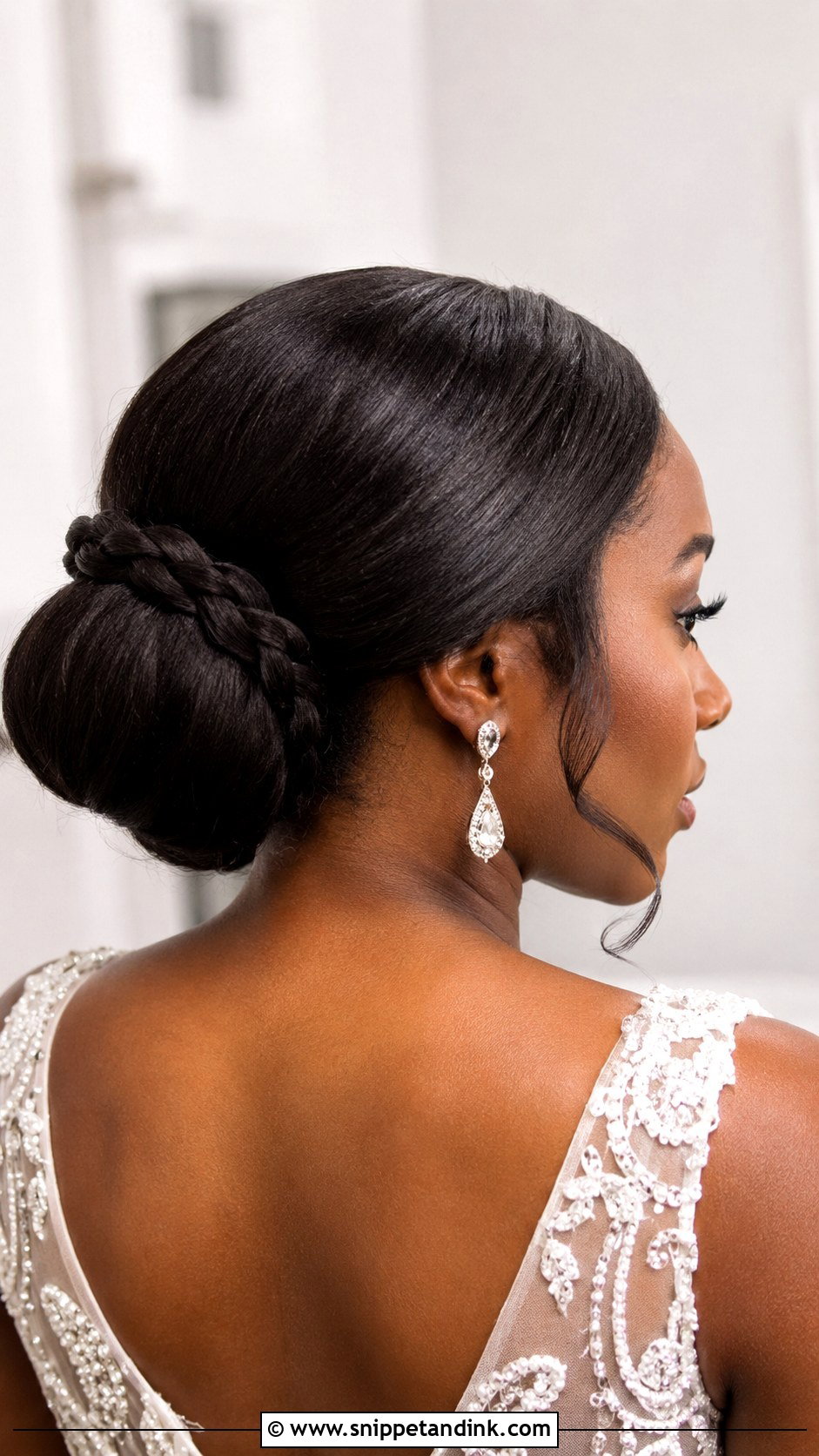
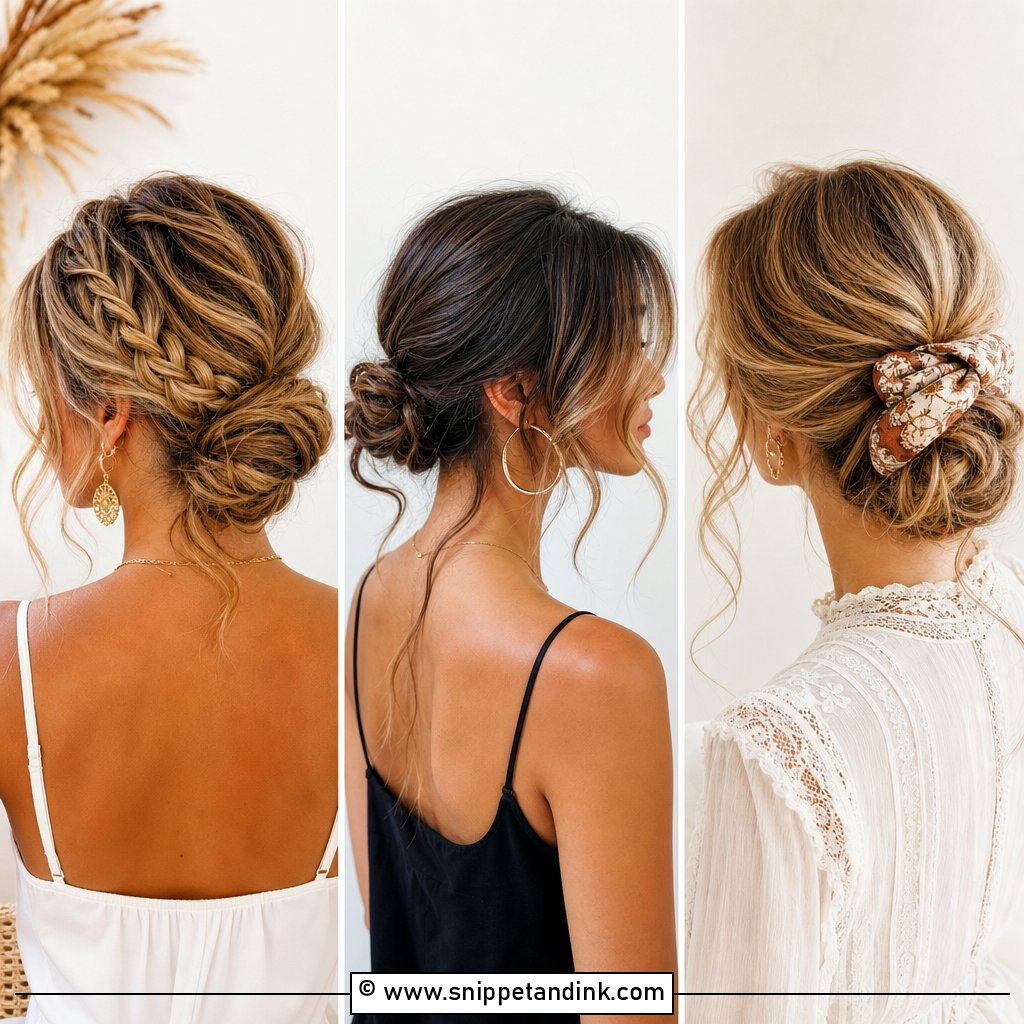
A braid gives texture while the rest stays polished. I usually braid one section loosely, then pancake it slightly so it reads in photos, and wrap it around the base of the bun. The front must stay smooth, or the whole style tips into boho. Highlighted hair shows a braid best, because the colour change catches the light along each crossover. Very short layers can poke out of a braid, so a little pomade on the section before braiding saves a lot of fixing later.
13. Sleek Low Bun With Crown Volume
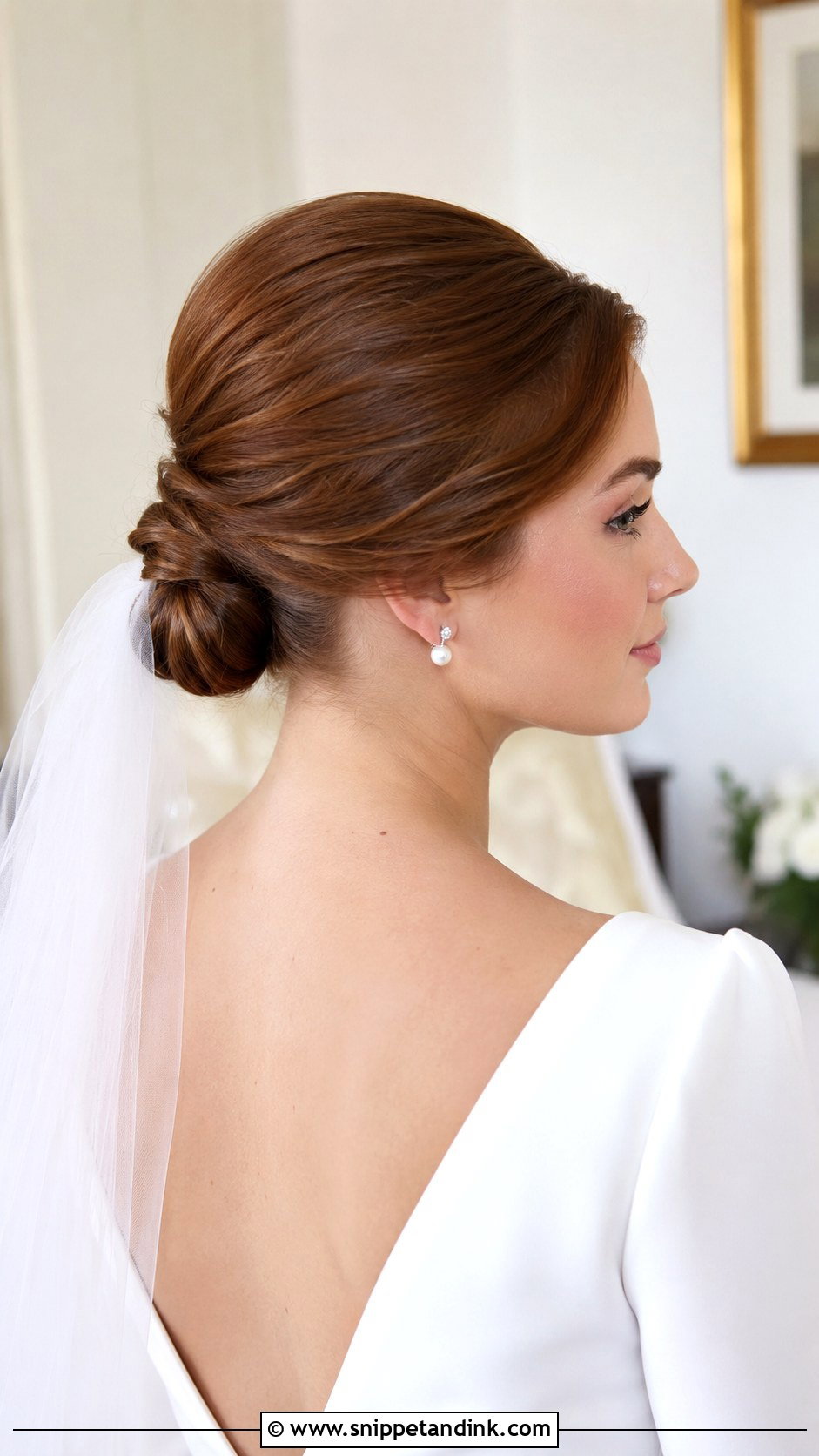
Crown volume stops a slicked bun from flattening the head shape, especially from the side. I tease underneath at the crown in small sections, smooth the top layer over it, and pin behind to lock the height in. It should look like a gentle curve, not a bouffant. This balance suits tiaras and fuller skirts, and it can lengthen a round face. If you’re wearing a veil above the bun, I keep the height a bit lower so the comb doesn’t sit on a hollow.
14. Sleek Low Bun With Tendrils
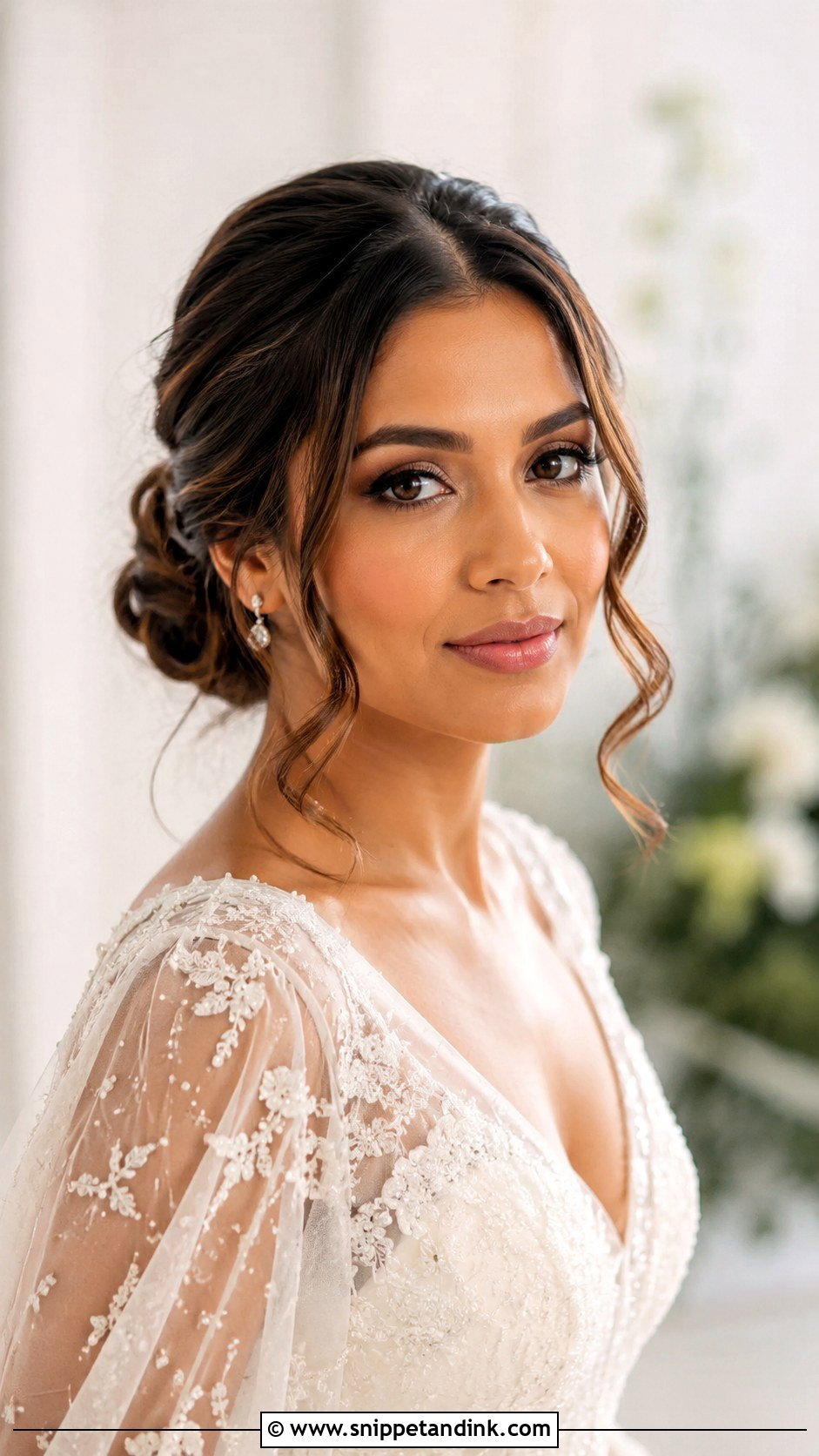
Leaving a few tendrils is the gentlest version of the sleek low bun with tendrils idea, and it helps brides who feel severe with everything pulled tight. I take wisps from the temples and in front of the ears, wave them on a small iron and let them drop slightly before spraying. Restraint matters more than technique here. Two or three pieces per side look intentional; six start to look like the style is falling apart by the first dance.
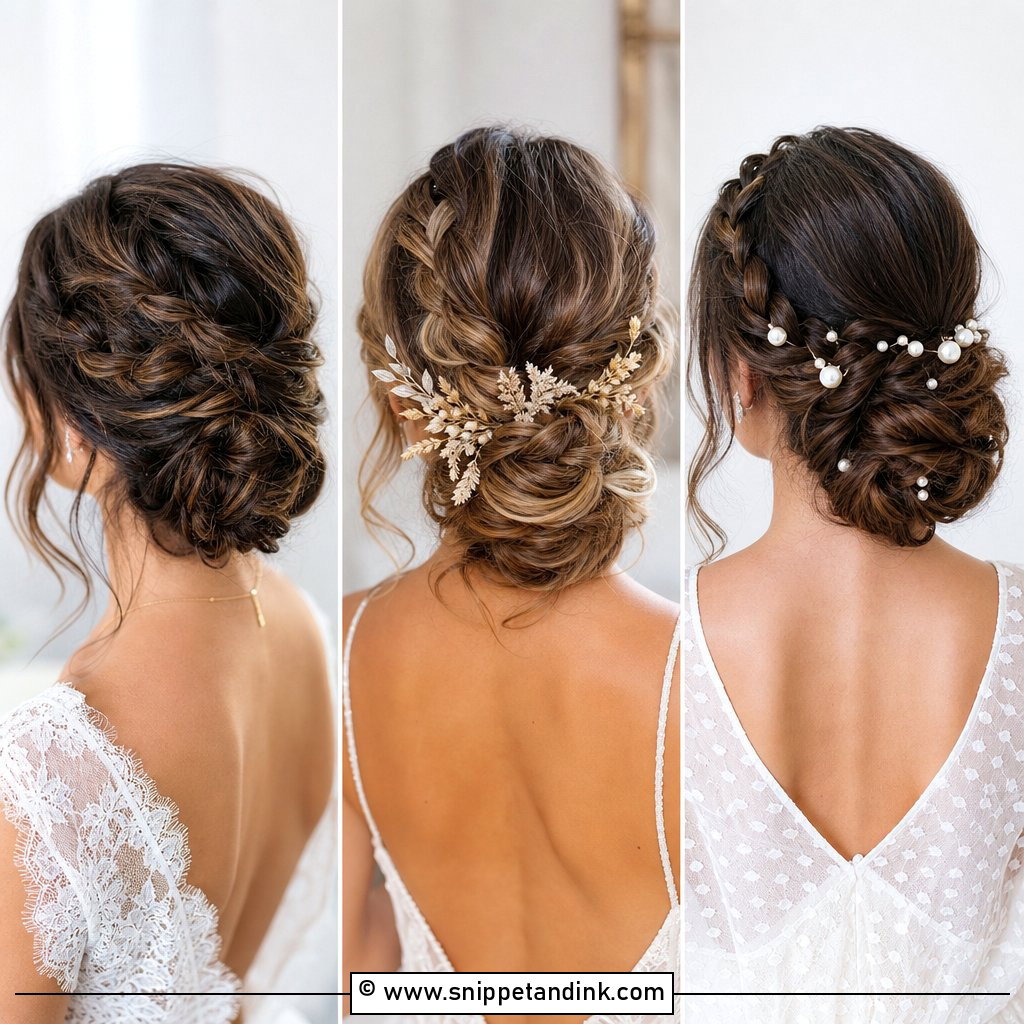
15. Sleek Low Bun With Statement Earrings
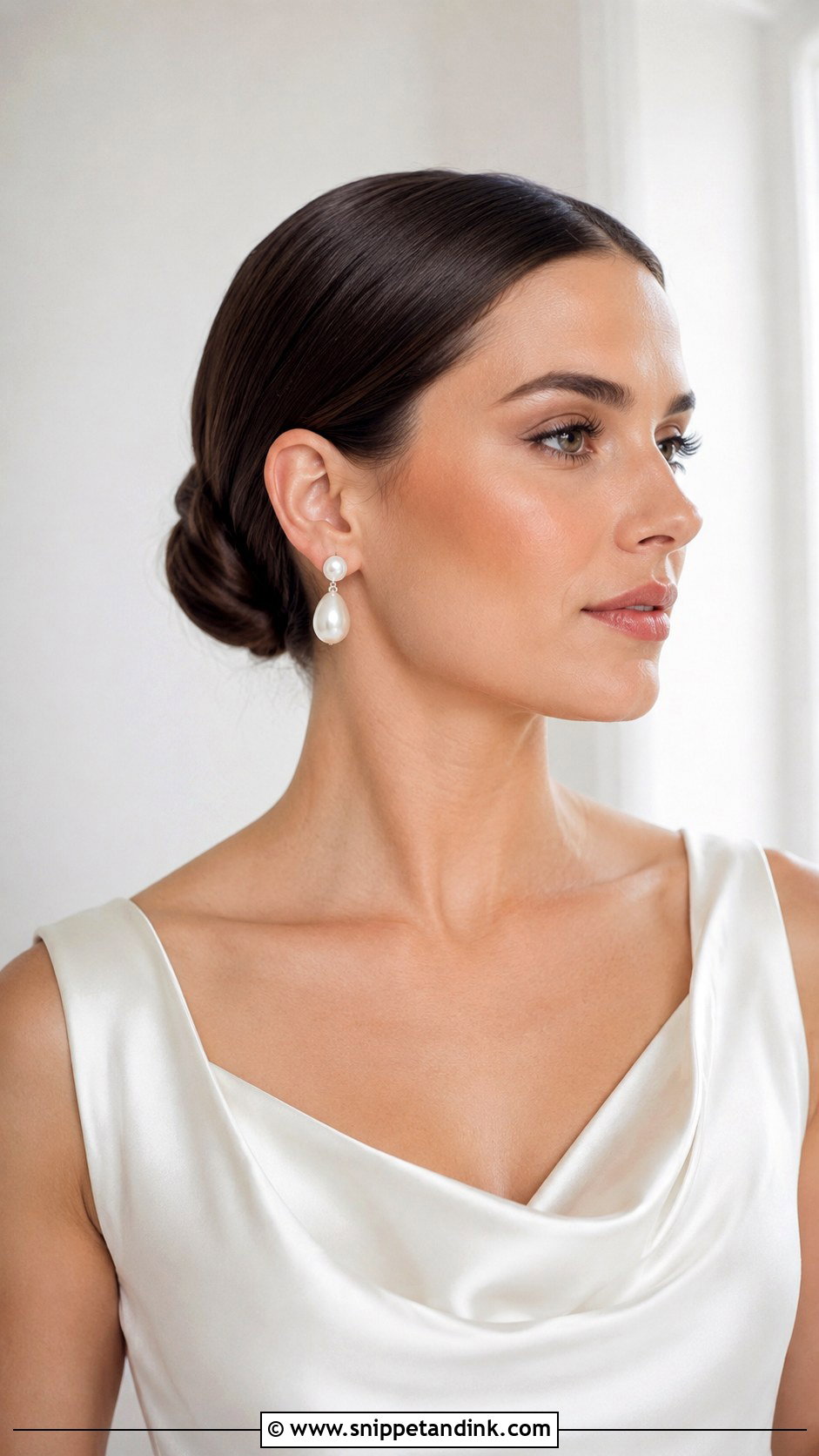
With statement earrings, the bun’s job is to step aside. Pulled back and low, it leaves a clean frame for bold pearls, crystals or sculptural drops, and that’s why I keep hair accessories off this one entirely. It sits well with minimal gowns, high necklines, strapless dresses and plain satin. One practical check: heavy earrings can catch on a veil comb or on loose hair at the nape, so I make sure the lower edge of the bun is tucked tight and clear of the earlobes.
What Happens to a Slick Bun Over Twelve Hours
This style is reliable, but it isn’t indestructible. Humidity is its biggest enemy: tiny hairs along the part and temples lift as soon as the air turns damp, and that halo shows in close-ups. I send brides off with a small toothbrush sprayed with hairspray, which smooths those flyaways back down in about ten seconds.
When the veil comes out
Have someone ease the comb out by lifting the cross pins first, then sliding it back along the hair. Pulled straight out, it drags the top layer loose. If you’re changing into a reception look, a low bun converts easily into a sleek ponytail by removing the pins and smoothing the length.
Sweat, dancing and hugs
Sweat at the hairline loosens gel and makes edges look wet. Blotting papers pressed lightly along the forehead do more good than adding more product. Bobby pins can work loose with movement, so I tell the person holding your emergency kit to push any visible pin back in at an angle toward the base, not straight down.
Taking it down
At the end of the night, take the pins out slowly before you brush anything. Then work a leave-in conditioner through and detangle from the ends up. Brushing a sprayed bun from the root is how brides lose a handful of hair on the wedding night.
Your Part, Your Pins and One Honest Trial
A smooth bun works because it gives you a fixed shape that dresses, jewelry and veils can all rely on. Pick the part that suits your face, then decide whether you want soft tendrils, pearl pins, a twist or nothing at all. Bring the real veil and earrings to your trial, wear a top with a similar neckline, and wear the style for a few hours afterwards to see how it feels by evening. That afternoon tells you more than any photo.
You'll Like These Ideas:


Leave a Reply