
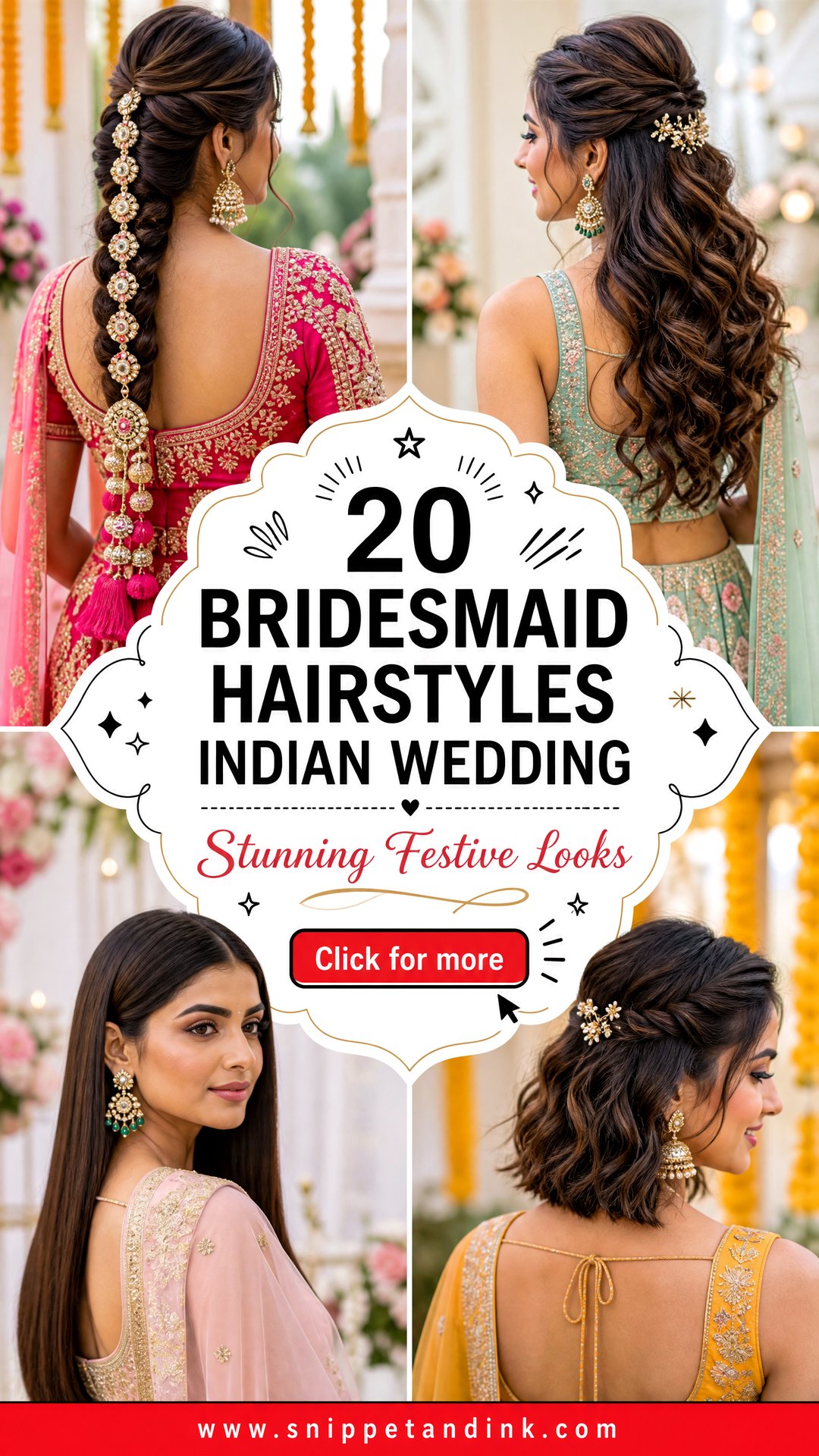
Indian weddings ask more of a bridesmaid’s hair than almost any other celebration. There are several functions, sometimes two in one day, a lot of dancing, heavy jewelry, a dupatta or pallu pinned somewhere near the head, and usually heat. So I plan the hair by event, not as one look. Polished buns tend to suit the ceremony, soft waves the reception, floral braids for mehendi and sleek ponytails for sangeet, where everyone’s dancing. Below are twenty styles with notes on what each needs, and after them, how I map hair across a whole wedding week and how to pin a dupatta without ruining any of it.
Mapping Hair Across Haldi, Mehendi, Sangeet and the Pheras
When I’m styling bridesmaids for a multi-day wedding, I plan the whole run at once. Hair that’s been curled, sprayed and pinned for three days in a row gets dry and sore at the scalp, and some styles actually work better on hair that was styled the day before.
Haldi
Turmeric paste stains. Tie the hair up in a braid or bun, and if your hair is blonde, highlighted or grey, oil the lengths first so the colour has less to grip. Nothing elaborate, because it’ll be washed straight after.
Mehendi
Your hands will be wet with henna for hours, so you can’t fix your own hair. Choose something that needs no touching: a floral braid, a crown braid or a messy bun pinned tight underneath.
Sangeet
Movement and security. Ponytails and bubble braids hold through hours of dancing. Waves that were set the day before often look better today, so a braid left in overnight after mehendi can be shaken out into texture.
Wedding ceremony and reception
This is where the polished bun, the gajra and the jewelled pins come out. Wash the hair the day before rather than that morning; slightly worn hair grips pins better. If the reception follows straight after, plan a bun that can be released into waves with a few pins out, instead of a full restyle.
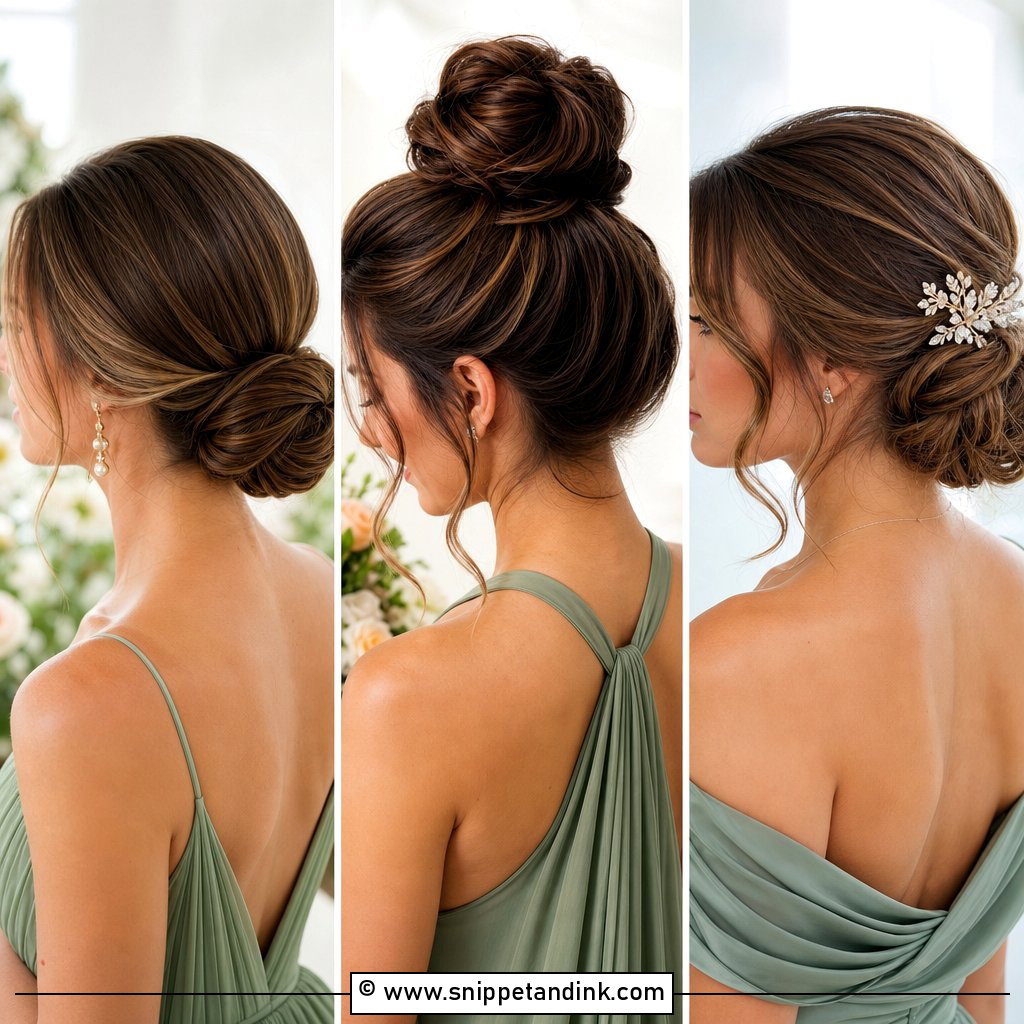
1. Bridesmaid Low Bun For Indian Wedding
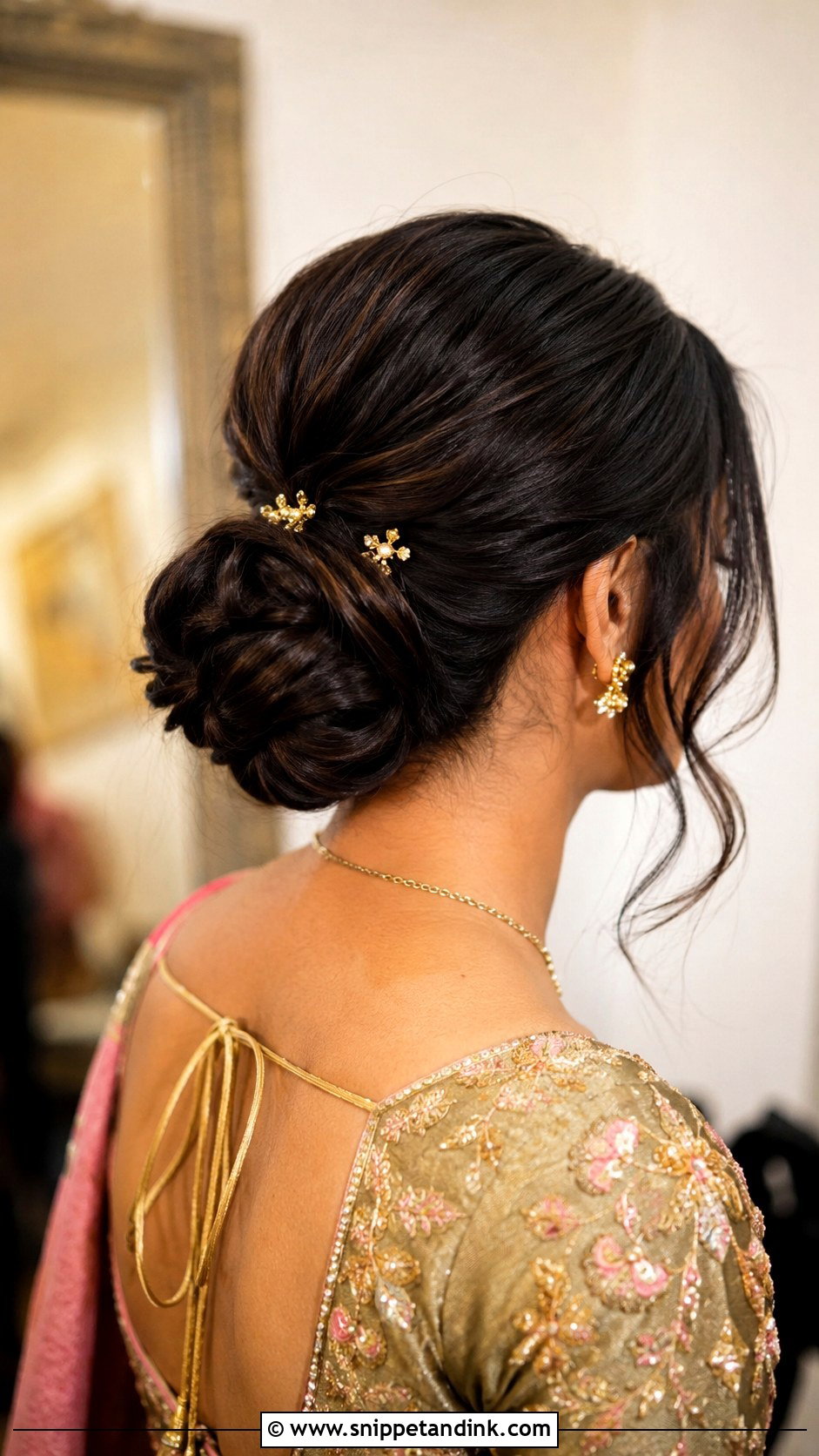
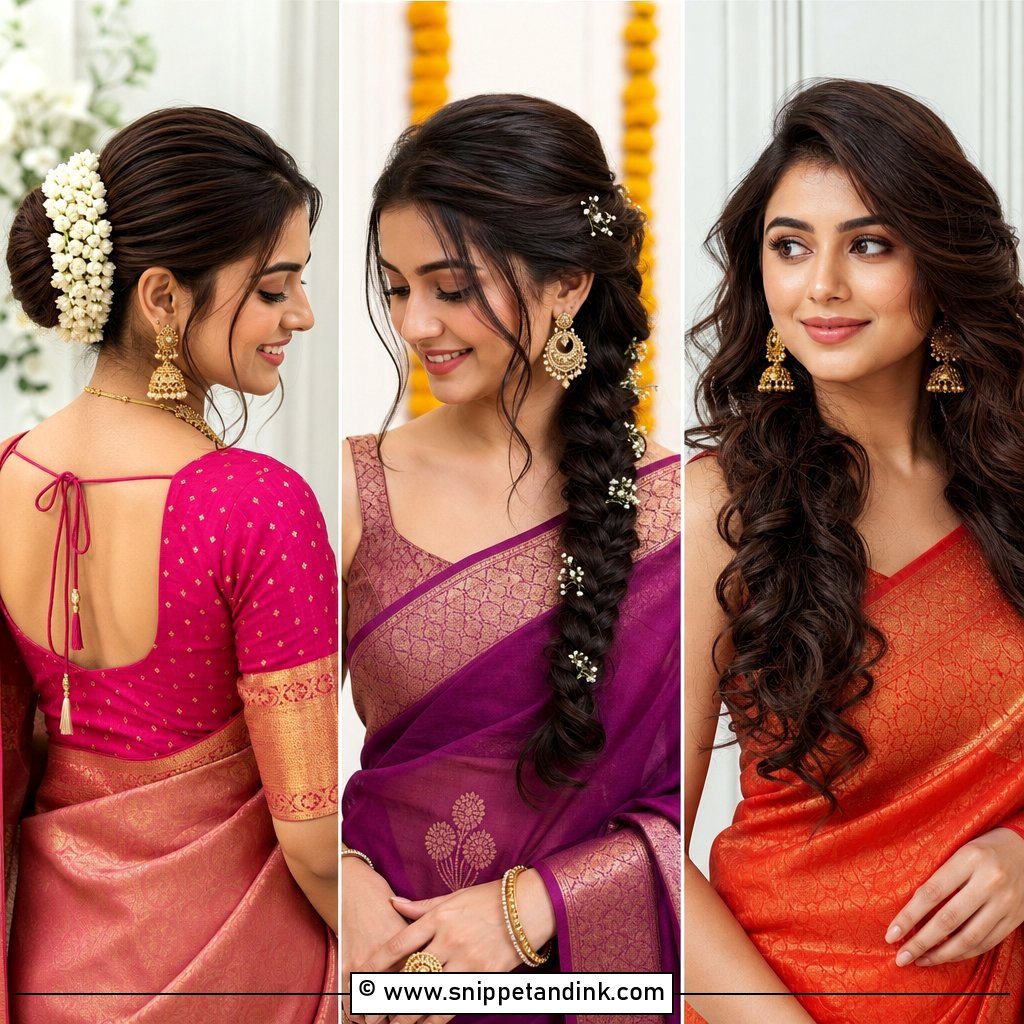
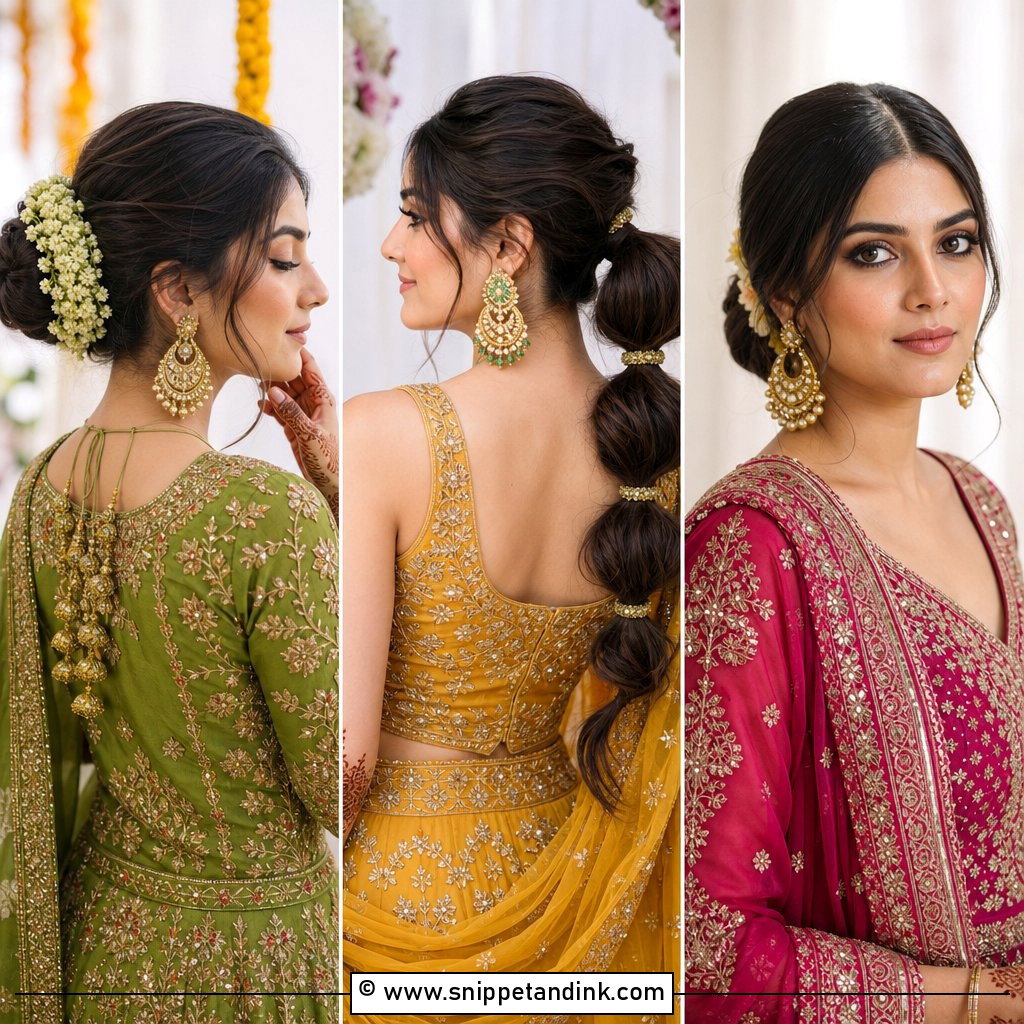
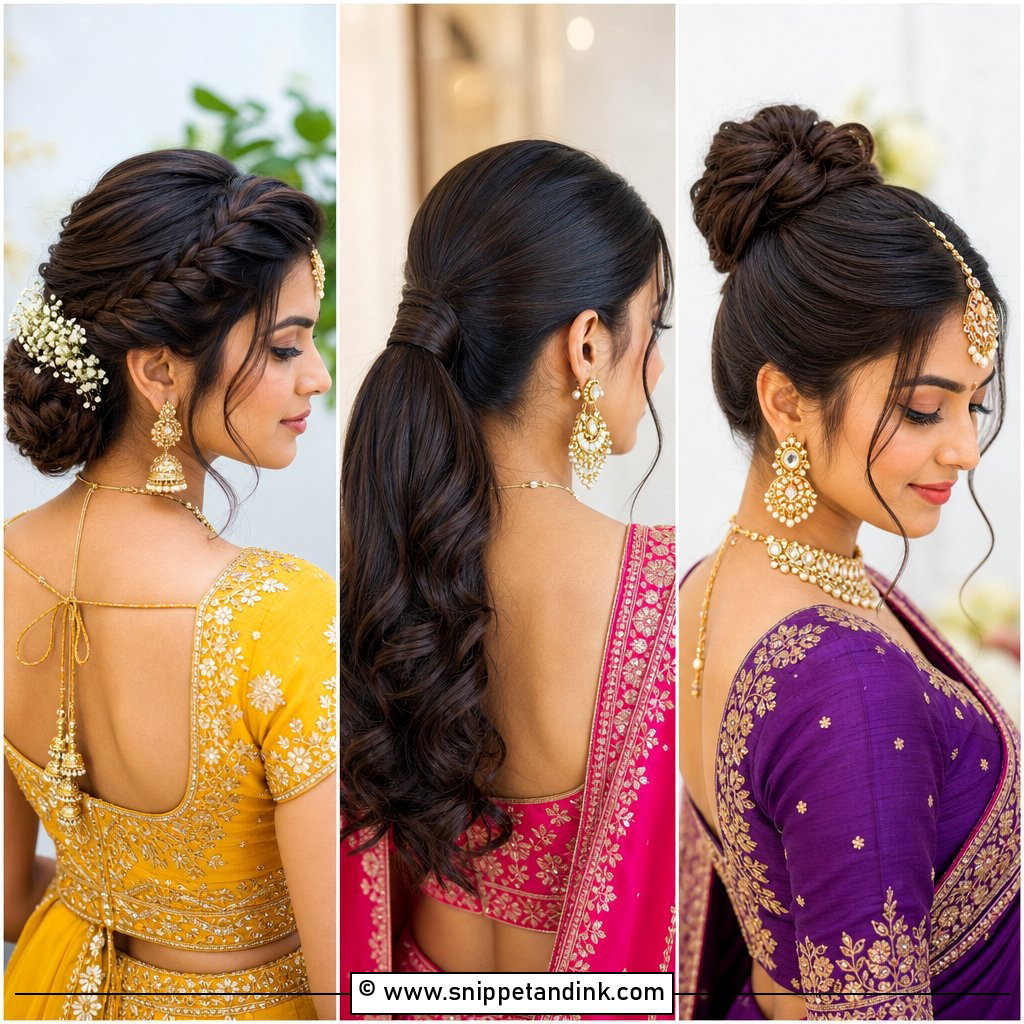
The low bun is my default for the main ceremony. It keeps the neckline of an embroidered blouse clear, sits comfortably against a chair back during long rituals, and gives a dupatta something solid to pin to. Smooth reads formal; a little texture reads softer. A middle part is the traditional choice and centres a maang tikka properly; a side part softens a strong forehead. Jhumkas, chokers and fresh jasmine all sit well with it.
2. Bridesmaid Gajra Bun For Indian Wedding
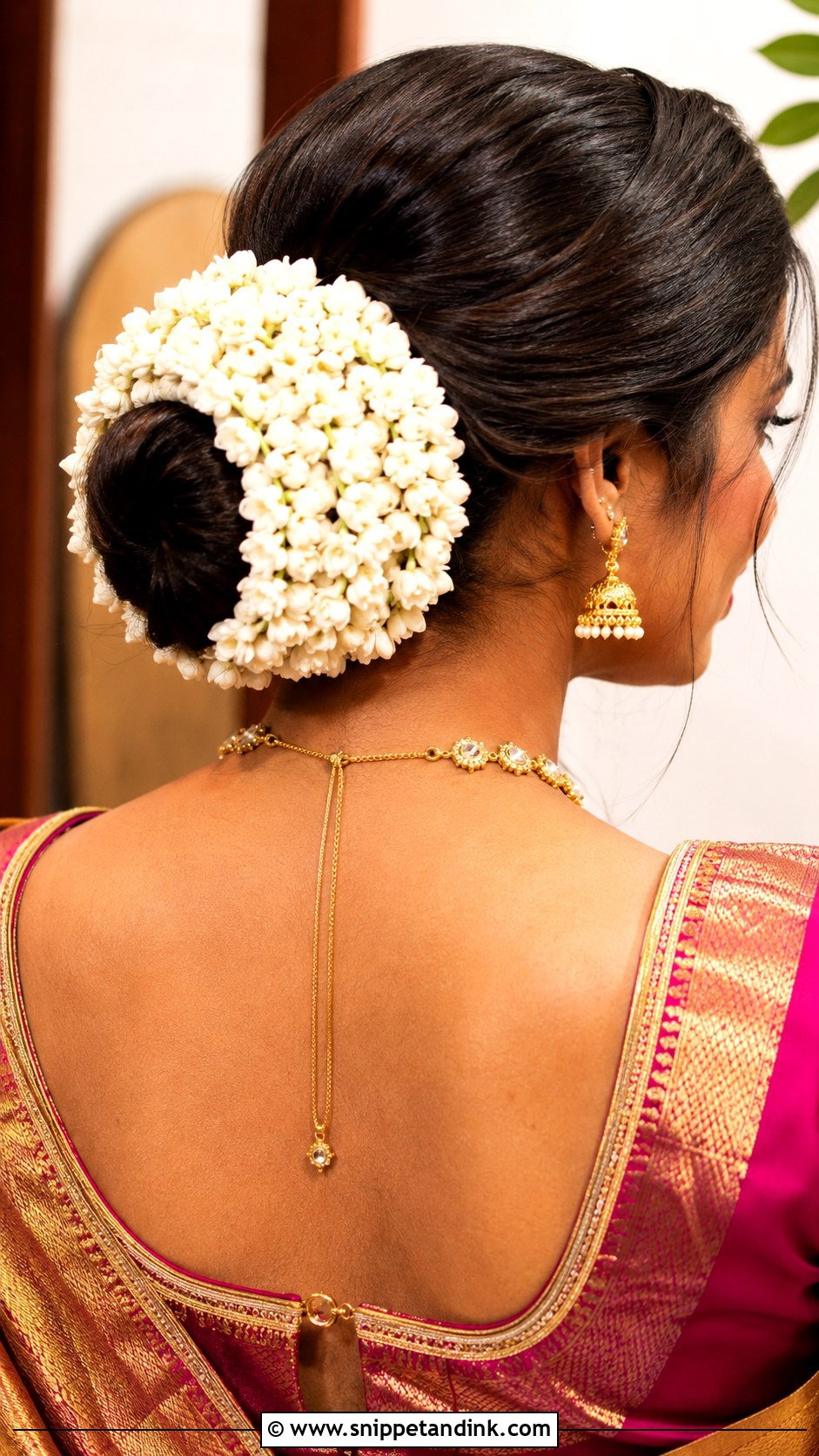
Jasmine has a scent nothing else replaces, which is why a gajra bun is still requested so often. I build the bun first, firm and slightly flat at the back, then wrap the gajra and pin it through the bun every few centimetres so the strand’s weight doesn’t drag it. A full wrap gives the classic South Indian-inspired look; a half-moon on one side feels lighter. Sit the bun low or slightly higher depending on the blouse back. Fresh jasmine browns within hours in heat, so buy it the morning of and keep it wrapped in a damp cloth until the last minute.
3. Bridesmaid Braided Bun For Indian Wedding
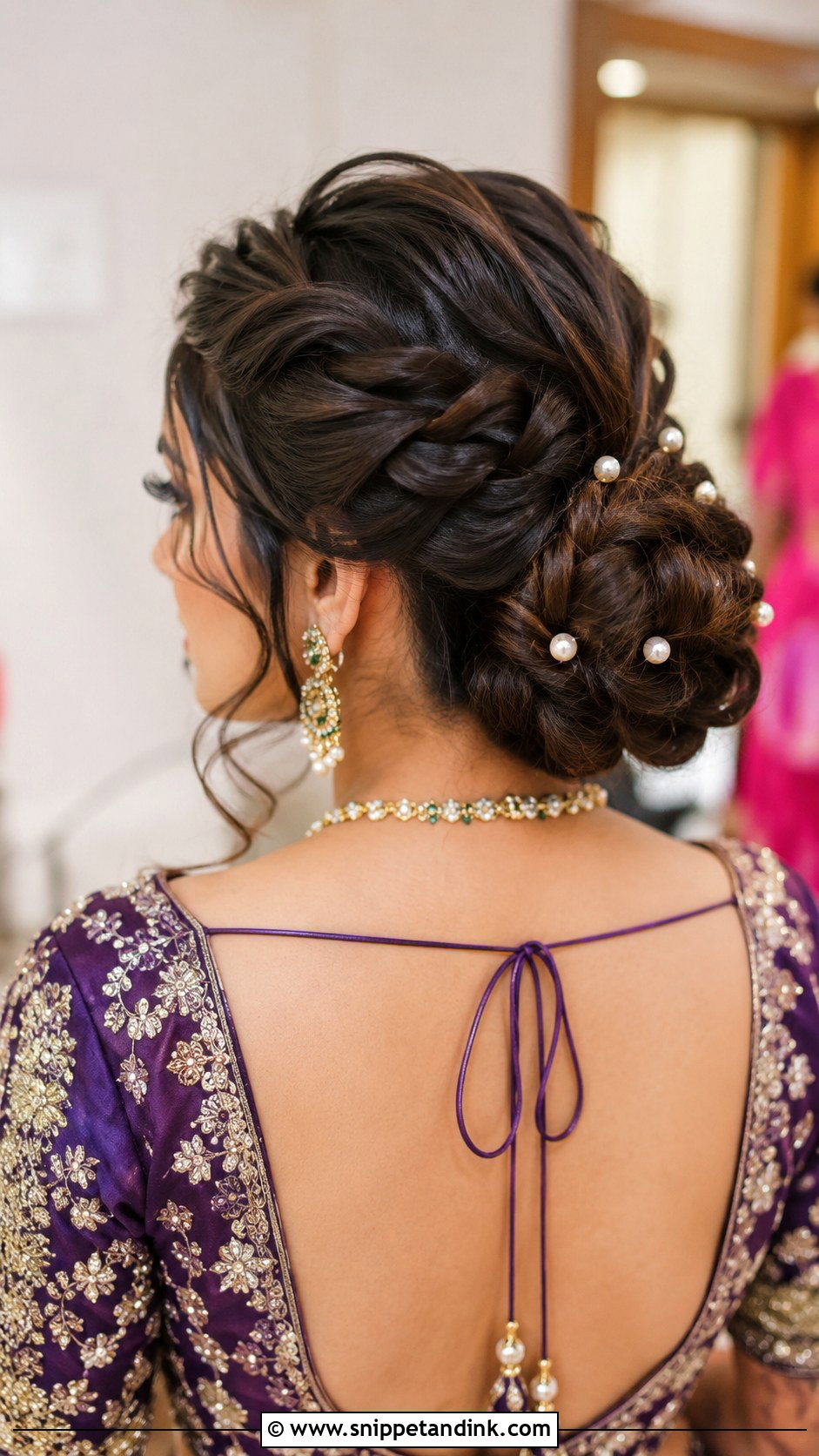
Thick hair is common at Indian weddings, and a braided bun is how I manage it without the bun becoming enormous. Braiding compresses the volume, so a full head of hair fits into a neat shape. The braid can wrap the base, start at the crown, or be folded into a low twisted chignon. Mirror work, zari and sequin lehengas pair well with small pearl or gold pins in the braid. It holds through rituals and dancing alike.
4. Bridesmaid Messy Bun For Indian Wedding
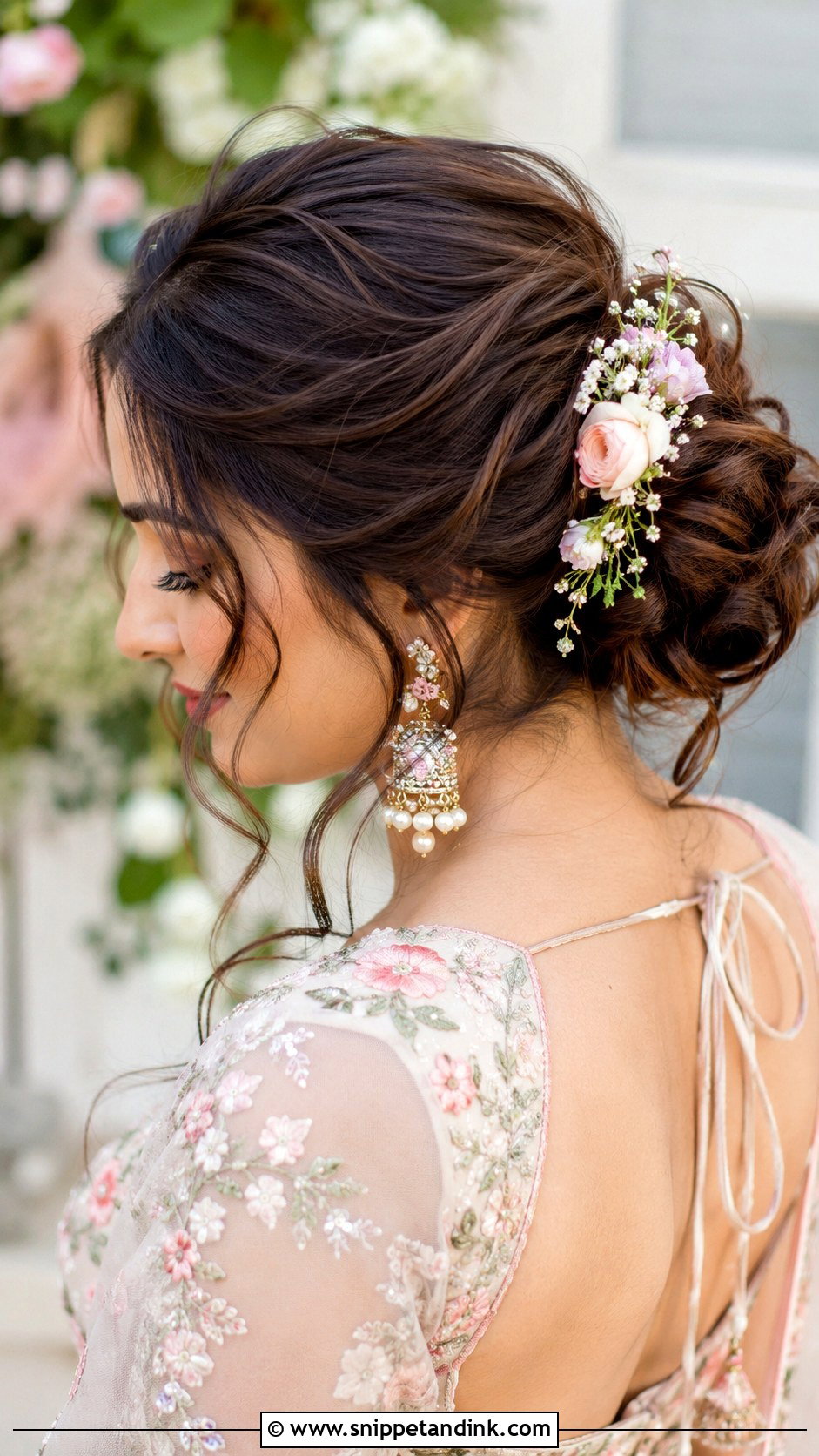
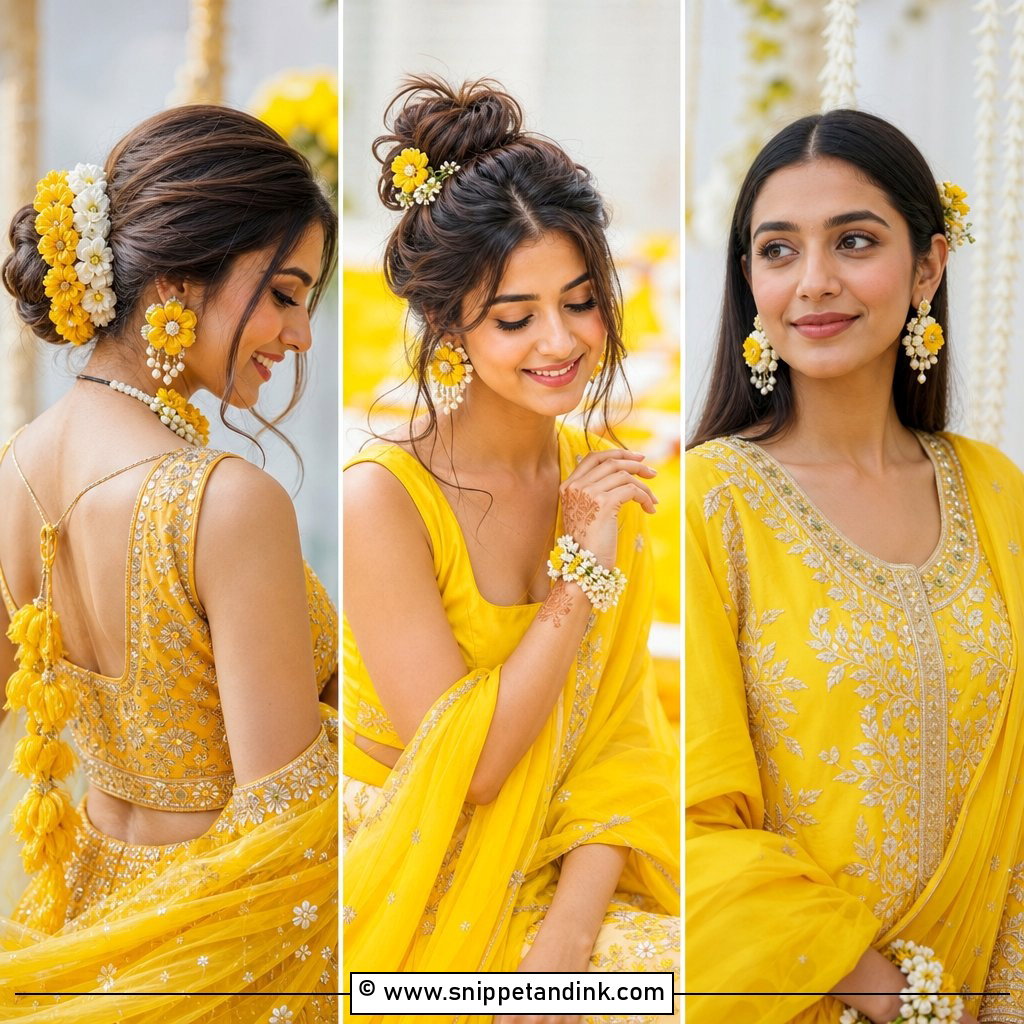
For haldi and mehendi I’m happy to go undone, but undone still has to survive. I build volume at the crown, curl a couple of pieces at the face and pin the bun loosely enough to look airy while the base stays firm. Loose hair at a haldi, though, will pick up turmeric paste, and that can tint light or highlighted hair yellow. A messy bun keeps most of it tucked away. Pastel sarees, floral lehengas and shararas suit it, with small flowers or delicate pins.
5. Bridesmaid Side Bun For Indian Wedding
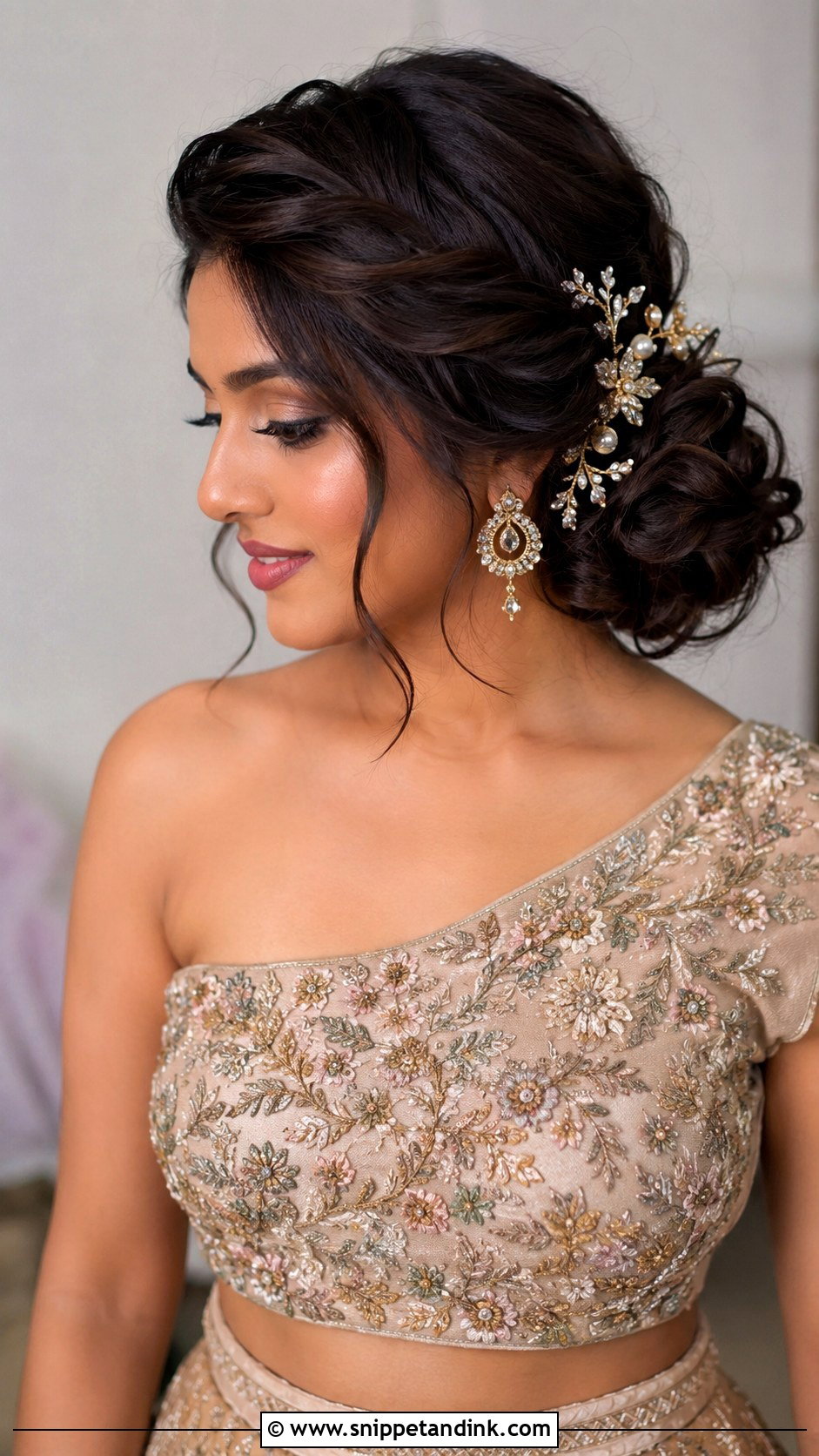
A side bun is the one I suggest when the outfit has a story on one side: a one-shoulder blouse, a deep back, or a pallu draped over the other shoulder. Put the bun opposite the drape so both show. It’s visible from the front, which matters when the camera faces the bridesmaids during the ceremony. Smooth reads regal, curled reads soft. Add a hair chain or a few jewelled pins along the bun’s edge.
6. Bridesmaid High Bun For Indian Wedding
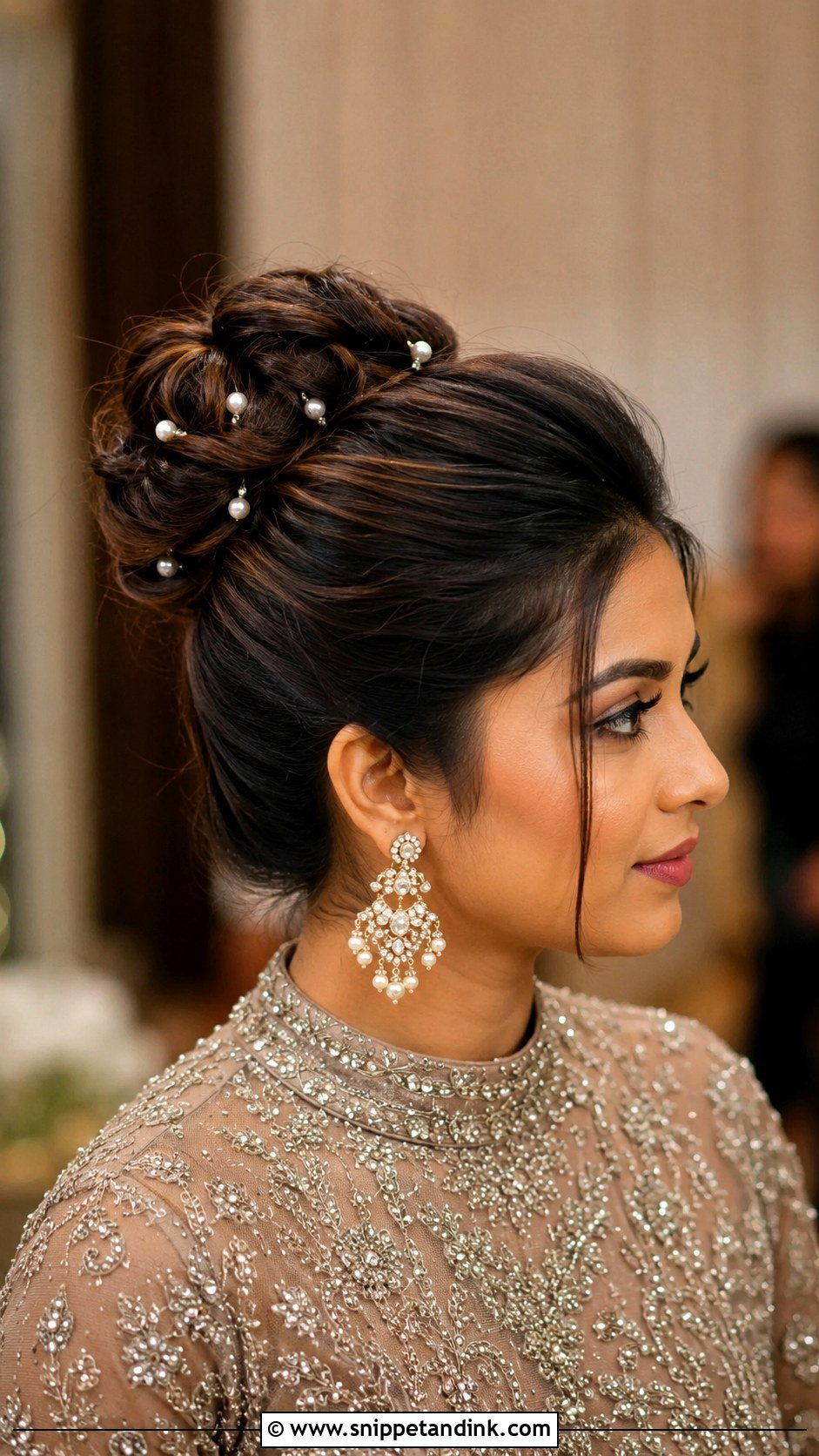
A high bun keeps hair completely off the neck, which is a relief on a hot evening. It works with high-neck blouses, statement earrings and reception gowns. Sleek and sculpted is formal; softly backcombed gives more volume. For Indian weddings, I dress it with pearl pins, small flowers or a decorative juda pin pushed in from the side. Heavier ornaments need the bun built on a firm base, so it doesn’t tilt as the night goes on.
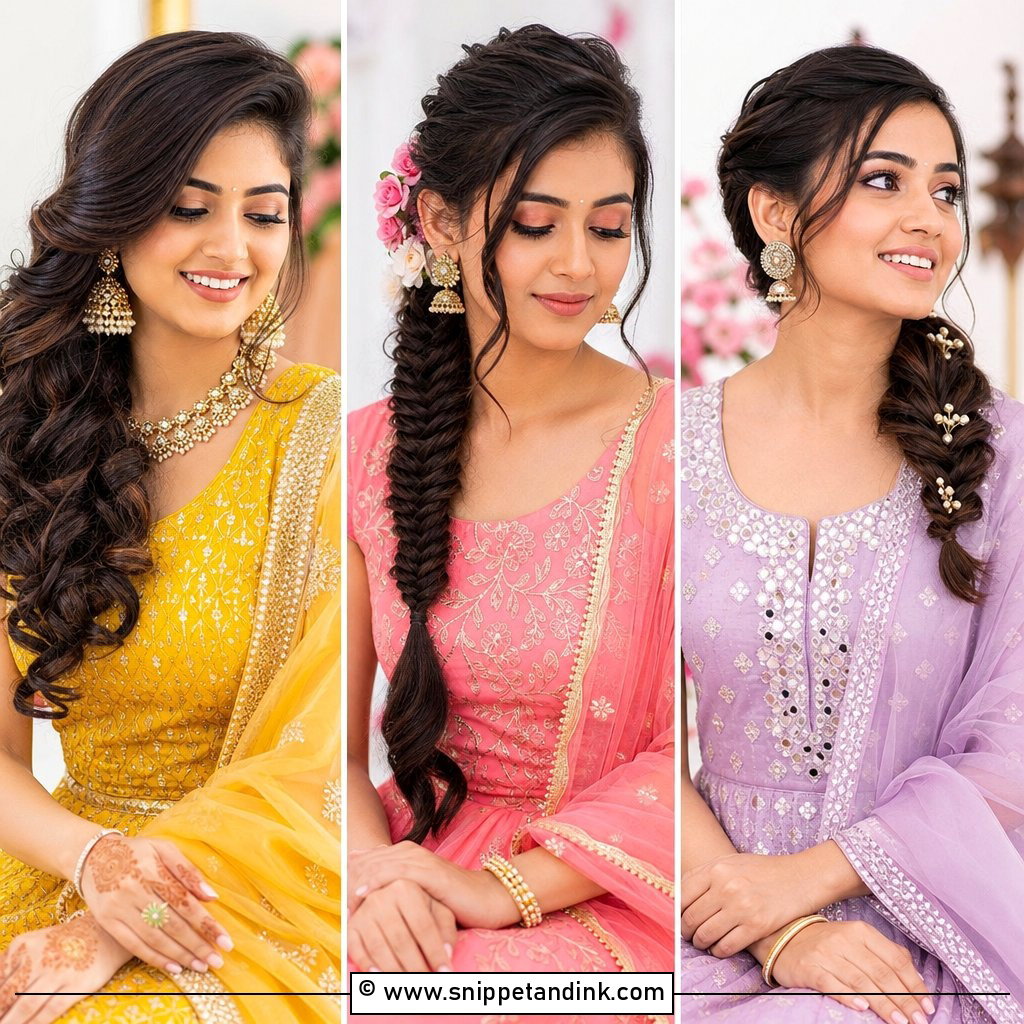
7. Bridesmaid Fishtail Braid For Indian Wedding
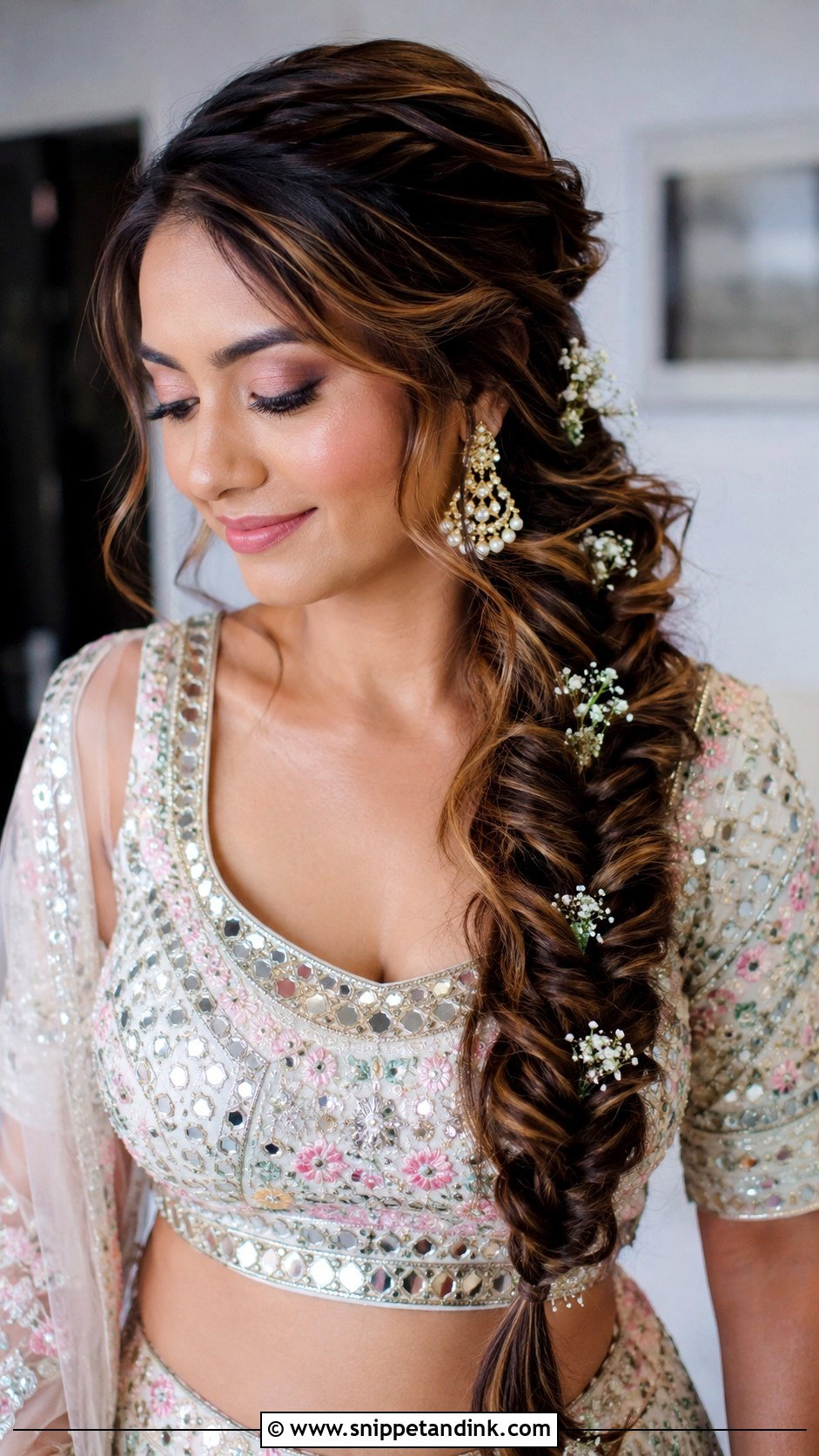
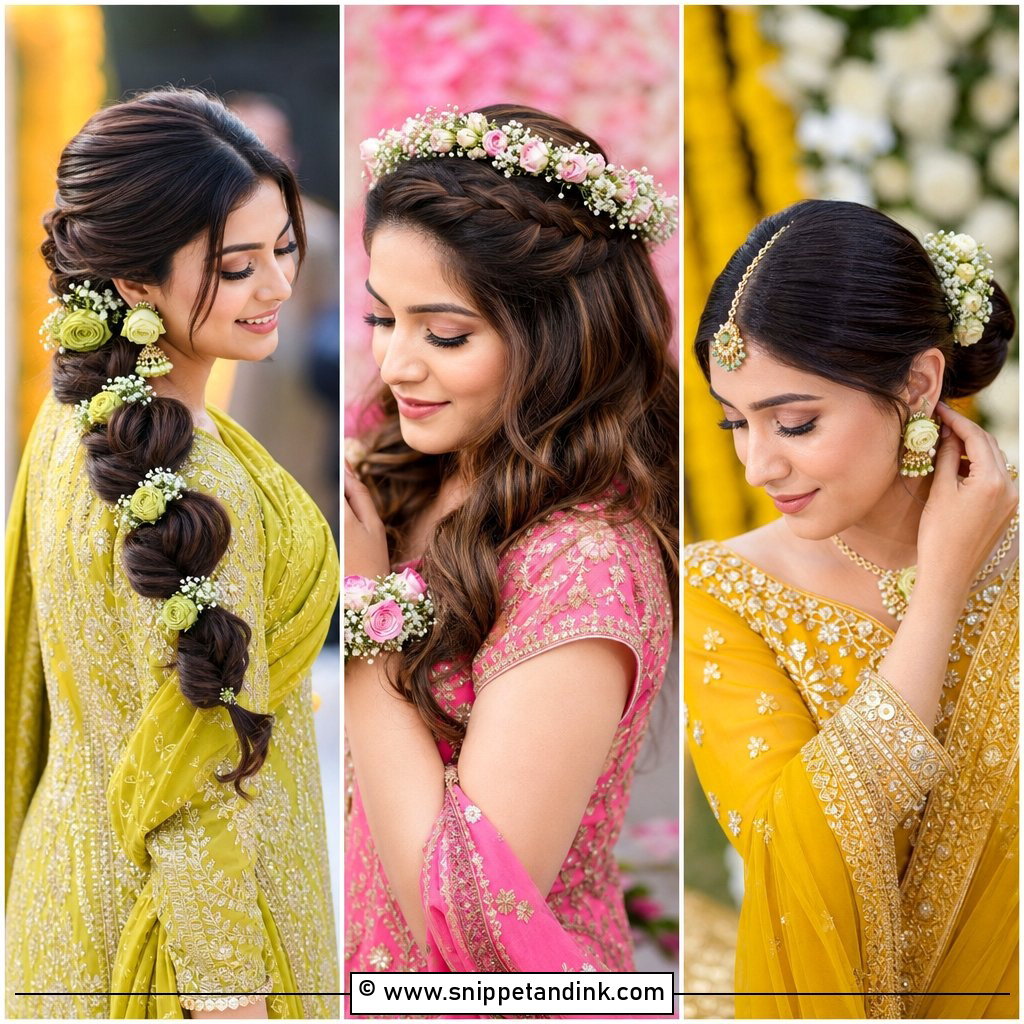
A fishtail braid looks intricate for very little hardware, so it suits the lighter day functions. I braid it down the back or over one shoulder, then pull the edges out to widen it, which makes it read fuller in photos. Tiny flowers, pearl strings or gota ribbon threaded through it tie it to the outfit. It needs medium to long hair; on shorter hair the braid runs out too fast to be worth it.
8. Bridesmaid Floral Braid For Indian Wedding
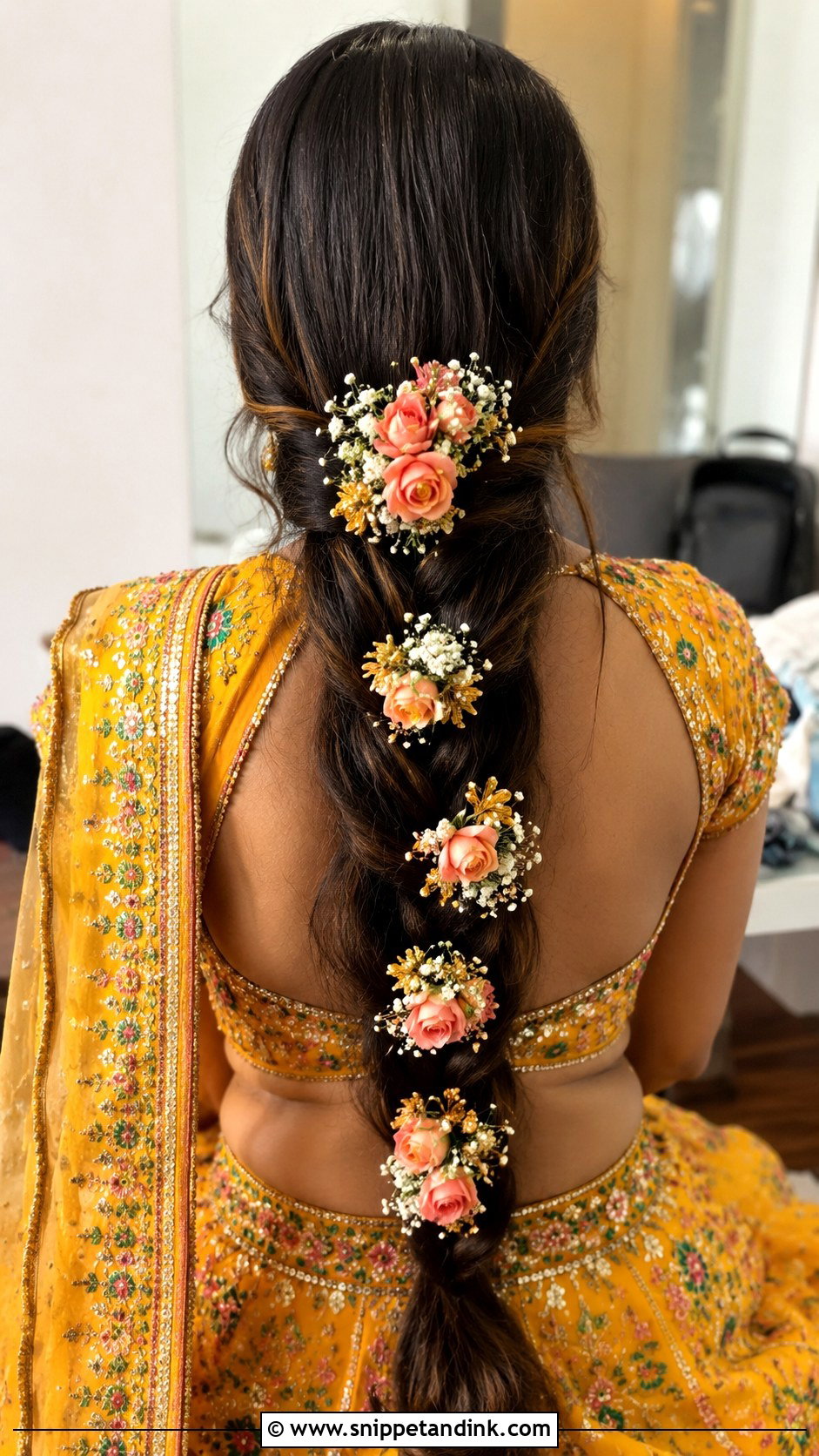
A floral braid is practically made for mehendi and haldi events. The base can be a three-strand, Dutch, fishtail or pull-through braid; I prefer Dutch or pull-through for fresh flowers because the raised stitches give stems somewhere to sit. Marigolds feel bright and traditional; baby’s breath and roses read softer. Real marigolds are fairly hardy, but roses bruise, so I tuck them in last. It also keeps long hair controlled while hands are full of henna.
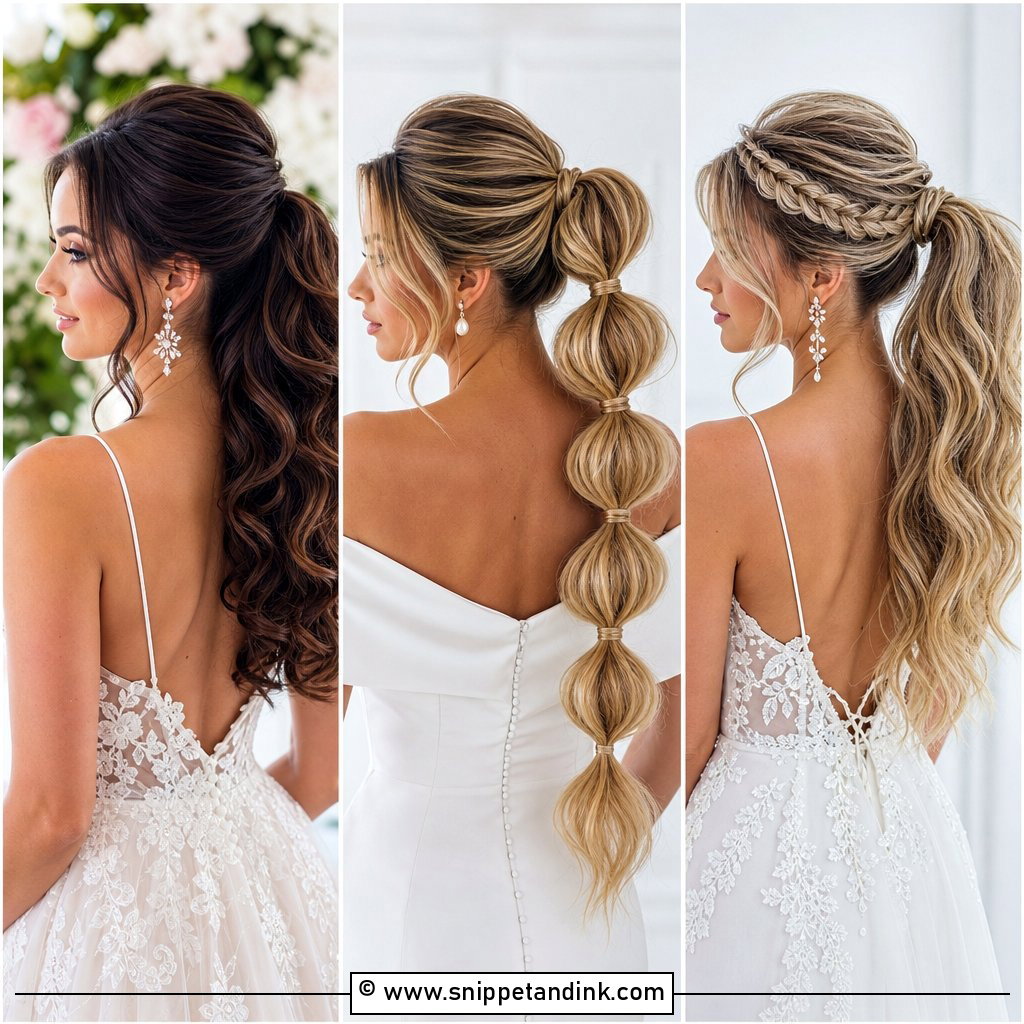
9. Bridesmaid Bubble Braid For Indian Wedding
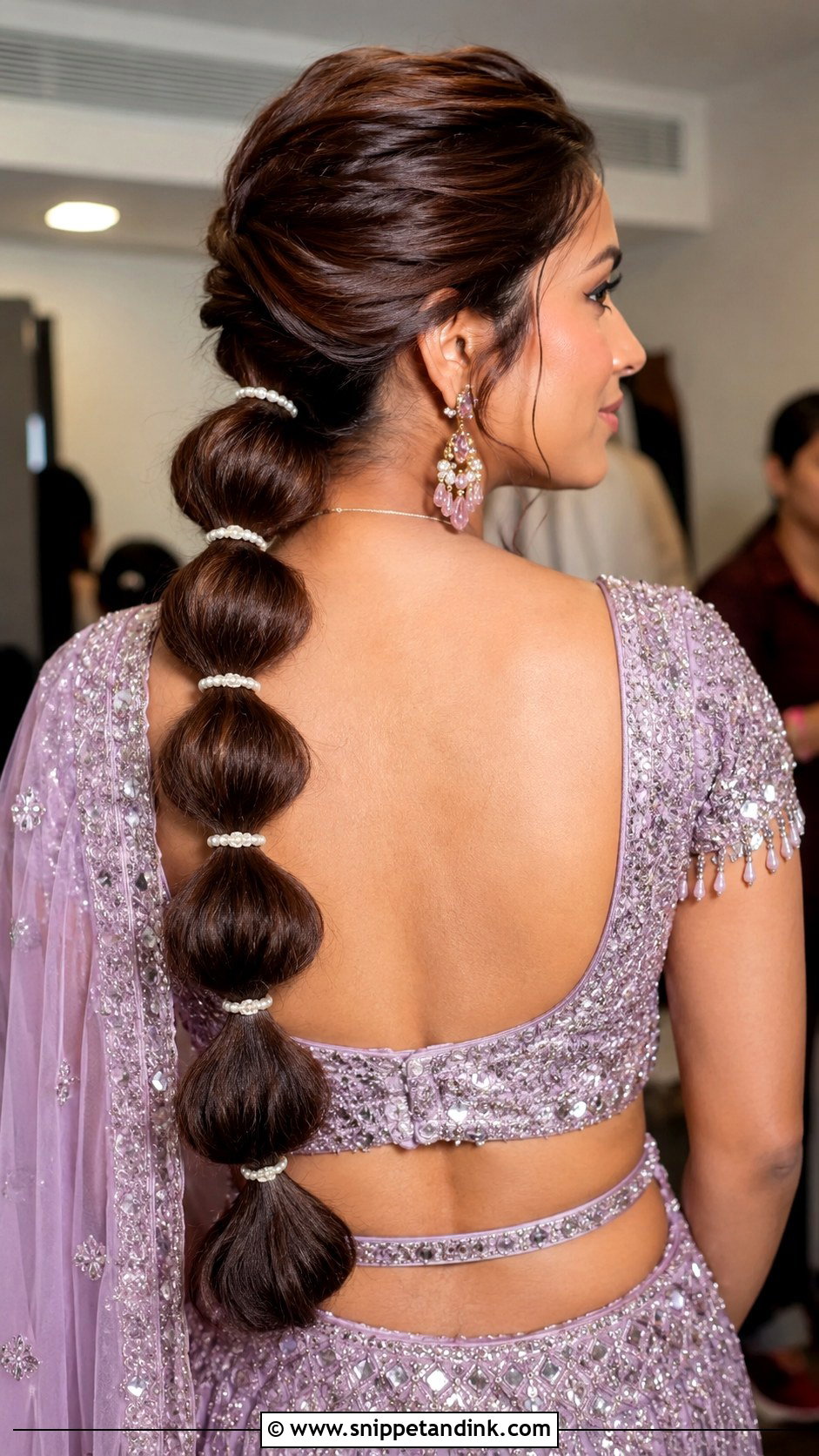
A bubble braid is the fun one, and it’s fast. I tie the hair in sections with clear or hair-coloured elastics down the length, then pull each section wide to form the bubbles. Thick, long hair makes the bubbles round and full; fine hair looks better with more, smaller sections. It handles a sangeet dance floor without budging. Decorative bands or pearl clips at each elastic dress it up for a reception.
10. Bridesmaid Paranda Braid For Indian Wedding
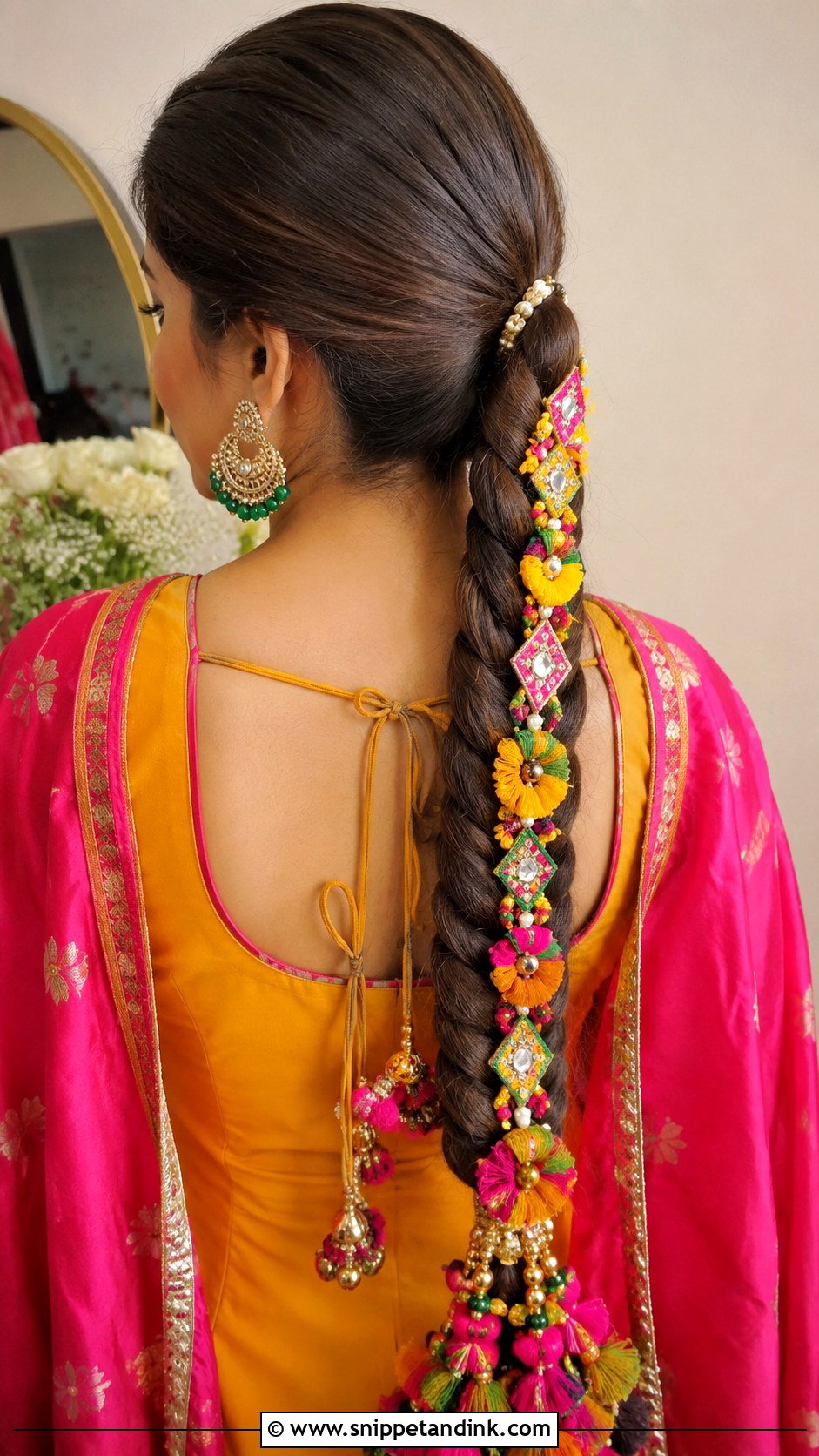
A paranda is one of the most traditional finishes there is, and it suits Punjabi suits, lehengas and bright outfits wonderfully. I braid the hair with the paranda’s three cords woven in from about the nape, so it extends the braid’s length and ends in tassels that swing when she walks. Match the outfit or pick a deliberate contrast. Keep the crown neat; the braid itself should be smooth and even. It’s comfortable for a whole day of mehendi, sangeet and family functions.
11. Bridesmaid Half Up Curls For Indian Wedding
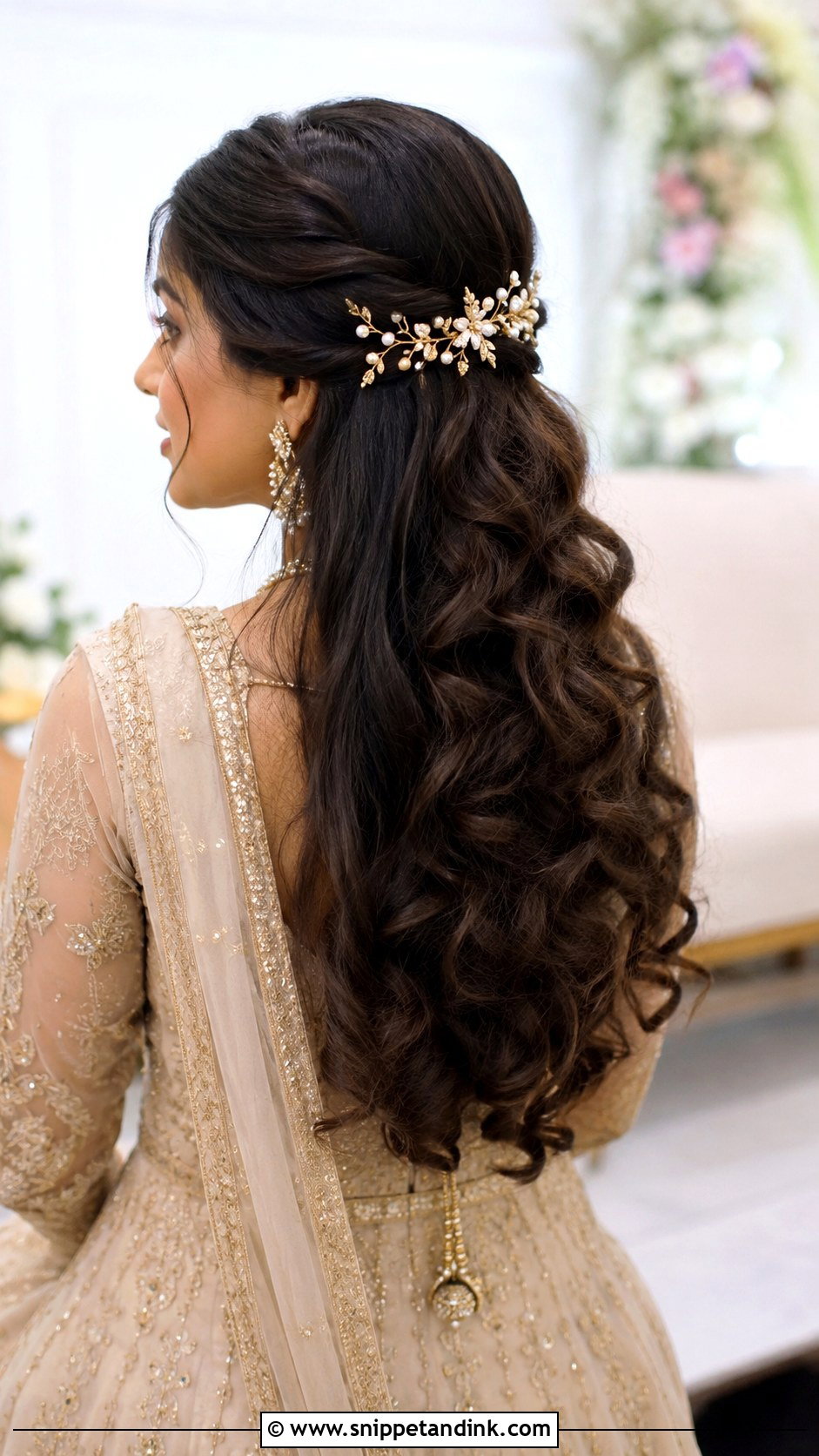
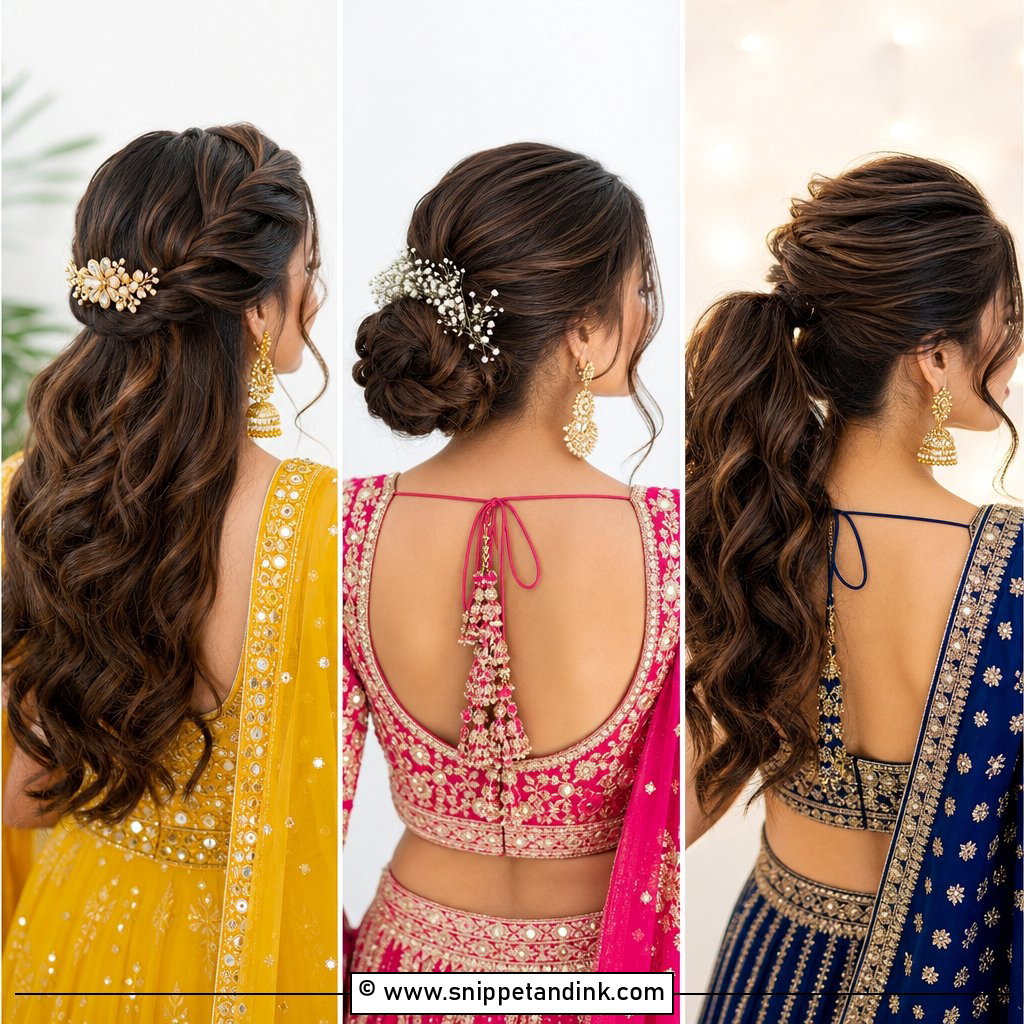
Half up curls let a bridesmaid keep her hair down for the photos while the front stays out of her face. I twist, braid or pin the top section, then curl the rest and brush it slightly so the curls join into waves. Lehengas, sarees, gowns and anarkalis all suit it. The one problem I watch for is the dupatta: if it’ll be draped over the head, the curls underneath will flatten, so I pin the top section a little lower to make room.
12. Bridesmaid Open Waves For Indian Wedding
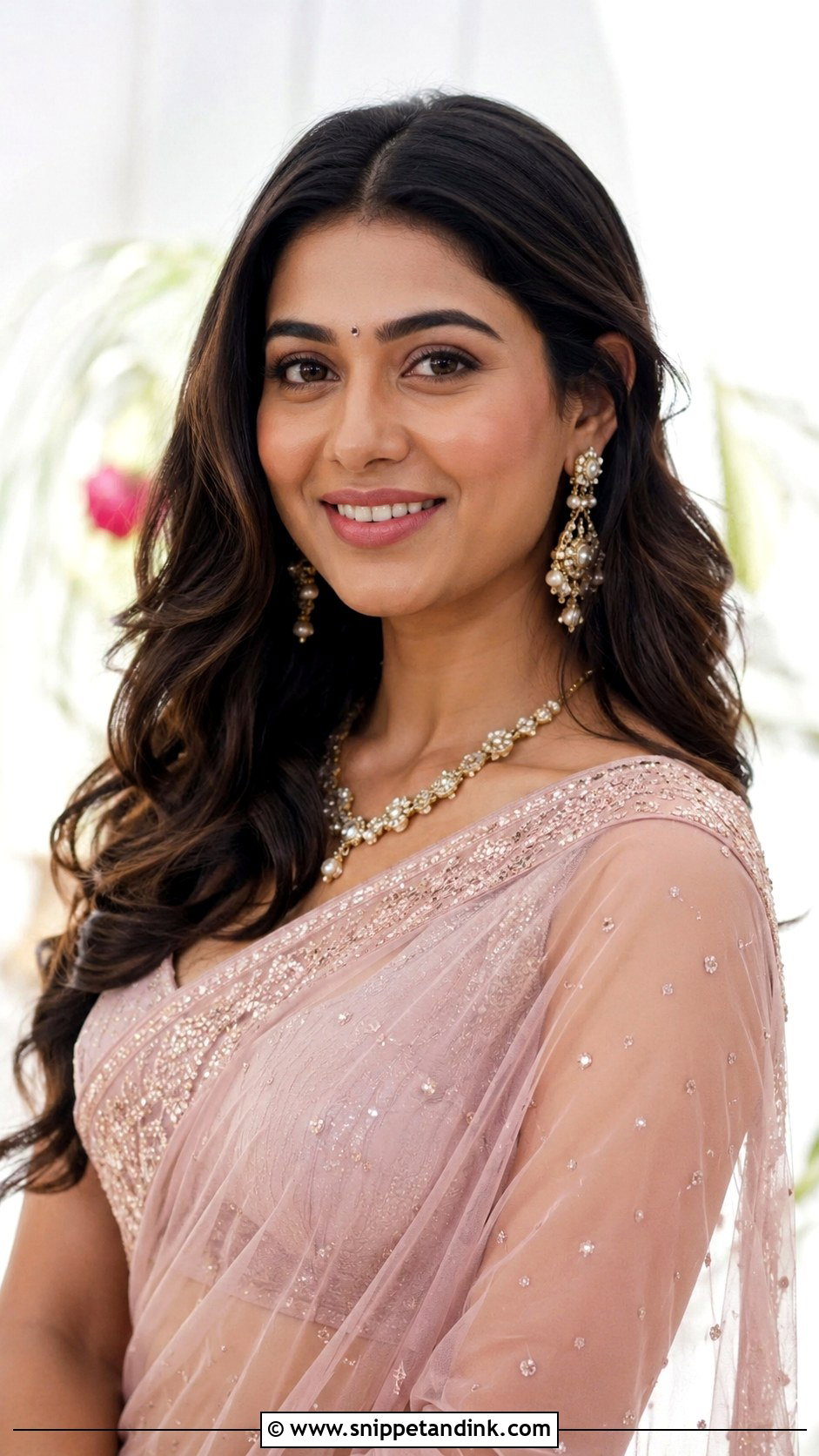
Open waves look relaxed but need real setting in Indian wedding heat. I curl in medium sections, pin each curl while it cools, then brush them out into big waves. Without the pinning step, they fall flat before dinner. Centre part or soft side part, with embellished lehengas, pre-draped sarees or gowns. A maang tikka or one side tucked behind the ear adds the festive note.
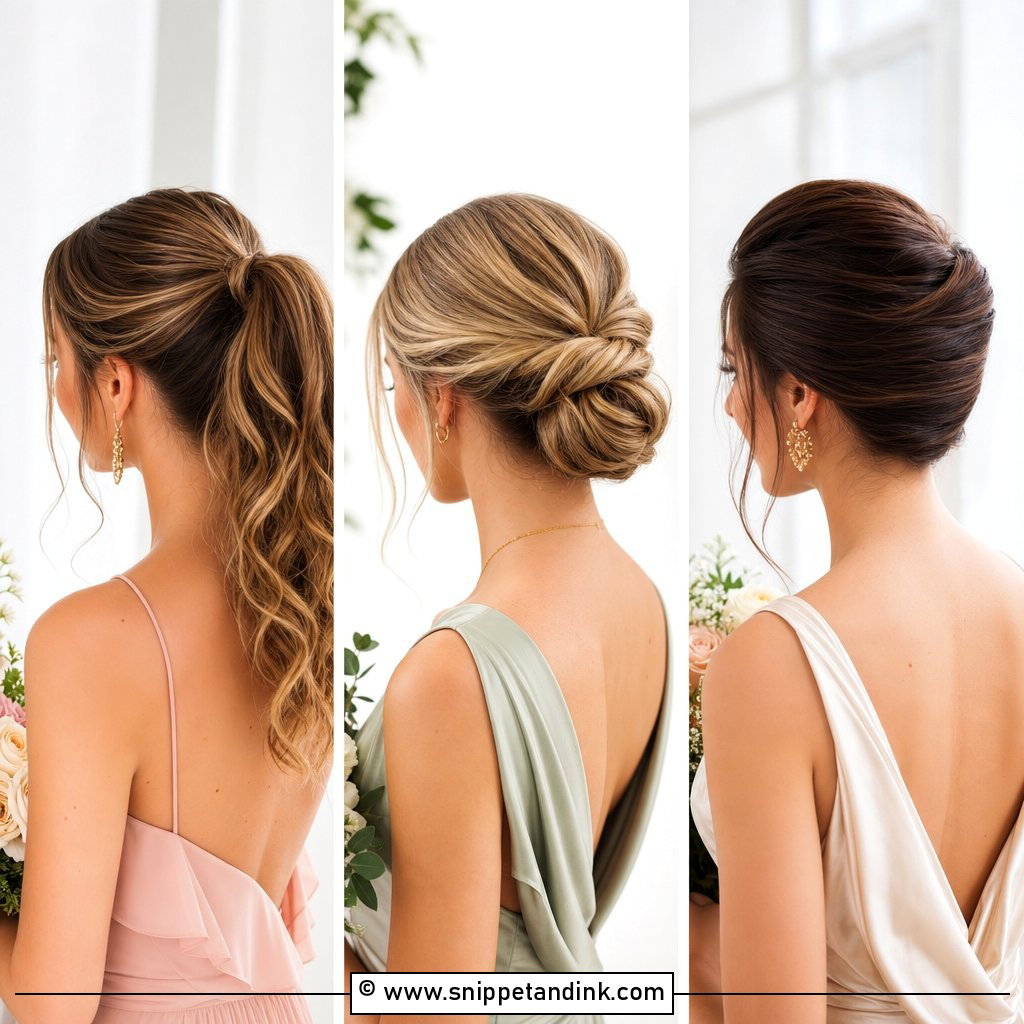
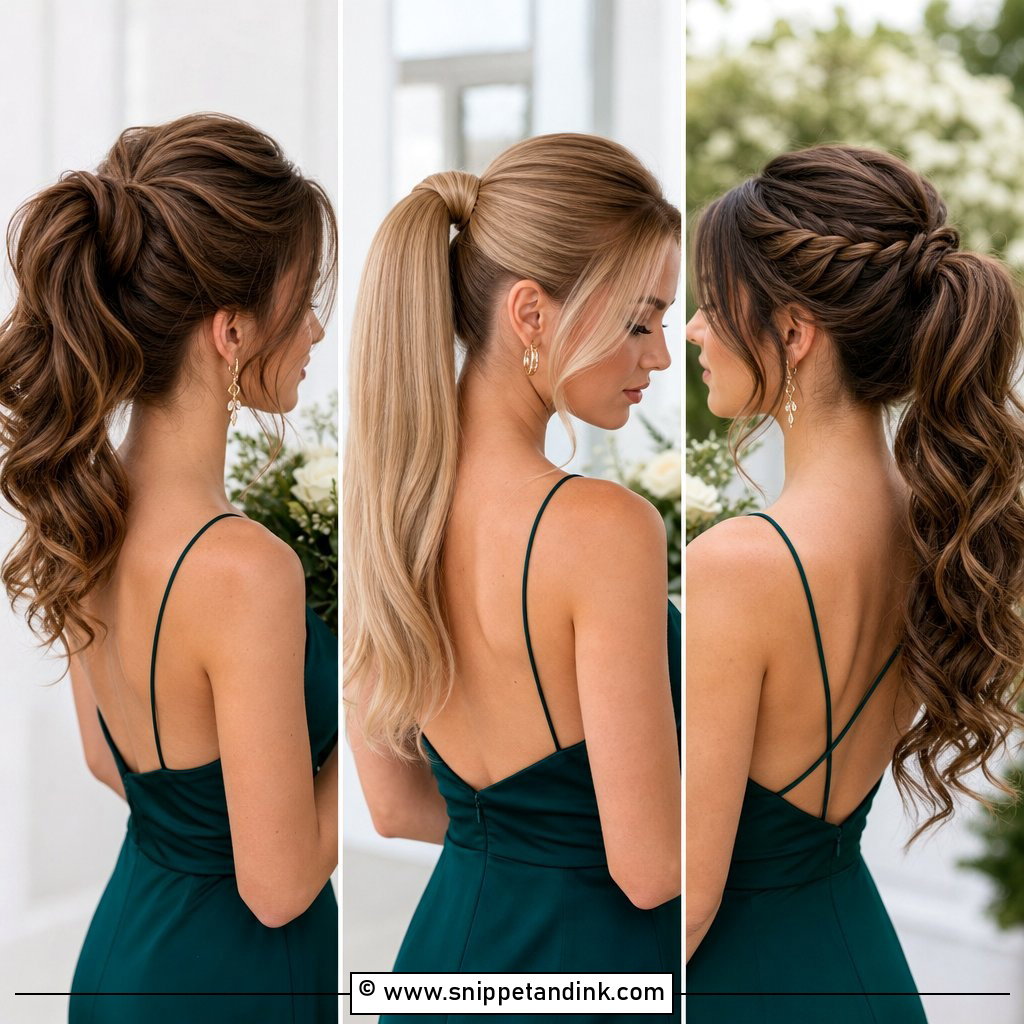
13. Bridesmaid Sleek Ponytail For Indian Wedding
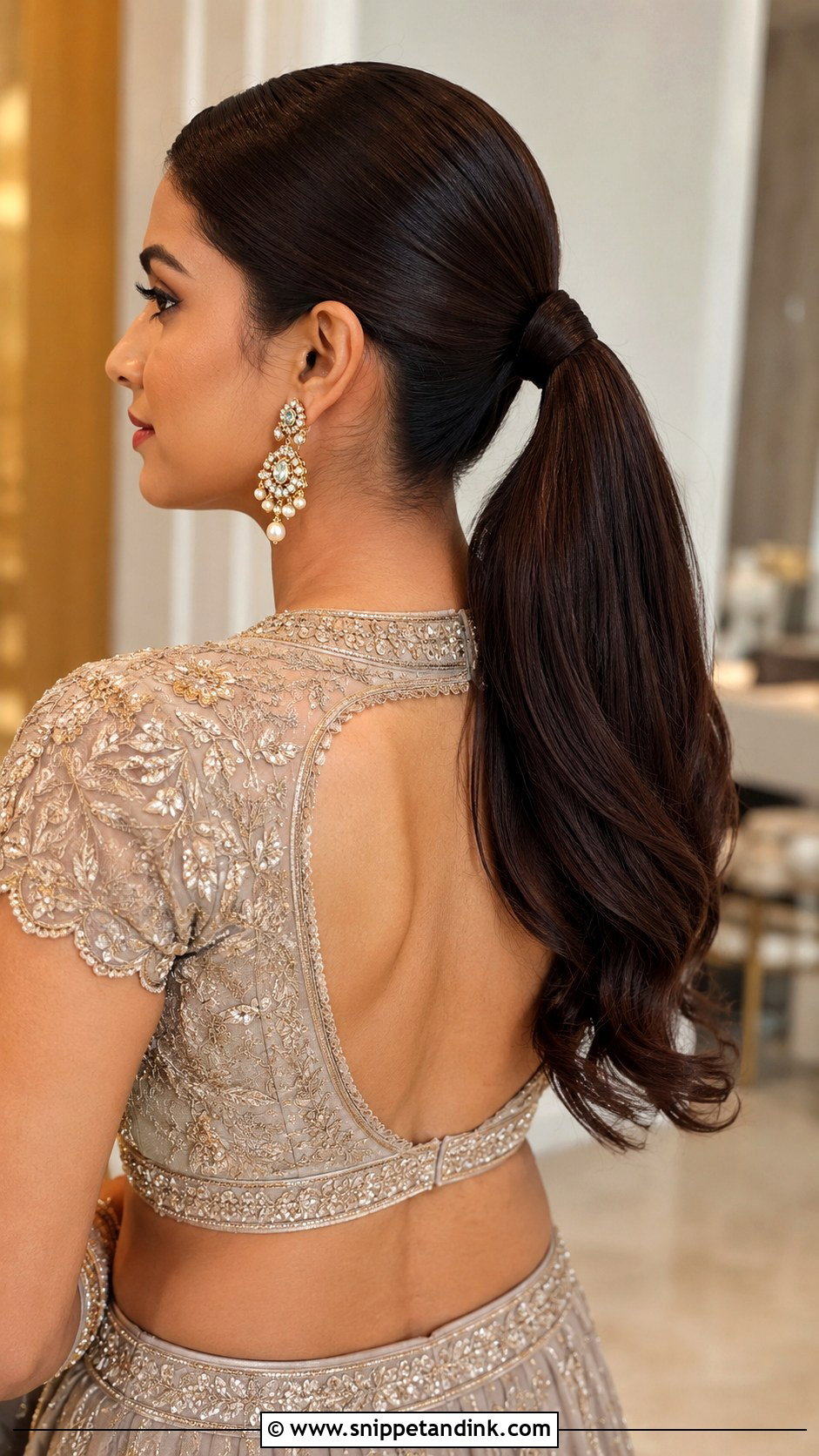
A sleek ponytail keeps up with a busy bridesmaid and shows off the earrings and neckline. I part it, smooth it back with a cream and a fine brush, secure it, then wrap a strand around the base. Straight, waved or curled ends all suit it. Shine spray finishes it. On heavily embellished outfits, its clean lines balance the busy fabric.
14. Bridesmaid High Ponytail For Indian Wedding
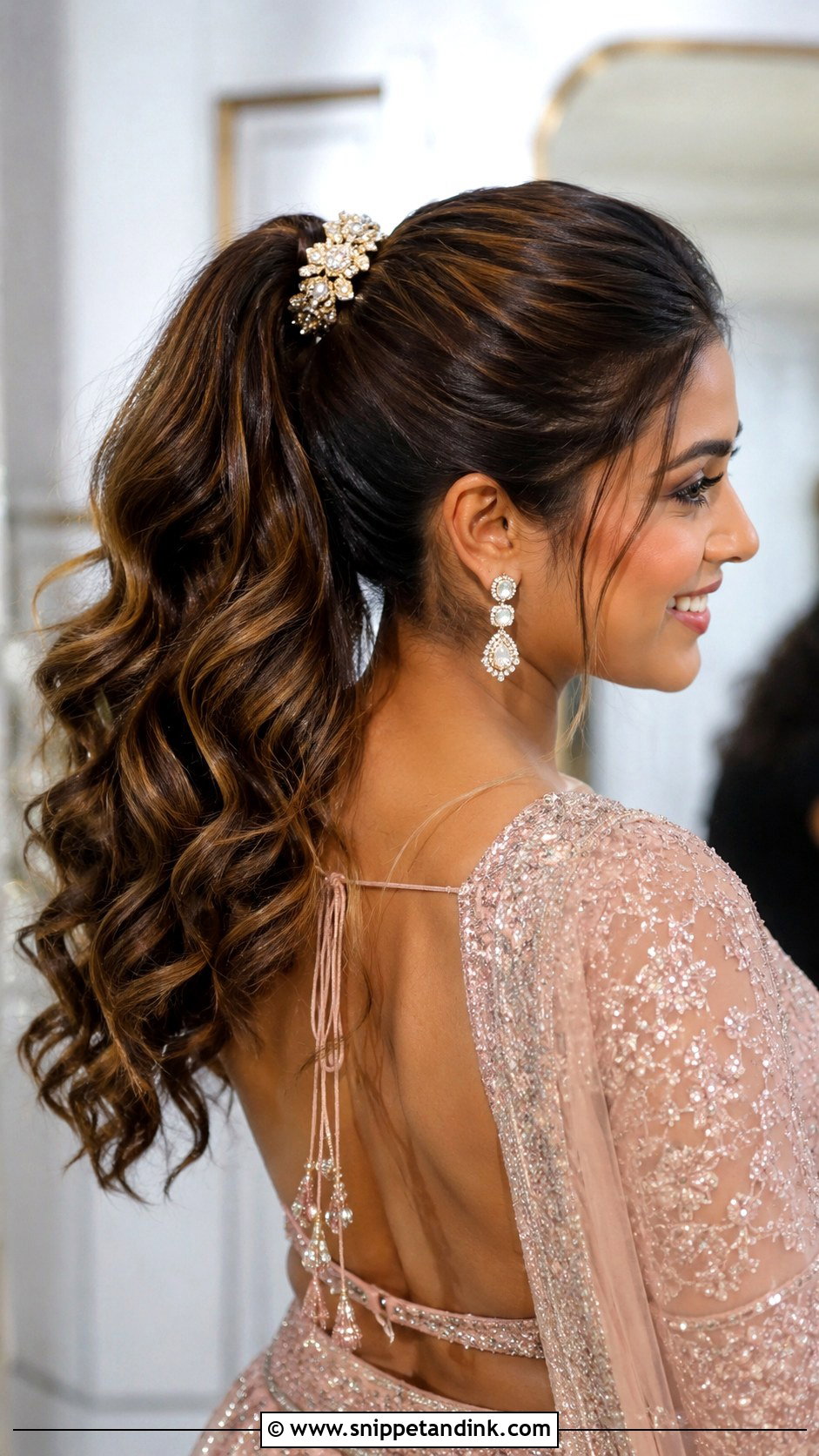
A high ponytail has the most movement on a dance floor, which makes it the obvious choice for sangeet nights. The crown needs to be smooth and lifted, and the elastic needs to be tight, because a high ponytail swinging for hours will slide if the base is soft. I often add two crossed pins under it as an anchor. Bold eye makeup and statement earrings pair with it. A jewelled clip or wrapped base dresses it up.
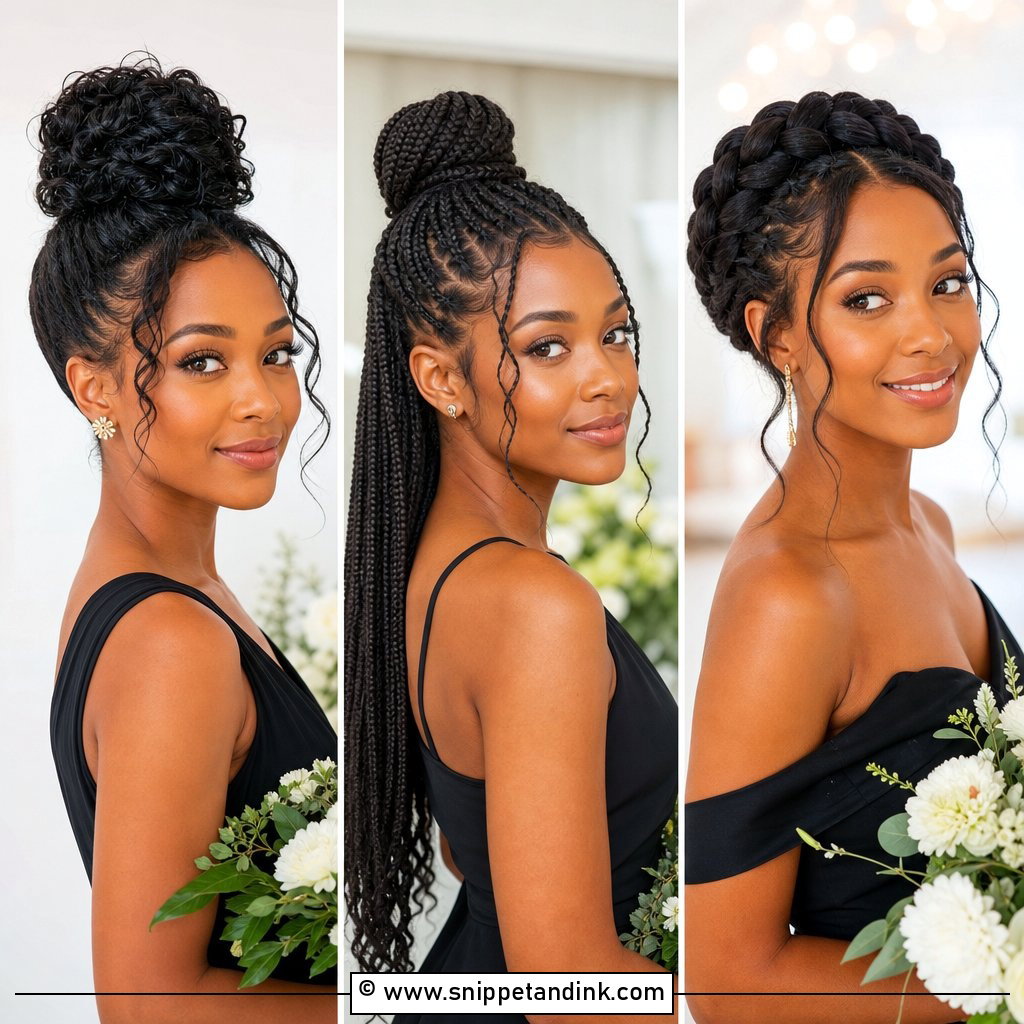
15. Bridesmaid Low Ponytail For Indian Wedding
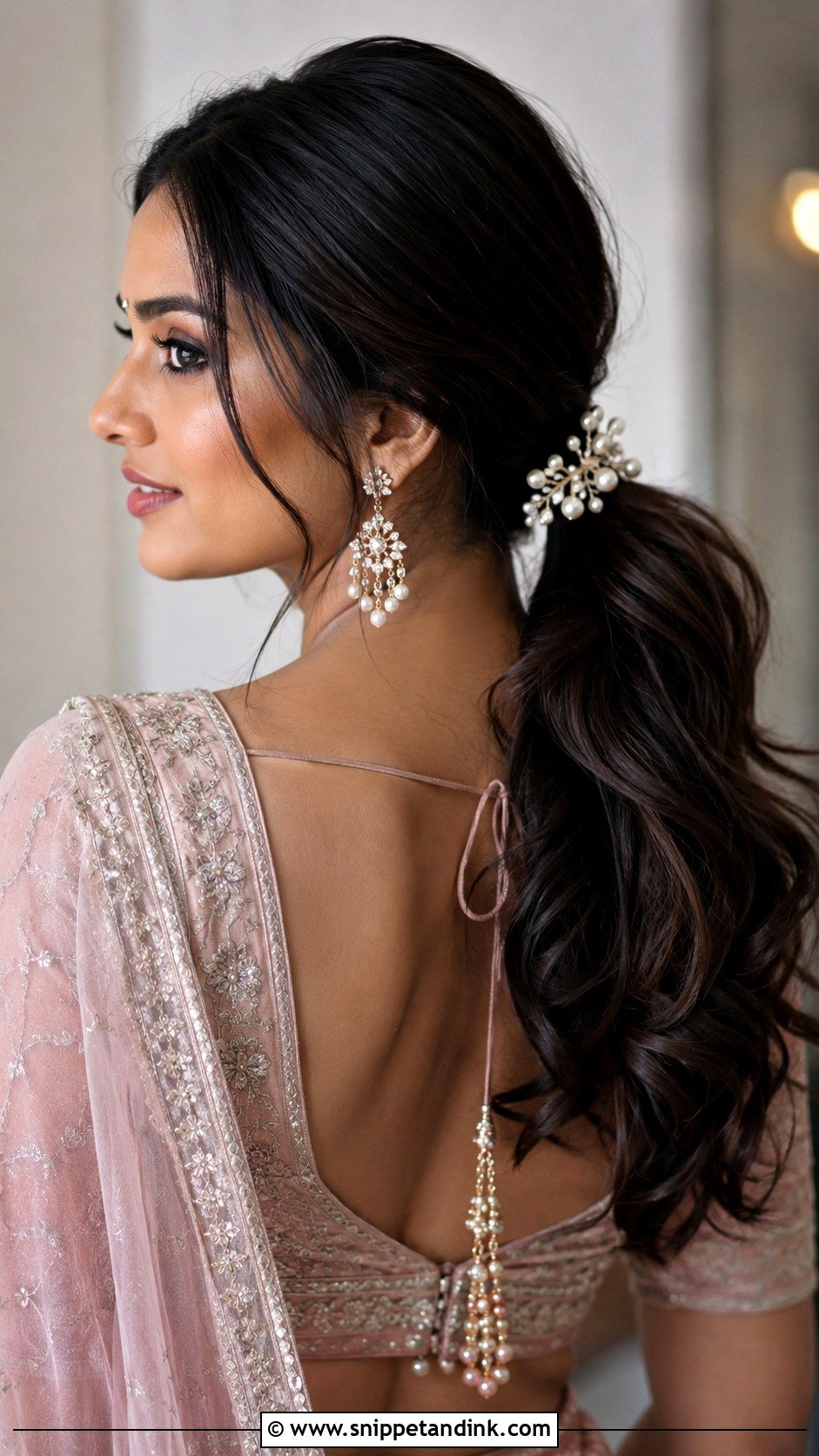
A low ponytail is the gentlest style on the scalp, so I suggest it for bridesmaids who’ve had their hair up for three days running. Sleek suits a reception; soft waves suit a ceremony. It sits quietly next to heavy embroidery or Indo-western outfits. Middle part for classic, side part for softness. A pearl clip, a hair brooch or velvet ribbon matched to the outfit covers the elastic.
16. Bridesmaid Braided Ponytail For Indian Wedding
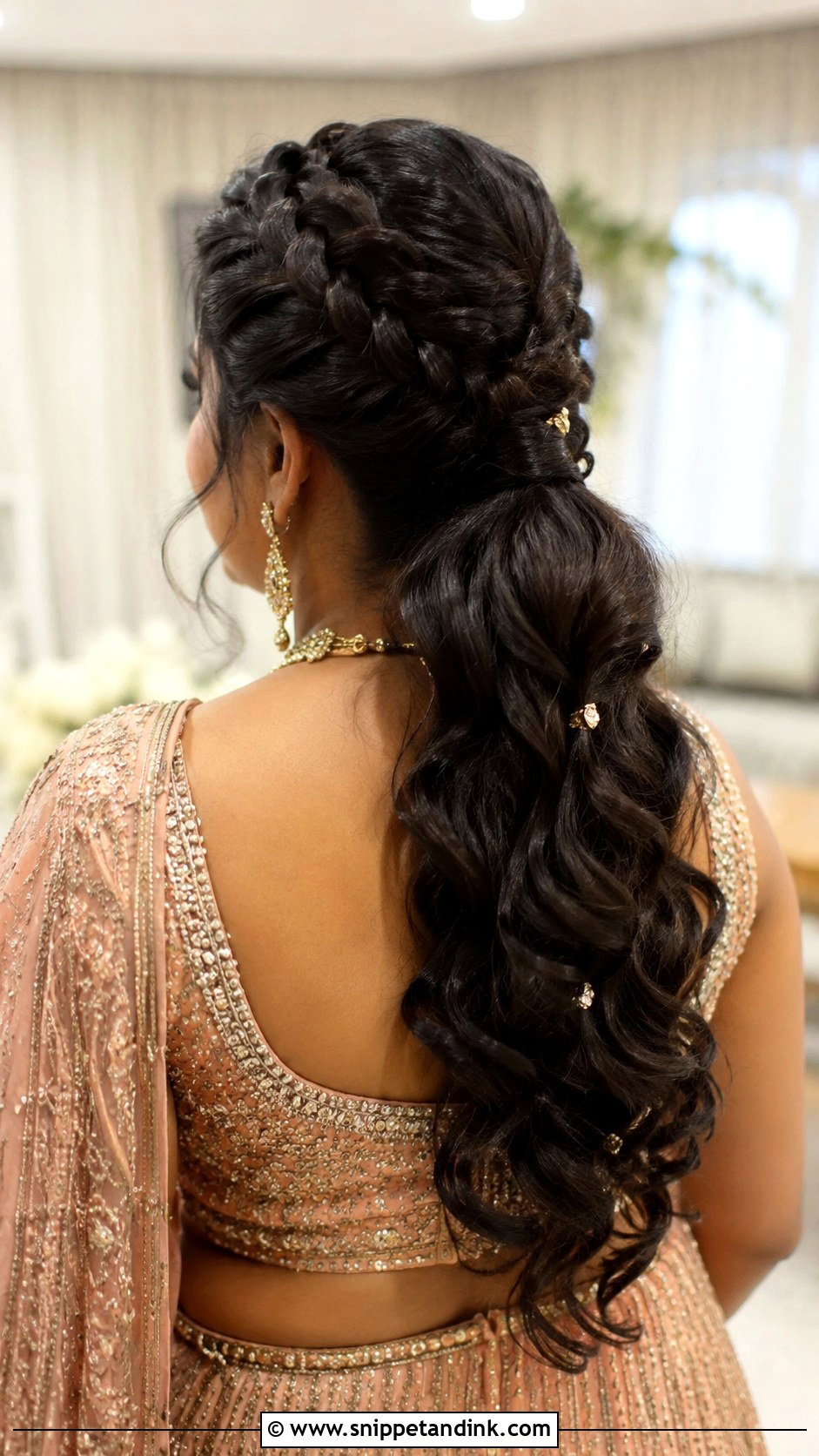
A braided ponytail is the most dance-proof option on this list. The braid can start at the crown, wrap the base, or run through the full length; each version locks the hair in place differently. Fully braided feels traditional, waved ends feel glamorous. Lehengas, shararas and saree gowns all suit it. Tiny flowers, pearls or metallic thread woven in add the festive detail.
17. Bridesmaid Crown Braid For Indian Wedding
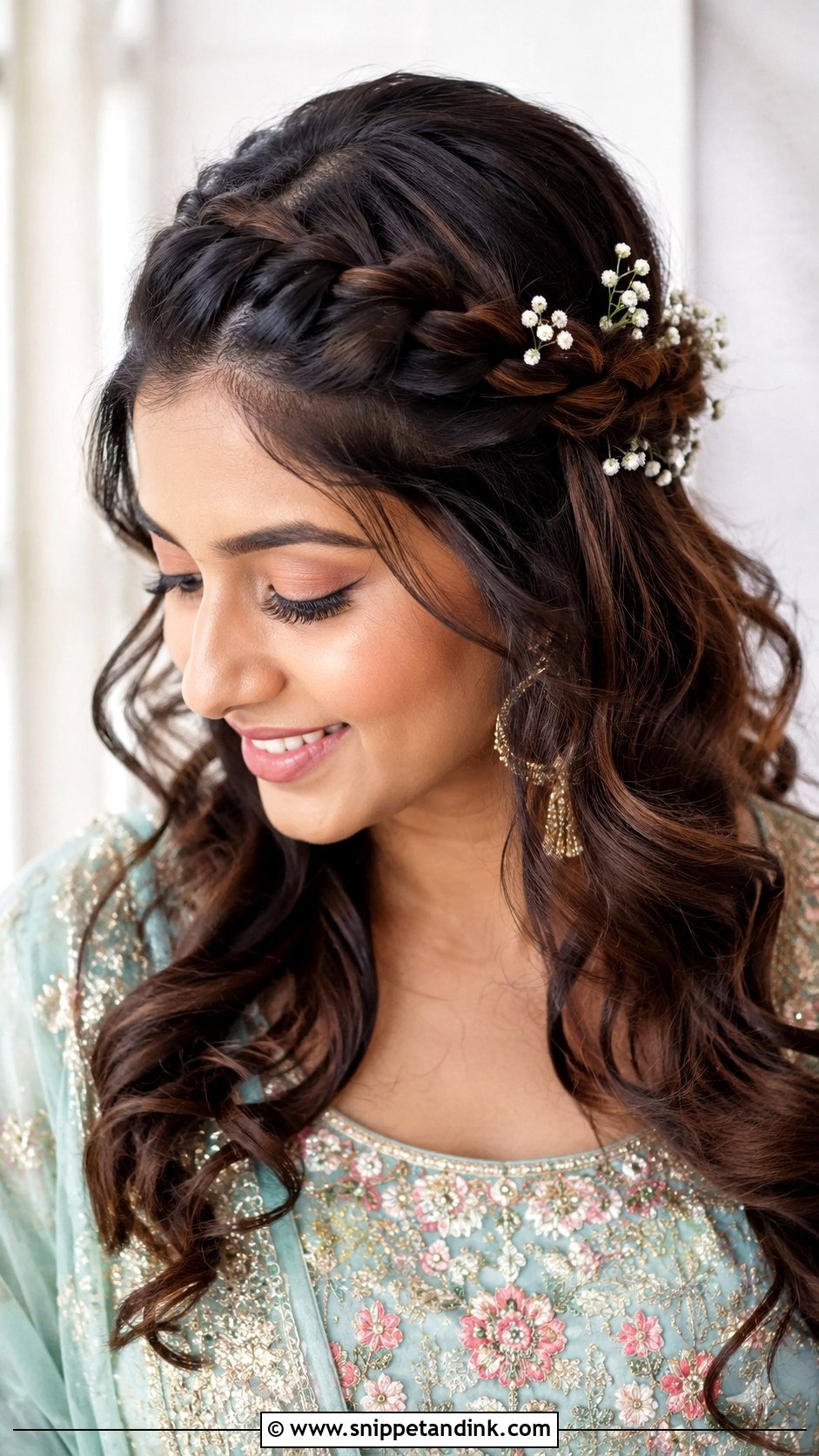
A crown braid works like a built-in headband, so it’s an easy way to look dressed up without a heavy accessory. I braid across the front or wrap it around the back with soft curls left loose. On a hot outdoor mehendi it keeps every strand off the face and neck. Pastel or floral outfits take small flowers or pearl pins along the braid well.
18. Bridesmaid Side Swept Curls For Indian Wedding
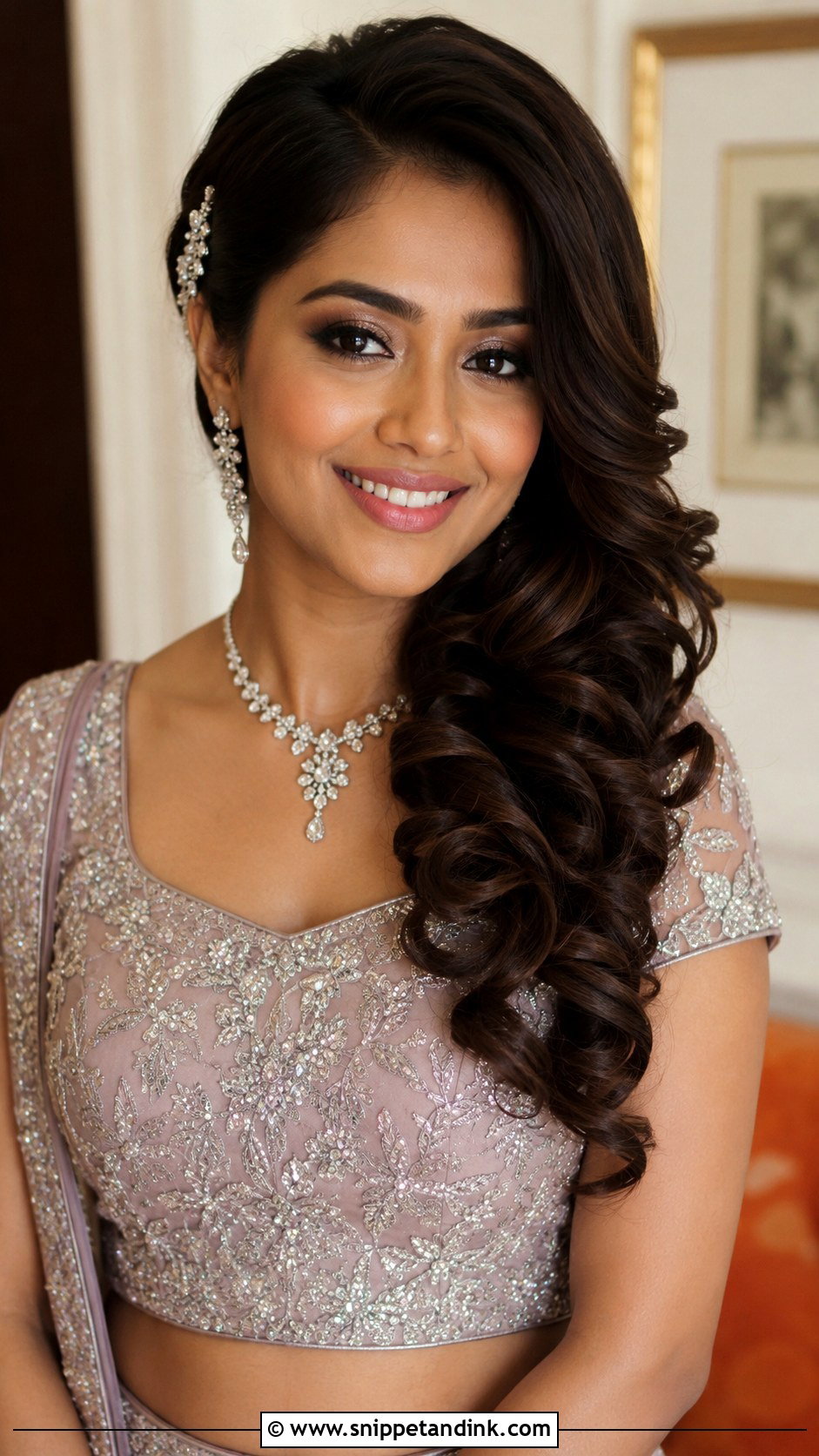
Side swept curls work for evening receptions, especially with a blouse that has a decorated back. I curl everything, brush it softly and pin it securely behind one ear so the length falls over the other shoulder. The exposed side shows off earrings and neckline. A jewelled pin or small floral cluster covers the pins on the tucked side. Curls need enough hold to last the event without looking stiff.
19. Bridesmaid Straight Hair For Indian Wedding
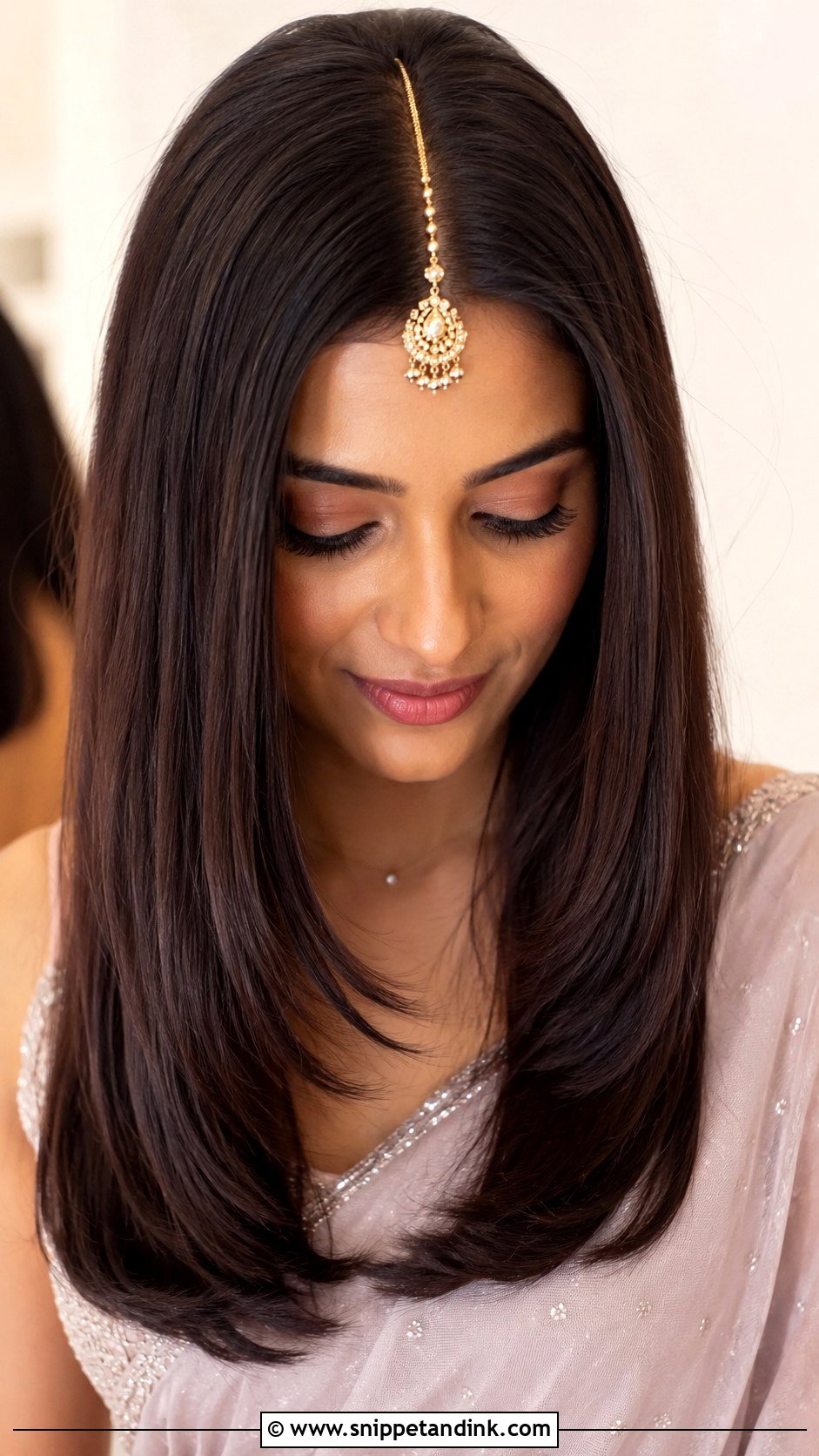
Straight hair only reads as styled at a wedding if it’s glossy. I use heat protectant, straighten in thin sections and finish with a serum on the lengths. Middle part for a fashion-forward feel, side part for softness; ends blunt, tucked or slightly curved. Modern lehengas, saree gowns and minimalist outfits suit it. Note that heat and humidity will bring frizz back, so this is a better reception look than an outdoor daytime one. A maang tikka or hair chain adds the festive touch.
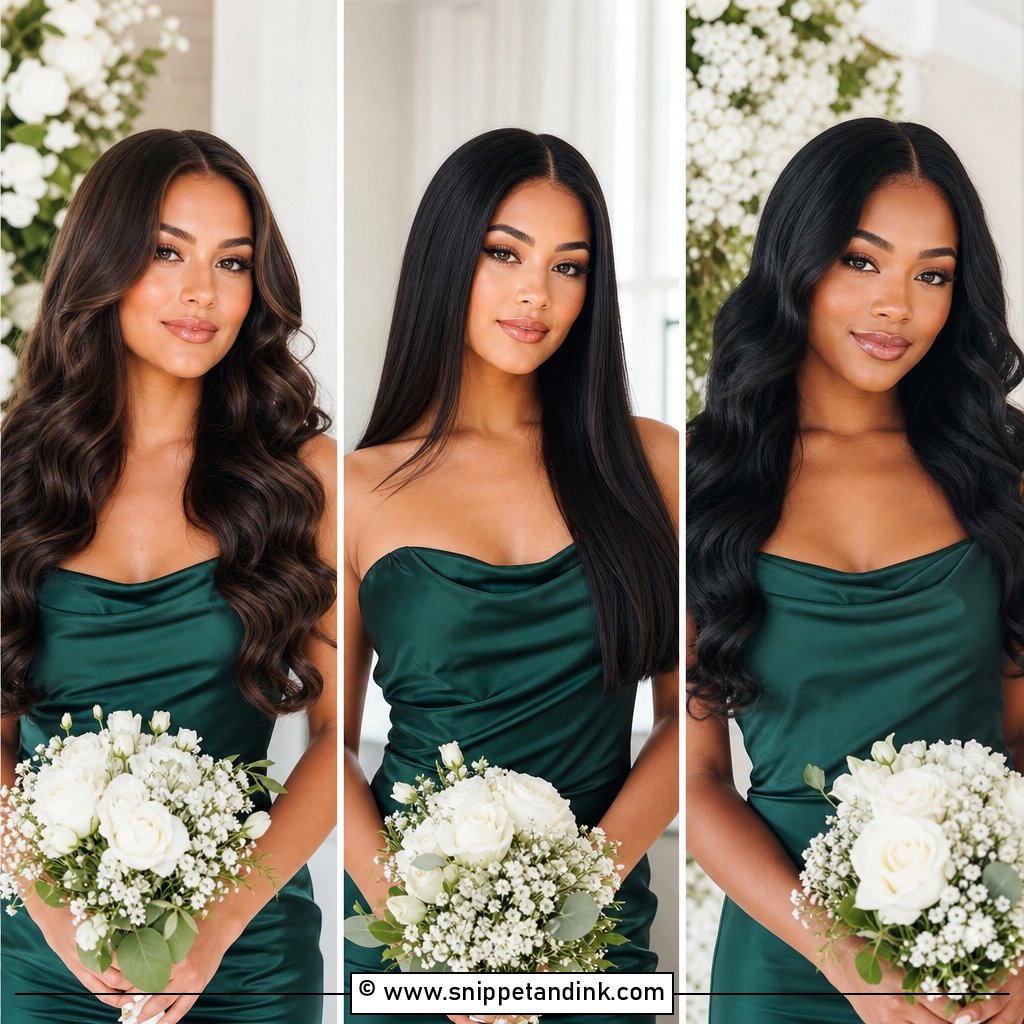
20. Bridesmaid Short Hair For Indian Wedding
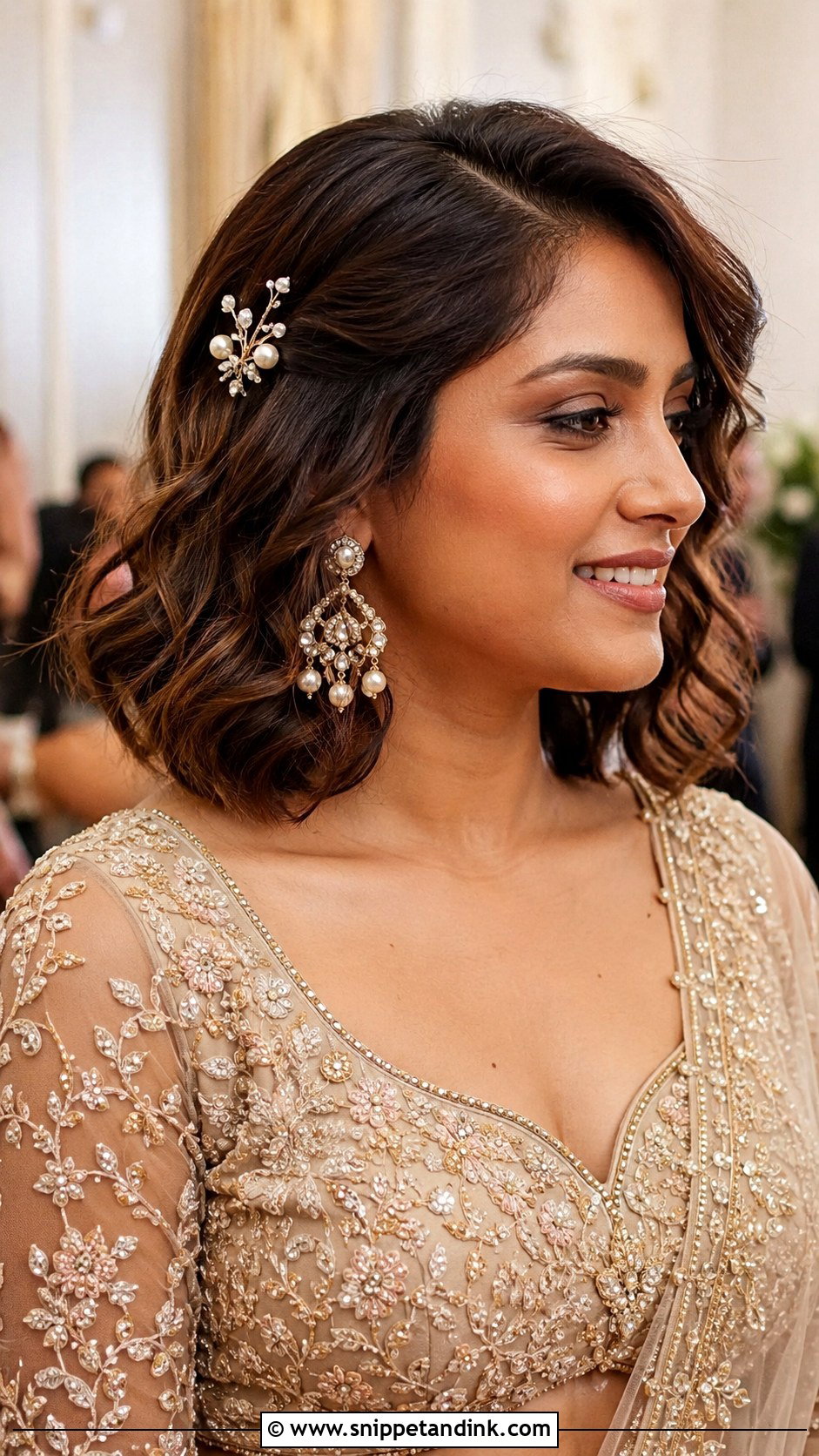
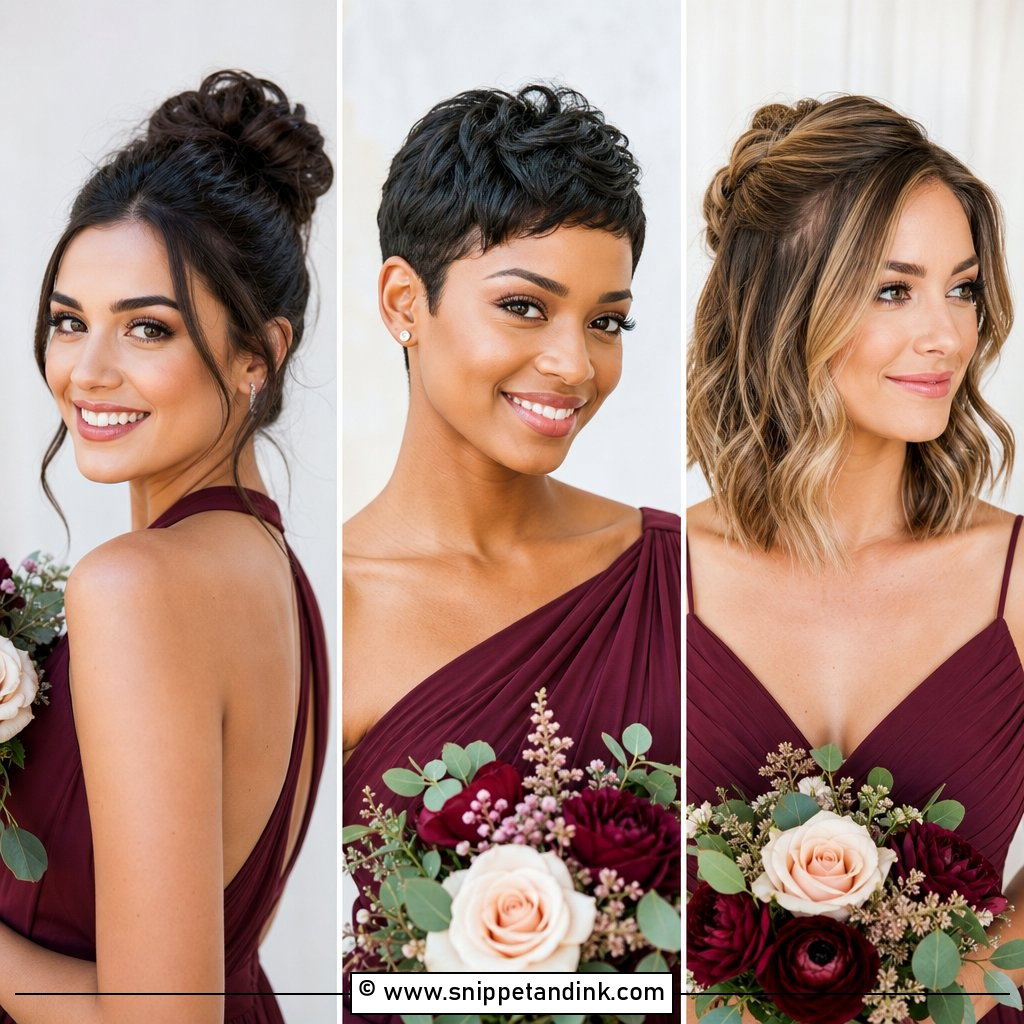
Short hair can hold its own at an Indian wedding with a bit of planning. Bobs, lobs and shoulder-length cuts take soft curls, sleek waves or a pinned half-up section. Side part with waves is romantic; a tucked, sleek bob feels modern. Decorative clips, small flowers, pearl pins or a small maang tikka finish it. It’s light and easy to maintain over several days, and short hair can be restyled between functions much faster than long.
Pinning a Dupatta or Pallu Without Pulling the Hair Down
A heavy, embroidered dupatta can weigh as much as the whole hairstyle. Pinned carelessly, it drags a bun backward and loosens everything by the second hour. I attach it to the structure of the hair, never to loose strands.
- Wear the dupatta at the trial or a fitting, so the stylist knows where it falls and how heavy it is.
- Pin it into the bun or a hidden braid, with U-pins or bobby pins crossed in an X, not into the hair at the crown.
- Place the maang tikka before the dupatta and secure its chain to the parting with a small pin, so the fabric doesn’t shift it.
- On a saree, pin the pallu at the shoulder first. That takes most of the weight off the hair.
- Keep two spare pins in your clutch. Dupattas get tugged in group dances.
If the dupatta goes over the head for the ceremony, keep the crown fairly flat and let any volume sit at the back or sides. A big bump at the top just lifts the fabric and makes it slide.
One Hairstyle per Function, Not One for the Whole Week
Matching the hair to the event is what makes the difference at an Indian wedding. A gajra bun belongs at the ceremony, open waves or side swept curls at the reception. Braids, bubble braids, and paranda looks belong to mehendi and sangeet. Sleek ponytails and high buns carry you through dancing and photos. Decide each one with the neckline, jewelry, dupatta, weather and length of the function in mind, and leave one easy, low-tension style for the day your scalp needs a rest.
You'll Like These Ideas:


Leave a Reply