
Haldi is the one function where I style hair knowing it will get smeared, splashed and hugged by everyone in the family before noon. That changes how I work. I want styles that hold without a full can of spray, flowers that can take some heat, and nothing so precious that a handful of turmeric paste ruins it. Below are the looks I reach for at Haldi mornings, for the bride and for the cousins who end up just as yellow as she does, with notes on what each one needs to last.
Turmeric, Water and Wilting Flowers: Prepping Hair for Haldi
The paste is a mix of turmeric, gram flour and oil or milk, and it stains. On dark hair it barely shows. On blonde, grey or highlighted hair, it can leave a yellow cast that takes a few washes to fade. When a bride has light or colour-treated hair, I comb a little coconut oil through the lengths before I style. The oil sits between hair and paste, so the colour rinses out instead of soaking in.
Flowers need their own plan. Marigold strings are tough and last the whole morning. Jasmine and mogra start browning within hours of picking, and roses drop petals once they warm up. I ask families to keep strings wrapped in a damp cotton cloth in the fridge and bring them out only when I’m ready to pin them in.
- Wash hair the night before, not the morning of. Second-day hair grips pins far better.
- Skip heavy shine serums at the roots; paste sticks to slippery hair and smears.
- Bring extra bobby pins and U-pins in your hair colour; fresh flowers eat pins.
- Plan heat styling for the bride before the paste ritual starts, never after it.
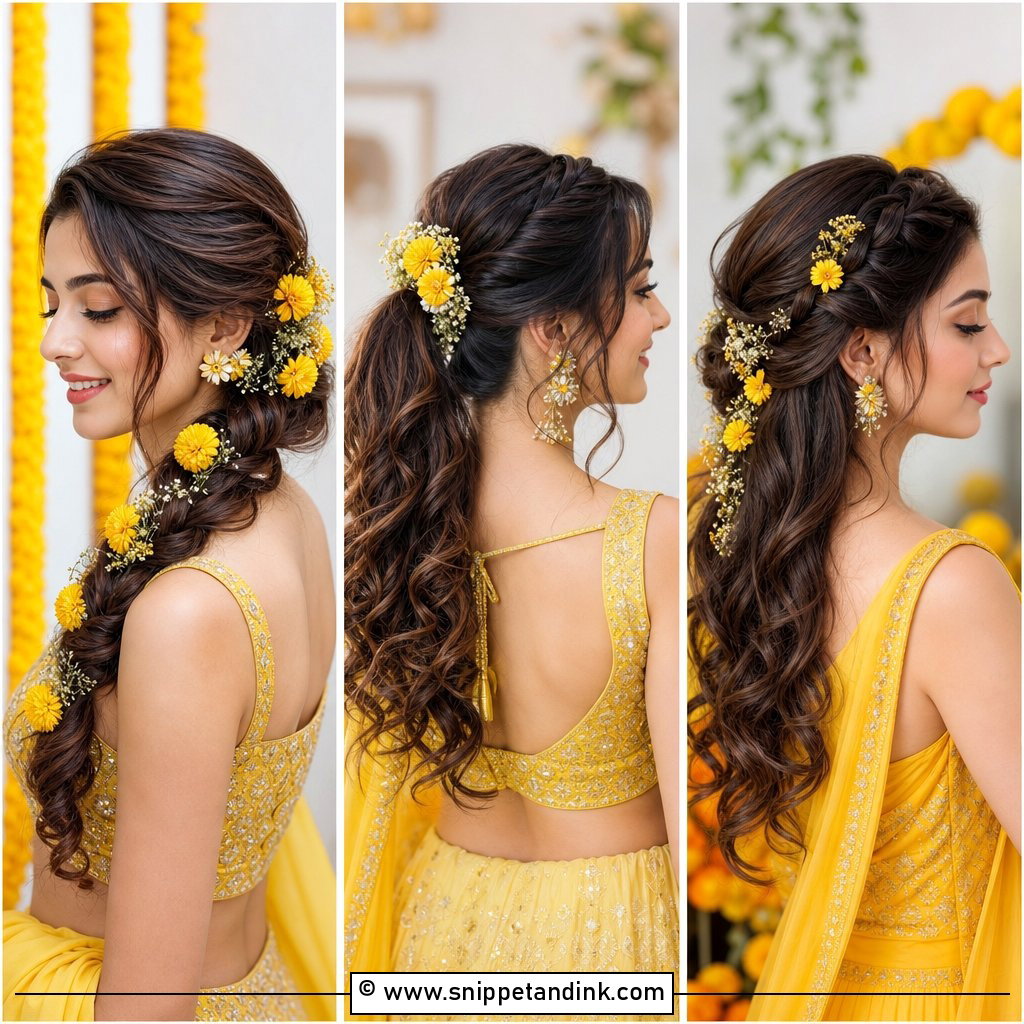
1. Marigold Braid for Haldi
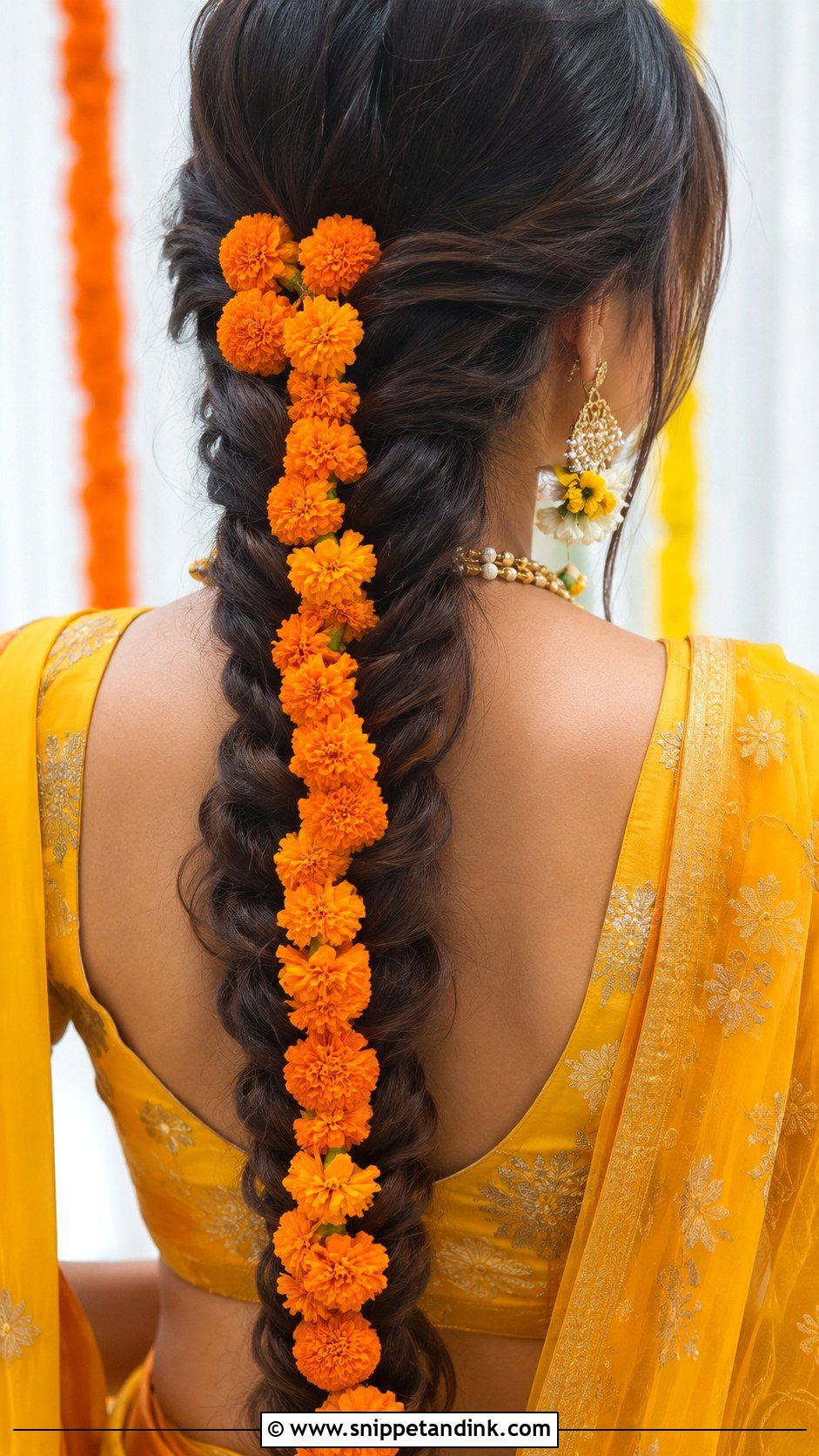
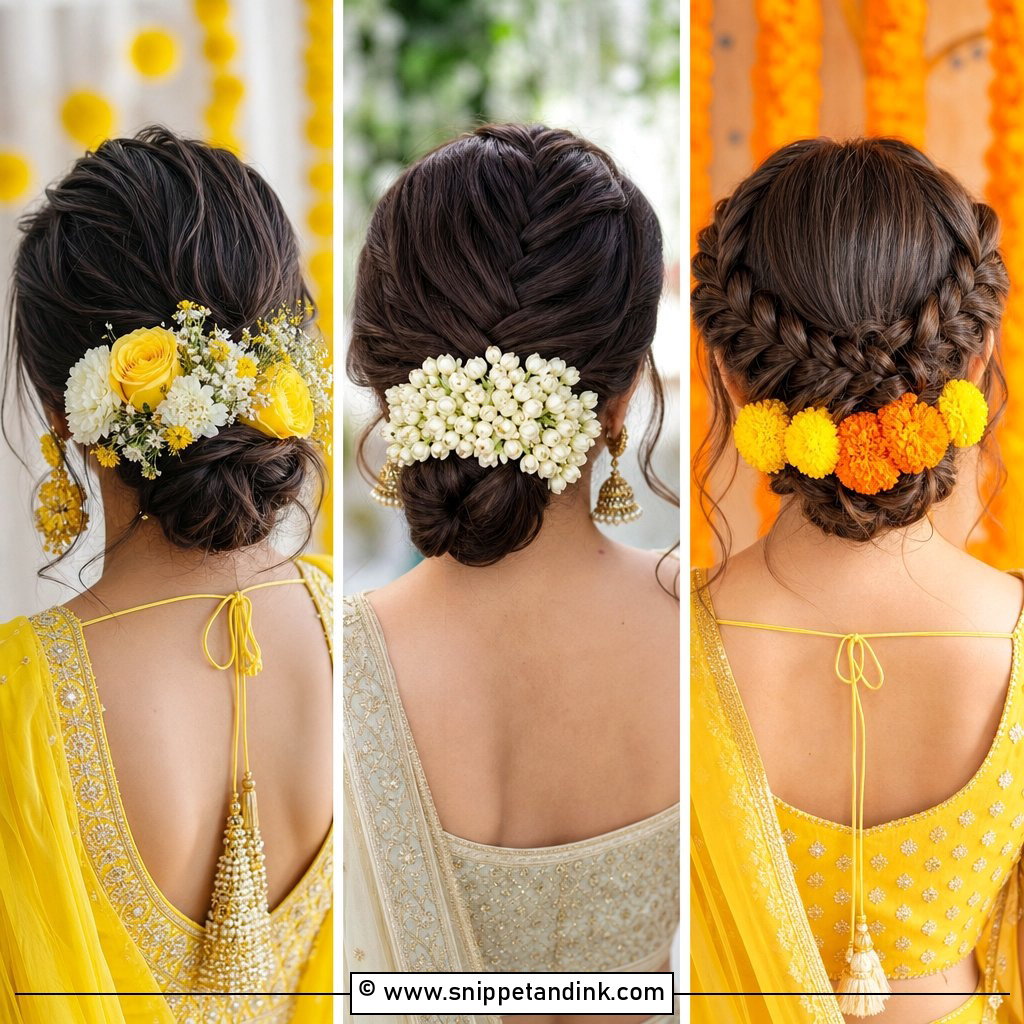
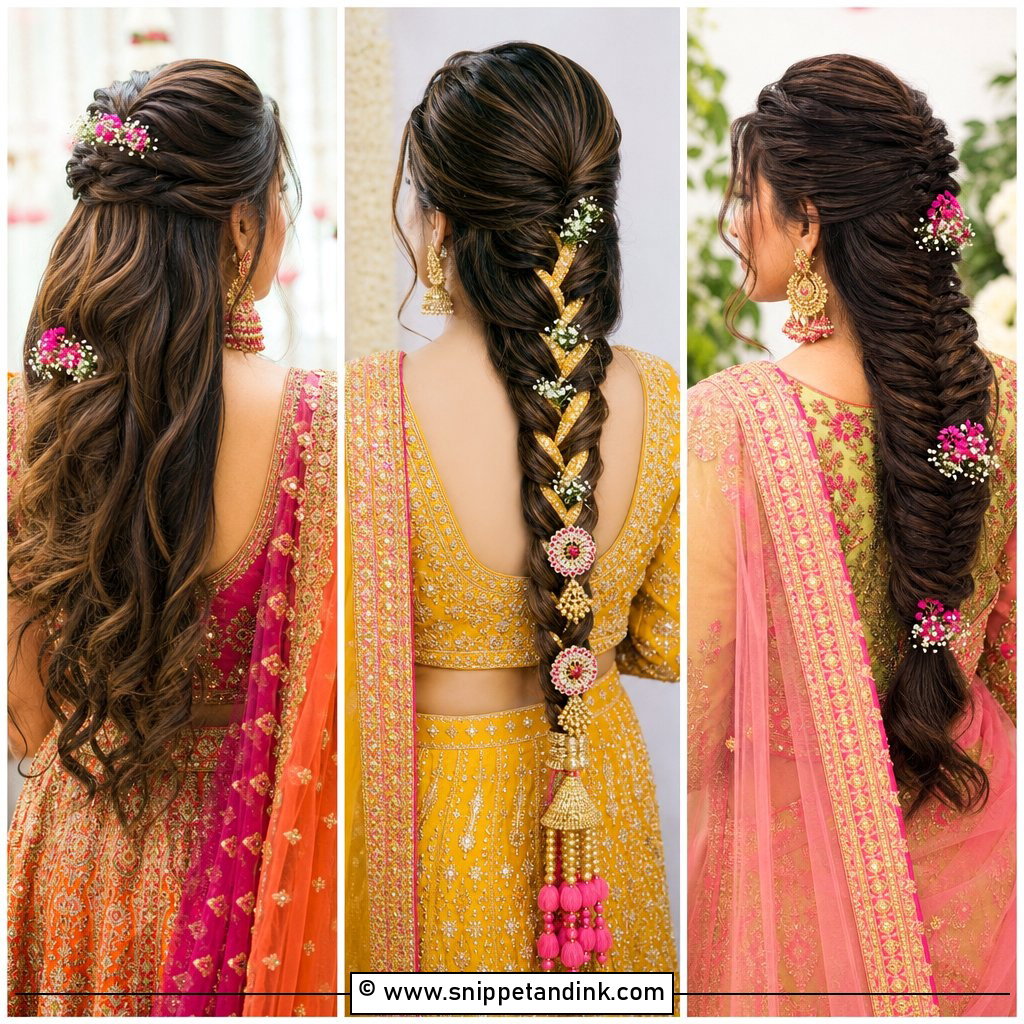
Marigold and Haldi go together for a reason: the orange reads well next to turmeric, and a marigold string is sturdy enough to survive being grabbed. It sits nicely against a yellow saree or lehenga. I braid first, tie off with a clear elastic, then lay the string along the braid and stitch it in with bobby pins every few inches, angled against the direction of the braid so they grip. Marigolds are heavier than they look, so on very fine hair I keep the string short and stop it halfway down.
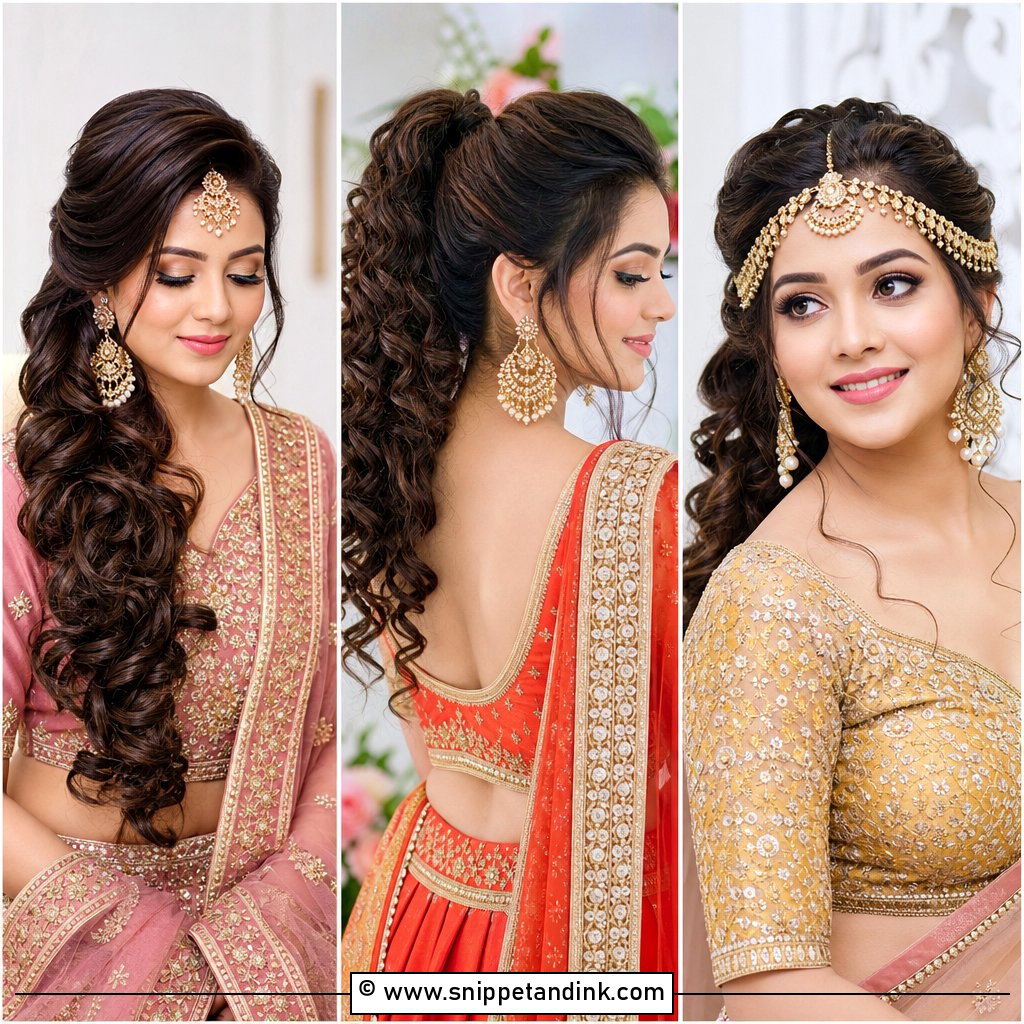
2. Open Curls With Flower Tiara
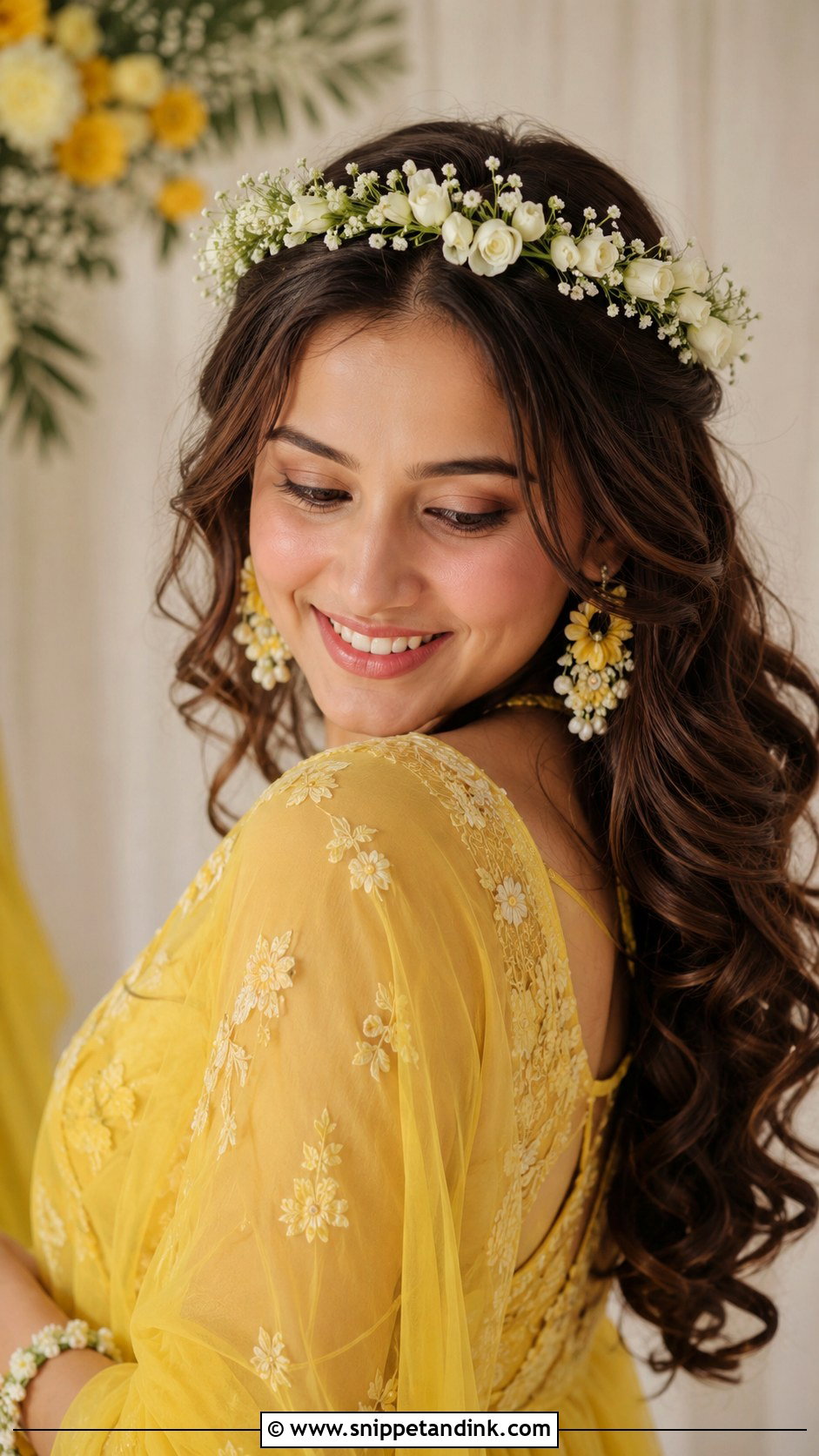
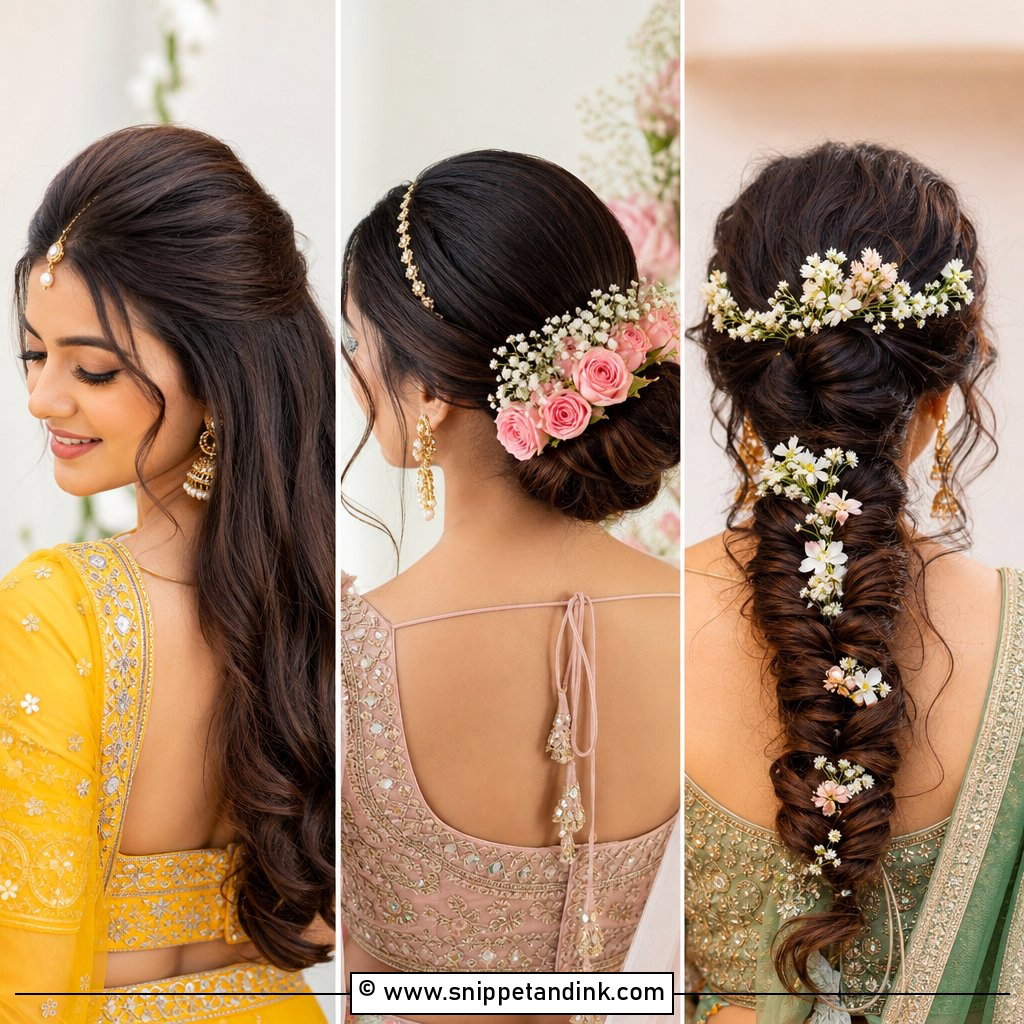
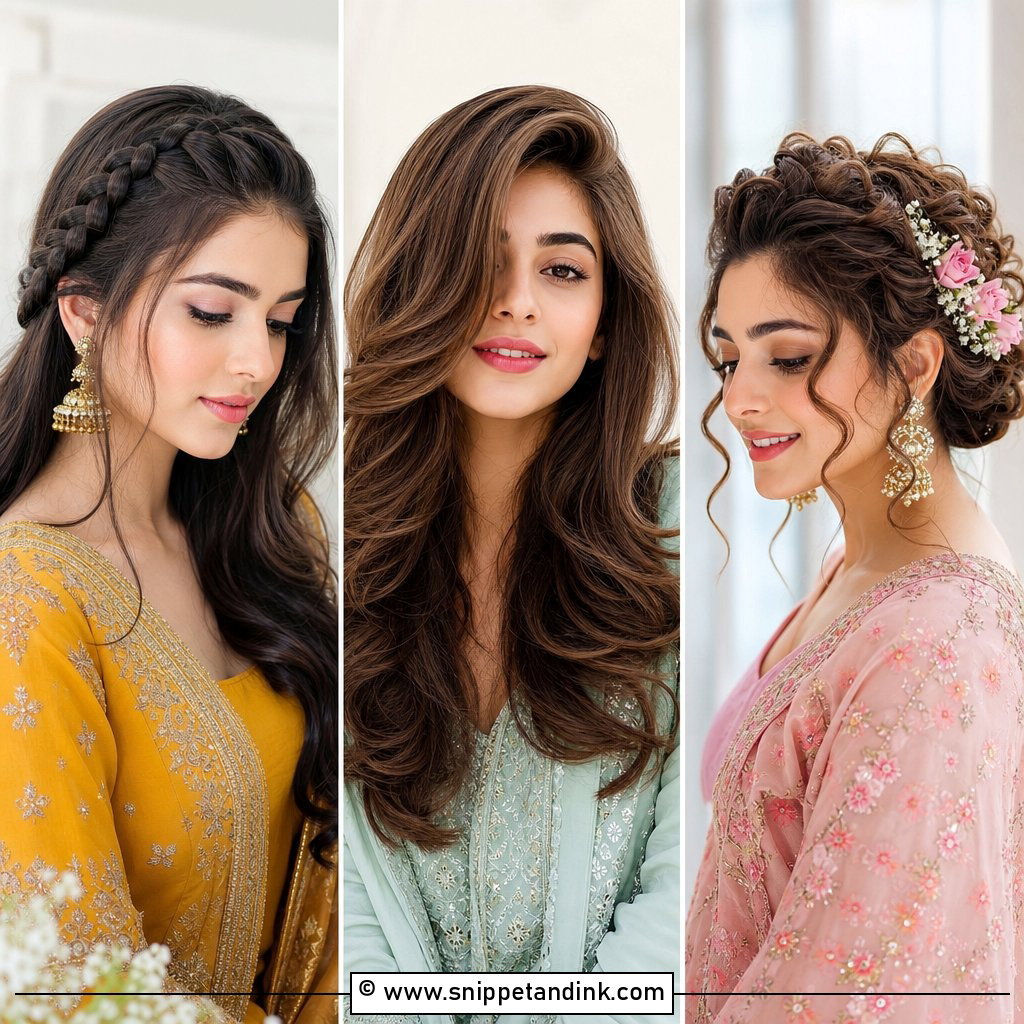
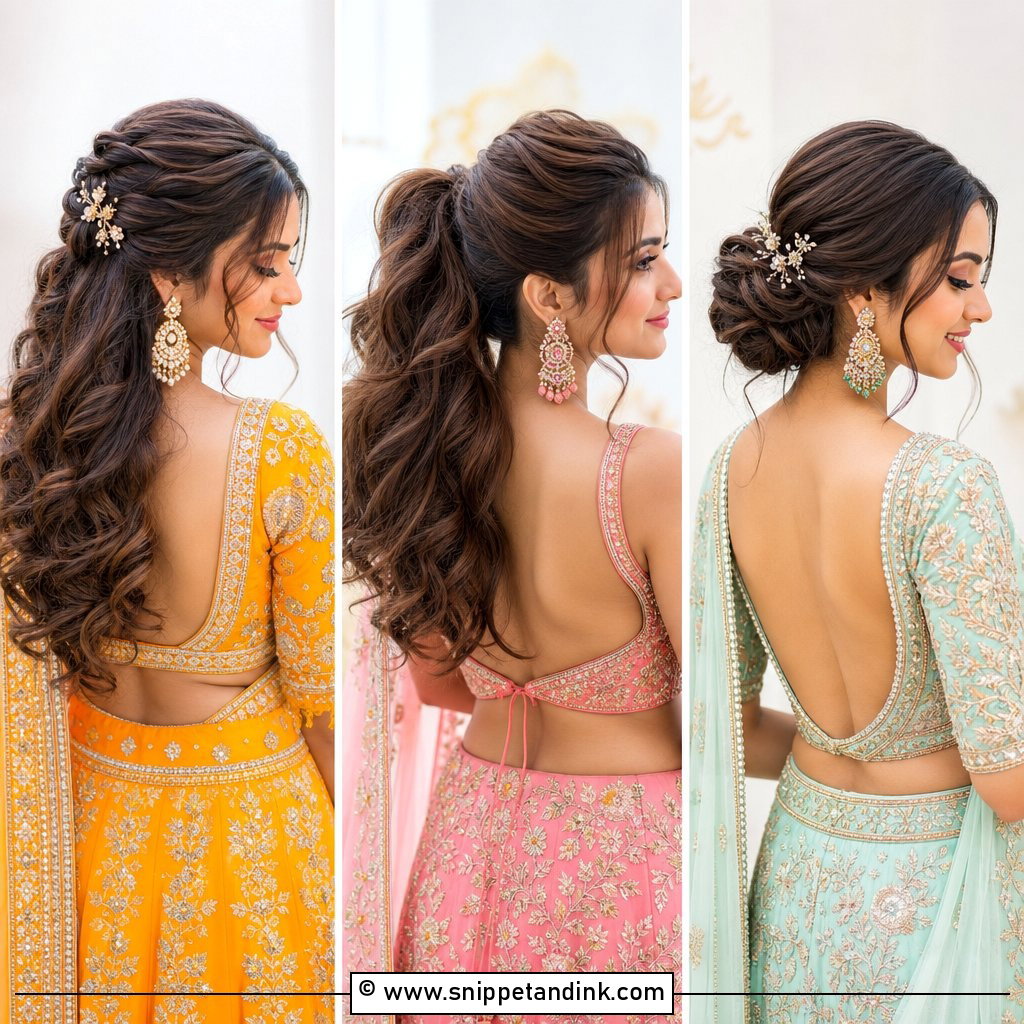
Open curls are the riskiest choice on this list, and I tell brides that honestly. Wet paste and humidity both pull curls out, so I set each curl with a light hold spray before it cools and pin it in a loop until the last minute. The jasmine or baby’s breath tiara goes on after the curls are released. If you want the softness of open hair with a flowy yellow outfit, accept that by the end the curls will be waves, and plan for that.
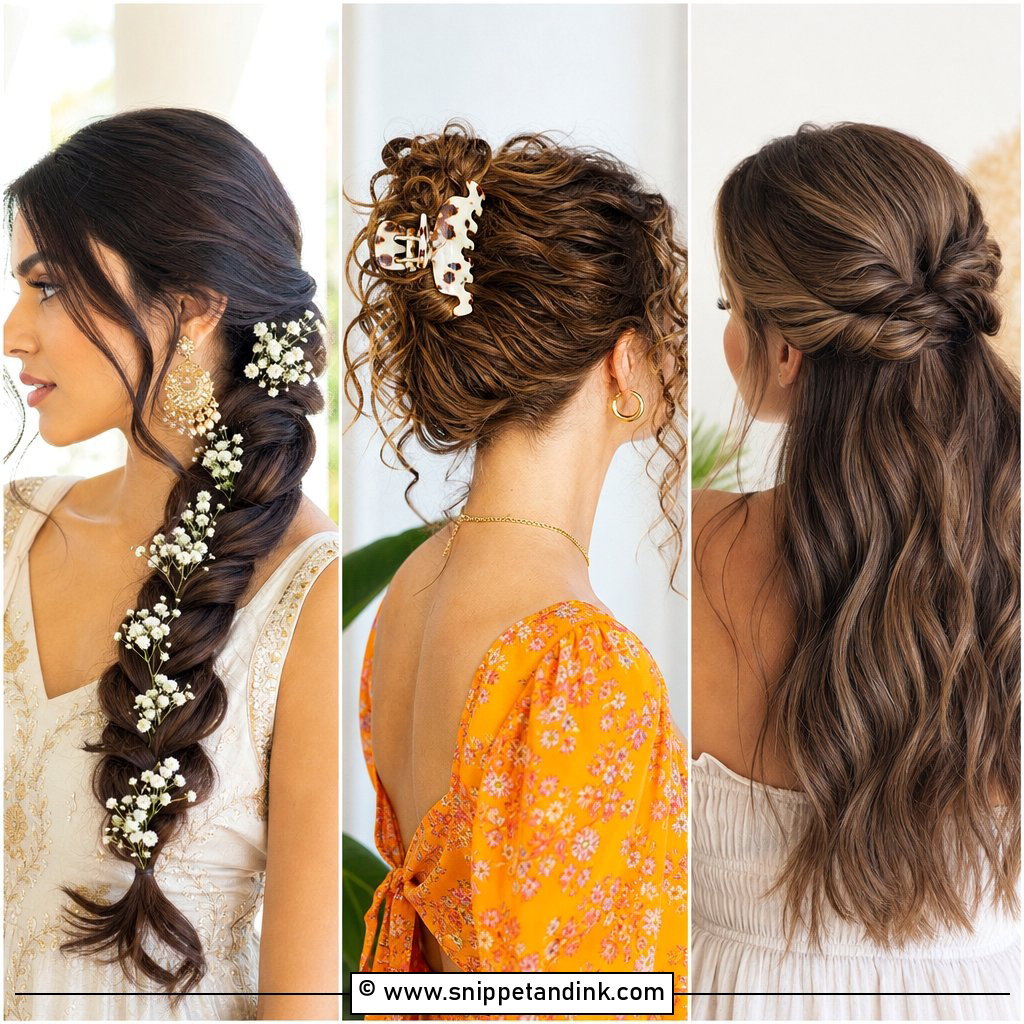
3. Side Swept Braid With Jasmine
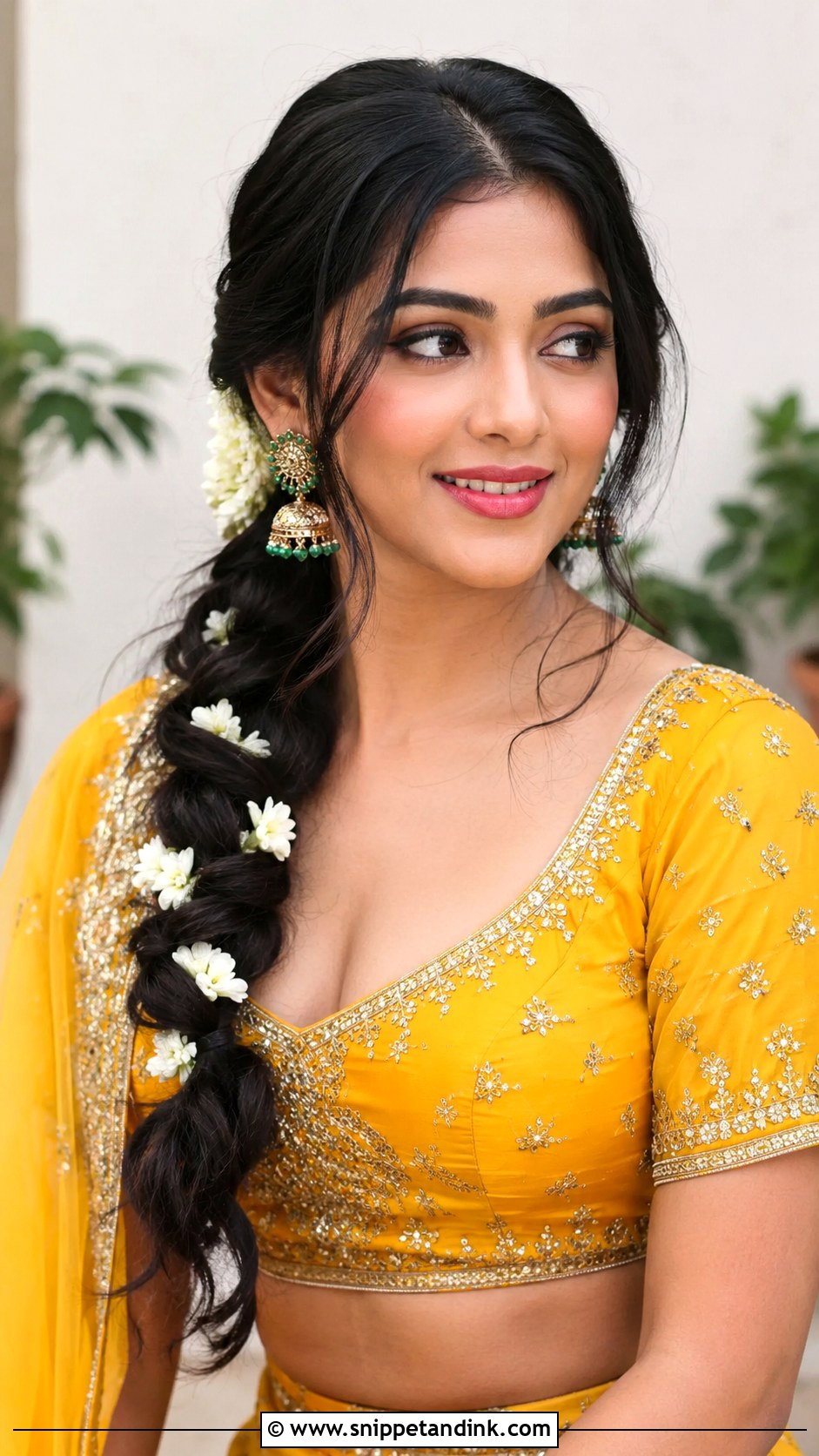
I like a side braid for Haldi because it moves the bulk of the hair off one shoulder, which leaves that side of the neck and arm free for the paste. Braid loosely, then pancake the edges by pulling small pieces outward. Jasmine buds tucked in pairs hold better than single buds, which tend to slide out. Side braids do show off earrings, but if the earrings are heavy jhumkas, they will catch in the braid all morning, so keep the braid on the opposite side.
4. Messy Bun With Marigold Garland
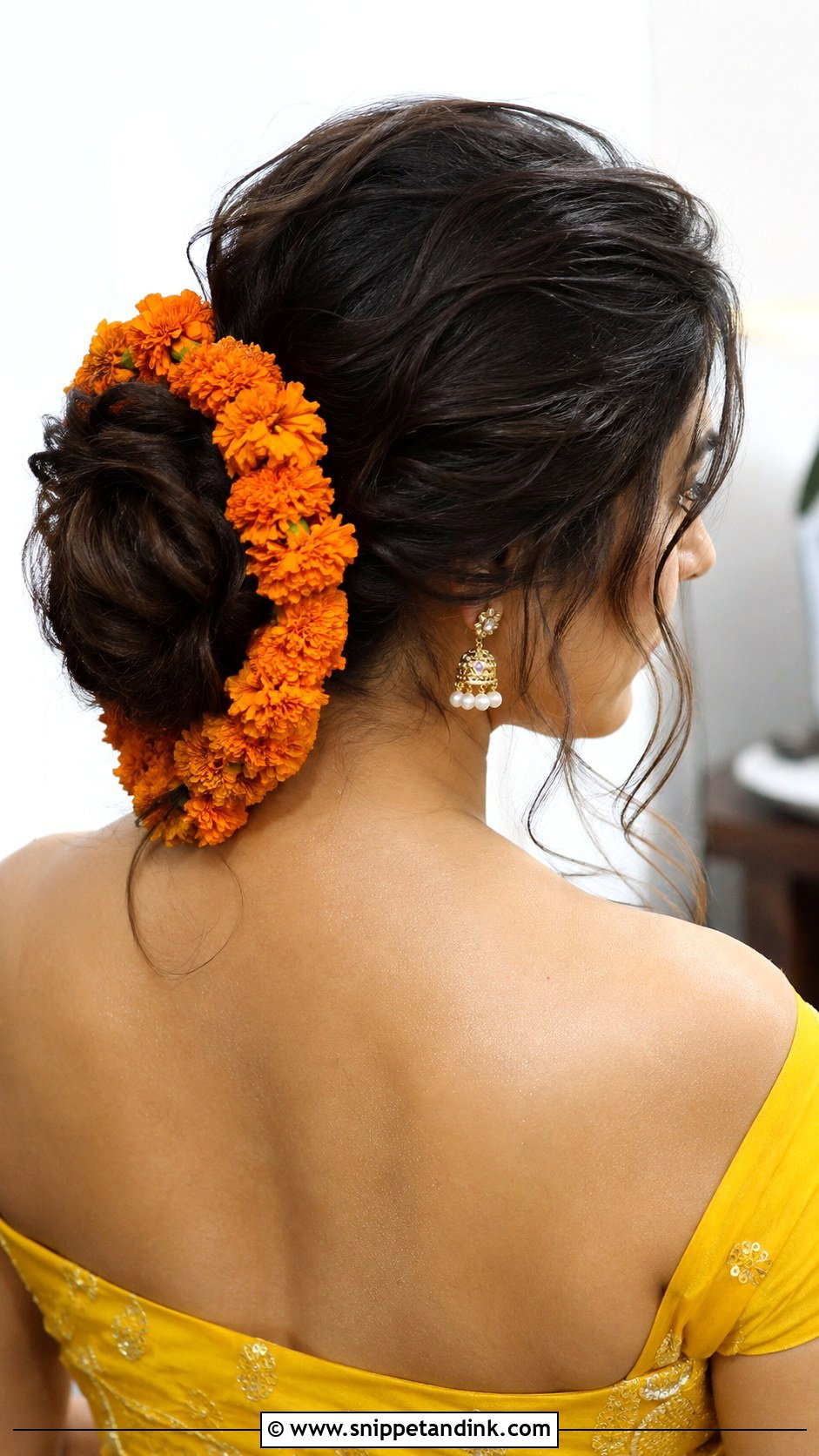
A messy bun is the quickest look here and the one I’d suggest for anyone who has to get ready in fifteen minutes. The trick is to build the texture first with a dry texturising spray, so the bun looks undone on purpose rather than slept in. Wrap the marigold garland around the base and pin it through the bun itself, not just the outer hair. With an off-shoulder or halter neckline, it keeps the whole neck and back clear.
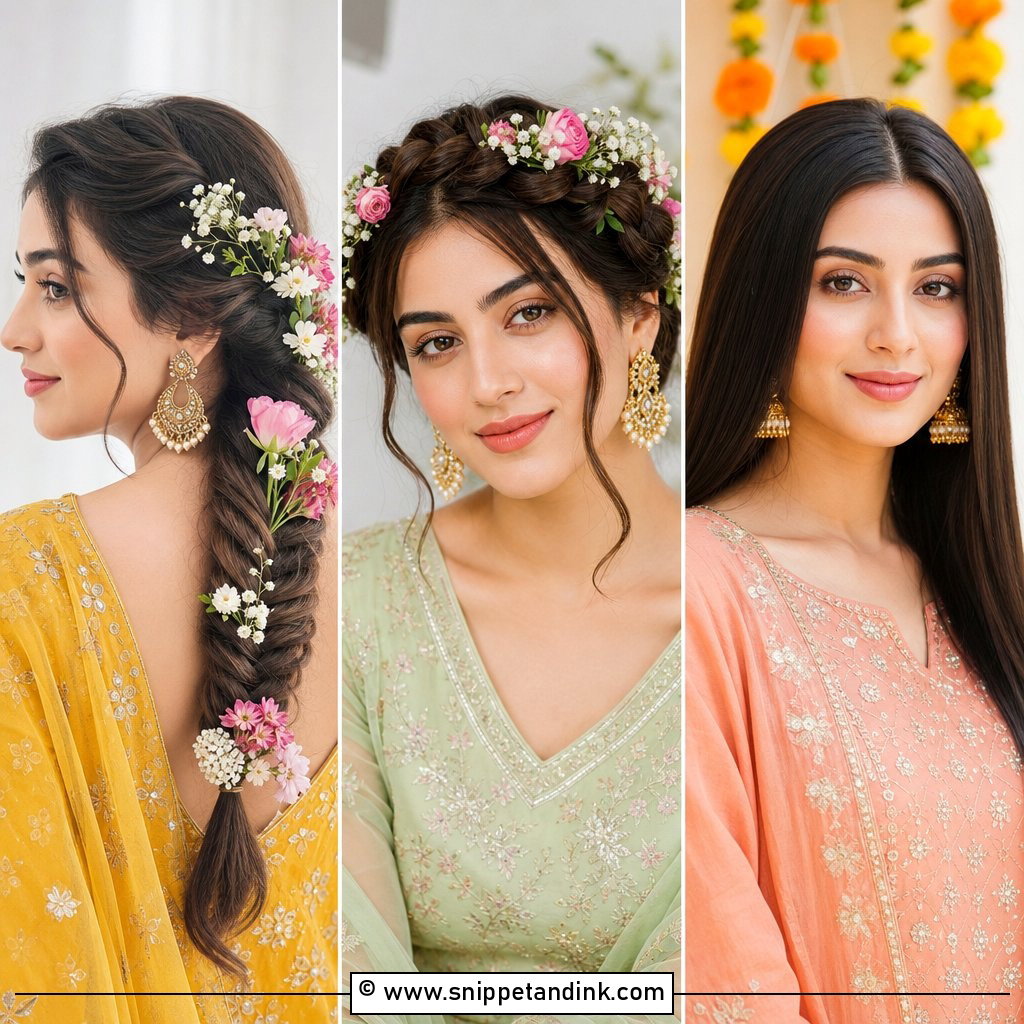
5. Fishtail Braid With Fresh Flowers
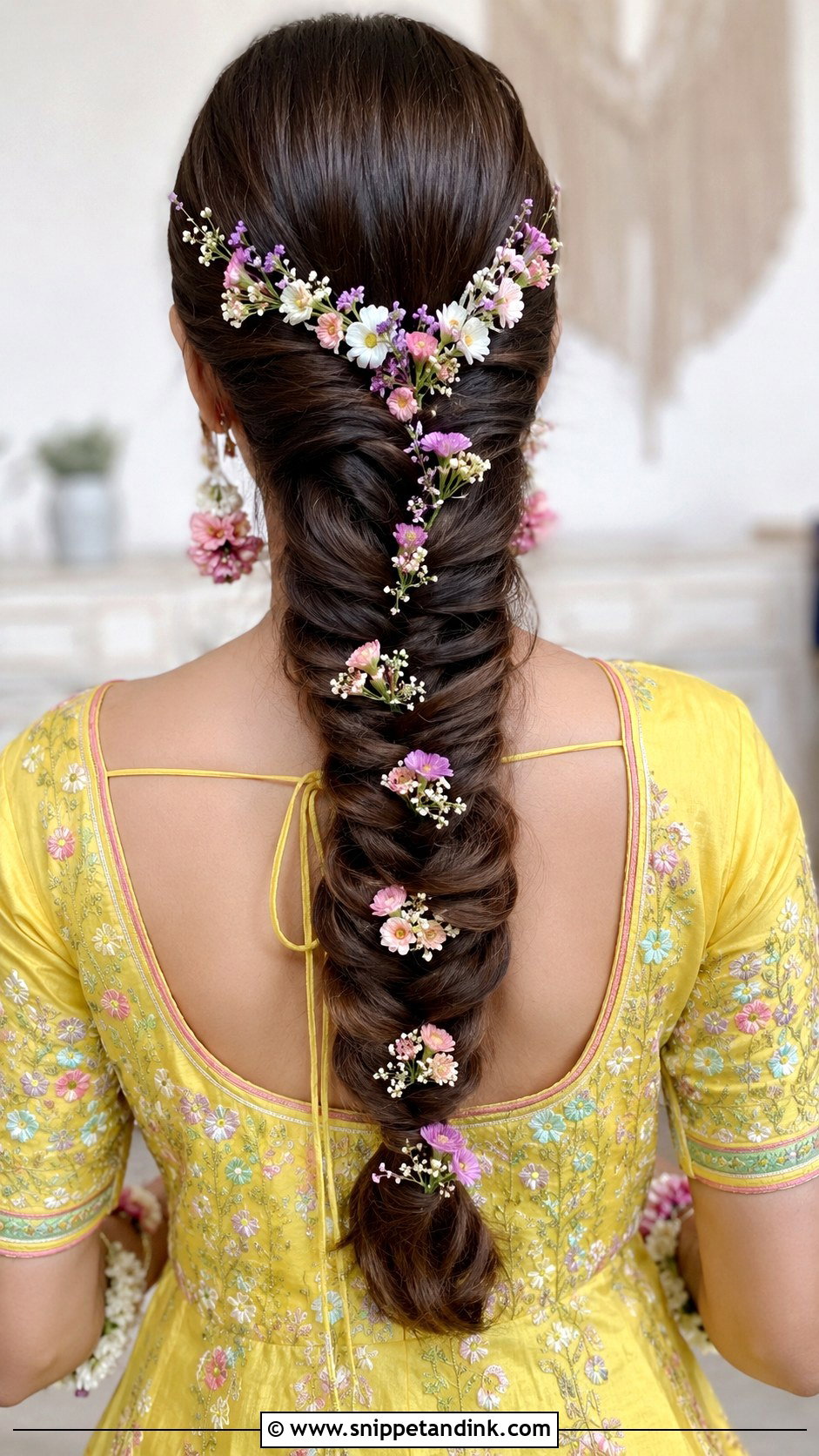
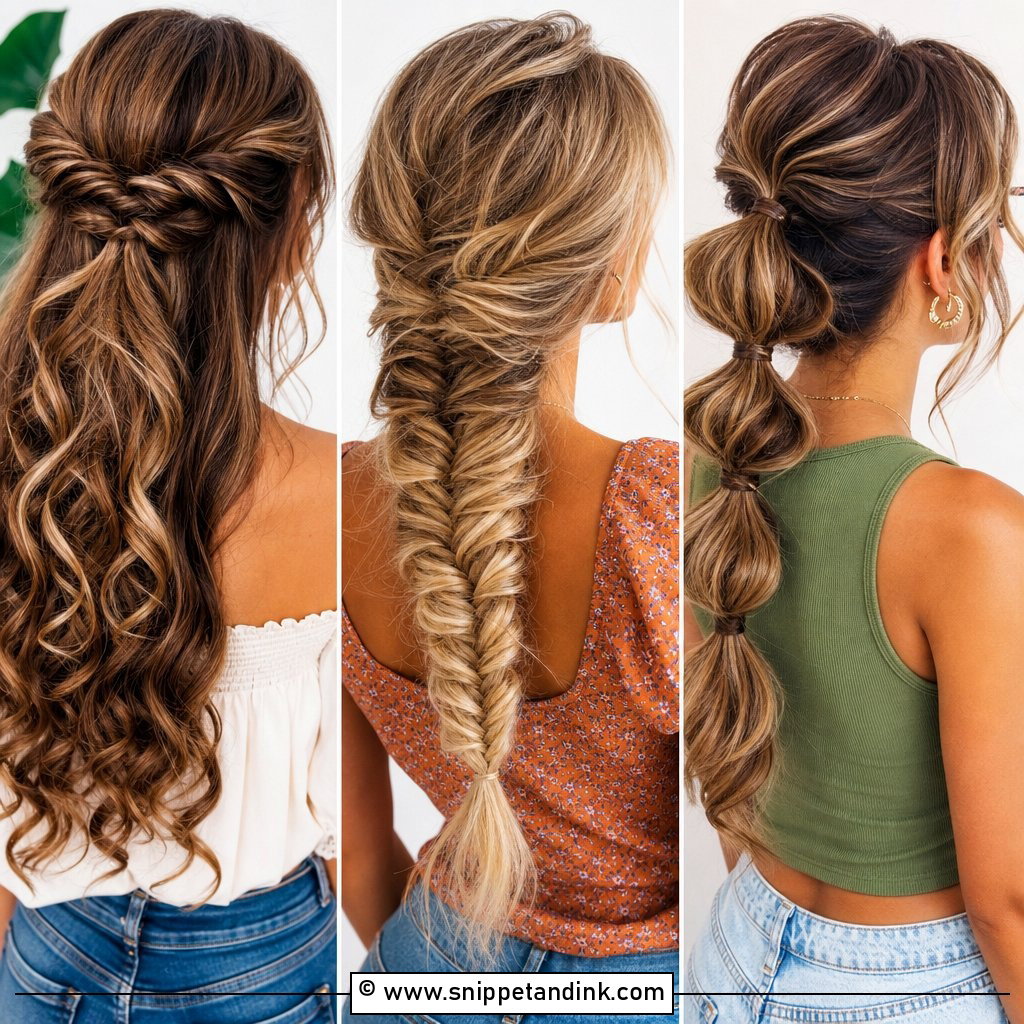
Fishtails look complicated, but they are mostly patience: two sections, tiny pieces crossed over, again and again. Because the pieces are so small, the braid locks itself, which is why it holds through dancing better than a chunky three-strand. I tug the edges for width only after tying it off. Tiny flowers sit well in the gaps of a fishtail; large blooms crush the pattern you worked to make visible. On hair shorter than the shoulders, the braid gets too short to show its texture, so I’d pick something else.
6. Half Up Half Down With Blooms
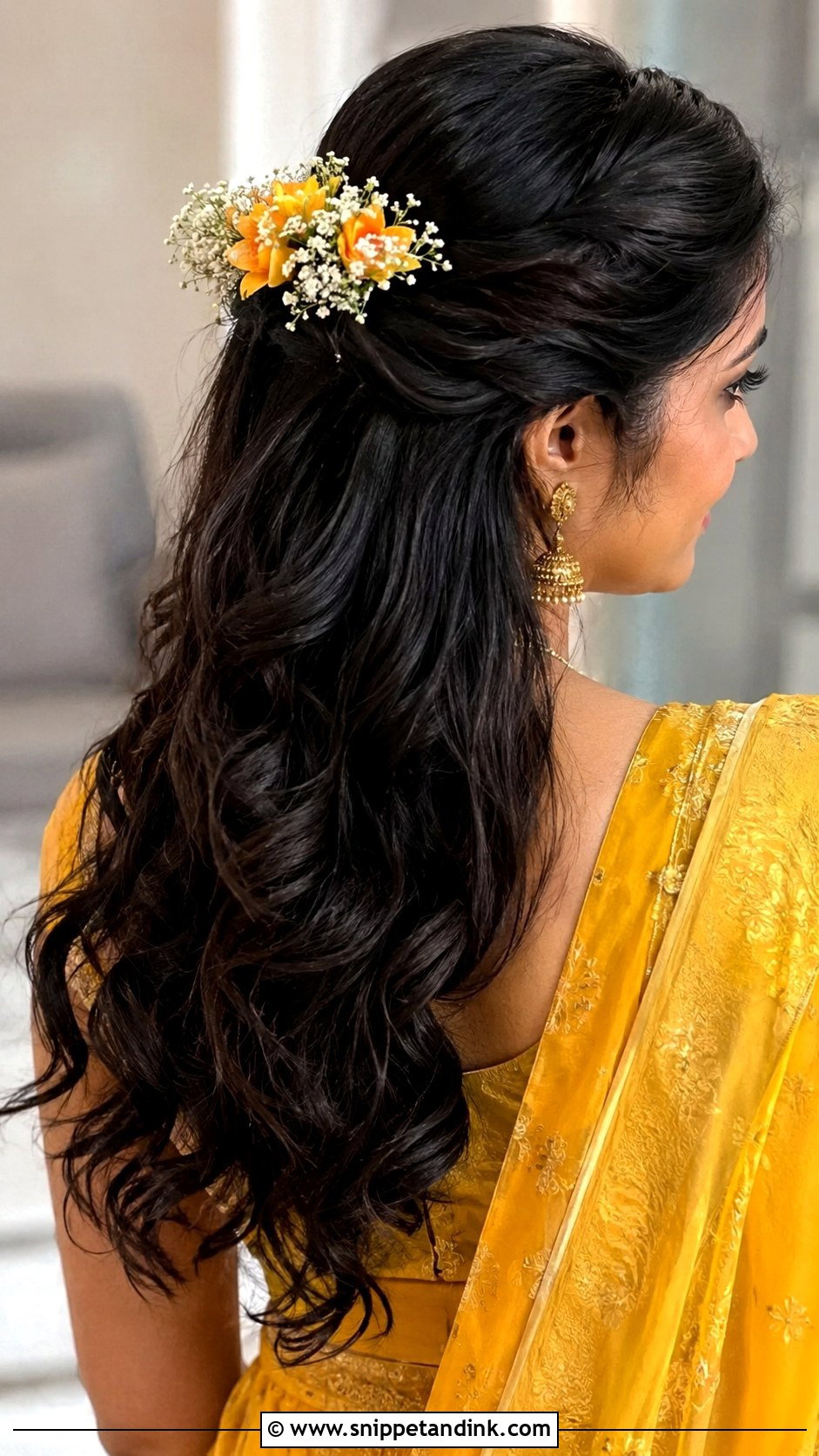
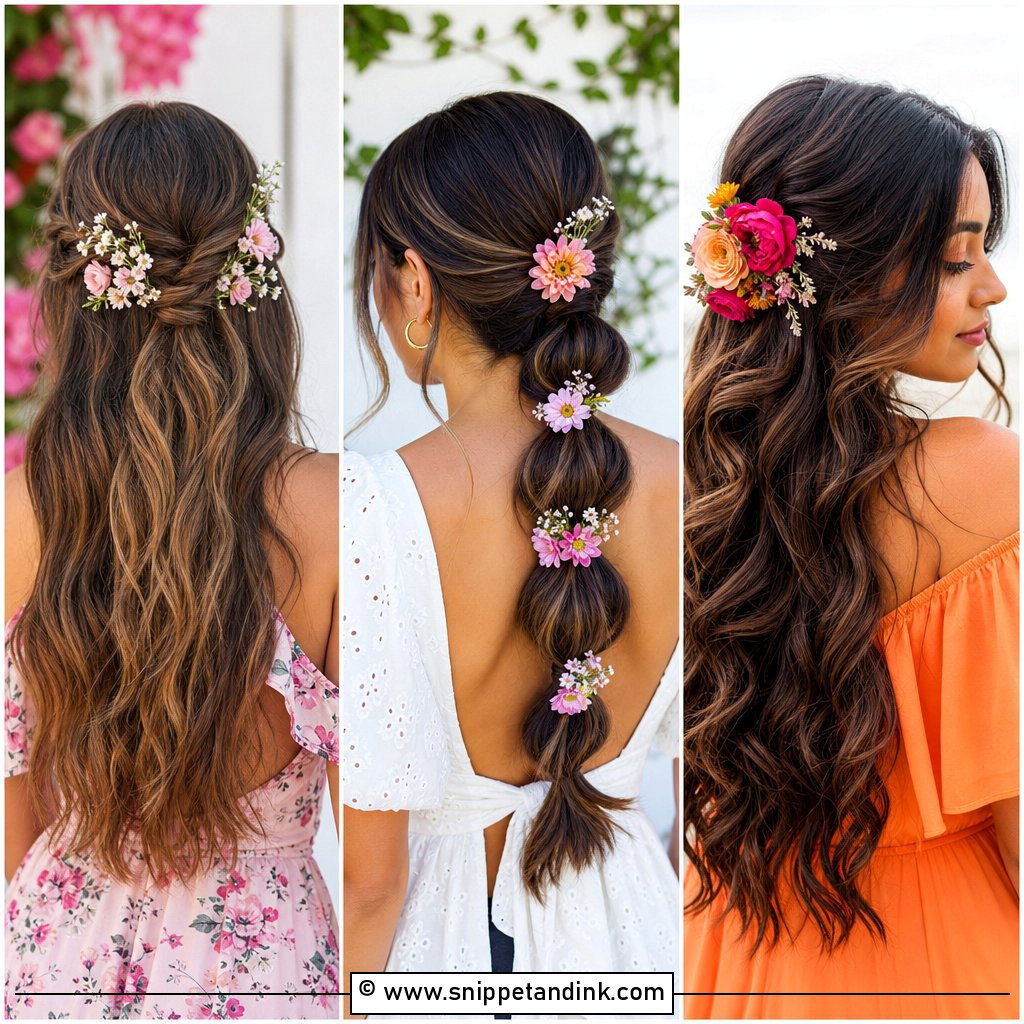
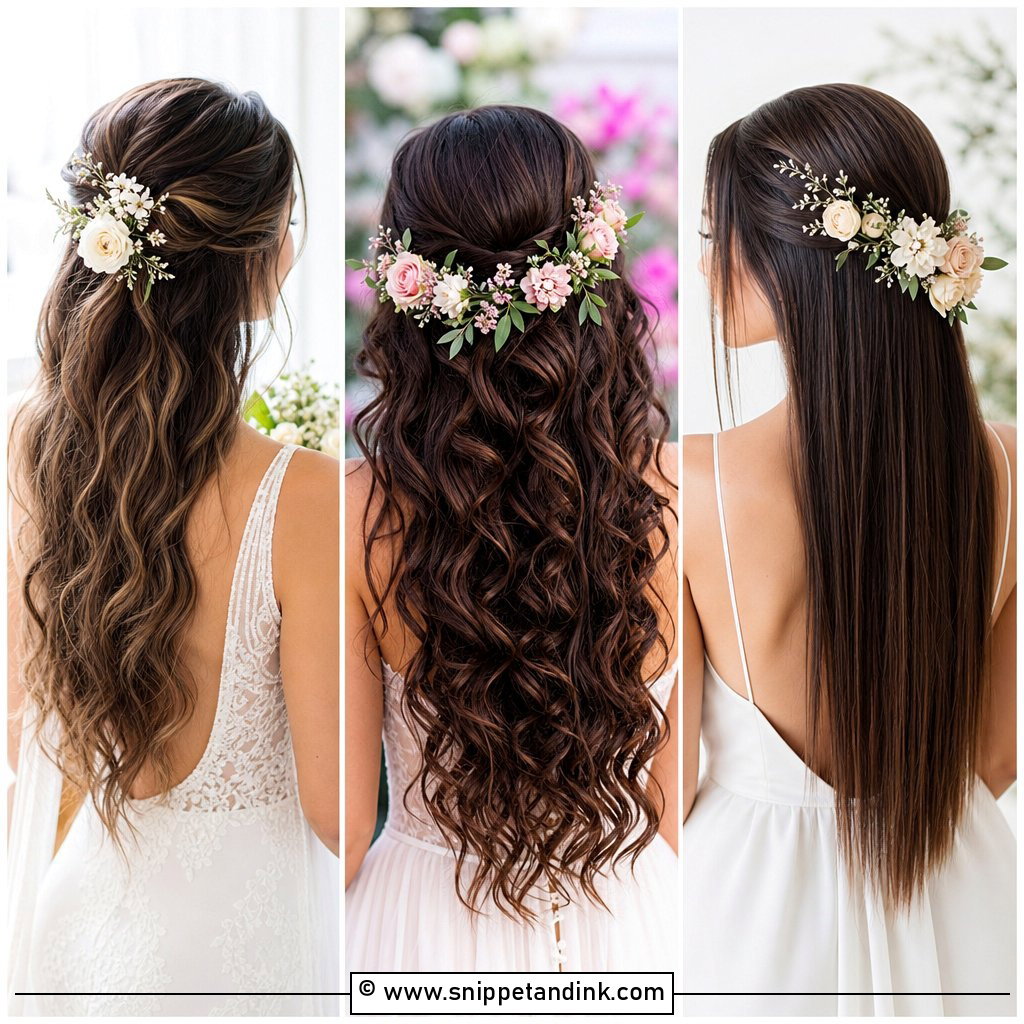
Half up, half down is my answer when a bride can’t decide. I pull the top section back with a small elastic hidden under two crossed pins, so the weight of the flowers doesn’t drag it down. A floral clip at the crown covers the join. The loose half can be curled or left straight. Straight is safer at an outdoor Haldi in summer, because curls sitting on a damp back will flatten within the hour.
7. Floral Crown With Loose Waves
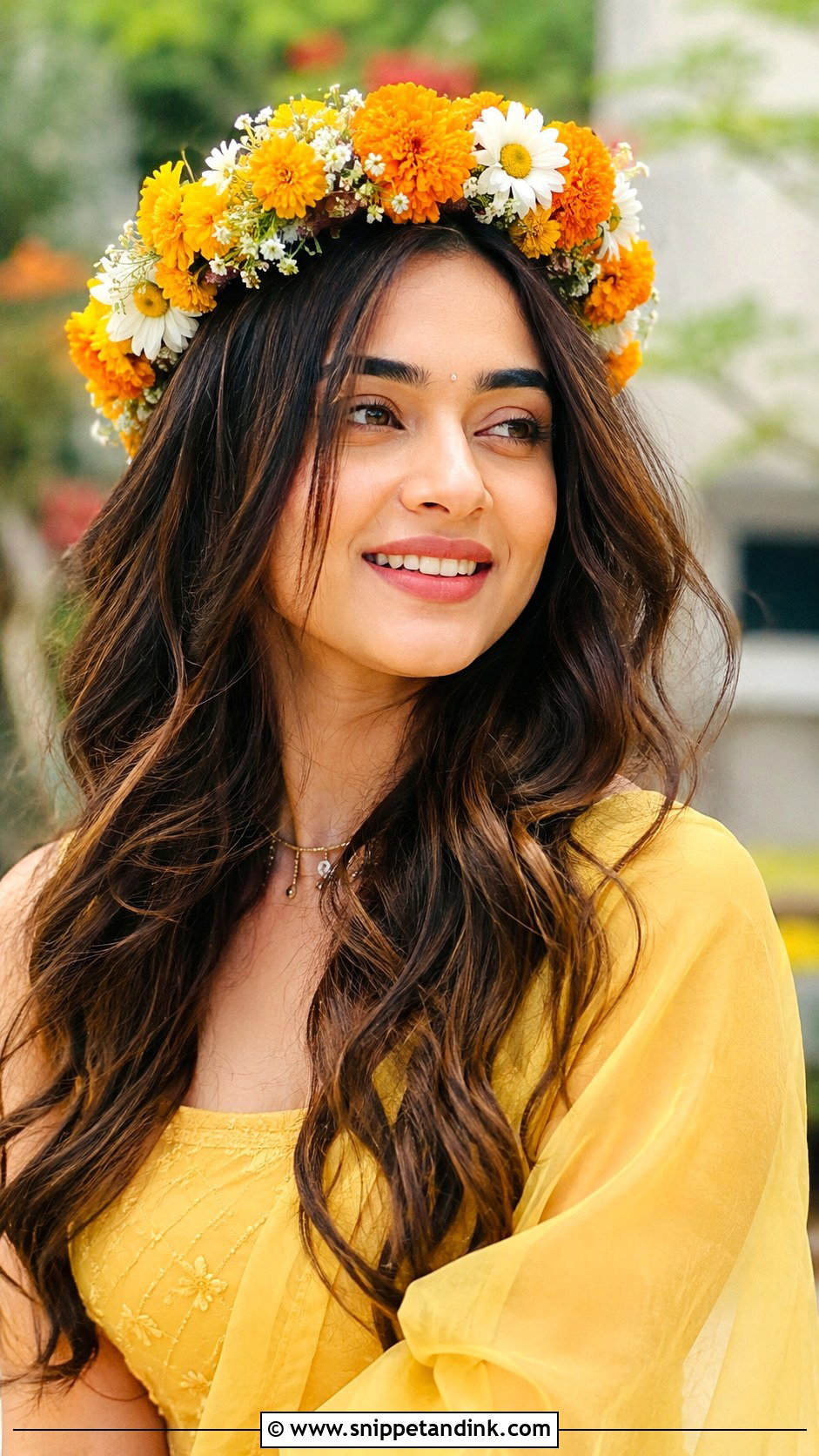
A full flower crown is a big piece, and the mistake I see most is setting it on top of loose waves with nothing to hold it. I make two small anchor braids behind the ears or a few pinned twists at the crown, then pin the crown’s wire base into those. Marigolds, roses and daisies all work, though daisies wilt fastest in sun. This one suits a garden Haldi with plenty of shade far better than a rooftop at midday.
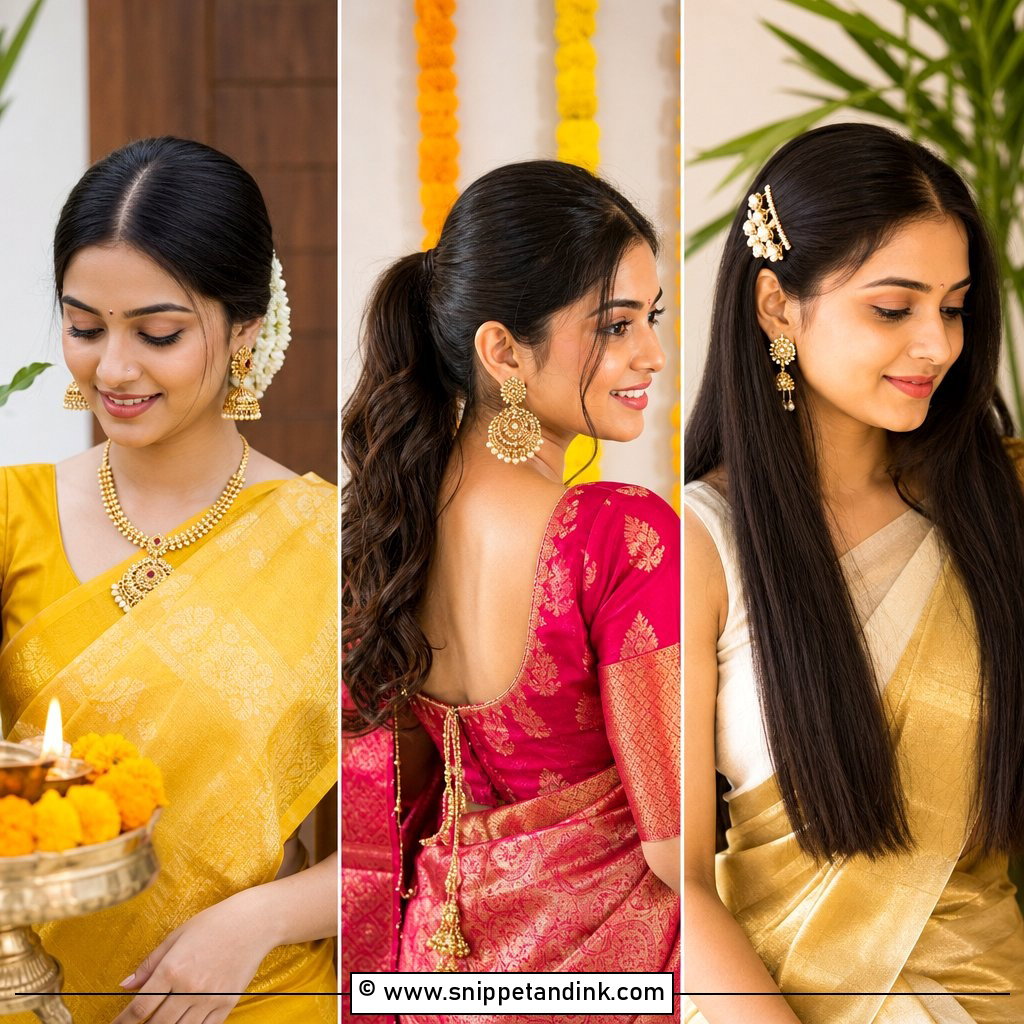
8. Low Bun With Gajra
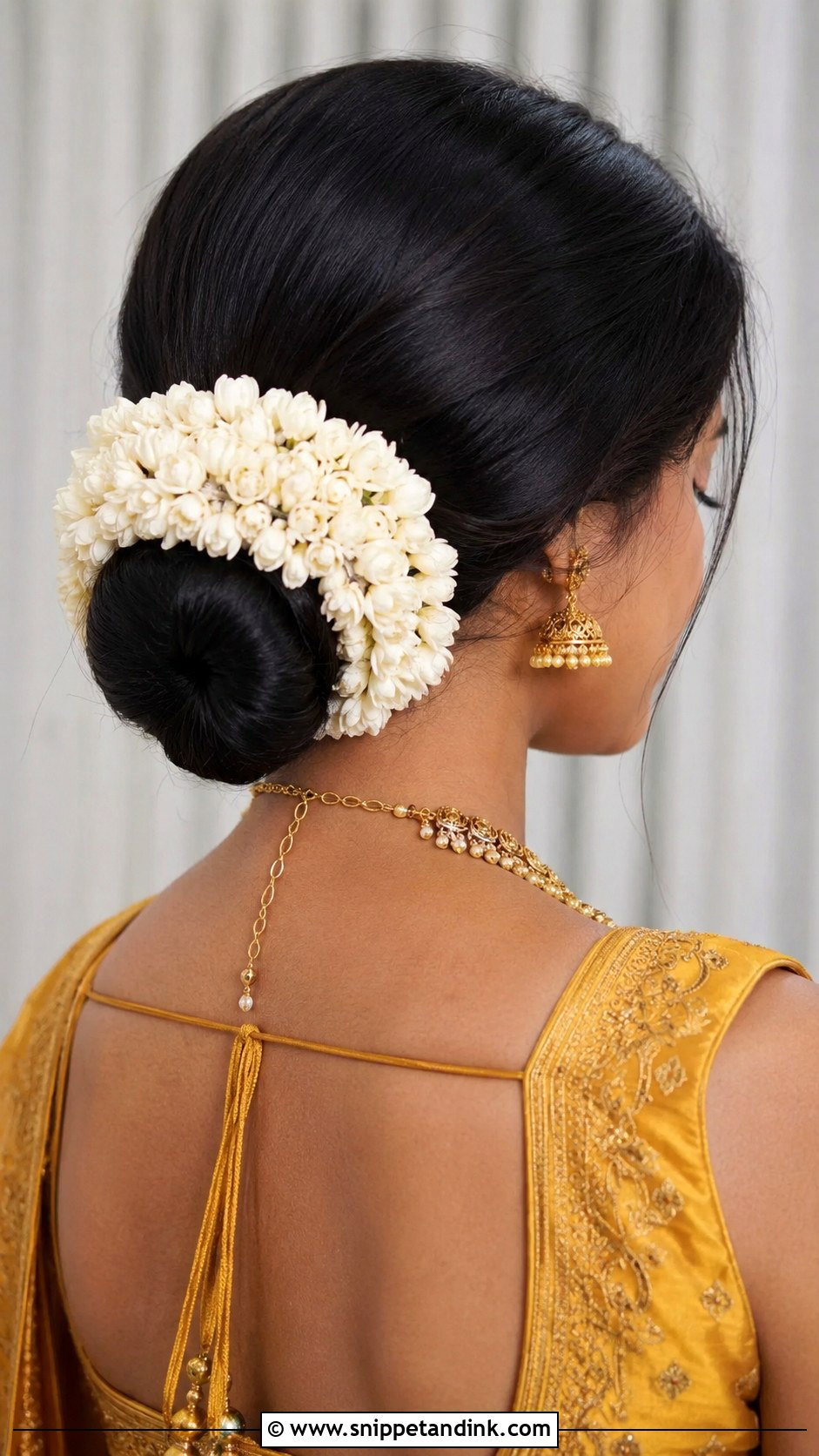
The low bun with gajra is the style I see most at traditional Haldis, and it earns its place. A tight, smooth low bun at the nape gives the jasmine gajra something firm to wrap around, and it keeps every hair away from the face when relatives come in with paste. It suits a yellow silk saree and temple jewellery. Expect the jasmine to turn faintly brown by late morning; that’s normal, and the scent lasts longer than the colour.
9. Dutch Braid With Marigolds
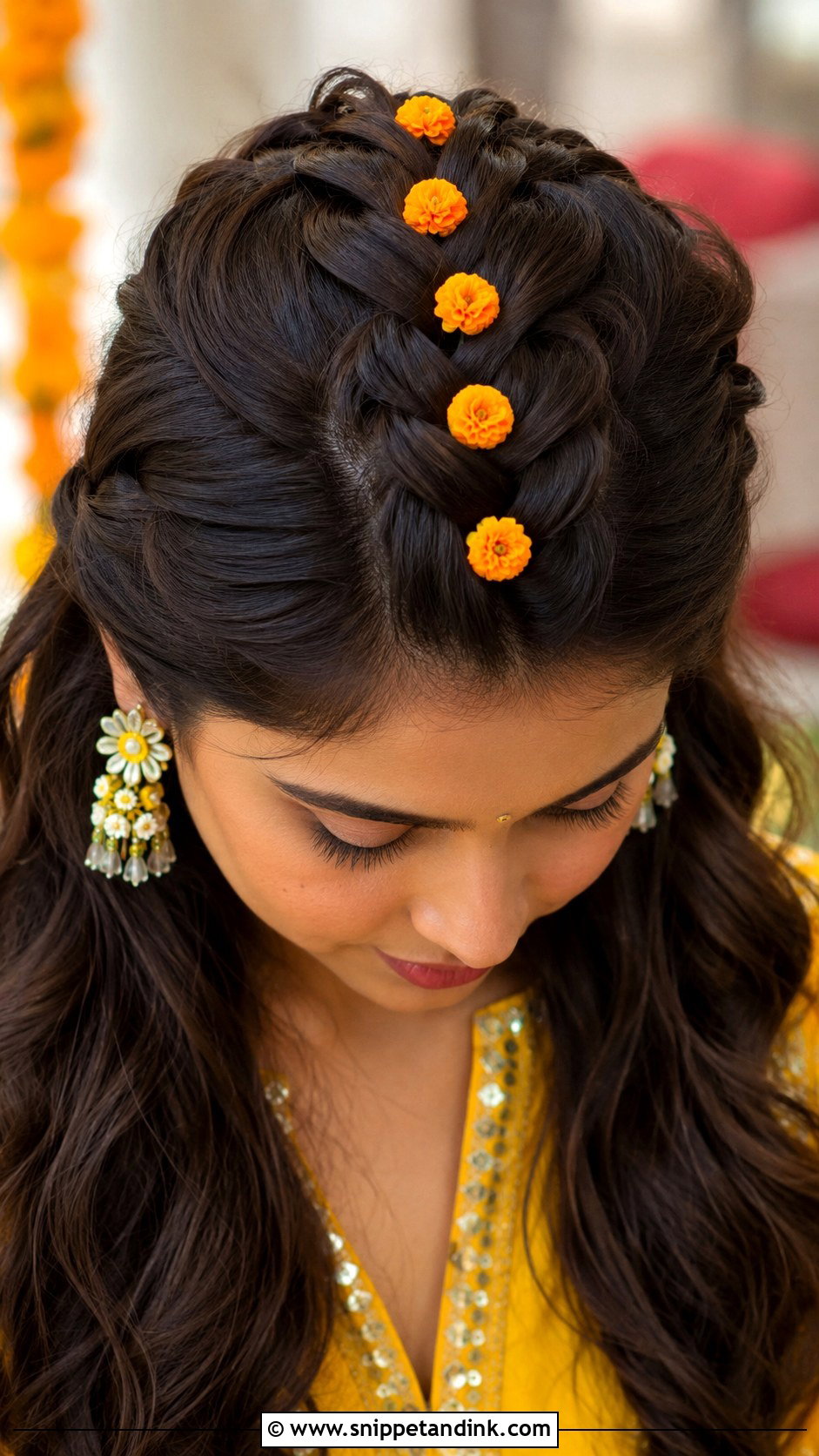
In a Dutch braid the strands cross under rather than over, so the braid sits on top of the head instead of lying flat. That raised ridge gives small marigold buds something to sit against. I start right at the hairline when the bride wants every strand off her face, which is the most practical Haldi brief there is. Two Dutch braids look younger and suit bridesmaids; one down the centre reads more grown-up for the bride.
10. Curly Ponytail With Flowers
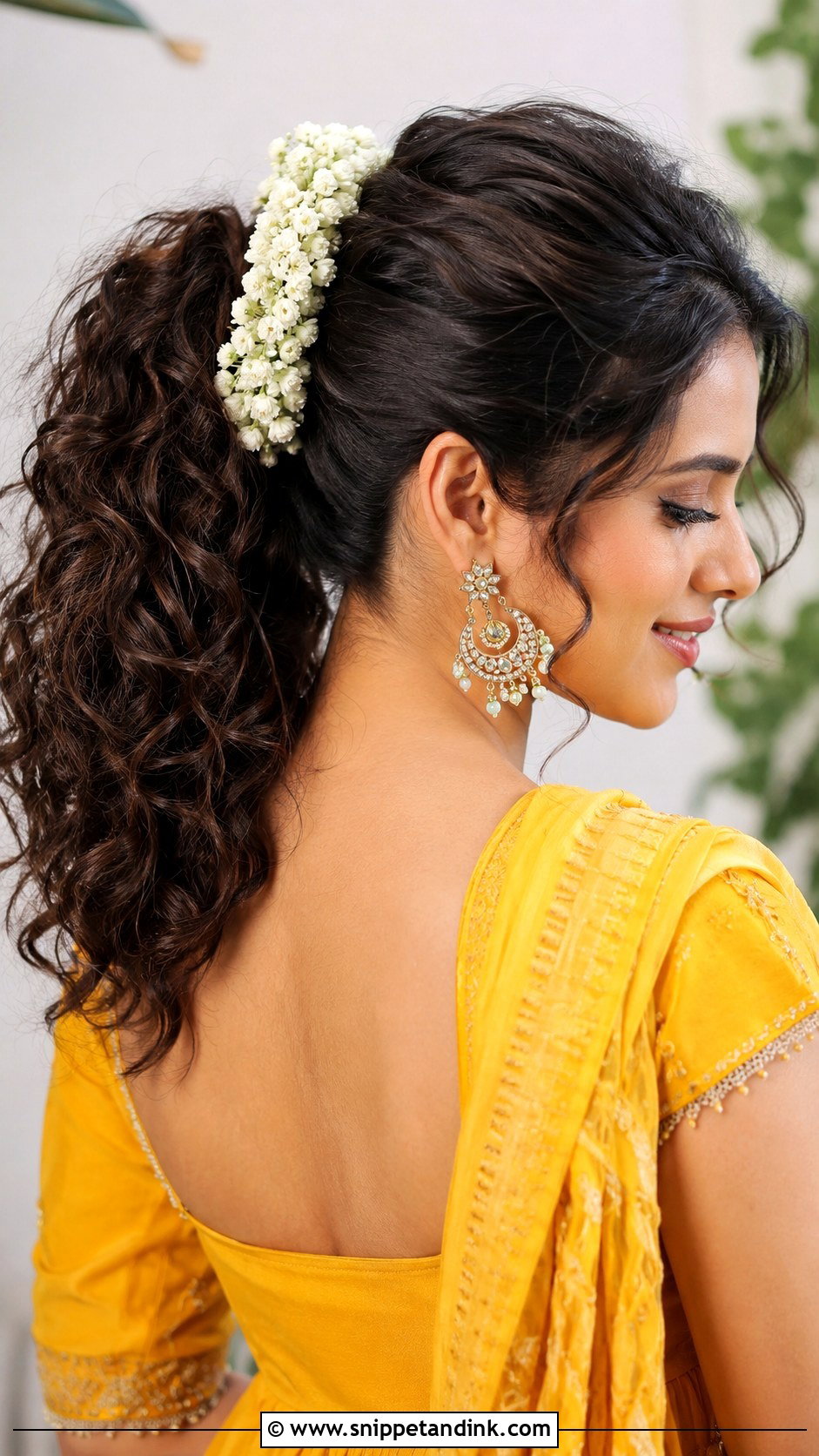
A high ponytail is the guest’s best friend at a Haldi with a dance floor. I curl the length after it is tied, not before, because tying a ponytail straightens out the curls near the elastic. A small flower string wrapped around the base hides the elastic. Be warned: a high pony pulls on the scalp after a few hours, so if you’re prone to tension headaches, set it at mid height.
11. Braided Crown With Jasmine
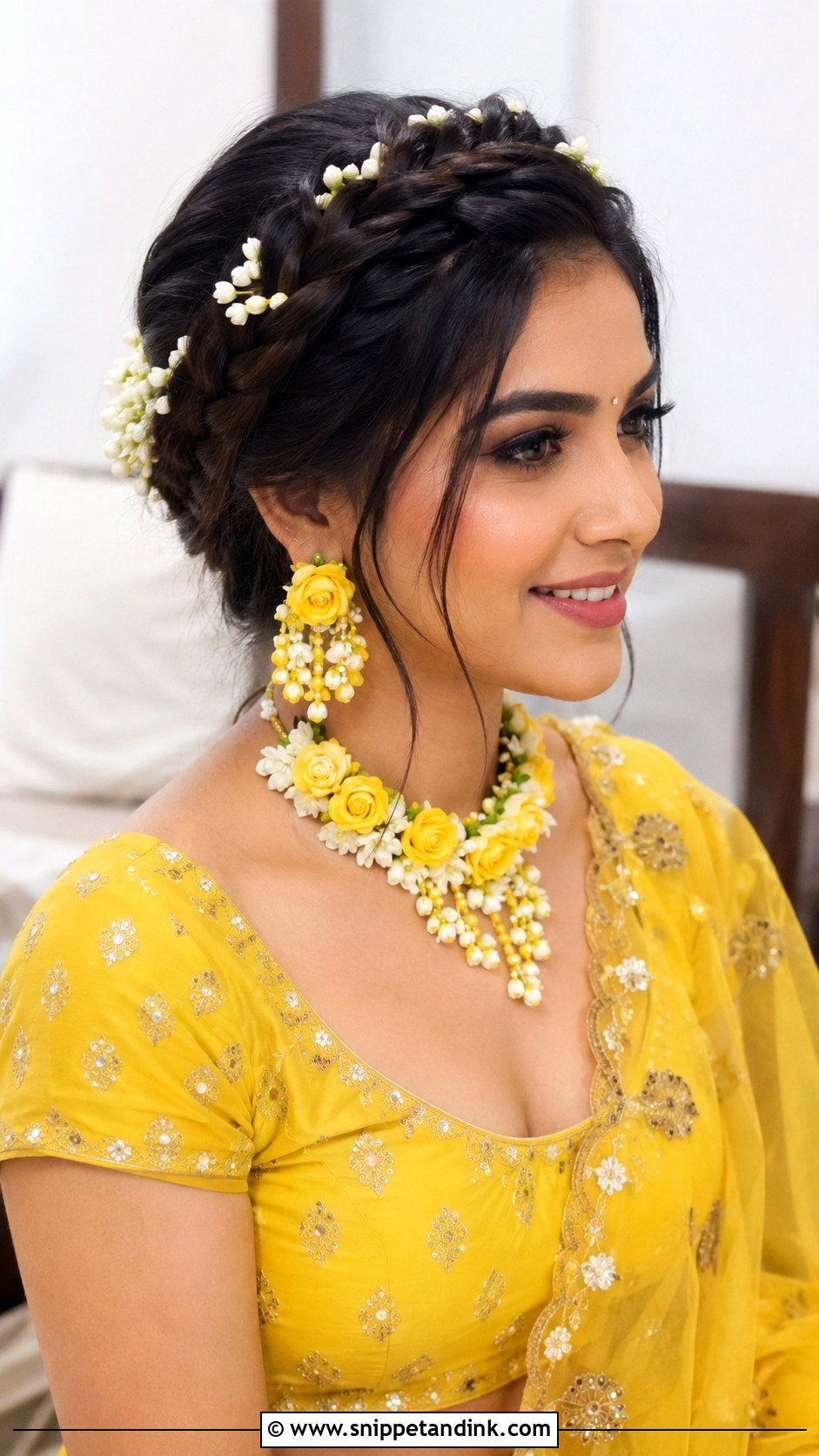
The braided crown is the most secure style on this list. I section the hair, braid each part and pin the braids around the head like a halo, pinning every couple of inches so nothing shifts when the bride turns to greet people. Baby’s breath or jasmine fills the gaps nicely. It takes longer than most of these looks, often close to an hour, so it needs a real slot in the morning schedule.
12. Sleek Straight Open Hair
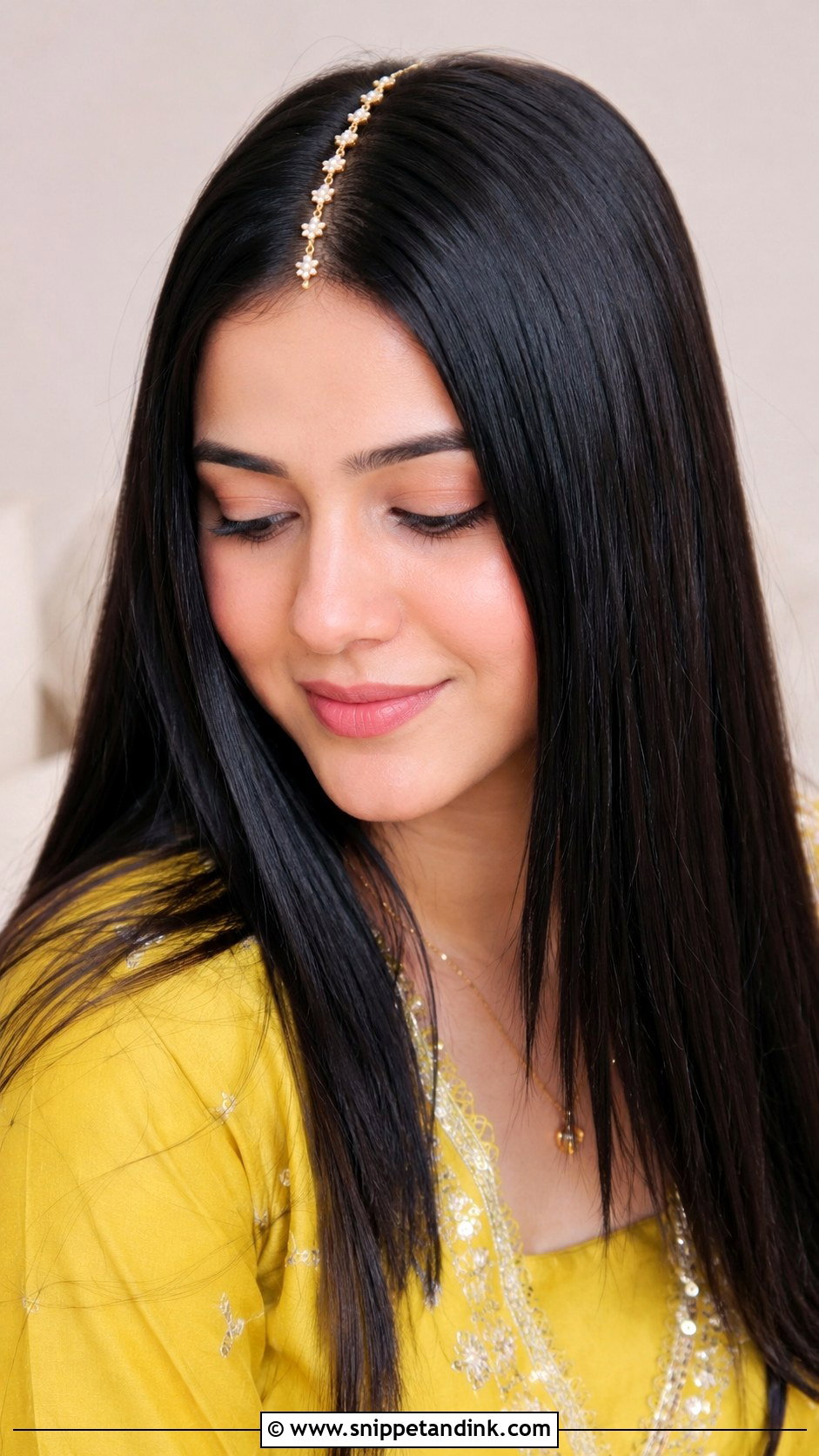
Sleek straight hair looks simple, but it’s the least forgiving style for Haldi. Any splash of water or paste sits right on the surface, and straightened hair frizzes quickly in humidity. I finish with a smoothing serum on the mid-lengths only, so the roots don’t go flat. A single fresh flower or a fine floral chain along the parting is enough. Choose this for an indoor or covered Haldi, where the shine has a chance of lasting.
13. Twisted Half Updo With Flowers
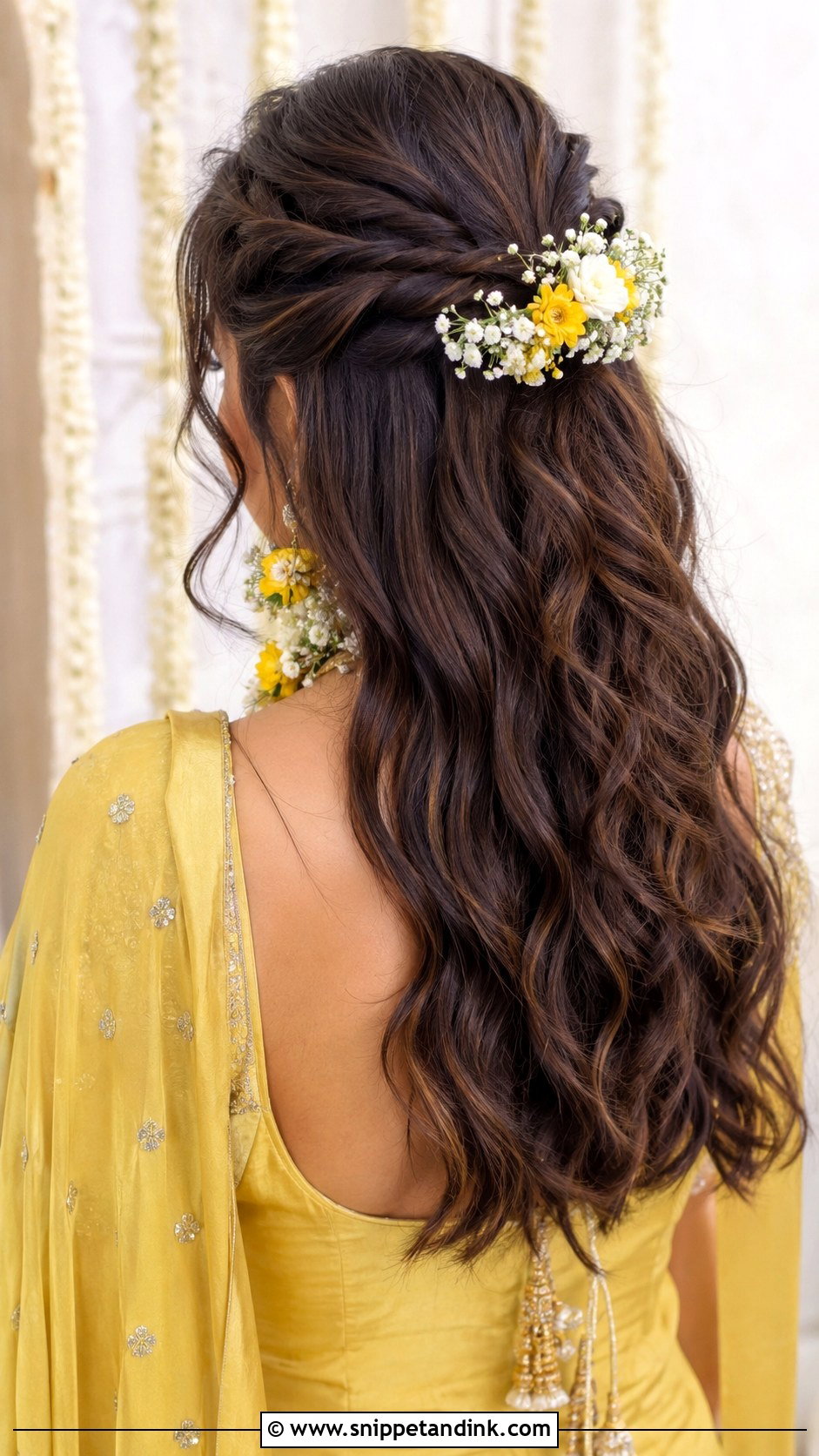
For a twisted half updo, I take a section from each side, twist each one back toward the crown and pin them where they meet. Twisting away from the face holds better than twisting toward it. Small flowers go over the pins. It’s quicker than a braid and suits bridesmaids who are doing their own hair, since a twist is easy to redo in a mirror if it slips.
14. Messy Fishtail With Baby’s Breath
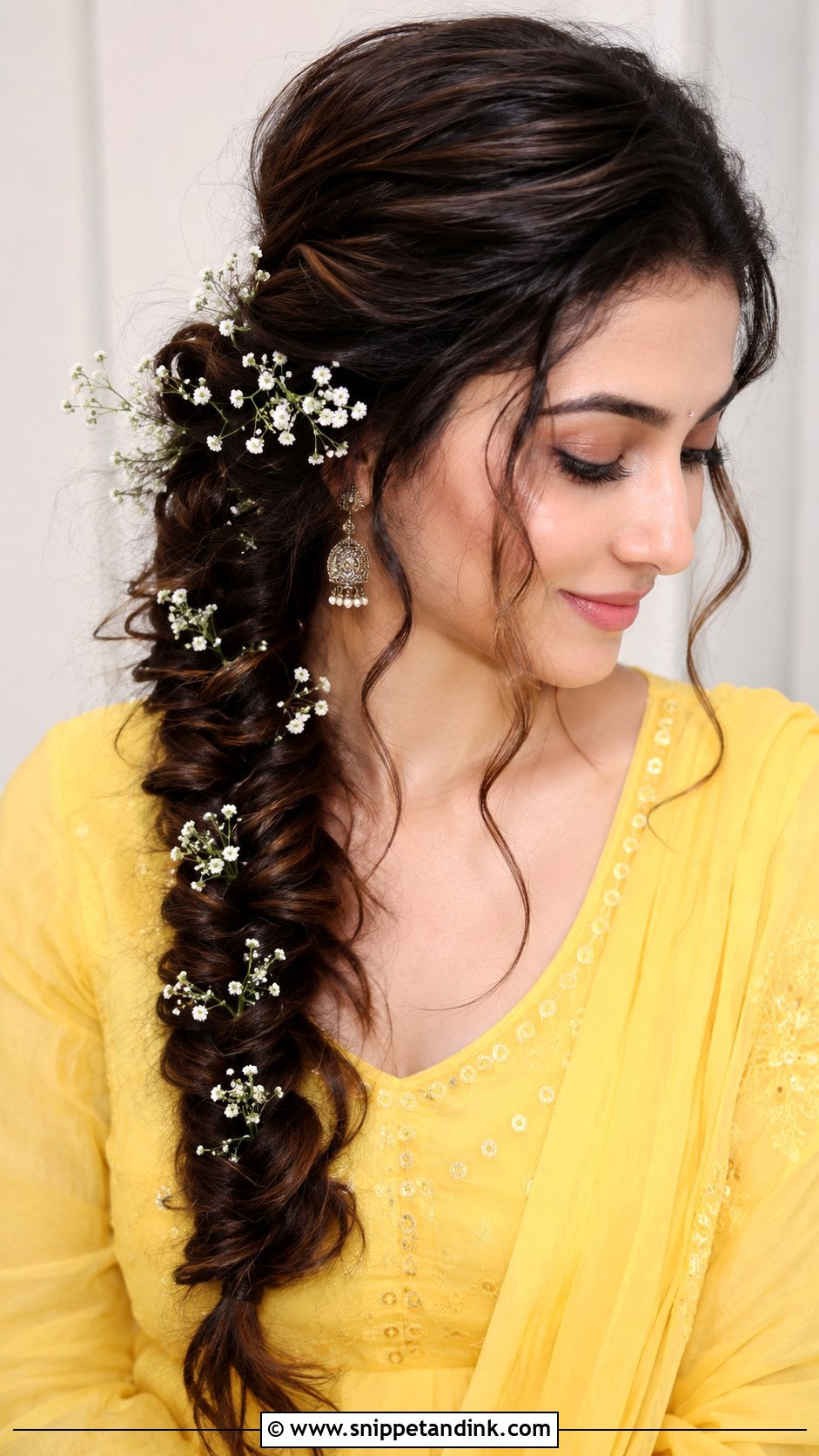
A messy fishtail is the same braid as above, pulled apart much further, so it reads airy rather than intricate. Baby’s breath holds up well in heat and shows clearly against dark hair. The risk with any very loose braid is that pieces work free by midday. I set the pulled-out sections with a light spray right away, and I leave the face-framing pieces long enough to tuck behind the ear if they get in the way.
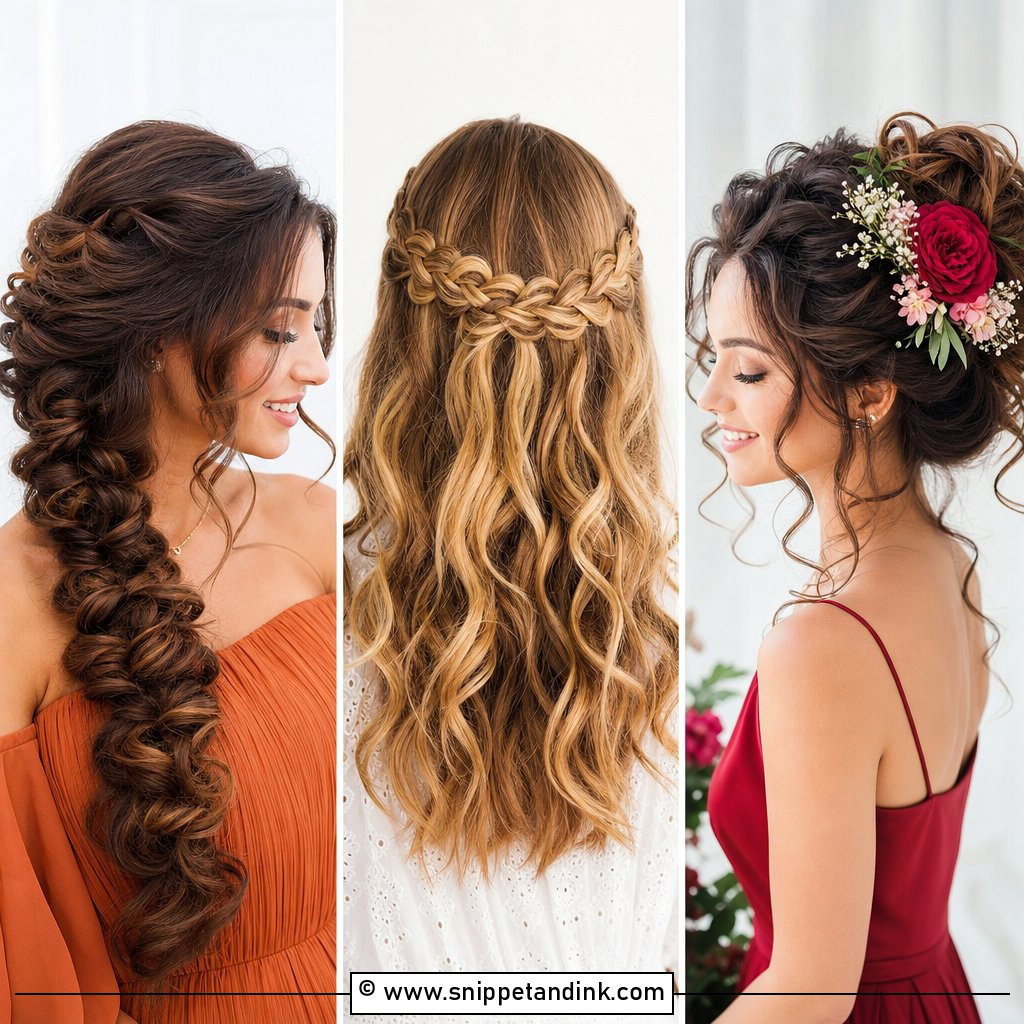
15. Bun With Side Flowers
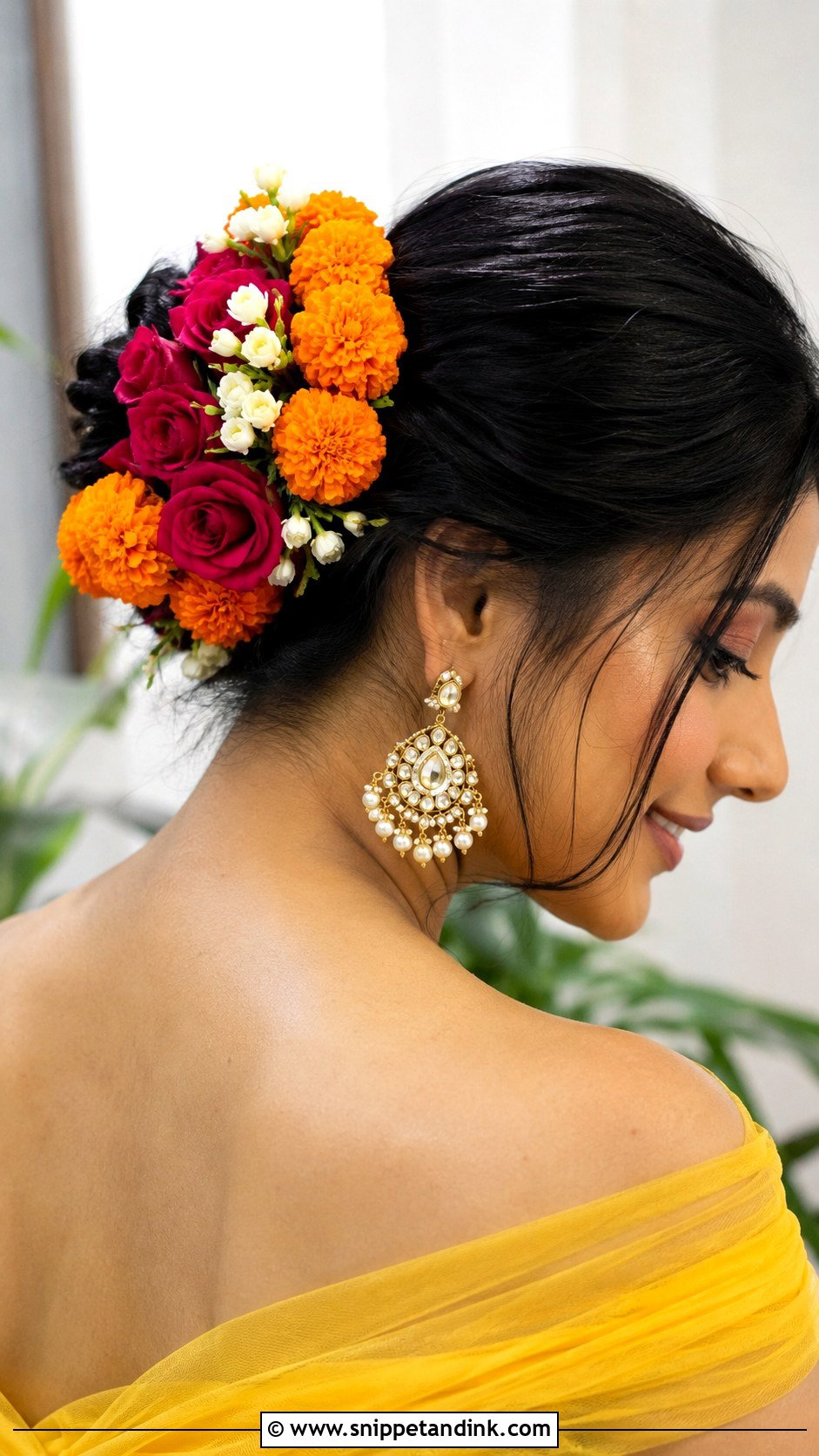
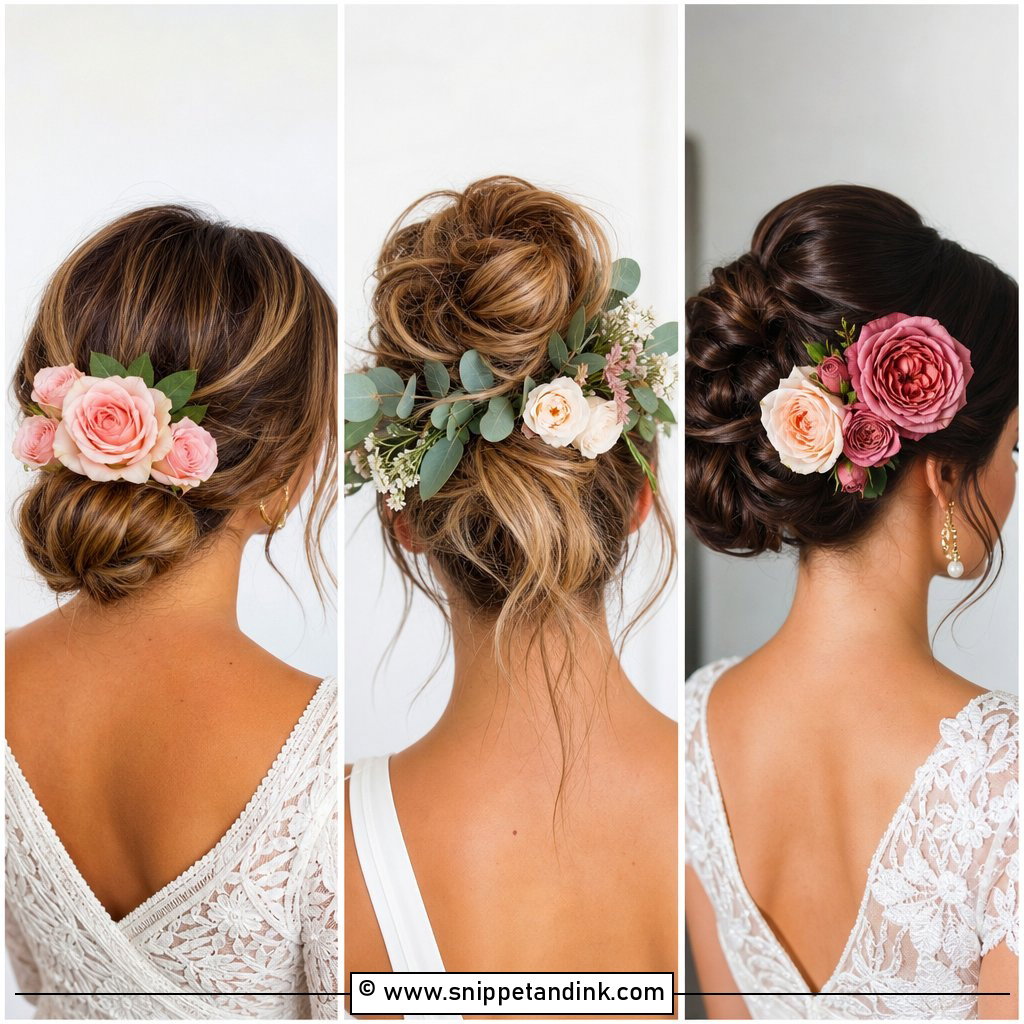
Clustering flowers on one side of a bun is a simple way to make a plain bun look styled. I build the cluster on a small hidden comb, with big blooms at the back and smaller ones fanning toward the front, so it lifts off in one piece if the bride wants to change for the next function. It suits an off-shoulder blouse and statement earrings on the opposite side. Marigold or rose tones keep it in the Haldi palette.
16. Loose Waves With Side Flower
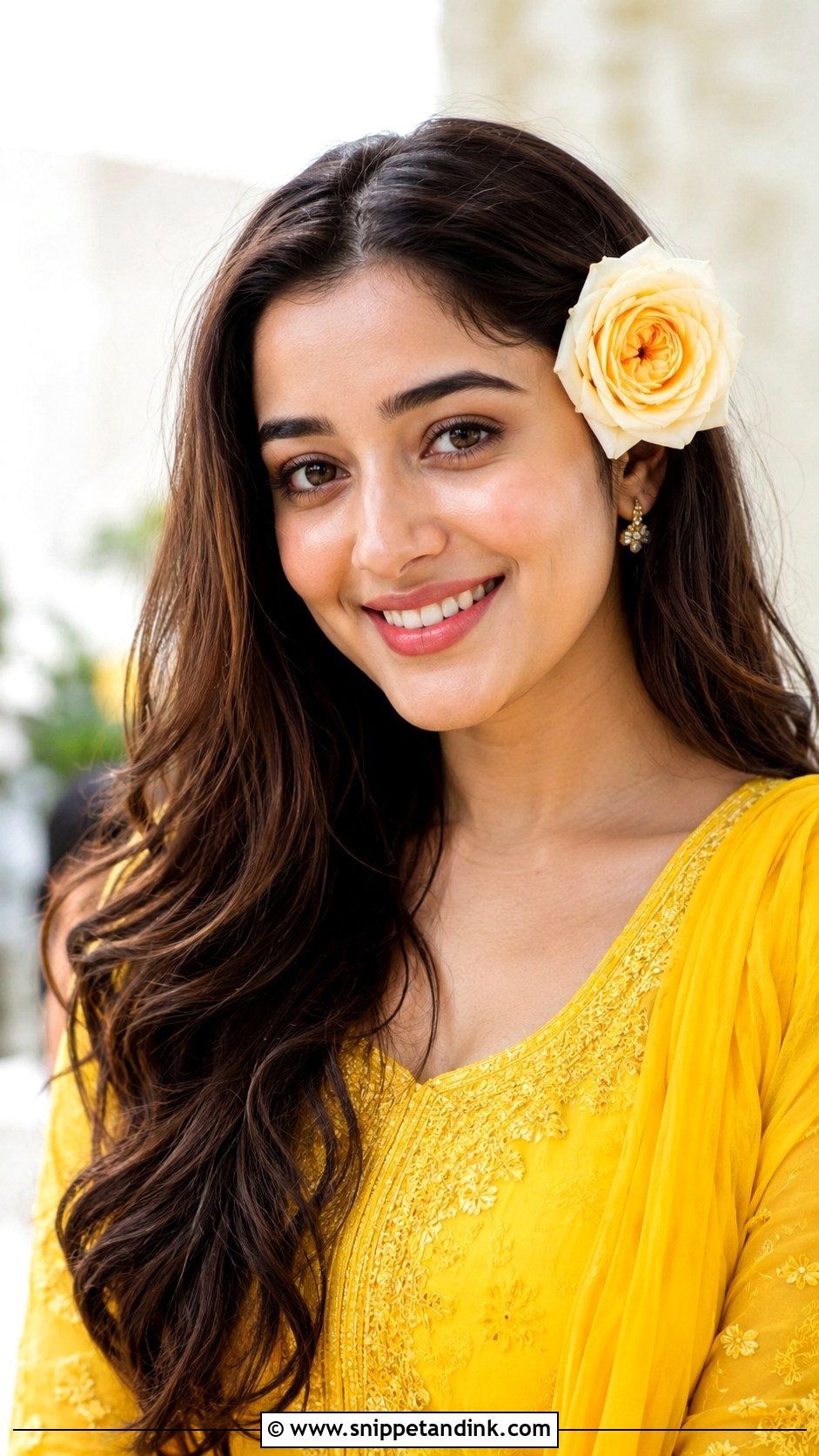
Loose waves with one flower tucked behind the ear is the lightest look here and very easy to get right. A large rose or hibiscus is heavy, so I pin it into a small hidden twist behind the ear rather than straight into loose hair. Hibiscus closes up within a few hours once cut, which is worth knowing before you plan photos late in the day. A deep side part adds height at the root without much product.
17. Braided Ponytail With Marigolds
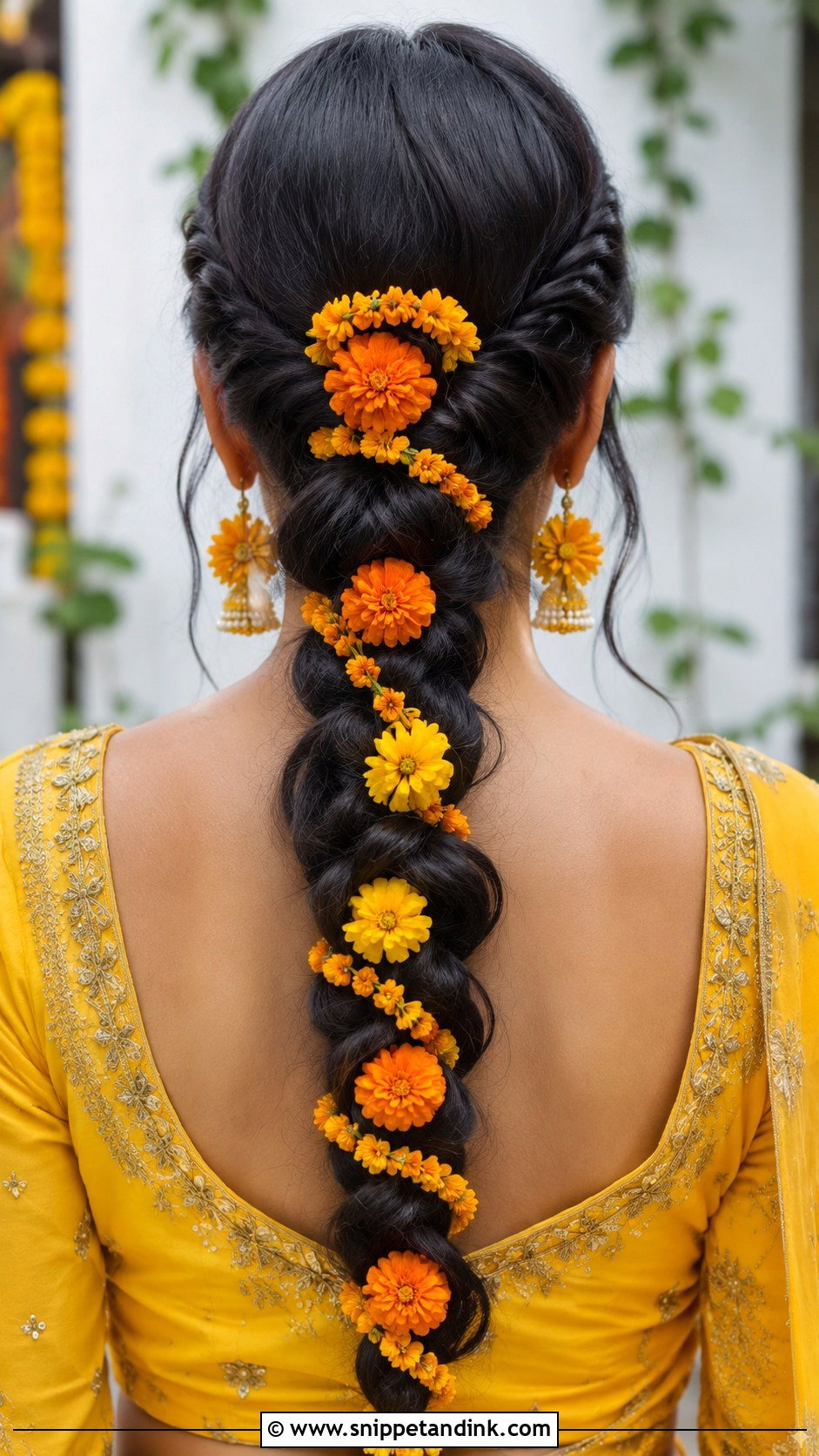
A braided ponytail dressed in marigolds combines the security of a ponytail with the detail of a braid. I tie the pony first, wrap the base, then braid and weave a few blooms into the length. It holds on most lengths from just past the shoulder. Because it is tied at the scalp and braided below, it rarely needs touching up, which is why I like it for guests who plan to dance all morning.
18. Floral Hair Vine With Open Hair
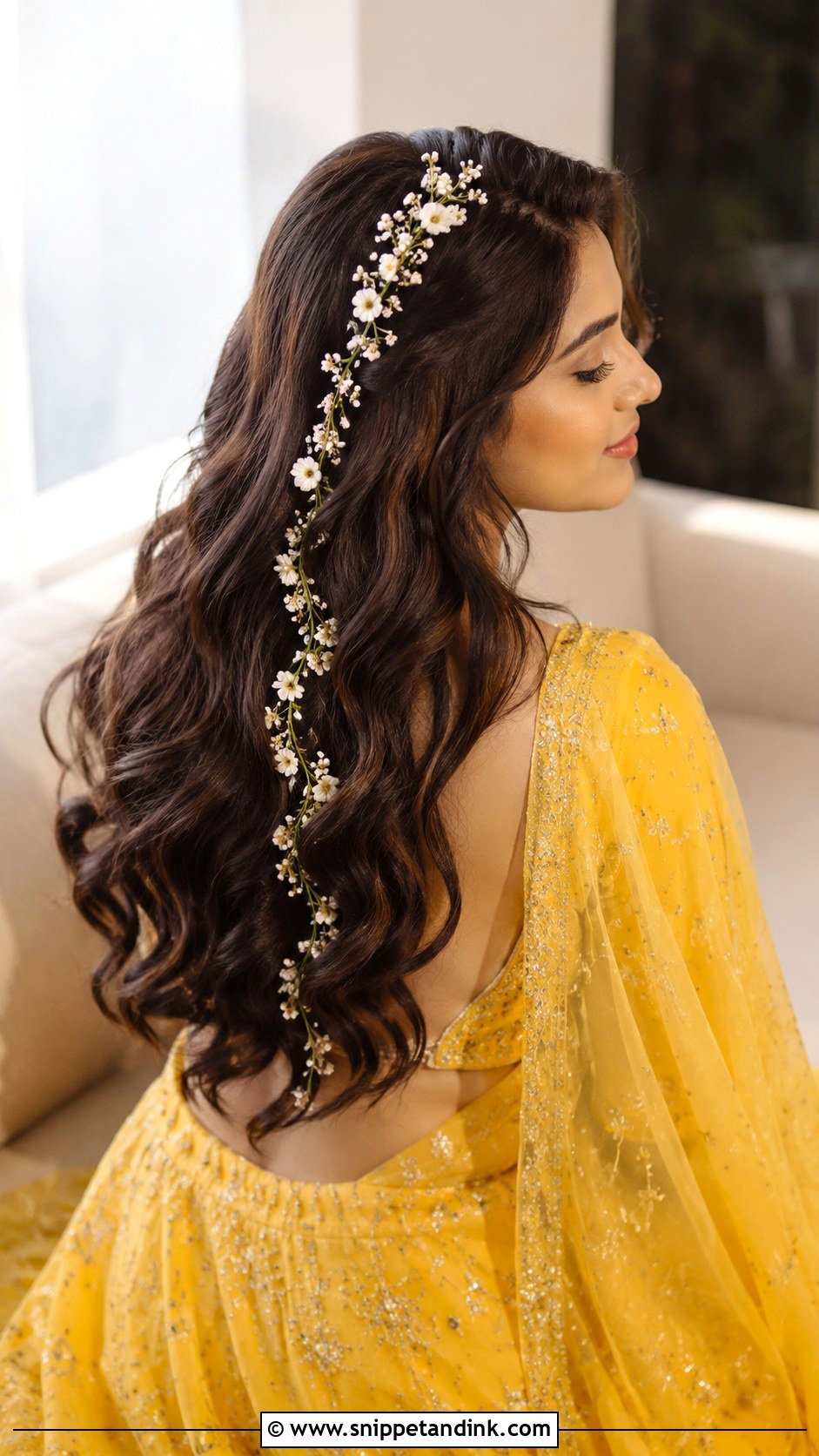
A floral vine looks delicate, but it needs anchors. I thread it from the crown and pin it into small hidden twists along the way, otherwise it slides down the moment hair moves. It works over waves or straight hair. Keep the jewellery minimal, because a vine plus a big necklace plus heavy earrings starts to compete with itself in photos.
19. Double Braids With Flowers
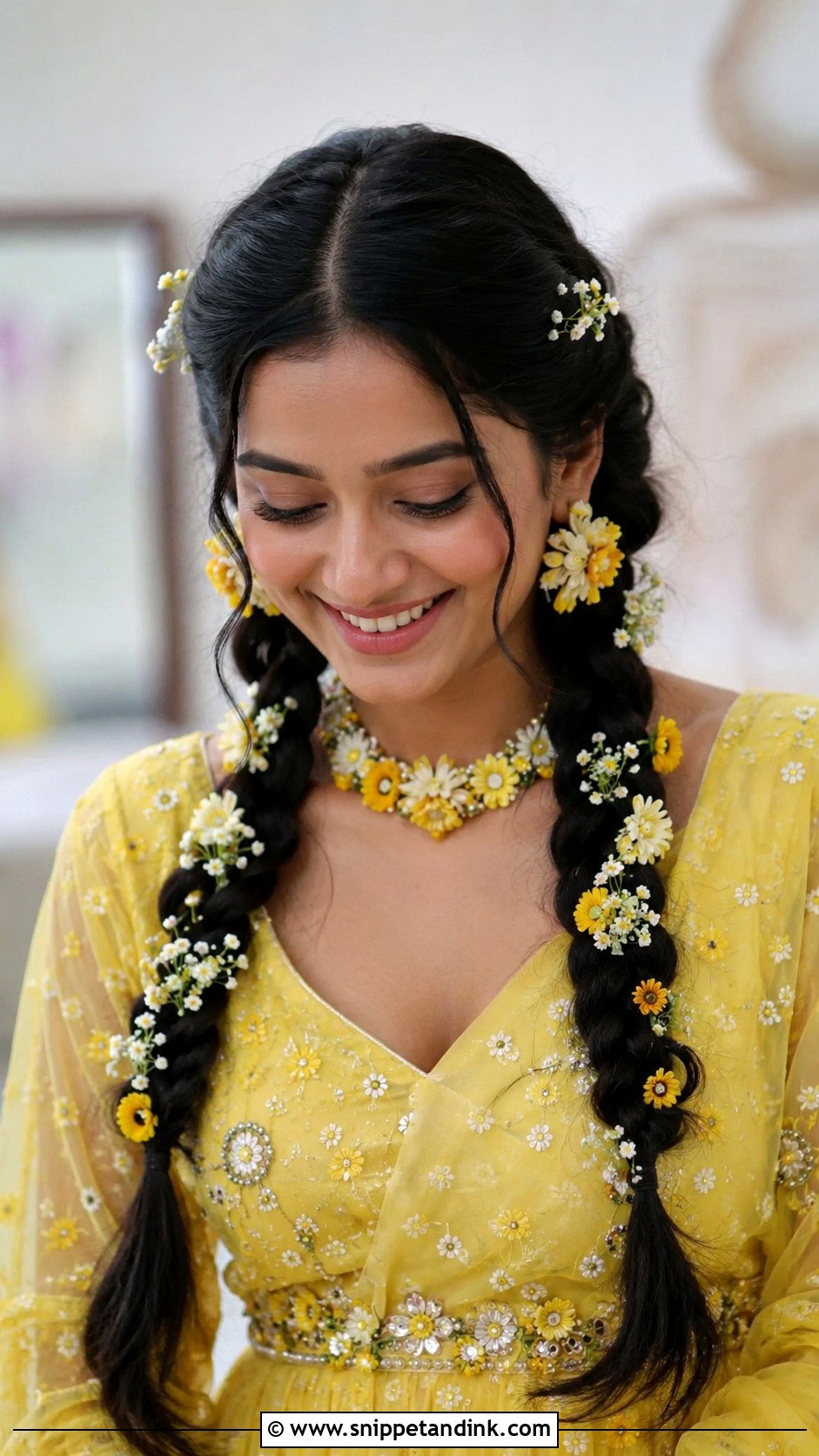
Two braids are playful and very practical: a centre part, a braid on each side, and the hair is fully out of the way. I like them for younger cousins and bridesmaids. Small flowers woven in at intervals look neater than a dense row. Tight braids last longer; loosened ones look softer but will need a quick tidy after the paste rounds.


20. Bun With Floral Hairband
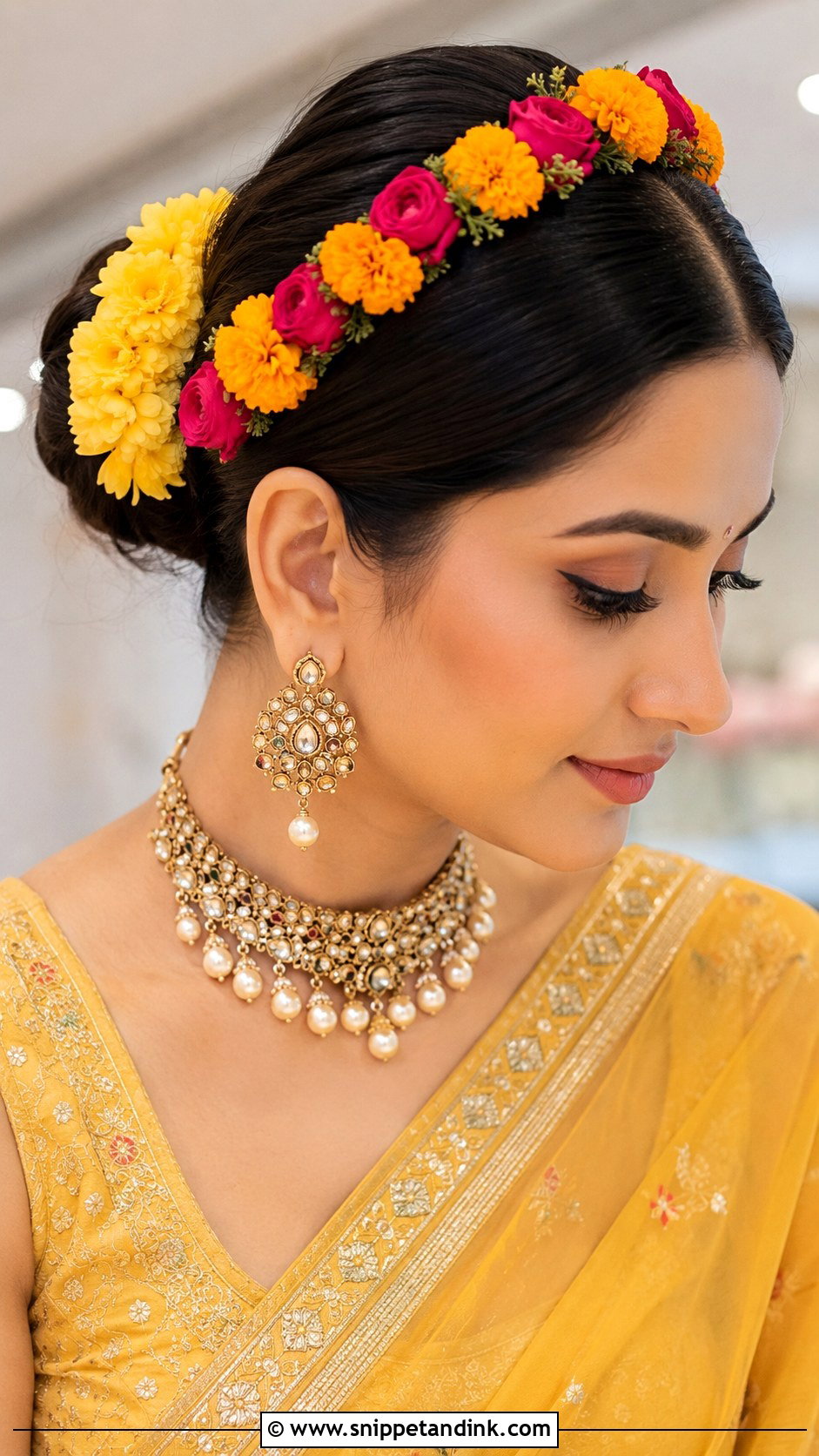
A sleek bun with a fresh flower band is neat and quick. The bun goes slightly higher than a traditional low bun so the band has room to sit across the crown without touching it. Fresh flower bands are usually made on a ribbon or wire, and I pin them at both ends behind the ears. Marigold or rose matches yellow attire. It suits brides who want a clean, structured look that won’t need attention all morning.
21. Waterfall Braid With Blooms
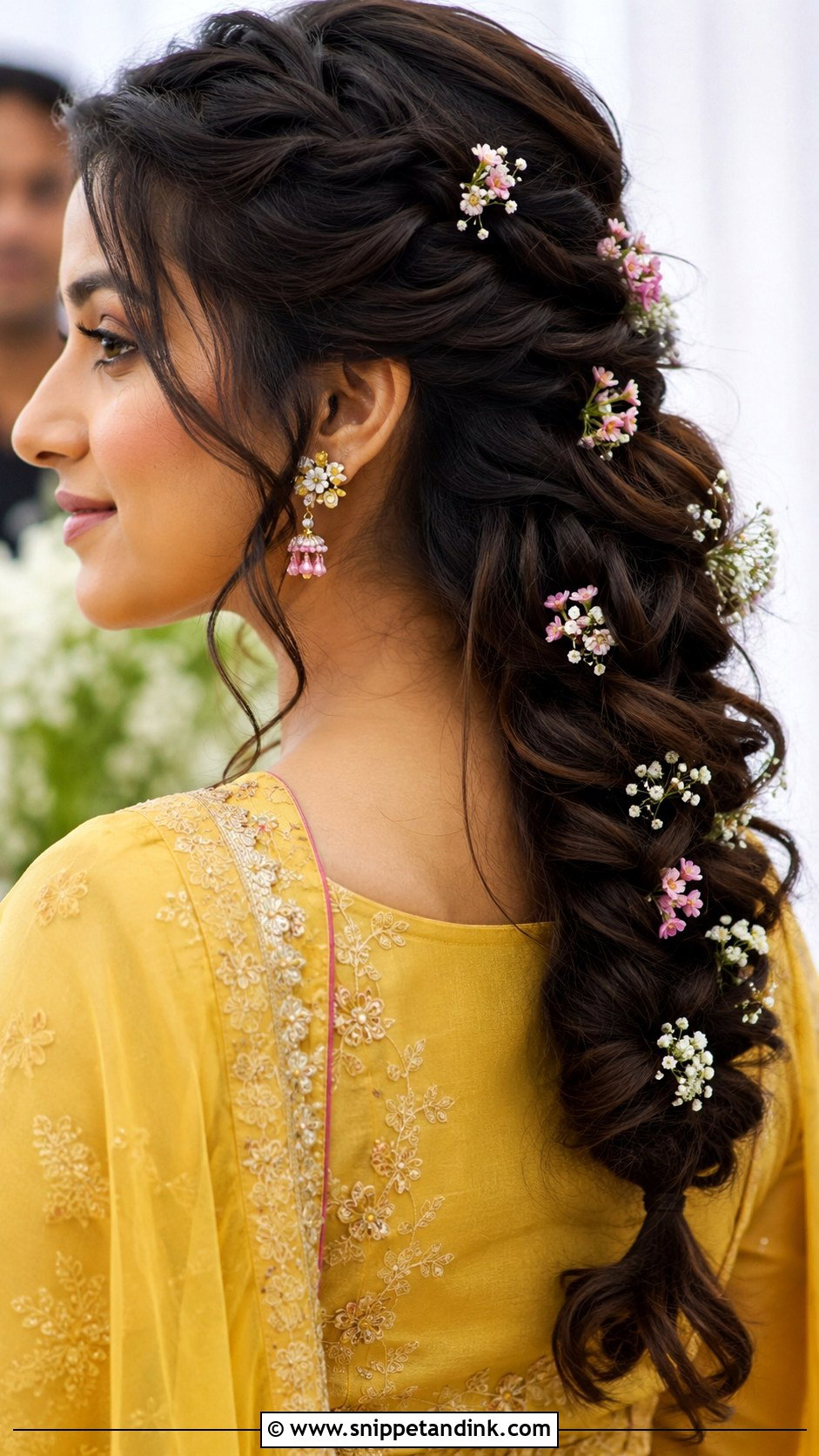
In a waterfall braid, you braid across the head and drop one strand each time, letting it fall through and adding a new one in its place. That dropped strand is what makes the cascade. I start near one temple and finish behind the opposite ear. On layered hair the dropped pieces can pop out of the braid, so a little texturising spray before you begin helps them grip. Tiny flowers along the line finish it.
22. Top Knot With Marigold
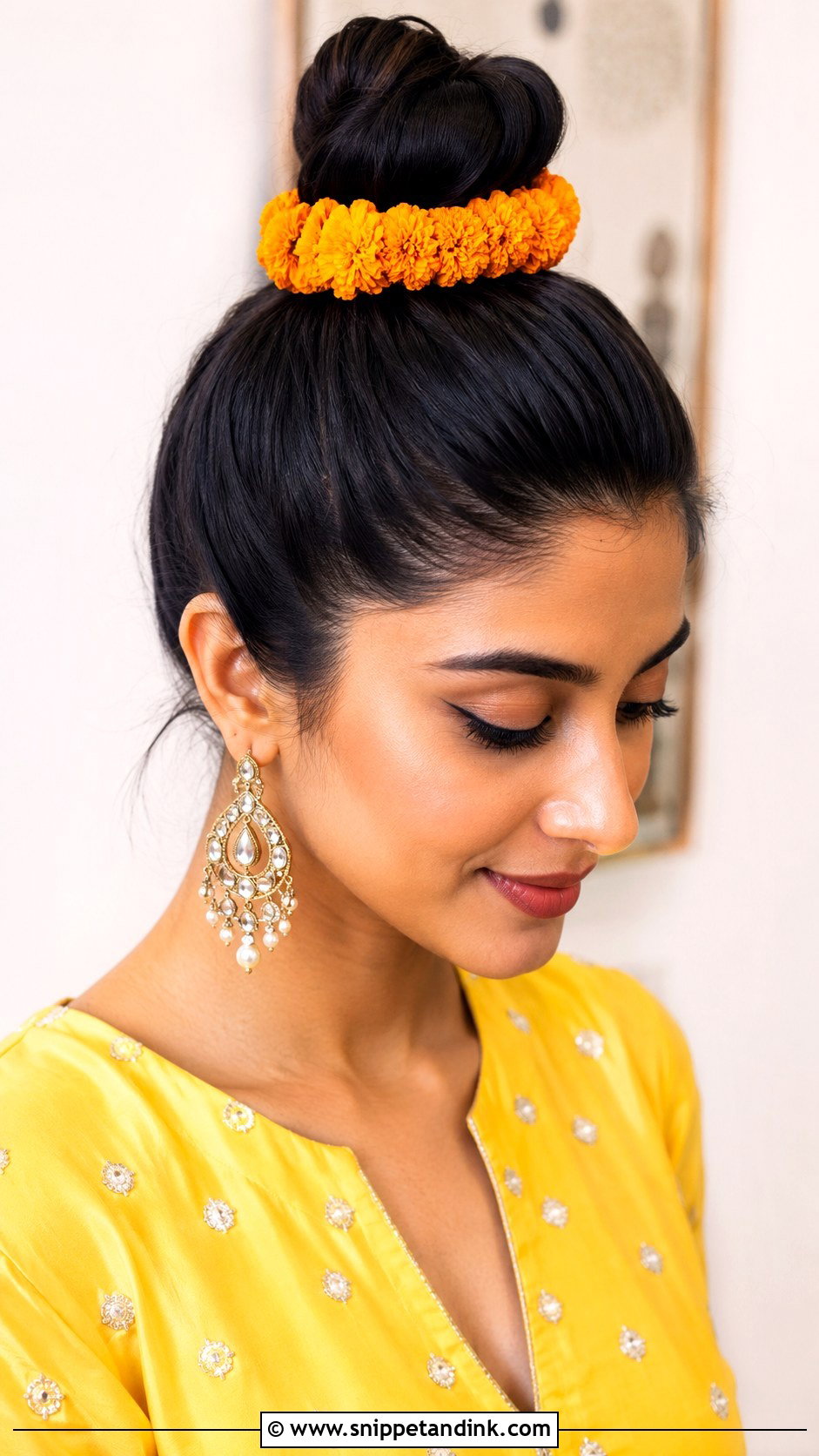
A high top knot is the most modern style here and one of the most practical. Twist the pony around itself, pin it at the base, then wrap a marigold string around it. It clears the neck completely, and it shows off a high neckline or a deep back. A top knot does expose the face and ears, so it suits brides comfortable with that; for anyone who prefers softness around the face, leave out a couple of tendrils.
23. Open Hair With Center Maang Tikka
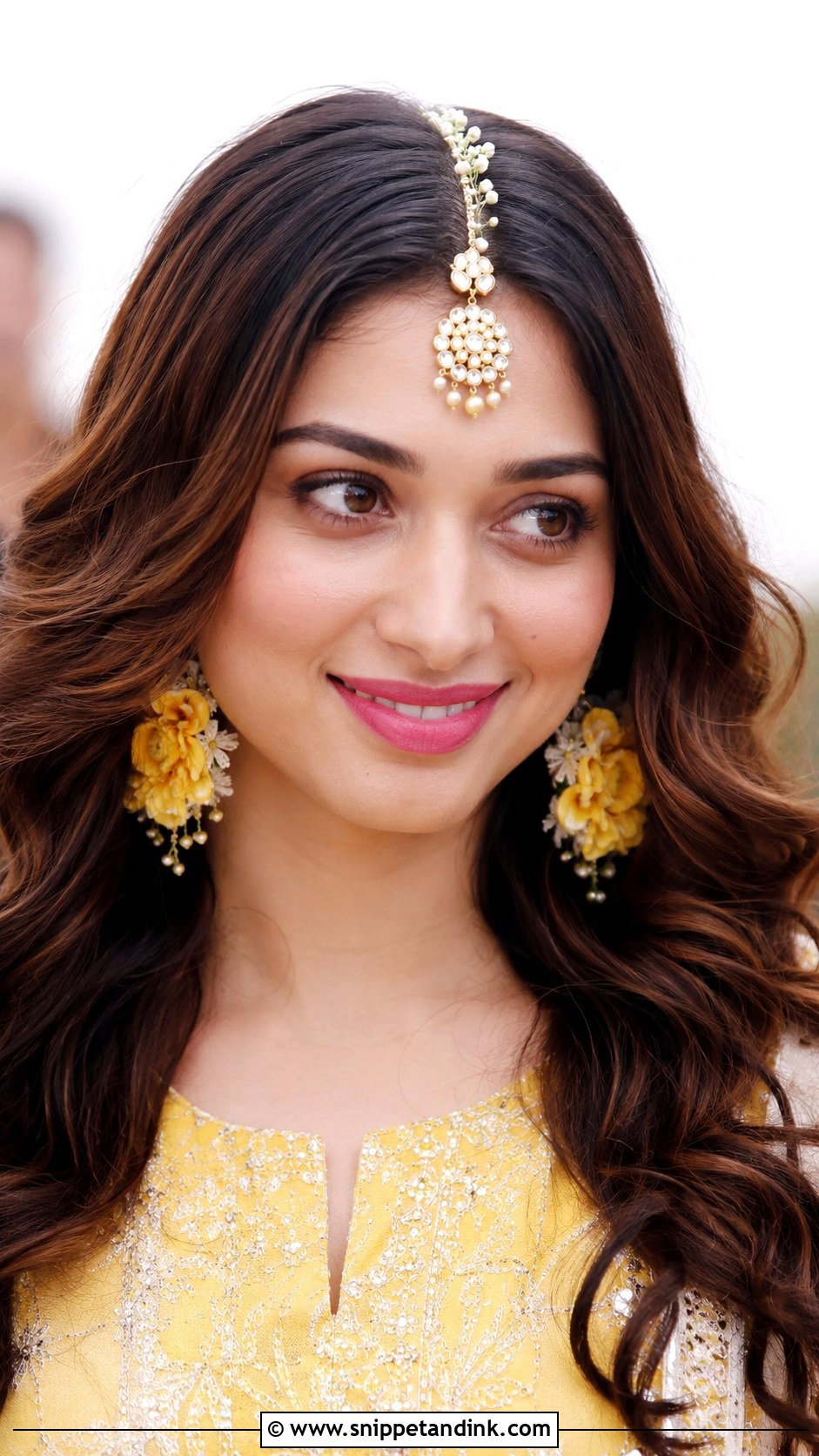
Open hair with a center maang tikka accent relies on a dead-straight centre part, so I spend more time on that part than anything else. The tikka chain is pinned under a small section near the crown so it doesn’t slide sideways. A few small flowers along the part soften it. This one suits brides who want jewellery to lead, but keep the tikka lightweight, as a heavy piece pulls the part crooked within an hour.
24. Braided Bun With Gajra
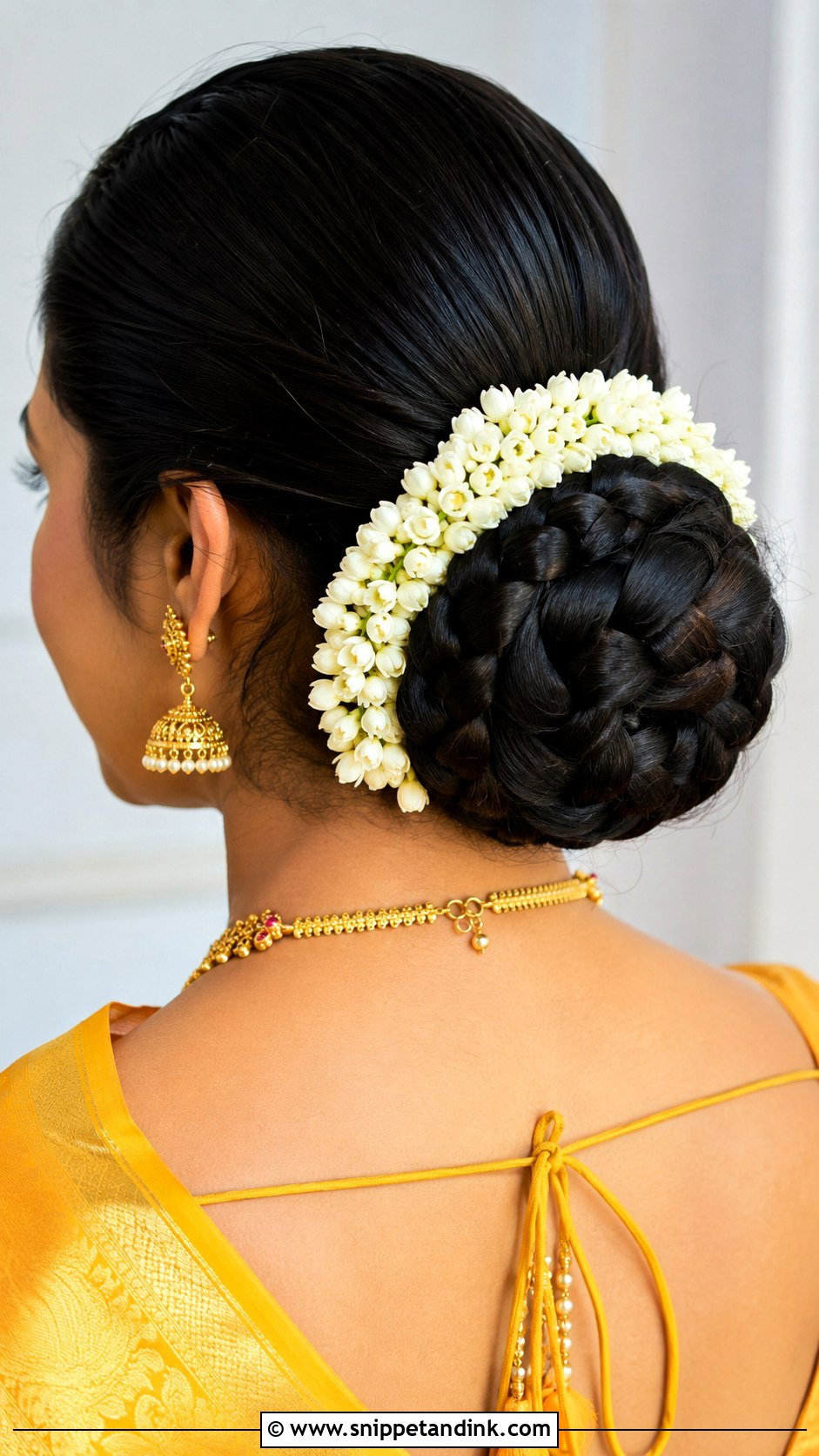
A braided bun with gajra is the more detailed sister of the low bun above. I braid the hair first, then coil the braid into a bun at the nape and pin it at every turn. The braid texture gives the gajra a better grip than smooth hair. It suits silk sarees and temple jewellery, and it stays put through hours of ceremony, which makes it a sensible choice for a bride with a long Haldi.
25. Loose Side Braid With Roses
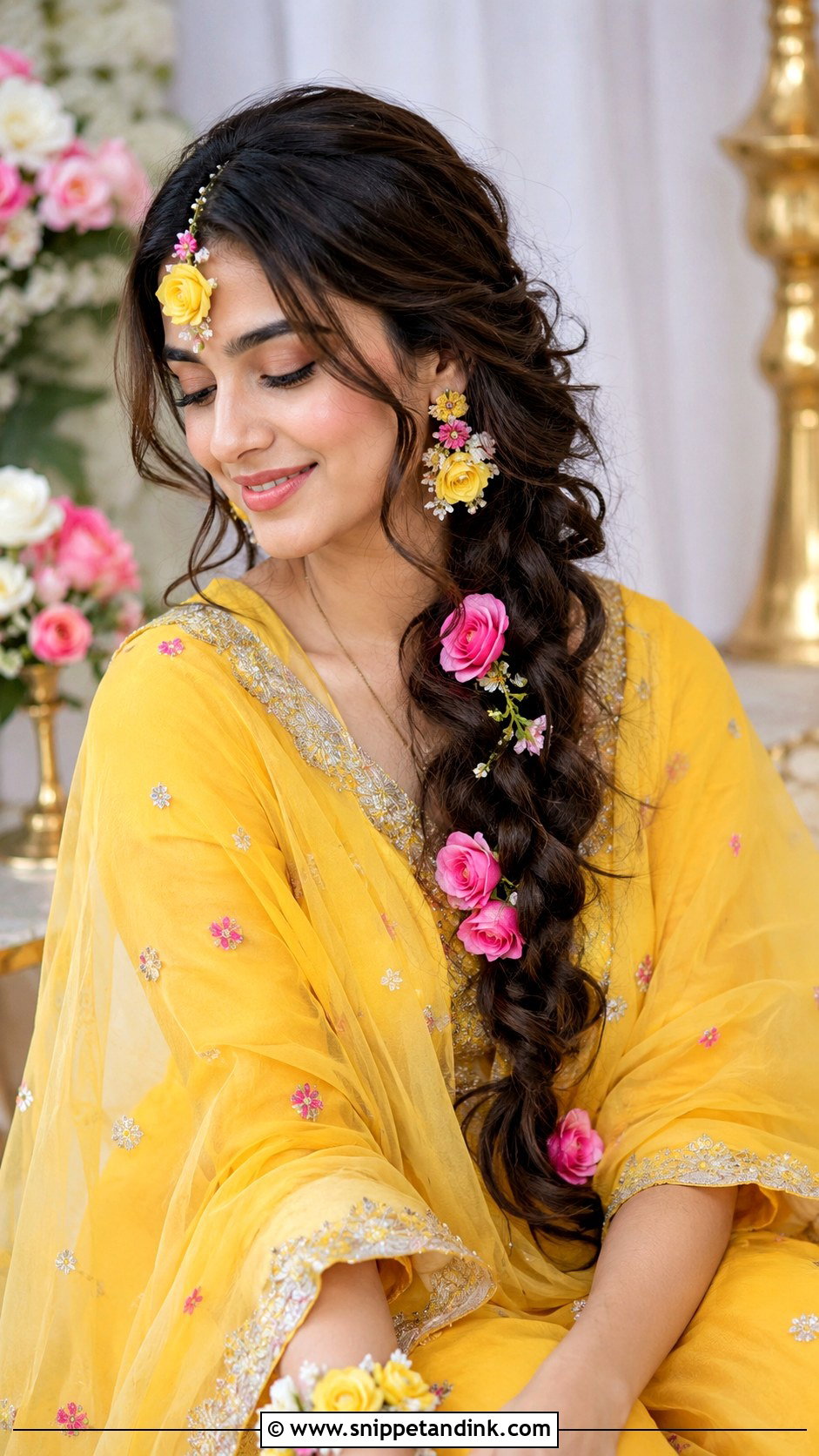
A soft side braid with roses ends this list. Sweep the hair to one shoulder, braid it loosely, then tuck in small rosebuds rather than full open roses, which drop petals fast. Pull the braid apart gently once the flowers are in, not before, or the gaps lose their hold. It frames the face and stays comfortable through a long morning, and rosebuds keep their shape in photos far longer than petals.
Washing Turmeric Out Before Mehndi or Sangeet
Many families hold Haldi in the morning and another function that evening, which leaves a short gap to wash and restyle. I tell brides to take the flowers out first, then brush gently from the ends up to loosen dried paste before it gets wet. Wet paste spreads, while dry paste mostly brushes out.
A clarifying shampoo removes the oil and turmeric better than a gentle one. Follow with conditioner, since the gram flour and turmeric can leave lengths feeling dry. Blow-dry fully before restyling. Pins and curls don’t hold in damp hair, and that is the most common reason an evening style drops early.
Adapting these looks for curly, short or fine hair
- Natural curls: a braid or a bun keeps curls defined through the paste; open curls tend to frizz once they get damp.
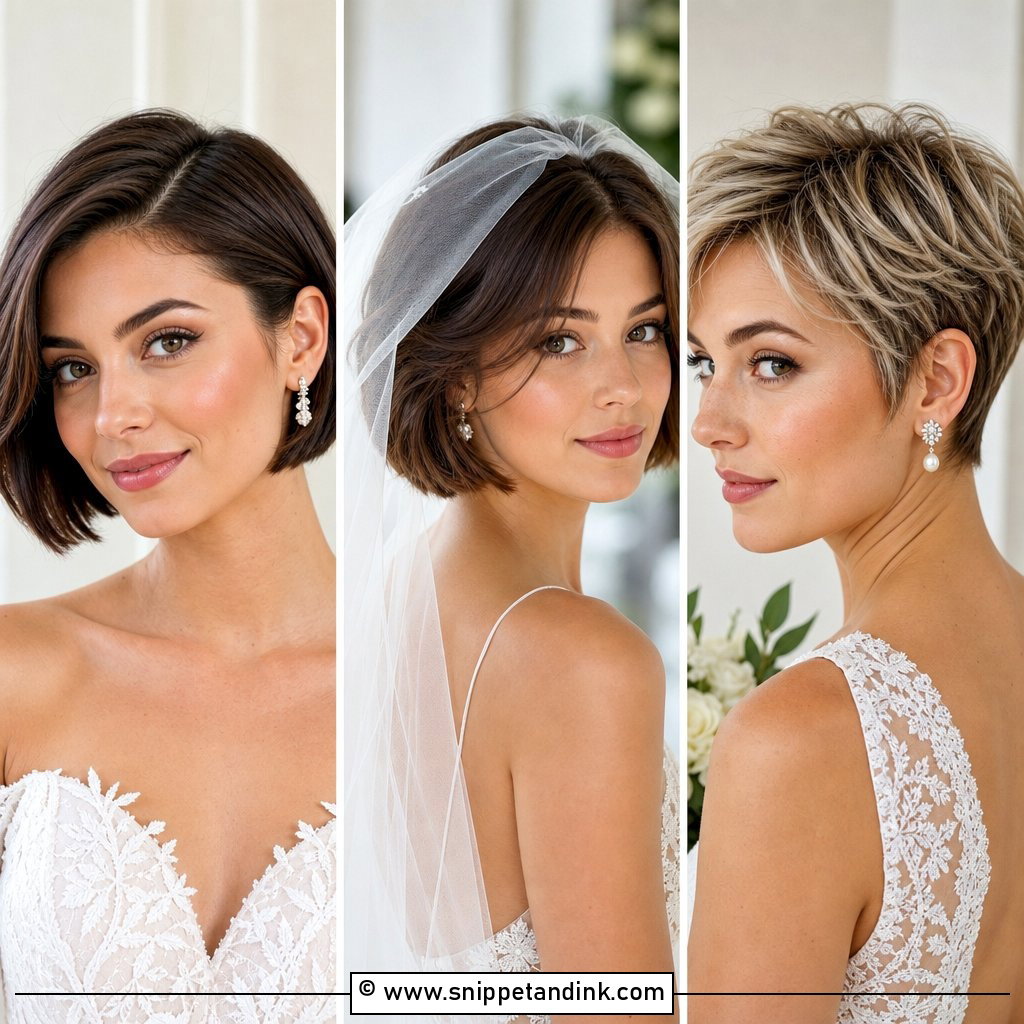
- Hair above the shoulders: twisted half updos, a flower band and side flowers all work at this length. Long fishtails and gajra buns don’t.
- Fine hair: keep flowers light, pin them into small hidden twists, and use a texturising spray for grip instead of extra pins.
- Thick hair: a gajra bun may need twice the pins, and a high ponytail can get heavy after a few hours.
Plan for a Little Turmeric in Your Hair
Haldi is meant to be messy, so the best hairstyle is the one you won’t mind getting turmeric in. Braids, buns and twists hold up best; open hair looks soft but needs the most care. Match fresh marigold, jasmine or rose to your outfit, add the flowers last, and give yourself enough time to wash and restyle before the next function.
You'll Like These Ideas:


Leave a Reply