
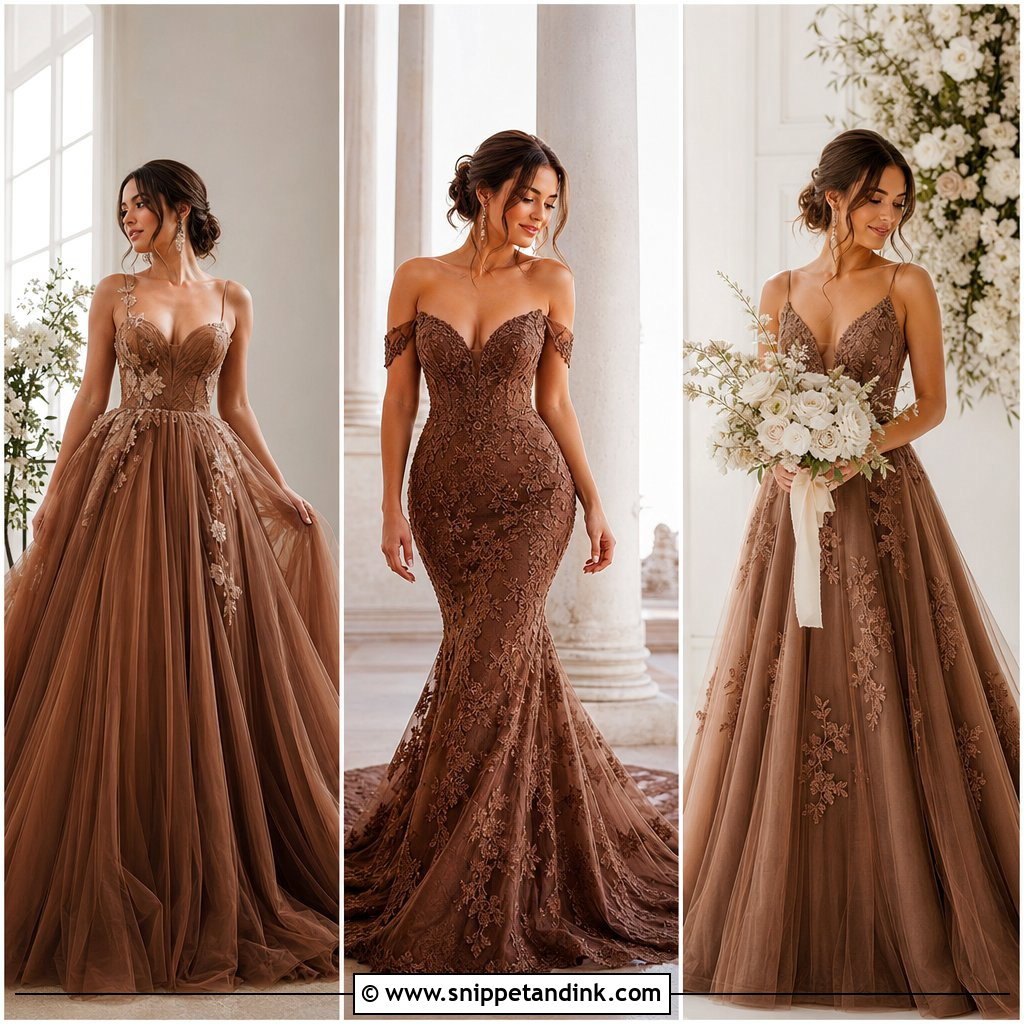
A brown bridal gown is one of the few colored options I see brides wear without regretting it a year later, mostly because brown sits so close to skin tones and natural fabrics. The family is wider than people expect: taupe and mushroom on the cool, greyed side, caramel and toffee in the middle, chocolate, espresso and mahogany at the deep end, with bronze and copper carrying a metallic warmth. Each fabric changes the shade you see. Satin throws light and reads lighter on the high points, velvet swallows light and reads darker, and tulle layers soften any brown toward beige. Below are twenty complete looks, gown to veil, with notes on where each one holds up and where it struggles.
Which Brown Suits Your Skin? Test It by a Window
Brown is unforgiving near the face in a way ivory isn’t. The wrong shade makes skin look sallow or grey, and you only notice once you see photos. I don’t trust store lighting for this. Ask for a fabric swatch, or take the sample to the shop window, and hold it right under your chin in daylight with no makeup on.
- If gold jewelry flatters you more than silver, start with caramel, cinnamon, copper and toffee.
- If silver and pearls look better on you, try mushroom, taupe and cooler mochas first.
- Very deep browns such as espresso and chocolate need contrast near the face, so plan an ivory bouquet, lighter veil or bright earrings.
- Olive and deeper skin tones often look richest in chocolate and mahogany, where the dress depth matches the skin’s warmth.
The fabric changes the test too. I always have brides compare the same shade in satin and in crepe if the shop has both, because satin’s shine lightens the color on every curve and crepe shows the true, flatter shade.
Ordering a Dyed Gown Takes More Time Than White
Most brown bridal gowns are made to order or custom dyed, and that adds weeks to an already long timeline. Dye lots vary, so a gown cut from one batch and a veil or wrap ordered later can come out a shade apart. When you can, order every brown piece together and ask the shop to confirm they came from the same lot.
Leave room for alterations as well. On a colored gown, hems and seams that are let out can leave a faint line where the original stitching sat, so I’d rather take a dress in than let it out. Ask about this before you pick a size.
1. Chocolate Brown Satin Wedding Dress
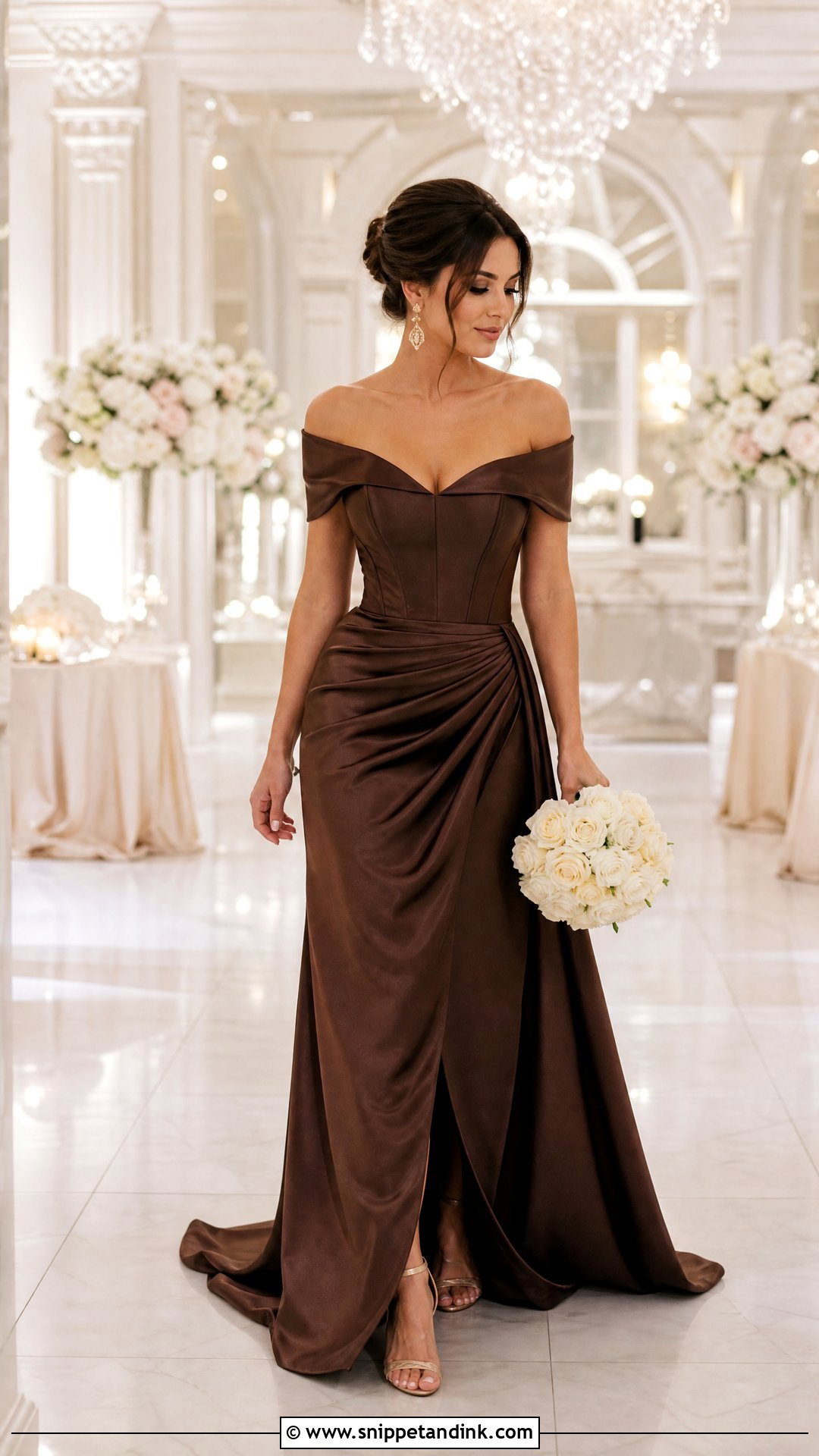
Chocolate satin is the most formal brown on this list, and the one that shows every wrinkle. Satin in a deep shade creases visibly across the lap once you sit for dinner, so I’d ask the shop whether the fabric is a heavier duchess satin, which recovers far better than a thin charmeuse. A structured bodice with a draped waist and a sweetheart or off-the-shoulder neckline keeps that depth from feeling heavy. Gold drop earrings, champagne pointed heels and ivory roses give the contrast the color needs. A low bun or glossy waves, plus a fingertip veil in mocha tulle, finish it for a ballroom or hotel.
2. Mocha Brown Lace Wedding Dress
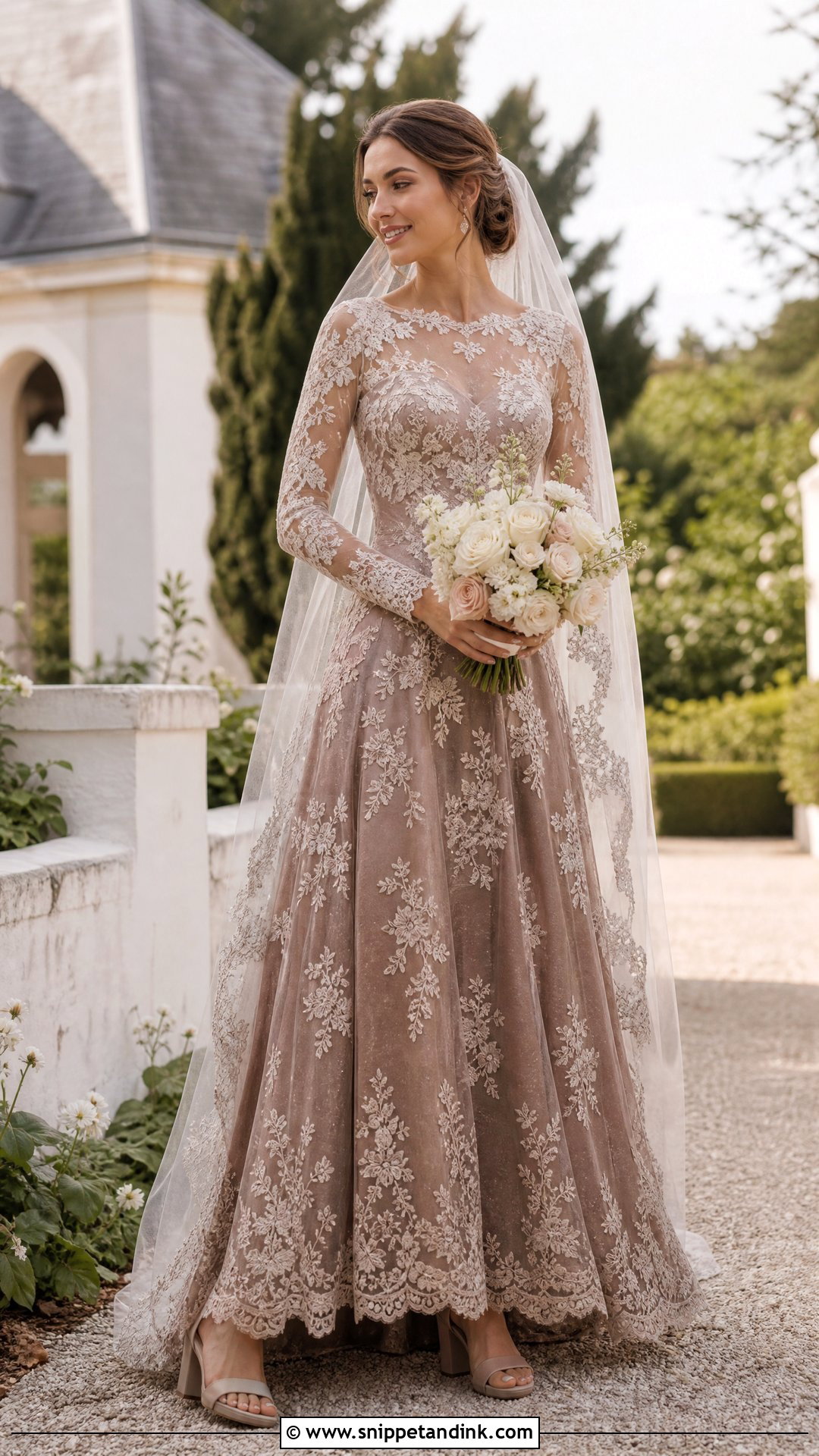
On a mocha brown wedding dress, lace only shows if the lining underneath is a shade lighter than the lace itself. When lace and lining match exactly, the floral pattern disappears from more than a few feet away, which is the first thing I check when a gown arrives. An A-line with illusion sleeves and a modest V suits this, worn with pearl-and-gold earrings, taupe block heels and cream roses with eucalyptus. A loosely twisted updo leaves the neckline clear. For a garden ceremony that cools after sunset, a wrap dyed to the same undertone saves you from a mismatched cardigan.
3. Espresso Brown Mermaid Wedding Dress
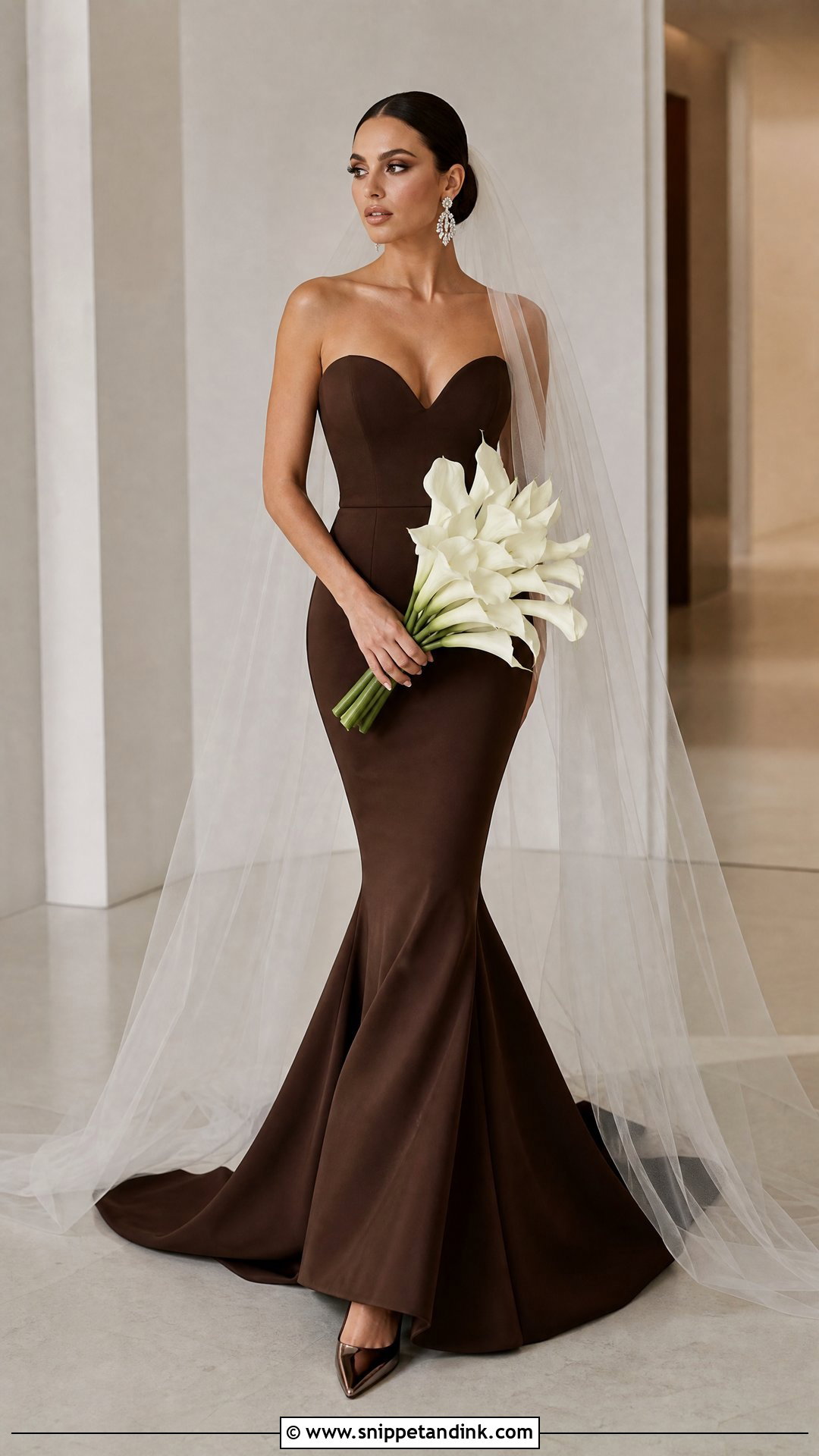
Espresso in a mermaid cut is a confident choice, and an honest one only if you’re comfortable in a fitted skirt for hours. The flare should start at or just above the knee; set it too high and walking turns into a shuffle, too low and stairs become a problem. Stretch crepe forgives more than satin here and shows fewer seat creases. A little beading at the neckline catches light that the dark fabric would otherwise absorb. Bronze heels, crystal drops, ivory calla lilies and a smooth low chignon with a long sheer veil suit an evening ceremony in a modern venue.
4. Caramel Brown A-Line Wedding Dress
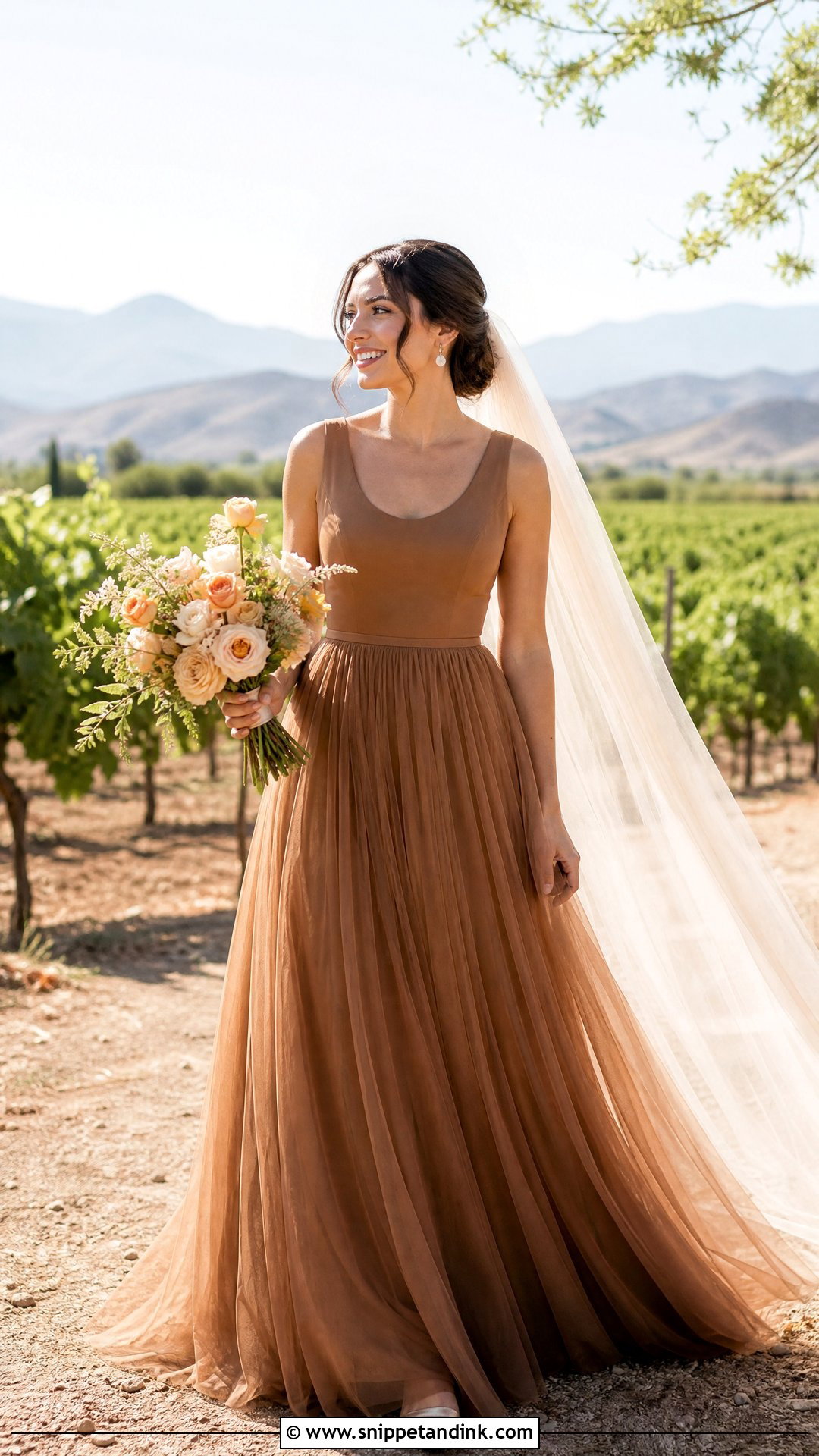
Caramel is the brown I suggest first to brides who are nervous about color, because it reads warm and light in daylight rather than dark. In an A-line with a fitted waist and a square or scoop neckline, chiffon gives movement and satin gives shape. Light gold sandals, a small pendant and pearl studs are enough. With the bouquet, I make sure there’s peach or ivory in it, since an all-tan bouquet blends into this shade and vanishes in photos. Soft waves or a low textured ponytail and a champagne veil suit a spring vineyard or garden.
5. Taupe Brown Tulle Wedding Dress
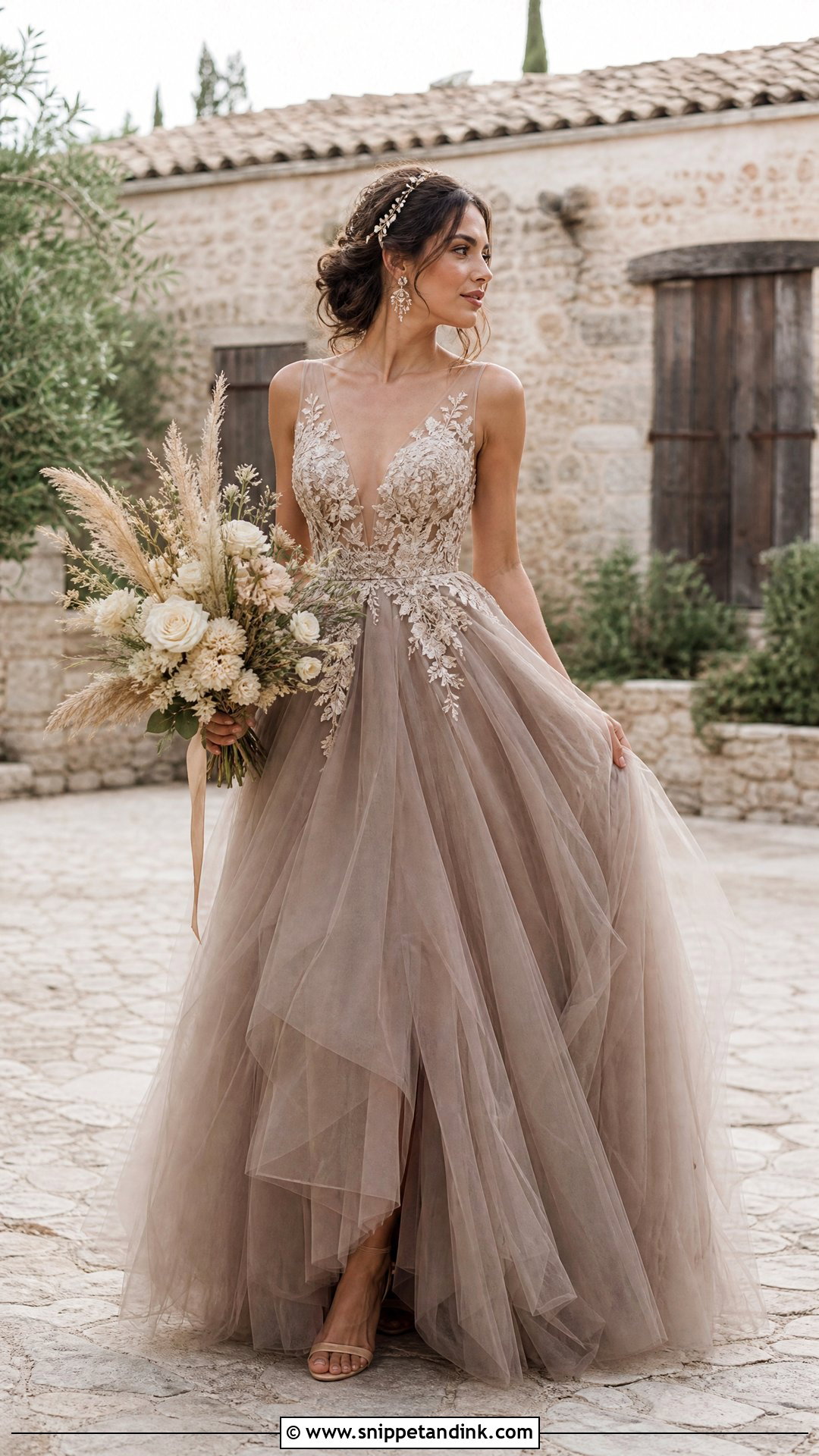
Taupe tulle has a greyish cast that can wash out very fair or very warm skin, so hold it to your face by a window before committing. Layered over a fitted bodice with thin straps or short illusion sleeves, the skirt gets volume without weight. Floral appliqués in champagne and muted ivory add depth while staying inside the neutral range. I’d pair it with crystal earrings, nude heels and a slim gold hair vine, and a loose bouquet of cream flowers and dried grasses. Tulle snags on rough bark and wooden benches, which matters at rustic venues; a cathedral veil adds ceremony drama outdoors.
6. Bronze Beaded Brown Wedding Dress
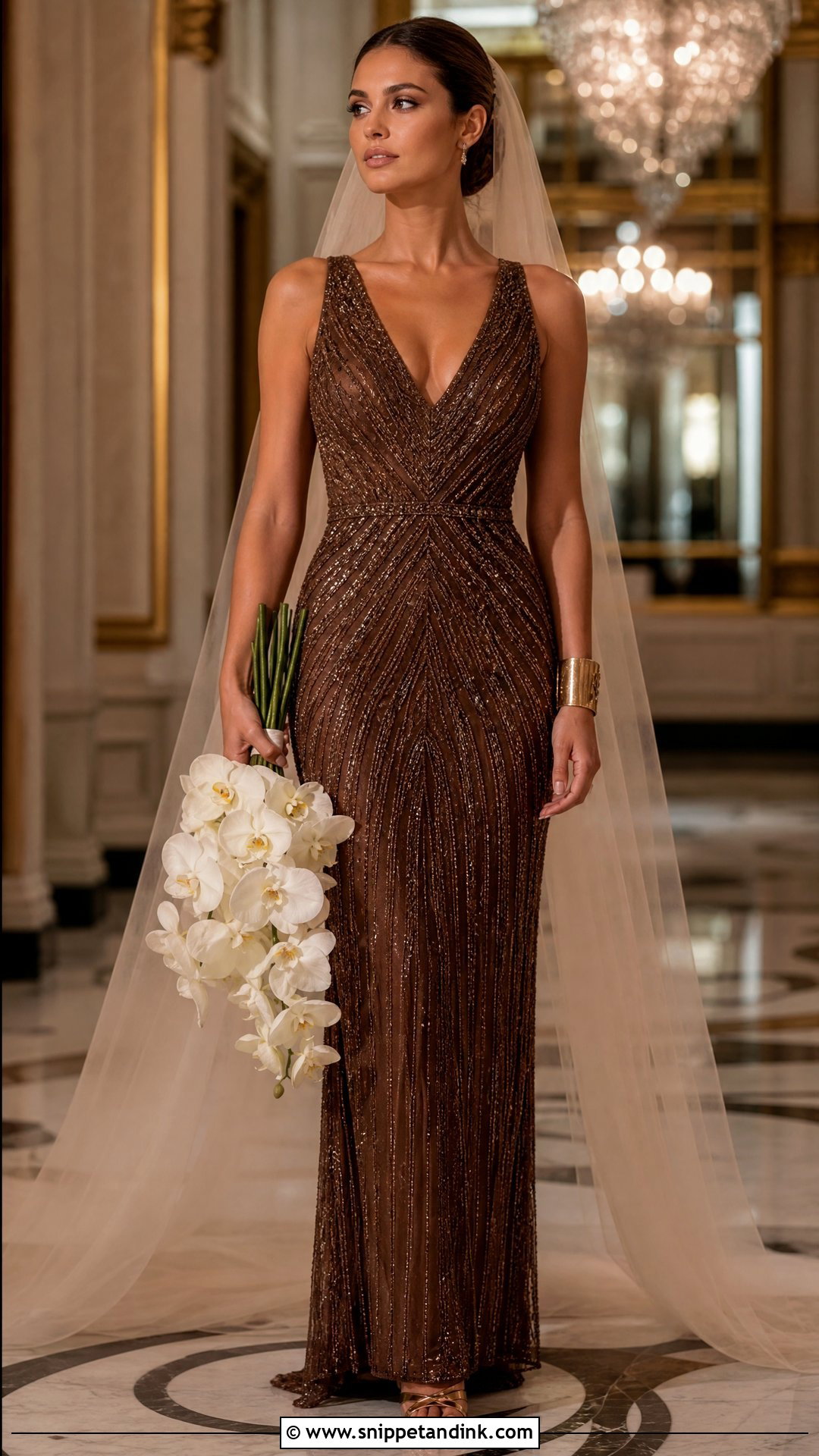
Bronze beading on a brown base gives sparkle that looks warmer than silver sequins. I steer brides toward fine, flat bead work rather than large sequins, partly for the look and partly because big sequins scratch the inside of your arms over a long night. A column or fitted A-line with a V-neck and narrow straps keeps the silhouette clean. Add bronze heels, gold studs and one cuff, and carry orchids or calla lilies. A sleek ponytail or low bun leaves the beadwork as the focus, with a plain champagne veil so nothing competes. Evening ballrooms and gallery spaces suit it.
7. Cinnamon Brown Long Sleeve Wedding Dress
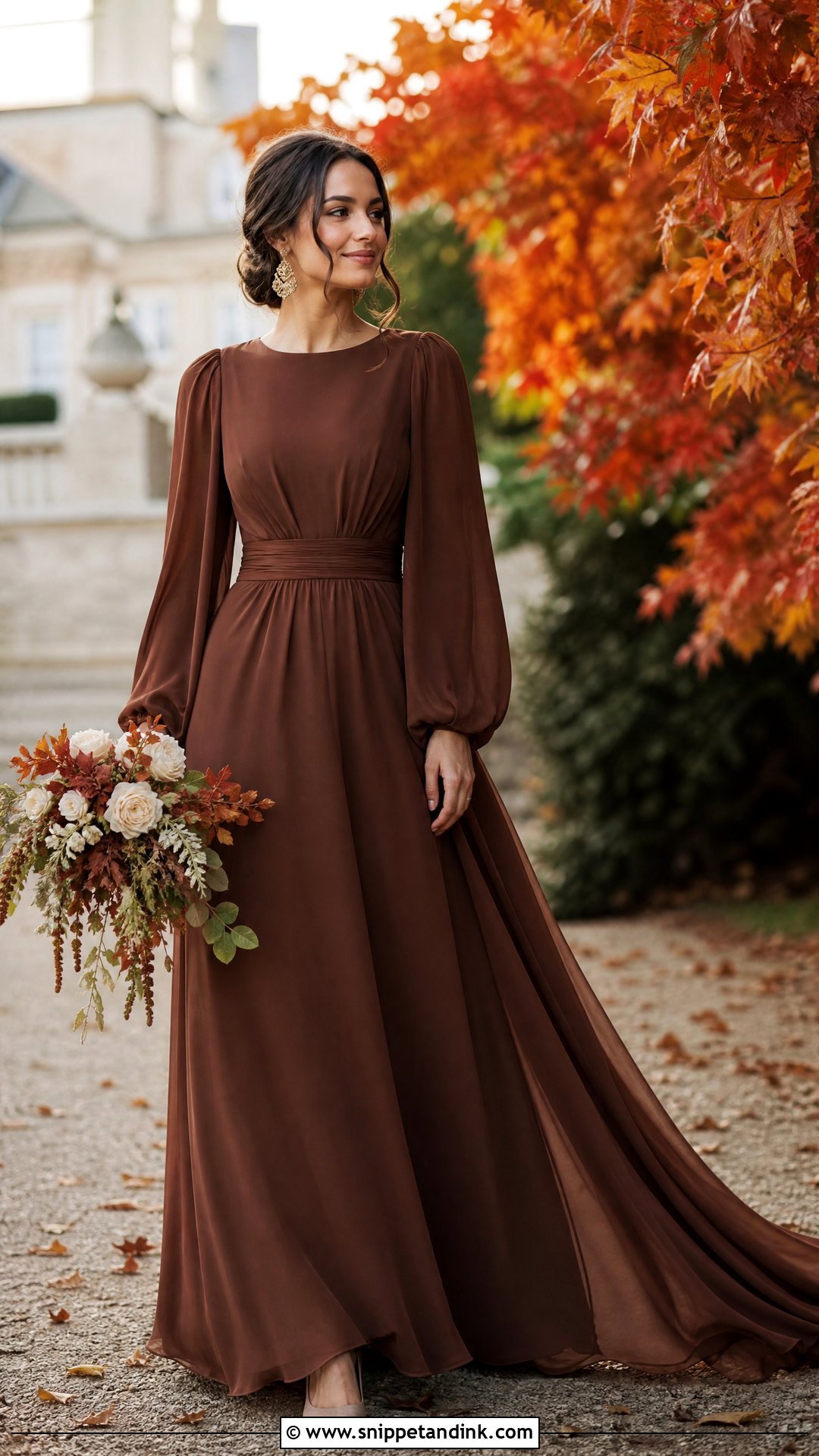
Picture a cool fall ceremony with the trees turning. A cinnamon brown long sleeve wedding dress belongs in that setting, in flowing chiffon or matte crepe with a fitted waist and gently gathered sleeves. Long sleeves are where fittings go wrong most often: raise both arms during your fitting, because a sleeve set too tight in the armhole pulls the whole bodice up when you hug or dance. Covered buttons at the cuffs or back are a quiet detail. Antique gold earrings, closed taupe heels, cream and rust flowers and a loose braided updo suit an orchard or country estate.
8. Coffee Brown Off-Shoulder Wedding Dress
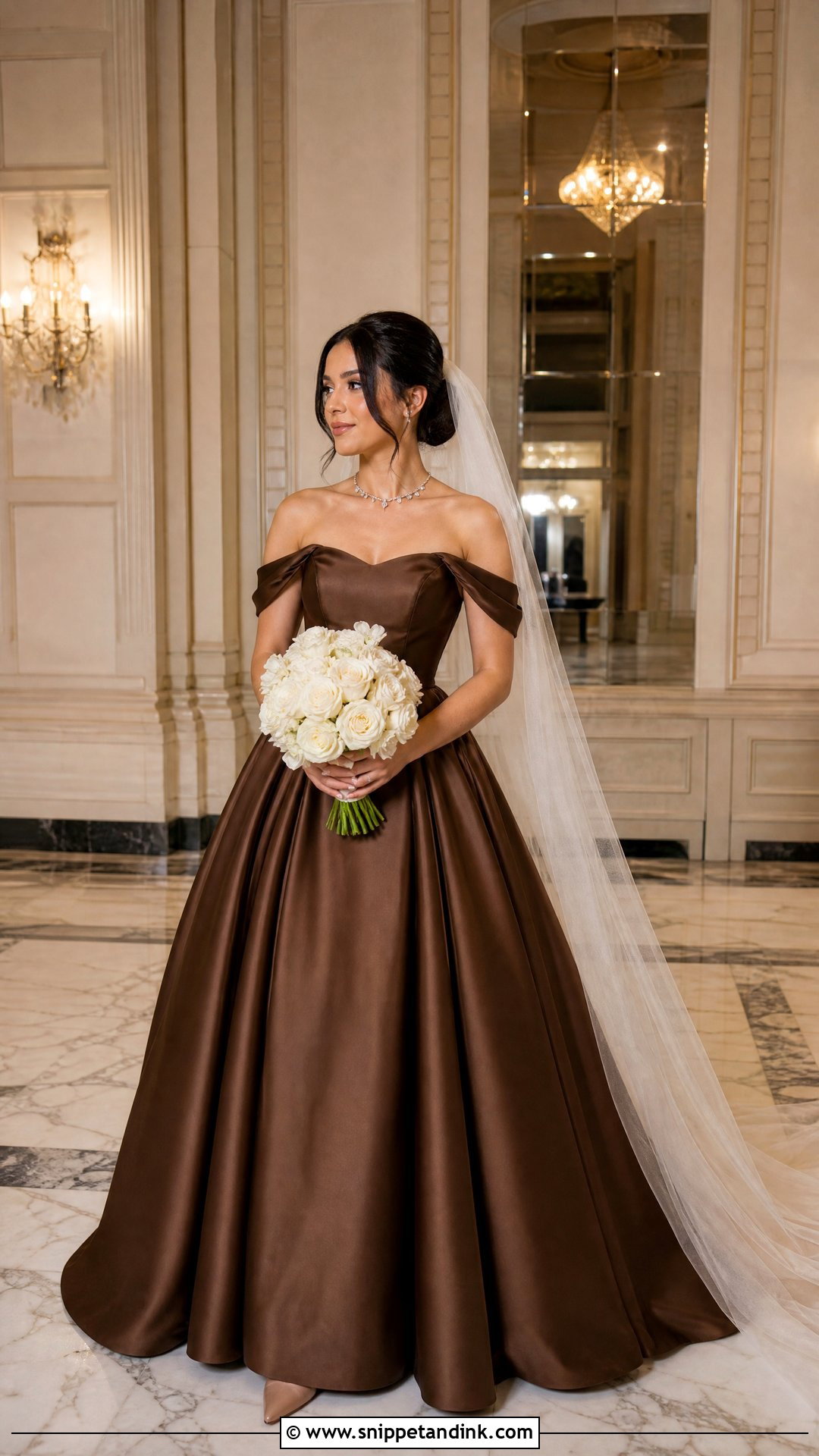
A coffee ball gown with folded off-shoulder sleeves pairs a classic shape with an unexpected color. The catch with this neckline is that the sleeves need to sit snugly on the upper arm, or they slide down every time you lift your bouquet; I always have the bride lift her arms in front of a mirror at the final fitting. Champagne pumps, a short crystal necklace and ivory roses brighten the deep fabric. A polished updo shows the shoulders, with the veil anchored under the bun. Long satin gloves suit a very formal hotel ballroom, as long as the rest stays simple.
9. Mushroom Brown Chiffon Wedding Dress
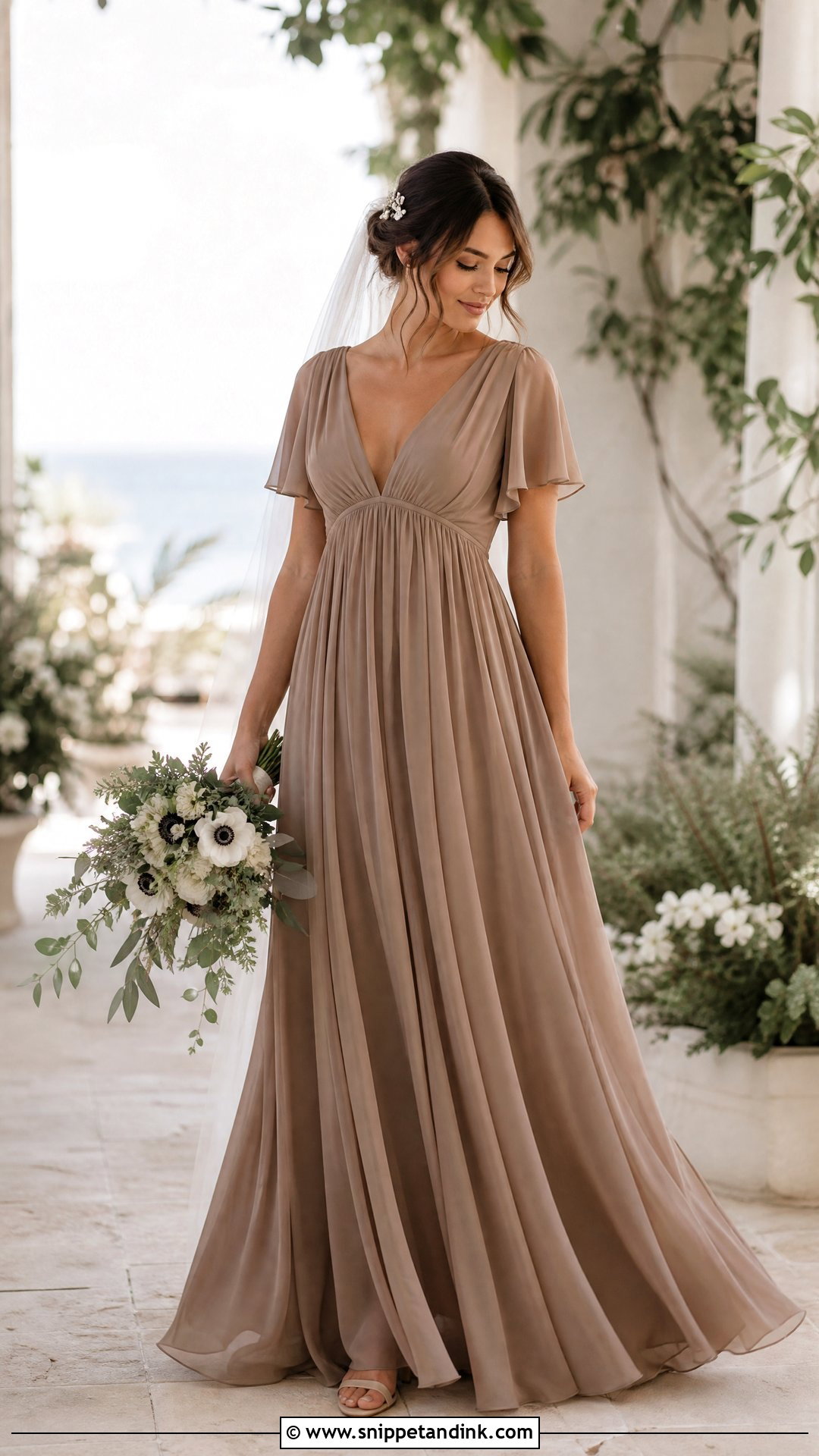
Mushroom sits where brown, grey and taupe overlap, and it behaves like a cool neutral. That’s why I pair it with silver-toned earrings and a pearl comb rather than yellow gold, which can make it look muddy. A flowing empire waist or relaxed A-line in chiffon, with flutter sleeves and several light skirt layers, suits its understated mood. Cool taupe sandals, white anemones and ivory roses, a loose low bun or waved bob, and a chapel veil in pale taupe complete it. It’s a quiet choice for a small garden or coastal ceremony.
10. Copper Brown Corset Wedding Dress
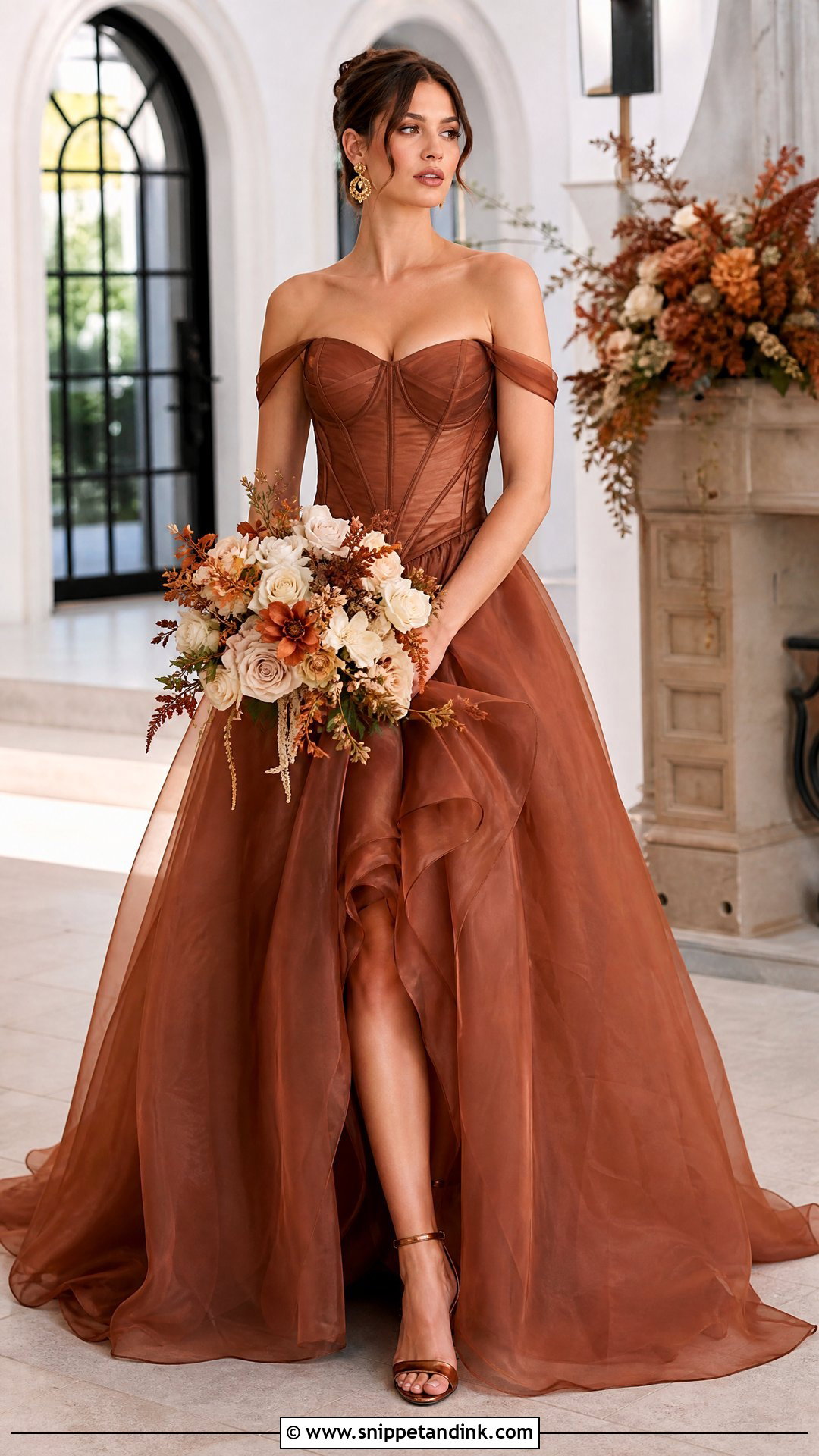
Copper in a corset bodice glows under warm light. Before anything else, I check the boning and the waist tape: a real corset bodice holds you up on its own, while a decorative one relies on straps and shifts as the evening goes on. A basque waist lengthens the torso, and removable off-shoulder straps give you two looks. Gold hoops, a fine bracelet and copper heels sit with cream roses and muted terracotta blooms. Waves over one shoulder balance the structure, and a plain cathedral veil comes off for a cleaner reception look in a loft or restored estate.
11. Dark Brown Velvet Wedding Dress
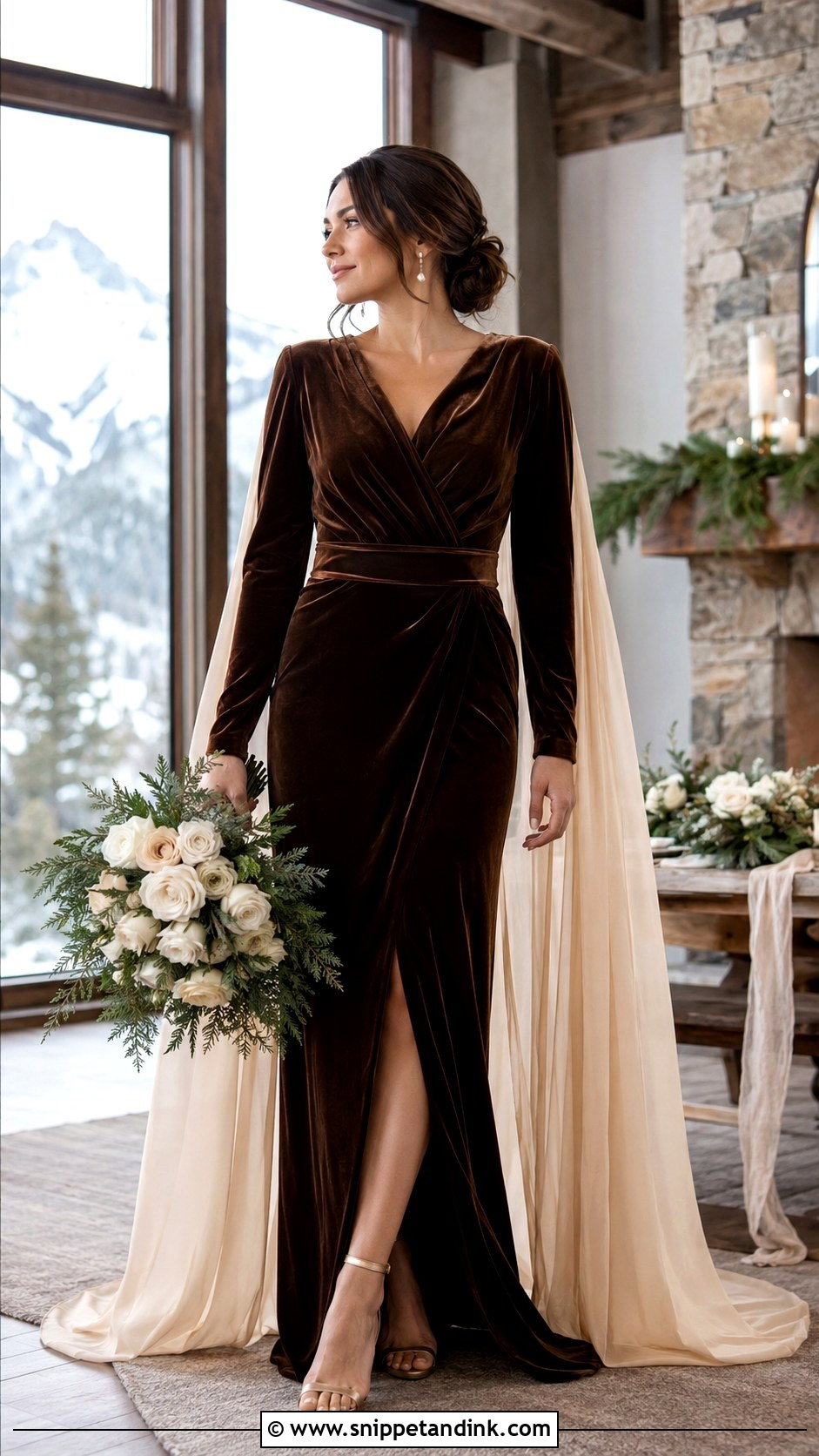
Velvet makes dark brown look its richest, and it’s warm, which is why I only suggest it for cold-weather weddings. The trade-off is crush marks. Velvet pile flattens where you sit and where hands rest on your waist, so steam it rather than iron it, and never press it face down. A wrap bodice with long fitted sleeves and a small side slit keeps it moving. Gold ankle-strap heels, pearl drops, ivory roses with evergreen, and polished waves with a gold comb are enough. A detachable champagne chiffon cape replaces the veil nicely at a winter lodge or hotel.
12. Light Brown Boho Wedding Dress
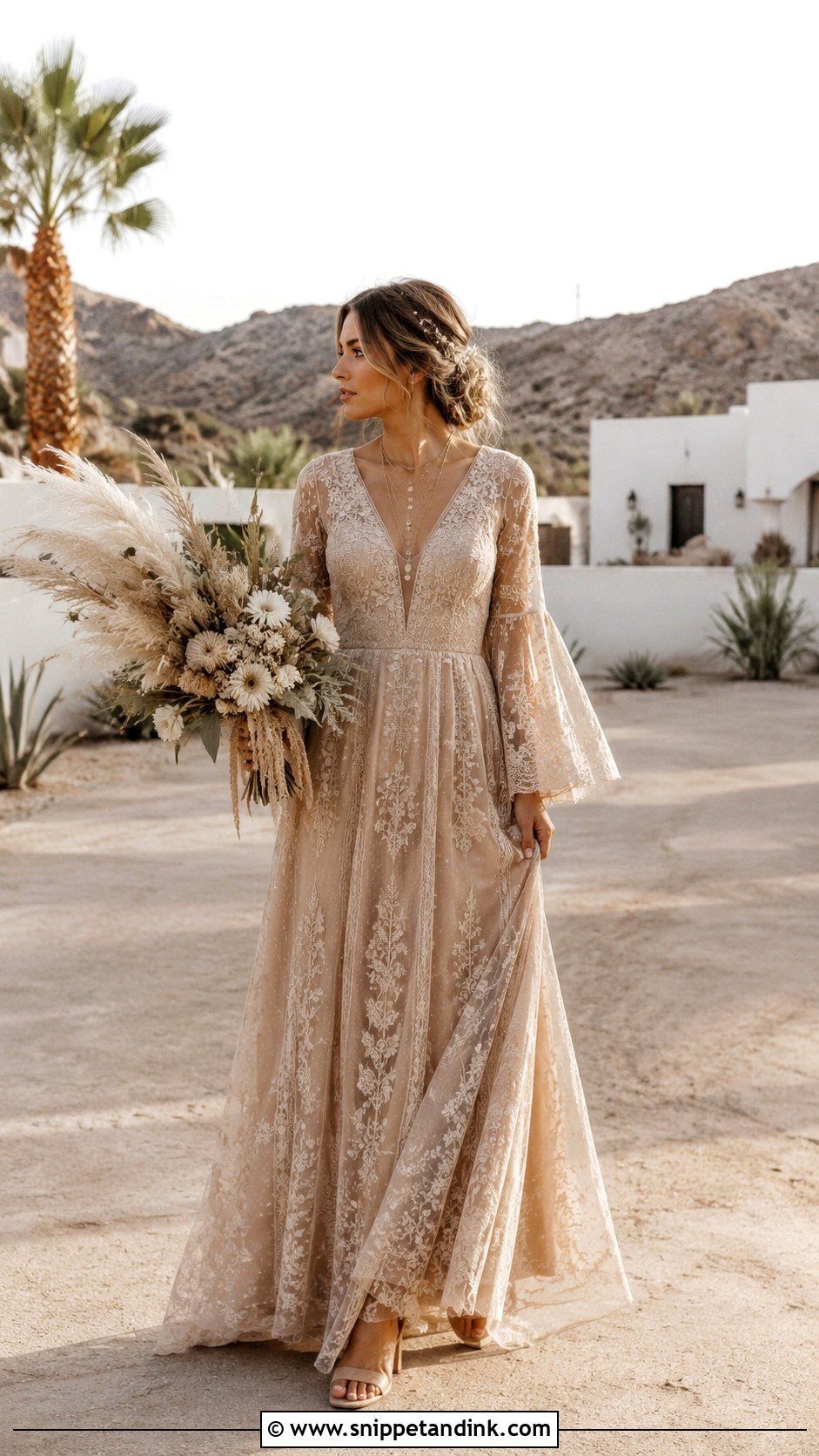
Light brown boho needs to move, so I look first at the skirt lining: a relaxed lace dress with a stiff, narrow lining loses the whole point. Soft lace or embroidered tulle over a fitted bodice, with bell sleeves, a low back or a modest front slit, carries the free-spirited shape. Tan block-heel sandals sink less on grass than stilettos. Layered gold necklaces, small floral earrings and a loose bouquet with pampas and olive branches suit it, along with natural waves or a low braid with pearl pins. A chapel veil or light lace cape works for desert or woodland settings.
13. Chestnut Brown Ball Gown Wedding Dress
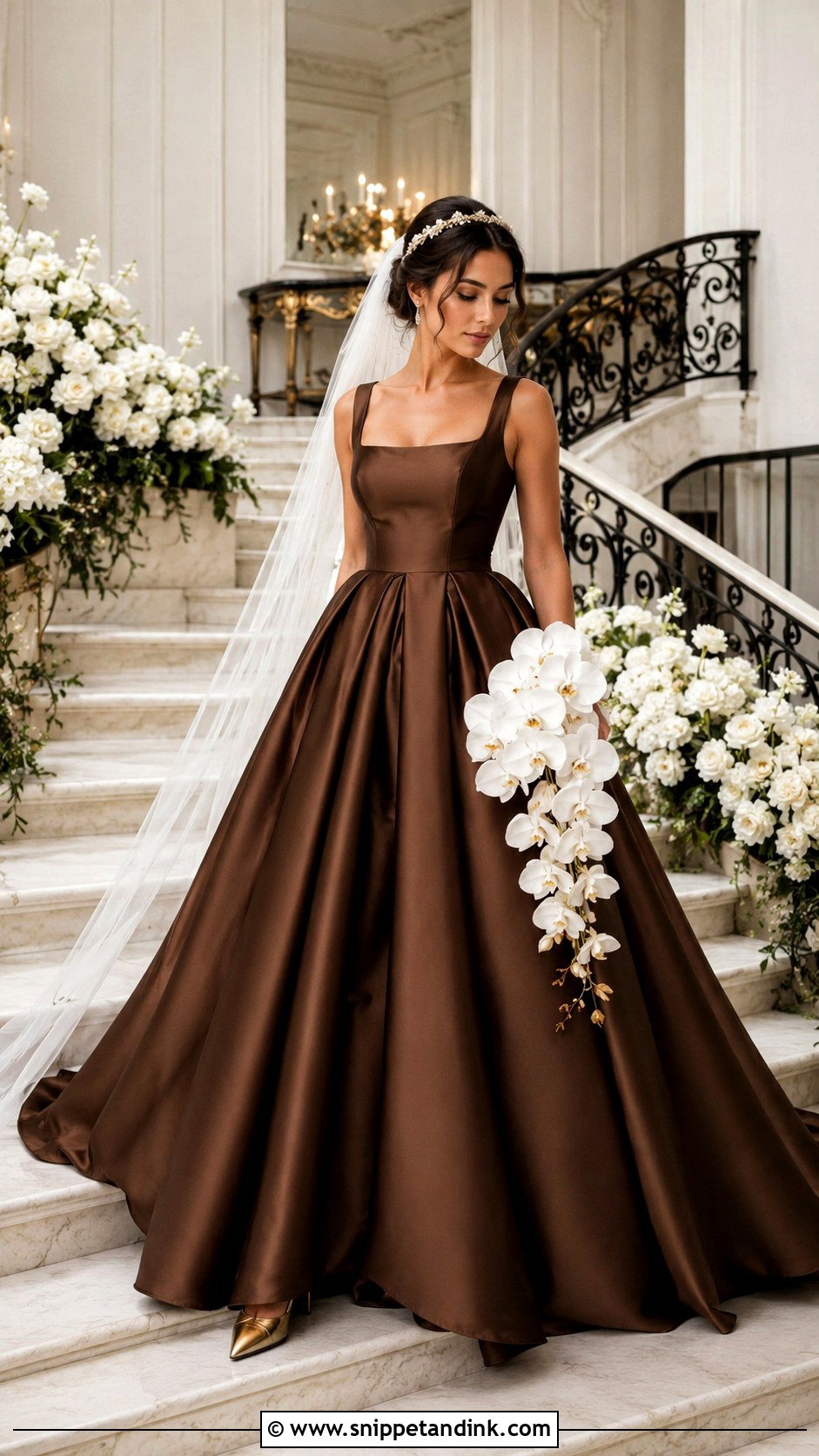
Few shapes feel as celebratory as a full chestnut ball gown. The reddish undertone makes the traditional silhouette look regal, and mikado holds that volume better than soft satin because it’s stiffer and creases less. A square neckline with a structured bodice suits a tiara or crystal headband and refined drop earrings. A cascading bouquet of ivory orchids balances the skirt’s width. Keep the hair in a smooth bun. An ivory veil gives clear contrast; a chestnut one blends in completely. Do measure the doorways and the aisle at your venue, since this skirt needs room to turn.
14. Cocoa Brown Slip Wedding Dress
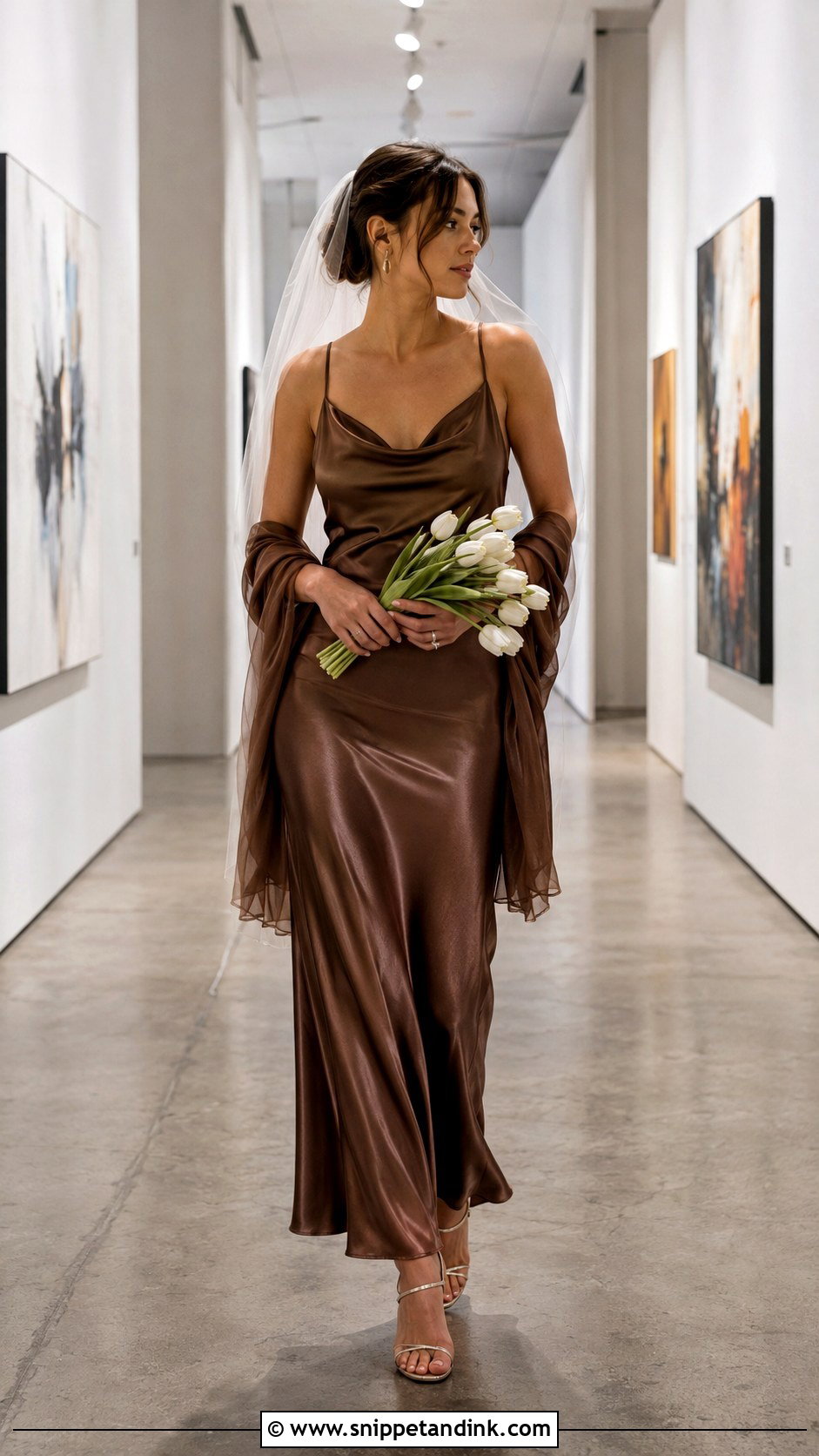
Clean and understated, a cocoa slip dress suits a small or less formal celebration. Bias-cut satin follows the body closely, which means it shows everything underneath, so I always ask brides to bring their exact underwear to the fitting rather than deciding later. Fluid satin with a draped neckline and narrow straps, plus a cropped satin jacket or shawl for coverage, keeps it modern. Minimal gold earrings, strappy champagne heels and white tulips or calla lilies suit it. Glossy waves, a neat bun or a smooth shoulder-length style and a plain fingertip veil finish a rooftop or civil ceremony look.
15. Mahogany Brown One-Shoulder Wedding Dress
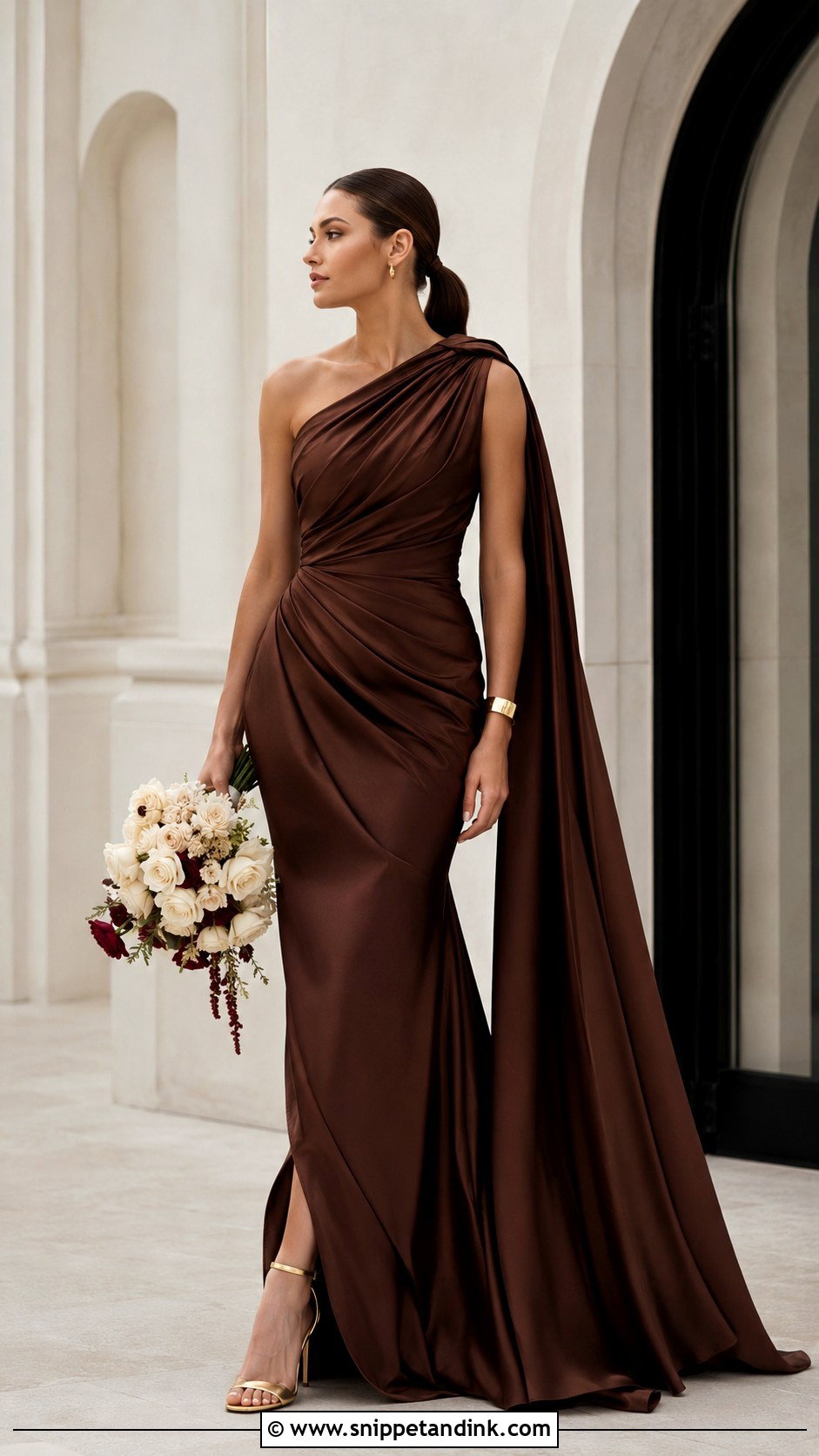
Mahogany in a one-shoulder cut is dramatic with very little decoration. Asymmetric necklines need the shoulder strap fitted firmly, or the bodice twists toward the bare side by the time you cut the cake, which is why I have it tacked or fitted with a stay. Soft gathering across a crepe or satin bodice and a natural waist keep it sophisticated. Gold earrings, metallic pointed heels and a narrow cuff go with cream roses with burgundy accents. A sleek low ponytail leaves the neckline clear, and the shoulder drape can stand in for a veil at an evening ceremony.
16. Toffee Brown Tea-Length Wedding Dress
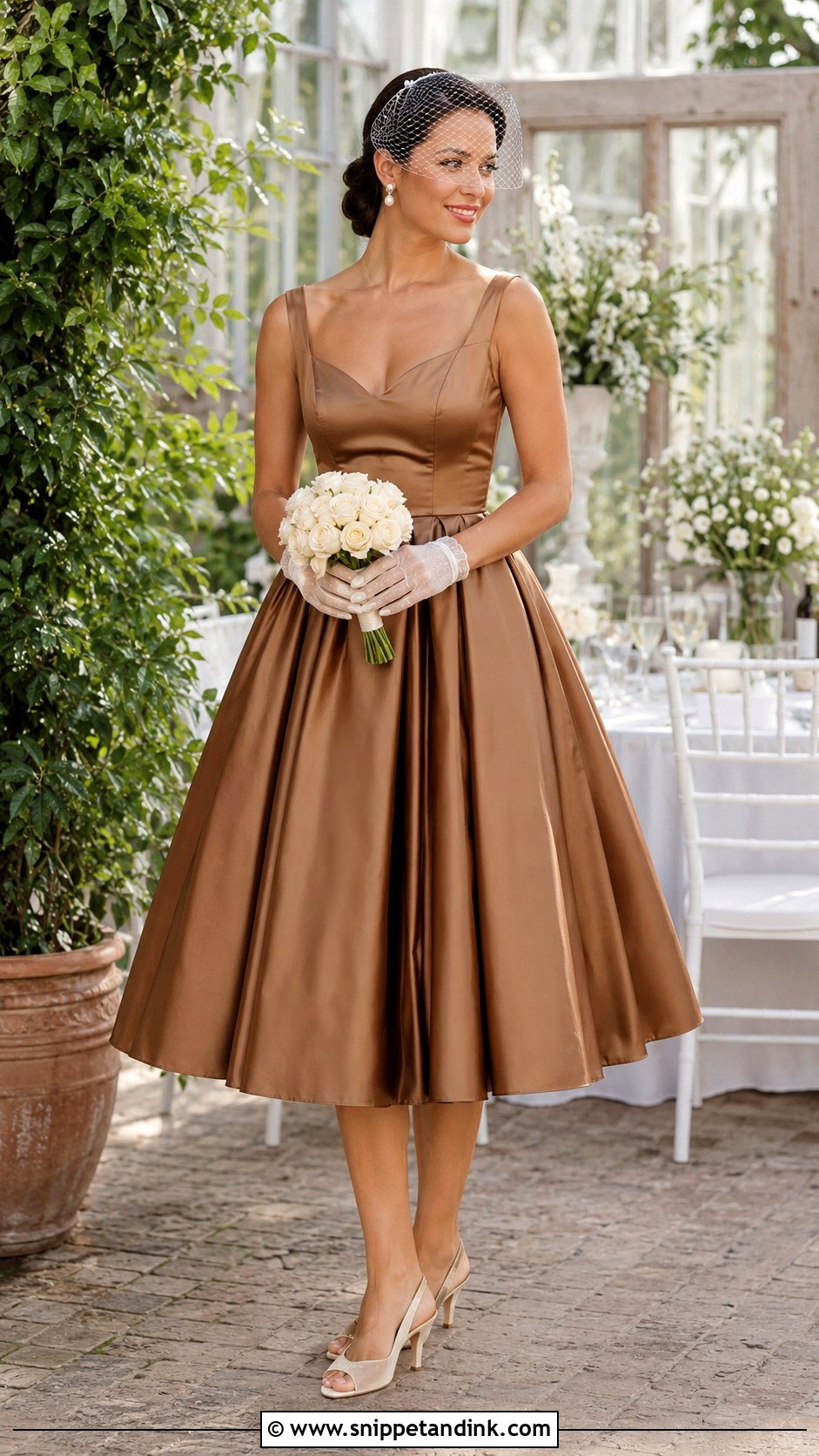
Toffee at tea length is the most comfortable dress on this list for dancing. The hem should land between knee and ankle, and I hem it with the exact shoes on, since a half-inch change in heel shifts the proportion noticeably at this length. Satin gives crisp volume, tulle a softer skirt. Ivory slingbacks, pearl earrings, short gloves and a compact cream bouquet keep it retro. Go for a birdcage or shoulder-length veil, since a cathedral veil fights this hemline. A smooth bun, softly curled bob or side-swept waves suit a courthouse or small garden reception.
17. Walnut Brown Square Neck Wedding Dress
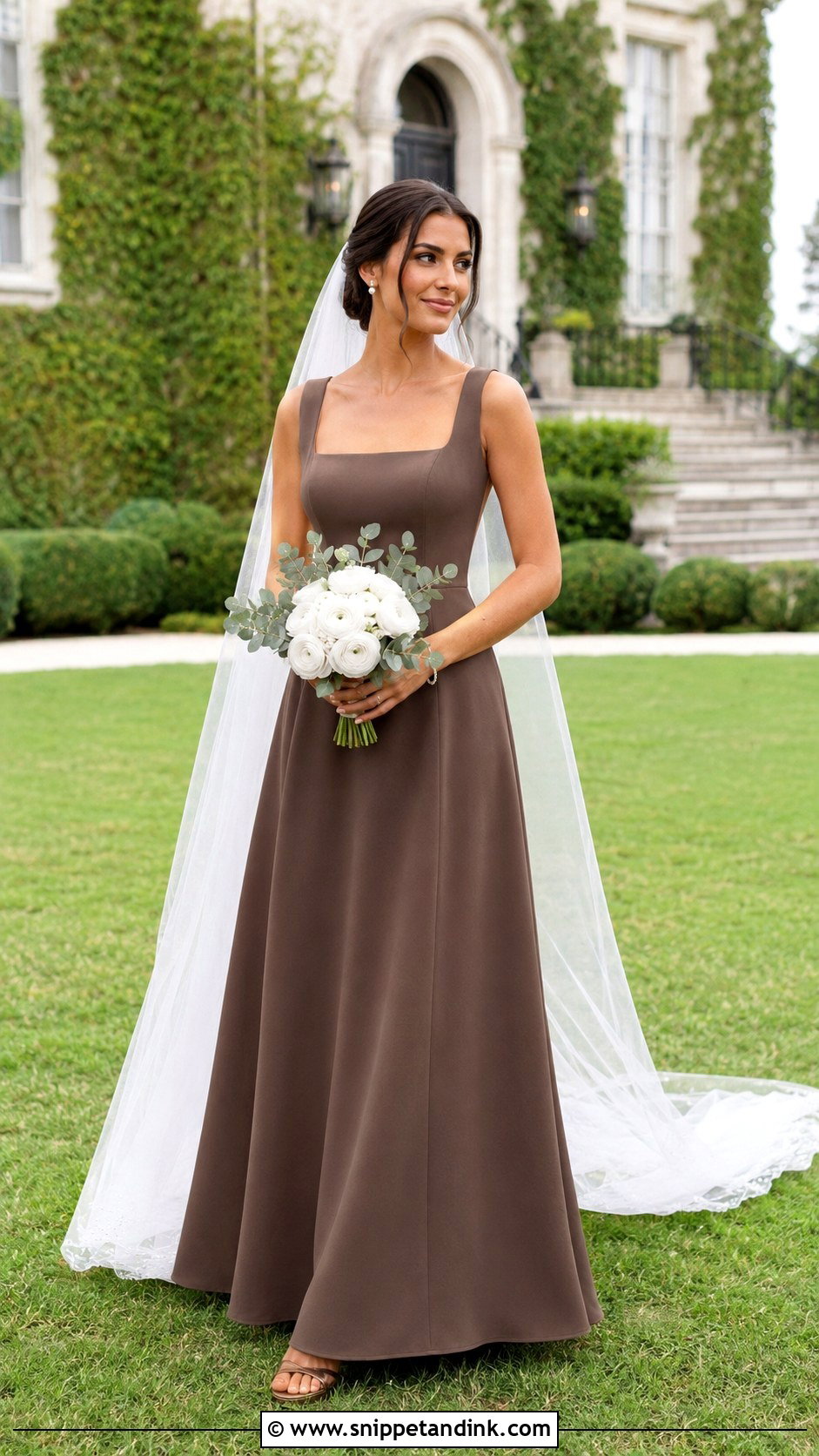
Walnut with a square neck is balanced and quietly formal. Wide straps help on fuller busts, since they carry weight that thin straps can’t. A fitted bodice with a matte satin or crepe A-line gives a clean line, and the neckline has room for a short strand of pearls or a fine chain. Bronze block heels, pearl studs and a gold bracelet sit well with white ranunculus and eucalyptus, which freshen the deep shade. A low twisted bun with a plain chapel veil tucked underneath gives a neat back view. Add a matching wrap if your date falls in a cool month.
18. Brown Floral Embroidered Wedding Dress
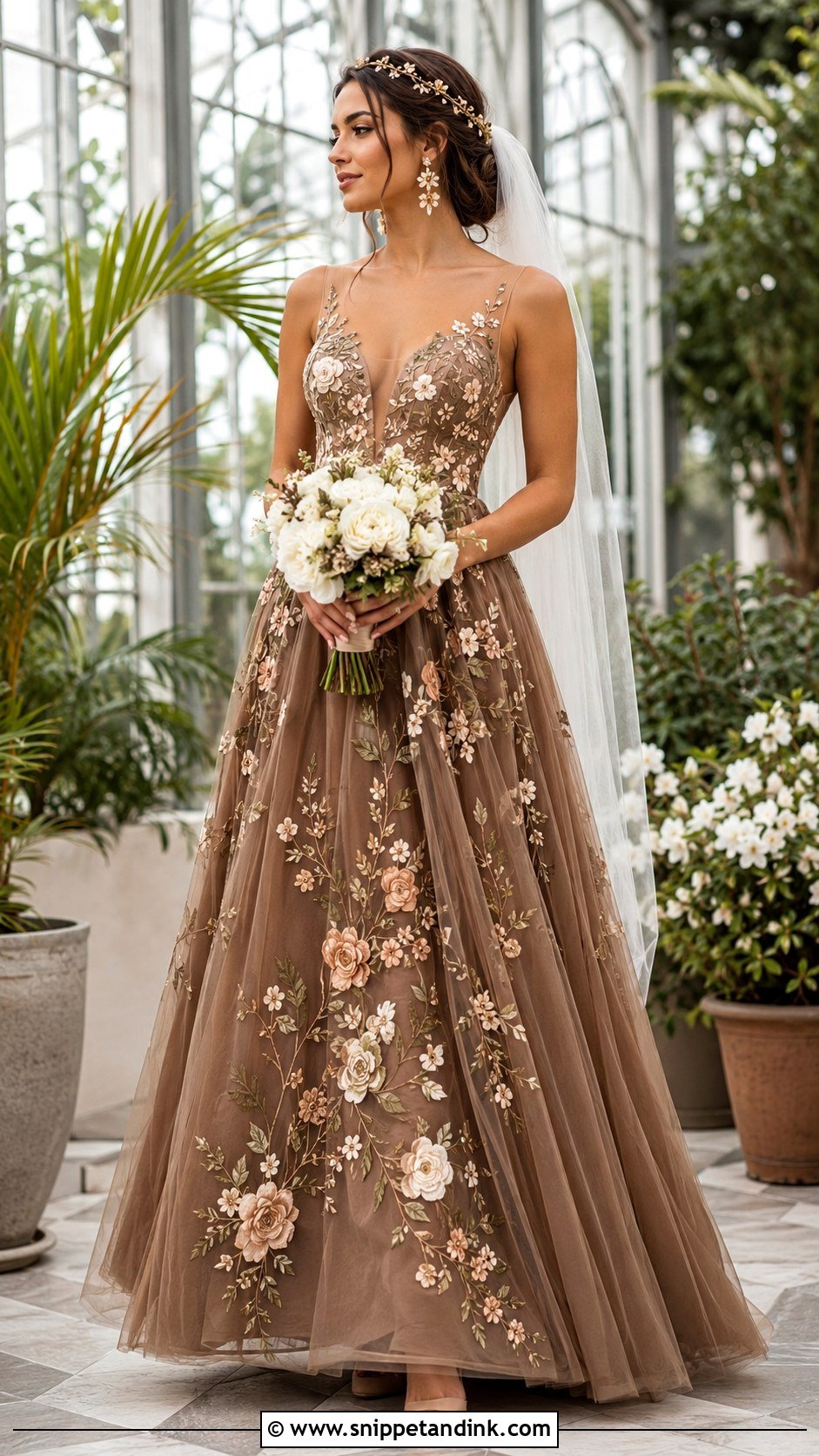
Floral embroidery brings color into brown without hiding its earthy base. On a mocha or taupe tulle gown, embroidered flowers in ivory, blush, caramel or muted green need a plain bodice and skirt around them to stand out, so I keep everything else simple. Nude heels, small botanical earrings and a delicate gold hair vine, with an all-ivory bouquet, keep the attention on the stitching. Check the reverse of the embroidery; scratchy knots against bare skin become irritating within hours. A veil with only a narrow embroidered border suits botanical gardens and other nature-inspired wedding settings.
19. Brown Two-Piece Wedding Dress
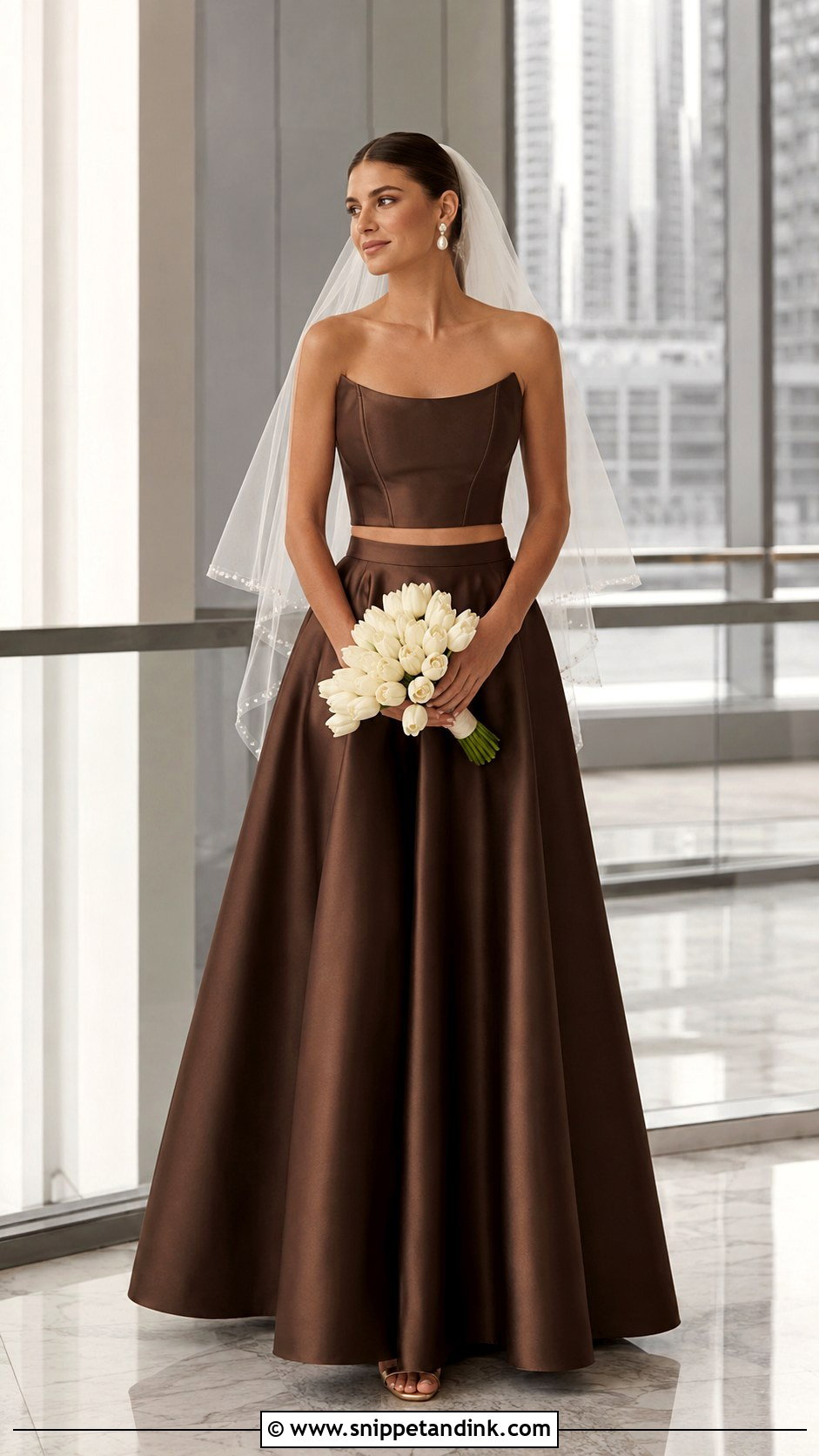
Want something modern that you can change halfway through the night? A brown two-piece pairs a structured satin top with a high-waisted A-line skirt, or a lace long-sleeve bodice with a smooth mocha skirt. The detail I check is the gap: when you raise your arms, the top shouldn’t lift away from the waistband unless you want skin to show. Gold heels, pearl earrings and a simple pendant with ivory tulips are enough. A sleek bun and fingertip veil add a traditional note, and swapping the skirt for wide-leg trousers in the same shade makes the reception easier.
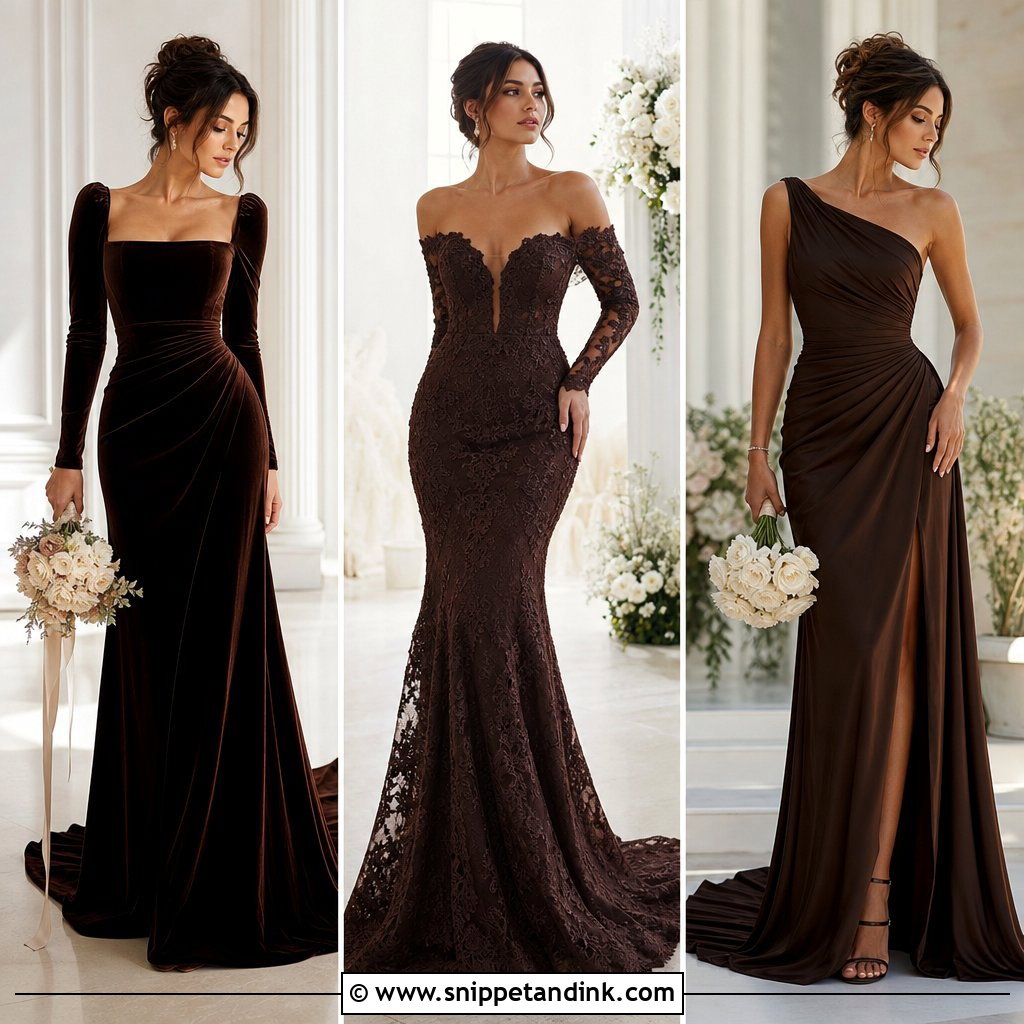

20. Brown Ombre Wedding Dress
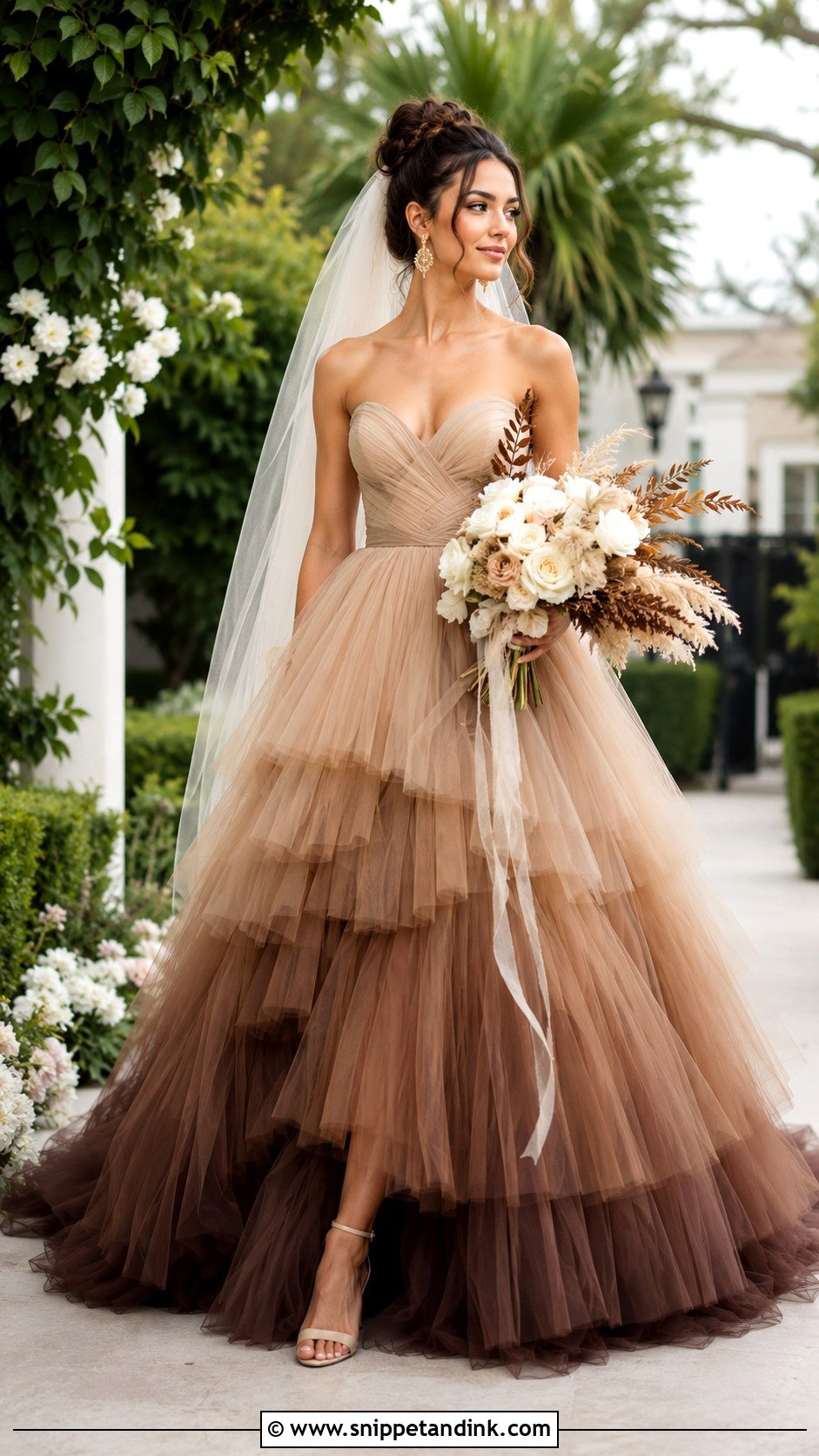
A brown ombre wedding dress moves from ivory or pale taupe at the bodice to caramel, mocha or chocolate at the hem. Hand-dyed ombre varies from one piece to the next, so I always ask to see a photo of the actual gown, not just the sample. Flowing tulle and organza show the transition far better than satin, which tends to band. Keep accessories quiet: gold earrings, nude heels, a slim bracelet. Ivory flowers with a few dried brown accents echo the gradient, and soft waves with a pale champagne veil suit a garden or outdoor ceremony.
Deodorant Marks, Water Spots and Other Dark Fabric Problems
Dark fabrics show things a white gown hides. These are the issues I prepare brides for on the morning of the wedding.
- Deodorant and powder leave white streaks on chocolate, espresso and velvet. Apply clear products well before dressing and step into the gown rather than pulling it over your head.
- A drop of water or champagne can leave a ring on satin. Blot it straight away with a clean white cloth; never rub.
- Sweat darkens brown fabric at the underarms and waist. Dress shields sewn into the bodice help on hot days.
- Light-colored lint and pet hair stand out. Keep a lint roller in the emergency kit.
After the wedding
Send the gown for specialist cleaning within a few weeks and tell the cleaner it’s a dyed fabric so they can test for color run before treating any stains. Store it folded in acid-free tissue, in a breathable box rather than plastic, and away from windows. Brown dyes fade with sunlight, and one side of a gown hung near a window can end up visibly paler than the other.
Shade, Fabric and Light Decide Which Brown Is Yours
The same brown can look romantic, luxurious, modern or relaxed depending on the fabric and cut, which is why chocolate satin and espresso crepe feel nothing alike in person. Settle the undertone first, then build out. Warm browns sit naturally with gold and champagne; taupe and mushroom are happier with pearls and silver. And wear the gown sitting down at least once before you sign off on alterations. A brown dress you can move in will look every bit as ceremonial as white.
You'll Like These Ideas:



Leave a Reply