
A summer wedding dress gets judged by how you feel at four in the afternoon, not how it looks on the hanger in spring. Heat shows up every weakness: too many skirt layers, a lining that doesn’t breathe, a train that drags across hot paving. The dresses below cover lace, chiffon, crepe, organza and short hems for gardens, beaches, courthouses and ballrooms. Light fabrics and looser cuts help most, but even a ball gown can work in July if it’s built sensibly. Under each one I’ve added what I’d check in the fitting room and how to style it without adding weight.
Silk Chiffon or Polyester Chiffon? Read the Label in Summer
Chiffon, organza, crepe and satin are names for how a fabric is woven, not what it’s made from. Most bridal chiffon and organza is polyester, and some is silk. Both can look almost identical in a photograph, but they feel very different at thirty degrees. Silk lets heat and moisture escape; polyester tends to hold both against the skin.
I don’t tell anyone to avoid polyester, since it’s tougher, cheaper and creases less. I just look at the inside of the dress as closely as the outside. A breathable lining and fewer skirt layers do more for comfort than the outer fabric does.
- Count the layers under the skirt. Each one adds weight and warmth around the legs.
- Ask what the lining is made of. Cotton, silk or a light viscose blend breathes better than heavy polyester satin.
- Check for a crinoline or hoop. A summer gown rarely needs one.
- Feel the bodice lining against your inner arm, where you’ll notice heat and scratchiness first.
1. Chiffon A-Line Summer Wedding Dress
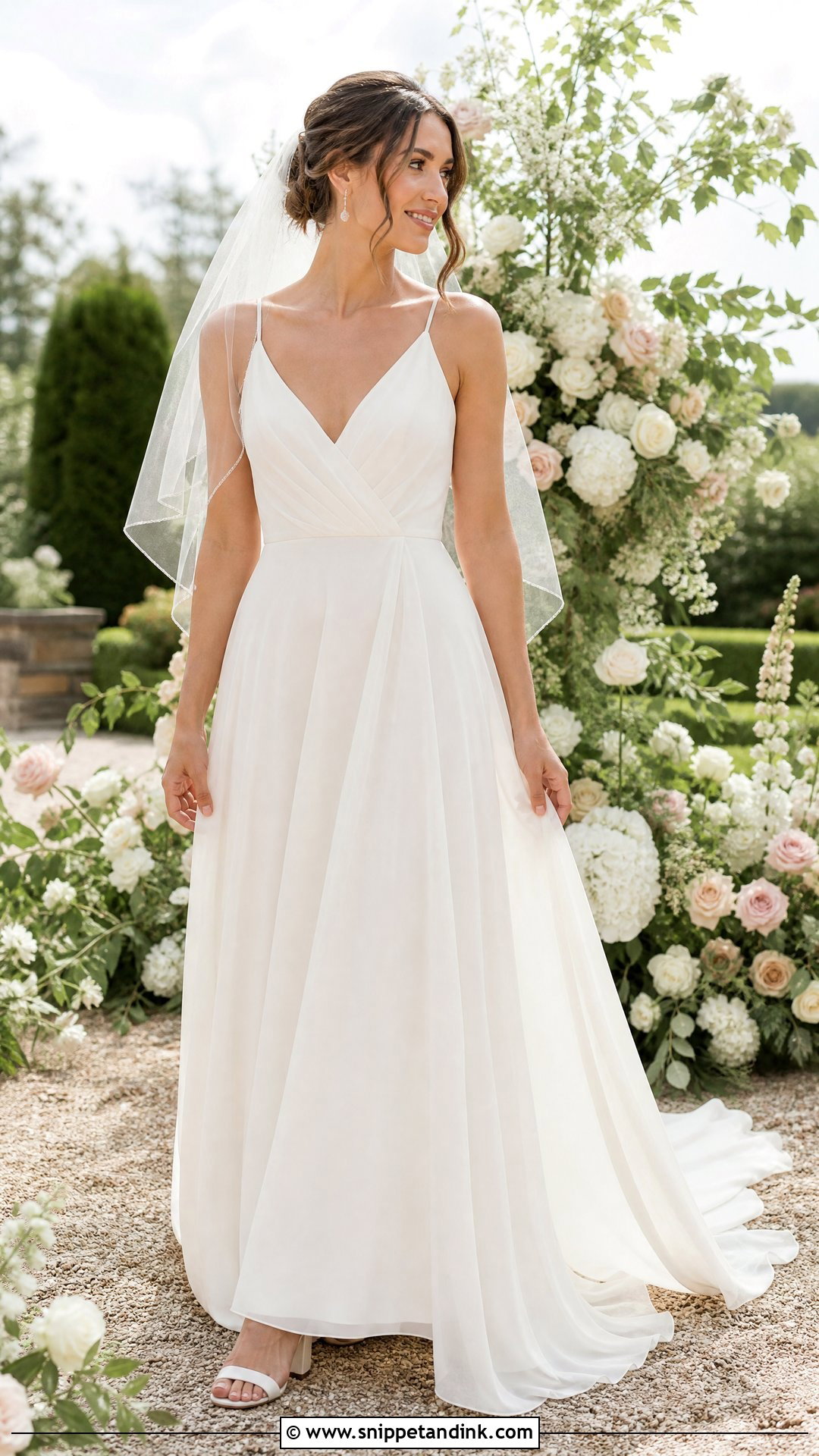
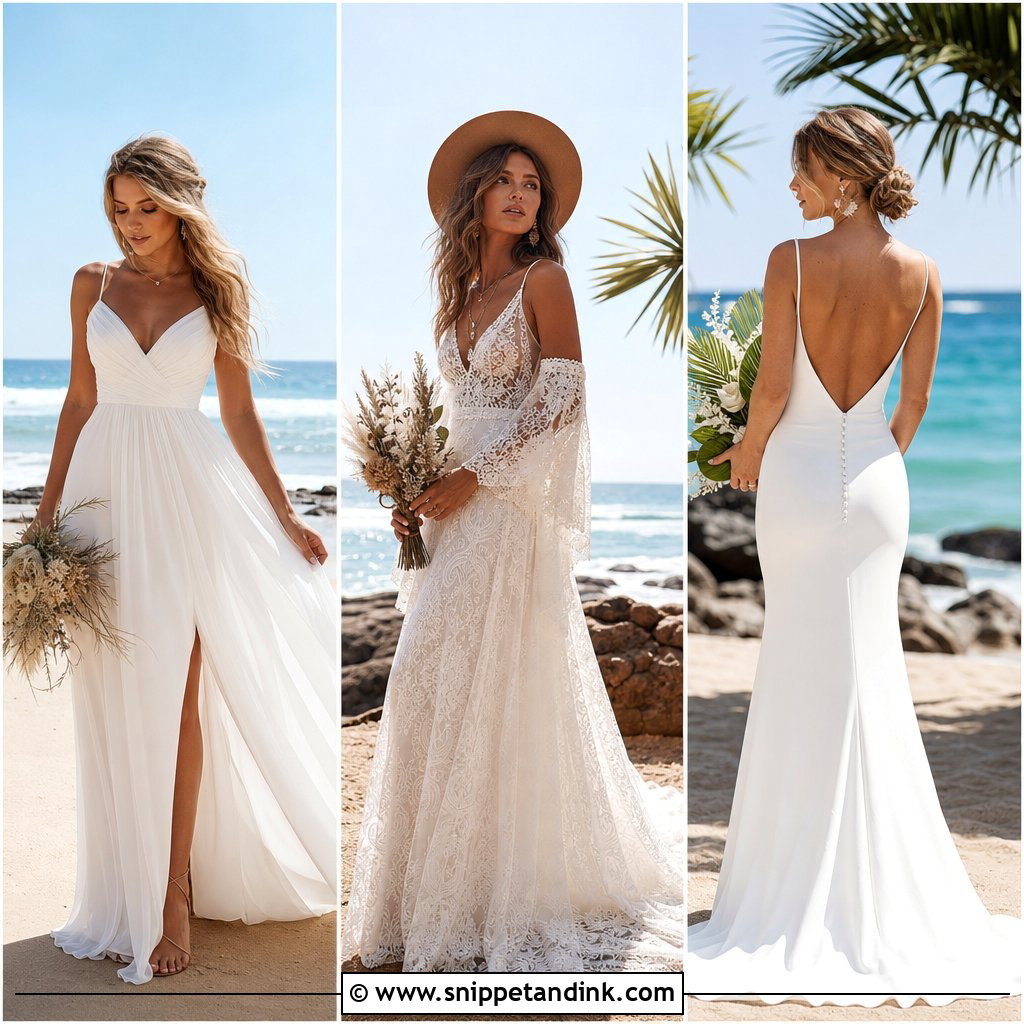
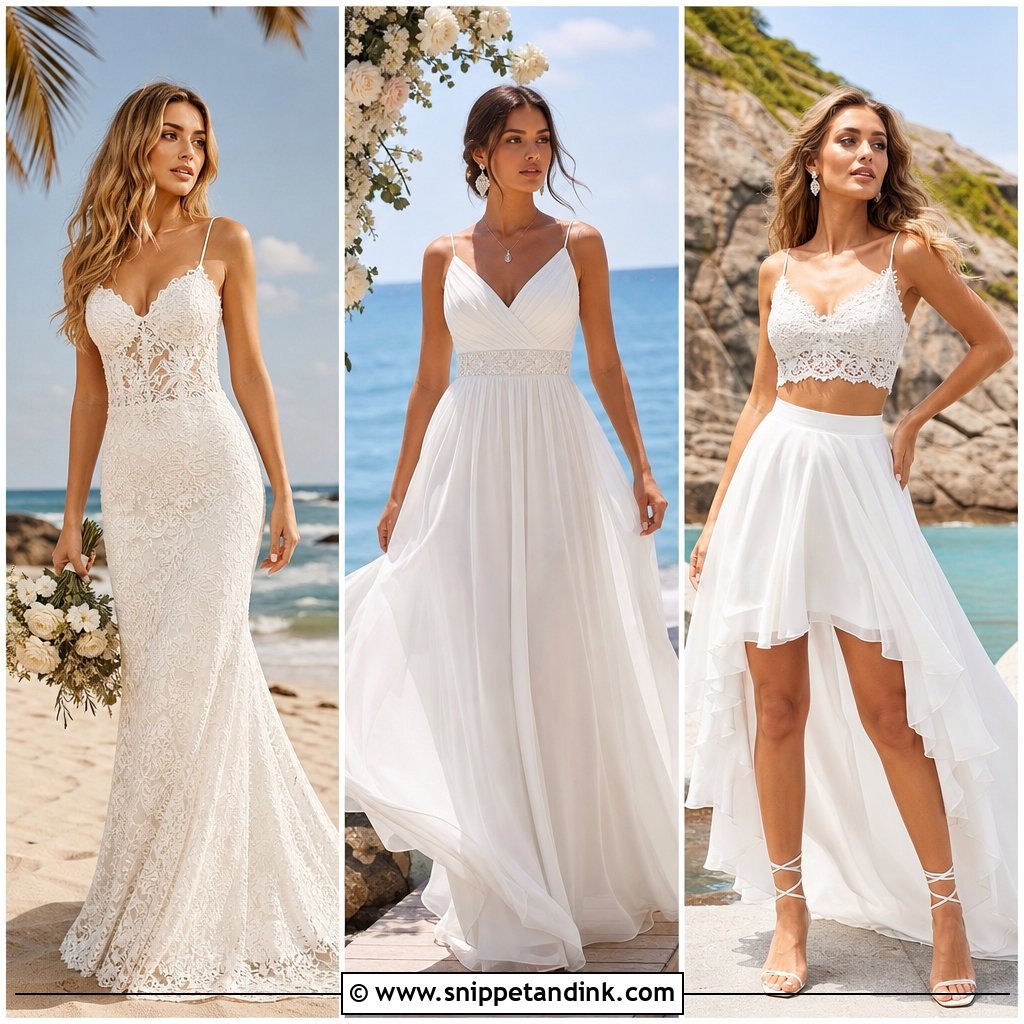
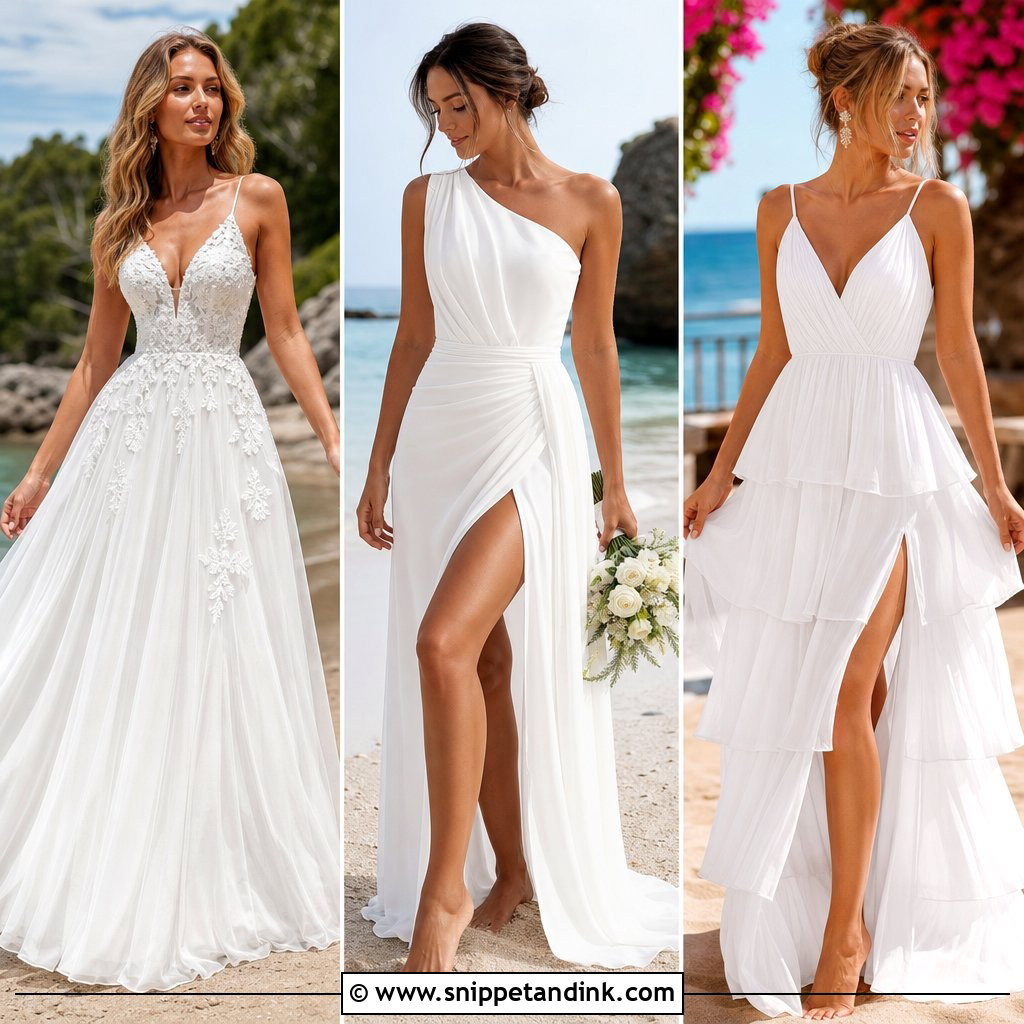
Chiffon A-lines are the first dress I’d hand someone marrying outdoors in August. The fitted bodice gives shape, and the skirt moves away from the legs, which means air actually reaches you. Keep the neckline open with slim straps or a soft V. A sweep train is long enough to feel bridal and short enough not to collect grass or sand. Ask how many layers sit under the chiffon: a good summer A-line has one lining and maybe one soft tulle layer, not three. Pearl drops and block-heel sandals suit it.
2. Off-Shoulder Lace Summer Wedding Dress
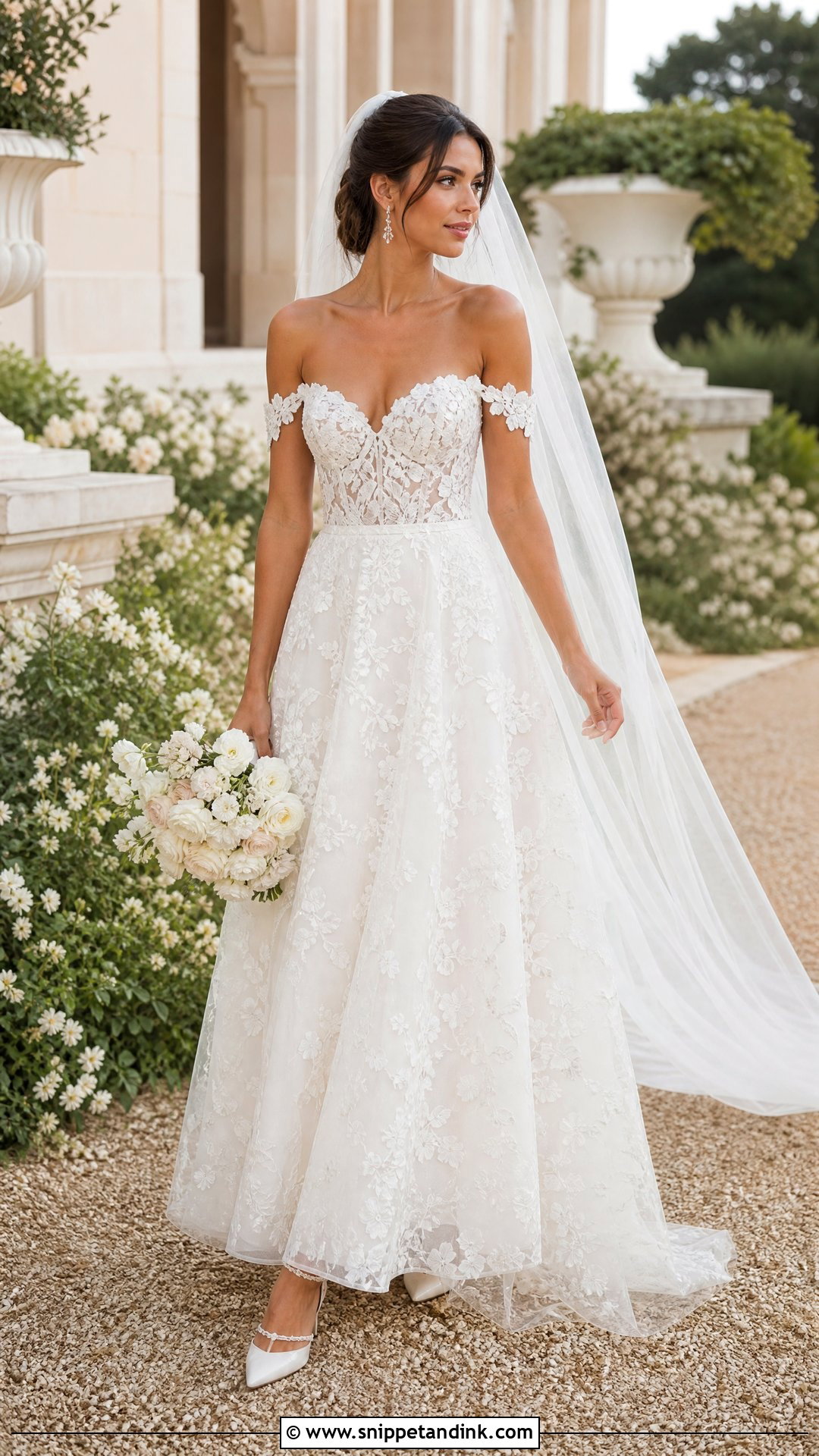
Off-shoulder lace can be hot or cool depending entirely on the lace. Thick corded or heavily beaded lace traps warmth; an open floral pattern over a breathable lining lets it out. A fitted bodice with an A-line or gently flared skirt keeps the waist defined without squeezing. Keep the train short for grass. The neckline is the fitting priority. Sweat and movement make off-shoulder bodices creep down, so I’d have grip tape added inside the top edge and test it while raising both arms and hugging. Small crystal earrings and pointed slingbacks are enough.
3. Organza Ball Gown Summer Wedding Dress
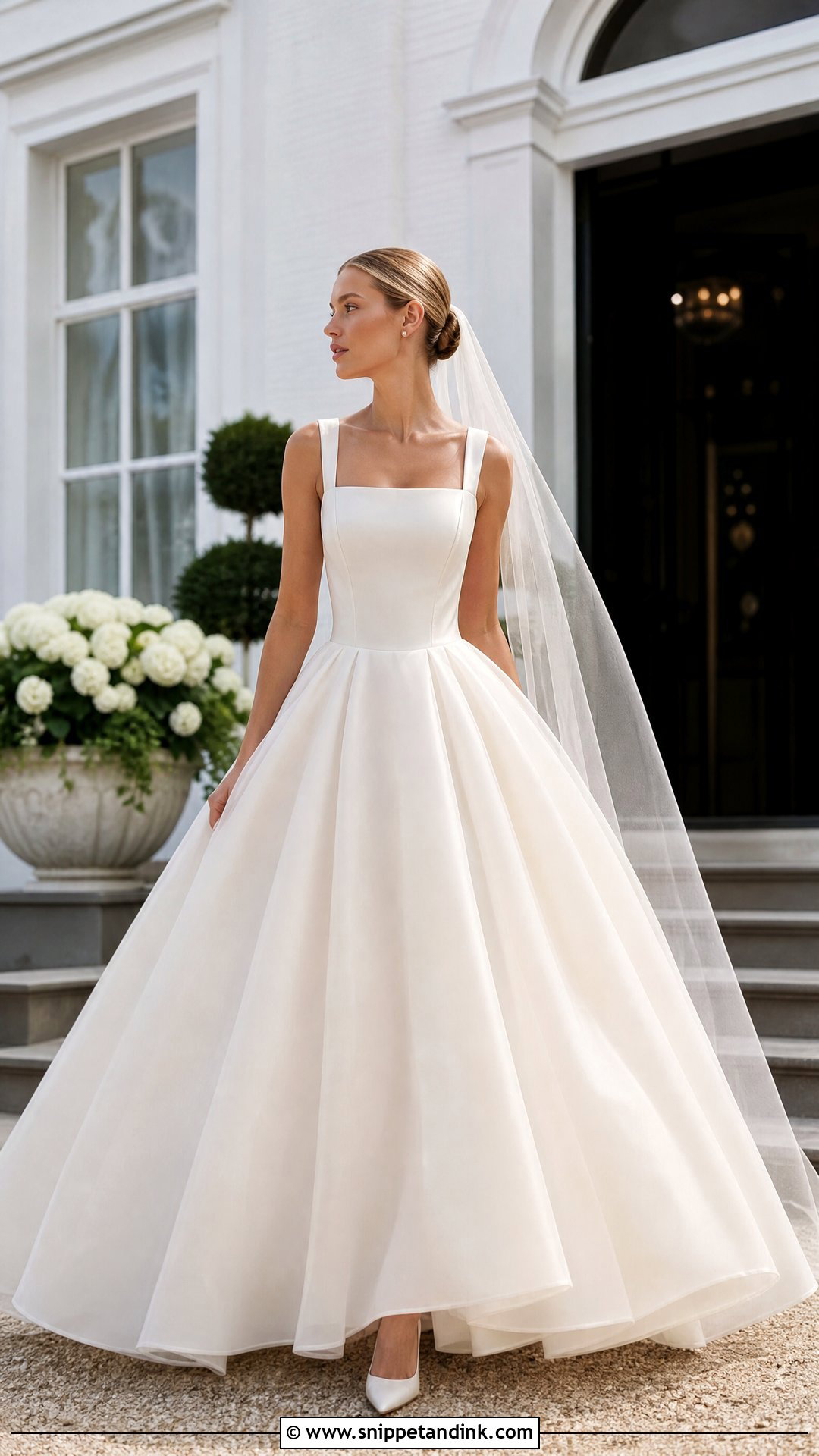
Can a ball gown work in the heat? Yes, if it’s made of organza rather than layer upon layer of tulle. Organza is crisp, so it holds out a full skirt with far fewer layers, and silk organza breathes better than most synthetic alternatives. Pick a structured strapless or square-neck bodice and ask exactly how many skirt layers there are. Pearl studs, a low bun and pointed pumps keep the styling clean, and a cathedral veil can come off after the ceremony. It suits a formal ballroom or an estate with indoor rooms to escape to between photographs.
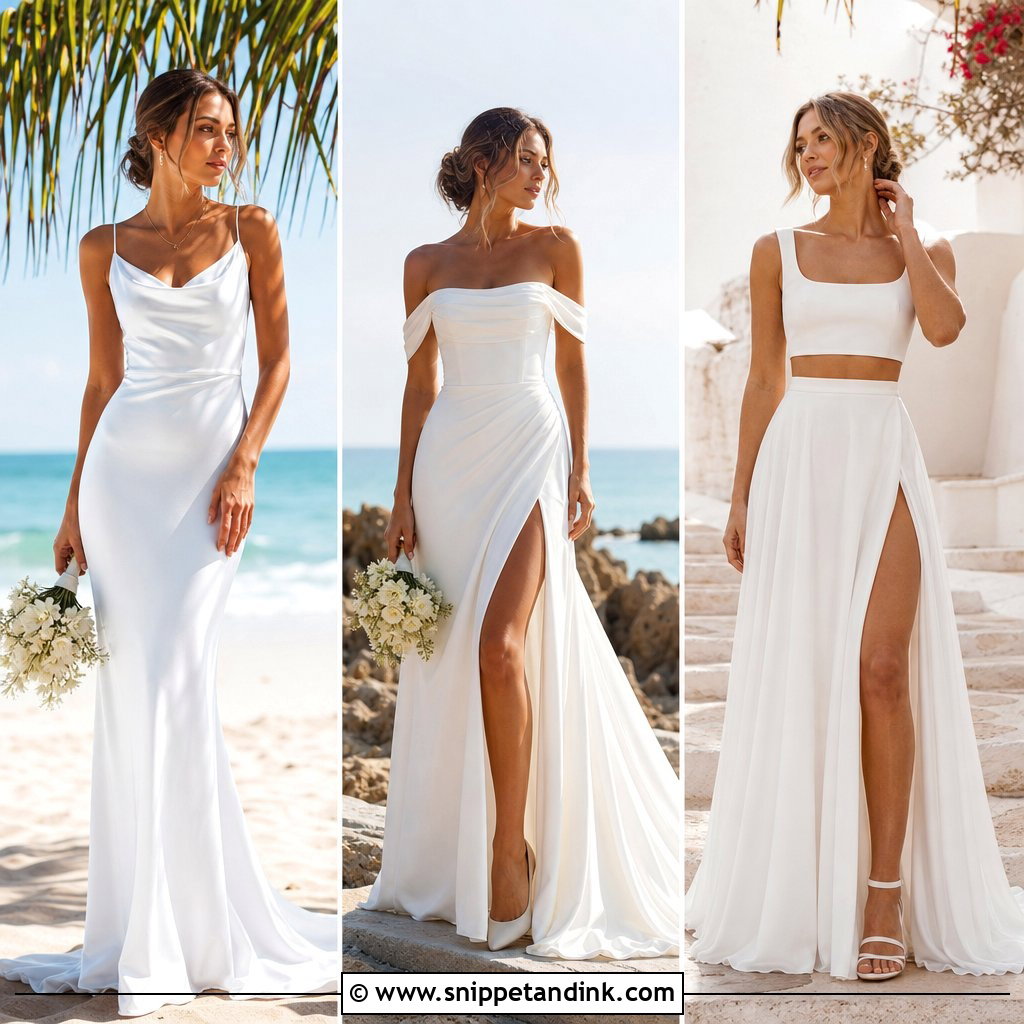
4. Silk Slip Summer Wedding Dress
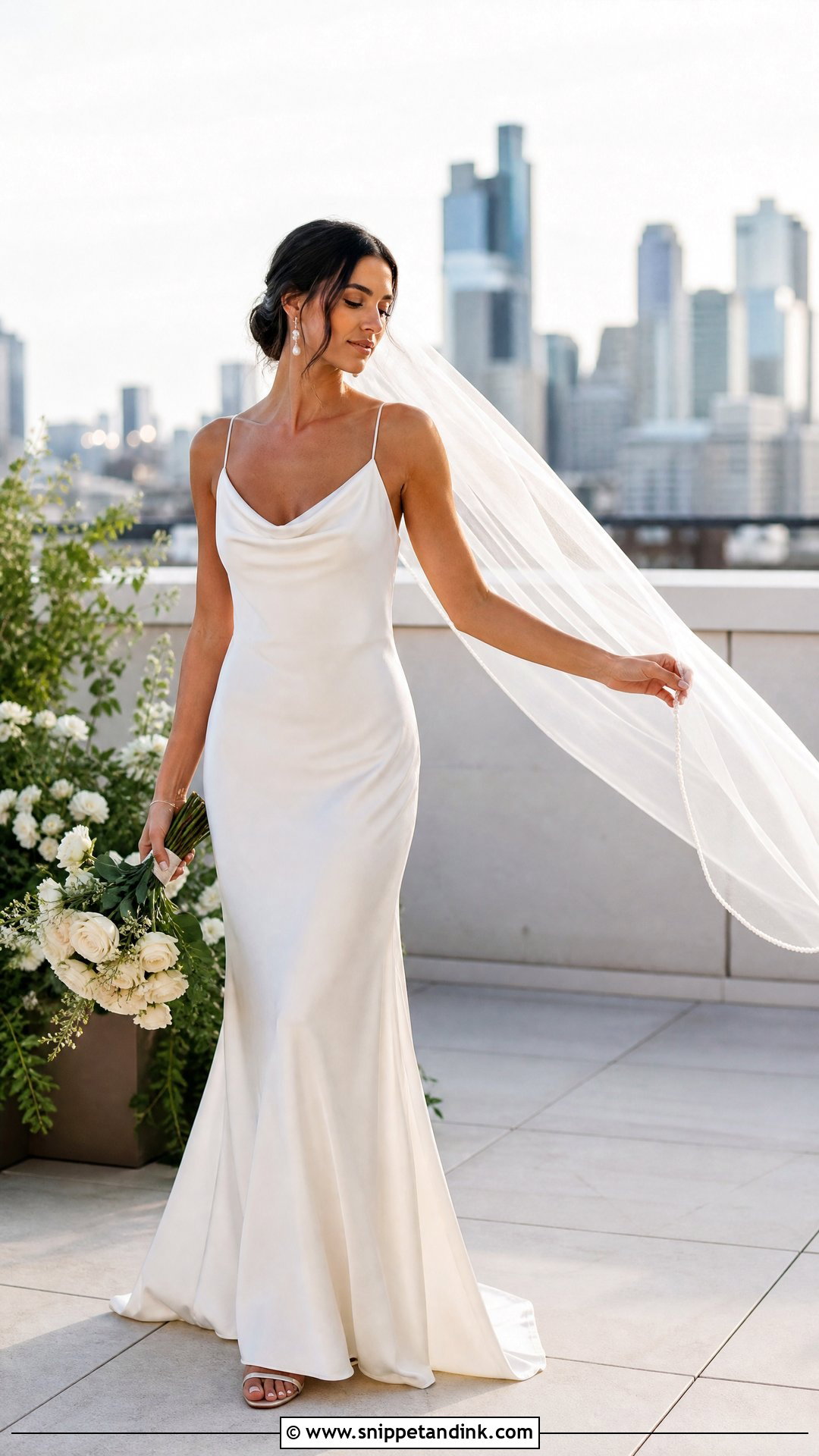
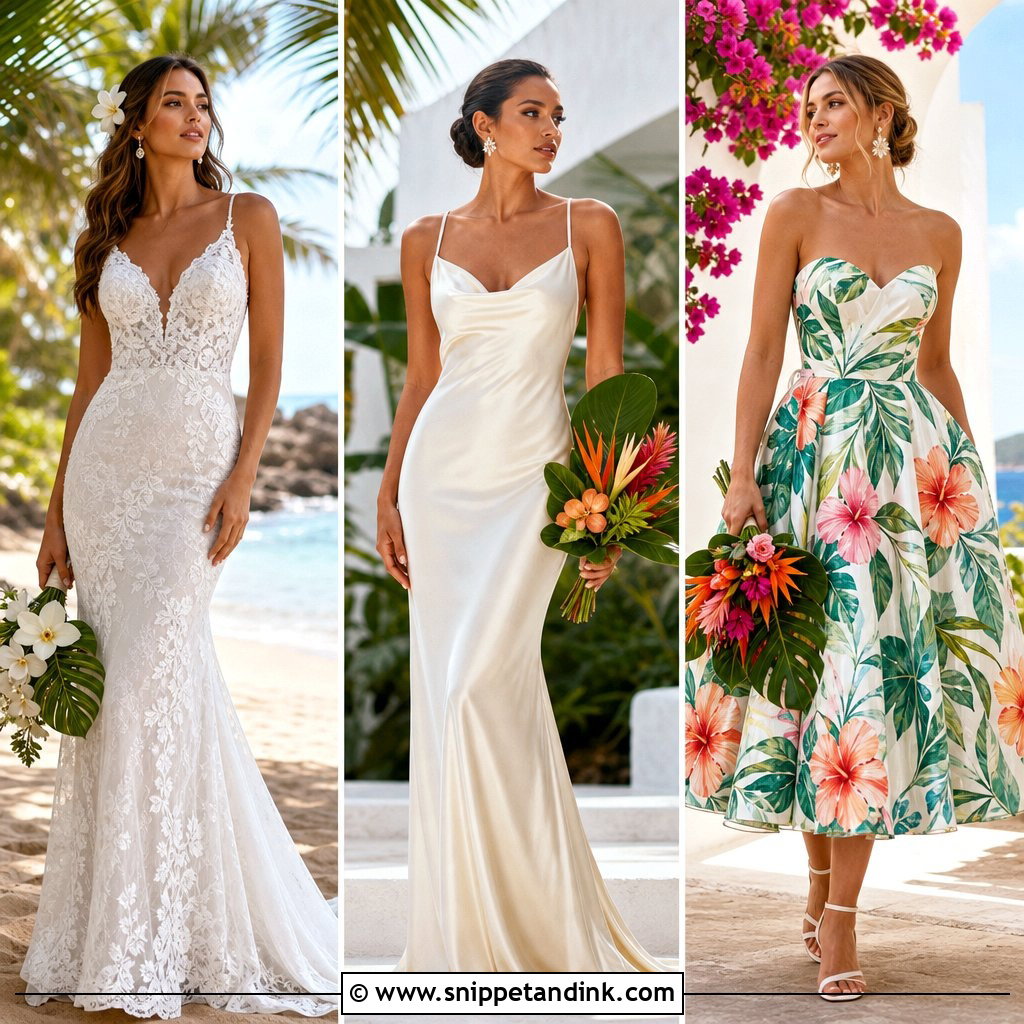
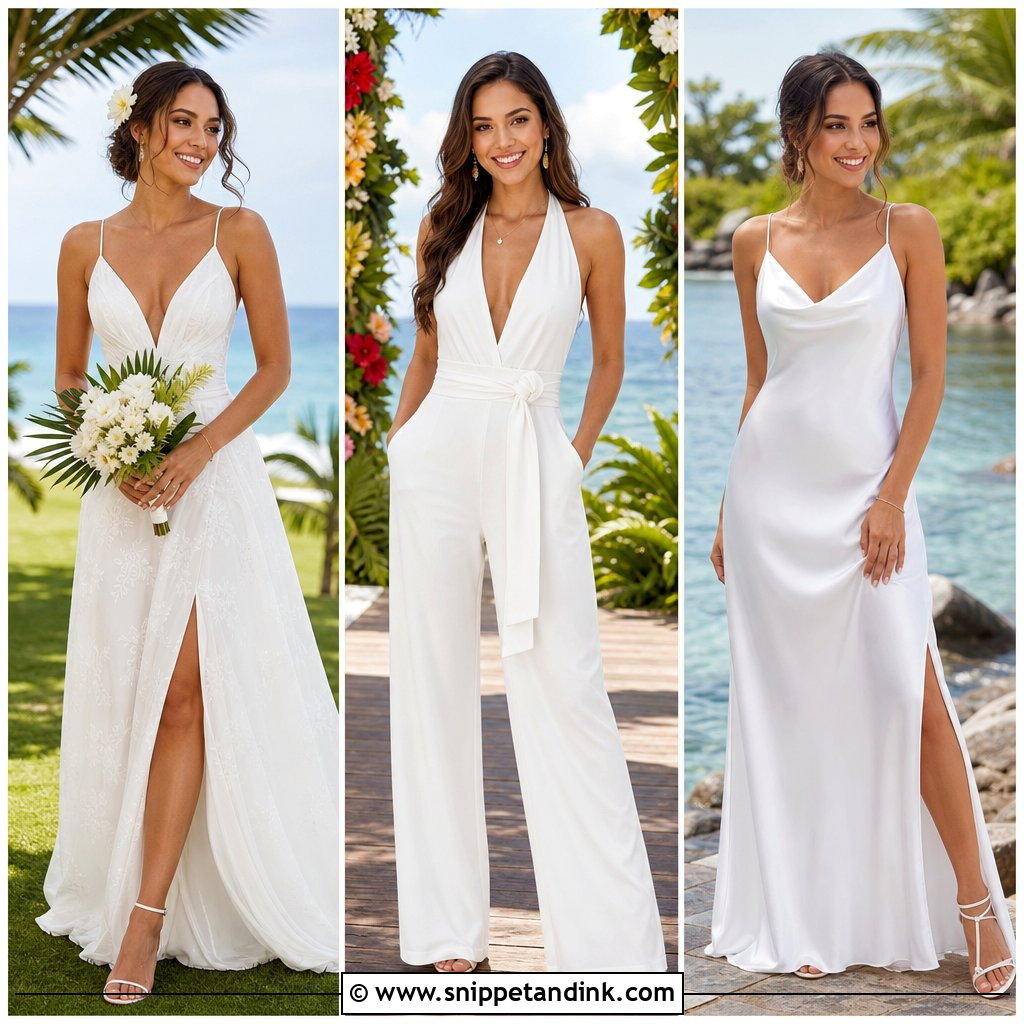
Silk slips skim the body rather than gripping it, so they feel almost like wearing nothing on a hot day. Test that in the fitting room: sit, walk and lift your arms to see whether the fabric clings. The honest drawback is that silk shows damp patches and creases quickly. I always recommend a breathable lining and booking someone to steam the dress at the venue rather than at home. A cowl or simple V-neck adds interest. Gold or pearl earrings and strappy sandals finish it for a rooftop, a coastal hotel or a small destination wedding.
5. Tea-Length Summer Wedding Dress
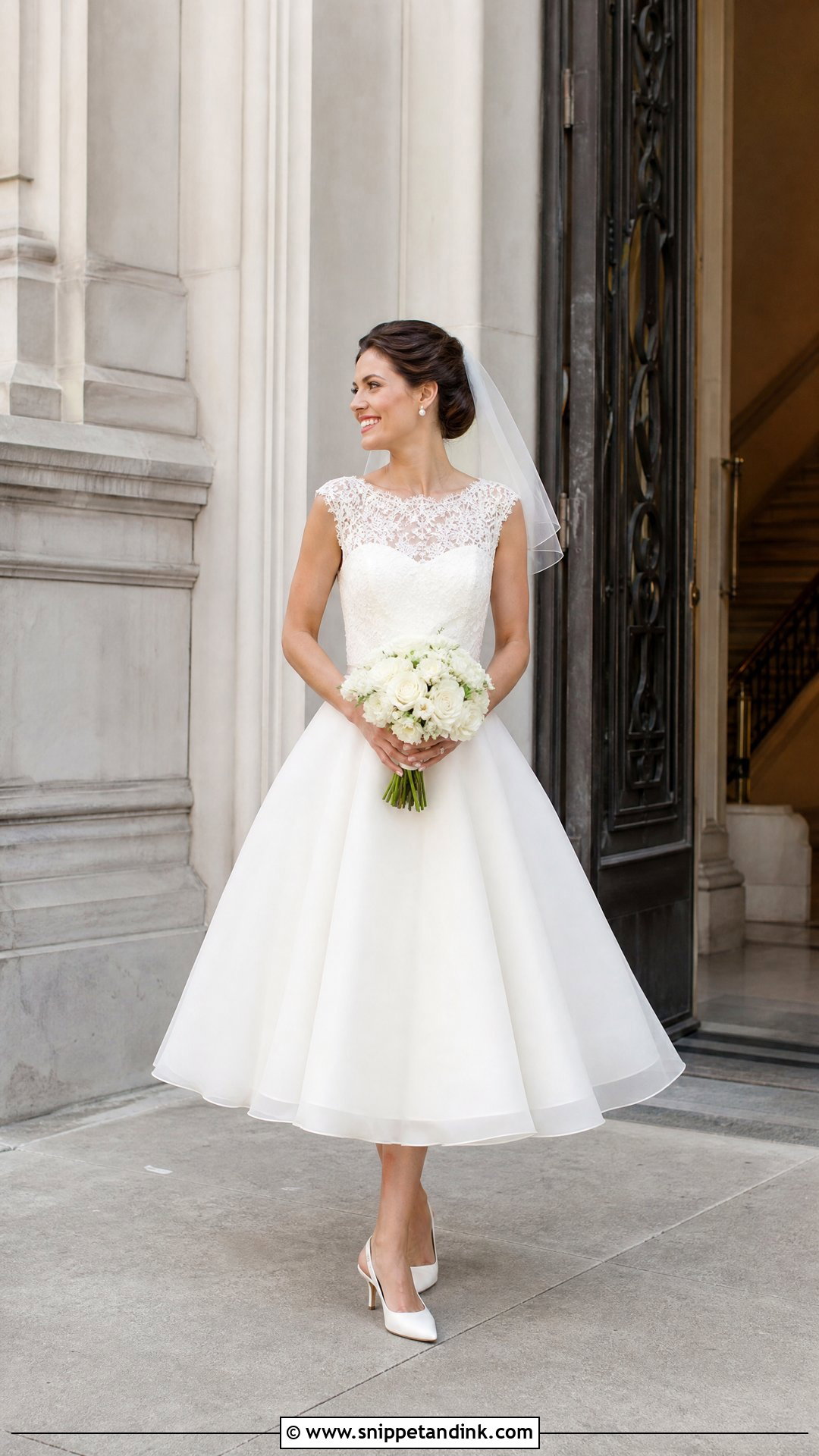
Tea length keeps your legs free and the hem away from damp grass, which in summer is a real advantage. A fitted bodice with a flared skirt ending between knee and ankle has a vintage feel. Lightweight satin, lace, tulle or organza all give it a little body. Your shoes are on show, so choose slingbacks or block heels you can stand in for hours, and break them in on warm days first, since feet swell in the heat. Bring those exact shoes to the hem fitting. It suits courthouses, garden parties and restaurant receptions.
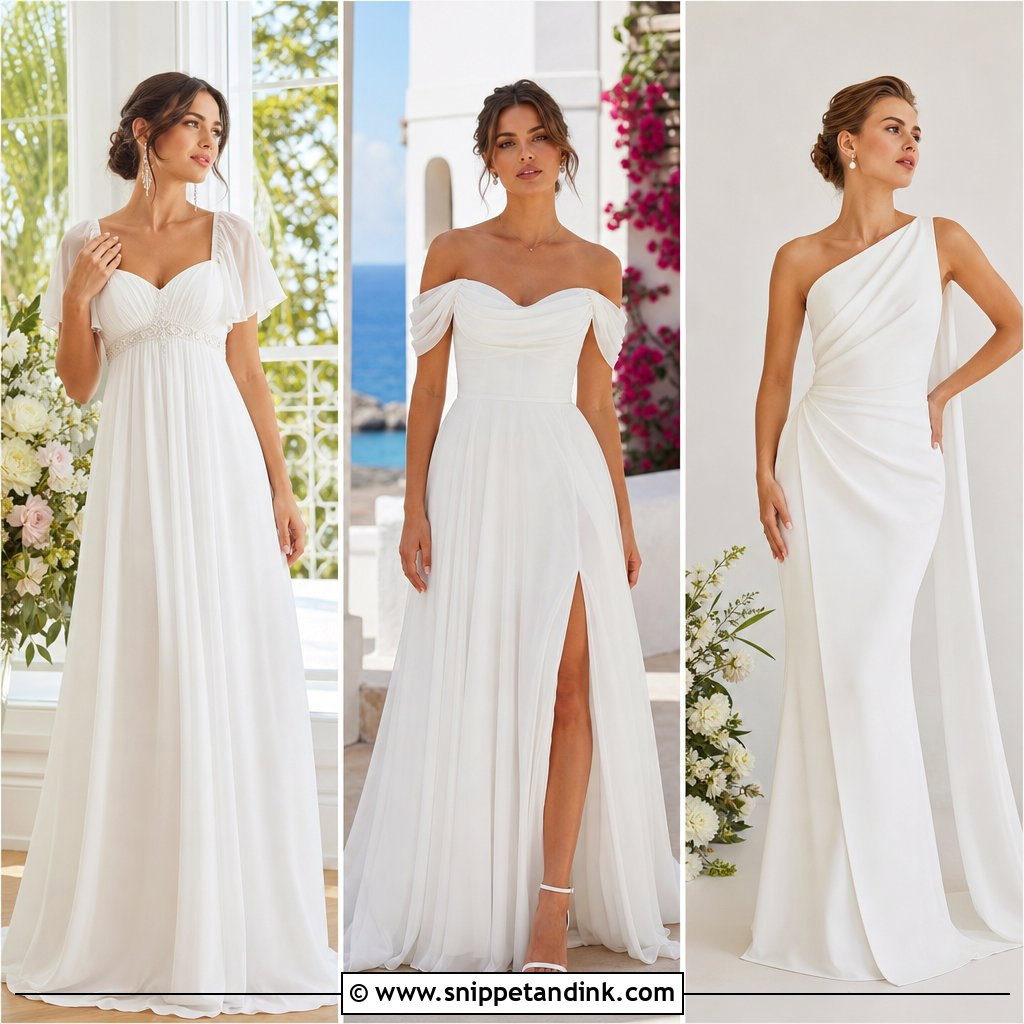
6. Empire-Waist Beach Wedding Dress
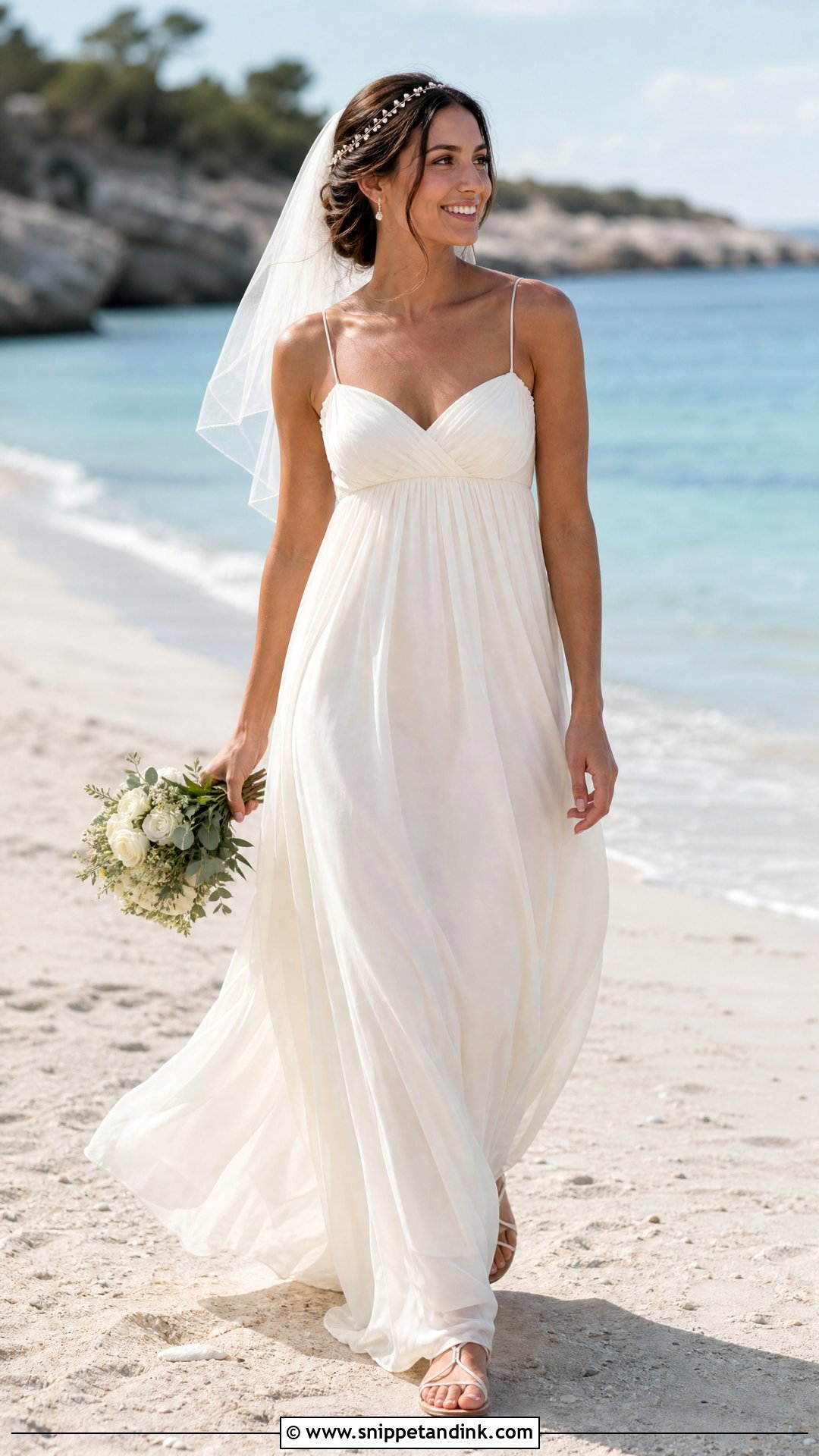
An empire-waist wedding dress falls from just under the bust and moves with any breeze off the water. Chiffon or georgette flows without a petticoat. On the beach, the wind is the enemy of everything long, so I’d keep the hem at floor length with little or no train, and choose a short veil or none rather than a cathedral veil that will wrap around you. Make sure the bodice is secure enough that a gust can’t shift it. Flat sandals, small pearl earrings and a simple hair vine keep it light.
7. Square-Neck Crepe Summer Wedding Dress
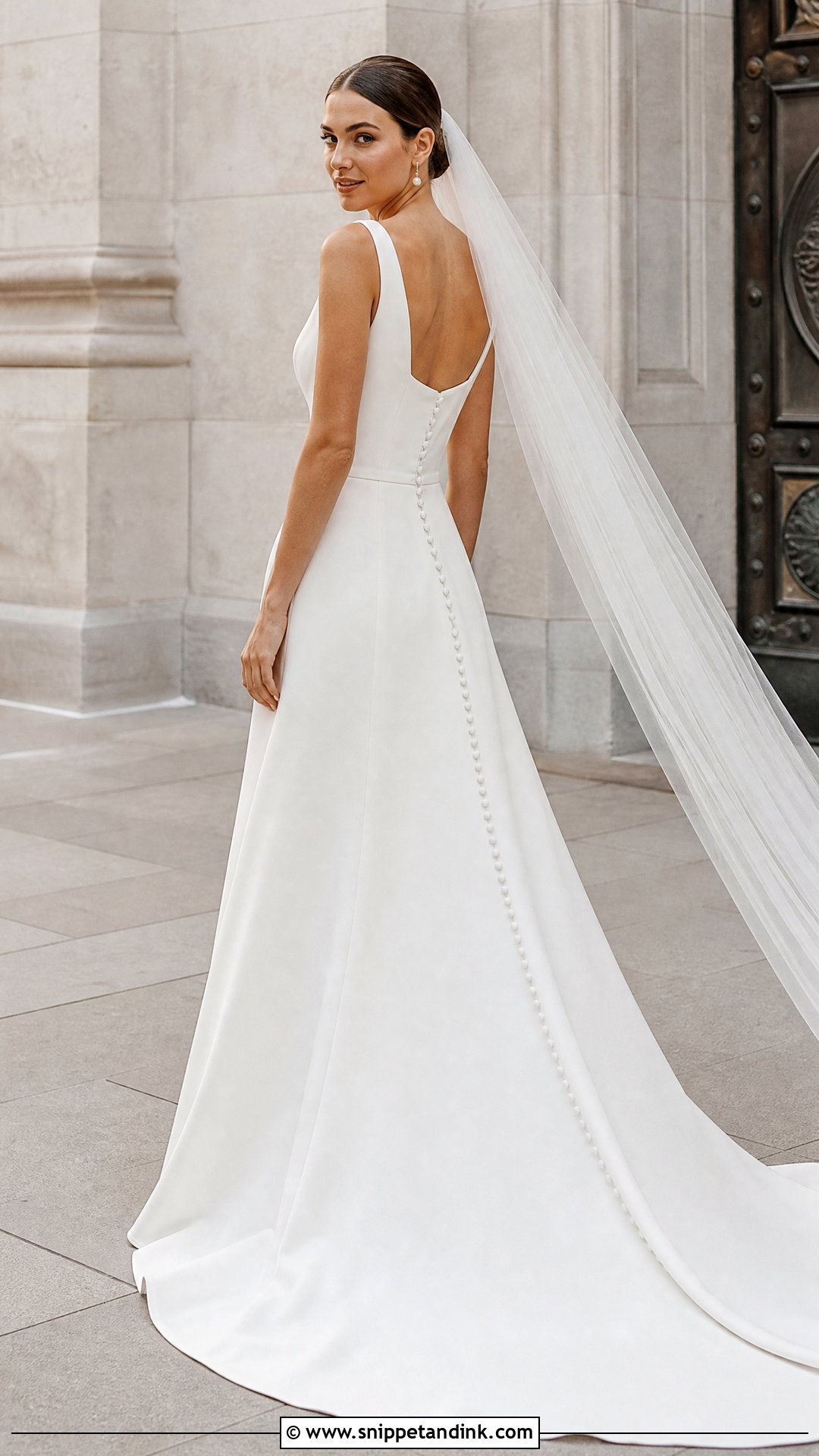
Square-neck crepe gives a clean, tailored line with nothing heavy on it, which suits a city summer wedding. Choose lightweight crepe with a smooth lining, in an A-line, fit-and-flare or column. Wide straps support the bust and frame the neckline. Crepe shows every seam and underwear line, and heat makes some shapewear roll at the edges, so bring your intended shapewear or supportive lingerie to every fitting. A neat chignon, pearl drops and low pointed heels suit it. Covered buttons down a plain back add detail.
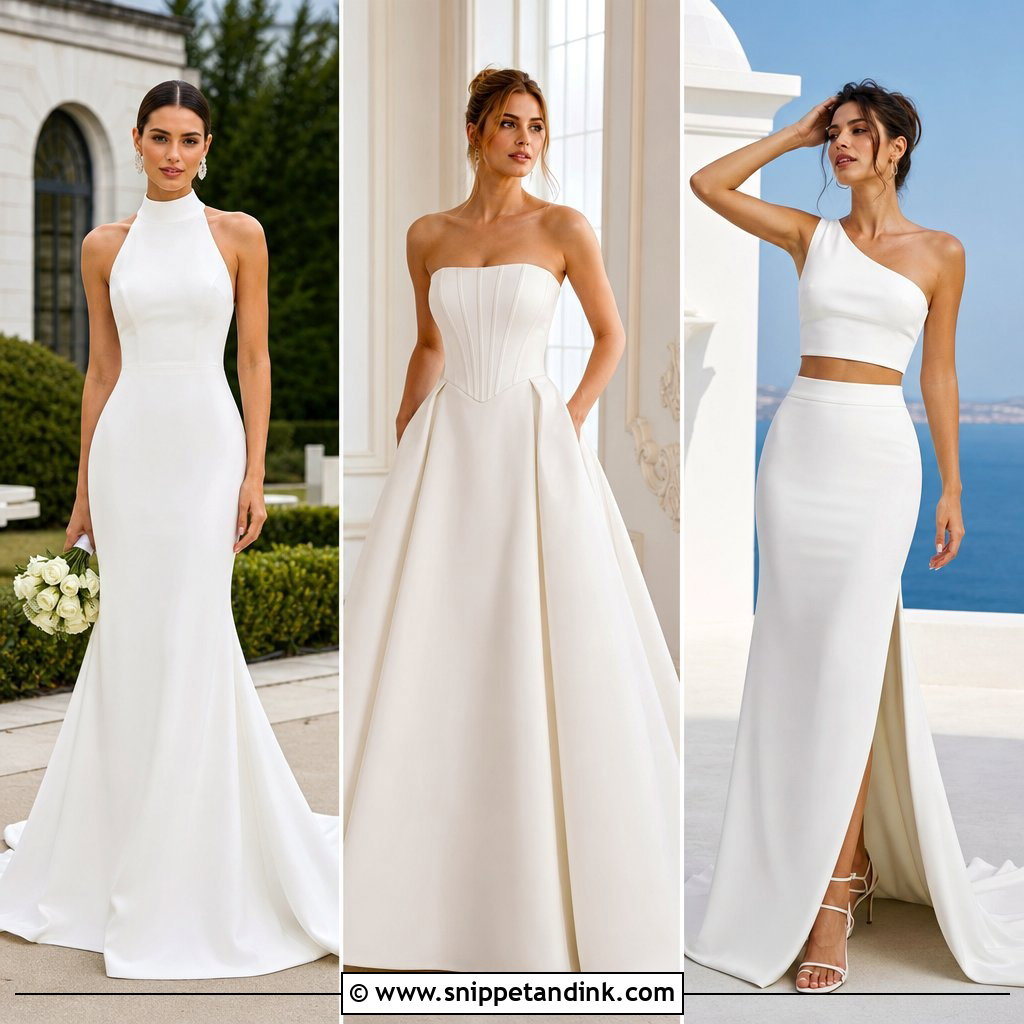
8. Strapless Corset Summer Wedding Dress
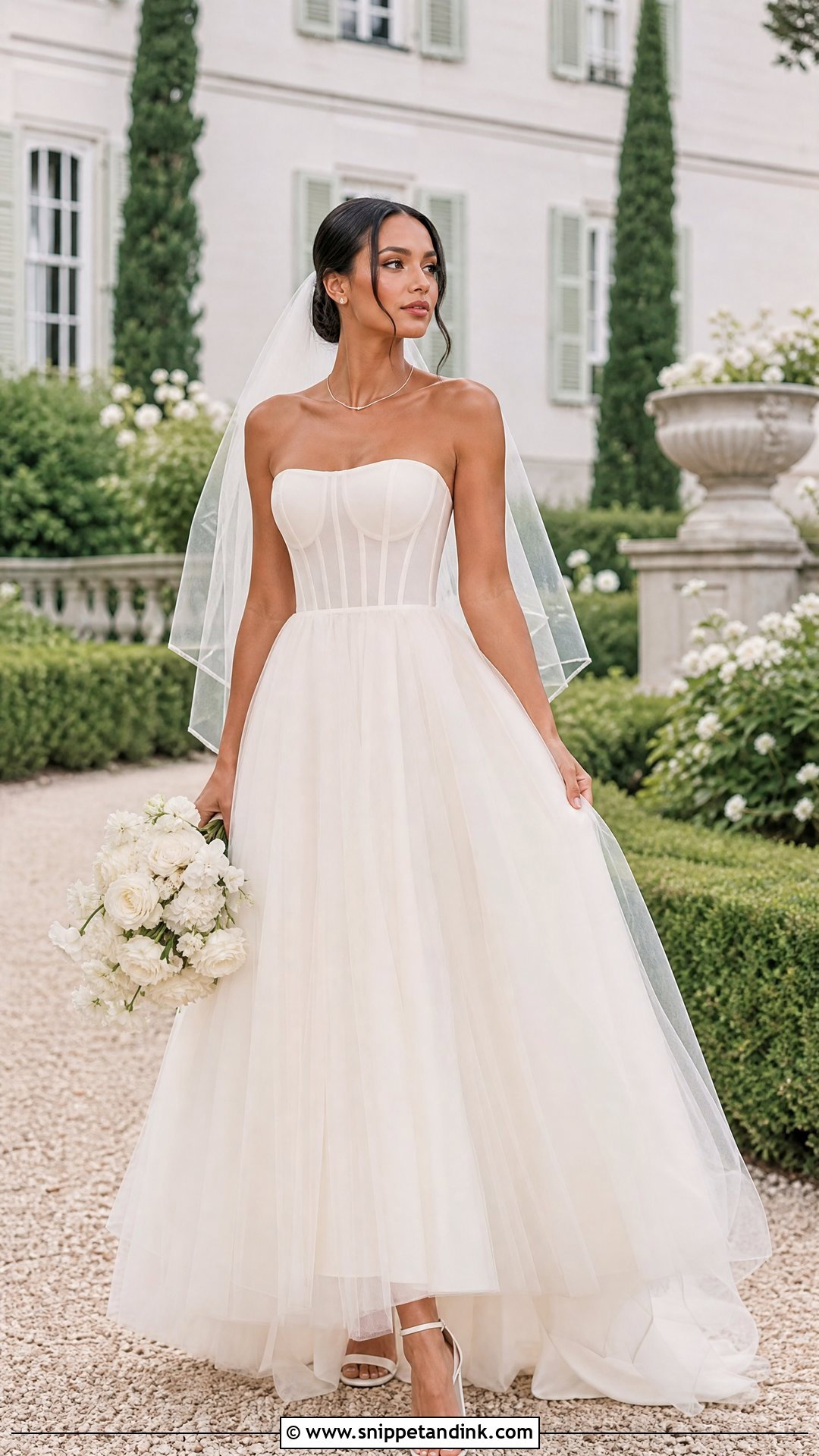
A strapless corset defines the waist and leaves the shoulders bare, which helps you stay cool. The support should come from proper boning and cups, not from lacing it painfully tight; a corset that’s too tight gets worse as you warm up. Pair the bodice with a flowing organza, chiffon or soft tulle skirt. For outdoor photographs in strong sun, a sheer detachable wrap protects your shoulders between shots. I ask every bride to sit, bend and dance in this cut before alterations are finished.
9. Floral Appliqué Summer Wedding Dress
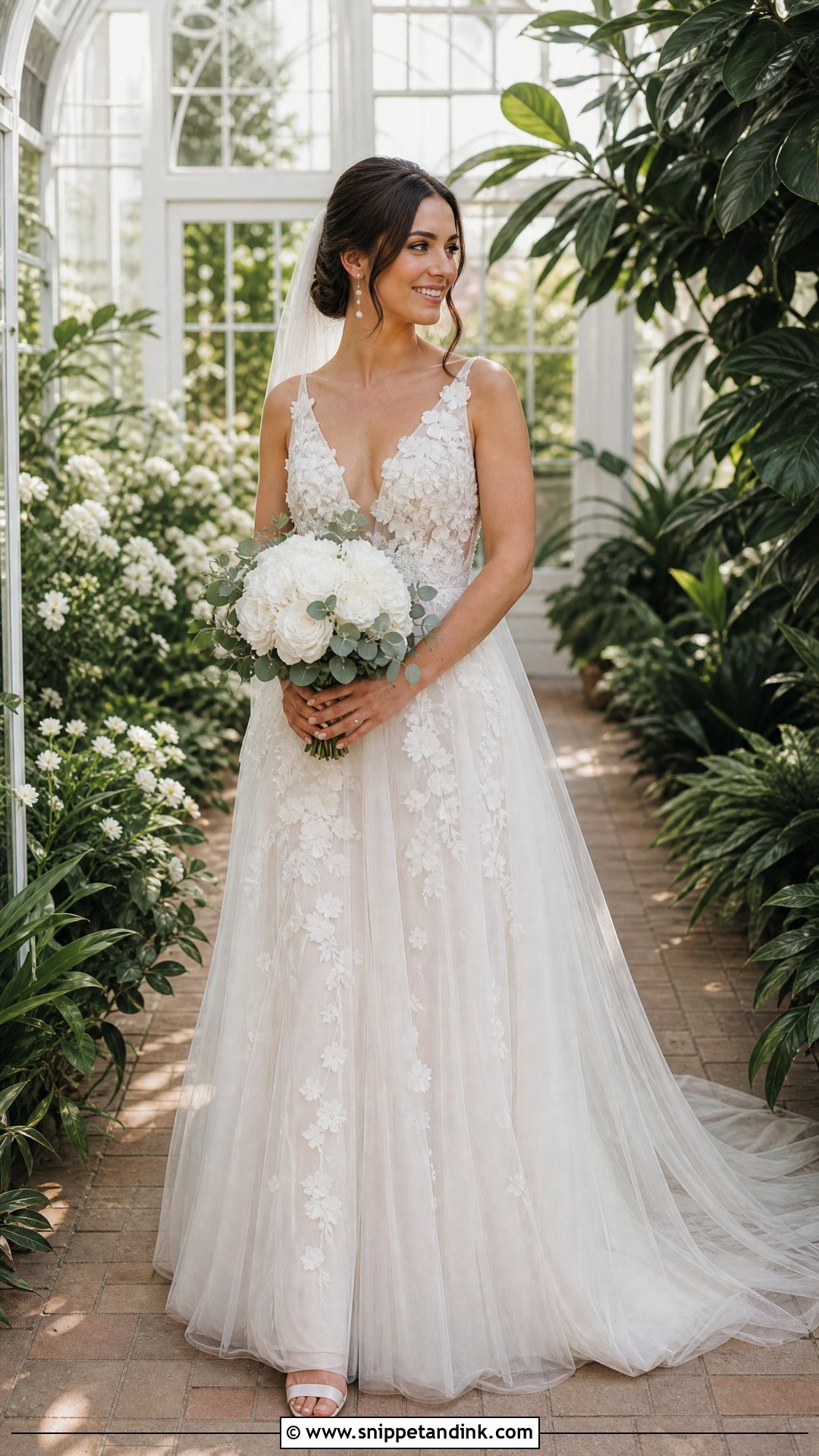
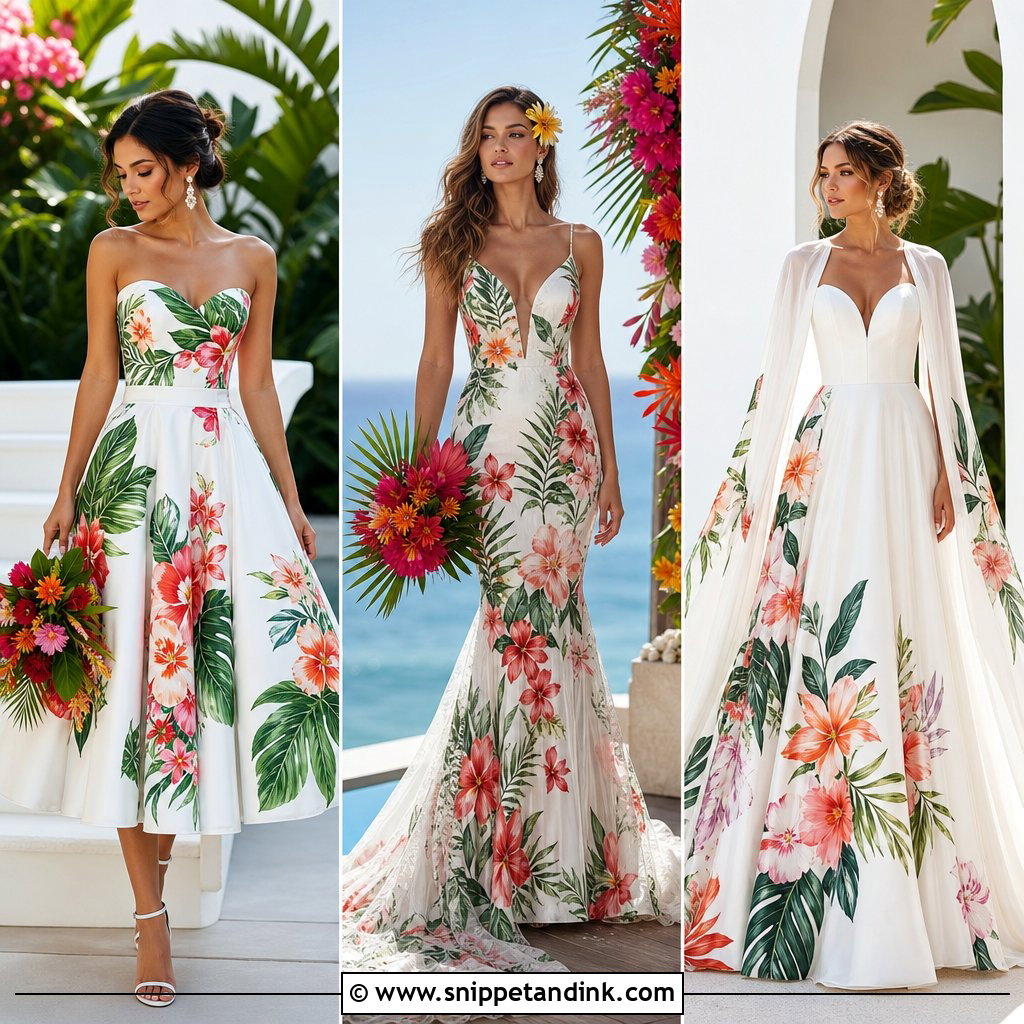
Three-dimensional flowers tie a dress to a summer garden. Floral appliqués suit lace, tulle and organza particularly well. For comfort, I’d choose spaced appliqués over dense coverage, because a fully covered bodice adds both weight and warmth. A sheer illusion neckline, slim straps or a strapless bodice keeps it airy. Let the flowers carry the dress: pearl earrings, neutral sandals and a plain veil. Fresh greenery or a simple white bouquet stops the whole look from getting busy in a garden full of colour.
10. High-Low Summer Wedding Dress
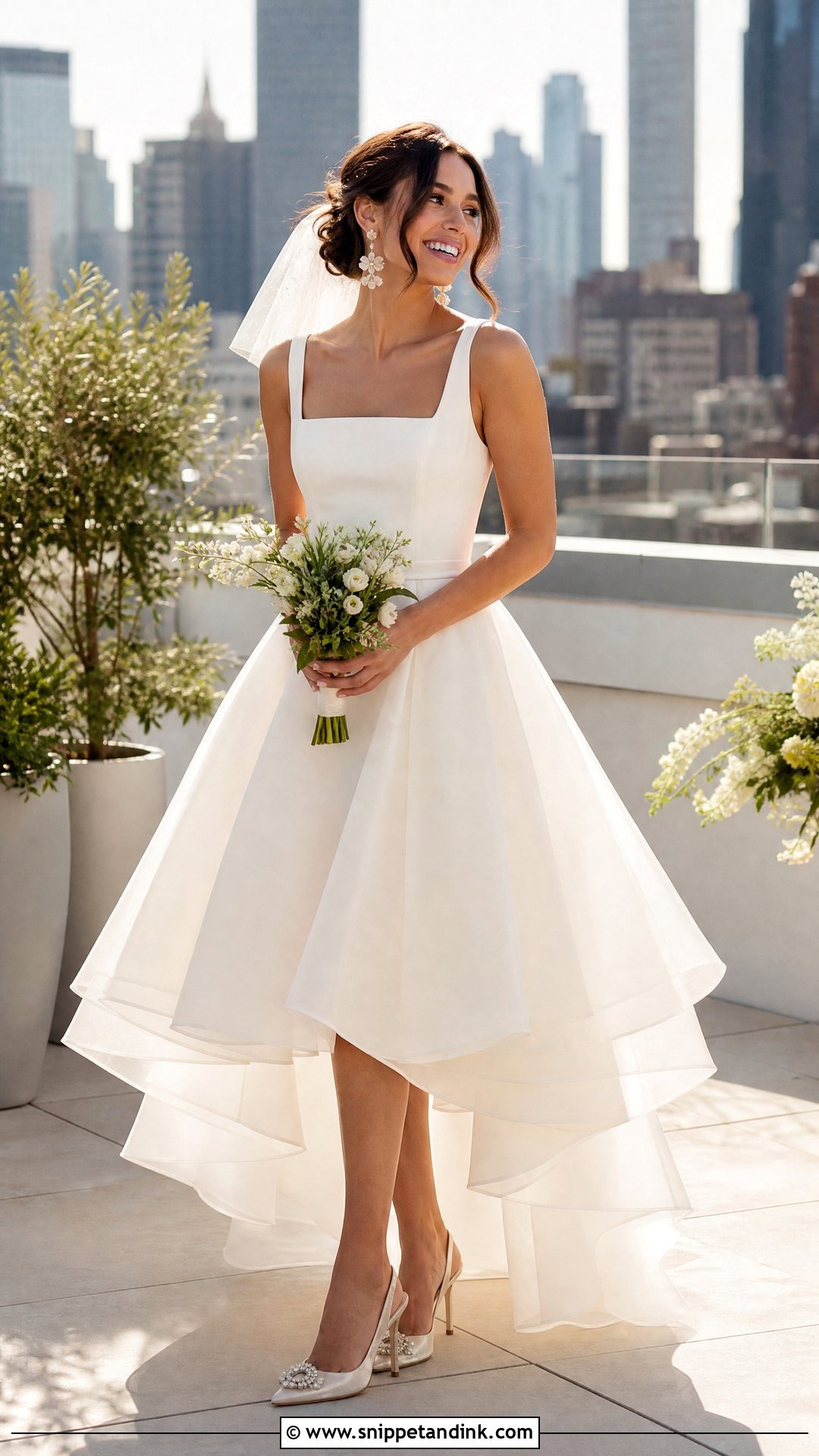
A high-low hem lets air in at the front while the back keeps some length. The front usually sits at the knee or calf and the back drops to the ankle or into a short train. Chiffon, organza or light mikado hold the shape without bulk. It’s easy on venue steps and on a dance floor, and it moves well between indoor and outdoor spaces. The shoes become part of the dress, so pick embellished sandals or slingbacks with a heel height you can manage on a lawn. Statement earrings and a short veil balance the shorter front.
11. Backless Summer Wedding Dress
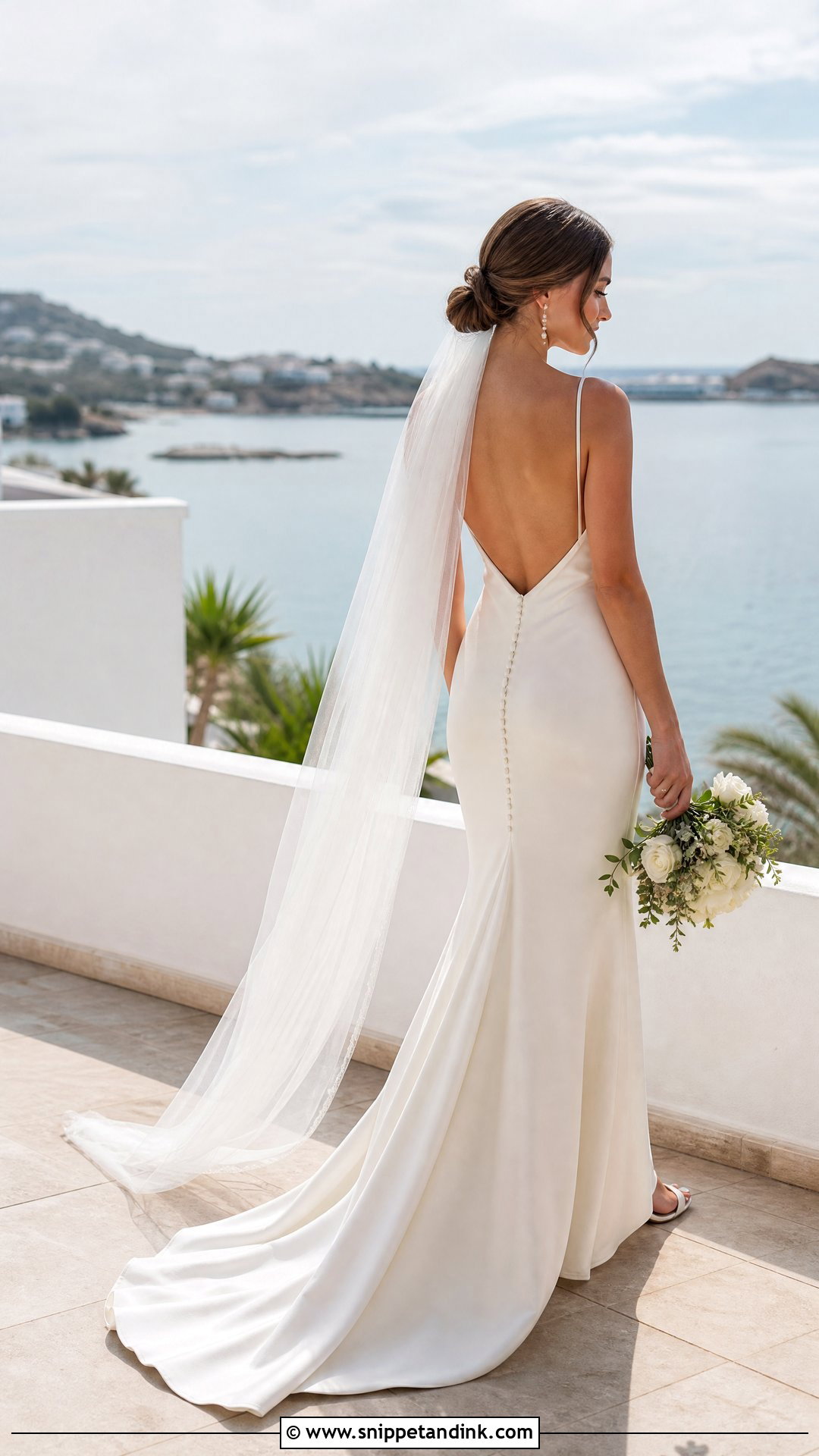
A backless wedding dress keeps a gown light and lets air reach your skin. A flowing crepe, chiffon or satin skirt balances the open back. Look for secure straps and internal support, and decide early what you’ll wear underneath, because the depth of the back limits your options. Sun is the practical issue. Apply sunscreen at least an hour before dressing and let it dry fully; wet sunscreen can leave marks on silk and satin, and a burned back will show in photos. Wear your hair low or to the side so the back stays on view.
12. Boho Lace Summer Wedding Dress
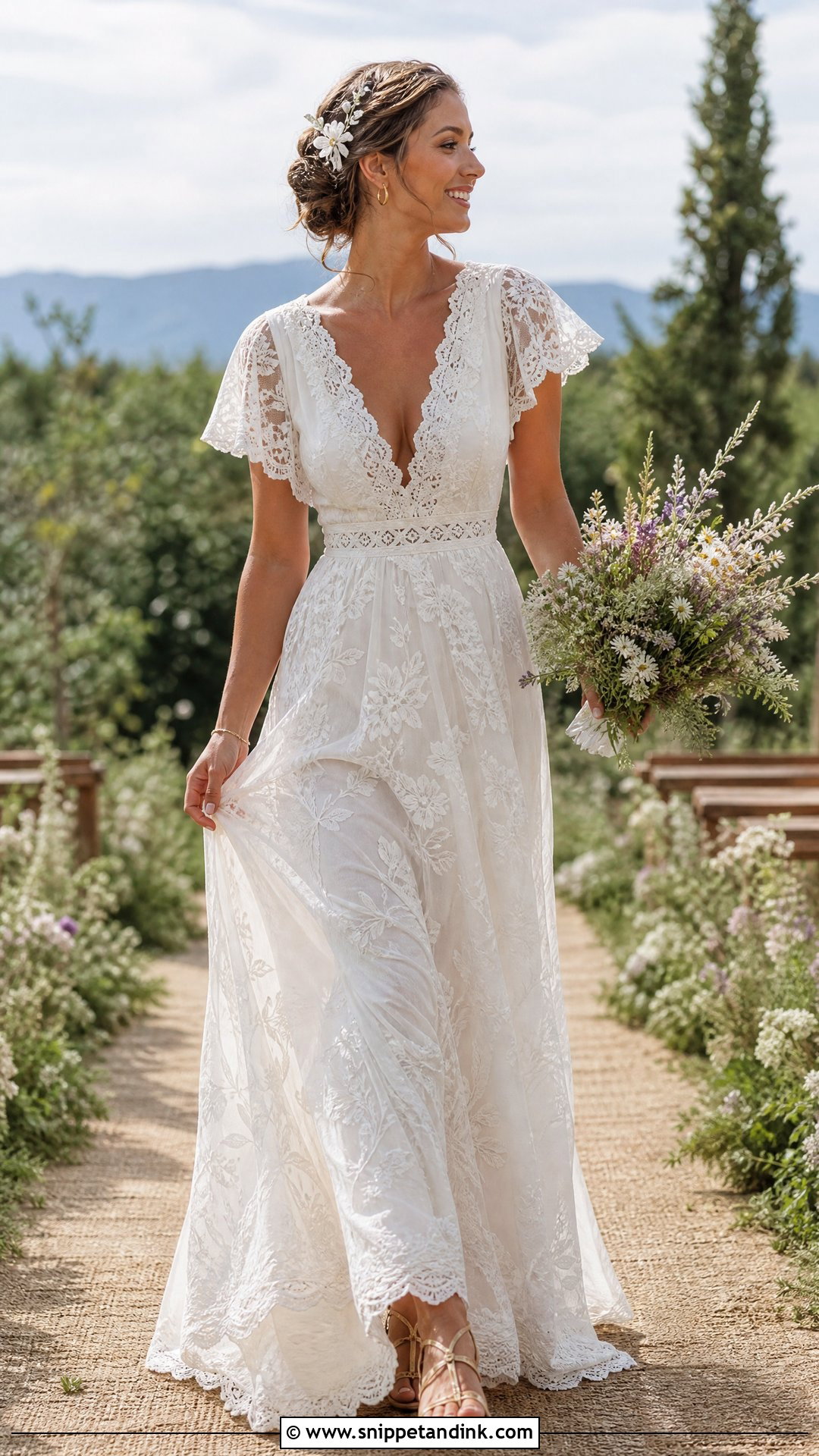
Boho lace is relaxed enough for an outdoor ceremony and still looks bridal in pictures. Choose soft botanical or geometric lace over a breathable lining. A deep V, flutter sleeves or an open back keep it free-moving without stiff structure. Pair it with ivory sandals and a loose braided updo. I’d choose either a lace-edged veil or a floral comb; both together crowd the look. Ask for a short train that bustles quickly, because you’ll want it off the ground the moment the reception starts on grass or dry earth.
13. Halter-Neck Summer Wedding Dress
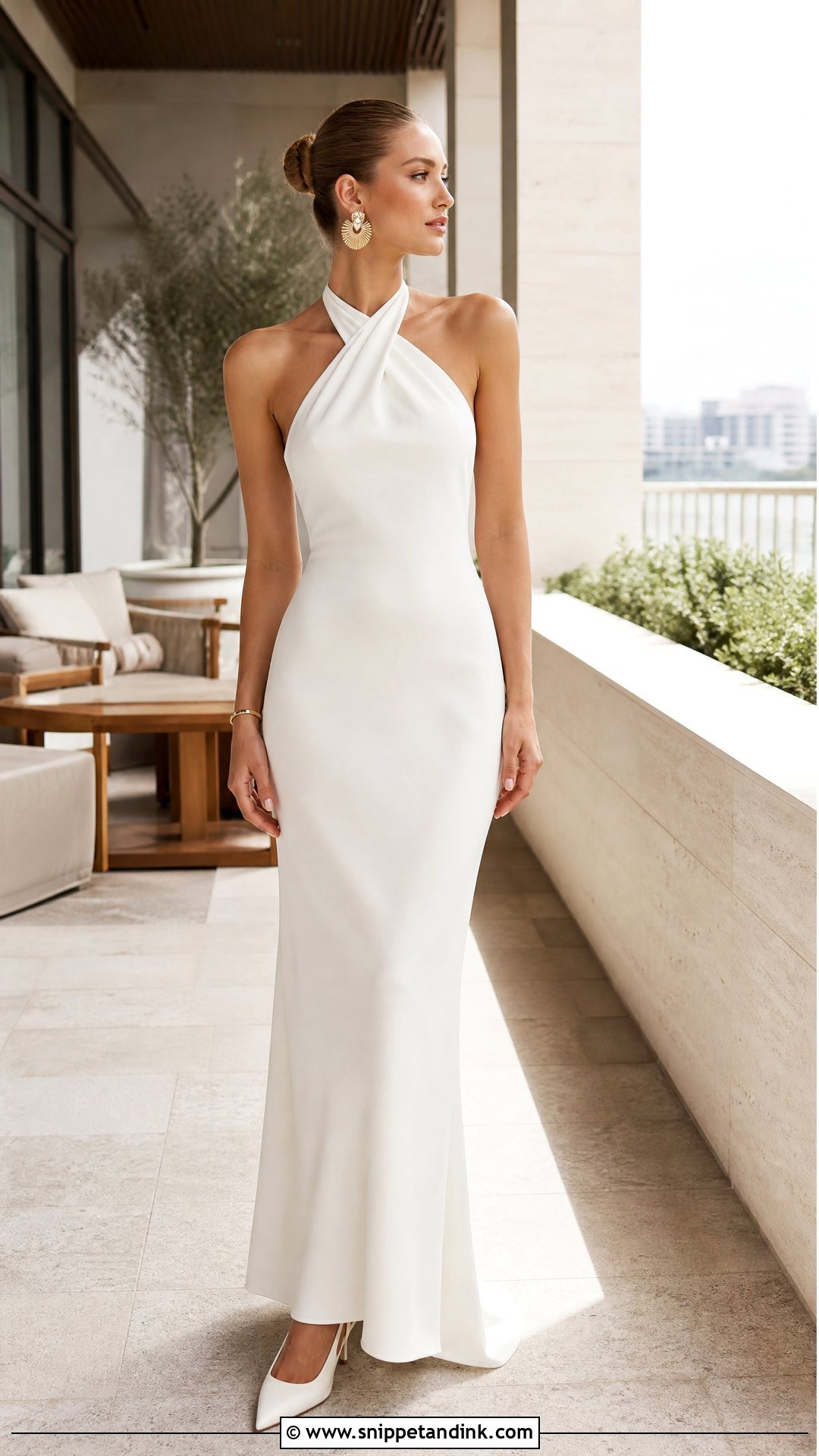
Halters frame the shoulders and leave the arms bare, which is welcome in hot weather. Crepe, satin, chiffon or pleated fabric keeps it fluid. A high halter looks refined; a plunging one is more dramatic. Skip the necklace and wear sculptural earrings. The neck strap needs checking with care. On a long hot day, any pull at the back of the neck turns into a headache, so it should feel supportive without dragging. A column skirt suits a modern venue, an A-line suits outdoors.
14. One-Shoulder Summer Wedding Dress
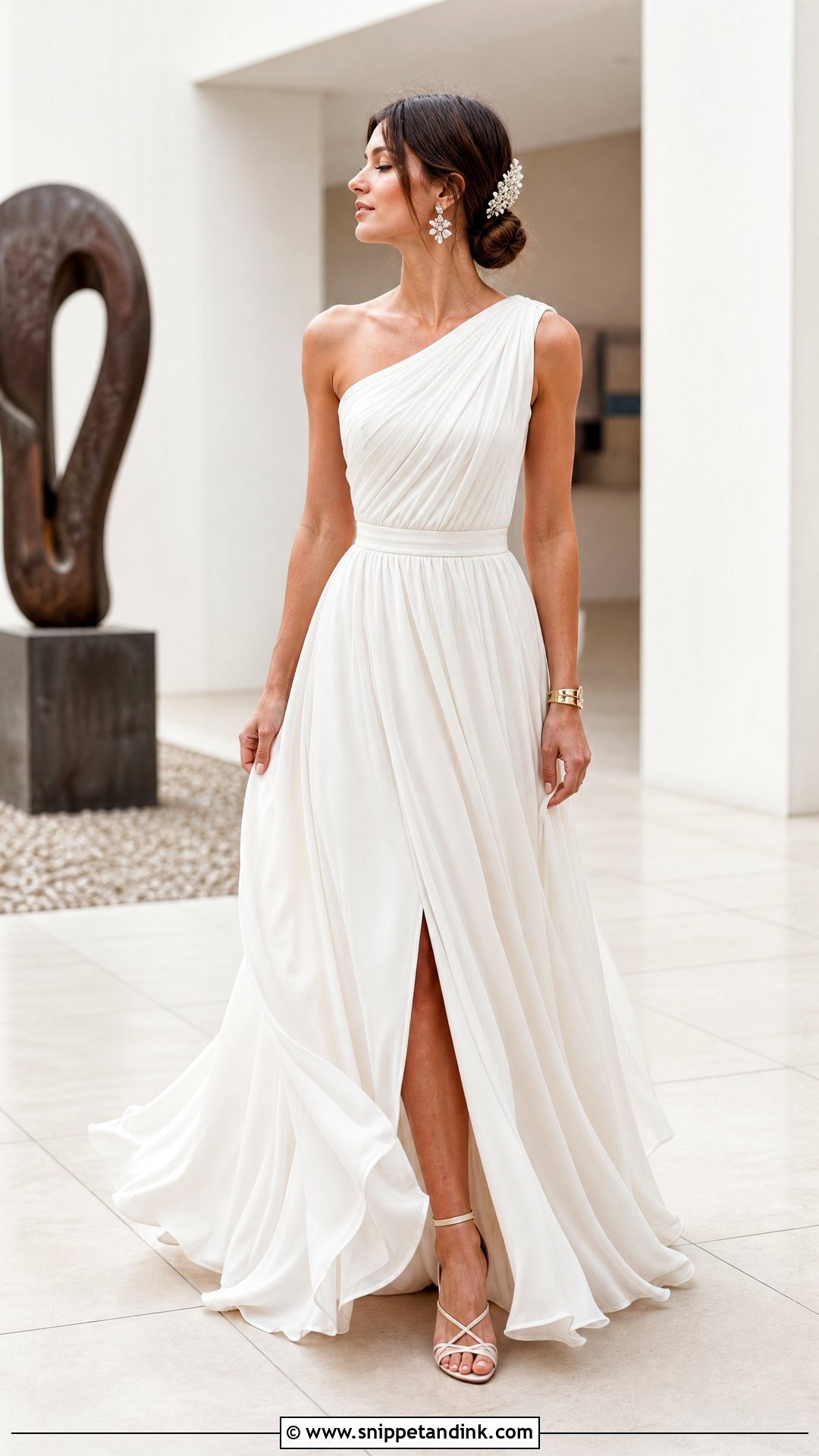
The asymmetrical neckline of a one-shoulder dress gives a simple gown its shape. Draped chiffon, smooth crepe or light satin stop it from feeling stiff. A column skirt is sleek, an A-line softer for a garden or the coast. Earrings, not a necklace, and a low side bun keep the shoulder clear. A comb often sits better than a veil with the asymmetric line. Lift the arm on the strapped side as high as you can in the fitting, because a tight shoulder seam limits hugs and dancing.
15. Minimalist Column Summer Wedding Dress
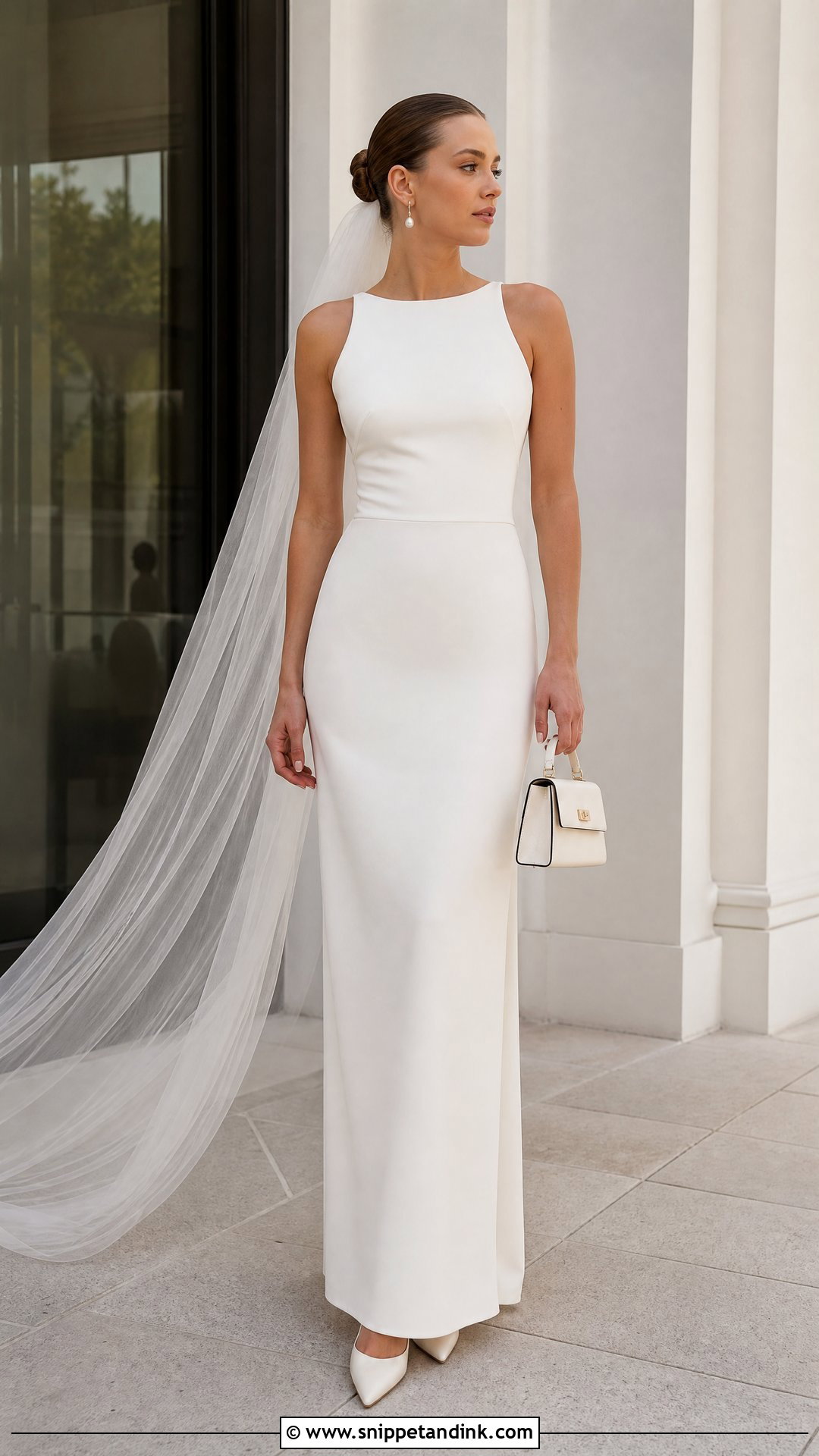
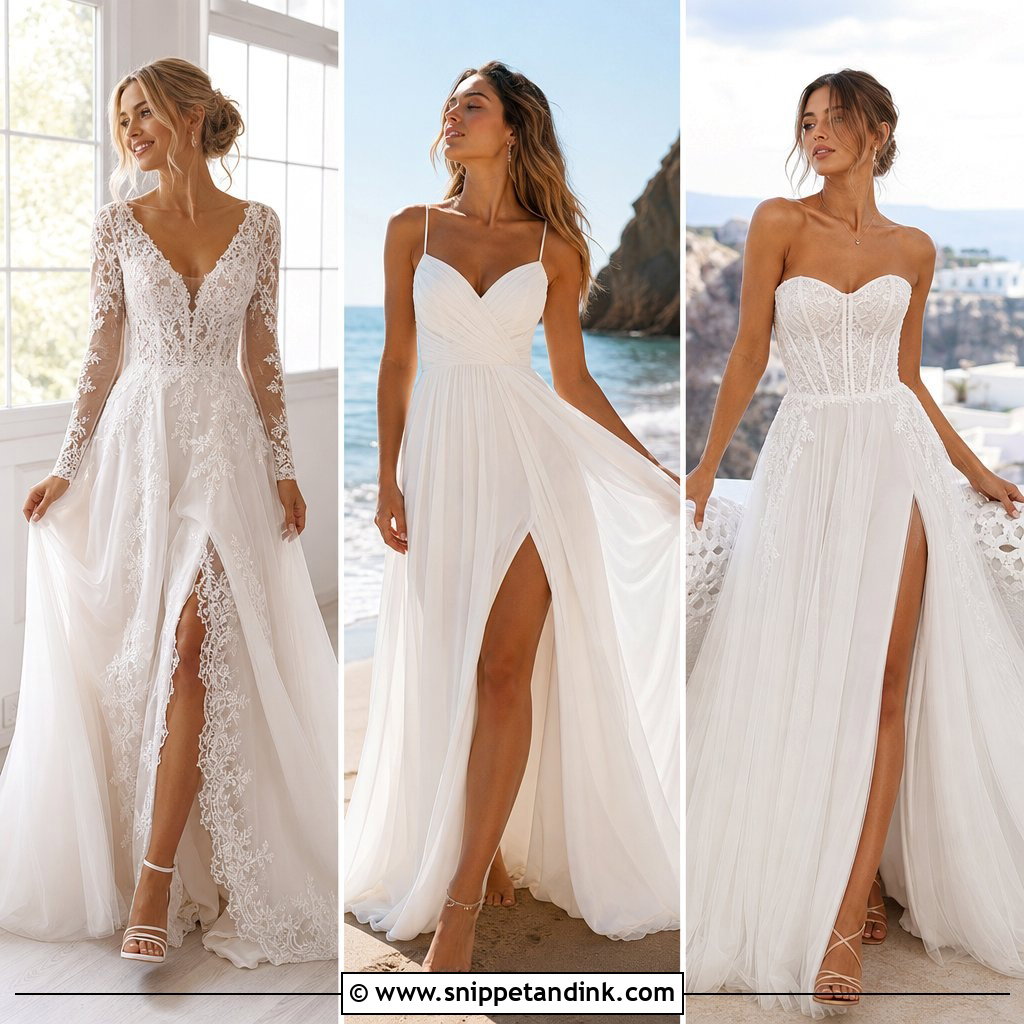
A column dress has impact without lace, crystals or volume. It runs straight down the body without the grip of a mermaid. Breathable crepe, silk or satin with careful seaming and a light lining suit summer best. A scoop, bateau, square or soft V neckline sets the tone. A long plain veil gives contrast against the clean line. Because there’s nothing to hide behind, the fit through the shoulders, waist, hips and hem has to be precise, so I’d budget for an extra fitting. Courthouses, galleries and restaurants all suit it.
16. Puff-Sleeve Summer Wedding Dress
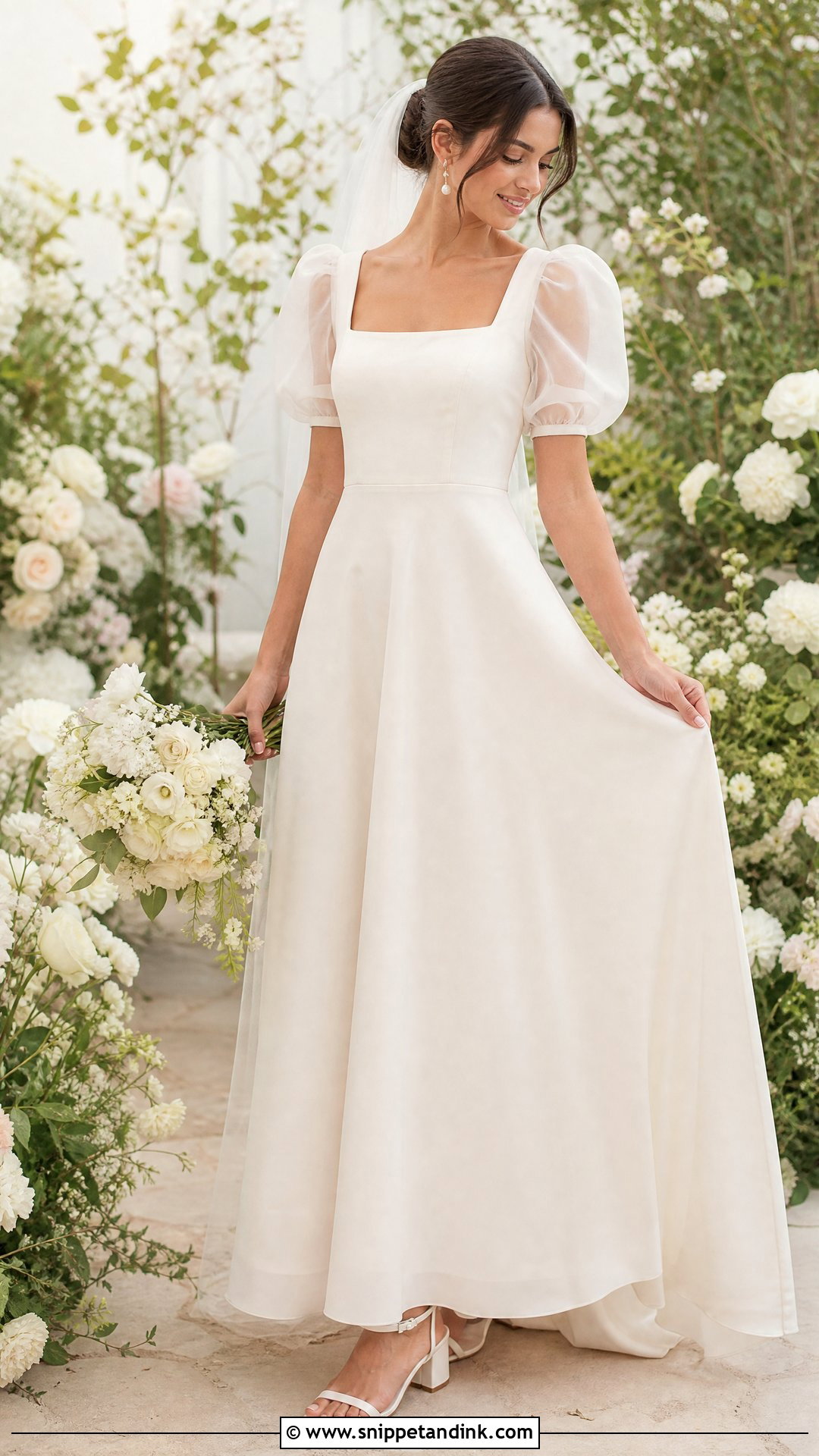
Puff sleeves sound wintry, but in sheer organza, tulle or light lace they trap very little heat. I’d choose short or detachable elbow-length sleeves over dense, fully lined ones. A square or sweetheart bodice with a flowing A-line skirt balances the volume at the shoulders. Keep the rest quiet: a simple updo, small pearl earrings and a plain veil. Detachable sleeves can come off before dancing. Check the sleeve elastic, since a tight band on a warm, slightly swollen arm leaves a red mark.
17. Plus-Size A-Line Summer Wedding Dress
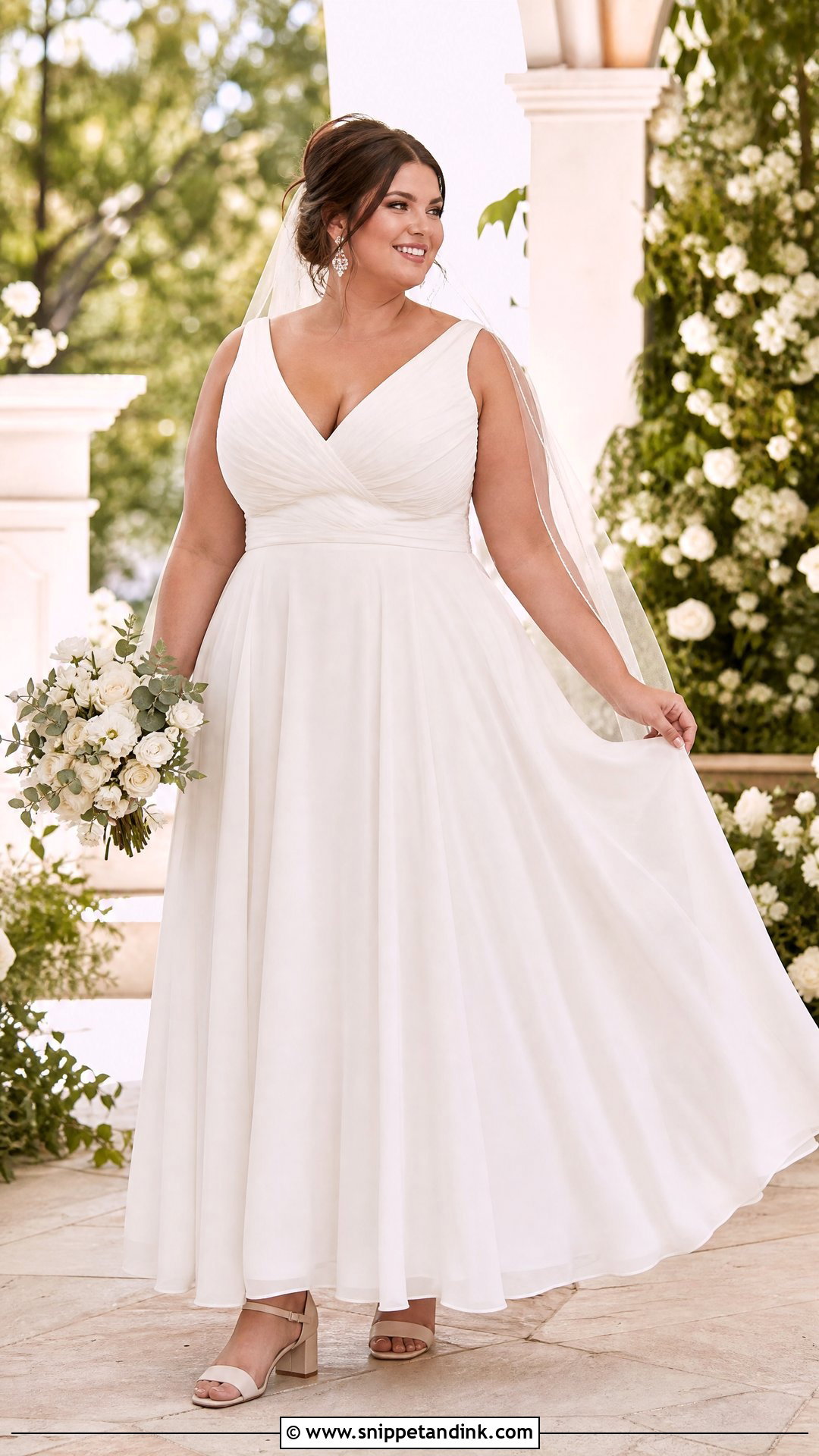
In plus sizes, a well-built A-line gives support and room to move. Look for wide straps, internal cups, flexible boning and a waist where it feels best on you. Light chiffon, organza, soft tulle or lace over a breathable lining keeps the bulk down, which matters doubly in heat. A V-neck or square neckline frames the face. Ignore rules about body types and try several necklines and waist positions. Ask the bridal shop for a sample close to your size so you can judge real support and movement rather than imagining it from a clipped sample.
18. Modest Long-Sleeve Summer Wedding Dress
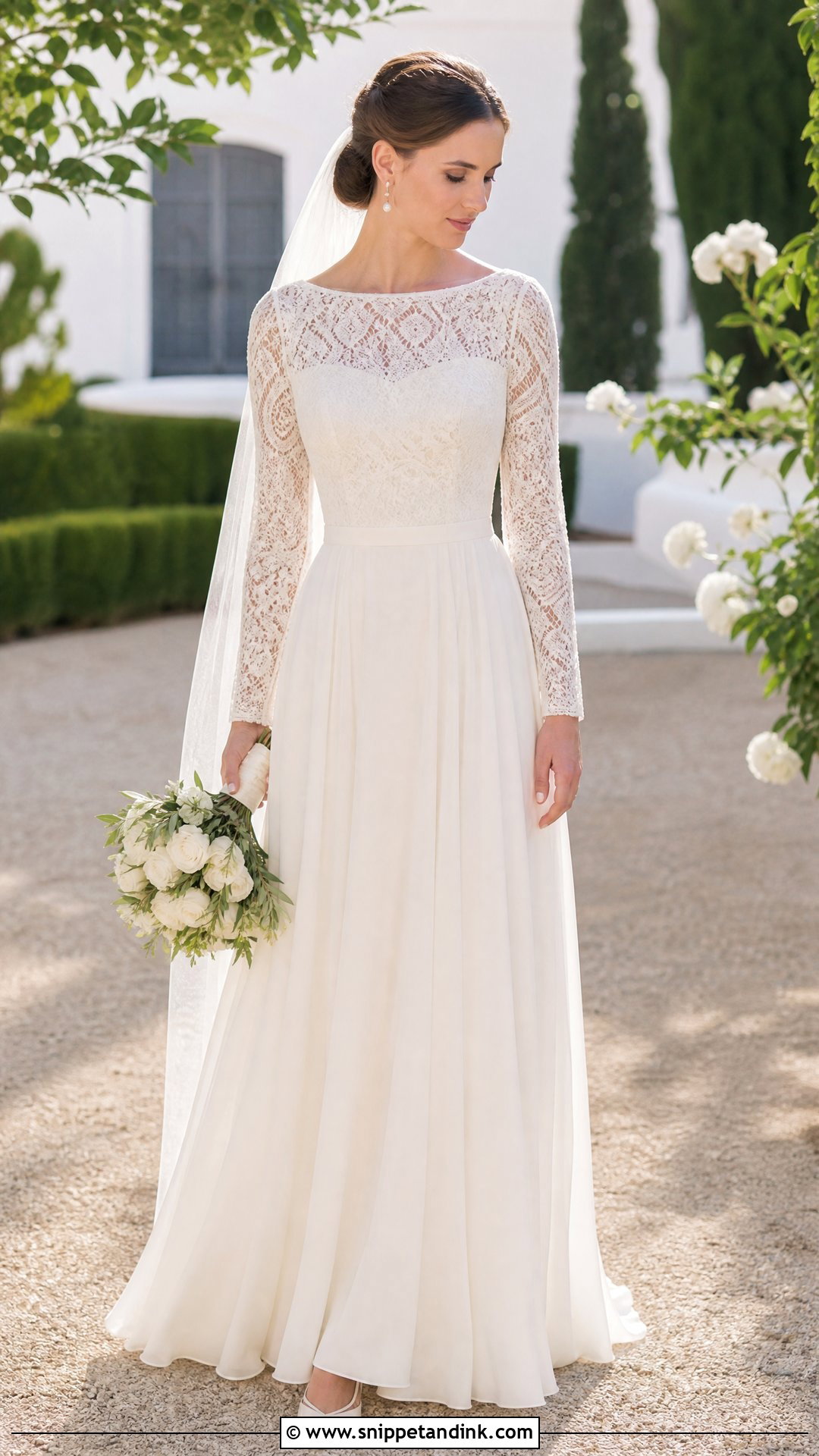
Long sleeves in summer only work when they’re sheer, loose and unlined. Illusion tulle, open lace, chiffon or fine organza sleeves over a breathable crepe or chiffon skirt let air pass. A bateau, jewel or soft V-neck gives coverage while keeping the bodice balanced. For a long outdoor day, I’d suggest detachable sleeves or a removable sheer topper you can take off for the reception. Bend your elbows and reach forward before final alterations; tight sleeves feel tighter as the day warms up. It suits formal gardens and air-conditioned ceremonies.
19. Maternity Empire-Waist Summer Wedding Dress
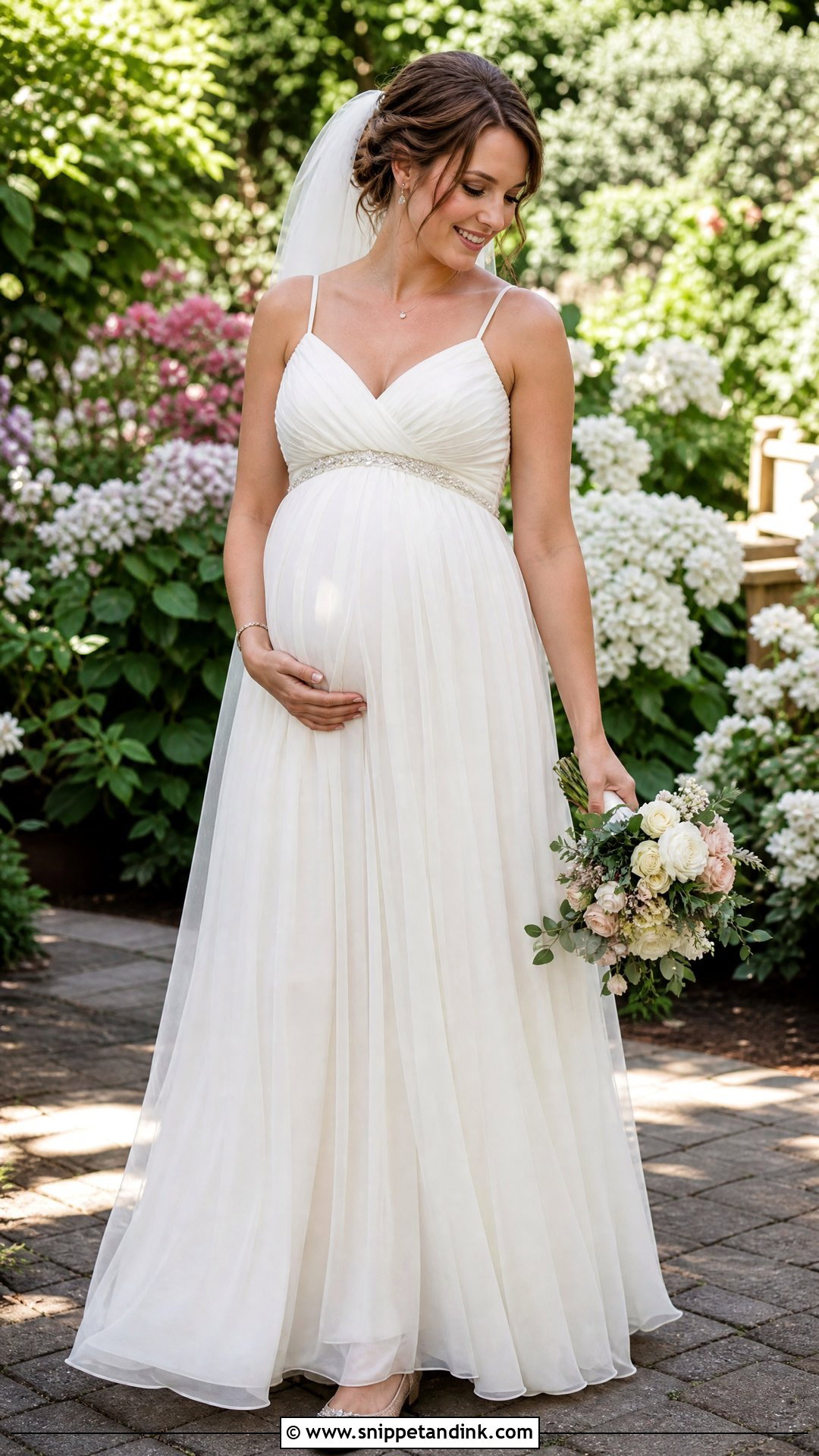
A maternity gown needs room for a body that may change week to week. An empire waist sits above the bump and lets a chiffon or soft tulle skirt fall over it. Adjustable straps, a wrap-style bodice or flexible construction help with late changes. In summer, pregnancy makes most people feel the heat more, so breathable lining matters even more than usual. Schedule the final fitting as close to the wedding as your seamstress allows. Cushioned low heels or embellished flats and a short veil keep it practical.
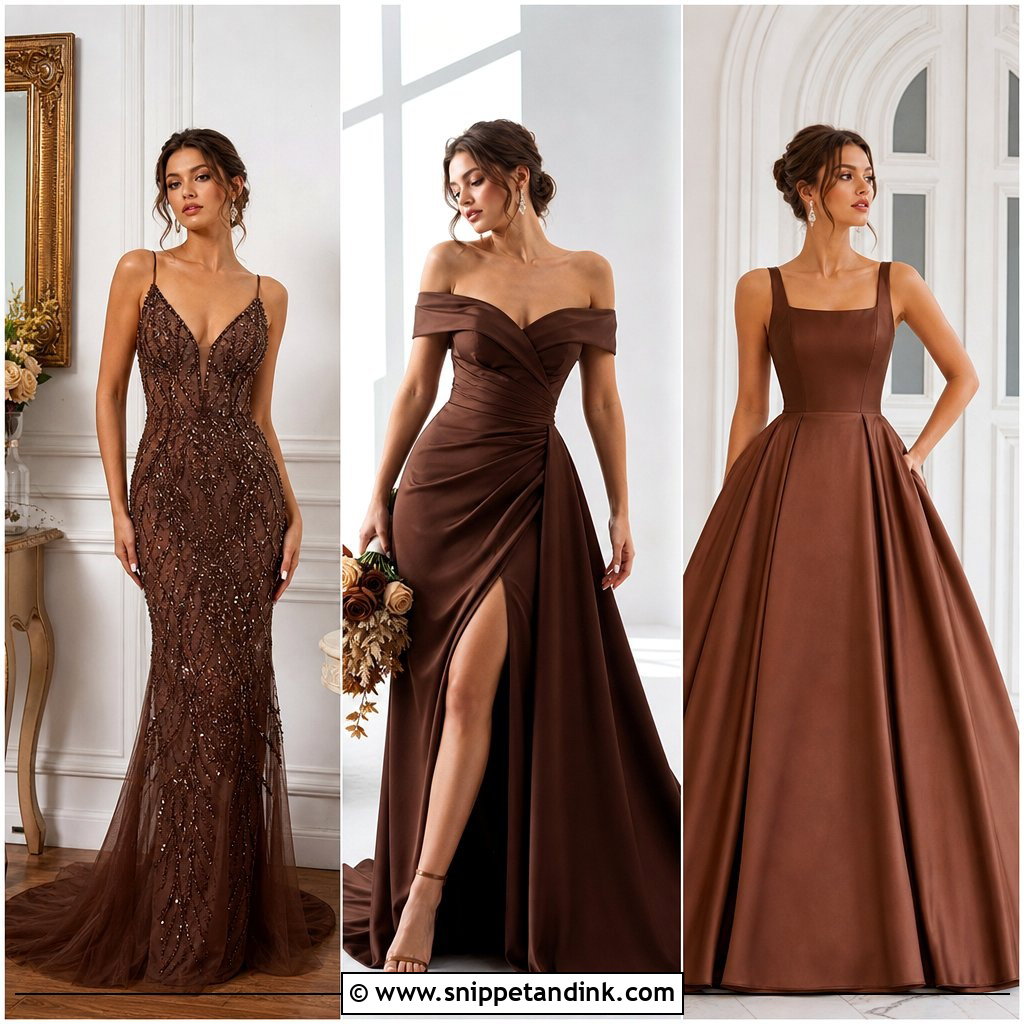
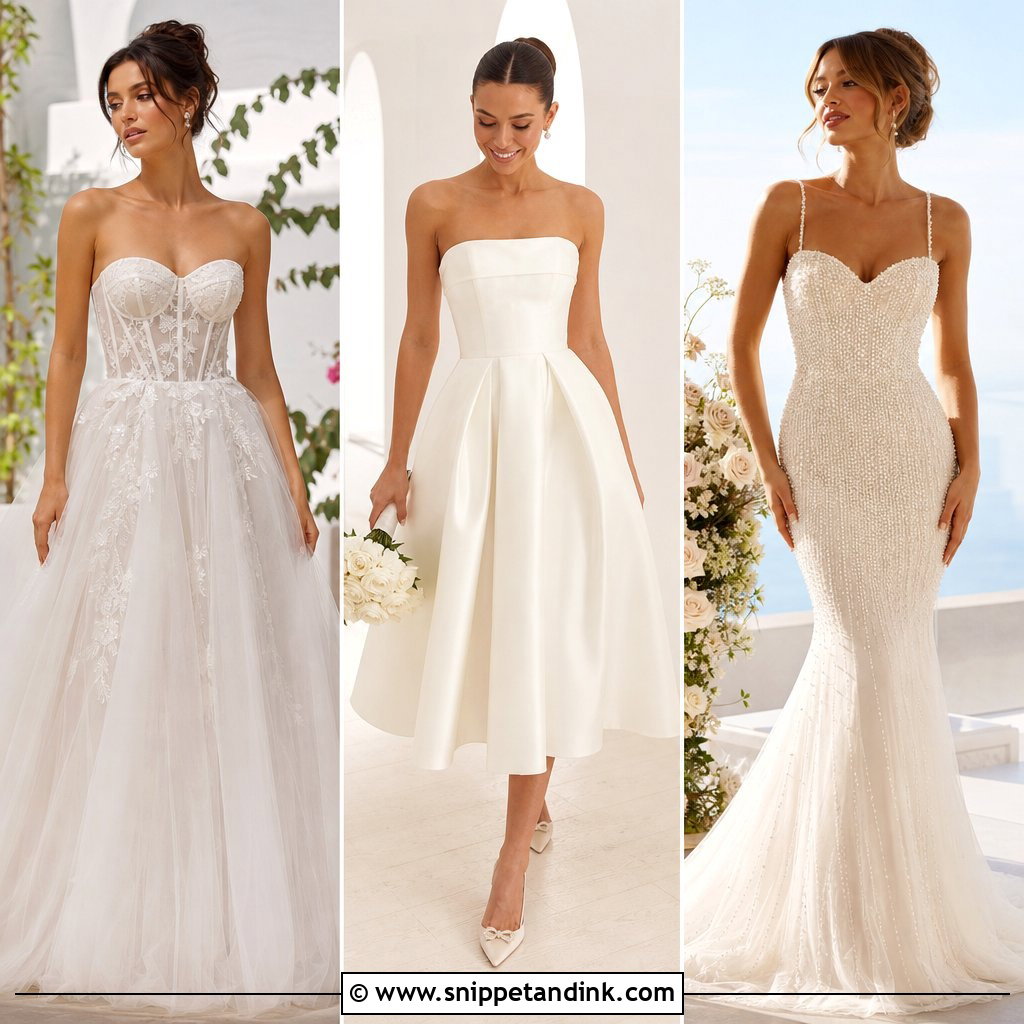
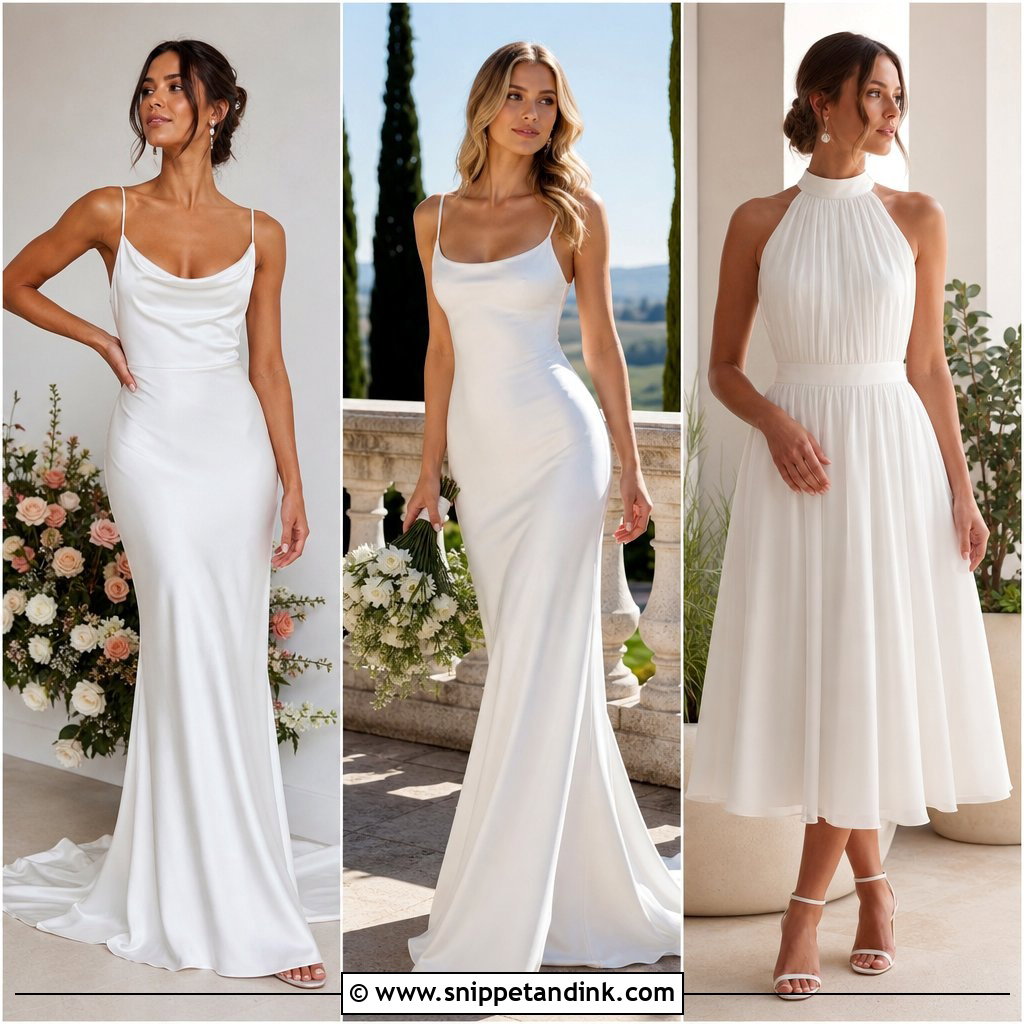
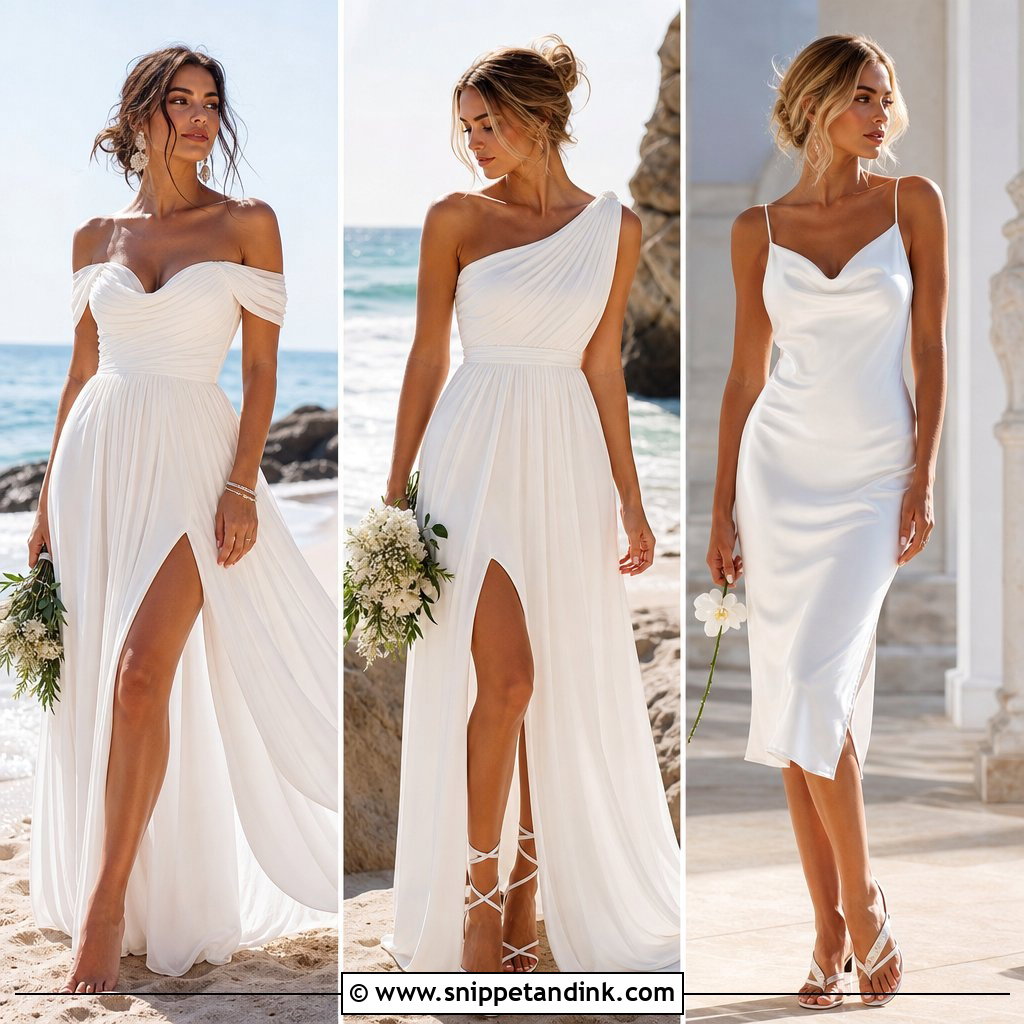
20. Mini Summer Wedding Dress
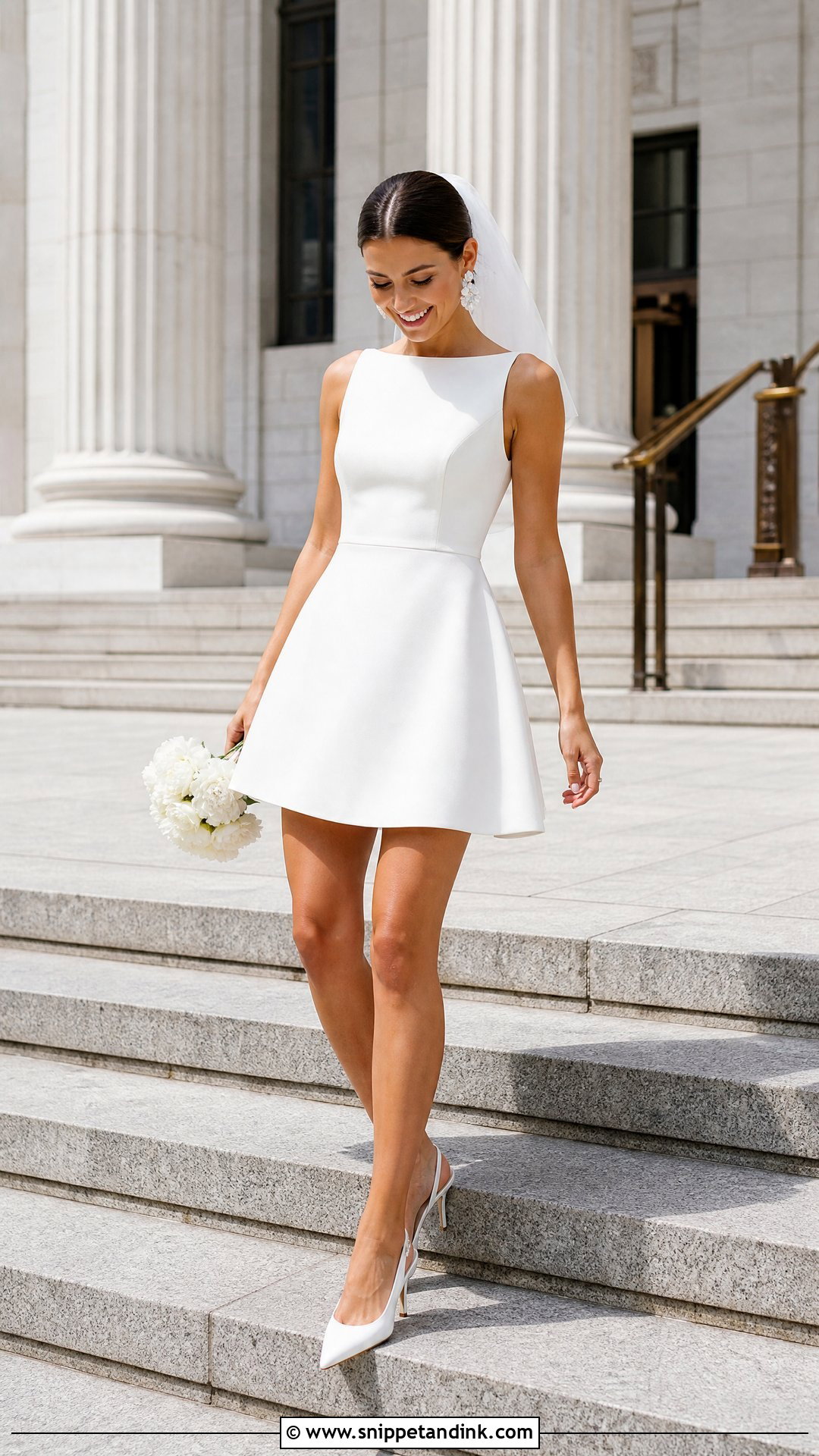
A mini is cool, fun and easy to dance in, which is why many brides wear one for the evening after a longer ceremony gown. A short dress also suits a smaller venue or a courthouse. A structured crepe mini, lace shift, satin A-line or organza design with a defined waist all work. Statement earrings, a short veil and a small bouquet keep it clearly bridal. Check the hem while sitting and dancing, not only standing. For a formal ceremony, a detachable overskirt adds drama before you reveal the short dress.
Sweat, Sunscreen and Grass: Protecting the Gown on the Day
Hot weather is harder on the dress than on you. Most summer marks I see come from three things: deodorant, sunscreen and the ground. All three are easy to prevent if someone plans for them.
- Put on deodorant and sunscreen early and let both dry completely before you step into the dress. Wet product transfers onto the lining and the underarms.
- Get dressed last. Hair and makeup first, then the gown, so it spends as little time on a warm body as possible.
- Wait for photos in the shade where you can. Direct sun warms dark hair and bare shoulders fast, and sweat shows on satin.
- Hold the skirt, or have someone hold it, when walking across a lawn. Damp grass stains the hem green, and it’s very hard to remove from tulle.
- Pack blotting papers, a small towel, white chalk for light marks, and a stain pen tested on a hidden seam first.
If you’re wearing a spray tan, have it done a couple of days before the wedding rather than the day before, and shower first. Fresh tan rubs off on ivory linings around the neckline and underarms, and that colour rarely comes out without a professional clean.
Try It Somewhere Warm Before You Say Yes
A summer dress has to keep you comfortable from the ceremony to the last dance, wherever you’re marrying. Start with a shape that supports your body and suits how formal the day is. Then compare fibre content, lining weight, train length and how freely you can move. Keep shoes, veils and jewelry light. Above all, walk, sit, raise your arms and dance in the gown, ideally in a warm room rather than an air-conditioned salon. If it still feels good then, it’ll feel good in July.
You'll Like These Ideas:


Leave a Reply