
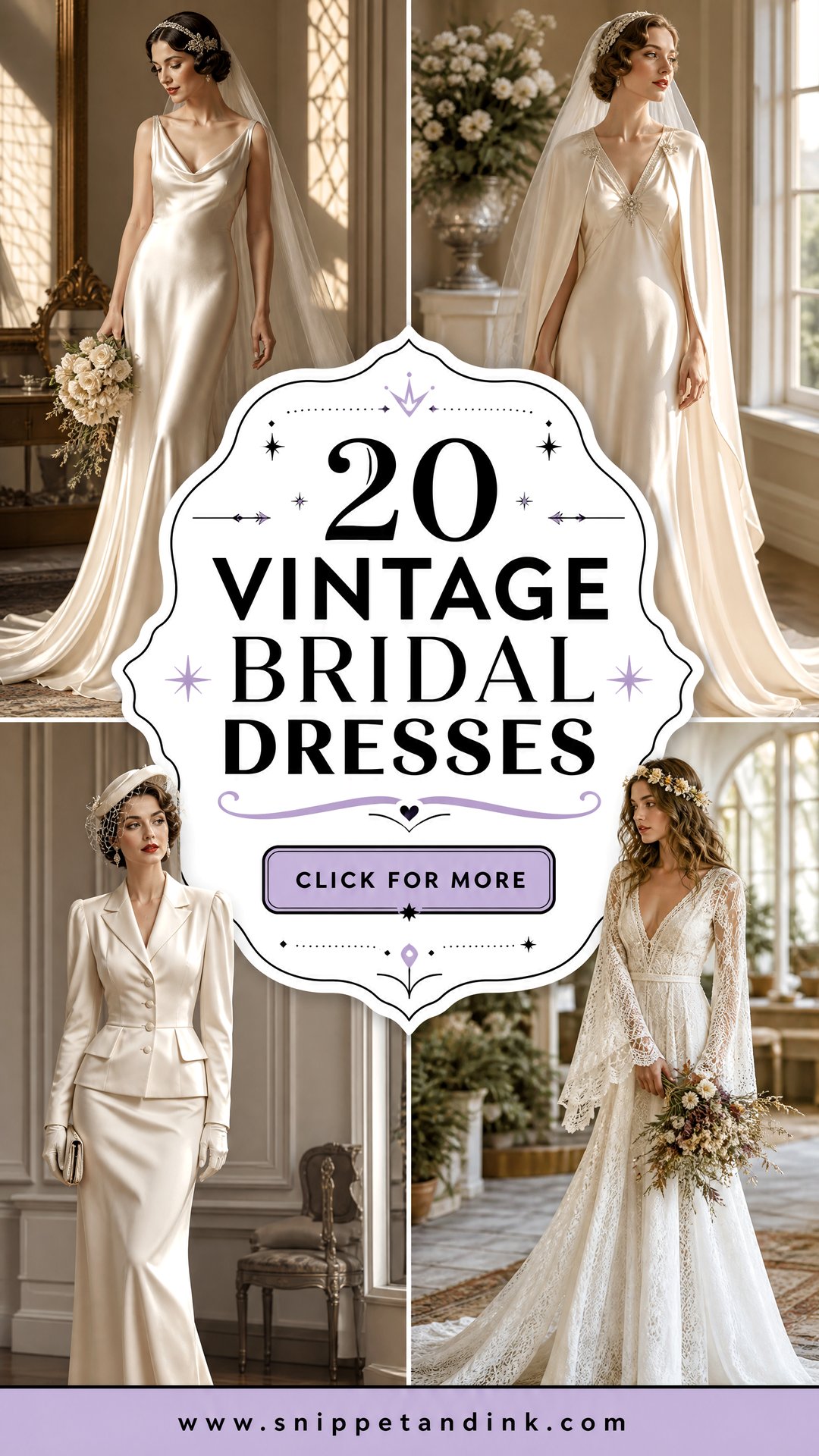
Every decade of wedding dress solved the same problem differently, and that’s what makes vintage so useful when you’re shopping today. The twenty outfits below run from the Victorian period through the 1990s: lace gowns, bias satin, a tailored suit, a mini, a prairie dress and more, each with the veil, shoes, jewelry and flowers I’d put with it. A true antique often needs careful restoration and comes in sizes that don’t match modern labels. A new gown cut in an old style gives you stronger fabric, easier sizing and proper support. Both are covered here, with venues from city hall to the coast.
Inspecting an Antique Gown Before You Pay
A real vintage dress can be the best thing you’ll ever wear or an expensive disappointment, and the difference usually shows in a few minutes of close checking. I go through the same routine every time.
- Hold the silk up to daylight and look for fine splits along folds and seams. Old silk can shatter, cracking into strips, and that can’t be repaired.
- Check the underarms, neckline and hem for stains. Yellow and brown marks are common, and many won’t lift fully even with professional cleaning.
- Pull gently at seams. If the thread snaps, the dress will need restitching throughout before it’s safe to wear.
- Look inside for seam allowance. Older dresses often have very little, which limits how much they can be let out.
- Smell it. Mustiness and mothball odour can take repeated airing to fade.
Ignore the size on the label and measure the dress flat, then compare with your own measurements. Sizes from earlier decades run much smaller than today’s. Buying something slightly too large is far safer than too small.
1. Victorian High-Neck Lace Bridal Dress
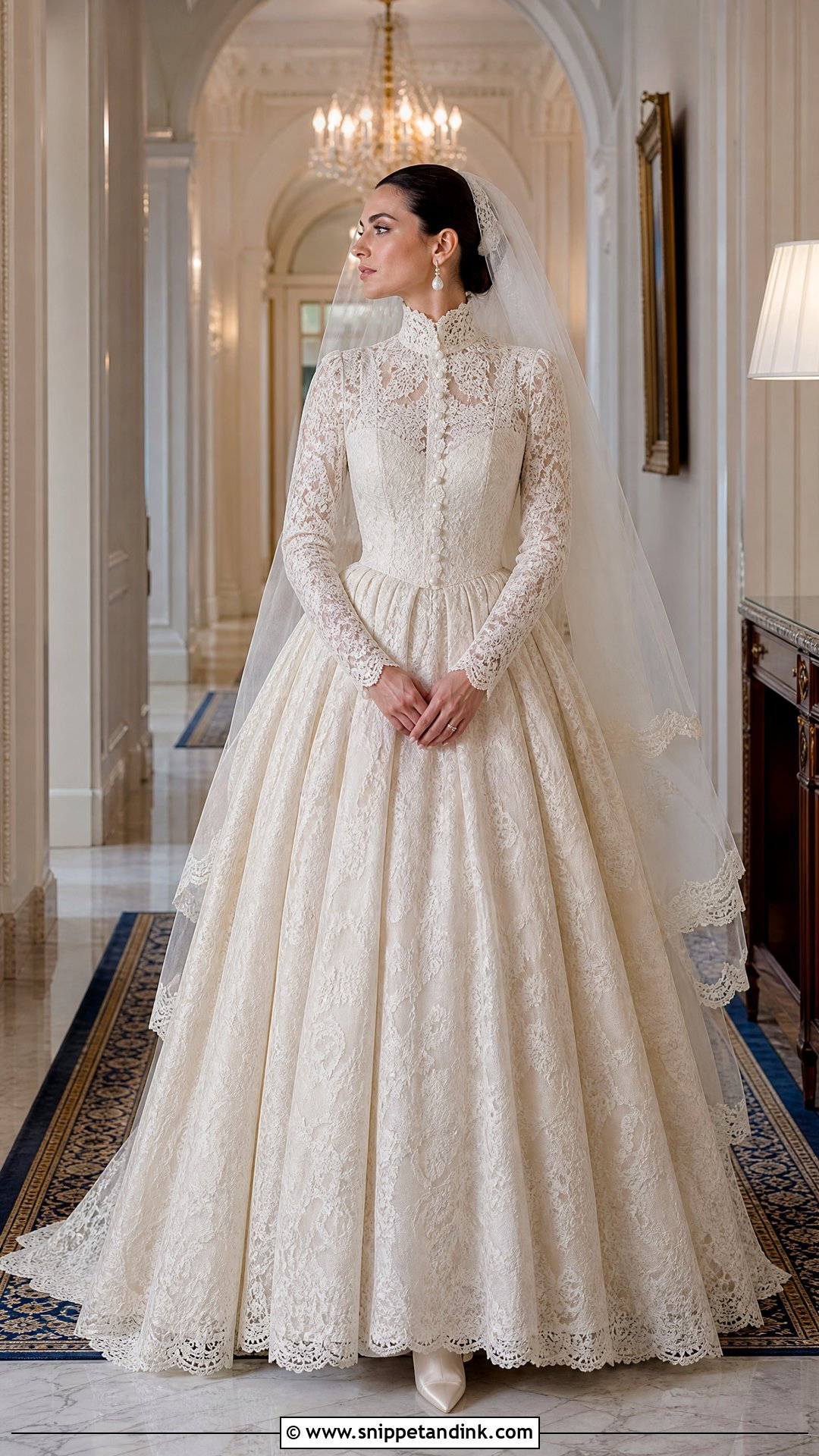
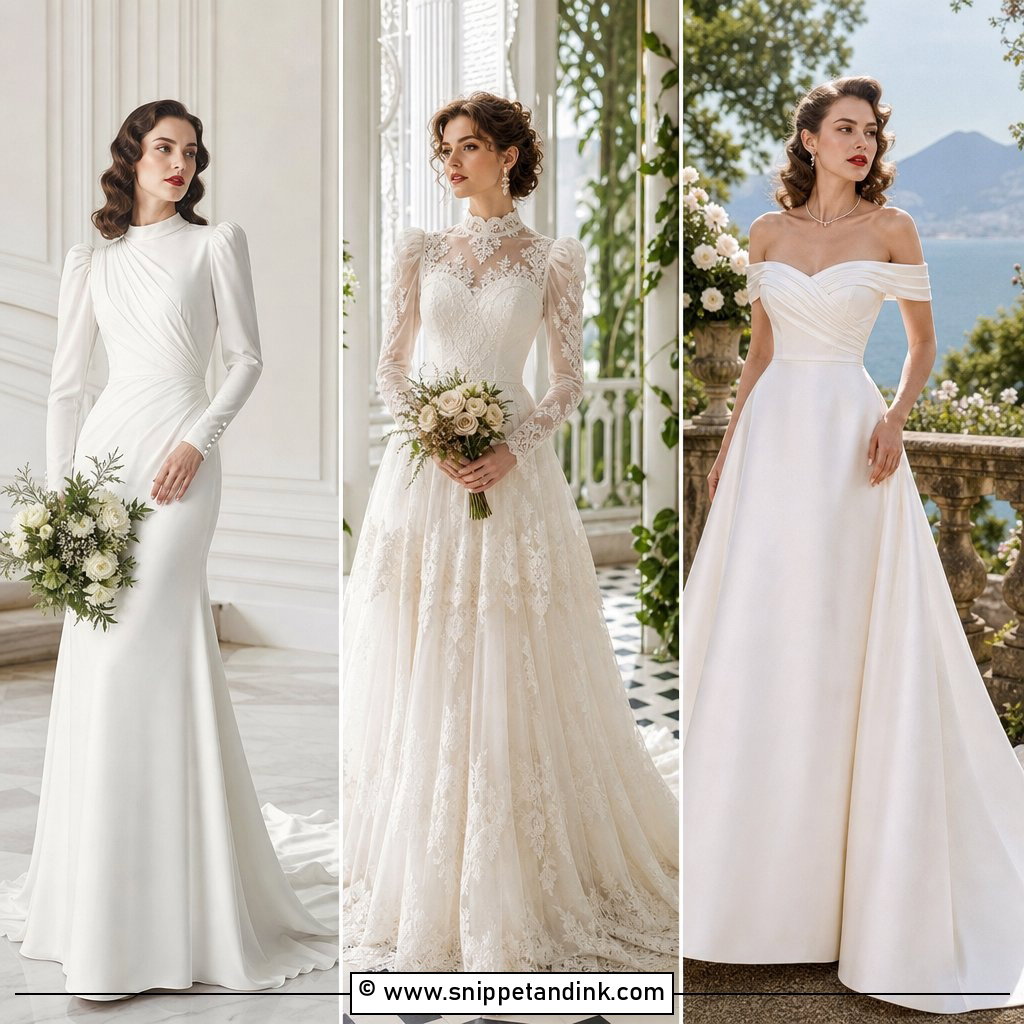
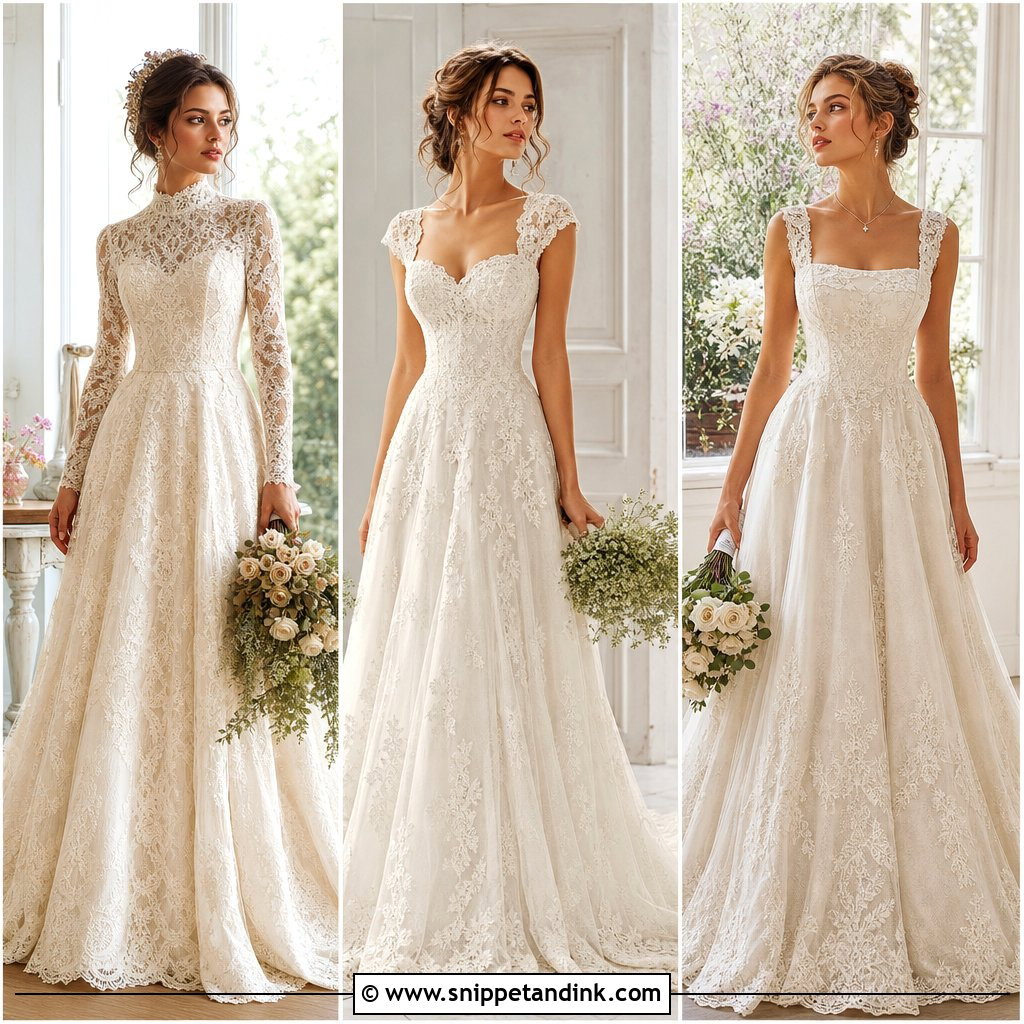
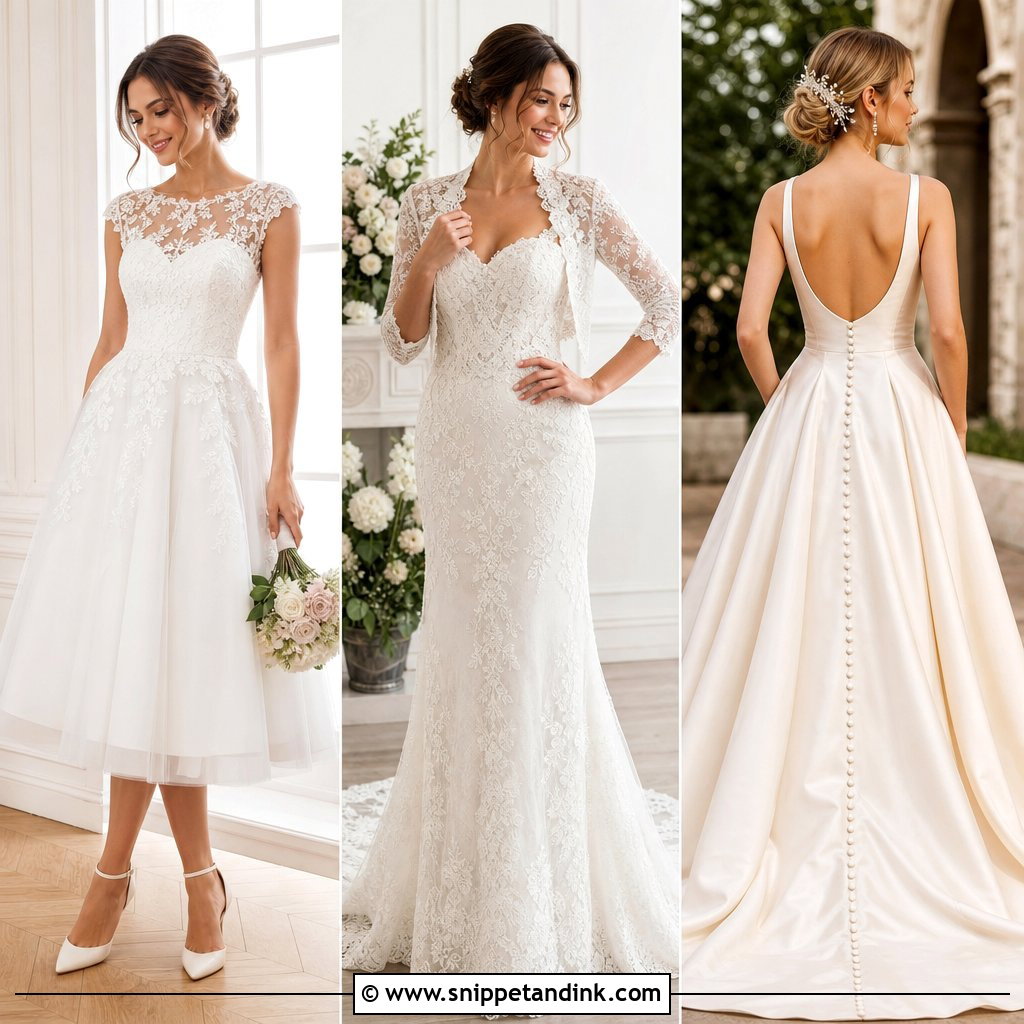
High collars, covered buttons and long lace sleeves give the Victorian gown its formality. I’d choose a fitted lace bodice with a standing collar and a gently structured skirt, in ivory or soft cream so it looks aged rather than bleached. Petite brides do better with a narrower skirt; on a curvier figure, internal boning and a soft waist give comfortable support. Count the buttons before the day, because thirty loops down the back take time, and a crochet hook makes them far quicker. Pointed satin pumps, pearl drops, a low chignon, a fingertip lace veil and white roses with trailing green finish it.
2. Edwardian Lace Column Bridal Dress
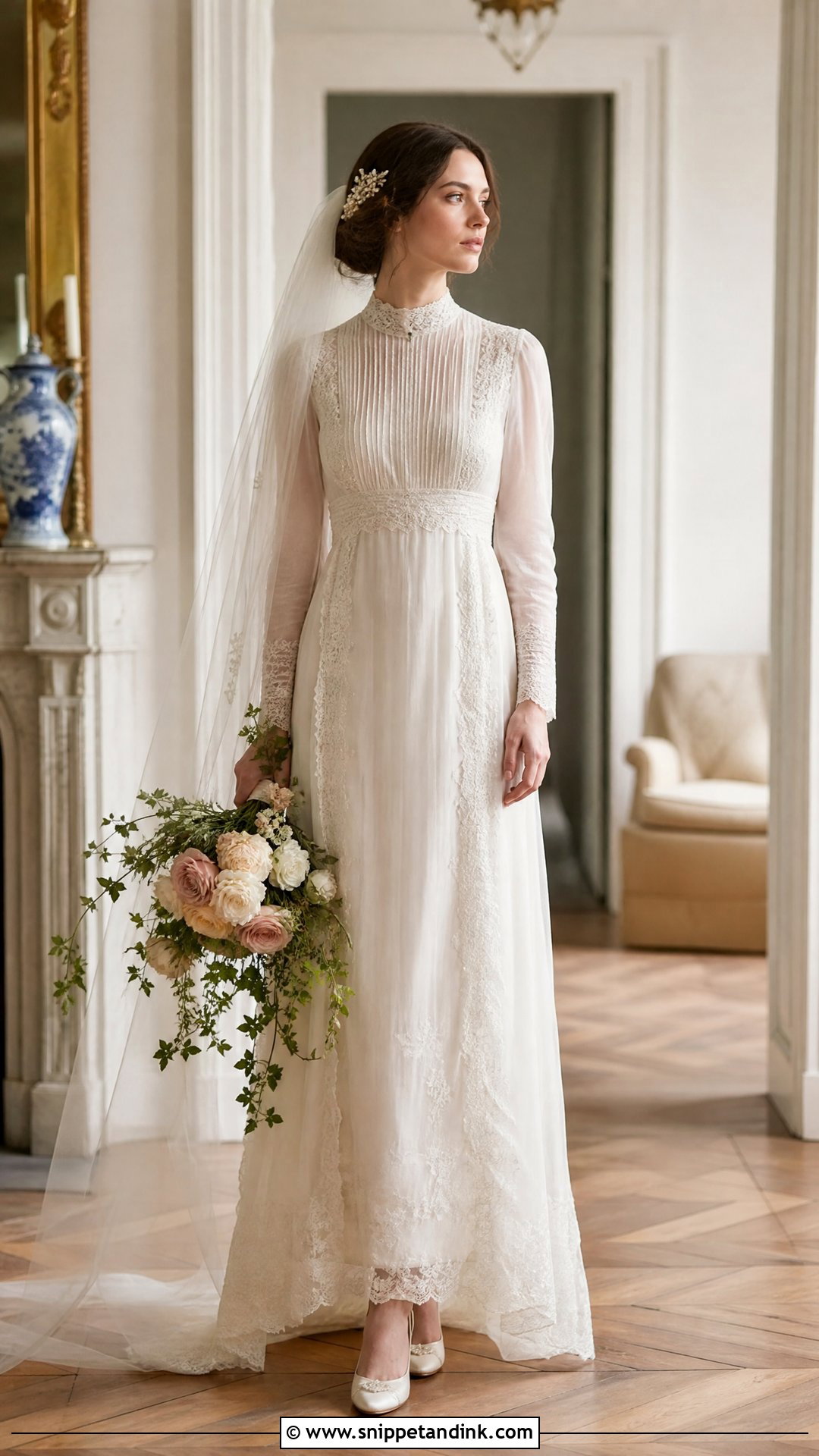
Edwardian lace looks best when the line runs uninterrupted from neck to floor. A column with a raised neckline, pintucks, sheer sleeves and a lightly defined empire waist should skim, never squeeze. If you’ve found an original, keep the opaque lining if it’s sound, since it carries the period and gives coverage; if the antique lace is fragile, a new silk or stretch-crepe lining underneath takes the strain off it. Ivory ankle straps, a small pearl comb and a gauzy chapel veil suit it, with sweet peas and garden roses for a garden or a historic home.
3. 1910s Empire-Waist Bridal Dress
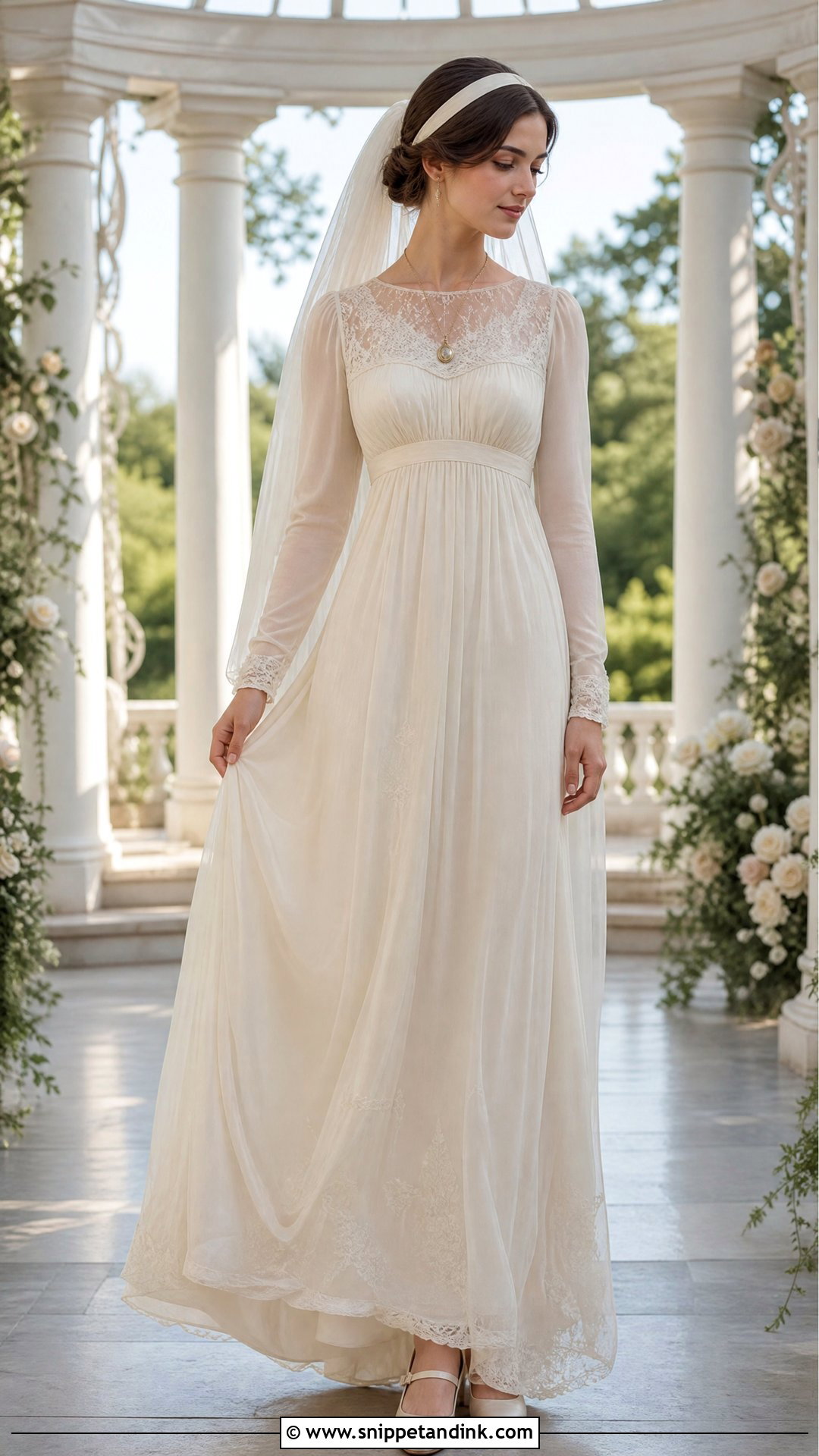
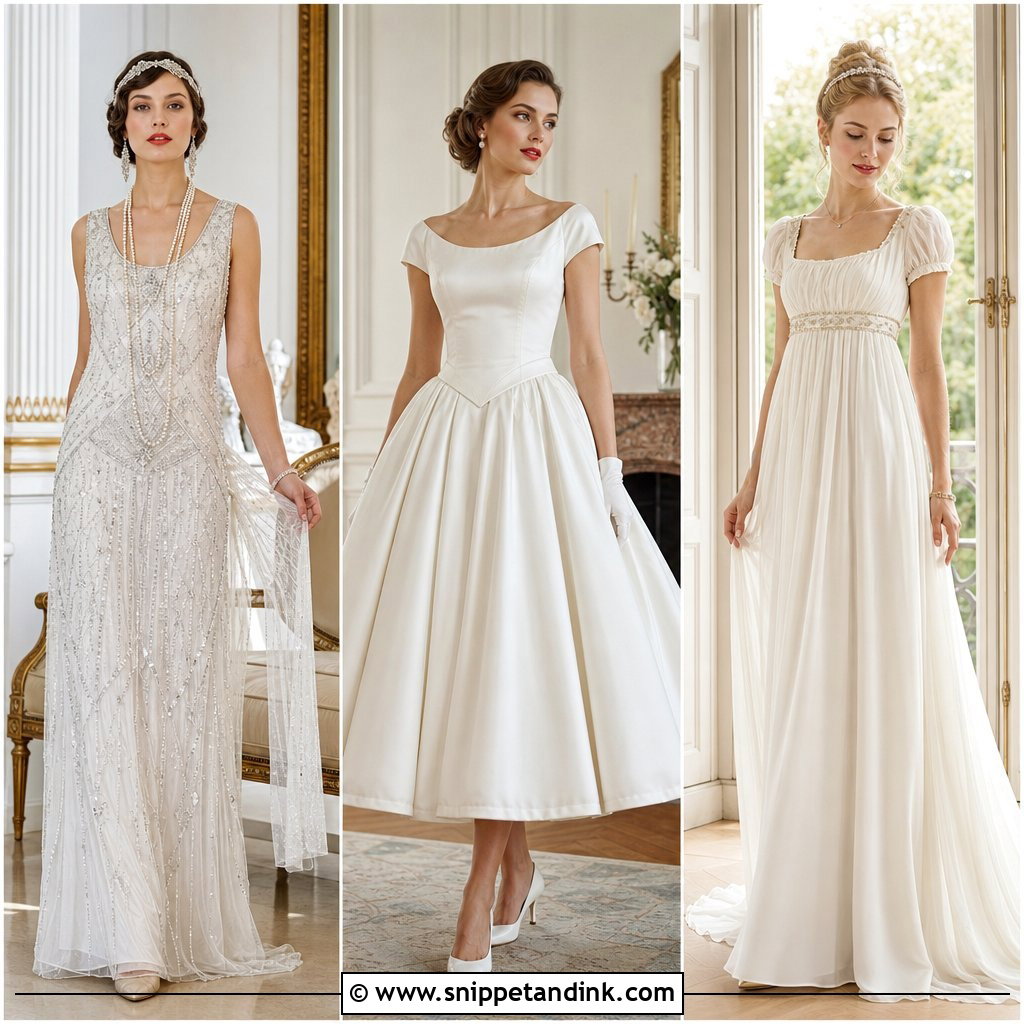
No corset, no heavy bodice: a 1910s-inspired empire-waist dress gets its romance from drape. Look for a raised seam, a flowing chiffon skirt, a lace yoke and soft sleeves to the elbow or wrist. The vertical fall lengthens your frame, and the gathered skirt lets you move. If you want more definition, a slim embroidered sash right under the bust helps. Low satin Mary Janes, a narrow ribbon band, a sheer veil at the crown, small pearls and anemones keep it light for spring and outdoor weddings.
4. 1920s Beaded Drop-Waist Bridal Dress
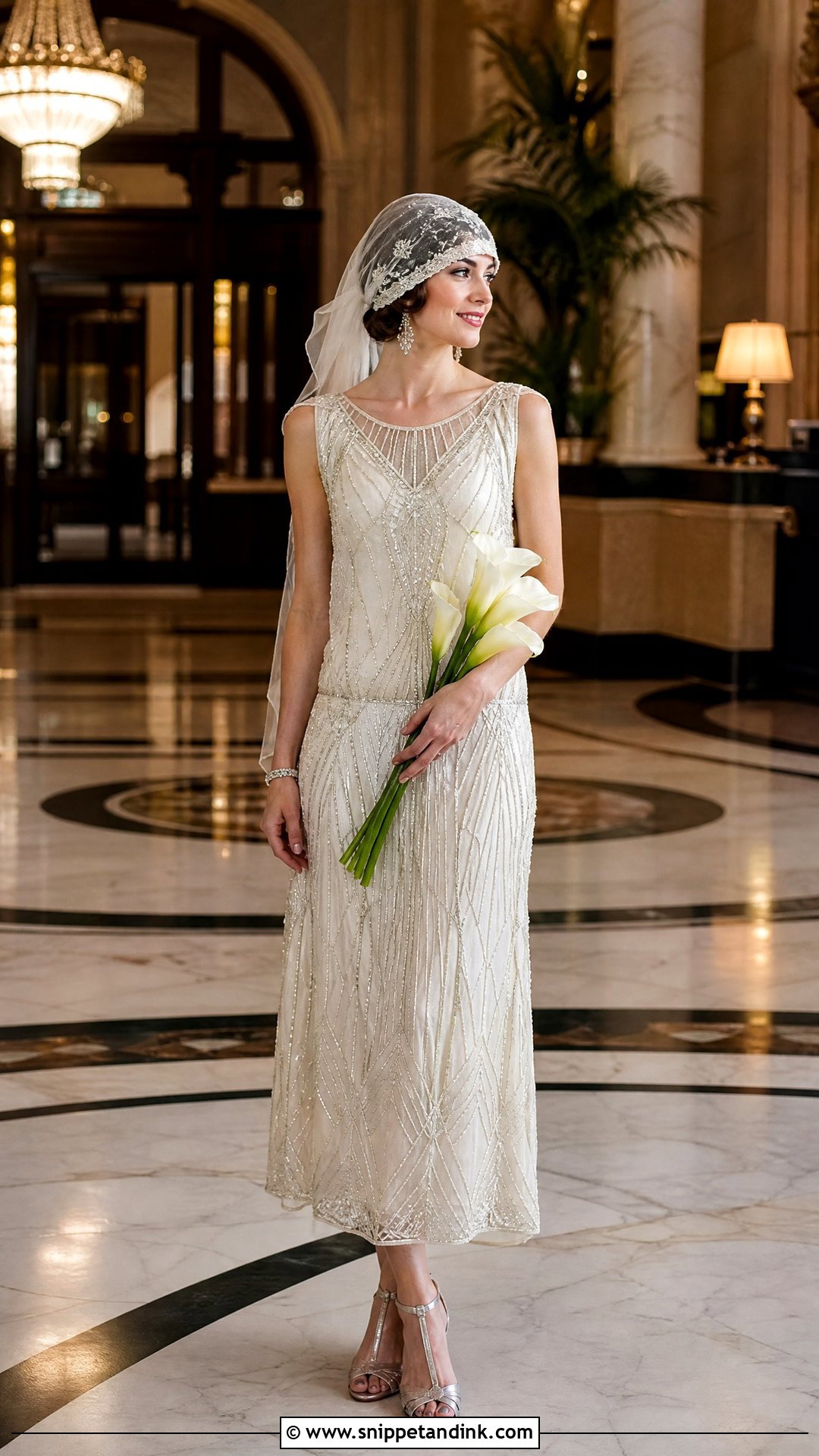
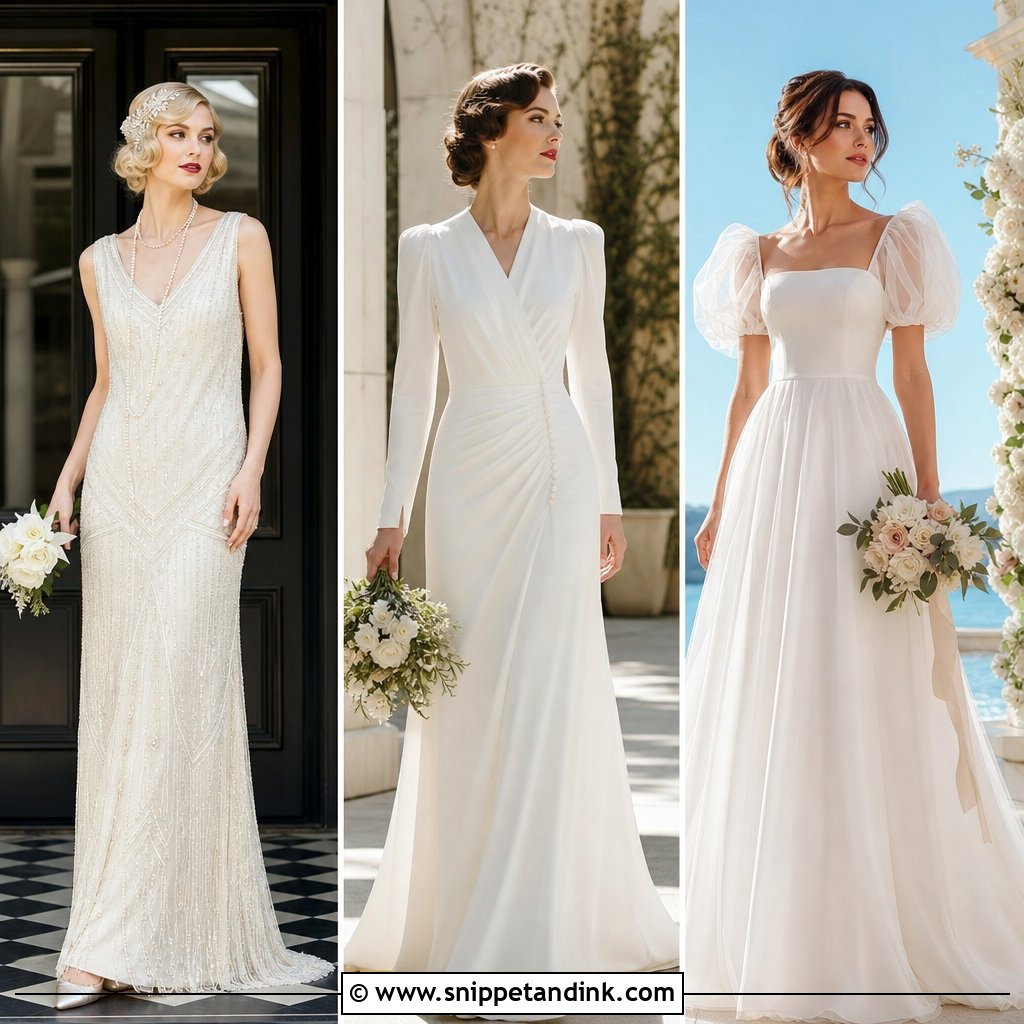
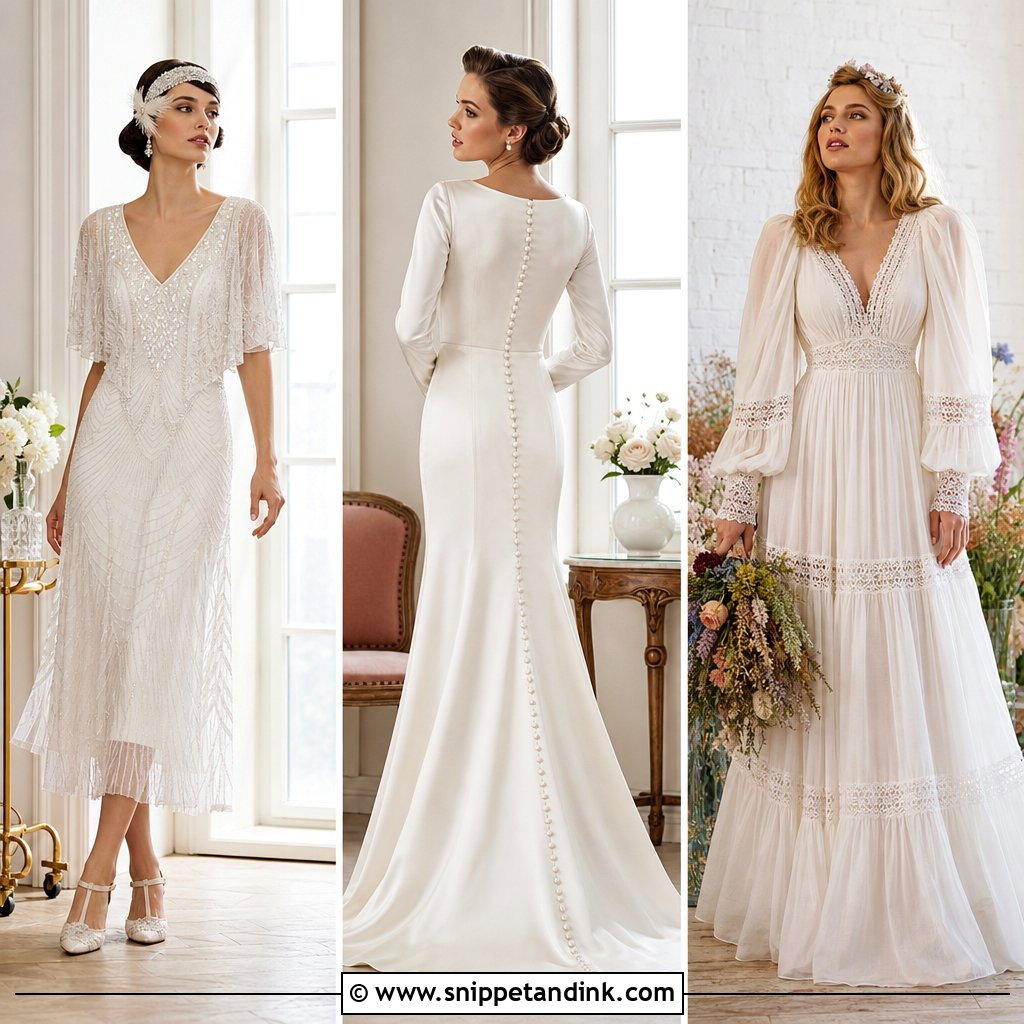
Geometric beads, a lowered waist and a shorter, freer skirt are the 1920s in a sentence. Choose a straight ivory gown with symmetrical beadwork, a bateau neck and a hem below the knee or at the ankle. Original beaded dresses from this era are often too fragile to wear; the silk beneath the beads splits under their weight, so a modern version is usually safer. If you want some waist, look for discreet shaping under the beading. Silver T-straps, crystal earrings, a cloche-style veil or beaded cap and a slim bunch of calla lilies are enough sparkle.
5. 1920s Tea-Length Fringe Bridal Dress
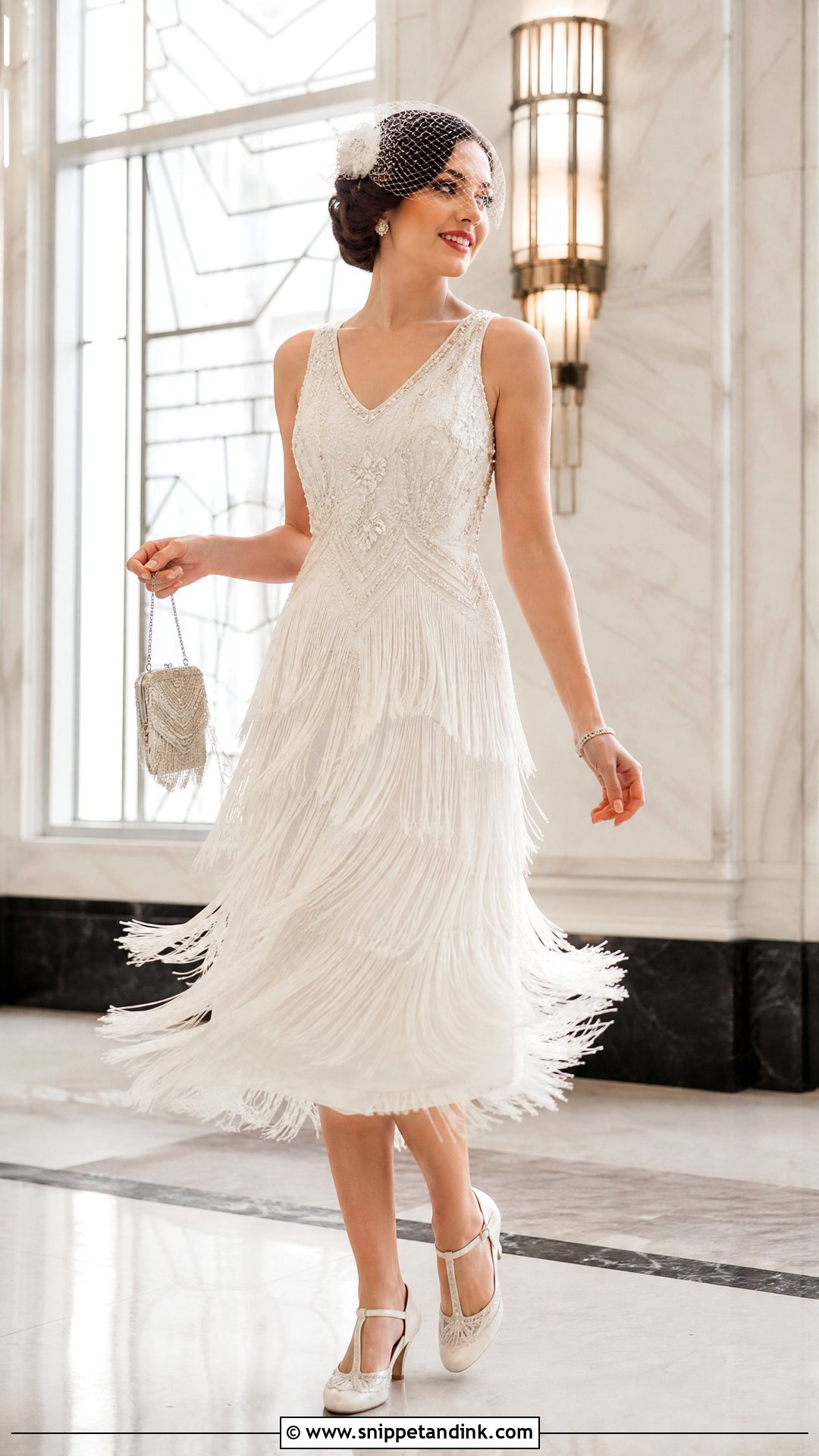
Fringe and Art Deco-inspired detailing on a tea-length dress make the most playful outfit here. Keep the bodice plain and let layered fringe on the skirt do the moving; ivory reads softer and more period-right than stark white. If full fringe feels like a costume, limit it to the hem. Closed T-strap heels, a beaded wrist bag, crystal studs and a short birdcage veil suit it, with a sleek bob, finger waves or a low tuck. Carry a compact round bouquet of white roses.
6. 1930s Bias-Cut Satin Bridal Dress
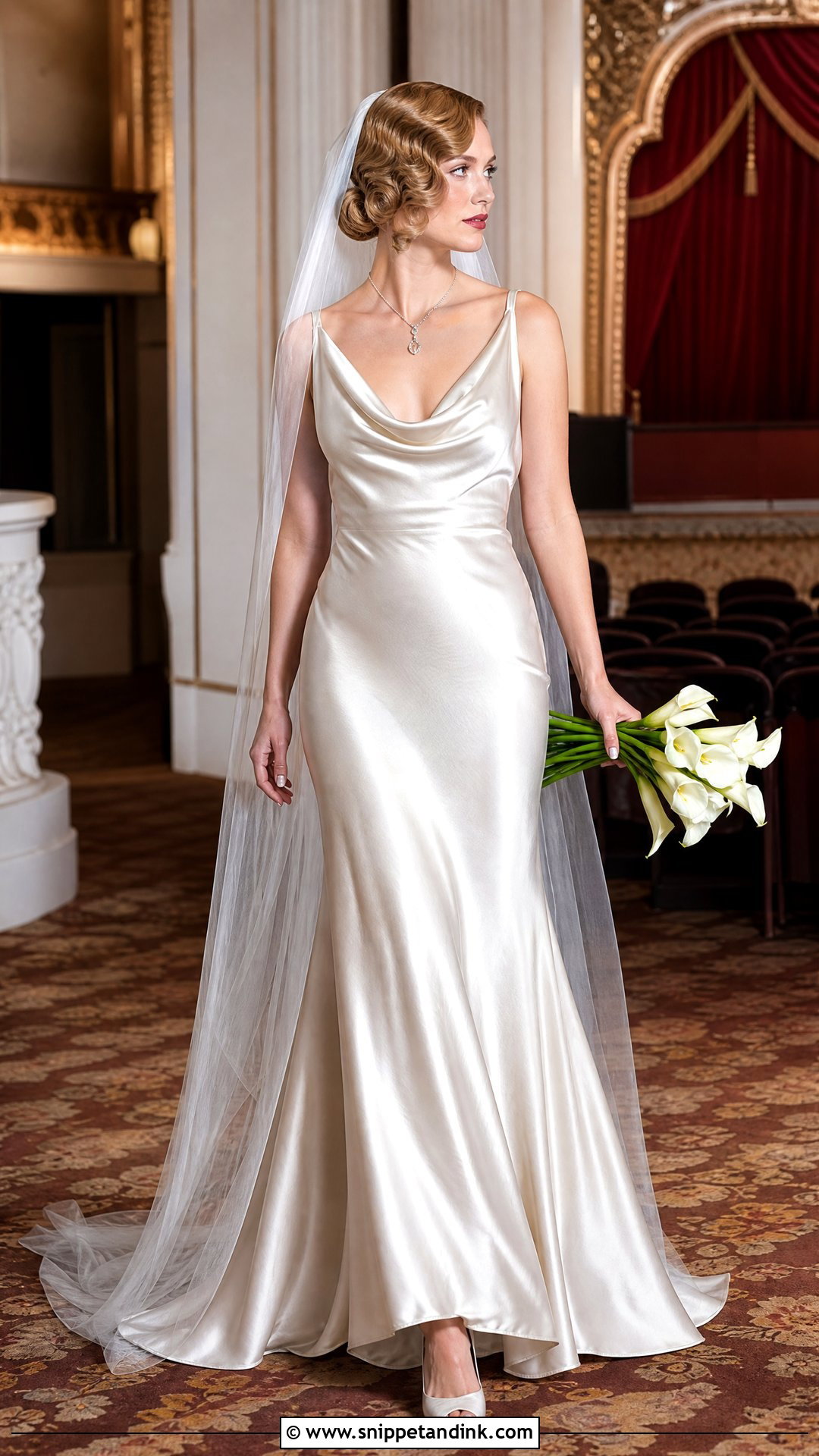
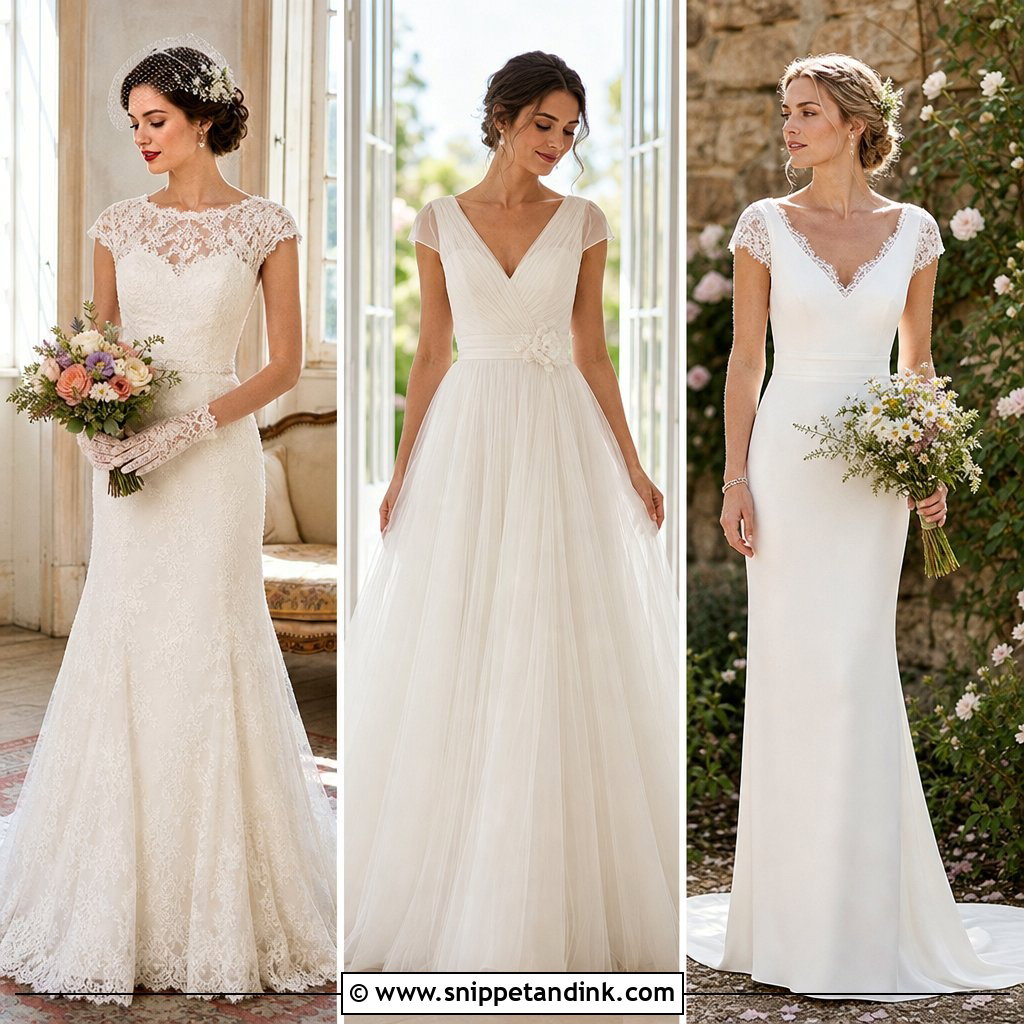
A bias-cut satin dress moves with you because the fabric is cut diagonally across the grain, which is how 1930s designers got that long, liquid line. Choose silk satin or good satin-backed crepe with a soft cowl, a fitted waist and a sweeping skirt. Bias cut stretches as it hangs, so let your seamstress leave it on a hanger for a day before taking up the hem, or it’ll end up uneven. It shows every line, so smooth underwear is essential. Peep-toe heels, a delicate pendant, a long veil under sculpted waves and white orchids suit a hotel or old theatre at night.
7. 1930s Cape-Sleeve Bridal Dress
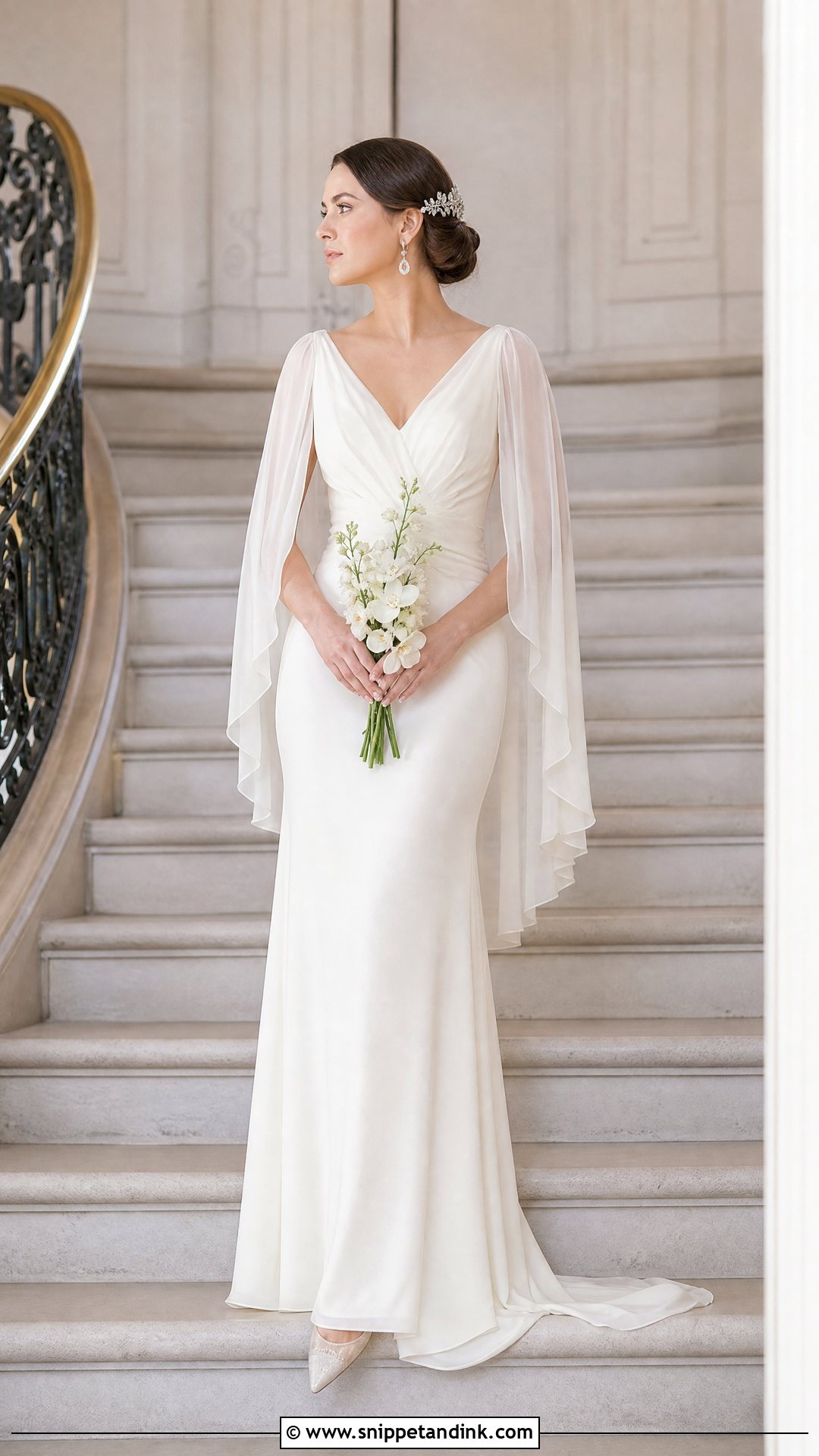
Want vintage drama without a heavy veil? A 1930s-inspired cape-sleeve gown gives you movement and arm coverage in one piece. A fitted crepe gown with a V-neck and sheer chiffon panels falling from the shoulders is the base; the cape can stop at the elbow, wrist or floor depending on formality. Have the cape stitched or snapped firmly at the shoulder seam, or it’ll slip when you lift your bouquet. Skip the long veil. Pointed ivory heels, slim drops, a jeweled comb and a narrow bunch of delphiniums or calla lilies keep the line long.
8. 1940s Long-Sleeve Crepe Bridal Dress
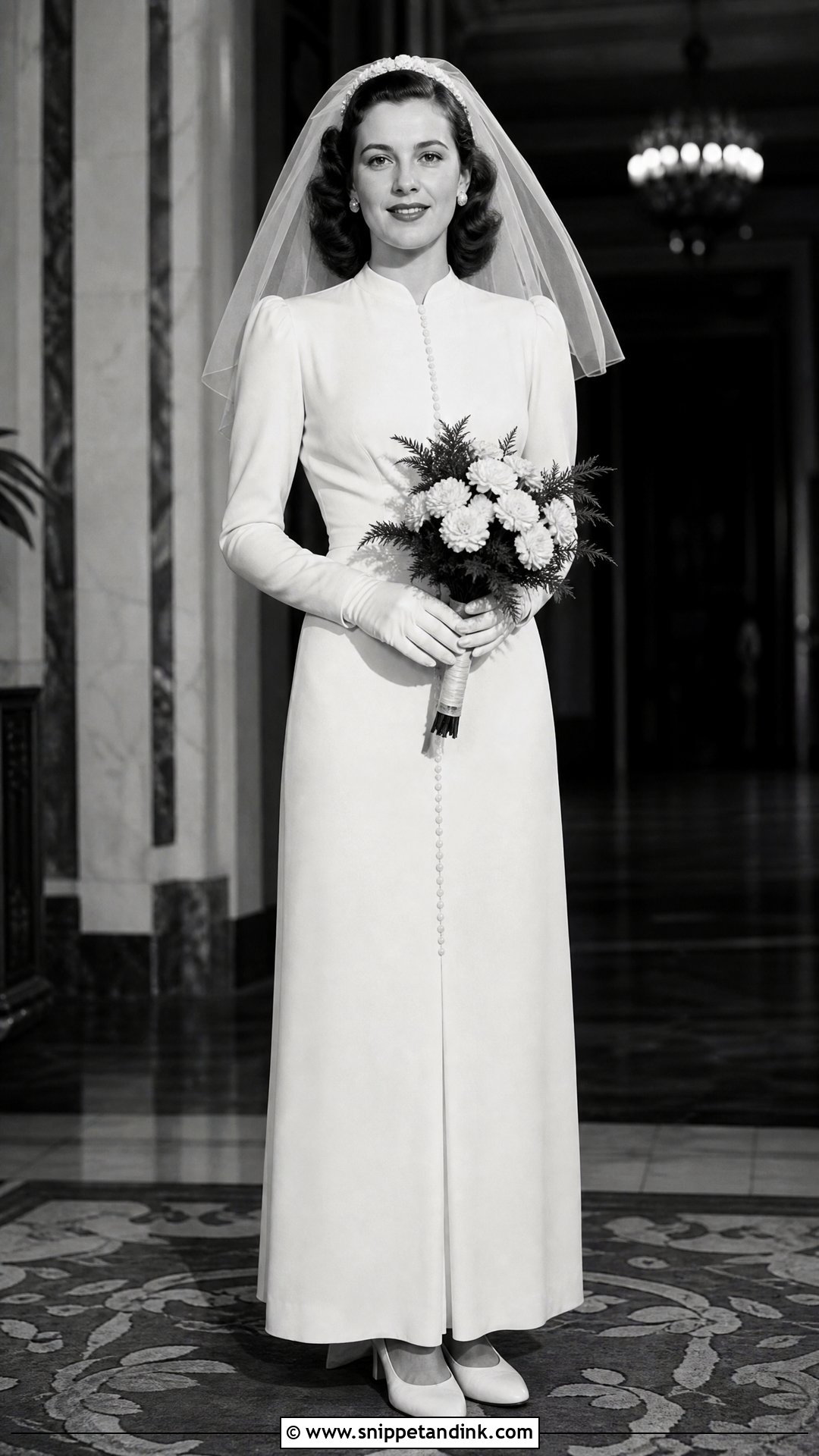
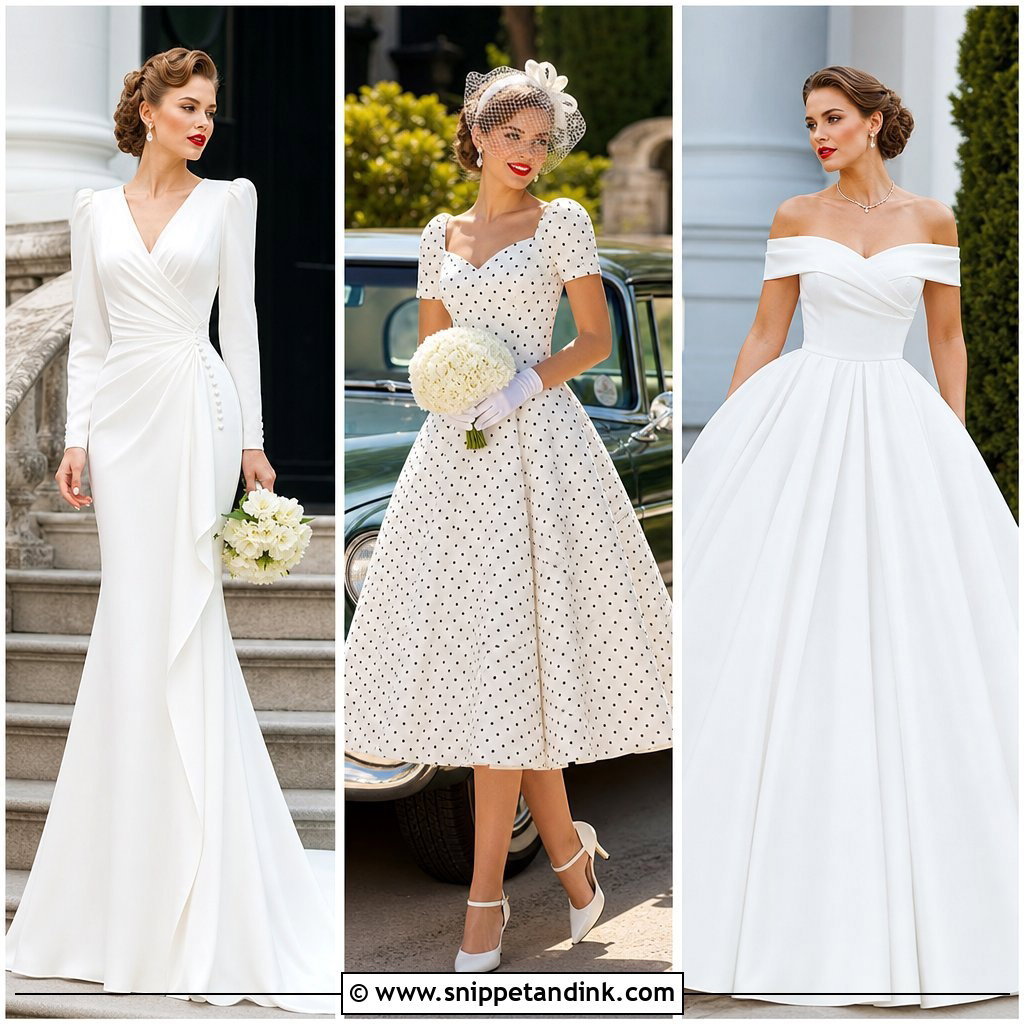
Restraint defined 1940s bridal dress, partly because fabric was scarce during the war years. A crepe gown with lightly padded shoulders, a fitted waist, covered buttons and a narrow A-line skirt is the look, softened by a sweetheart or modest V-neck. Modern stretch crepe gives the same shape with far more comfort than an original. Shoulder pads should sit right on your shoulder bone; too wide and they look like a costume. Closed pumps, pearl studs, short gloves, a shoulder veil, side waves or a low roll and white carnations finish it in any season.
9. 1940s Tailored Bridal Suit
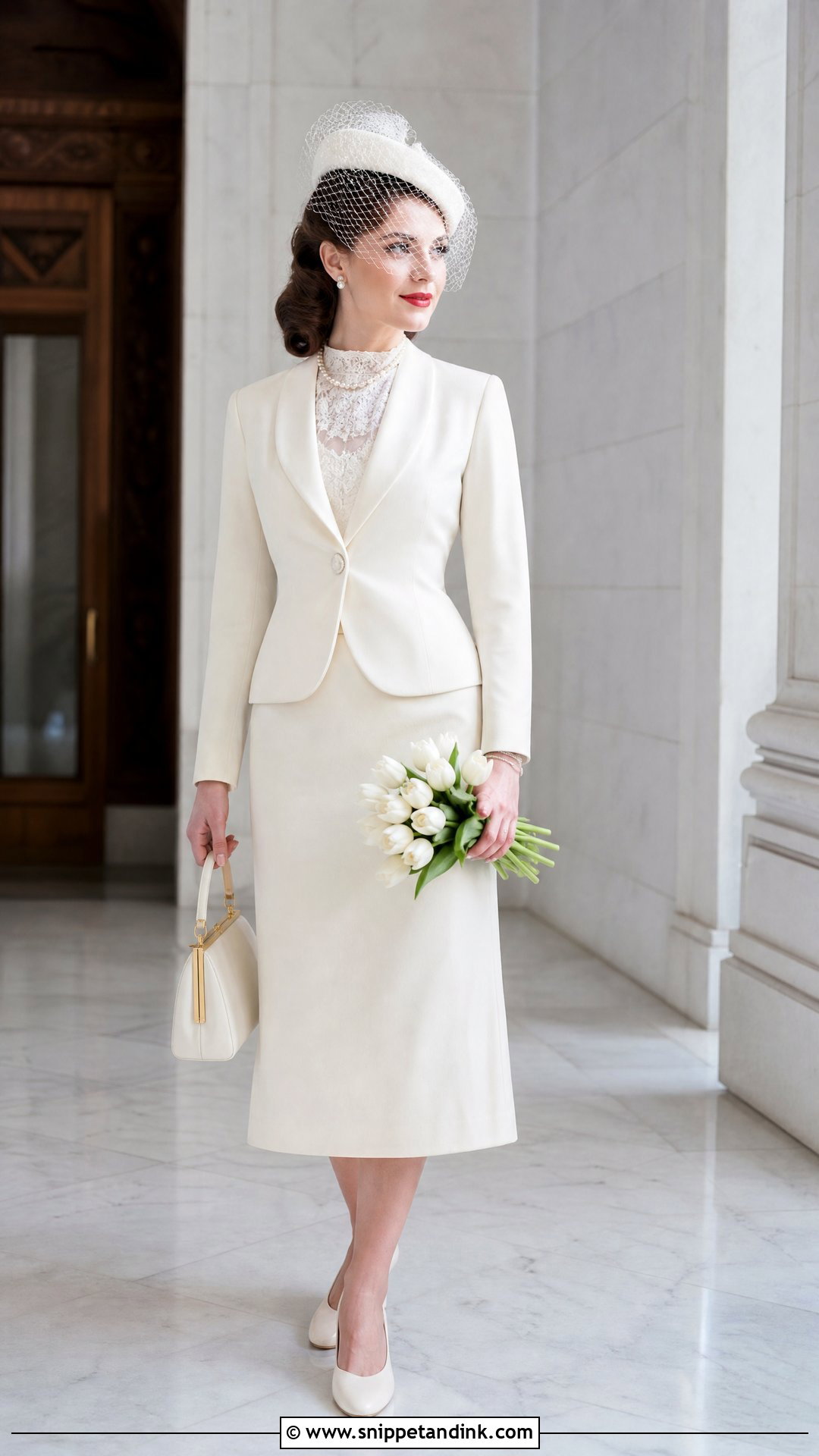
A tailored suit is the best answer I know for a city hall wedding. Choose an ivory skirt suit with a fitted jacket, defined shoulders, covered buttons and a straight or gently flared midi skirt, with a silk camisole or lace blouse underneath. Fit the shoulders first, because they’re hard to alter, then the sleeve length; don’t go so tight in the jacket that it pulls across the buttons for the sake of a smaller waist. Low pumps, pearl earrings, a top-handle bag, a small veiled hat and white tulips keep it bridal. It’s also a good choice for a second wedding, and you’ll wear the jacket again.
10. 1950s Tea-Length Bridal Dress
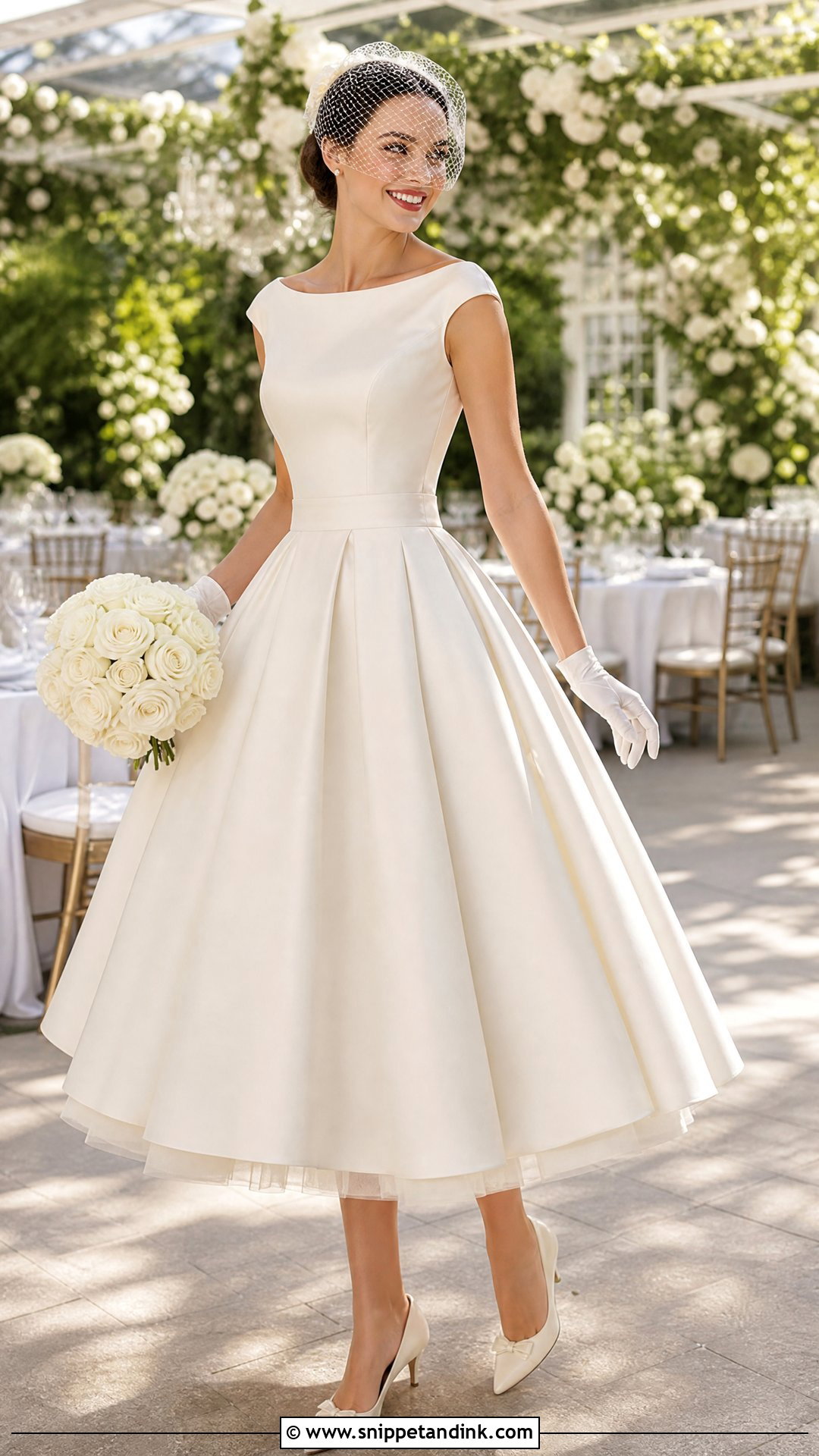
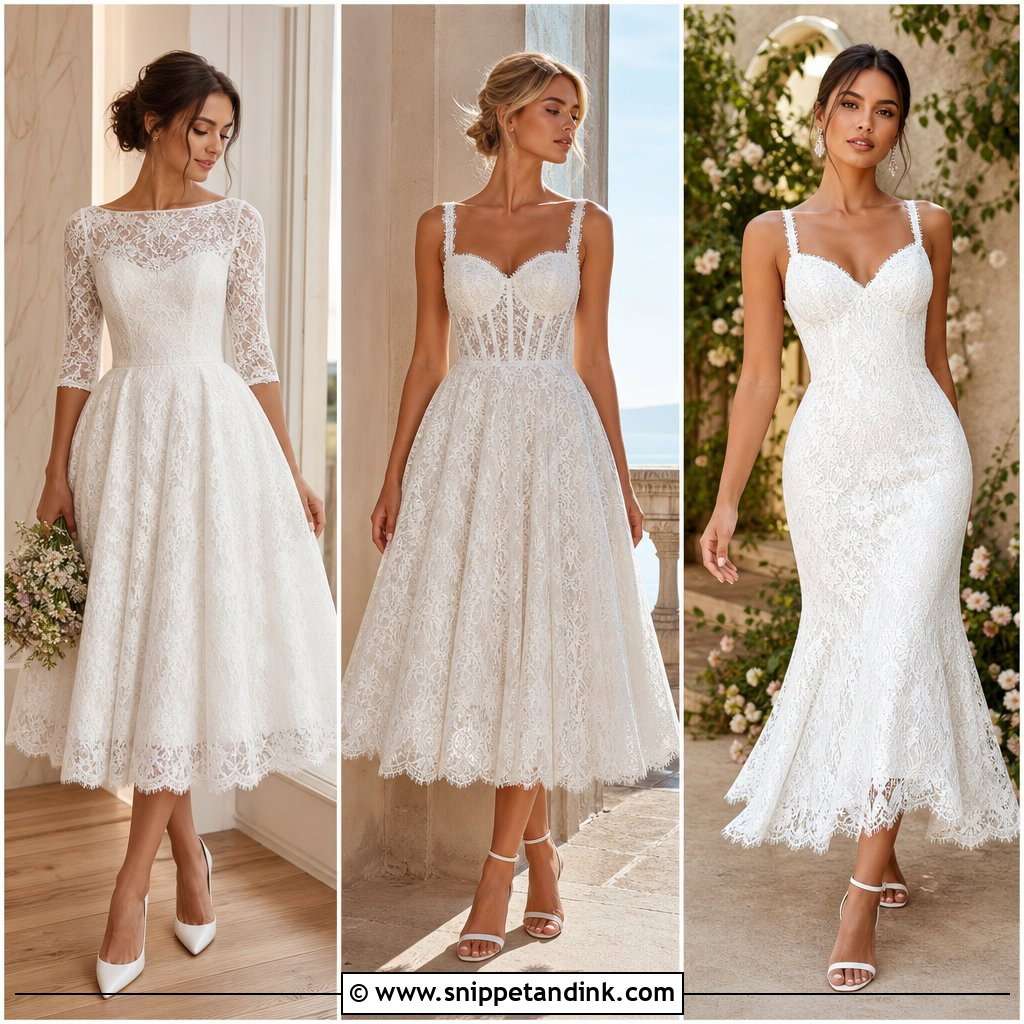
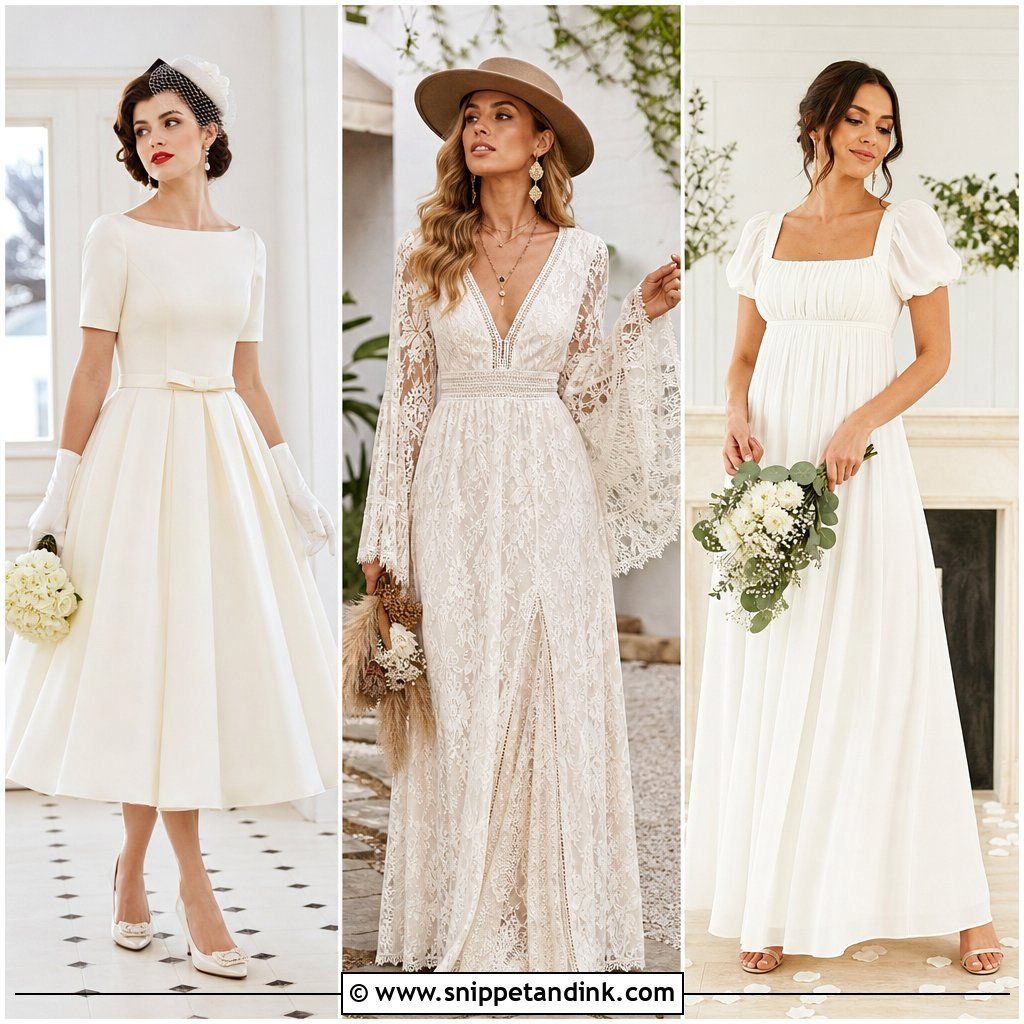
Few shapes feel as cheerful as a 1950s tea-length bridal dress. A fitted bodice, natural waist and full skirt ending between knee and ankle are the defining proportions. A bateau neck, cap sleeves or an off-shoulder collar add personality. The petticoat decides how much volume you get; add one for the full swing, or leave it out for a softer A-line, and bring it to every fitting since it changes the hem length. Pointed kitten heels you can dance in, pearl studs, short gloves, a birdcage veil and white roses suit daytime weddings.
11. 1950s Lace Ball Gown Bridal Dress
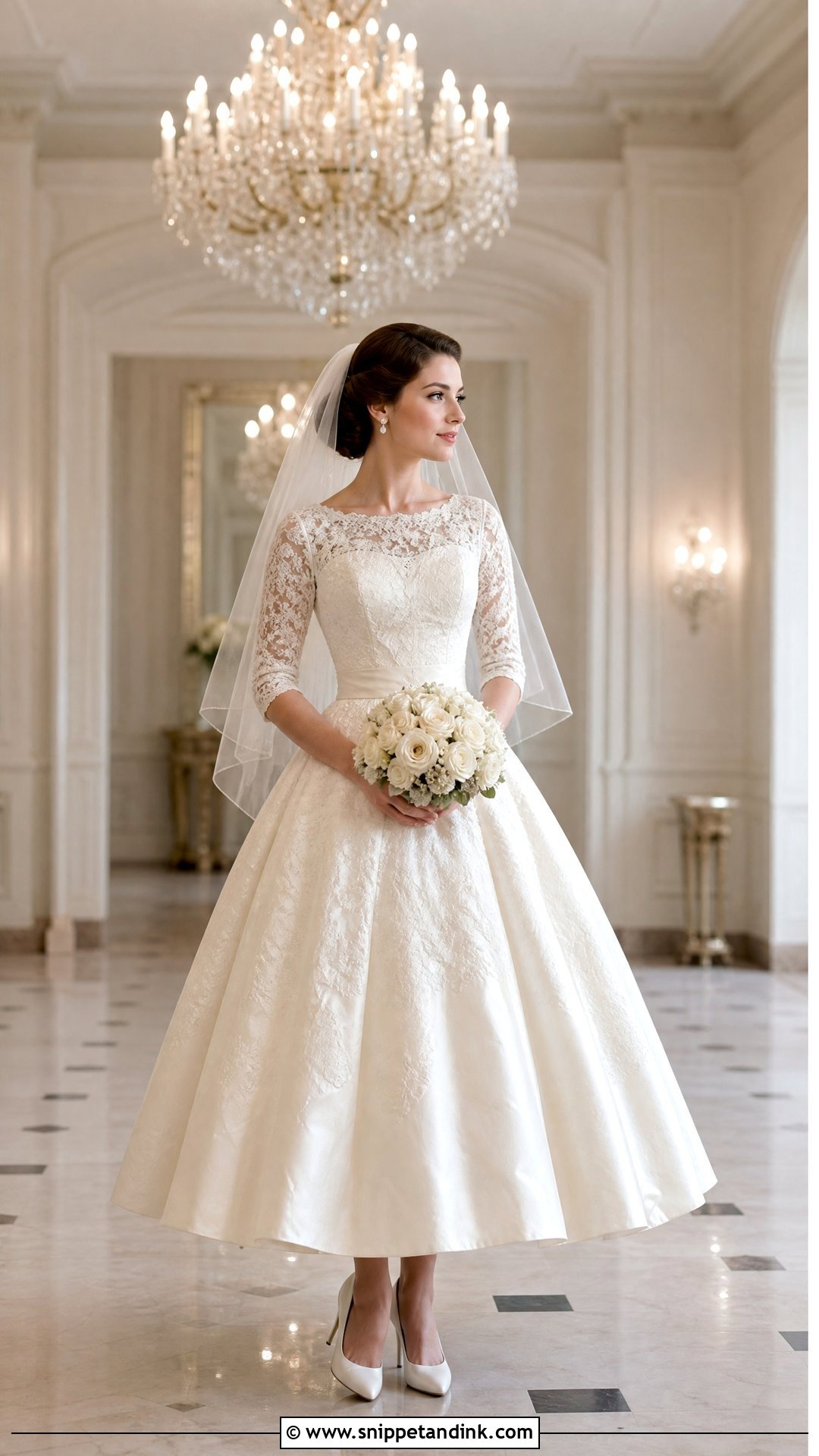
Lace layered over satin, a portrait neckline and three-quarter sleeves make the 1950s ball gown both grand and approachable. The skirt should hold its shape without becoming so wide you can’t get through a doorway. On a fuller bust, wider shoulder coverage and internal corsetry help; petite brides can reduce the skirt so it doesn’t swallow them. Ask about hidden pockets, which most seamstresses can add in a skirt this full. Ivory pumps, pearl button earrings, a fingertip veil on a comb, a neat chignon and a round bouquet suit ballrooms and historic estates.
12. 1960s Satin Mini Bridal Dress
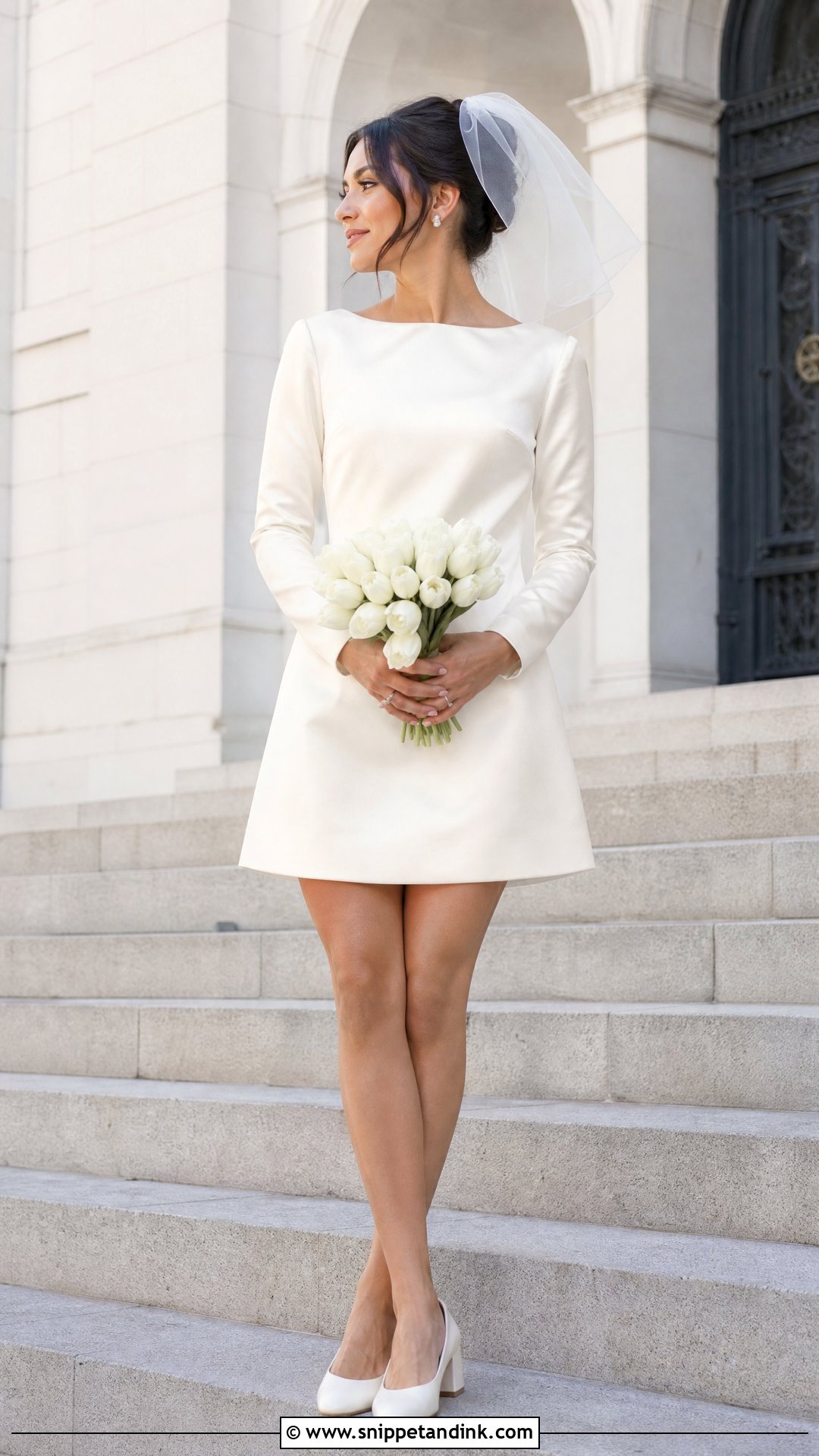
A satin mini is confident, and it needs a confident fit. Pick a clean A-line with a high bateau neck, fitted shoulders and long sleeves to balance the short hem, in a heavy satin that keeps its shape. Sit down in it before buying; minis ride up further than you think, and a hem just above the knee gives the same period look with more freedom. Low block heels, sheer tights if you like, pearl studs and a short bubble veil suit it, with a small bag or a bundle of white tulips. I’d wear it to a restaurant reception or as an outfit change.
13. 1960s Mod Shift Bridal Dress
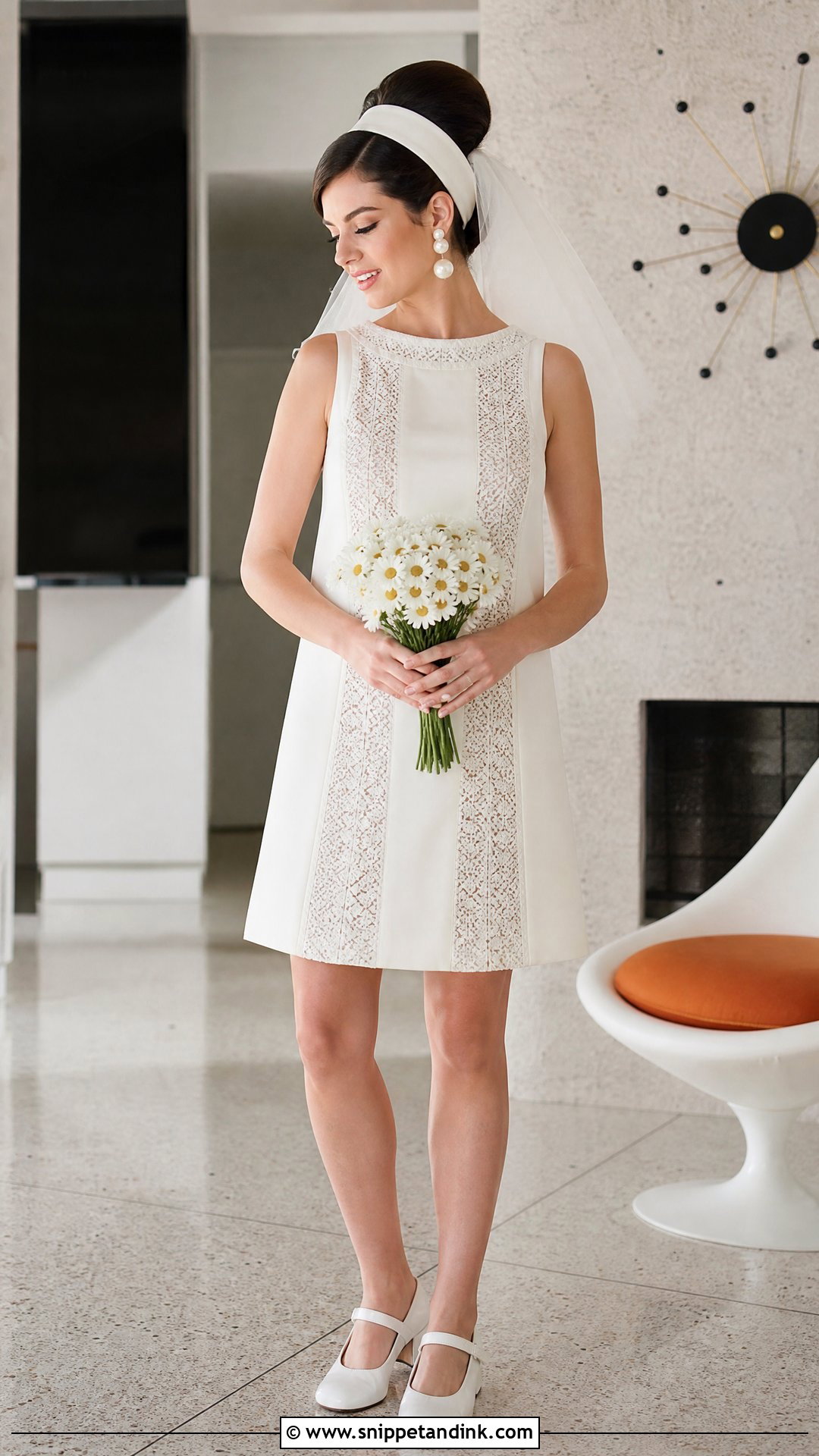
The mod shift hangs from the shoulders and shouldn’t cling anywhere. An ivory knee-length design with a jewel neck, subtle waist shaping and geometric lace or clean seams is the classic. If you want more shape, princess seams do it far better than a belt, which breaks the line. Block-heel Mary Janes, bold pearl earrings and a wide satin headband suit it; a short veil behind the band or a sculptural bow both work. Daisies or white tulips echo the fresh feel at minimalist and retro venues.
14. 1970s Boho Lace Bridal Dress
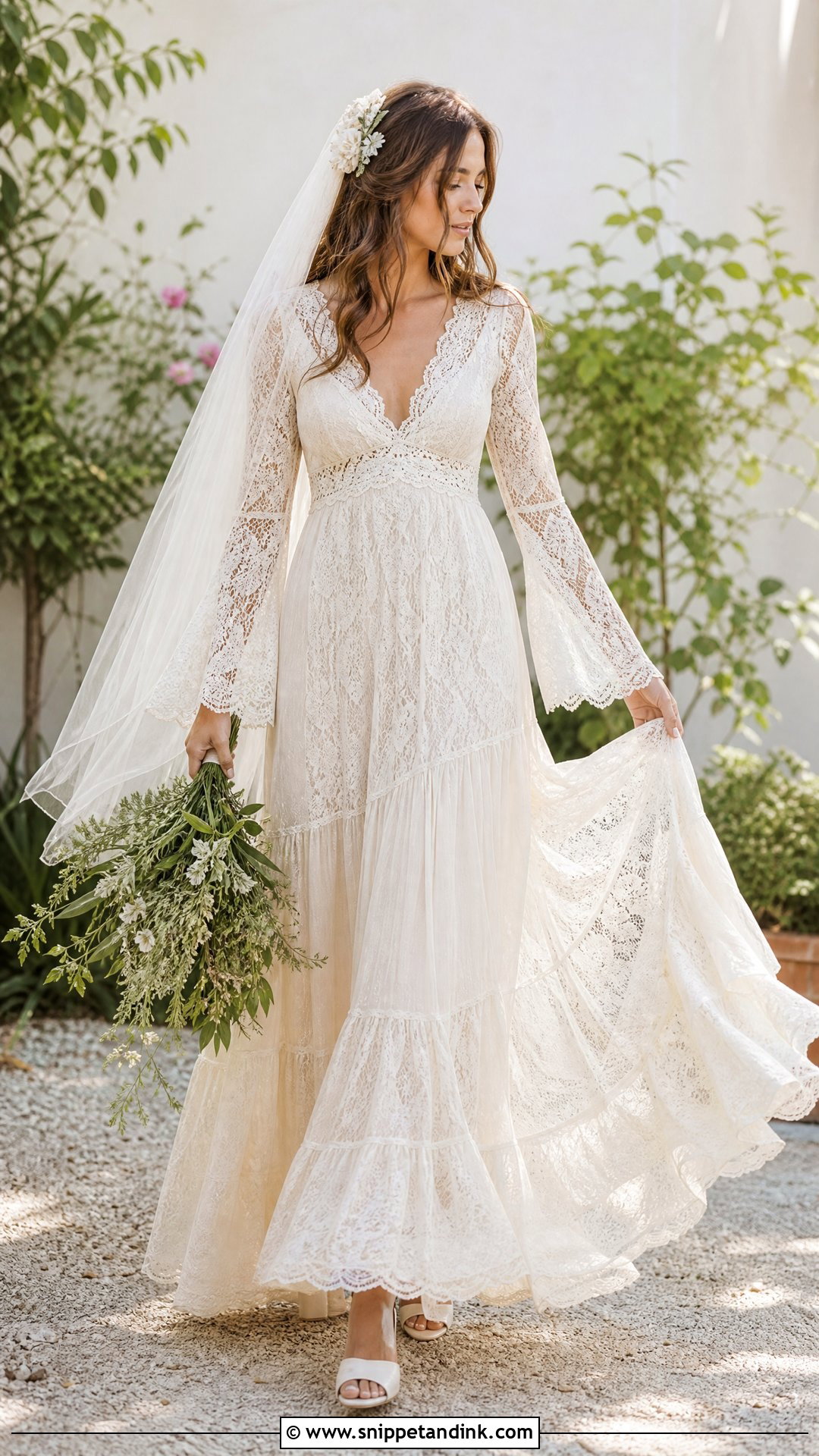
1970s boho is about fabric that moves freely. Look for a floor-length gown with a lightly fitted bodice, an empire or natural waist, long flowing lace and semi-sheer bell sleeves. Skip extra layers under the skirt. Originals from this decade rarely have built-in support, so for a real 70s dress plan on a lining-friendly bra or have cups sewn in. Ivory leather sandals or low block heels, a floral comb, a light veil and a loose bouquet of cosmos and garden roses suit gardens, coasts and rustic venues.
15. 1970s Prairie Bridal Dress
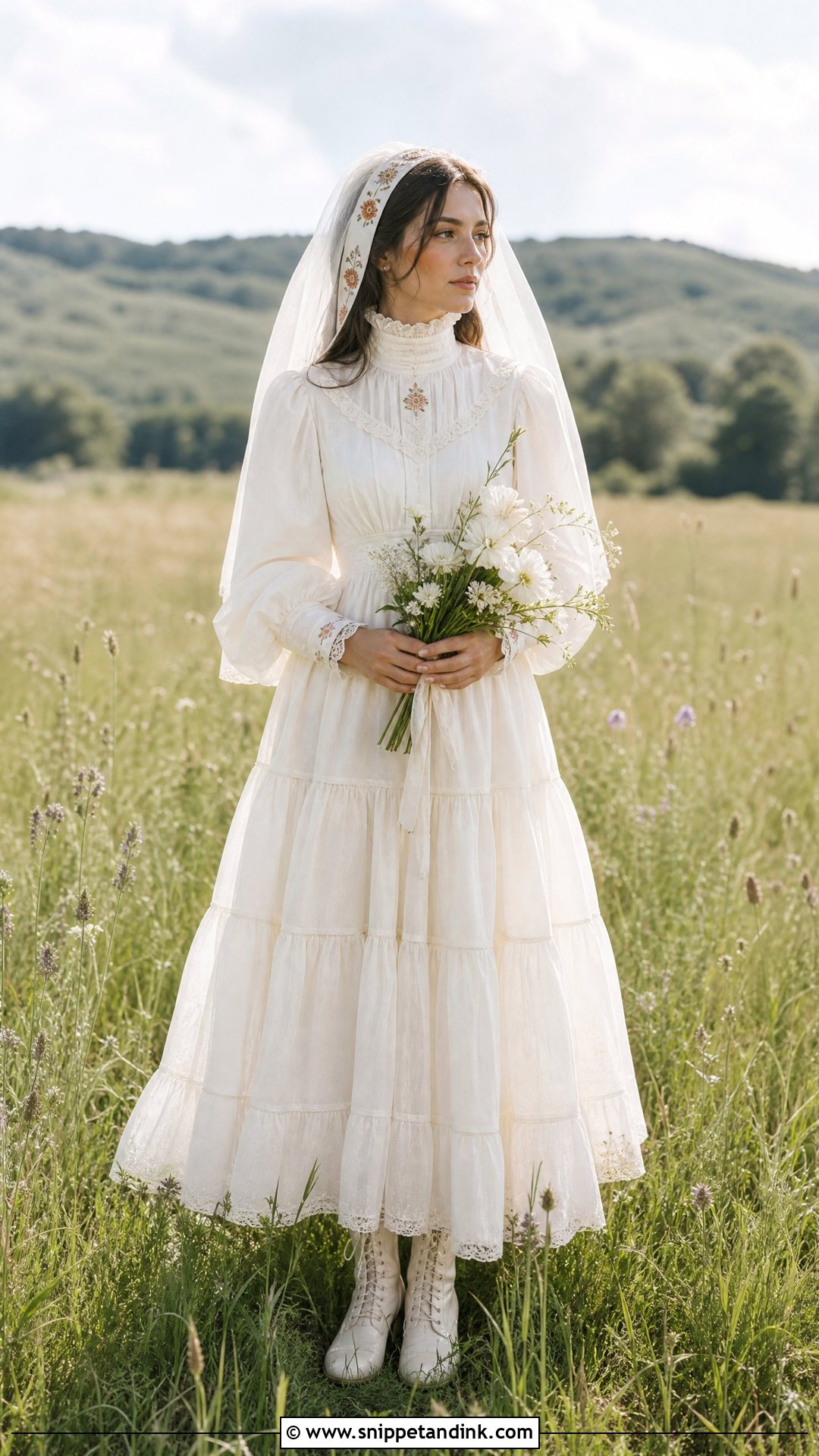
Ruffled high necks, gathered sleeves and tiered skirts make the prairie dress modest and soft at once. Cotton lace, dotted Swiss or light chiffon give texture without formality. A defined waist matters here: with full sleeves and tiers, a dress without one can overpower your frame. If the ruffles feel busy, look for decoration kept to the collar and cuffs. Low lace-up boots or closed block heels, an embroidered ribbon headpiece, a fingertip veil, a low braid or pinned waves and chamomile with white roses suit a country wedding.
16. 1980s Puff-Sleeve Ball Gown Bridal Dress
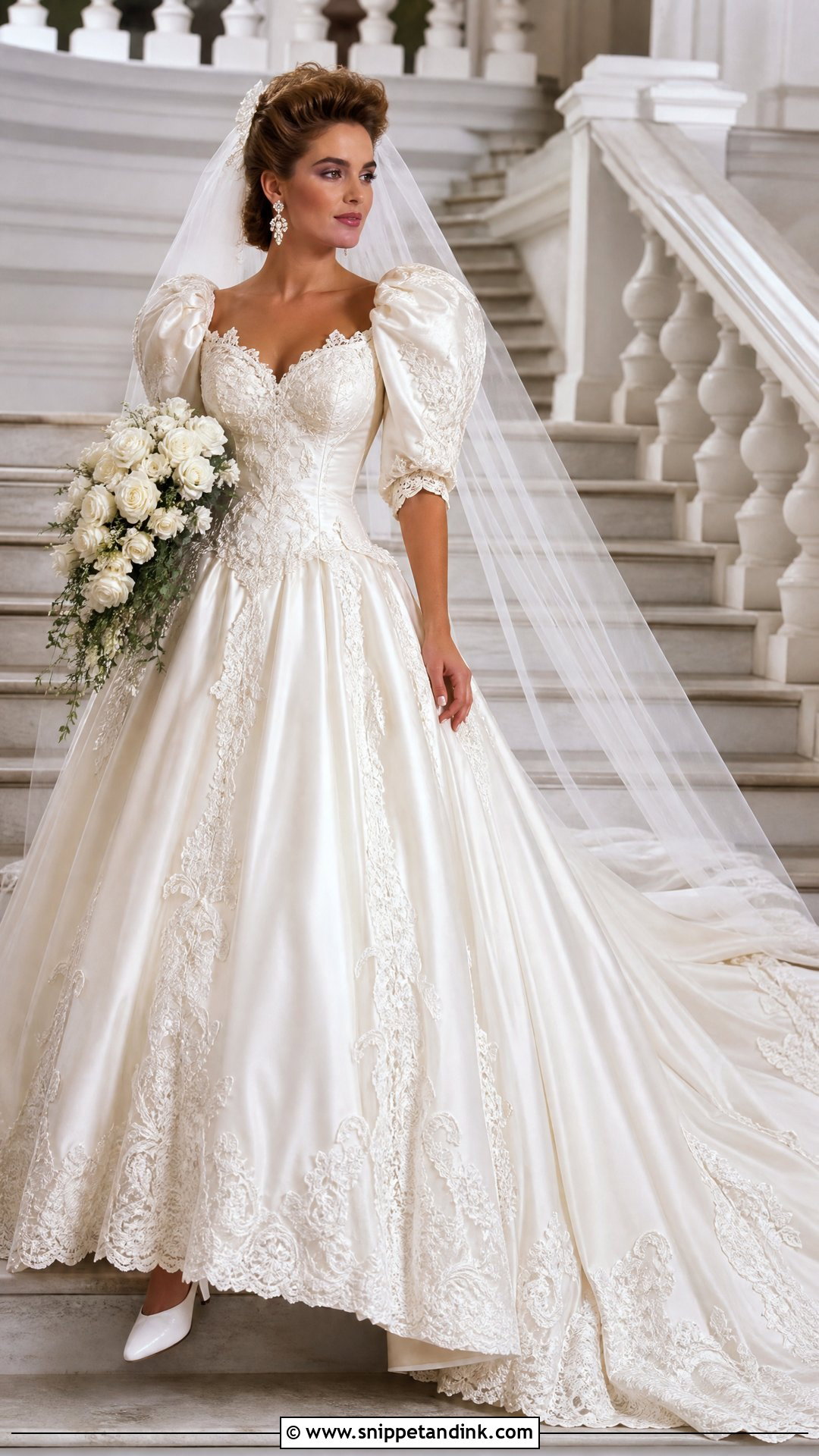
Volume is the whole point of the 1980s ball gown: a fitted bodice, full skirt, puffed sleeves and a long train. Keep embellishment to two areas at most, such as the bodice and the sleeves, or it looks crowded. Original 80s sleeves can be enormous; a seamstress can reduce the sleeve head and keep the shape. The skirt is heavy, so a supportive bodice that spreads the weight makes the day more comfortable. Classic pumps, pearl-and-crystal earrings, a long veil, a smooth updo and a structured bouquet of white roses suit ballrooms and grand staircases.
17. 1990s Minimalist Slip Bridal Dress
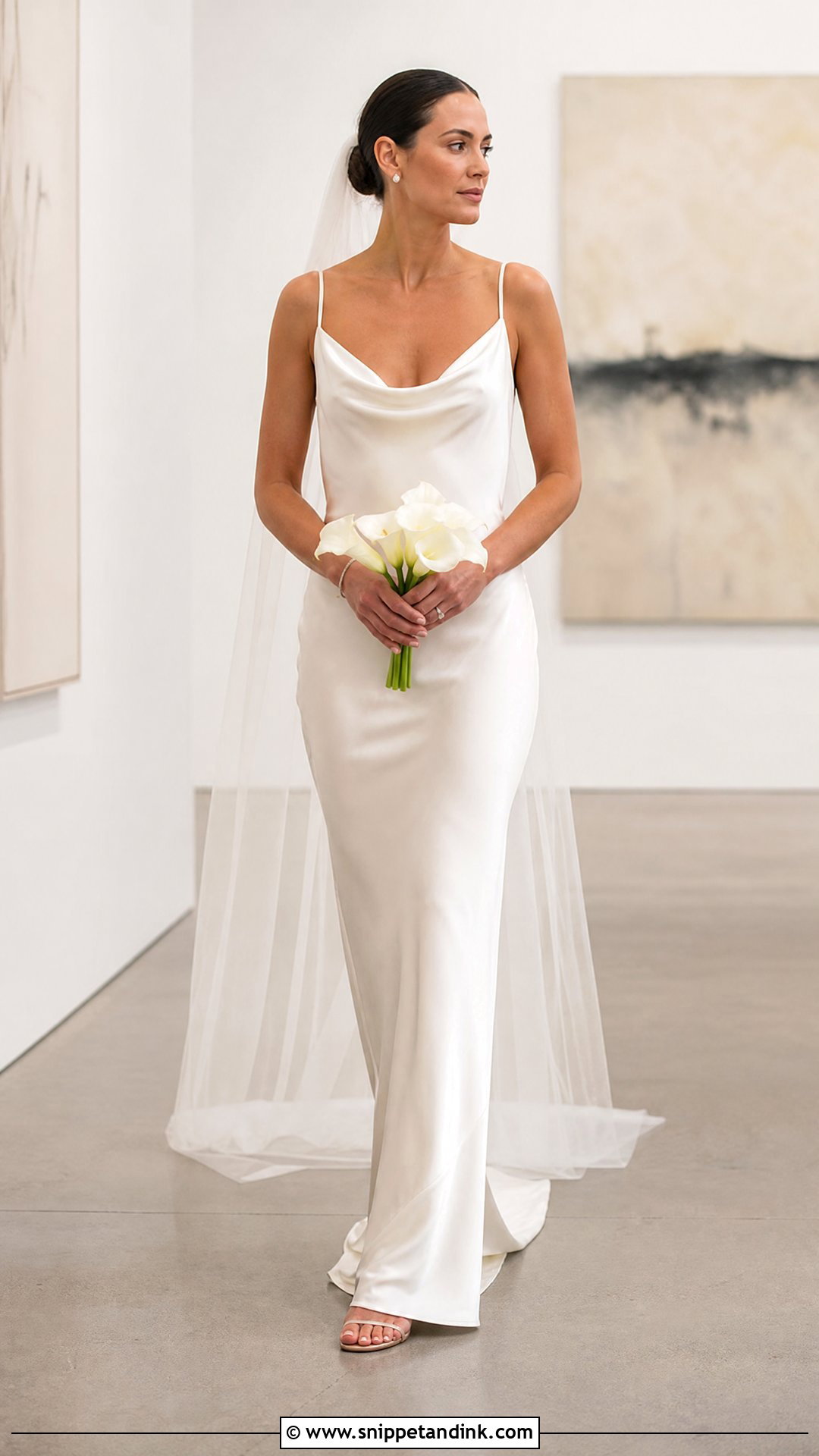
Plain satin with nothing to hide behind: that’s the 1990s slip. A floor-length slip with a softly draped neck, narrow straps and a close skirt looks simple and takes skilled alteration, because the dress has almost no structure of its own. Get the underwear sorted first, ideally invisible and smooth, then fit around it. Barely-there sandals, small studs, a sheer cathedral veil, a sleek bun or straight bob and white calla lilies keep the line clean. Want more coverage? A sheer long-sleeve topper or a tailored satin coat works over it.
18. Vintage Velvet Winter Bridal Dress
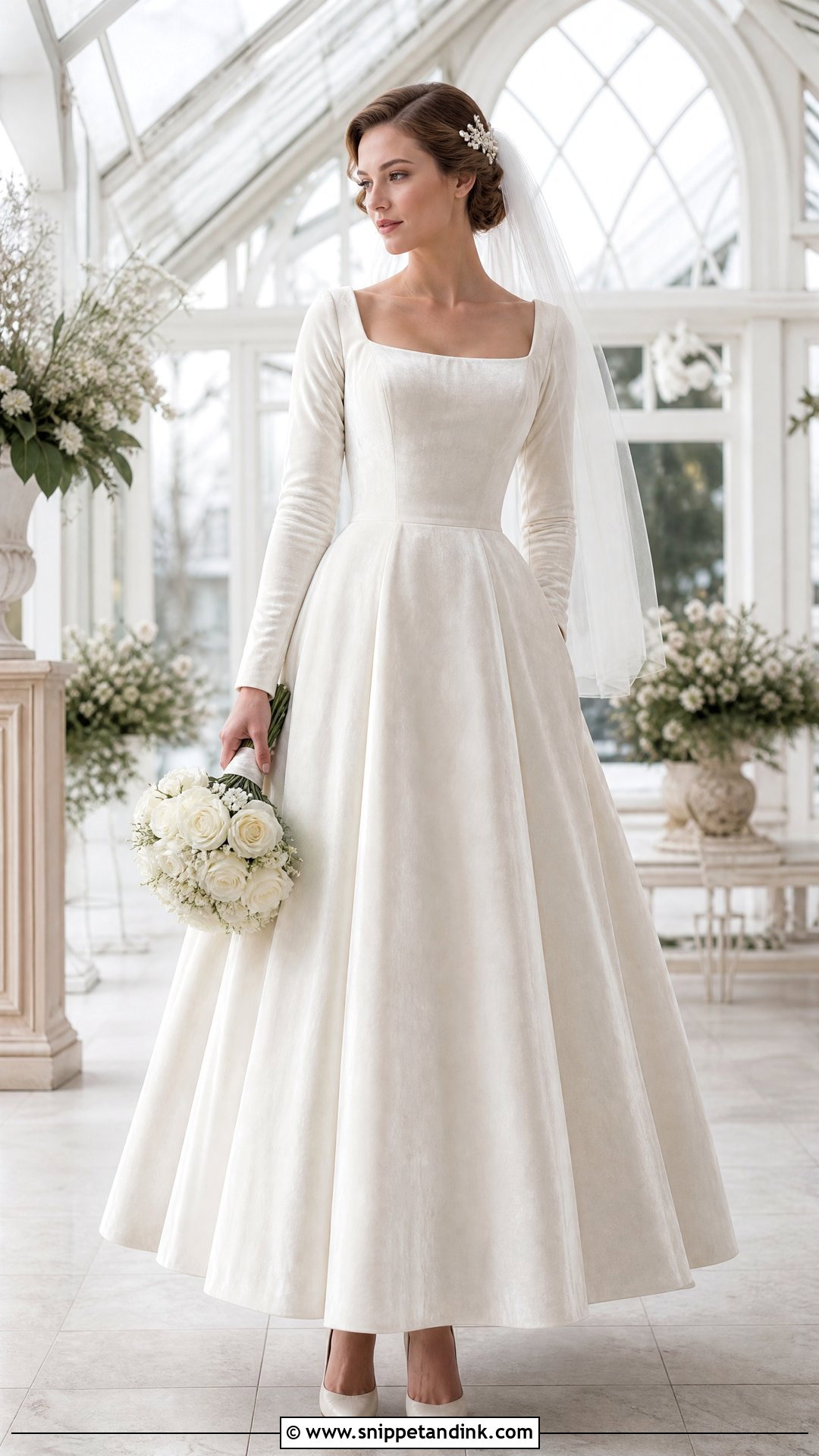
Velvet carries drama on its own, so keep the decoration minimal. An ivory or winter-white gown with a fitted bodice, long sleeves, a square neck and a softly flared skirt is the shape I’d choose. If you run warm, ask for velvet on the bodice only and crepe for the skirt. The nap must run the same way on every panel, or one side photographs darker than the other. Closed satin pumps, a pearl comb, a tulle veil and white roses with dusty green and silver leaves suit a winter hotel, lodge or conservatory.
19. Vintage Crochet Beach Bridal Dress
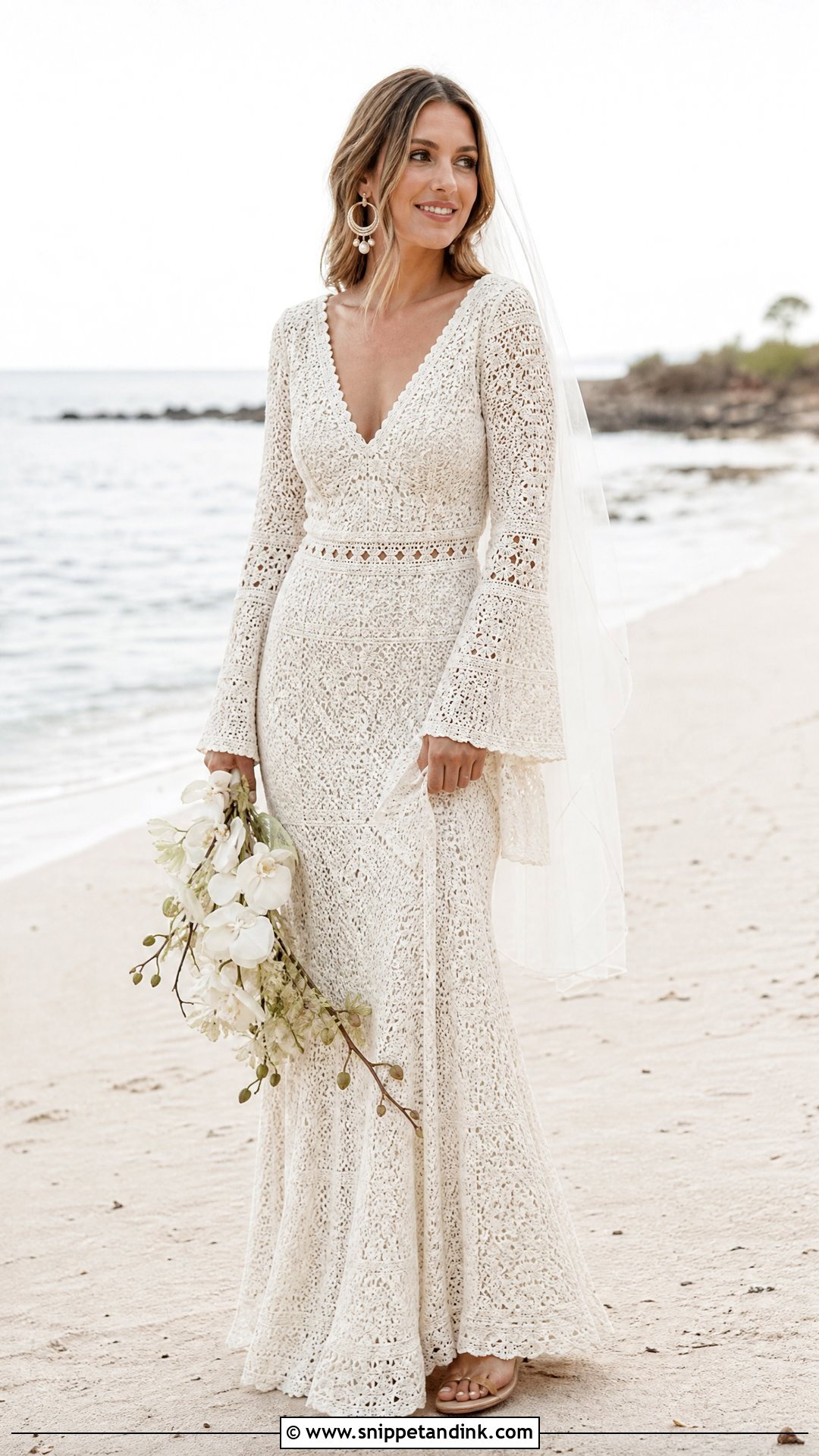
Crochet at the beach makes sense: it’s breathable, textured and relaxed. A lined floor-length gown with an openwork overlay, fitted waist, V-neck and gently flared skirt, with bell or cap sleeves depending on the weather, is the base. Match the lining to your skin or to the crochet so there’s no distracting contrast. Keep the train short, because sand gathers in openwork and is hard to shake out. Flat ivory sandals, pearl hoops, a light fingertip veil and white orchids suit beaches, waterfront gardens and destination weddings.
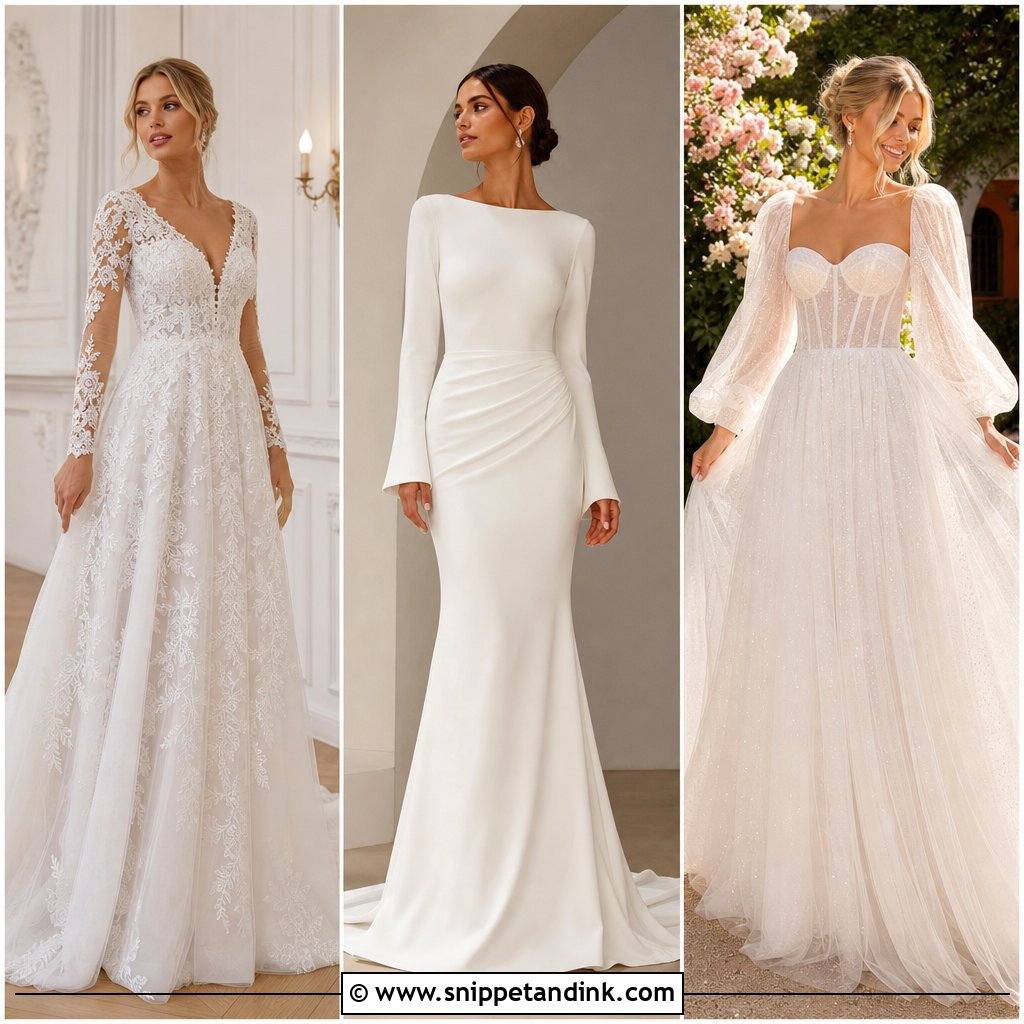
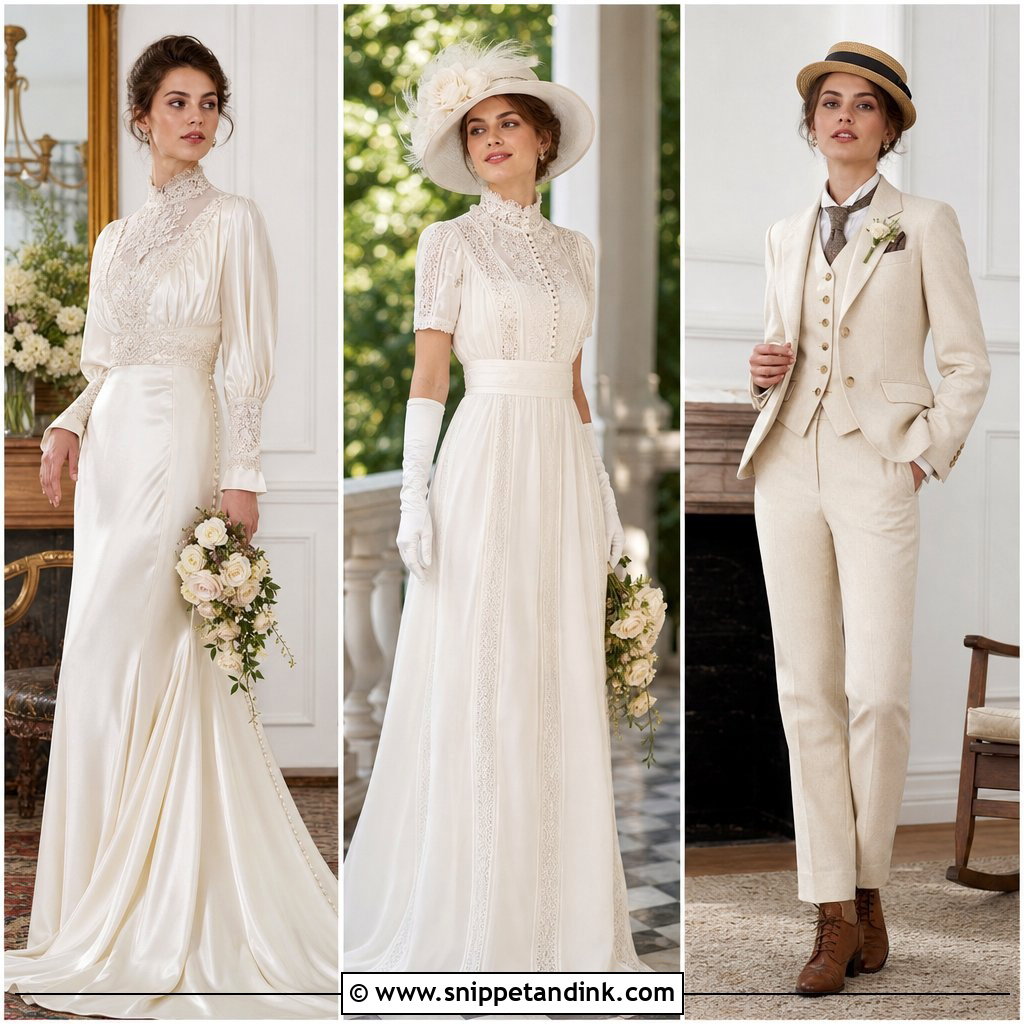
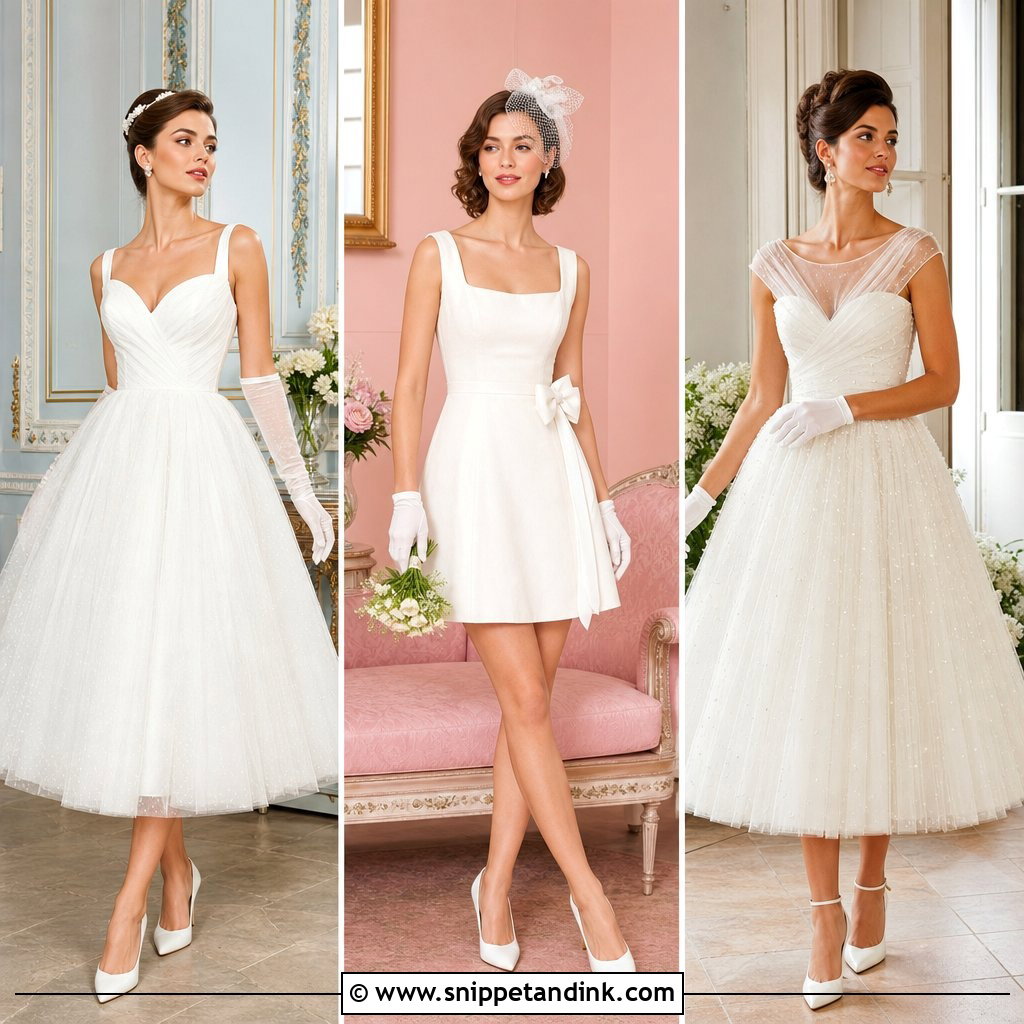
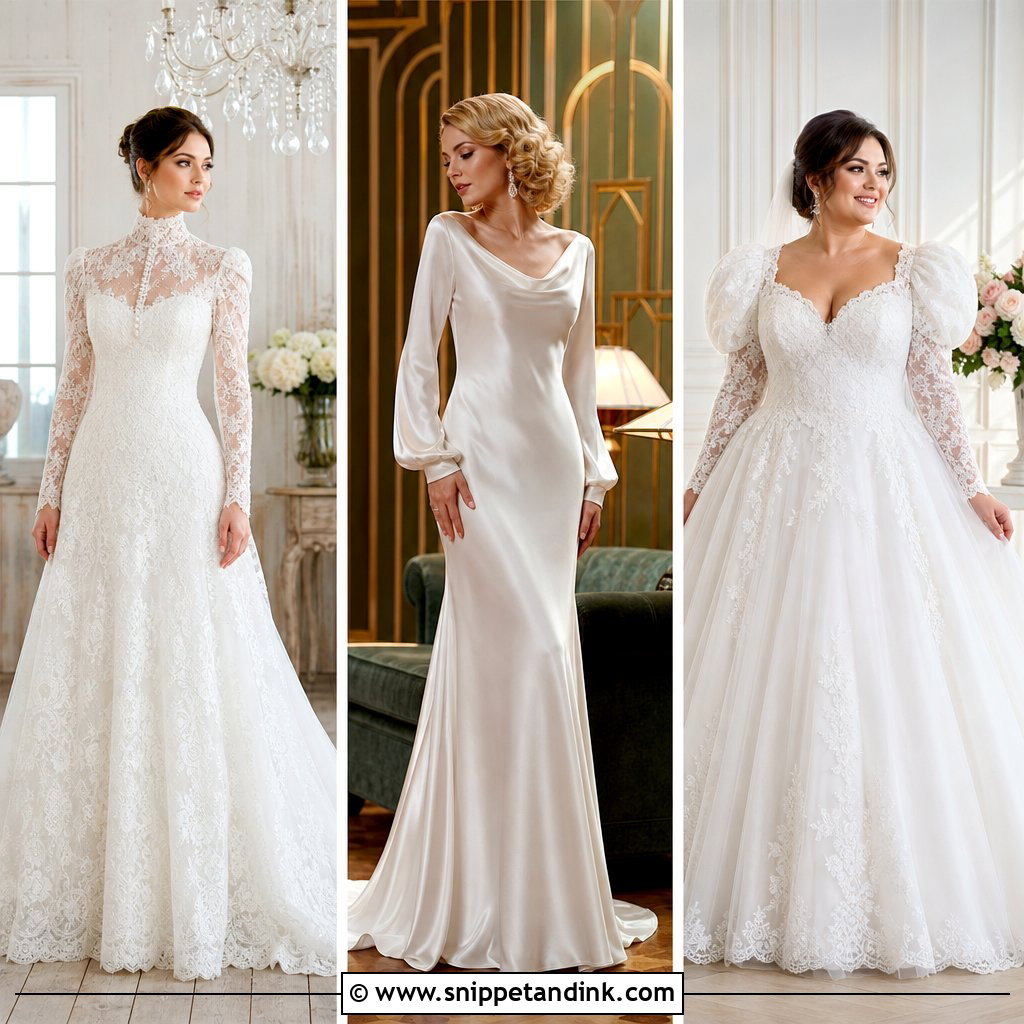
20. Vintage Floral Embroidered Bridal Dress
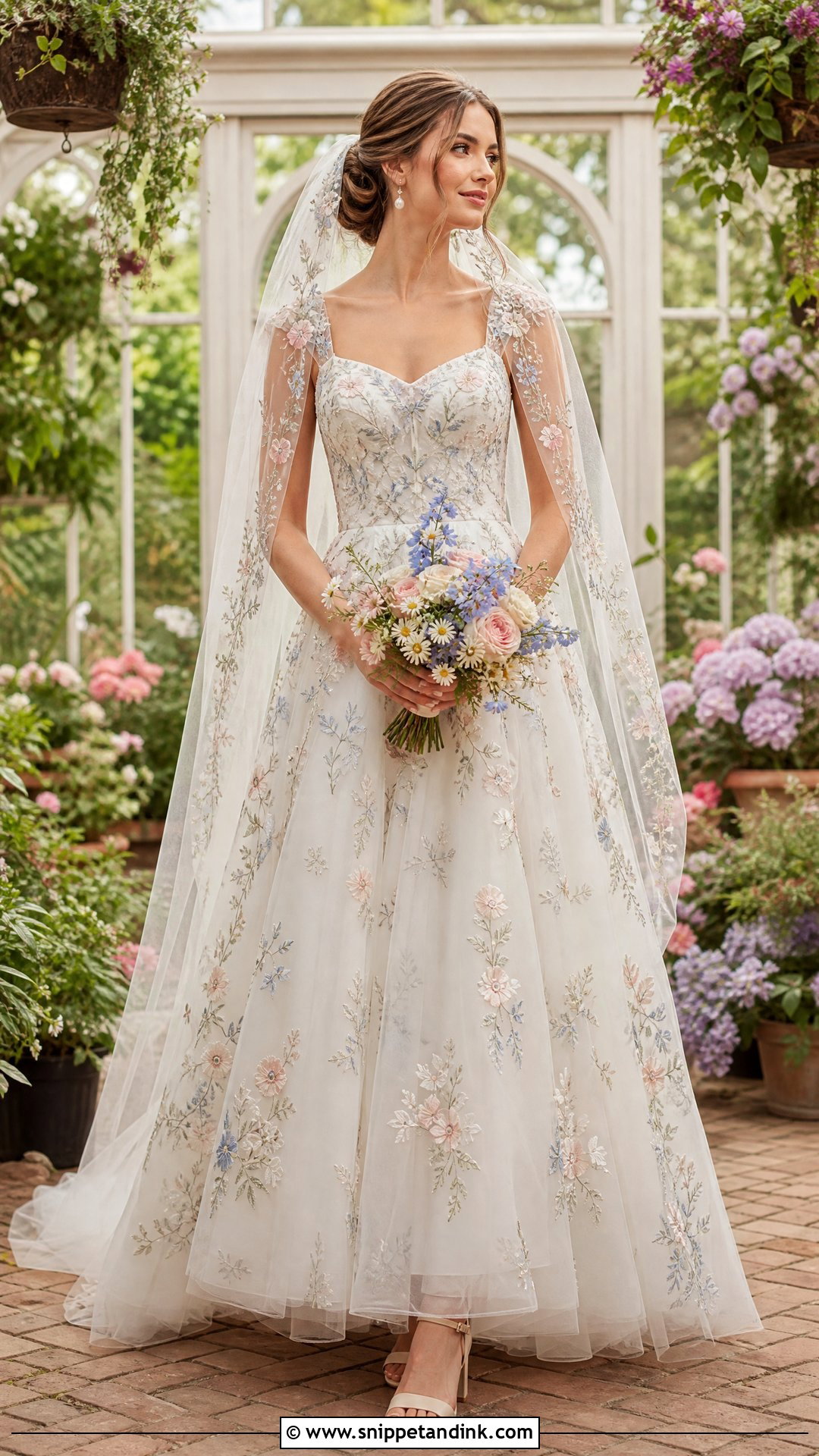
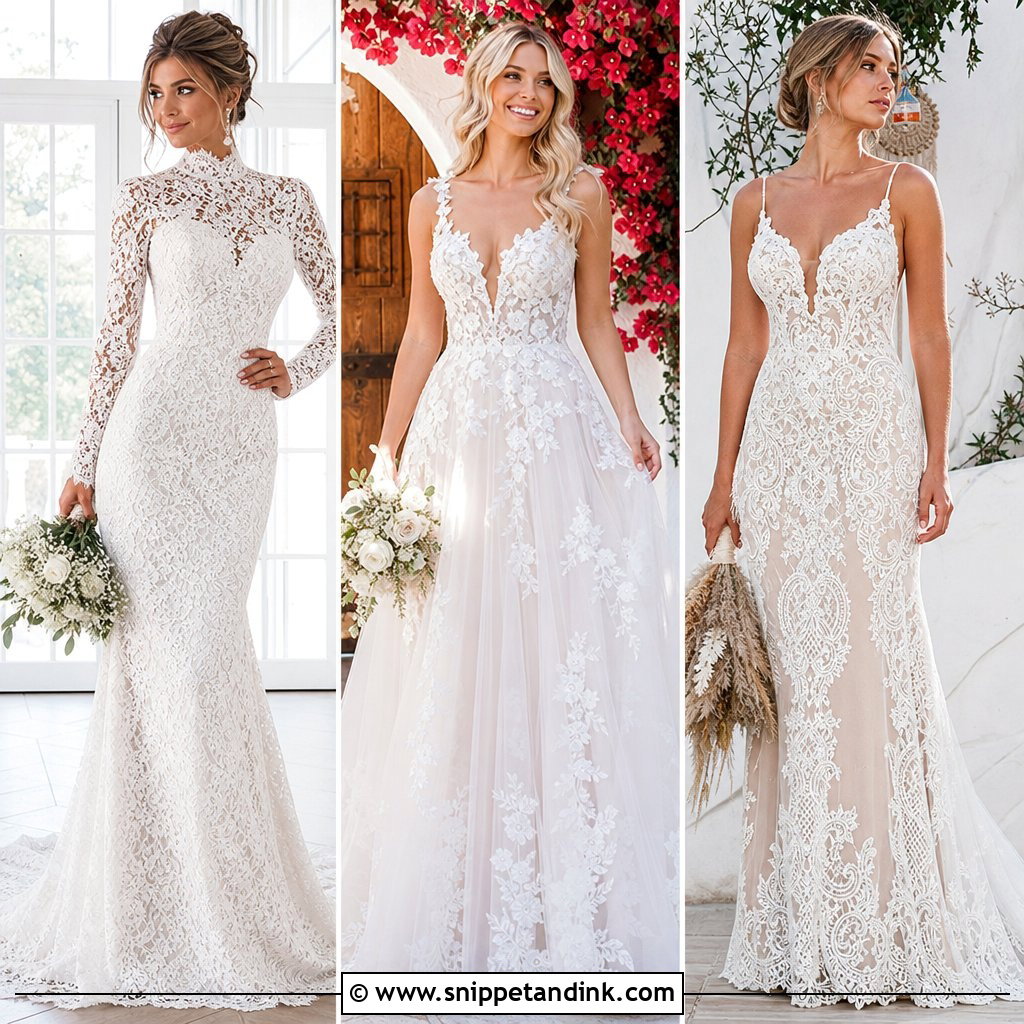
Embroidered flowers bring colour without loud fabric. A sheer tulle gown with ivory, blush, pale blue or soft green motifs across the bodice and lightly onto the skirt, with a fitted waist and A-line shape, keeps the pattern balanced. For a subtler version, ivory on ivory only shows up close. Scale of motif matters across sizes: bigger flowers suit a bigger canvas, small ones can look scattered. Neutral block heels, small pearls, a veil edged with matching embroidery and a bouquet repeating one or two thread colours suit botanical gardens and spring.
Wearing Your Mother’s or Grandmother’s Dress
Family gowns come with feelings attached, and the first decision is how much you’re willing to change. Some brides want it exactly as it was. Others want a modern version that just keeps the lace or the buttons.
Gentle changes that can be undone
Taking in at existing seams, hemming by folding up rather than cutting, adding a new lining and sewing in modern cups are all reversible. A good seamstress can do these and leave the dress intact for the next person in the family.
Bigger changes worth thinking about twice
Removing sleeves, cutting a new neckline or shortening the skirt changes the dress for good. If that’s what makes it wearable, it can be worth it, but talk it through with whoever owns it first. Spare fabric from a cut hem or sleeve can become a veil edge, a ring pillow or a wrap for the bouquet stems.
Have the gown cleaned by a specialist before alterations start, as cleaning can shrink old fabric slightly. Allow extra time, three to four months is comfortable, because a restoration often turns up surprises once the seams are opened.
Your Favourite Decade Sets the Rest of the Outfit
Start with the decade that keeps pulling you back. Victorian lace gives coverage and formality, 1920s beading gives sparkle, 1930s bias satin gives glamour, 1950s skirts give shape and 1970s lace gives ease. For cleaner lines, look at a 1960s shift or a 1990s slip. Whatever the era, check comfort, fabric condition, support and what can be altered before you commit. Then add shoes, jewelry, a veil and a bouquet that support the dress. The best vintage look borrows from the past and still feels like you.
You'll Like These Ideas:


Leave a Reply