
Winter is the one season where a wedding gown has to cope with two climates: a cold walk outside and an overheated room inside. That changes how I dress a bride. Long-sleeve lace, structured satin, velvet, capes and faux-fur wraps all earn their place here, and heavier cloths like Mikado, duchess satin and crepe hold a shape that summer chiffon simply can’t. Each of the twenty looks below is a full outfit, down to the shoes and the layer you’ll pull on for portraits, so you can see how the pieces work together before you start shopping.
Dressing for the Ballroom Heat as Much as the Snow
Most winter brides plan for the cold and forget that the reception room will be heated, full of guests and lit by candles. You might spend twenty minutes outside for portraits and six hours indoors dancing. So I weigh up fabric by where you’ll spend the most hours, then solve the cold with layers you can take off.
- Mikado and duchess satin hold their structure and shrug off wind, but they’re warm to dance in. They suit a big, cool venue.
- Velvet is the warmest of the lot and heavy on the shoulders. I keep it for evening ceremonies where nobody expects you to dance hard.
- Crepe sits in the middle, breathes better than satin and pairs well with a proper coat.
- Lace over a satin lining looks covered, yet the sleeves give little warmth, so plan a wrap.
If your gown is heavy, ask your seamstress about a bustle that lifts the train completely off the floor for the reception. Dragging that weight around a dance floor is what leaves brides overheated long before the cake is cut.
1. Long Sleeve Lace Winter Bride Dress
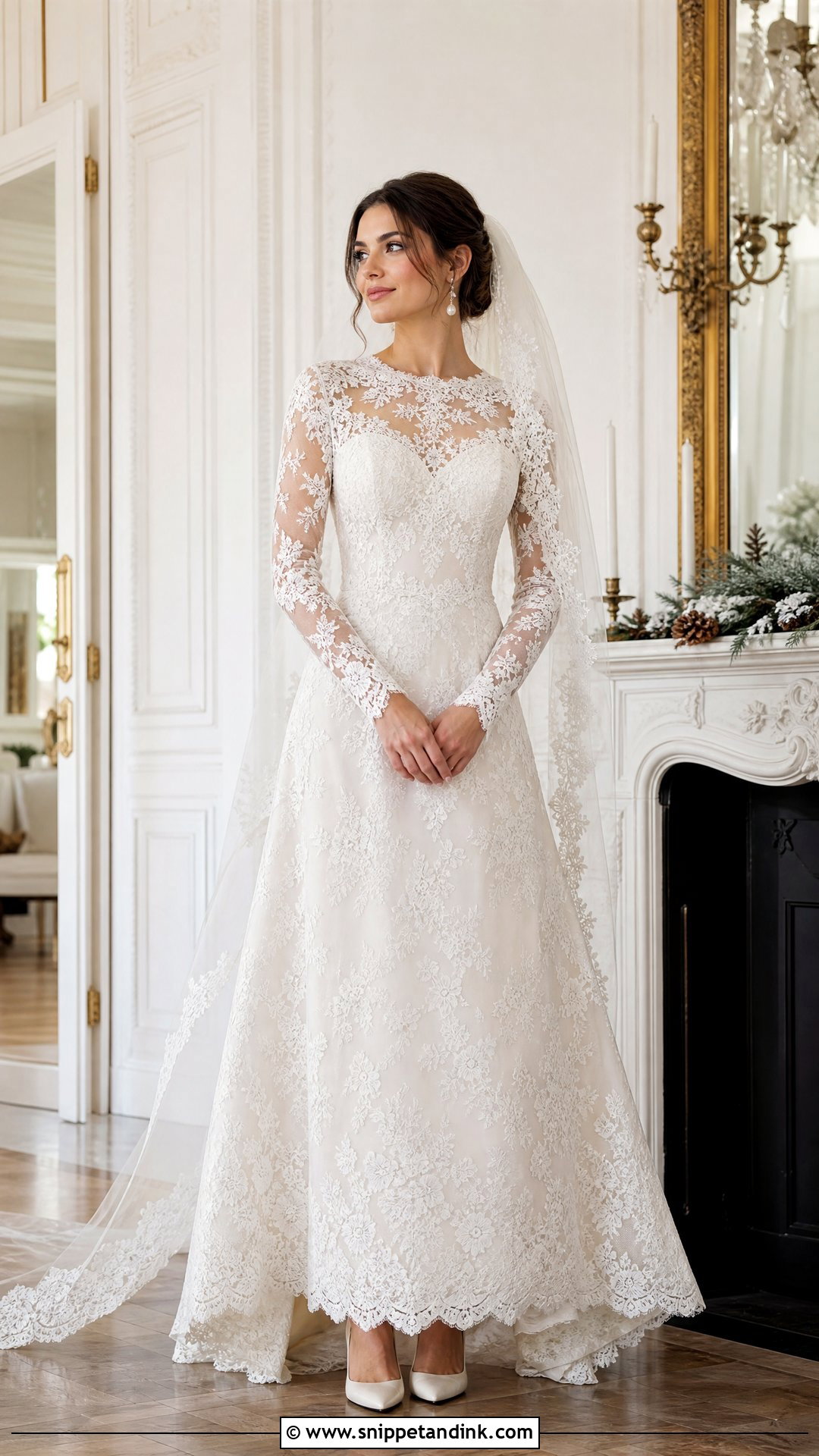
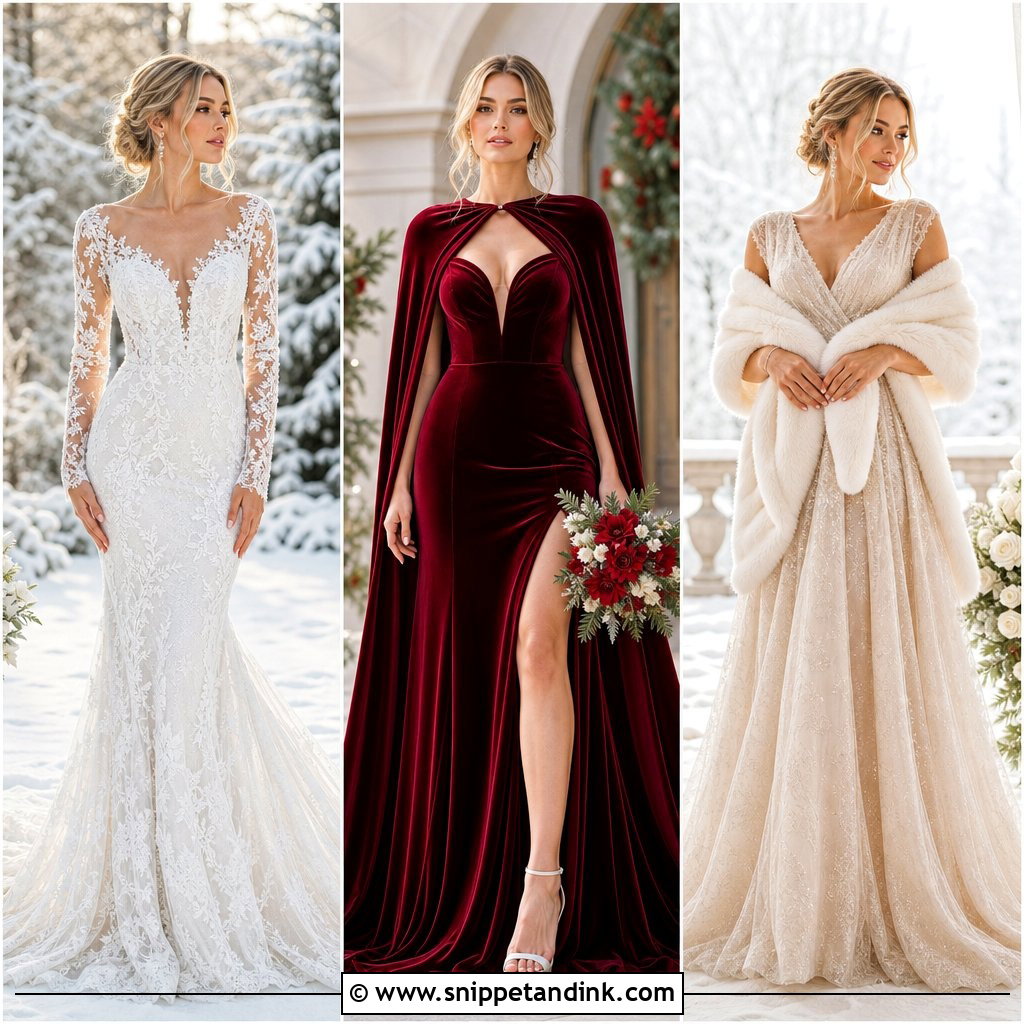
This is the winter dress I see chosen most, and it’s a forgiving one. An A-line with floral lace over a satin lining, a fitted bodice and covered buttons down the back gives coverage without bulk, and a bateau or soft V-neckline keeps the face framed. Check the sleeves at your first fitting: sheer lace looks delicate but offers almost no warmth, and a sleeve fitted tight to the arm leaves no room for a thermal layer underneath. I’d add pearl drops, a low textured bun and a fingertip veil with a narrow lace edge. Ivory pointed pumps indoors, white ankle boots for outdoor photos, and a simple satin wrap if the temperature drops.
2. Satin Ball Gown Winter Bride Dress
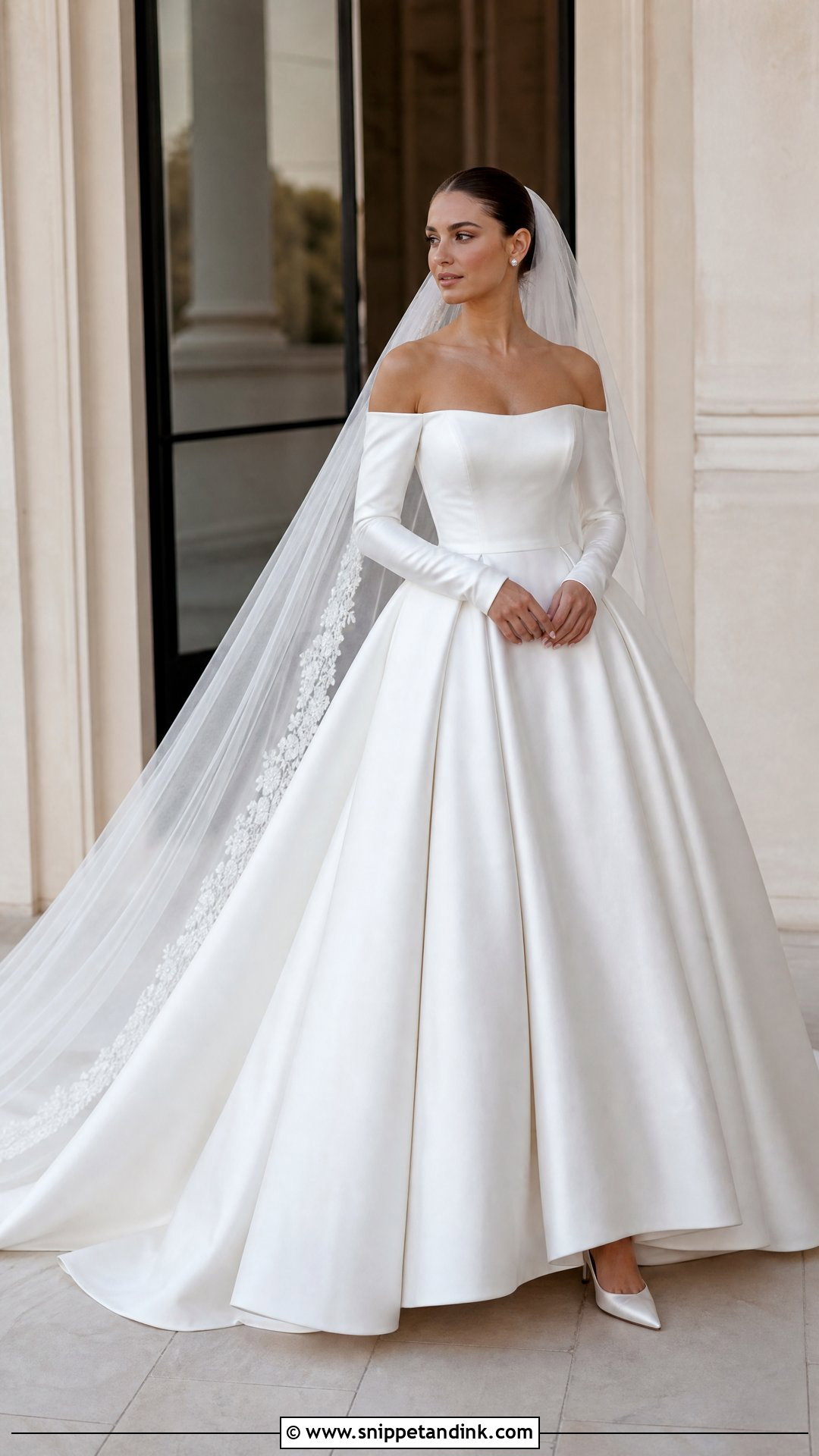
Heavy satin is where winter gowns come into their own, because cold-season venues are usually big enough to carry the volume. A structured ball gown with a fitted bodice, full skirt and sweeping train needs thick satin or Mikado, ideally with soft pleating at the waist; thin satin puckers at the seams and shows every mark. One thing brides don’t expect is how satin creases across the lap after the car ride and the ceremony seating, so I always pack a handheld steamer for the first photo stop. Style it with crystal studs, a sleek chignon and a cathedral veil. Pointed satin heels, hidden thermal tights and a floor-length ivory cape for the arrival finish it.
3. Velvet Winter Bride Dress
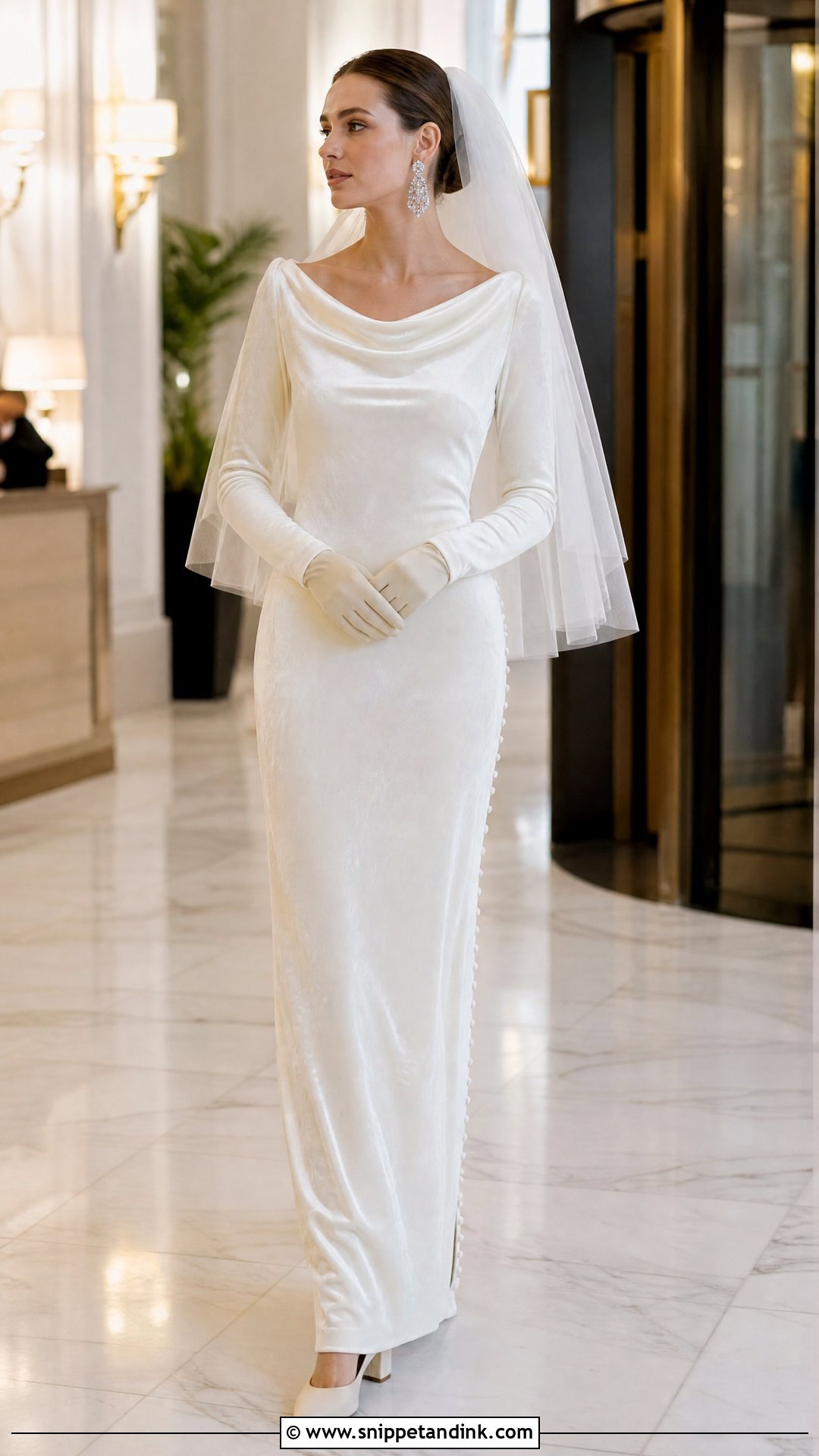
Velvet is the most seasonal fabric on this list, and the one I’m most careful with. An ivory velvet column with long fitted sleeves, a draped neckline and a row of covered buttons stays streamlined, which matters because velvet adds visual weight fast. The pile crushes where you sit and wherever a hand rests, and it reads lighter or darker depending on which way the nap faces the camera, so if you’re having anything added, such as sleeves, make sure it’s cut with the nap running the same way. A smooth side-parted bun, vintage crystal earrings and a waist-length tulle veil keep it quiet. Ivory block heels, a velvet clutch and soft cream leather gloves for outdoor shots are all it needs. Evening ceremonies and historic hotels suit it best.
4. High Neck Crepe Winter Bride Dress
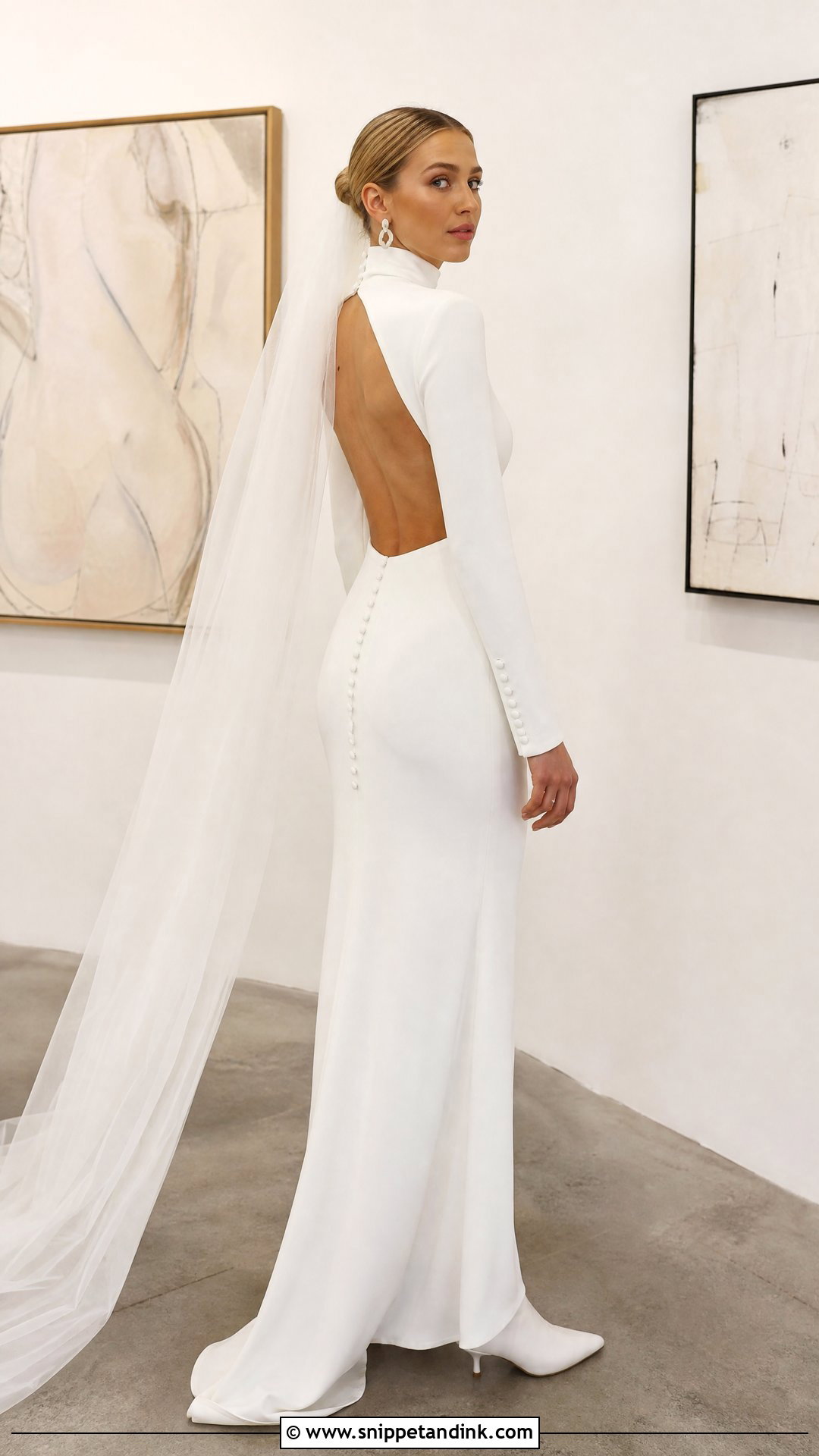
Crepe has no shine to hide behind, so the cut has to be right. A fitted sheath or gentle fit-and-flare with full sleeves, a high collar and a low open back is the modern option here, and the bare back is the detail people remember. Be honest with yourself about that back in January, though. The front is covered, the spine isn’t, and outdoor portraits will be cold. Pearl buttons at the cuffs, sculptural earrings and a sleek low ponytail with a long veil tucked beneath it suit the clean lines. White pointed ankle boots give more coverage than pumps, and a tailored ivory wool coat handles travel between locations.
5. Off Shoulder Mikado Winter Bride Dress
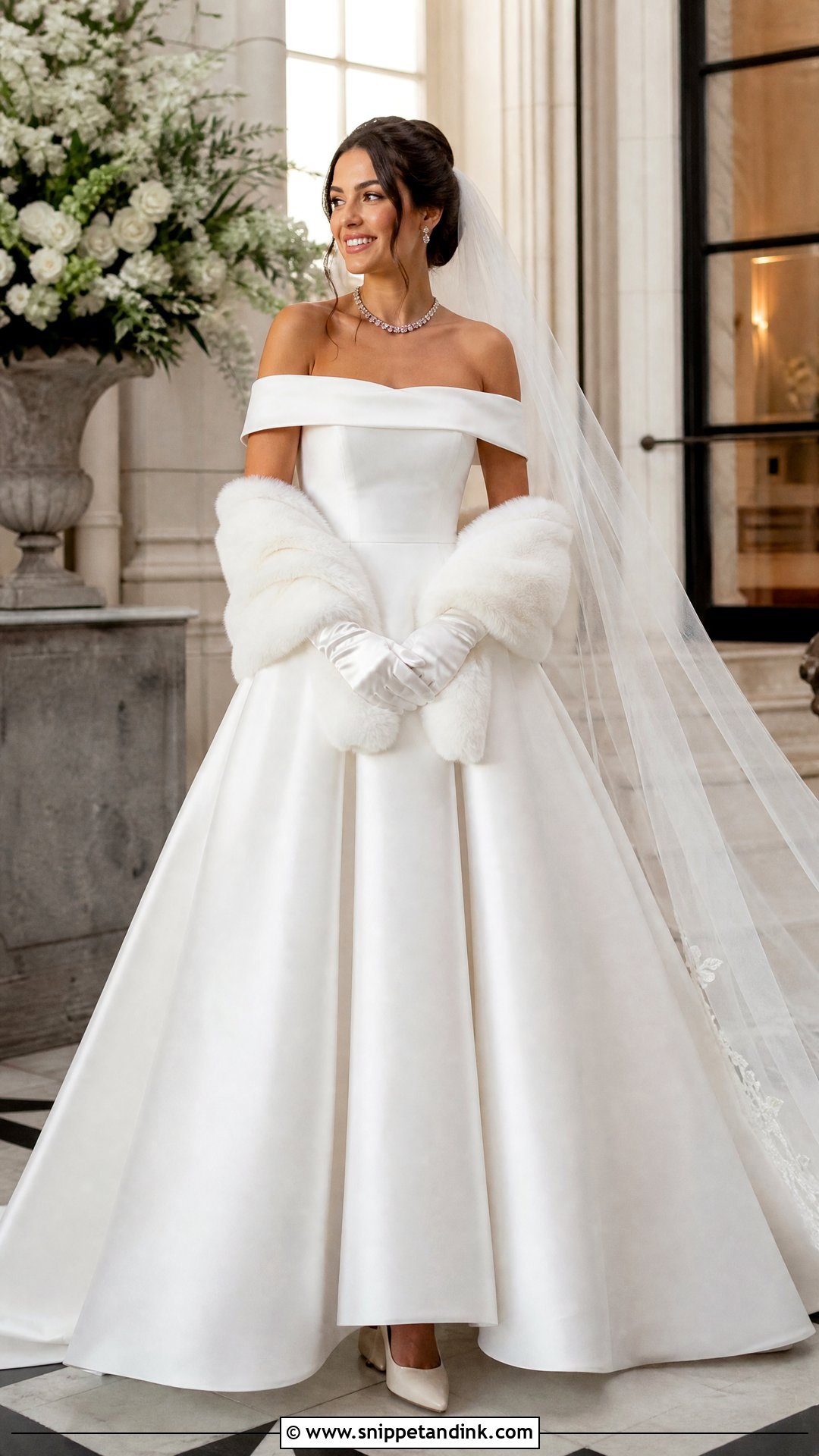
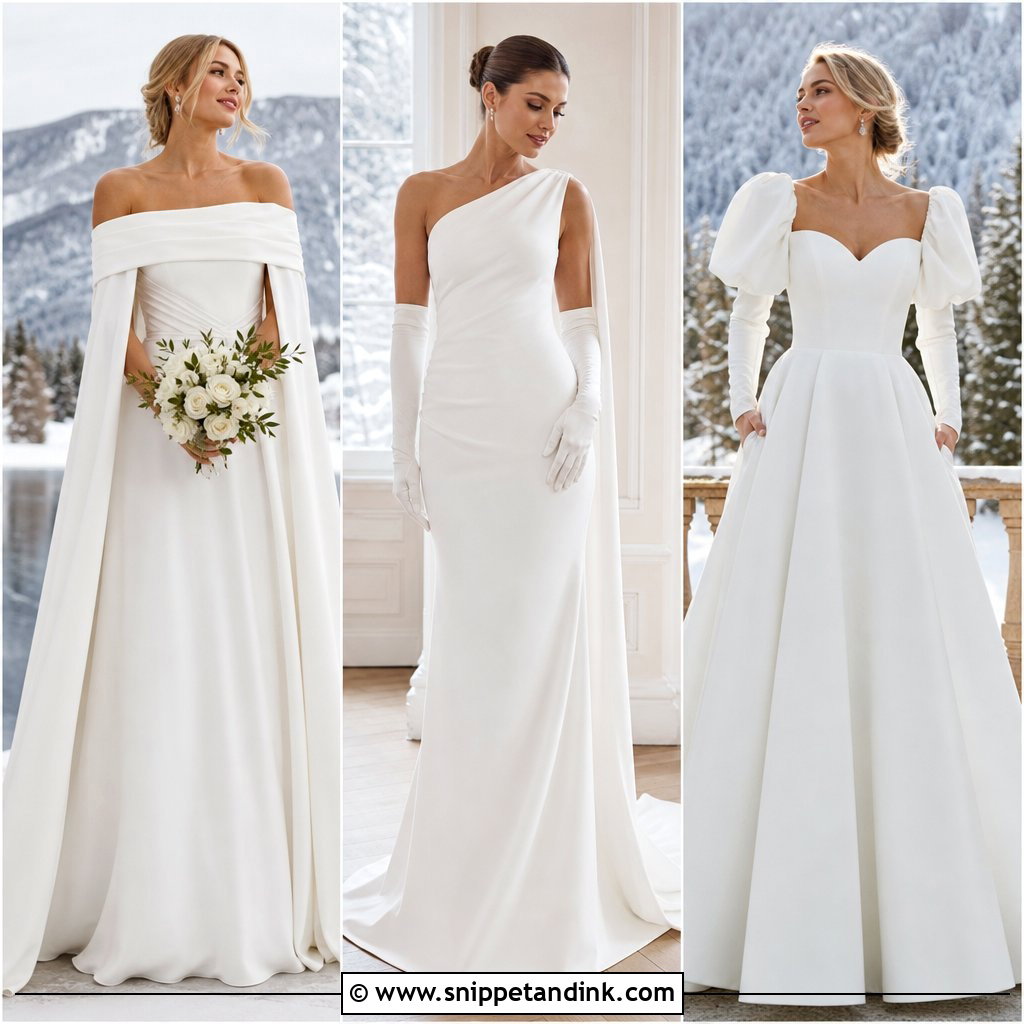
Off-the-shoulder in winter sounds risky, but Mikado has enough body to make it work. I look for a folded neckline with a boned bodice underneath, because the weight of the fabric will drag an unsupported neckline down every time you lift your arms. Add a defined waist and a full A-line skirt, a crystal tennis necklace with small matching earrings, and a polished updo so the shoulders stay clear. A cathedral veil gives movement. Wear closed-toe satin pumps and keep a cropped faux-fur wrap close by for outdoor moments; long satin gloves are another layer you can peel off. It reads black tie straight away.
6. Square Neck A-Line Winter Bride Dress
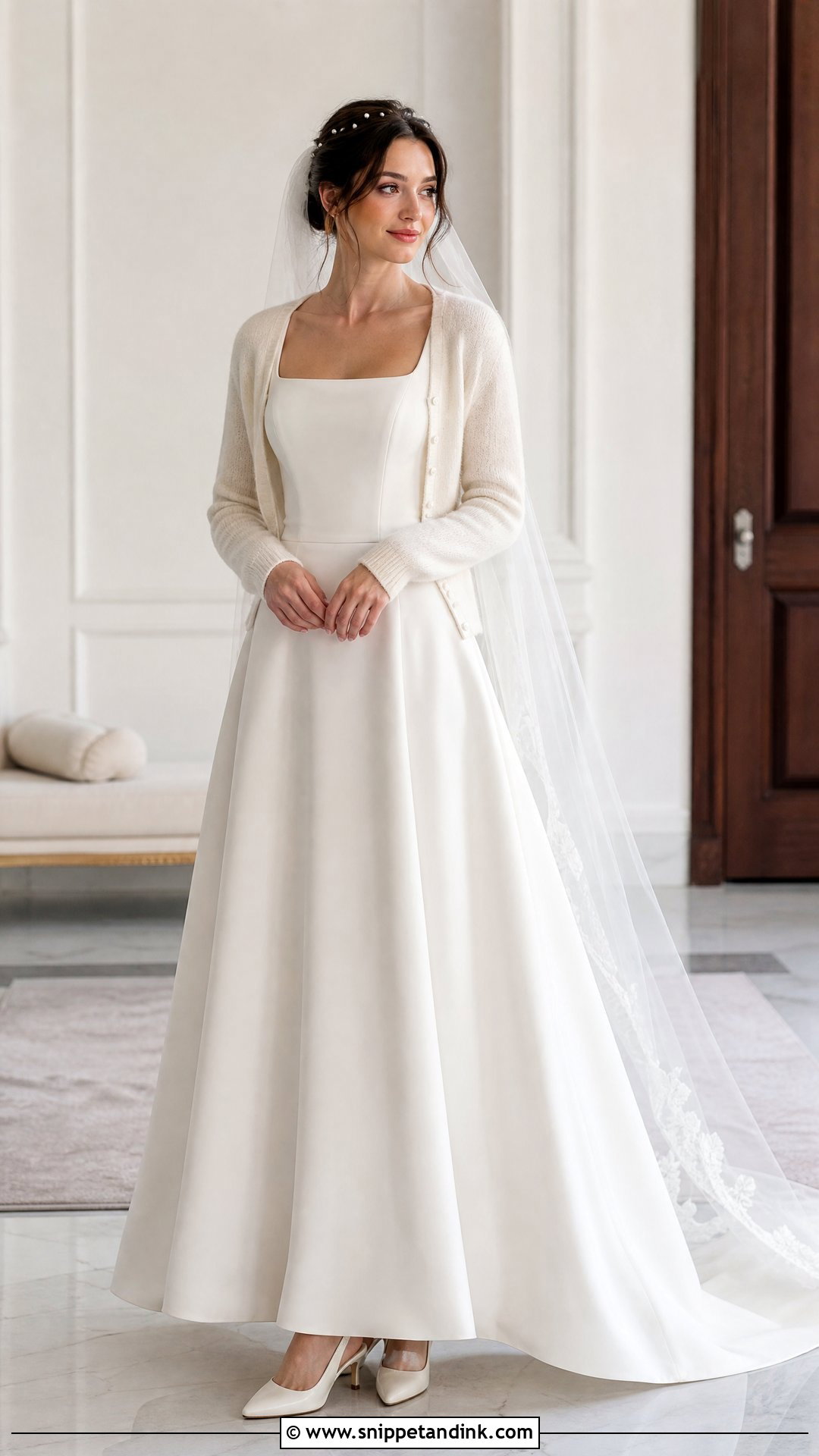
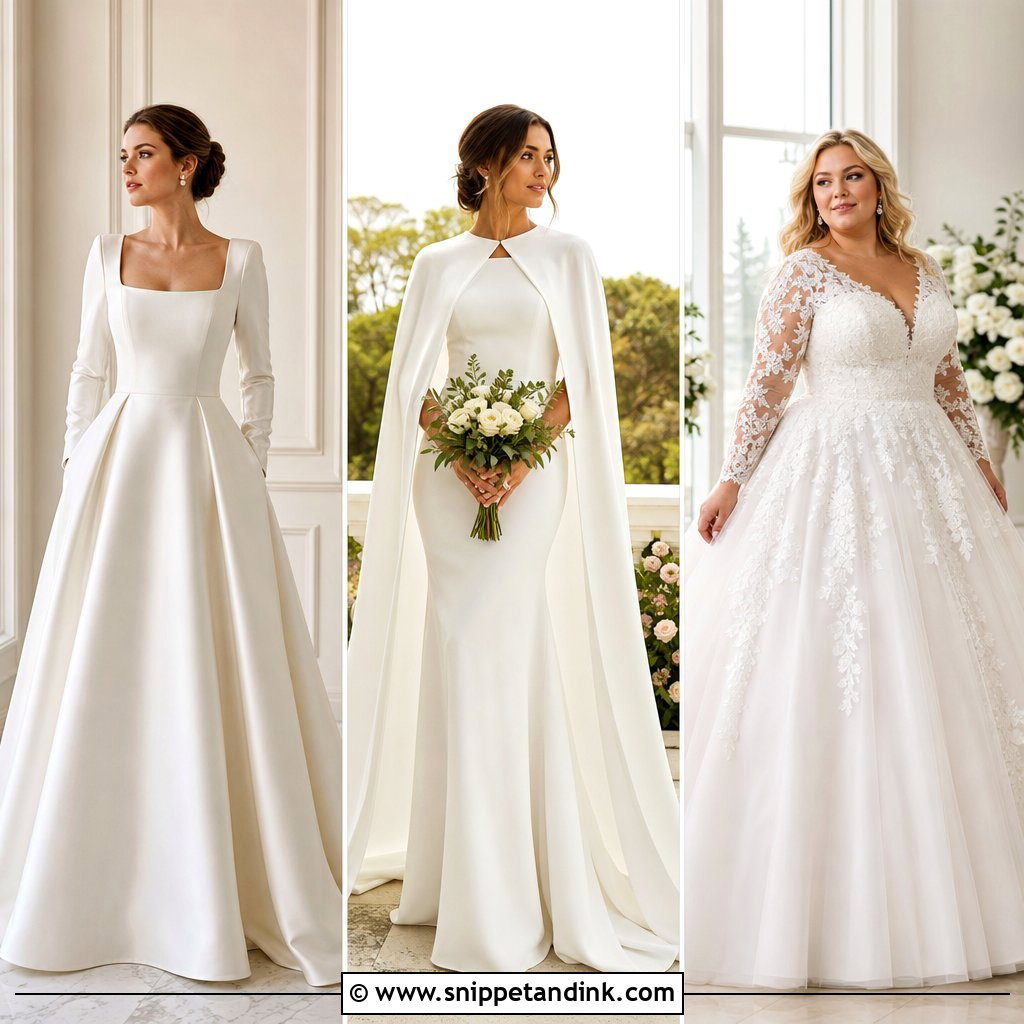
A square neckline has a quiet vintage feel, and on satin-backed crepe it sits flat against the chest, which I like for brides who don’t want to keep adjusting a neckline all night. Long fitted sleeves, a defined waistband and a skirt that moves easily keep it balanced. A delicate pendant, pearl hairpins and a soft low bun suit the geometry, with a chapel veil and ivory slingbacks. For chilly portraits, layer a cropped bridal cardigan in fine cashmere or soft wool and keep it close to the body. A chunky knit would swallow the neckline. It carries a daytime ceremony and an evening reception equally well.
7. Cape Sleeve Winter Bride Dress
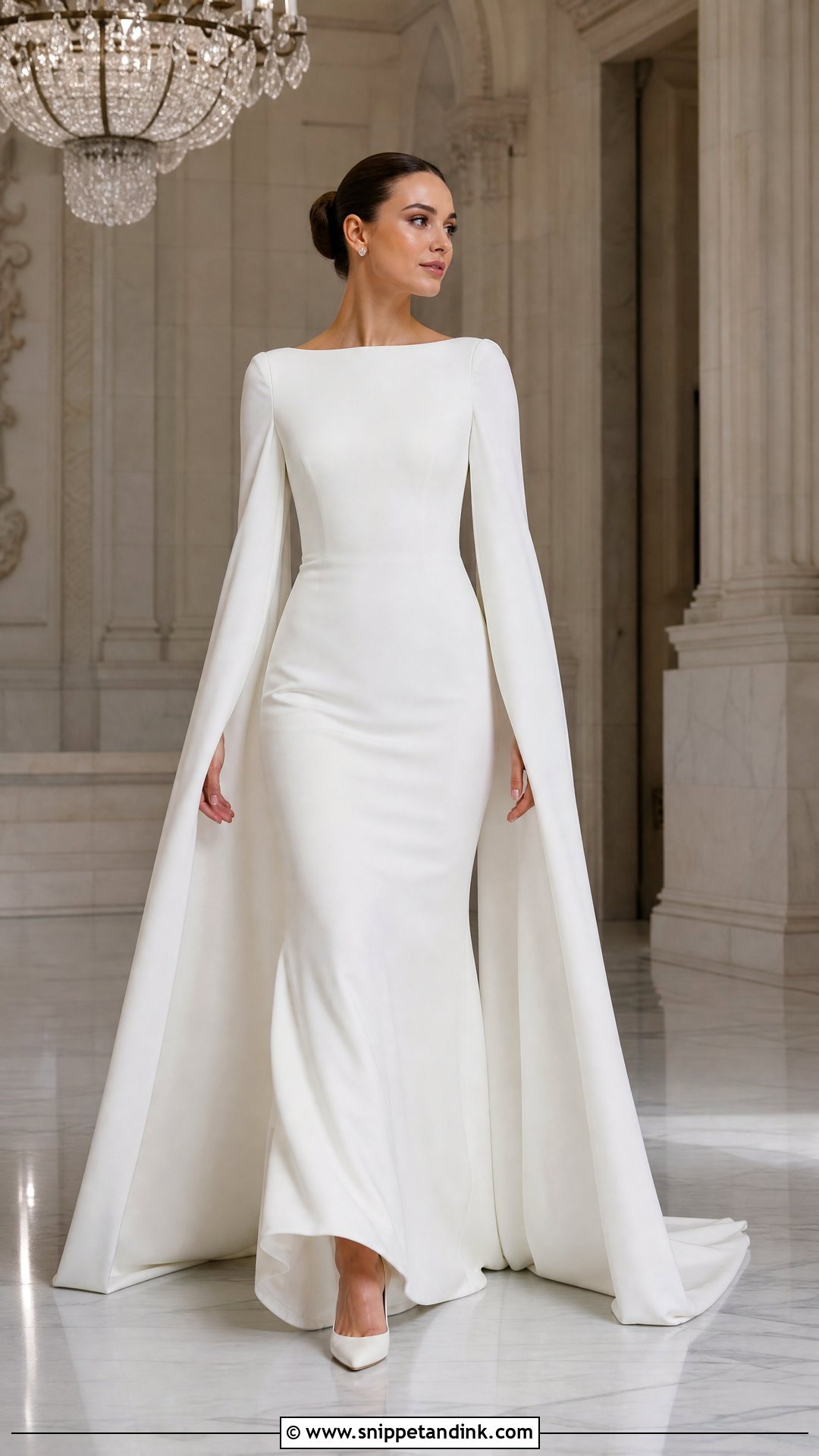
Floor-length cape sleeves turn a plain crepe dress into something with real drama when you walk. Start with a fitted crepe gown, a bateau neckline and a softly flared skirt, then add cape sleeves falling from shoulder to floor. Walk in them at your fitting: they catch on chair backs and door handles, and the cape hem needs to clear your shoes. Keep jewelry to small studs and a slim bracelet, and wear a neat bun or smooth Hollywood waves. I’d skip the veil, because the cape already gives you length. Pointed ivory pumps and a small structured clutch finish it. Don’t mistake those sleeves for warmth; they’re open at the sides, so you’ll still want a proper coat for any long stretch outdoors.
8. Detachable Cape Winter Bride Dress
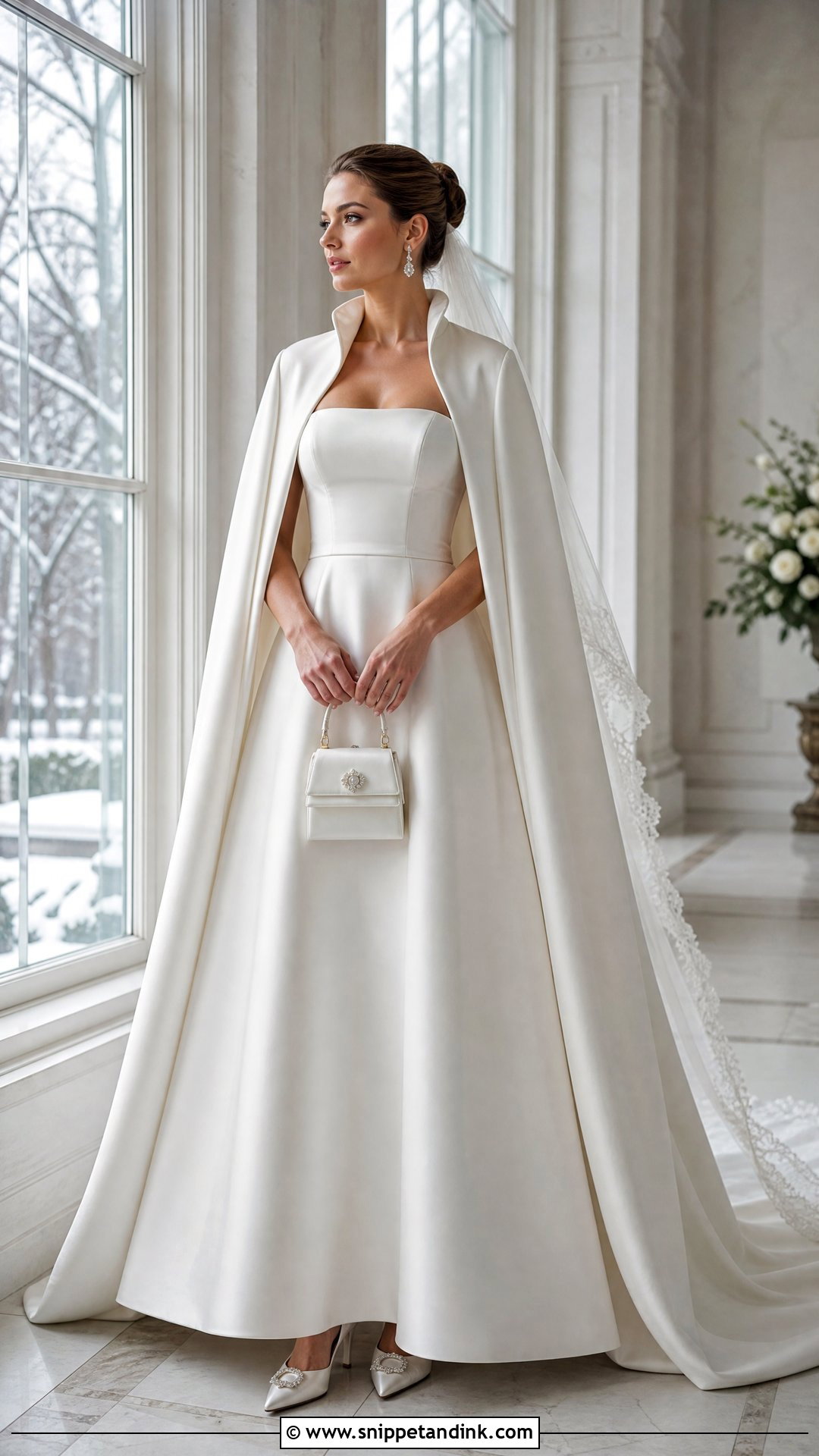
Two looks, one dress. A detachable cape is my usual suggestion when the ceremony and portraits are outdoors but the reception isn’t. Pair a strapless satin A-line with a full-length cape in matching fabric, a structured collar and a concealed front fastening. Practice taking it off yourself, because hidden hooks at the collar are easy for a bridesmaid and awkward to undo alone in gloves. Add a sparkling hair comb, drop earrings and a classic updo. If you wear a cathedral veil underneath, keep the tulle light so it isn’t crushed into the shoulders. Closed-toe heels and a petite satin bag complete it.
9. Faux Fur Wrap Winter Bride Dress
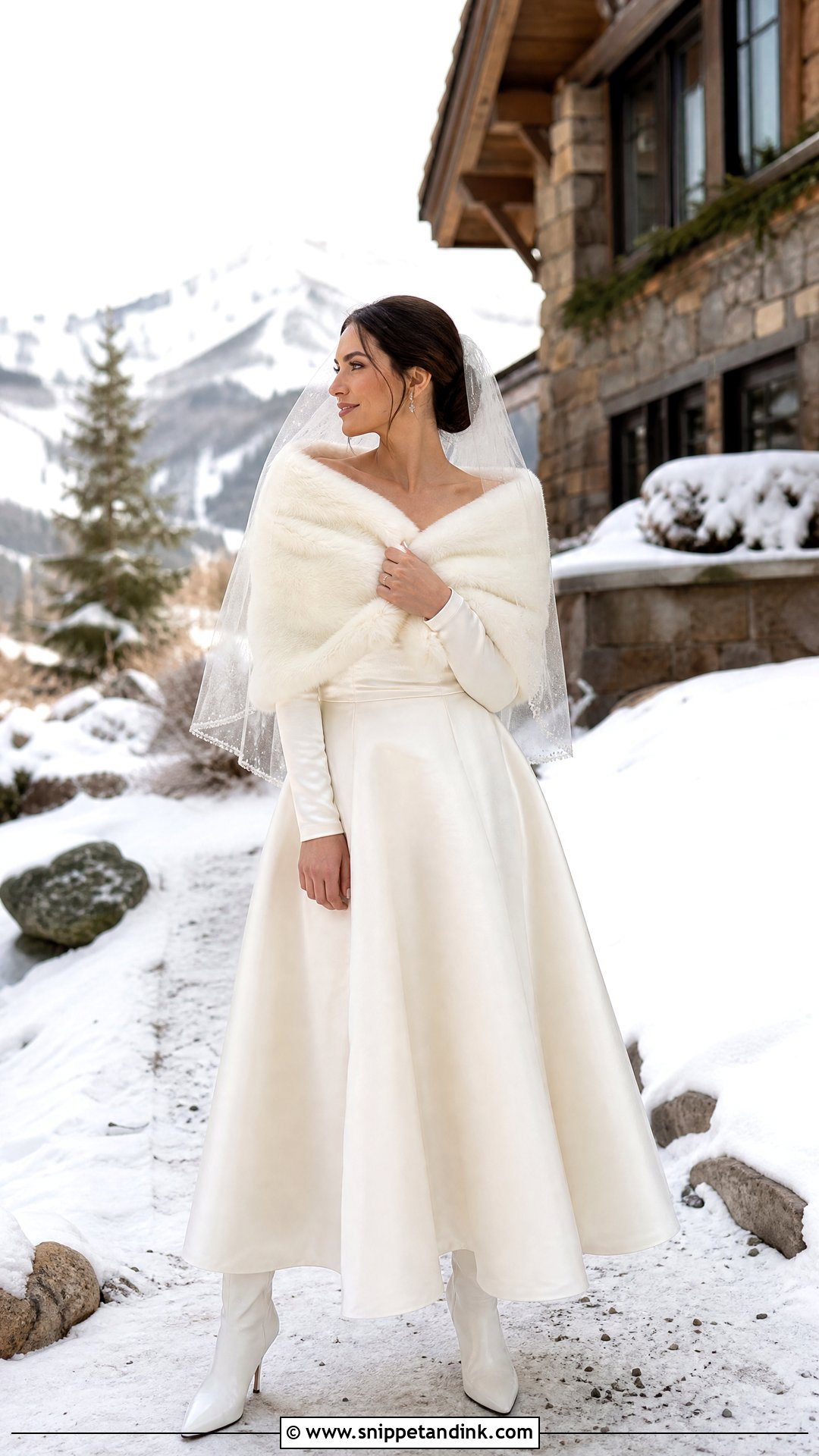
Faux fur is the warmest accessory here, and the one I most often see styled badly. Start with a long-sleeve satin or crepe dress with a V-neckline, a defined waist and a gentle fit-and-flare skirt. Place a cropped ivory faux-fur stole high on the shoulders so the waist stays visible, and fasten it with a brooch or hidden hook; a stole you have to hold all day ends up in a heap on a chair. Match the shade carefully, because bright white fur next to an ivory dress makes the dress look dingy. Pearl earrings, brushed waves and a fingertip veil keep it soft. White leather ankle boots handle snowy ground, then swap to satin heels for the reception.
10. Beaded Winter Bride Dress
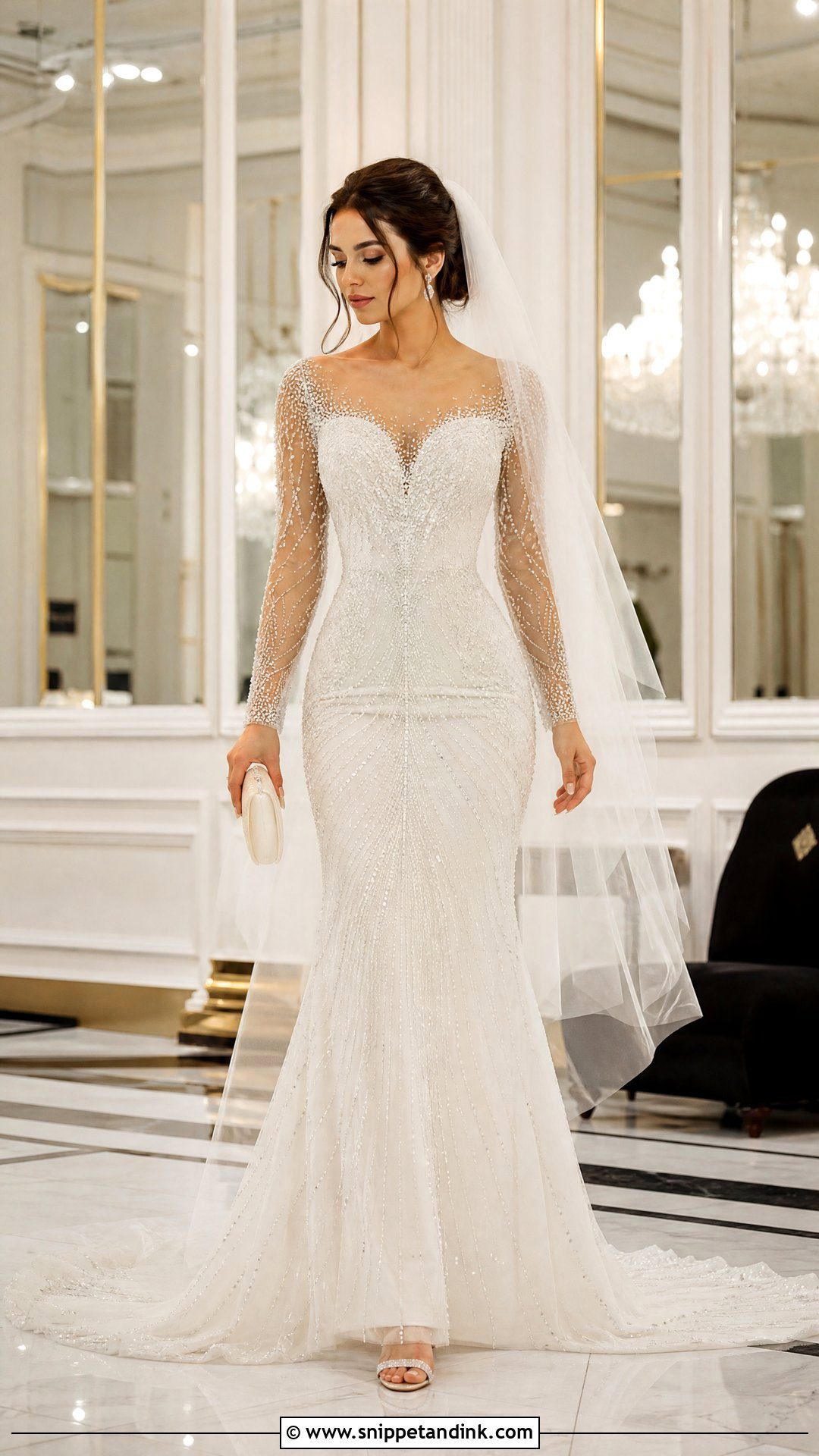
Beadwork earns its weight in winter, because evening venues are lit by candles and warm lamps that make crystal flicker. Choose a fitted gown with long illusion sleeves, a lined bodice and beading that thins out toward the skirt; a pattern that fades looks more refined than solid sparkle from neckline to hem. Beads also snag tulle, so I pair this one with a plain veil and check where the veil edge rubs across the back. Crystal drops, a smooth low bun, metallic silver heels and a small ivory clutch keep it balanced. A plain structured satin cape covers travel and outdoor photos without competing with the bodice. Hotel ballrooms with bright interiors show it off best.
11. Pearl Winter Bride Dress
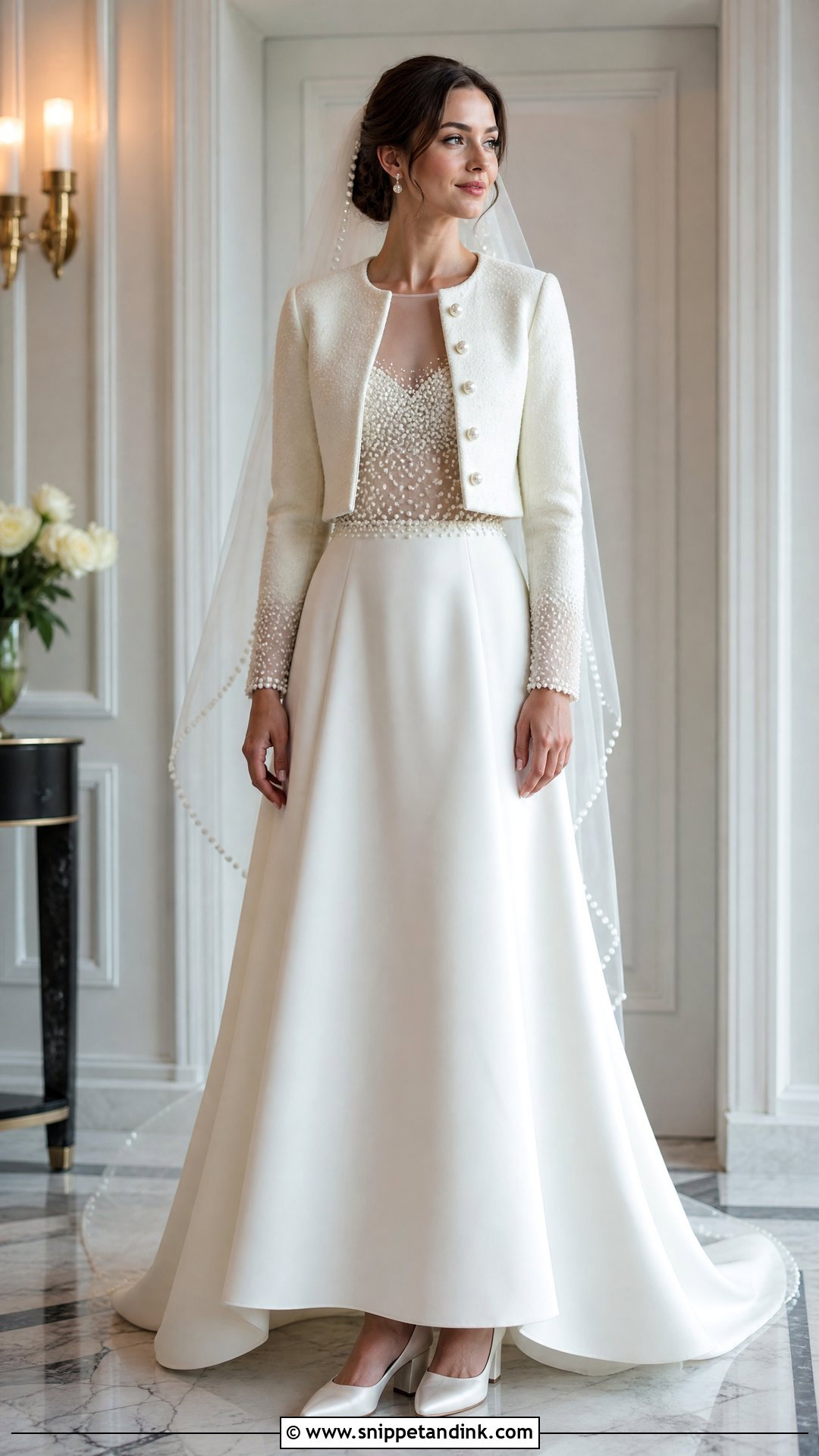
Pearls give texture without glitter, and in soft winter daylight they look warmer than crystal. Consider an A-line with a sheer pearl-detailed bodice, long illusion sleeves and a smooth satin skirt, so the texture stays on top and the skirt stays calm. With that much going on near the neckline, I leave the throat bare and go with small pearl studs. A pearl-trimmed fingertip veil can echo the gown if the trim stays light. Sewn pearls are heavy for their size, so raise your arms at the fitting and watch whether the sleeves pull at the shoulder seam. Ivory block heels, a mini bag and a cropped wool jacket with pearl buttons finish the outfit.
12. Basque Waist Winter Bride Dress
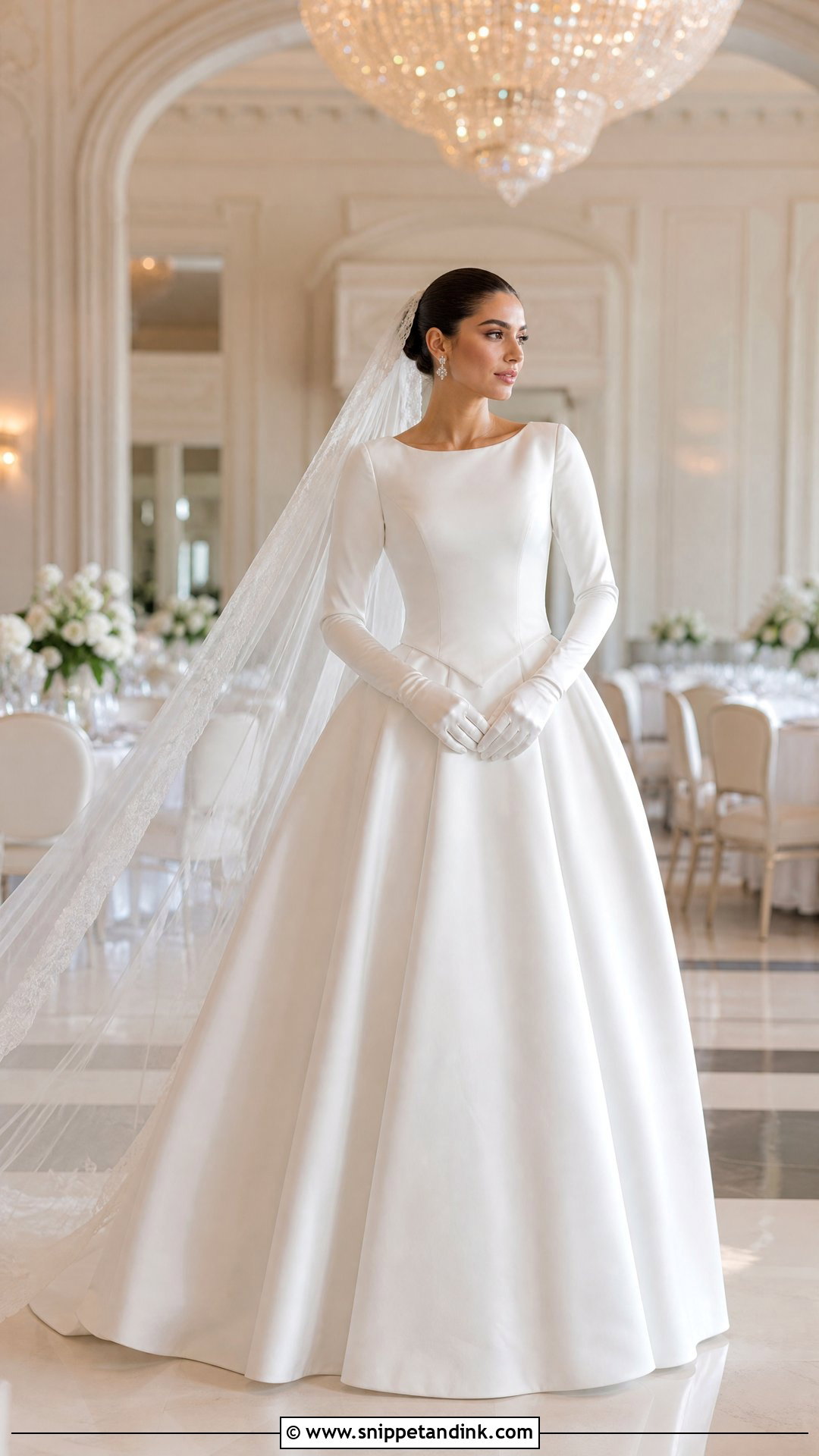
A basque-waist gown draws a V at the waist and then lets the skirt open out, which is why it holds its own in a large venue where a softer dress can look lost. For winter I’d choose Mikado or duchess satin, a long-sleeve bodice, a gently curved neckline and a pointed waist seam. That point has to land exactly at your natural waist, so expect a fitting or two just for the seam; set even slightly high, it shortens the torso. Add a cathedral veil under a smooth bun, small crystal earrings and satin gloves. Closed-toe platforms add height under the skirt, and a long cape ending near the train covers outdoor shots. Skip the belt. The seam is the detail.
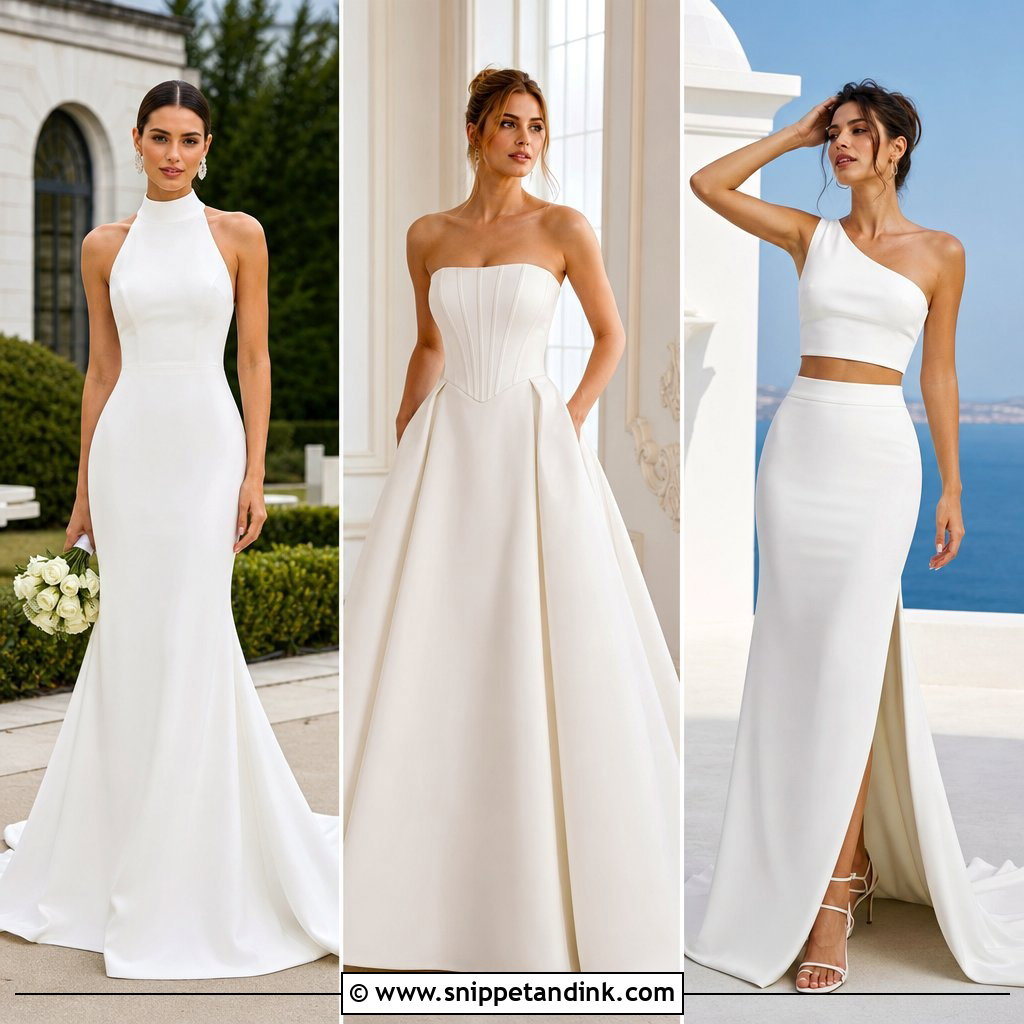
13. Corset Winter Bride Dress
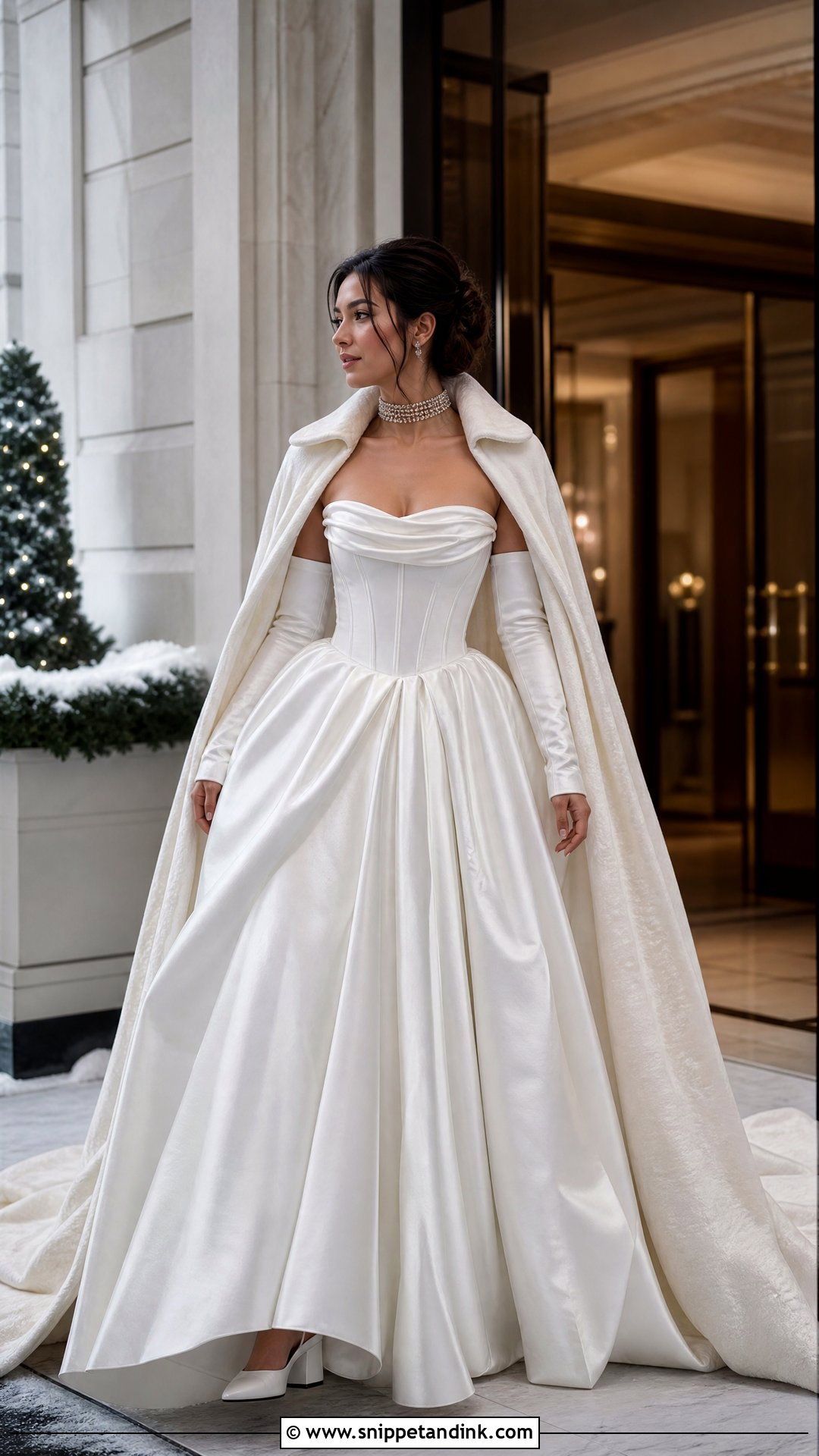
A corset bodice feels secure all day when it’s properly boned and fitted, and restless when it isn’t. Choose a satin ball gown with a softly structured corset, some draping and a full skirt, plus detachable fitted sleeves in matching satin or illusion lace for the ceremony. Take them off at the reception and you have a lighter second look. At your final fitting, sit down, breathe deeply and reach forward as if for a glass; a corset that only fits while you stand still will feel tight by dinner. A crystal choker, understated studs and a high polished bun suit it. Satin pumps with a comfortable block heel, a compact bag, and a floor-length velvet cape for contrast outdoors.
14. Mermaid Winter Bride Dress
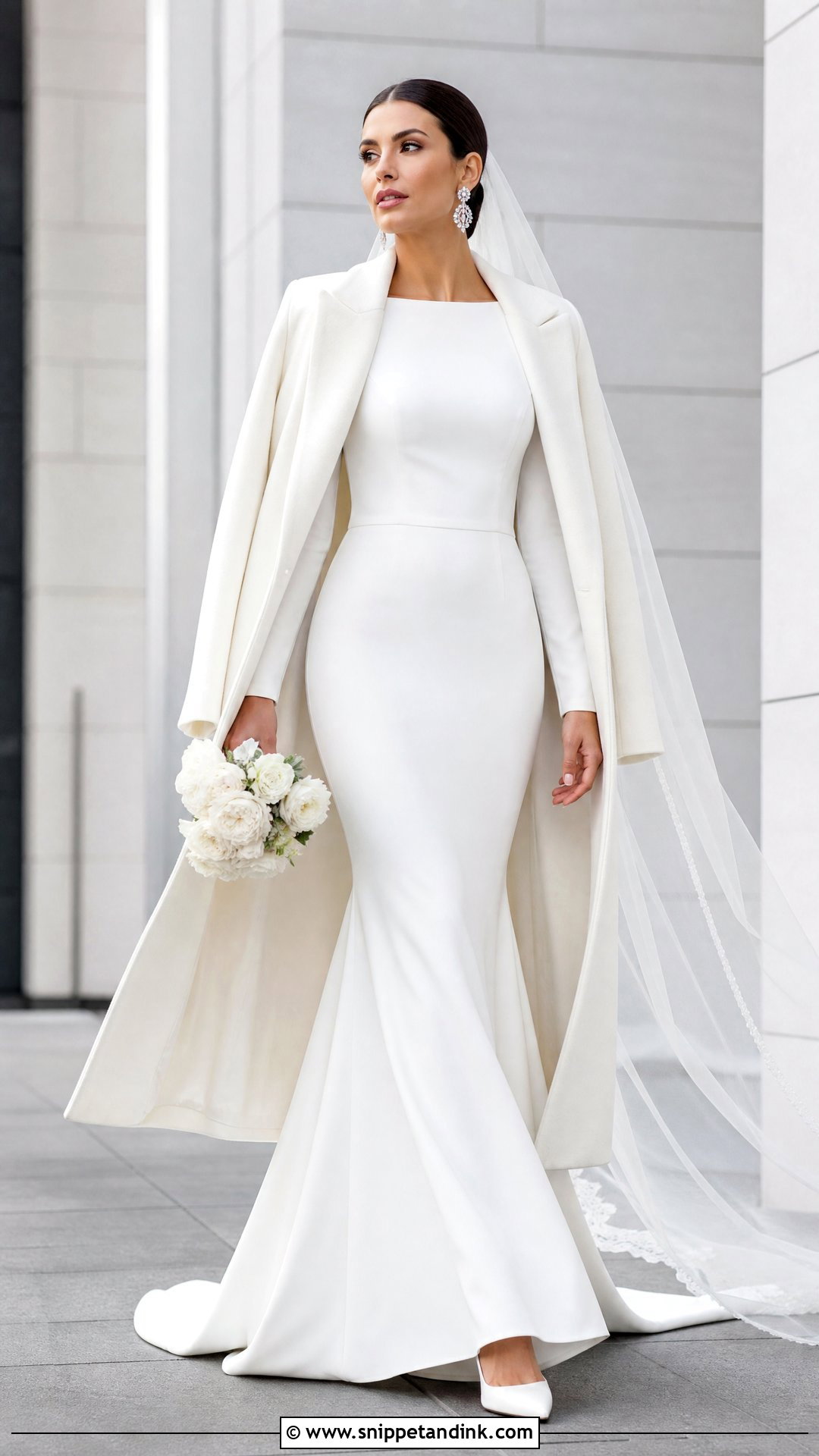
Stretch crepe or satin cut close to the body gives a mermaid its line, and long sleeves keep it seasonal. Look for a supportive bodice, fitted hips and a flare that starts near the knee; the lower the flare, the shorter your stride and the harder the stairs. A high bateau neckline balances the fit, and covered buttons down the back give one long vertical line. Side-swept waves, statement earrings and a simple chapel veil suit it, and pointed pumps extend the silhouette. For the coat, choose a fitted one that opens fully so it goes around the dress rather than being pulled over a narrow skirt, which crushes the train. Modern hotels and city restaurants suit this one.
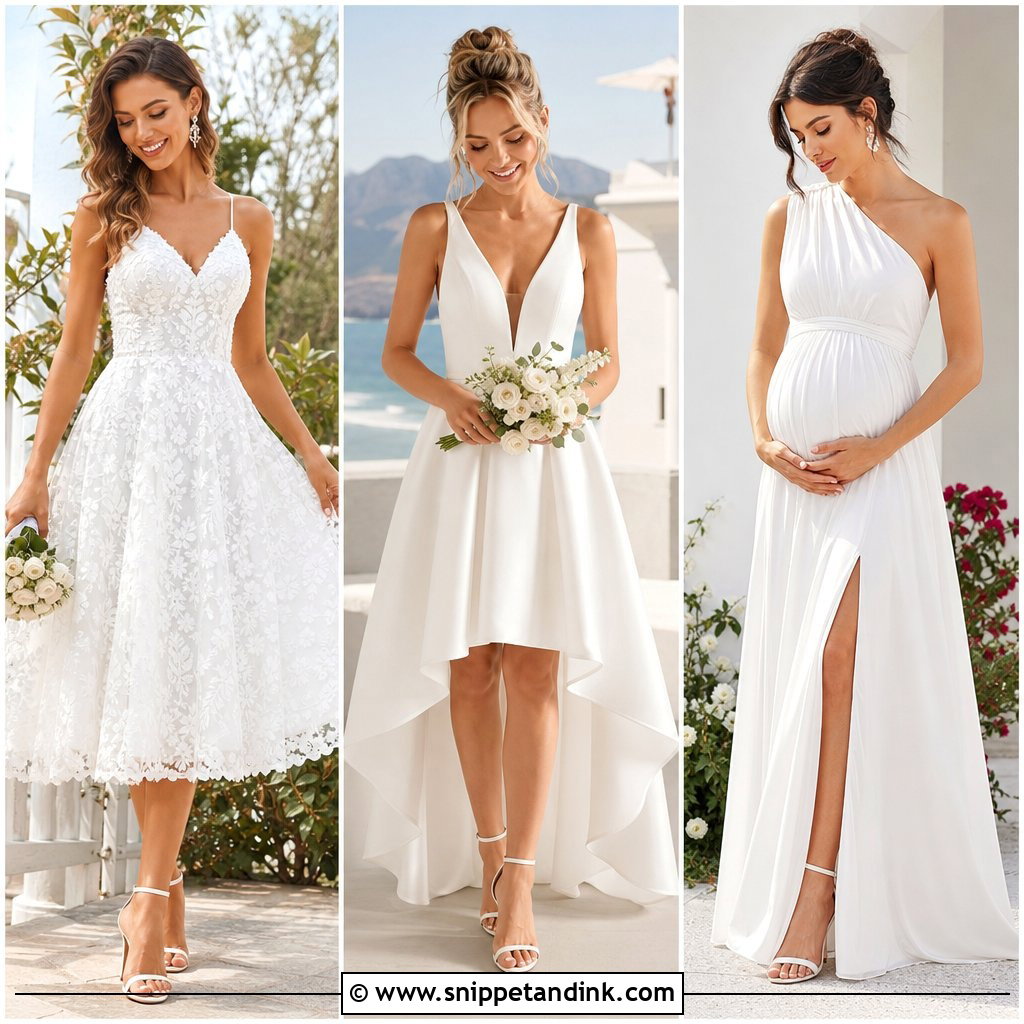
15. Tea Length Winter Bride Dress
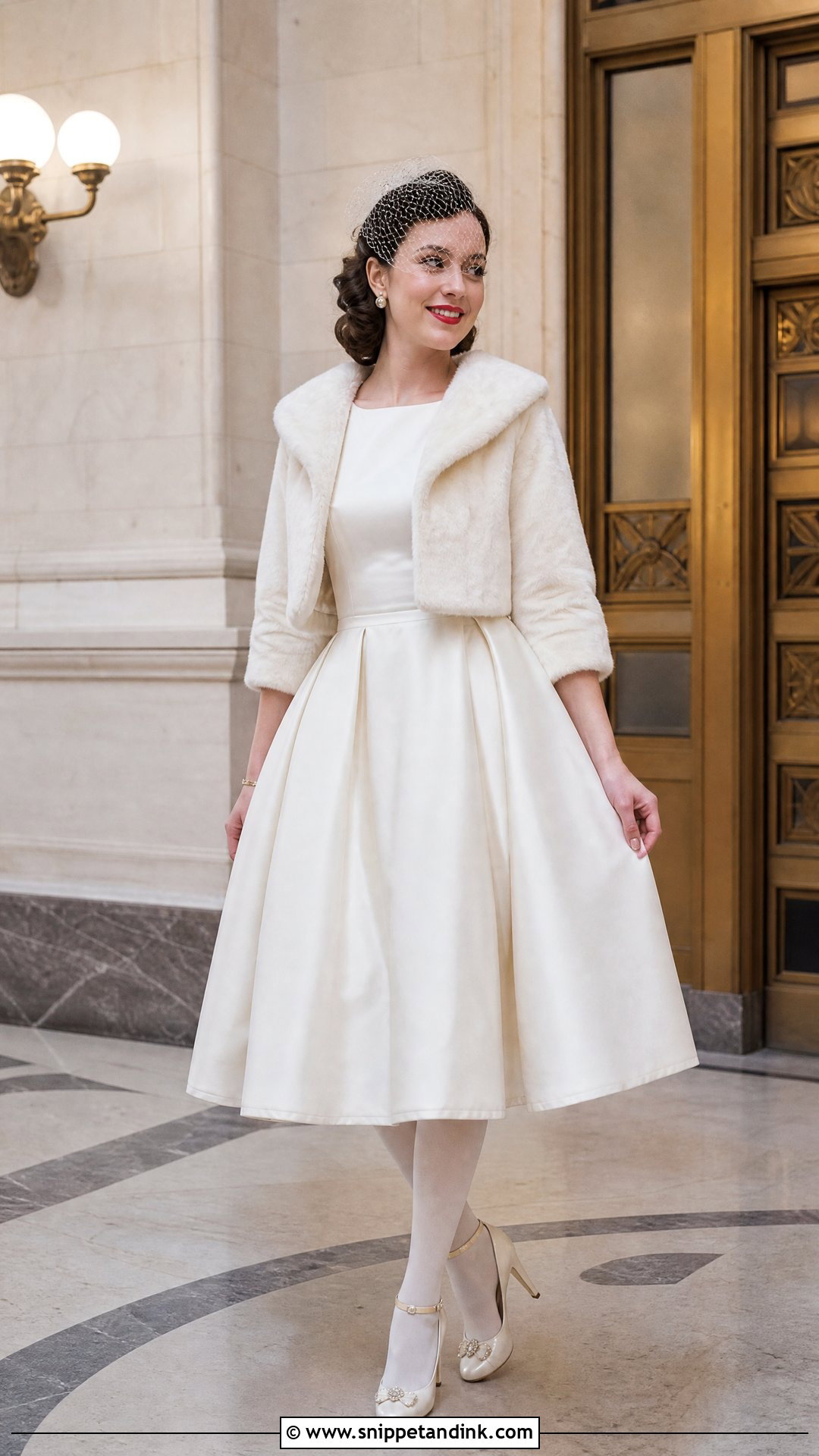
Tea length is the one winter dress where the shoes do half the work. Choose a structured satin dress with three-quarter sleeves, a fitted waist and a full skirt ending between knee and ankle. Ivory tights add warmth, and they’re the detail I check in daylight, since any sheen or a slight color mismatch with the dress is obvious at this length. Embellished ankle-strap pumps or white boots, a short birdcage veil, pearl earrings and a compact bouquet suit the vintage proportions. Top it with a cropped faux-fur jacket that stops at the waist so the skirt still shows. It’s easy to move in, and a natural fit for courthouse ceremonies and small hotel celebrations.
16. Minimalist Winter Bride Dress
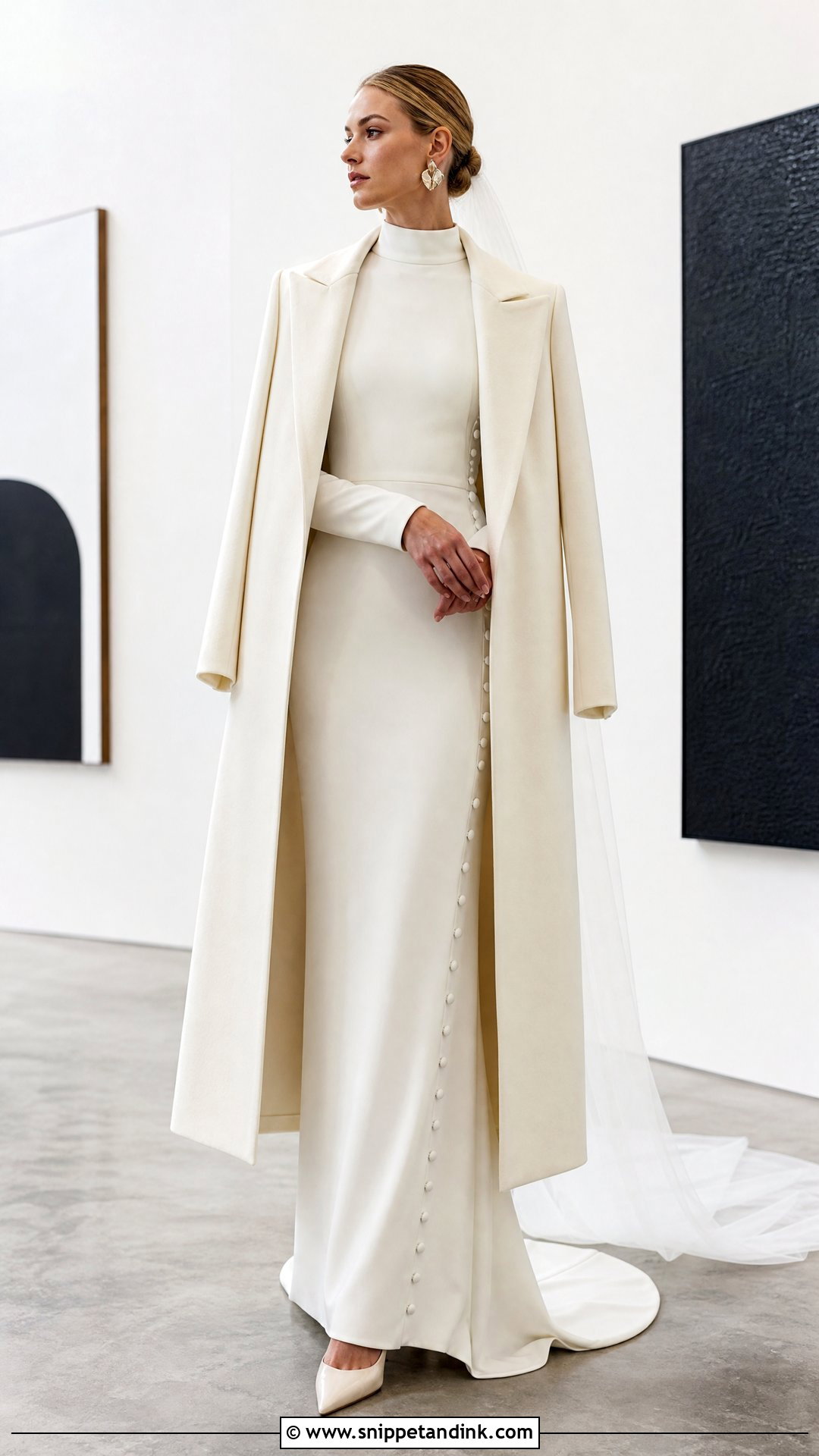
Simple doesn’t mean plain, but it does mean the fit has nowhere to hide. Choose a long-sleeve column in heavy crepe with a high neckline, lightly defined shoulders and a small train, with a row of covered back buttons for detail. Lightweight crepe shows every seam and undergarment line, so I’d ask to see the dress by a window before you commit. Bold sculptural earrings, a sleek center-parted bun and a long plain veil give it presence. Ivory pointed pumps and a structured top-handle bag for the reception, and outdoors a sharply tailored wool coat that ends just short of the train. Galleries and contemporary hotels suit its calm lines.
17. Plus Size Winter Bride Dress
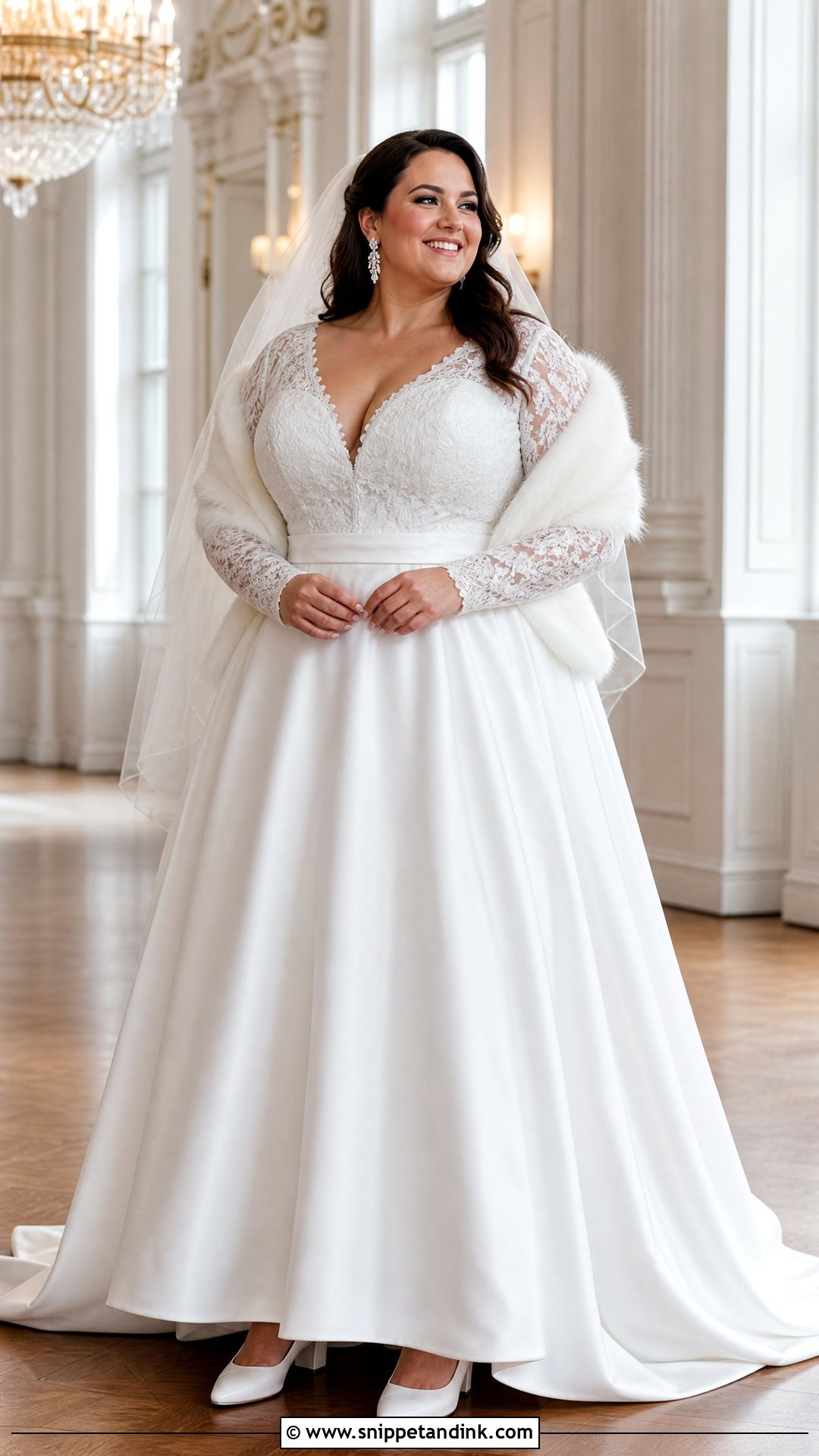
Support is the first thing I build a plus-size winter look around; the style follows from there. A supportive A-line with a structured inner bodice, long lace sleeves, a soft V-neckline and a flowing satin skirt is a good starting point. Wide-set straps hidden under the lace take weight off the bodice, and a defined waistband shapes the waist without relying on tight shapewear for ten hours. Have the lace sleeves fitted with your arms raised and bent, not only hanging straight, because that’s where they pull. Statement drops, a relaxed updo and a chapel veil complete it. Block-heel pumps give stability, and a faux-fur stole that closes securely at the front won’t keep sliding off. Book alterations early.
18. Modest Winter Bride Dress
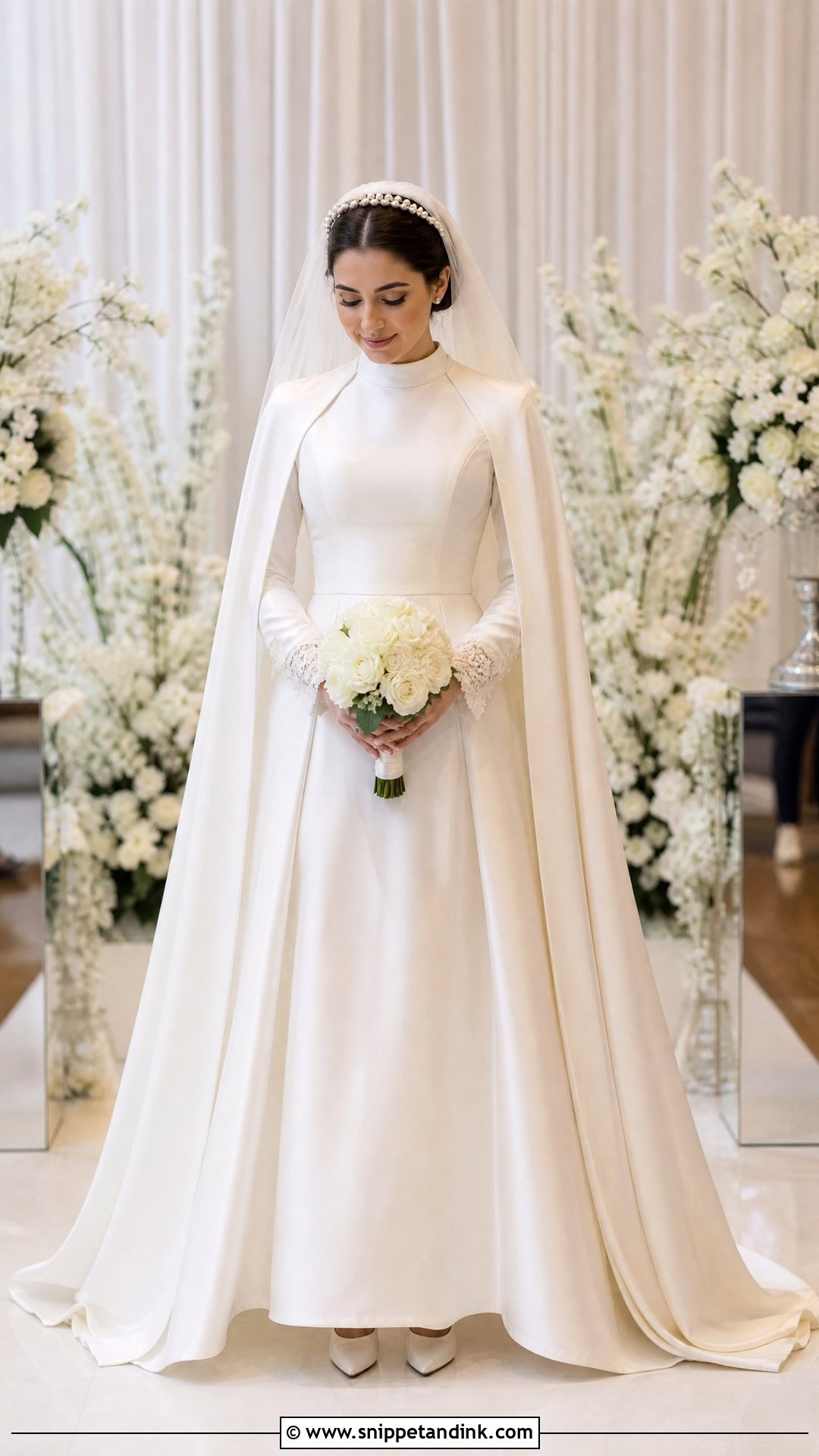
Full coverage and a modern look aren’t in conflict. I’d start with an A-line dress with a high neckline, opaque long sleeves, a fitted waist and a softly pleated satin skirt. Lace panels at the cuffs or shoulders add texture without sheer sections, but hold them up against a bright window, since some lined laces turn see-through when backlit. A pearl headband, small drops and a long veil attached beneath a covered bun suit it. Closed-toe ivory pumps and thin thermal tights add discreet warmth. A matching full-length cape with a simple collar handles travel and outdoor photos; keep it free of heavy trim so the gown stays the focus.
19. Champagne Winter Bride Dress
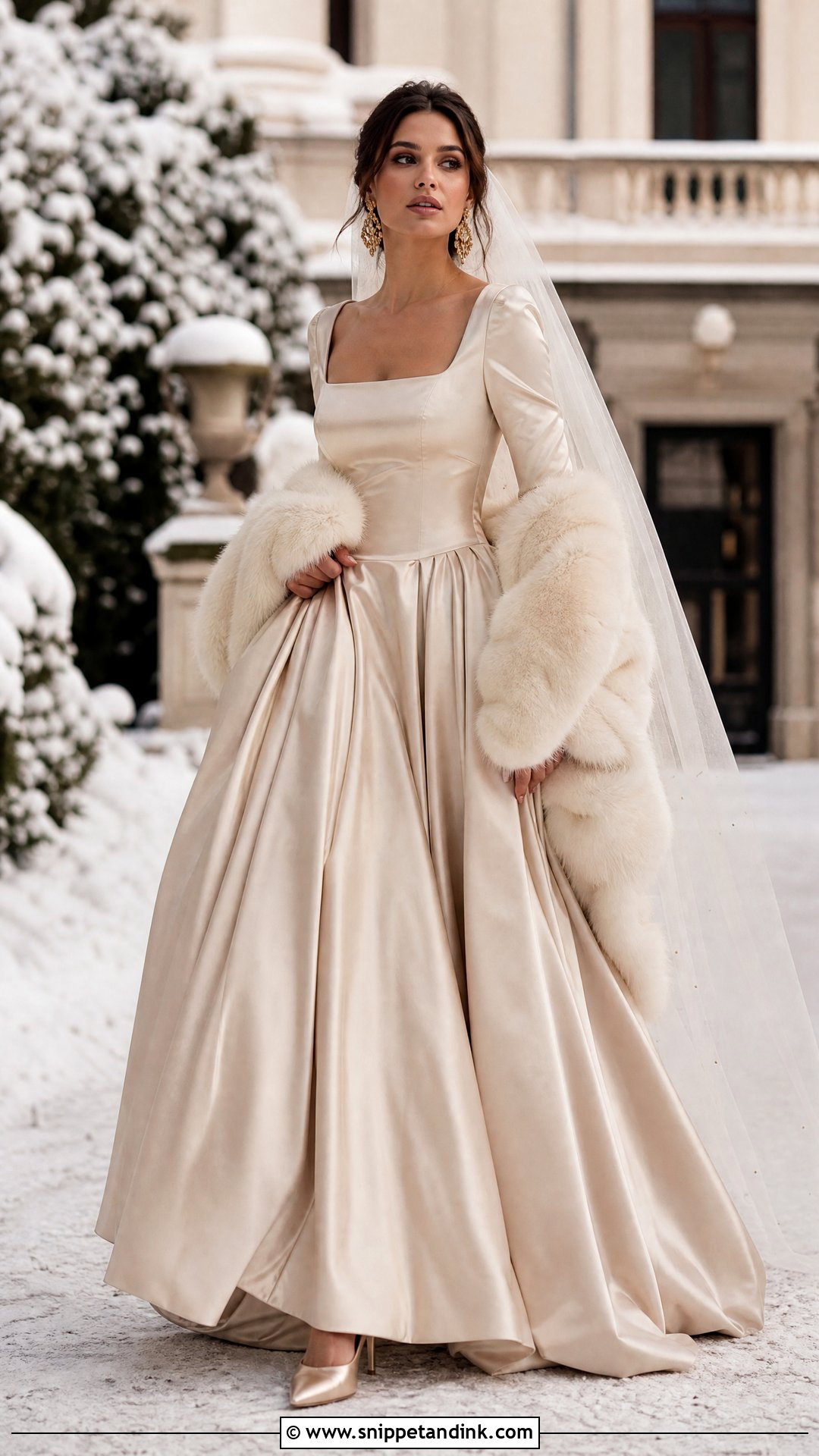
Champagne reads warmer than bright white and sits naturally beside wood, candlelight and deep winter florals. Select a champagne satin ball gown with long sleeves, a square neckline and a softly gathered skirt. Accessories need to follow its undertone, so go for ivory, pale gold and soft pearl rather than stark silver, which makes champagne look grey. Gold drop earrings, a delicate comb and metallic champagne heels coordinate easily, and an ivory tulle veil gives contrast without hiding the color. Add a cream faux-fur stole or a pale champagne cape for warmth. I check every piece together under daylight and under indoor bulbs, because champagne shifts more between the two than white does. Against snow it looks noticeably warmer, which photographs nicely.
20. Floral Appliqué Winter Bride Dress
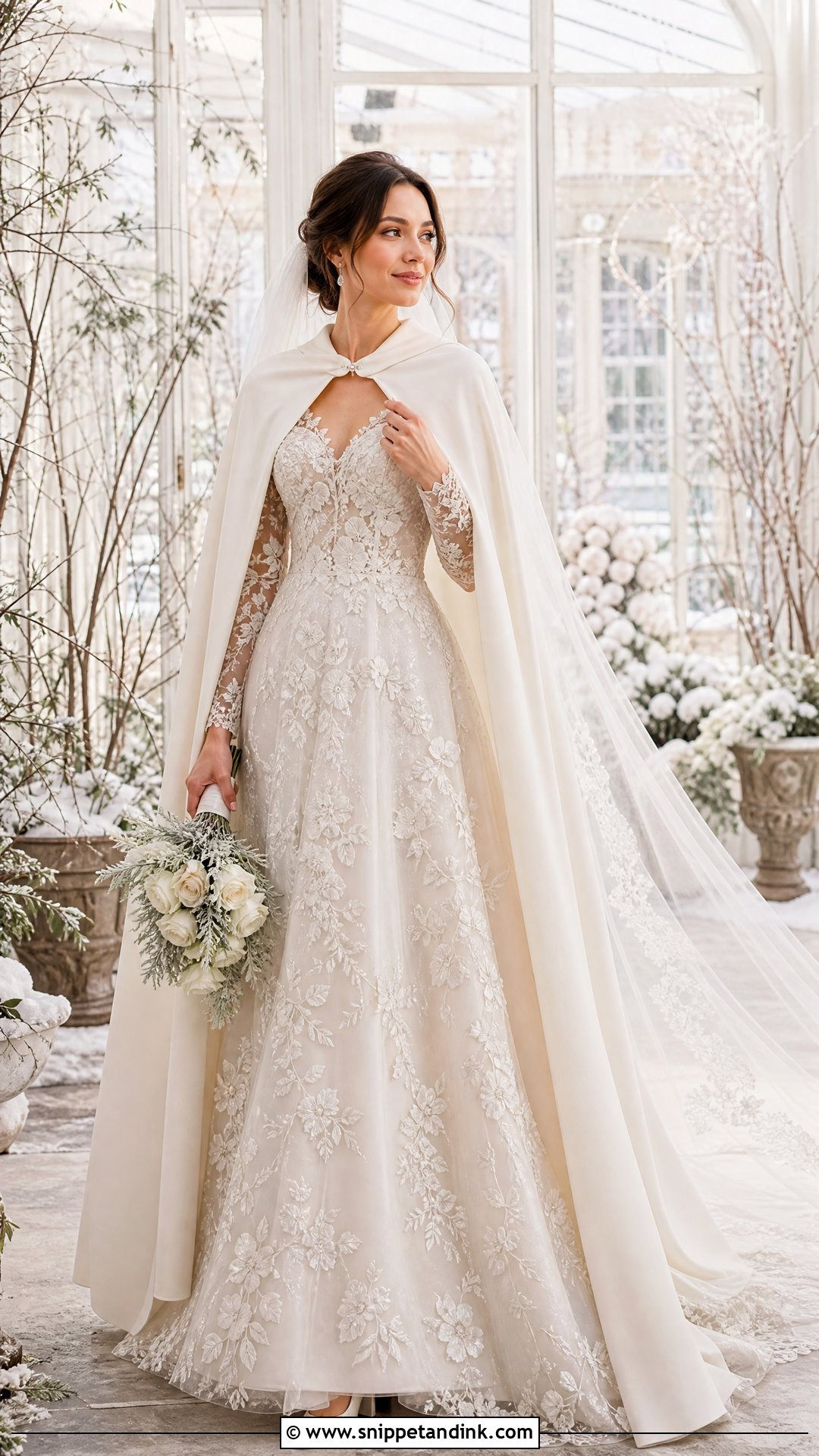
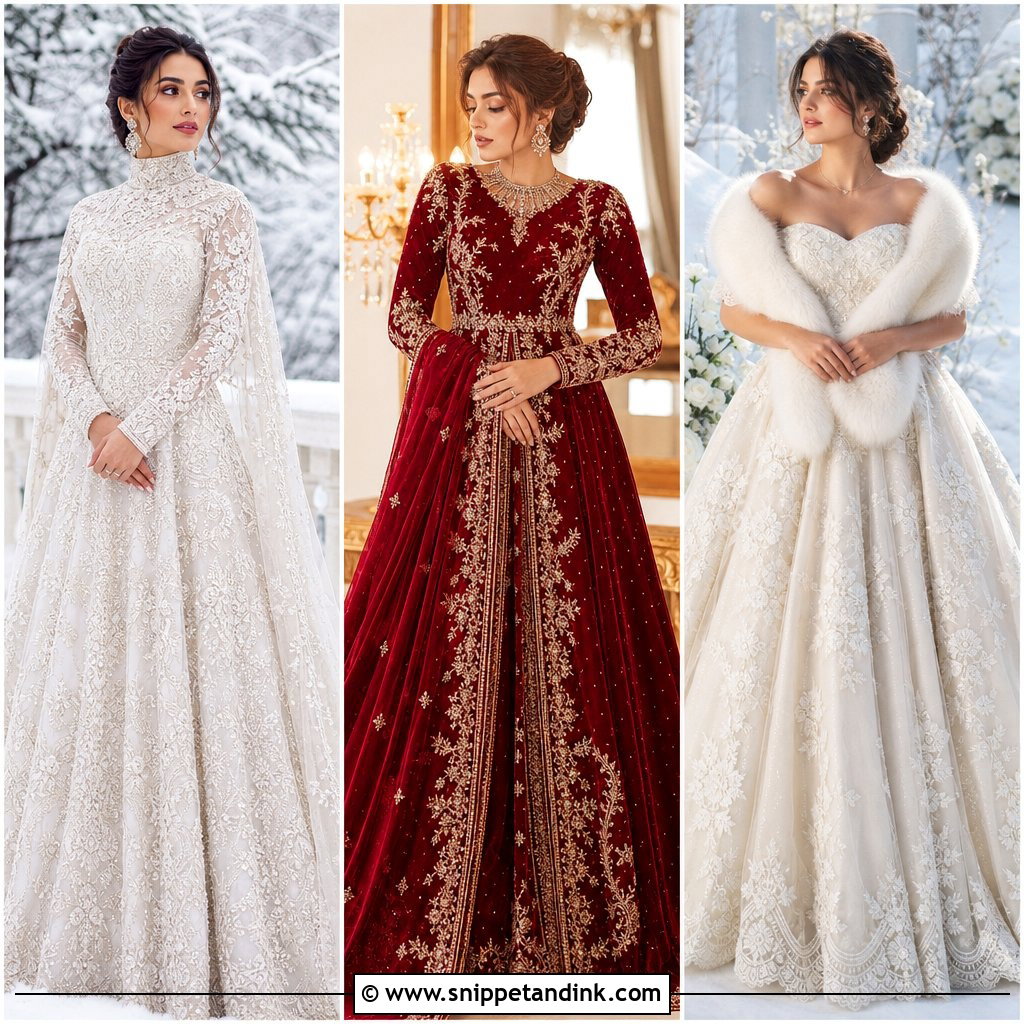
Appliqué flowers give a winter dress depth and a hint of frost without tipping into a snowflake theme. Choose an A-line with long illusion sleeves, a lined bodice and embroidered flowers scattered from the neckline into the skirt, in ivory, pearl or soft silver. Raised appliqués catch on things: a beaded clutch, a bouquet wrap, a groom’s cufflinks during the first dance. I keep metal and beads away from the skirt where I can. Simple pearl earrings, a loose low bun and a plain cathedral veil let the dress lead. Satin block heels indoors, white ankle boots outside, a smooth wool cape for warmth, and a bouquet of one or two flower varieties so it doesn’t fight the embroidery.
Bring the Boots and the Coat to Your Fittings
A hem is set to the shoes you wear at the fitting. Switch from flat ankle boots outside to heels inside and the length changes, sometimes enough to step on. I ask winter brides to bring both pairs, set the hem for the pair worn longest, then walk the room in the other pair to make sure nothing drags or catches.
Bring the coat, cape or stole too. Sleeves that fit well on their own can bunch under outerwear, and a train has to fit inside a cape without being crushed into creases you’ll see in every outdoor photo.
Warmth nobody sees
- Thermal tights in nude or ivory, tried on with the dress so you know they don’t show at the hem.
- A thin silk or merino layer under an opaque bodice, only if the fit genuinely has room for it.
- Hand warmers tucked into a clutch or coat pocket for the portrait session.
- Gloves that slide off in one movement for the ring exchange.
Salt, Slush and Velvet After the Wedding
Winter hems take a beating. Road salt and slush leave pale tide marks on satin and crepe, and a wet tulle train collects grit. When you come in from portraits, let a damp hem dry before anyone brushes it, since rubbing wet satin pushes dirt deeper into the weave. Bustle the train before you step onto a pavement, not after.
Get the dress to a specialist cleaner within a few weeks and point out the salt marks so they’re treated before they set. Velvet hates being crushed, so pad any folds with acid-free tissue or hang it by the waist loops rather than the shoulders. Satin and Mikado store best wrapped in tissue inside a breathable cotton bag, away from plastic covers and damp rooms.
A Gown for the Cold Walk and the Warm Room
A good winter look comes down to fabric, coverage and layers planned together rather than added at the last minute. Long sleeves, structured satin, crepe, velvet and lace all work when they suit your venue. Capes, faux-fur wraps, tailored coats, gloves and bridal knitwear belong in the same conversation as the dress, and I’d settle outdoor footwear and hidden warm layers before the final fitting, especially if portraits are happening in snow or wind. Start from whichever of these twenty ideas catches you, then adjust the neckline, silhouette and outerwear until the gown feels like yours.
You'll Like These Ideas:



Leave a Reply