
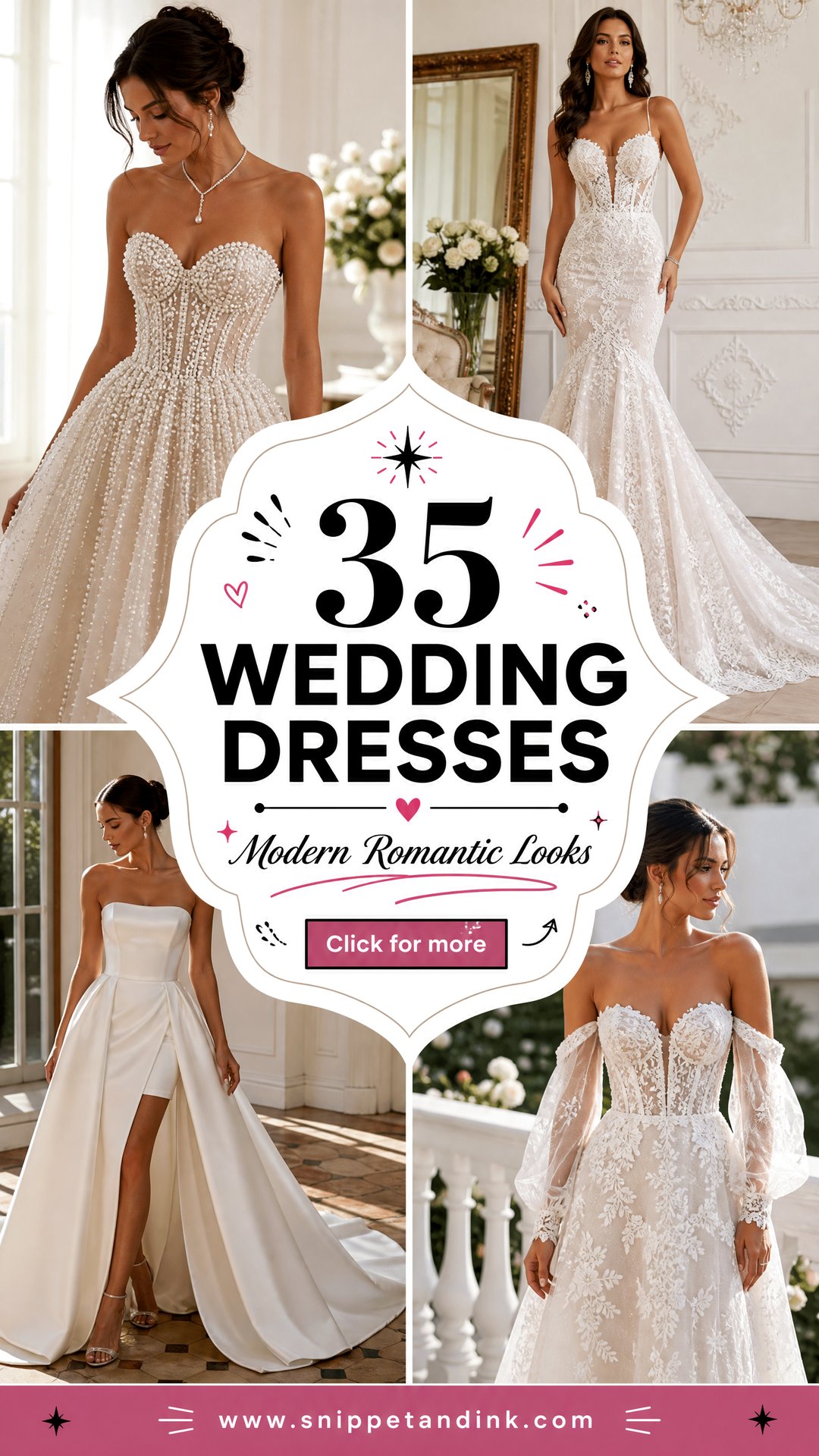
A wedding dress has to work at three distances: across the aisle, in a close portrait, and on you for the ten or twelve hours in between. That’s why I never start with a single favourite photo. The gowns gathered here cover clean minimalist shapes, romantic lace, full ball gowns, sleek satin, coloured fabrics and dresses with removable parts, plus plus size, maternity, modest, beach, courthouse and reception options. Read them with your venue, season and the way you like to move in mind, and notice which details you keep coming back to.
Which White Is Yours? Testing Ivory, Champagne and Blush in Daylight
Bridal white is not one colour. Pure or optic white is the brightest, diamond white has a faint softness, ivory carries a warm cream tone, and champagne or blush usually comes from a coloured lining under ivory fabric. The same gown can be ordered in several of these, and the difference against your skin is bigger than it looks on a sample rail.
- Ask the shop for fabric swatches in each shade the gown comes in, and hold them under your chin rather than on your arm.
- Look at them near a window. Fitting rooms are often lit warm, which flatters ivory and hides a grey cast on bright white.
- Take a phone photo with the flash on. Flash and outdoor sun make cooler whites look brighter and can wash fair skin out.
- Match your veil to the gown’s shade, not to white. A veil a shade brighter than the dress makes the dress look dingy beside it.
As a rough guide, I find warmer skin tones often glow in ivory and champagne, while very fair, cool skin can look crisp in diamond white. That is only a starting point. Your own reaction in daylight is the test that counts.
1. Satin A Line Wedding Dress
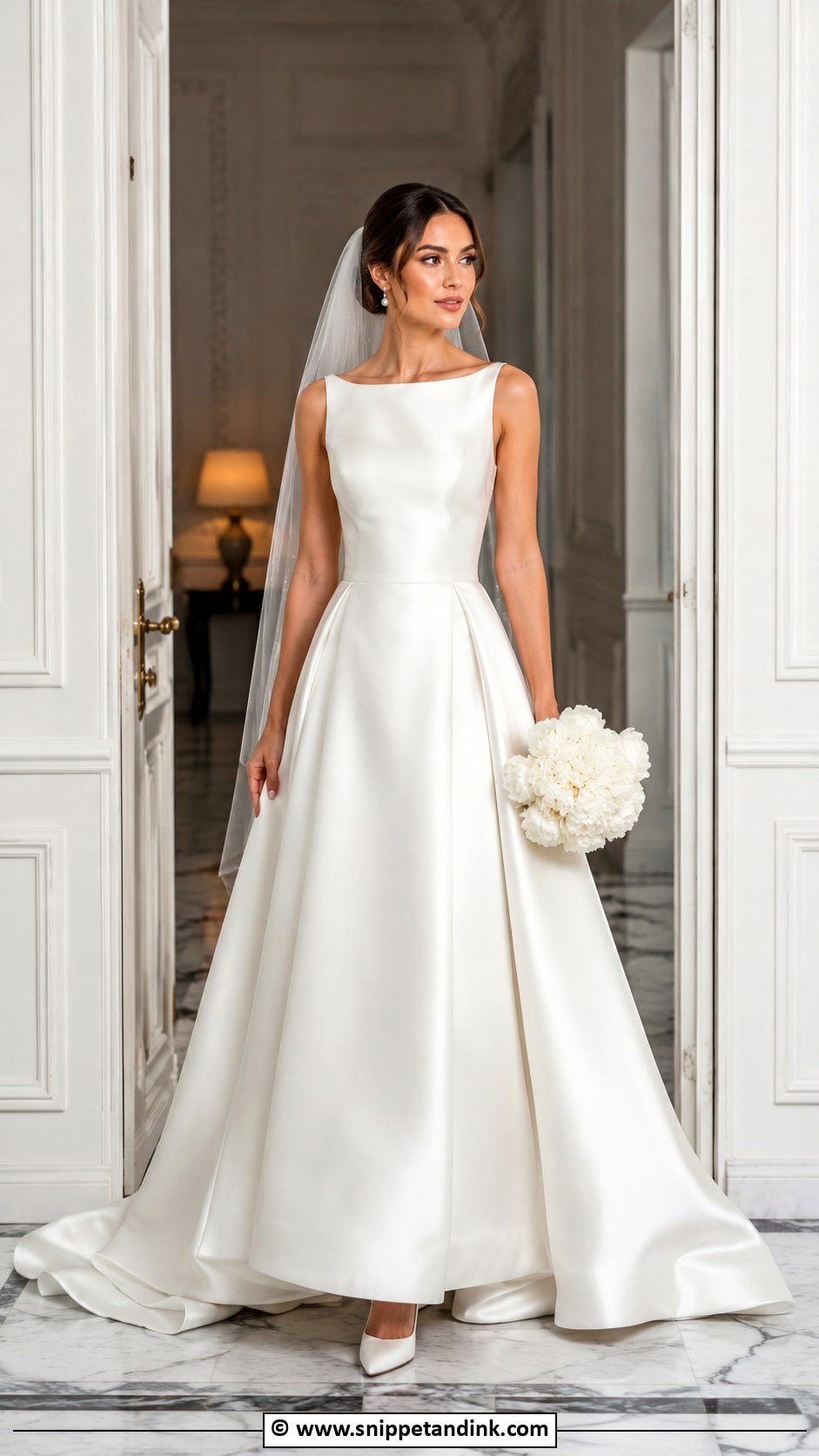
A satin A-line holds its shape without feeling stiff, which is why it suits so many bodies and so many venues. The bodice defines the waist and the skirt clears the hips, so you can sit through dinner and still dance after it. Satin’s one weakness is creasing. I tell brides to expect soft creases across the lap after the ceremony and to have a steamer at the venue for portraits. Pearl earrings, a simple veil and pointed ivory heels are enough, with a fine tennis necklace only if the neckline is plain.
2. Lace Long Sleeve Wedding Dress
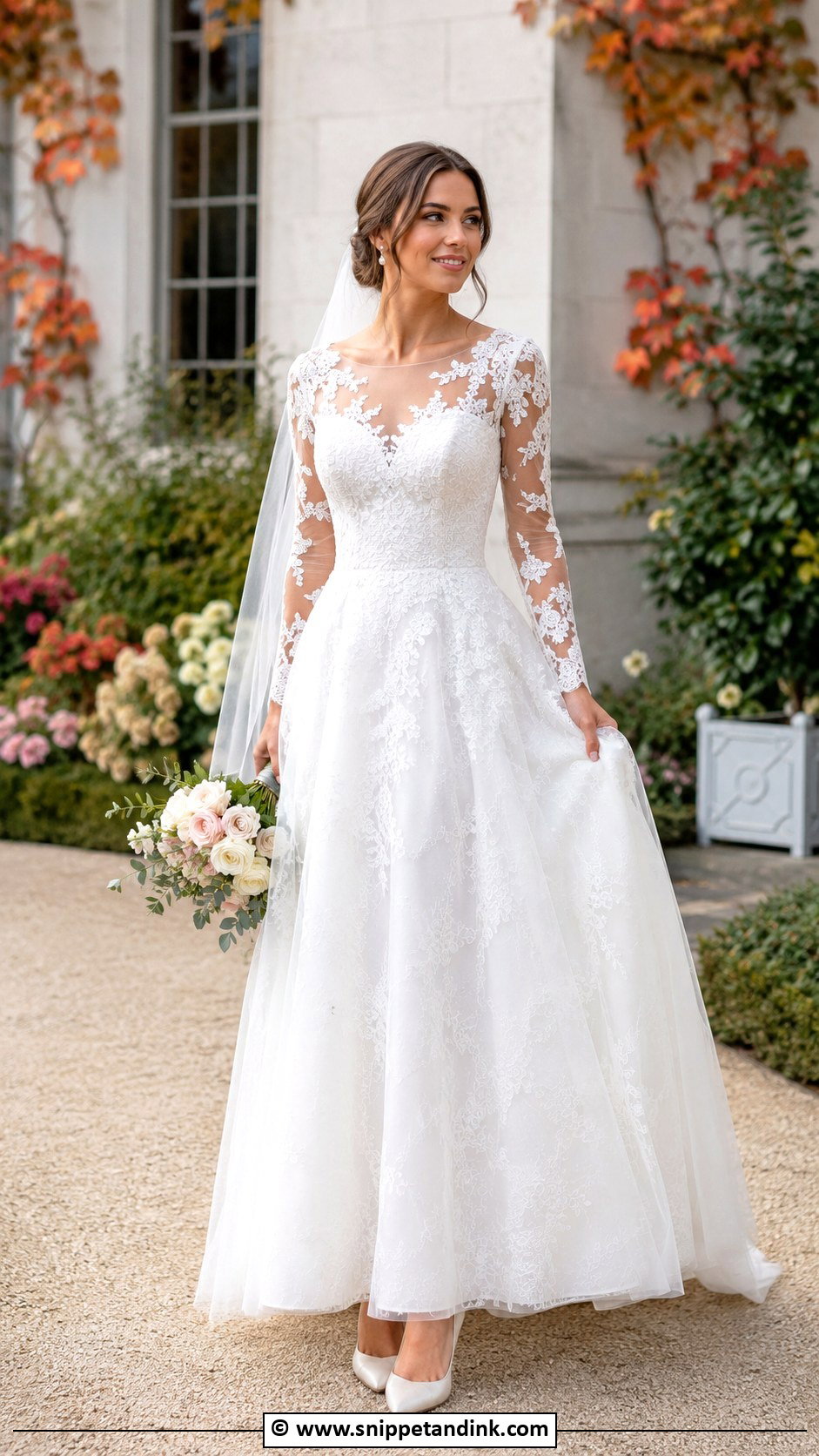
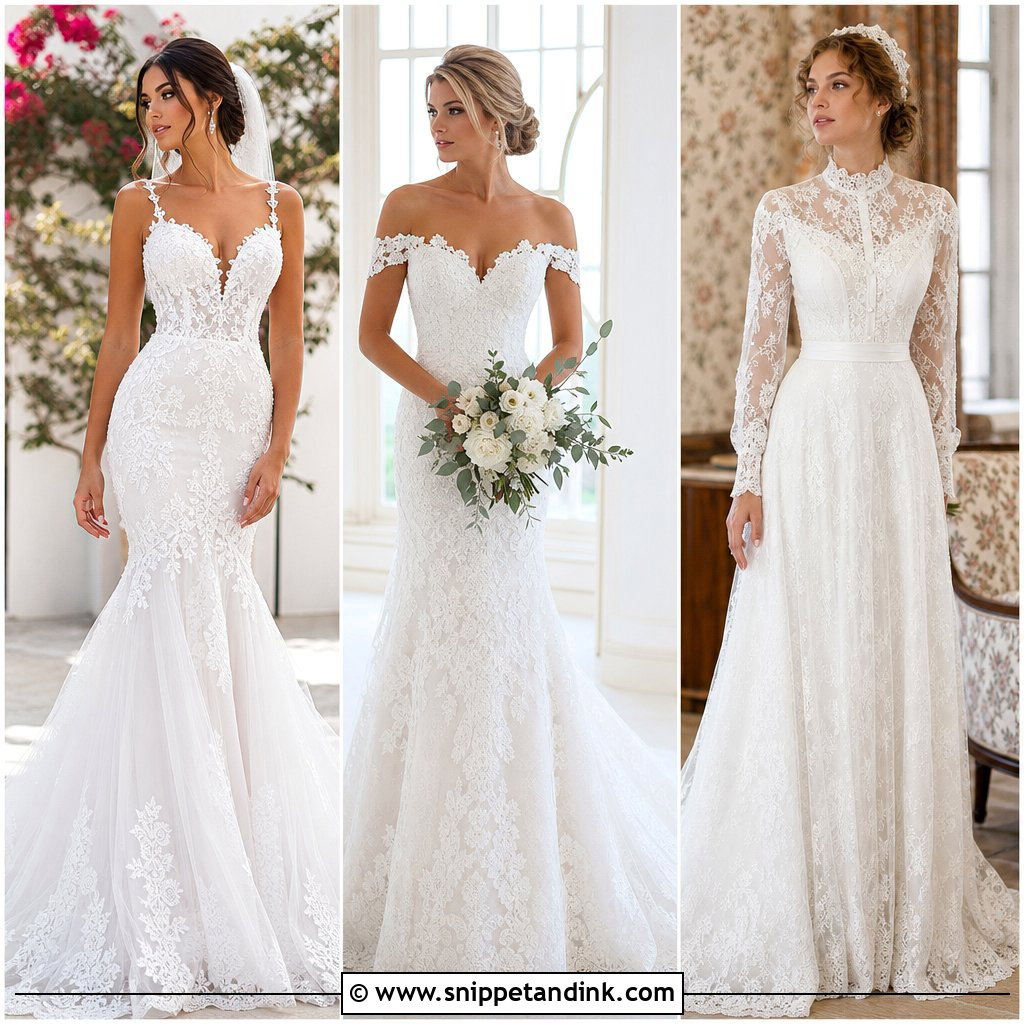
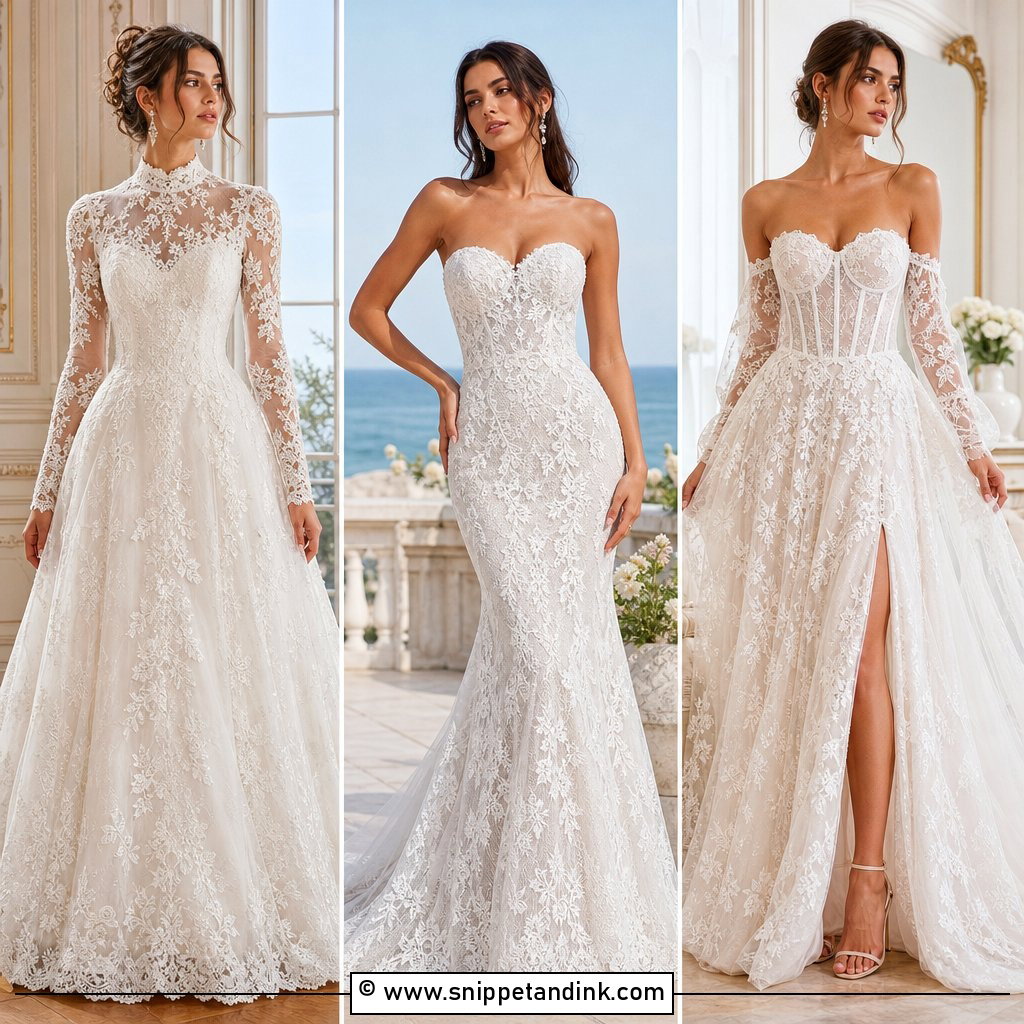
Long lace sleeves add coverage while still looking soft, especially in sheer lace, floral appliqué or fine embroidery. I’d pair them with a fitted bodice over an A-line or sheath skirt. The question I always ask is about the veil. Lace on lace can get muddled in photos, so if the gown is already detailed, choose a plain tulle veil or one with only a thin lace edge. Small pearl studs, a low bun and satin heels finish it, and it suits fall and winter weddings, estates and gardens, where texture shows well.
3. Strapless Ball Gown Wedding Dress
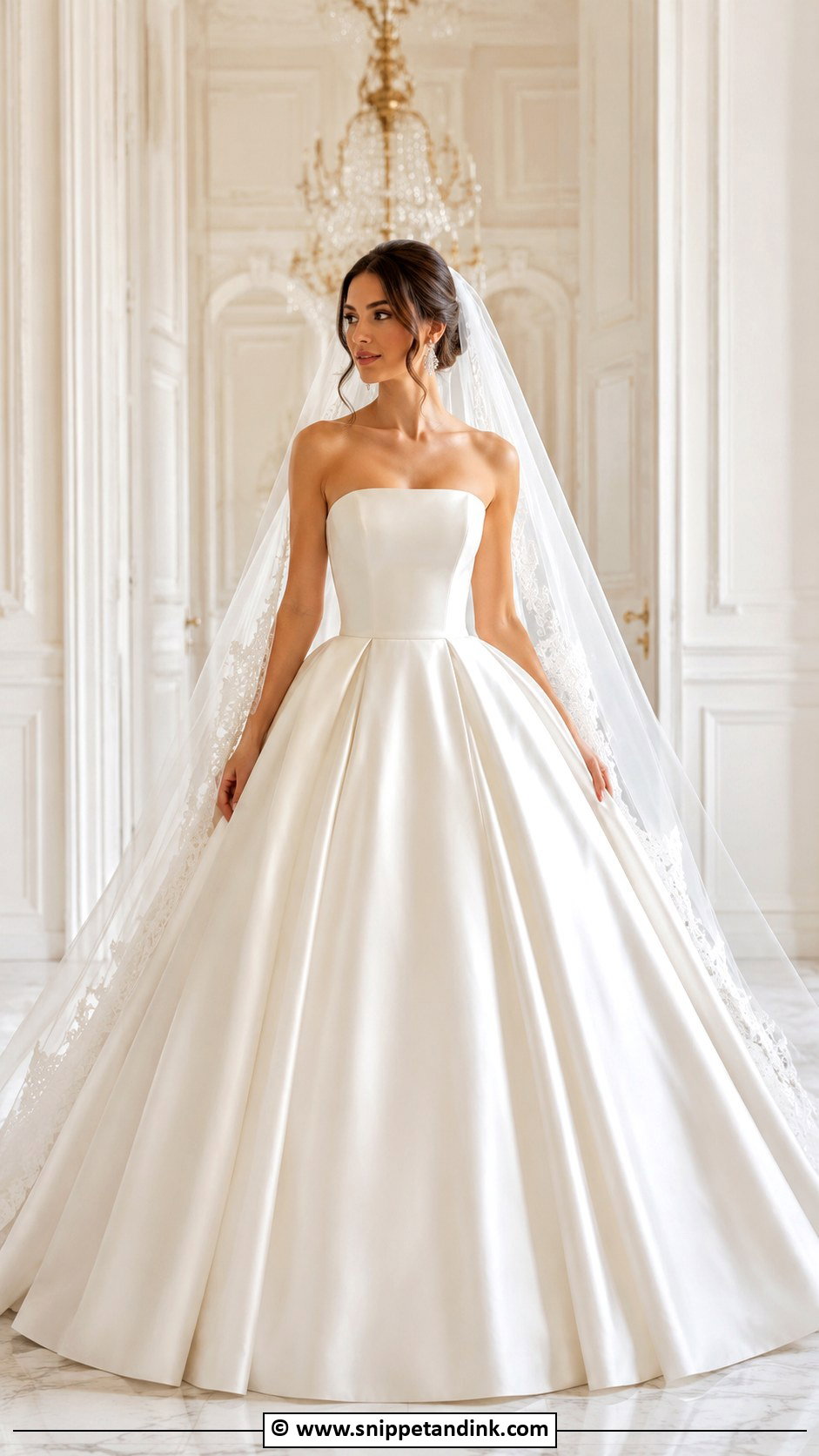
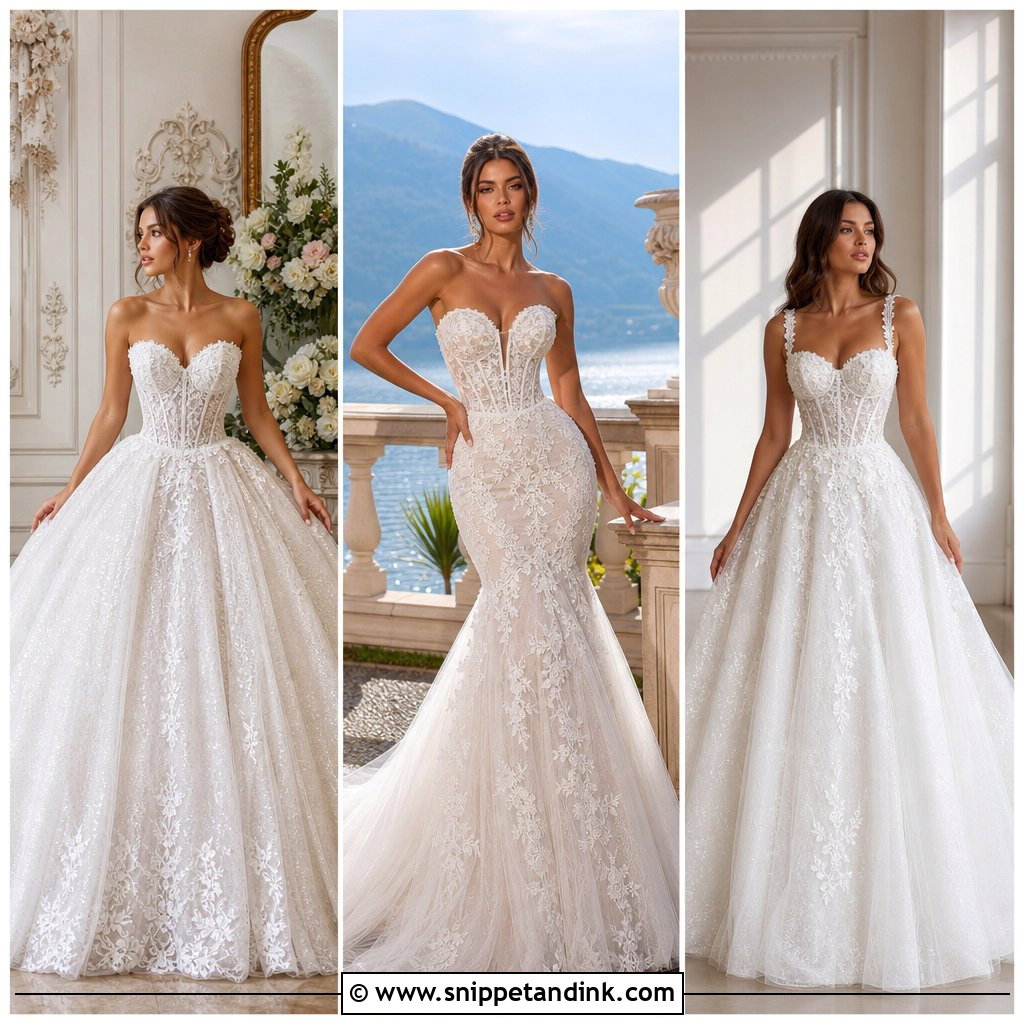
A strapless ball gown wedding dress is grand from the waist down and simple above it. The structured bodice does the supporting, and it should feel secure enough that you never reach up to adjust it. That’s a fitting point, not something tape solves on the day. If you want softness rather than sparkle, satin, mikado and organza all hold the full skirt well. A cathedral veil, crystal earrings and heels hidden under the hem complete it for formal weddings and large rooms.
4. Minimalist Crepe Wedding Dress
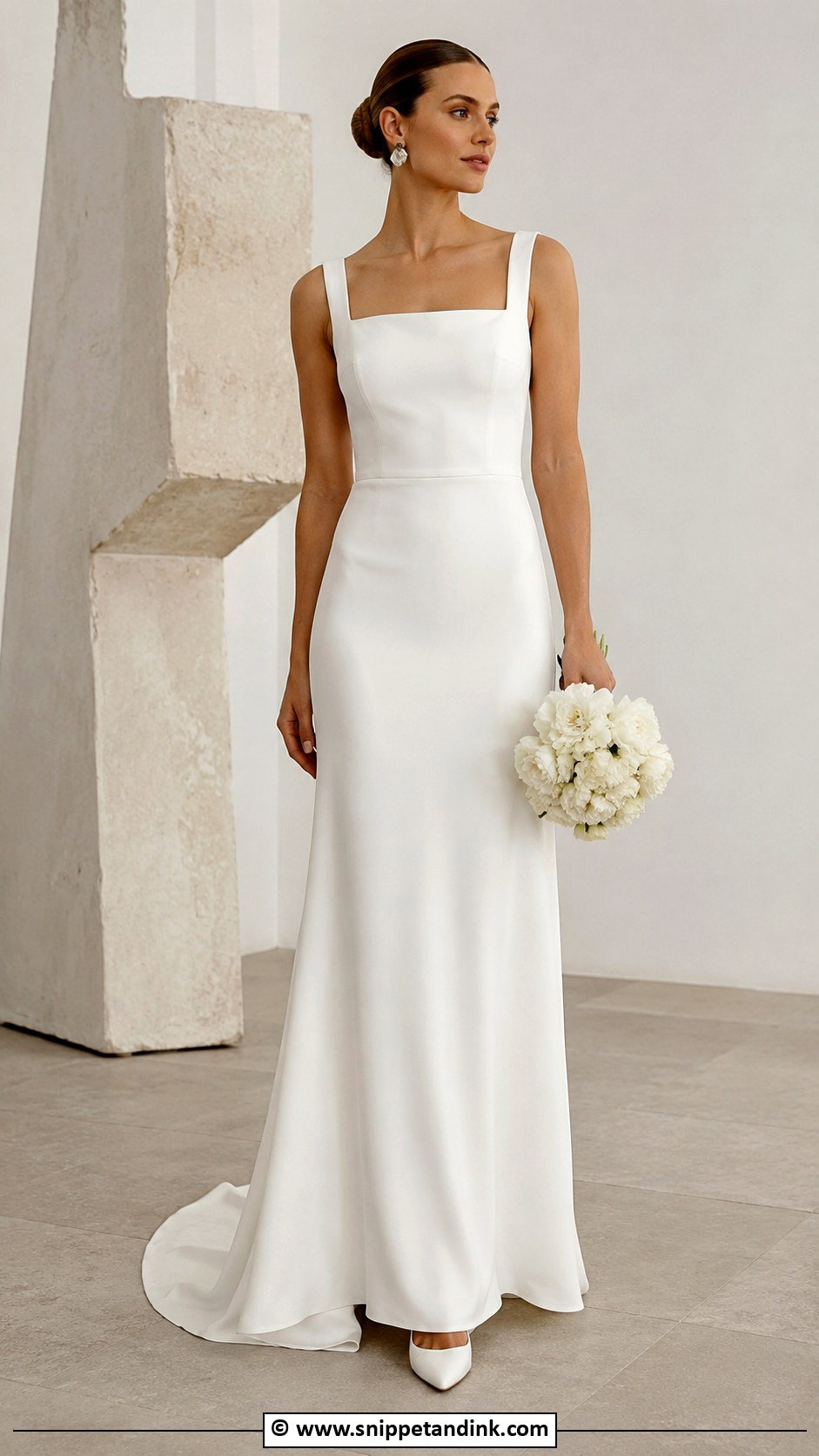
Minimal crepe gowns have nothing to hide behind, so the details that remain carry all the weight: a square neckline, a low back, covered buttons, a subtle train. Crepe follows the body without much shine and looks sleek in city light. Because it’s so plain, fit is the whole design, and I’d budget for careful alterations rather than extra embellishment. Sculptural earrings, a smooth bun and pointed pumps suit it, with a plain veil or none at all. Rooftops, modern venues and courthouses are its natural home.
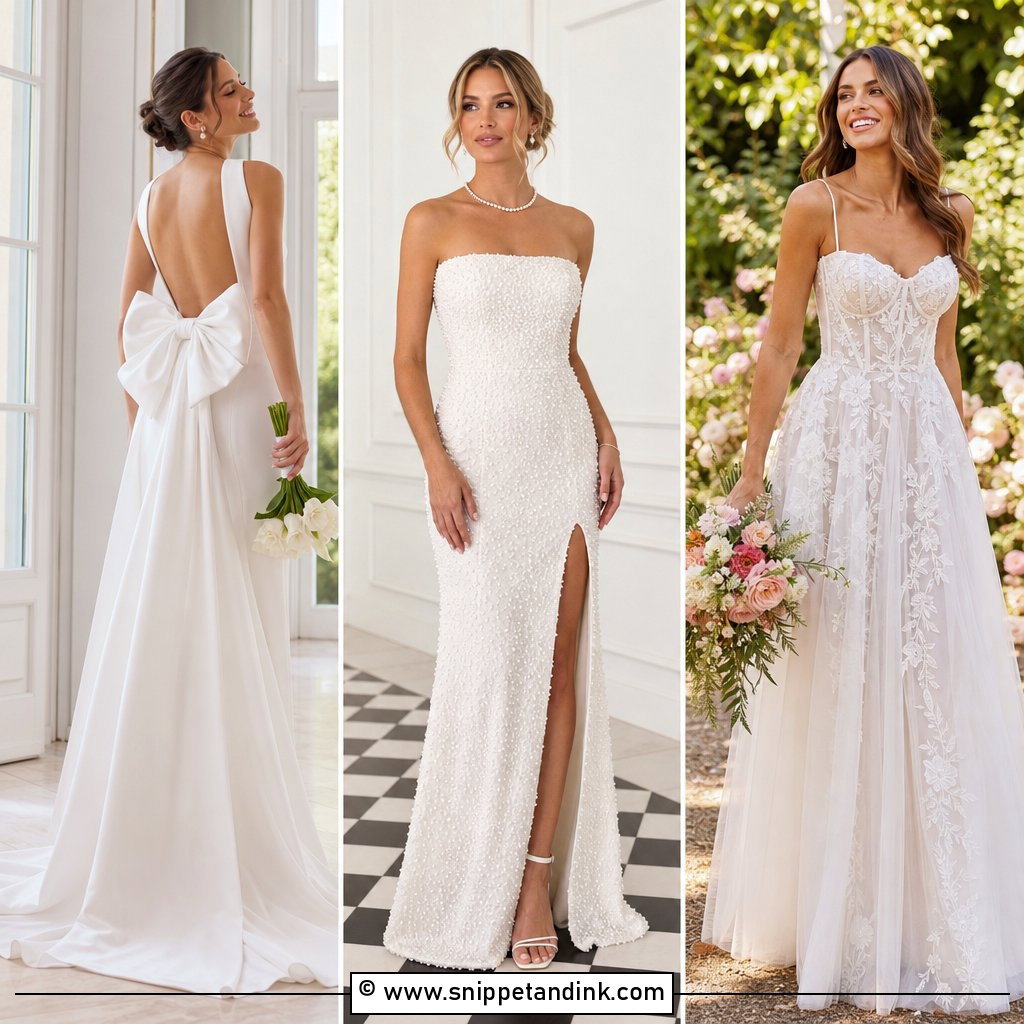
5. Pearl Beaded Wedding Dress
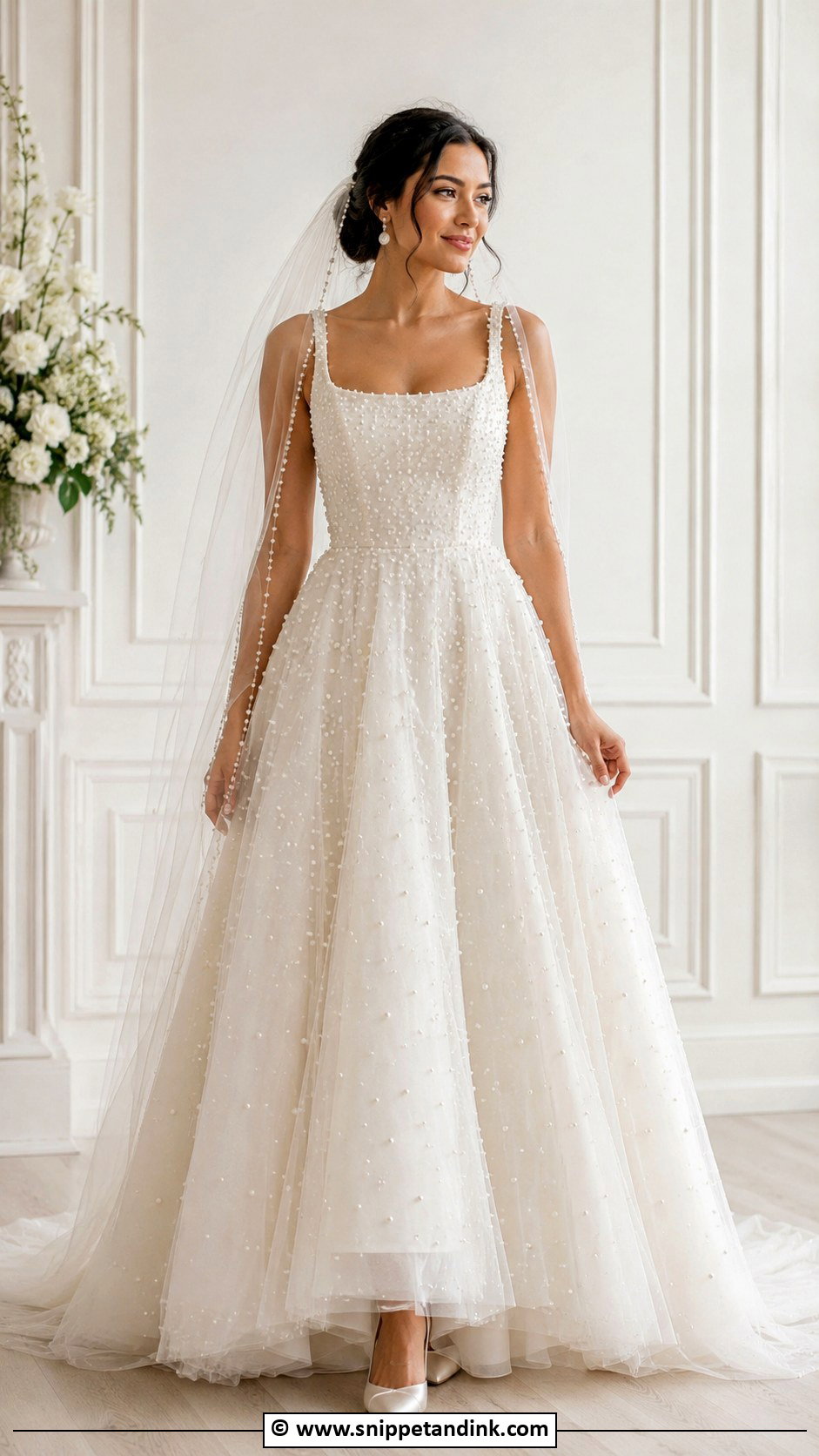
Pearls give texture and a soft glow rather than sharp sparkle, scattered over tulle, lace or a fitted bodice. They can be tiny accents or allover beading. I’d keep the rest of the pearl story small: drop earrings and maybe pearl pins in a clean updo, not a pearl necklace, bracelet and veil all at once. A sheer veil with a light pearl trim can work if it stays finer than the gown. Before buying, check the pearls are sewn through individually; a glued pearl on a sleeve or hip will come loose after a day of hugs.
6. Off Shoulder Wedding Dress
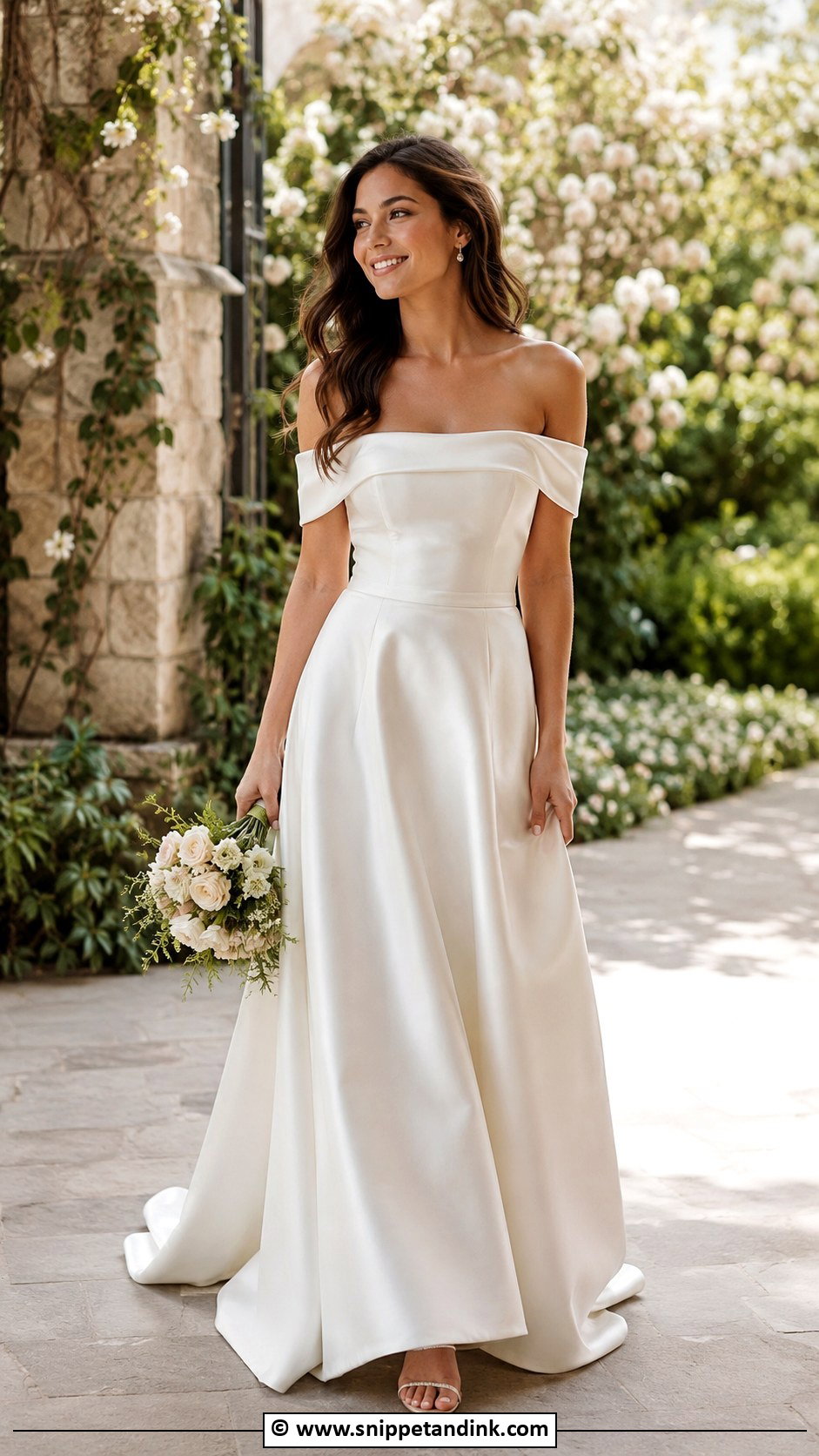
An off-the-shoulder neckline frames the collarbone and softens the shoulder line, whether in satin, lace or plain crepe. It sits well on mermaid, A-line and ball gown skirts. Jewelry needs care here: a short necklace should sit clearly above the neckline, not near it, or skip it for earrings. I check the band at fittings by having the bride lift her arms to waist height, because that band is what holds the bodice up. Soft waves or a low bun keep the shoulders visible, and satin pumps or fine sandals match the formality.
7. Square Neck Wedding Dress
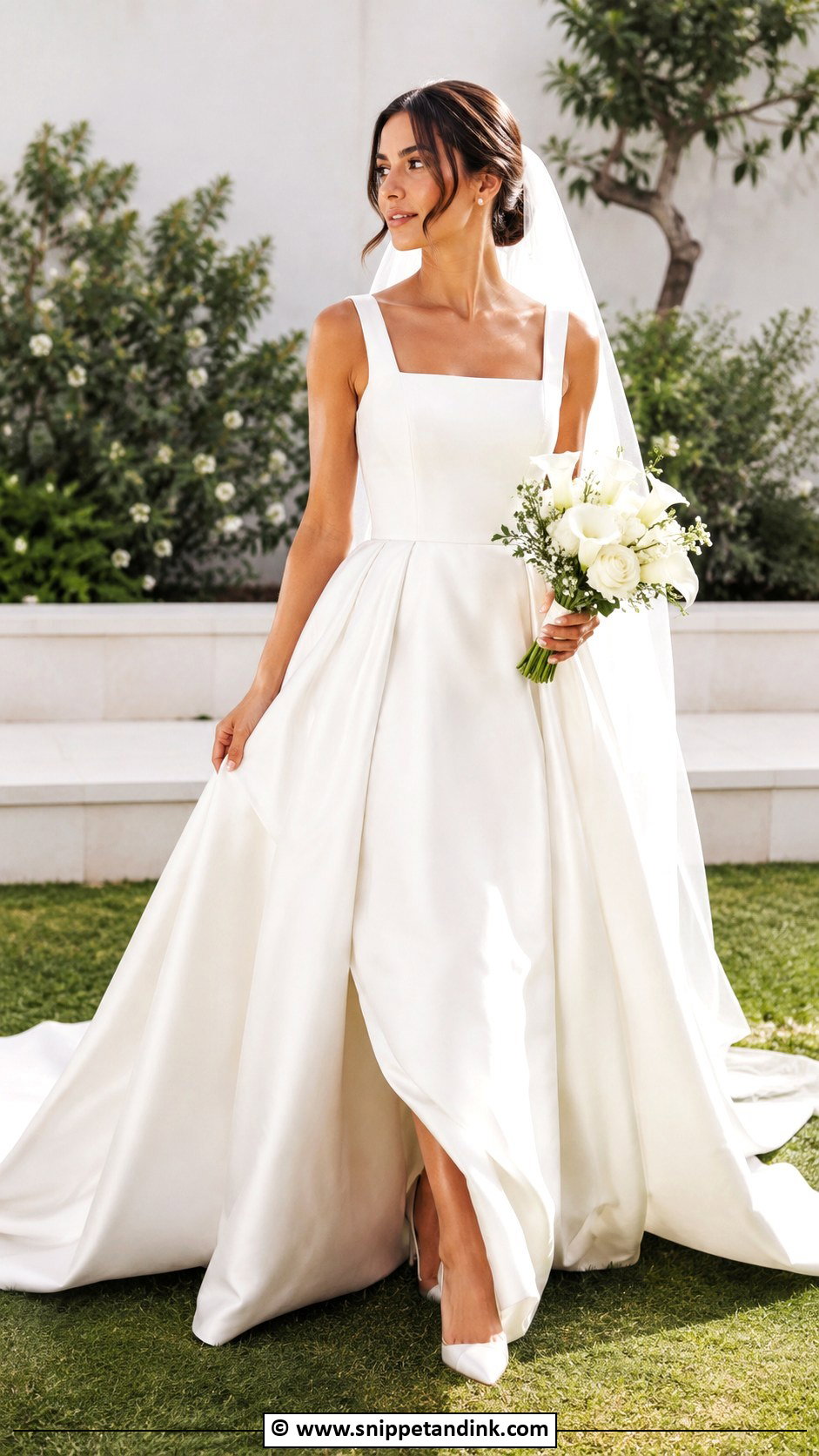
A square neck gives the upper body a clean, structured frame and suits a fitted bodice over an A-line, column or ball gown skirt. It’s my usual suggestion for brides who like structure but don’t want strapless. On a gown with wide straps, skip the necklace and let the neckline work alone. The thing I check is the corners, which should lie flat when you lean forward to sign or hug. Pearl studs, a sleek bun and a plain veil give it a crisp finish.
8. Corset Bodice Wedding Dress
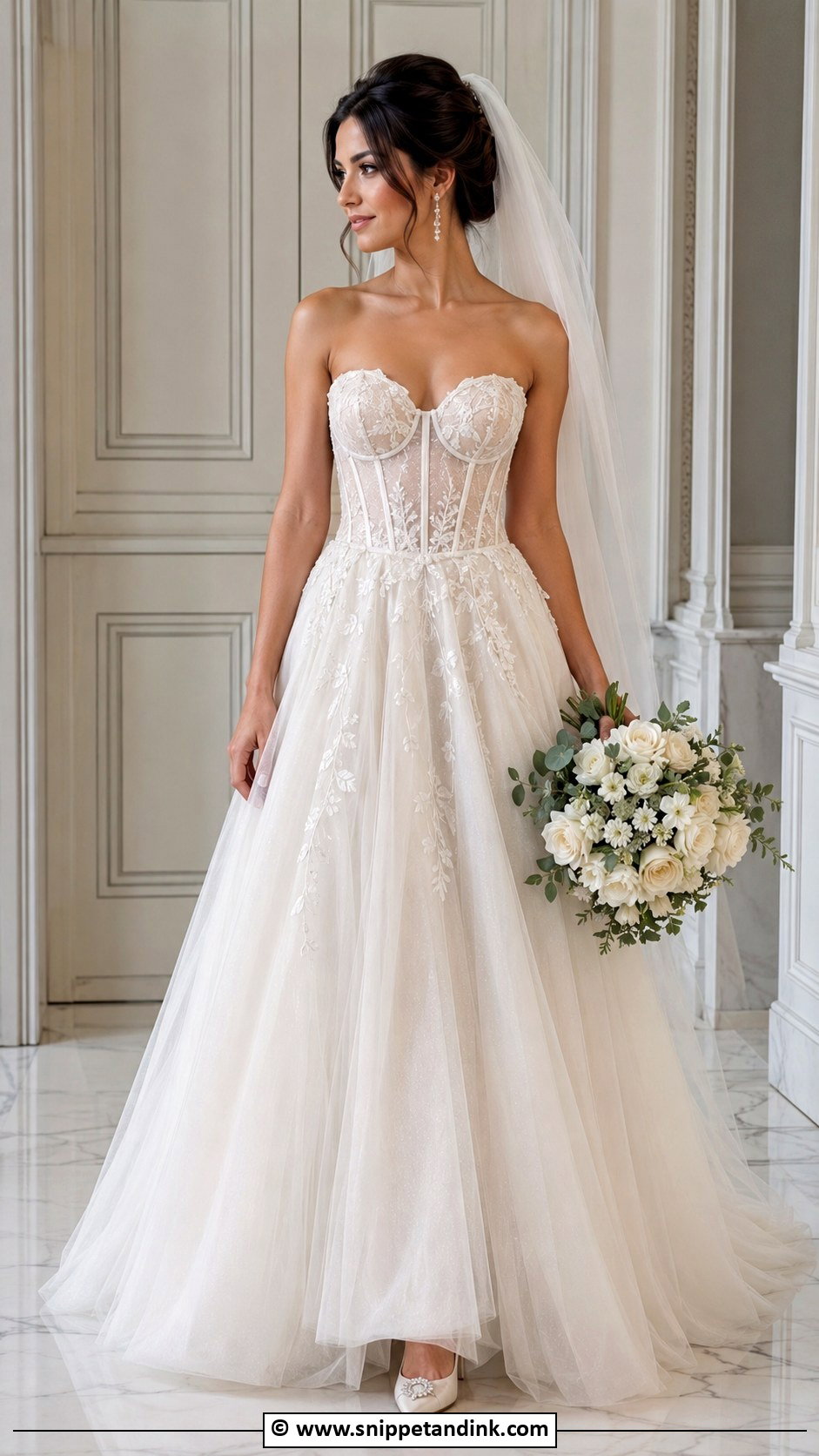
A corset bodice wedding dress shapes and supports through boning, and modern versions look soft rather than theatrical with sheer tulle, lace overlays or smooth satin panels. An A-line skirt makes it romantic; a fitted skirt makes it dramatic. My fitting rule is simple: you should be able to take a full breath and eat dinner in it, because a corset feels tighter after hours of sitting. With visible boning, keep hair and makeup simple so the structure leads. Drop earrings, a soft veil and elegant heels finish it.
9. Floral Applique Wedding Dress
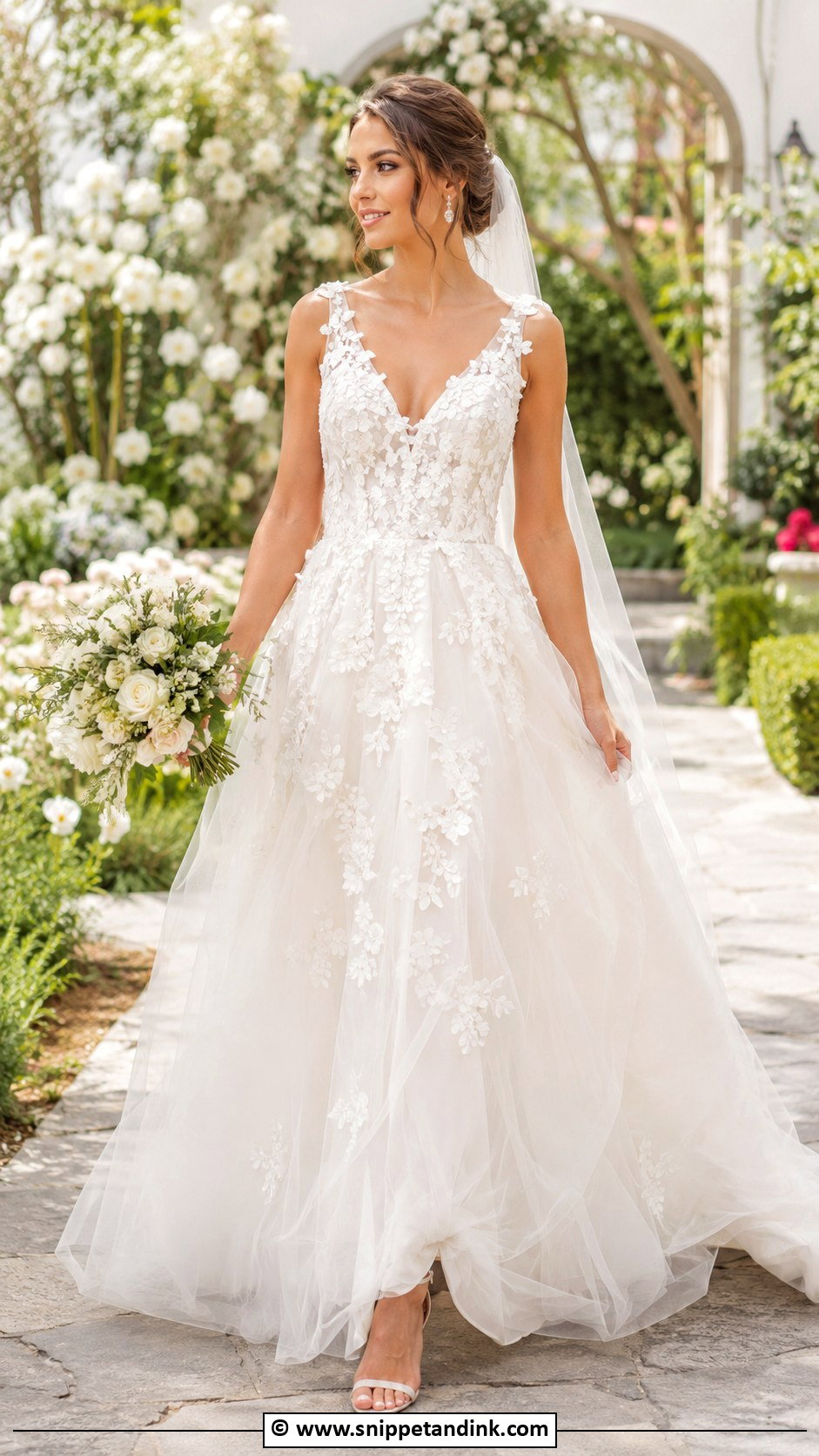
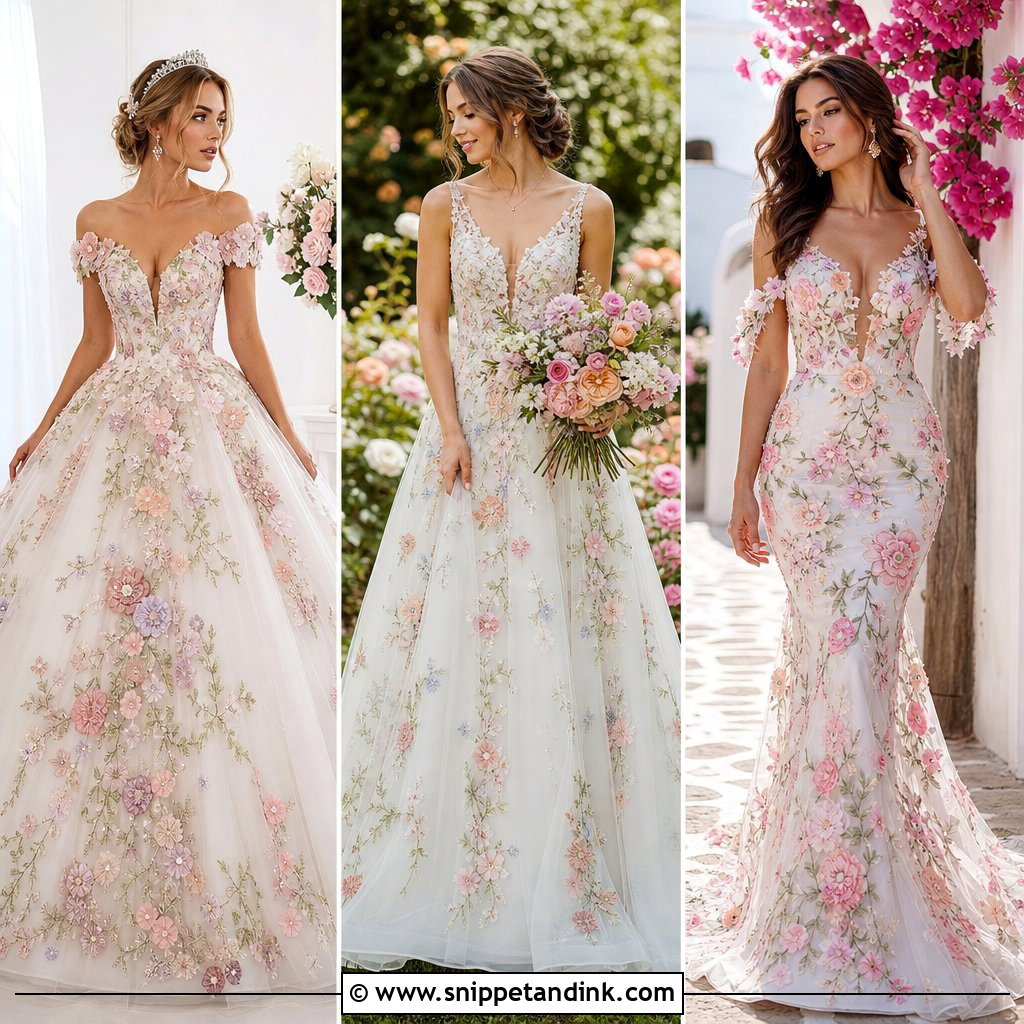
Floral appliqués can sit lightly on the bodice or cascade down the skirt, giving a garden feel on tulle, lace, organza or soft net. If the flowers are bold, I’d scale the bouquet down so the two don’t compete in photos. Ask whether the appliqués are hand-sewn, since those sit flatter and survive a long day better. Delicate earrings, a sheer veil and strappy ivory heels suit outdoor, spring and summer ceremonies and botanical venues.
10. High Neck Wedding Dress
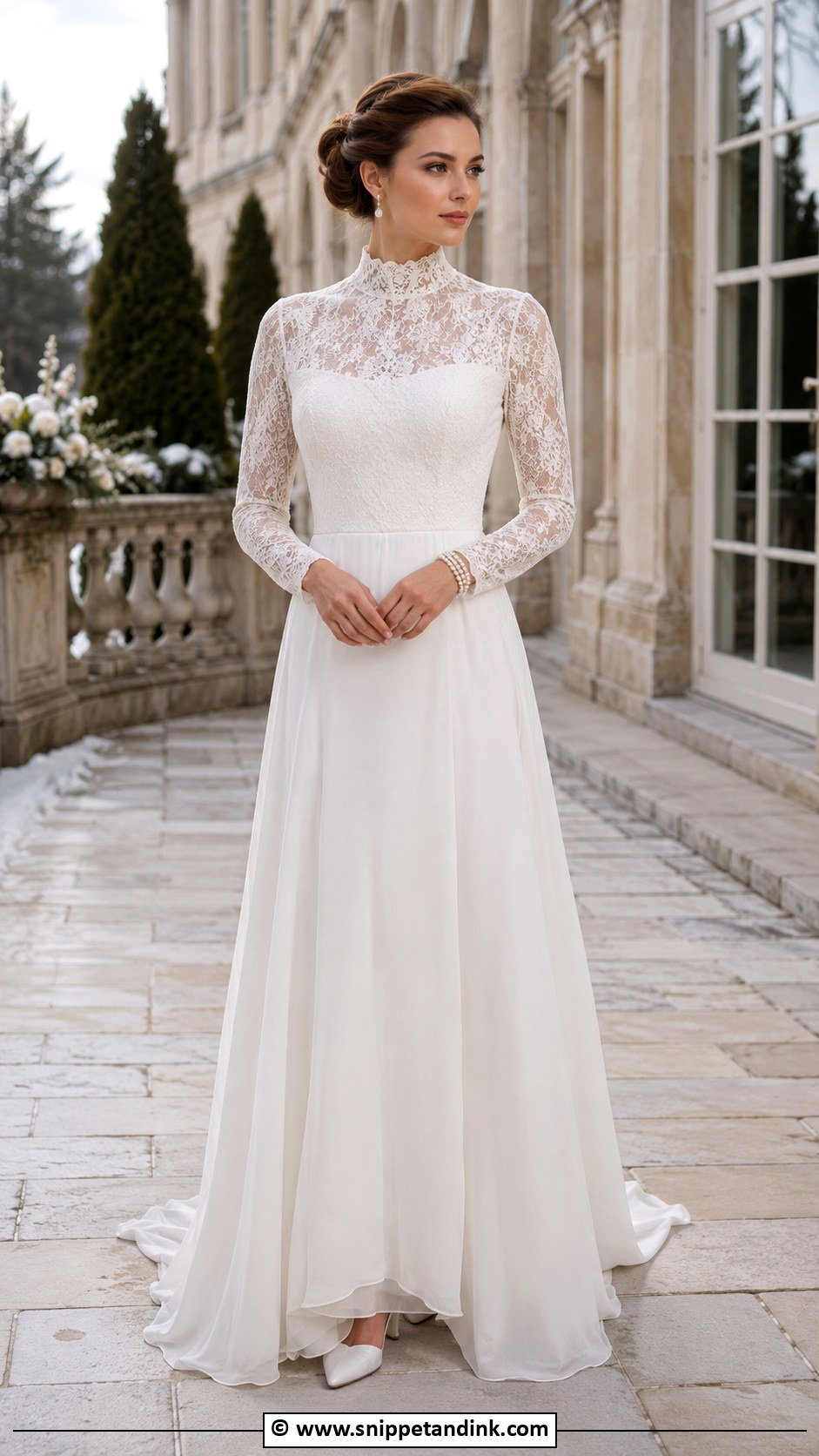
A high neckline covers more but still reads feminine in lace, satin or crepe. Fitted and plain, it looks modern; in lace, it leans vintage. With the neck covered, put the detail elsewhere: earrings, a bracelet or a hair accessory. I usually suggest a clean bun or soft updo so the collar isn’t hidden. One practical note for warm months: ask whether the collar is lined, because a lined high neck can feel close by evening.
11. Tea Length Wedding Dress
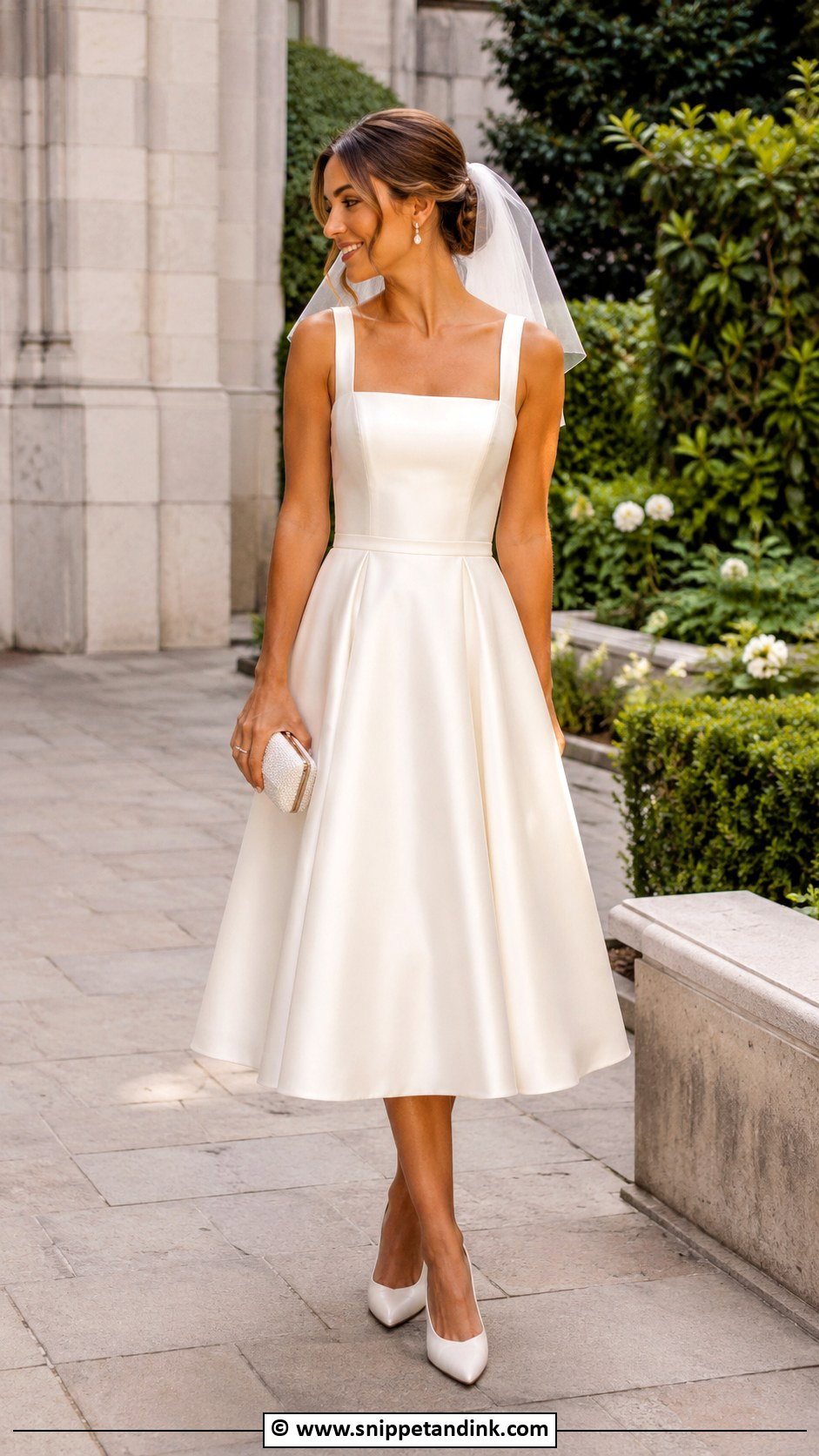
Tea length falls between knee and ankle, so your shoes are on show and you can move freely. It works in satin, tulle, lace or jacquard depending on how formal you want it. I have the hem marked in the exact shoes the bride will wear, since even a centimetre changes where the skirt lands on the calf. Pointed pumps, a short veil, pearl earrings and a small clutch complete it for courthouse weddings, garden parties and reception changes.
12. Short Wedding Dress
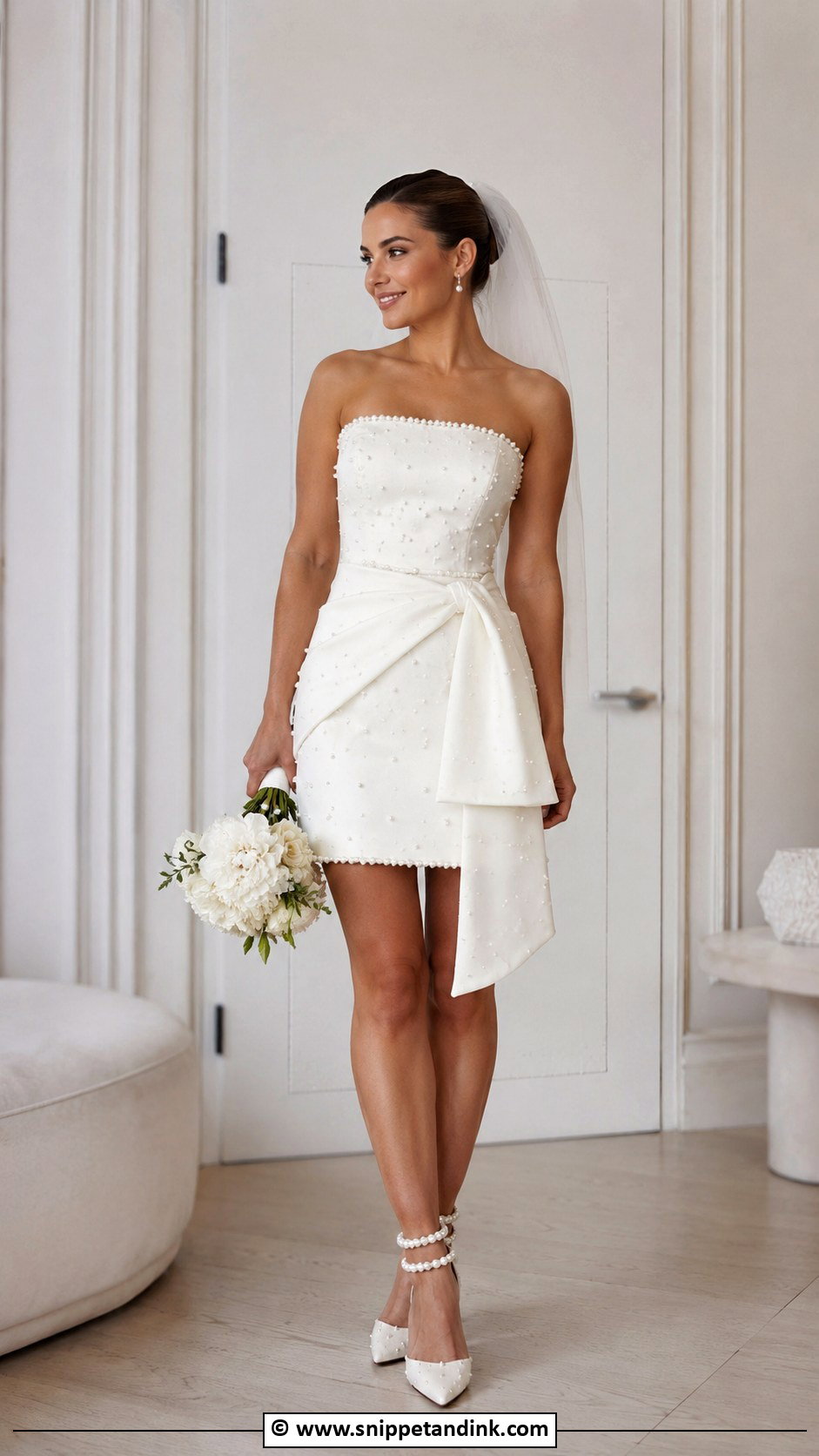
A short dress gives you freedom of movement for a civil ceremony, a second look, an elopement or the party. To keep it bridal, lean on refined materials and finishing: structured satin, lace sleeves, feathers, pearls, bows or a tailored mini shape. I check every short dress sitting down and in a slight bend, because a hem that looks right standing can ride up fast. Statement heels, sheer tights in cold months and a small veil or hair bow finish it, with ivory accessories and polished hair.
13. Mermaid Wedding Dress
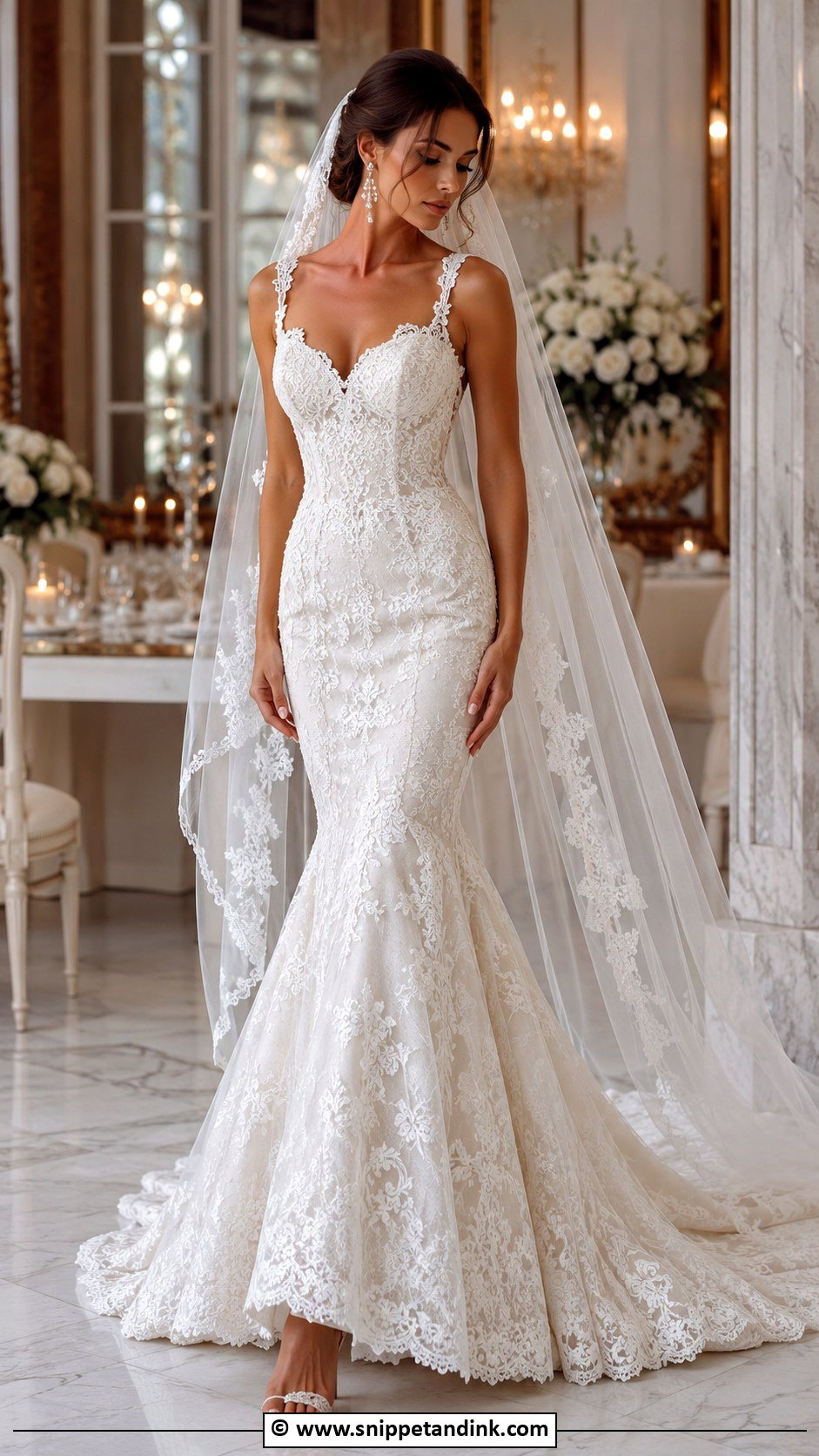
A mermaid hugs the bodice, waist and hips and flares near the knee, which gives a strong hourglass in lace, crepe, satin or beaded fabric. Because it’s fitted so closely, it has to pass the practical tests before you commit: sit on a low chair, walk up a few steps, and turn quickly. Choose your heel height before the hem is set, since a mermaid hem has to clear the floor exactly. Drop earrings and a long veil finish it for formal and evening weddings.
14. Fit And Flare Wedding Dress
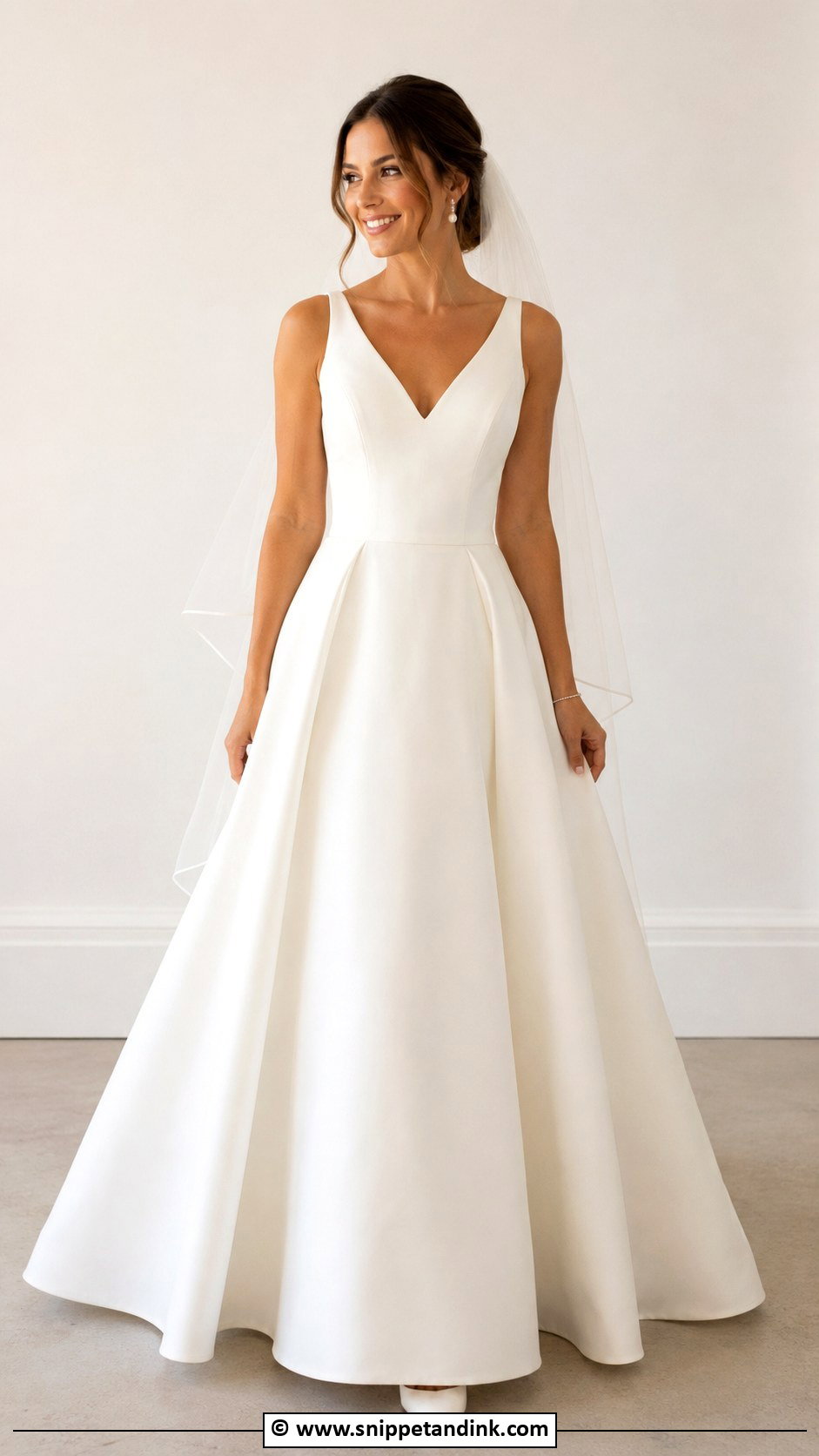
Fit and flare shapes the body like a mermaid but flares higher on the leg, so walking and sitting come far easier. I suggest it when a bride loves a fitted look but felt trapped in a true mermaid. Lace makes it romantic, crepe simple, satin classic. Match the veil length to the skirt so the two don’t end at awkward points, and keep the earrings small if the neckline is detailed. It moves comfortably between beach venues and ballrooms.
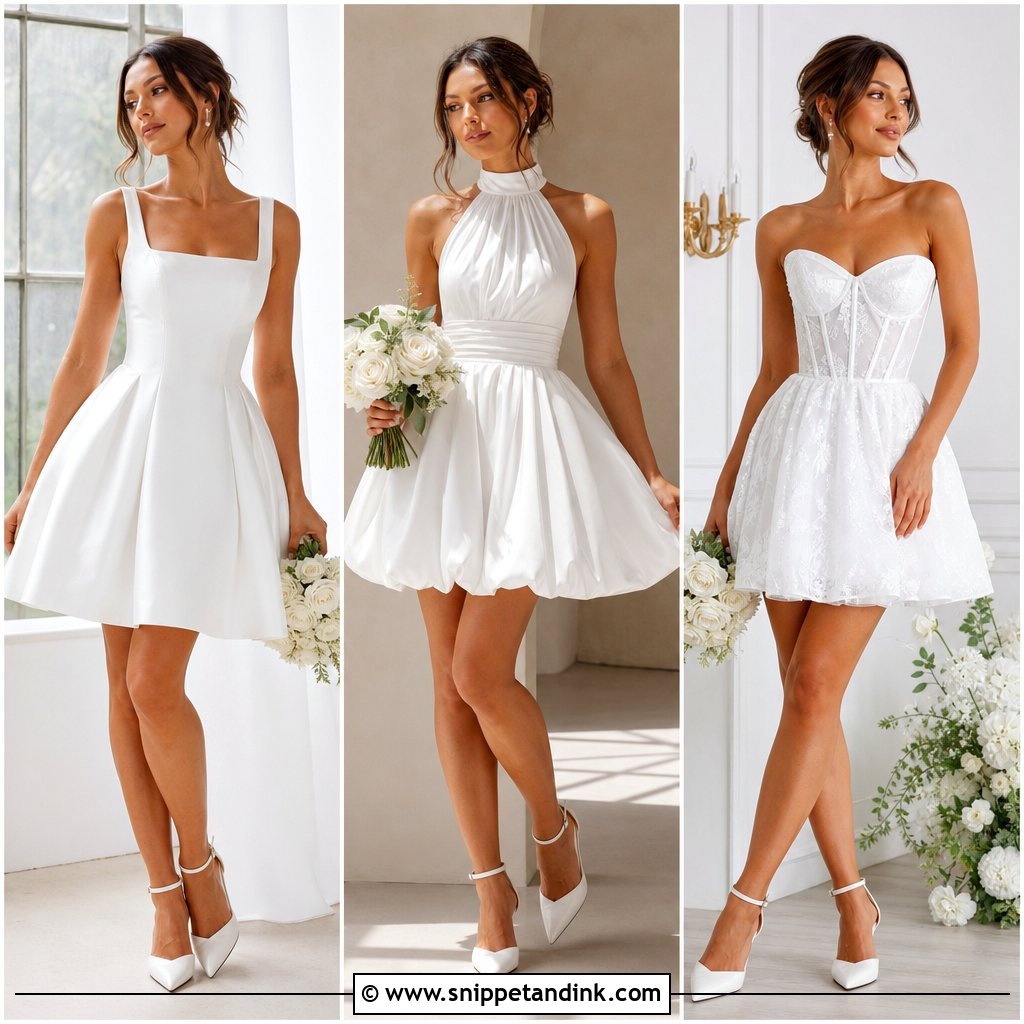

15. Tulle Ball Gown Wedding Dress
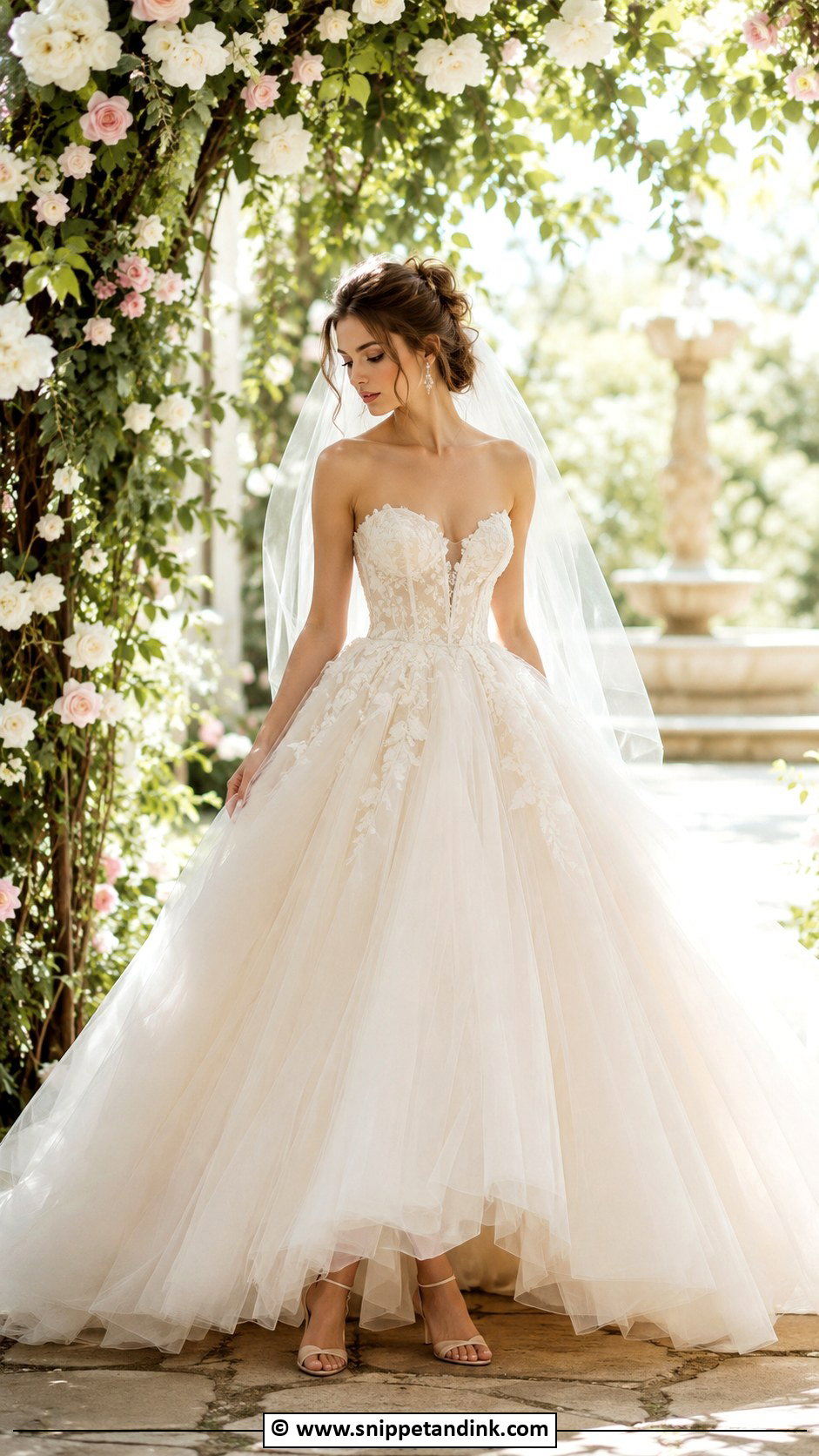
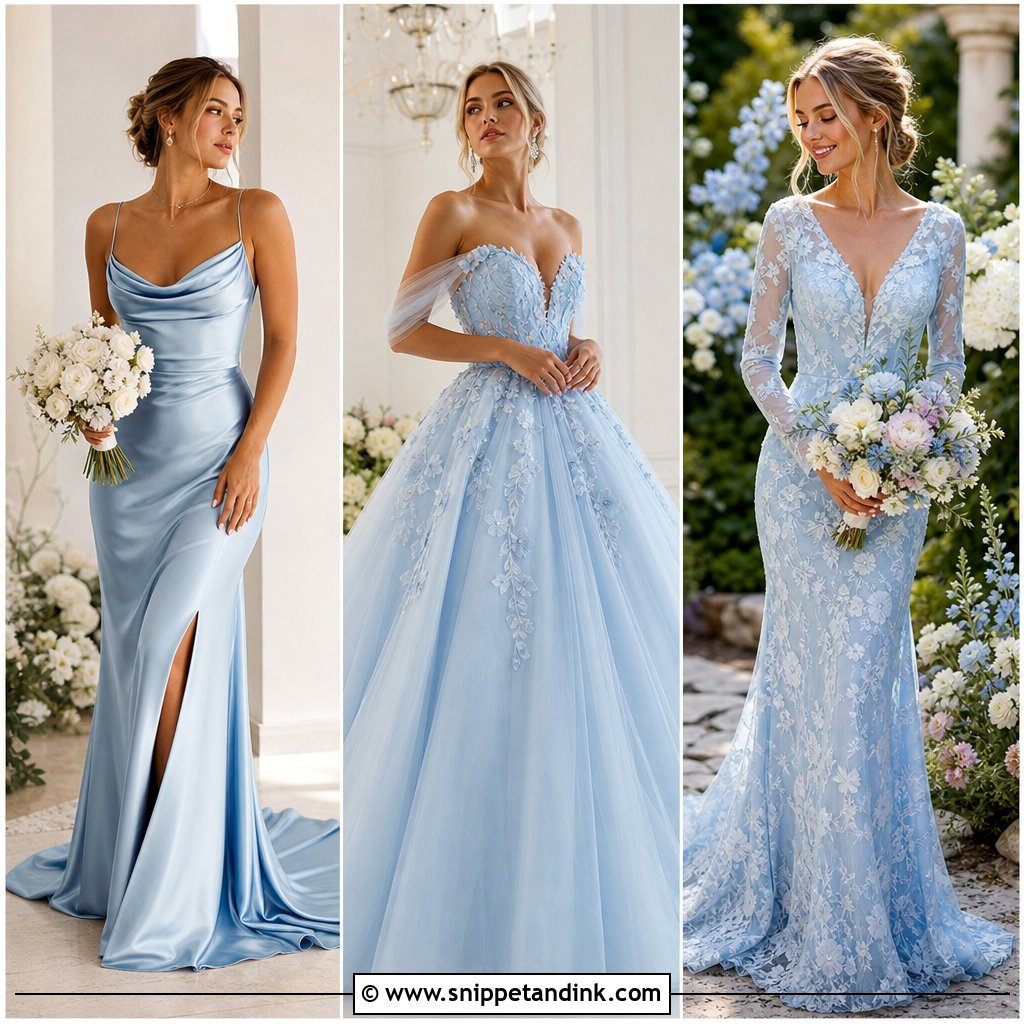
Tulle builds volume from many light layers, so a full ball gown in tulle is far easier to carry than one in heavier fabric. A simple bodice keeps it soft, while lace or beading adds detail. Shade makes a real difference. Ivory or blush-lined tulle reads warm and romantic, while white or diamond white looks cleaner and cooler. I always hold the tulle up near the bride’s face in daylight to choose. Delicate earrings, a sheer veil and comfortable heels suit garden weddings and formal venues.
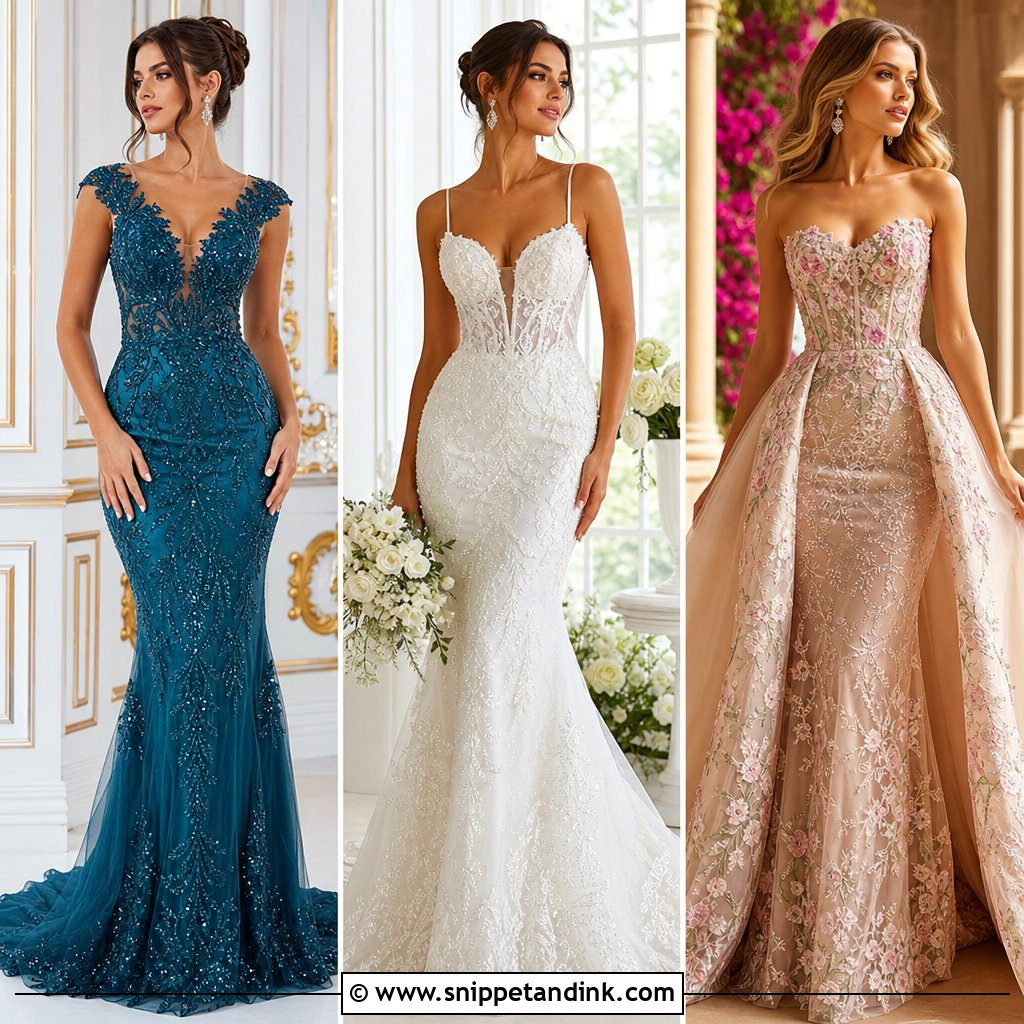
16. Beaded Sheath Wedding Dress
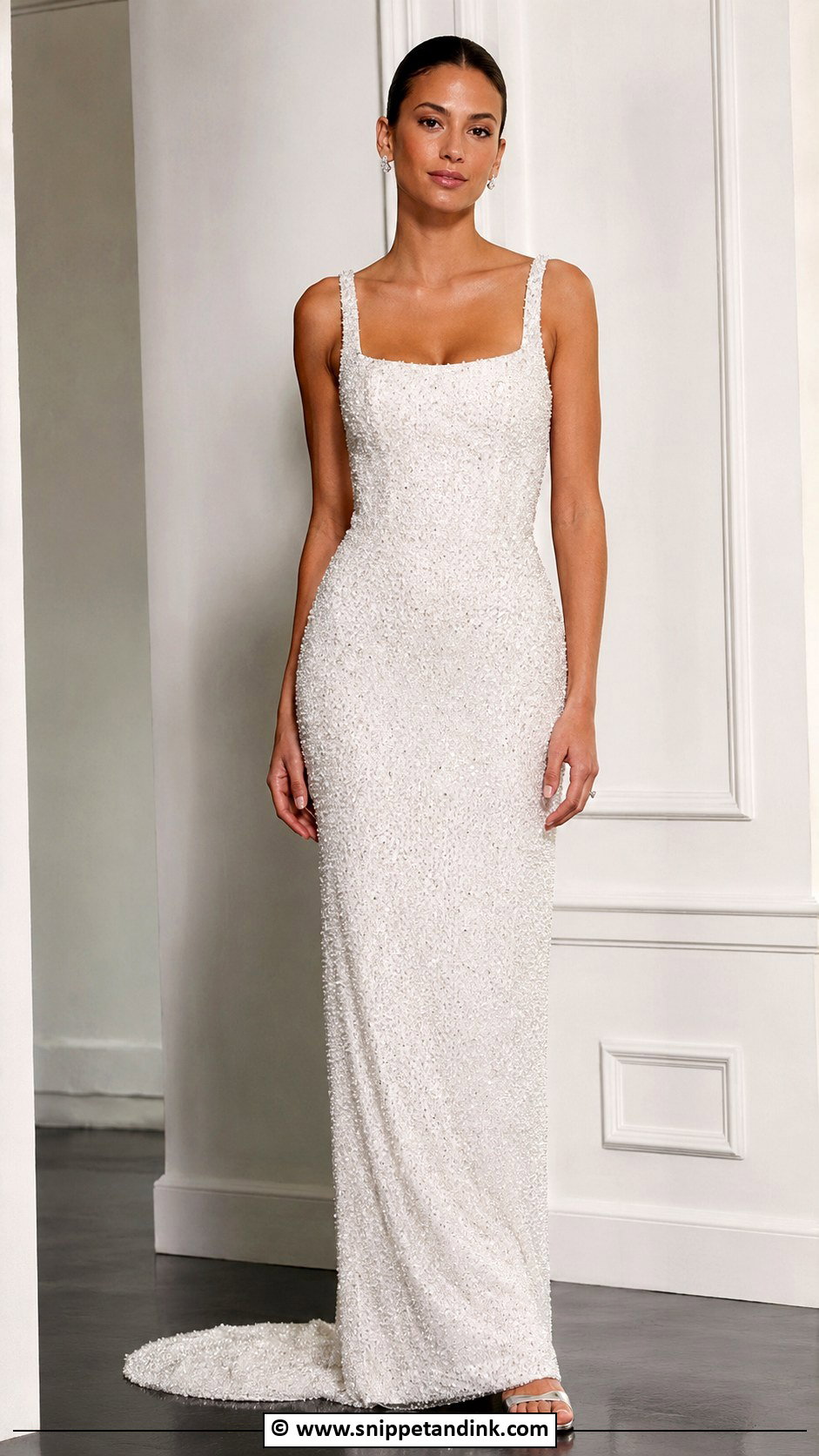
Sparkle on a narrow shape: a beaded sheath skims the body and suits smaller rooms and destination weddings where a full skirt would crowd things. Beading can be a fine shimmer, a geometric pattern or vintage-style detail. It’s heavier than it looks, though, so I check that the shoulders and straps are strong enough to carry it all night. Small crystal earrings, metallic sandals and a smooth hairstyle keep it calm, and a plain veil softens the shine. It glows under warm evening lighting in hotels and galleries.
17. Slip Wedding Dress
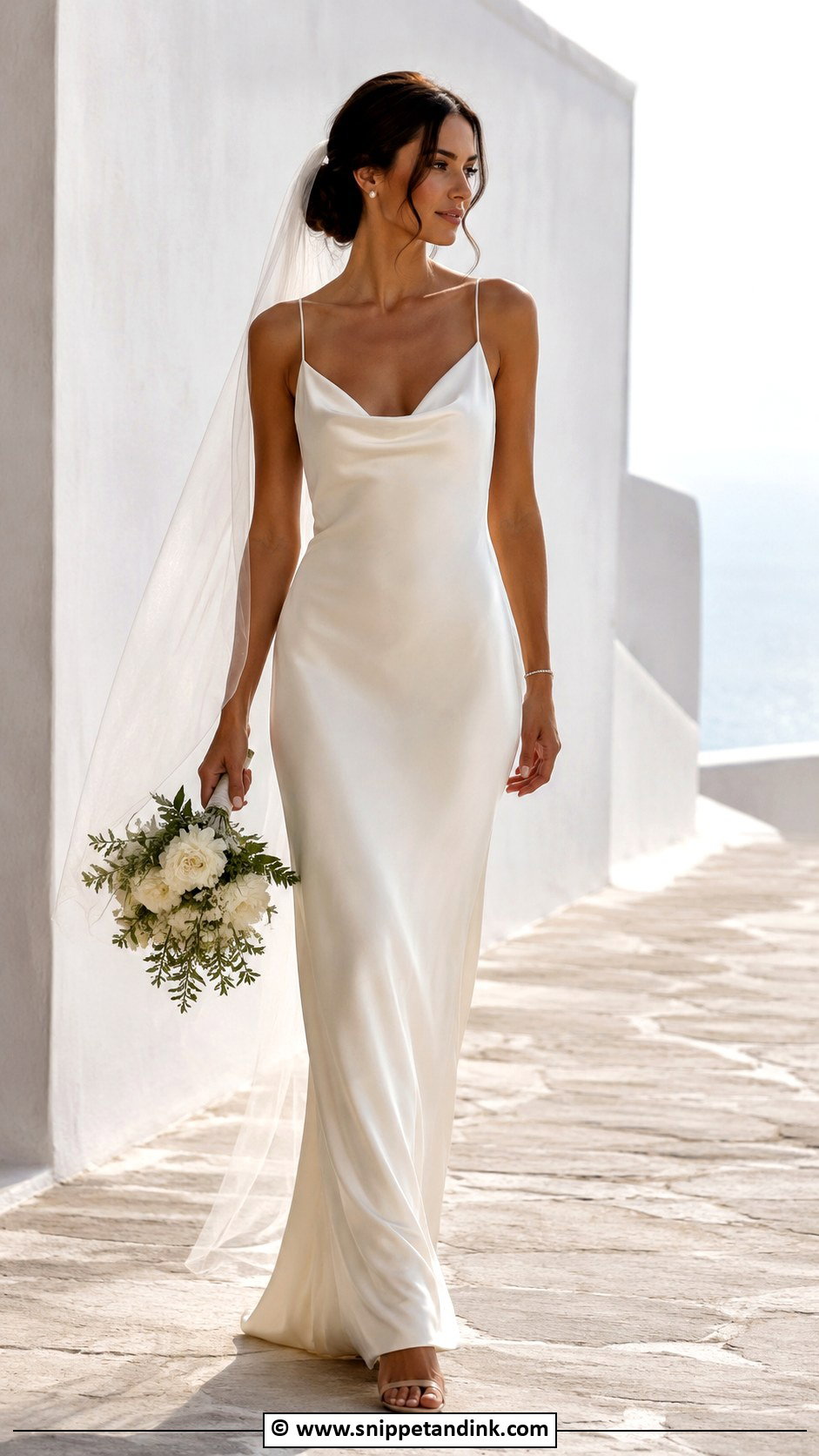
A slip dress in satin, silk or charmeuse drapes close to the body with no heavy structure. A cowl neckline softens it, a square neck modernises it and thin straps keep it minimal. Be prepared for honesty: bias-cut fabric shows everything underneath and creases when you sit, so fabric quality and careful tailoring matter more than any trim. I check a slip in daylight before anything else. Delicate sandals, pearl studs and a clean veil suit beaches, city ceremonies and reception changes.
18. Boho Lace Wedding Dress
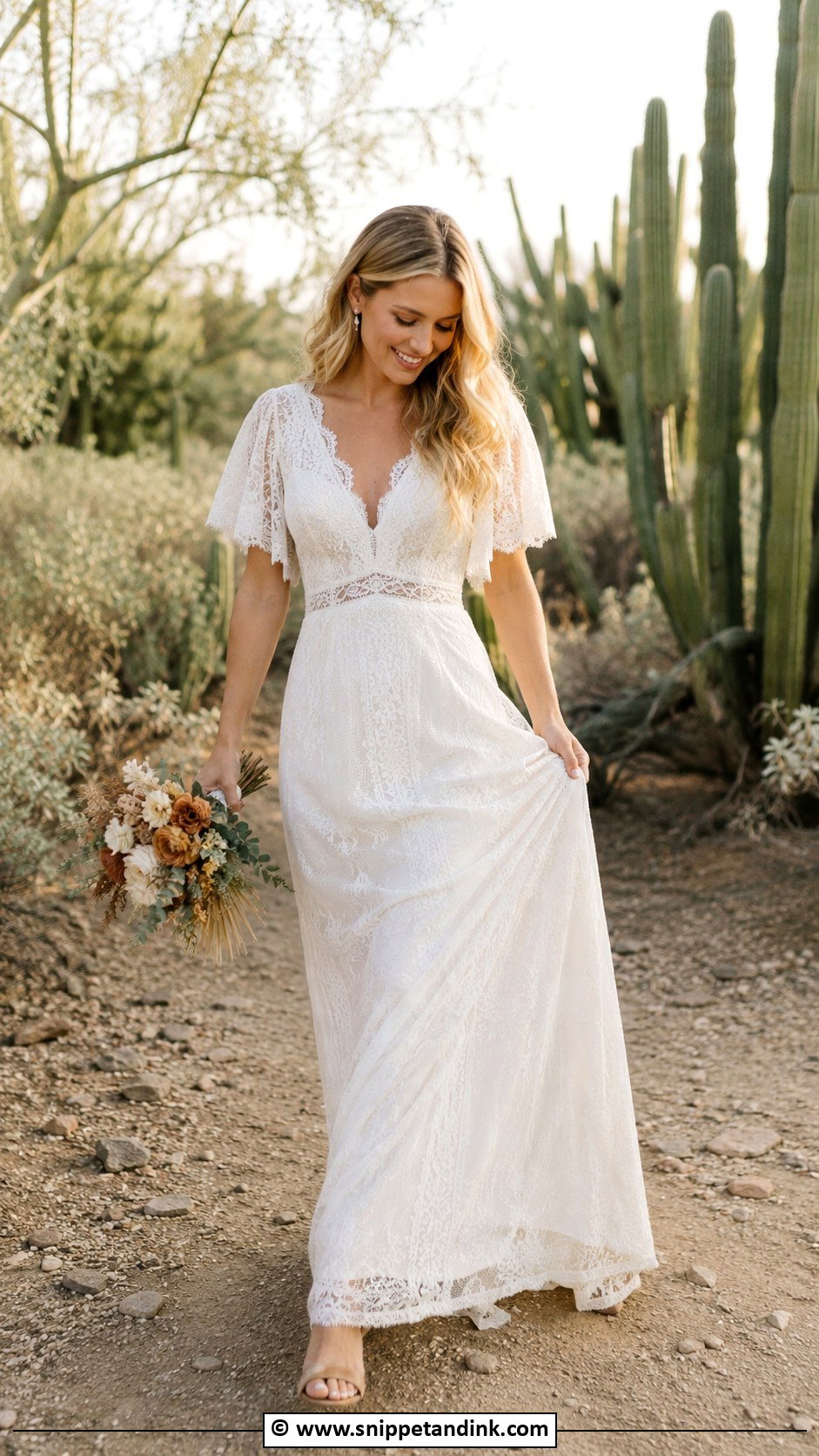
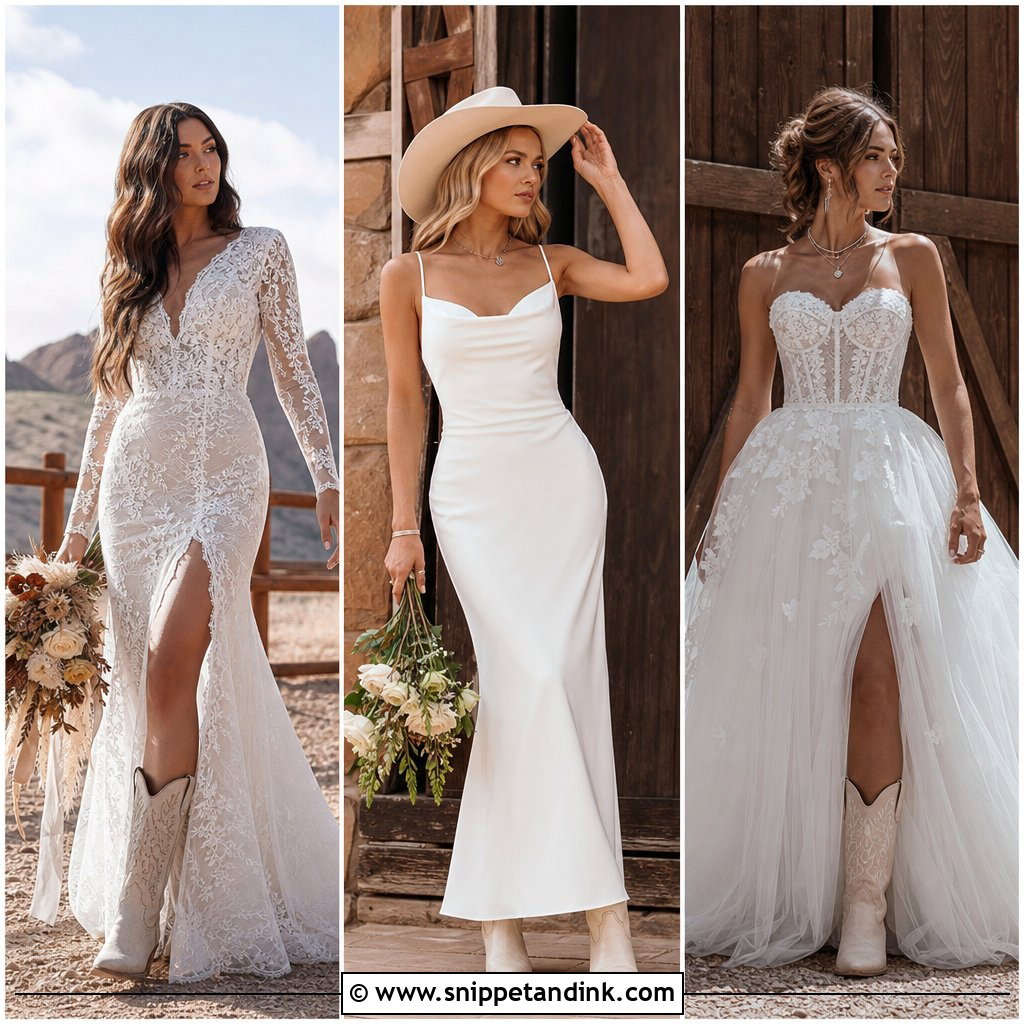
Boho lace should feel relaxed, not unfinished. I look for soft lace, flutter sleeves, an open back or a skirt that moves when you walk, and I keep accessories light because the lace already sets the mood. Loose waves, simple earrings, block-heel sandals and a soft veil are plenty, with a greenery bouquet if you want one. Open backs need a plan for support, usually cups sewn in. It sits naturally at deserts, barns, beaches and gardens.
19. Modern Column Wedding Dress
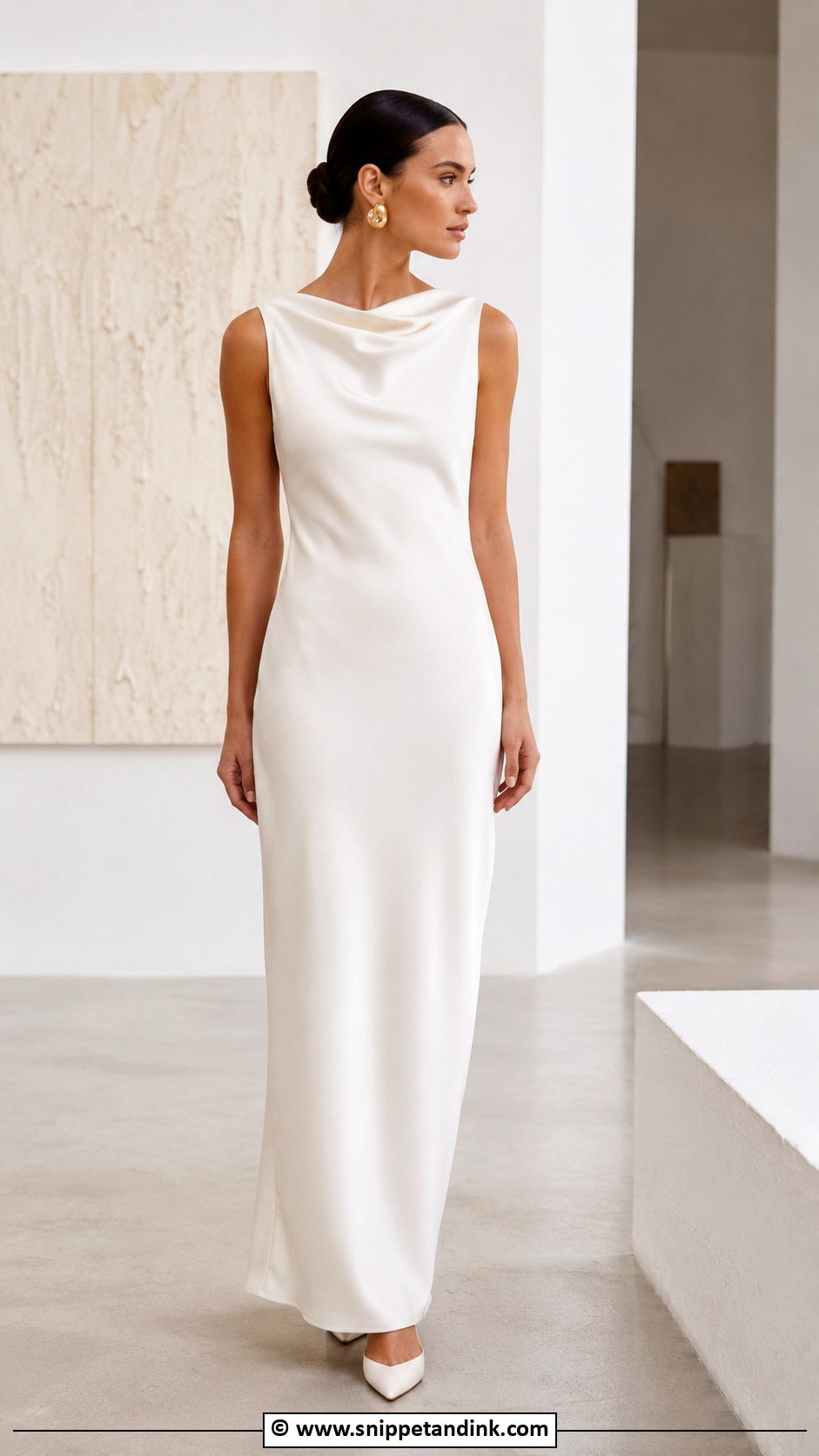
A modern column wedding dress falls straight from the neckline with almost no flare, drawing one long line. It needs fabric with some body, like crepe, satin or mikado, so it doesn’t cling. Small details carry it: a draped neckline, a side slit, an open back, covered buttons. If there’s a slit, I check where it opens when the bride sits, not just when she stands. Sleek earrings, pointed heels and a smooth low bun suit galleries, courthouses and modern venues, with a short or long plain veil.
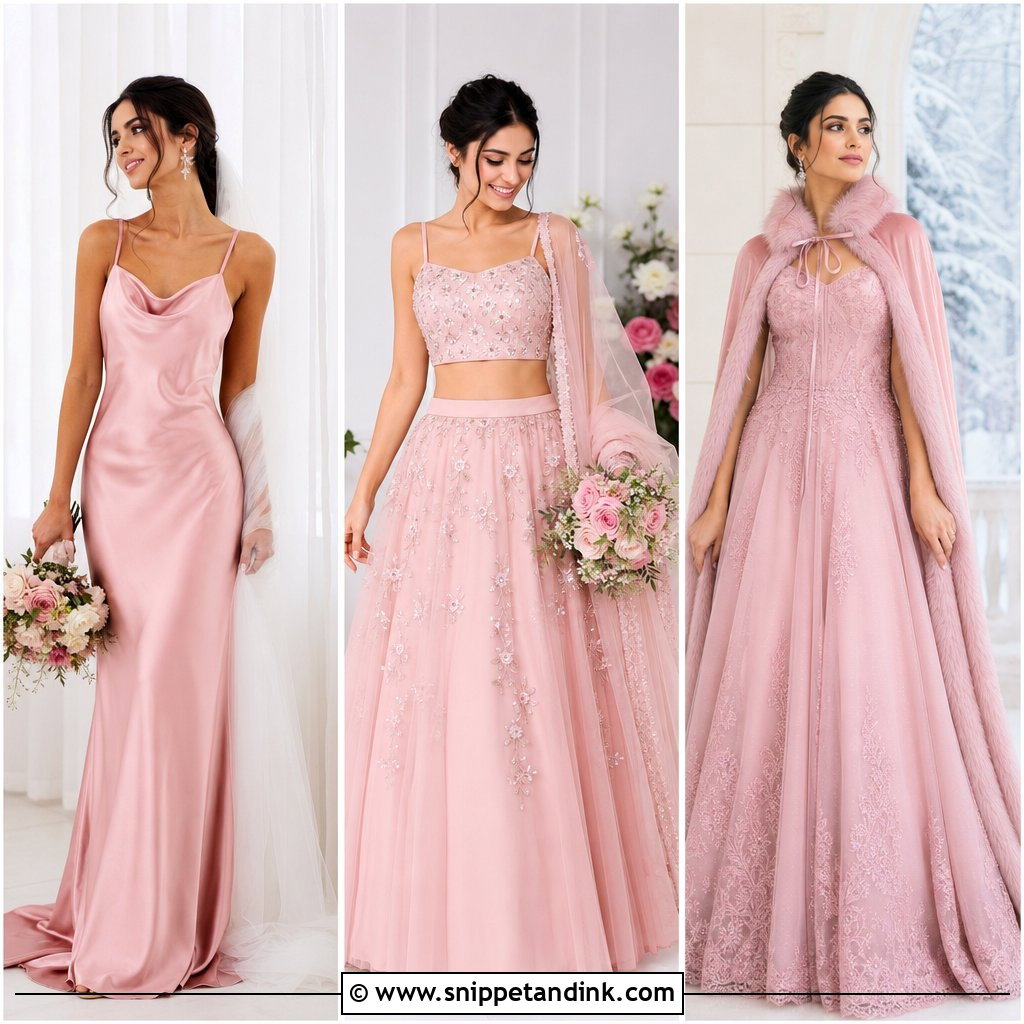
20. Blush Wedding Dress
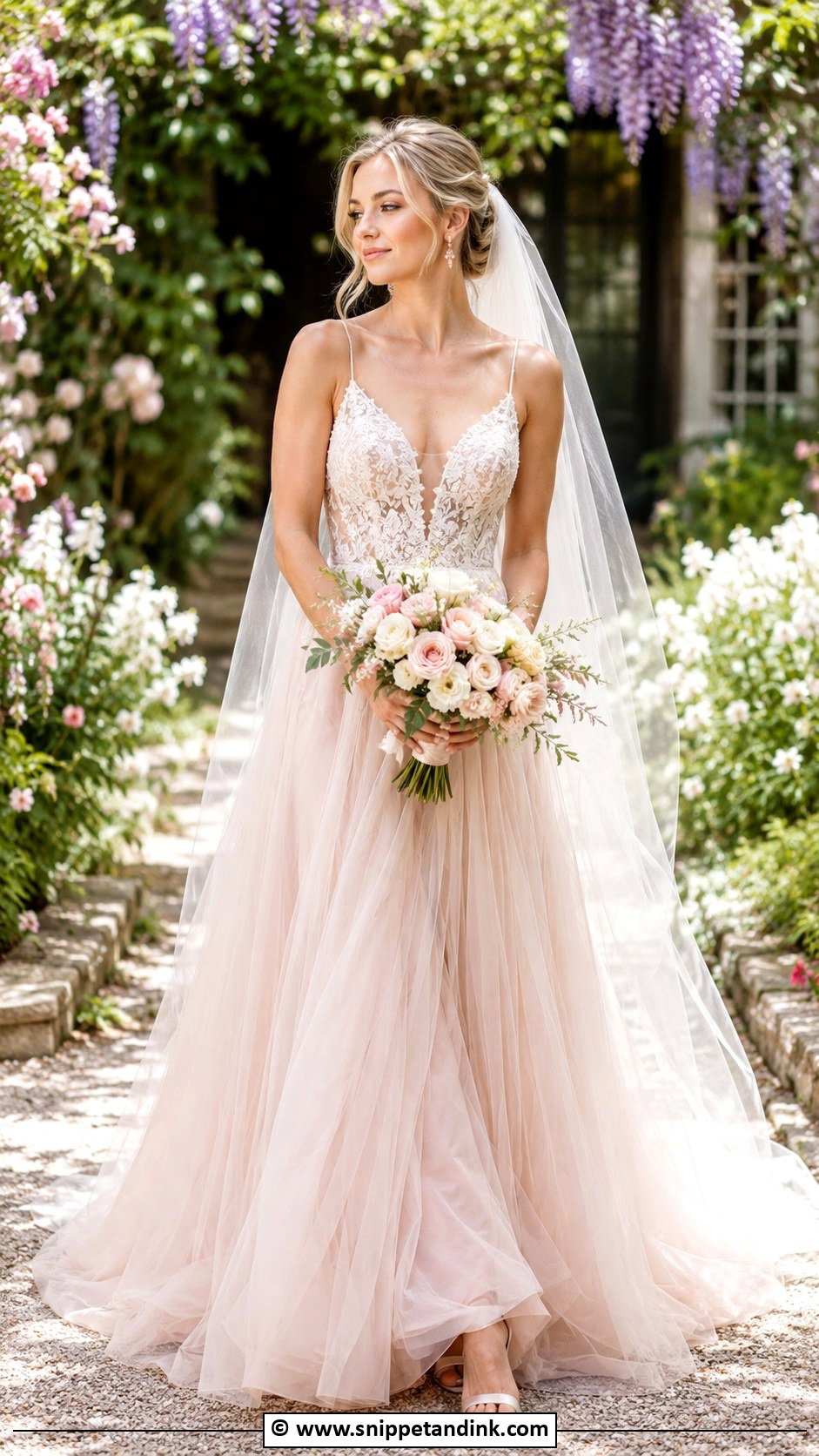
Blush brings a soft wash of colour while still reading bridal, from barely-there pink to warm rose, usually under lace, tulle or organza. Not every blush suits every skin tone. Some pale pinks can make fair skin look flushed or wash out olive skin, so I compare a few shades against the face in daylight. Ivory shoes, rose gold jewelry and a soft veil suit it, and a bouquet of cream, pale pink or greenery keeps the colours together for spring and garden weddings.
21. Champagne Wedding Dress
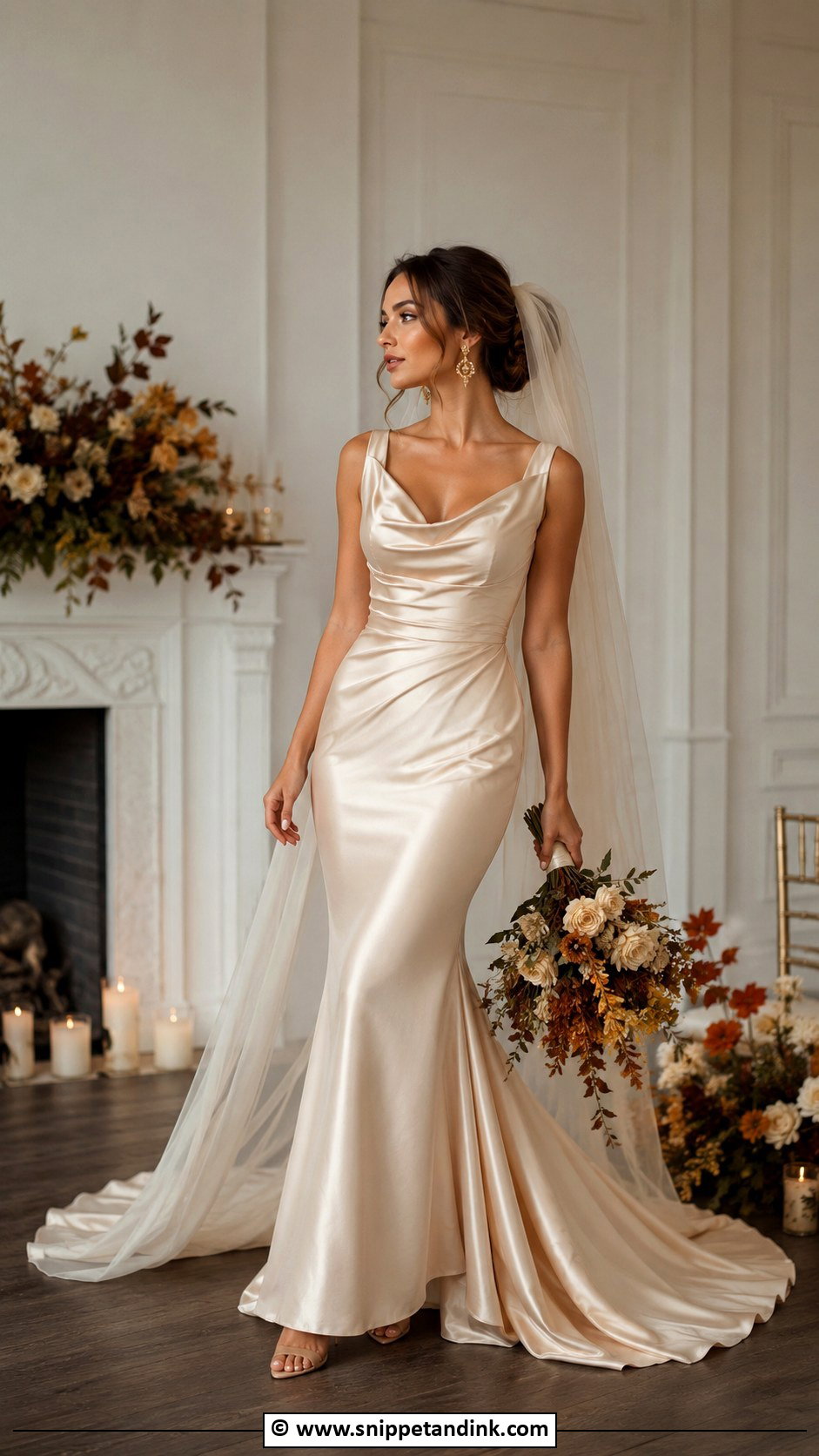
A champagne wedding dress is warmer and softer than stark white, and it flatters many skin tones in satin, tulle, lace or beading. Often the colour comes from a champagne lining under ivory fabric, which is worth knowing because the effect changes as the light changes. Match the veil to the dress’s undertone; a bright white veil against champagne looks grey. Gold jewelry, ivory or nude heels and one metal tone keep it warm for fall and evening weddings.
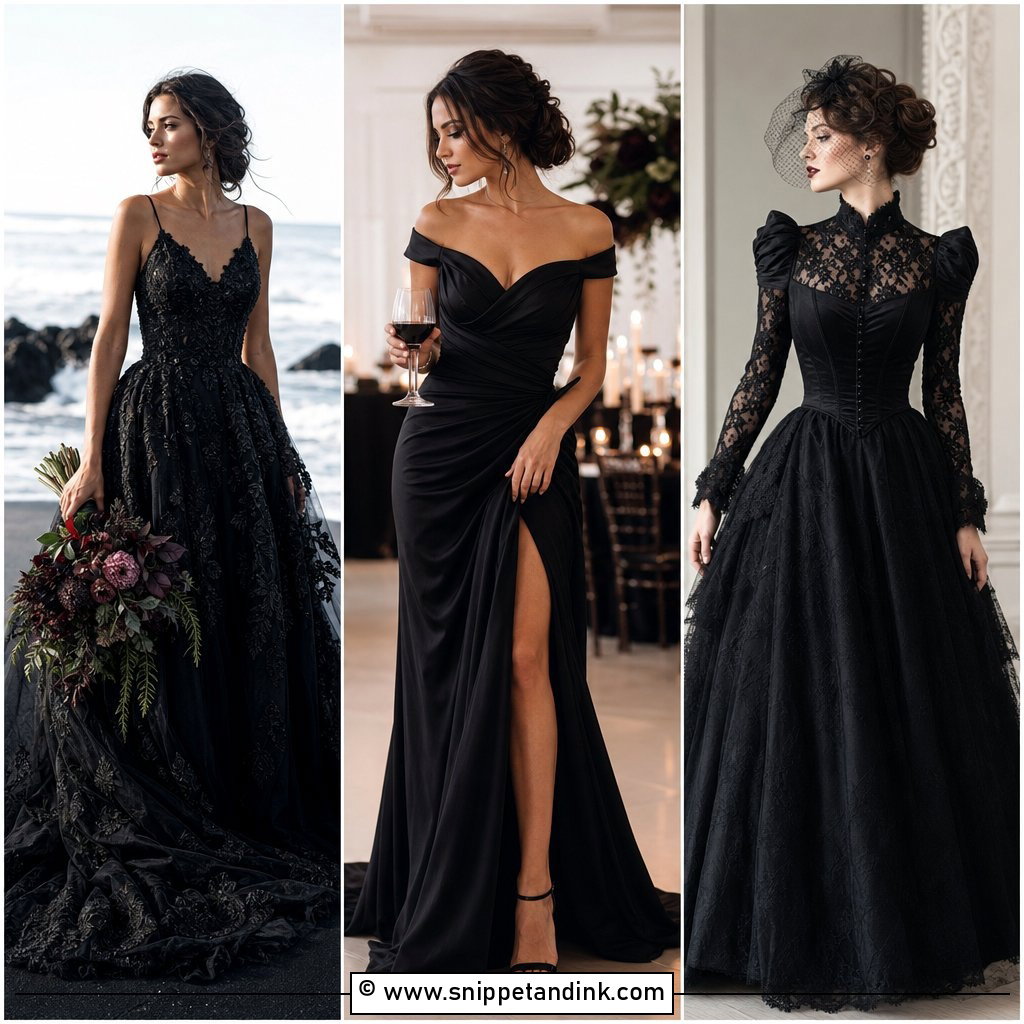
22. Black And White Wedding Dress
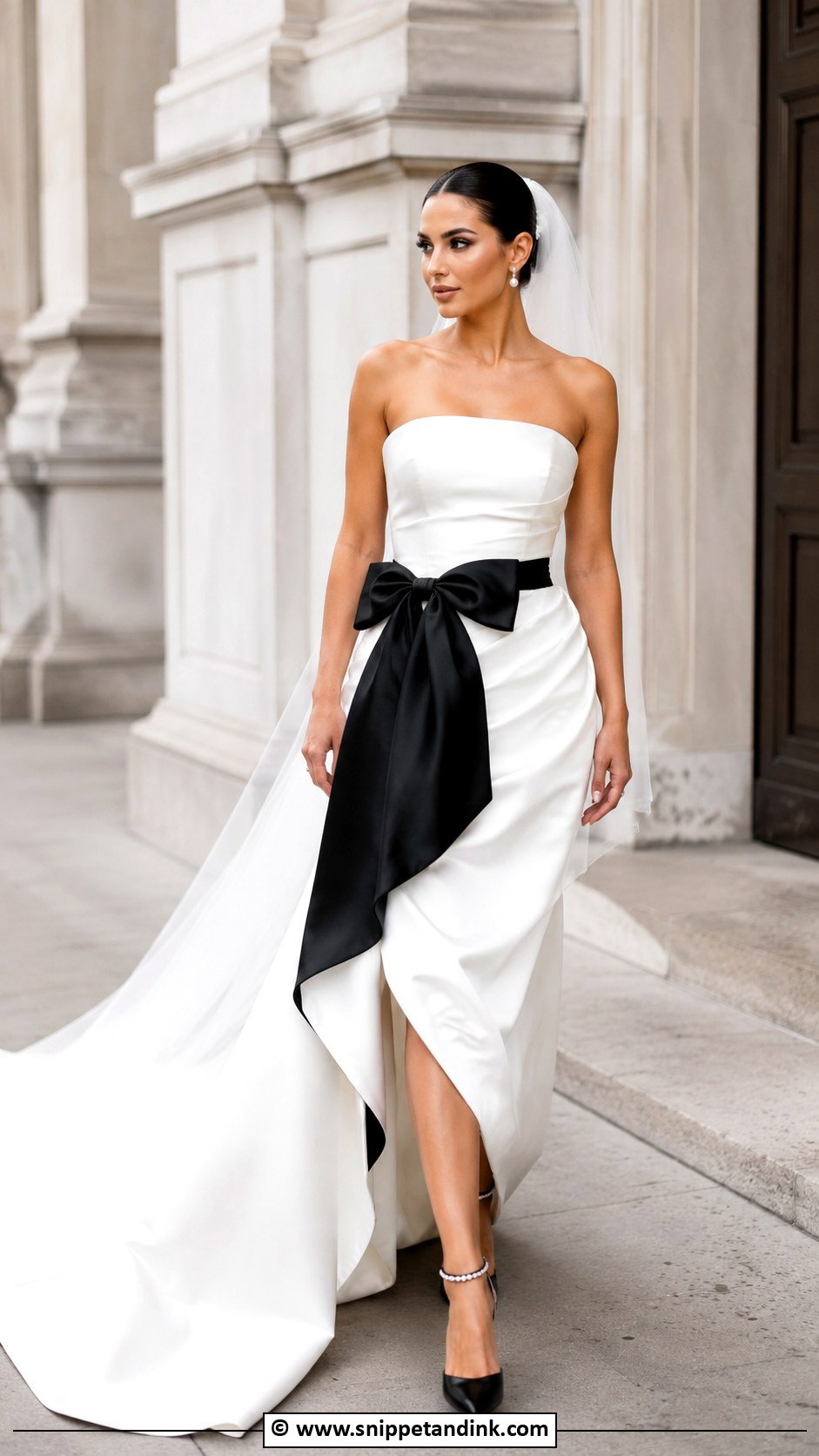
Black and white makes a strong modern statement, with the black arriving as a bow, sash, gloves, appliqué, piping or an overskirt accent. Keep the gown mostly white with one or two deliberate black touches, so it still reads bridal. I’d mention it to the photographer in advance, since bright white and deep black side by side need careful exposure to hold detail in both. Black heels, pearl earrings and sleek hair suit city venues, museums and formal evenings, and a plain veil softens the contrast.
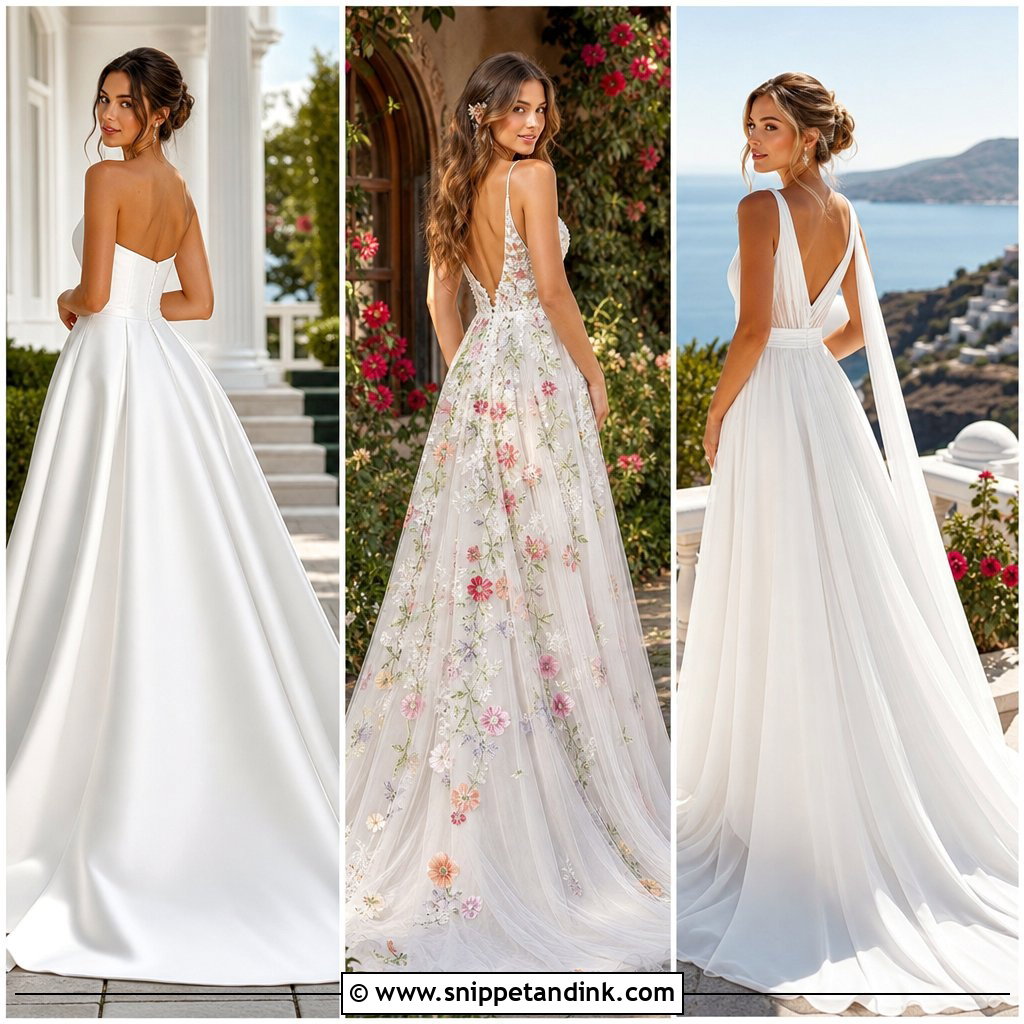
23. Floral Print Wedding Dress
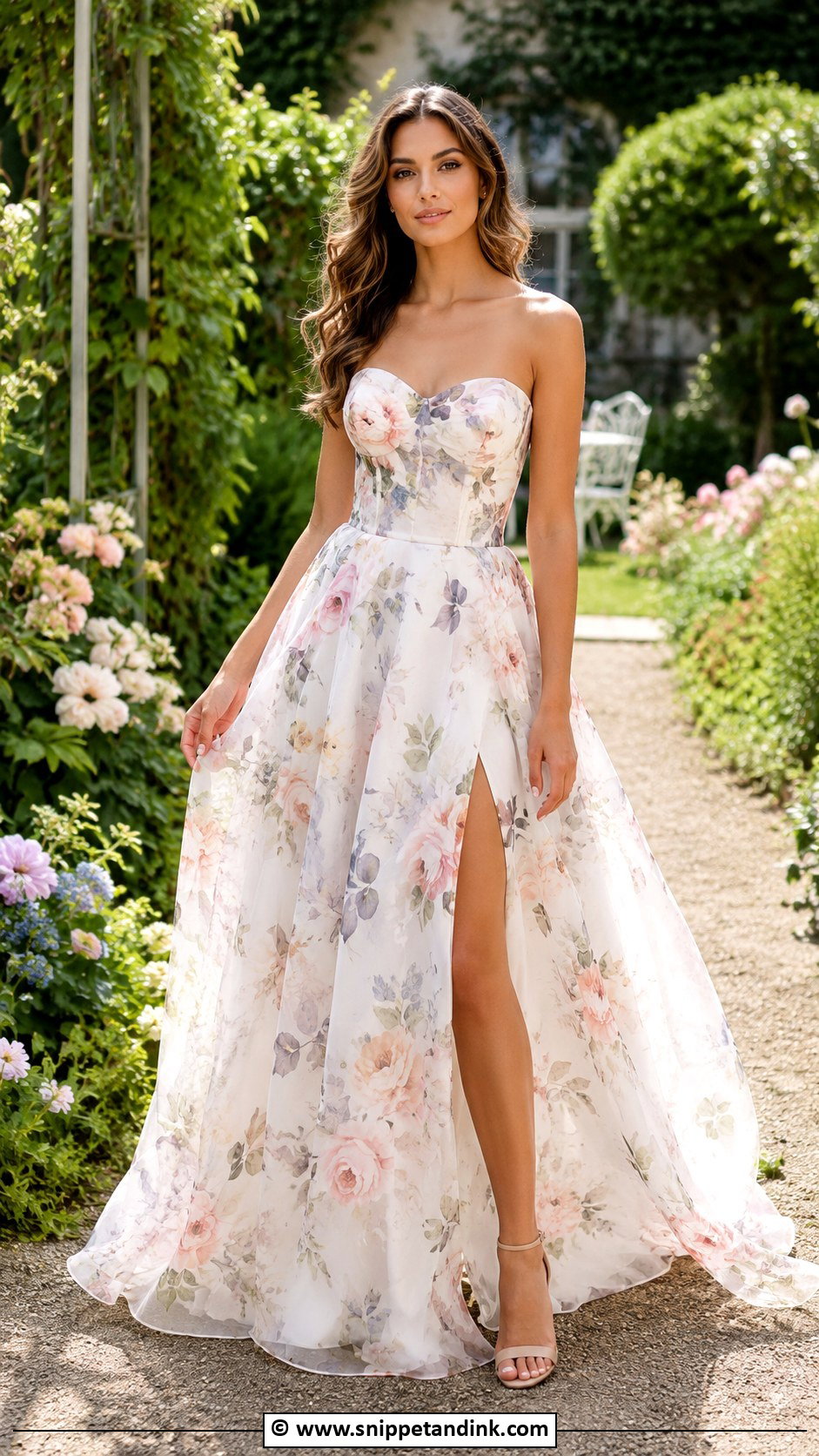
A floral print brings colour and personality, from pale pastels to watercolour flowers on organza, chiffon or tulle. The silhouette has to stay simple, an A-line, a ball gown or a soft column depending on the venue, because the print is already doing a lot. Look at the print up close and from across a room, since small florals blur into a colour at distance. Neutral heels, small earrings and a plain veil or none suit garden, spring, outdoor and destination weddings.
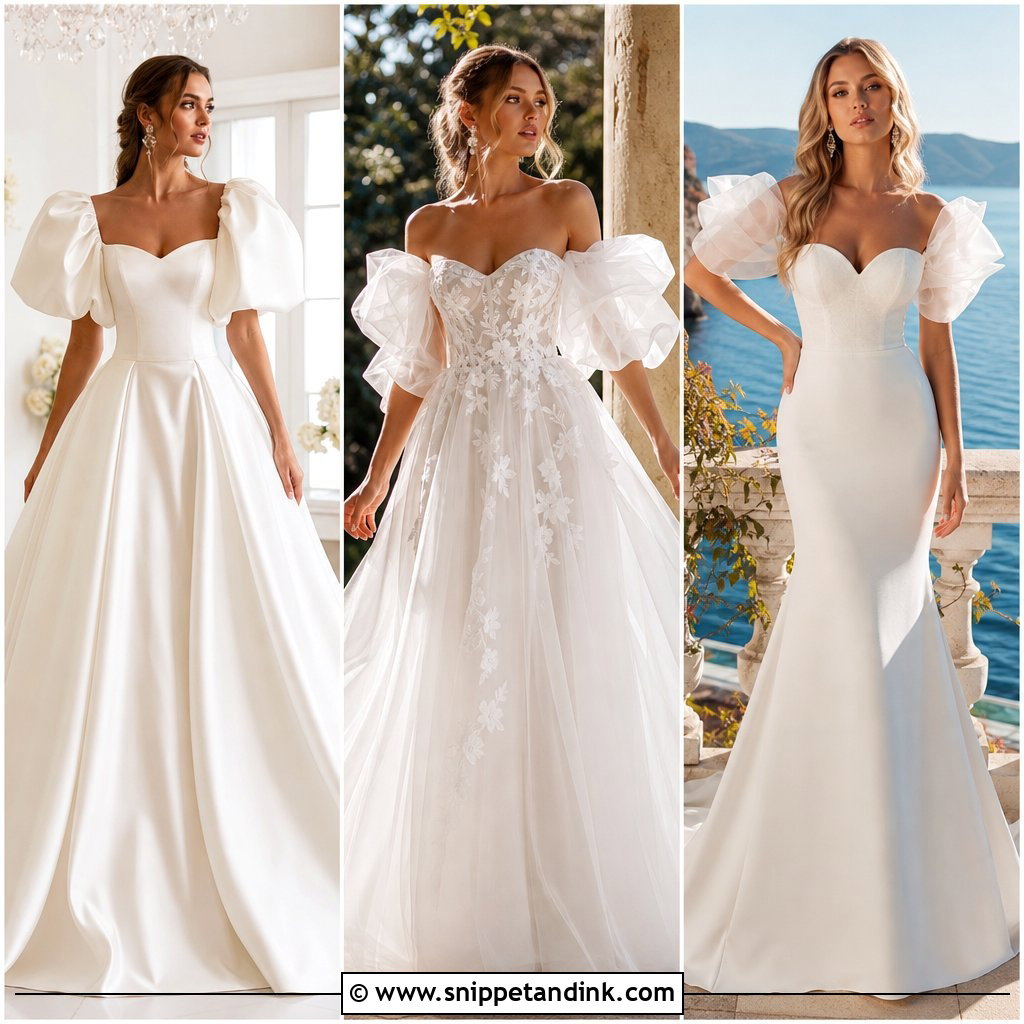
24. Convertible Wedding Dress
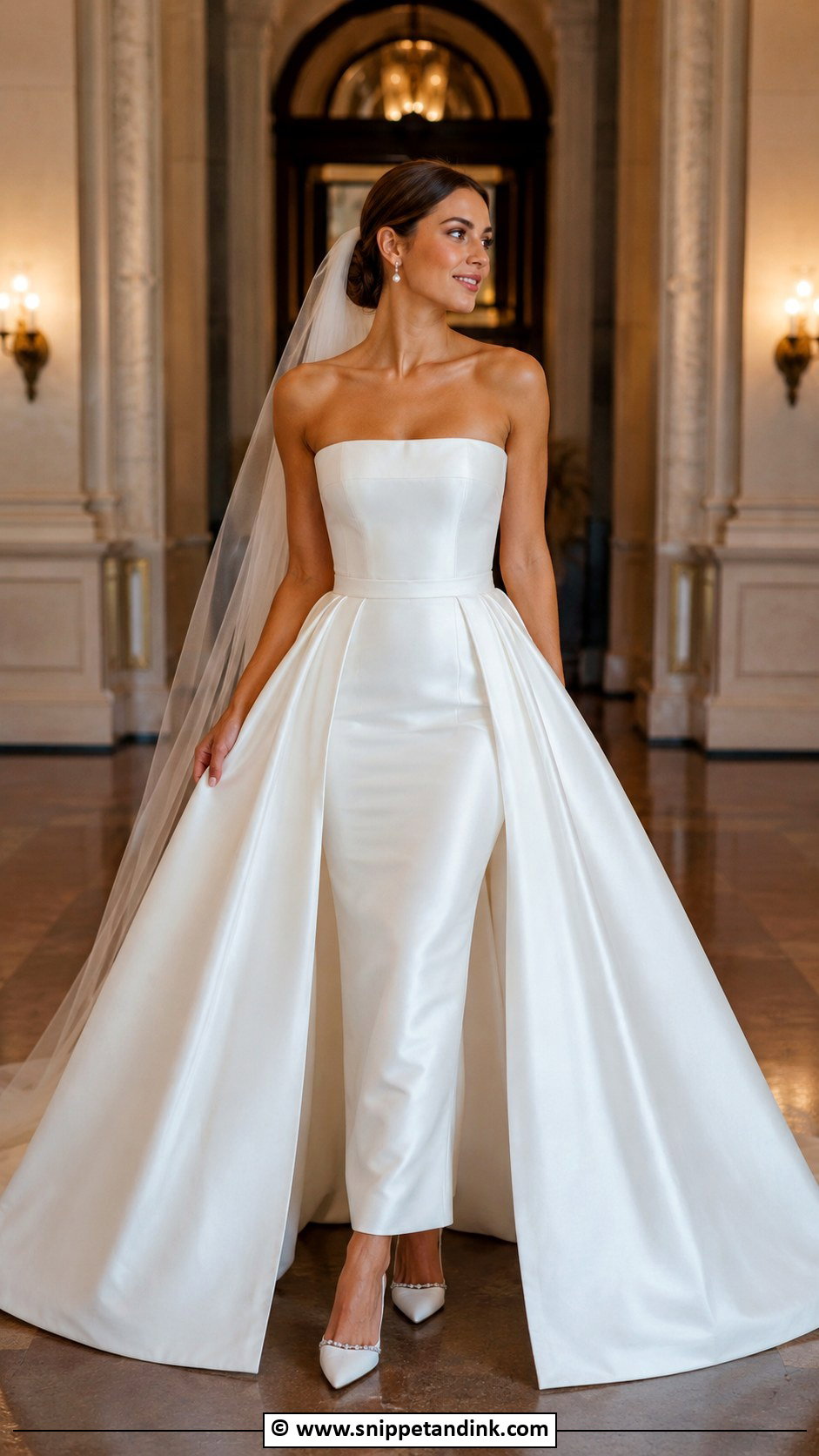
Convertible gowns give you two looks through a detachable overskirt, removable sleeves, a cape or a changeable train. Wear the fuller version for the ceremony and portraits, then remove the extra layer. Every convertible piece fastens differently, so I ask a bridesmaid to practise the change at the final fitting and time it. Choose accessories that work for both versions: pearl earrings, simple heels and a veil that can come off with the overskirt. It saves buying a second dress for a full-day celebration.
25. Wedding Dress With Bow
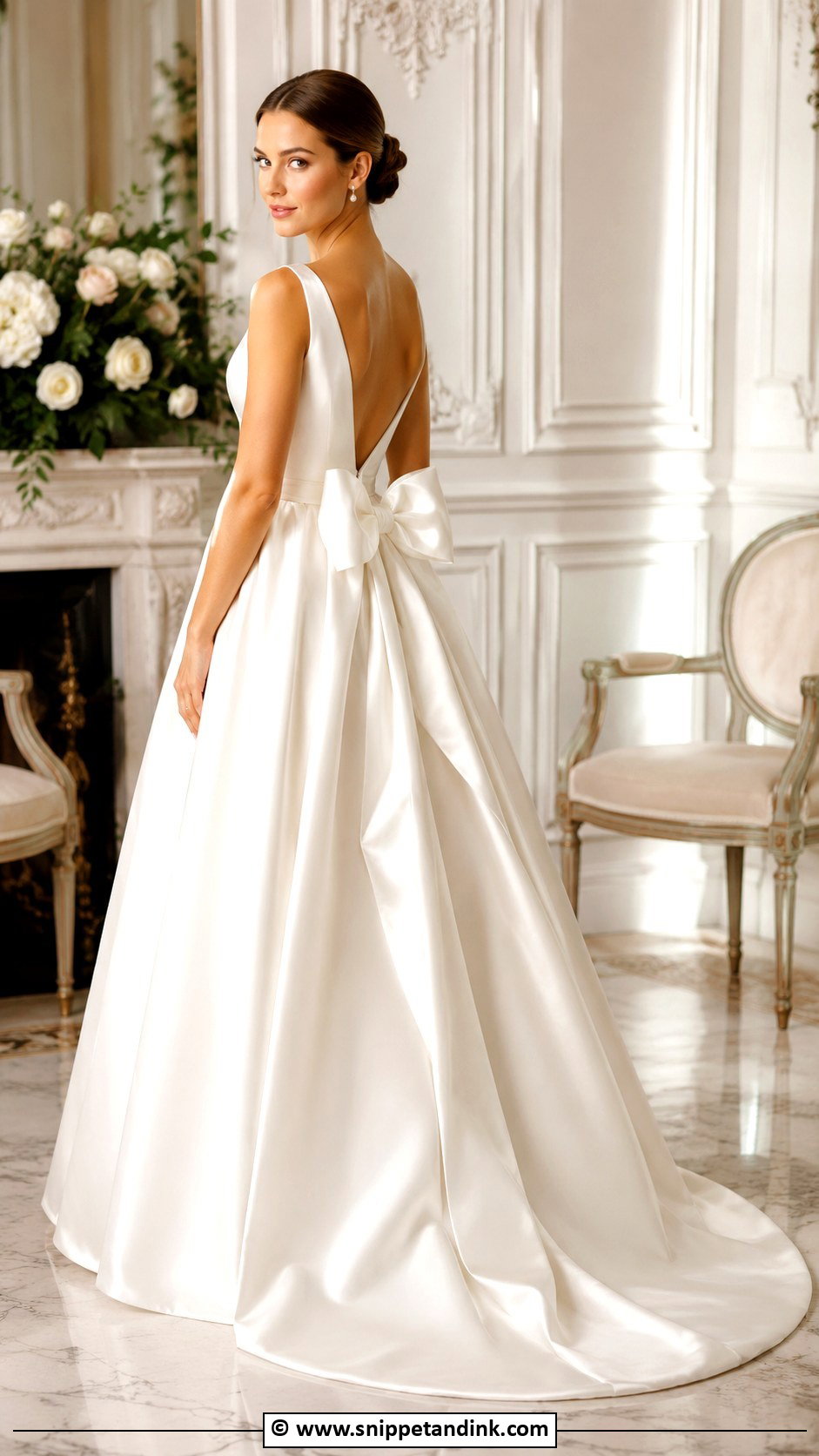
Where the bow sits changes the whole dress. A back bow gives a moment for the camera as you walk away, a shoulder bow feels fashion-led, and a waist bow defines the shape. Keep everything else quiet so the bow is the one statement. Large bows need structure, usually interfacing or a stiffened fabric, or they droop by the reception; I check how one is built before I’d recommend it. Satin pumps, minimal earrings and a clean veil, with sleek hair if the bow is oversized, complete it.
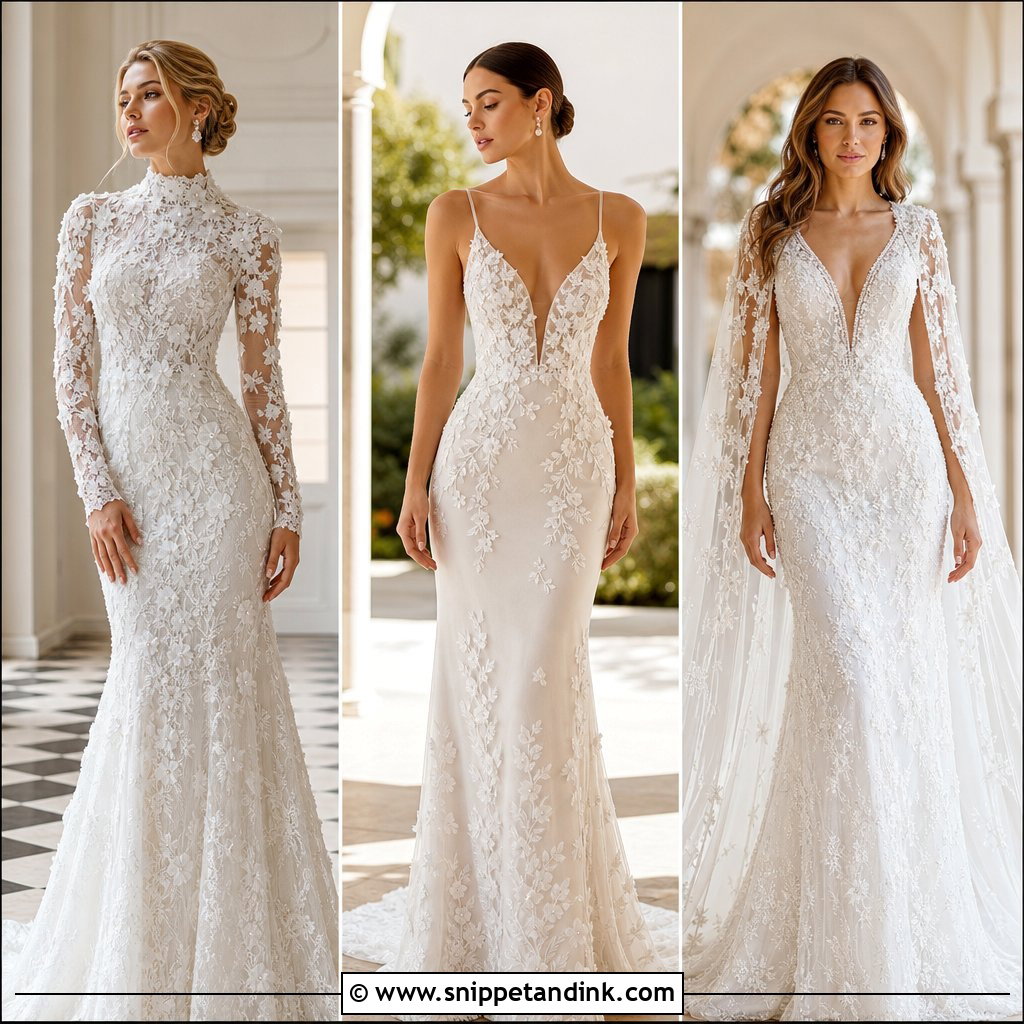
26. Wedding Dress With Cape
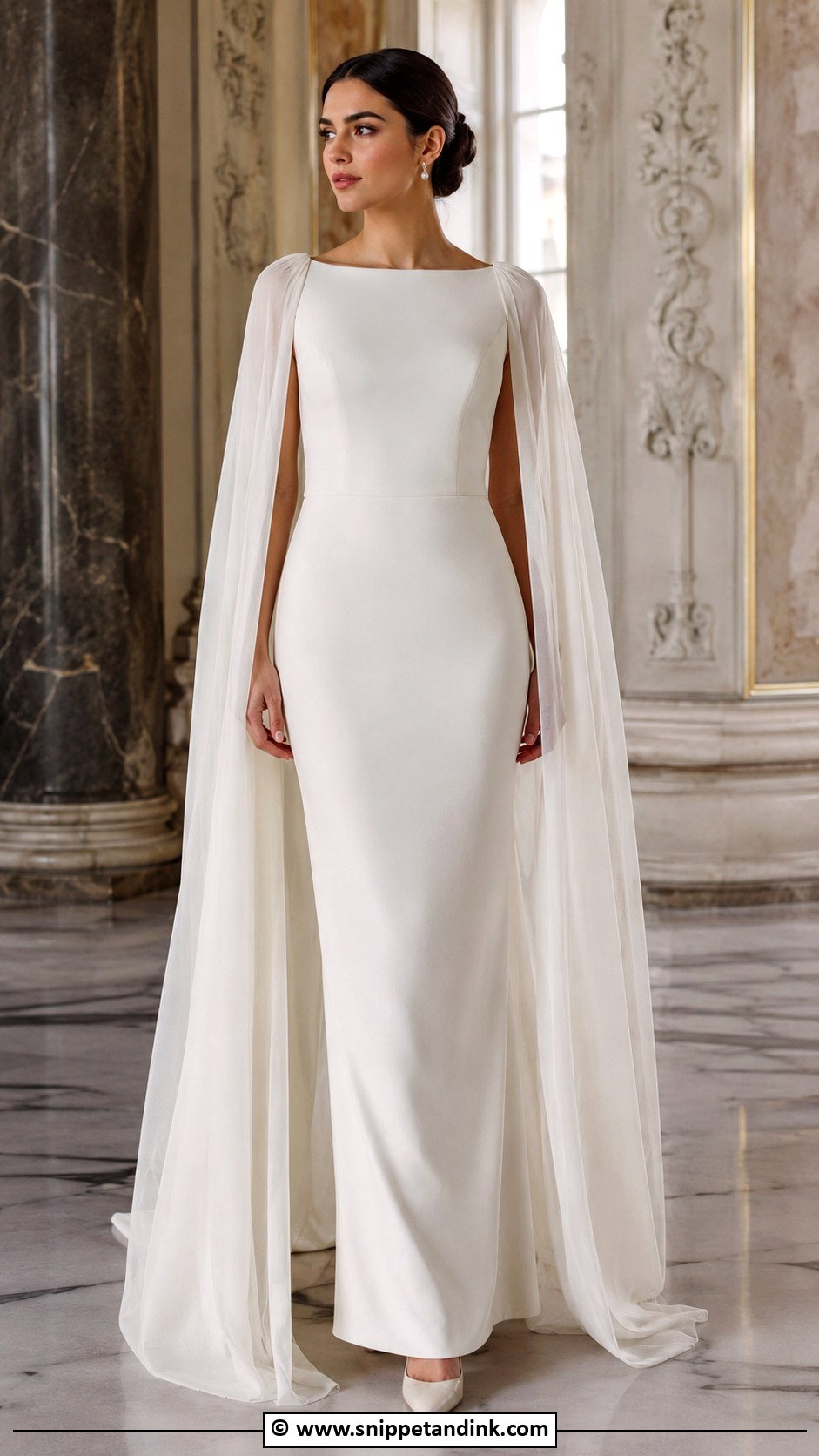
A cape replaces the veil as the dramatic layer, in sheer tulle, lace, pearl trim or soft net. It looks best over a simple column, sheath or fitted gown, adding movement as you walk. Watch the attachment point. A cape fastened at the shoulders can pull the neckline back, so it should be anchored into the gown’s structure, not just the fabric. Simple earrings, smooth hair and elegant heels suit modern weddings, formal indoor venues and cooler weather.
27. Wedding Dress With Detachable Sleeves
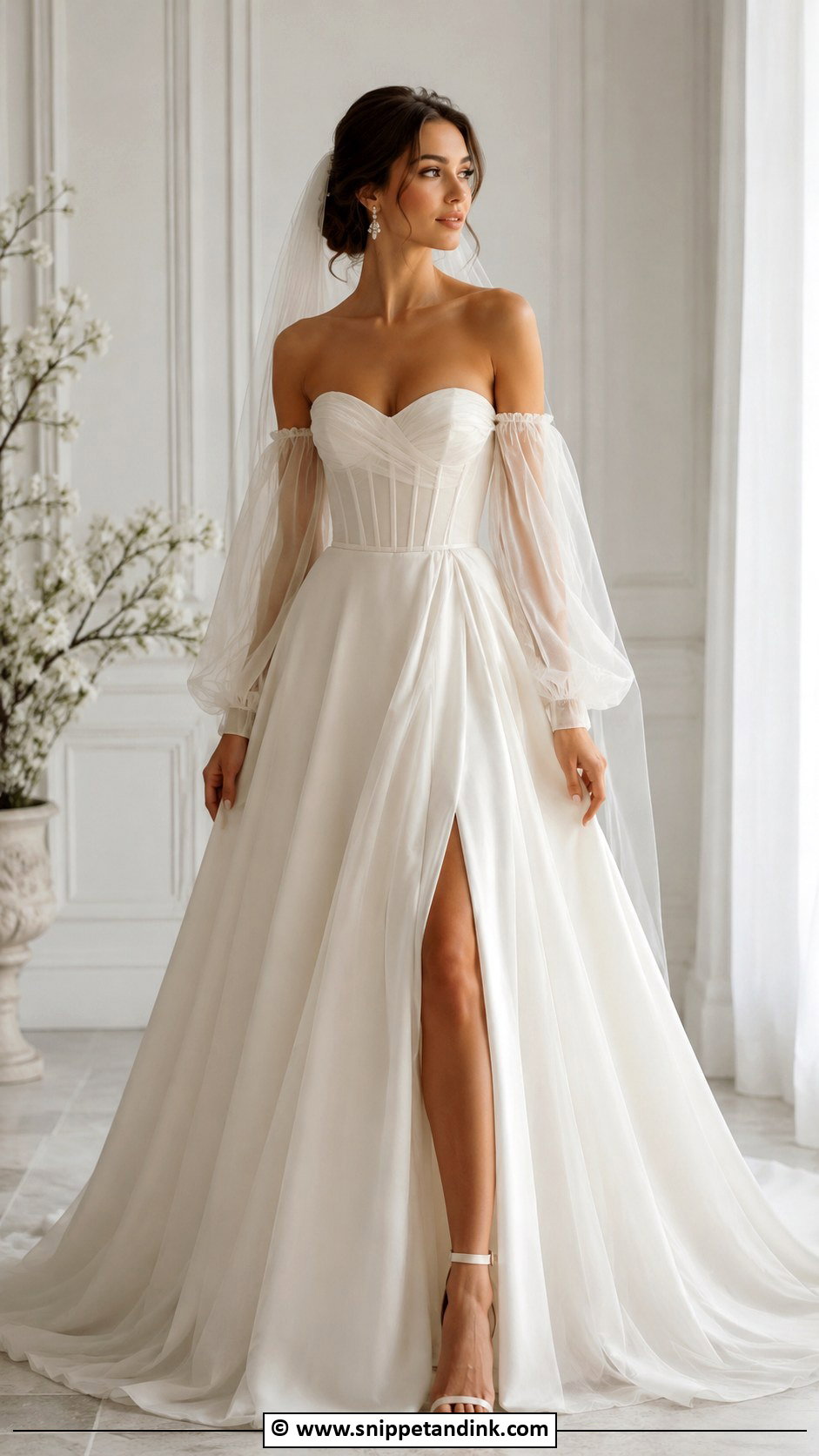
Detachable sleeves let you be more covered for the ceremony and lighter later. They come sheer, puffed, fitted, lace or draped, usually over a strapless, off-the-shoulder or corset bodice. Practise removing them before the day, and check what’s left: some sleeves leave small hooks or loops on the bodice that need hiding once they’re off. Drop earrings, a soft veil and classic heels suit both looks, and bare arms make dancing in warm weather easier.
28. Wedding Dress With Slit
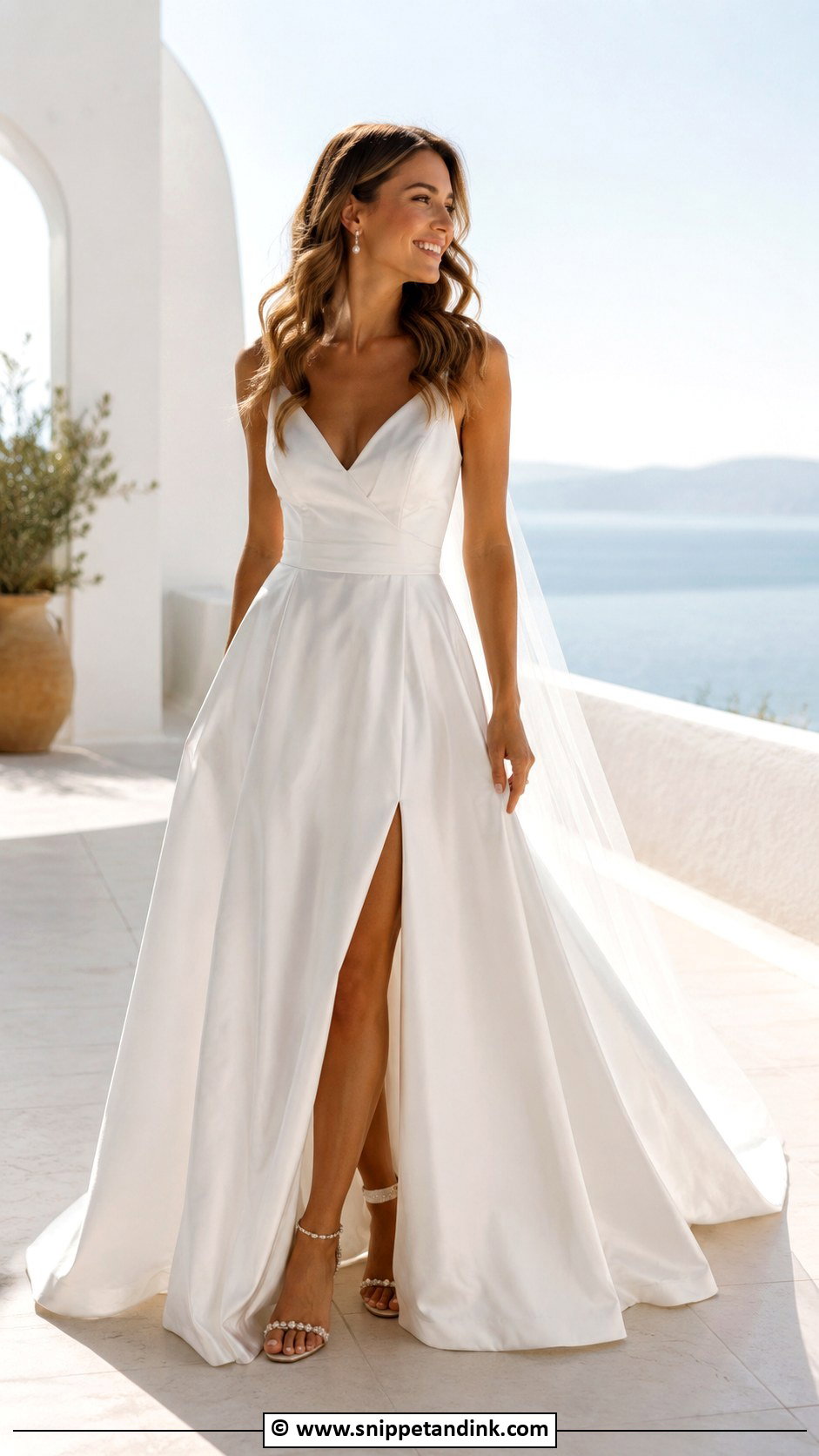
A slit adds movement and a modern edge while keeping the outfit bridal. It can be modest or high, and on column, A-line and satin gowns the fabric opens nicely as you walk. I always check a slit in three positions, standing, walking and sitting, because a slit that looks right standing can open much further in a chair. Shoes worth showing matter here, from embellished sandals to satin pumps. It suits beach, destination and summer ceremonies.
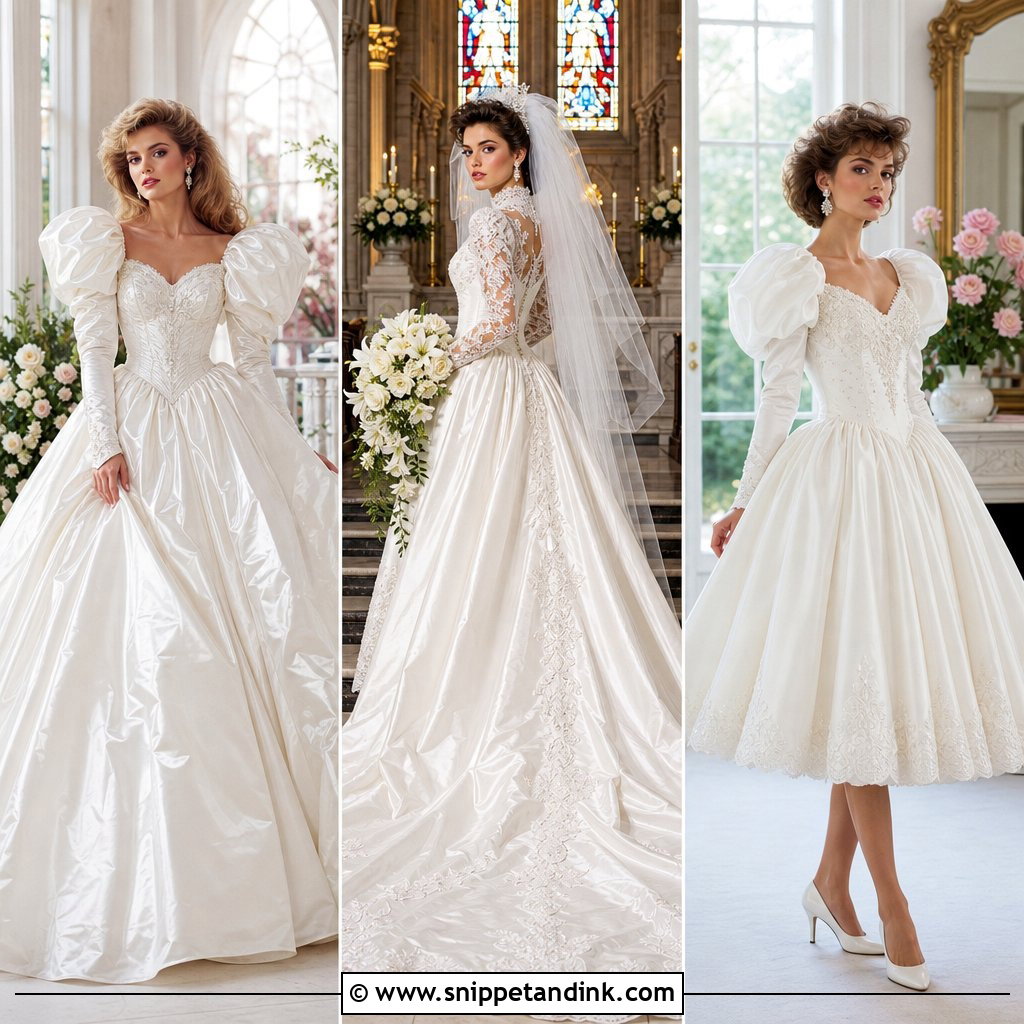
29. Vintage Inspired Wedding Dress
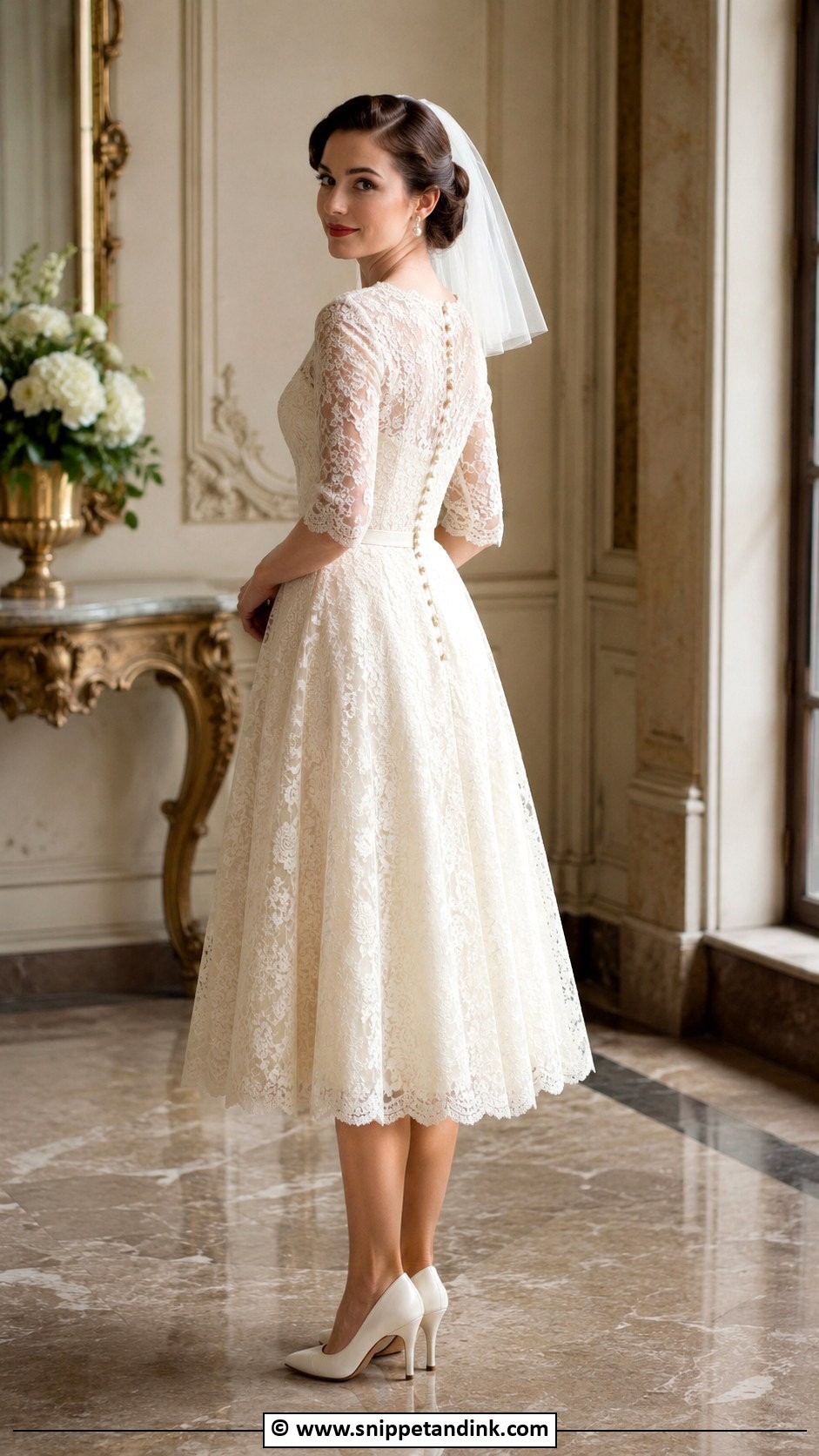
Vintage-inspired gowns borrow from past decades through lace collars, puff sleeves, tea-length hems, covered buttons, beading or soft satin. The key is one era, not five. A 1950s tea-length skirt and a 1920s beaded bodice fight each other. Classic pumps, pearl earrings and a short veil or hair comb suit it, and a soft red lip works if it’s already your style. Historic venues, gardens and courthouses all suit this kind of gown.
30. Simple Beach Wedding Dress
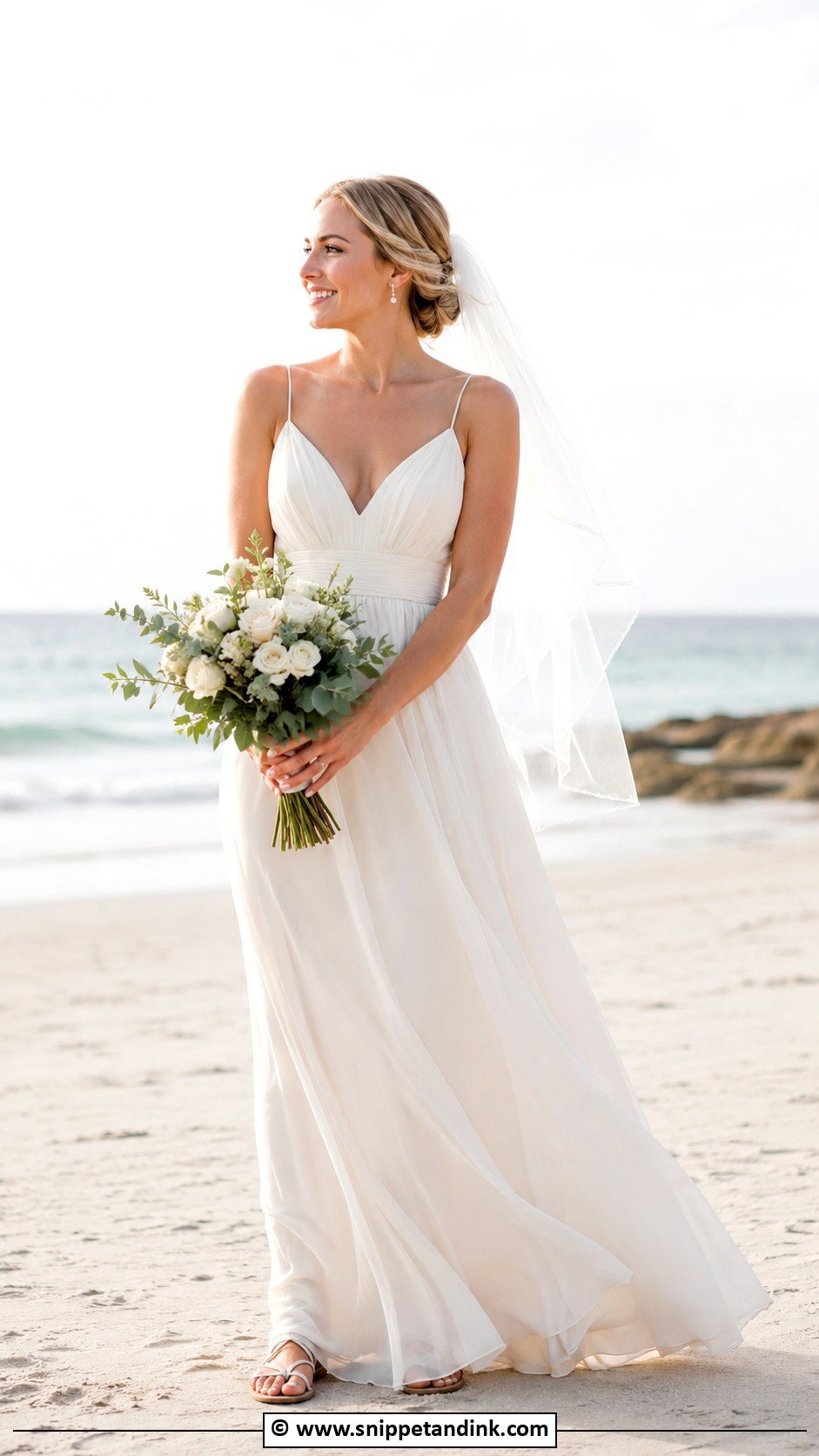
A simple beach dress should be light, breathable and easy to walk in on sand. I’d choose chiffon, crepe, silk or soft tulle over heavy layers, in a slip, A-line or flowing sheath. Keep any train short, since a long one drags sand and gets wet at the shoreline. Flat sandals, delicate earrings and loose waves or a low bun are easiest, and a short veil or hair accessory copes with wind far better than a long veil. It’s made for coastal ceremonies and destination weddings where relaxed still needs to look considered.
31. Courthouse Wedding Dress
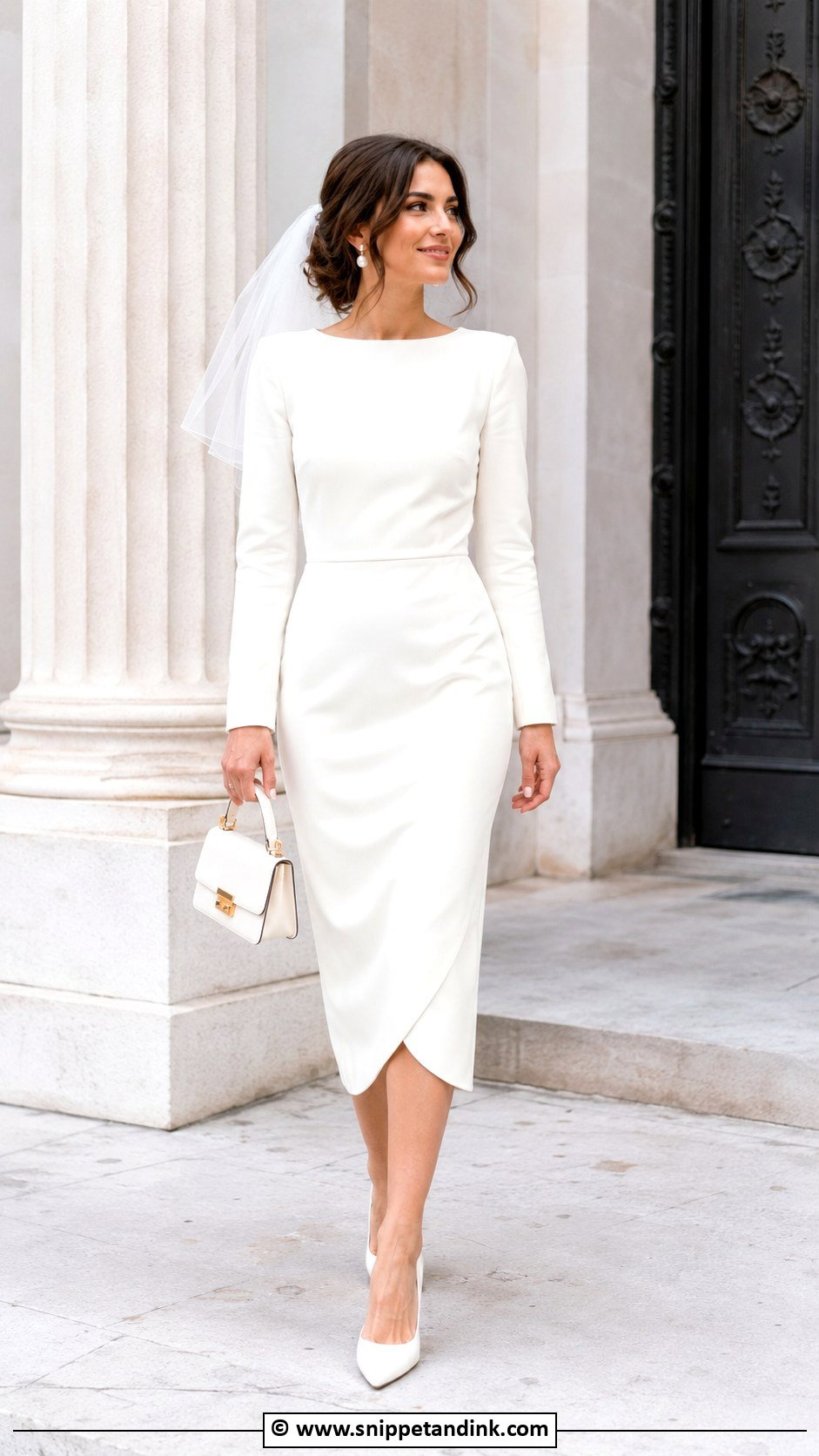
A courthouse wedding dress should be polished and comfortable in a city setting: a tailored midi, sleek mini, satin slip or simple crepe column. Add bridal cues with gloves, a short veil or a bow clip, plus pointed pumps, pearl earrings, a small bouquet and a structured bag. I think about the steps outside, since that’s where most courthouse photos happen, so test your heels on stairs. It should feel special without looking over-dressed for the room.
32. Reception Wedding Dress
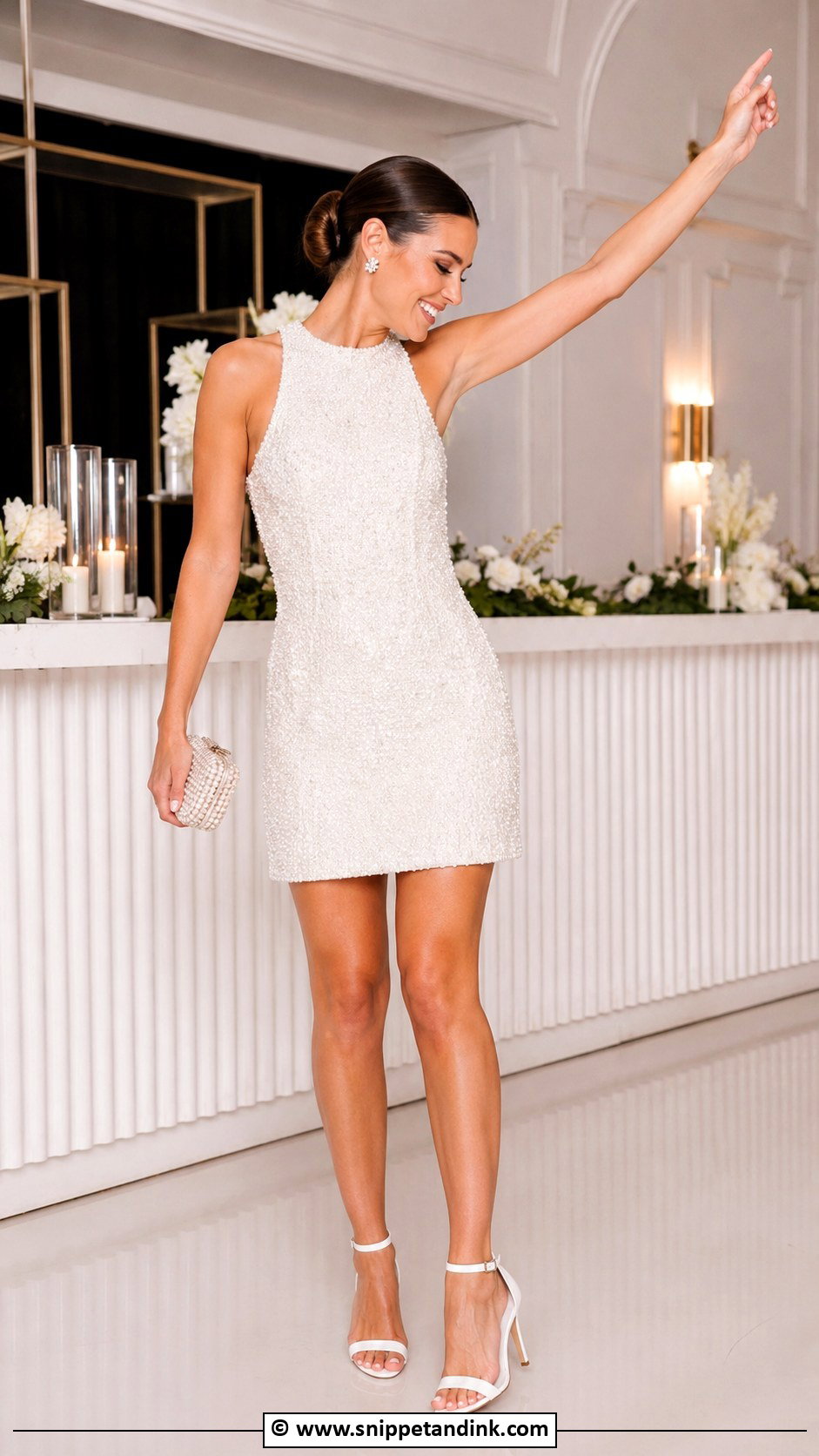
A reception dress is built for dancing and mingling: a mini, a feather-trimmed midi, a beaded sheath, a satin slip or a short lace dress. I treat it as the opposite of the ceremony gown. If the first look is classic, the second can be playful; if the first is dramatic, keep the second clean. Comfortable heels, sparkly earrings and a small clutch suit it. Check that your hairstyle works with both necklines, because the change happens fast and there’s rarely time to redo hair.
33. Plus Size Wedding Dress
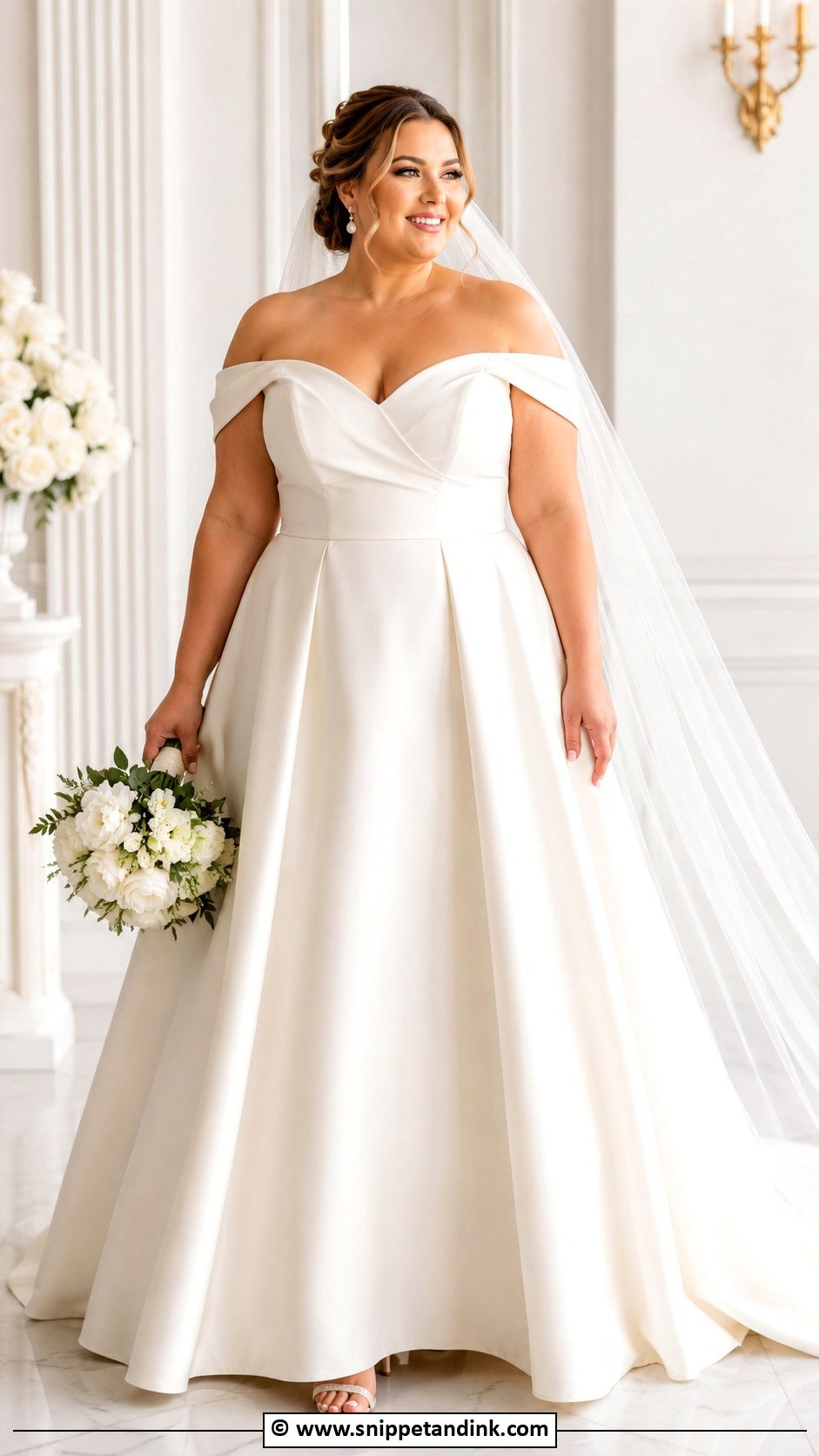
A plus size wedding dress should support your shape and feel comfortable from every angle. A-line gowns, corset bodices, wrap necklines, off-the-shoulder styles and fit and flare silhouettes all work well. Tailoring matters far more than the size on the tag, which is often smaller in bridal sizing than in high-street clothes anyway. I look for fabric with enough body to hold its line and check bust, waist and hem separately. Supportive undergarments and shoes you can genuinely stand in all day matter as much as the gown.
34. Maternity Wedding Dress
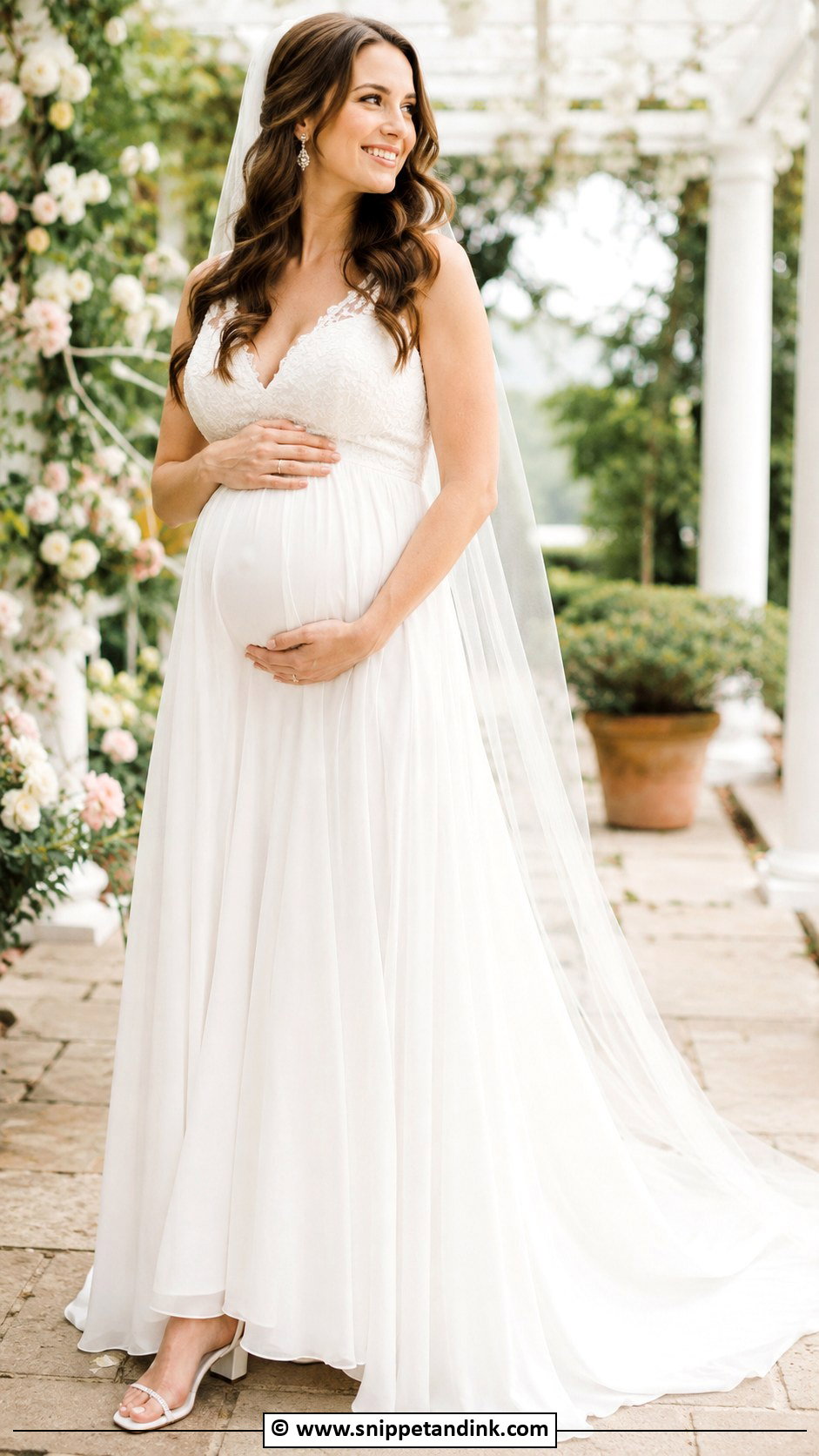
Timing is the hardest part of a maternity gown. Your measurements can change noticeably in the weeks before the wedding, so I’d plan the final fitting as close to the date as your seamstress allows. Empire waists, soft A-lines, stretch crepe and flowing chiffon give room while still looking dressed up. Avoid anything firm at the waist. Look for adjustable lacing, soft linings and easy closures, then add low block heels, delicate earrings and a lightweight veil.
35. Modest Wedding Dress
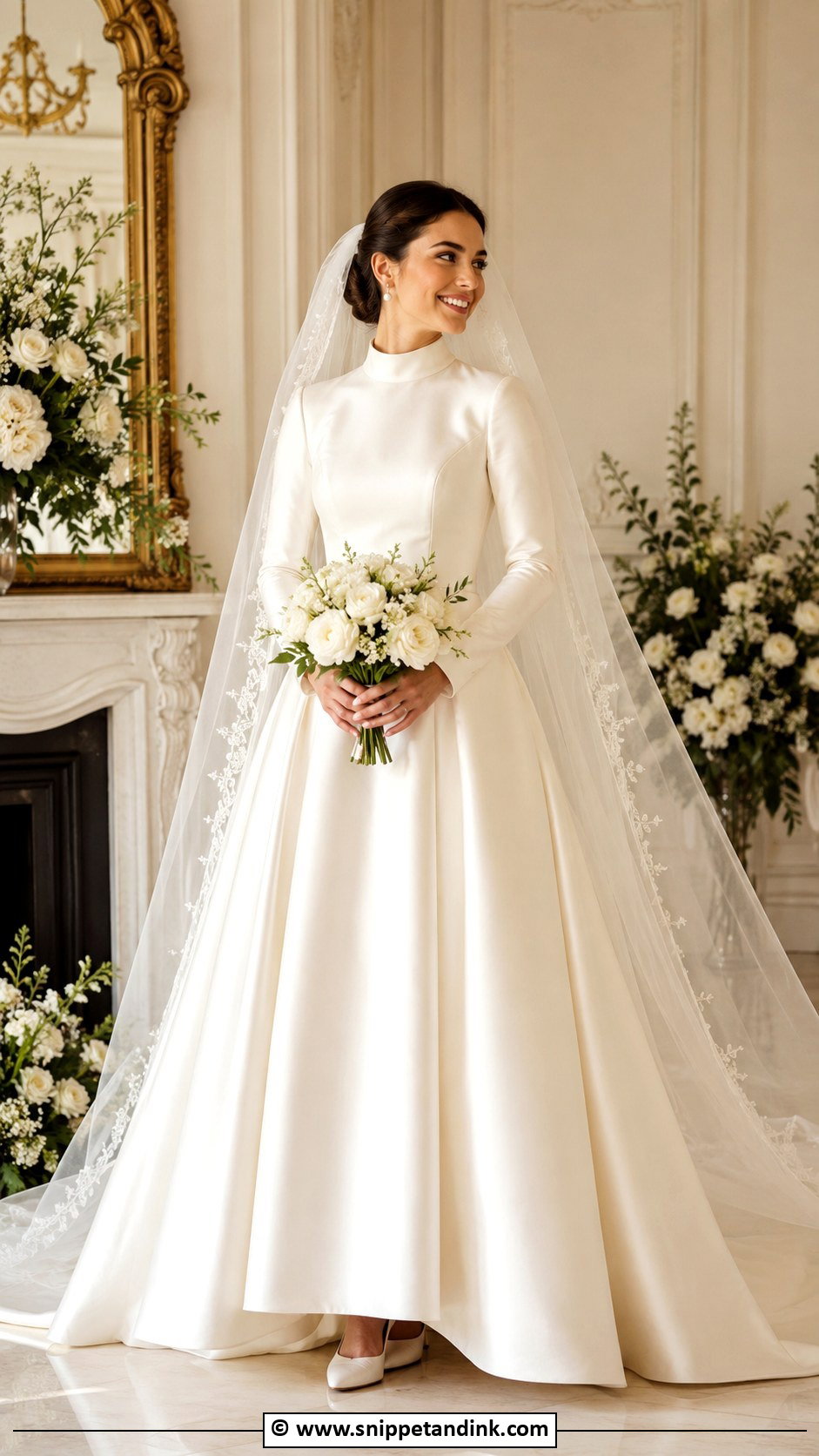
A modest gown can be fully covered and still modern. Long sleeves, higher necklines, lined bodices, full skirts or tailored columns all work, and texture keeps it from looking plain: lace, satin buttons, jacquard, pearl trim or a dramatic veil. For extra coverage, choose illusion sleeves with a lining or a matching bridal jacket. I check sheerness in daylight, as fitting-room lighting can make illusion panels look more opaque than they are. Closed-toe heels, pearl earrings and a polished hairstyle suit family-centred and formal weddings.
The Twenty Minutes Between a Ceremony Gown and a Party Dress
Several dresses here are built for a change: convertible skirts, detachable sleeves and a separate reception dress. The change itself is where things go wrong, so I plan it like a small job of its own.
Who, where and when
Pick one helper who has practised the fastenings at the final fitting, not whoever happens to be nearby. Ask the venue for a private room with a mirror and a hook high enough to hang a long gown. Most couples change after dinner or just before the first dance, so check with your planner or DJ that nothing is scheduled for those minutes.
What to pack in the change bag
- A padded hanger and a breathable garment bag for the ceremony gown.
- Different underwear if the second dress needs it, such as a backless or strapless bra.
- Shoes for the second look, plus blister plasters.
- Spare hair pins, a small mirror and your lipstick for a touch-up before you walk back in.
One more thing I’d check: does your hair work with both necklines? A high-neck ceremony gown and an off-shoulder party dress want different styles, and there’s rarely time for a stylist to redo hair mid-reception.
A Dress Has to Work Across the Aisle and Up Close
Think past the hanger and picture the whole day: venue, season, how much you’ll move, how it photographs, and the details that feel most like you. Some brides are happiest in a dramatic ball gown, others in a slip, a tea-length dress or a sharp courthouse outfit. There’s no single correct answer. Use the silhouettes, fabrics and colours above to compare what you’re drawn to, and then try on the shortlist with the shoes and underwear you’ll actually wear.
You'll Like These Ideas:






Leave a Reply