
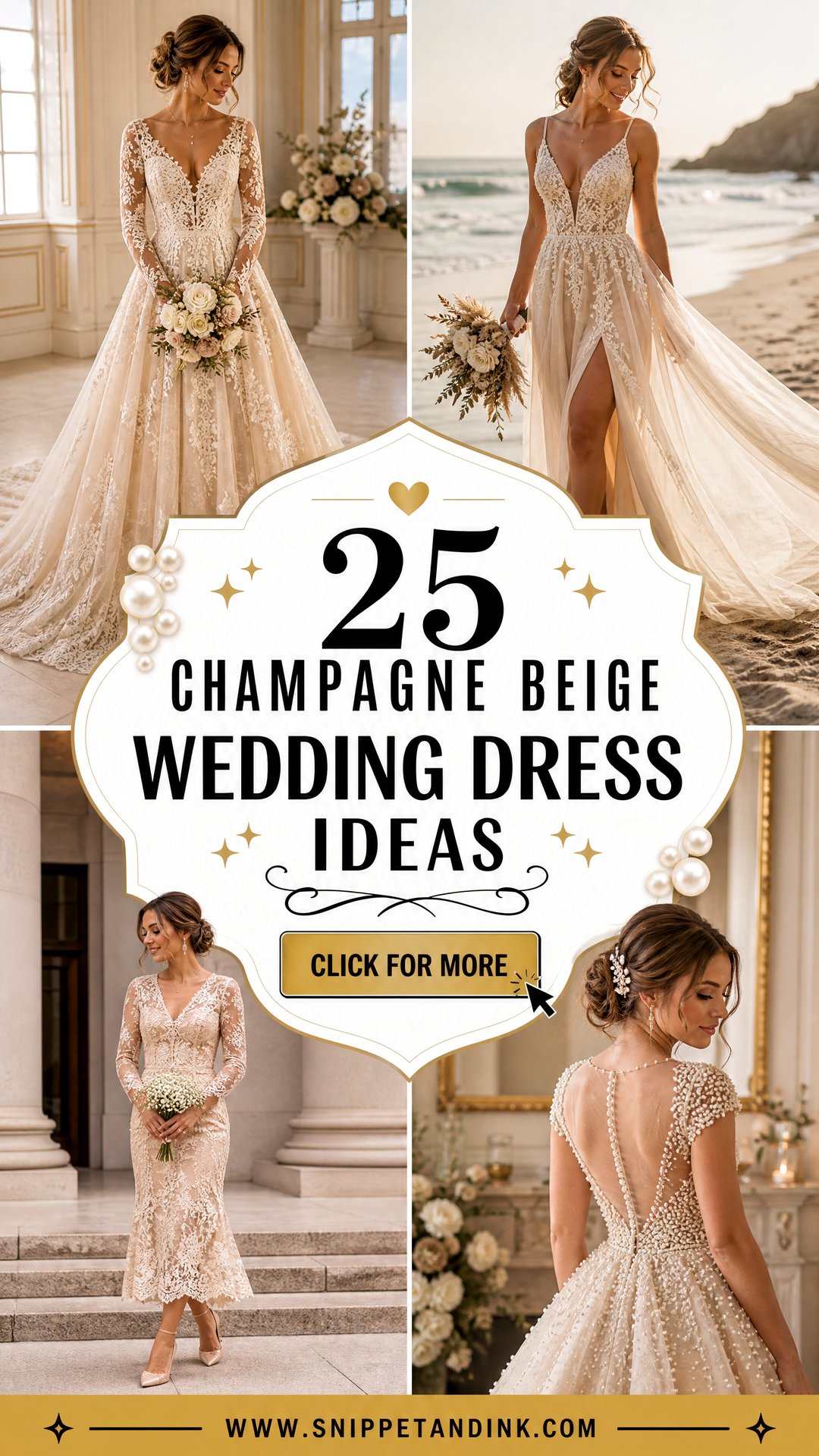
Champagne beige sits somewhere between ivory and gold, and it rarely looks the same twice. Depending on the fabric and the light it can read golden, sandy, taupe, blush-beige, or antique ivory, which is exactly why I enjoy fitting it and why I never let a bride decide on it under a single shop bulb. On most skin tones it’s kinder than bright white, because there’s less contrast at the neckline. The gown is only half the job, though. The veil, shoes and bouquet all have to sit in the same warm family, or the dress starts to look like it was meant to be white and faded. Below are 25 ways to wear it, with the details I’d watch on each.
Holding Champagne Against Your Skin in Three Kinds of Light
Champagne is a family, not one color. Some versions lean pink, some lean gold, some lean almost grey, and the difference comes from the dye and from whatever lining sits underneath. That’s why I never judge it under a boutique spotlight alone.
What I do at the appointment
- Step to a window first. Daylight shows the true undertone and whether the gown looks warm or slightly muddy against your skin.
- Then stand under ordinary warm indoor bulbs. Gold-leaning champagne can turn yellow here, and pink-leaning shades get rosier.
- Ask someone to take a phone photo with flash. Flash flattens color and shows whether the dress reads as white, beige or nude from a few feet away.
- Hold a sheet of white paper against the skirt. If the gown suddenly looks dirty beside it, expect pure white accessories to do the same.
Skin tone matters, though less than people fear. On fair skin with pink undertones, a very gold champagne can wash the face out, so I reach for a blush-leaning shade. Olive and deeper skin tones usually carry the golder, sandier versions well. If the shade sits too close to your own skin, a slightly lighter lining or a lace overlay adds the contrast back. Ask for a fabric swatch to take home; you’ll need it later for the veil, the shoes and the florist.
1. Champagne Beige Lace Wedding Dress
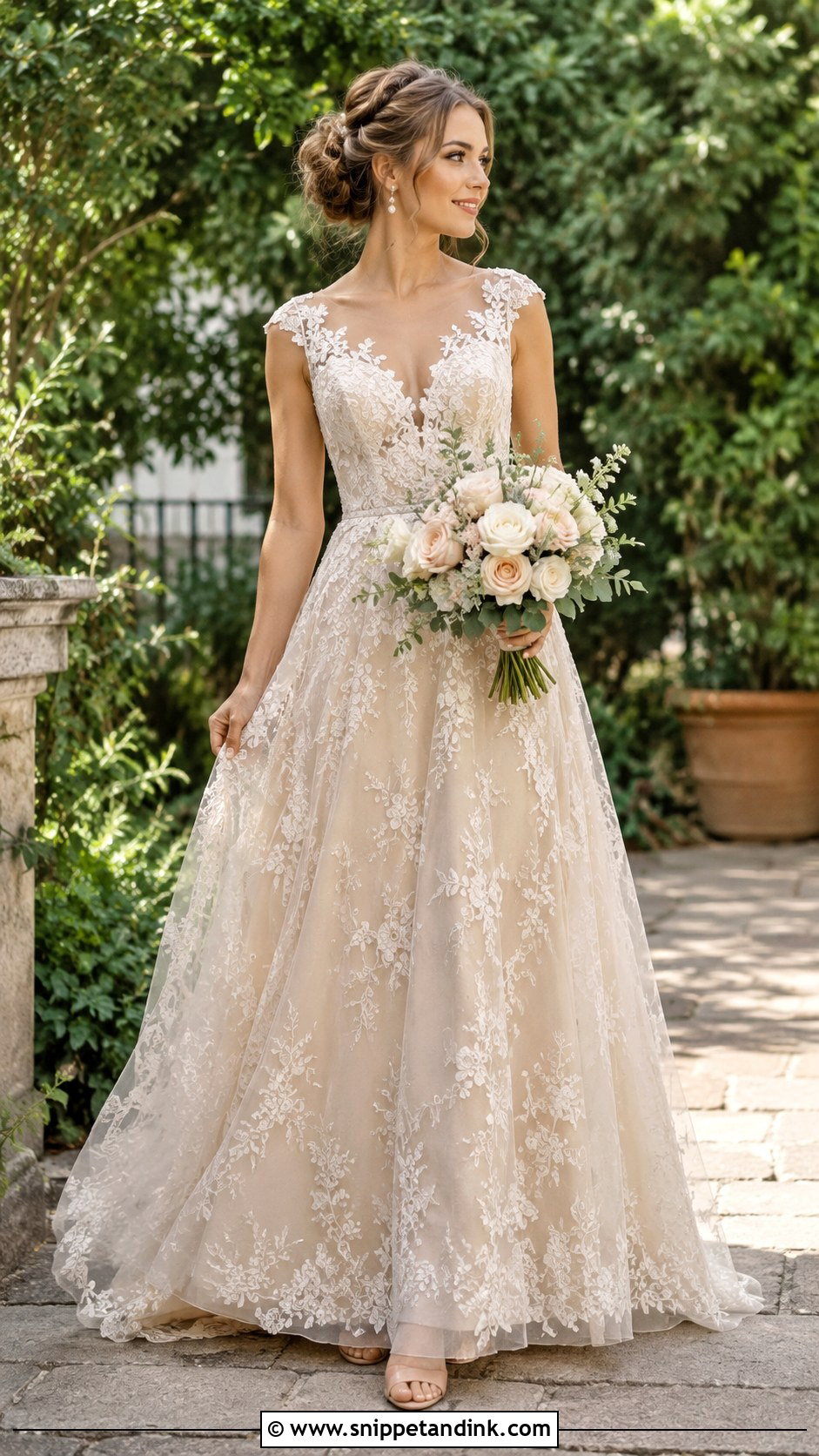
Lace is where champagne earns its keep. When ivory lace is laid over a champagne or nude lining, every motif lifts off the base, and the camera picks up the flowers instead of one flat white surface. Before you buy, I’d ask the shop whether the lace itself is champagne or whether it’s ivory over a colored underlay, because that changes how the veil should match. An A-line or fit-and-flare moves well through a long day. I’d finish it with a sheer veil trimmed in the same lace, pearl earrings and nude block heels, which also stop you sinking into the lawn at a garden or estate ceremony.
2. Champagne Beige Satin Wedding Dress
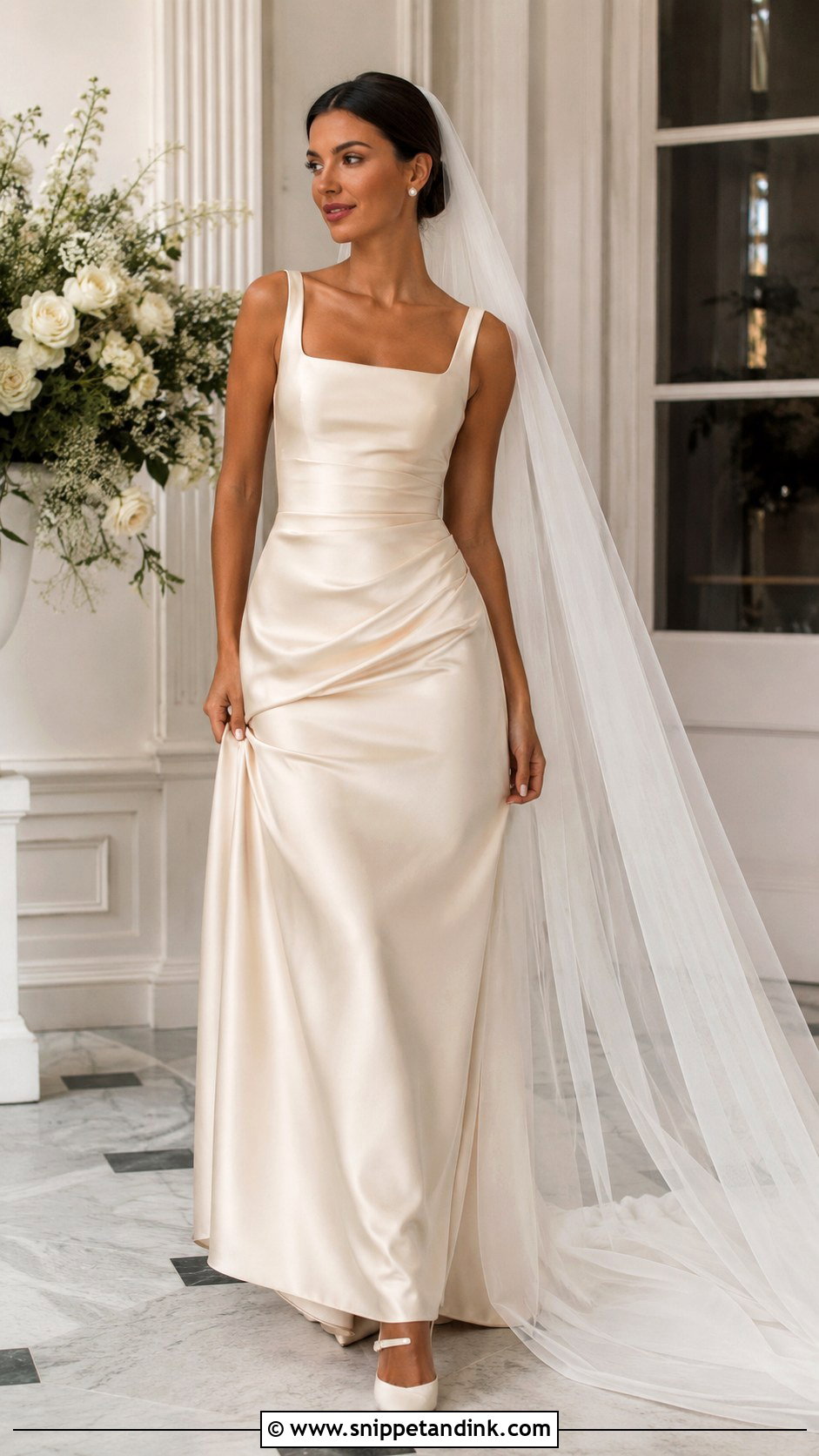
Satin shows every seam and every crease, so the cut matters more here than in any other fabric on this list. A square neckline or a soft cowl in champagne satin gives a warm glow with almost no decoration. The catch is that satin creases across the lap the moment you sit, and champagne shows those creases as darker lines in flash photos. I’d steam it on the hanger right before you dress and stand for the car ride if you can. Keep the rest sleek: pointed ivory heels, a low bun, pearl studs and a long plain veil for the ceremony. Hotel ballrooms suit it because the evening lighting runs warm and the sheen picks it up.
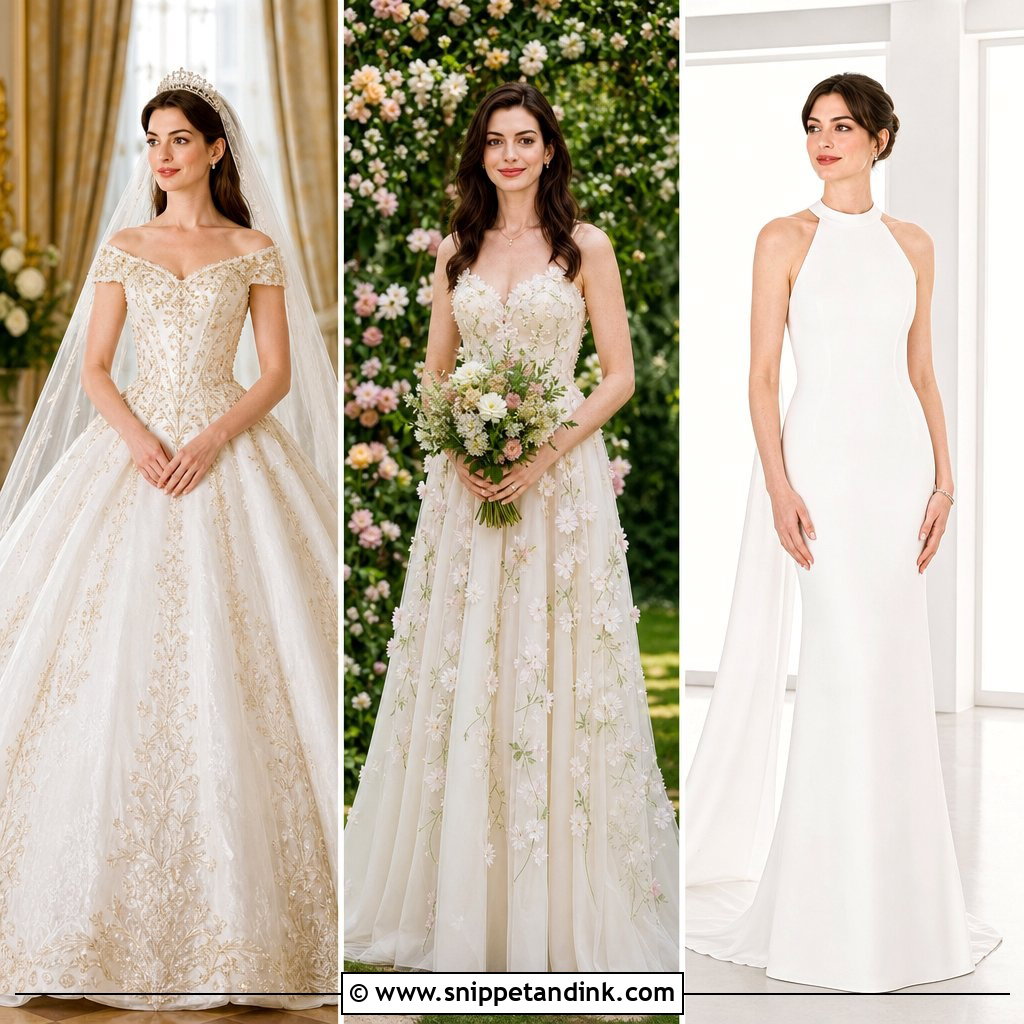
3. Champagne Beige Ball Gown Wedding Dress
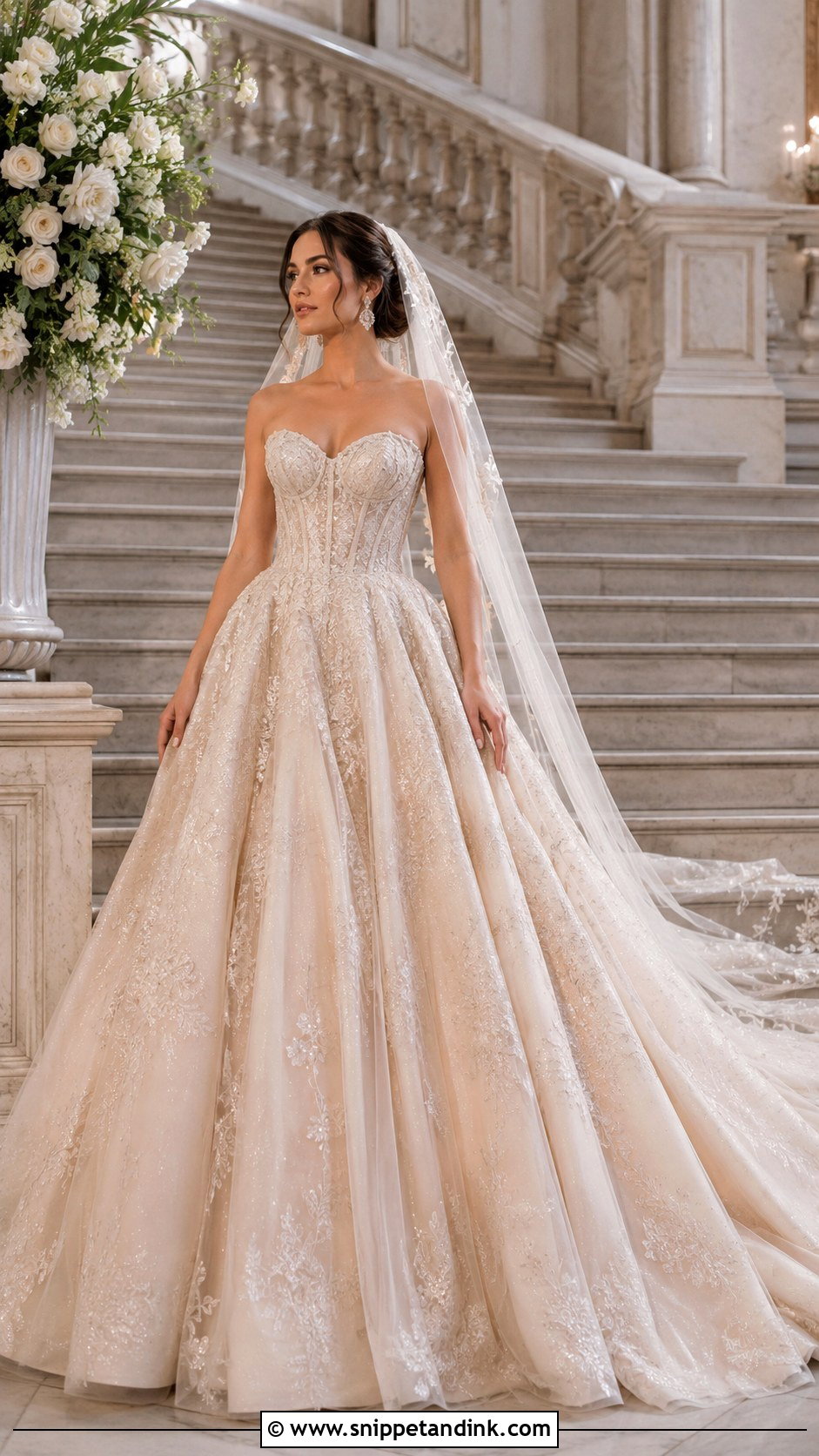
A champagne ball gown makes the same entrance as a white one, only warmer and a touch more regal. The weight is what I warn brides about. Layered tulle or a full satin skirt can feel heavy by the reception, so a corset bodice that really carries the skirt from the waist matters more than the beading on top. Delicate beading and a cathedral veil suit the scale. Crystal drop earrings and a neat updo keep the neck clear, and since nobody sees your shoes, satin platforms are there for height and comfort rather than show. Formal indoor venues and historic buildings give the skirt room to sit properly.
4. Champagne Beige Tulle Wedding Dress
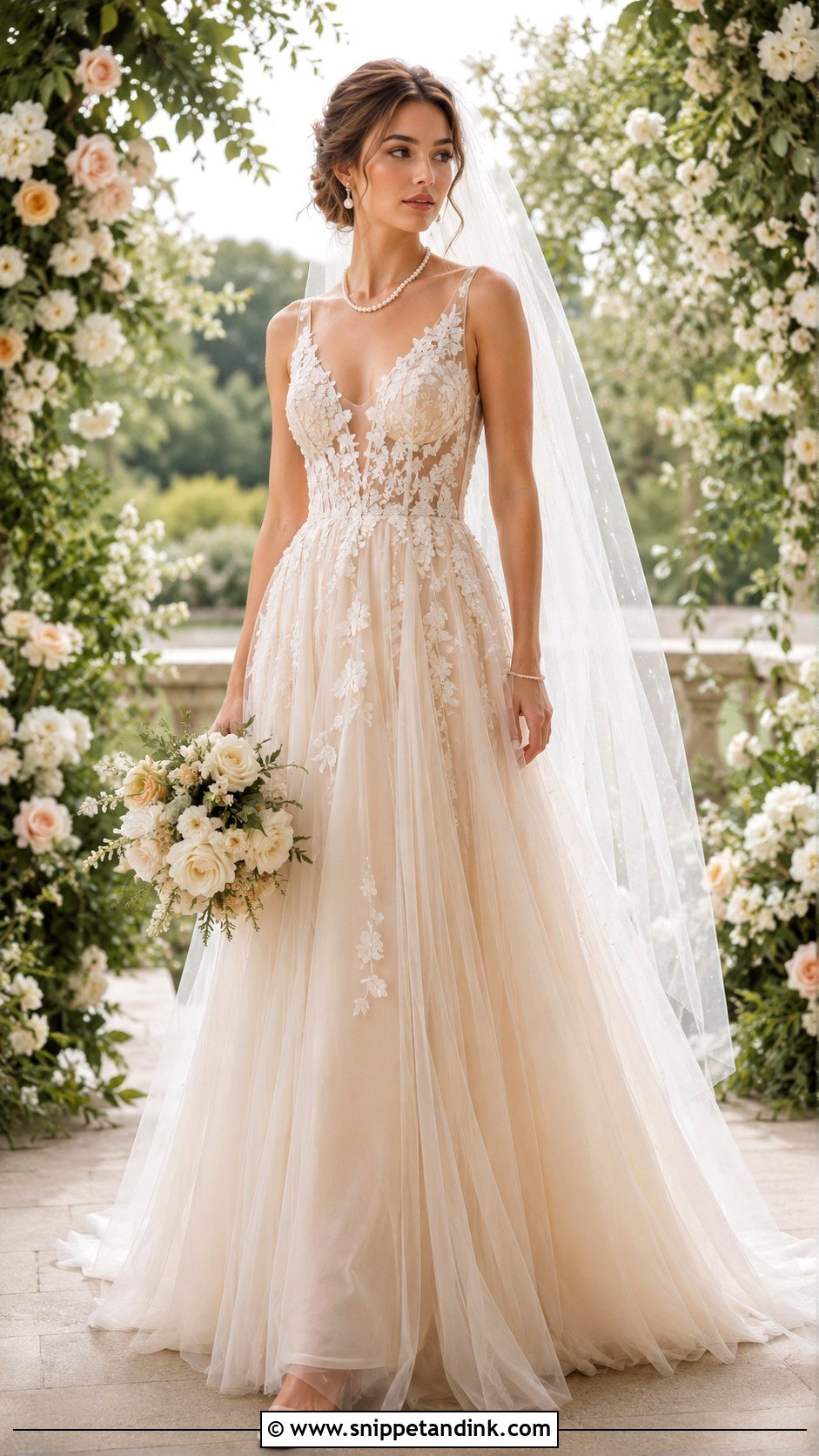
Tulle in champagne usually reads lighter than it is, because the layers let light through and the color softens toward cream. A tulle A-line with a sheer neckline and a few scattered beads keeps that floating quality. One thing I check is the number of skirt layers: too few and the lining shows as a darker band in backlit photos at sunset. Loose waves, barely-there sandals and a fingertip veil keep it airy, and cream roses with pale peach blooms tie the warm undertone back into the bouquet.
5. Champagne Beige Mermaid Wedding Dress
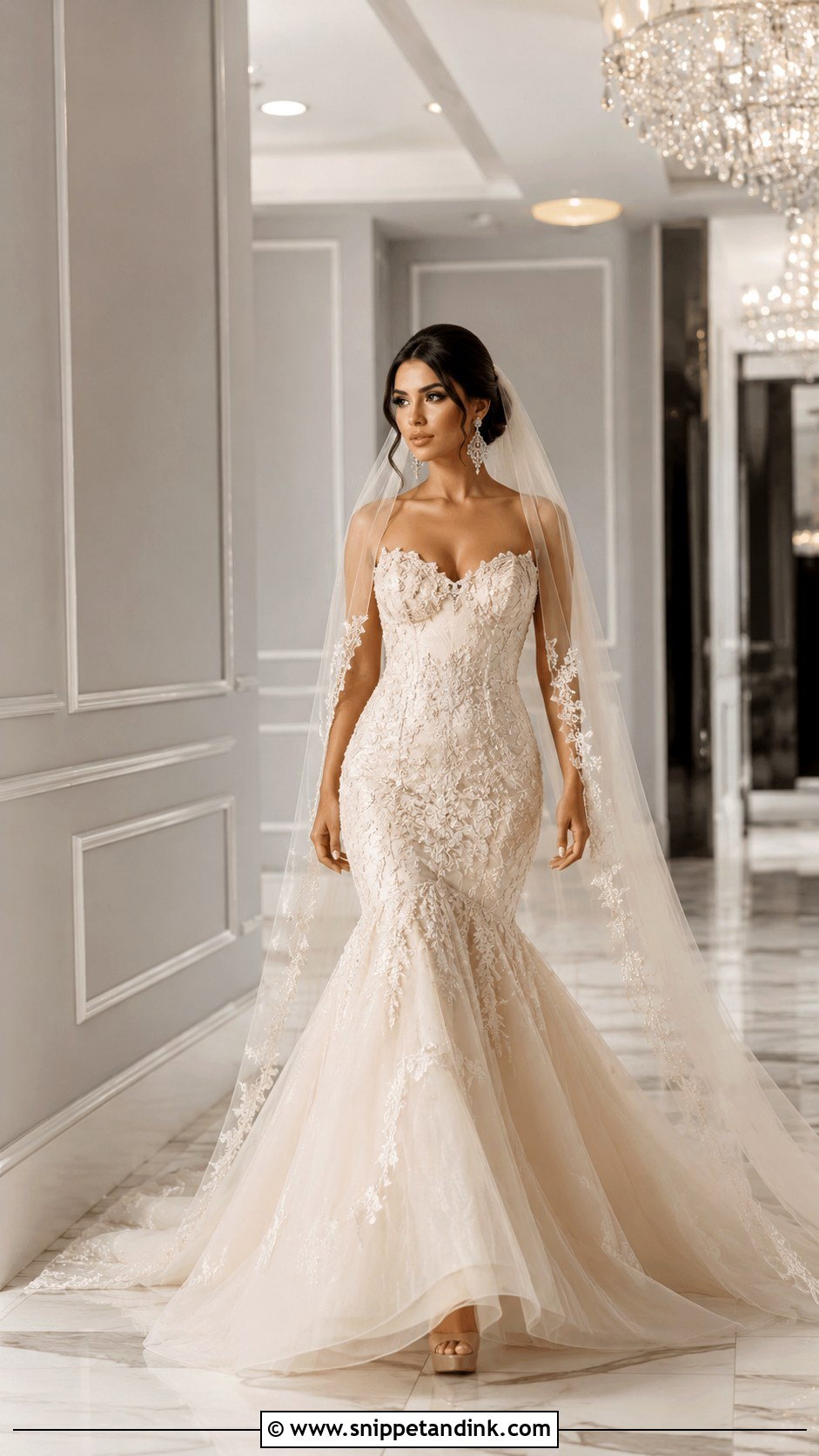
The mermaid shape holds you closely to the knee and then flares, so the fit is unforgiving and the alterations matter more than the fabric. I always have brides sit, climb a step and walk quickly at the final fitting, because a flare set too low makes stairs genuinely hard. Lace, crepe, satin or beading all work in champagne. With the silhouette doing so much, I’d keep the hair sculpted and close to the head, add statement earrings and use a long veil to lengthen the line. Ballrooms and formal receptions give it the setting it asks for.
6. Champagne Beige A Line Wedding Dress
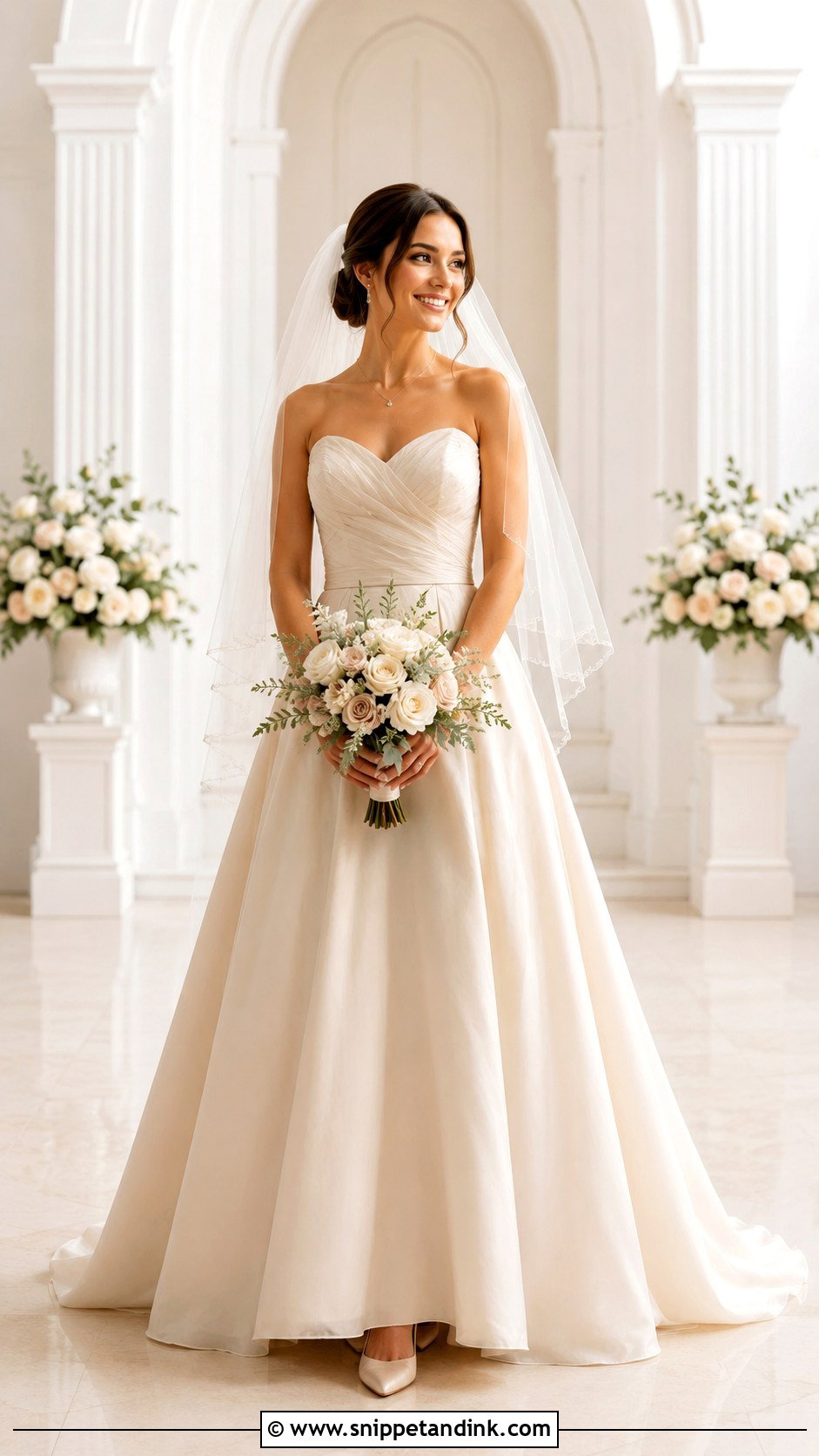
An A-line is the shape I suggest when a bride isn’t sure, because it skims the waist and clears the hips without demanding anything of her body. You can sit, dance and get in and out of a car without a team behind you. In champagne, organza and satin hold the A shape crisply, while soft lace drops closer to the legs. Classic pumps, a medium-length veil, simple studs and neutral blooms are all it needs. It’s as at home in a garden as in a banquet hall, and the photos age well because nothing about it is tied to one season’s trends.
7. Champagne Beige Boho Wedding Dress
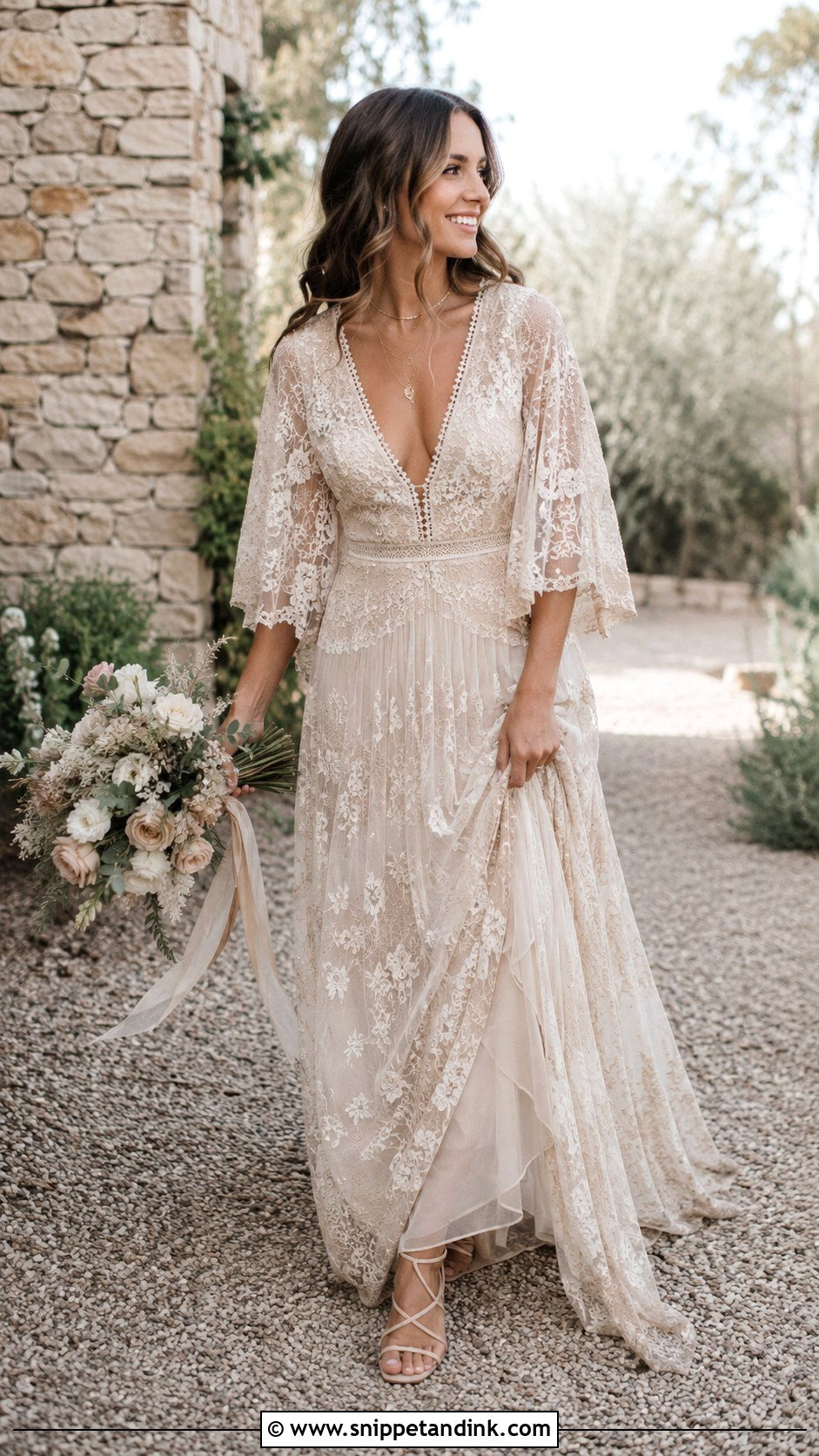
Boho gowns are often made in champagne already, since crochet-style lace and embroidery look more natural on a warm base than on optic white. Flowing sleeves and a relaxed sheath suit outdoor and destination weddings. Fine crochet lace snags, though. I’d hitch up any hem that will drag over rough ground and leave pronged bracelets at home. Dried florals and pampas textures echo the beige well. Low block heels or sandals, loose waves and a floral comb in place of a full veil keep it relaxed for beaches, deserts and backyards, where a stiff formal gown would look out of place.
8. Champagne Beige Beaded Wedding Dress
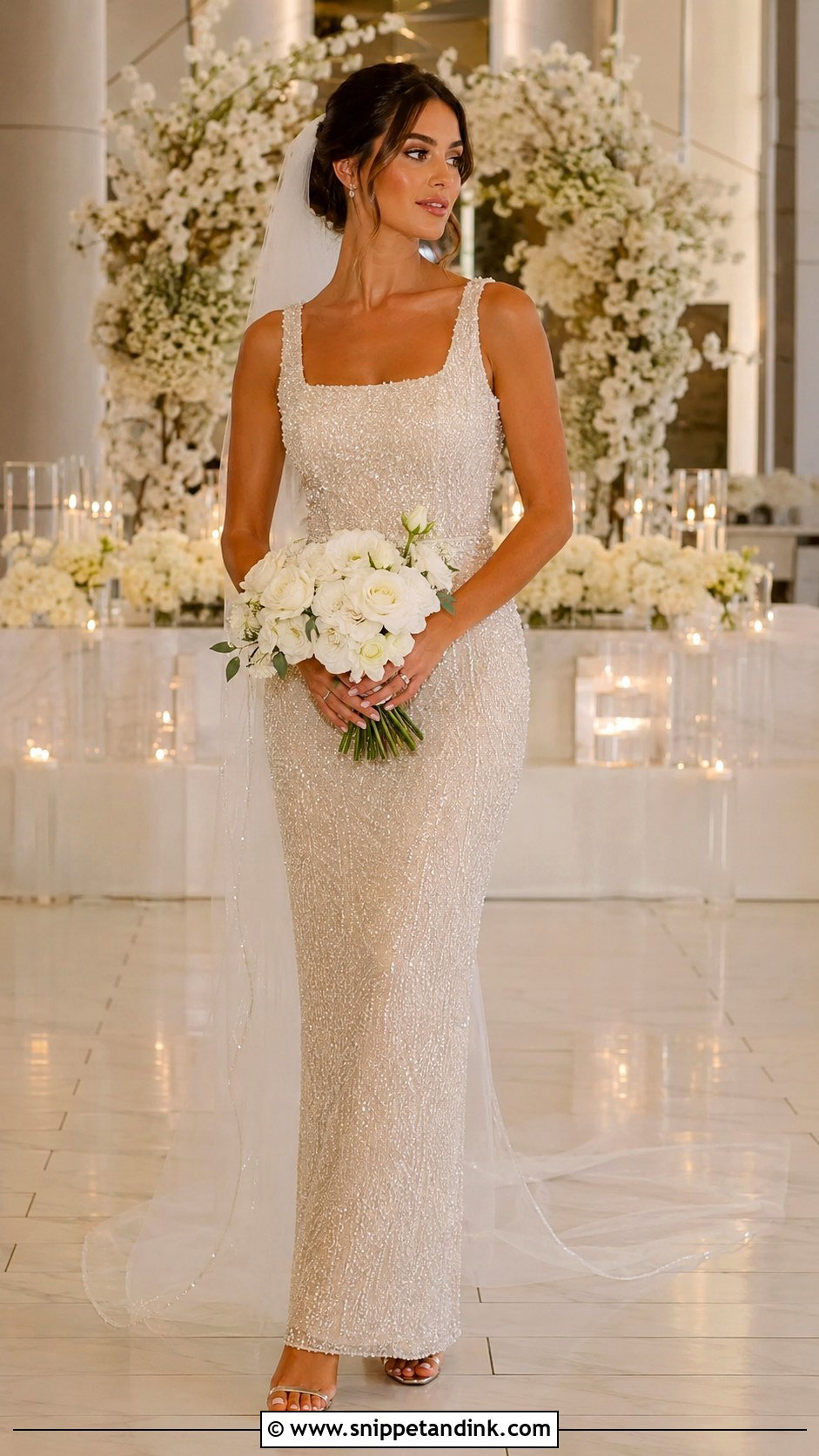
Champagne tones the sparkle down, so a beaded gown in this color glows rather than glitters. That’s why I like it for brides who are nervous about sequins. Beading is heavy, though, and on a fitted sheath or column it pulls the fabric downward through the day, so check the straps and the internal waist stay at fittings. The dress is already busy, which means the accessories stay quiet: metallic heels, crystal studs, a simple veil and a sleek clutch later on. Evening light on a rooftop or in a hotel picks up every bead.
9. Champagne Beige Off Shoulder Wedding Dress
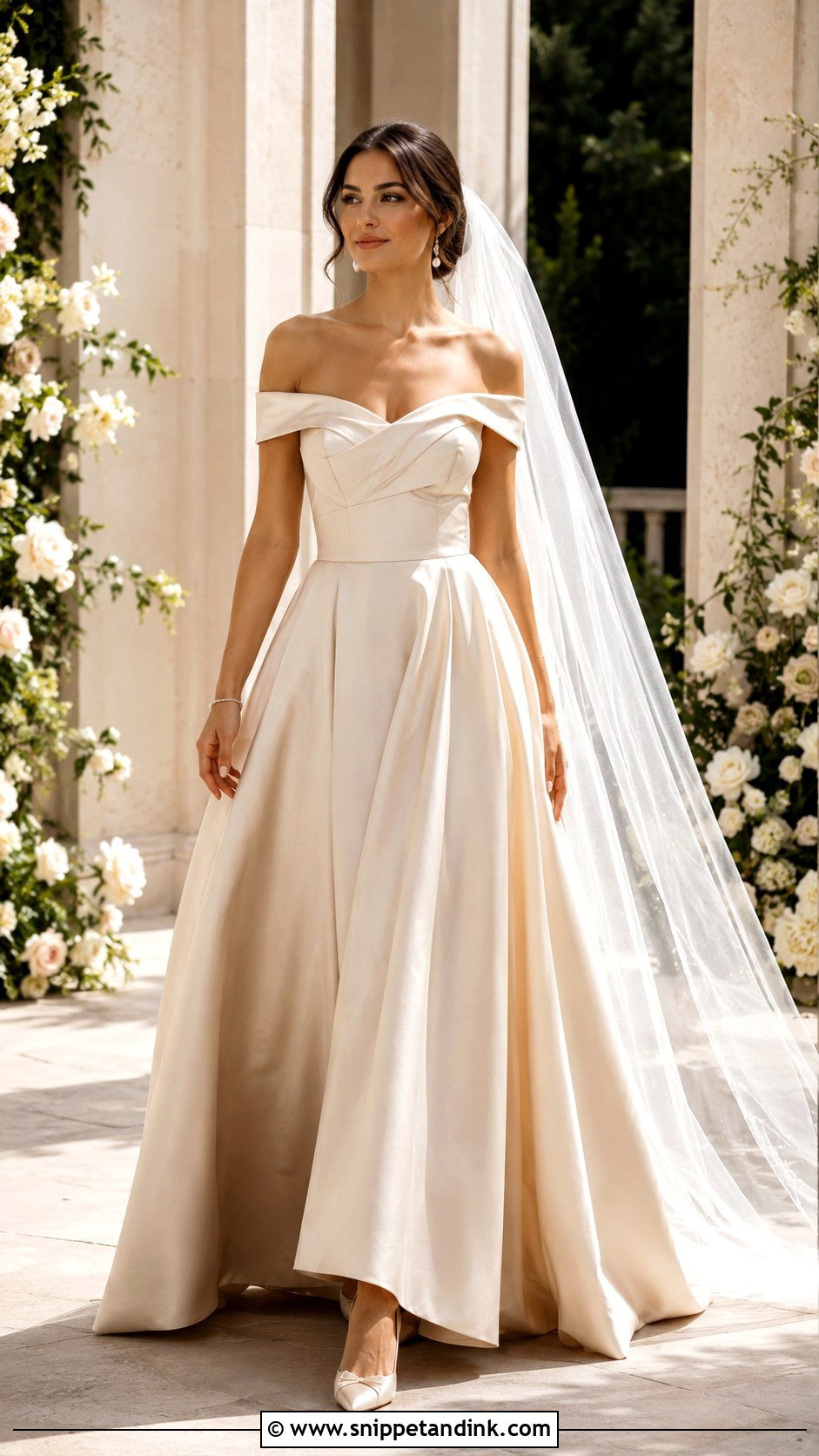
An off-shoulder neckline frames the collarbone, and champagne beside the face is softer on the skin than stark white. The real question is whether the bodice holds you up without straps. I ask brides to lift their arms as if hugging a guest, because off-shoulder bands ride up when the bodice isn’t built firmly enough. Structured bodices stay put; draped satin or lace sleeves sit looser. A chignon, pearl drops, closed-toe heels and a chapel-length veil finish it. Skip the necklace if the band sits low on the arm, since the two lines compete.
10. Champagne Beige Corset Wedding Dress
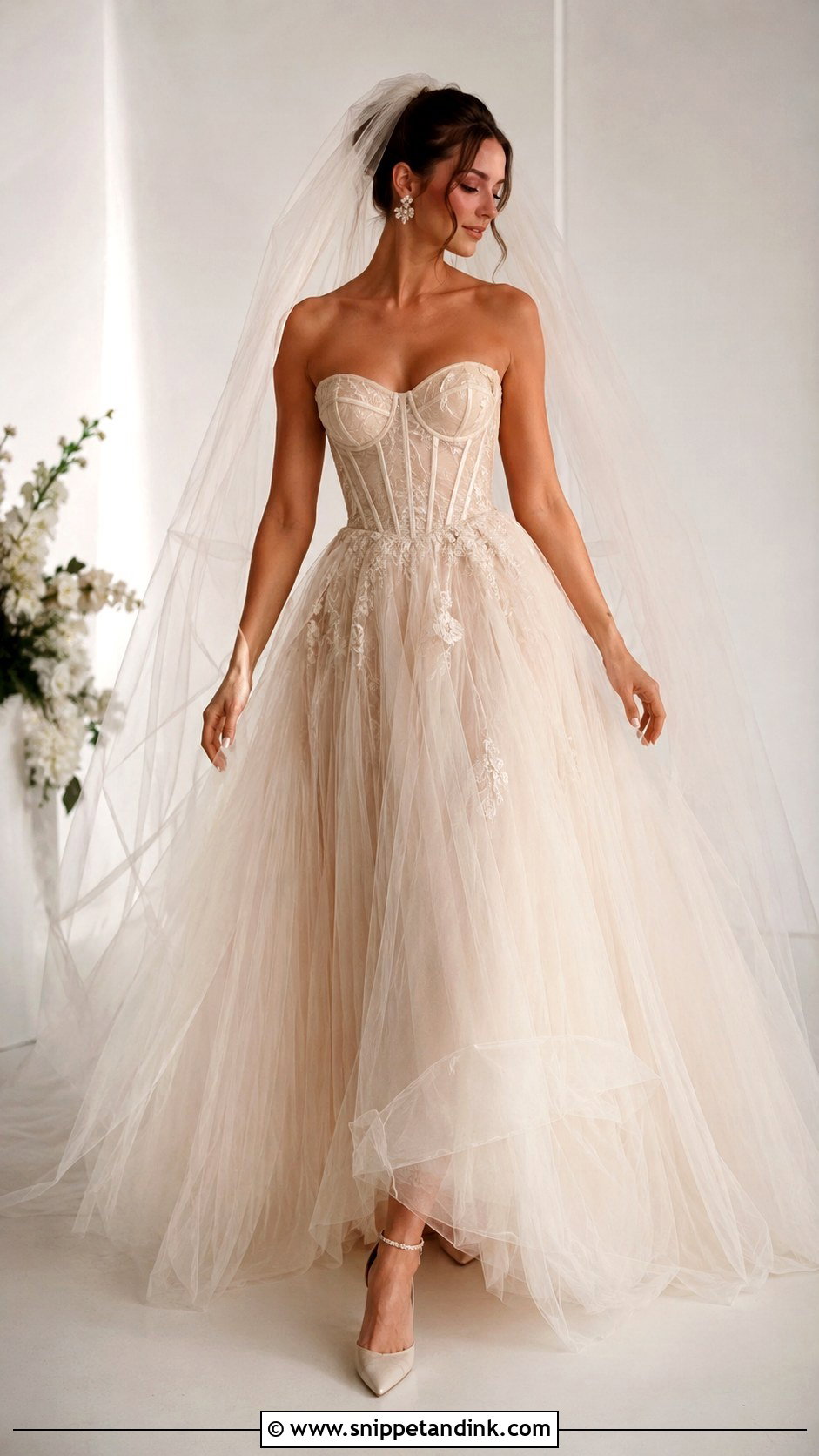
A corset bodice gives the waist real definition, and the boning does the supporting, so most brides can skip a separate bra. Visible corsetry looks fashion-led; a corset hidden under lace or satin feels classic. I fit corsets snug but never so tight that breathing through a long ceremony becomes work. Lace-up backs are the friendly option because they can be eased after dinner. Pair it with a full tulle skirt or a sleek satin one, add pointed heels and a dramatic veil, and you get a defined shape that still moves.
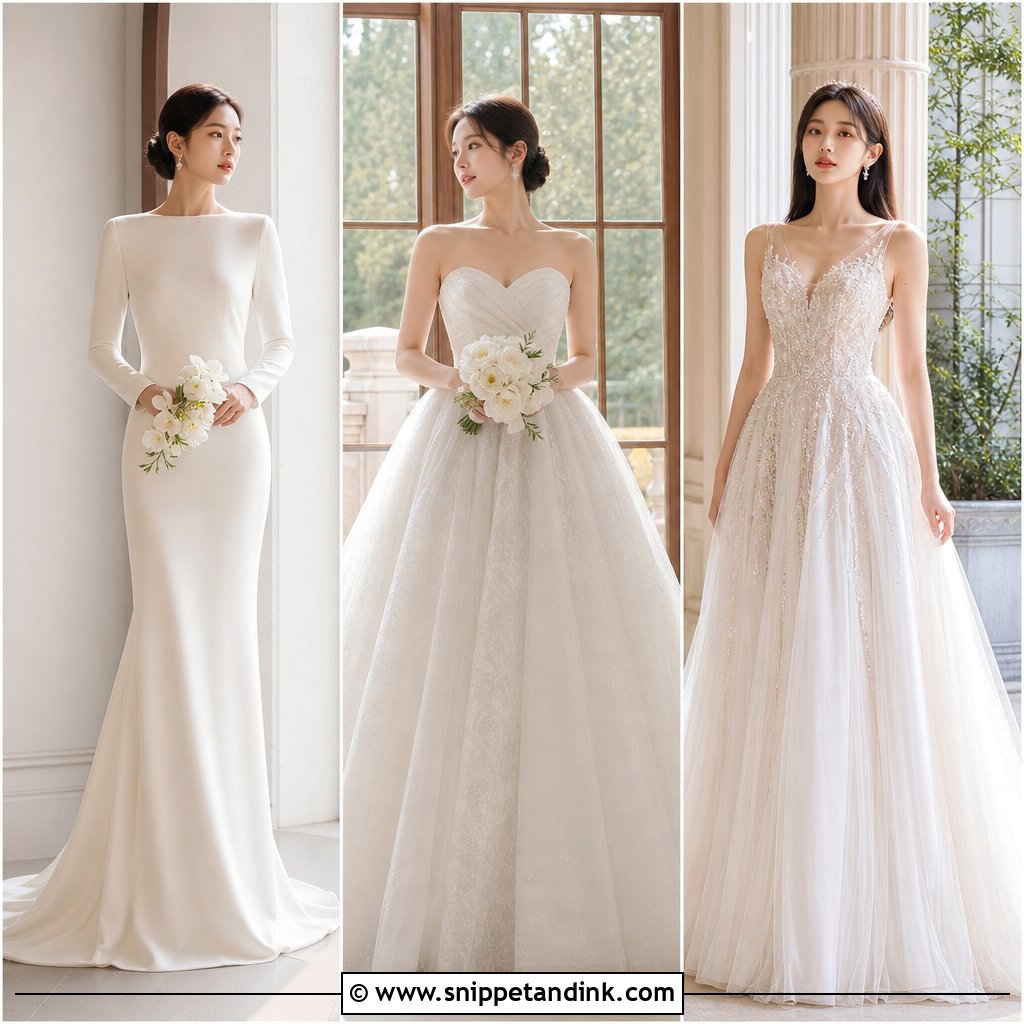
11. Champagne Beige Long Sleeve Wedding Dress
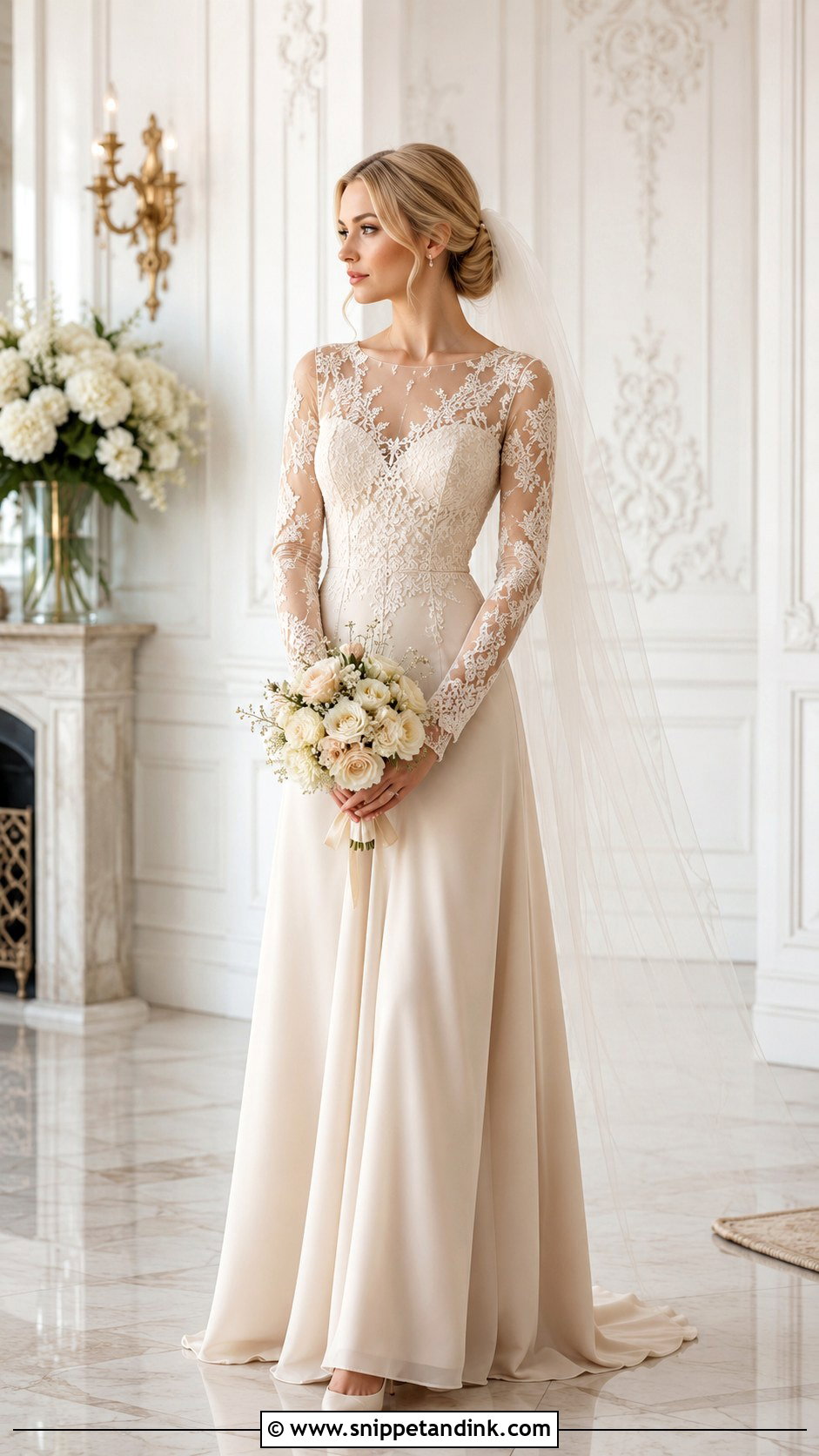
Long sleeves soften in champagne, especially in lace or mesh, where your skin tone shows through the pattern. Sheer lace sleeves feel romantic; fitted crepe ones look clean and modern. Sleeves are the part brides forget to move in. I always ask for arms raised to shoulder height at a fitting, since a tight armhole means you can’t hug anyone or toss a bouquet. Closed-toe heels, a smooth veil, a low bun and small jewelry work best. For fall and winter weddings this is my first suggestion, because a cold bride in a strapless gown rarely enjoys her outdoor portraits.
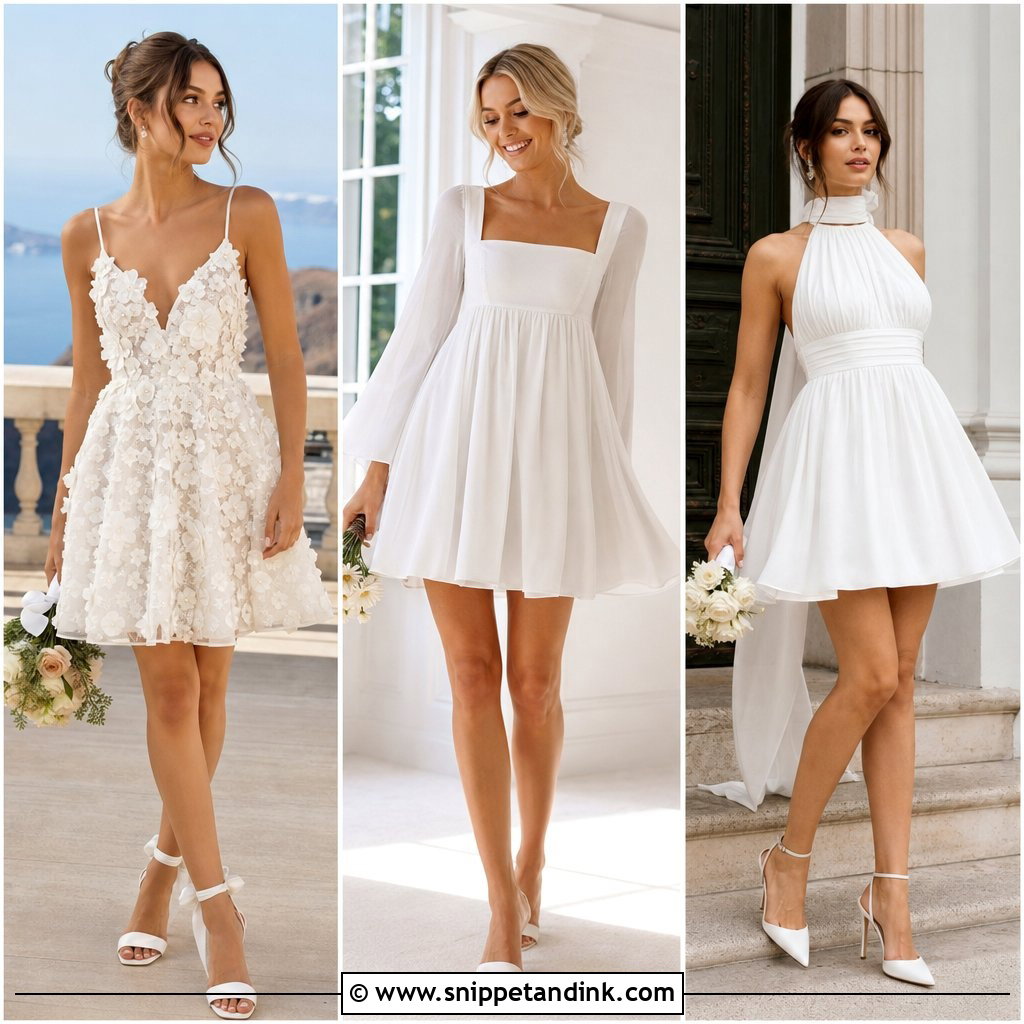
12. Champagne Beige Short Wedding Dress
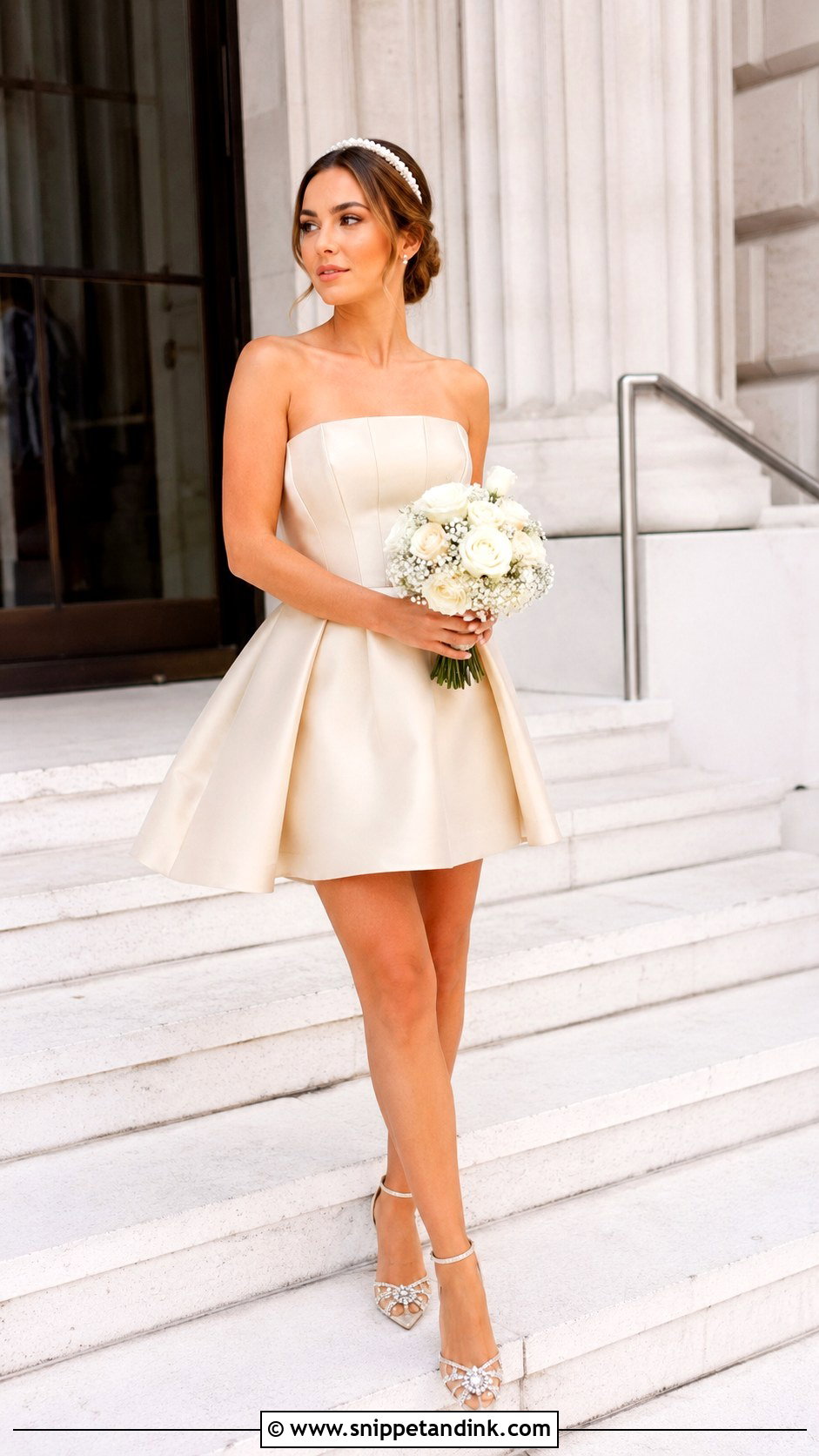
A short champagne dress is the practical choice for civil ceremonies, elopements, or a second look later in the night. With a shorter hem your shoes become part of the outfit, so I’d put the money into satin pumps or ankle-strap sandals that are already broken in. A structured mini reads modern, and a tea-length lace dress leans vintage. A birdcage veil or pearl headband adds the bridal signal without a long veil. Keep the bouquet compact, because a large posy swamps a short hemline in full-length photos.
13. Champagne Beige Slip Wedding Dress
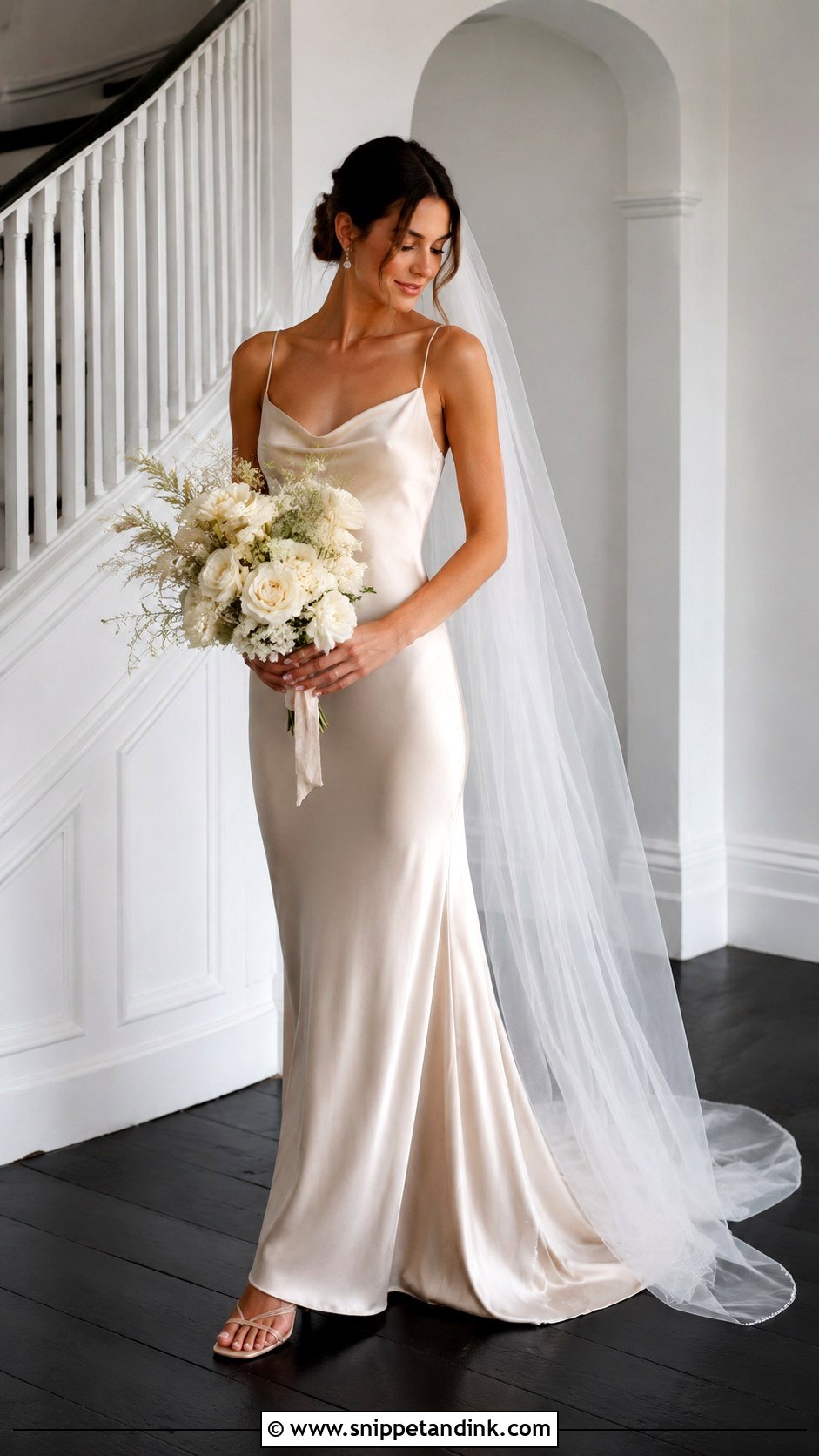
Slip dresses are cut on the bias, which is why they drape and move so well, and also why they cling. Bias satin shows every line underneath, so I fit these with smooth, skin-matched underwear and check them under bright light before anything else. Champagne helps here: it’s more forgiving than white satin, which can turn see-through in sun. Strappy heels, a sheer veil, delicate earrings and a clean bouquet keep the attention on the cut. A wrap or tailored blazer covers your arms for the ceremony and comes off for dinner. Destination weddings and small celebrations suit it best.
14. Champagne Beige Vintage Wedding Dress
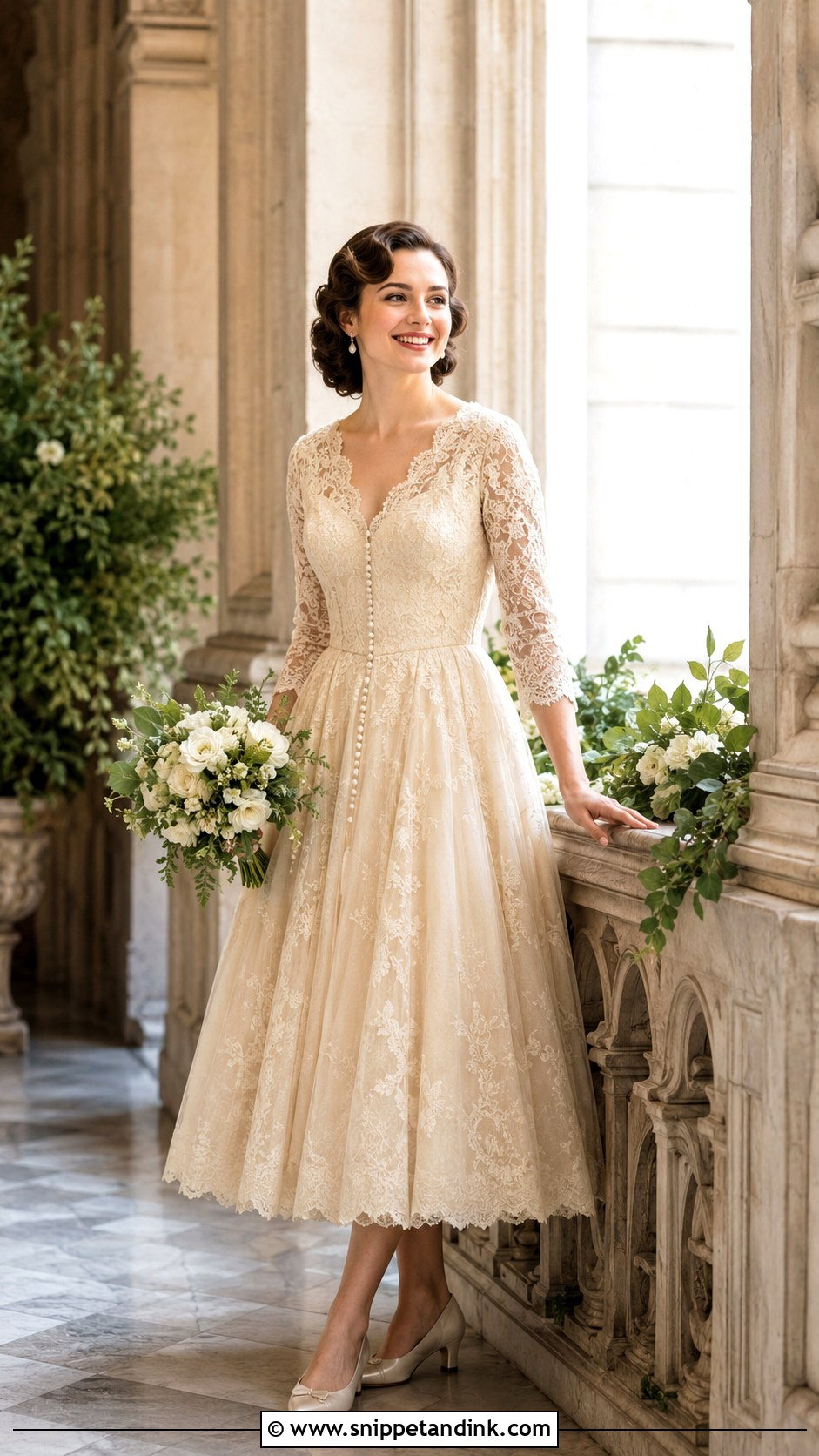
Vintage-inspired champagne beige wedding dresses look natural because the color already carries an antique softness, the way old lace mellows with age. Lace sleeves, high necklines, tea-length skirts and pearl buttons each nod to a different era, whether 1920s, 1950s or old Hollywood. The trap is going full costume. I’d pick one period detail as the anchor and keep the rest current: pearl earrings and soft curls, but a modern veil with only a light lace edge. A small bouquet of cream flowers and muted greenery keeps it nostalgic rather than theatrical, and historic venues frame it naturally.
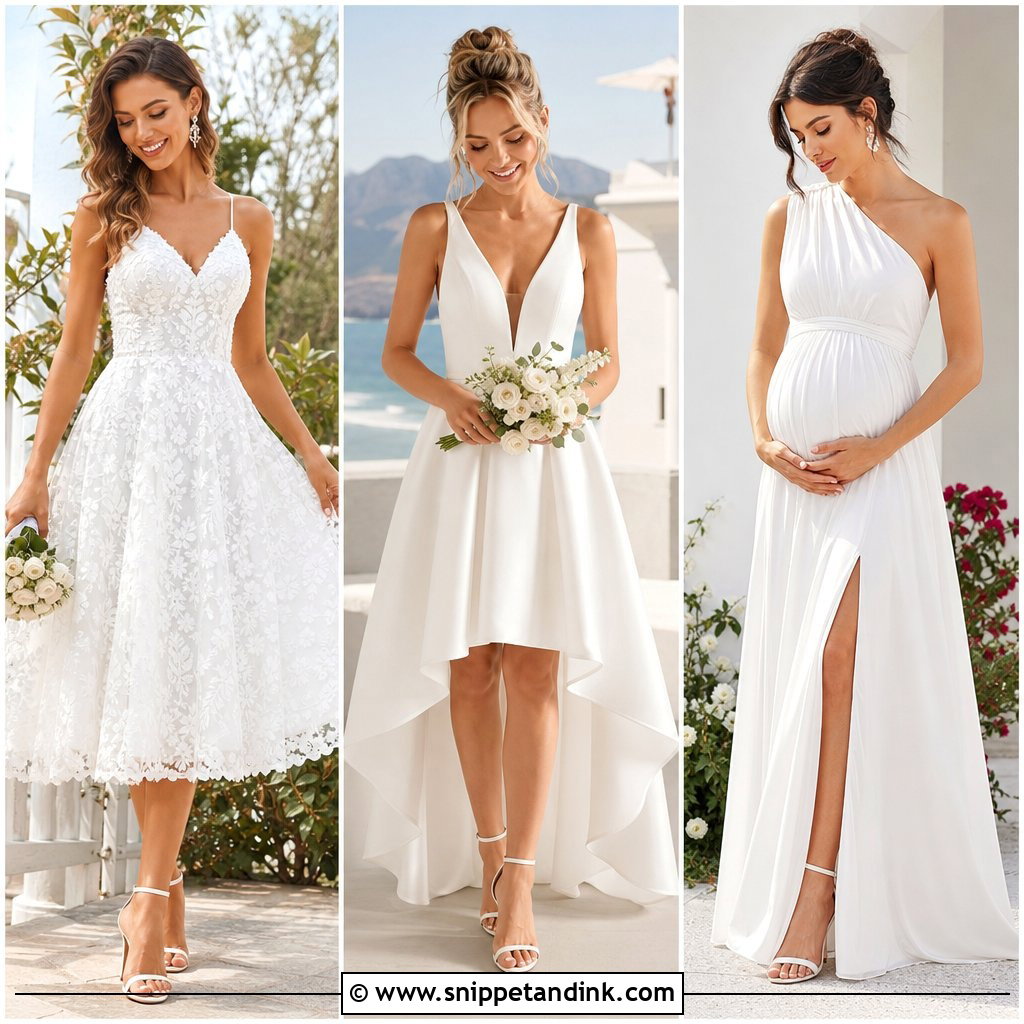
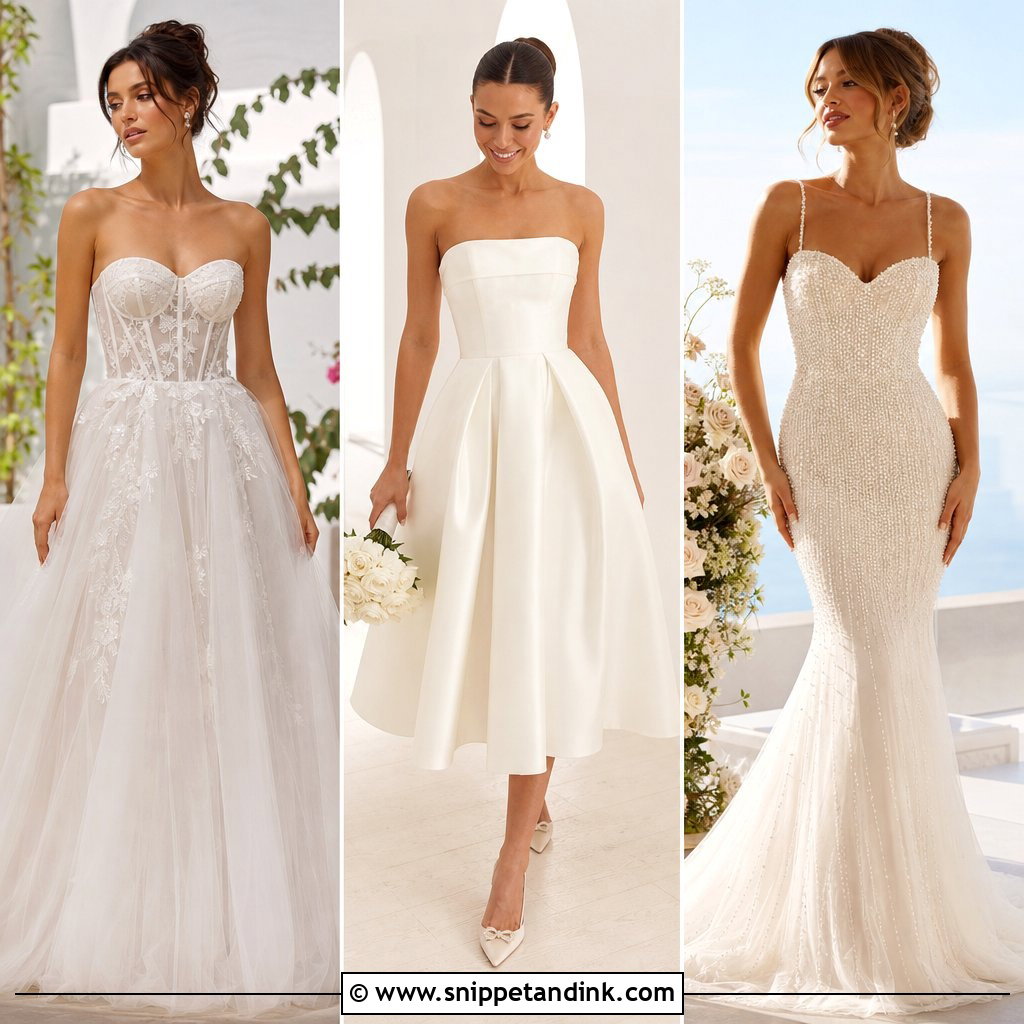
15. Champagne Beige Plus Size Wedding Dress
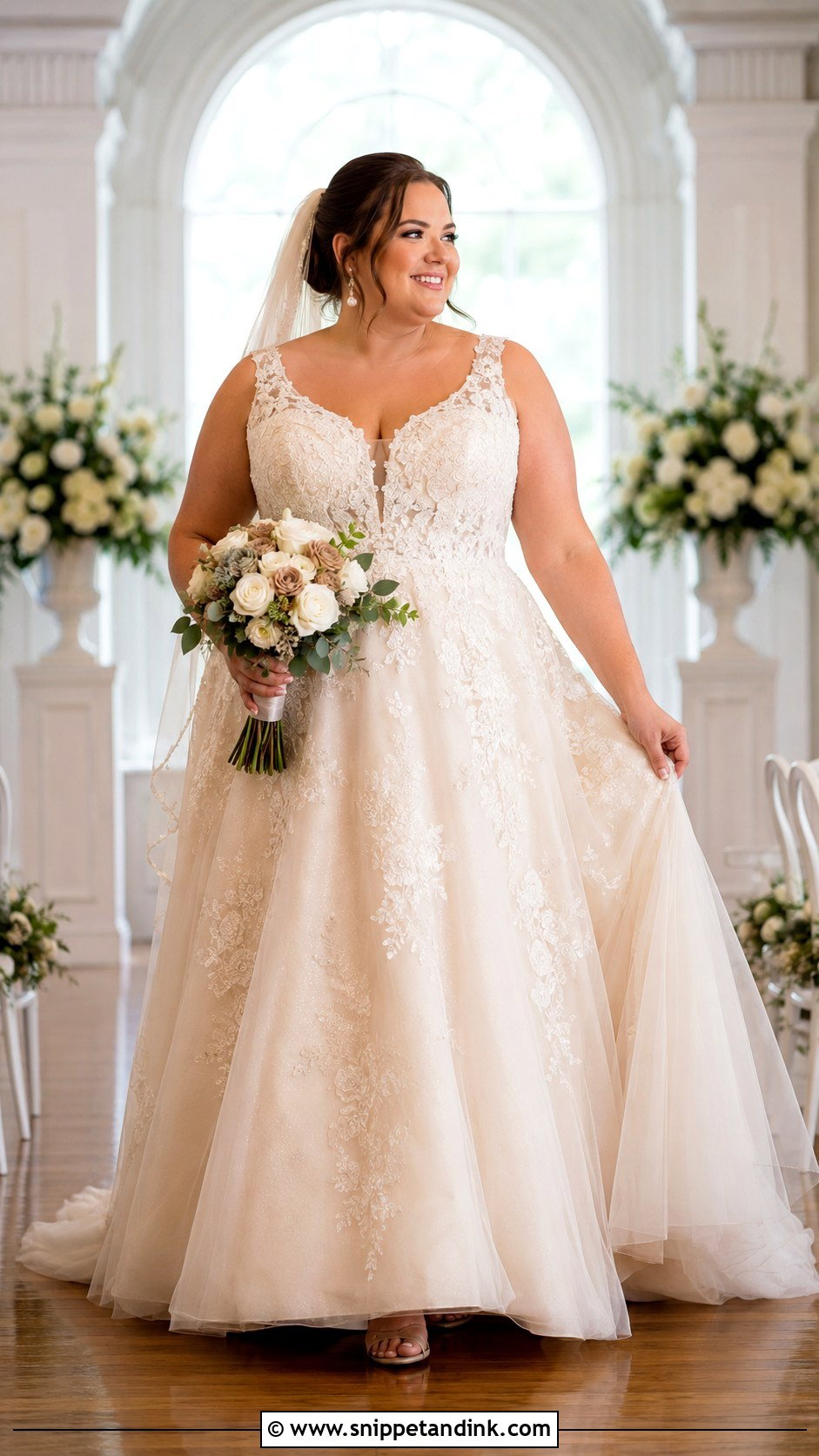
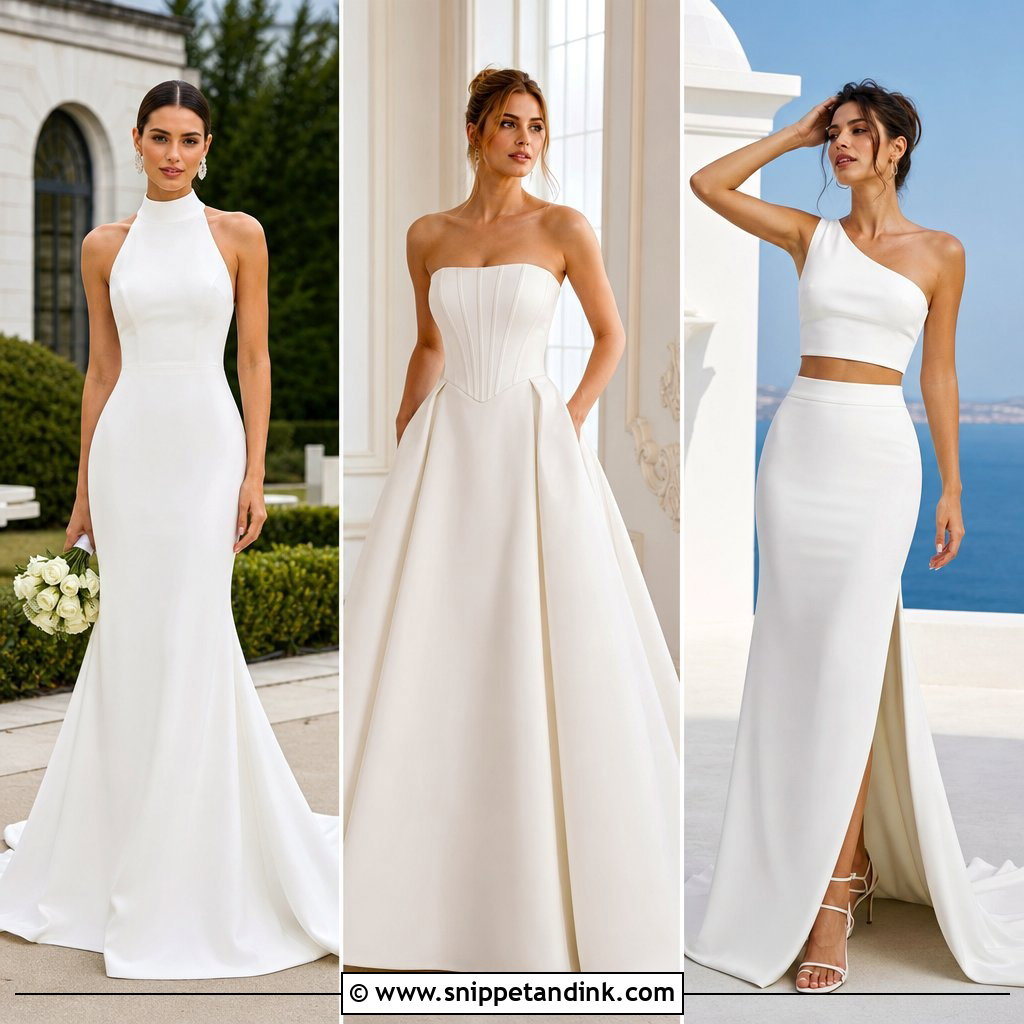
Fit and support come first in a plus size gown, and I look at the inside of the dress before the outside. Good structure, secure straps, a proper lining and a waist stay mean the gown holds its shape without you hitching it up all day. A-line, ball gown, empire waist and fit-and-flare can all suit, so try at least two, because the one you expect to love is often not the one that sits best. Shapewear is optional. Champagne flatters here since it adds warmth near the face without harsh contrast. Match the veil to the gown’s warmth, choose jewelry that frames your face, and make sure you can sit and dance before you say yes.
16. Champagne Beige Beach Wedding Dress
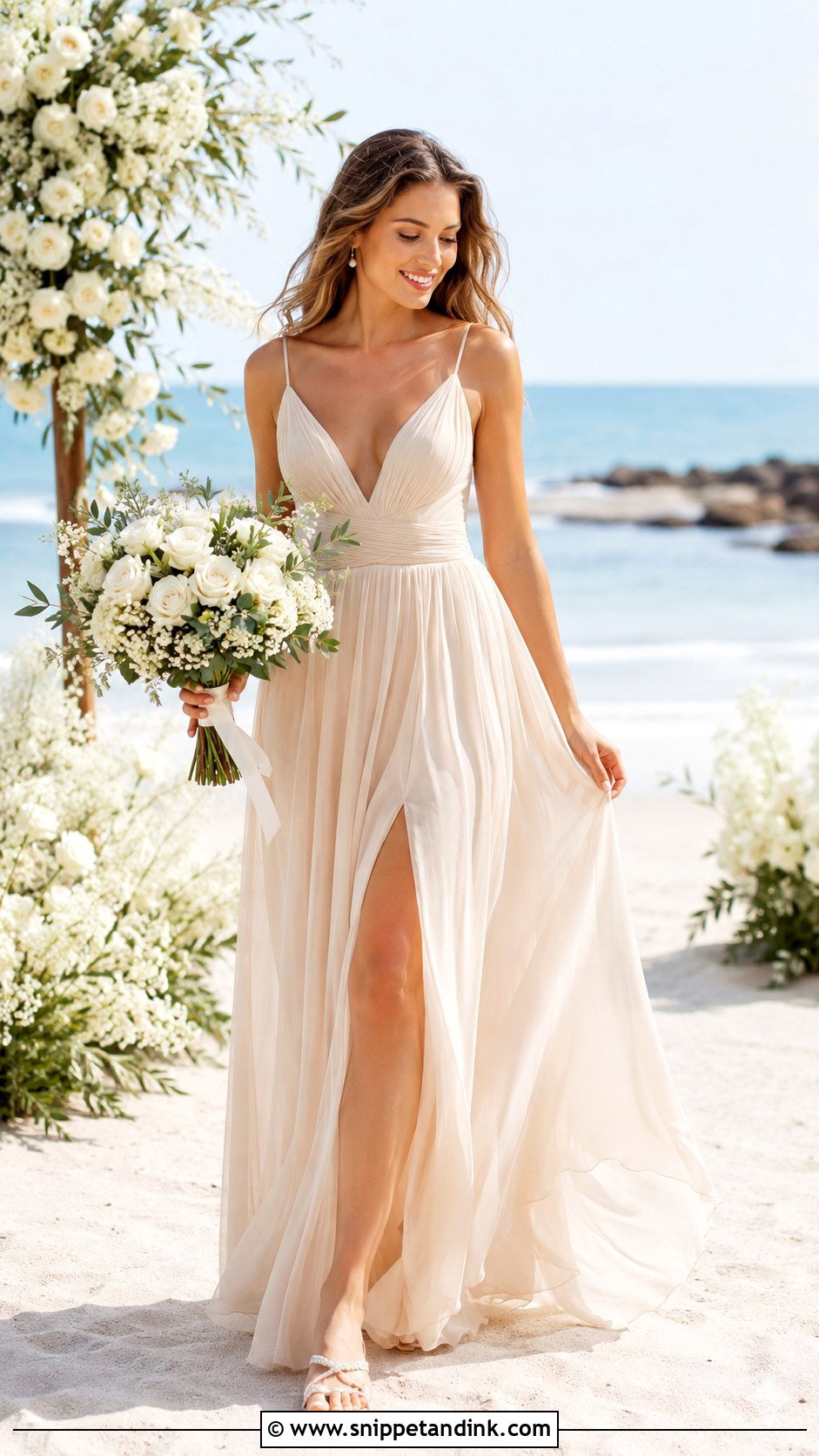
On sand, weight is the enemy. Chiffon, light tulle and relaxed lace move in a sea breeze; heavy satin drags and collects grit at the hem. I’d keep the train short or have a wrist loop sewn in, and go barefoot or wear flat sandals rather than heels that sink. Salt air and humidity flatten structured curls, so loose waves are the realistic choice. A lightweight veil or a hair comb is enough. Champagne looks warm against sand and blue water, and it won’t blow out in bright sun the way pure white can.
17. Champagne Beige Garden Wedding Dress
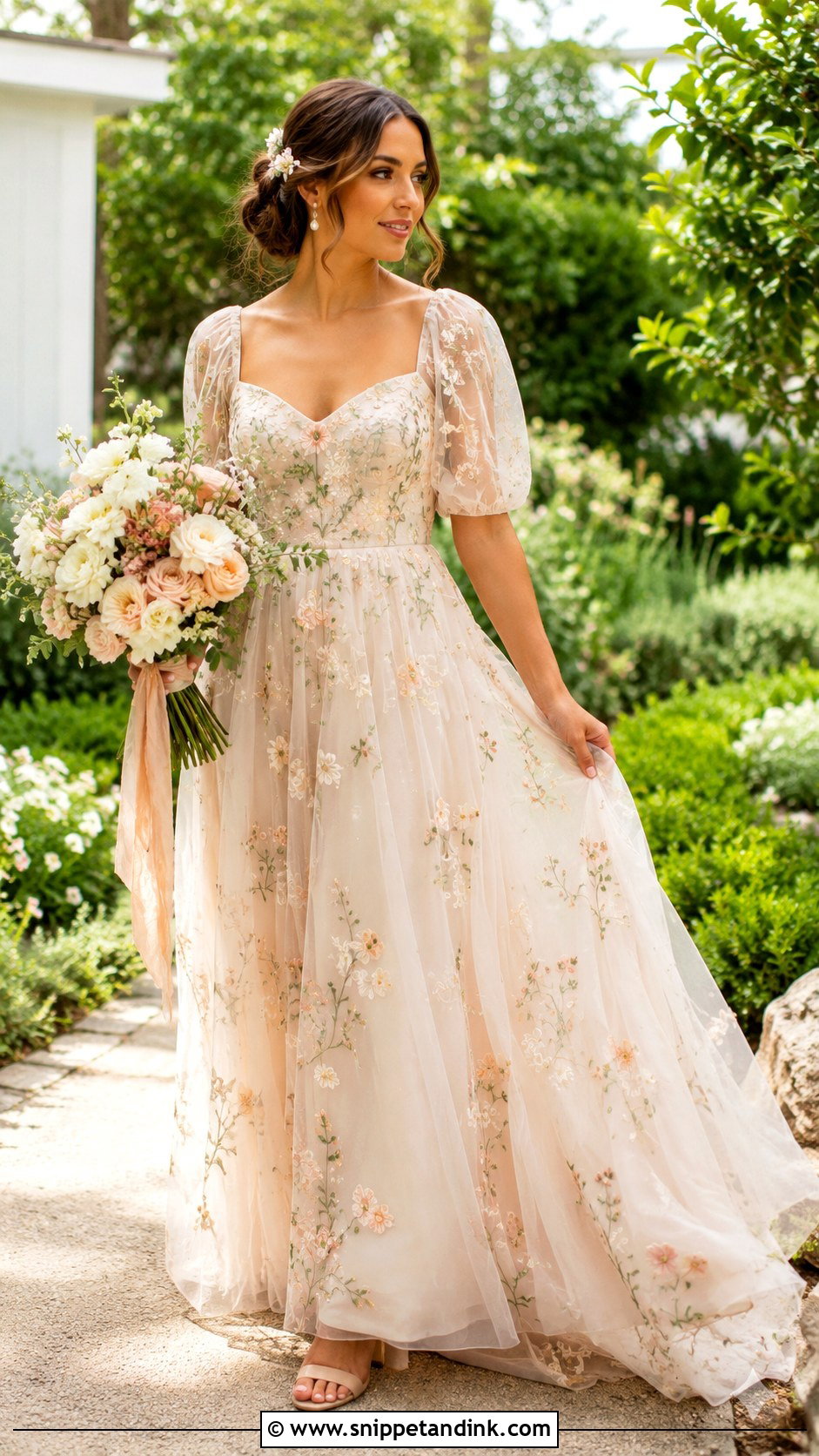
Garden ceremonies mean grass, uneven paths and pollen, so I think about the hem first. Lace, tulle and floral embroidery all suit the setting, and a flowing skirt moves well on garden paths, but light hems pick up grass stains, which show less on champagne than on white. Block heels stop you sinking into the lawn. Add a floral hair comb, pearl earrings and a bouquet of ivory, blush and soft peach. A fingertip veil stays romantic without catching on every hedge.
18. Champagne Beige Courthouse Wedding Dress
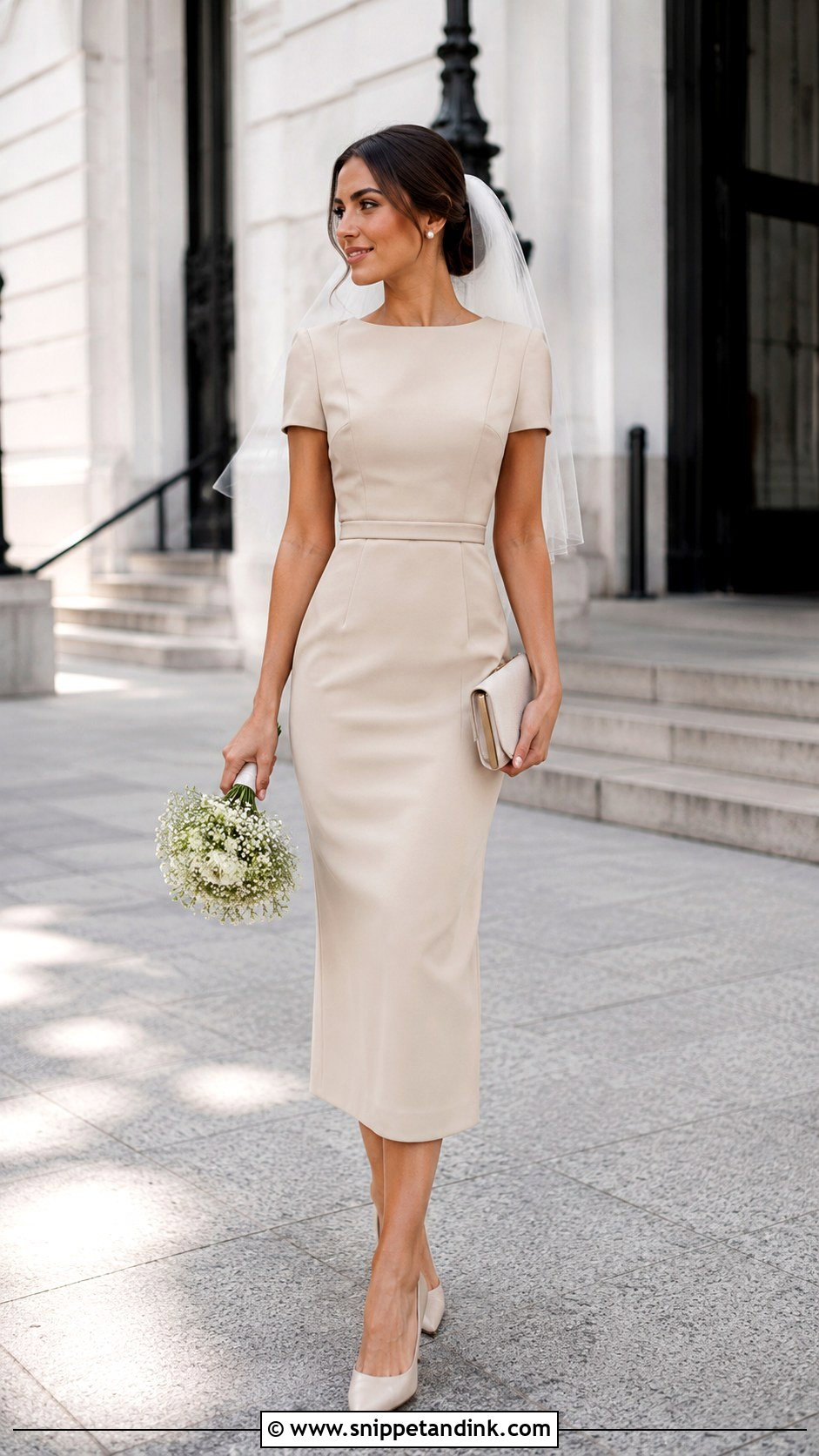
A courthouse ceremony is short, so the outfit has to look polished from the very first photo on the steps. Champagne makes it feel bridal without a full gown. A tailored midi dress, sleek sheath, satin blazer dress or simple column gown all suit a civil setting. I’d check the length while seated, because you’ll probably sign the register at a table. Pointed pumps, a small bouquet, pearl studs and a structured clutch give a clean finish, and a short veil or hair bow adds the bridal note. Bright interiors and city sidewalks make a good backdrop.
19. Champagne Beige Civil Wedding Dress
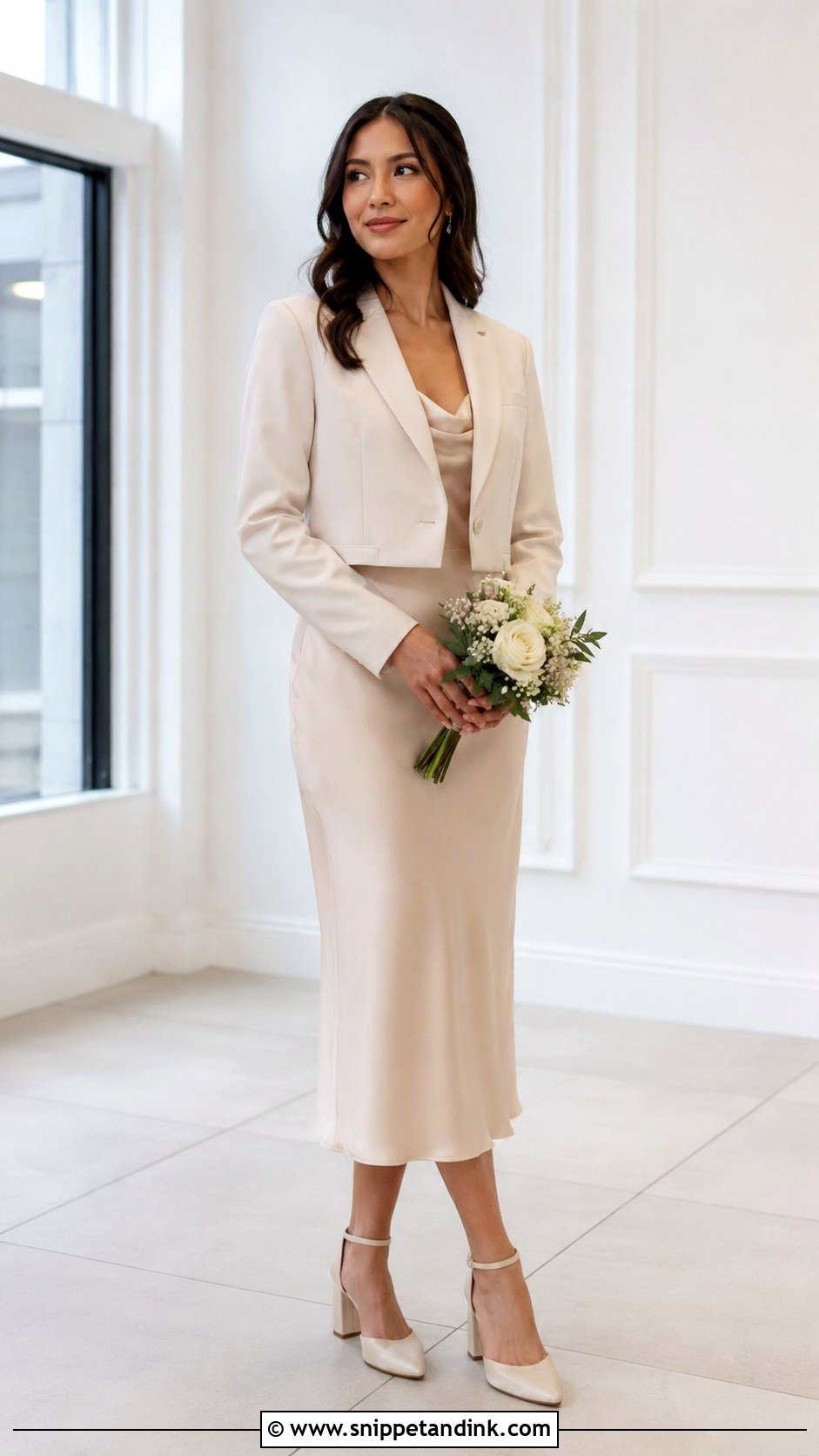
For a civil wedding I care most about how the dress behaves from morning to evening, since these days often run from ceremony to lunch to drinks. Clean lines travel well, so a satin midi, lace sheath, tea-length dress or softly tailored dress with sleeves will all hold up. Satin midis do crease at the lap, so I’d lean toward lace or crepe if you’ll be seated through a long lunch. A cropped jacket or bridal blazer gives coverage for the official moments. Block heels and a neat hairstyle are enough for city hall ceremonies and small family gatherings where a long gown would feel too formal.
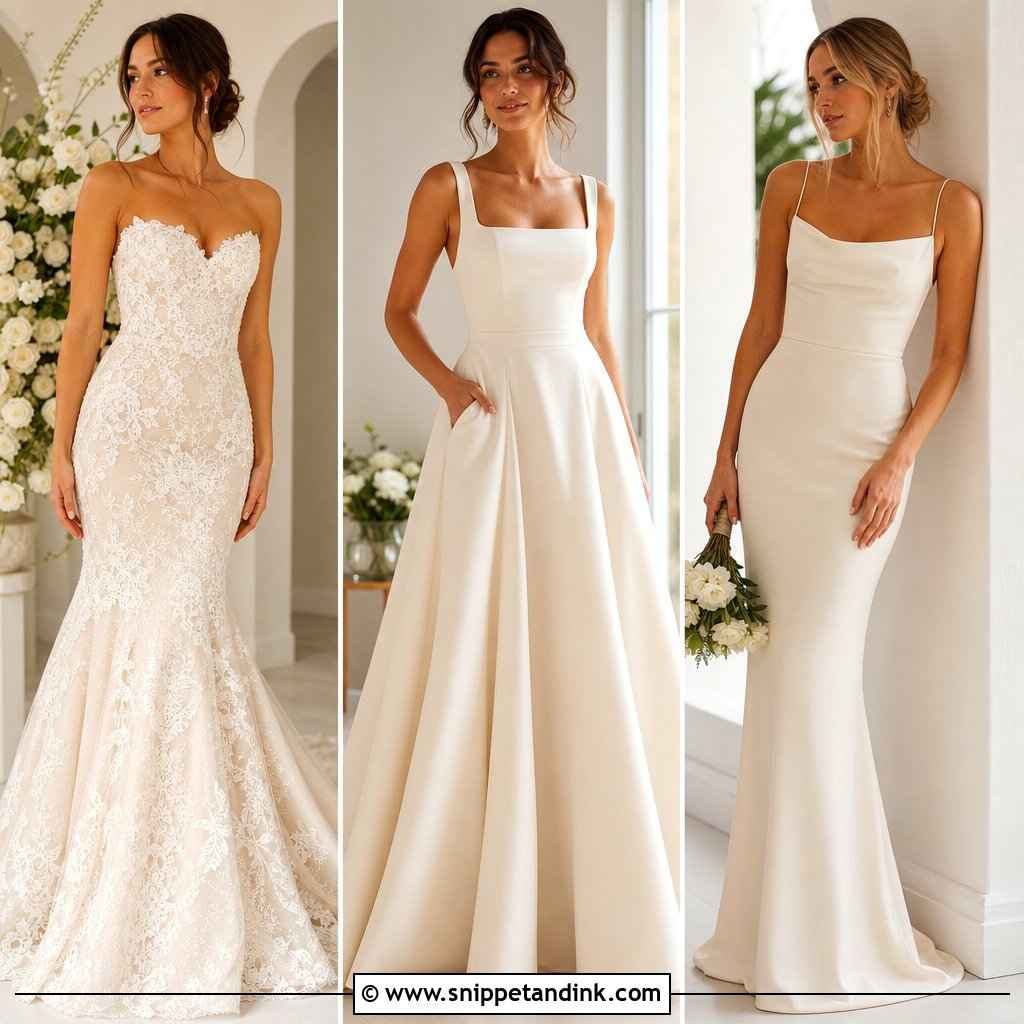
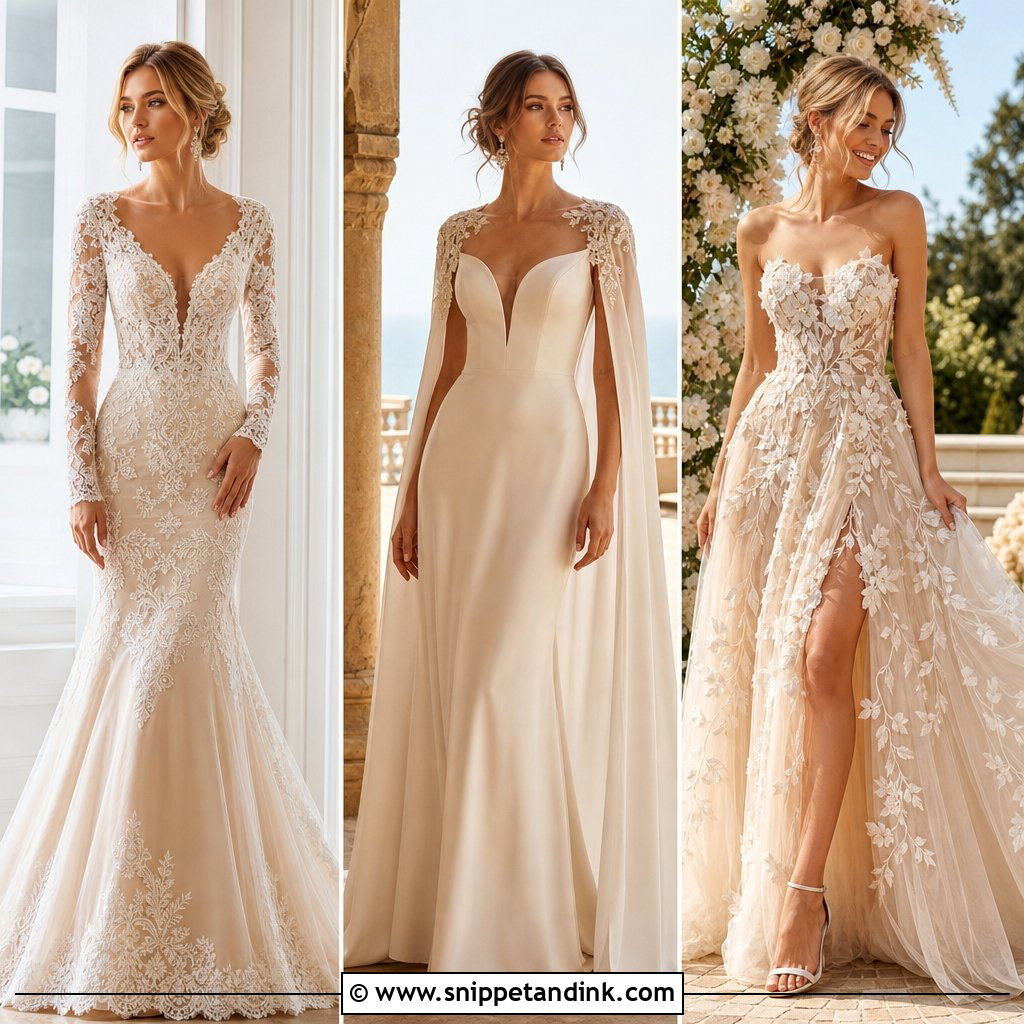

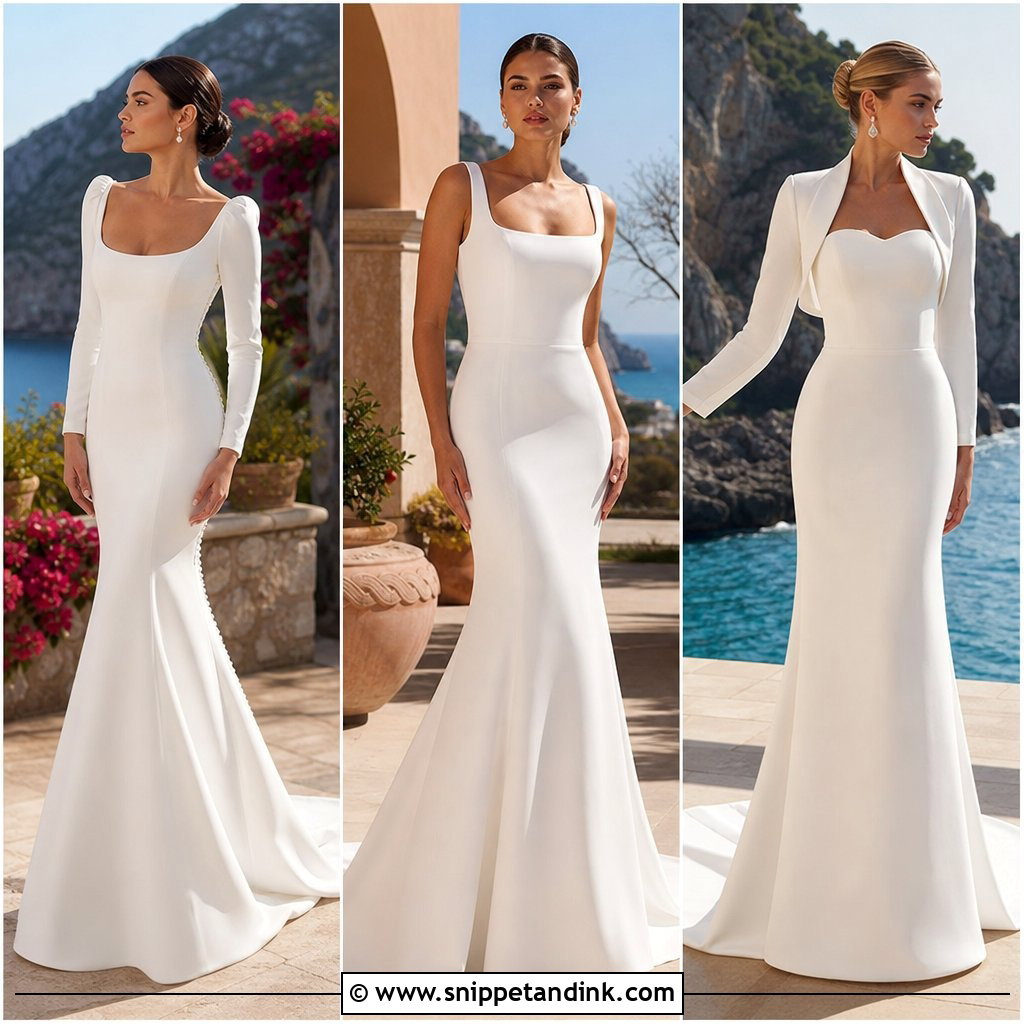
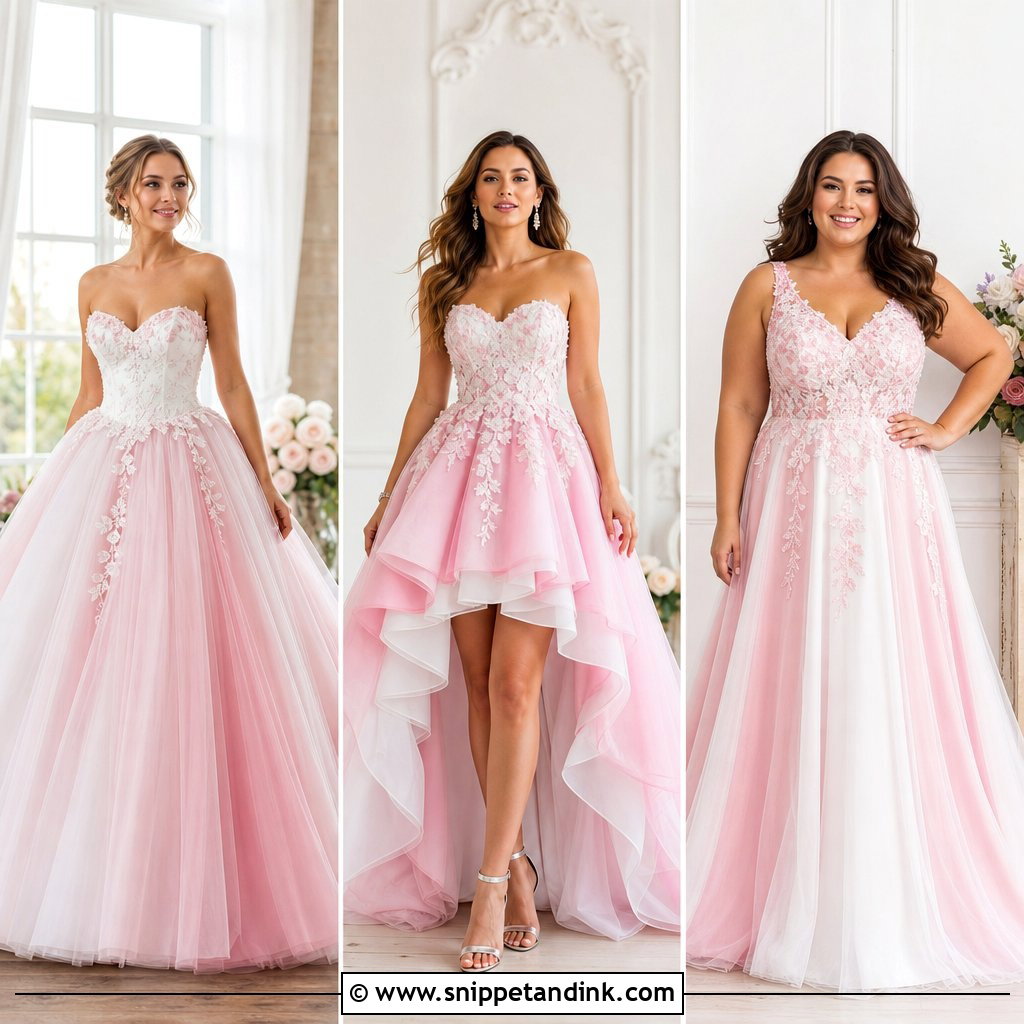
20. Champagne Beige Reception Wedding Dress
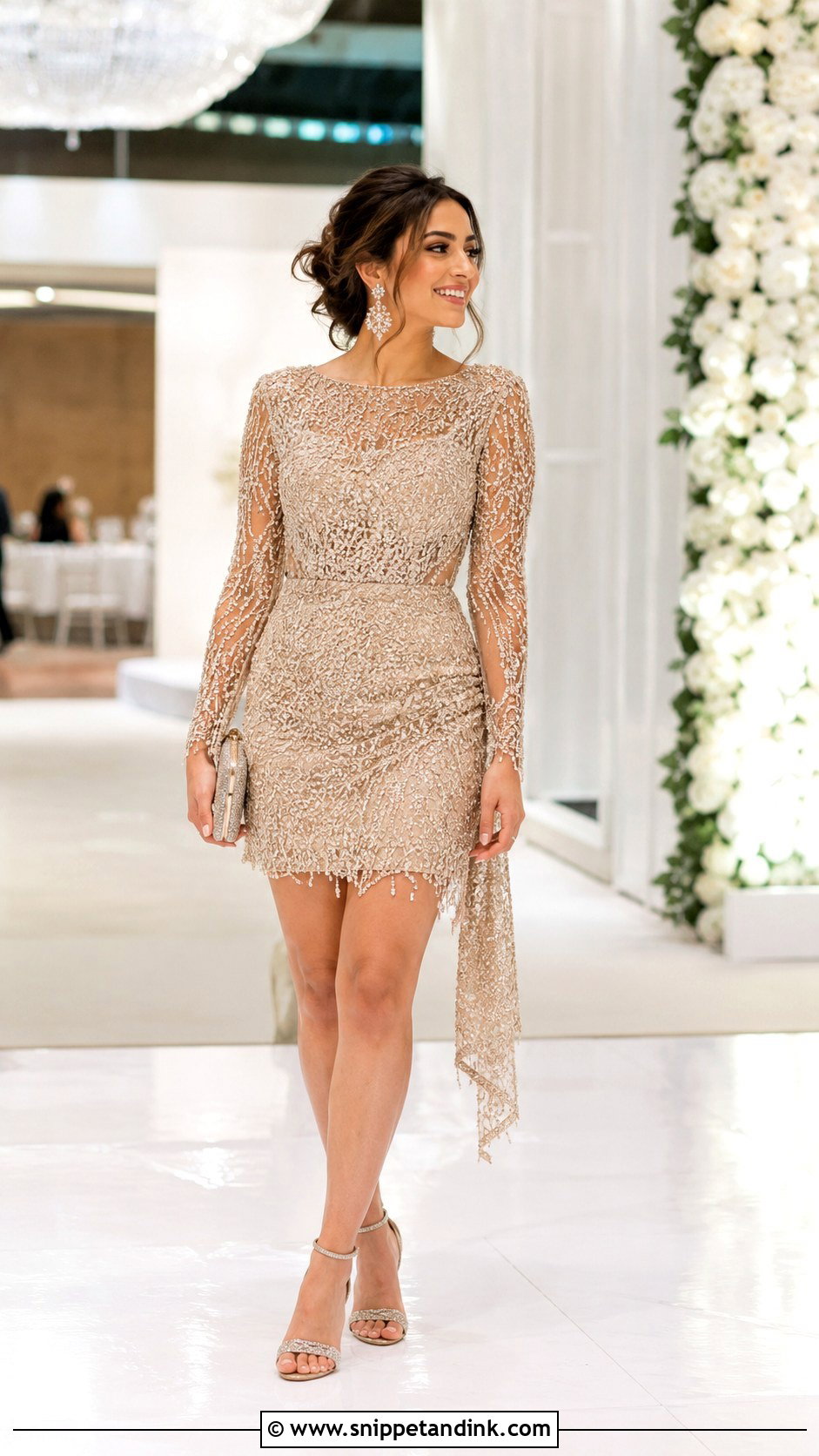
A second dress solves a real problem: a heavy ceremony gown is hard to dance in after hours of wear. For the reception I’d go lighter and shorter, with no train to bustle. Satin minis, beaded columns and soft tulle midis all work, and a removable overskirt can turn one dress into two. Keep the shade in the same champagne family so the photos read as one story. Change your shoes too. Statement earrings and a reception hairstyle finish it.
21. Champagne Beige Wedding Dress With Veil
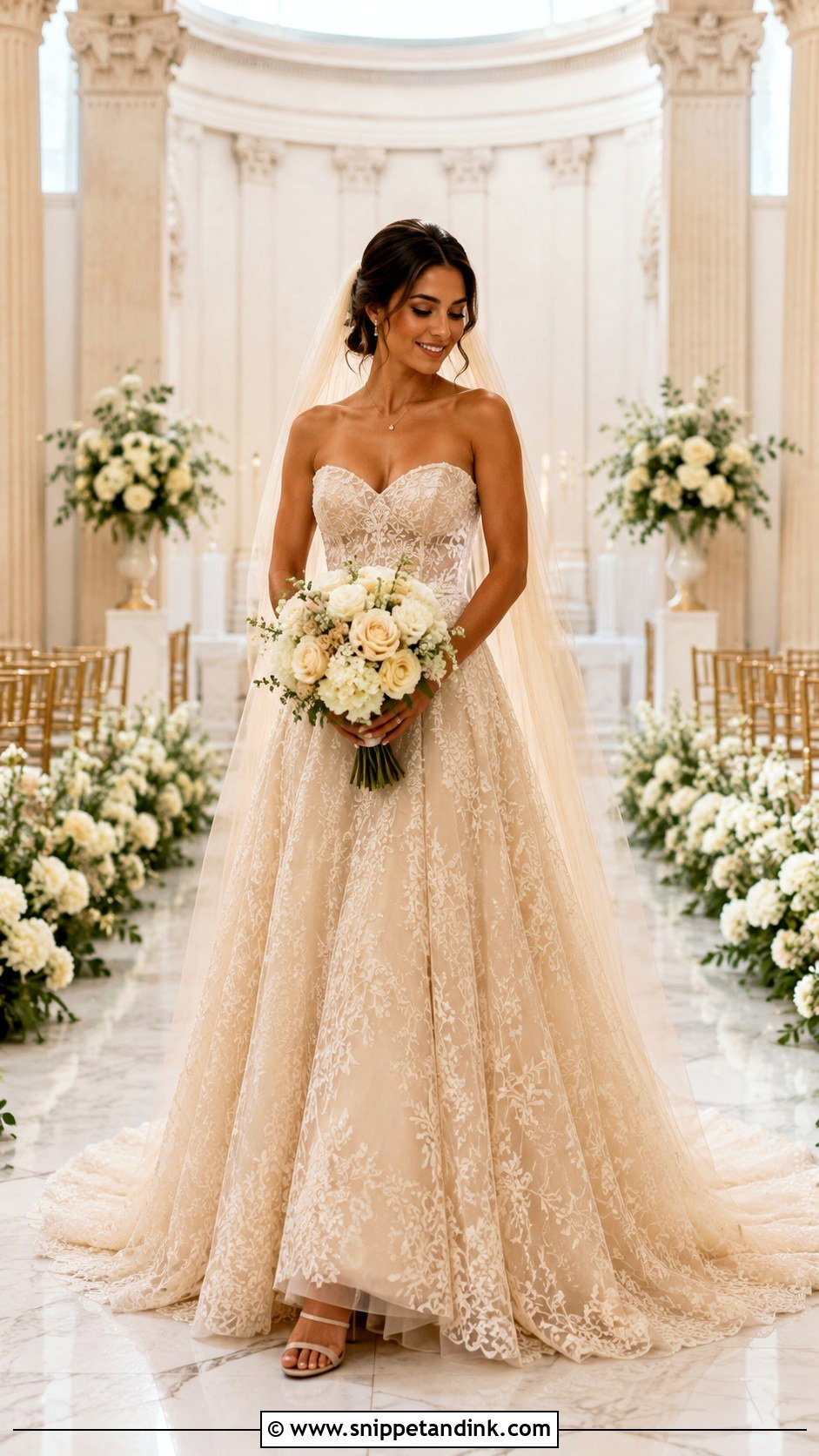
Veil color is where champagne gowns go wrong most often. A pure white veil next to warm beige makes the gown look dingy, so I bring ivory, light champagne and beige samples and hold each one against the bodice in daylight. If the dress has lace, match it or go plain; two different laces fight each other. A long veil adds drama at the ceremony, while a fingertip veil is easier to wear all day. Neutral heels, quiet jewelry and a bouquet that repeats the warm tones keep the outfit balanced.
22. Champagne Beige Wedding Dress With Sleeves
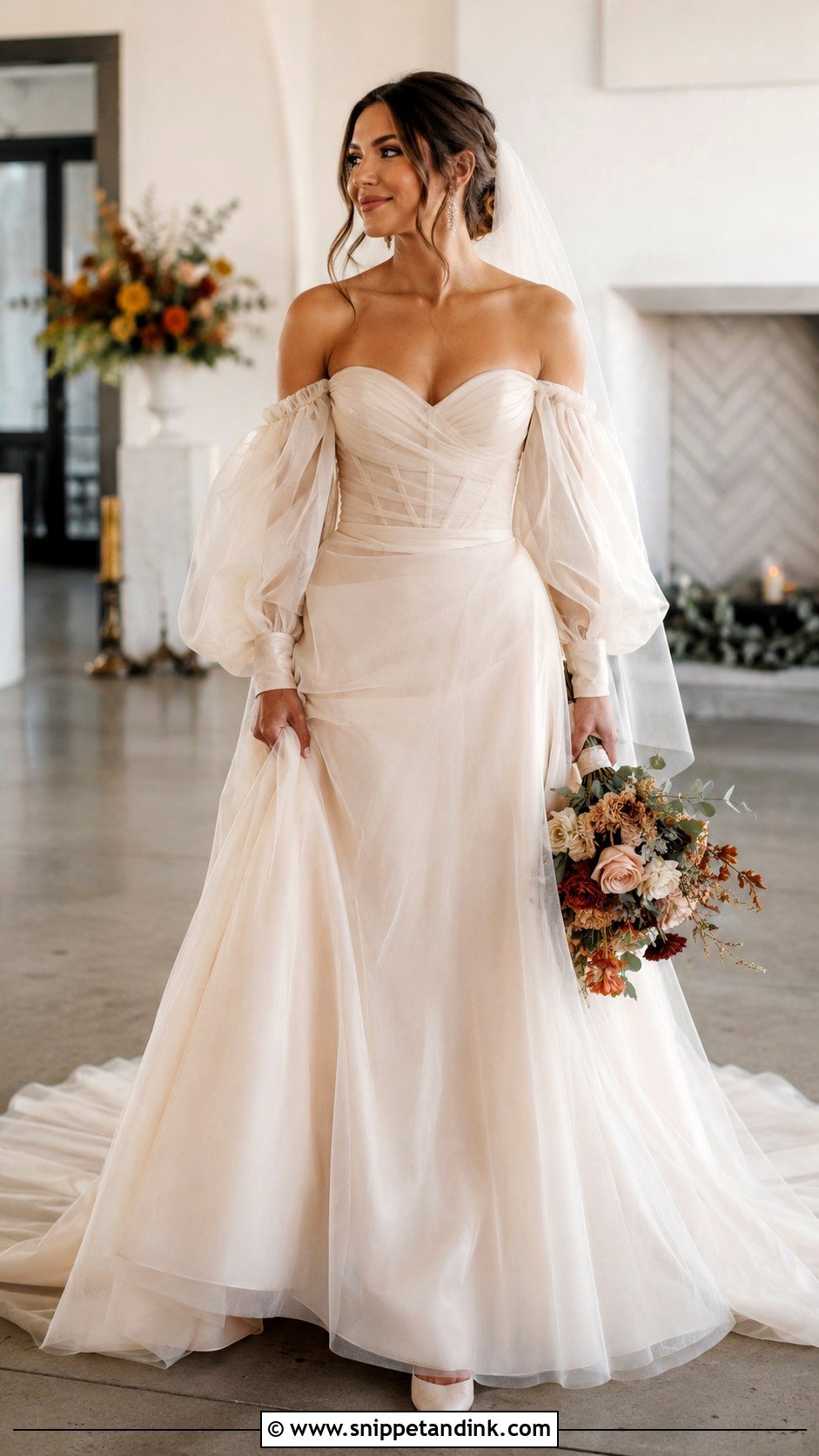
Sleeves change the mood of a champagne dress more than any other detail. Puff sleeves feel romantic, fitted lace sleeves read classic, and detachable sleeves give you two looks in one. Detachable is the version I’d recommend if you want coverage for a religious ceremony and freedom on the dance floor. Ask how they attach, because small hooks hold better than snaps. A neat updo keeps the shoulder line visible, and the veil shouldn’t hide the sleeve work. Fall weddings and vintage-leaning looks suit them well.
23. Champagne Beige Wedding Dress With Train
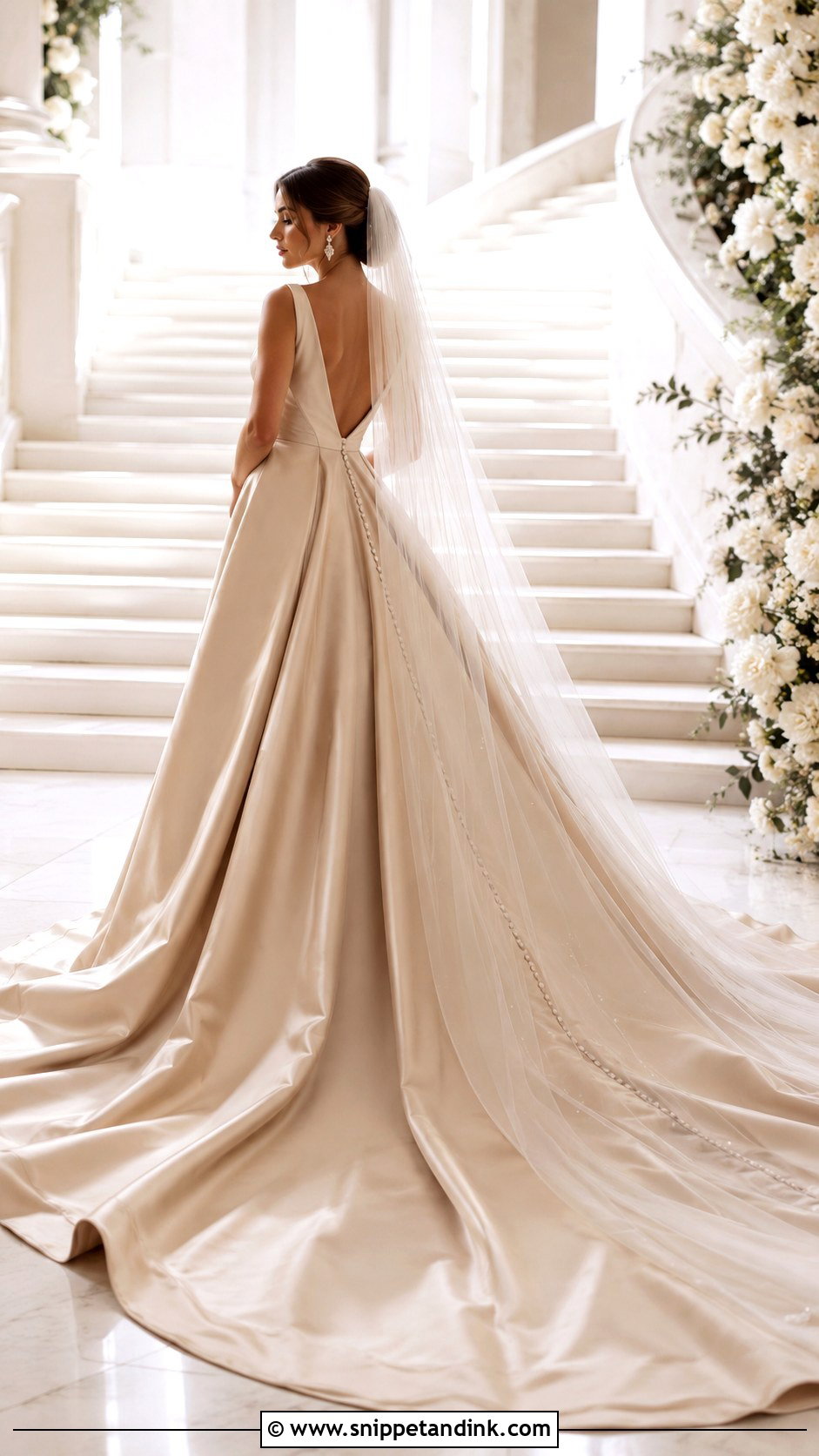
A train looks wonderful on the aisle and becomes your problem the moment the reception starts. A sweep train just brushes the floor; a chapel or cathedral train needs a venue with space and a bustle plan. Satin trains look smooth, and lace or tulle ones add texture. I always have the bustle sewn and tested at the final fitting, and I teach someone in the bridal party to fasten it, because a bustle nobody knows how to do up is useless. Secure heels, a long veil and refined jewelry complete it. Keep the bouquet in proportion so it doesn’t compete with the back of the dress in aisle and staircase shots.
24. Champagne Beige Wedding Dress With Pearl Details
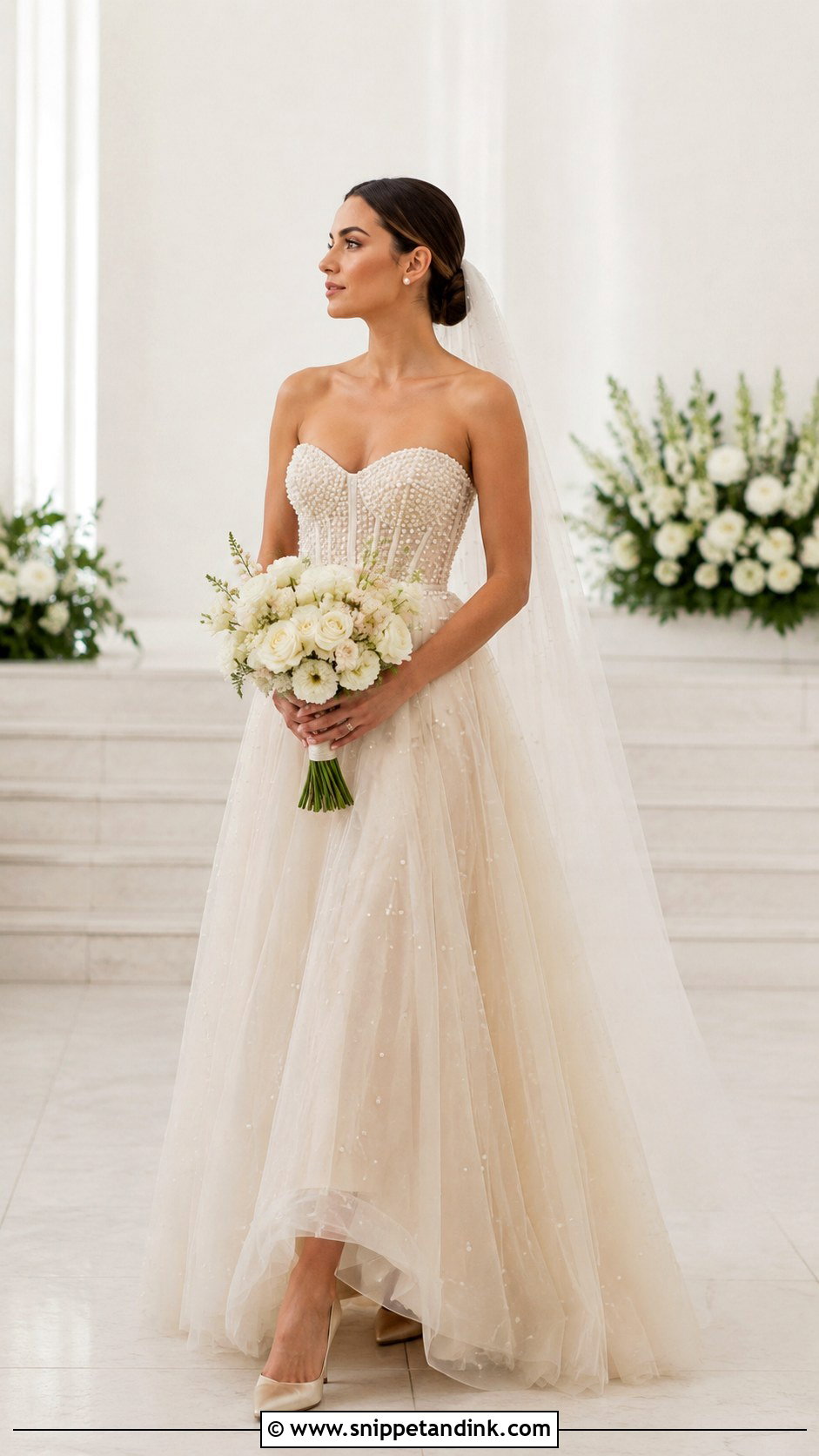
Pearls add texture without much sparkle, and their creamy tone sits naturally on champagne. They might be sewn on the bodice, sleeves, veil or neckline, or scattered over tulle. Since the dress carries the detail, the accessories step back: pearl studs, a smooth bracelet, satin heels and a simple bouquet. One practical warning: pearls snag fine tulle and lace veils, so I’d check how the veil falls over a pearl-covered back well before the day. A low bun or soft waves keeps the line graceful. Indoor ceremonies, where guests see the detail up close, suit it best.
25. Champagne Beige Wedding Dress With Floral Appliques
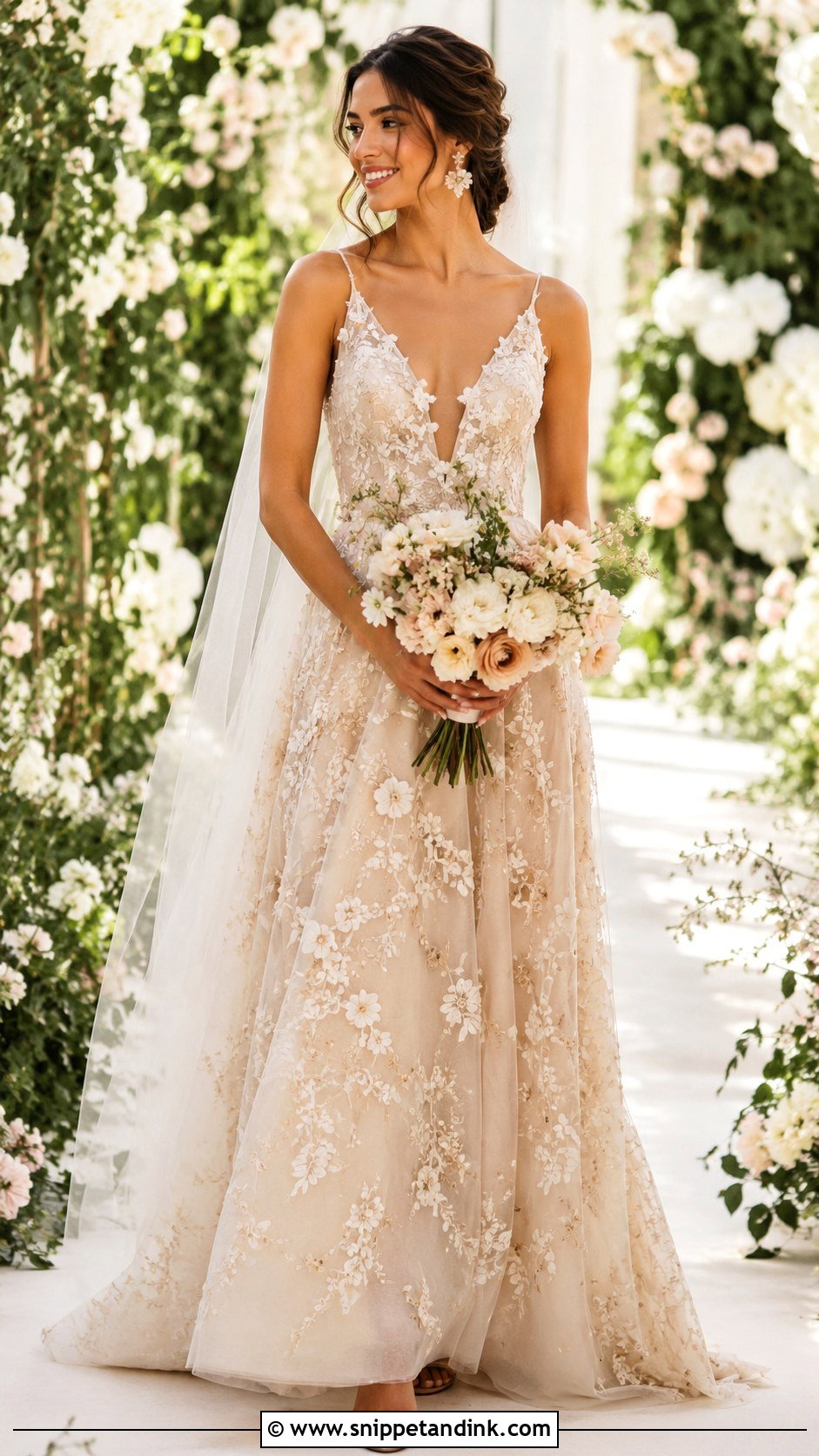
Floral appliqués look especially rich over champagne because the warm base gives every petal a shadow. They range from small and scattered to large and three-dimensional, and the bigger they get, the more they need a structured shape like a ball gown to carry them. I check how appliqués are attached, since hand-stitched edges lie flatter and survive a long day better than glued ones. Soft heels, a veil with minimal trim, floral earrings and a bouquet that echoes the dress without copying it finish the outfit. Spring gardens are the natural home for it.
Accessories That Turn Grey or Pink Next to Beige
Most color mistakes with champagne happen in the accessories, not the dress. Optic white is the main offender: next to warm beige it reads slightly blue, and the gown looks faded by comparison.
- Underwear: match it to your skin, not to the dress. A white bra shows through champagne satin far more than a nude one.
- Veil: ivory or champagne tulle, picked against your swatch in daylight. Diamond white is usually too cold.
- Shoes: nude, ivory, champagne satin or soft gold. Silver suits cool, pink-leaning champagne; gold suits the sandy and golden ones.
- Flowers and ribbon: pure white roses can look brighter than the dress in photos, so I ask the florist for cream or ivory varieties.
- Bridesmaids in white or ivory: compare their fabric samples with yours side by side, or the group photos will make your gown look darker than it is.
Steaming, Spills and Storing a Champagne Gown
Champagne hides small marks better than white, but satin and silk in this shade show water spots and creases clearly. I steam from the inside of the skirt with the nozzle always moving, and I test on an inner hem first, because some satins mark where a drop of water lands.
On the day, keep a small kit with plain white cloths, a bottle of water and a stain stick meant for delicate fabrics, and blot instead of rubbing. Self-tanner and foundation transfer onto necklines and armholes, so let any body makeup dry fully before you step into the dress.
Afterward, have the gown professionally cleaned within a few weeks. Sugary drinks and wine can dry invisibly and turn brown months later as they oxidize. Store it in acid-free tissue inside a breathable cotton bag or box, away from light and damp. Plastic dry-cleaning bags trap moisture, and warm-toned fabric left hanging near a window can fade unevenly.
Daylight, Candlelight and the Shade You Settle On
Champagne beige gives you a way to look classic or dramatic without bright white. It works in satin, lace, tulle, crepe and beading, and it sits happily beside ivory, pearl, blush, soft gold and muted florals. Your venue, season and comfort will narrow the list quickly. My one firm rule: see the gown in daylight, warm indoor light and camera flash before you decide, because champagne shifts more than any other bridal shade. Match the veil, shoes and bouquet to that warmth and the whole look holds together.
You'll Like These Ideas:



Leave a Reply