
Winter is the one season when a bride can lean into heavy fabric and be grateful for it. The gowns below are chosen for genuinely cold days, from a snowy outdoor setting to a heated ballroom or a city registry office with a draughty staircase. Most rely on fabrics with body, like Mikado, duchess satin, velvet and heavy crepe, or on lace backed by a proper lining. When I style a winter bride, I plan two looks at once: the gown as it reads indoors, and the gown under whatever she wears for the walk to the car and the portraits outside. Your venue and the realistic forecast should drive both decisions far more than any seasonal rule.
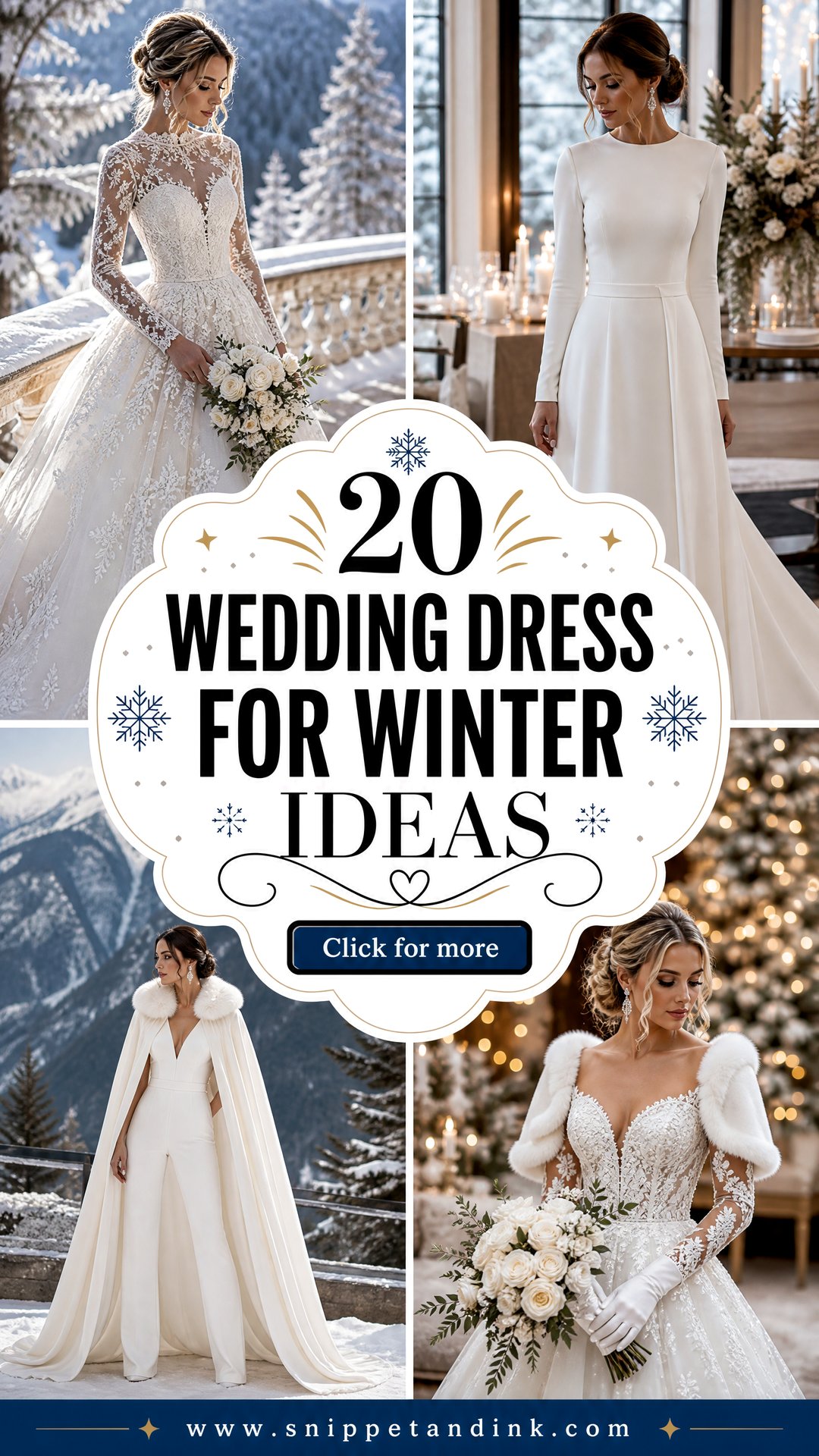
Which Winter Fabrics Keep You Warm and Which Only Look Warm
Brides often assume a heavy-looking gown will be a warm one. Weight helps, but what actually keeps you comfortable is how tightly the fabric is woven and what sits underneath it. This is how the main winter fabrics behave once you are wearing them for a full day.
Velvet and Duchess Satin
Both are dense and block wind well. Velvet is the warmer of the two but marks under pressure, so it suits a bride who will spend more time standing than seated. Duchess satin feels cool against the skin at first and warms up quickly, and it creases less at the hip than lighter satins when you sit through dinner.
Mikado and Heavy Crepe
Mikado is crisp and holds its shape, which is why it makes architectural skirts, but it isn’t especially insulating on its own, so I always ask what the lining is made of. Heavy crepe drapes close to the body and has a little stretch, which makes it comfortable for long days, though it shows every line underneath.
Lace, Tulle and Organza
These are mostly air. A lace gown is only as warm as its lining, and unlined lace sleeves give almost no protection outdoors. If lace is what you love, ask about backing the sleeves with fine mesh and plan a proper outer layer for the photographs.
1. Long Sleeve Lace Winter Wedding Dress
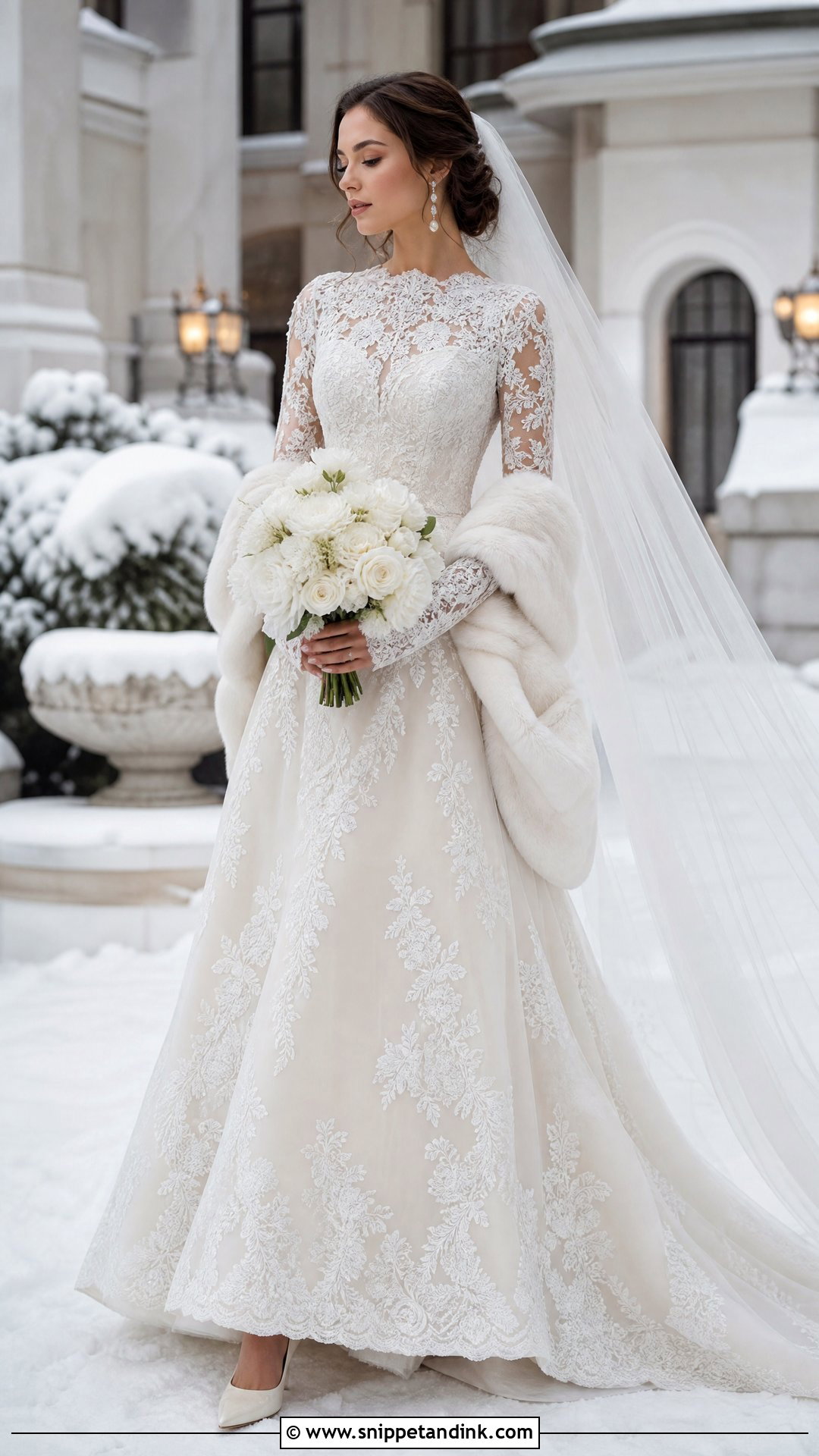
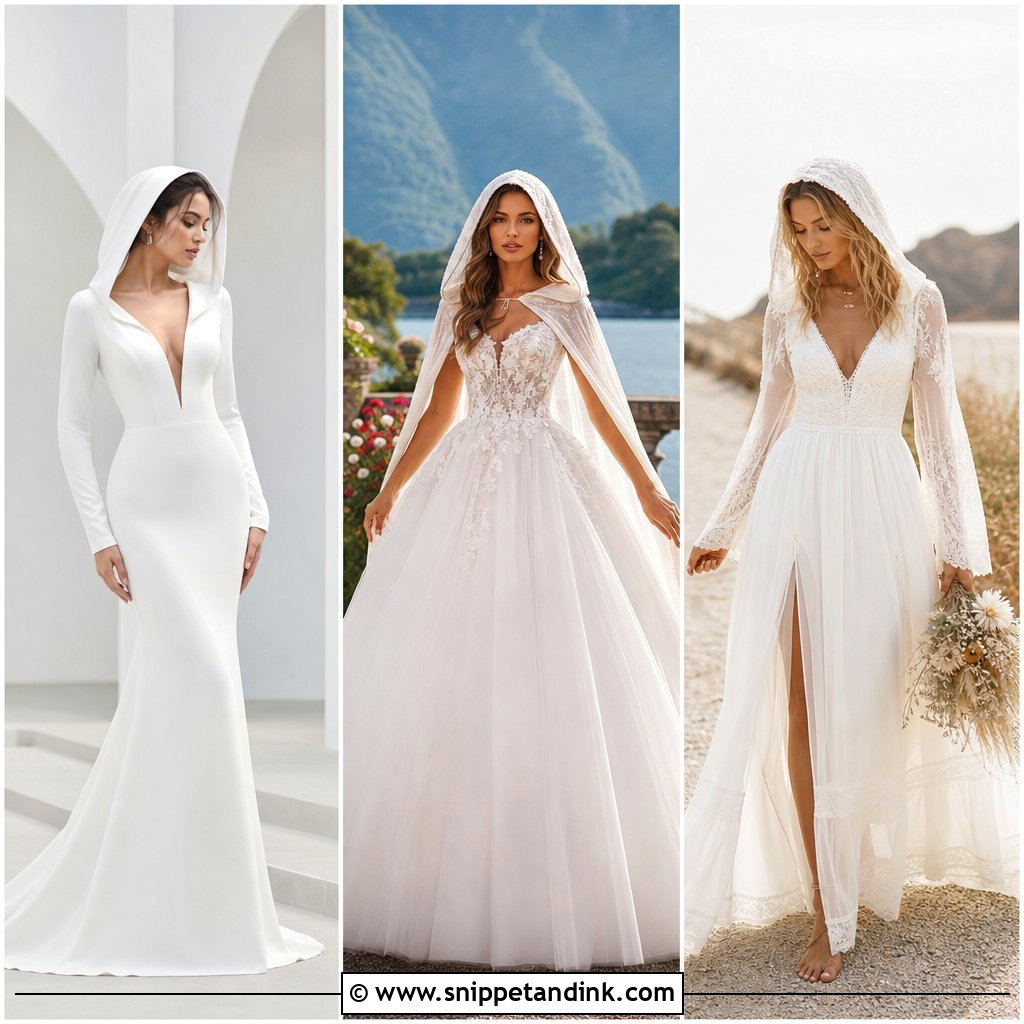
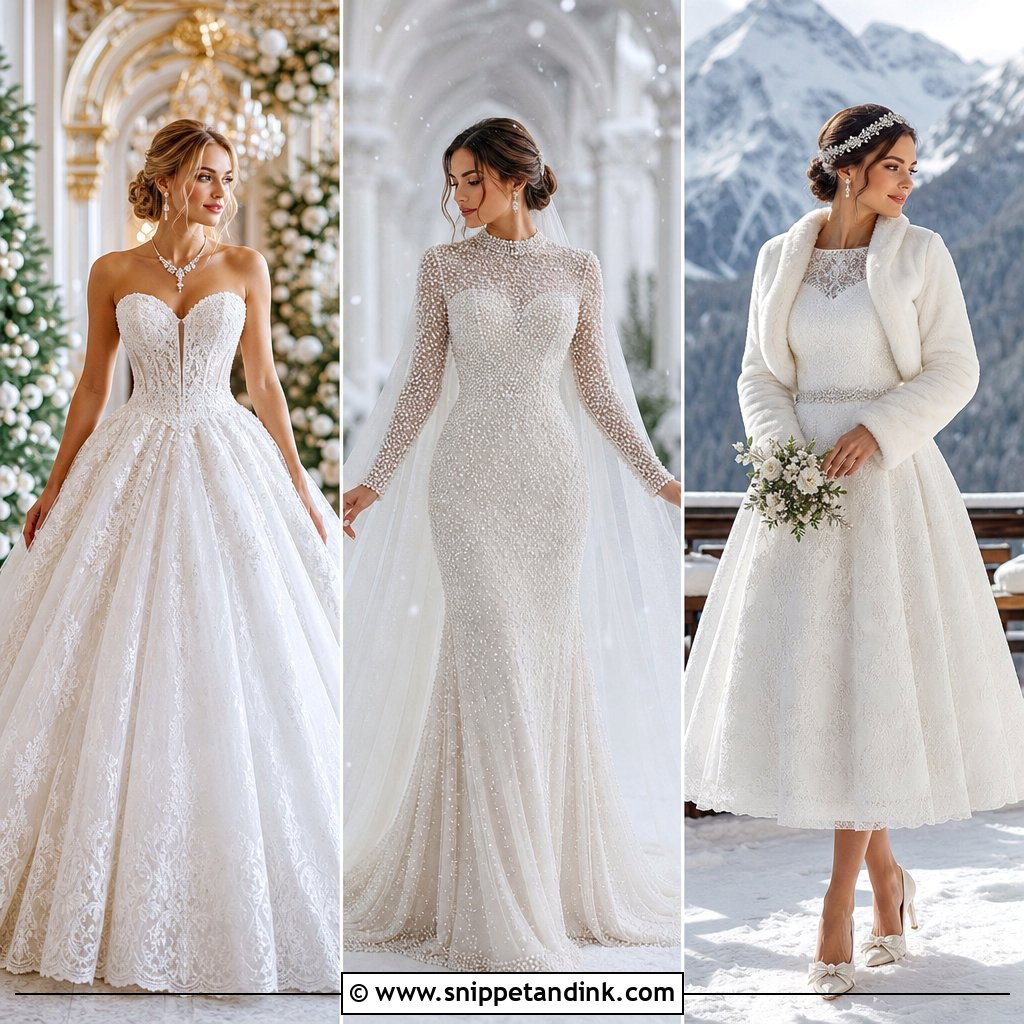
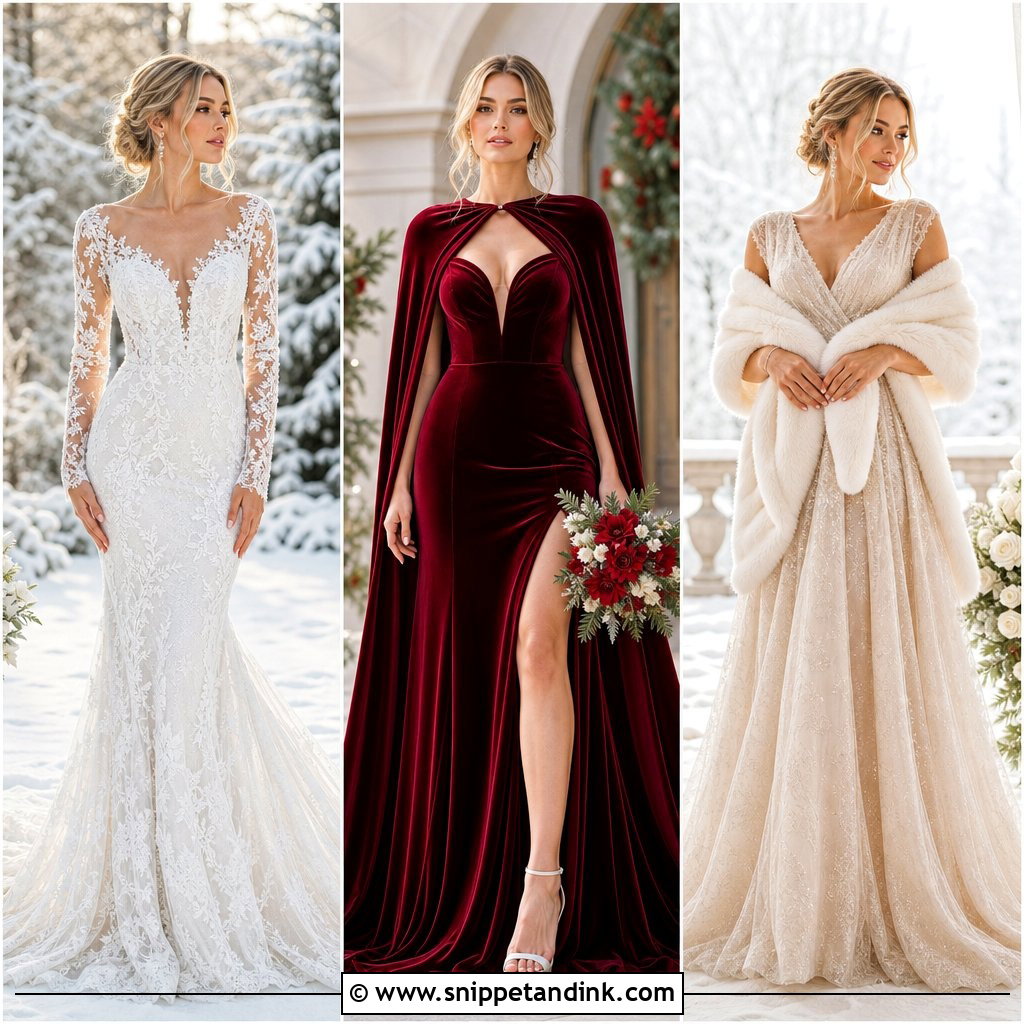
Lace sleeves look warm, but unlined lace is mostly open space, and on an outdoor portrait day it lets the wind straight through. If you love this gown, ask whether the sleeves can be backed with fine stretch mesh or skin-toned tulle; the pattern stays visible and the chill drops noticeably. A bateau or modest V-neck keeps the upper half calm against all that floral texture, over either an A-line or a fitted skirt. I’d finish it with pearl drops, a cathedral veil and ivory pointed pumps, then add a smooth faux-fur stole for outside shots and hand it off before the reception. A low bun keeps the back lace on show.
2. Satin Ball Gown Winter Wedding Dress
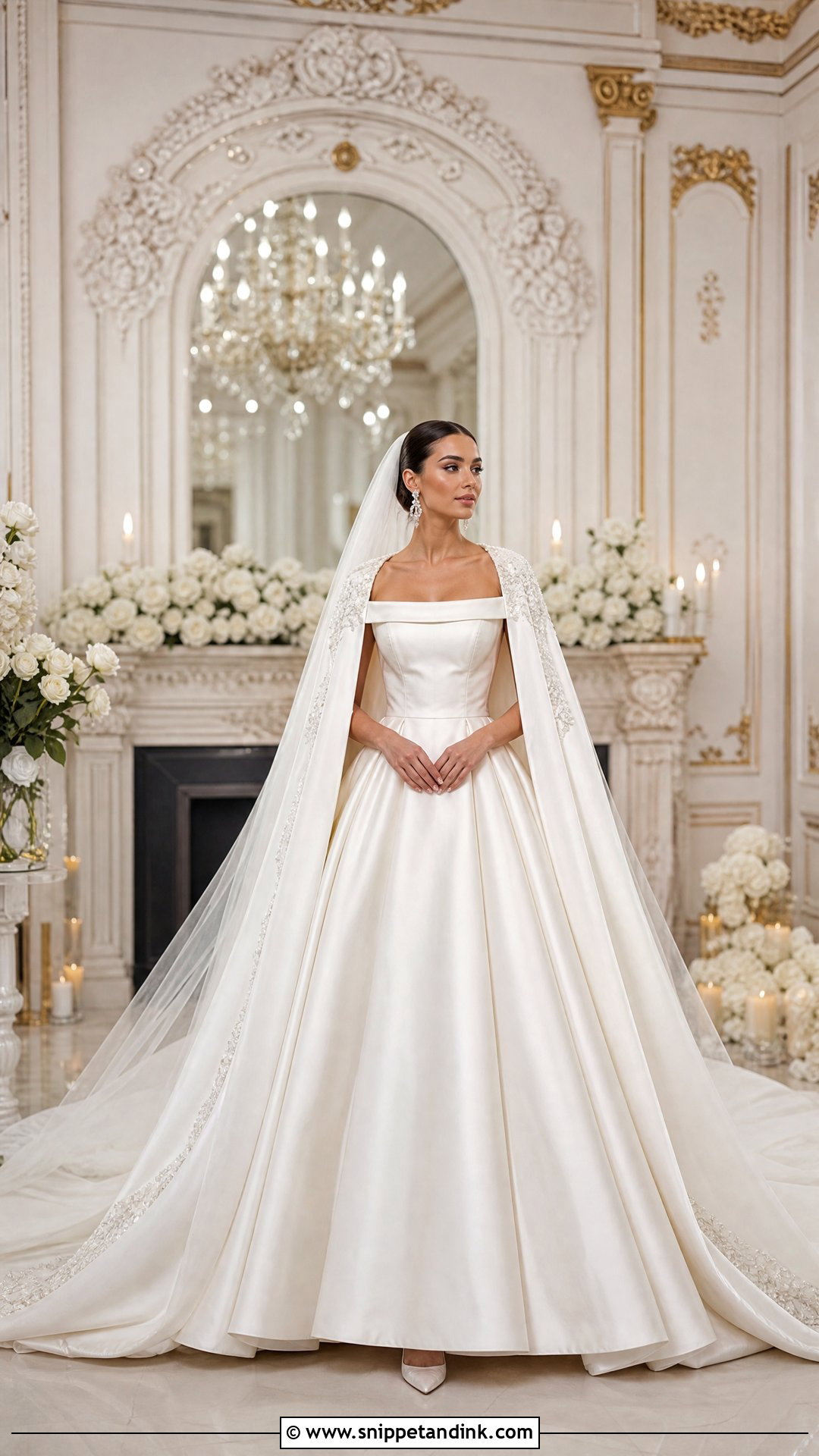
A structured satin ball gown is the most formal option here, and the fabric has to do the work. Duchess satin or Mikado holds a full skirt without collapsing by evening, while a lighter charmeuse creases at every seated fold of dinner. Look for a bodice with real boning, a defined waist and, if you want to soften the volume, an off-the-shoulder neckline. Style it with a cathedral veil, crystal studs and closed satin heels. Outside, a fitted ivory cape or a coat cut wide enough over the skirt won’t crush its shape. Keep the bouquet to white flowers and a little greenery so it doesn’t fight the clean lines. In a big ballroom, this gown fills the space in a way a slimmer dress can’t.
3. Velvet Winter Wedding Dress
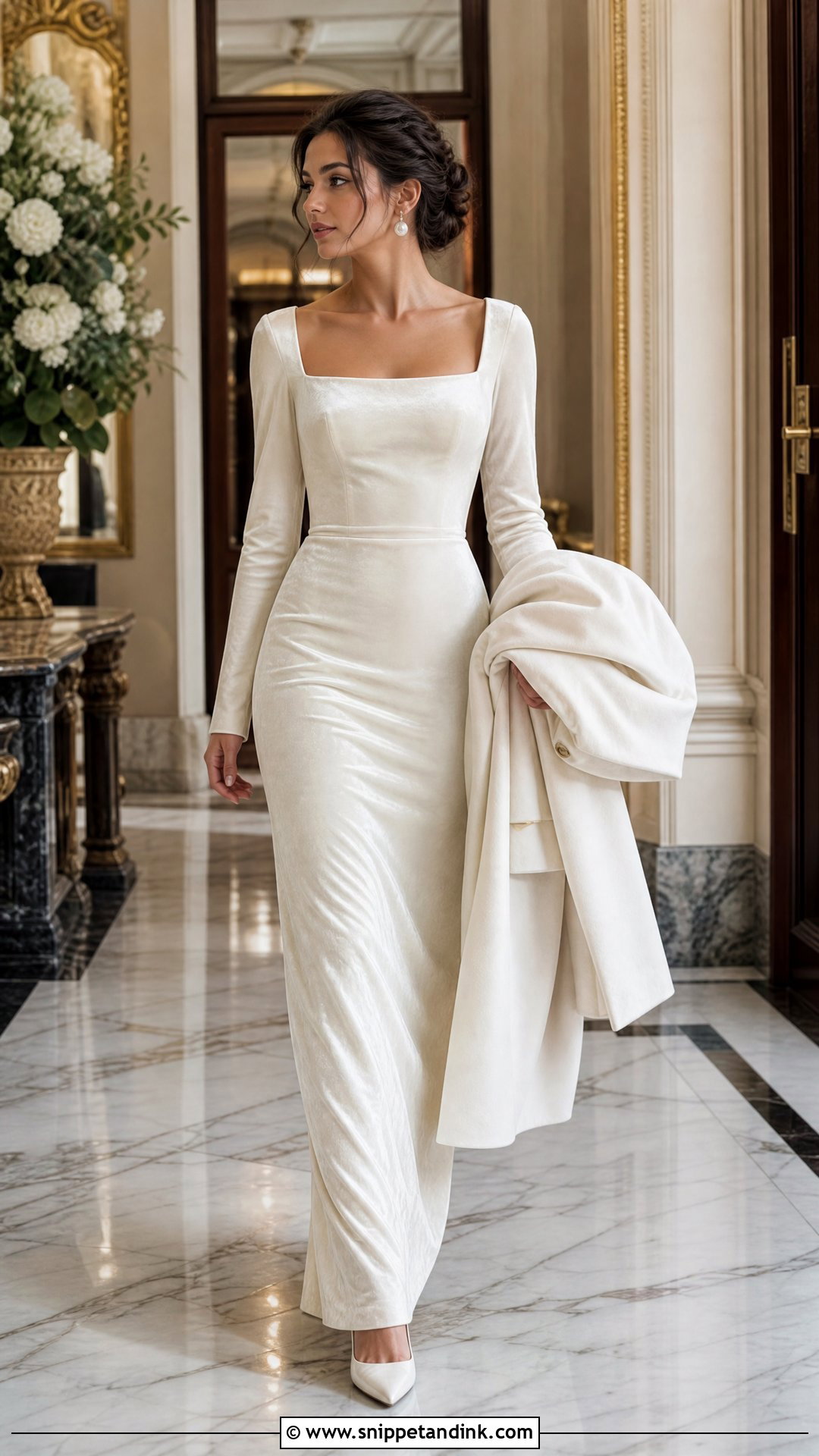
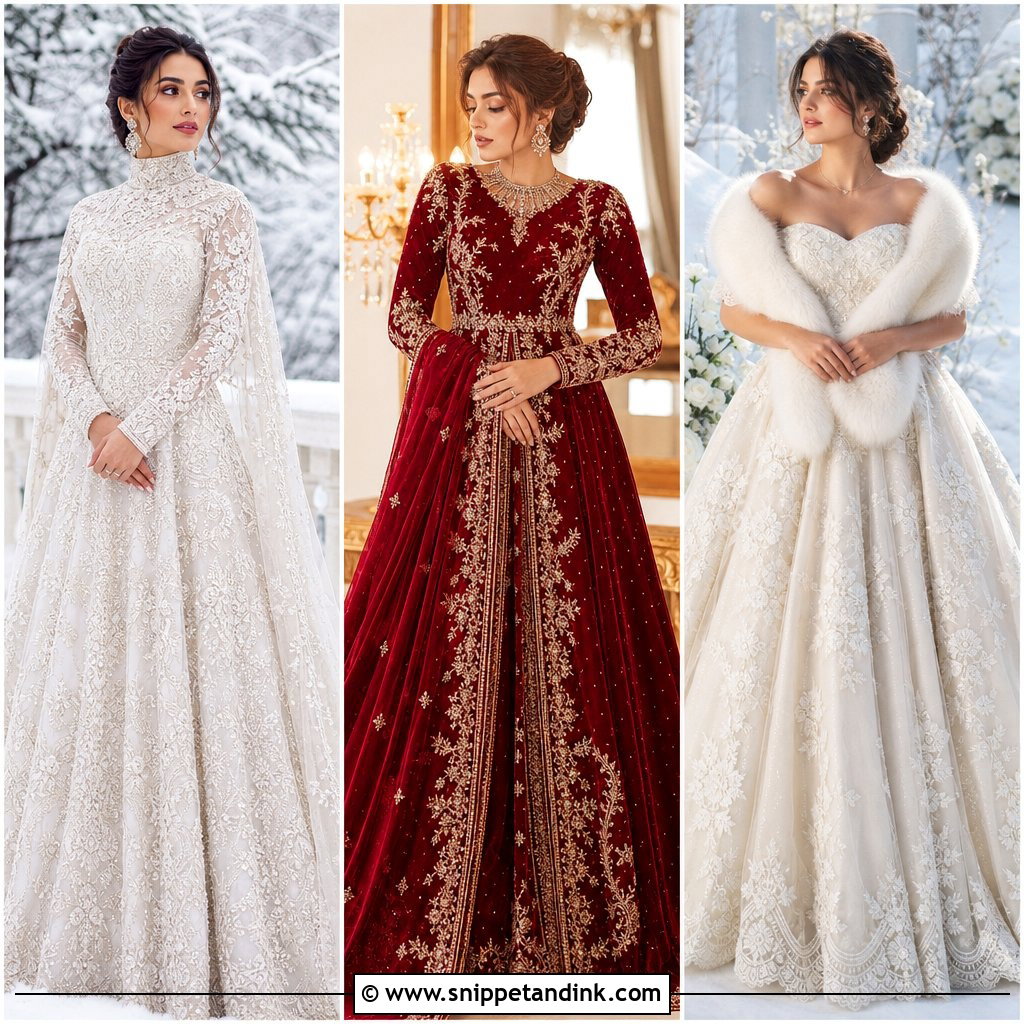
Velvet is the warmest fabric on this list and the least forgiving to handle. The pile marks if it’s pressed or sat on for long, so I tell velvet brides to steam it, never iron it, and to stand rather than perch on a hard chair during the portrait wait. An ivory column with long sleeves suits it best, since the fabric already carries the drama, and a square or softly draped neckline shows off its sheen. Add pearl earrings, a plain veil and velvet pumps or closed block heels, plus a small satin clutch. Between outdoor shots, slip on a long ivory wool coat. Evening ceremonies and historic rooms with low, warm lighting are where velvet looks richest.
4. High Neck Winter Wedding Dress
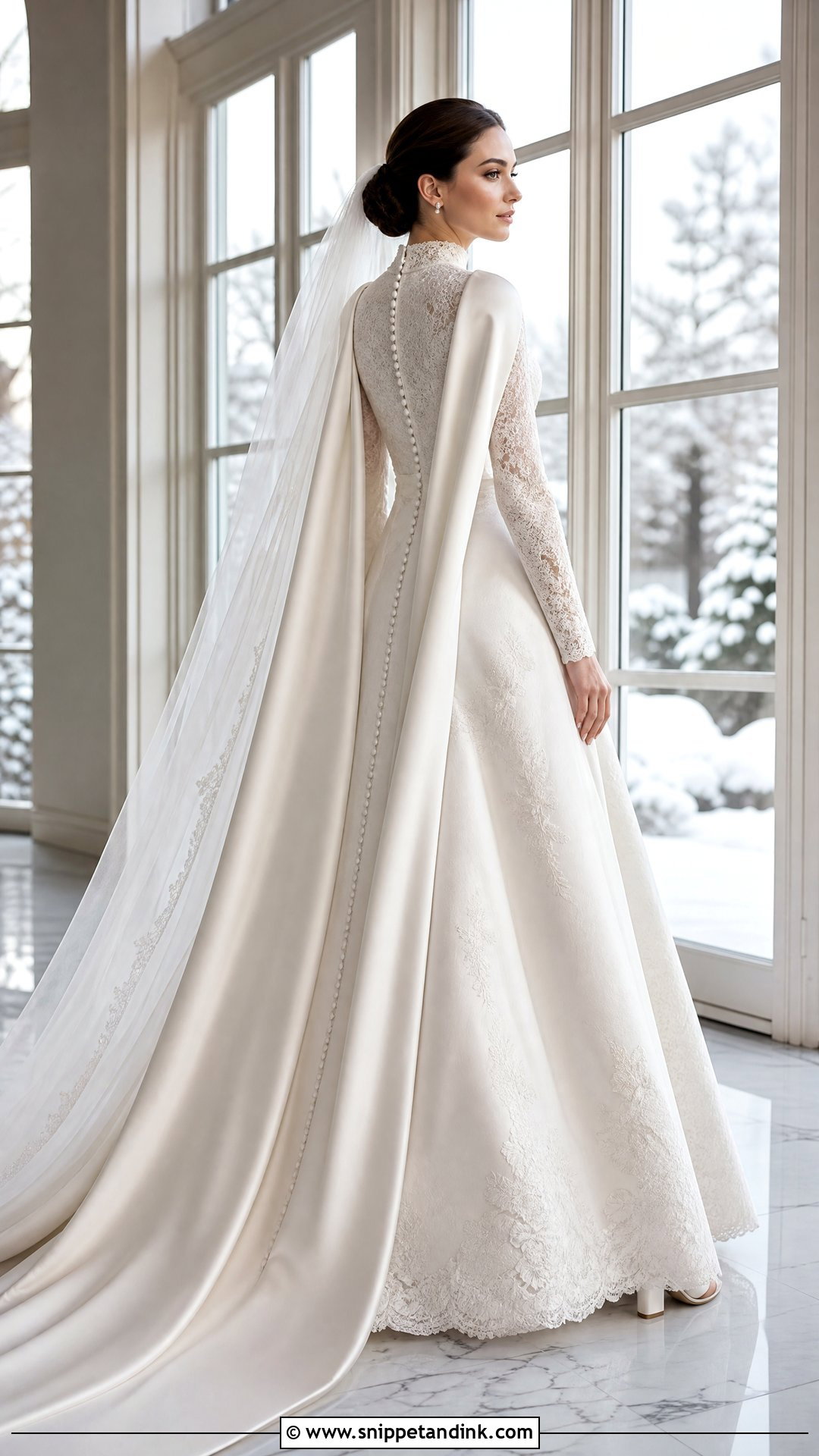
High necklines frame the face, so the jewelry decision is made for you: skip the necklace and give that attention to earrings or a small hair comb. A fitted lace bodice over a softly structured A-line skirt, long sleeves and a line of covered buttons down the back give this gown its regal outline. The thing I check at the fitting is the collar when the bride turns her head and looks down at her bouquet, because a collar cut slightly too high rubs the jaw by mid-afternoon. Pair it with a neat chignon, pearl studs and a veil anchored below the bun. Slingbacks are fine for a heated venue; closed block heels and a floor-length cape with simple fastenings make the trips between locations easier.
5. Crepe Mermaid Winter Wedding Dress
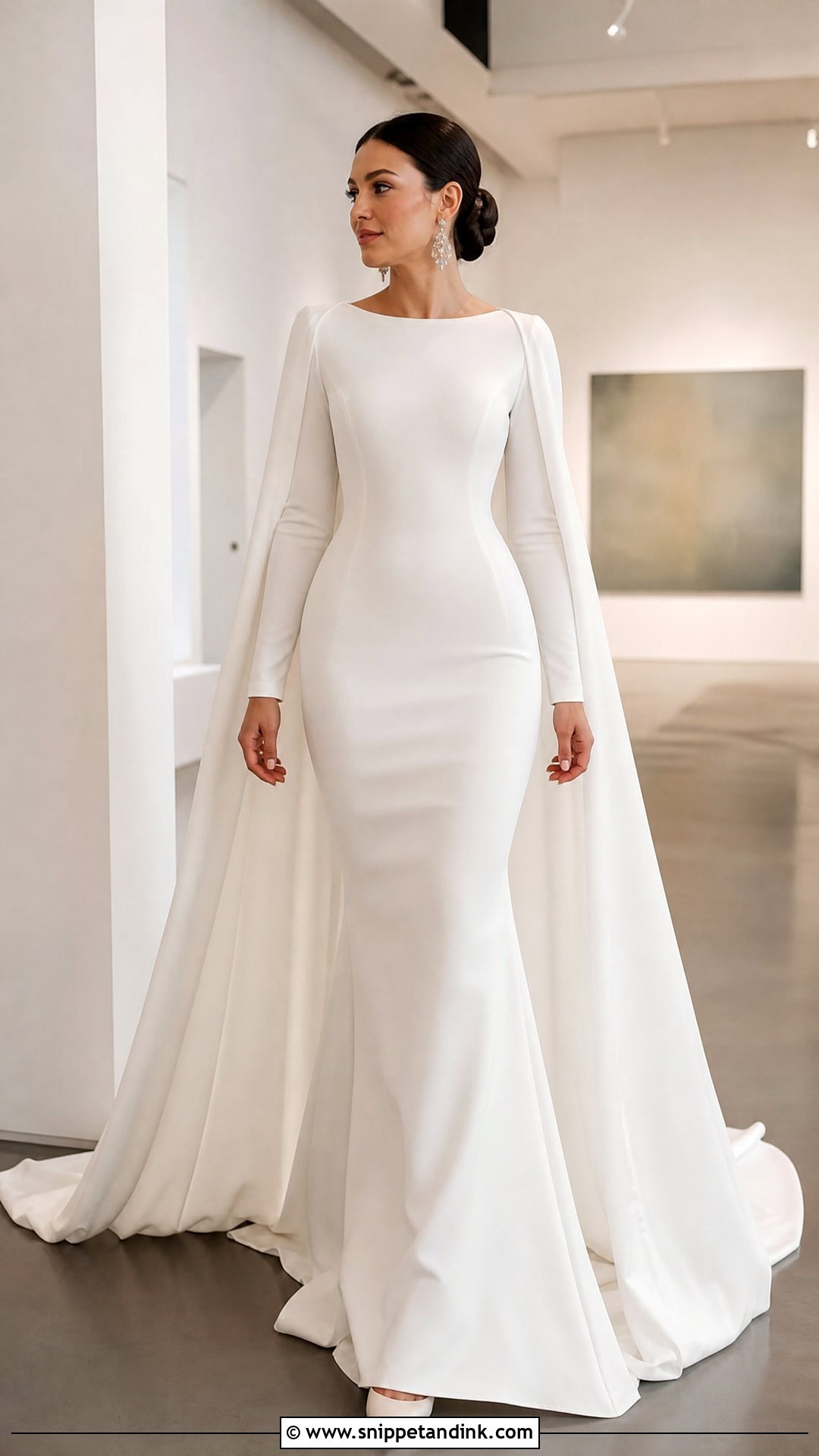
Stretch crepe in a mermaid cut shows every change underneath it, which is why I insist on fittings in the exact underwear and shoes you’ll wear on the day. Choose a substantial crepe with a smooth lining and a supportive bodice, with the flare starting below the knee so you can still manage steps. Covered buttons and a chapel train add detail without breaking the minimal line. Crystal earrings, pointed pumps and a structured ivory clutch keep it modern, and a dramatic cape looks sharp against the narrow skirt outdoors. Hair can go into soft waves or a sleek low ponytail depending on the neckline. One honest caution: dancing in a tight mermaid knee takes practice, so try a few steps at your last fitting.
6. Mikado A-Line Winter Wedding Dress
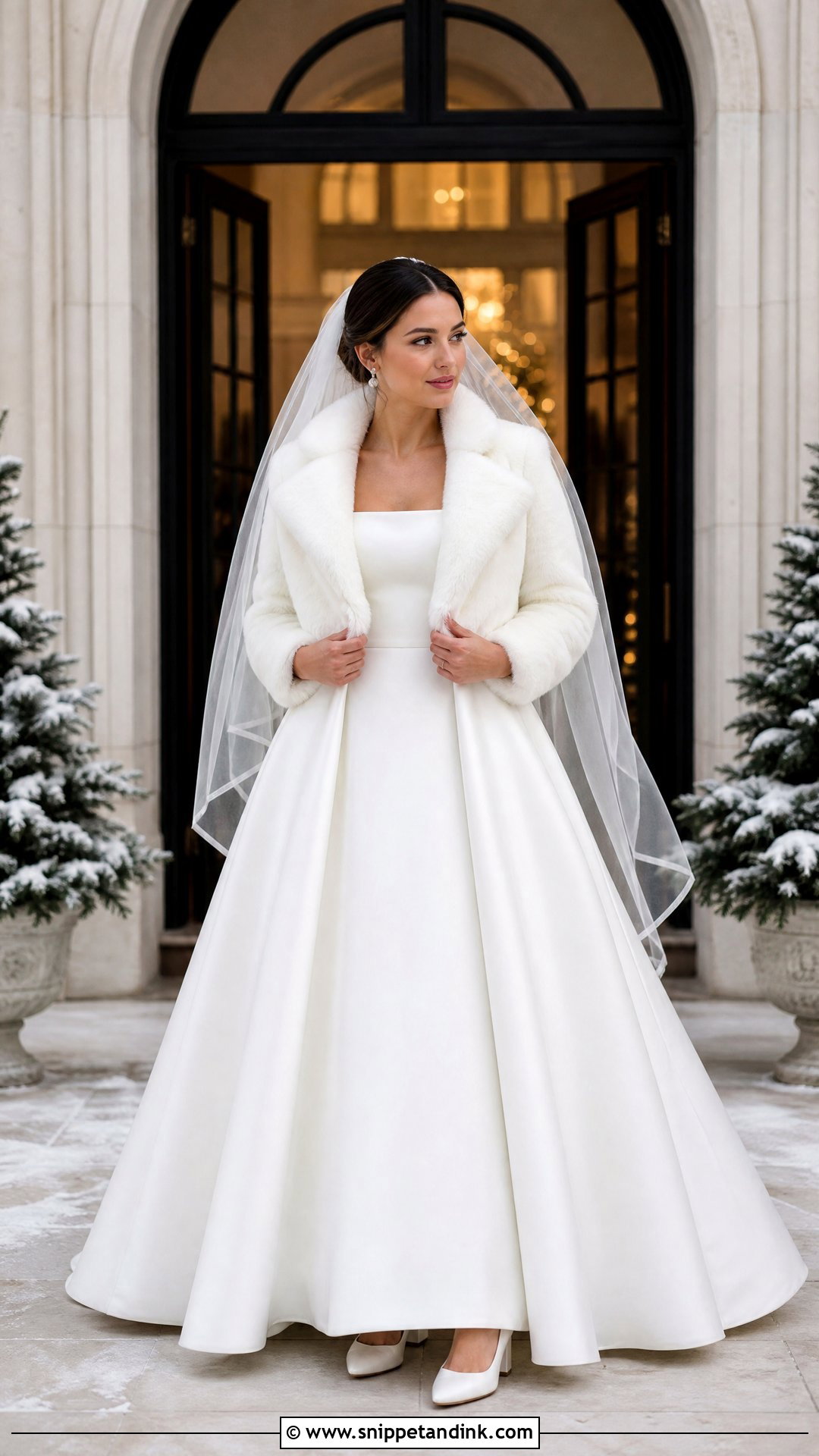
Mikado has a crisp hand and a faint sheen, and it holds a pressed seam or pleat better than almost any bridal fabric. In an A-line with a defined waist and long sleeves, you get structure without the full width of a ball gown, which matters in narrow aisles and smaller rooms. A V-neck or square neckline keeps the top half open. I’d style it with a fingertip veil, pearl and crystal earrings and ivory block-heel pumps. For outdoor travel, a cropped faux-fur jacket works well as long as its hem stops at the waist; a jacket ending at the hip slices the skirt in half in photographs. Finish with a structured bouquet and a smooth low bun.
7. Wedding Dress With Winter Cape
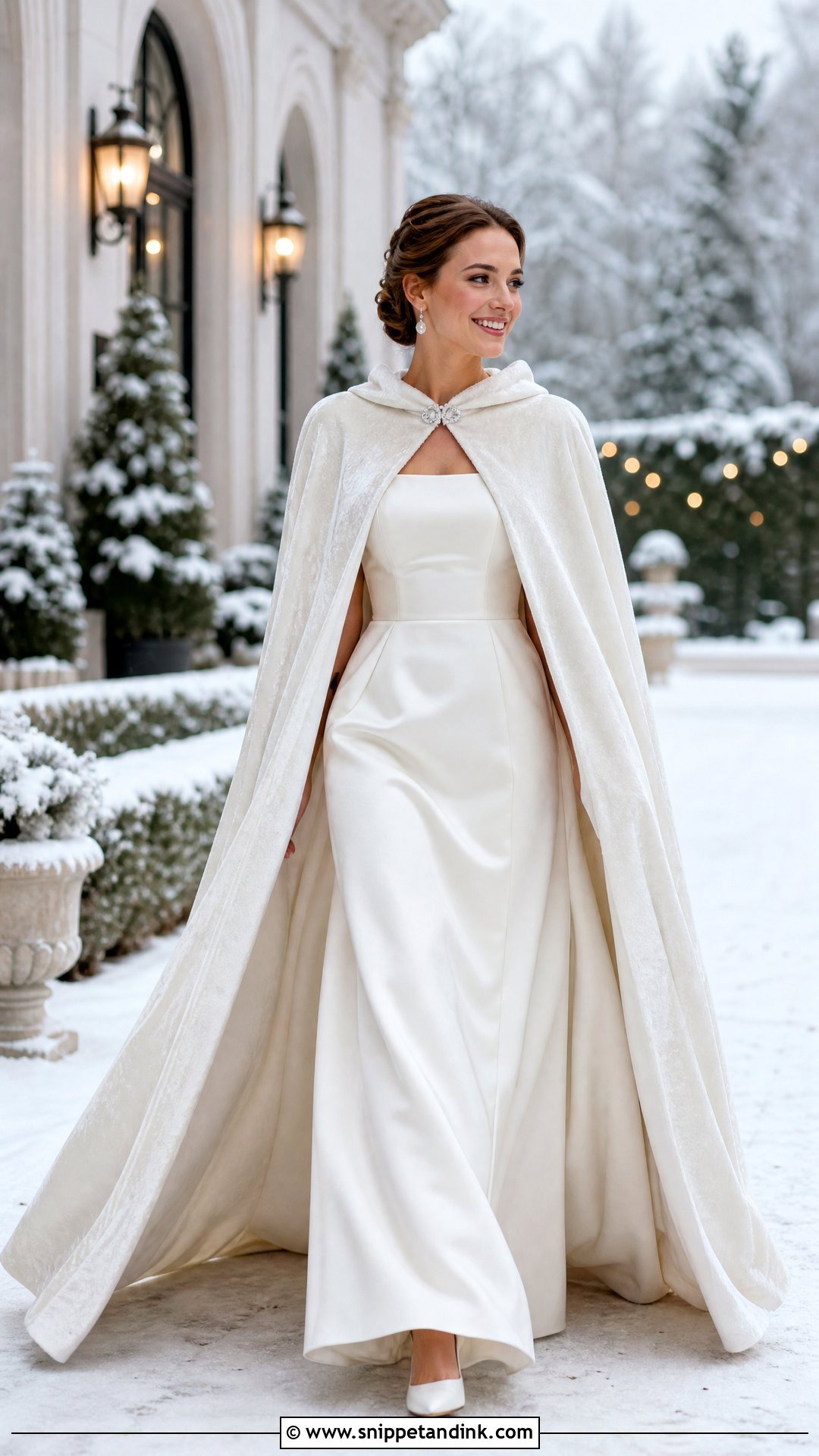
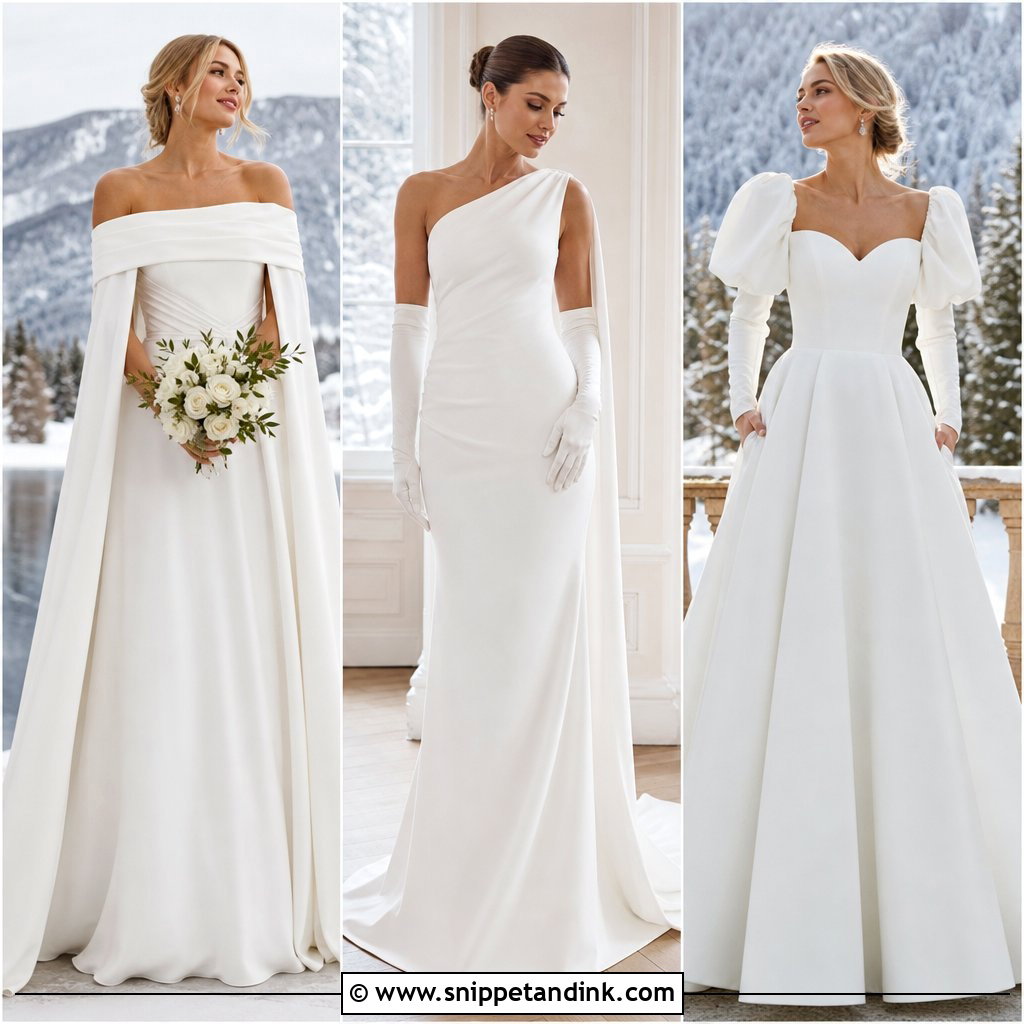
A cape is the most forgiving way to winterize a gown you already love, because it comes off with one clasp. Start with a sleeveless satin or crepe A-line with a clean neckline and a lightly fitted bodice, then add a floor-length ivory cape in velvet or lined crepe that follows the gown’s outline rather than swamping it. Bring the cape to your alterations. Satin over satin slides and twists as you walk, and a seamstress can add a small hidden tab to stop it. Closed heels, small pearl earrings and a neat updo keep the fastening visible. A shorter veil can sit under the cape, though going without one gives a cleaner back view.
8. Off Shoulder Winter Wedding Dress
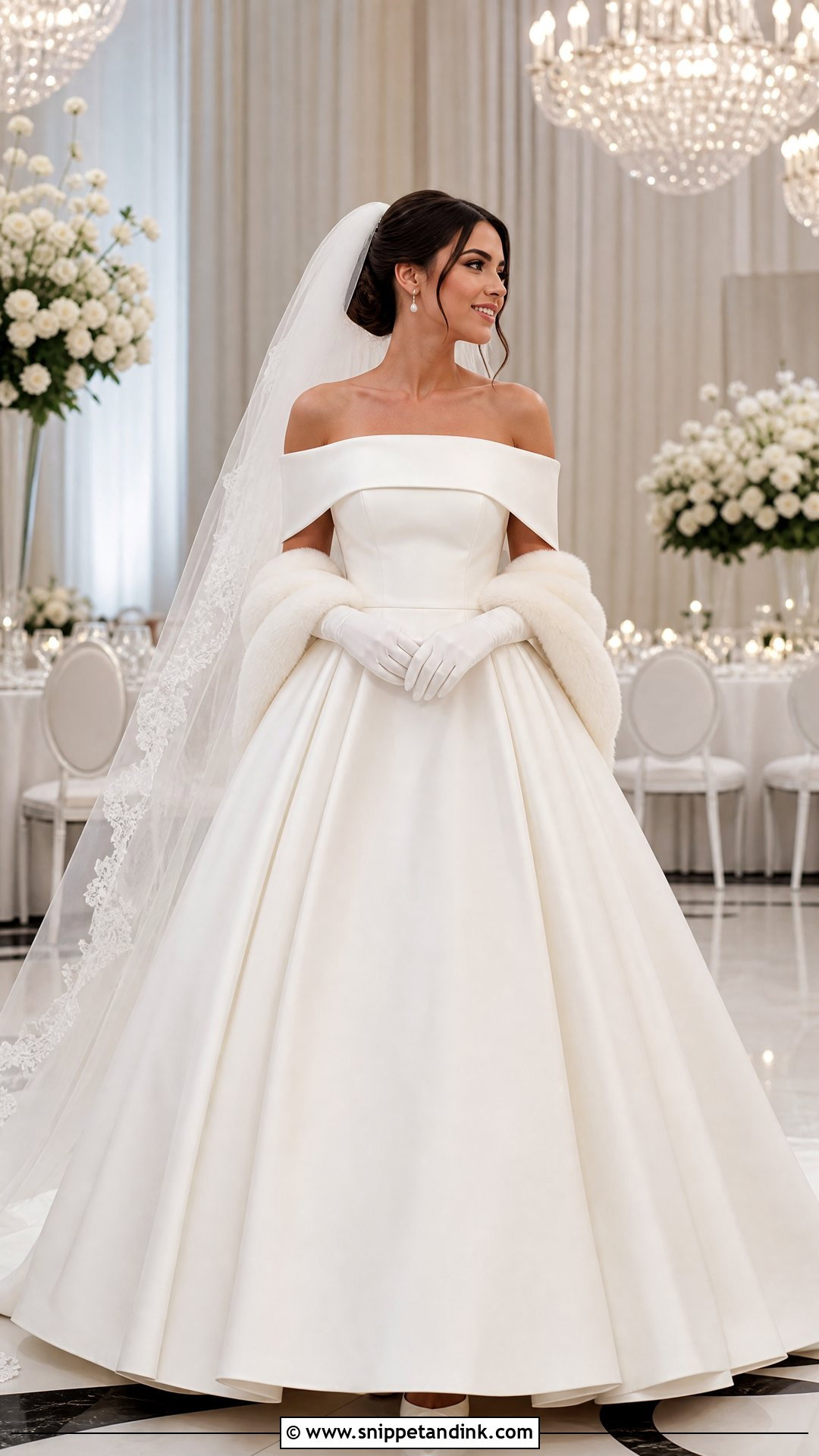
Bare shoulders in winter are entirely doable, as long as the ceremony is indoors and heated and the outdoor part is short. Pick a structured satin ball gown or A-line with a folded neckline and a bodice that holds itself up; an off-the-shoulder gown that relies on the sleeve bands will slip every time you lift your arms. Elbow-length satin gloves, pearl earrings and closed pumps bring some coverage back in. Outside, an ivory faux-fur stole or short velvet capelet sits neatly on the shoulders. Wear your hair up or swept to one side, keep necklaces minimal and let a cathedral veil carry the drama.
9. Puff Sleeve Winter Wedding Dress
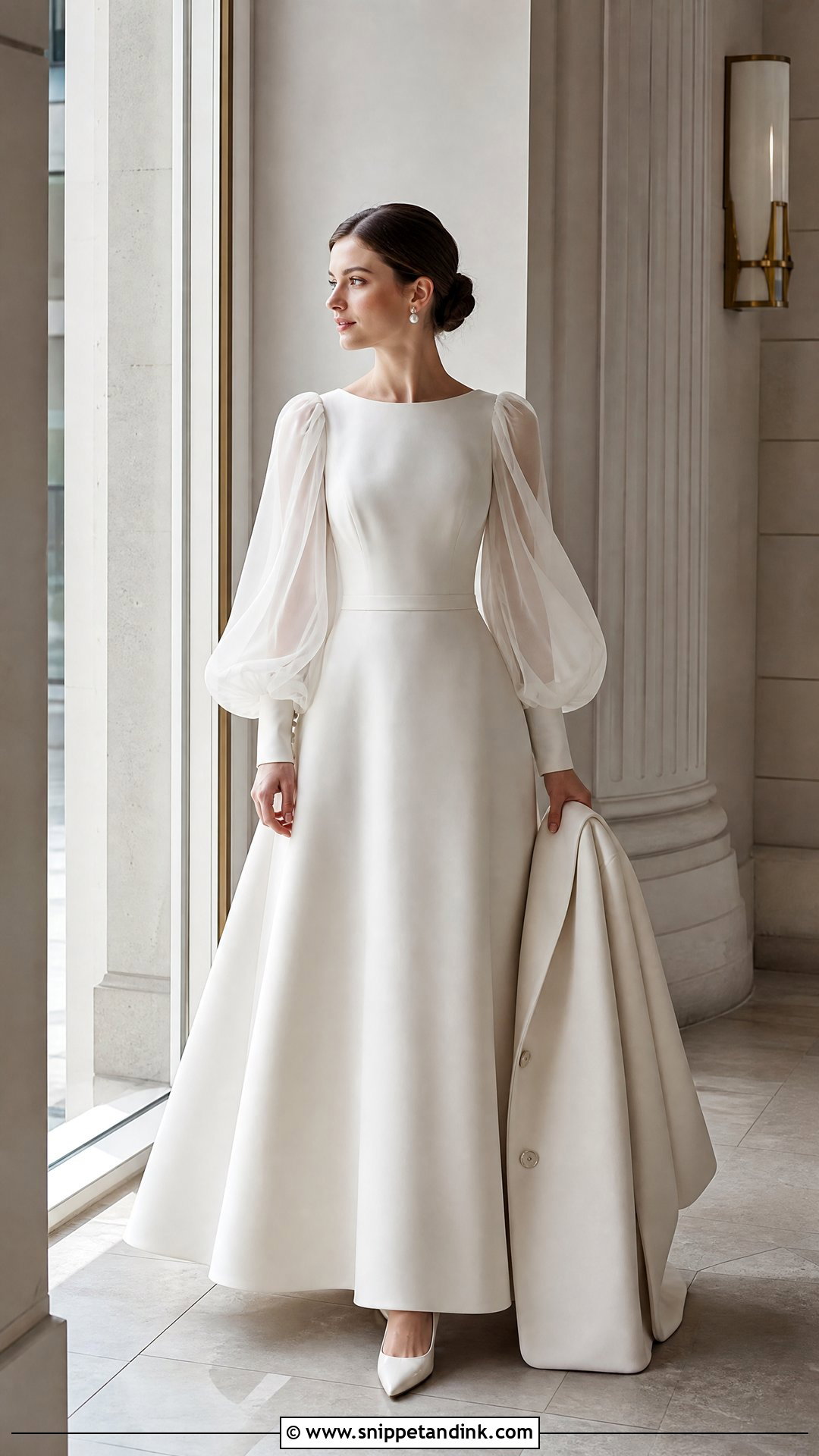
Puff sleeves are the detail most likely to get crushed by winter outerwear. If you’ll need a coat, buy one with room through the shoulders or choose a cape instead, because a fitted wool coat flattens organza in minutes and it rarely springs back fully. Organza sleeves look airy, while lined satin or crepe versions hold their shape better and keep you warmer. Look for fitted cuffs, a defined waist and a flowing A-line skirt so the sleeves stay the focus. Pearl drops, a simple veil and ivory pumps are all it needs, plus a small structured bag for a civil ceremony. A low bun or half-up style balances the volume at the top.
10. Sparkly Winter Wedding Dress
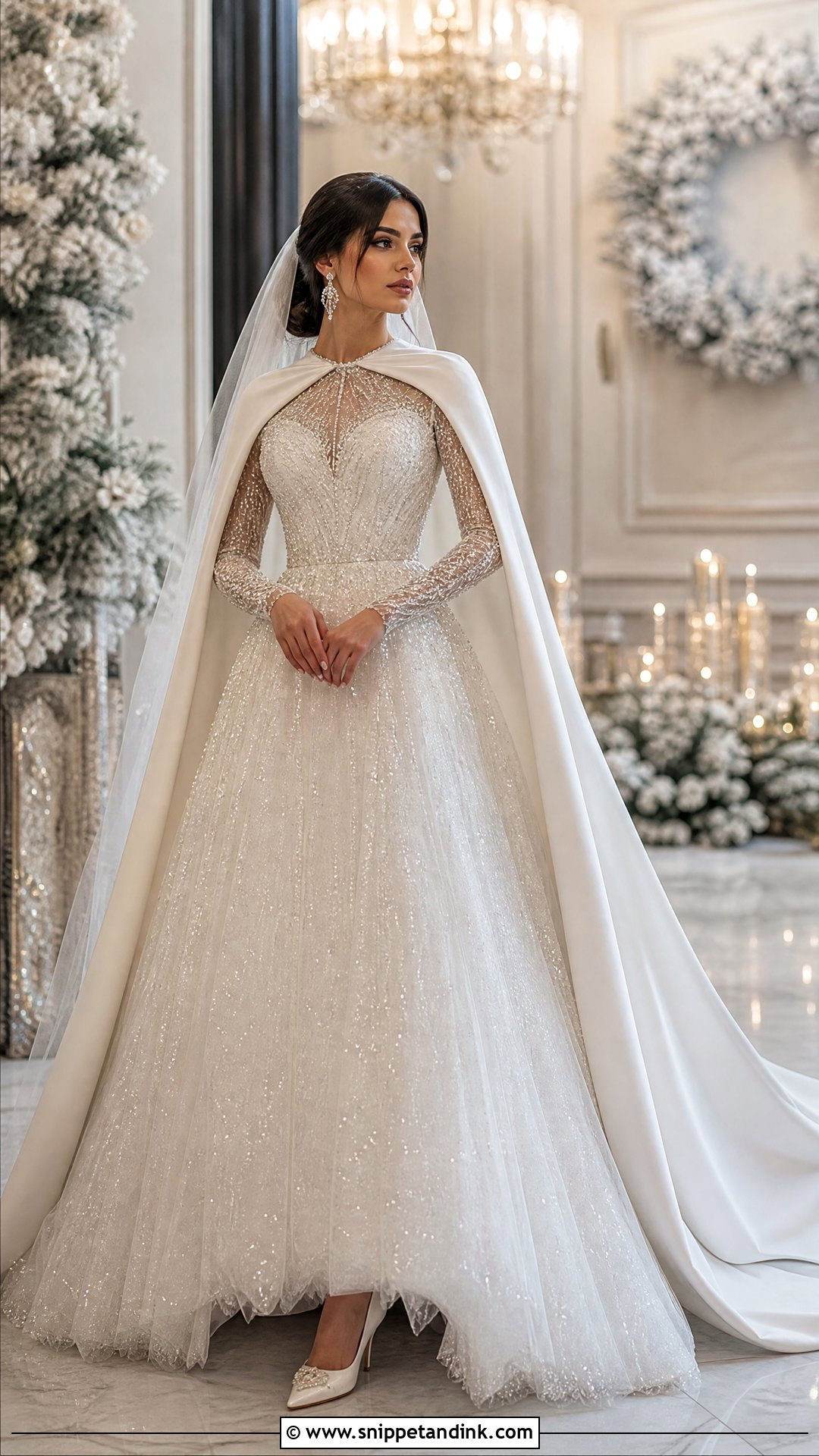
Candlelight and early winter dusk make beading come alive, so a sparkly gown earns its keep at an evening wedding. I prefer embellishment spread evenly across a long-sleeve A-line rather than clustered in heavy patches, which can look like dark blotches in flash photos. Before you commit, wear the dress with your veil and move your arms. Rough crystals on a sleeve snag tulle and can scratch the inner arm over a long day. Keep everything else plain: small crystal studs, metallic ivory heels and an unembellished tulle veil. For cold moments outside, a simple satin cape with no extra beading is enough, and a cool-toned makeup look with a polished updo suits all that reflection.
11. Simple Long Sleeve Winter Wedding Dress
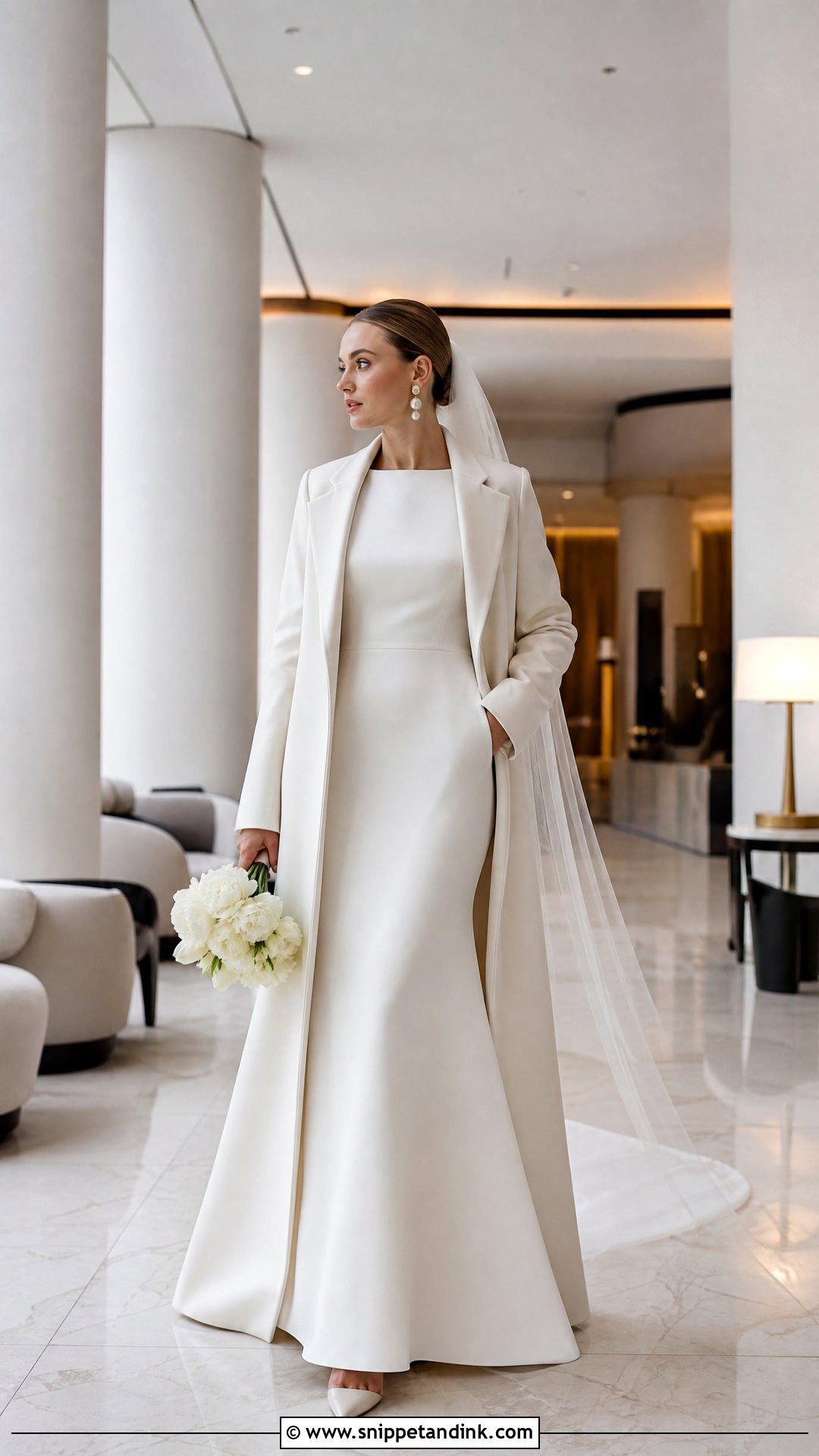
Plain fabric hides nothing, so a minimalist gown lives or dies by its tailoring. In heavy crepe or satin, every seam and the exact hem length become the design, and a well-fitted plain dress often looks more expensive than a heavily embellished one. Look for a fitted waist, a gently flared skirt and a boat or shallow V-neck. Sculptural pearl earrings, pointed heels and a long plain veil suit it, with a tailored ivory coat that carries the same clean line. Keep the bouquet compact. Because the neckline and silhouette can be adjusted without losing the minimal feel, this cut works on a wide range of body types.
12. Tea Length Winter Wedding Dress
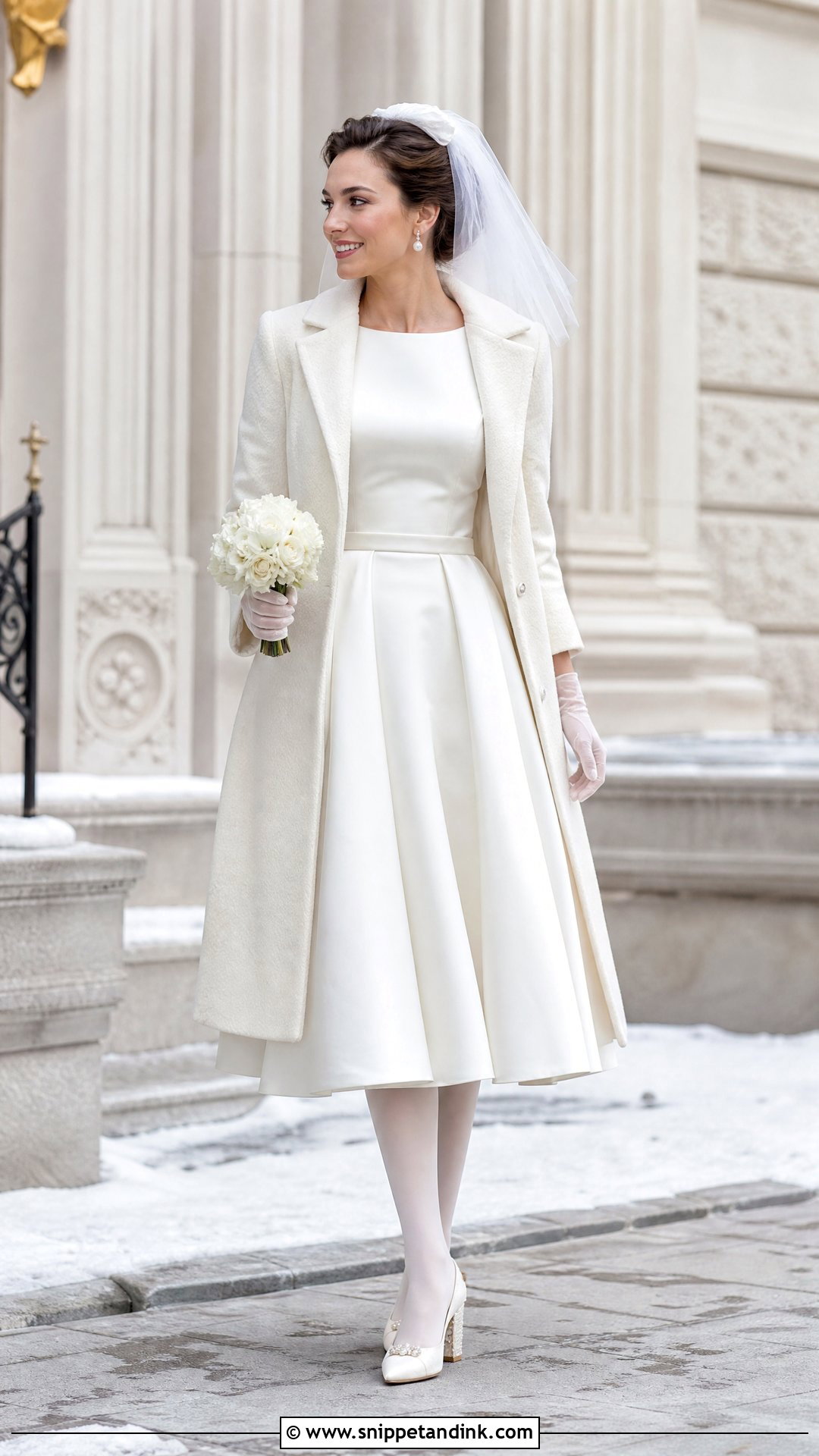
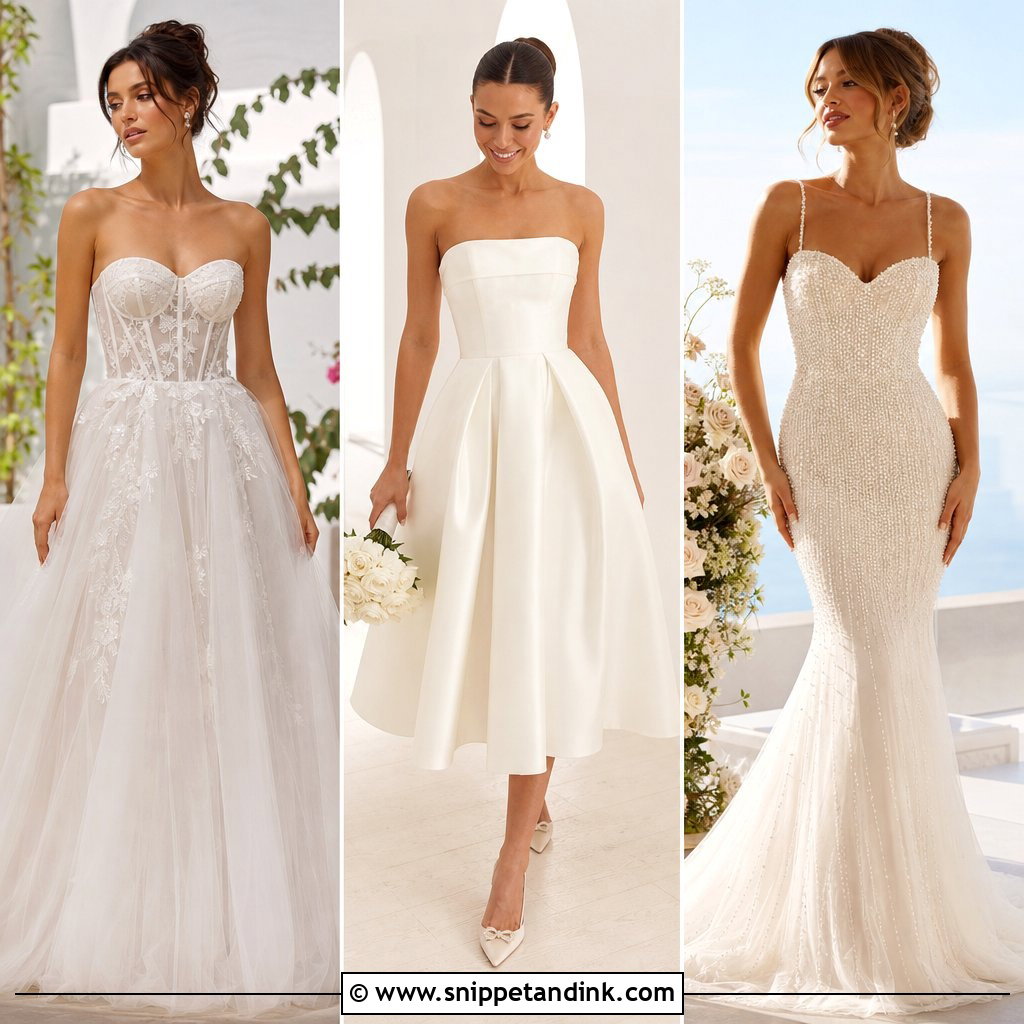
For a courthouse ceremony or a daytime lunch in winter, I often steer brides toward tea length, because the hem stays clear of wet pavements and slushy steps. Choose satin with three-quarter sleeves, a fitted waist and a skirt landing between knee and ankle. Your shoes are on show, so pick ivory block heels or polished ankle boots you can genuinely walk in. Add pearl earrings, short gloves and a birdcage or fingertip veil, with a tailored knee-length coat over the top. Wearing sheer or opaque ivory tights makes a real difference to warmth; hold them against the satin in daylight first, as some ivories turn yellow beside a cooler dress. A compact bouquet keeps the proportions right.
13. Winter Wedding Dress With Faux Fur Wrap
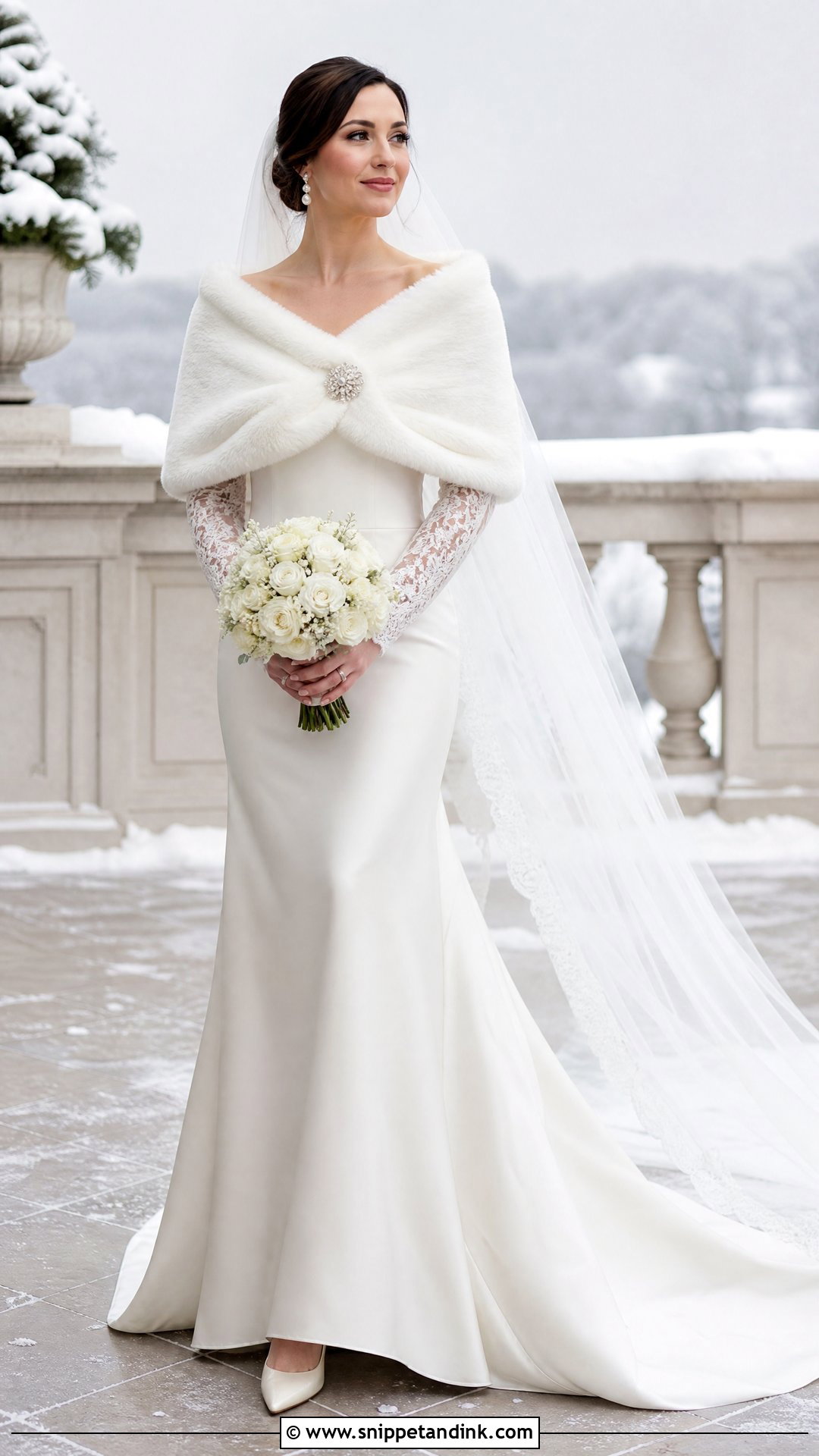
A wrap is the simplest way to make a gown you’ve already bought feel wintry. Hold the faux fur against the dress before you choose a shade, since ivory, cream and soft white fur all look different beside silk and a mismatch shows clearly in photos. Pick one with a smooth lining, because unlined backing catches lace, beading and covered buttons. A hidden hook or a decorative brooch keeps it closed so your hands are free for the bouquet. Pair it with pearl earrings, a cathedral veil and closed satin pumps over a long-sleeve or strapless gown. I treat the wrap as an outdoor piece for arrivals, portraits and the exit, and hand it off once you’re inside.
14. Winter Wedding Dress With Overskirt
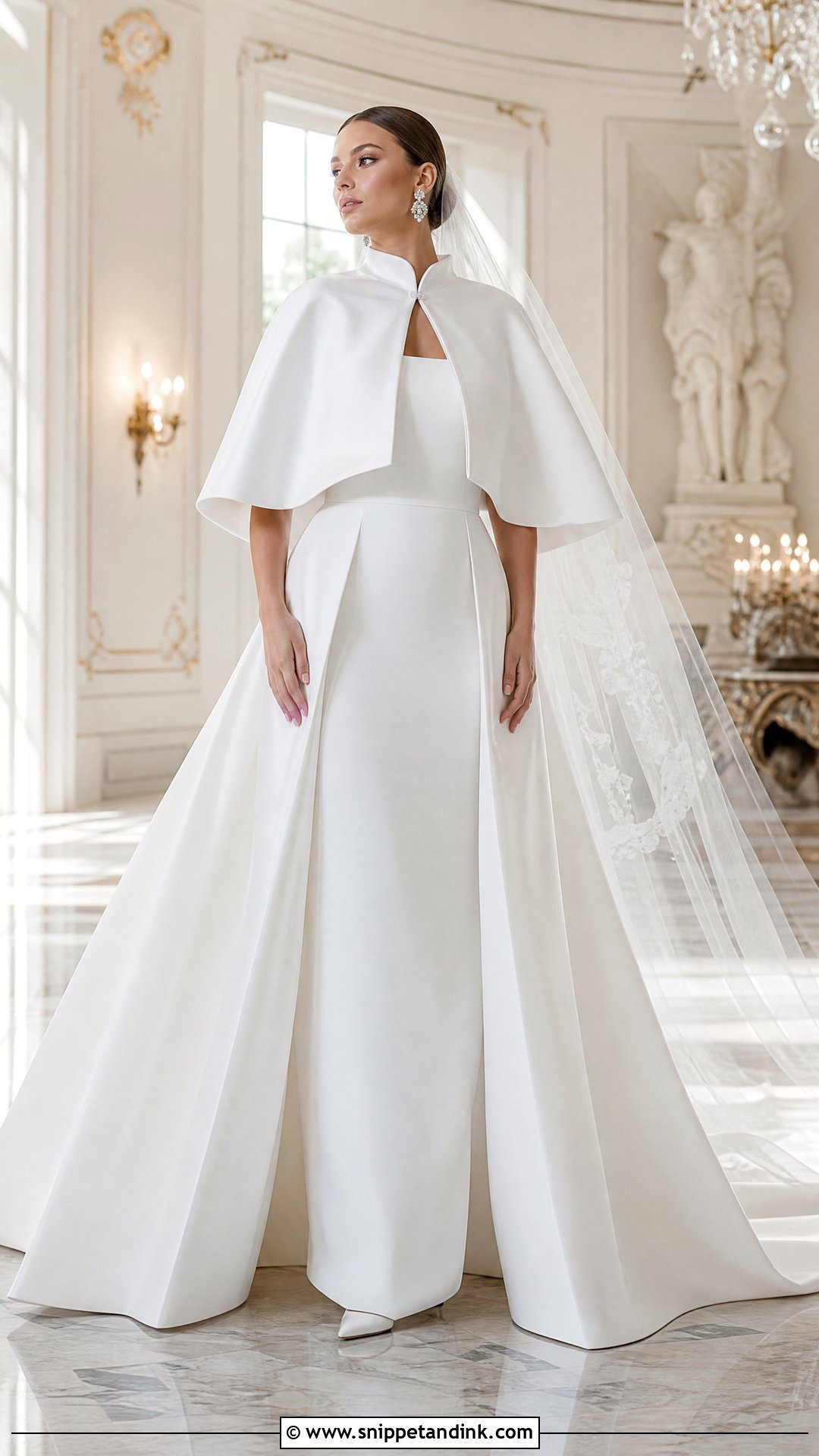
Two silhouettes from one dress: a full Mikado shape for the ceremony, then the slimmer crepe or satin gown underneath for dancing. The extra layer adds a little warmth around the legs as well. Attachment is where these go wrong. Ask your seamstress to hide the hooks or buttons under a waist seam, and practise the removal with whoever will help you, because a heavy overskirt is awkward to unfasten in a cramped bathroom. Style the ceremony version with a long veil, crystal earrings and pointed pumps, and choose a short cape for outside that won’t fight the fuller skirt.
15. Square Neck Winter Wedding Dress
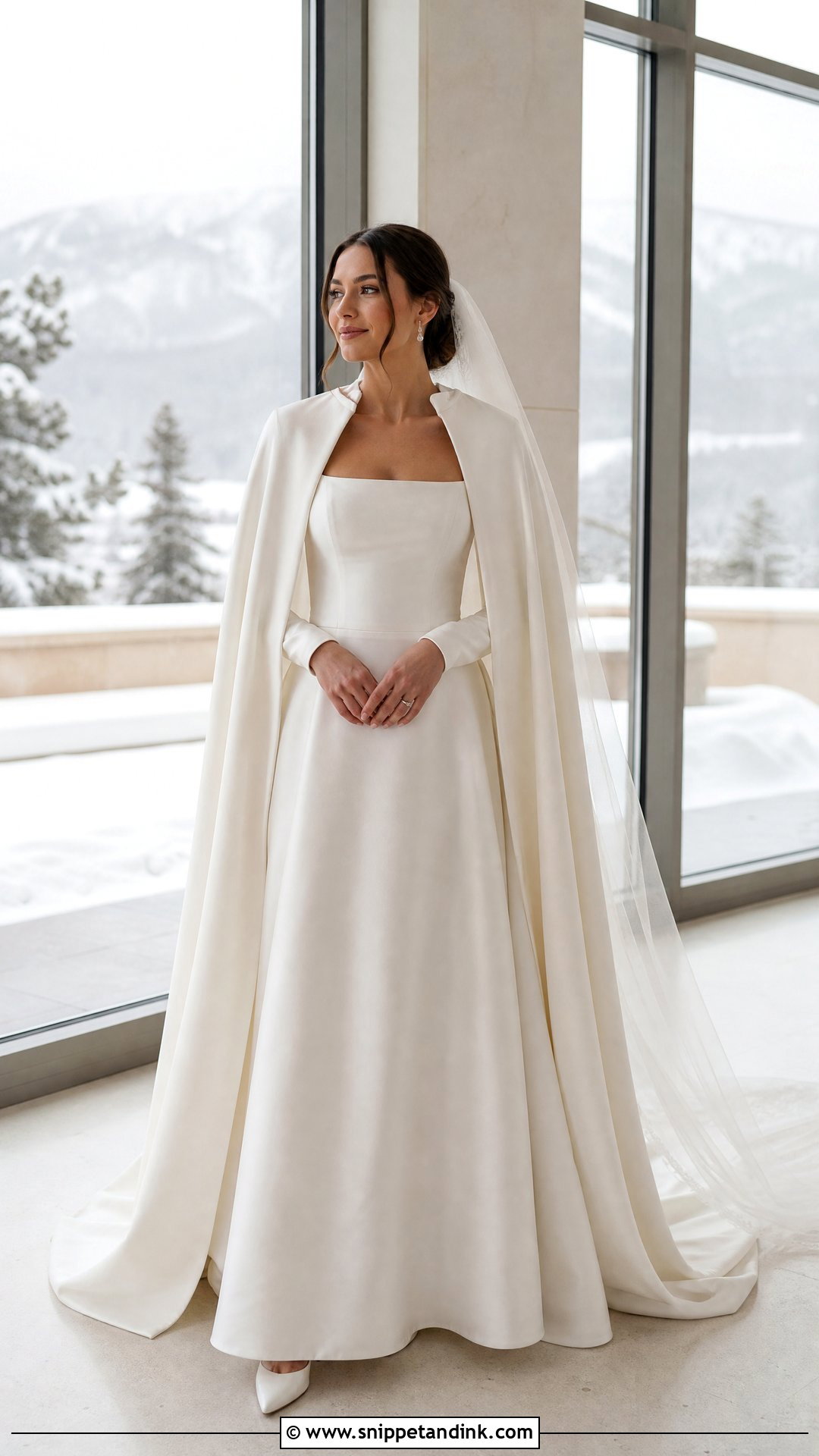
A square neckline gives the collarbones a clean frame and suits a structured winter bodice especially well. Choose long sleeves in satin or crepe with a fitted bodice, a defined waist and a soft A-line skirt. The width and depth of the square are easy to adjust in alterations, which helps brides who want more support or less exposure. Jewelry is optional; if you wear a chain, keep it fine enough to follow the neckline rather than fill it. Add pearl drops, a cathedral veil and closed ivory heels, with a long wool cape or tailored coat outdoors. Any hairstyle that keeps the neck clear, from a low bun to loose waves, will show it off.
16. Winter Wedding Dress With Bridal Coat
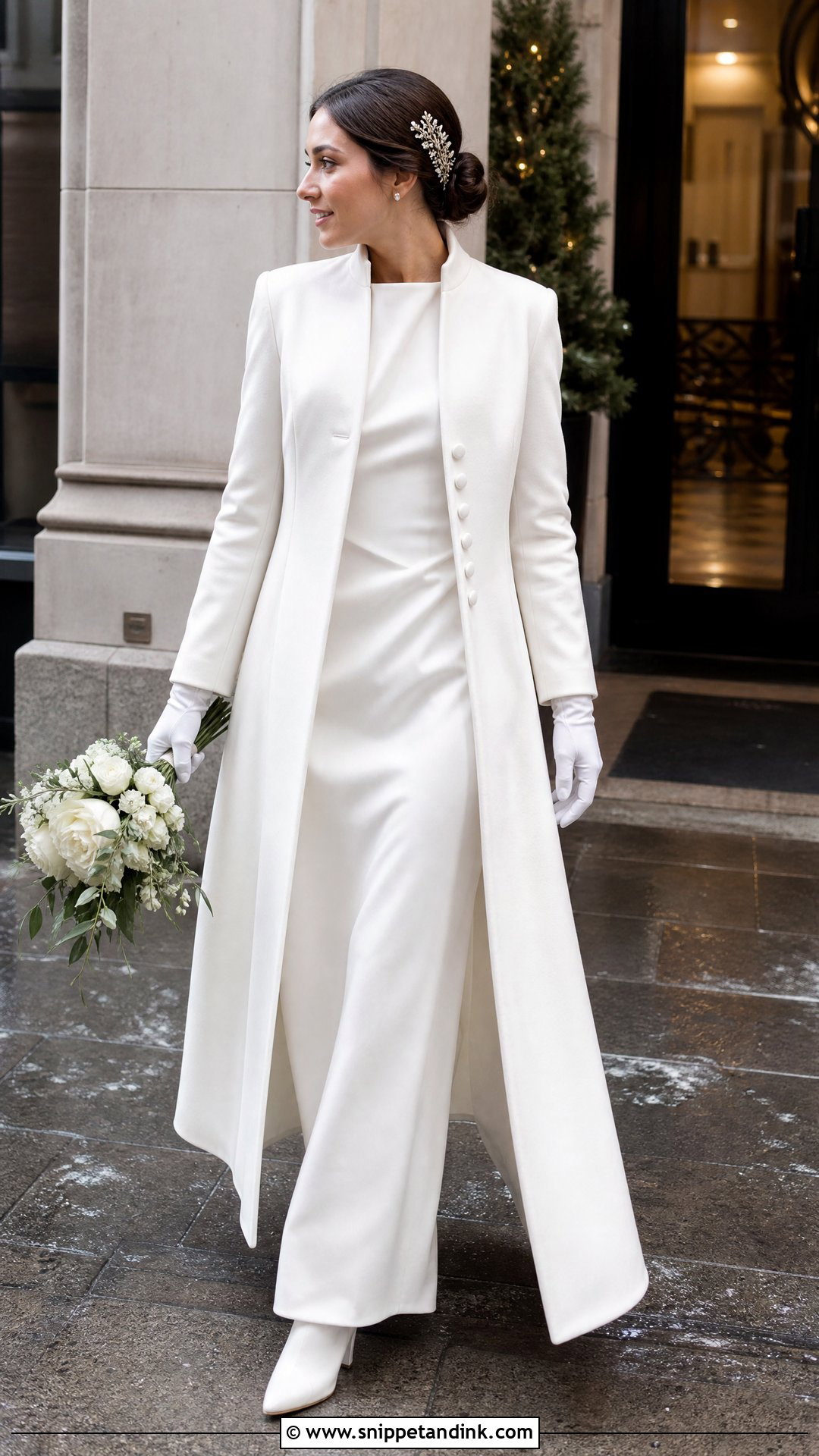
A bridal coat stops being an afterthought once you buy it as part of the outfit. Pair a simple column, sheath or A-line gown in satin or crepe with a tailored ivory coat that falls close to the dress hem; a coat ending a few inches higher leaves a stripe of gown showing that looks accidental. Covered buttons, a shaped waist and enough room across the shoulders to lift your arms matter more than any trim. Leather or satin gloves, pearl studs and closed pumps or heeled boots finish it. Check the two whites together by a window, not under shop lighting. A short veil can tuck under the collar, and taking the coat off indoors gives you a second look.
17. Lace Top Satin Skirt Winter Wedding Dress
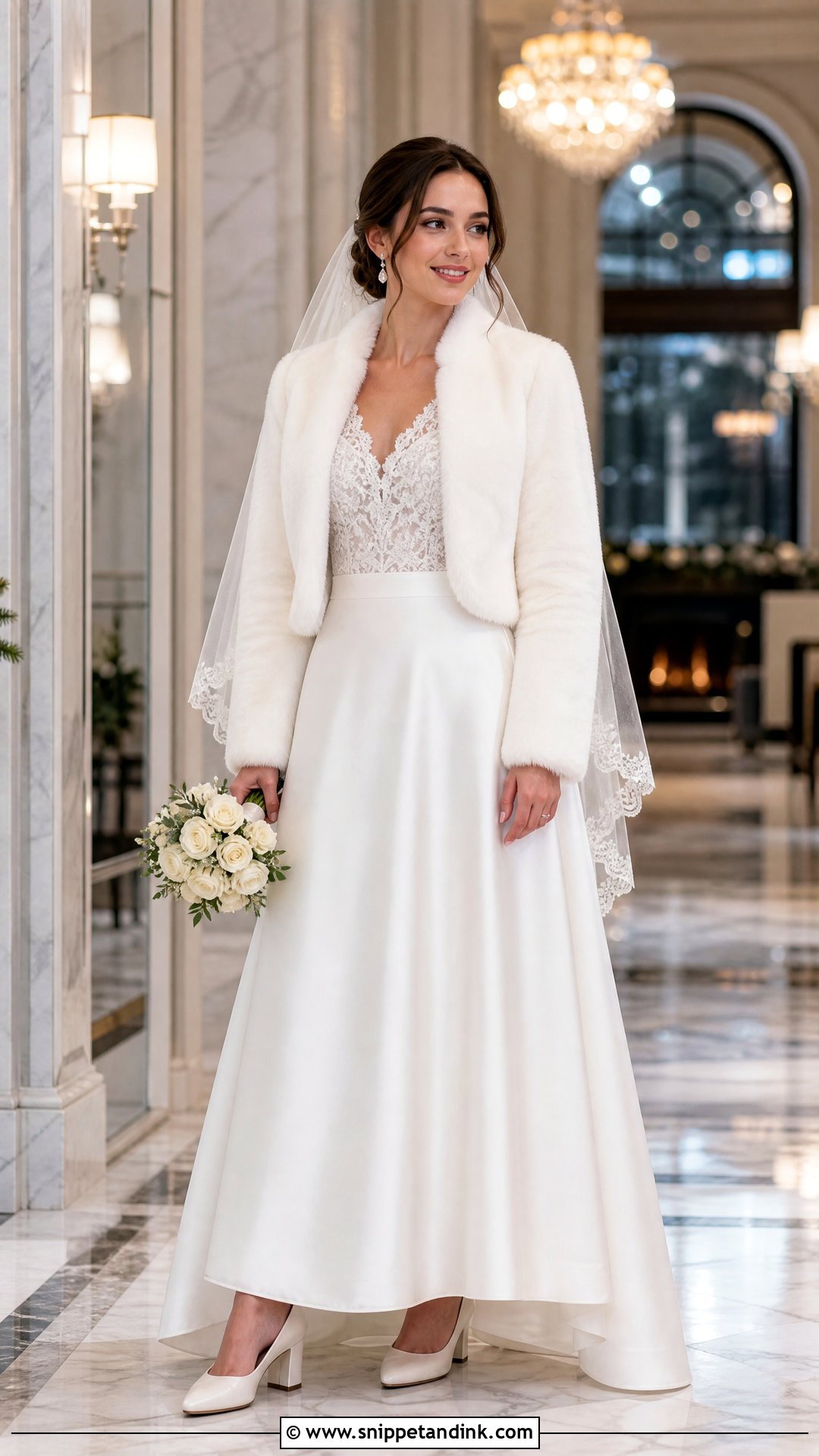
Lace where people look closest, satin where the fabric needs to hold: that is the logic of this pairing. Long lace sleeves, a lined sweetheart or V-neck bodice and a smooth A-line skirt, with pockets if you like them, make a classic combination. At fittings I watch the waist seam most closely, since lace and satin stretch differently and a join that ripples or rides up gives the construction away. Pearl earrings, a fingertip veil and satin block heels suit it. A fitted capelet or cropped faux-fur jacket covers you outside while keeping that waist visible. Choose a medium bouquet with some structure.
18. Bridal Jumpsuit With Winter Cape
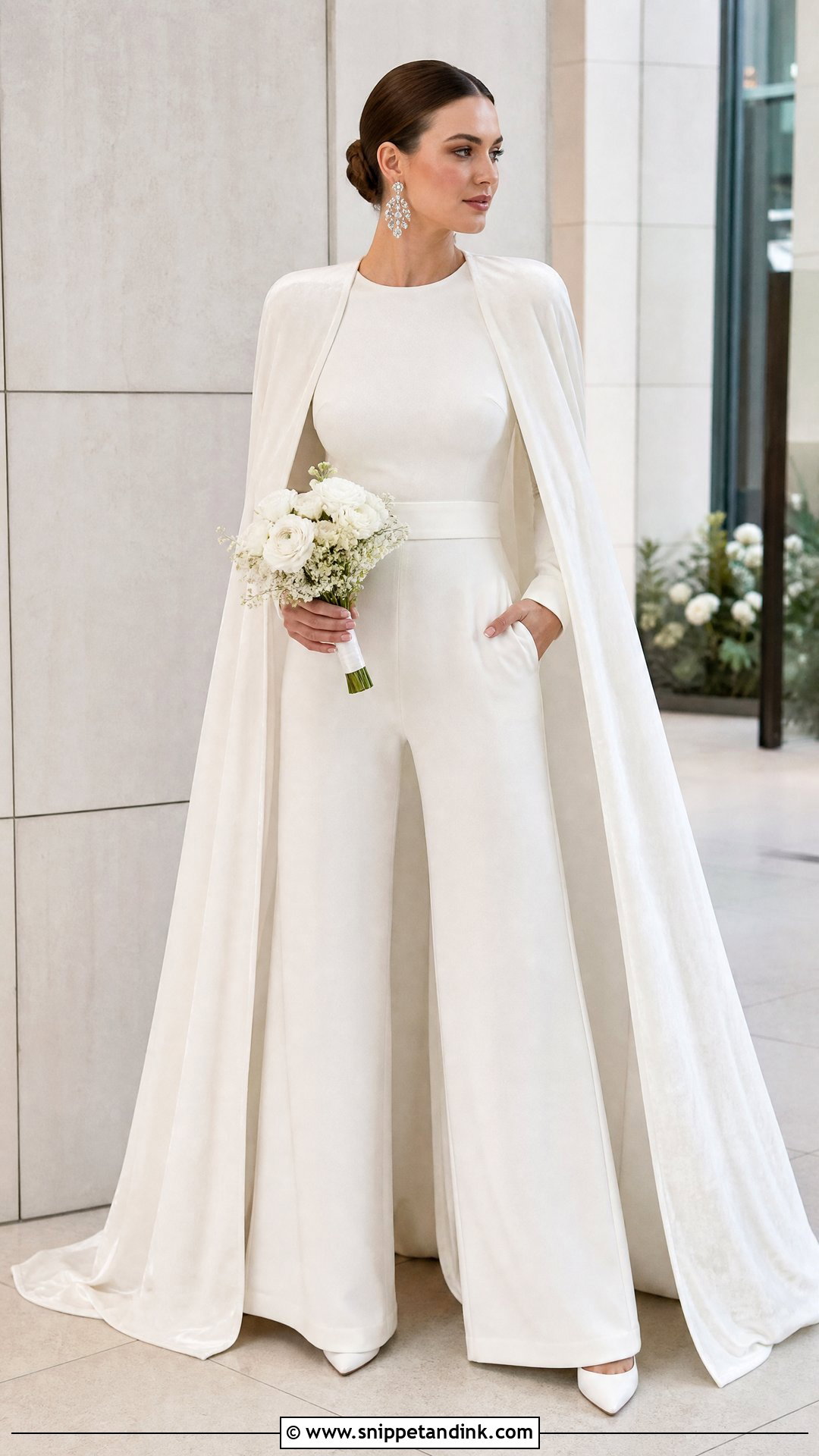
Tailored separates suit some brides far better than a skirt, and a jumpsuit with a floor-length cape still reads as formal bridal wear. Look for ivory crepe with long sleeves, wide legs and a defined waist, then add a satin or velvet cape for the ceremony and for cover outside. The hem is the fitting point that matters most. Have it taken up with your exact shoes so the trouser just grazes the floor without exposing the heel. Pointed heels lengthen the line and statement earrings sharpen it. Carry a structured clutch or a compact bouquet, and wear a low ponytail or sculpted bun so the cape collar stays clean.
19. Bridal Ankle Boot Winter Wedding Dress
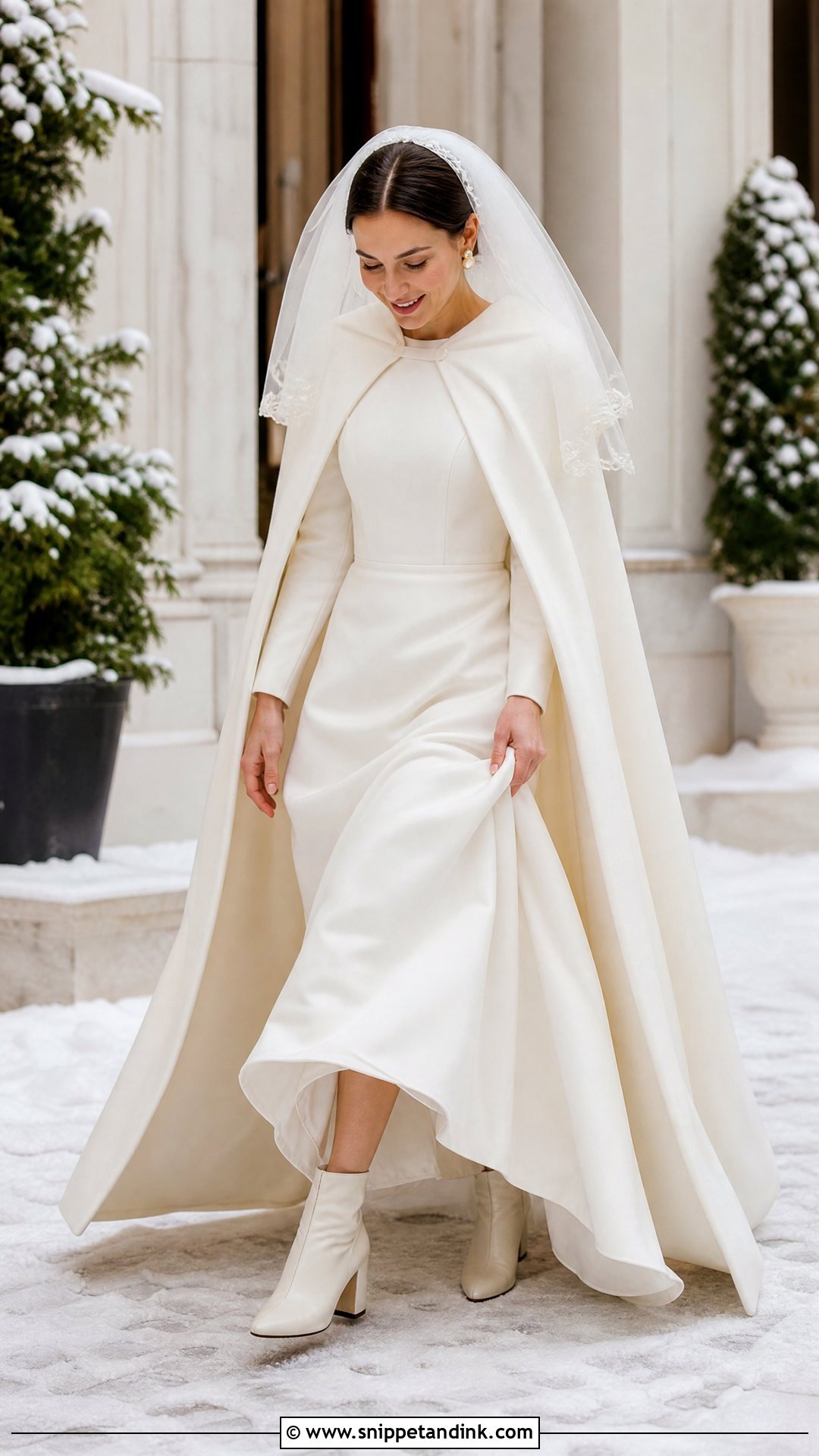
Ankle boots make sense the moment your day involves wet grass, cobbles or an icy car park. Ivory leather or satin with a stable block heel and a non-slip sole will carry you through far more of the day than a stiletto. Pair them with a long-sleeve A-line, a tea-length dress or a flowing skirt that shows the boot as you walk. Bring the boots to every fitting; a hem set for pumps will drag once you switch to a chunkier heel. Pearl earrings, a lined cape and a fingertip veil keep the outfit bridal, and ivory tights under a shorter dress add warmth if the shade blends. I’d skip rugged hiking details unless the whole wedding is deliberately casual.
20. Winter Wedding Dress With Gloves
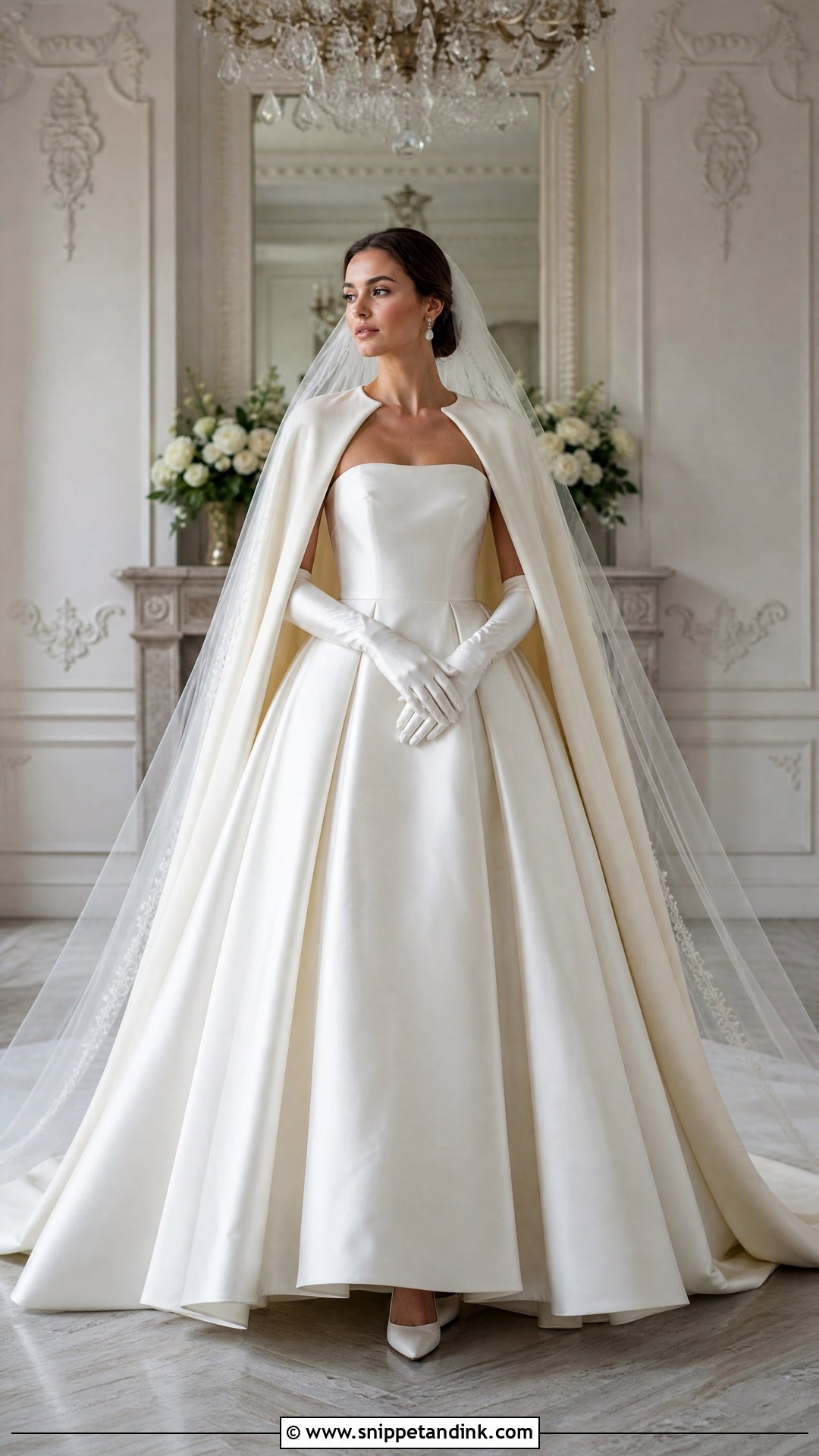
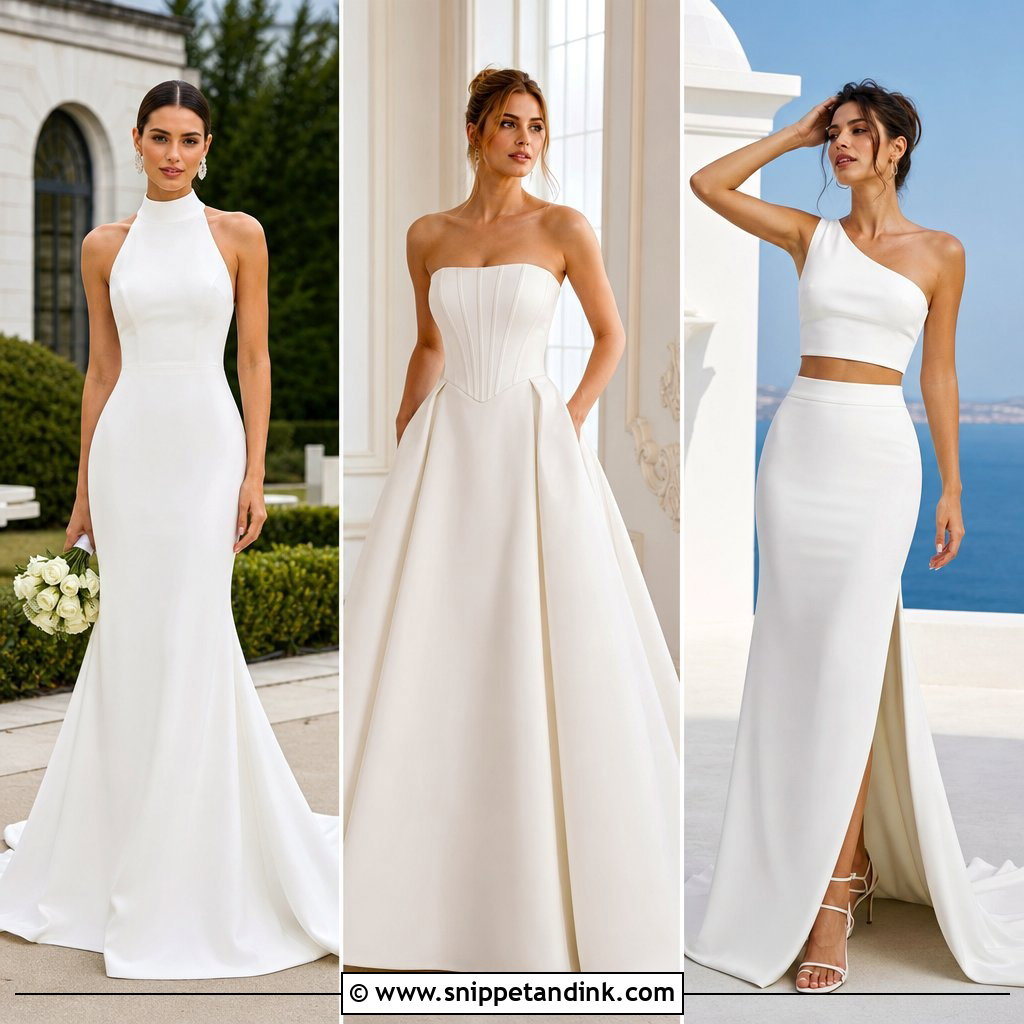
Gloves look graceful in pictures and feel fiddly in practice, so rehearse with them. Elbow-length satin suits a strapless ball gown, and wrist-length gloves work with long sleeves. Match the glove fabric to the gown: smooth satin with structured dresses, sheer tulle with softer lace. Practise holding the bouquet and signing your name, and decide in advance whether you’ll remove your left glove before the vows, since a ring won’t slide over satin fingers easily. Pearl earrings, closed heels and a simple veil round it out, with a faux-fur stole or velvet cape added outdoors. The finish has a vintage feel without tipping into costume.
Hidden Warmth Under the Gown
The warmest bridal layers are the ones nobody sees. A thin thermal base layer in your skin tone, cut low enough to sit below the neckline and the back, adds a surprising amount of warmth under a lined gown. Silk thermals are the thinnest option; synthetic sports base layers cost less but can build static against satin and tulle.
- Wear the base layer to your final fitting, or the bodice may be taken in too close to fasten comfortably over it.
- Tights in a shade that disappears under the hem keep your legs warm and stop new shoes rubbing.
- Hand warmers in a coat pocket are more useful than gloves you’ll pull off for every photo.
- An extra tulle layer in the petticoat adds warmth under a full skirt without changing its shape much.
Heated venues bring their own problem. Moving from frost into a warm ballroom can leave you flushed under velvet or a lined bodice, so have somewhere to drop the coat quickly and give blotting papers to whoever is holding your bag.
Slush, Salt Marks and Getting the Dress Home Clean
Winter weather is harder on a wedding dress than summer heat. Slush, grit and road salt wick up into a hem within minutes outdoors, and on satin or velvet the tide line is very obvious. A bustle set high enough for outdoor walking, or someone ready to lift the train, prevents most of it.
If a hem does get wet, blot it with a clean white cloth and let it air dry. Don’t rub, and keep the gown away from radiators, as heat can set a salt mark or water ring. After the wedding, take it to a specialist cleaner within a few weeks and point out any salt or mud, because marks that look invisible can yellow over time. Store it in a breathable cotton bag or an acid-free box, never the plastic it came home in.
Dressing for the Forecast as Much as the Photographs
Whichever gown you fall for, plan it around the coldest moment of your day: the walk from the car, the courtyard portraits, the wait for the exit. Long sleeves, structured satin, Mikado, velvet, crepe, bridal coats, capes and faux fur all have a place, but real warmth comes from lining, careful alterations and shoes you can stand in. Bring every accessory to the final fitting so colour, proportion and fabric are judged together. A lace ball gown, a plain crepe column, a tailored jumpsuit or a short satin dress can all look right in winter once the layers are planned as carefully as the dress itself.
You'll Like These Ideas:



Leave a Reply