
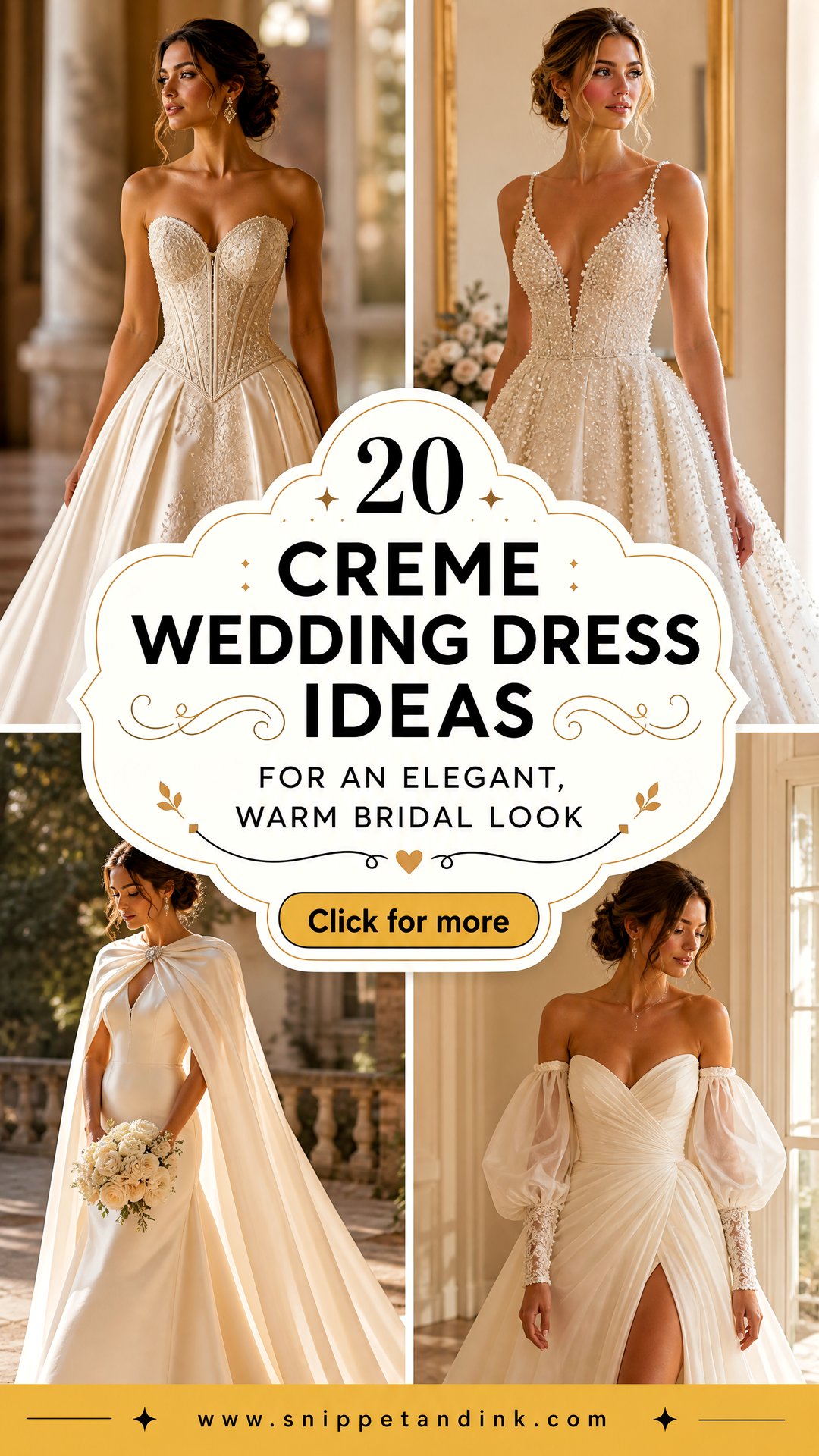
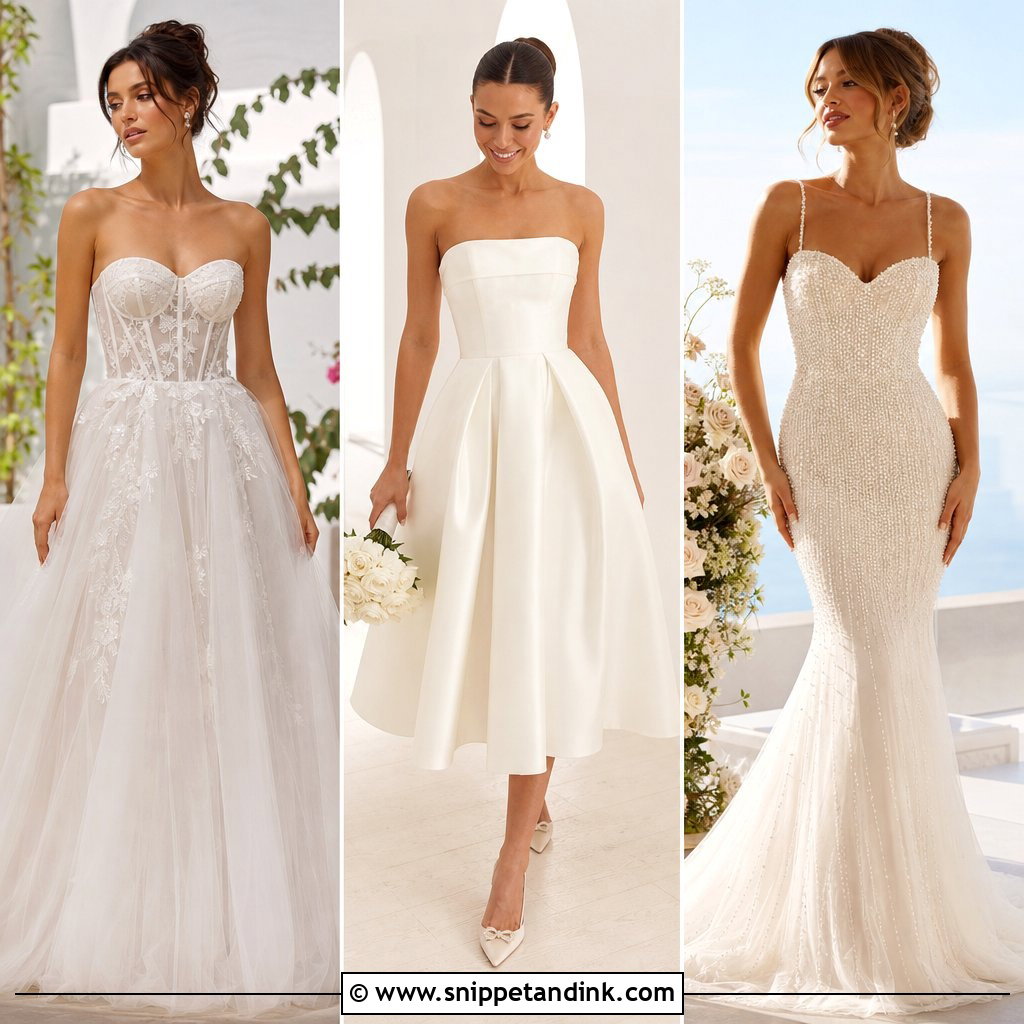
Cream sits a shade or two warmer than ivory, and on a lot of skin tones it reads richer and kinder than bright white while still looking completely bridal. Below are twenty cream gowns, from structured satin to slip dresses and minis, each styled head to toe the way I would put it together at a fitting. Lace, mikado with a basque waist, oversized bows and convertible elements all show up in current bridal collections, and every one of them changes character in a warmer shade. The rule I repeat most often with cream is simple: match every white piece to the gown’s undertone, not to each other. A stark white veil next to a buttery skirt is the mismatch people notice first in photos.
Holding Cream Against Your Skin by a Window
Bridal shops call almost anything that isn’t bright white “ivory”, and one designer’s cream is another’s champagne. So I never trust the name on the swatch card. I hold the fabric under the chin, near a window with daylight, then again under the warm overhead lights most salons use. The right cream makes the skin look rested. The wrong one makes it look sallow or slightly grey around the jaw.
A few patterns hold true for most brides I dress:
- Fair skin with pink undertones usually suits a light cream; deeper, buttery creams can wash it out.
- Olive and golden skin tends to glow in a richer cream, while bright white makes it look flat.
- Deep skin tones carry warm cream well, but test it in both lights, since some creams turn slightly green under fluorescent bulbs.
- Fabric changes the colour. Satin reflects light and looks paler; crepe and matte lace absorb it and look warmer.
Ask for a small cutting of the actual gown fabric to take home. That cutting goes to your veil maker, shoe dyer and florist, so everything is matched to the real thing rather than to a photo on a phone screen.
1. Creme Satin Ball Gown Wedding Dress
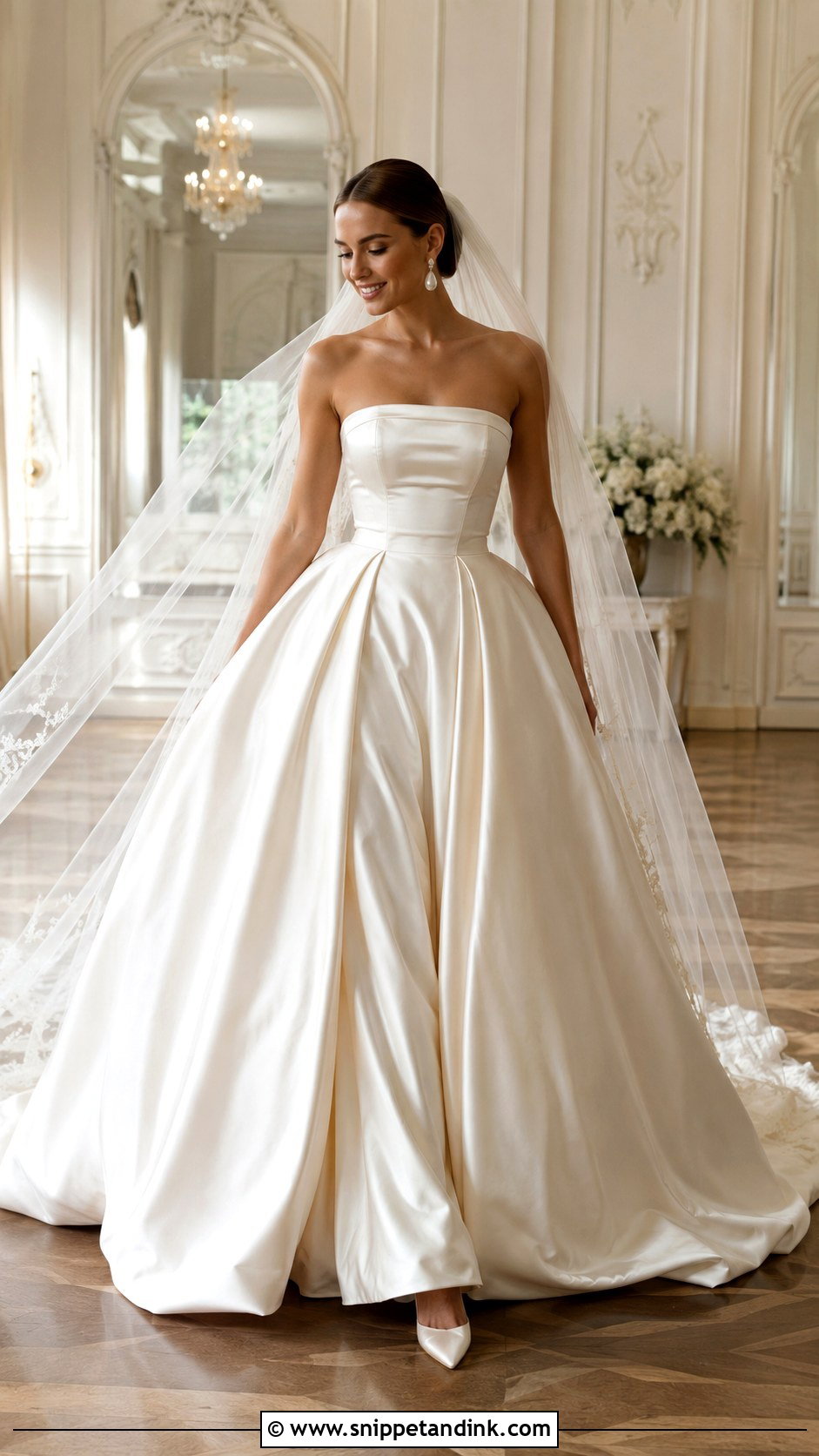
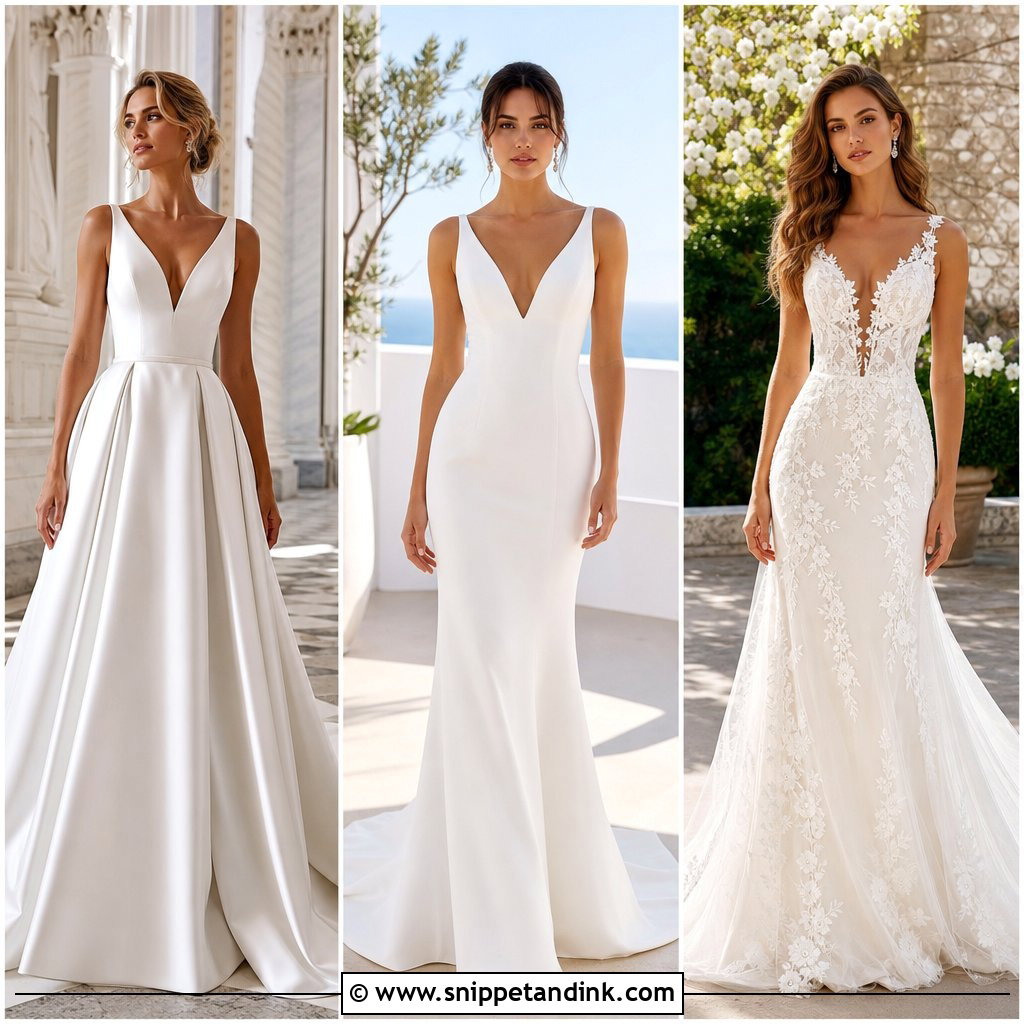
Satin is the fabric where cream earns its keep, because the warm tone softens all that sheen and stops a full skirt from looking stiff. I look for a fitted bodice, a gently curved neckline and pleats that are pressed flat at the waist rather than gathered, since gathers add bulk exactly where you want it least. Pearl drops, an ivory cathedral veil and pointed satin pumps dyed to the gown keep everything in one family. A low chignon leaves the neckline clear and gives the veil comb something solid to grip. Ask about the bustle early: a heavy satin train needs more pickup points than a tulle one, and a poorly placed bustle drags on the floor by the first dance. Ballrooms and historic houses with big windows suit this gown, because satin needs light to show its shape.
2. Creme Lace Long Sleeve Wedding Dress
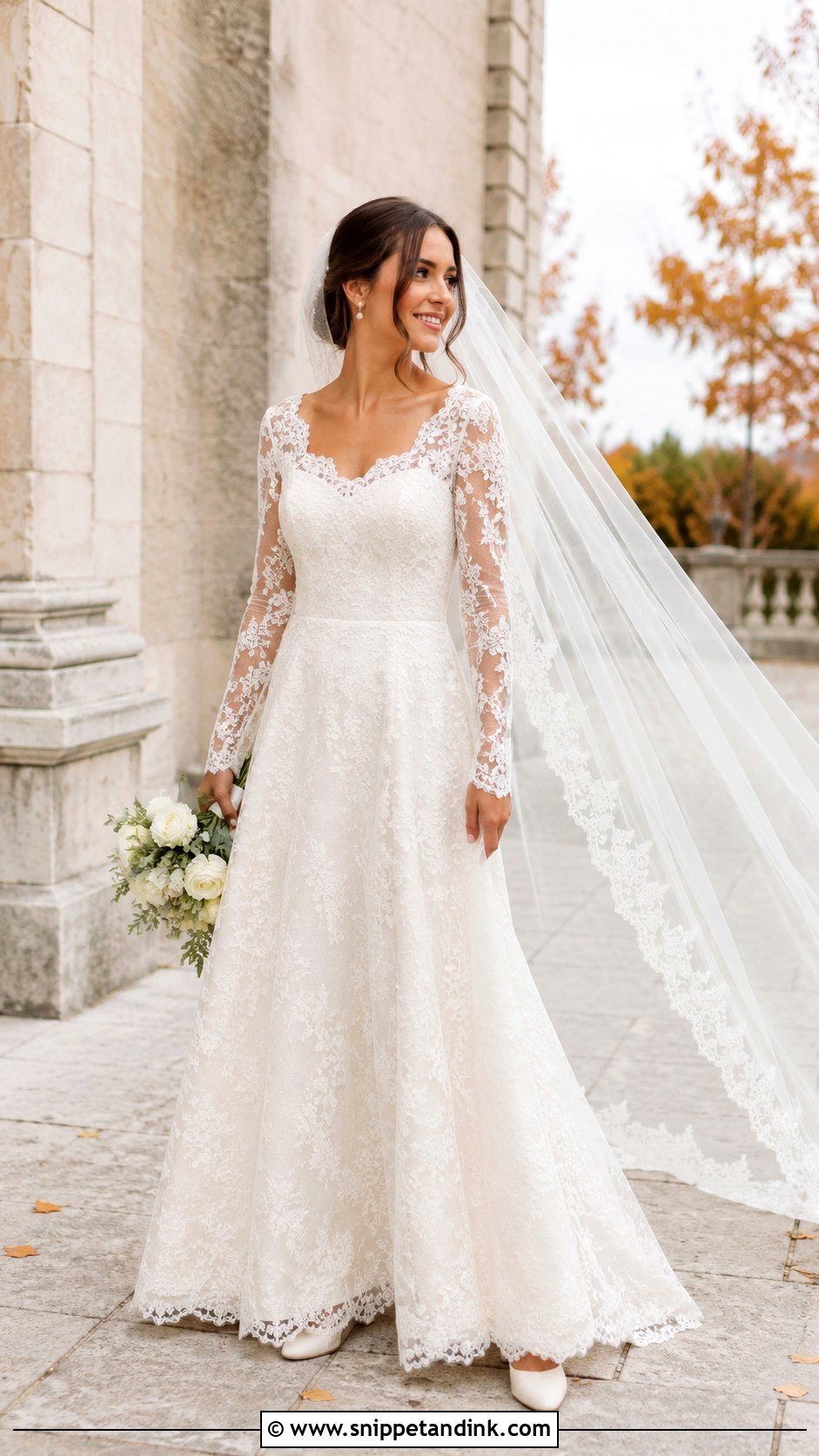
Lace sleeves give coverage without weight, provided the lace is sheer enough that you can see skin through it. The version I reach for is an A-line with a lined bodice, sheer lace sleeves and appliqués that drift down onto the skirt. Covered buttons or a scalloped neckline finish it neatly. Keep the veil edged in a lace that matches, or plain; two competing lace patterns at the shoulder look busy. Before you commit, raise both arms over your head in the fitting room. Fitted lace sleeves set too low in the armhole pull the whole bodice up when you hug someone, and that is a costly fix later. Closed block heels, pearl studs and a loose low bun with a few face-framing pieces complete it, and the dress is happiest from autumn through early spring.
3. Creme Silk Slip Wedding Dress
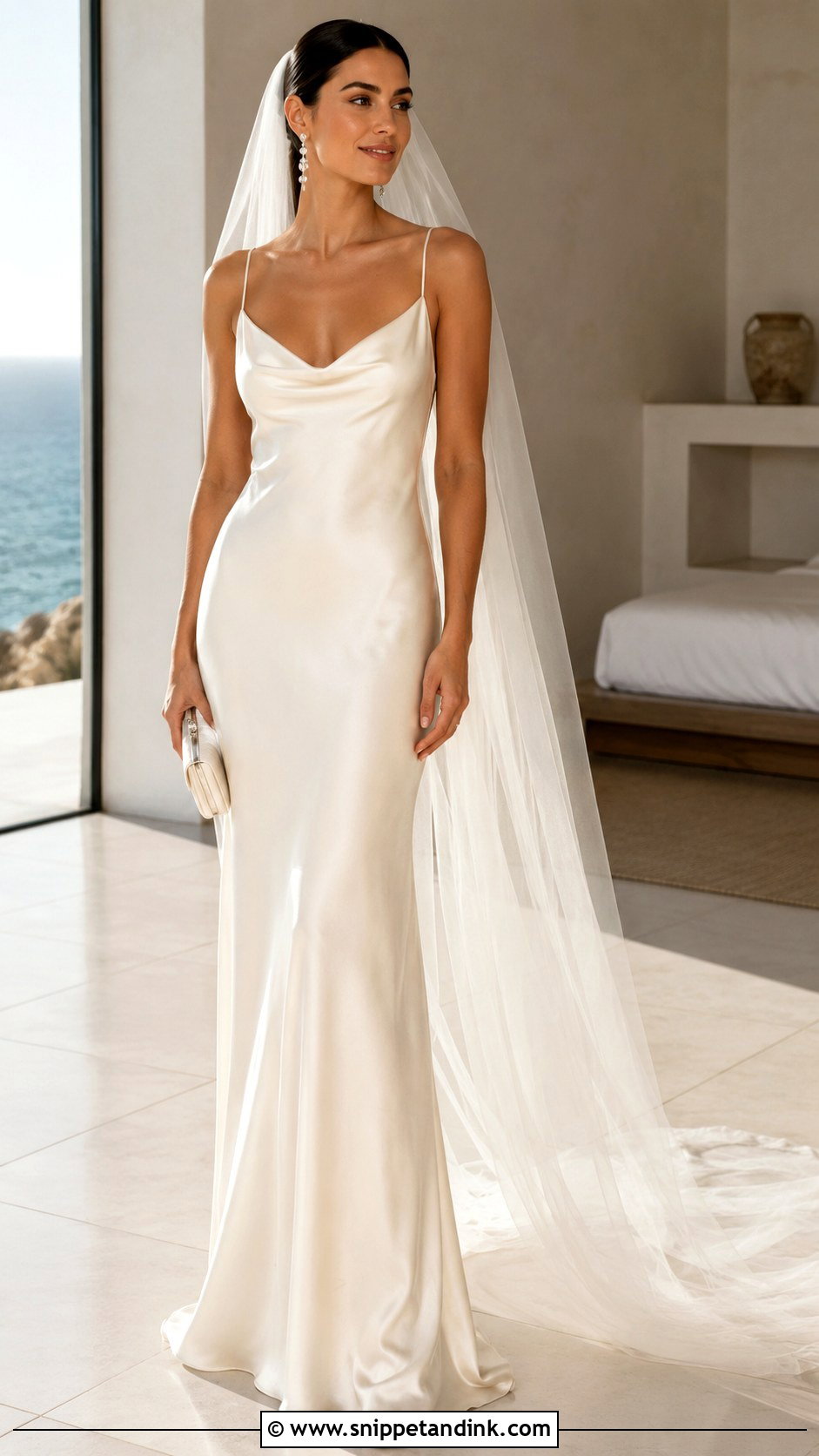
Silk slips are the hardest gowns in this list to wear well, and also among the most rewarding. A bias cut follows the body with no structure at all, so every seam, strap and line underneath shows through. I always ask for smooth, invisible underwear at the first fitting and talk about sewing discreet cups in during alterations. A long sheer veil adds ceremony drama without hiding the minimal shape. Strappy cream sandals, crystal earrings and a small satin clutch are all it needs; a sleek bun or a waved bob suits it far better than a sculpted updo. Expect silk to crease when you sit, especially across the hips, so a steamer at the venue is worth bringing.
4. Creme A-Line Wedding Dress
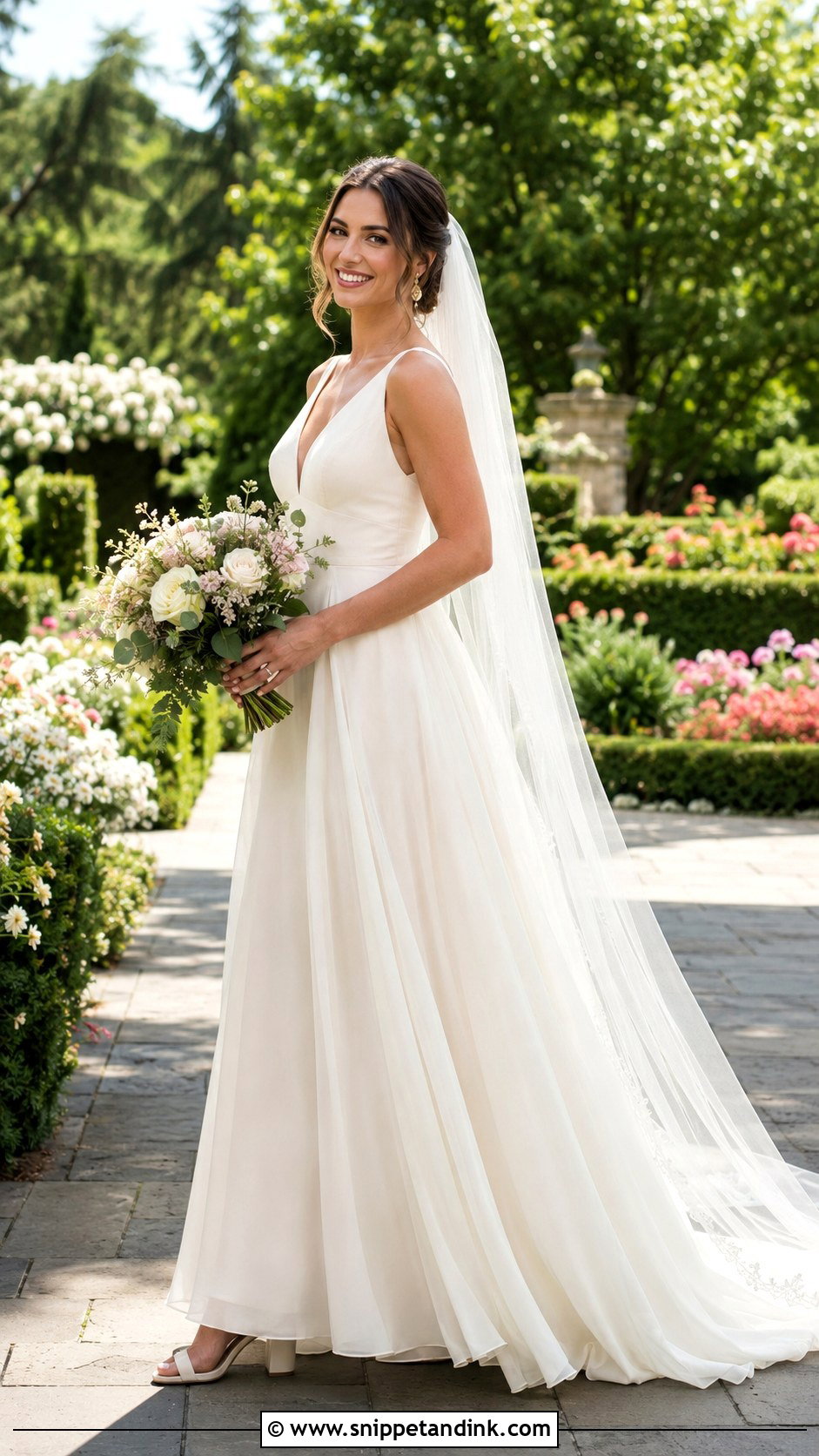
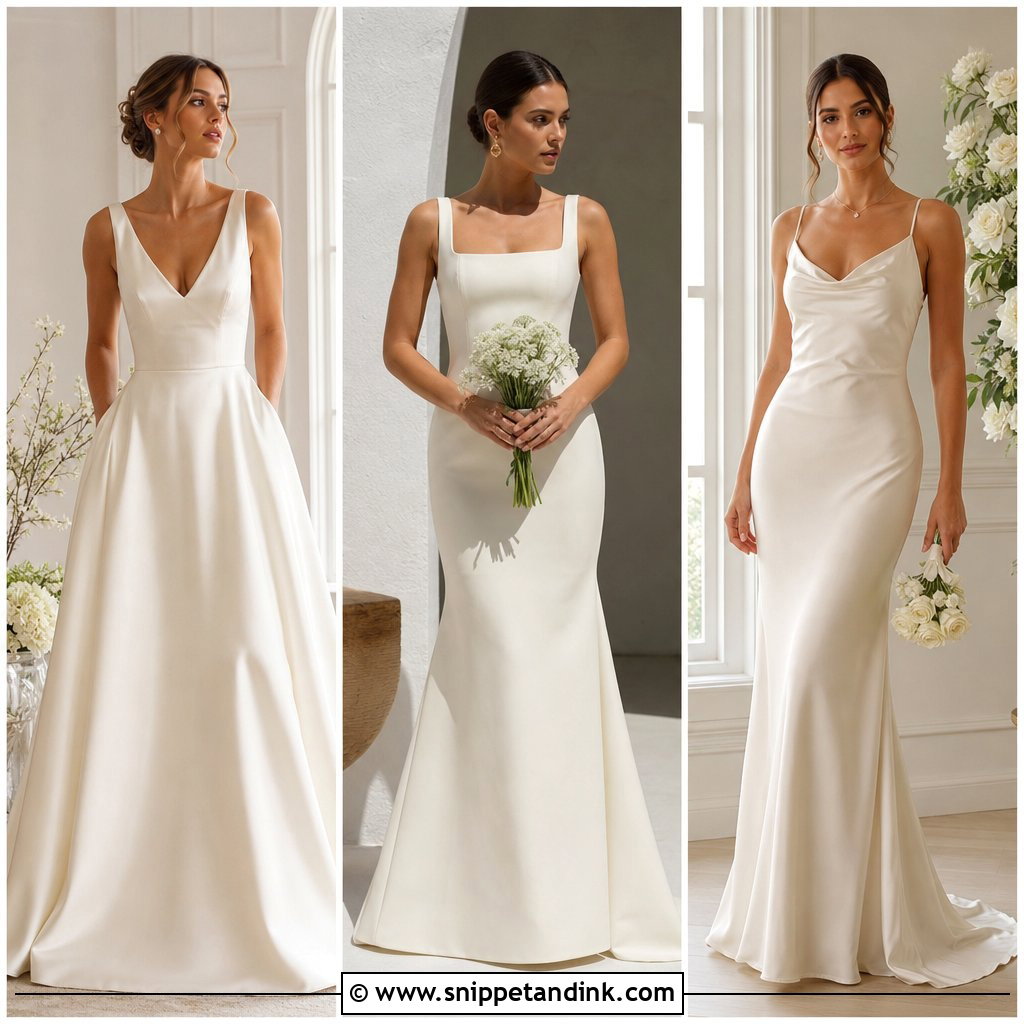
If you have not settled on one bridal aesthetic yet, start with an A-line. The skirt falls away from the waist instead of following the hips, which means it forgives a long day of sitting and eating in a way a column never will. A structured bodice with wide straps or a soft V-neck gives proper support. Chiffon or tulle in the skirt brings movement, while satin looks crisper and more formal. I pair it with a chapel veil, low block heels, small gold earrings and a bouquet with cream, blush and green so the gown’s warmth has company. A half-up style keeps things relaxed. Gardens, hotels and destination venues all work.
5. Creme Mermaid Wedding Dress
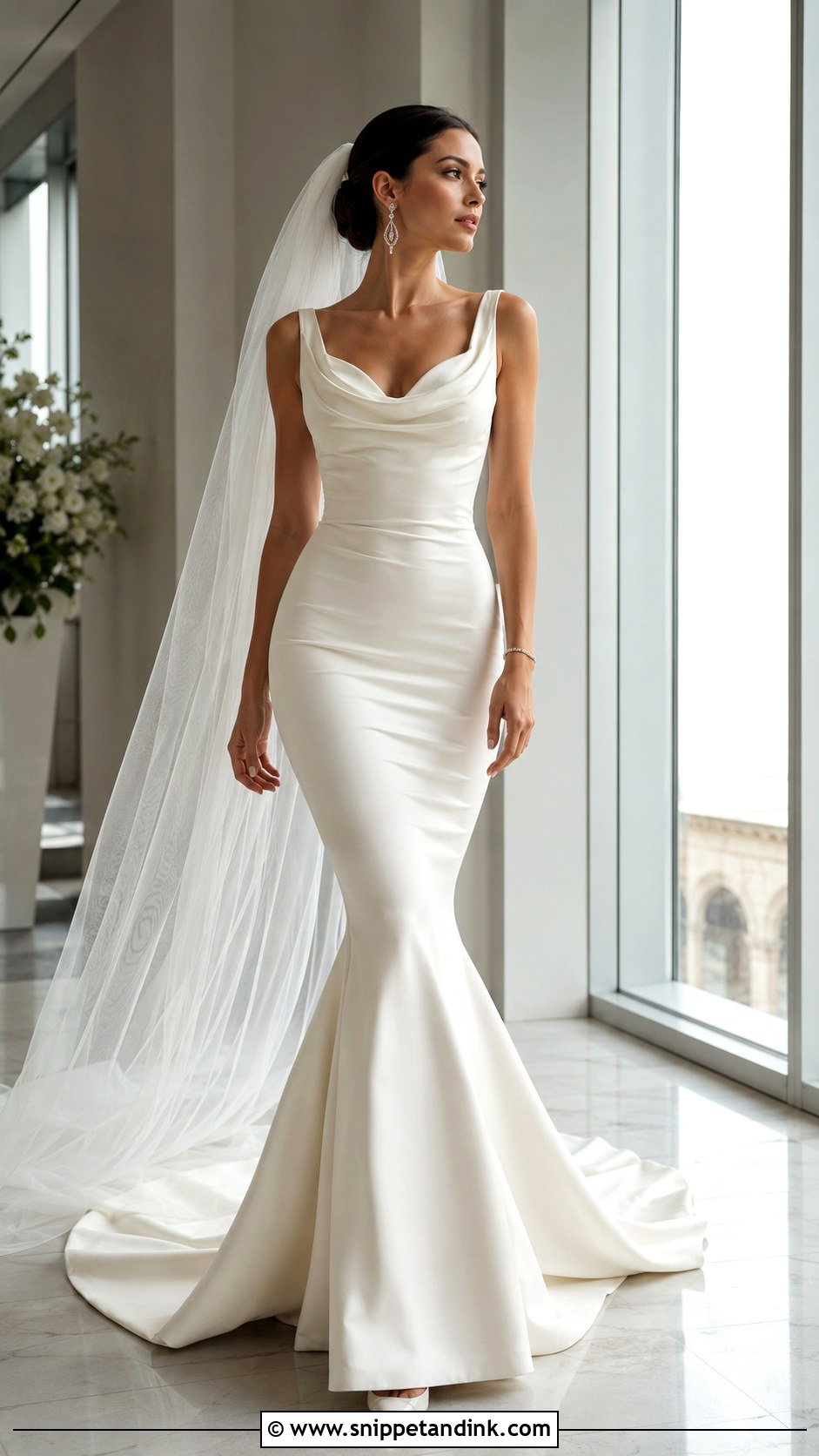
Mermaid gowns are a sculpted, confident shape, and the cream shade takes some of the severity out of them. The dress should follow the torso and hips and flare at or just above the knee. Stretch crepe is the most forgiving fabric here; lace and satin look more dramatic but give you less room to move. Keep the cathedral veil plain so it falls behind the flare rather than fighting it, and add pointed pumps, crystal drops and a thin bracelet. A polished side part or low ponytail shows off the shoulders. Here is what I watch for at every fitting: whether the bride can take a normal stride and sit on a chair. If she can’t, raising the flare point by a couple of inches usually solves it and nobody can tell from the front.
6. Creme Corset Wedding Dress
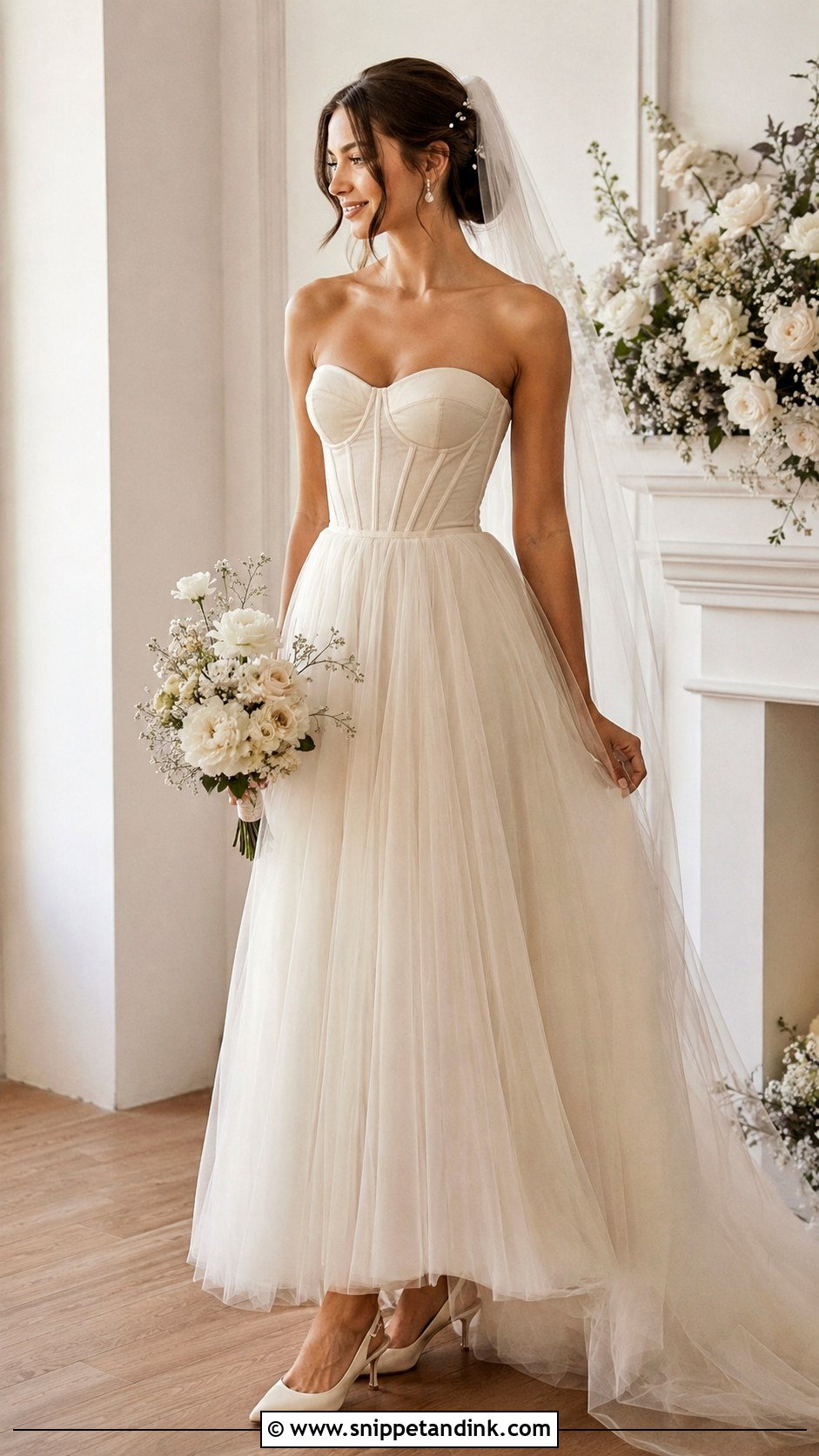
Visible boning and a romantic skirt make the corset one of the most requested shapes right now. The bodice has to hold you, not the other way round. I check that the cups are secure and that the neckline stays put when the bride bends forward to sign the register, because constant tugging is what you’ll see in every candid. Pair the corset with a full tulle or flowing A-line skirt for a clear waist, then keep the rest quiet: a single-layer veil, pearl hairpins, cream slingbacks and small drops. Soft waves or a loose updo balance the structure. Sheer panels can be lined in a matching cream if you prefer coverage, and the fitting should leave enough ease that you can breathe through a three-course dinner.
7. Creme Basque Waist Wedding Dress
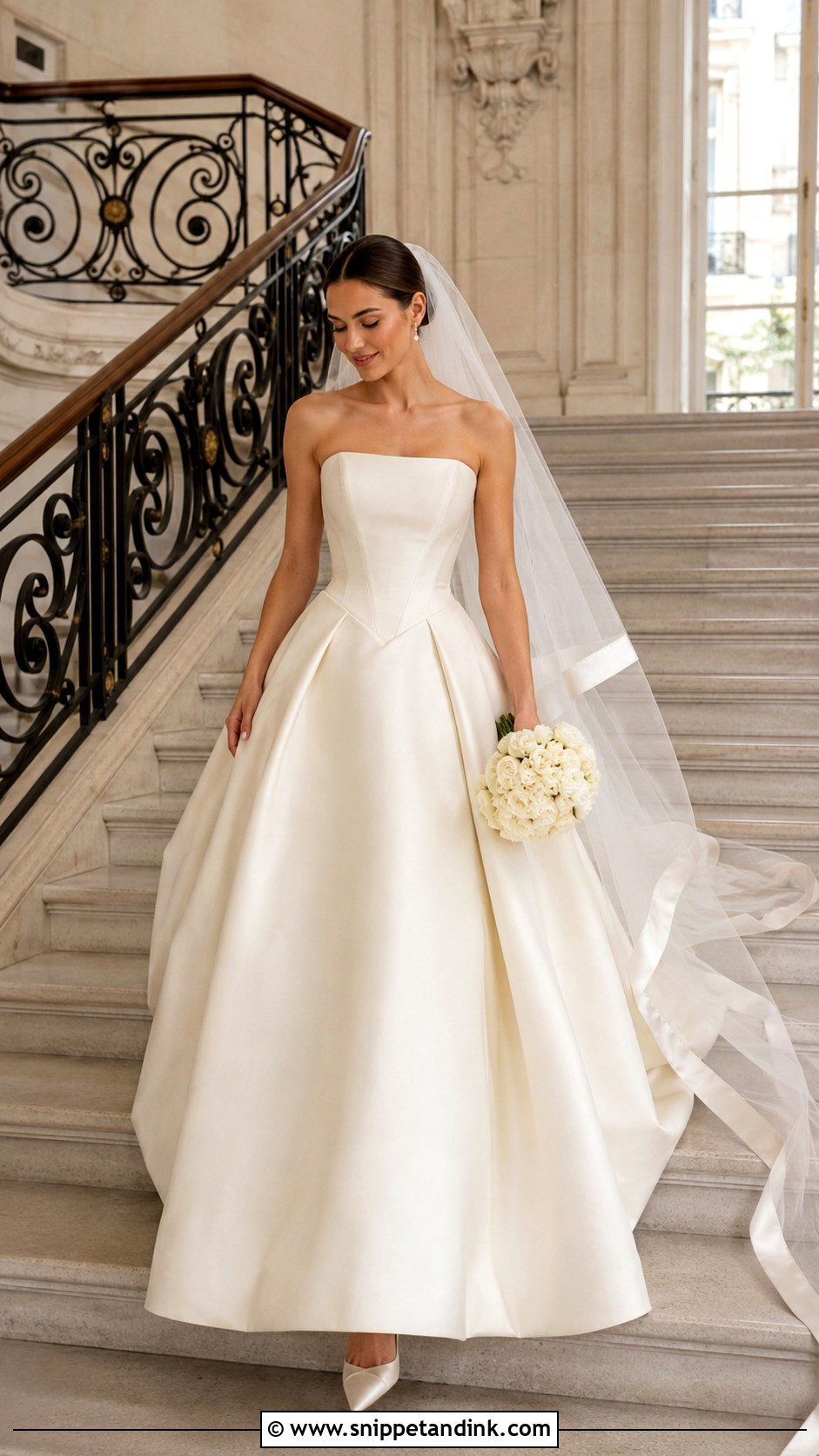
A basque waist drops into a V below the natural waistline, lengthening the torso and giving a full skirt a sculpted, almost architectural look. In cream satin or mikado it needs no beading at all. Strapless or off-the-shoulder bodices suit it, and a long veil with a narrow satin edge echoes the clean lines. Choose a small bouquet; a large cascade hides the point of the waist, which is the whole reason to wear this gown. The V must sit exactly on your body, not a centimetre off-centre, so allow at least three fittings. Staircases and grand rooms show the skirt and train at their best.
8. Creme Off Shoulder Wedding Dress
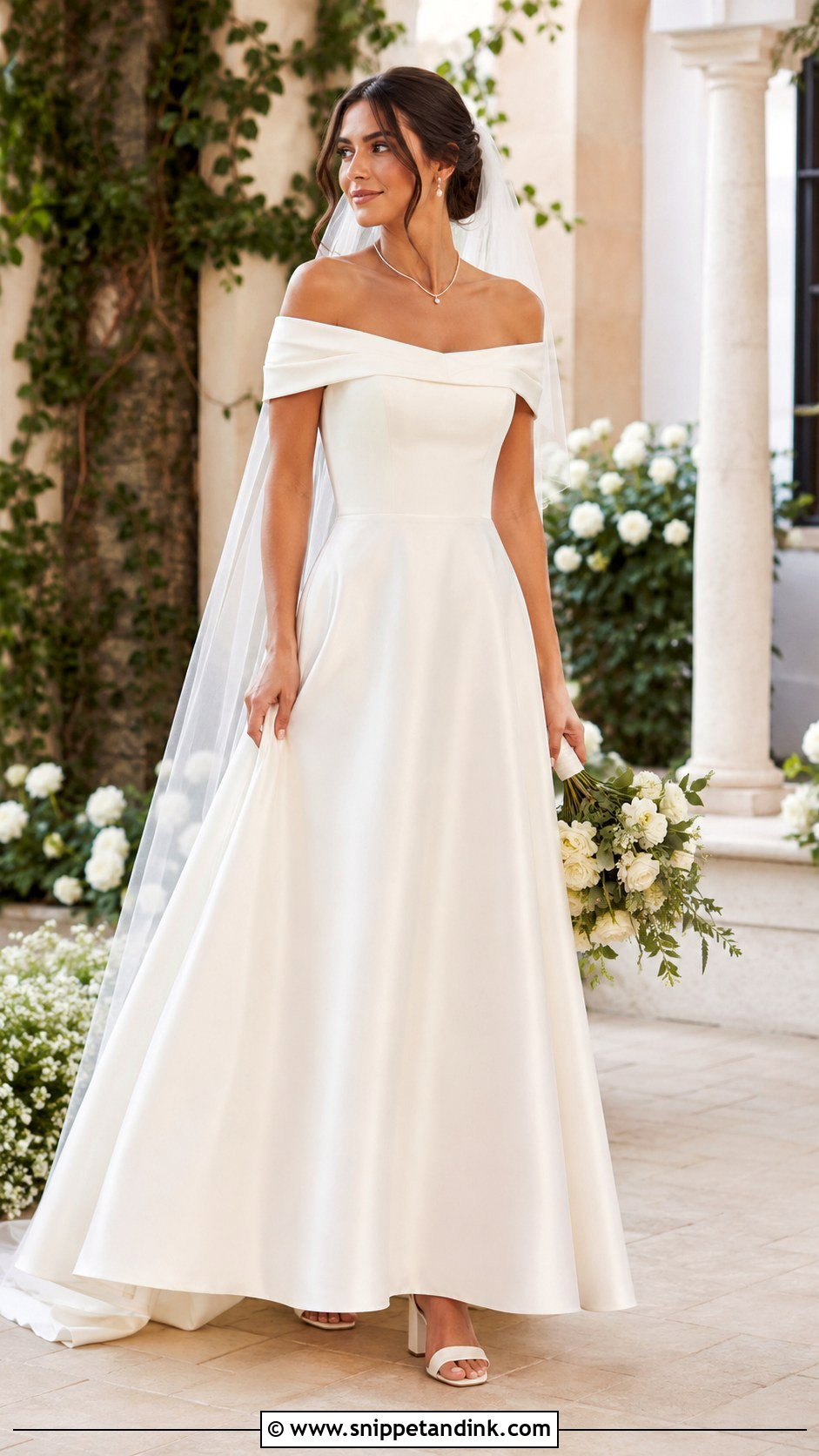
Off-the-shoulder necklines look romantic in cream because the warm fabric sits gently against bare skin rather than contrasting sharply with it. The catch is movement. Bands that sit too tight across the upper arm stop you lifting your arms to dance, so I always have brides wave both hands above their heads before alterations begin. A fitted bodice works with either a flowing A-line or a structured ball skirt. Style it with a collarbone-length necklace, pearl earrings, cream block-heel sandals and a sheer chapel veil anchored in a low textured bun. A matching satin wrap covers you for an evening chill. Light fabrics suit spring and summer; heavier satin carries the same shape into winter.
9. Creme Square Neck Wedding Dress
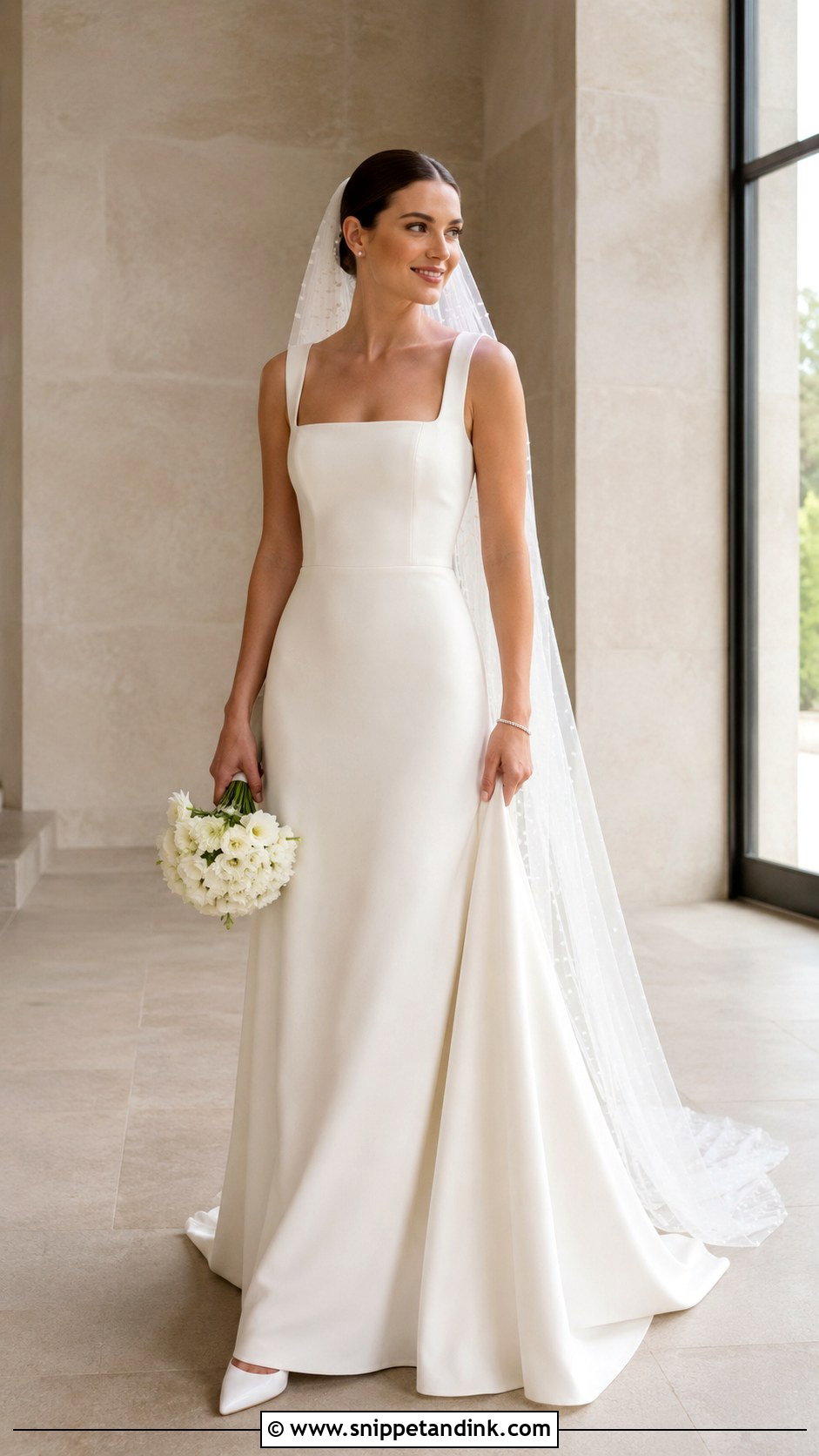
The square neck is the shape I suggest to brides who want an open neckline without a plunge. It frames the collarbone and gives more coverage than a V while still looking modern. A fitted bodice on wide straps works over either an A-line or a column skirt. Jewellery should stay small: pearl studs and a fine tennis bracelet, never a big necklace, which crowds those straight lines. A smooth fingertip veil, pointed low heels and a neat chignon or shoulder-length curls finish it. Courthouses, minimalist venues and formal estates all suit it.
10. Creme Halter Wedding Dress
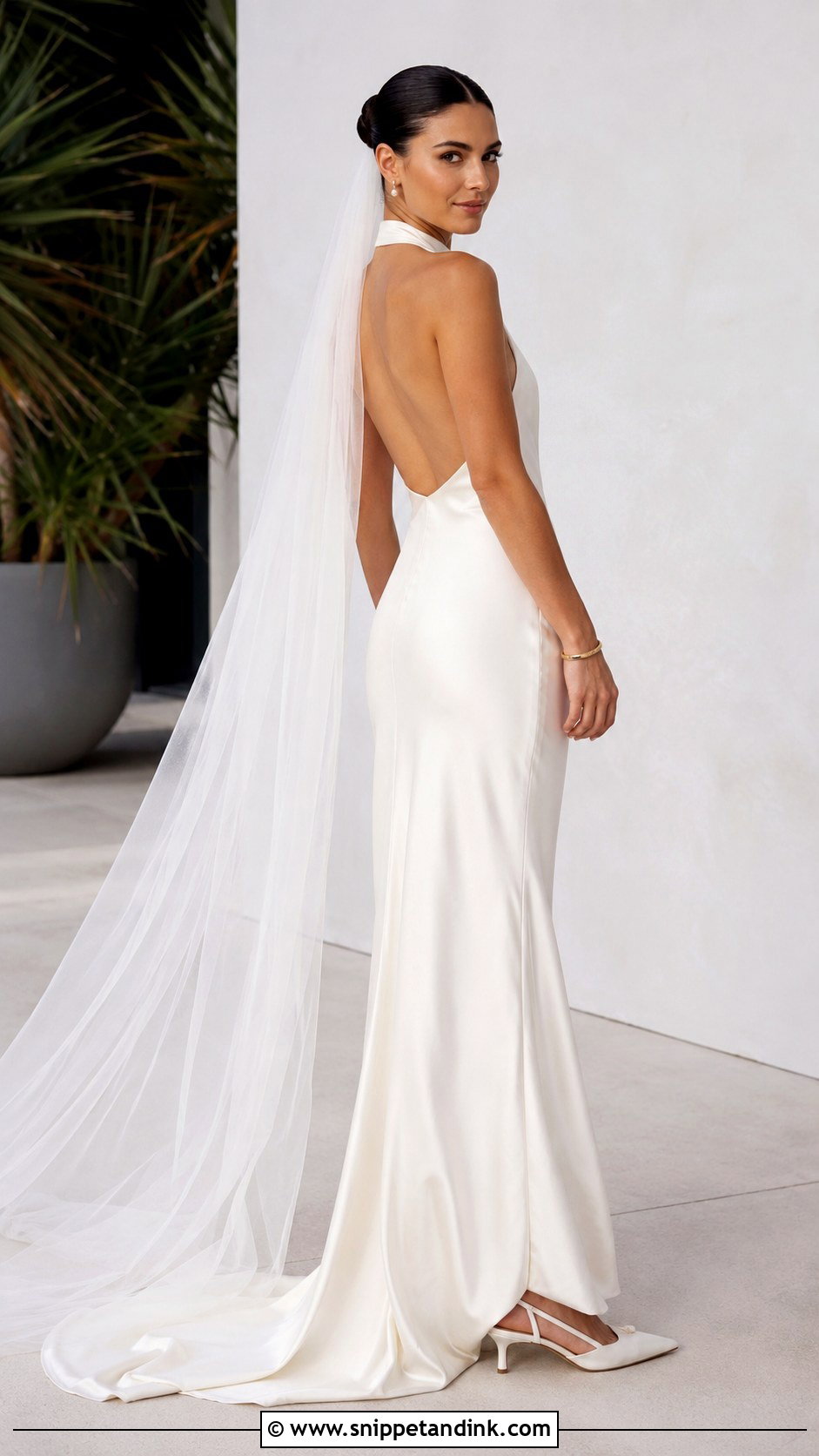
Halters pull the eye up to the face and shoulders, so they flatter strong shoulders and toned arms most. In cream crepe or silk the shape looks clean and modern. A gently fitted column or relaxed A-line skirt with a low back balances the high front. Skip the necklace entirely; pearl drops, a thin gold bracelet and pointed slingbacks are enough, with a long veil tucked beneath a smooth bun. An open back needs support built into the dress, so ask your seamstress about a hidden bra or bust cups early, before any fabric is cut. A detachable chiffon cape gives coverage in a place of worship and comes off for the party. Warm-weather and destination weddings are its natural home.
11. Creme High Neck Wedding Dress
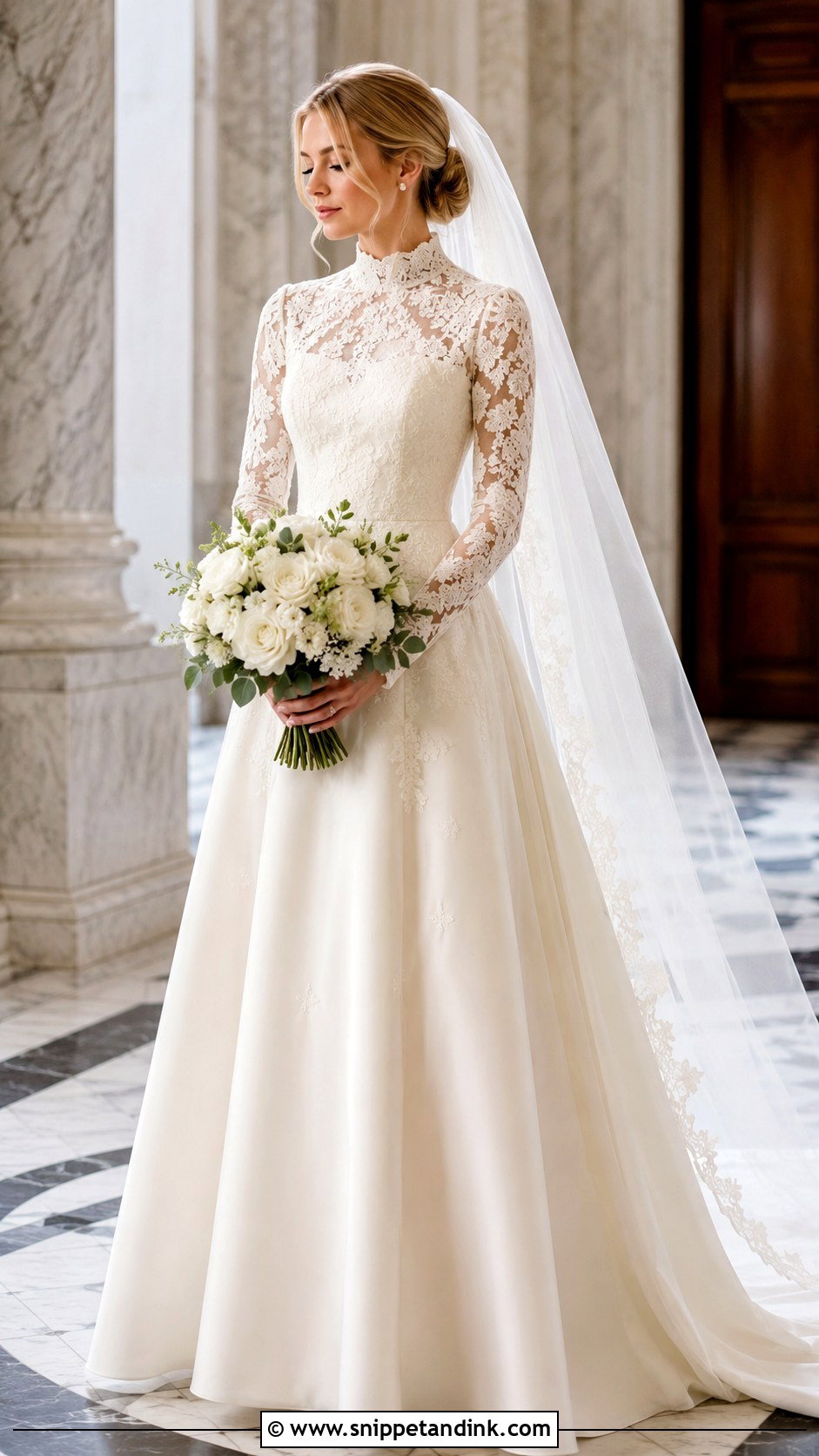
High necks put all the attention on your face, which is exactly why fabric weight matters so much. Lightweight lace, embroidered tulle or smooth crepe keep the neckline from feeling like a collar you want to tug at. Long sleeves with an A-line skirt read traditional, while a sleeveless high neck over a column looks surprisingly fashion-forward. Pearl studs, a bracelet, closed pumps and a low bun are plenty. Choose a simple cathedral or chapel veil, since a heavily embellished one hides the neckline you picked the dress for. Soft, warm makeup sits better beside cream than cool pinks do. I steer people toward this shape for winter and formal venues.
12. Creme Floral Applique Wedding Dress
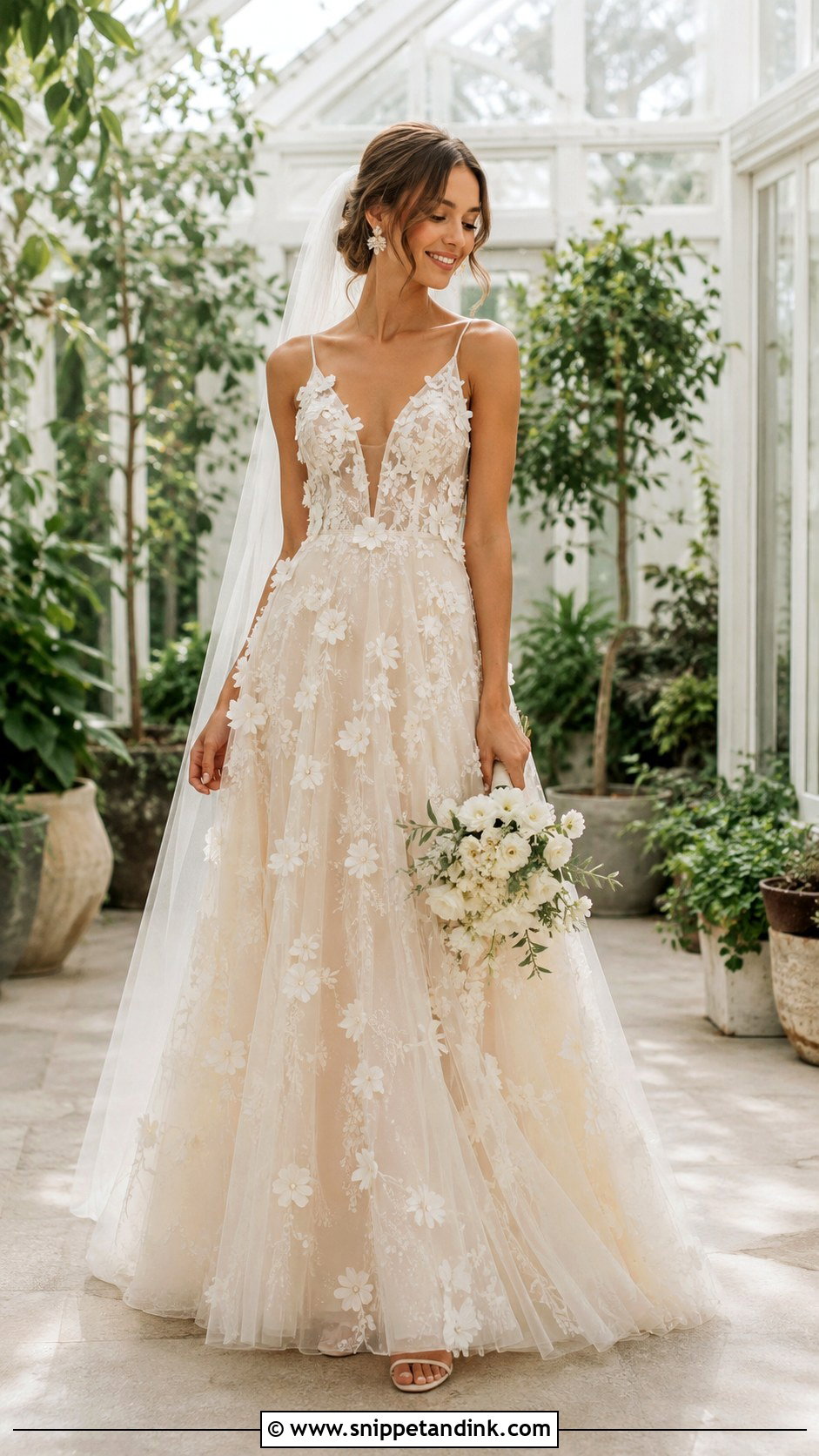
Raised floral appliqués turn a cream gown into a textured piece without adding colour. The placement is what separates a well-made one from a fussy one: flowers should scatter gradually from bodice to skirt, not cluster in a heavy patch at the hip. Tulle A-lines feel airy under appliqués, while a fitted shape looks bolder. Pair the dress with a plain veil, small floral earrings, cream sandals and a bouquet of simple blooms. One modest hairpin in a relaxed updo is enough. Here’s something people rarely check in the shop: walk with the veil on. Raised petals snag fine tulle easily and can rub the inner arm raw by evening. Gardens and conservatories suit this dress.
13. Creme Pearl Beaded Wedding Dress
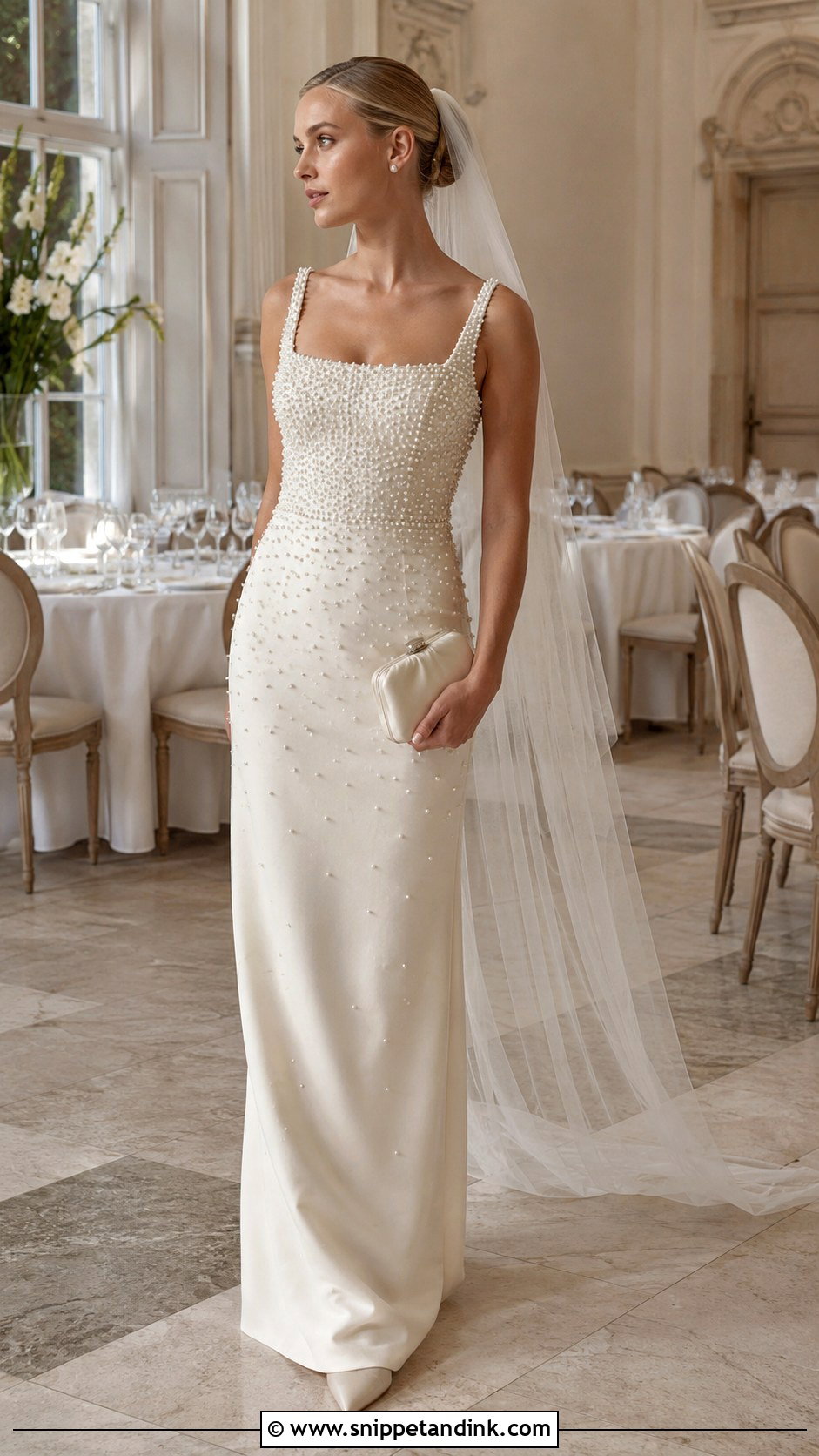
Pearls give cream a soft glow rather than the hard sparkle of crystal. I like scattered pearls on a fitted bodice that thin out toward the skirt, though an all-over beaded column is an option if you love detail. Keep everything else plain: pearl studs, cream pumps, a simple tulle veil, a satin clutch and a low bun. Match the pearl tone of your jewellery to the gown, because bright white pearls next to warm cream fabric look like they came from a different outfit. And pick the dress up before you buy it. Heavy beading weighs far more than it looks on a hanger, and that weight sits on your shoulders all day. Evening receptions and indoor venues show pearls best.
14. Creme Bow Back Wedding Dress
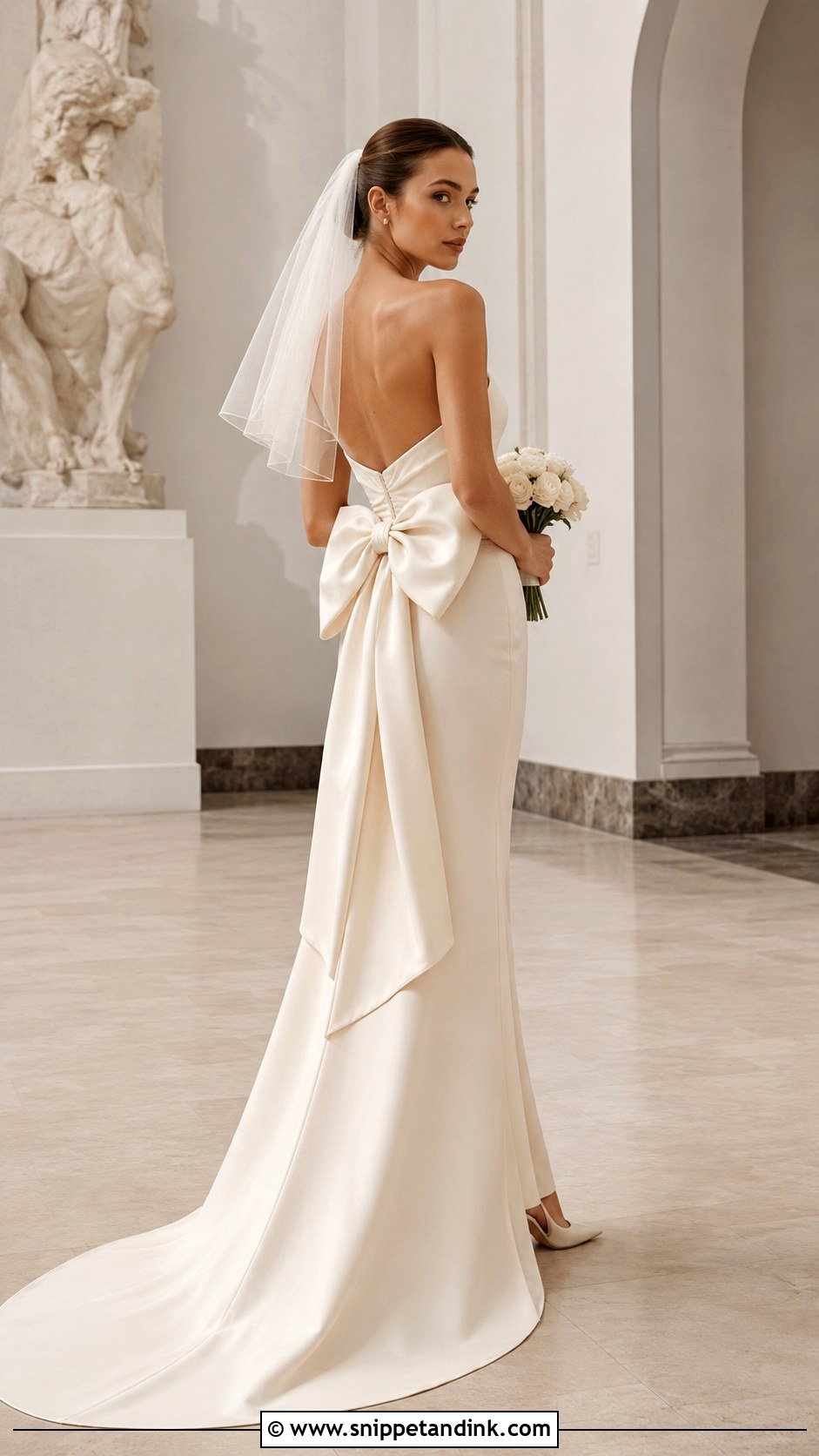
A big bow on the back keeps the front of the gown clean and saves all the drama for the walk down the aisle. Structured satin column dresses and ball gowns carry a bow best, placed at the waist or upper back. Think about the veil: a short blusher or a plain long veil that sits below the bow lets it show; a cathedral veil laid on top hides it completely. Pointed pumps, crystal or diamond studs and a smooth bun without big hair pieces keep the look streamlined, as does a small bouquet. Ask whether the bow detaches, which gives you a second look for the reception, and check that the loops are interfaced so they don’t collapse by late afternoon. The tails also need to clear the bustle points.
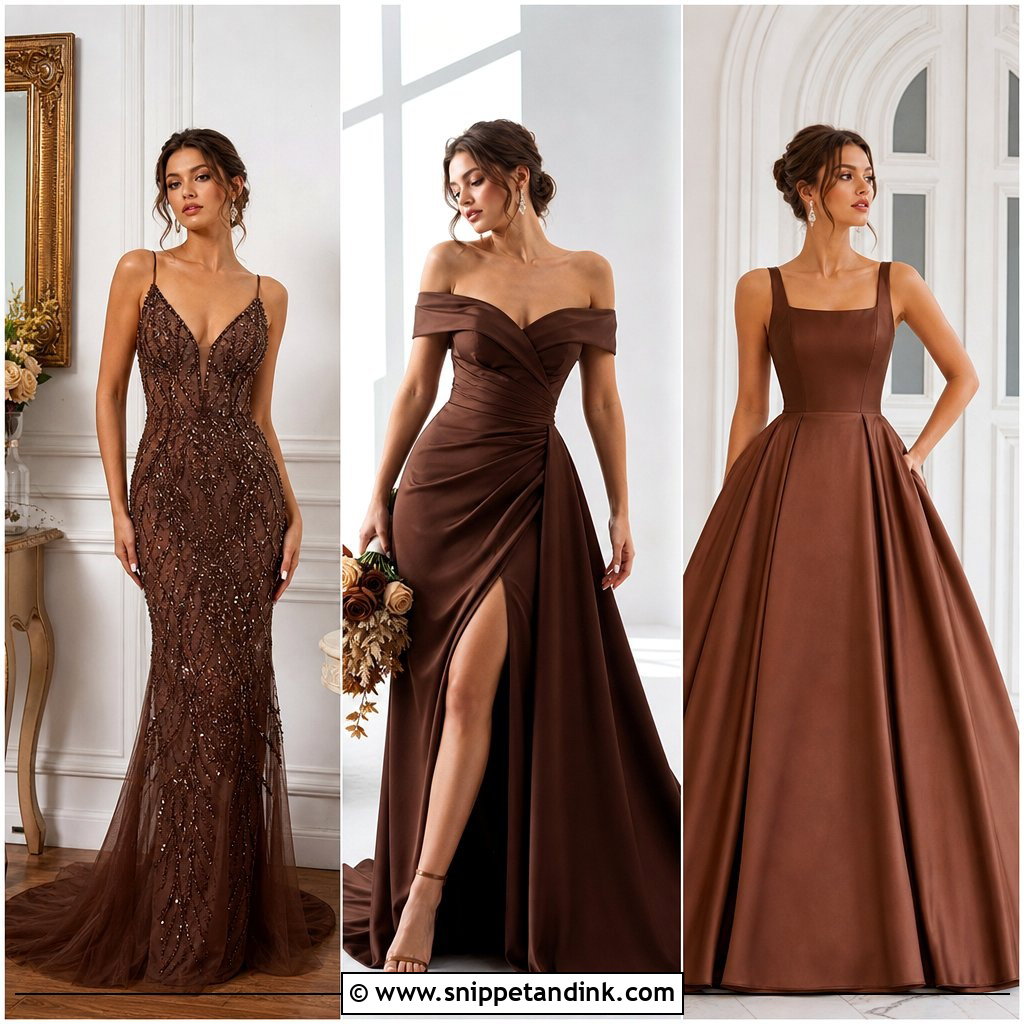
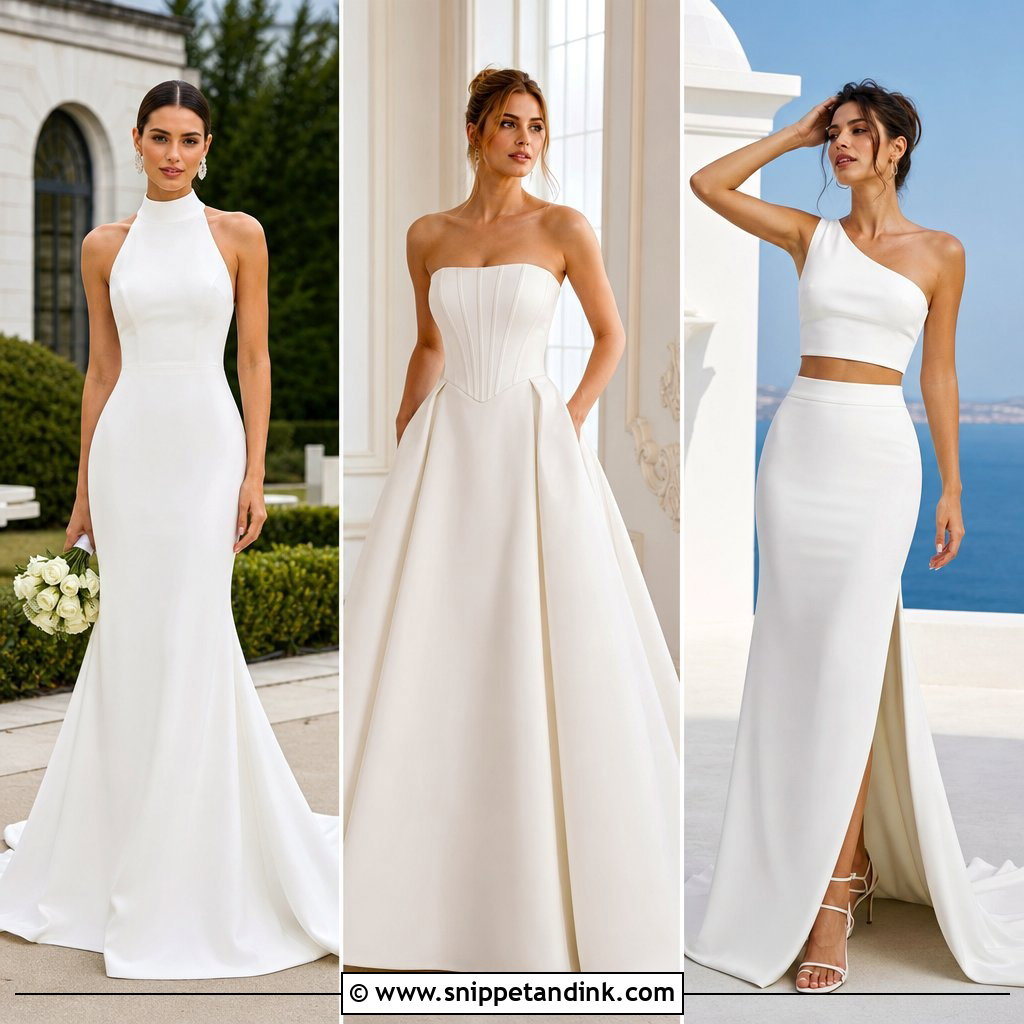
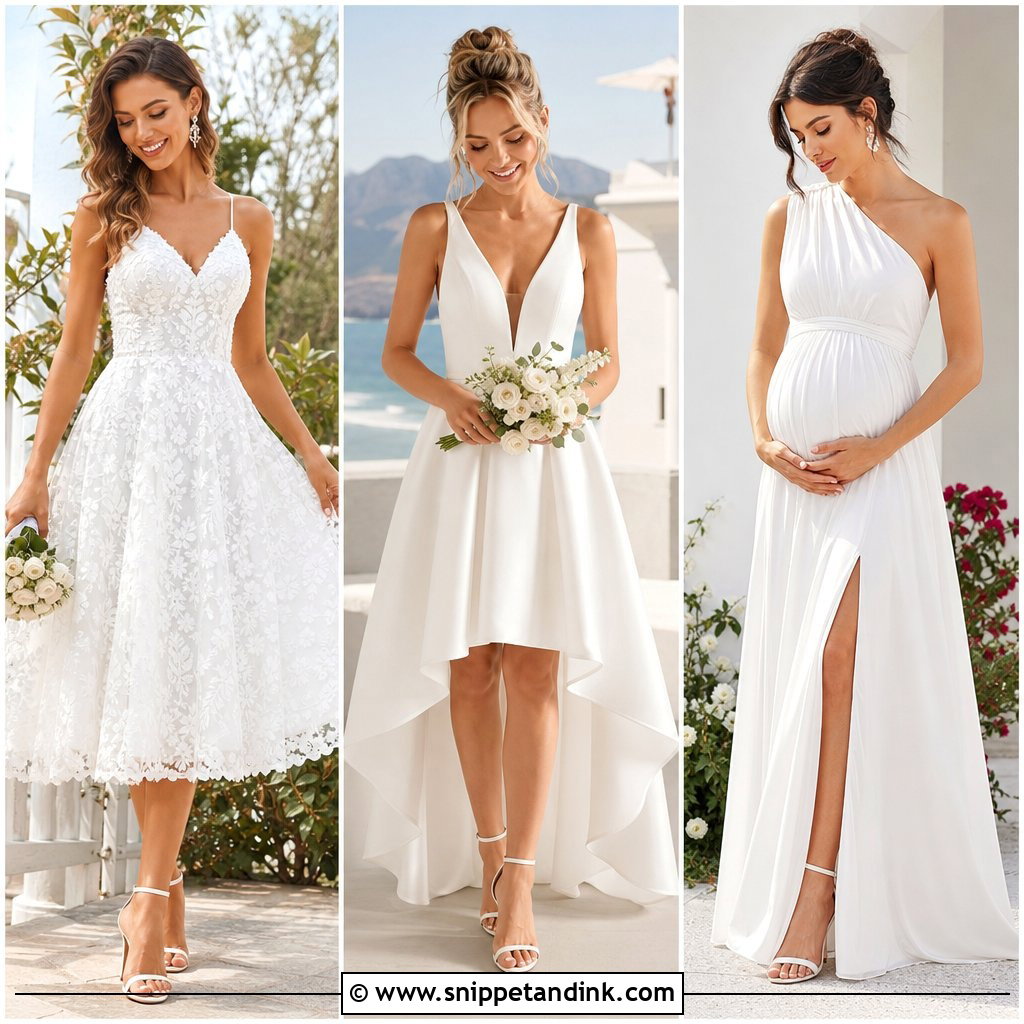
15. Creme Cape Wedding Dress
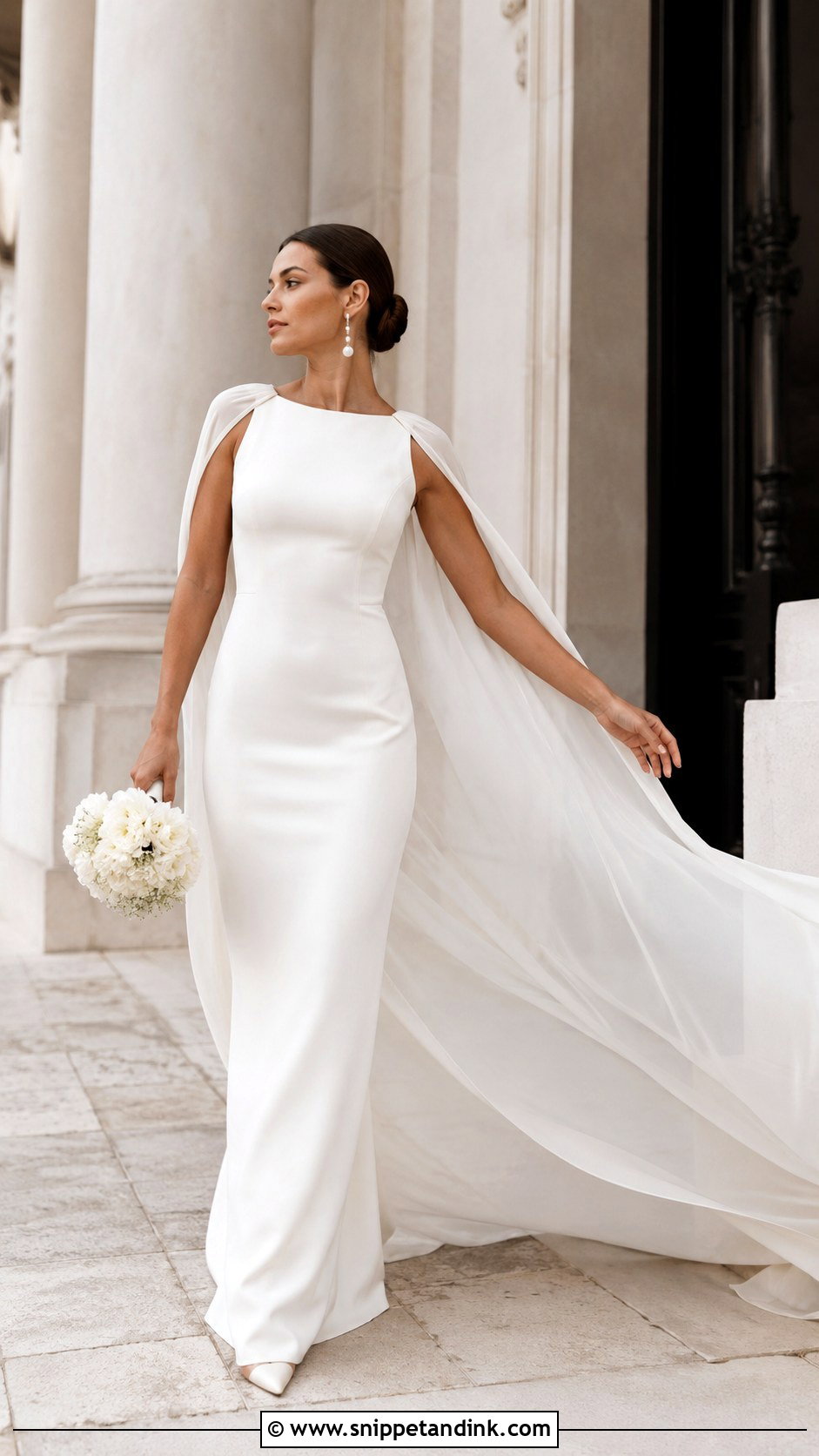
A flowing cape can stand in for a veil and adds movement and a little coverage. It works over a simple crepe column, a satin A-line or a fitted sleeveless gown. I choose a chapel or cathedral length depending on the train, and insist on lightweight tulle or chiffon; a heavy cape drags the shoulders of the dress backward and the neckline creeps up. Drop earrings, a sleek bun, pointed cream heels and a compact bouquet are all you need. Leave the necklace off if the cape has a decorated edge. A detachable cape, fastened with hidden hooks or snaps, comes off easily for dinner and dancing. Outdoor ceremonies and cooler days suit it.
16. Creme Detachable Sleeve Wedding Dress
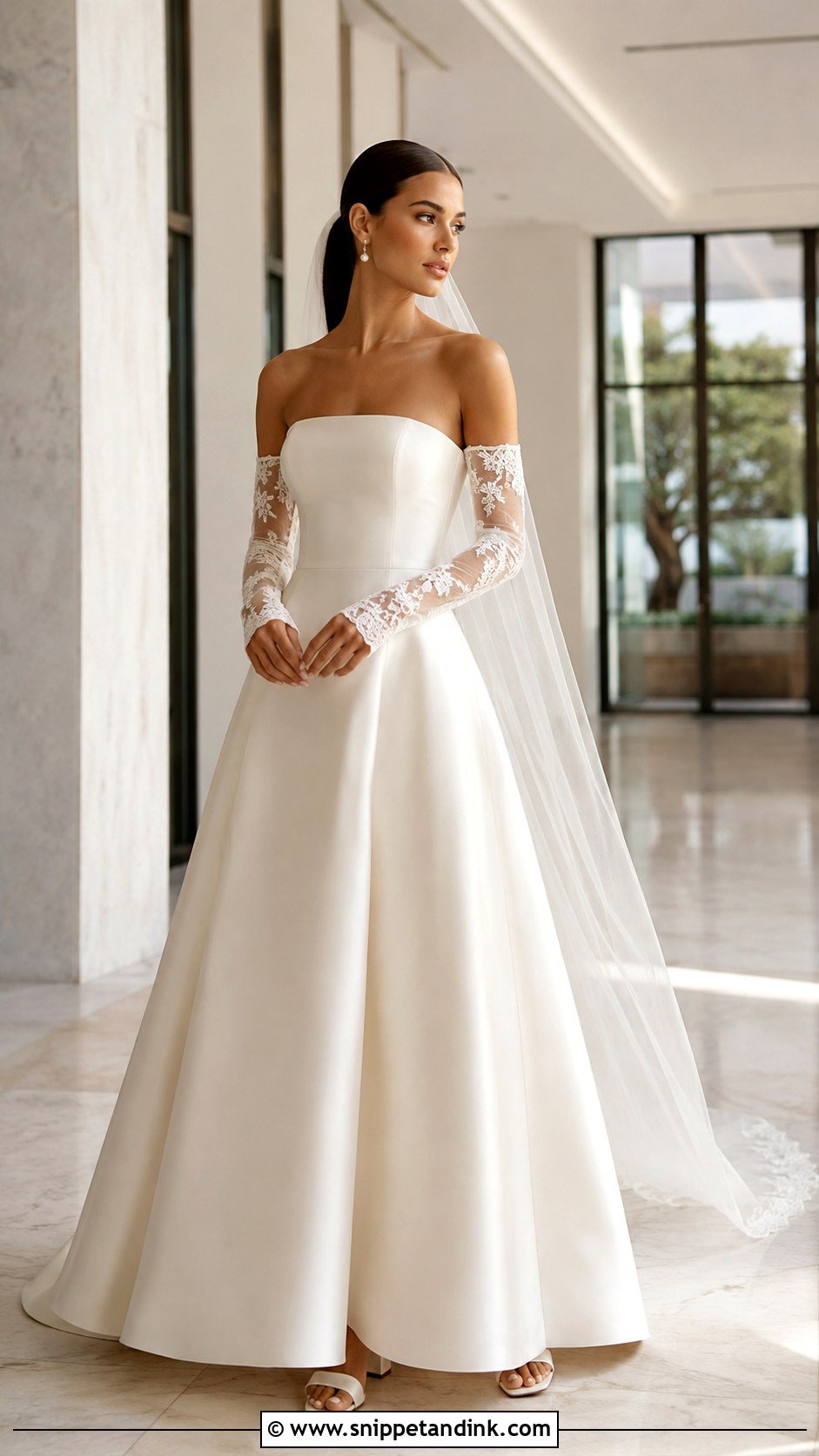
Detachable sleeves give you two looks from one gown, which is handy for a religious ceremony followed by a relaxed party. Start with a strapless satin, lace or crepe base, then add fitted illusion sleeves, draped off-the-shoulder bands or lightweight puff sleeves for the vows. Take them off later for a simpler reception look. The thing I check most closely is the colour. Sleeves are often cut from a different bolt, and two creams that look identical in the shop can differ in daylight. Hidden attachments should hold firm from every angle. A clean fingertip veil, cream block heels, pearl earrings and a low ponytail or bun finish the look.
17. Creme Tea Length Wedding Dress
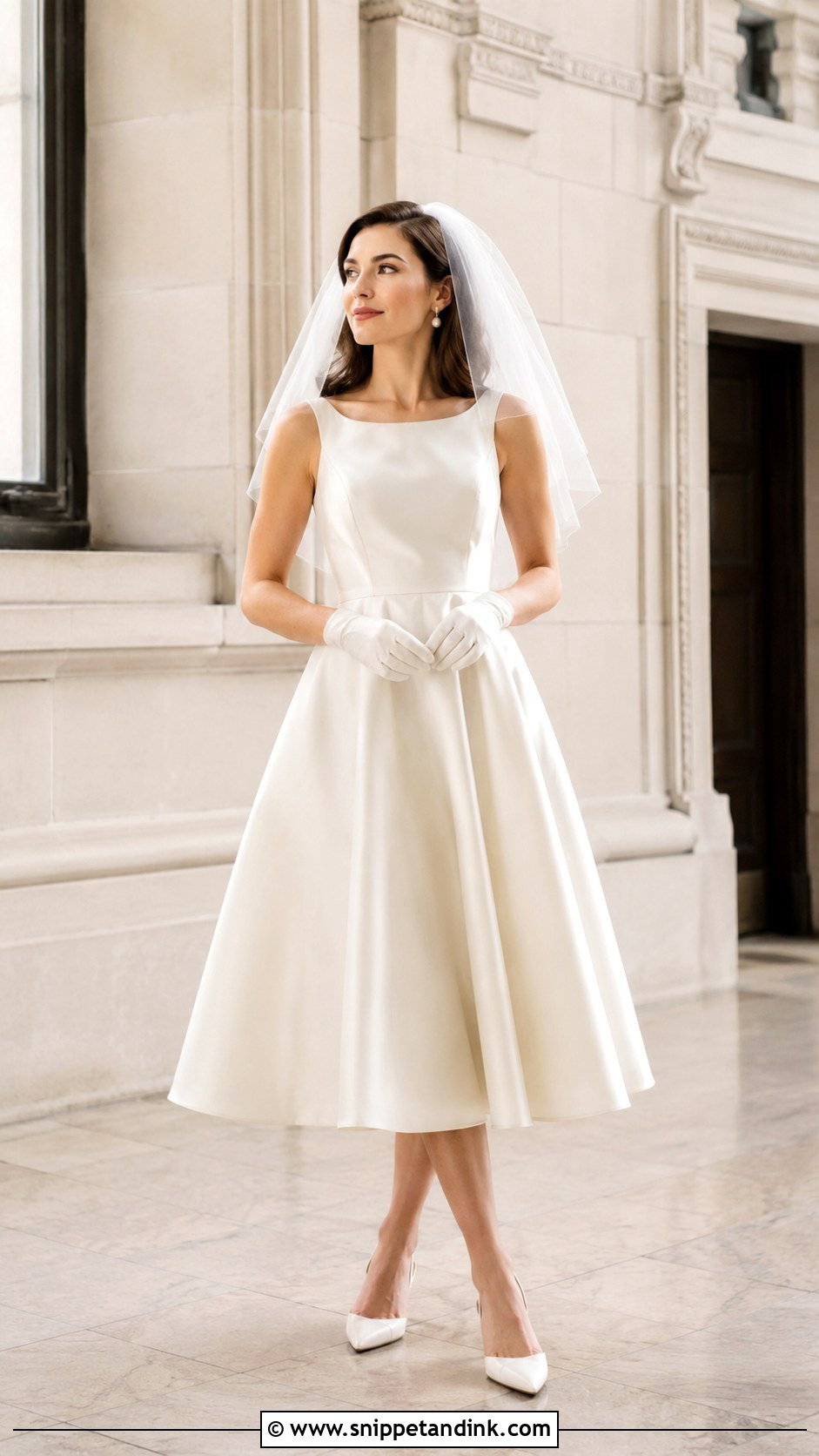
Tea length lands somewhere between knee and ankle and puts your shoes on show all day. A fitted bodice with a flared skirt is the classic version. Satin gives it structure; lace or tulle softens it into something more vintage. Pointed slingbacks, pearl earrings, short gloves and a birdcage or shoulder-length veil suit the shorter hem, as does a neat bun, soft waves or a chin-length bob. Since the shoes are part of the look, break them in properly before the day. Courthouse ceremonies, daytime weddings and small receptions are where tea length feels most at home, especially where a long train would just get in the way.
18. Creme Mini Wedding Dress
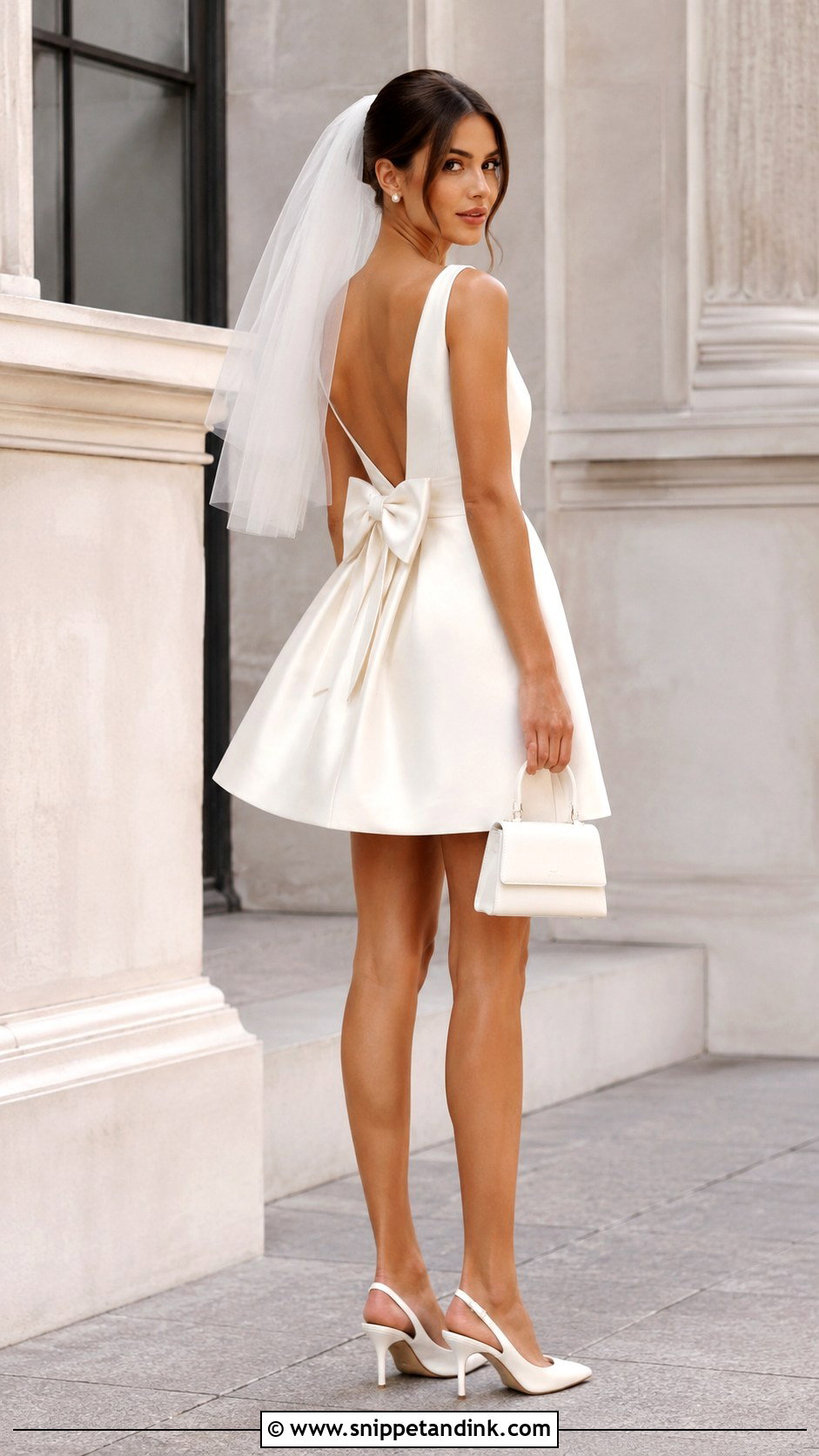
A cream mini can look properly bridal, but only when the styling is deliberate. I look for a structured shift, a tailored A-line or a fitted satin design with one strong detail, like a bow, a draped neck or pearls. Closed pumps, slingbacks or low block heels balance the short hem better than strappy sandals. Add a short veil, pearl studs and a small top-handle bag. A blazer or detachable overskirt gives you coverage and a second silhouette. Tailoring at the shoulders and hem matters more here than in any long gown, because a mini with a slightly wrong hem length looks casual immediately. Courthouse ceremonies, welcome dinners and reception changes are where it shines.
19. Creme Plus Size Wedding Dress
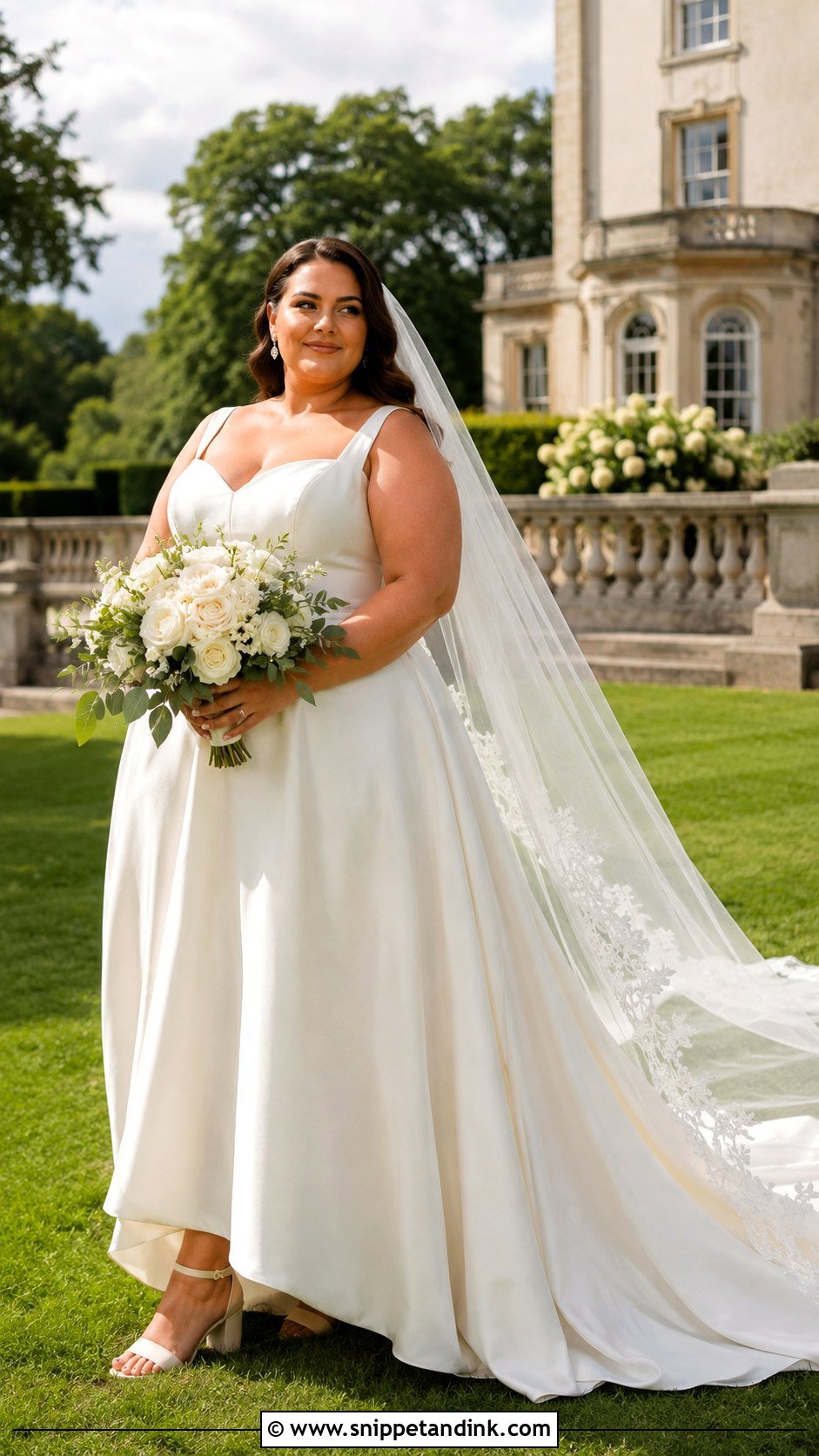
For plus-size brides I start with support and comfort, and I don’t follow any rule about which shapes are allowed. An A-line with a structured bodice, wide straps and a softly defined waist is a reliable starting point, but a fitted crepe dress, a lace mermaid or a full ball gown can all look wonderful when tailored properly. Ask the salon to pull samples in a size close to yours whenever possible, because pinning a small sample on a larger body tells you very little about how the finished dress will move. During fittings, sit, walk, raise your arms and test the bustle. Supportive block heels, a veil scaled to the train and smooth undergarments that don’t pinch finish the outfit. Cream works well with gold, pearl or champagne accents.



20. Creme Modest Wedding Dress
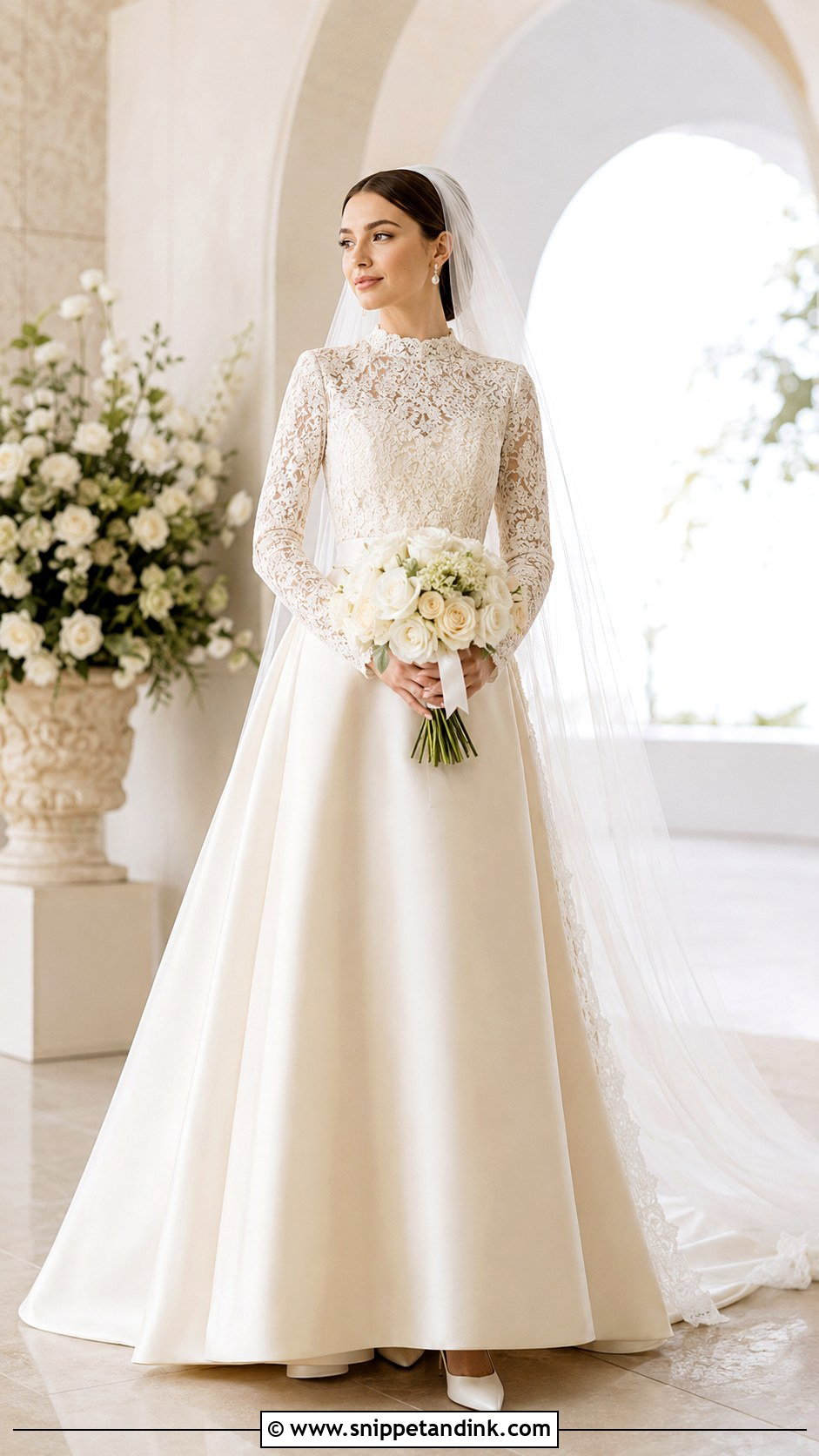
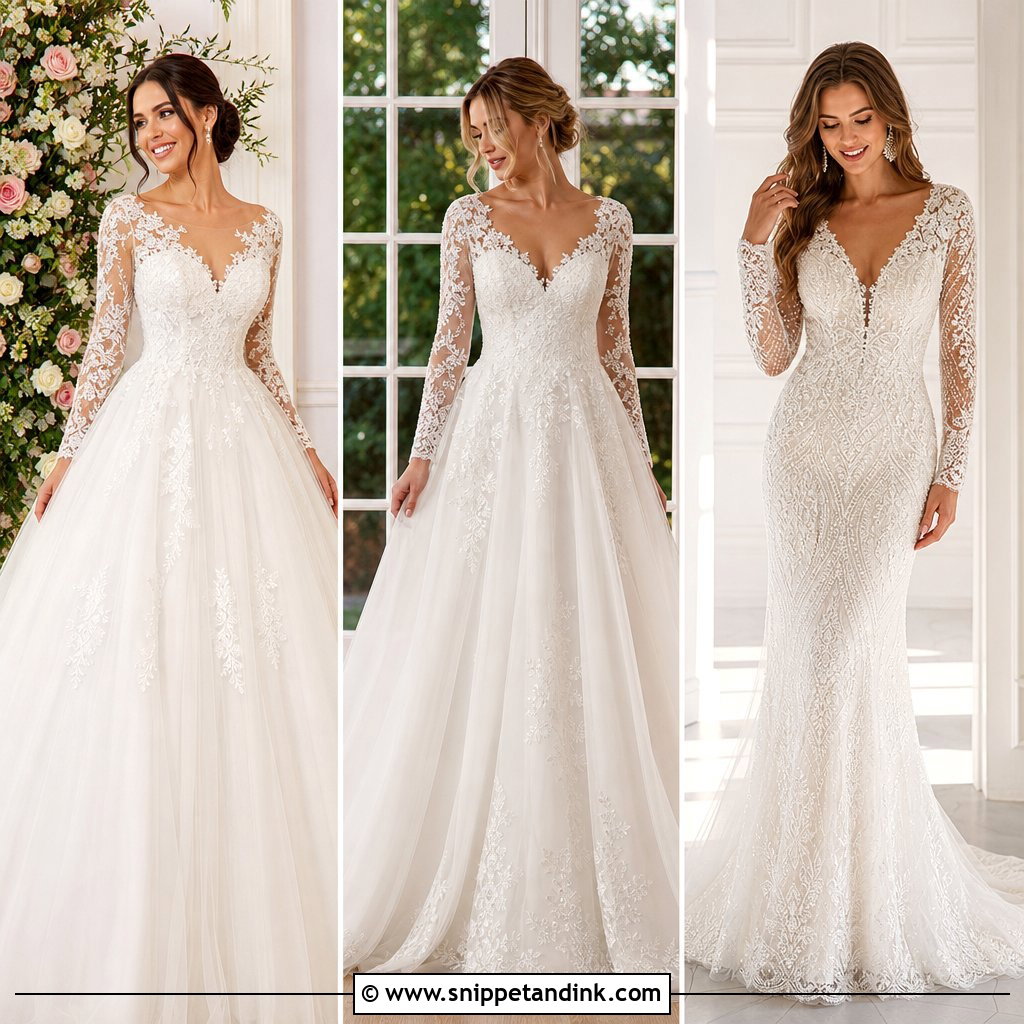
Full coverage and a modern look aren’t mutually exclusive. A modest cream gown with a high neck, lined bodice, long sleeves and an A-line or softly fitted skirt can feel light if the fabric is right. Lace sleeves bring texture; matte crepe looks cleaner and more minimal. One detail matters more than people expect: the lining. If it is a shade whiter than the cream outer fabric, it glows through in photographs and the dress suddenly looks two-toned. Closed pumps, pearl earrings, a long veil and a structured bouquet complete it, with a low bun or braided updo anchoring the veil securely. Careful tailoring stops the sleeves and shoulders from looking baggy.
Why a Cream Gown Can Yellow in Storage
Warm-toned fabric shows age faster than white. Body oils, perfume, spilled champagne and sugar stains are often invisible on the night, then oxidise into brown or yellow marks over the following months. That’s why I tell every bride to get the dress professionally cleaned within a few weeks of the wedding, and to point out every spot, even the ones she can’t see.
At home, after the cleaner
- Take it out of the plastic bag. Plastic traps moisture and can give off fumes that discolour fabric.
- Use a breathable cotton garment bag or an acid-free box with acid-free tissue in the folds.
- Keep it somewhere cool, dark and dry, so an inside wardrobe works and an attic or basement doesn’t.
- Don’t hang a heavy beaded or satin gown by its straps for years; the weight stretches the shoulders. Fold it or use the hanging loops sewn into the waist.
Check it once a year and refold along different lines. Permanent creases form wherever satin sits folded for too long.
One Shade Warmer Than Ivory, All Day Long
Pick the cream gown that suits your body, your venue and the way you move, not a single passing trend. Satin ball gowns, lace sleeves, silk slips, modern minis, corsets and modest cuts all take on warmth in this shade, but each fabric shows its undertone differently. Before you decide, look at swatches by a window and again under warm indoor bulbs, because cream that looks golden in one can look grey in the other. Coordinate the veil, shoes, lining and jewellery to the gown rather than buying bright white by default. Then wear the whole outfit at your final fitting: walk, sit, turn and try the bustle. A dress that lets you do all that without a second thought is the one to keep.
You'll Like These Ideas:



Leave a Reply