
Carolina Herrera bridal fashion is about structure first and decoration second: sculpted bodices, full skirts that stand on their own, a well-placed bow or a few embroidered flowers rather than beading from neck to hem. The house has dressed brides in grand ball gowns, but also in separates, architectural necklines and very plain columns. When I style a bride who loves this aesthetic, I’m less interested in the label than in what makes it work: firm fabrics, precise seams and restraint. That has to fit your proportions, venue, season and comfort too. So watch how each fabric moves, where the waist falls, and whether the neckline suits the hair and jewelry you have in mind. Below are twenty looks in that spirit, from formal to garden-easy.
Silk Faille, Mikado or Organza? Reading the Fabric Label
Structured designer gowns live or die by their fabric, and the names on the label tell you a lot about how a dress will behave once you’re wearing it.
- Mikado is a heavy, tightly woven fabric with a soft sheen, traditionally silk and often a silk blend. It holds sculpted shapes without much support underneath, but it creases sharply.
- Faille has a fine horizontal rib you can feel with a fingertip. It’s a little softer than mikado and takes pleats and folded necklines well.
- Organza is sheer and crisp. It gives volume with very little weight, but it shows every snag.
- Crepe is matte with a slight grain and a little drape, the fabric I’d pick for a column or sheath.
Ask whether the fabric is pure silk or a blend. Blends are often more crease-resistant and less costly, while pure silk breathes better and has a deeper glow. Neither is wrong; they just behave differently over a long day.
1. Carolina Herrera Strapless Ball Gown
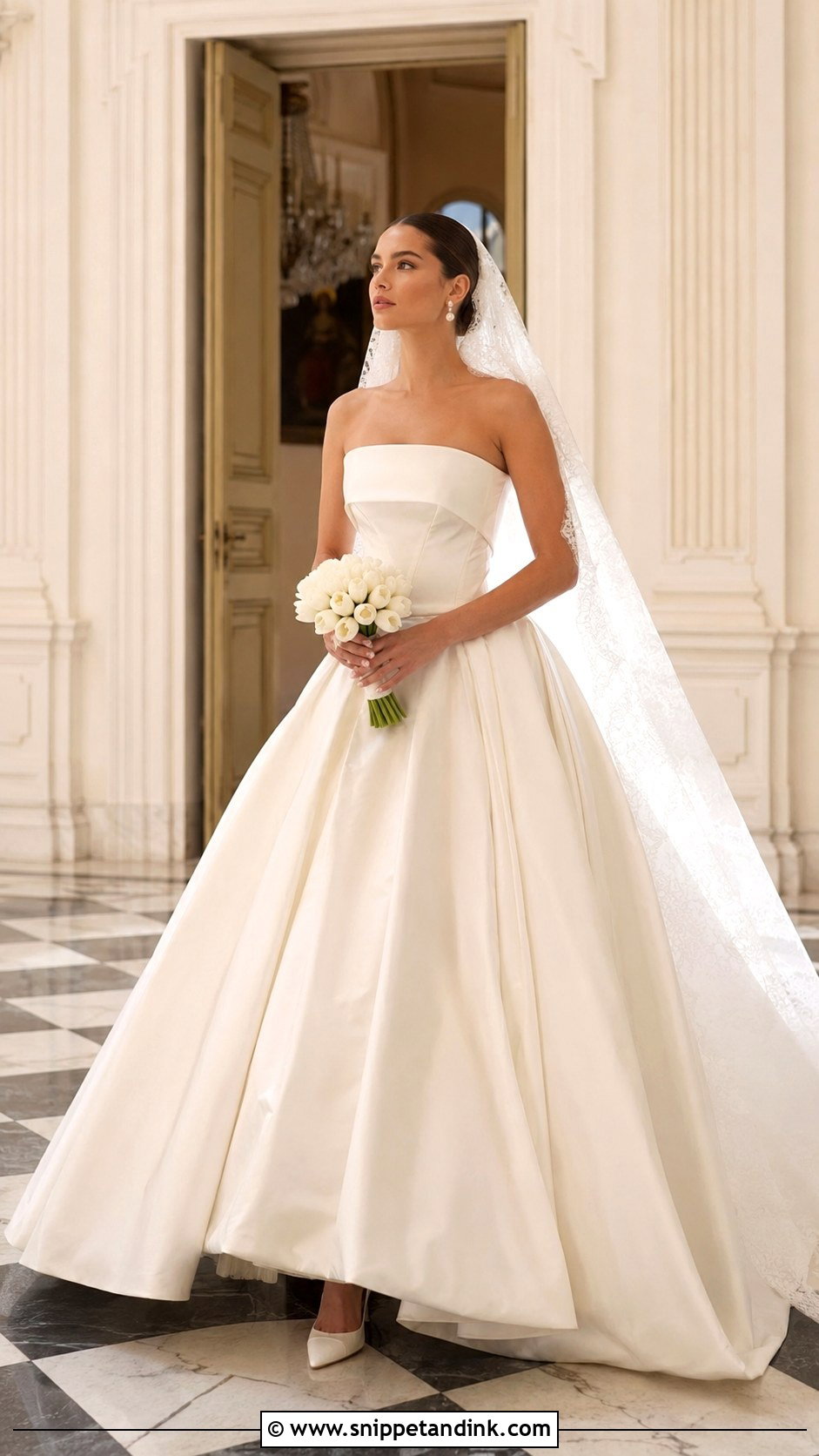
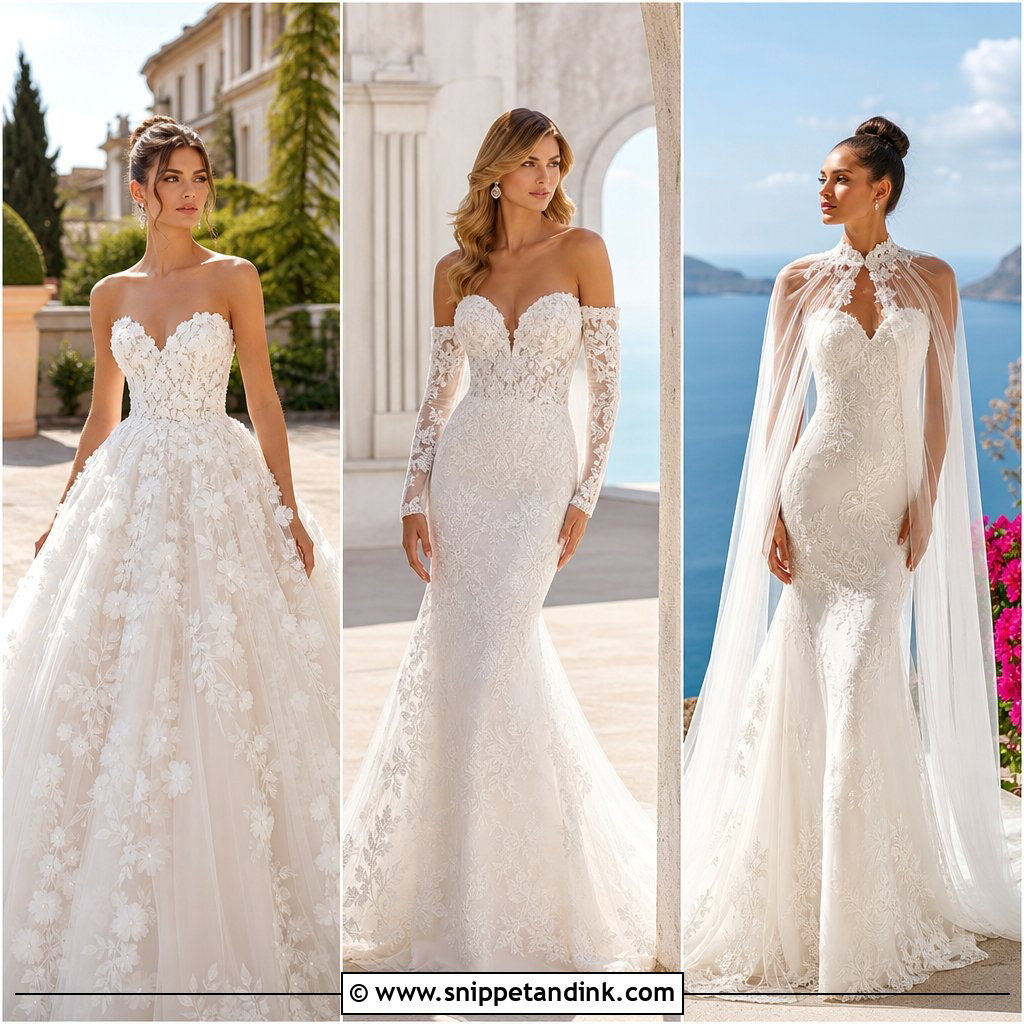
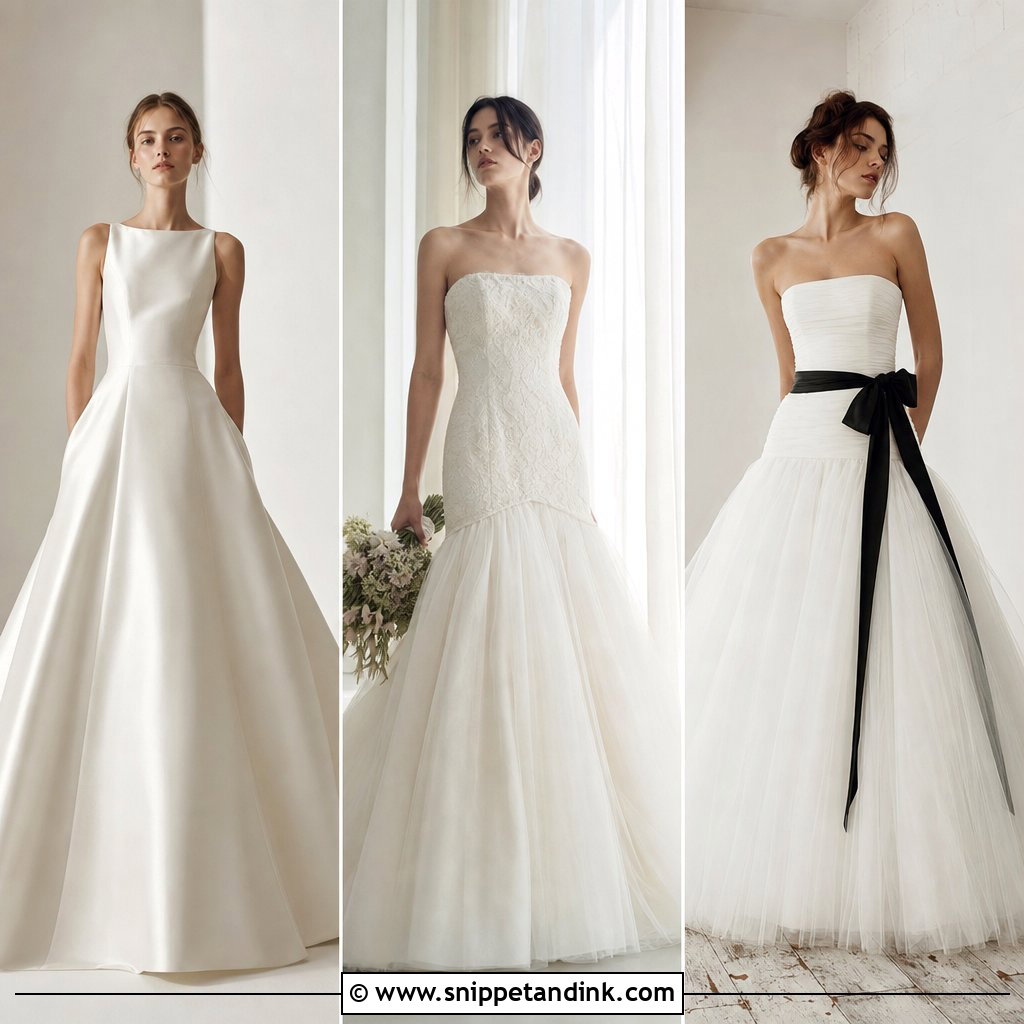
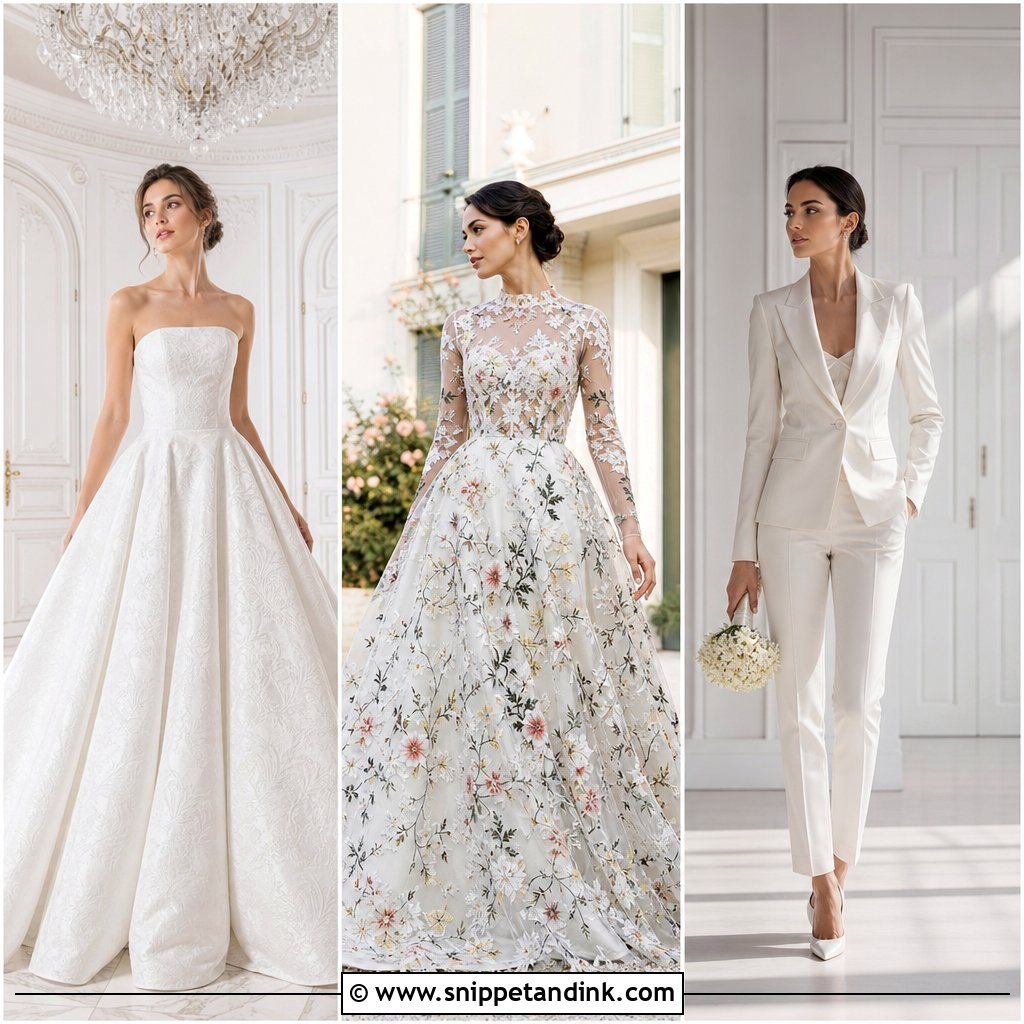
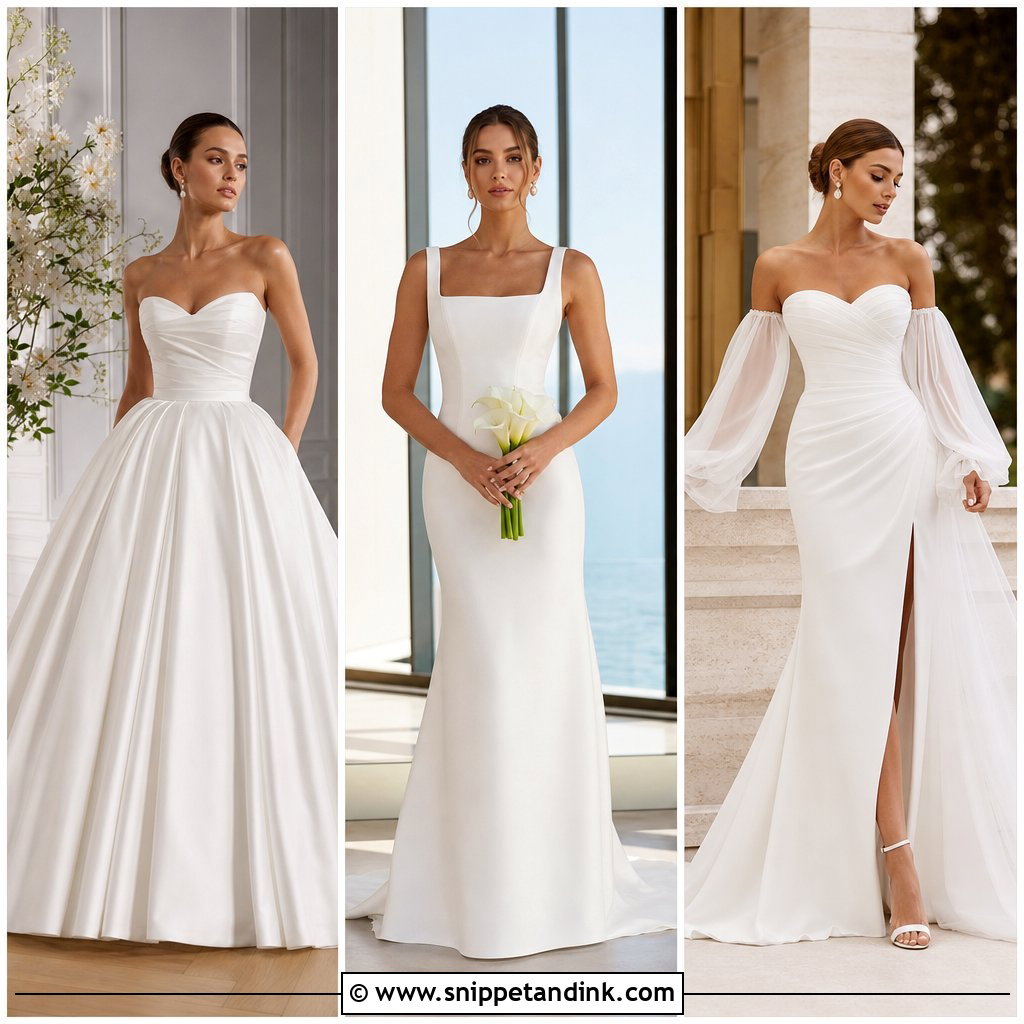
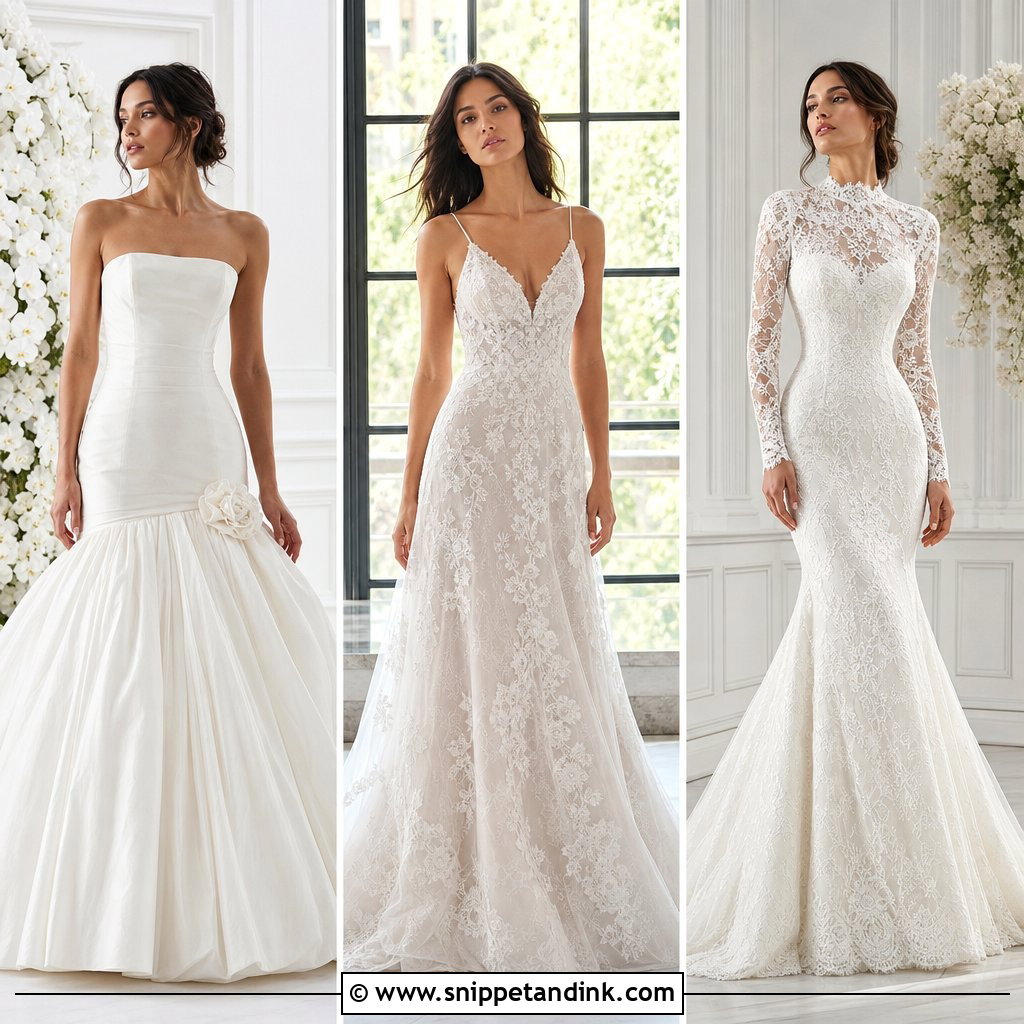
The strapless ball gown is the purest version of this look, and it only works if the bodice is built properly. Straight or gently curved neckline, a structured bodice and a full skirt in silk faille, satin or crisp mikado give a defined waist and enough volume for a ballroom, museum or estate. A cathedral veil adds ceremony without cluttering the clean fabric, and pointed satin pumps, pearl drops and a compact bouquet finish it. A strapless gown is held up by boning and the waist, not the bust. If you’re nervous about it slipping, ask for extra boning or detachable off-the-shoulder straps. Keep the hair smooth so the shape stays the star.
2. Carolina Herrera Long Sleeve Lace Gown
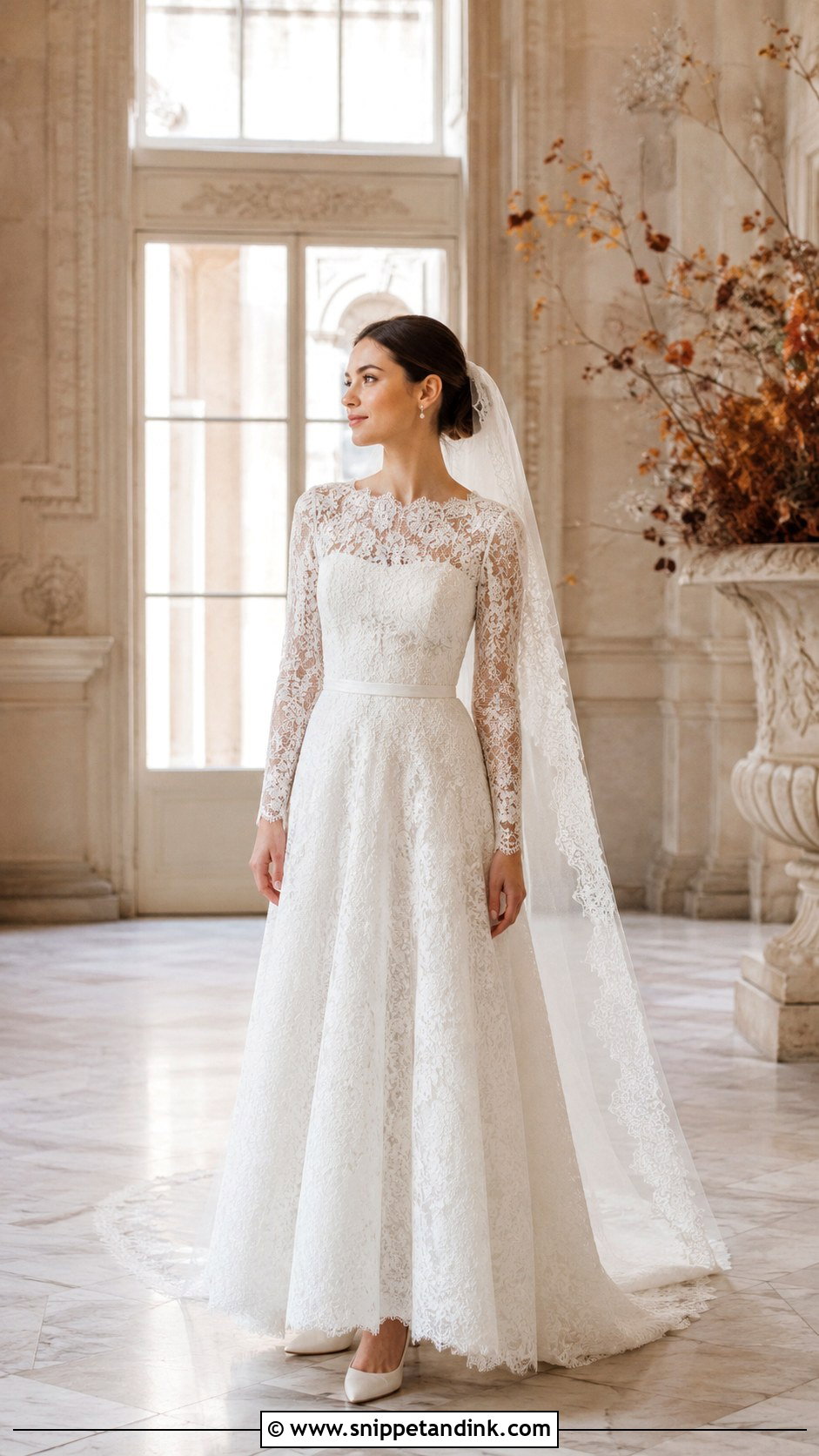
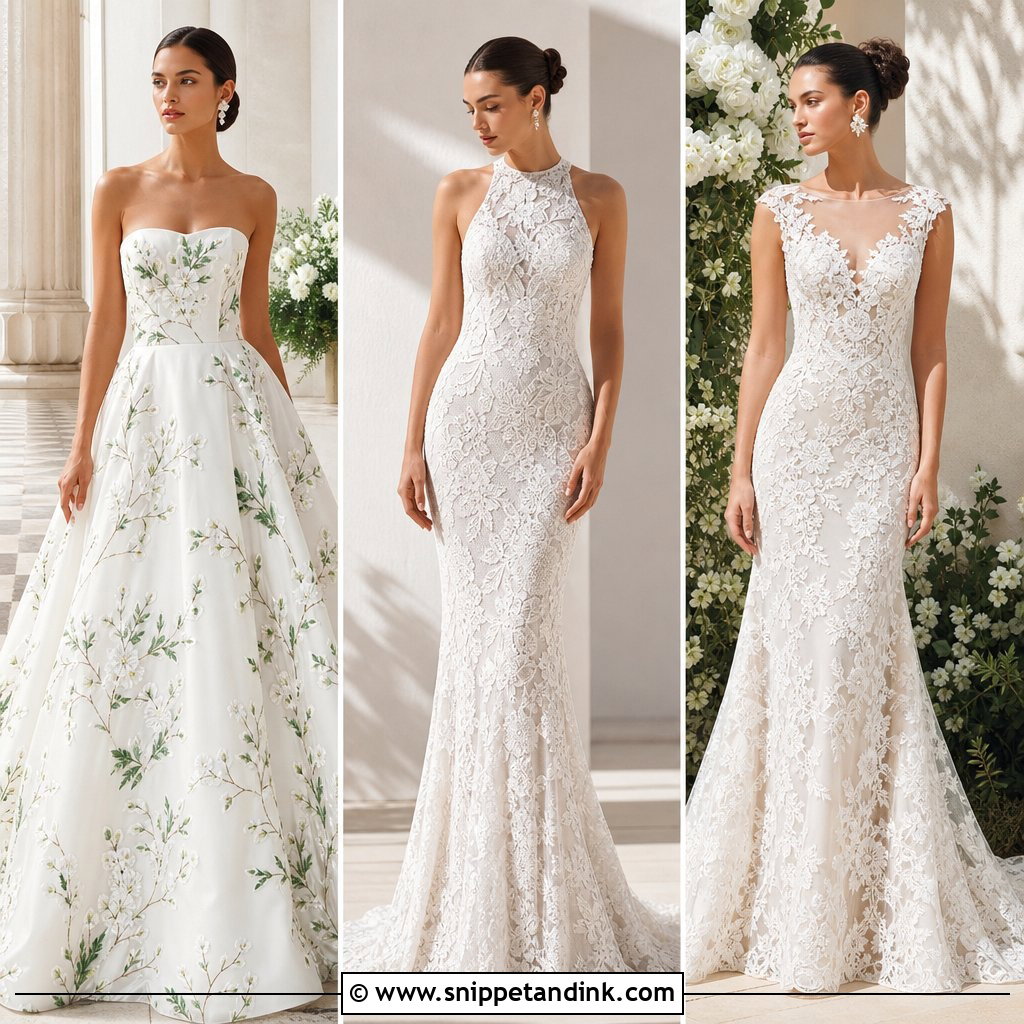
Lace and fitted long sleeves look romantic rather than fussy when the skirt stays quiet. A clean column or soft A-line lets the lace bodice carry the detail, and a bateau, illusion or modest scoop neckline balances the covered arms. Ivory pumps, small diamond or crystal earrings and a sheer fingertip veil edged in matching lace are enough, with a low bun to keep the neckline clear. Long lace sleeves need a little ease at the elbow; fitted too tightly, they bunch when you bend your arm to hold the bouquet. Fall and winter suit this gown best, though light lace on a breathable lining works in a mild spring.
3. Carolina Herrera Off Shoulder Wedding Dress
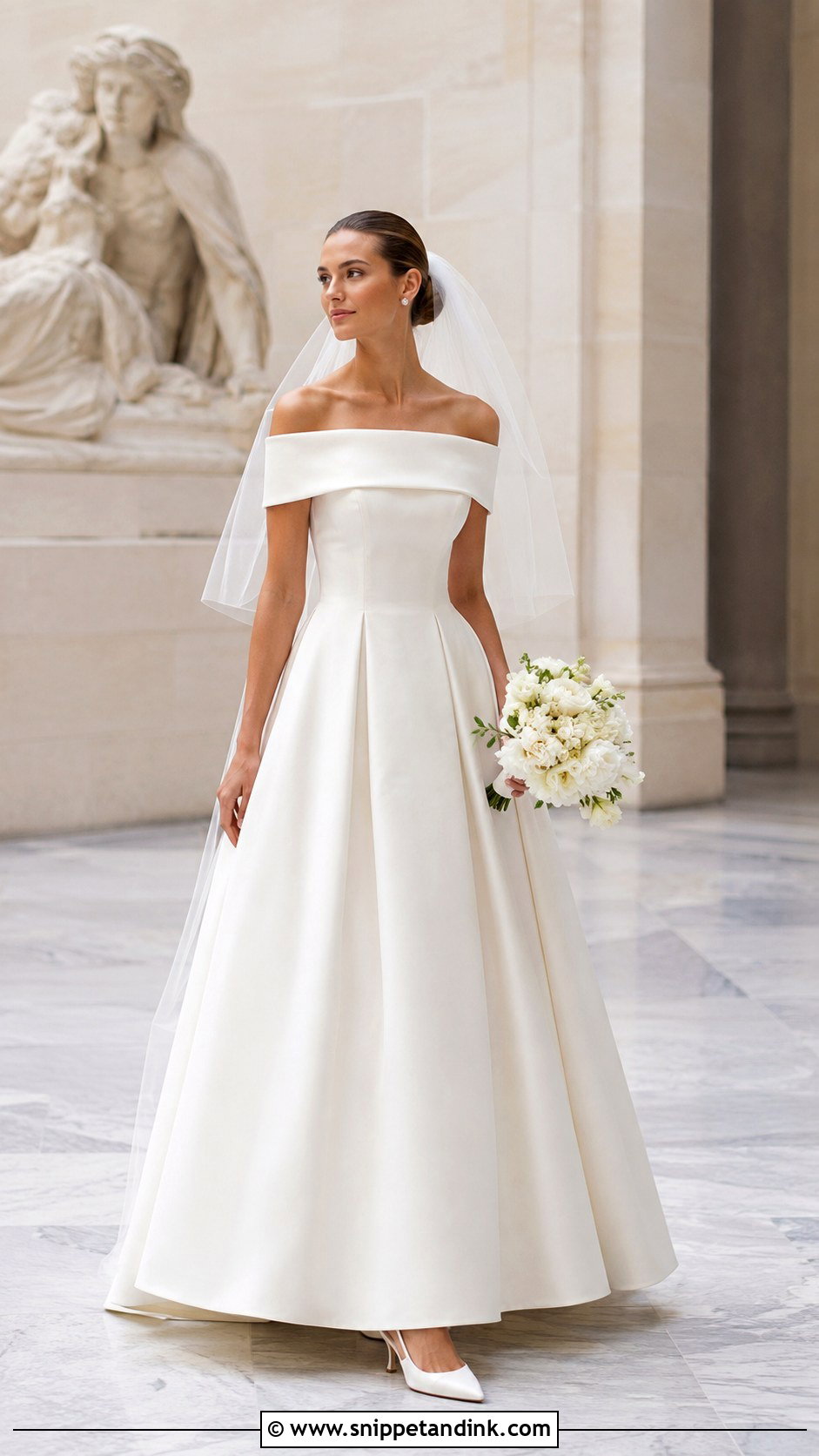
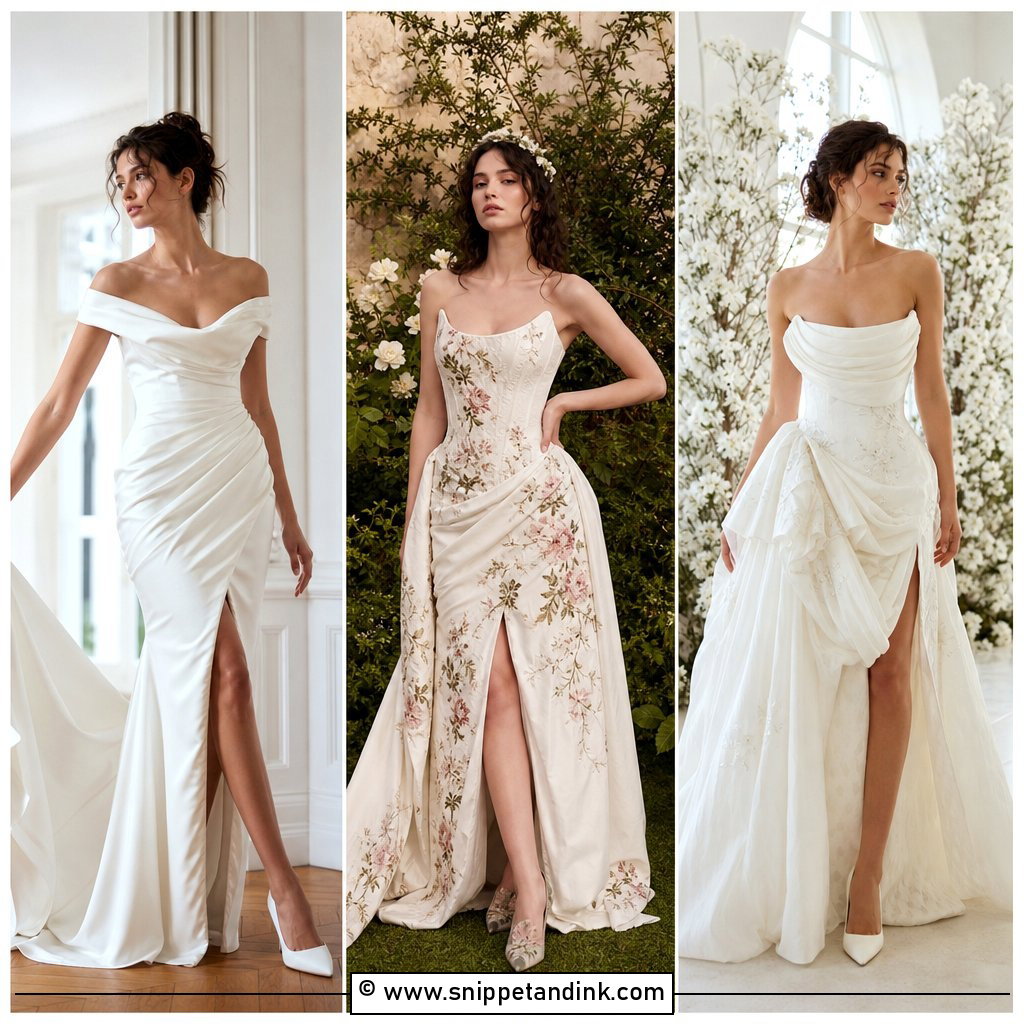
A folded off-the-shoulder neckline frames the face and collarbone, and on a structured gown it looks tailored rather than romantic. Pair it with a fitted bodice and a gently flared skirt, or choose a full ball gown with architectural pleats at the waist for more drama. A sleek chignon, a simple veil and pearl or diamond studs leave the shoulders clear; skip the necklace. Ivory slingbacks and a structured satin clutch carry into the reception. The weak point of this neckline is lifting your arms, which pulls the fold upward. Move a lot at fittings, and ask for a gripper band or internal stays so it stays put while you dance.
4. Carolina Herrera Mikado A Line Gown
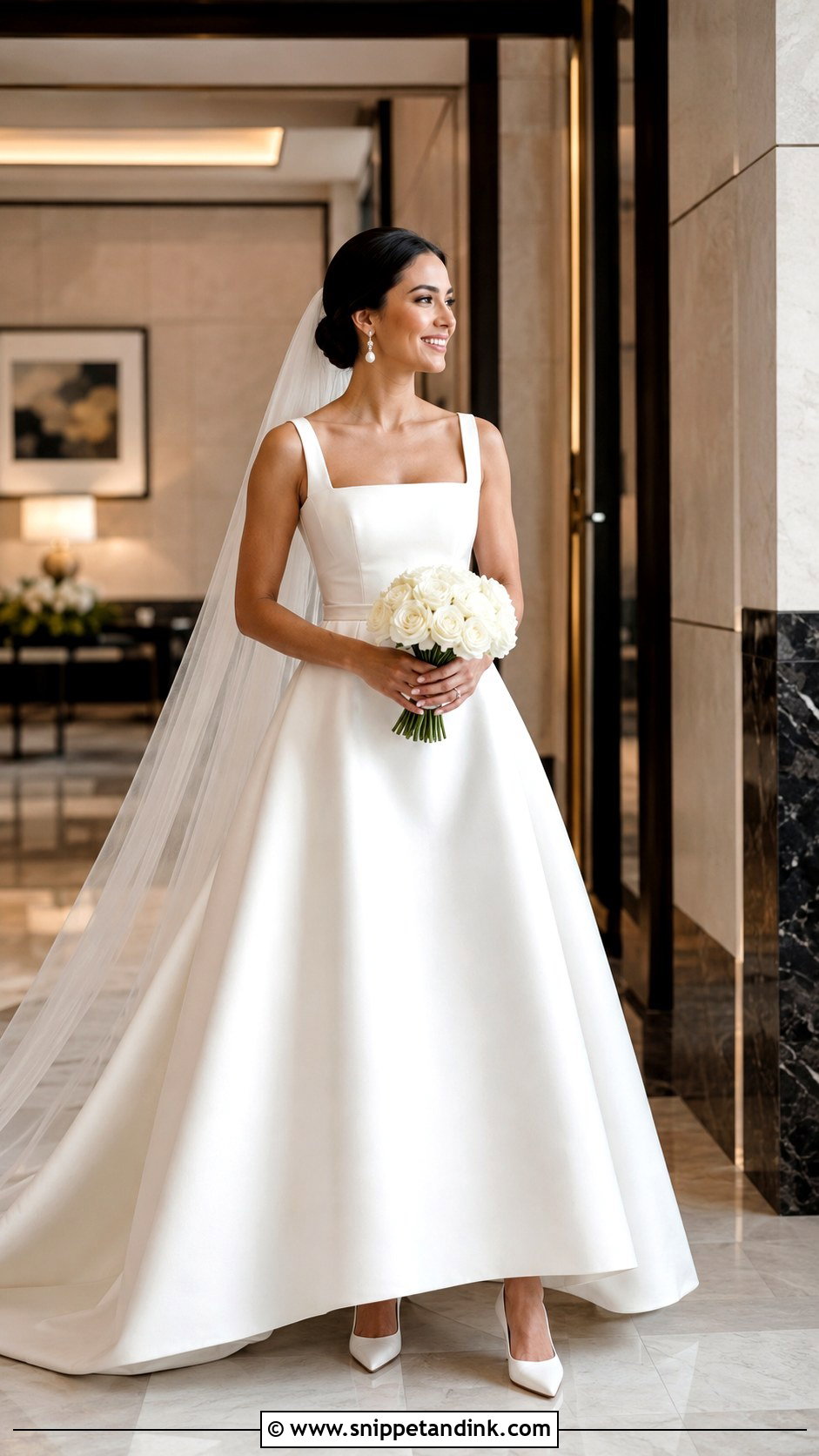
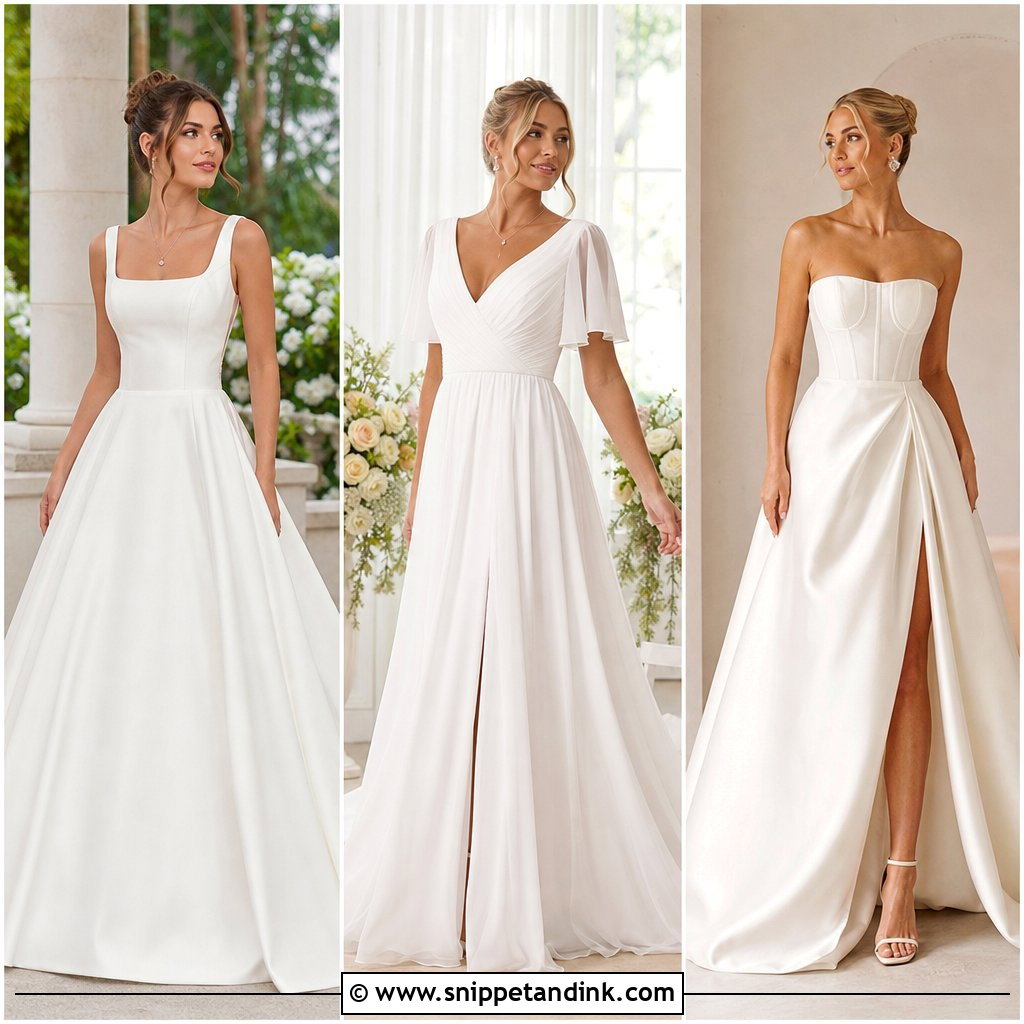
Mikado is stiff, slightly shiny and holds a shape on its own, which is why it suits an A-line so well. The skirt stands away from the body without layers of petticoat, and the waist seam stays crisp. Pick a square, scoop or strapless neckline depending on how much coverage you want. Because the surface is plain, accessories show more, so I keep them to pearl earrings, pointed ivory pumps and a long veil with a narrow finished edge. A low bun or polished ponytail keeps it modern. Mikado creases sharply where you sit, so give it a steam right before the ceremony. The A-line itself is easy to walk and sit in from ceremony to reception.
5. Carolina Herrera Floral Applique Ball Gown
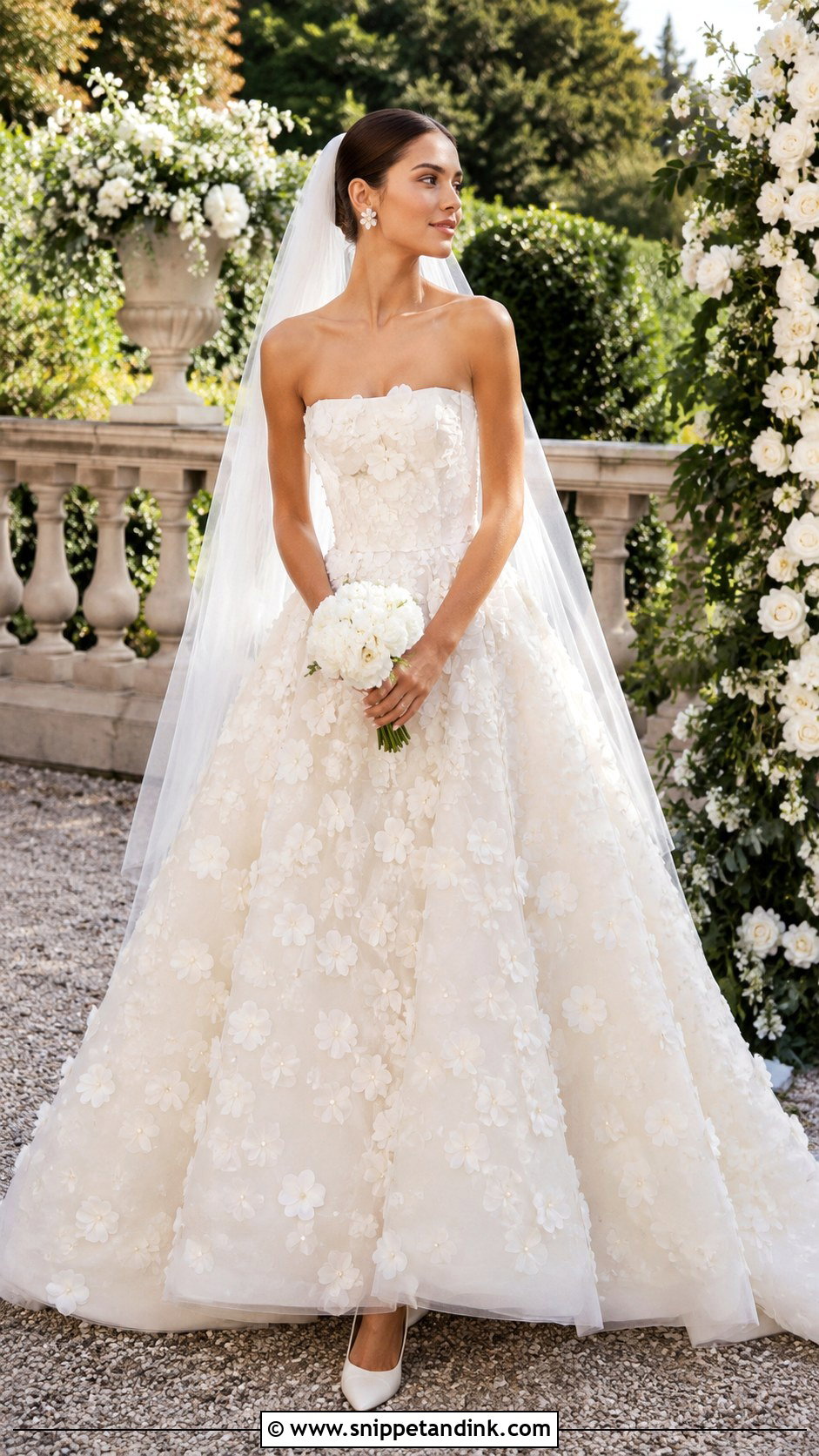
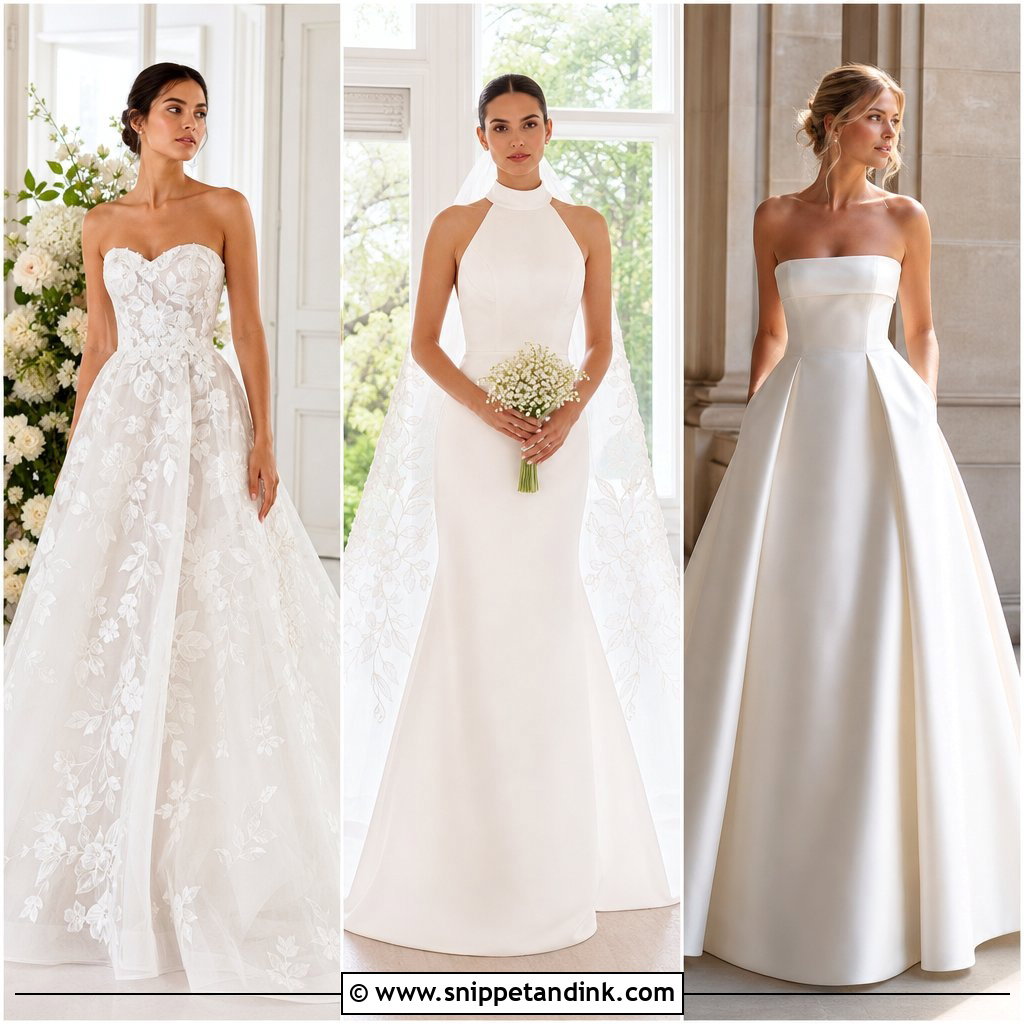
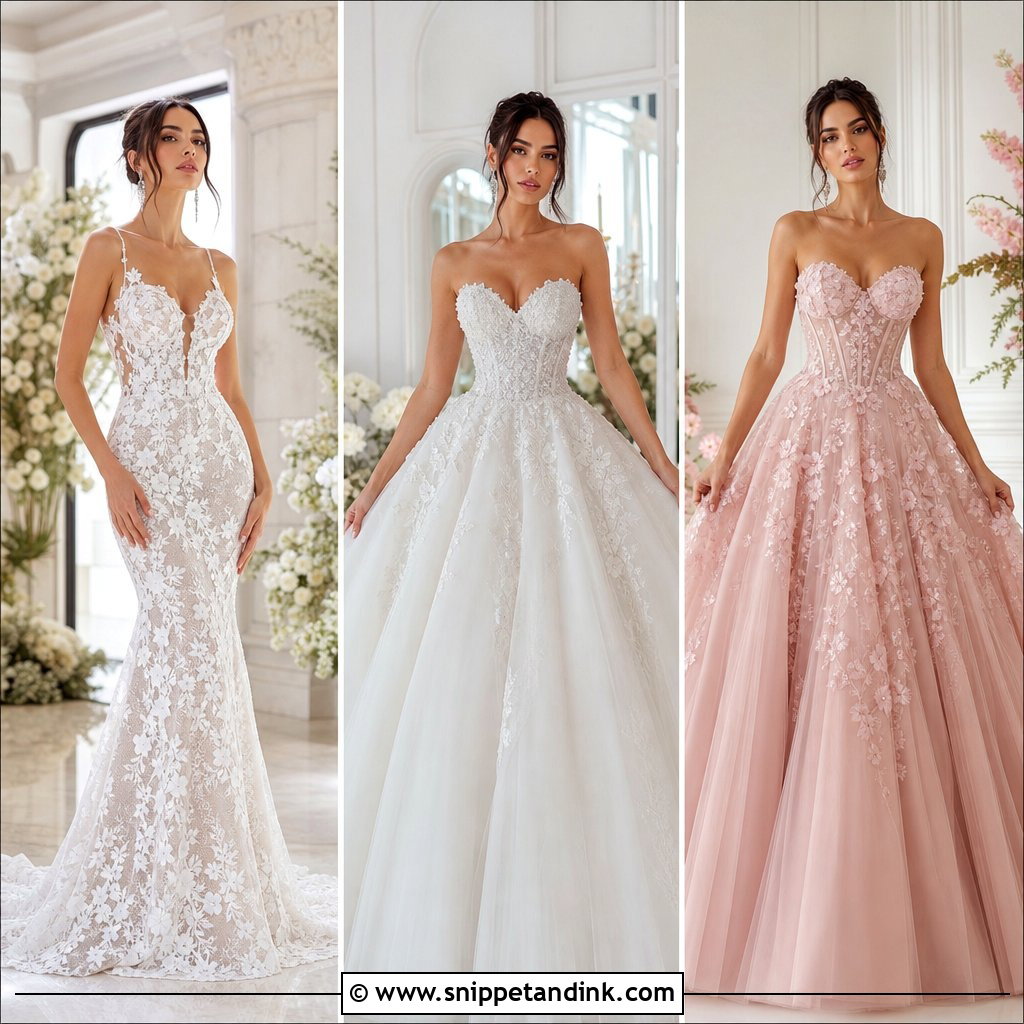
Floral appliqués soften a ball gown when they’re placed with intent. Concentrated across the bodice, scattered down the skirt or circling the neckline, they look refined in the same ivory as the base fabric. A fitted strapless bodice over a full organza skirt keeps the whole gown light, and it moves between a garden estate and a formal indoor venue easily. Satin pumps, small floral earrings and a plain tulle veil let the flowers lead. A loose low bun sits naturally beside them. Keep the bouquet to two or three flower varieties. Too many kinds of bloom in your hands next to flowers on the gown makes everything look busy.
6. Carolina Herrera Bow Back Wedding Dress
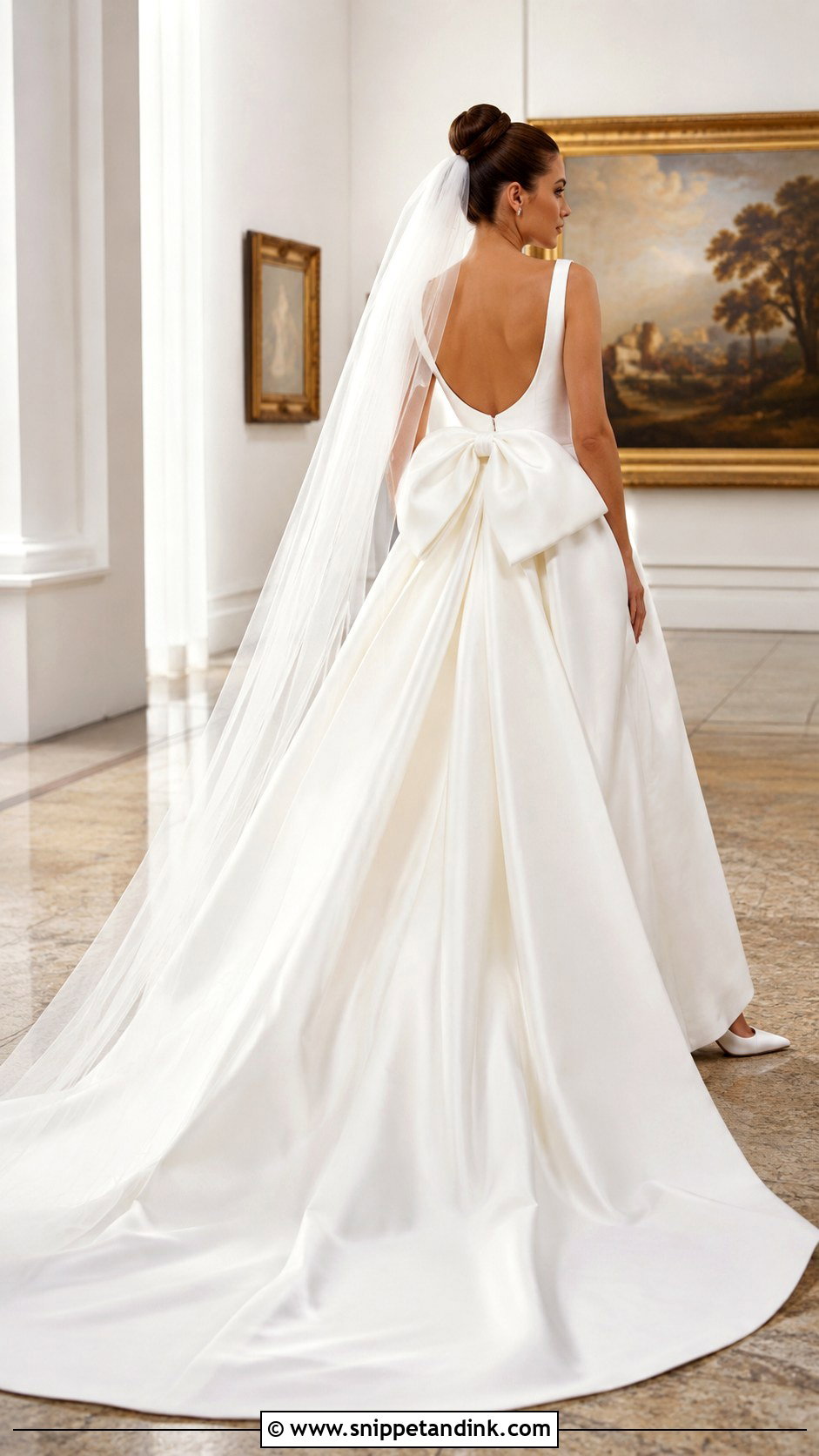
A bow-back gown is plain from the front and makes its point as you walk away. Satin or mikado, a fitted bodice, a defined waist and an oversized bow at the lower back is the classic formula, with a straight or wide square neckline keeping the front quiet. Pointed pumps, a sheer cathedral veil and understated studs suit it, and a high bun or smooth twist keeps the back visible. I’d always choose a detachable bow; a large bow is uncomfortable to sit against at dinner. Have the seamstress pin its position while you stand in a mirror, because a bow placed a few centimeters too low makes the torso look shorter.
7. Carolina Herrera Minimalist Column Gown
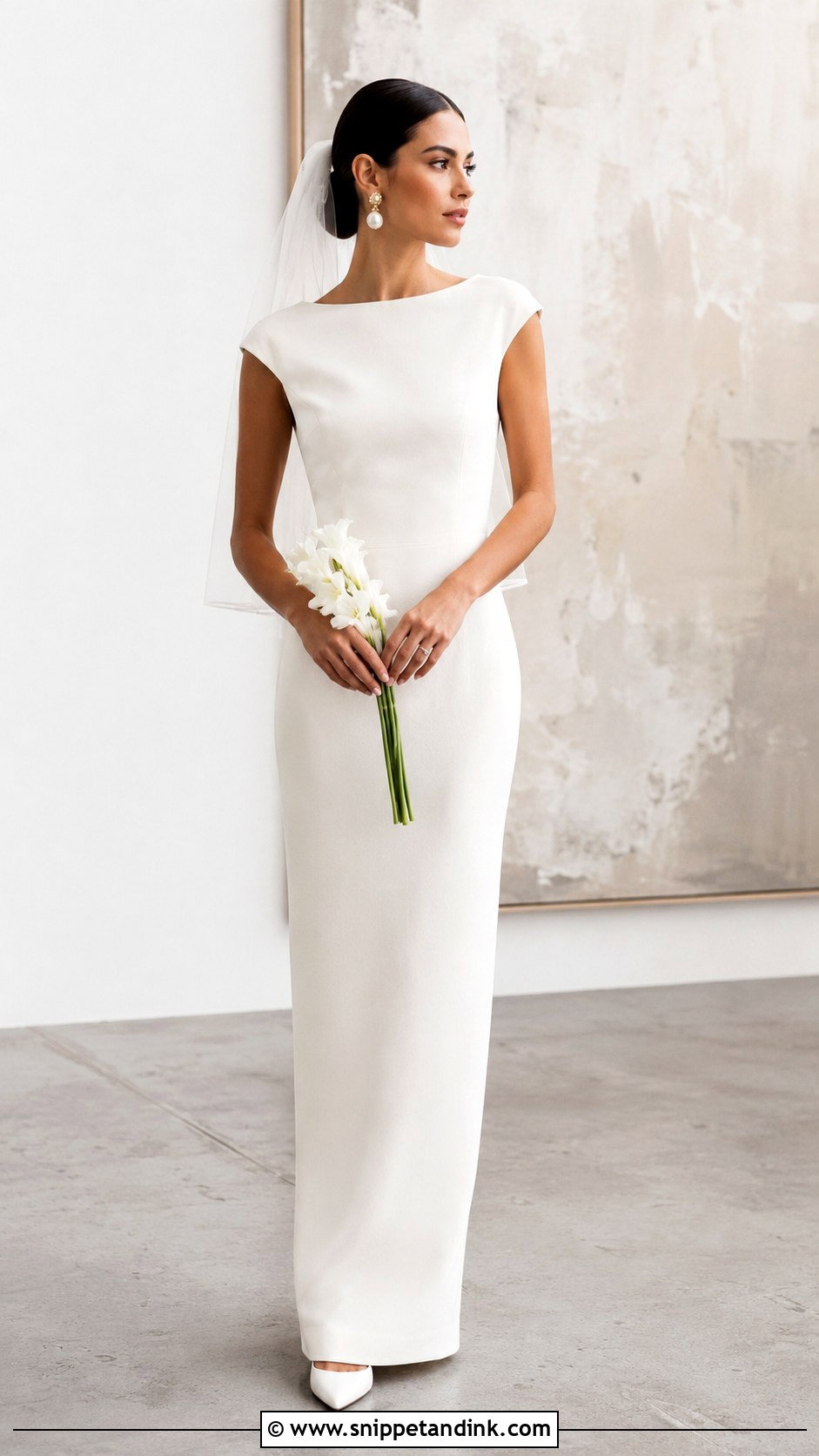
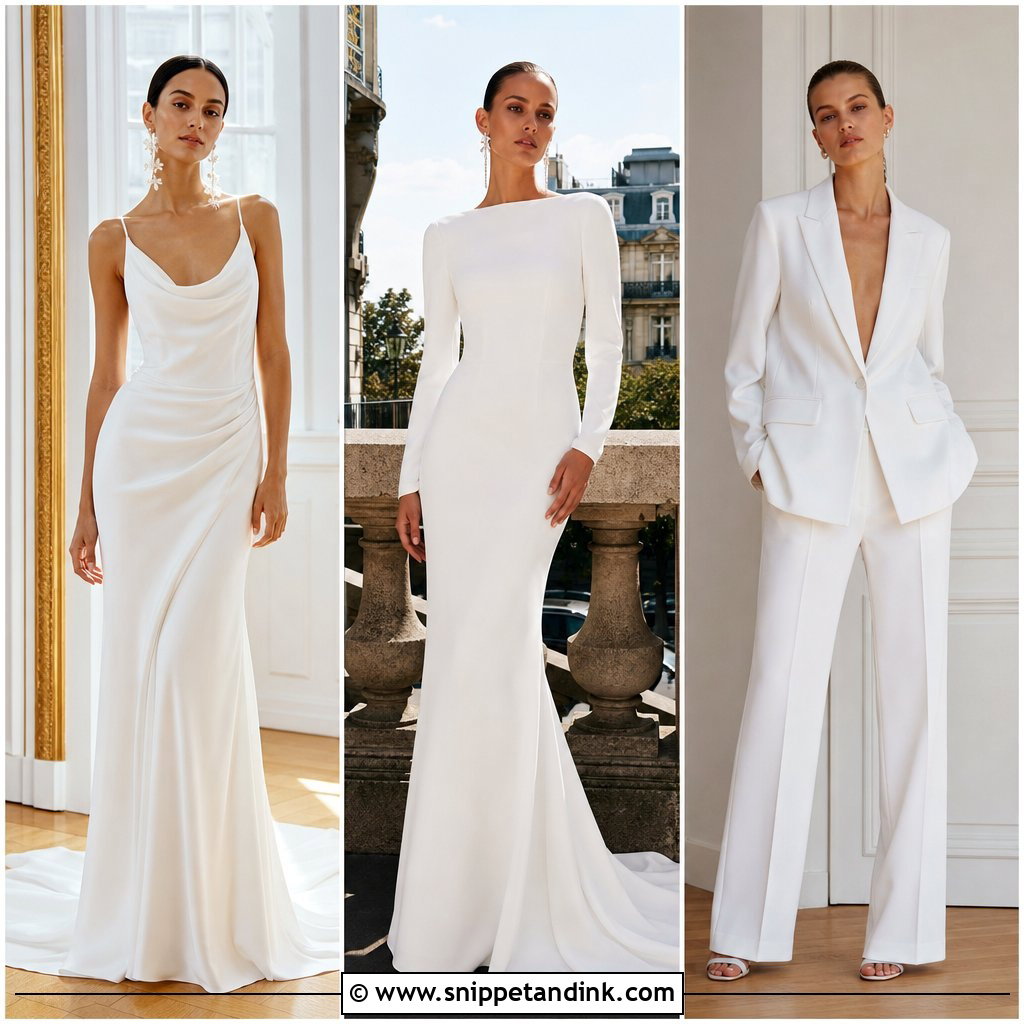
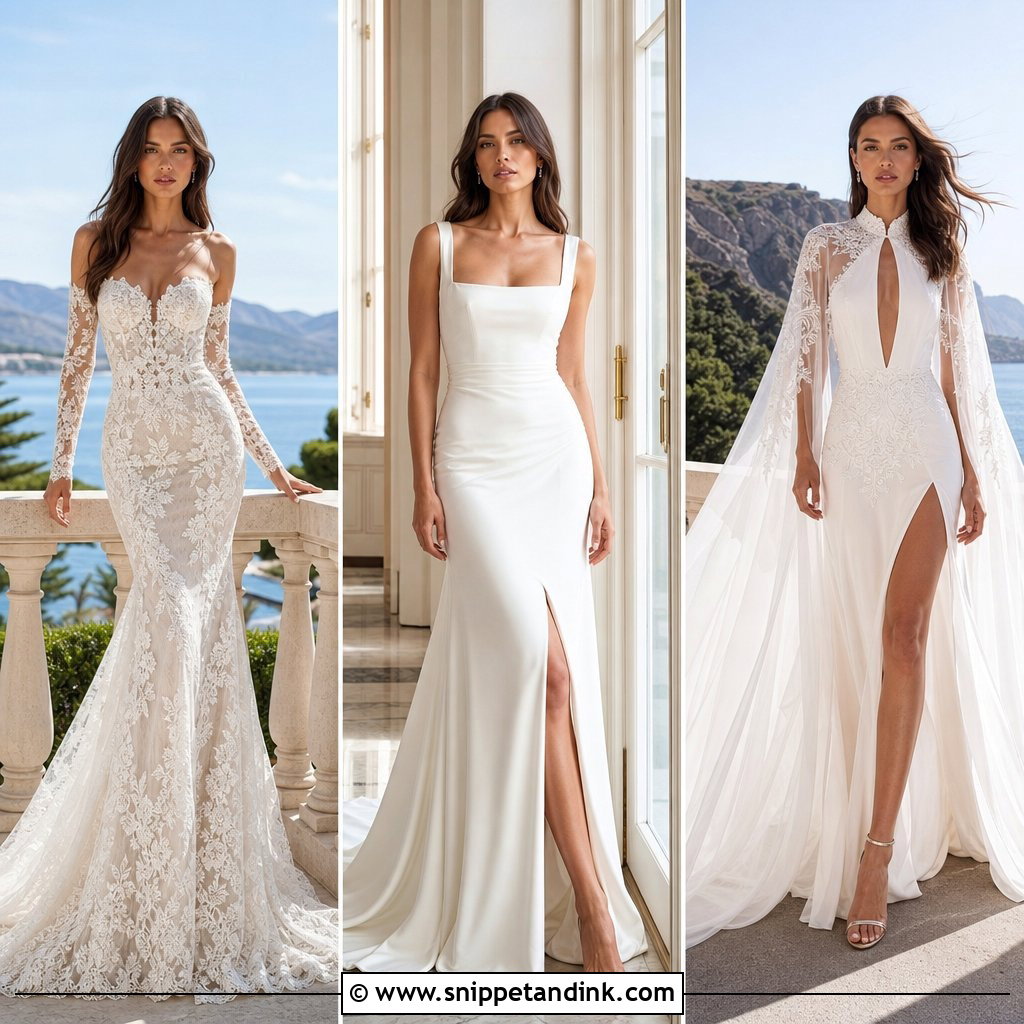
A minimalist column is the gown for a city hall, gallery or modern hotel. Crepe, heavy silk or smooth satin that follows the body without clinging is the base, with a high bateau neckline, subtle cap sleeves and a clean back. Pointed pumps, sculptural earrings and a compact bouquet of long green stems keep it spare. A short veil stays contemporary; a cathedral veil adds formal contrast. A narrow fabric belt at the natural waist gives definition if you want it. Simple gowns are the hardest to alter, because every seam shows. Leave time for at least two fittings, and wear the exact underwear you’ll wear on the day.
8. Carolina Herrera High Neck Wedding Gown
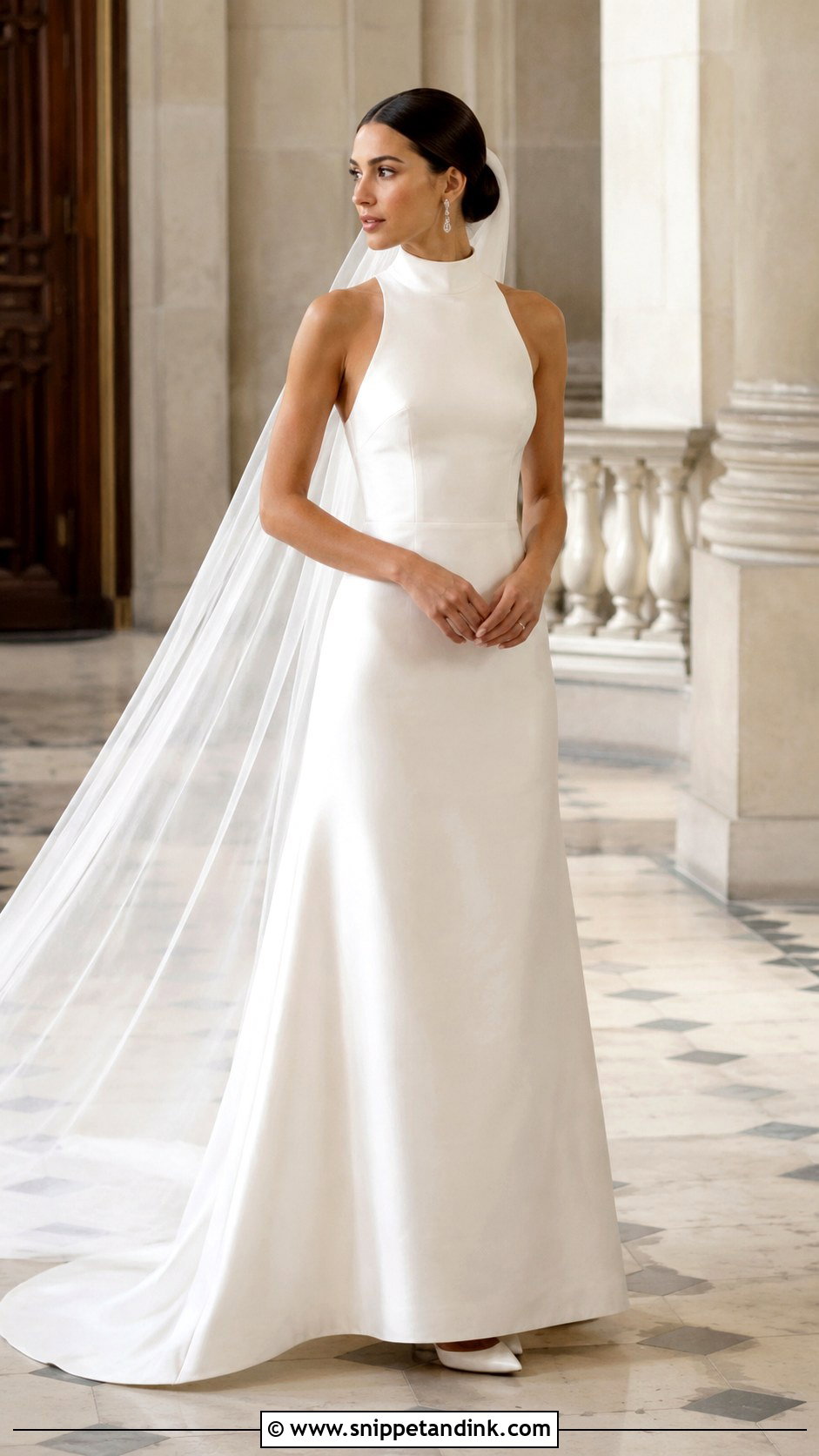
High necklines can feel heavy, so I balance them with a streamlined skirt and something open elsewhere. A sleeveless mock neck is clean and modern; sheer lace sleeves soften it. A keyhole or open back keeps the design from feeling closed. A smooth bun, fine drop earrings and pointed ivory pumps complete it, and no necklace at all. Attach the veil below the bun so it frames the back without covering it. This gown suits historic venues and formal indoor rooms. The collar has to be fitted precisely. Turn your head fully at every fitting; a collar that’s a few millimeters tight rubs the skin raw by evening.
9. Carolina Herrera Square Neck Wedding Dress
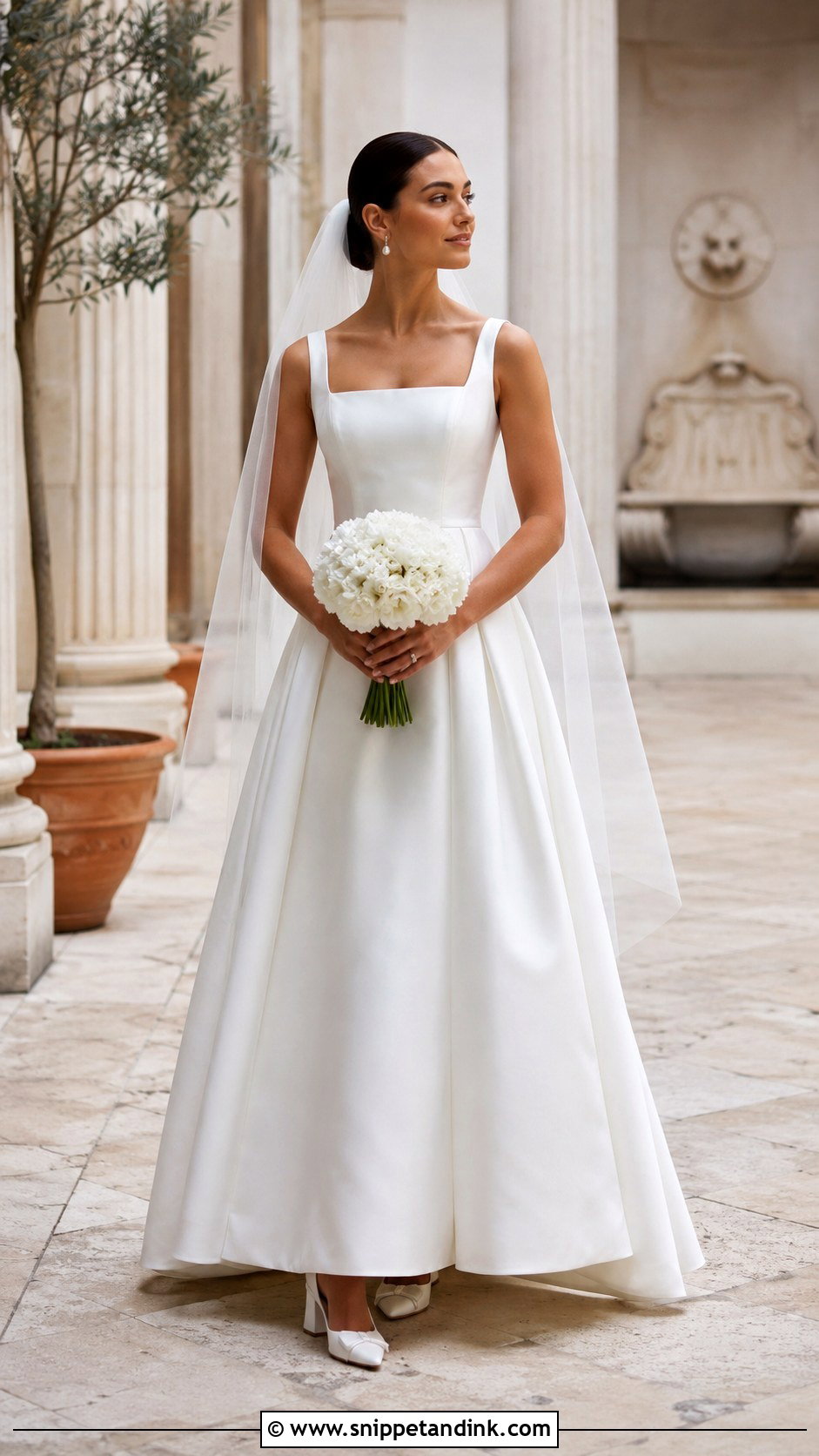
Square necklines bring crisp geometry and leave open space at the collarbone. Wide straps, a fitted bodice and an A-line or fully gathered skirt give a classic shape with an architectural edge. A fingertip veil, pearl drops and satin block heels make it comfortable head to toe, and a center-parted low bun echoes the straight lines. Short sleeves add coverage without losing the shape of the neckline. The corners are what I watch. If the bodice is a touch long or the straps are slightly uneven, one corner sits lower than the other, and the eye goes straight to it. Check them seated as well as standing.
10. Carolina Herrera Sweetheart Neckline Gown
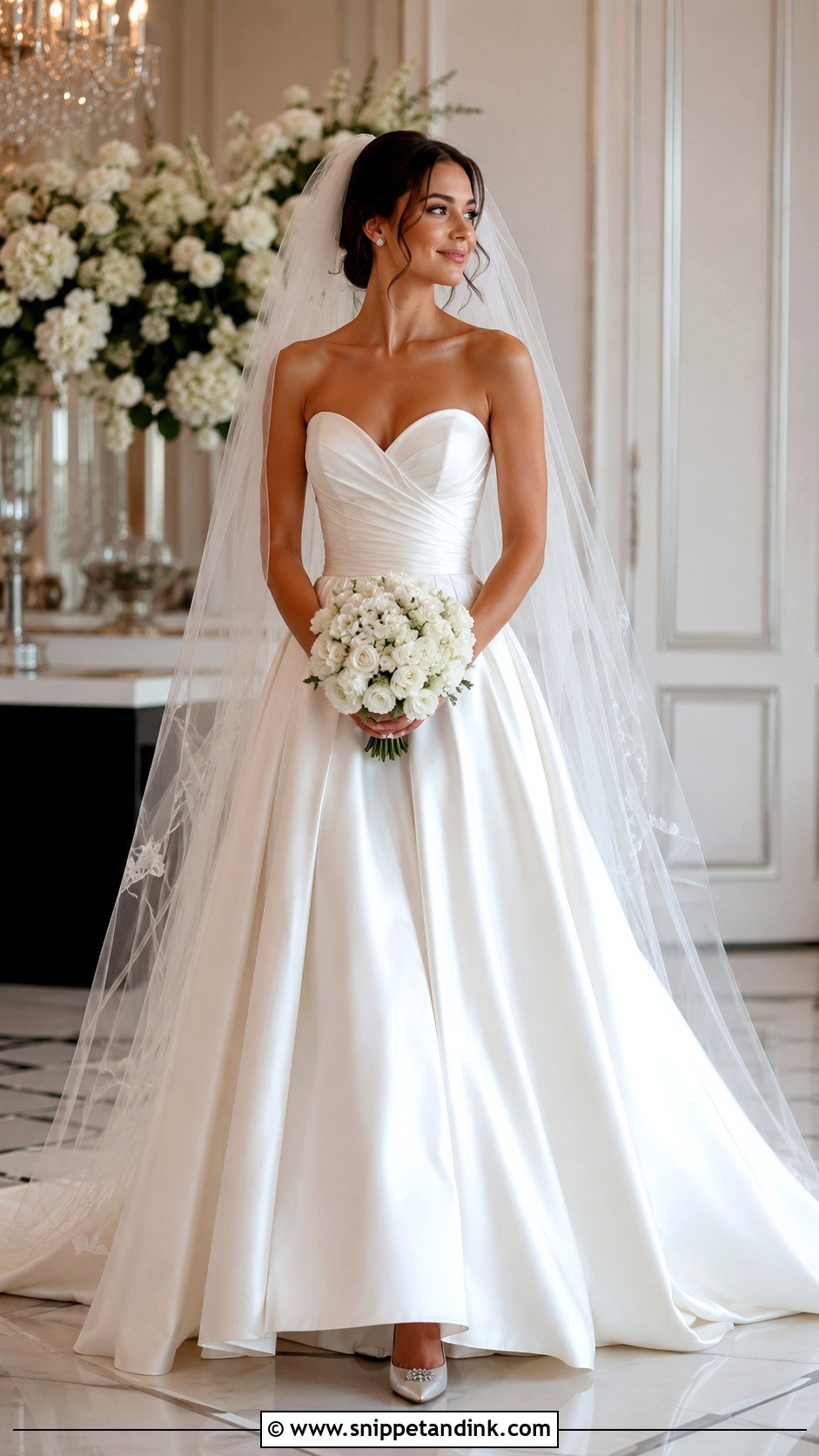
Sweetheart necklines soften a structured gown and draw attention to the face. For this aesthetic, I’d choose a precisely fitted bodice over heavy corset detailing. A full satin skirt is traditional; a slim fit-and-flare reads more current. A sheer veil, crystal studs and pointed ivory shoes are enough, and soft waves or a low textured bun follow the curve. For extra coverage during the vows, an organza jacket or long-sleeve topper can come off afterward. The cups matter more than anything else here. Ask your seamstress to fit the bust and the waist separately; tightening the waist to hold up the bust is the most common mistake on strapless sweethearts.
11. Carolina Herrera Basque Waist Ball Gown
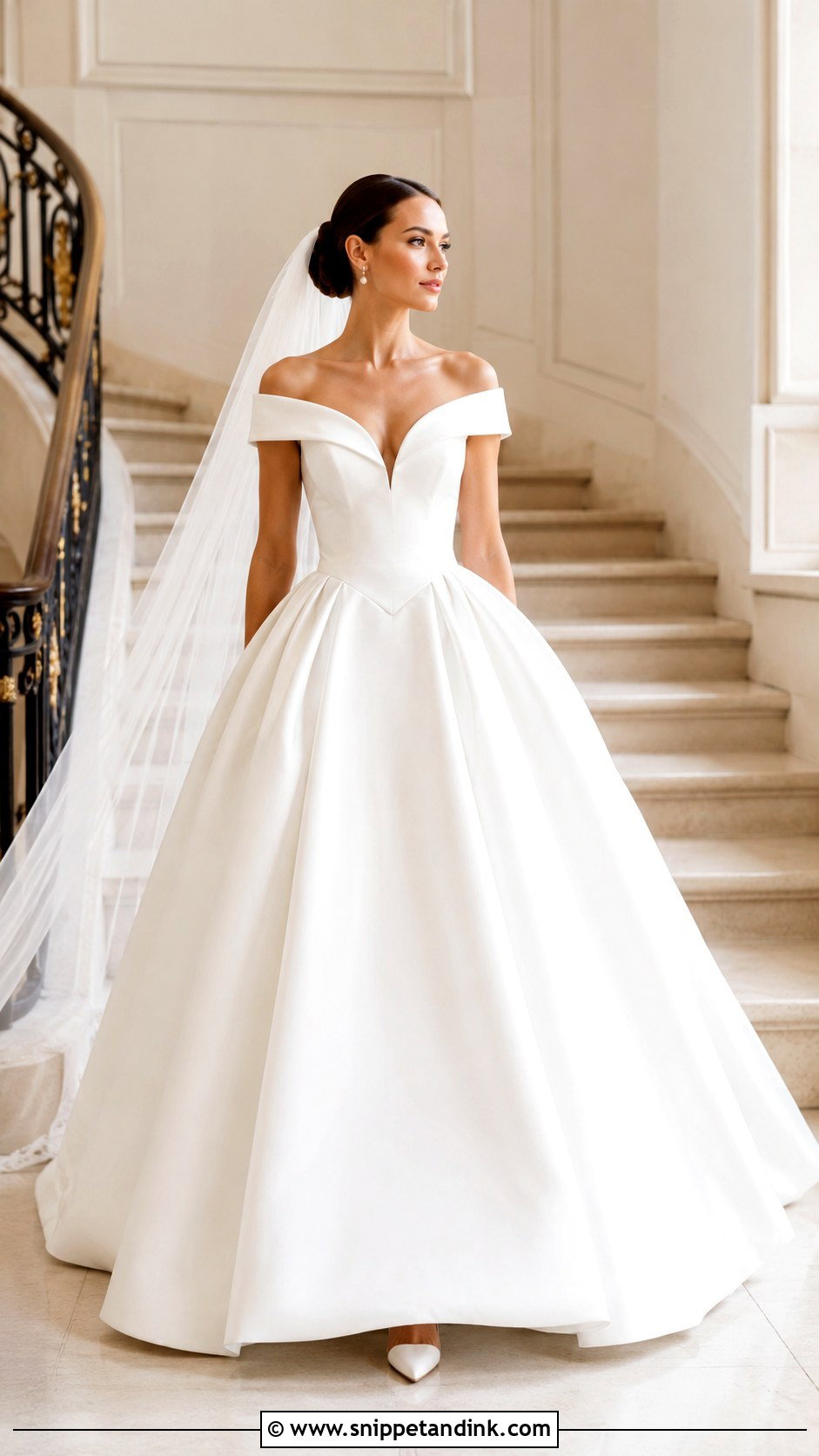
A basque waist dips into a V at center front, which lengthens the torso before the skirt opens out. It needs structured satin or mikado to keep that point sharp; soft fabric lets it wilt. A strapless or off-the-shoulder bodice balances the long center line. A plain cathedral veil, pearl studs and sleek satin pumps finish it, and embellishment should stay minimal because the waistline is the design. Here the alteration depends on your torso. On a short-waisted bride I’d ask for a shallower V; on a long torso a deeper point looks right. Either way, the point should sit flat when you sit, not jab into your stomach.
12. Carolina Herrera Drop Waist Wedding Dress
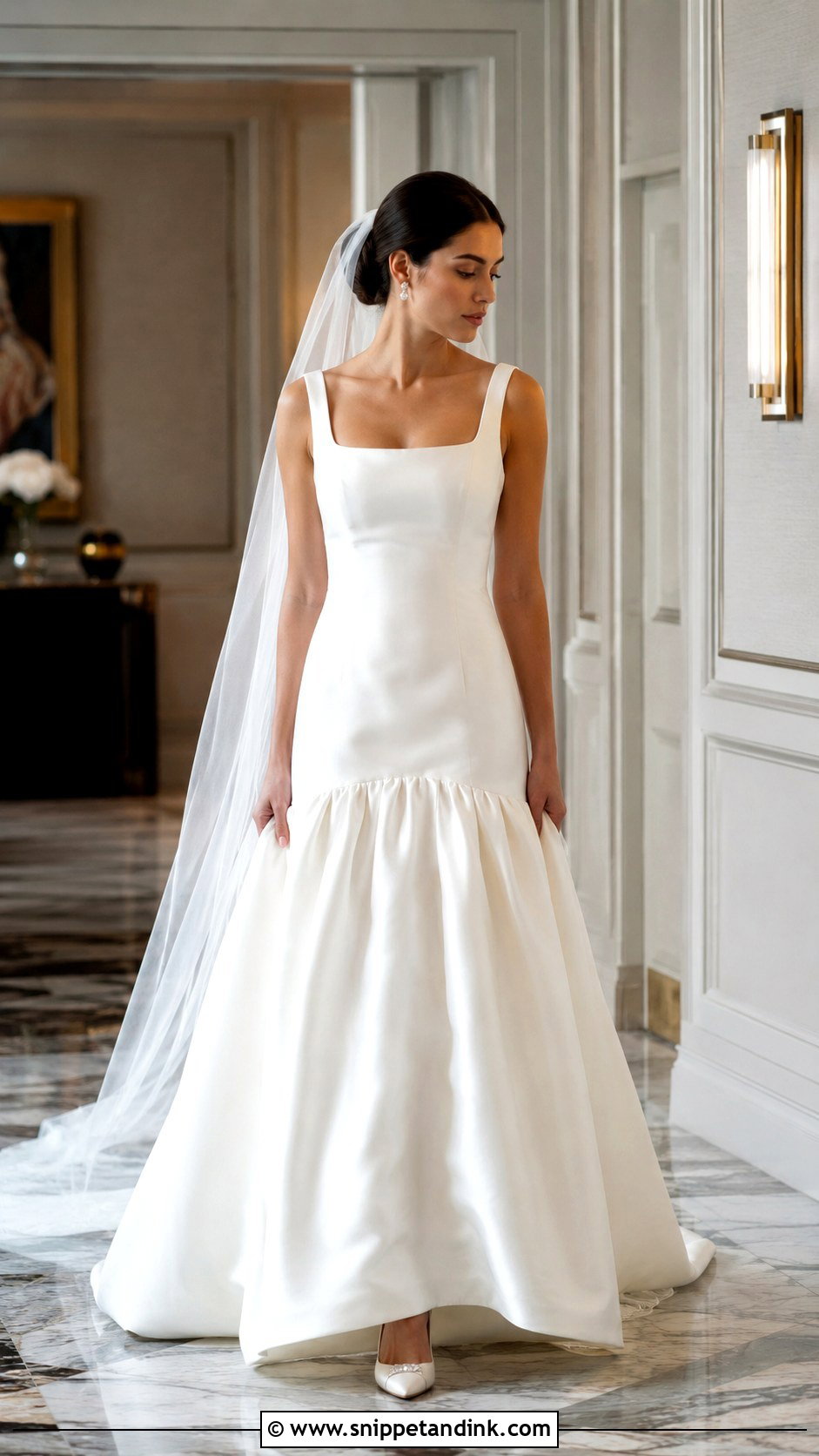
A drop waist keeps the bodice fitted past the natural waist before the skirt releases, which looks long and slightly vintage in smooth silk or satin. A scoop or square neckline keeps the proportions clean. Tulle makes the skirt softer; a structured mikado skirt makes it more architectural. Simple earrings, a low bun, pointed heels and a veil tucked beneath the style complete it. Because the fitted section reaches the upper hip, sitting is where this gown can pinch. I always ask the bride to sit for a few minutes during fittings. A well-placed seam can give definition without making the hips feel locked in.
13. Carolina Herrera Cape Sleeve Wedding Gown
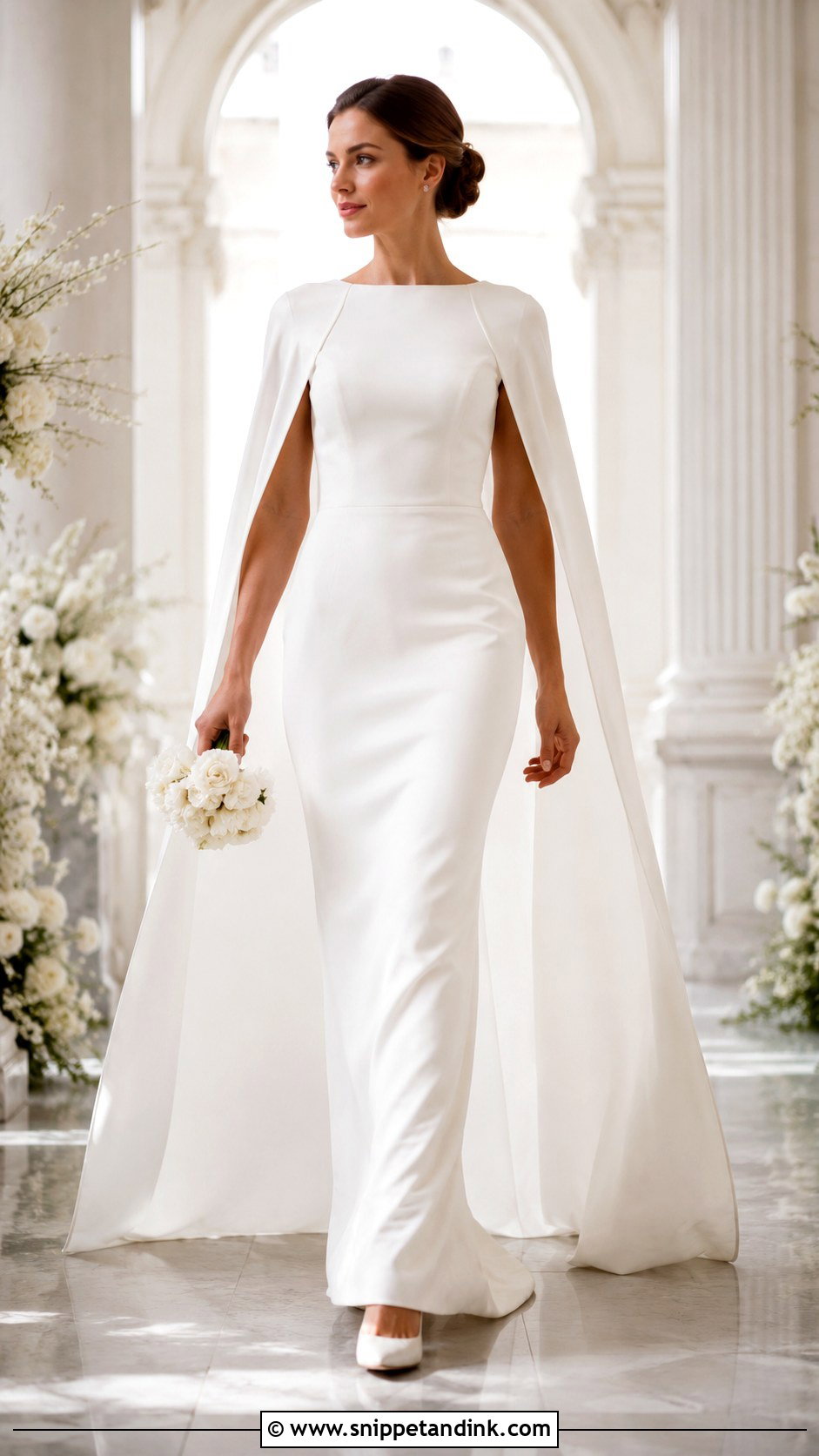
A cape sleeve gives you movement and coverage over a clean sleeveless dress. Choose a sheath or soft A-line, then add a detachable chiffon or organza cape from the shoulders, either elbow-length for softness or floor-length as a train. Closed-toe ivory pumps, small studs and a polished updo suit it. A full veil plus a long cape is too much fabric behind you, so I’d swap the veil for a short blusher or a refined comb. The fastening matters: capes that clip at the shoulder seam stay straighter than ones that tie at the neck. Take it off after the ceremony and you have a simpler reception look.
14. Carolina Herrera Tea Length Wedding Dress
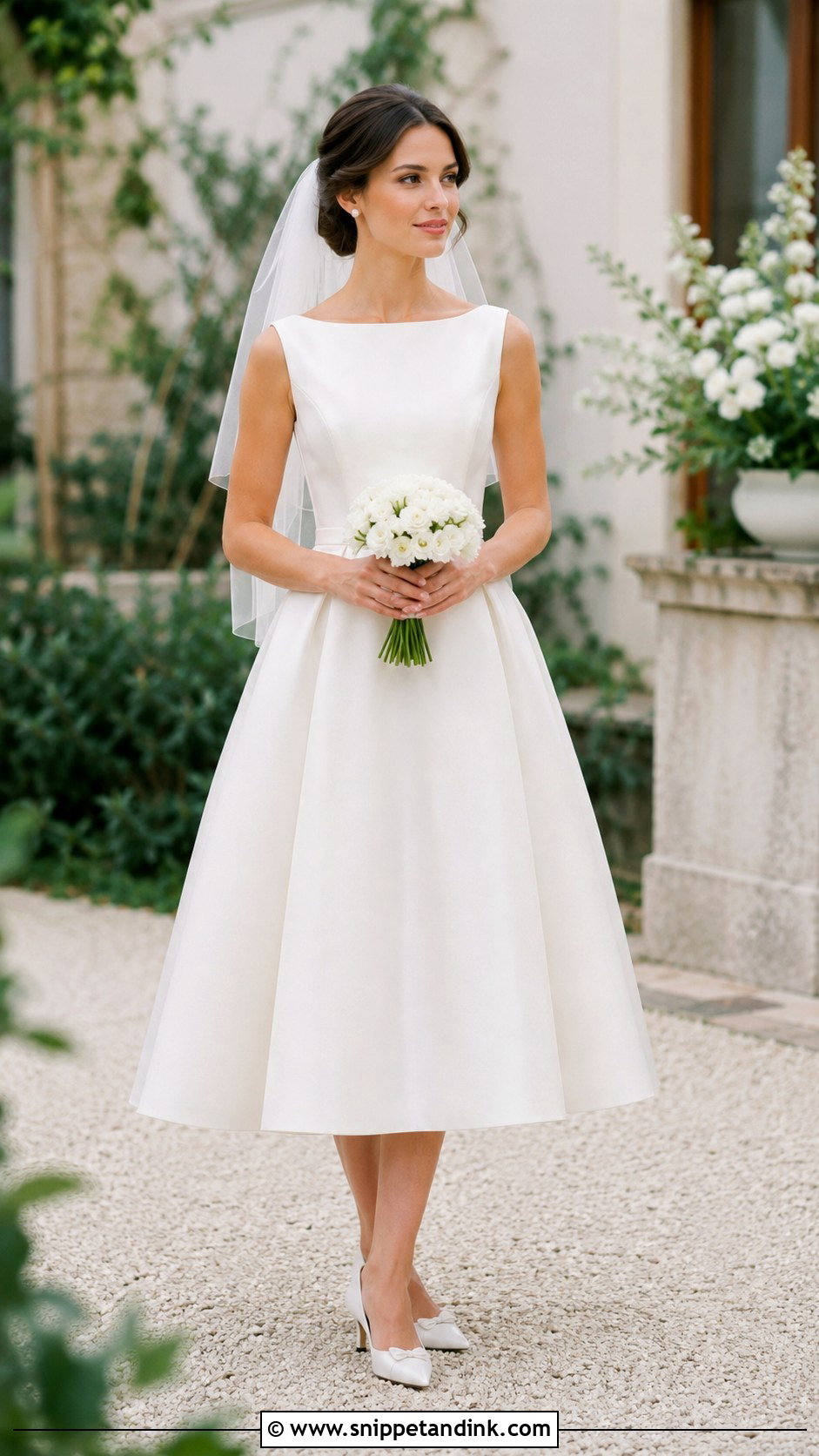
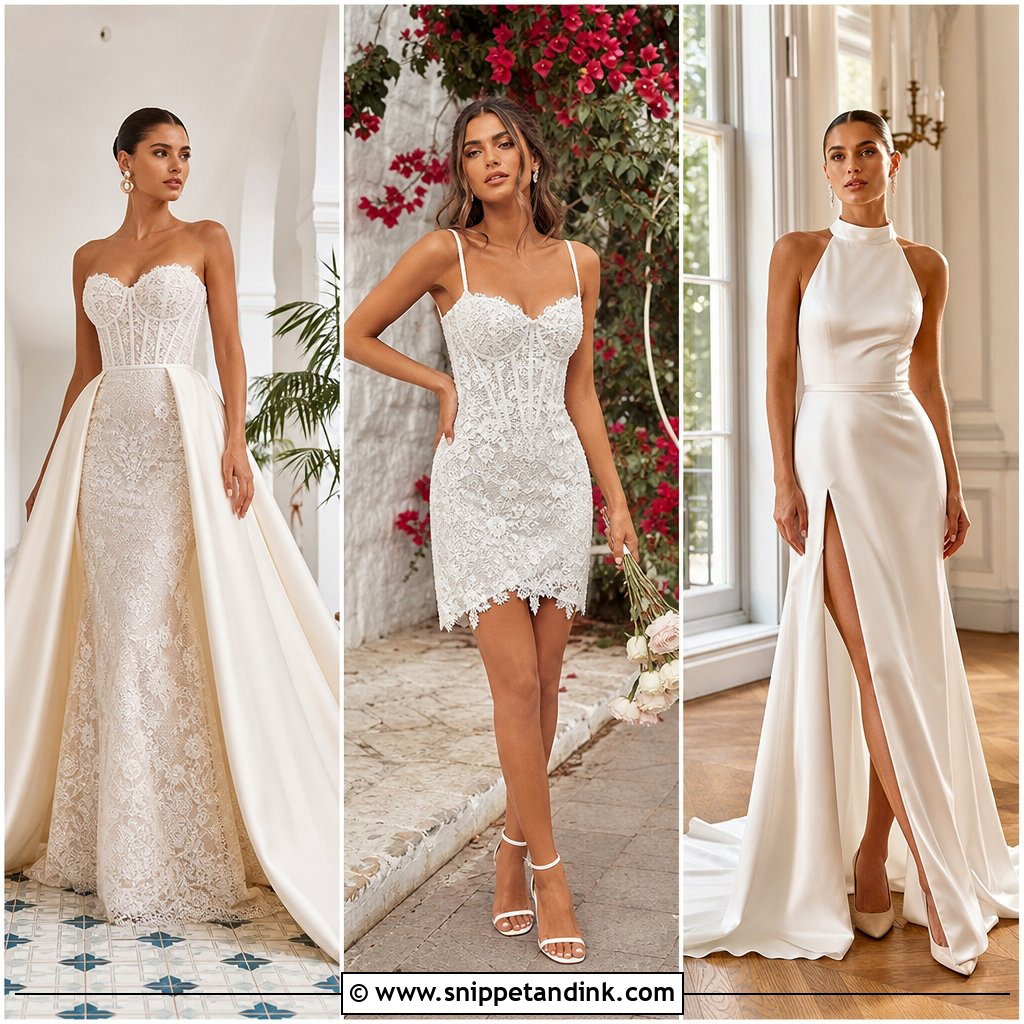
Tea length brings polish to a courthouse ceremony, a garden party or a smaller reception. A fitted bodice with a bateau, scoop or strapless neckline and a skirt ending between knee and ankle is the shape. Crisp faille or mikado makes a bell; silk organza moves more softly. The shoes are fully visible, so choose them with care: refined slingbacks, embellished pumps or pointed kitten heels. Pearl earrings, a short veil and a compact bouquet finish it, with a smooth bun for formality or soft waves for ease. Have it hemmed in the exact shoes. On tea length, two centimeters decides whether the hem looks chosen or accidental.
15. Carolina Herrera Bridal Separates Look
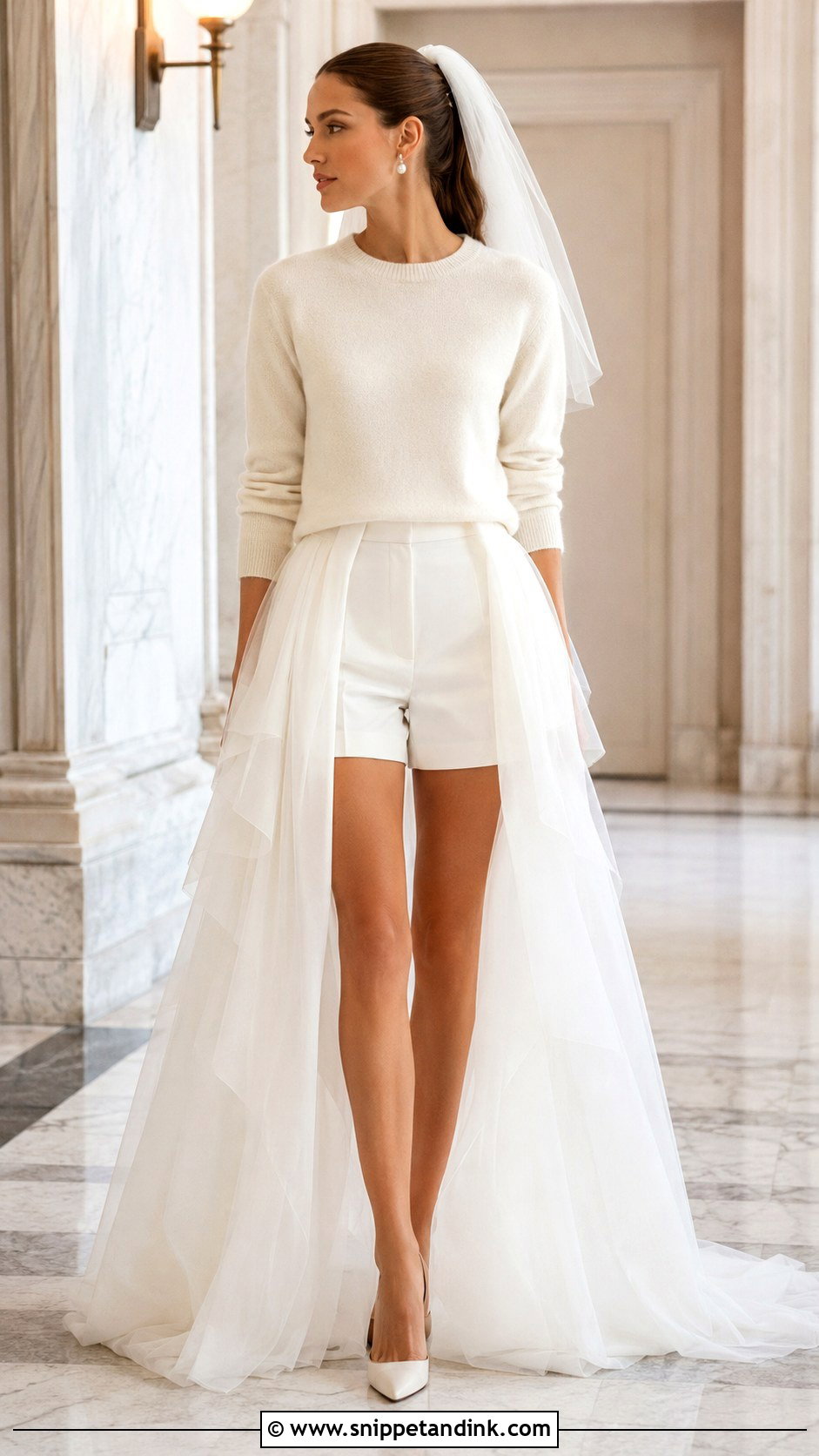
Bridal separates are a modern take on the house’s polished ease. Start with tailored ivory shorts or slim trousers and a light cashmere sweater or structured silk top, then add a removable tulle overskirt for ceremony volume. Take it off later and the base outfit carries the reception. Pointed pumps, small pearl earrings and a sleek ponytail or low bun keep it sharp, and a short veil sits cleanly above the overskirt waistband. Compare the whites in daylight before you commit. Cashmere, silk and tulle in the same ivory can look like three different colors in photos. This suits a civil ceremony or intimate venue well.
16. Carolina Herrera Ruffled Organza Gown
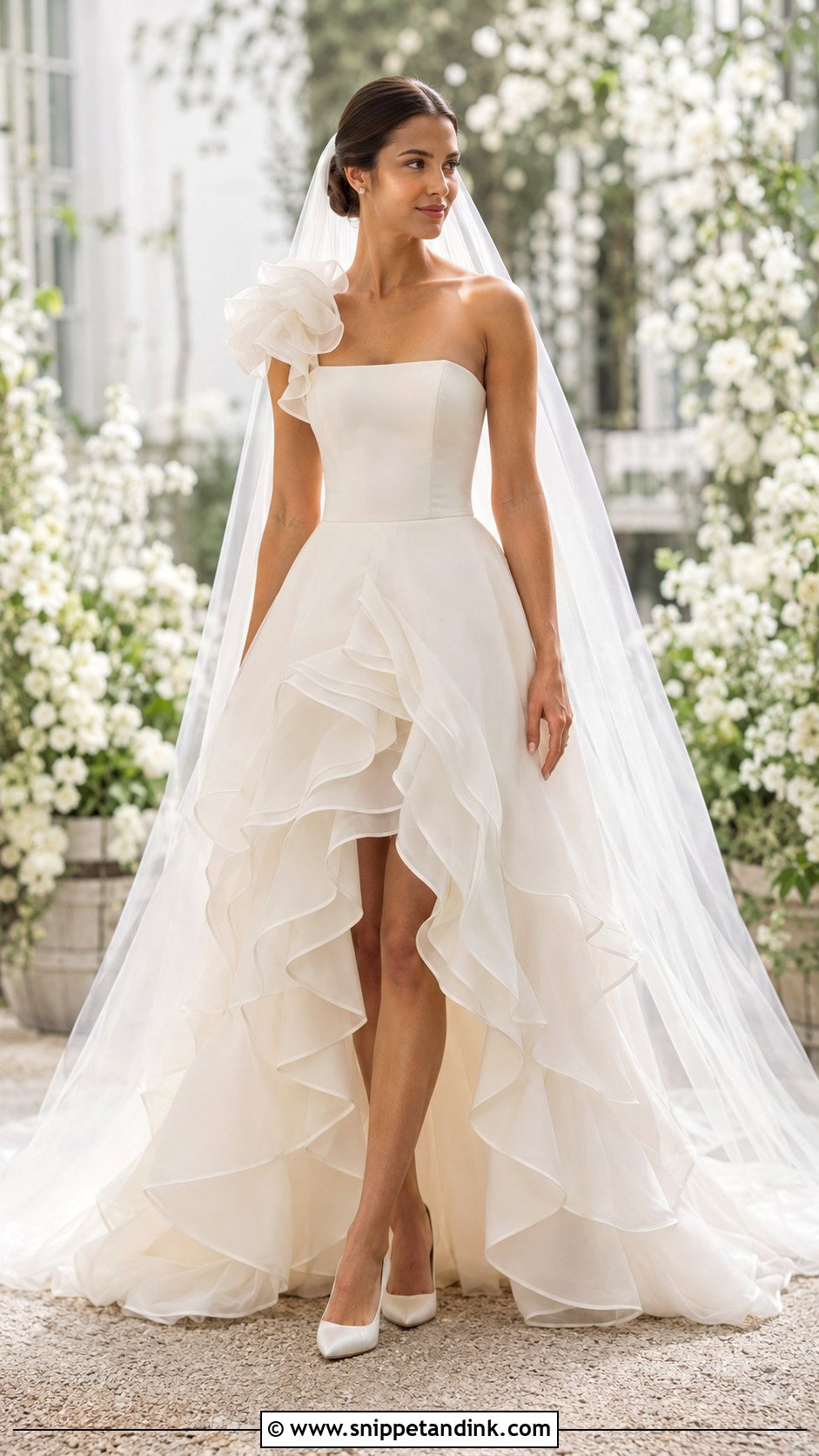
Organza ruffles give a lot of volume without weight, so the skill is in limiting them. A clean fitted bodice with ruffles through the skirt, the sleeves or a single shoulder stays dramatic but controlled. Simple satin heels, crystal studs and a plain veil that ends either above or well past the fullest ruffle keep the lines clear, and a neat updo stays out of the fabric’s way. Organza looks luminous in bright rooms and gardens, but it snags easily on rough stone and wood. Ask the shop how the skirt bustles and how it should be steamed. Crushed ruffles need a steamer, not an iron.
17. Carolina Herrera Wedding Gown With Pockets
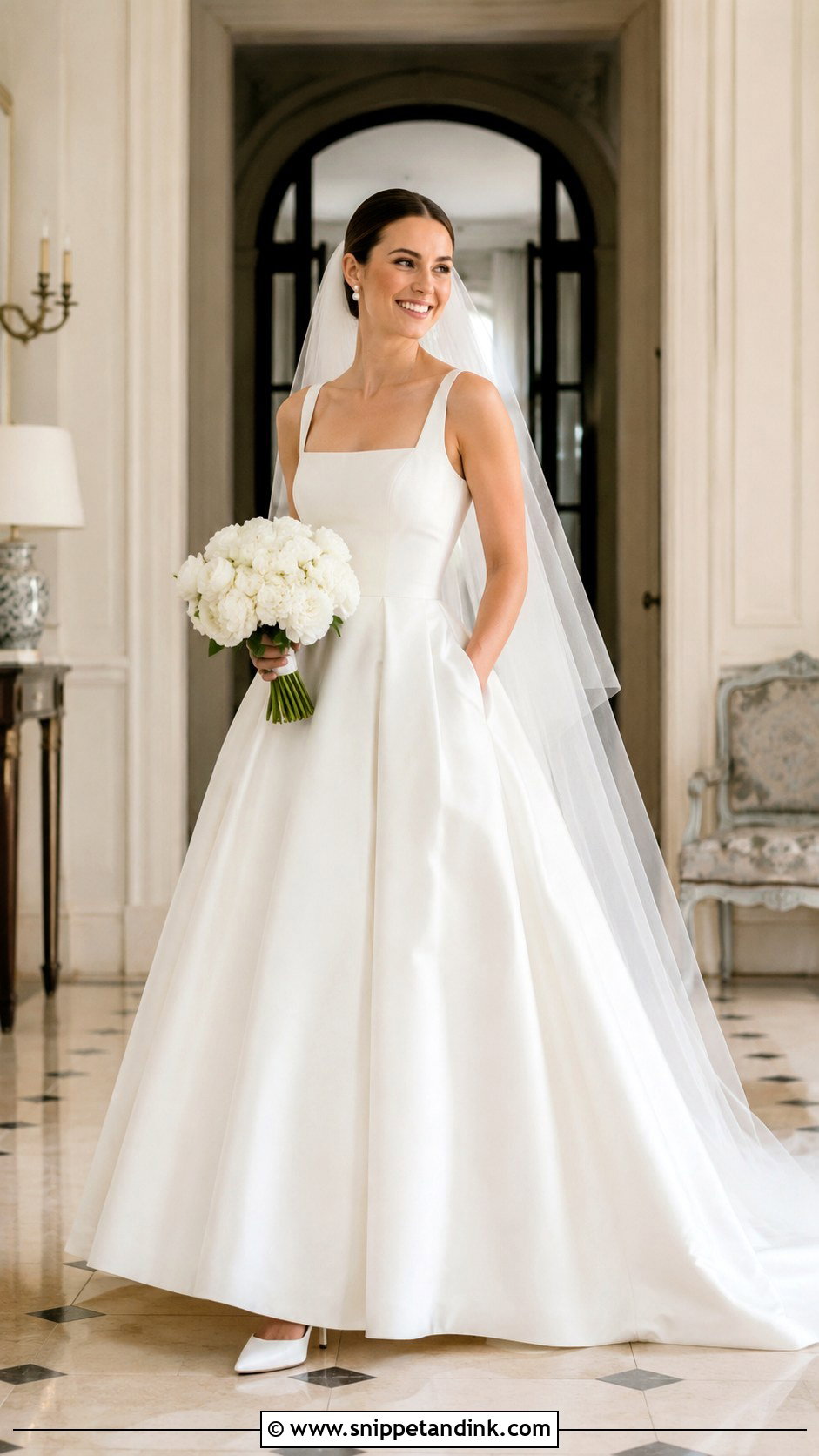
Pockets add practical ease without changing how a formal gown looks, as long as they hide in the side seams of a full mikado, satin or faille skirt. Pair that skirt with a fitted sleeveless bodice, a square or bateau neckline and a defined natural waist, plus pointed pumps, pearl earrings, a long veil and a structured bouquet. They give your hands somewhere to rest in portraits, which brides notice they need. Don’t fill them; a phone or lipstick pulls the skirt out of shape. I ask the seamstress to set the openings where your hands fall naturally, and to line them so they don’t gape.
18. Carolina Herrera Embroidered Wedding Gown
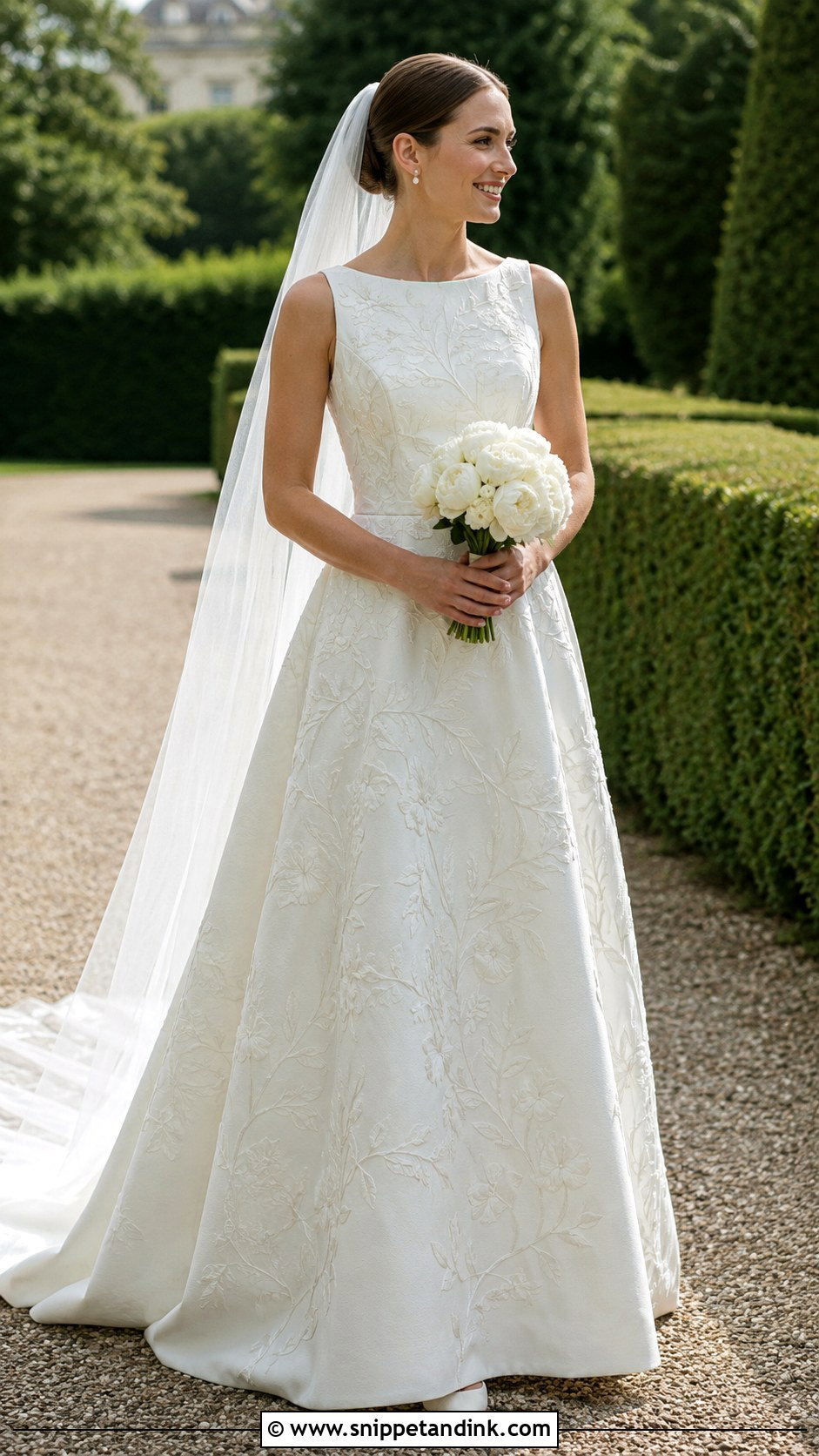
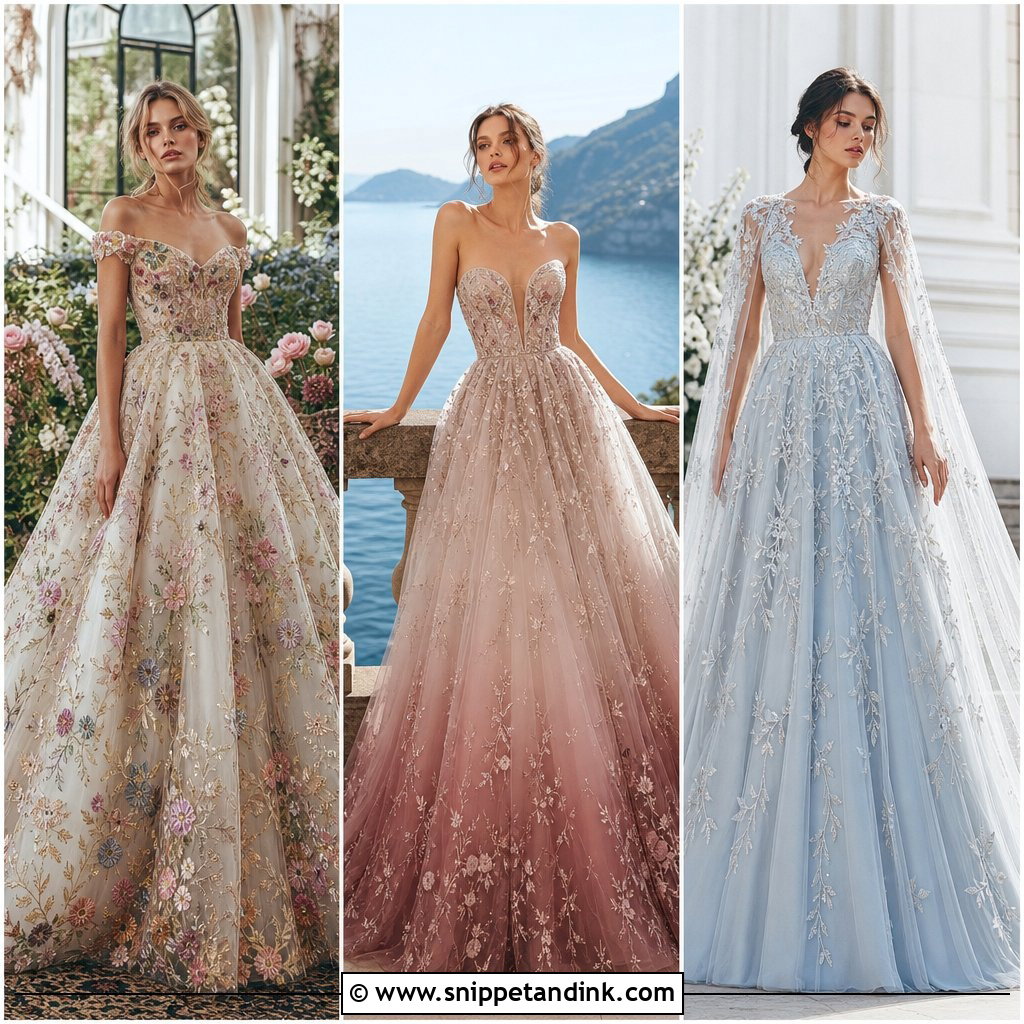
Embroidery is how a simple gown becomes personal. Botanical vines, small flowers, initials or a symbol worked across the bodice and scattered down the skirt look refined in tonal ivory thread, or more distinctive in a restrained pale color. An A-line or column is the best canvas. Plain satin pumps, small earrings, a sheer veil with minimal edging and a simple bouquet let the needlework show. Custom embroidery adds real time to production, so raise it at your first appointment, not your second. For something meaningful, place a small motif inside the hem, at a cuff or in the lining where it can be photographed without taking over.
19. Carolina Herrera Sheath Wedding Dress
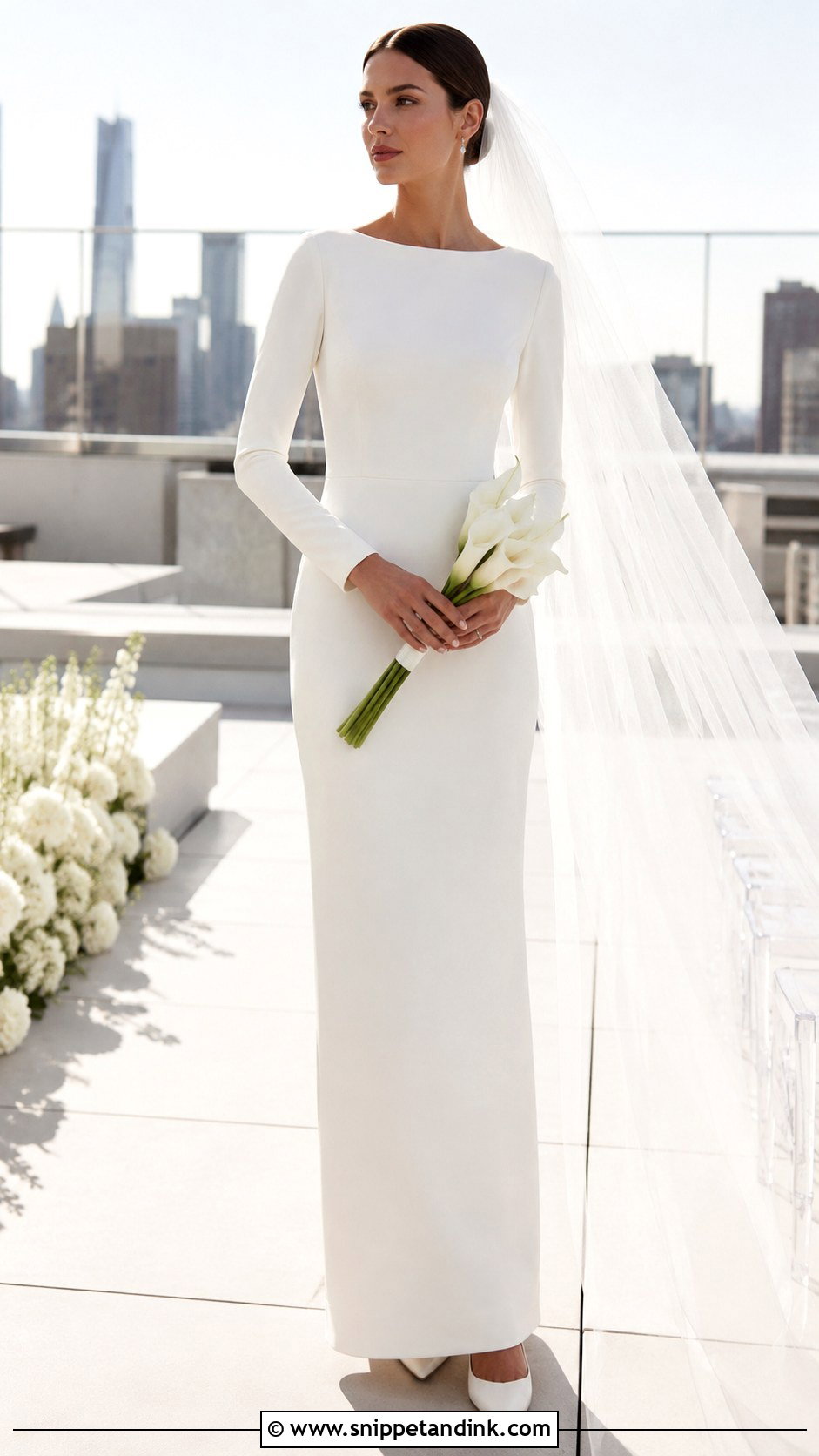
A sheath is a long clean line, suited to rooftops, modern hotels and refined destination ceremonies. Substantial crepe or silk that skims the body tailors well. A boat neck with long sleeves looks classic, while a sleeveless scoop neck is lighter for warm weather. Pointed pumps, a narrow bouquet, fine earrings and a veil that falls straight rather than billowing finish it. Curved seams or a removable belt add shape if you want it. The fit I check on a sheath is the stride. Walk the length of the room; if the hem pulls across your knees, it needs a walking slit or a little more ease through the thigh.
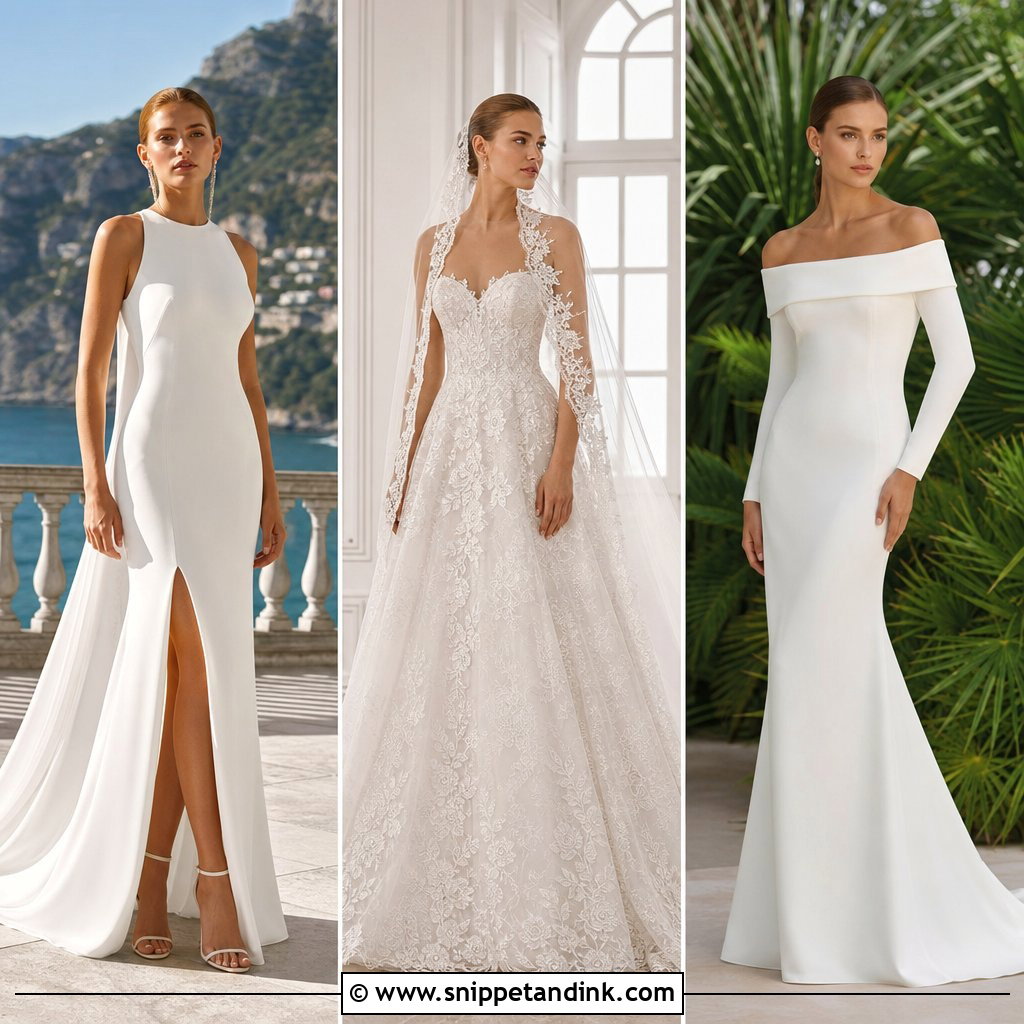
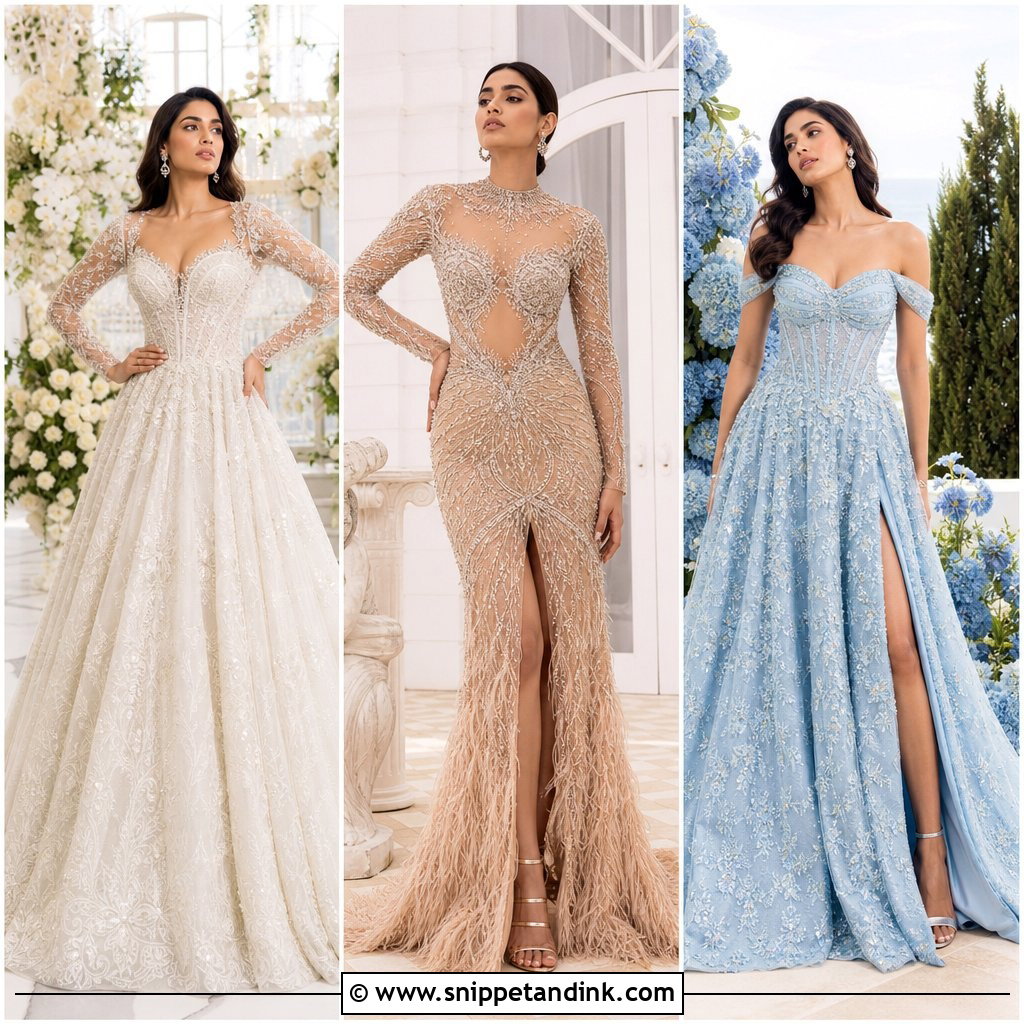
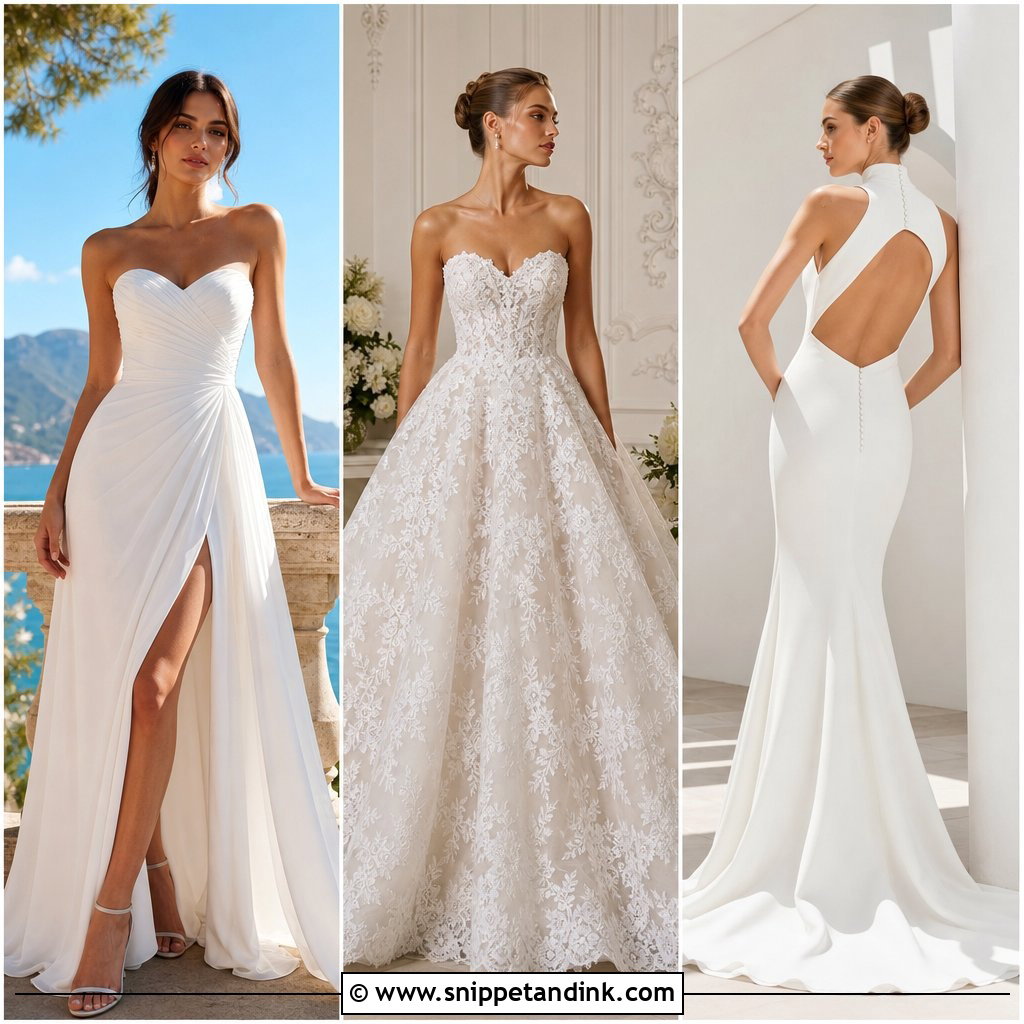
20. Carolina Herrera Cathedral Wedding Gown
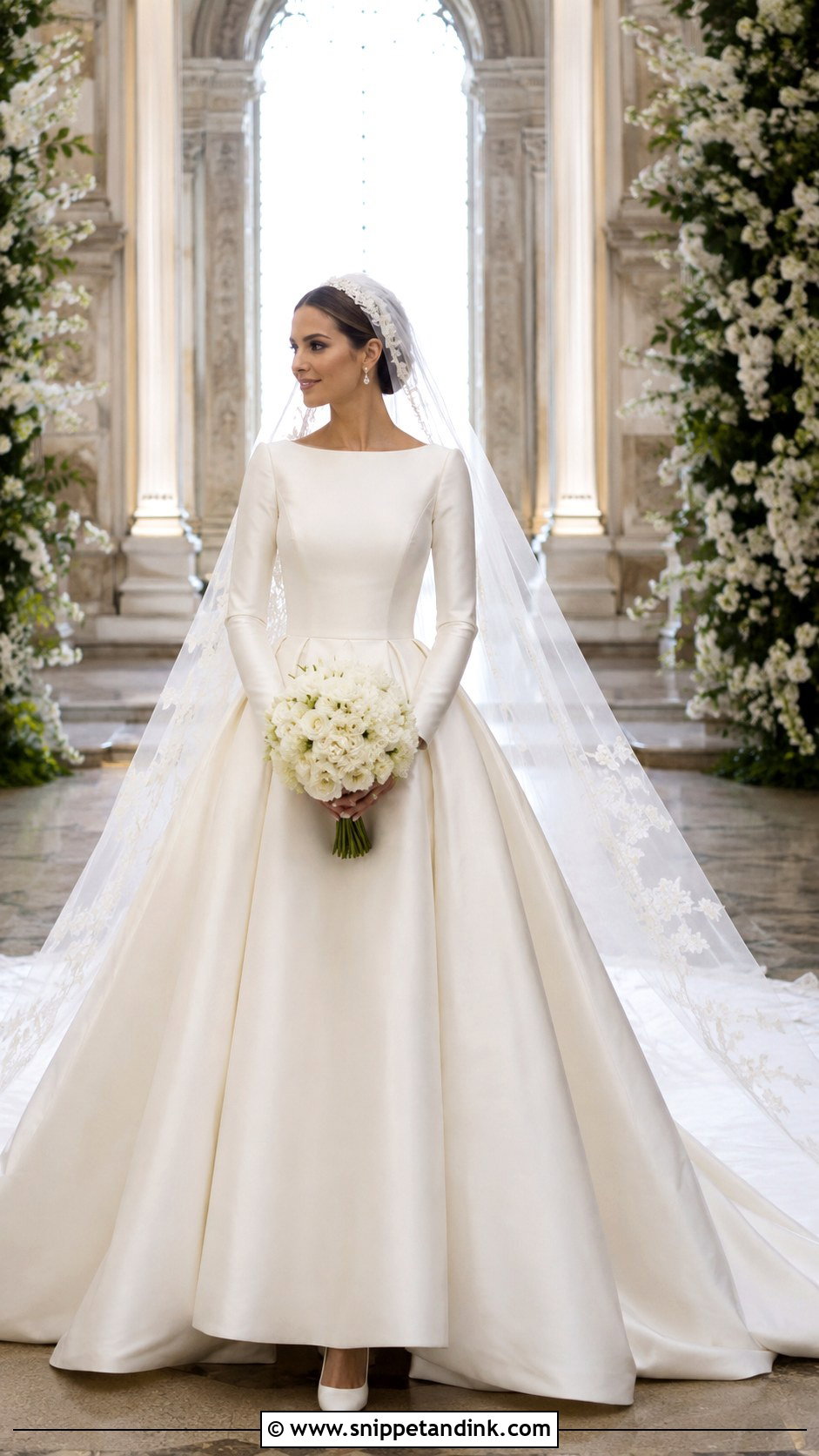
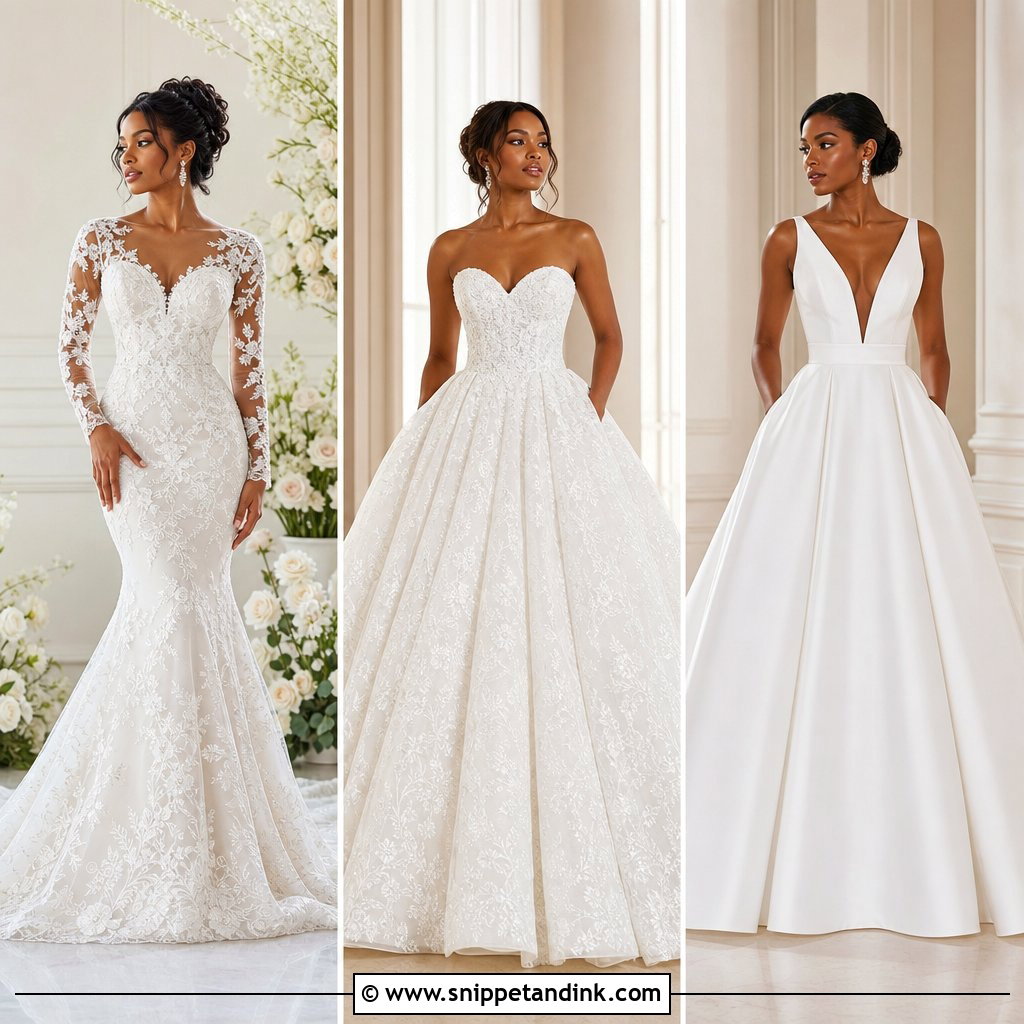
Cathedrals are big rooms, and a gown has to have scale to read from the back pews. A structured ball gown with a fitted bodice, full silk skirt, long train and restrained floral or lace detail holds its own, and a matching cathedral veil carries the line further. Simple satin pumps, classic earrings and a polished low bun balance all that volume. Long sleeves add formality; strapless feels lighter. Find out what the aisle is made of before final alterations. Stone and old carpet catch and soil a train differently. Plan a strong bustle for the reception, because a long silk train is heavy enough to drag a weak one loose.
Ordering a Designer Gown on a Realistic Timeline
Designer bridal gowns are usually made to order in your size, then altered to fit. That takes longer than most brides expect. I’d start trying on roughly a year out, and place the order no later than about eight or nine months before the wedding. Production commonly takes several months, and alterations need another two to three months on top, with two or three fittings. Custom changes such as added sleeves, embroidery or a different neckline add more time, and rush orders, where they’re offered at all, usually cost extra. Lead times vary by designer and season, so ask the shop for their current estimate at the first appointment.
Bustling a Long Train for the Reception
Most of the gowns above have a train, and that train has to go somewhere once the ceremony is over. Your seamstress adds the bustle during alterations, and the type depends on the fabric and the skirt.
- An over bustle hooks the train up onto the outside of the skirt in one or more points. It suits satin and mikado and shows off a bow or a back detail.
- An under bustle, sometimes called a French bustle, tucks the train underneath with ribbon ties. It suits full skirts and gives a soft, layered fall.
- A ballroom bustle lifts the train evenly so the hem looks floor-length all the way round, which works well on plain fabrics.
Have whoever will do it on the day come to the last fitting and practice. Ribbon ties are color-coded or numbered for a reason, and they’re much harder to sort out in a dim corridor after the ceremony.
Structure First, Embellishment Second
What ties these gowns together is restraint: a strong silhouette with one or two details chosen well. Start with the shape that suits your body, the way you move, your venue and your style, then add the architectural neckline, the sleeves, the appliqués, the bow, the embroidery or the dramatic veil. Try on a few shapes you’d normally skip, because firm fabrics change how a gown sits on the body more than any picture shows. Bring your shoes and underwear to every fitting, and sit, walk and lift your arms each time. A minimalist sheath or a cathedral ball gown will both feel personal once the tailoring is right.
You'll Like These Ideas:


Leave a Reply