
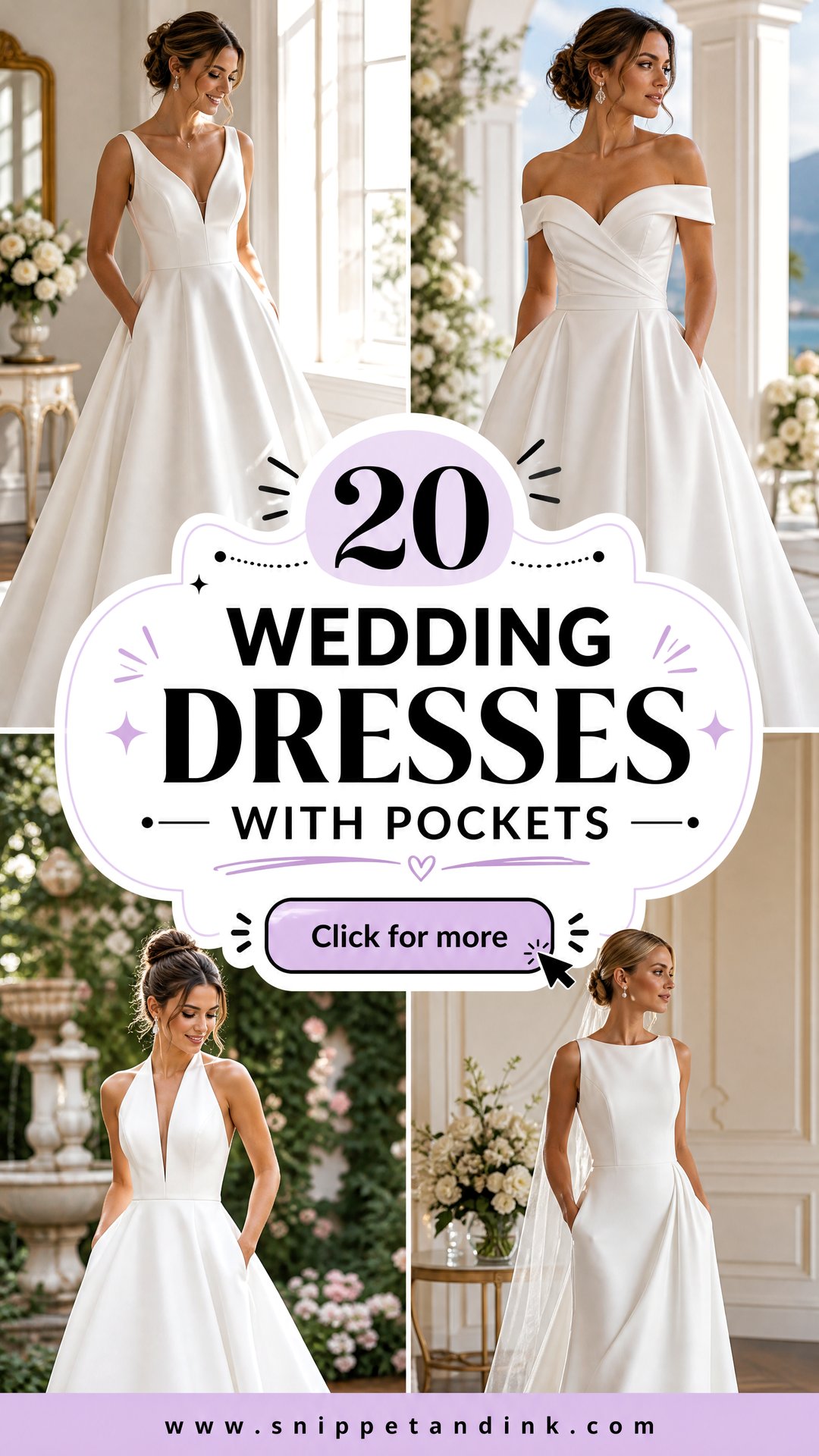
Almost every bride I dress puts her hands on her hips at some point in the appointment, and when the gown has pockets, her hands just slide in. That small moment changes how she stands in photos more than any pose I could give her. Pockets now turn up in satin A-lines, structured ball gowns, lace, floral appliqué and short reception dresses, so you don’t have to give up the silhouette you want to get them. Below are 20 complete looks with my notes on fabric, accessories and where the pockets should sit. One rule runs through all of them: a pocket is only good if it lies flat when empty and still looks clean with a lipstick inside, so test it standing, walking and posing before you commit.
What a Bridal Pocket Can Really Carry
Most bridal pockets are smaller than brides expect. They’re cut to hide inside a side seam or a pleat, so the opening is often only about a hand’s width and the bag is shallow. That’s deliberate: the deeper and heavier the pocket, the more it pulls the skirt out of line.
Here’s what I’d actually put in one, and what I’d hand to someone else:
- Yes: a lipstick or balm, a folded tissue, a small card with your vows, a couple of hair pins, a mint.
- Maybe: a slim phone in a structured skirt like mikado or a full ball gown, and only after the formal photos.
- No: keys, a full-size phone in crepe or chiffon, or the rings. A pocket is the first place a ring slips out when you sit down.
Weight shows differently on each fabric. A heavy item in a satin skirt makes a dent you’ll catch in photos taken from the side; in a soft fabric it swings when you walk. If you’d like room for a phone, say so at the very first fitting, so the pocket bag can be cut deeper and anchored to the waist seam rather than left hanging from the side seam alone.
1. Satin A-Line Wedding Dress With Pockets
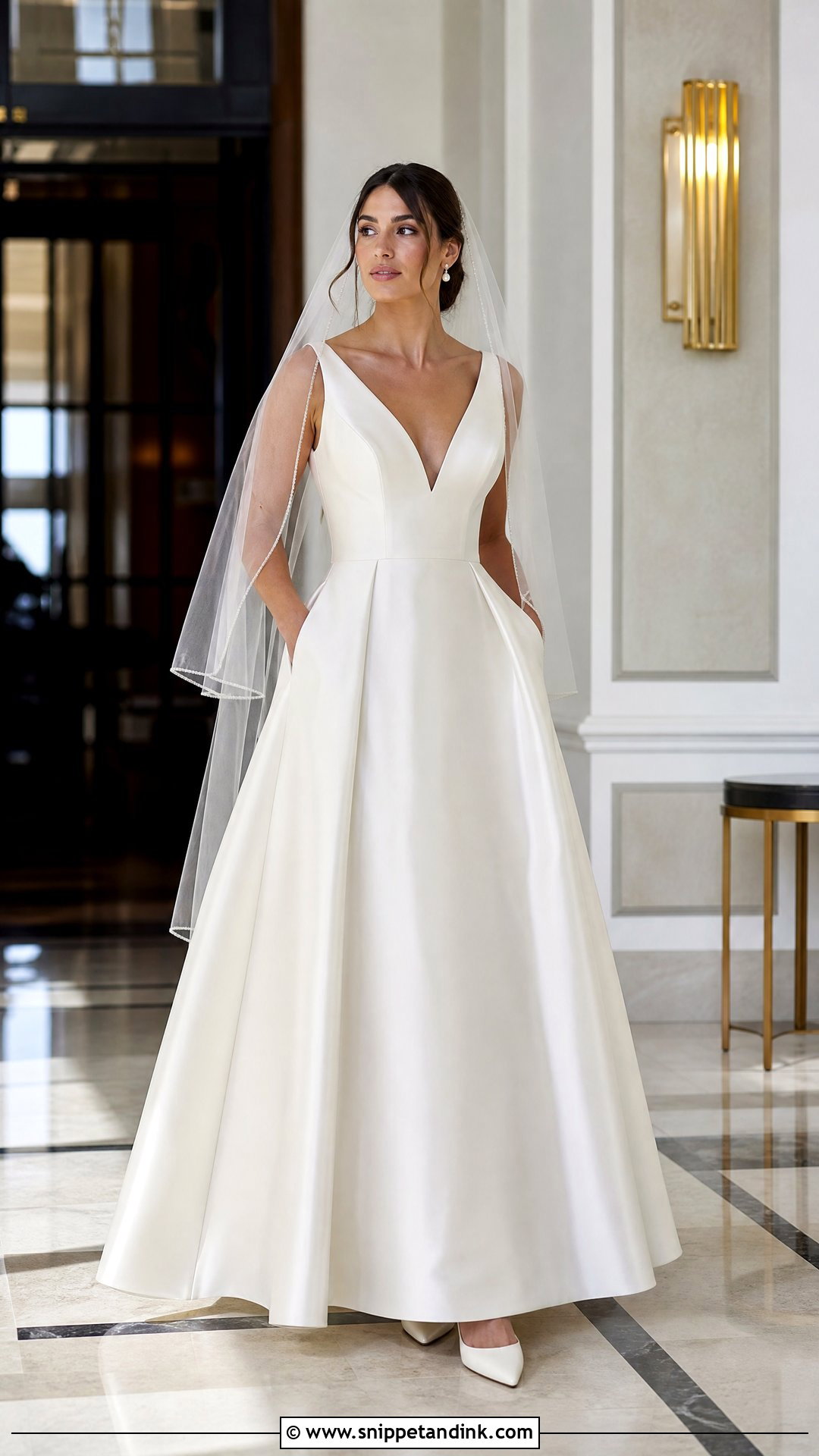
A satin A-line is the easiest gown to put pockets in, because the skirt flares away from the hip and gives the pocket bag somewhere to hang. I’d pair a fitted bodice with a V-neck or a soft draped front, then keep the necklace off so the neckline stays open. Pearl drops, a fingertip veil and pointed pumps finish it. Satin is unforgiving with light, though: a pocket that gapes even slightly throws a shadow you’ll see in every flash photo. Stand side-on to the mirror with the pockets empty and look for any lip at the opening. This one sits comfortably in a hotel ballroom or a formal estate in any season.
2. Strapless Ball Gown Wedding Dress With Pockets
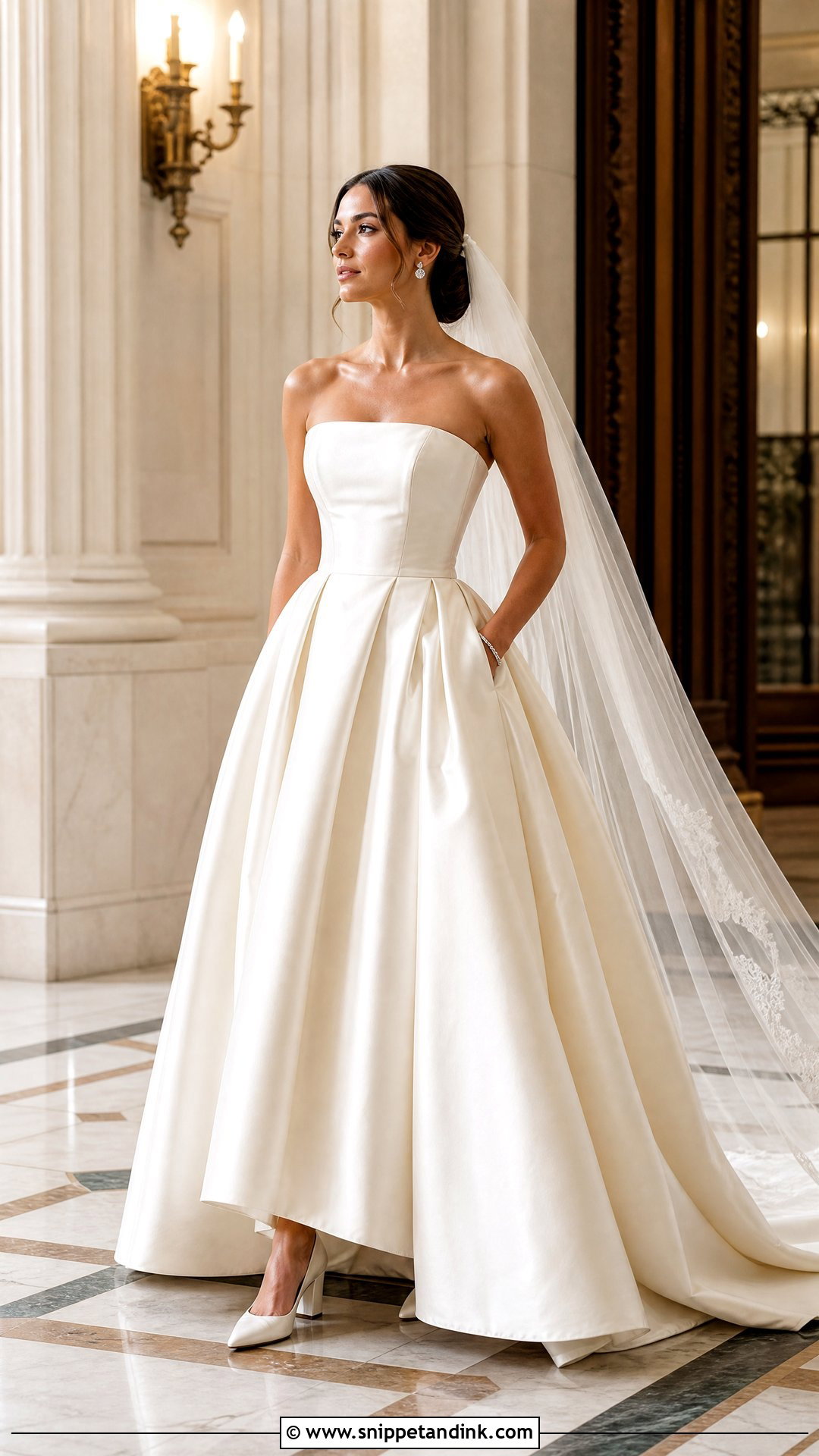
Want a classic entrance with something practical hidden in the skirt? A strapless ball gown gives you the volume, and the pockets simply vanish into it. A structured bodice, a defined waist and a full satin or mikado skirt make the hourglass. Add a cathedral veil, crystal studs, a fine tennis bracelet and block-heel pumps, which stay steady under a wide hem. On ball gowns I ask the seamstress to angle the openings slightly forward. Straight side-seam pockets on a skirt this wide sit too far back, and you end up reaching behind you, which looks awkward in candid shots. Done right, the opening disappears into the first pleat.
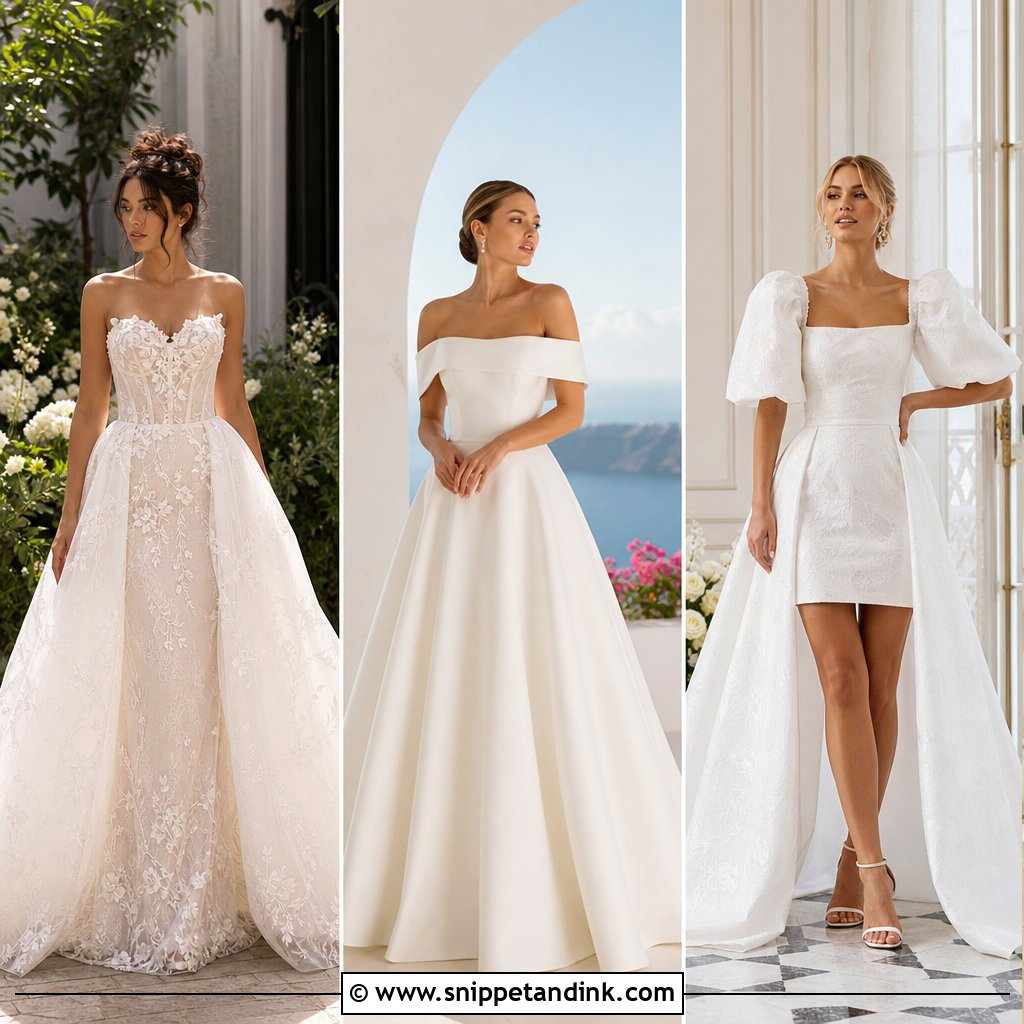
3. Off-the-Shoulder Wedding Dress With Pockets
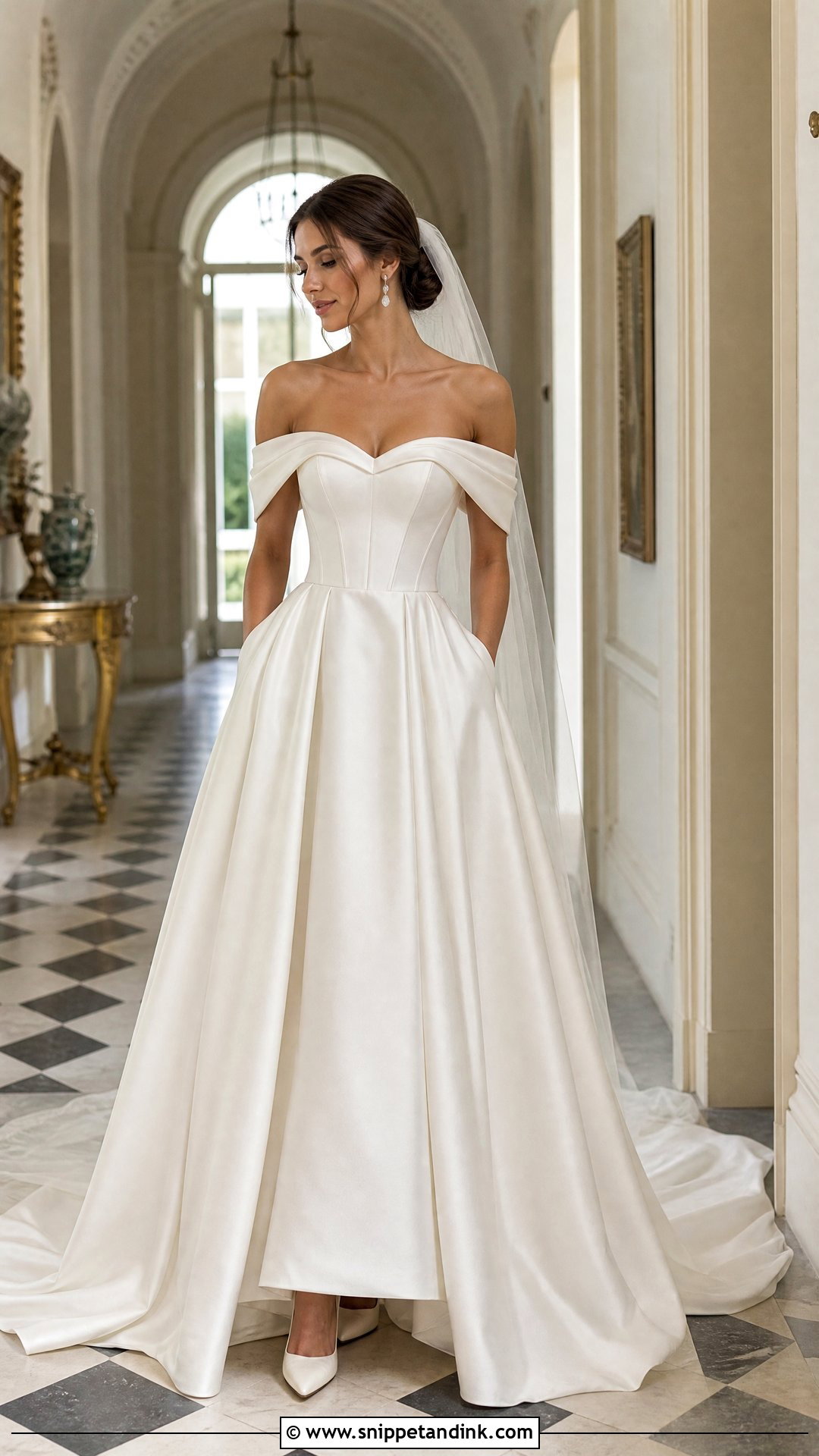
Off-the-shoulder sleeves and pockets pull in two directions: the sleeves ask you to keep your arms relaxed, the pockets invite you to move them. That’s why I insist on a boned, corseted bodice under this neckline. It holds the sleeves in place when your hands go in and out of the skirt. Choose a smooth A-line or ball-gown skirt so the pockets can sit in the side seams. Style it with a low bun, drop earrings and a plain veil tucked under the hair, and skip the necklace, which crowds the open shoulders. Satin heels are the formal choice; flats are fine outdoors. Before you buy, raise both arms and then sit down. If the sleeves creep up, they’ll do it all night.
4. Square Neck Ball Gown Wedding Dress With Pockets
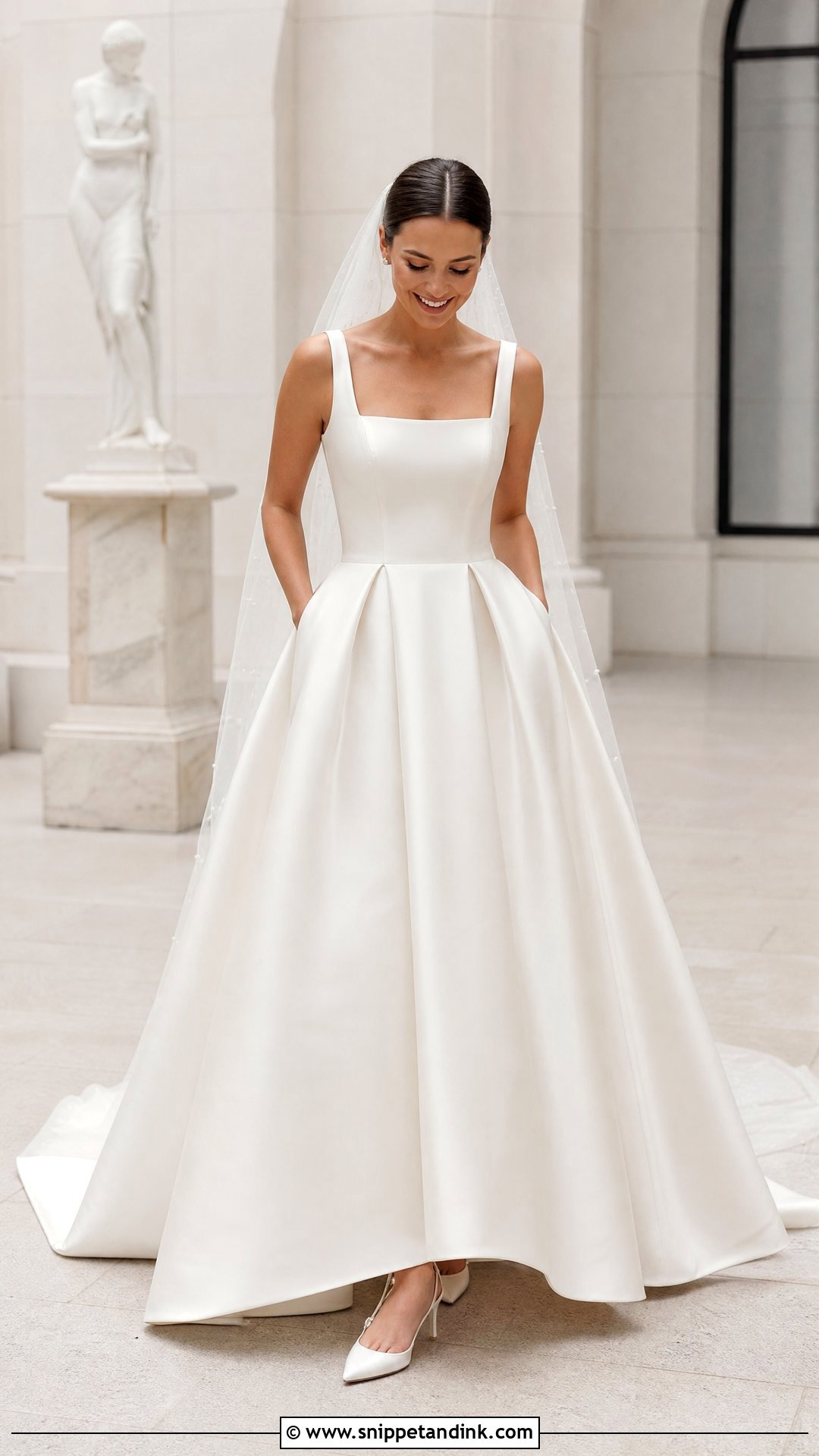
The square neckline frames the collarbone with a straight line that feels modern without being severe. Thick straps give more support; thin ones look more delicate but do less work, so decide based on your bust, not the sample photo. Pearl studs, a fine bracelet, a chapel veil with a plain edge and pointed slingbacks keep the rest quiet. A pleated ball-gown skirt is very forgiving with pockets, because the folds on either side hide the pocket bag even with something in it. I still tell brides to keep them empty for formal portraits and fill them later with a tissue or lip colour. Museums, historic venues and city ceremonies all suit it.
5. Long Sleeve Lace Wedding Dress With Pockets
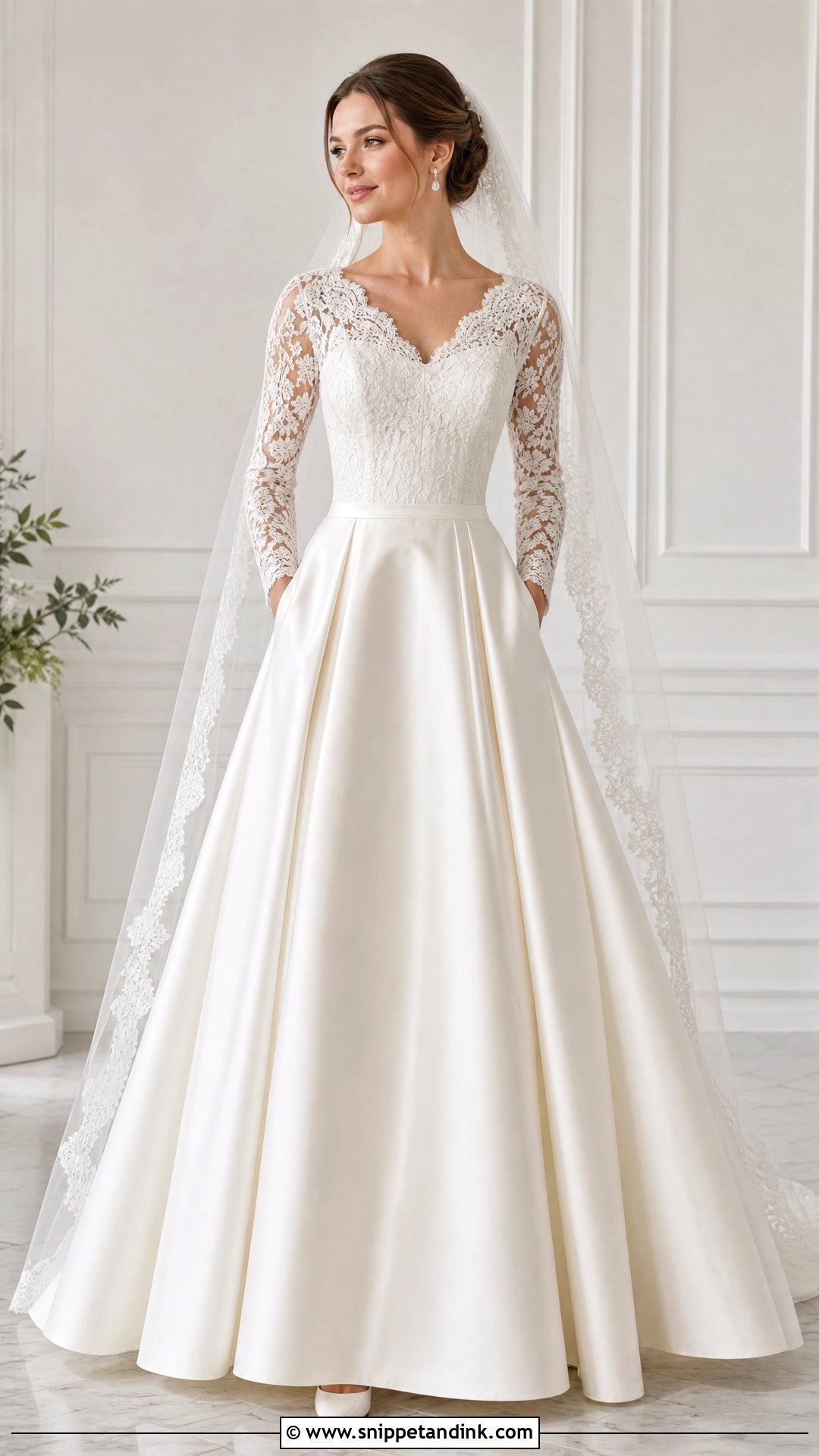
For a cool-weather wedding, long lace sleeves give warmth and a bit of formality. The detail I check first is the sleeve lining: lace sewn straight onto skin can itch by the second hour, while a soft mesh backing moves with you. A satin or mikado skirt below a lace bodice holds the pockets without dragging the silhouette. Finish with pearl earrings, a simple comb, closed-toe heels and a lace-edged veil that picks up the bodice. Skip the necklace if the neck is high. During alterations, put both hands in the pockets and push down gently. If you feel the fabric pull at the waist seam or the zip, the pocket bags are anchored too tightly and need a little more ease.
6. Floral Appliqué Wedding Dress With Pockets
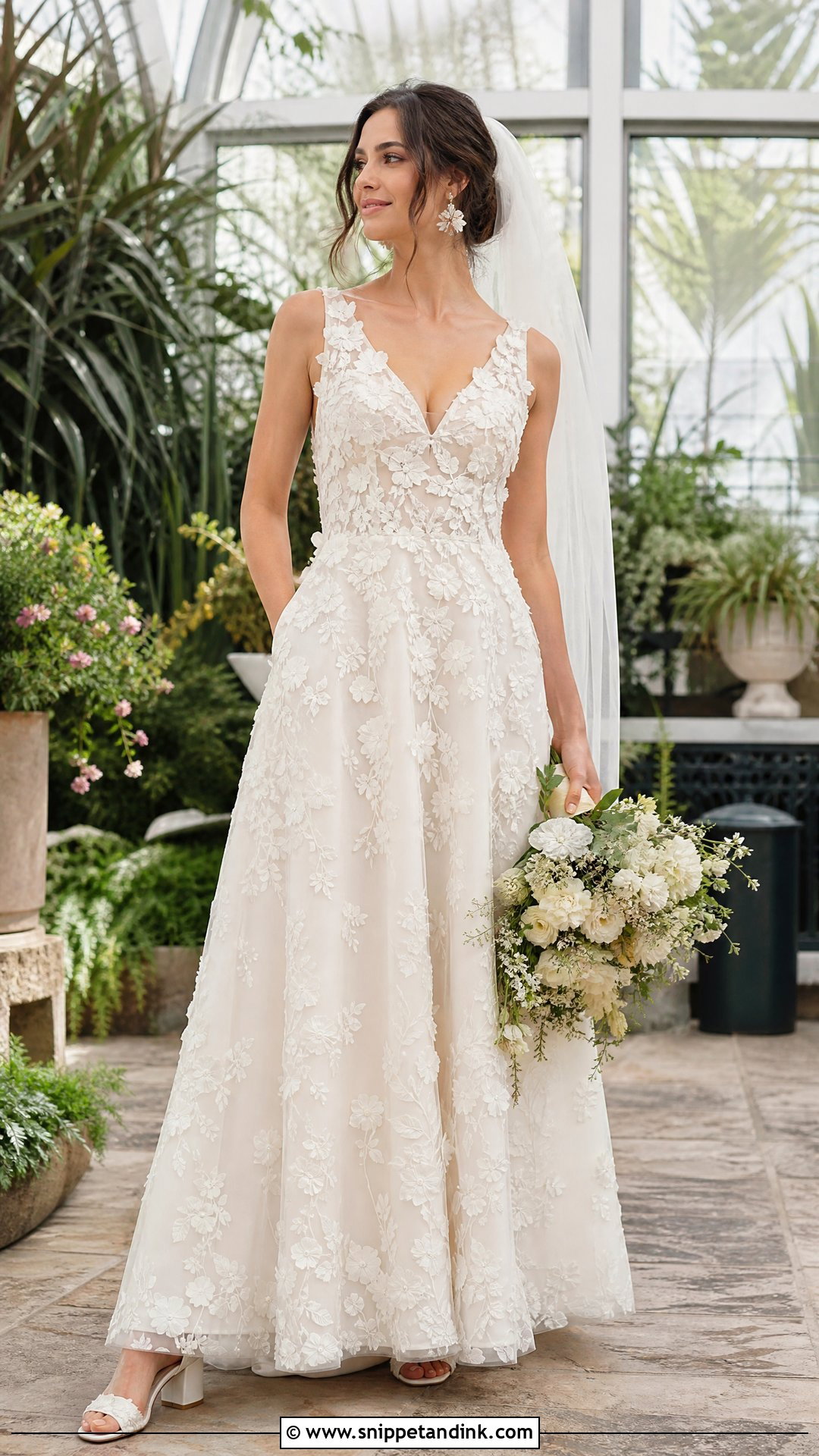
Floral appliqué and pockets can fight each other. Flowers stitched right over the hip make the pocket opening look lumpy, so I steer brides toward designs where the blooms gather at the neckline and waist and thin out lower down. With the pocket area kept smooth, the appliqué gets the attention it deserves. Floral earrings, a light tulle veil, ivory block heels and a small seasonal bouquet suit the garden feel, and a soft updo keeps the neckline clear. If the bodice is sheer, ask now whether extra lining can be added; it’s an easy job early on and a rushed one later. Conservatories and spring garden venues show this dress at its best.
7. Jacquard V-Neck Wedding Dress With Pockets
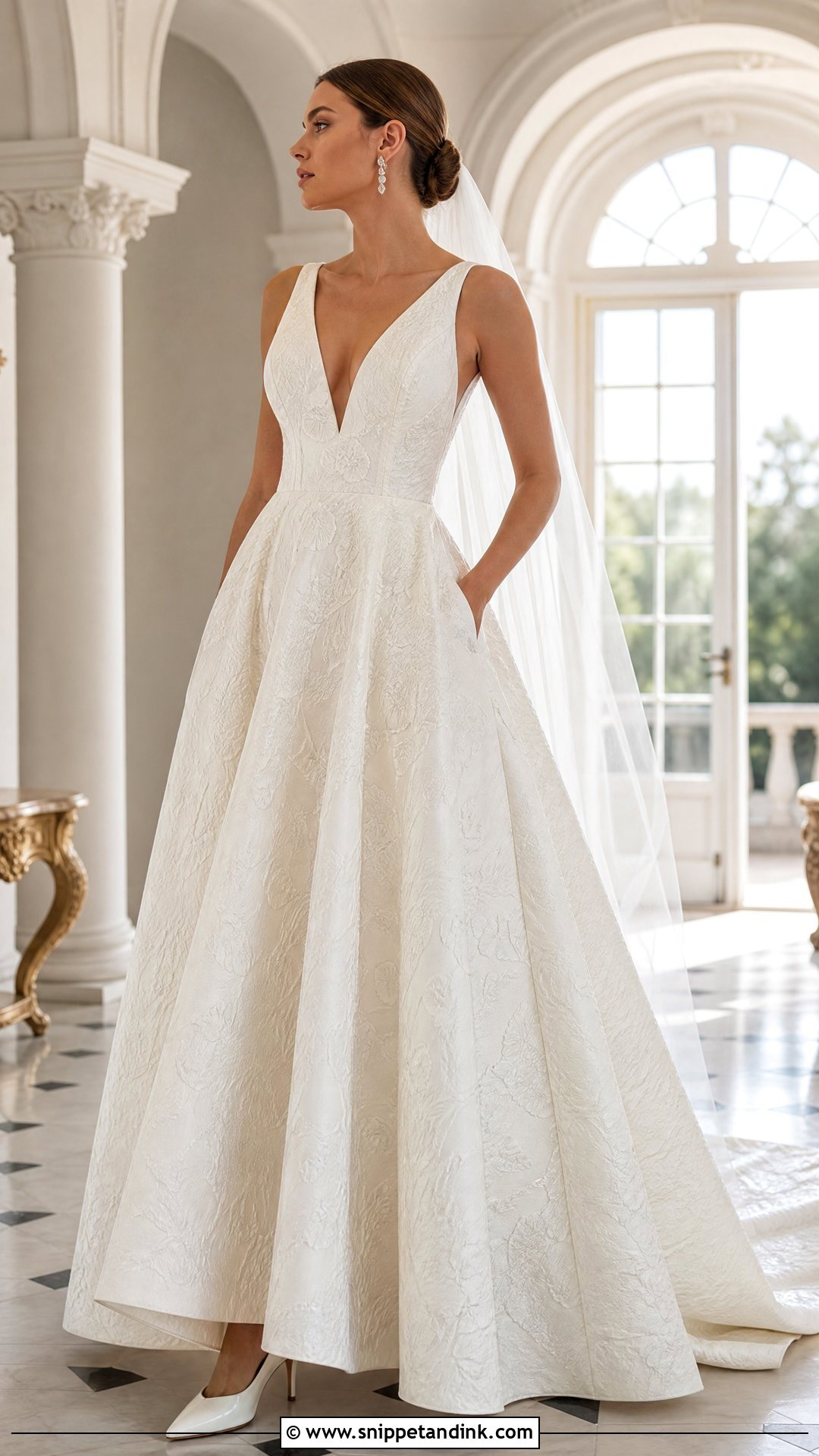
Jacquard has its pattern woven in rather than sewn on, so you get texture with no beading to snag or weigh the skirt down. It’s also one of the stiffer bridal fabrics, which is good news for pockets: the cloth holds its own shape, so the openings stay closed and nearly invisible inside the side seams. Pocketed jacquard now comes in both A-line and ball-gown cuts. A V-neck A-line is the easiest to wear. Pick a floral or abstract weave you can actually see in daylight; a very fine pattern reads as plain ivory from across a room. A sleek bun, small crystal earrings, a plain cathedral veil and pointed pumps let the fabric lead. Stately homes and formal halls suit it.
8. Basque Waist Wedding Dress With Pockets
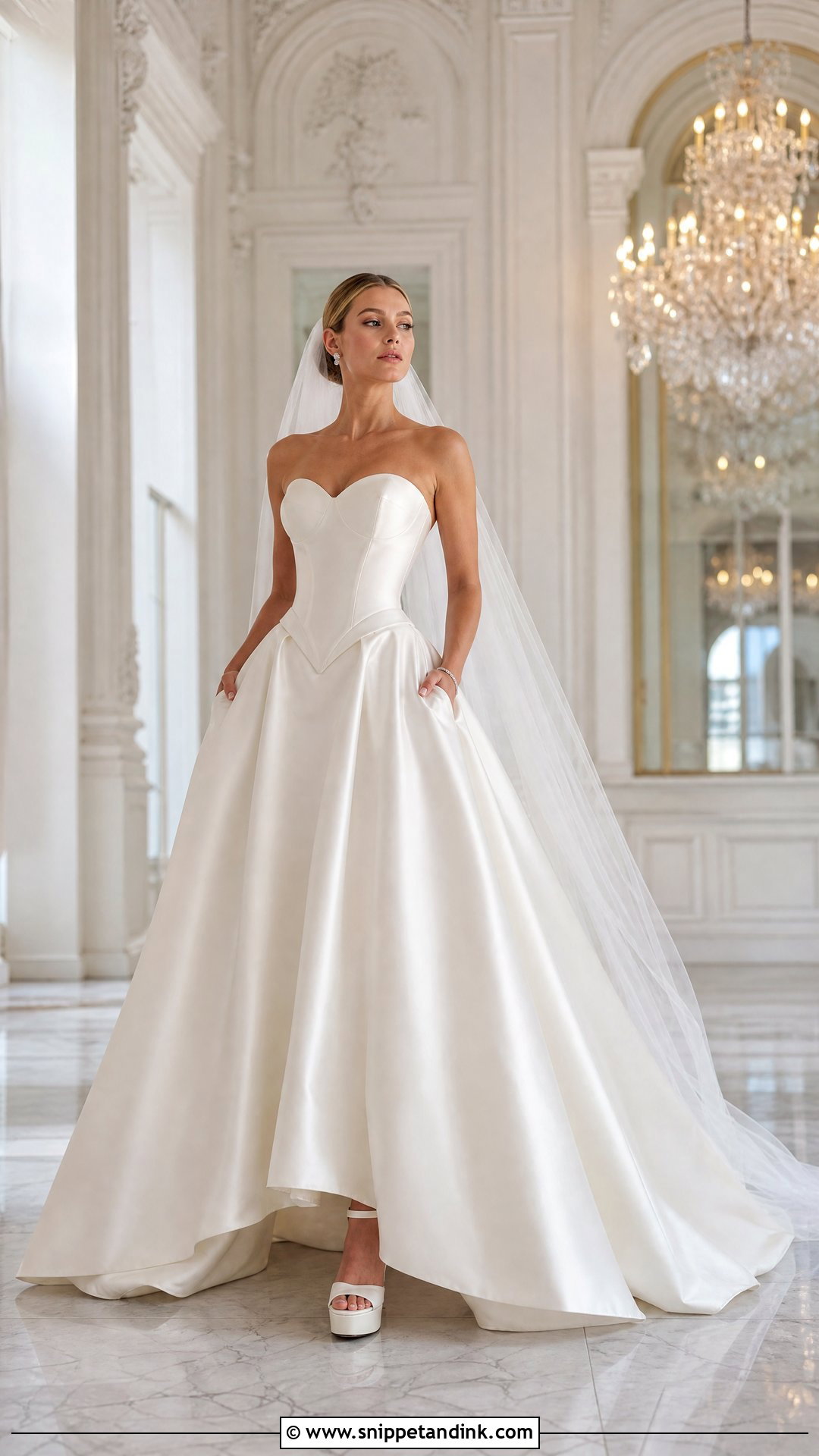
A basque waist dips below the natural waistline into a point before the skirt opens out, and that point is exactly where pocket placement gets tricky. Openings set too high run into the seam and distort the V. I mark the pockets a little lower than usual on this cut so they start below the point. Structured satin, mikado or jacquard keeps the shape crisp, and a strapless or off-the-shoulder neckline adds to the drama. Wear a long veil, sparkling studs, a fine bracelet and platform heels that can carry the skirt. No belt here; the seam is the waist detail. At every fitting, walk with your hands in and out of the pockets and check the point from the side.
9. Tea-Length Wedding Dress With Pockets
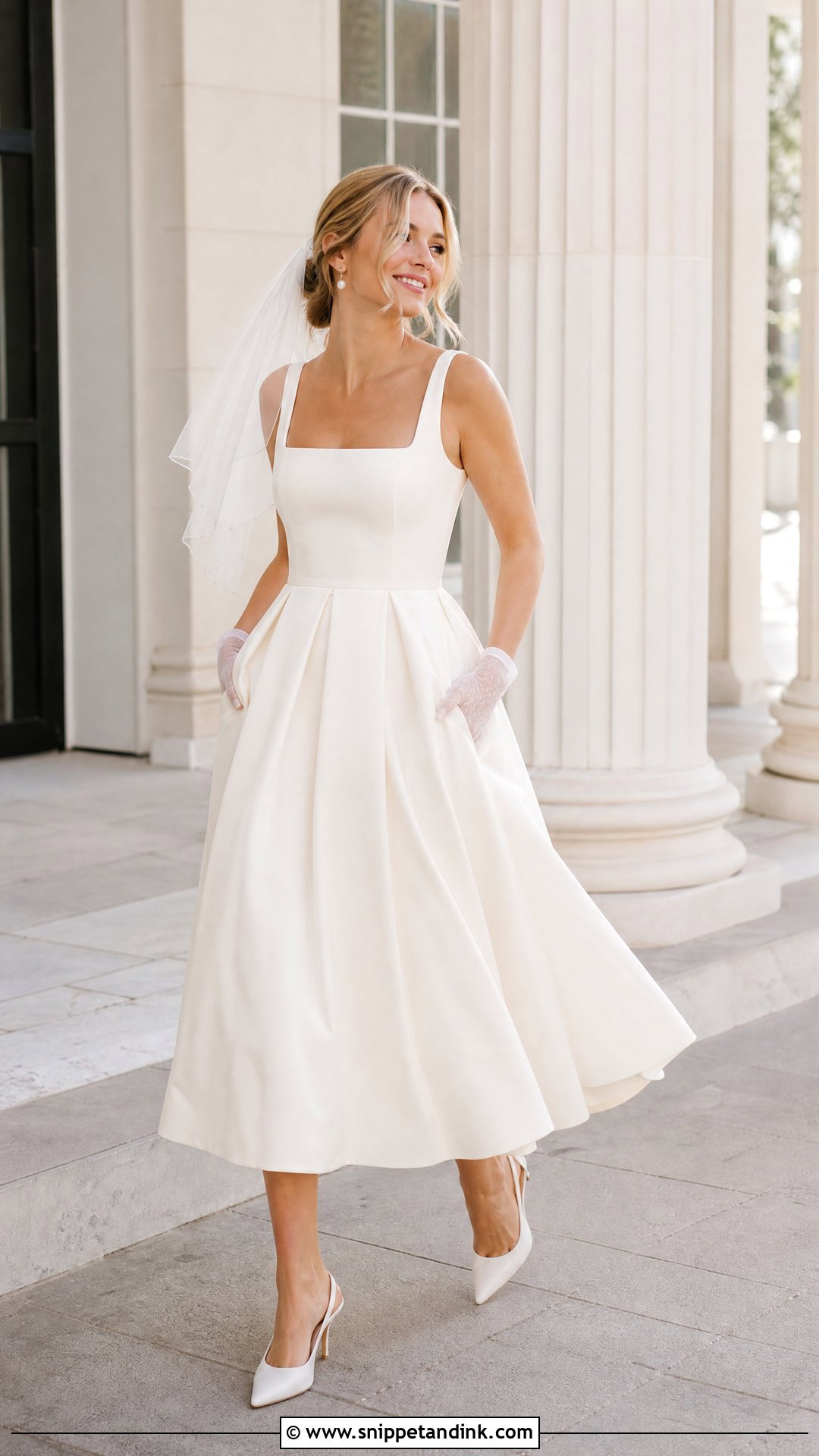
With a tea-length dress, your shoes are half the outfit, so choose them before the hem is finished. A fitted bodice with a square, scoop or V-neck and a skirt ending between knee and ankle is the shape. Pockets sit naturally in box pleats or a soft A-line. Pointed pumps, slingbacks or good bridal flats all deserve to be seen here. Pearl earrings, short gloves and a shoulder-length veil bring in the retro influence without tipping into costume. One thing I watch on a shorter skirt: there’s less fabric to hide a full pocket, so keep it to a lipstick. Courthouse ceremonies, daytime receptions and restaurant weddings are where this dress shines.
10. Cowl Neck Wedding Dress With Pockets
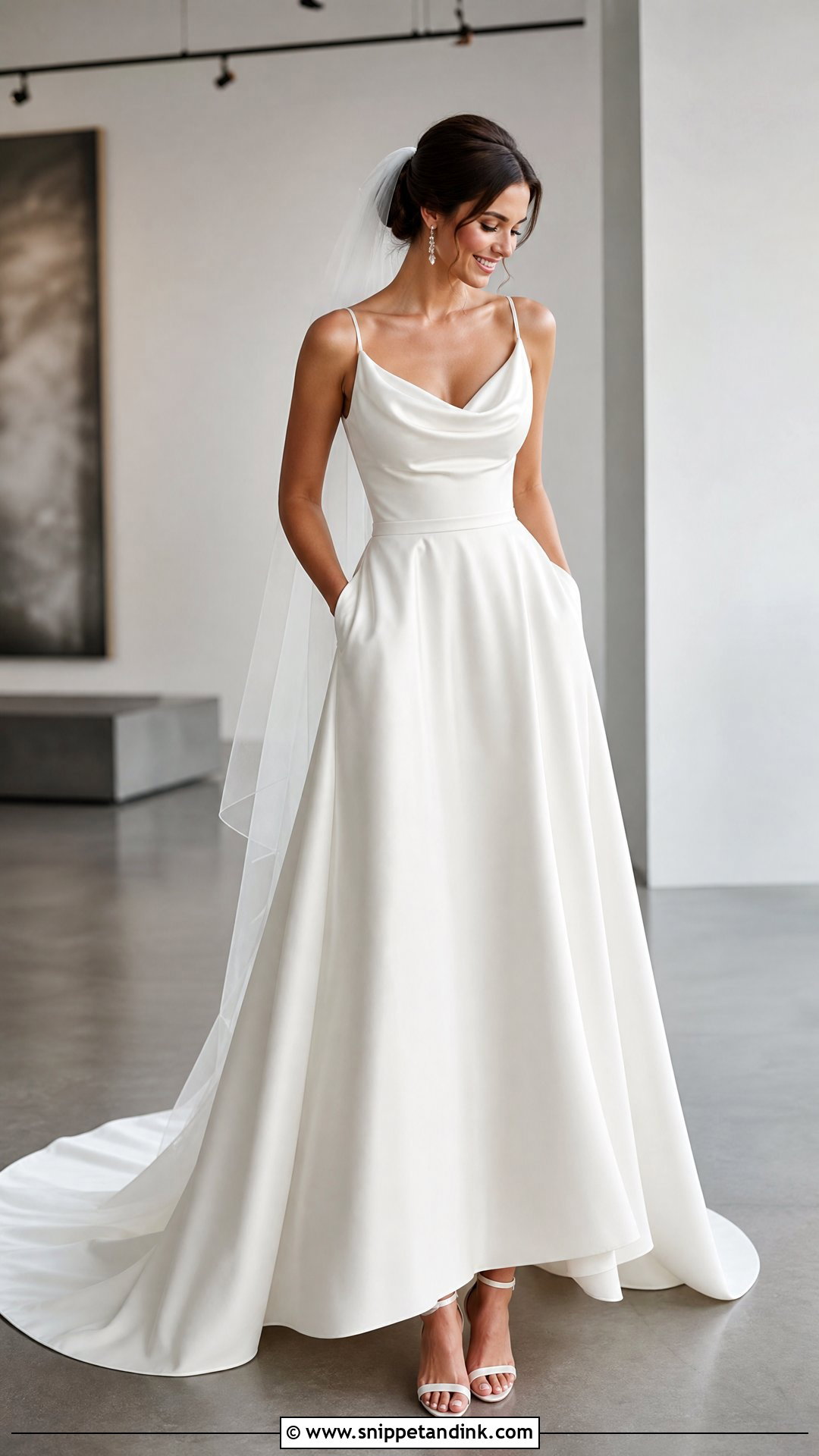
A cowl neck is all drape, so the skirt has to bring the structure. I pair it with a firmer A-line in satin, which shows the folds at the neck and still has enough body to carry pockets without sagging. A smooth updo, delicate drops, slim-strap heels and a sheer chapel veil keep it calm. No necklace; it breaks the drape. If there’s a cowl at the back too, plan a veil you can take off after the ceremony so the back is seen at the reception. The test I always do: sit down and lean forward as if reaching for a glass. A cowl can open further than you expect, and the fix is a small hidden tack, which takes minutes during alterations.
11. Halter Wedding Dress With Pockets
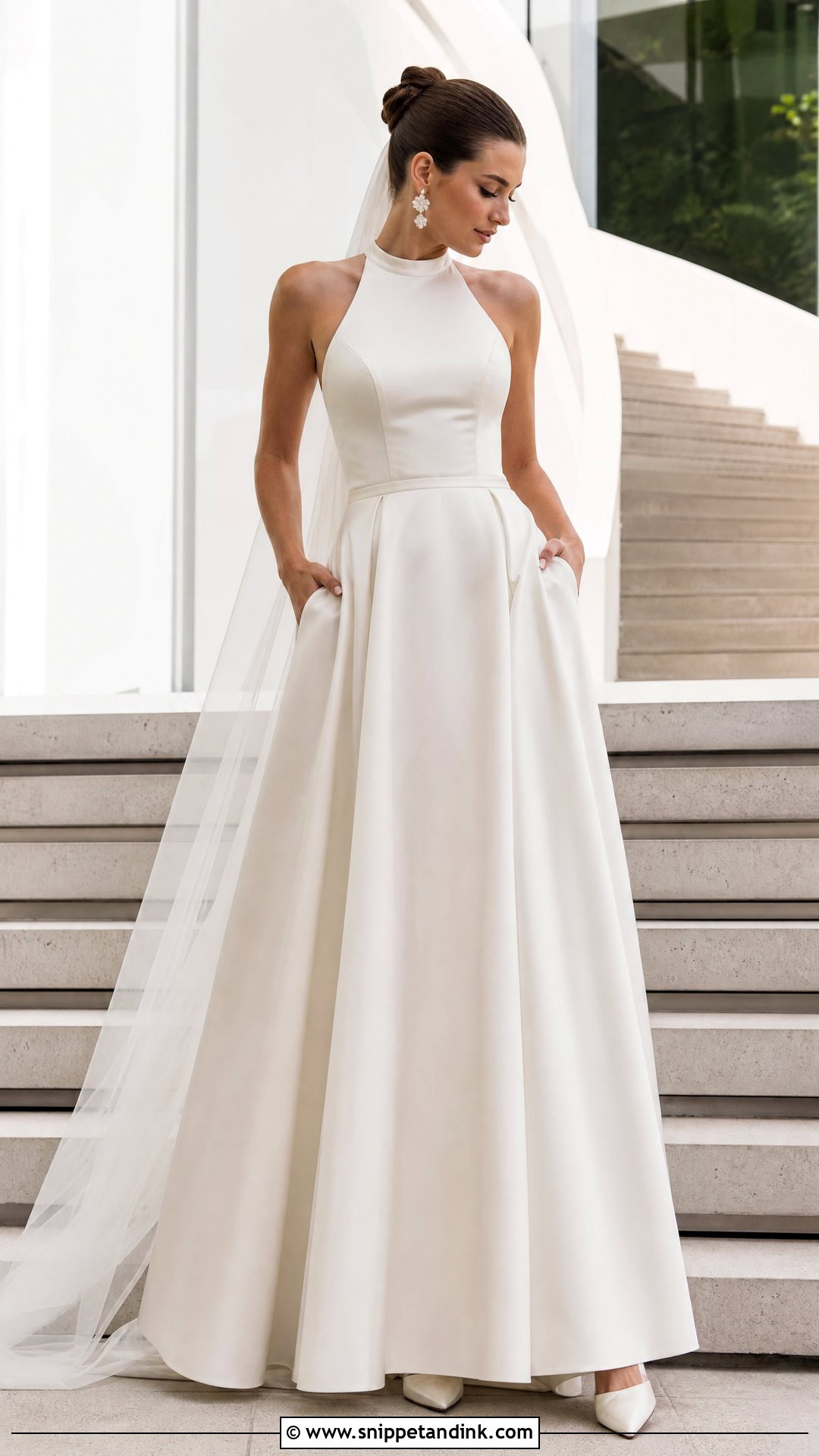
Halter necklines put the shoulders front and centre and give a long, clean line from neck to hem. Choose a satin or crepe A-line with a fitted waist and pockets tucked into the soft skirt folds. The neckline already does the work, so statement earrings and a polished bun are enough. A long plain veil adds drama for the ceremony; a slim comb is the lighter option. Two fit checks matter here. The halter strap shouldn’t press on the back of your neck after an hour, so wear it a while at the fitting. And the pockets should start a little below the waist, because openings right at the waistline add width you can see in front-on photos.
12. Mikado Ball Gown Wedding Dress With Pockets
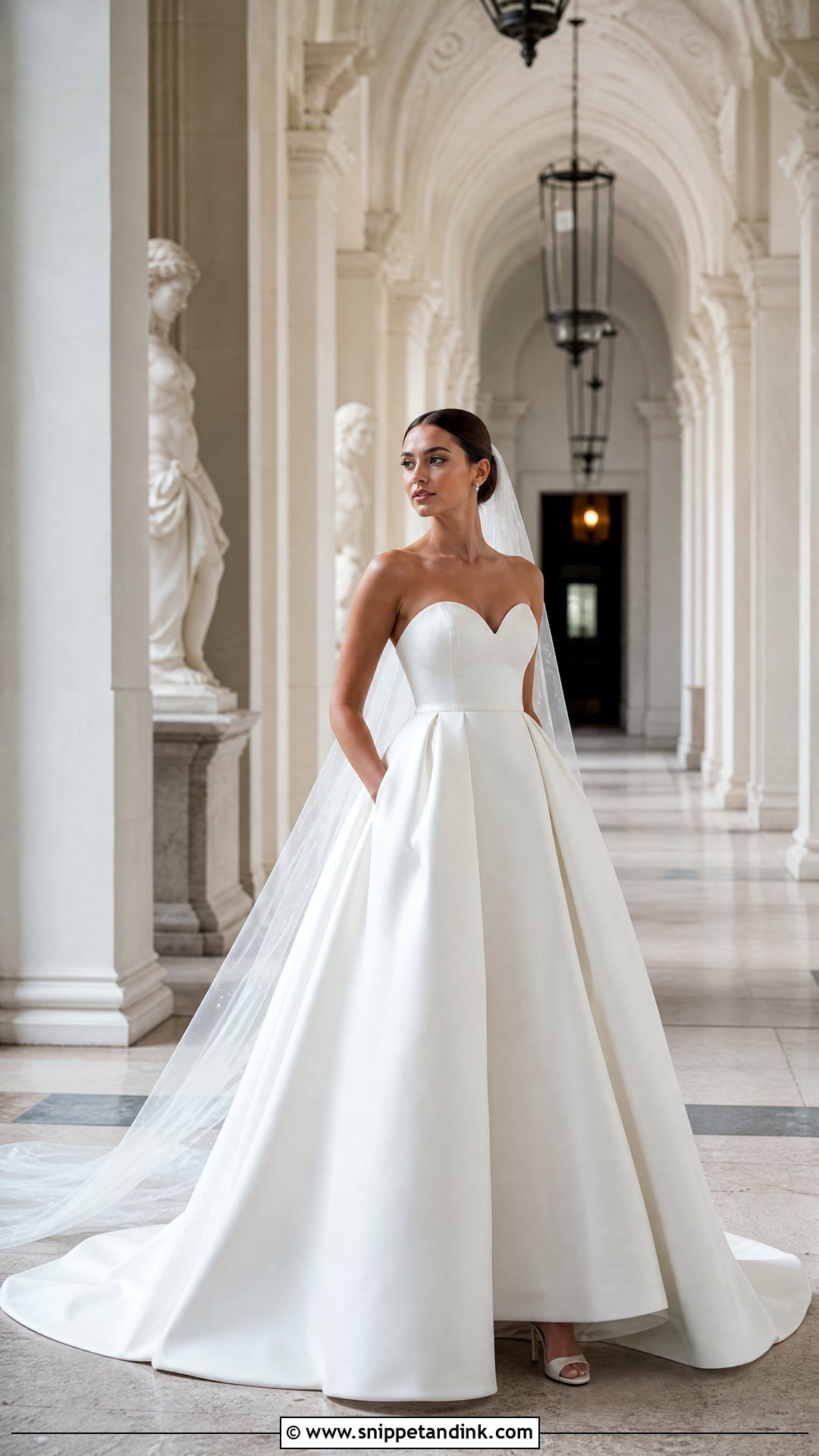
Crisp mikado fabric is my favourite cloth for pockets. It’s a heavy silk or poly blend with a slight sheen that holds a sharp pleat, so a generous pocket can sit inside the skirt and you’d never know. Keep the bodice clean, with a sweetheart, square or bateau neck, and let the skirt be the sculpture. A cathedral veil, pearl or diamond-style studs, a sleek updo and block heels finish it. The honest drawback is weight. Mikado ball gowns get heavy over a long day, so stay in the sample for a good ten minutes at your appointment. Walk, sit and use the pockets before you decide. Large ballrooms, galleries and grand hotels suit its scale.
13. Minimalist Crepe Wedding Dress With Pockets
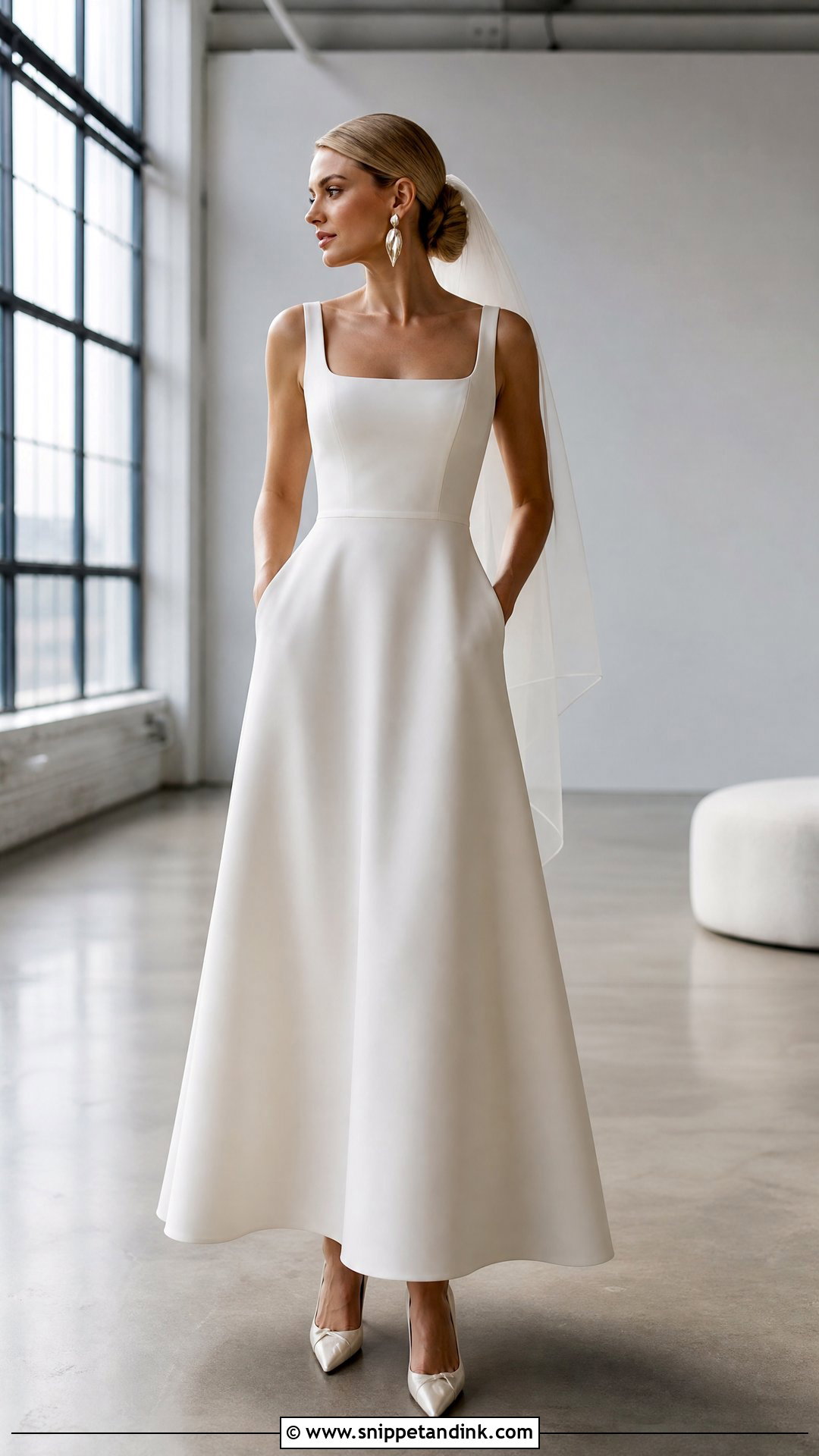
Crepe is the hardest fabric on this list for pockets. It’s matte and fluid, which is why it looks so clean, but it also shows every bit of bulk underneath. If you love a minimalist crepe dress, look for full lining, reinforced side seams and pocket bags cut from a lightweight lining fabric rather than self-fabric. A fitted bodice, a defined waist and a softly flared skirt keep the line simple; a square neck or modest V keeps it current. Wear sculptural earrings, a low chignon, pointed pumps and a plain veil. Carry something light, like a folded tissue. Anything heavier and you’ll see the outline over the hip. Lofts, rooftops and gallery spaces are its natural home.
14. Corset Wedding Dress With Pockets
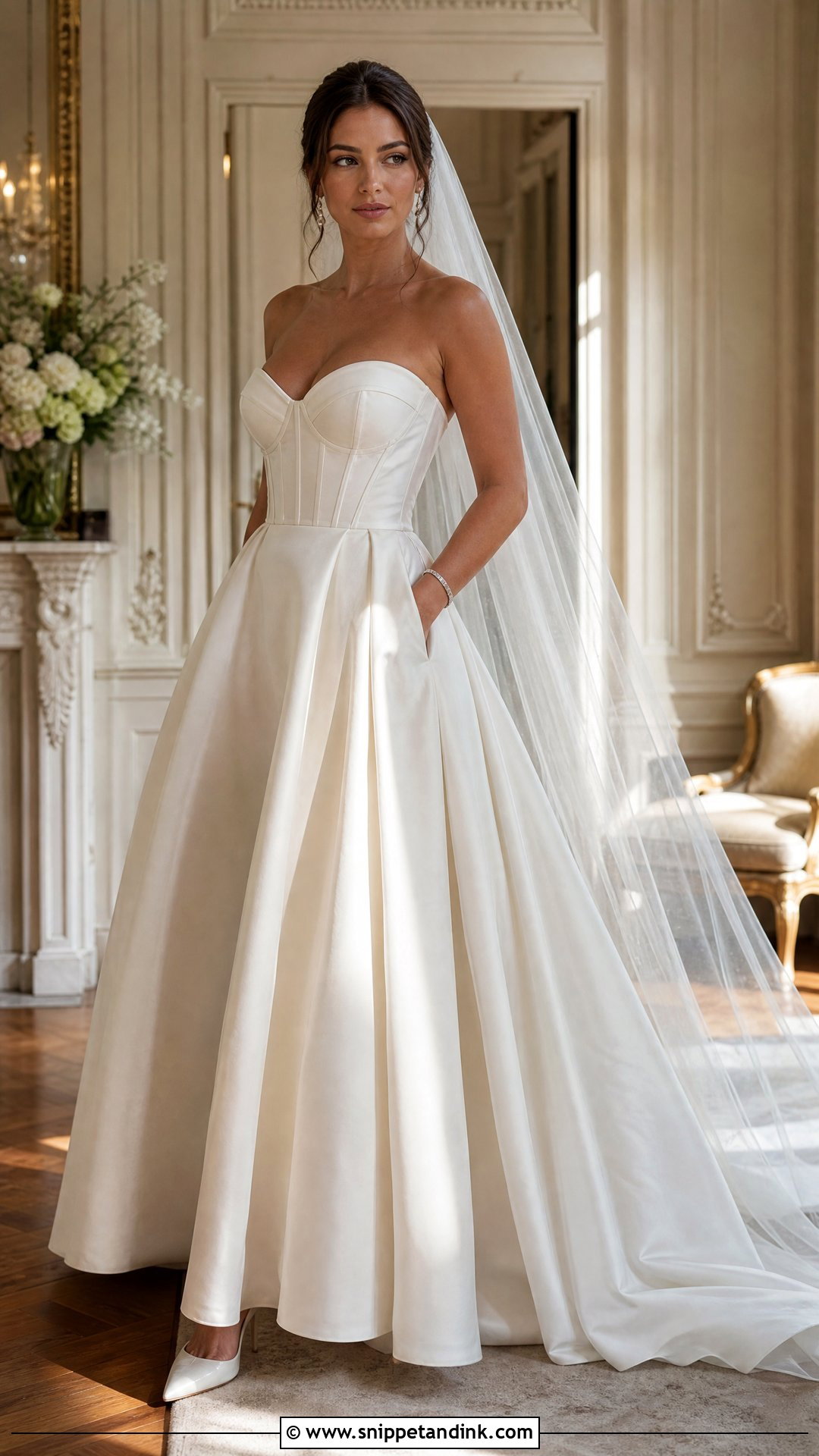
A corset bodice is about structure: boning, a straight or sweetheart neckline and either a lace-up or hidden back. Put a full satin or mikado skirt under it and the pockets can sit deep in the pleats. Pearl drops, closed-toe pumps, a soft tulle veil and one fine bracelet are plenty; more jewellery competes with the seams. The fitting point I’m strict about is breathing. You should be able to take a full breath and sit without the boning digging in. Then ask your fitter to watch the waistline while you slide your hands into the pockets, because on a corset, a pocket set too high pushes the skirt outward right where the bodice ends.

15. One-Shoulder Wedding Dress With Pockets
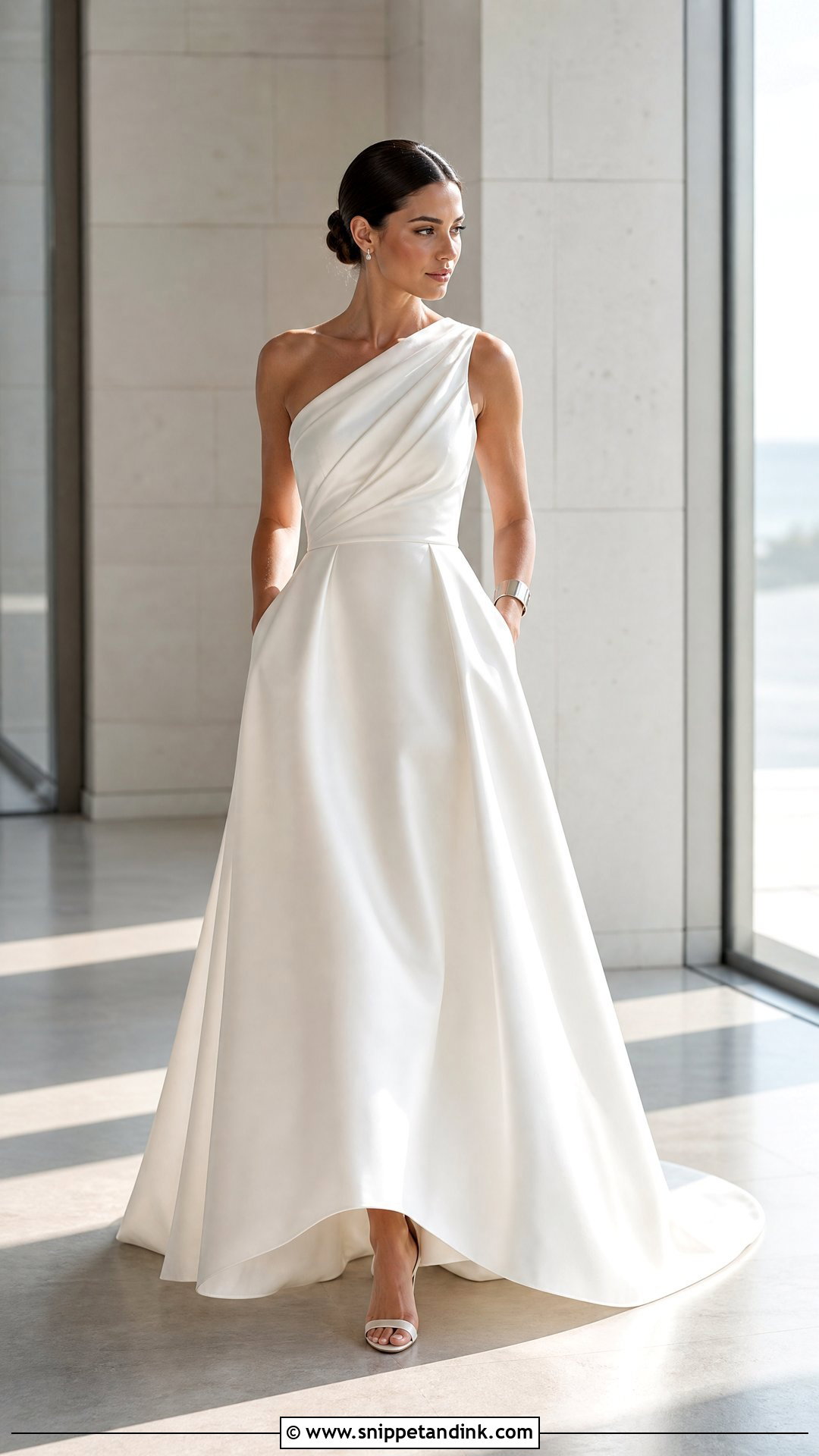
One shoulder gives you an asymmetric shape with almost no embellishment needed. A draped strap or folded neckline adds movement up top, while a structured satin or mikado A-line keeps the skirt crisp around the pockets. Sweep your hair to the side away from the covered shoulder, or wear a low side-parted bun, so the line shows. Small earrings, a cuff on the bare-arm side and simple heels finish it; a clean hair accessory often suits it better than a veil. Raise both arms at the fitting. If the single strap slides, it needs a hidden grip or silicone tape, and the pocket on the strap side can get tugged when the bodice twists, so check both openings.
16. High Neck Wedding Dress With Pockets
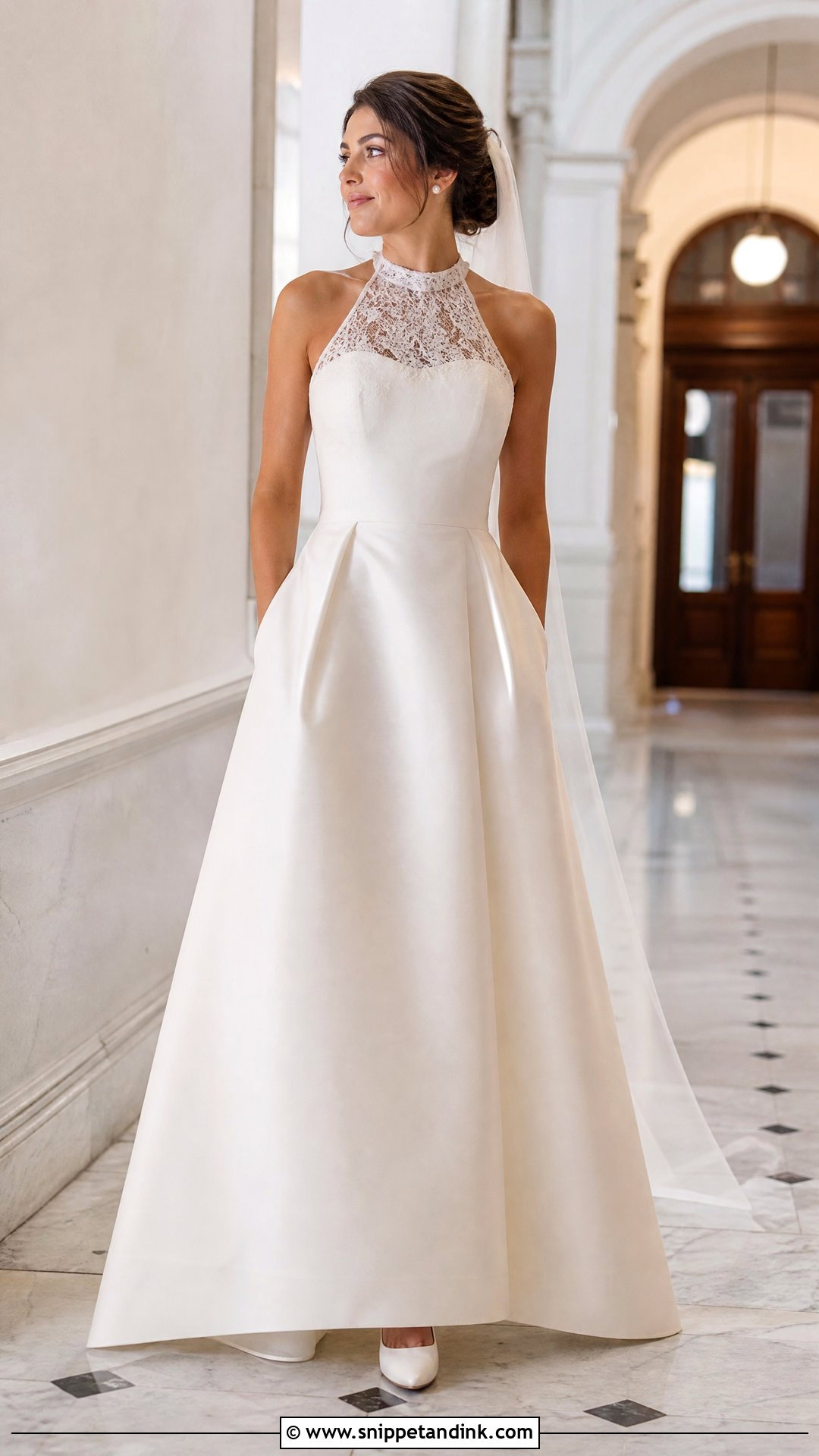
A high neck can feel regal, but only if it isn’t tight. A lace or illusion neckline over a lined bodice, with a smooth A-line skirt and hidden pockets below, keeps the top polished and the bottom relaxed. Long sleeves suit cold weather; sleeveless is the warmer-season version. Pearl studs, a neat updo, closed-toe heels and a plain veil fixed under the bun are enough. No necklace. The collar test is simple: turn your head side to side and sit down. If the collar rubs your jaw or folds over, it’ll be worse by the evening. The pockets are a nice counterweight here, giving you somewhere for a tissue without carrying a bag.
17. Tulle Wedding Dress With Pockets
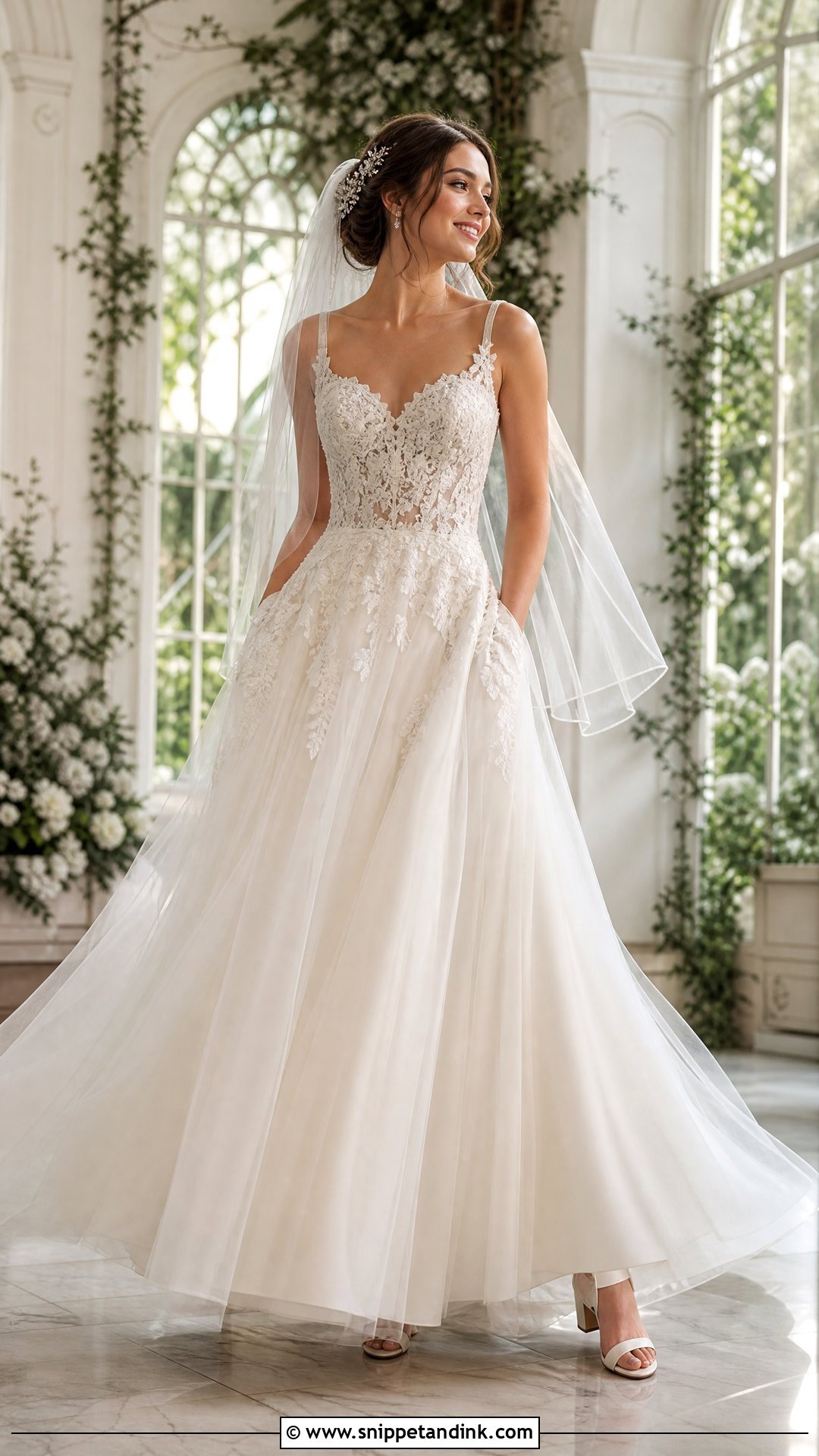
Tulle and pockets only work together when the pocket isn’t actually in the tulle. Several floaty layers can’t hold anything; they’ll bunch the moment a hand goes in. What you want is a gown where the pocket bags are sewn into a satin underskirt, with the tulle layers falling over the openings. A fitted lace, beaded or plain bodice gives the airy skirt some definition. Keep the accessories light: sparkling studs, a fingertip veil, block heels and a small comb. At the try-on, put your hands in and watch the top layers in the mirror. If they lift or catch, the pocket isn’t built right for tulle. Garden venues and bright ballrooms suit this dreamy one.
18. Black Wedding Dress With Pockets
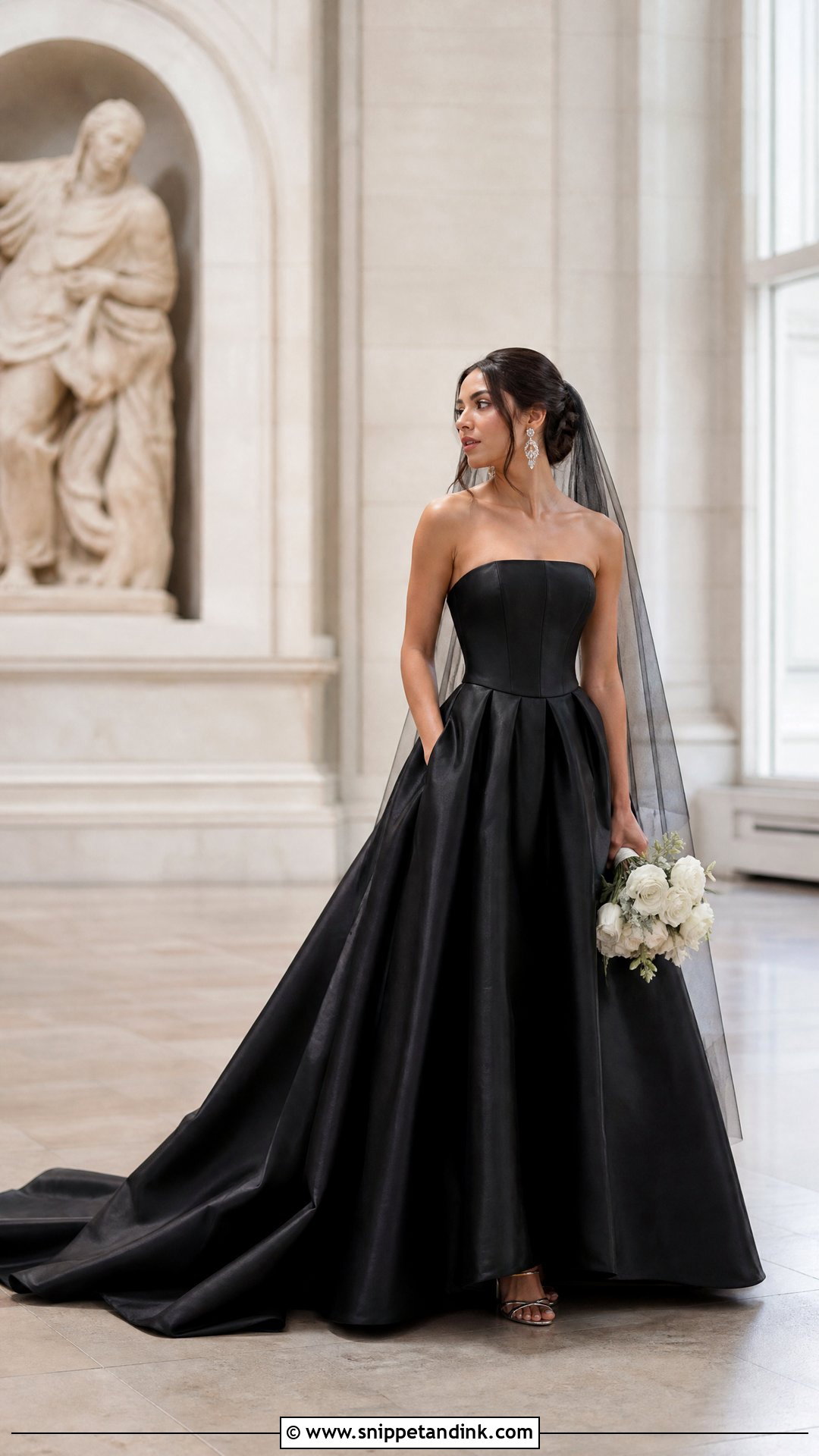
Black is the easiest colour for hiding pockets. Shadows inside an opening disappear against dark fabric in a way they never do on ivory. A structured satin or mikado ball gown with a strapless bodice, a defined waist and deep pleats gives a dramatic, formal shape. Silver earrings, black or metallic heels and a sheer black veil keep it monochrome; ivory flowers or a pale bouquet give contrast without changing the dress. Look at the fabric under the venue’s actual lighting, because black satin can turn slightly brown or blue under warm indoor bulbs. Museums, theatres and evening weddings in historic hotels suit it.
19. Plus Size Wedding Dress With Pockets
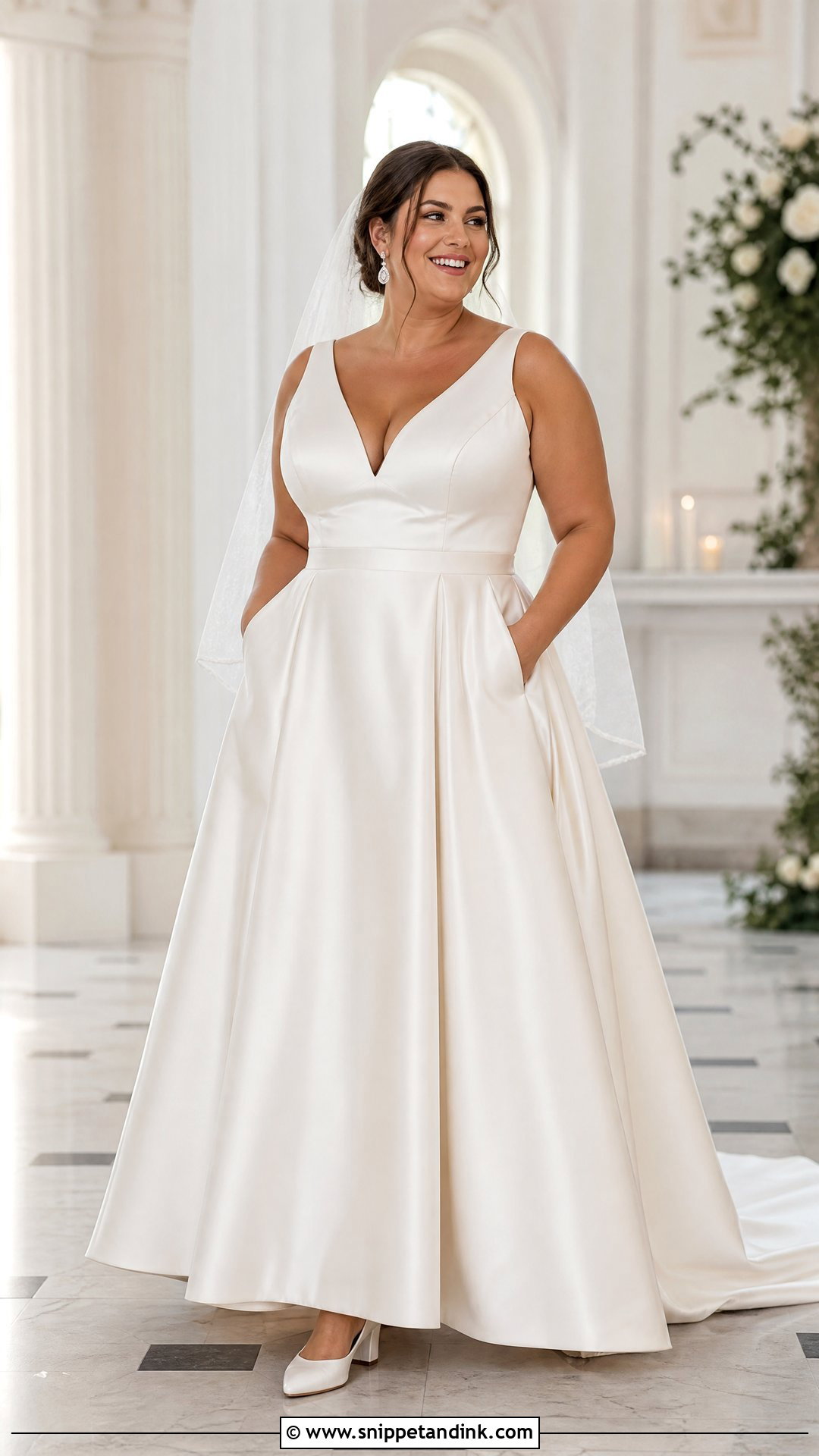
For a plus size bride, a well-placed pocket can be one of the most flattering details on the dress, because it gives your hands a natural resting place instead of a stiff pose. An A-line with a structured bodice, wide straps and a defined waist is my usual starting point, although ball gowns and fit-and-flare cuts are just as wearable. Substantial satin, mikado or lined crepe holds its shape at the openings. Supportive block heels, drop earrings, a comfortable veil and well-fitted undergarments round it out. Standard pocket placement is set on a sample size, so plan to have it moved to suit your hips. Sit, dance and walk at the fitting, then decide.

20. Boho Wedding Dress With Pockets
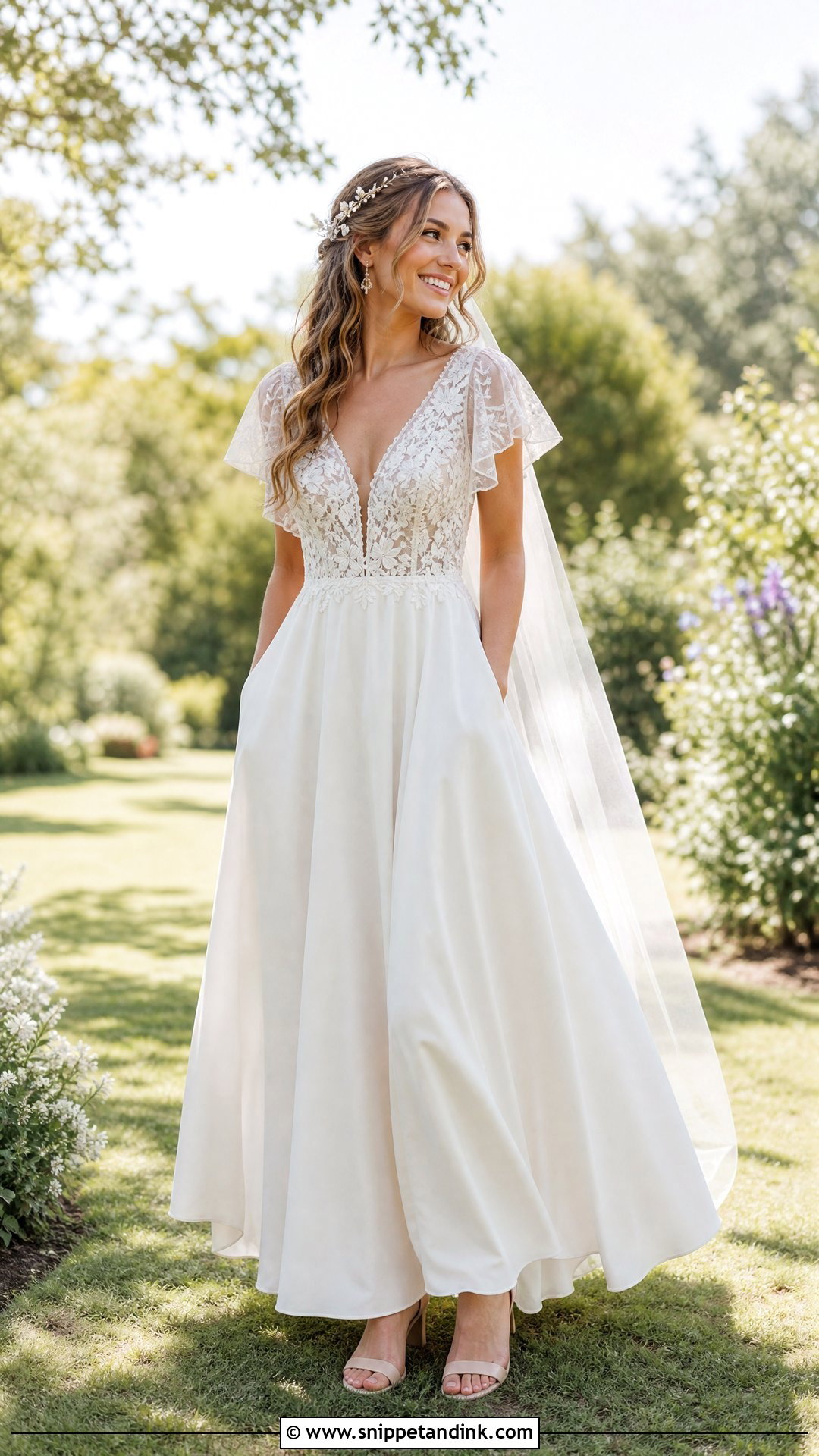
Boho dresses tend to be soft all over, which is lovely to wear and difficult for pockets. Chiffon alone is too fluid; anything in the pocket swings with every step. So with botanical lace, flutter sleeves or a modest V-neck on top, look for an A-line skirt with a firm lining where the pocket bags can anchor. Loose waves, floral pins, block-heel sandals and a light veil keep the mood relaxed, with small hoops or fine drops instead of heavy stones. If you can, test the dress outside. A breeze shows straight away whether the pockets flatten or flap. Meadows, barns and desert settings are where this one feels at home.
Adding Pockets to a Gown That Came Without Them
If you’ve found the dress and it has no pockets, they can very often be added. The usual method is an in-seam pocket: the side seam is opened, two pocket bags in lining fabric are sewn in, and the seam is closed again so only a slit shows. It’s routine alteration work, but it isn’t possible on every gown.
When it works, and when it doesn’t
- Easy: A-line and ball-gown skirts with plain side seams in satin, mikado or crepe.
- Harder: skirts with lace or beading over the seam, where the trim has to be lifted and re-applied by hand.
- Usually not worth it: bias-cut slip dresses and very fitted mermaid skirts, where any extra layer at the hip shows straight through.
Ask for it at your first alteration appointment, not the last. The pocket position depends on where your hands fall, which is set once the hem and waist are close to final, and the seamstress may need spare fabric or matching lining to make the bags. Expect it to add to the alteration bill; the cost varies a lot with fabric and trim, so get it quoted in writing alongside your other changes.
One more practical note: once pockets are in, empty them before the gown is cleaned or stored. A forgotten lipstick in a pocket bag is one of the most common stains I see on a dress after the wedding.
Your Hands Settle It at the Fitting
Pockets are a fitting decision more than a catalogue one. Pick the silhouette that suits your venue and how you like to move, then look at fabric, neckline, shoes and pocket placement together. Satin, mikado and jacquard hide pockets well; crepe, chiffon and tulle need a lining or underskirt to carry them. Take a lipstick and a folded tissue to every fitting, put them in, and walk, sit and pose in front of the mirror. If the skirt still falls straight with something inside, those pockets will earn their place all day.
You'll Like These Ideas:





Leave a Reply