
Sleeves change a wedding dress more than almost any other detail, and they’re also the part brides most often regret not testing properly. Below are twenty complete looks built around a long sleeve, each with the silhouette, shoes and accessories I’d put with it. Heavy lace is only one route now. Crepe, satin, sheer illusion tulle, embroidery and detachable sleeves that come off for the reception all give very different results. The sleeve you pick should suit your proportions and your venue, and above all it has to let you lift your arms. A formal ball gown and a loose bohemian dress both have a long-sleeve version here.
Armholes, Wrist Bones and the Fitting Where Sleeves Get Decided
Brides often assume a looser sleeve means more movement. It’s usually the opposite. A higher, closer armhole lets you lift your arms without the whole bodice rising with them, while a low, roomy armhole drags the dress up every time you wave.
At the first fitting I check four things in this order:
- Arms raised overhead: does the waist seam stay put?
- Arms crossed in front: any pulling across the upper back?
- Sleeve length with arms relaxed: it should end at the wrist bone, or a touch past it for sheer or bell sleeves.
- Elbow bent to your face: can you reach your mouth without the cuff riding halfway up your forearm?
Shortening a sleeve isn’t always simple. When the cuff carries a lace scallop, buttons or beading, the seamstress has to remove that finish and reapply it higher, which takes longer and costs more than a plain hem. Ordering timelines vary by designer, but many gowns take several months to arrive, and alterations usually need two or three fittings spread over the final couple of months. Leave room for that, especially with sleeves.
1. Lace A-Line Long Sleeve Wedding Dress
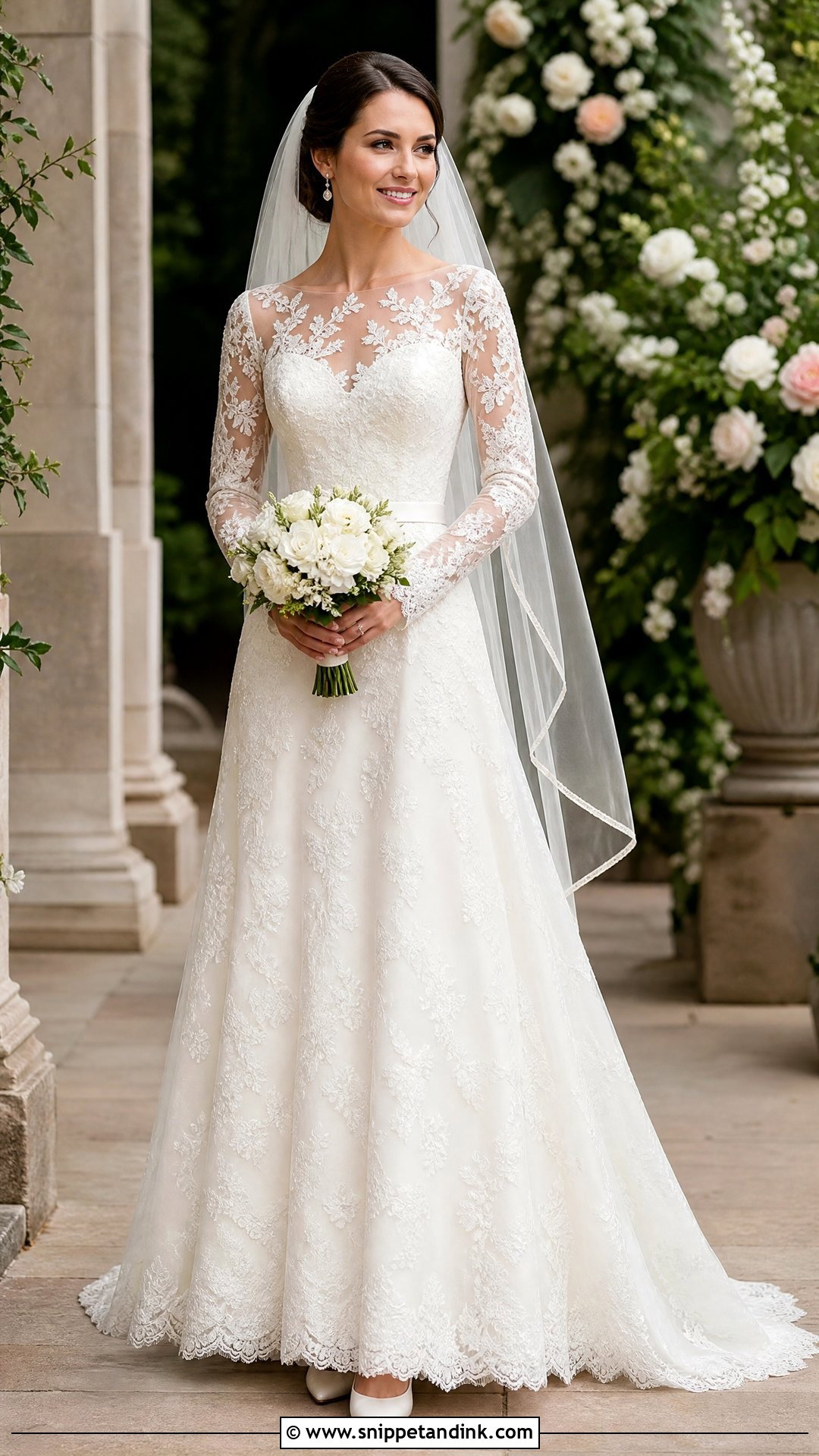
Lace A-line gowns are the long-sleeve style I fit most often, because the shape is forgiving and still feels like a wedding dress. Ask for a fitted bodice with illusion lace sleeves and a skirt that flares softly from the natural waist. When the lace motifs run from neckline to cuff, the dress looks designed as one piece rather than a bodice with sleeves added. Pearl drops, a fingertip veil, pointed satin pumps and a small bouquet of white garden flowers keep it classic. The thing I watch at every fitting is the back: when you reach forward, the lace shouldn’t pull tight across the shoulder blades. If it does, the sleeve is set too low.
2. Satin Ball Gown Long Sleeve Wedding Dress
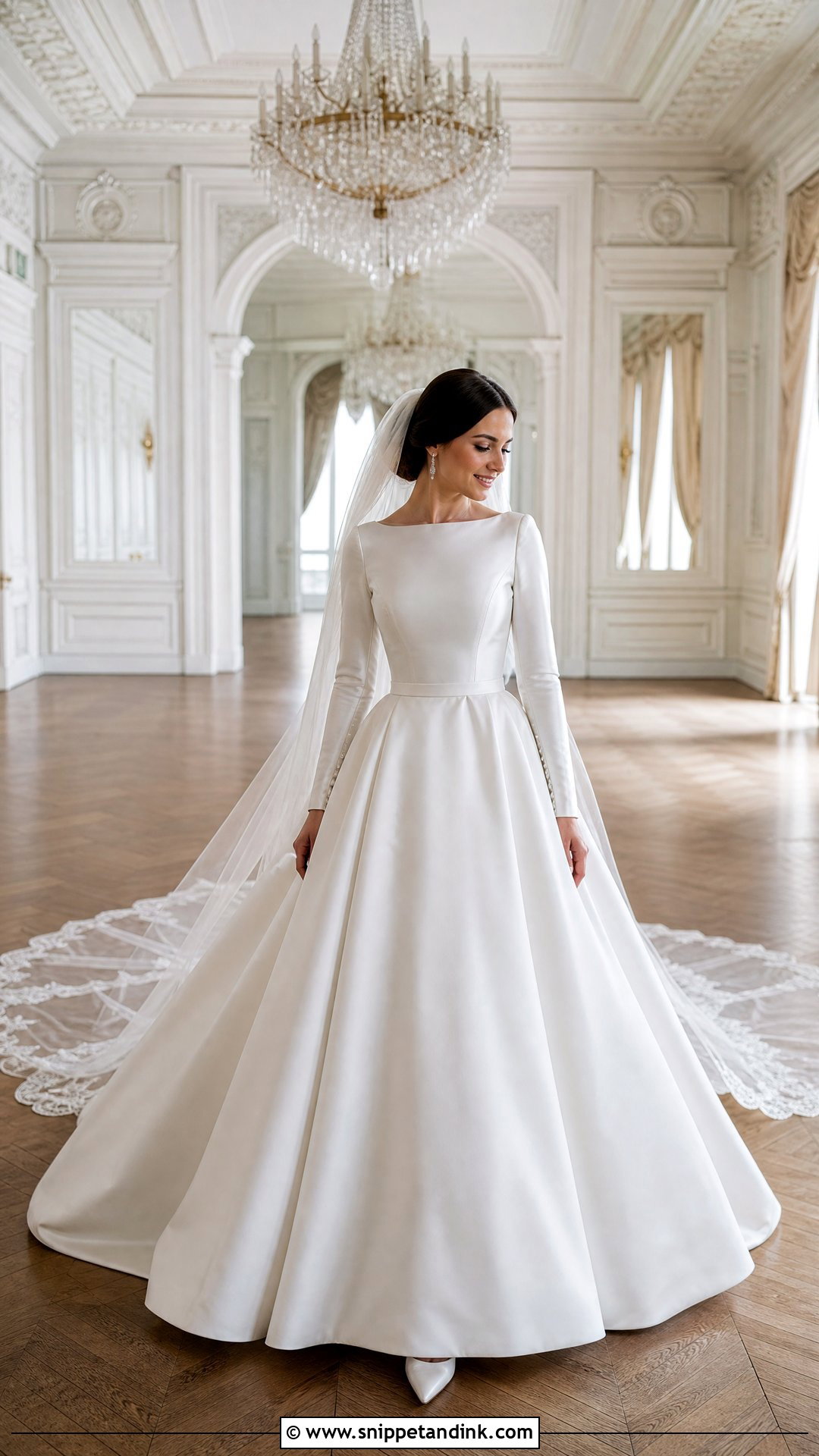
Satin is unforgiving, which is exactly why a satin ball gown looks so clean when it’s right. A structured bodice, fitted sleeves and a defined waist stop the skirt volume from swallowing you. Covered buttons at the cuffs and down the back add detail without fighting the sheen. I’d pair it with a cathedral veil, crystal studs, a low bun and closed satin heels. On petite brides I keep the skirt moderately full and the pleating minimal; taller brides can carry more width and a longer train. Satin shows every pull line, so budget for proper tailoring, and an inner corset will keep the bodice smooth through a long evening.
3. Crepe Sheath Long Sleeve Wedding Dress
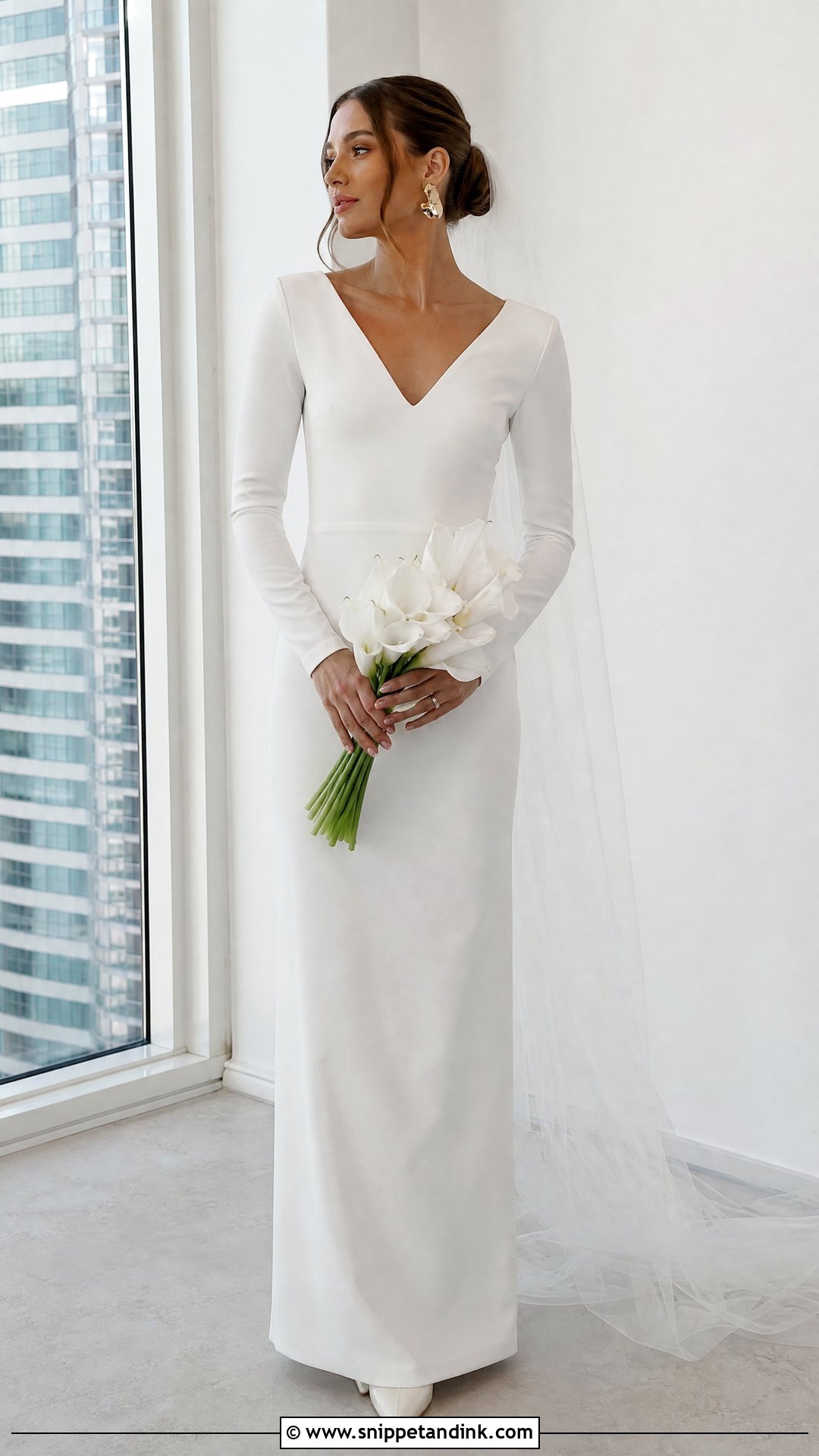
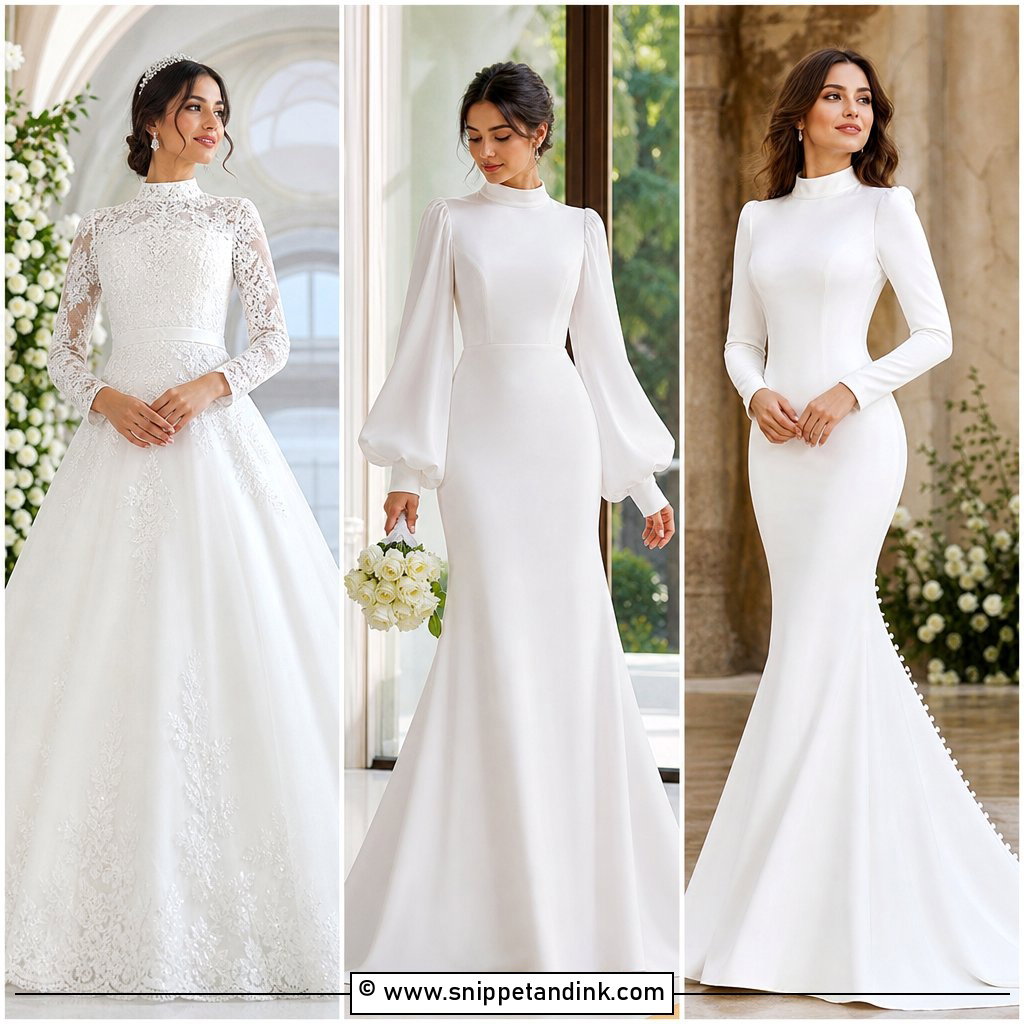
A crepe sheath dress with slim sleeves is the modern option, with nothing breaking the floor-length line. Stretch crepe follows the body without clinging, and a shallow V or a soft drape at the neck lengthens the upper body. Pointed pumps, sculptural earrings, a plain veil and long-stemmed greenery finish it. Crepe is honest about what’s underneath, so I bring smooth, minimal shapewear to the first fitting rather than the last. Then sit, walk and climb a few steps in it. If your stride catches, a hidden back slit or kick pleat fixes it without spoiling the clean front.
4. High Neck Lace Long Sleeve Wedding Dress
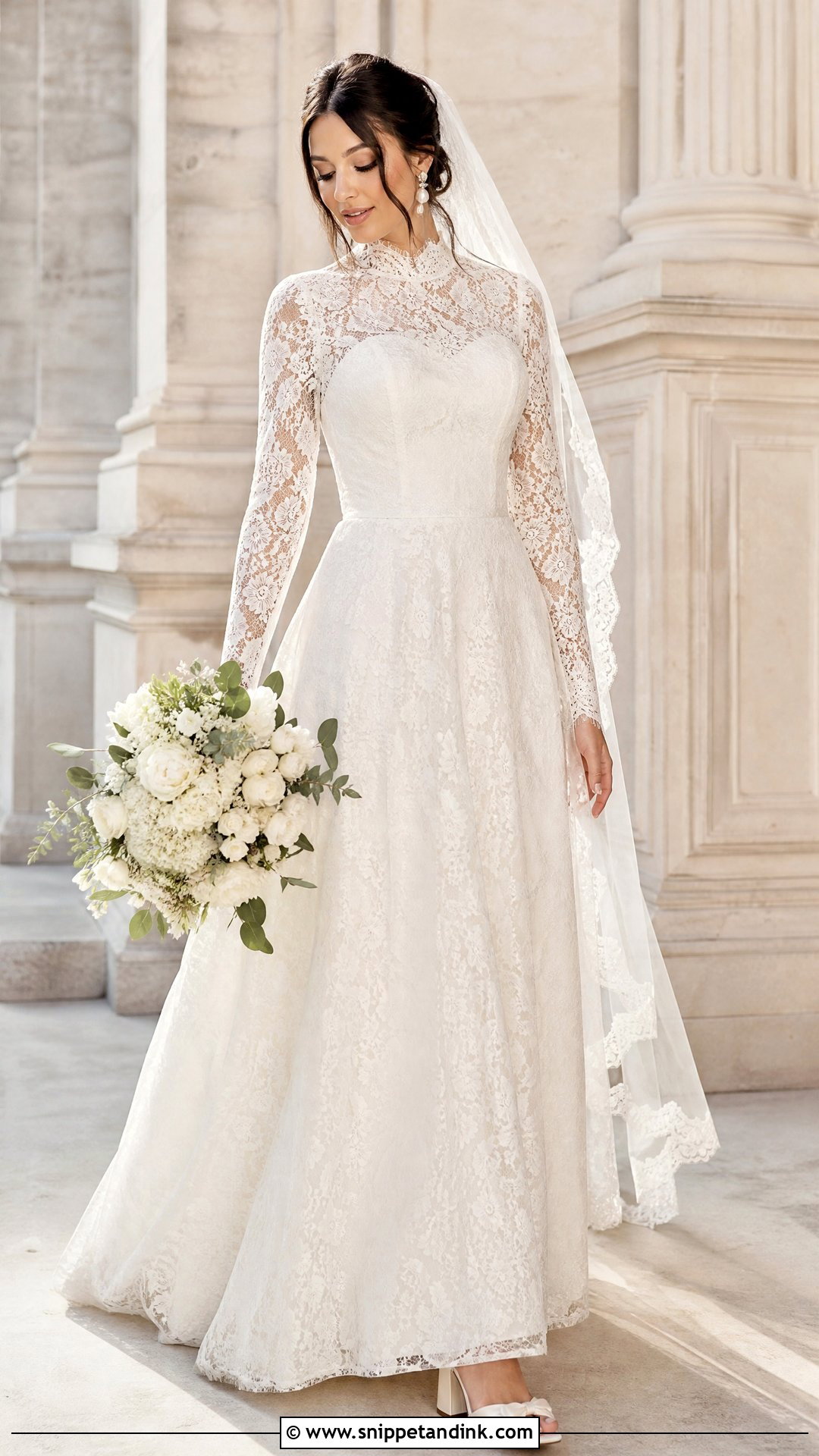
High necks and lace give the most coverage here, with a look that feels handed down. Keep the skirt an A-line or gently flared so all that lace doesn’t feel heavy. One decision people underestimate: a nude lining makes lace look graphic and almost skin-like, while ivory lining softens it. Compare both by a window, not under shop lights. Skip the necklace, since the collar is already the feature, and wear studs or small drops with a low chignon, a lace-edged veil and ivory block heels. If the collar feels tight when you swallow or turn your head, ask about softer mesh or a lower lining before anything else.
5. Square Neck Satin Long Sleeve Wedding Dress
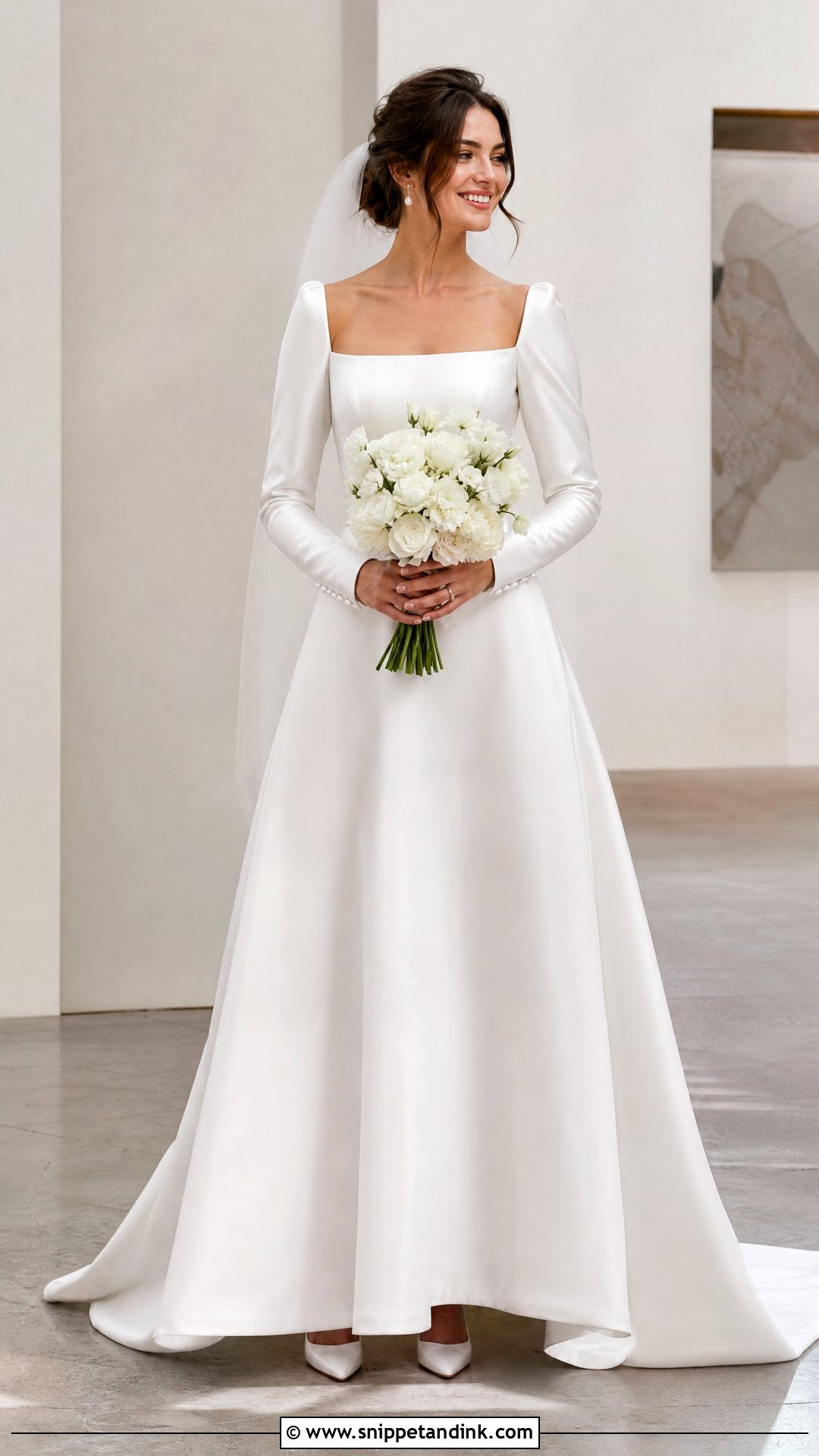
Square necklines frame the collarbones and make satin look crisp. With fitted long sleeves, a tailored bodice and an A-line skirt, it reads refined rather than strict. Covered buttons at the wrists and back add a traditional note. Pearl earrings, a smooth bun, a plain tulle veil and pointed ivory heels are all it needs, plus a small structured bouquet. The corners of a square neck are where I look first: they gape the moment the bust or shoulder fit is slightly off. Internal boning or slightly wider corners help if you want more support. Keep everything else simple.
6. Off Shoulder Long Sleeve Wedding Dress
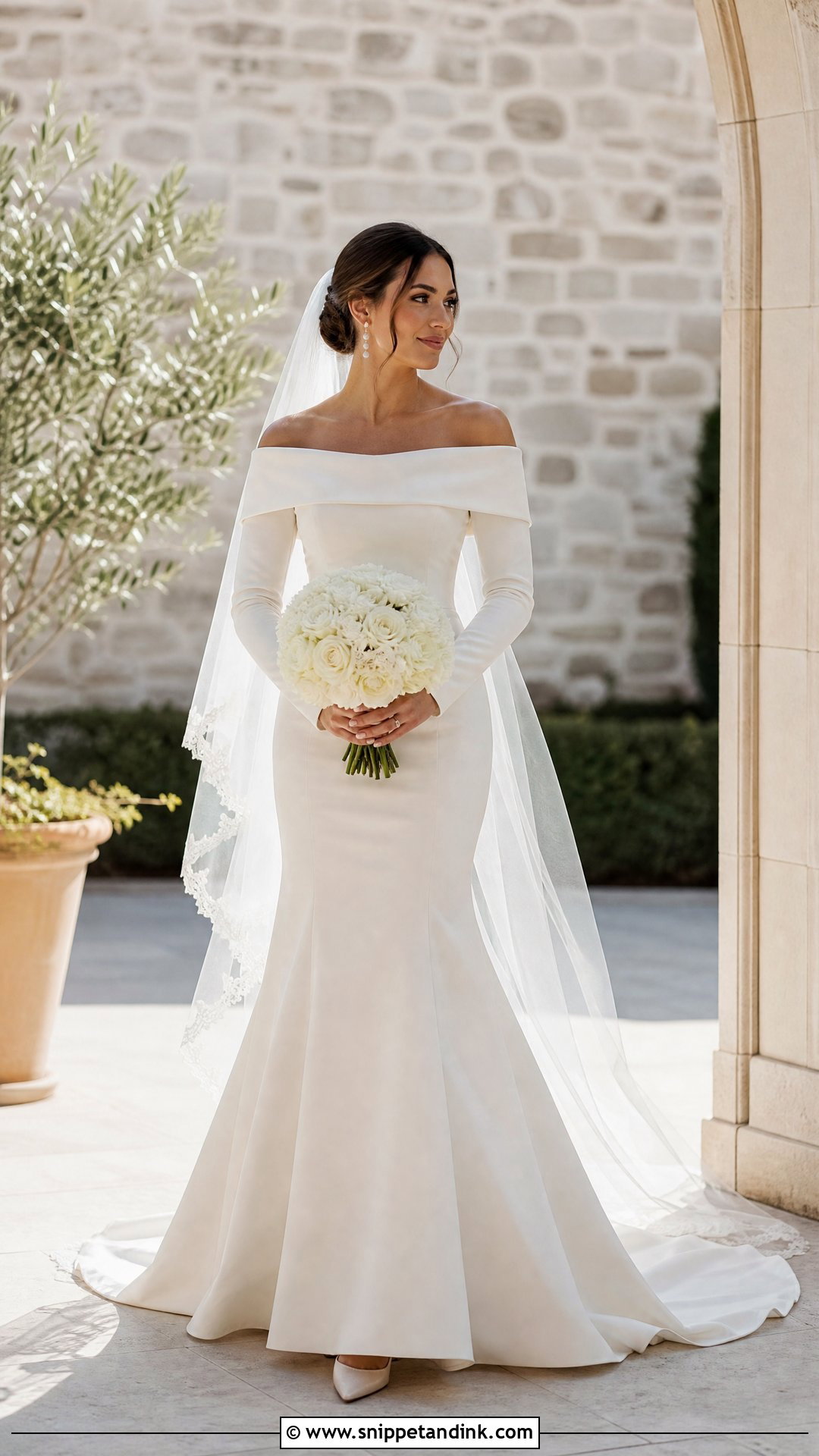
Off-the-shoulder gowns cover the arms while leaving the neckline open, and the sleeves sit on a folded band below the shoulder. That band is the whole story: it has to grip enough to stay put without cutting into the upper arm. I’d style it with small drops, a polished updo, no necklace, a chapel veil, satin pumps and a rounded bouquet. Raise your arms, hug someone and sit down at the fitting. Truthfully, fully off-shoulder long sleeves restrict how high you can lift your arms, so if you plan to dance hard, ask for stretch fabric or a detachable version.
7. Illusion Lace Mermaid Long Sleeve Wedding Dress
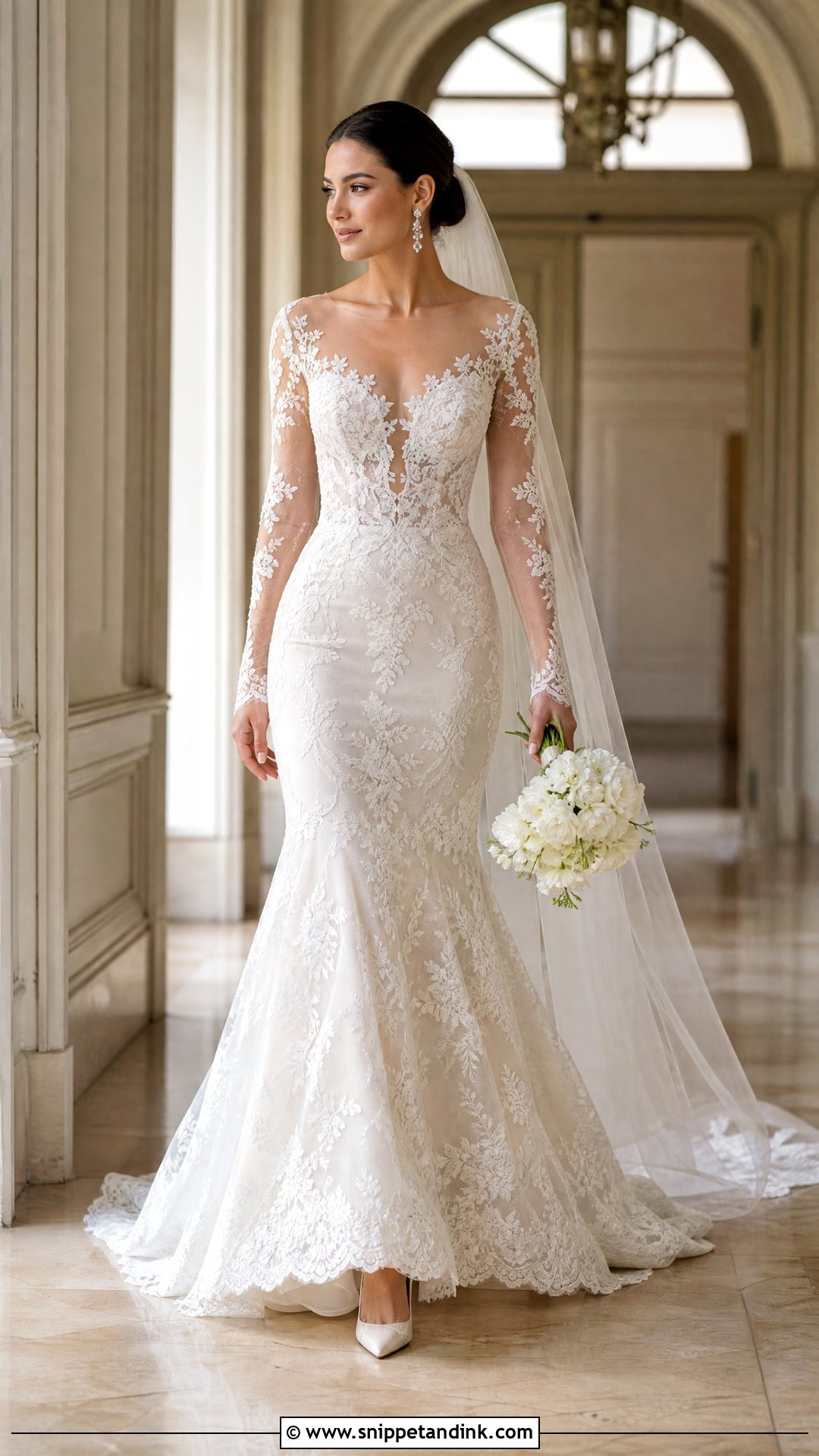
Mermaid shapes are dramatic, and sheer lace-covered sleeves take some of the edge off. The bodice should hold close through the hips before flaring near the knee. I like appliqués placed at the shoulders, cuffs and bodice so the sheer sections look built in rather than patched. Keep the veil plain and the jewelry quiet, with crystal studs and pointed heels. How easily you walk depends almost entirely on where the flare starts; a few inches higher makes a big difference to your stride. Stretch lining and a well-anchored bustle help you sit and dance.
8. Bishop Sleeve Chiffon A-Line Wedding Dress
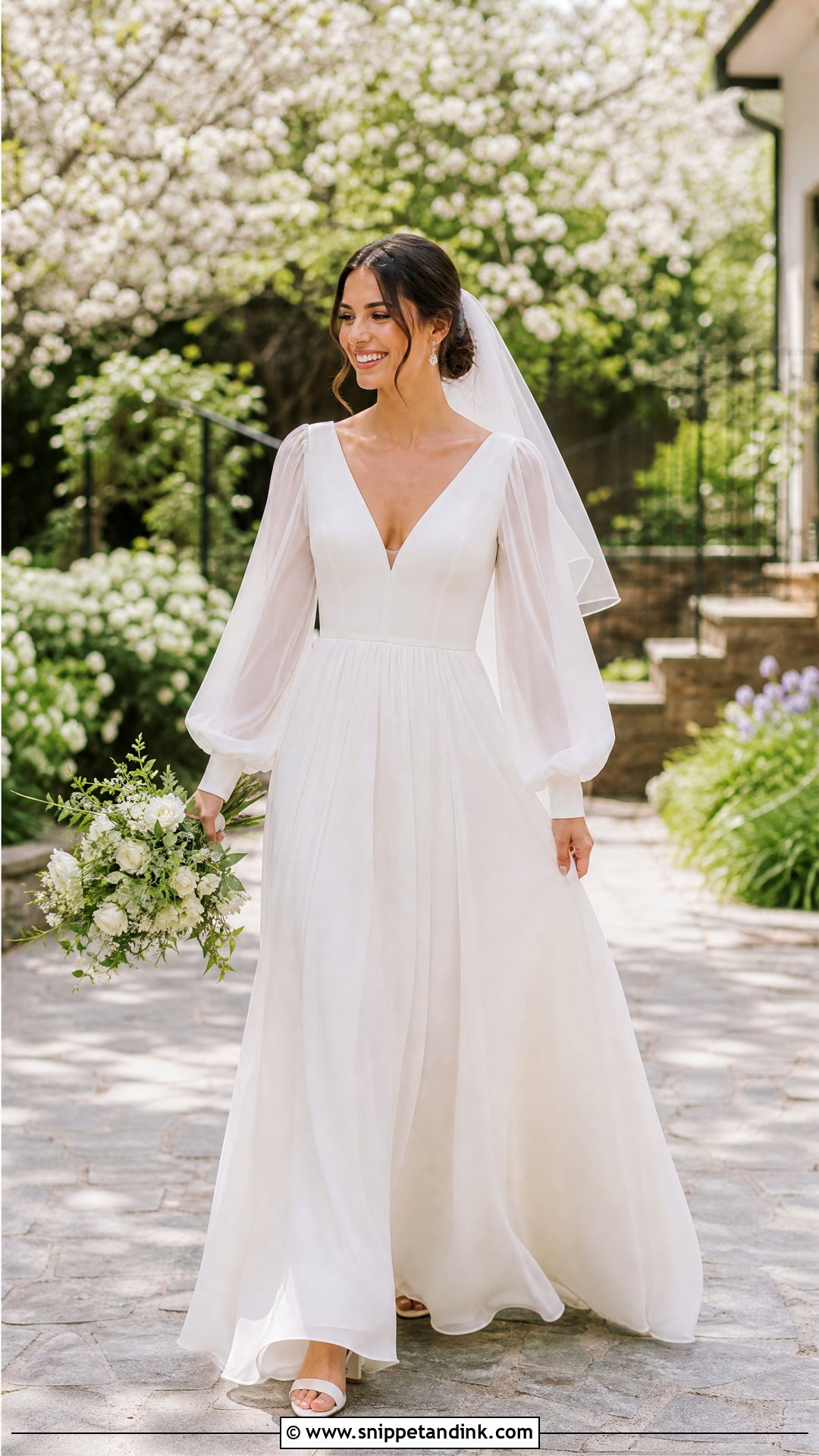
Bishop sleeves billow and then gather into a narrow cuff, and in chiffon they move every time you do. The bodice needs enough shape to define the waist, otherwise the fullness at the arms makes the whole dress look loose. A V-neck or wrap bodice balances that volume. Delicate earrings, a loose low bun, block heels and an airy fingertip veil suit it, with a loosely arranged bouquet. Chiffon frays, so I check the sleeve seams and cuff finishing closely. Outdoors, keep the train short and pin the veil firmly; light chiffon and wind are a messy combination.
9. Puff Sleeve Organza Ball Gown Wedding Dress
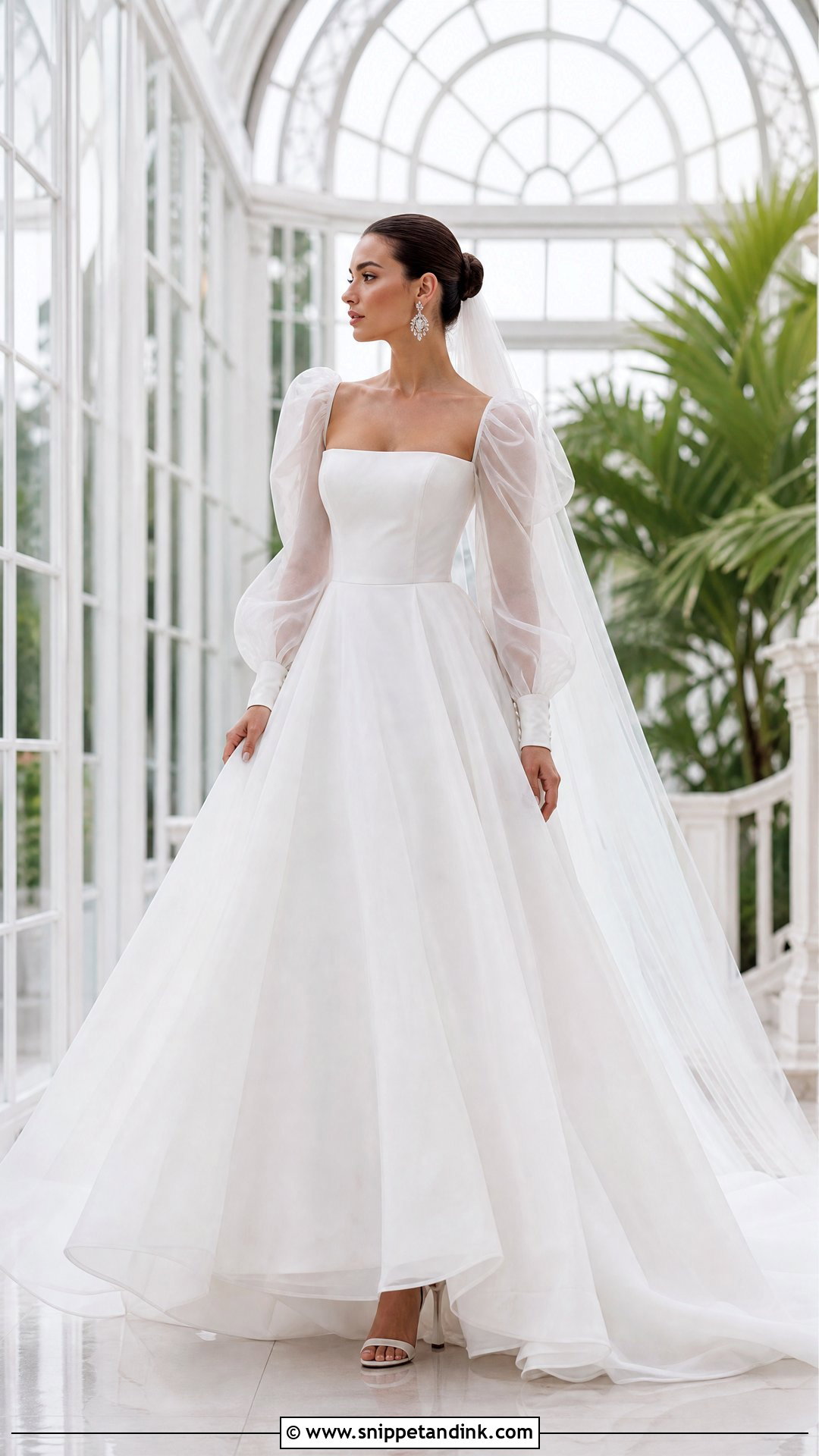
Puff sleeves on an organza ball gown are the most fashion-led look on this list. The sleeve should rise gently at the shoulder and taper to a fitted cuff so it balances the skirt rather than adding to it. A square or straight neckline gives a clean contrast to the rounded shoulder. Statement earrings, a sleek bun, simple heels and a plain cathedral veil work; an oversized bouquet doesn’t. On petite brides I scale the puff down along with the skirt. Ask your seamstress to support the sleeve head with interfacing or netting, or it collapses by the reception.
10. Bell Sleeve Boho Wedding Dress
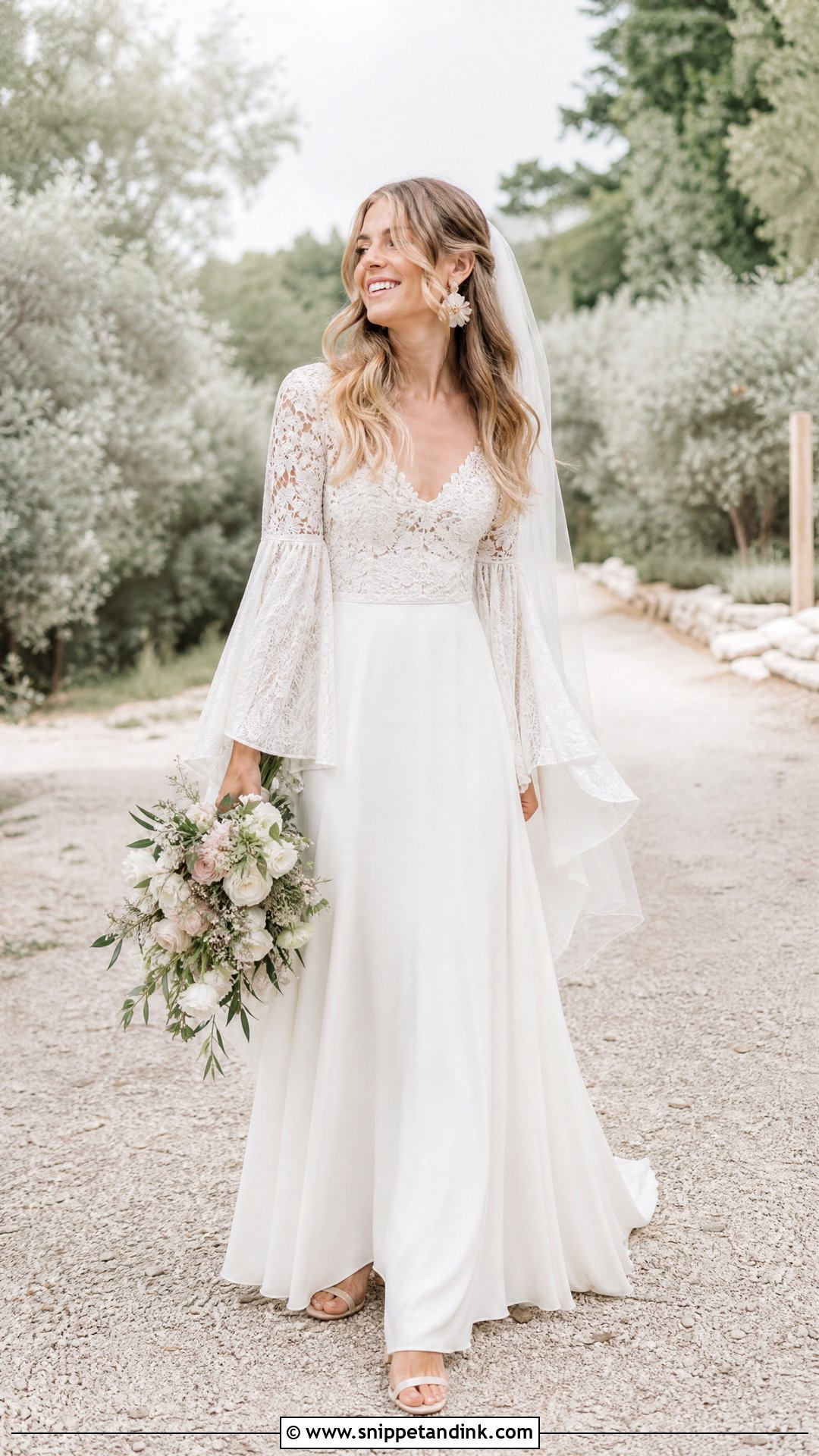
Bell sleeves stay slim above the elbow and open toward the wrist, which gives movement without bulk. Pair them with a fitted bodice and a fluid chiffon or lightweight crepe skirt for an outdoor ceremony. Textured waves, small floral earrings, low block-heel sandals and a veil tucked under the hair keep it relaxed, with a loose bouquet of greenery. Keep the train short for grass, sand or paths. The practical problem with a wide cuff is food: it drags through plates at dinner. I add small hidden wrist loops so you can hook the sleeve back while you eat or greet guests.
11. Detachable Sleeve Corset Wedding Dress
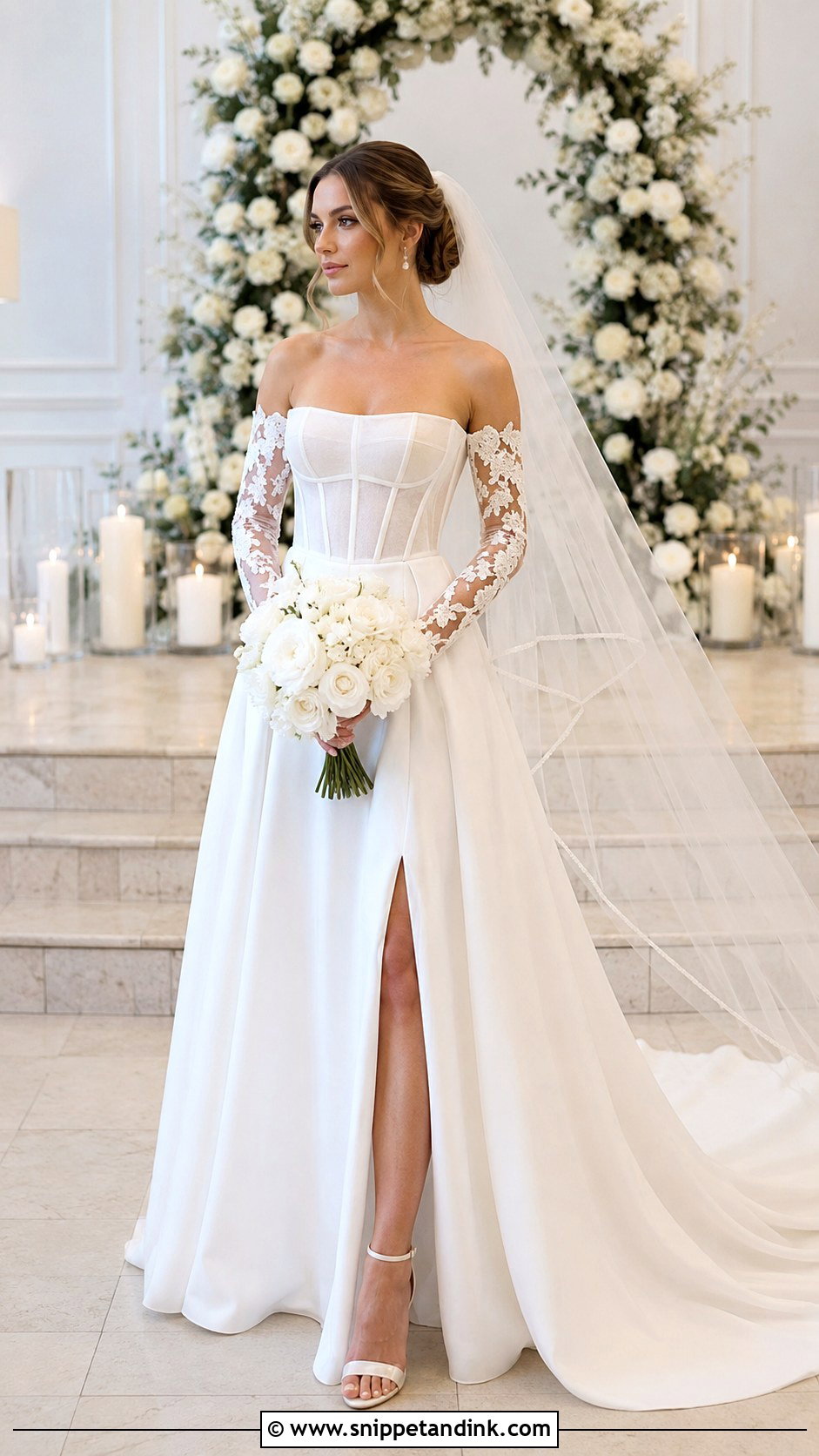
Detachable sleeves give you two looks from one dress. Start with a structured strapless or straight-neck corset bodice and an A-line skirt, then add fitted lace, tulle or satin sleeves for the ceremony and take them off for the reception. They attach with discreet snaps, hooks or loops, and the best ones look as if they were never separate. Finish with a soft veil, pearl earrings, comfortable heels and an updo. Test every fastening during alterations by moving your arms over and over. I always have a bridesmaid practice taking them off and putting them back on before the day, so the swap takes a minute instead of twenty.
12. Bateau Neck Mikado Long Sleeve Wedding Dress
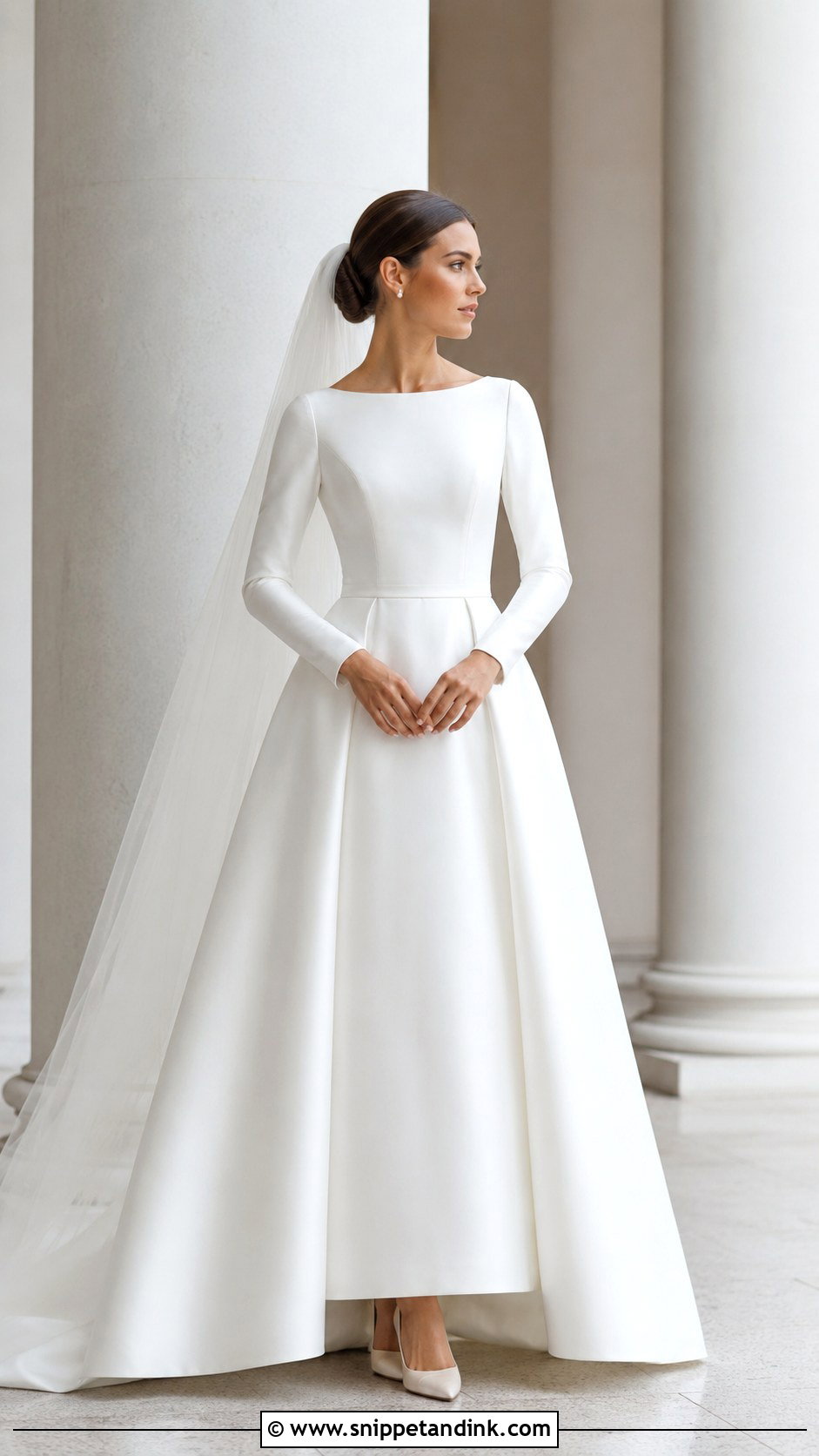
A bateau neckline and structured Mikado fabric give strong, architectural lines. The wide neckline runs across the shoulders and covers more than a square or V neck. I’d choose a fitted bodice, smooth sleeves and a full A-line skirt with controlled pleats at the waist, then add pearl studs, a low bun, satin pumps and a long veil anchored under the hair. Mikado is stiff, so a sleeve cut too close at the elbow simply won’t bend. Ask for enough ease to raise your hand to your face, without loose fabric bagging at the wrist.
13. Beaded Tulle Long Sleeve Wedding Dress
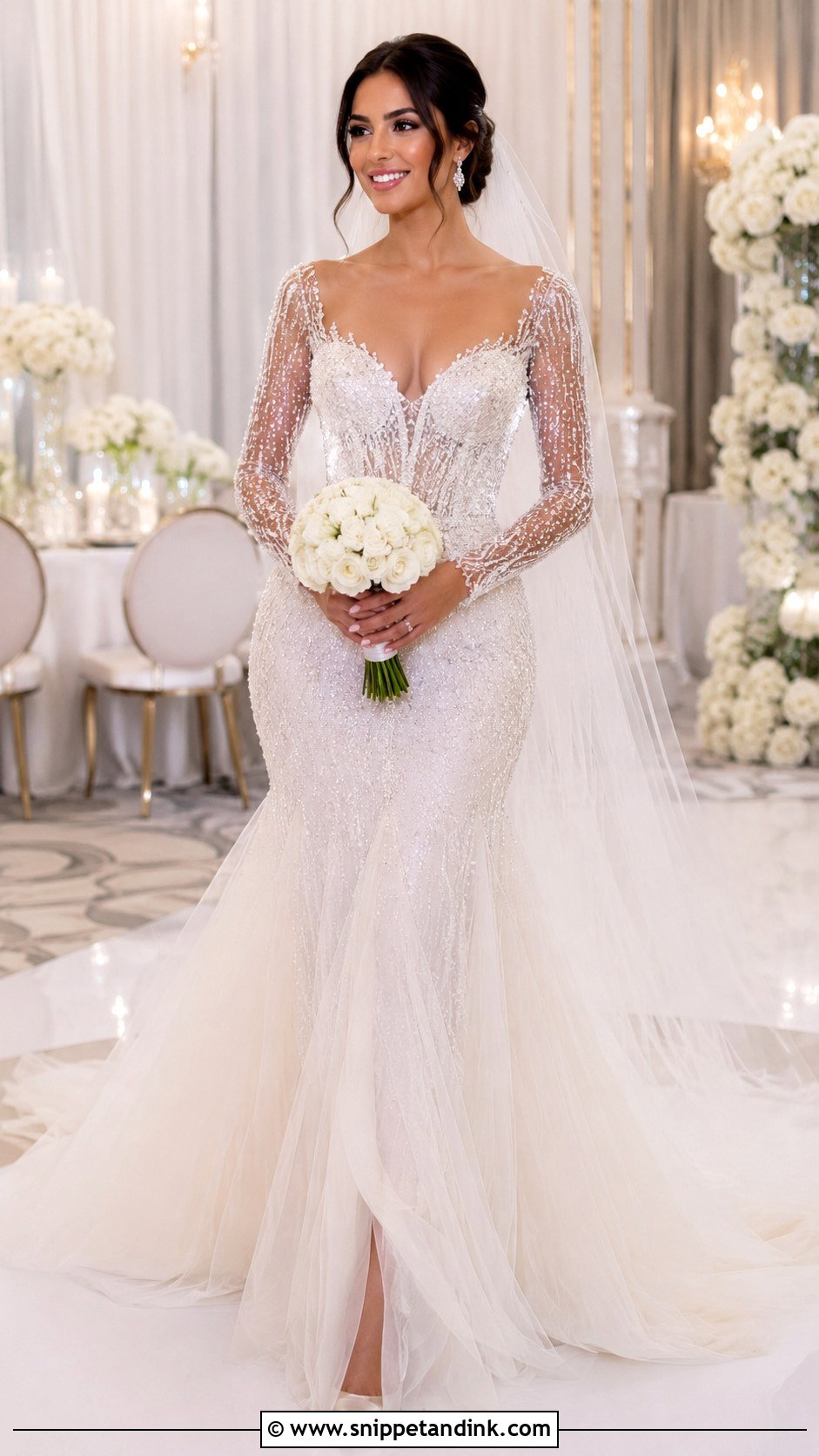
Beaded tulle catches the light as you move, and the beading looks most refined when it’s concentrated at the neckline, cuffs and waist instead of spread over everything. A fitted bodice, sheer embellished sleeves and a softly layered skirt balance sparkle with movement. Keep the jewelry small, the heels simple and the veil plain. The spot I check on any beaded sleeve is the inner arm near the underarm: beads there scratch skin and snag the bodice with every swing of the arm. Make sure heavier beading is reinforced where it meets fine mesh, or the tulle tears.
14. Pearl Detail Satin Long Sleeve Wedding Dress
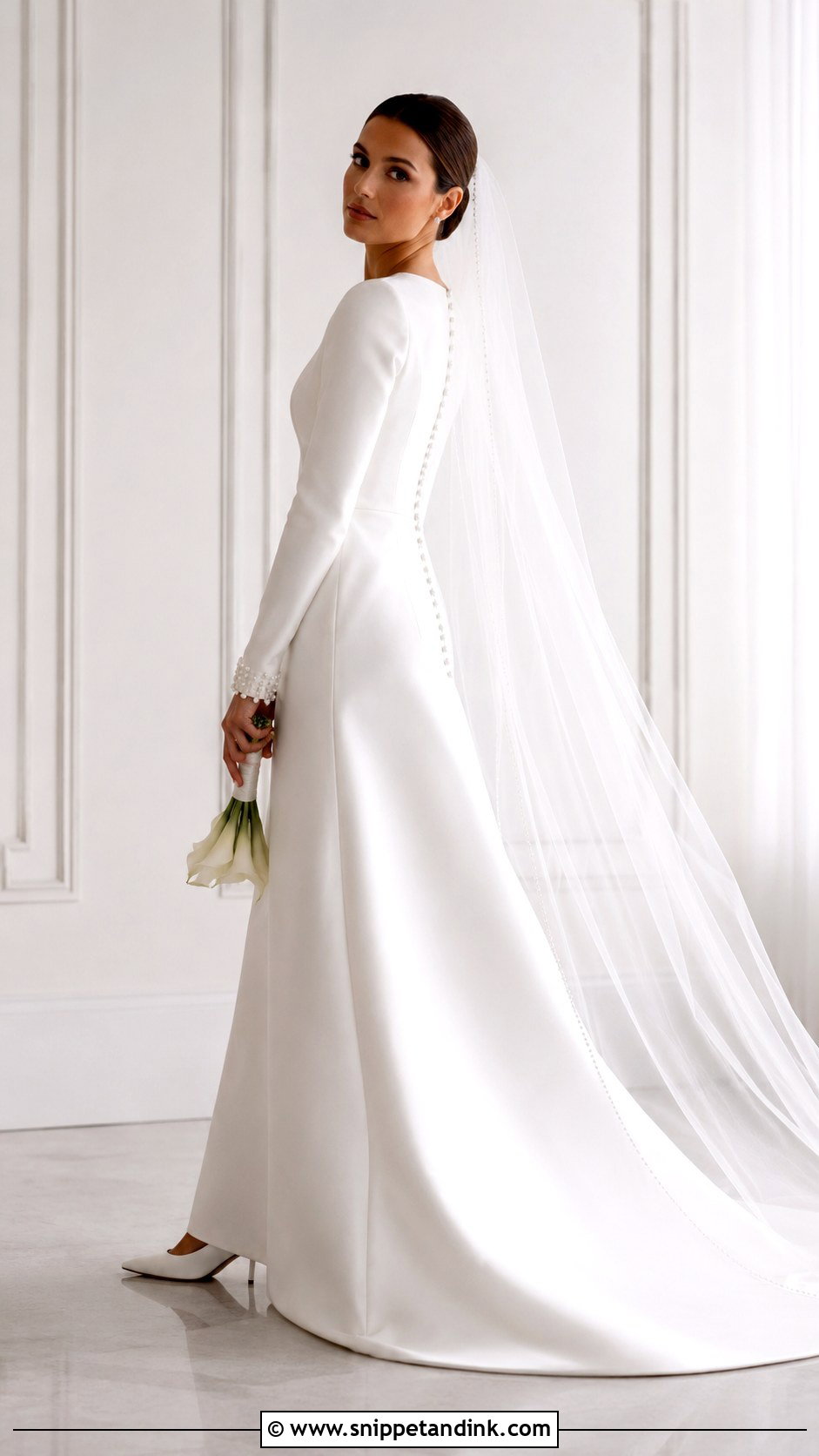
Tiny pearls turn a plain satin column or A-line into something more textured. Put them along the cuffs, the neckline or as covered back buttons, and leave the rest of the satin smooth. Pearl studs, a sheer fingertip veil, pointed pumps and a sleek low bun suit it, with white flowers and little greenery. Pearls sewn at the wrist rub against the skirt whenever your arms hang, so check they’re stitched firmly and sit just above where your hands brush the fabric. Pearl buttons alone are the quieter version; scattered pearls on sheer sleeve panels give more impact.

15. Floral Applique Tulle Long Sleeve Wedding Dress
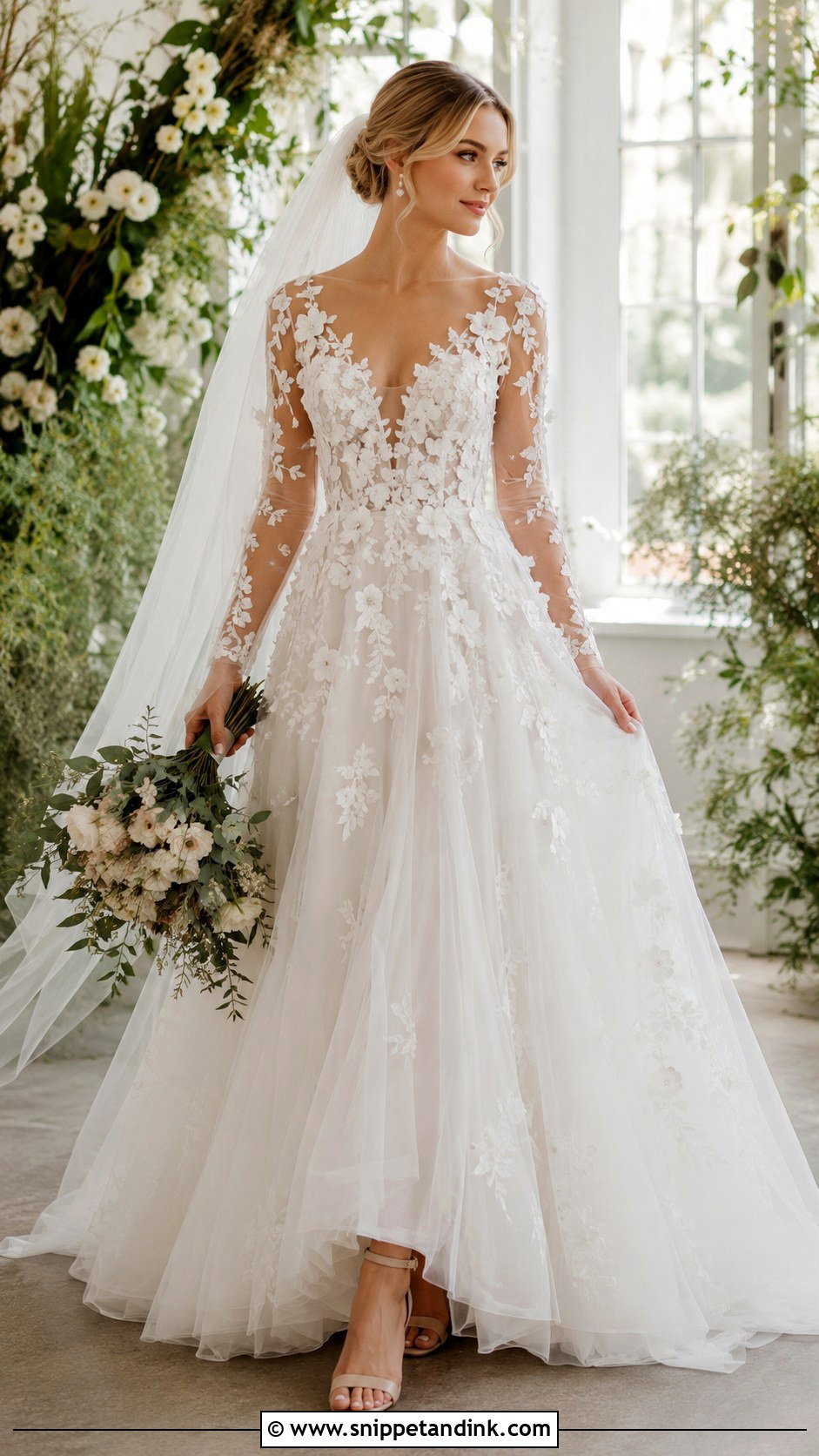
Raised floral appliqués add depth to a tulle gown when they start at the bodice and scatter down the sleeves and skirt, getting sparser as they go. That gradient is what stops it looking crowded. Pearl earrings, soft waves or a low bun, nude heels and an undecorated veil let the flowers show. Large flowers are dramatic; small ones suit a petite frame better. The issue I run into with 3D petals is the veil catching on them, especially at the shoulders. Try the veil on at a fitting, and place the bustle points where they won’t crush the appliqués.
16. Open Back Crepe Long Sleeve Wedding Dress
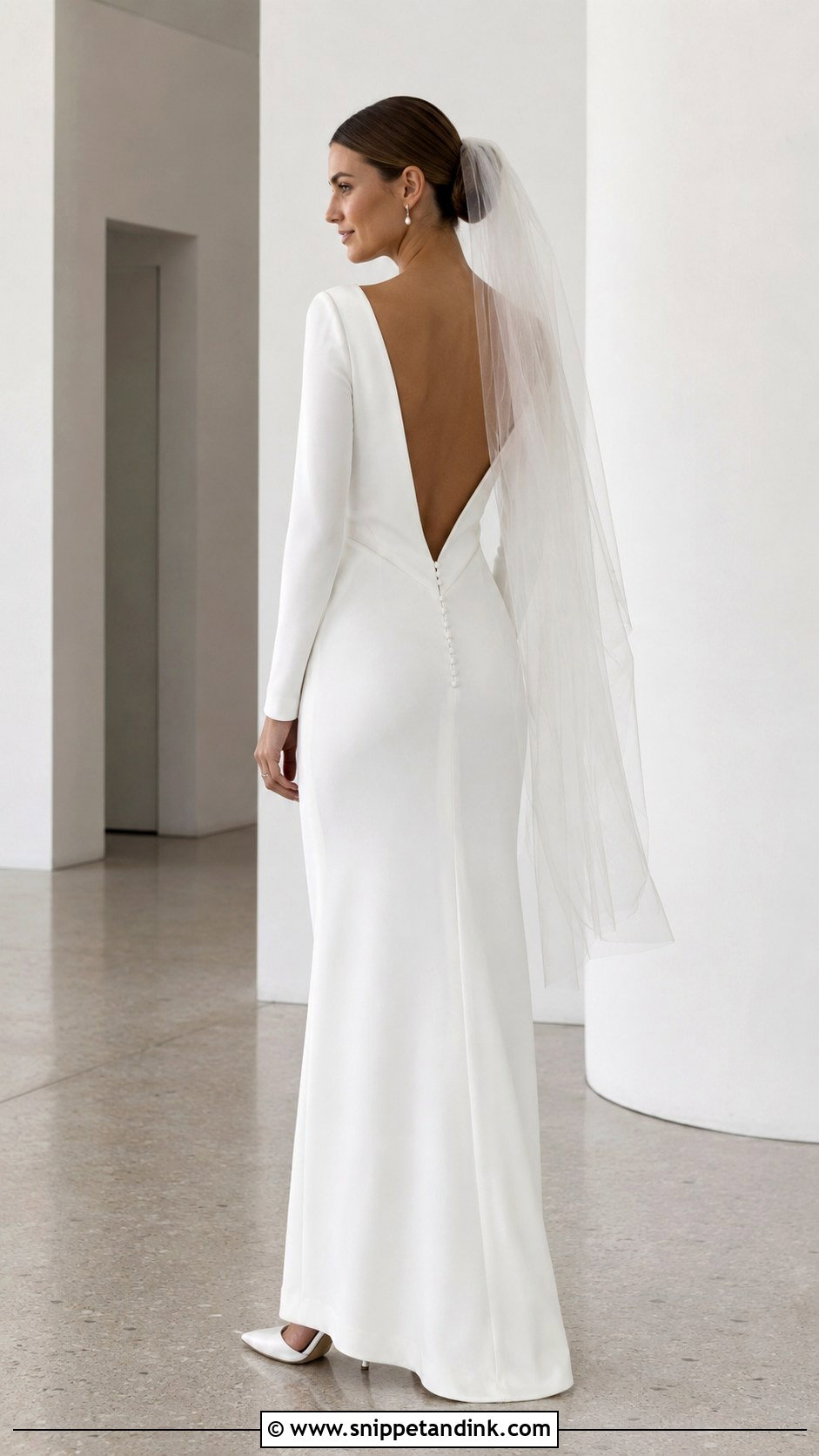
Fitted sleeves and an open back in crepe give coverage at the front and drama behind. Choose a simple front with a bateau, scoop or high neckline, and let a low V or rounded back do the talking. Covered buttons can trace the opening and continue down the skirt. A low bun, small earrings, pointed heels and a sheer veil placed under the hair keep it clean, with no necklace. In this design, the sleeves and shoulder seams are actually holding the dress up, so I check for gaping at the back while the bride sits and leans forward. Internal cups, side boning or a sheer back panel add support.
17. Vintage Lace Long Sleeve Wedding Dress
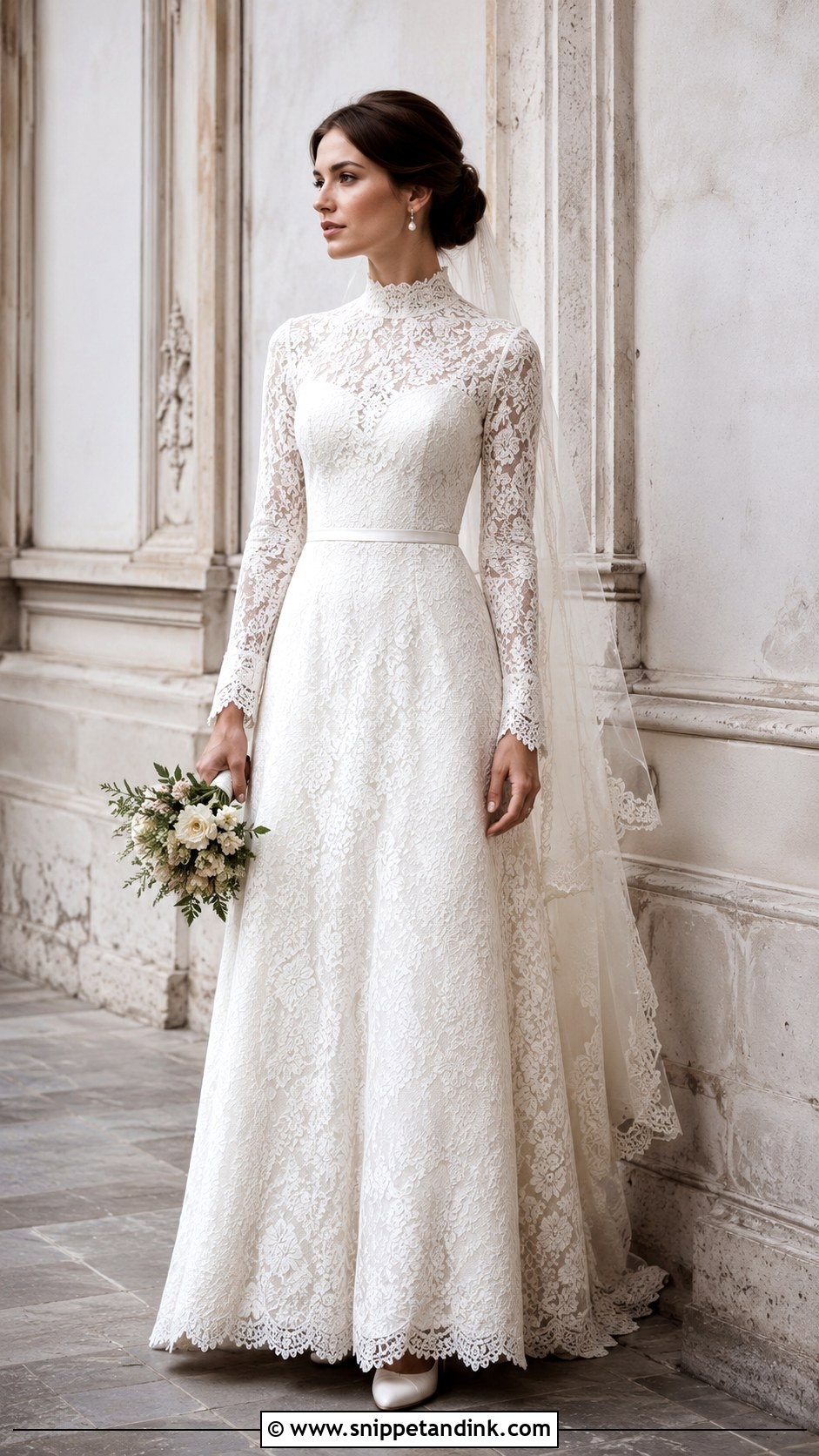
Vintage-style lace brings a high neck, fitted sleeves, covered buttons and a soft waist together. Delicate Chantilly-type lace over a comfortable lining suits an A-line or a gentle fit-and-flare shape. Scalloped cuffs and a narrow waistband add detail without looking like a costume. Pearl drops, a low chignon, a lace-edged veil and closed pumps finish it. Older lace patterns often came with tight, narrow sleeves, so I put stretch mesh under the lace to give modern arm movement. Adjust the neckline and lining to the coverage you want.
18. Minimalist Column Long Sleeve Wedding Dress
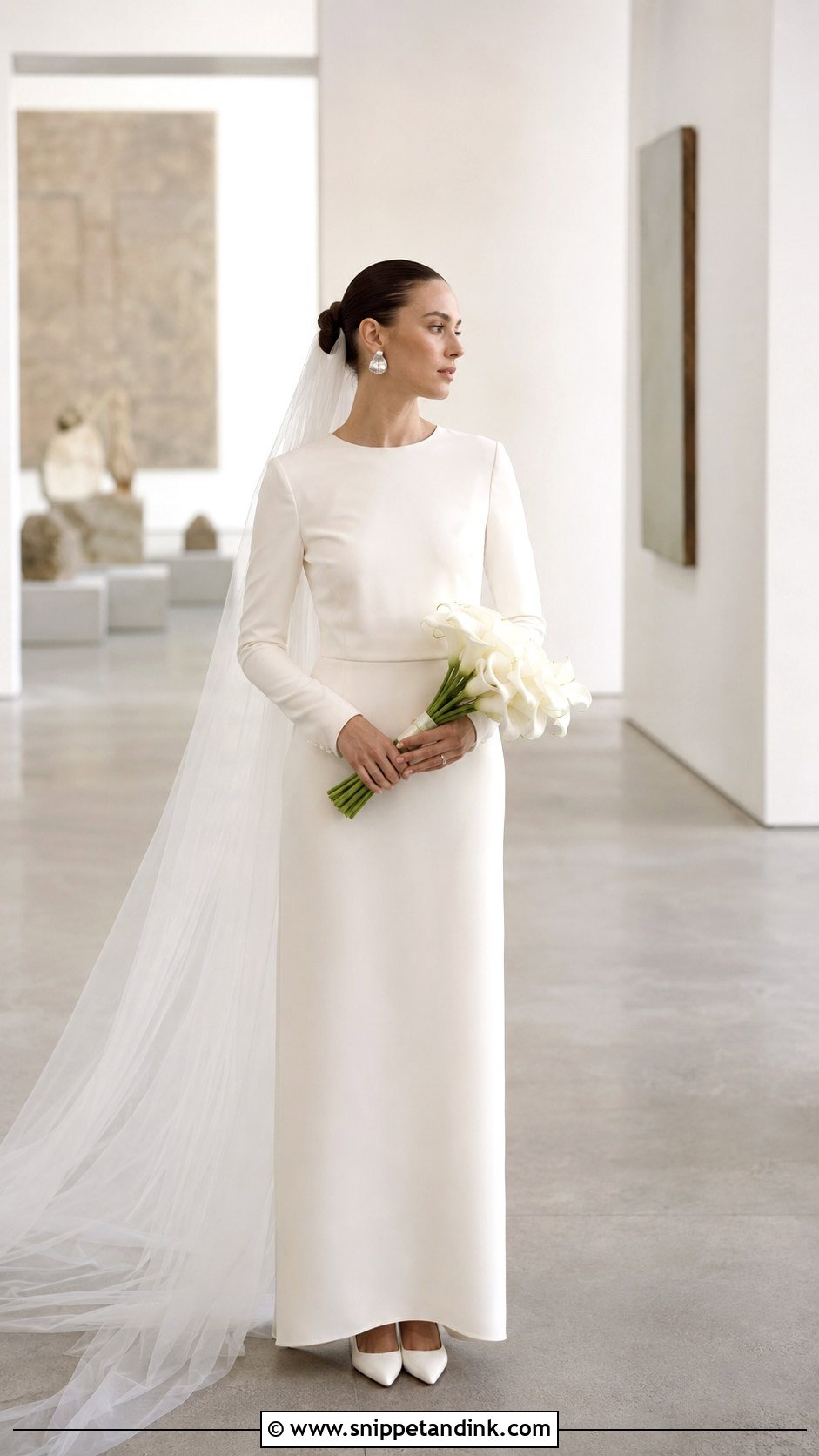
Column gowns have nowhere to hide, which is both the appeal and the risk. Matte crepe or smooth satin with slim sleeves, a lightly shaped waist and a straight skirt looks confident; a high neck feels architectural, a scoop feels softer. Sculptural earrings, a sleek bun, pointed pumps, a long plain veil and a single-variety bouquet keep the line uninterrupted. Without embellishment, the tailoring is everything. I check the shoulder seam, sleeve length, waist placement and drape from the side and back, not only the front, and I make sure the undergarments leave no lines.
19. Brocade Ball Gown Long Sleeve Wedding Dress
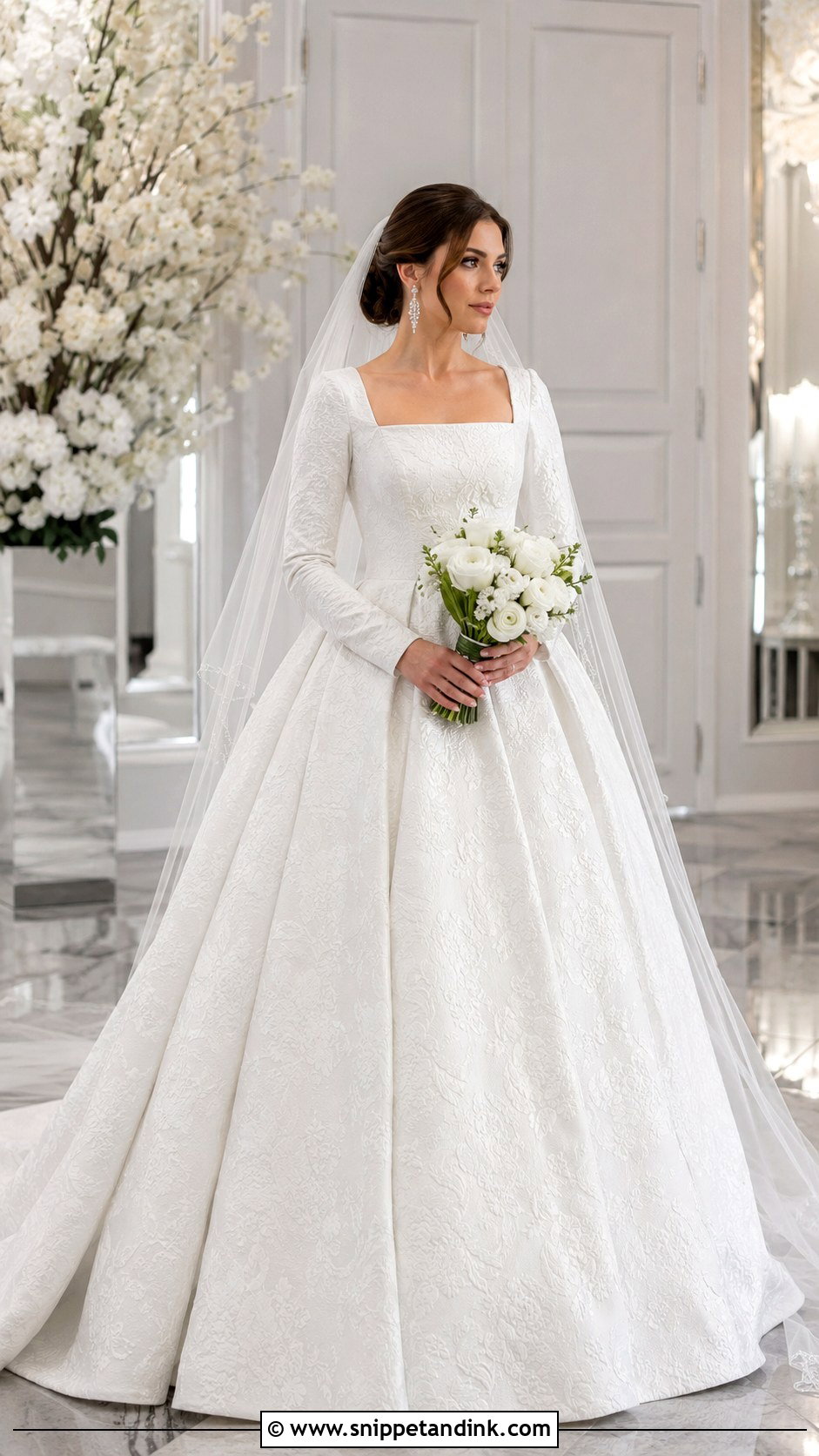
Brocade belongs to a cold-season wedding. The woven pattern and stiff body give a regal ball-gown shape. Look for a subtle floral weave, a fitted long-sleeve bodice and a full skirt with careful pleats; a square or bateau neckline keeps the heavy fabric from looking dated. Crystal studs, an updo, closed pumps and a plain cathedral veil work, with a streamlined bouquet. Brocade is warm and heavy, so a supportive bodice matters, and I’d ask you to stand in a heated room in it for a while before final alterations. A smooth lining inside the sleeves stops the textured weave from scratching your arms.
20. Tea Length Satin Long Sleeve Wedding Dress
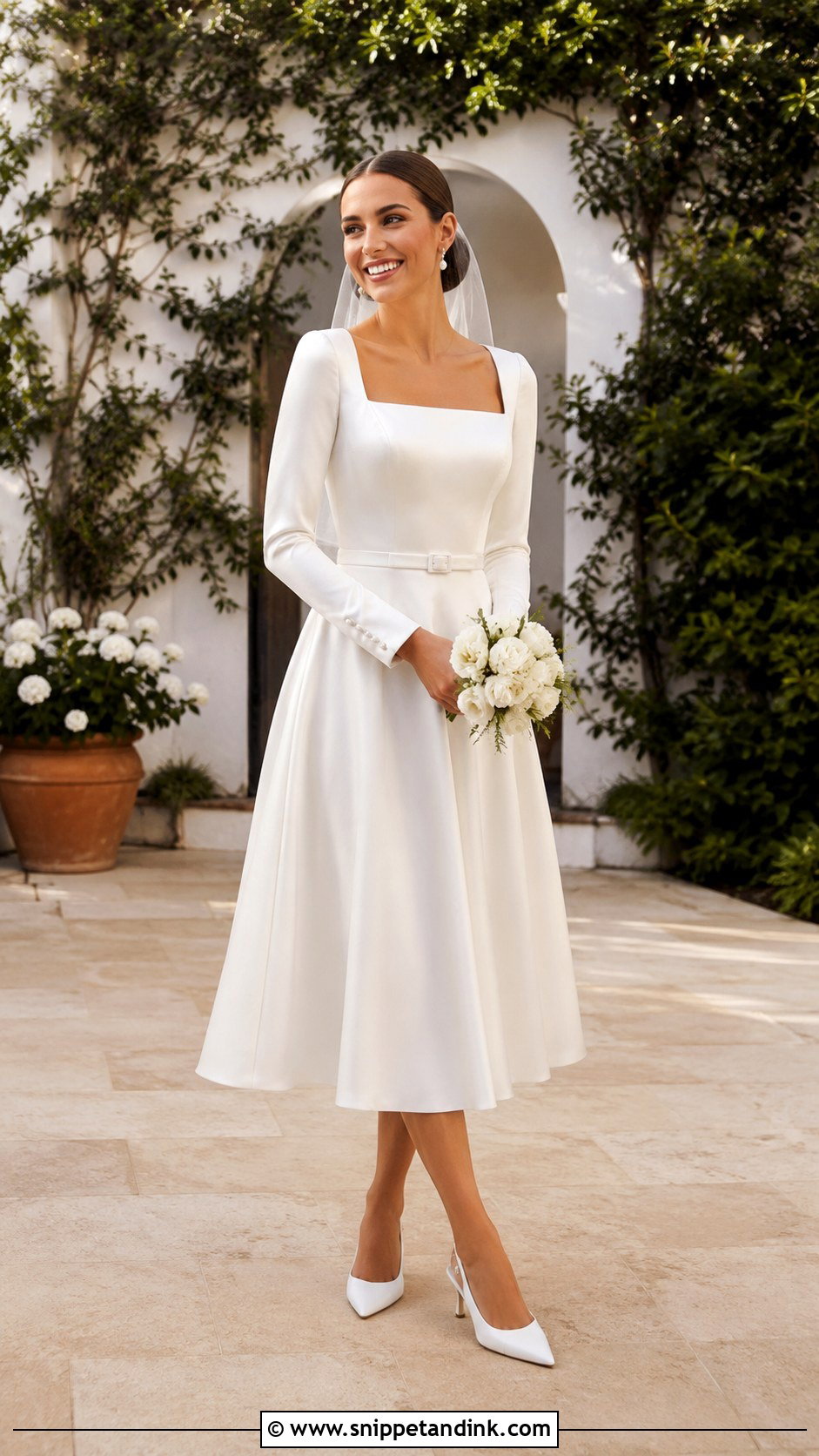
Tea length cuts the skirt between the knee and the ankle, which keeps the long sleeves from feeling formal and puts your shoes on show. A fitted bodice with a square or bateau neckline and a softly flared skirt suit it. Choose pointed pumps, embellished flats or low ivory slingbacks, then pearl earrings, a short veil and a compact bouquet. Covered cuff buttons and a narrow belt add a classic finish. Because more of the skirt’s inside shows as you move, a clean lining and smooth petticoat matter. Set the hem in your actual wedding shoes. It suits a courthouse ceremony, a garden or a small venue.
Can You Wear Long Sleeves at a Summer Ceremony?
Yes, if you pick the right fabric. I’d steer a summer bride away from brocade, Mikado and heavily lined lace. Unlined illusion tulle, light chiffon and fine lace on mesh let air reach the skin, and a sheer sleeve looks covered in photos while feeling much cooler.
Small fixes that help in the heat
- Ask for discreet underarm shields sewn into the lining; they protect satin and silk from sweat marks.
- Plan an indoor or shaded moment between the ceremony and photos so you can cool down.
- Consider detachable sleeves if the reception is outdoors in the afternoon.
- Keep bracelets off. They catch on sheer cuffs and a ring stack often shows better against fabric than a busy wrist.
One more photo detail: with full sleeves, your hands carry a lot of the visual interest, so I suggest a neat manicure in a soft shade. It shows up in every ring and bouquet shot.
Sit, Hug and Raise the Bouquet Before You Sign Off
Look at the whole outfit, not just the sleeve. Start with a silhouette you’re comfortable in, then compare necklines, fabrics, how the sleeve is built and how much embellishment you want. Add shoes you can walk in, jewelry that supports the dress and a veil that suits the venue. Above all, test your arm movement at every fitting: sit, hug, lift your bouquet and practice a few dance steps before you approve alterations. Illusion lace, satin, chiffon or detachable, a sleeve that moves with you is the one you’ll forget you’re wearing.
You'll Like These Ideas:










Leave a Reply