
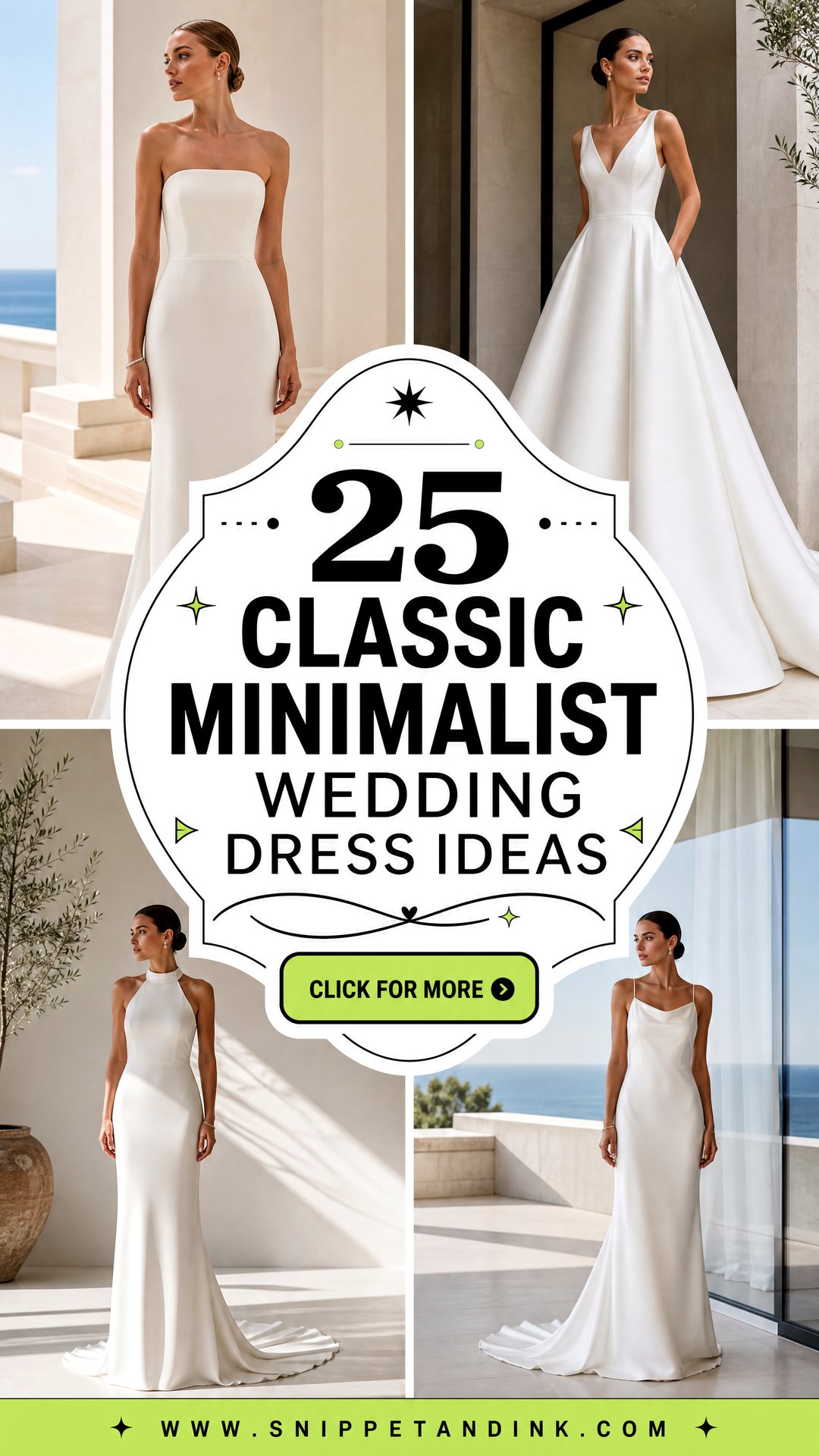
Minimalist doesn’t mean unfinished. With no beading or lace to draw the eye, the cut, the fabric and the way the dress sits on you are the whole show, which makes these gowns far less forgiving than they look on a hanger. Satin, crepe, mikado and silk do most of the work here, shaped into square necklines, columns, soft A-lines, long sleeves and plain trains. I’ve gathered twenty-five of them below, each with what I check when a bride tries it on, so you can tell a clean dress from one that’s merely plain.
Why a Plain Dress Needs Better Construction, Not Less
With no lace or beading covering the seams, everything about how a minimalist gown is made is on view. Before I let a bride fall for one, I turn it inside out and look at four things.
- Seams pressed flat and running straight, with no puckering where panels meet at the waist.
- A full lining in a fabric that doesn’t cling, so the outer layer can’t catch on underwear.
- An invisible zip or one hidden under a placket. A lumpy zip is the first thing you notice in back-view photos.
- Hems on crepe and satin that are blind-stitched rather than visible on the outside.
Then there’s what goes underneath. A plain gown shows every line, so bring your actual bra and shapewear to the first fitting. If the dress gets fitted around different underwear later, you end up paying for the same alteration twice.
1. Satin Slip Wedding Dress
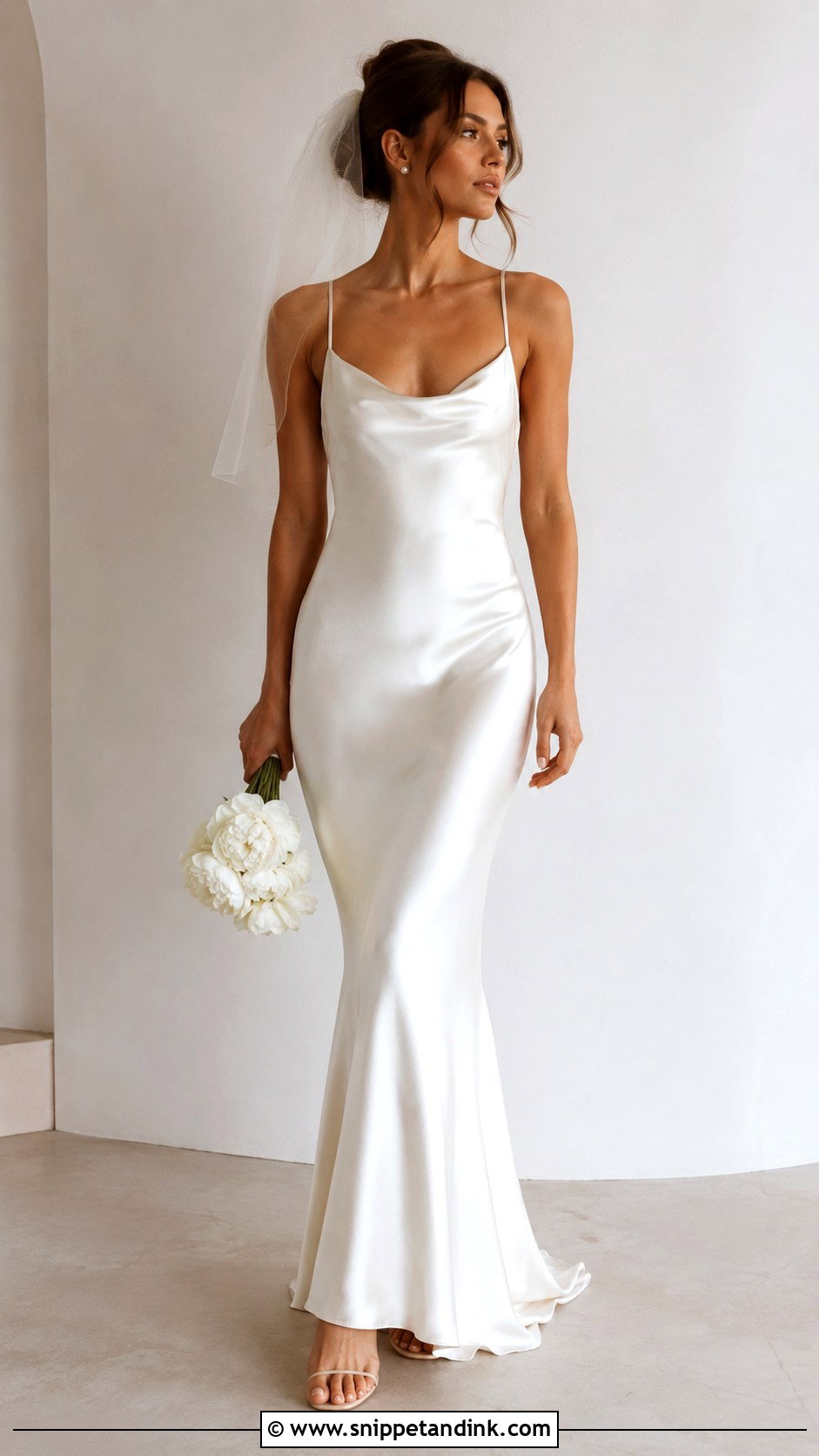
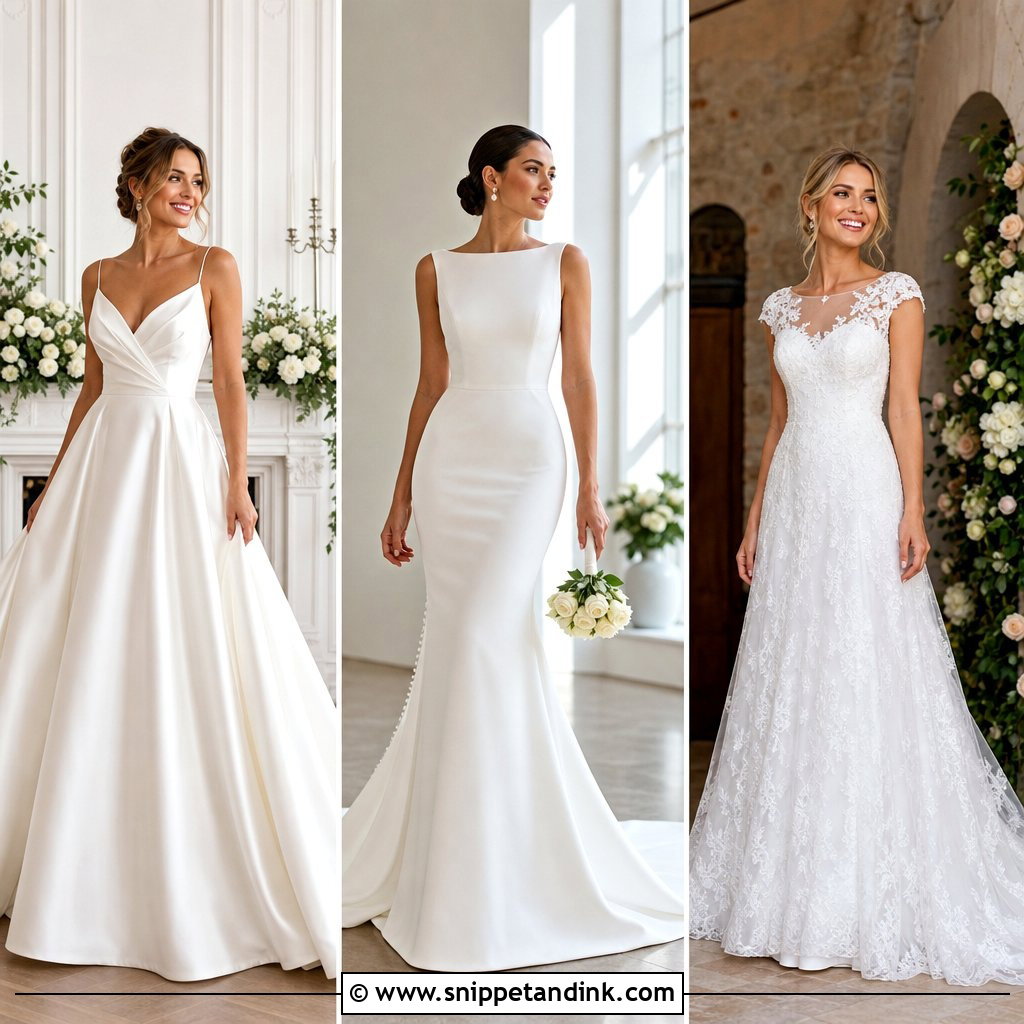
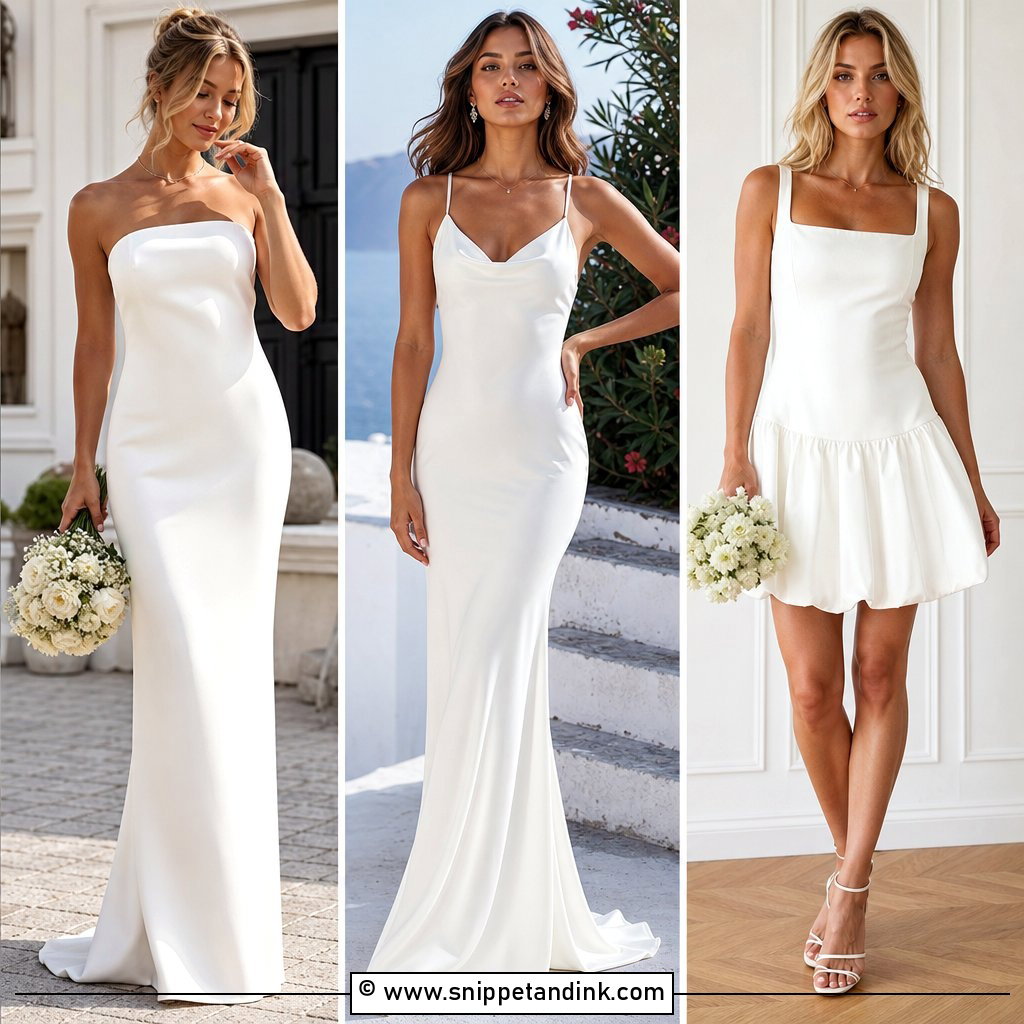
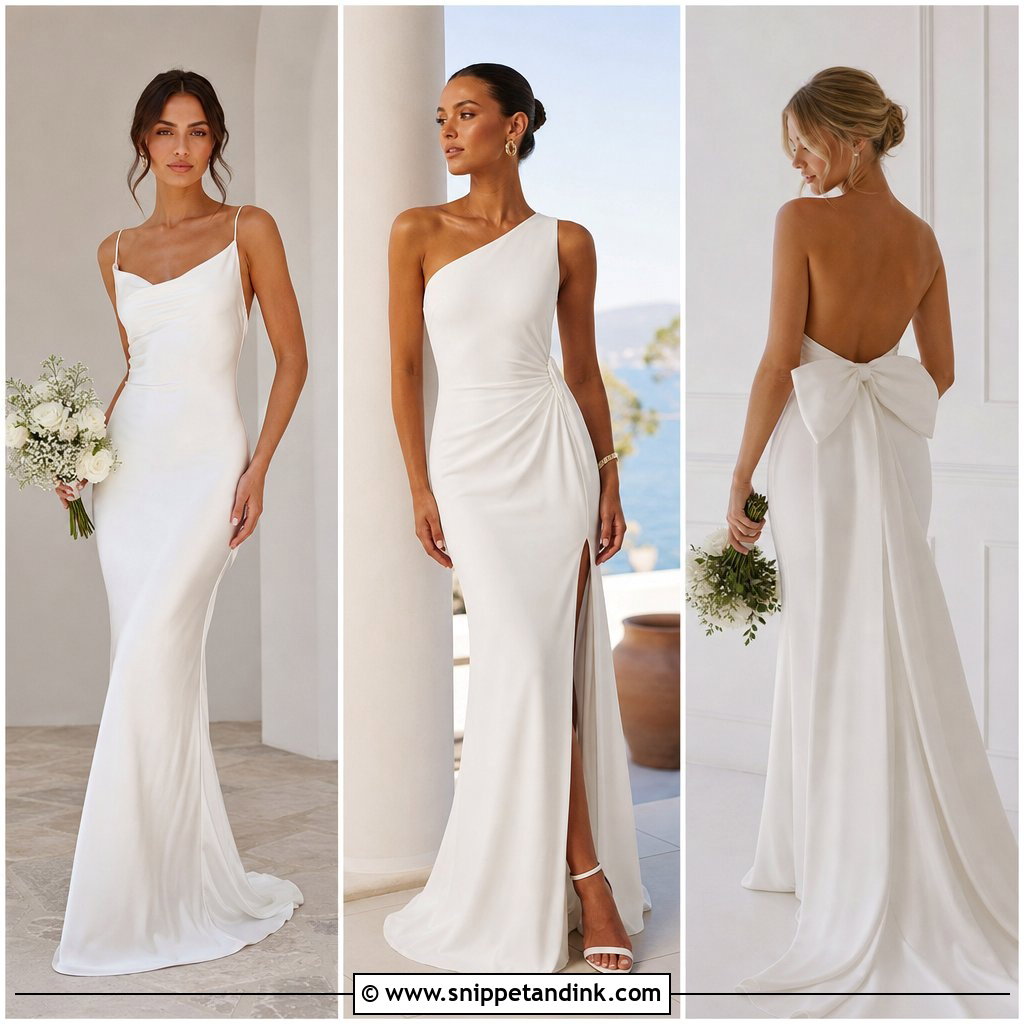
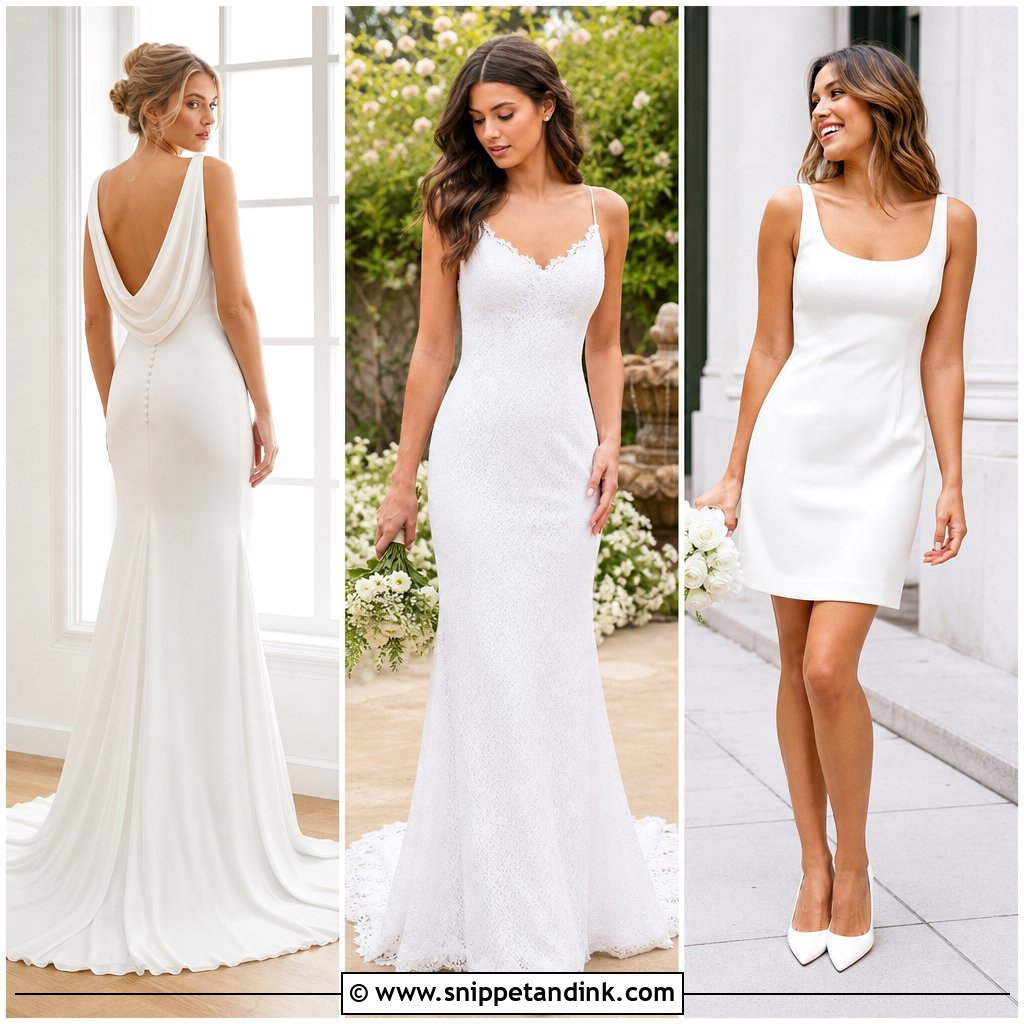
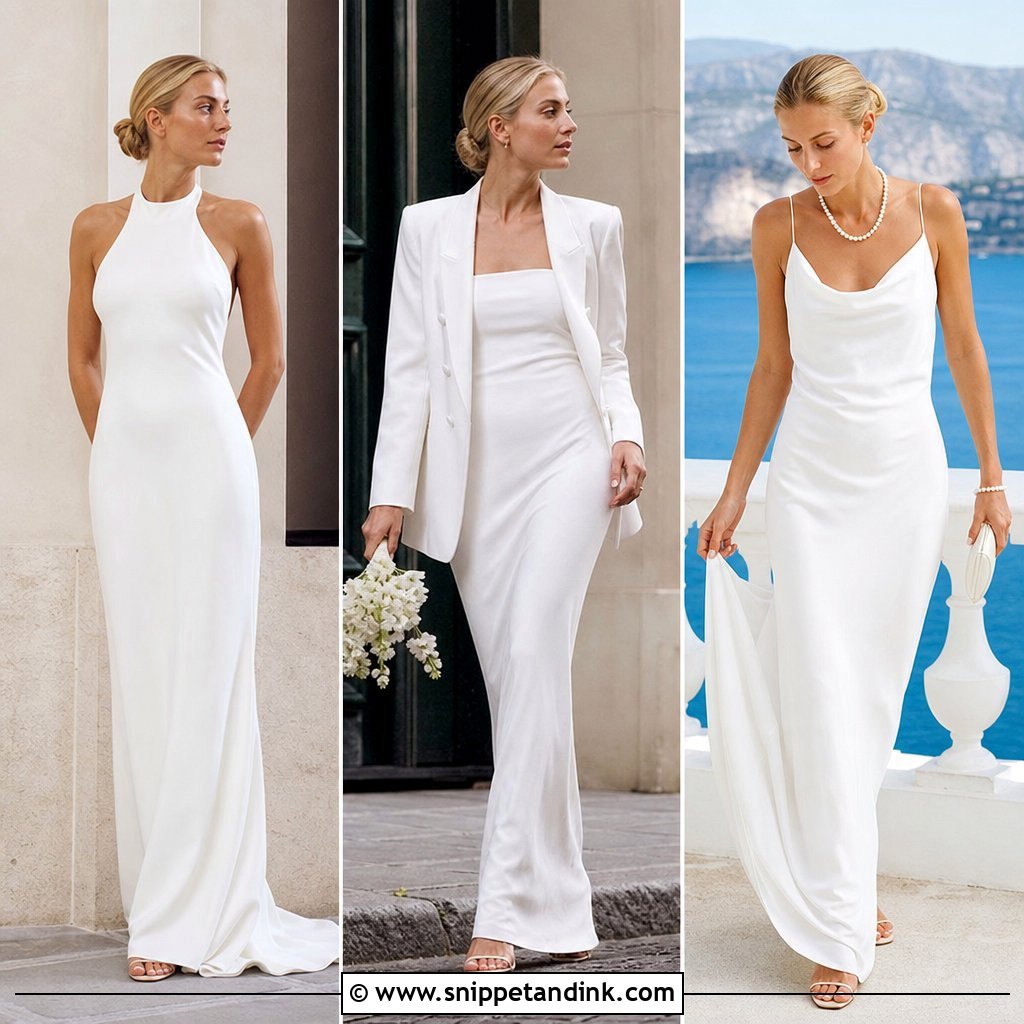
Thin straps and bias-cut satin make the quietest look on this list and the hardest one to fit. Satin reflects light along every curve, so a slip shows the line of anything underneath it, plus every wrinkle from the car ride. The bias cut is what lets it move as you walk. If you’d rather have support than rely on tape, ask for a slip with a lightly structured bodice. Straight necklines and soft cowls both suit it. Keep everything else bare: barely-there heels, pearl studs, a low bun, and a short veil or a sheer floor-length one.
2. Square Neck Wedding Dress
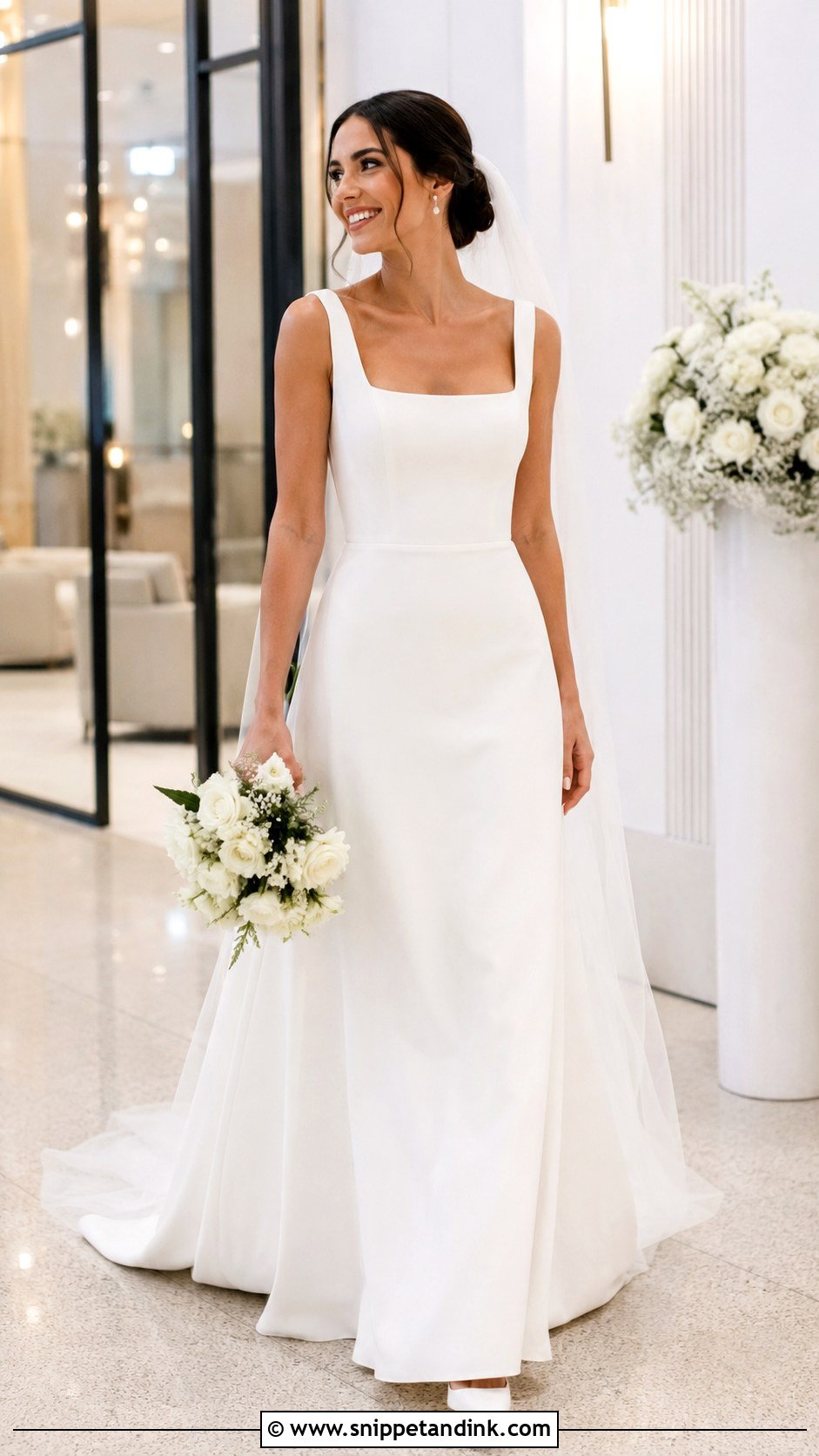
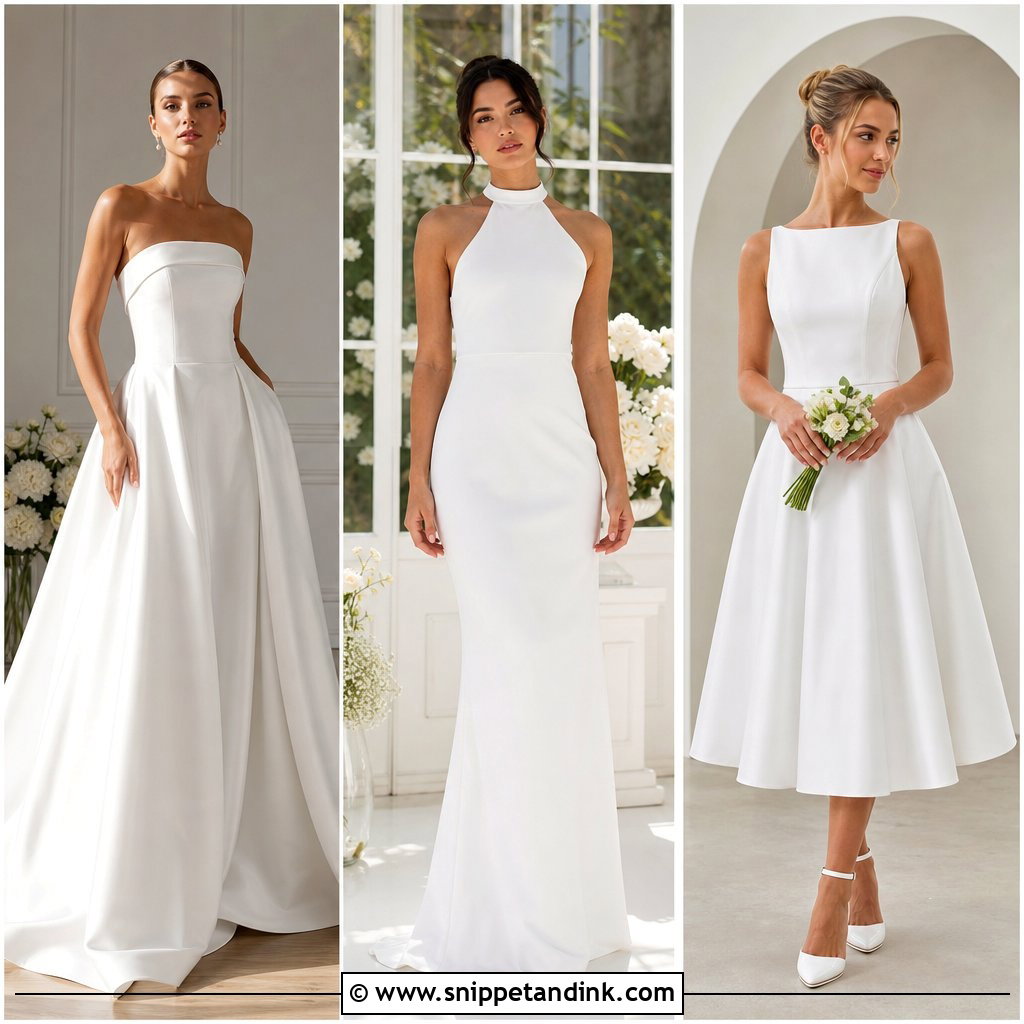
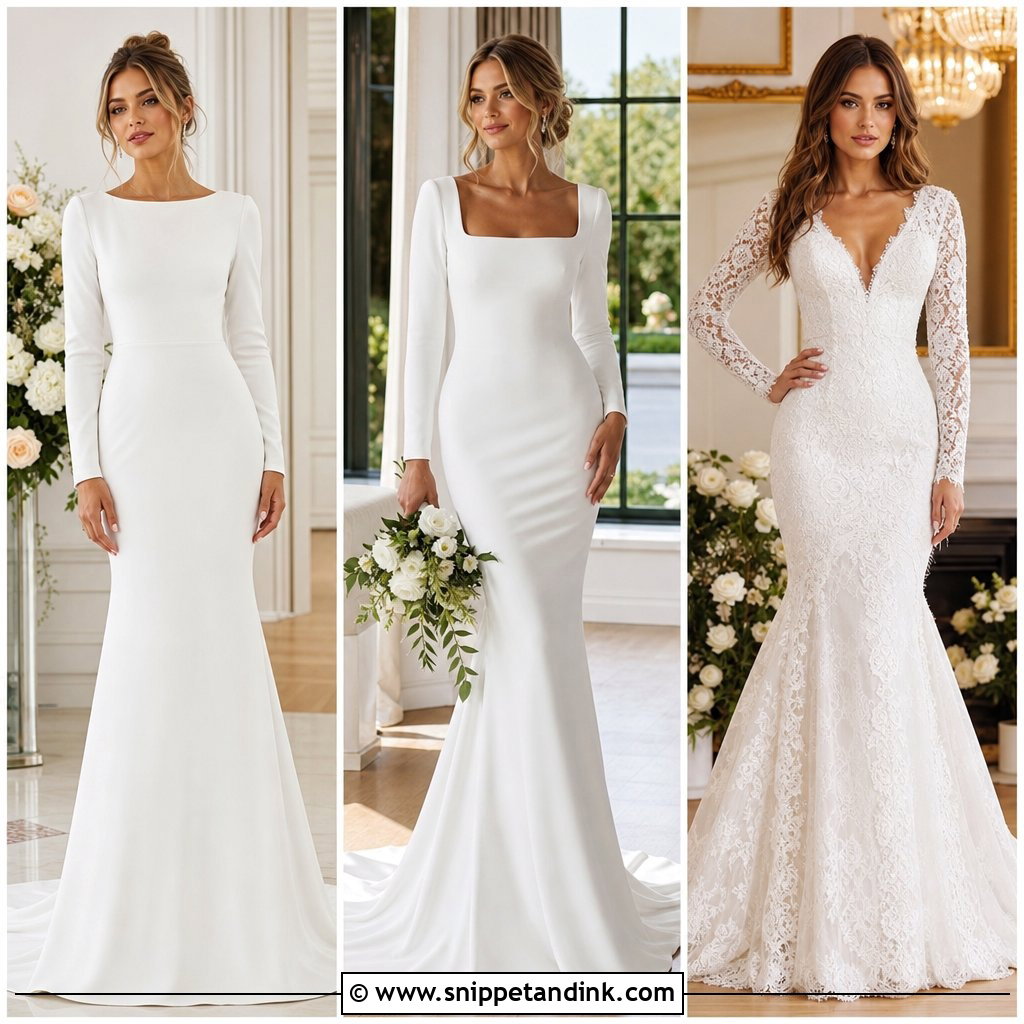
Short verdict: the square neck is the most adaptable shape here. It frames the collarbone and sits well on fitted, A-line and column gowns in crepe, satin or mikado with very few seams. I watch whether the top edge stays straight when you breathe in. A square neck that bows outward on an inhale needs stay tape along the edge or a slightly closer fit. Wide straps or long sleeves add coverage without breaking the line. A sleek chignon, small drop earrings and pointed satin heels finish it, at a courthouse, in a garden or at a formal reception.
3. Long Sleeve Crepe Wedding Dress
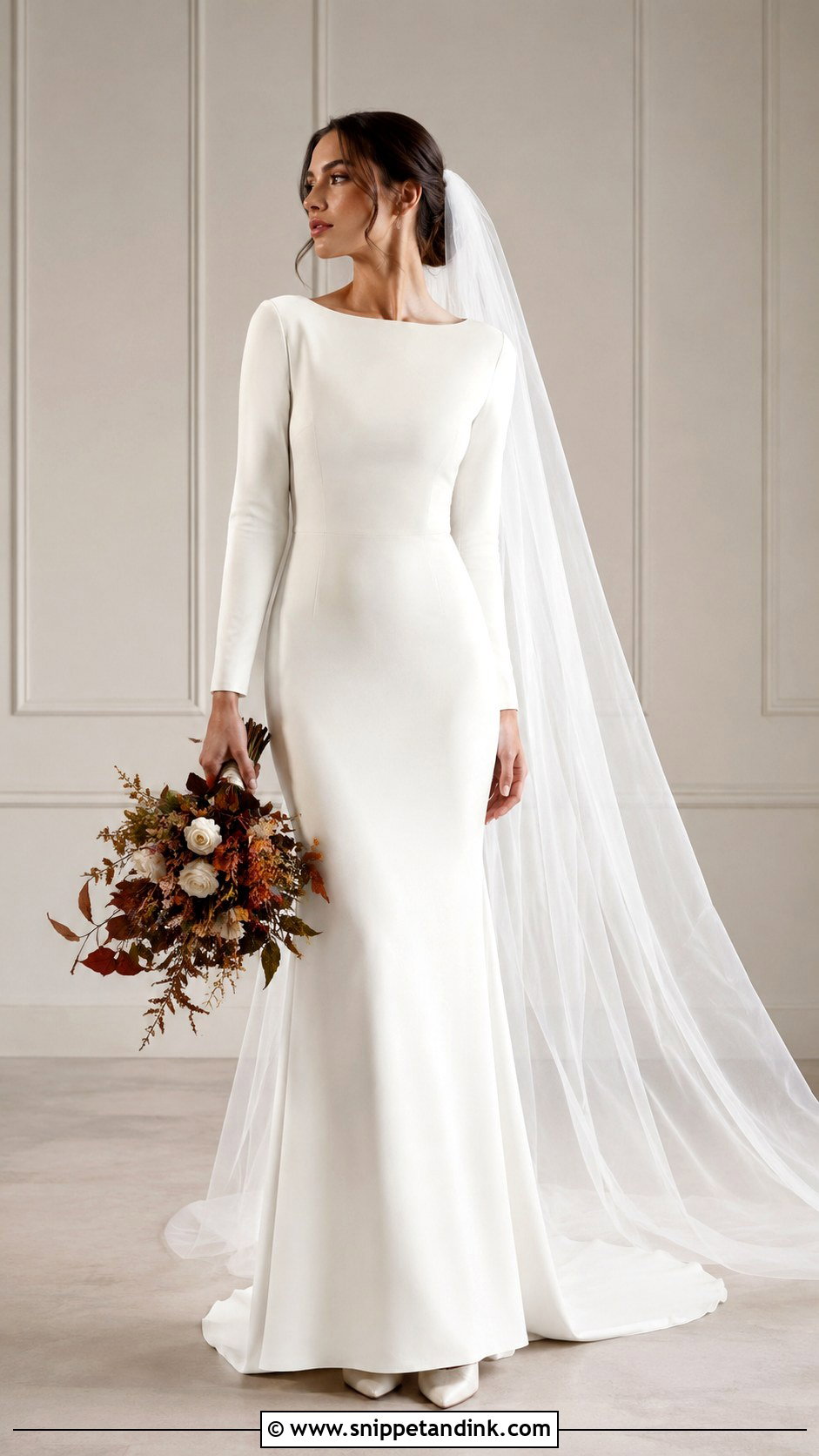
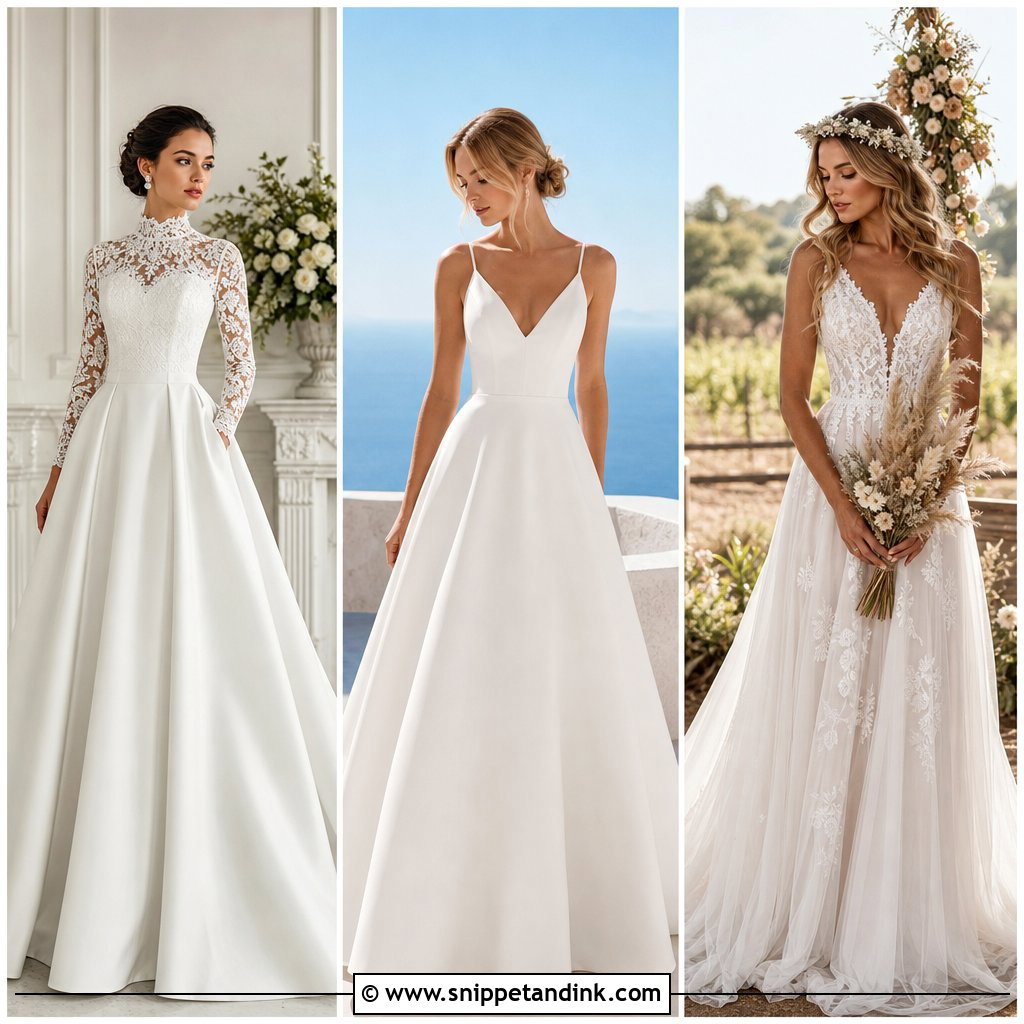
Crepe has enough weight to smooth the body, and long sleeves cut from it look classic without a scrap of lace. The sleeve is where the fitting effort goes. Crepe sleeves cut too slim pull at the shoulder seam the moment you lift your bouquet, so I ask for the bodice and sleeves to be checked with your arms raised as well as resting. A bateau, high, square or V front all work, and a row of covered buttons down the back is all the decoration it needs. Closed-toe heels, delicate earrings and a long veil carry it through fall, winter, city and formal weddings.
4. Strapless Column Wedding Dress
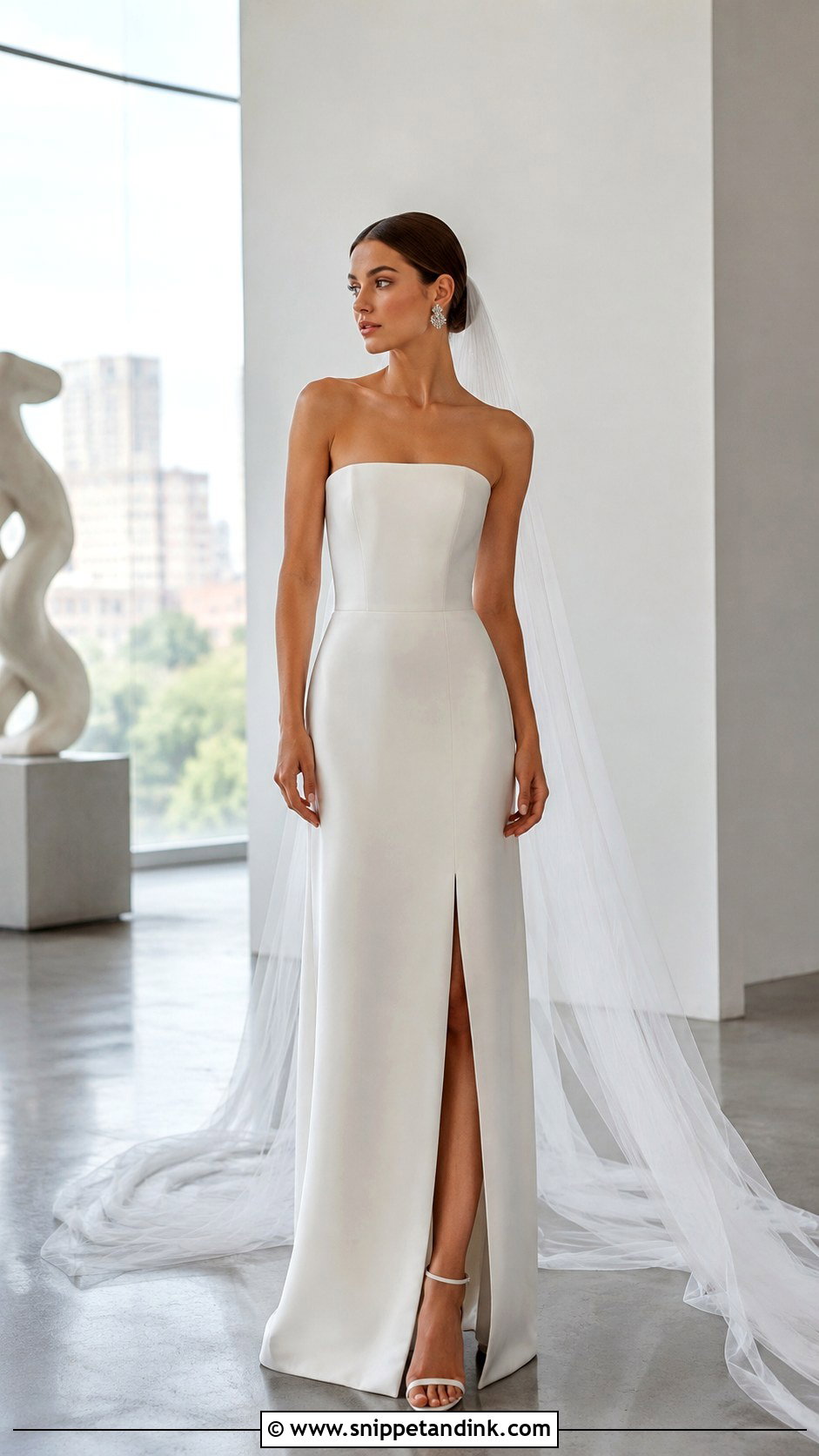
Few dresses look this clean, and few move this little. A straight column with no stretch can turn a staircase into a problem, so a gentle front slit is less about style than about walking. Satin, crepe or silk faille with a smooth bodice and hidden boning keep it crisp. The shoulders are on show, which means a smooth updo and sculptural earrings carry the outfit, with slim heels underneath. A sheer cathedral veil adds ceremony drama if you want it. Modern ballrooms, rooftops, galleries and evening receptions suit it.
5. A Line Mikado Wedding Dress
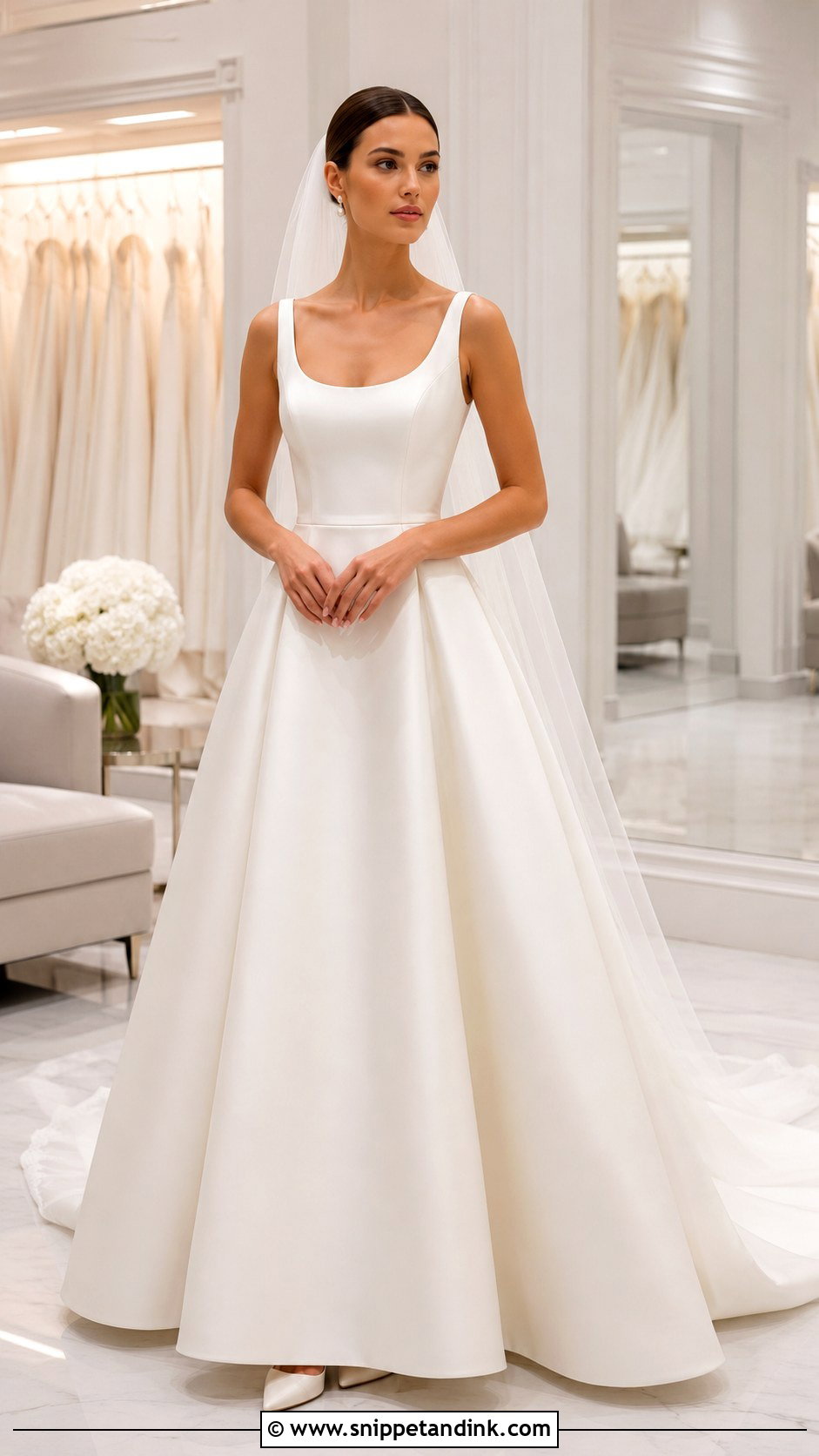
Mikado is crisp enough to hold an A-line skirt with almost no petticoat, so even a very plain gown keeps its shape across a long day. The fitted bodice and gradual flare suit most figures. I’d keep the neckline simple, a scoop, square or strapless top, because mikado makes clean edges look sharp and fussy ones look heavy. It is a warm fabric, worth knowing before a July garden ceremony. Pearl earrings, a smooth veil and plain pumps are enough beside it.
6. High Neck Wedding Dress
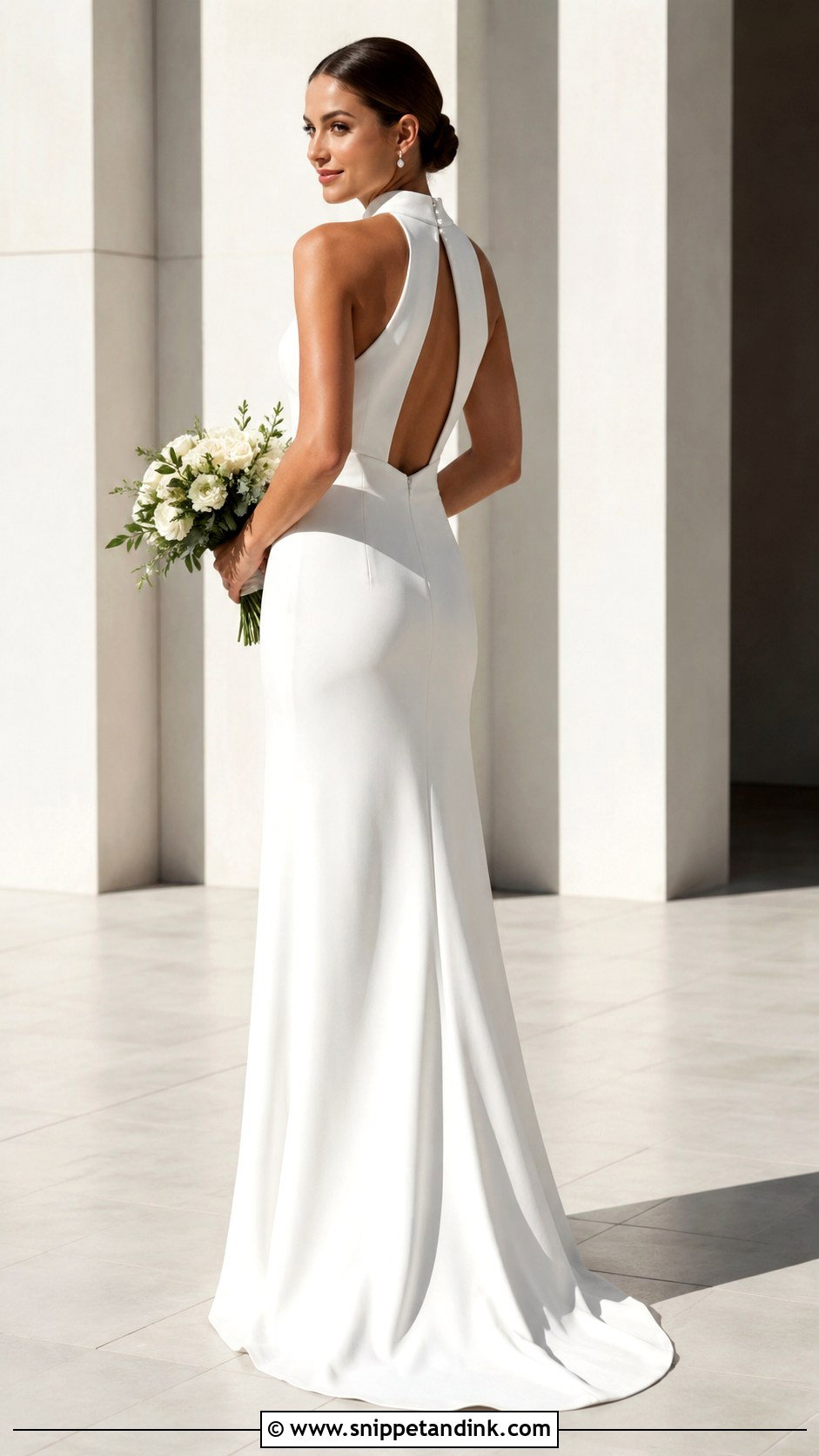
A high neck in plain crepe, satin or silk has an editorial quality that a lace version rarely gets. The risk is looking buttoned up, so I balance it with something open elsewhere: a cut-in armhole, a keyhole back or a subtle slit. Column, sheath and soft A-line shapes all work. No necklace. Small earrings, sleek heels and a neat bun keep the collar line clean. Check that the collar clears your jaw when you look down at your bouquet, because one that touches will be pressing on your chin in every candid photo.
7. Off Shoulder Wedding Dress
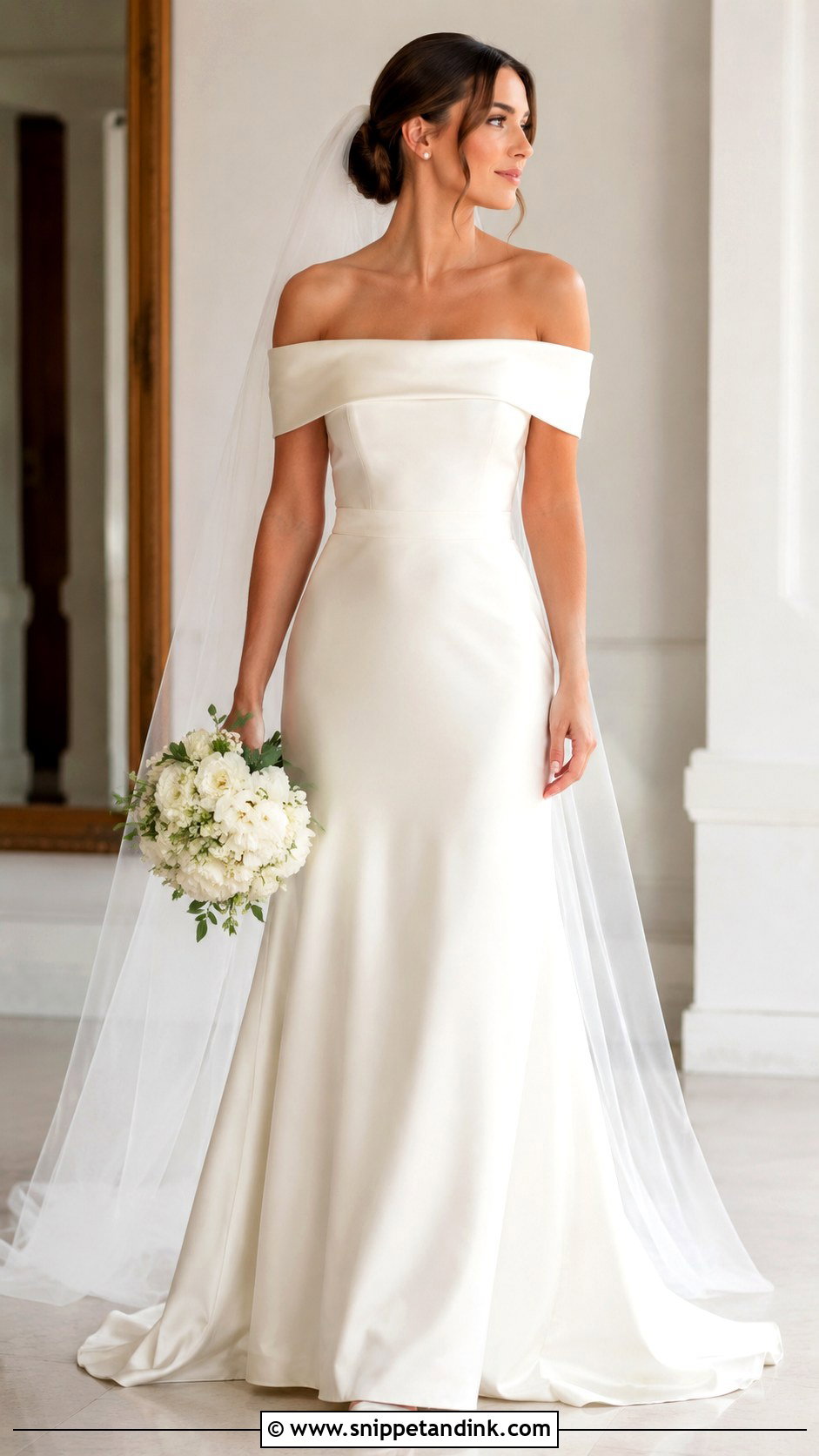
An off shoulder wedding dress softens a minimalist look without adding a single decoration. A foldover neckline in satin or mikado gives structure. A draped one in crepe feels more relaxed but slips more, so it usually needs silicone gripper sewn inside the band. Keep the bodice smooth and the waist fitted. A simple veil, pearl studs and low or mid-height heels pair well, and the bouquet should stay plain too: white roses, calla lilies or just greenery. It works indoors and out.
8. Boat Neck Wedding Dress
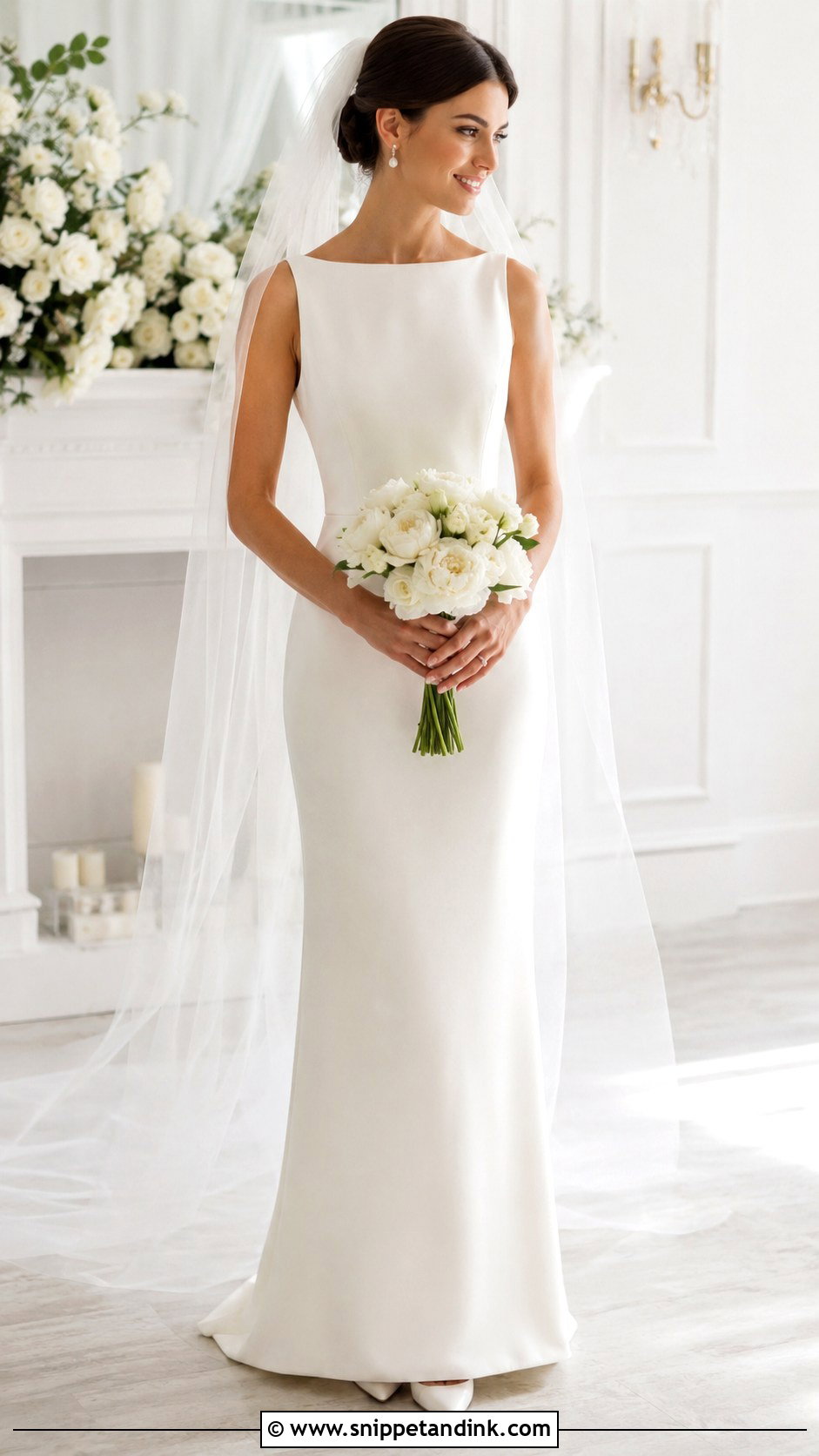
A boat neck wedding dress draws a wide, level line just below the collarbone, so the dress around it should stay plain. Smooth crepe, satin or silk in a sheath or soft A-line keeps it classic. Because the neckline runs out toward the shoulders, ordinary bra straps tend to peek out, so plan for a strapless bra or built-in cups before the first fitting. A low bun, pearl earrings and pointed heels suit it, with a plain veil that has no lace trim at all.
9. Minimalist Ball Gown Wedding Dress
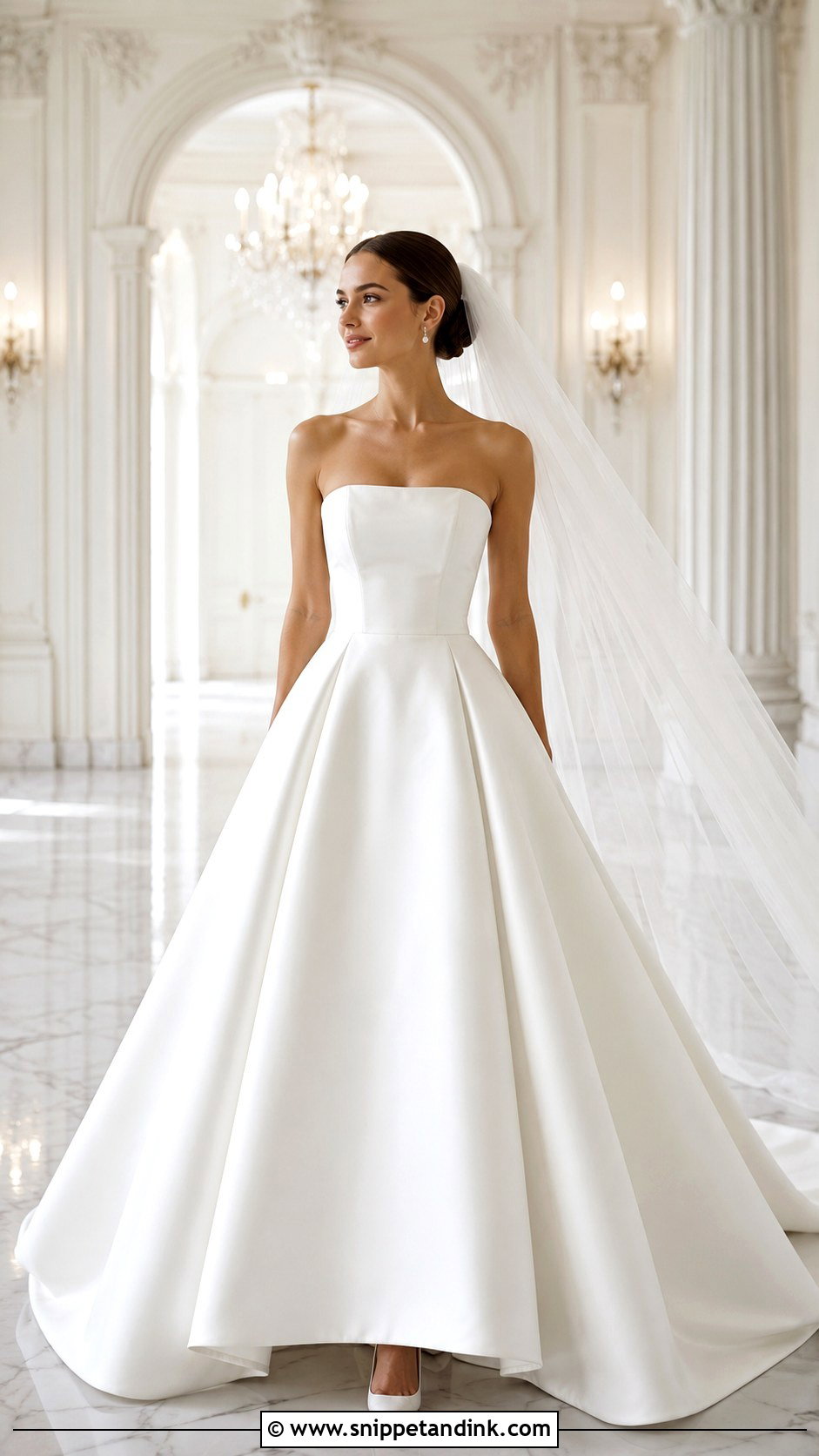
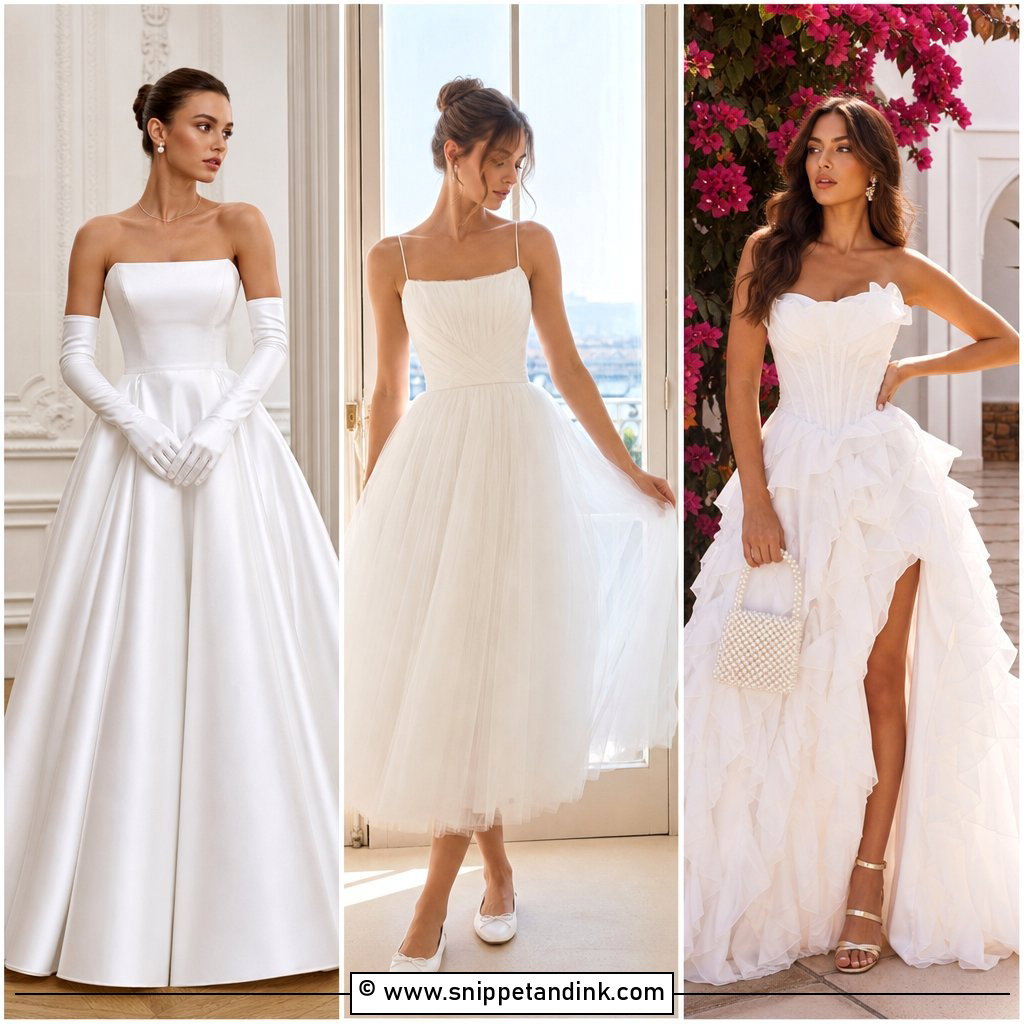
A ball gown without lace or sparkle relies entirely on how stiff its fabric is. Mikado, satin or faille will hold a full skirt; a softer fabric collapses and starts to look like a costume. The bodice should be strapless, scooped or square and completely clean. Before you buy, ask how much the skirt weighs with its layers, because a heavy skirt drags on the bodice by evening and you’ll feel it at the waist. Accessories stay small, just a smooth veil, classic pumps and little earrings, so the shape keeps all the attention.
10. Simple Sheath Wedding Dress
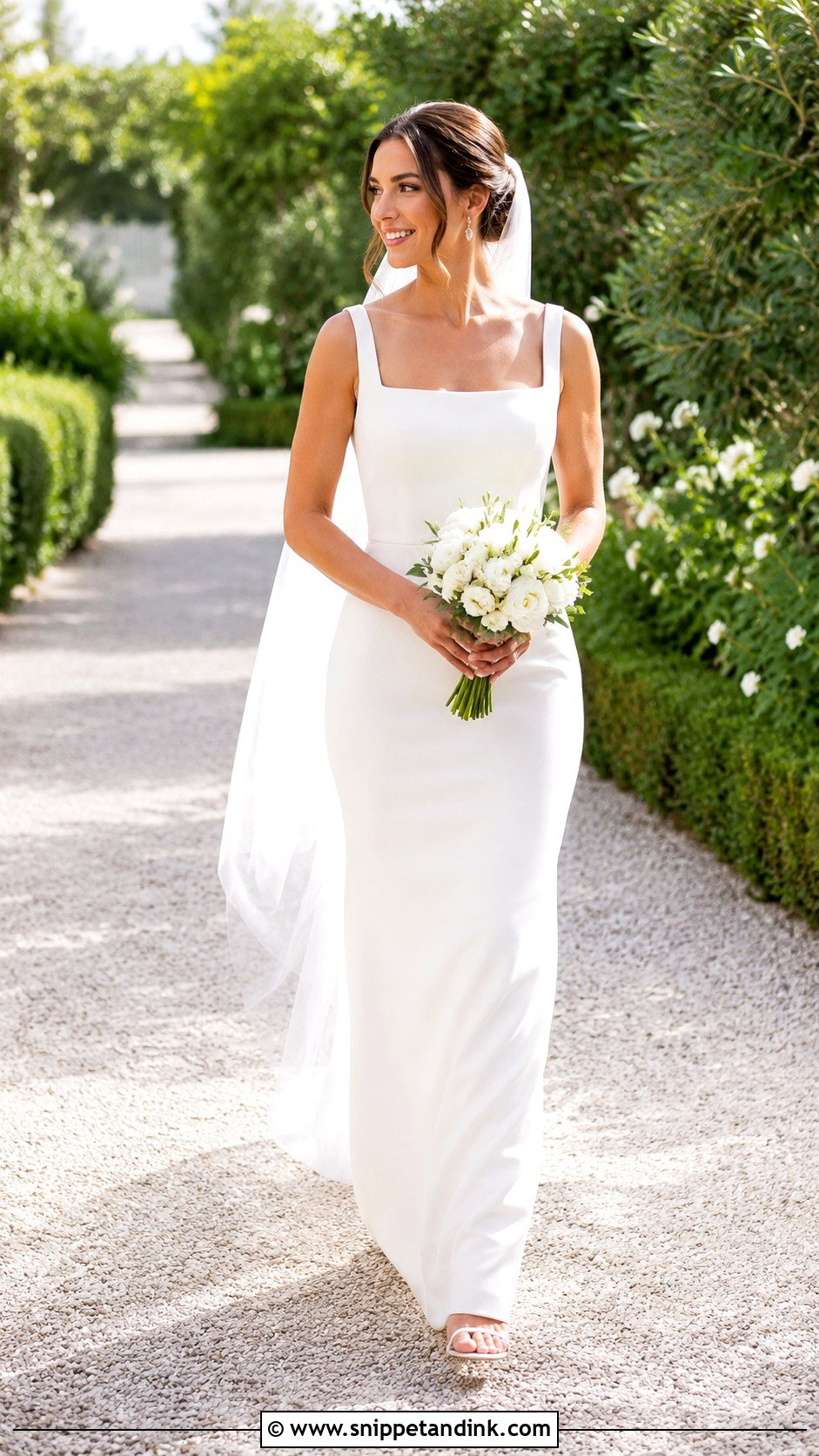
A simple sheath wedding dress follows the body’s natural line without a dramatic train or heavy structure, which makes it one of the easiest dresses here to move in. Crepe is the usual fabric, since its matte face hides creases. A scoop, square or V neck works depending on how much skin you want to show. For a beach or garden, I’d hem it a fraction shorter than usual so it doesn’t drag through sand or wet grass. Slim heels, delicate jewelry and a light veil finish it.
11. V Neck Wedding Dress
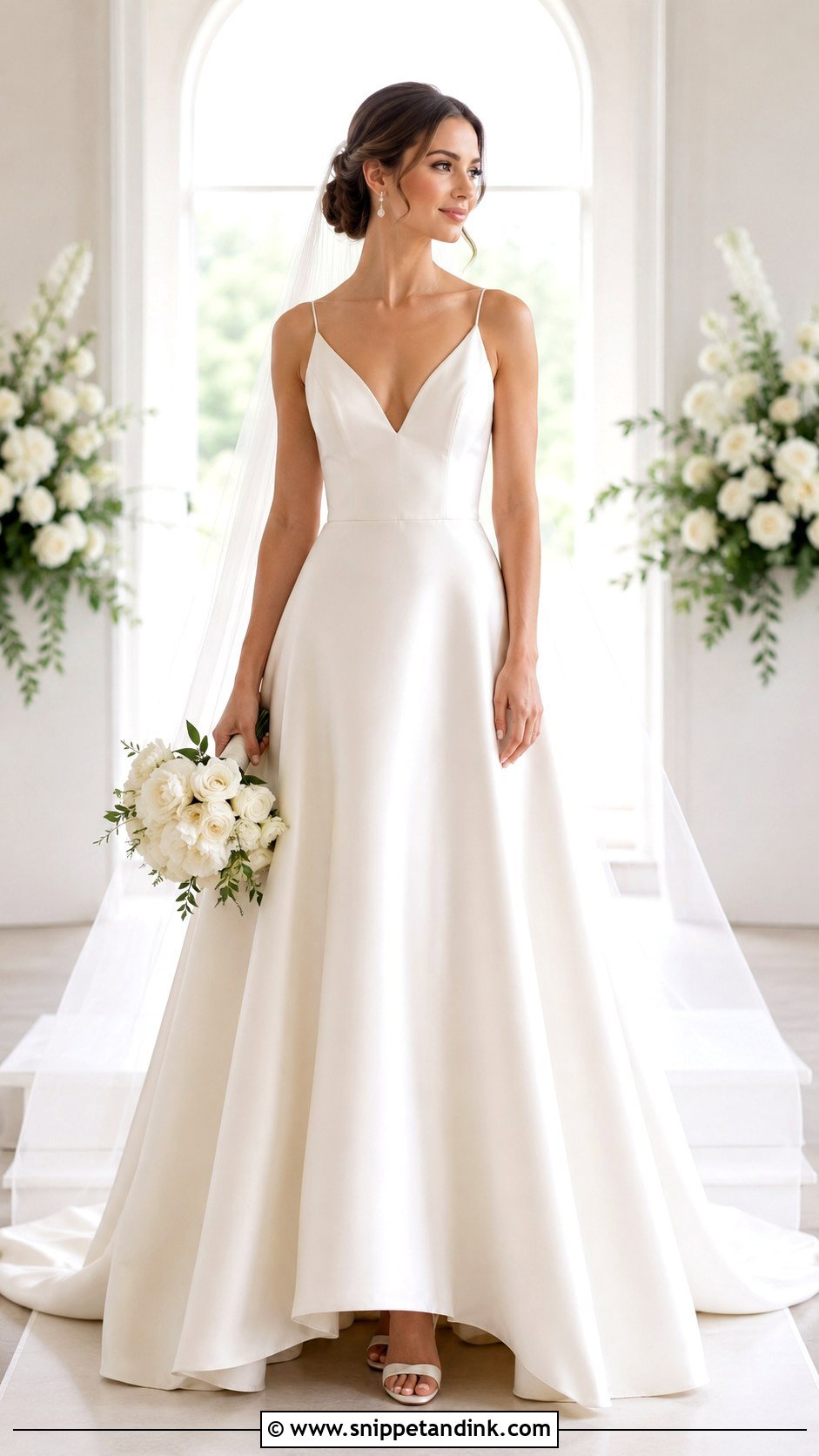
Keep the V moderate. A deep plunge is a fashion decision, while a moderate V is the classic one, and it lengthens the upper body on almost everyone. It suits soft A-line, sheath and column shapes in crepe, silk, satin or mikado. Thin straps feel delicate; long sleeves feel formal. Whatever the depth, the edges of the V should lie flat against the skin, and if they lift when you turn, stay tape sewn inside the neckline fixes it. Drop earrings, a clean veil and sandals or pumps complete the outfit.
12. Halter Wedding Dress
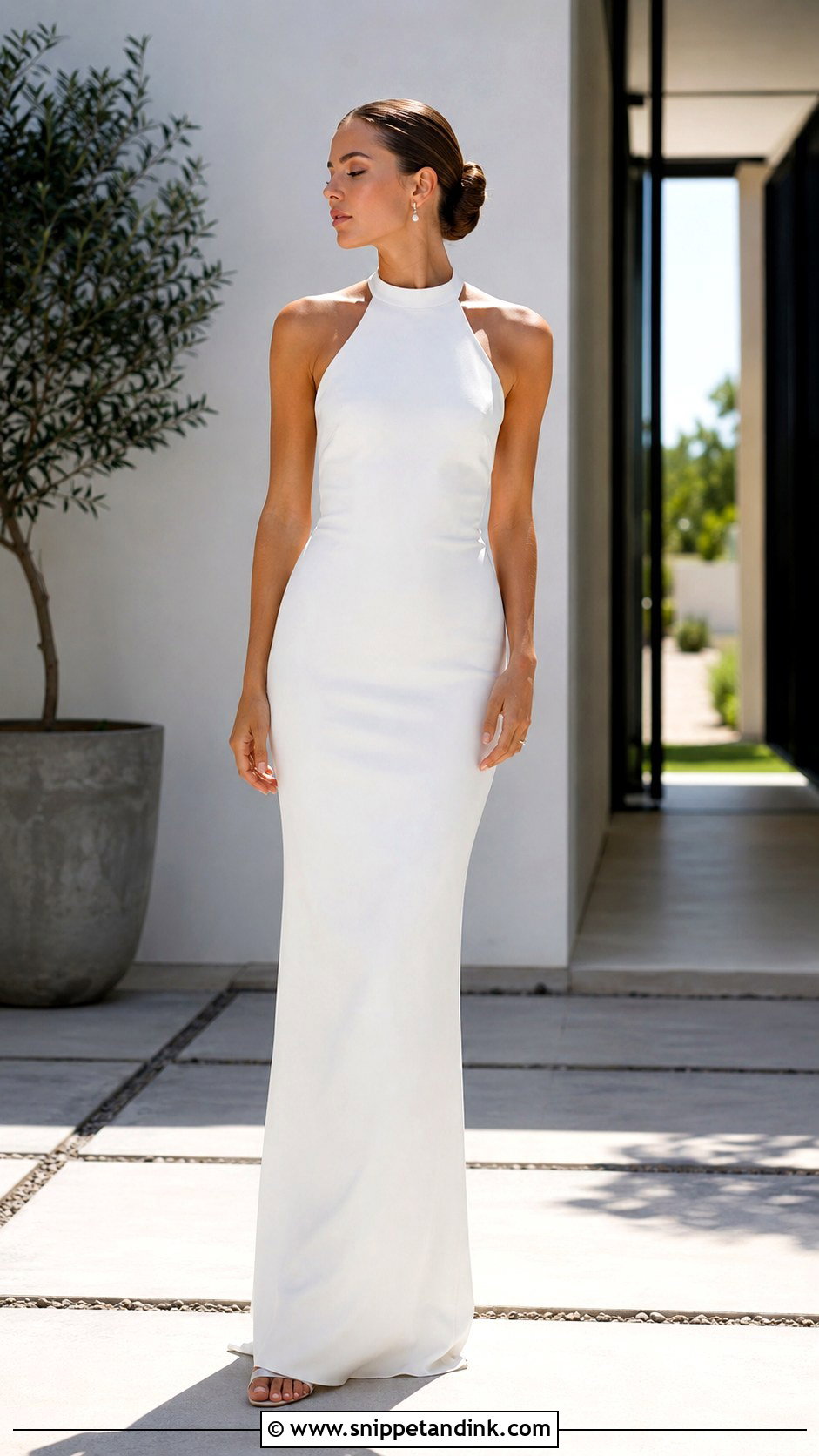
A halter wedding dress pulls the eye to the shoulders and upper back, so it pairs best with a smooth column or sheath in satin or crepe. A low bun or a polished ponytail shows the neckline, whereas long hair worn down covers exactly the part that makes the dress. The strap around the neck can end up carrying the bodice’s weight, and after hours that aches. I prefer halters whose bodice is supported on its own, so the neck strap only shapes the line. Skip the necklace and keep to simple earrings, slim heels and a small bouquet.
13. Clean Corset Wedding Dress
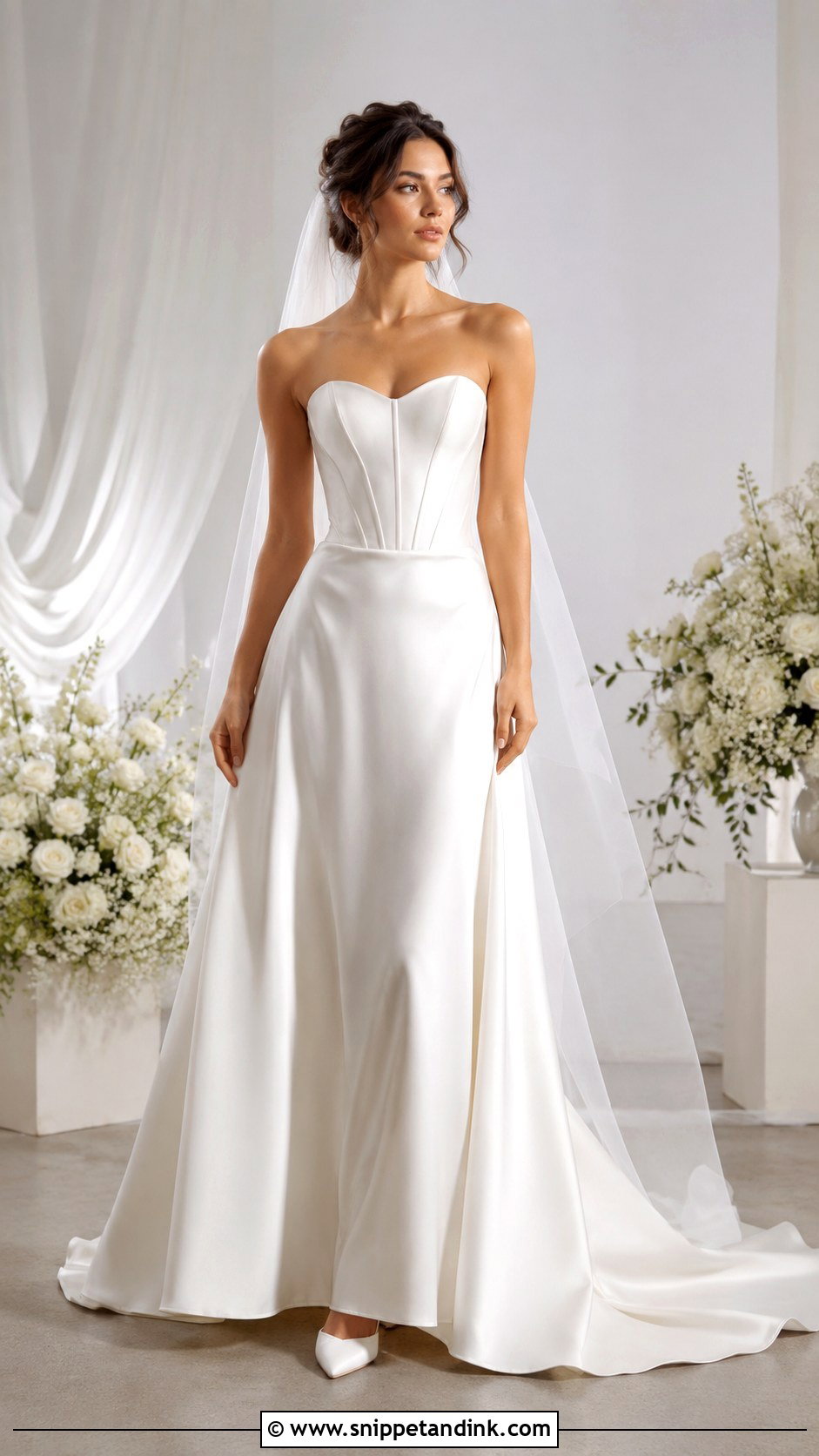
Smooth panels and subtle boning give a corset bodice shape without decoration. Satin, mikado or crepe all suit it. A strapless corset over an A-line skirt reads classic, and on a column it reads modern. Watch for boning channels showing through thin satin as little ridges. Good construction pads them or adds an interlining so the outside stays smooth. Finish with a plain veil, soft waves or a low bun, and pointed heels.
14. Scoop Neck Wedding Dress
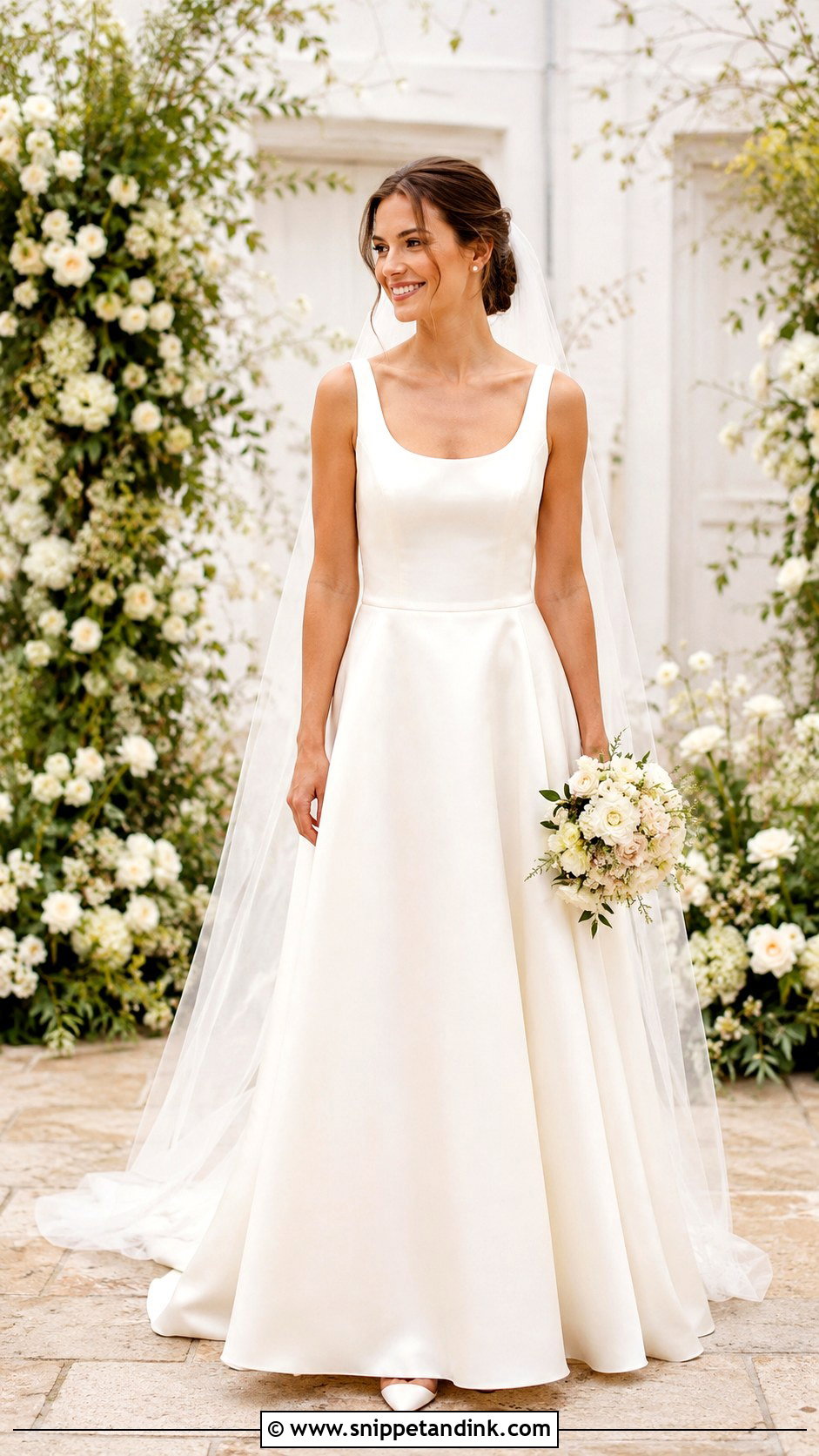
The rounded neckline is the gentlest on this list and one of the easiest to wear, since it shows the collarbone without much cleavage. On a fitted sheath it looks modern; over an A-line skirt it looks traditional. It also works with most ordinary bras, which is more useful on a long day than it sounds. Pearl studs, satin heels and a sheer veil are enough, especially for a daytime or garden wedding.


15. Simple Wedding Dress With Bow
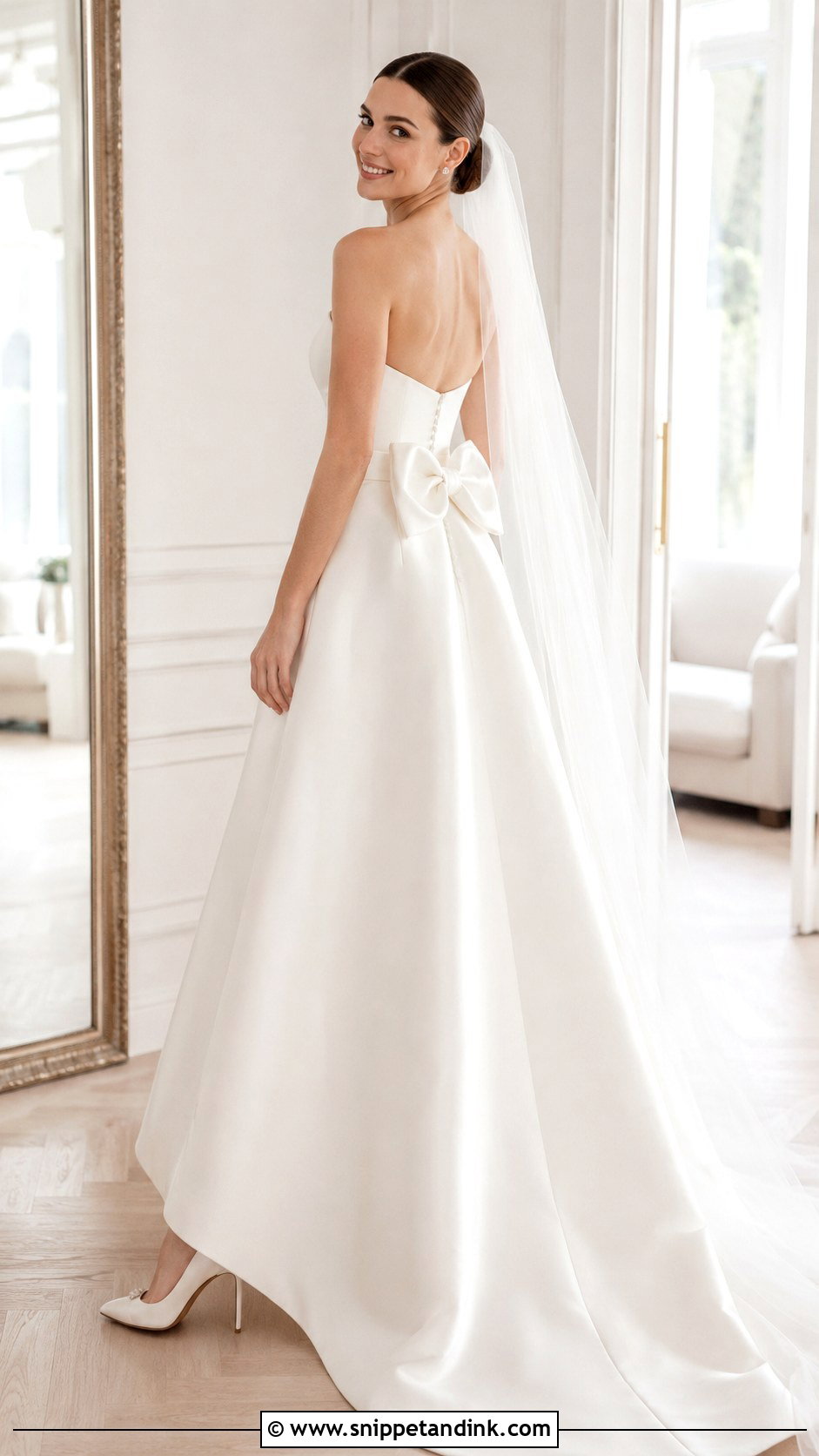
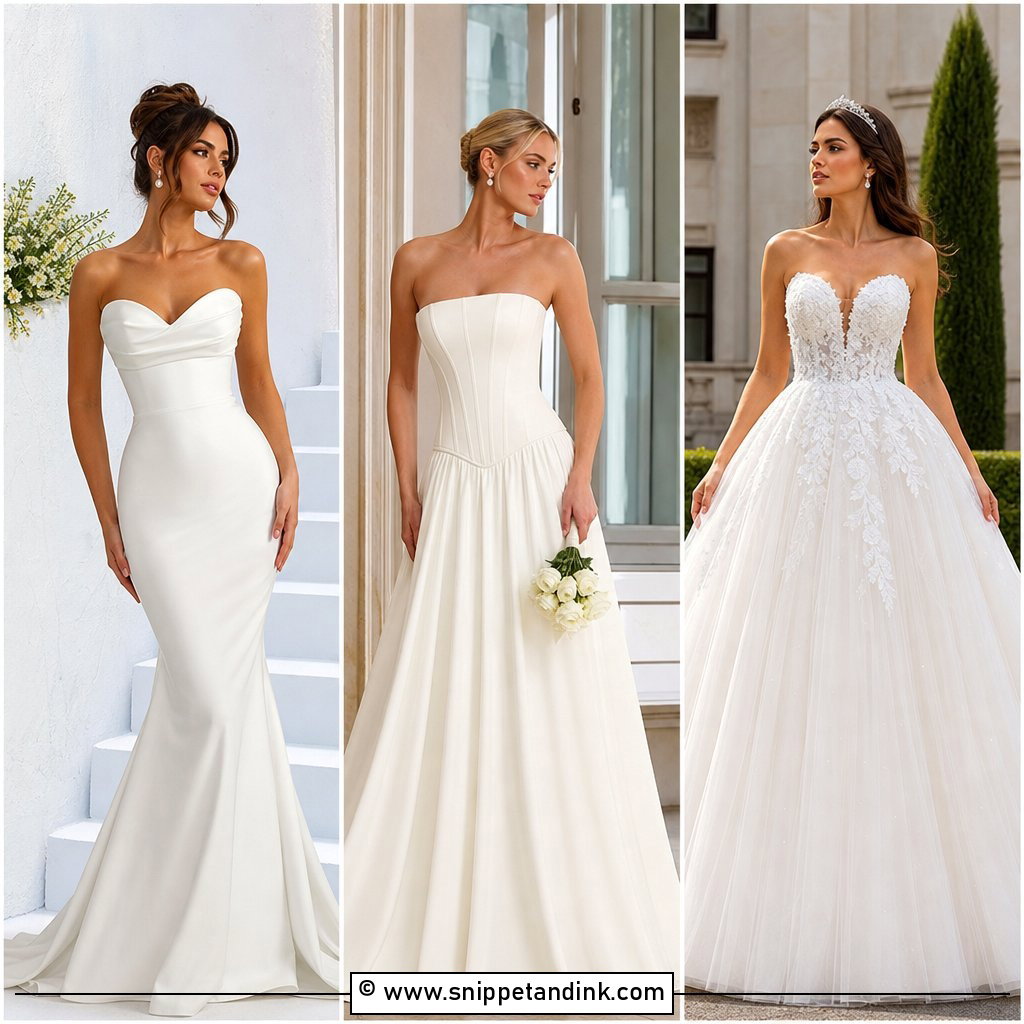
A bow on a plain gown has to look intended rather than added on. One small bow at the back, the waist or a shoulder is the limit, and the rest of a smooth satin or mikado dress should stay free of beading, lace and texture. A strapless A-line with a back bow is the traditional version, while a column with a shoulder bow is more fashion-led. Remember that the back bow is what guests look at for the entire ceremony, so check it from behind in a three-way mirror. Simple heels and understated earrings are all it needs.
16. Minimalist Wedding Dress With Train
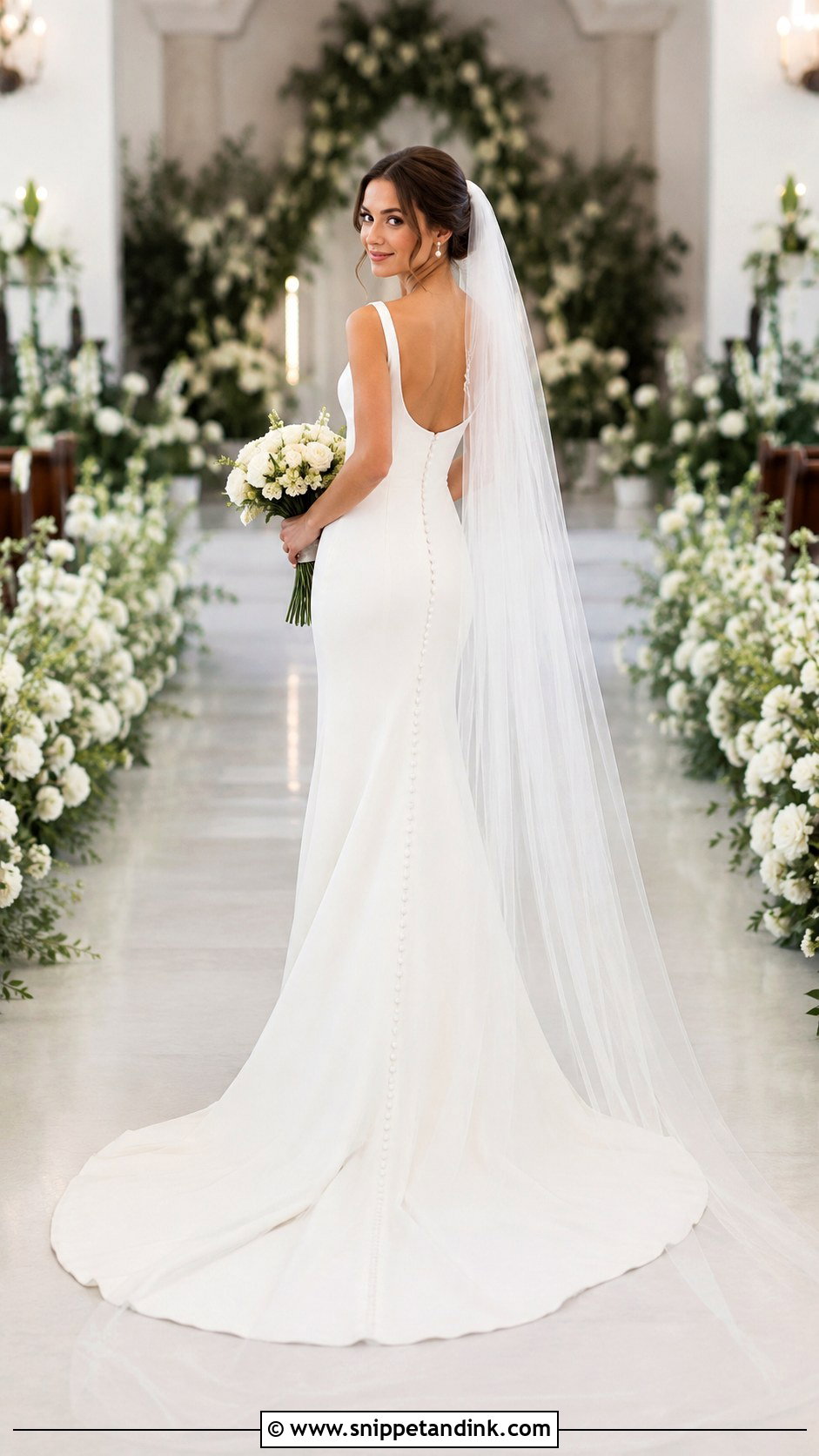
A train gives a plain dress its ceremony moment. Sweep, chapel and cathedral lengths suit different aisles, so picture yours before choosing; a cathedral train on a short courthouse aisle never fully unfurls. Clean crepe or satin with a smooth train looks good from the back and side, and covered buttons add quiet detail. Choose a plain veil that matches the train’s length or runs slightly past it. For an outdoor walk, comfortable shoes and someone assigned to straighten the train before you set off matter more than anything else.
17. Short Minimalist Wedding Dress
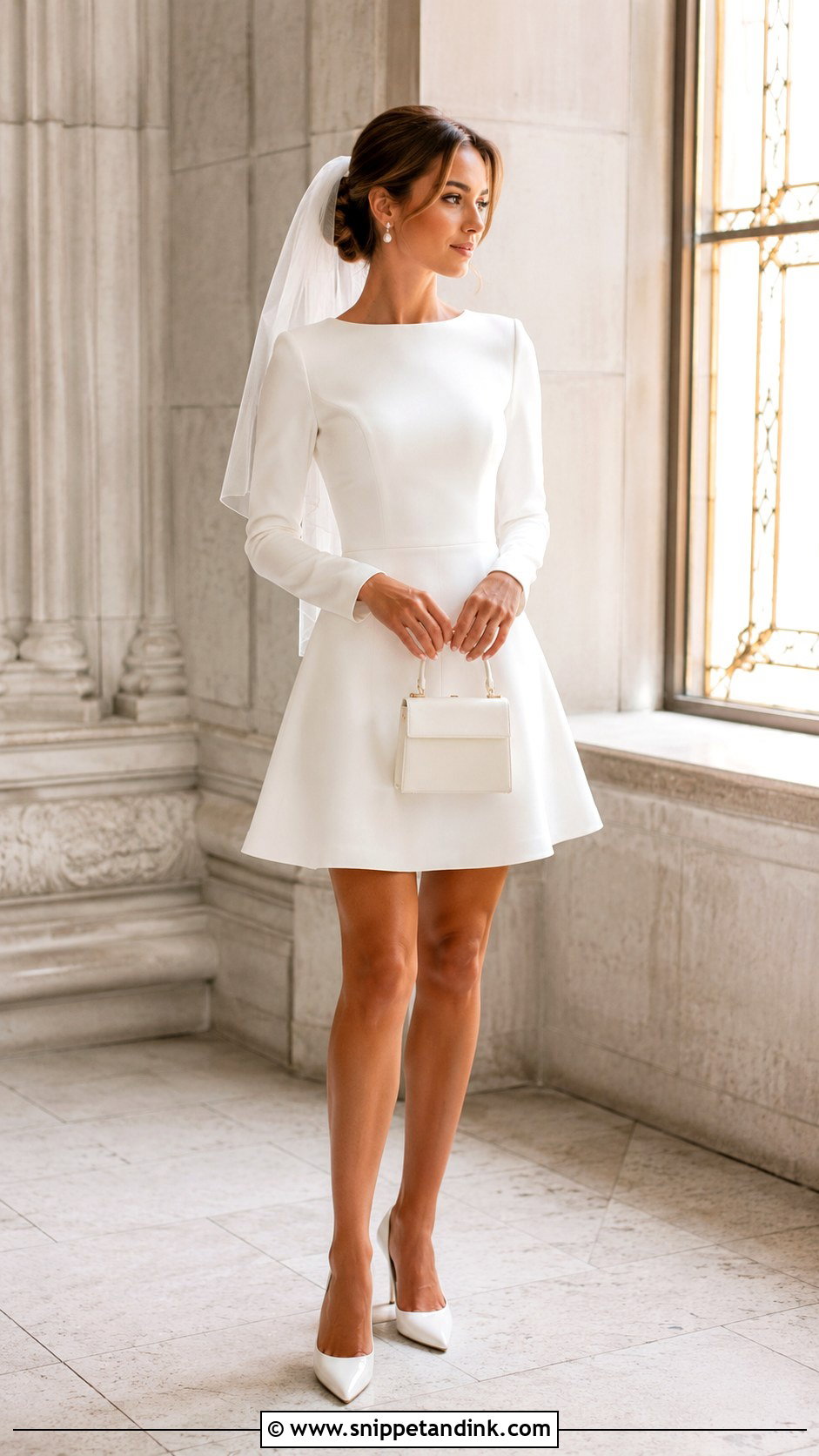
Short dresses suit courthouse weddings, elopements and receptions, and they’re my usual answer when a bride wants a second look. The classic versions rely on tailoring: a short A-line, a shift or a long-sleeved mini in smooth fabric with a plain neckline. Hemlines need more care than you’d expect. Sitting raises a mini by several inches, so do a sitting test in the fitting room. Pointed heels, pearl earrings and a small structured bag finish it, and a short veil, a bow headband or a sleek clip makes it read as bridal.
18. Tea Length Wedding Dress
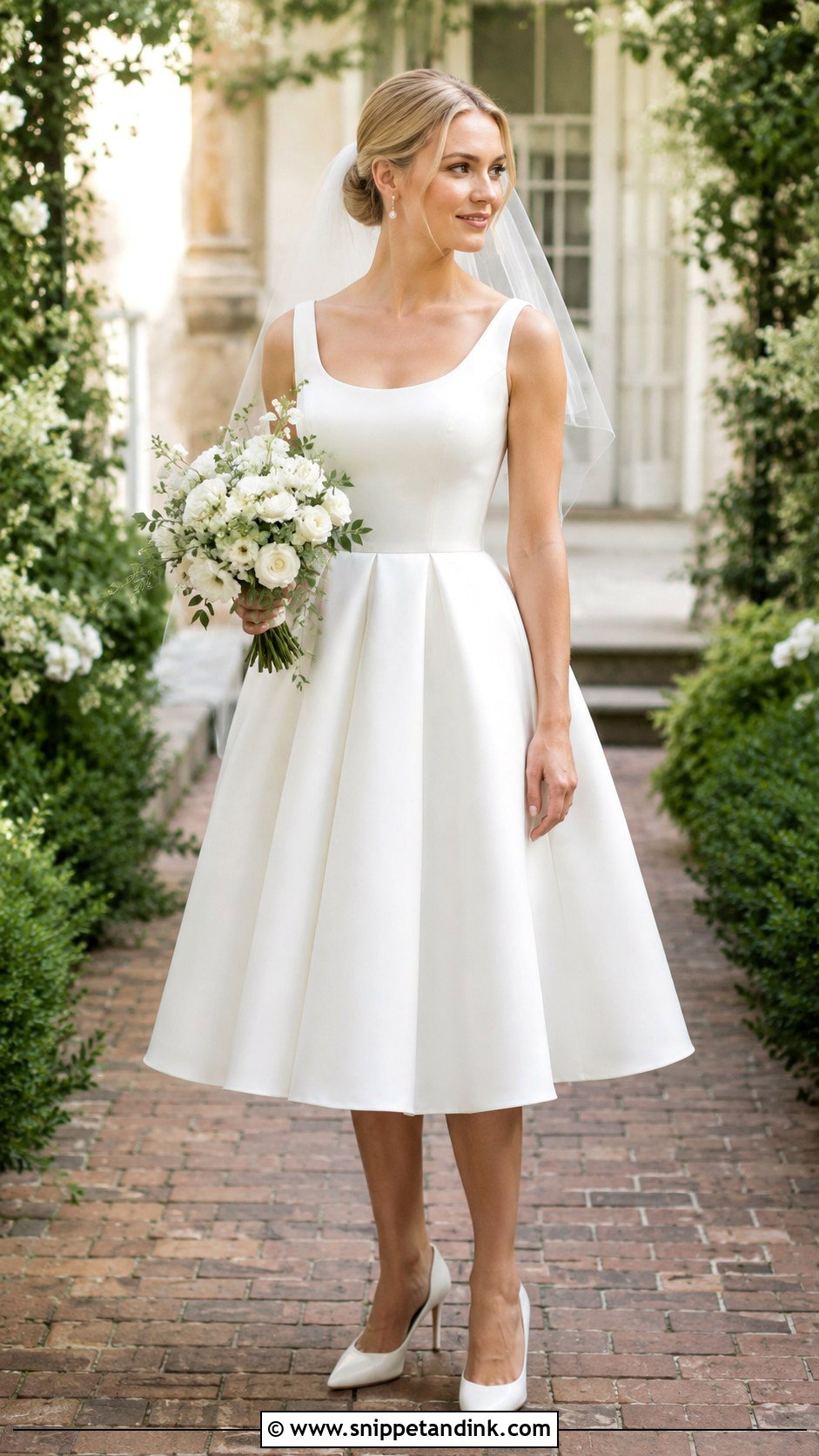
Tea length sits between knee and ankle, so your shoes are fully visible and should be chosen alongside the dress. Satin, mikado or crepe with a fitted bodice and simple skirt keeps it clean, topped with a square, scoop or strapless neckline. Pointed pumps, slingbacks and plain bridal flats all suit it. I’d add a short veil or a smooth headband, since a long veil looks odd behind a hem that stops at mid-calf. Courthouse ceremonies and garden weddings suit the shape, and it is far lighter to wear than a full gown.
19. Minimalist Wedding Dress With Cape
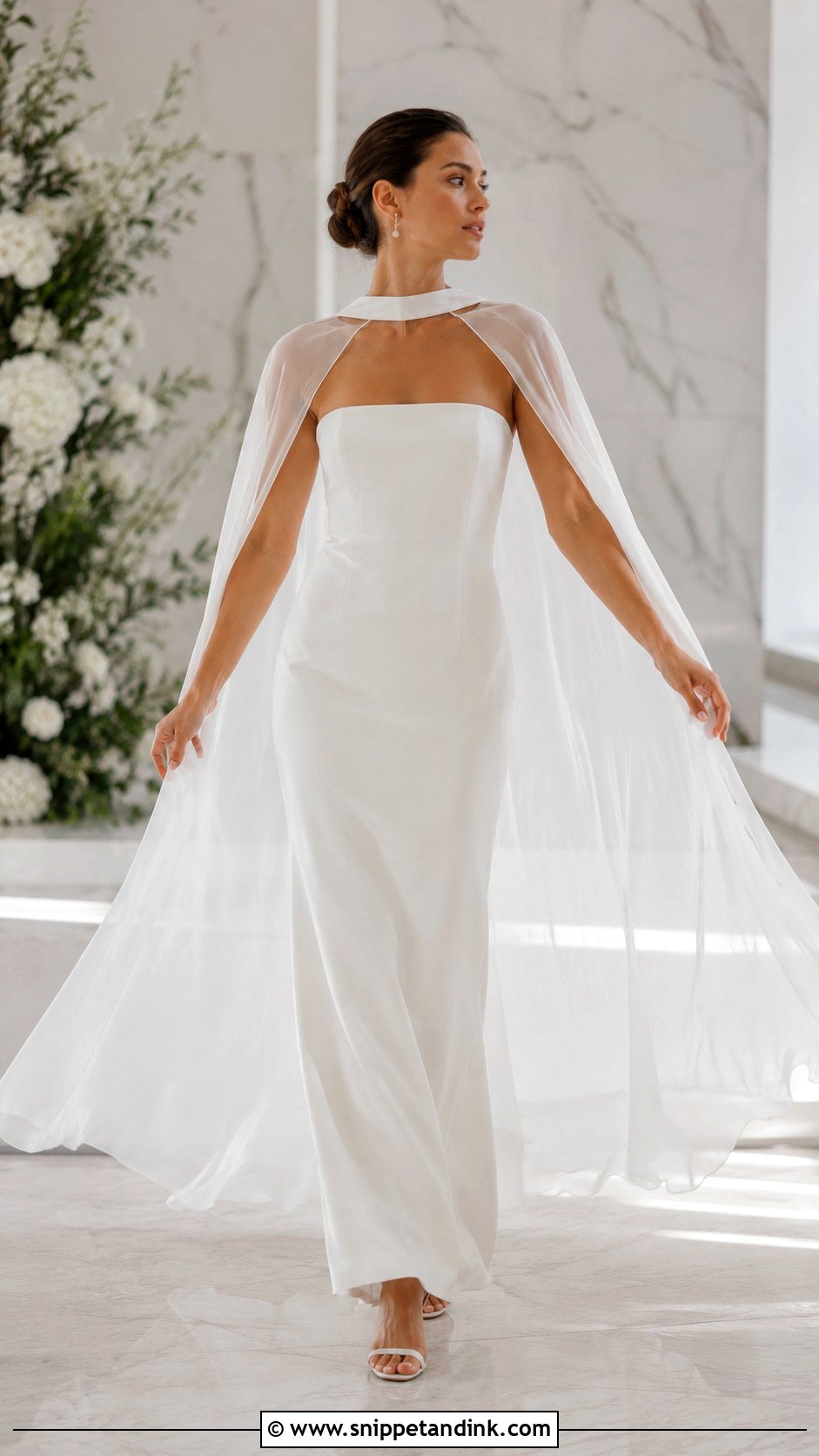
A cape adds movement over a strapless column, a sheath or a simple A-line, and it can replace a veil entirely. Sheer tulle reads soft; crepe reads tailored. Check how it attaches. Capes that hook at the shoulder edge tend to shift when you raise your arms, while one fastened at the neckline or sewn into the back seams stays put. Keep jewelry minimal, with simple heels, a sleek bun and delicate earrings. Indoor ceremonies and city weddings suit it best, because wind turns a long cape into a sail.

20. Minimalist Wedding Dress With Gloves
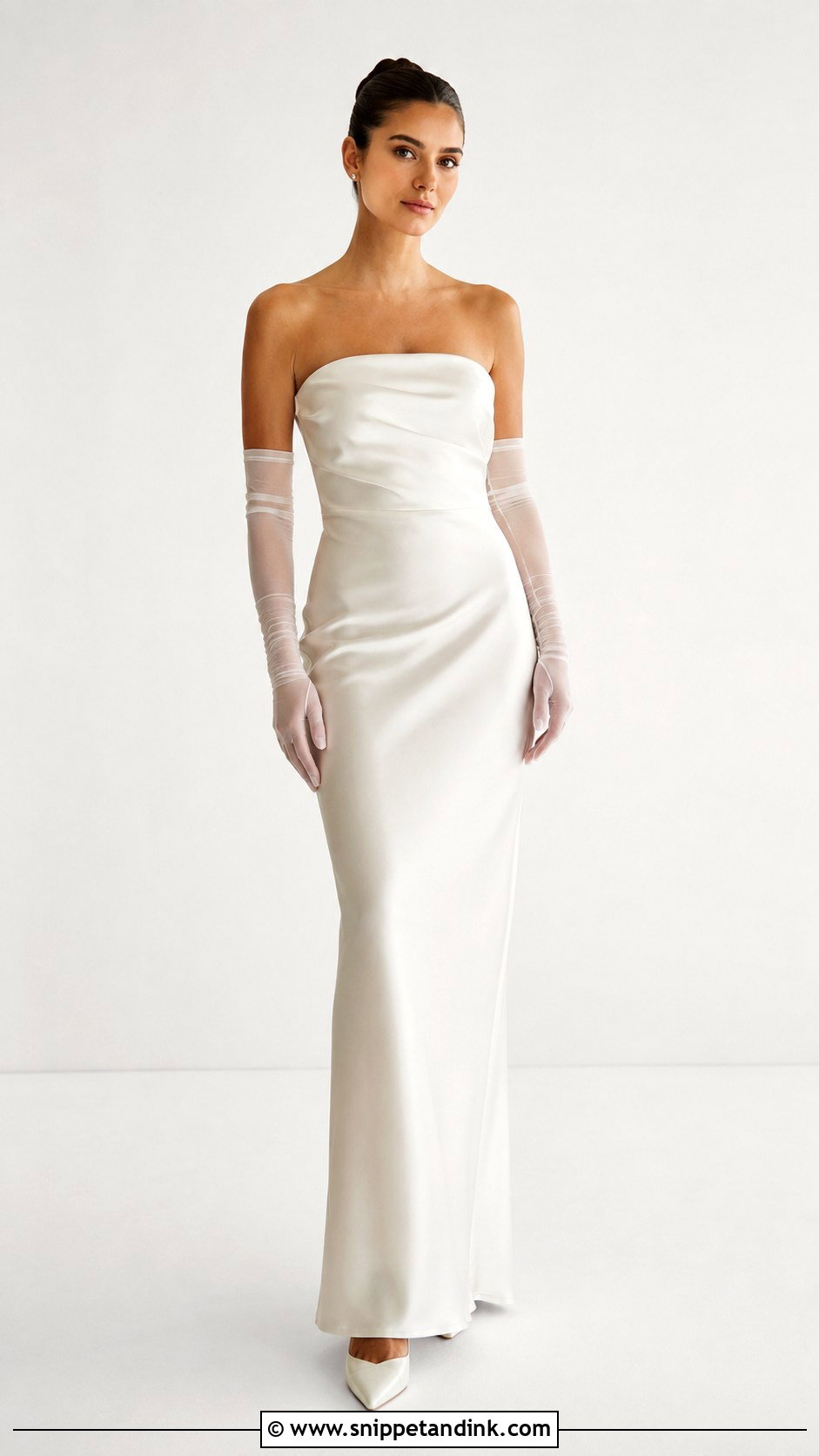
Gloves turn a plain strapless, off-shoulder or sleeveless gown into a styled outfit. Satin or sheer gloves pair with satin, crepe or mikado in a column, sheath or structured A-line. Plan the ring exchange before you commit. With full gloves, you either slip the left one off at the altar and hand it to someone, or choose a pair with an opening at the ring finger. Skip the necklace, keep the earrings small, and add a smooth updo and pointed heels.
21. Simple Backless Wedding Dress
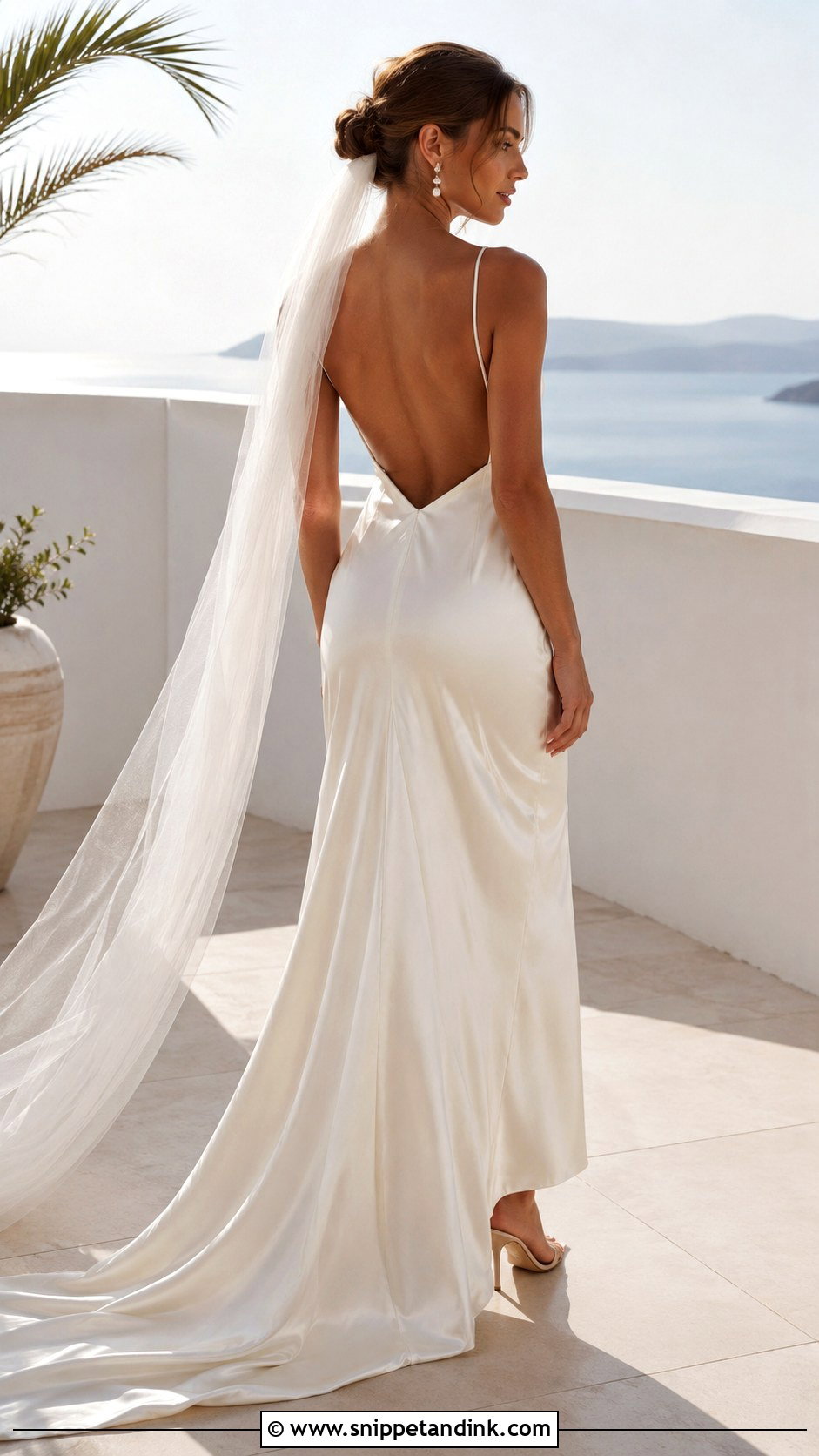
A simple backless wedding dress looks plain from the front and makes its point the moment you turn. Guests watch your back for the entire ceremony, so the fit there must be exact, and a low back that gapes when you lift your arms needs taking in along the edge. Satin slip, crepe sheath and column shapes all carry it, with thin straps, a cowl back or covered buttons for detail. Support has to be built into the dress or come from adhesive cups, so test it properly before the day. A low bun, a simple veil and slim heels finish it.
22. Minimalist Mermaid Wedding Dress
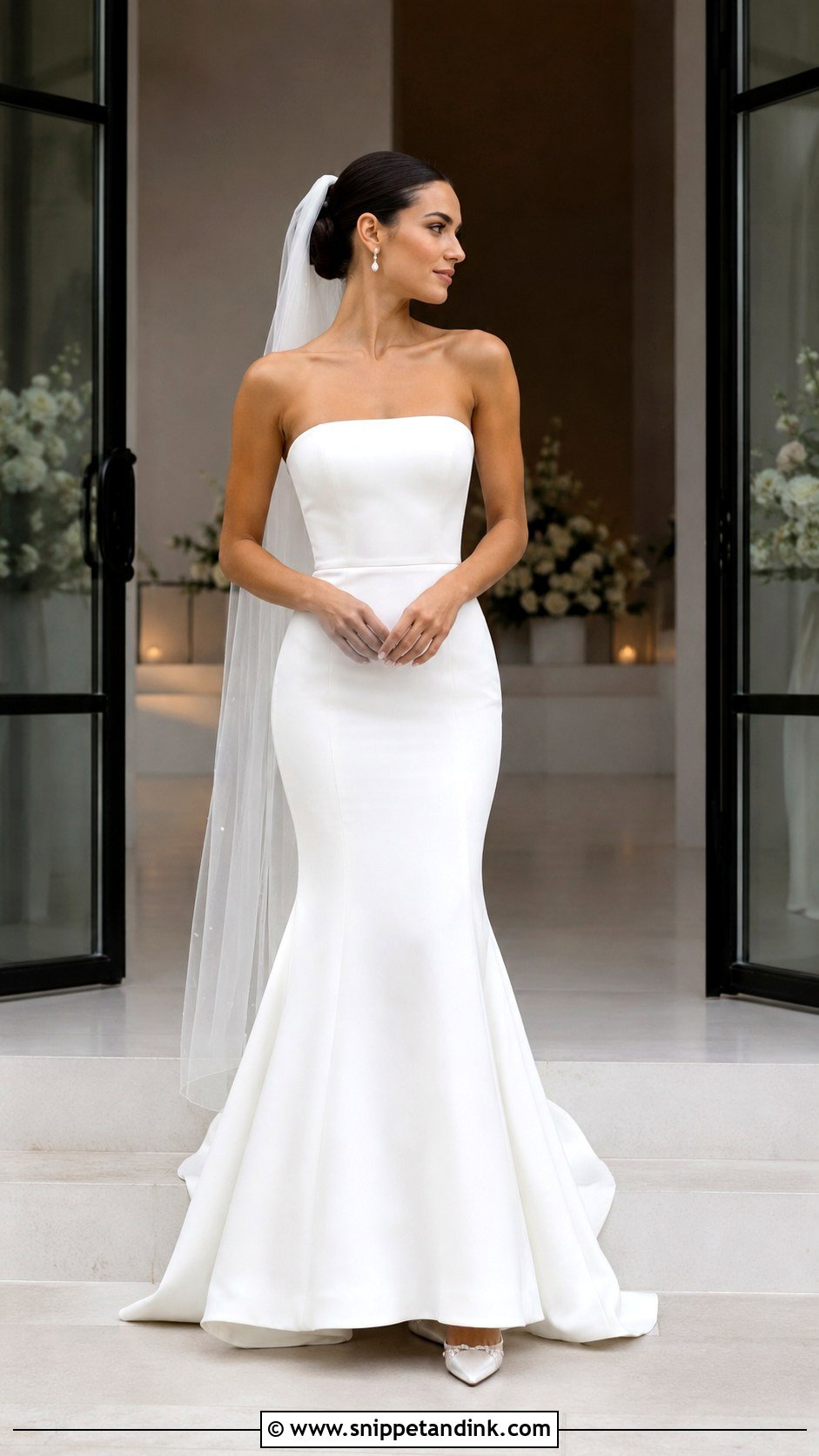
A clean mermaid fits through the bodice and hips and flares near the knee, so its shape comes entirely from seaming. Crepe or satin with princess seams pressed flat keeps it smooth. The flare point decides how you’ll move. I ask brides to walk the length of the shop, sit on a low chair and stand back up, and if any of that is a struggle, the flare needs raising slightly. Strapless, square and off-shoulder necklines all work. Drop earrings, a plain veil and sleek heels finish it.
23. Silk Column Wedding Dress
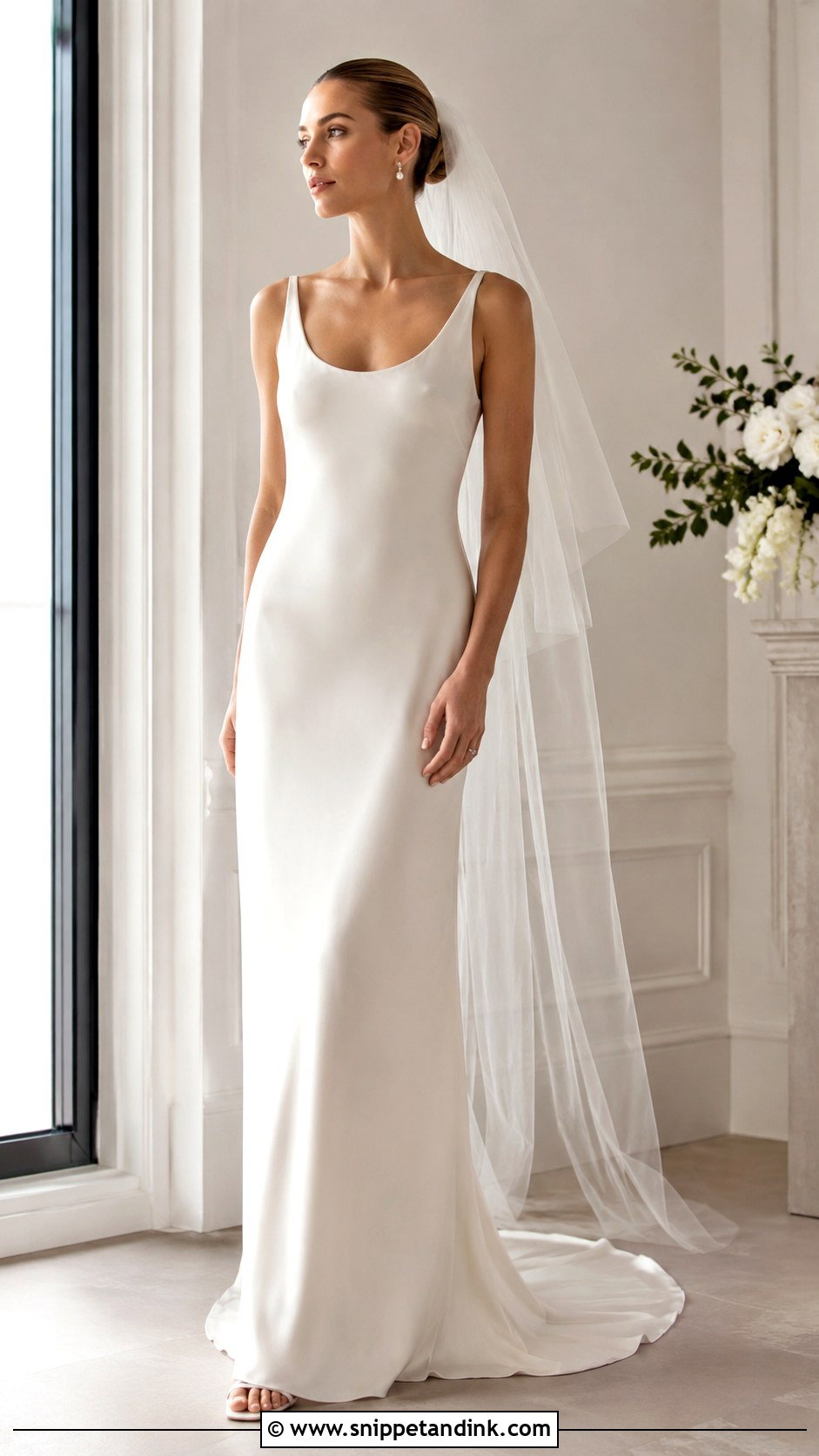
Silk has a natural softness and movement, and in a straight column it creates one long, unbroken line. Scoop, halter and strapless bodices all suit it. Silk also shows everything, including perspiration at the underarm and water spots, so I always suggest discreet dress shields and keeping drinks well away from the skirt. Wear smooth, edge-free underwear to every fitting and have the hem set for the exact shoes you’ll wear. Minimal jewelry, a soft veil and simple heels are all it needs.
24. Minimalist Wedding Dress With Overskirt
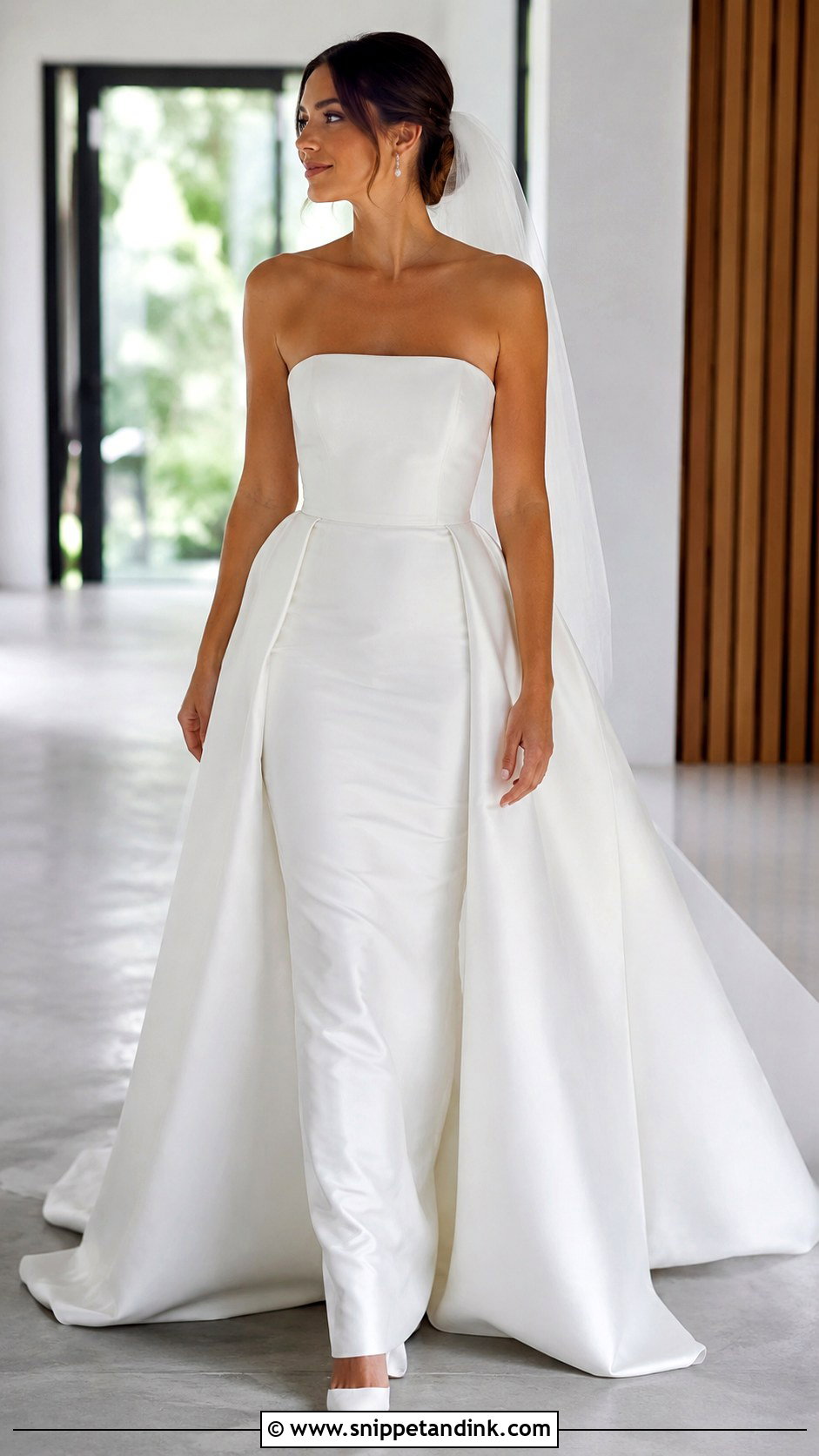
A minimalist wedding dress with an overskirt gives you two looks without buying a second dress. The base is a sheath, column or fitted gown, and a detachable skirt in satin, mikado or tulle adds volume for the ceremony. Overskirts usually close at the waist with hooks, snaps or a sash, so practise taking it off once at a fitting and show the person who’ll help you. Afterward, the slimmer dress underneath is much easier to dance in. A plain veil, elegant heels and delicate earrings keep both versions clean.




25. Minimalist Bridal Suit Dress
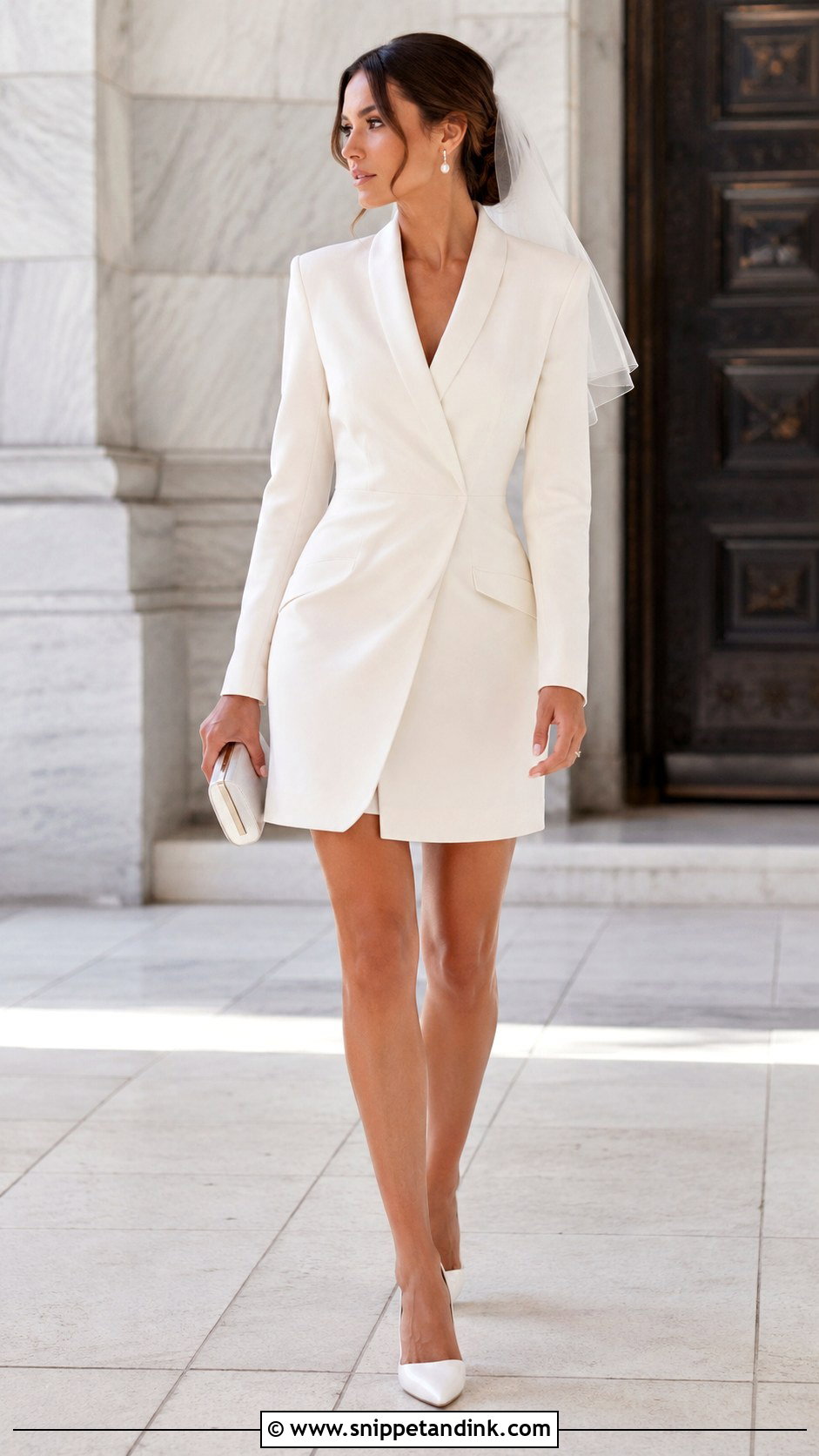
A tailored suit dress, whether a blazer dress, a longline jacket dress or a structured mini, is the least expected look here and one of the easiest to wear. Ivory, white or soft cream with a smooth finish and few buttons keeps it bridal. Tailoring makes or breaks it. The shoulder seam should sit exactly at your shoulder point, and the lapels should lie flat when it’s buttoned. Pointed heels, simple earrings and a sleek clutch complete it, while a short veil or a pearl hair piece softens the sharp lines. Courthouse weddings, civil ceremonies, rehearsals and modern receptions all suit it.
One Accessory Doing the Work of Ten
A minimal dress leaves room for one detail to lead, and I like to decide which one before buying anything else. If the neckline is strong, the earrings lead and the hair goes up. If the back is the point, the veil should be sheer and attached low, under the bun, so it doesn’t hide the cut. A bold shoe works with a tea-length or short hem but disappears under a floor-length skirt, so only spend there if it will be seen.
The bouquet counts too. A loose garden bunch softens a severe column, while a tight dome of a single flower keeps a crisp mikado gown looking architectural.
Plain Fabric Shows Every Mark, So Pack for It
An embellished bodice hides a smudge of foundation. Plain satin and crepe don’t. This is the small kit I’d put in a bridesmaid’s bag for a minimalist gown:
- A handheld steamer for creases from the car, used from the inside of the skirt.
- A stick of white chalk to cover a small mark on a white or ivory dress until you’re home.
- A lint roller, especially for crepe, which picks up fibres from carpets and jackets.
- A clean white cloth to blot spills. Never rub satin, because rubbing raises a dull patch, and test any water on a hidden seam first since it can mark silk.
- Small safety pins and fashion tape for a strap or edge that loosens.
Better still, step into the dress after your makeup is done, with a scarf or clean cloth over your face, so foundation never meets a plain neckline in the first place.
Plain Is Not the Same as Simple
A minimalist dress isn’t plain. It’s a dress where every decision shows. With nothing to distract the eye, silhouette, fabric and tailoring carry the whole look, whether that’s a satin slip, a long-sleeved crepe gown or a structured mikado A-line. Put comfort and proportion ahead of extra detail, then let your shoes, hair and one accessory support the neckline. If you take one idea out of the fitting room, make it this: spend the money on the fit.
You'll Like These Ideas:






Leave a Reply