
A Chinese wedding manicure has a job most bridal sets never face: it has to work with a red qipao, qun kwa, cheongsam or a Western gown, sometimes all on the same day, and it has to survive you pouring tea for every elder in the family. When a bride shows me her outfits, I start with the reds and the gold thread in the embroidery, because the nails need to sit inside that palette rather than fight it. The twenty sets below run from full lucky red to milky nails with one quiet symbol, and for each one I’ve added what I actually watch for when I paint it.
Matching Nail Red to Qun Kwa Silk and Banquet Hall Light
Red is never just red. Gel reds lean blue, orange or brown, and the embroidered silk of a qun kwa or qipao has its own undertone. When a bride brings a swatch or the jacket itself, I swatch two or three reds directly on her nails, then look at them next to the fabric by a window and again under warm indoor light. Banquet halls are usually lit warm and low, which pushes orange-reds toward coral and makes deep reds look darker.
What I bring the appointment down to:
- Cool silk, white gold or platinum rings: a blue-based red or berry red.
- Antique gold thread, yellow gold bangles: a warmer true red or a red with a touch of brown.
- Two outfits on the day: a neutral base with red only on tips or accents, so neither dress looks mismatched.
- Strong family expectations for red and gold: keep both, and let the shape and finish carry the modern feel.
I also check skin tone against the red. On very warm skin a cool red can make the fingers look slightly grey, and that’s easy to fix by shifting one shade warmer before anything gets painted.
1. Red And Gold Chinese Wedding Nails
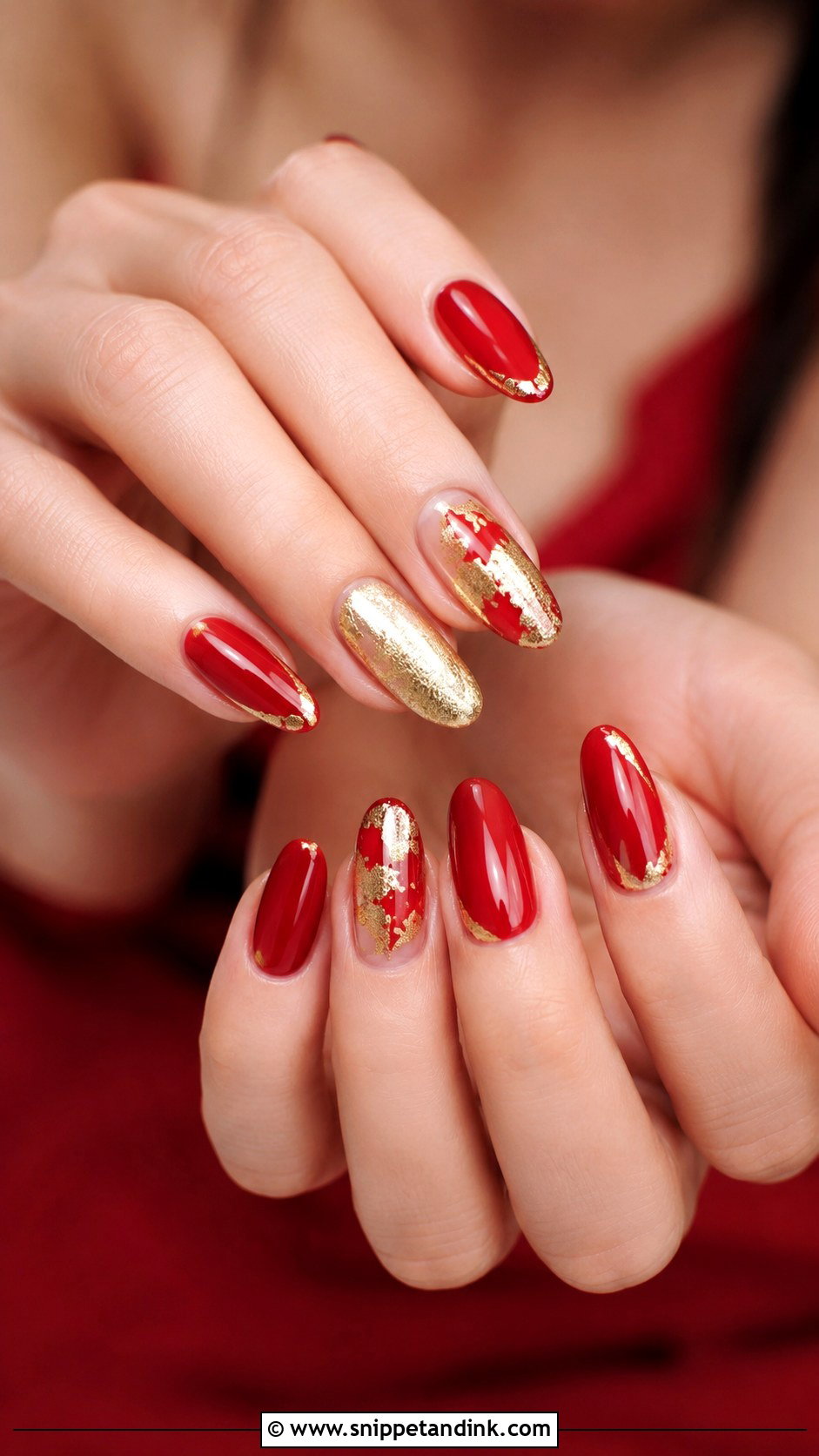
This is the set I’m asked for most, and it’s the one where the shade of red matters more than the art. I hold the polish against the dress fabric before anything else: a blue-leaning red looks cleaner next to cool-toned silk, while an orange-red sits better with antique gold embroidery. A glossy almond or oval keeps the gold from looking heavy. I usually limit the gold to fine foil or a slim tip on two accent nails, and if the qun kwa is already covered in embroidery, I keep the linework even thinner so the hands don’t compete with the jacket.
2. Double Happiness Chinese Wedding Nails
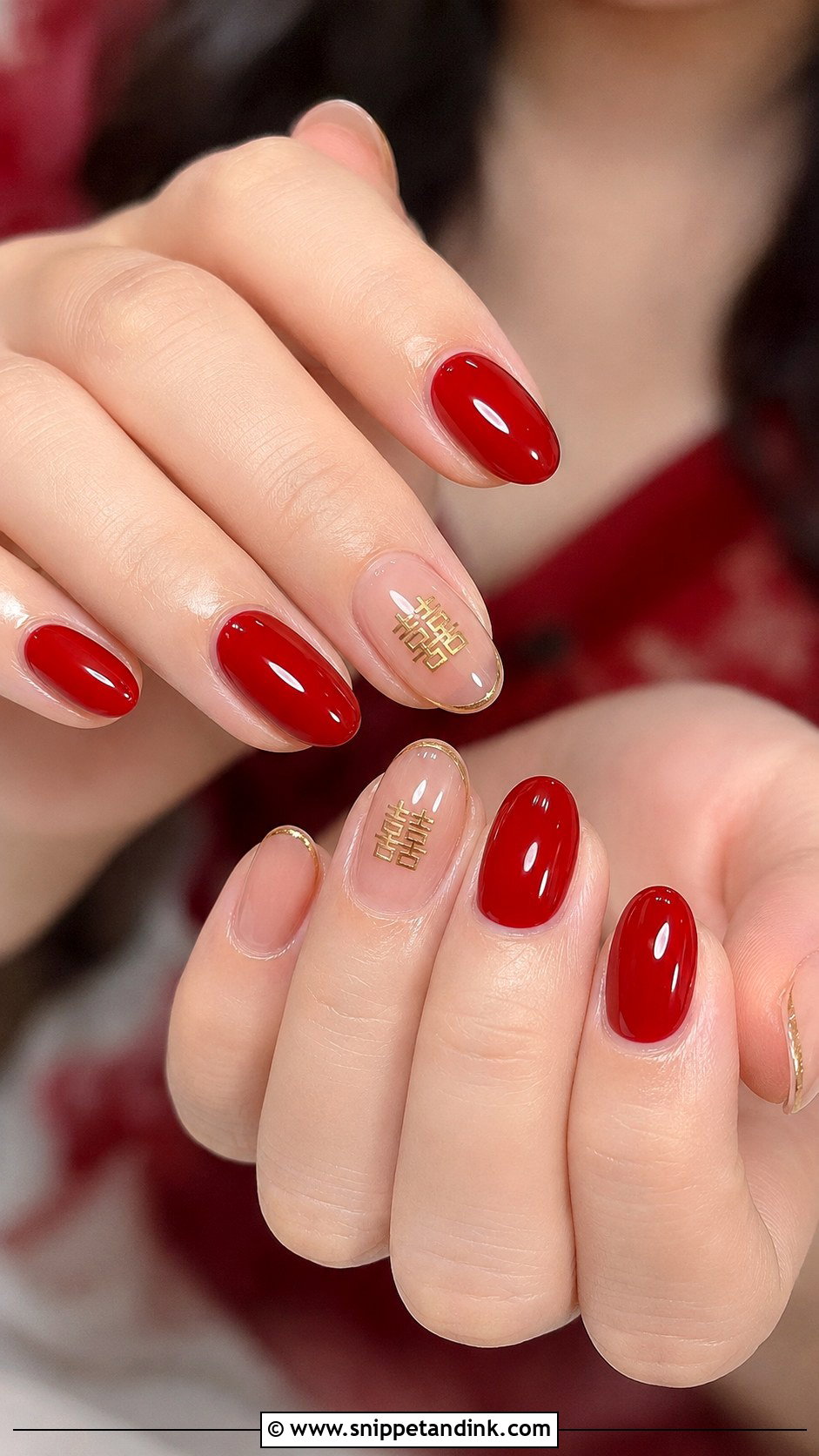
The double happiness character is hand-painted with a liner brush, and it has a lot of strokes for a small surface. That’s why I won’t put it on a very short or very narrow nail; the gaps between strokes close up and it reads as a blob from a metre away. On a medium oval, almond or short square with a decent nail bed, it stays crisp. I paint it on one or two accent nails over nude, milky or deep red, in gold or chrome, and leave the rest plain. During the tea ceremony your hands are holding cups at chest height, so this symbol ends up in more photos than you’d guess.
3. Red French Tip Chinese Wedding Nails
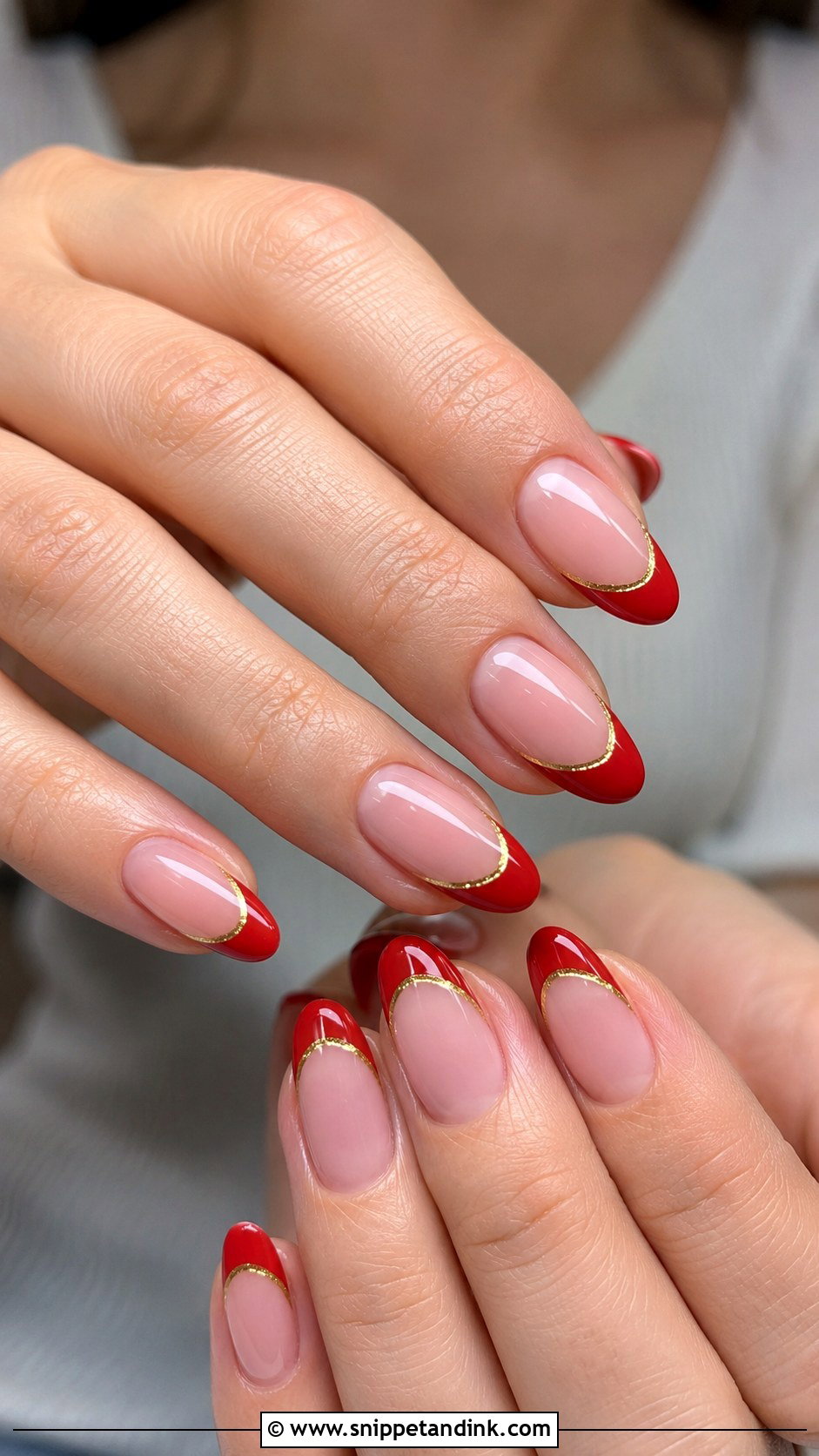
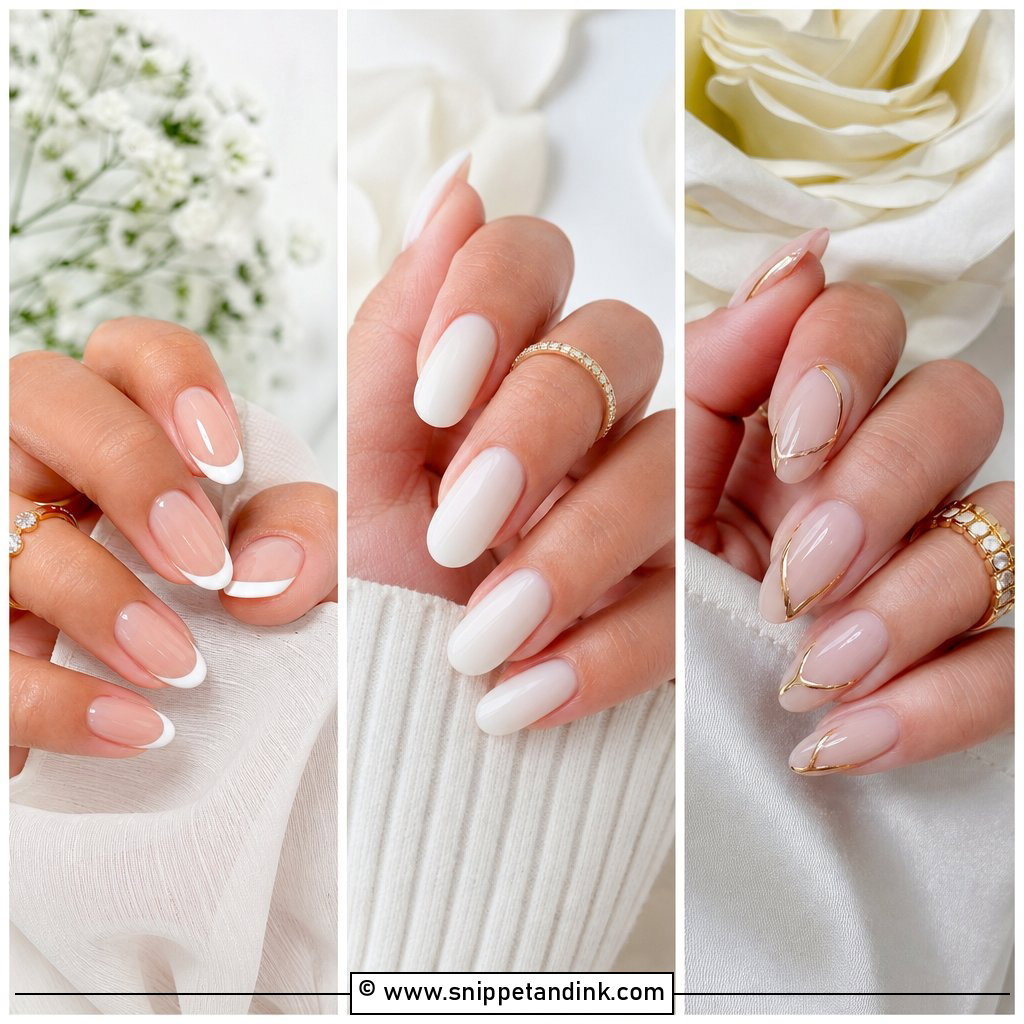
Red French tip Chinese wedding nails are my answer for brides changing from a white gown into a red banquet dress. The sheer nude or pink base suits the white, and the red at the free edge picks up the second outfit. A hairline of gold along the smile line makes it more formal and pairs well with yellow gold. The tip has to be painted in thin layers, because thick red gel at the edge is where wrinkling and under-curing happen. Almond and coffin show off the tip; a short square looks tidier if you work with your hands.
4. Gold Chrome Chinese Wedding Nails
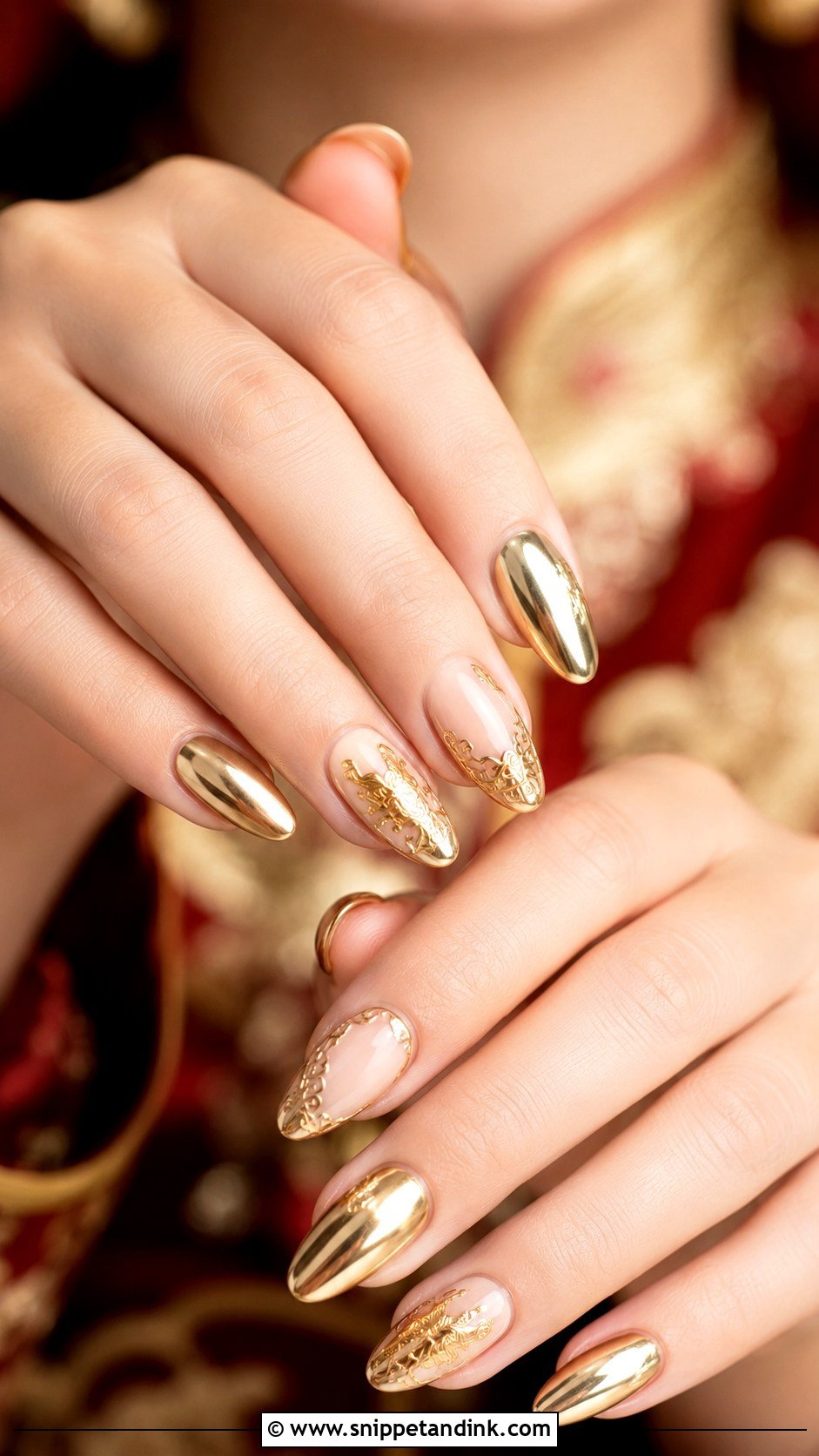
Gold chrome gives a mirror finish that glitter can’t, and it sits flat, so it reads like a piece of jewellery. The powder is buffed onto a cured top coat and then sealed, and the step I never rush is capping the free edge, because chrome that isn’t wrapped over the tip is the first thing to wear off. Full gold chrome is strong for a banquet; gold chrome tips over nude are calmer for the morning ceremony. It pairs naturally with dragon and phoenix bangles and gold hairpins. On a medium almond the curve catches light without the glare a pointed shape gives.
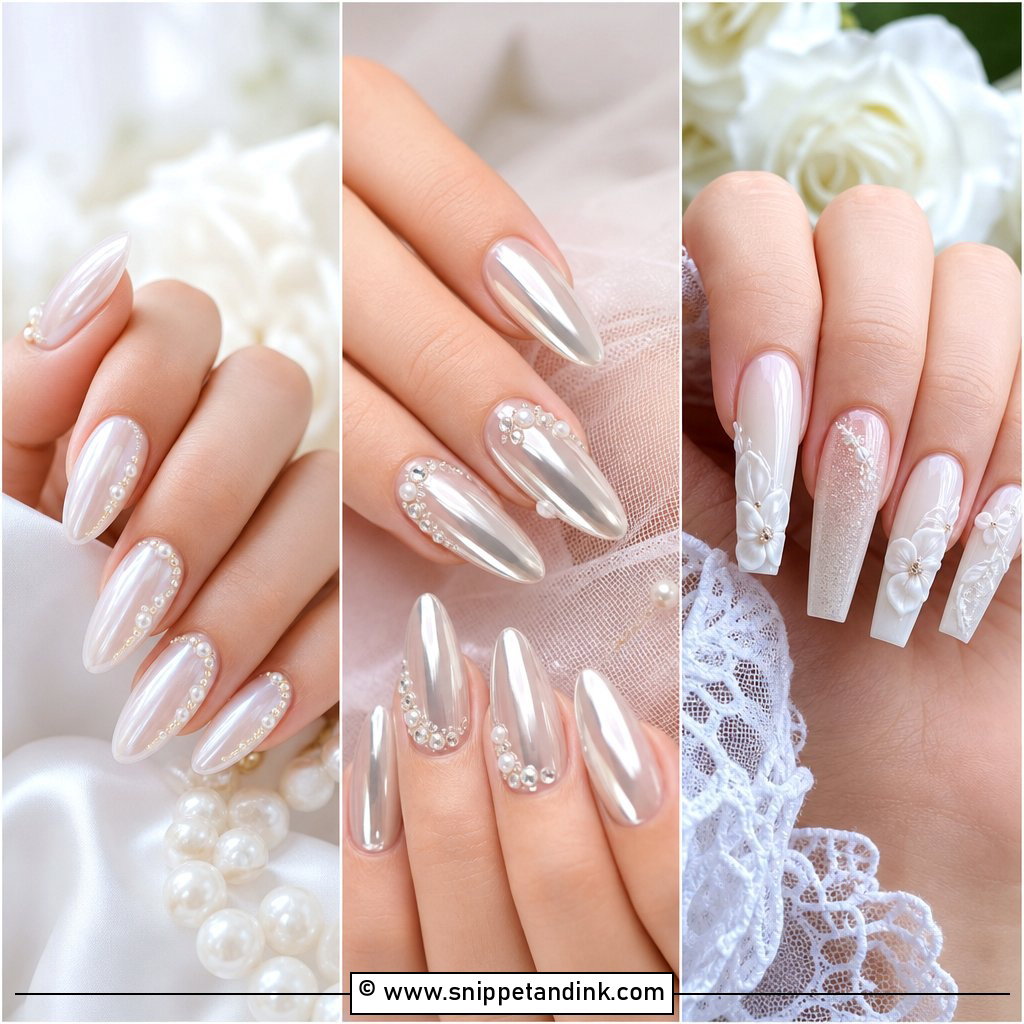
5. Pearl White Chinese Wedding Nails
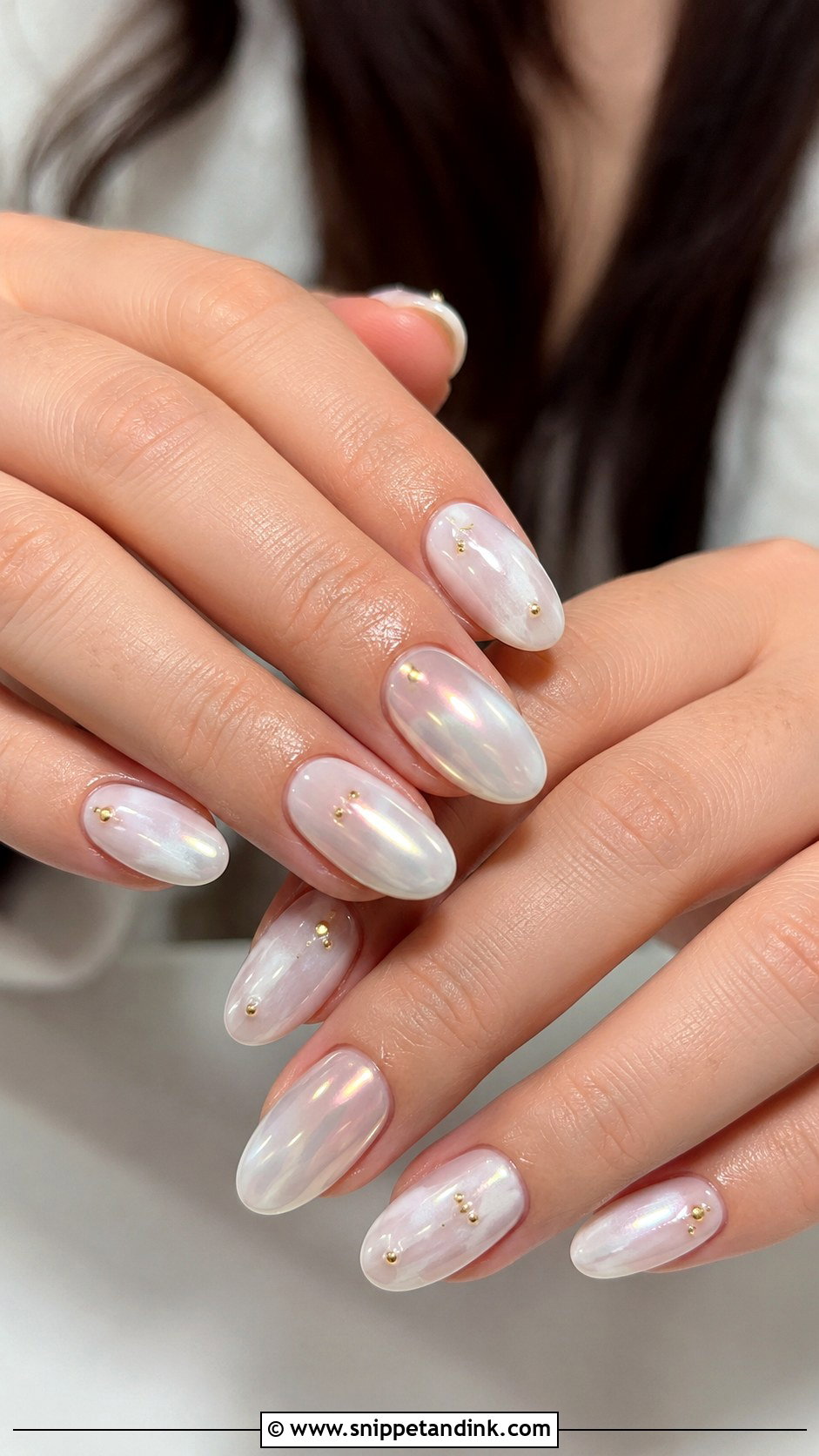
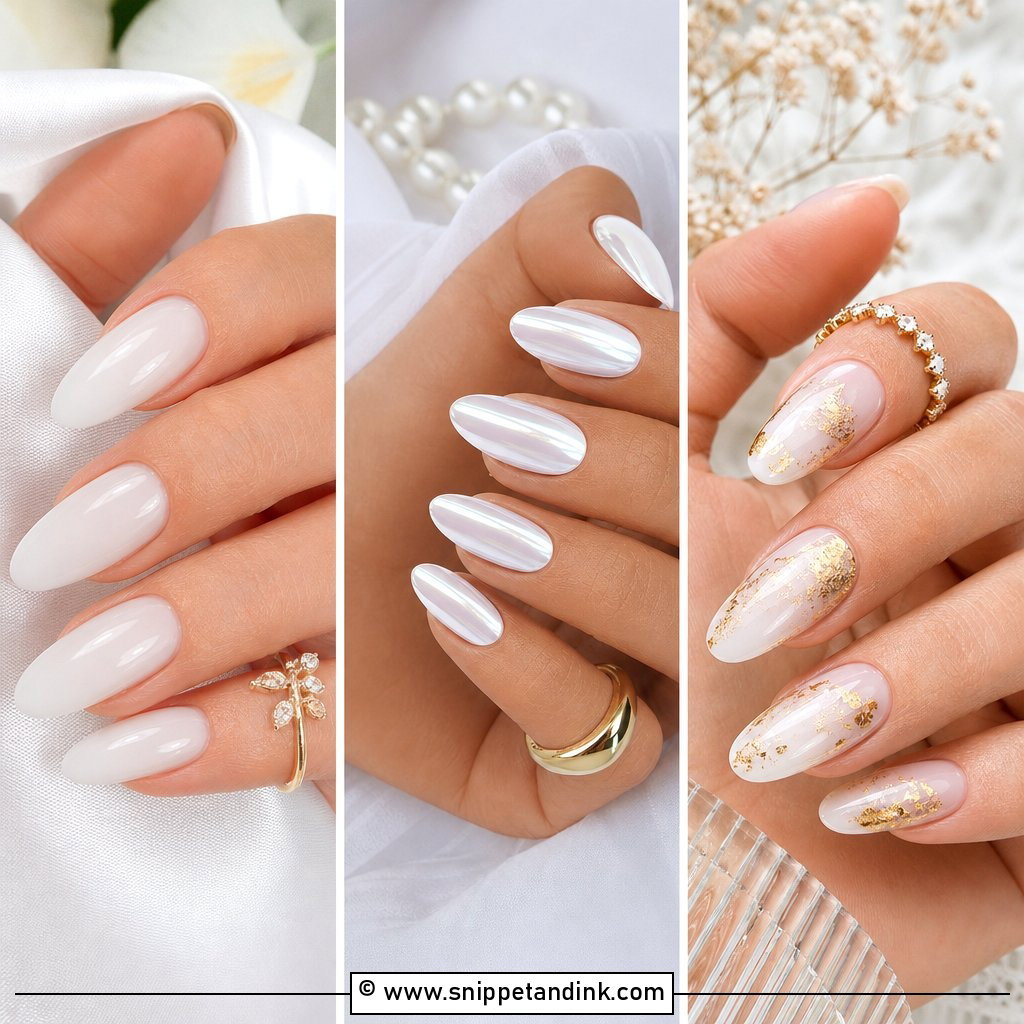
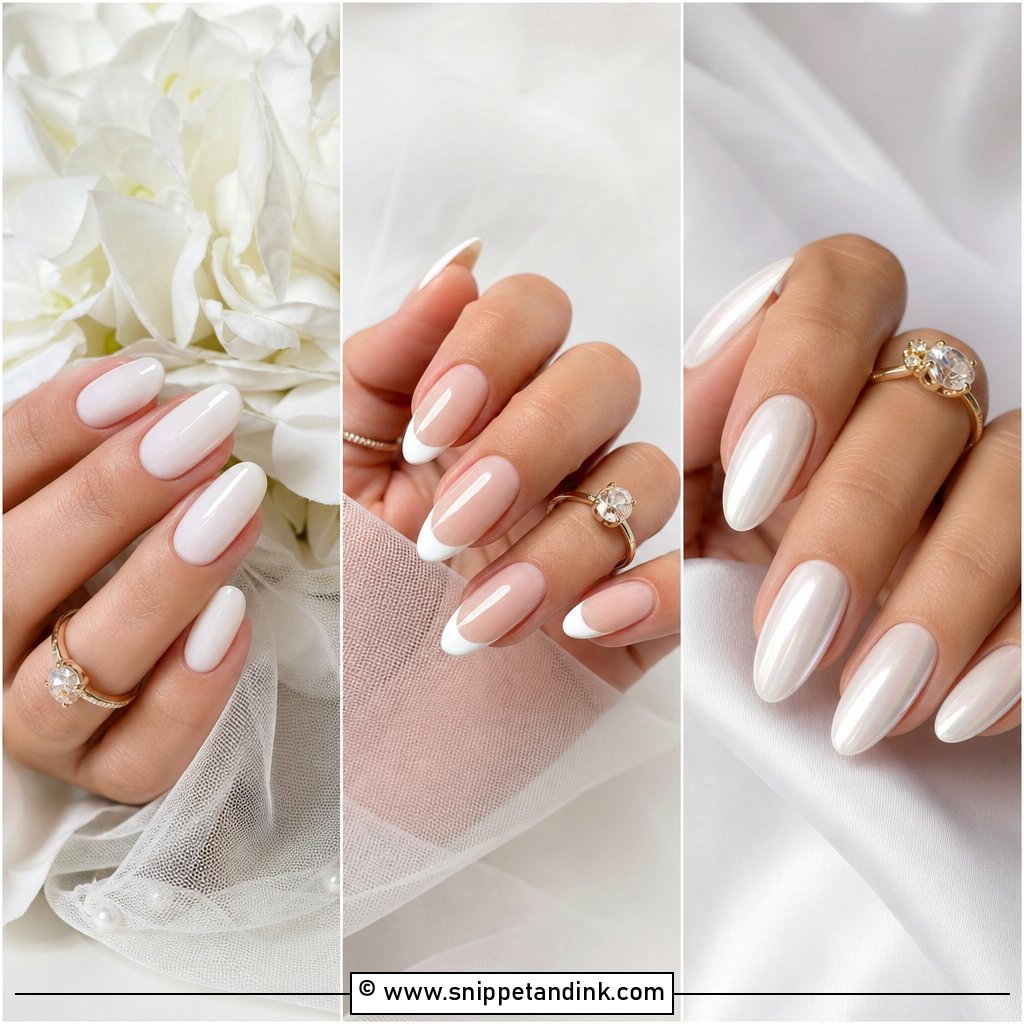
Pearl chrome over a sheer white base is the set I suggest when a bride wants one manicure from the door games to the last toast. It shifts slightly pink or blue in different light, so it never clashes with either a white dress or red silk. If you’d like a cultural detail, I add tiny gold dots or one small red symbol on the ring finger. Oval, almond and short round all suit it. The finish is subtle in person and shows up most in close-ups, which is exactly where ring shots are taken.
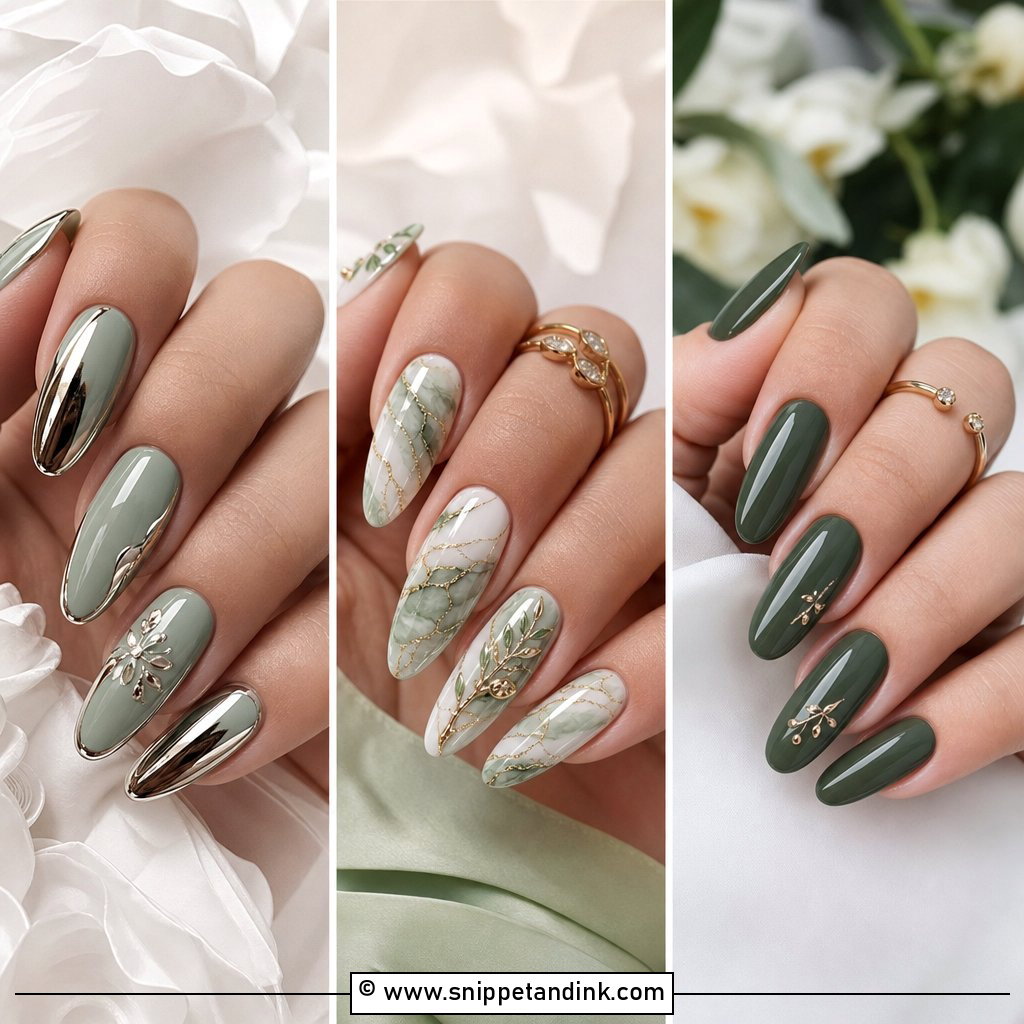
6. Jade Green Chinese Wedding Nails
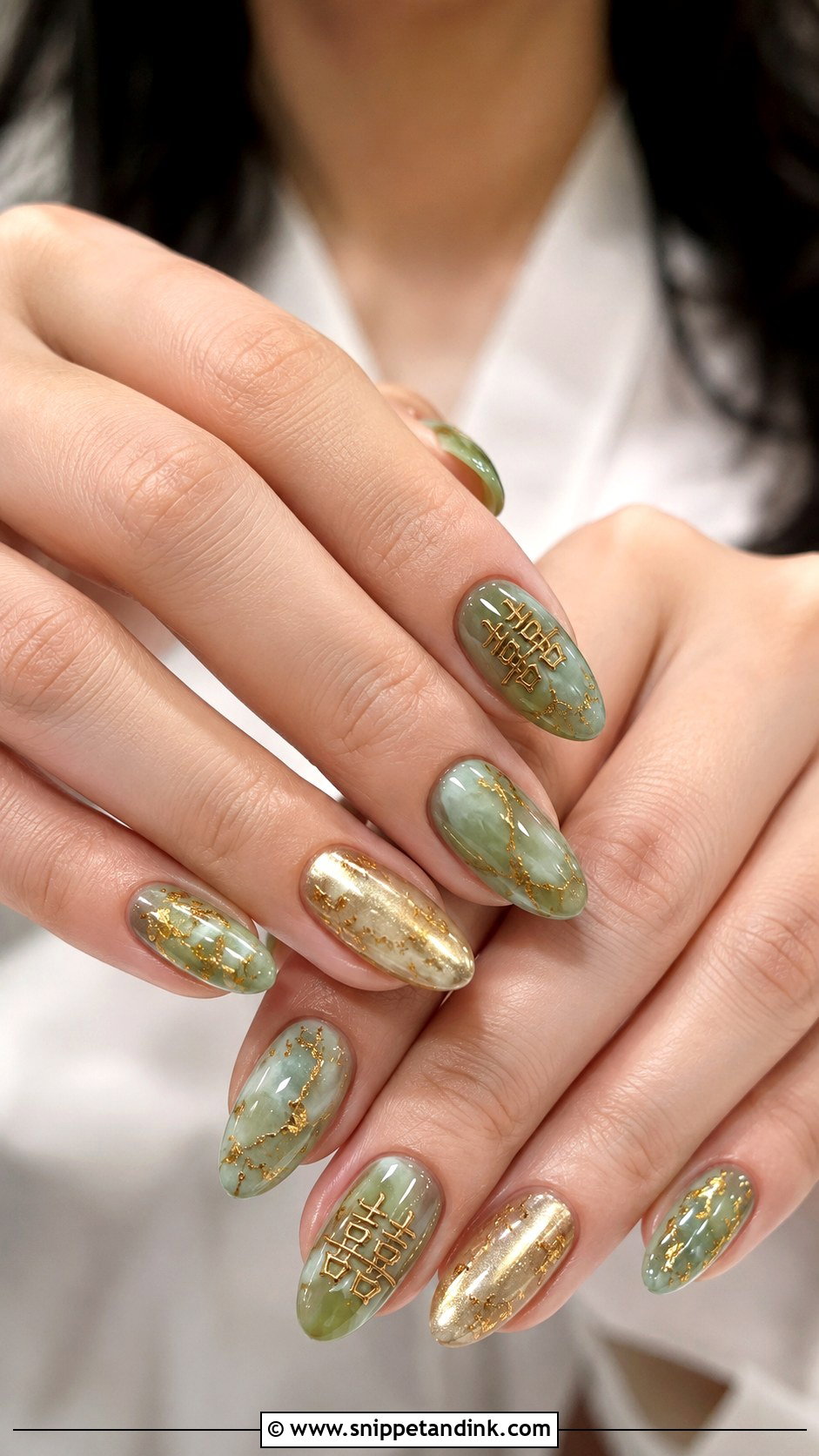
Jade carries a lot of meaning in Chinese families, often as an heirloom bangle passed to the bride. Jade green Chinese wedding nails can quietly echo that gift. I build the marble with a translucent green jelly and wisps of white, so you see depth through the colour the way you do in real stone. Opaque green looks flat by comparison. A thin gold border warms it up next to gold jewellery. If you’ll wear a real jade bangle, bring it to the appointment; I’d rather match its actual tone than guess from a photo.
7. Red Ombre Chinese Wedding Nails
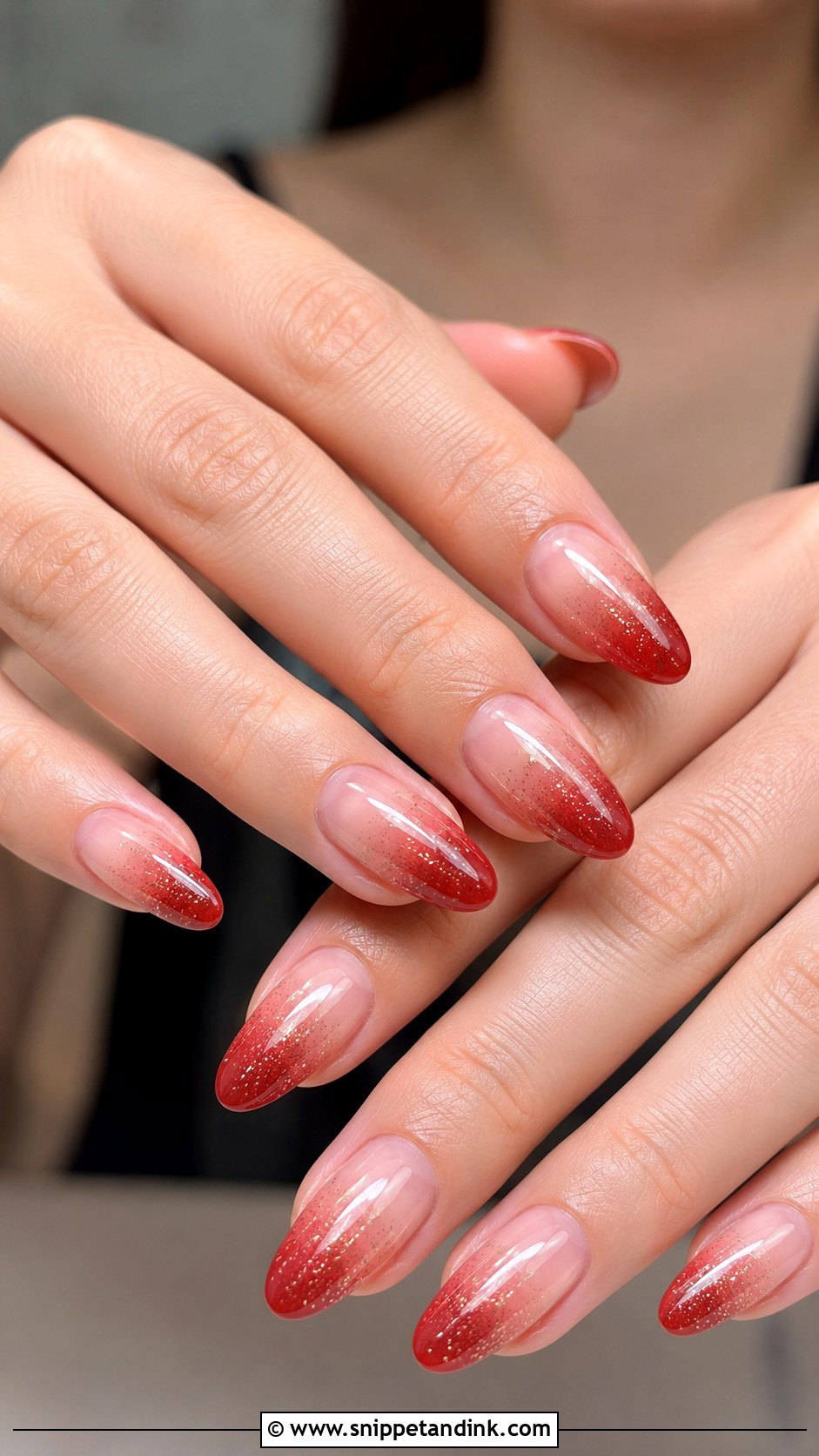
An ombre lets you wear the lucky colour without a solid red hand, which some brides find too strong against a white gown. The fade can run nude to red, pink to red, or deep red into gold shimmer. With gel I blend it with a brush rather than a sponge, which keeps the surface smooth and avoids the speckled texture sponged ombre sometimes leaves. Almond suits it best because the gradient follows the length of the nail. Tiny gold flakes near the tip are optional; I’d skip them if your outfit already has sequins.
8. Dragon And Phoenix Chinese Wedding Nails
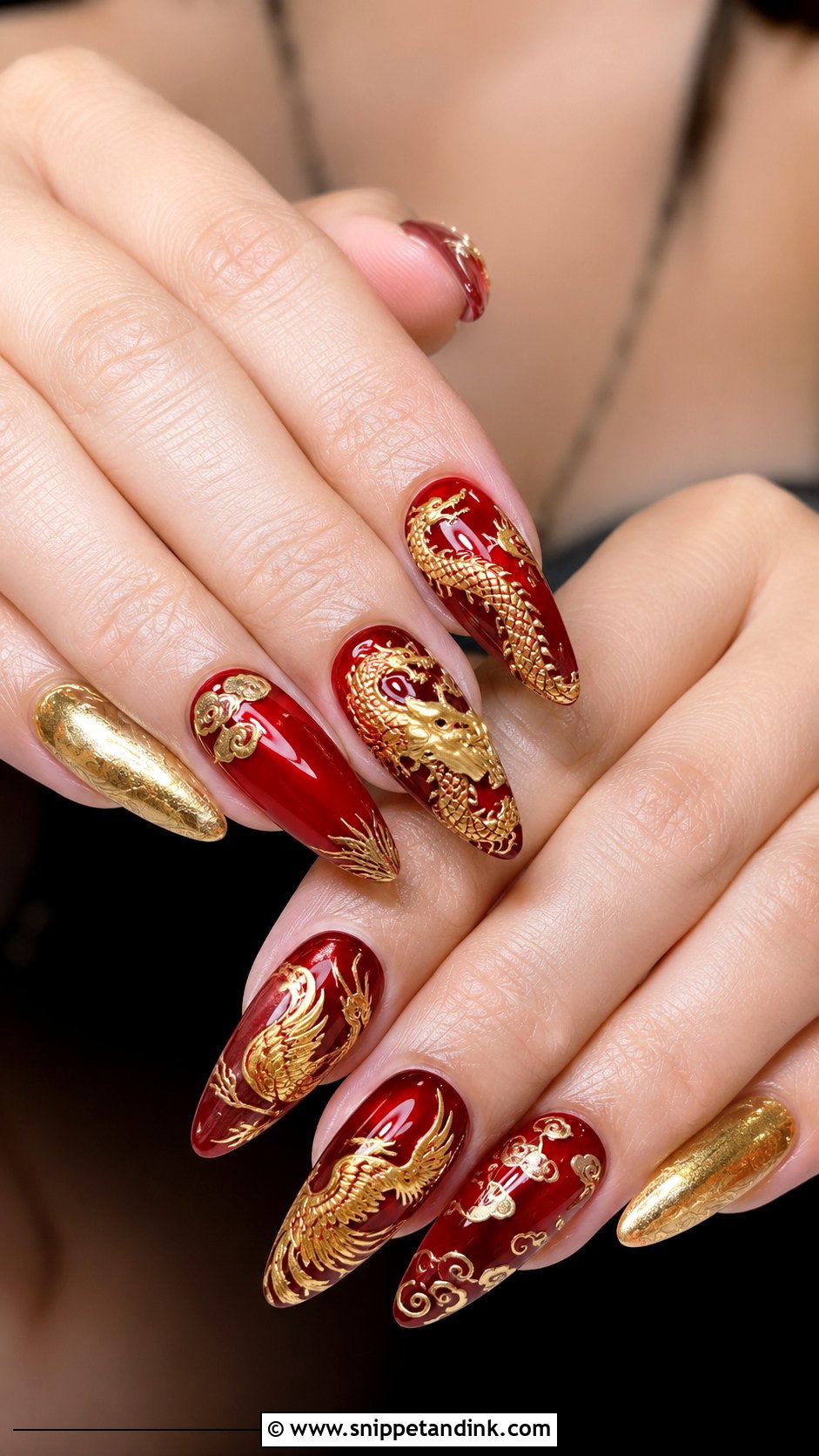
Dragon and phoenix artwork is detailed enough that I’d never paint it on all ten nails. One or two accent nails carry it; the rest stay in glossy red, gold chrome or nude so the design has room to breathe. The pairing stands for the union of husband and wife in Chinese wedding imagery, which is why it appears on so many wedding jackets. I need a medium or long almond to fit the curves and scales cleanly, and I work on a deep red, nude or black-red base with gold line art. On short nails I’d suggest a simplified phoenix feather instead of the full pair.
9. Gold Foil Chinese Wedding Nails
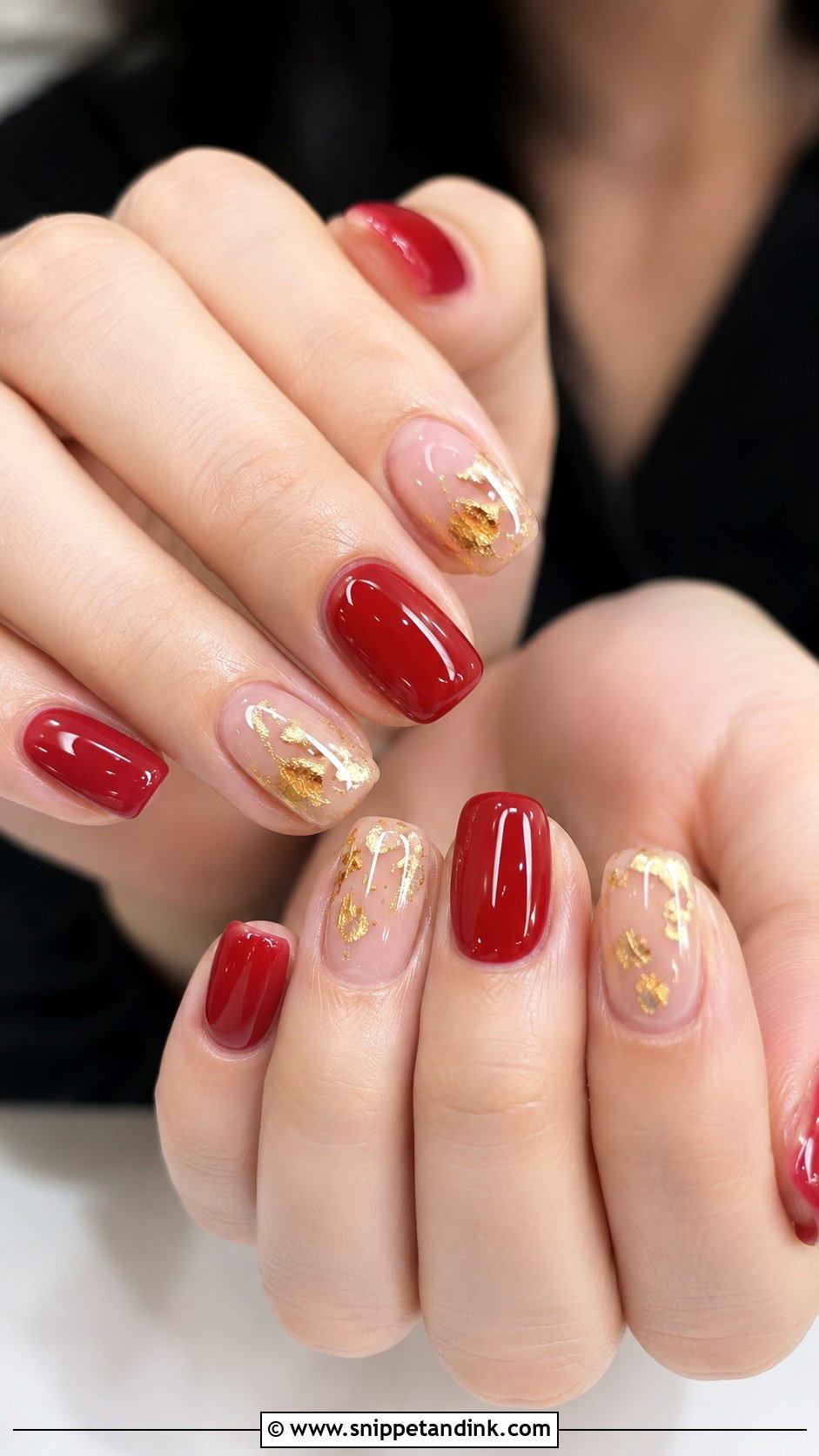
Placement is everything with foil. Small, irregular flecks look more expensive than big flat patches, and I keep them close to the cuticle on a sheer pink or milky base for a modern look, or scatter them over rich red for a traditional one. Foil goes over red, nude, milky white or jade green. The edges can lift slightly, so I seal it under gel rather than a thin top coat, otherwise it can snag your veil or hair. It’s one of the few textured designs that works on short nails as well as long ones.
10. Red Chrome Chinese Wedding Nails
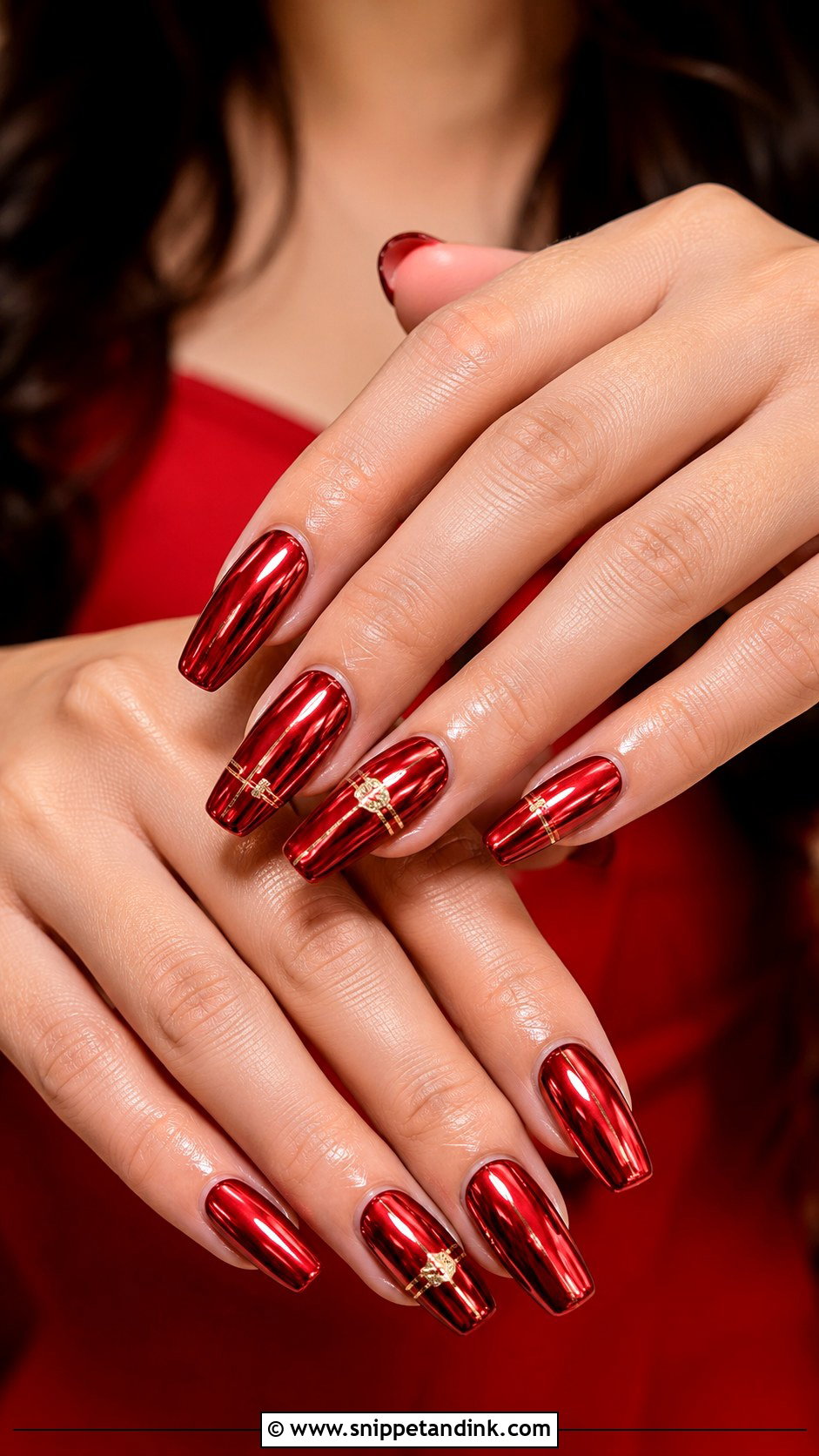
Red chrome Chinese wedding nails turn classic red into a mirrored, almost lacquerware finish. I apply it over a cured red base so the chrome takes on depth rather than looking pink. It sits well with a sleek cheongsam, satin reception dress or heavy gold. Full red chrome is intense under flash, so if you’re unsure I’d go for red chrome tips or accent nails over nude. Coffin, almond and stiletto all show the shine; medium almond is the length I’d trust for pouring tea and handling red envelopes.
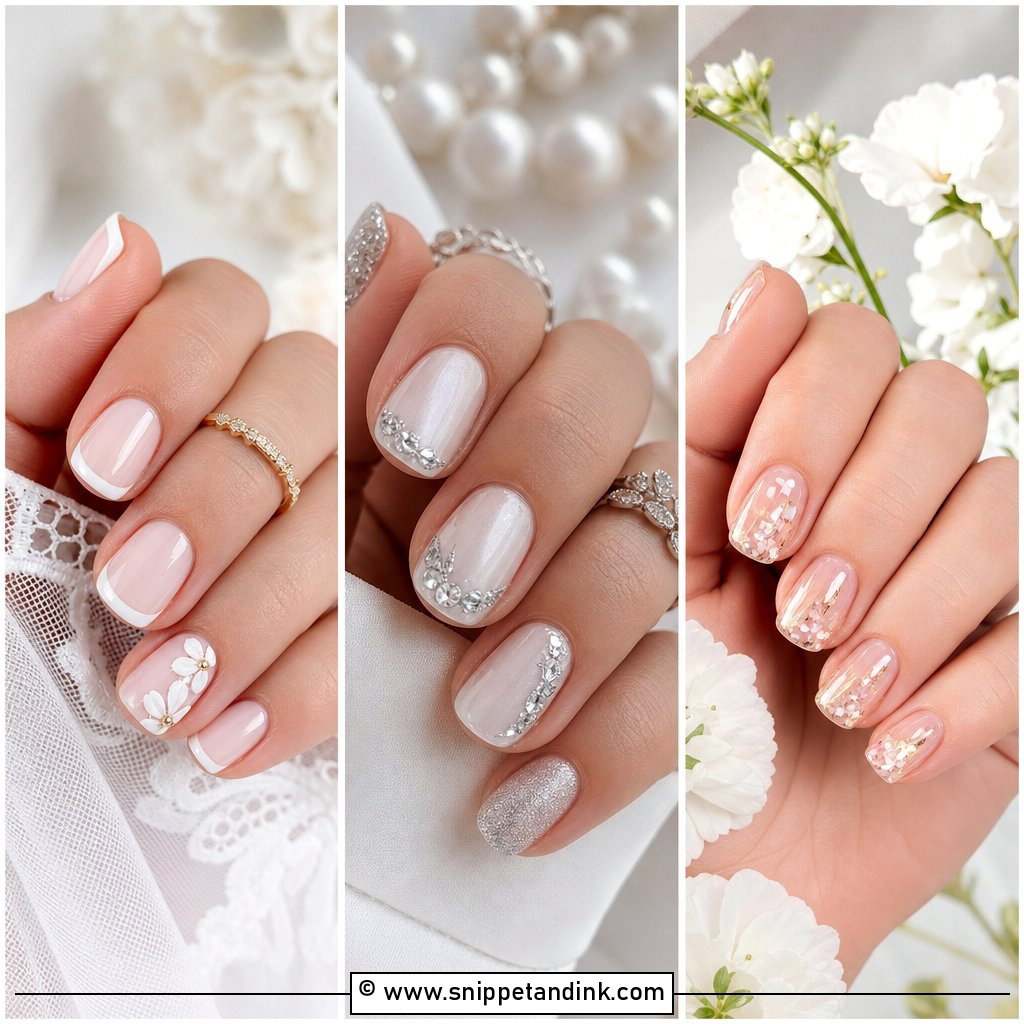
11. Milky White Chinese Wedding Nails
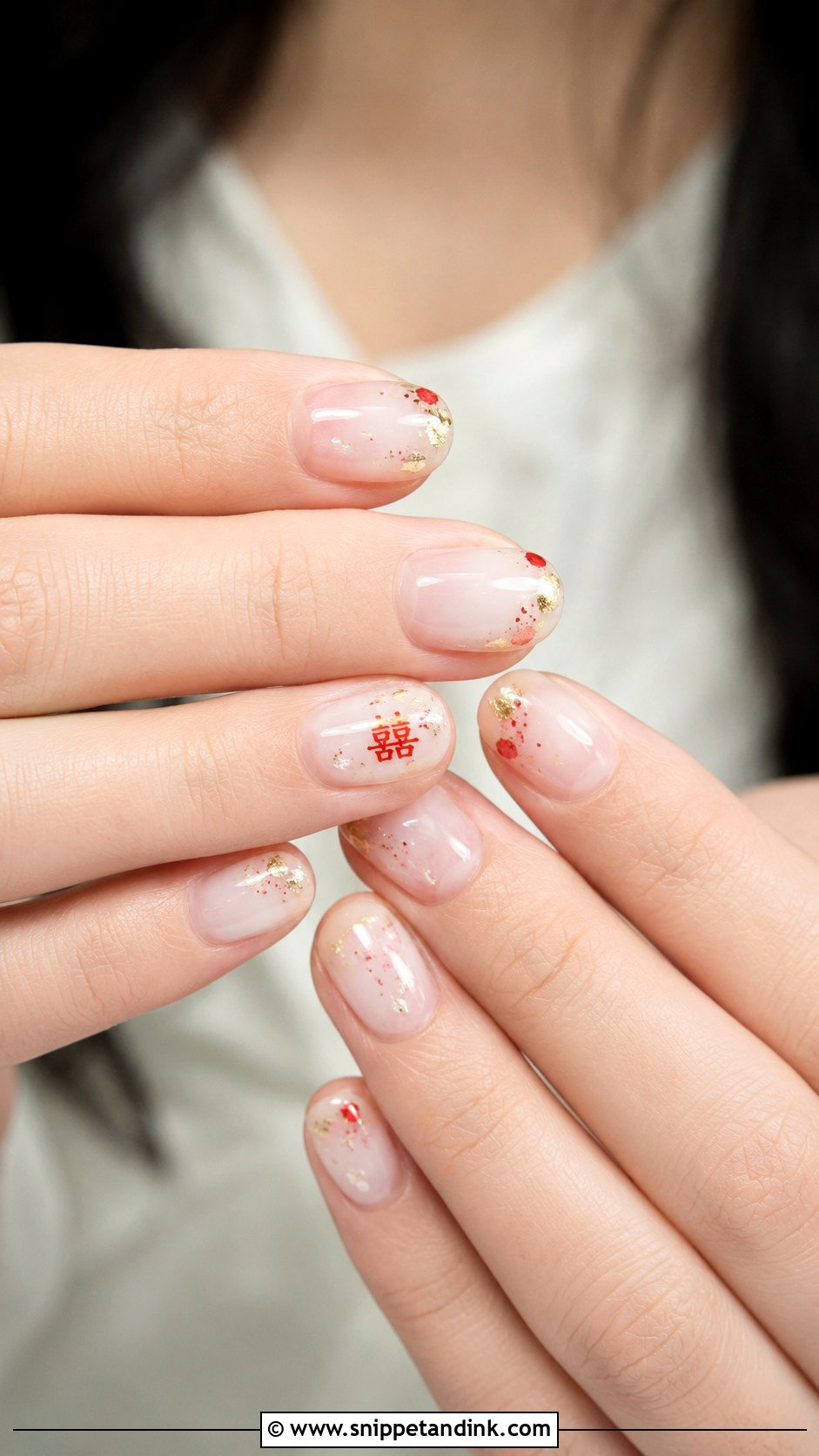
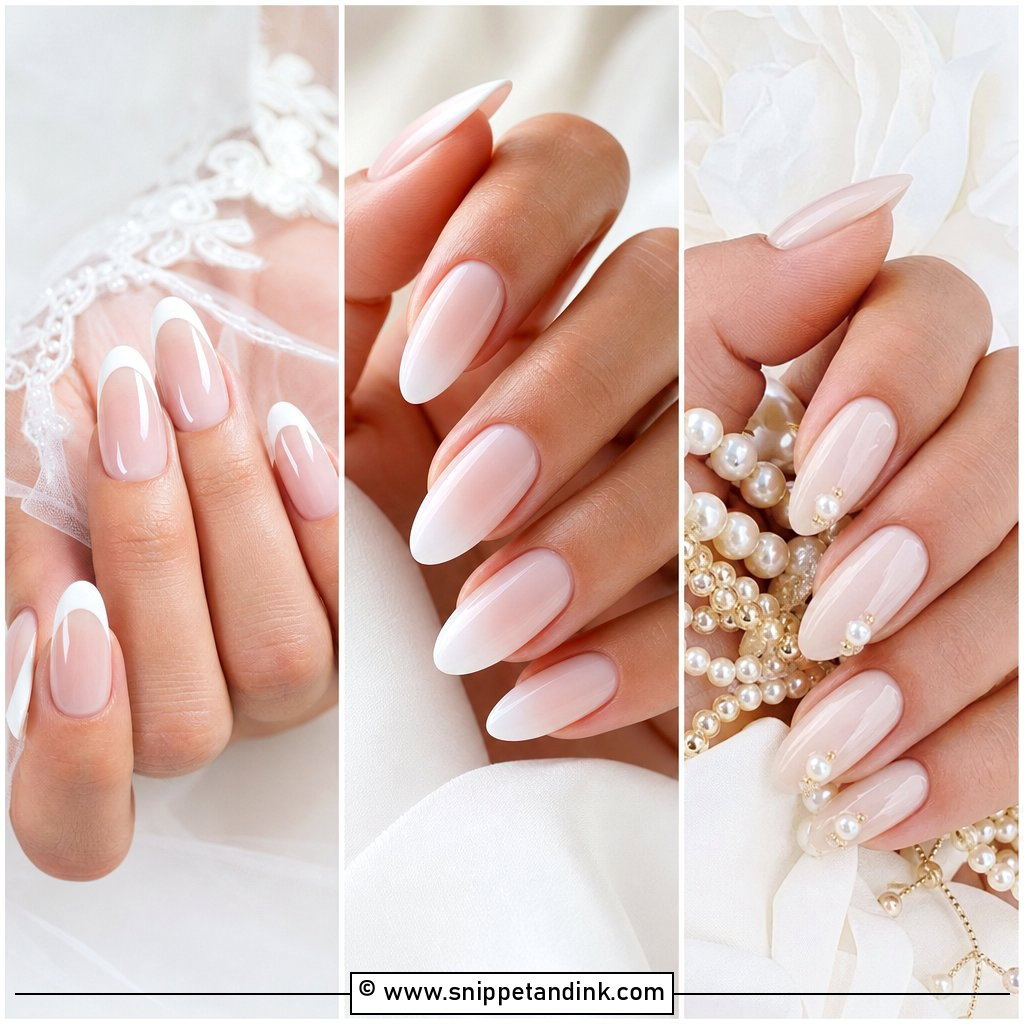
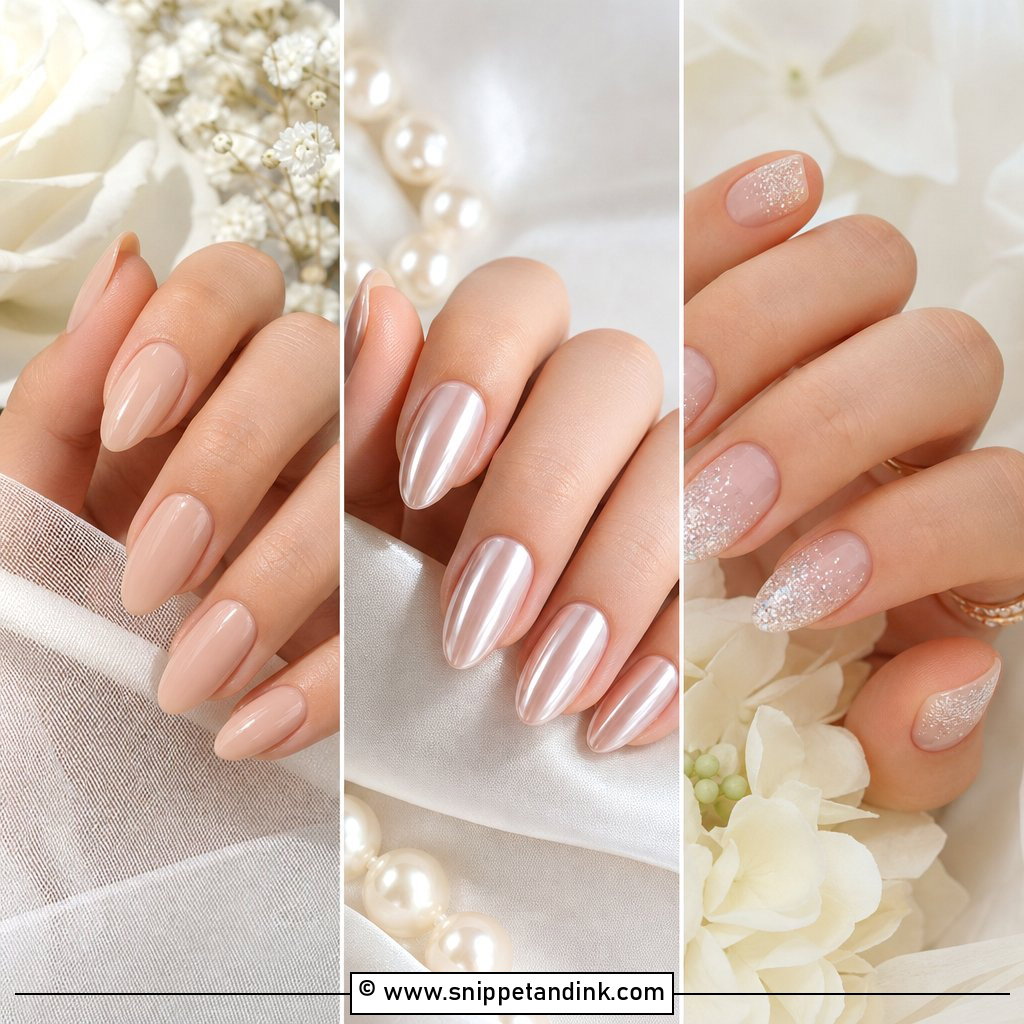
Milky white is the easiest base for a bride who changes outfits, because it disappears against white satin and doesn’t fight red silk later. Milky white Chinese wedding nails also hide regrowth better than a solid colour if your appointment has to be a few days early. Small red or gold details carry the tradition: a tiny double happiness, a fleck of foil, mini pearls or a thin red tip. I’d keep it to one or two of those, not all of them. Short oval, almond and soft square all suit it.
12. Red Floral Chinese Wedding Nails
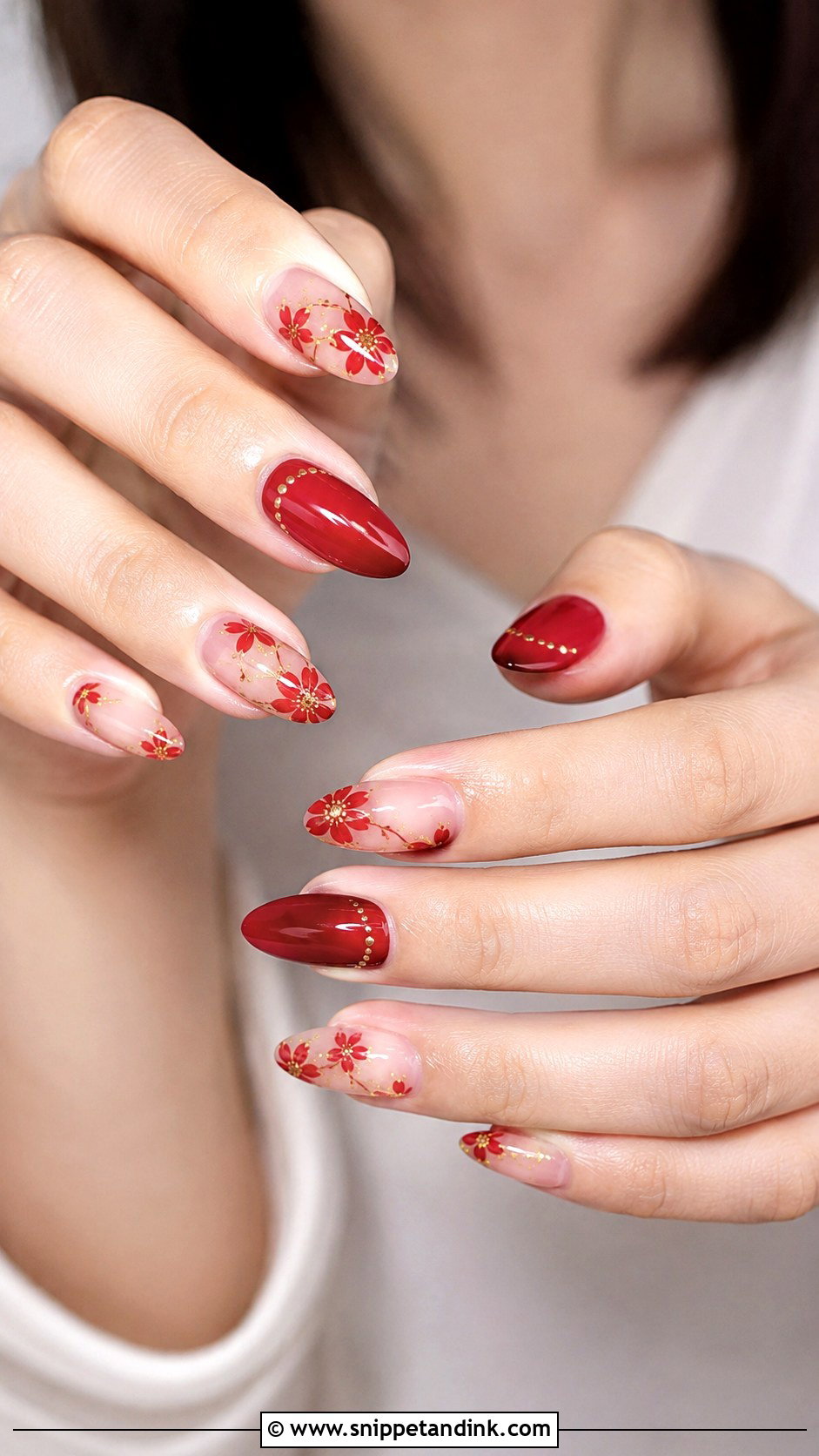
Hand-painted flowers soften a red manicure without hiding the colour. I paint red blossoms on two or three nails over sheer nude or blush, with fine branches or a few gold dots, and leave the others bare so the set doesn’t feel busy. Plum and peony shapes echo the embroidery on many qun kwa, so I often copy a motif straight from the jacket. Almond and oval give the petals room. Florals stay readable in bouquet and ring photos because the shapes are bigger than linework.
13. Chinese Wedding Nails With Pearls
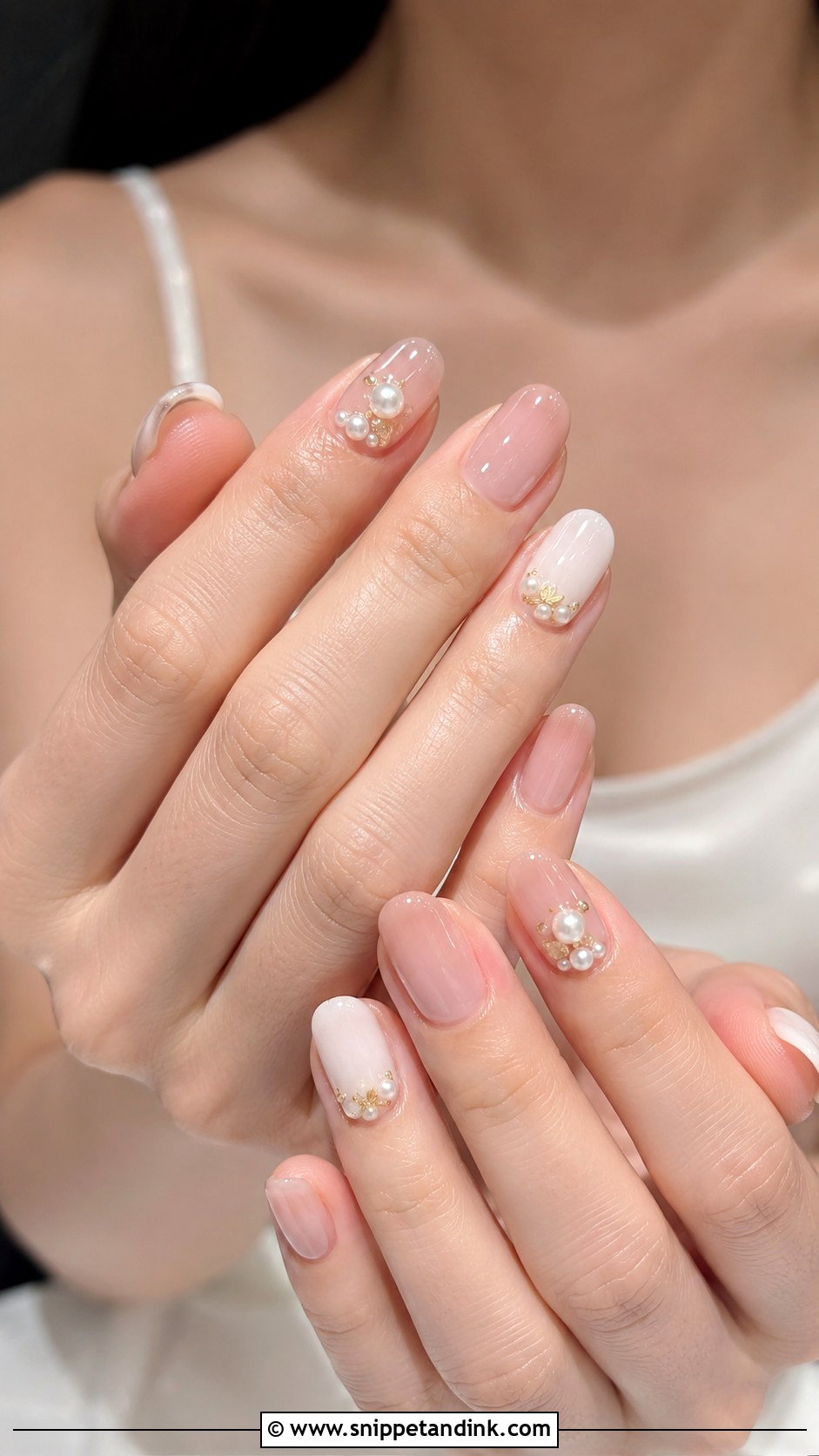
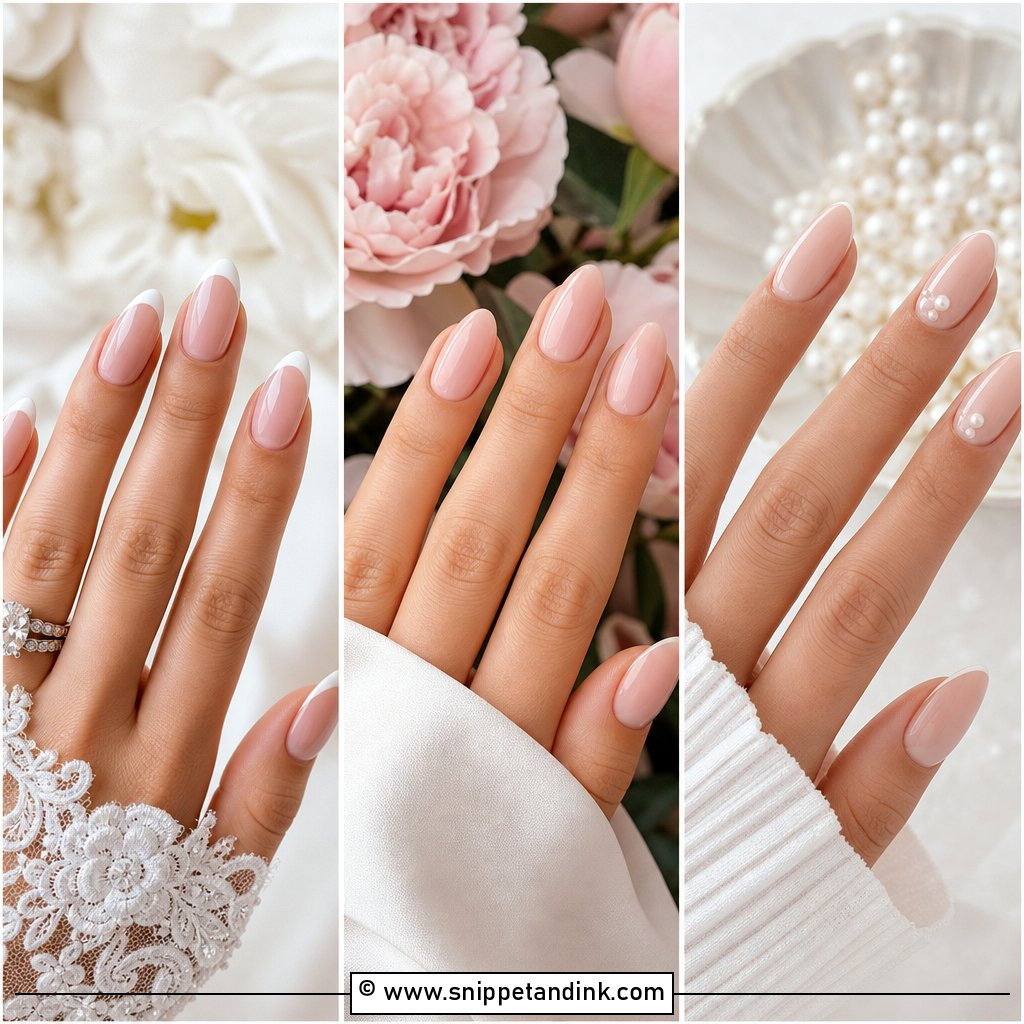
Pearls are three-dimensional, and that’s the thing to plan around. I set small flat-backed pearls in gel near the cuticle or along a French line, never right at the free edge, because tips catch on lace, tulle veils and long hair. On a sheer pink, milky or nude base they look refined; add one red nail or a tiny gold double happiness if you want a traditional cue. If your outfit is heavily beaded, I’d use two pearls on one nail and stop there. Medium almond and short oval keep them from looking bulky next to pearl earrings and gold bangles.
14. Burgundy Chinese Wedding Nails
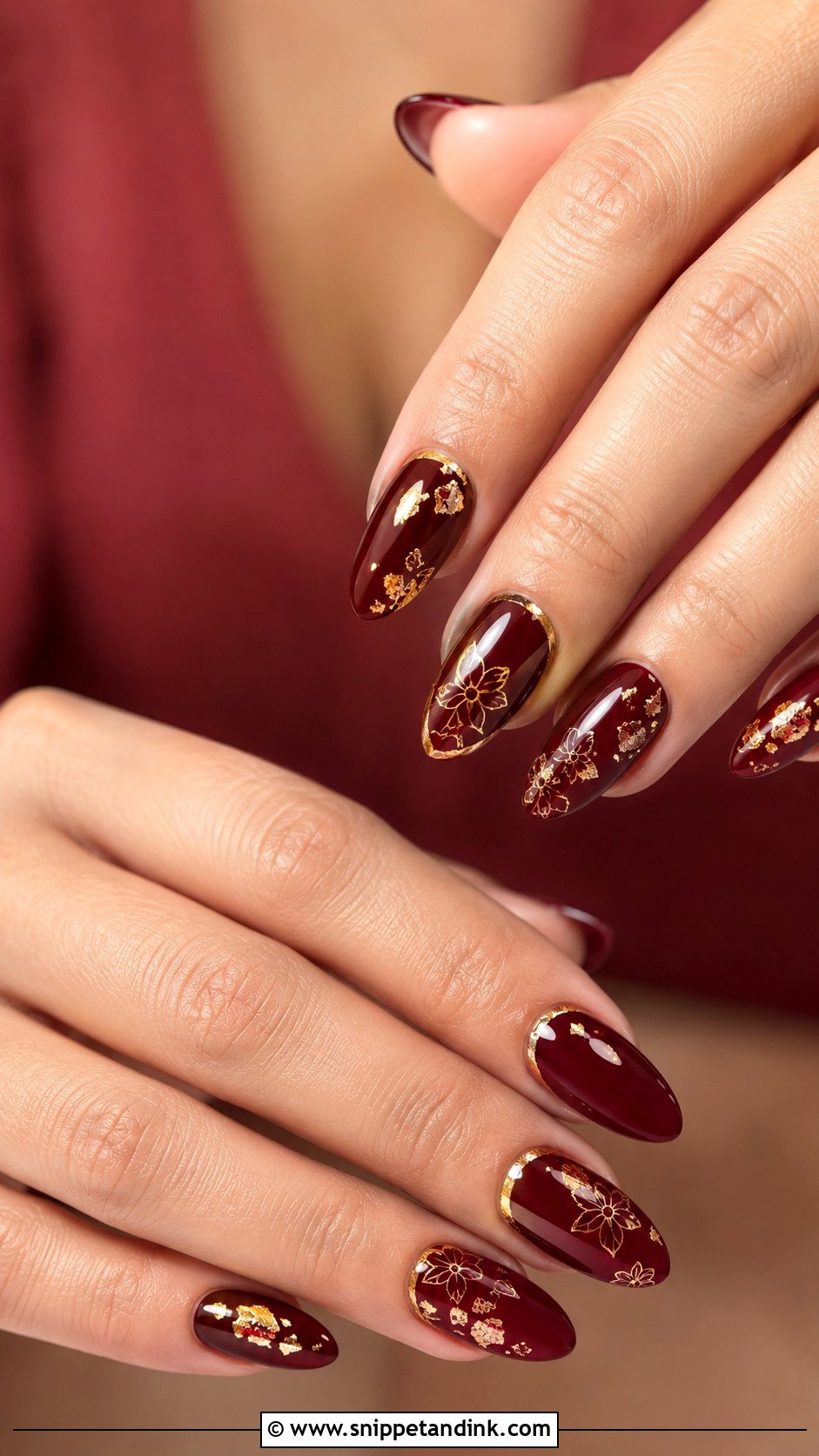
Burgundy reads deeper and more grown-up than bright red, and it suits evening banquets in dim halls. One thing to know: very dark wine shades can photograph almost black in low light, so I add enough gloss, foil or gold French tips to keep the colour visible. Subtle gold floral linework works well too. Burgundy flatters many skin tones and sits richly beside yellow gold. It matches a darker red dress or wine-red embroidery better than bright red, which can look orange next to it. Almond, oval and coffin all suit it.
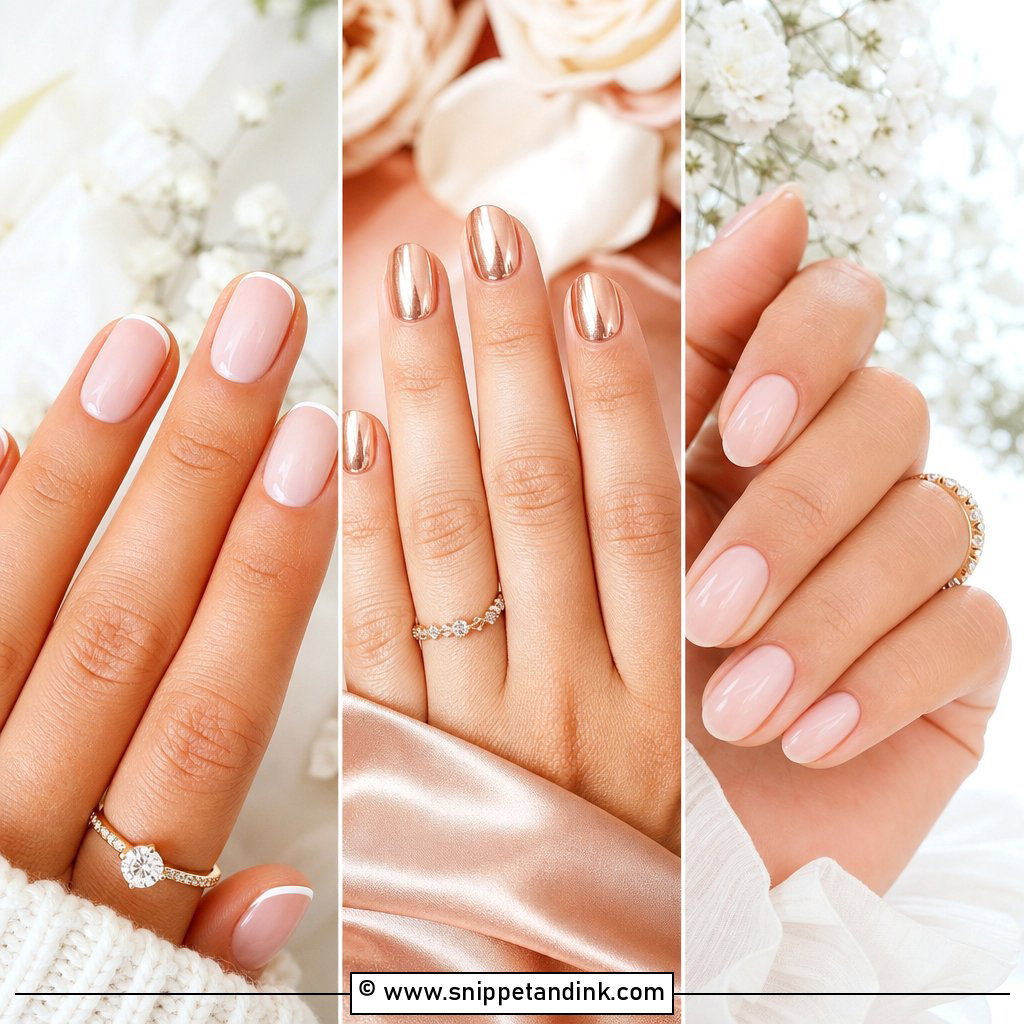
15. Chinese Wedding Nails With Gold Tips
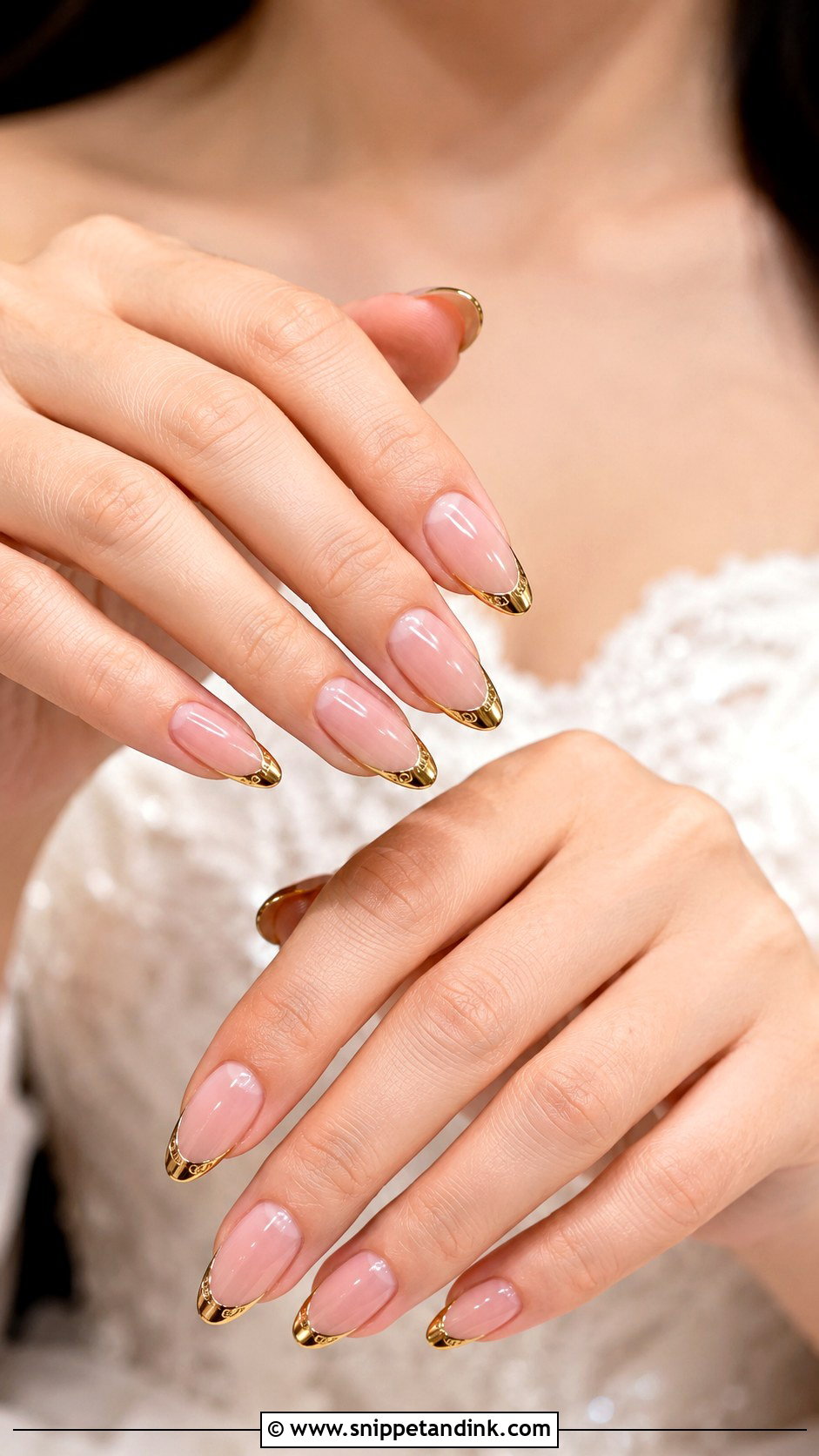
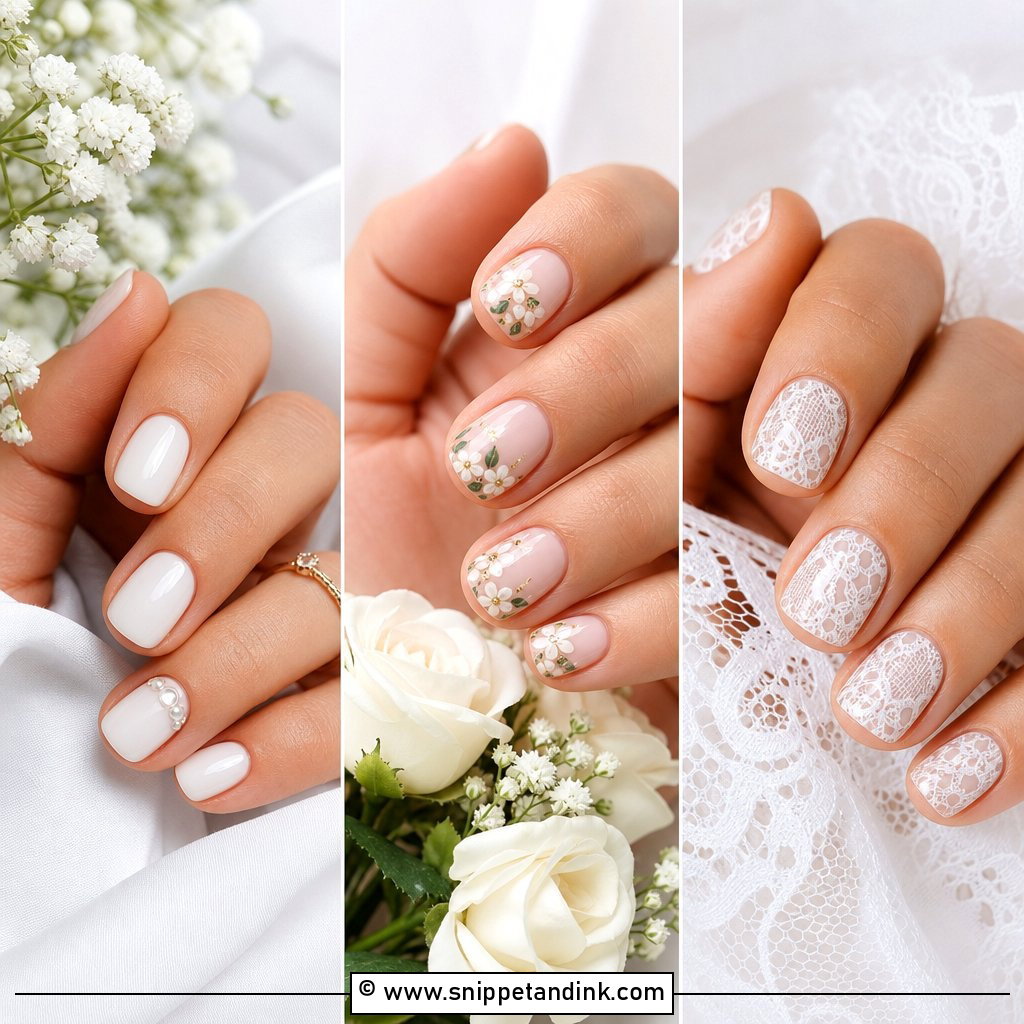
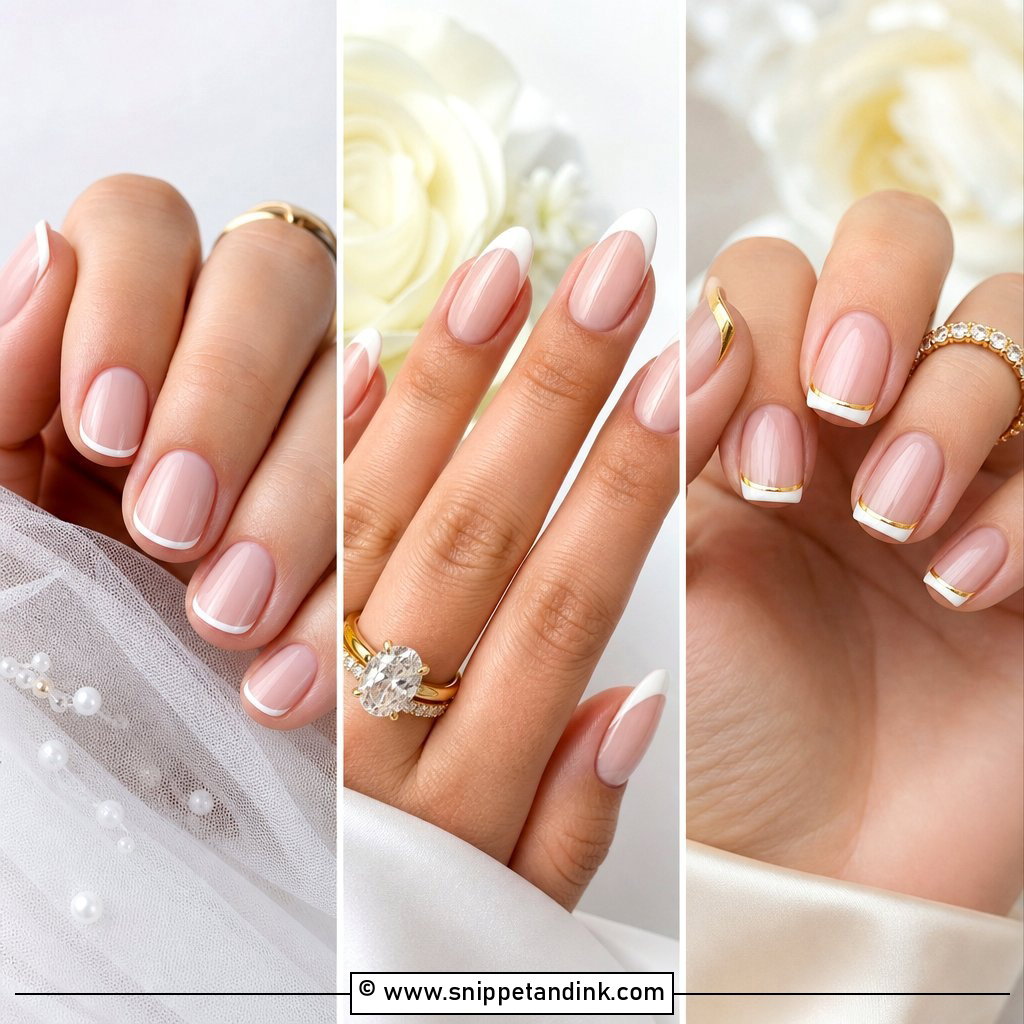
Gold tips put the metal where a ring or bracelet would catch the eye: right at the edge. A nude, blush or milky base keeps it quiet, and the gold ties in with traditional bracelets and hairpieces. I’ll paint a micro tip barely a millimetre deep for minimal brides, or a wider French for more impact. Gold gel tips need a precise, thin line; thick metallic gel at the edge looks clumsy and chips faster. It suits a white gown, a red dress and a champagne outfit alike. Short square looks sharp, almond looks softer.
16. Chinese Wedding Nails With Red Hearts
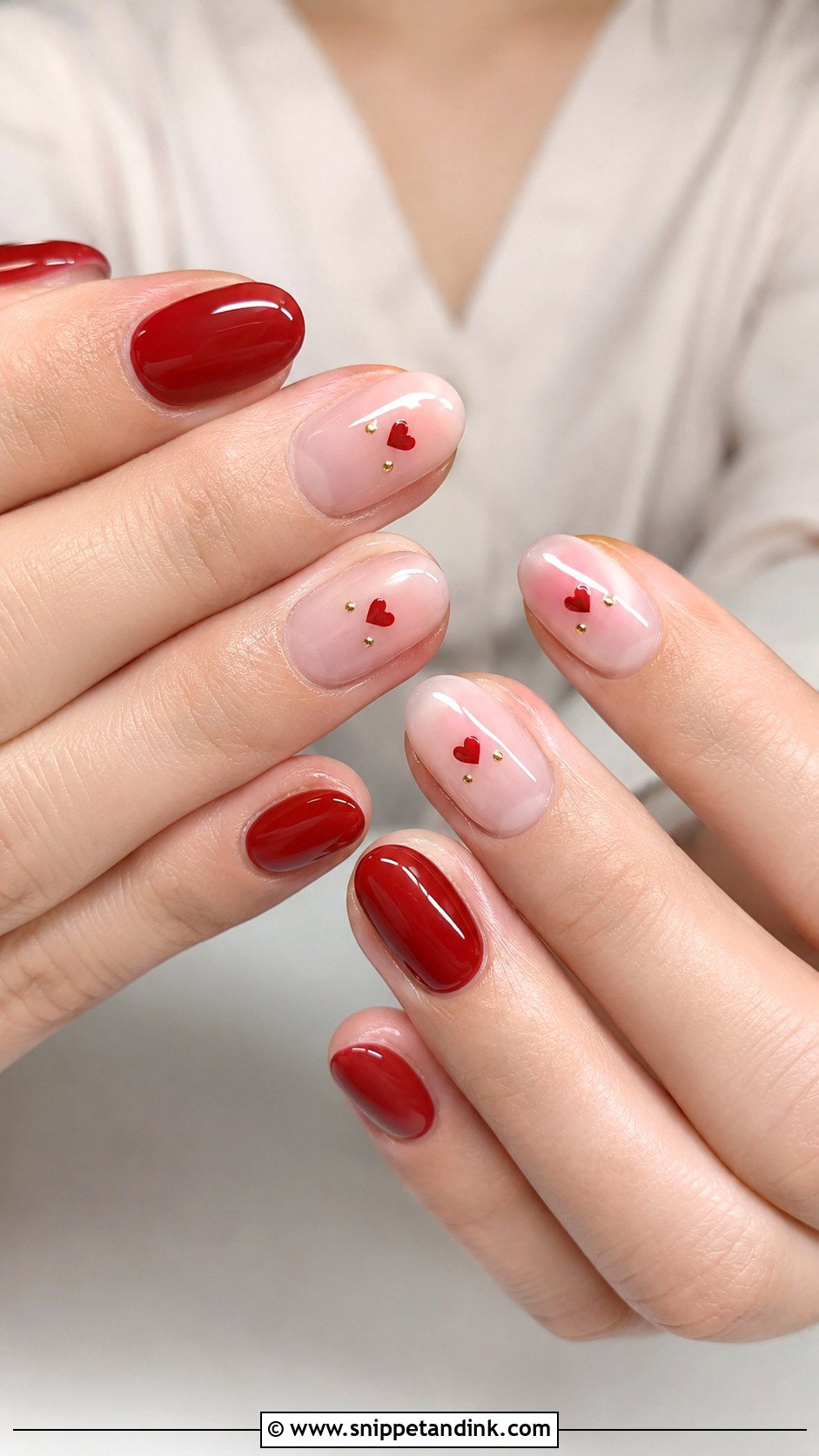
Hearts can look childish fast, so I keep them tiny, red, and on one or two accent nails over nude, milky or blush. A hairline gold outline or a couple of gold dots pulls them back into a Chinese wedding palette. Oversized hearts date quickly in photos. Short almond or oval suits this set, and it’s one I often suggest for bridesmaids when the colours are red and gold, since it’s quick to paint on several people in one sitting.
17. Chinese Wedding Nails With Gold Glitter
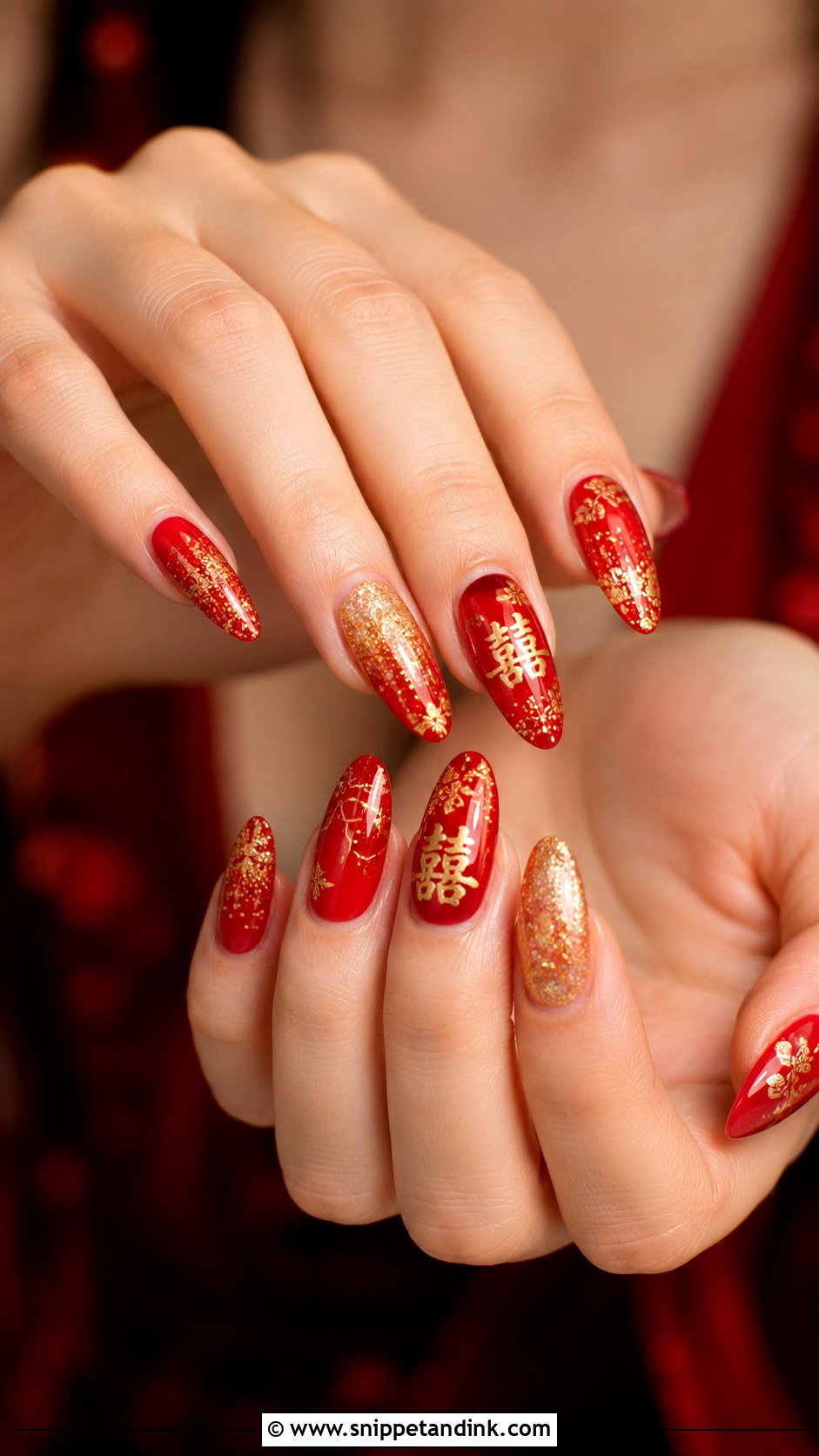
Glitter is fun for a banquet, but the size of the particle decides whether it looks bridal or like a party set. I use a fine gold glitter and fade it from the tip down over red for a traditional mood, or over nude for something lighter. Chinese wedding nails with gold glitter can also stay on the ring fingers only, with the rest in glossy red or milky white. Chunky glitter leaves a bumpy surface even under top coat. Medium almond or coffin give the fade room to look smooth during cake cutting.
18. Chinese Wedding Nails With Gold Lines
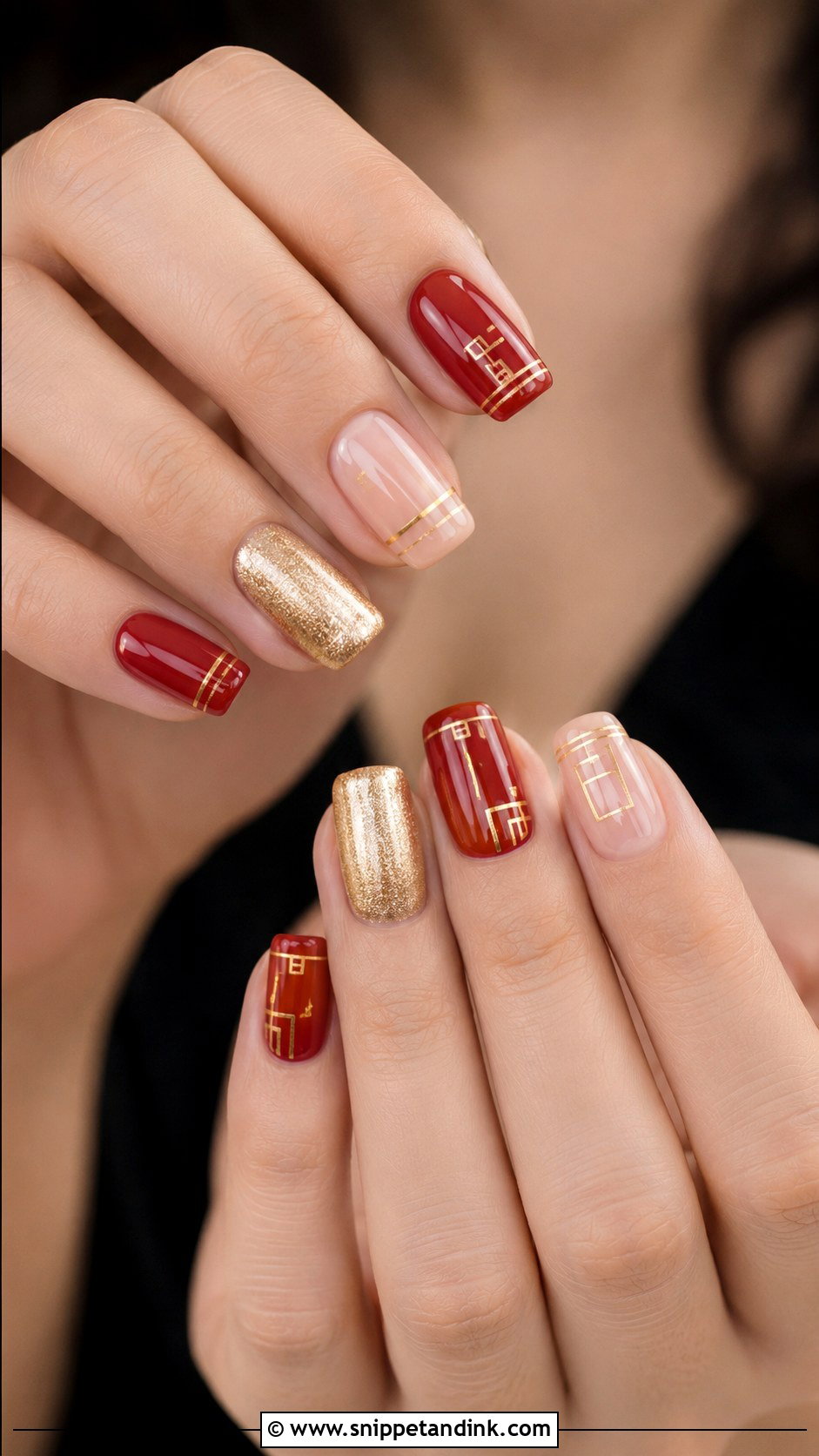
Fine gold lines are what I suggest when the dress is already ornate. A thin metallic stroke framing a red nail, crossing a nude one or outlining a French tip mirrors the gold thread in embroidery without adding more pattern. The lines need a steady hand and a liner brush, and a glossy top coat over them keeps the edges smooth. Soft square and almond both work. Ask your nail tech to show you the line weight on one nail first; anything thicker than a hair starts to look heavy.
19. Chinese Wedding Nails With Red Accent Nails
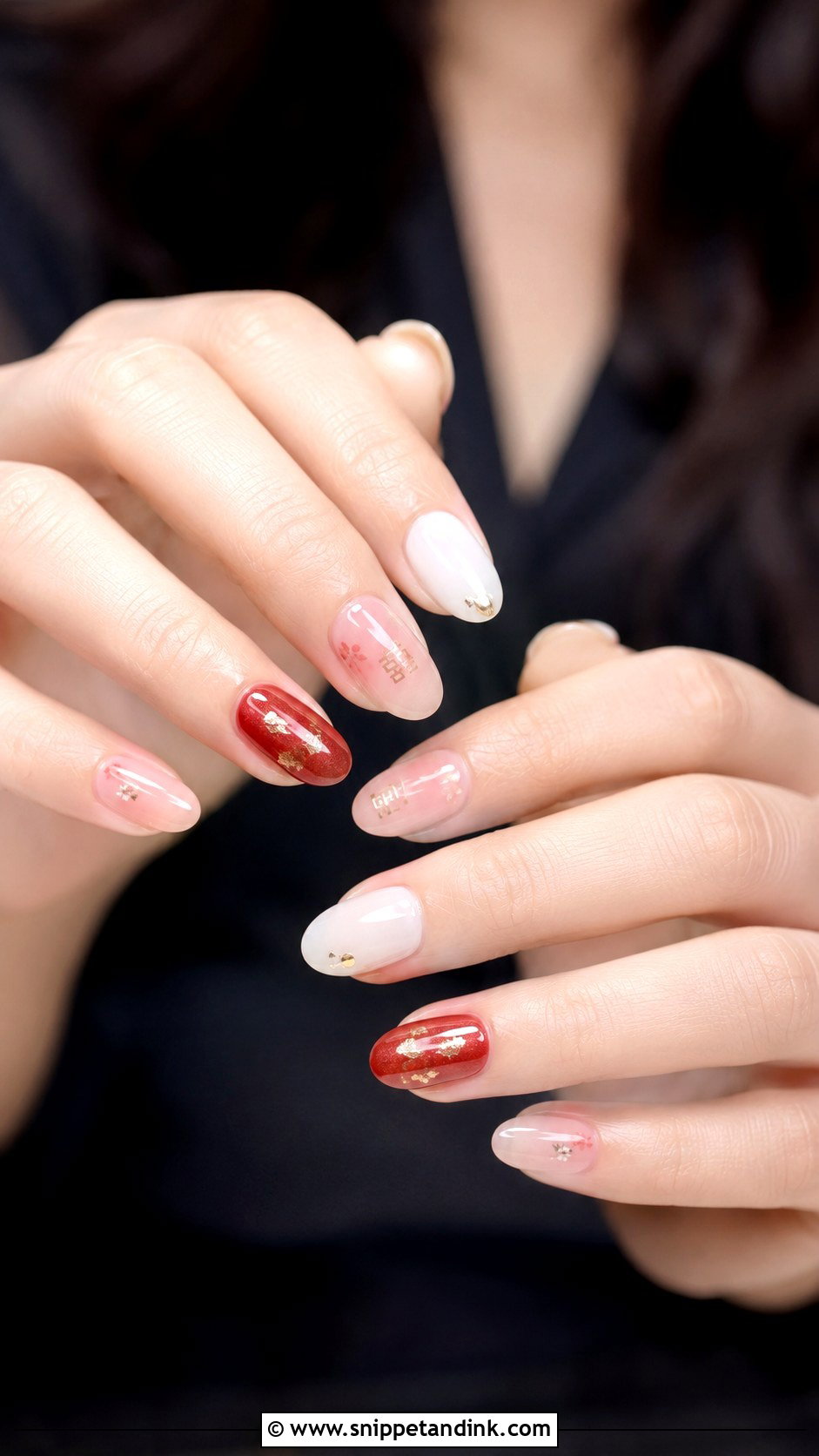
Most of the hand stays neutral here, in milky white, sheer pink, nude or pearl chrome, and one or two nails carry glossy red or red art. I tie it together with a little gold foil, a tiny double happiness or a slim red tip on the neutral nails. It solves the white-dress-then-red-tea-ceremony problem neatly, and it’s the easiest set to personalise because you only need to decide what goes on the ring finger.
20. Black And Red Chinese Wedding Nails
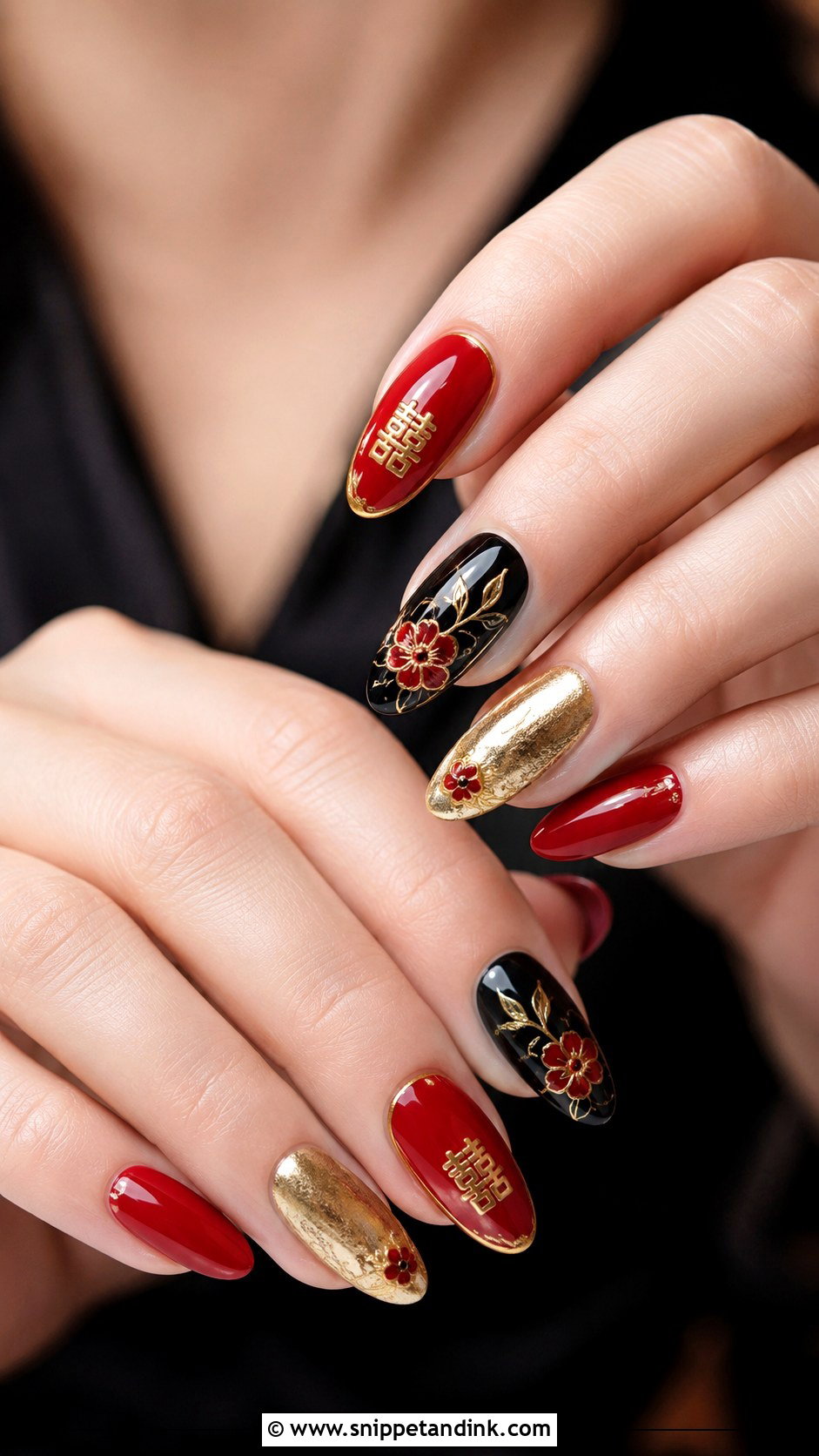
Black and red is a reception set for a bride who likes drama. I treat black as the detail, not the base: floral outlines on glossy red, black French tips, or a black accent nail lined in gold. Black gel, like red, has to go on in thin coats or it cures unevenly. It looks sharp with a dark red cheongsam or sleek evening dress and statement gold jewellery. Almond and coffin keep it intentional, and a high-gloss finish with small gold accents keeps it bridal rather than gothic. I’d skip it if the morning ceremony is with grandparents who expect pure red and gold.
Serving Tea, Gripping Red Envelopes and Other Things Your Nails Must Survive
The tea ceremony is a hands-on ritual. You’ll kneel or bow, pass small porcelain cups with both hands, refill from a pot, and receive red envelopes and gold jewellery being fastened onto your wrists. Long stilettos make that clumsy, and anything raised on the tip will clink against porcelain or catch on a bracelet clasp. For the ceremony itself I’d keep length at short to medium almond or oval, with any 3D work set low near the cuticle.
When to book the set
I like gel applied one or two days before the wedding. That gives the cuticle area time to settle and leaves room for a quick fix if a corner lifts, while regrowth is still invisible. If your door games and tea ceremony fall on a different day from the banquet, plan around the earliest event, not the reception.
A small kit for the bag
- A glass nail file for a snag or a cracked corner.
- Cuticle oil, which revives dull skin around the nail before close-up photos.
- Clear top coat or a small bottle of the matching red for a chip on a banquet nail.
- Lint-free wipes, since gold chrome smudges show fingerprints from food and drinks.
If a chrome edge wears through by the banquet, don’t peel it. A thin layer of clear top coat over the spot hides it far better from a few feet away than a patch of bare nail.
Letting the Dress and the Gold Decide How Much Art You Wear
Every set here can be traditional or modern depending on the base and how much art goes on top. Start from the outfits: if the embroidery is heavy, go cleaner on the nails; if the dress is plain, that’s your chance for symbols, chrome or florals. Red and gold carry the meaning, but pearl, milky white, jade and burgundy are just as much at home at a tea ceremony. Bring your fabric, your jewellery and a photo of every outfit to the appointment, and pick the set that still looks like you when you’re holding a teacup in front of your grandmother.
You'll Like These Ideas:


Leave a Reply