
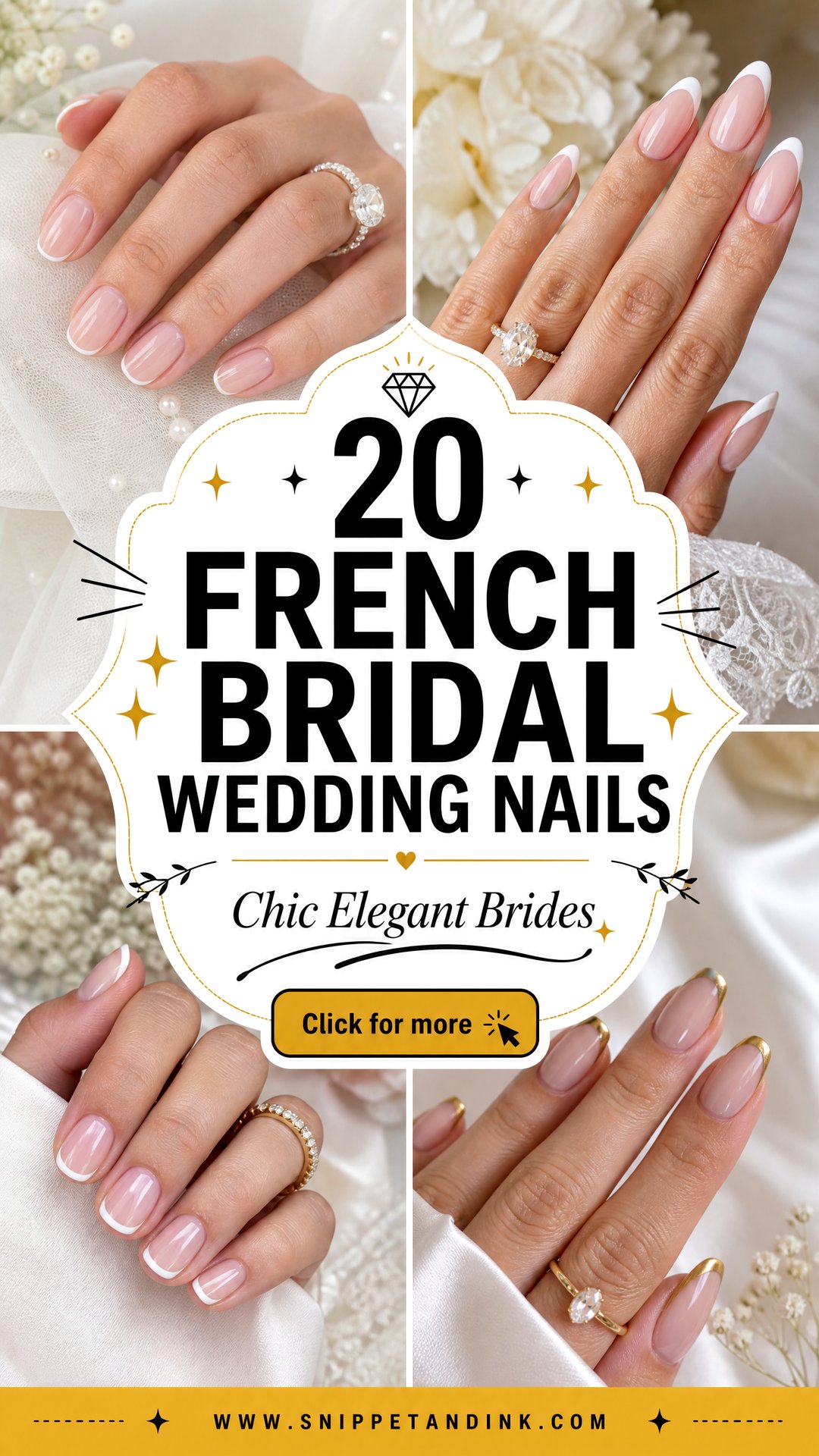
A French manicure is the bridal set I’m asked for most, and the reason is simple: it never fights the dress. Satin, lace sleeves, a pearl veil, it sits quietly beside all of them and still looks finished in a ring close-up. The version people picture is a pink base with a white tip, but the style has stretched a long way. Tips can be a hairline thin, the base can be milky, and chrome, pearls, lace or a small flower can join in. What follows are twenty sets, from the plainest to the most detailed, with notes on the shapes and lengths each one needs so you can go into your appointment knowing what to ask for.
The Product Under the Tip Matters More Than the Tip
Brides spend weeks choosing a design and about thirty seconds choosing what it’s made from. That second choice decides whether your tips are still crisp on day ten of the honeymoon.
- Gel polish on natural nails usually lasts around two weeks before it chips or grows out, and it soaks off without much damage when removed properly.
- Structured gel (often called builder gel) adds a thin strengthening layer. It’s my choice for nails that bend or peel, because a flexible nail cracks the white tip.
- Acrylic or gel extensions are what you need for long coffin or almond shapes. Get them done at least once before the wedding so you know how they feel.
- Press-ons are fine for a weekend, especially with glue rather than adhesive tabs. Bring a spare set in case one pops off.
Book the final appointment one to three days before the wedding. Earlier and you risk grown-out cuticles in the ring shots; on the morning itself and you add stress you don’t need. If you’re having a spray tan, get it first. Tanning solution stains white tips and settles into cuticles, and it can’t be scrubbed out of gel.
1. Classic French Bridal Wedding Nails
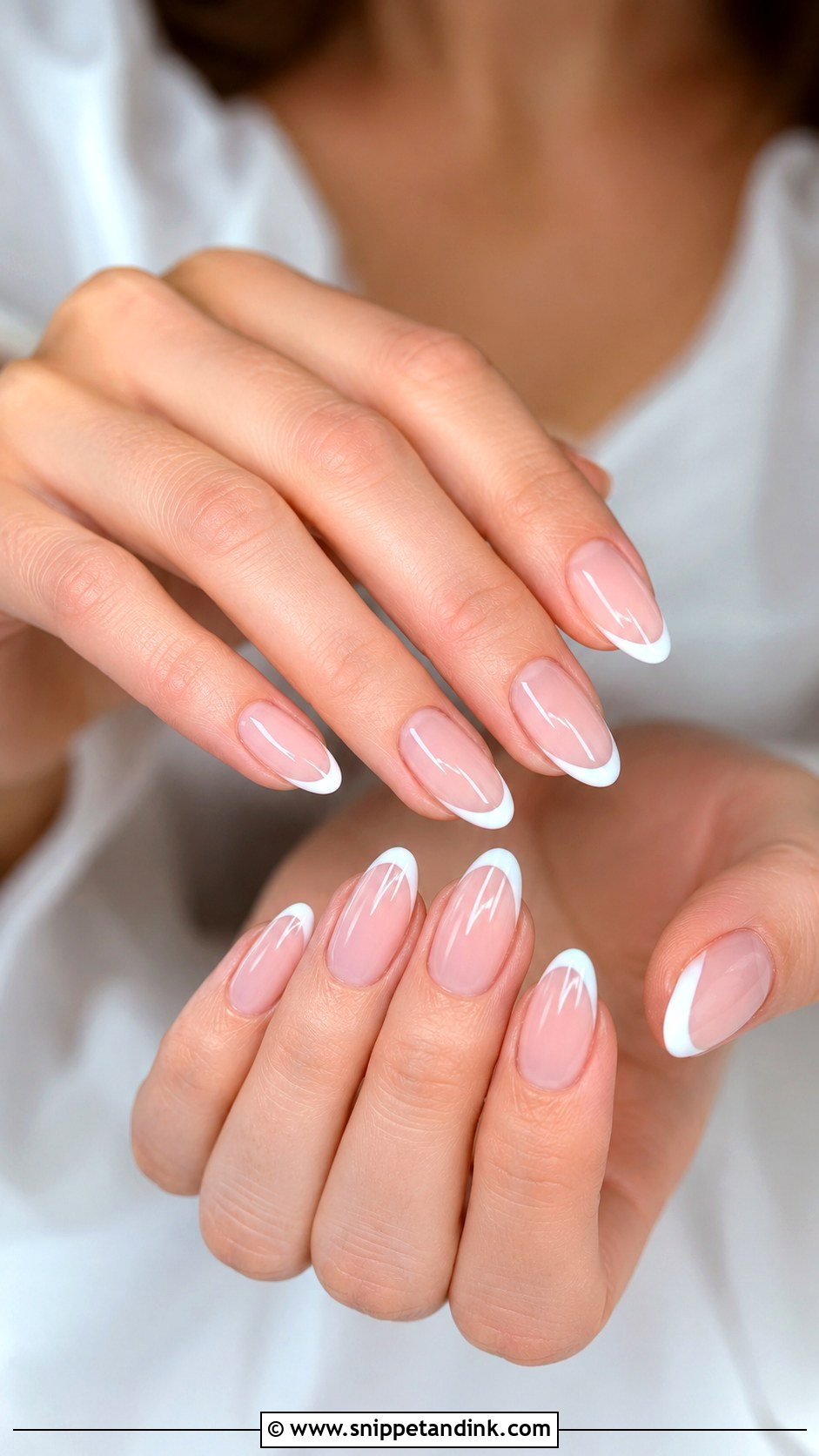
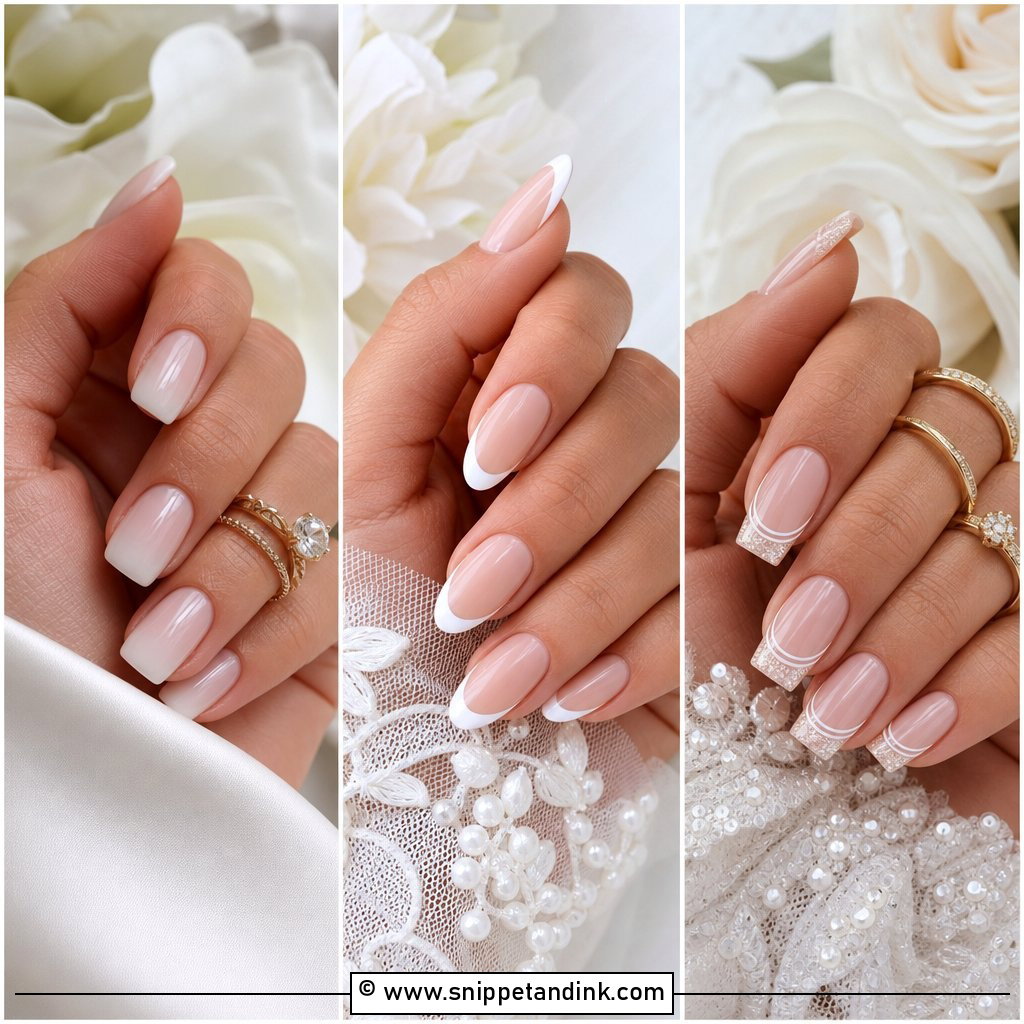
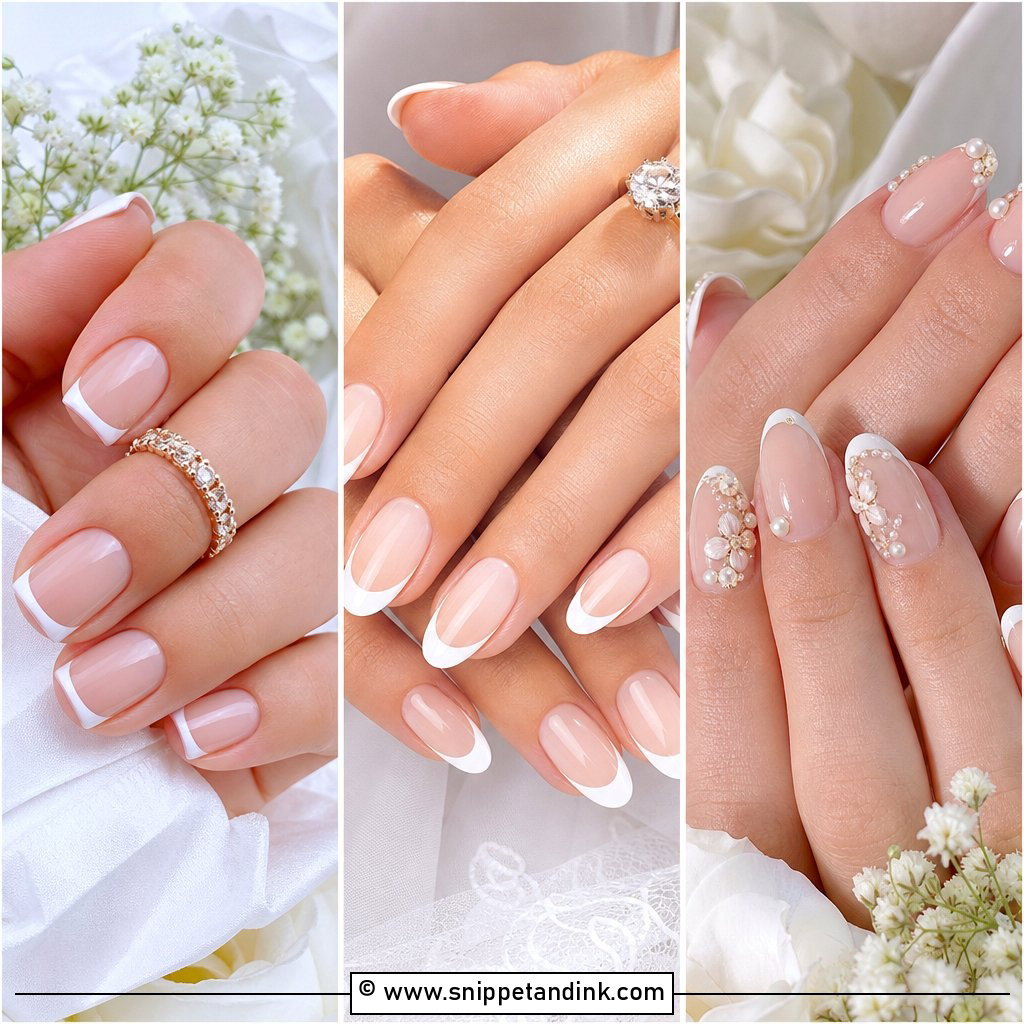
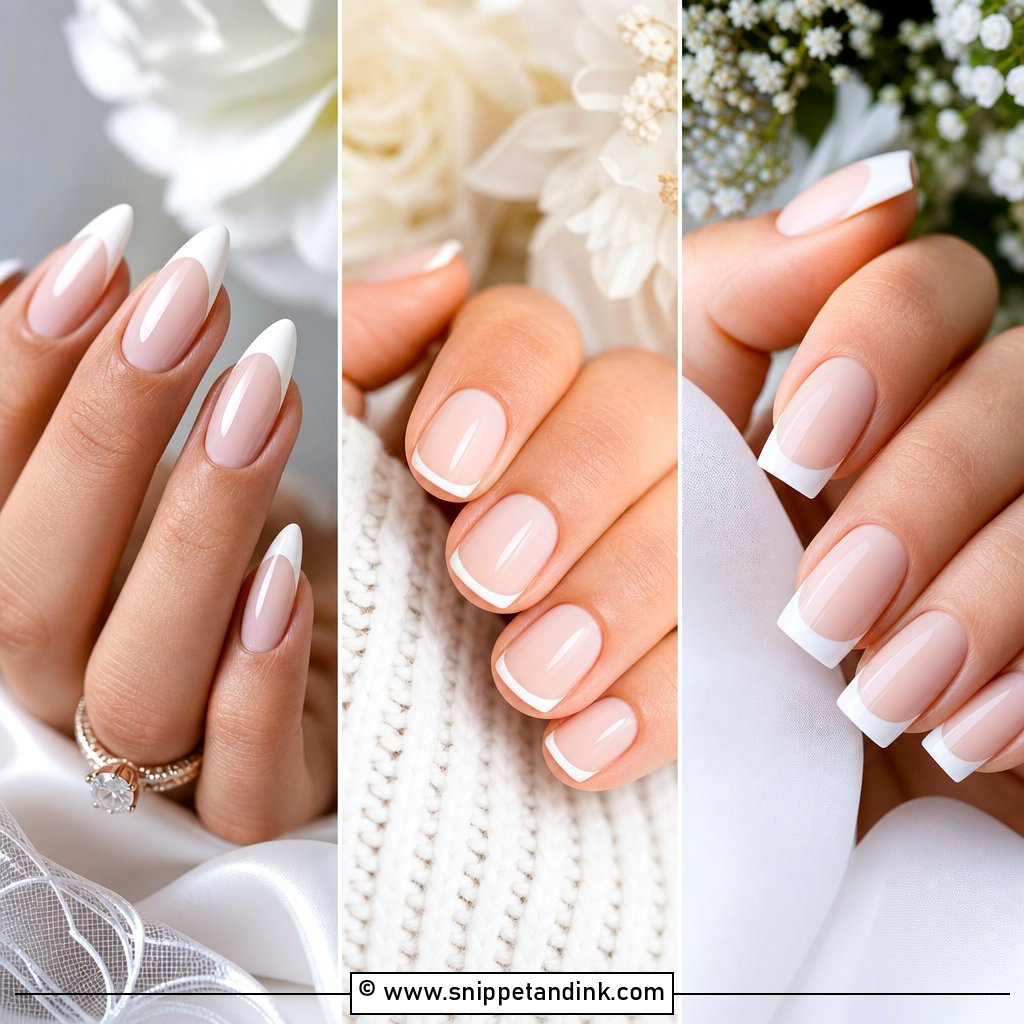
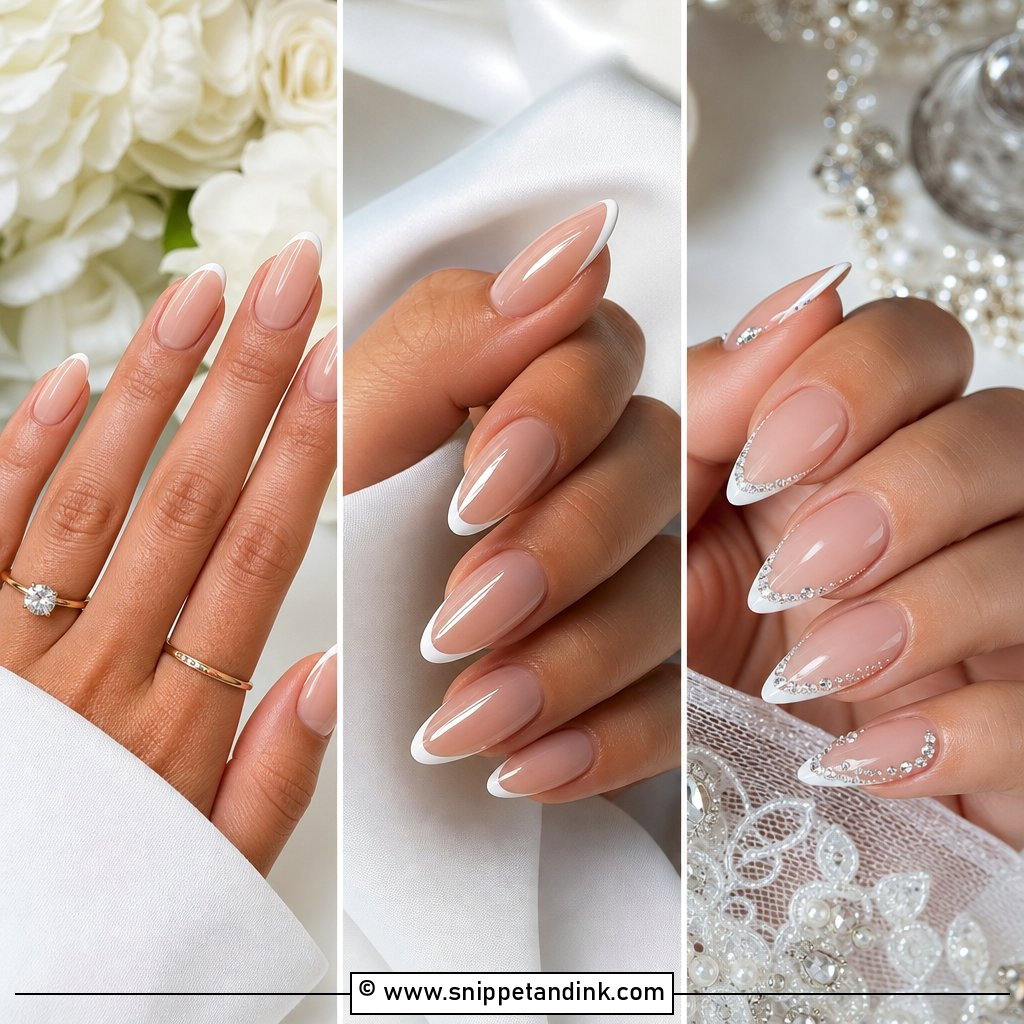
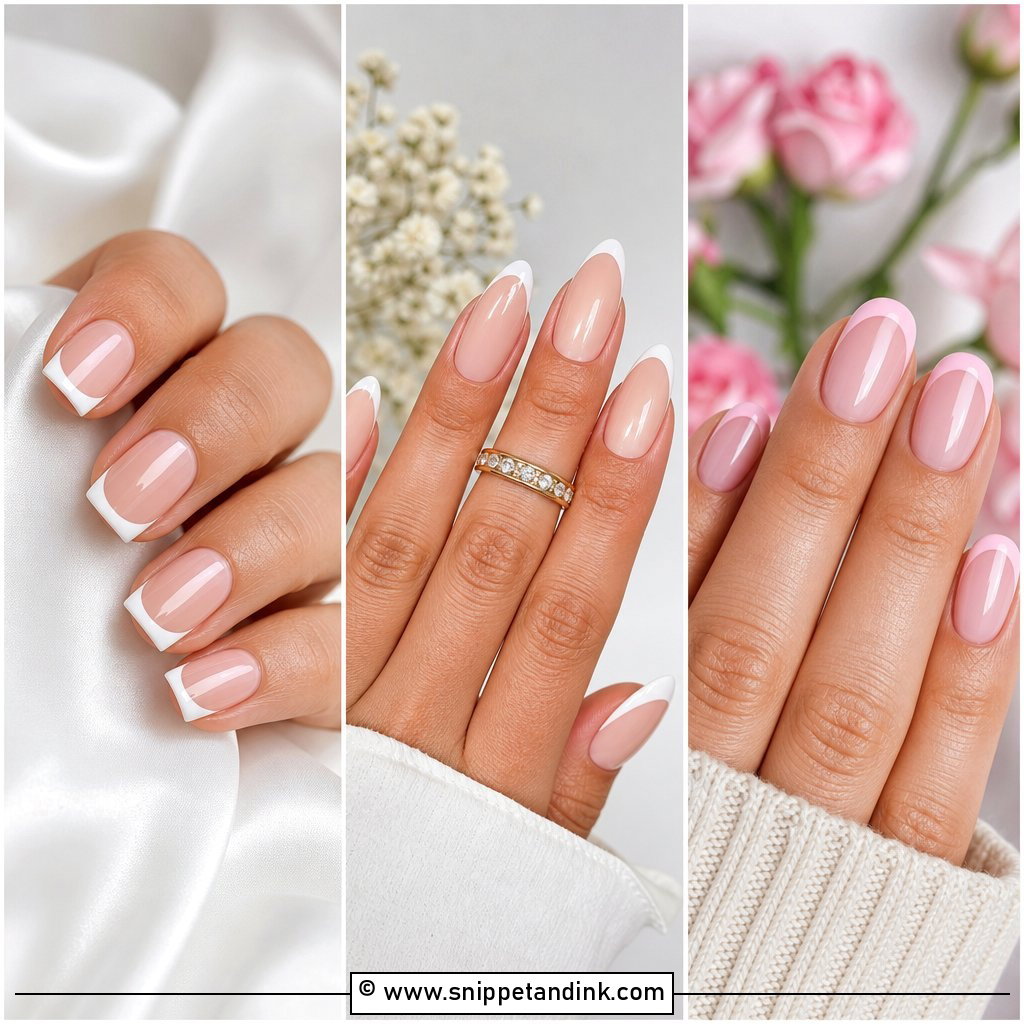
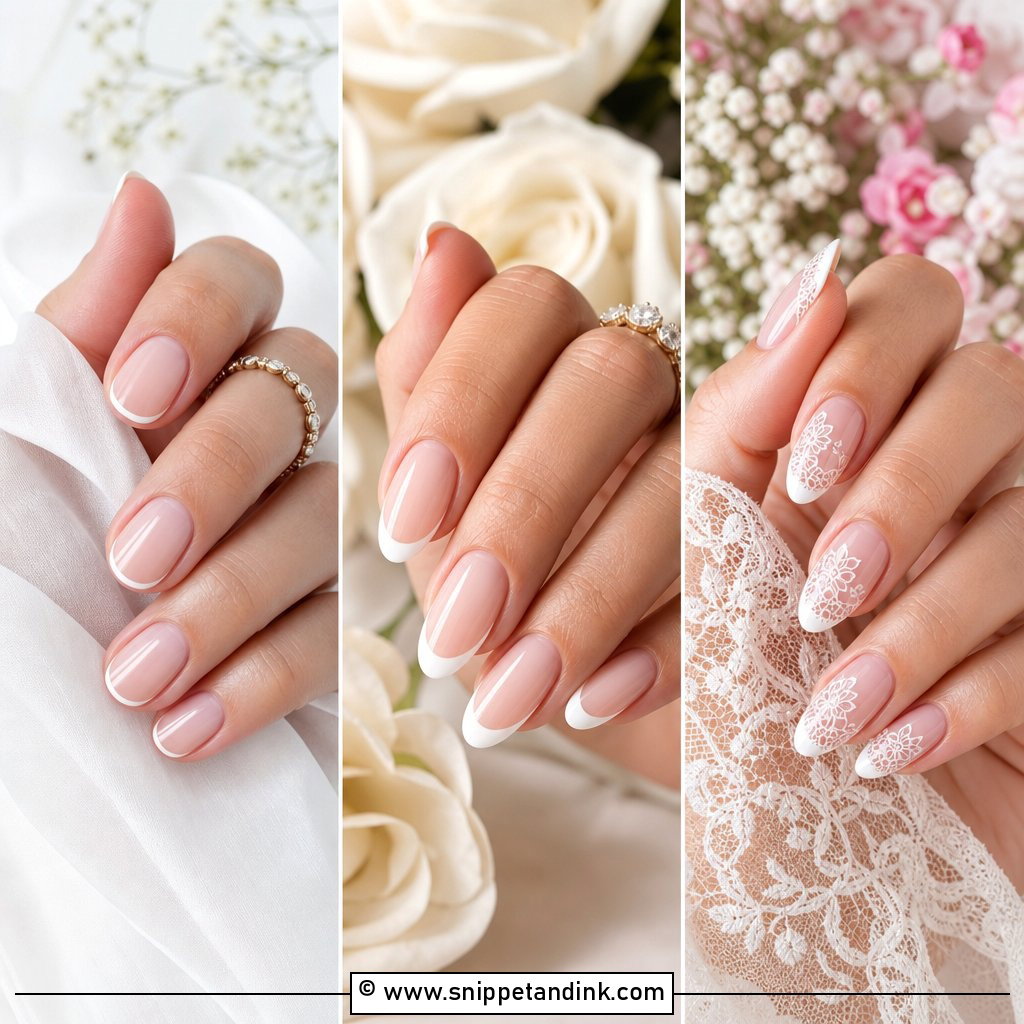
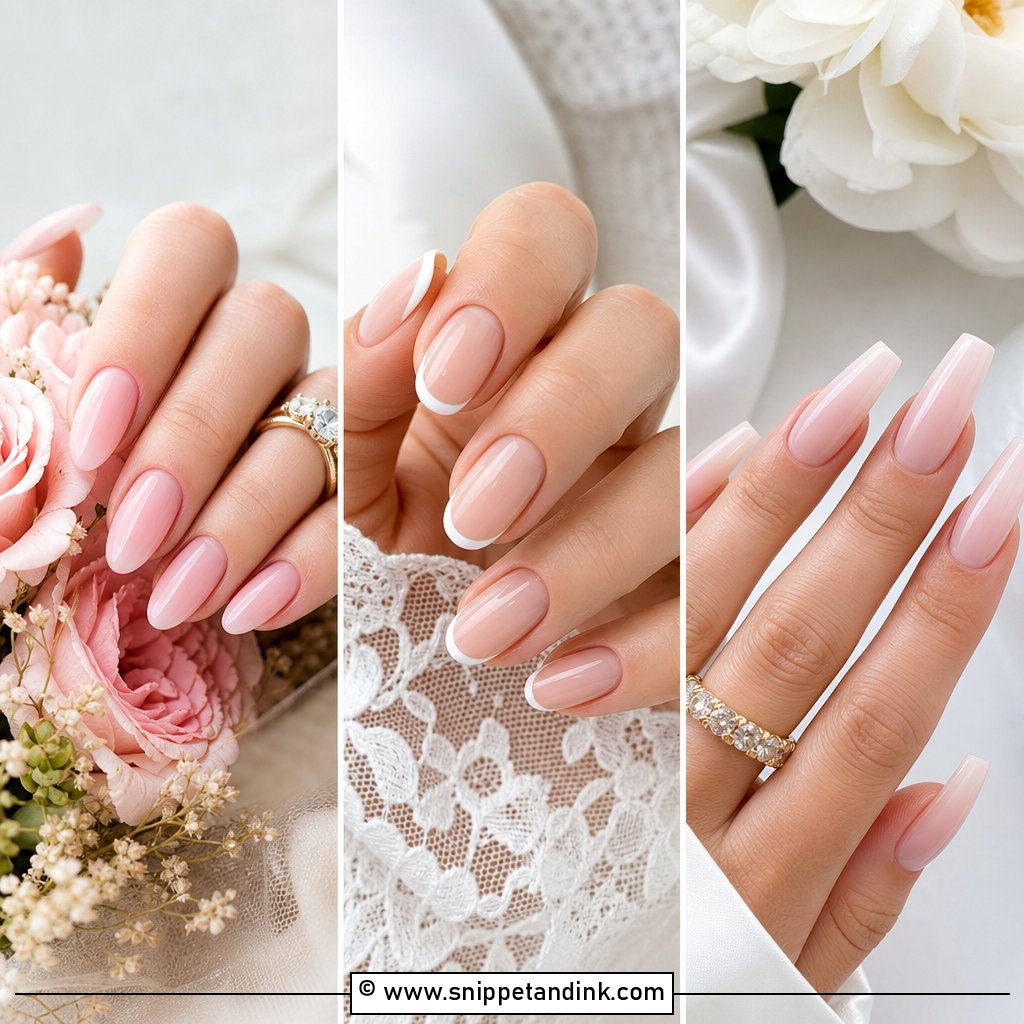
The classic set is a sheer pink or nude base, a clean white tip and a high-gloss top coat. I’d call it the safest manicure in this list, because it still looks right in photos you’ll look at in twenty years. Almond, oval and soft square shapes suit it best. The detail most people never think about is the smile line, the curve where white meets pink. Matching it to the natural curve of your nail bed makes the hand look tidy; a flat or uneven line is what makes a French look cheap. Ask for a soft white rather than a chalky stark one if you want it to read natural.
2. Milky French Bridal Wedding Nails
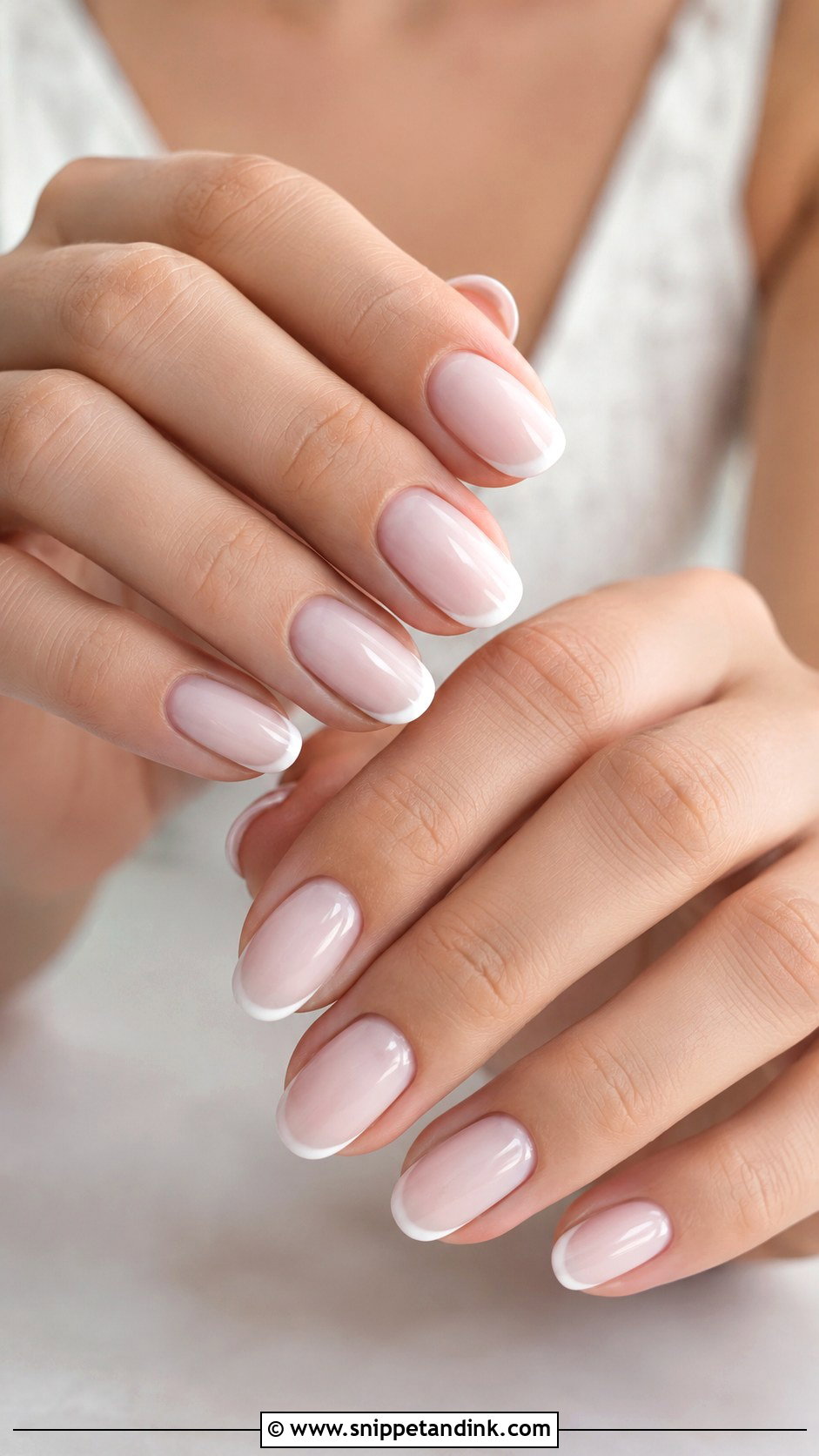
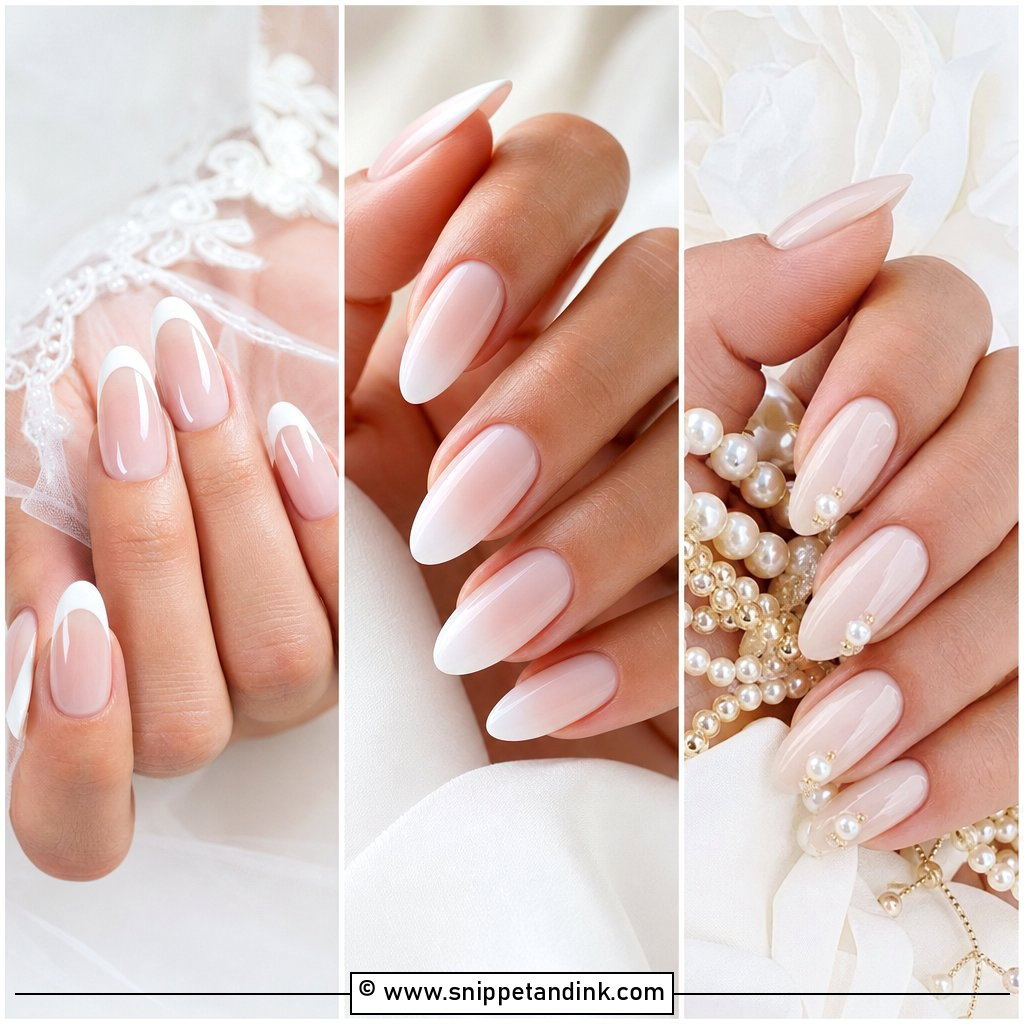
Milky French softens the classic French manicure by swapping the clear pink base for a milky white or milky pink. That cloudy base blurs the tip line slightly, so the contrast feels gentler. It’s forgiving on nails with ridges or white spots, because the semi-sheer color hides them better than a clear pink. Short oval, medium almond and long coffin all carry it. Keep the tip thin and the base semi-sheer; a fully opaque milk base can look like correction fluid under flash.
3. Micro French Bridal Wedding Nails
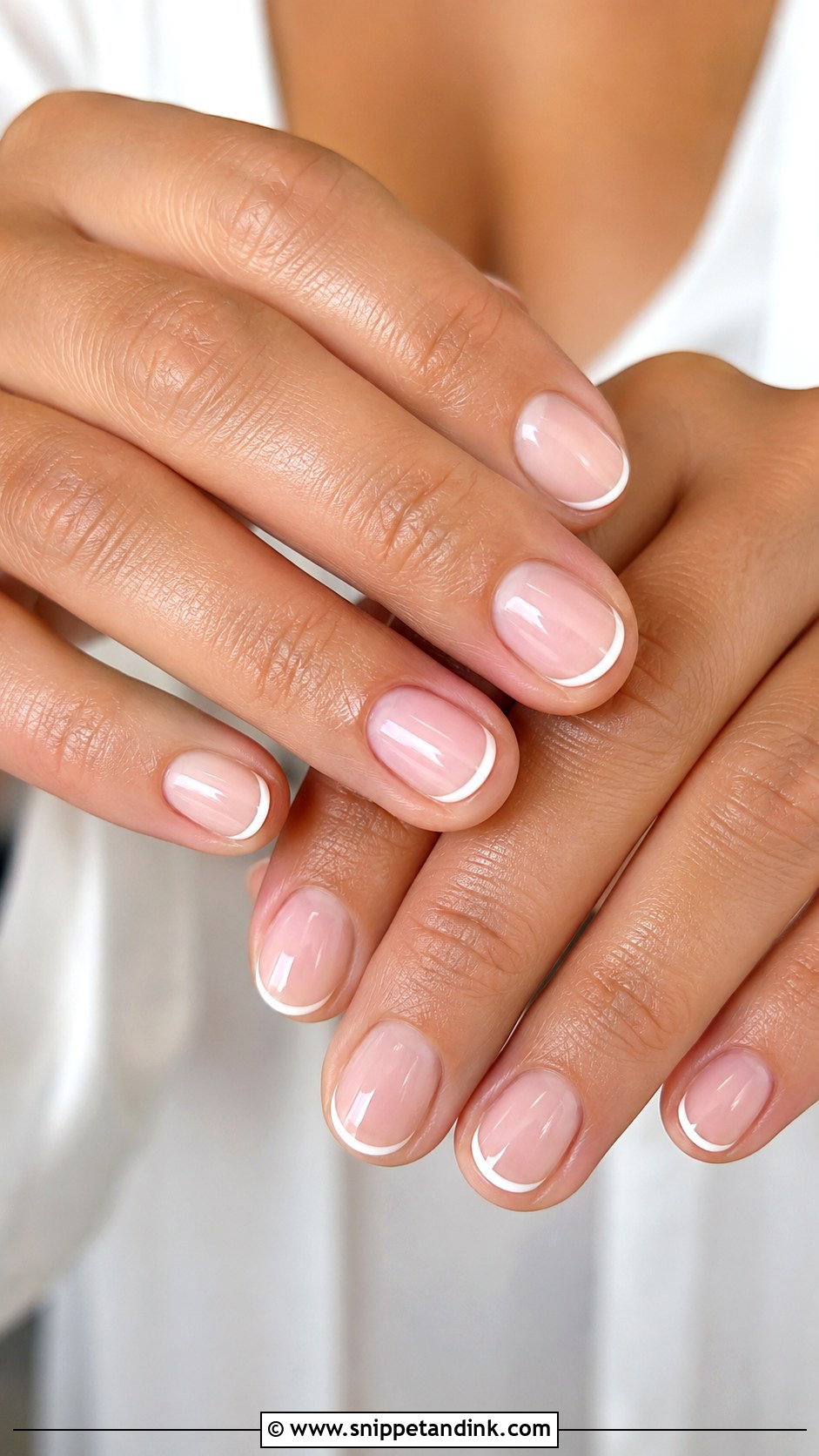
A micro tip is a very fine white line along the free edge, and it’s my first suggestion for short nails. A thick tip on a short nail eats up the pink and makes the nail bed look smaller, while a thin line defines the edge without that effect. A sheer pink, nude or beige base keeps it soft. Glossy top coat is the classic finish; a barely-there pearl chrome layer makes it a little more current. The only catch is precision. A hairline tip shows every wobble, so it’s worth going to someone with a steady liner brush. Micro French nails also grow out more discreetly than a bold tip, which helps if your honeymoon follows straight on.
4. Ombré French Bridal Wedding Nails
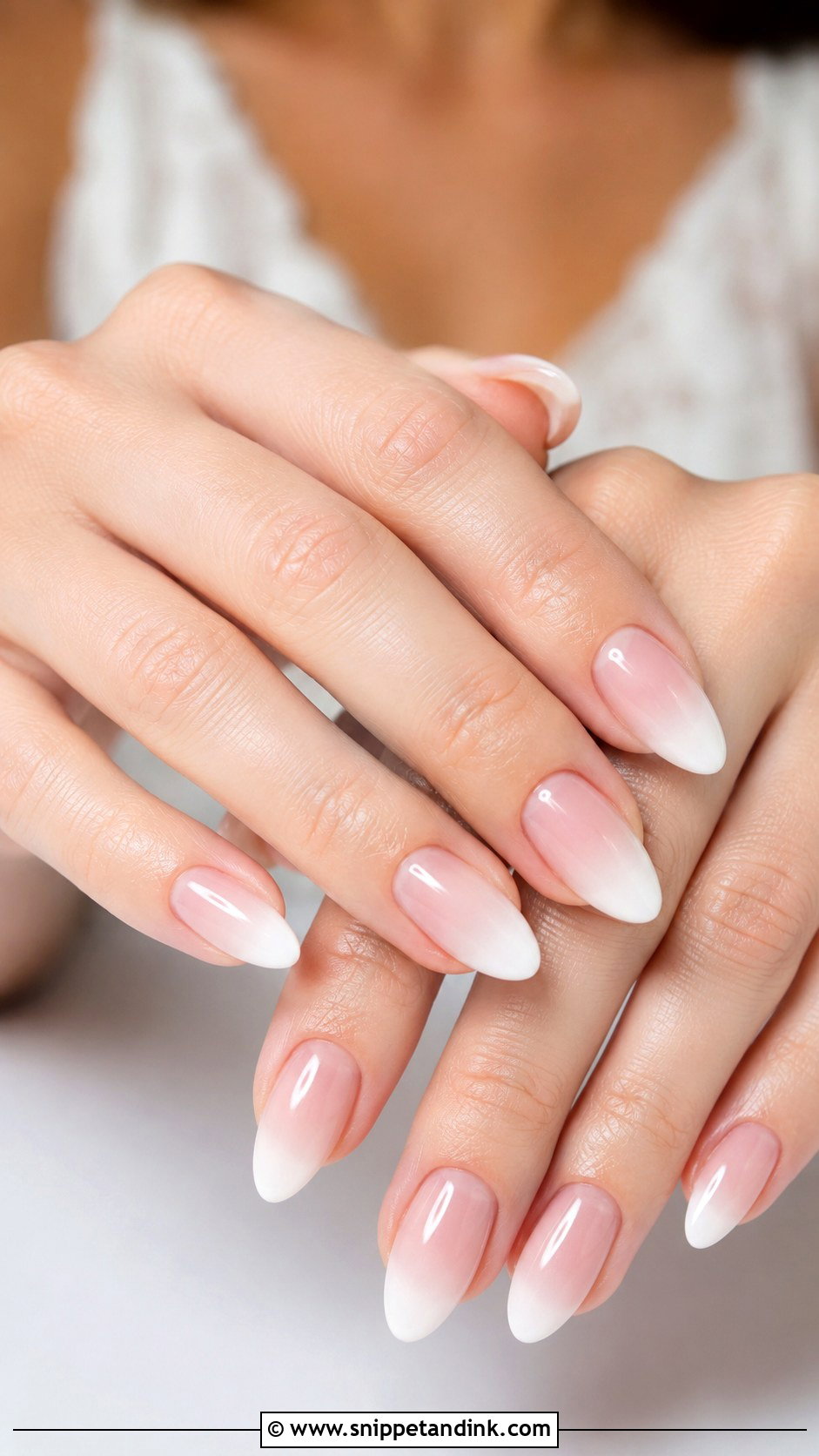
Ombré French skips the crisp line and fades the white gradually into a nude or pink base, which gives a slightly airbrushed look. I build the fade with a sponge or a brush, layering thin coats, and the base has to stay sheer or the gradient turns into a solid white blob. Almond, coffin and ballerina shapes give the fade enough room to show; on very short nails it can look like a smudge. Ask for a soft gradient, not a heavy white. It reads well from a distance and doesn’t show a crooked line, because there isn’t one.
5. Pearl French Bridal Wedding Nails
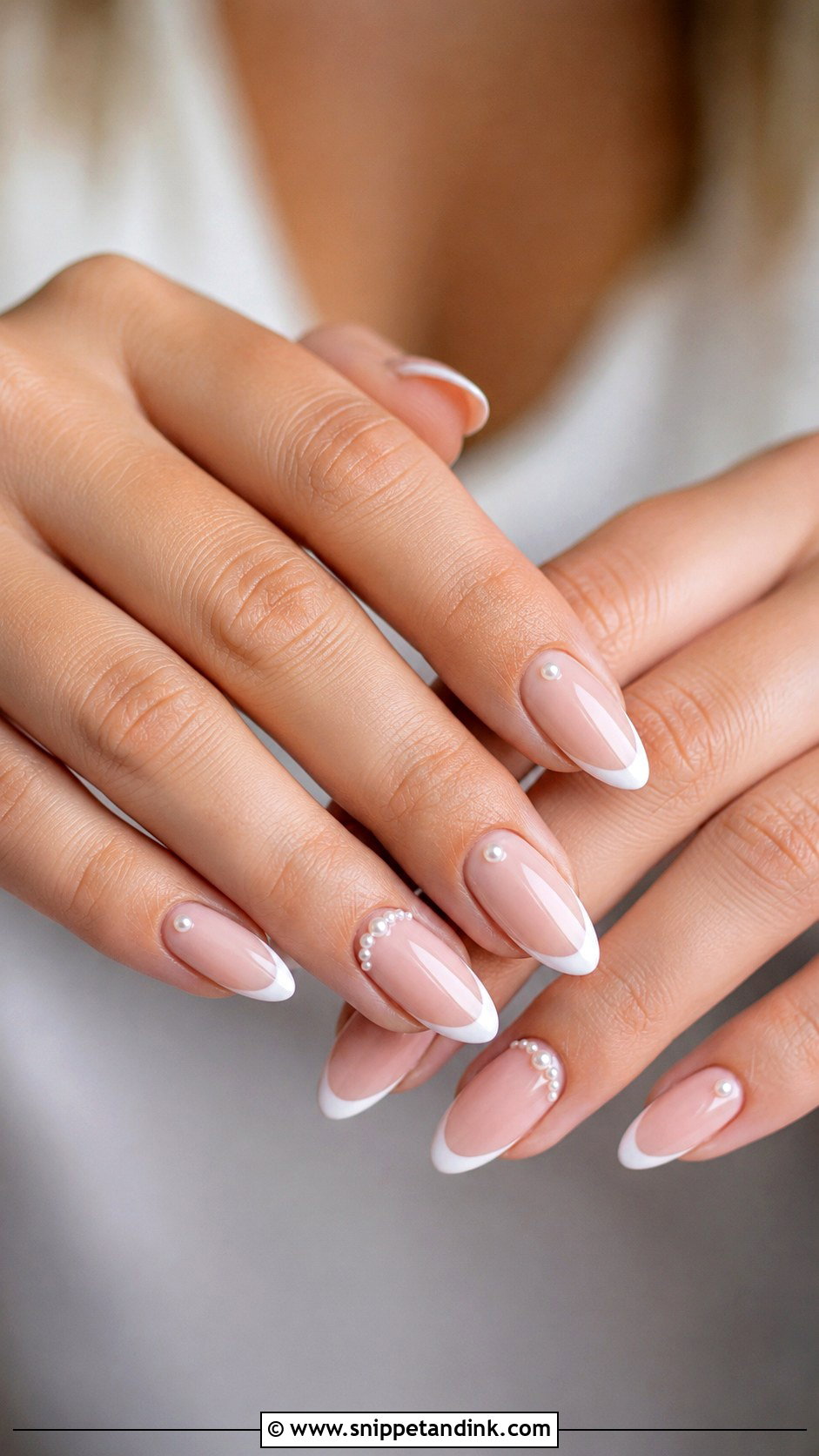
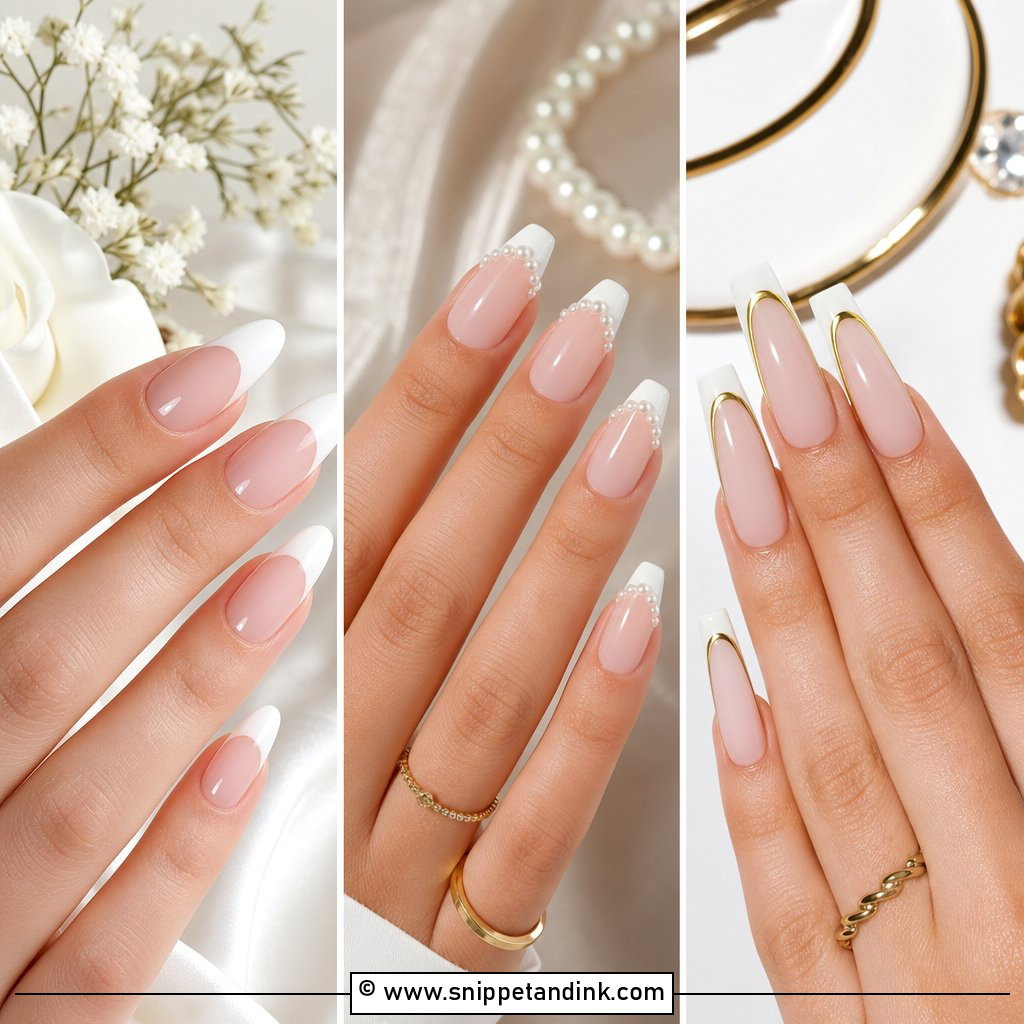
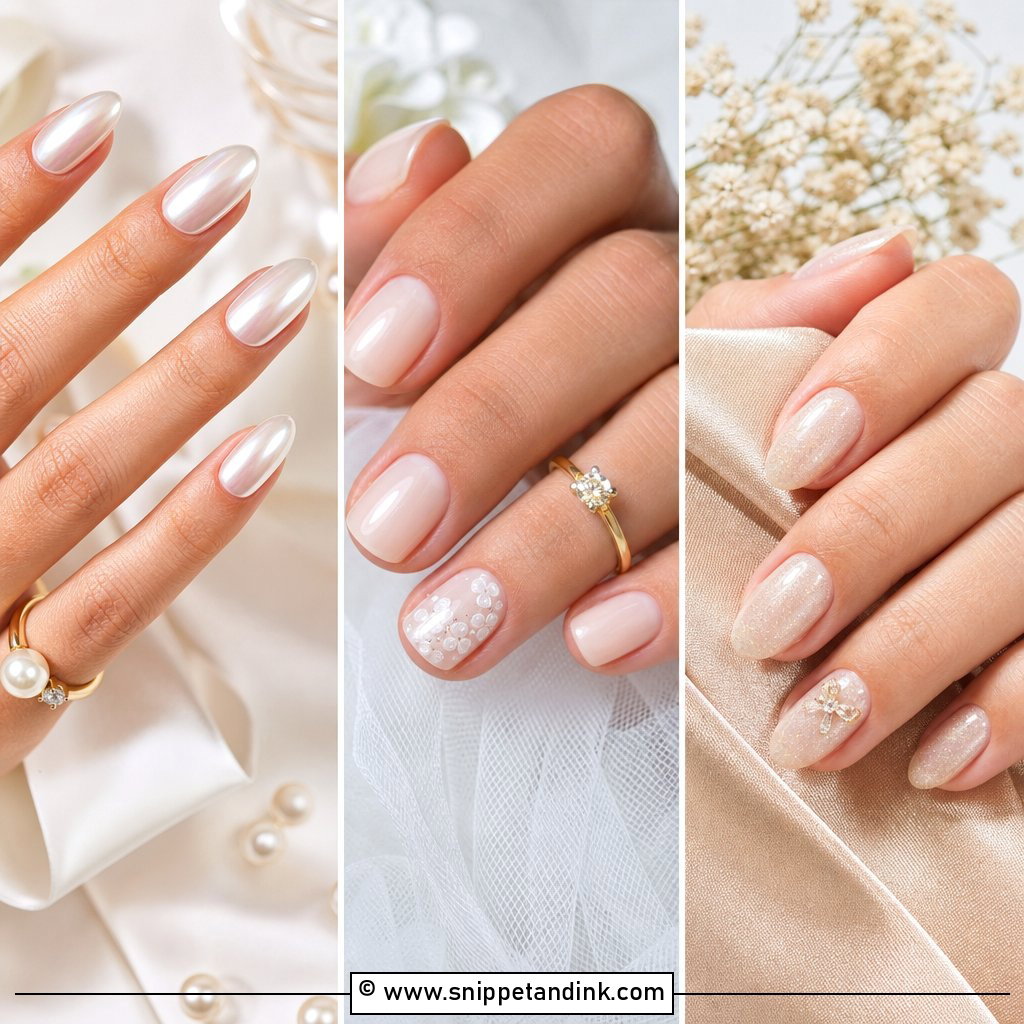
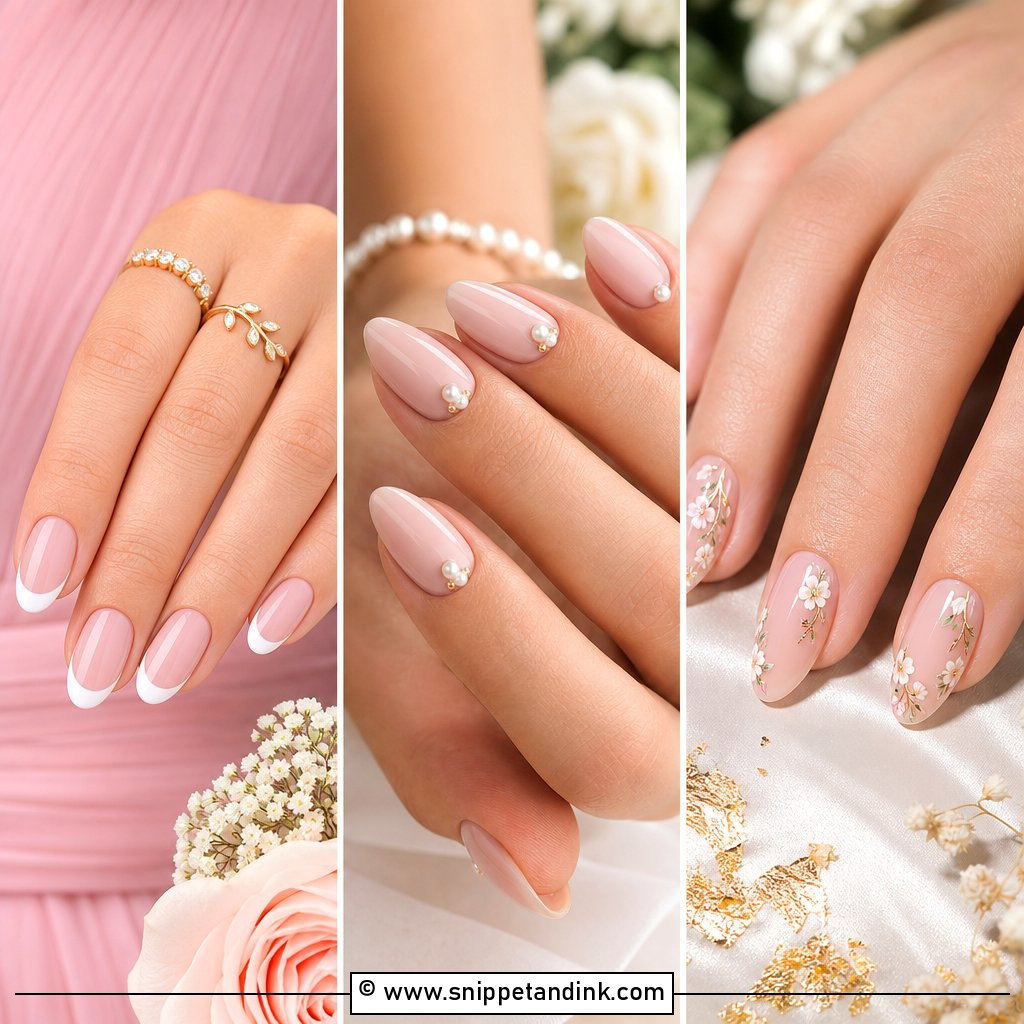
Pearls make sense on the nails if they’re already in your earrings, hair pins or veil. The set starts with a French base, then tiny flat-backed pearls go along the cuticle, near the tip or on one or two accent nails. Size is where this goes wrong: anything bigger than a few millimeters snags on lace, tulle and hair, and you’ll feel it every time you touch your veil. For a modern set, I pair micro French tips with a few pearl dots placed neatly on each nail. Rounded almond and oval shapes echo the pearls nicely.
6. Chrome French Bridal Wedding Nails
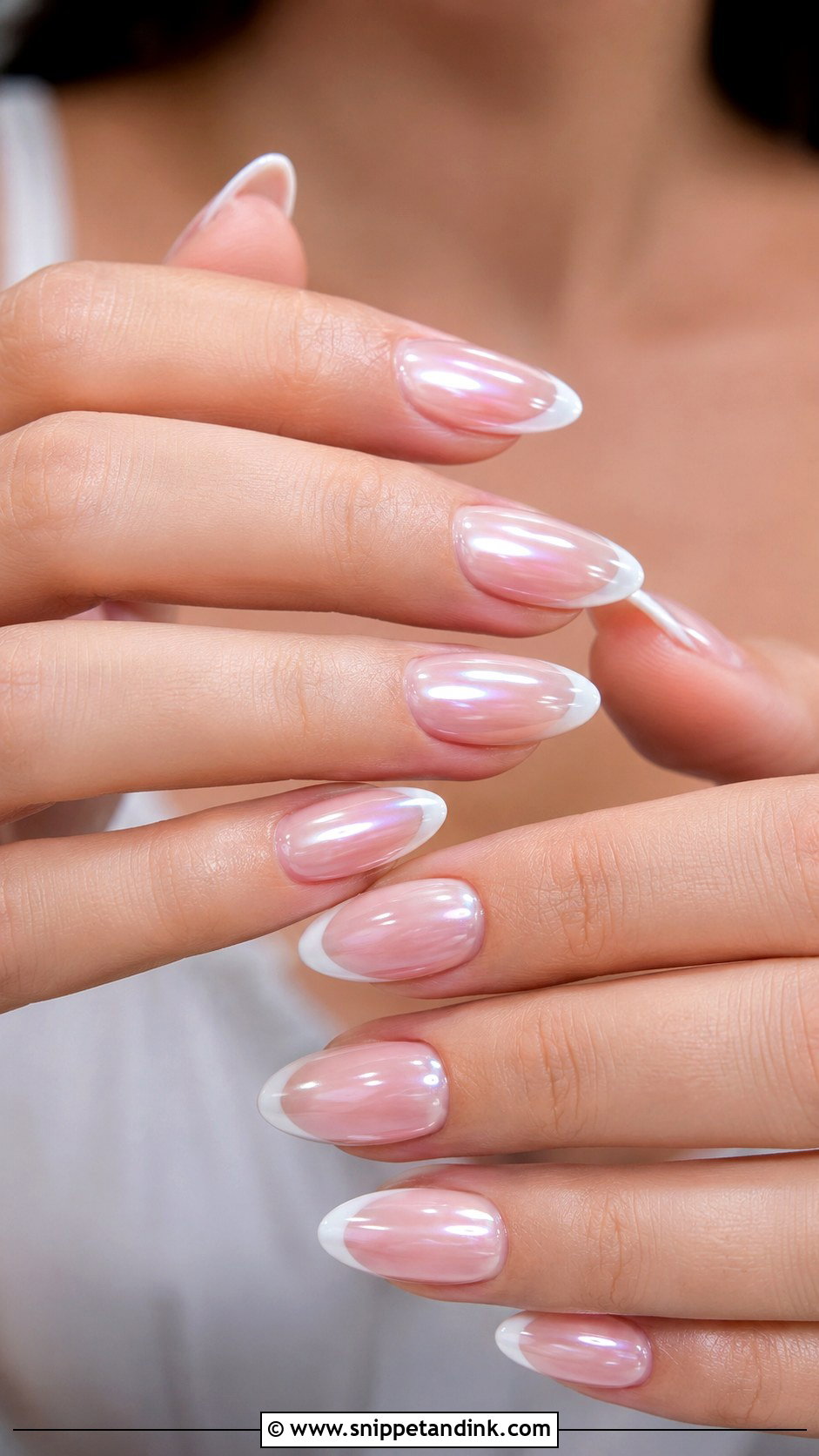
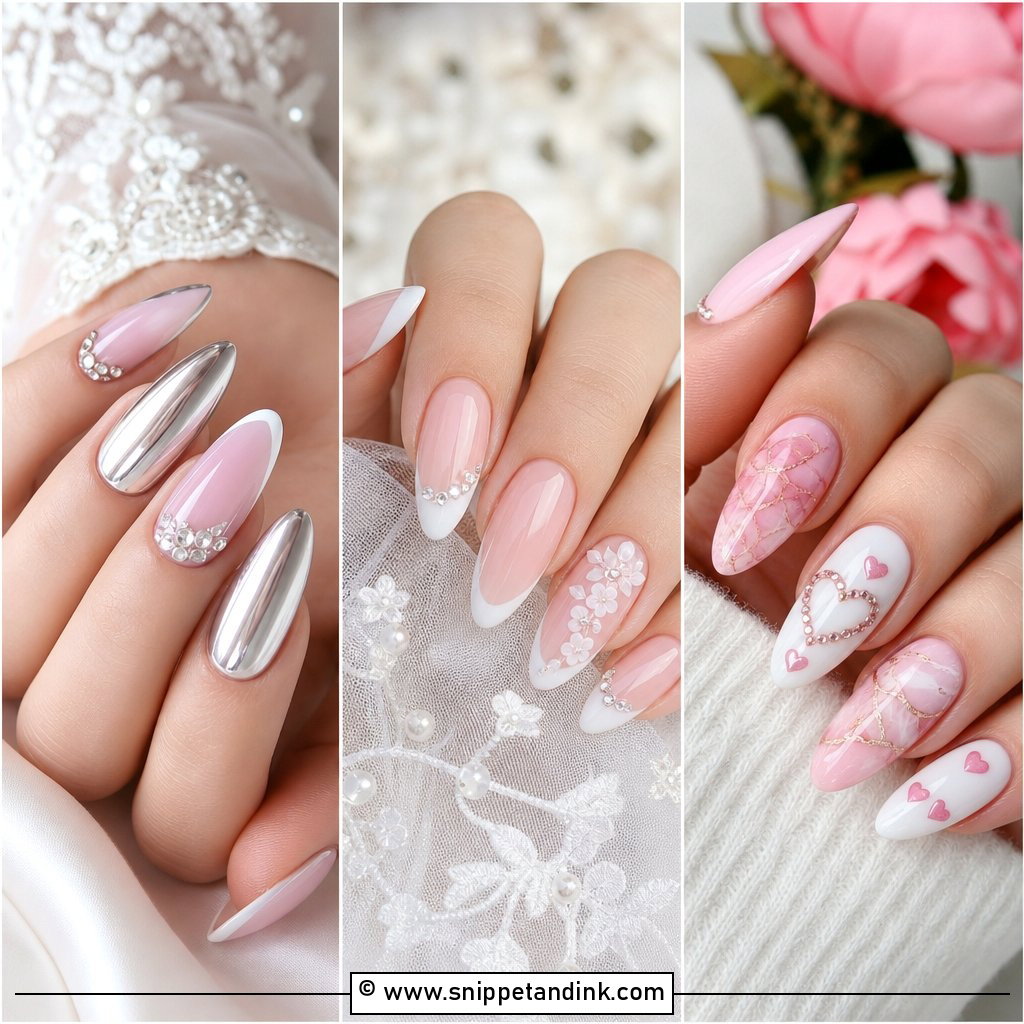
Chrome adds a luminous finish while the French structure stays underneath. It’s a powder rubbed onto a cured top coat, either over the whole nail for a glazed look or only on the tips. White chrome looks clean and icy; pink chrome looks warmer. What I check first is the base: chrome magnifies every bump, so the nail has to be leveled smoothly before the powder goes on. Keep the chrome thin and the base sheer. It catches light in ring close-ups without looking like a metallic manicure from across the room.
7. Glazed French Bridal Wedding Nails
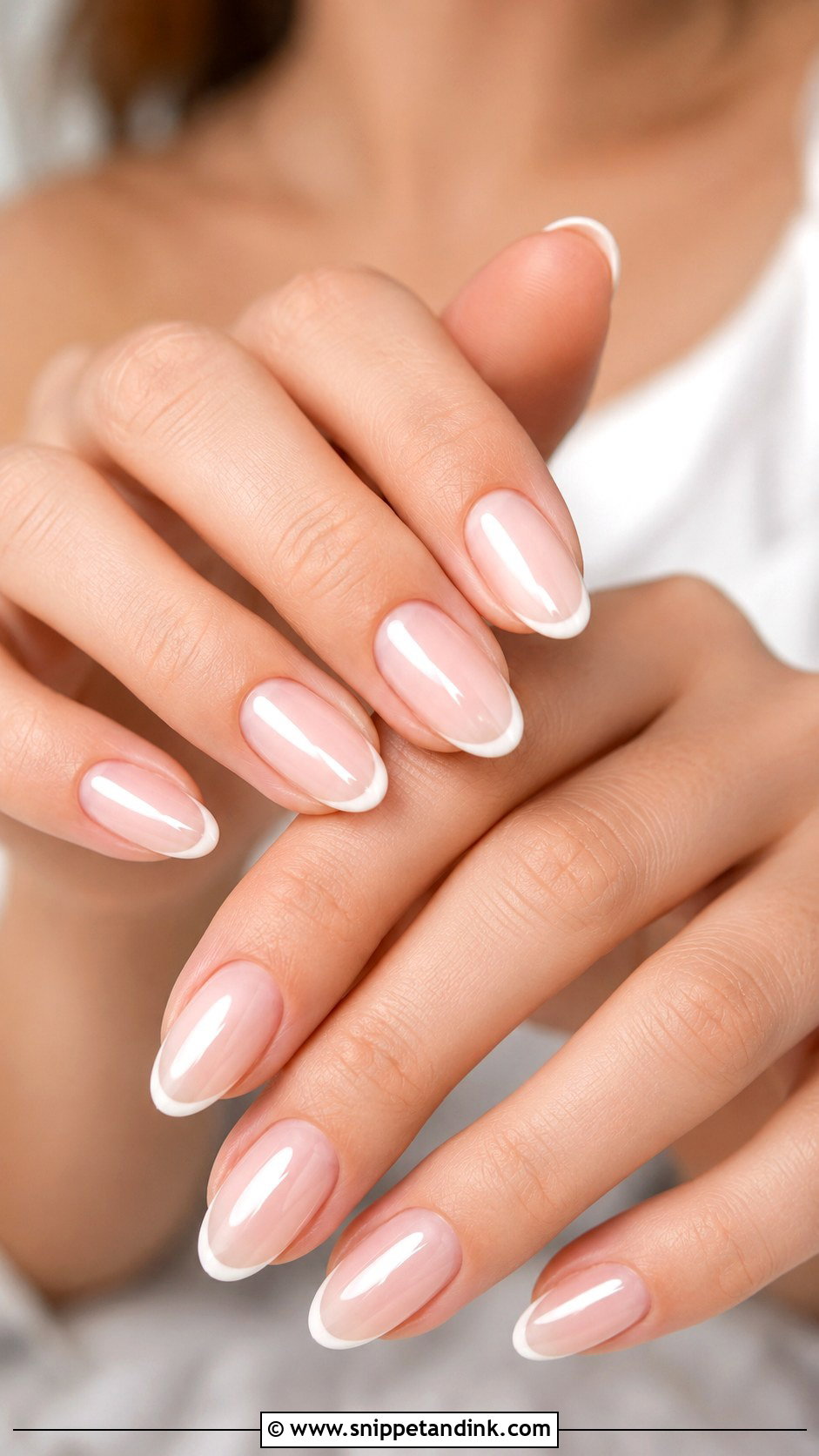
Glazed nails pair a sheer pink or milky base and soft white tips with a pearly top layer that gives the nail a soft glow. That sheen blurs the edge of the French tip slightly, so the set looks modern instead of sharp. It sits nicely beside a wedding band or engagement ring, because it reflects light without competing with the stone. Short, medium and long nails all work, and almond makes it especially graceful. I’d choose a soft pearl sheen over a strong metallic for wedding photos; heavy metallics can look grey in some indoor light.
8. Lace French Bridal Wedding Nails
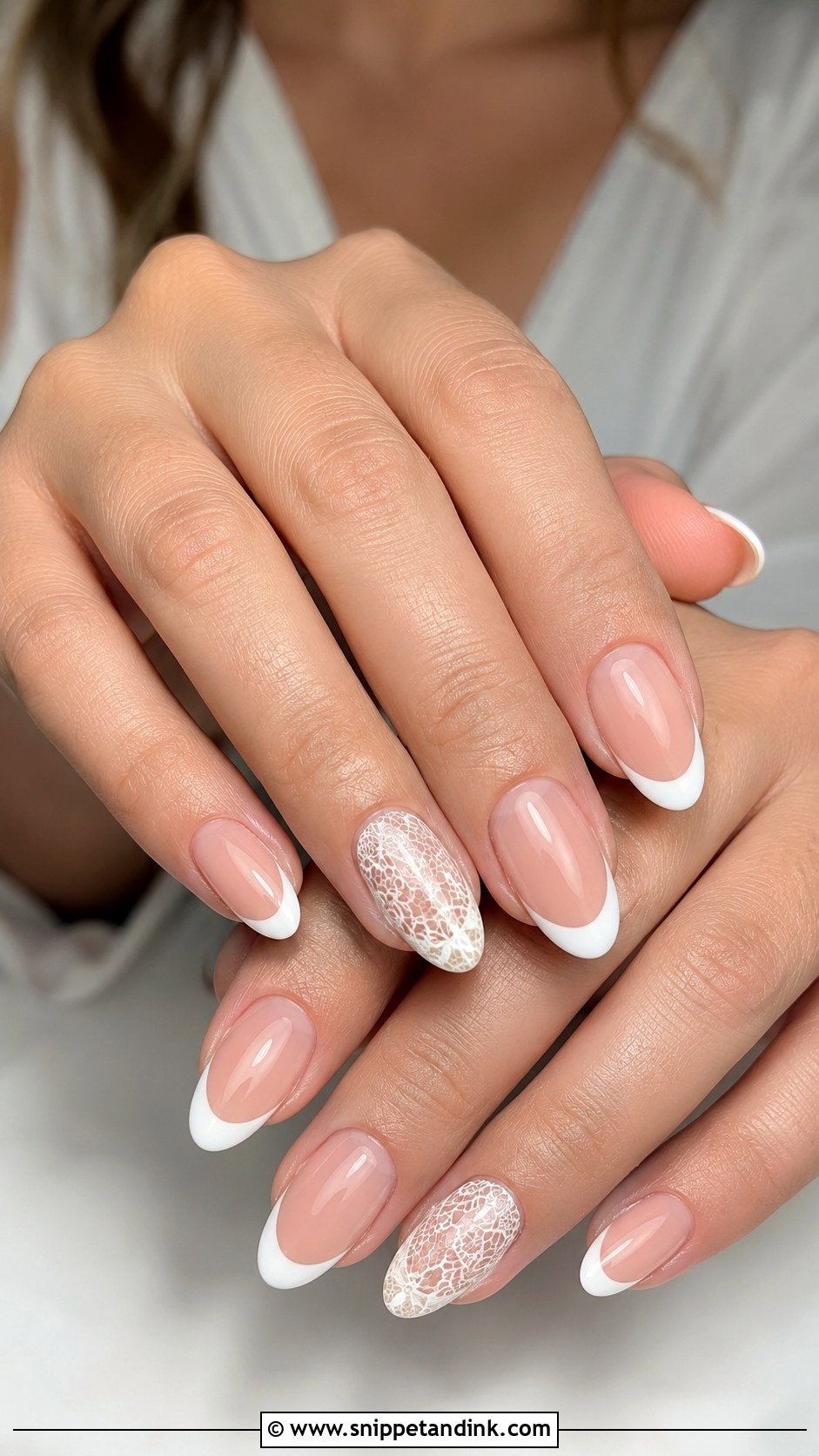
Lace detail belongs with lace sleeves, a lace bodice or a vintage gown. The set combines a French tip with fine white lace painted over the tip, along one side, or as an accent on the ring finger. I paint lace freehand with a fine liner brush or use a stamping plate, and either way thin lines look like lace while thick ones look like doodles. A nude or blush base keeps it clean. Almond, oval and coffin give the pattern space; a short square nail rarely has room for anything but a tiny corner of it.
9. Floral French Bridal Wedding Nails
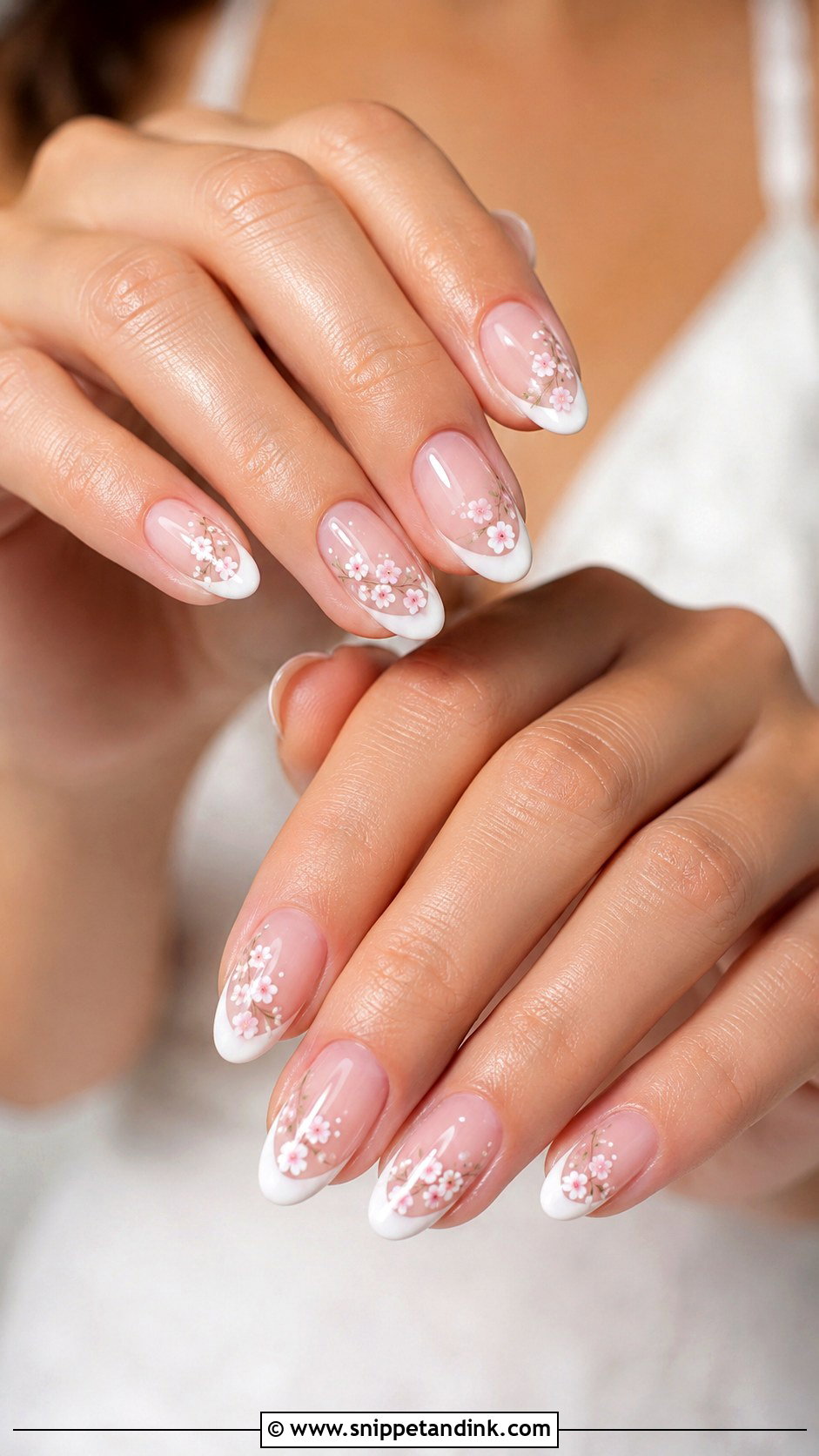
Tiny hand-painted flowers on white tips suit spring weddings and garden ceremonies, especially with a soft floral bouquet. I keep the flowers to white, blush or pale ivory and limit them to one or two accent nails, because ten floral nails start competing with the actual flowers in your hand. A little raised 3D gel petal or a gold dot in the center adds depth if you want it. Almond and oval shapes keep the effect soft. If your bouquet is bright, take a photo of it to your appointment so the petal colors don’t clash.
10. White French Bridal Wedding Nails
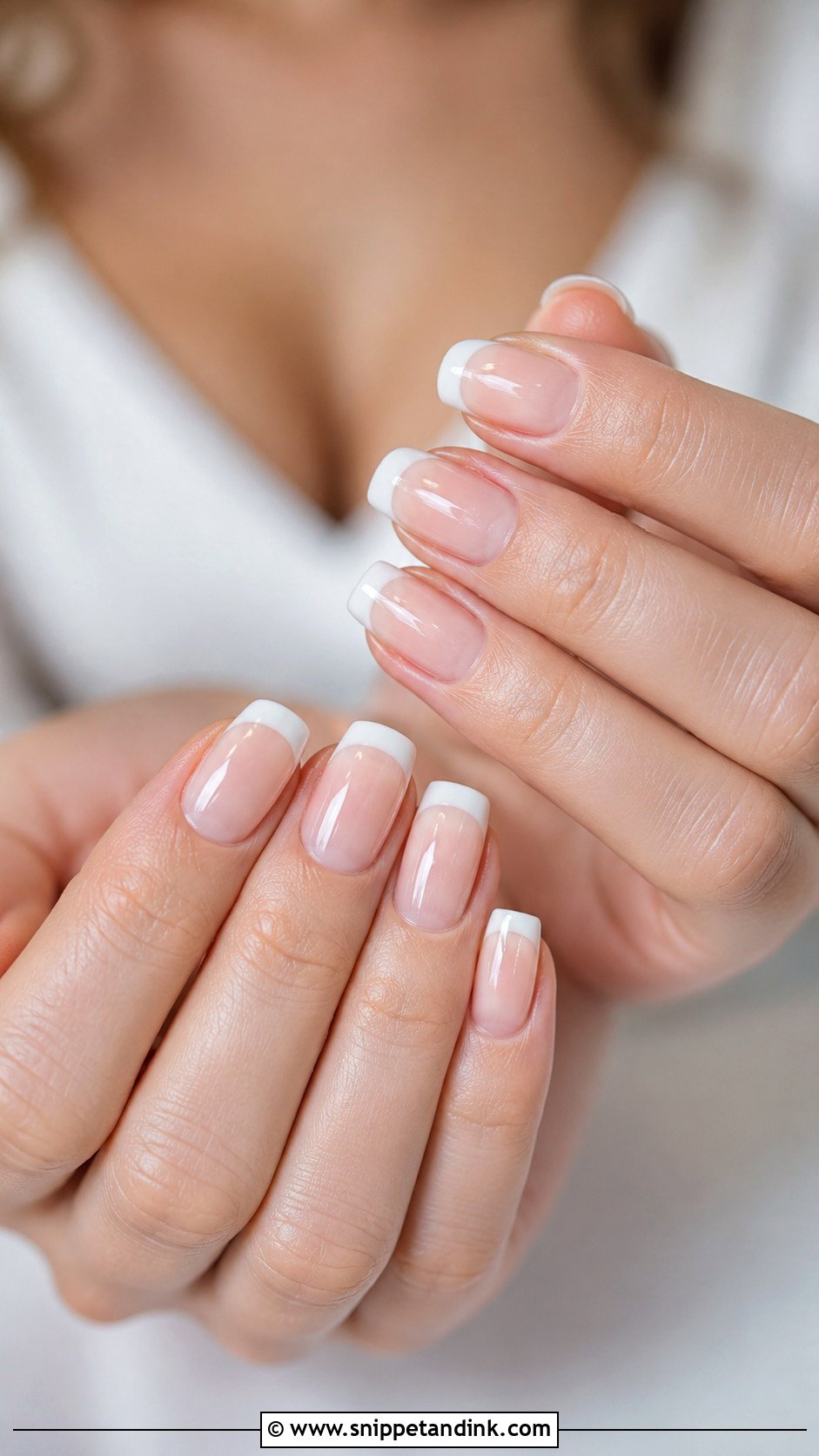
A bright white tip over sheer nude or pale pink is the crispest of the French options. It’s more defined than milky or ombré, so it suits a bride who likes her nails to look clearly done. Choosing the white matters more than people expect. A soft white sits naturally beside an ivory gown, while optic white can look blue next to ivory fabric and stark under a camera flash. With a pure white dress and silver jewelry, the brighter white is fine. Finish with a glossy top coat.
11. Pink French Bridal Wedding Nails
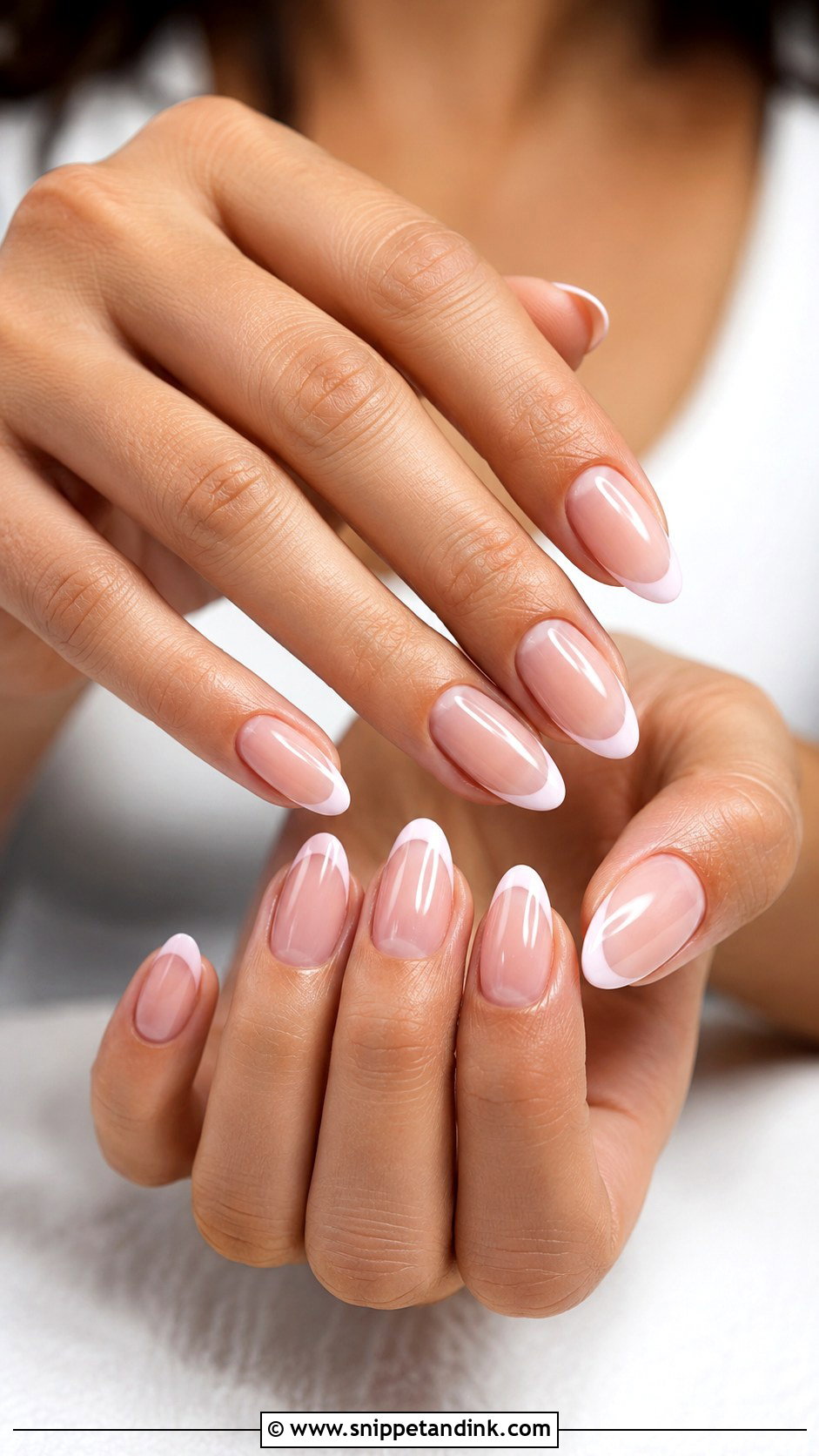
Here the nude base is swapped for sheer or baby pink, with white, pale pink or milky tips. Pink makes hands look warm and healthy, and it ties in with blush makeup or a pink bouquet. The one thing I steer people away from is an opaque bubblegum base. It reads childlike in photos and shows every chip, whereas a translucent pink looks like your own nail, only better. A pink-on-pink French, with a slightly deeper tip, is a quiet modern twist.
12. Nude French Bridal Wedding Nails
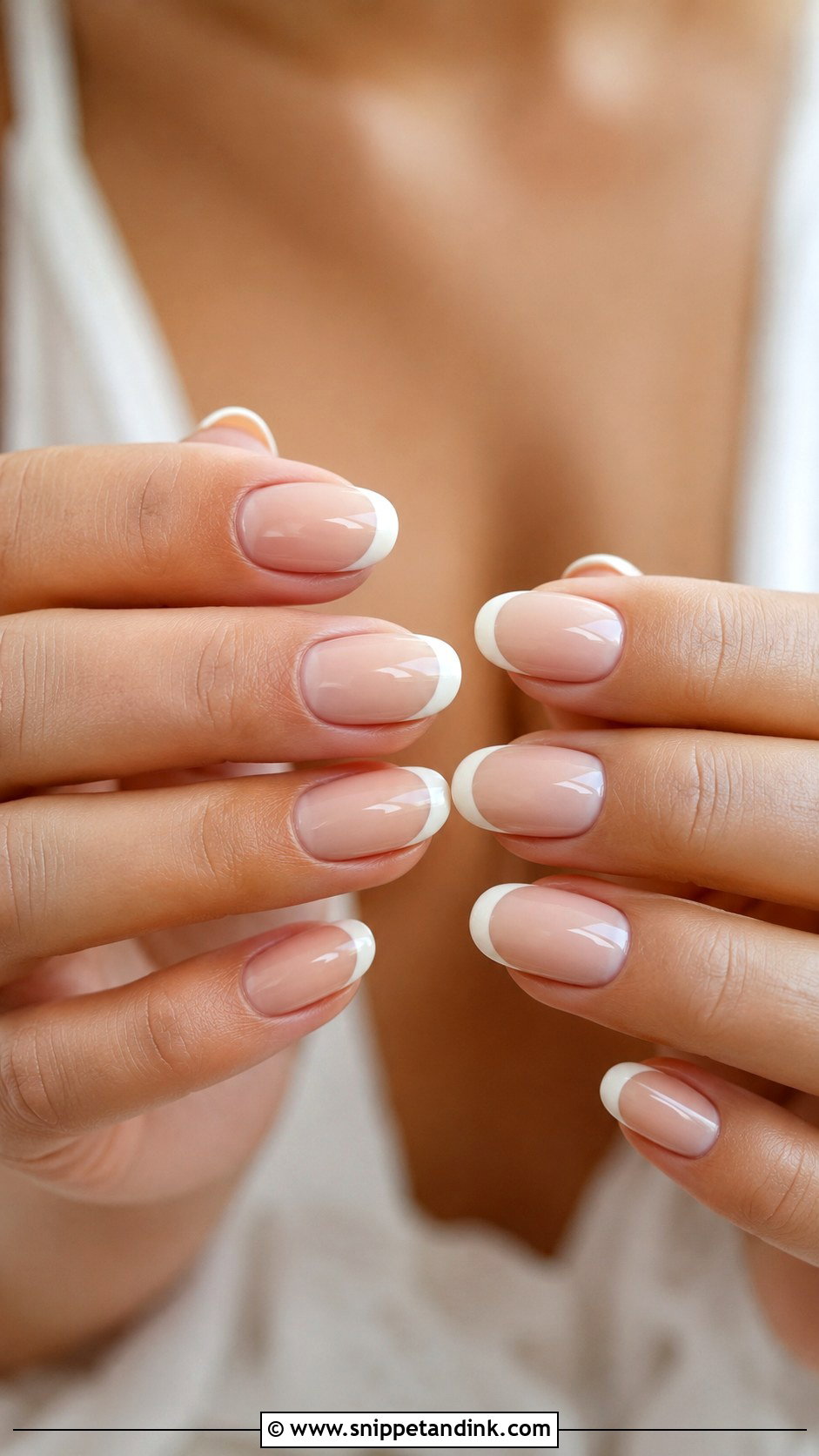
A nude base only works if it suits your skin tone, and getting that right is half the job. Beige, soft tan, rosy nude, peach and warm caramel all exist for a reason; the wrong one can make fingers look grey or ruddy. I swatch two or three shades on your nails before committing, and I look at them in daylight by the window, not just under salon lights. White or ivory tips then add definition. It pairs well with gold jewelry, champagne gowns and neutral palettes, and it’s the quietest French in photos.
13. Square French Bridal Wedding Nails
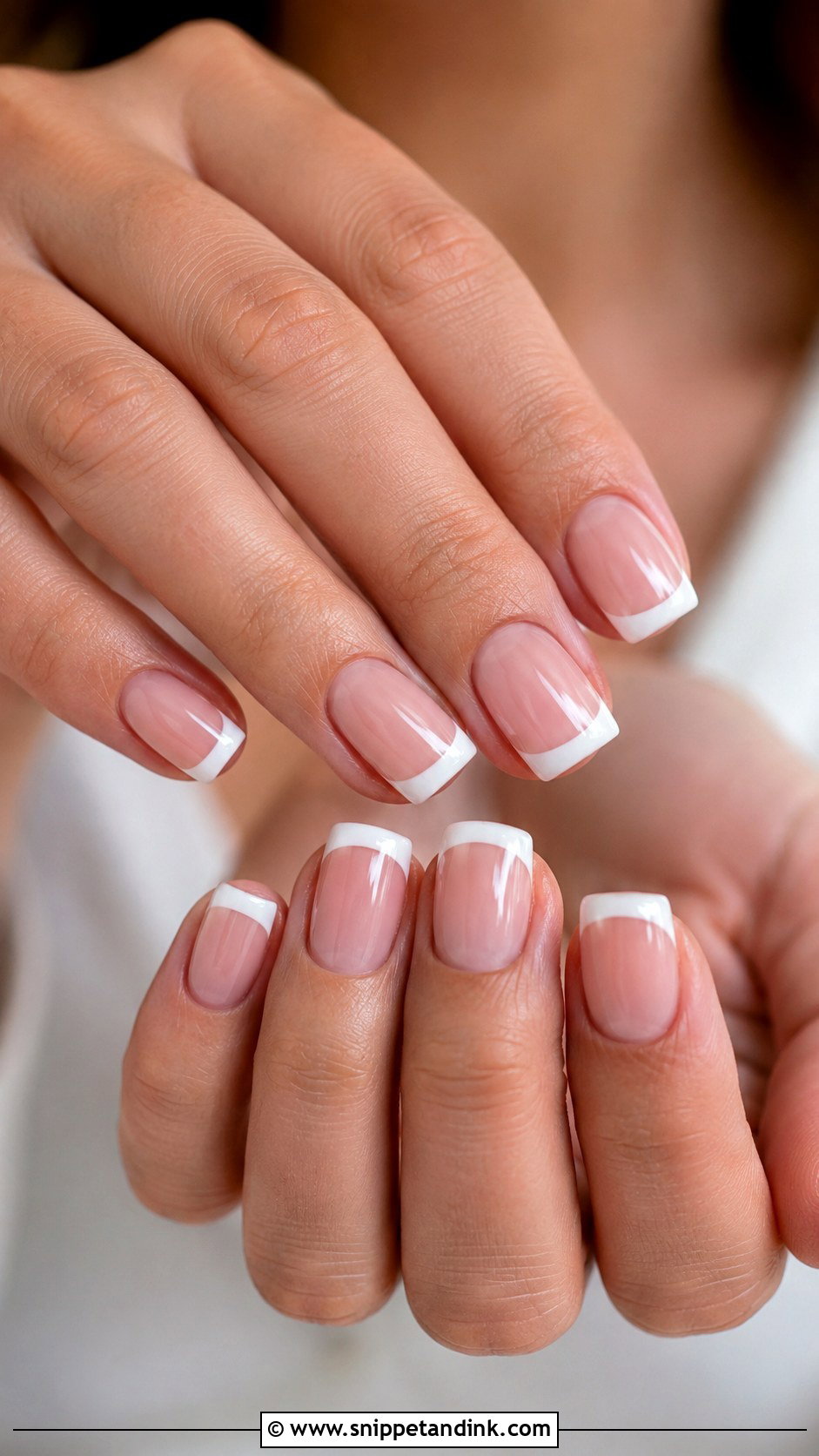
A square shape gives the French tip a straight, structured edge. It suits short to medium nails and anyone who works with their hands, because the flat edge is stronger and less likely to snap than a pointed shape. I usually soften the corners slightly, since sharp square corners catch on tulle and lace. A sheer pink base and soft white tip keep it classic; a thinner tip modernizes it. It’s well matched to a simple, clean-lined dress.
14. Almond French Bridal Wedding Nails
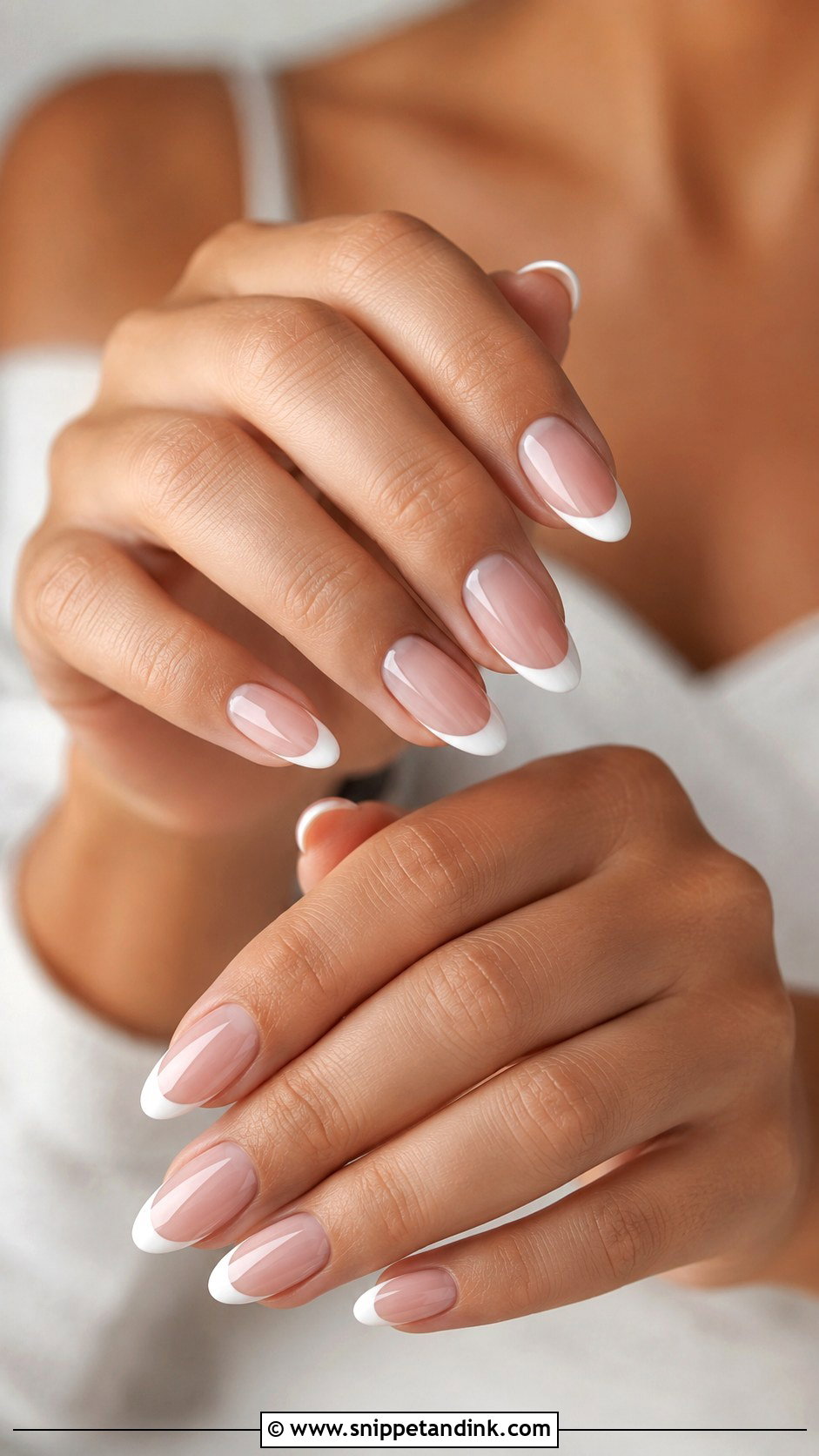
Almond French bridal wedding nails are the shape I’d suggest to most brides who aren’t sure. Tapered sides and a rounded tip make fingers look longer, and the shape takes every French variation on this list. A medium length looks bridal without getting in the way of holding a bouquet, signing papers or eating. Almond does need a little length to taper properly; on very short nails it ends up as an oval, which is fine too. Curve the white tip to follow the almond point, or the smile line will look lopsided.
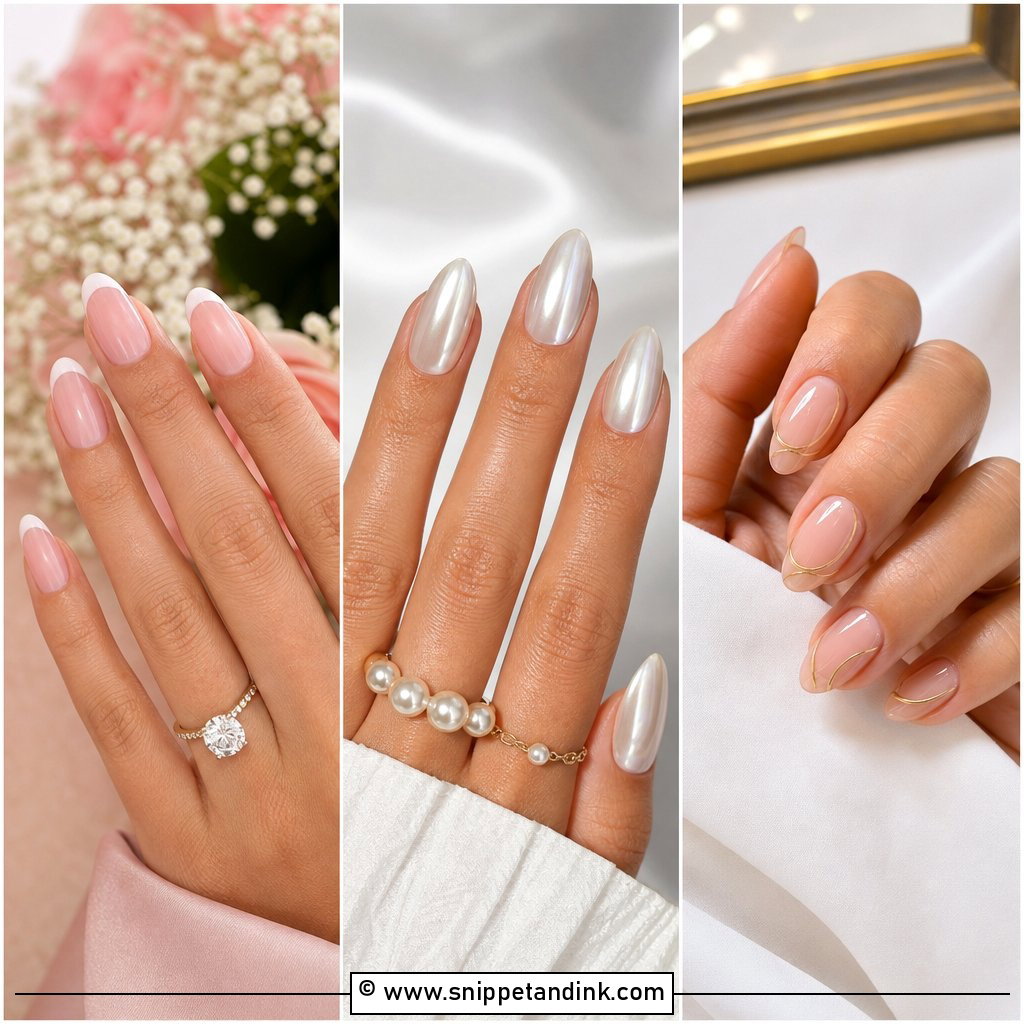
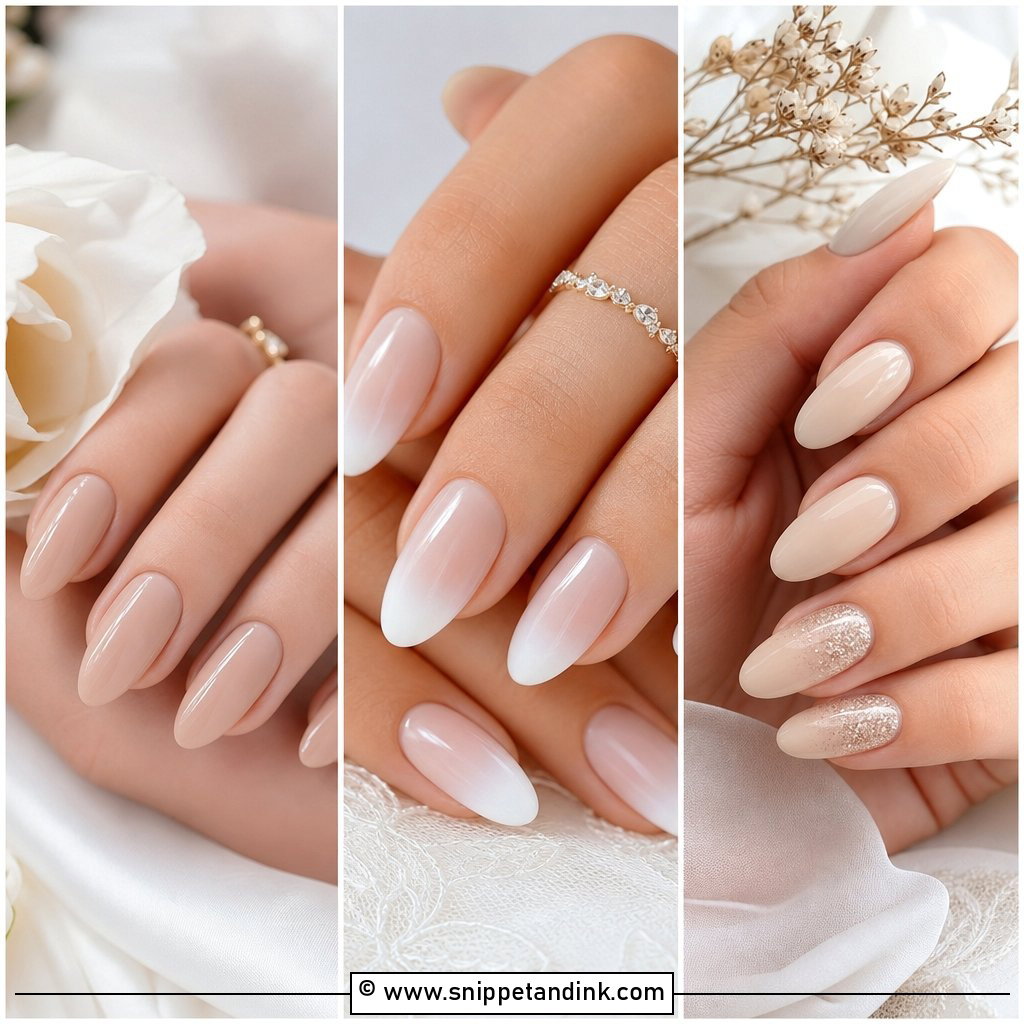
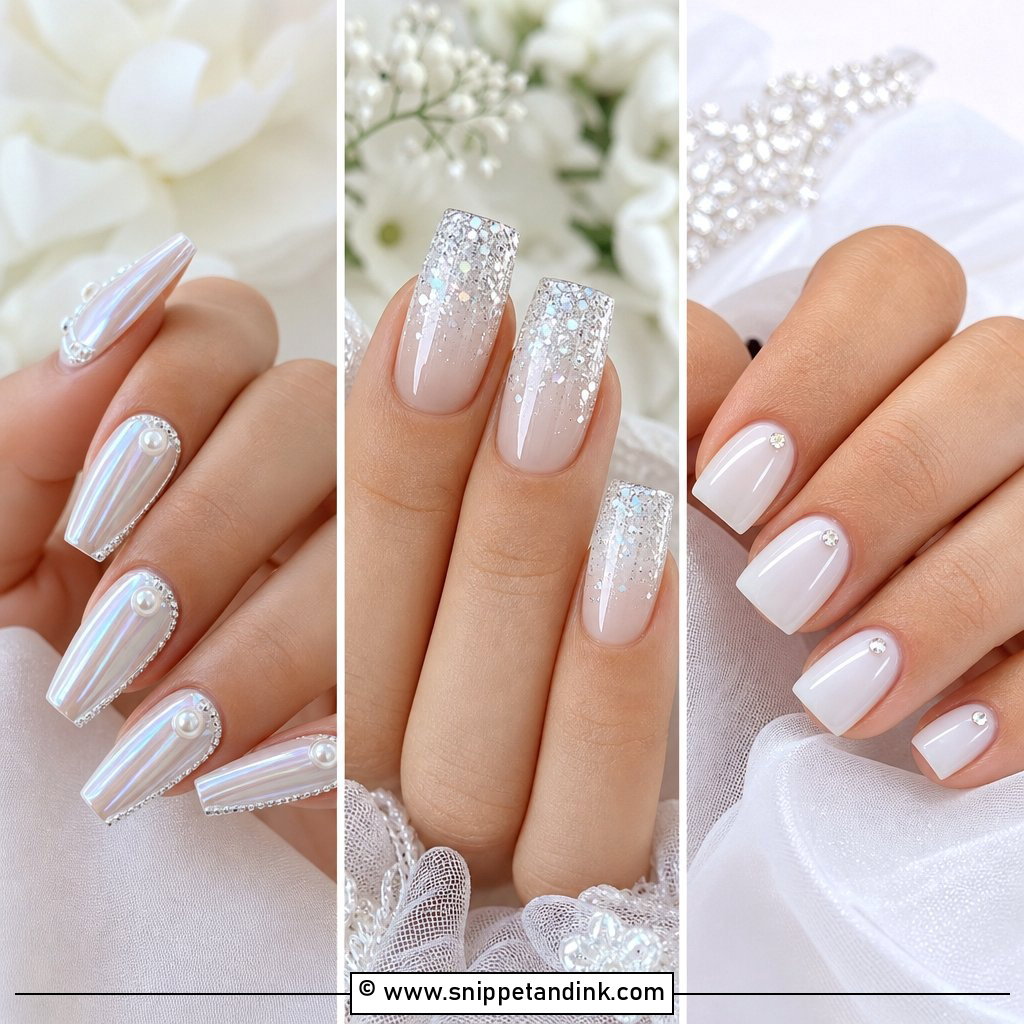
15. Short French Bridal Wedding Nails
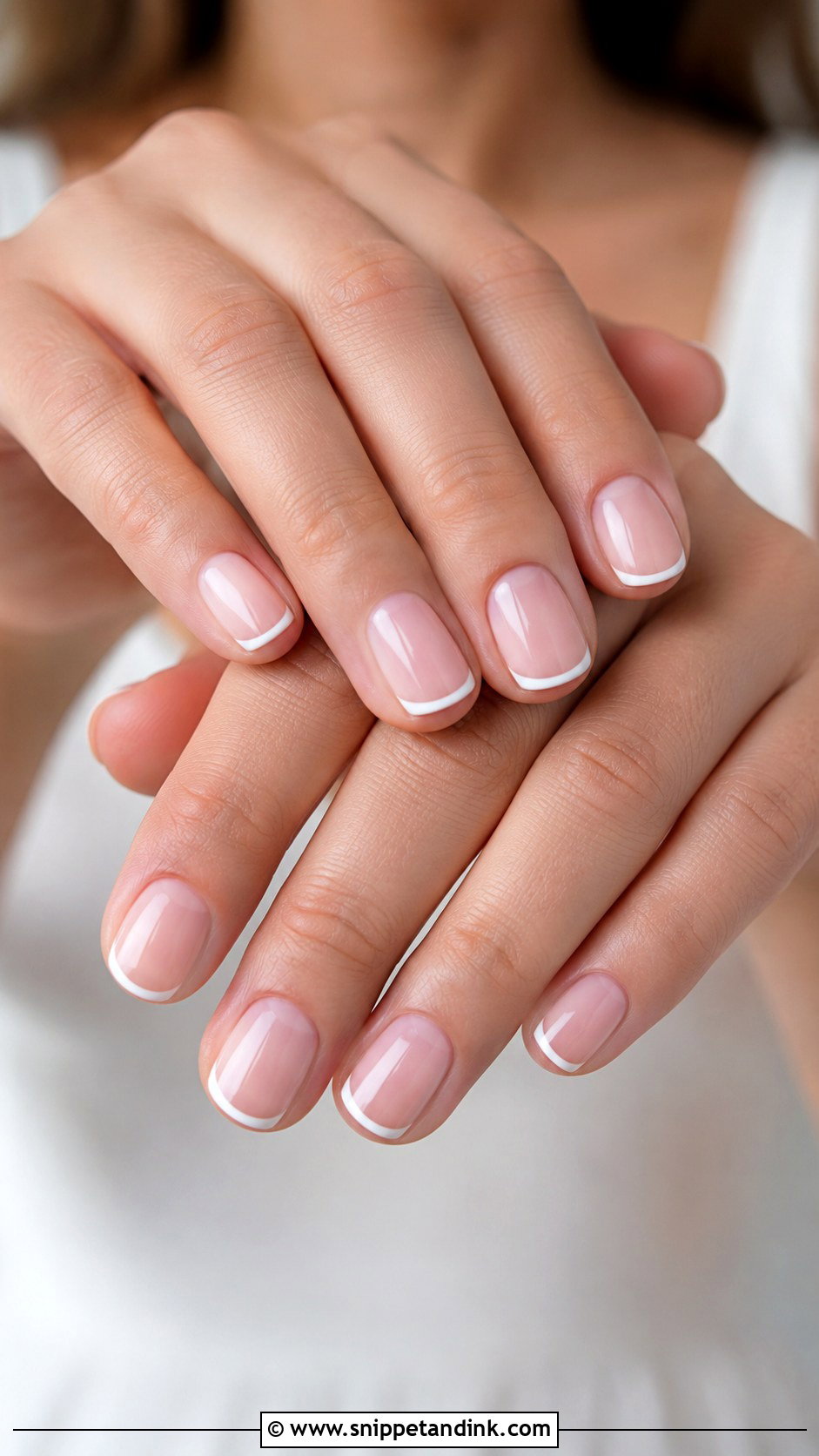
Short nails don’t need extensions to look bridal, and in close-up they often look more natural than long ones. A sheer nude or pink base smooths the nail bed, and a thin white tip or a soft ombré gives definition without shrinking the nail visually. Short is my default for brides who type all day, play an instrument, or simply hate length. Oval and soft square shapes keep them neat. Push back and oil your cuticles in the week before; on short nails the cuticle is a bigger part of what the camera sees.
16. Coffin French Bridal Wedding Nails
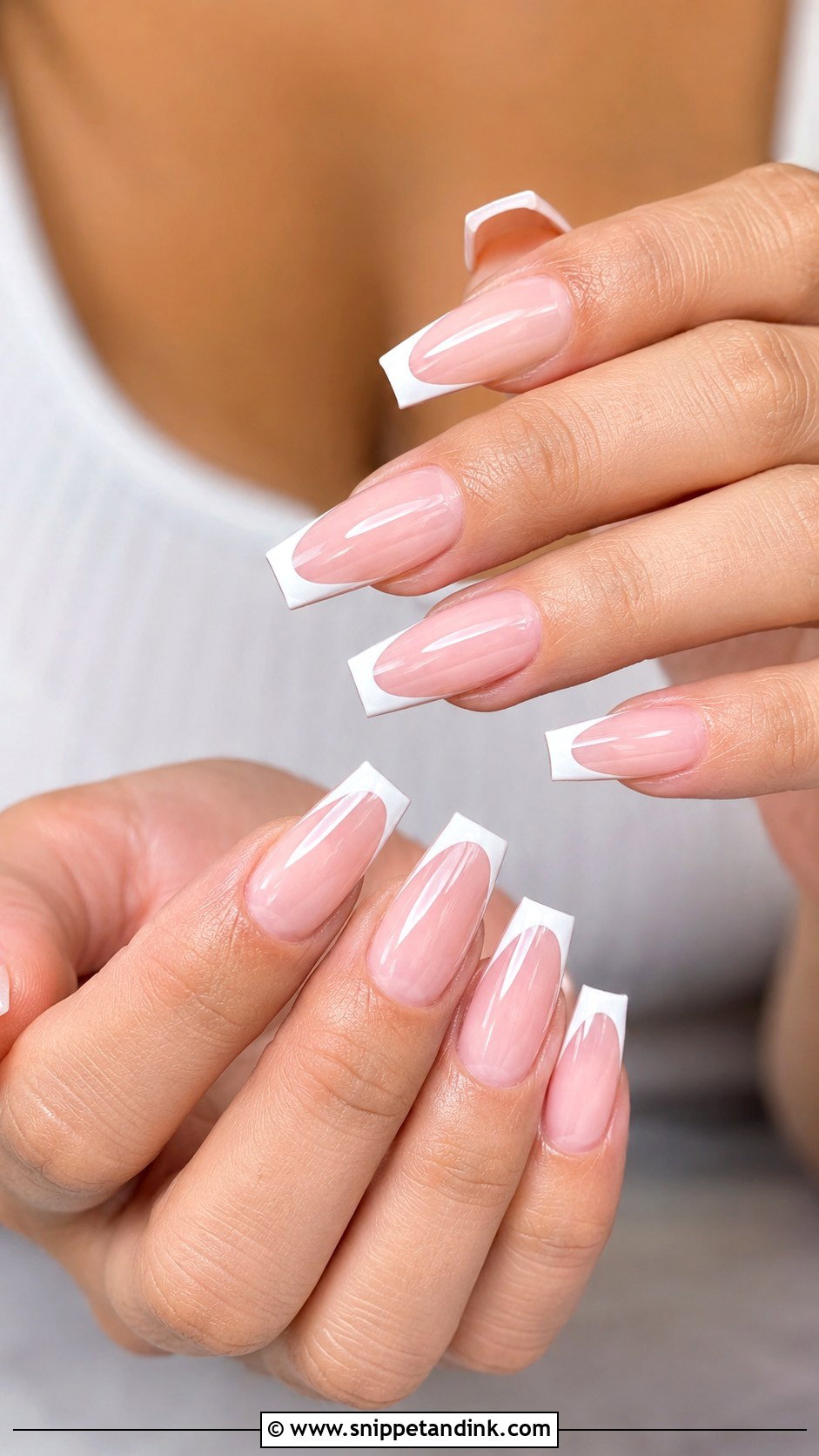
Coffin is the more glamorous end of the French range: tapered sides finished with a flat, squared tip. It needs real length to show, so most brides wear it as extensions in gel or acrylic. For a wedding I keep the design restrained, a sheer pink or nude base and a slim white tip, with pearl chrome, a few tiny crystals or a hint of shimmer if you want more. A thick white band on a long coffin nail looks heavy fast. Practice a few days of normal life with the length before the wedding, including fastening jewelry and your dress.
17. Gold French Bridal Wedding Nails
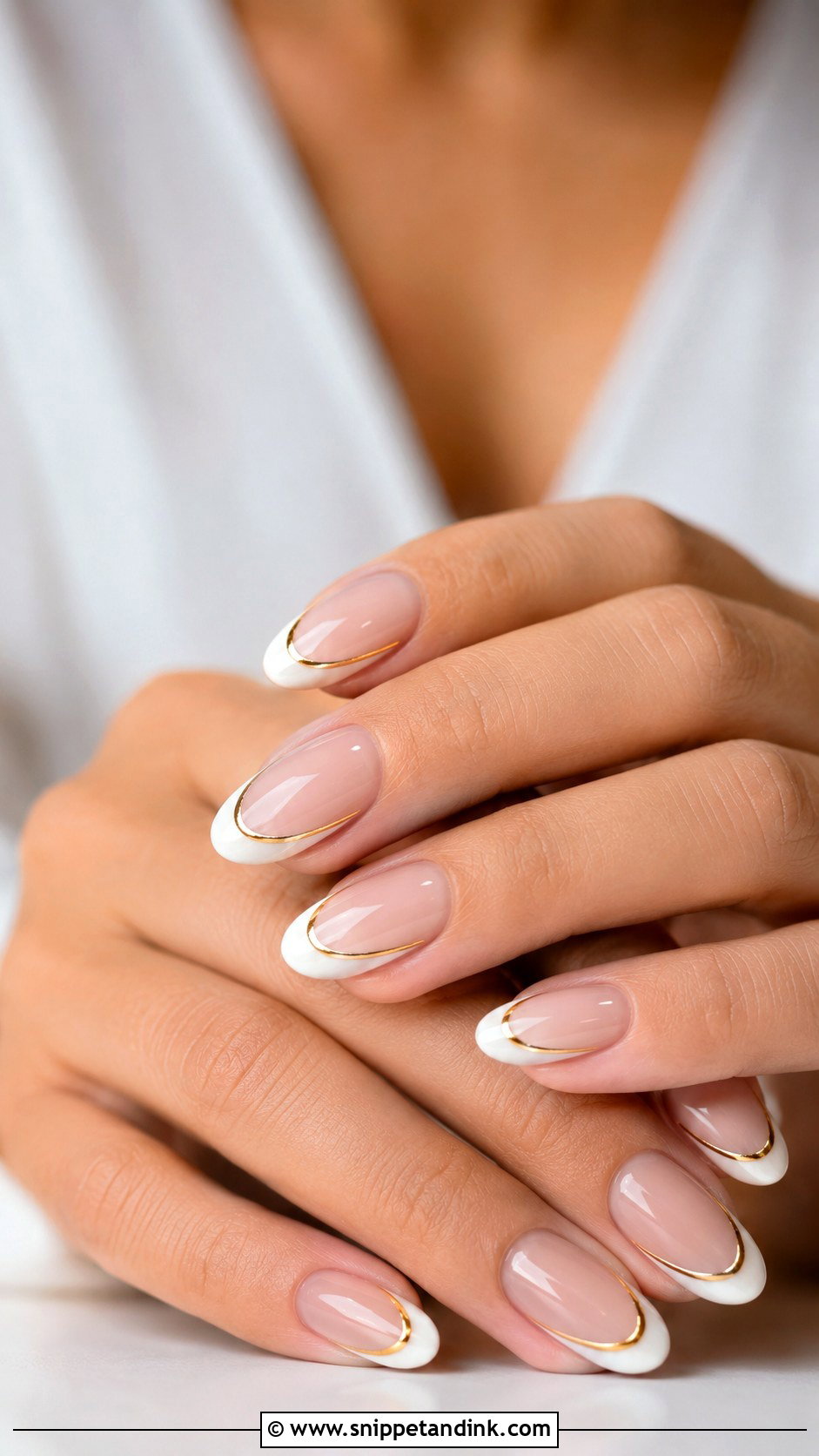
Gold works best when it’s already in your jewelry, a champagne dress or warm accessories. The set either replaces the white tip with a fine gold line or adds a thin gold stripe just below the white. Kept delicate, it looks refined; a thick gold tip looks like costume jewelry next to a real band. I paint it with gold gel or foil and seal it under a glossy top coat so it doesn’t dull. A nude, blush or milky base lets it glow softly, and almond or oval shapes suit it.
18. Silver French Bridal Wedding Nails
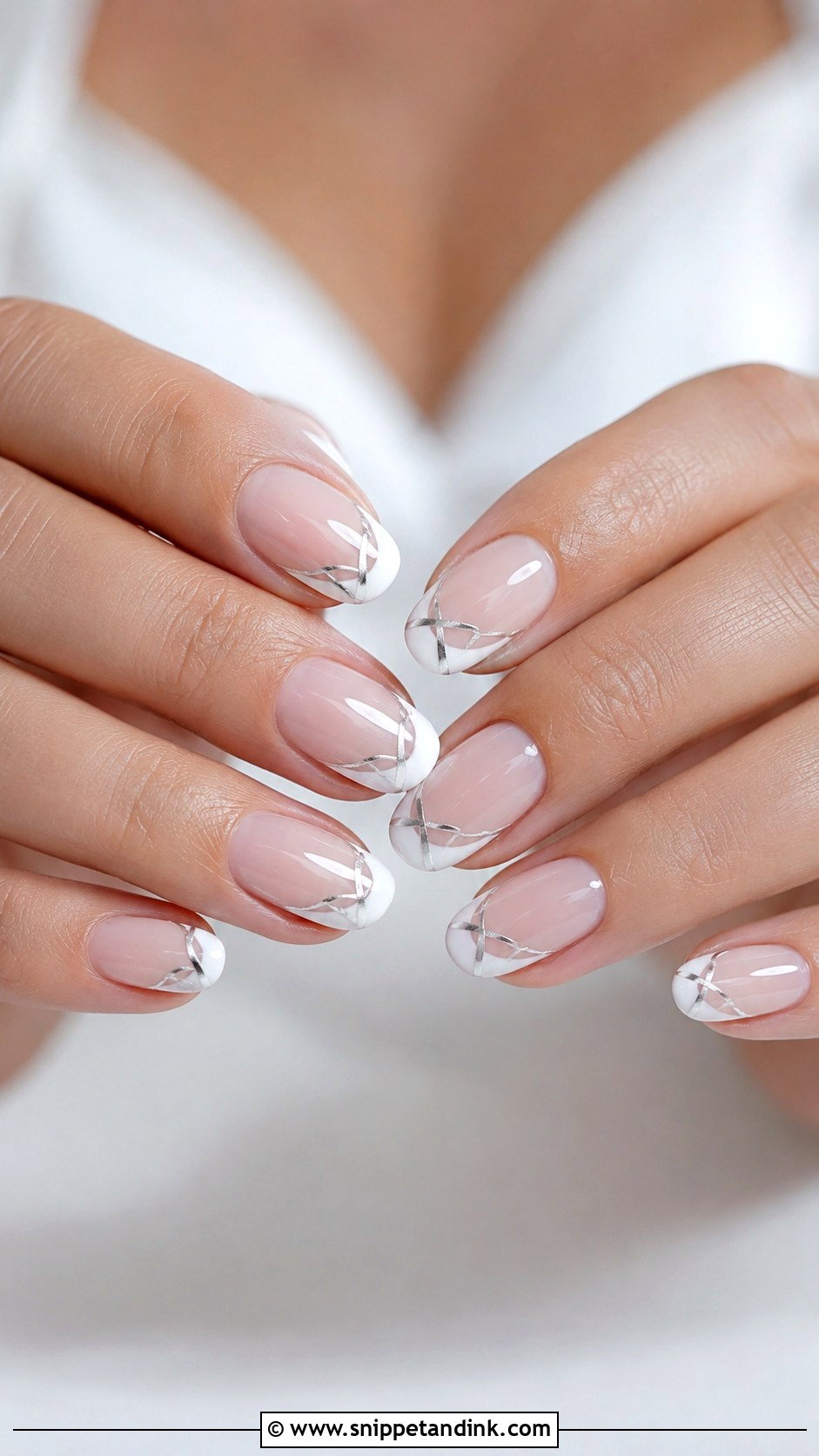
Silver suits brides wearing silver or platinum jewelry, crystal hair pieces or a cool-toned gown. It can be as simple as a thin silver tip over sheer pink, or a white French tip outlined in silver. It’s especially fitting for winter weddings and modern venues. I’d always pick a fine line over a chunky glitter tip for a wedding, since chunky silver glitter can look like party nails. Almond, oval and square all carry it. A glossy or soft chrome finish keeps the silver smooth.
19. Glitter French Bridal Wedding Nails
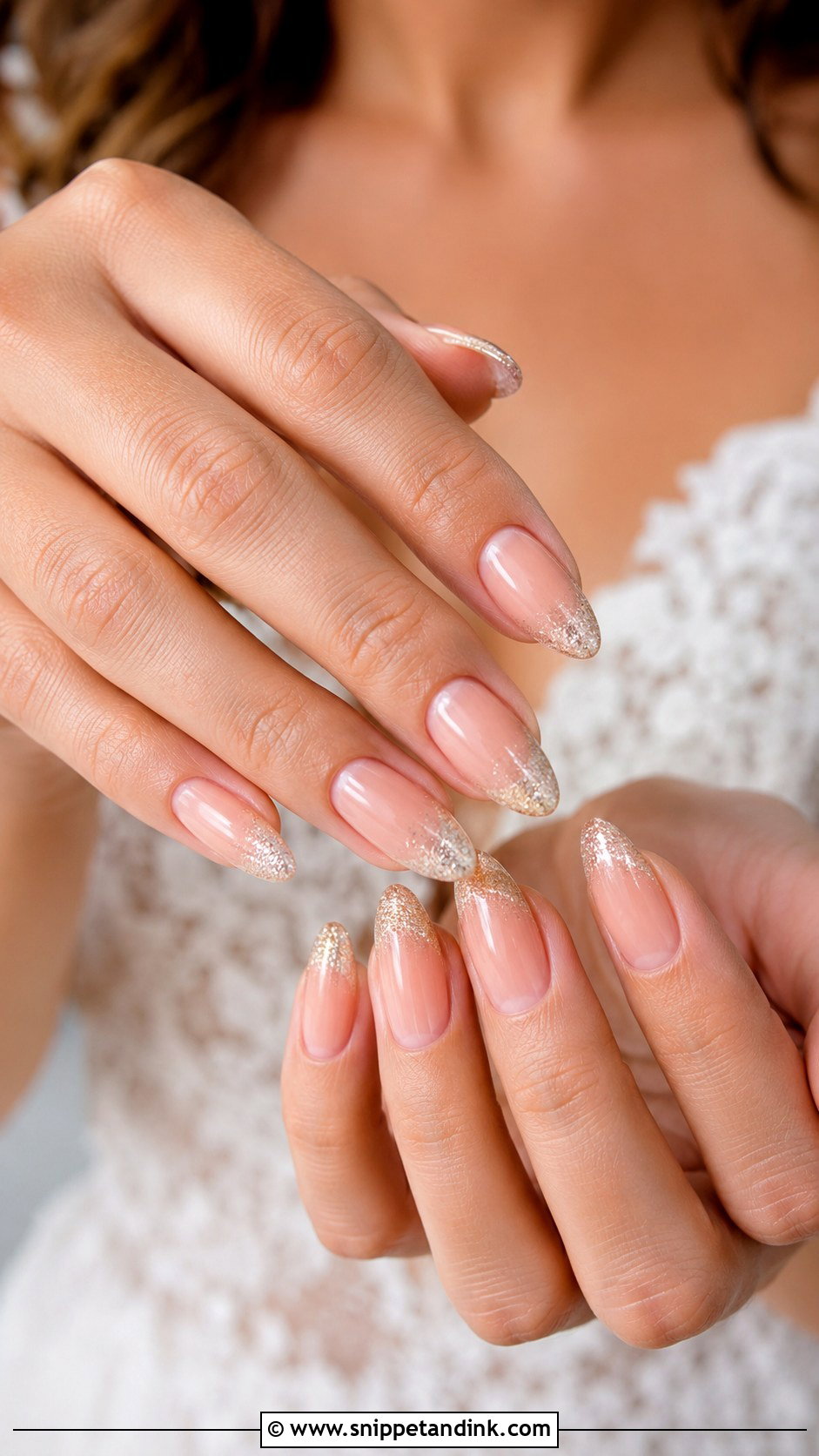
Glitter tips give a French a little sparkle without losing their shape. Fine white, champagne or silver glitter on the tips, or dusted lightly over the French line, keeps it refined. Grain size is the whole decision: fine shimmer catches light in evening photos, while large chunky glitter looks rough up close and is hard to remove later. A sheer pink or nude base balances it. For a subtler version, I put glitter only on the ring fingers. It shines most at an evening or ballroom reception.
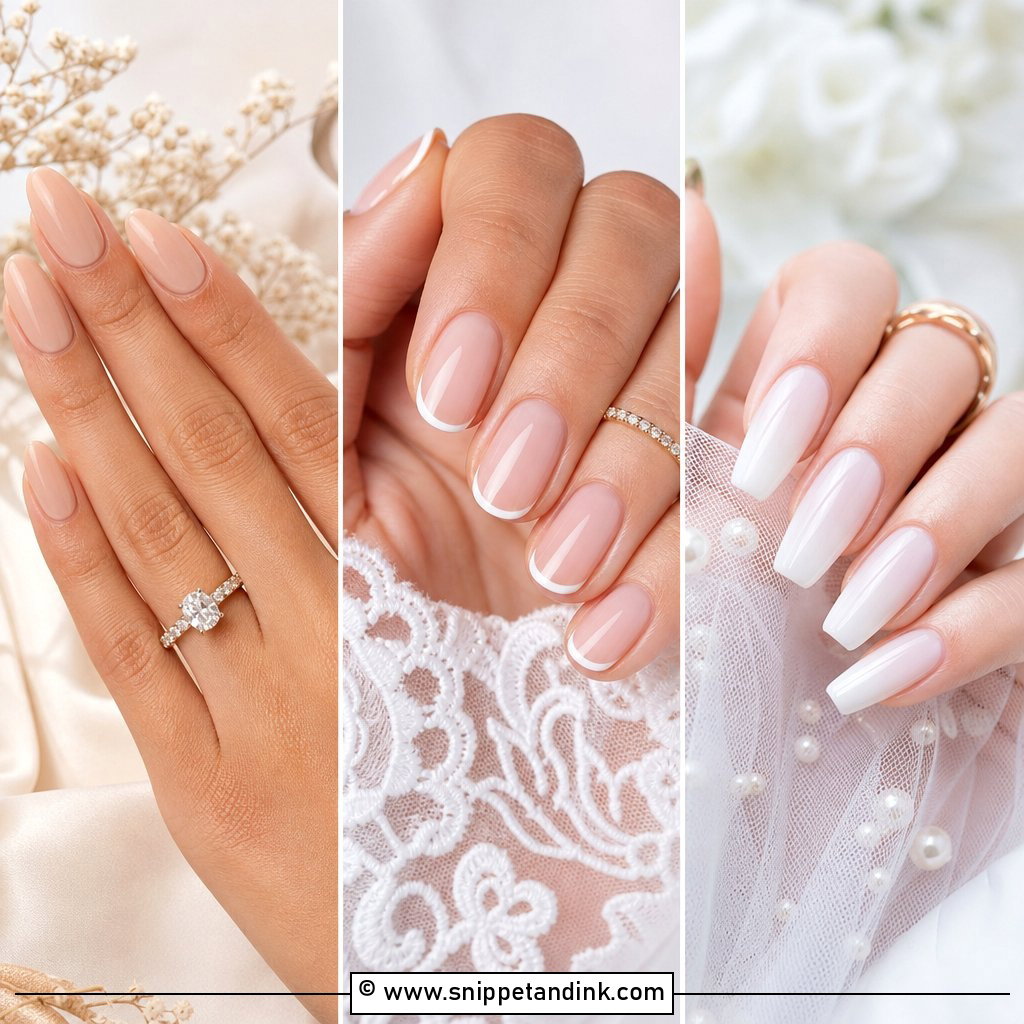
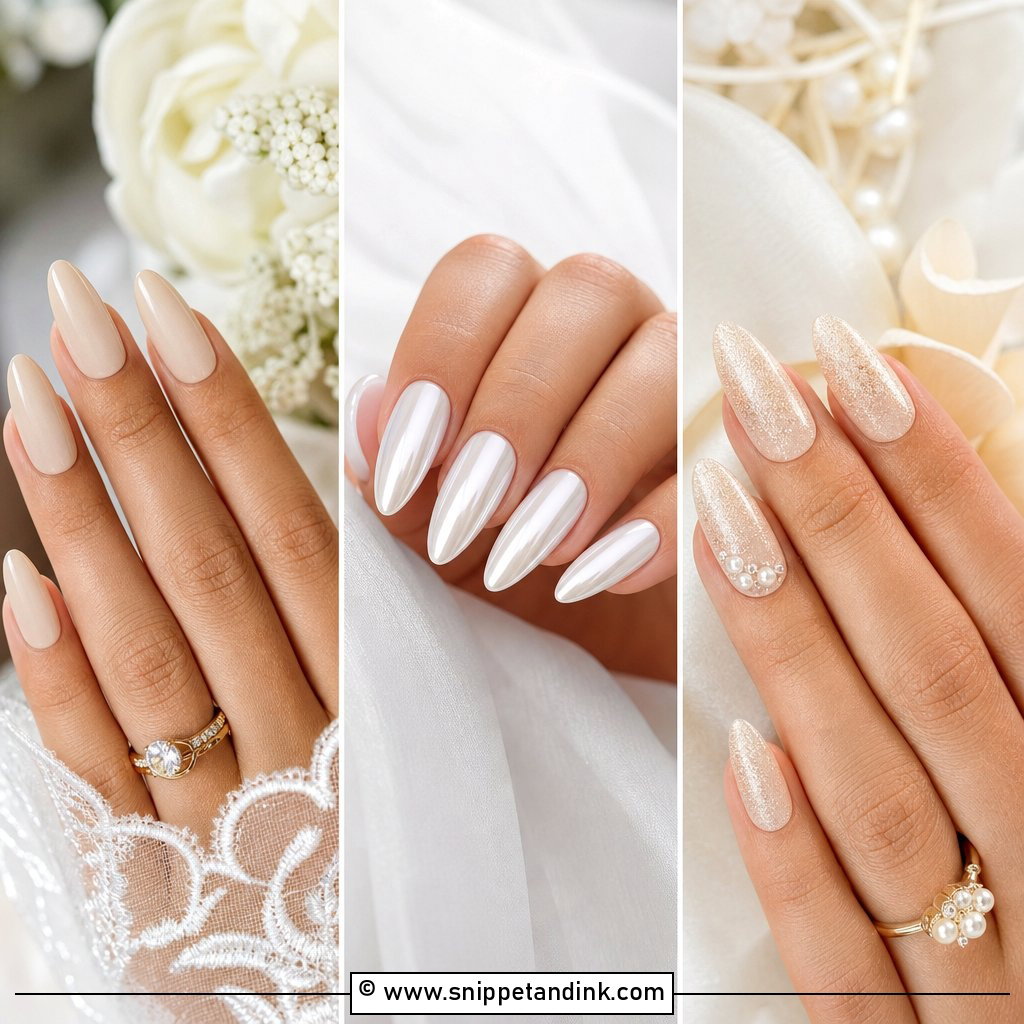
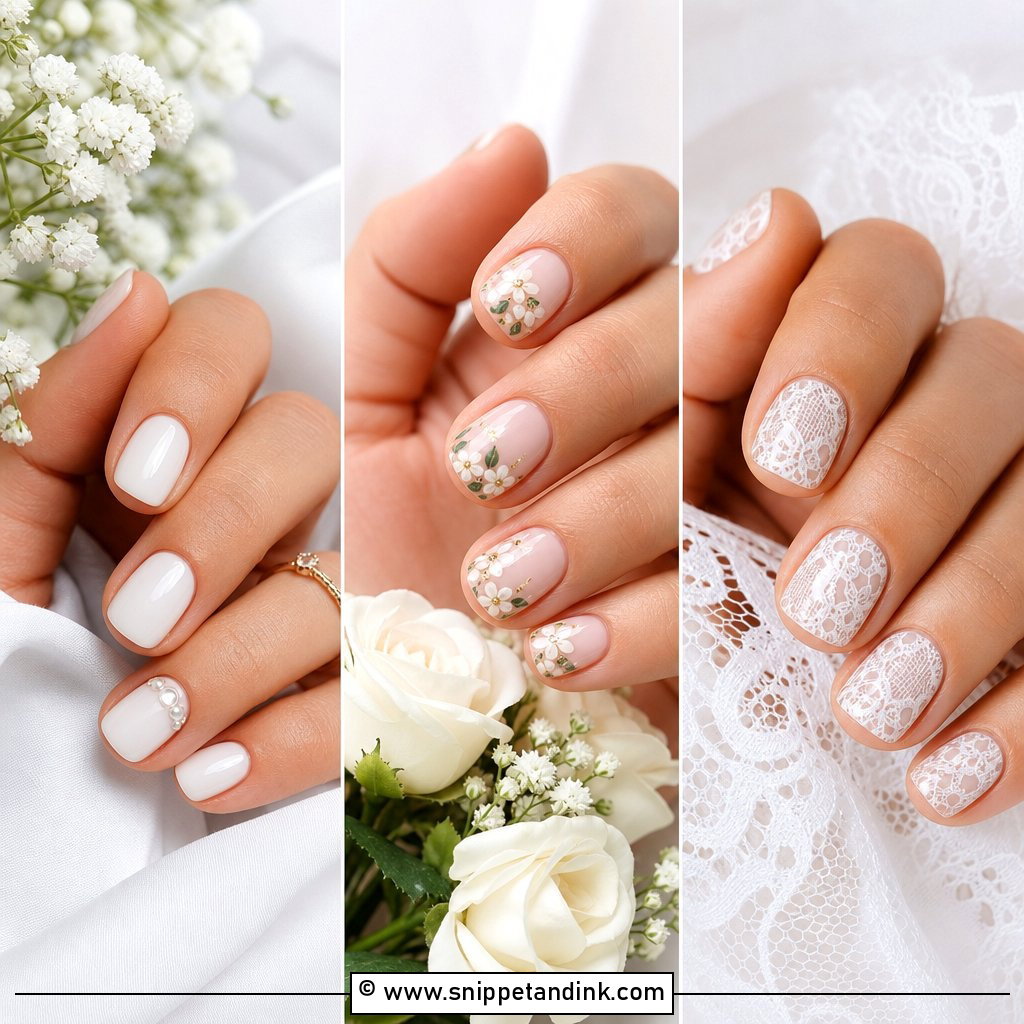
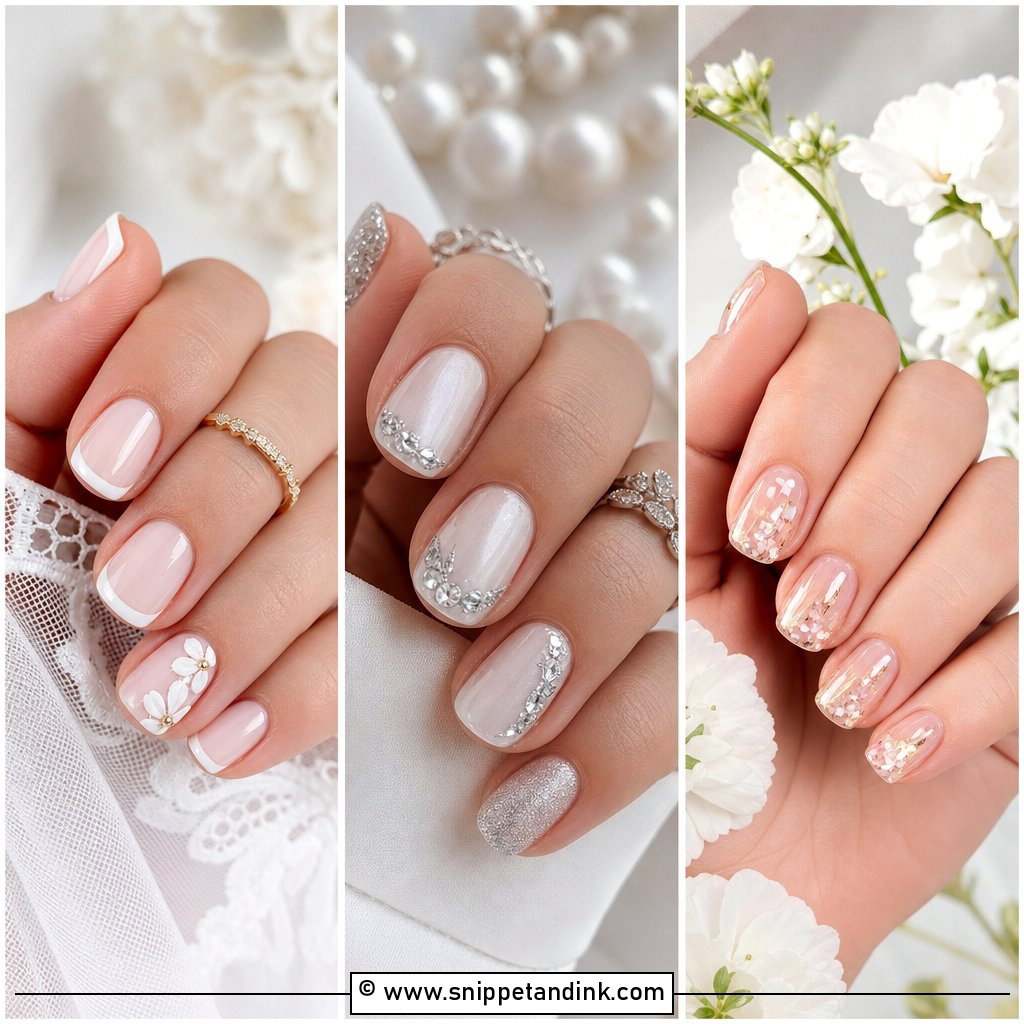
20. Blue French Bridal Wedding Nails
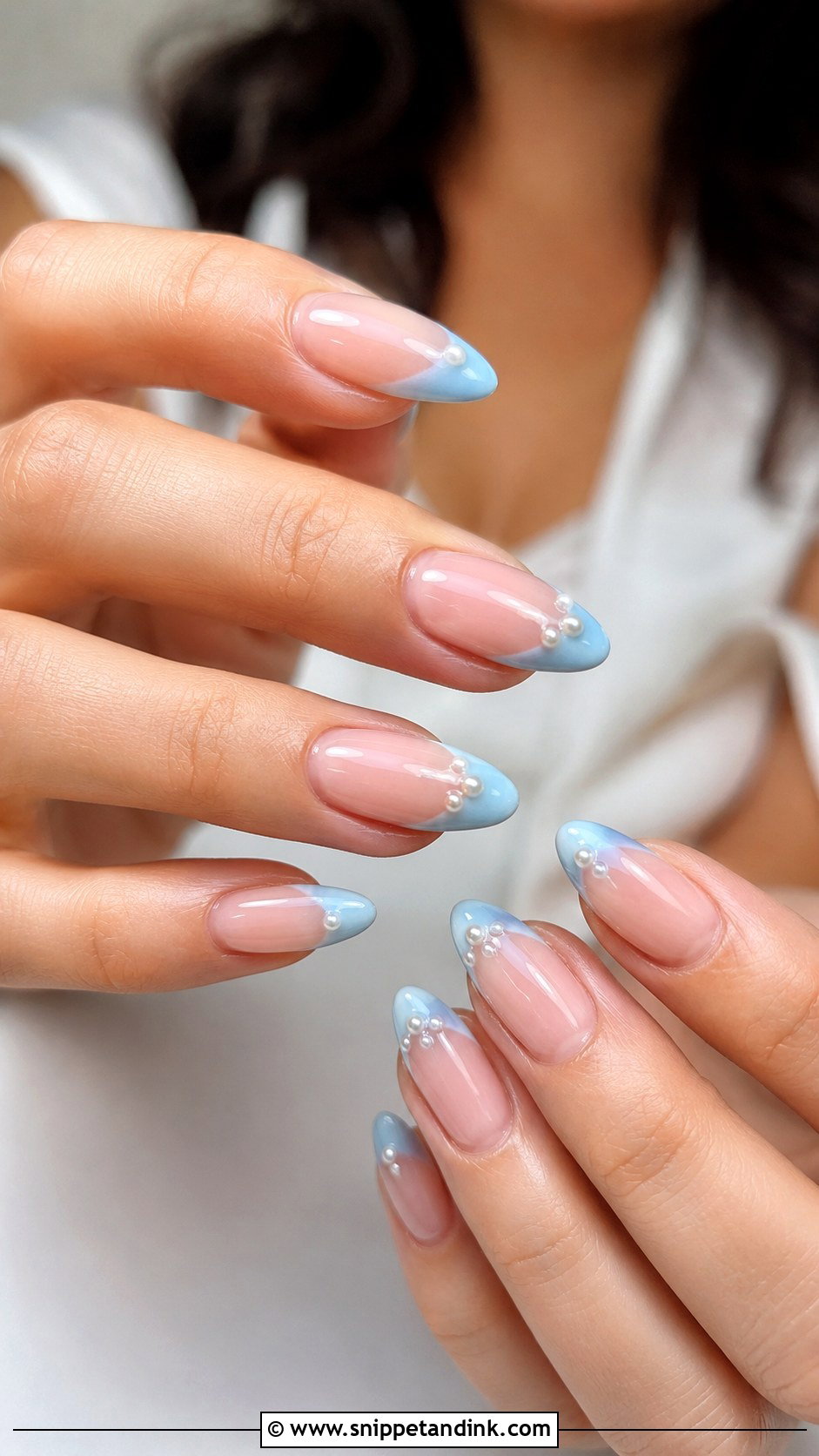
A pale blue tip is a quiet way to wear your “something blue.” The white is swapped for baby or powder blue over a sheer nude or pink base, and kept thin it still looks delicate. Coastal weddings and spring garden ceremonies suit it, and it’s a nice private detail that only you and your photographer will notice in close-ups. You can add a tiny pearl, a fine silver line or a soft chrome. Choose a muted, dusty blue; a bright cobalt tip turns a bridal set into a statement one.
What the Ring Close-Up Actually Shows
Your photographer will take macro shots of your hands, and at that distance a few things matter more than the design itself.
Cuticles and skin
Dry, ragged cuticles show before color does. Use cuticle oil every night in the last week, and hand cream the morning of, but wipe your nails clean afterward so the polish doesn’t look greasy. Hand sanitizer dries skin quickly, so go easy on it.
Tip width and white tone
A tip that covers more than about a third of the visible nail makes fingers look shorter in macro shots. And very bright white can flatten into one blank shape under flash, while a soft white keeps the edge visible. If you’re unsure, photograph your trial nails with your phone flash on and off.
A chip on the day
Gel rarely chips in the first few days, but it can lift at the edge after a knock. Pack a fine nail file and a bottle of clear top coat in your day bag. Filing a snag smooth and sealing it is enough to get you through the photos.
Start With Your Nail Length, Then Add Detail
A French manicure is classic, but it doesn’t have to be plain. Milky bases, micro tips, chrome, pearls, lace, flowers and fine metallic lines all build on the same structure. Start with your nail length and the metals in your jewelry, then decide how much detail you want. For the quietest photos, classic, milky, nude or ombré; for more personality, pearl, lace, glitter or gold. Book a trial if you can, even a few weeks out, so we can test the shade and shape on your hands before the real appointment.
You'll Like These Ideas:


Leave a Reply