
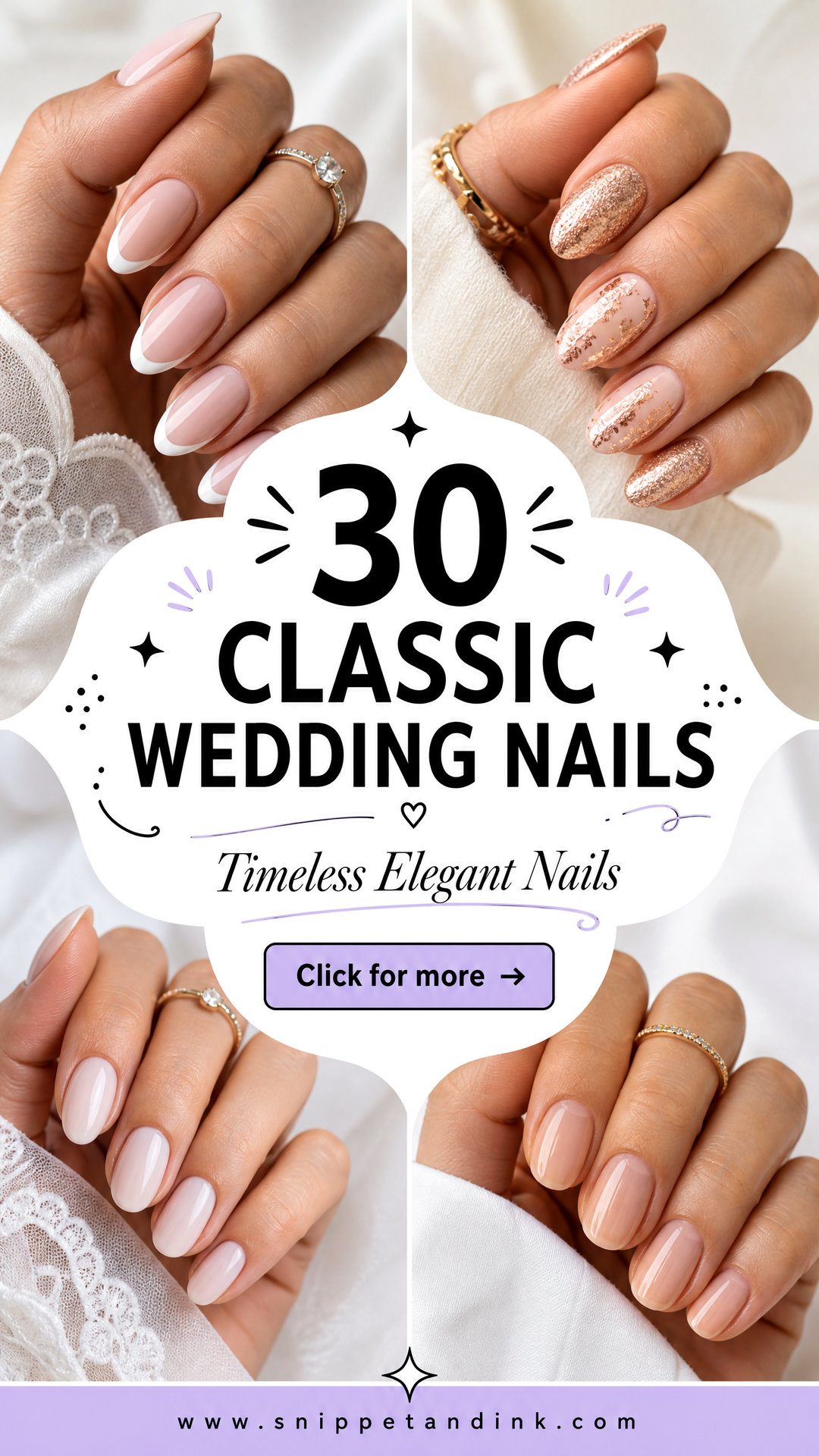
A bride’s hands end up in more photos than she expects: the ring shot, the vows, the bouquet, the first dance, the cake cutting. That’s why I steer most brides toward a classic set. Soft French tips, milky white, sheer pink, small pearls, a chrome glaze, a good nude or a few painted flowers all flatter the dress, ring and bouquet without taking anything from them. Everything below works on short natural nails as well as on long almond extensions, and each one is a design you’ll still like looking at in the album years from now.
Three Months of Nail Care Before the Bridal Manicure
The manicure in your wedding week can only be as good as the nails it’s painted on. Nails grow slowly, only a few millimeters a month, so any length you want or damage you need to grow out has to start well ahead. This is the timeline I give brides who book me early.
- Three months out, stop peeling off gel or polish. Peeling lifts layers of the nail plate with it and leaves thin, bendy nails that won’t hold a long shape. Have it soaked off properly instead.
- From then on, use cuticle oil every night and massage it into the skin around each nail. Hydrated cuticles look neater in close-ups and the nail plate is less brittle.
- Two months out, if you bite, ask for a builder gel overlay. It protects the nail while it grows and is harder to chew than a bare edge.
- Four to six weeks out, book a trial of the design you’re considering and wear it for a week. You’ll learn whether the length gets in your way and how the color looks in daylight beside your skin and ring.
- In the wedding week, have the final manicure one to three days before. The gel is fully set by then and there’s no regrowth showing at the cuticle.
Extensions or Your Own Nails?
If your nails are healthy and already reach the length you want, your own nails under a gel overlay feel the most natural and don’t change how you hold things. Soft gel extensions are the answer when nails are short or uneven, but wear a set at the trial first. Brides who have never had length are often surprised by how much it changes small tasks like fastening an earring back or a dress hook.
1. Classic French Wedding Nails
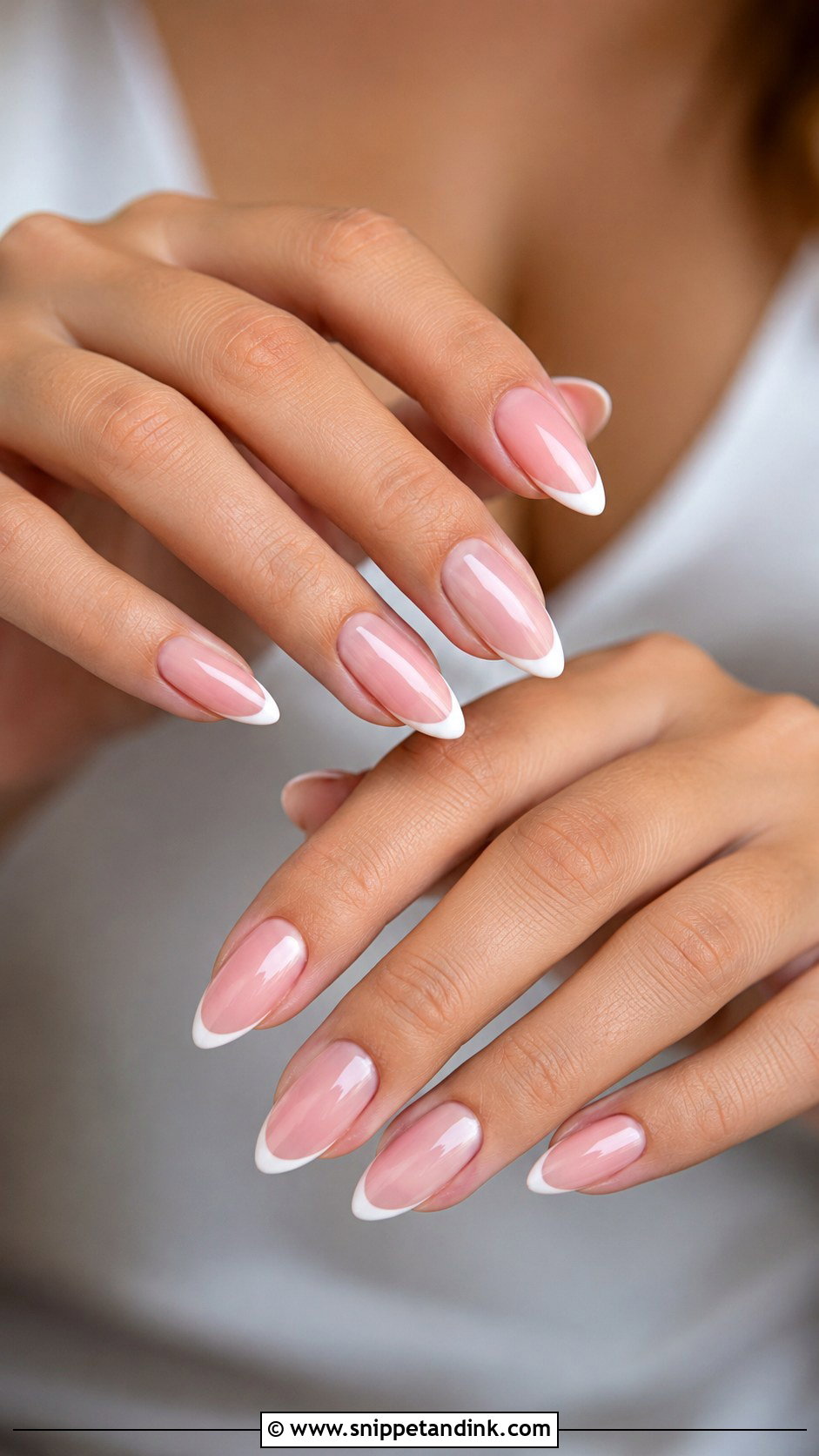
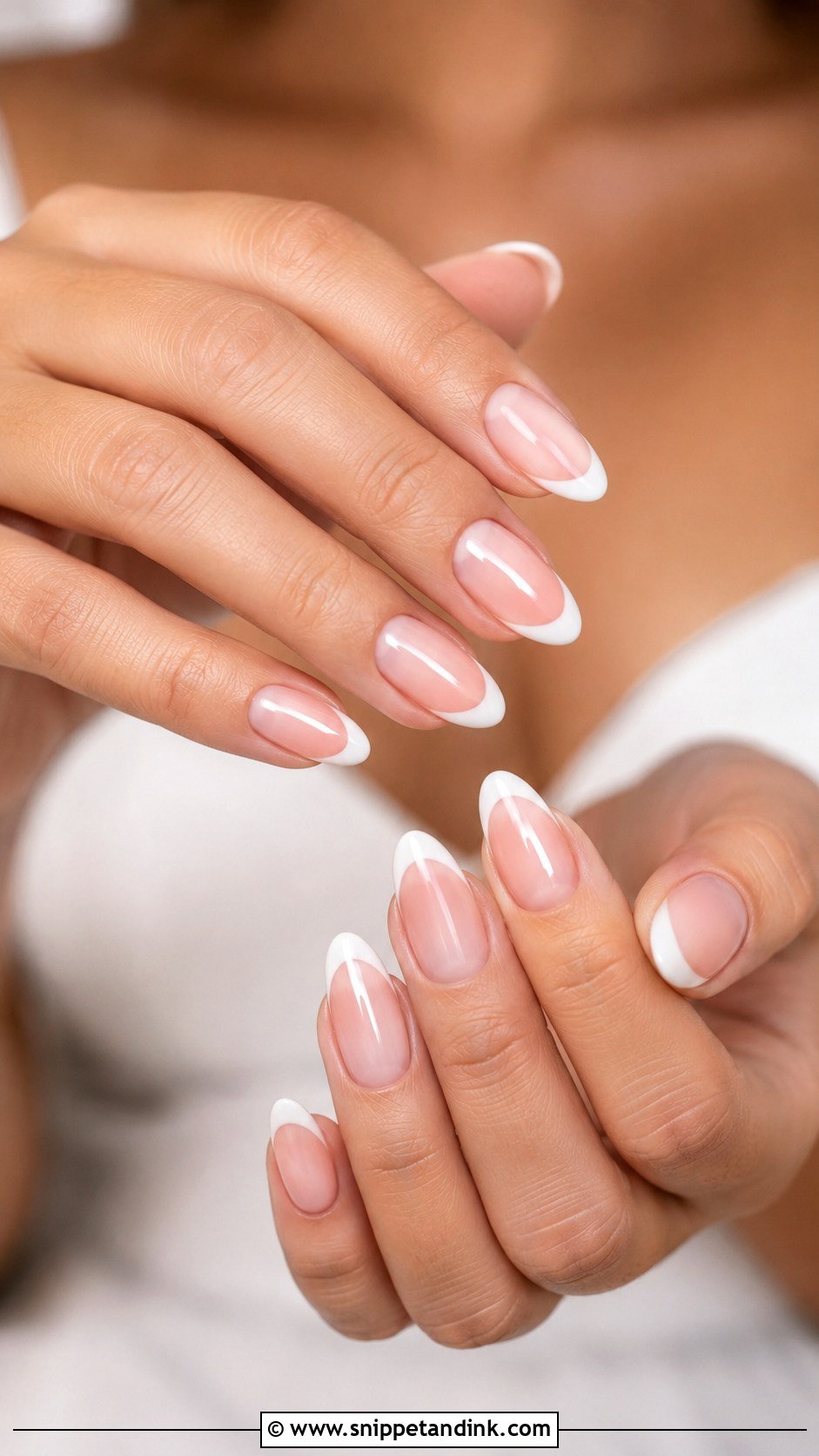
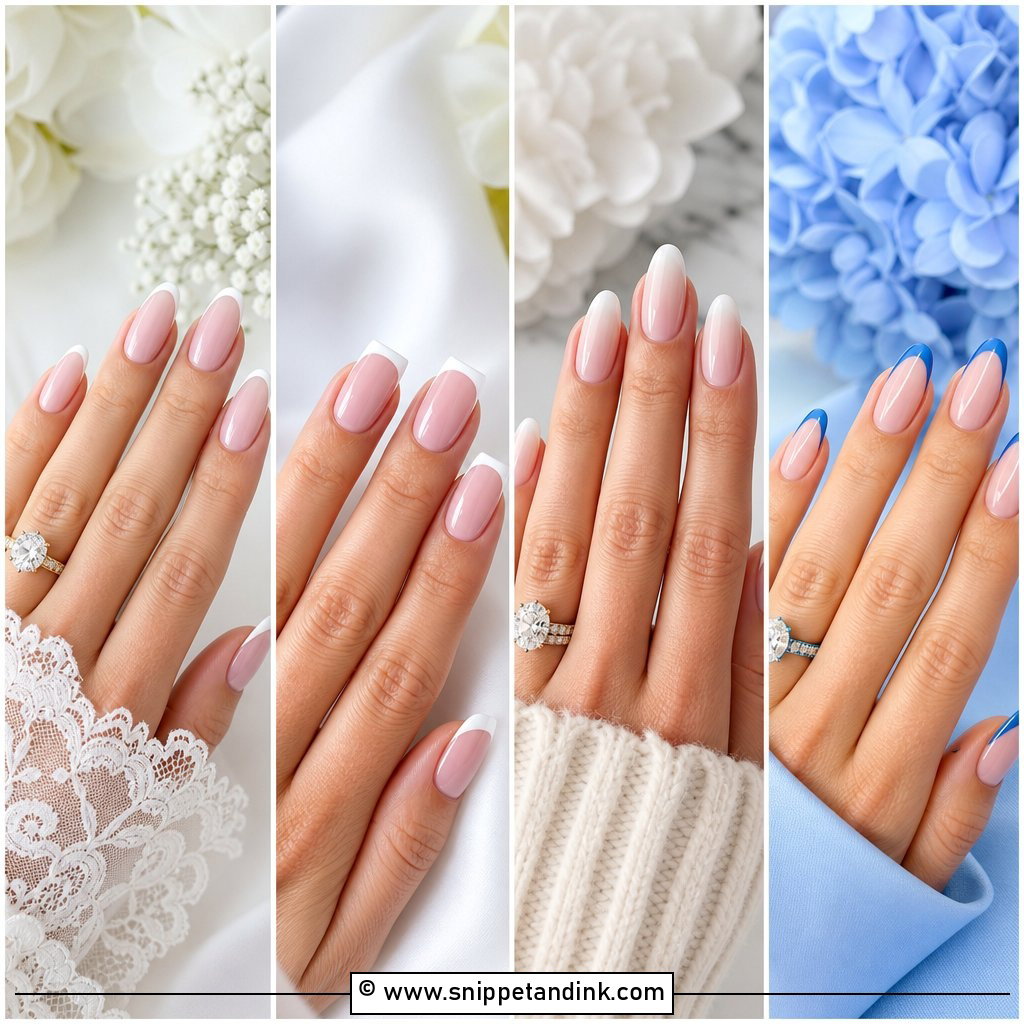
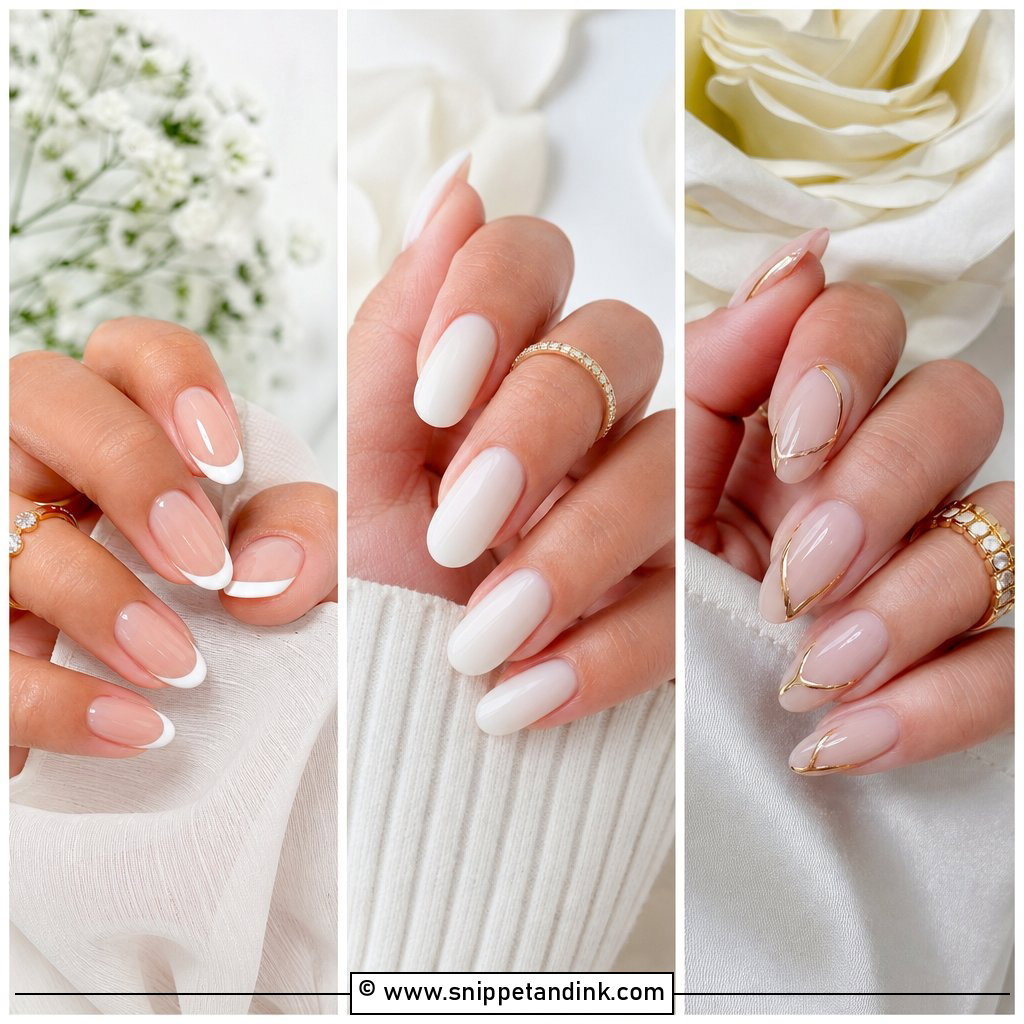
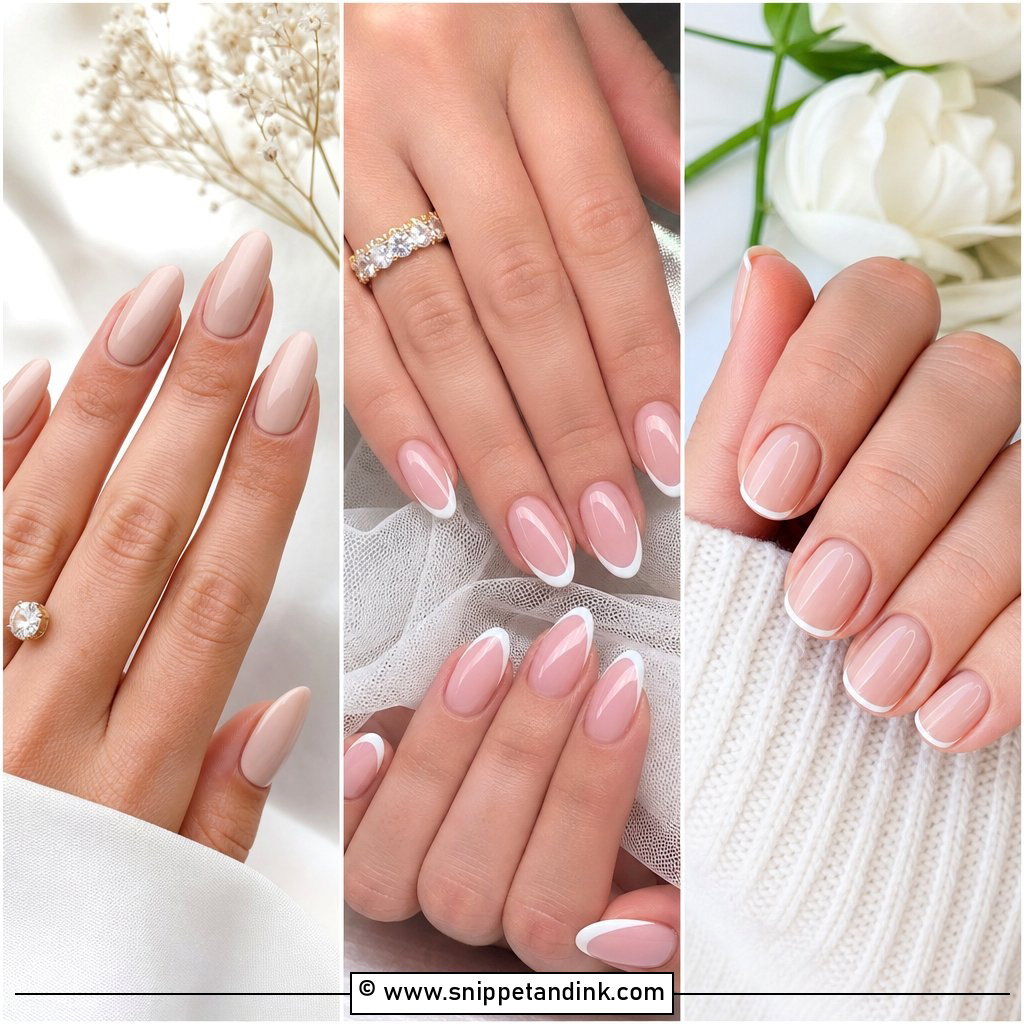
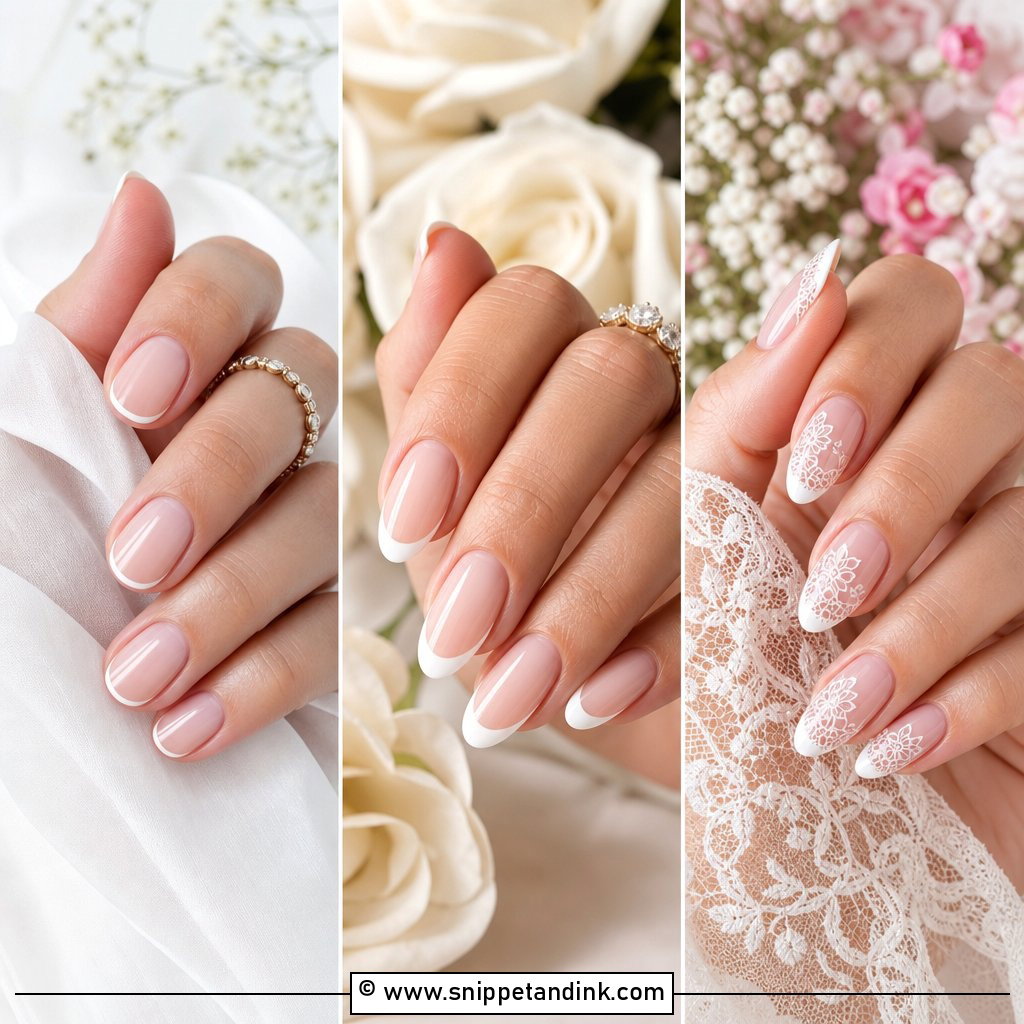
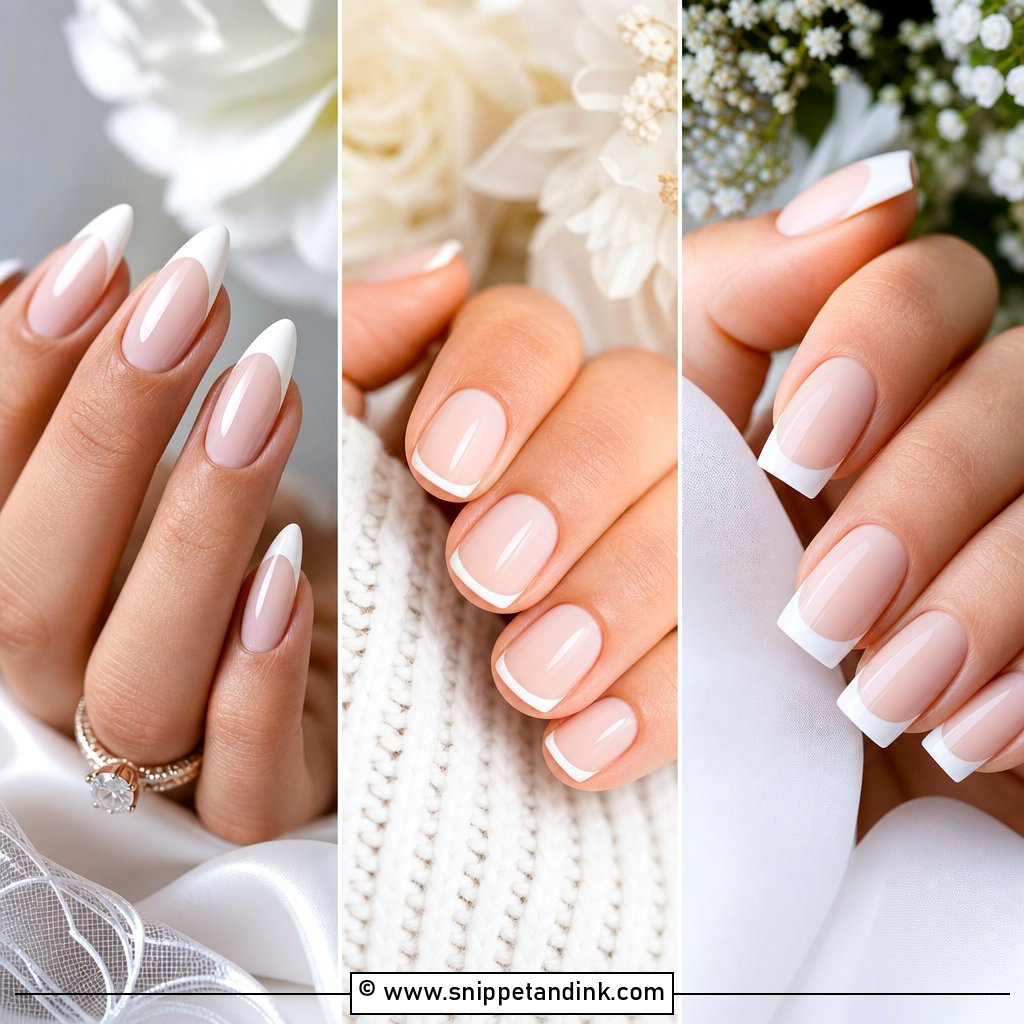
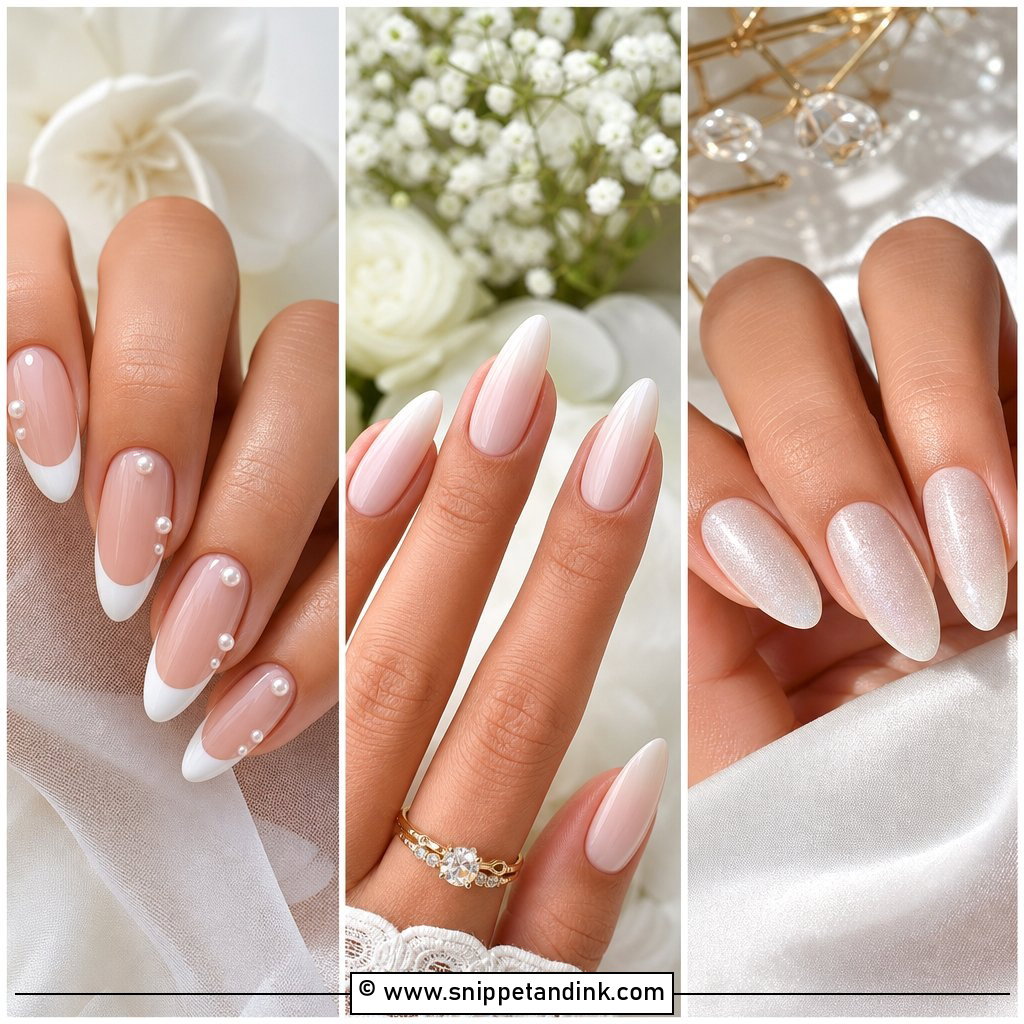
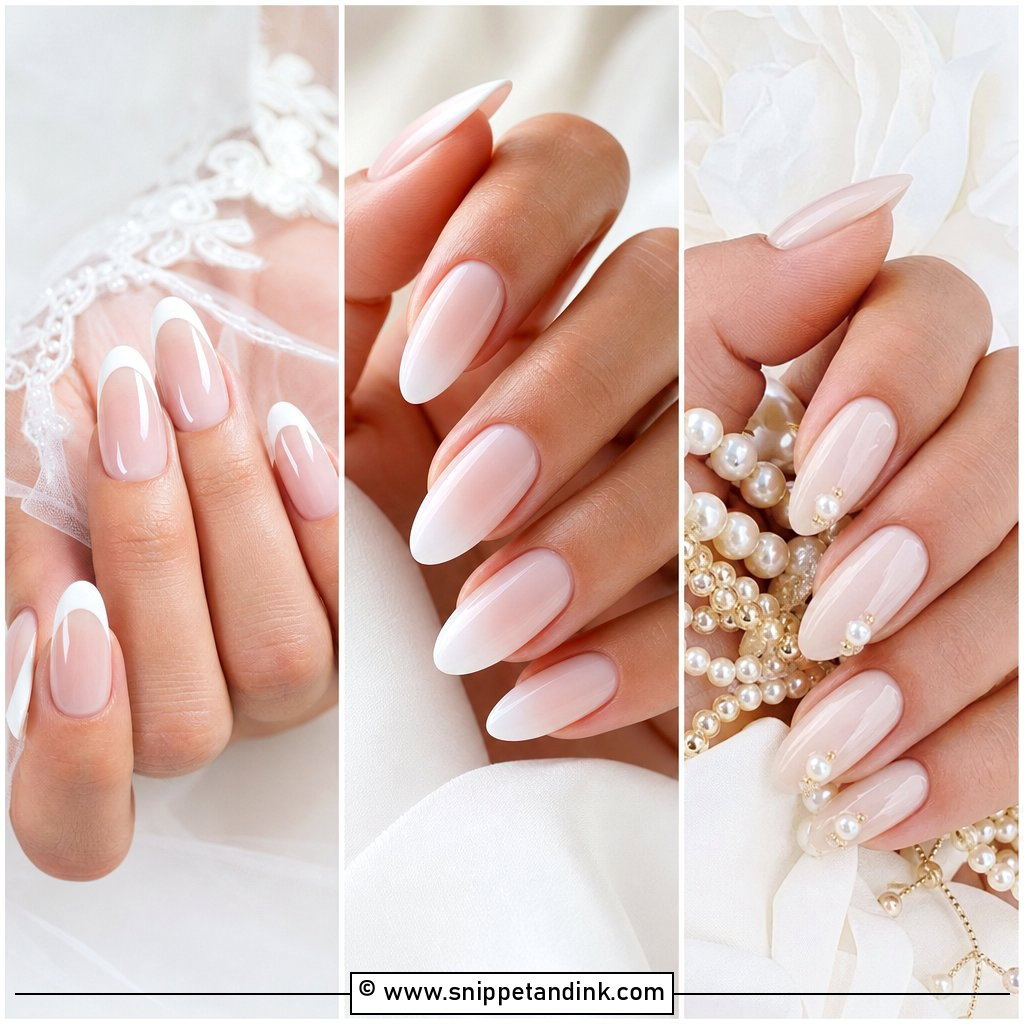
There’s a reason I still paint more classic French sets for brides than any other design: nothing reads cleaner next to a white dress. The soft pink or nude base disappears into the skin and the white tip gives each nail its edge. Oval, almond, squoval and short square all carry it, against white, ivory, champagne or blush gowns. My one strong opinion is about the smile line. Thin, curved and matched on every finger looks expensive; thick and straight looks dated. Finish with a glossy top coat.
2. Milky White Wedding Nails
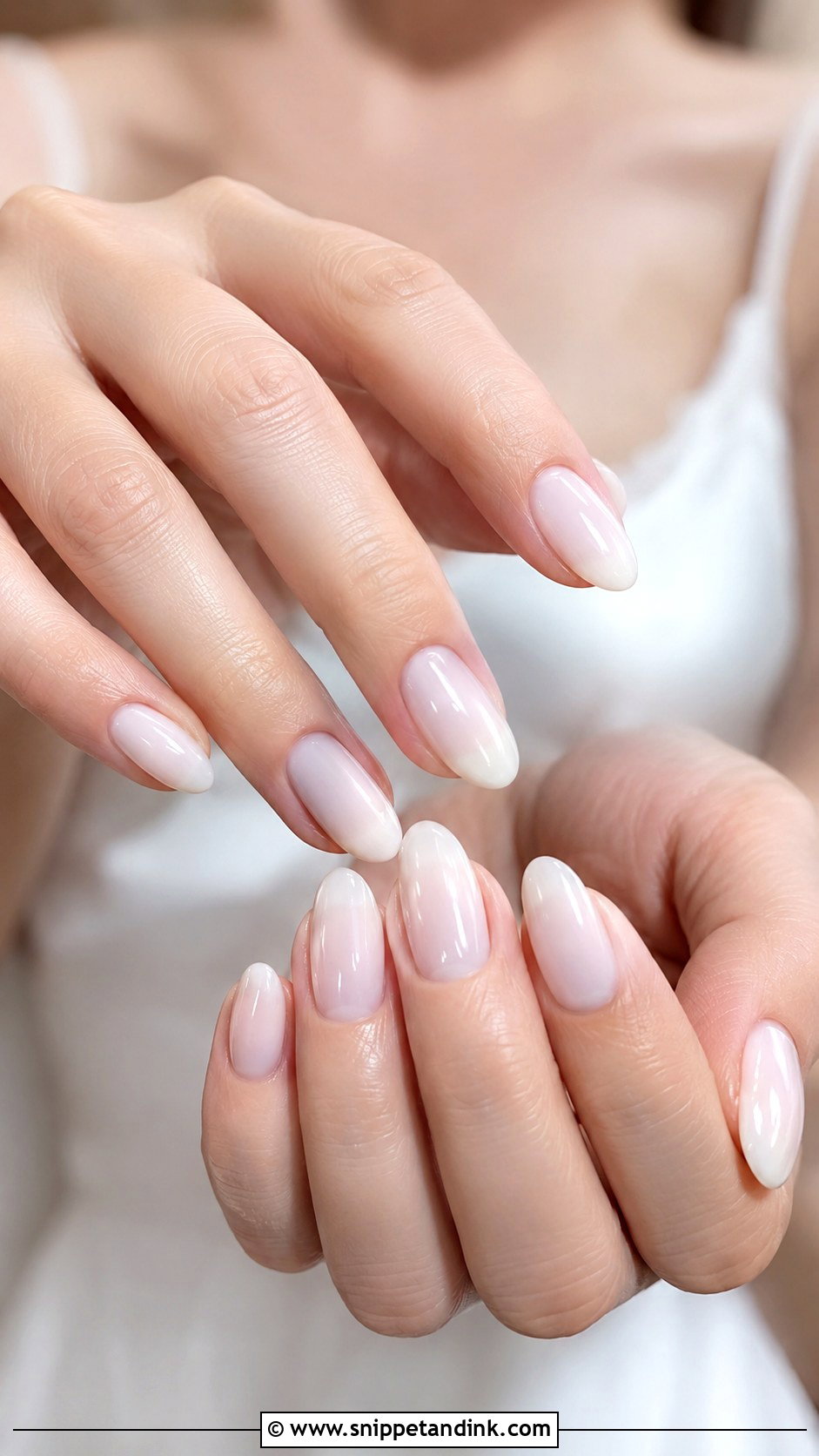
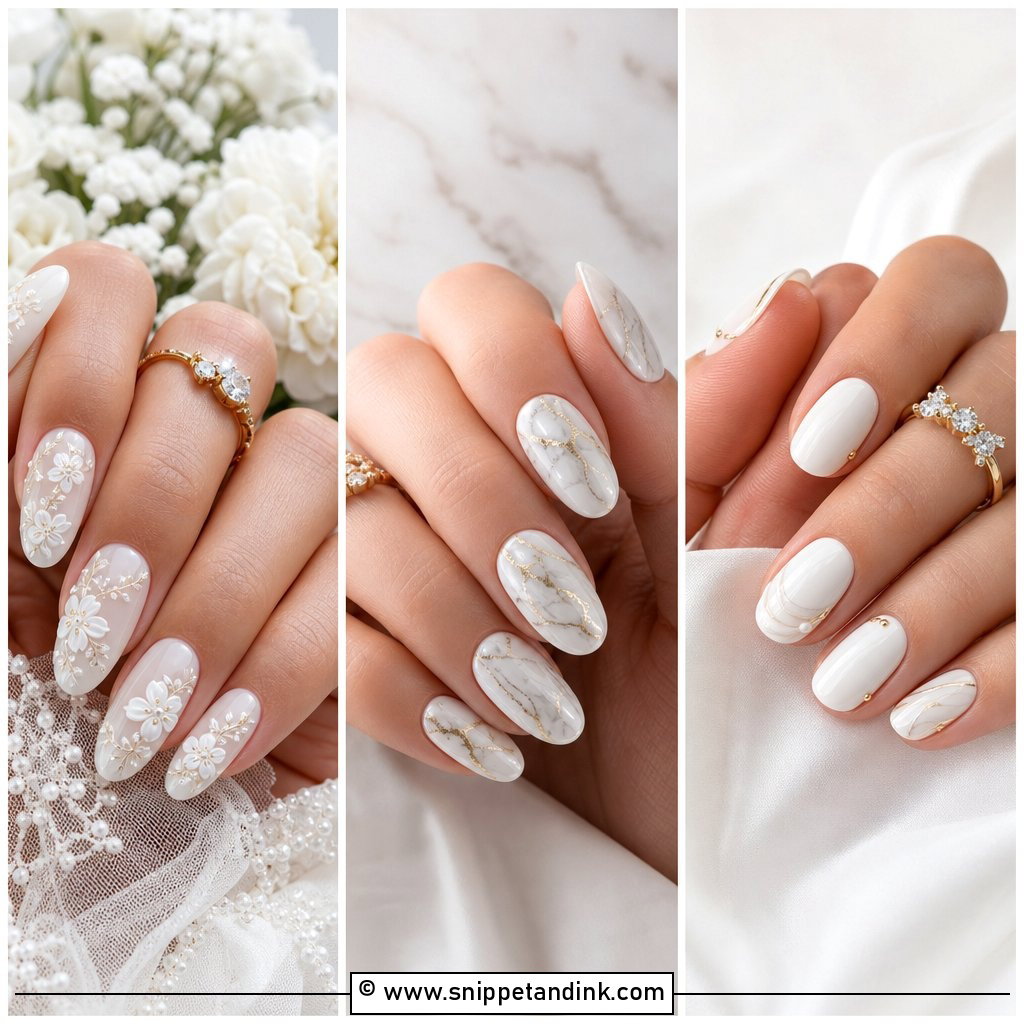
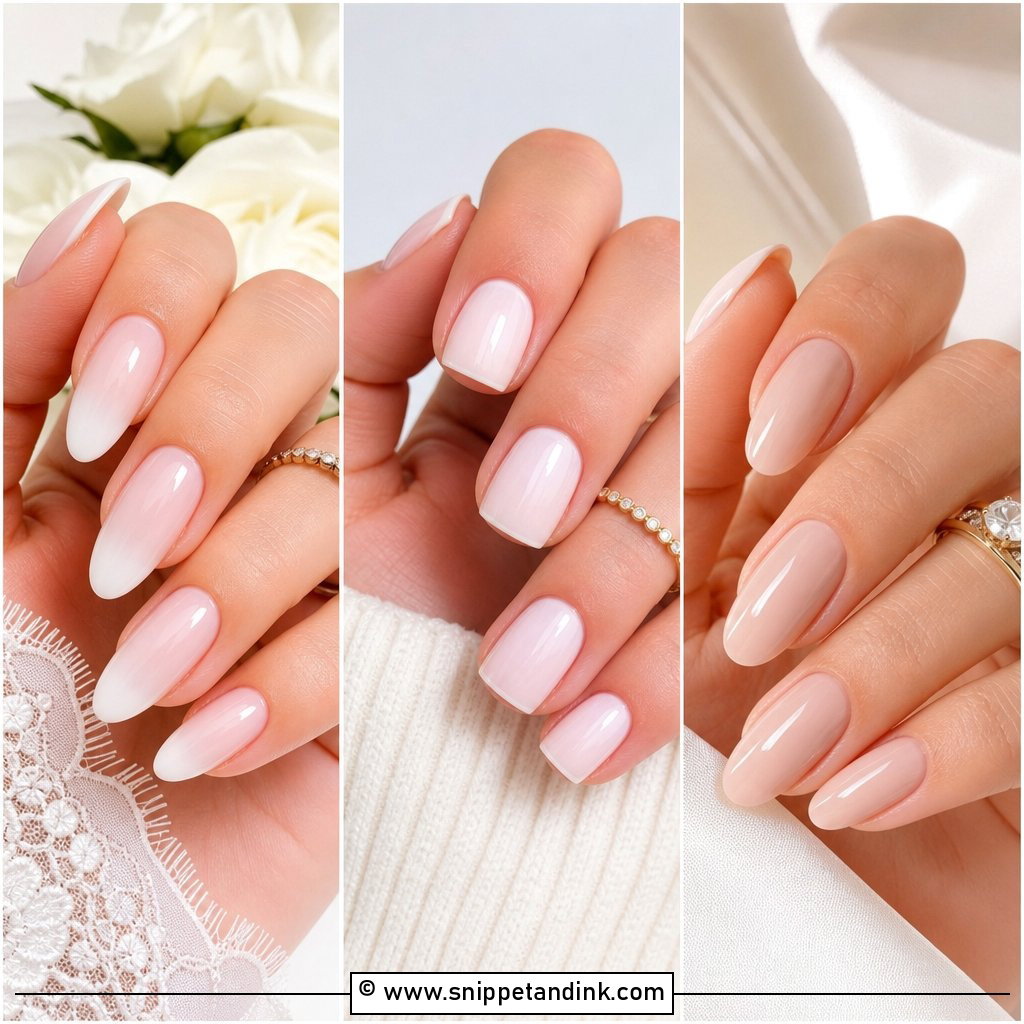
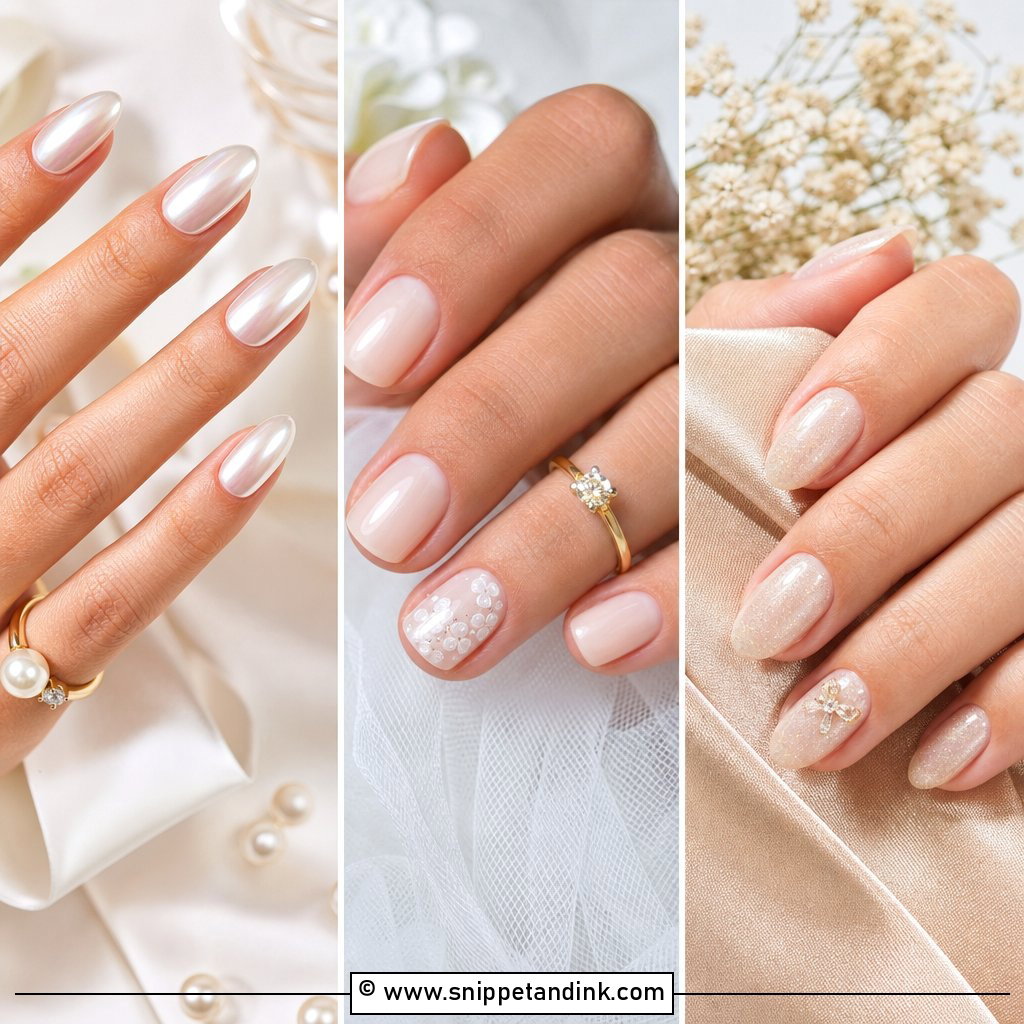
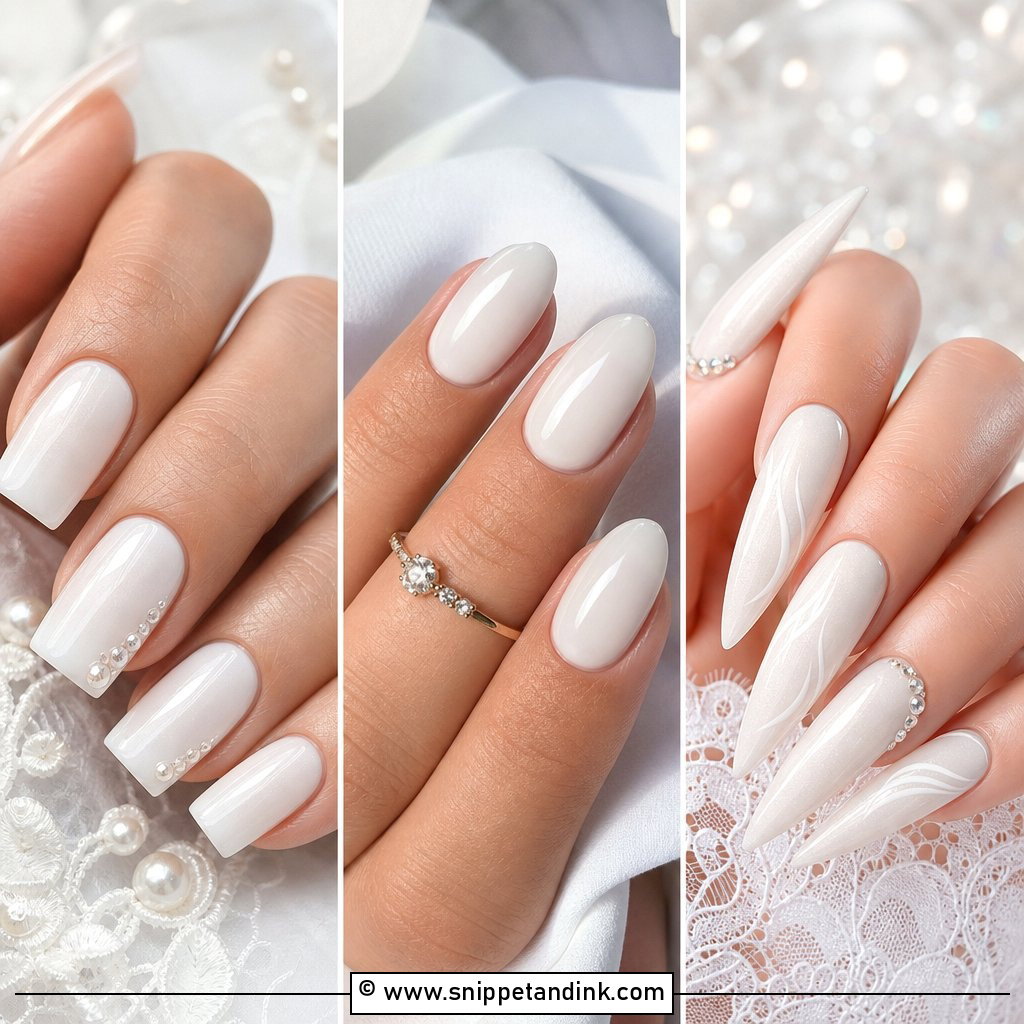
Milky white wedding nails are a translucent white, so the natural nail softly shows through and the result looks cloudy instead of chalky. On almond, oval or coffin shapes the color runs smoothly to the tip. It suits minimalist gowns and heavy lace alike, and most skin tones, because the white is softened. The tricky part is application: a thick coat of milky gel settles unevenly, so I work in thin layers and cure between each one. High gloss is the classic finish; a faint pearl sheen on top is softer still.
3. Sheer Pink Wedding Nails
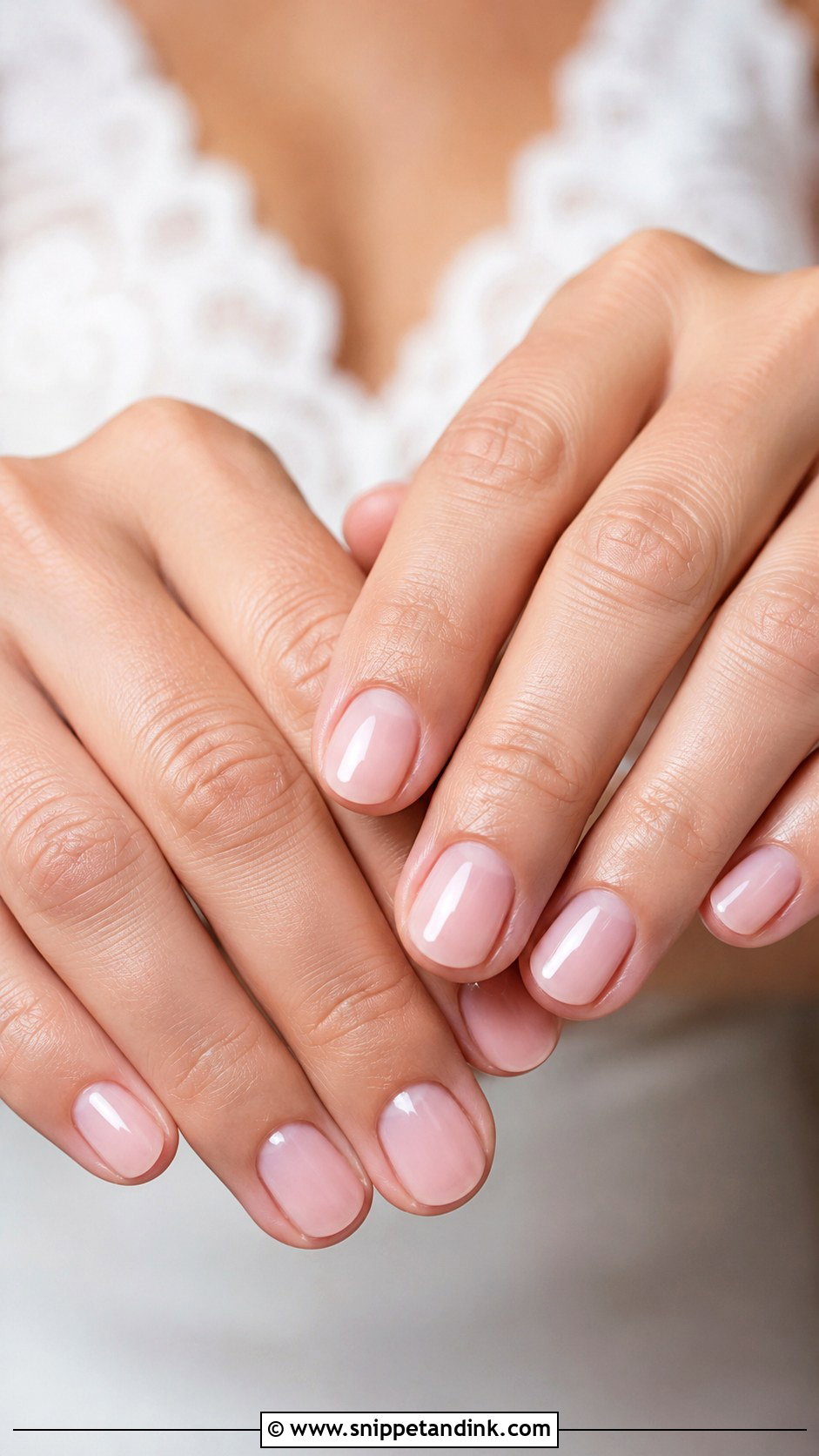
A sheer pink is the closest thing to your own nails on their best day. One or two coats of a blush-tinted gel even out the nail plate and blur small white spots without looking painted. It’s my go-to for short or natural nails and for brides who never wear bold polish, and it stays out of the ring’s way, so the stone and metal get the attention. Keep the shape rounded and the finish glossy. Because the color is sheer, any ridge or ragged cuticle shows through, so prep matters as much as polish.
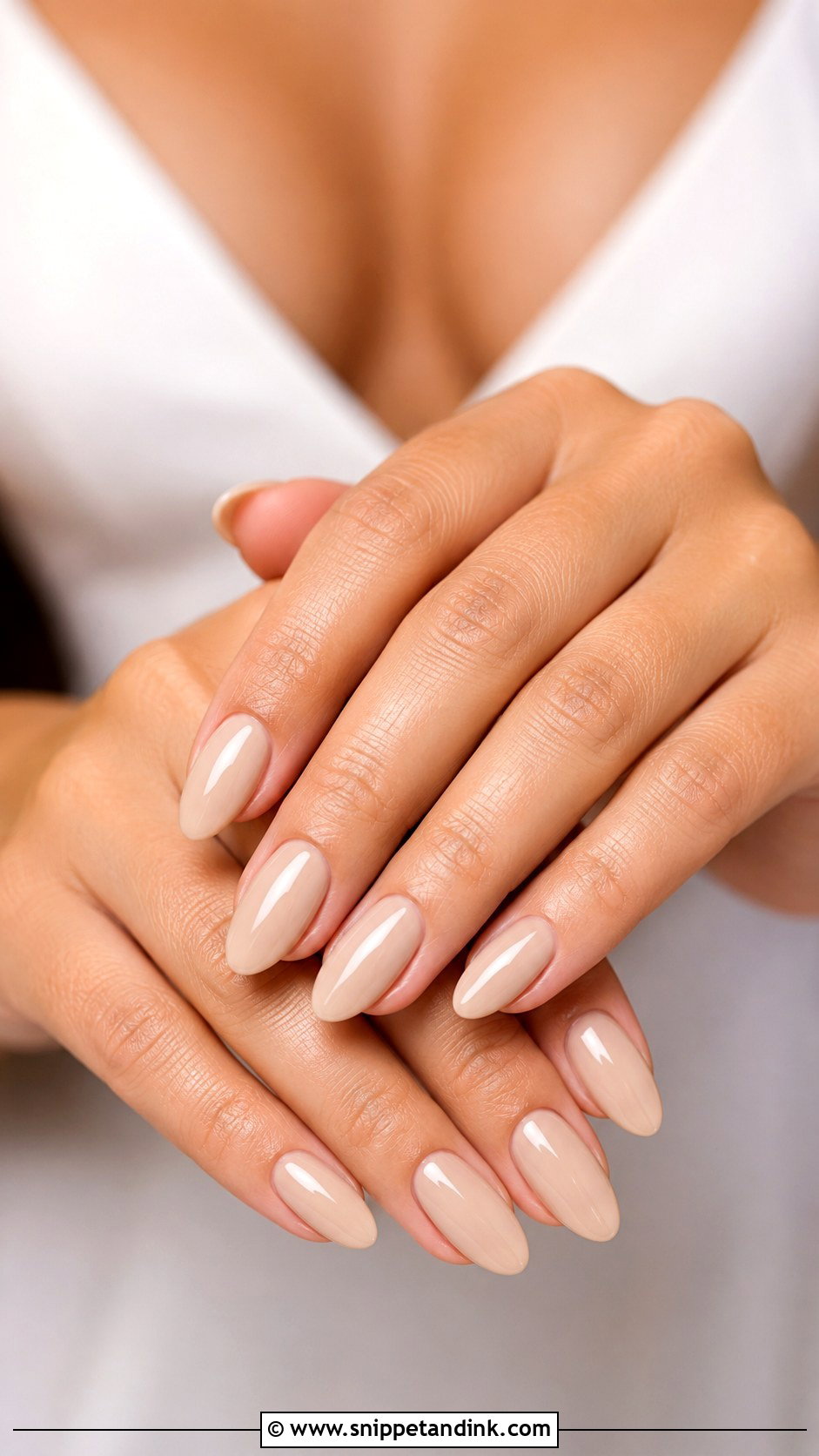
4. Nude Wedding Nails
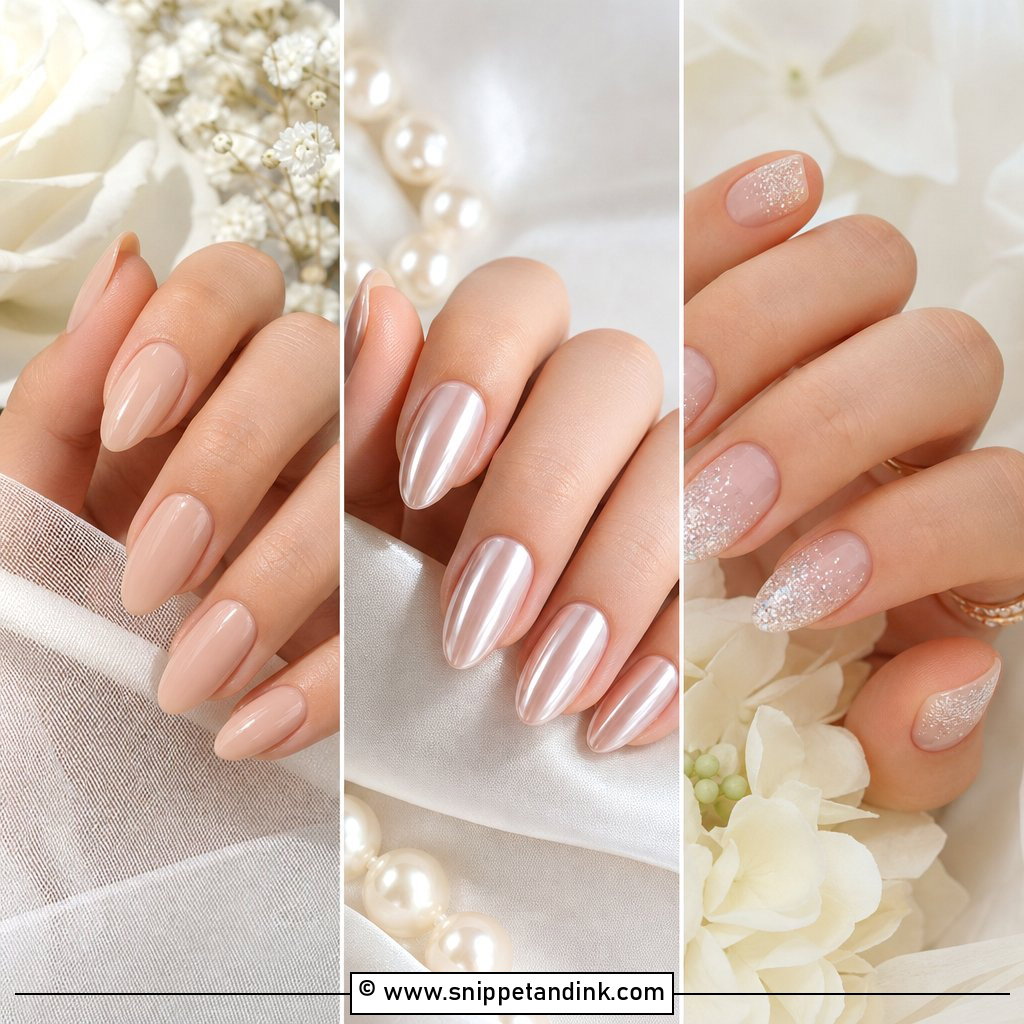
Nude stretches the finger visually, especially on almond and coffin shapes, which is why it has been on brides for decades. Which nude is the whole question. Soft beige, pink nude, caramel nude and creamy taupe each suit a different undertone, and I’d rather test three on your nails than guess from a chart. A glossy nude also calms things down beside a beaded gown or statement earrings. For more depth, I layer a sheer milky coat over the nude base.
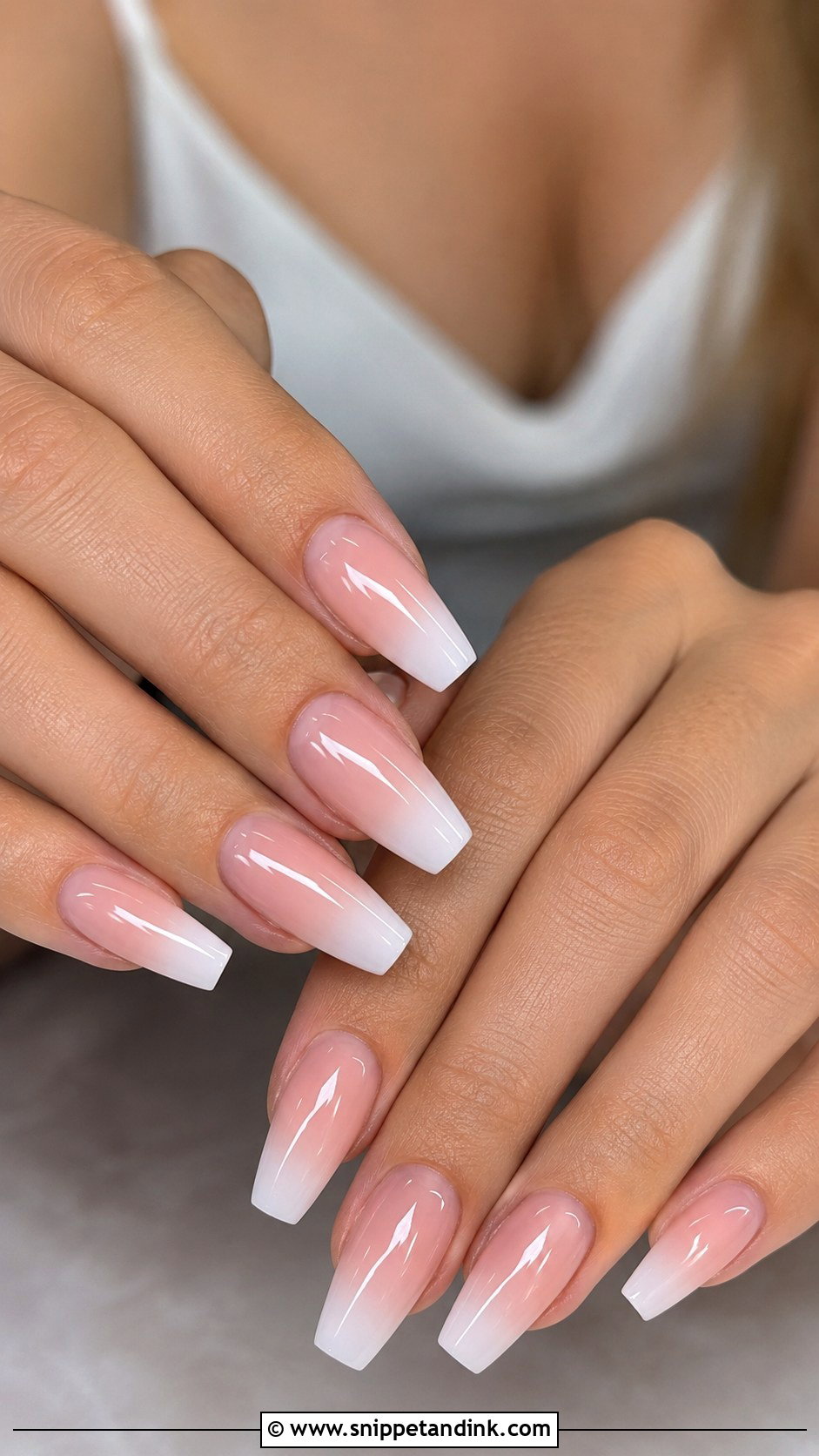
5. French Ombré Wedding Nails
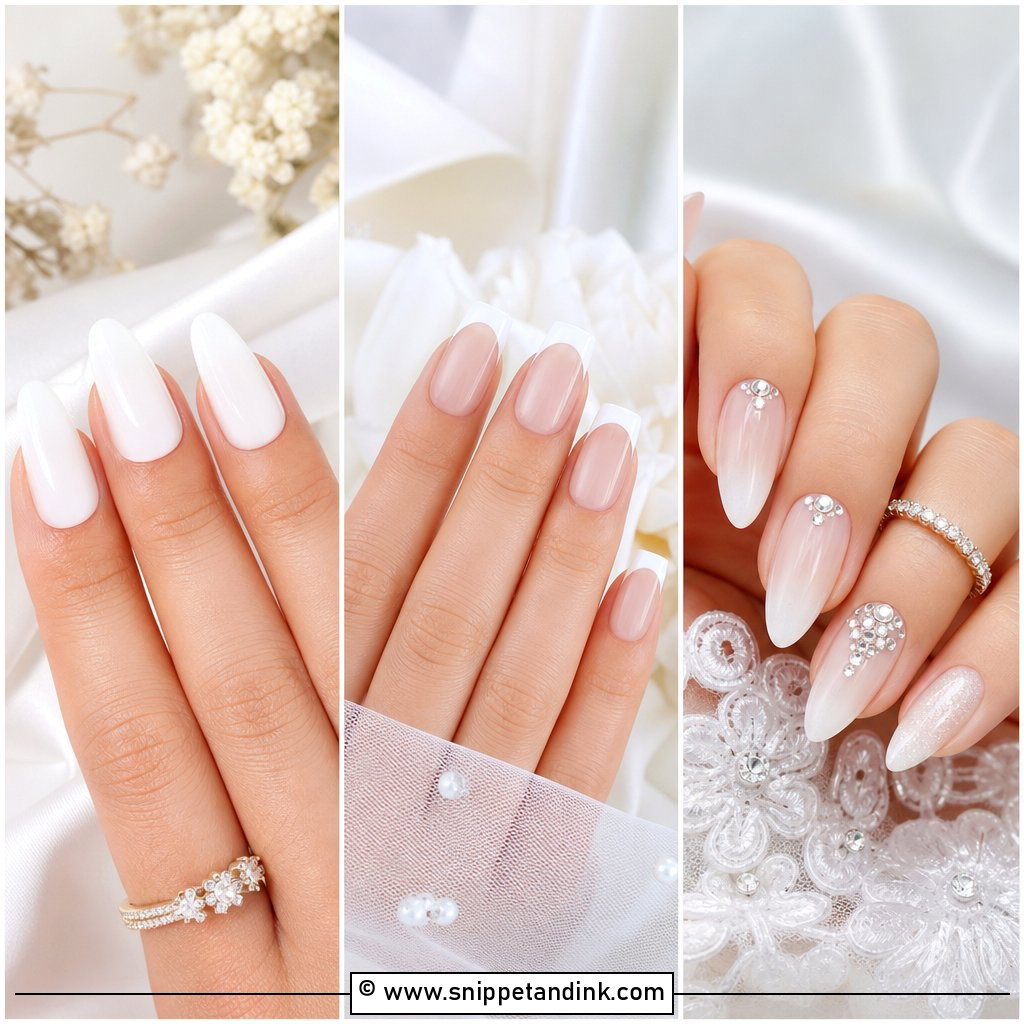
French ombré wedding nails, the ones people call baby boomer nails, blur the white tip into a pink or nude base so there’s no hard line anywhere. That makes them kind to slightly uneven nail lengths and very easy in photos. The gradient needs room, so I prefer them on almond, oval or coffin shapes with some free edge; on very short nails the fade turns muddy. A fine shimmer in the top coat adds glow, though plain gloss is the more classic choice.
6. Pearl Chrome Wedding Nails
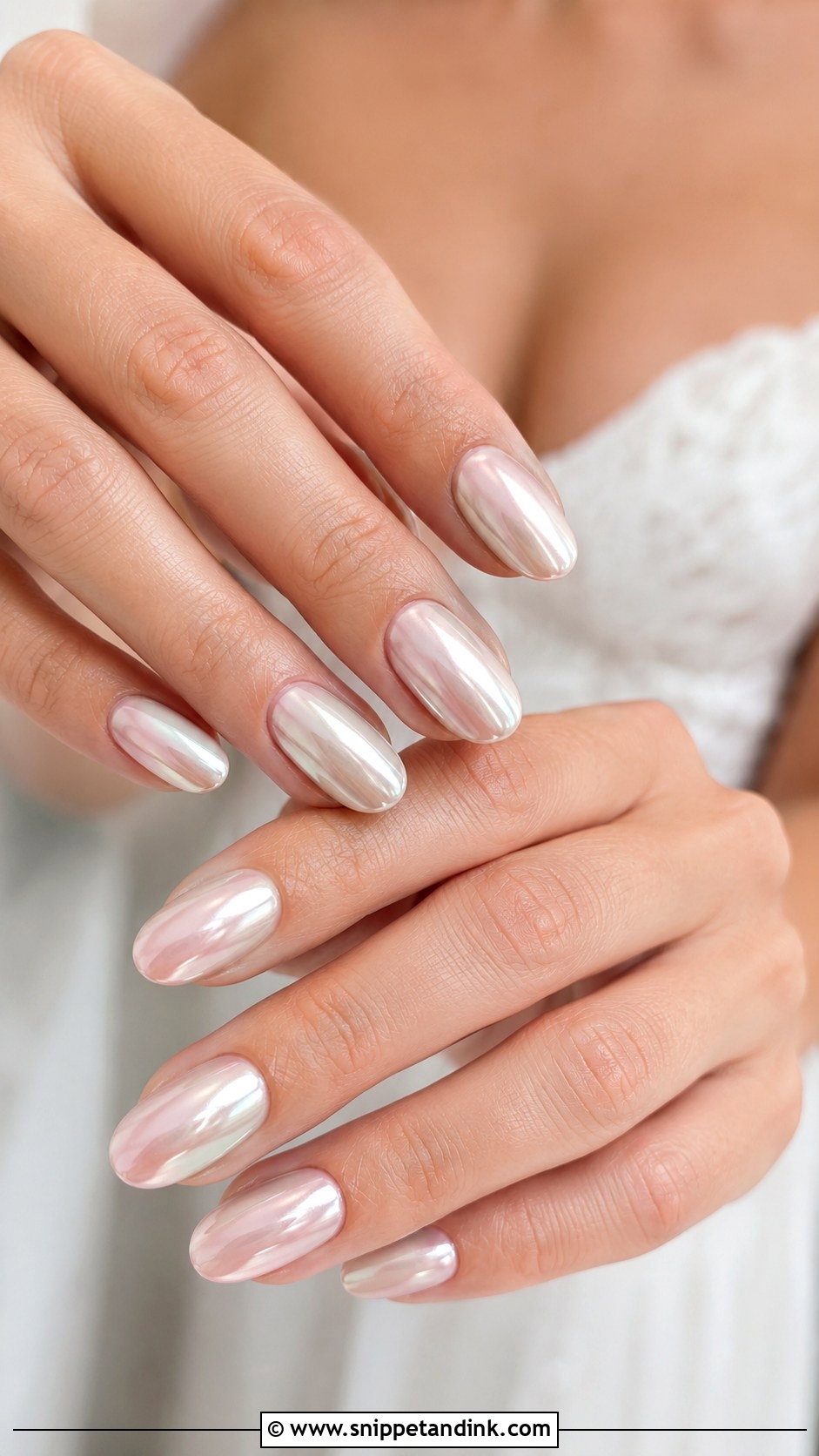
Pearl chrome wedding nails start with a sheer white, milky, blush or nude base, and then a light pearl powder is buffed over a cured top coat. Mirror chrome can read metallic and heavy; pearl chrome gives a soft sheen that moves as the hand moves. It works on short ovals, long almonds and coffins, with satin gowns, pearl earrings and soft makeup as its best company. One warning: chrome powder shows every bump in the surface underneath, so I spend extra time leveling the gel before the powder goes on.
7. White Chrome Wedding Nails
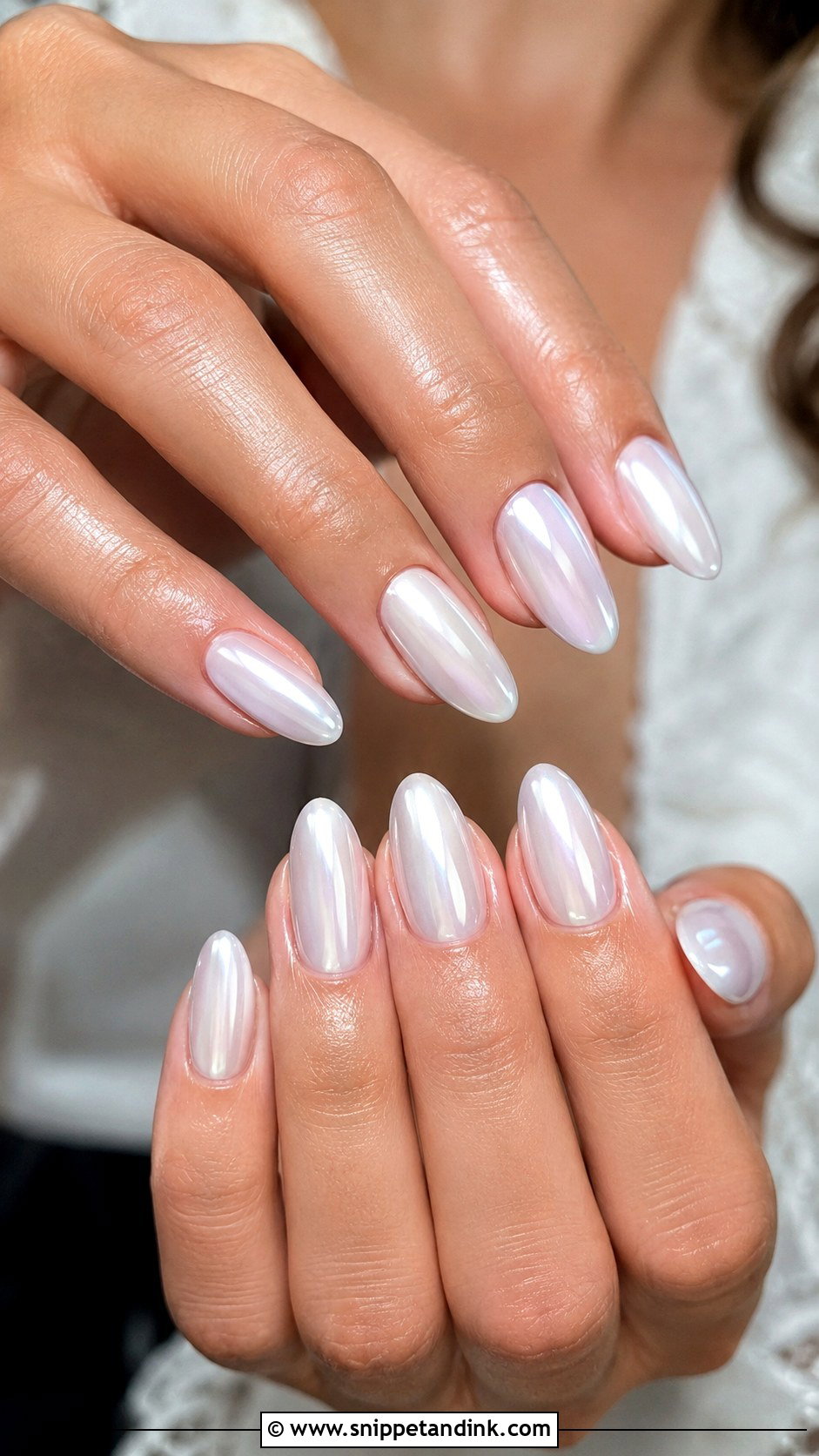
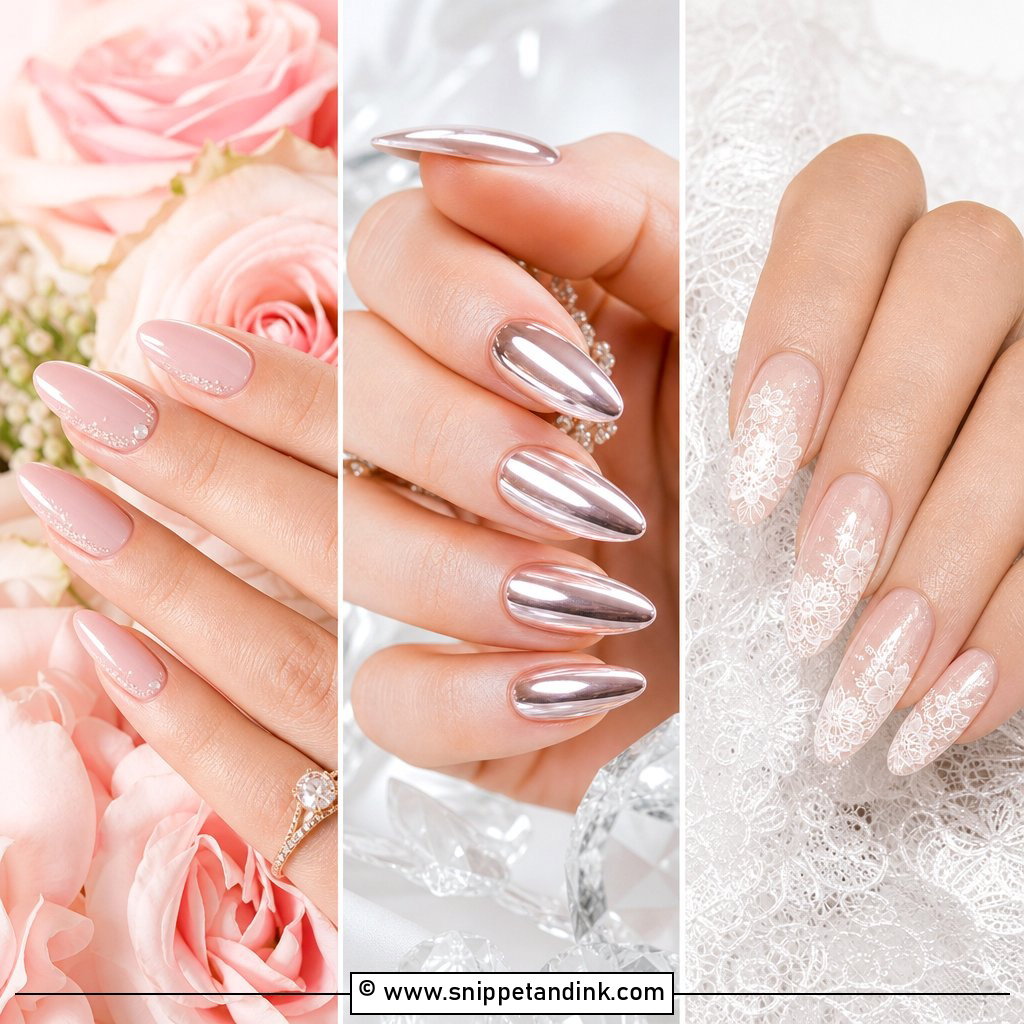
White chrome is milky or soft white with a glassy chrome finish over it, brighter than plain white and cleaner than glitter. Almond and square both show off the reflection along the length of the nail. I keep the chrome pearly rather than silver so it stays bridal, and I’d save it for minimalist or structured gowns, where the sleekness matches the dress. Against heavy lace and ruffles it can look a little cold.
8. Blush Pink French Wedding Nails
Blush French swaps the nude base for a rosy one, which warms the whole hand and makes the white tip look softer. It flatters a wide range of skin tones and sits with any ring metal: rose gold, yellow gold, silver or platinum. Almond and oval look graceful; short squoval keeps it practical. I ask brides to bring the ring to the appointment, because the right blush depends on whether the metal runs warm or cool. Thin, even tips and a glossy finish.
9. Short French Wedding Nails
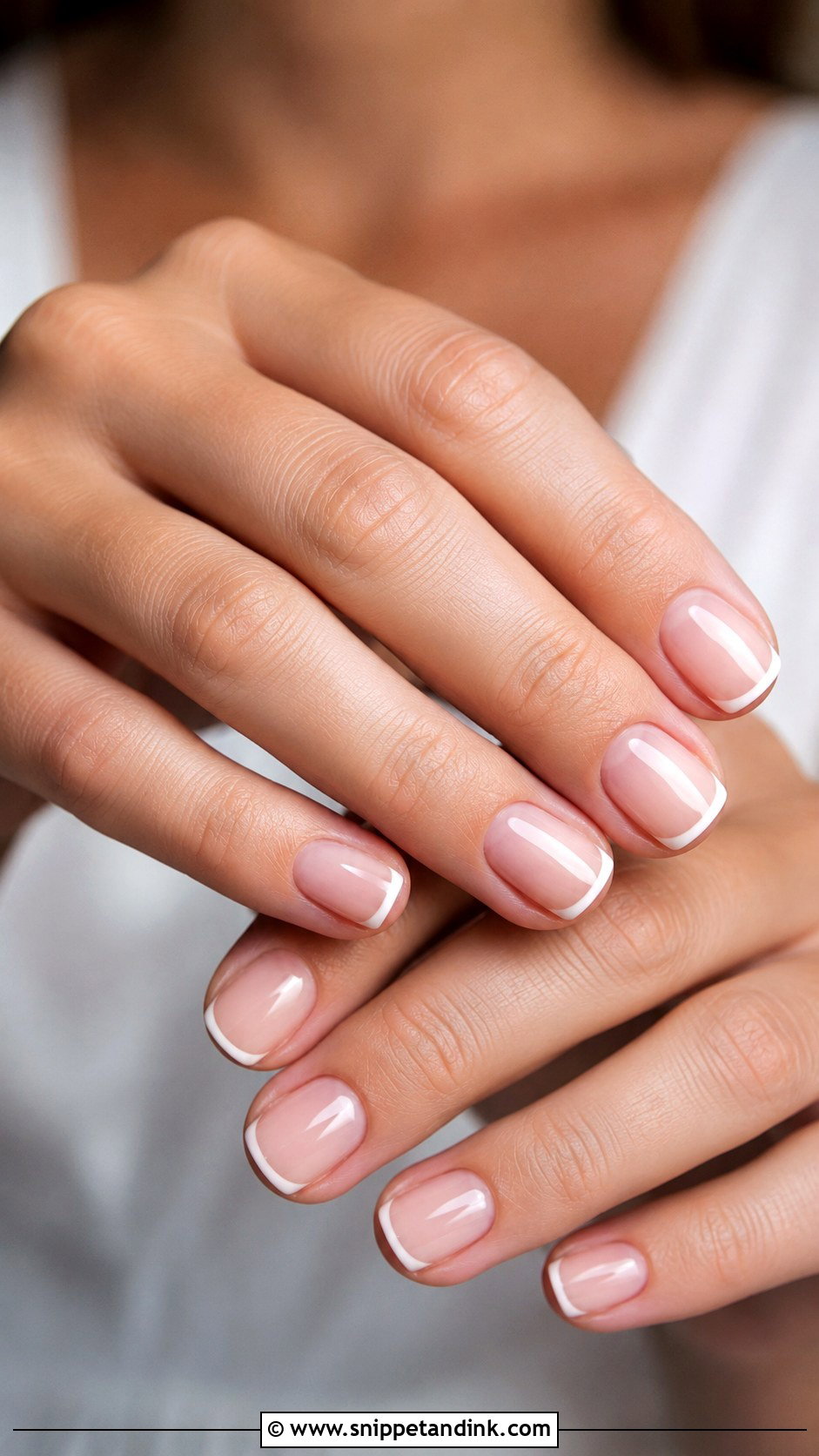
You don’t need extensions to have bridal nails. A short squoval or rounded shape with a sheer pink base and fine white tips looks fresh and suits brides who use their hands all day or don’t want upkeep. Proportion is everything here: a white tip that’s too deep chops a short nail in half and makes it look even shorter. I paint the tip only as deep as the natural free edge, sometimes less, and finish with high gloss so the nails look healthy.
10. Almond French Wedding Nails
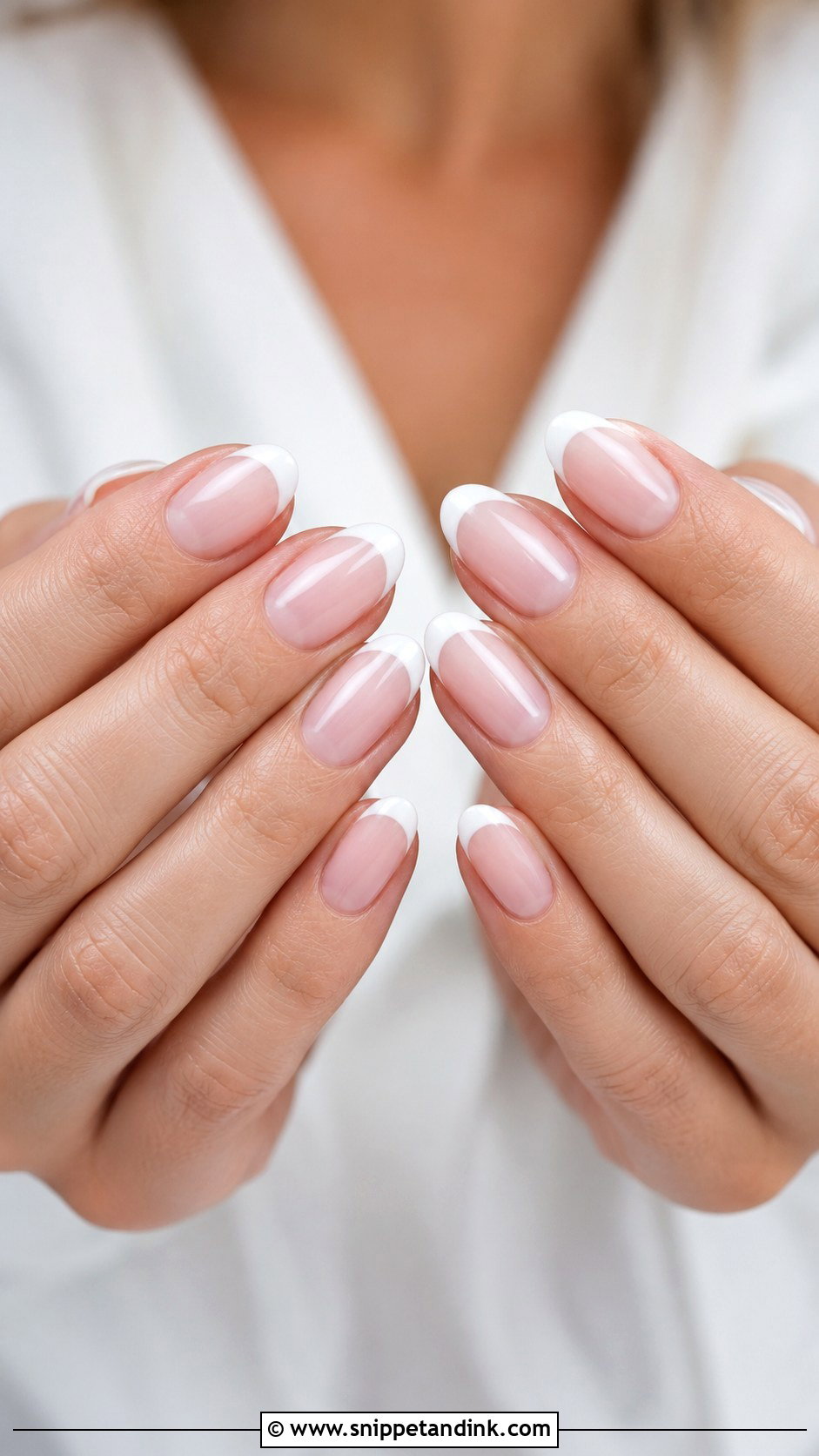
Almond is the shape I file most for brides, because the taper lengthens the fingers in ring photos without the sharpness of a stiletto. A nude or pink base with clean white tips on a medium to long almond is about as classic as bridal nails get. A thin tip reads modern; a slightly deeper smile line reads traditional. On thin natural nails I add a builder gel layer, since a long almond can crack at the sidewall if nothing reinforces it.
11. Square French Wedding Nails
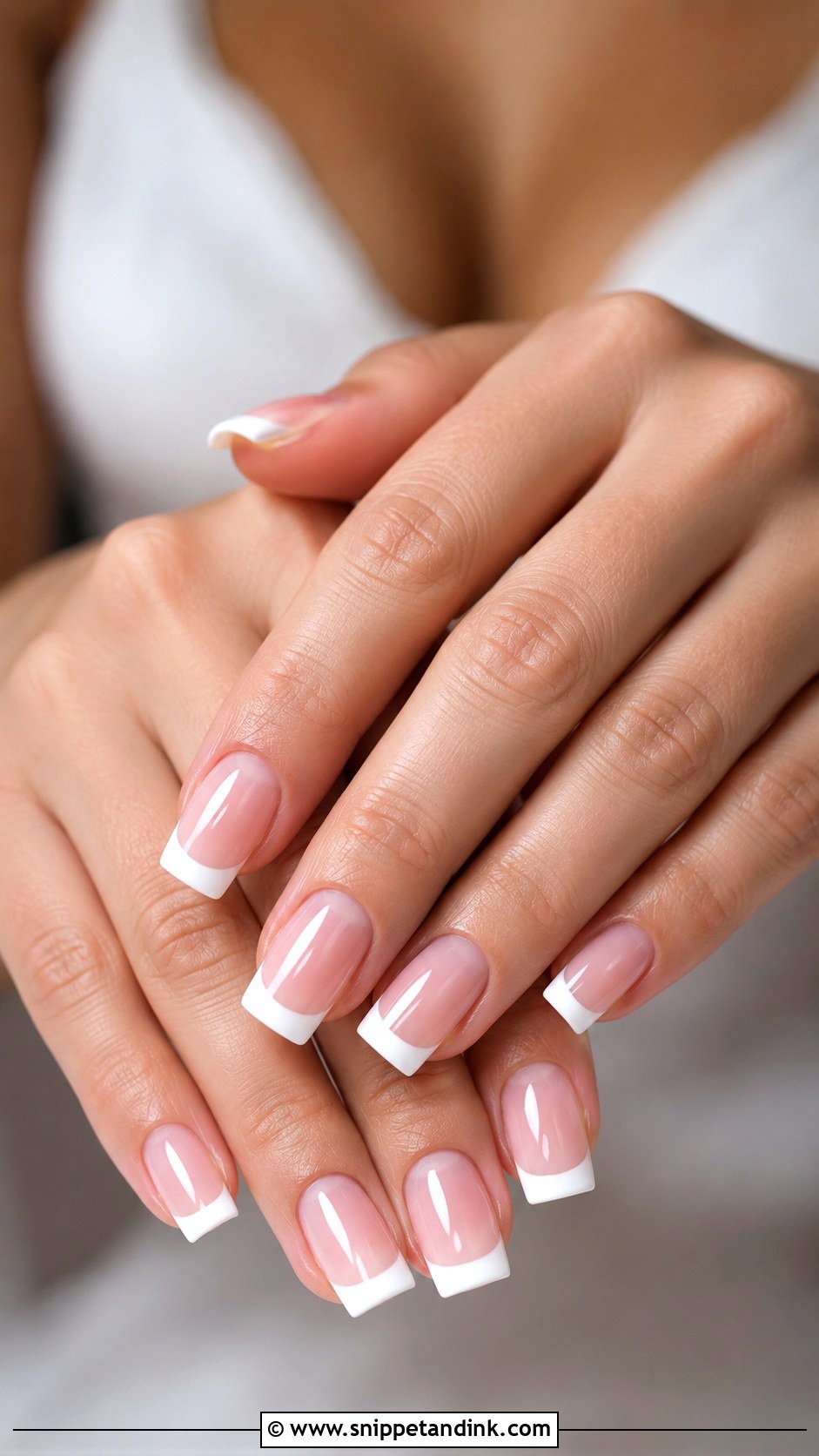
Square French gives the crispest tip line of any shape because the free edge is straight. It suits brides who like a neat, salon-fresh finish and pairs well with modern gowns, simple veils and clean accessories. Keep it short to medium. Long square nails look blunt, and their corners catch on veil tulle, which is why I often file a squoval with eased corners under the sheer pink or nude base.
12. Oval Nude Wedding Nails
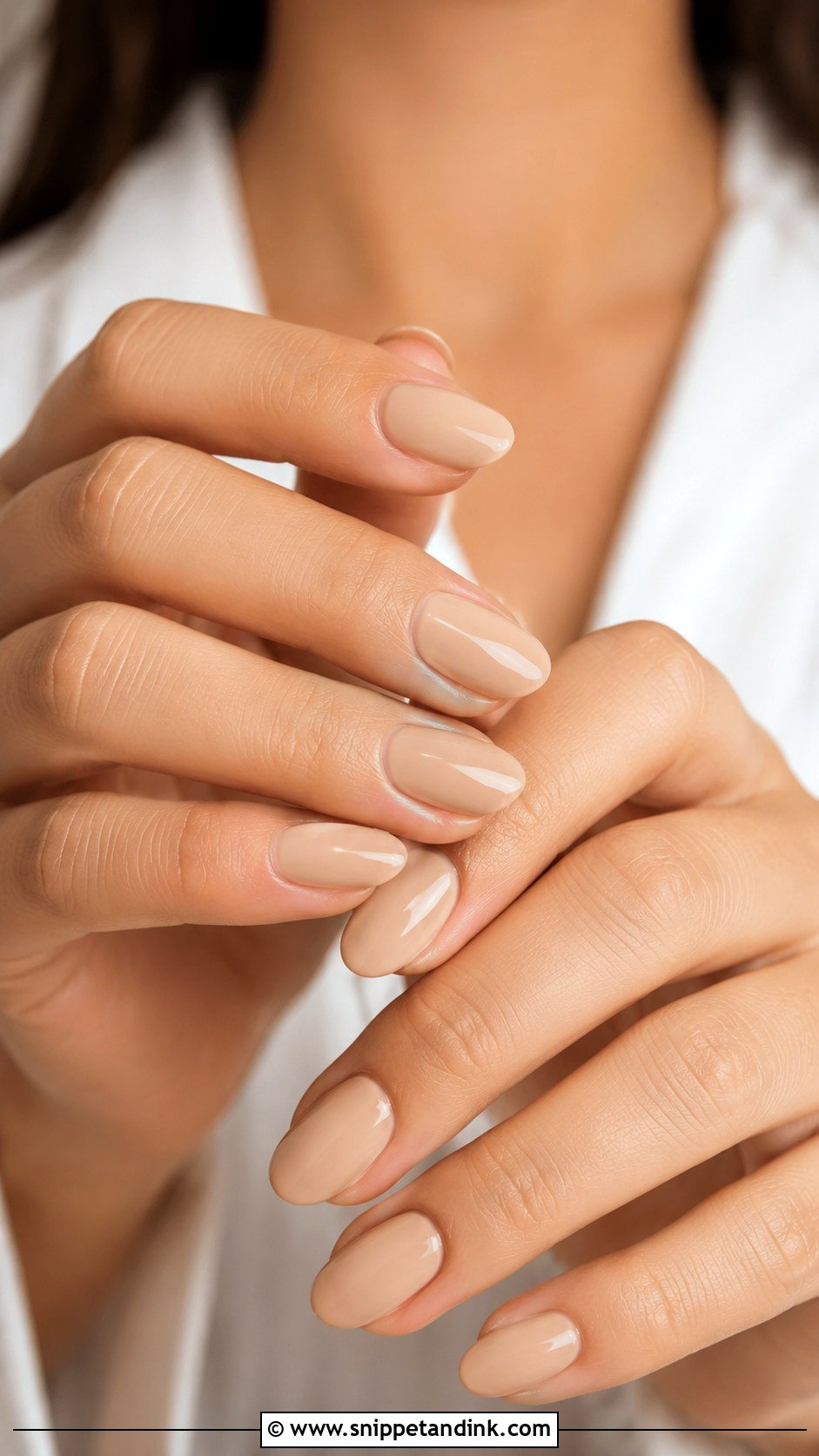
Oval softens the fingertips and nude finishes the line, and together they’re one of the most flattering pairings for a bride who wants polish without design. Match the nude to undertone: pink beige for fair skin, peach nude for warm skin, caramel for deeper skin. Rather than an exact skin match, I go half a shade lighter or pinker so the nail looks intentional instead of like a bare finger in photos. High gloss on top, and it works with lace, satin and everything between.
13. Soft White Wedding Nails
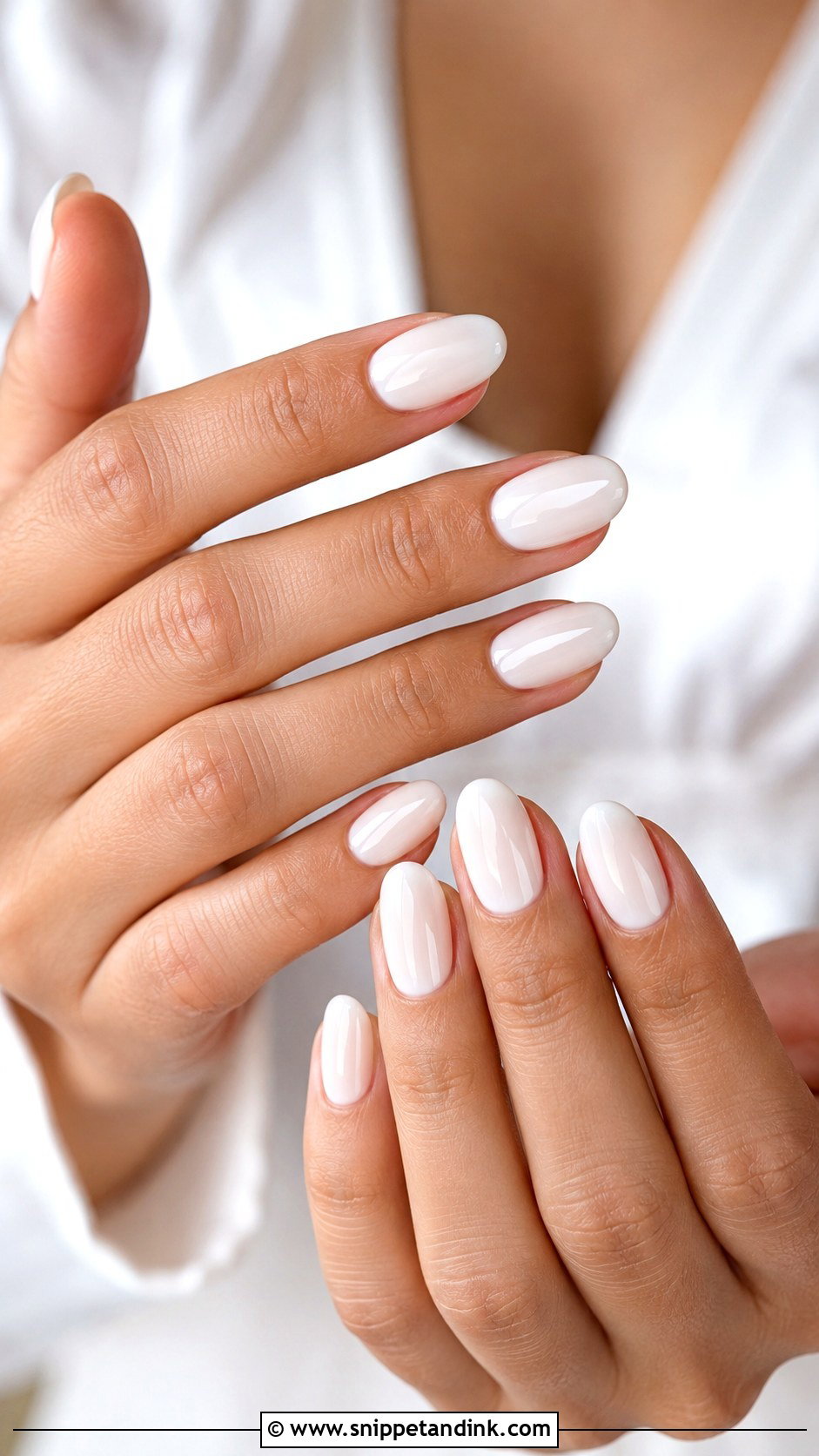
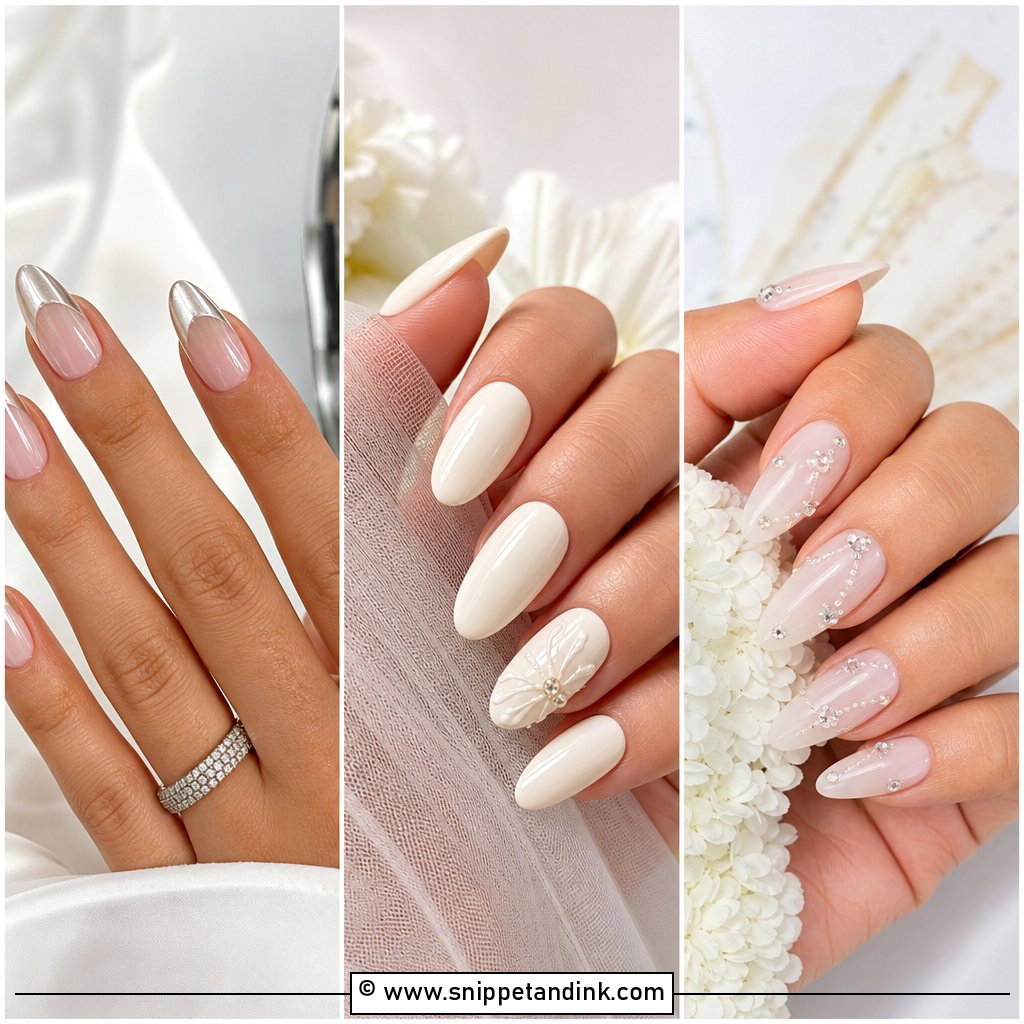
Soft white is a creamy, buildable white that never looks stark. I suggest it for ivory, off-white or champagne gowns, because a bright optic white next to an ivory dress makes the dress look yellow by comparison. Short ovals, almonds and medium squares all carry it. Ask for a sheer buildable white rather than an opaque chalky one; opaque whites are hard to lay down evenly and tend to look thick at the edges. Gloss on top, shimmer optional.
14. Pearl Accent Wedding Nails
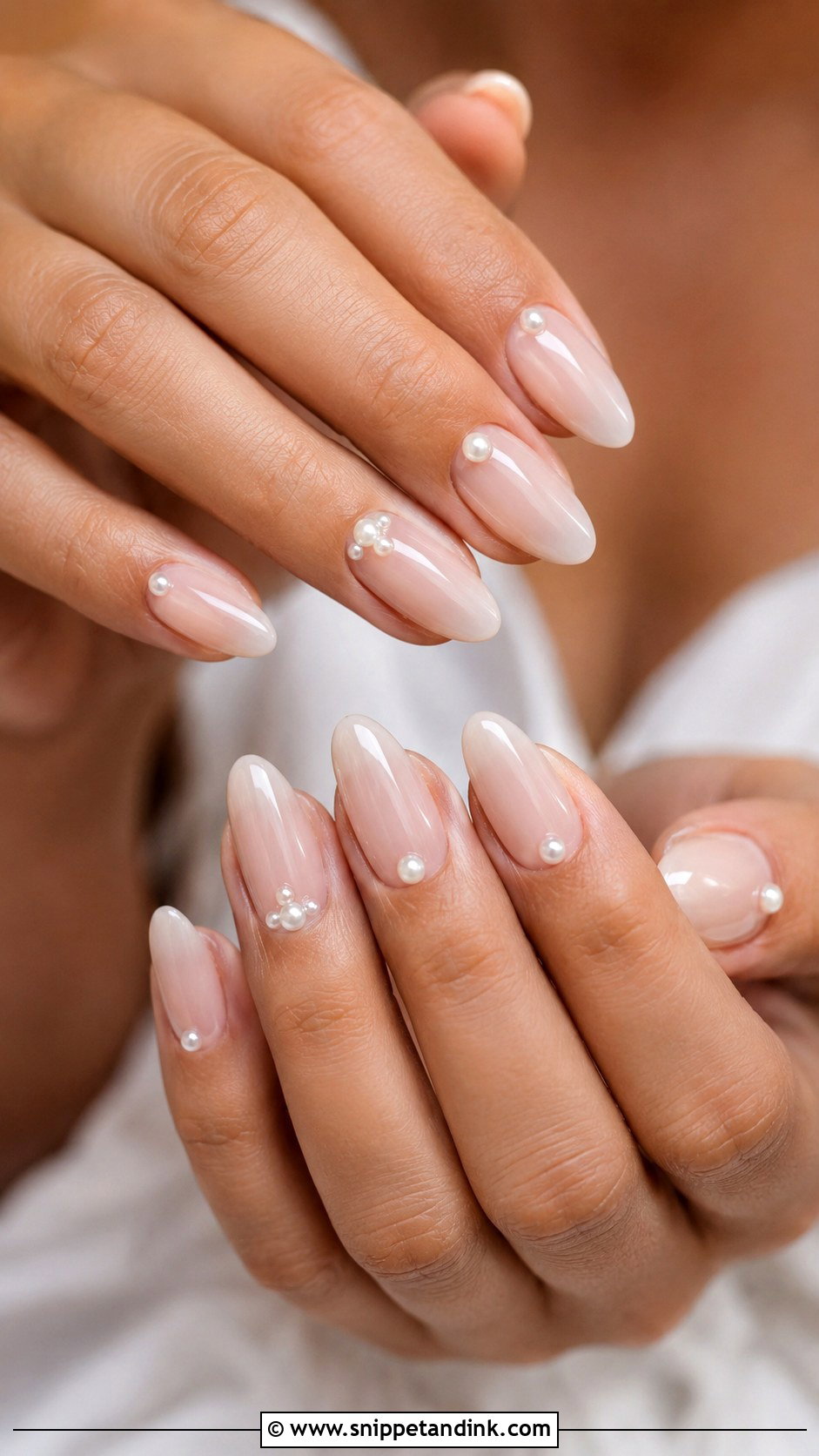
Small pearls near the cuticle, along one accent nail or scattered across a few, over a sheer pink, nude, milky or French base. Restraint is the whole design. I set flat-backed pearls in gel so they sit low, because a domed pearl snags veil tulle and lace the moment you lift your hands to your hair. They echo pearl earrings, pearl-edged veils and softly beaded gowns. Almond and oval suit them, and on short nails they stay sweet.
15. Lace Wedding Nails
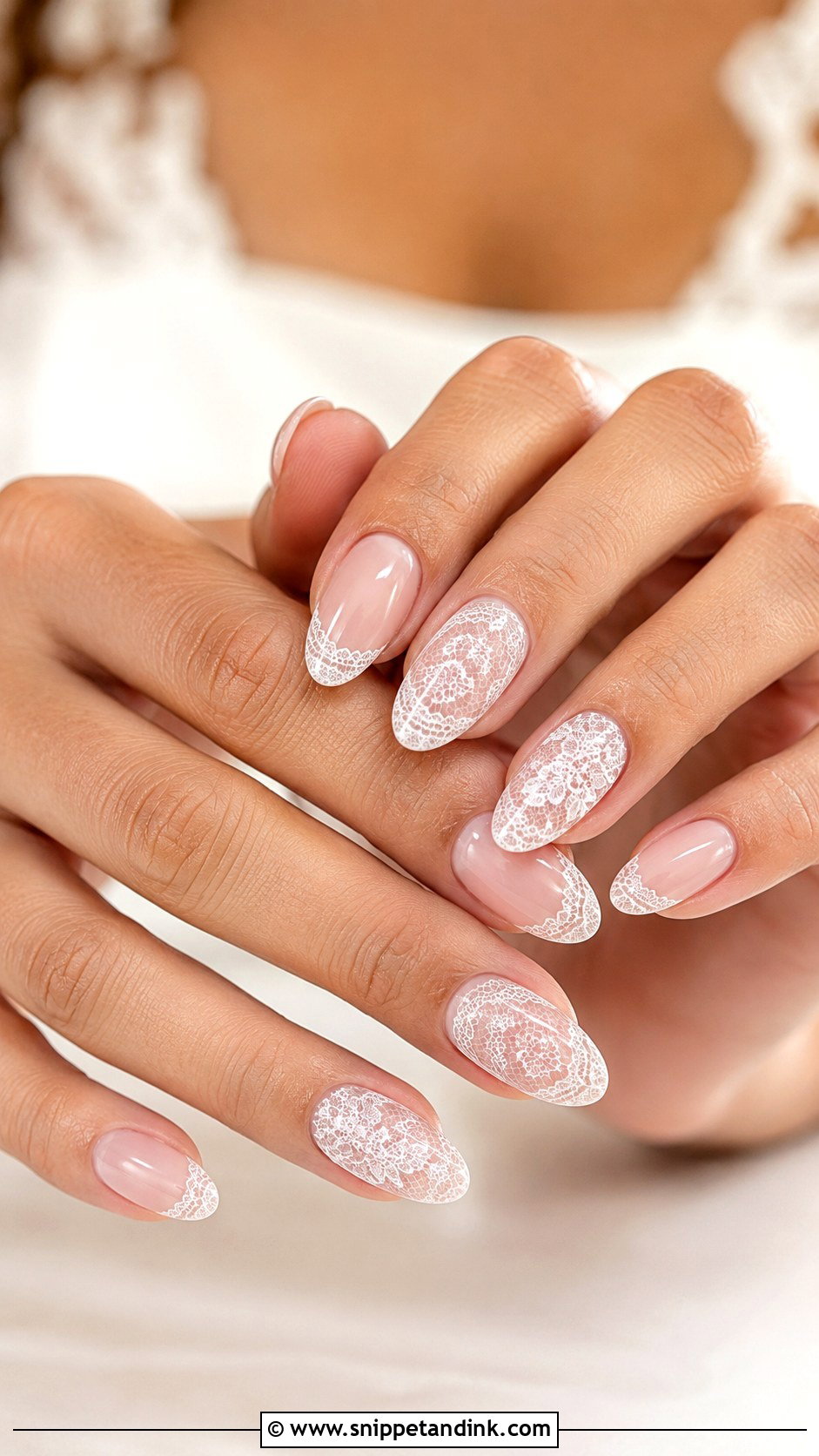
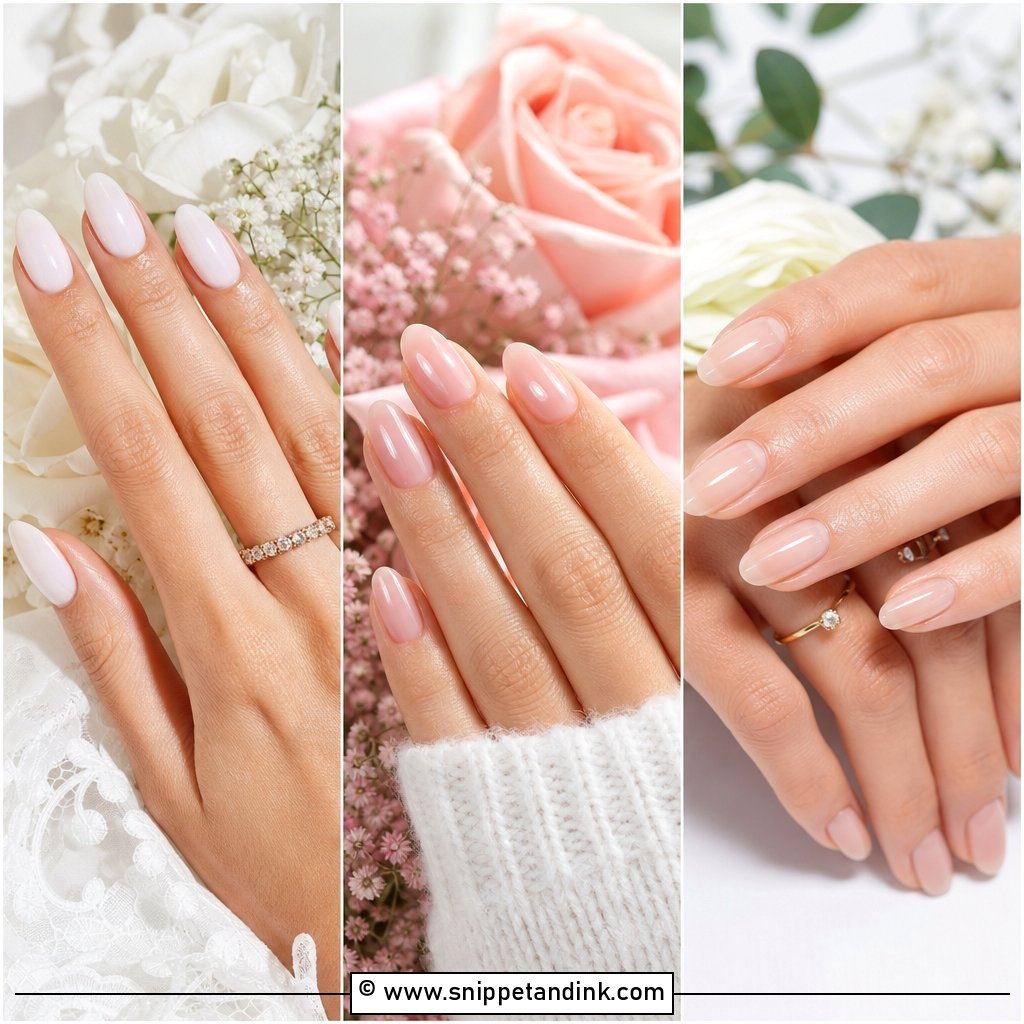
Lace nails echo the gown. Over a sheer nude, blush or milky base I paint fine white lace work freehand, little florals, netting or scalloped curves, matched to the motif on the dress when the bride brings a fabric photo. I keep lace to one or two accent nails, since a full set reads busy and means a very long sitting. Oval and almond suit the detail best, and gloss seals it.
16. Floral Wedding Nails
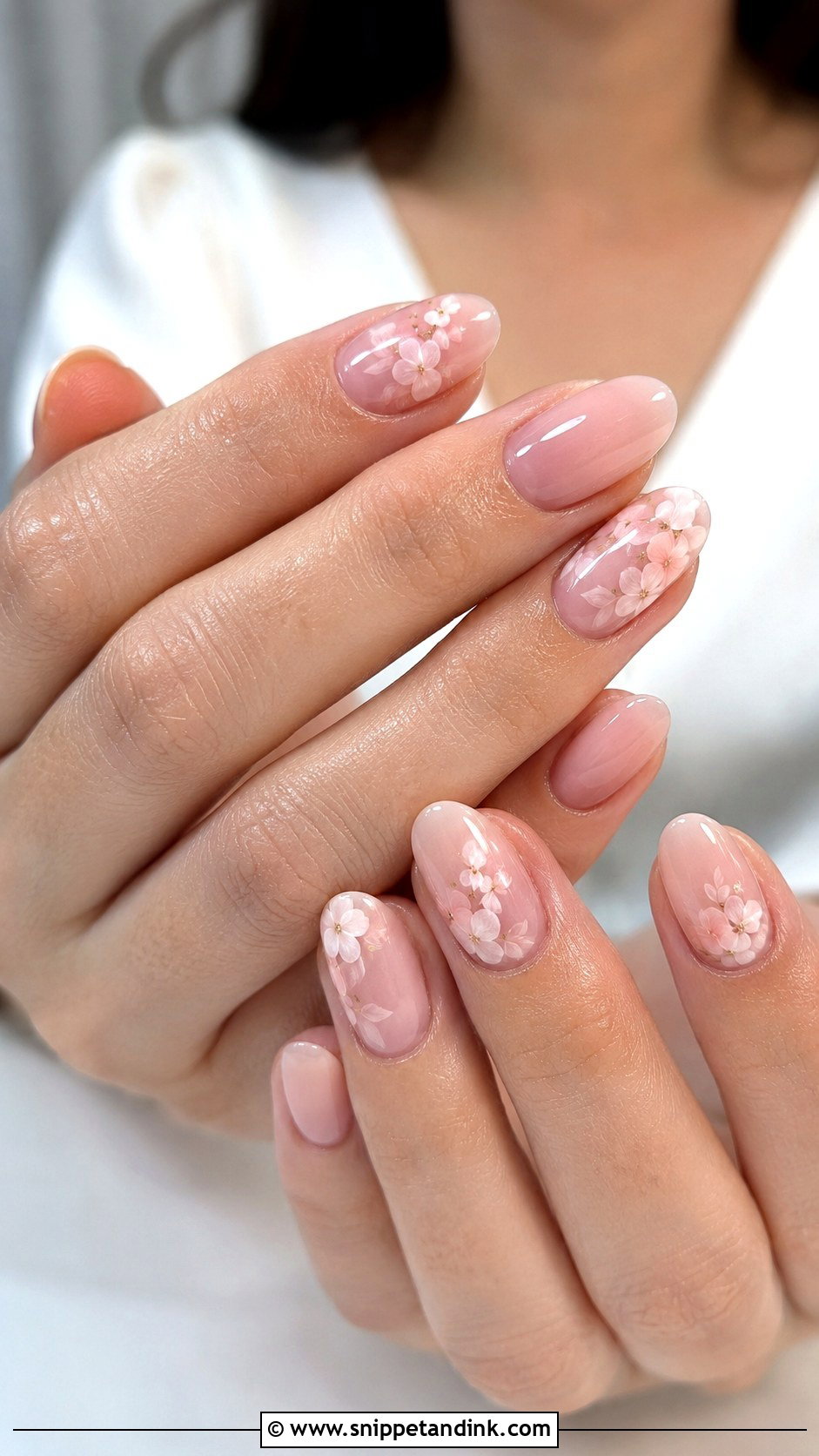
Small flowers, carefully placed, are classic; big bright ones are not. White or blush blossoms over sheer pink, nude or milky white suit spring and garden weddings, though delicate florals work year-round. I keep them to one or two nails so the bouquet stays the star, on almond, oval or short rounded shapes, with a whisper of shimmer over the top if you like. Hand-painted beats decals every time, because a decal has a visible edge that a close-up lens finds.
17. White Tip Wedding Nails
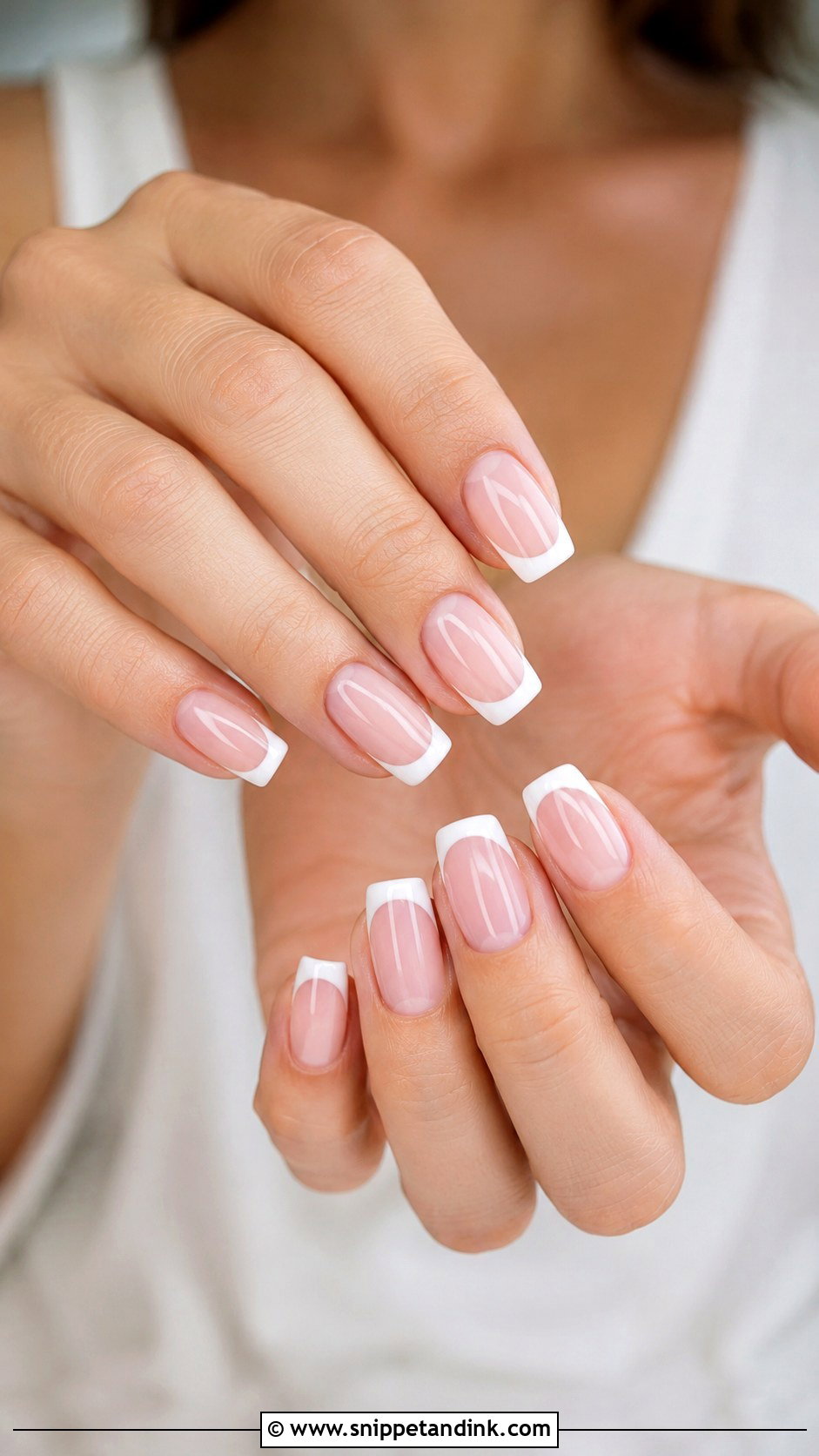
White tips on a sheer pink, nude or clear base can be as crisp or as soft as you like. A traditional bright white tip is formal; a thinner soft-white tip is quieter. Square, oval, almond and coffin all carry it, and the palette goes with any dress. What separates good from average is symmetry. I check the tip line on all ten nails from the side, because uneven smile lines are the first thing anyone notices in a ring photo.
18. Micro French Wedding Nails
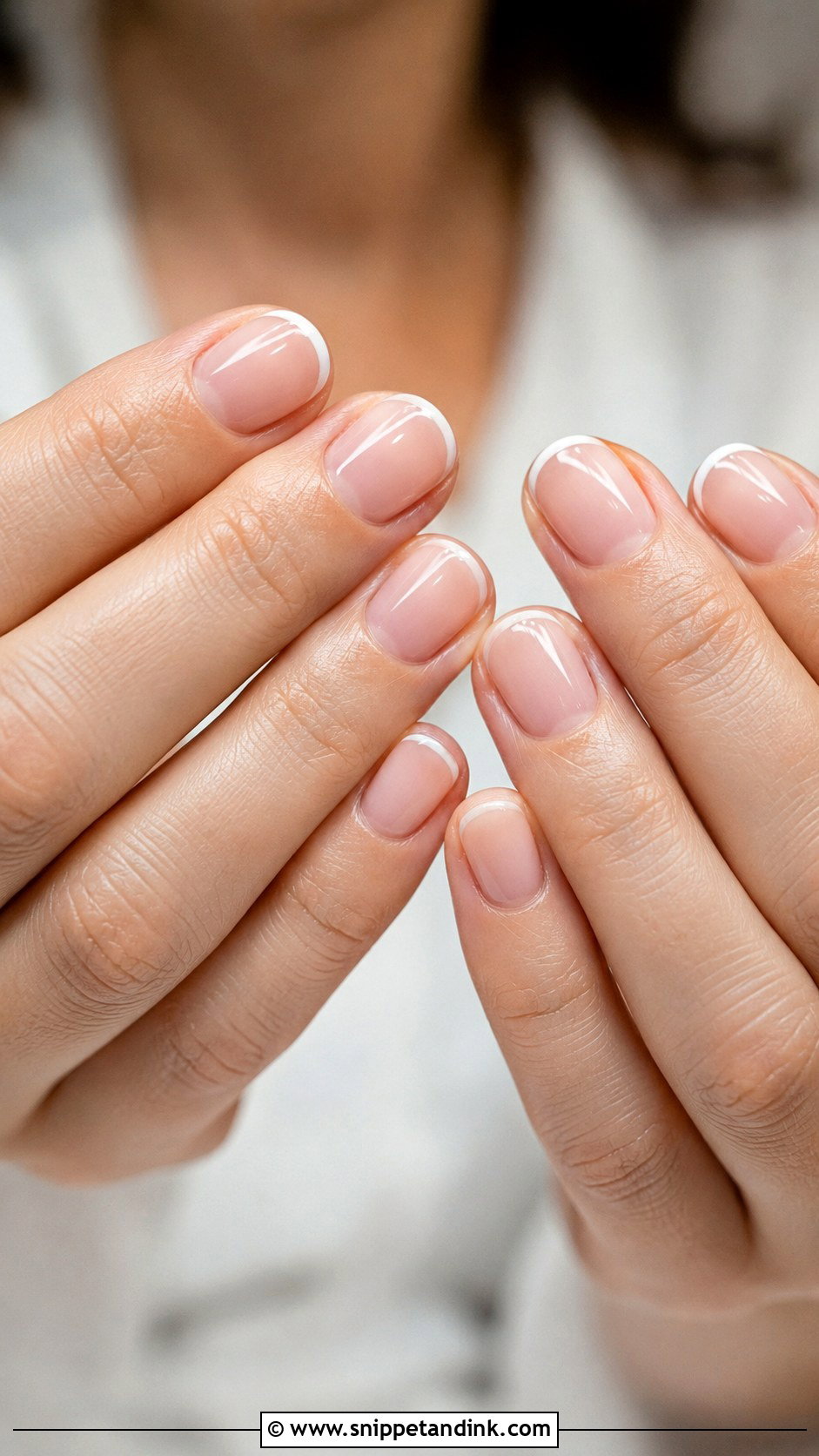
A micro French is just a thin line at the very edge of each nail. On short nails it adds definition without eating into the nail, which is why I suggest it to brides who keep their nails short for work. A sheer pink, nude or milky base keeps it soft. It sits with any ring and any fabric, and it looks more finished than plain polish while being almost no art at all.
19. Glossy Nude Wedding Nails
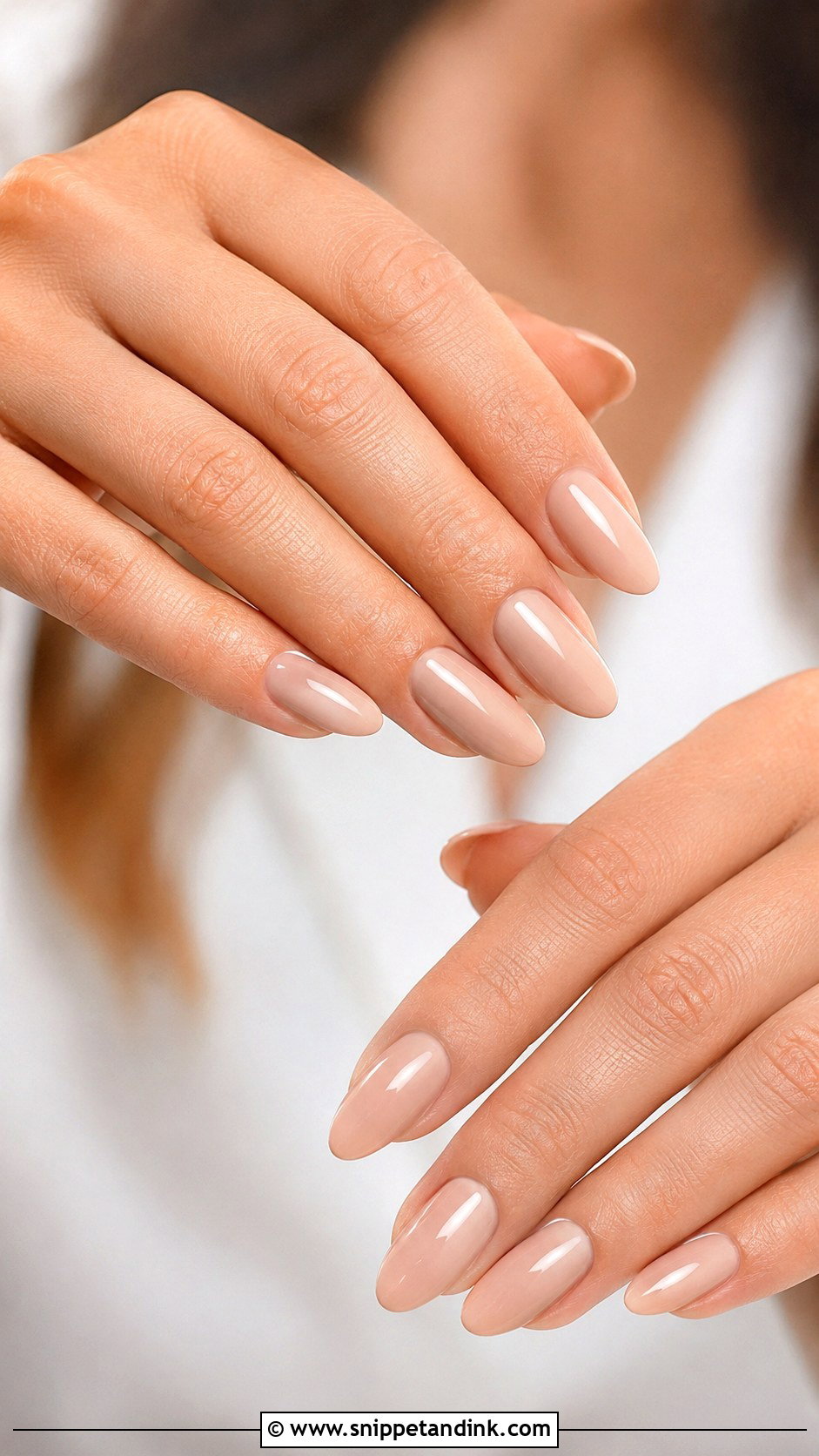
Here the shine is the design. A smooth nude under a high-gloss top coat bounces light in daylight and under a photographer’s flash, and that reflection is what makes plain nails look expensive. It works at every length. Pick a nude that complements your skin rather than matching it exactly, since a little contrast keeps the nail from disappearing. I finish with a generous layer of high-shine top coat so the surface looks like glass.
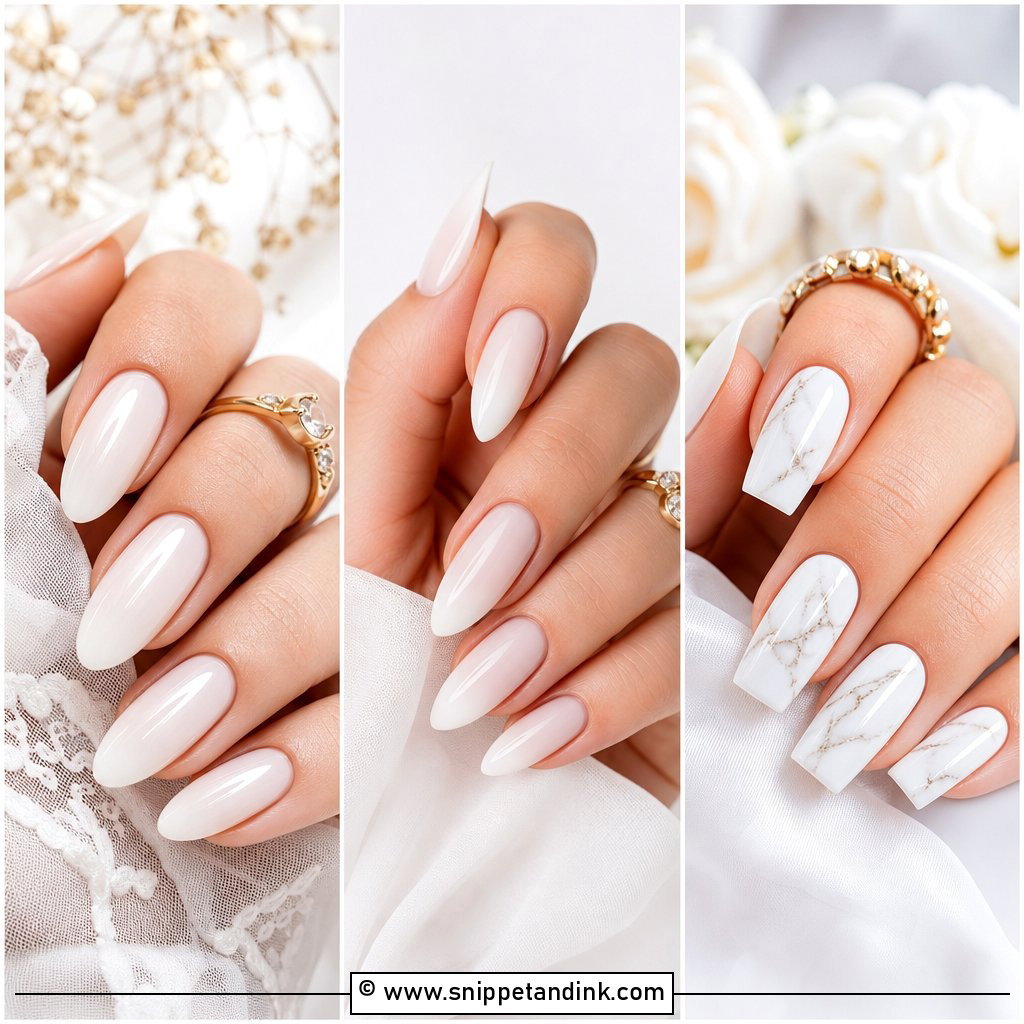
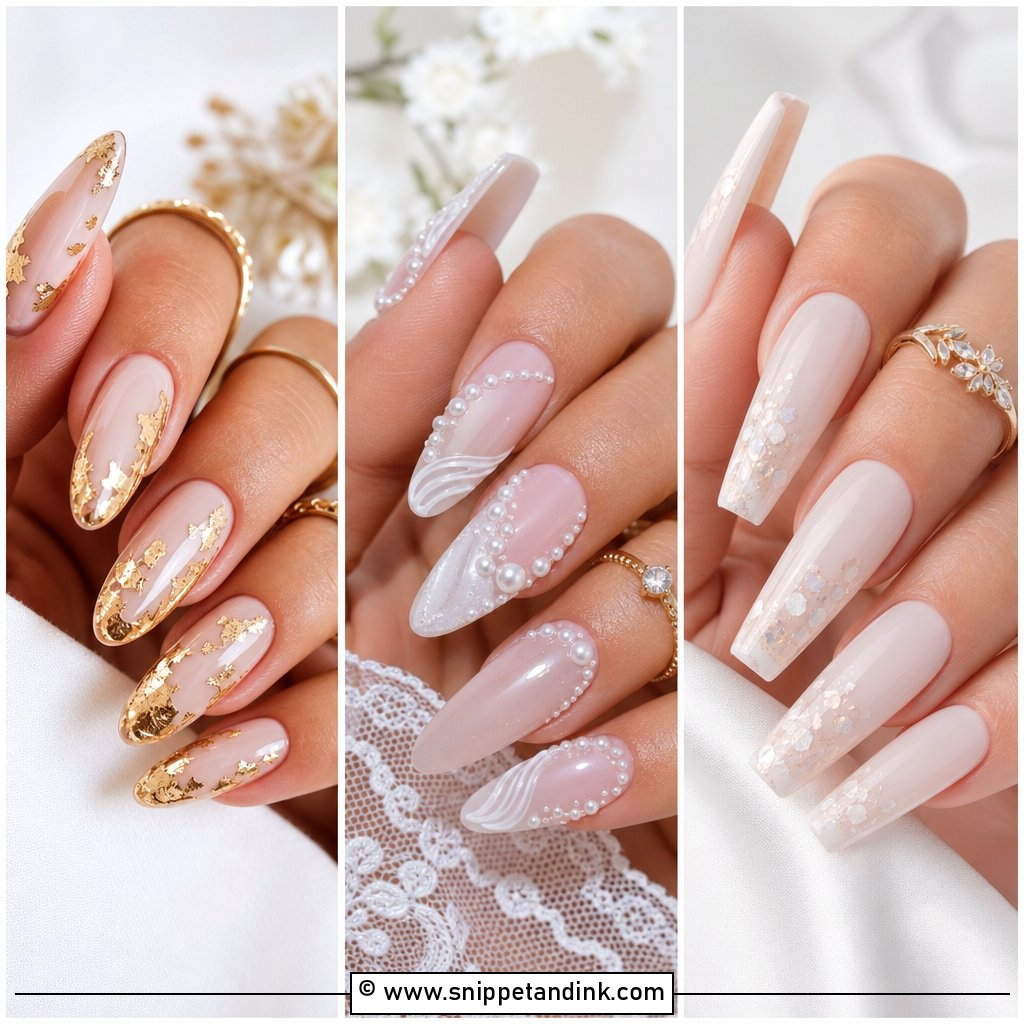
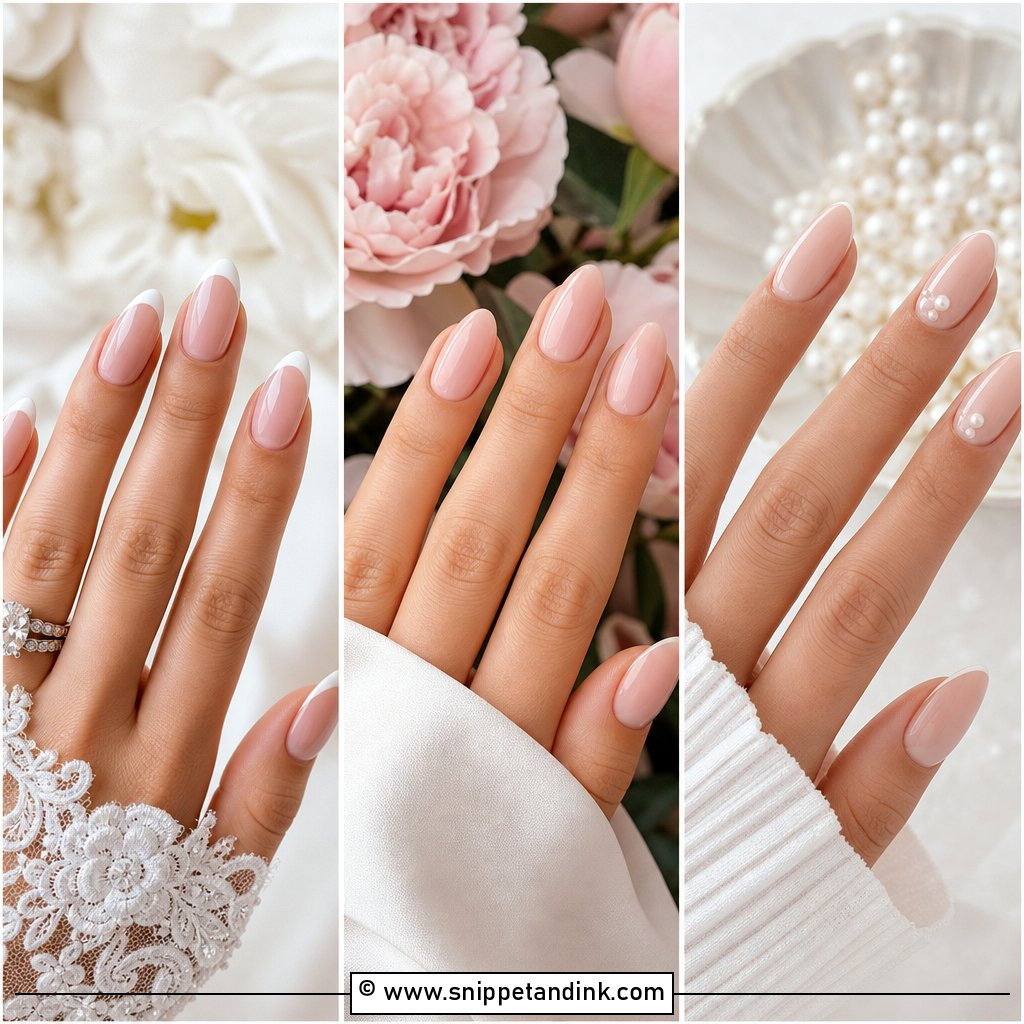
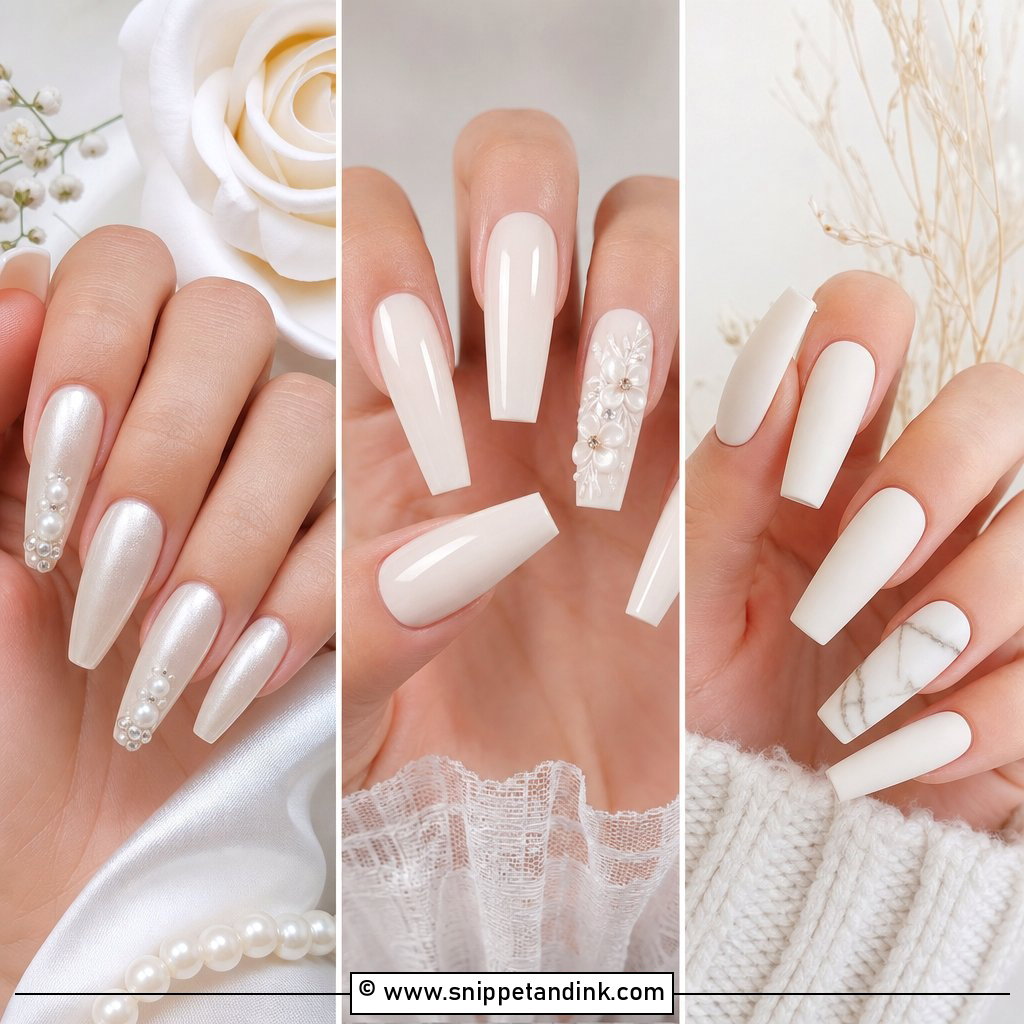
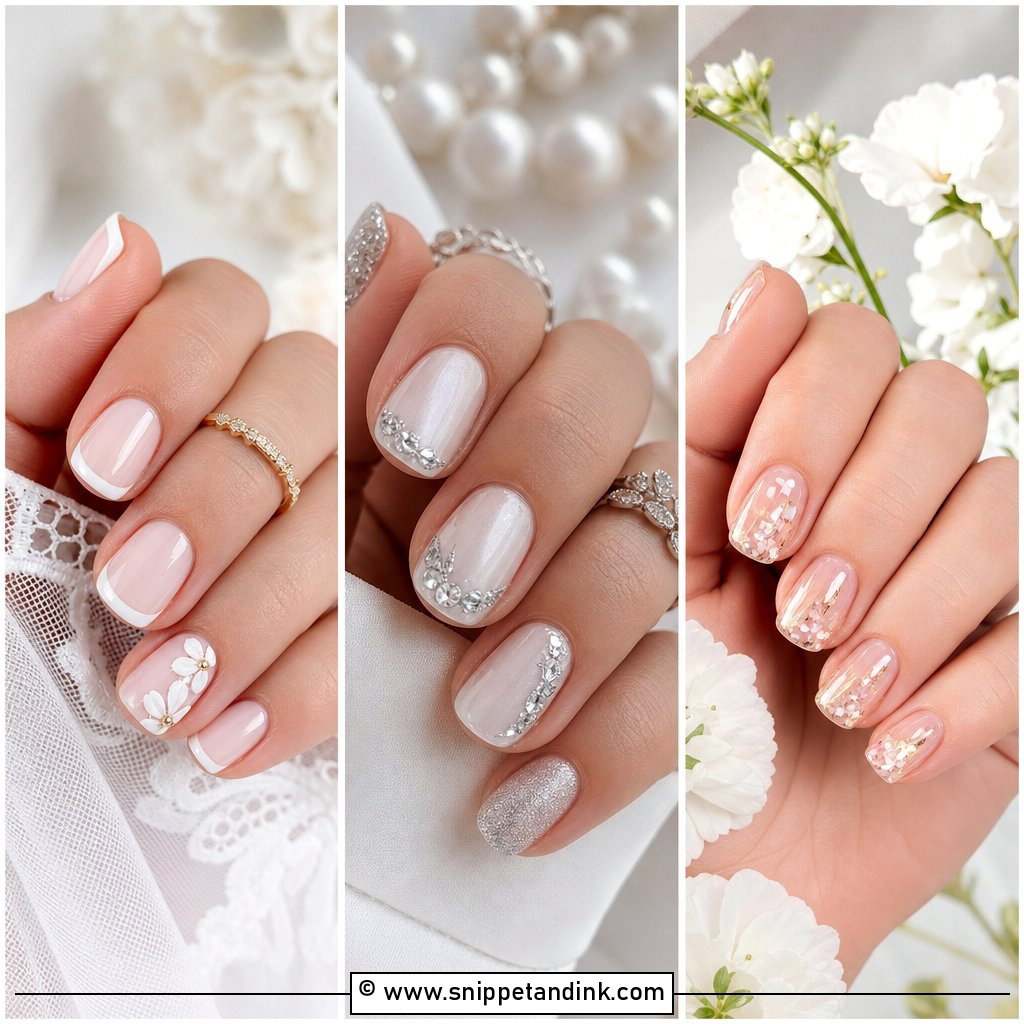
20. Ivory Wedding Nails
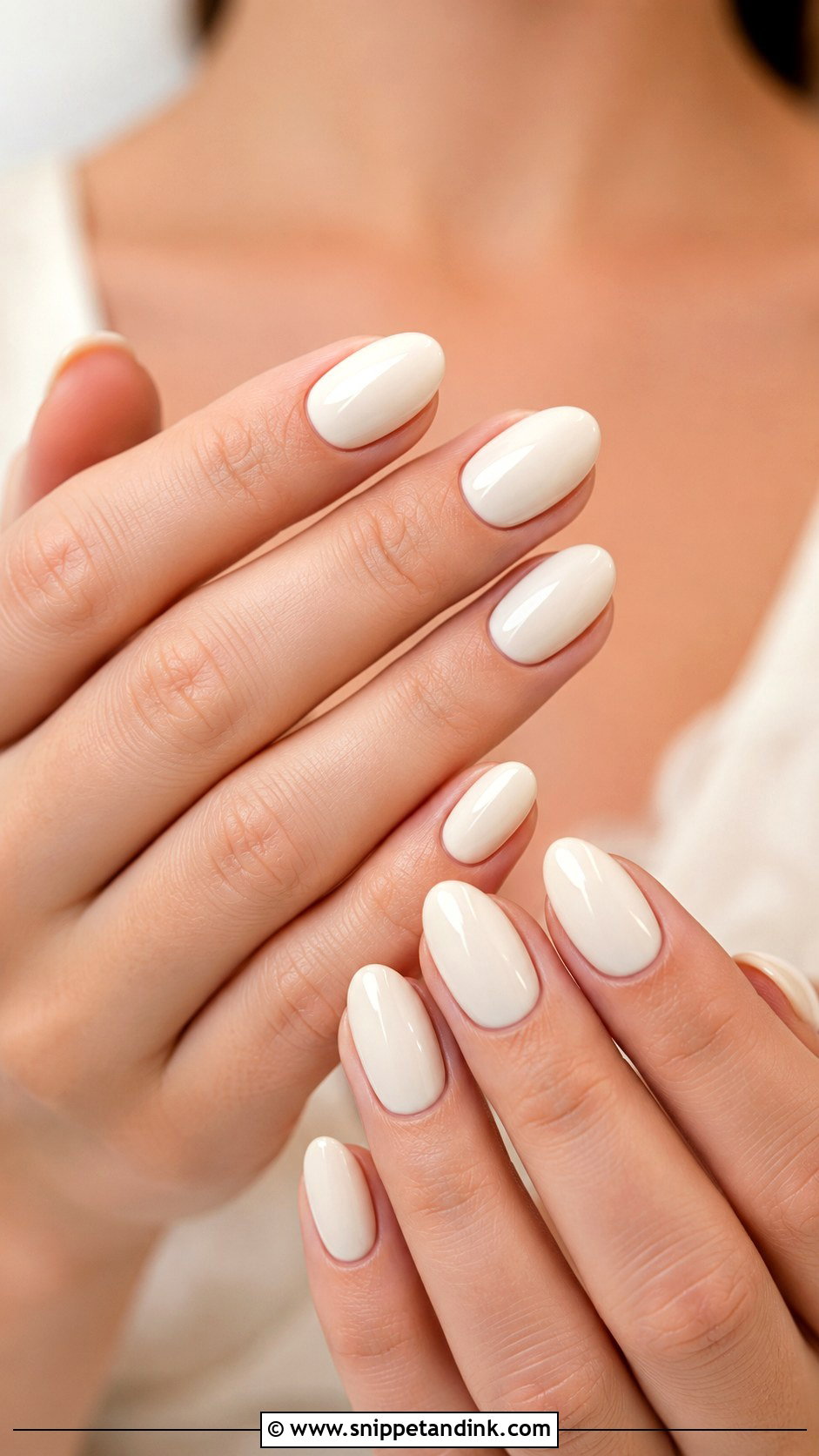
Ivory has a creamy undertone that’s gentle against warm, neutral and deeper skin, and it belongs with an ivory or warm white gown. Worn solid, as a French base or as a milky sheer, it never fights the dress fabric the way a cool white can. Almond and oval keep it romantic; square gives it a modern edge. Test it in two lights, though: ivory can turn slightly yellow under warm indoor bulbs, so I check it by a window and under a warm lamp before committing.
21. Champagne Wedding Nails
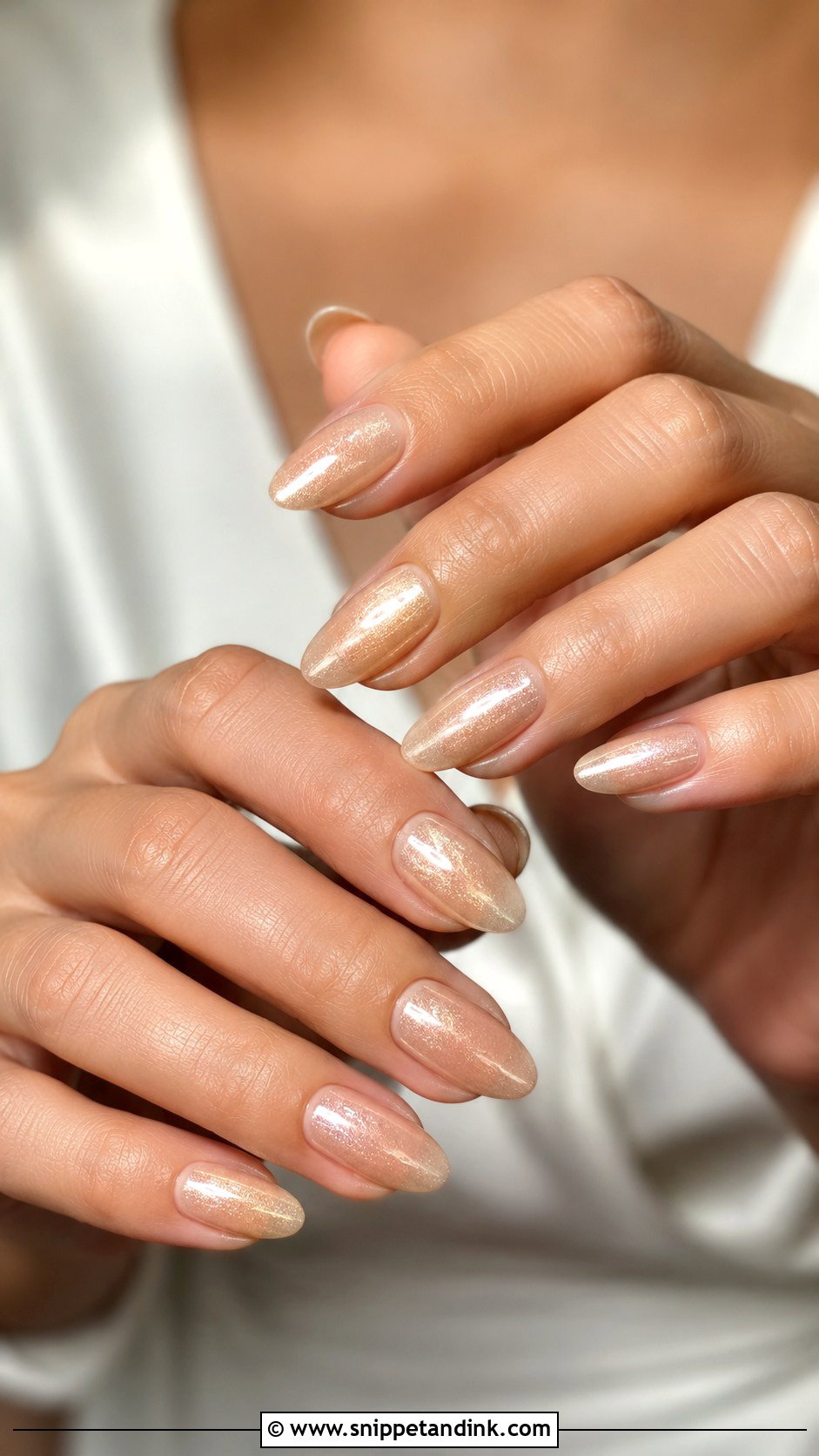
Champagne sits between nude, gold and beige, which is why it reads as warmth rather than sparkle. A sheer champagne polish suits short nails; a fine shimmer looks richest on almond or coffin. It pairs with gold jewelry, champagne-toned dresses, beige florals and warm makeup. Chunky glitter is the trap here. It catches the flash and looks spotty in photos, so for brides I only use finely milled shimmer.
22. Rose Gold Wedding Nails
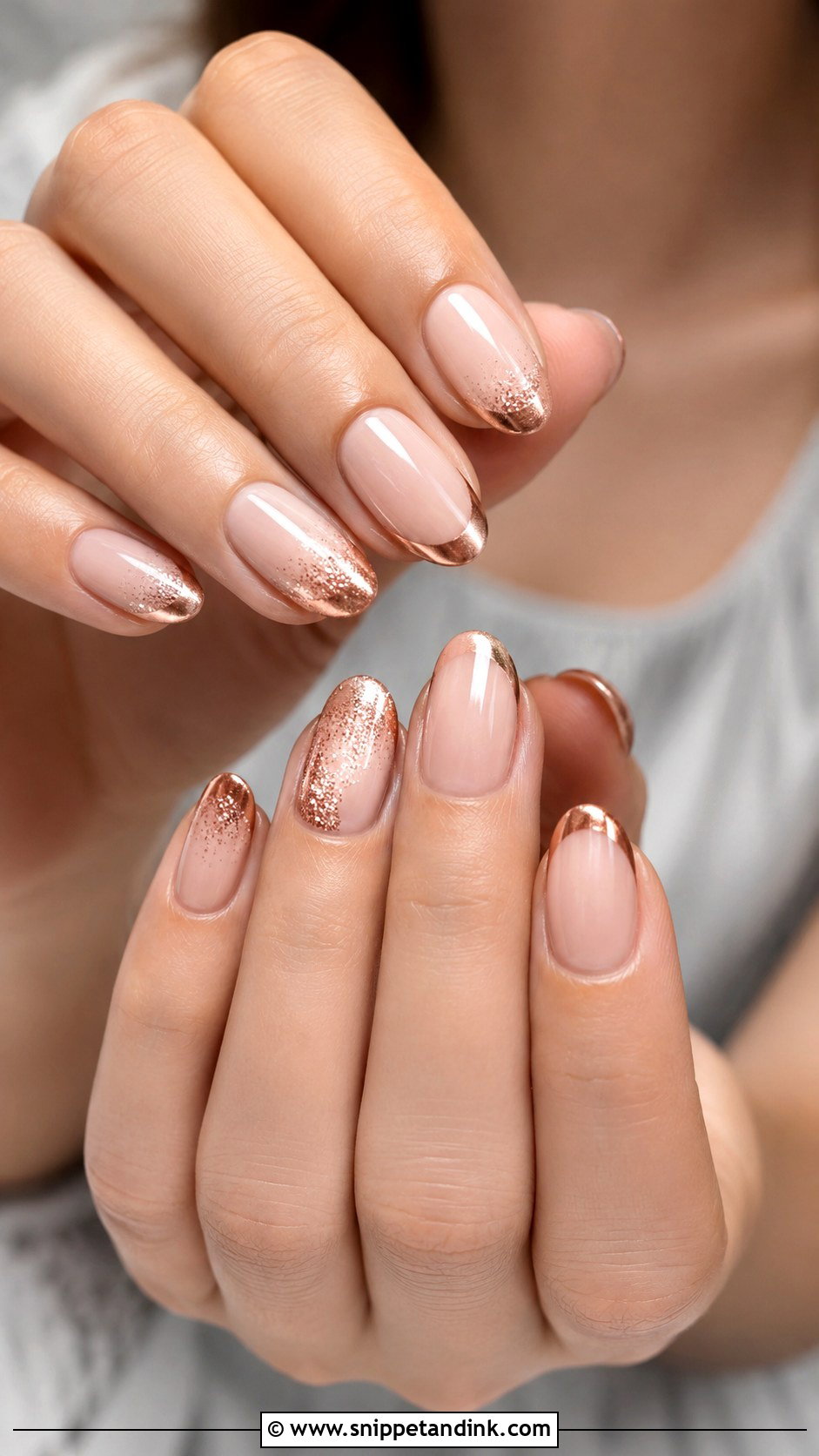
Rose gold works on a bride when it stays an accent. A blush or nude base with a delicate rose gold shimmer, a fine foil detail or a thin metallic French tip echoes a rose gold ring without covering the hand in metal; full metallic coverage reads party, not bridal. Almond and oval soften it, short square makes it neat. Foil always goes under a sealed top coat, otherwise the edges lift after a day of handwashing.
23. Silver French Wedding Nails
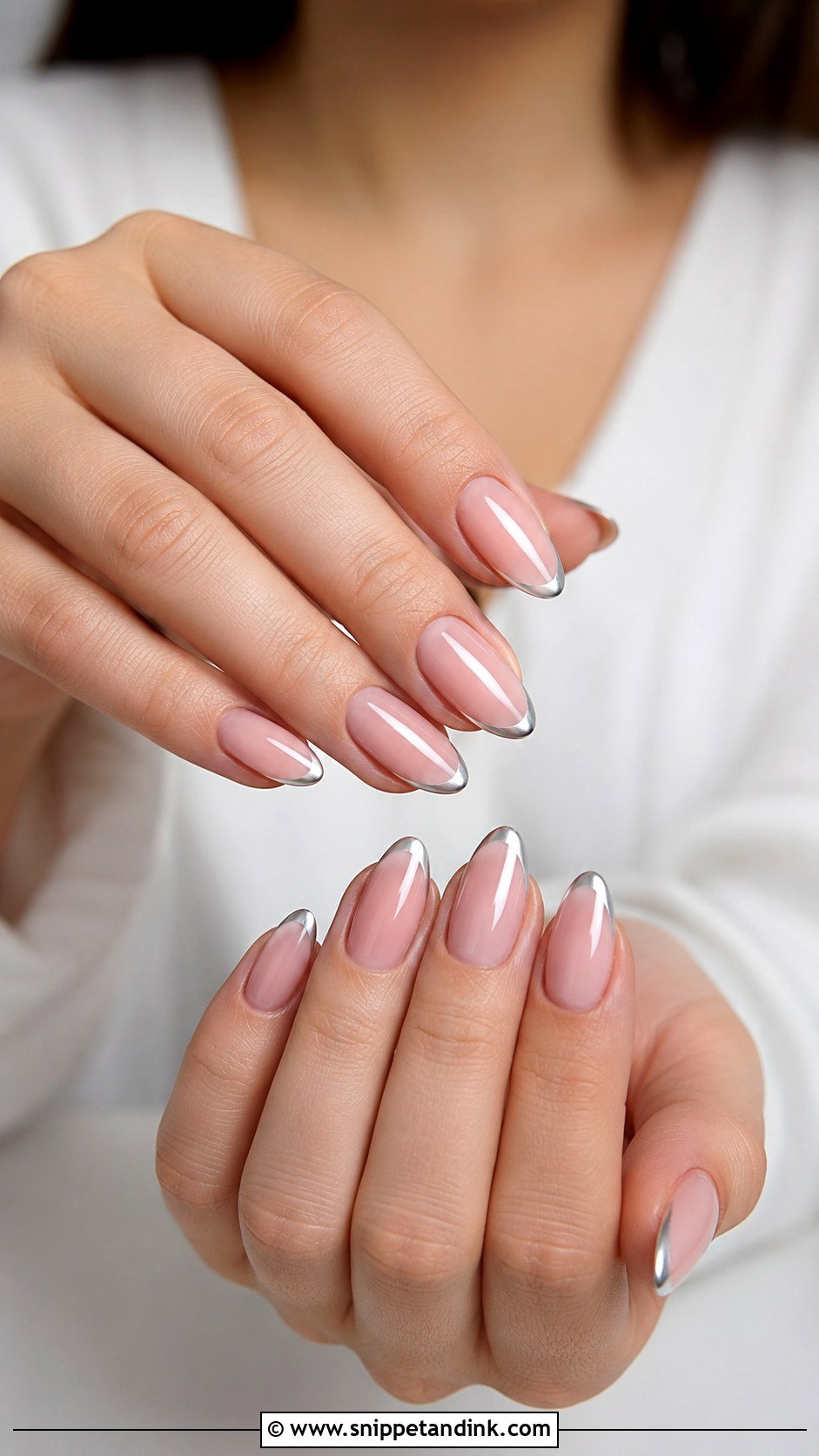
Silver tips on a nude, sheer pink or milky base are brighter than a white French and quieter than full glitter. They belong with platinum, white gold and silver jewelry and suit sleek or beaded gowns in a cool palette. The line has to be fine. I use a striping brush and a metallic gel rather than glitter, because glitter tips look gritty up close. Gloss over all of it.
24. Gold French Wedding Nails
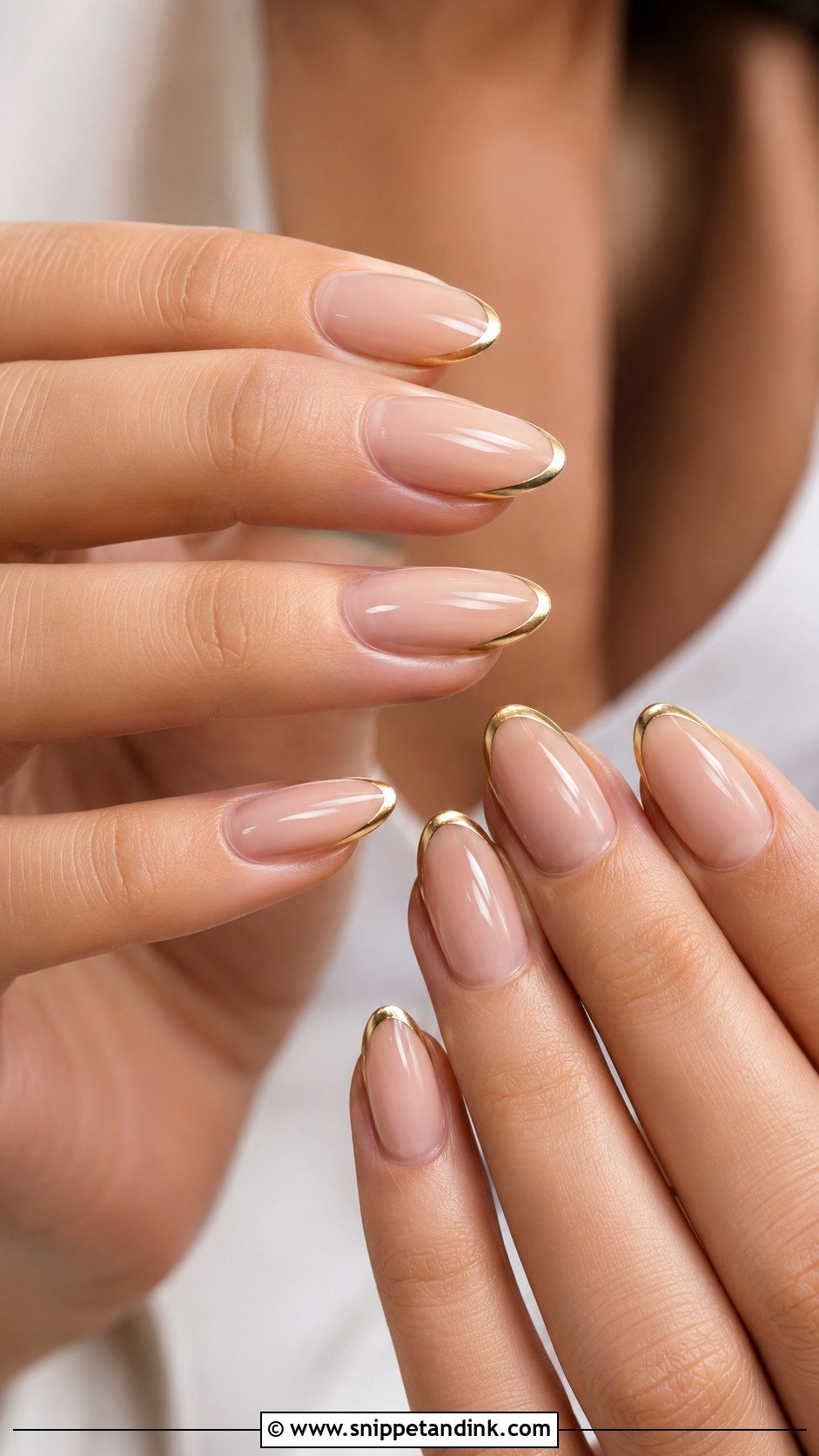
A gold French keeps the base soft, sheer nude, blush or milky pink, and finishes each tip with a fine gold line. It’s my pick for yellow gold rings, champagne dresses, warm floral colors and soft bronze makeup. The difference between classic and costume is thickness: a delicate line reads like jewelry, while a heavy gold band reads like a nail art contest. Almond, oval and squoval all work, finished glossy.
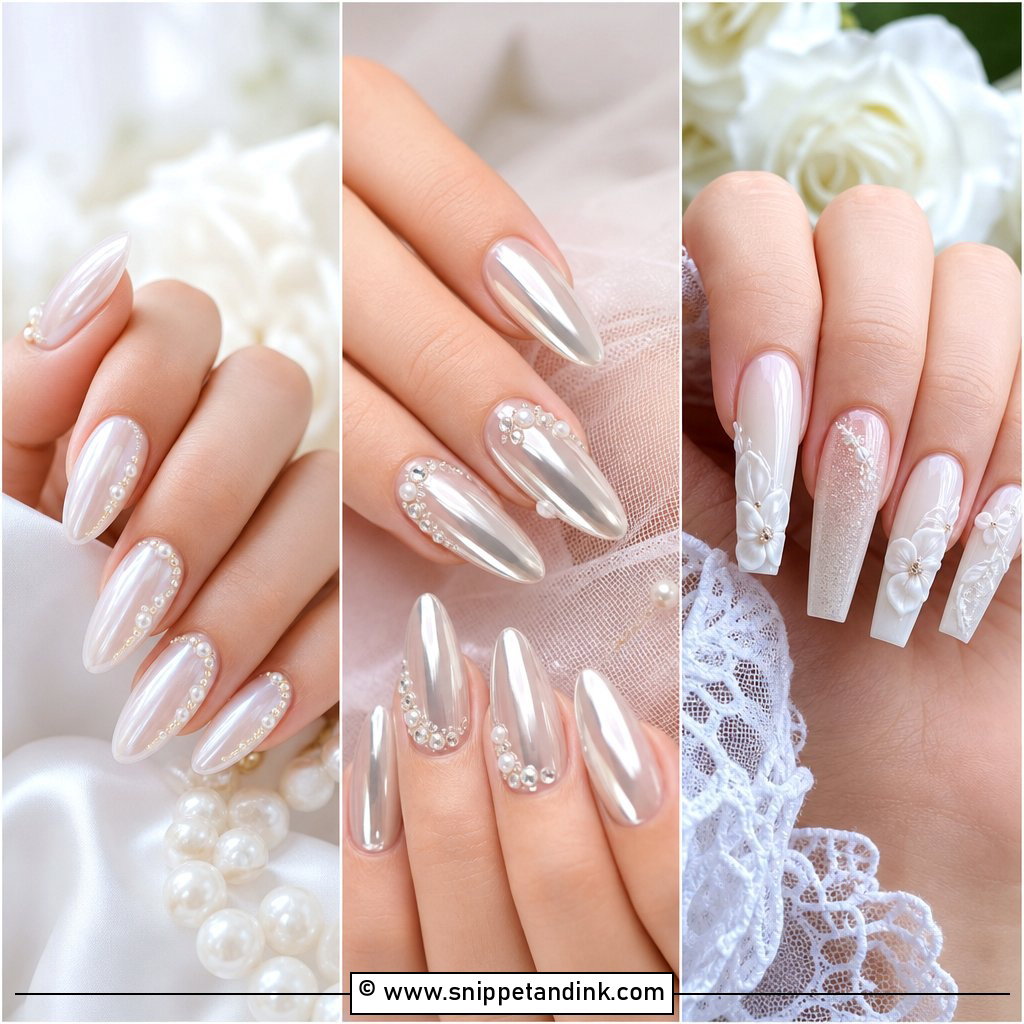
25. Coffin Wedding Nails
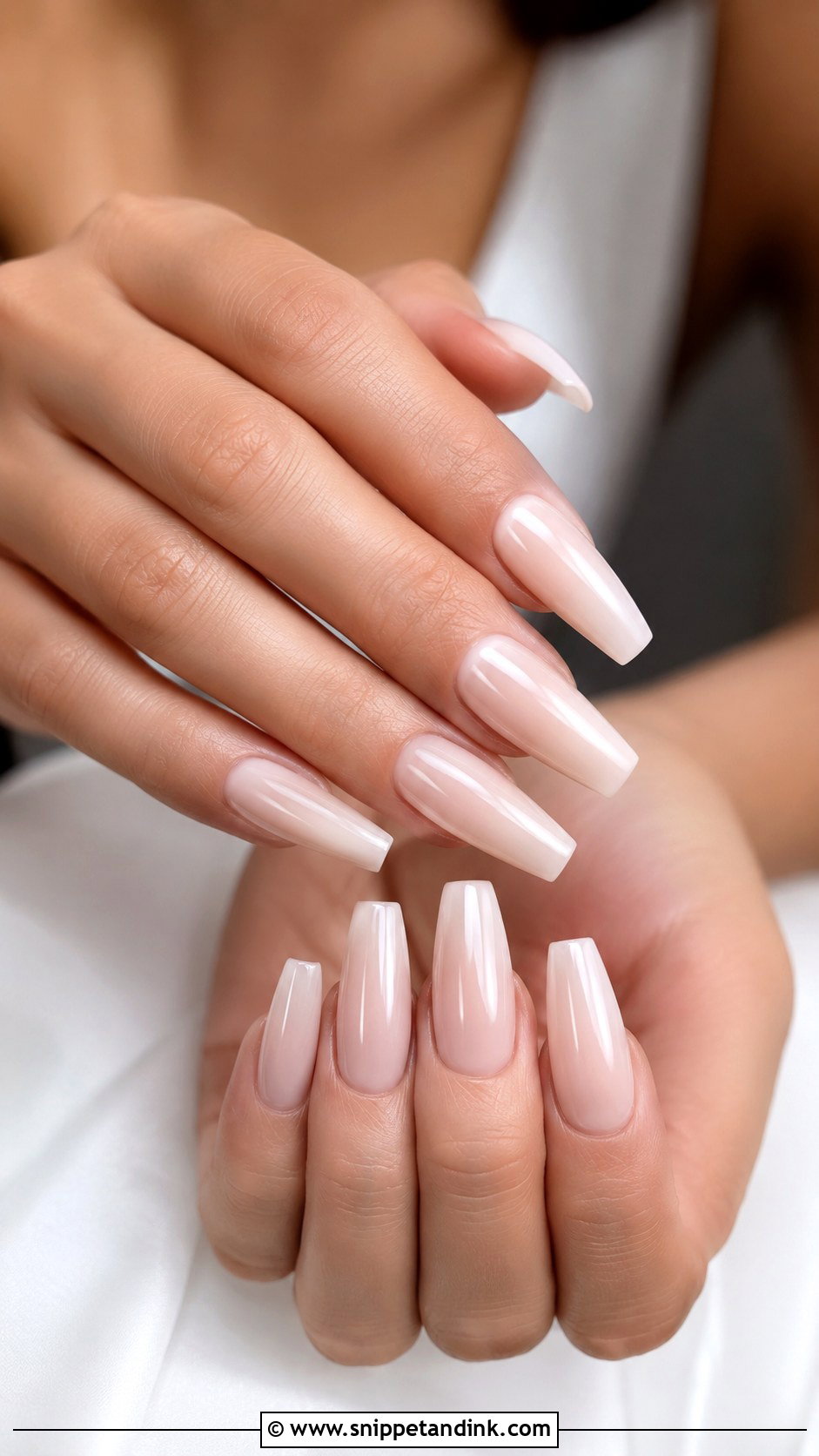
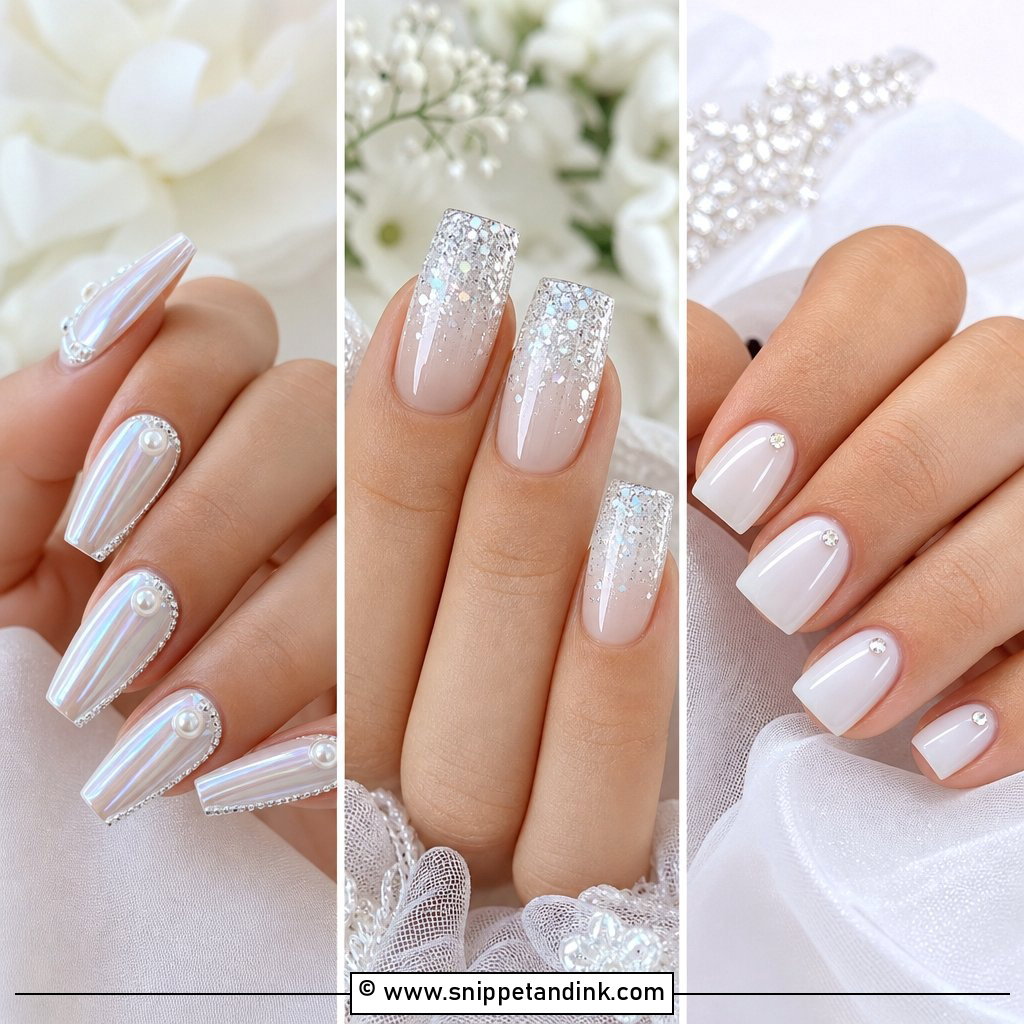
Coffin is the most fashion-led shape on this list, so for brides I keep it at medium length. With a nude, milky white, French ombré or soft pink base it stays classic, and the flat tip gives room for pearl accents, lace art or a chrome glaze. Long coffins are another story: they get in the way of buttons, clasps and veil combs, and the corners chip. Keep the edges clean and the finish glossy.
26. Simple Wedding Nails
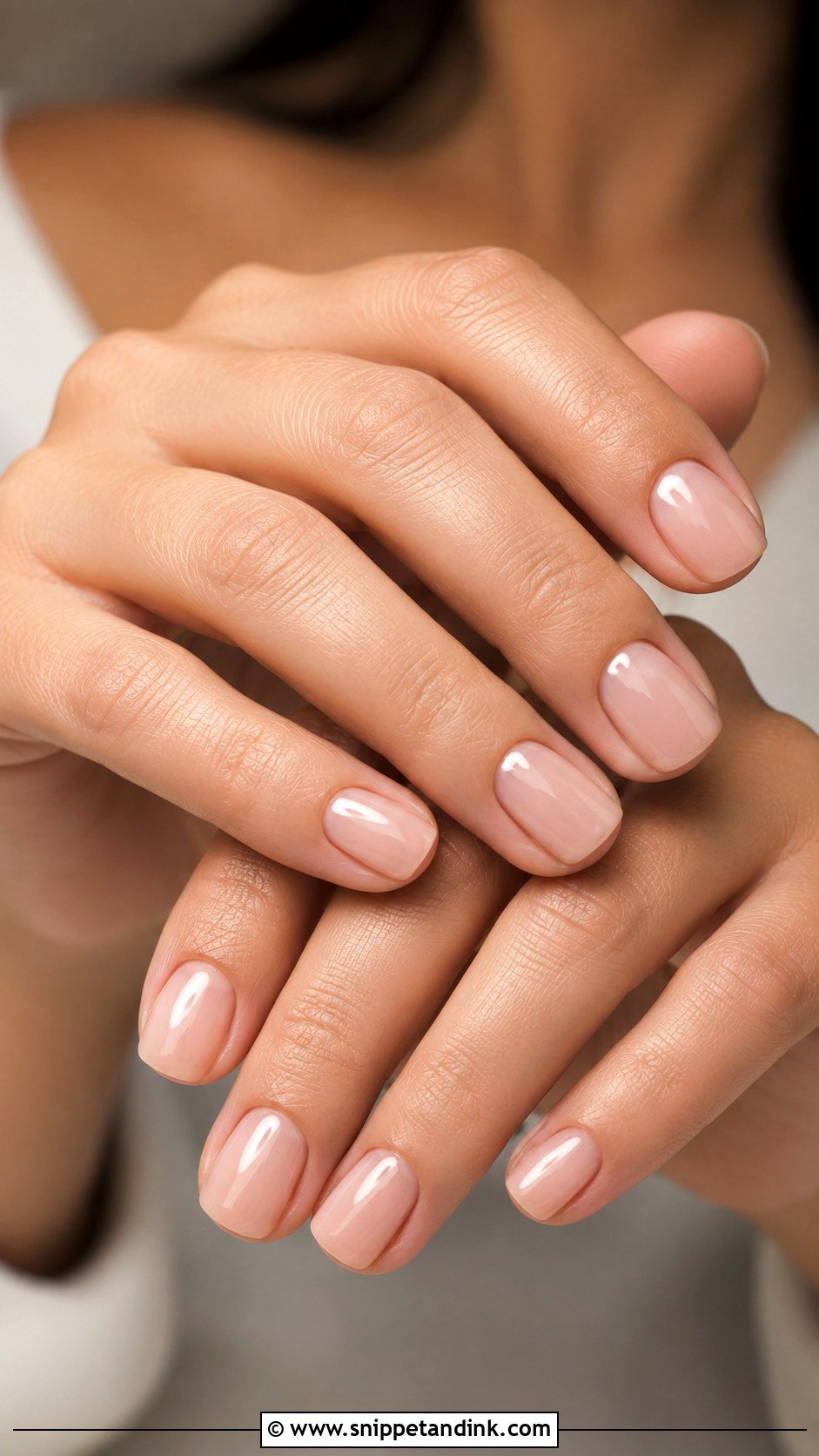
Less is more only works when the basics are flawless. A plain sheer pink, nude, ivory or milky manicure looks as polished as nail art when the shape is even, the cuticles are clean and the gloss is thick. I suggest it whenever the dress, veil, bouquet or jewelry is already detailed, because then the hands don’t compete with any of it. Any length works, short and natural included.
27. Elegant Wedding Nails
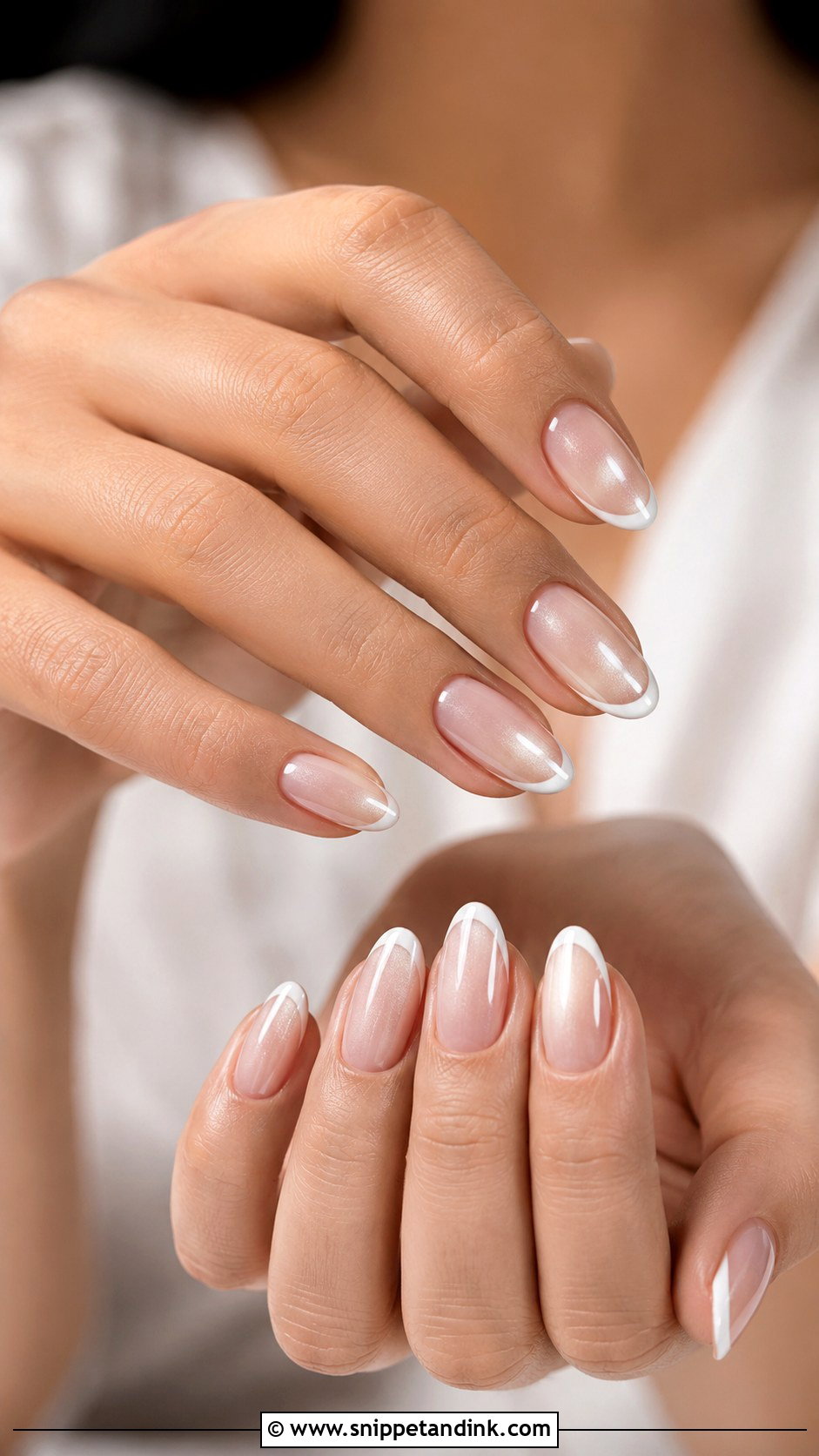
Most of the bridal sets I’d call elegant follow one formula: soft color, clean shape, one refined detail. A sheer nude with thin white tips, milky pink with pearl chrome, soft ivory with a single accent nail. Almond, oval and squoval suit it because they soften the hands. It fits a formal ballroom, an outdoor ceremony or a courthouse wedding. My rule when designing one is simple: if you find yourself adding a second detail, take the first one away.
28. Natural Wedding Nails
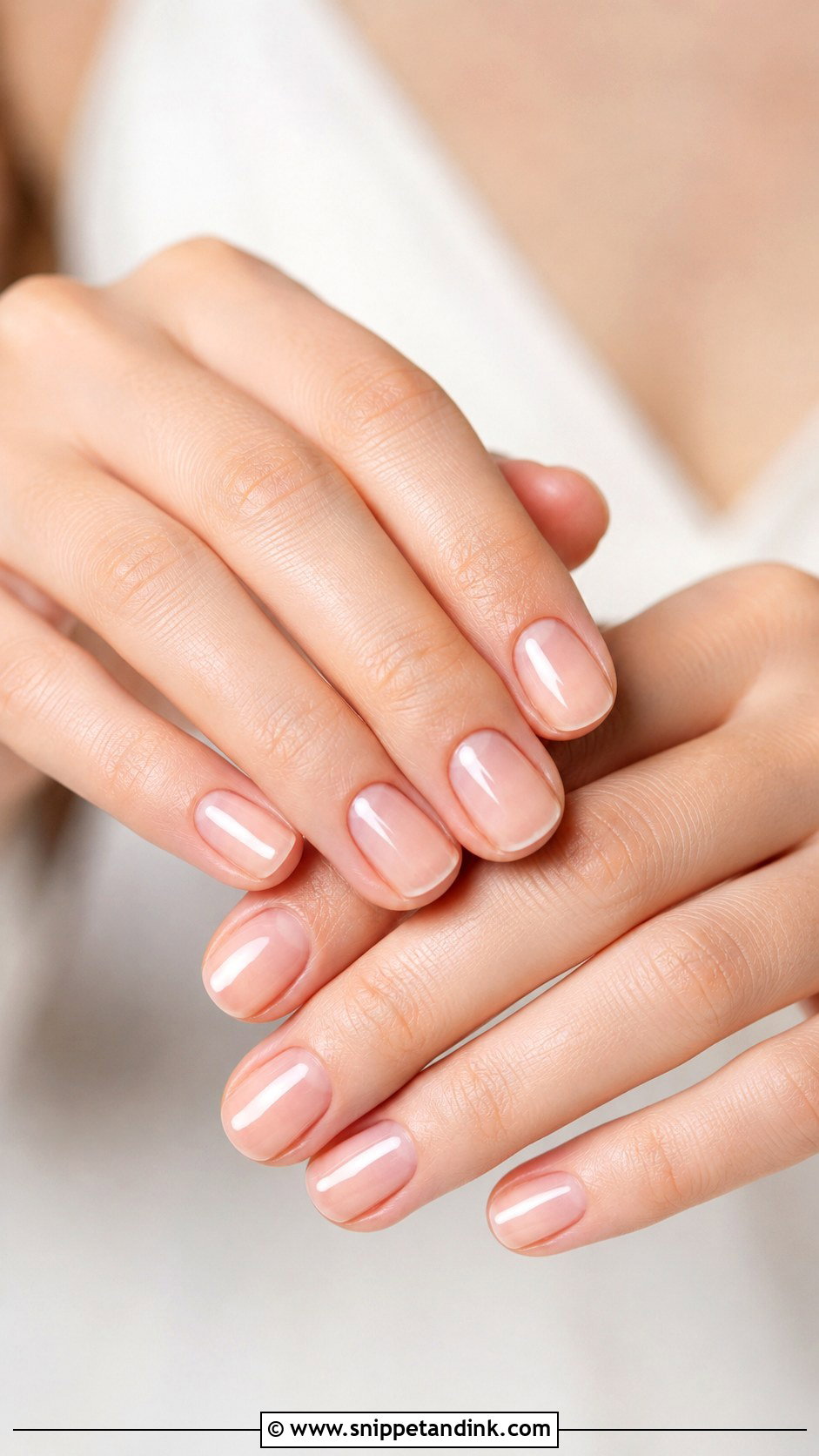
Natural nails make you look like yourself on a good day, just tidier. Sheer pink, clear gloss, a nude tint or a barely-there milky coat goes over a short oval, rounded or squoval shape. The filing and cuticle work are the manicure here, so I spend more time on prep than on polish. It suits outdoor weddings and anyone avoiding extensions, and it’s the look least likely to date in the album.
29. Pink And White Wedding Nails
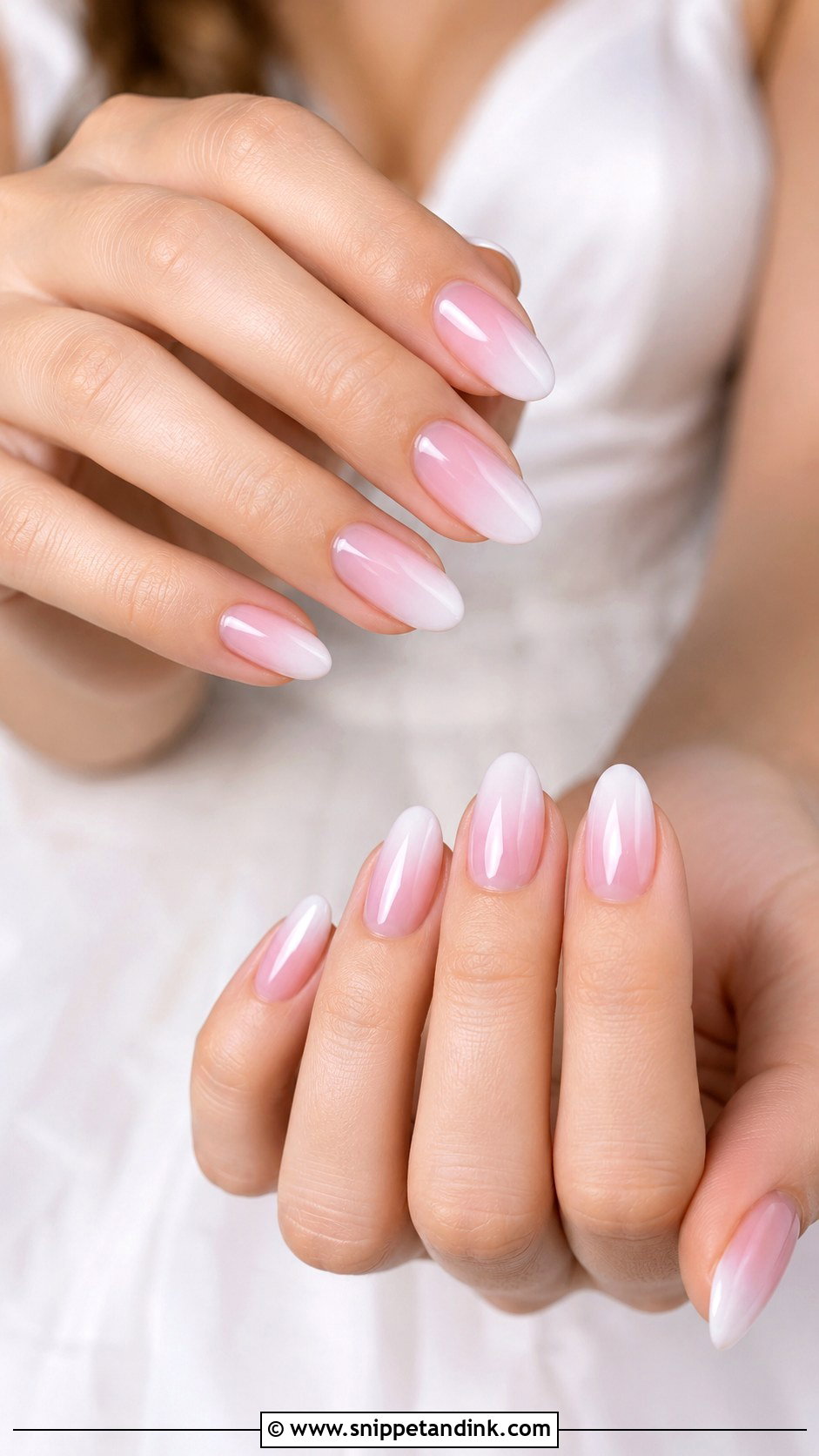
Pink and white is the backbone of bridal nails, done as a traditional French, a French ombré or a sheer pink base with small white accents. The pink brings warmth and the white keeps it bridal. It flatters short, medium and long nails, especially oval and almond. A sheer blush base with thin tips reads modern; blending the white into the pink reads softer. The one version I talk brides out of is opaque bubblegum pink with stark white, which looks like an old acrylic set.
30. Glazed Wedding Nails
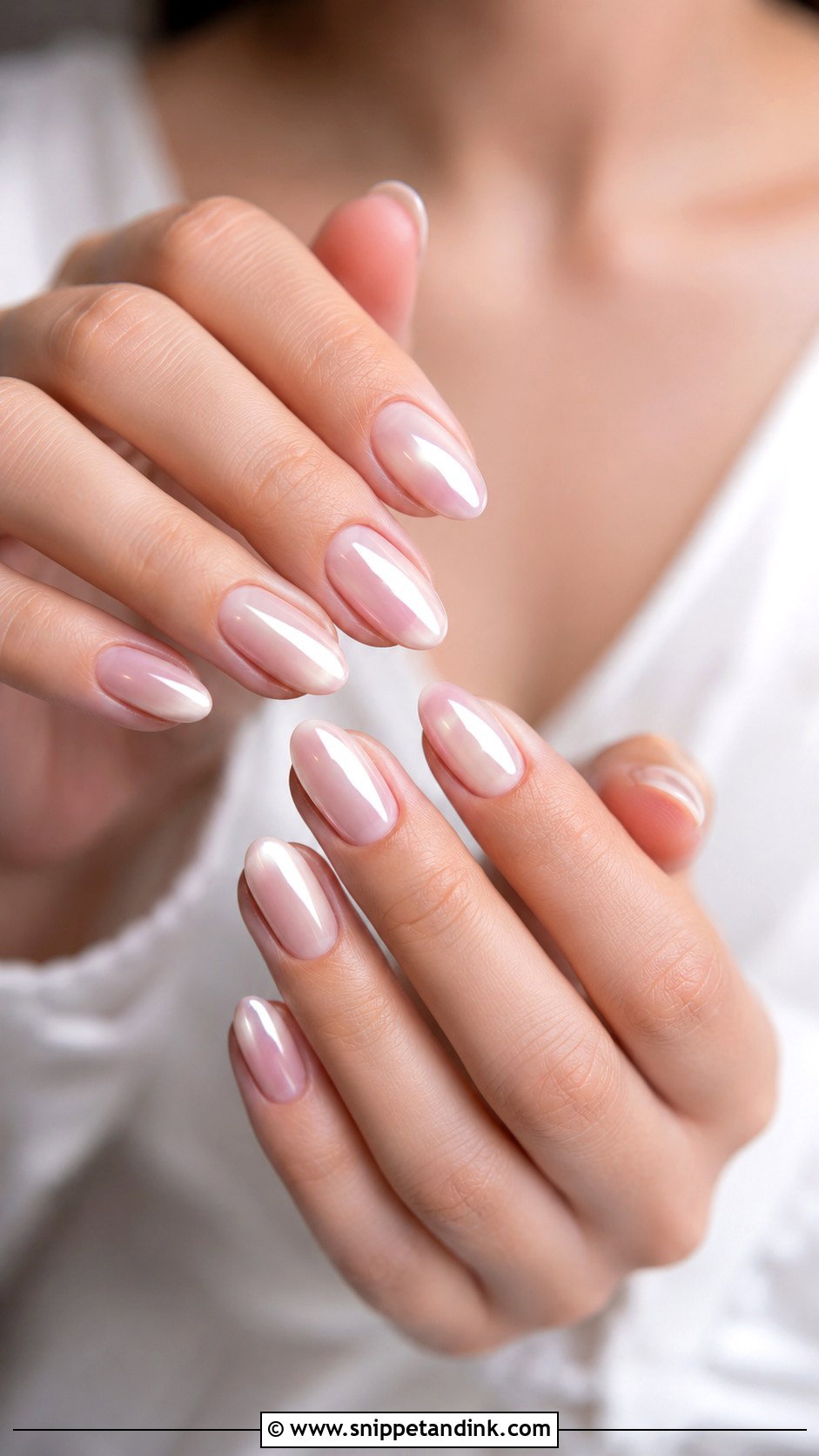
A glaze is a sheer nude, pink, white or milky base with a light chrome rubbed over the top, so the nail looks wet and glassy rather than metallic. On almond, oval and short squoval it shows the curve of the nail beautifully, and it suits a plain gown and a detailed one equally. For a bride I stick to pearl or champagne glaze; silver or holographic powders swing it toward trend and away from classic.
Will a Classic Set Still Look Right in the Album Years From Now?
When bridal nails look dated in old photos, color is rarely the reason. Proportion is: very square shapes, thick white tips, airbrushed flowers, chunky glitter, extreme length. The sets that still look current years later tend to share a few traits.
- The length is in proportion to the fingers, usually just past the fingertip.
- The smile line follows the natural curve of the nail instead of a straight painted band.
- The finish is high gloss or a soft glaze, not heavy texture.
- Any decoration is smaller and quieter than the ring.
Taking It Off After the Honeymoon
Gel usually lasts through a short honeymoon, and I’d rather you leave it alone than pick at it. When it starts lifting, don’t peel it, because that strips the top layers of your nail plate along with it. Soak it off in acetone or have it removed at a salon, then give your nails a week of cuticle oil and a plain strengthening base before the next set.
Ten Nails Beside One Ring
Classic bridal nails stay classic because of proportion, softness and a good shine, not because of any single color. A French, milky white, sheer pink, pearl chrome, glossy nude or a few painted flowers will sit with the dress, ring and skin tone if they’re done well. Keep the shape comfortable, keep the color flattering, and let any detail stay smaller than the ring. Do that and your hands will hold up in every photo, from the vows to the last dance.
You'll Like These Ideas:


Leave a Reply