
The 1950s gave brides the most wearable silhouette bridal fashion has ever had: a nipped waist, a skirt that stands away from the hips, and a hem you can actually walk in. That’s why I keep pulling from the decade whenever a bride asks for shape without a costume feel. The trick is borrowing the structure and a couple of period details, then stopping. Tea length is the obvious starting point, but full ball gowns, pencil dresses, bateau necklines, boleros and pearls all belong to the same era. Below are 25 ways to wear it, with notes on fit and fabric from the fitting room.
Genuine Vintage or a New Dress Cut the Old Way?
Some brides want an actual dress from the decade. That can be wonderful, but it comes with problems a new gown doesn’t have, and you should know them before you fall for one online.
- Ignore the size label. Vintage sizing runs much smaller than modern sizing, so buy by bust, waist and hip measurements, and ask the seller to measure the garment flat.
- Check the seam allowances. Older dresses often have narrow seams, so there may be very little room to let a waist out. Taking in is easy; letting out often isn’t.
- Hold satin and silk up to daylight. Old fabric can be shattering, splitting along the grain, and that can’t be repaired.
- Yellowing on ivory can sometimes be lifted by a specialist cleaner, but there’s no guarantee, and stains around the underarms rarely shift fully.
A new dress cut on a 50s pattern avoids all of that and is built for modern underwear and modern bodies. If you love the history, a middle path works well: a new gown, with a genuine vintage veil, gloves or pearls handed down from someone in the family.
1. 50s Style Tea Length Wedding Dress
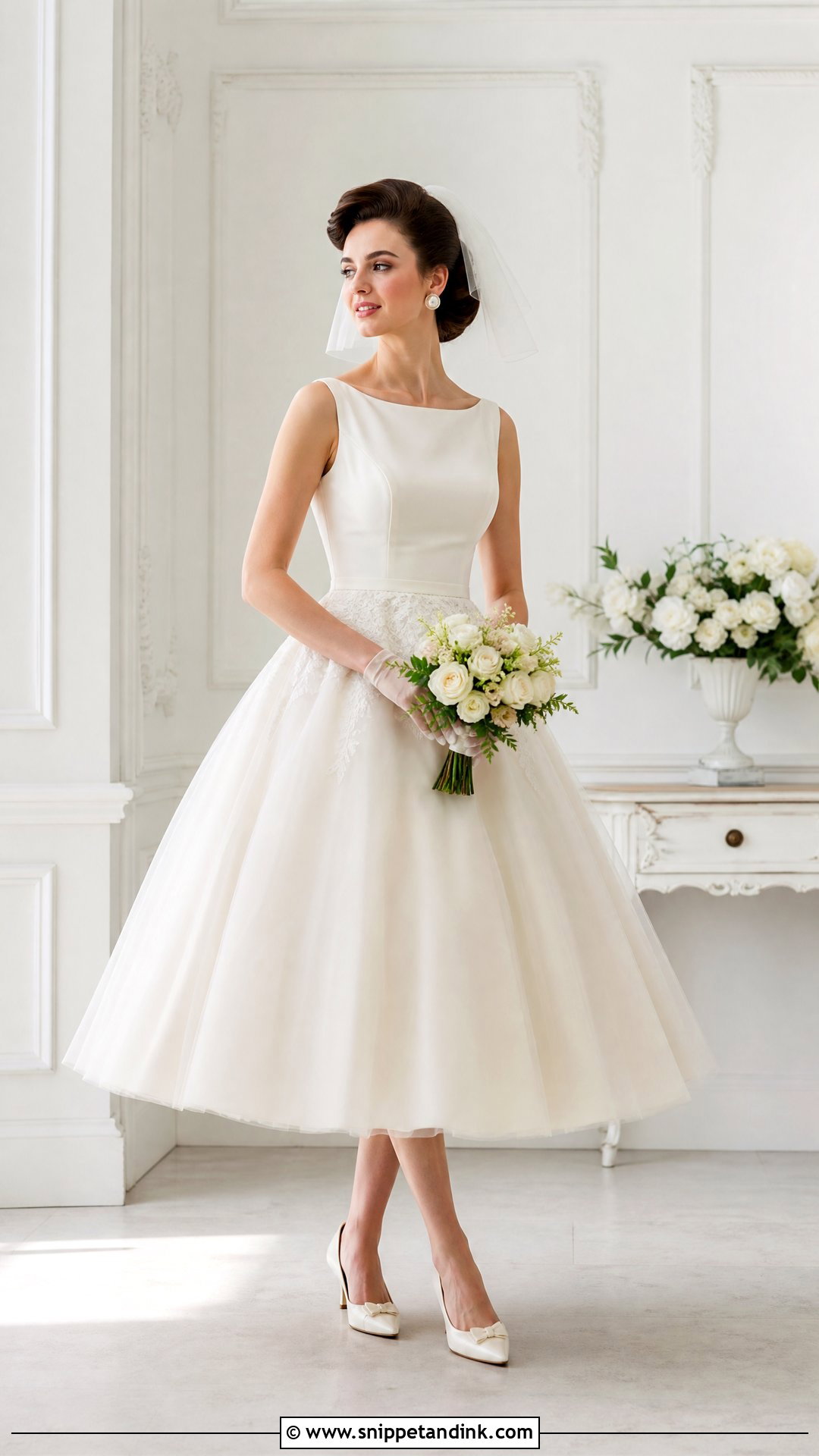
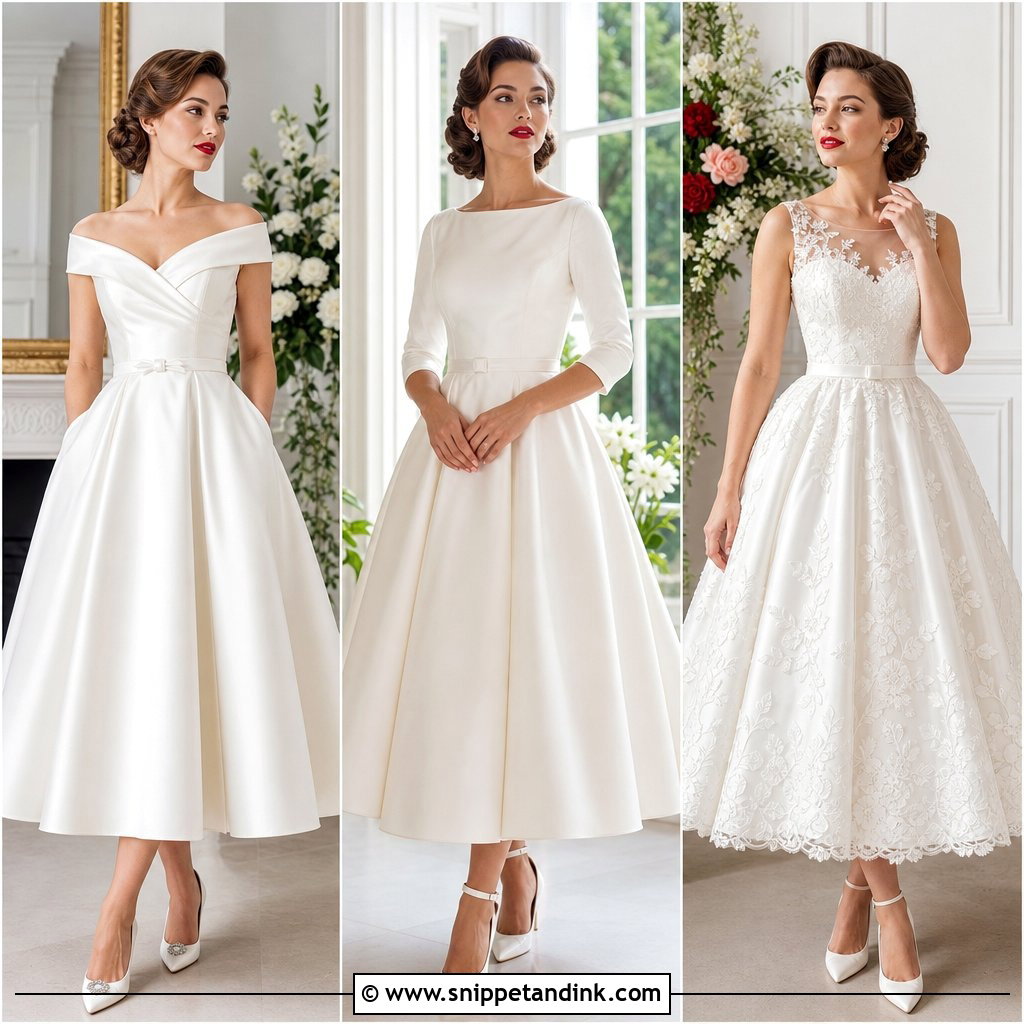
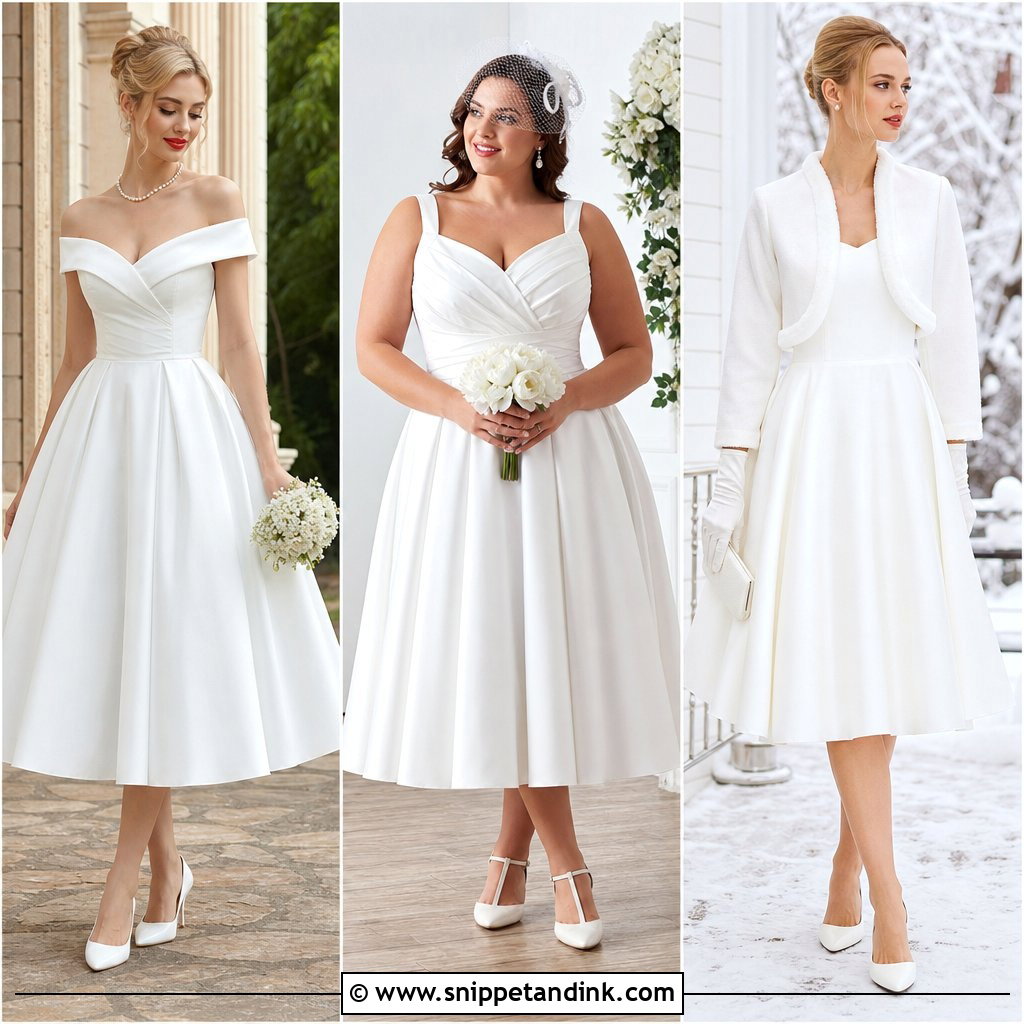
Tea length is the shape everyone pictures from this decade, and the hem placement is everything. The 1950s version sits mid-calf, roughly between knee and ankle; an inch too high reads as a cocktail dress, an inch too low cuts the leg at its widest point. Stand in your shoes when the hem is pinned. A tea length wedding dress in satin, organza or layered tulle over a fitted bodice suits courthouse, garden and brunch weddings. Sweetheart necklines read softer, bateau sharper. Since your shoes are on show, choose them first.
2. 50s Style Lace Wedding Dress
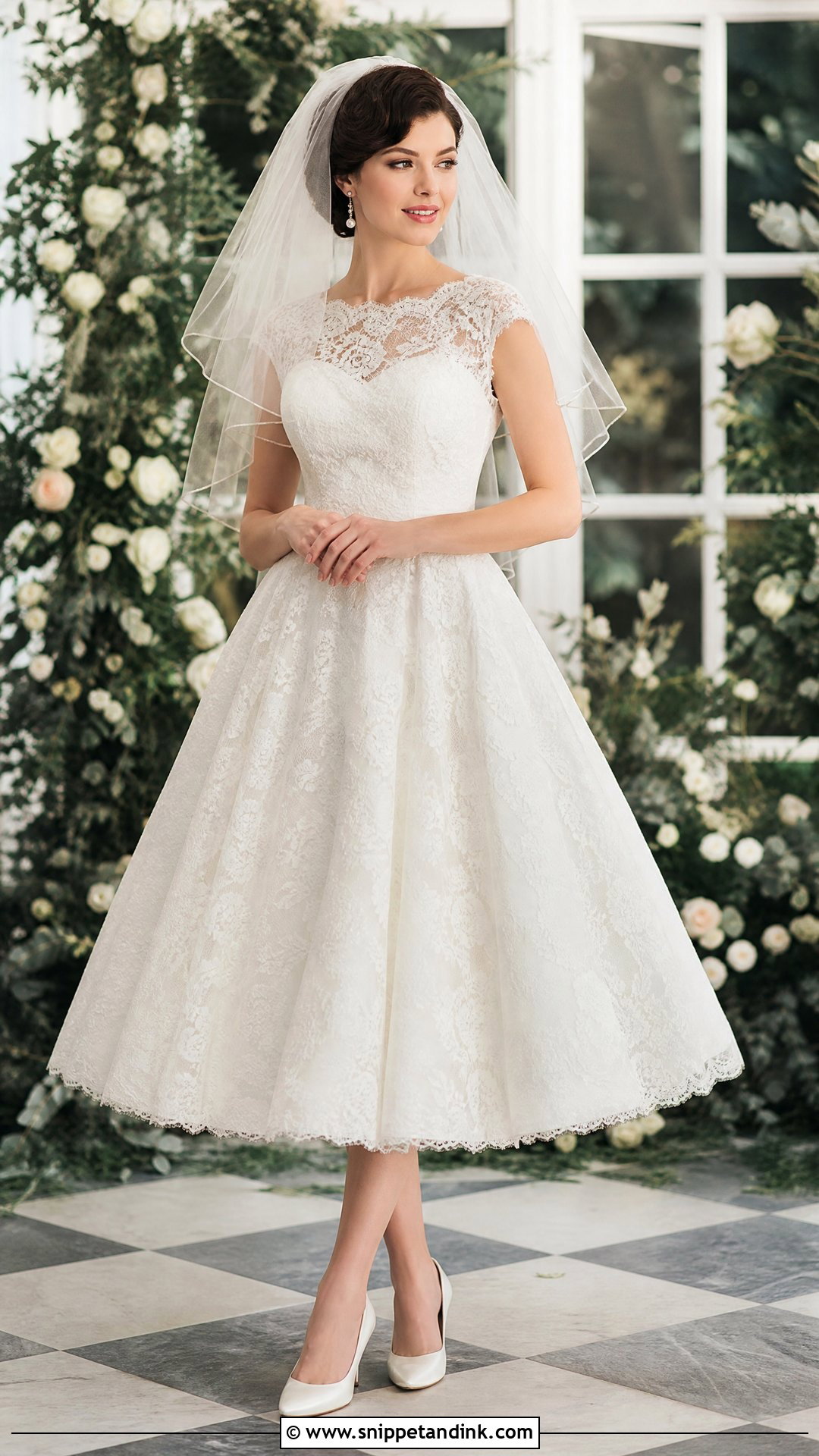
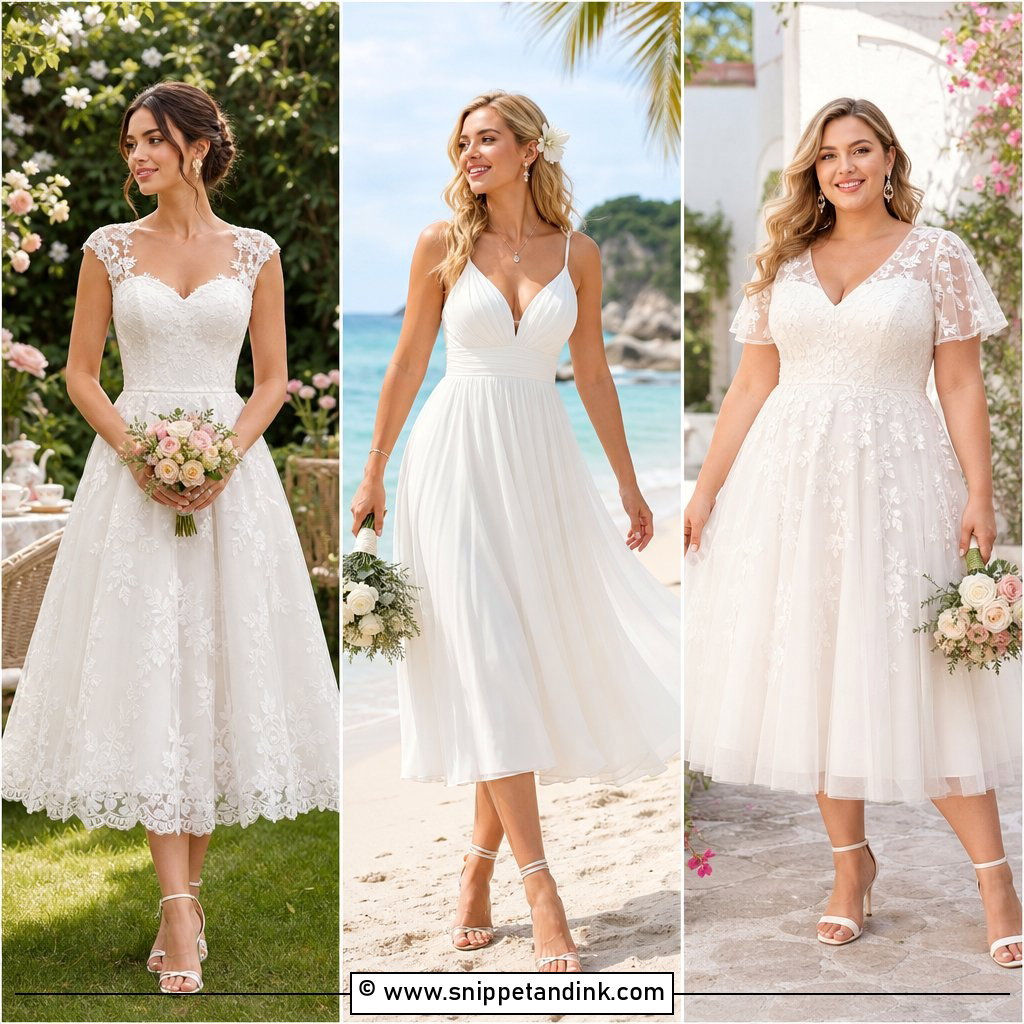
Lace on a 50s dress usually sits over a fitted bodice or drifts across a full skirt. Floral lace is the period look; lace sleeves add coverage without weight. A tea-length lace dress reads sweet, floor-length more formal. Check how the lace is joined at the side seams at your fitting. Good bridal lace is cut around the motifs and hand-appliquéd so the pattern flows; cheaper dresses chop straight through flowers at every seam. With detailed lace, I keep jewelry to pearl drops and the hair in a clean updo.
3. 50s Style Satin Wedding Dress
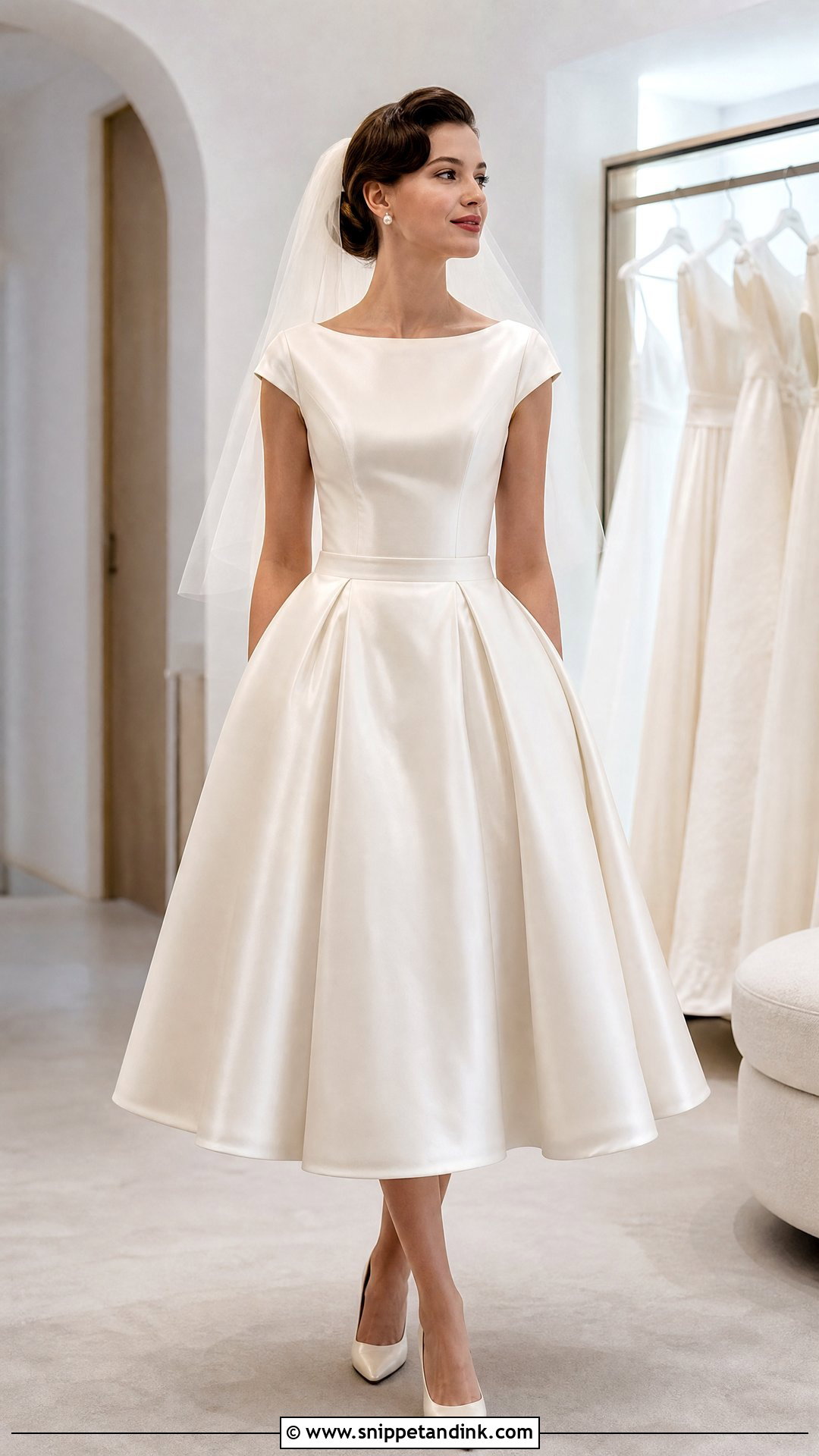
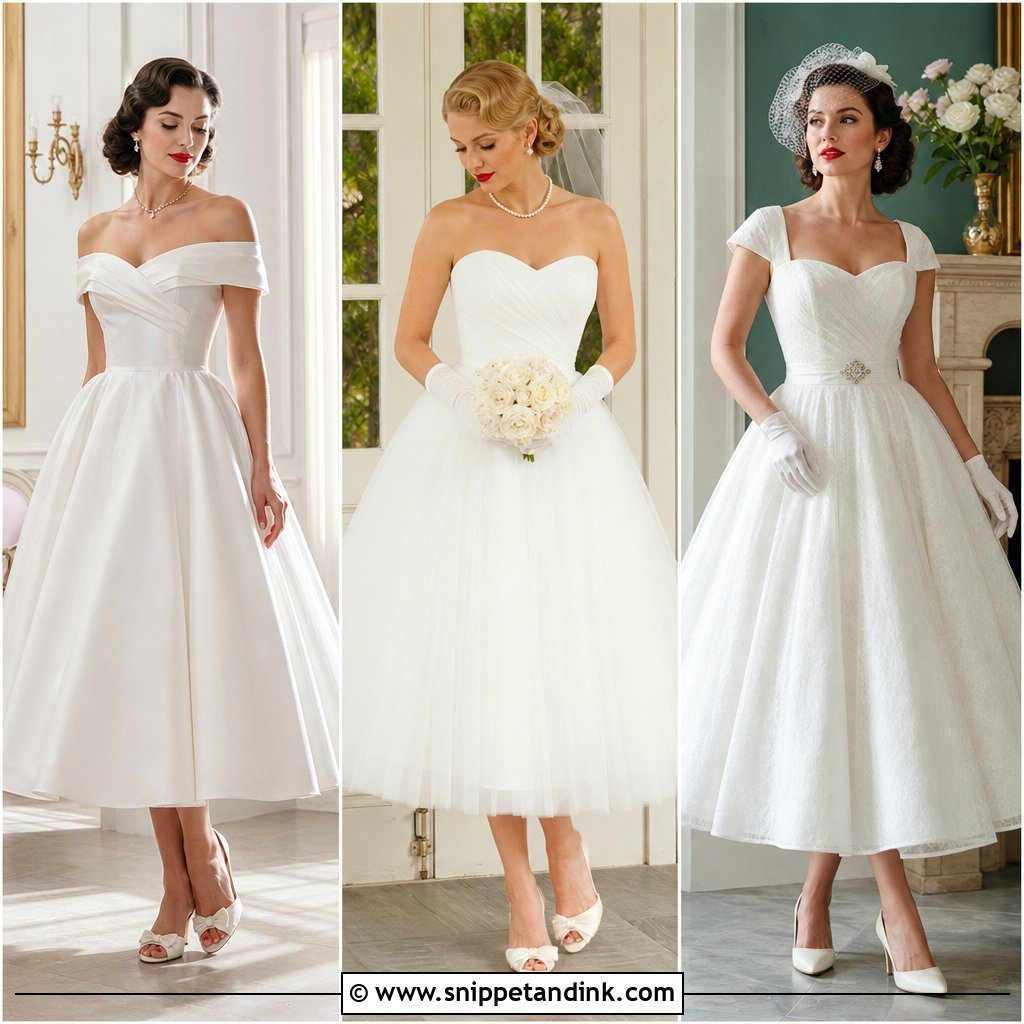
Satin is unforgiving, which is why a well-cut satin 50s dress looks so expensive. It shows every seam, every ripple of a zip and every line underneath, so the fitting matters more than the fabric choice. An ivory satin tea-length dress with a fitted waist and soft flare is the classic version; a floor-length satin gown with a subtle train is the formal one. Pleats at the waist sit crisply in satin. Keep accessories to closed-toe pumps, pearl earrings and a simple veil.
4. 50s Style Tulle Wedding Dress
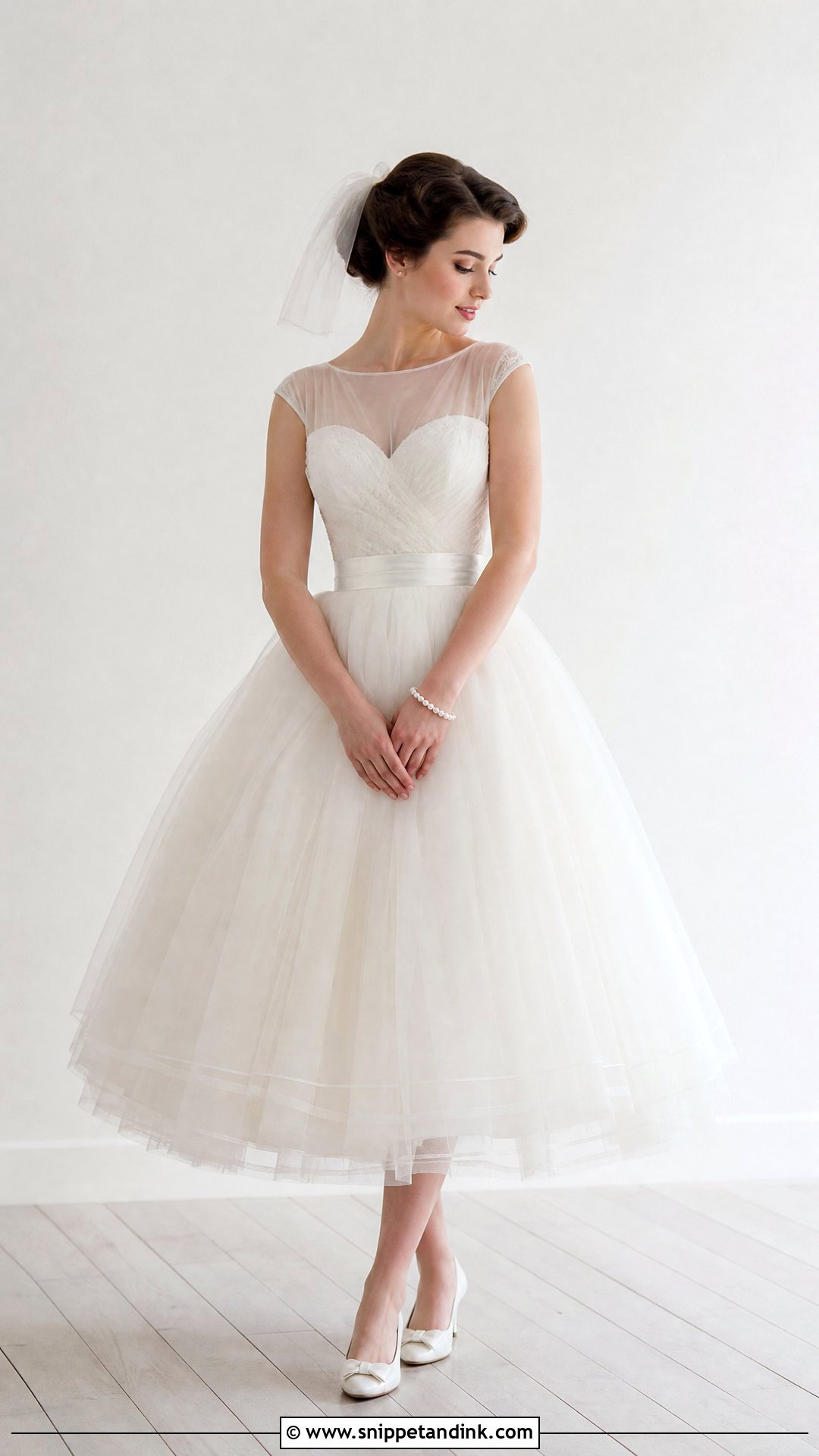
Tulle gives you the full skirt at a fraction of the weight of satin. A tea-length tulle dress with a narrow waistband feels playful; a longer one with a bateau neck or cap sleeves suits a formal ceremony. Several layers of soft bridal tulle hold shape far better than one stiff net, which tends to crush where you sit. If you want more lift, add a petticoat underneath, and keep the bodice close-fitting so the volume stays below the waist. Finish with a short veil and a low bun.
5. 50s Style Bateau Neck Wedding Dress
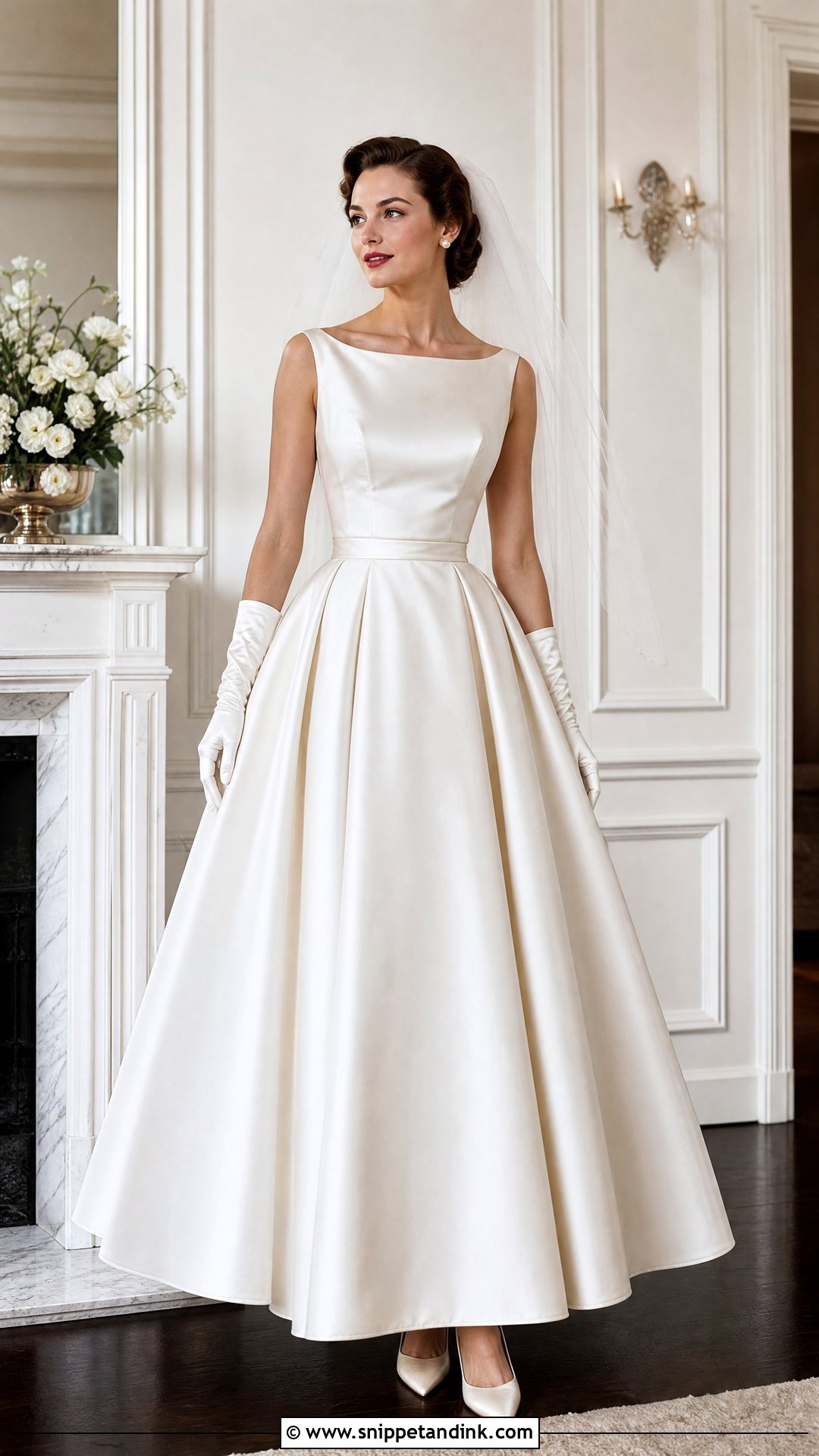
The bateau line runs almost straight from shoulder point to shoulder point, sitting just over the collarbone, and it’s the neckline I associate most with mid-century bridal portraits. On a bateau neck wedding dress the neckline does the framing, so leave the throat bare and put pearls in the ears instead. Watch the shoulders at fittings: a bateau cut too wide slides off when you raise your arms. Satin gloves and pointed pumps belong with it. It pairs with tea-length skirts, full satin gowns and lace overlays equally well.
6. 50s Style Sweetheart Wedding Dress
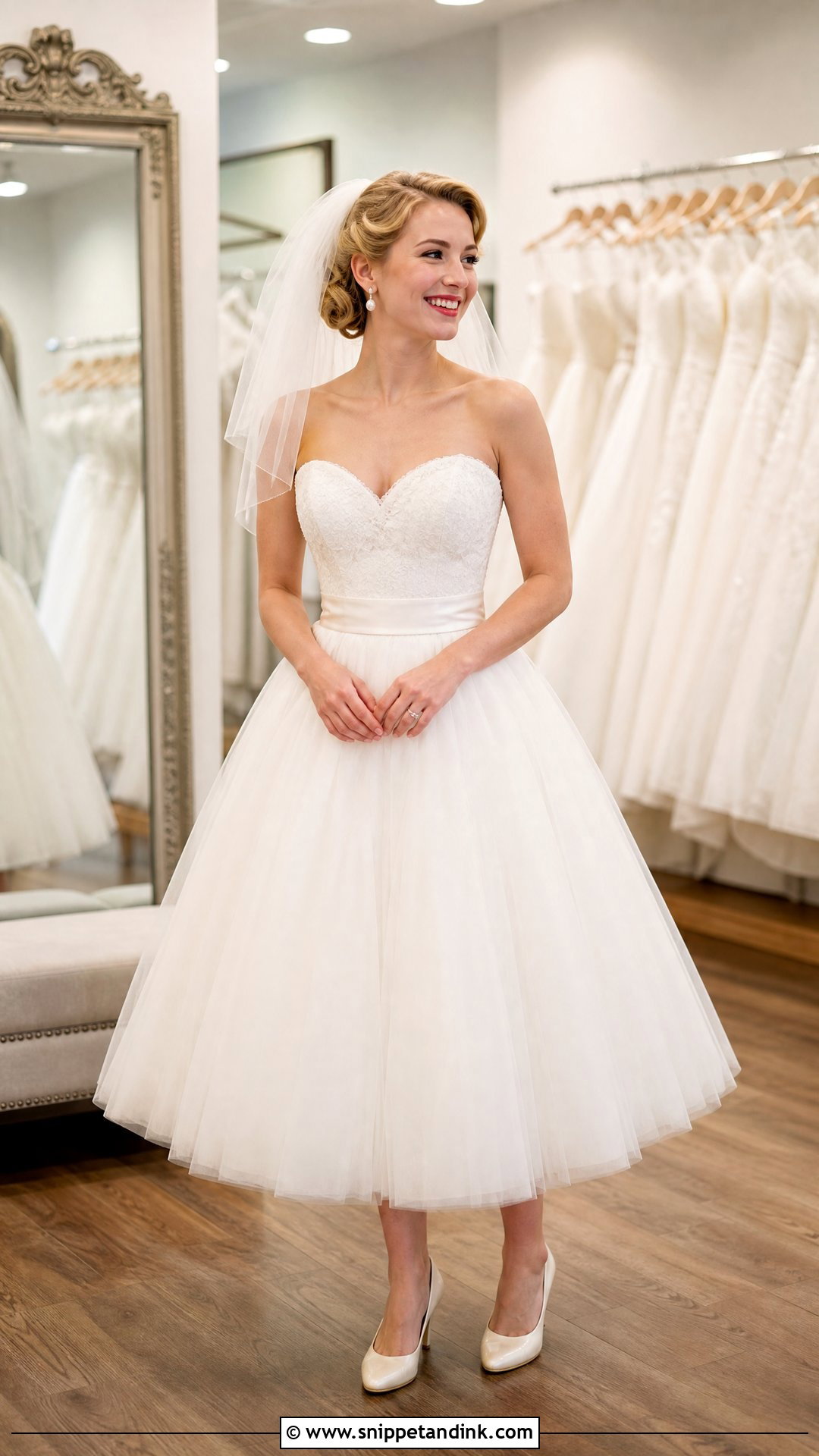
Sweetheart necklines only look good on a bodice that actually supports you. If the curve gapes when you lean forward to sign the register, the boning or bust cups need adjusting, and that’s a fitting-room fix rather than something tape will solve on the day. Paired with layered tulle at tea length, it’s the softest version of the 50s look. Curled hair, a short veil and ivory pumps suit it. For more coverage, a lace bolero or sheer cap sleeves go over it without losing the curve.
7. 50s Style Cap Sleeve Wedding Dress
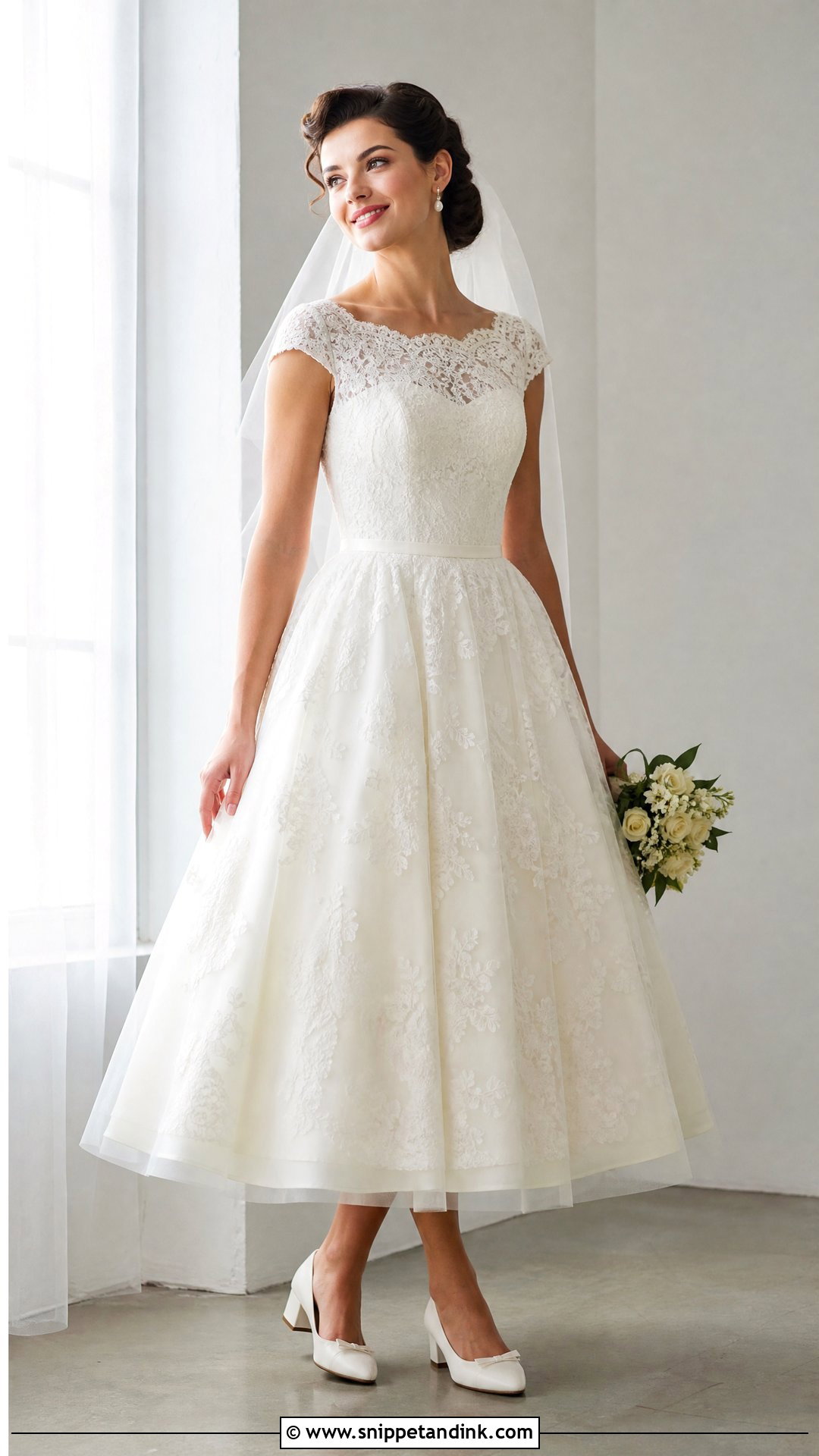
Cap sleeves cover the very top of the shoulder and nothing else, so they suit a warm day without feeling bare. On a fitted bodice with a natural waist and a full skirt, lace caps read romantic and satin caps read crisp. The fit point is the armhole: cap sleeves cut too tight leave a pressure line on the upper arm that shows in every photo, so raise your arms at the fitting. Pearl earrings, a small veil and block or kitten heels keep it practical.
8. 50s Style Long Sleeve Wedding Dress
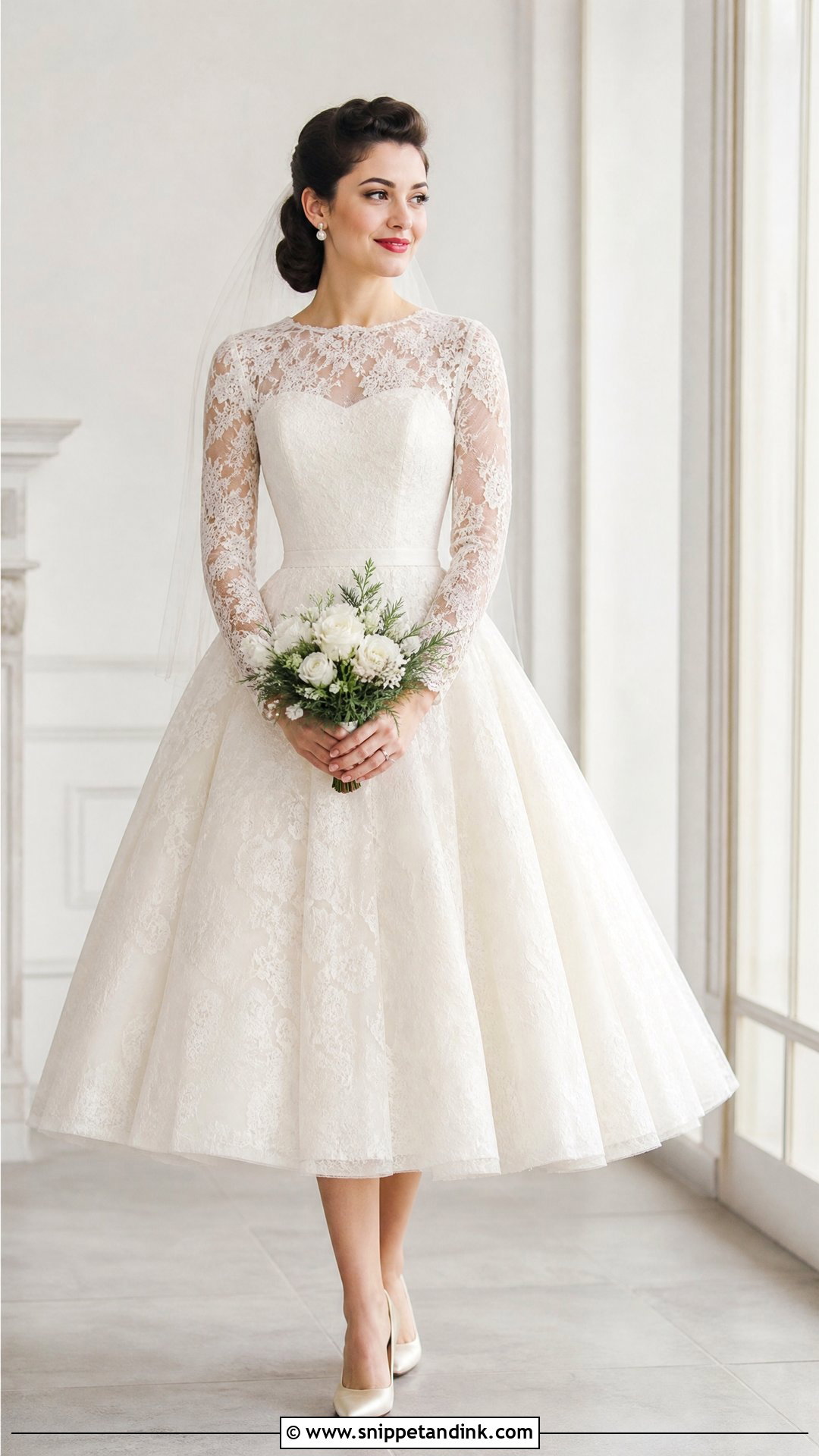
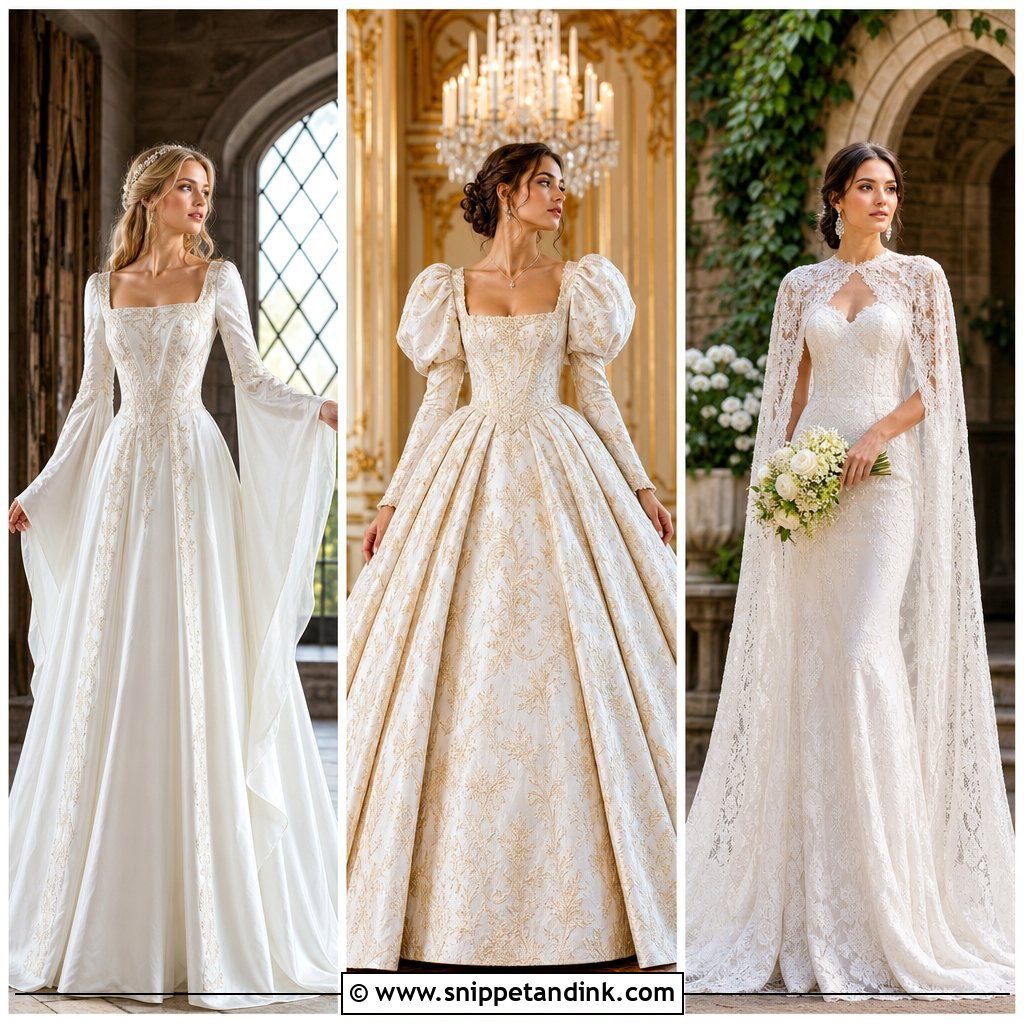
Long sleeves in lace or illusion tulle keep a 50s dress formal while the waist and skirt still do the period shaping. Tea-length lace with long sleeves and satin pumps is the purest vintage version; a floor-length gown with sleeves ending neatly at the wrist bone suits a formal venue. Sleeve length is worth fussing over. Too long and the lace bunches over your hand when you hold the bouquet; too short and it looks borrowed. It’s a sensible pick for cooler months.
9. 50s Style Off Shoulder Wedding Dress
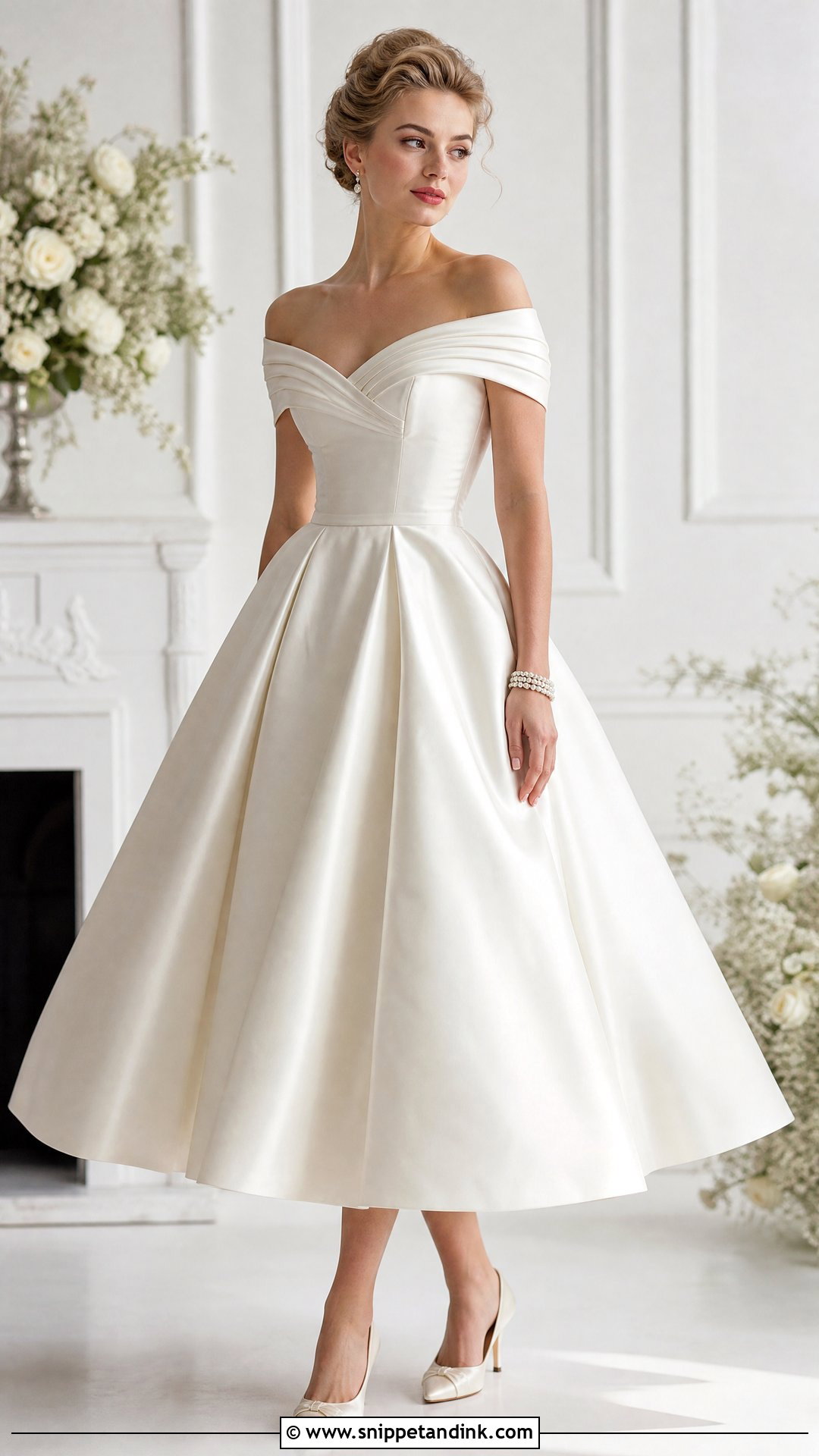
Off-shoulder necklines show the collarbone and balance a full skirt nicely, and they work best in fabrics with body: satin, mikado or lace over a structured bodice. The engineering is in the bodice. Because nothing holds the dress up from the shoulders, it must grip at the ribs, and that means proper boning and a waist stay. Tea length feels playful, floor length more dramatic. Skip the necklace and frame the shoulders with a curled updo or soft waves.
10. 50s Style Halter Wedding Dress
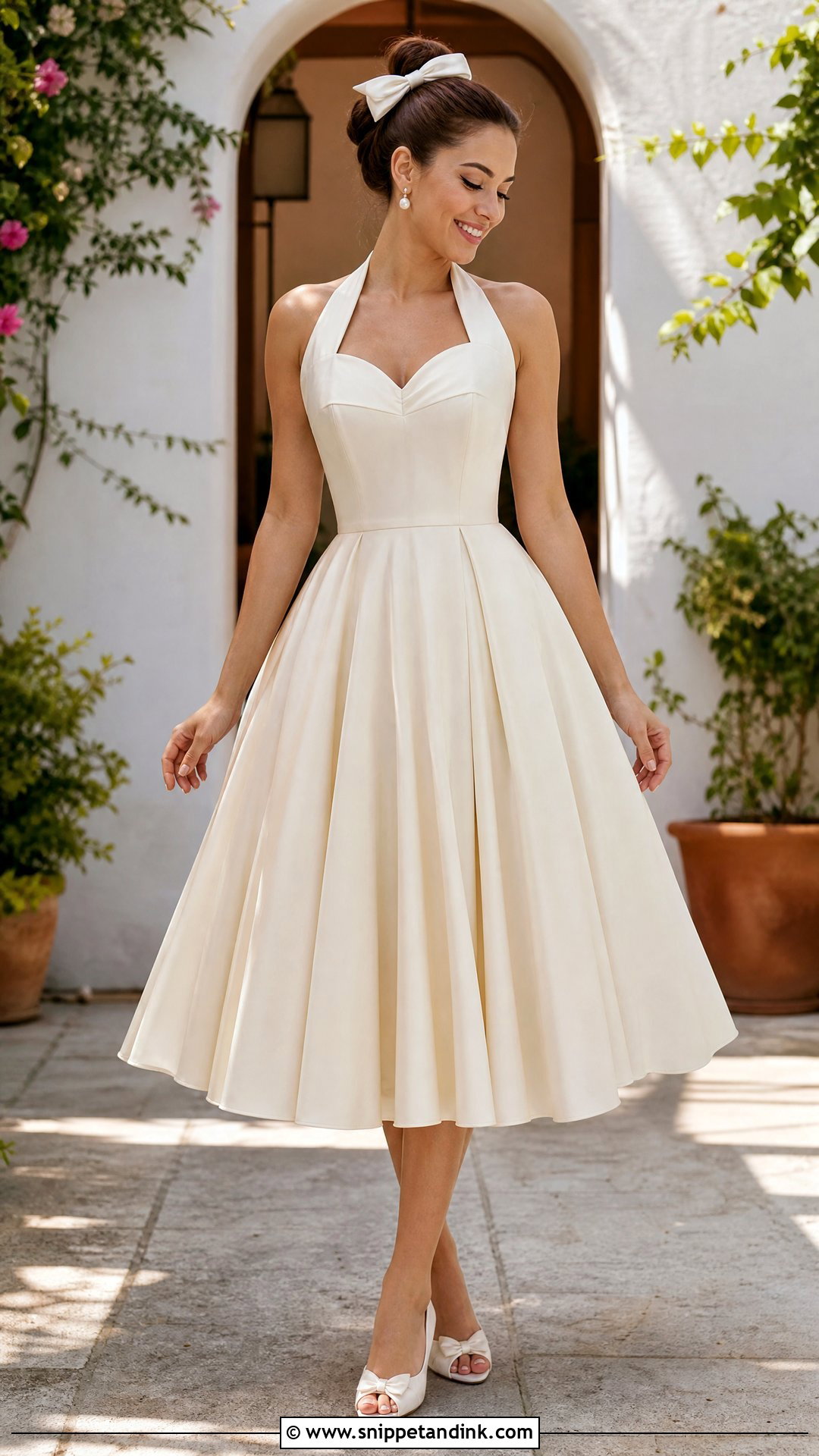
Halters were a summer staple in the 50s, and a halter wedding dress reads a little more confident than the usual sweetheart. Paired with a defined waist and a swing skirt, it suits outdoor receptions and warm days. A cotton-blend tea-length version is relaxed and retro; a structured satin one is more formal. Watch the neck strap: a thin tie halter can drag on the neck after hours of hugging, so I prefer a wider band or a hidden hook. Peep-toe heels and a hair bow suit it.
11. 50s Style Full Skirt Wedding Dress
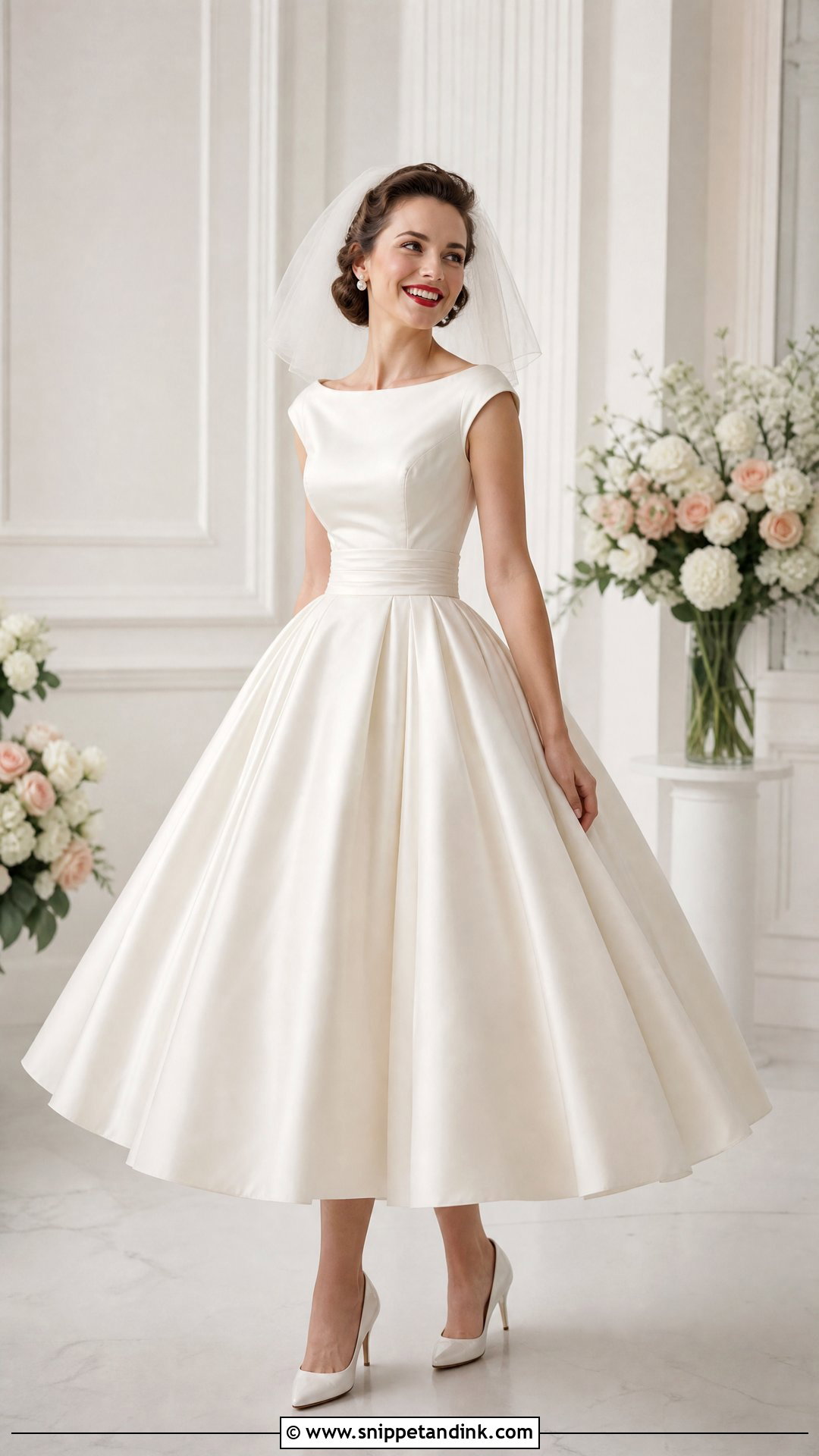
The full skirt is the heart of the decade. Satin, tulle or organza at a natural waist creates that hourglass outline because the skirt springs from the narrowest point and floats away from the hip, which is why it suits so many figures. A petticoat adds volume, but test it seated before you commit; some petticoats push the skirt up in a bell when you sit at the top table. Pointed pumps and a short veil keep the outfit period-correct without going full costume.
12. 50s Style Ball Gown Wedding Dress
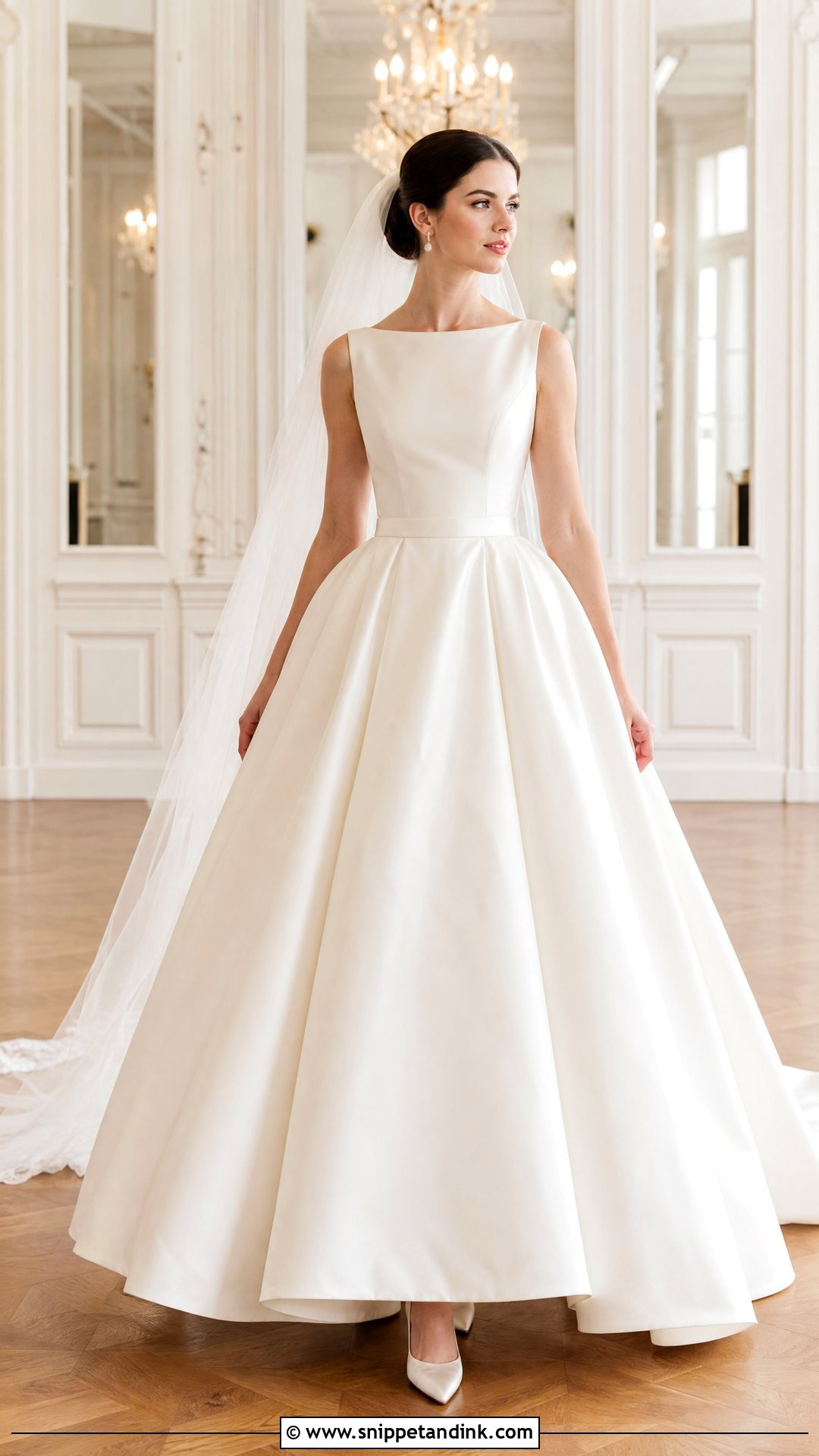
For a formal evening wedding, take the 50s shape to the floor. A ball gown wedding dress with a fitted bodice and a full floor-length skirt in satin, mikado or layered tulle gives you the period outline at a grander scale. A bateau or sweetheart neck, or a lace bodice, ties it back to the decade. Floor-length full skirts need a bustle or a hem you can lift, so think about the first dance before the final fitting. A long veil and a classic bouquet complete it.
13. 50s Style Pencil Wedding Dress
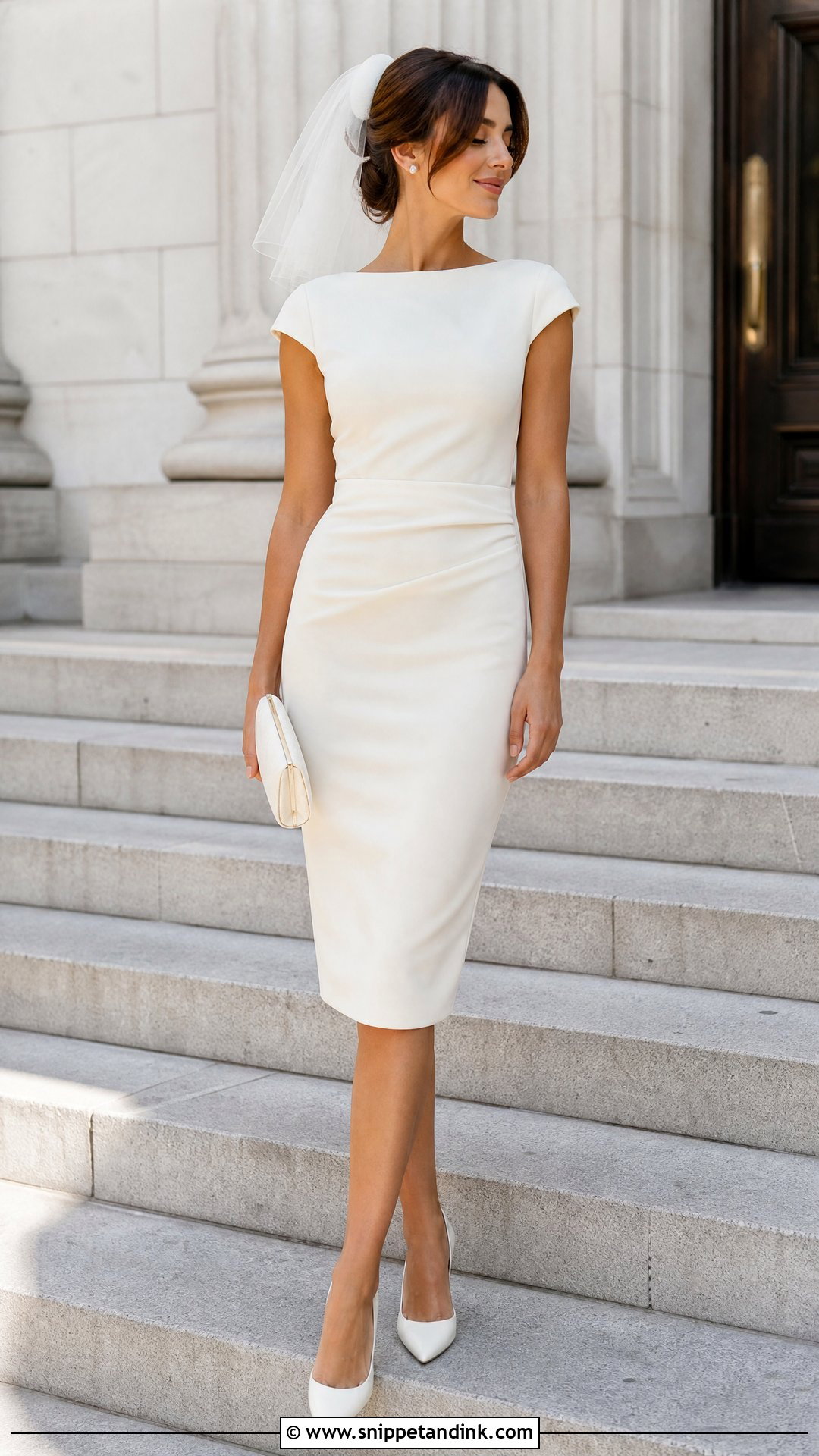
Not every 50s bride wore a big skirt. The pencil silhouette borrowed from mid-century suiting: fitted waist, narrow skirt ending at or below the knee. In ivory crepe, satin or lace it’s the sleekest look on this list. Walking is the issue. A true pencil needs a back vent or kick pleat or you’ll be taking half steps all day, so check it on stairs at your fitting. Pointed pumps, a structured clutch and a short veil or pillbox-inspired headpiece suit city venues and courthouse ceremonies.
14. 50s Style Wedding Dress With Bolero
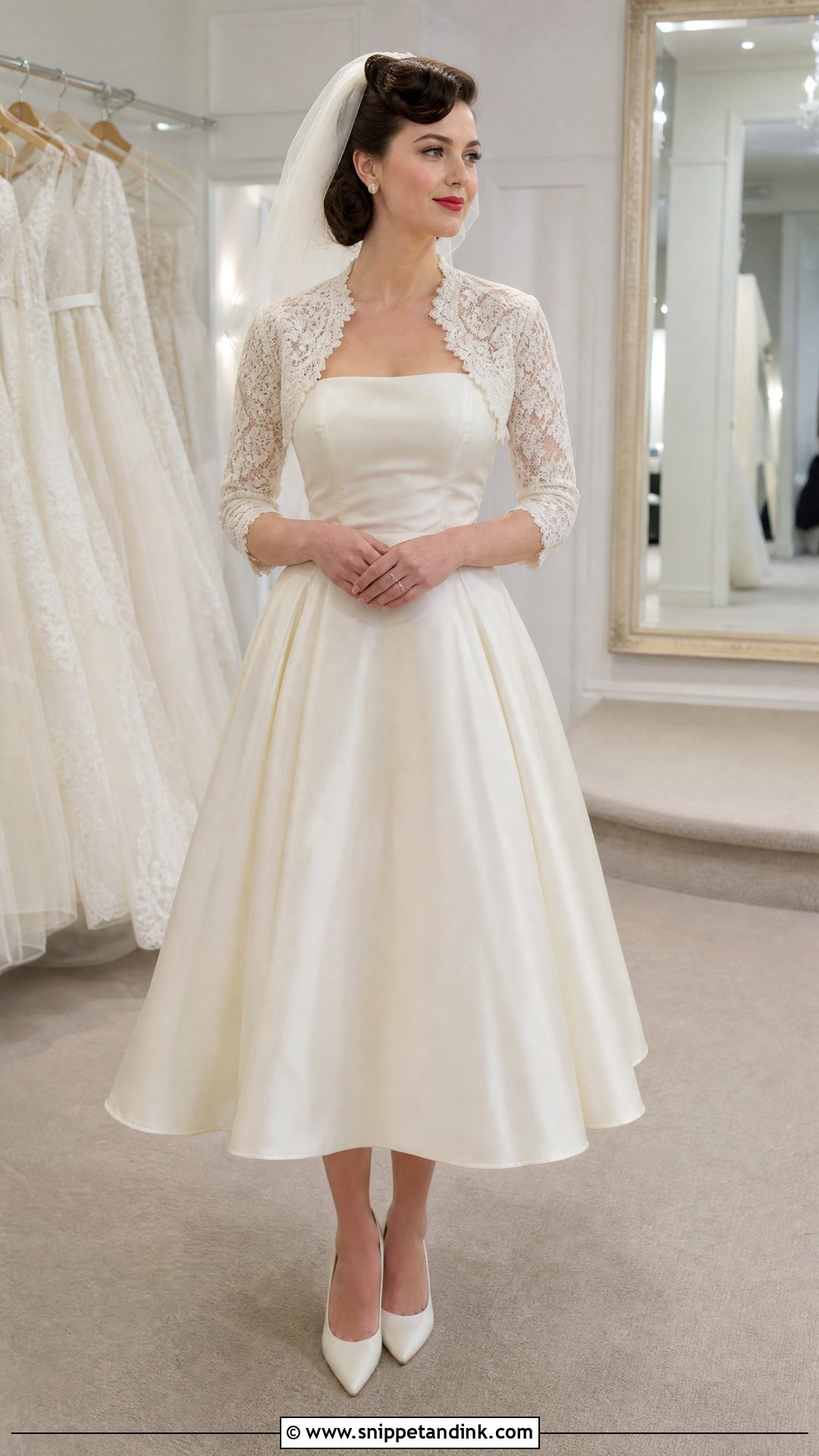
A bolero jacket turns a strapless gown into a covered ceremony look, then comes off for the reception. Lace boleros soften the line, satin ones sharpen it, and faux fur works for winter. Proportion is the key. The bolero should end close to the natural waist; a longer jacket hides the waistline that makes the 50s silhouette work. Have it fitted with the dress on, because a bolero cut on its own often stands away from the bodice at the back.
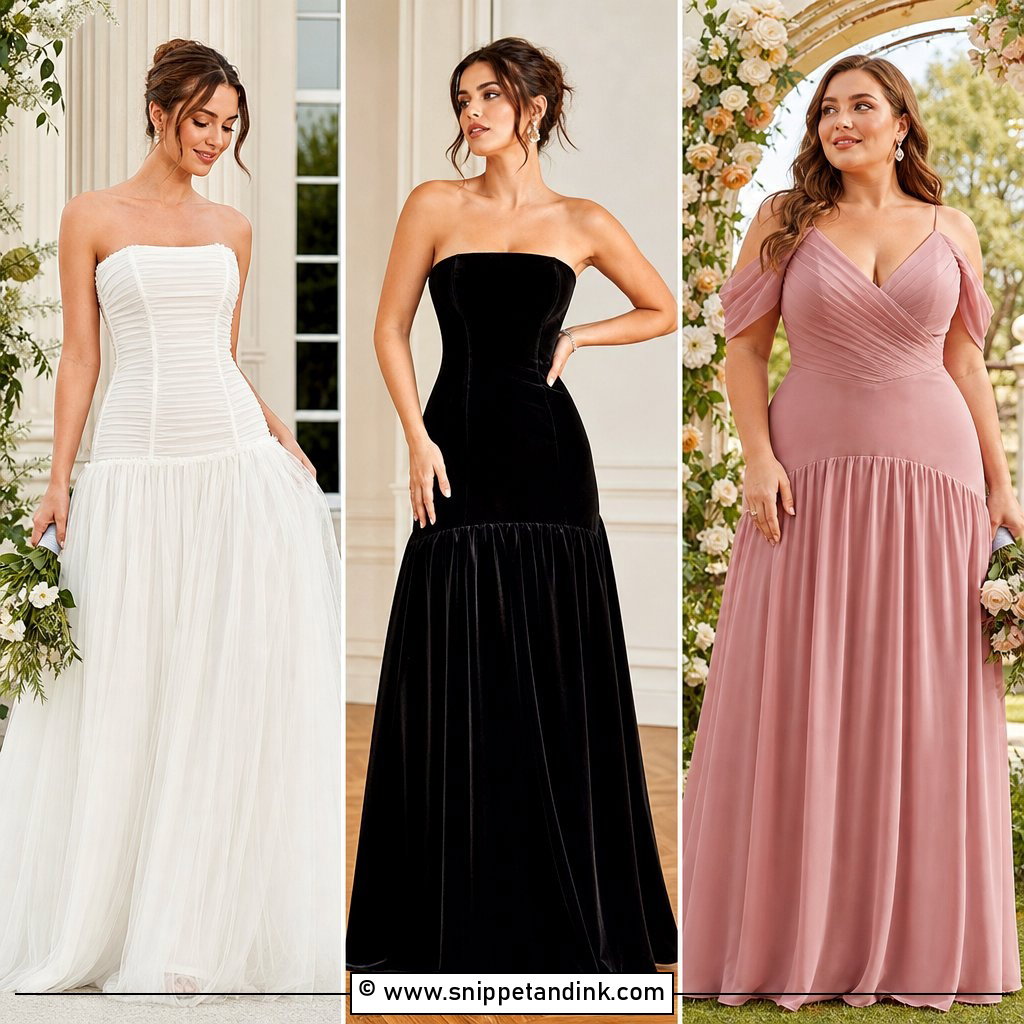
15. 50s Style Wedding Dress With Gloves
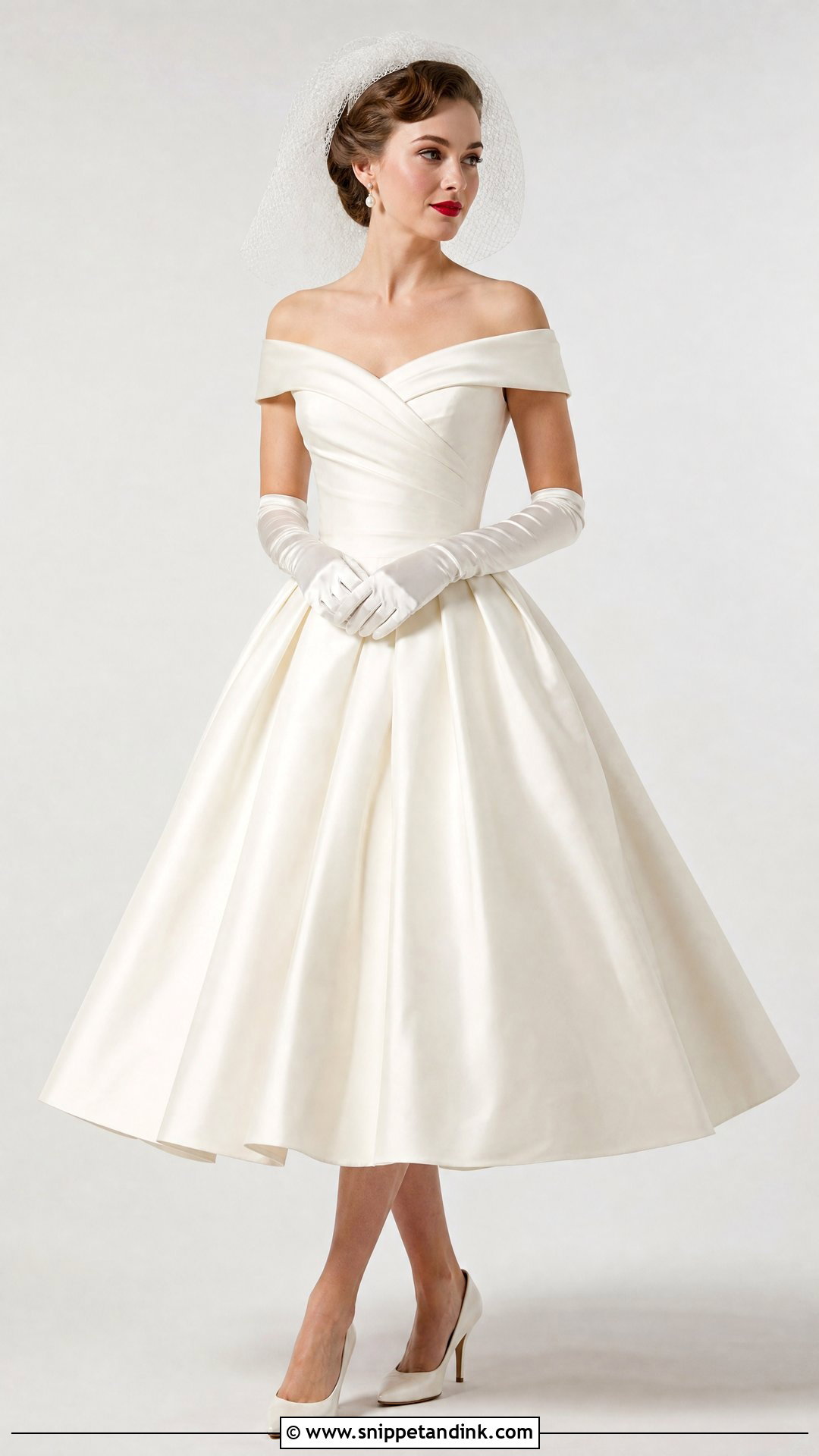
Gloves are the single accessory that says 1950s instantly, and the length has rules. Short wrist gloves go with tea length and cap sleeves; elbow or opera lengths suit strapless or off-shoulder gowns and formal satin. The practical question is the ring. Either leave the left glove off for the ceremony, choose a glove with a slit at the ring finger, or remove it before the vows and hand it to your maid of honour. Keep everything else simple: pearl earrings, a small veil, satin pumps.
16. 50s Style Wedding Dress With Birdcage Veil
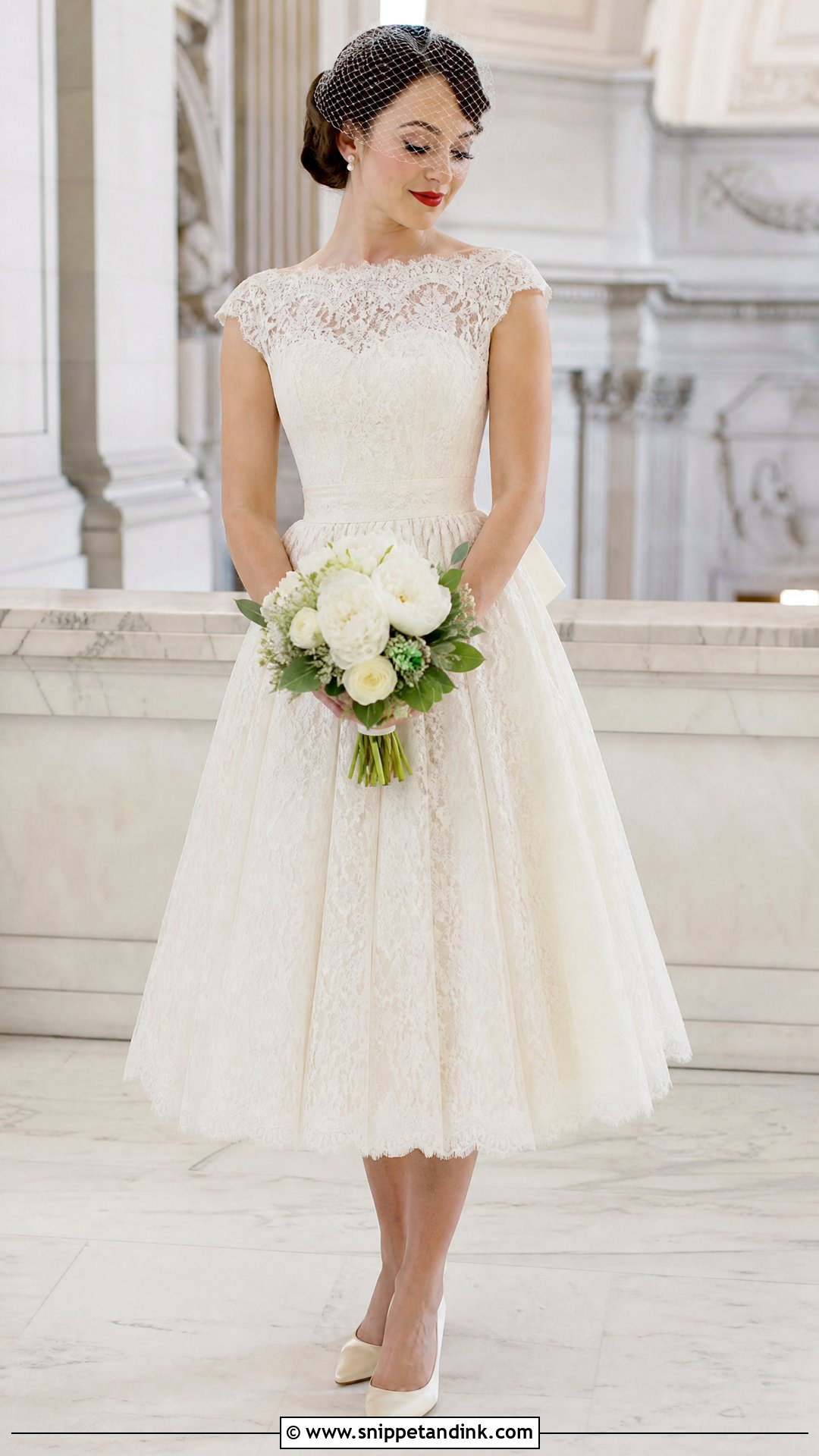
A birdcage veil is a short net that covers the eyes or half the face, and it gives a period look with almost no fabric. It suits tea-length, pencil and fitted lace dresses with clean necklines. The net comes in different weaves; Russian netting has a wide open diamond that reads the most authentically vintage. Pin it on a comb anchored into a set or a firm bun, because it sits off-centre and pulls. A red lip is the classic pairing, though soft pink works if bold color isn’t you.
17. 50s Style Wedding Dress With Pearl Accessories
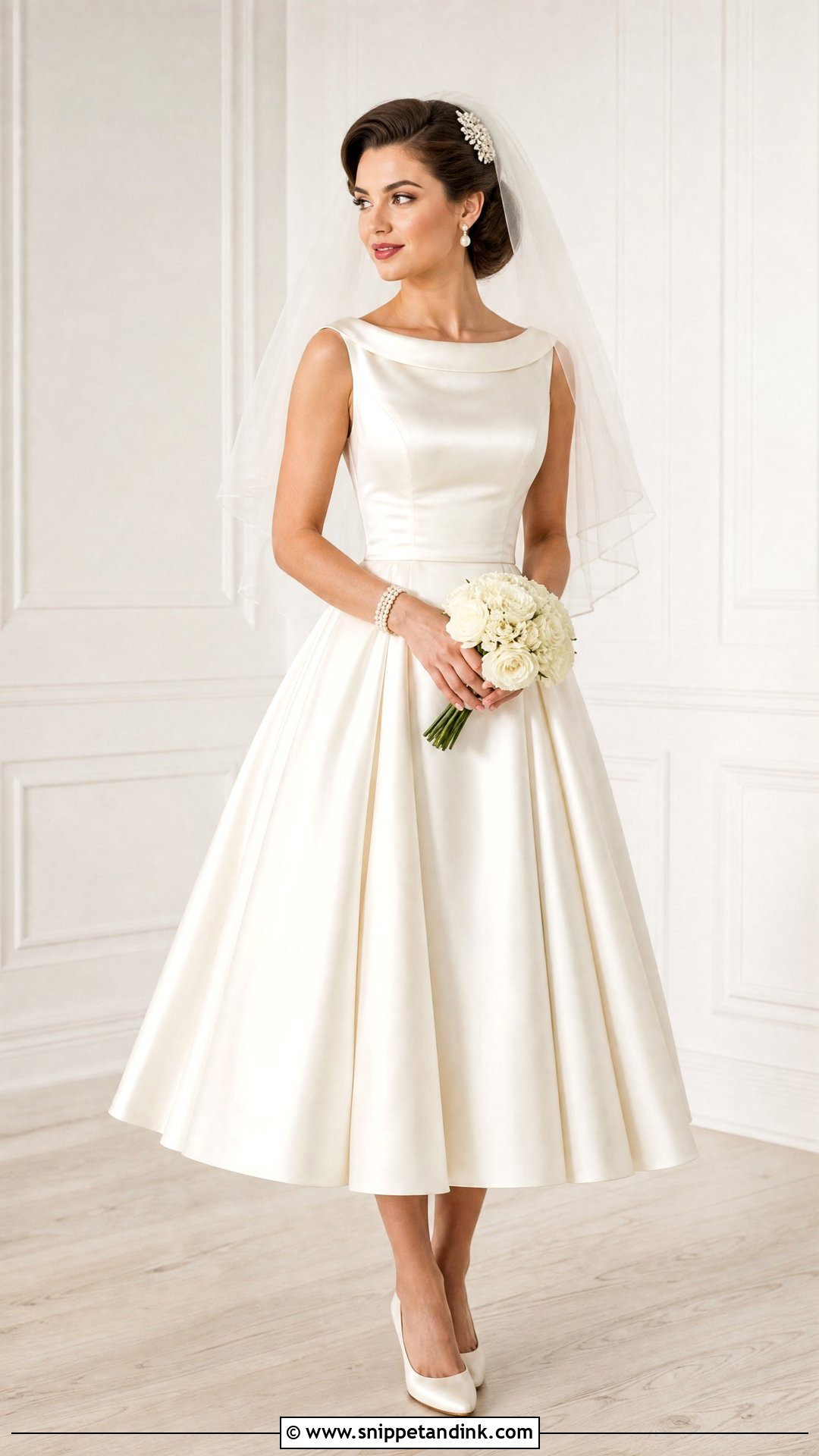
Pearls suit every fabric on this list, from lace to crepe, without fighting the dress. With a plain neckline, a short single strand at the base of the throat is period-correct. If lace or beading comes up near the face, skip the necklace and wear earrings only. A pearl hair comb or pearl-edged veil gives the same signal more quietly. Freshwater and glass pearls both photograph well, so you don’t need real ones to get the look.
18. 50s Style Wedding Dress With Bow
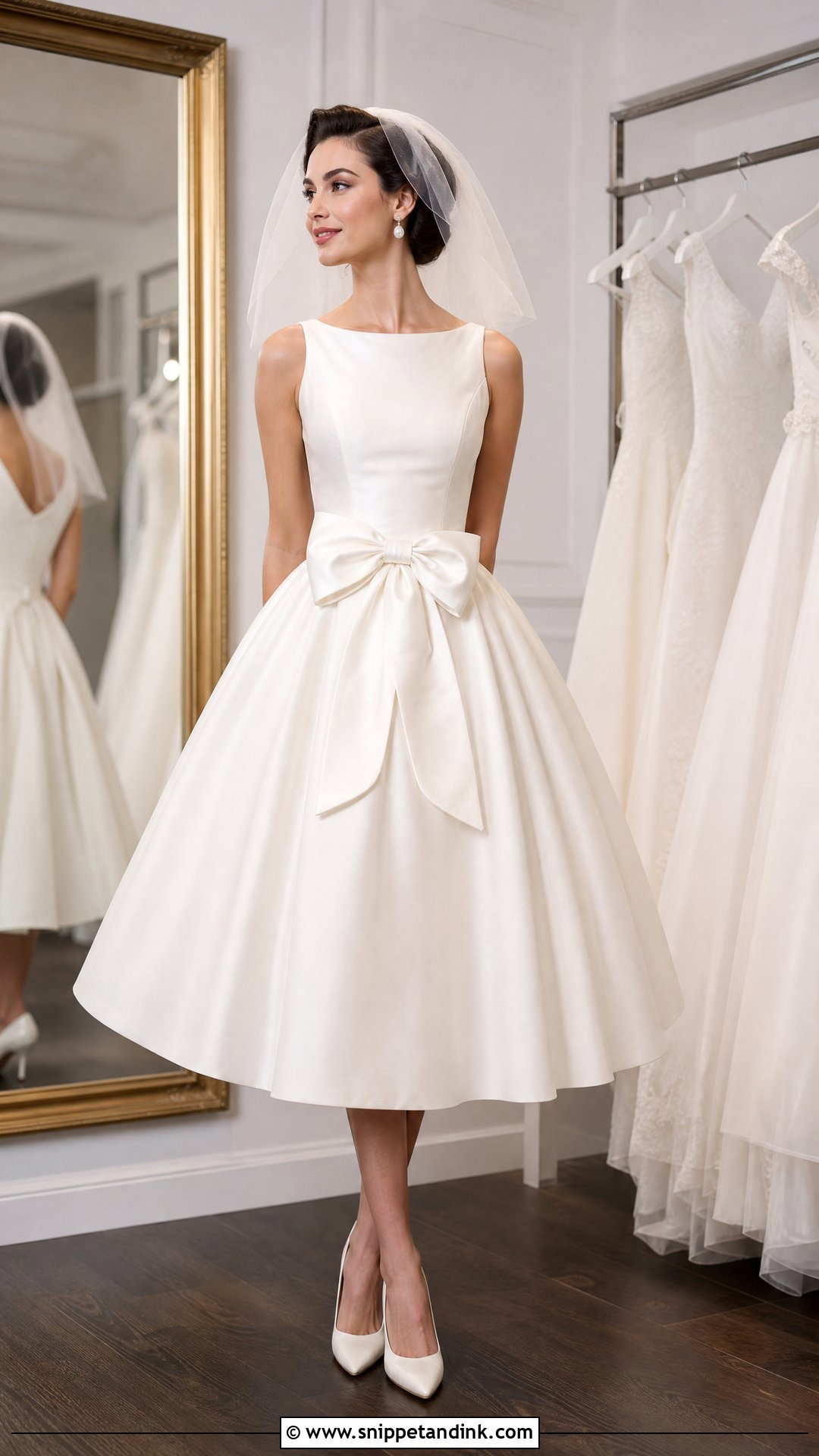
Bows on 50s dresses are almost always at the waist: centre front, tied at the back, or sitting just off to one side. Satin bows hold a crisp shape; organza bows look softer and collapse faster in humidity. Make sure the bow is stitched or pinned in place, not just tied, or it will droop and slip around by the reception. Because the bow is often at the back, it shows in every walking-away shot and during the ceremony itself, so keep the rest plain: pearl earrings, classic heels, a short veil.
19. 50s Style Wedding Dress With Petticoat
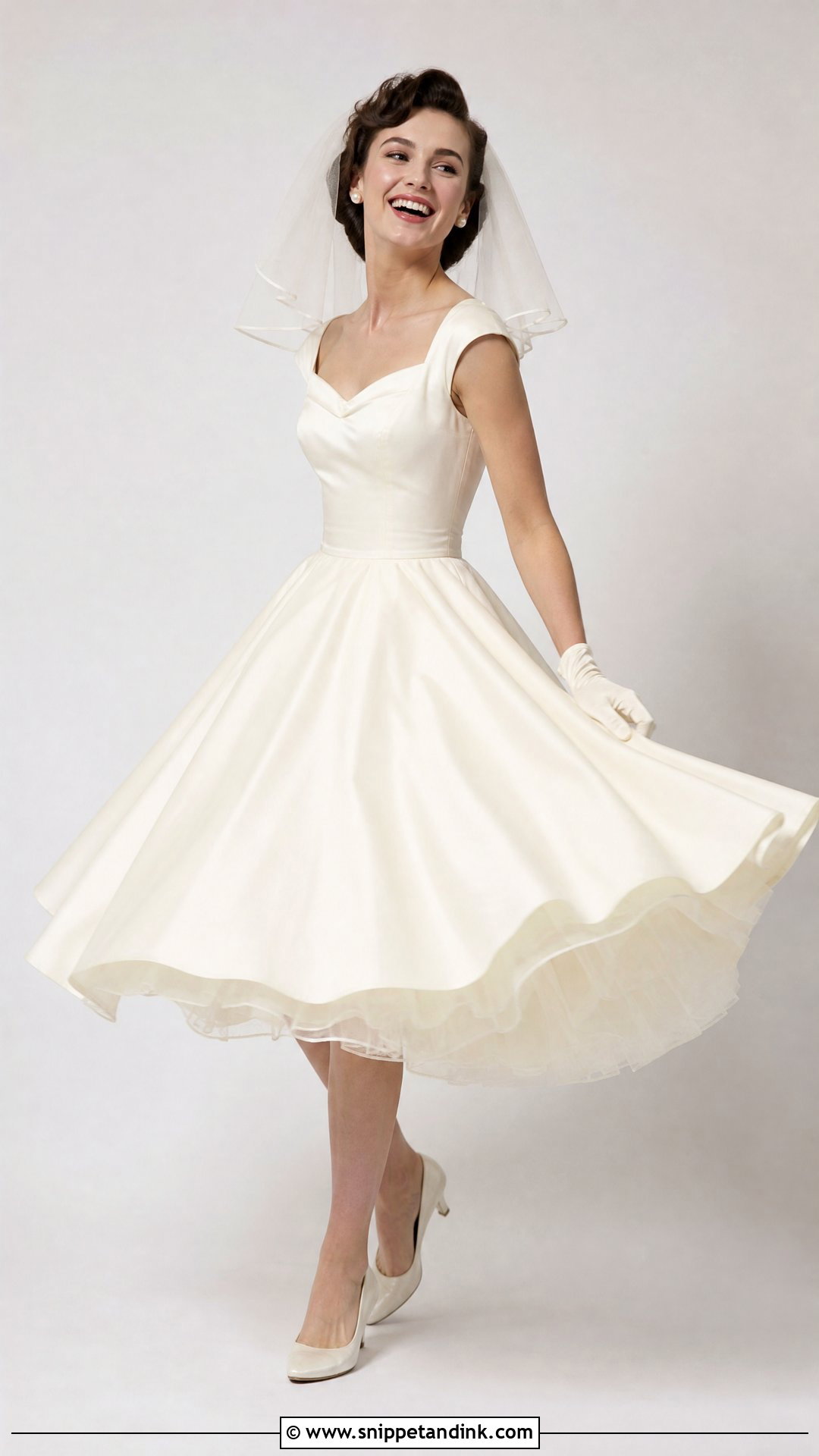
The swing in a 50s skirt mostly comes from what’s underneath. A layered petticoat lifts a tea-length or knee-length skirt and gives it that bounce when you walk. You can let a ruffle peek out slightly or keep it hidden. White or ivory is traditional; pale blush adds a quiet surprise. Two things to test in the fitting room: the petticoat shouldn’t scratch the backs of your legs, and the skirt shouldn’t look like a lampshade when you stand still.
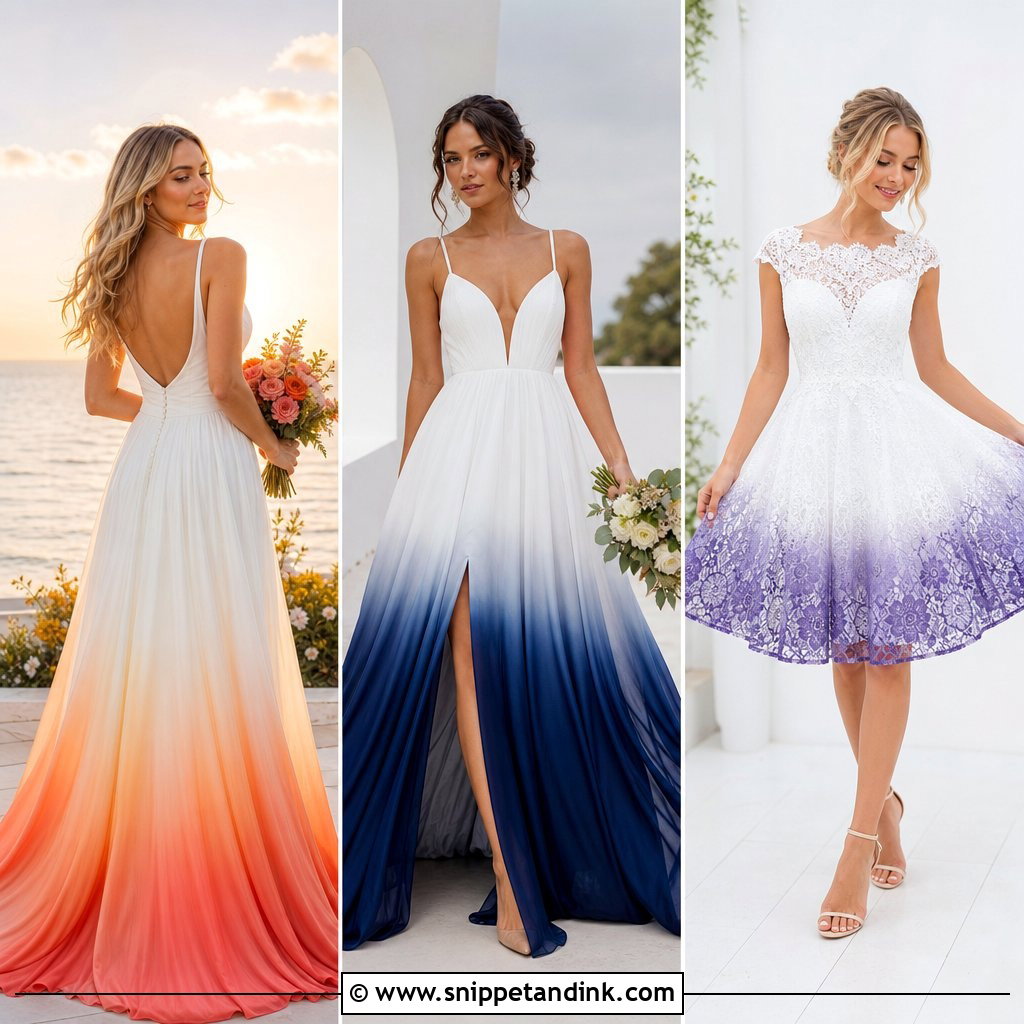
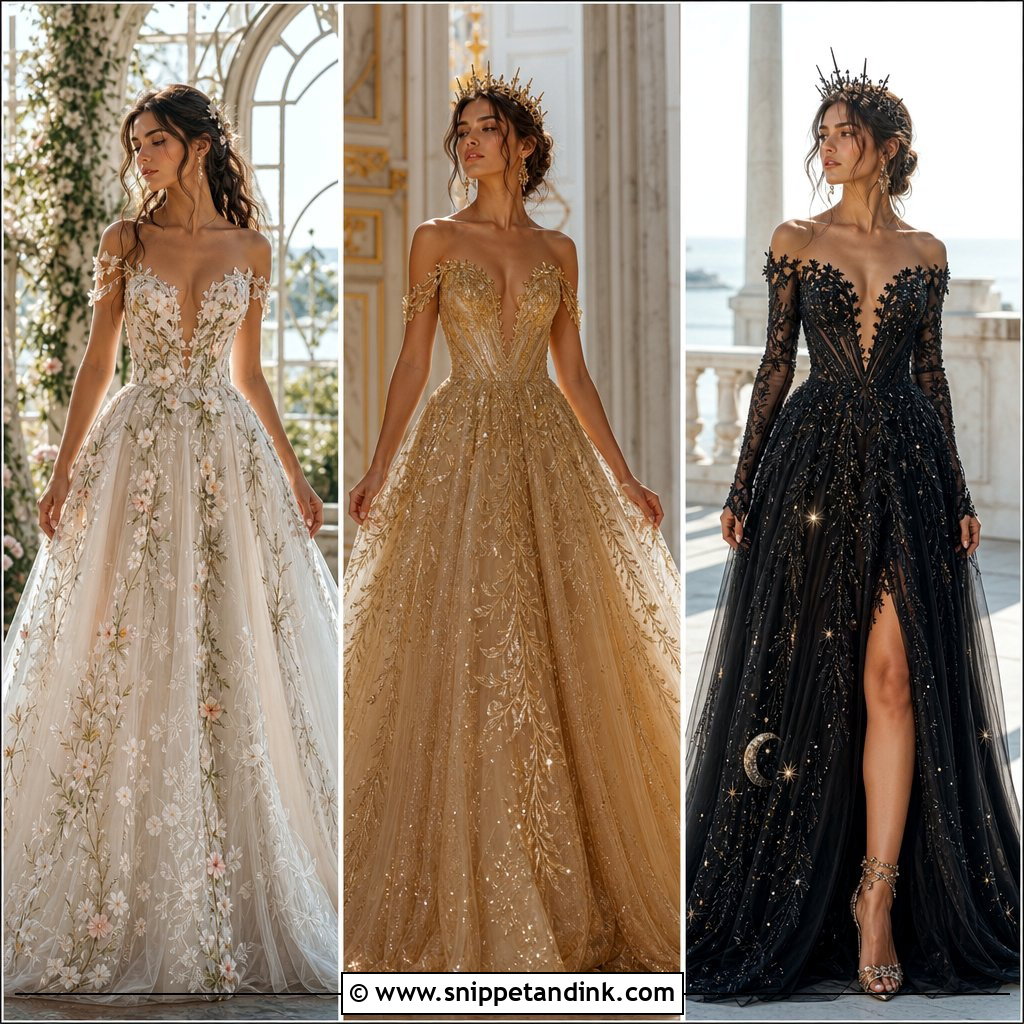
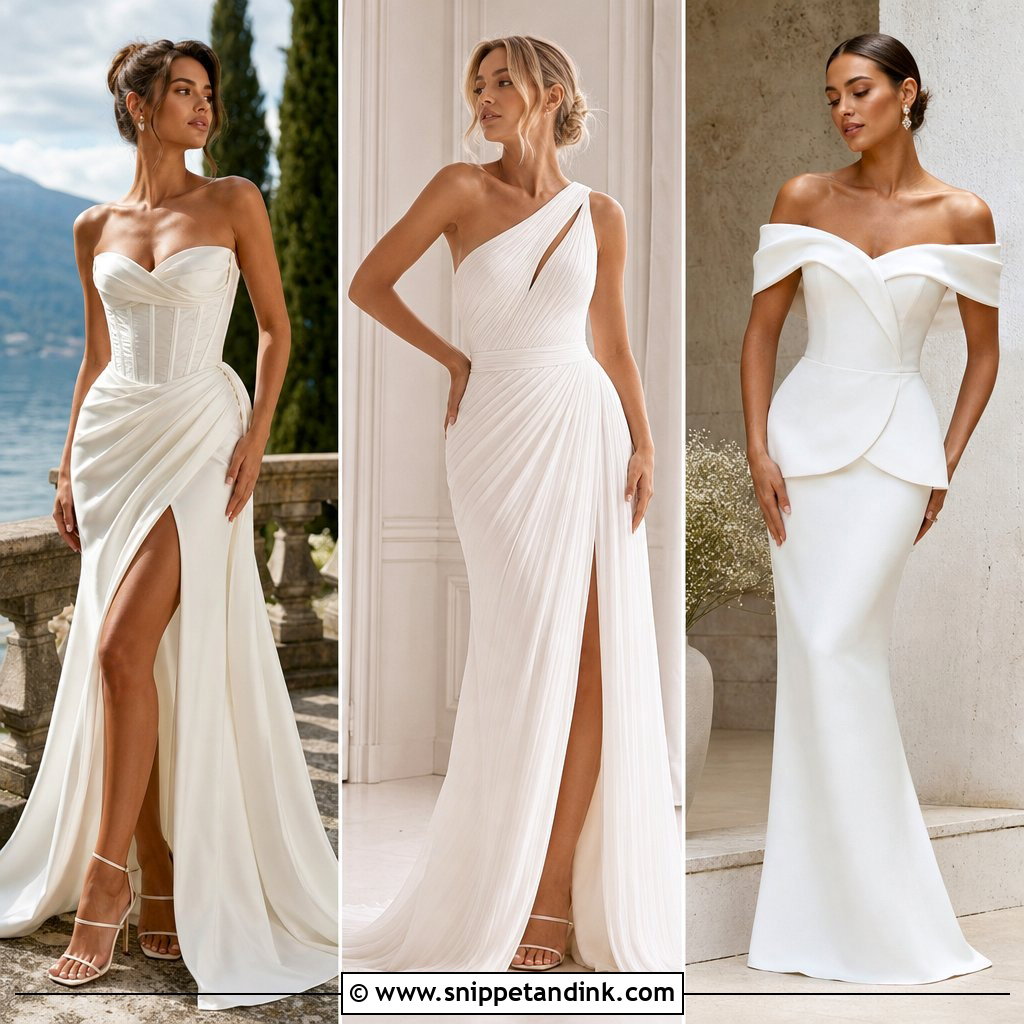

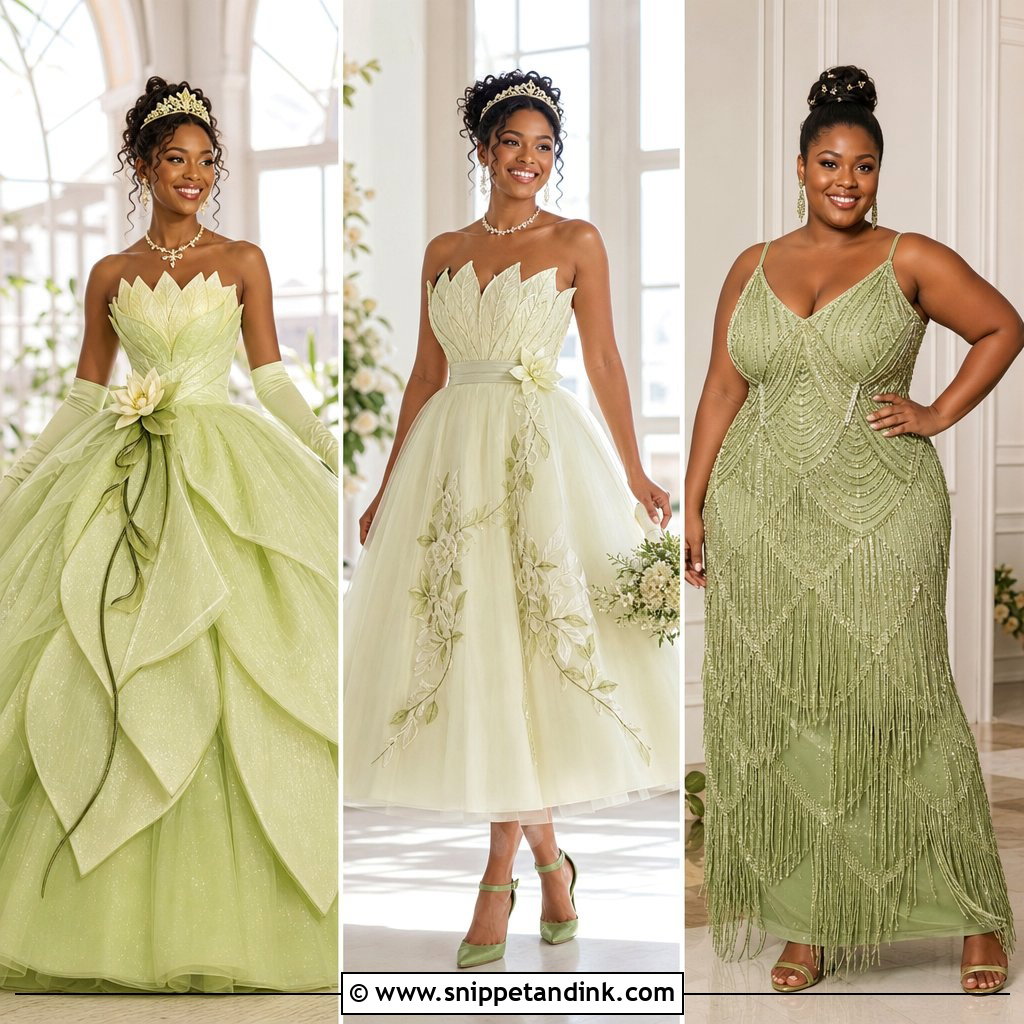
20. 50s Style Organza Wedding Dress
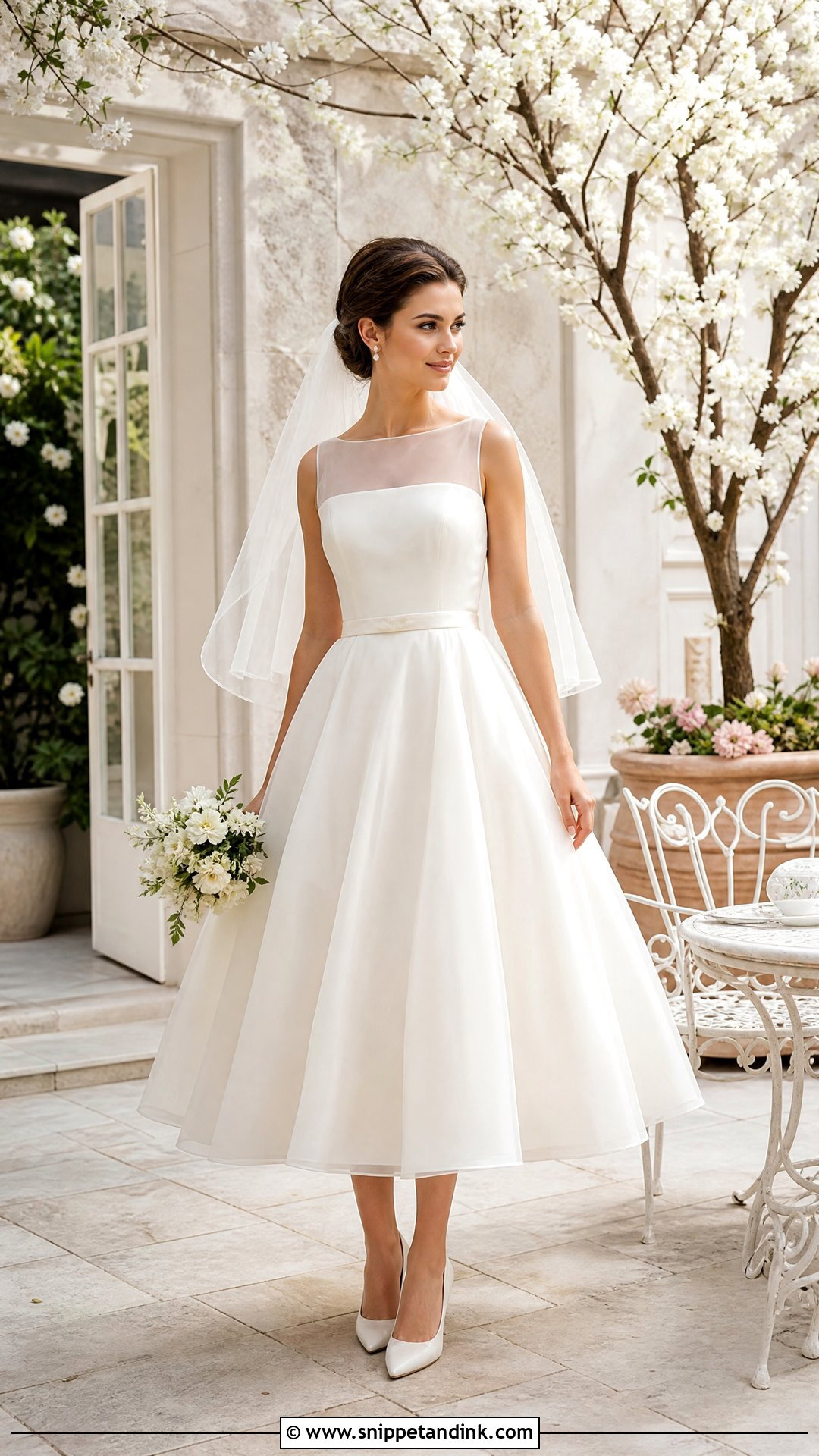
Organza is crisp and sheer, so it holds a full skirt without weight. A tea-length organza dress over a fitted bodice moves well; a floor-length gown with soft pleats suits a formal garden. It does crease where it’s crushed, so travel with the skirt laid out and not folded under you. Keep accessories minimal, because heavy jewelry looks clumsy next to such a light fabric. Spring and summer, outdoors, is its natural setting.
21. 50s Style Mikado Wedding Dress
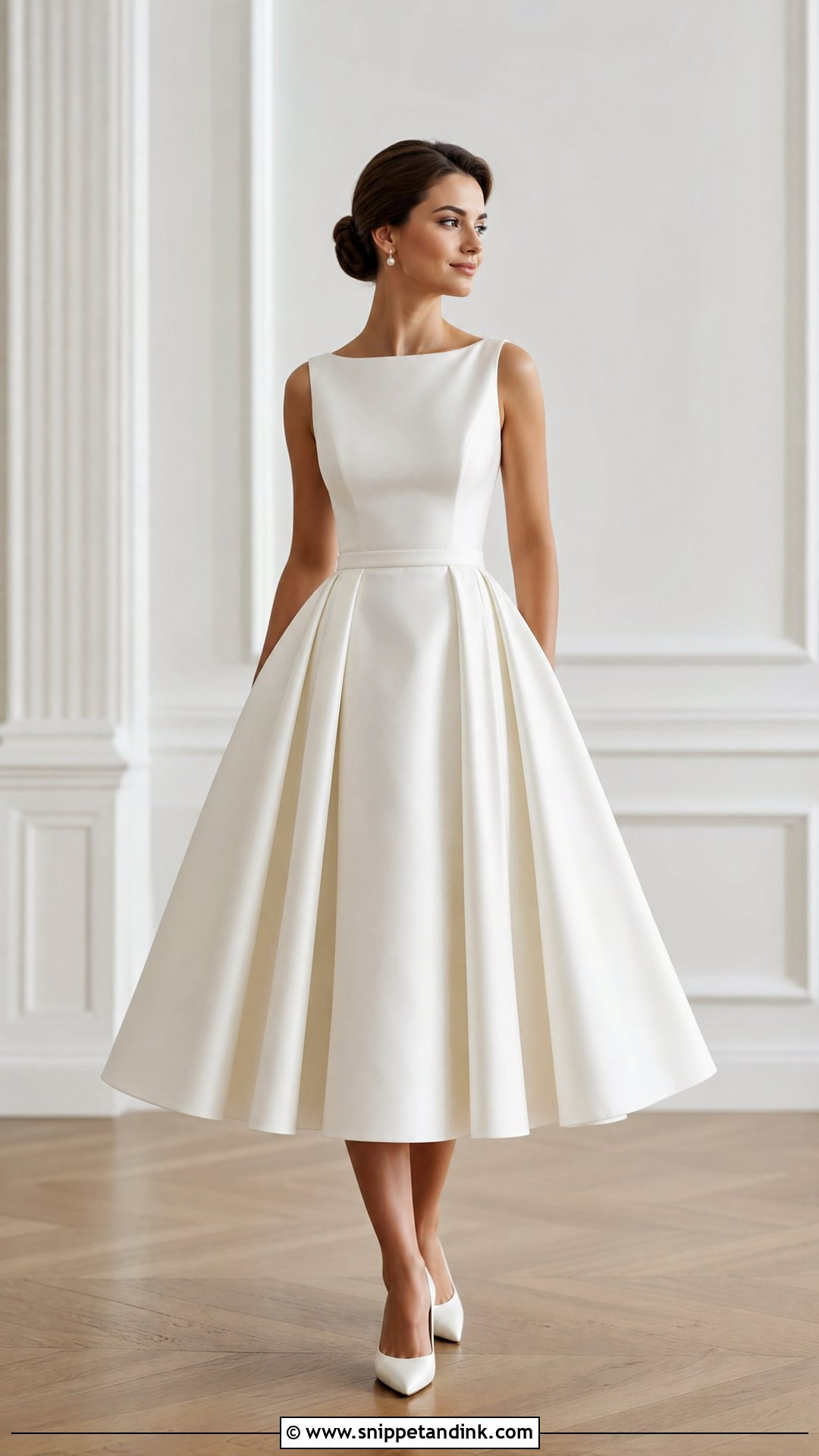
Mikado is a heavy silk blend (or a polyester version) with a dense weave and a low sheen, and it holds pleats and full skirts with almost no help underneath. That makes it the fabric I reach for when a bride wants structure without a petticoat. A tea-length mikado dress with a bateau neck reads crisp; a floor-length mikado ball gown is formal. Because the fabric already looks finished, add only pearl earrings, pointed pumps and a smooth low bun. One warning: mikado is warm, so I don’t suggest it for a hot outdoor afternoon.
22. 50s Style Courthouse Wedding Dress
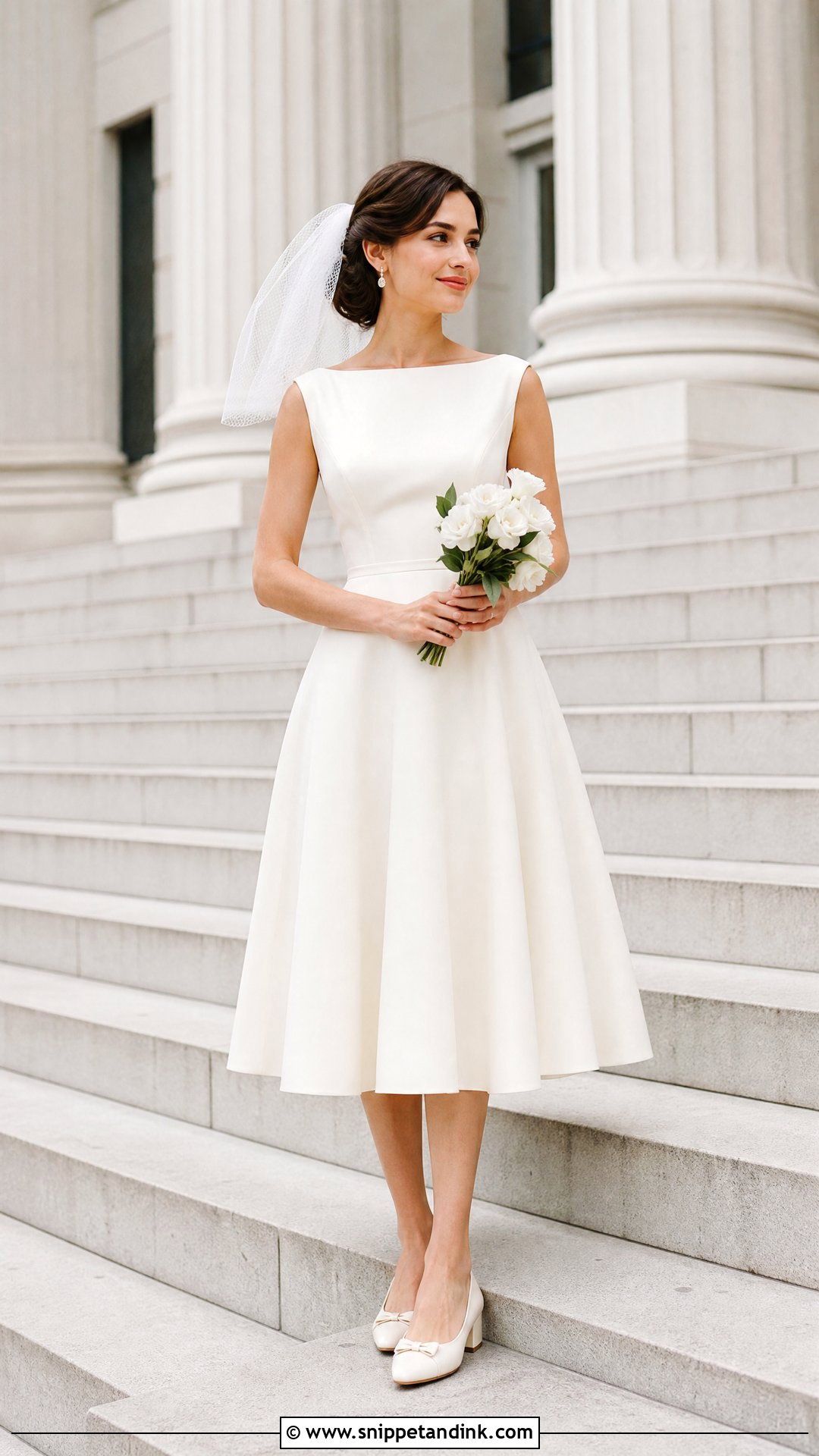
City halls suit the 50s mood well, and they rarely require a full gown. A tea-length dress, a pencil dress or a simple satin A-line is enough. Add ivory pumps, a small bouquet and a short veil, then one period detail if you want more personality: a bow belt, lace gloves or a birdcage veil. Think about the logistics of the day too. You’ll be queuing, sitting on hard benches and taking photos on steps outside, so the skirt has to be easy to manage and the shoes walkable on stone.
23. 50s Style Garden Wedding Dress
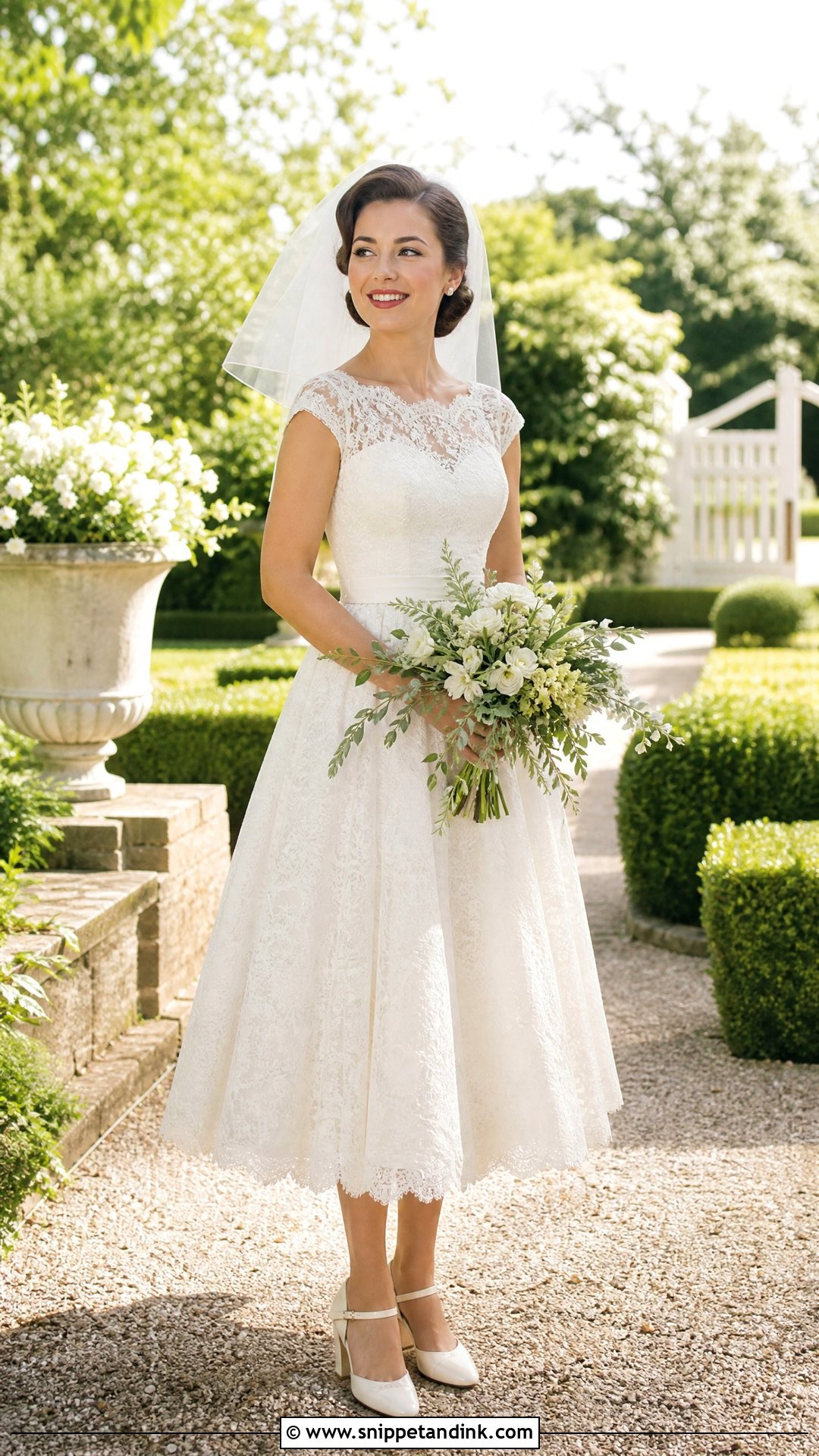
Grass and gravel decide the shape for a garden wedding. Tea-length skirts are ideal outdoors because the hem stays clear of damp lawns and paths. Ivory lace, floral lace or organza suits the setting. Shoe choice matters more than people think. Thin stilettos sink into lawn, so I put garden brides in block heels or low pumps. Pearl earrings, a short veil and a loose bouquet with greenery keep it relaxed while the fitted waist keeps it period.
24. 50s Style Plus Size Wedding Dress
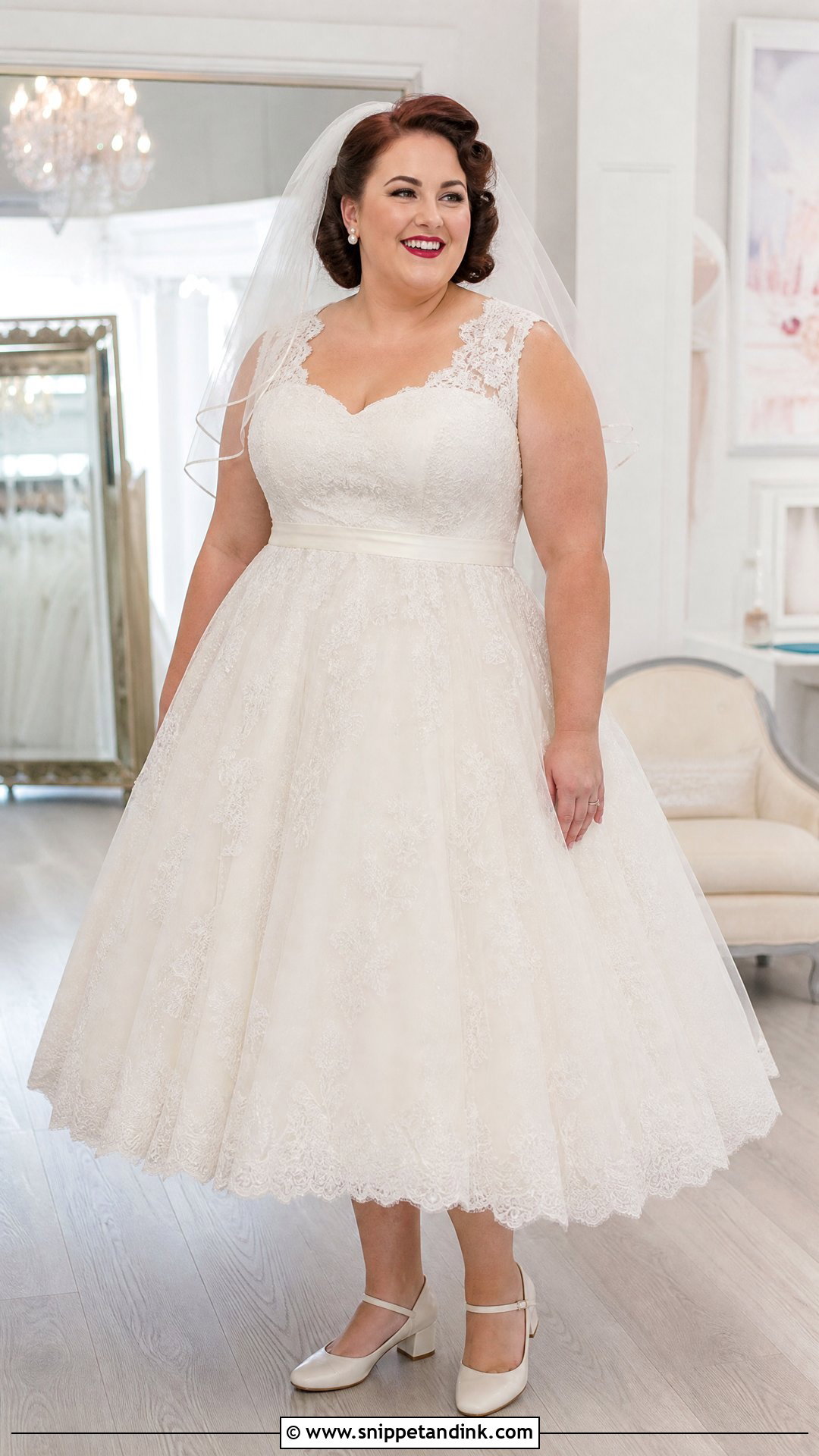
The 50s silhouette suits curvier brides because it’s built around the waist and lets the skirt fall freely from it. A plus size wedding dress in this style needs a supportive bodice, comfortable straps and fabric with enough structure to hold its shape. Tea-length A-lines, full satin skirts, lace sleeves and bateau necklines all work. A wide waistband or a softly ruched bodice gives definition without squeezing. The goal isn’t to hide your body; it’s balance and comfort, plus block heels you can stand in all day.

25. 50s Style Reception Wedding Dress
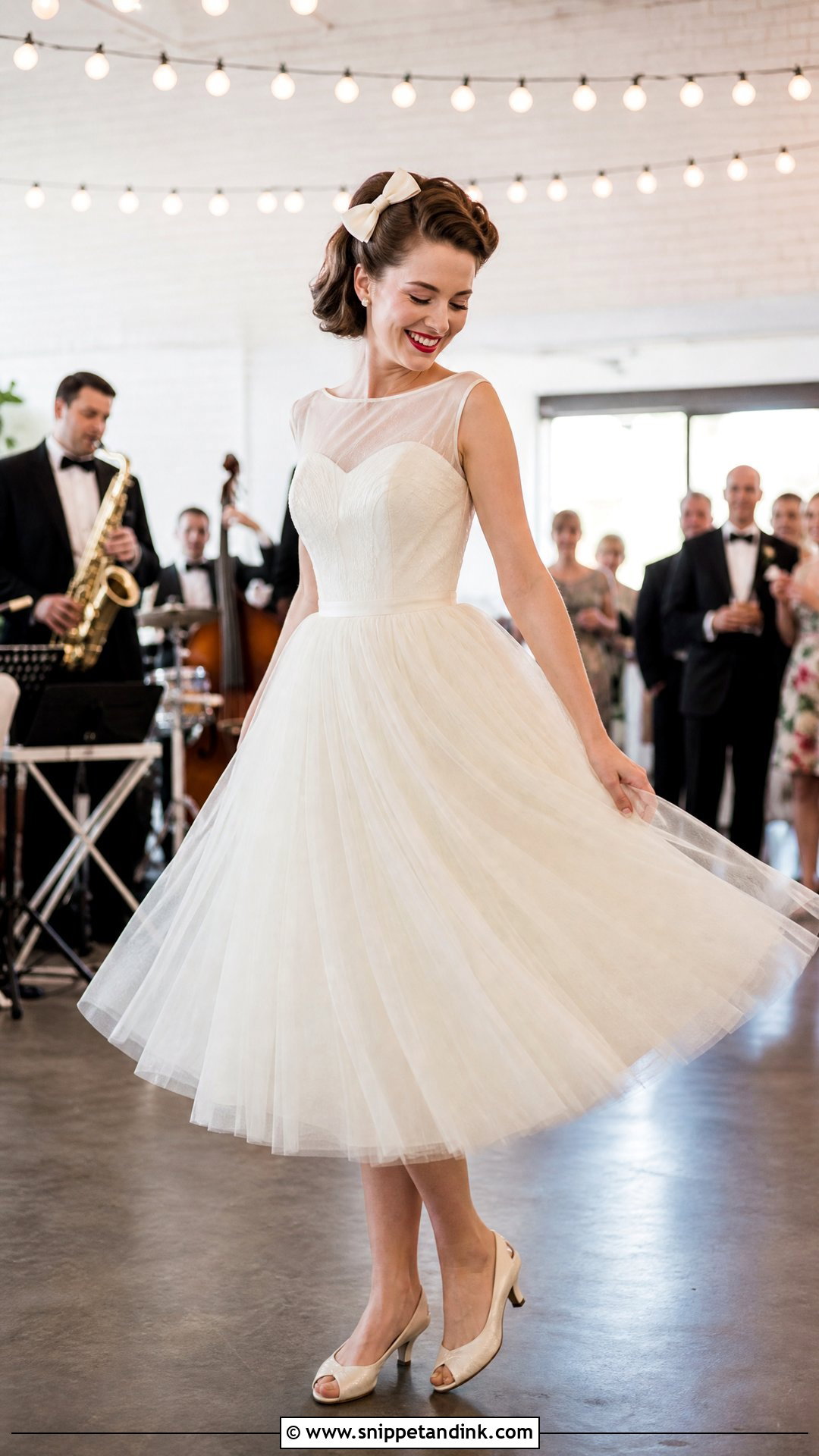
If your ceremony gown is long and formal, a short 50s dress makes an easy reception change. Tea-length tulle, a swing skirt, a satin A-line or a short lace dress all dance well. Choose a fitted waist with a light skirt, and swap the long veil for a bow or comb. Plan the change: a reception dress with a long back zip and covered buttons needs a helper, so either choose a simpler fastening or ask someone to be on hand.
What Goes Under a Full 50s Skirt
Half of a mid-century silhouette is foundation work. Getting the layers right under the dress is the difference between a skirt that swings and one that sags by the speeches.
Petticoat length and volume
A petticoat should finish an inch or two shorter than the dress hem so it never peeks out unintentionally. Soft chiffon or tulle petticoats give a gentle bell; stiff crinoline gives the dramatic dance-hall shape but crushes if you sit on it for long. Bring yours to every fitting, because the hem is set with it on.
Shaping the waist
Most 50s-style bodices are boned already. Under them, a longline bra or a light waist cincher smooths the line from bust to hip. You don’t need a tight corset. If you can’t sit comfortably for a three-course dinner in it, it’s too much.
The bathroom question
A big petticoat makes the bathroom tricky. Practise once at home: step out of the petticoat or gather all layers to the front, and decide whether a bridesmaid needs to help. It sounds trivial until the day.
Waist, Hemline and Shoes Carry the Whole Decade
What makes a dress read as 1950s is surprisingly small: a defined waist, the right hem length and one or two period accessories. Tea length, a full satin ball gown, lace sleeves or a sleek pencil shape can all carry that same mood. Pick the details you’ll actually enjoy, like gloves, a birdcage veil, pearls or a petticoat, and leave the rest. Then test everything in motion, sitting and dancing, because a vintage silhouette only looks right when it moves the way it was designed to.
You'll Like These Ideas:






Leave a Reply