
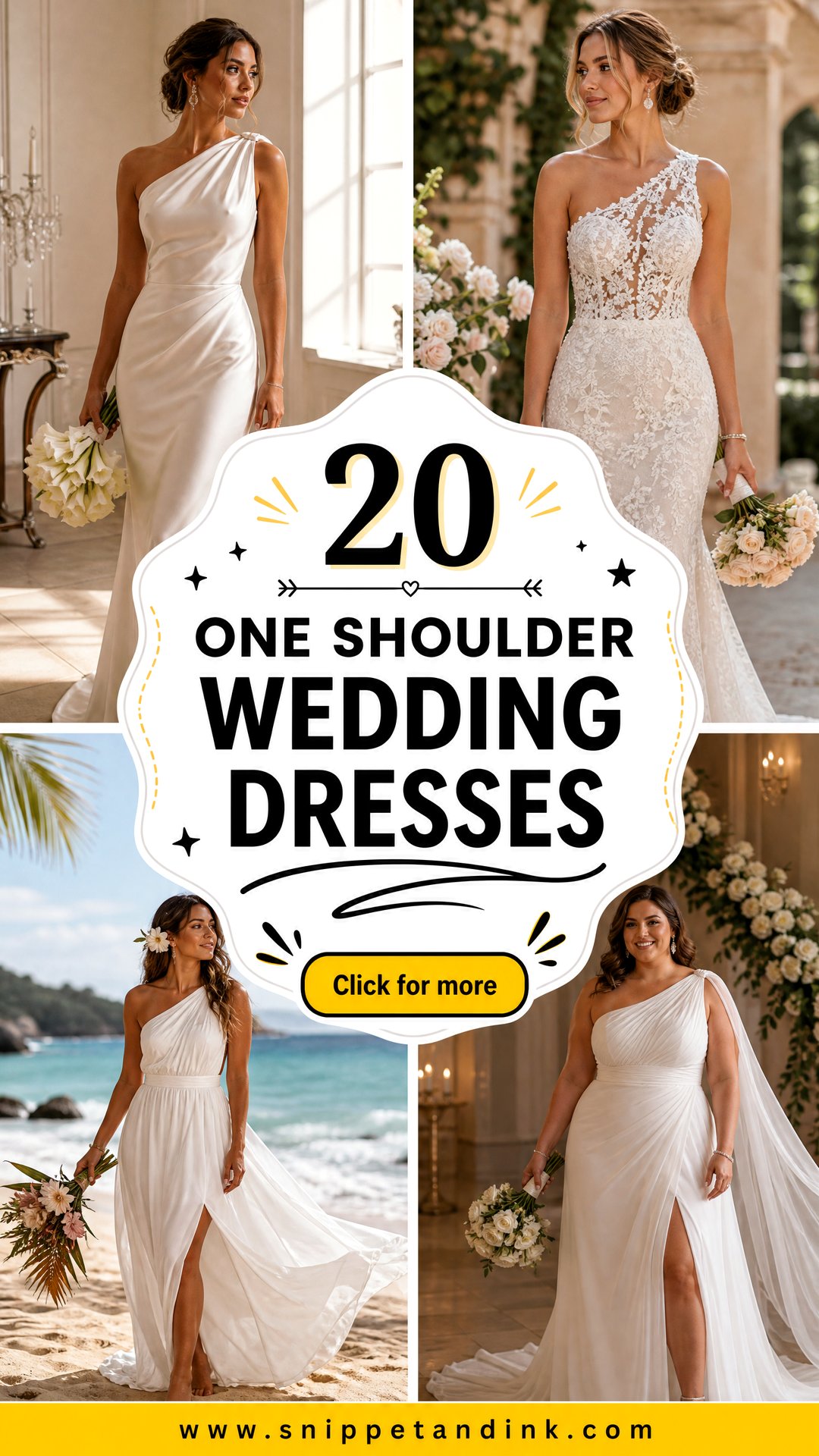
A one-shoulder neckline does something no other cut does: it draws a single diagonal across the body, so the eye travels instead of stopping. That’s why it can look sculptural in satin, soft in lace and fun on a mini. The gowns below cover sleek columns, ball gowns, beach chiffon and reception minis, each styled with shoes, jewelry, hair and a veil. When you try on an asymmetrical gown, I want you to judge three things before the mirror: how the bodice supports you, where the strap sits on your shoulder, and whether it stays put when you sit, walk and lift your arms.
Will One Strap Actually Hold You? A Quick Self-Check
Most brides can wear this neckline, but the details change with your build. Here’s what I look at in the first five minutes of an appointment.
- Bust size: with a fuller bust, the support must come from the bodice, with built-in cups and boning, not from the strap. If the strap feels like it’s holding everything up, keep looking.
- Shoulder width: broad shoulders look balanced with a wider strap or a strap set slightly in toward the neck. A thin strap at the shoulder edge can make shoulders look wider.
- Underwear: most one-shoulder gowns are designed to be worn without a bra, with cups sewn in. Ask your seamstress to add cups if yours doesn’t have them.
- Movement: raise both arms and hug someone in the fitting room. The strap should stay on the same spot of your shoulder.
One thing nobody mentions until it’s too late: tan lines. An uneven bare shoulder shows clearly in photos, so in the weeks before the wedding I ask brides to use sunscreen and to avoid wearing anything that leaves a strap mark on the bare side.
1. Satin One Shoulder Wedding Dress
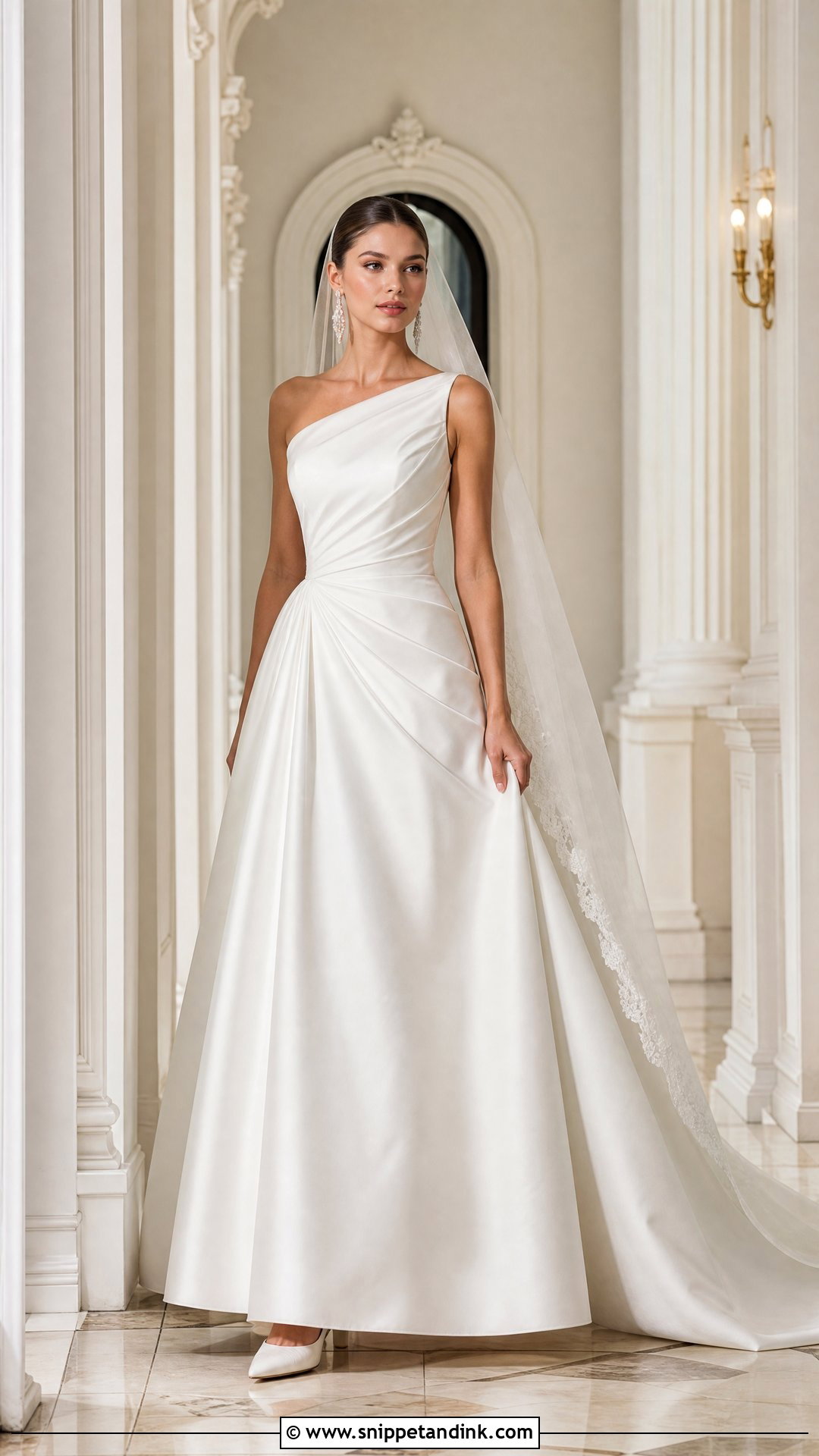
Satin is where most brides start with this neckline, and for good reason. An A-line with gentle draping at the waist and a flowing skirt moves well without heavy volume, and the sheen comes alive in evening light, hotels and ballrooms. Pointed ivory pumps, crystal drops and a compact satin clutch keep it polished; a sleek low bun keeps the neckline clear. Choose a plain fingertip or chapel veil. Satin shows every pull, so watch the single strap at fittings: if you see diagonal drag lines running from it toward the opposite hip, the bodice needs adjusting.
2. Crepe One Shoulder Mermaid Wedding Dress
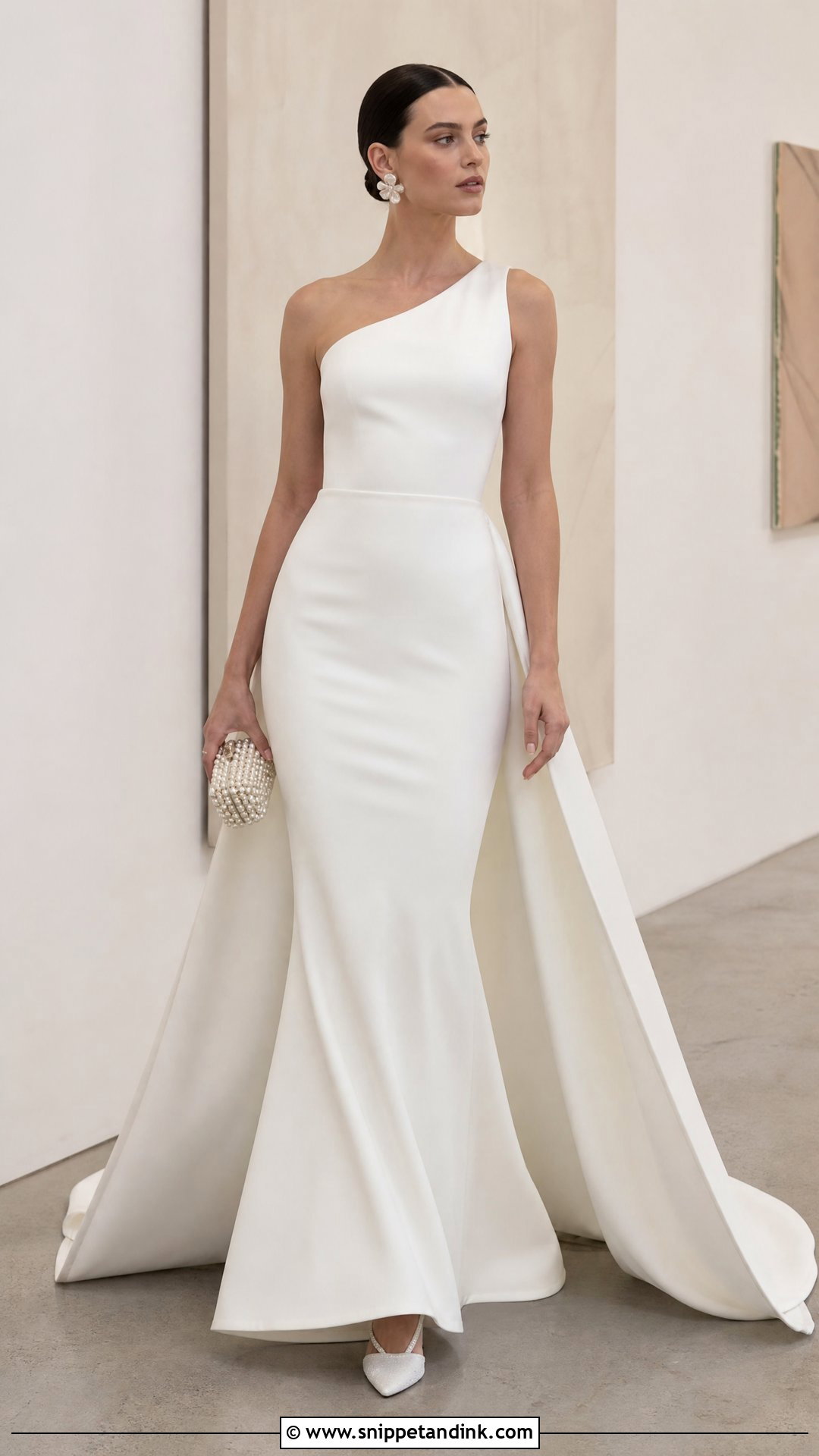
Mermaid shapes reward a confident walker. In crepe, the bodice follows the body and flares near the knee, which defines curves without shine. The thing I check first is lining and boning, then whether you can sit: a mermaid that’s fitted too tight through the thigh makes stairs and car seats a struggle. Slingbacks, sculptural earrings and a small pearl clutch, with a side-parted low chignon. Matte crepe suits quieter accessories. A detachable cathedral train gives you drama for the aisle and freedom later; practice walking and turning in the finished dress before the day.
3. Lace One Shoulder Wedding Dress
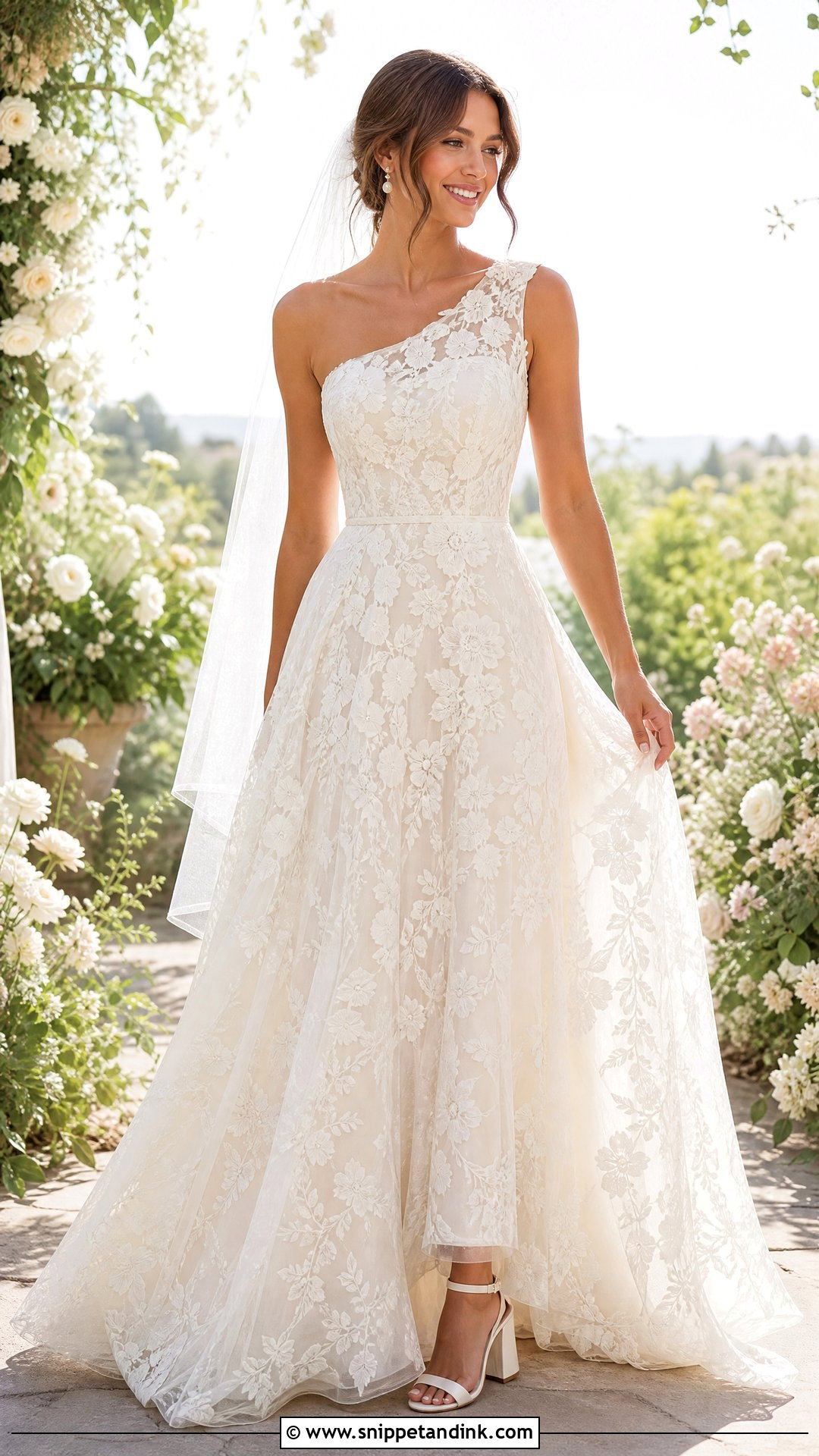
Lace takes the edge off the diagonal line. An A-line with floral lace, a fitted waist and a lightly layered skirt reads romantic without feeling old-fashioned. You can go fully lined for coverage or choose strategically placed illusion panels for a lighter feel. Pearl earrings, ivory block-heel sandals and a fine bracelet on the bare-arm side. A loose chignon shows the shoulder. Pick a plain tulle veil so two lace patterns don’t clash. At alterations, I run a finger around the armhole; appliqué edges there can scratch over a long day.
4. One Shoulder Ball Gown Wedding Dress
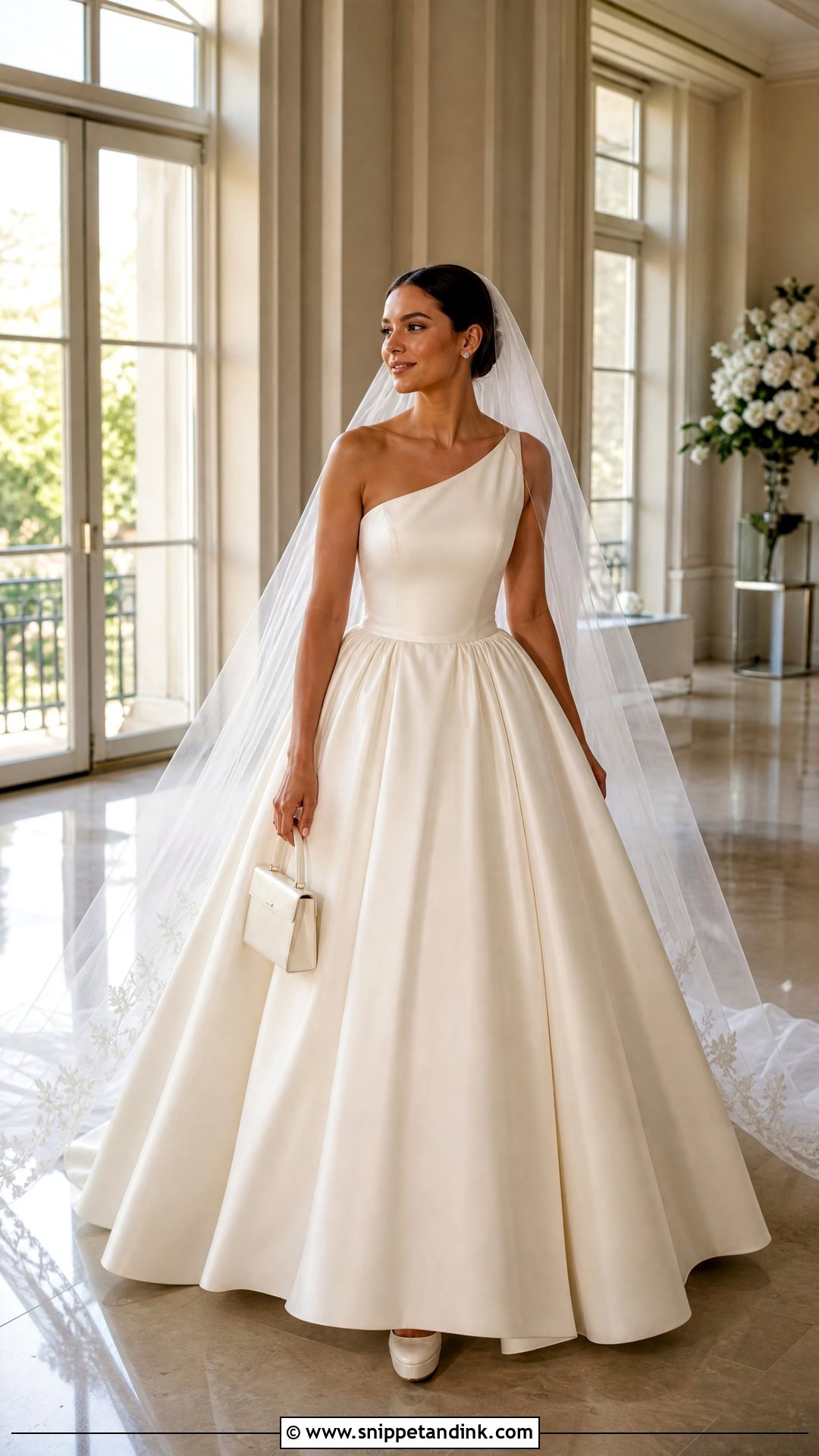
Ball gowns and one-shoulder bodices make an unexpected pair, and that’s the appeal. A fitted bodice over a full mikado or satin skirt gives the traditional princess shape a modern edge. Platform pumps, statement studs and a structured mini bag for later. A polished bun keeps hair off the strap. The skirt already does plenty, so keep the veil plain. Ask about pockets and a bustle at the first appointment; a full skirt without a good bustle is tiring to manage by the time dinner arrives.
5. Draped One Shoulder Wedding Dress
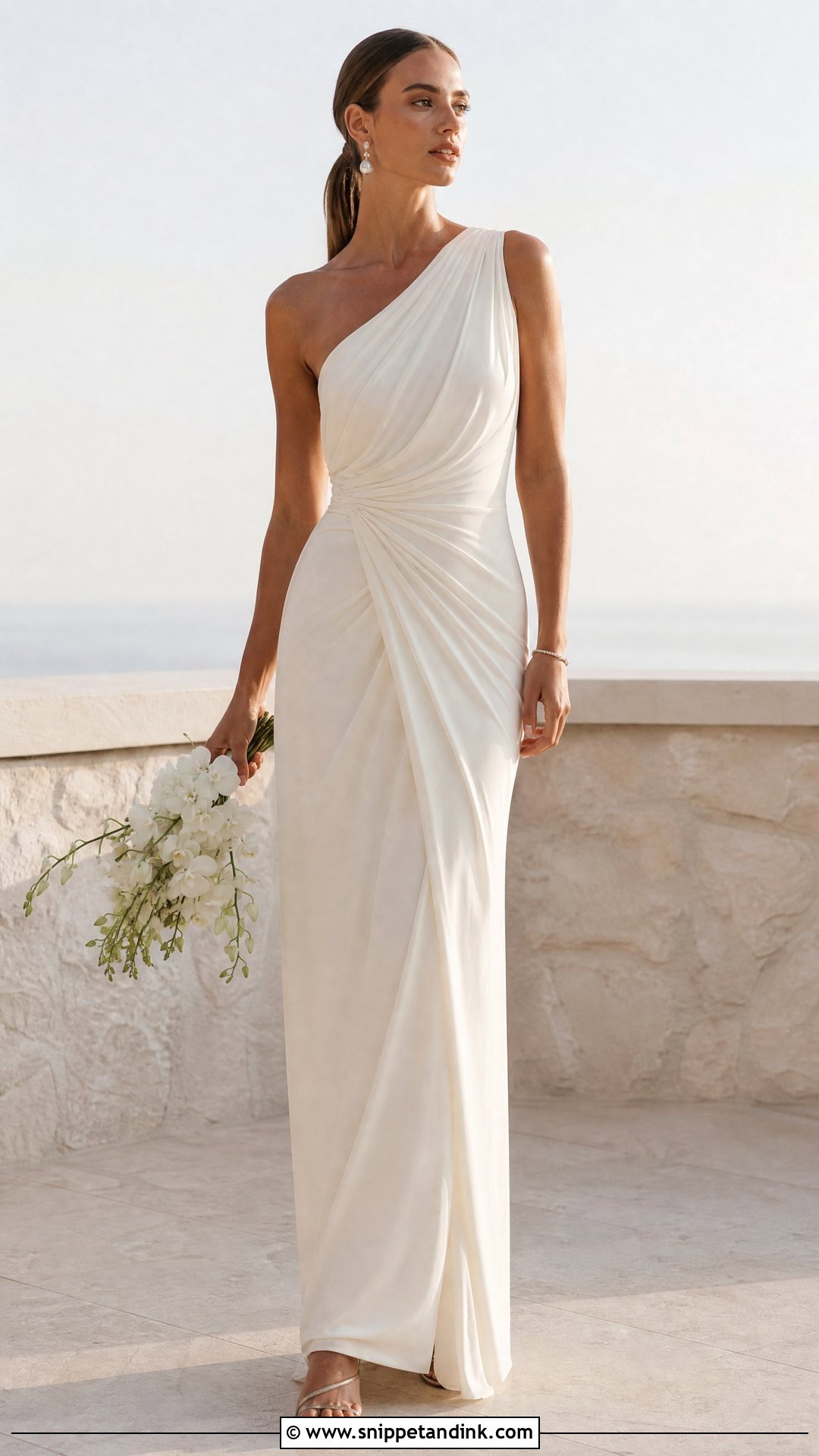
Soft draping is kinder than a corset for many brides, and it moves beautifully. I’d look for gathered fabric across the waist and a long column skirt, which gives definition without rigid boning. Metallic sandals, modern pearl earrings and a slim bracelet, with a smooth ponytail or tucked-back waves. This is the cut I’d suggest for a destination or city wedding where you’re in and out of cars. Take photos of yourself sitting before you buy; drapes that look perfect standing can bunch at the stomach or pull the strap off its line when you sit.
6. Long Sleeve One Shoulder Wedding Dress
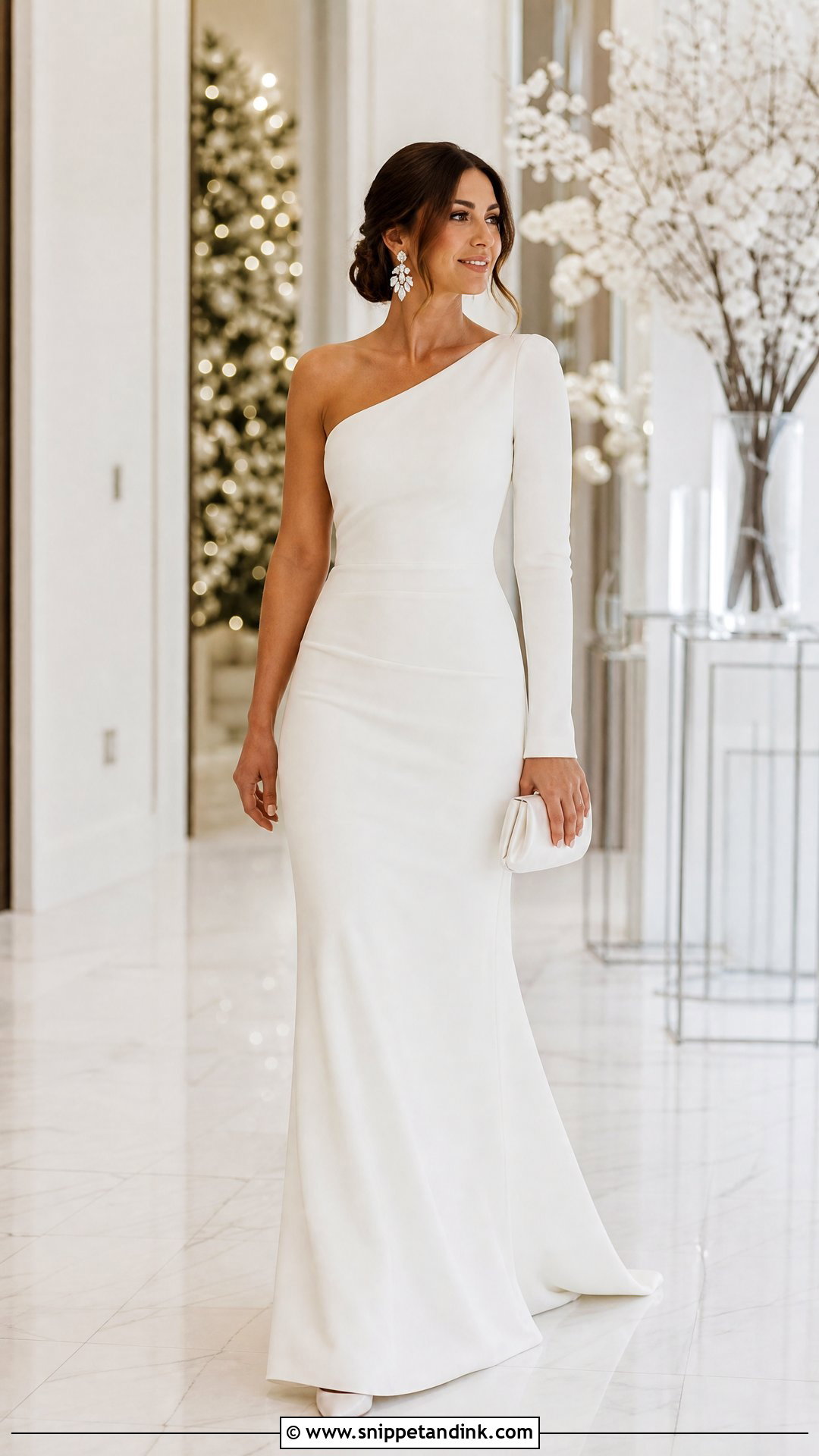
One long sleeve and one bare shoulder is an editorial look, and practical in cold weather. Fitted crepe keeps it clean; sheer lace softens it. Closed-toe pumps, crystal earrings and a velvet or satin clutch, with a sleek center-parted bun that shows the contrast between the two sides. Skip the necklace and put the interest in a hair comb or earrings. At the fitting, lift and rotate the sleeved arm as if hugging someone. A sleeve set too tight in the armhole will pull the whole bodice up every time you wave.
7. Ruffle One Shoulder Wedding Dress
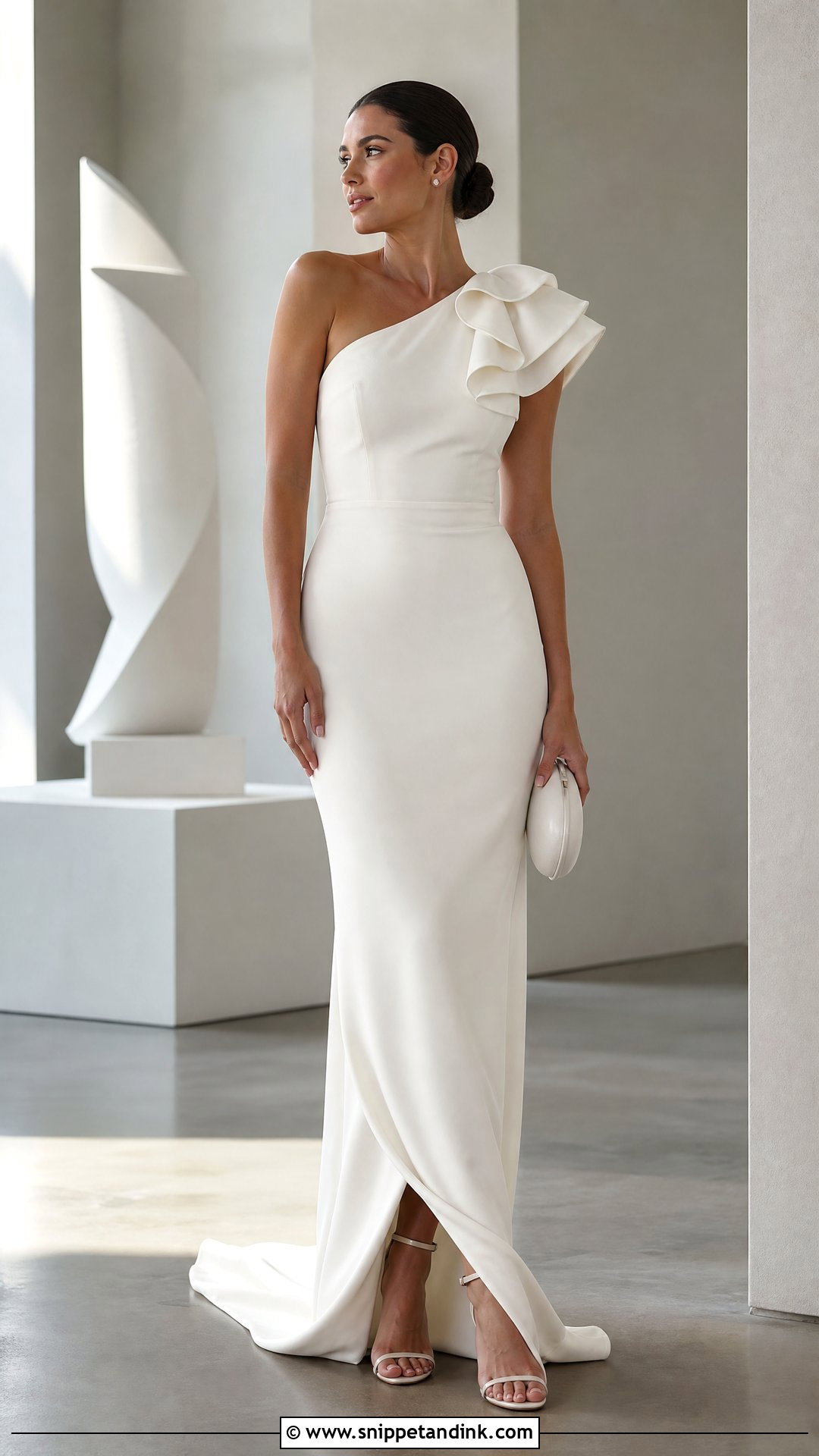
Ruffles are about proportion. The best versions start at the shoulder and fall diagonally across the bodice, sized to your frame, over a simple fitted or understated A-line skirt. Minimal ankle-strap heels, small diamond studs and a smooth clutch. Keep hair neat and away from the ruffled side, in a low bun or sleek ponytail. Skip heavy necklaces and detailed veils. Always check the back and side views: a ruffle that rises above the shoulder can look wonderful from the front and like a wing from behind.
8. Bow One Shoulder Wedding Dress
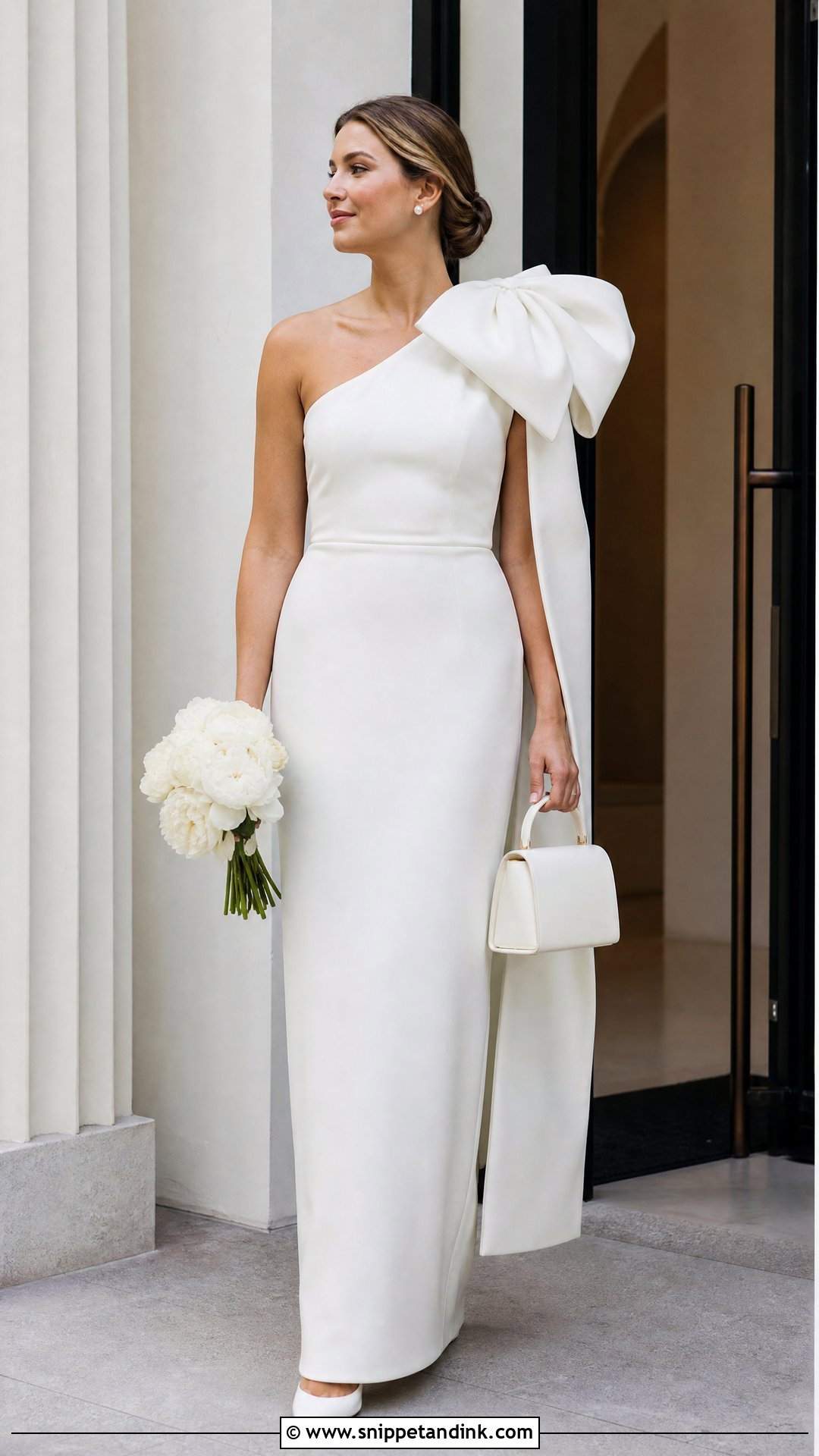
A shoulder bow turns a plain gown into a memorable one, if it’s the right size. Too small and it looks like an afterthought; too large and it covers half your face in profile. A streamlined column or fit-and-flare keeps it balanced. Pointed pumps, pearl studs and a top-handle bag, with a polished updo. If the bow detaches, you have two looks from one dress. Check that its weight doesn’t drag the neckline, and test how a long veil falls over it; a light, unembellished veil layers most easily.
9. Floral One Shoulder Wedding Dress
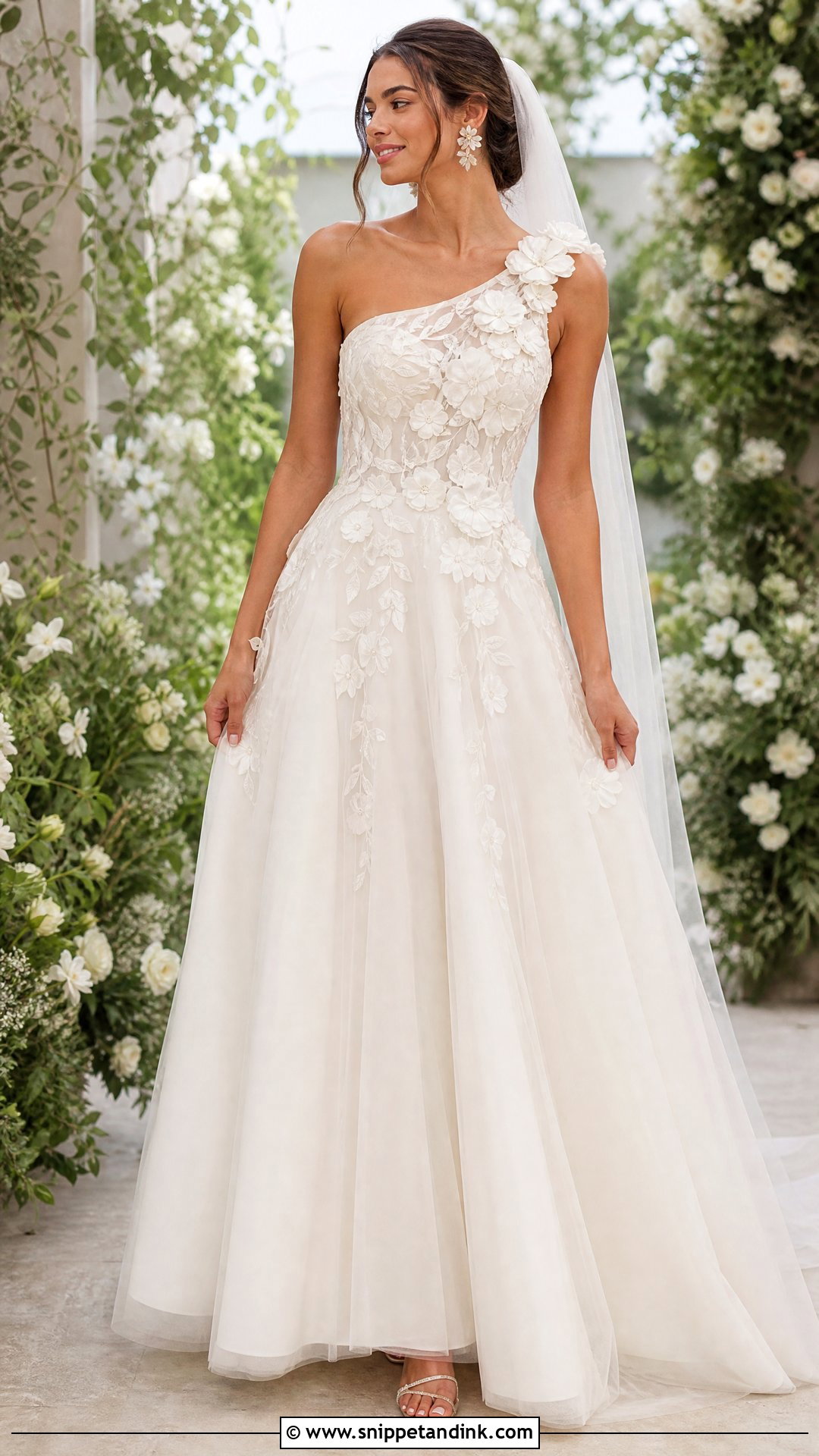
Three-dimensional flowers bring texture you can feel. On a floral one-shoulder dress, appliqués can run along the strap, bodice or skirt for a garden mood. I keep accessories delicate: thin sandals, small floral earrings and a plain ivory clutch. Wear a soft bun or loose waves swept toward the bare shoulder. A fingertip veil with scattered appliqués can work if the patterns don’t fight. Spring and greenhouse weddings suit it, though denser embroidery takes it into autumn. Watch the armhole flowers for scratching, and make sure waist appliqués lie flat when you sit.
10. Beaded One Shoulder Wedding Dress
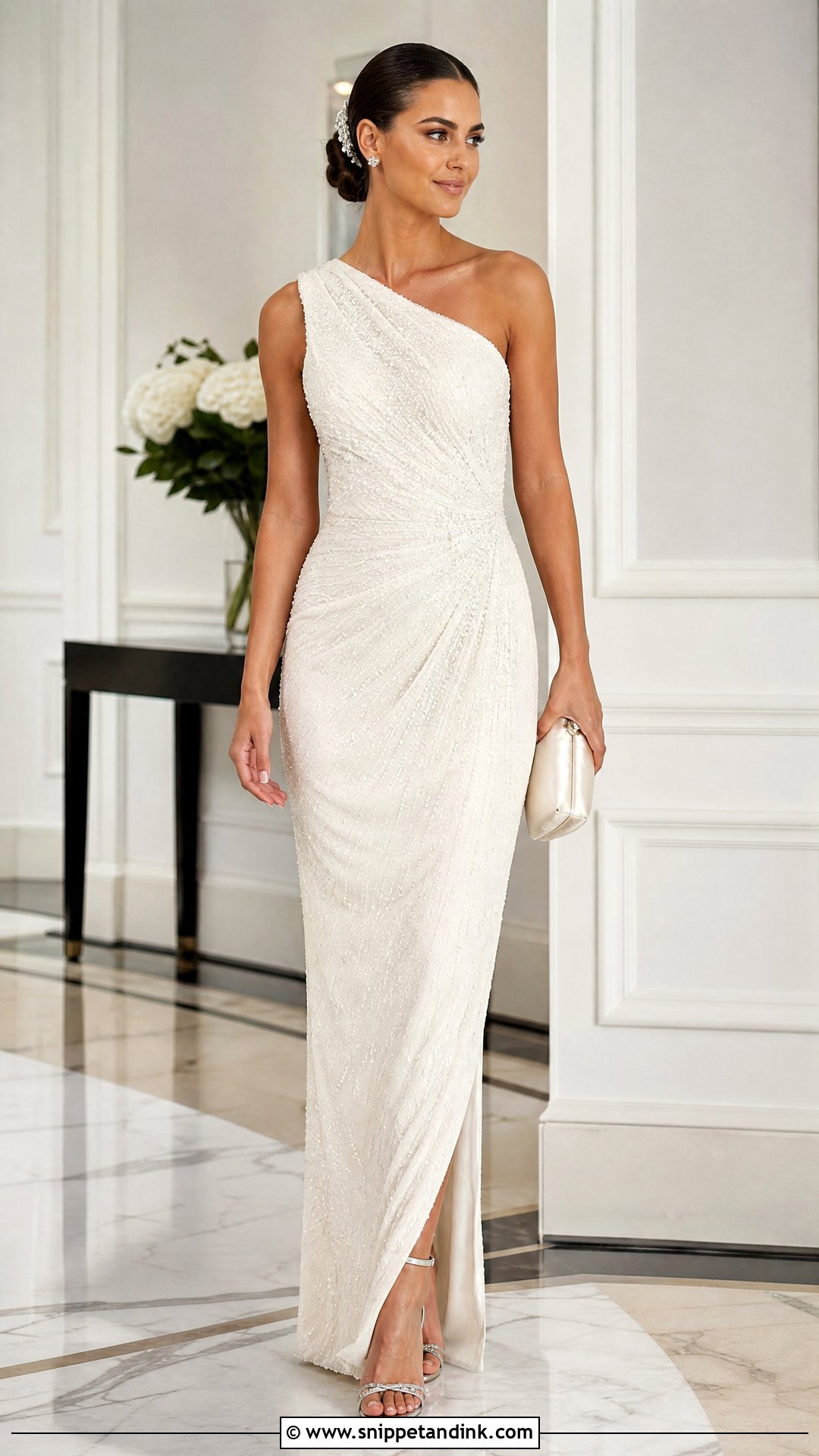
Beadwork changes the weight of a gown more than brides expect. Concentrated beading at the neckline and waist gives controlled sparkle; all-over beading is dramatic and noticeably heavier, and on a one-shoulder dress all that weight hangs from a single strap. Lift the dress before you commit. Simple metallic sandals, crystal studs and a plain satin clutch are enough. A smooth updo stops beads catching in hair. Consider a jeweled comb instead of a veil. Ask your seamstress to check the underarm for loose beads, which rub skin and snag delicate fabric.
11. Pearl One Shoulder Wedding Dress
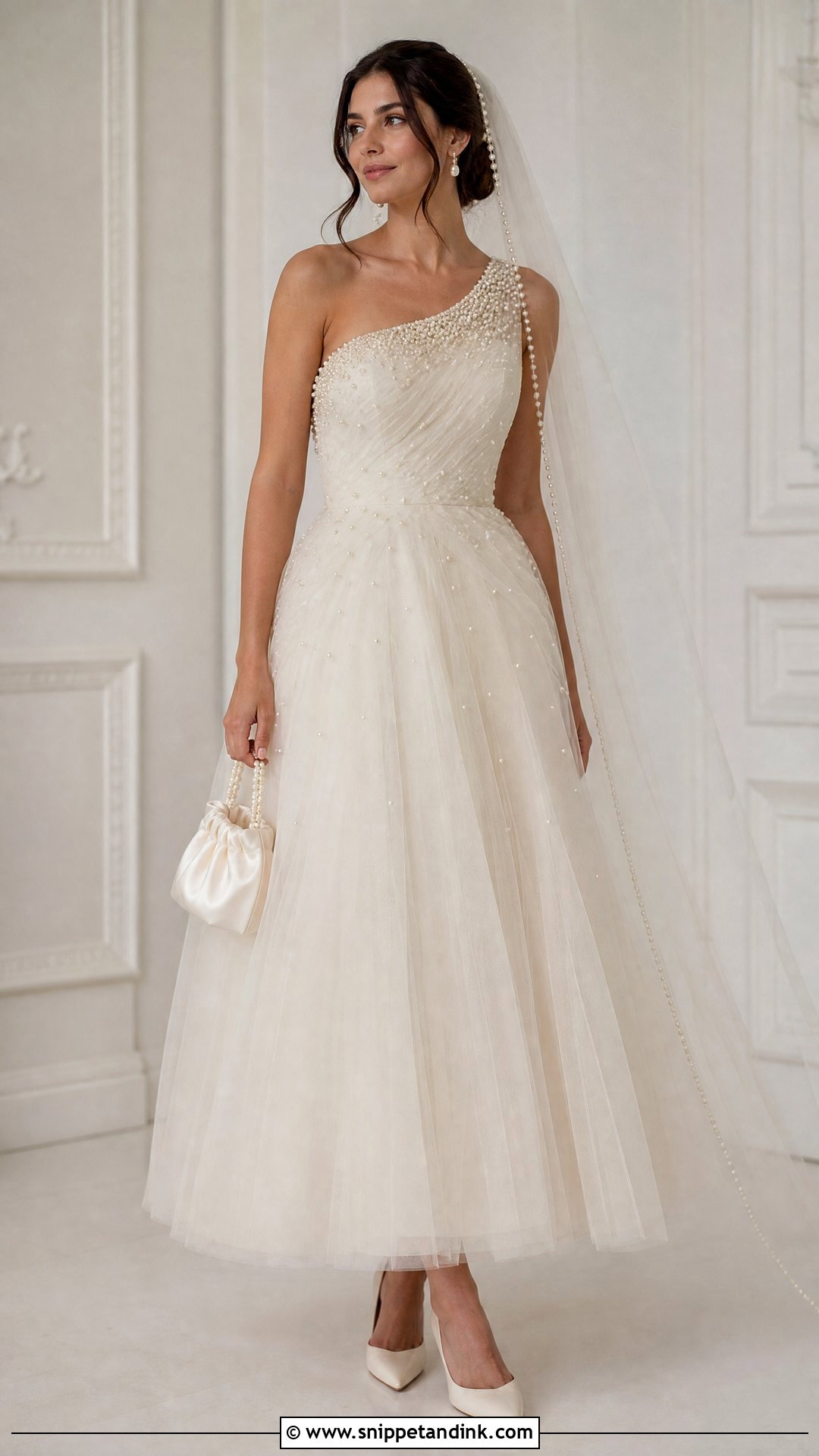
Pearls give a softer glow than crystals. They might outline the strap, decorate a sheer bodice or scatter over a tulle skirt. Pearl drops, ivory pumps and a small satin bag with minimal hardware, plus a sleek bun or ponytail to show the textured neckline. If you want a veil, go for plain tulle with a narrow pearl edge. Check the stitching around the shoulder and waist, the highest-movement areas, and look at the dress in daylight and indoors; pearls can look yellow next to a bright white fabric under some lights.
12. Minimalist One Shoulder Column Wedding Dress
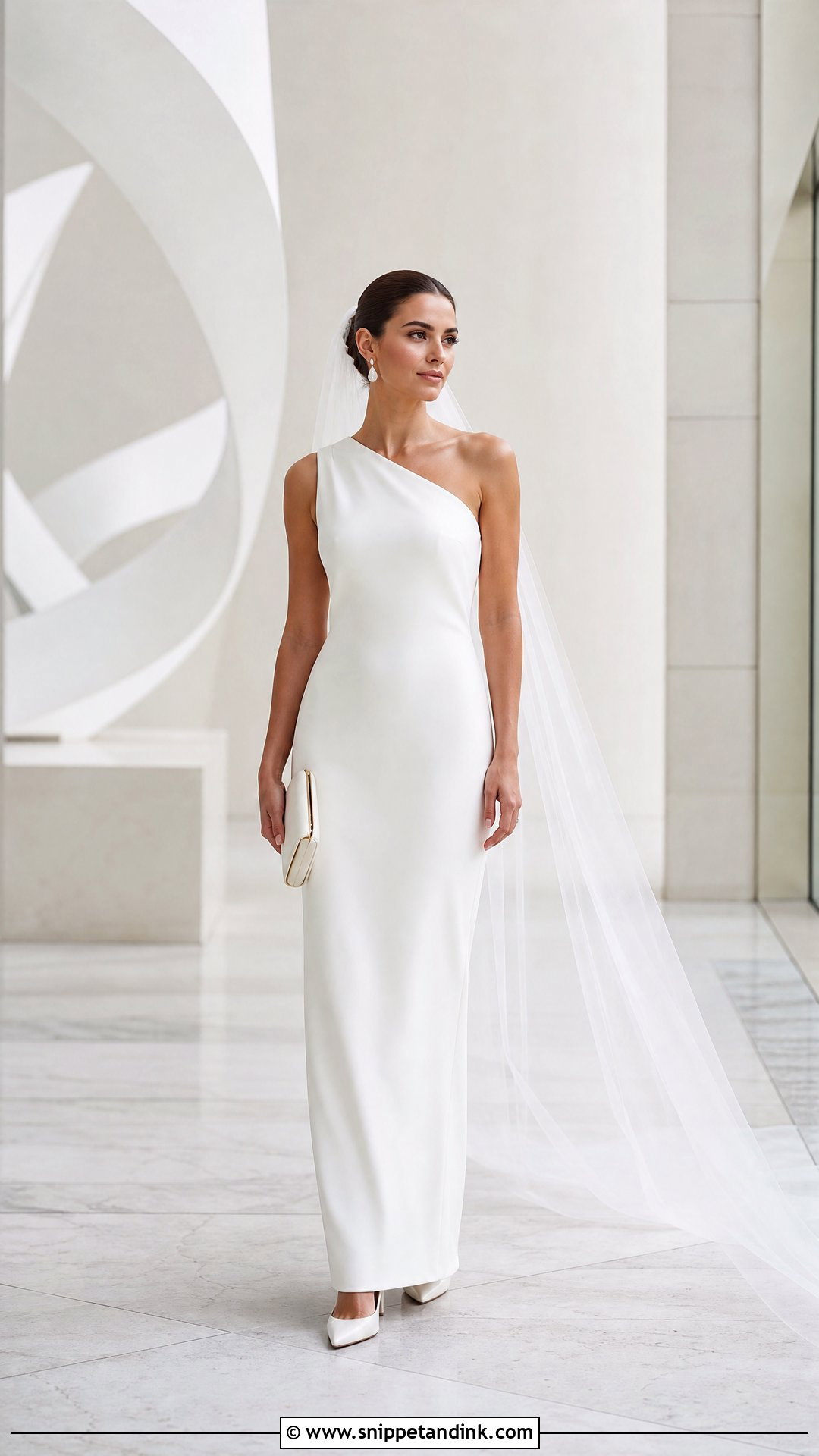
Nothing hides on a minimalist column, which is exactly why I love fitting them. Smooth crepe or matte satin creates a long, unbroken line, and the asymmetric neck is the only decoration it needs. Pointed kitten heels, geometric earrings and a structured clutch, with a center-parted low bun. A plain cathedral veil adds ceremony impact. Alterations make or break this dress: shoulder strap, bust, waist and hem all need precise work, and the fabric should skim rather than grip. Smooth underwear and well-placed internal support keep the surface clean.
13. One Shoulder Wedding Dress With Slit
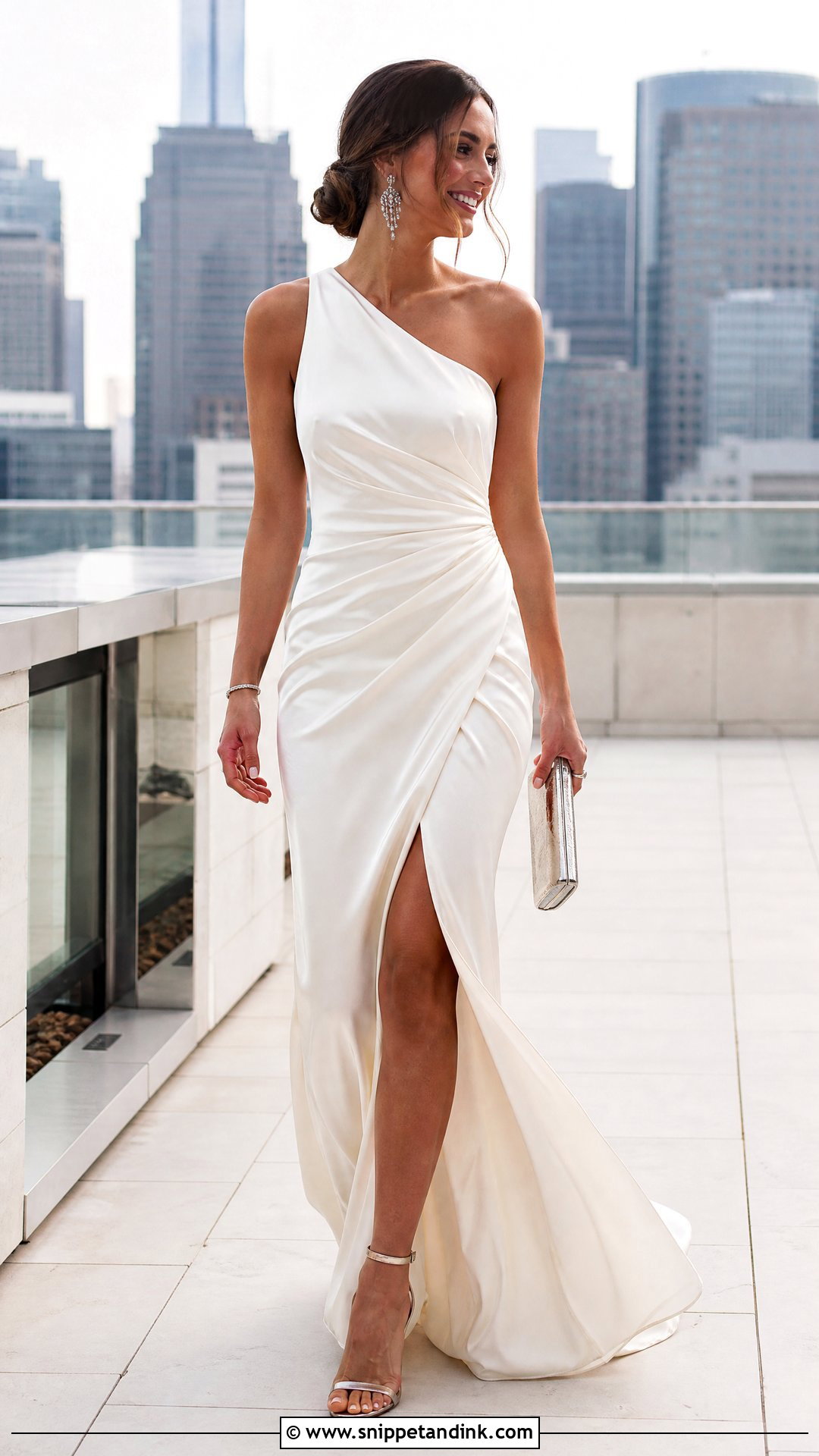
Slits look easy and need careful engineering. Draped satin or fluid crepe lets the opening fall naturally as you walk. Ankle-strap heels, statement earrings and a small metallic clutch, with a sleek ponytail or side-swept bun. Your shoes will show all night, so choose a pair you love that you can also stand in for hours. At alterations, walk, sit and climb a step; a seamstress can add a hidden snap or modesty lining if the slit opens wider than you’d like.
14. One Shoulder Wedding Dress With Cape
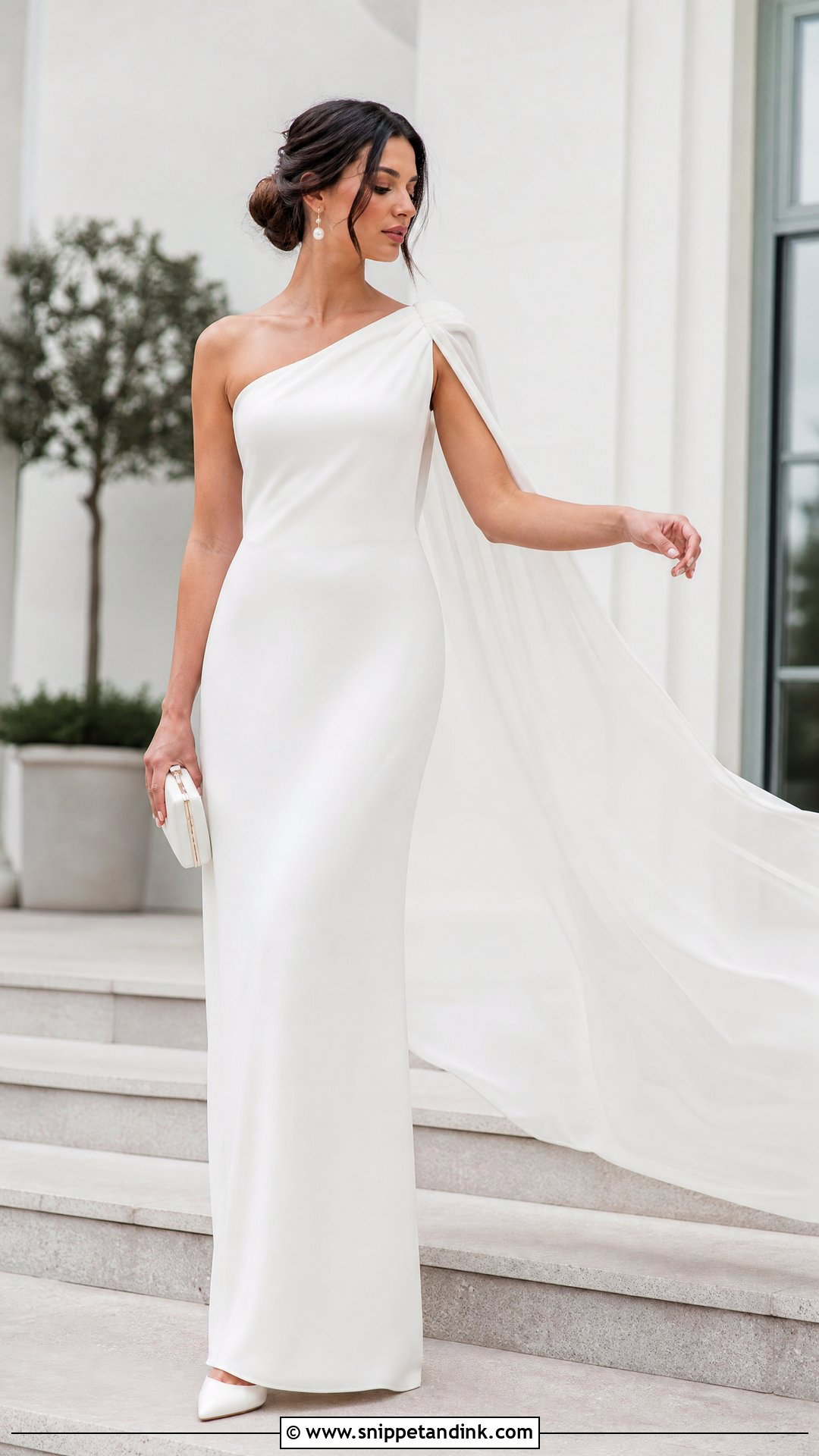
Capes add length and drama without a veil. Lightweight chiffon floats; structured satin looks more formal. Attachment can be at the shoulder, neckline or back, giving coverage for the ceremony and a quick change after. Keep the rest simple with pointed pumps, small drops and a minimal clutch, plus a sleek updo so hair doesn’t tangle in the fastening. Practice turning and walking at your fitting to make sure the layer hangs evenly. Ask whether you can remove it yourself, because a cape that needs two helpers will stay on all night.
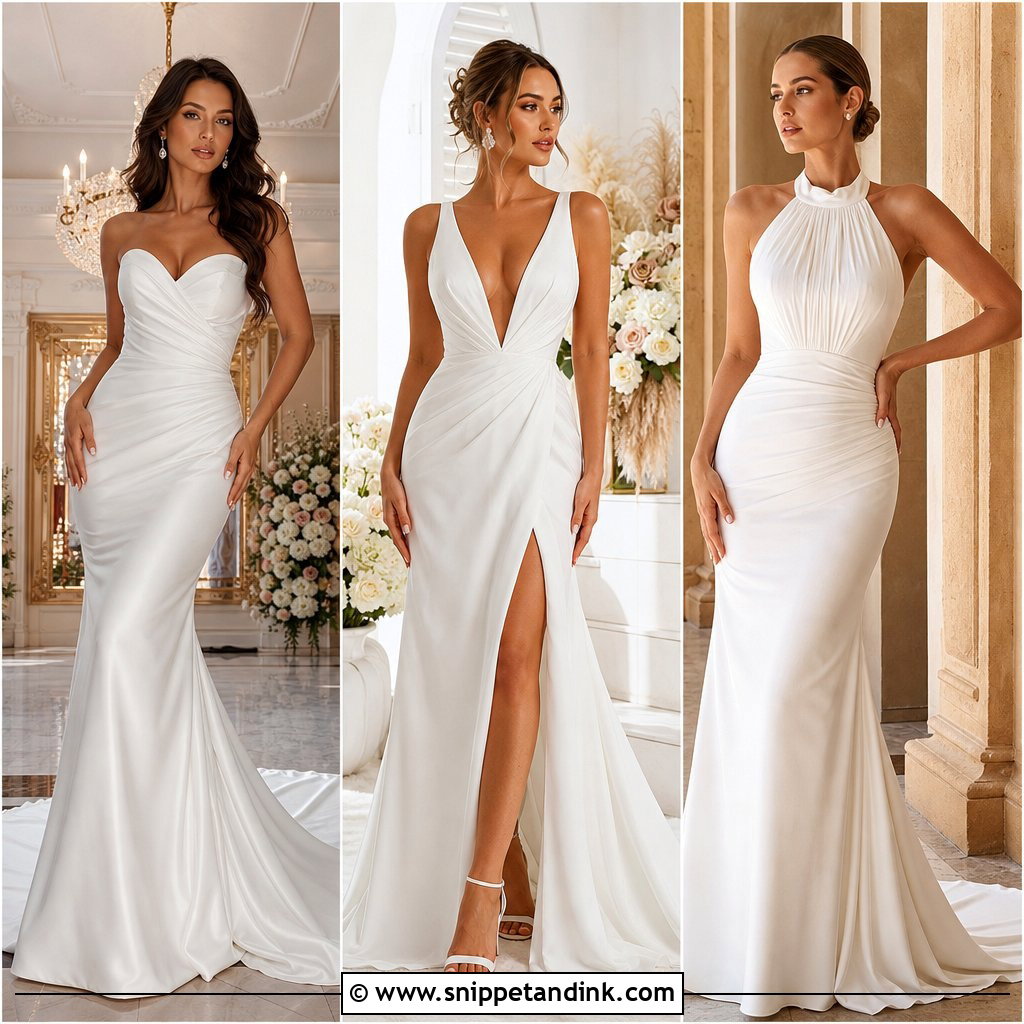
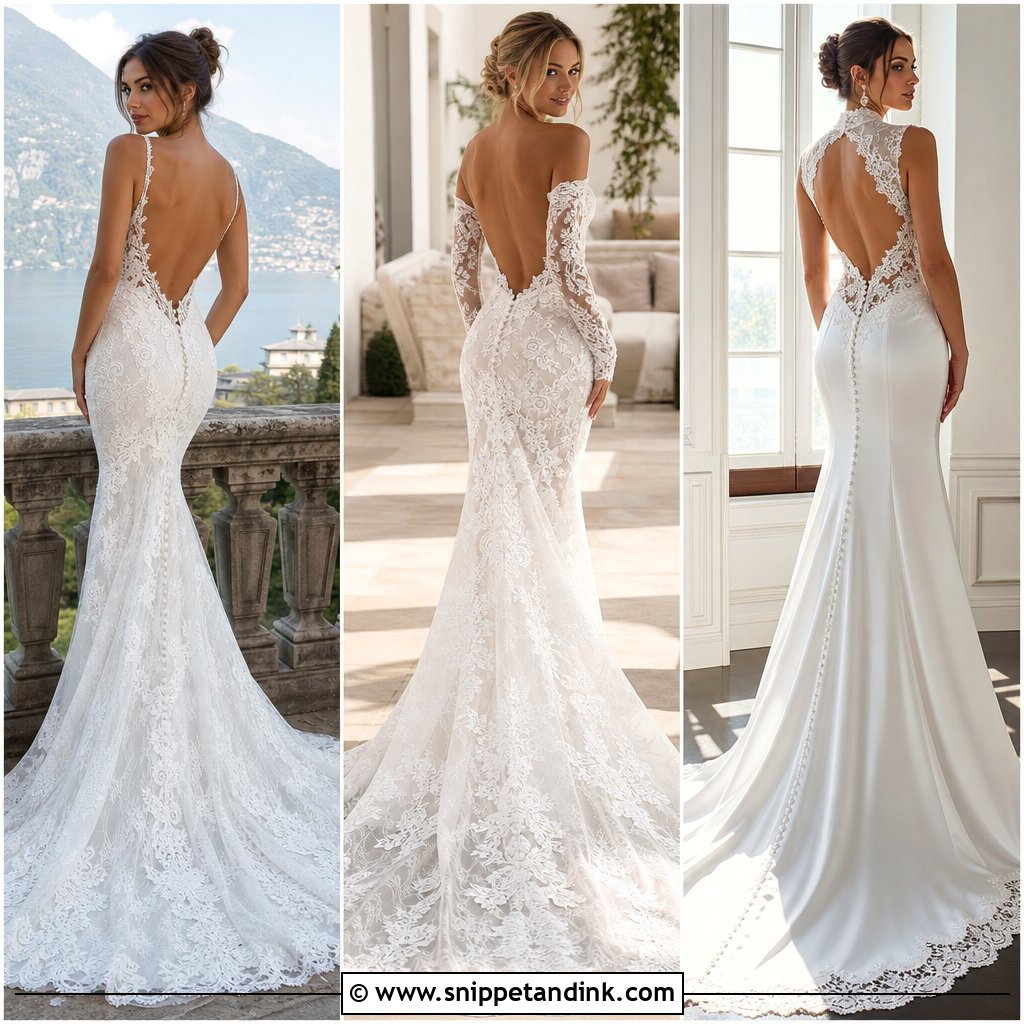
15. Corset One Shoulder Wedding Dress
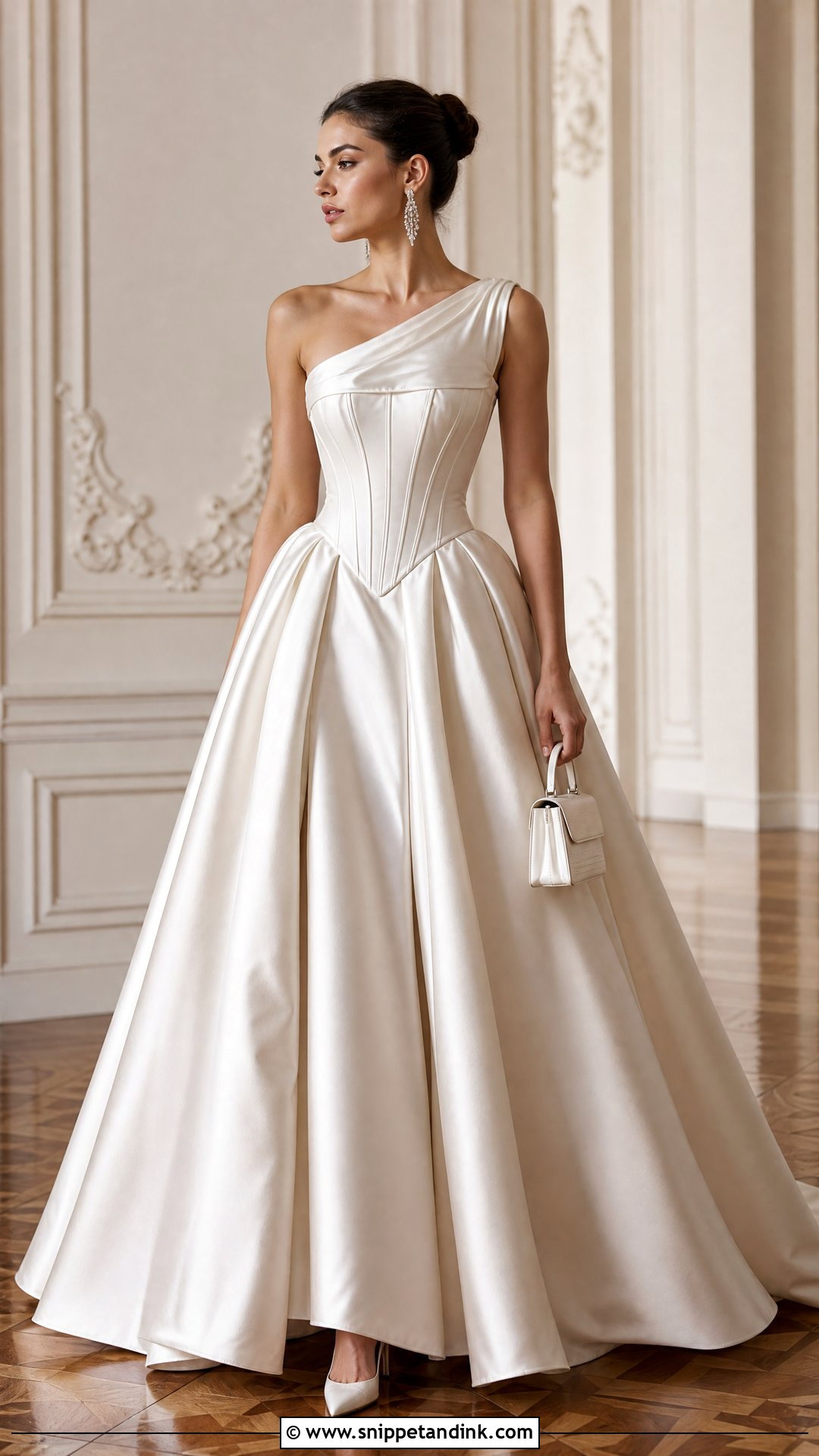
Corsetry is what makes a one-shoulder dress feel secure for some brides, because the bodice, not the strap, carries the support. Look for smooth internal boning, secure cups and a waist that’s firm without restricting your breath. A full skirt makes it romantic; a fitted skirt makes it sharper. Classic pumps, crystal earrings and a small structured bag, with a neat chignon. Exposed boning calls for a simple veil and little jewelry. Sit and take a few deep breaths at the fitting; the bodice should stay level without pinching or gaping.
16. Basque Waist One Shoulder Wedding Dress
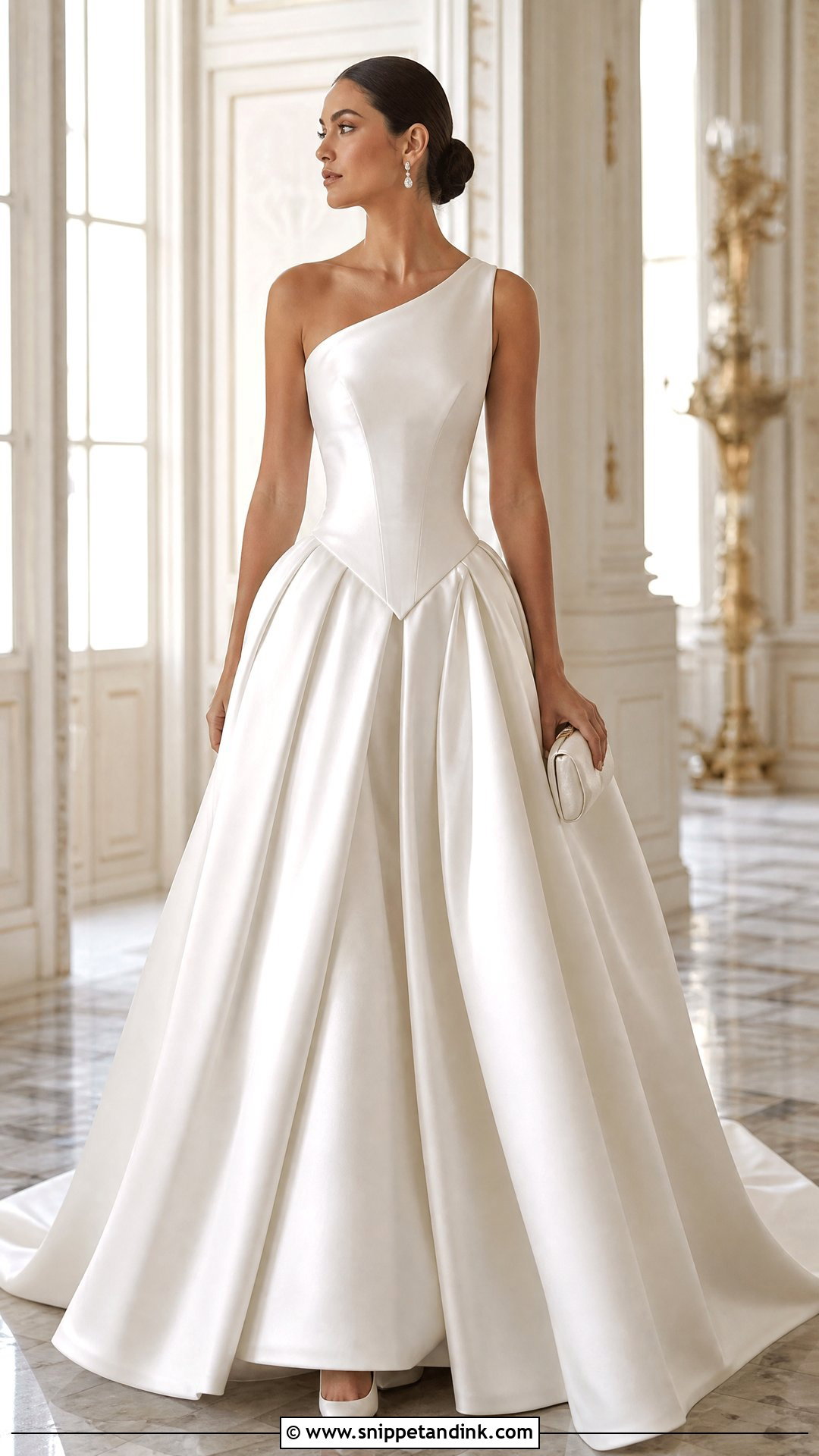
A basque waist dips to a point below the natural waistline, and it gives a one-shoulder bodice a strong vintage line. Over a full satin skirt it’s formal and structured; over tulle it’s lighter to wear. Pointed ivory pumps, delicate drops and a compact satin clutch, with a clean low bun. Don’t add a wide belt, which cuts straight through the point. I check two things at every fitting for this style: that the point lies flat when you sit, and that the strap sits level, because uneven tension tips the whole bodice.
17. Chiffon One Shoulder Beach Wedding Dress
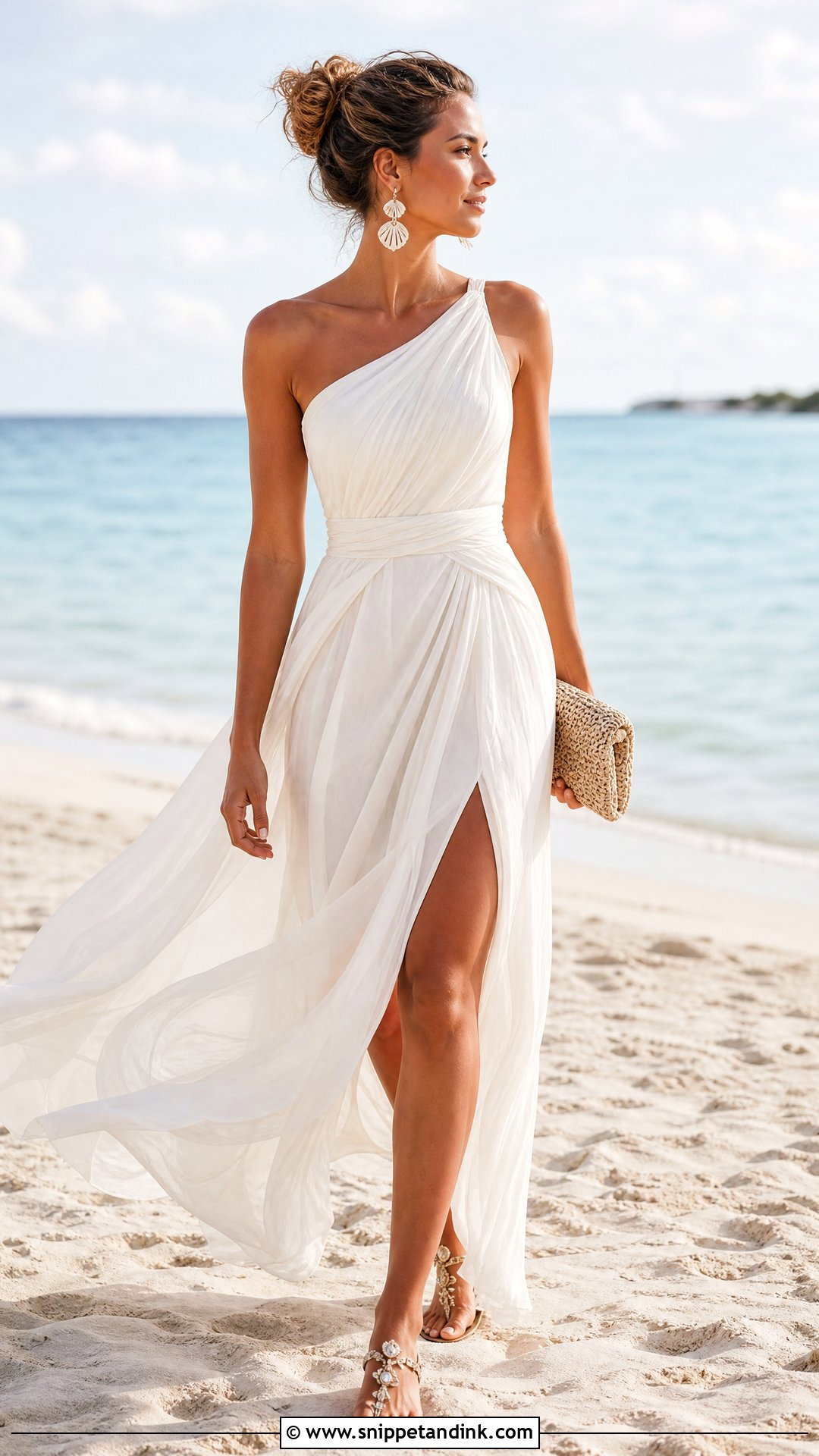
Sand, wind and sun change the rules. Lightweight chiffon moves in a breeze and keeps you cool. An empire or softly defined waist lets the skirt flow without feeling formal. Flat embellished sandals, shell-inspired earrings and a small woven or satin clutch. Choose a textured low bun or secured braid, since loose hair and wind don’t mix. A short light veil or floral comb beats a cathedral veil on sand. Check the lining in direct sunlight for transparency. The hem should skim rather than drag, and the strap needs to stay secure when the wind catches the skirt.
18. Plus Size One Shoulder Wedding Dress
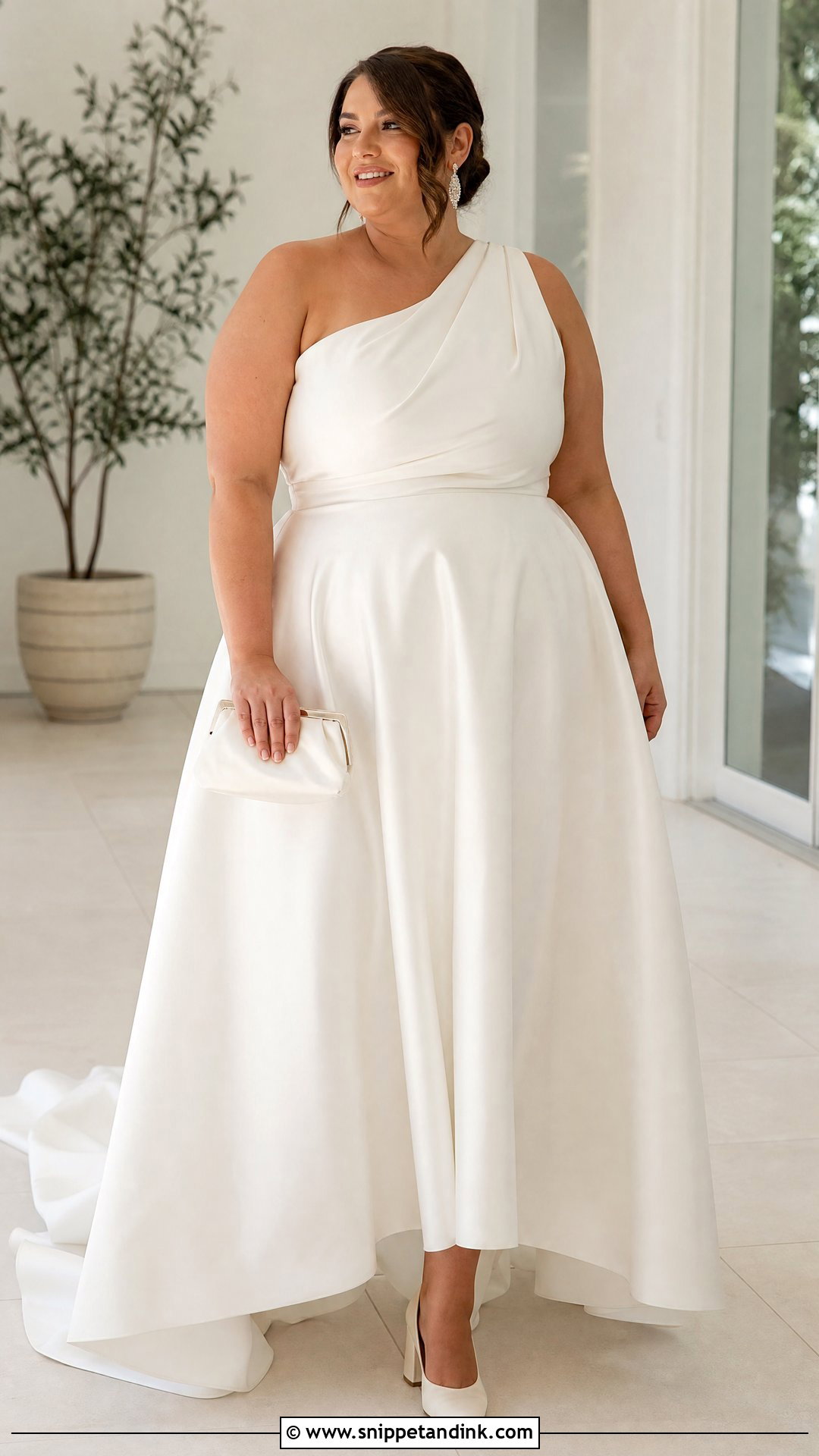
Plus-size one-shoulder gowns depend on construction more than on silhouette rules. A structured A-line defines the waist and moves easily; fitted crepe skims curves for a sleeker look. Either way, I look for boning, secure cups, good lining and a strap wide enough to spread the pressure, because a thin single strap digs in. Block-heel pumps, statement earrings and a satin clutch, with a side-parted bun or swept-back curls. Ignore old body-shape rules and choose what feels secure and looks like you. Bring your real underwear and shoes to every fitting.
19. Tea Length One Shoulder Wedding Dress
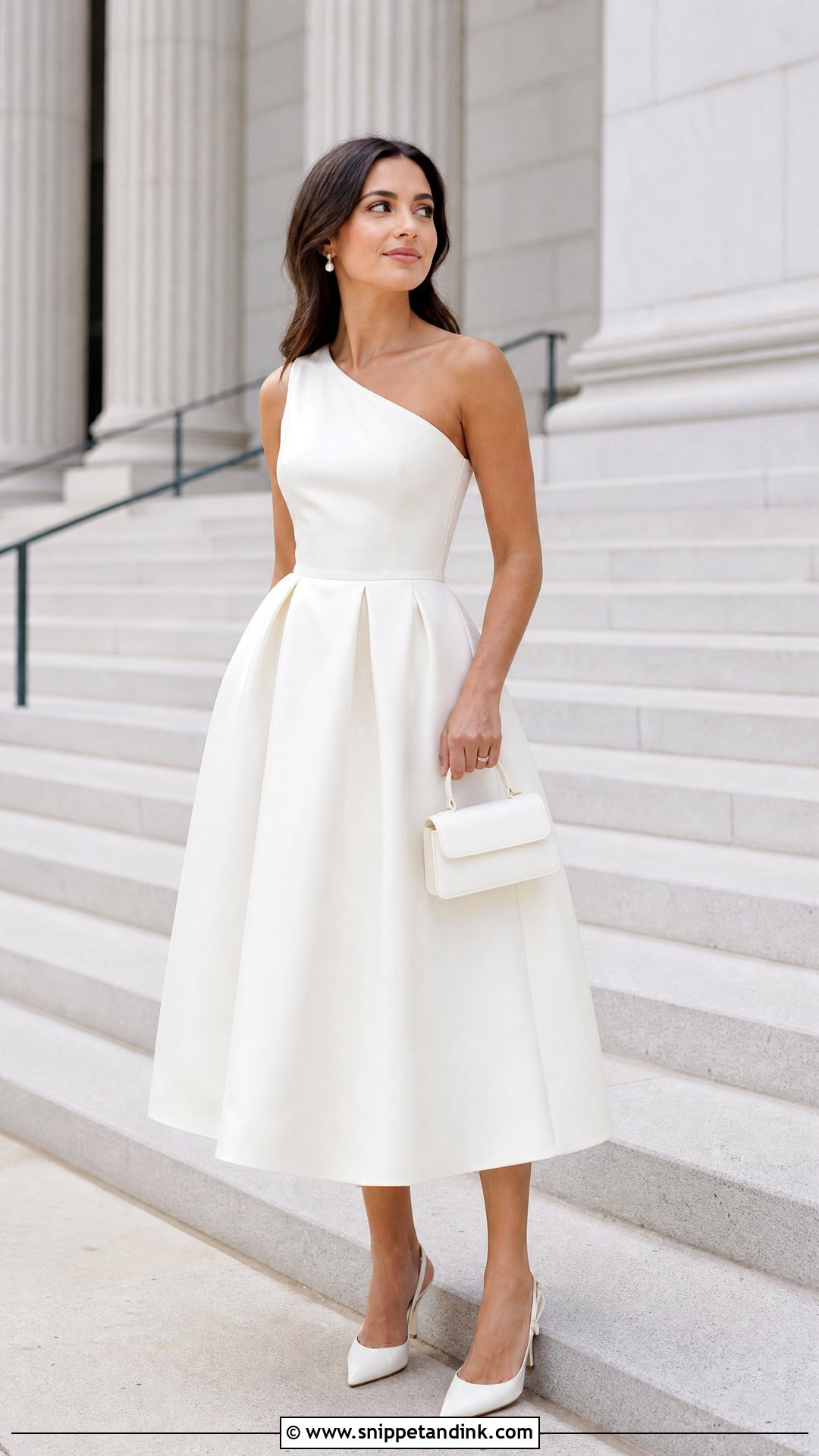
Tea length is the most practical length in the whole collection. The hem sits between knee and ankle, so the shoes become part of the dress. A structured satin or mikado skirt with pointed pumps, slingbacks or embellished block heels, plus pearl earrings and a small top-handle bag. A sleek ponytail or curled bob keeps the neckline clear. It suits courthouse ceremonies, daytime parties and second looks. Set the hem in your final shoes; even a small change in heel height alters where the skirt falls on your leg.
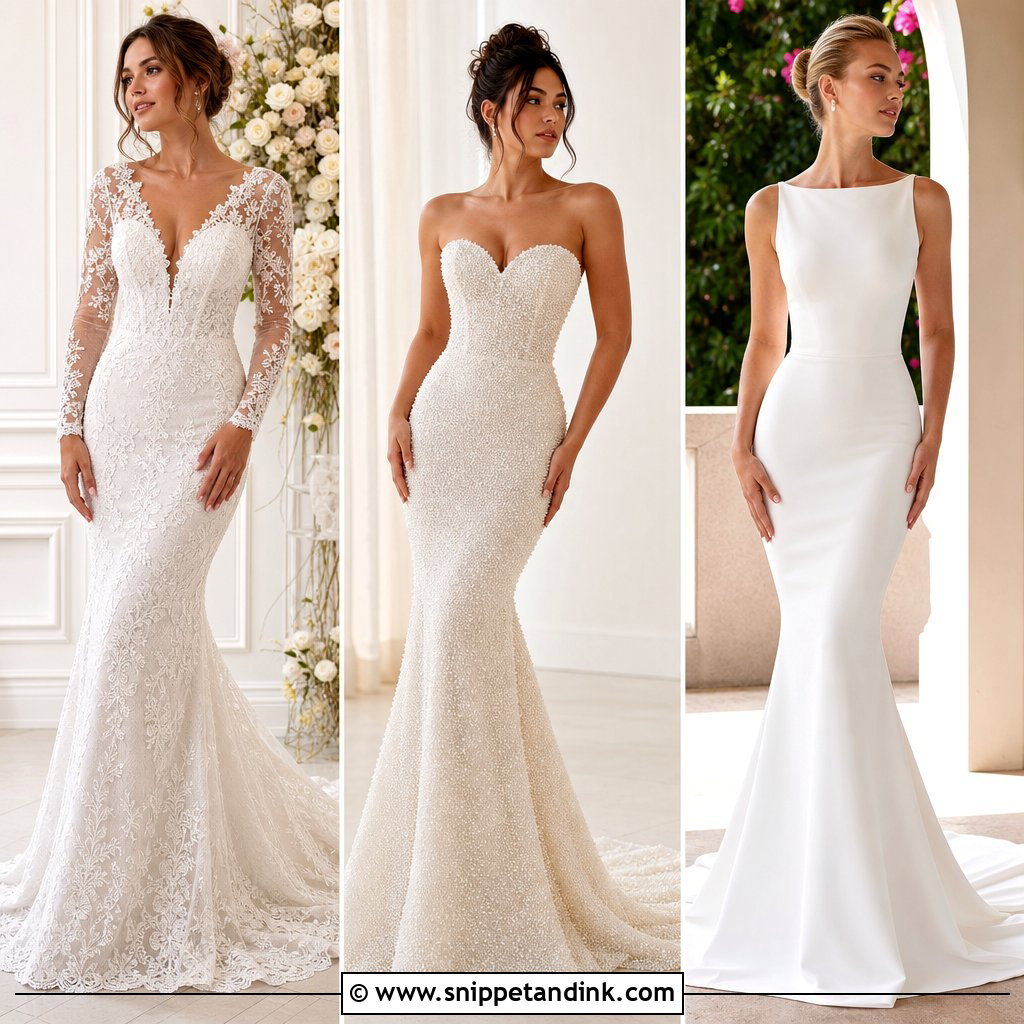
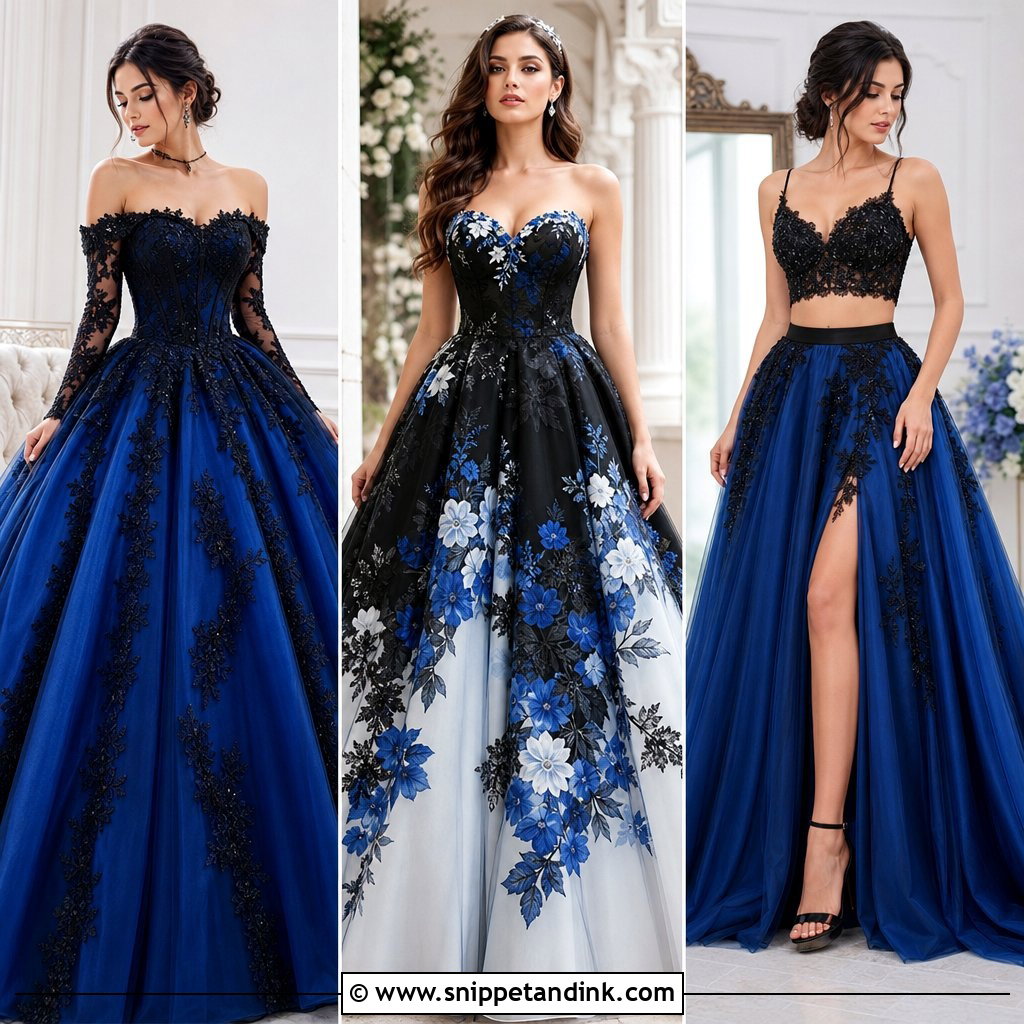
20. One Shoulder Mini Wedding Dress
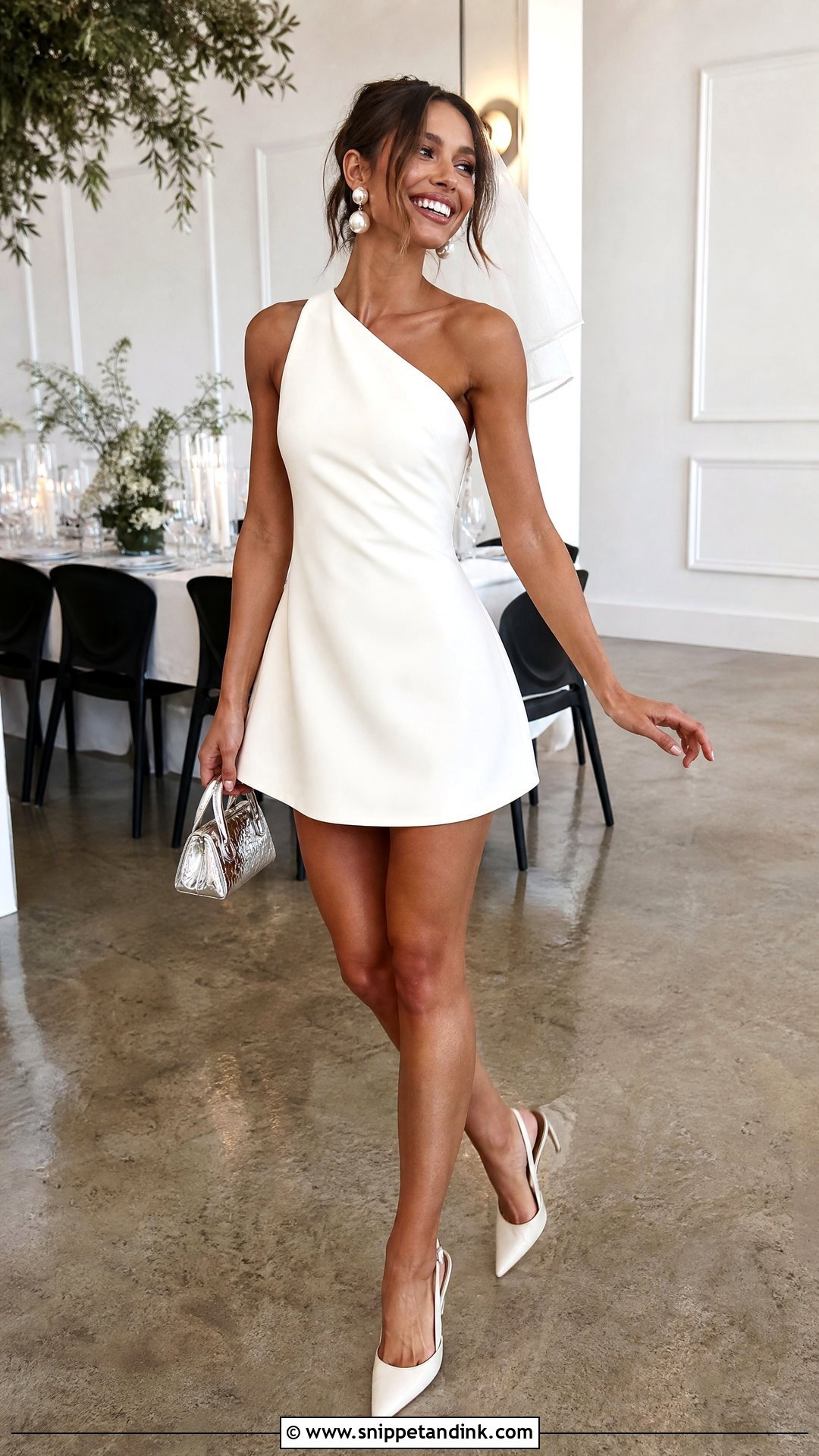
Minis are pure fun for a reception or civil ceremony. A structured A-line looks polished, fitted crepe looks minimal and a feather trim adds movement. Slingbacks, bold earrings and a small metallic or pearl bag, with a high ponytail or clean bun. Sit down and dance in it at the fitting; a short hem can ride up, and built-in shorts or a smooth lining help. If you’re changing into the mini as a second look, swap the long veil for a short one, a headband or a hair bow so the change reads clearly.
Which Side Is Bare Matters More Than You Think
An asymmetric dress has a front side for the camera. Ask your planner or officiant which side of the aisle you’ll stand on and which way you’ll face during the vows. Then look at your dress: ideally, the bare shoulder or the decorated strap faces your partner and the guests, not the wall.
This also affects the small choices. I set the veil comb slightly toward the covered side so the tulle falls clear of the bare shoulder. The bouquet goes in the hand that doesn’t hide the neckline. Earrings can be stronger on the bare side, since there’s nothing else there to look at.
Tell your photographer
Share a photo of the dress with your photographer before the wedding. A good one will position you for portraits with the diagonal running across the frame, which is the angle that makes this neckline look its best. Straight-on shots flatten the asymmetry, so ask for a few three-quarter portraits from the bare side as well.
Fit the Strap, Then Let the Diagonal Do Its Work
A one-shoulder gown succeeds or fails at the fitting, not on the hanger. Satin, lace, crepe, chiffon and beading each give the diagonal a different personality, but every one needs a strap that sits level, a bodice that supports you, and a skirt you can sit and dance in without tugging. Let shoes, earrings, hair and veil follow the neckline rather than compete with it. Choose the shape you love, not the one a body-type chart assigns you, and finish it with careful alterations and a few accessories that make it unmistakably yours.
You'll Like These Ideas:



Leave a Reply