
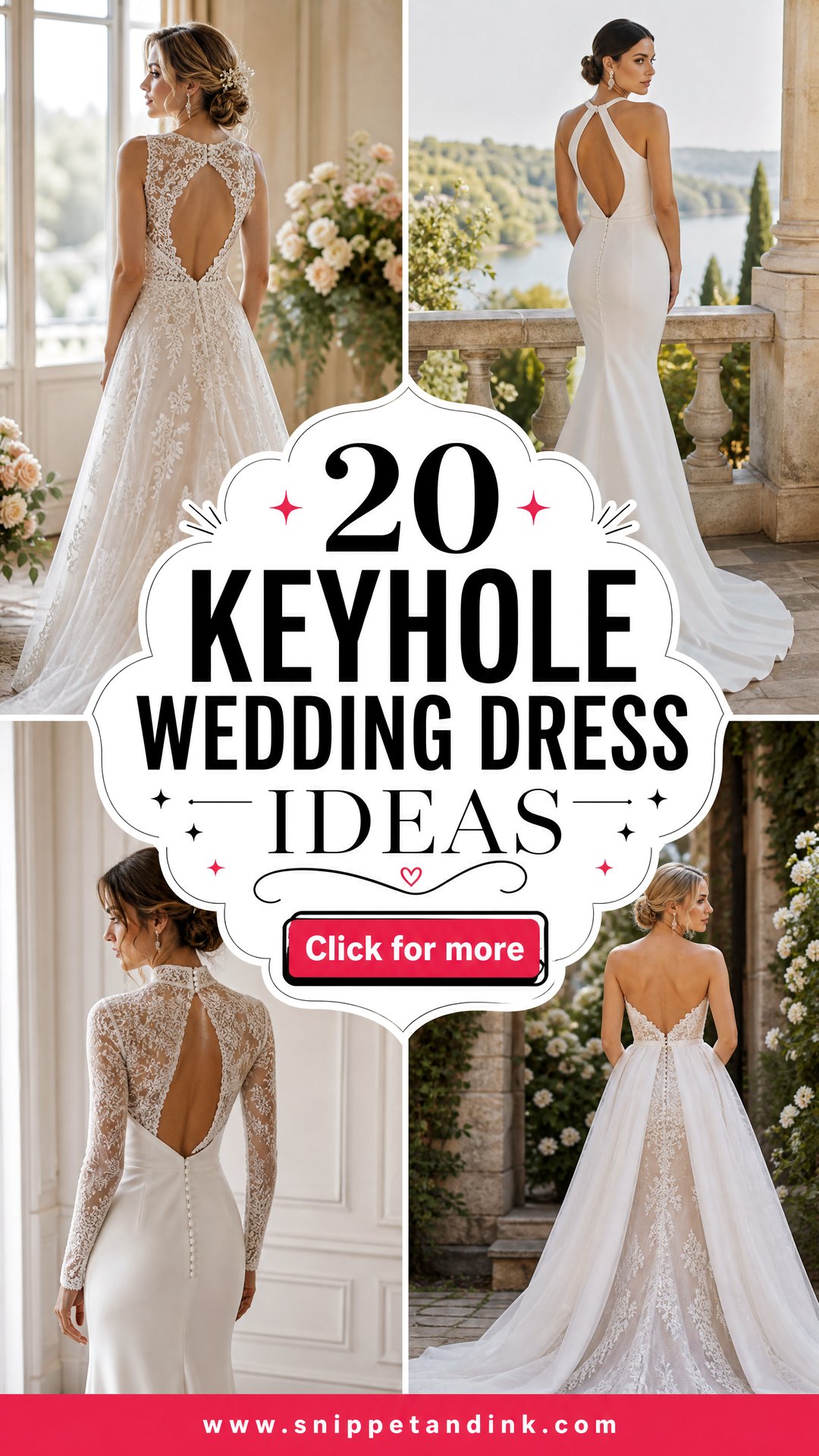
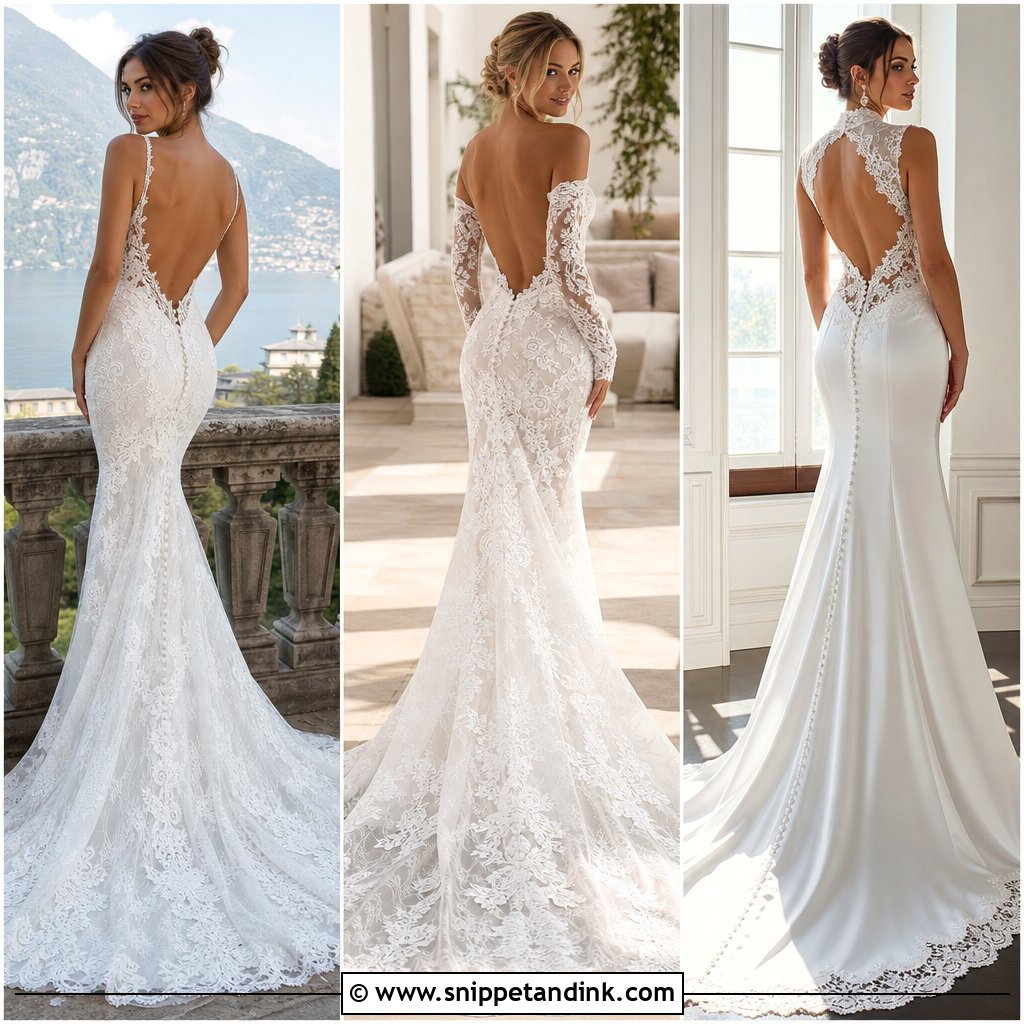
A keyhole is a small cutout, but it changes how a whole dress reads. Brides who like the idea of an open back but don’t want to feel exposed often land on it, because the rest of the bodice stays covered. Below are twenty gowns in lace, satin, chiffon, crepe and beading, across most silhouettes. In nearly all of them the opening appears at the back, and in one it sits at the front. For each, I’ve noted the hair, veil, jewellery and shoes I’d pair with it, plus the fitting problem I’d look out for, since a keyhole is only as good as the way it lies flat when you move.
Sizing the Keyhole to Your Back and Your Veil
The same cutout looks completely different on two brides, so I don’t judge a keyhole on the hanger. Three things decide where it should sit and how big it should be.
- Your bra line. Most backless solutions work best when the opening ends above where a normal bra band would sit. A keyhole that drops lower needs cups built into the dress.
- Your veil. A comb placed at the crown lets the veil fall over the opening, softening it. Placed below a low bun, the veil hangs behind and the keyhole stays visible through sheer tulle. Decide which effect you want before you choose the hairstyle.
- Your posture across a long day. When you relax and round your shoulders, the opening widens. Look at it in a three-way mirror while you slouch slightly, not only while standing tall.
If you have a tattoo or scar on your upper back, decide early whether you want it framed or covered. A seamstress can usually reshape the opening slightly or add an illusion panel, but it’s much easier at the first fitting than the last.
1. Lace A-Line Keyhole Back Wedding Dress
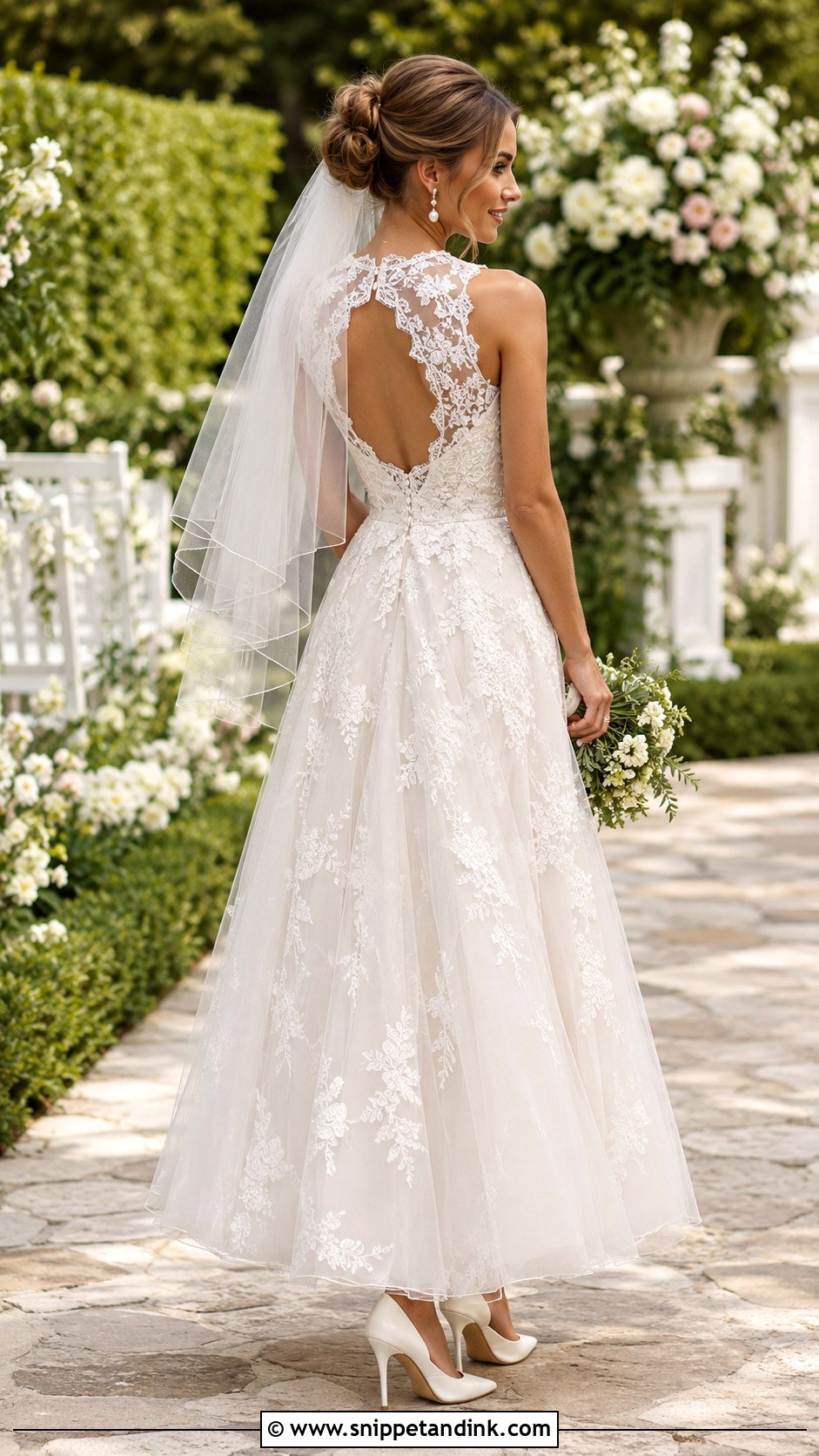
This is the most forgiving keyhole on the list. The lace bodice opens into a rounded cutout, and the floral appliqués around its edge give the opening a frame that’s readable from the back pews. Below it, a layered tulle or chiffon skirt keeps things light. I’d anchor a fingertip veil underneath a low textured bun so the comb sits below the hair and above the keyhole, not inside it. Pearl drops and pointed ivory pumps are plenty. Detailed lace needs restraint elsewhere, so stop there.
2. Satin Ball Gown Keyhole Back Wedding Dress
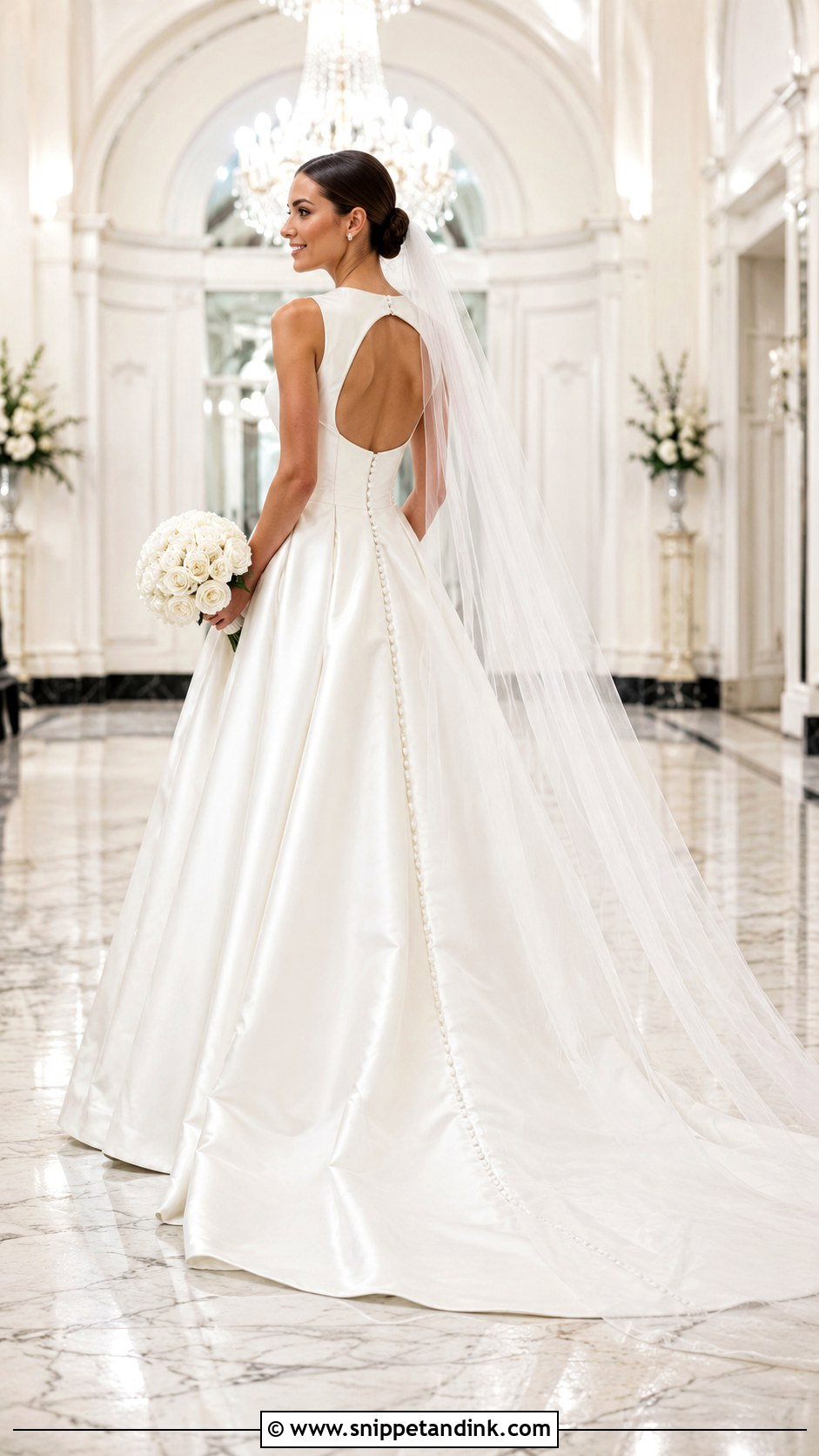
Satin makes a keyhole look sharp because there’s no texture to blur its edge. A structured ball gown with a fitted bodice and full skirt, and an oval or teardrop opening closed with covered buttons, a small bow or a line of pearls. Here’s the catch: satin shows every pull, so if the bodice is even slightly too tight, the keyhole stretches into a wider oval than designed. A sleek high bun keeps the back clear and a cathedral veil adds movement down the aisle. Crystal studs, satin pumps and a neat compact bouquet; with this much skirt, oversized jewellery tips it over.
3. Crepe Mermaid Keyhole Back Wedding Dress
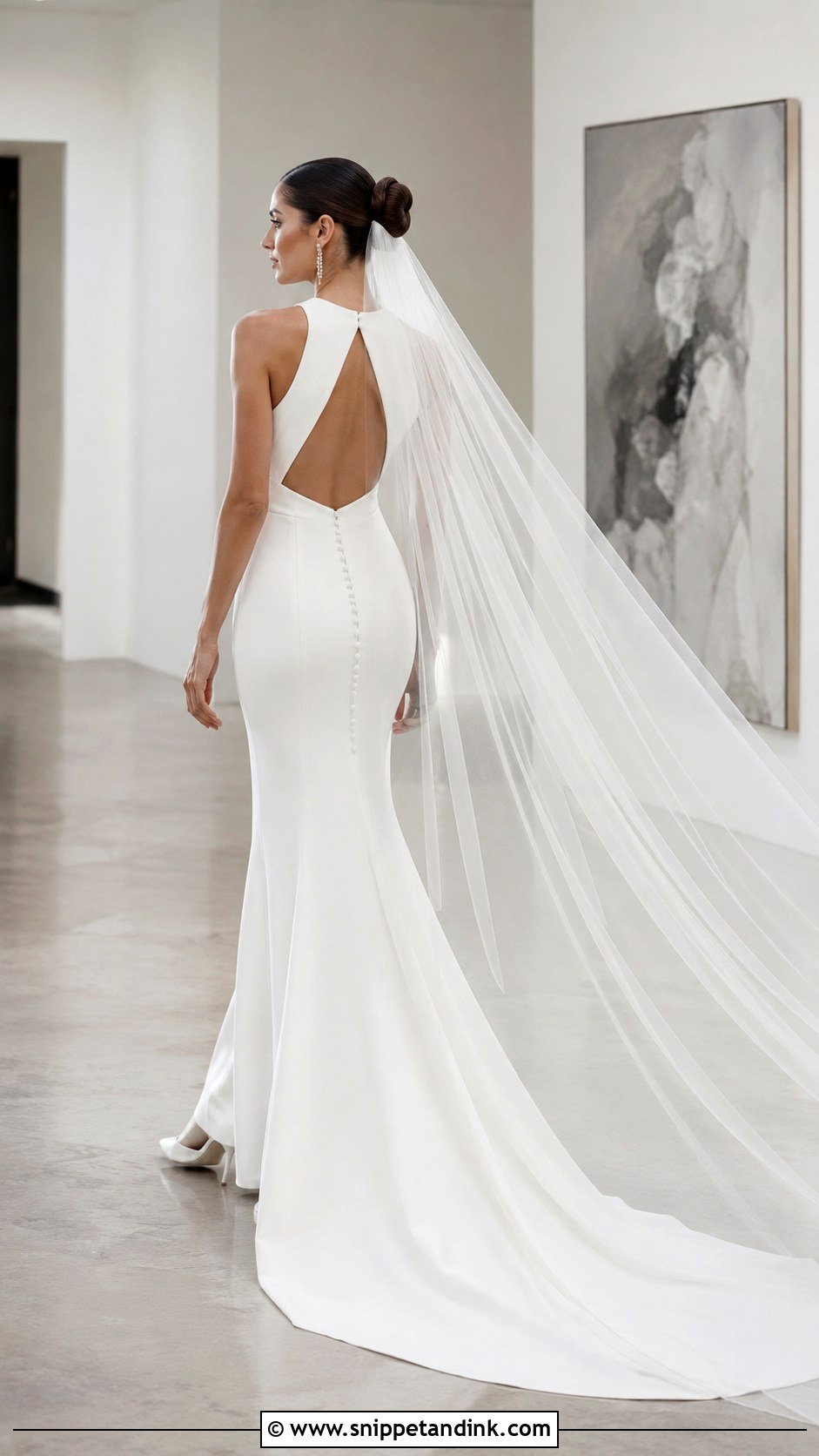
Crepe mermaid gowns are minimal from the front, so the back has to carry the interest. The fabric follows the body to the knee before it flares, and a narrow keyhole reads quiet while a wide one makes an entrance. Crepe has a little weight, which helps the edges of the opening hang straight. I pin and re-pin this one more than most at fittings, because the bodice must stay secure when you lean forward to sign the register. A polished chignon, long earrings, a chapel veil you can remove later, pointed heels and white flowers with very little greenery.
4. High-Neck Long-Sleeve Keyhole Wedding Dress
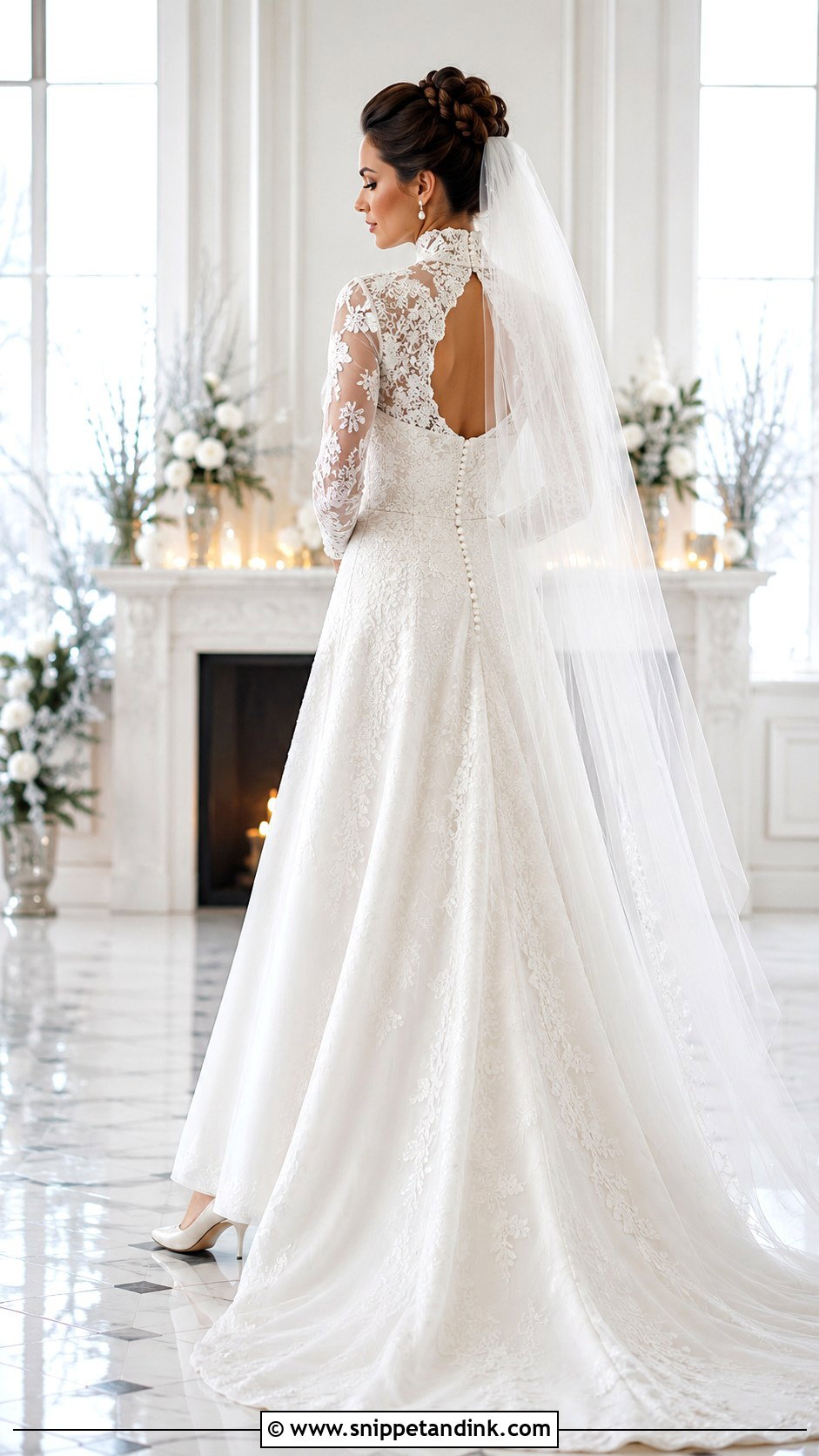
Full coverage at the front and an open keyhole behind is one of my favourite contrasts. Lace, embroidered tulle or light crepe sleeves keep it from feeling heavy, and the skirt can be A-line or a slim sheath. The shoulder fit decides everything here. Sleeves cut too short across the back pull the shoulders forward and the keyhole gapes open, so I always have the tailor check it with arms reaching forward. A low bun or braided updo, small pearl earrings, closed-toe pumps and a plain sheer veil. It’s naturally a cooler-weather dress, though breathable lace makes it workable in mild weather.
5. Boho Puff-Sleeve Keyhole Wedding Dress
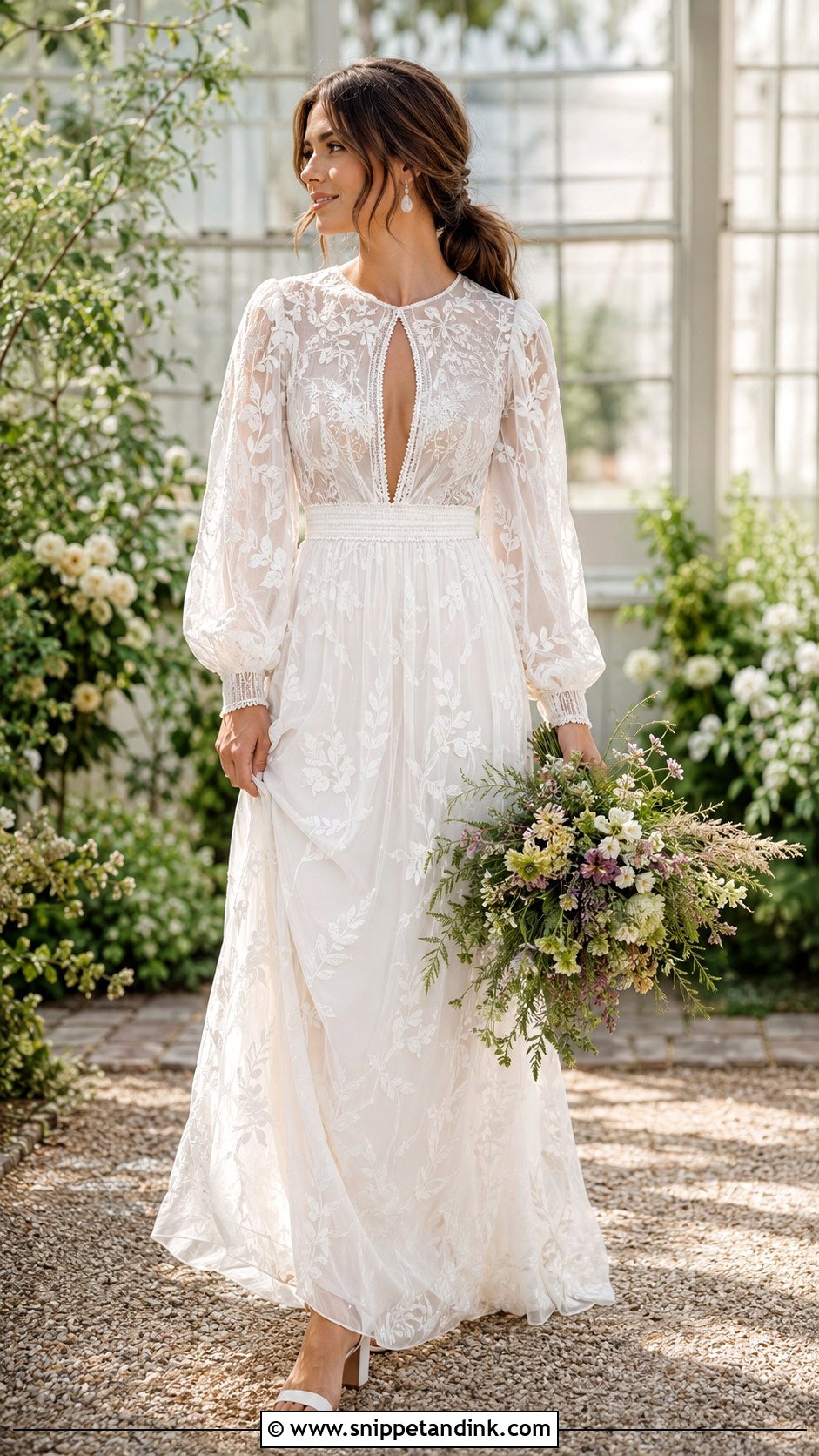
Puff sleeves and botanical lace give this one a relaxed feel, and the rounded keyhole fits that mood better than a sharp teardrop would. Keep the sleeves lightweight, the waist fitted and the skirt fluid rather than structured. The puff adds width at the shoulder, so I balance it with soft volume at the nape: loose waves pulled into a low ponytail or a soft bun. Drop earrings, block-heel sandals for grass and gravel, and a light veil or an embroidered comb. A loose meadow-style bouquet suits gardens, barns and woodland venues; the sleeves and lace are texture enough, so go easy on accessories.
6. Minimalist Bateau Keyhole Wedding Dress
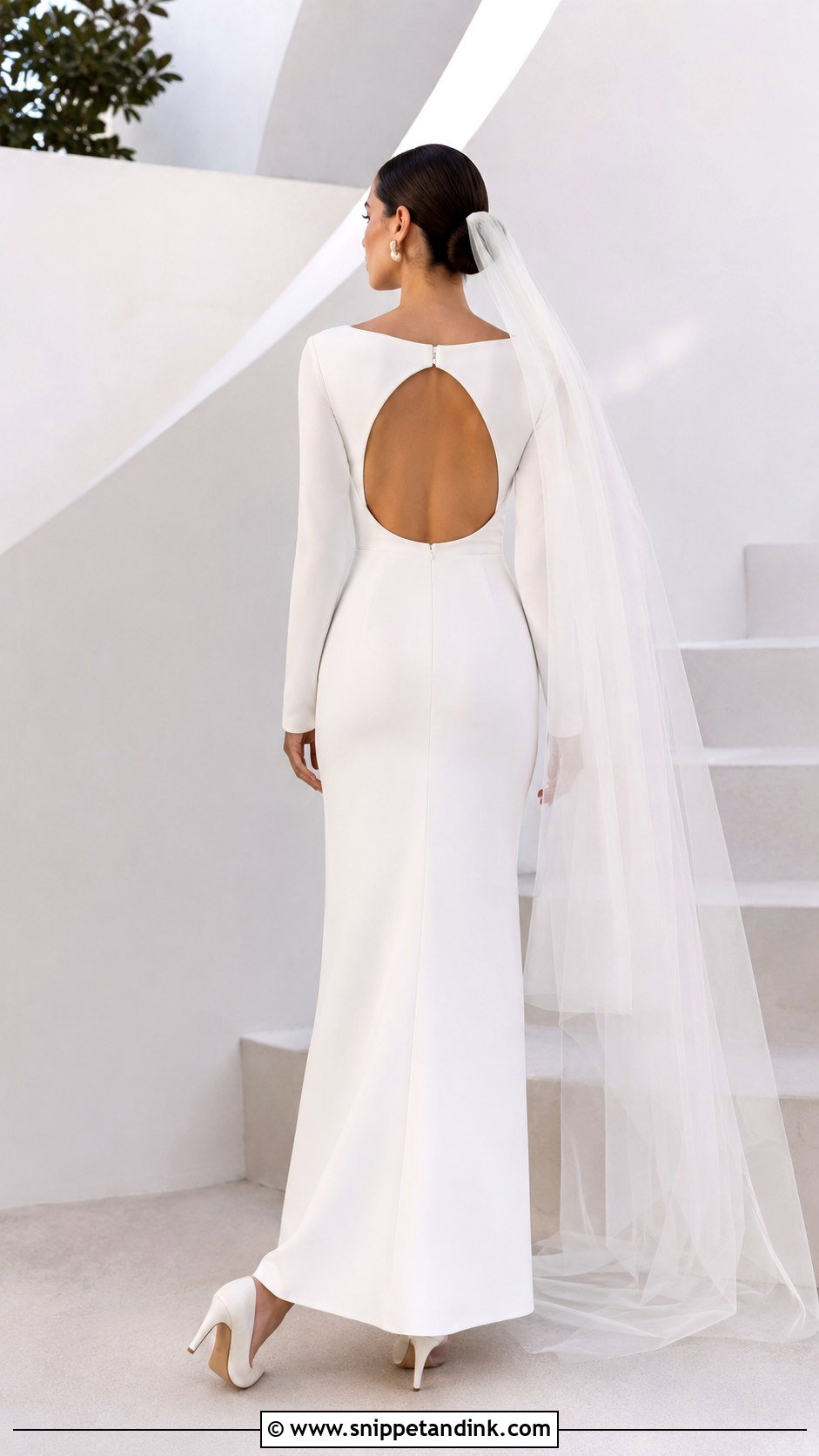
From the front, a bateau neck is wide and modest. From behind, a precise oval opens up, and that surprise is the whole point. Matte crepe, mikado or smooth satin keep it crisp, over a slim A-line or column skirt. Minimal dresses are the least forgiving to alter: every seam and every adjustment shows. I’d only choose this if you can give it properly skilled alterations and the right foundation underneath. A neat low bun, sculptural earrings, pointed pumps, a simple veil fixed below the bun and a structured bouquet of a single flower.
7. Halter Keyhole Wedding Dress
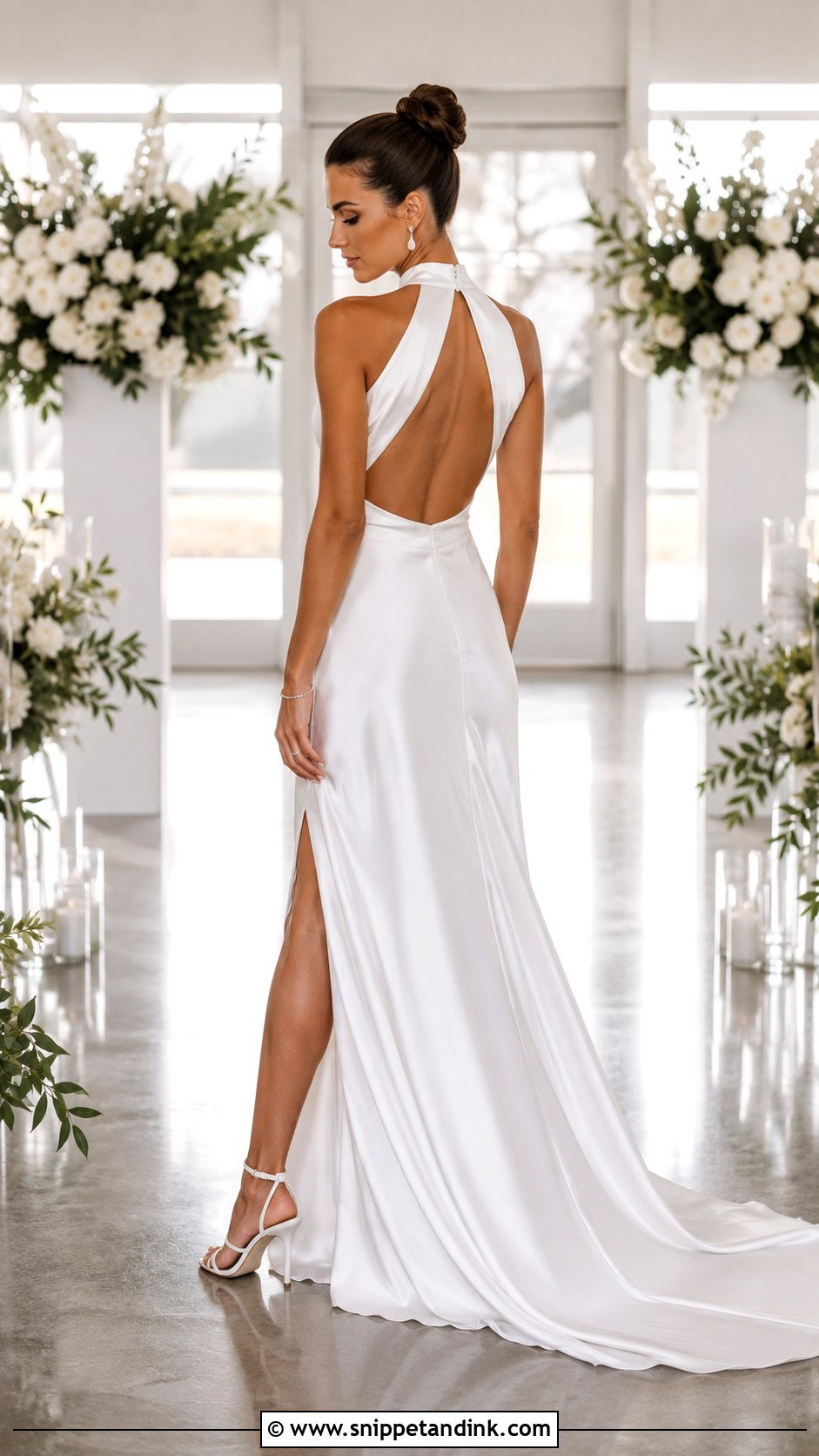
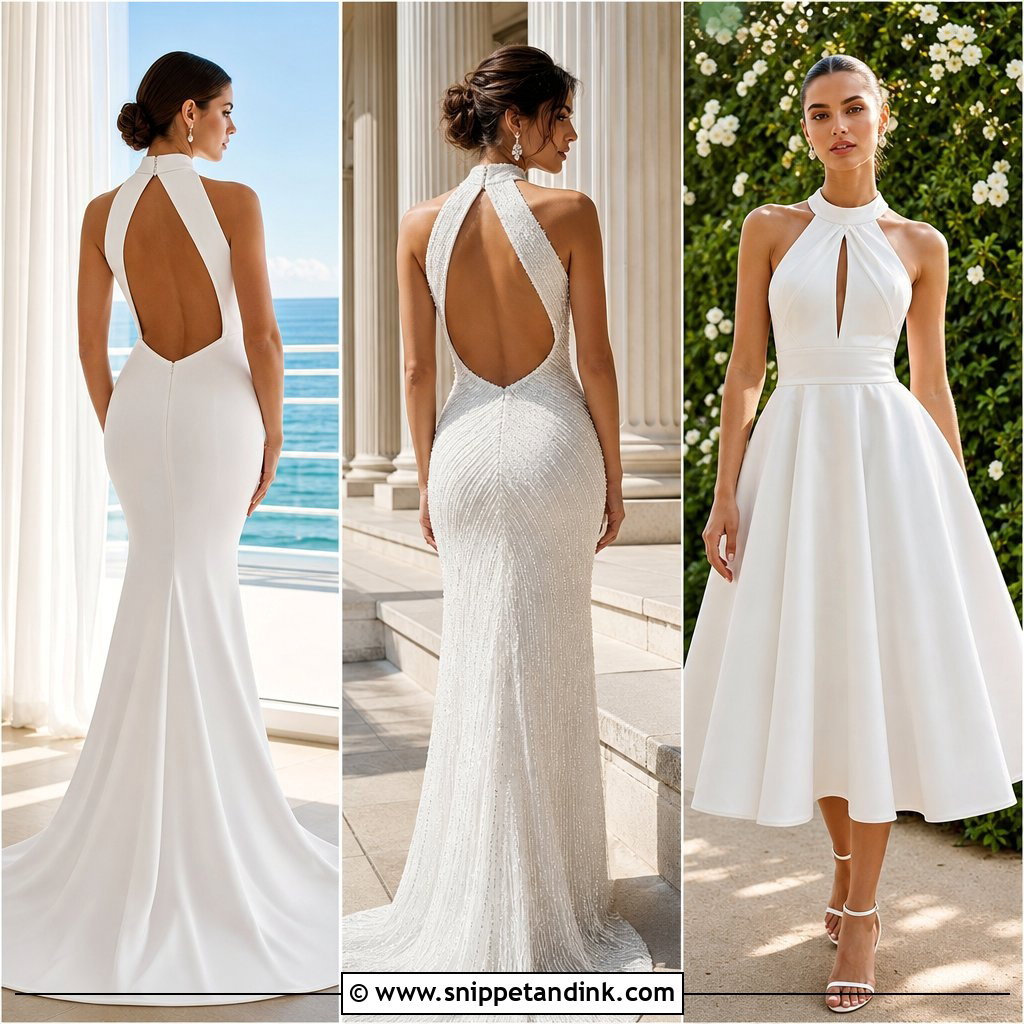
A halter gown frames the shoulders and leads naturally into a keyhole at the back. The thing to know is that a halter carries some of the bodice’s weight from the neck strap, so a heavy skirt can leave you with a sore neck by evening. I’d pair the structured neckline with a softly fitted bodice and a fluid skirt, in satin for polish or chiffon for ease. Hair goes up, either a high bun or a smooth ponytail, so the straps and cutout stay visible. Small hoops or drops, slim ankle-strap heels and a narrow bracelet; skip the veil and use a hair comb if you want it clean. Test hugging and raising your arms at the fitting.
8. Illusion Lace Keyhole Wedding Dress
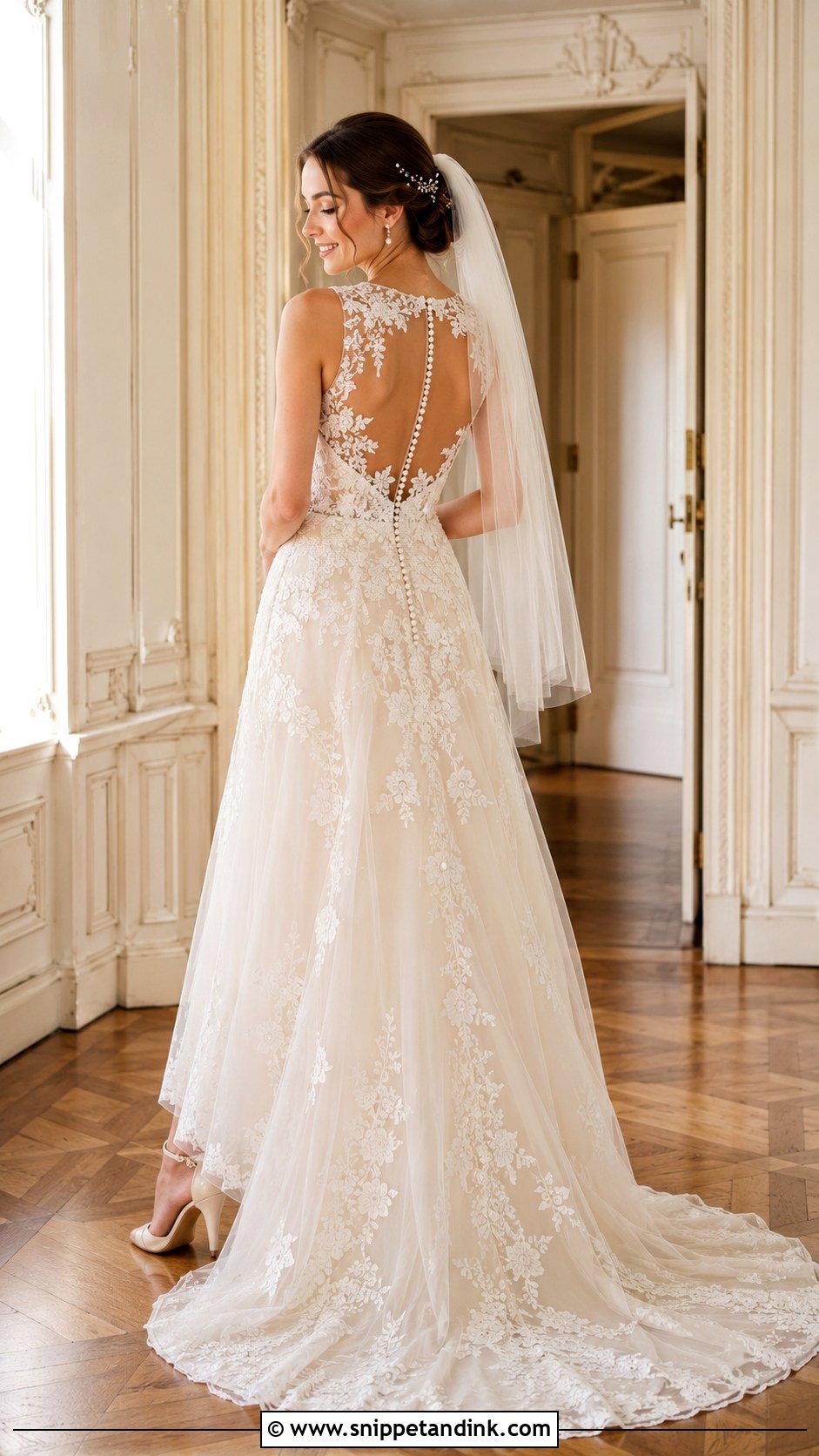
Illusion lace gives you the look of a bare back with the security of a covered one. The sheer tulle can carry appliqués, beading or covered buttons across the opening. Mesh colour matters more than people expect, and it’s the first thing I check: a shade too light looks grey against the skin, a shade too dark looks like a bandage. Look at it in daylight and under indoor lights before you approve it. Pair the bodice with A-line, fit-and-flare or a layered skirt depending on formality. A low updo with pearl pins, a plain tulle veil, neutral ivory heels and fine jewellery that repeats one element of the gown.
9. Beaded Art Deco Keyhole Wedding Dress
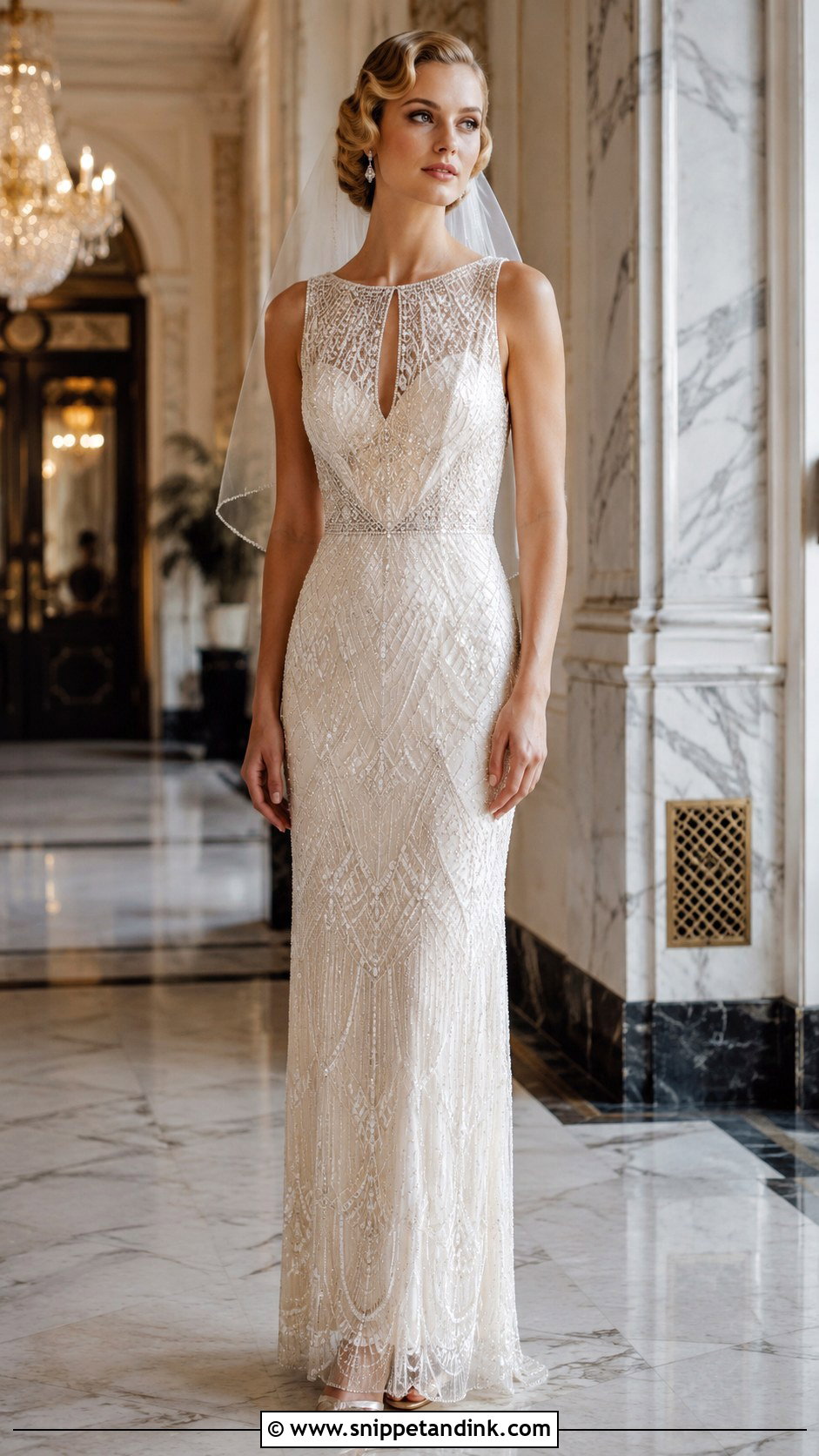
Geometric beading turns a keyhole into the main event. A fitted column or sheath with symmetrical beadwork around the back opening and along the waist, in silver, pearl and clear stones, gives an Art Deco effect without extra colours. Beading is heavy and rough on the inside, so I check the lining around the keyhole for anything scratchy before buying. Vintage finger waves or a low side bun, depending on how much back you want to show. Crystal earrings, metallic or ivory heels, a sleek bouquet and a short sheer veil so the beads stay visible.
10. Square-Neck Keyhole Back Wedding Dress
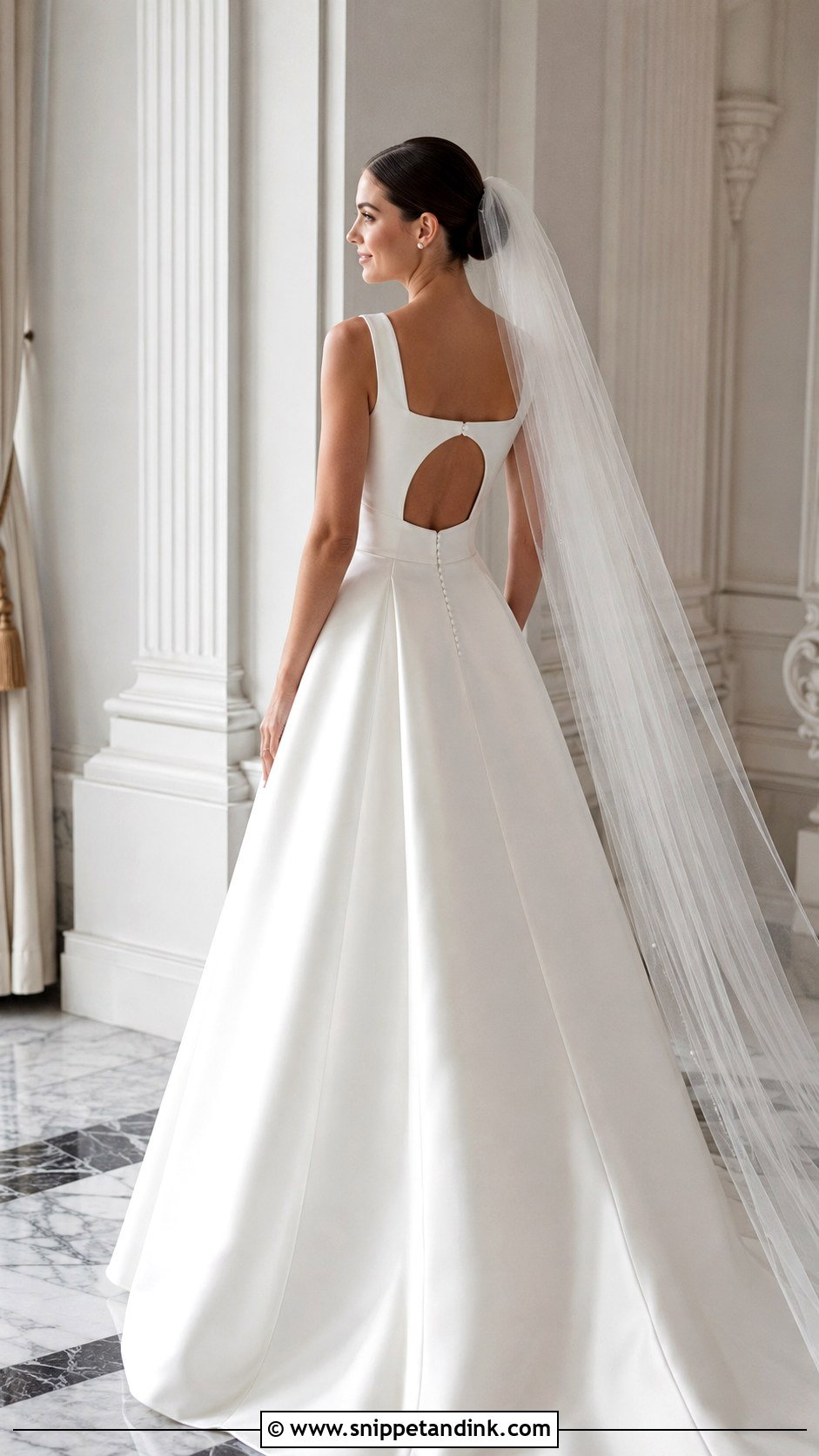
Straight lines in front, a curve behind. The square neck gives structure and the rounded keyhole softens it. Satin, mikado, crepe or floral jacquard all hold the shape over a fitted bodice and full A-line skirt. If you’re fuller-busted, ask for wider straps or internal boning; a square neck has nothing to hook onto and relies entirely on the bodice to stay up. A smooth bun or half-up style that leaves the centre back clear, pearl studs, a slim tennis bracelet and classic pumps. A cathedral veil works for drama, as long as it’s sheer with minimal edging.
11. Off-the-Shoulder Keyhole Wedding Dress
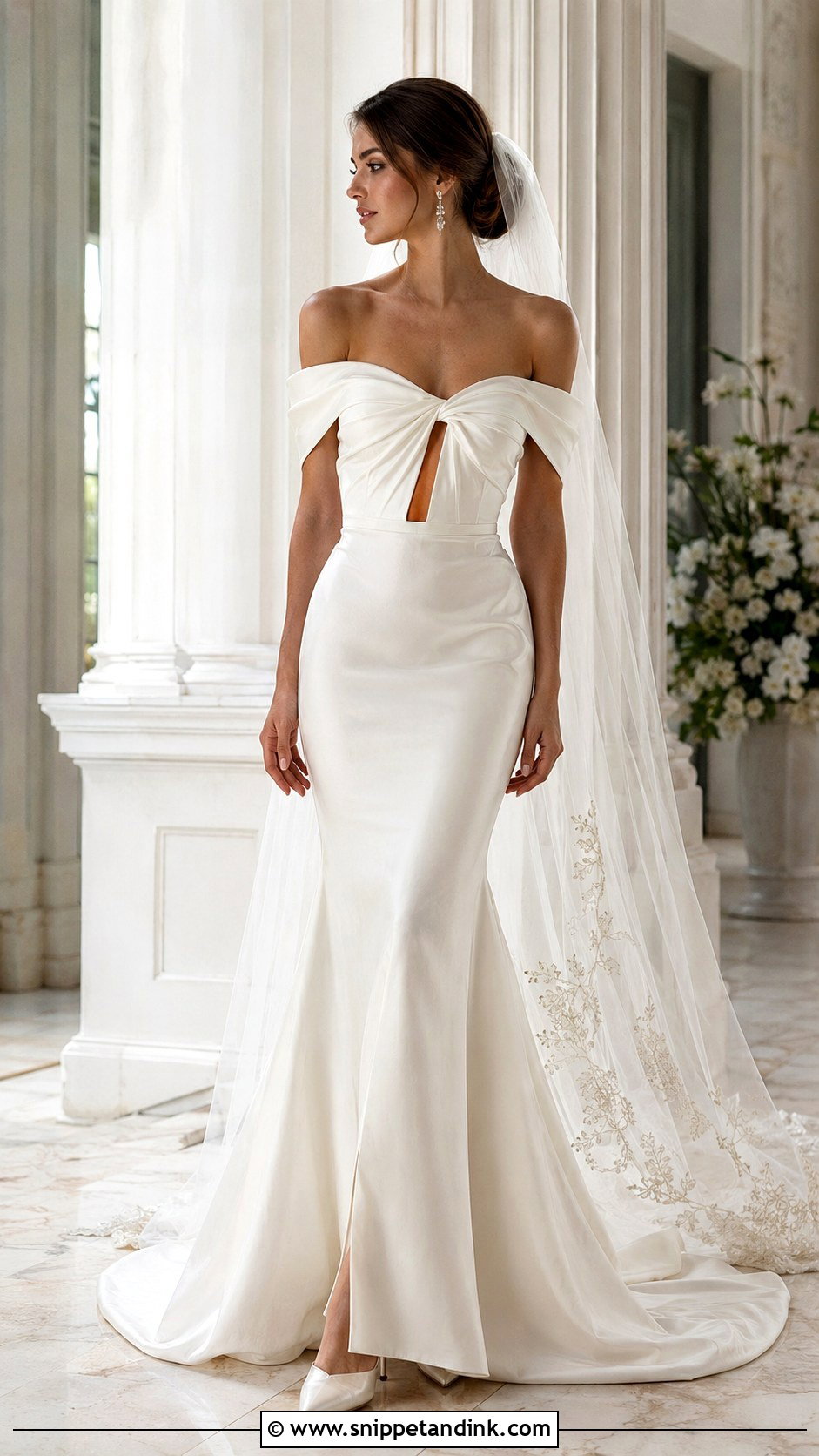
Off-the-shoulder sleeves plus a keyhole is a lot of open skin, so it needs real support built in. Draped satin sleeves feel formal; lace or tulle is lighter and suits a garden. A fitted waist with a full skirt or a gentle fit-and-flare balances the wide neckline. Off-shoulder sleeves limit arm movement more than any other style, so practise hugging, lifting a glass and sitting at the fitting, and watch whether the keyhole edges shift when you do. A low chignon, a delicate necklace, small earrings, pointed heels and a sheer veil placed under the hair.
12. Cap-Sleeve Keyhole Wedding Dress
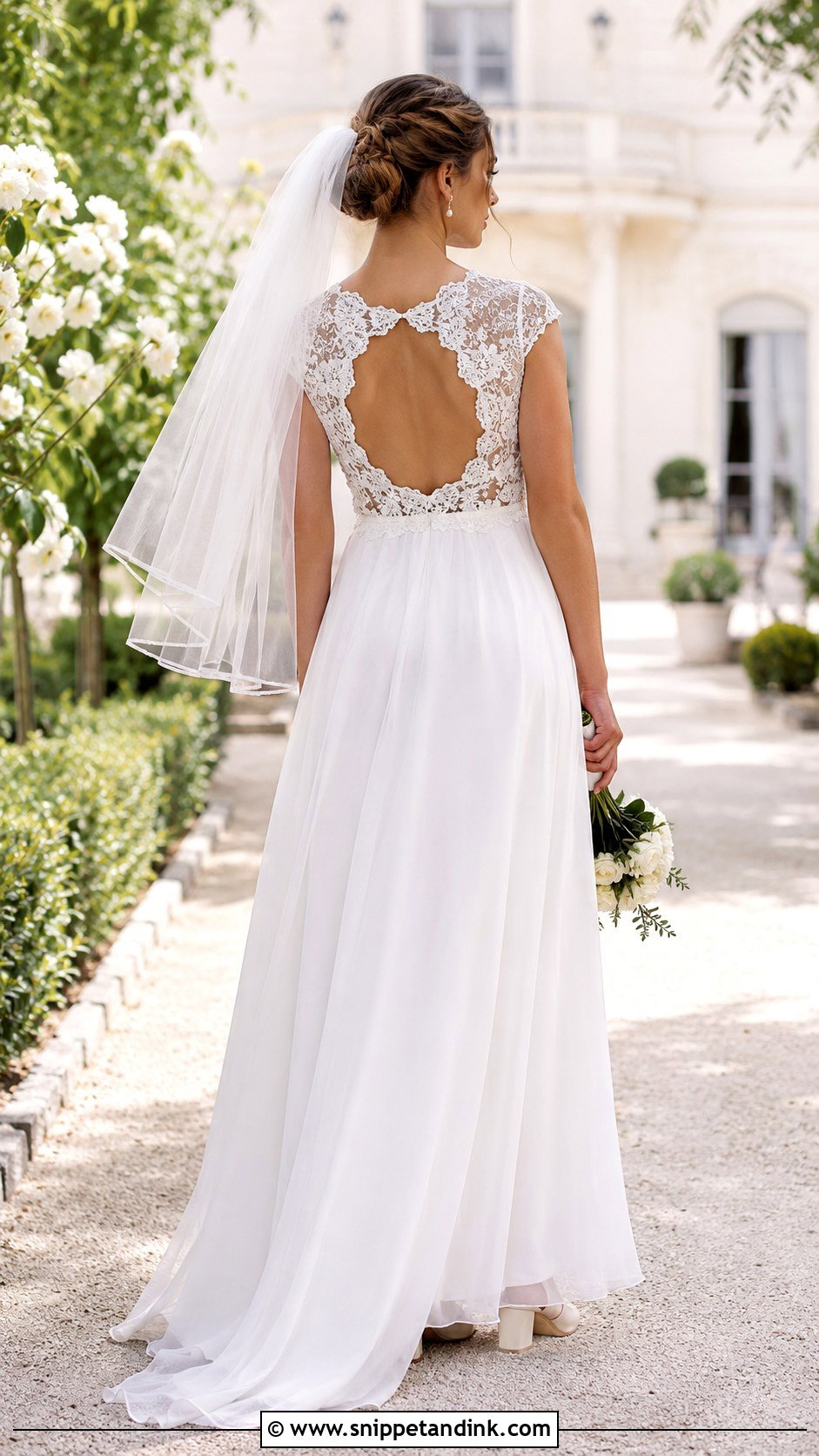
Cap sleeves give a little coverage and leave the keyhole room to breathe. They pair well with a lace bodice and a flowing chiffon, tulle or organza skirt, especially when appliqués run from the shoulders around the opening. Fit is the issue: cap sleeves vary hugely, and a tight one digs into the arm and pulls the back edges inward. Check it from the side and from behind. A braided low bun, pearl drops, a fingertip veil and block heels if you’ll be on grass or stone. A bouquet of round flowers quietly echoes the curved opening.
13. Floral Appliqué Keyhole Wedding Dress
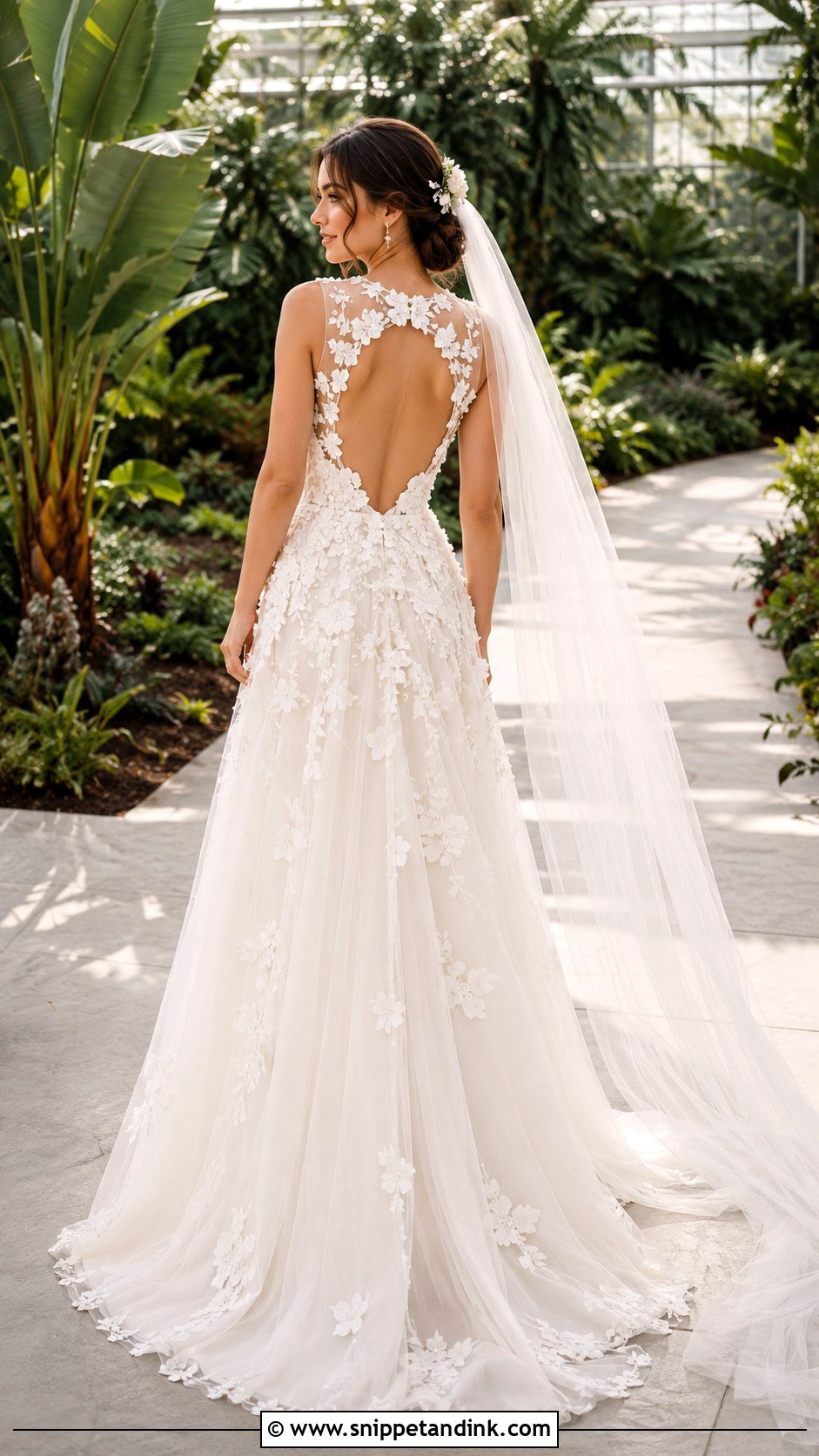
When appliquéd flowers seem to grow around the opening and spread onto the shoulders or skirt, the keyhole becomes the centrepiece. An A-line keeps it romantic; a sheath makes it modern. I’d keep the bouquet modest so it doesn’t fight the appliqués for attention. A low bun with a few matching floral pins, small earrings, simple ivory sandals and a plain tulle veil that can be lifted aside for back portraits. At the fitting, run your fingers around the keyhole edge: every flower should be stitched down and no stiff backing should rub.
14. Pearl Keyhole Back Wedding Dress
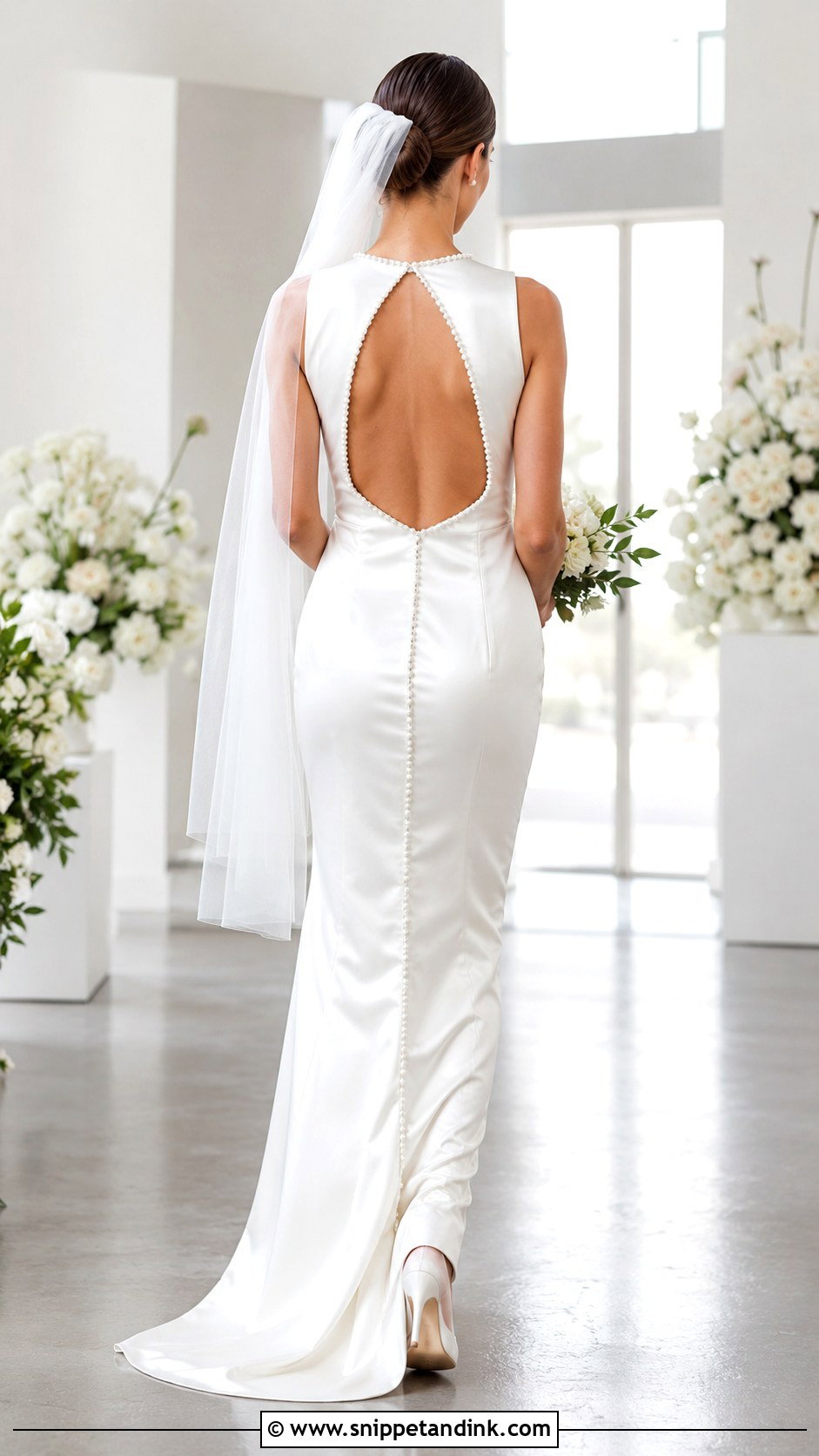
Pearls glow rather than sparkle, which suits daytime and softer lighting. Picture a crepe or satin gown with pearl-trimmed edges around a round back opening and covered buttons down the skirt, cut as a sheath, fit-and-flare or structured A-line. A sleek bun and pearl studs repeat the detail without overdoing it; if pearls are scattered across the bodice too, leave the neck bare. Satin pumps, a clean veil and a compact white bouquet. The pearls nearest the keyhole get rubbed by hair and the veil all day, so I ask the shop to reinforce their stitching before pickup.
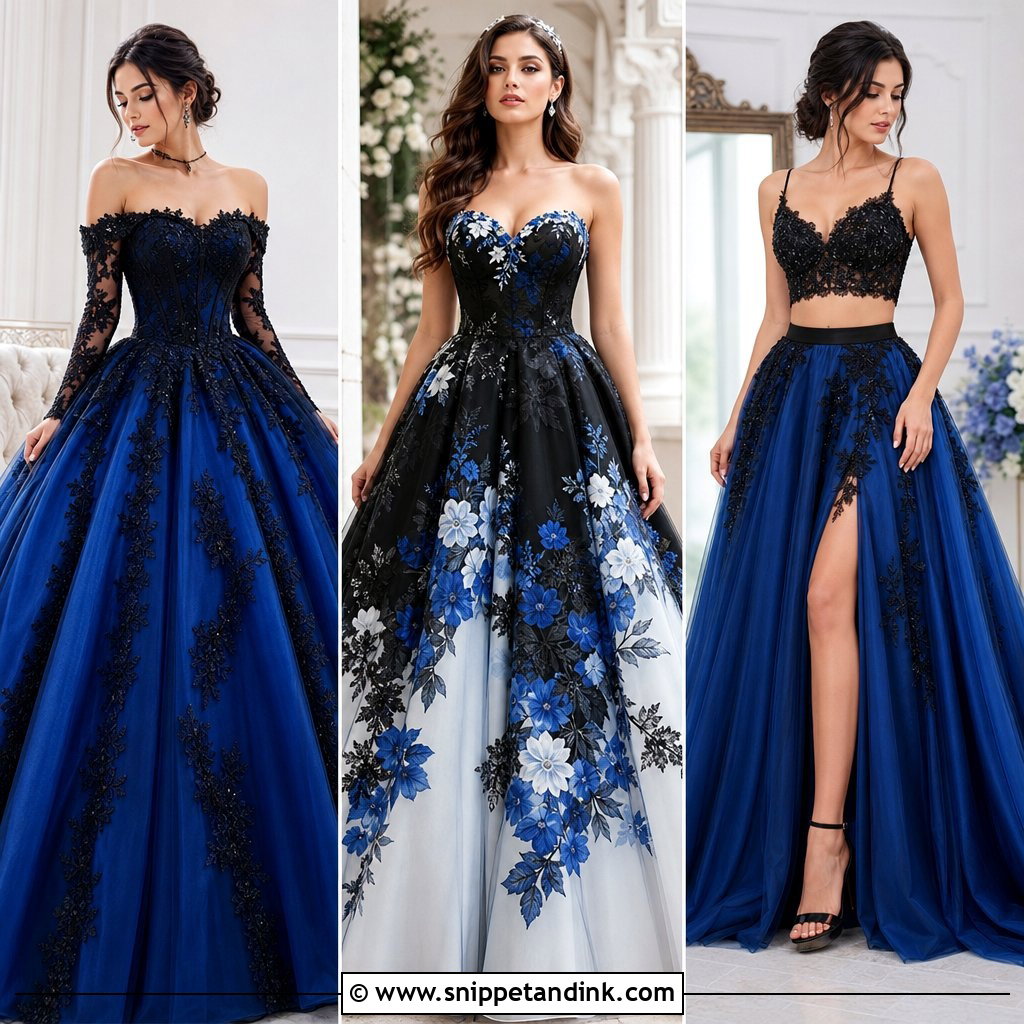
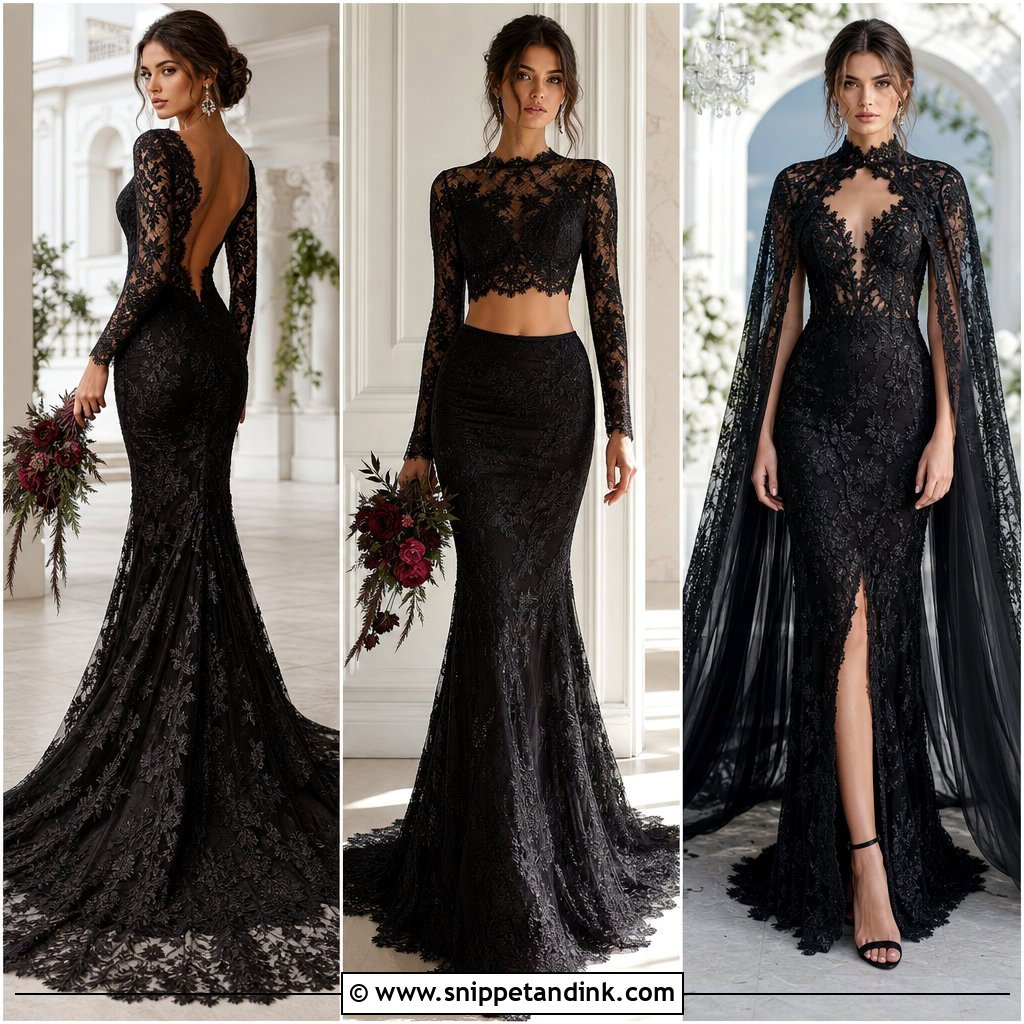
15. Basque-Waist Keyhole Ball Gown
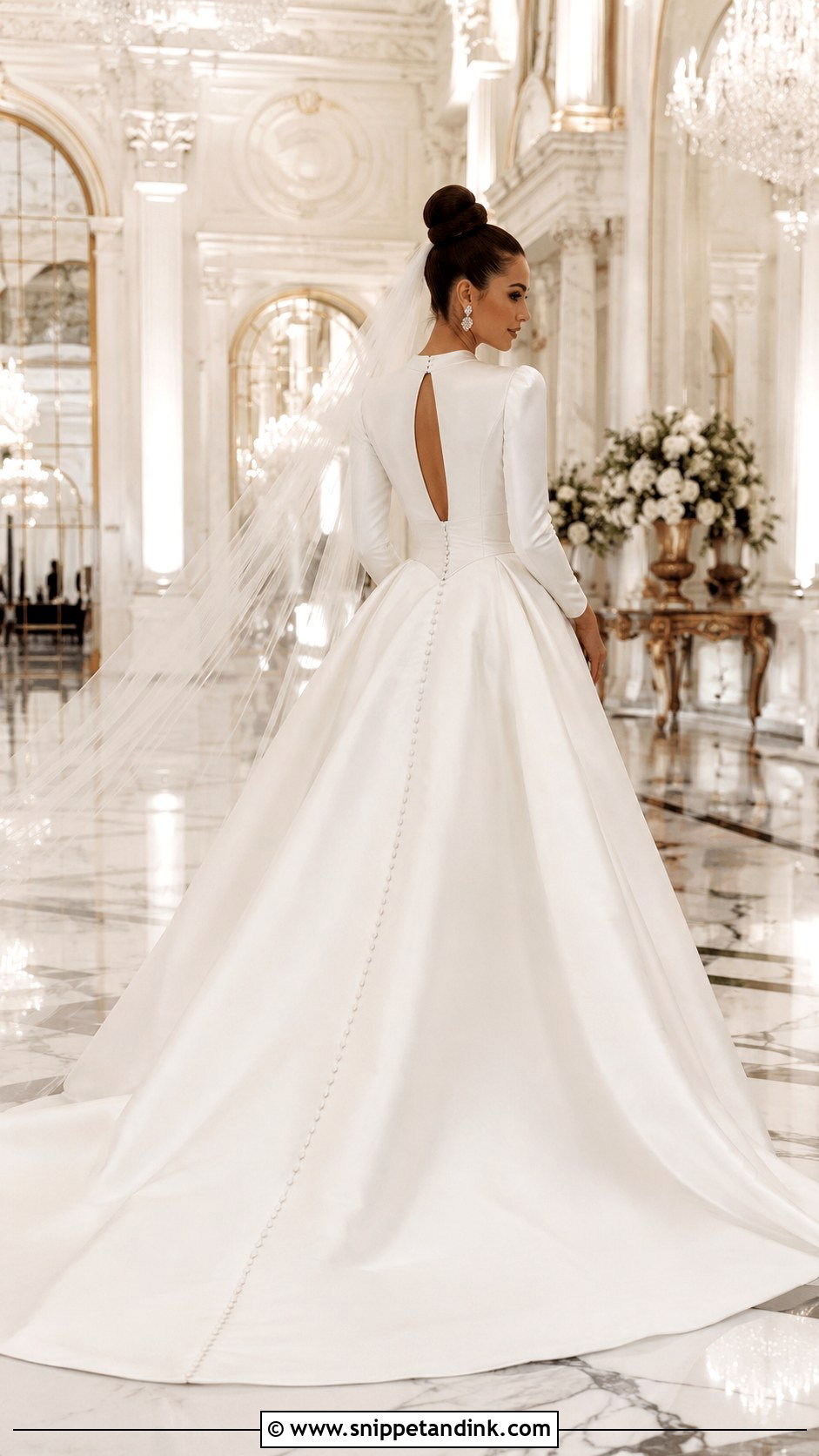
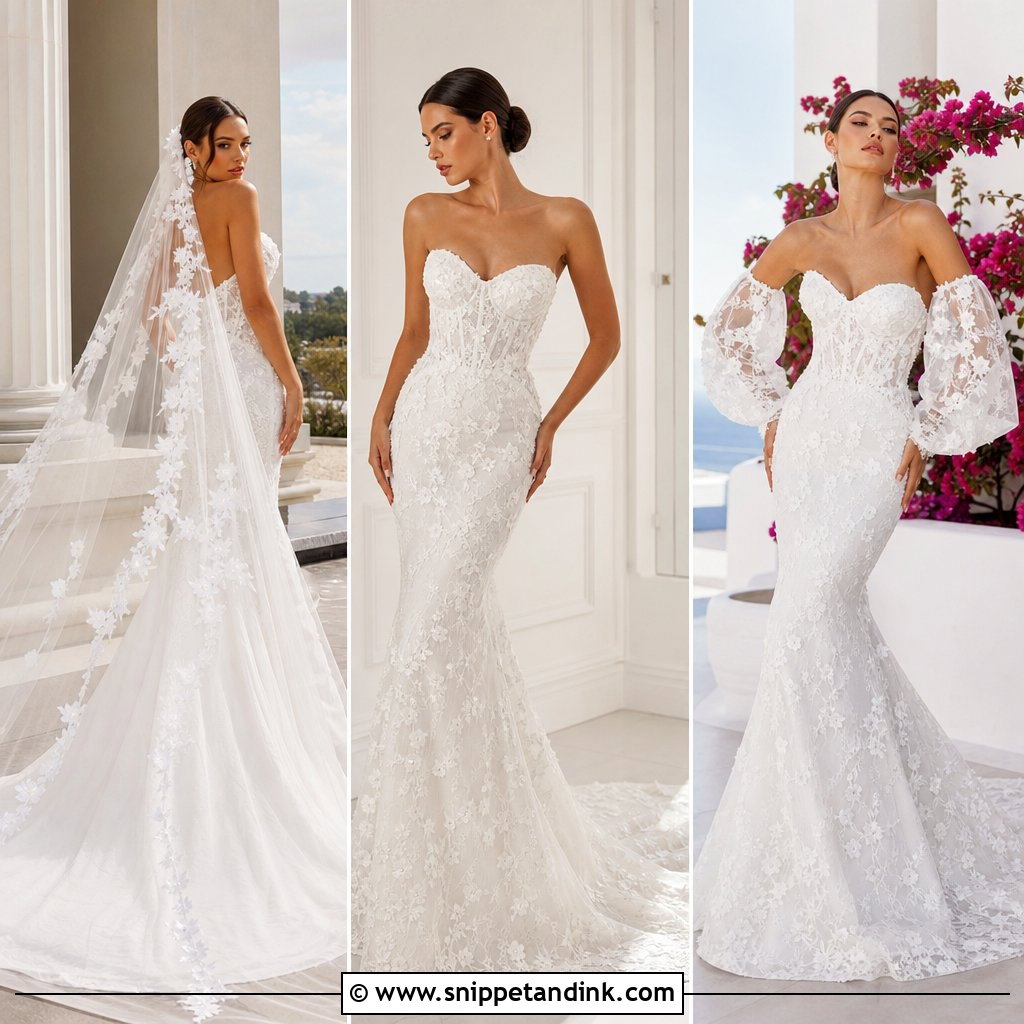
A basque waist dips into a point at the front and makes the torso look longer. Into a full skirt with a teardrop keyhole and covered buttons behind, it’s the most formal dress here. Satin, mikado and jacquard hold the shape best. The waist point must sit exactly at your centre front; even a small shift makes the whole bodice look twisted, so I check it standing, seated and turning. A high bun, statement studs, a long sheer veil, closed-toe heels and a structured bouquet. With this much going on, leave heavy necklaces and big hair pieces out.
16. Detachable Overskirt Keyhole Wedding Dress
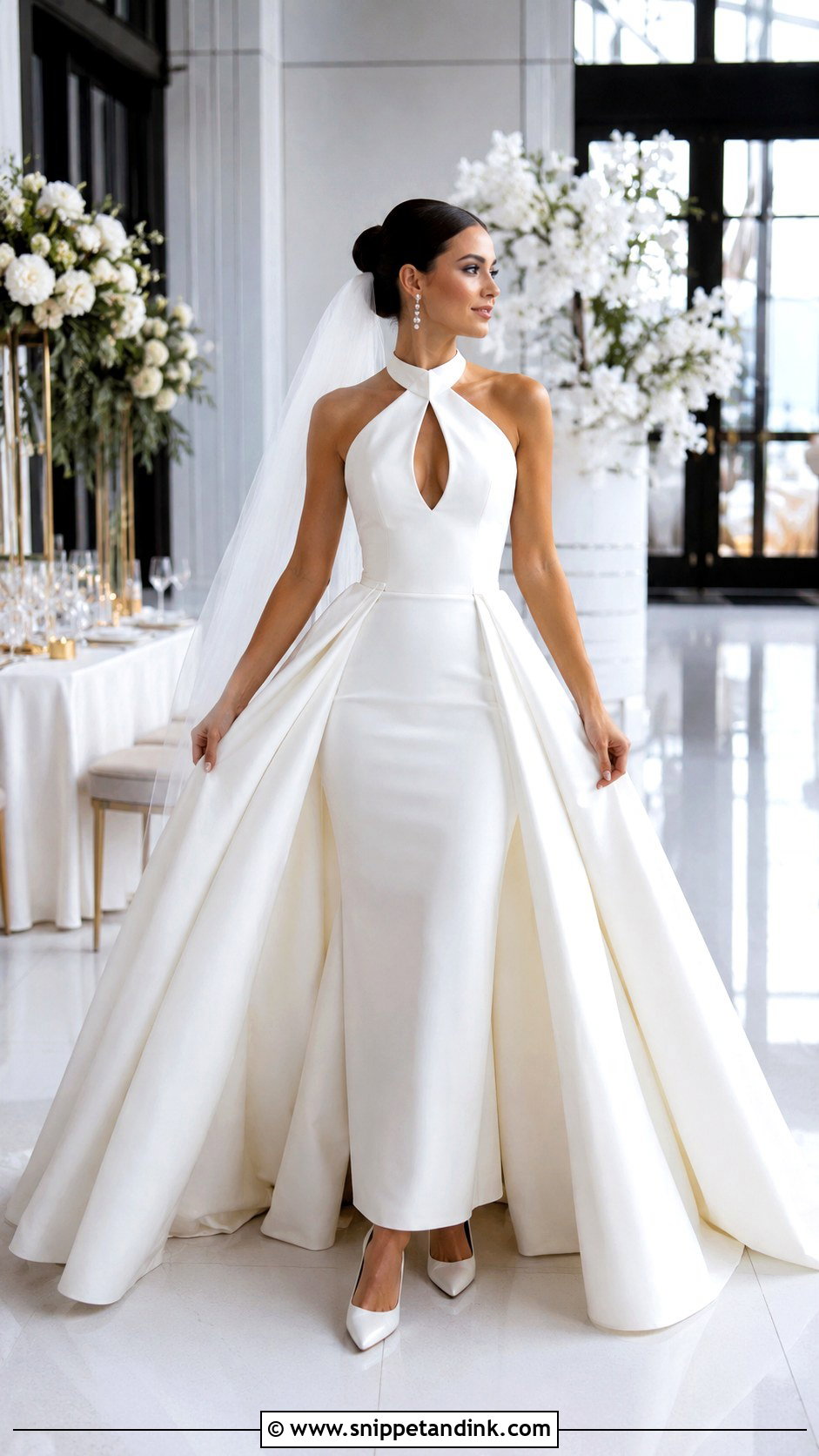
Two looks, one dress. A fitted keyhole gown with a detachable overskirt becomes a ball gown for the ceremony and a sleek sheath or mermaid for the reception. Crepe or satin underneath is smoothest; lace is softer. Make sure the overskirt attaches at the waist and doesn’t climb up over the keyhole. I’d assign one helper to the overskirt and have her practise taking it off at the final fitting, since fumbling hooks can tear a delicate bodice. A polished updo, drop earrings, pointed heels and a light veil that also comes off later.
17. Short Keyhole Wedding Dress
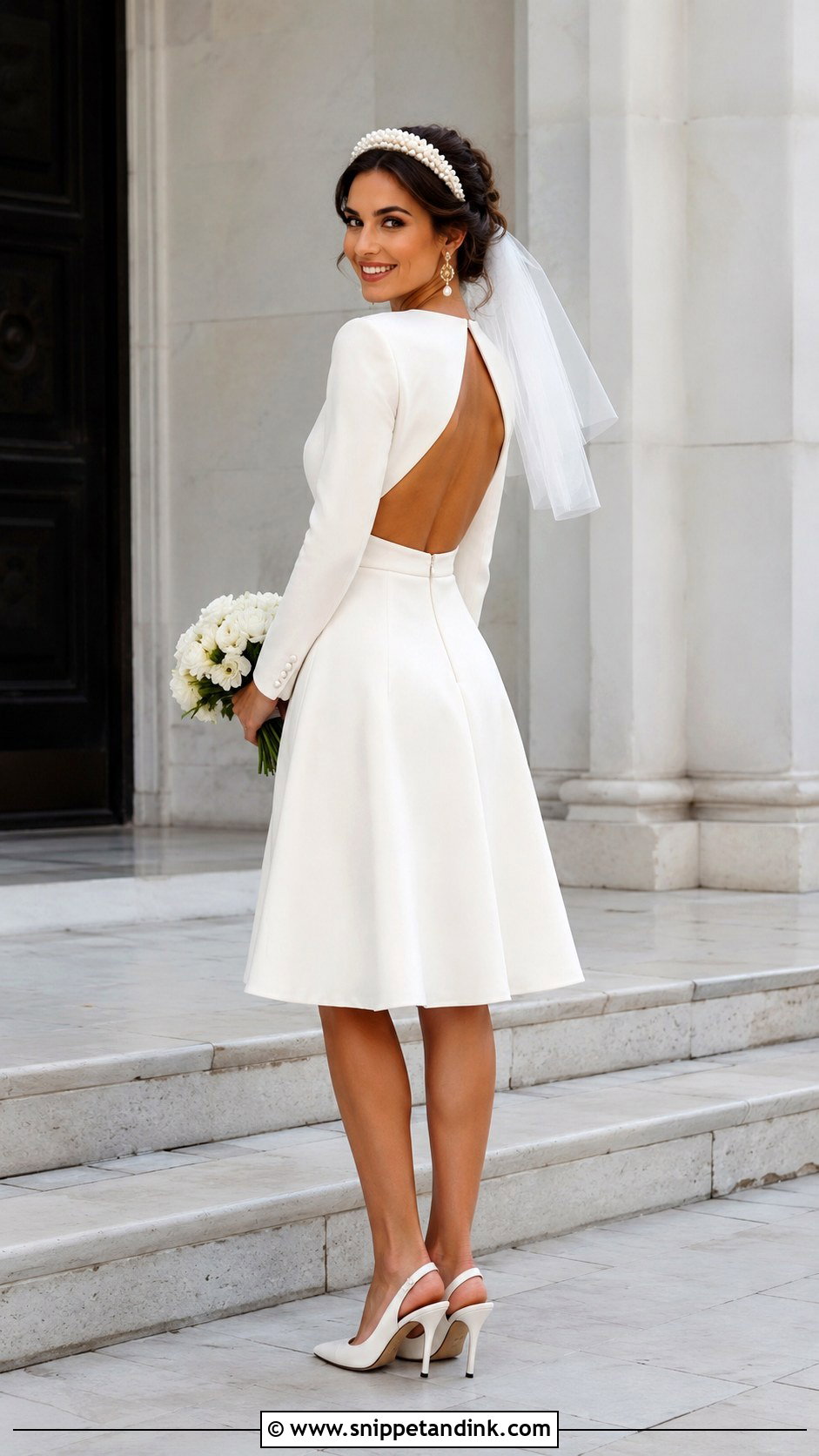
Short and keyhole-backed is my go-to suggestion for a courthouse ceremony, a small celebration or a reception change. A tailored mini or tea-length skirt keeps it playful, while the cutout keeps it bridal. Crepe, satin, lace or floral jacquard, depending on season. Your shoes are fully on show, so pick a pair that looks good from the side and back, not just the front. A sleek ponytail, statement earrings, pointed pumps or slingbacks, and a short veil, bow or pearl headband. Short dresses ride up when you sit, so test that the keyhole stays flat when the hem moves.
18. Plus-Size A-Line Keyhole Wedding Dress
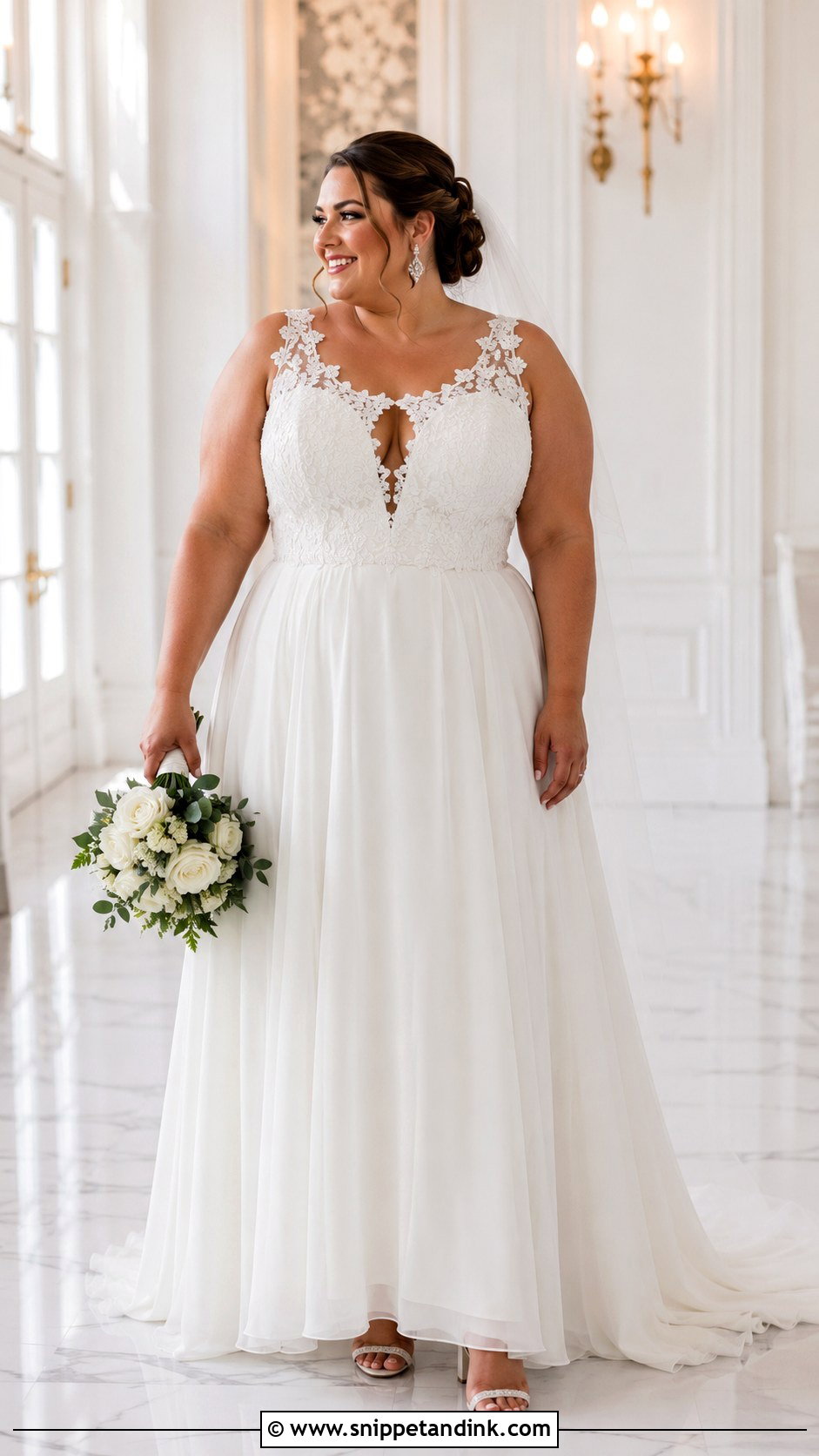
A well-built A-line pairs well with a keyhole back at any size. What matters is structure: supportive straps, a secure bodice and internal boning or cups rather than illusion mesh doing all the work. Lace around the opening softens the edge, and a defined waist with a flowing skirt balances the shape. Sample sizes and clips can be misleading, so I’d judge the fit only on alterations done on your own body. An updo or side-swept curls, comfortable block heels, earrings that match the embellishment and a sheer veil anchored below the hair.
19. Chiffon Beach Keyhole Wedding Dress
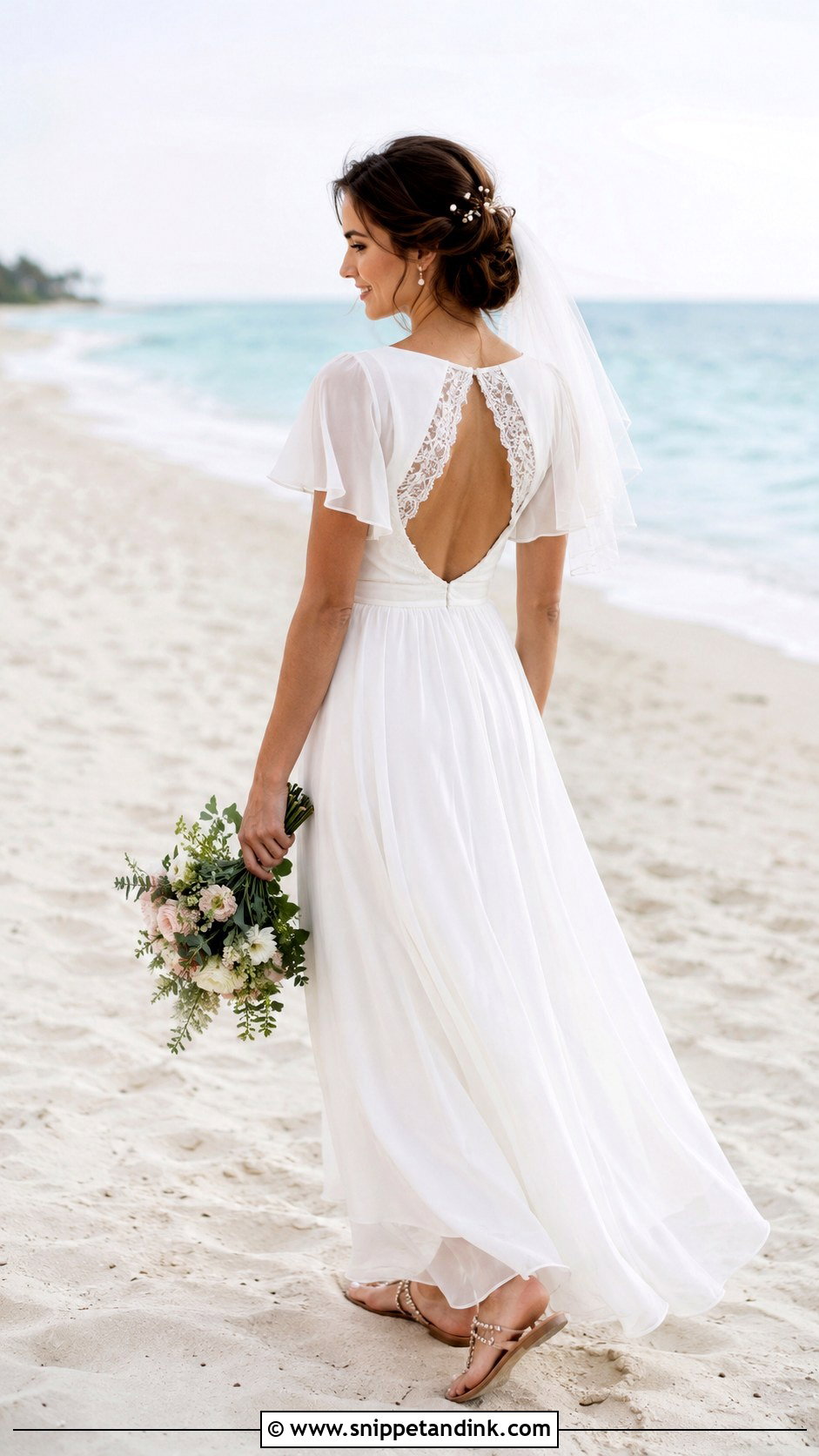
Chiffon on a beach moves with the breeze and keeps a keyhole gown relaxed. A softly gathered bodice, narrow straps or flutter sleeves, an A-line skirt without heavy layers and a lace-trimmed opening behind. Wind is the enemy of everything else: long veils fly, big earrings tangle, and a train fills with sand unless it has a bustle or wrist loop. So I’d go with a textured low bun with pearl pins, small earrings, flat embellished sandals or low block heels, a short veil or light cape pinned securely, and a simple white-and-green bouquet.
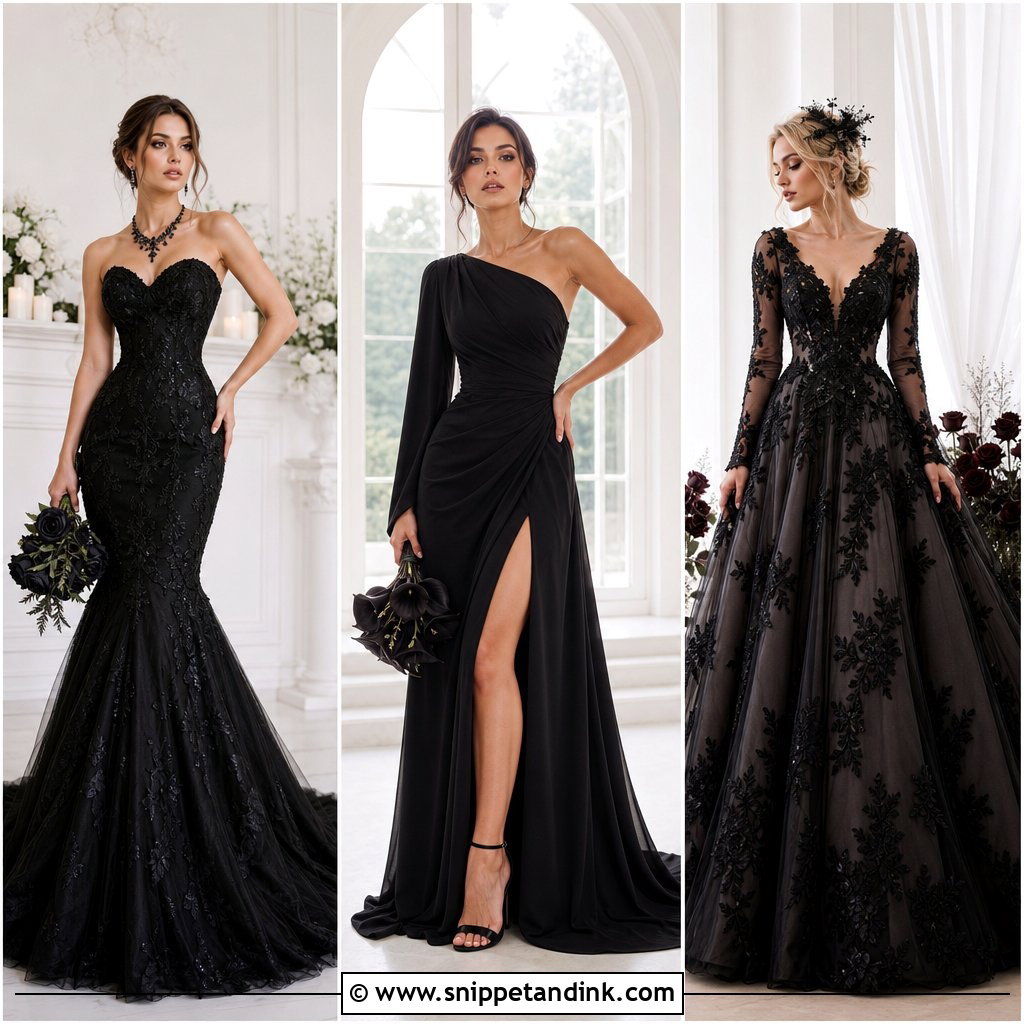
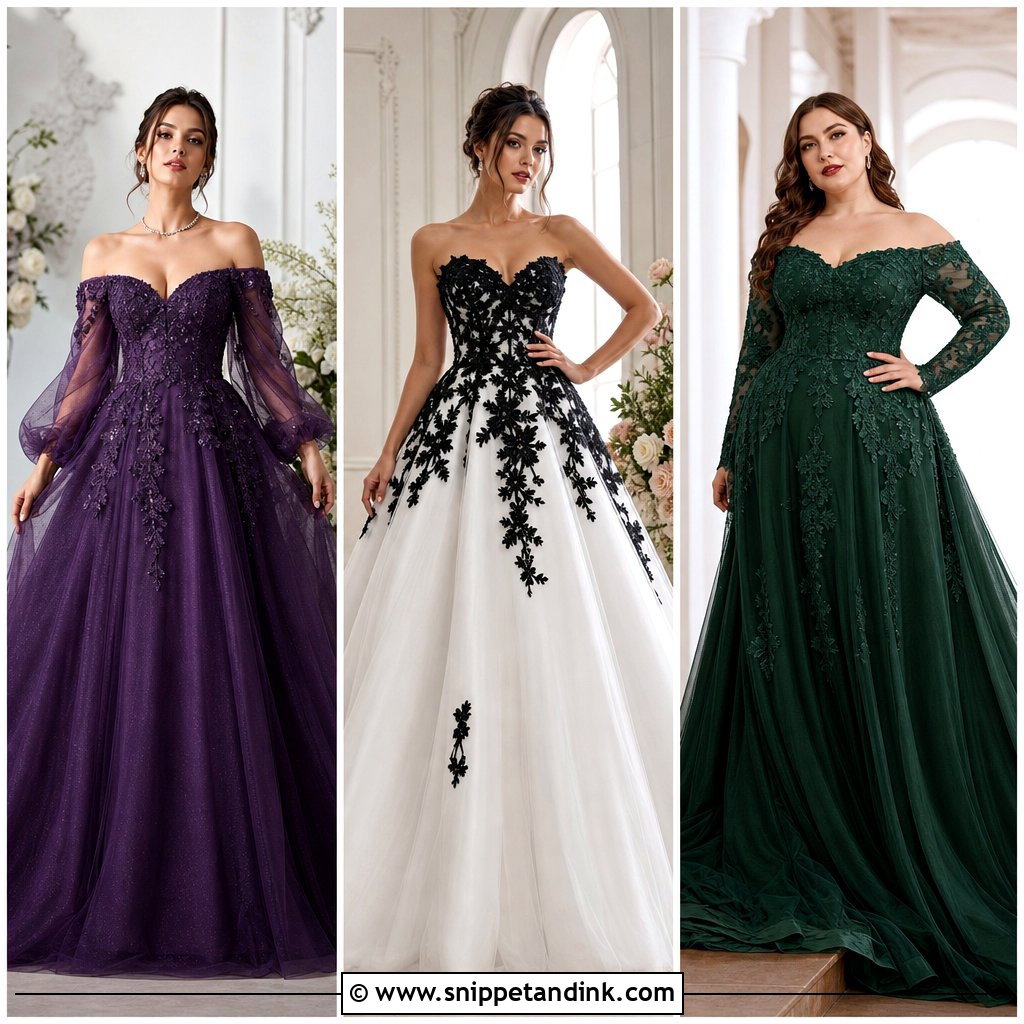
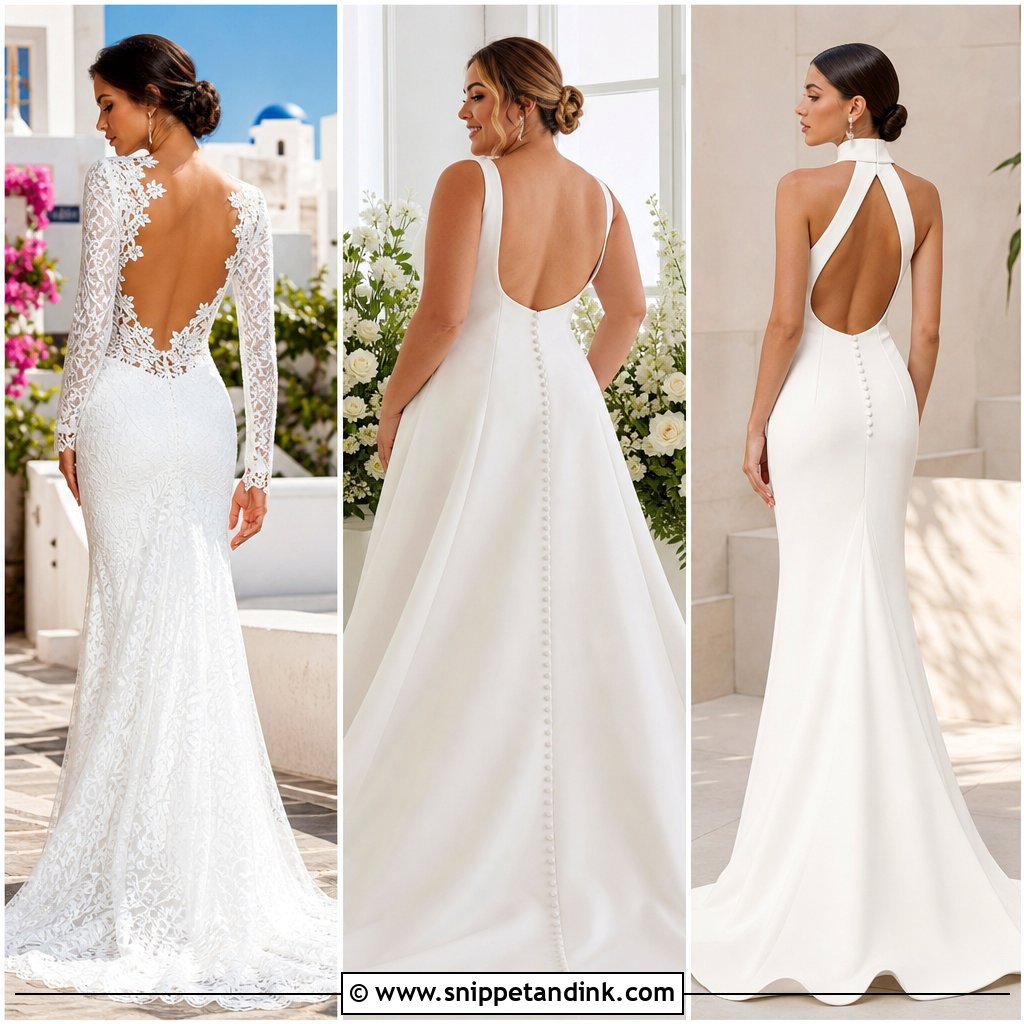
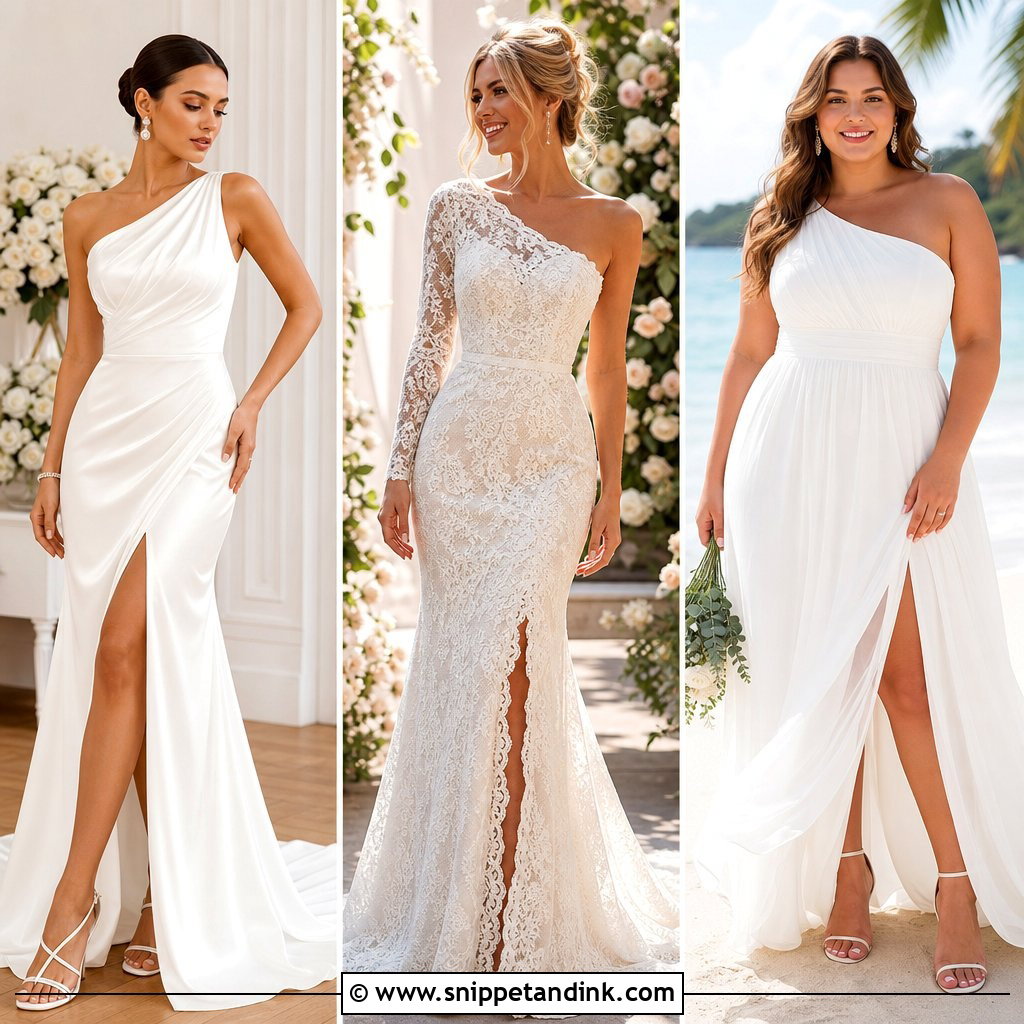
20. Front Keyhole Fit-and-Flare Wedding Dress
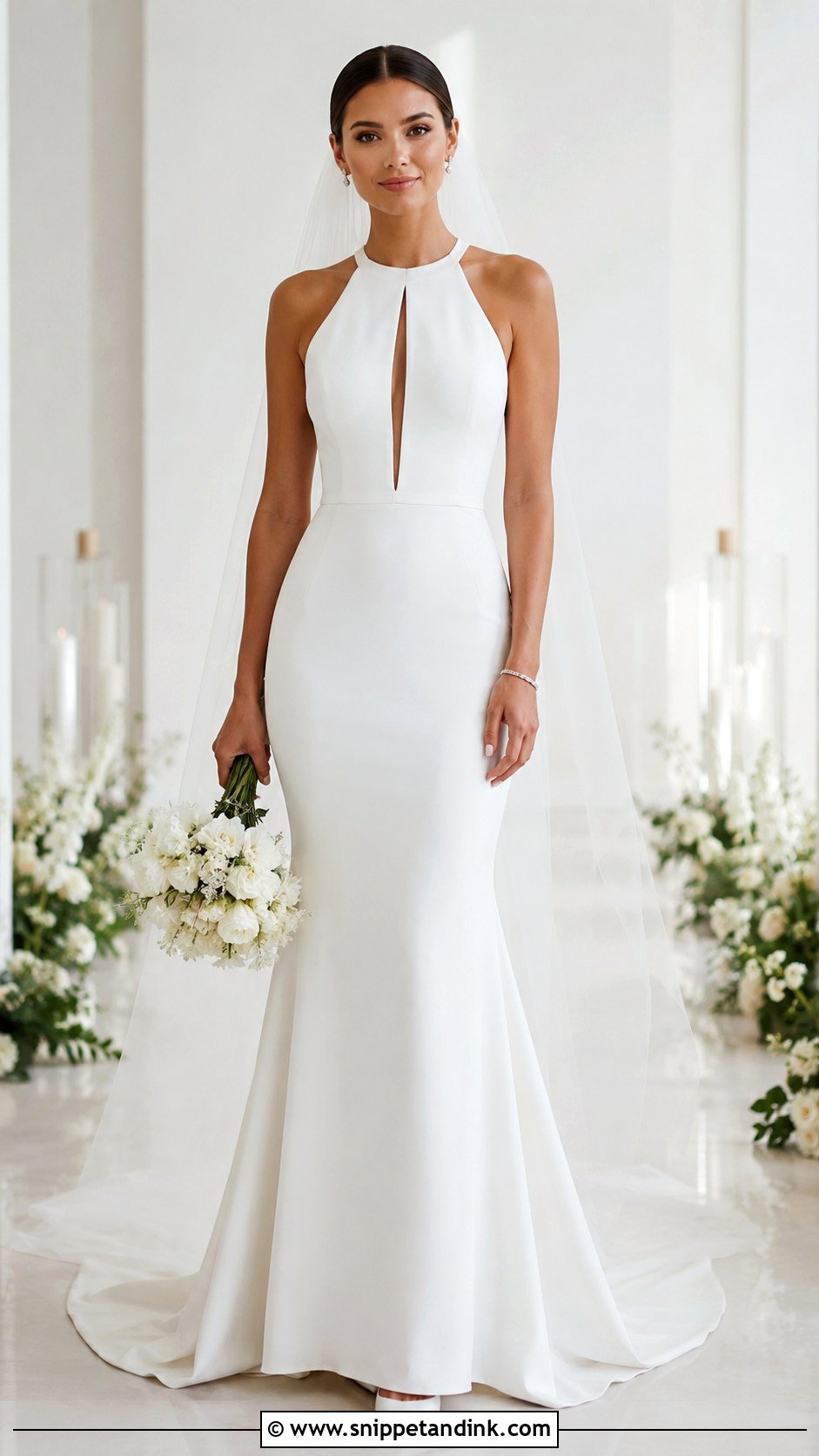
Most keyholes sit at the back; this one sits at the front, which makes it bolder and also trickier to fit. A high or halter neck with a narrow cutout at the centre of the bodice, a fitted waist and a gently flared skirt. Crepe looks modern, lace softer. The opening has to stay put when you bend or sit, so I’d ask about a strip of illusion mesh behind it for security and try every bra option during alterations. A smooth bun, understated earrings, a bracelet instead of a necklace, pointed pumps and a plain veil.
Bras, Sewn-In Cups and Tape for an Open Back
Support is the question every keyhole bride asks me, and the honest answer depends on how much support you need.
Sewn-in cups are my first choice for most open backs. The seamstress stitches moulded cups into the lining, so there’s nothing to slip or peel. Bring the cups to the first alteration appointment, since they change how the bodice fits.
Adhesive bras suit smaller busts and shorter days; they can loosen with heat and perspiration, so do a full test wear at home on a warm afternoon. Low-back converter straps help with a keyhole that sits higher, but check the band truly sits below the opening when you reach forward.
Strap Tan Lines, Gaping Edges and Other Fixes
A keyhole shows skin people rarely see, so plan ahead for it.
- Avoid tanning in strap tops in the weeks before the wedding; a pale strap line across the opening is very hard to hide.
- Keep the upper back in your skincare routine. A gentle exfoliant and moisturiser help any rough patches settle well before the day.
- If the edges gape on the morning, a strip of double-sided fashion tape along the inner edge usually holds them flat. Pack some in your emergency kit.
- Ask your photographer for a few back shots before the veil goes on and again after it comes off, so you have the keyhole both ways.
One Cutout, Twenty Ways to Wear It
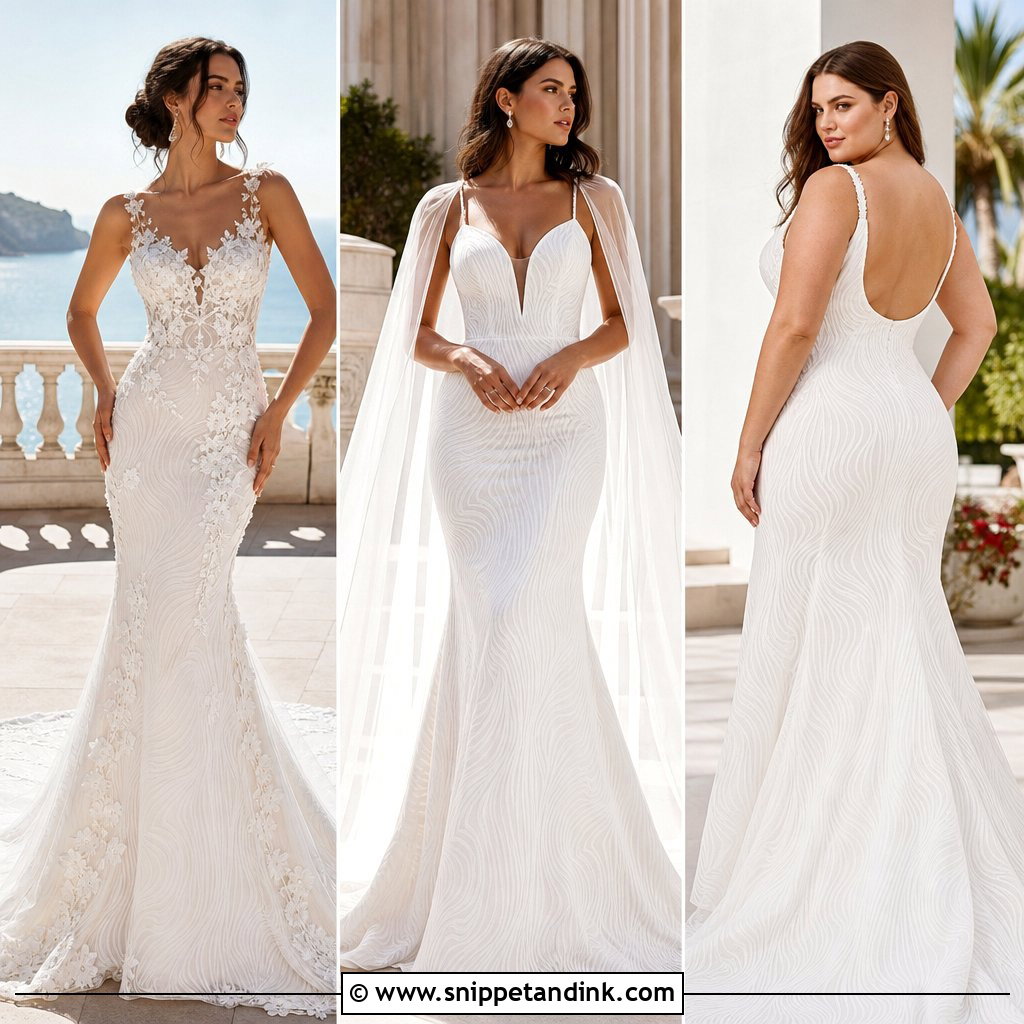
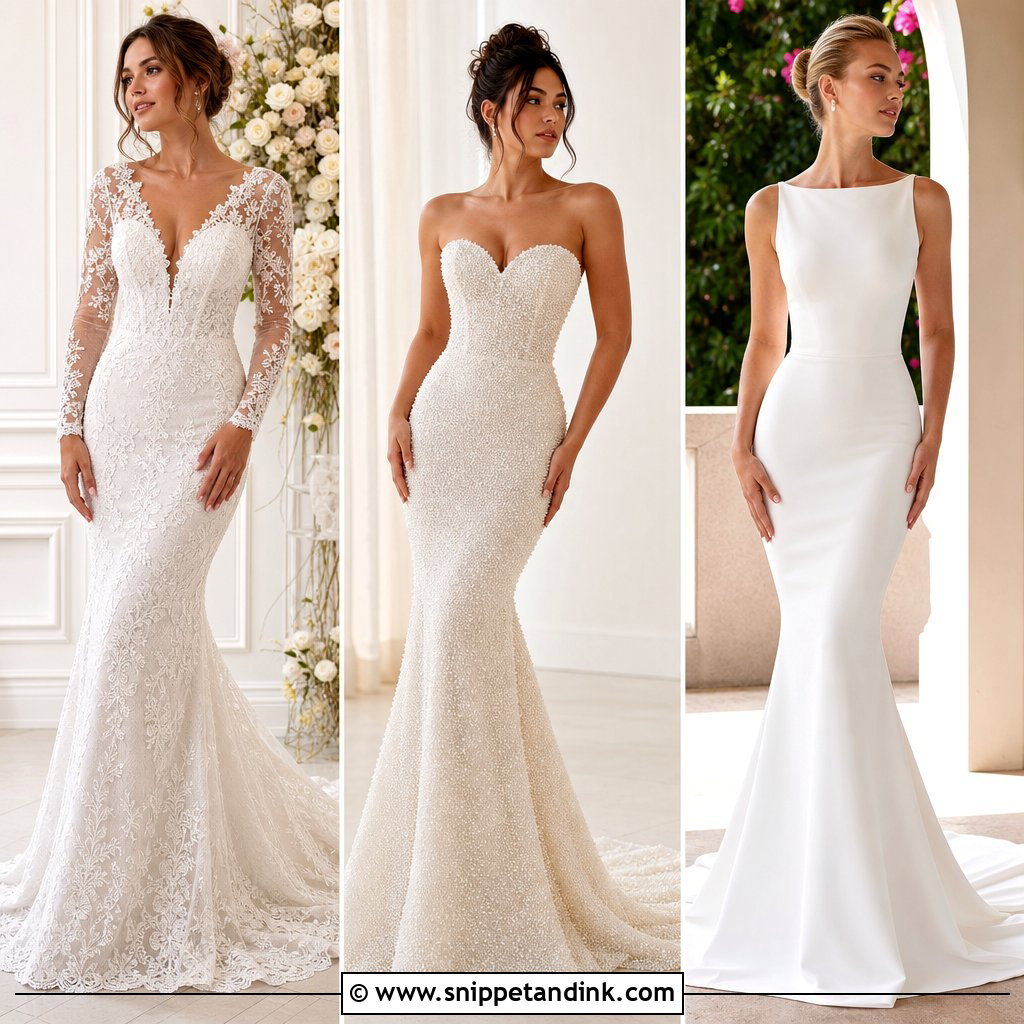
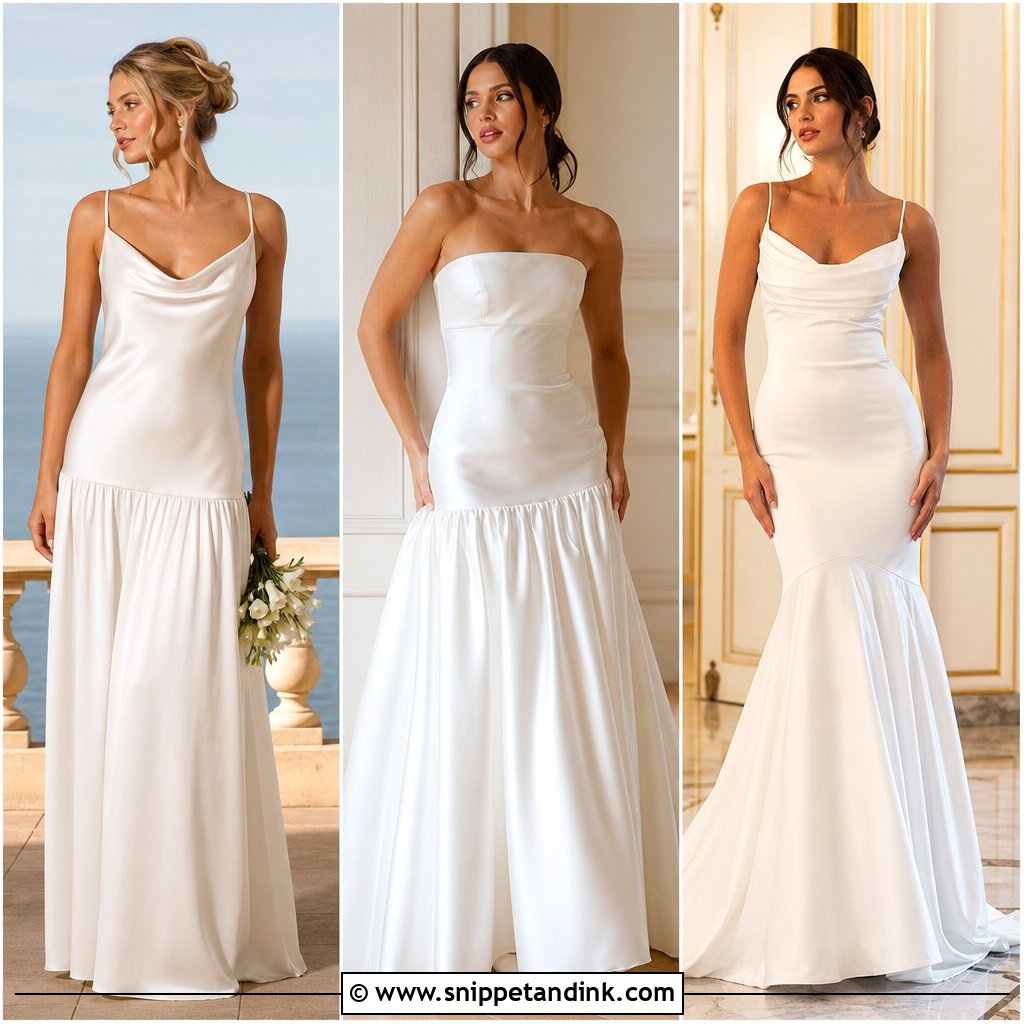
A single, carefully placed cutout can change a whole bridal look. Lace makes it soft, satin polished, crepe modern and chiffon light, and it works on almost every silhouette from short courthouse dresses to full ball gowns and mermaid shapes. When you shop, look at the size and position of the opening, how the bodice supports you, and how your hair and veil will sit around it. Move, sit and walk in every fitting to make sure the edges stay flat, and keep accessories framing the detail rather than covering it.
You'll Like These Ideas:



Leave a Reply