
Soft Dramatic is a Kibbe style type describing a long, strong frame with curves on top of it, and the bridal gowns that suit it have to handle both at once. Length and scale come first: sweeping lines, broad open necklines, bold details. Then softness: draped fabric, a defined waist, folds instead of sharp angles. Put together, those create a T-shaped balance across the shoulders and down the body. In practice that means lustrous satin, fluid crepe, large-scale lace and jewelry big enough to be seen from the back pew. A fitted mermaid or a regal ball gown can both work. Below are twenty dresses, each with the fit notes and accessories I’d use, and none of them is a rule you must follow.
Accessories at Soft Dramatic Scale
The most common styling mistake I see on Soft Dramatic brides isn’t the dress. It’s accessories that are too small. A strong, tall frame in a sweeping gown makes dainty pieces disappear, and the bride ends up looking underdressed above the neck.
- Earrings: long drops or sculptural shapes that read from a few meters away. Tiny studs vanish.
- Veil: cathedral or chapel length, or a cape veil. A short birdcage cuts the vertical line in half.
- Bouquet: an elongated cascade or a loose armful suits better than a small round posy.
- Hair: volume or a full, smooth updo. Very tight, small buns look out of proportion with a big gown.
- Shoes: pointed toes continue the long line; rounded ones shorten it.
Larger doesn’t mean more. One big piece usually beats several medium ones. If the earrings are bold, skip the necklace; if the veil is dramatic, keep the hairpiece simple.
1. Mermaid Soft Dramatic Wedding Dress
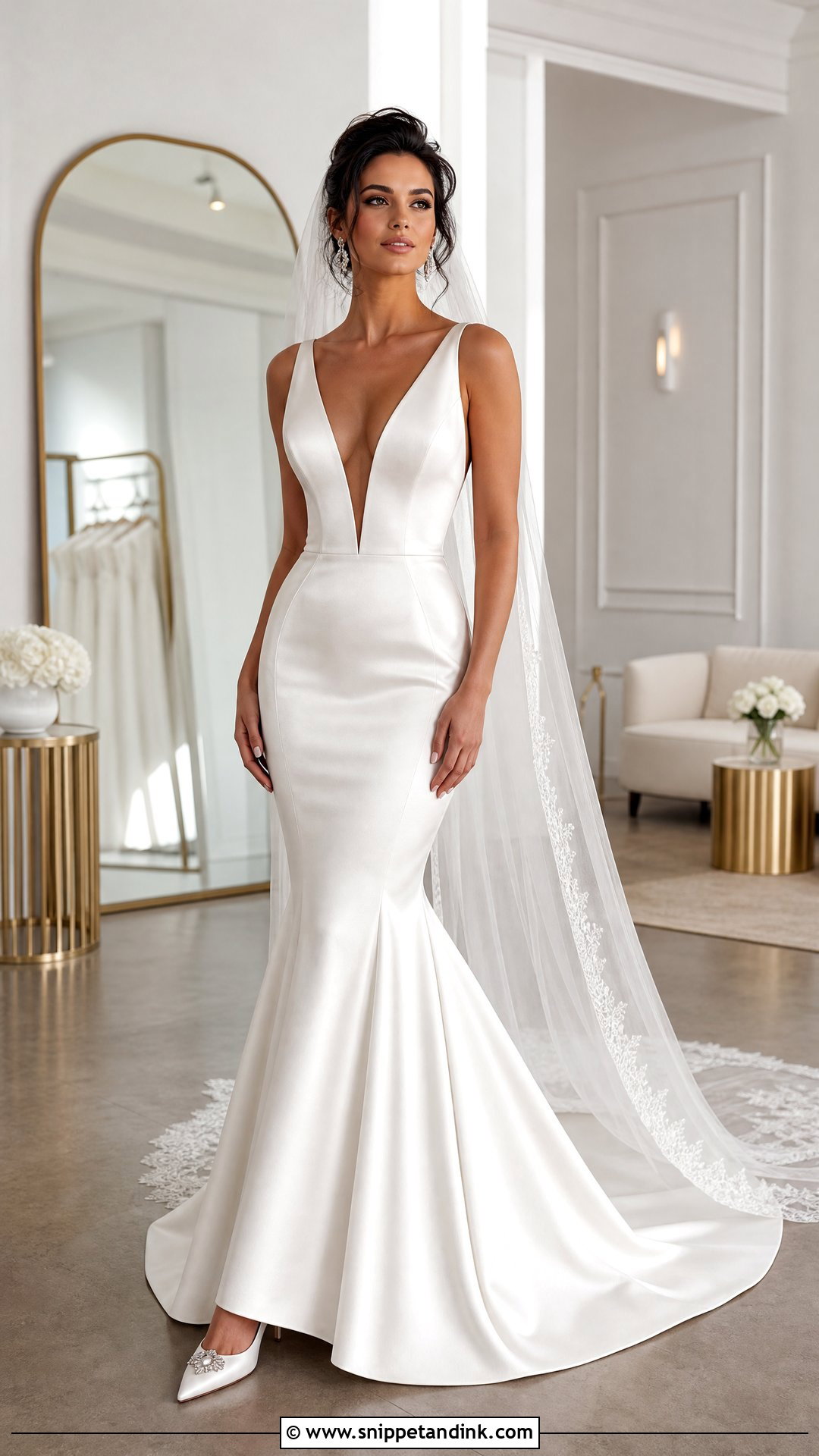
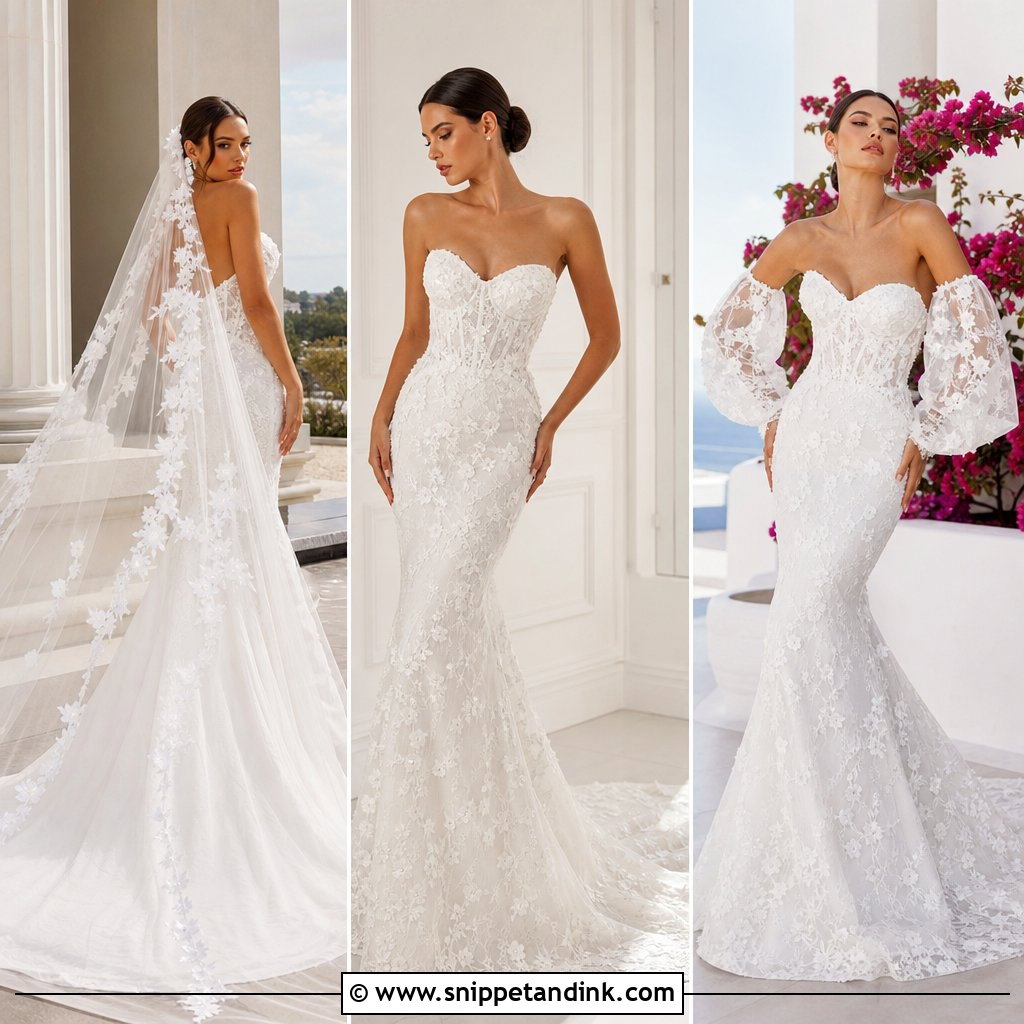
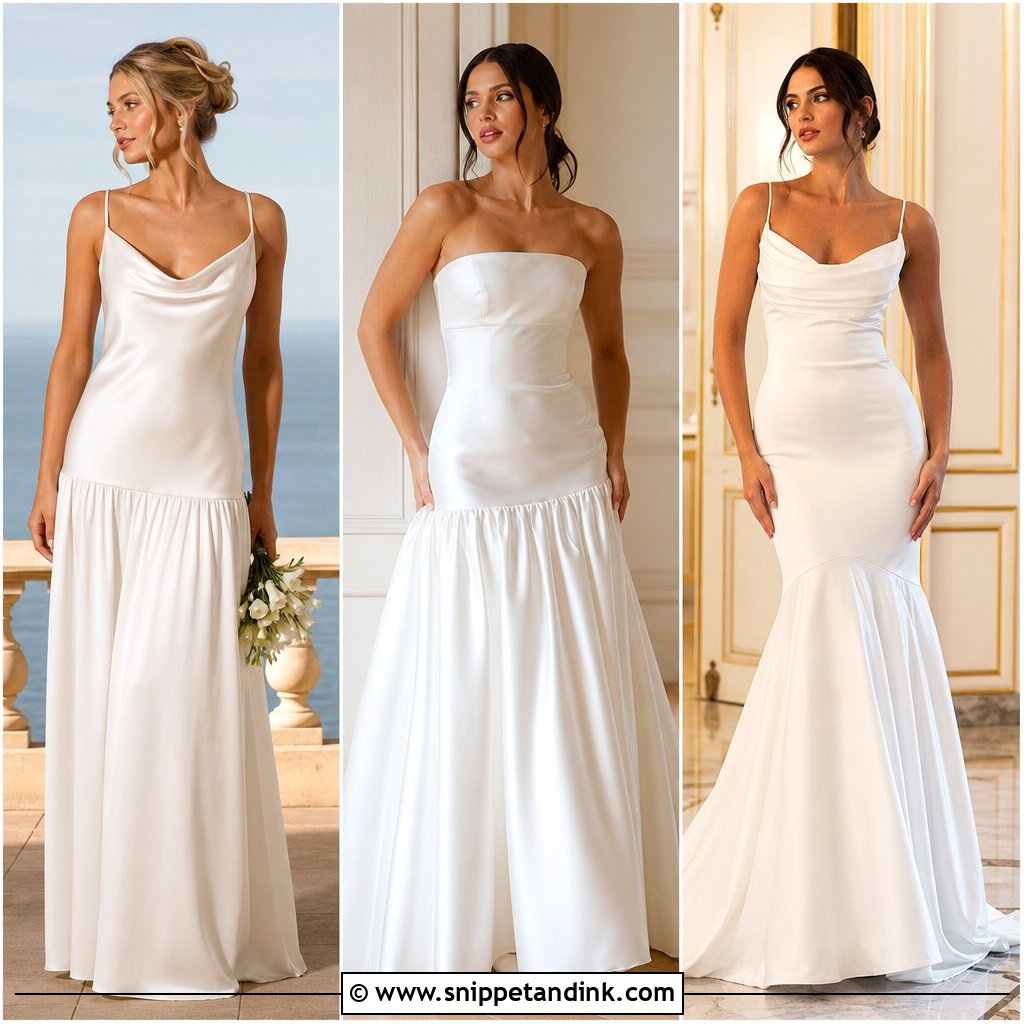
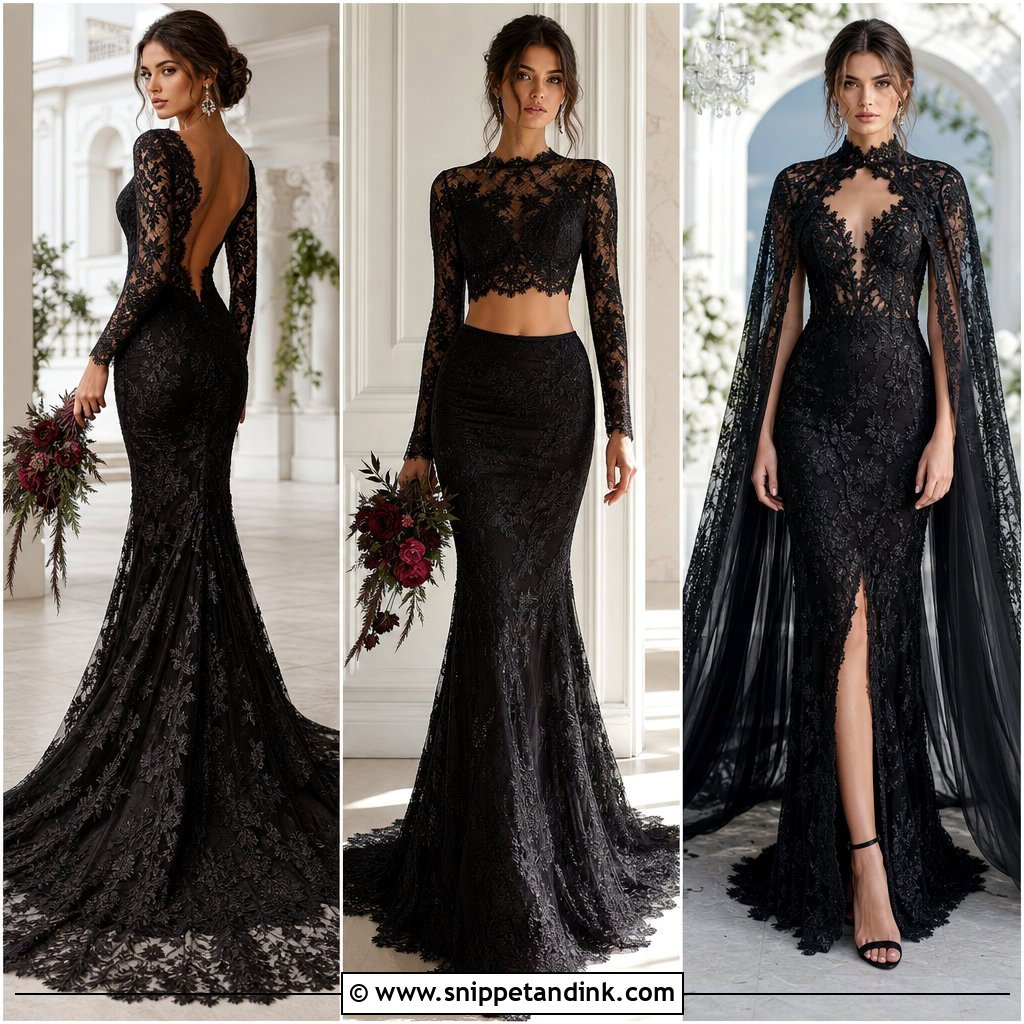
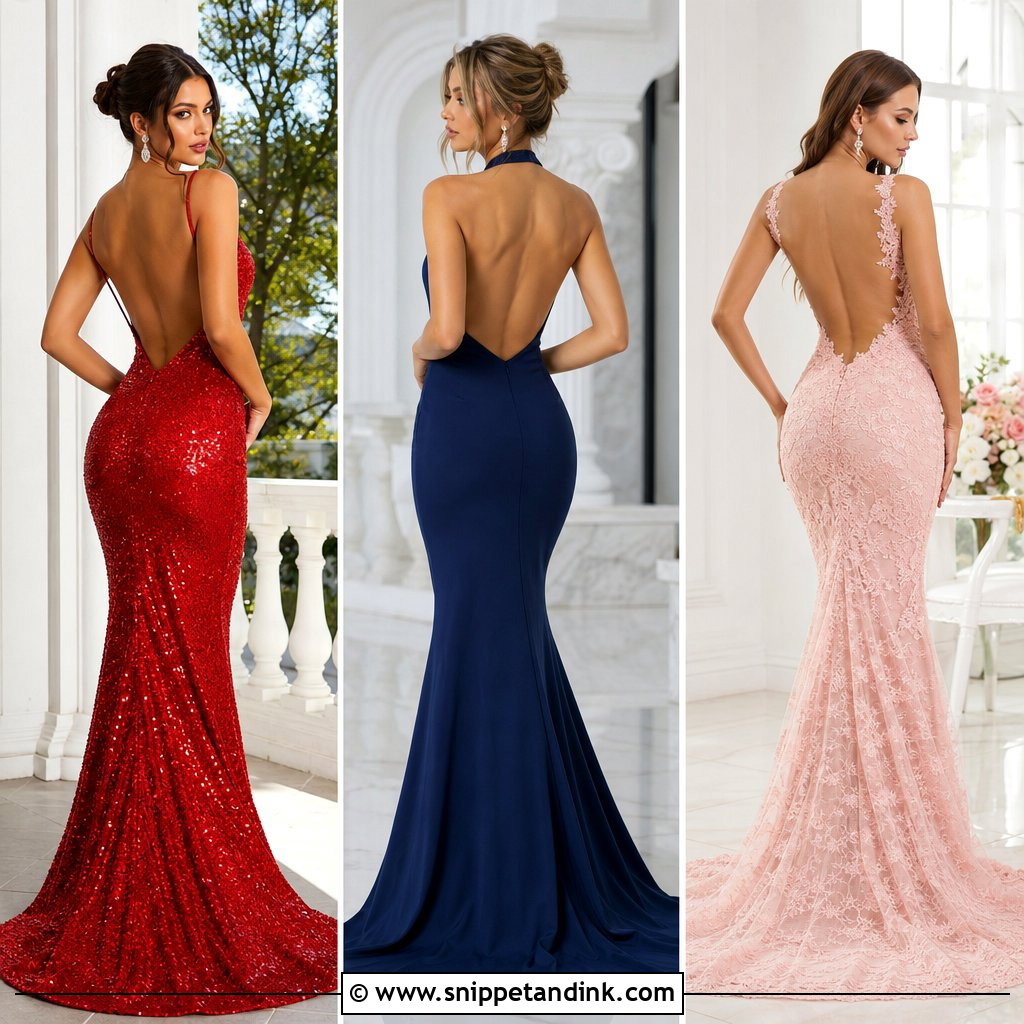
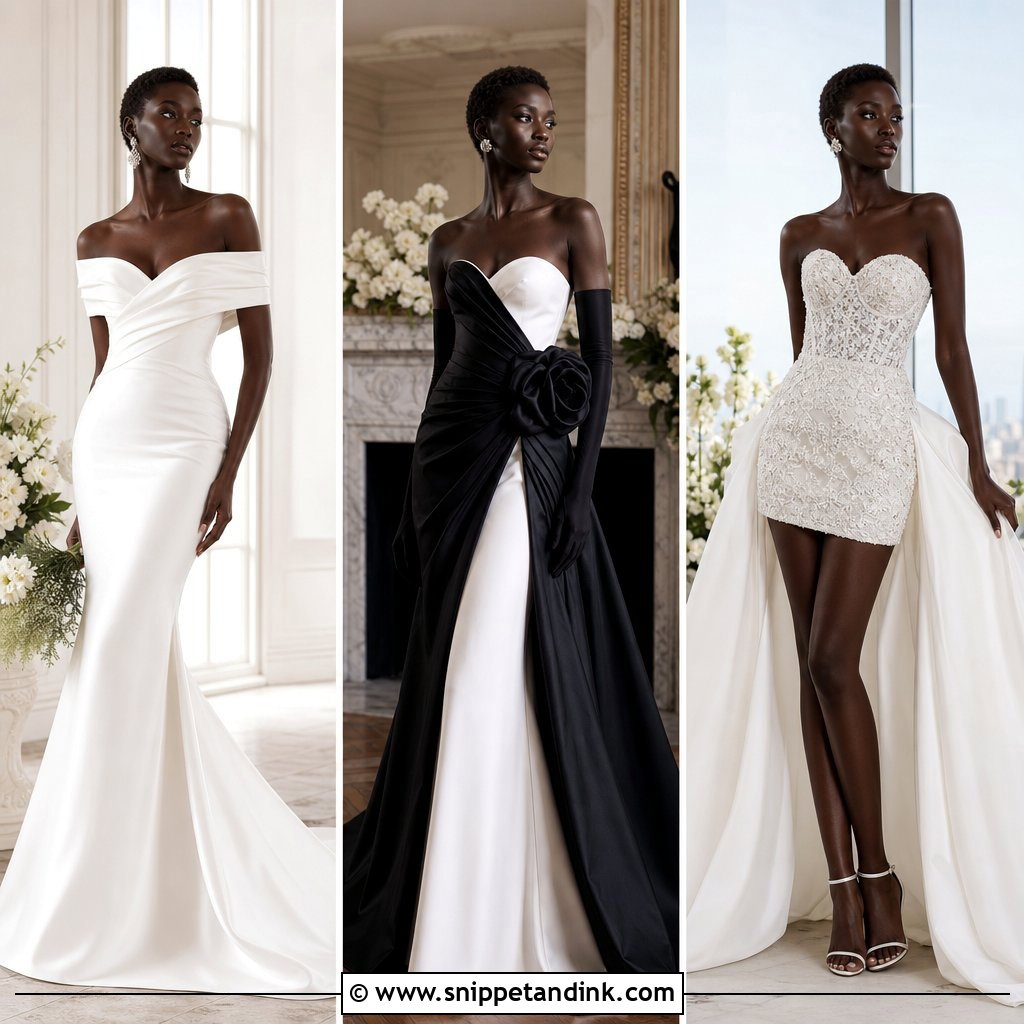
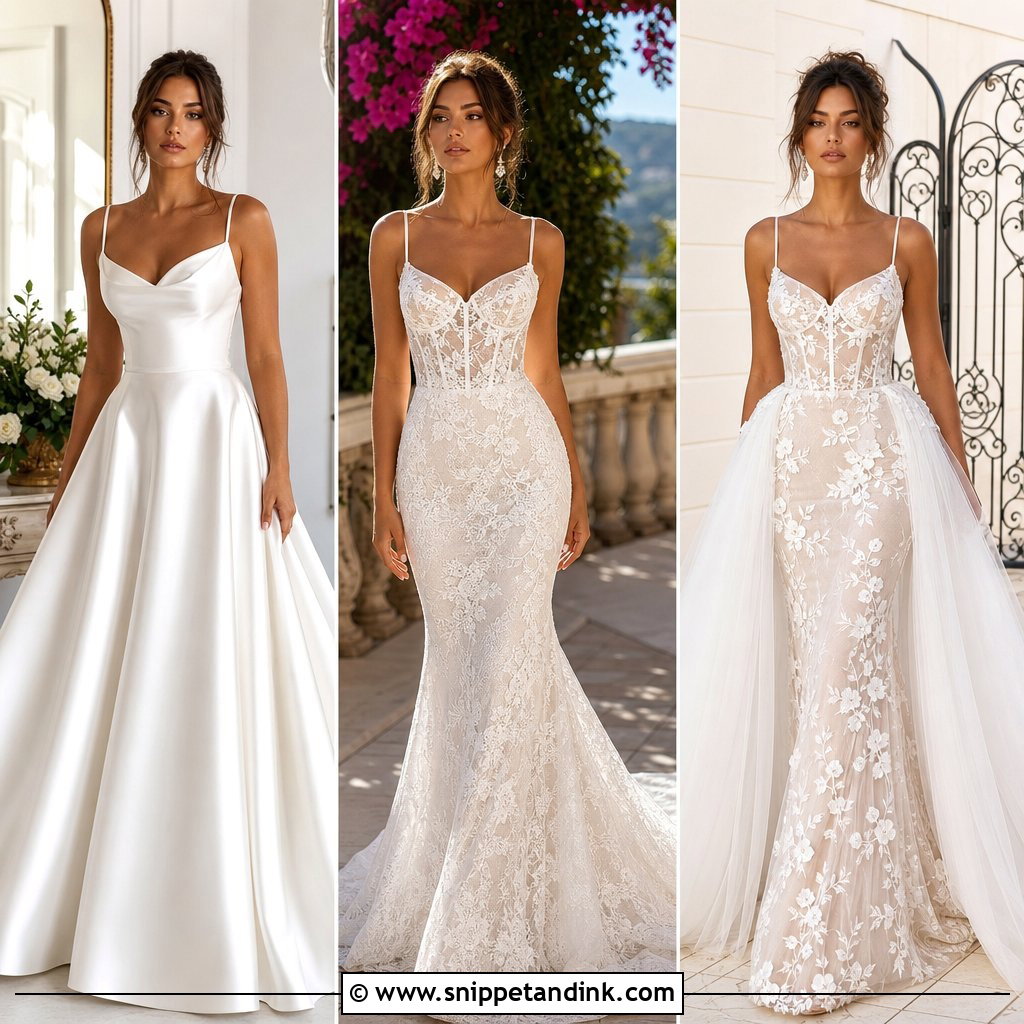
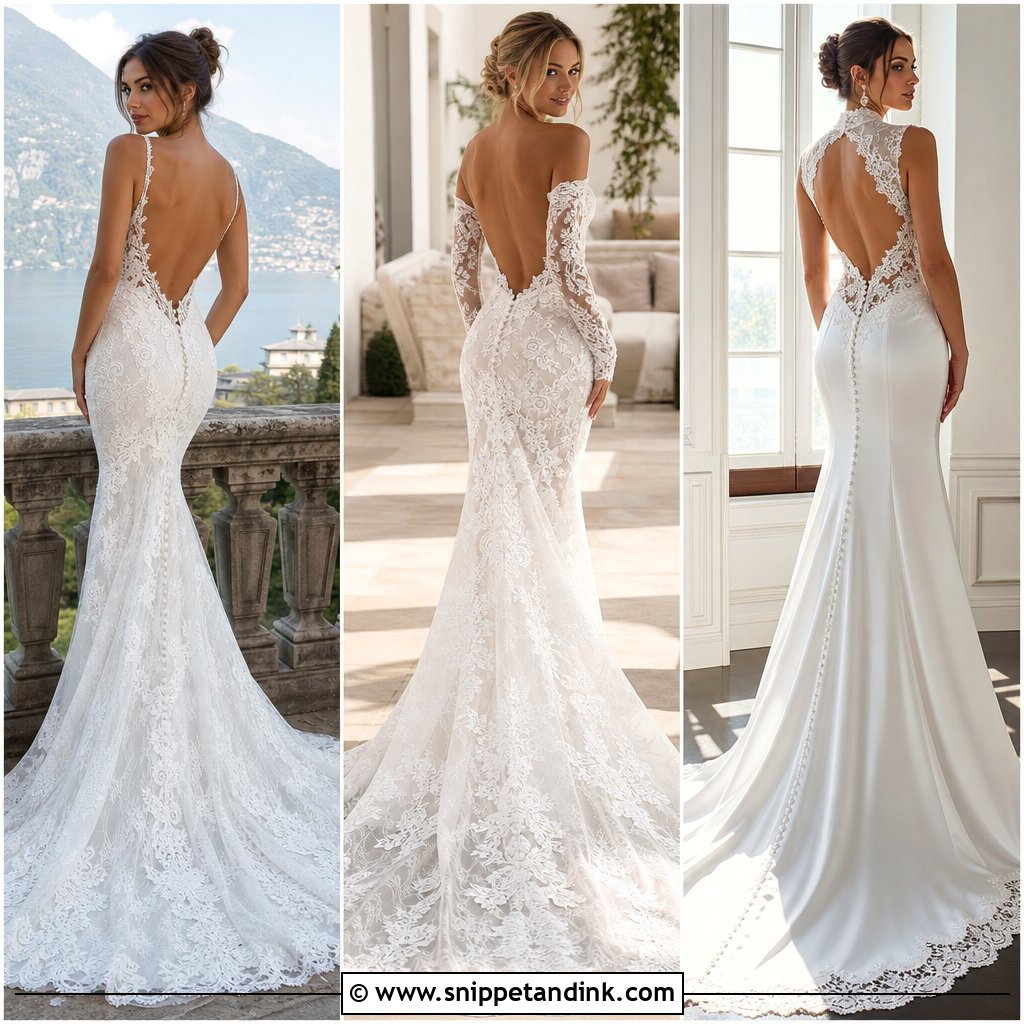
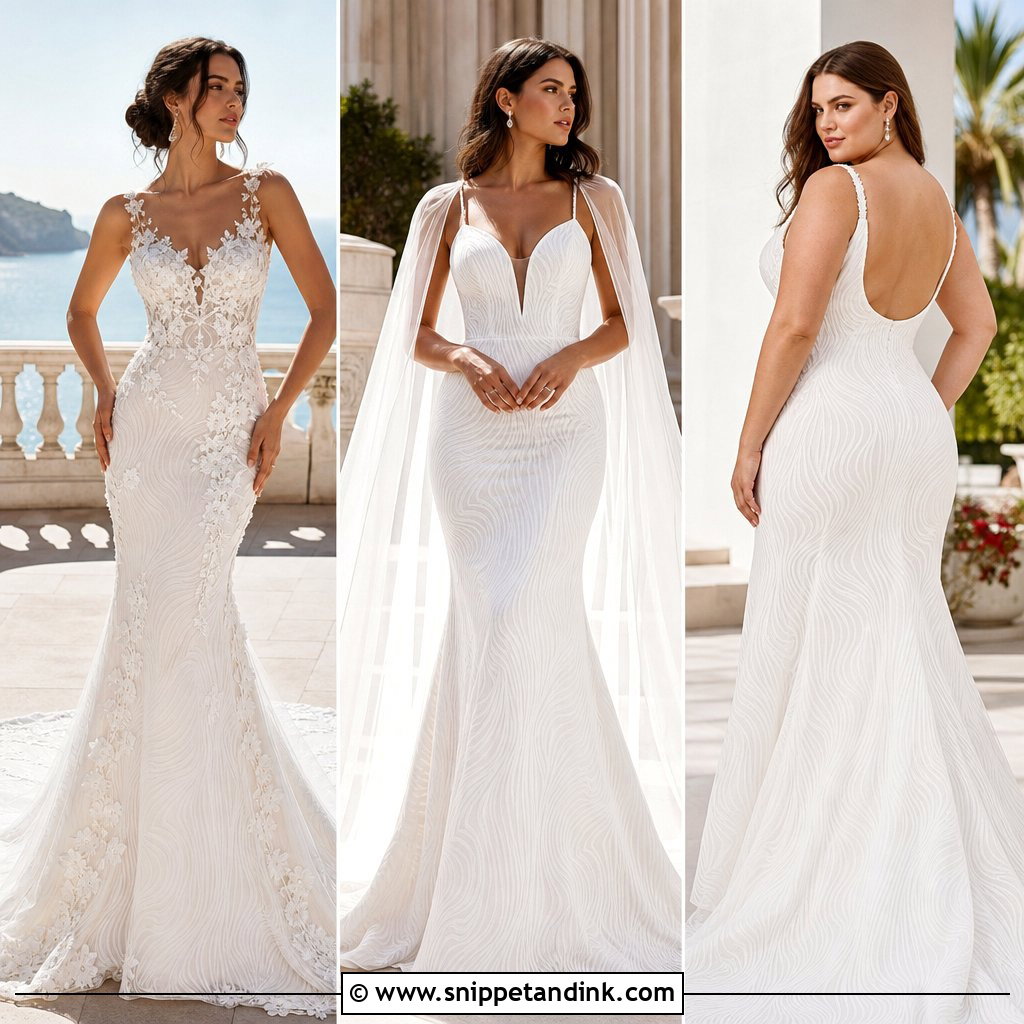
The mermaid follows the torso and hips, then flares at the knee, which shows off exactly the long curved line this type has. The flare should sweep, not jut out in stiff tiers. A deep V, a wide sweetheart or draped off-the-shoulder sleeves balance the fitted skirt. Satin, crepe or heavy silk hold the shape. I’d keep tiny details off it entirely, since little appliqués break the line. Know that a knee-level flare shortens your stride, so practice walking and stairs at the fitting.
2. Satin Ball Gown Soft Dramatic Wedding Dress
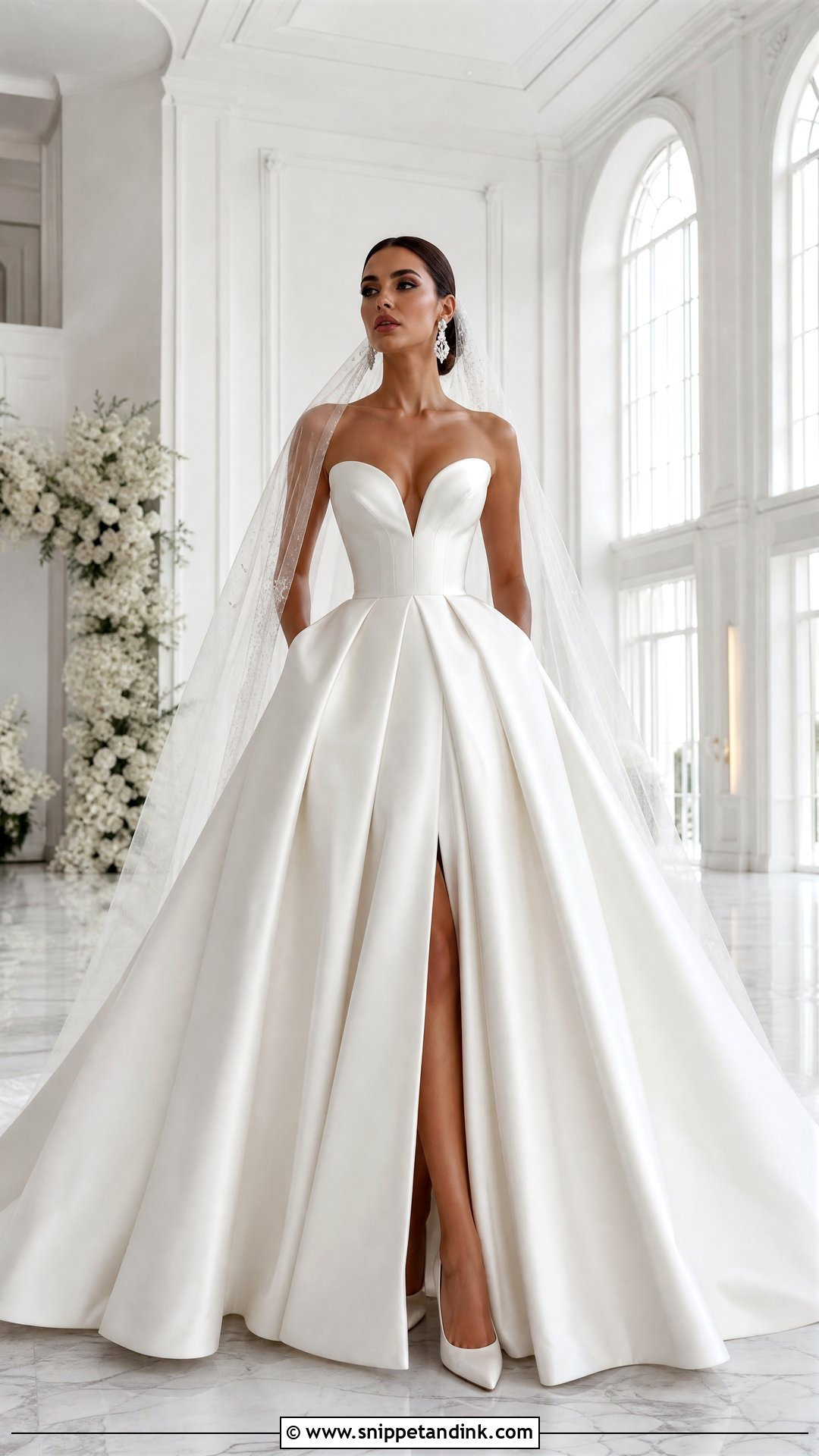
A ball gown can suit a Soft Dramatic bride, provided it keeps length and a clear waist. I look for an elongated waist seam and a skirt in weighty satin that falls in broad folds. Many thin, stiff layers make the skirt look like a separate object from the bodice. A plunging sweetheart or portrait neckline opens the shoulders and balances the volume below. Heavy satin skirts are warm and weigh a fair amount, so think about a summer ceremony honestly. Statement earrings and a long veil under a smooth bun finish it.
3. Off-The-Shoulder Soft Dramatic Wedding Dress
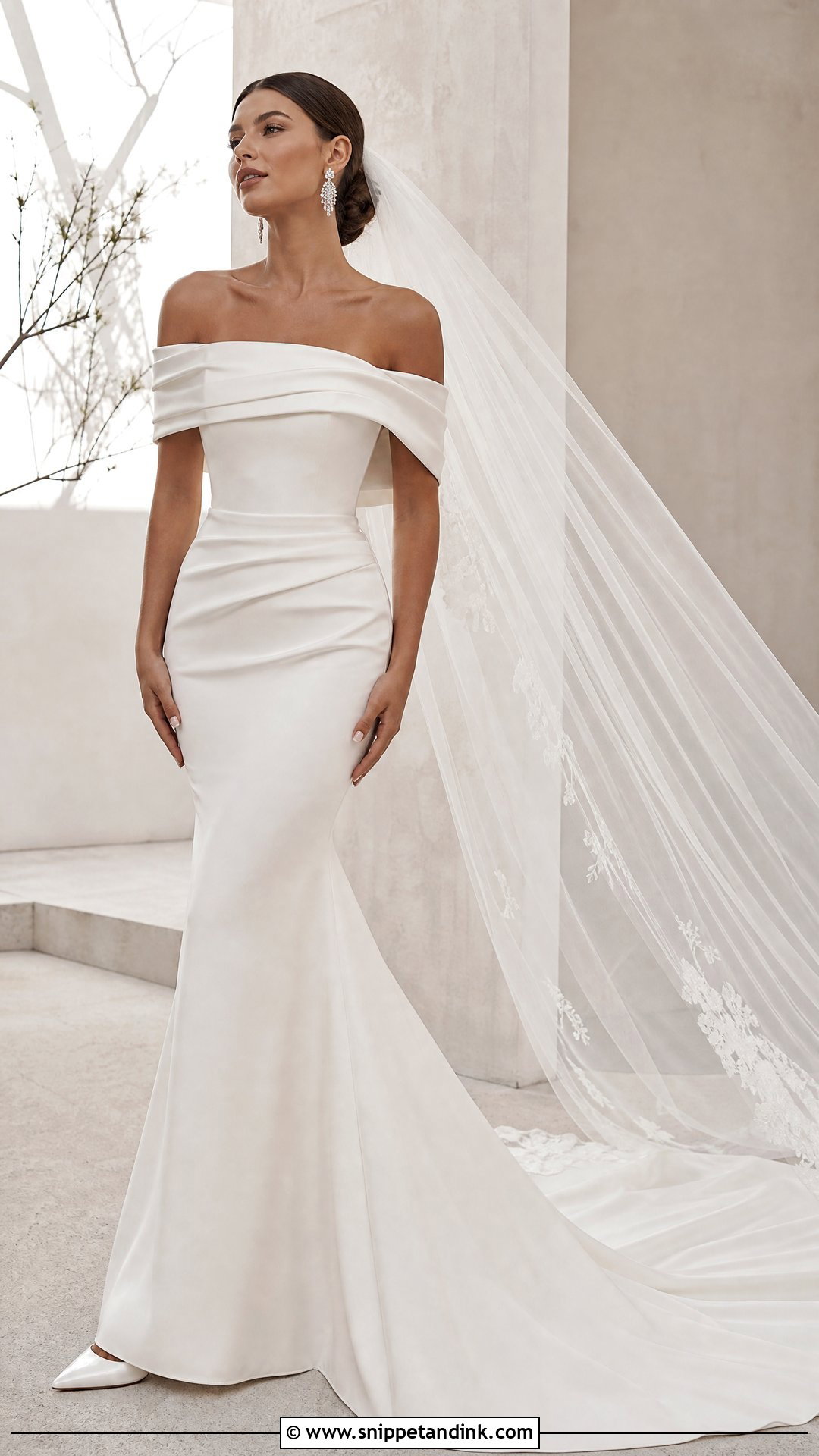
Shoulders are part of this type’s strength, and an off-the-shoulder neckline uses them well. Choose a fold-over satin band, draped tulle sleeves or a sculpted portrait collar over thin straps, which look undersized on a broad frame. Soft gathering at the bust adds curve. The skirt can run long as a mermaid, trumpet or controlled A-line. The fitting detail I watch is the band: it must grip without cutting into the upper arm, or you’ll be tugging it up all evening. Skip the necklace and let long earrings do the work.
4. Deep V-Neck Soft Dramatic Wedding Dress
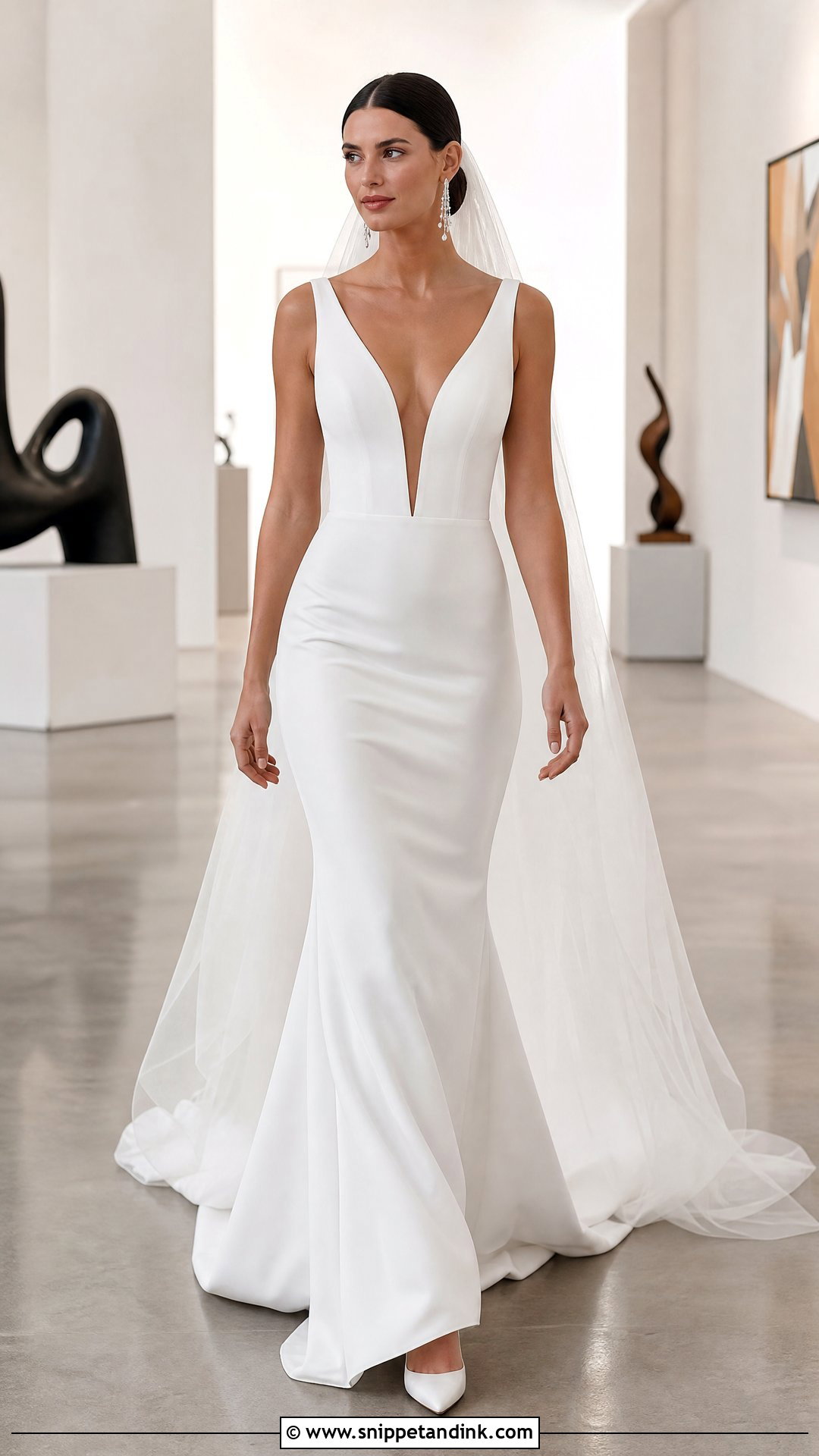
A deep V draws one long vertical line down the body, and it needs real engineering to stay put: a structured bodice, illusion mesh in the center and well-placed boning. Ask the seamstress where the mesh sits; the best ones match your skin tone so it disappears in photos. Wide straps or draped sleeves frame the V. A fluid crepe or satin skirt skims the hips. If you want a cape veil, check it doesn’t fall across the neckline and hide it.
5. One-Shoulder Soft Dramatic Wedding Dress
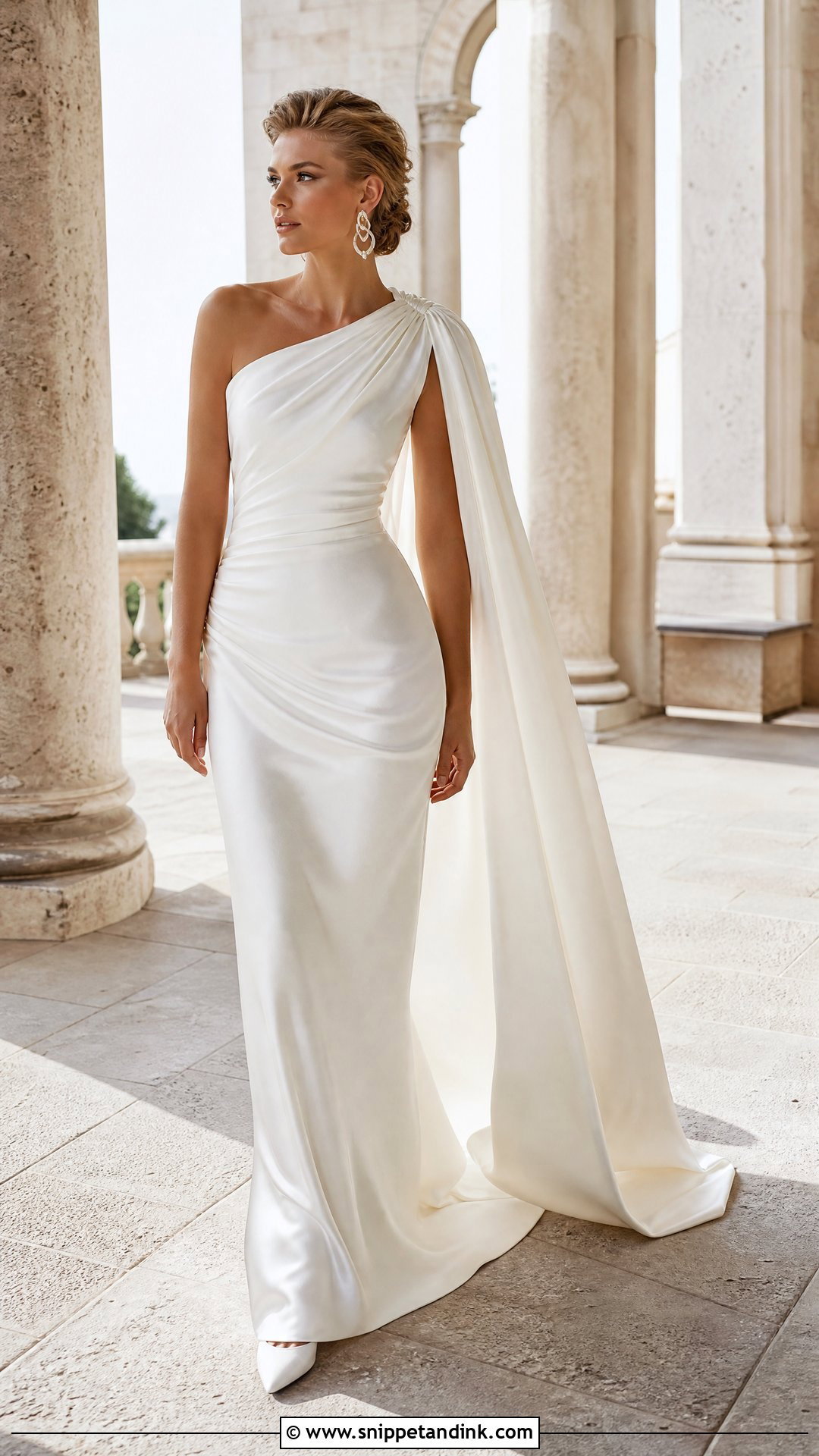
One-shoulder gowns need a shoulder piece with some scale: gathered satin, a draped sash or one flowing sleeve. A thin single strap looks lost on this frame. The diagonal line should run cleanly into a defined waist and a long column, mermaid or narrow A-line. Sweep the hair to the bare side so the neckline stays in view. Test the bodice by raising the covered arm high; one-shoulder designs often shift toward the bare side if they’re even a little loose. A dramatic train can stand in for a veil.
6. Cowl Neck Soft Dramatic Wedding Dress
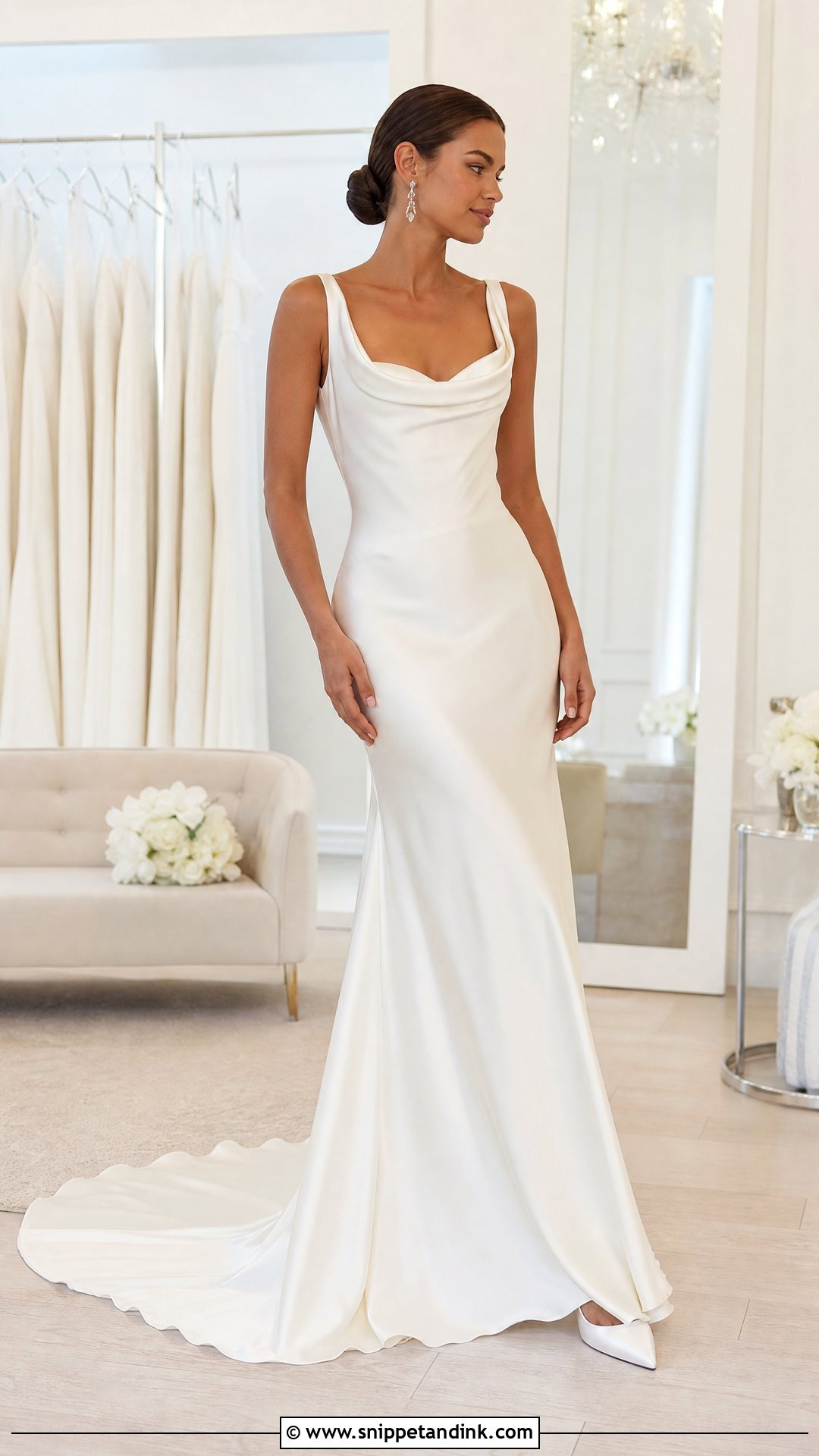
A cowl relies entirely on fabric. Silk, satin or satin-backed crepe with enough weight forms deep, generous folds; a thin satin collapses into small, limp ripples. The waist should show through bias cutting or subtle shaping. Wide straps and a low draped back add drama without breaking the long silhouette. Bias-cut dresses cling to what’s underneath, so smooth, edge-free foundations matter here more than anywhere. Crystal earrings and a metallic clutch for the reception are enough.
7. Long Sleeve Lace Soft Dramatic Wedding Dress
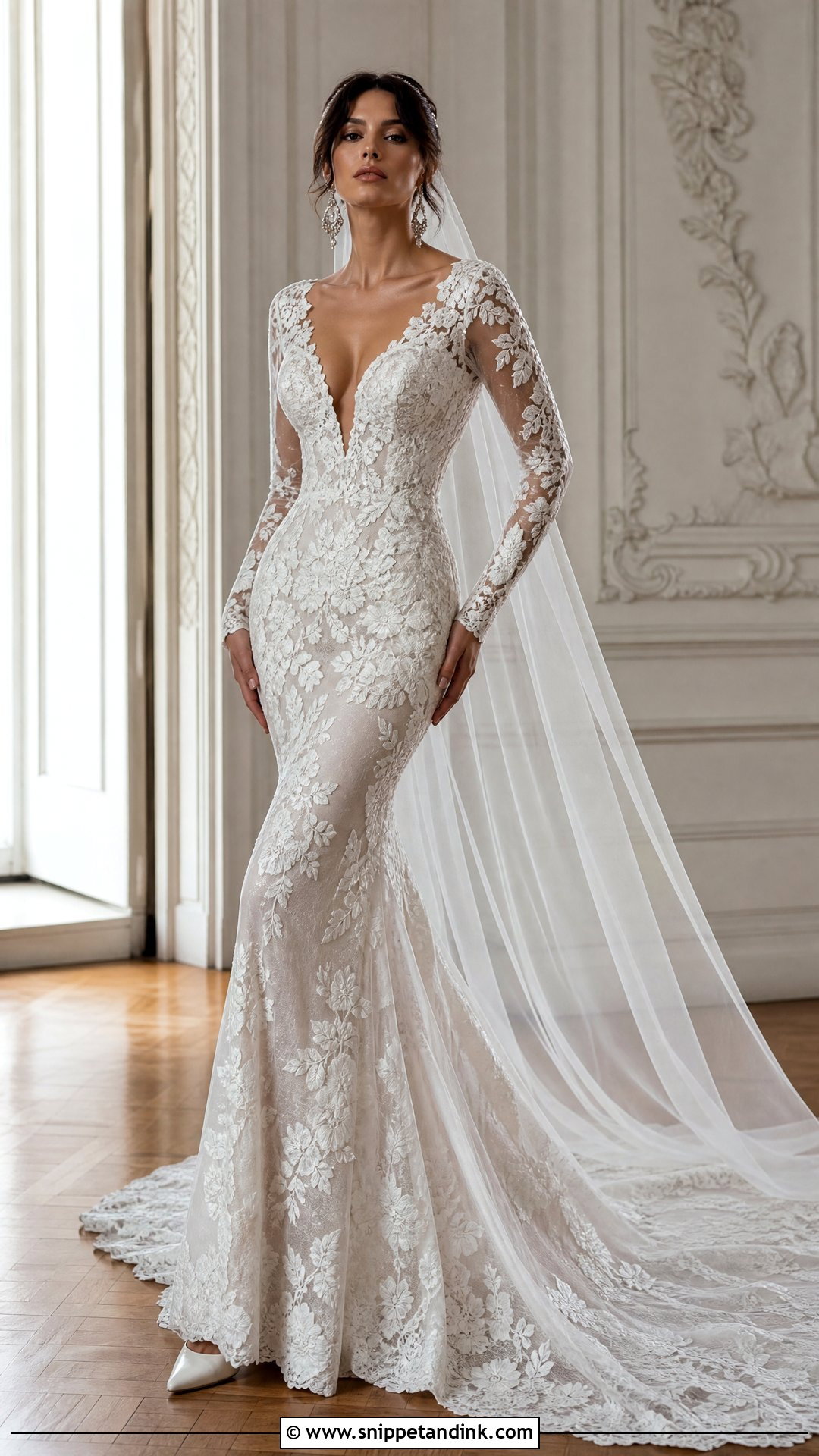
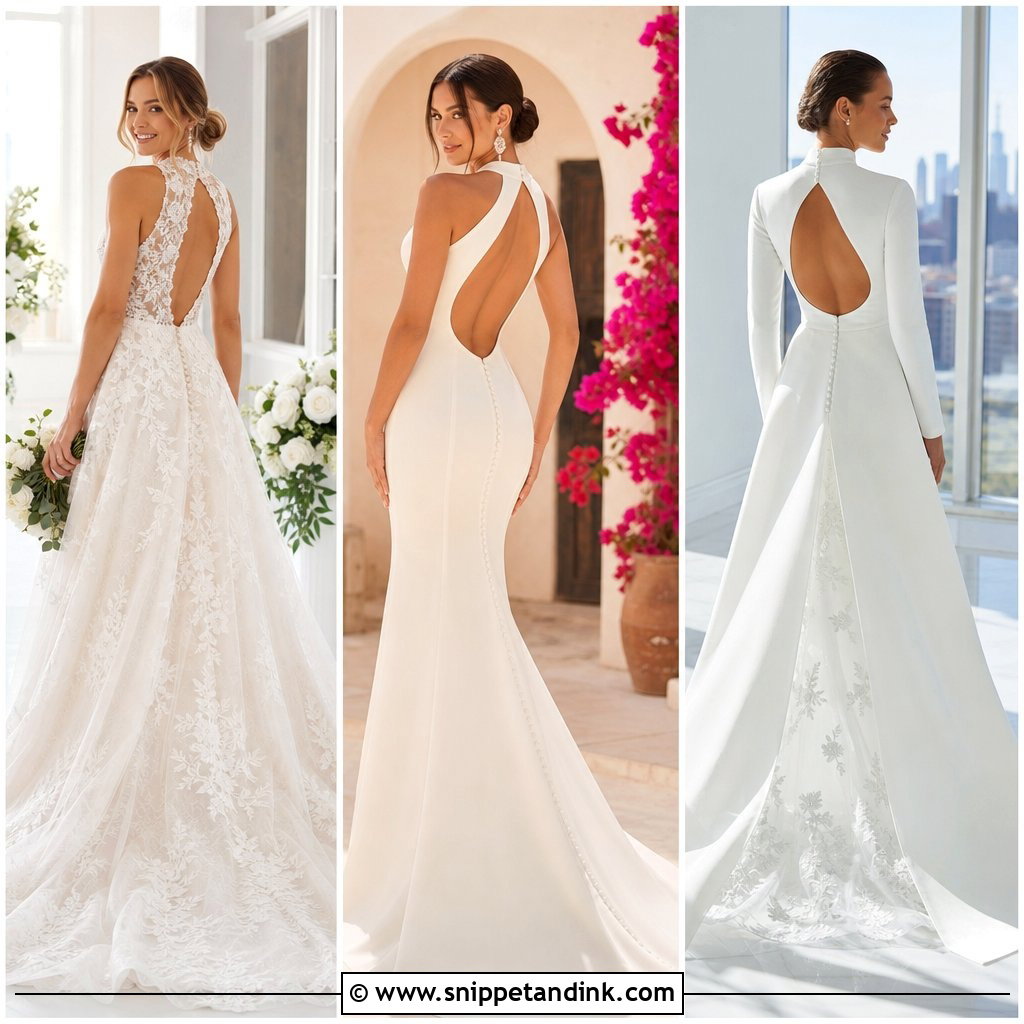
Lace on this frame needs to be bold. Large florals, sweeping motifs or ornate appliqués suit it; tiny repetitive lace looks fussy against a long, strong figure. Fitted sheer sleeves are fine as long as the neckline stays open, a deep V or wide scoop for instance. A close mermaid or trumpet skirt keeps the lace from looking delicate. A row of satin-covered buttons down the back reinforces the vertical line. Lace sleeves should allow a full bend at the elbow, so check while holding your bouquet.
8. Ruched Crepe Soft Dramatic Wedding Dress
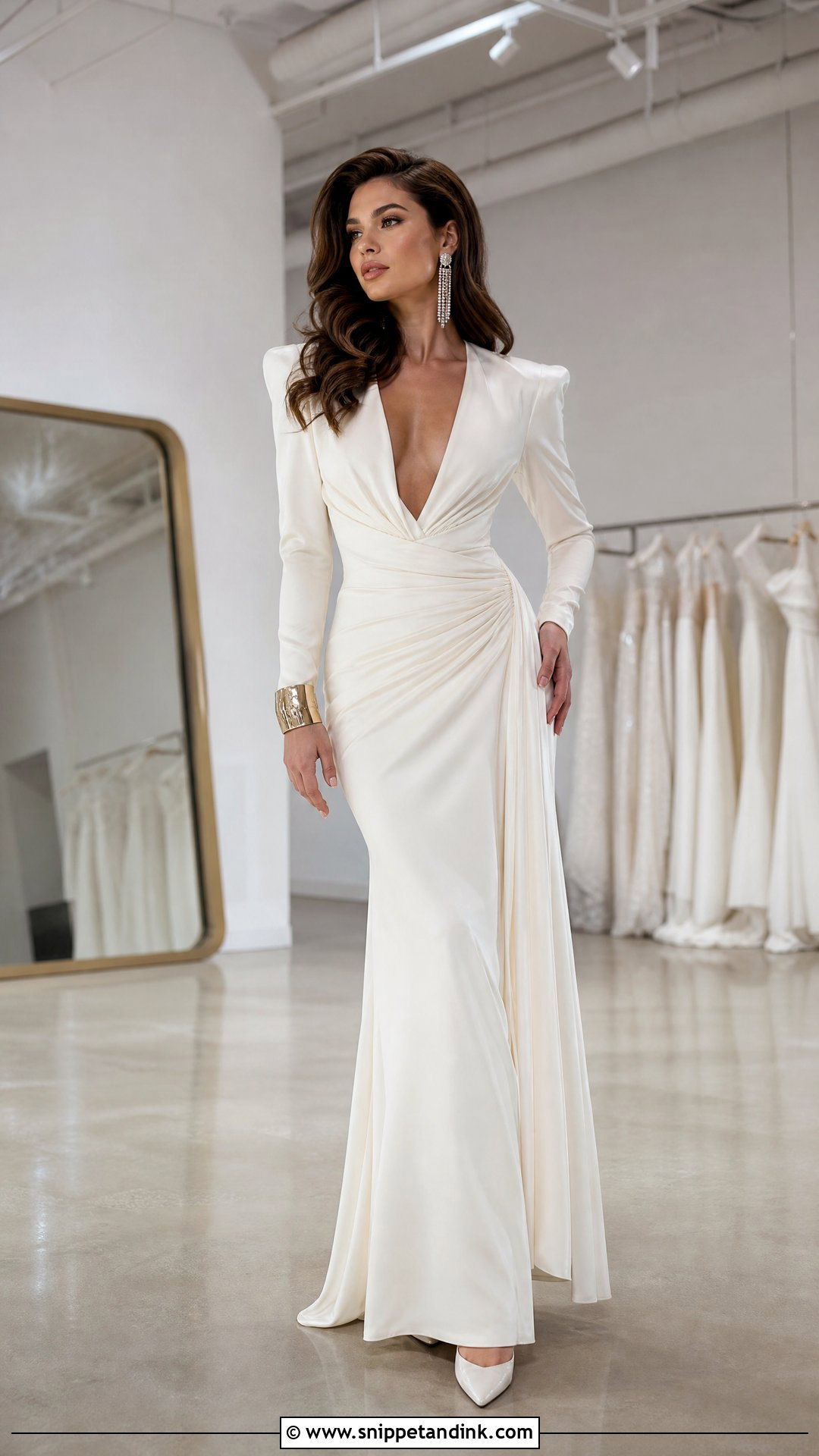
Diagonal ruching shapes the waist without boning, and gathers running across the bodice and hip move the eye along the body. The fabric makes or breaks it. Medium-weight stretch crepe holds the gathers; a thin jersey shows every line underneath and can look cheap. The skirt should reach the floor, with a deep neckline and strong shoulder above. Let the ruching be the only detail. A side-parted wave or a full low bun suits the glamour of it.
9. Cape Sleeve Soft Dramatic Wedding Dress
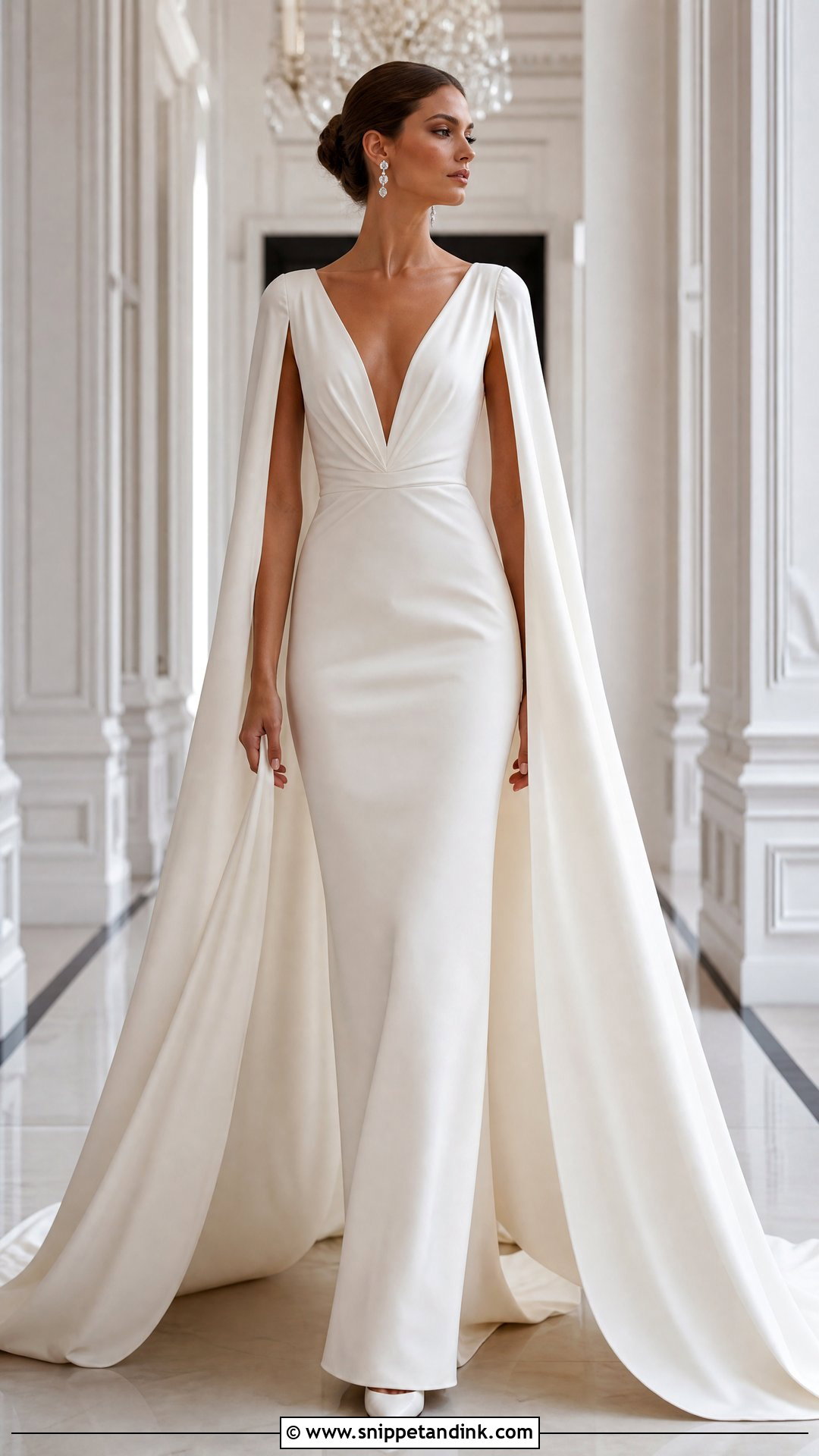
Capes give the upper body movement and scale, which this type wears easily. They can stop at the wrist or fall to the floor. Sheer chiffon is airy; matching crepe looks architectural. A fitted column or mermaid underneath keeps the figure defined so the cape doesn’t swallow you. Capes attached at the shoulder seam pull backward when you raise your arms, so try hugging and lifting a glass in it. A separate veil is optional, as the cape already behaves like one.
10. Asymmetric Draped Soft Dramatic Wedding Dress
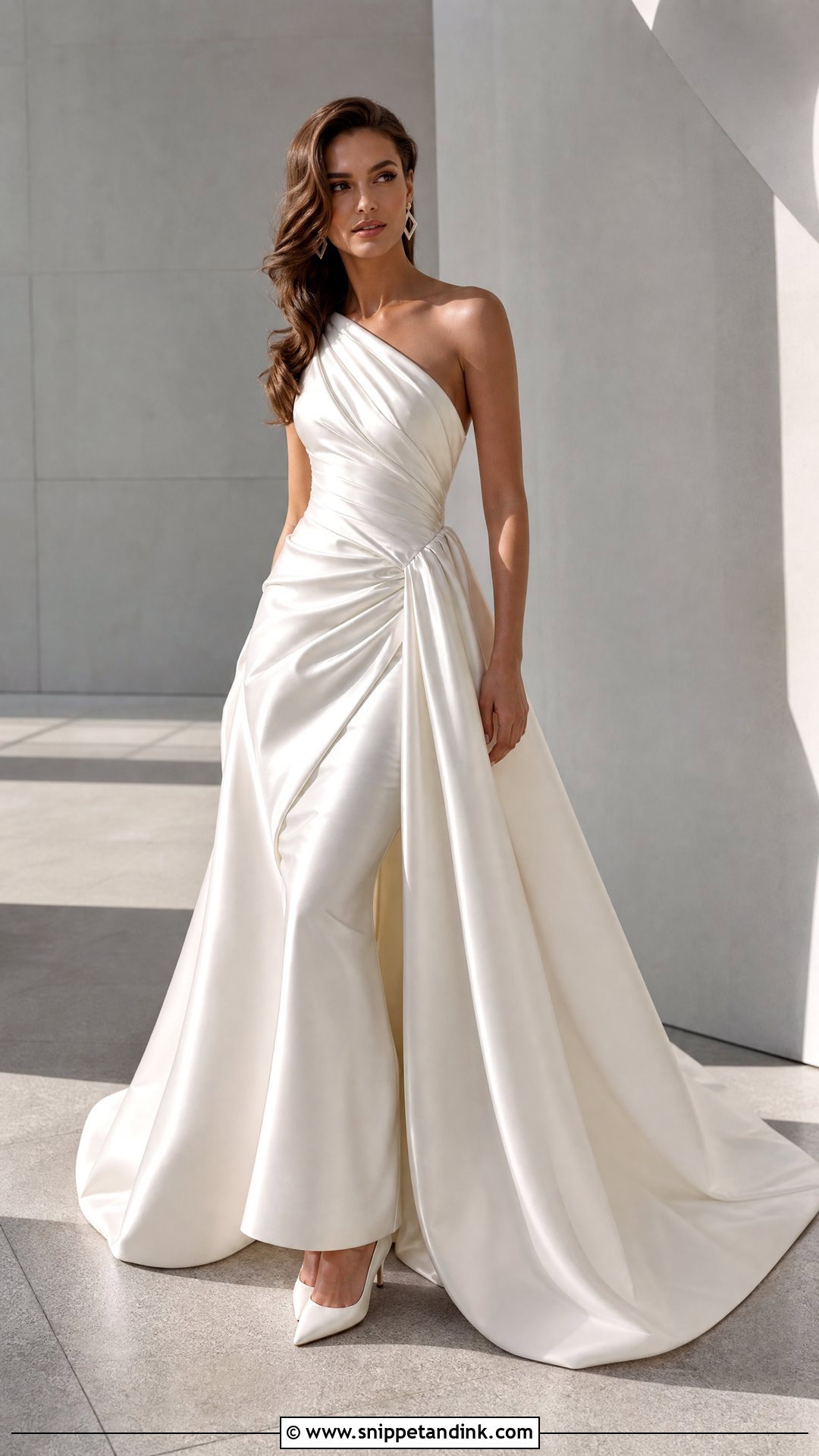
Folds crossing the body on the diagonal give a plain gown real direction. Look for diagonal draping, a side-gathered waist and an angled neckline or overskirt. The drape is usually tacked onto a fitted internal structure, which is what keeps it from sliding through the day. Pick one big accent, such as a hip sash, sculpted shoulder or side train, and stop there. Geometric drop earrings and hair swept to one side balance the asymmetry.
11. Basque Waist Soft Dramatic Wedding Dress
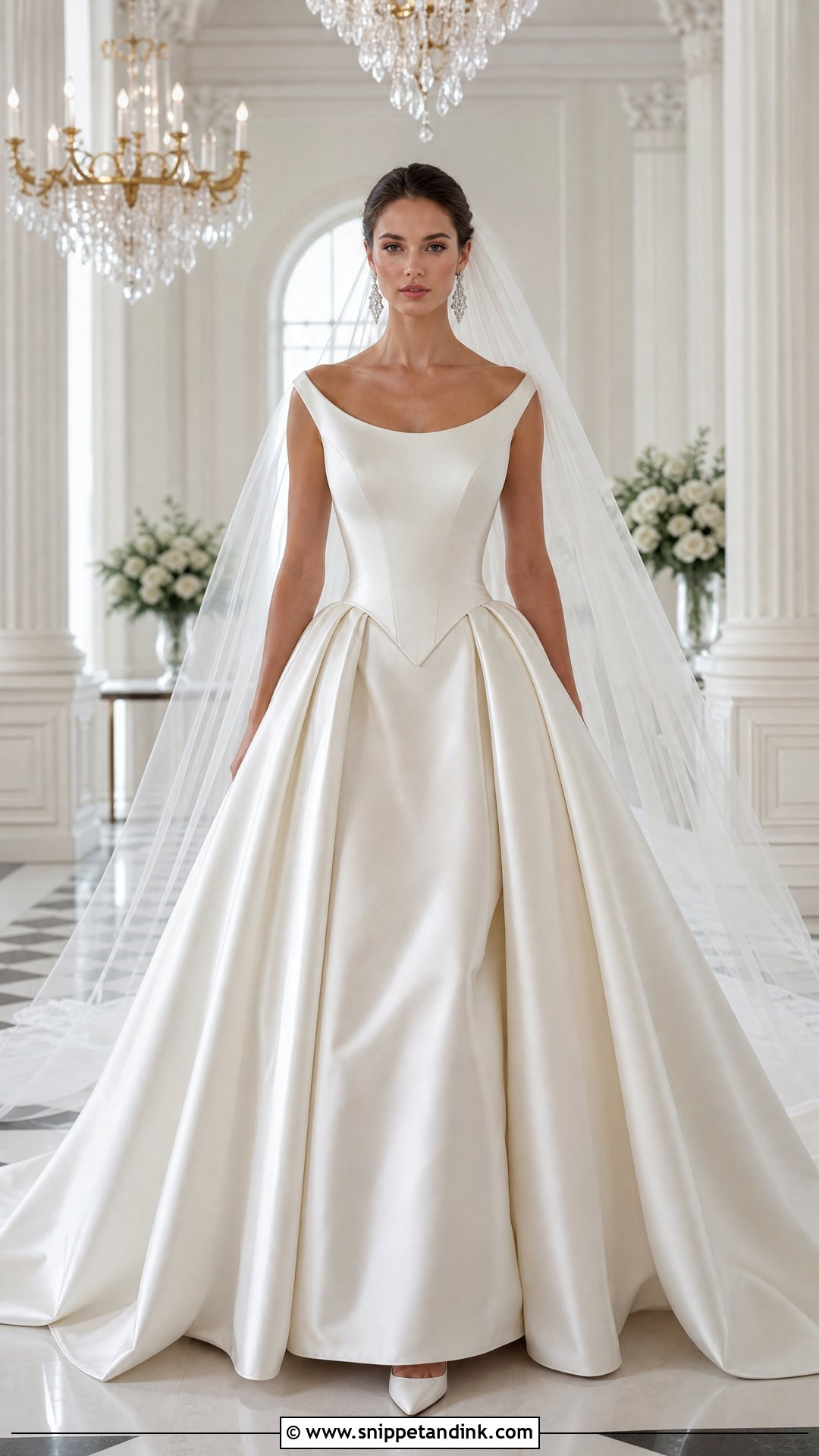
A basque waist dips into a point below the natural waist, lengthening the torso. On a Soft Dramatic bride it pairs well with a broad neckline and a full skirt in long, smooth folds. I’d steer away from very crisp fabrics that stand off the body; substantial satin or mikado drapes better. The point has to land exactly right on your figure, which usually means alterations to the bodice length. Bold pearl or crystal earrings and a cathedral veil give it a regal finish.
12. Halter Neck Soft Dramatic Wedding Dress
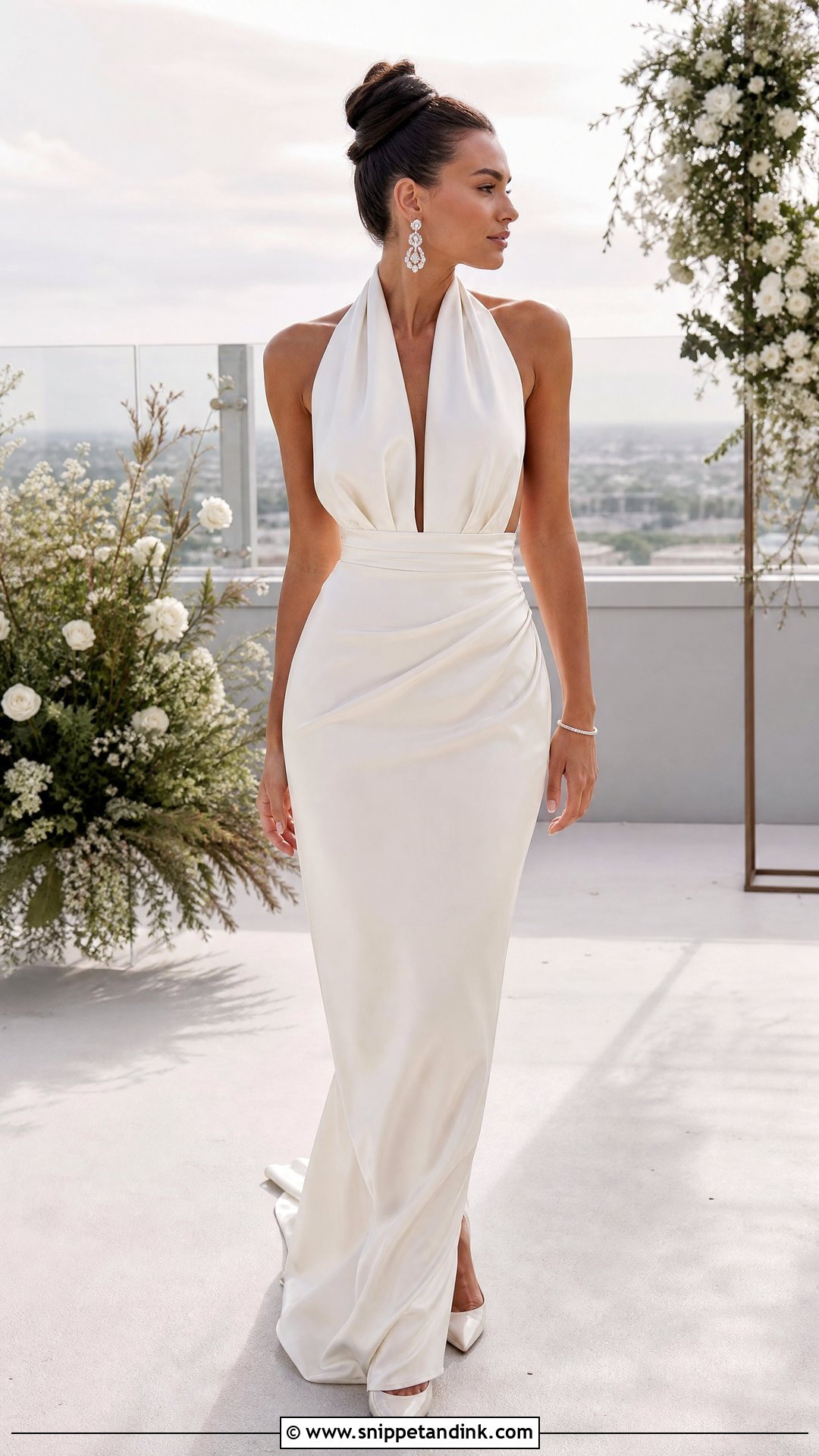
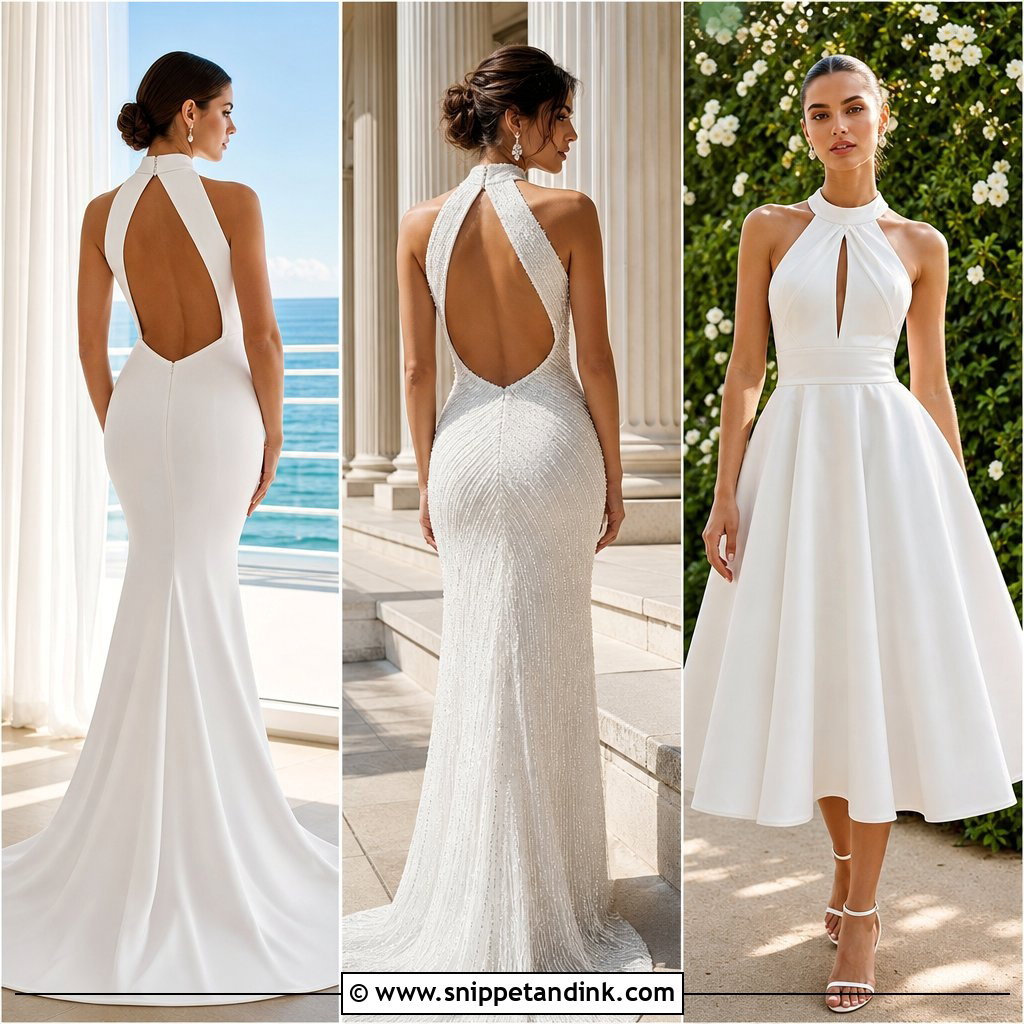
Narrow ties and a small high halter look undersized on this frame, so go wide and draped. A plunging front, gathered collar or open back gives the halter enough scale. Satin and silk crepe soften the shape without losing definition. One honest note: halters put weight on the back of the neck, and a heavy satin bodice can ache by the evening, so ask whether it has internal support beyond the neck tie. Skip the necklace, wear statement earrings and a sleek bun.
13. Portrait Neckline Soft Dramatic Wedding Dress
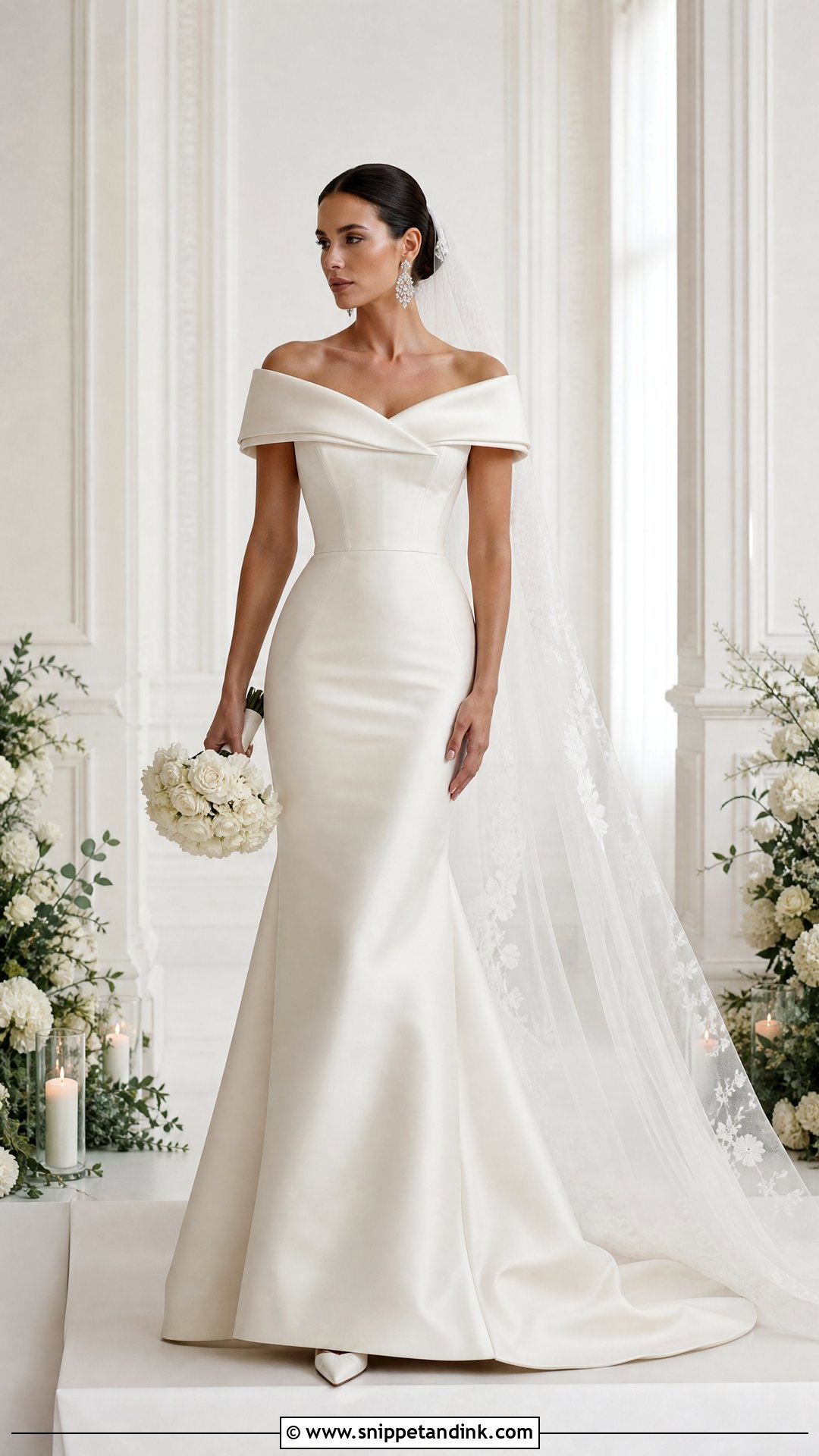
A portrait neckline sweeps wide across the collarbones and frames the face. For this type, I look for generous folded satin or a softly curved, structured collar. The bodice then shapes the bust and waist before flowing into a trumpet, column or ball skirt. Portrait collars can restrict arm lift if they sit tight, so raise your arms at each fitting. Large drop earrings and a veil under a full updo are enough. It suits brides who want shoulders covered without full sleeves.
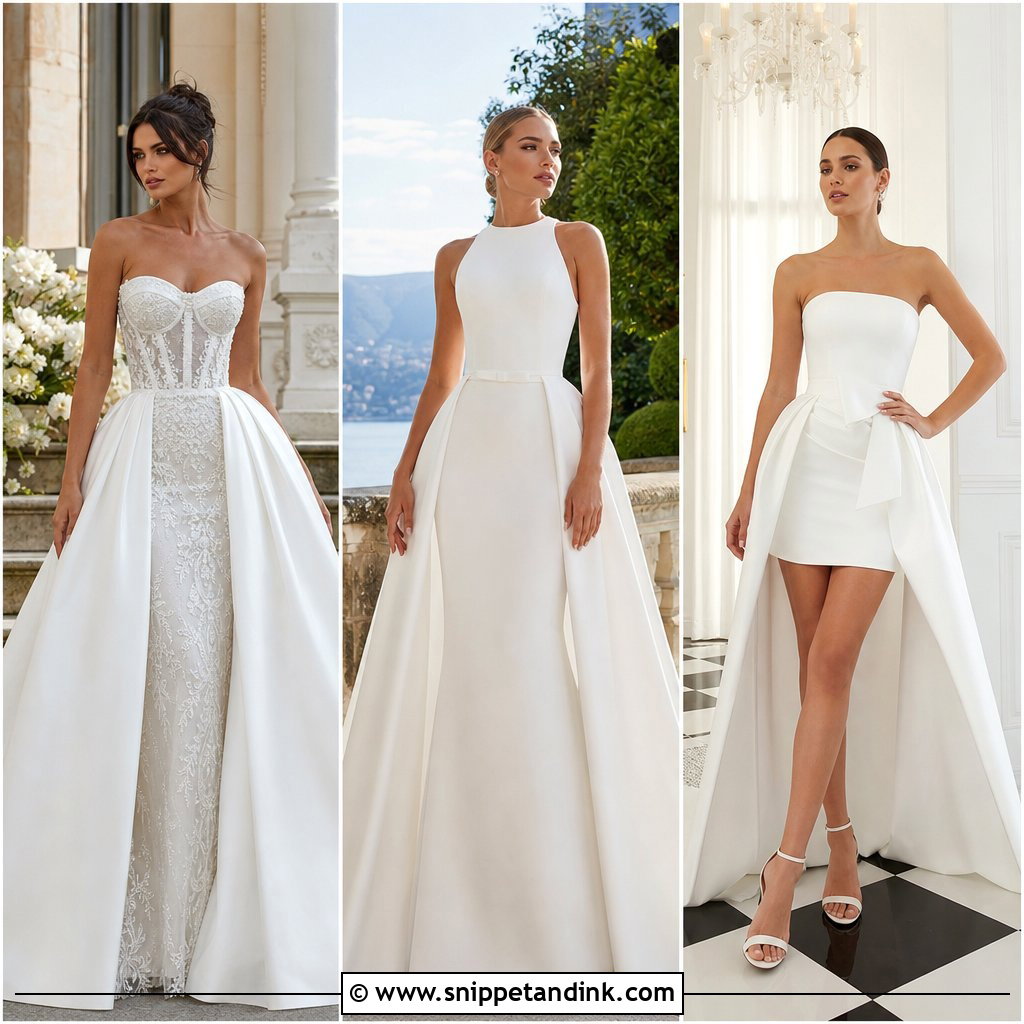
14. Detachable Overskirt Soft Dramatic Wedding Dress
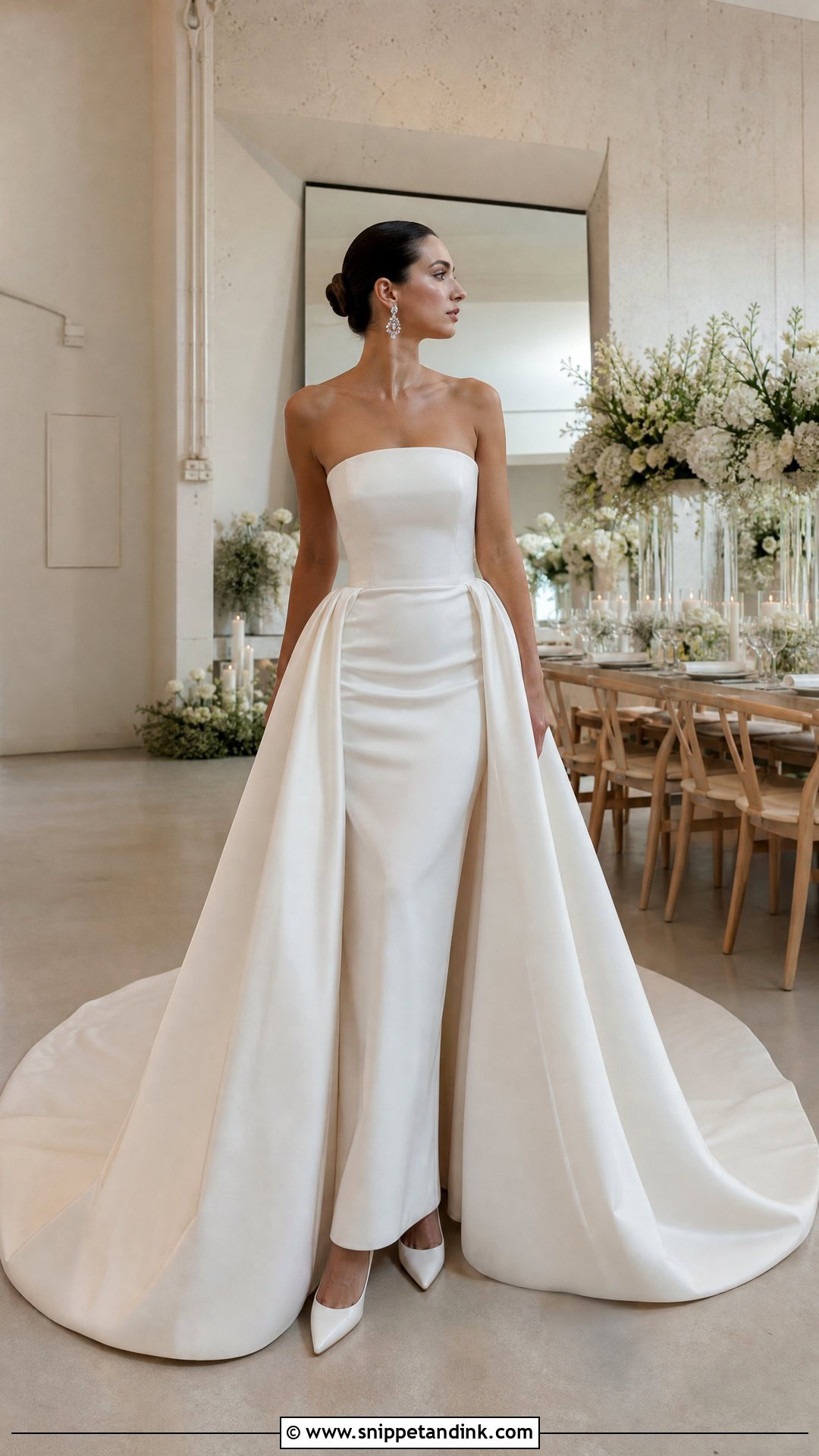
A detachable overskirt gives two silhouettes in one: a full sweep for the ceremony, then a sleek column for the reception. Start with a fitted crepe, satin or beaded column that defines the waist. The overskirt fastens at the waist with hidden hooks or a button band, and broad folds with a smooth front look better than ruffles. Practice removing it with whoever will help you; it should take a minute, not ten. Same neckline, same earrings, two entirely different moods.
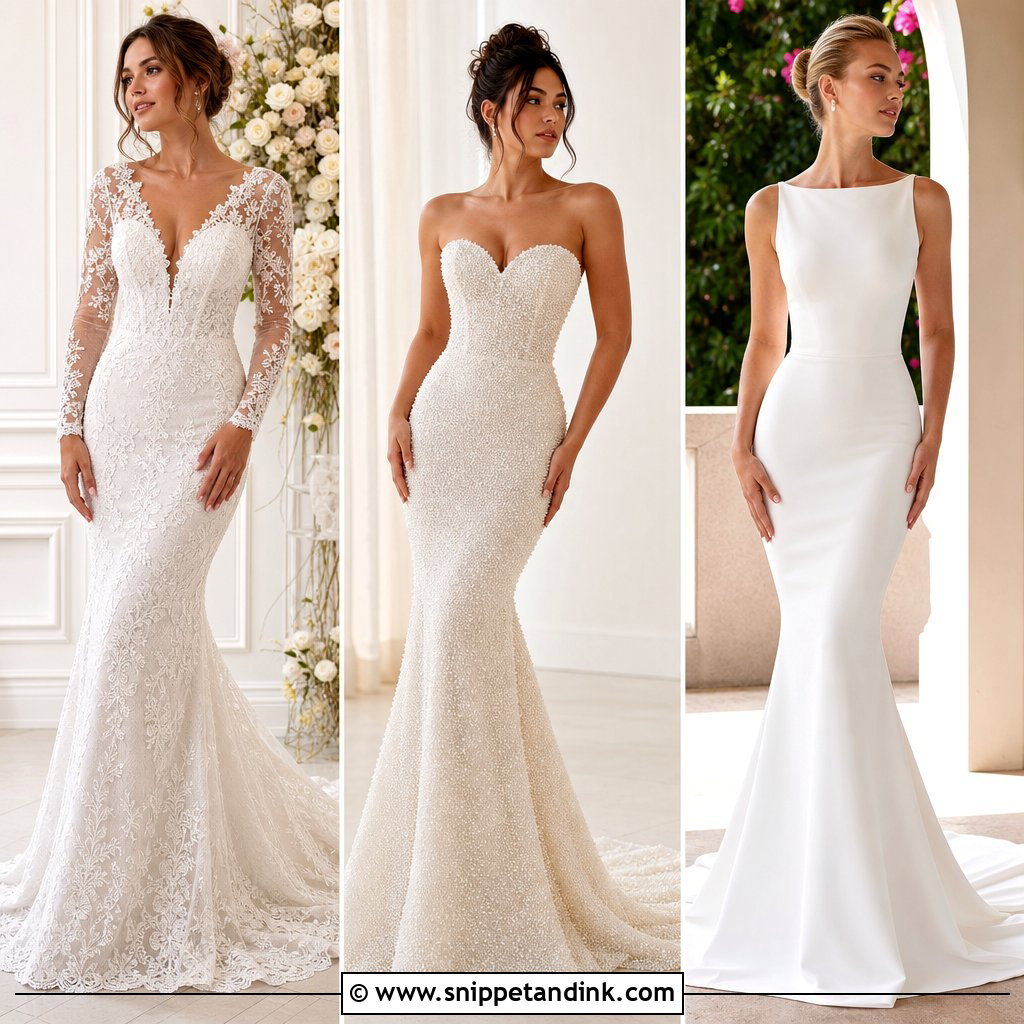
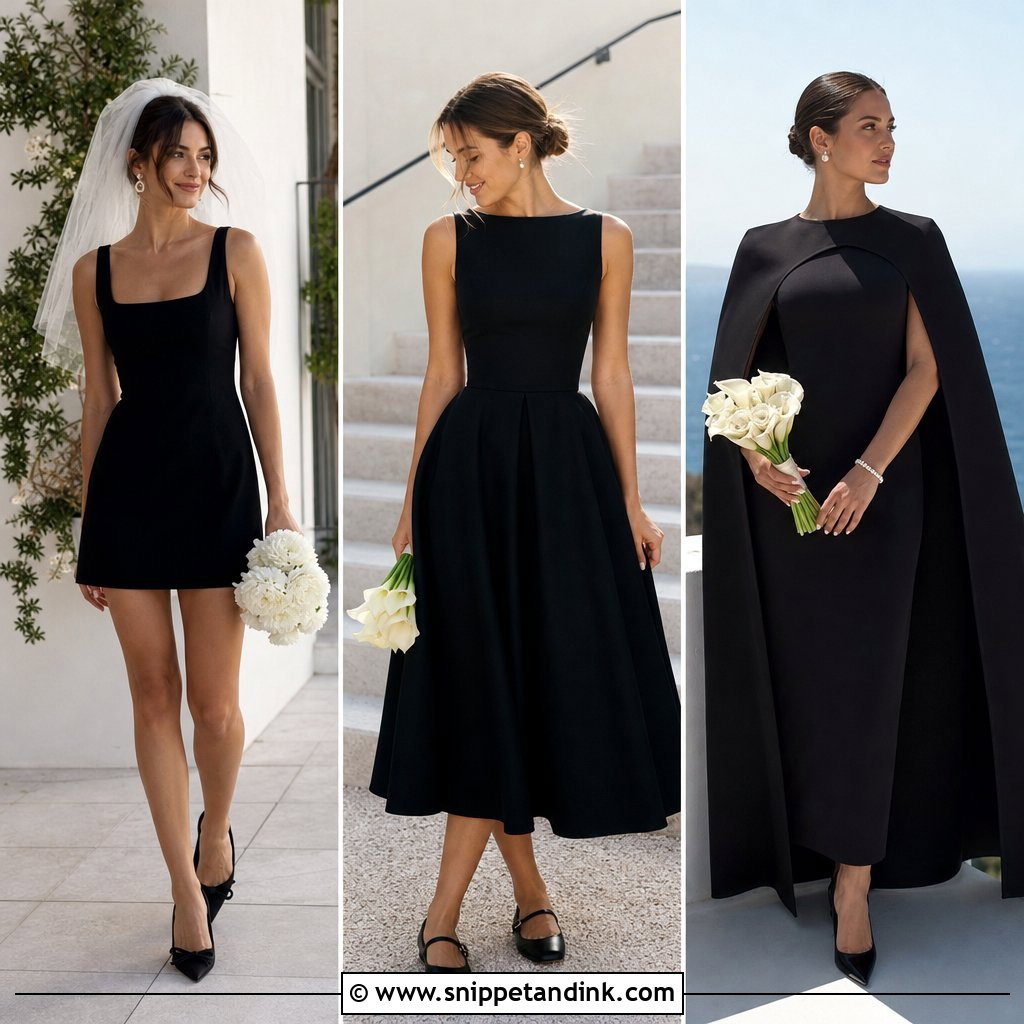
15. Square Neck Soft Dramatic Wedding Dress
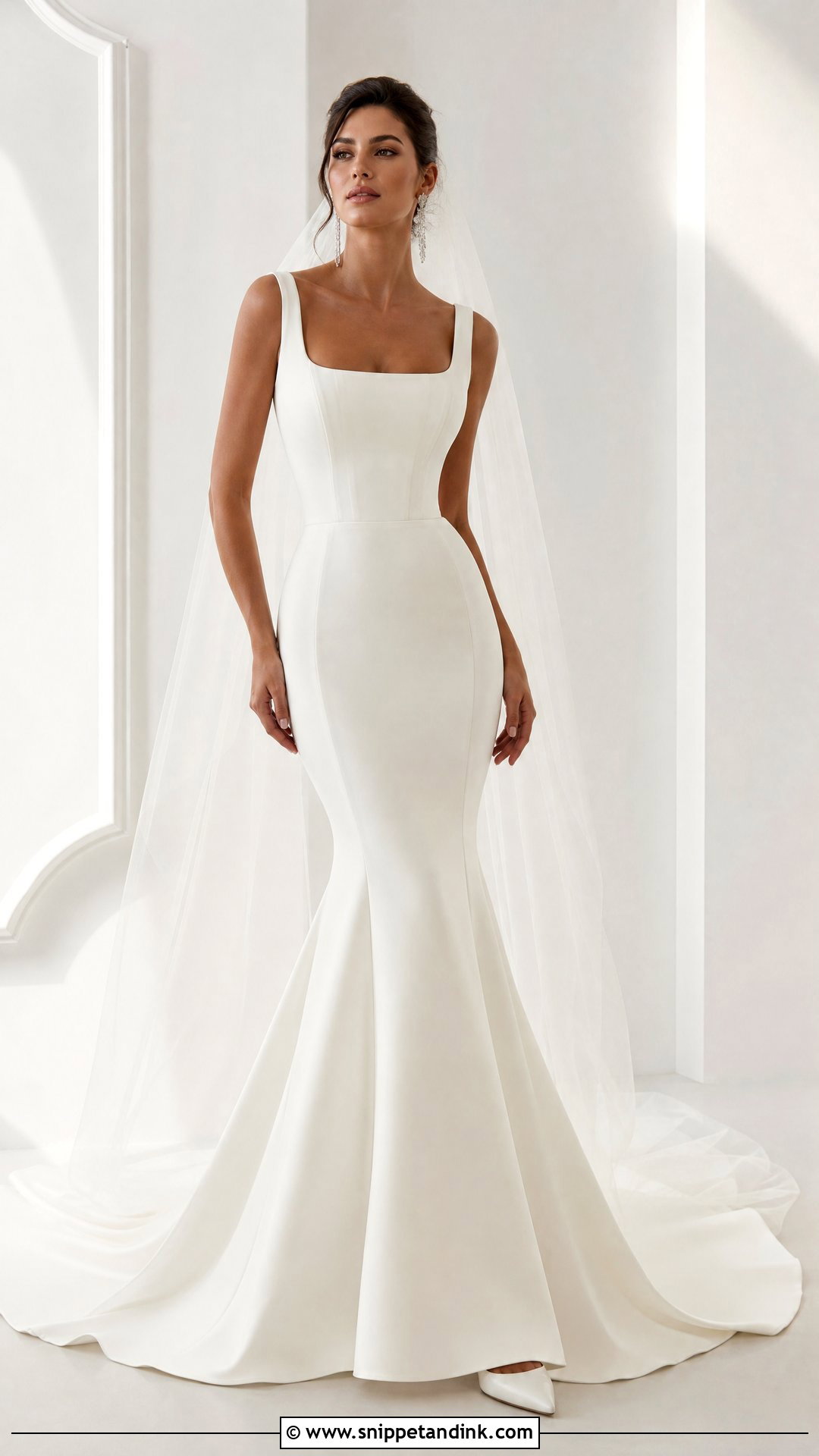
Square necklines are angular, so on a Soft Dramatic figure they need softening below: a curved mermaid skirt, a draped satin column or a dramatic train. Choose a wide opening with substantial straps. A narrow square neck looks pinched on broad shoulders. If you want sleeves, fitted long ones or softly puffed shoulders with tapered cuffs work. Long earrings and pointed pumps continue the line. A full hairstyle or smooth chignon both suit it.
16. Strapless Sculpted Soft Dramatic Wedding Dress
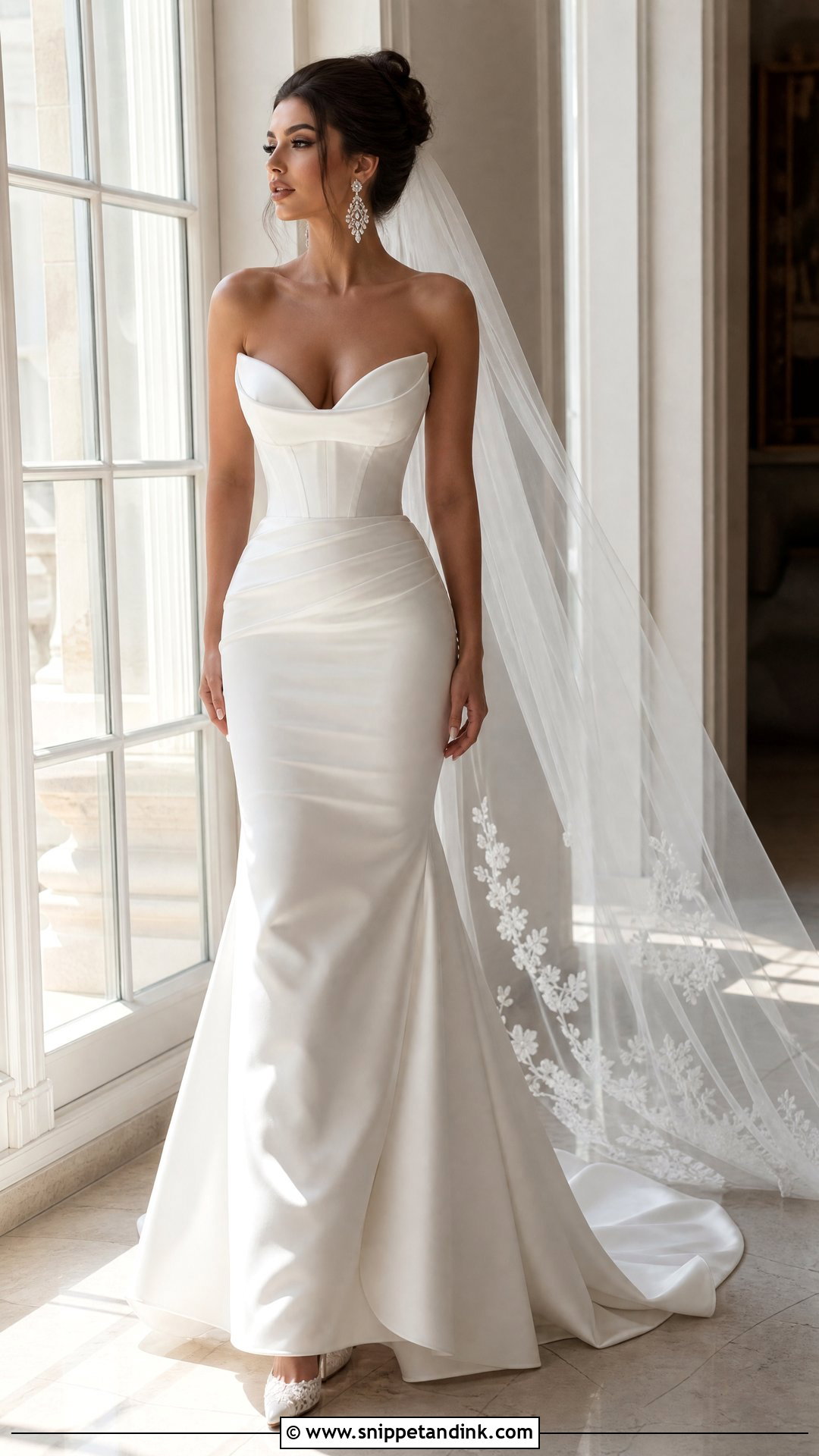
Strapless gowns hold up through boning, built-in cups and a precise fit at the top edge, not through pressure at the waist. A well-fitted strapless bodice shouldn’t need hitching up; if it does at the fitting, it will be worse after dancing. Choose a wide sweetheart, a curved cat-eye or a draped strapless shape over a straight band. A mermaid, trumpet or satin ball skirt continues the glamour. A wrap covers the shoulders for religious ceremonies. Chandelier earrings and voluminous hair balance the open neckline.
17. Draped A-Line Soft Dramatic Wedding Dress
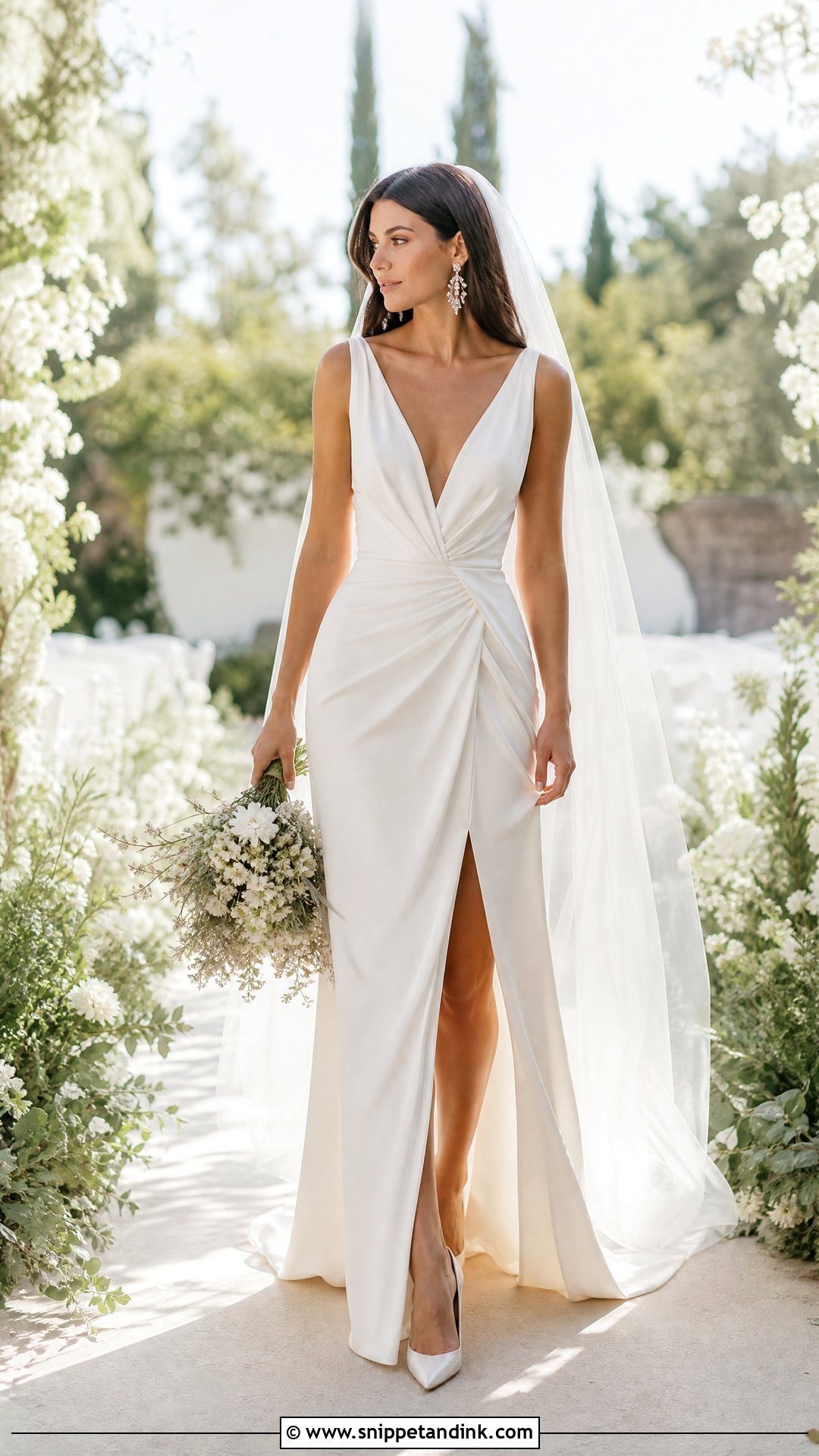
A stiff, modest A-line can look too plain on this type, but a draped one works: deep V, defined waist and a skirt that stays close over the hips before widening gradually. Draped chiffon, silk crepe or soft satin keep it moving. Use larger pleats or diagonal gathers rather than small ruffles. A side slit shows the shoes and adds movement; make sure it opens comfortably when you sit without revealing more than you’d like. A chapel veil continues the flowing line.
18. Velvet Soft Dramatic Wedding Dress
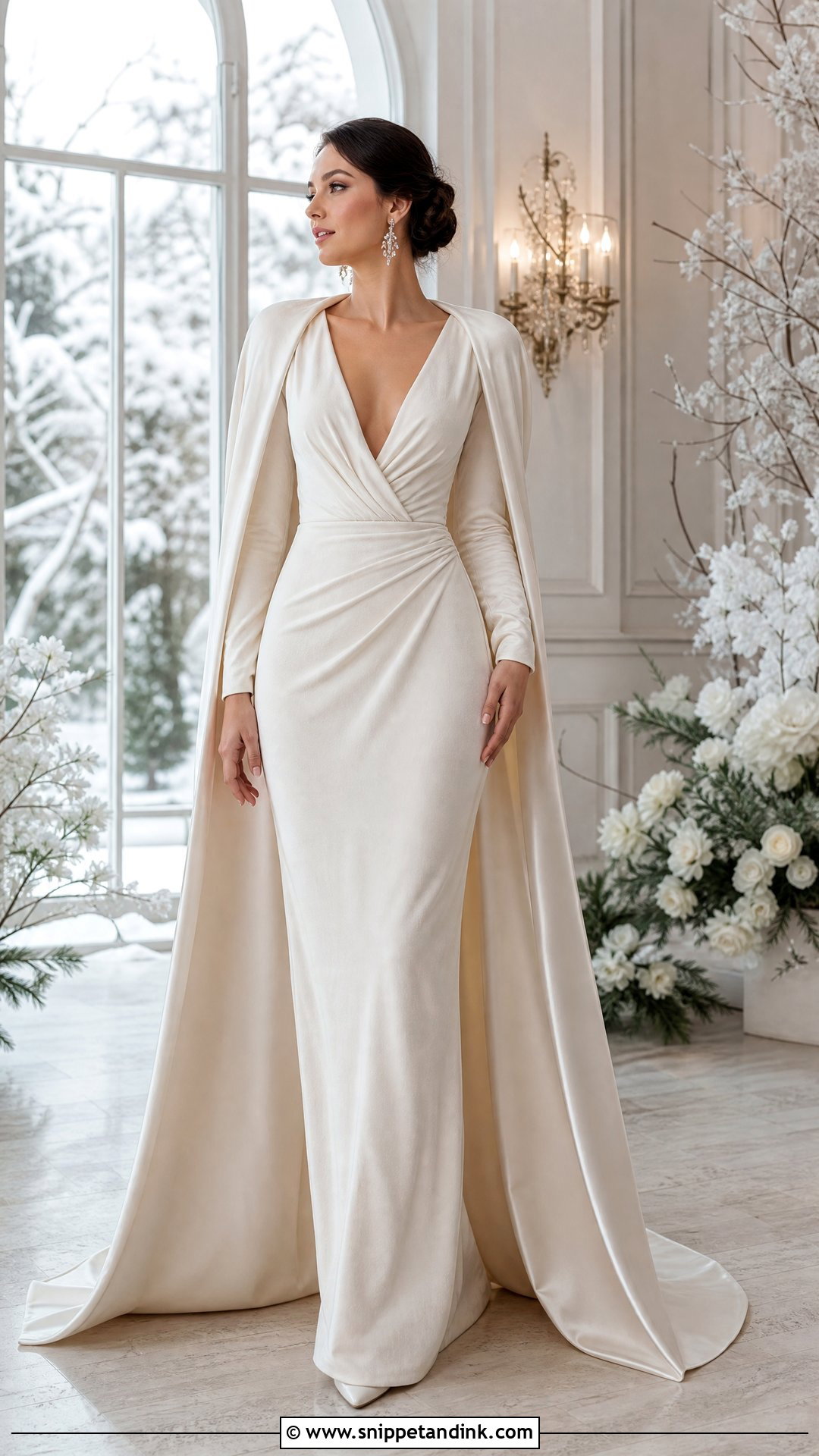
Velvet suits autumn and winter ceremonies and has the depth this style likes. Choose ivory, pearl or winter white in a column, wrap or mermaid shape. Velvet is warm and heavy, so a deep V or off-the-shoulder collar keeps it from feeling oppressive, and draped long sleeves suit cold venues. Its pile marks easily, so steam from the inside and avoid pressing it flat. Define the waist with seaming or a matching sash. A satin-lined cape helps for outdoor photos.
19. Beaded Column Soft Dramatic Wedding Dress
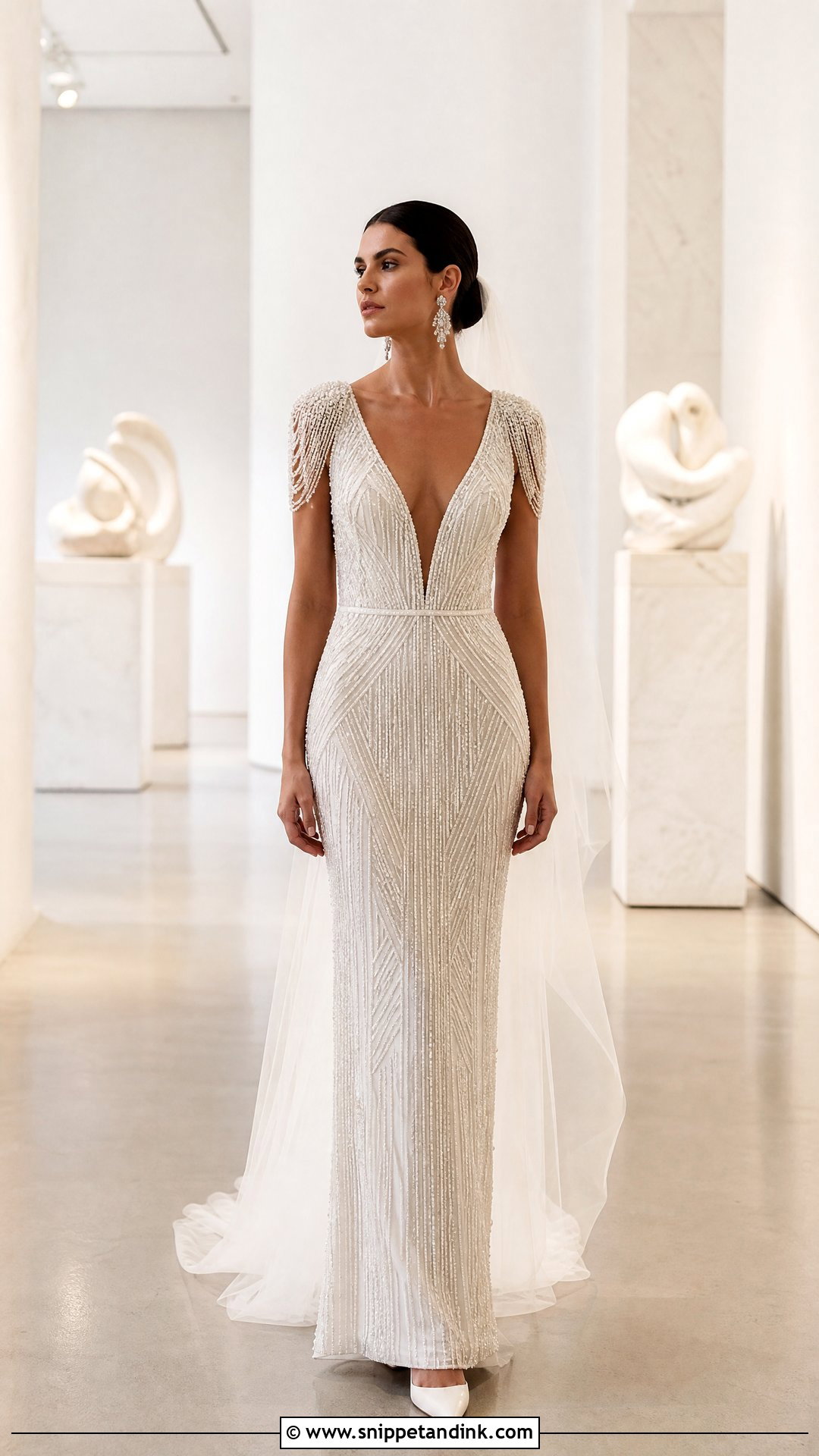
On a column gown, beadwork should run vertically, in long patterns, geometric lines or large botanical motifs that follow the body. Small scattered beads look busy across that length. Beaded gowns are heavy, so check the lining: it needs enough stretch and structure to carry the weight comfortably for a full day. A plunging neckline or strong shoulder balances the narrow skirt. Wear a low, sheer veil so it doesn’t hide the beadwork.
20. Satin Bow Soft Dramatic Wedding Dress
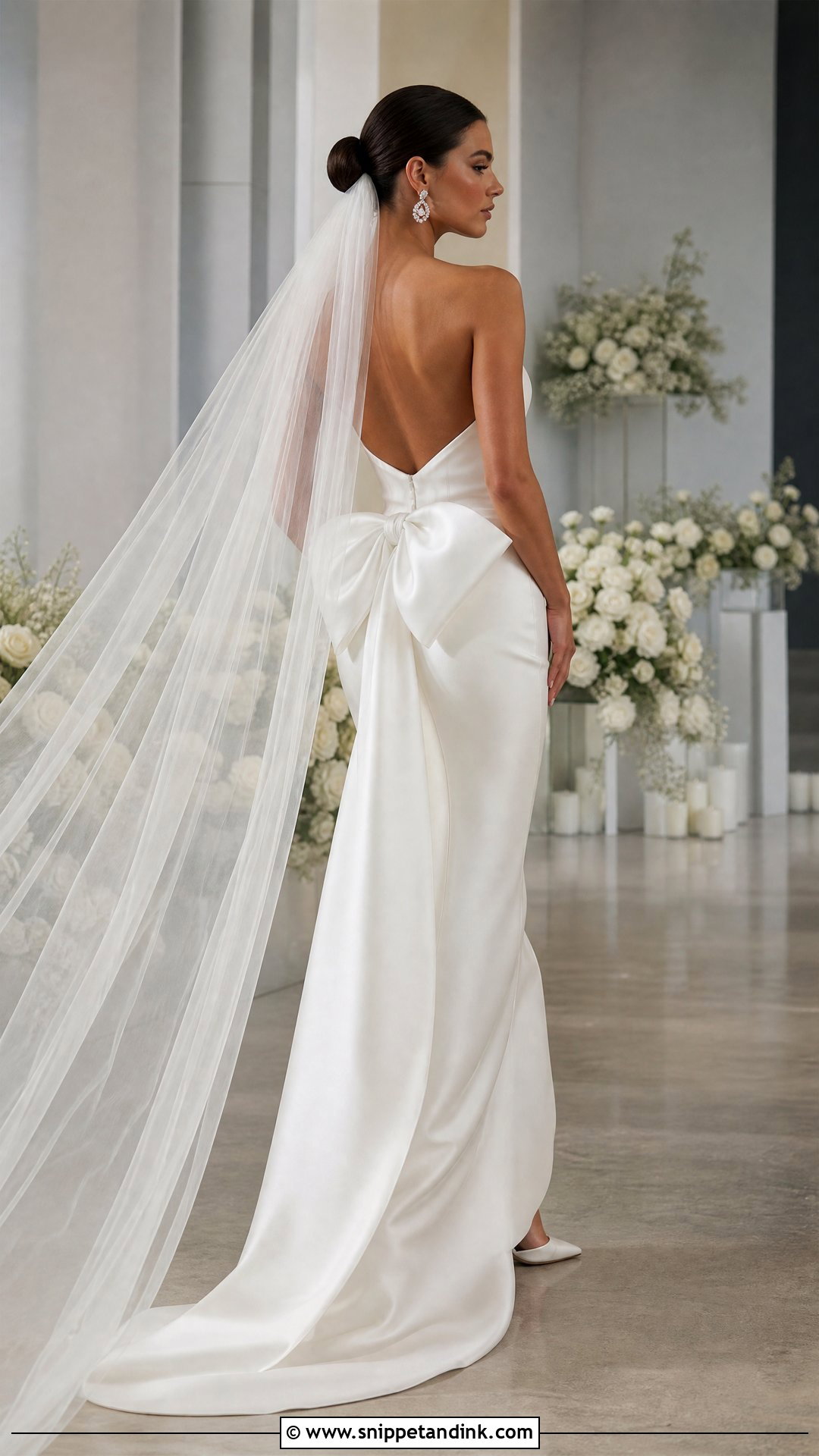
A single oversized bow gives a plain satin gown a focal point with the right scale. Place it at the back waist, a shoulder or the side hip. Several small bows, by contrast, look fussy on this frame. Keep the rest clean: a fitted bodice and a long mermaid, column or structured A-line. Large bows on the back waist get crushed when you sit, so ask for interfacing inside the loops. If the bow sits at the back, choose a sheer veil so guests can see it.
Can You Dance in a Mermaid or Trumpet Gown?
Fitted skirts suit this style beautifully, and they limit movement in ways brides often don’t notice until the wedding. The lower the flare starts, the shorter your stride. A trumpet, flaring at mid-thigh, is much easier to walk in than a true mermaid flaring at the knee.
At fittings, I ask brides to climb a few stairs, sit in a dining chair and do a slow dance turn. If any of those feels restricted, there are options: the seamstress can sometimes let out the knee area slightly, add a hidden kick pleat or raise the flare point a little.
Trains on fitted gowns need a bustle for the reception, usually several hooks or ties that lift the fabric off the floor. For a long party, some brides change into the column underneath a detachable overskirt, or into a second, shorter dress. That’s a practical choice, not a failure of the first gown.
What goes underneath a fitted skirt
Close-fitting satin and crepe show every edge beneath them, so settle your foundation garments before the first fitting and wear the same ones each time. A long-line smoothing slip often works better than separate pieces under a mermaid, because there is no waistband or leg line to mark the fabric. If the gown is very fitted at the knee, avoid shapewear that ends there; the hem of it will show the moment you walk.
Go Big on Scale, Keep the Line Unbroken
Length, curve, softness and real glamour, held in balance, is what makes a Soft Dramatic gown work. Mermaids, draped columns, sculpted ball gowns, broad necklines and bold sleeves all get there in different ways. Treat these as a starting point. Fabric quality, support and alterations matter as much as the silhouette, and comfort matters most. Try each dress with the shoes, veil, earrings and hairstyle you plan to wear. When the whole picture looks like you at full scale, you’ve found it.
You'll Like These Ideas:




Leave a Reply