
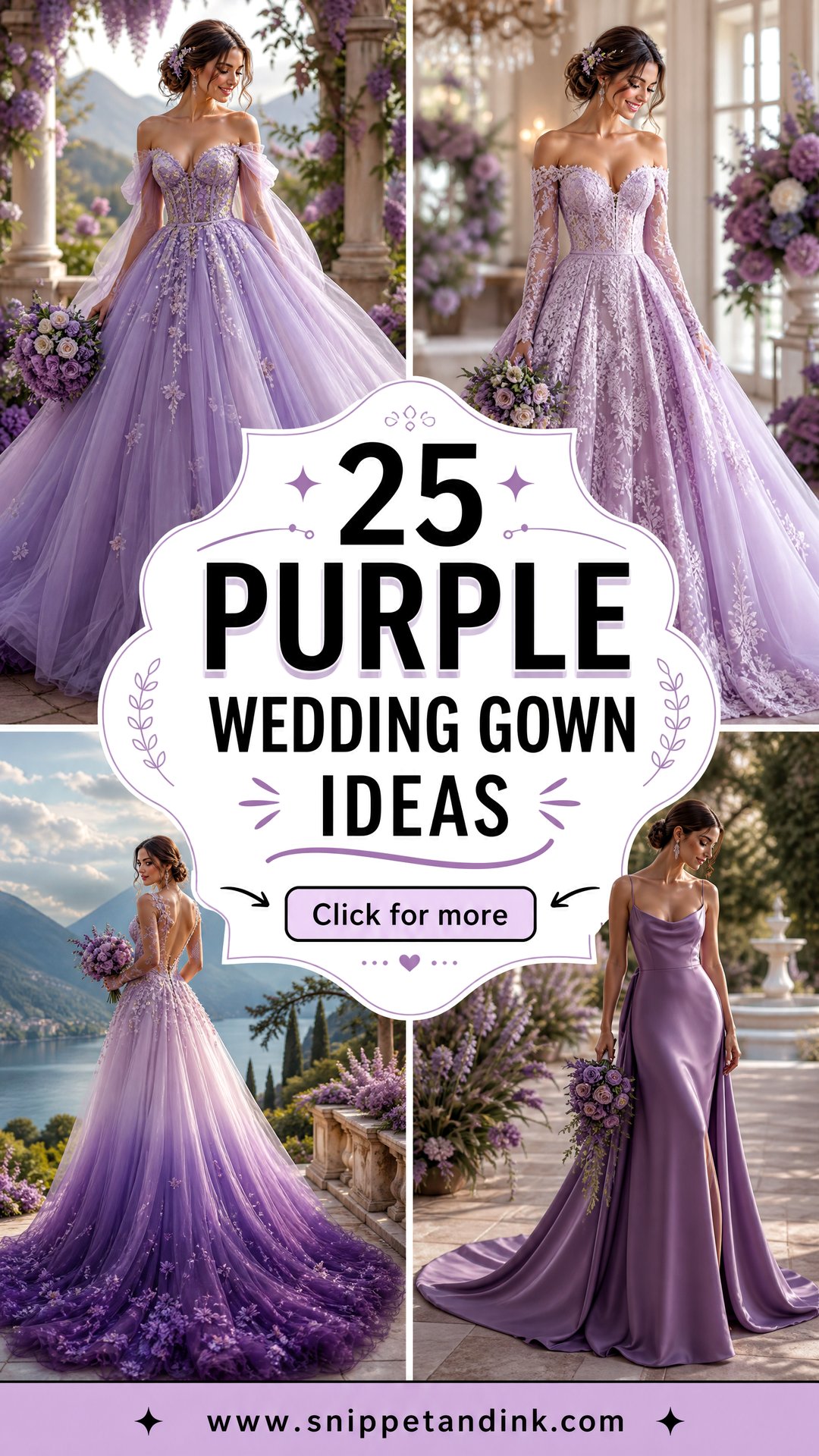
More of the brides I dress are asking about color, and purple comes up more than any other shade after blush. It’s flexible: a purple gown can be airy in lavender, formal in plum or bold in royal violet, and it suits a spring garden as easily as a winter ballroom. What makes it work is treating it as a whole outfit. Fabric, silhouette, shoes, flowers and how the shade reads in daylight versus indoor light all change the result. Below are 25 gowns, each with the details I’d check before you commit to it.
Most Sample Gowns Are Ivory, So Shop for Purple Differently
Bridal shops mostly stock samples in white or ivory, even when the same gown is available in color. That means you’ll often try on the shape in one shade and order it in another. I prepare brides for that before the appointment.
- Call ahead and ask which gowns come in purple, and whether they have any colored samples or a swatch book.
- Try the silhouette first. If the shape is wrong in ivory, it won’t be right in plum.
- Hold the swatch against the bodice of the sample in the mirror to picture the color on the actual dress.
- Take photos of yourself in the sample in daylight near a window, so you can compare shapes later.
Some brides find it easier to look at eveningwear or designers who specialize in colored bridal, where purple samples are more likely to be on the rail. Either way, don’t order until you’ve seen the real fabric color, not a screen image.
1. Lavender Tulle Purple Wedding Gown
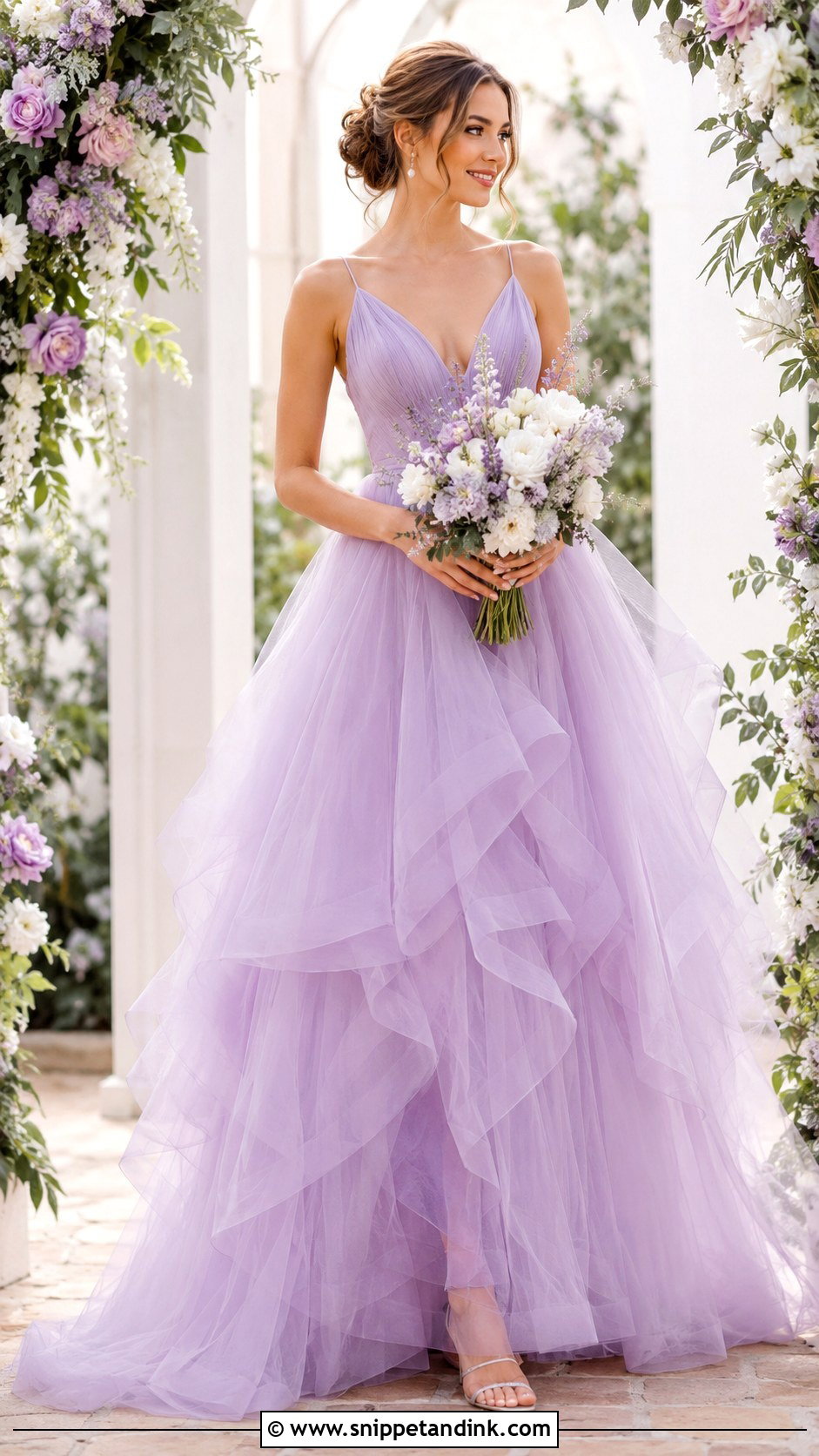
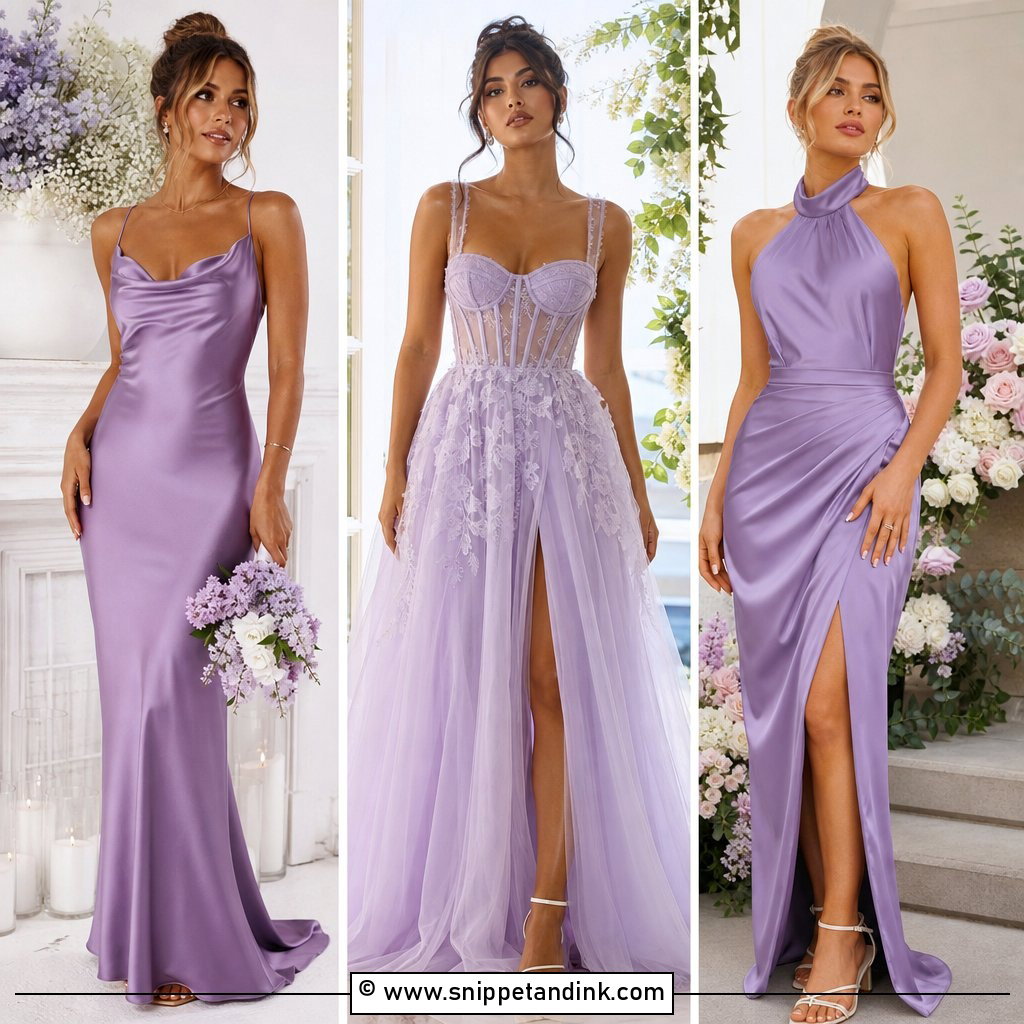
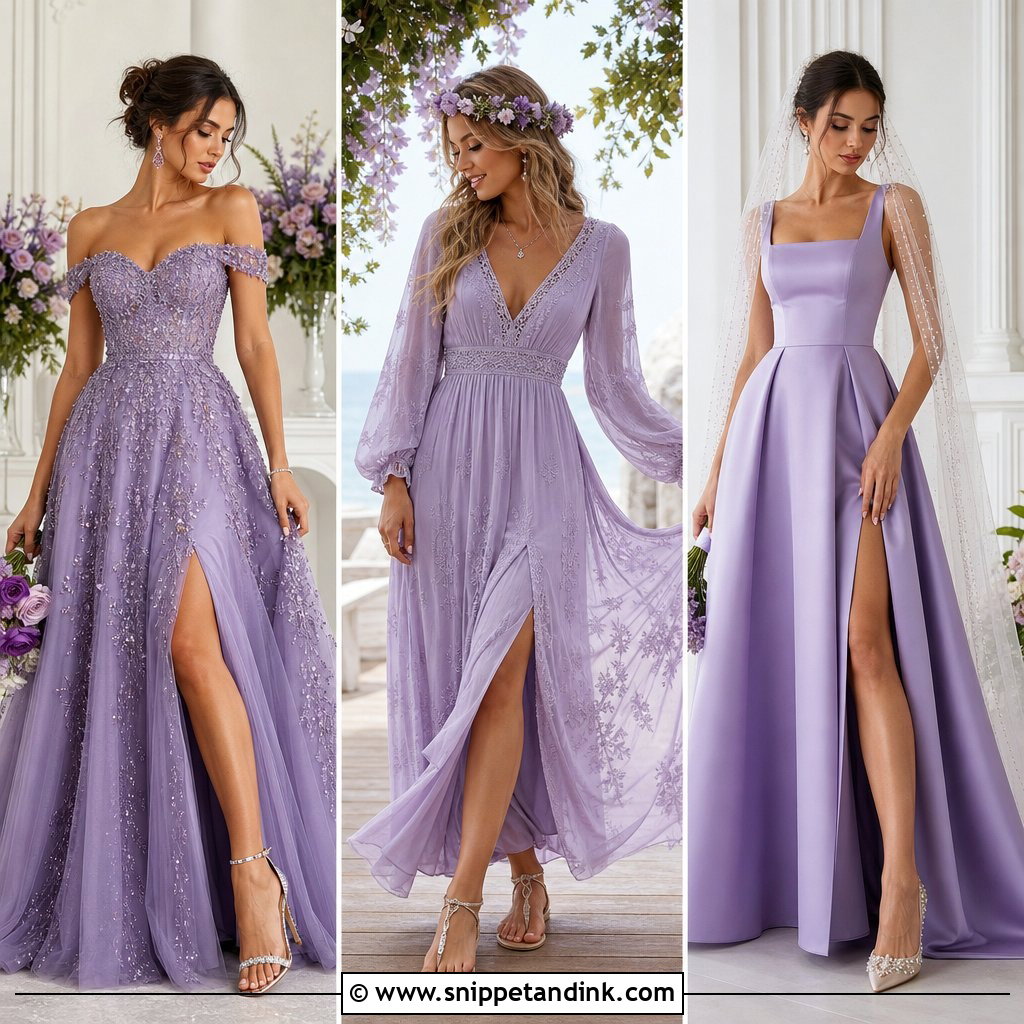
Light purple on tulle is the softest version of a colored gown, because the layers diffuse the shade until it almost glows outdoors. An A-line or ball gown skirt lets the tulle float. I’d keep the bouquet white or very pale lavender; a darker purple bouquet makes the dress look washed out beside it. Silver heels, pearl earrings and a sheer veil with fine floral embroidery finish it. Tulle snags on rough garden benches and rose stems, so bring a small pair of scissors for loose threads.
2. Plum Satin Purple Wedding Gown
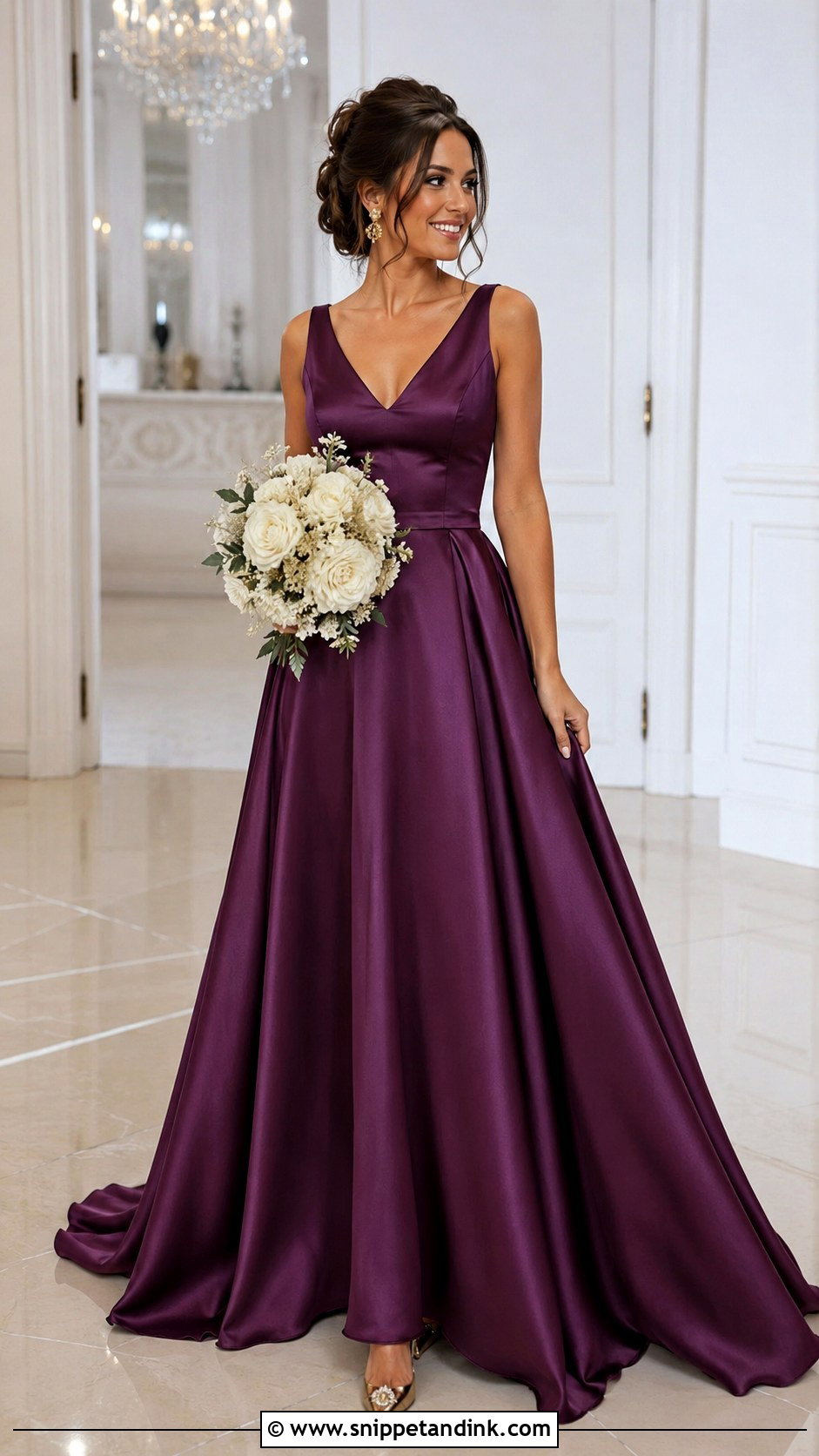
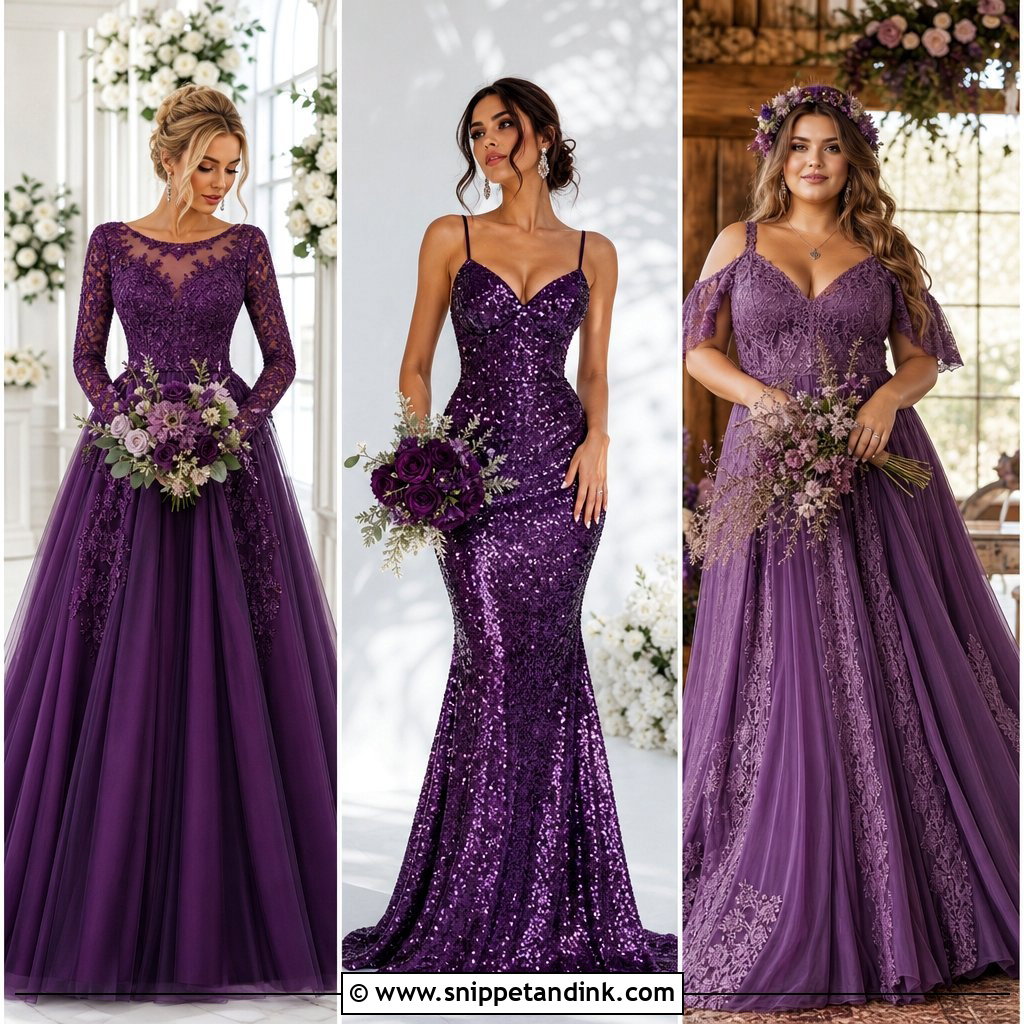
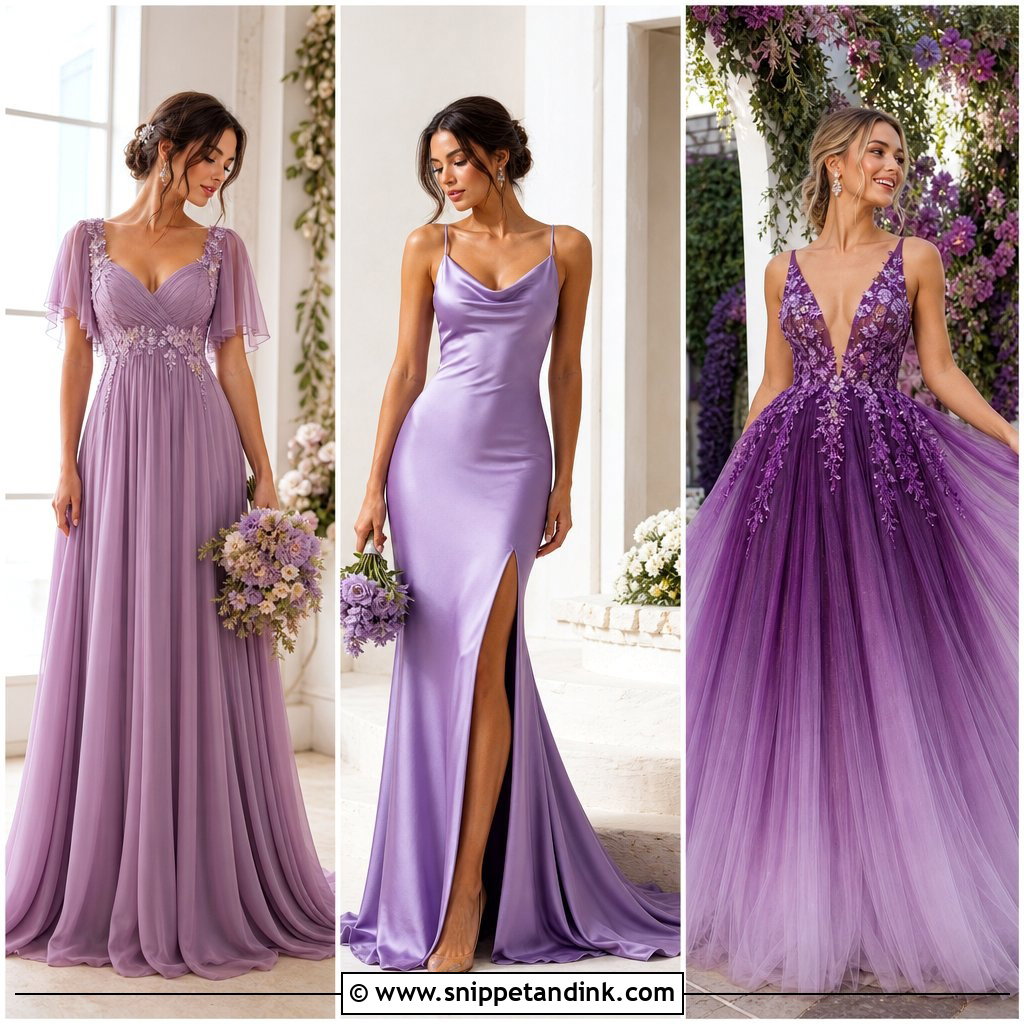
Plum satin needs almost no decoration, since the fabric’s sheen does the work. A fitted bodice with a flowing skirt is classic; a sleek column feels more modern. Dark satin shows water spots and sweat marks more than pale fabric, which is why I keep a lint-free cloth and a hairdryer on cool in the dressing kit for plum gowns. Gold jewelry suits plum’s warm undertone. Pointed heels, cream, blush and burgundy flowers and soft waves or a low bun suit evening ceremonies and hotel ballrooms.
3. Lilac Lace Purple Wedding Gown
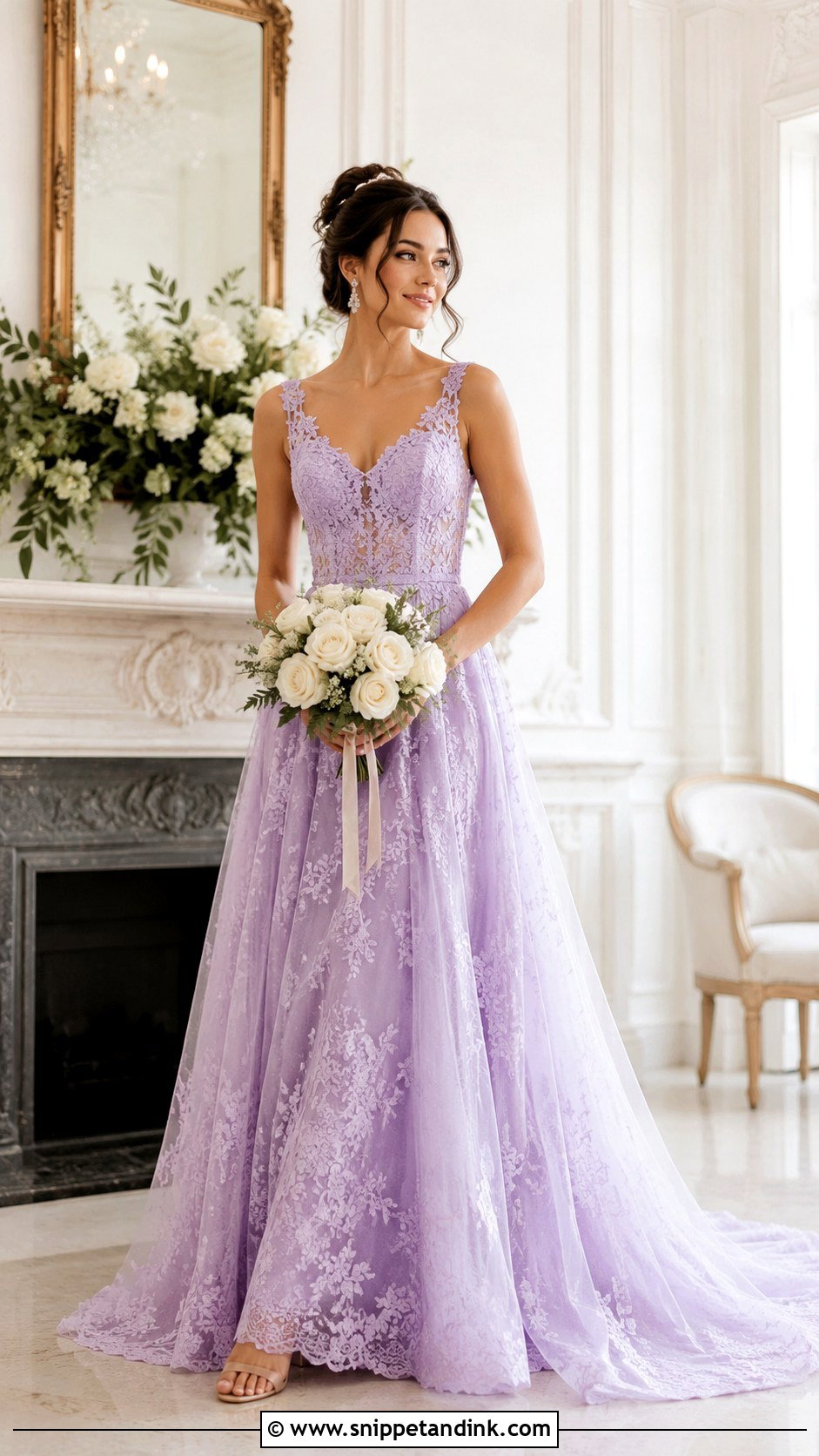
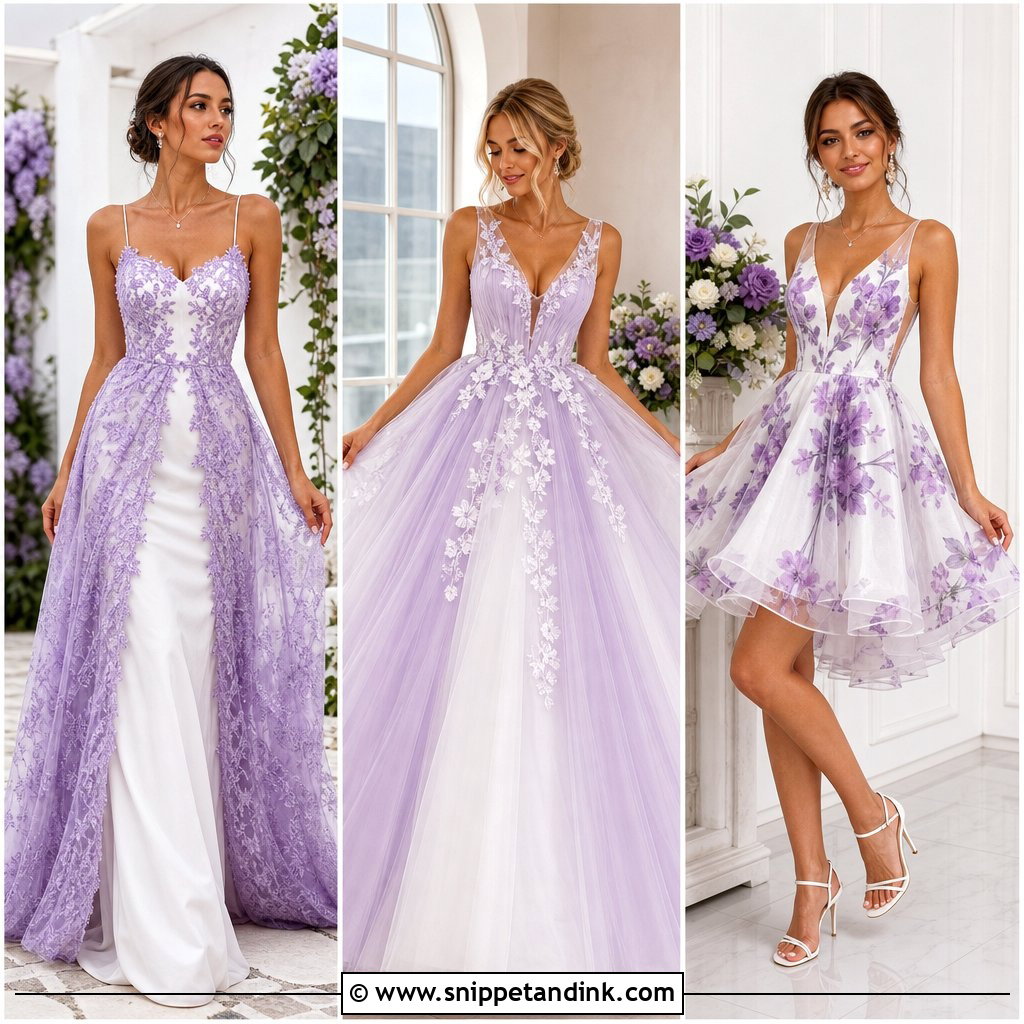
Lace keeps a colored gown tied to bridal tradition, and lilac is the shade that lets the lace pattern stay visible without darkening it. A fitted lace bodice into a flowing skirt defines the waist and is kind to most figures. My check here is the lace edge at the neckline and hem: scalloped edges should be finished by hand so they lie flat. Nude or silver heels, small drop earrings, white roses with lilac blooms and a lace-trimmed veil complete it for estates and daytime ceremonies.
4. Royal Purple Ball Gown Wedding Dress
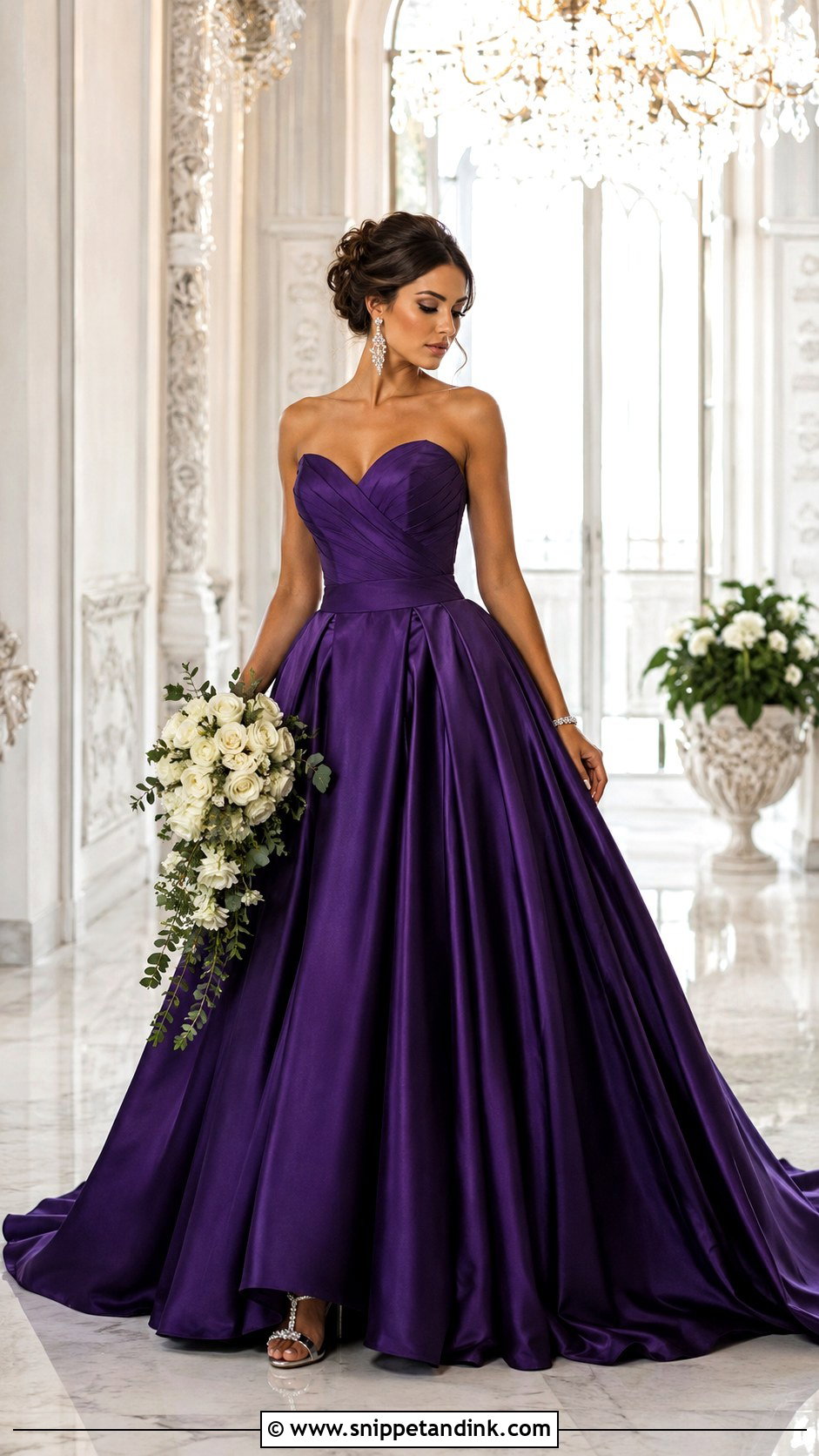
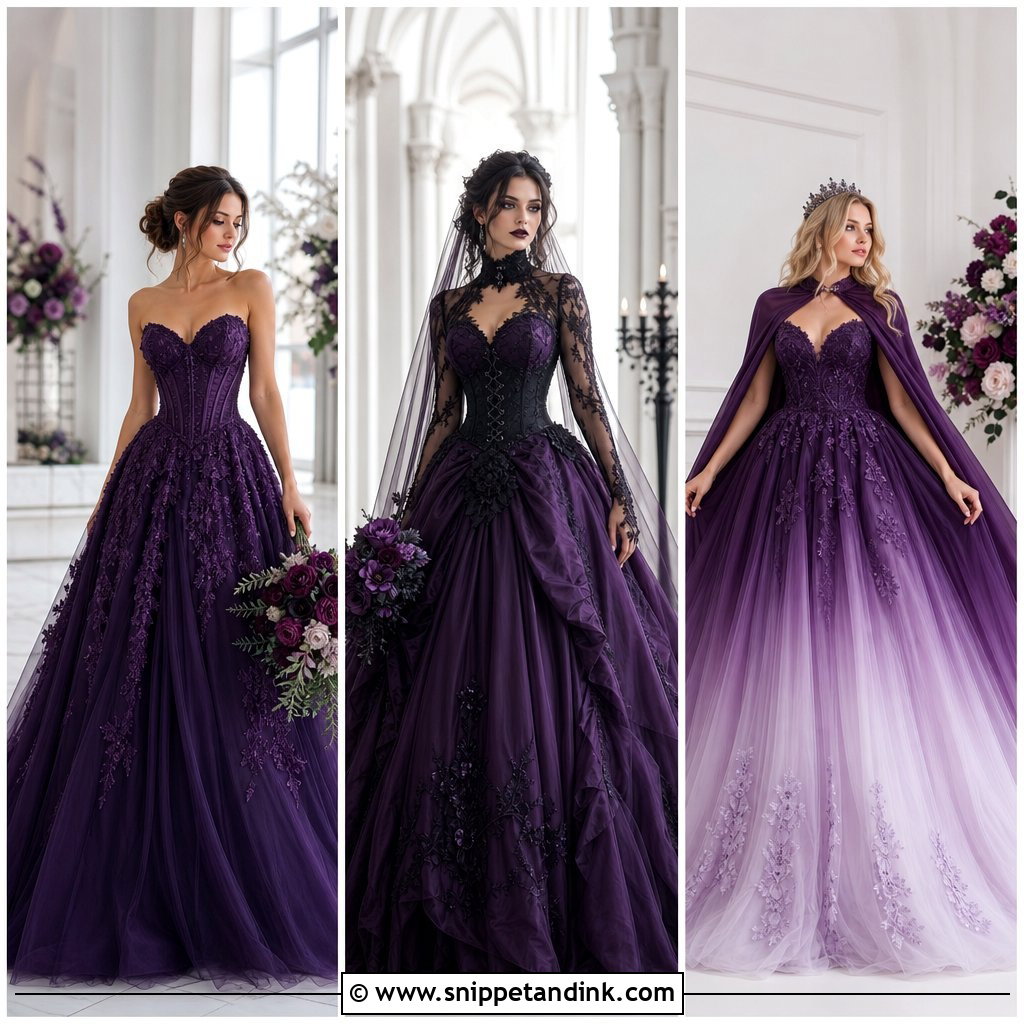
A royal purple ball gown wedding dress is the boldest silhouette and color combined, so restraint elsewhere matters. I’d pick a structured bodice with clean lines or very light embroidery; heavy beading on top of saturated purple and a full skirt tends to look like a costume. Crystal earrings, a smooth updo and metallic heels keep it formal. Ivory flowers with deep greenery soften the intensity. Full skirts need a wide aisle and a big car, which is worth checking at a grand venue.
5. Dusty Mauve Purple Wedding Gown
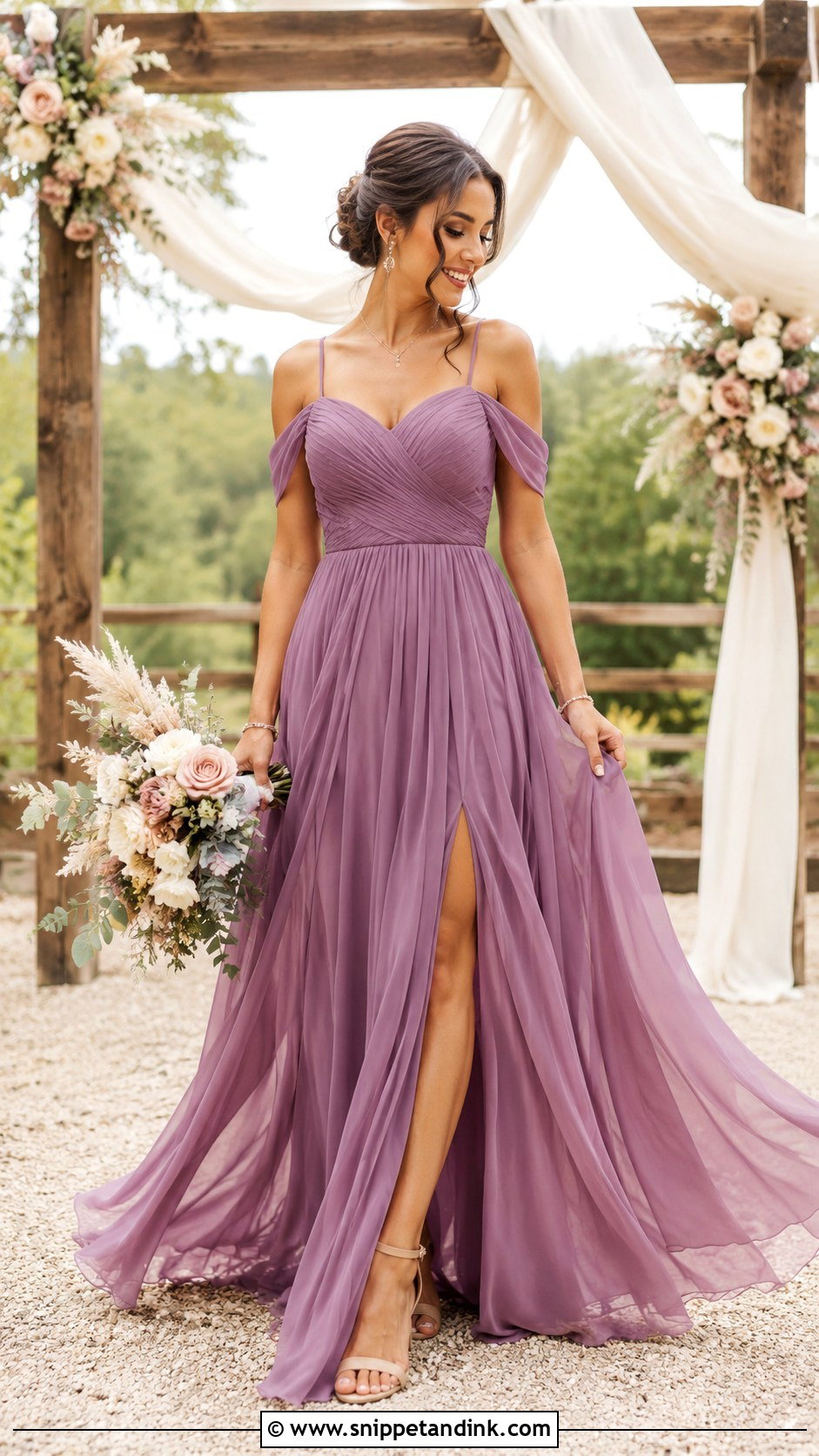
Mauve sits between purple, pink and grey, and it’s the shade I find suits the widest range of skin tones. On chiffon or crepe, it moves easily and looks graceful outdoors. Crepe is the more forgiving of the two because it doesn’t cling to every line. Champagne heels, rose gold jewelry and a bouquet of blush, ivory and muted lavender match its warmth. A loose updo or half-up style keeps it relaxed for rustic and outdoor venues.
6. Purple Ombre Wedding Gown
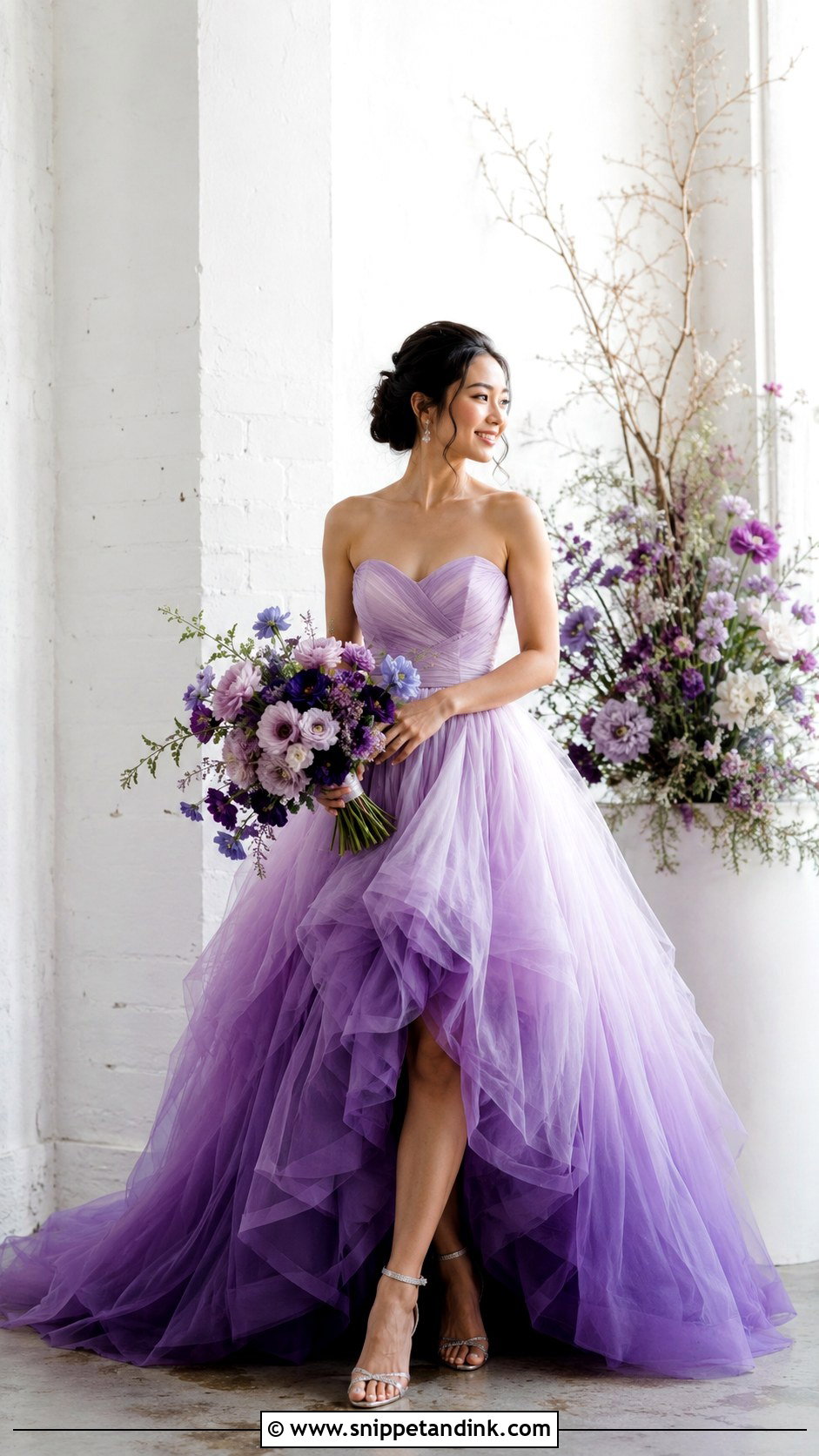
A purple ombre wedding gown shifts from soft lavender at the bodice to violet or plum at the hem, so the color itself creates the movement. That’s why I keep the silhouette simple; extra embellishment fights the gradient. Look at the gown in daylight from several metres away, where the blend should read smoothly with no visible band. Clear or silver heels, understated earrings and a bouquet using both pale and deep purples echo the fade. Keep the veil sheer so it doesn’t hide it.
7. Lavender Off Shoulder Wedding Gown
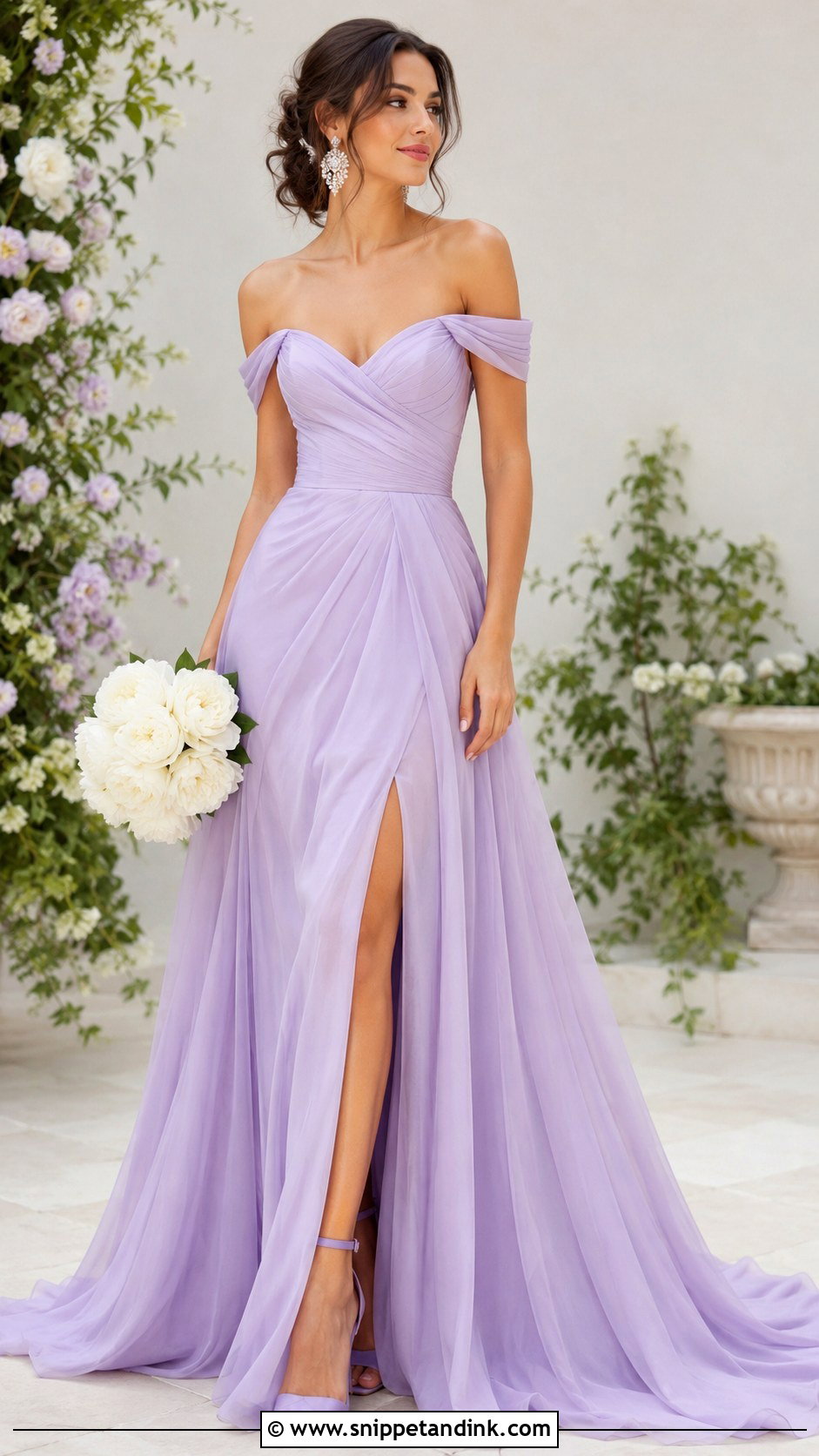
Off-the-shoulder lavender frames the collarbone and keeps the look light. With a fuller skirt, the bodice needs some structure, otherwise the weight of the skirt drags the neckline down over the evening. I fit these with the bride lifting her arms, because that’s when a loose neckline slips. Wear either a simple pendant or statement earrings, not both. Soft curls, satin heels and white peonies or roses finish it for gardens and spring or summer ceremonies.
8. Dark Purple Mermaid Wedding Gown
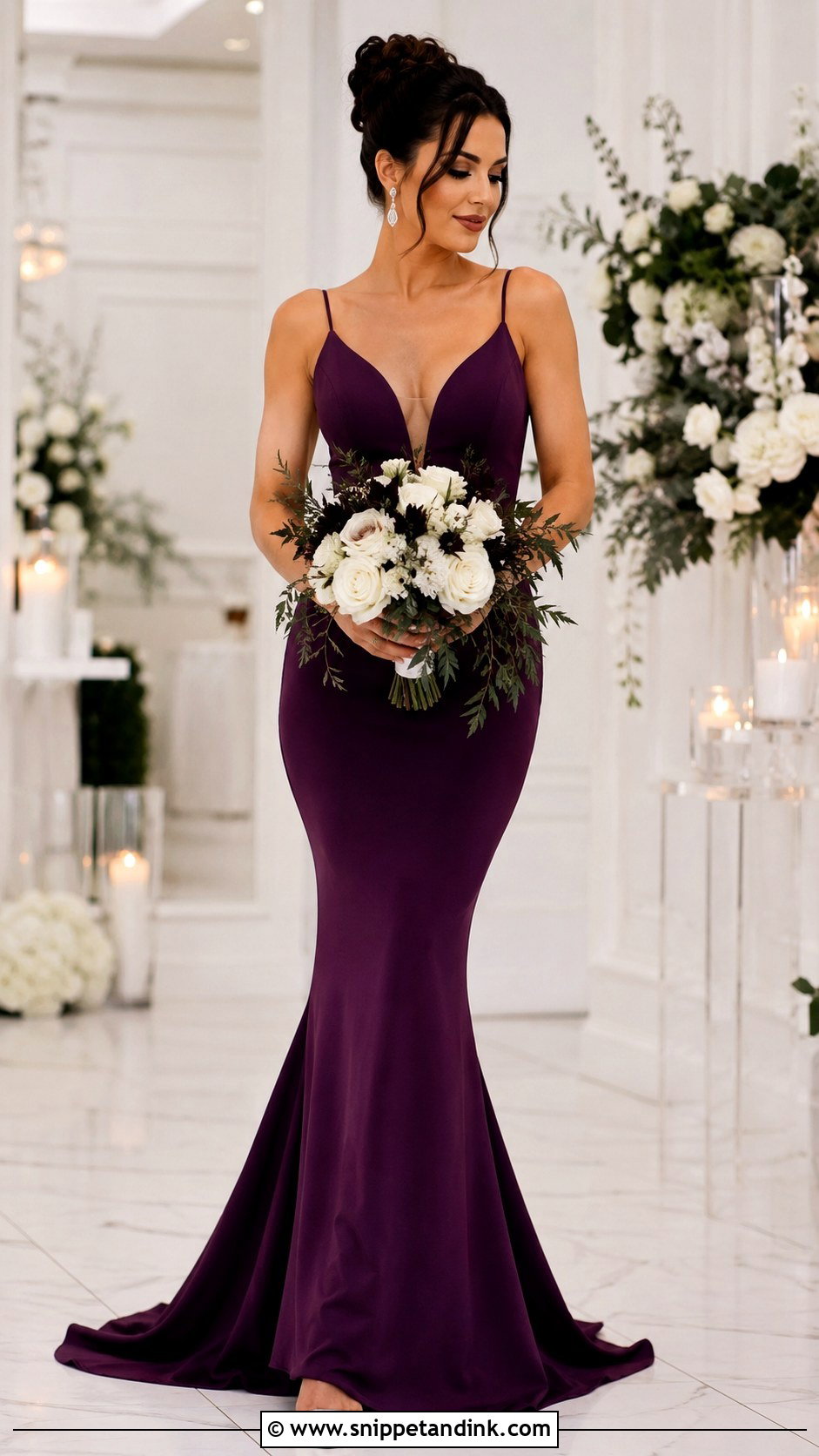
A dark purple mermaid relies on its shape rather than sparkle. The gown follows the body and flares around the knee, and deep purple makes that line look sculpted. Satin is glossy, crepe is matte and forgiving, lace adds texture. Sit in it before you commit; a tight mermaid can make sitting through a long ceremony or dinner uncomfortable. Metallic heels, sleek earrings, a long veil for softness and ivory flowers with dark greenery suit formal evening receptions.
9. Amethyst Beaded Purple Wedding Gown
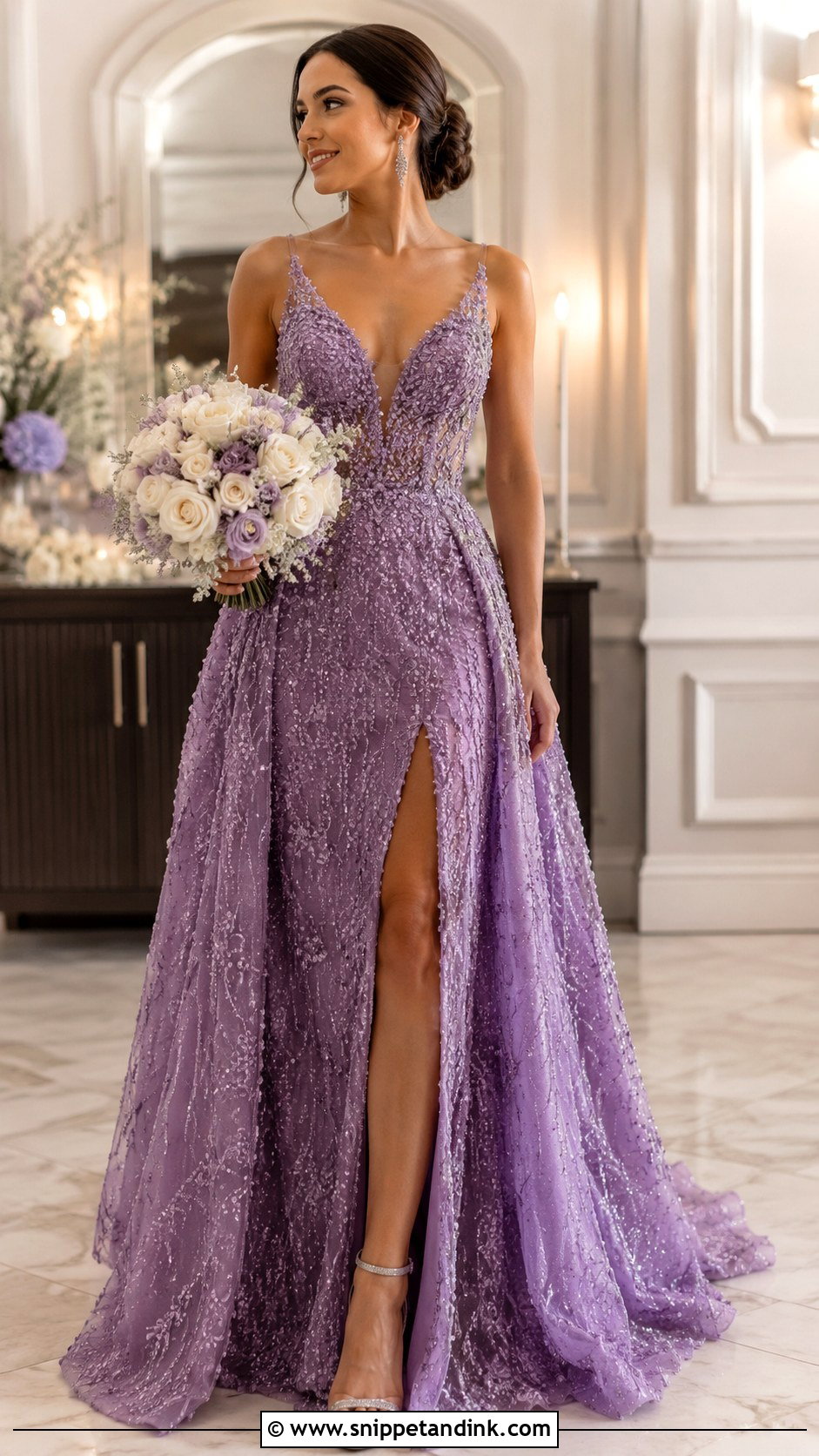
Beads catch light in a way flat purple fabric can’t, which is why amethyst beading adds real depth to the shade. Placement changes how the dress wears: beading at the bodice and sleeves leaves the skirt free to move, while full coverage adds noticeable weight. I’d go with partial beading for anyone planning to dance. Silver heels, crystal earrings and a simple bracelet are enough, with smooth hair so the beadwork shows. Ivory, pale lavender or soft blush flowers balance it for formal evenings.
10. Purple Floral Embroidered Wedding Gown
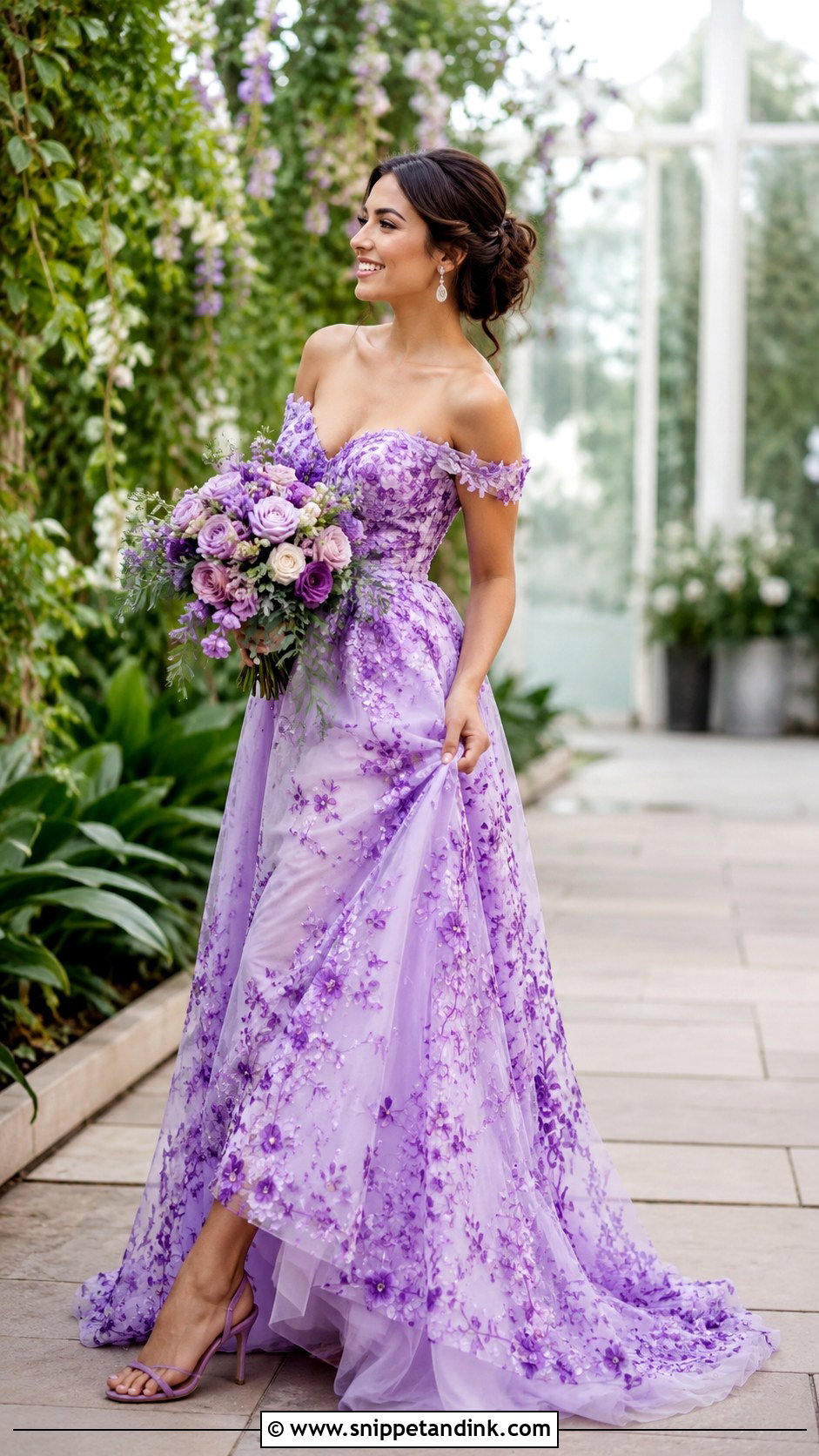
A purple floral embroidered wedding gown can sit on a lavender, lilac or ivory base, and the ivory version is a good middle ground if you want purple without a fully colored gown. Embroidery layered over the bodice and skirt gives a garden feel. Thread embroidery is heavier than it looks on a hanger, so check that the bodice still sits well once the skirt is attached. Soft-colored heels, dainty earrings and a bouquet that picks up the embroidery colors suit botanical venues.
11. Purple Corset Wedding Gown
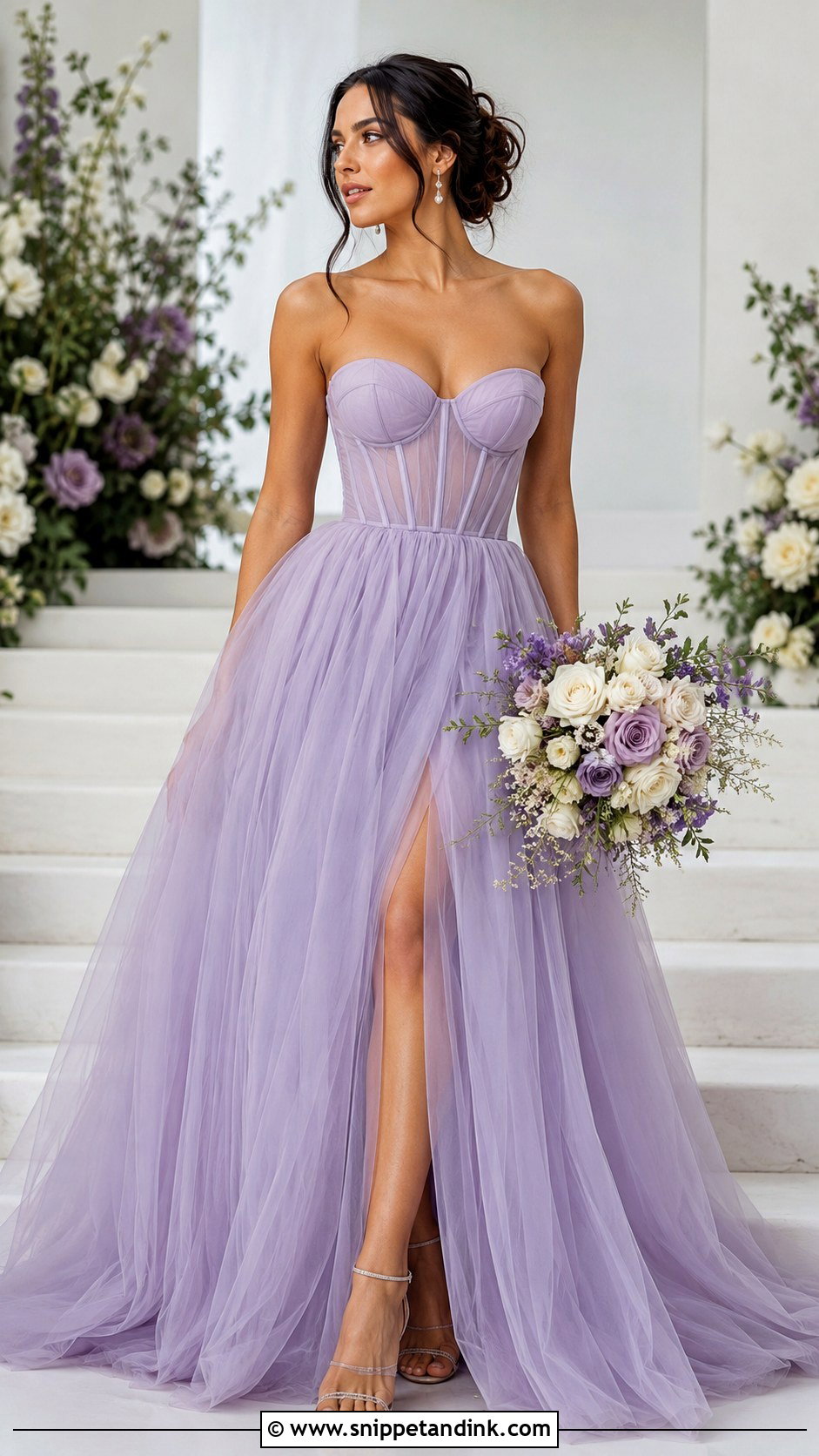
A corset bodice gives support and a defined waist, which is why I suggest it to brides who don’t want to wear a separate bra. Lavender or mauve looks soft; plum looks more dramatic. Pair it with an A-line, tulle or satin skirt. With visible boning, keep accessories very simple so the structure reads as design. The fitting must be tight enough to support without restricting breathing, especially if you’ll be eating and dancing. Drop earrings, heeled sandals and cream and purple flowers complete it.
12. Purple Long Sleeve Wedding Gown
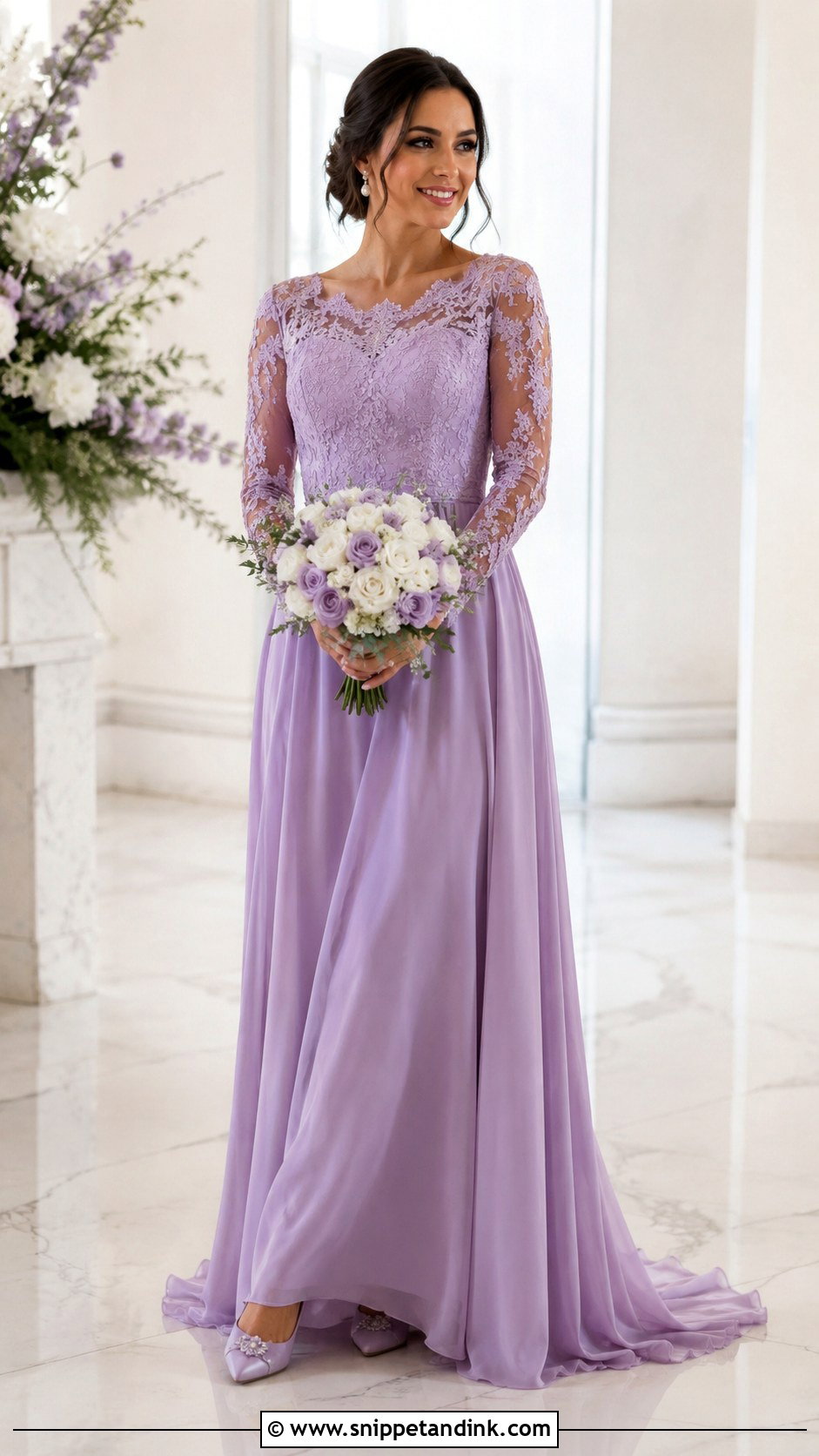
Sleeves change with the season: sheer lace for spring, fitted crepe for winter, soft tulle in between. Lavender sleeves look delicate; plum feels more formal. A low bun leaves both neckline and sleeves visible. Long sleeves need a generous armhole, or you won’t be able to raise your arms for a hug or a toast, so I always test that movement at the fitting. Closed-toe heels, pearl or crystal earrings and white, lavender and green flowers suit autumn and winter ceremonies and cool indoor venues.
13. Purple A Line Wedding Gown
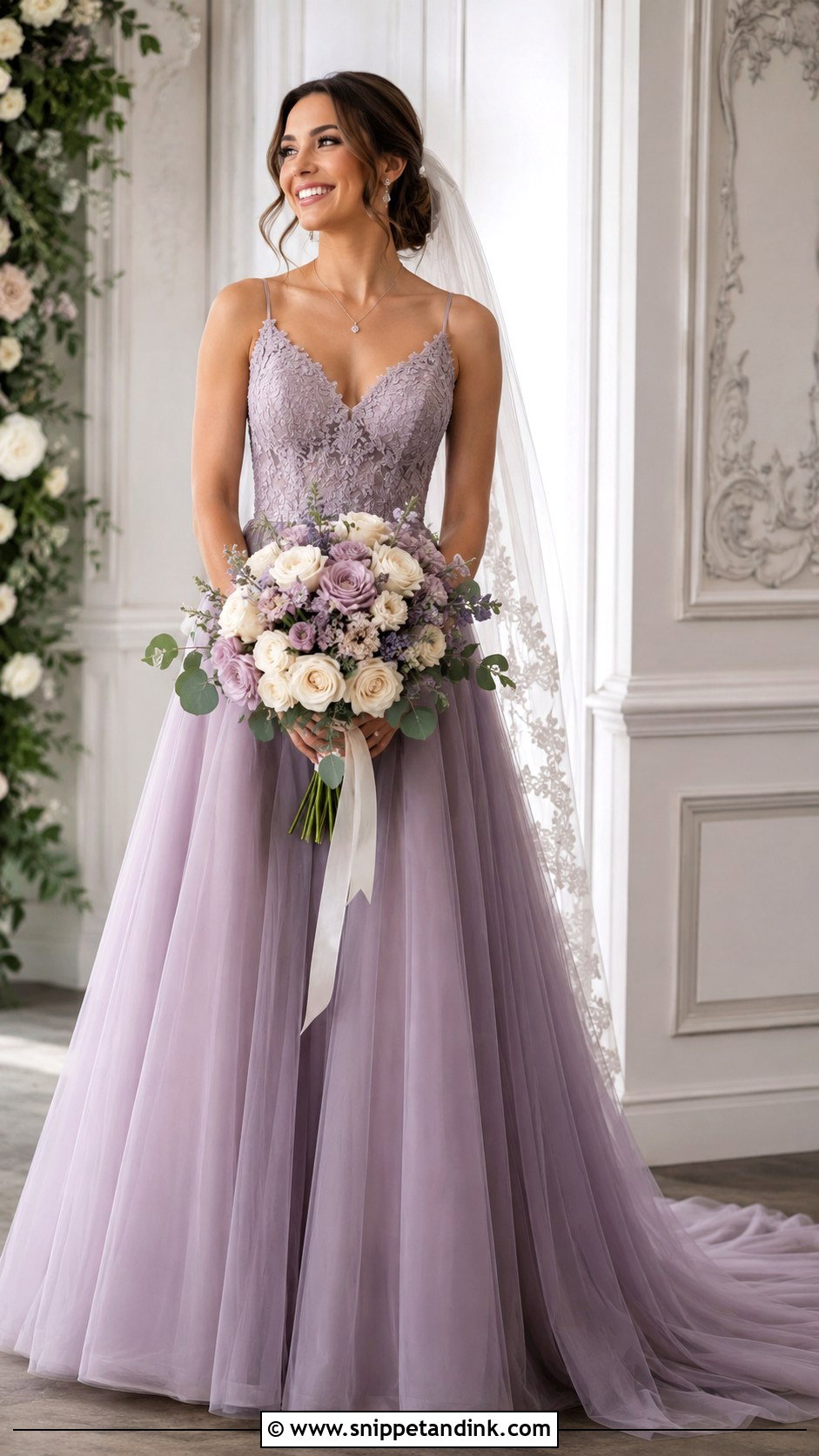
A-line is the safest silhouette on this list. Fitted through the bodice and flowing from the waist, it balances almost any figure. Lavender, mauve and plum all work. Chiffon makes it light, satin polished and tulle full. Because the shape is simple, fabric quality shows, so feel the weight of the skirt and check how it falls when you turn. Comfortable heels, a soft veil, ivory flowers with purple accents and jewelry that matches the gown’s tone suit any venue from a garden to a ballroom.
14. Purple Cape Wedding Gown
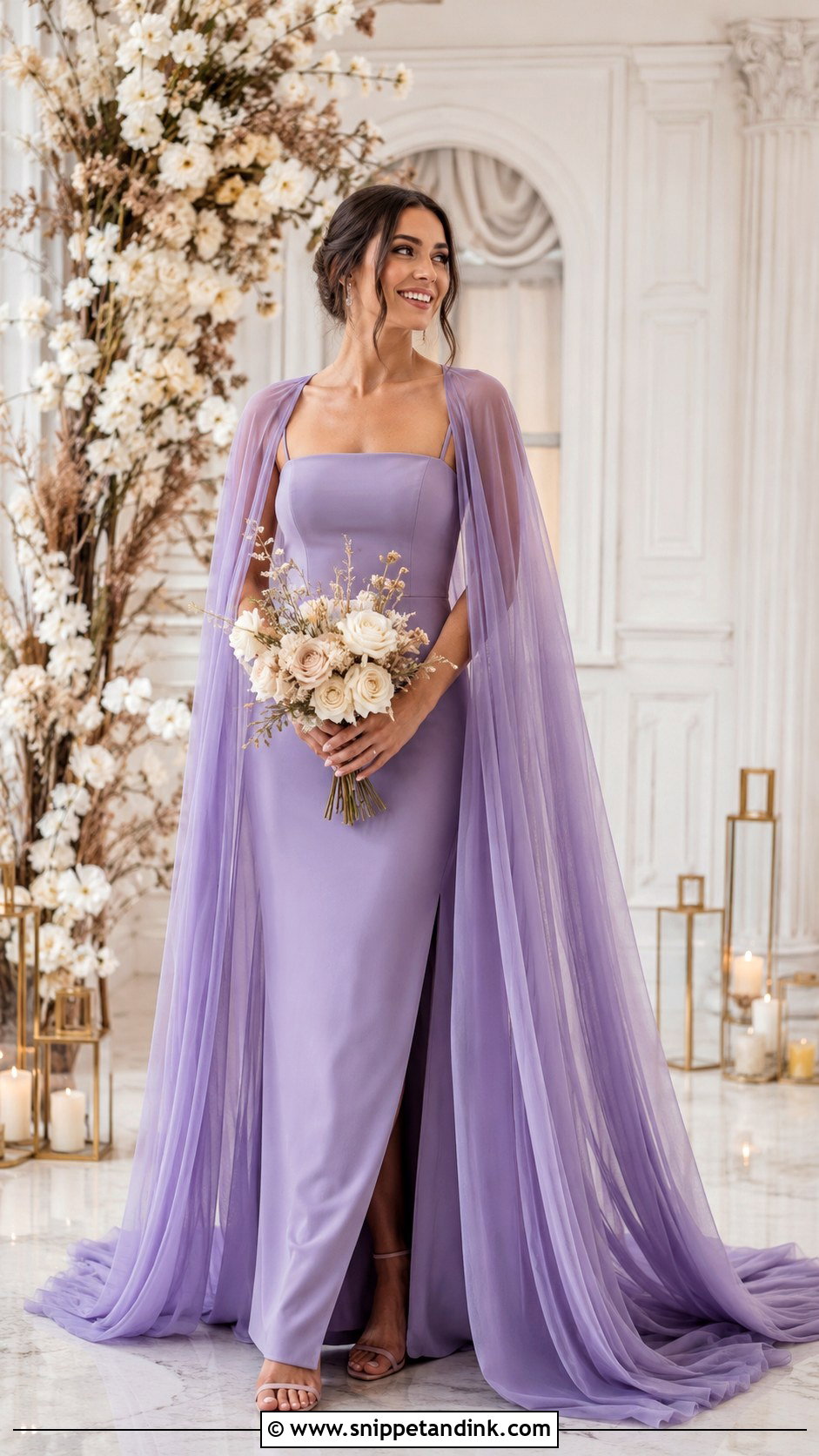
A cape replaces the veil as the moving element, and it gives extra coverage for religious ceremonies. Sheer lavender tulle, embroidered lace or chiffon can attach at the shoulders over a clean gown, a fitted crepe dress or a simple A-line. Long capes pull backward, so the attachment has to be sewn into the bodice structure; snaps on a thin strap won’t hold. If the cape is embellished, avoid oversized jewelry. Sleek heels, small earrings and soft neutral flowers keep it modern.
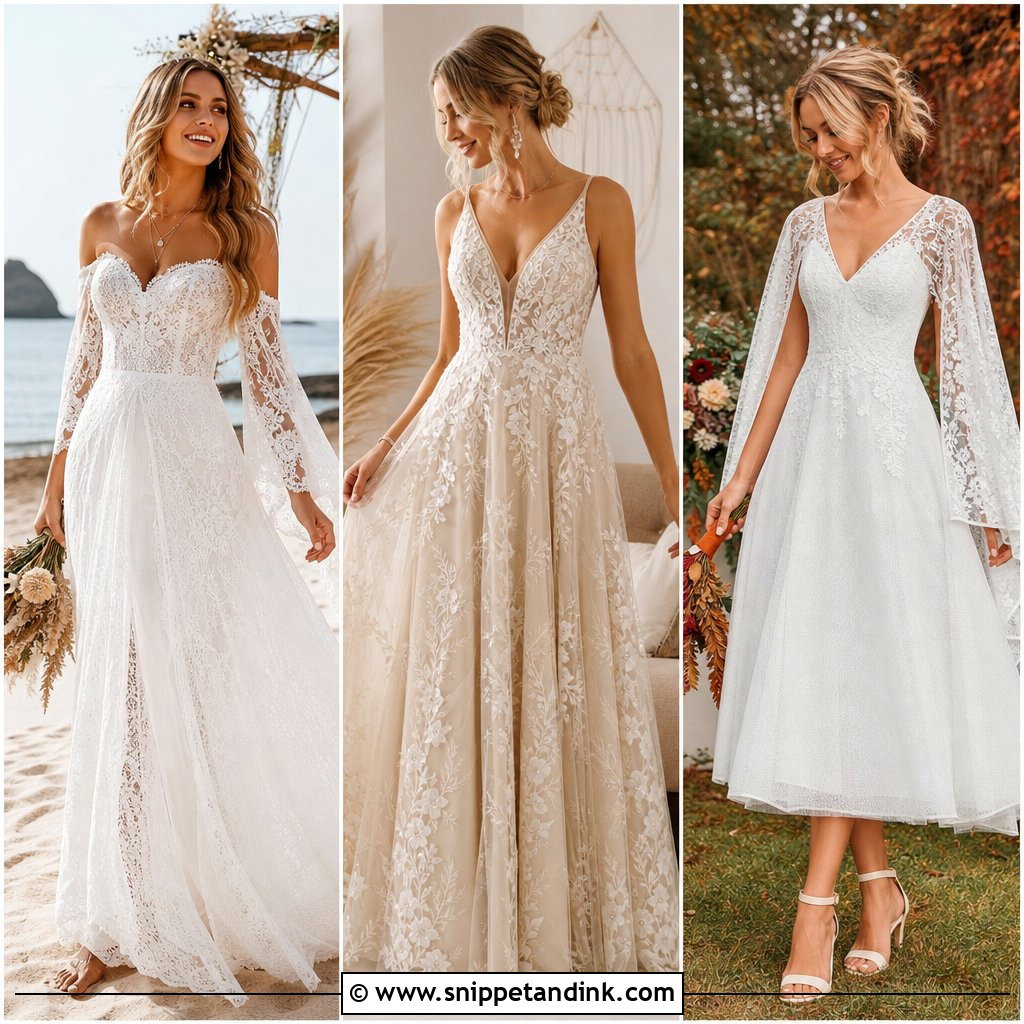
15. Purple Sequin Wedding Gown
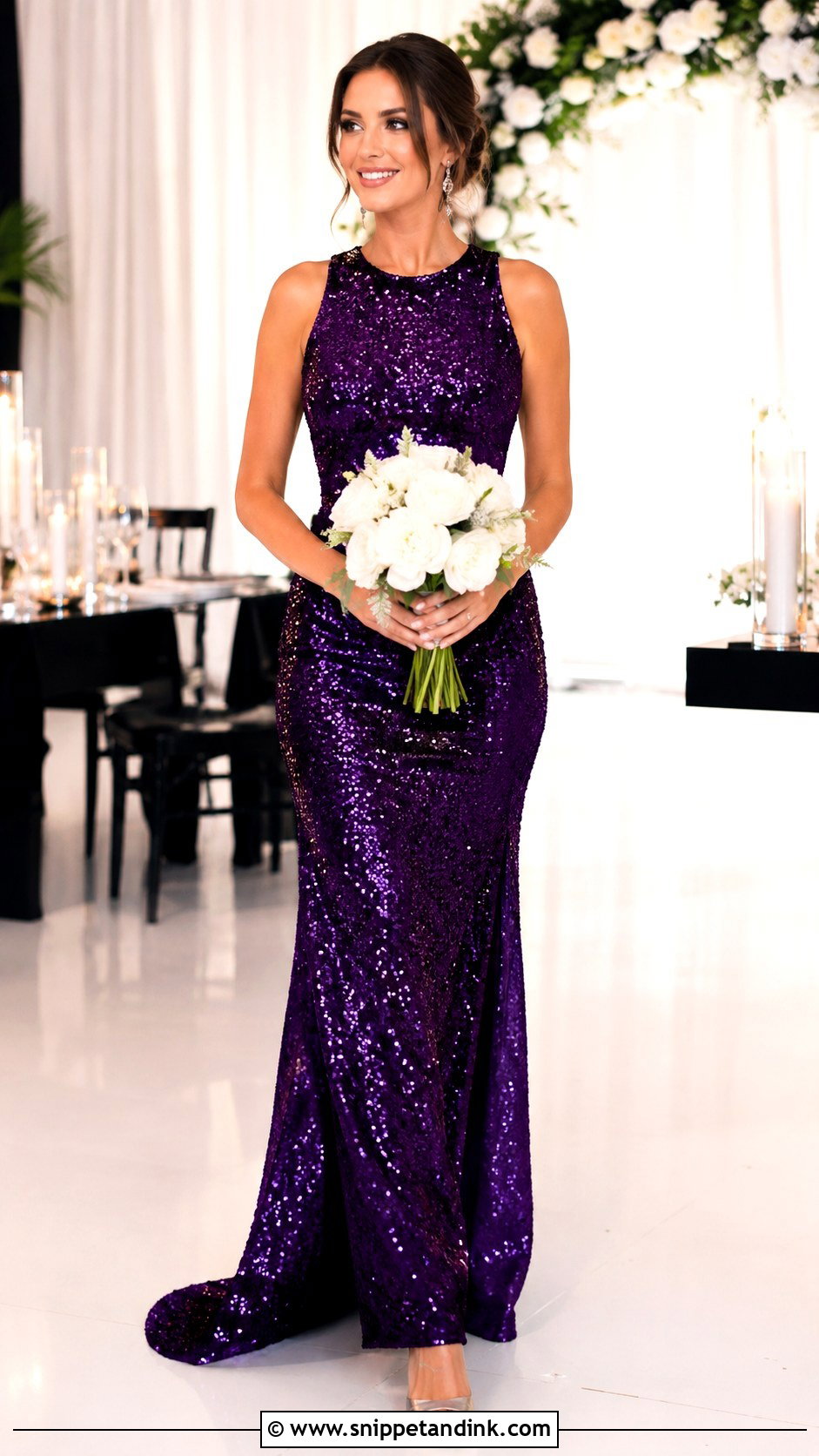
Sequins on deep violet, amethyst or plum give a lot of sparkle, so keep the silhouette and the accessories plain: a fitted column, soft mermaid or simple A-line, metallic heels, simple earrings and a smooth clutch. Sequins scratch, particularly under the arms and on the inner arm where you’ll rub against the bodice all night, so check the lining there. A white bouquet softens the look. It suits evening weddings and modern venues.
16. Purple Chiffon Wedding Gown
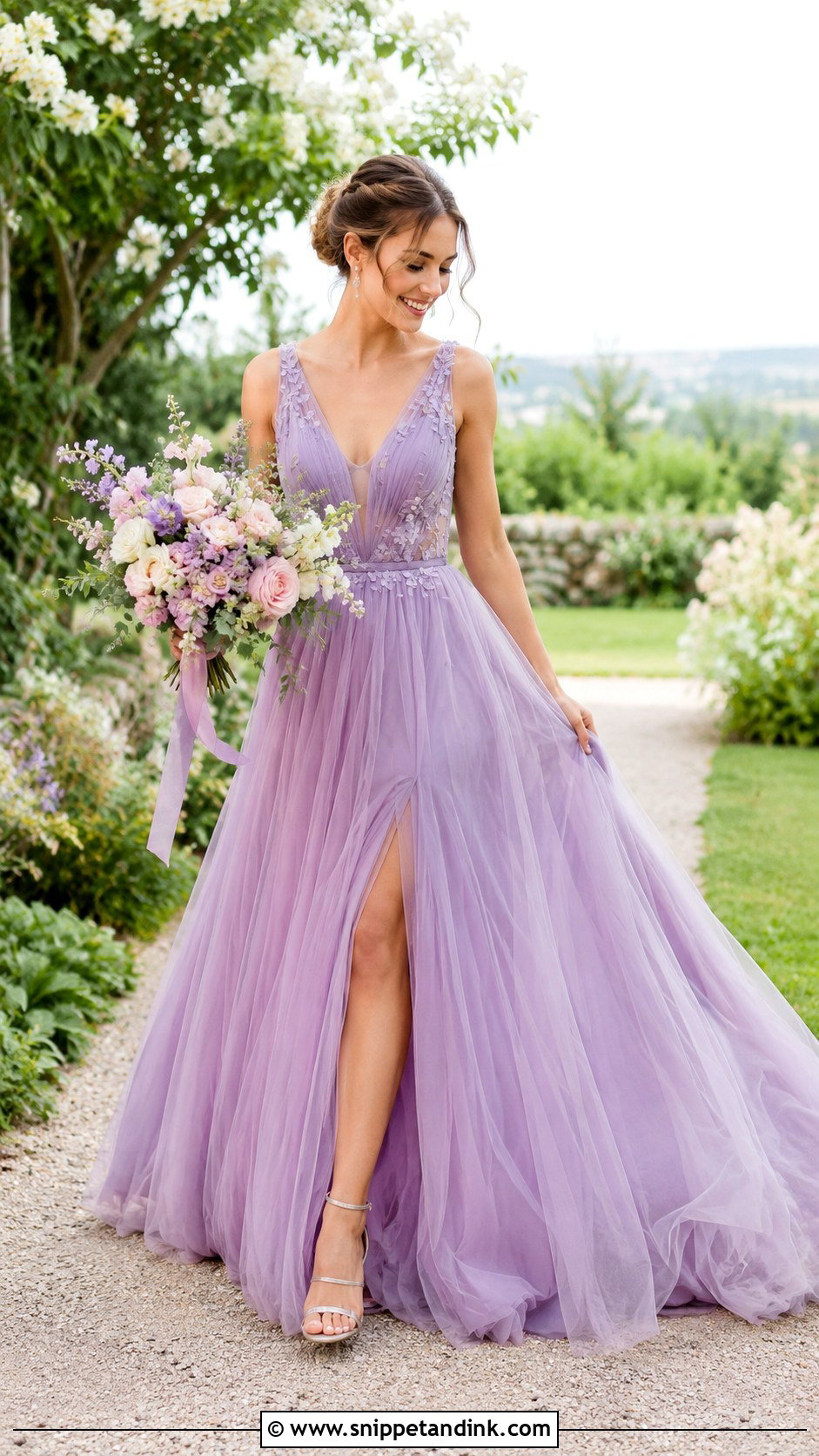
Chiffon is the lightest fabric for a purple gown and the most comfortable in heat. It drapes softly, and lavender and dusty mauve look gentle in it. The weakness is that chiffon shows creases from travel and sitting, so I’d steam it at the venue and keep the bride standing between photos if possible. Barely-there heels, delicate jewelry and pastel flowers keep it easy, with a loose braid, soft waves or a relaxed bun. Beaches, gardens and warm-weather ceremonies suit it.
17. Purple High Low Wedding Gown
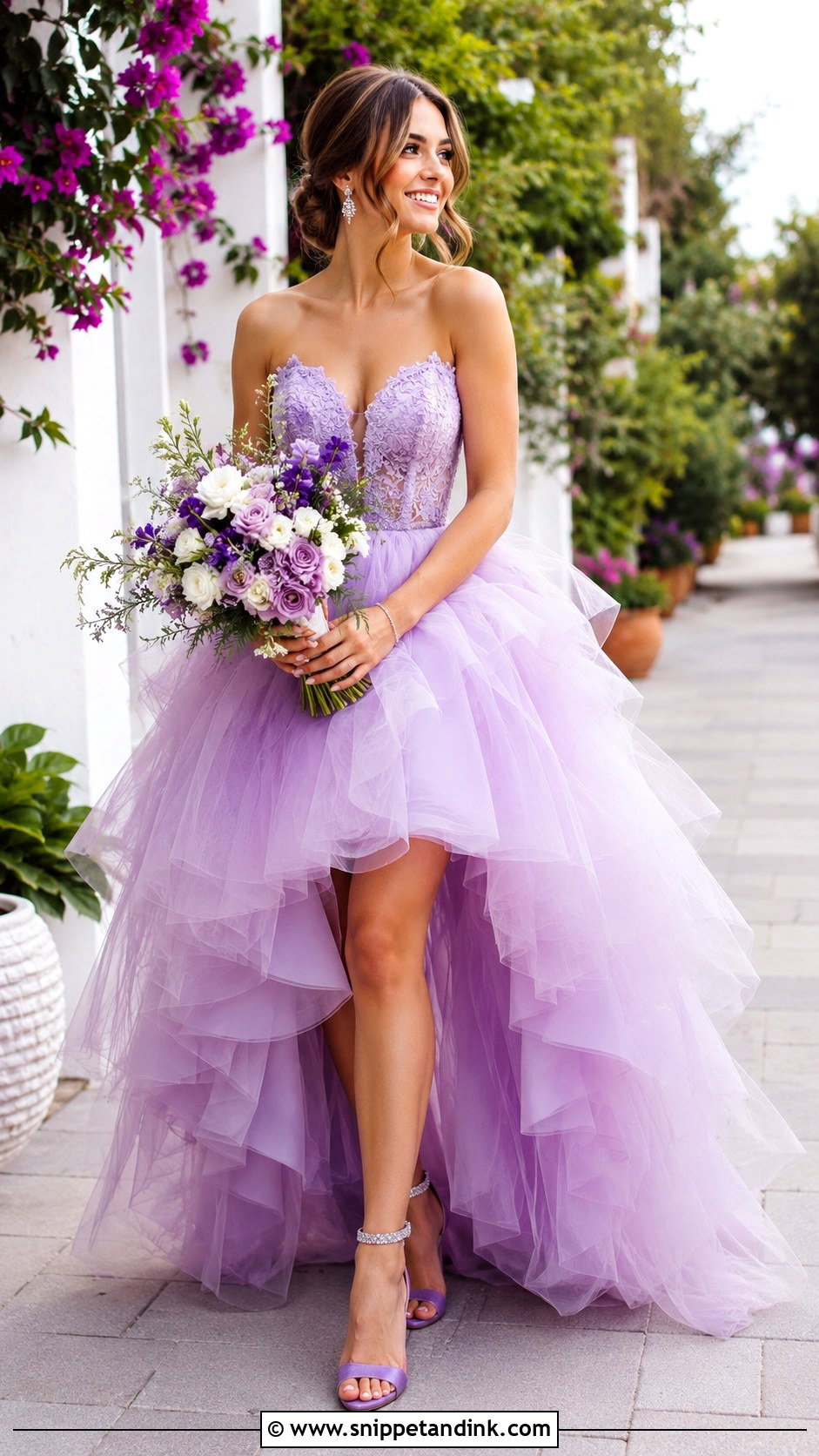
High-low hems in lavender tulle, mauve satin or deep purple organza show the shoes in front and keep a formal back. Because the shoes are on view all day, choose them early and wear them in; statement heels you can’t walk in will show in every candid shot. Simple earrings, a neat hairstyle and a bouquet in the gown’s color family are enough. It’s practical for outdoor venues and receptions that involve a lot of walking.
18. Purple Two Piece Wedding Gown
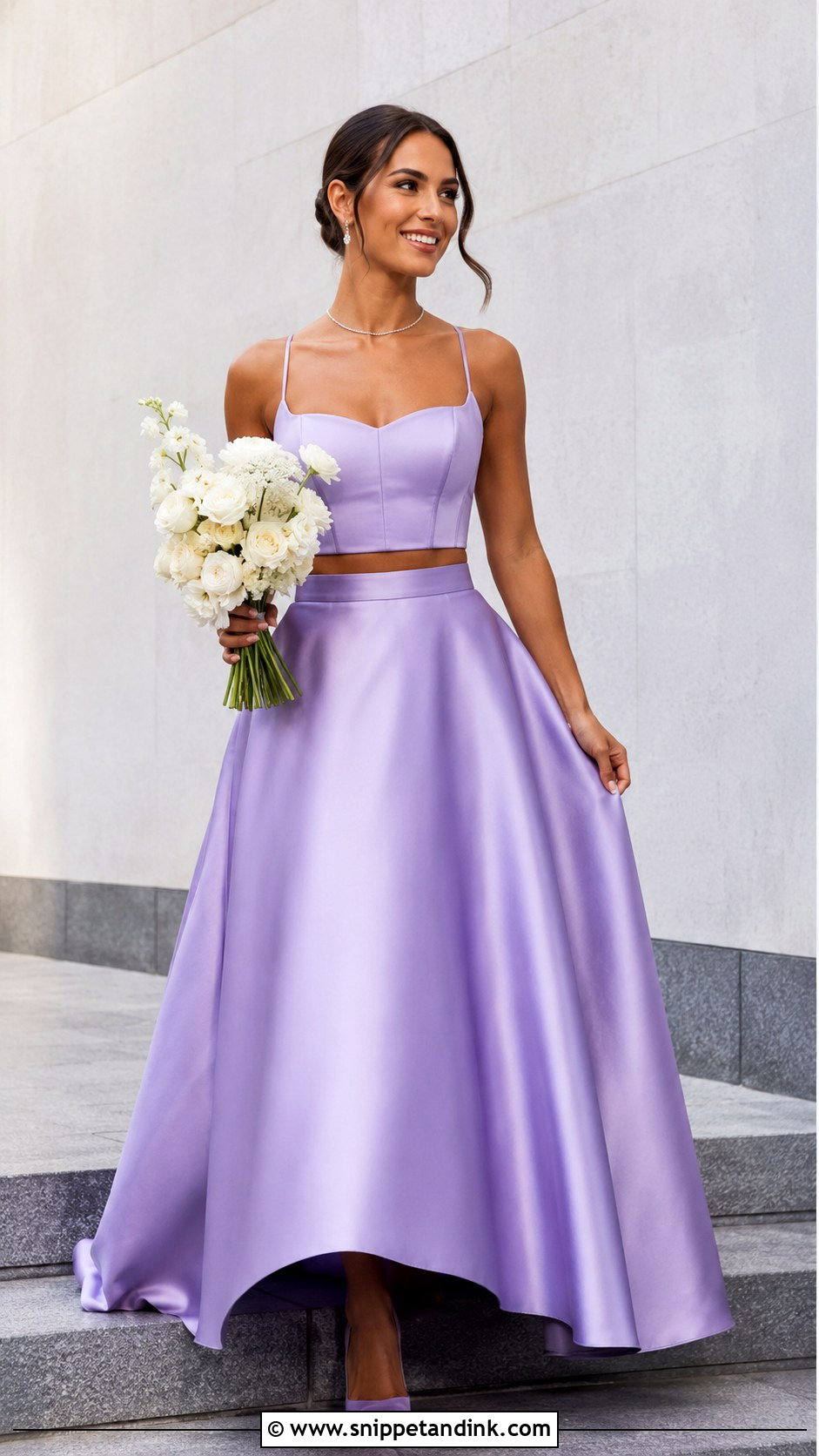
Two-piece gowns give flexibility: a structured crop top with a full skirt, a lace top with a satin skirt or a fitted bodice with a detachable overskirt. Lavender is soft; plum is sleek. The waistline is the part I fit most carefully, because a small gap of skin should look planned and stay the same when you sit or raise your arms. Pointed heels, clean jewelry and simple white flowers suit city venues, and you can wear the top or skirt again later.
19. Purple Velvet Wedding Gown
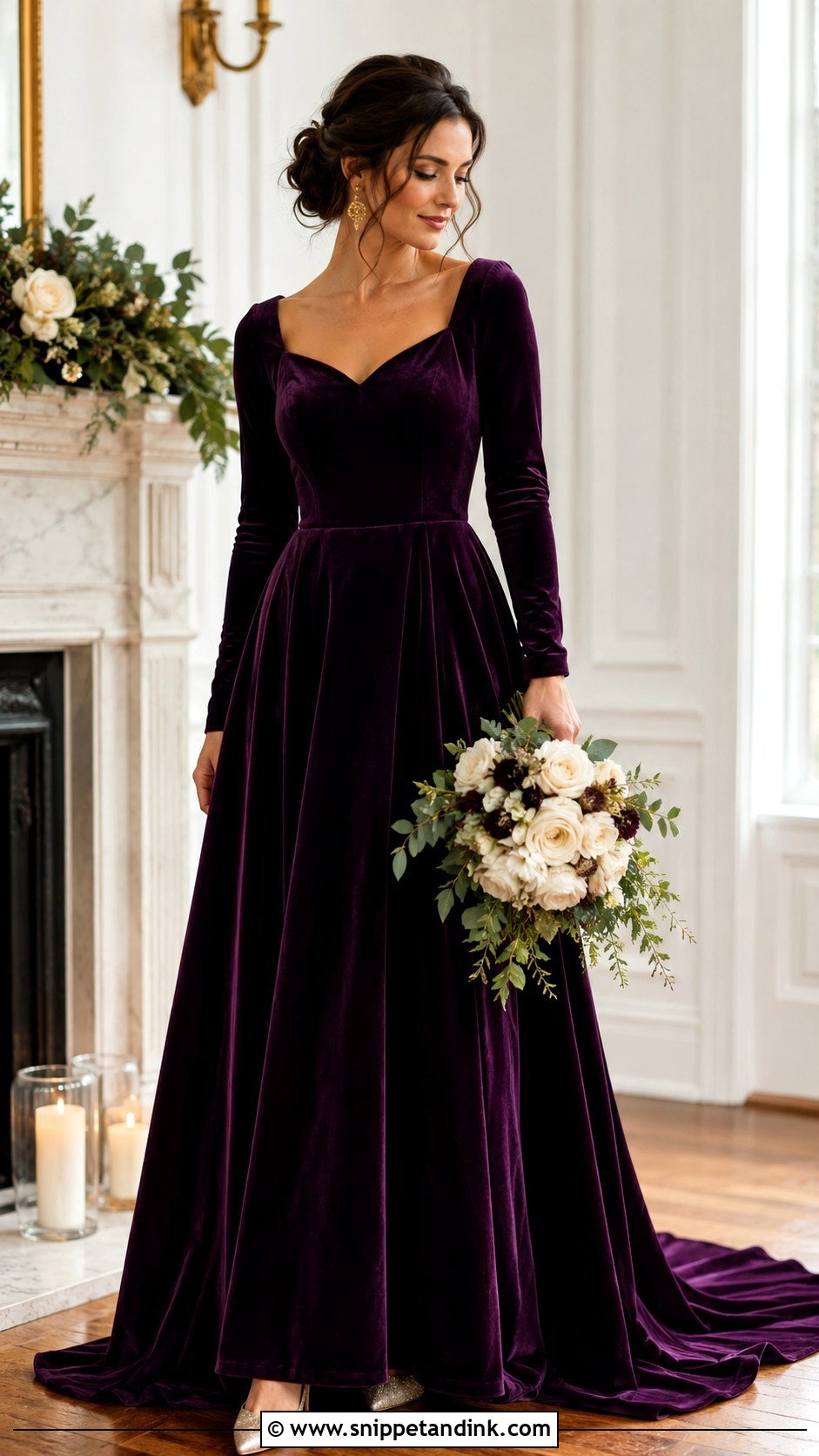
Velvet deepens purple more than any other fabric, especially plum, eggplant and royal violet. It has a strong presence, so simple shapes work best: long sleeves, a fitted bodice, a gentle A-line. Velvet’s pile crushes where it’s pressed, so travel with it hanging, never folded, and don’t sit on the back of the skirt in the car if you can avoid it. Gold earrings, closed-toe heels, ivory flowers with dark greenery and a smooth bun or soft waves suit autumn and winter weddings.
20. Purple Square Neck Wedding Gown
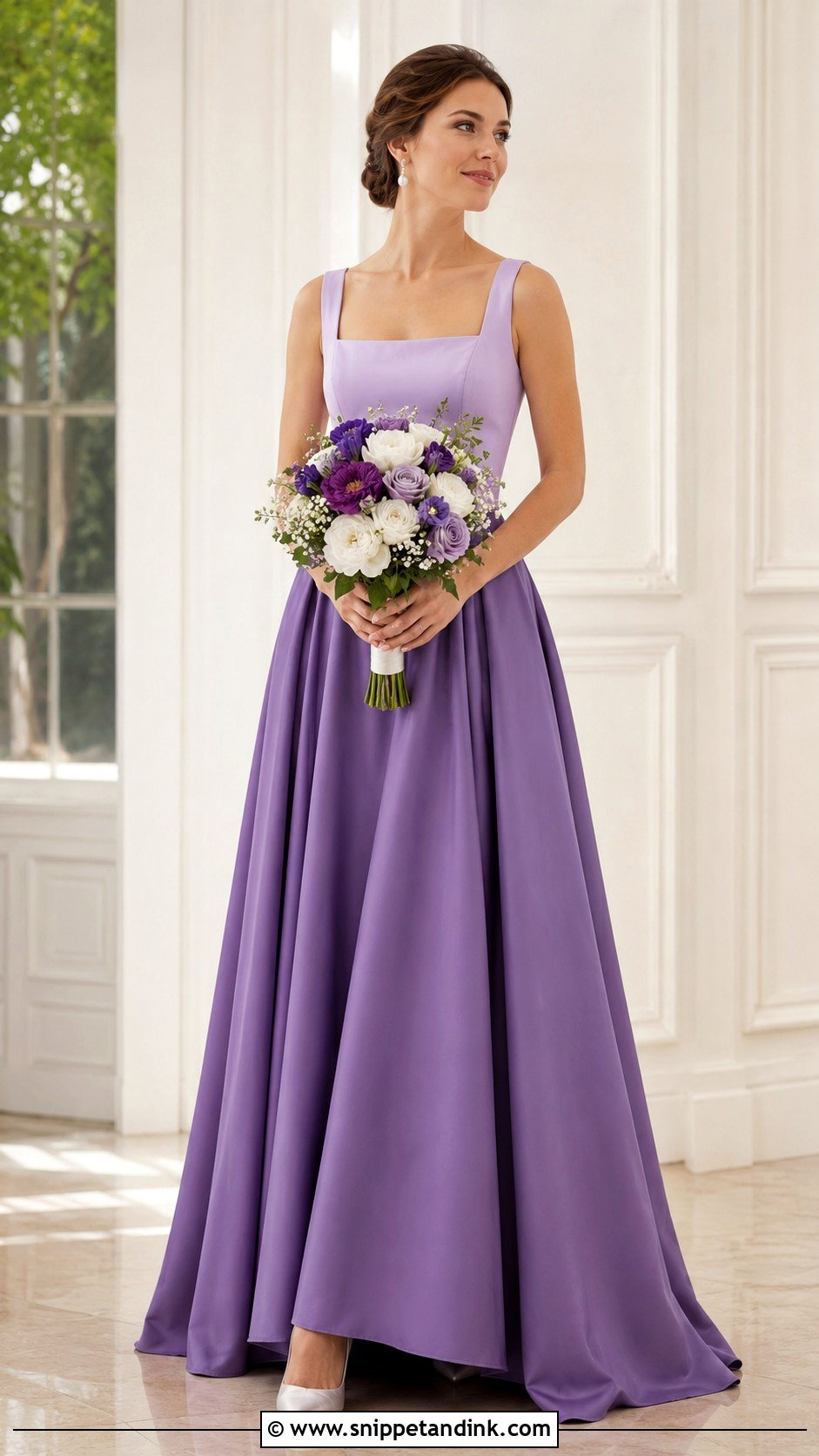
A square neckline frames the collarbone and pairs with almost any sleeve or skirt. Lavender makes it sweet; plum makes it refined. The straight edge has to sit perfectly flat, and on a curvier bust that sometimes needs a little hidden boning at the corners, which a good seamstress can add. A simple necklace, pearl earrings, satin heels and a structured white-and-purple bouquet finish it, and the fitted or full skirt can be chosen to suit your body and venue.
21. Purple Ruffle Wedding Gown
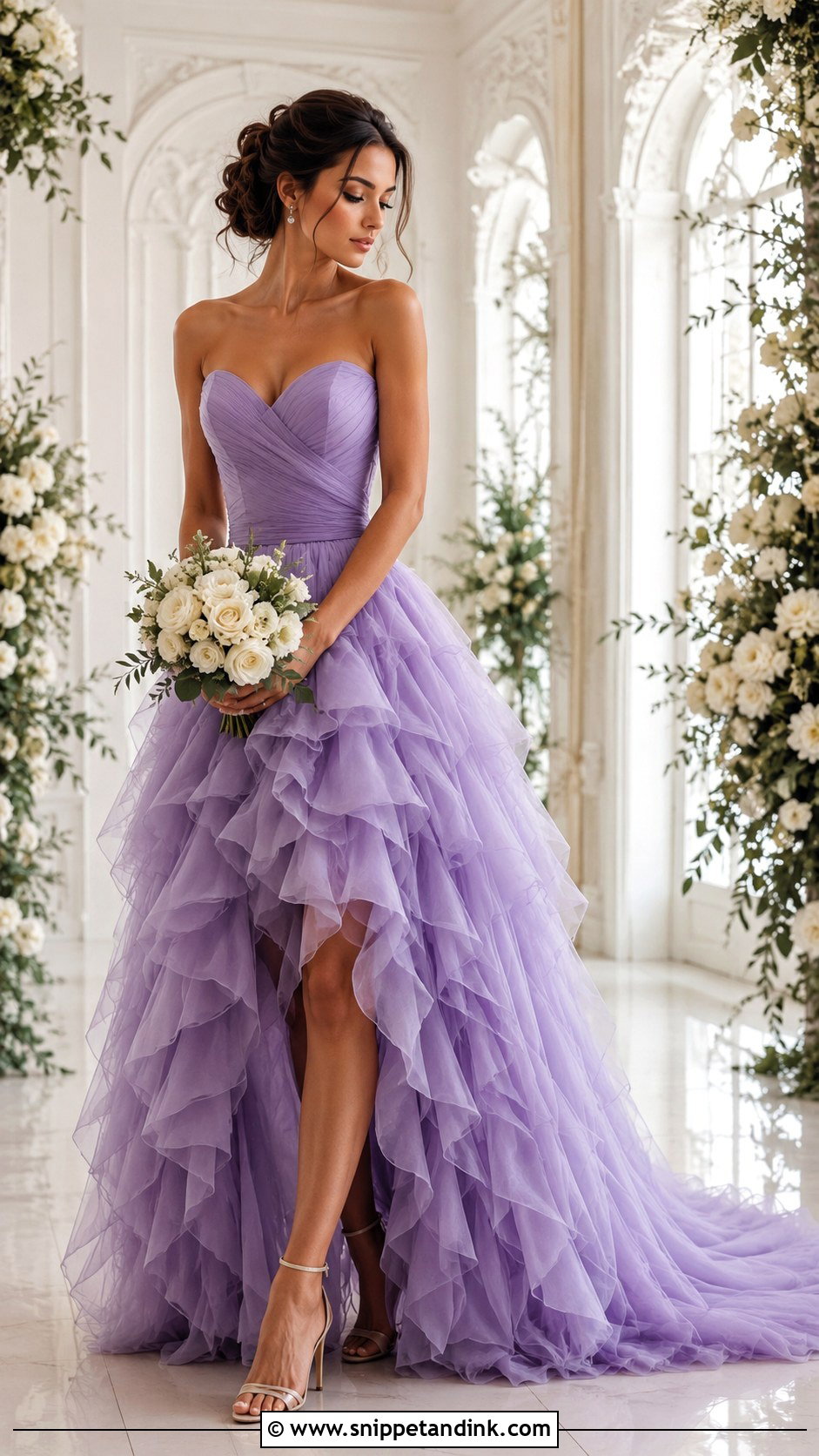
Ruffles add texture and movement, but only when placed with a clear purpose, on the skirt, sleeves, neckline or train, not everywhere at once. A lavender ruffle gown feels light and whimsical; a deep purple one feels bold. Ruffles add bulk, so if you’re petite I’d keep them below the waist. Small earrings, slim heels, a smooth hairstyle and a bouquet that doesn’t fight the volume keep the balance right.
22. Purple Halter Wedding Gown
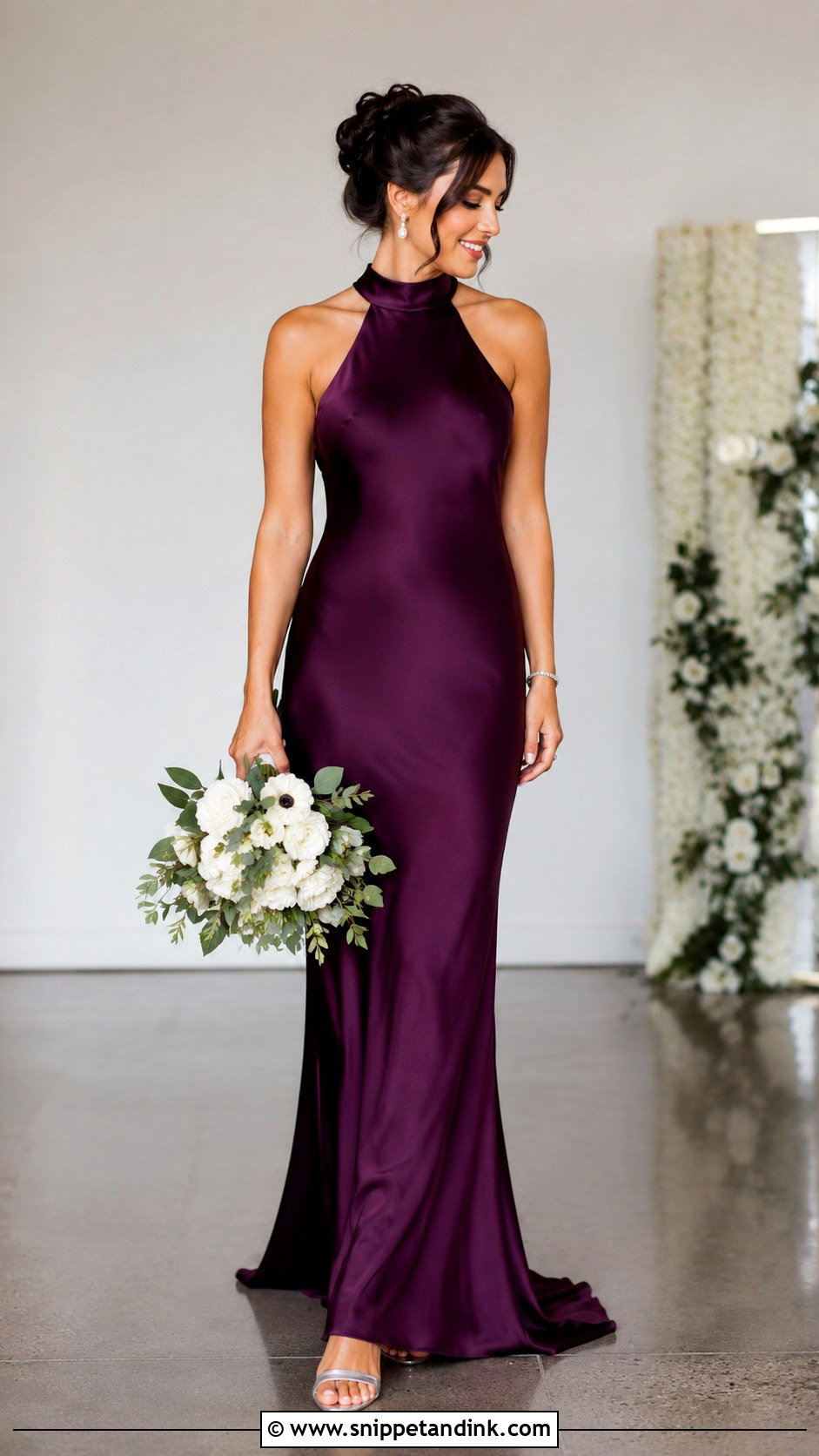
A purple halter wedding gown shows the shoulders and draws a clean line from neck to waist. Satin, crepe and chiffon all suit it. Halters hang from the neck, so a heavy skirt can cause strain by evening; I check the weight and ask for a back fastening that takes some of the load. Lavender feels fresh; plum or violet is more formal. Drop earrings, a bracelet, heels in your jewelry’s metal and a low bun or ponytail keep the neckline visible. White flowers give contrast.
23. Purple One Shoulder Wedding Gown
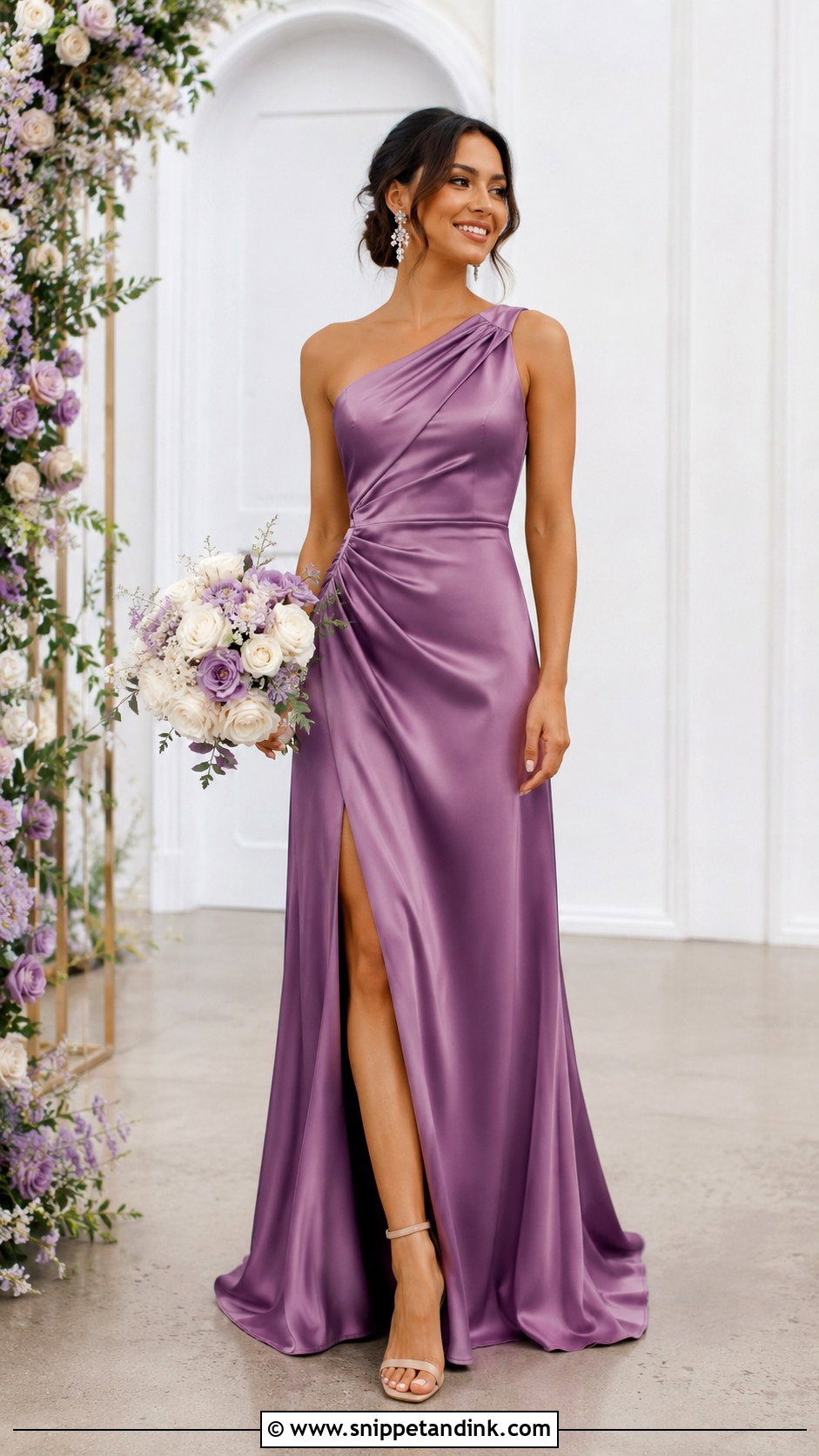
Asymmetry gives interest without needing embellishment. Satin or crepe keeps a one-shoulder gown smooth; chiffon softens it. Skip the necklace and wear a statement earring on the open side. The single strap has to be anchored firmly into the bodice, otherwise the gown twists toward the bare shoulder as you move, which shows clearly in photos. Simple heels and a bouquet of ivory, lavender and greenery suit formal ceremonies and destination weddings.
24. Purple Detachable Train Wedding Gown
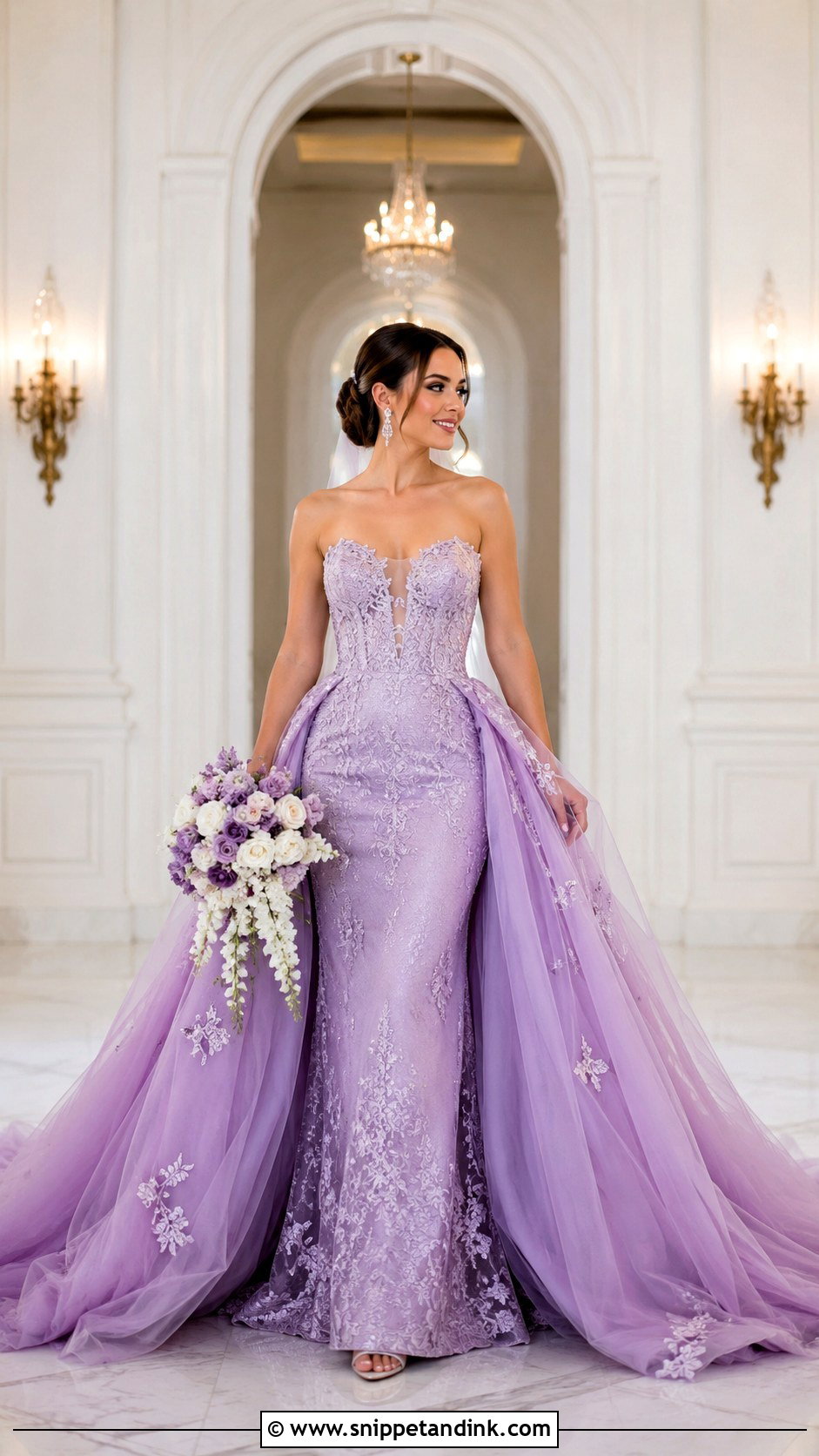
A detachable train lets you have the drama for the ceremony and the comfort for the reception. A fitted lavender or plum gown with a long tulle or satin train is the usual combination. I check two things: that the attachment points are flat and hidden once the train comes off, and that the base gown’s hem works without it. Practice the removal with a bridesmaid. Secure heels, elegant earrings and a bouquet in the gown’s shade finish it.
25. Purple Minimalist Wedding Gown
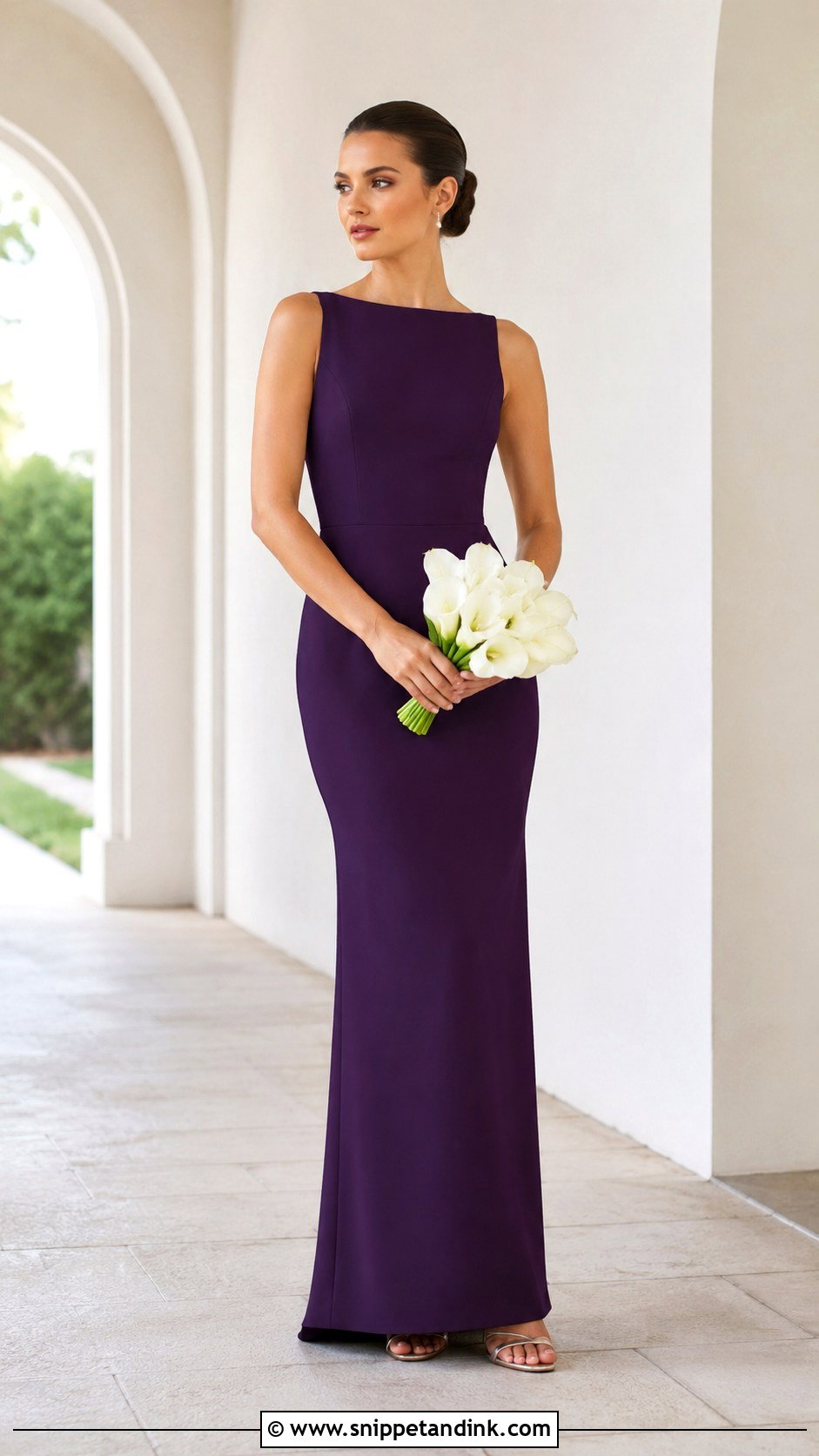
Minimalist gowns let color do all the talking. A column, slip or simple A-line in soft lavender feels calm; in deep plum it looks sleek. With no embellishment to distract, every seam, dart and hem shows, so I’d spend the budget on fabric quality and fittings, not on extras. Refined heels, small earrings, a simple white bouquet and a smooth veil or no veil at all keep it clean.
Water Spots, Sweat Marks and Crushed Fabric on the Day
Coloured fabric shows damage differently from white. A spilled glass of water barely registers on ivory but leaves a darker ring on plum satin, and perspiration marks show more on deep shades of silk. I pack a few extras when I’m dressing a bride in purple:
- A white lint-free cloth for blotting, never rubbing, wet spots.
- A small travel steamer for creases in chiffon and tulle, used at a distance.
- Dress shields that stick inside the bodice at the underarm, especially for satin and silk.
- No white chalk or stain powder; they leave visible marks on colored fabric.
Dressing the Groom Beside a Purple Gown
A purple bride changes what works for the partner standing next to her. Charcoal, navy and mid-grey suits sit well with almost every purple; black can look harsh beside lavender in daylight. I’d keep the purple on the groom small, a tie, pocket square or buttonhole, and a shade or two away from the gown rather than an exact match, which tends to look like a uniform in photos.
Pick the Shade Last, After the Venue and the Fit
Purple gives you room to be original: soft lavender for a light look, dusty mauve for something quieter, deep plum for an entrance. Colour is only part of the decision, though. The gown has to suit your venue, season, body and comfort, and the shoes, jewelry, flowers, veil and hair should connect to it. In practice, I find brides settle on the right purple much faster once the silhouette and fit are decided, because then they’re choosing a shade for a real dress, not a picture. Lace, satin, tulle, chiffon, velvet or clean minimalist lines can all carry purple well.
You'll Like These Ideas:


Leave a Reply