
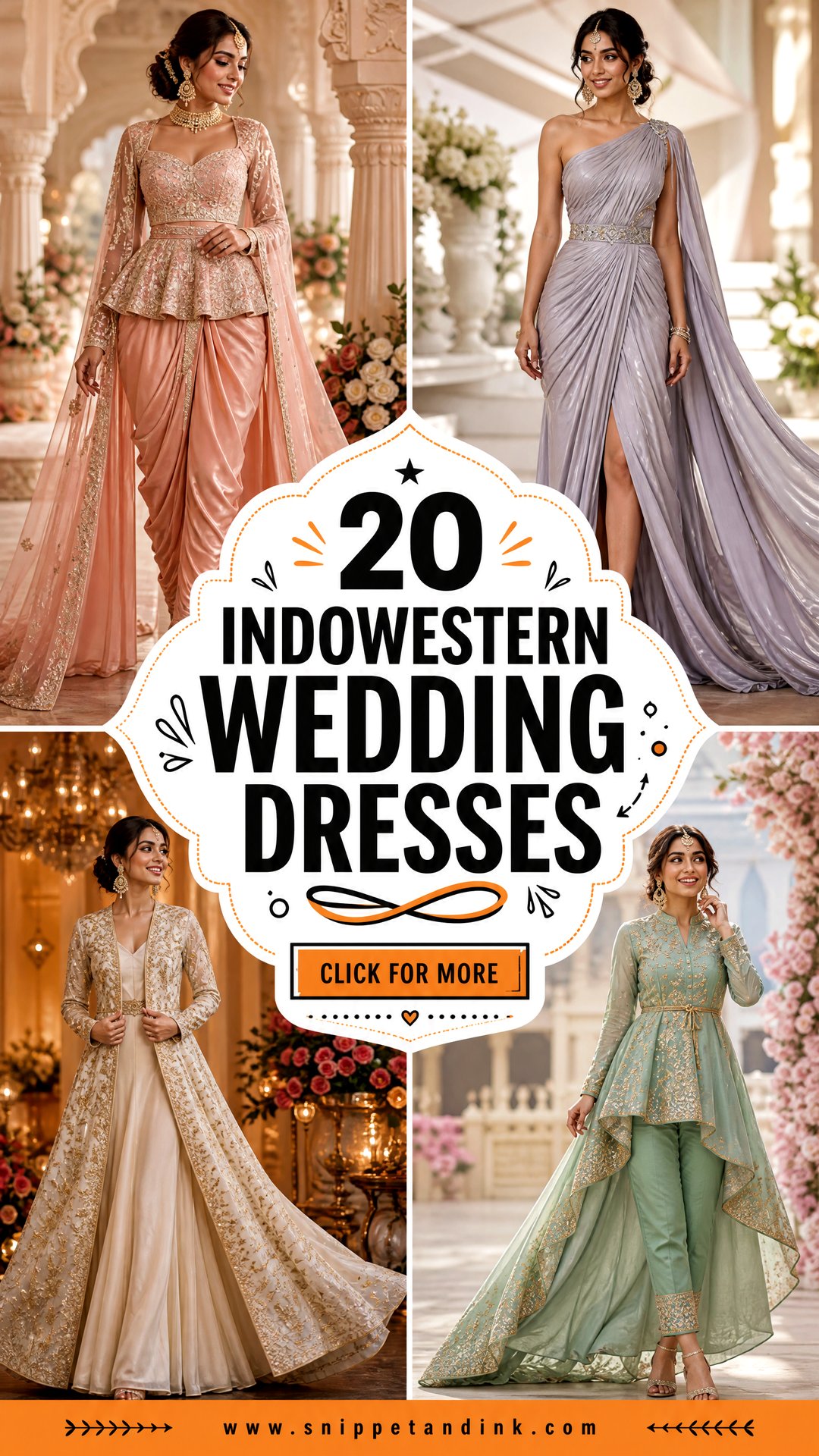
Indowestern wedding dresses sit somewhere between a lehenga and a Western evening look, and the good ones borrow the best of each: Indian handwork and drape, Western cut and ease of movement. I like them most for brides who have several functions to get through and don’t want to be pinned into six meters of fabric for every one. Below are twenty pieces, from saree gowns to brocade pantsuits, each with what I’d look for in the fitting room and who I think it suits.
Sitting Cross-Legged by the Fire in a Fusion Outfit
A fusion look that works at a cocktail party can be a real problem during the actual ceremony. Many Indian rituals have you sitting on the floor or a low seat for an hour or more, walking around a sacred fire, and bending to touch elders’ feet. Before you fall for a fitted gown, picture yourself doing all three.
- Floor seating: a corset bodice or slim gown skirt makes cross-legged sitting very hard. Separates, dhoti pants and lehenga skirts handle it far better.
- Near the fire: synthetic net and polyester sequins can melt or catch quickly. For the pheras, keep long trains and loose capes well away from the flame and choose silk or cotton-based fabrics where you can.
- Bending and greeting: a deep neckline or low-back blouse looks very different when you lean forward. Test it in a mirror while bending.
- Head covering: if a dupatta over the head is expected, make sure your hair and the gown’s neckline leave a place to pin it.
My usual plan is a traditional or fully mobile outfit for the rituals and a sharper Indowestern look for the sangeet, cocktail night or reception. You get both, and you don’t spend the ceremony worrying about your bodice.
1. Indowestern Saree Gown
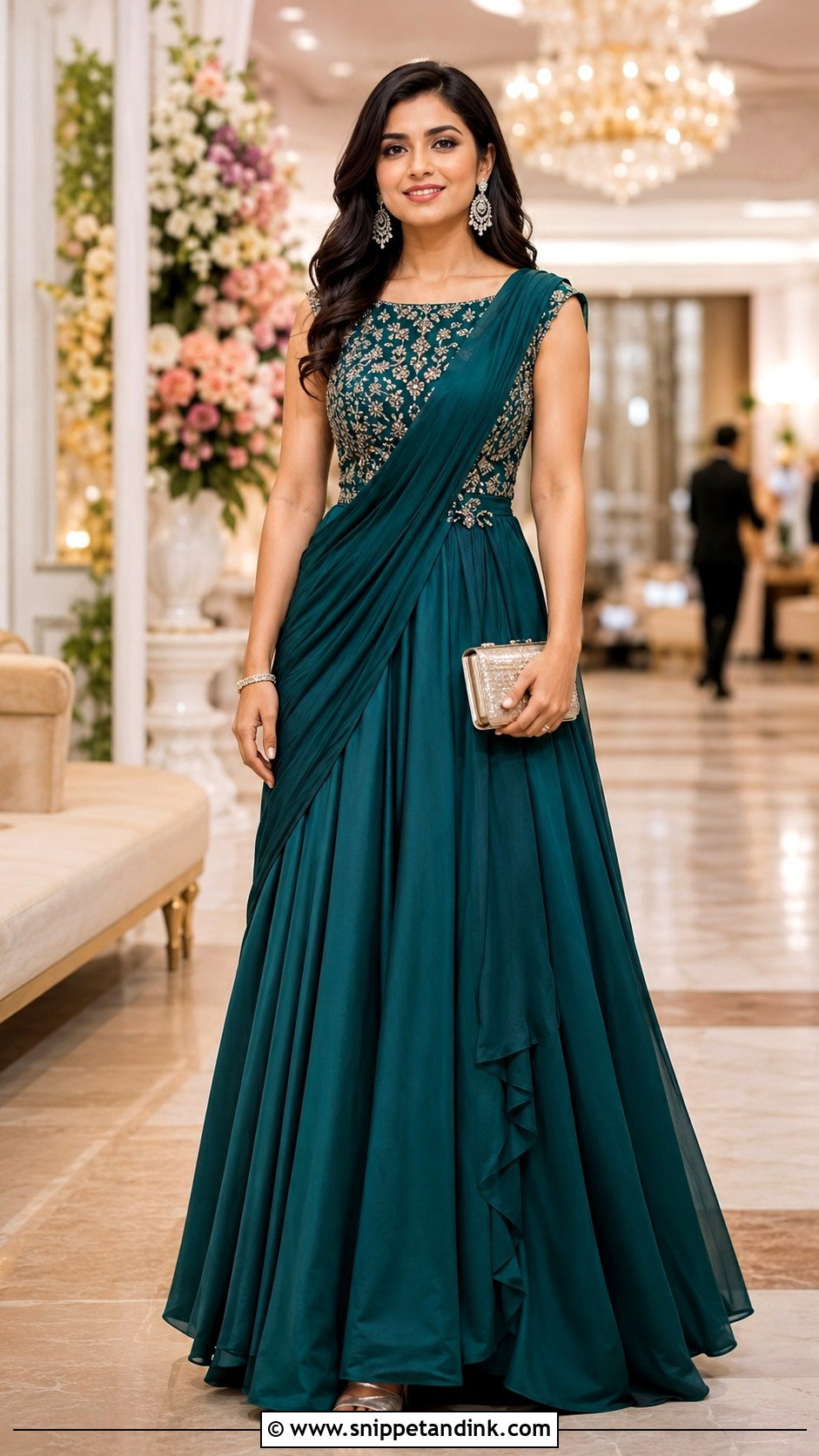
A saree gown gives you the drape of a saree in one zip-up piece. Look for georgette or crepe, a fitted bodice and pleats stitched across the front; if the pleats are only loosely tacked, they open up when you walk. Brides can take a short trail, guests a clean floor-length hem. When the bodice is heavily embroidered I drop the necklace entirely and let earrings do the work. Evening receptions suit jewel tones. For a morning function, blush or sage looks fresher in natural light.
2. Indowestern Cape Lehenga
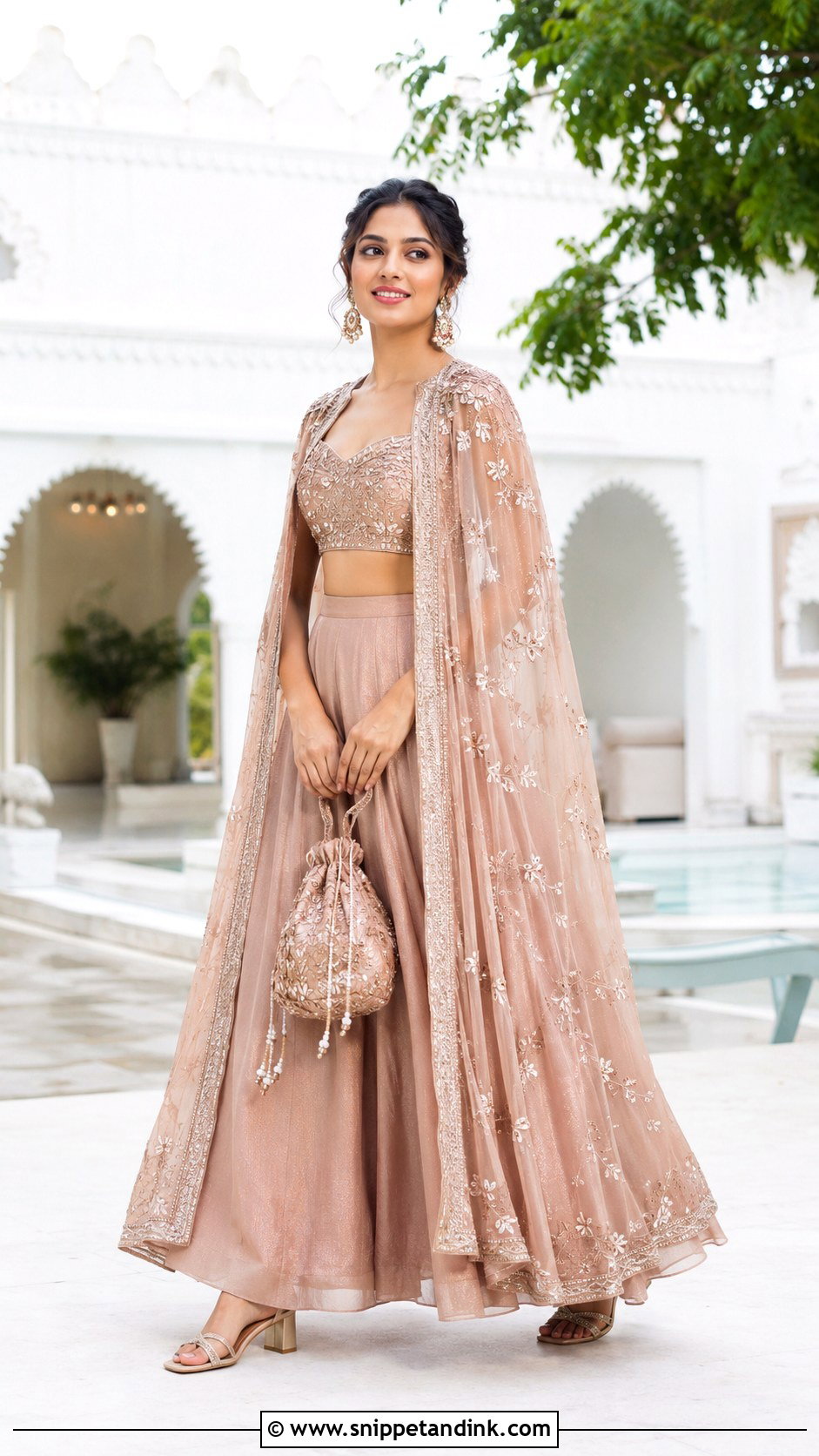
Swapping the dupatta for a cape is the single change that most improves comfort at a long function. You stop adjusting fabric every time you lift your arm. Pair a fitted blouse with a high-waisted lehenga in silk, organza or georgette, and add a sheer embroidered cape. Length matters more than people expect: on petite clients I stop the cape at the hip so it doesn’t cut them in half, while taller women carry a floor-length one well. If the cape is worked at the neckline, skip the necklace.
3. Indowestern Dhoti Pant Peplum Dress
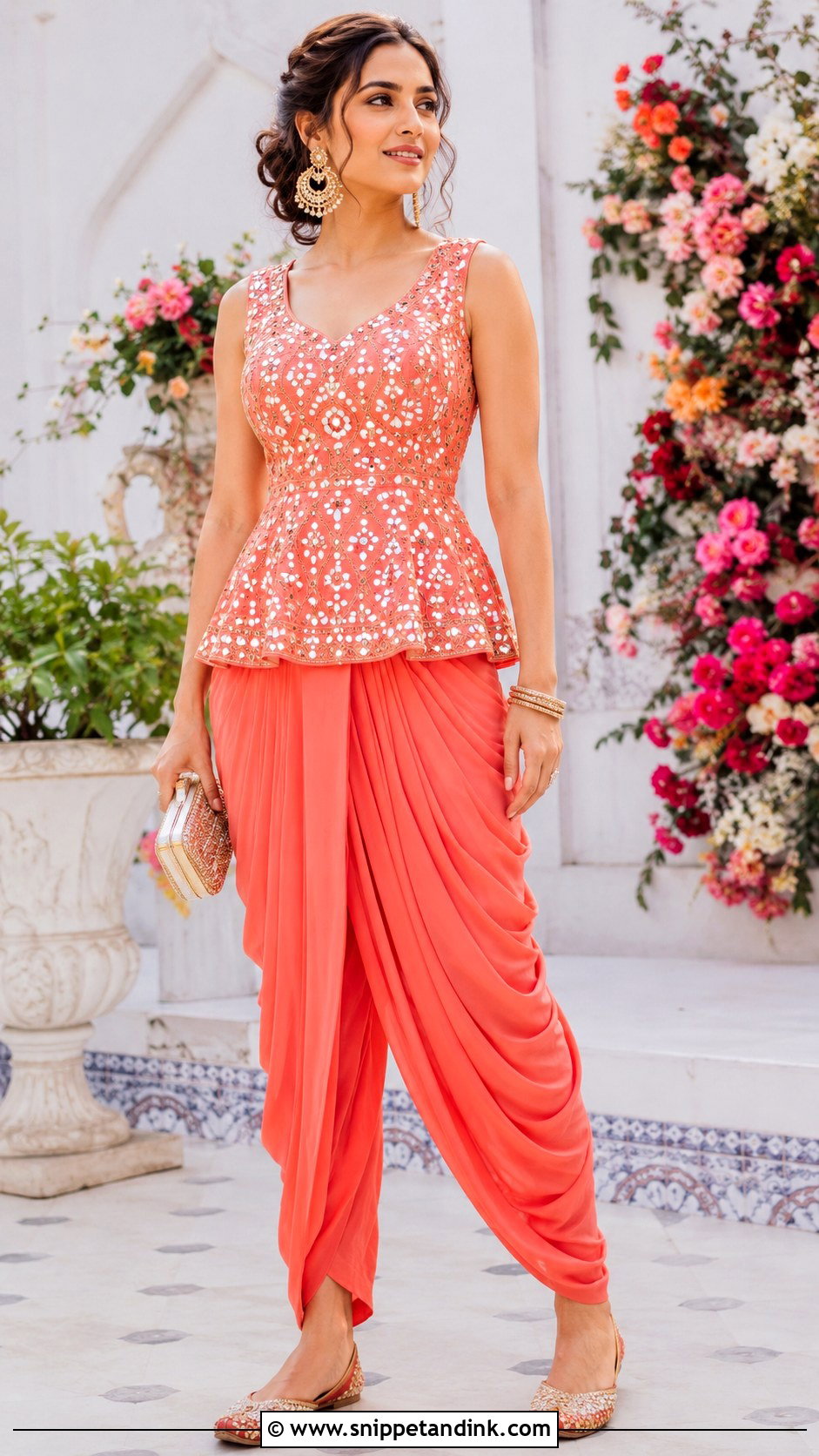
Dhoti pants paired with a peplum top is the outfit I suggest to anyone who plans to dance all night at the sangeet. The peplum should end around the upper thigh; any longer and you lose the gathered drape of the dhoti, which is the whole point. Zardozi, mirror work or tonal embroidery on the peplum keeps it festive. Juttis are the most comfortable footwear here, though block heels work if the venue has hard floors. A braided ponytail keeps hair off an embellished neckline. Bright yellow and coral are lovely at daytime events, and emerald or plum work after dark.
4. Indowestern Embroidered Jumpsuit
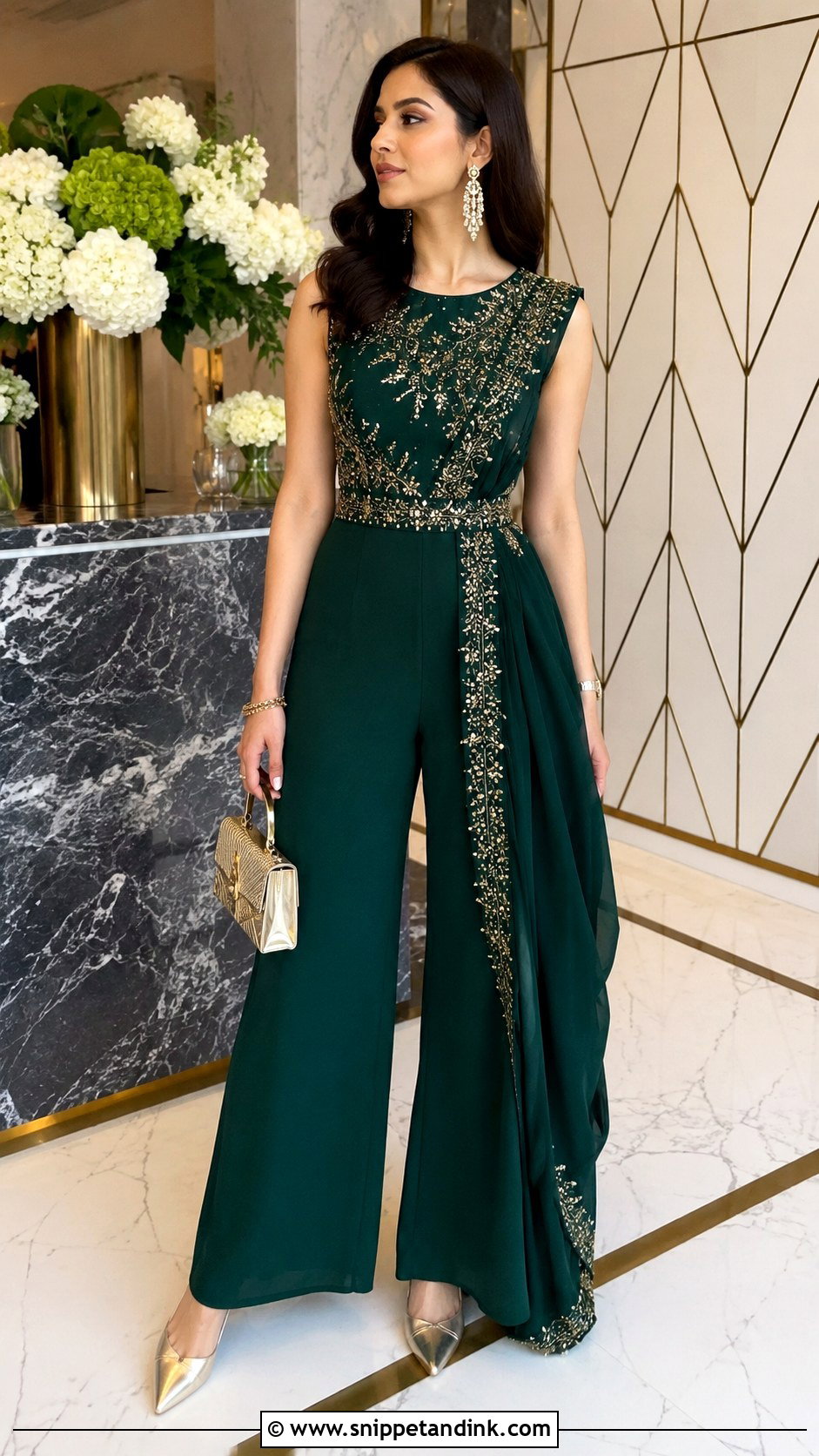
Jumpsuits look simple on the hanger and turn out to be the hardest piece to fit. The torso length has to be exactly right, or the crotch sits low and the waist pulls when you sit. I always have clients sit, bend and climb a step before buying. Wide legs and a defined waist work best, with embroidery kept to the bodice or belt. A detachable drape can stand in for a pallu. Black is chic for a cocktail evening where the family is comfortable with it; otherwise deep green, burgundy or champagne are safer.
5. Indowestern Corset Lehenga
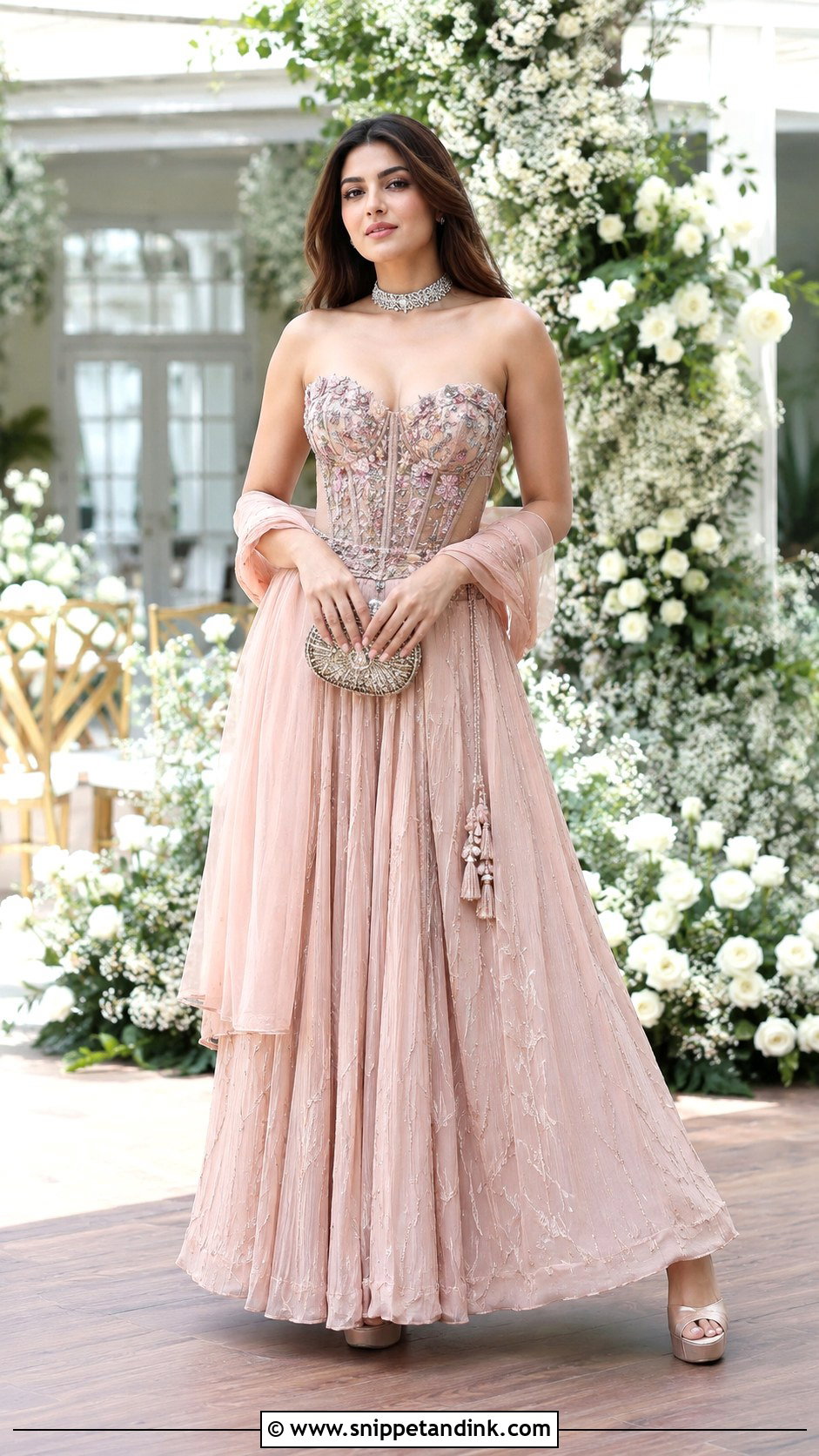
A corset bodice is only as good as its boning. Proper boning holds the shape without digging in, while a cheap stiffened top creases at the waist the first time you sit. Choose an A-line lehenga rather than a huge skirt so the proportions stay balanced. If you need more coverage, a detachable bolero or sheer stole gives you options between functions. Wear a choker or bold earrings, not both, particularly on a densely beaded bodice. Pastel florals suit daytime; velvet and darker sequins suit the evening.
6. Indowestern Blazer Lehenga
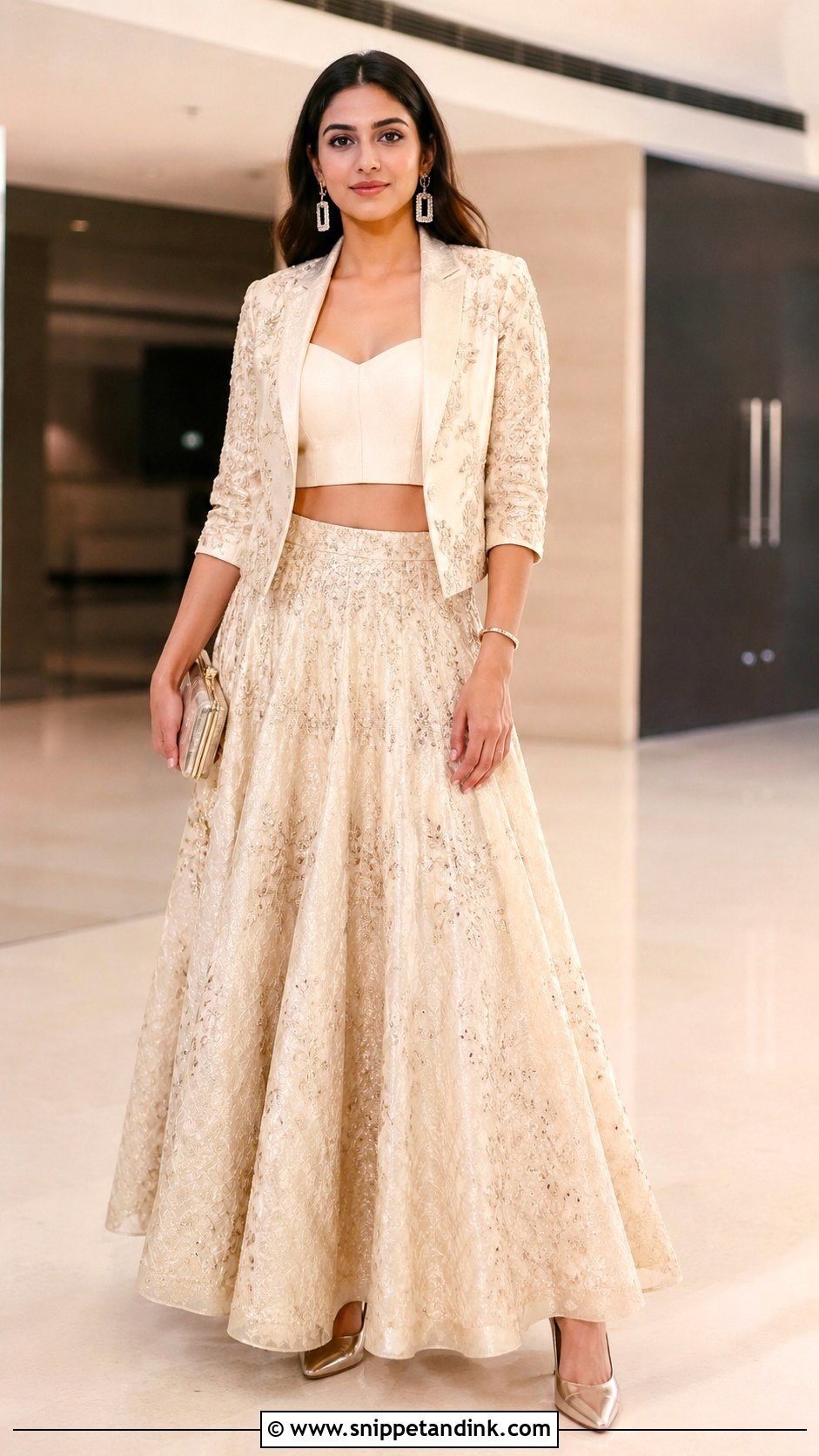
Tailoring gives this one its edge. The blazer goes over a bralette or a fitted camisole, with a lehenga skirt that has controlled, not huge, volume. Cropped blazers show more skirt and make the legs look longer; hip-length ones give a more formal, covered look. I’d skip the dupatta here because it hides the shoulder line of the blazer, which is what you paid for. The shoulders should sit at your natural shoulder point with no pulling across the back when you hug someone. Ivory and gold reads refined at a reception.
7. Indowestern Draped Skirt And Crop Top
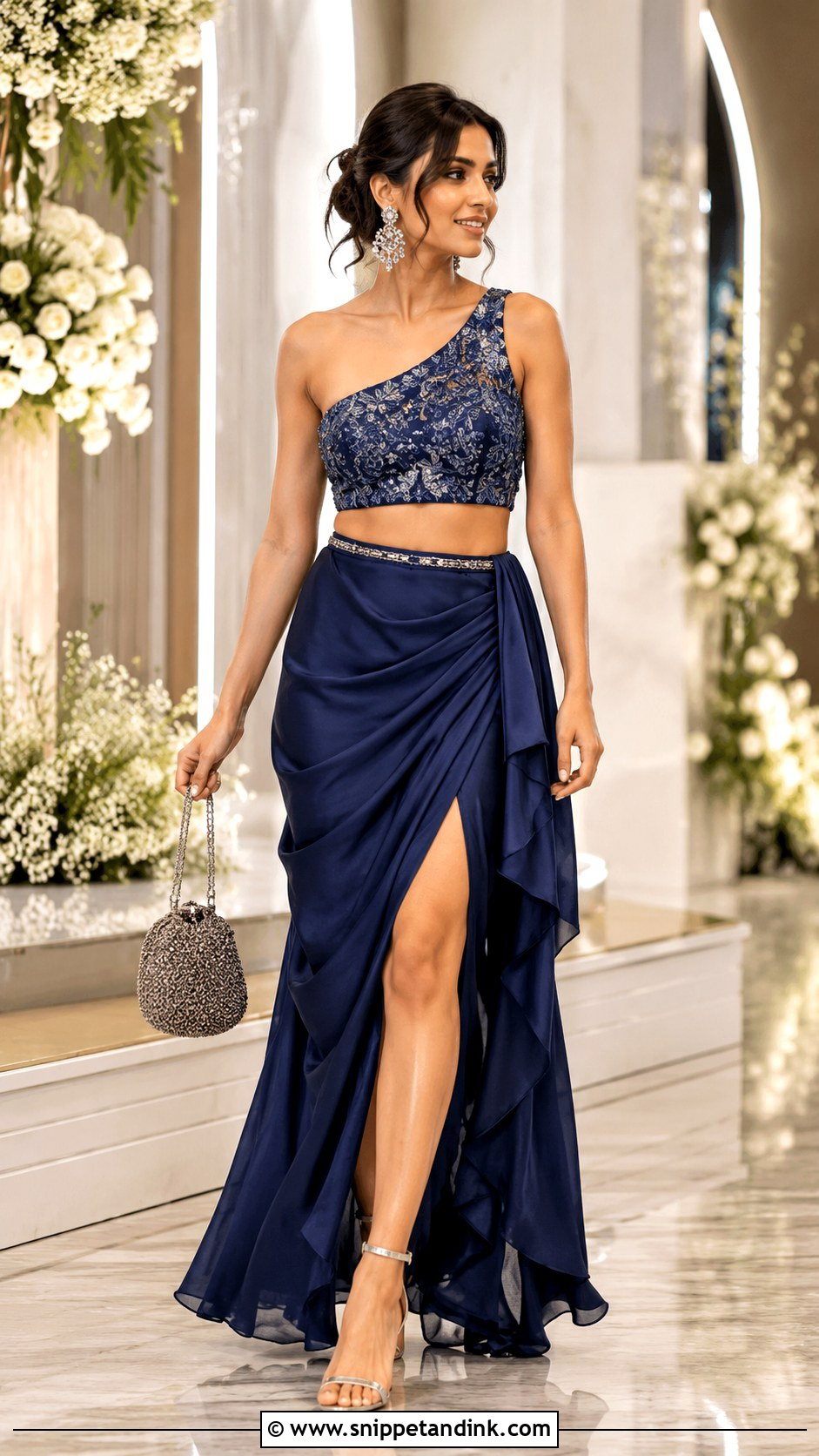
If a full saree feels like too much fabric, a draped skirt with a crop top gets you the same diagonal line with far less to manage. The skirt can have side pleats, an asymmetric overlay or a front knot; check that the drape sits flat over the hip and doesn’t add bulk. A one-shoulder top looks modern and a sleeved blouse gives more coverage. Keep any belt slim. Good for mehndi parties, sangeet evenings and destination weddings. Florals suit outdoor daytime events; satin and sequins suit the evening.
8. Indowestern Palazzo Kurta Jacket
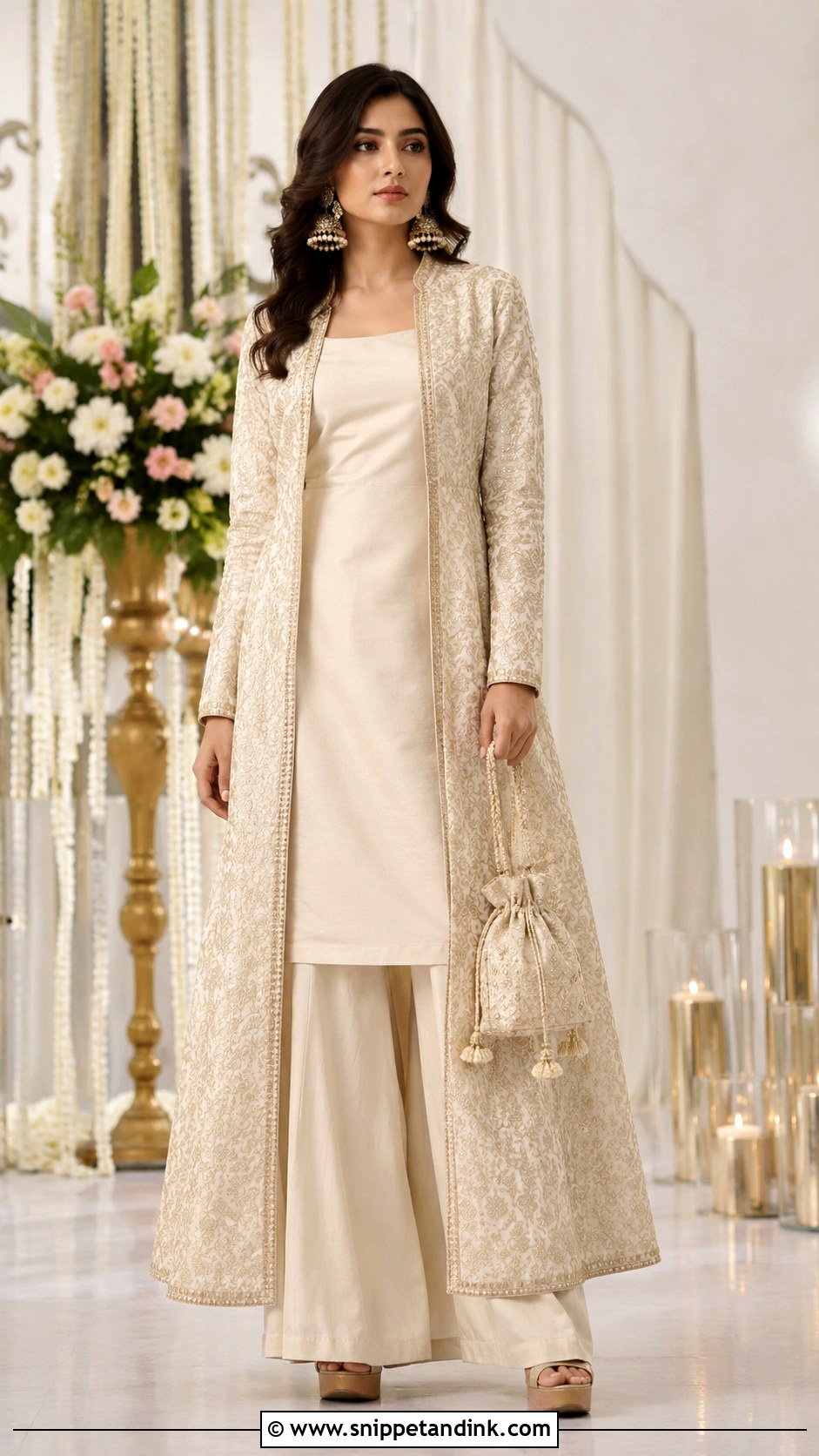
Wide-leg palazzo pants with a kurta and embroidered jacket give the most comfortable outfit on this list, and separate pieces are easy to alter one at a time. Keep the kurta plain so the jacket stands out. I hem palazzos to just skim the floor in the heels the client will actually wear. Too long and the hem catches under the shoe on stairs, too short and the proportion looks cropped. Choose cotton silk or chanderi for a daytime event and brocade or velvet for the evening.
9. Indowestern Sharara Cape Dress
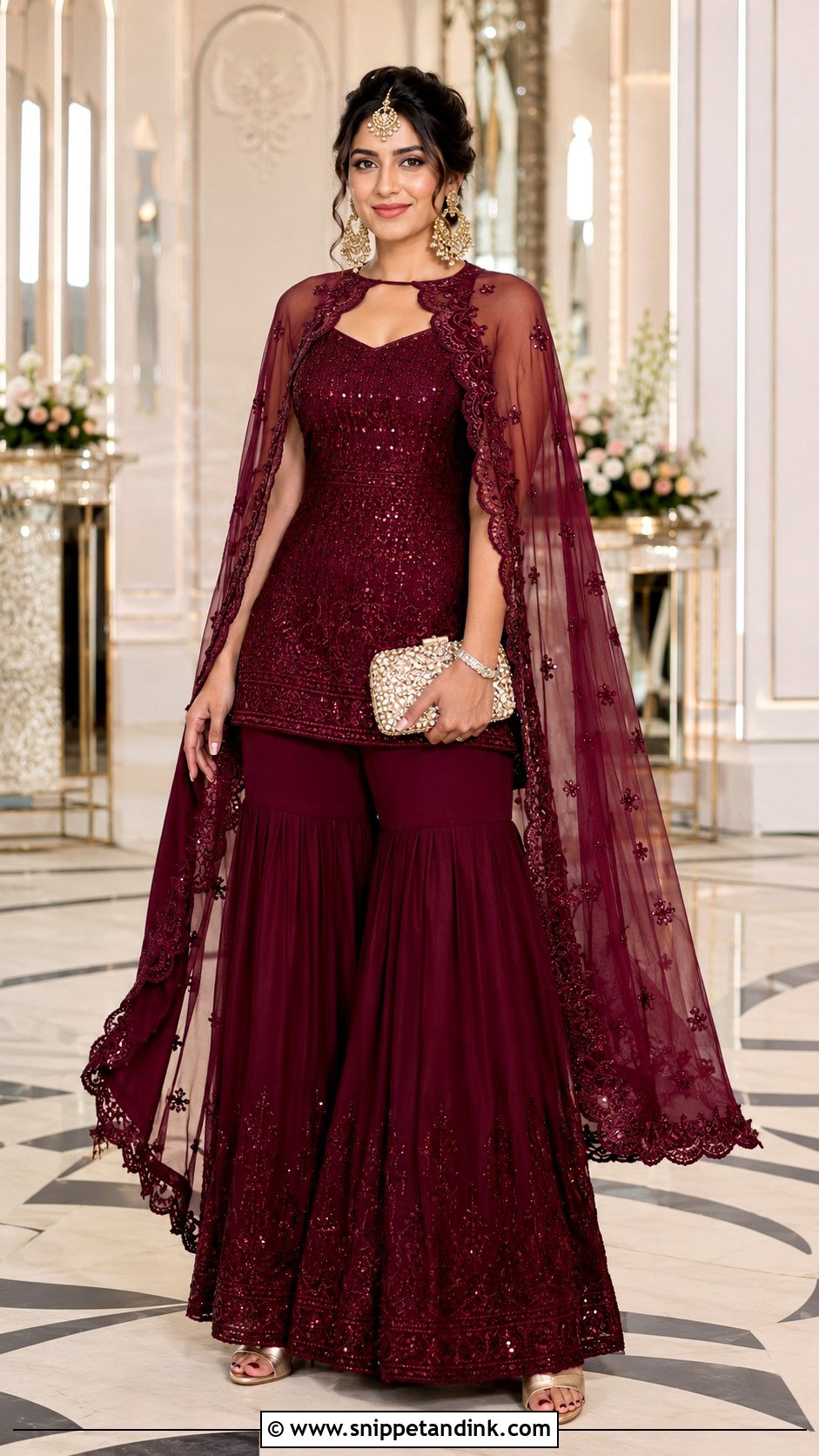
Shararas flare from the knee and swing when you dance, which is why they’re popular at sangeet nights. Pair them with a fitted top and a sheer cape embroidered at the shoulders, borders or back rather than all over; concentrated embroidery keeps the layer light. Heeled sandals give some height under all that flare. A maang tikka can replace the necklace for a more traditional finish. One caution: wide sharara legs pick up dust and petals at outdoor venues, so choose a hem that clears the ground by a finger’s width.
10. Indowestern Trail Gown With Dupatta
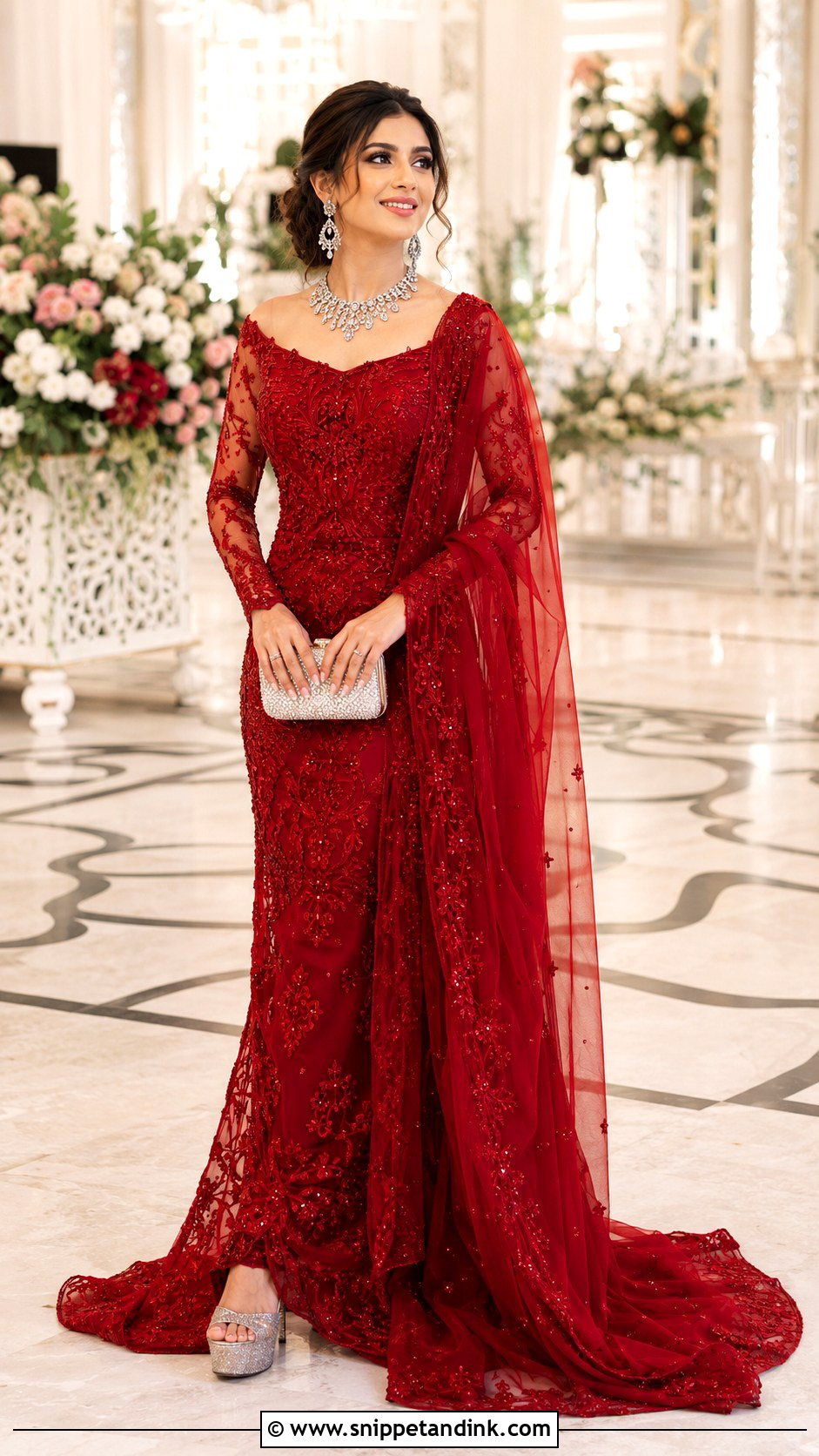
A trail gown becomes Indowestern once you add Indian embroidery and a dupatta over one shoulder. Keep the train short enough that you can walk without someone carrying it, and pin the dupatta at the shoulder and again at the waist, out of sight; a dupatta held at one point slides off by the second hour. Brides can wear a statement necklace, guests should keep jewelry lighter. Red, maroon and ivory feel ceremonial. Dusty rose or champagne is softer for a reception.
11. Indowestern Ruffle Saree With Belt
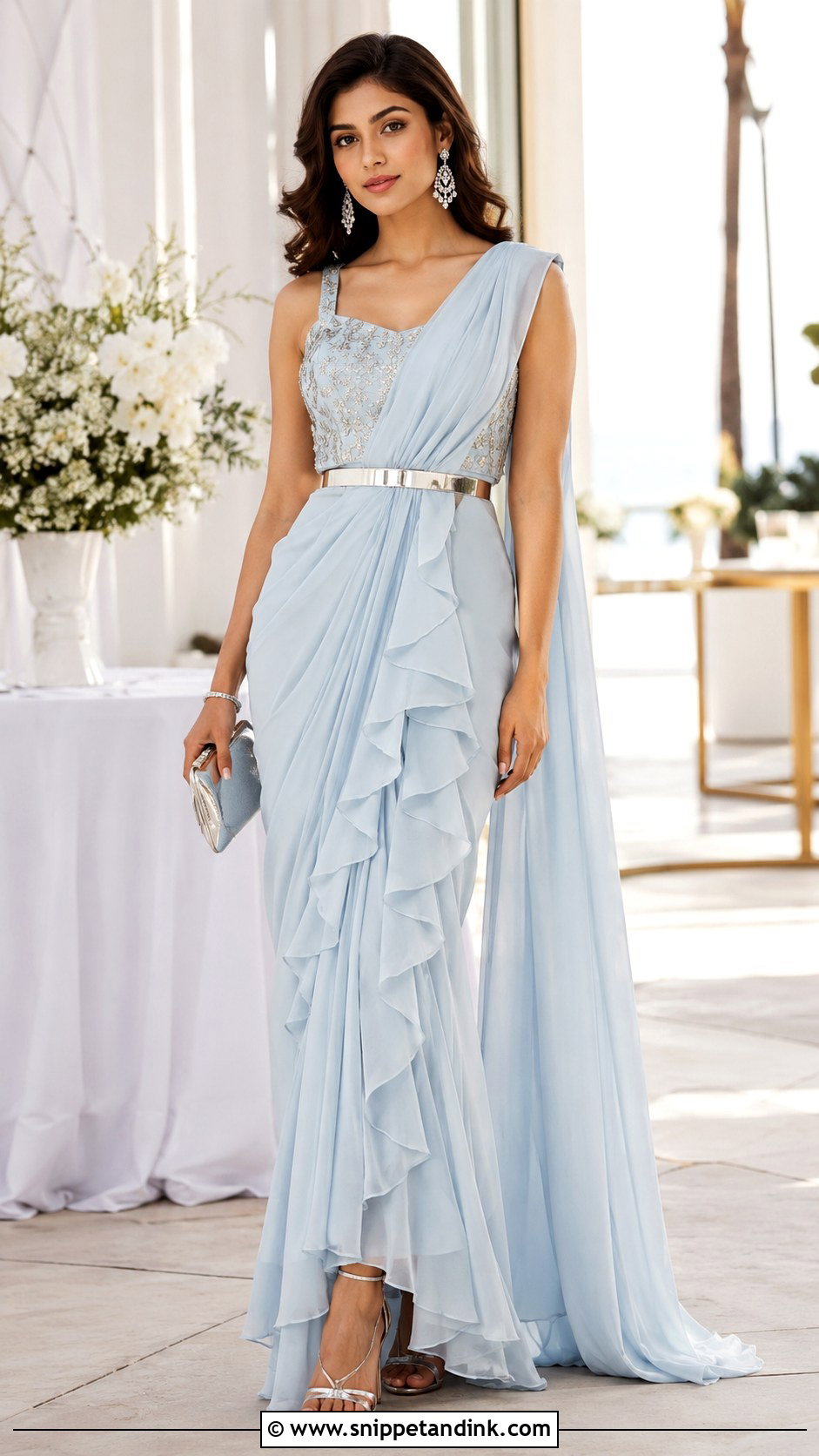
Ruffled sarees are much easier to wear pre-draped. Tiered ruffles add volume quickly, so I look for light georgette tiers that stop well below the waist; ruffles starting at the hip make most people look wider than they are. A belt holds the drape in place and defines the waist. Pair with a structured blouse and keep bangles minimal so the ruffles stay the focus. A monochrome palette looks polished, and a contrast blouse looks more festive.
12. Indowestern Tuxedo Saree
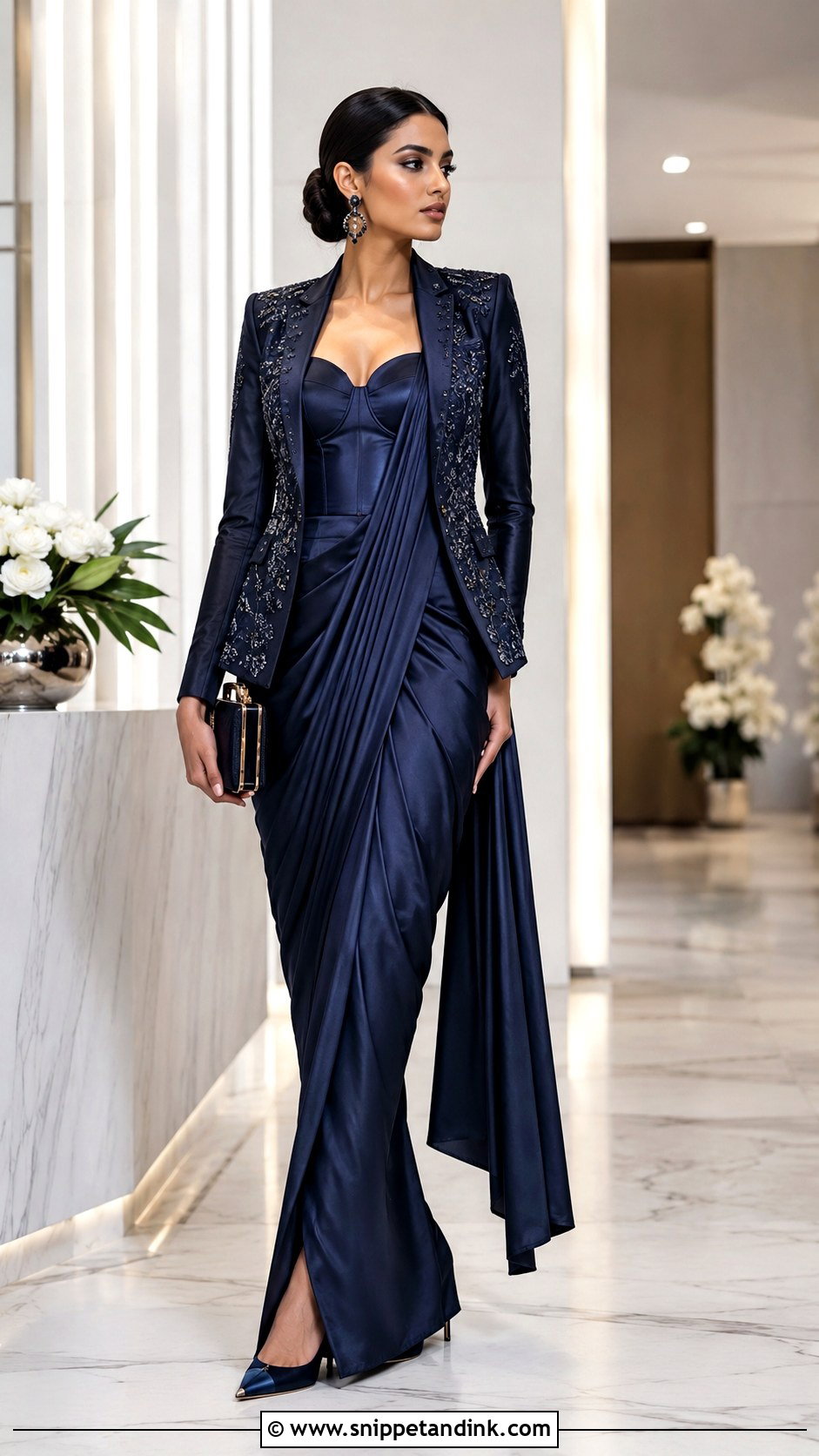
The tuxedo saree replaces the blouse with a fitted bustier and tailored blazer over a pre-draped saree or saree skirt. Fit is everything: the blazer should follow your shape with no pull across the shoulders or at the button. If it’s even slightly too small, the drape underneath bunches. Keep jewelry minimal, a sleek bun, and pointed pumps. Metallic threadwork or embroidered lapels stop it from looking like office wear. It’s best at receptions and city venues.
13. Indowestern Anarkali Gown
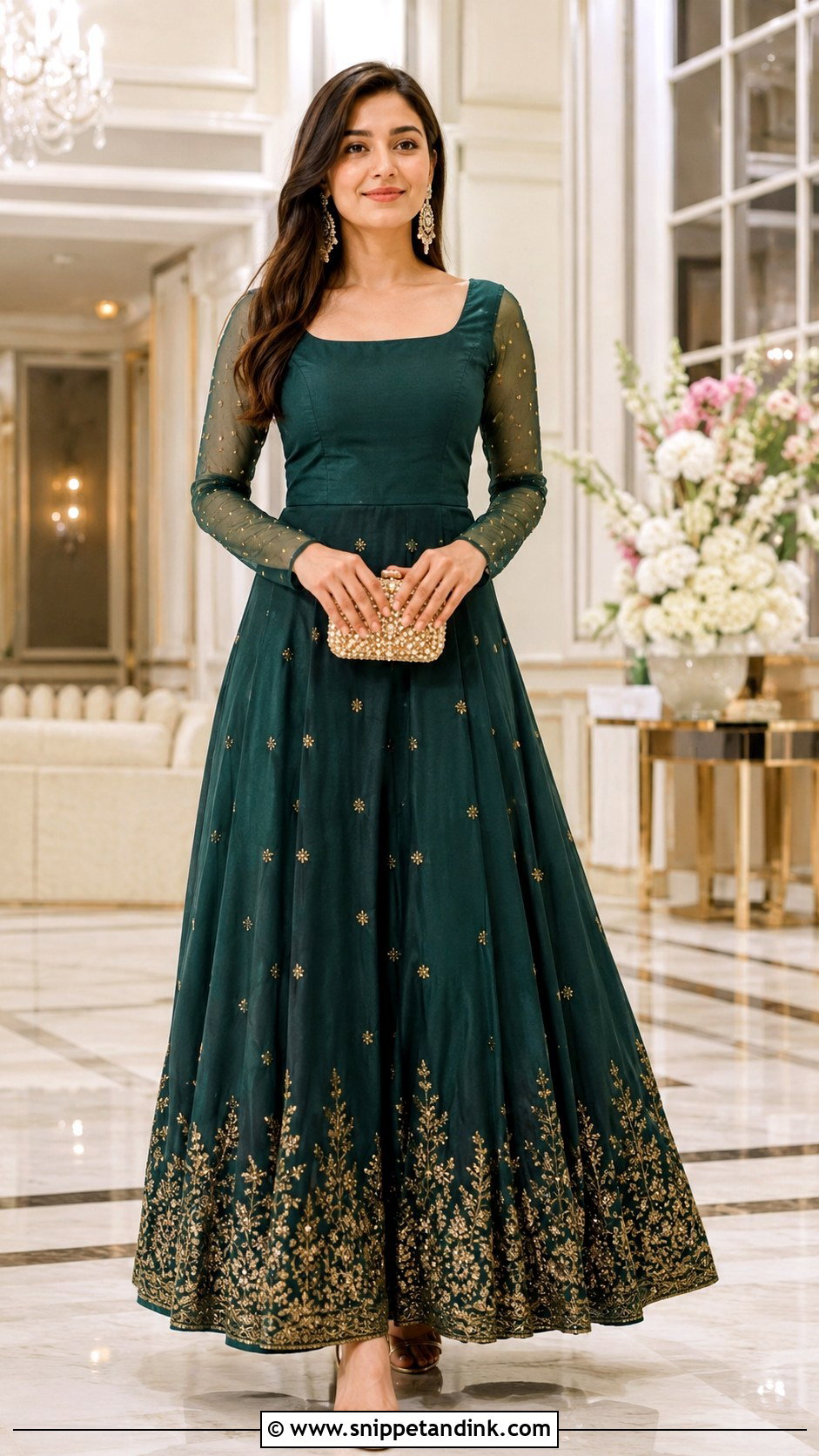
Of everything here, older relatives tend to accept the Anarkali gown most readily, since the fitted bodice and flare are already familiar. Modernize it with sheer sleeves, a square neck or a structured collar. The skirt carries the drama, so keep accessories light. Silk blends hold shape, georgette swings, organza gives airy volume. The flare often starts higher than you expect, right under the bust, and on a short torso that can look like a maternity line, so check the waist seam position in the mirror sideways. Hem length matters more than anything for walking comfortably.
14. Indowestern One Shoulder Draped Dress
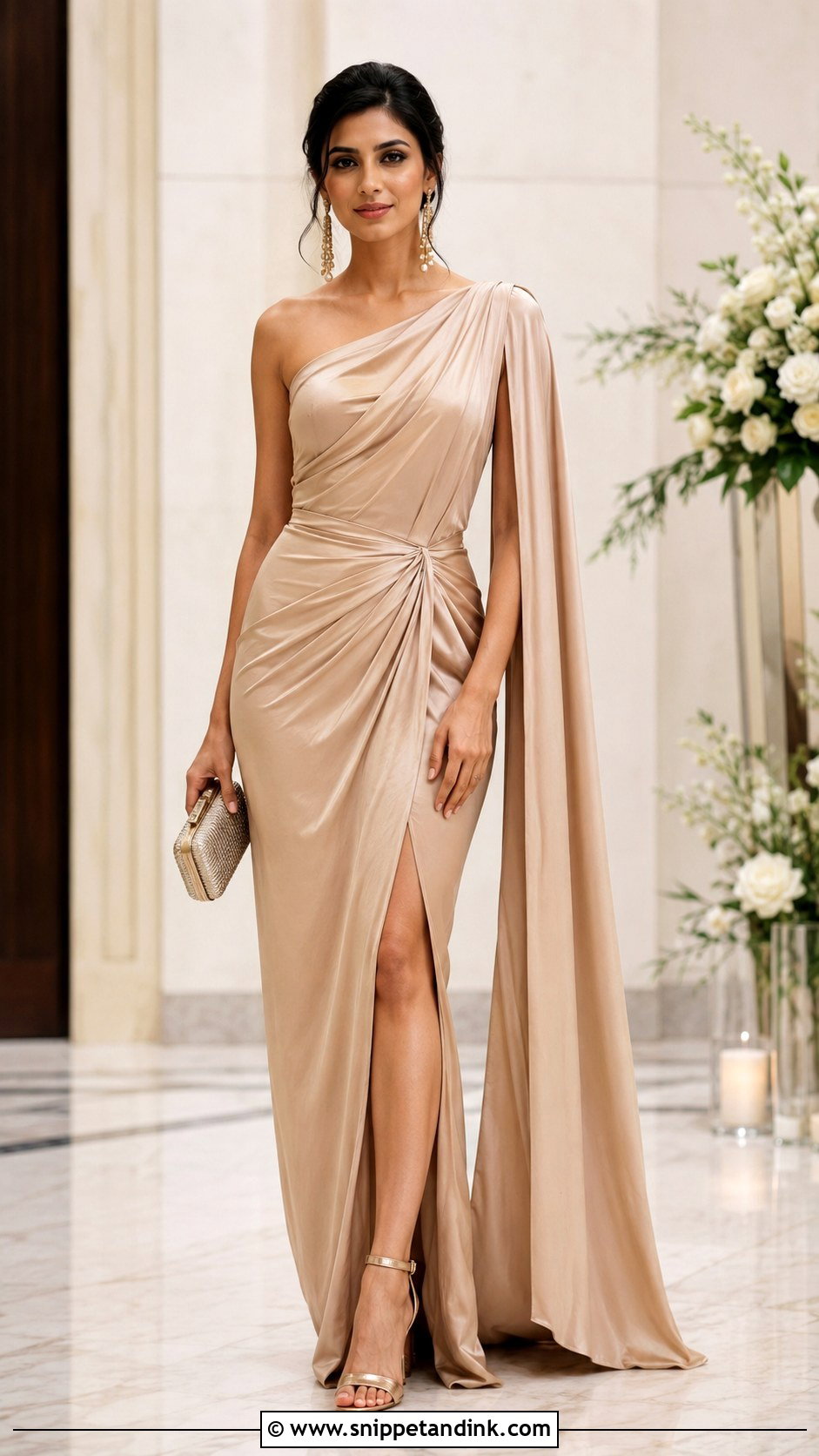
A diagonal gather across the waist with a drape falling from one shoulder is the closest thing to a saree in cocktail-gown form. The fitted bodice keeps the asymmetry neat. A side slit helps movement, but measure it while seated, because a slit that looks modest standing can open far higher when you sit. Wear one statement earring on the bare side and a small stud on the draped side. Satin reads polished at night; crepe and georgette move more softly.
15. Indowestern Brocade Pantsuit
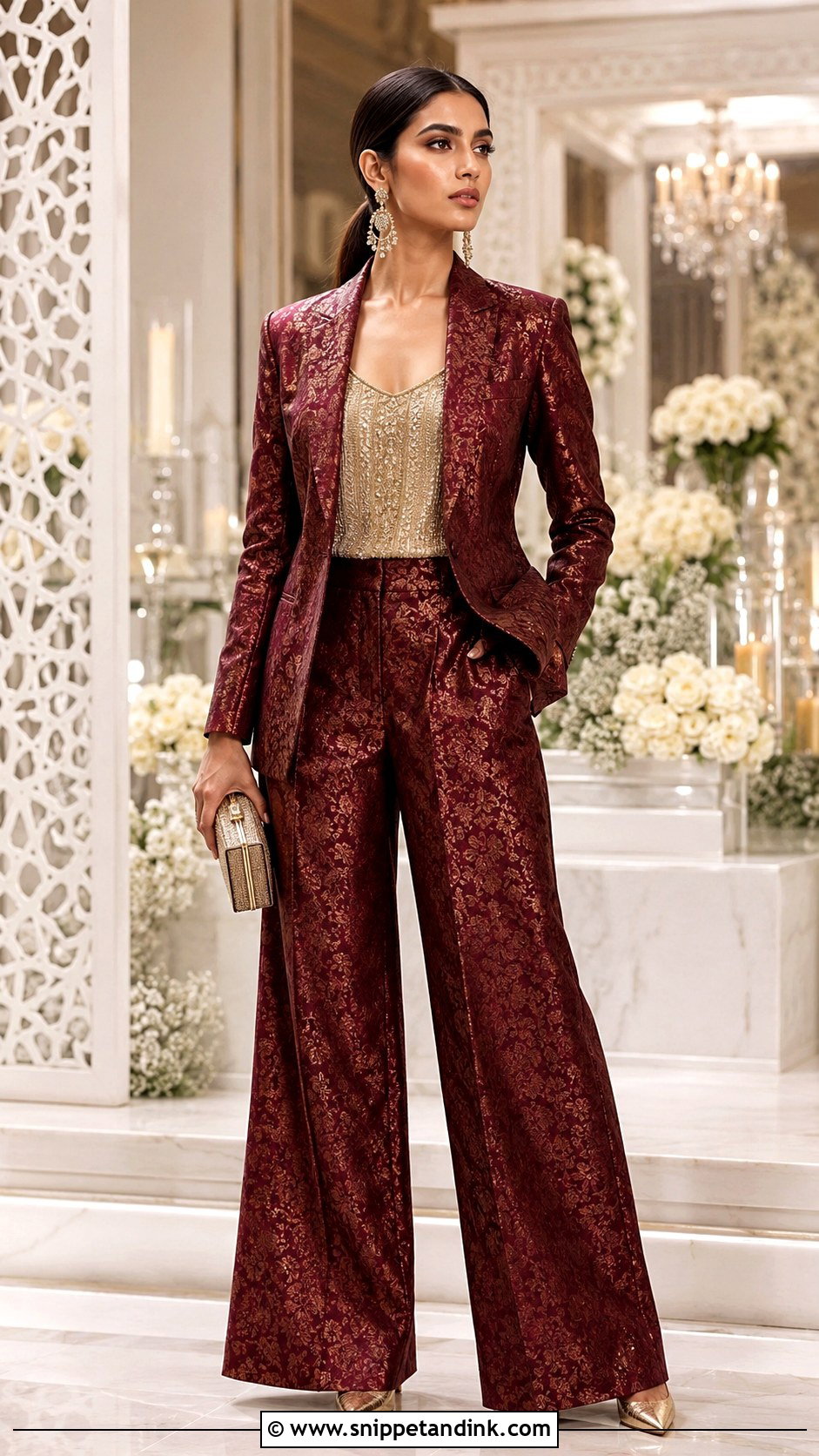
For a bride or guest who simply doesn’t like skirts, a brocade pantsuit is my favorite answer. Choose a fitted blazer and high-waisted trousers in brocade, jacquard or woven silk, with a camisole, bustier or embroidered crop top underneath. Brocade is heavy and stiff, so a loose fit looks bulky fast; the jacket should be taken in at the waist and the trousers should break just once on the shoe. Straight legs look classic, wide legs more dramatic. Because it’s warm and structured, I save it for winter weddings and indoor receptions.
16. Indowestern Asymmetric Kurta And Skirt
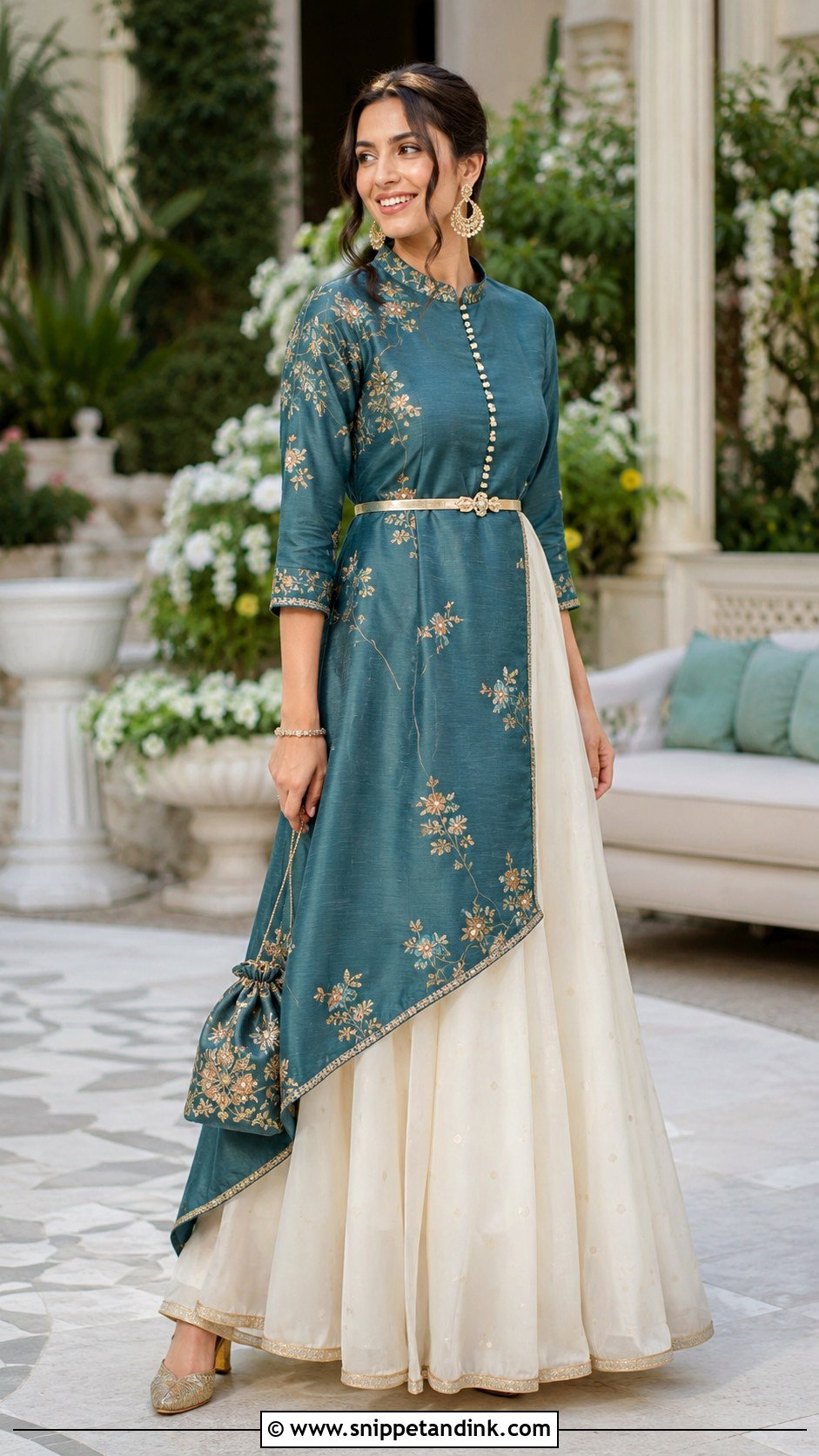
This combination is easy to wear at a mehndi or daytime family event and gives full coverage without feeling heavy. The asymmetric kurta can have a diagonal hem, high-low cut or side drape, as long as part of the skirt stays visible. Let only one piece carry the embroidery. A heavily worked kurta over an embroidered skirt looks crowded. Color blocking shows off the layers, while tonal shades make you look taller. Choose lightweight fabric; a stiff asymmetric hem sticks out at odd angles instead of falling.
17. Indowestern Jacket Gown
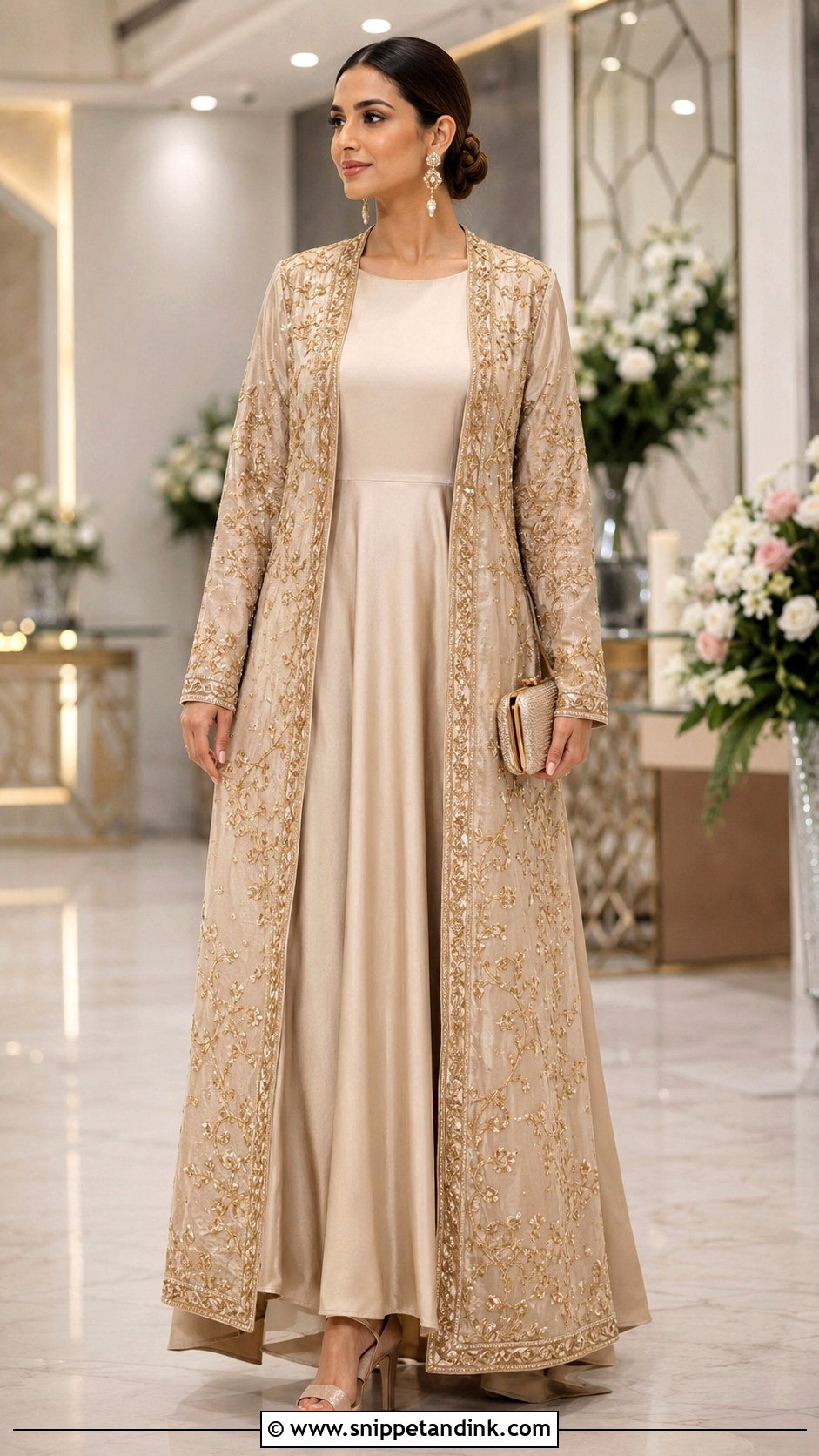
The jacket gown is practical: you get coverage for the ceremony and can remove the jacket for the party. Start with a simple crepe, satin or georgette gown, then add a front-open embroidered jacket. Cropped jackets show the waist, long ones create a column. The jacket’s armholes have to be cut generously enough to go over the gown’s sleeves or straps without bunching, which is something I always check before buying the two separately. Keep the necklace delicate when the collar is decorated. Guests should choose a cleaner hem than the bride.
18. Indowestern High Low Kurta With Trousers
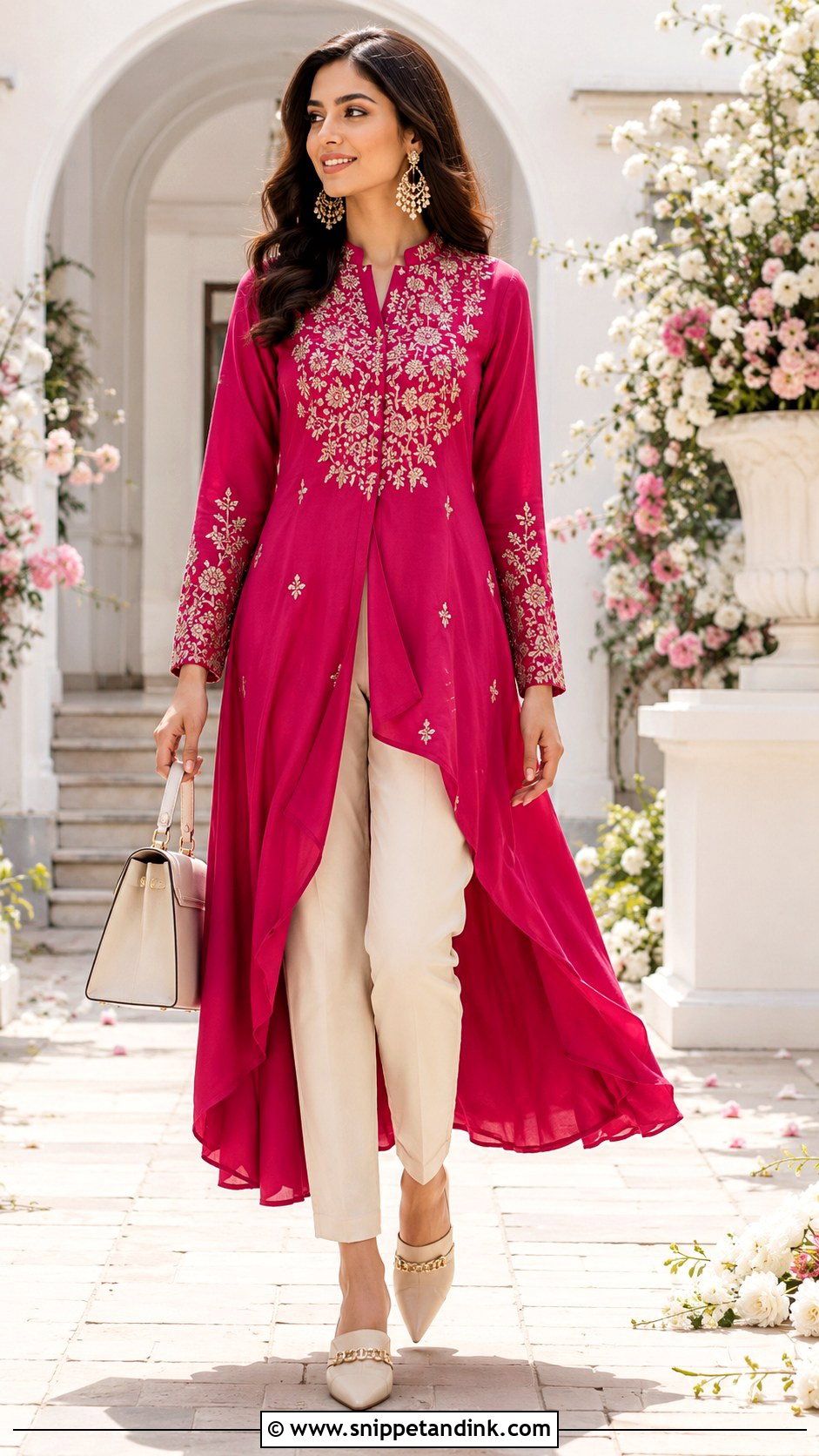
A high-low kurta over tailored trousers is formal enough for a wedding and comfortable enough for a long day on your feet. The shorter front shows off slim or gently flared pants. Keep embroidery to the neckline, cuffs or hem so the cut stays the focus. Pointed mules or block heels finish it. This is a good choice for a welcome party, a daytime ceremony or a small family event. Make sure the back hem clears the floor even on stairs, since a high-low kurta is longest exactly where you can’t see it.
19. Indowestern Kaftan Gown
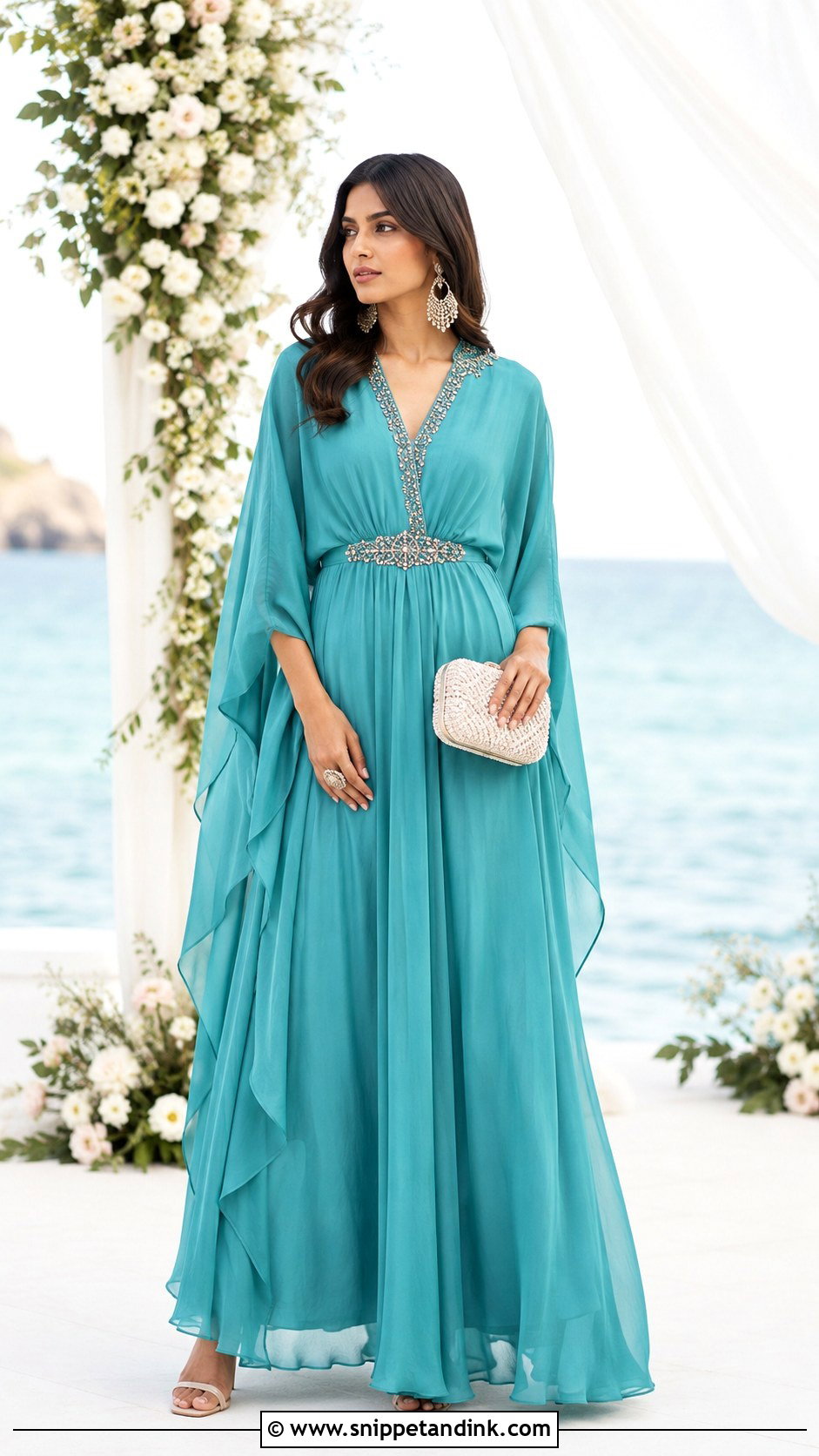
Kaftans are cool, loose and ideal for hot destination weddings, but without some definition at the waist they look like resortwear. A hidden inner tie, gathered center or embellished belt solves that. Embroidery at the neckline and sleeves frames the face. Chiffon and georgette move well in a breeze; silk looks more formal. Bright turquoise and coral suit a poolside mehndi, and jewel tones suit the evening. Choose a hem length that lets you walk on sand or grass without lifting the skirt.
20. Indowestern Convertible Lehenga Gown
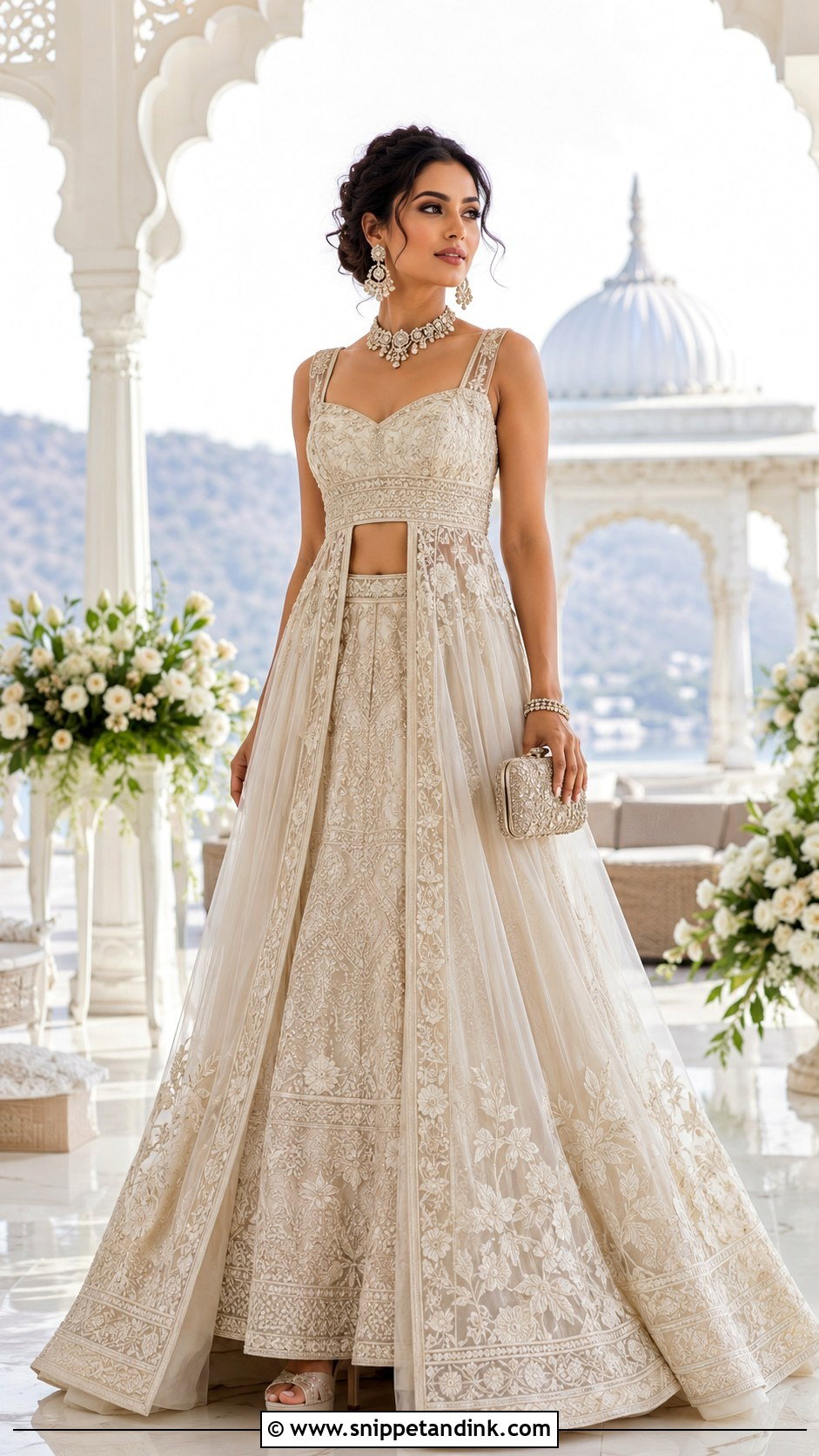
Convertible outfits solve the classic multi-function problem: one outfit, two looks. The base is a fitted blouse and lehenga, with a removable overskirt, train, cape or drape for the ceremony and photos. The weak point is always the closures. Hidden hooks and snaps should be stitched to a reinforced band, not straight onto the skirt fabric, or they tear when the overskirt is removed in a hurry. Practice the change twice before the day. Matching fabrics look unified, and slight contrast highlights each layer.
Bringing an Elder Around to Pants or a Cape at the Wedding
Fusion wear sometimes meets resistance from family, especially for the bride. In my experience the objection is rarely about the silhouette itself. It’s usually about color, coverage or the feeling that tradition is being skipped. A few things tend to help.
Show the outfit, not just a photo of a model. A pantsuit in rich maroon brocade with zari lapels looks far more festive in person than on a screen. Keep one traditional element that matters to the family, whether that’s a red shade, a specific piece of heirloom jewelry or a dupatta that goes over the head for a blessing. And save the boldest piece for the function the family cares least about. Most elders are far more relaxed about what you wear to the cocktail evening than at the ceremony itself.
For temples, gurdwaras and religious venues, check the coverage rules in advance. Covered shoulders and a head covering are common requirements, and a cape or jacket design makes it easy to comply without changing your whole look.
Does Your Outfit Let You Move Through Every Ritual?
The most memorable fusion outfits balance Indian handwork with Western structure instead of letting one side take over. Start with the function, venue and weather, then pick a silhouette. Saree gowns and trail dresses give you formal drama, while jumpsuits, pantsuits and dhoti sets let you move freely. Capes, jackets and removable overskirts make complicated looks easier to manage across a long day. Get the tailoring right and wear the actual shoes to every fitting. The outfit that looks best in photos is almost always the one you forgot you were wearing.
You'll Like These Ideas:



Leave a Reply