
From behind a camera, a veil is the most useful thing a bride wears. It catches backlight, moves in the slightest breeze and gives me a soft layer to shoot through, so it shapes the portraits as much as the dress does. That only works when the veil, the gown, the hair and the accessories are planned together. The looks below treat each veil as part of a complete outfit, with gown, shoes, jewelry and hairstyle chosen to match: long cathedral veils, lace mantillas, pearl-scattered tulle, vintage birdcage designs and embroidered color. With each one I’ve added what I watch for when I photograph it, because some veils that look lovely in a mirror behave very differently in wind, sun or a dim church.
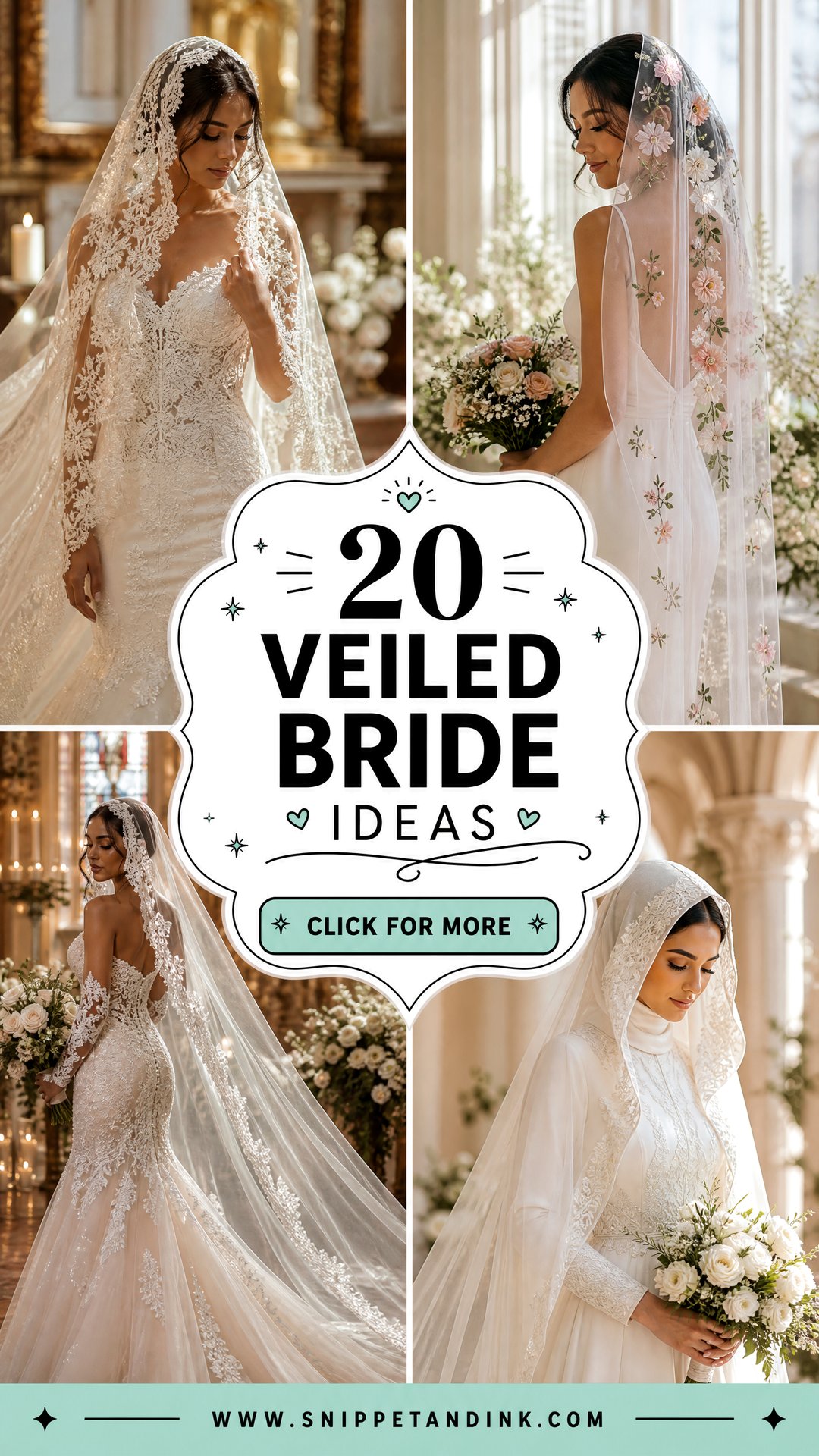
How Tulle Behaves in Front of a Lens
A veil photographs differently from how it looks in the bridal shop. Knowing a few of its habits helps you choose one that gives the portraits you want.
- Light from behind makes it glow. Sheer tulle with the sun or a window behind it turns luminous, which is why so many veil portraits are shot at the end of the day facing into low light. Heavily embroidered veils glow less, because the embroidery blocks the light.
- Color differences grow on camera. A white veil over an ivory gown can look fine in person and obviously mismatched in photos. Hold the veil against the dress outdoors and take a phone picture before ordering.
- Autofocus can grab the tulle. With a blusher down or a veil wrapped around the couple, cameras sometimes focus on the net instead of the eyes. Photographers handle this, but a fine, sheer tulle makes it easier than a dense or stiff one.
- Flash flattens it. Direct flash can make tulle look like a grey film. In dark churches, a veil with a little sheen or beading holds up better than plain matte net.
None of this should decide your veil on its own. But if veil portraits are high on your list, a sheer, lightweight tulle gives the most options.
1. Cathedral Veil With Satin Ball Gown
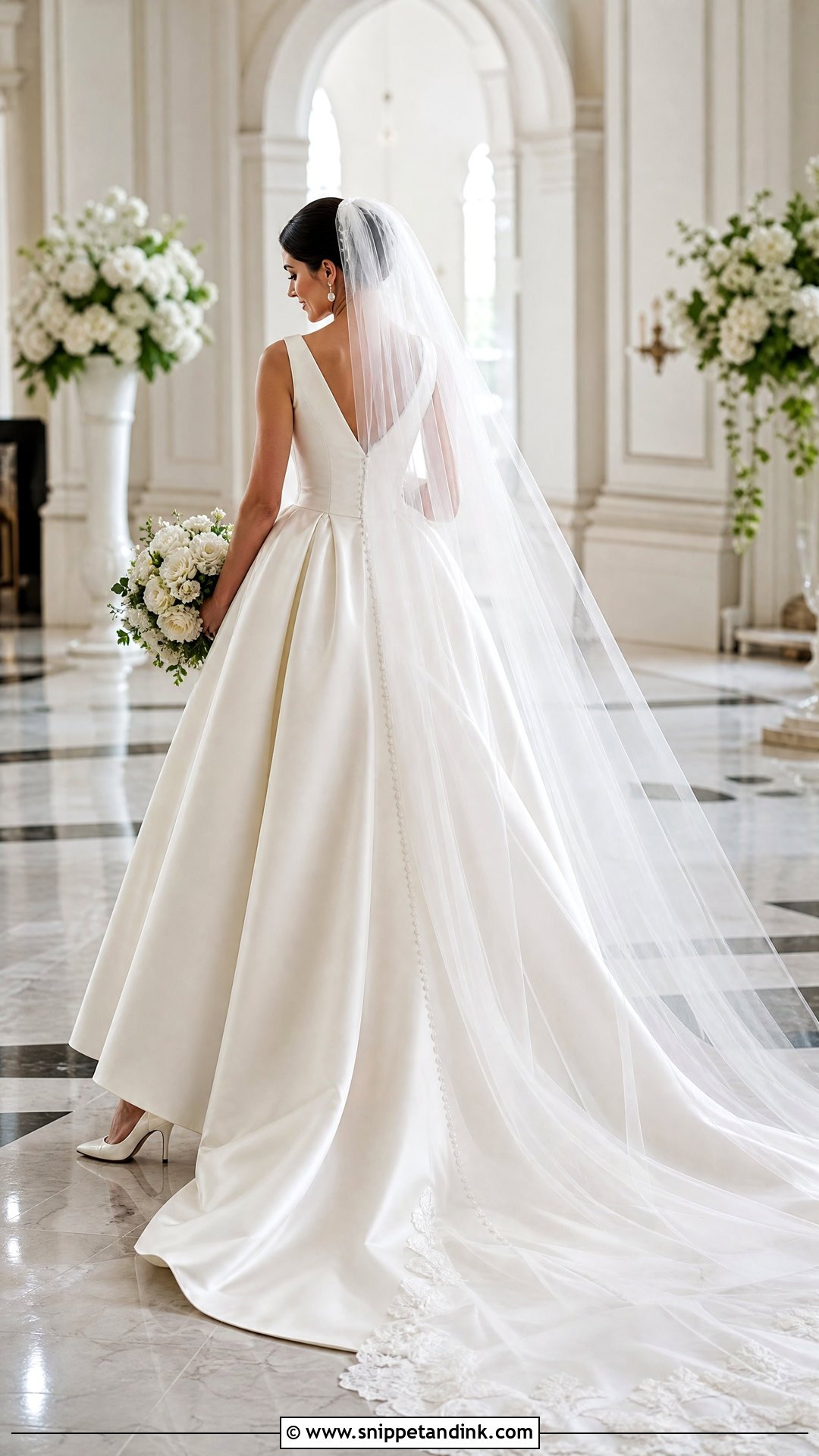
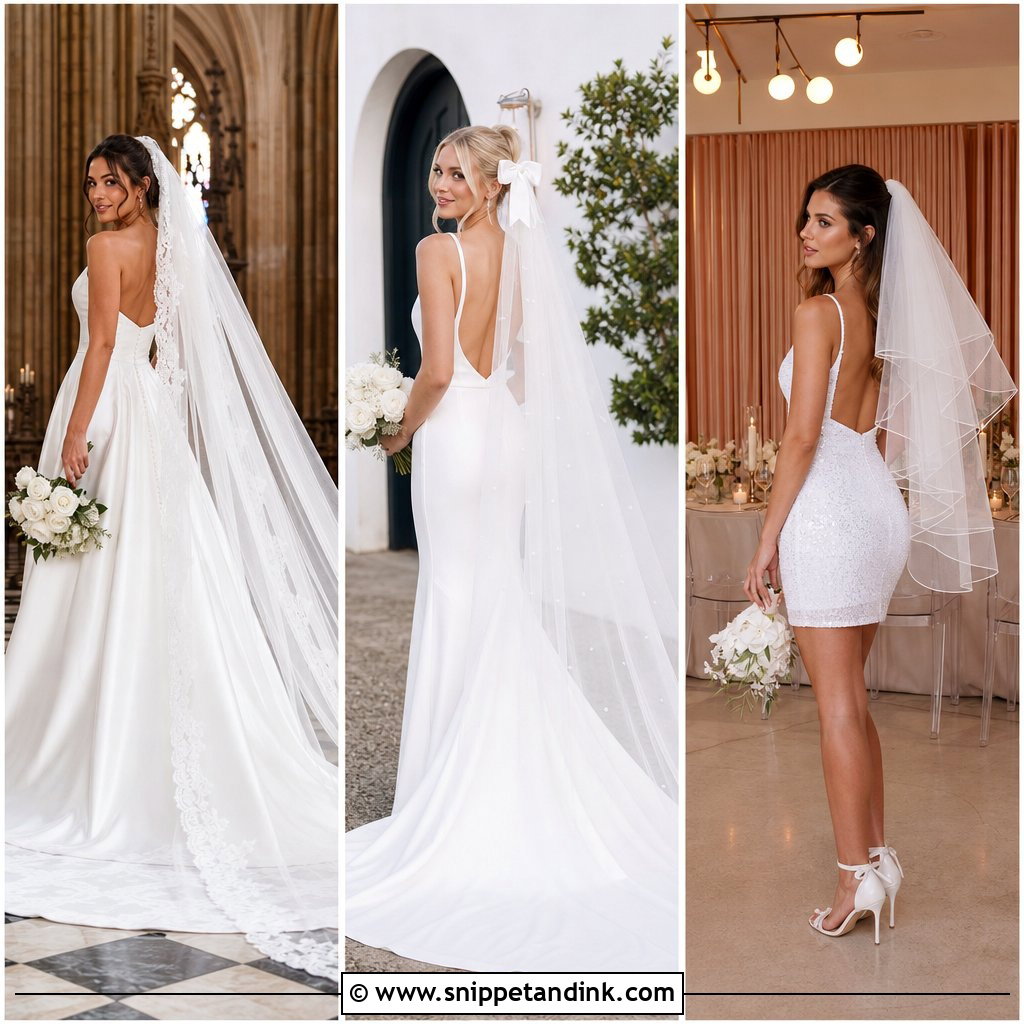
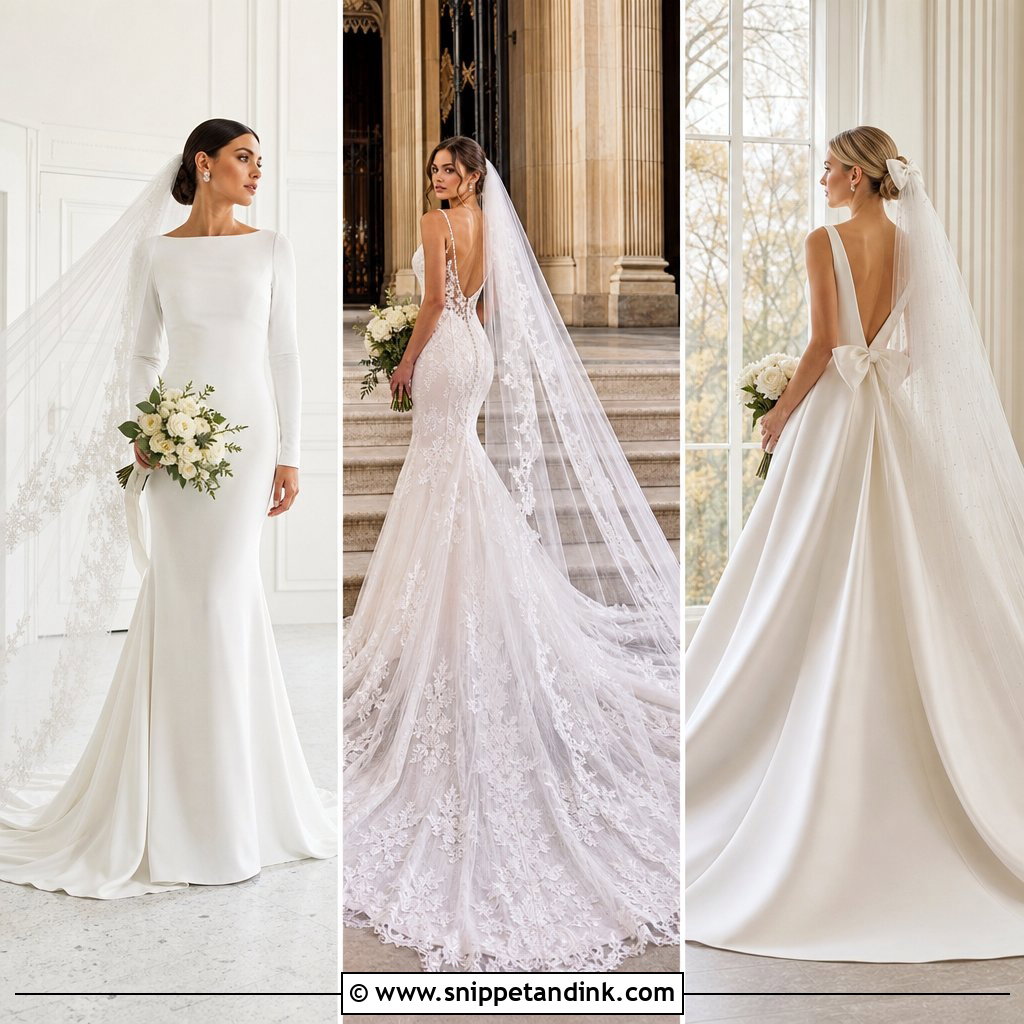
A satin ball gown under a cathedral veil gives me scale to work with, especially in a long aisle shot from the back. The structured bodice and full skirt balance the veil’s length. A plain raw-edge veil lets the satin’s sheen carry the image; a narrow lace border adds traditional detail. Pointed ivory pumps, pearl drop earrings and a small structured bouquet finish the look, and a polished low bun gives the comb a firm base. Satin reflects light strongly, so in direct sun I place the bride in open shade to keep the skirt from turning into a white glare. At the fitting, lay the veil out beside the train and check the two lengths look deliberate together. It suits ballrooms and large venues.
2. Pearl Veil With Minimalist Crepe Gown
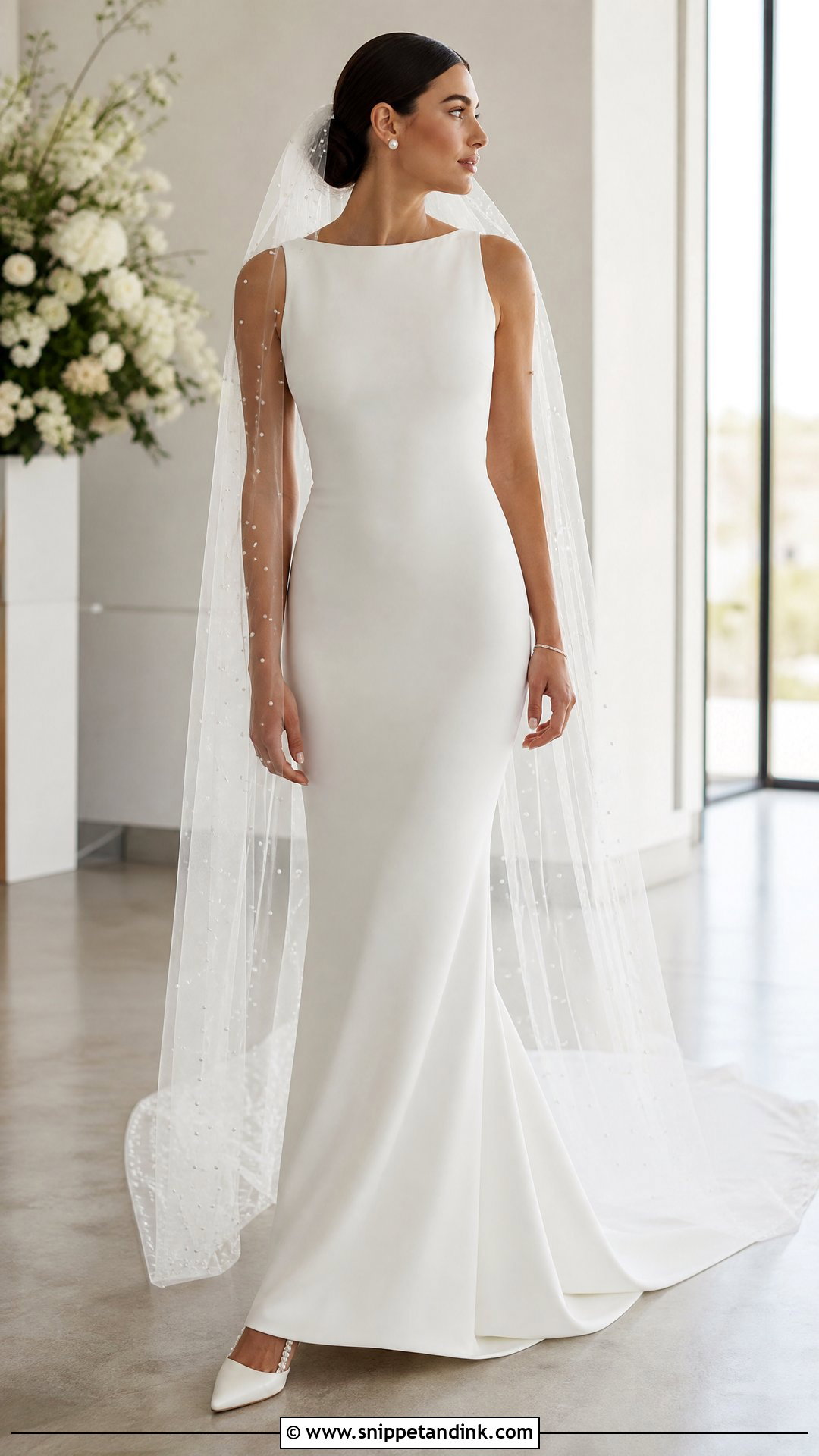
Pearls scattered across a fingertip or chapel veil add texture to a minimalist crepe gown without fighting its clean line. A fitted column or sheath with a square, bateau or draped neckline is the right base. Keep the accessories quiet: pearl studs, a slim bracelet and pointed slingbacks. A sleek chignon or tucked-back hair keeps the neckline and veil clear. In close portraits, the pearls nearest the face are what the camera picks up, so I check that they’re spaced evenly there and not clumped. Match their color to the dress, too. Bright white pearls on an ivory gown look grey in photos, and the mismatch is obvious in a close crop.
3. Lace Mantilla Veil With Fitted Wedding Dress
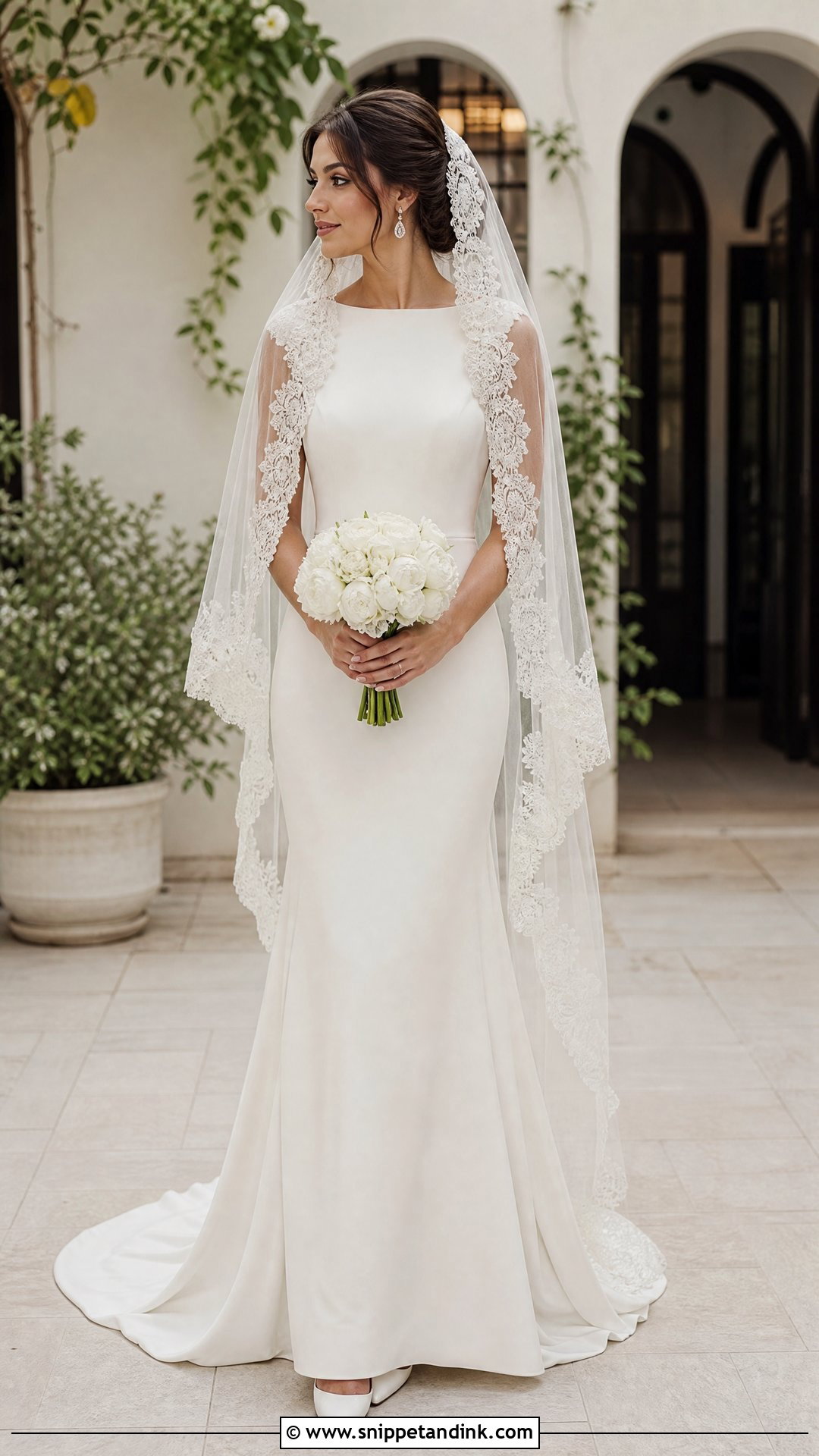
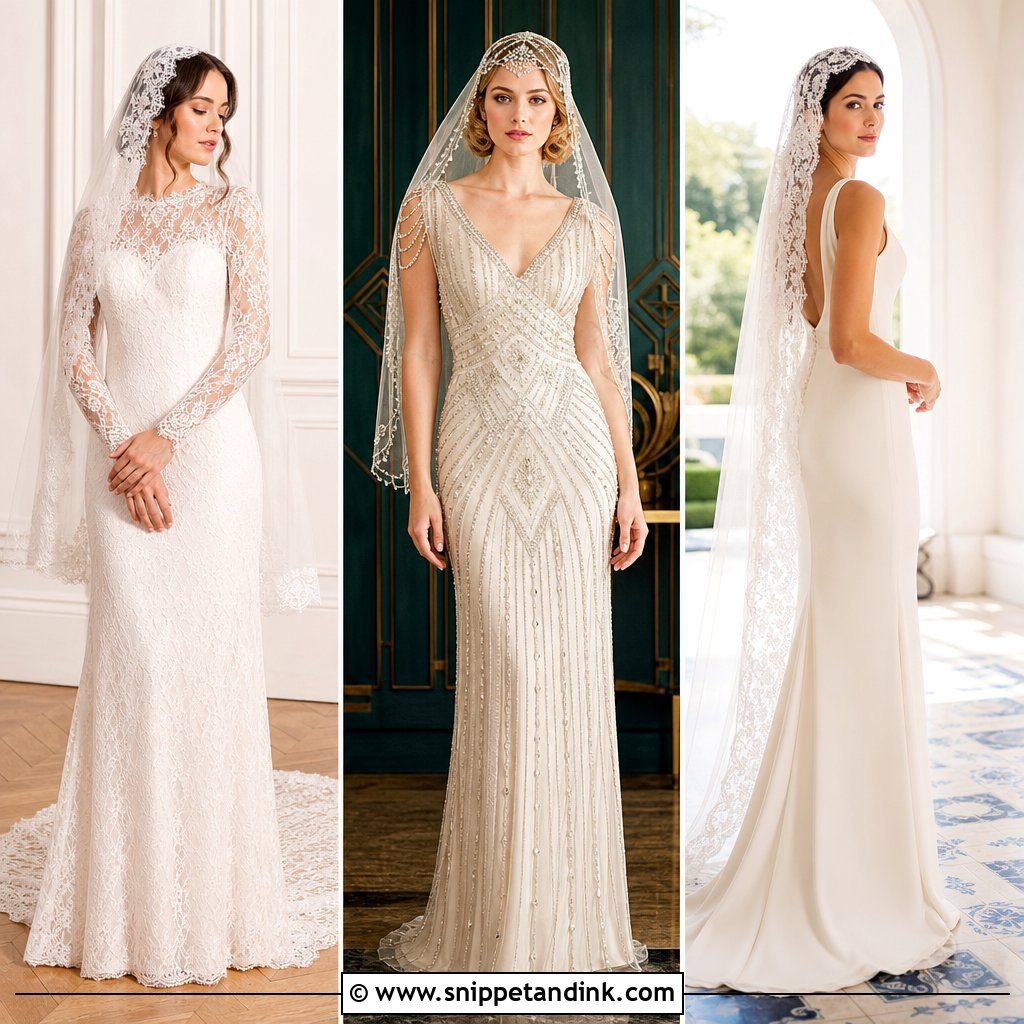
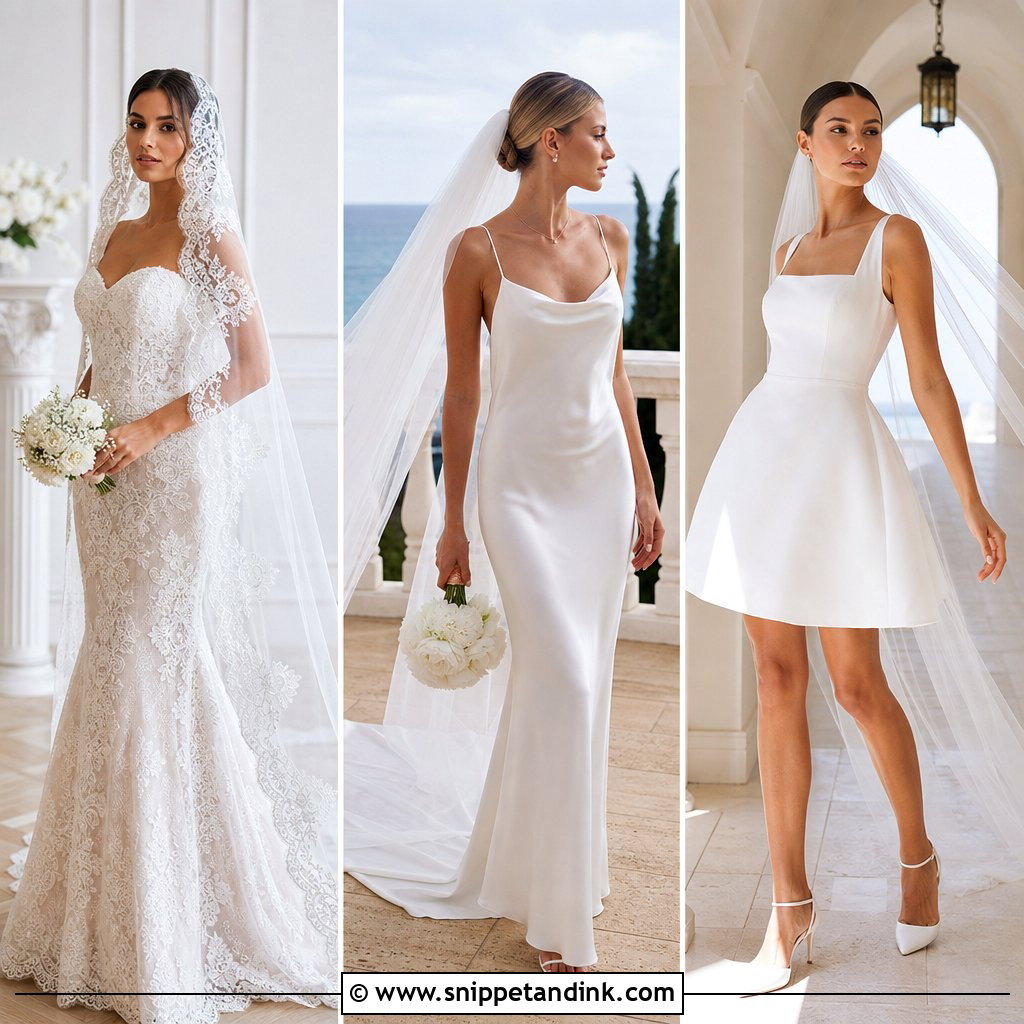
A lace mantilla frames the face, which makes it one of my favorite veils for close portraits. Pair it with a mermaid or trumpet gown in clean fabric so the lace border remains the main decoration. Wear it near the crown for a traditional frame, or slightly further back for a softer one. Delicate earrings, ivory pumps and a compact bouquet with simple greenery finish the look, with soft waves or a low textured bun beneath. If the dress has lace too, compare both patterns in daylight, not just under shop lights. Similar motifs sit together calmly in photos; clashing patterns turn into visual noise when the mantilla edge lies across the bodice.
4. Blusher Veil With A-Line Wedding Gown
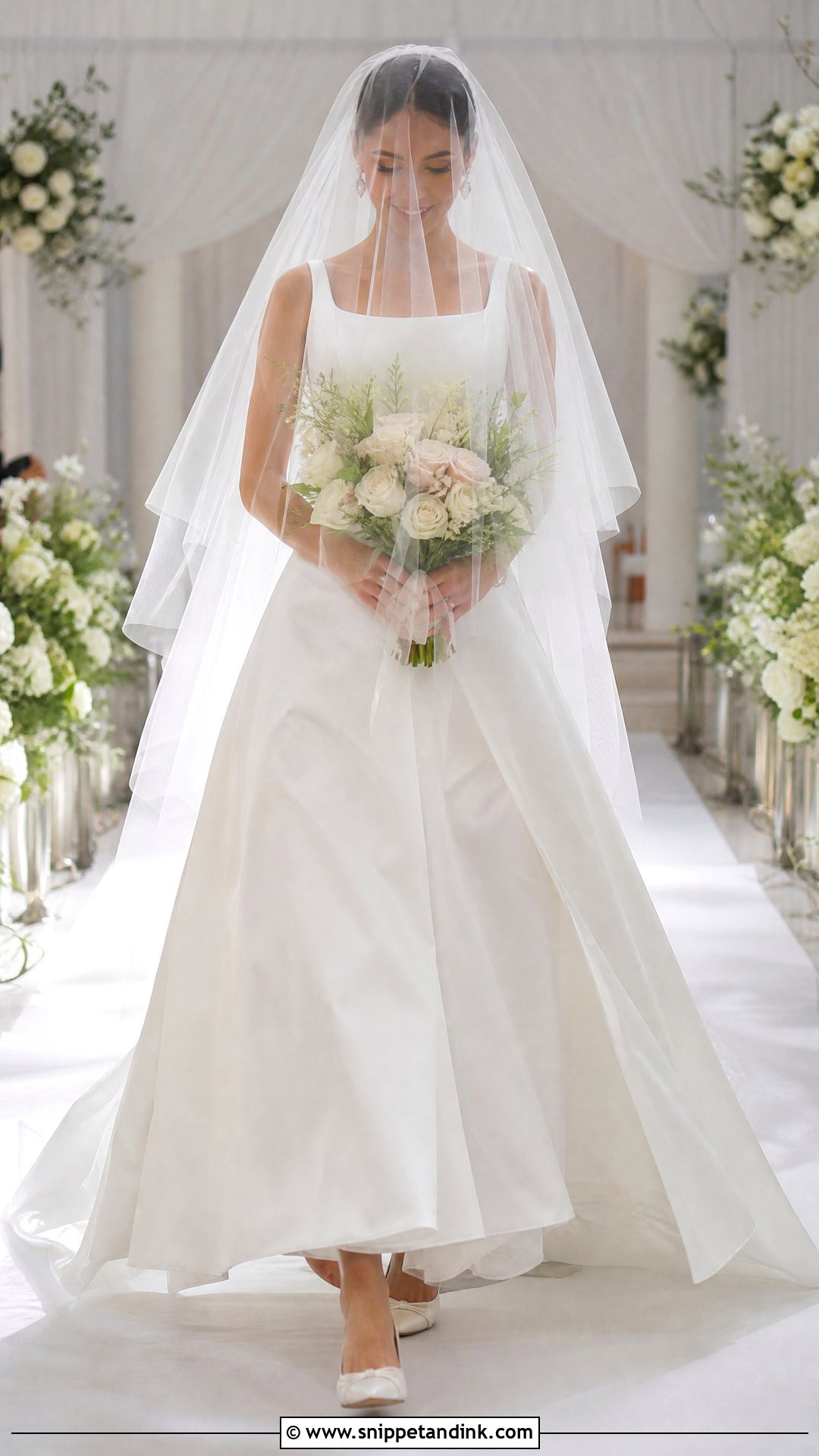
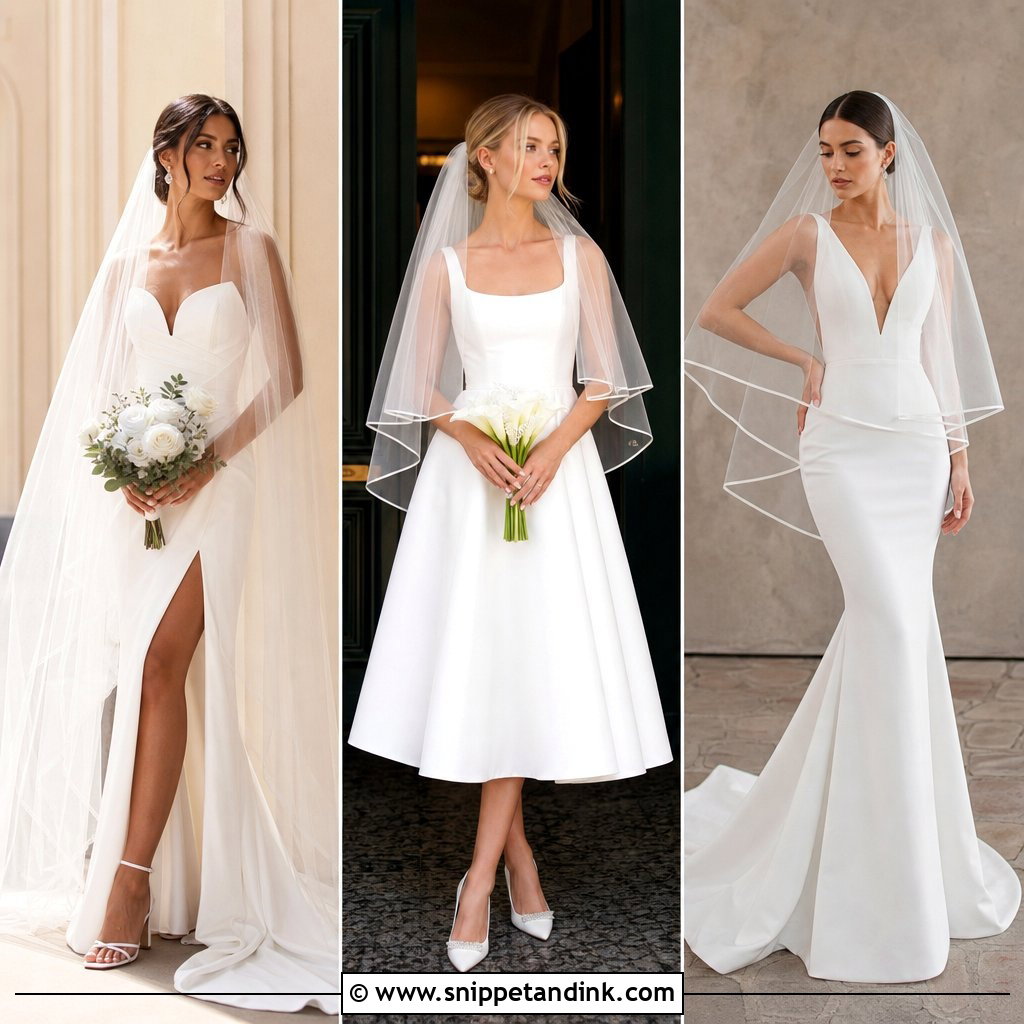
The blusher veil gives me one of the most anticipated frames of the day: the moment it’s lifted. Choose a two-tier veil with a light front layer that hangs clear of the face without flattening lashes or touching lipstick. An A-line gown with a fitted bodice and a flowing skirt suits it. Add low satin heels, understated earrings and a fine pendant if the neckline allows, with a secure bun, braided updo or half-up style holding the comb. Ask your hairstylist to rehearse the lift. I’ll ask the person lifting it to stand slightly to one side so I can see both faces as the tulle goes back.
5. Juliet Cap Veil With Vintage Wedding Dress
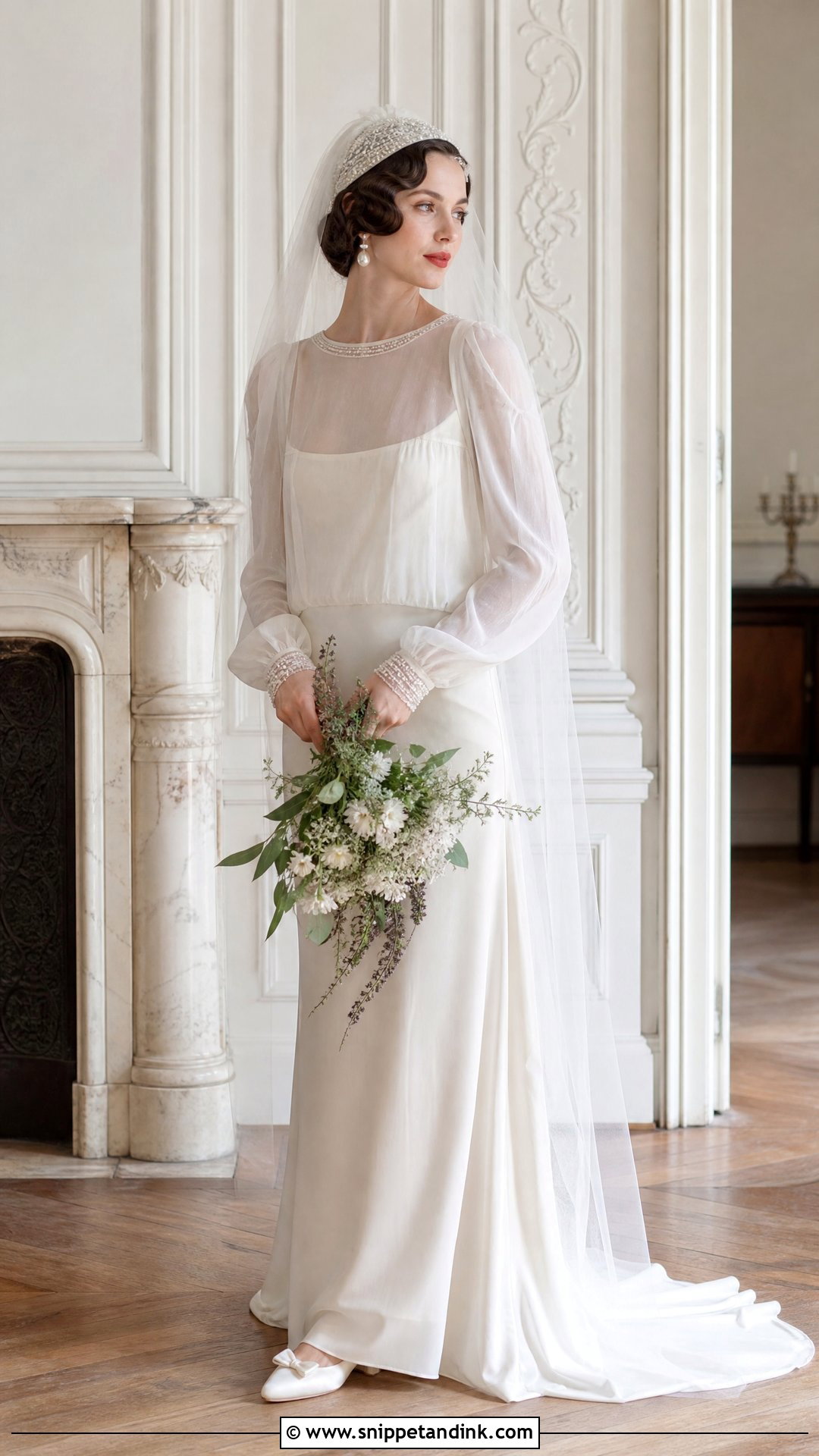
A Juliet cap veil sits close to the head and outlines it with embroidery, pearls or floral appliqués. That close fit is what makes it read clearly in a profile portrait. Pair it with a fluid bias-cut dress, a long-sleeve lace gown or a softly gathered style inspired by early twentieth-century shapes. Low-heeled satin shoes, small drop earrings and a loose bouquet complete it. Soft finger waves, a low bun or gently curled hair sit neatly under the cap; a bulky style pushes it out of shape. Repeat one small detail from the dress in the cap so the two belong together.
6. Birdcage Veil With Tea-Length Wedding Dress
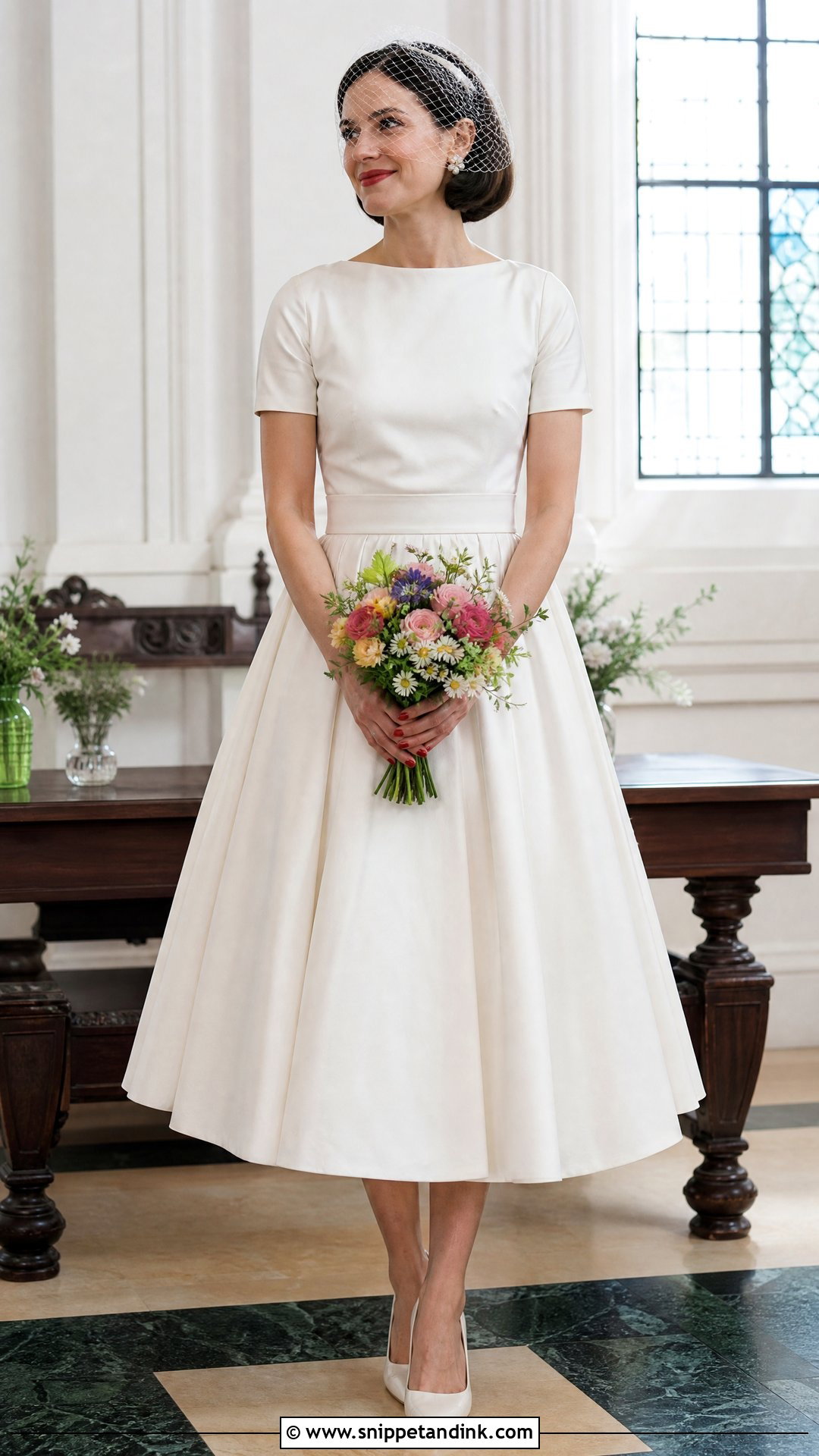
A birdcage veil with a tea-length dress is playful, and from my side of the lens the main question is where the netting crosses the face. If it cuts straight across the nose, it reads as a stripe in close-ups. It should land around the eyes or cheekbones, so check it before makeup is finished. Choose a dress with a defined waist and a skirt falling between knee and ankle, and pointed pumps, slingbacks or block heels for walking. Secure the veil to a small comb, a floral clip or a pillbox. A smooth bun, short bob or side-swept waves frame the face, and the small veil leaves room for pearl cluster earrings or a bold bouquet.
7. Floral Veil With Simple Sheath Dress
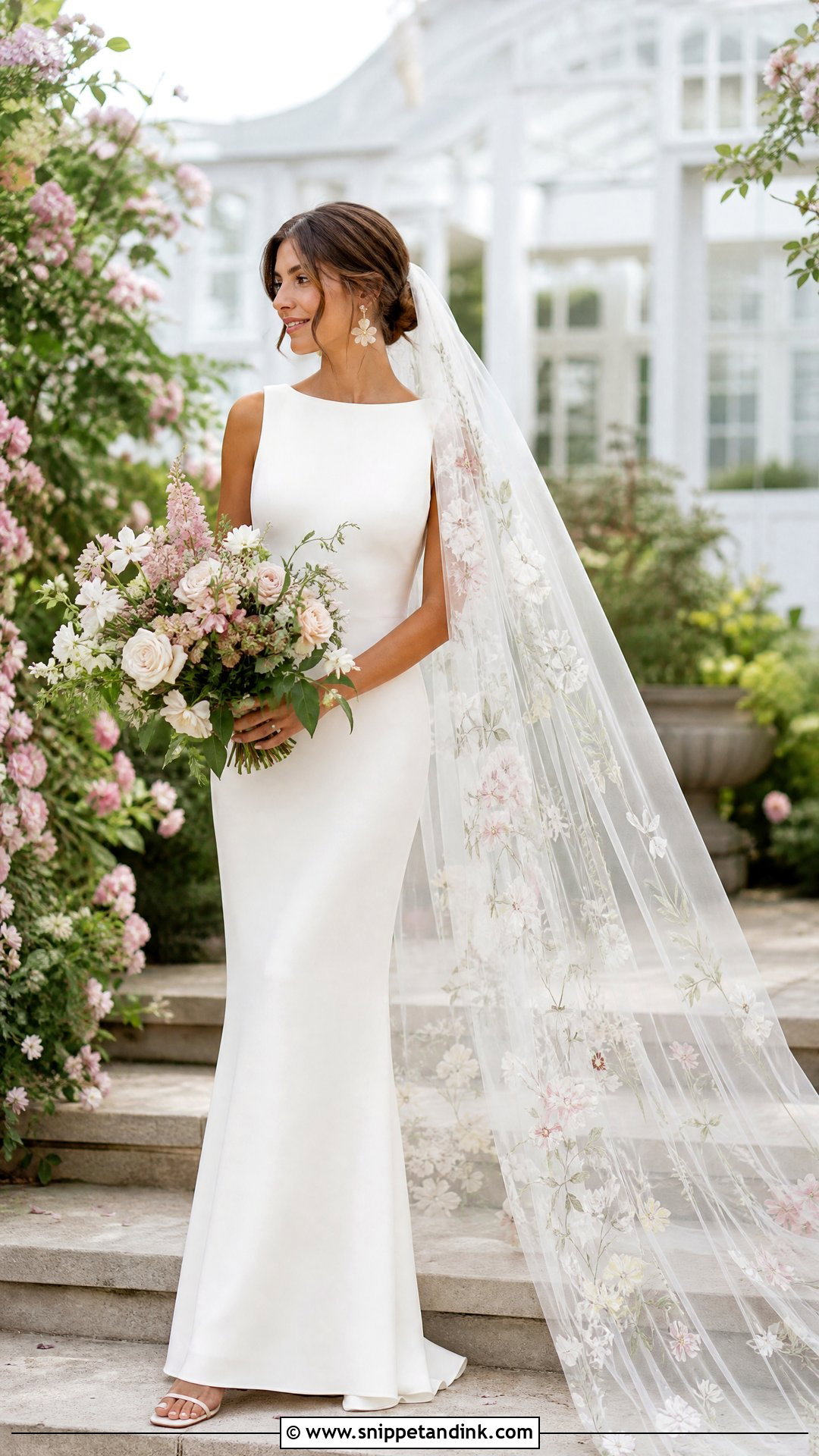
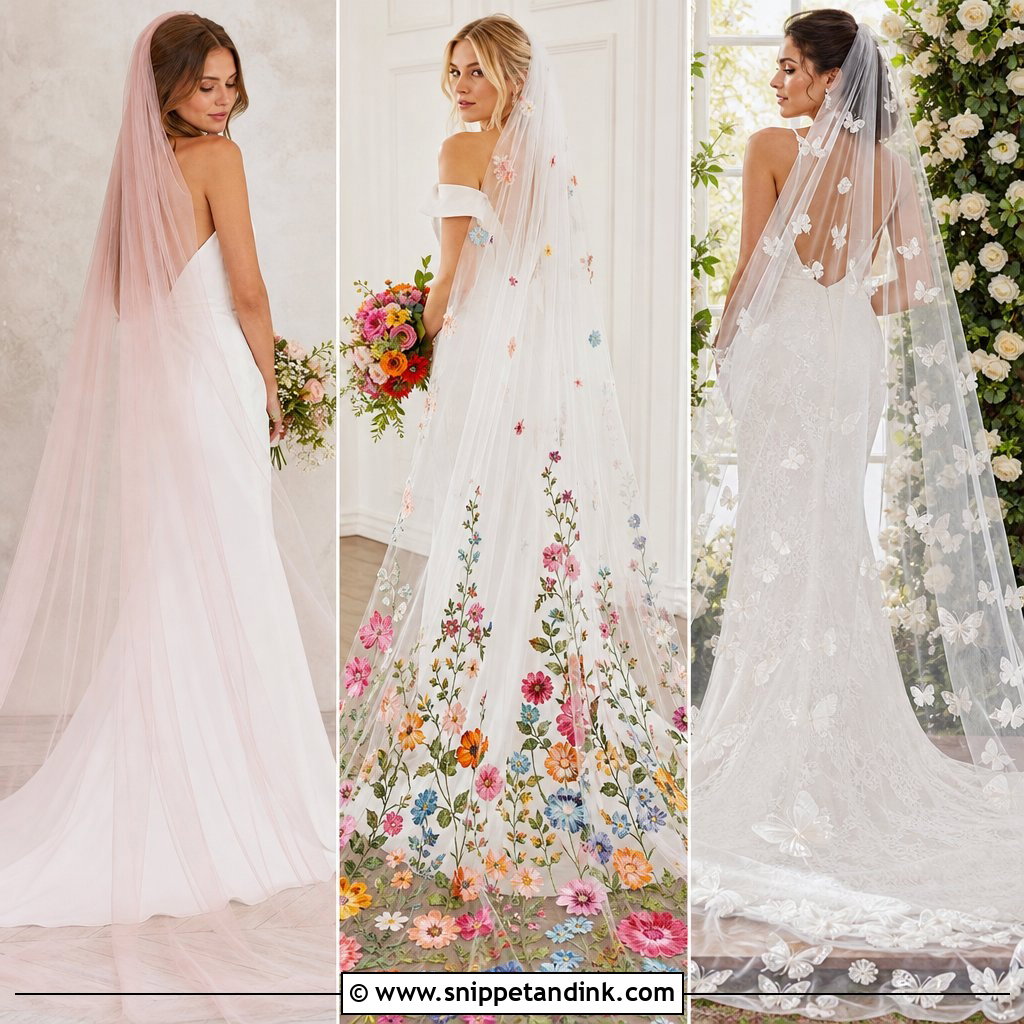
A floral veil turns a plain sheath into something personal. Start with a clean crepe, satin or chiffon gown, then add embroidered vines, scattered blossoms or dimensional appliqués on the veil. Slim ivory sandals, small floral earrings and a bouquet repeating one or two embroidery colors complete it, with a low ponytail, relaxed bun or soft waves. In full-length photos, the bottom third of a veil gets the most frame space, so I’d ask the maker to place the heavier flowers toward the hem. It suits garden ceremonies and greenhouse venues, where the embroidery echoes the setting.
8. Drop Veil With Long-Sleeve Wedding Gown
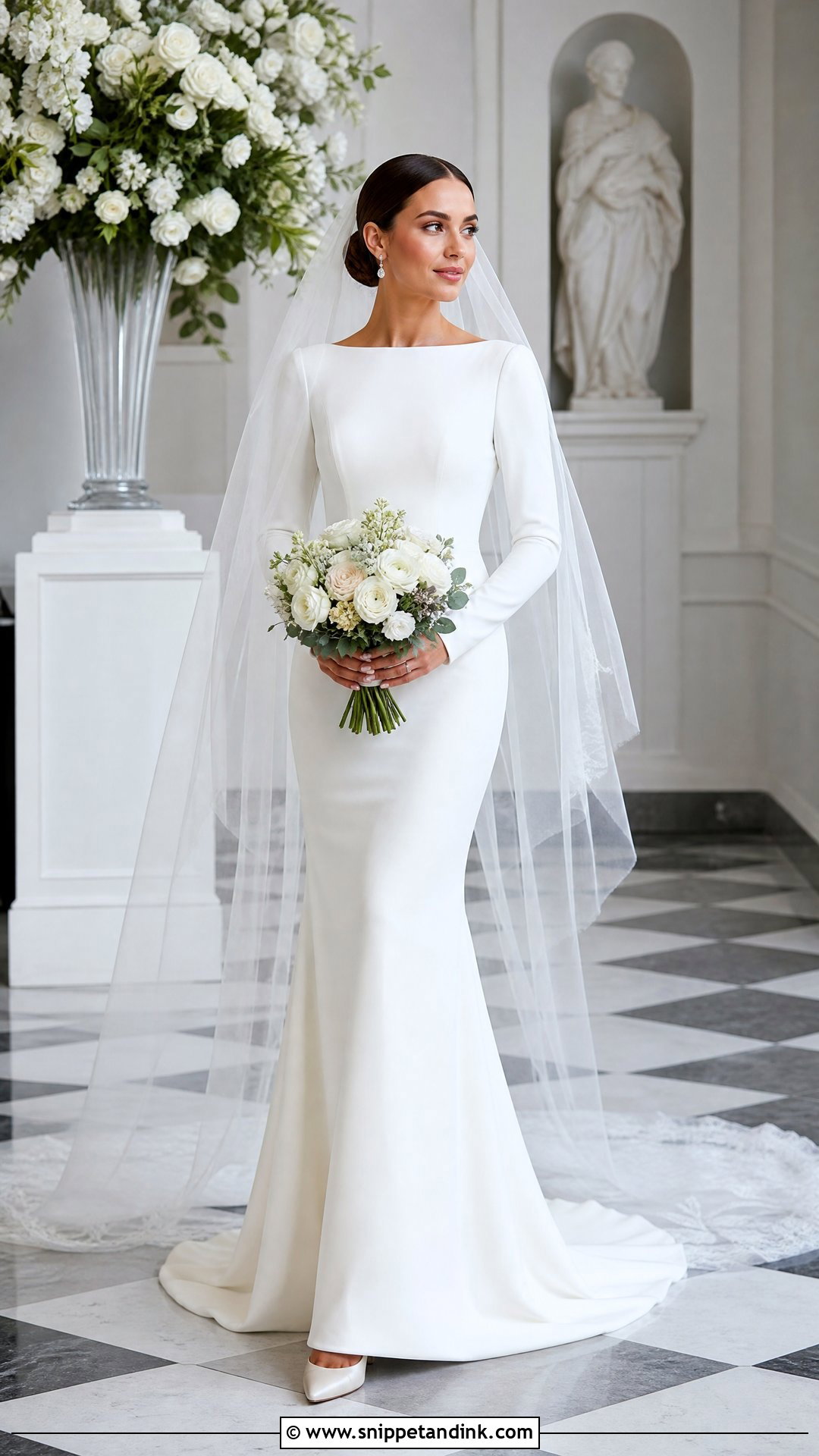
A sheer drop veil lies smoothly over the head with no bulky gather, which keeps the silhouette of a long-sleeve gown clean in a back view. It can include a front layer for soft facial coverage. Pair it with a fitted crepe dress, lace sleeves or a flowing A-line, plus closed-toe ivory pumps, slim earrings and a refined bouquet. A center-parted low bun lets the fabric fall evenly on both sides, which matters, because an uneven drop veil looks lopsided in every straight-on shot. Go beyond the train for drama or stop at the fingertips for easy movement. Keep it plain so the sleeves and back detail show through.
9. Fingertip Veil With Strapless Wedding Dress
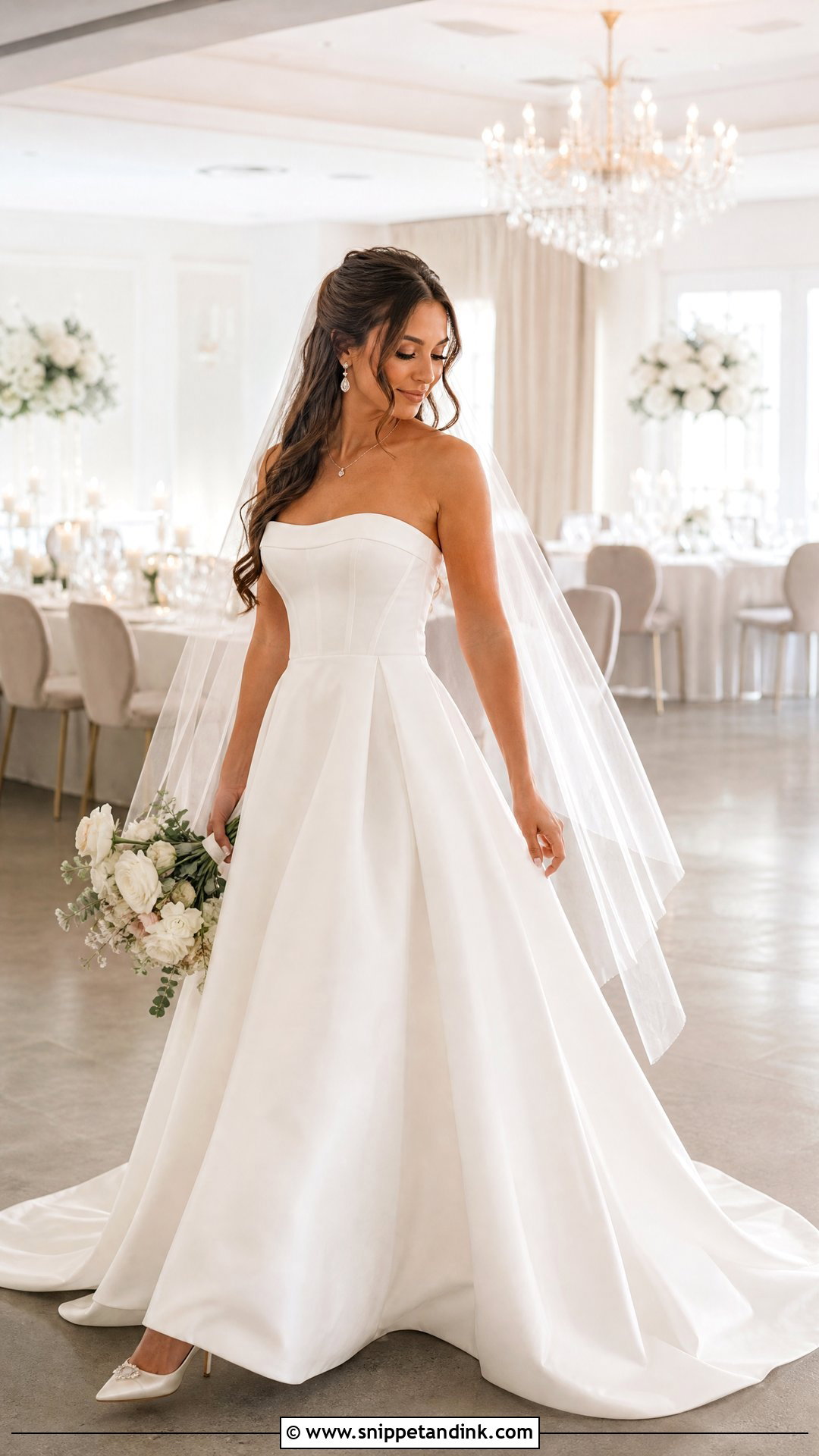
A fingertip veil ends where your hands rest at your sides, and with a strapless gown it softens the bare back without covering the skirt or train. A satin edge suits a structured gown; a raw edge suits a simpler one. Add a delicate necklace, drop earrings and pointed ivory heels. A half-up hairstyle holds the comb securely and lets soft curls fall behind the shoulders. If the bodice carries beading or lace, keep the veil light so the detail stays readable through the tulle. This is the length I find easiest to shoot all day. It doesn’t need arranging between every frame, so portraits and family groups move quickly.
10. Chapel Veil With Mermaid Wedding Dress
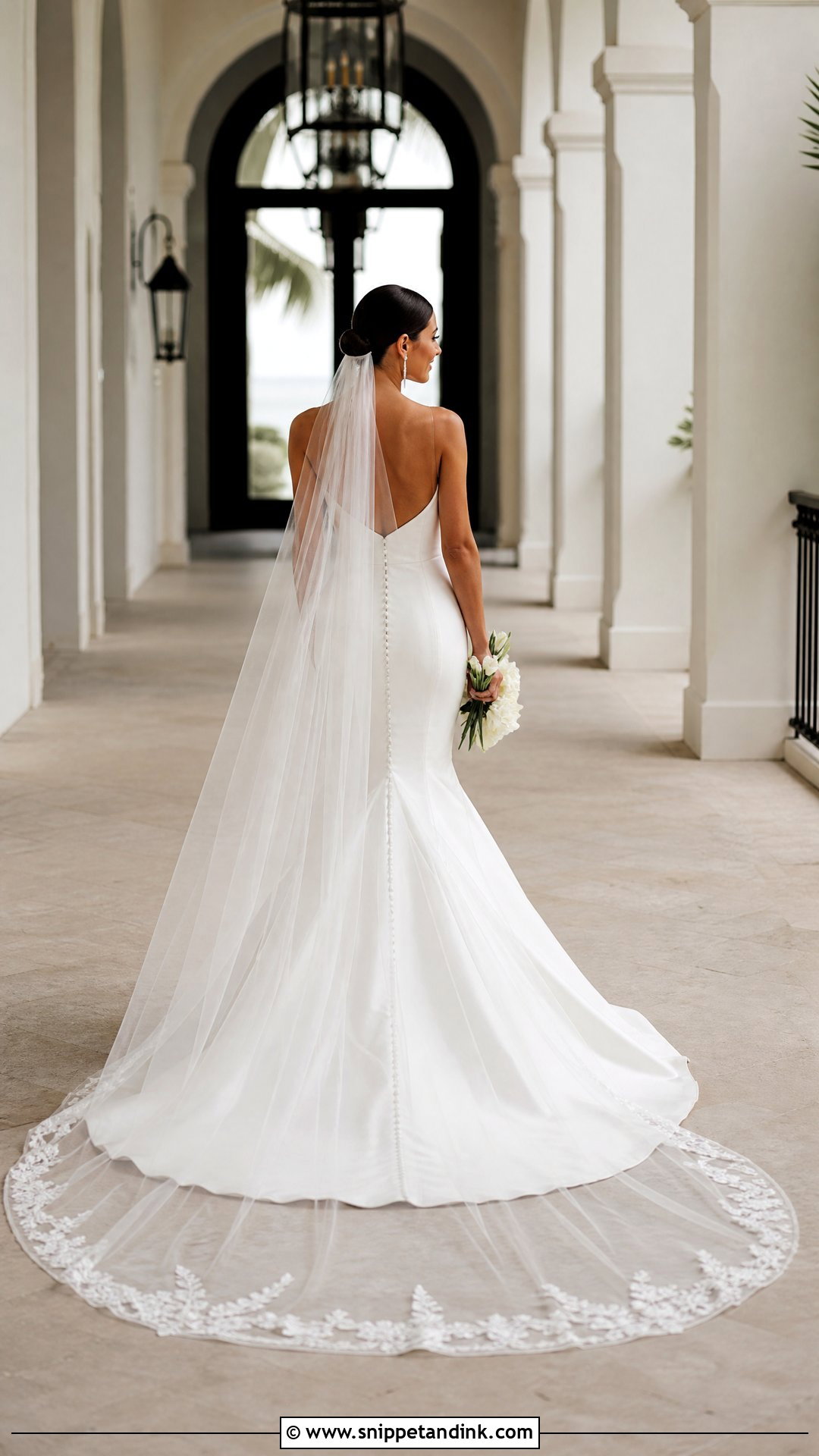
A chapel-length veil follows the line of a mermaid gown without the volume of a royal train. Choose a gown that flares near the knee and set the veil to run slightly past its hem. Plain tulle keeps the silhouette sleek; a lace edge can echo panels on the gown. Pointed heels, drop earrings and a narrow bouquet carry the long line, with a smooth low bun or side-parted waves. Wear the shoes and veil together at alterations to check proportions. The tulle should trail past the flare, not bunch around it. The back view is the shot here: I photograph her walking away down the aisle so the hourglass shape reads through the veil.
11. Shoulder-Length Veil With Bridal Pantsuit
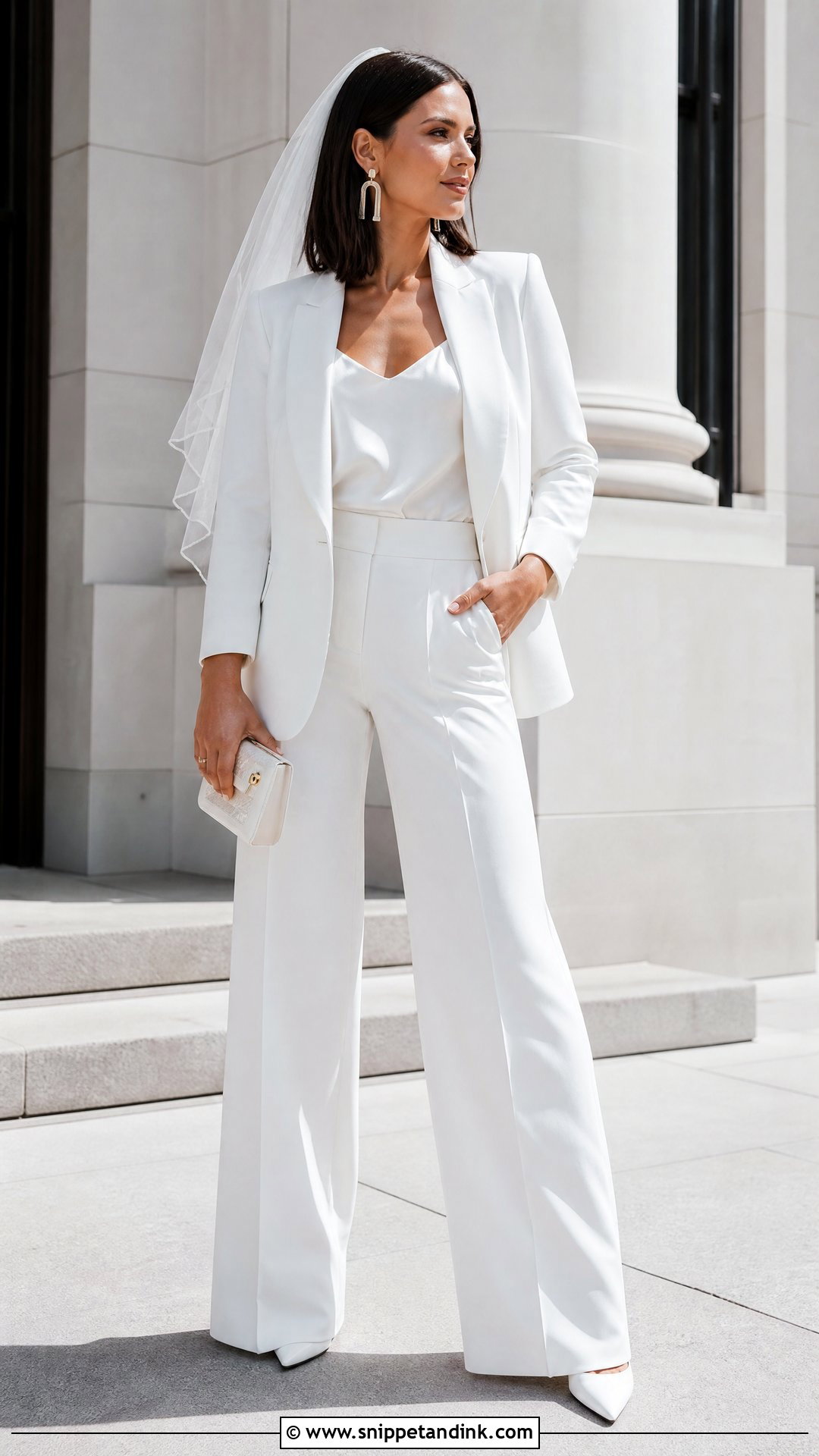
A shoulder-length veil turns a bridal pantsuit into a clearly bridal outfit while keeping its sharp lines. Choose a fitted white blazer with straight or wide-leg trousers and a silk camisole or structured bustier underneath, and a short, lightly gathered veil that stops at the shoulders so the lapels and waist stay visible. Pointed pumps, a compact clutch and sculptural earrings finish it. A sleek ponytail, low bun or smooth bob works, depending on where the veil attaches. Skip a full veil; it fights the tailoring. White suits in bright sun lose detail fast, so I shoot these in shade or soft window light, where the seams and lapels keep their shape.
12. Scalloped Veil With Off-Shoulder Wedding Dress
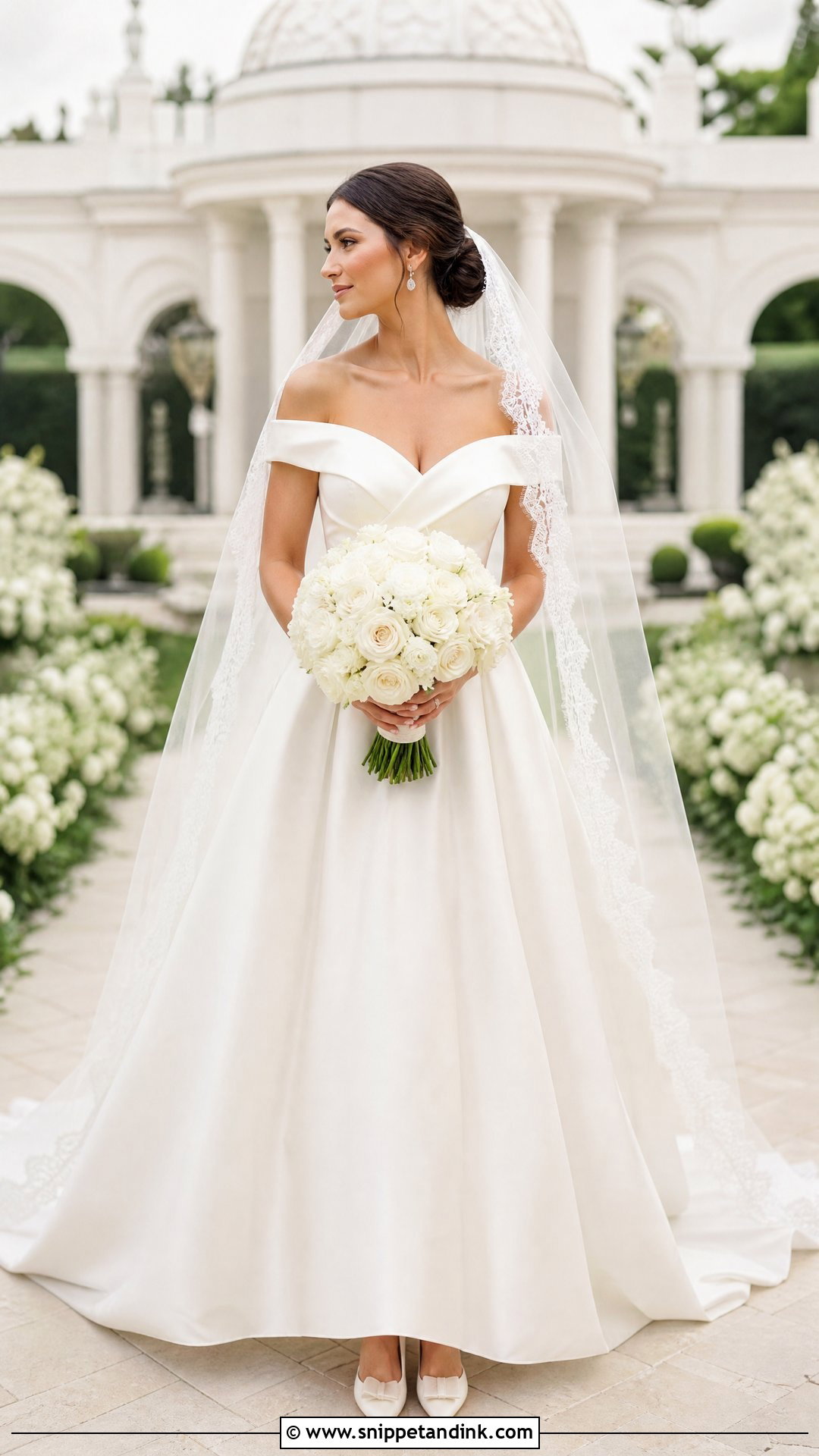
A scalloped veil draws the eye to the neckline and back of an off-shoulder dress. Look for a soft A-line, fitted crepe or satin gown with sleeves sitting neatly below the shoulder, and a chapel or cathedral veil with a fine scalloped lace border. Keep jewelry near the face with small drop earrings and skip the necklace. Ivory heels and a rounded bouquet complete it, with a low bun or side-swept waves to keep the shoulders bare. Check where the border falls. If the scallops run directly over a decorative seam, the two patterns blur together in photos; a few inches to the side and both stay legible.
13. Beaded Veil With Satin Column Dress
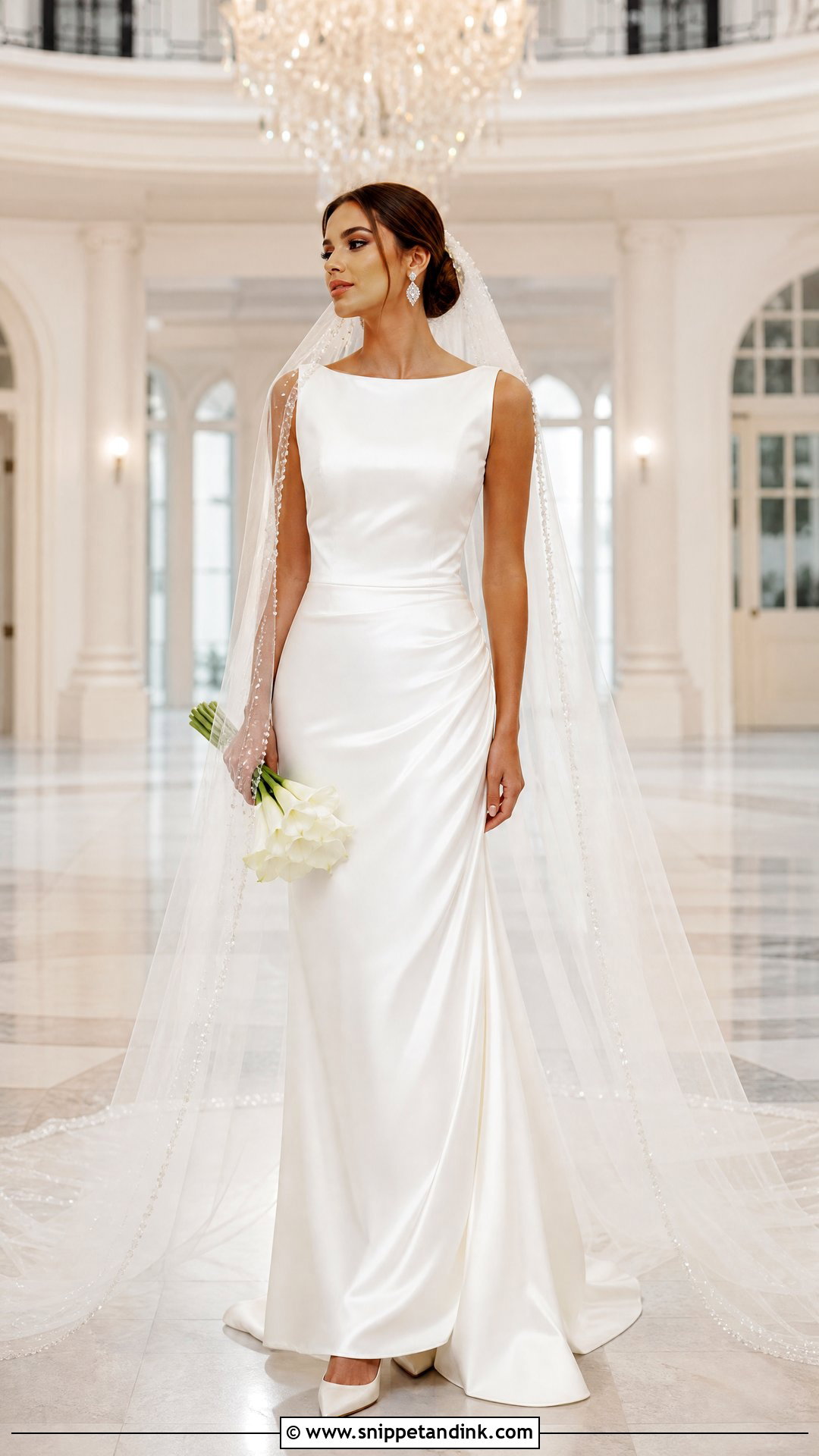
A beaded veil adds sparkle to the plain surface of a satin column dress. Clear crystals, tiny glass beads or a little silver catch light without making the veil heavy, and a narrow gown gives them a clean background. Crystal earrings, metallic or ivory heels and a streamlined bouquet complete it, with a sleek bun for a stable attachment. Beads add weight, so test the comb and hairstyle together at a full trial. On camera, beading reads as points of light when the sun is behind the bride, and that backlit shot is worth planning for. Keep extra embellishment to one or two coordinated details.
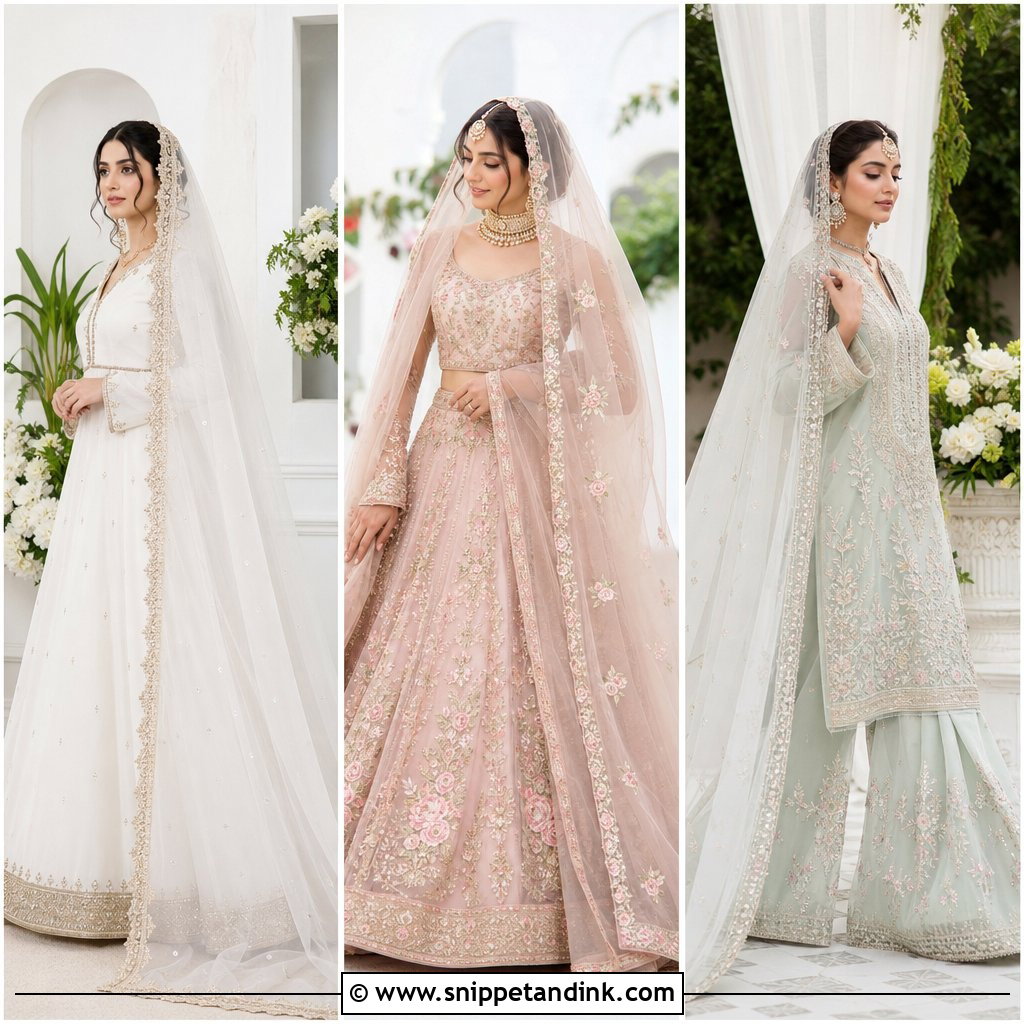
14. Colored Embroidered Veil With Plain Wedding Gown
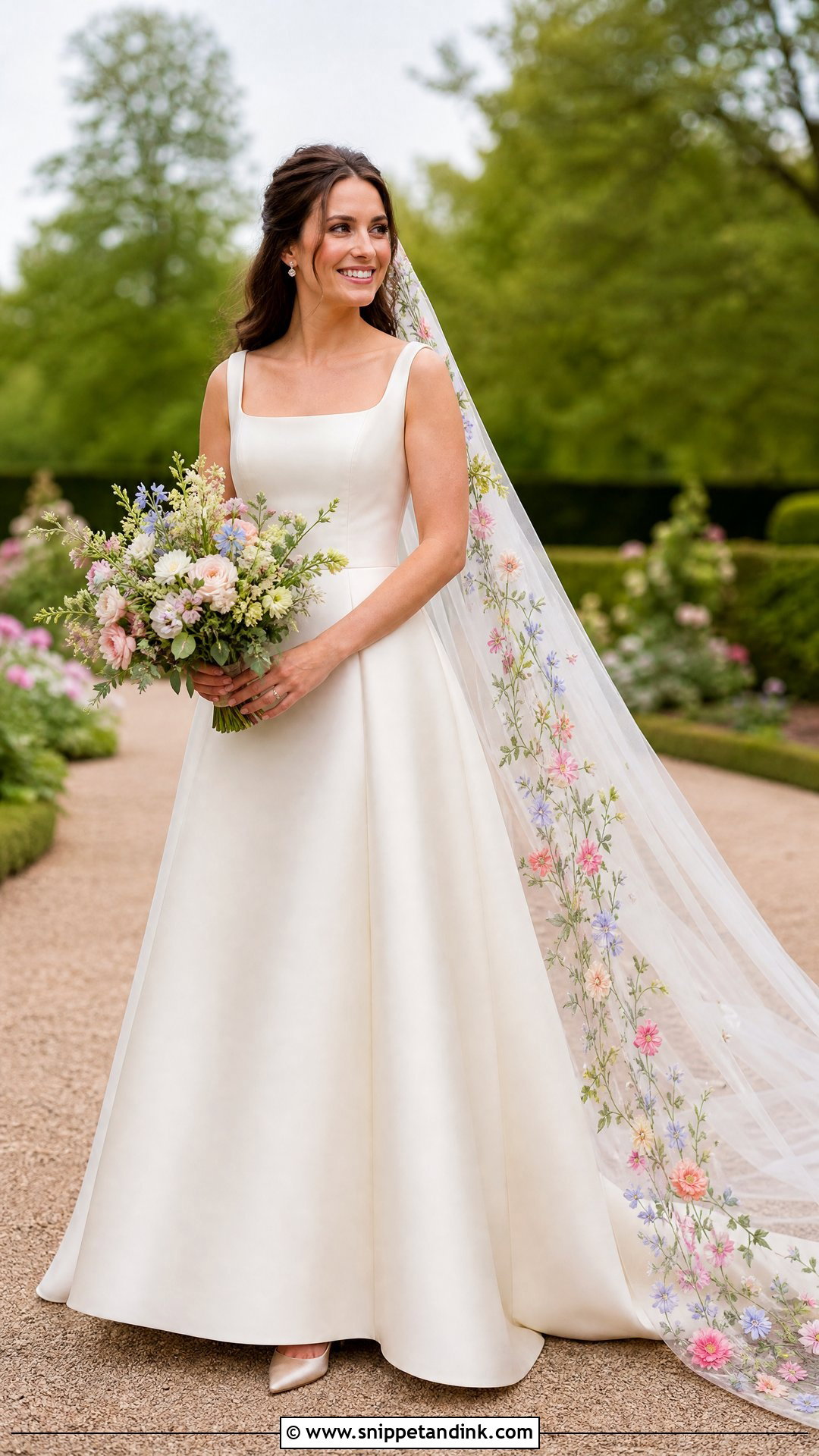
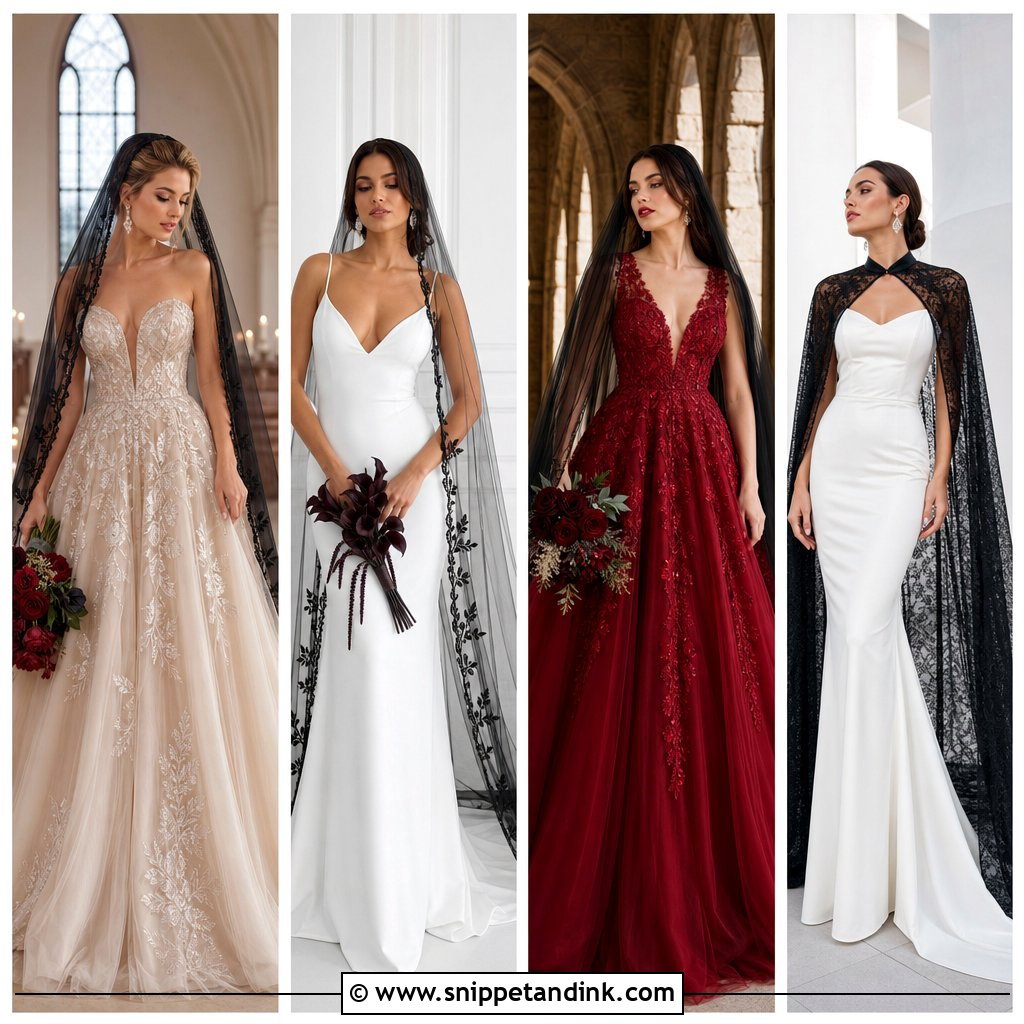
Colored embroidery makes a plain gown personal. Start with a simple ivory A-line, column or slip dress, and choose botanical motifs, pastel flowers, initials or a restrained border in colors that suit the bouquet. Neutral heels, small gemstone earrings and minimal hair accessories keep the attention on the veil, with a low bun or half-up style showing the embroidery. If the veil carries meaningful words or symbols, think about where they’ll land when it’s worn. A veil shifts as you move, and a stitched date can easily end up tucked under an arm, so place it where it will show from behind and from the side.
15. Raw-Edge Veil With Silk Slip Dress
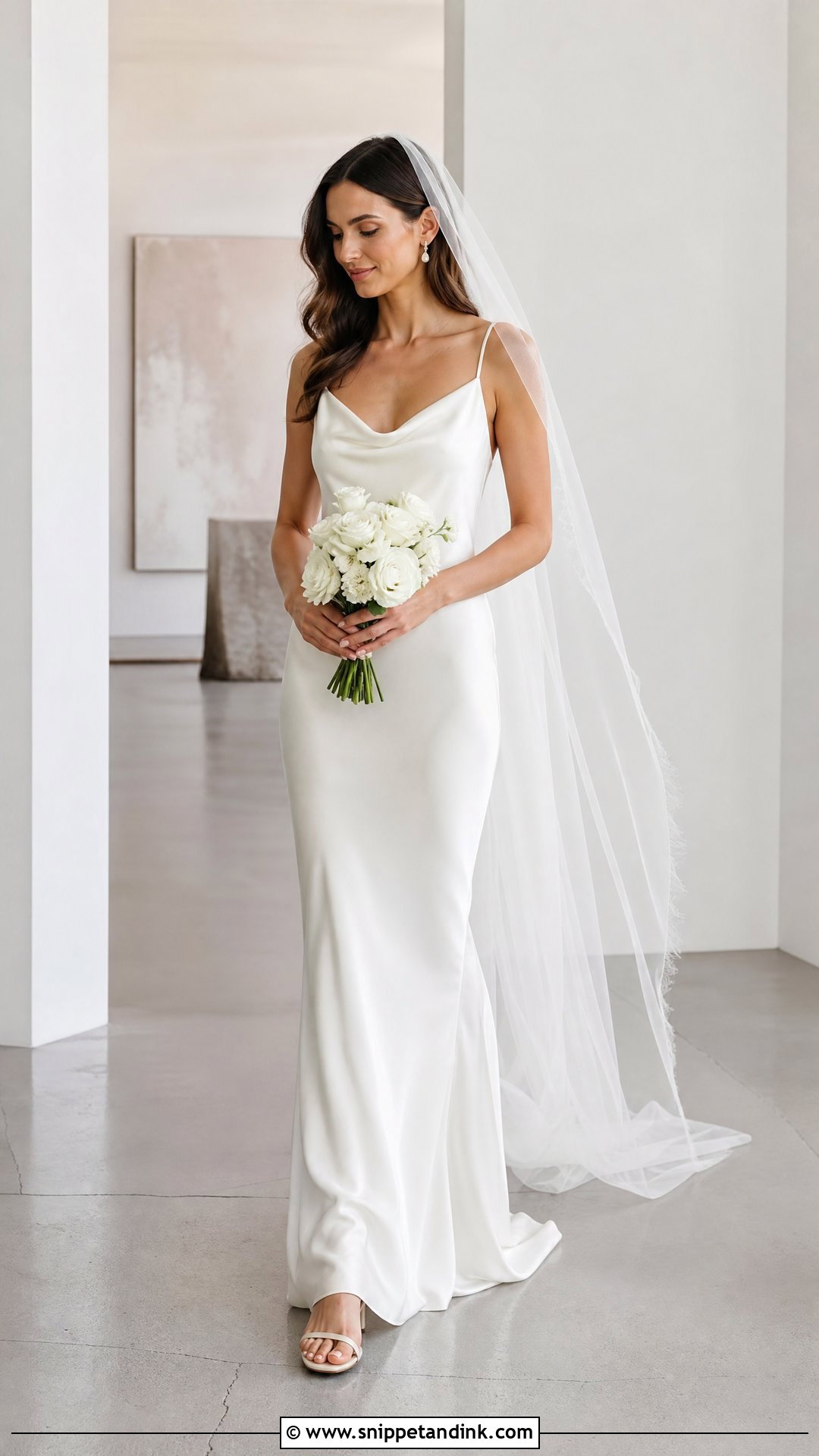
A raw-edge veil and a silk slip dress share the same lack of fuss. Choose a bias-cut gown with thin straps, a draped neckline or a low back, and an unembellished veil in light tulle: cathedral length for contrast with the narrow dress, fingertip for something relaxed. Slim sandals, fine earrings and a small, simple bouquet complete it. Smooth waves, a low knot or a sleek ponytail fit the mood. Watch the color: silk and tulle reflect light differently, and an ivory dress under a white veil can look like two shades of cream in photos. Compare both outdoors before you decide.
16. Hooded Veil With Modest Wedding Dress
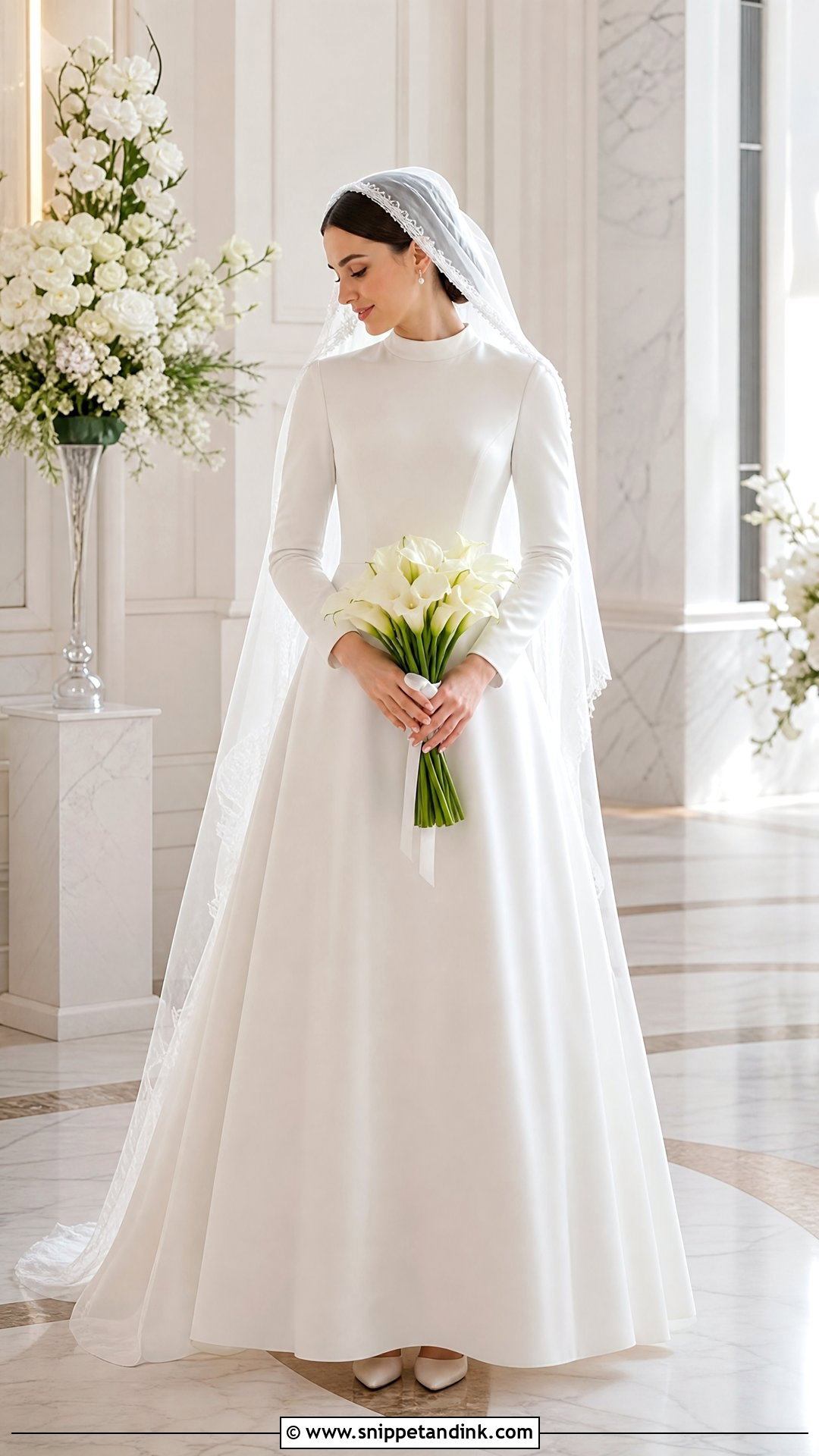
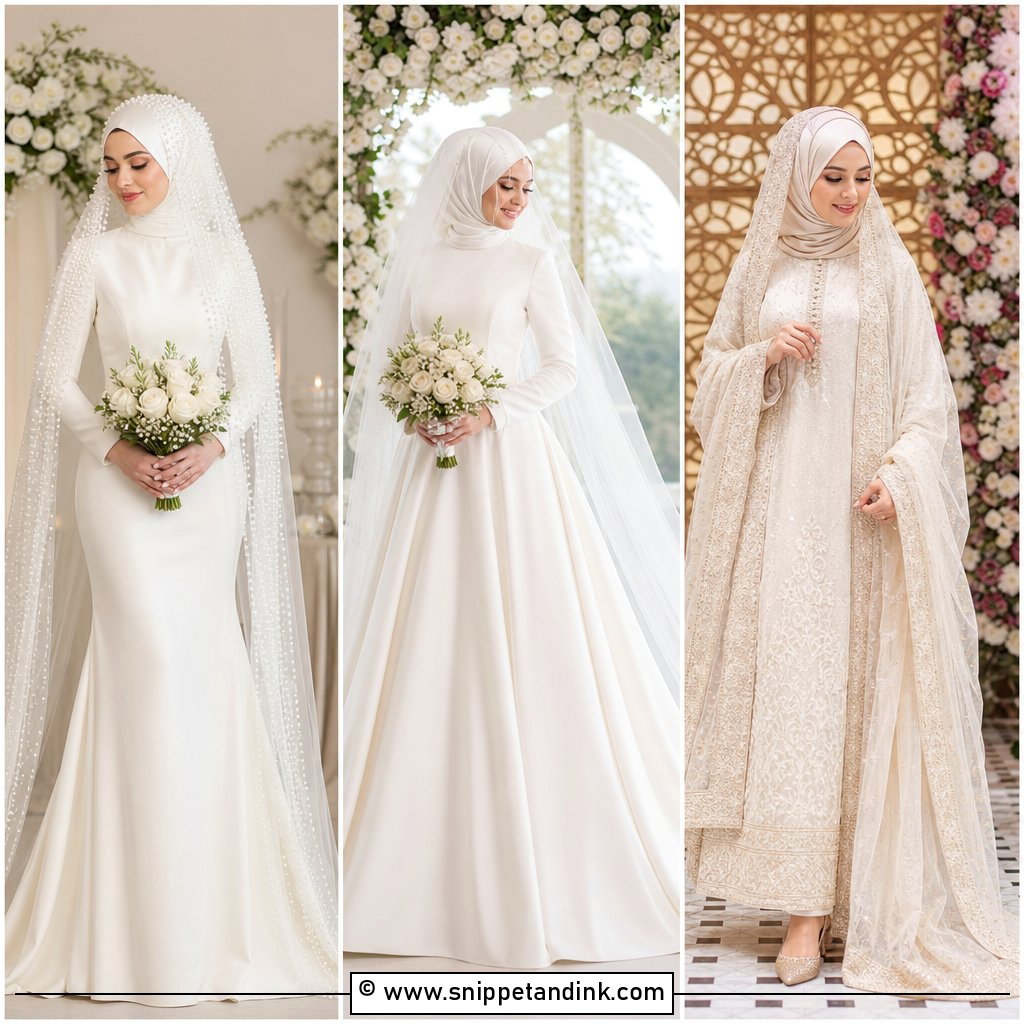
A hooded veil gives soft coverage and suits a modest gown with long sleeves, a high neckline and an A-line or column skirt. The hood should drape loosely around the head and shoulders, not cling to the hairstyle. Plain chiffon or tulle looks modern; a narrow lace edge adds detail. Closed-toe ivory shoes, simple earrings and a long-stemmed bouquet complete the look, with a low bun or soft braid underneath. Test it around the face for comfort and makeup. For portraits, a hood shades the face, so I turn the bride toward the light source, a window or open sky, to keep her eyes bright.
17. Royal-Length Veil With Princess Ball Gown
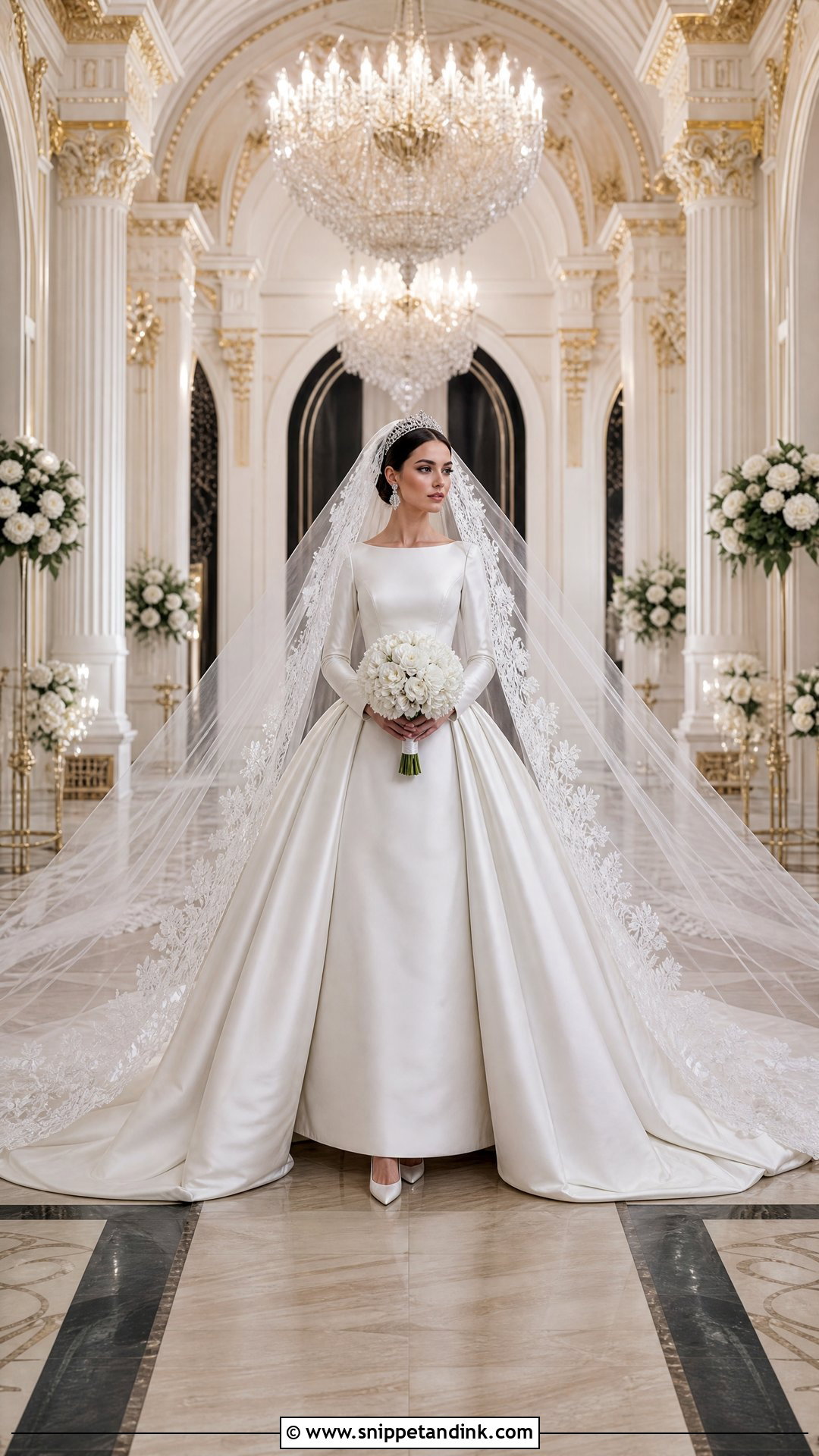
A royal-length veil, the longest there is, over a full princess ball gown makes an entrance nothing else matches. Choose a structured bodice and a wide skirt that can carry that length visually. A plain veil gives clean drama; embroidery along the outer edge adds richness. Closed-toe satin pumps, statement earrings and a formal, defined bouquet complete it. A secure updo is essential, since a veil this long pulls hard on the comb. Arrange one person to spread the veil before the ceremony and between portraits, or it folds under itself in every shot. It needs a broad aisle and a spacious venue.
18. Bow Veil With Square-Neck Wedding Dress
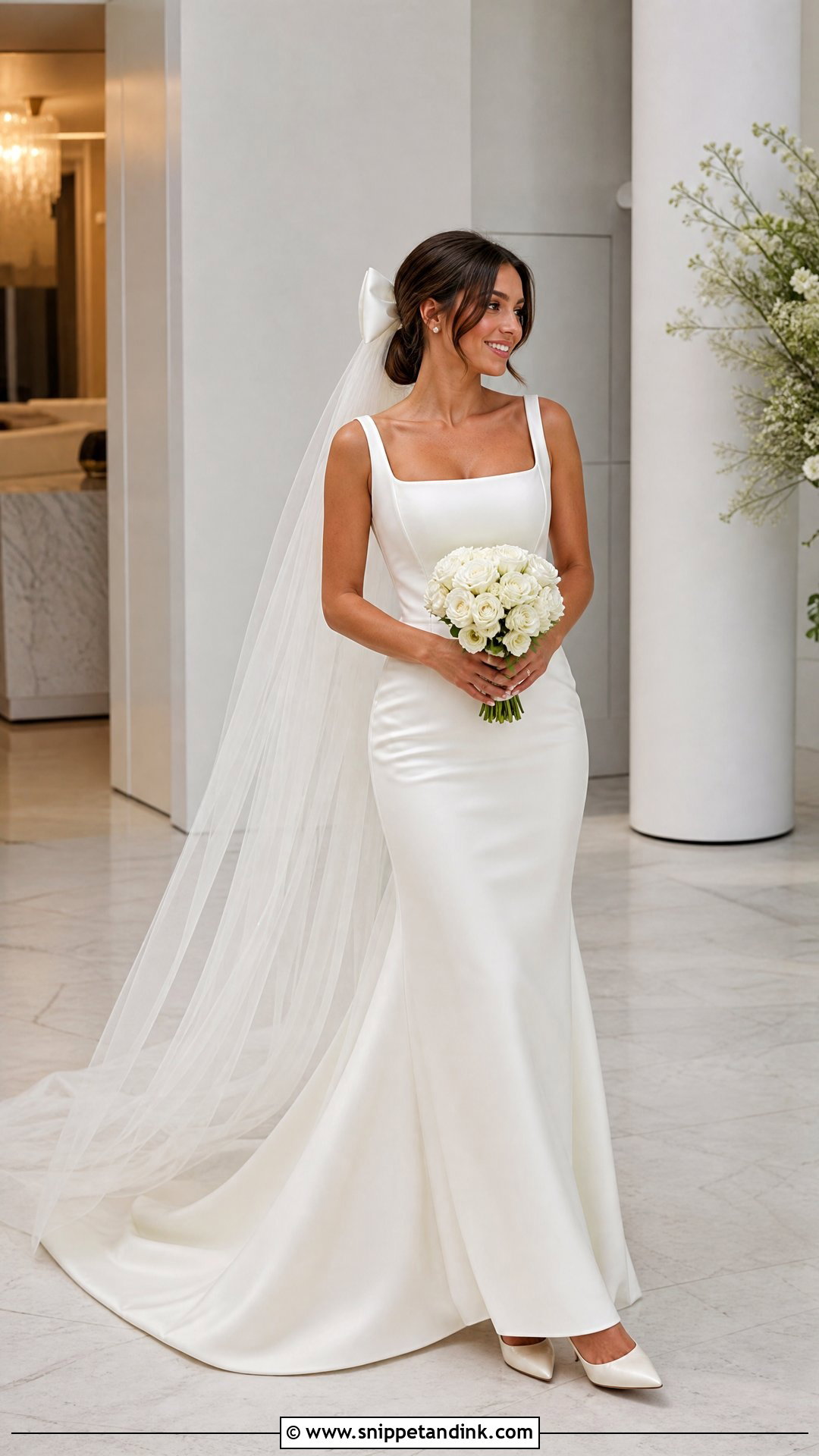
A bow veil adds a neat modern detail to a square-neck gown with clean straps, a fitted bodice and a straight or softly flared skirt. Set the bow at the back of a low ponytail or bun and let the tulle fall down the dress. Keep the bow in proportion so it doesn’t hide the back. Pearl studs, pointed pumps and a compact bouquet finish it, and skip any other big hair accessory. A fingertip or floor length balances more easily than a very long train. For me, the bow makes the back-of-head portrait the strongest shot of this look, so I’d make sure the stylist pins it straight and level.
19. Two-Tier Veil With Lace A-Line Gown
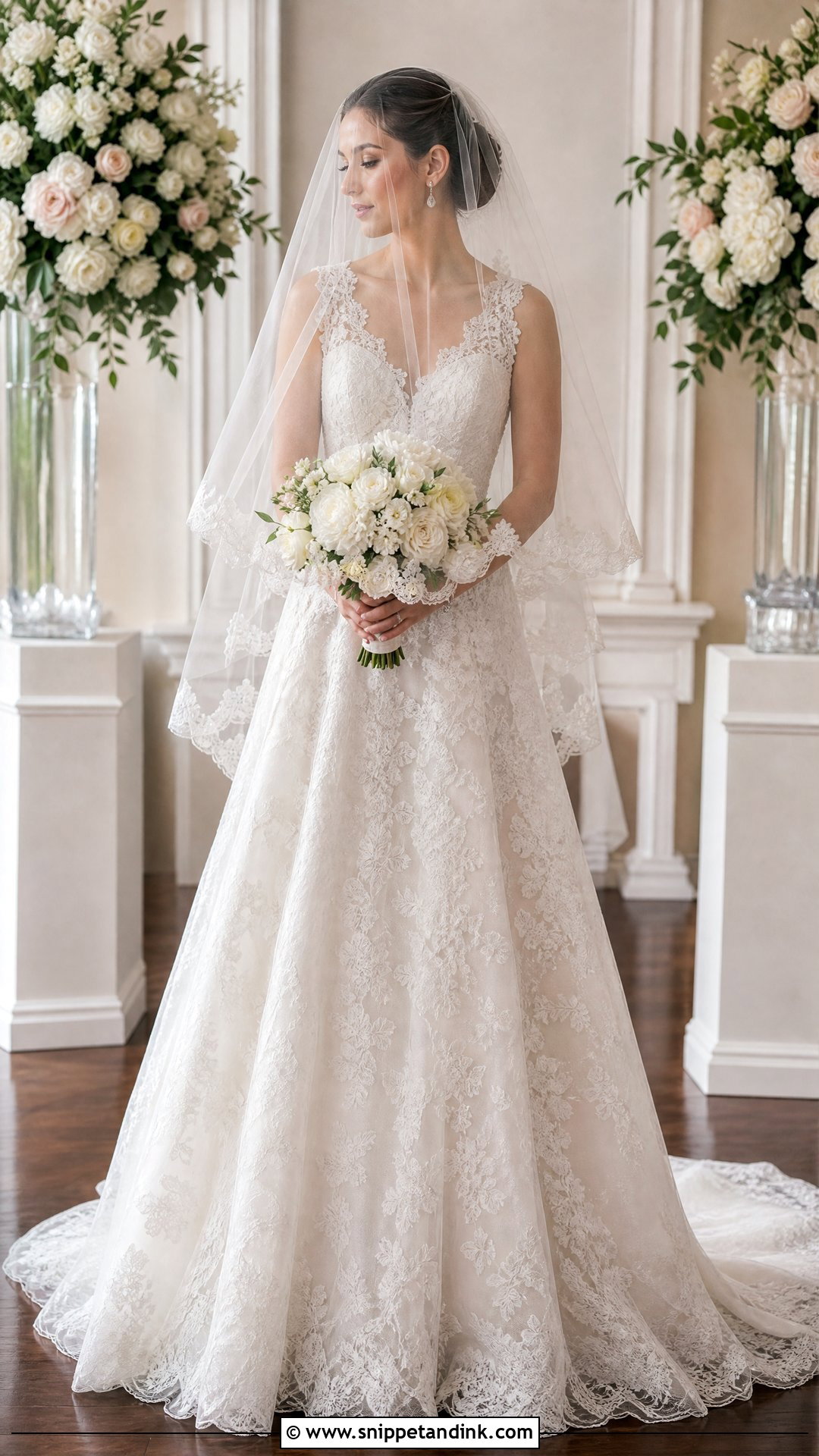
A two-tier veil gives a lace A-line gown fullness and the option of face coverage for the ceremony. Use light tulle so the layers stay airy and the lace shows through. The upper tier works as a blusher; the longer layer falls over the back and skirt. With a detailed lace gown, choose a plain veil or a border close to its pattern. Ivory heels, delicate earrings and a bouquet of soft rounded flowers complete it, with a low bun or classic chignon supporting both layers. Practice lifting the blusher so it settles cleanly behind the head. If it lands crumpled, every photo after the kiss shows it.
20. Puff Veil With Wedding Mini Dress
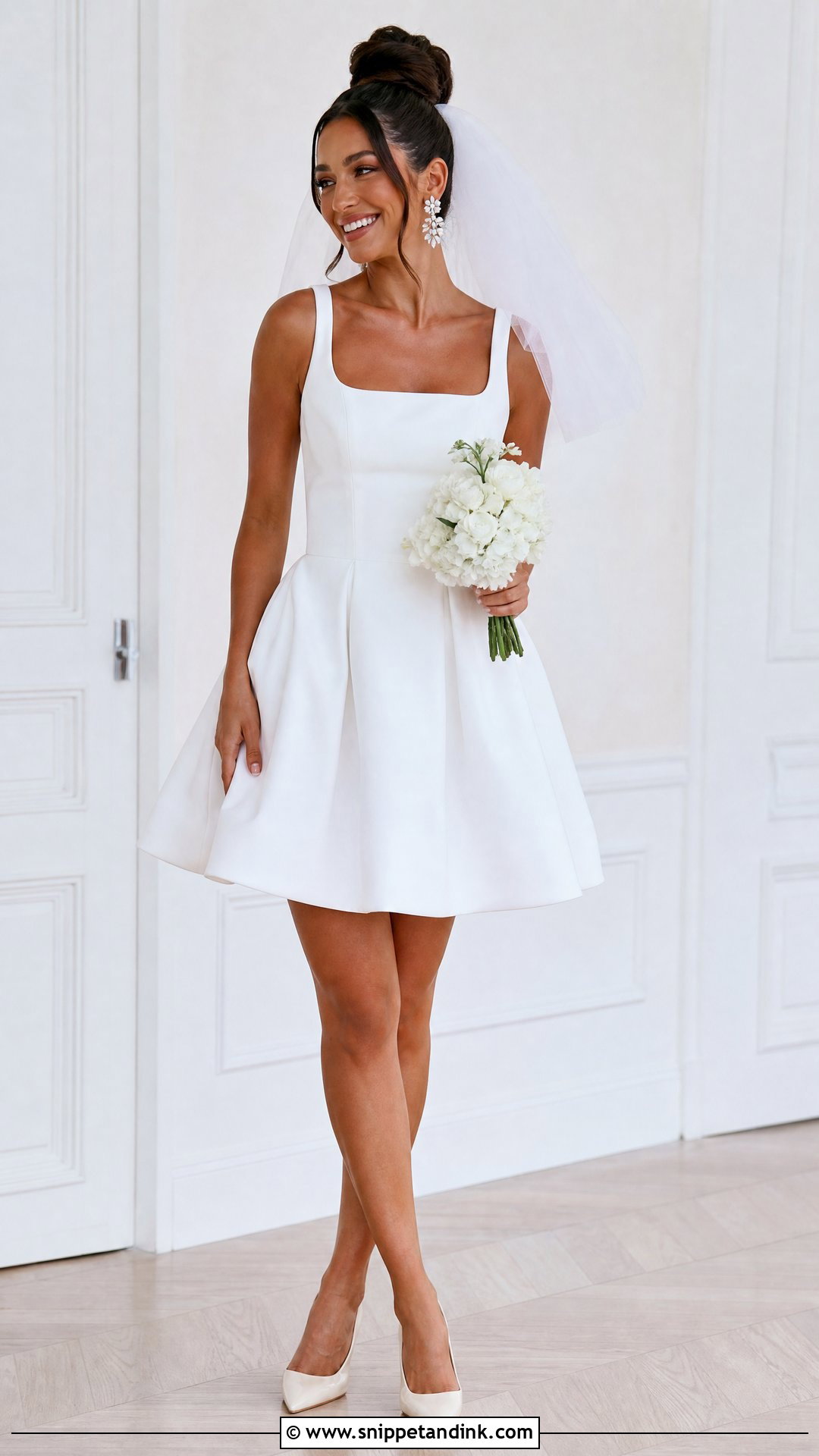
A puff veil is short, gathered and full, and it gives a wedding mini some playful volume. Choose a structured mini with a clean neckline, a fitted waist and a small detail such as covered buttons or a bow. Set the veil high on the crown or just behind a polished bun. The shorter hem shows the shoes, so pick pointed pumps, block heels or ankle straps you like the look of. Add statement earrings and a compact bouquet and keep the rest simple. The volume should suit the bride’s frame; on a petite bride, I’d keep the puff smaller so it doesn’t look like a hat in full-length shots. It suits civil ceremonies, small weddings and second looks.
Give the Veil Its Own Fifteen Minutes
The veil portraits couples love most rarely happen by accident. Many brides take the veil off after the ceremony to dance, so the window for veil shots is often the hour before or the hour after the vows. I ask couples to set aside a short block on the timeline just for the veil, ideally when the light is soft and low.
Shots worth planning for
- The veil lifted over both of you, shot close, with light coming through the tulle.
- A veil toss: someone out of frame throws the end up and lets it fall while you walk or turn.
- A back view down the aisle or a long path, with the whole length of the veil on the ground.
- A portrait through the blusher, before it’s lifted, if you’re wearing one.
For the toss, one helper is enough, and practicing twice is plenty. Wind is a help if it blows from behind the bride and a nuisance if it blows into her face, so we turn her rather than fight it. In dry air, tulle builds static and clings to the dress or sticks to lipstick; a light mist of anti-static spray on the veil, never on the face, solves it.
Look at Your Veil Through a Camera Before the Wedding
A veil should add to the whole outfit, not compete with the dress. Think about the gown’s shape, fabric, neckline, train and decoration before settling on a length or finish, then test it with your hairstyle, shoes, jewelry and bouquet. Have someone photograph you from the front, side and back at a fitting. Colors, beading and lace placement often look different on camera than in a mirror, and that’s the version you’ll keep. Raw-edge tulle, lace, pearls, embroidery or a royal train can all be right. Pick the one that feels comfortable and like you, and it will show in every portrait.
You'll Like These Ideas:


Leave a Reply