
A veil changes the mood of a bridal outfit more than any other single piece. It can make a plain gown feel ceremonial, soften a structured silhouette, or bring in lace, pearls, colour and embroidery that the dress doesn’t have. Below are twenty complete head-to-toe looks, from ballroom ceremonies and gallery venues to beaches and a courthouse in a pantsuit. When a bride brings a veil to a fitting, I judge it on three things before anything else: where it ends on her body, what its edge does next to the dress, and whether her hair can actually hold it. Get those right and the style almost takes care of itself.
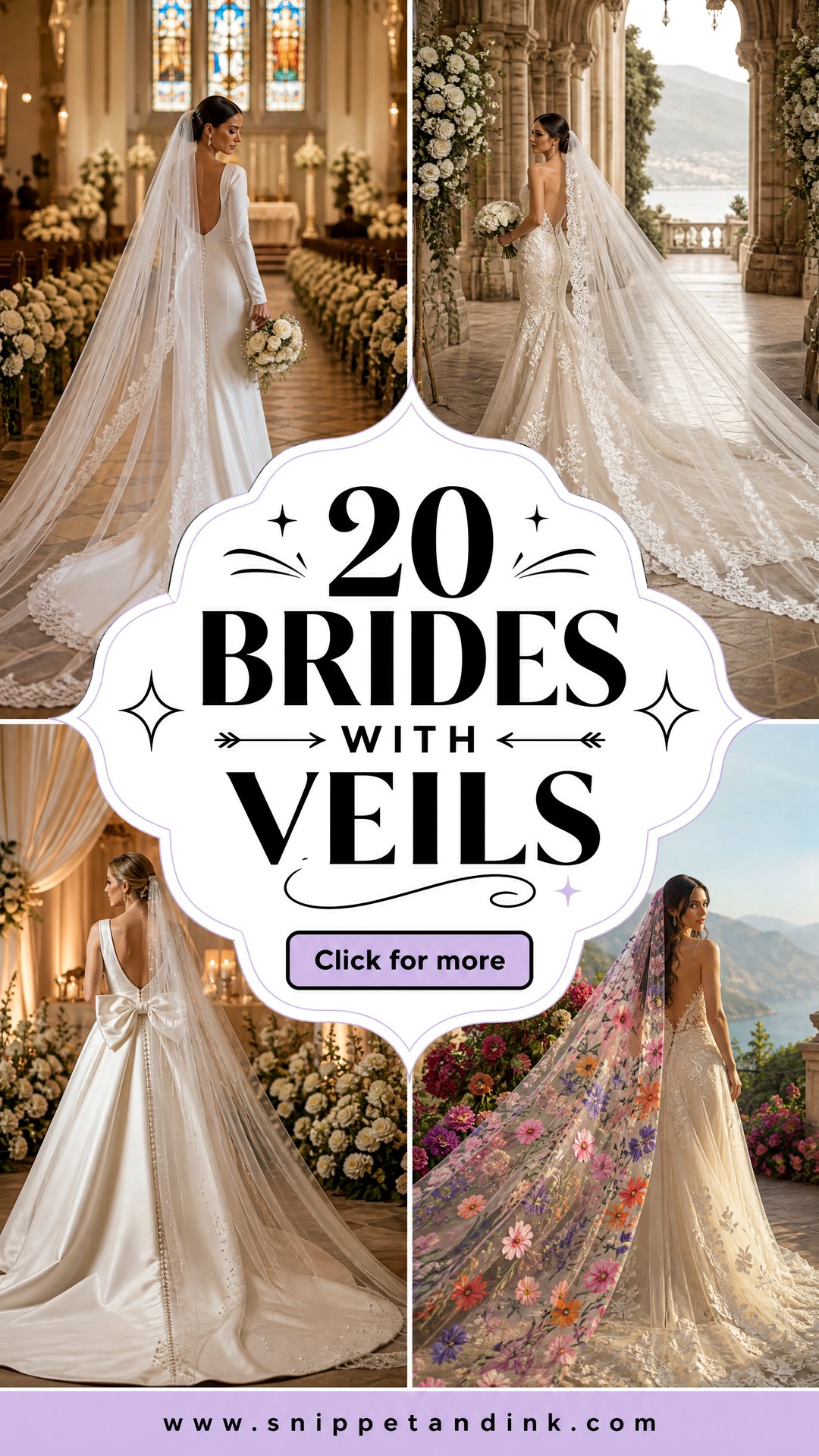
Veil Lengths Are Measured From the Comb
Shops sell veils by name, but the names only mean something once you know where the comb will sit. A fingertip veil pinned at the crown ends higher than the same veil tucked under a low bun. So before I order anything, I stand the bride in her shoes, put the comb where her hairstylist plans to place it, and measure down with a tape. These are the rough finished lengths most makers work to, and they vary a little from one maker to the next:
- Shoulder: around 20 to 22 inches. Shows the whole back of the dress.
- Elbow: around 25 to 30 inches. Good with a full skirt, since it stops before the volume starts.
- Fingertip: around 36 to 40 inches. The everyday favourite, easy to wear all night.
- Waltz: roughly knee to ankle. Movement without anything trailing on the floor.
- Chapel: around 90 inches. A soft trail behind you.
- Cathedral: 108 inches and up. Needs an aisle long enough to show it, and someone to arrange it.
One more check I always do: the edge of the veil should never stop exactly where the dress has a seam, a waistline or a hem. Lines that land on top of each other look accidental. Move the length a few inches either way.
1. Satin Ball Gown Bride With Cathedral Veil
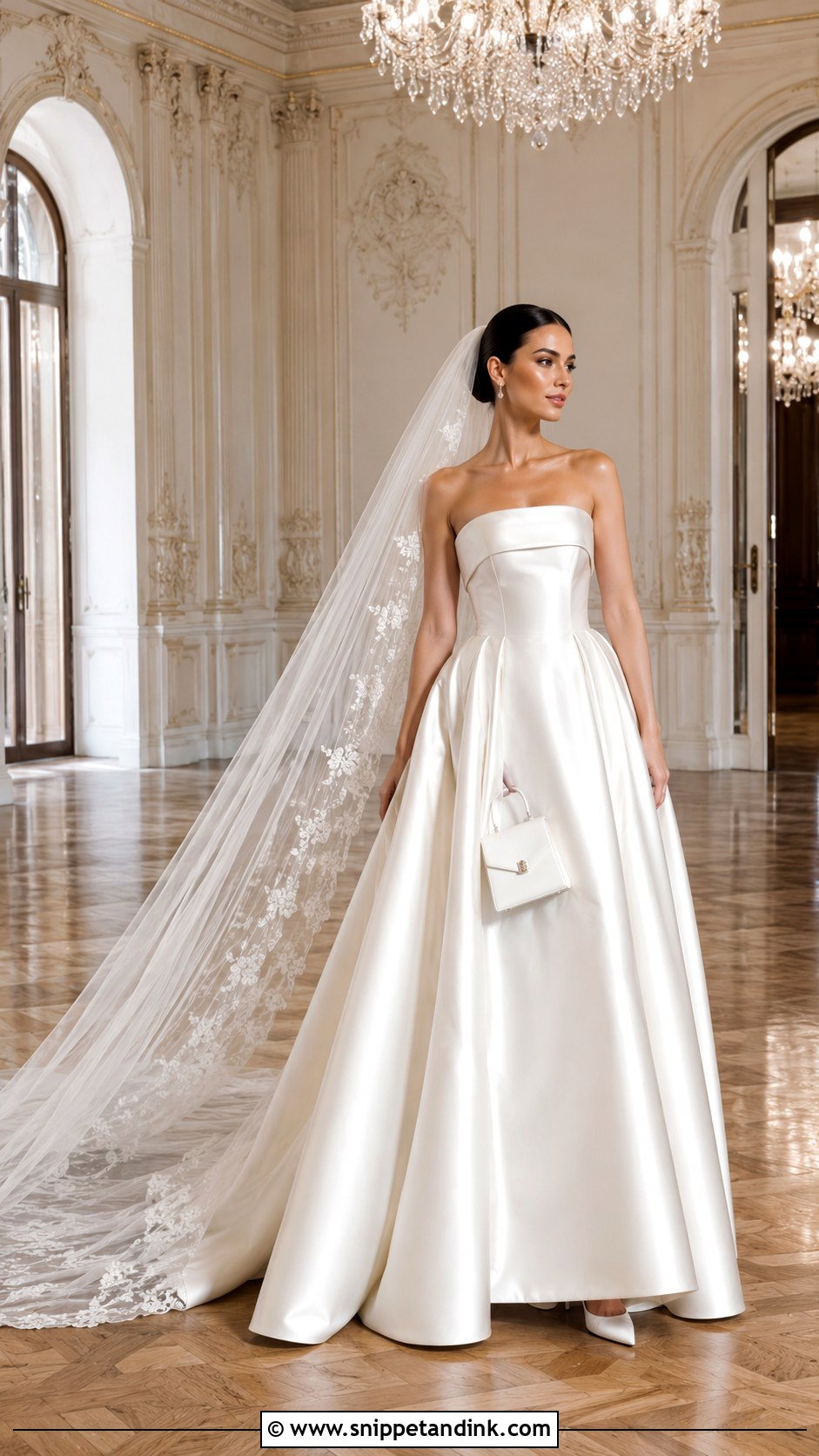
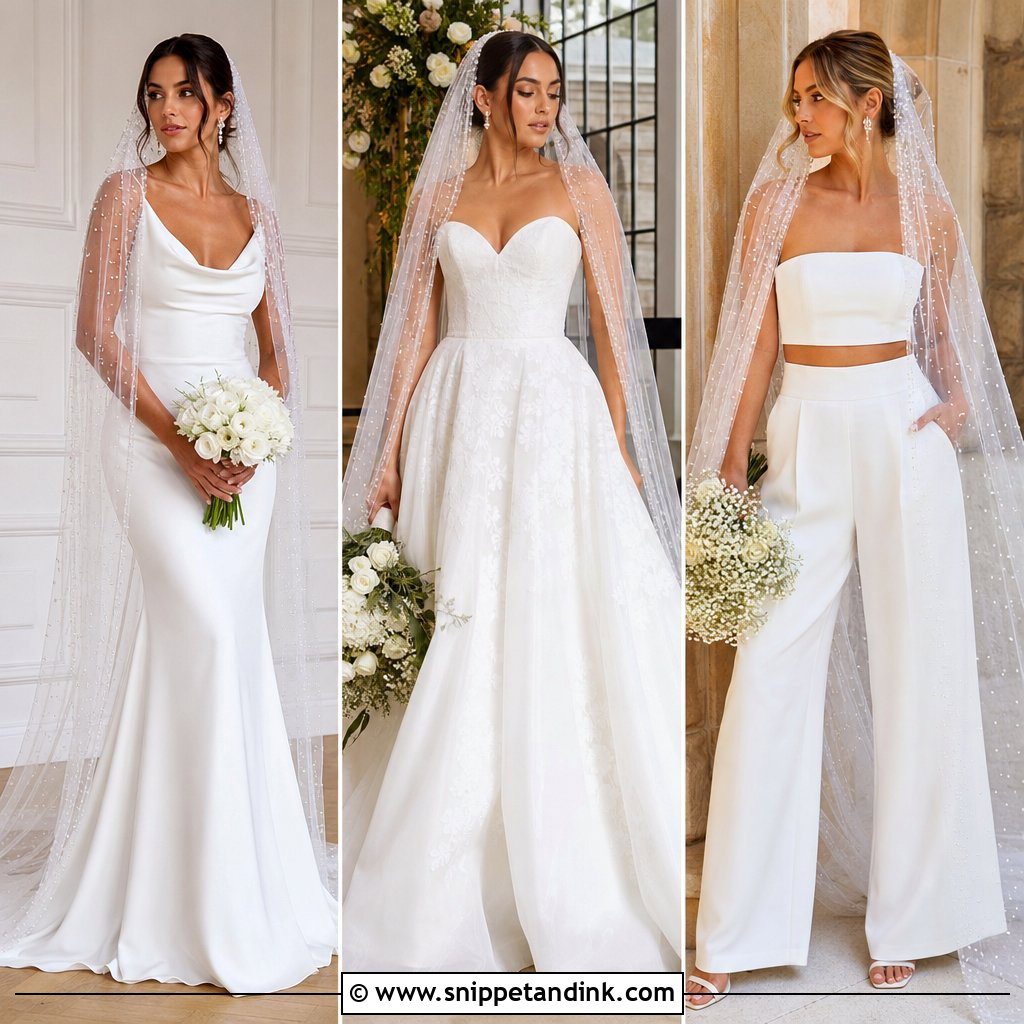
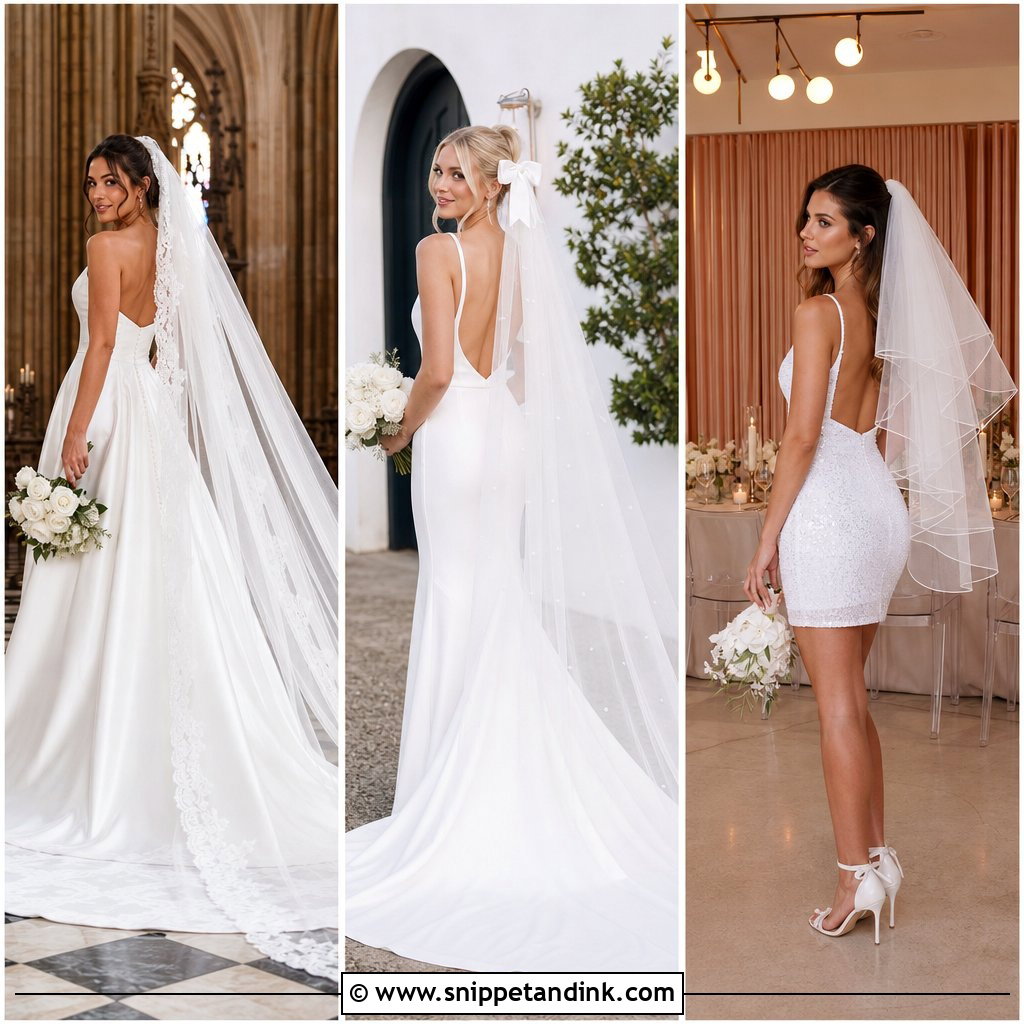
Satin ball gown, cathedral veil: the most formal pairing on this list. The gown should have a fitted bodice, a defined waist and a full skirt, so the satin catches light without heavy embellishment. A long, sheer, single-layer veil lets the clean shape show through from behind. I’d keep the edge raw or finished with a narrow satin trim; a wide lace border on top of satin starts to look like two different weddings. Pointed ivory pumps, pearl drops and a structured mini bag. A smooth low bun gives the comb something solid to grip, which matters because a cathedral veil pulls backwards the whole time you walk. Grand ballrooms and historic estates suit its scale.
2. Lace A-Line Bride With Mantilla Veil
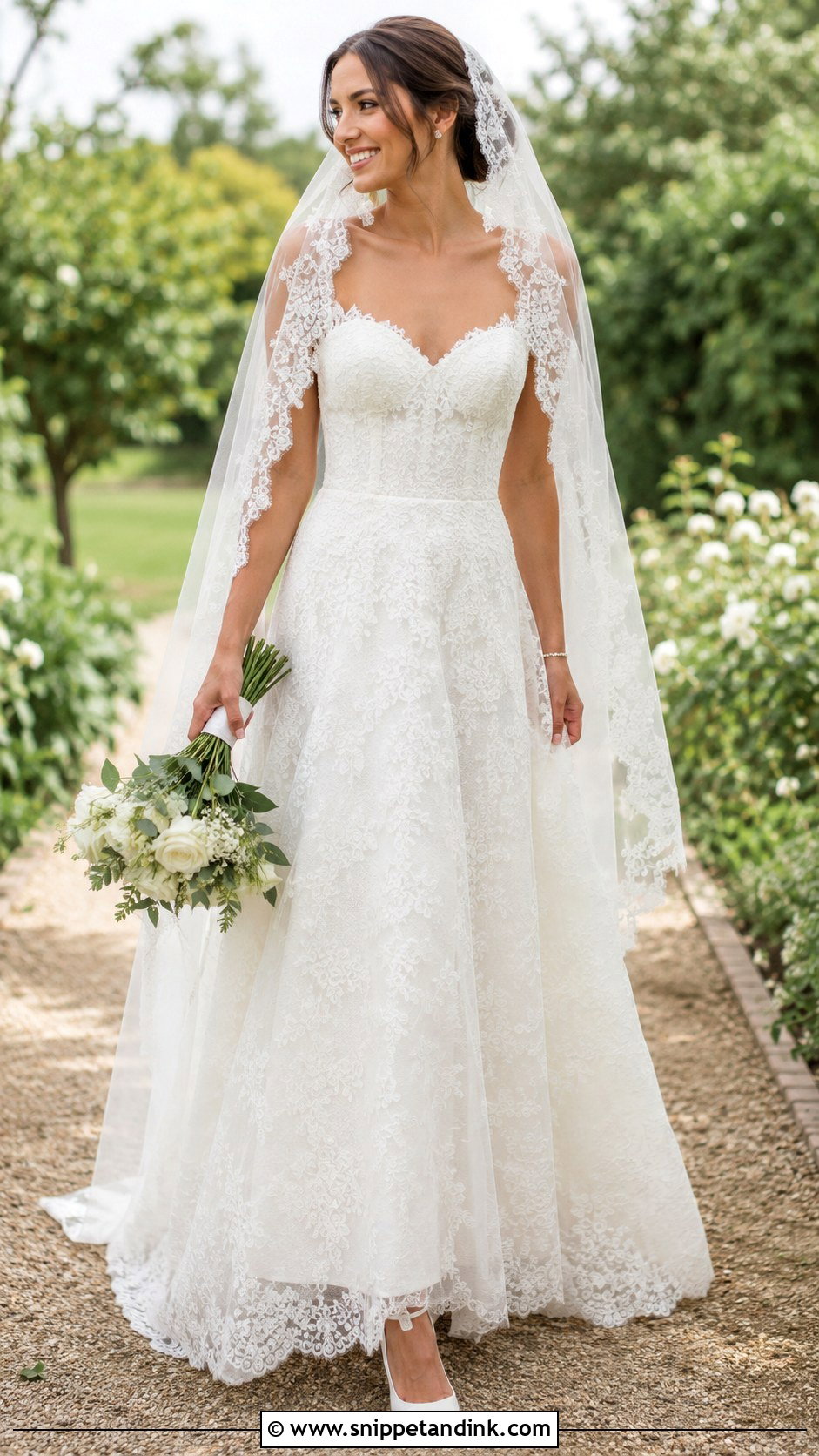
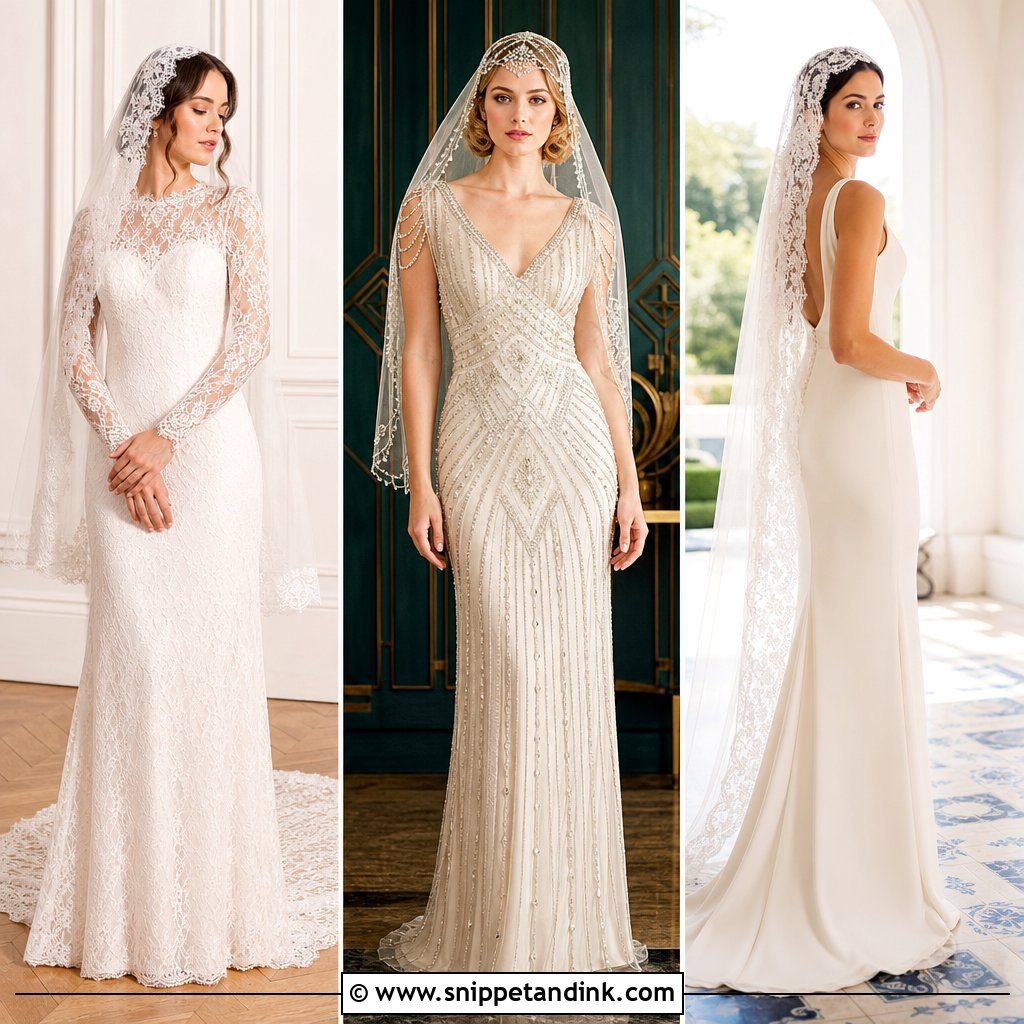
A mantilla veil is all about that lace edge framing the face. Pair it with an A-line gown with lace appliqués, a fitted waist and a skirt that moves. I set a mantilla nearer the crown than most veils so the scalloped border falls around the shoulders and runs down the dress. When the gown is already lace, look for a veil with a similar scale of motif rather than an exact match; two identical laces side by side never line up and look like a mistake. Ivory slingbacks, pearl studs and one fine bracelet. Hair in a low chignon or waves tucked behind the ears, because loose curls hide the very edge you paid for.
3. Minimalist Column Bride With Fingertip Veil
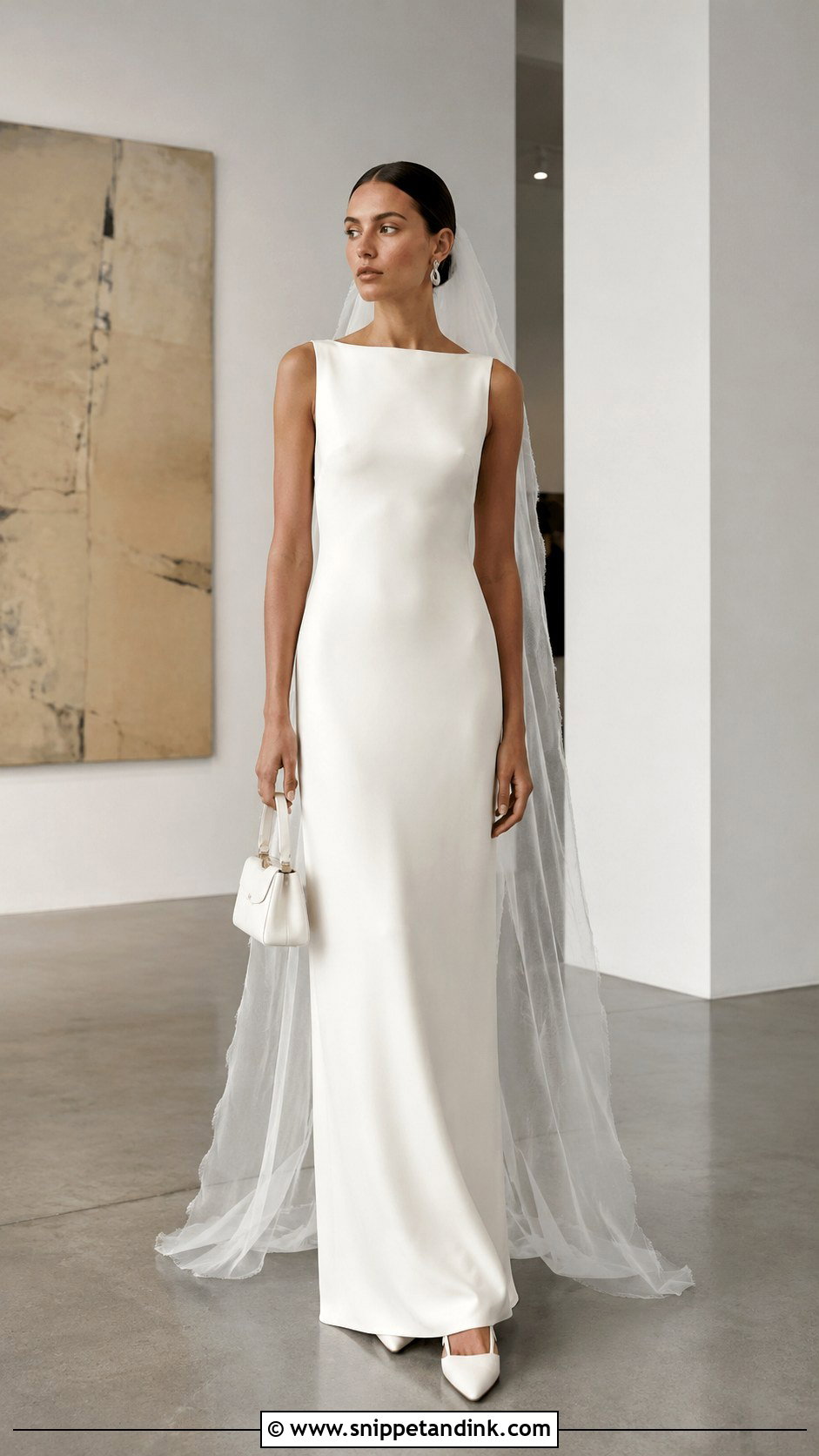
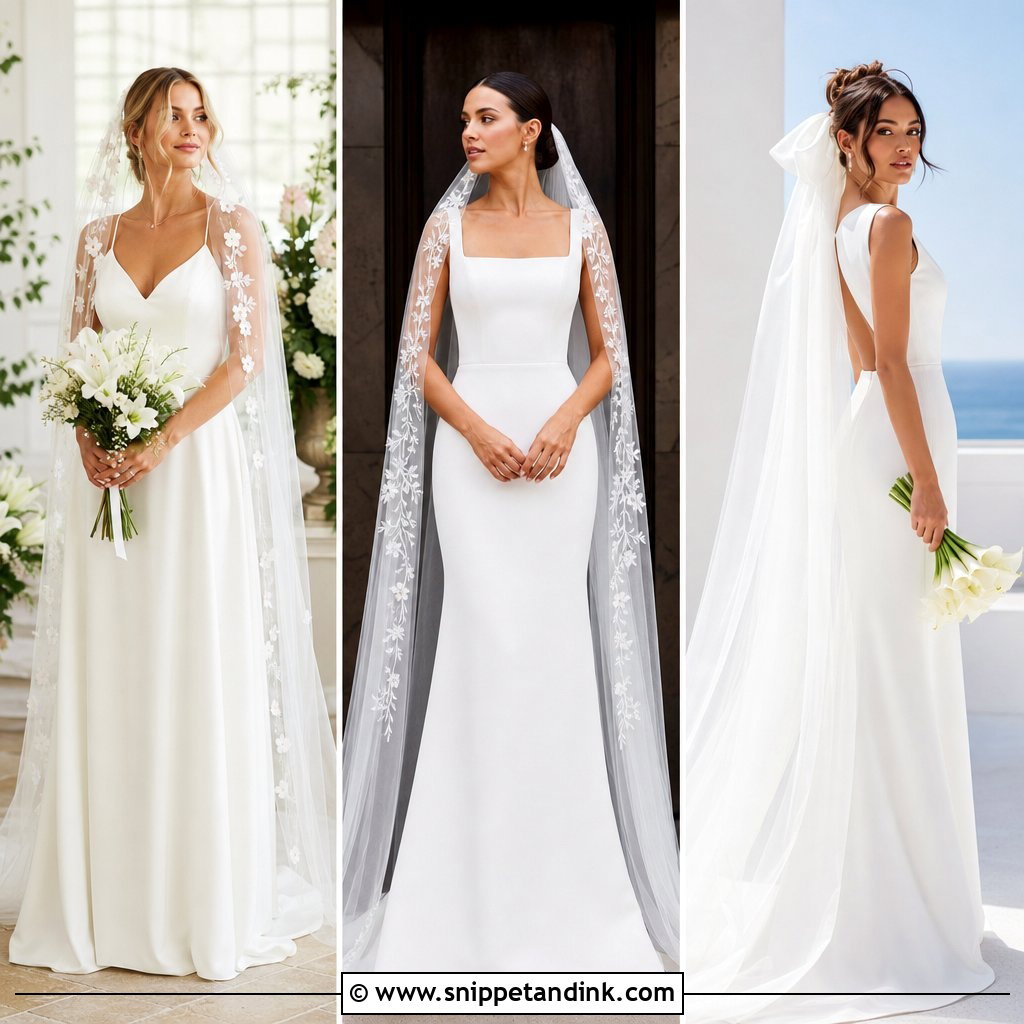
A column gown has nowhere to hide, which is exactly why a raw-cut fingertip veil suits it. Substantial crepe or smooth silk, a straight neckline, precise seams and a close but comfortable fit. The veil should end near your fingertips with your arms relaxed, and with nothing on the edge it looks almost weightless. Because the outfit is restrained, I check the tailoring harder here than anywhere else; a pulled side seam is obvious under sheer tulle. Sculptural earrings, pointed slingbacks, a small ivory top-handle bag, a centre-parted bun and fresh makeup. Galleries, city hotels and architectural spaces give it the clean backdrop it needs.
4. Long-Sleeve Crepe Bride With Chapel Veil
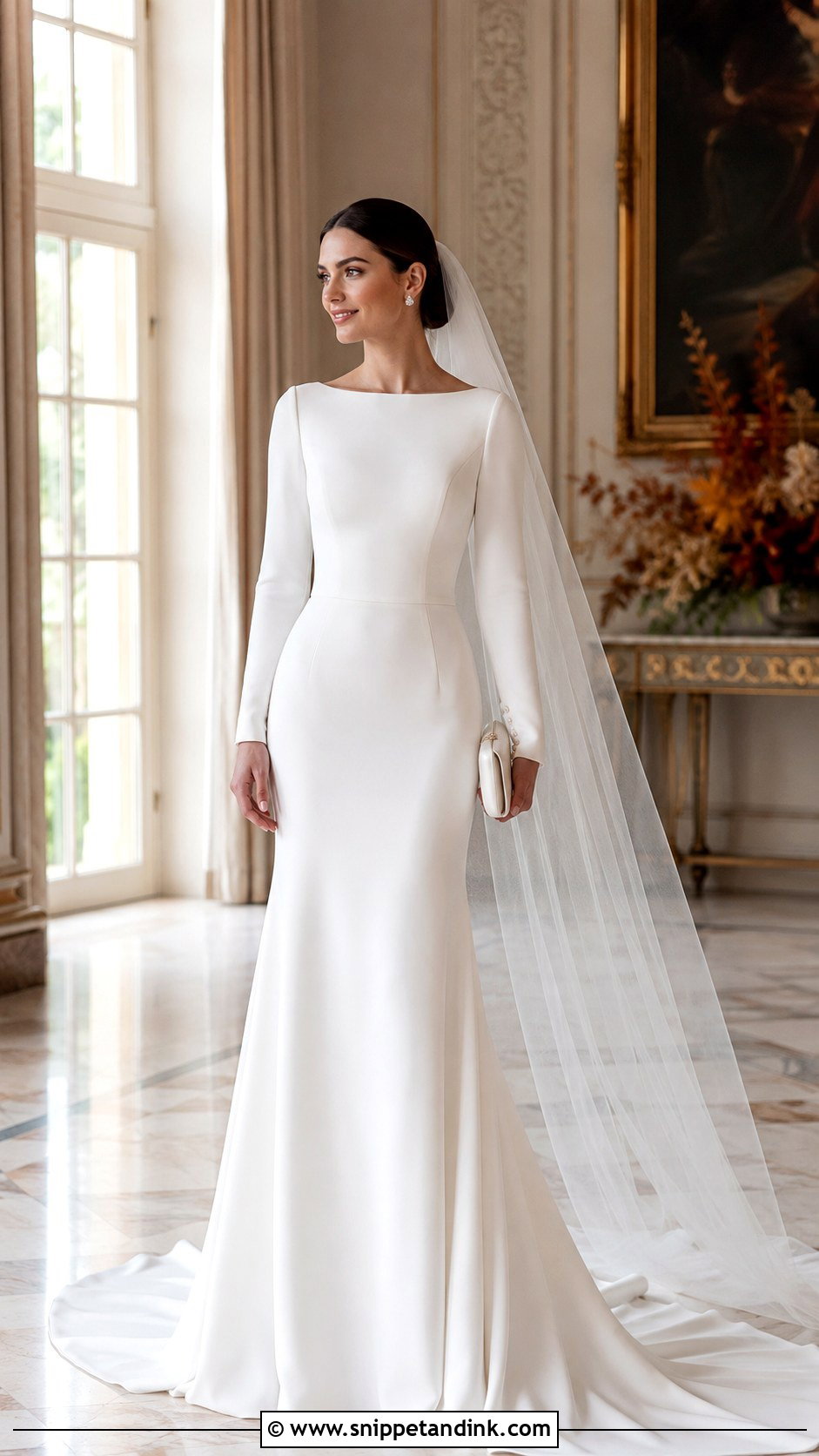
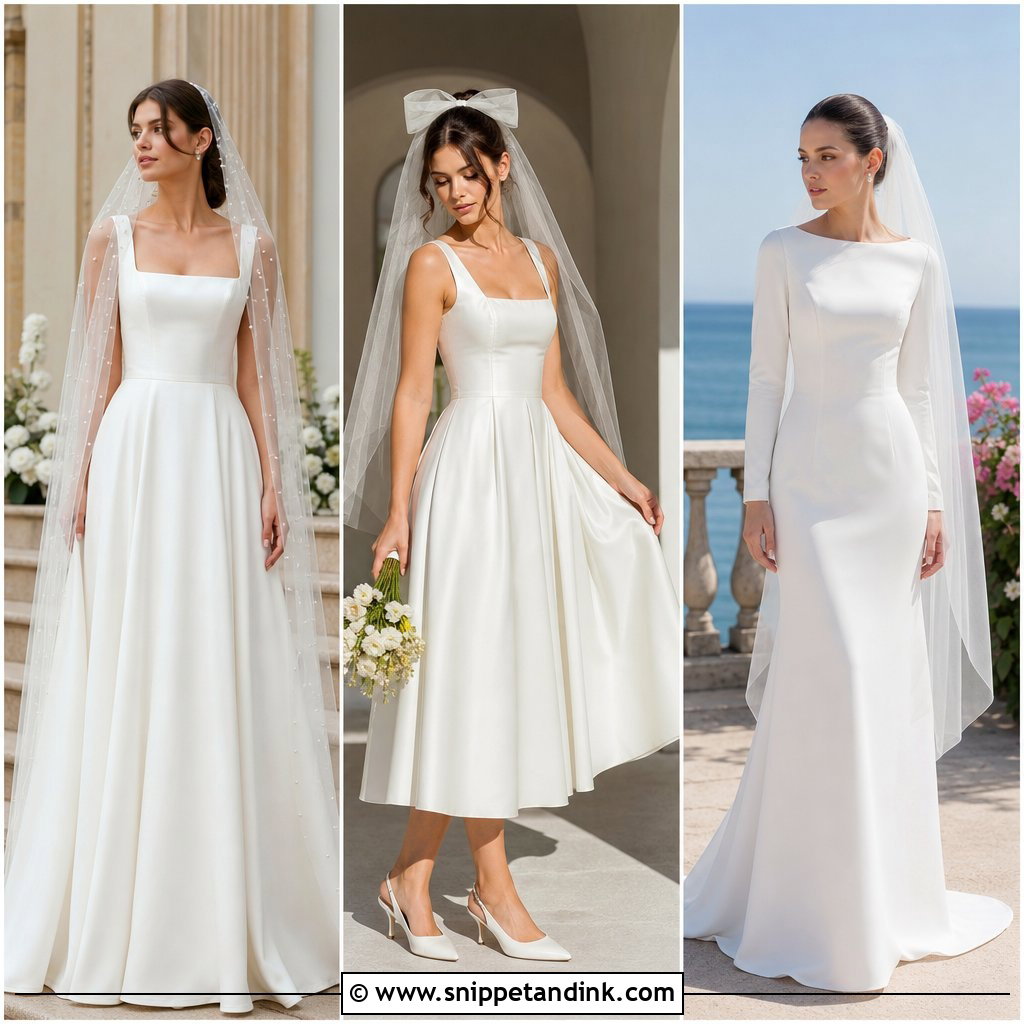
Long sleeves in crepe and a chapel veil read cold-weather formal without any sparkle. A bateau neckline, fitted waist and covered buttons make the base. Choose a single-layer veil that extends a little past the train, enough to move, not cathedral scale. A narrow pencil edge echoes the tailoring. One thing I warn brides about: covered buttons down the back love to snag fine tulle, so ask your fitter to check the veil glides over them before the day. Closed-toe pumps, small diamond or crystal studs and a satin clutch. A low twisted bun lets the veil fall straight down the spine. Fall and winter weddings and formal hotels fit its mood.
5. Drop-Waist Bride With Pearl Veil
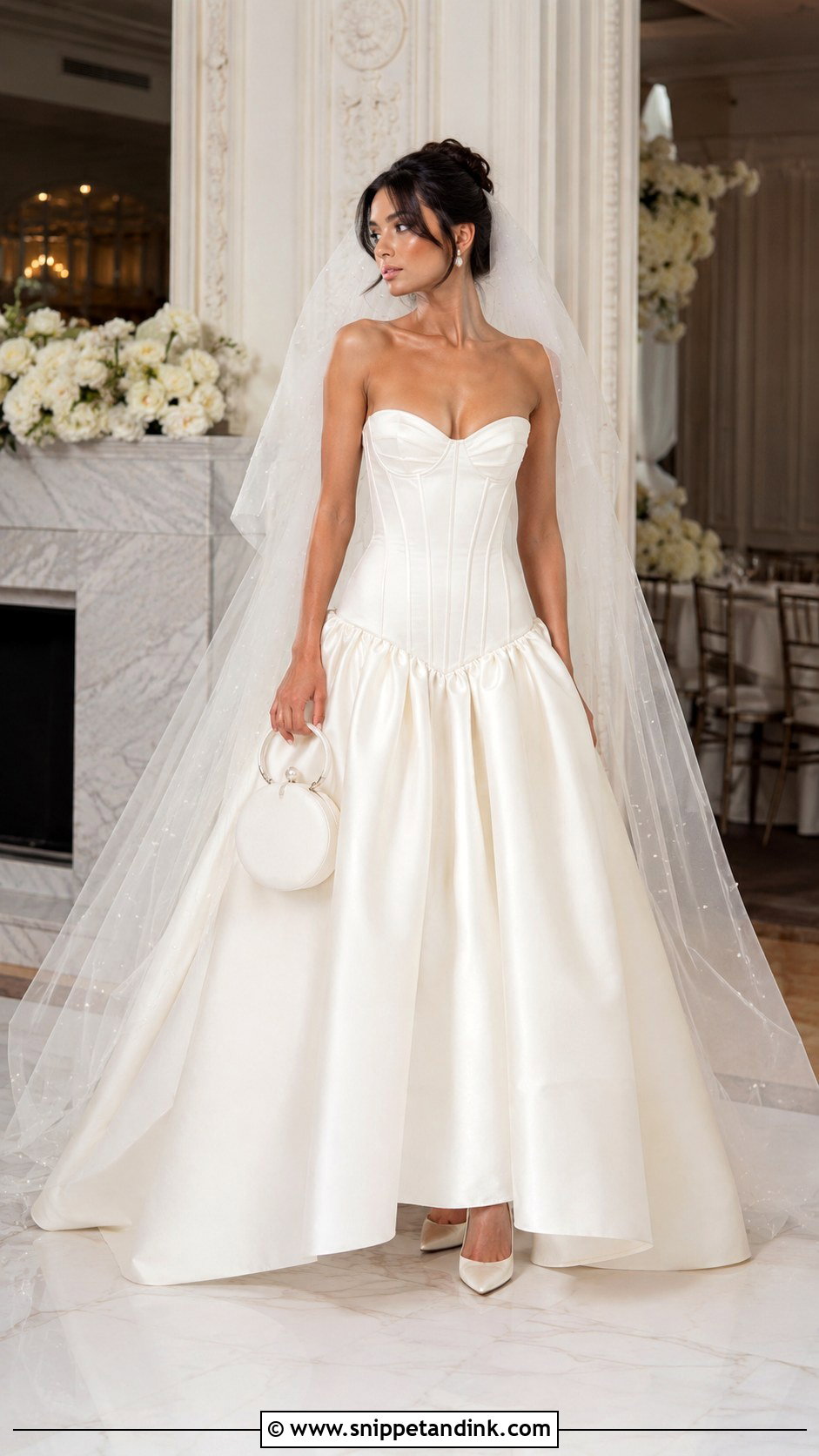
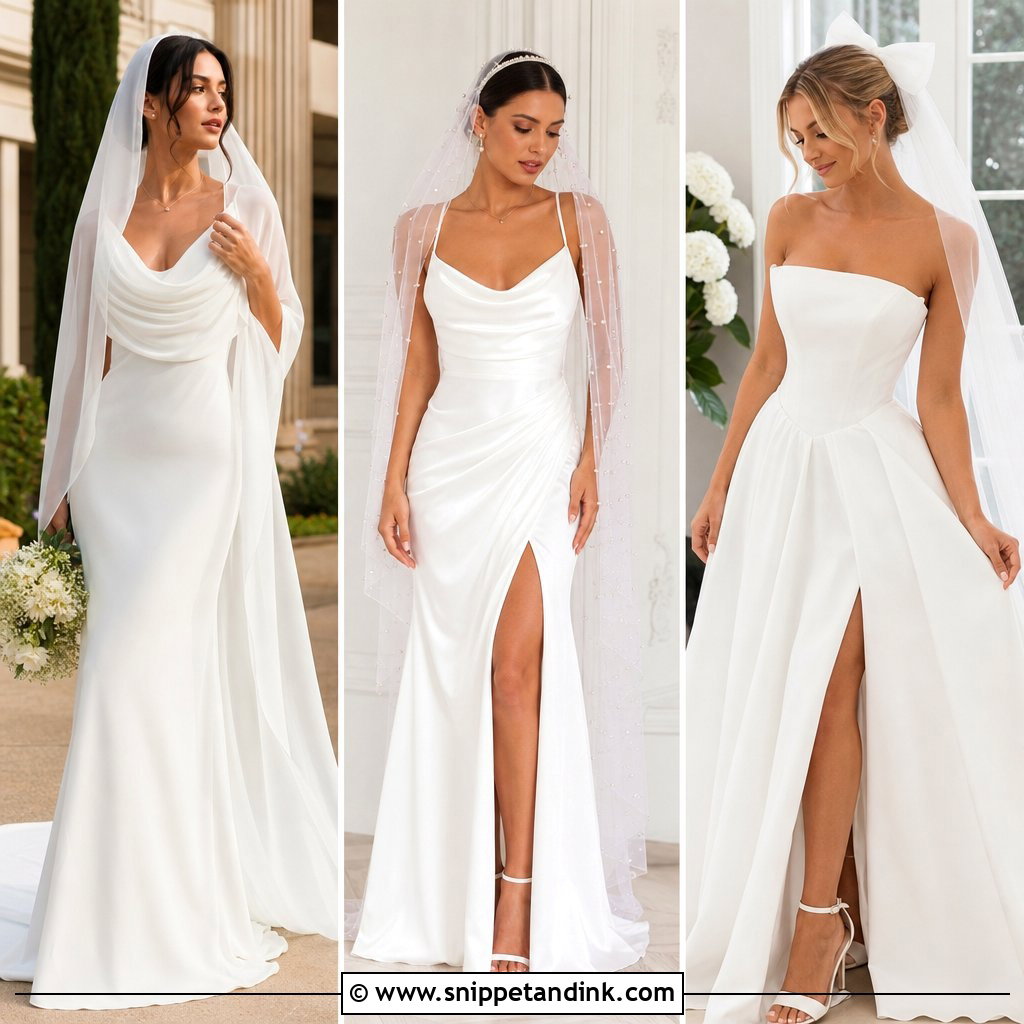
Drop waists are a fashion pick, and a pearl-scattered veil softens them. The corset bodice runs below the natural waist before opening into a full skirt, so the proportions are already the point; keep the gown itself mostly plain. Pearls sewn across the veil add texture around the shoulders and train. Ask how they’re attached, though. Glued pearls fall off after a few hours of brushing against a bodice, while hand-stitched ones survive the dance floor. Pearl earrings, satin pumps and a small rounded bag repeat the detail in a controlled way. A sleek updo keeps the neckline clear. Contemporary ballrooms and luxury hotels suit it.
6. Boho Lace Bride With Floral Veil
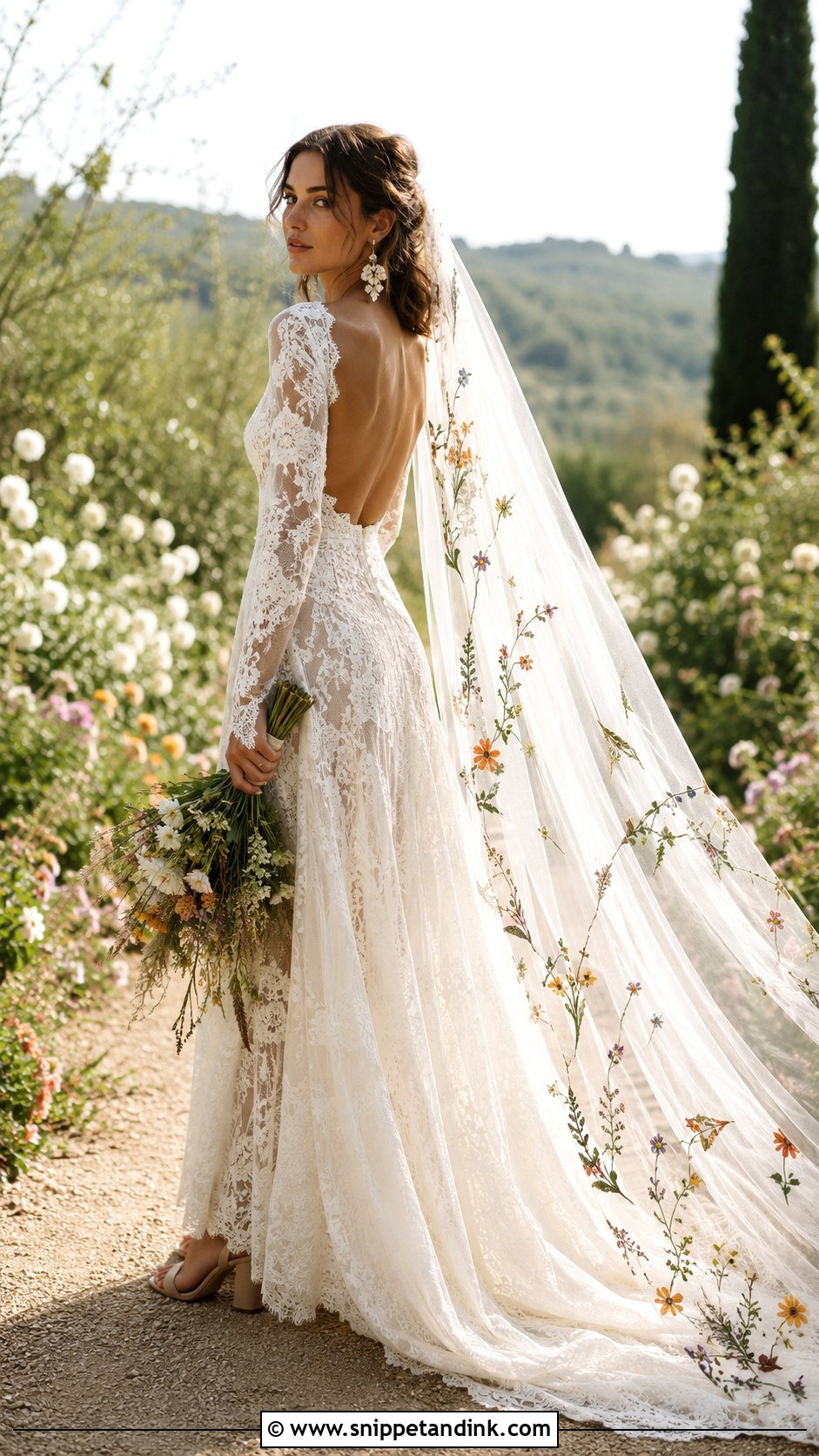
Picture greenery, wildflowers and a lace gown with an open back: that’s where a floral embroidered veil belongs. Vines or small blossoms should sit along the edges and lower section, echoing the gown without covering its best lace. The thing that usually goes wrong outdoors is the veil catching on bark, brambles and chair backs, and embroidered motifs hook more easily than plain tulle. I’d keep the floral work above the hem if you’re walking a woodland path. Block-heel sandals stay steady on grass; pressed-flower earrings and a loose bouquet keep it relaxed. Textured waves or a low braided bun give the comb a grip. Gardens and countryside venues are its natural home.
7. Tea-Length Bride With Birdcage Veil
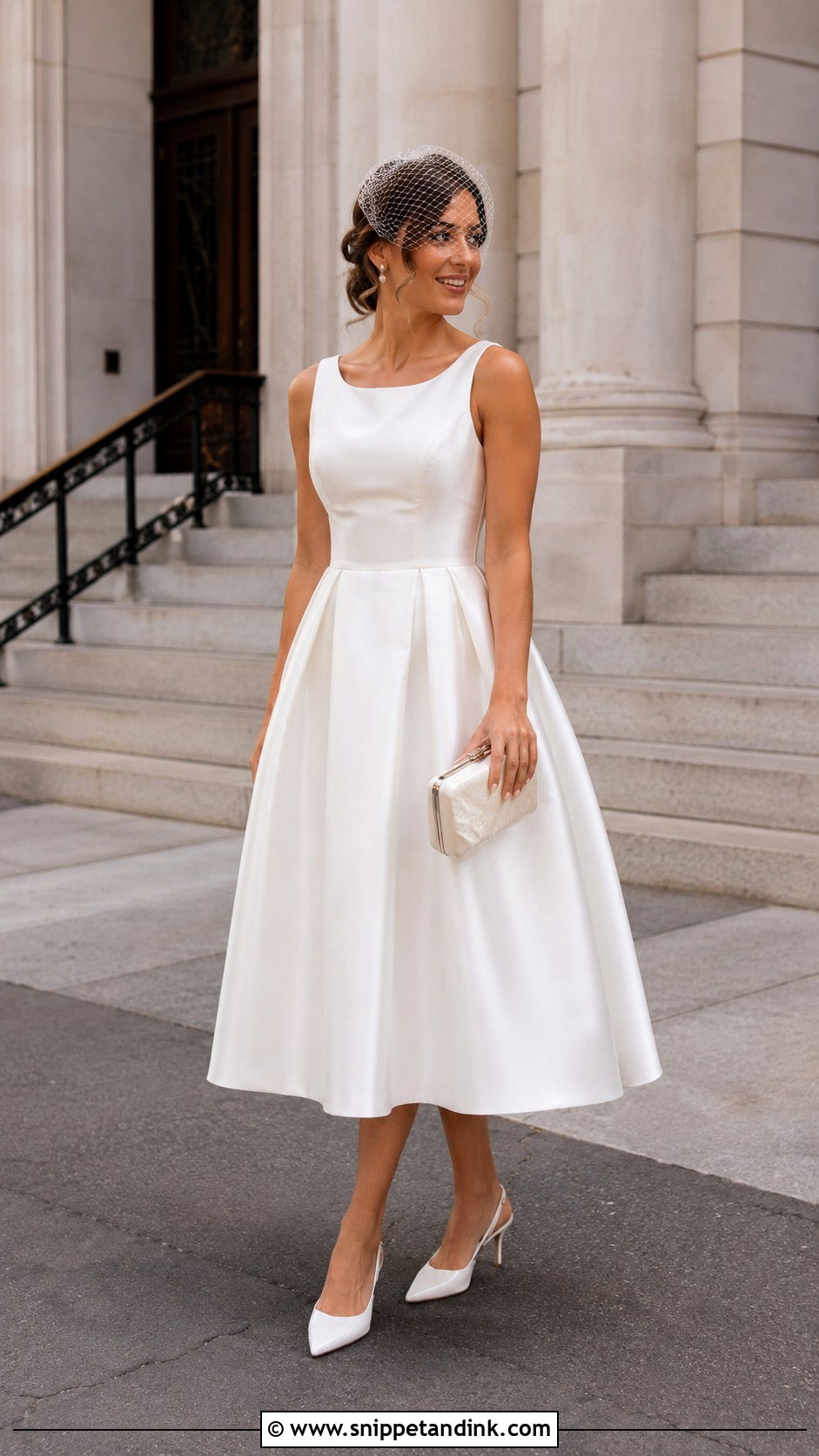
A tea-length dress and a birdcage veil make a playful vintage look that still feels finished. The dress needs a fitted bodice, defined waist and a skirt ending between knee and ankle. Shoes are on show, so pointed pumps, embellished slingbacks or neat ankle straps matter more than usual. I angle a birdcage diagonally across one eye and secure it with a comb plus two pins crossed behind it; net is light, but a single comb rotates as you turn your head. Pearl button earrings and a box clutch add period detail without tipping into costume. A French twist, short bob or smooth low bun suits the shape. Civil ceremonies and restaurant receptions are where it shines.
8. Silk Slip Dress Bride With Juliet Cap Veil
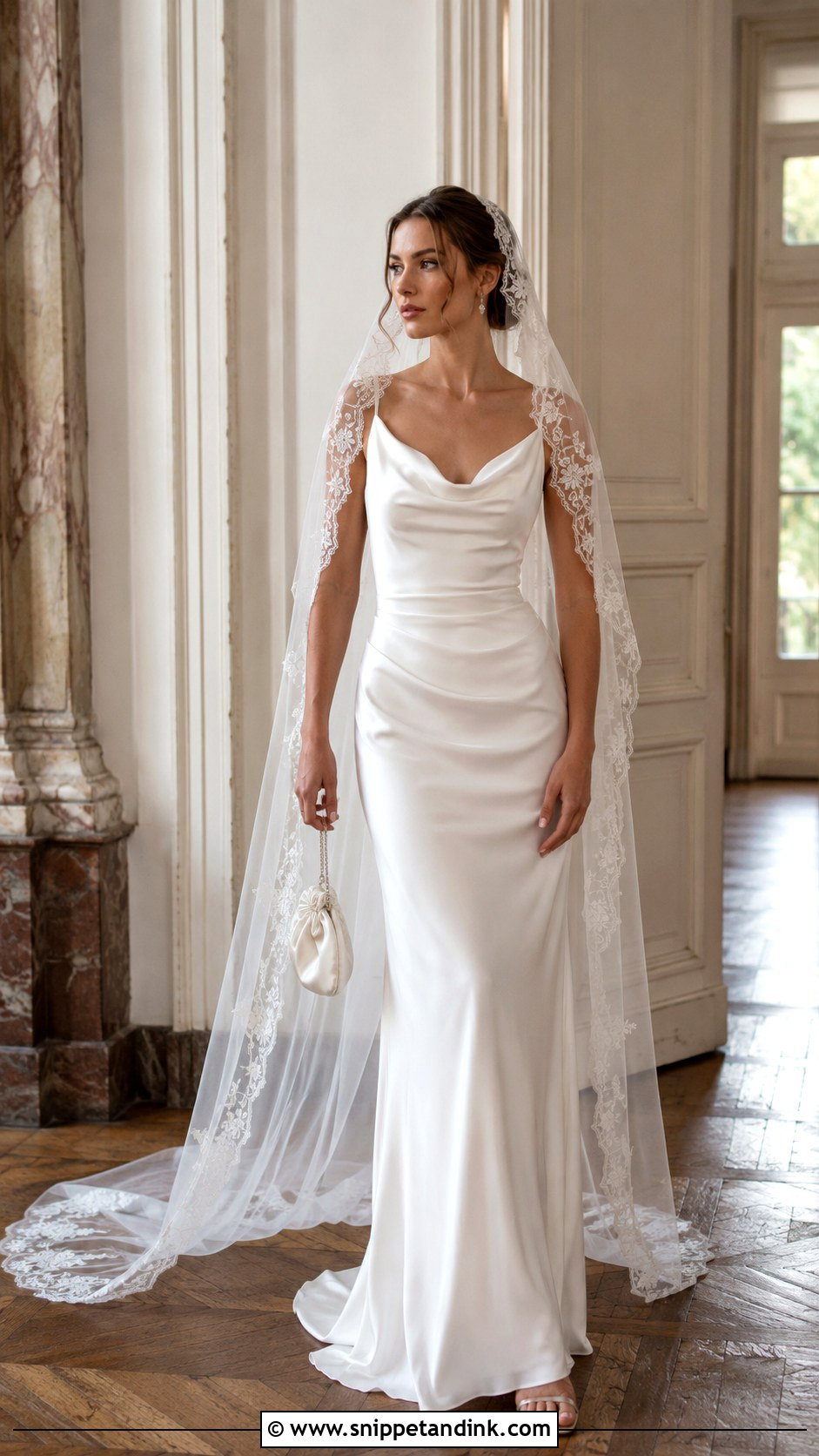
A silk slip and a Juliet cap veil are deeply romantic together, with a 1920s feel. The gown should skim the body, with a draped neckline, narrow straps and a plain floor-length hem. The cap sits close to the head and then falls into long layers, so it frames the face and shoulders. Lace, tiny pearls or small appliqués at the cap give it character. Skip a statement necklace; it fights the drape. Drop earrings, slim metallic sandals and a petite satin bag instead. My honest caveat: a cap needs flat, close hair underneath, so finger waves or a low bun are your options, and very thick hair can make the cap sit too high. Candlelit ballrooms and historic homes suit it.
9. Square-Neck Bride With Blusher Veil
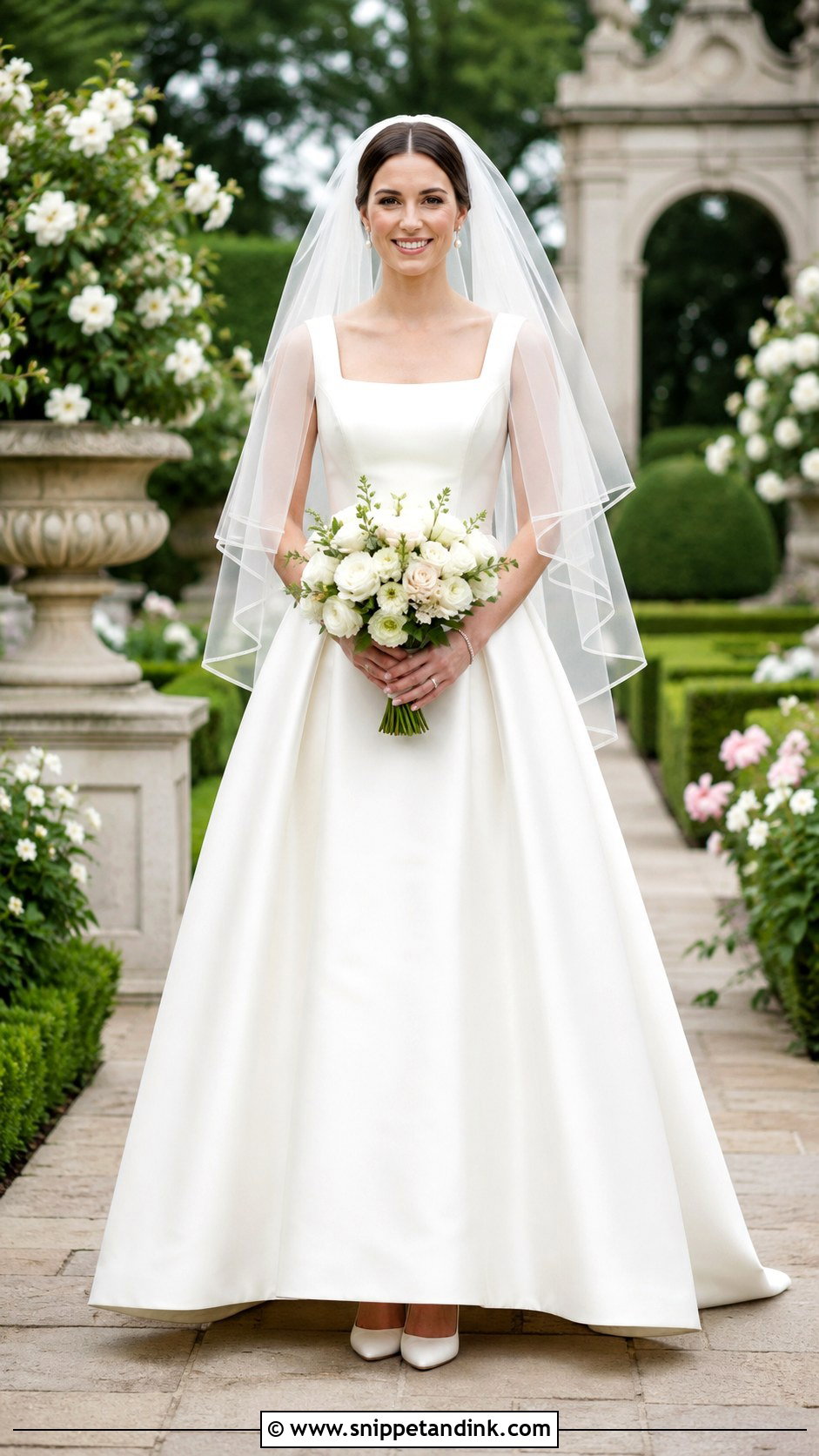
Want the traditional veil-lift without covering the whole dress? A square-neck gown with a two-tier blusher veil does it. A structured bodice with supportive straps, an A-line or softly full skirt. The short front layer covers the face for the ceremony; the long back layer moves behind you. Plain tulle won’t compete with that strong neckline. Rehearse the lift. Whoever lifts it should take the blusher by the bottom corners and flip it all the way back over the comb in one move, or it lands in a crumpled heap on top of your head. Pearl studs, a tennis bracelet and closed ivory heels. Formal indoor weddings and estates both suit it.
10. Off-Shoulder Bride With Lace-Edge Veil
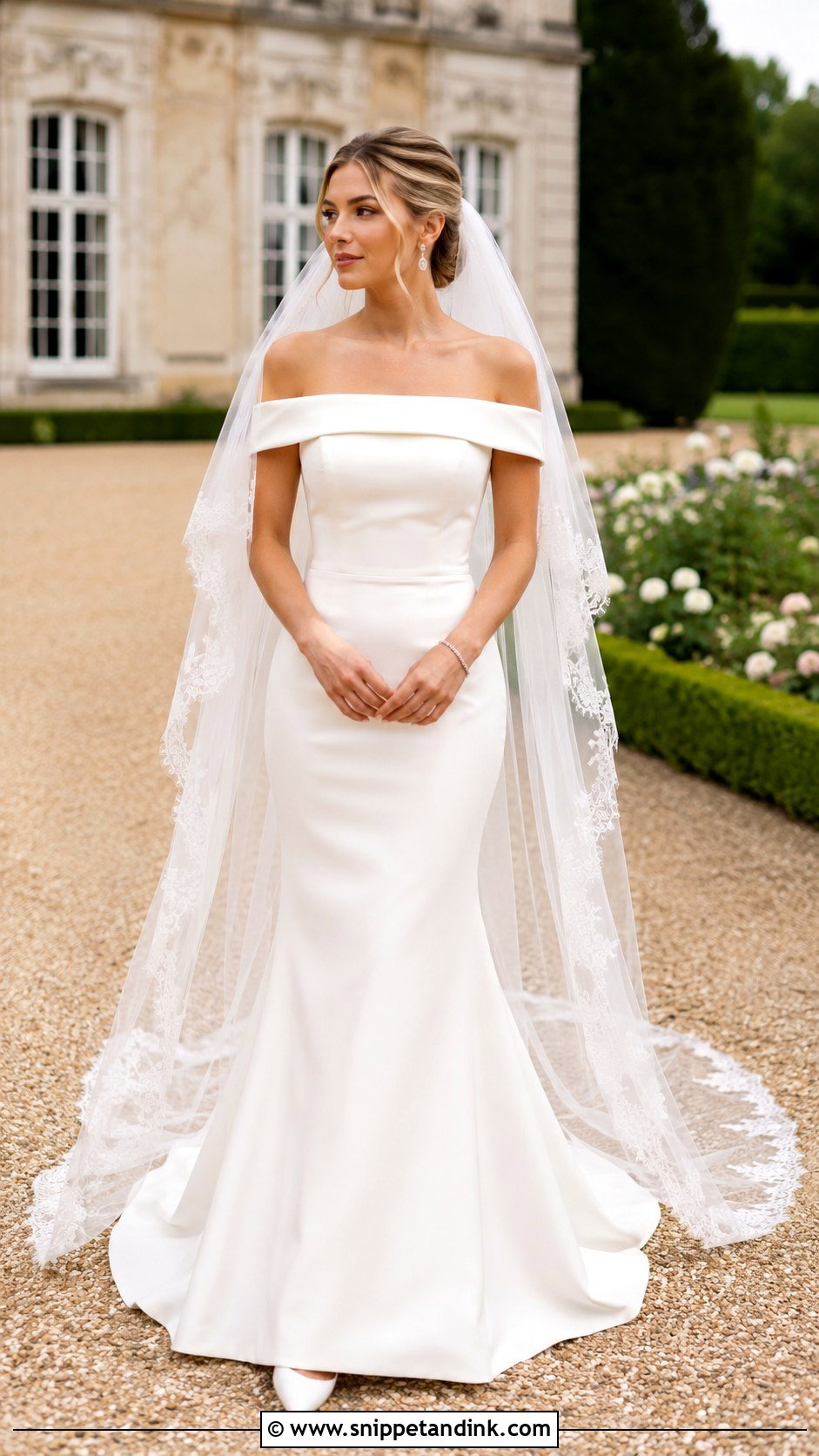
An off-the-shoulder neckline is all collarbone, so the veil has to stay out of its way. A fitted bodice with a folded neckline and a softly flared or full skirt. I attach the comb below a low bun so the veil falls behind the shoulders and the neckline stays bare. A narrow lace border gives a crisp line in photos; a wide one feels more traditional. Match the lace tone carefully, because bright white lace beside an ivory gown makes the gown look yellow in daylight. Crystal drops, a fine bracelet and pointed pumps. Formal gardens, estates and ballrooms suit its classic poise.
11. Mermaid Bride With Cathedral Veil
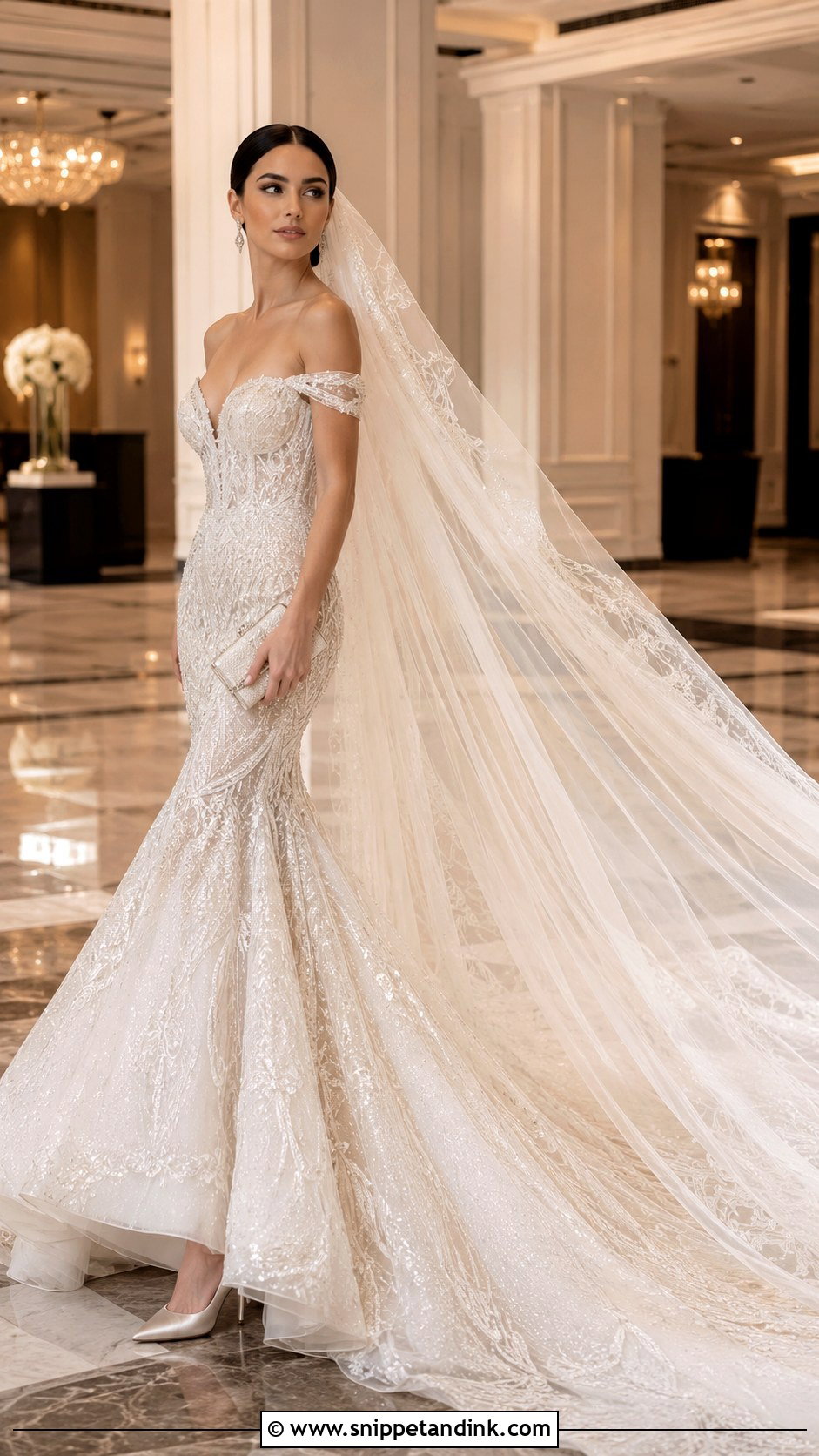
A mermaid gown and a cathedral veil are pure drama, and the veil should extend well past the train. The dress follows the body to the knee and then flares into an hourglass. A sheer veil with scattered appliqués adds texture without blurring that outline. My rule of thumb: busy dress, plain veil edge; smooth dress, lace or embroidery near the hem. Walking is the real test in a mermaid, since your stride is short and a long veil gets stepped on by your own heel when you turn. Practise turning at the altar in the actual shoes. Pointed pumps, slim drops, a structured clutch, and a lifted bun or glamorous side-parted waves depending on the neckline. Big ballrooms and formal hotels give it room.
12. High-Neck Lace Bride With Waltz Veil
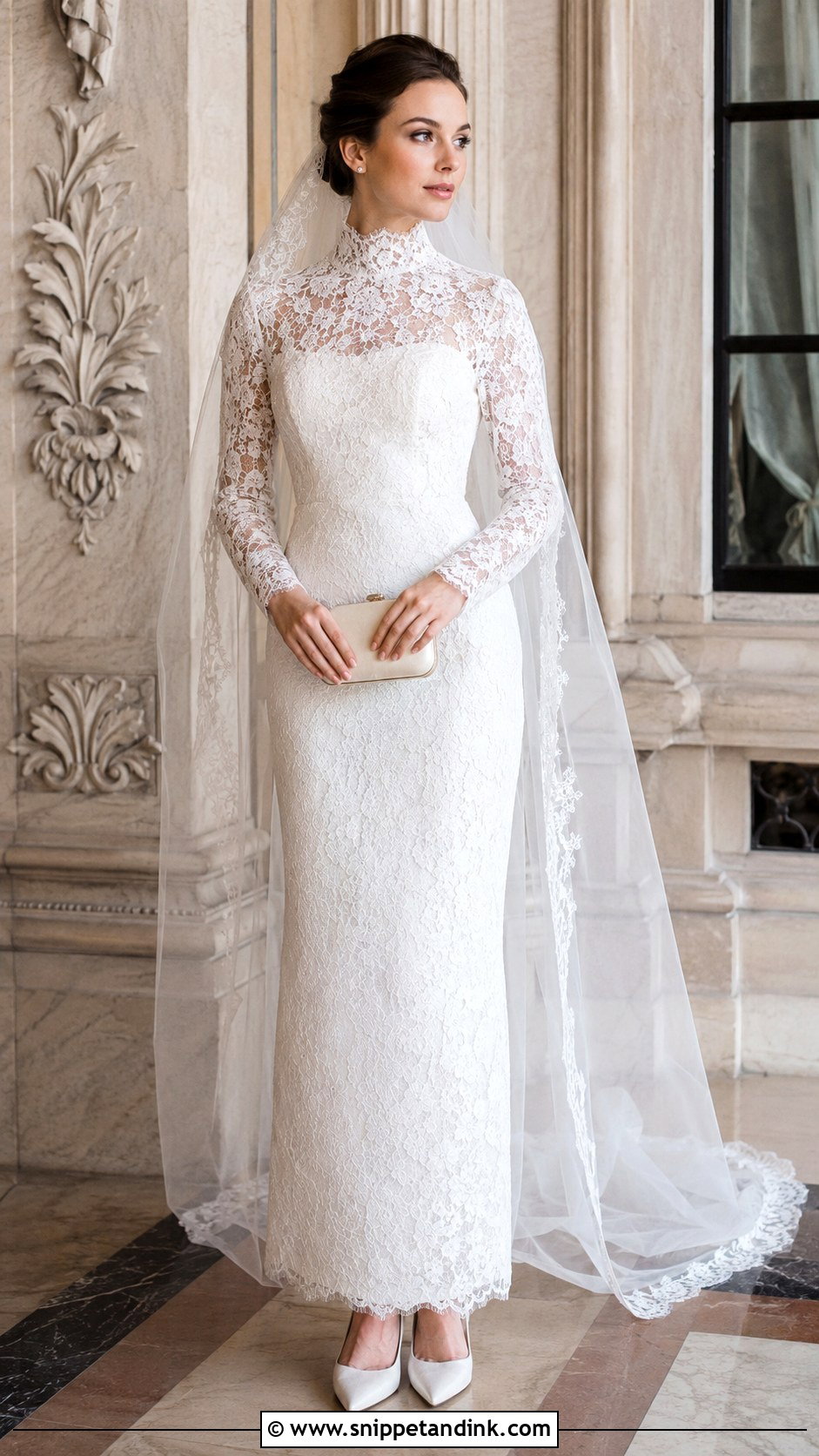
A high-neck lace gown is already busy with detail, so a soft waltz-length veil adds movement without hiding any of it. Waltz length falls between knee and ankle, which makes it much easier to walk and dance in than the longer options; it’s the length I suggest to brides who want a veil on all evening. Sheer plain tulle or a very fine lace edge. Pair it with a fitted long-sleeve gown, covered buttons and a lightly flared skirt. Small studs, satin pumps and a smooth clutch. A low bun keeps the high neckline clear. It gives modest coverage for cool-weather weddings and formal daytime ceremonies.
13. Courthouse Bride With Shoulder Veil
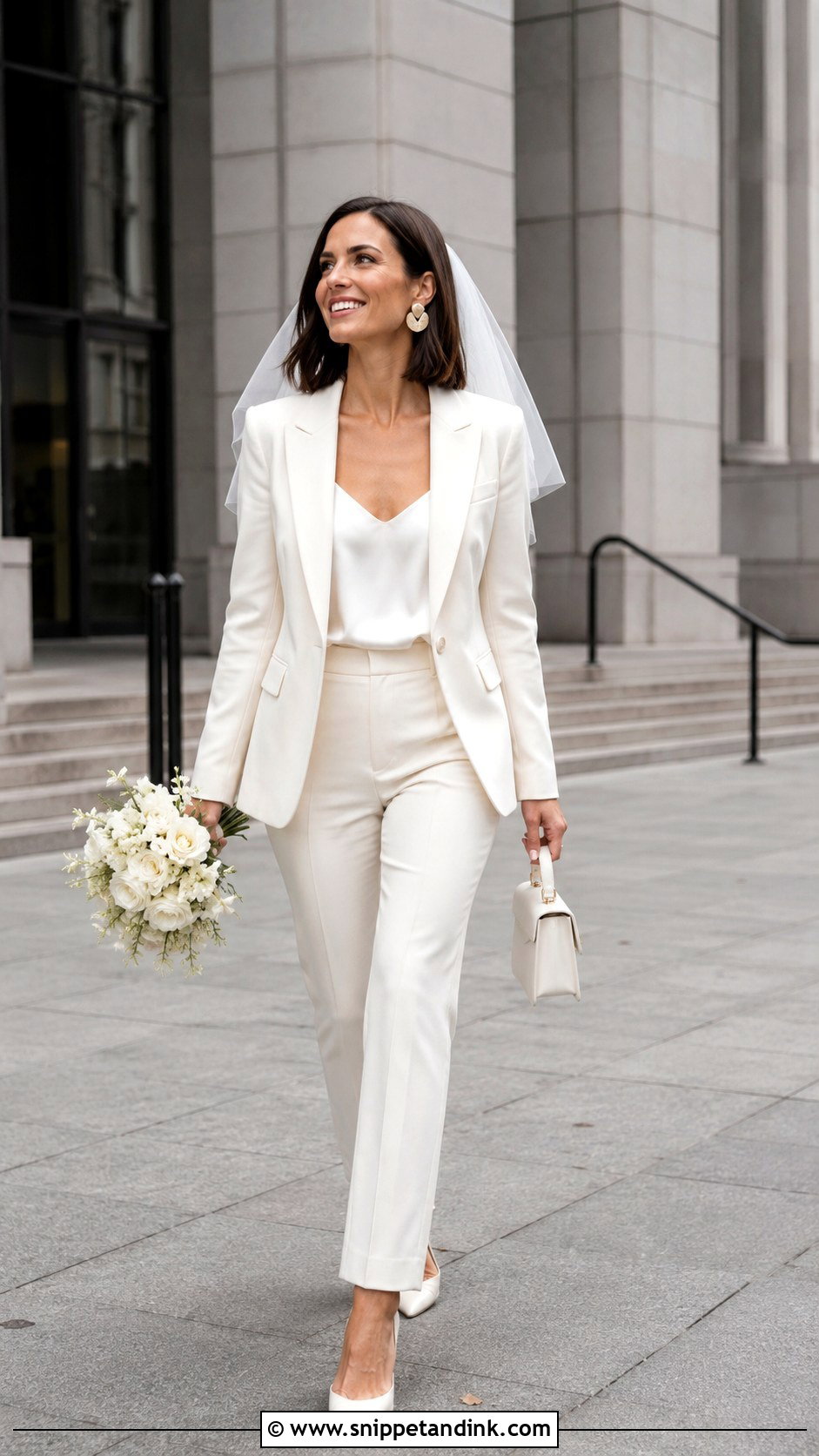
Tailoring gives a courthouse bride a sharp alternative to a gown. An ivory pantsuit with a fitted waist and full-length trousers, a silk camisole or bandeau underneath, and a shoulder-length veil to say “bride” clearly. A crisp cut edge, a tiny bow or a subtle pearl trim is enough detail. Pointed pumps, a mini structured bag and sculptural earrings. Watch the jacket collar: a shoulder veil rests right on it, and a stiff lapel pushes the tulle out sideways, so I’d pin the comb a little higher than usual so it clears. A sleek ponytail, bob or polished bun keeps it current. Every piece can be worn again separately afterwards.
14. Beach Bride With Floor-Length Veil
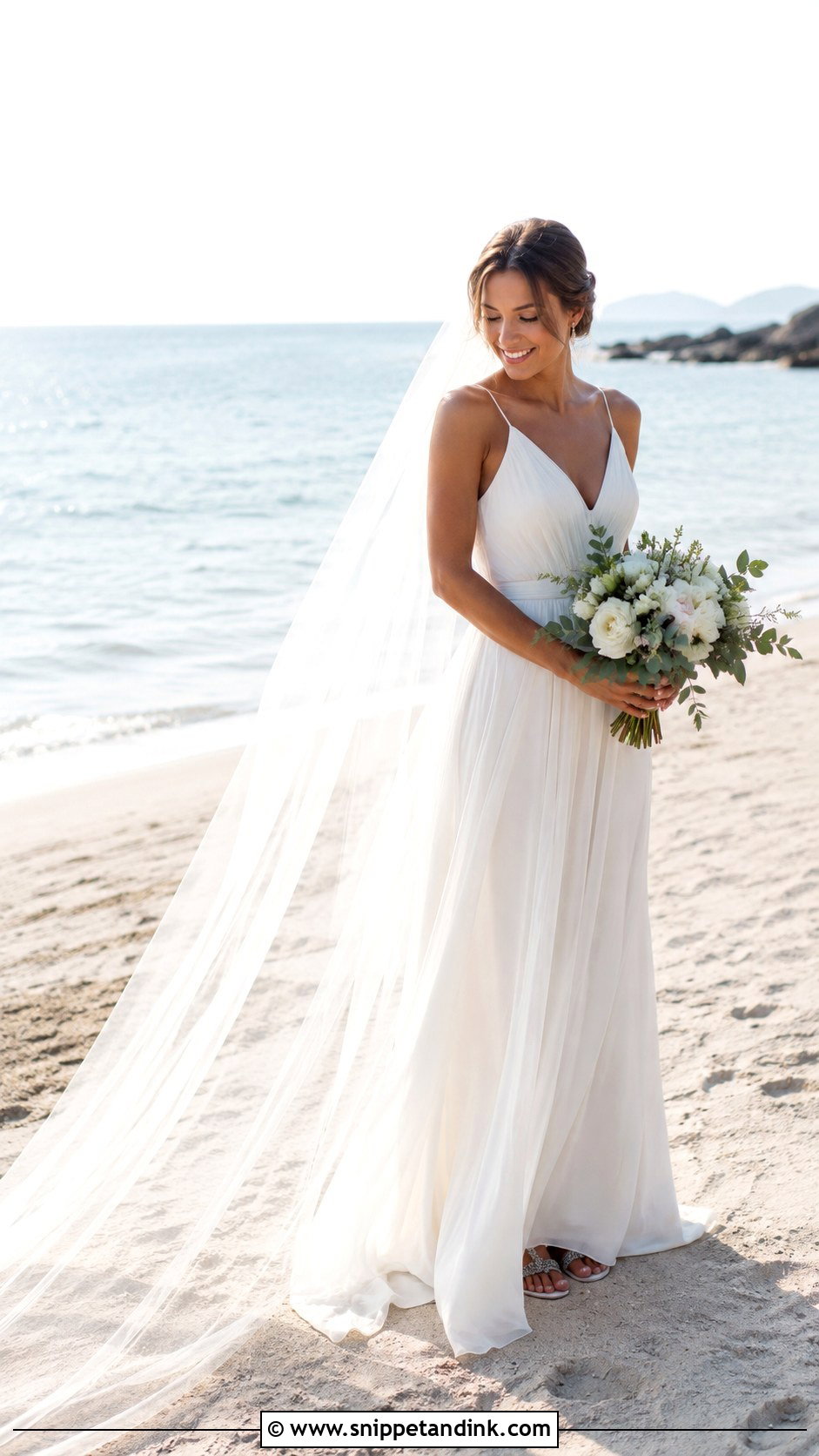
A chiffon gown and a floor-length veil move well on a beach, as long as you plan for the wind. Narrow straps, a supportive bodice and a skirt that flows rather than clings. The veil should just touch the sand, not trail into a train that drags wet sand behind you. On the coast I use soft tulle rather than stiff net, and I add a couple of hidden pins beside the comb, because a sea breeze turns a veil into a sail. Flat embellished sandals or low block heels, small shell-inspired earrings and a delicate bracelet. A textured low bun stops hair and tulle knotting together. Skip heavy beading and stiff fabrics entirely.
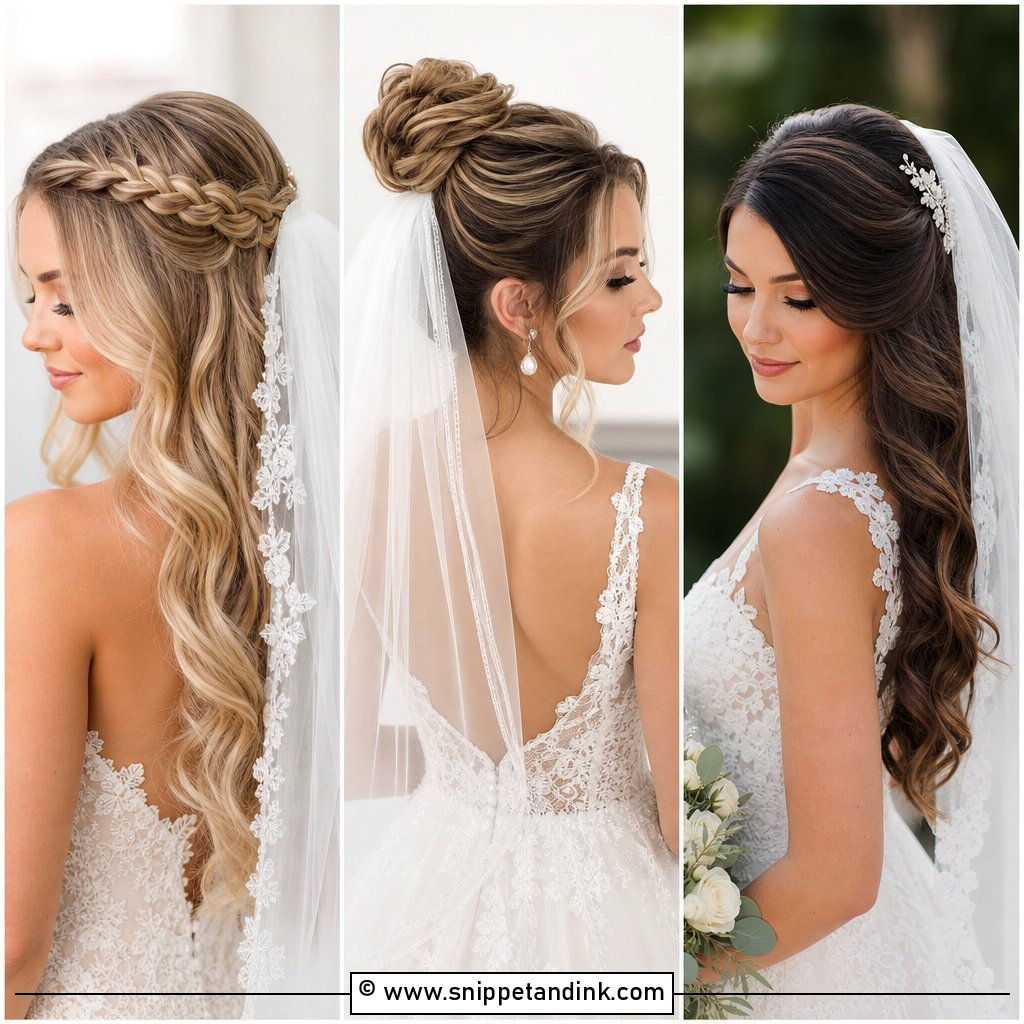
15. Floral Appliqué Bride With Embroidered Veil
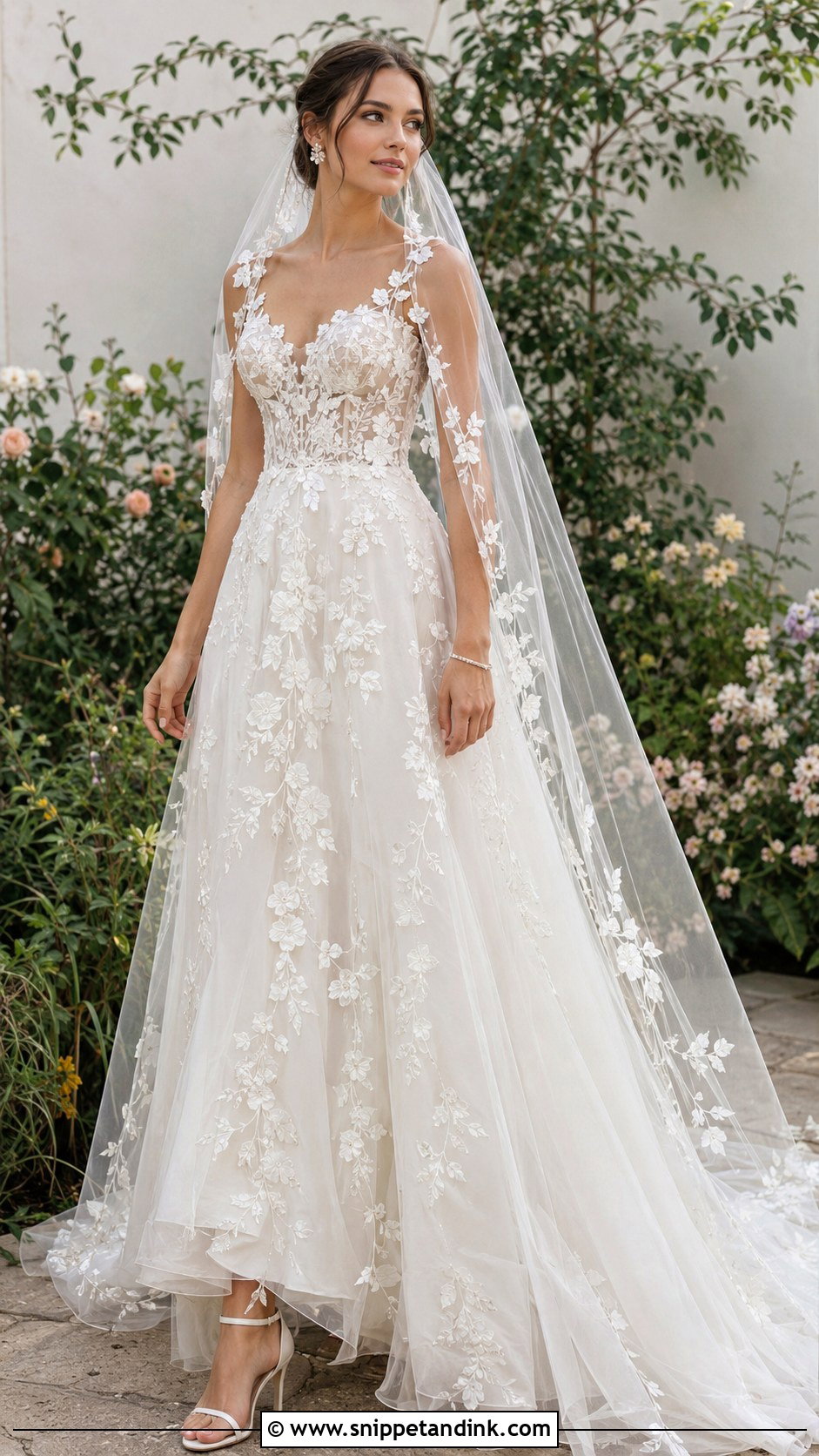
Floral appliqué on both gown and veil makes a cohesive botanical look for a garden wedding. Three-dimensional flowers concentrated at the bodice and scattered down an A-line skirt, and smaller embroidered blossoms on the veil edges or near the train. Keep the veil sheer around the face and shoulders so the whole thing doesn’t look overloaded. I coordinate florals by scale and placement, not by matching every motif; small flowers on the veil against large ones on the dress actually looks more deliberate. Simple satin heels, floral studs and a slim bracelet. A softly pinned bun or half-up style. Conservatories and flower-filled venues suit it.
16. Mikado Gown Bride With Bow Veil
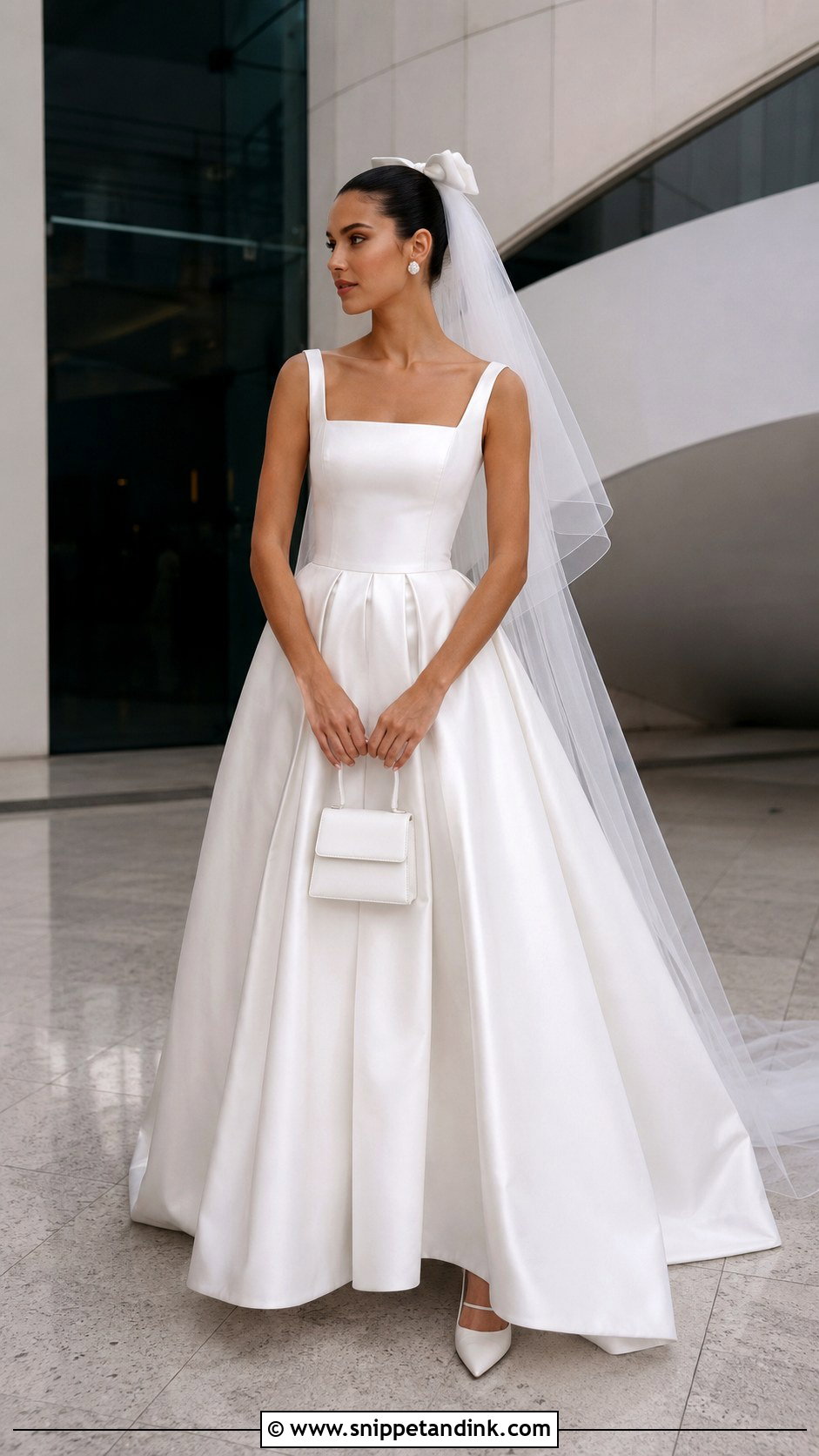
Crisp Mikado holds a sculptural shape, and a bow veil plays up that architecture. A strapless or square-neck gown with a fitted bodice and a full, cleanly pleated skirt. Rather than embellished tulle, choose a plain fingertip or chapel veil gathered under a structured satin bow. The bow is the interest from behind. Ask for the bow to be stiffened with interfacing, otherwise it droops by the reception. Pointed satin heels, button earrings and a compact top-handle bag. I place a smooth bun just above the bow so you can see both clearly. No lace, no sparkle, and still formal; modern hotels, galleries and minimalist venues suit it.
17. Vintage Bride With Elbow-Length Veil
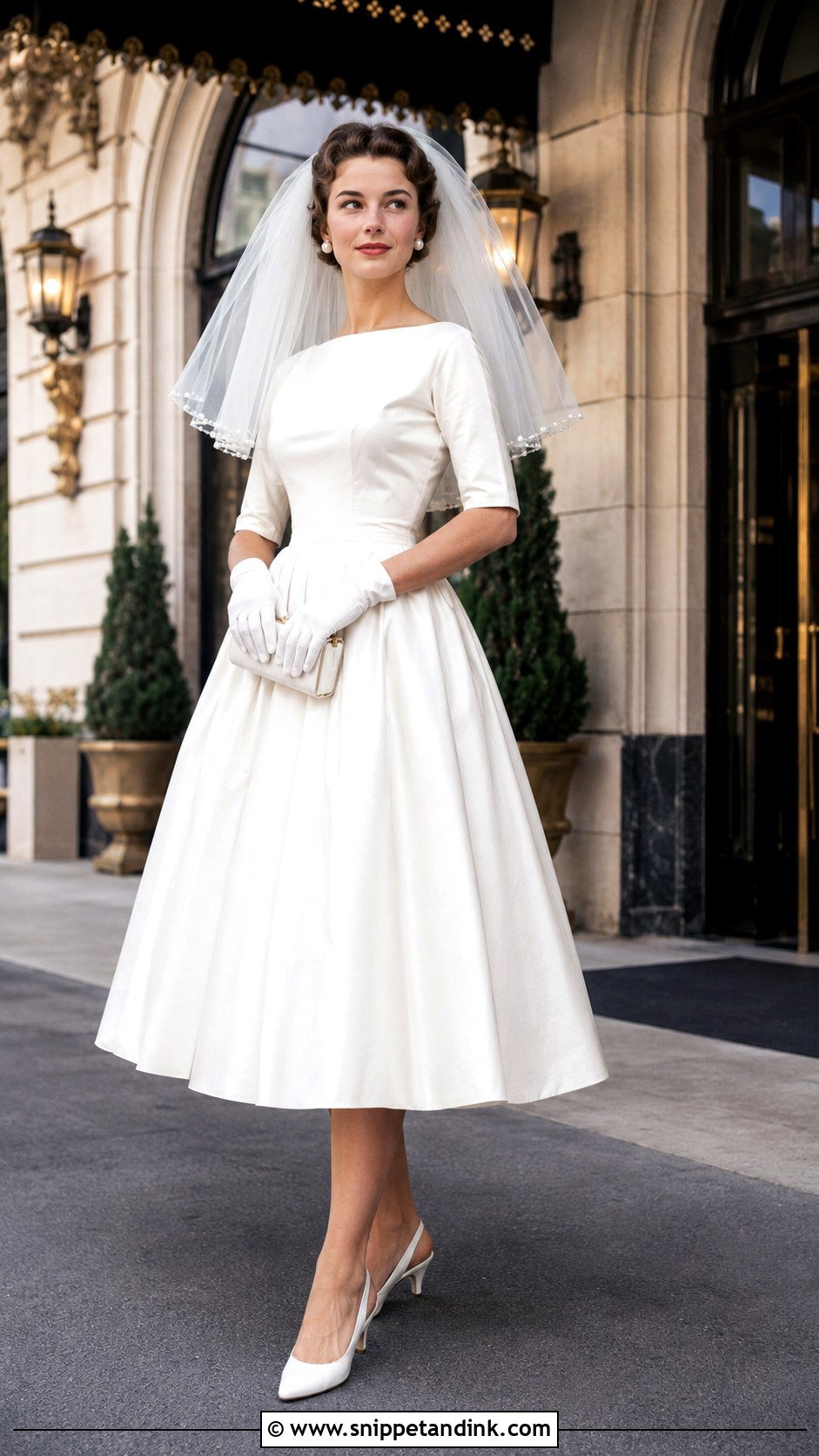
A fitted-waist dress with an elbow-length veil has a charming vintage outline. Bateau neck or short sleeves, a structured bodice and a gently full skirt. The veil stops at the elbows, softening the upper body without covering the skirt or shoes, which is why I suggest this length for brides with detail at the hem they don’t want hidden. A narrow satin edge, scattered tiny pearls or a small comb. Low slingbacks, pearl earrings and short wrist-length gloves if the formality suits. A smooth chignon or waved bob. Daytime weddings, city venues and historic hotels with retro detail suit it.
18. Corset Ball Gown Bride With Chapel Veil
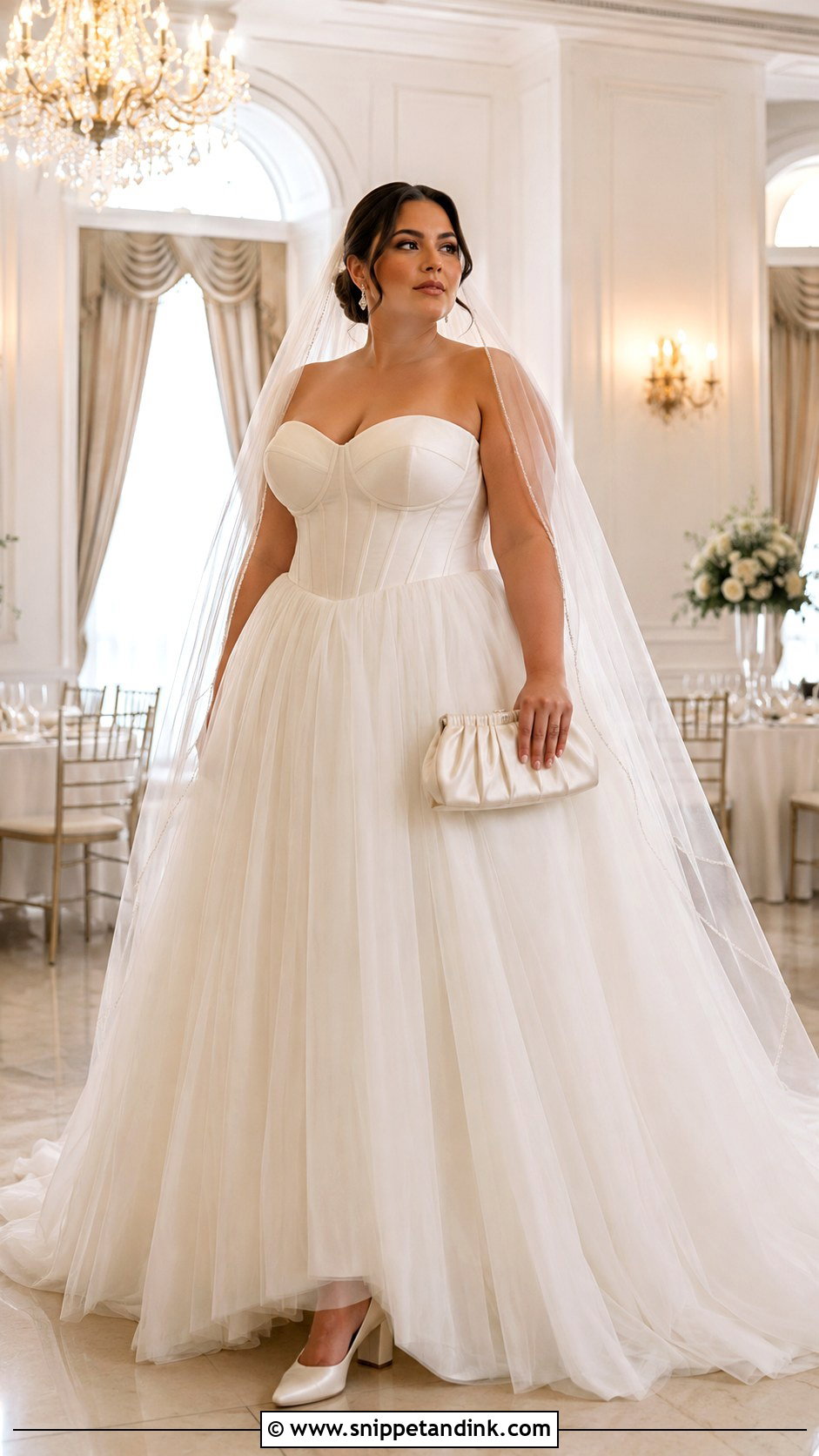
A supportive corset ball gown defines the waist across a huge range of body types and sizes. Look for internal structure, comfortable boning and a neckline that stays put when sitting, walking and dancing. A full skirt balances the fitted top, and a chapel veil adds length without becoming hard to manage. Soft single-layer tulle lets the shape show from behind; a double layer hides the lacing you probably love. Block-heel pumps, medium drop earrings, a satin clutch. A high bun or textured low updo anchors the comb. I’d always alter the gown to the bride rather than expect the bride to fit the gown. That’s where the confidence comes from.
19. Mature Bride With Jumpsuit And Birdcage Veil
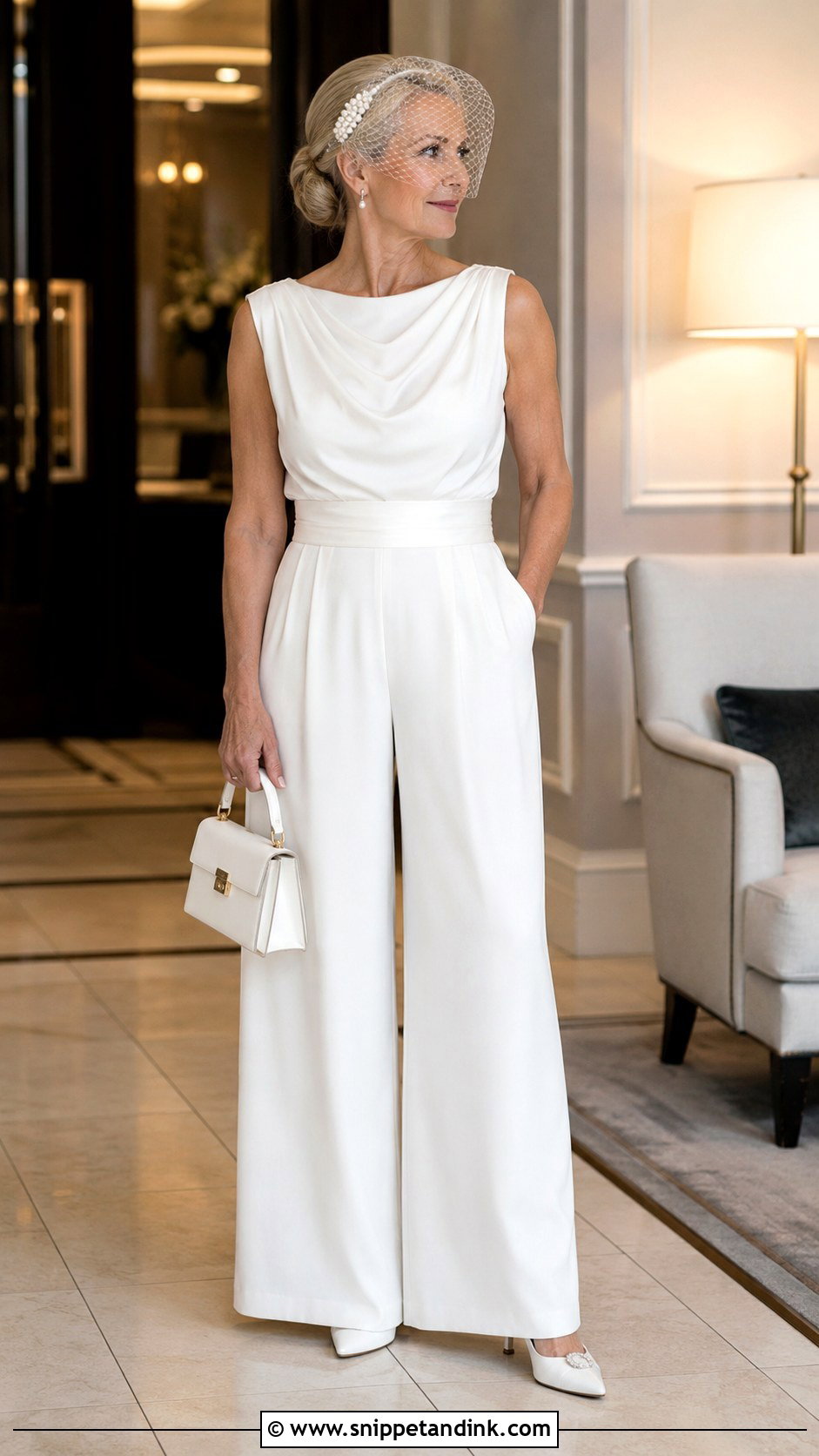
A well-cut bridal jumpsuit gives a mature bride comfort and real polish. An ivory design with a defined waist, softly draped bodice and wide trousers that skim the shoes. A short birdcage veil brings ceremony without a train or a complicated hairstyle. Secure it with a pearl comb, a small pillbox base or a fabric flower to one side. On short or fine hair I sew the netting to a tiny base rather than relying on a comb, because there’s simply less hair to grip. Kitten heels, polished earrings and a top-handle bag. A smooth bob, swept-back short cut or low chignon. Civil ceremonies, second weddings and hotel gatherings suit it.
20. Ivory Gown Bride With Colorful Veil
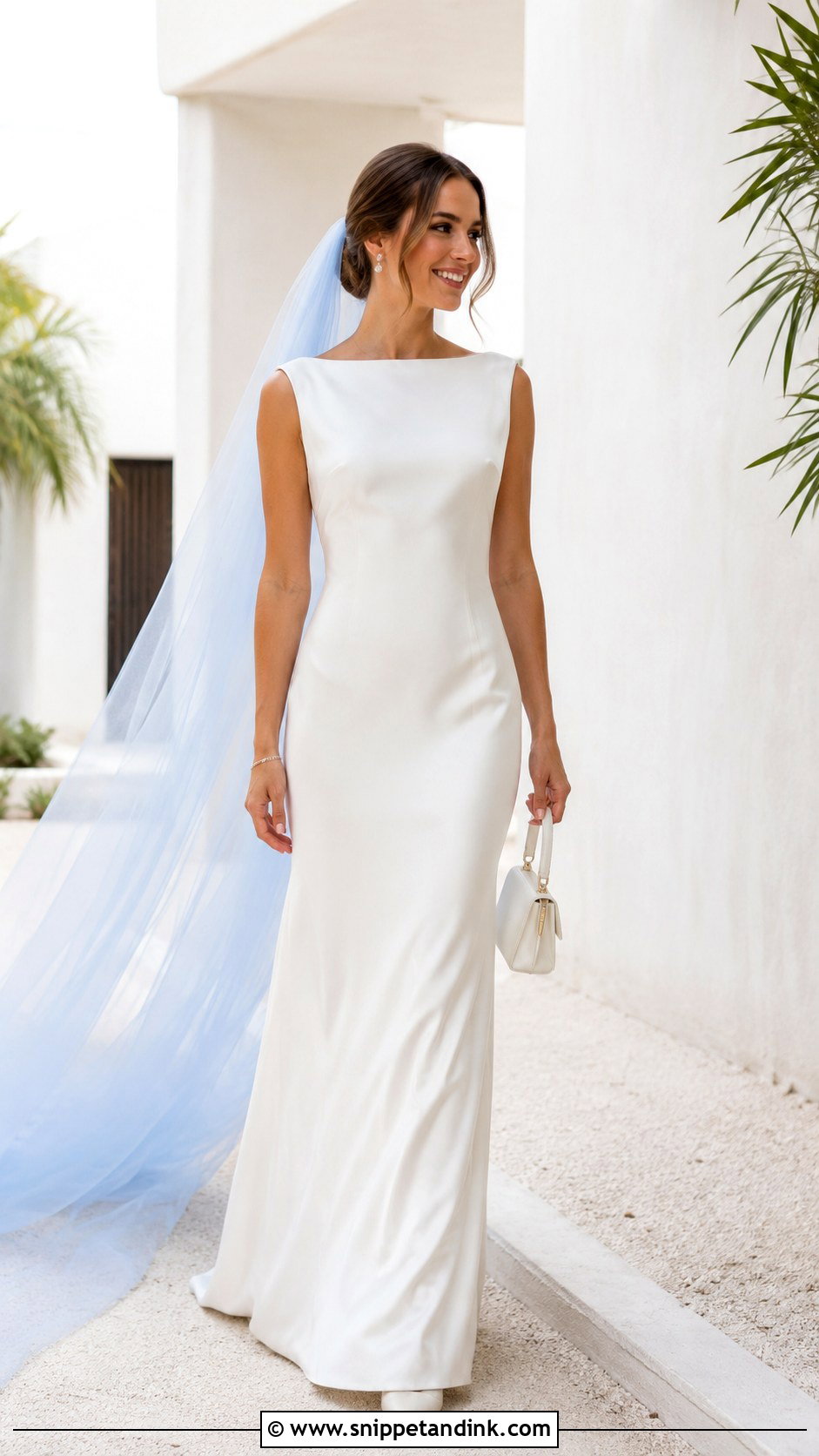
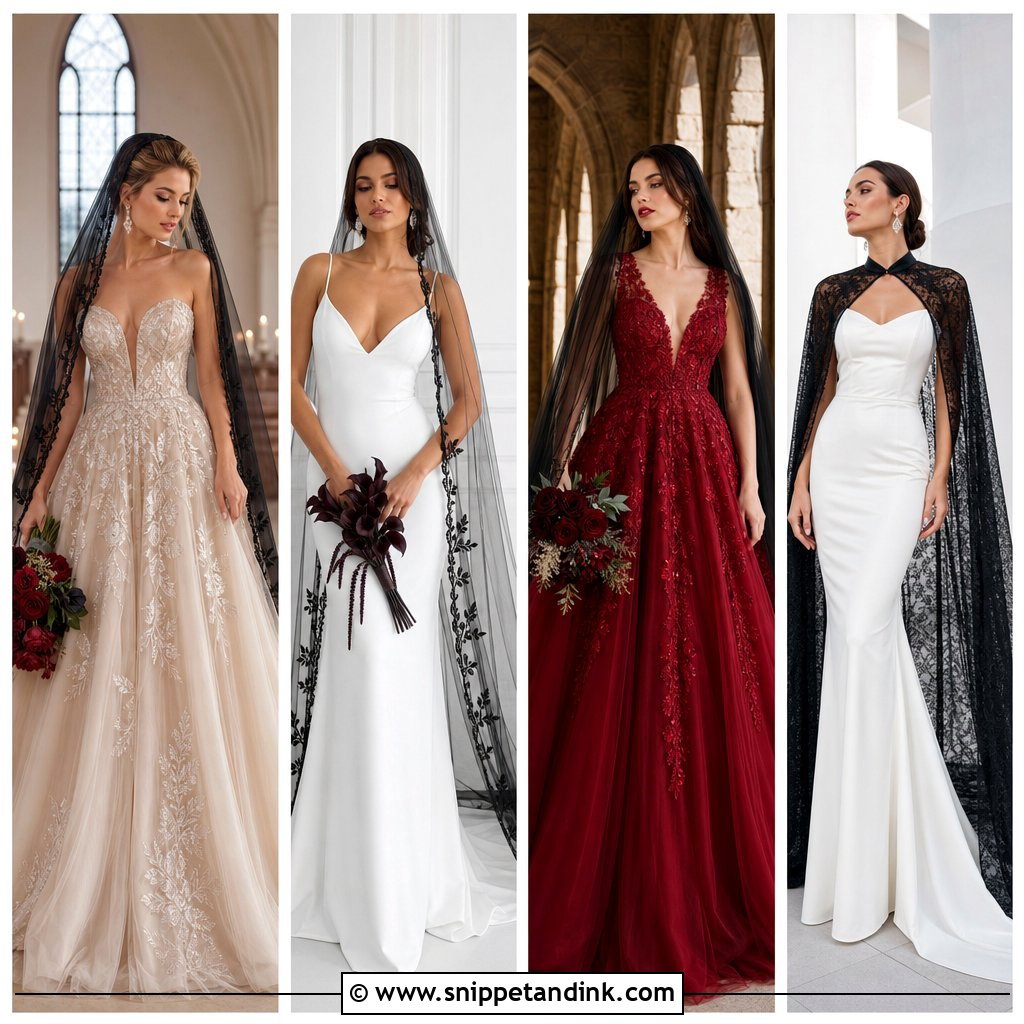
A coloured veil personalises a simple ivory gown without changing its classic base. Start with a clean column, slip or understated A-line in silk, satin or crepe. Then pick a veil in blush, powder blue, pale lavender or a shade from your palette. Sheer tint is far easier to coordinate than dense colour. Check it outdoors before you commit, because tinted tulle shifts a lot between shop lighting and daylight, and some blushes go almost peach in sun. Neutral shoes and bag; small earrings in a matching tone if you want a link. Wear your hair simply so the colour shows around your face. Creative venues and city celebrations suit it.
Steaming, Sitting Down and When It Comes Off
Most veils arrive folded and creased. Hang it in a steamy bathroom the night before, or use a handheld steamer on low from at least a hand’s width away. Never iron tulle; nylon tulle melts on contact, and silk tulle scorches and goes stiff. I always do this a day early, because steam leaves fine tulle limp until it dries.
Long veils need a plan for sitting. In the car and at the ceremony chair, gather the length into your lap rather than sitting on it, since pulling it from under you drags the comb out of your hair. For a cathedral veil, name one person to fluff it out at the top of the aisle and again before portraits.
Taking it off without wrecking your hair
Most brides take a long veil off after portraits, before the first dance. Ask your hairstylist to show whoever is helping exactly which pins to pull. Slide the comb out downwards, in the direction the teeth point, and the style stays intact. If you’d like to keep a veil on for the reception, a waltz or fingertip length is the realistic option. Afterwards, store it loosely rolled around acid-free tissue in a breathable bag, away from sunlight, rather than folded tight in plastic.
Try It With the Real Gown, Then Turn Around
The best bridal outfits feel balanced from head to toe. A veil should support the gown’s silhouette and show off its best details, not get added because it’s expected. Cathedral lengths bring ceremony and movement, while fingertip, elbow, birdcage and blusher styles are easier to live with. Lace, pearls, embroidery, bows and colour make a simple dress personal. Try the veil with the actual gown, hairstyle, shoes and jewellery, and look at yourself from the front, the side and the back. Then walk, sit and turn in it. If it still feels like yours after all that, it’s the right one.
You'll Like These Ideas:


Leave a Reply