
Glam is the bridal brief where I spend the most time talking about light. A satin gown, a crystal bodice and a feather hem all behave differently under a chandelier than they do under a fitting-room spotlight, and the dress that wins in the shop can go flat at an afternoon garden ceremony. Below are 25 glam directions I’d actually pull for a bride, from full ball gowns to a reception mini, each with notes on fabric, fit and what to wear with it. Use your venue and the time of day as the first filter, and the shortlist gets much easier.
What Your Venue’s Light Does to Satin, Sequins and Pearls
Before a bride tries anything on, I ask what time the ceremony starts and where. Glam fabrics react to light more than any other bridal fabric, and the same dress can look rich in one room and flat in another.
- Candlelight and warm chandeliers: sequins and crystals come alive because the light is small, warm and moving. This is where heavy sparkle earns its weight.
- Midday sun outdoors: crystal can flare white in photos and satin can glare. Pearls, 3D florals and matte crepe hold their detail better.
- Overcast skies or soft window light: satin shows its depth here, and the sheen turns soft rather than shiny.
- Flash on the dance floor: sequins bounce flash straight back at the camera, which is fun in party shots and harsh in close portraits, so a beaded bodice is the safer choice near the face.
If you can, try your top two gowns beside a window and again under warm indoor light. The difference usually settles the decision faster than any mirror does.
1. Sparkly Ball Gown Wedding Dress
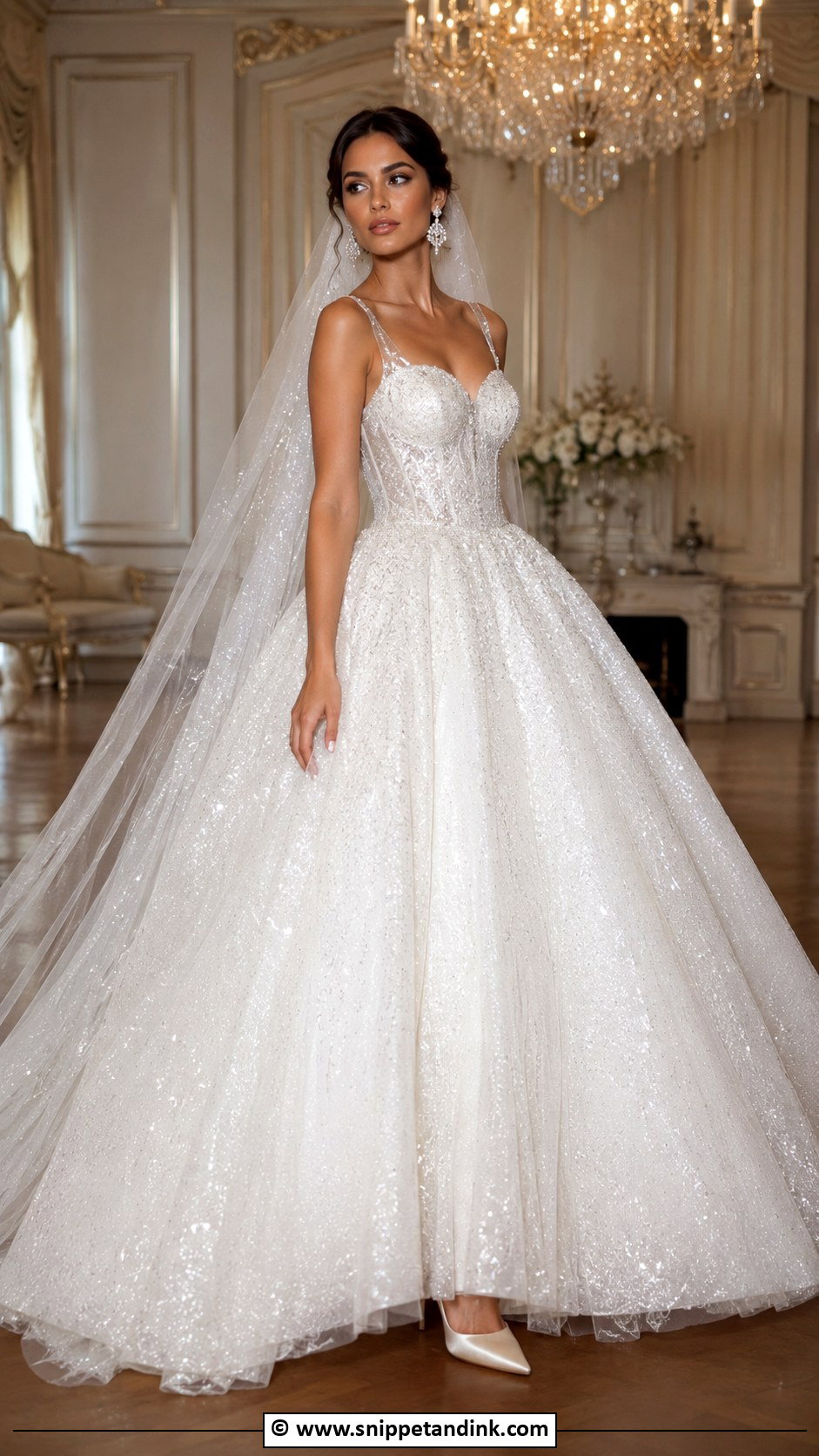
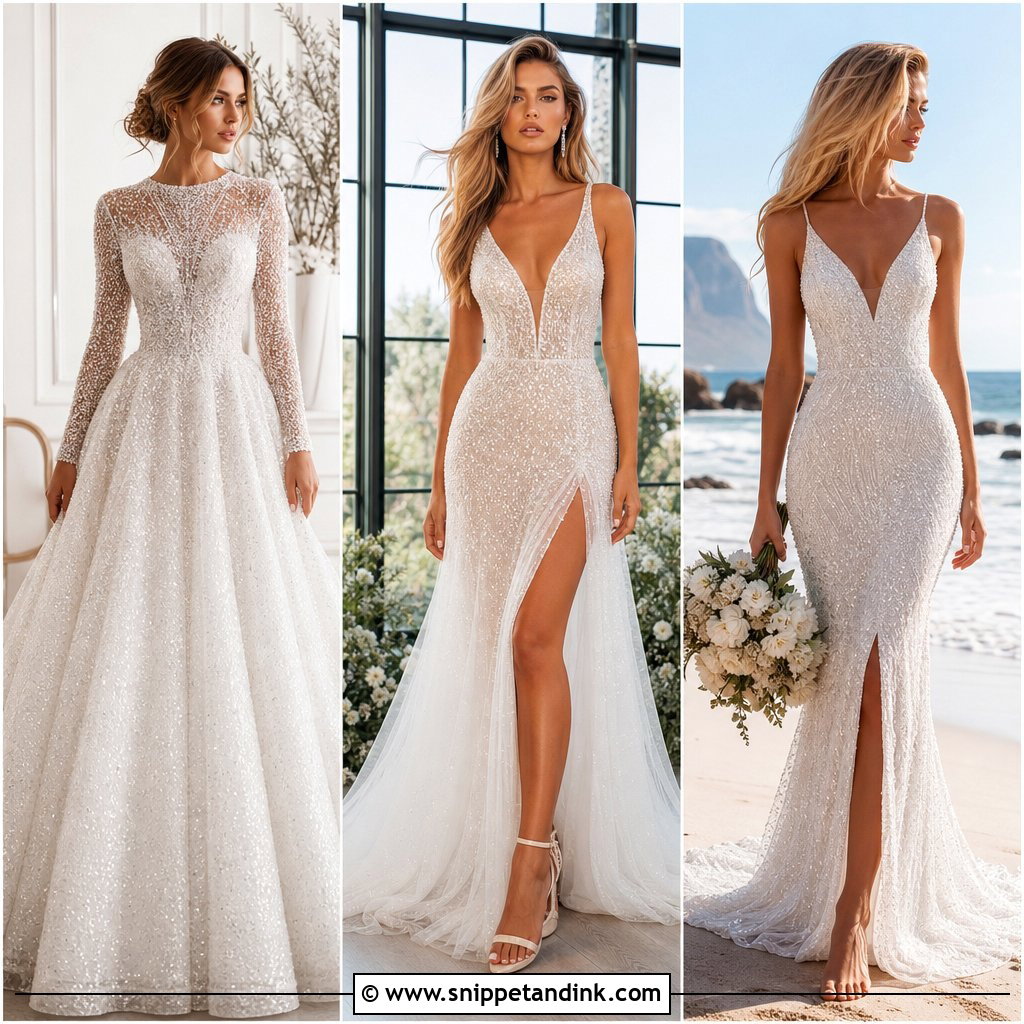
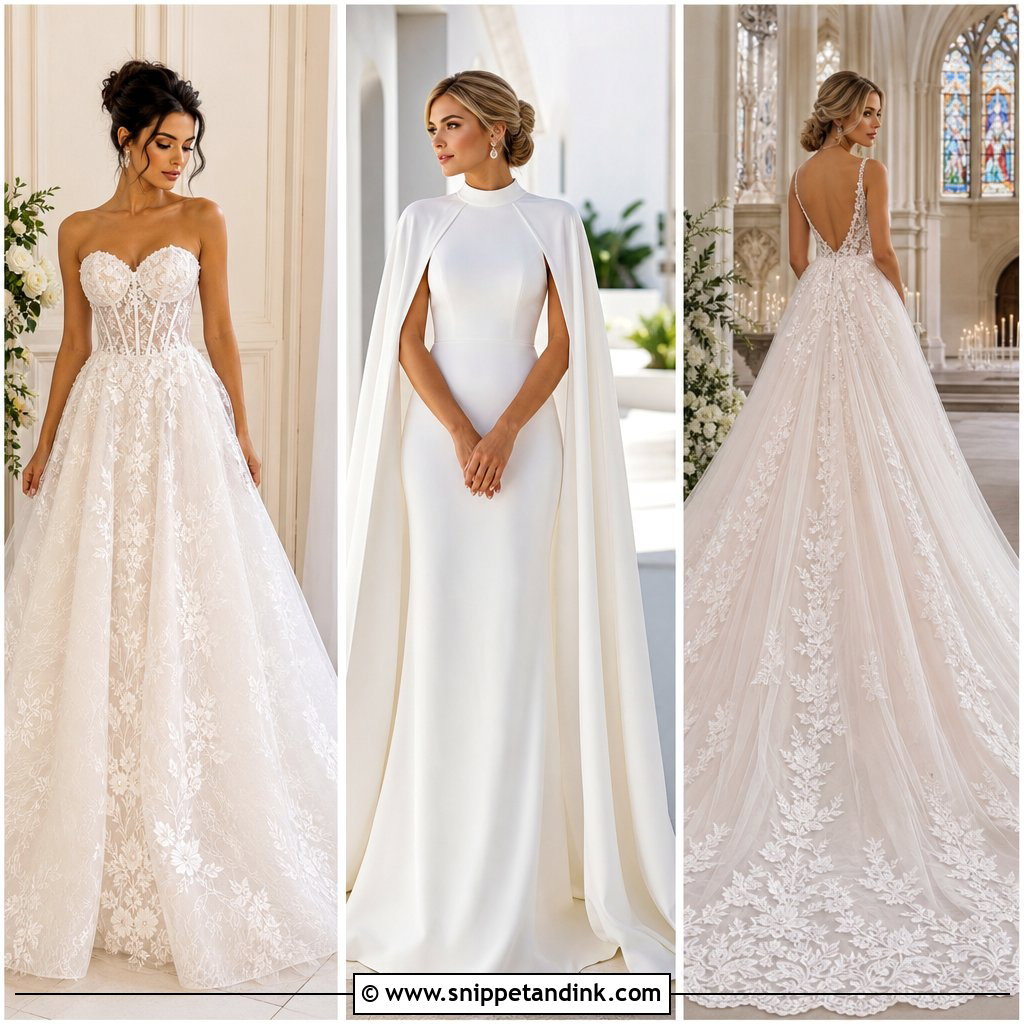
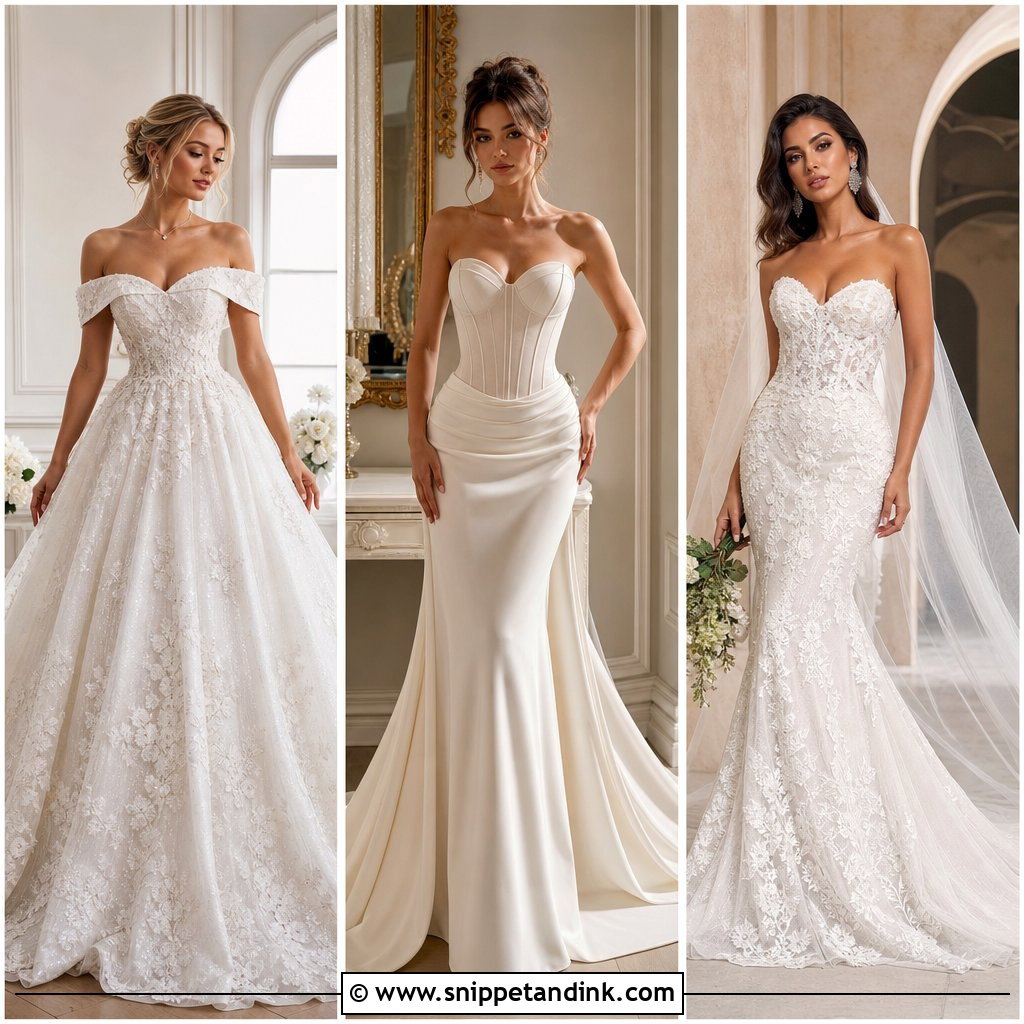
Glitter tulle over a boned bodice is the classic princess version, and it reads best in a room with warm, low light where every layer catches a little. Look for glitter tulle, crystal embroidery, or soft sequins that are stitched rather than glued; glued stones are the ones I find on the fitting-room floor. A cathedral veil and crystal drop earrings are plenty. With this much skirt I keep hair clean, a low bun or waves pushed behind the shoulders, because loose curls snag on tulle. Ballrooms and grand hotels give the skirt room. A narrow church aisle can make it feel crowded.
2. Satin Mermaid Wedding Dress
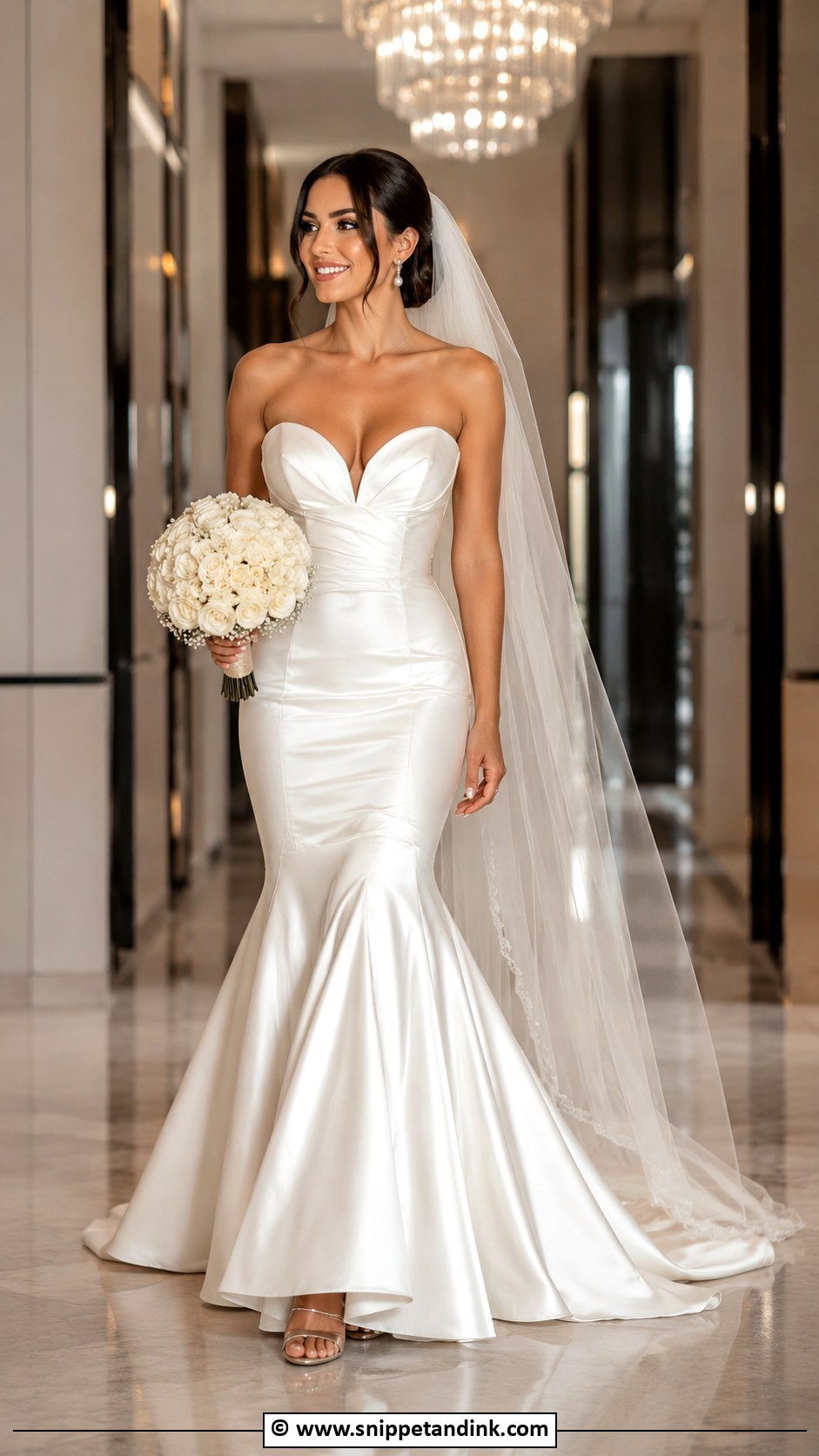
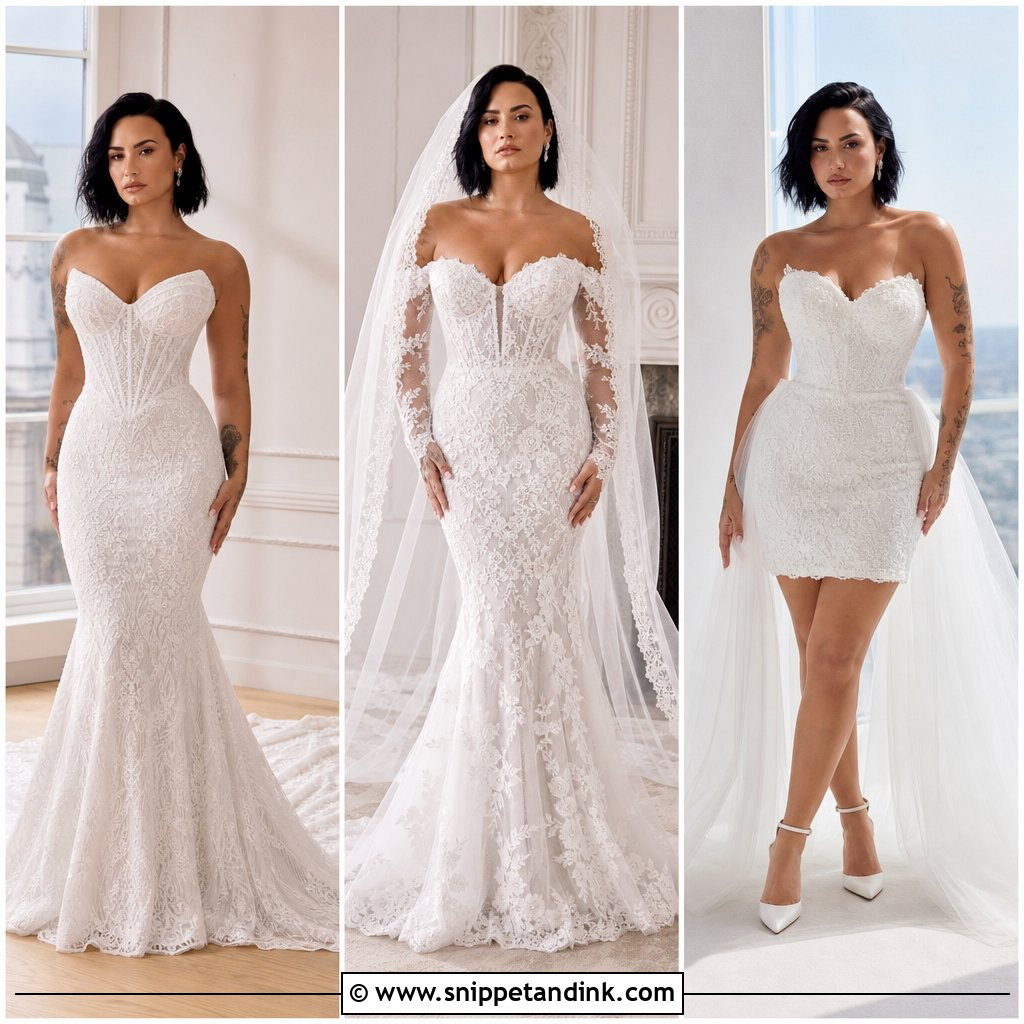
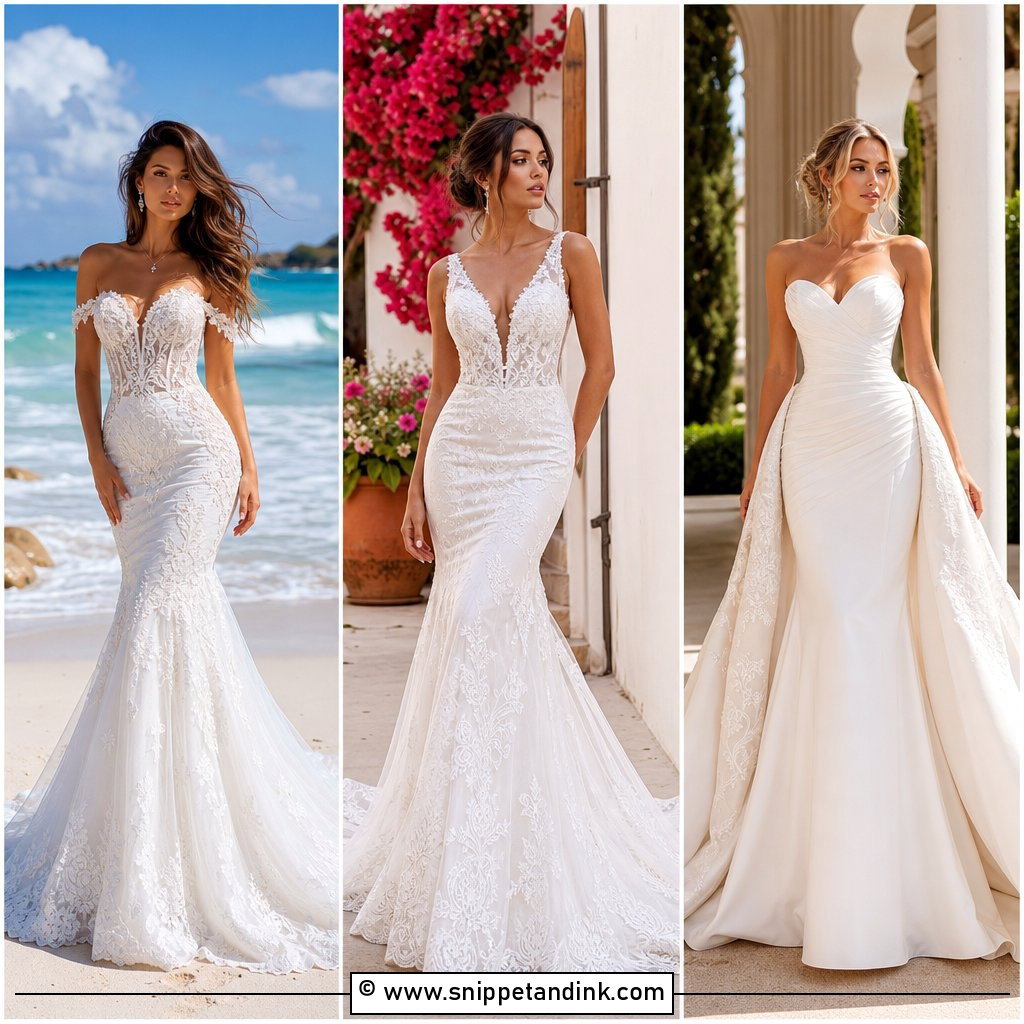
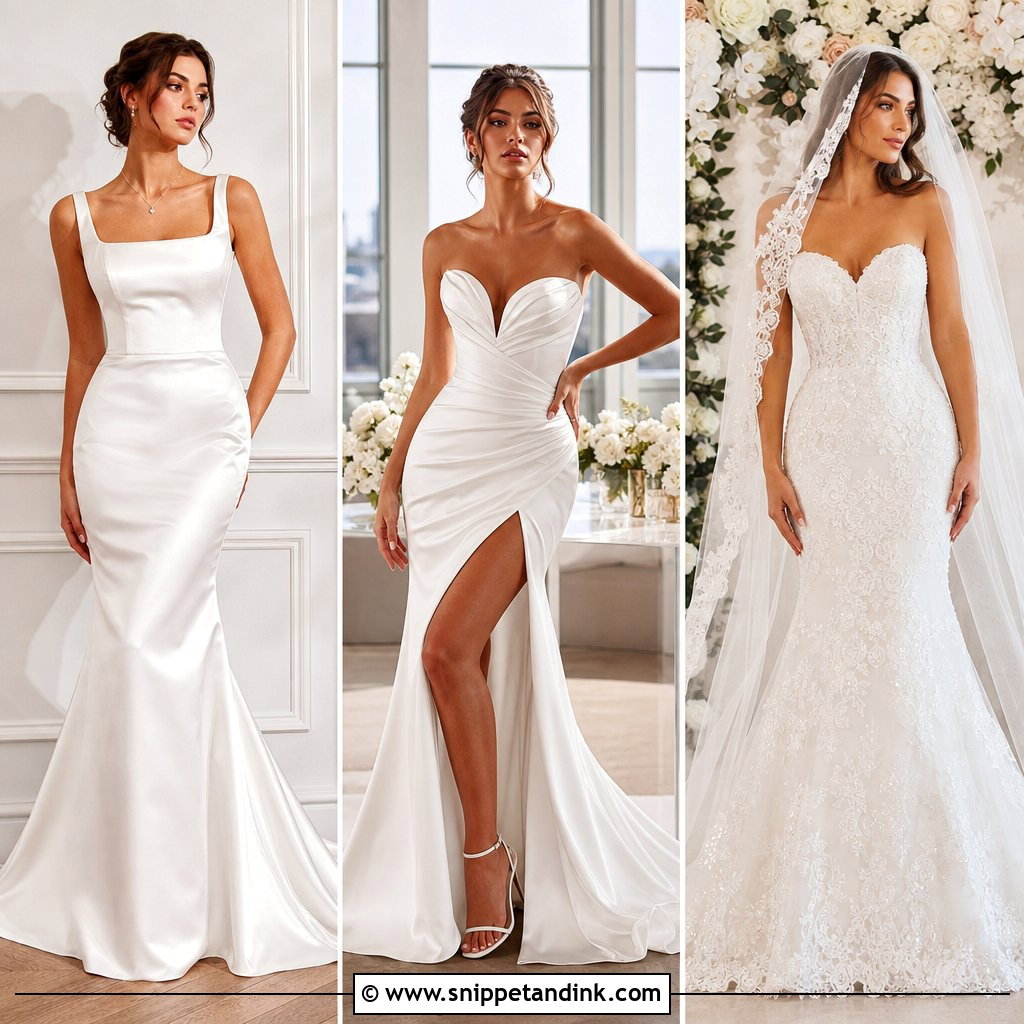
Satin is honest fabric. It shows every seam, every bra line and every spot where the fit is slightly off, so a mermaid in satin lives or dies at the tailor. I check the flare point first: set too high, and you’ll shuffle in tiny steps all night, while just above the knee usually still lets a bride climb stairs. Ivory, pearl white and soft champagne all work, and a sweetheart or off-shoulder neckline keeps it current. Pearl earrings, a long veil and metallic heels finish it. Expect some creasing across the hips after dinner. That’s normal for satin and steams out.
3. Beaded Sheath Wedding Dress
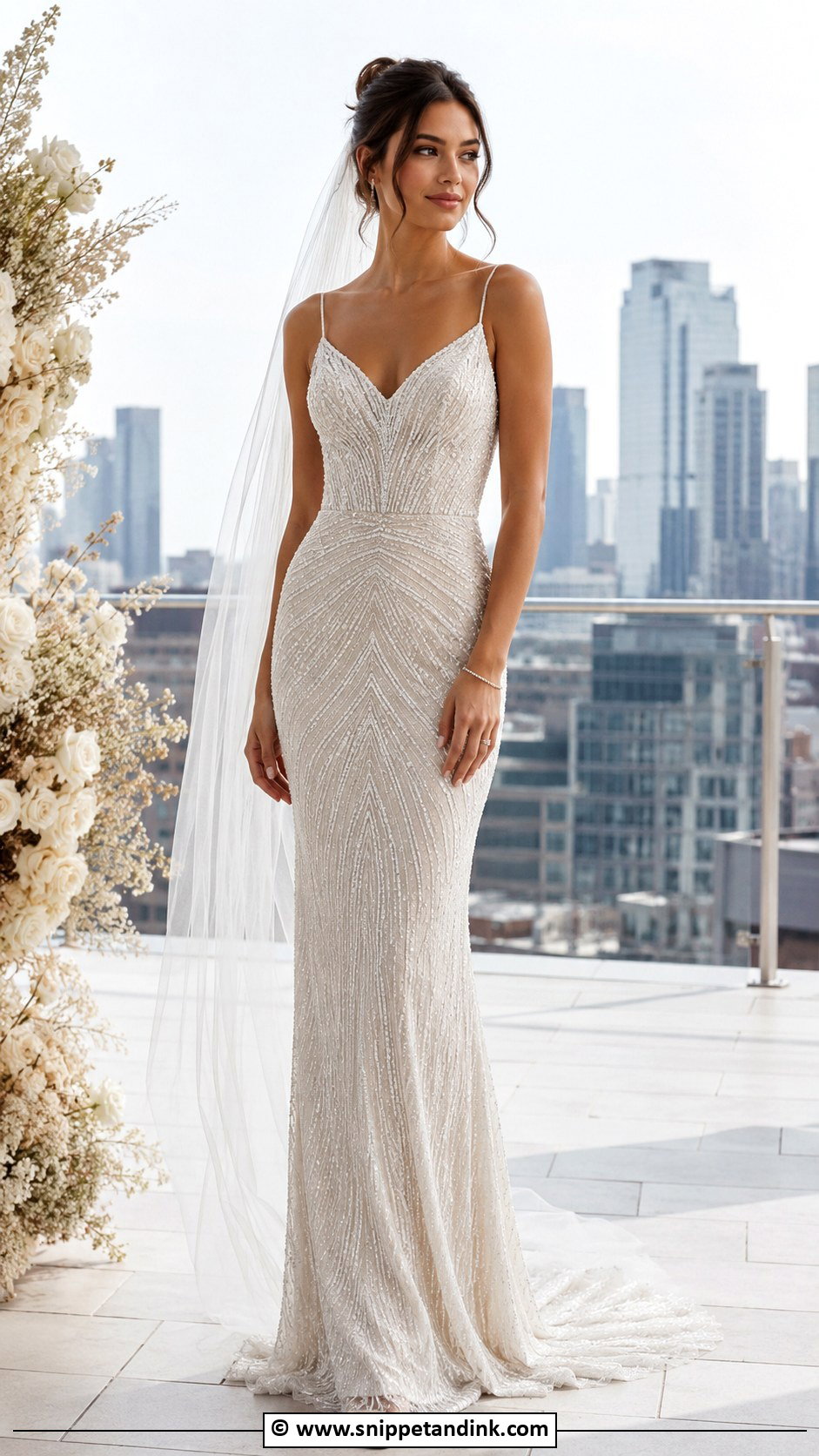
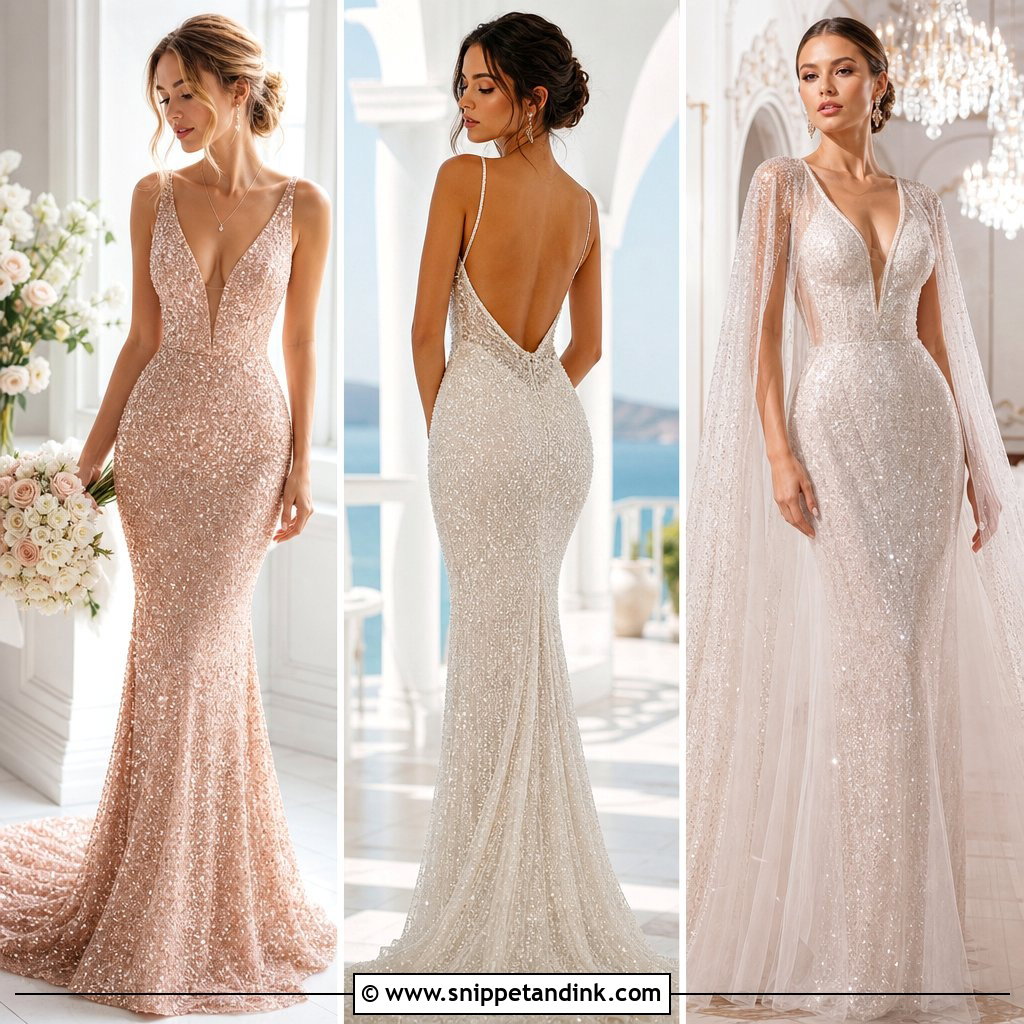
A sheath gives you sparkle without carrying a skirt, which matters if your day involves stairs, a rooftop or a long dance floor. Vertical beadwork and art deco lines make the body look longer; horizontal bands do the opposite. The trade-off is weight. A fully beaded sheath can be much heavier than it looks on the hanger, and the straps take that load, so I always have a bride sit down and lift her arms at the fitting. Strappy heels, a sleek veil and almost no jewelry keep the beading in charge. On a cold evening, a faux-fur wrap or tailored cape covers you for outdoor portraits.
4. Off Shoulder Lace Wedding Dress
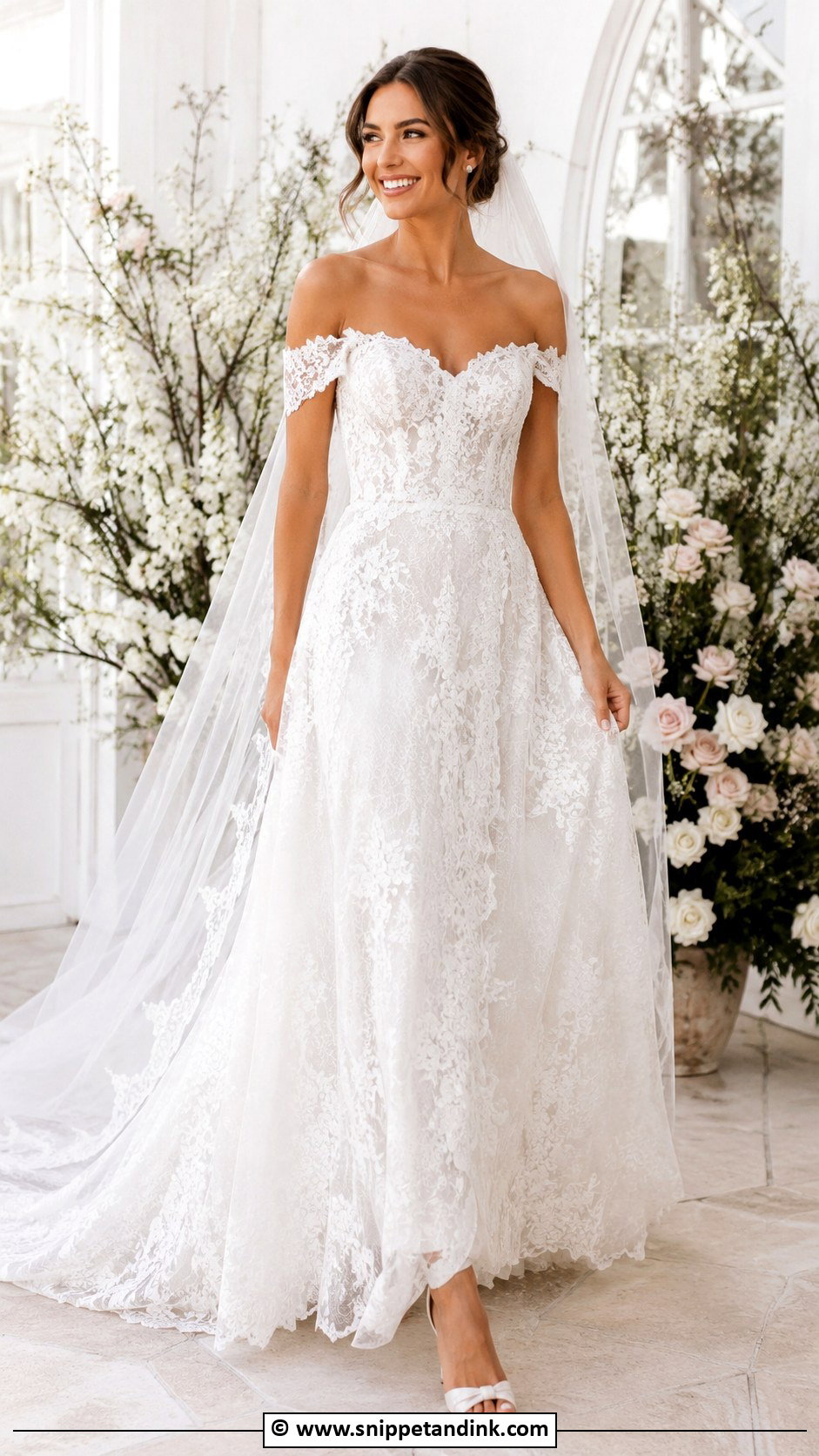
Off-shoulder lace frames the collarbone, but the band across the upper arm is the part I watch. Too tight, and you can’t raise your arms to hug anyone; too loose, and it creeps up all day. Beaded appliqué or lace with a shimmer thread pushes it from romantic into glam. A full skirt stays classic, and a fit-and-flare reads more modern. Pearl studs, a fingertip veil and satin heels are enough. I’d keep the bouquet to white blooms and greenery so the lace pattern still shows in full-length photos.
5. Corset Ball Gown Wedding Dress
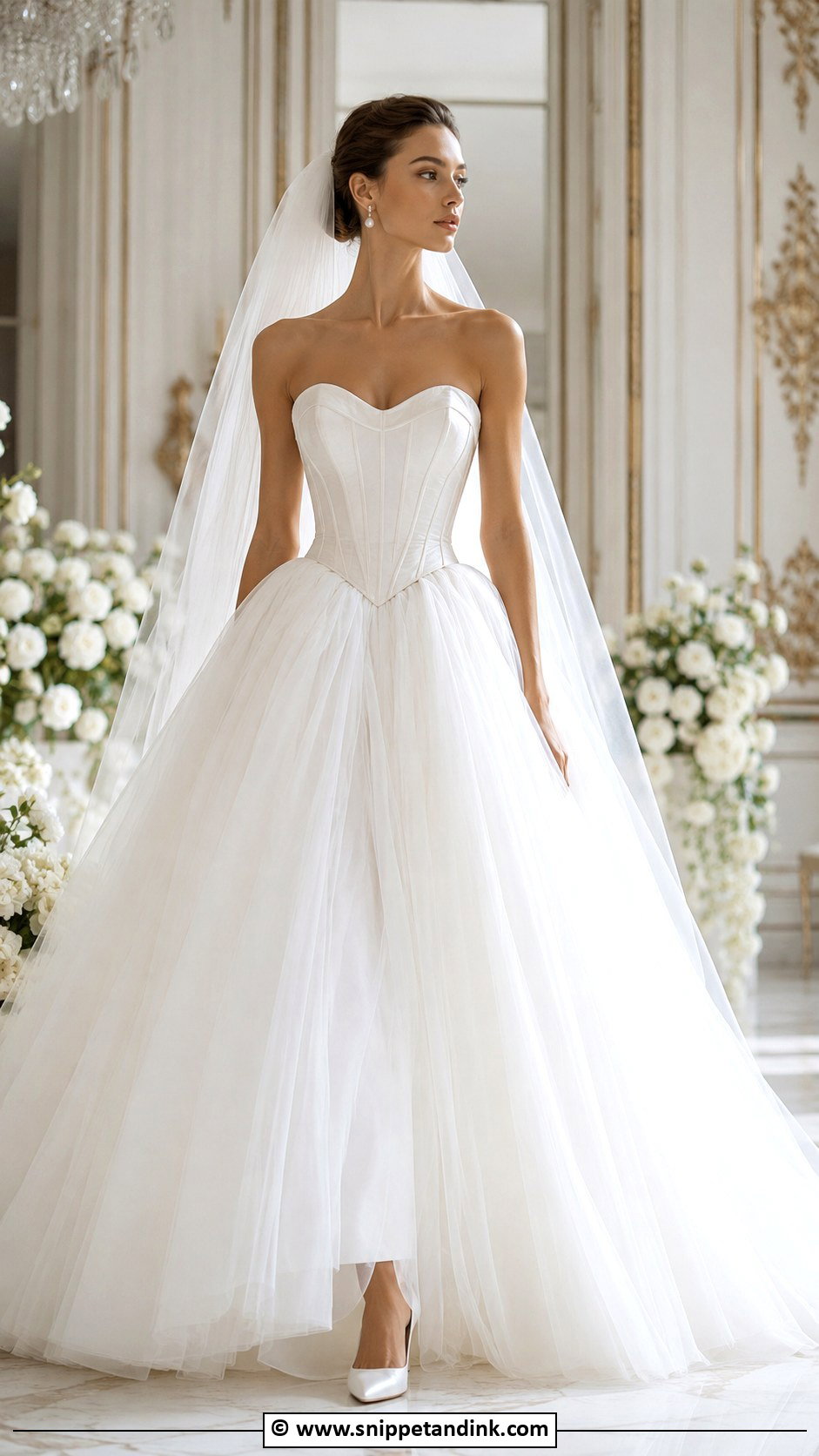
A corset ball gown wedding dress does the support work for you, which is why so many brides who hate strapless bras end up in one. Exposed boning, a basque waist, a lace-up back or sheer illusion panels are the modern versions I see most. I like a lace-up back for one practical reason: it can be adjusted on the morning if your body has changed a little since the final fitting. Keep accessories quiet, pearl earrings, satin pumps and a clean veil, because the corset already builds the shape from shoulder to skirt. Formal rooms suit it best.
6. Sequin Wedding Dress With Veil
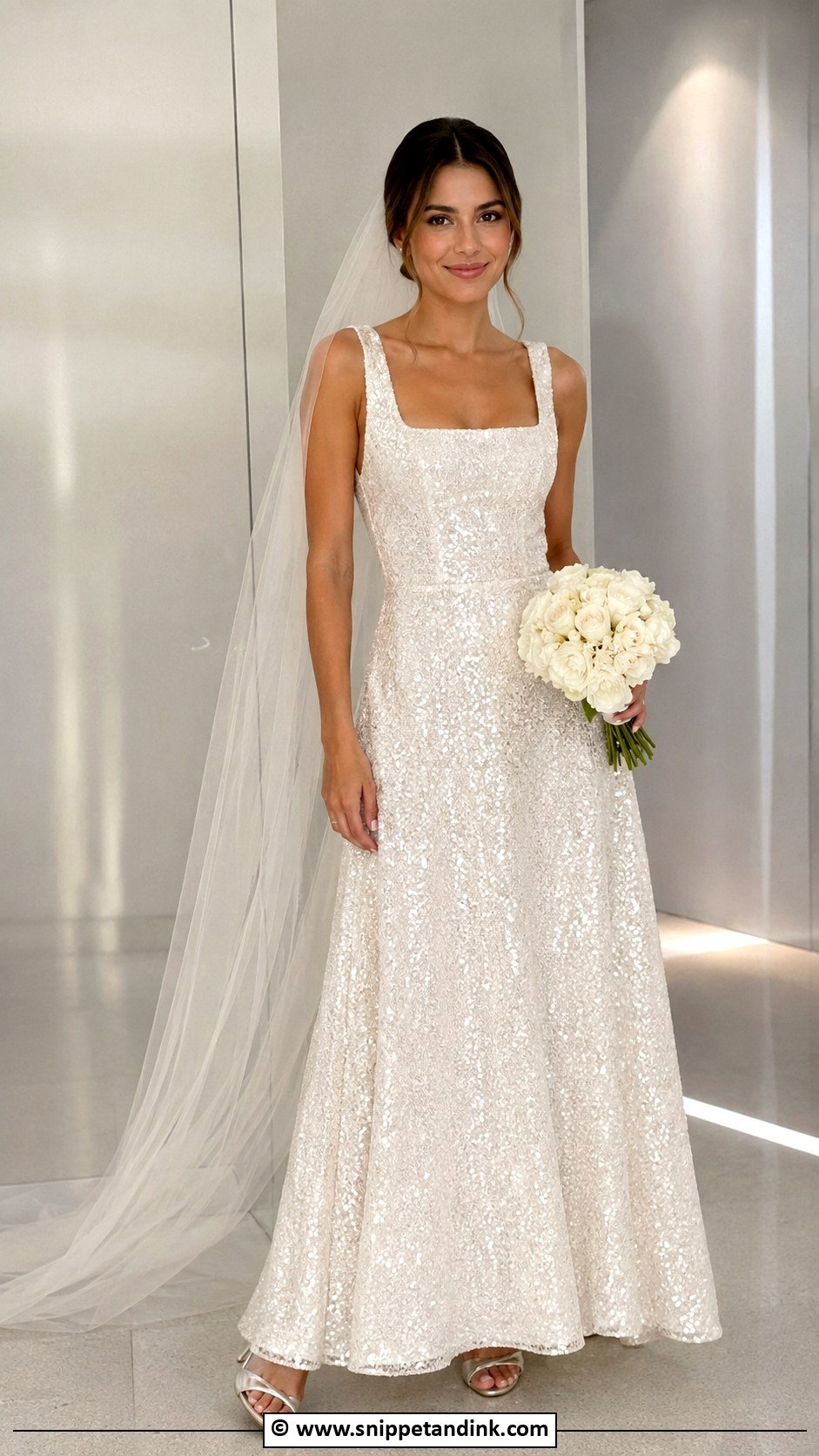
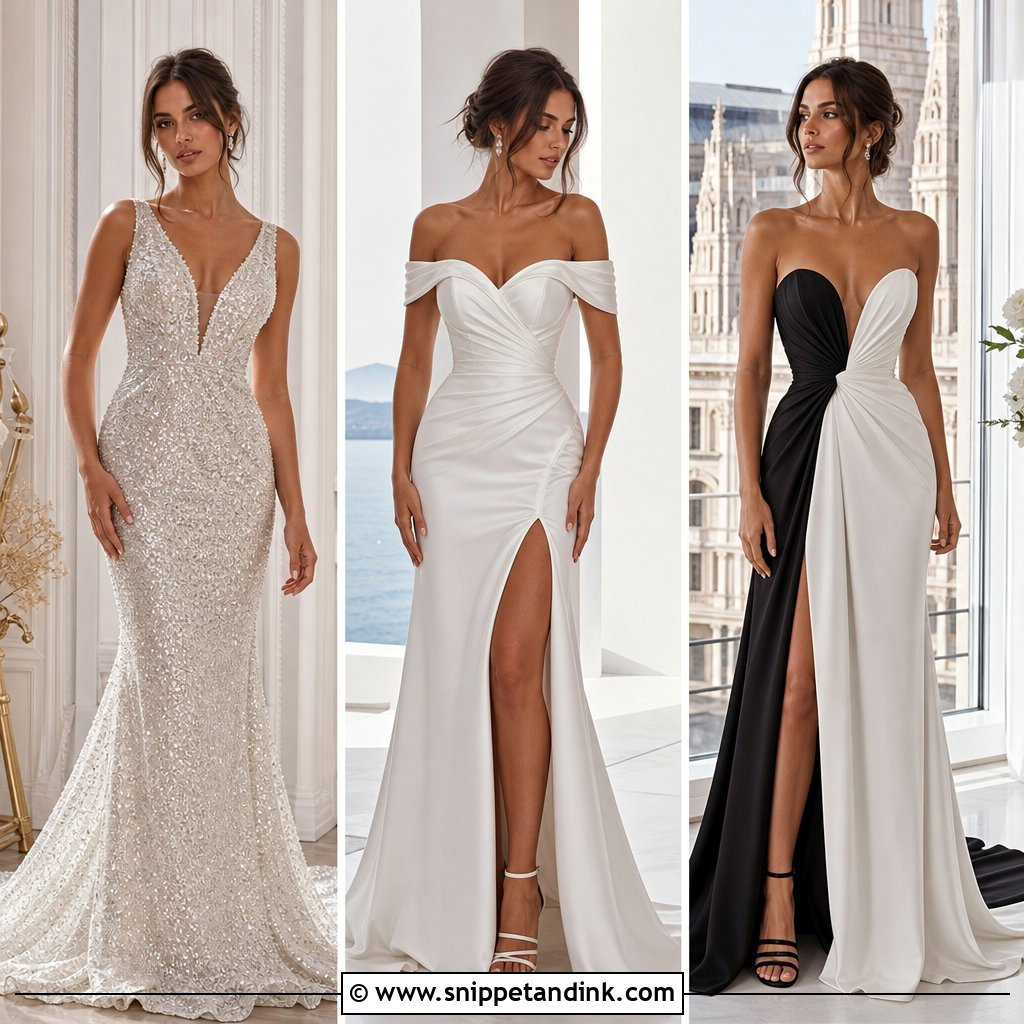
Sequins are bold, so the silhouette is where you set your comfort level. A slim column reads sleek, and an A-line feels softer and is far easier to walk and sit in. At the fitting I rub a sequin sleeve against the bare inner arm, because some sequins scratch, and you’ll feel it by the speeches. A simple veil pulls the shine back toward bridal. Small diamond or crystal studs and clear, silver or ivory heels finish it without competing. Evening and city receptions, where moving light hits the dress, are where sequins really come alive.
7. Pearl Embellished Wedding Dress
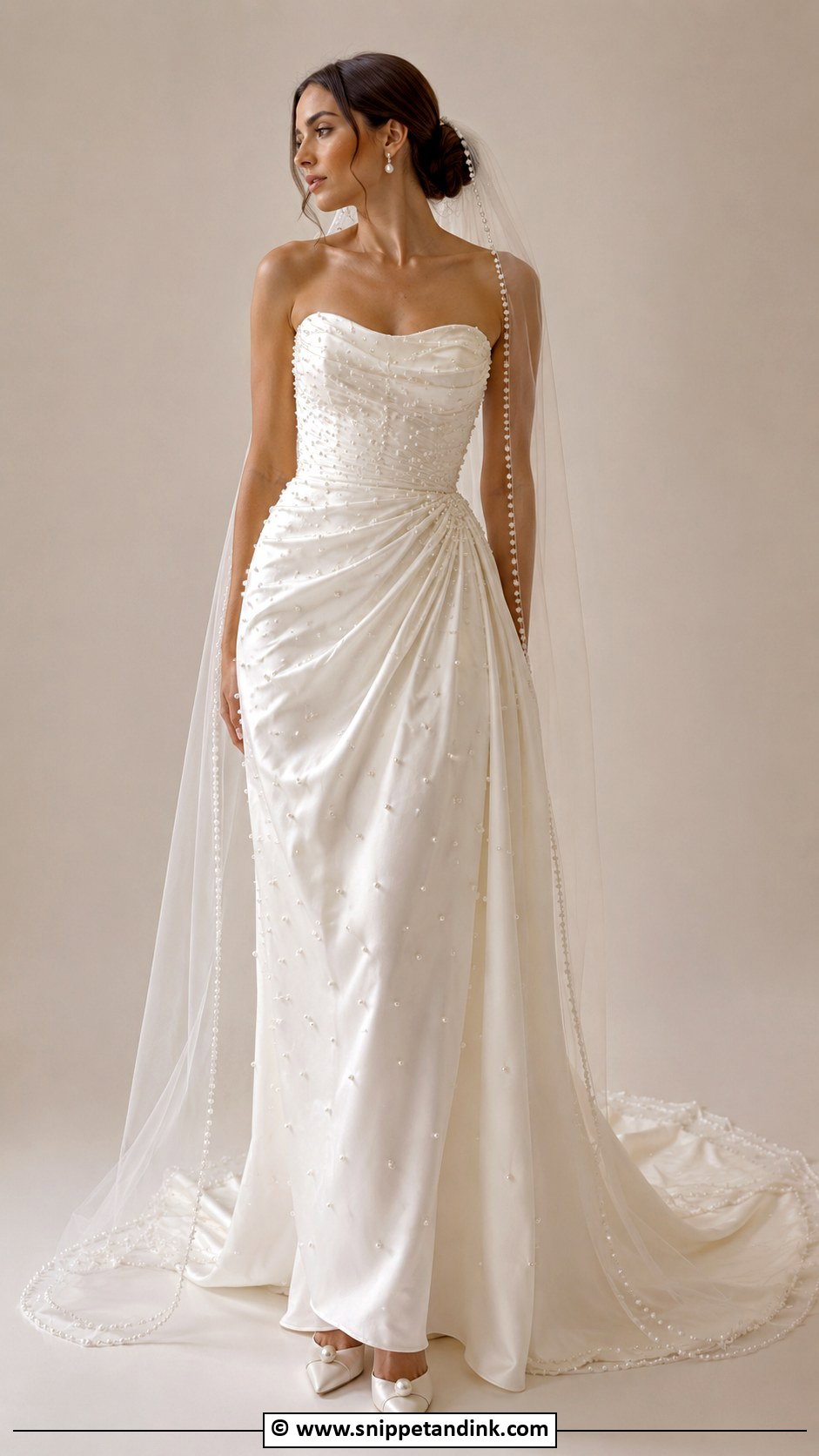
Pearls give texture without the sharp flash of crystal, so the dress glows instead of sparkling. Scattered pearl tulle, pearl straps, a pearl corset bodice or a veil edged in pearls all belong here. Look at how they’re attached. Hand-sewn pearls on a thread loop hang nicely, while glued ones can pop off when a veil comb drags across them. Pair the gown with pearl earrings, satin heels and a low chignon, and if the bodice is heavy with pearls, skip the necklace entirely.
8. High Slit Wedding Dress
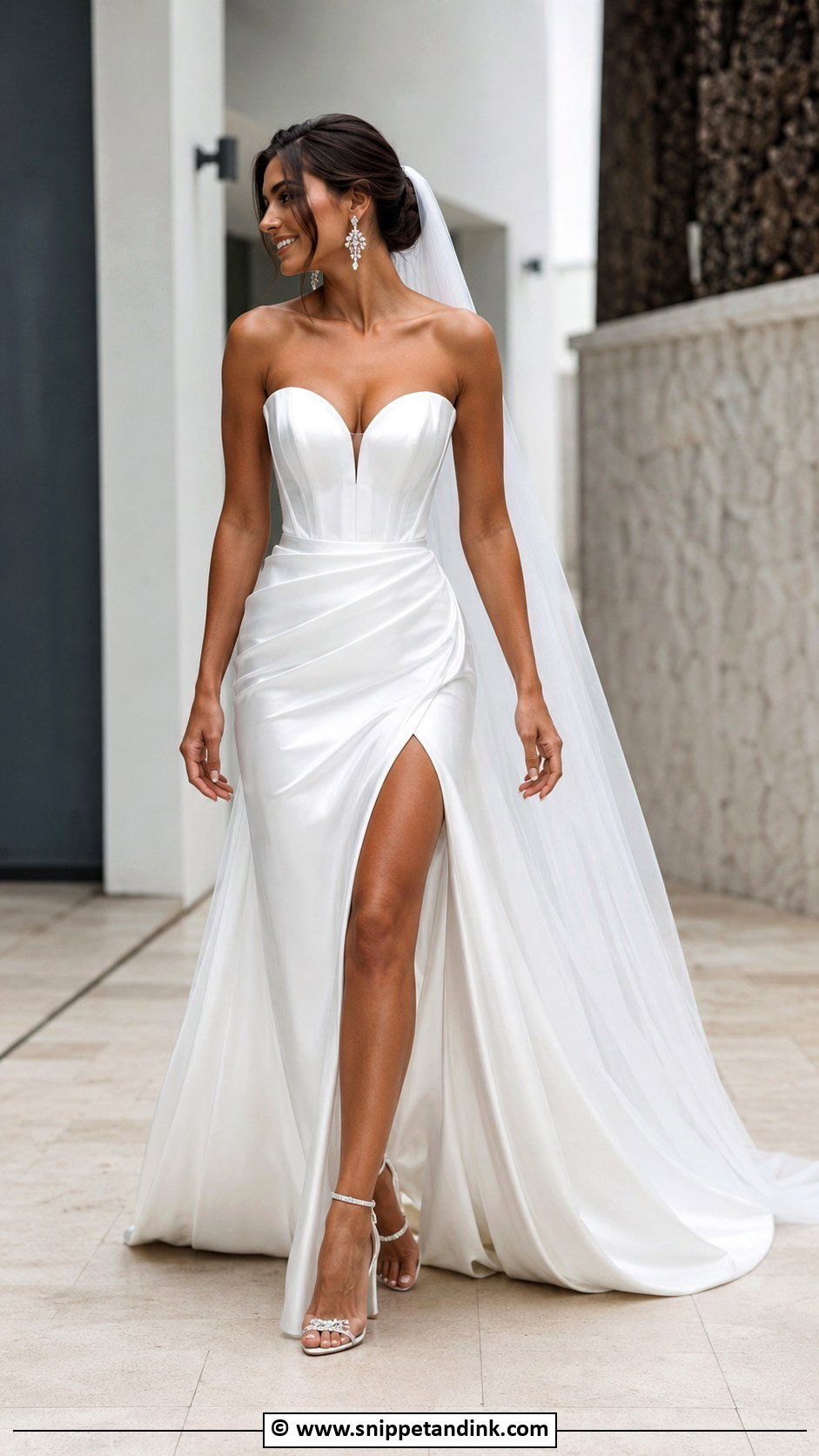
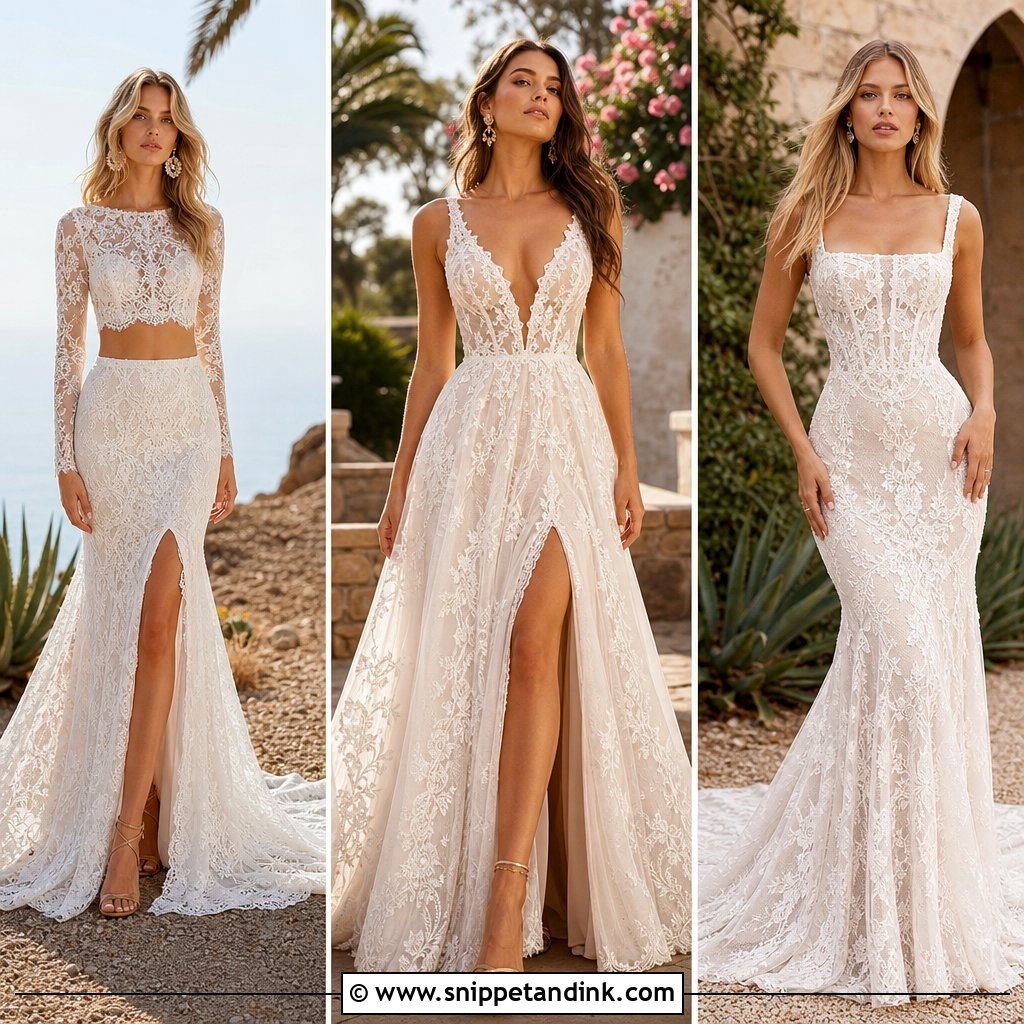
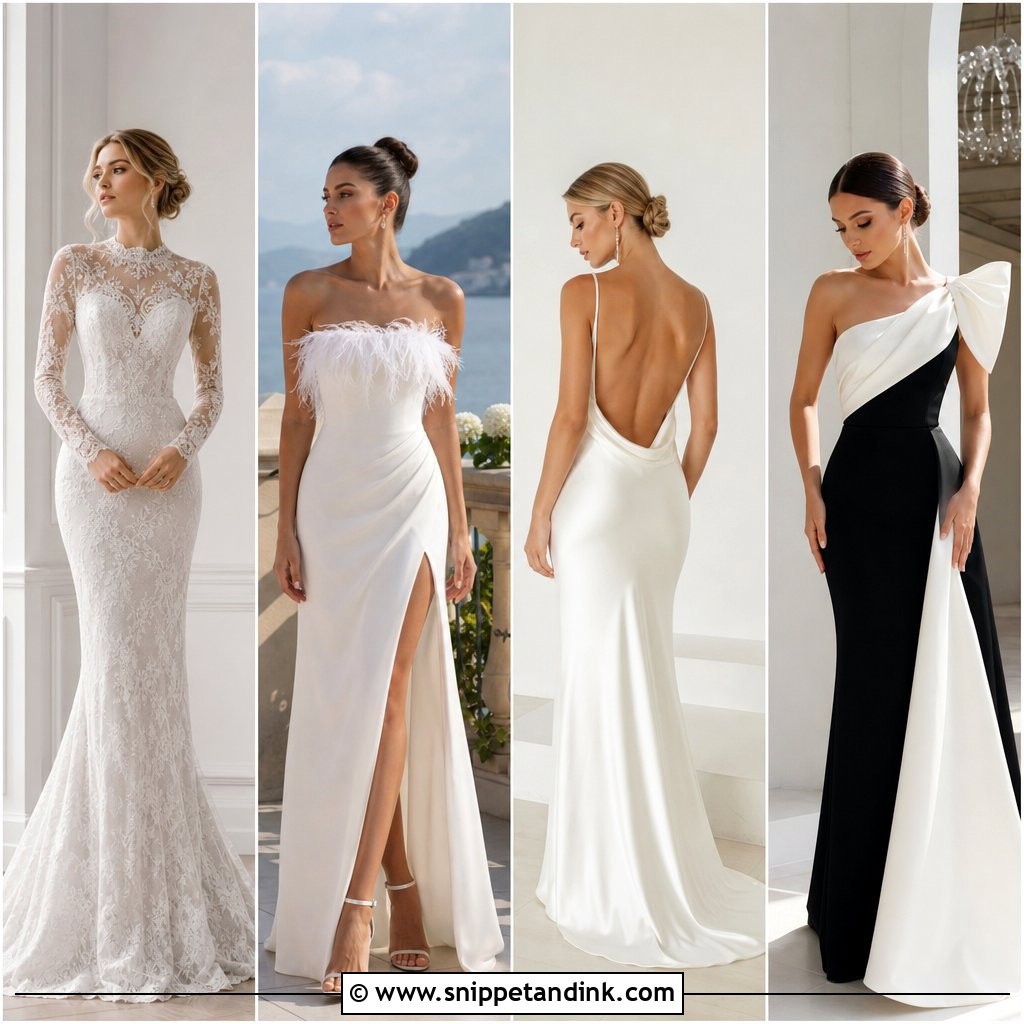
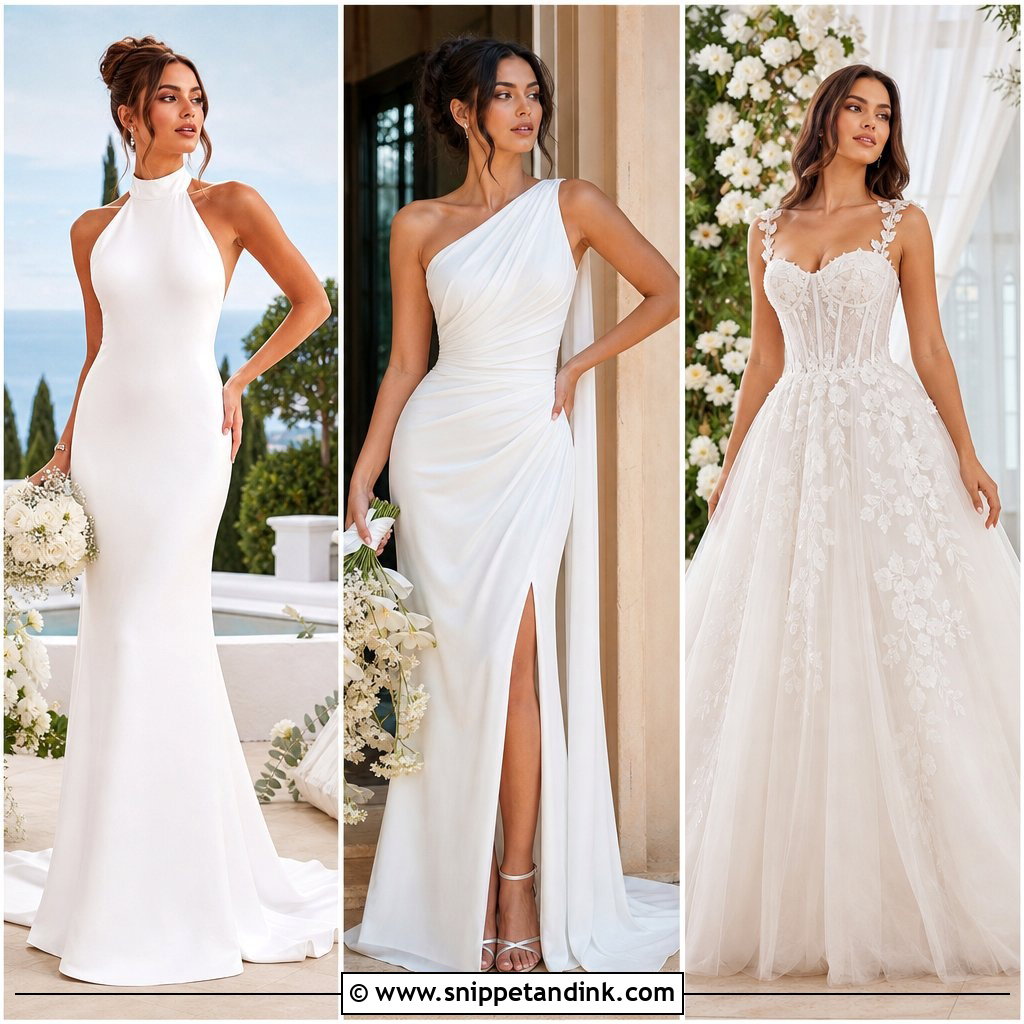
A high slit is a walking dress. Standing still, it can look like a plain column; it opens as you move, which is why it shows up so well in aisle and recessional shots. I have brides sit, climb a step and kneel at the fitting, because a slit that’s fine standing can open further than you want once you’re seated. Satin, crepe or beaded fabric on a structured bodice keeps it polished. Balance the leg with a train, a higher neckline or covered shoulders, and spend properly on the shoes, since they’ll be seen all day. Modern hotels, beach resorts and reception changes are where I suggest it most.
9. Long Sleeve Glam Wedding Dress
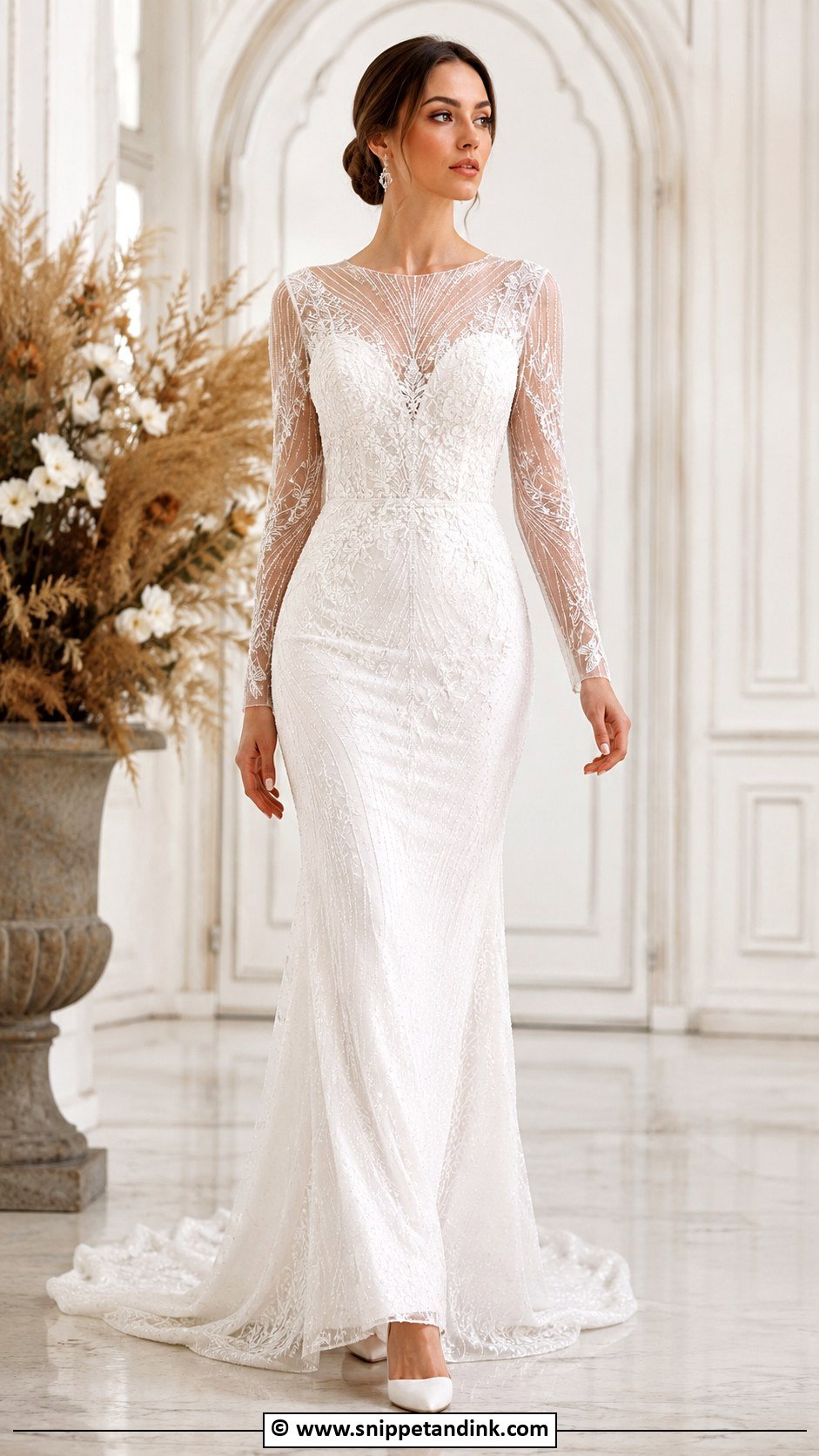
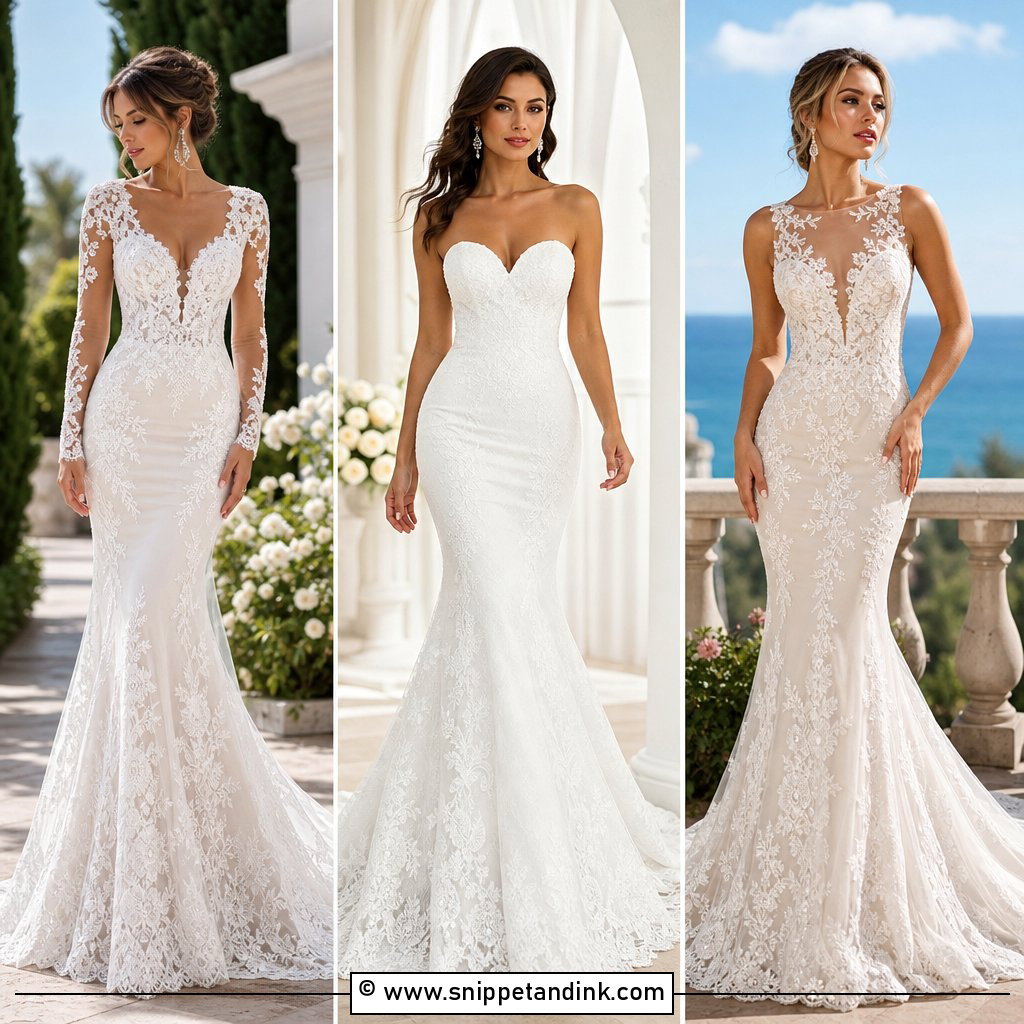
A long sleeve glam wedding dress sounds wintry, but sheer lace or beaded mesh sleeves are light enough for most seasons. Satin and fitted crepe sleeves are warmer and better saved for fall and winter. A high neck and long train push it regal; illusion sleeves with sparkle or floral appliqué pull it modern. The thing I test is reach. Ask the seamstress to let you lift both arms over your head, because a sleeve set too low under the arm will stop you hugging anyone. A clean updo shows off the sleeve work.
10. Feather Trim Wedding Dress
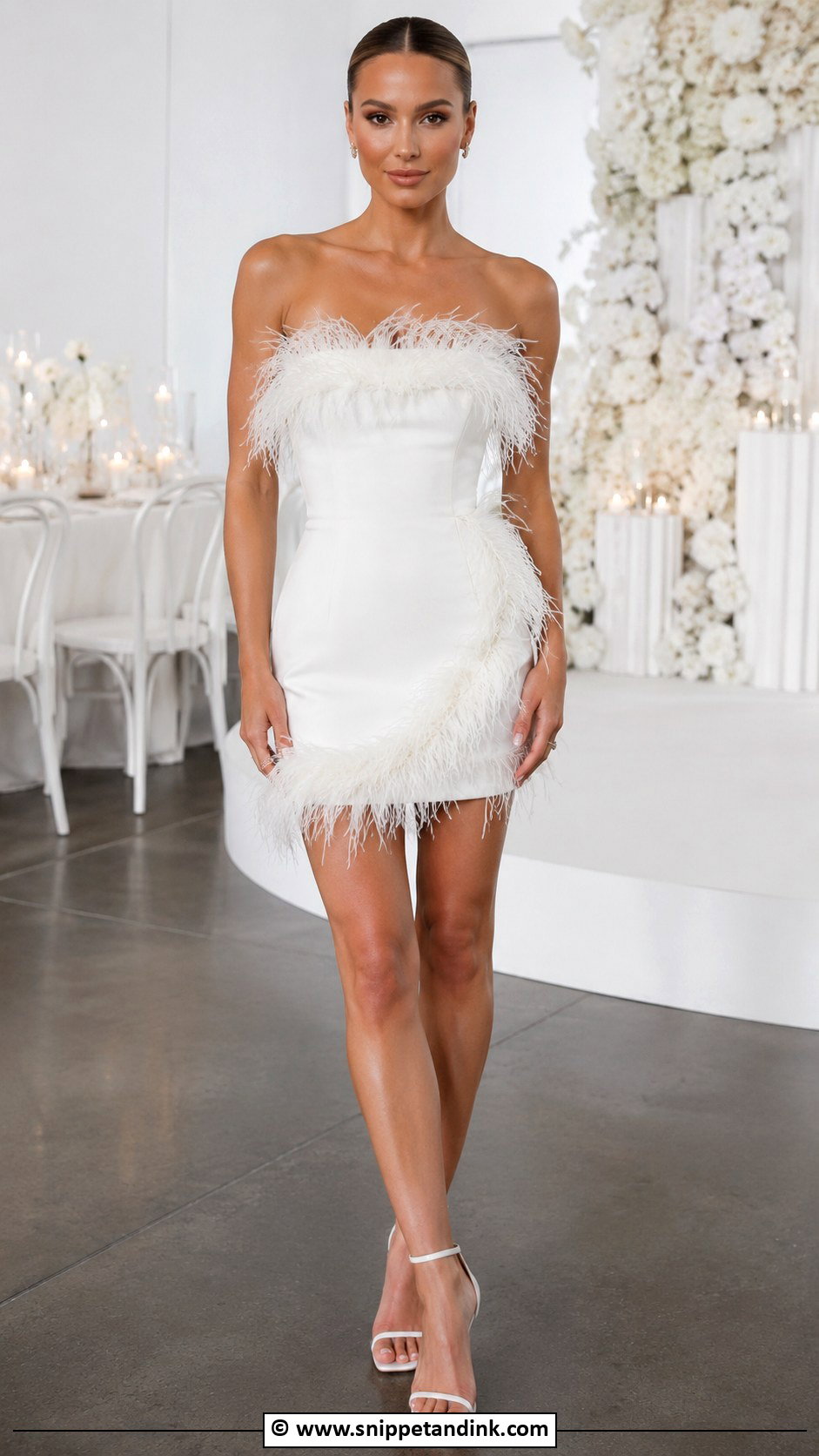
A feather trim wedding dress is the fashion moment of this list, and feathers are fussier than they look. They flatten in a garment bag, shed a little through the day and hate rain, so I steam them gently from a distance and fluff them by hand before the bride steps in. Pick one feather feature, a neckline, hem, sleeve or detachable train, and keep the rest clean. Satin, crepe or sequin fabric gives the feathers contrast. Receptions, after-parties and courthouse celebrations suit it. An outdoor ceremony in wind does not.
11. 3D Floral Wedding Dress
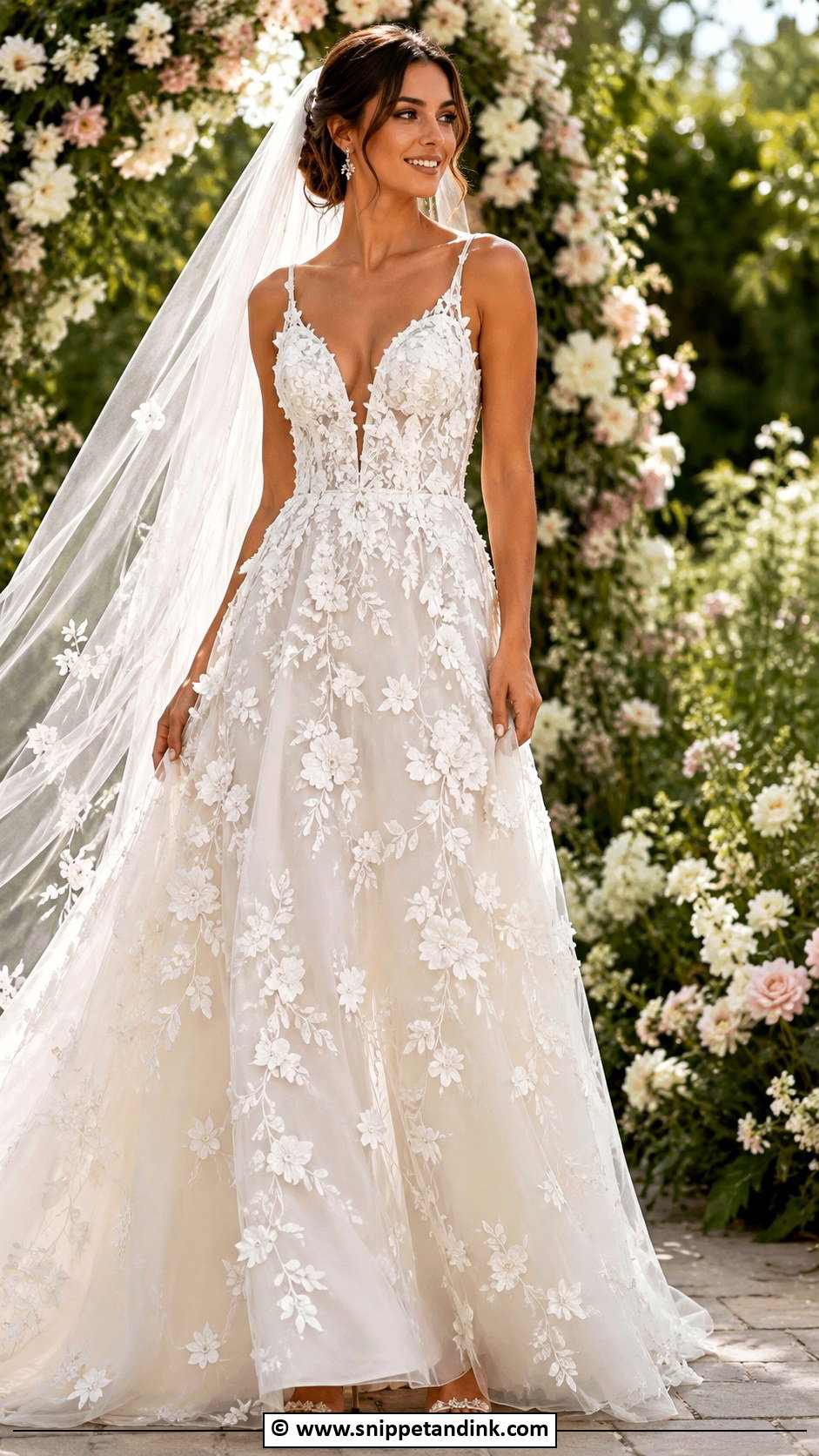
Raised floral appliqué is made for close-ups, because the petals throw small shadows that flat lace can’t. Pearl centers, crystal accents or layered organza petals make it read glam rather than garden party. Be careful with the veil: tulle snags on raised petals, so I usually pick one with a plain edge and a lighter weight that won’t flatten the texture. An A-line or ball gown feels dreamy, and a fitted shape is more modern. Spring and outdoor ceremonies suit it, and it’s a good middle ground for anyone who wants detail without sequins.
12. Detachable Overskirt Wedding Dress
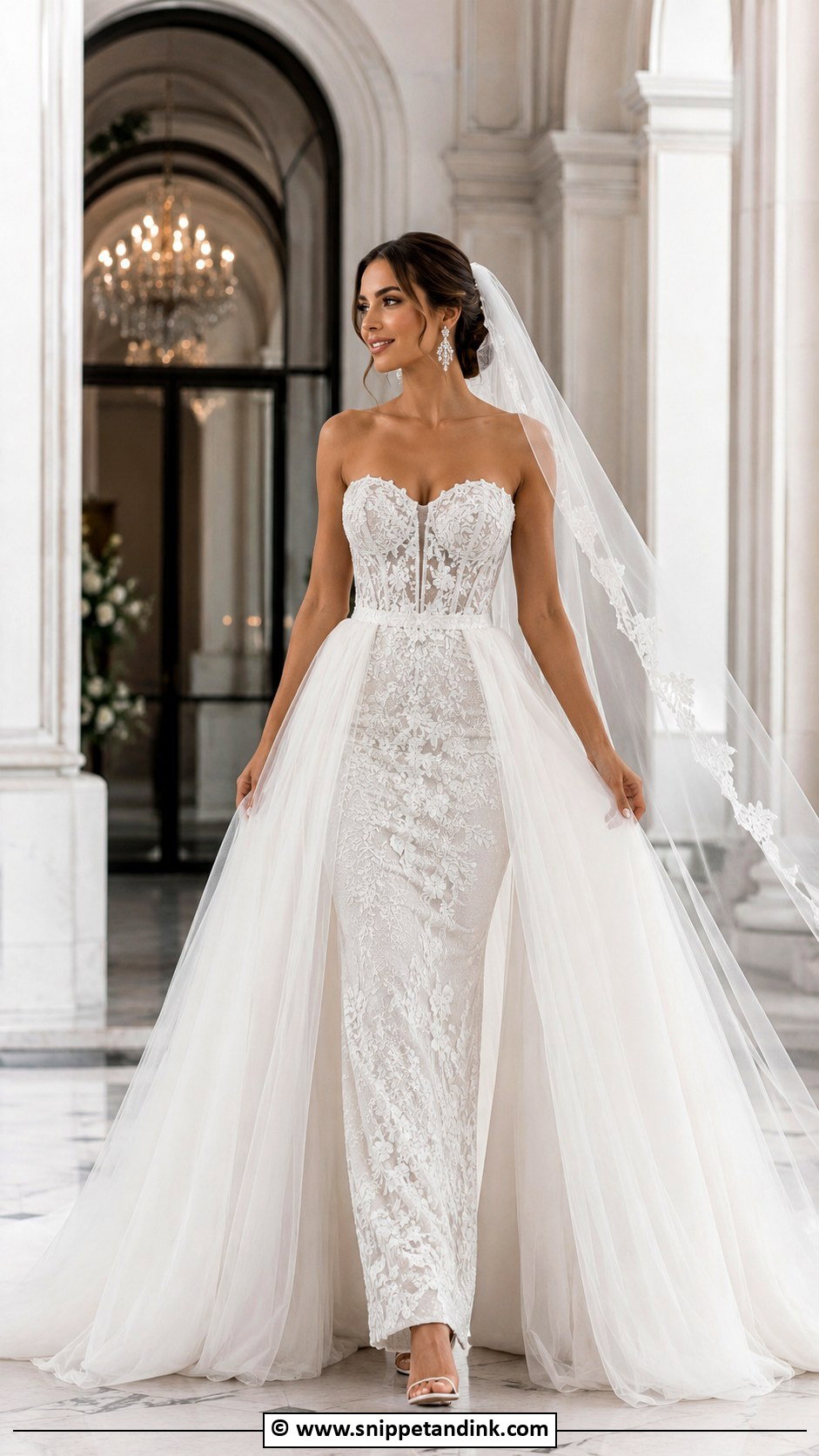
An overskirt gives you a grand ceremony shape and a slim base you can actually dance in. Mermaid gowns, fitted lace and satin columns are the usual bases underneath. Ask how it fastens. Hidden hooks and snaps are quicker than buttons, and someone in your party should practise removing it before the day, because a struggle in a bathroom with the timeline running is more common than you’d think. Tulle, organza, satin or embroidered fabric all work for the skirt itself. Wear a long veil for the ceremony, then switch to statement earrings for the reception.
13. Strapless Satin Ball Gown Wedding Dress
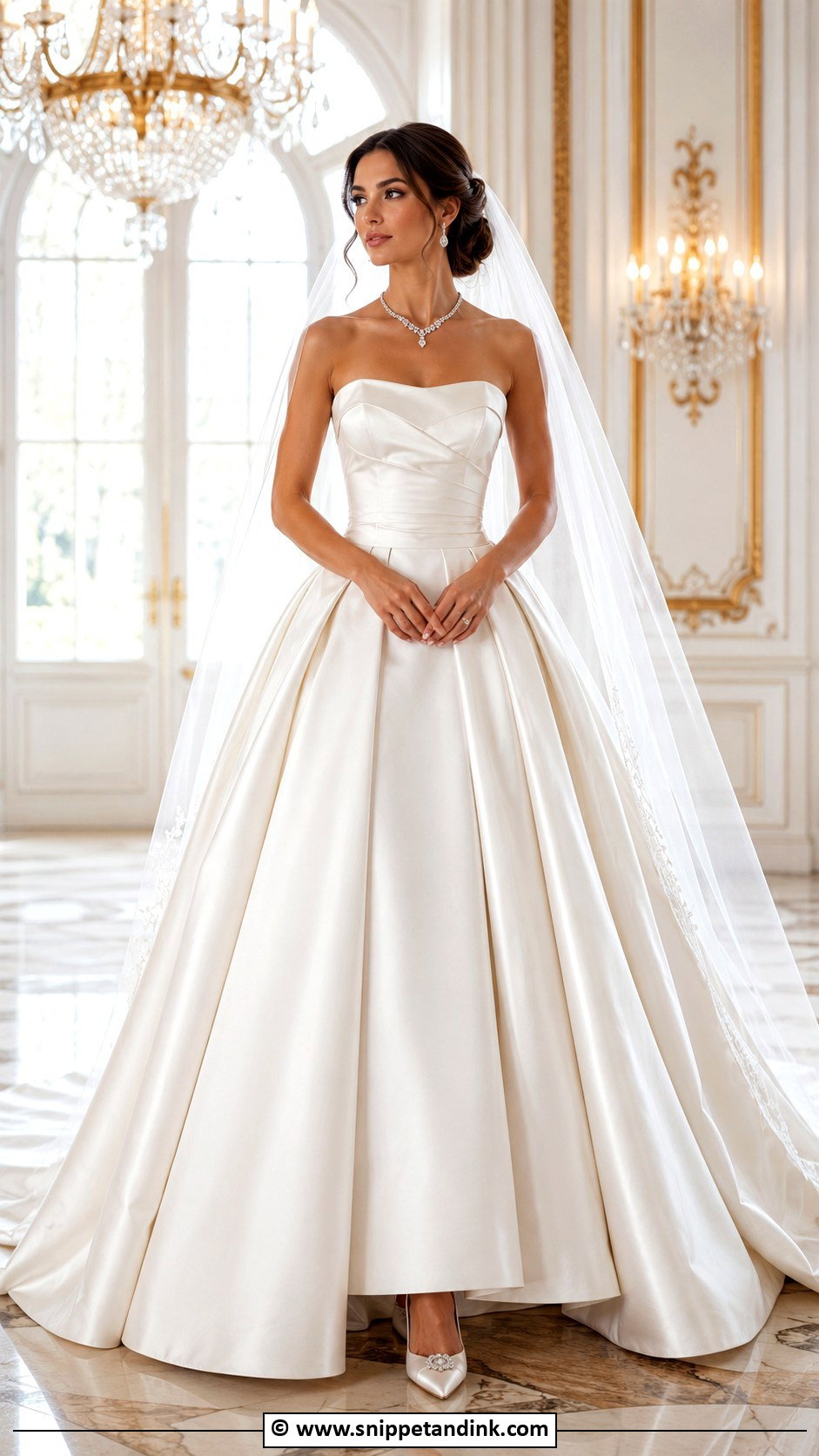
Strapless satin is simple in detail and strong in silhouette, and the inside of the bodice matters more than the outside. I want internal boning and a waist stay; without them, you’ll be hitching it up all night. A basque waist or a pleated skirt adds a little more formality. Bare shoulders leave room for a diamond-style necklace, plus pearl earrings, satin heels and a long veil. Ballrooms and historic estates suit it best. One honest note: a satin ball gown is warm, so a midsummer outdoor ceremony can be hard going.
14. Crystal Bodice Wedding Dress
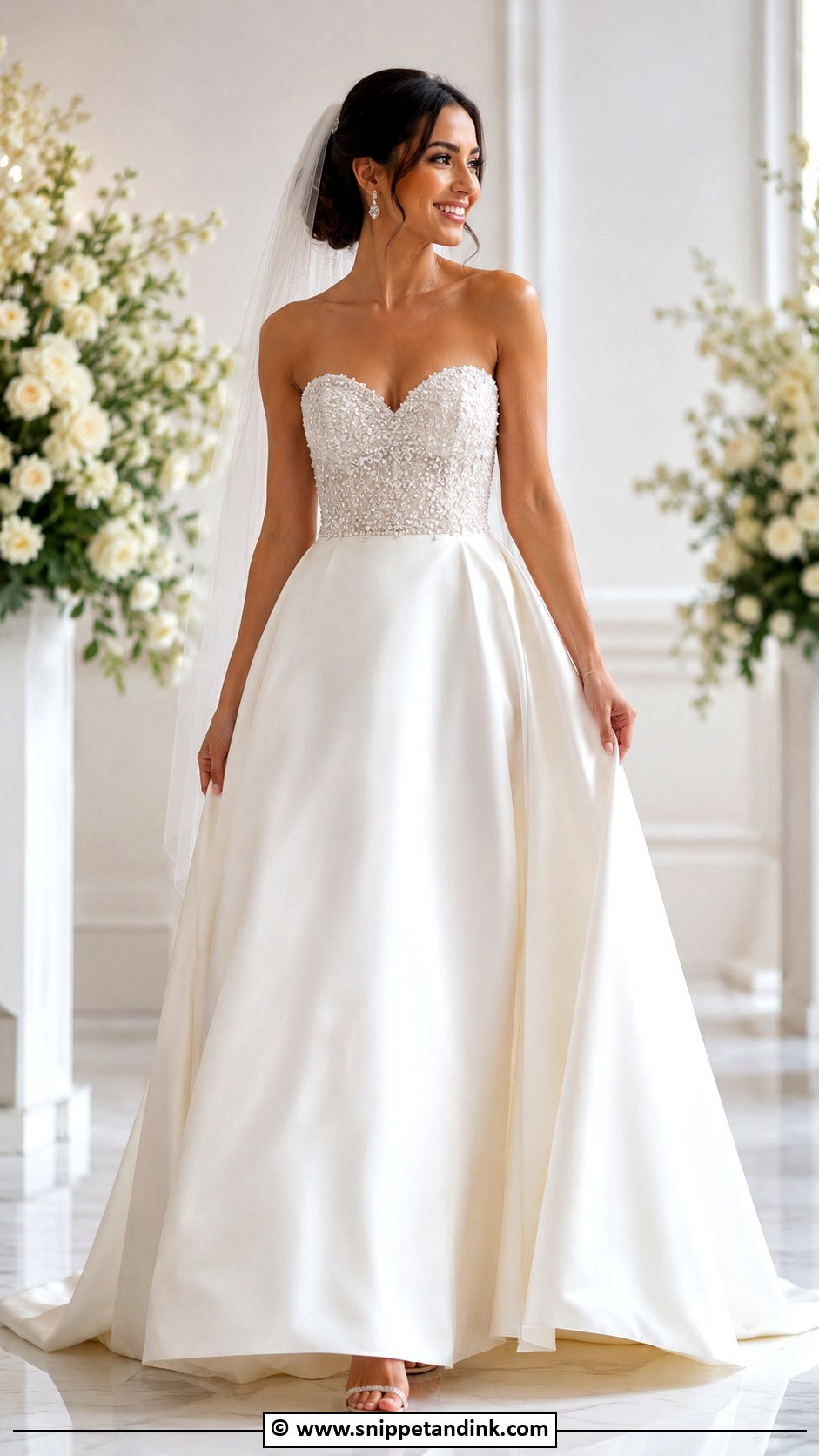
Putting the sparkle only on the bodice keeps it near your face, where cameras spend most of their time, while the skirt stays clean in satin, crepe or tulle. If you love sparkle but not a fully embellished gown, this is the compromise I suggest most often. Check the inside. Crystals on the outside mean thread knots on the inside, and those should sit under a soft lining so they don’t rub your skin raw by evening. Simple earrings, a soft veil and delicate heels are enough. A-line, ball gown, mermaid and sheath bases all carry it.
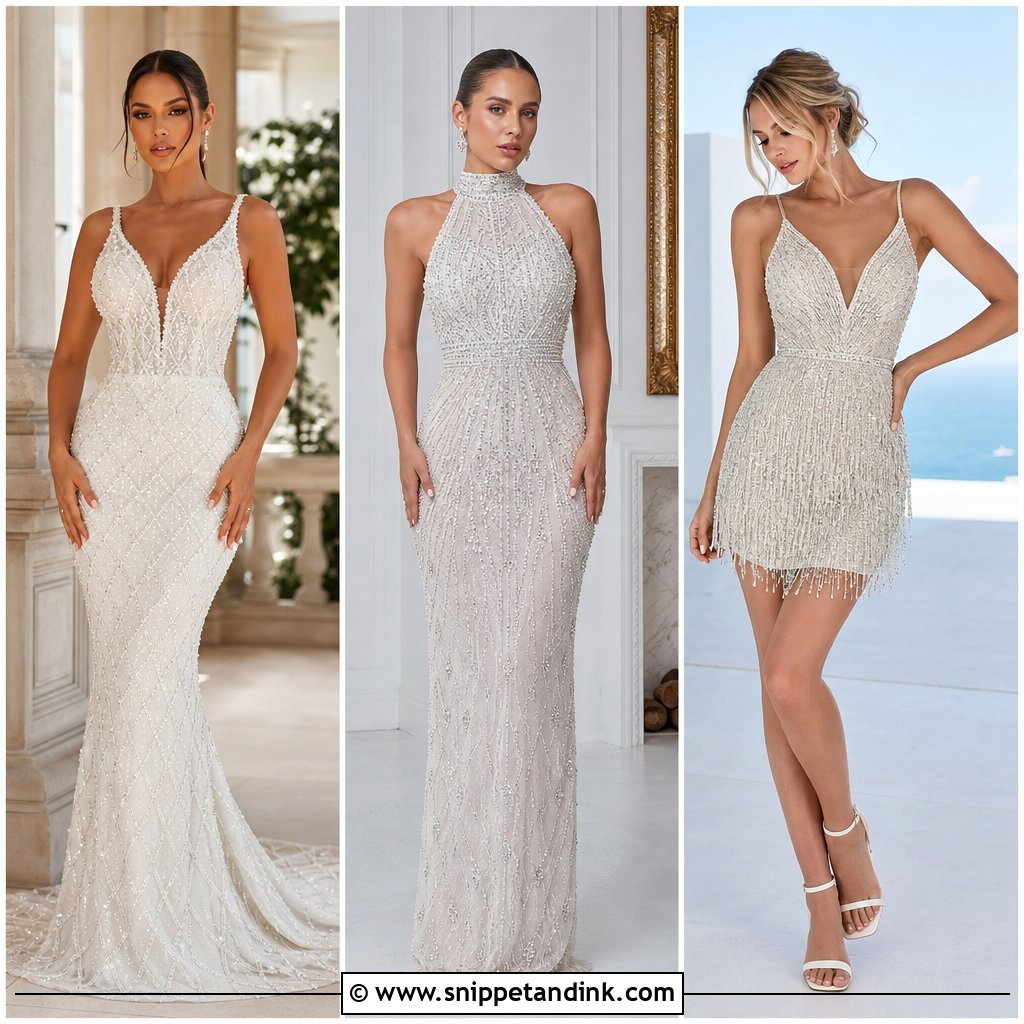
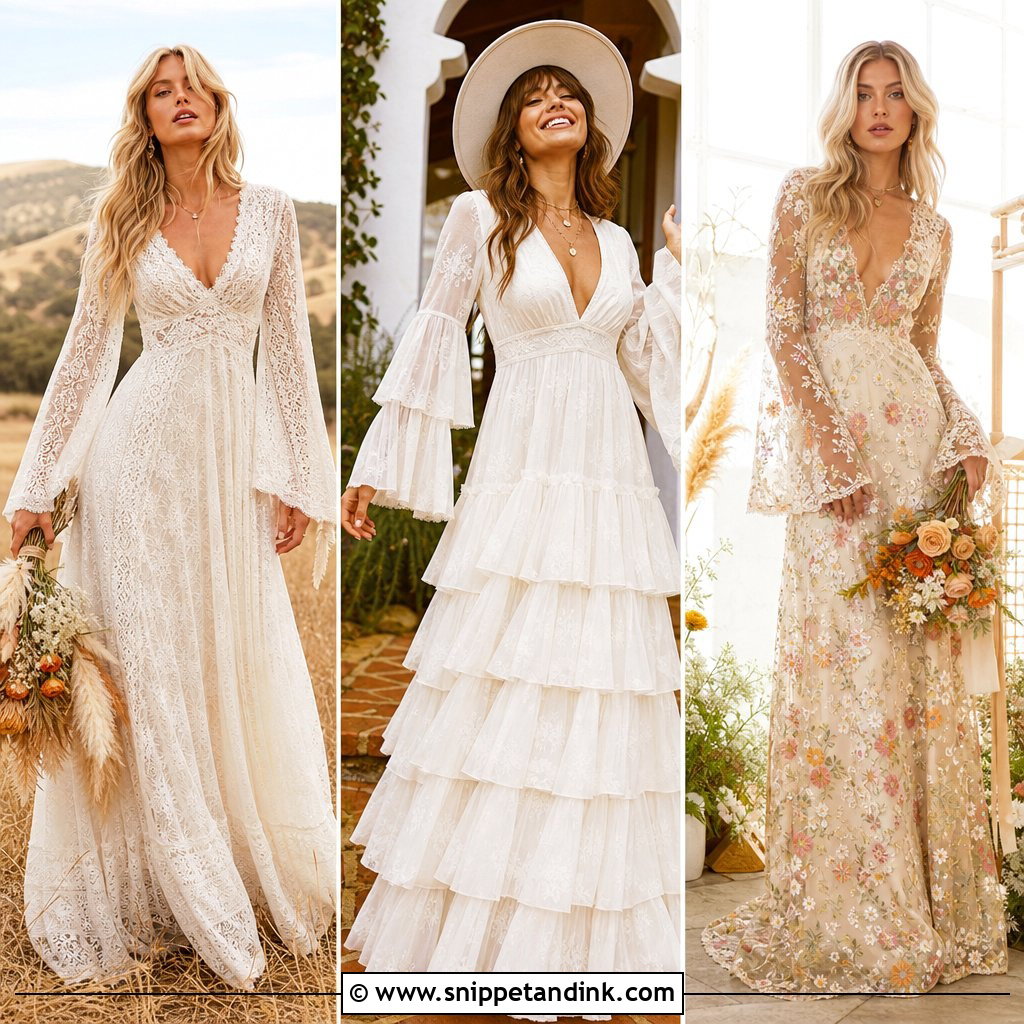
15. Glam A Line Wedding Dress
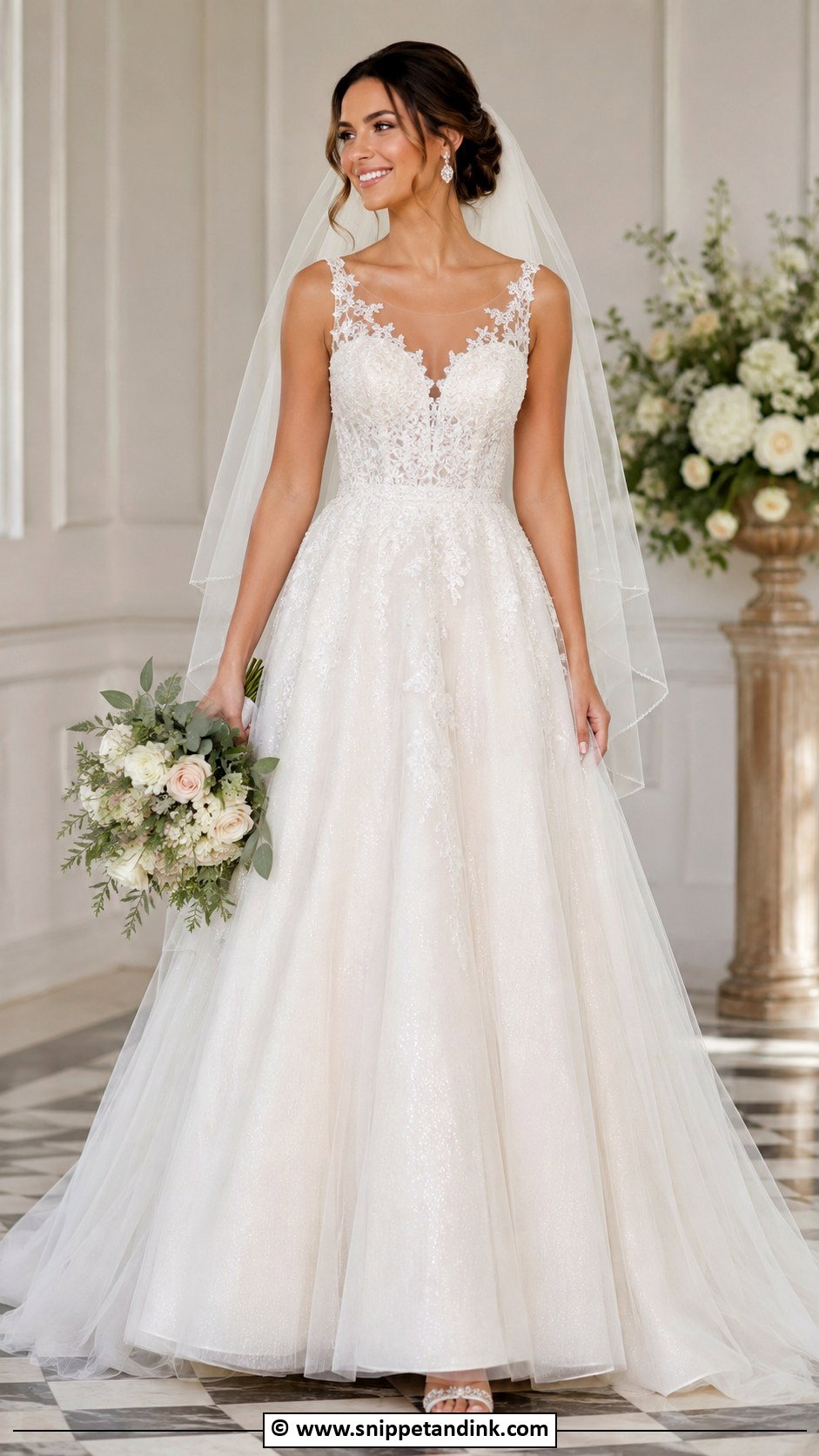
The A-line is the shape I reach for when a bride isn’t sure. It defines the waist and skims the hips, so it suits more bodies than anything else here, and it lets you sit, dance and take stairs without negotiating with your skirt. The glam comes from fabric: shimmer tulle, beaded lace, pearl straps or a structured corset top. Match the veil, earrings and heels to how much detail the dress already has. Busy bodice, quiet everything else.
16. Vintage Glam Wedding Dress
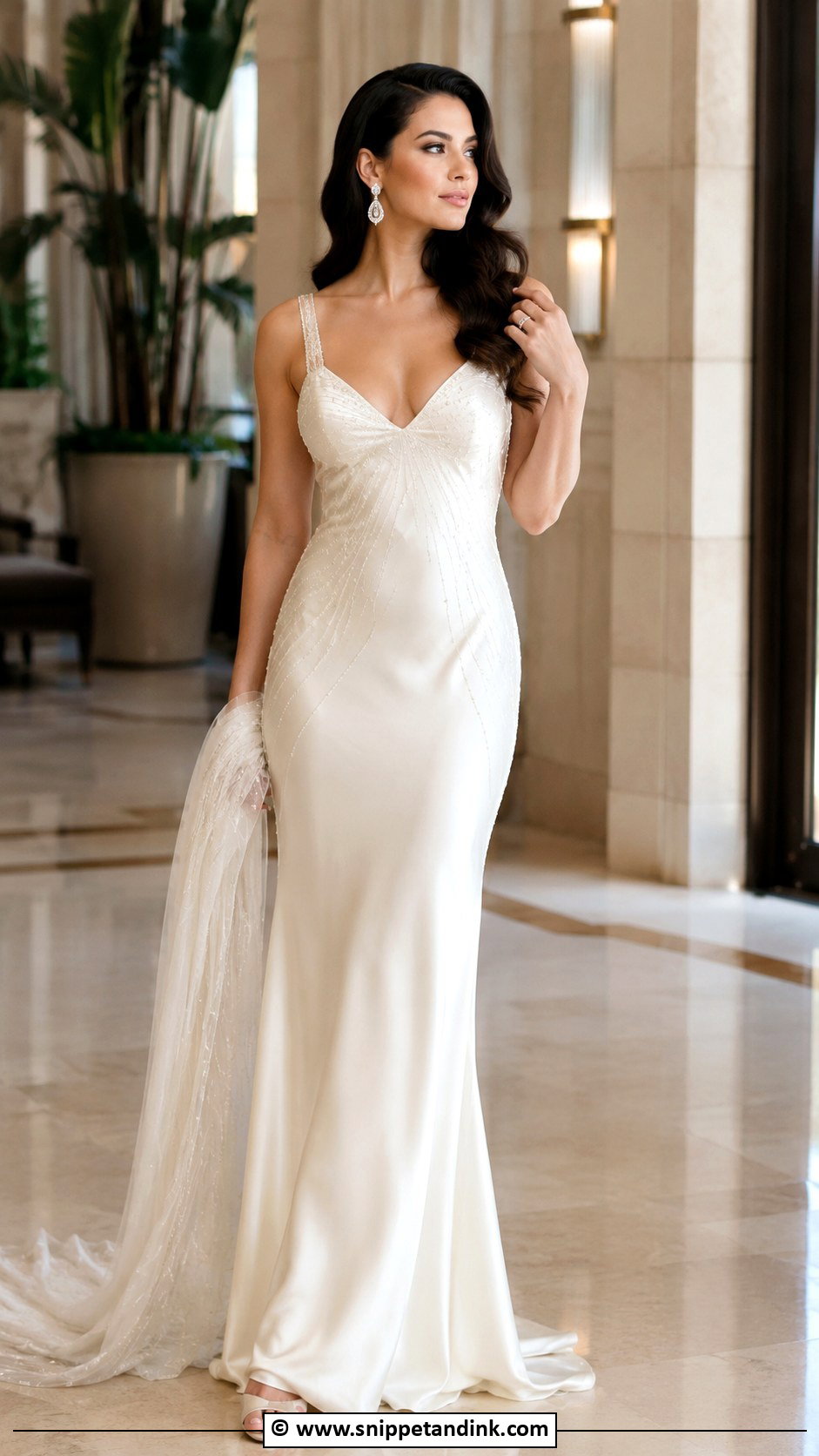
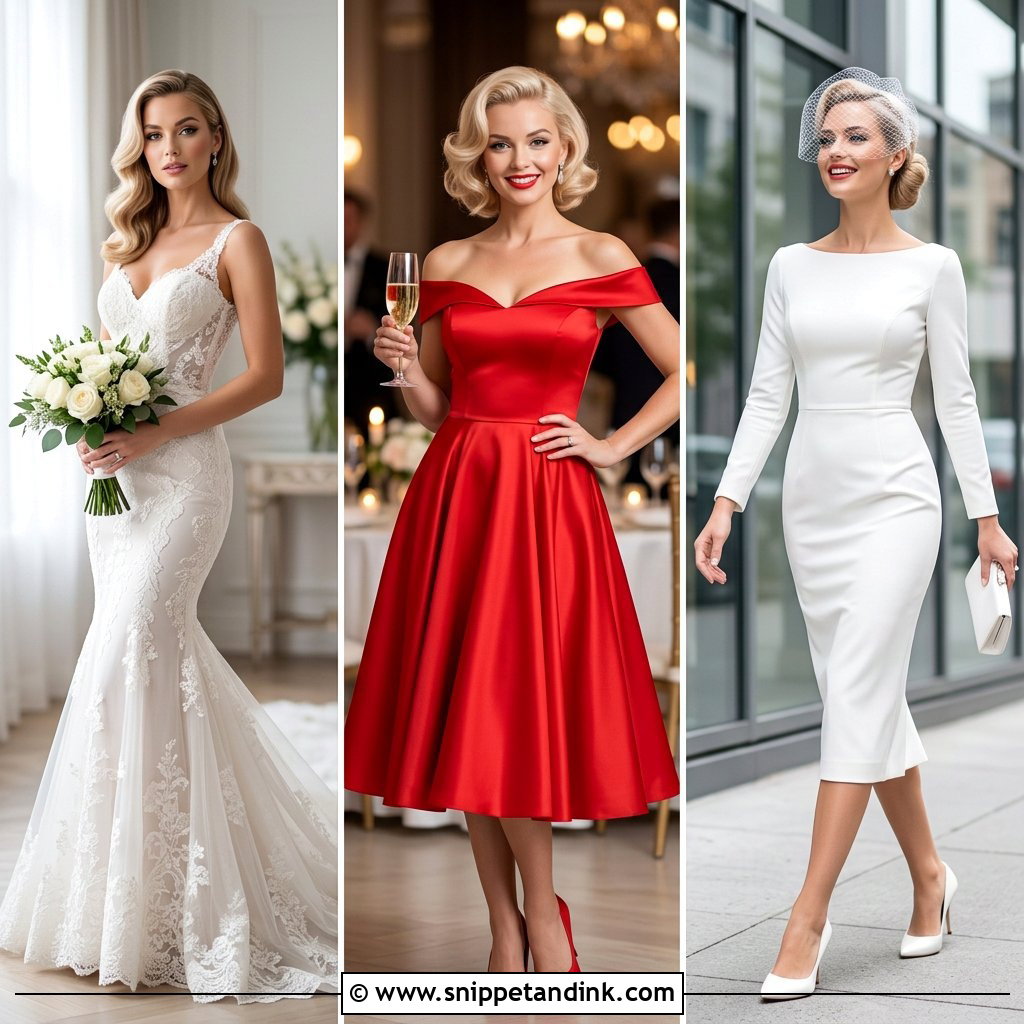
Old Hollywood glam usually means bias-cut satin, and bias cut is unforgiving. The fabric is cut diagonally across the grain so it clings and drapes, which means it shows every line underneath, so smooth no-line shapewear is not optional. Cap sleeves, cowl necks and art deco beading are other routes into the era. Champagne, ivory and pearl tones suit it, with soft waves or a low bun, vintage-style earrings and satin heels. A birdcage veil feels retro; a long veil makes it formal. Because it ignores trends, the photos tend to age well.
17. Glam Mini Wedding Dress
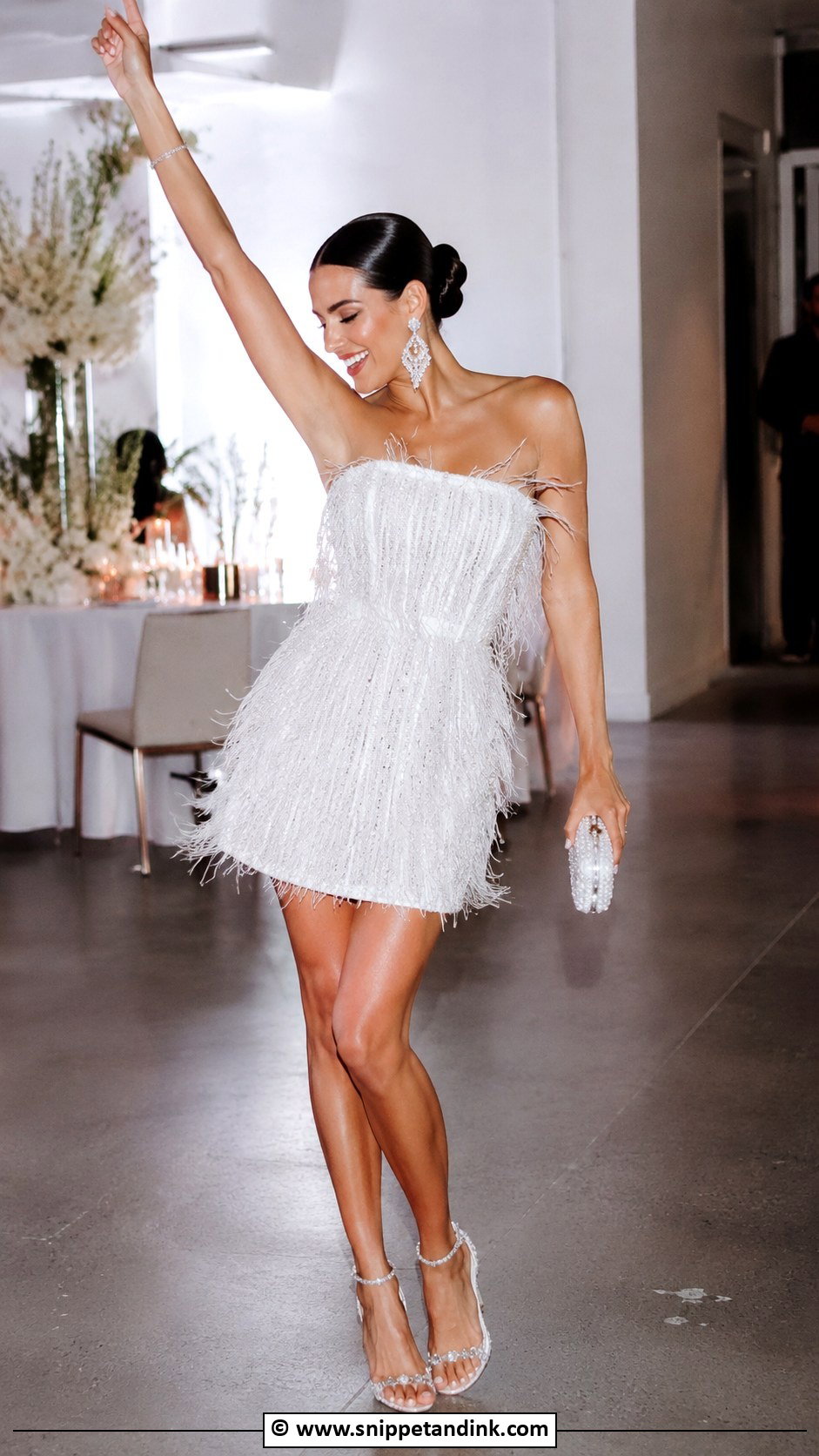
A mini is the dress you’ll actually dance in. It’s usually a reception, after-party or elopement look, and sequins, feathers, pearls or satin keep it bridal. A structured mini looks polished, while a feather-trim mini has more personality. With your legs on show, shoes matter more here than with any floor-length gown, so embellished heels earn their place. A bow, short veil or cape brings back the wedding feel. Do a quick sit-down test in front of a mirror, since short structured skirts ride up more than people expect.
18. Cape Wedding Dress
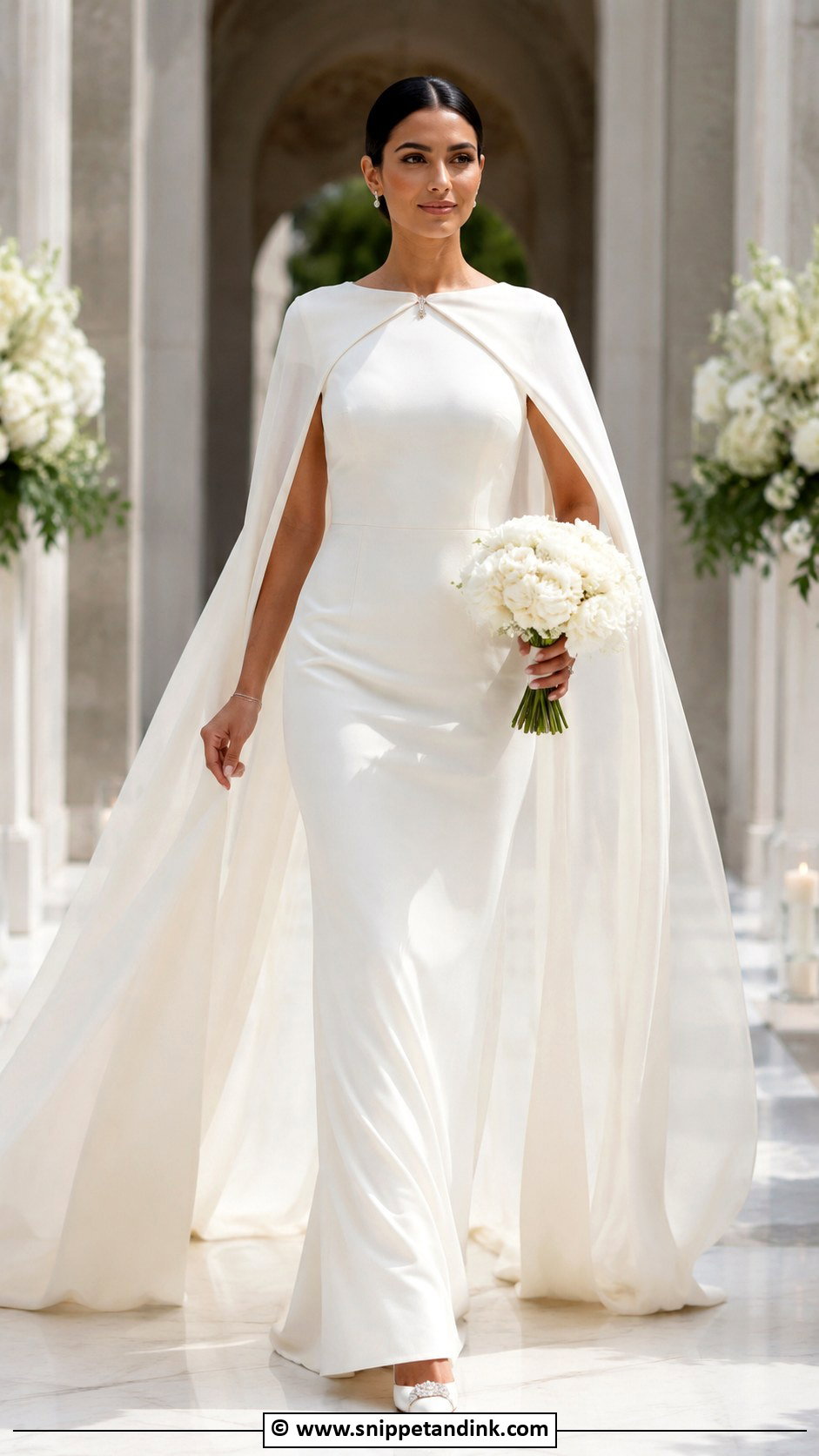
A cape replaces the veil and moves on its own, which is why it gives so much in a back-view shot. It can be sheer, beaded, lace or satin, attached at the shoulders or clipped on separately. The detail I check is weight: a heavily beaded cape pulls the neckline backward, so the dress underneath needs straps or a high neck to anchor it. A sleek dress keeps the look modern, and a lace gown makes it romantic. Simple heels and very little jewelry let the cape lead. It’s a good answer for cool-weather weddings or for arm coverage without sleeves.
19. Plunging Neckline Wedding Dress
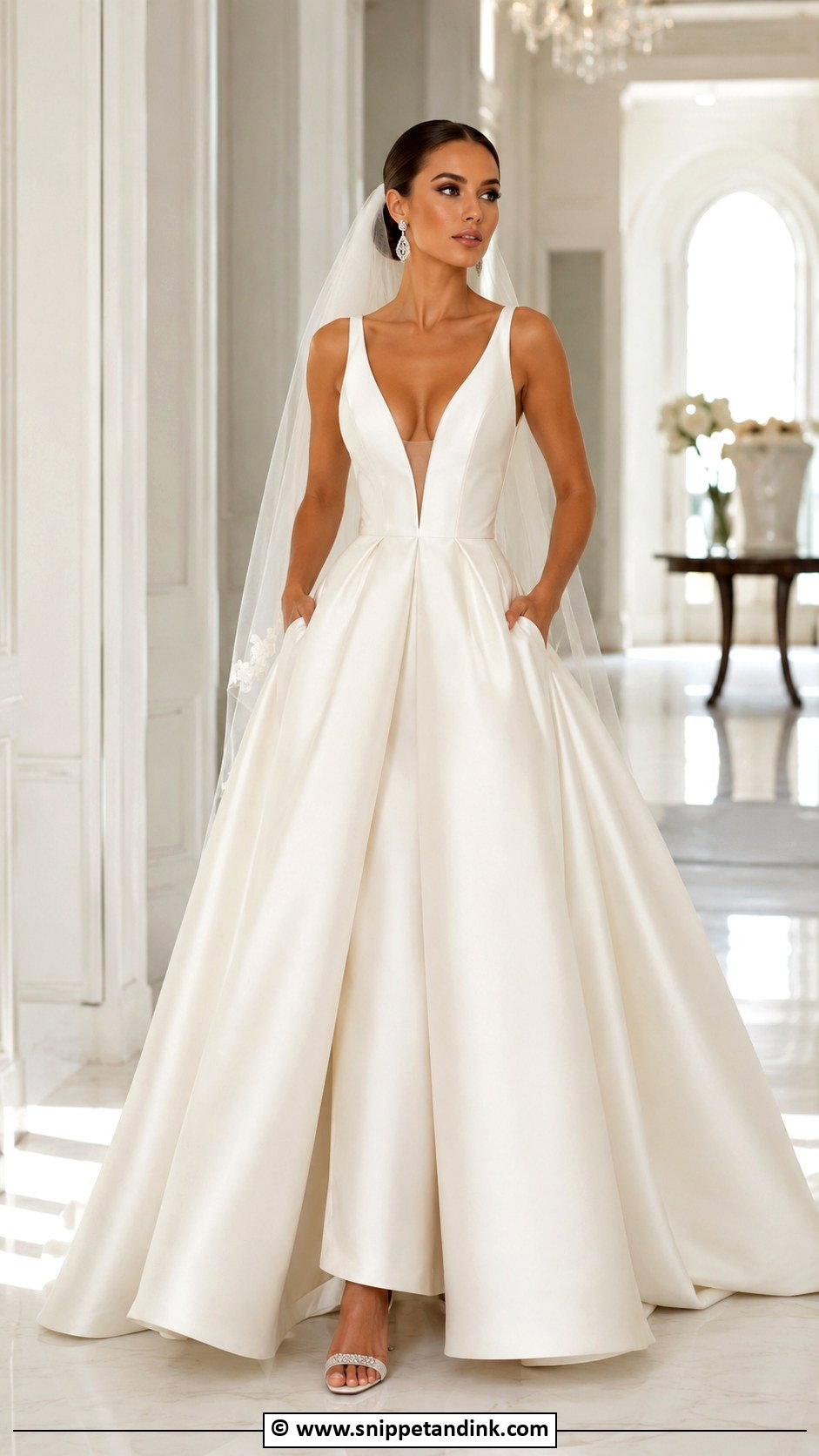
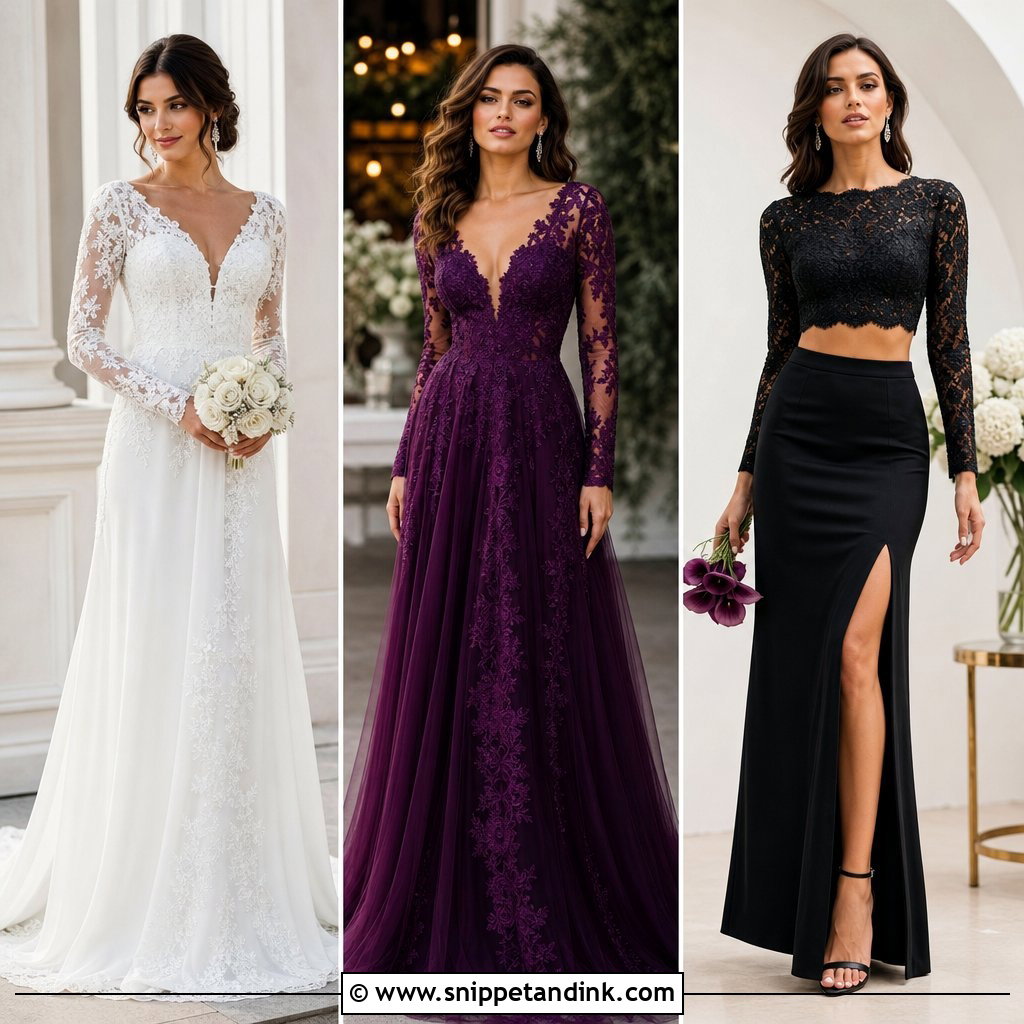
A plunge only looks glam when it feels secure. I ask for illusion mesh in the center plus fashion tape or sewn-in cups, and I have the bride lean forward and hug someone at the fitting to see what shifts. A full skirt, long sleeves or a structured fabric keep it bridal rather than red carpet. Drop earrings, sleek heels and a simple veil are enough; skip the heavy necklace so the line stays clean. Satin, crepe, lace and lightly beaded fabric with a defined waist carry it best.
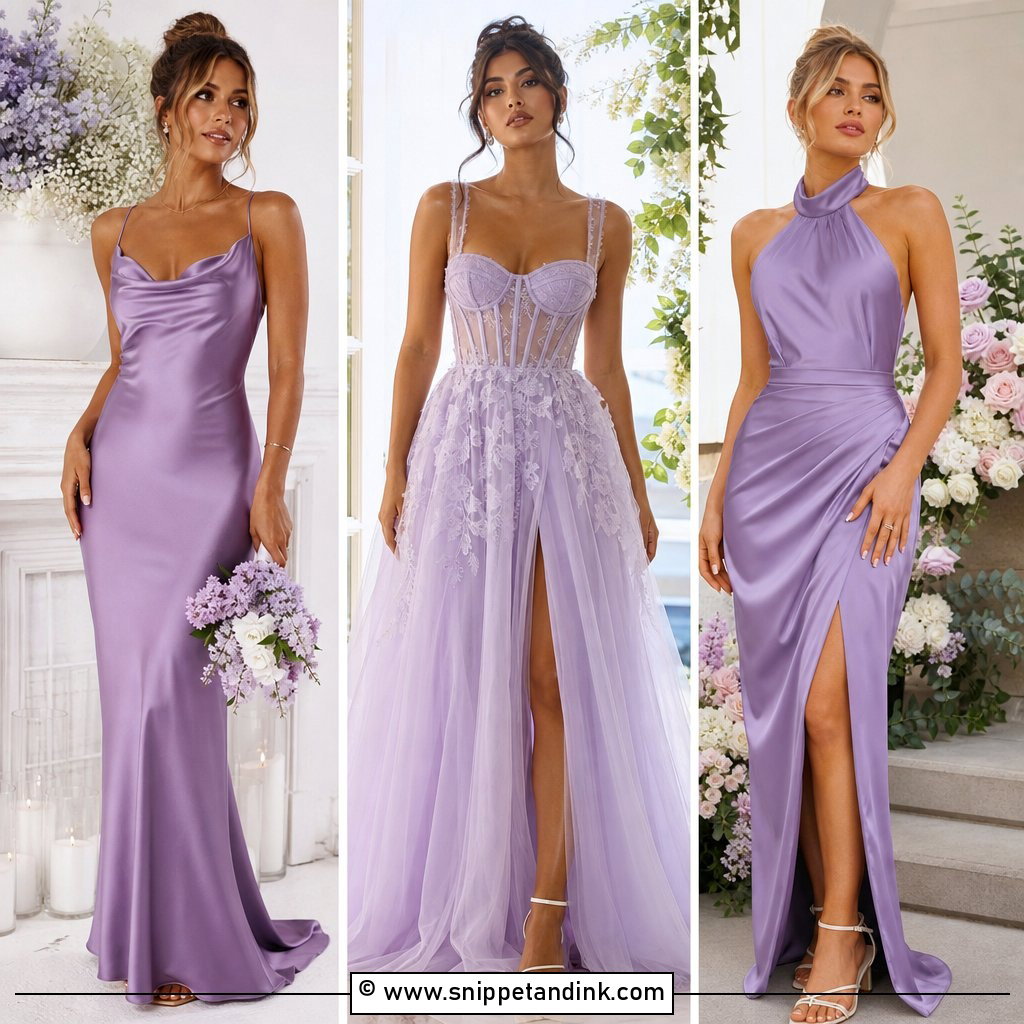
20. Illusion Lace Wedding Dress
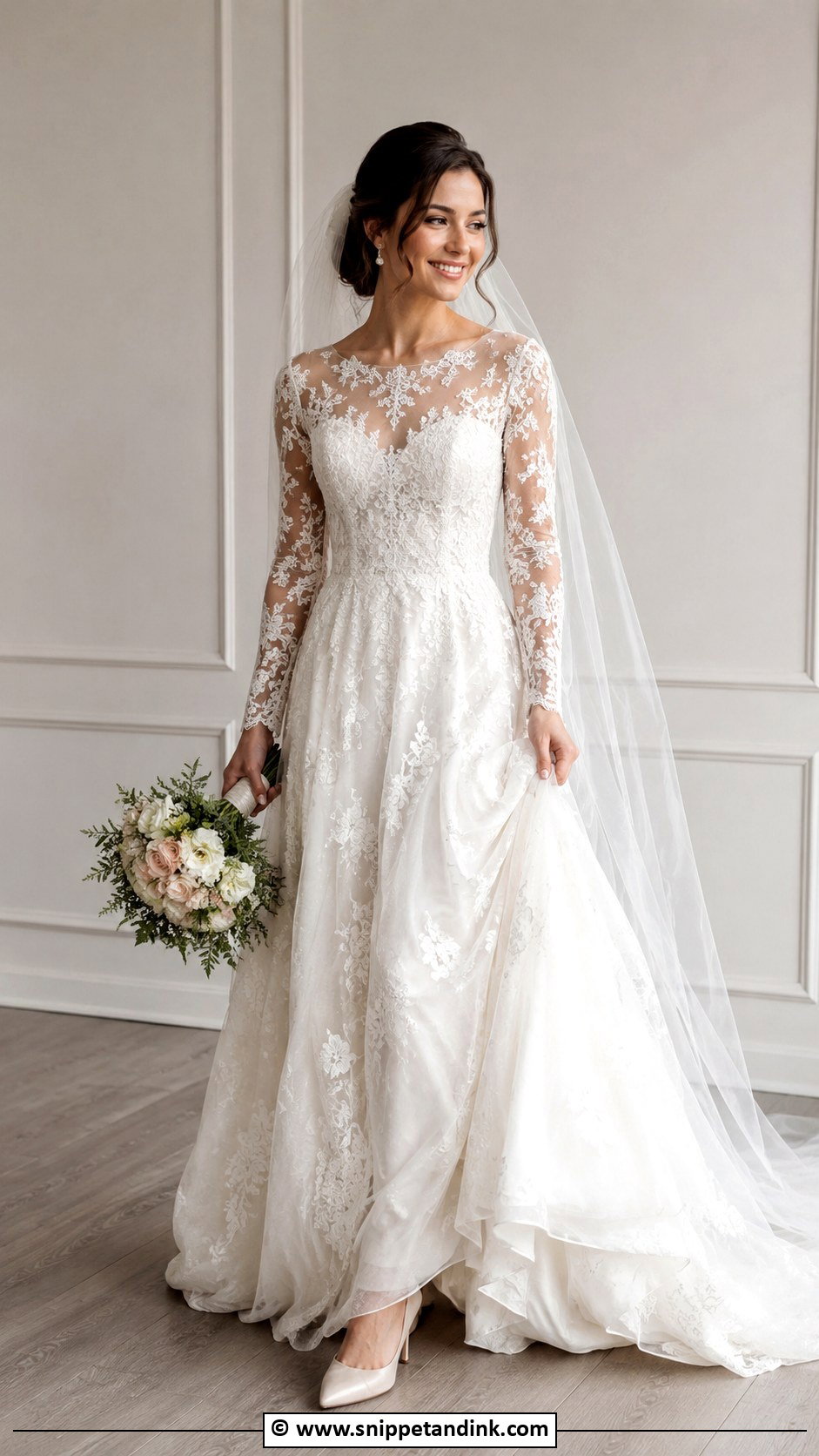
Illusion lace is lace sewn onto sheer mesh, so it looks as if it floats on the skin. It can sit on the sleeves, back, neckline, bodice or side panels. The mesh shade is what I match first. Mesh comes in a range from pale to deep nude, and the wrong one reads grey or pink on camera, so test it against your skin in daylight. Beaded or shimmer-thread lace makes it glam. A fitted silhouette shows off the lace placement, and an A-line keeps it soft. Add a sheer veil, pearl earrings and elegant heels.
21. Dramatic Train Wedding Dress
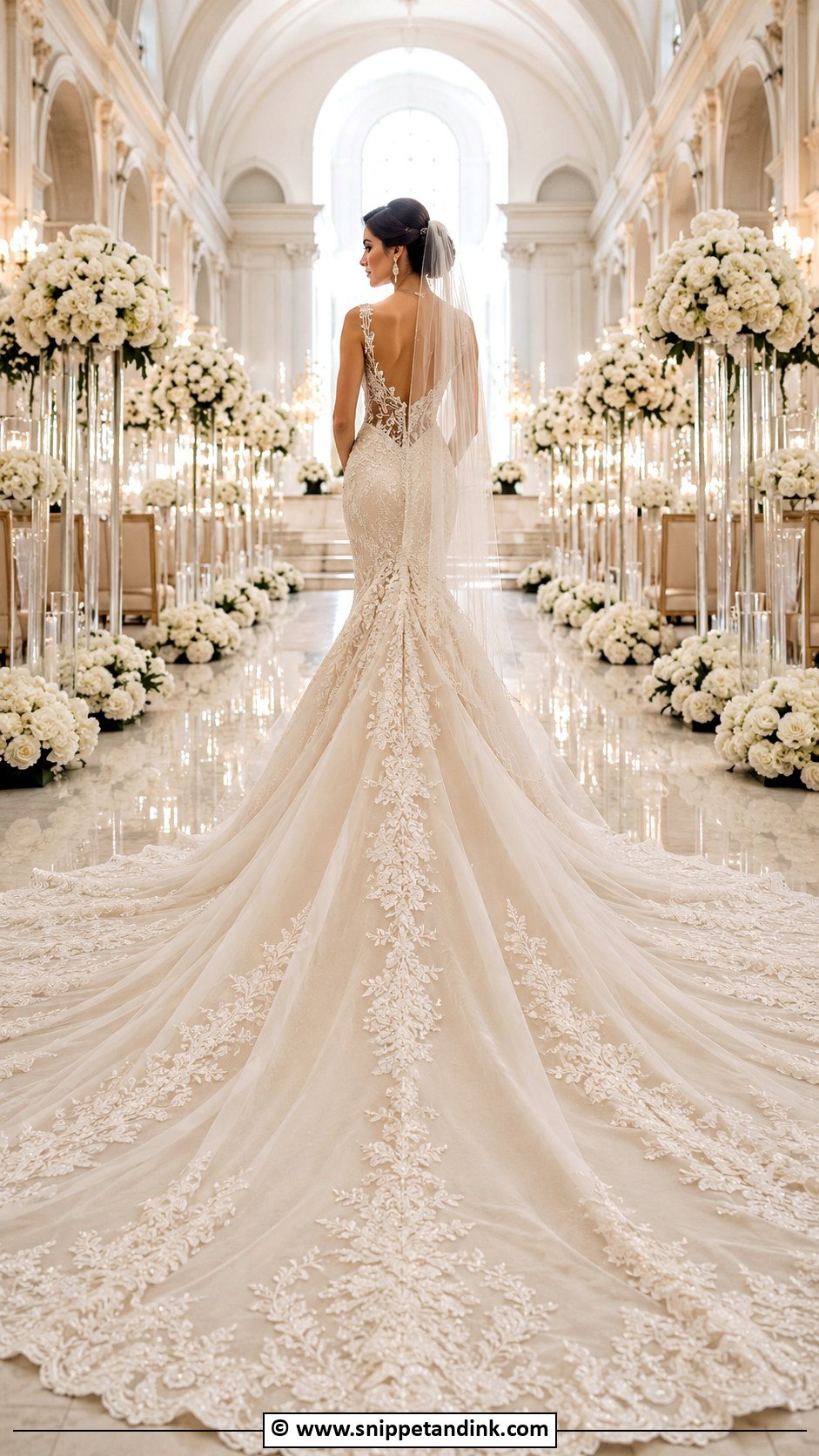
A long train is the aisle moment, and the bustle is the reception reality. Cathedral and royal-length trains are the most formal; a chapel train is far easier on grass or stairs. Ask your seamstress which bustle style she plans to use, and get two people to practise it at the last fitting, because a bustle with lots of hook points done in a hurry will sag by the first dance. A long veil maximizes the effect, but if the train is heavily worked, go simpler on the veil. Ballrooms, estates and large ceremony rooms give it space to spread.
22. Bow Back Wedding Dress
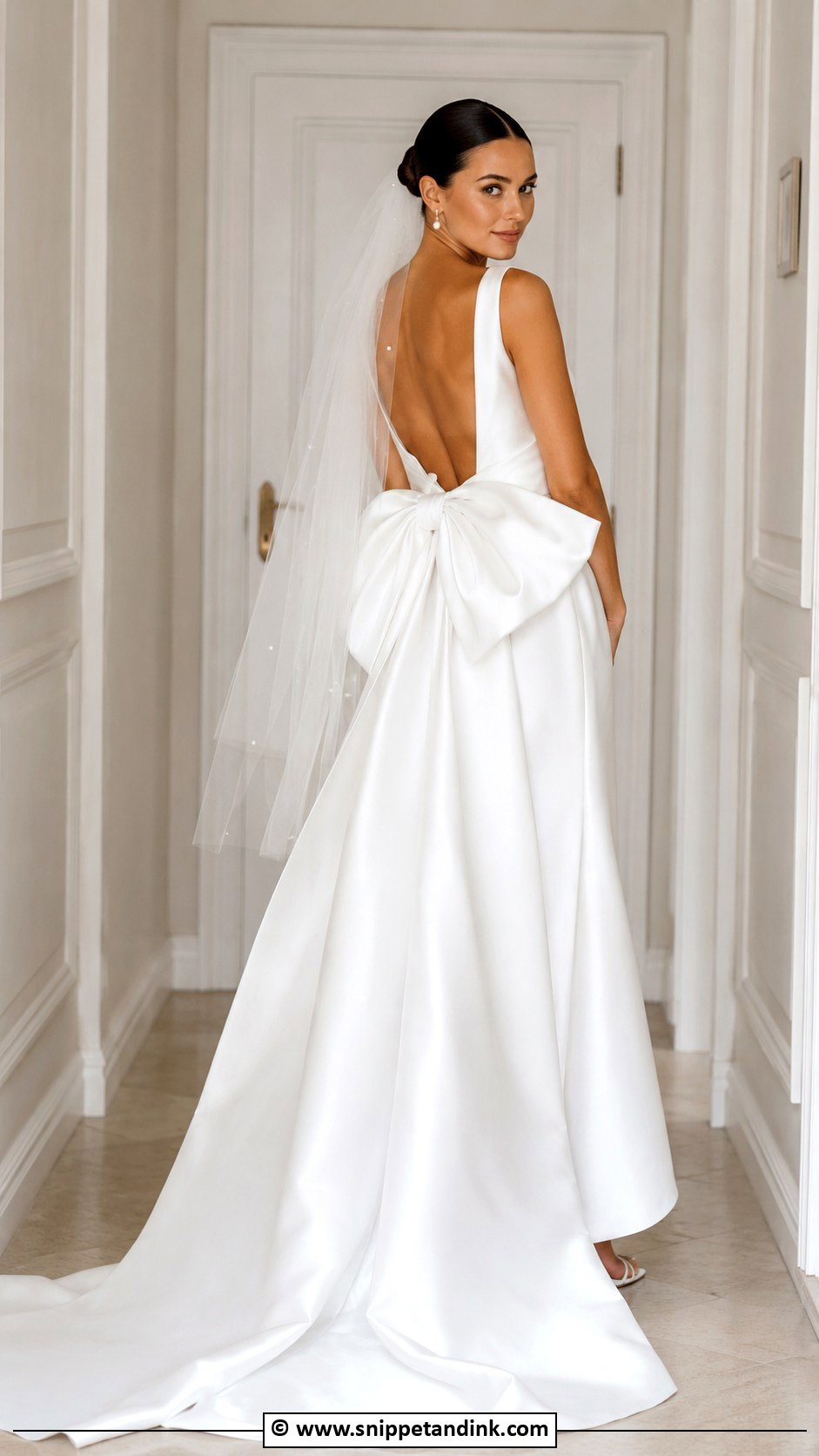
Guests spend the ceremony looking at your back, and a bow puts something there worth looking at. Oversized satin, soft organza or a detachable bow at the waist, shoulder or back are the variations. Satin bows hold their shape; organza ones can droop by evening, so I ask how the bow is supported inside. A clean dress with a big bow looks editorial, and a lace gown with a bow feels romantic. Pearl earrings, a sleek bun and simple heels keep the bow as the focal point, and a detachable one gives you a second look for the party.
23. Beaded Corset Wedding Dress
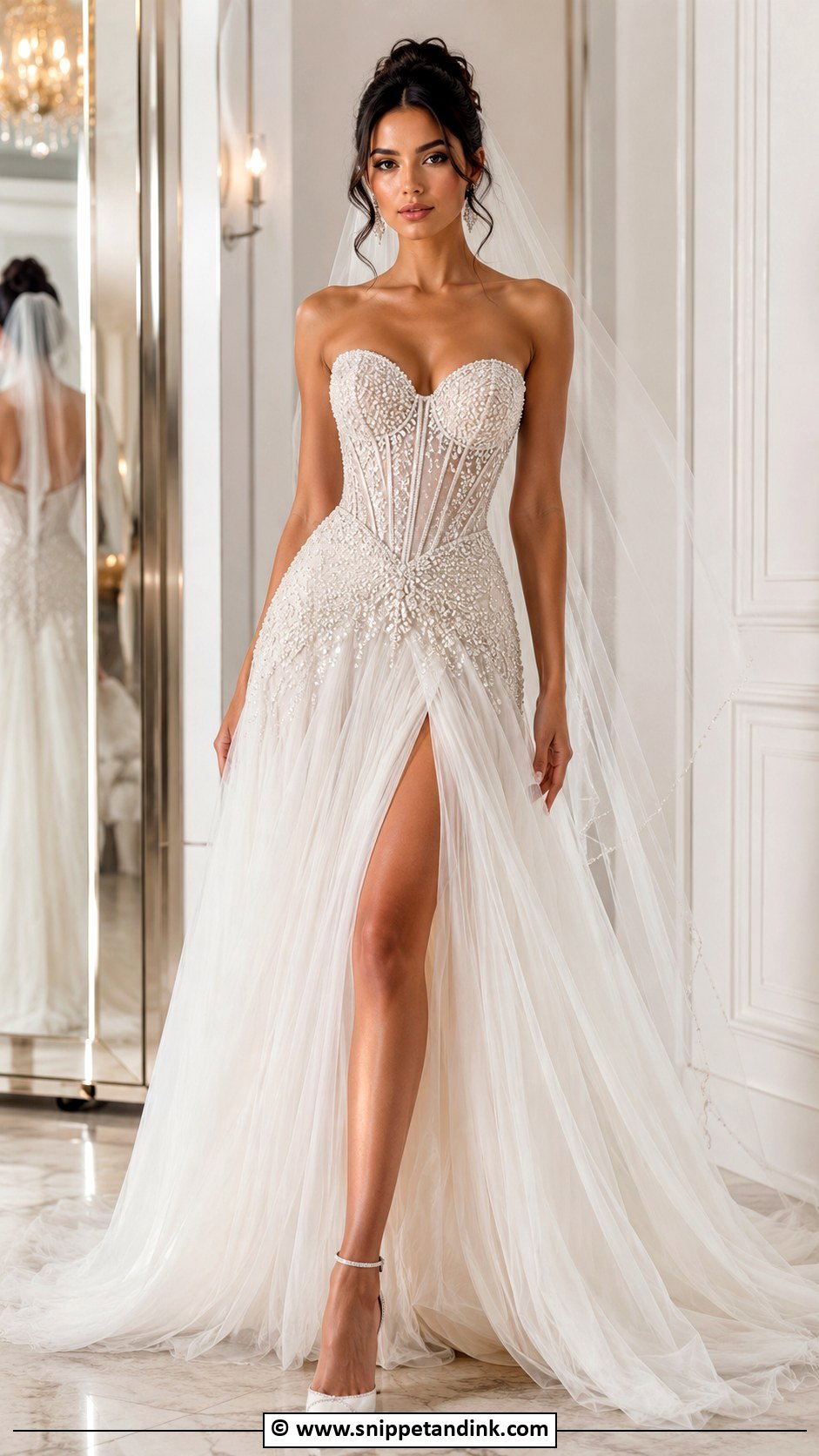
Structure and shine together sounds ideal until you sit down. Beading stiffens a corset, so one that feels fine standing can dig into the ribs during a long dinner, and that’s the thing I watch at every fitting. A sheer corset reads modern; a lined one gives more coverage. Tulle skirts feel romantic and fitted skirts feel sleek. Crystal earrings, a soft veil and heels in the gown’s tone finish it. Candlelit or warm-lit evening ceremonies show the beading best.
24. One Shoulder Wedding Dress
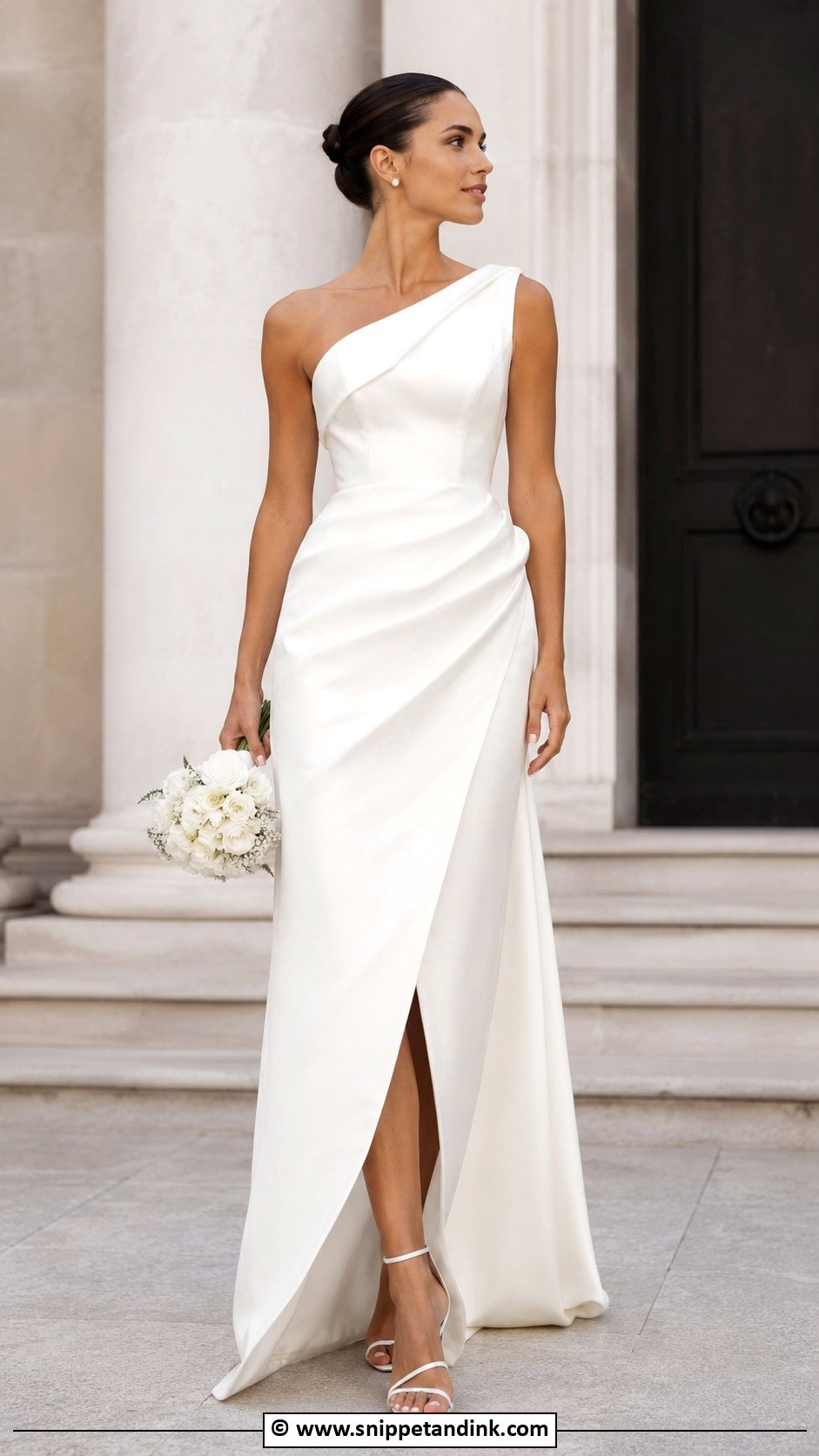
One shoulder is all about the line from the neck to the opposite arm, so jewelry should stay out of its way: one statement earring on the bare side, or simple studs. Satin, crepe or mikado give it a clean, sculpted finish, while beaded fabric adds shine. Fit matters on the strap shoulder. It has to carry the dress without digging in, so I check it after the bride has worn it for twenty minutes, not two. A sleek bun or side-parted waves balance the asymmetry, and strappy heels with a minimal bouquet keep it polished for city and hotel venues.
25. Reception Glam Wedding Dress
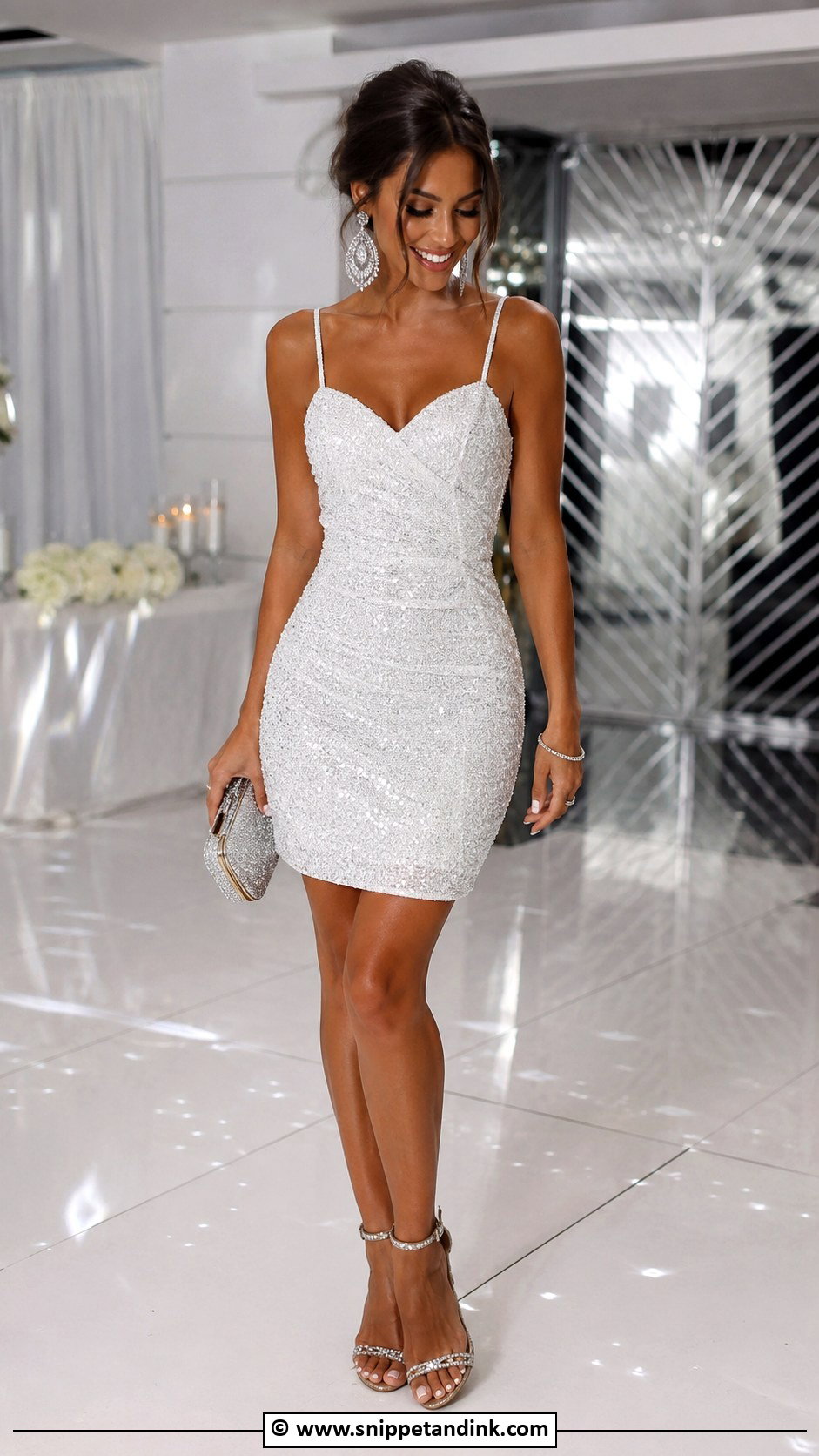
Changing after the ceremony gives you something lighter for the longest part of the day. Sequin sheaths, feather minis, pearl midis and fitted satin with a slit are the usual picks. Plan the change itself: about ten minutes, one helper who knows the fastenings, and a hanger and bag waiting for the ceremony gown. Sparkly heels, statement earrings and a small clutch or wristlet finish it, and the veil can give way to a bow, headband or pins. This second outfit is for dancing, cake cutting and late-night photos, and it keeps the glam going long after the big gown is hung up.
How Many Fittings a Beaded or Corseted Gown Needs
Glam gowns take longer to alter than plain ones. Beading has to be unpicked by hand before a seam can move and then stitched back on, and a corset is fitted closely to the ribs. This is the order I plan around:
- Order early. Made-to-order gowns commonly take several months to arrive, so shopping nine to twelve months out is sensible, with extra time for heavy custom beading.
- First fitting roughly two to three months before the wedding, wearing your actual shoes and underwear. Without them, the hem and bodice are guesswork.
- Second fitting a few weeks later to check beading repairs, the bustle and how the bodice feels after sitting.
- Final fitting in the last two weeks, with whoever will dress you on the day, so they learn the lacing and bustle points.
Alterations on a beaded gown usually cost more than on plain satin because of that hand work, and prices vary a lot by area, so ask for a quote at the first appointment rather than the last.
Living in a Glam Dress From Ceremony to Last Dance
Sitting and eating
Boned bodices fight you when you slouch. Sit on the front half of the chair with a straight back, and eat a real meal before you get dressed, because a corset leaves less room later.
The bathroom
Big skirts need a helper. The easiest method is to sit facing the cistern and gather the skirt forward over your arms. Practise it once at home in your petticoat so it isn’t a surprise.
Small emergencies
My kit always has white chalk, clean white cloths, clear tape and a few safety pins. Blot spills instead of rubbing, especially on satin, which water-marks easily, and tape a loose bead thread rather than pulling it.
Afterwards
Have the gown professionally cleaned within a few weeks, even if it looks fine. Sugar from drinks and perspiration are invisible at first and turn yellow over time on satin and pearls.
Fit Decides How Glam a Dress Really Looks
Sparkle is the easy part. What makes glam work is a dress that suits your venue’s light, still fits after hours of wear and lets you move the way the day needs. A ball gown feels grand and a satin mermaid feels sleek; a pearl gown feels refined and a feather mini feels playful. Veils, gloves, capes, trains and overskirts finish the story. Shortlist two or three from this list, try them under light similar to your venue, and trust the one you forget you’re wearing.
You'll Like These Ideas:


Leave a Reply