
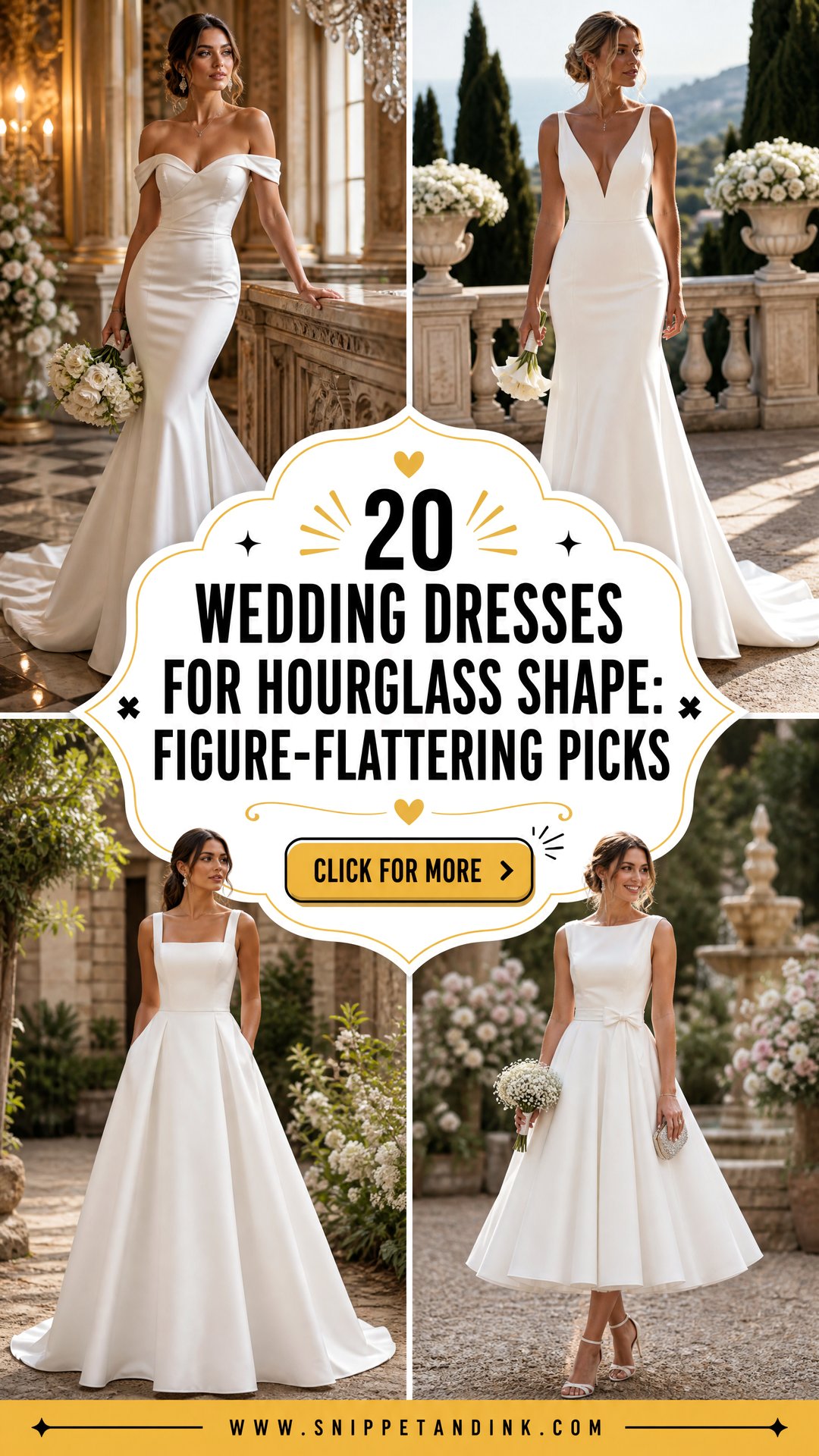
An hourglass figure is often called the easy one to dress, and then the bride tries on a sample that fits her hips and gapes at the waist by three inches. A defined waist with bust and hips in balance is the shape most bridal patterns are drafted around, yet real bodies rarely land in one size on a bridal chart. So I work from proportion and support rather than rules. Mermaid, trumpet and fit-and-flare cuts are obvious starting points because they follow the body before opening out. A-lines, ball gowns, sheaths and tea-length dresses can look every bit as good once the waist seam sits exactly where yours does. Corsetry, curved seams and the right neckline do the refining. Below are twenty gowns I’d pull for an hourglass bride, with notes on what to check in each fitting room.
Your Three Measurements and the Bridal Size Chart
Bridal sizes rarely match high-street sizes, and many brides find they order one or two sizes up from what they normally wear. That is normal, not a judgement. For an hourglass figure the bigger issue is that bust, waist and hip often fall into different columns on the designer’s chart.
- Measure the bust at its fullest point wearing the bra or support you’re most likely to use.
- Measure the natural waist at the narrowest point, usually just above the navel, without pulling the tape tight.
- Measure the hips at their widest, standing with feet together.
- Order to whichever measurement lands in the largest size. Taking a gown in at the waist is routine work; letting out a hip seam often isn’t possible because bridal seam allowances are small.
Have a seamstress or the salon take these rather than doing it alone in a mirror. Wear the shoes you plan to marry in from the first fitting, since heel height decides where the hem and the flare fall.
1. Strapless Sweetheart Mermaid Wedding Dress
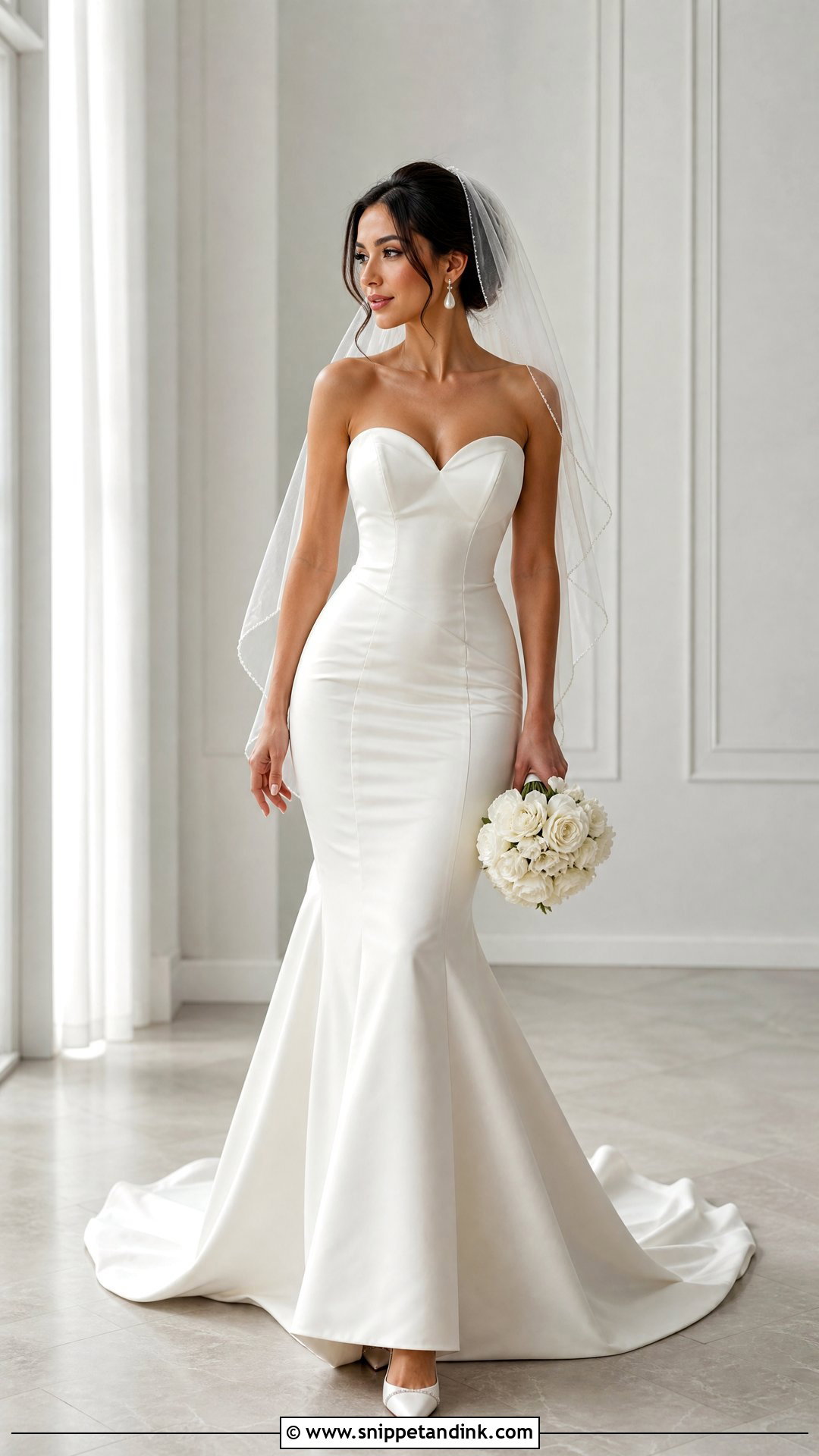
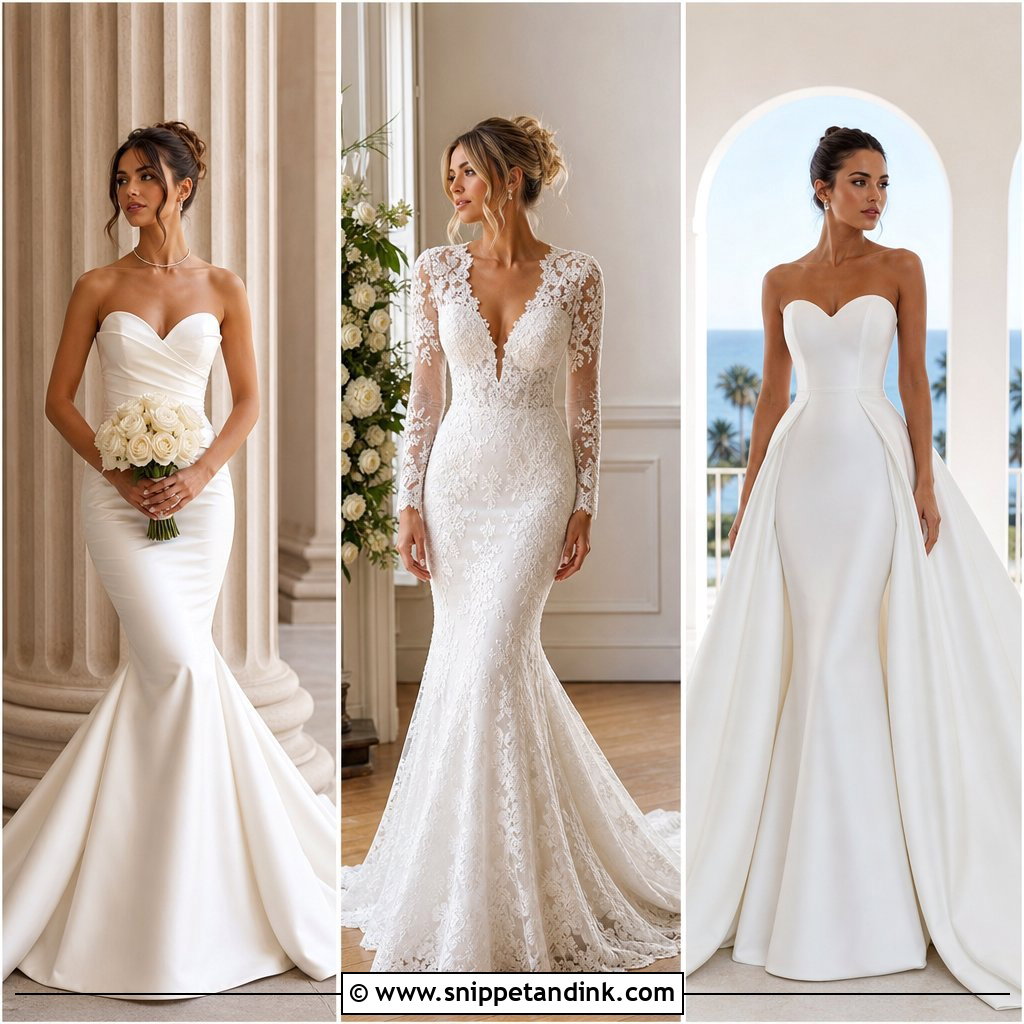
A sweetheart neckline on a strapless mermaid draws one continuous line from bust to flare. Everything depends on what’s inside: proper boning, molded cups or a corset closure that holds without you hitching it up every ten minutes. If you find yourself tugging at the top during the appointment, it will be worse by the speeches. The skirt should follow the hips smoothly and flare at or just above the knee. Stretch crepe shows the shape cleanly; satin reads more formal. Add a fingertip veil, pearl drops, pointed pumps and a compact bouquet. Then walk the length of the salon and try a slow dance step, because a low flare can shorten your stride badly.
2. Lace Fit-And-Flare Wedding Dress
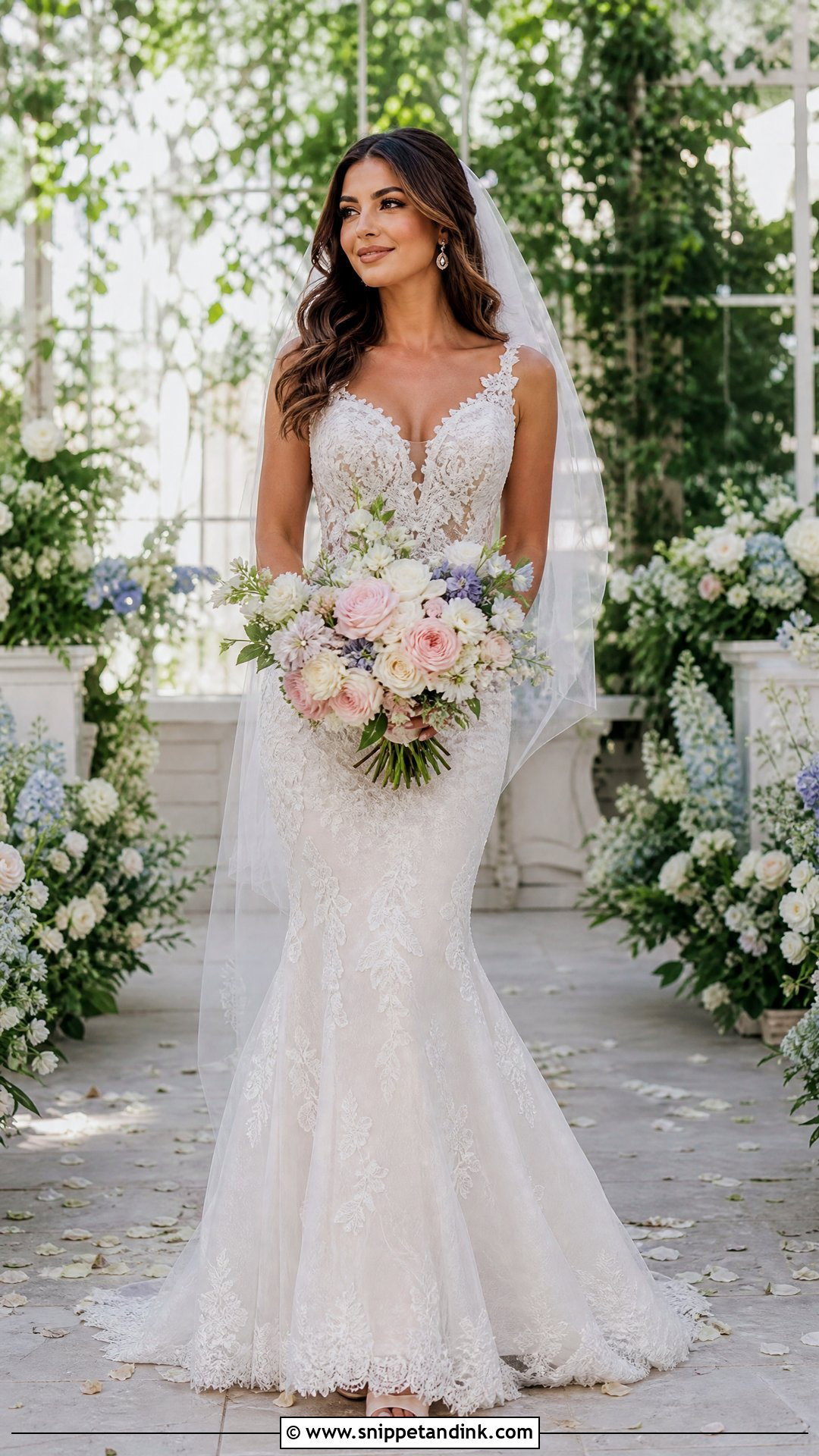
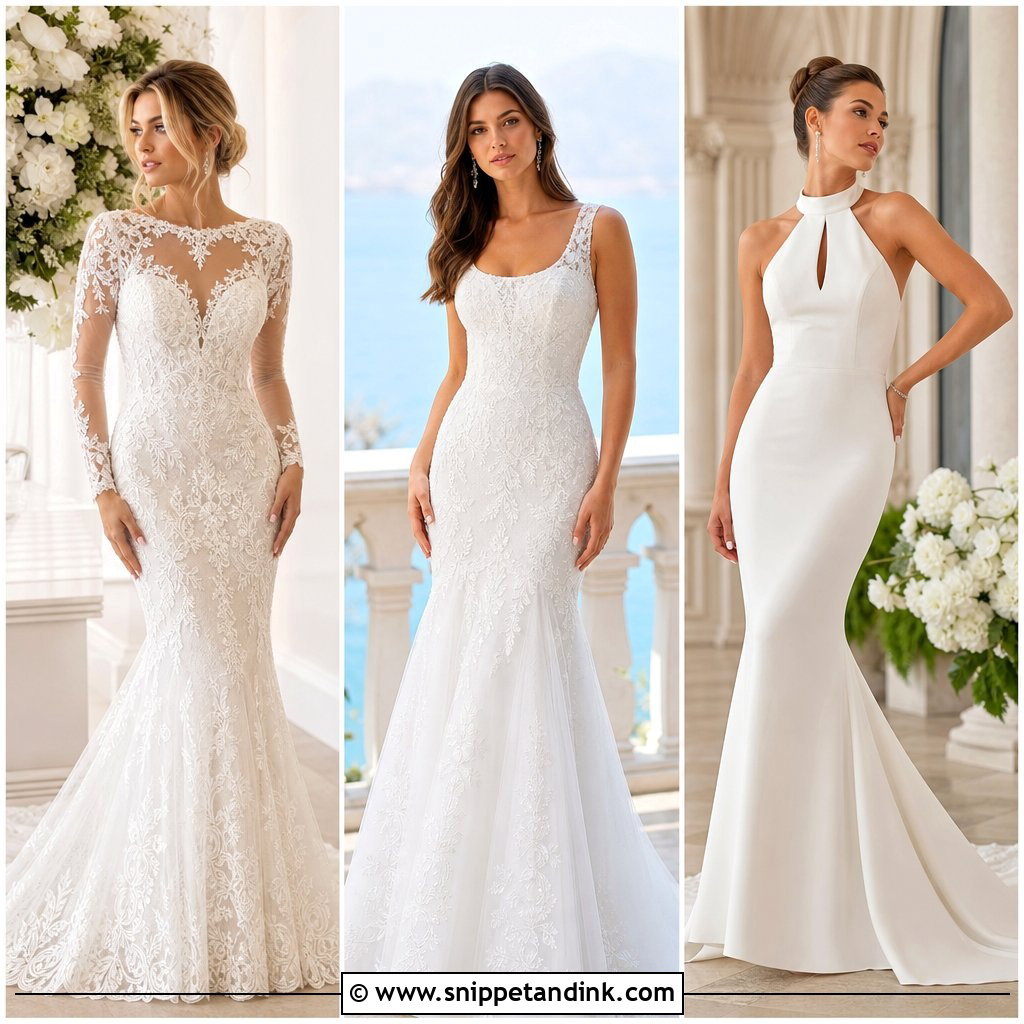
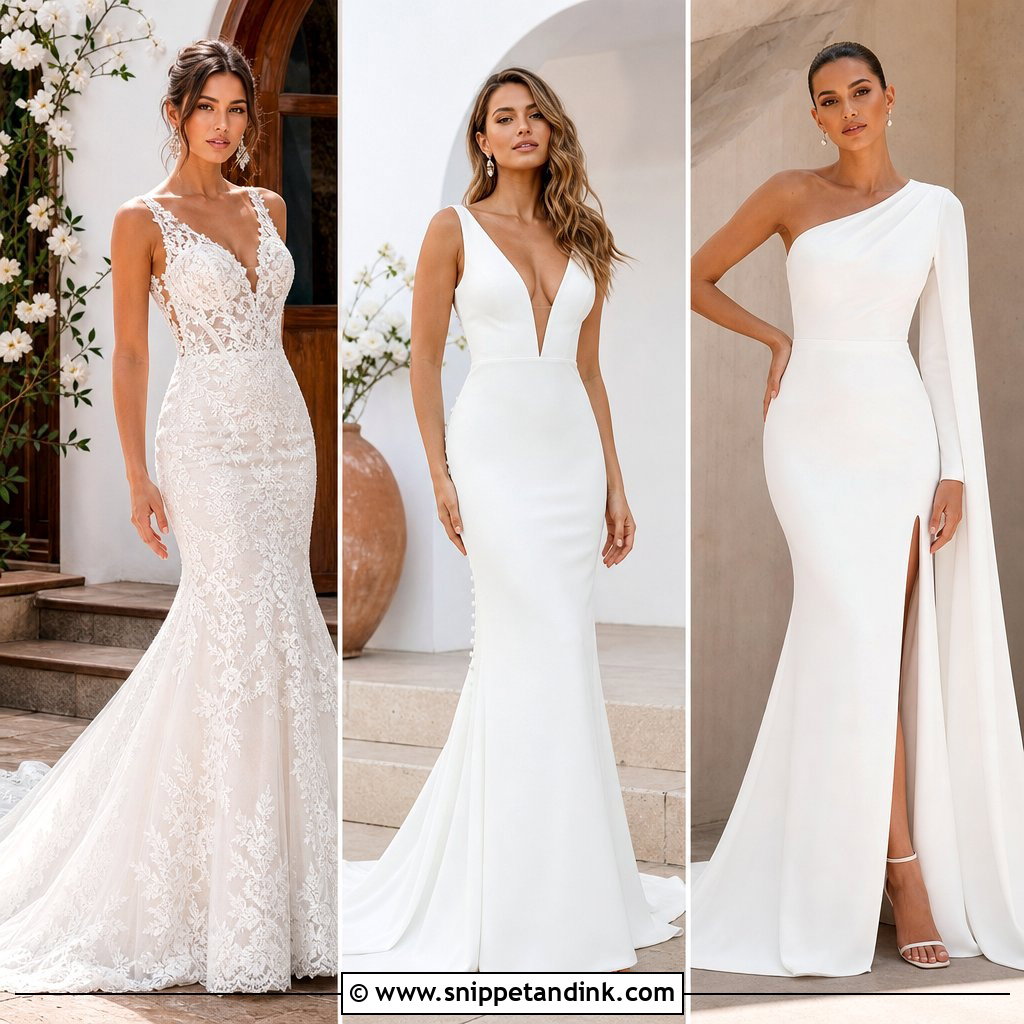
Lace on a fit-and-flare softens all that shaping, provided the motifs run vertically or on the diagonal. A heavy horizontal band of lace across the hips adds visual width exactly where you don’t need it. The gown should sit close through bodice and hips and widen gradually around the knee. Ask whether the lining has stretch. Stiff lace over rigid lining fights every curve and creases at the waist when you sit, while a flexible foundation moves with you through a long day. A plain veil, delicate earrings, block heels and white or pastel flowers are enough with this much texture.
3. Corset Trumpet Wedding Dress
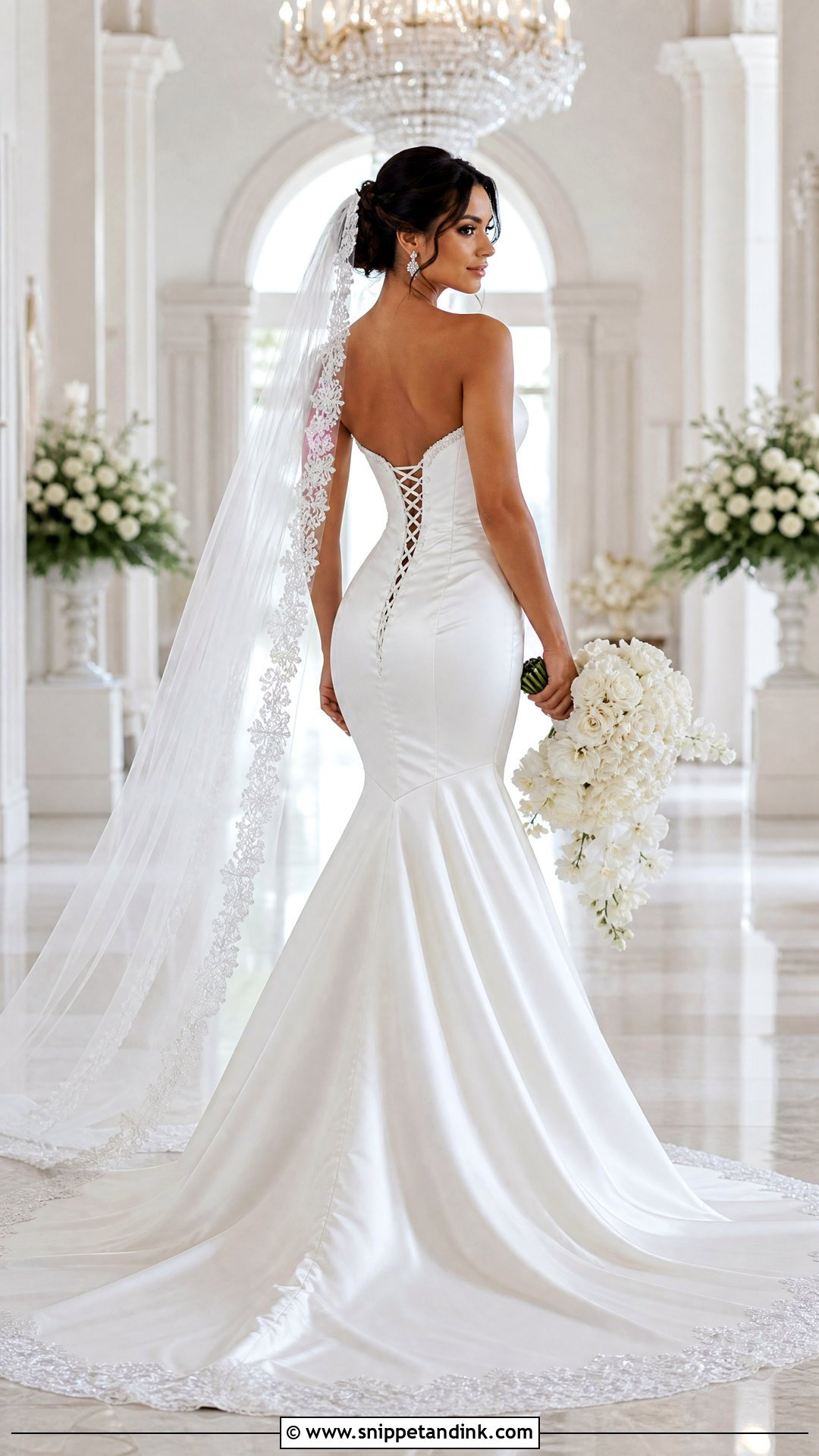
The trumpet is the compromise I suggest most to brides who love mermaid shapes but want to walk normally. The skirt opens higher, around mid-thigh, so the transition from hip to hem is softer and the knees are free. A boned corset bodice holds the waist in place. Choose a sweetheart, scoop or a gentle cat-eye depending on how much support and coverage you want. Satin suits a formal ceremony; layered tulle makes the flare lighter. A cathedral veil, crystal studs, closed heels and a structured bouquet complete it. In the fitting, breathe in fully and lift both arms. A corset should support you, not squeeze you.
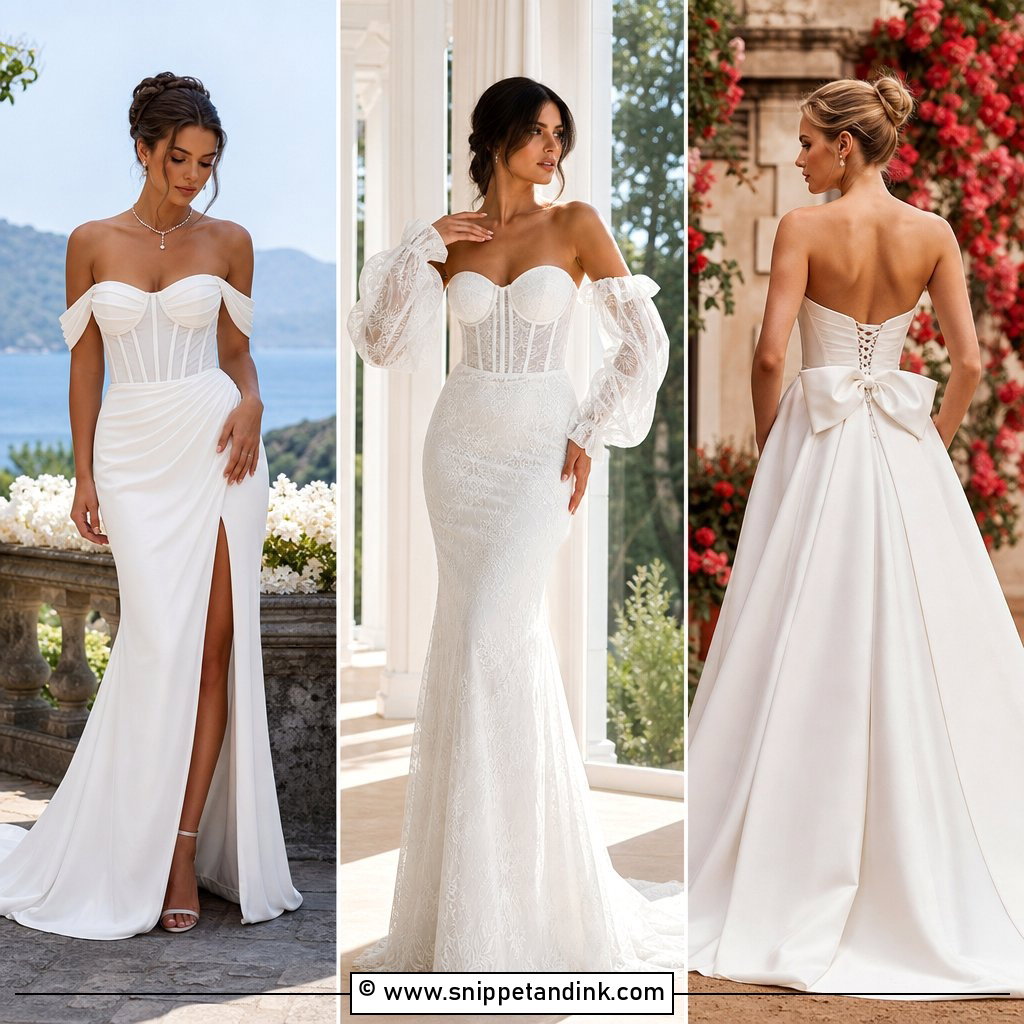
4. Off-The-Shoulder Satin Mermaid Wedding Dress
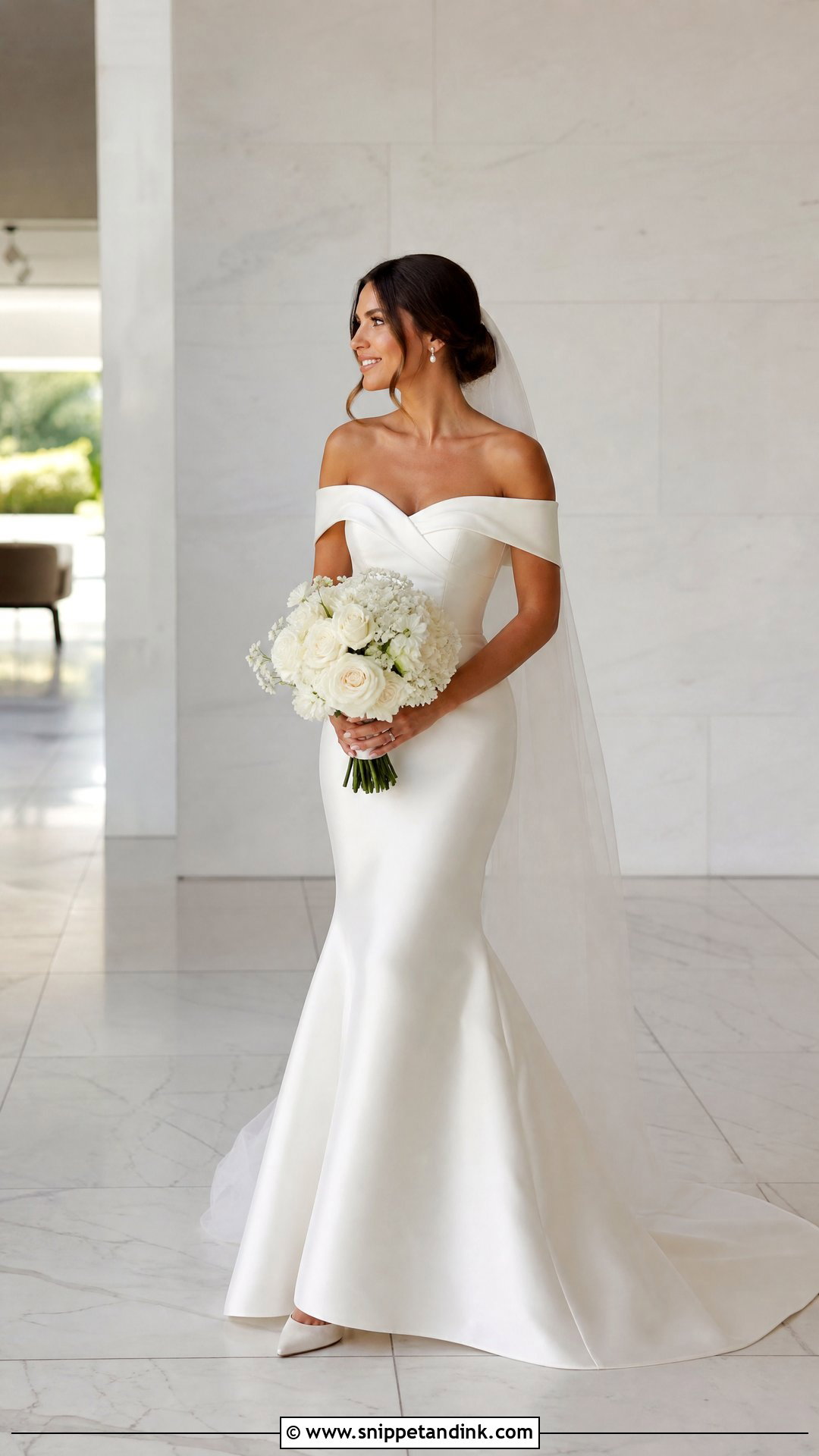
Off-the-shoulder bands frame the collarbones and balance the hips, which is why this neckline flatters an hourglass so reliably. The catch is arm movement. A band sitting tight across the upper arm stops you hugging anyone above chest height, so I always ask brides to lift their bouquet and wrap their arms around me in the fitting room. Medium-weight satin glides better over the hip than lightweight satin, which pulls into ridges. Princess seams and an inner corset smooth everything underneath. A low chignon, short drop earrings, a long veil and sleek ivory pumps suit it. Detachable sleeves give you the formal ceremony look and freedom later.
5. V-Neck Crepe Fit-And-Flare Wedding Dress
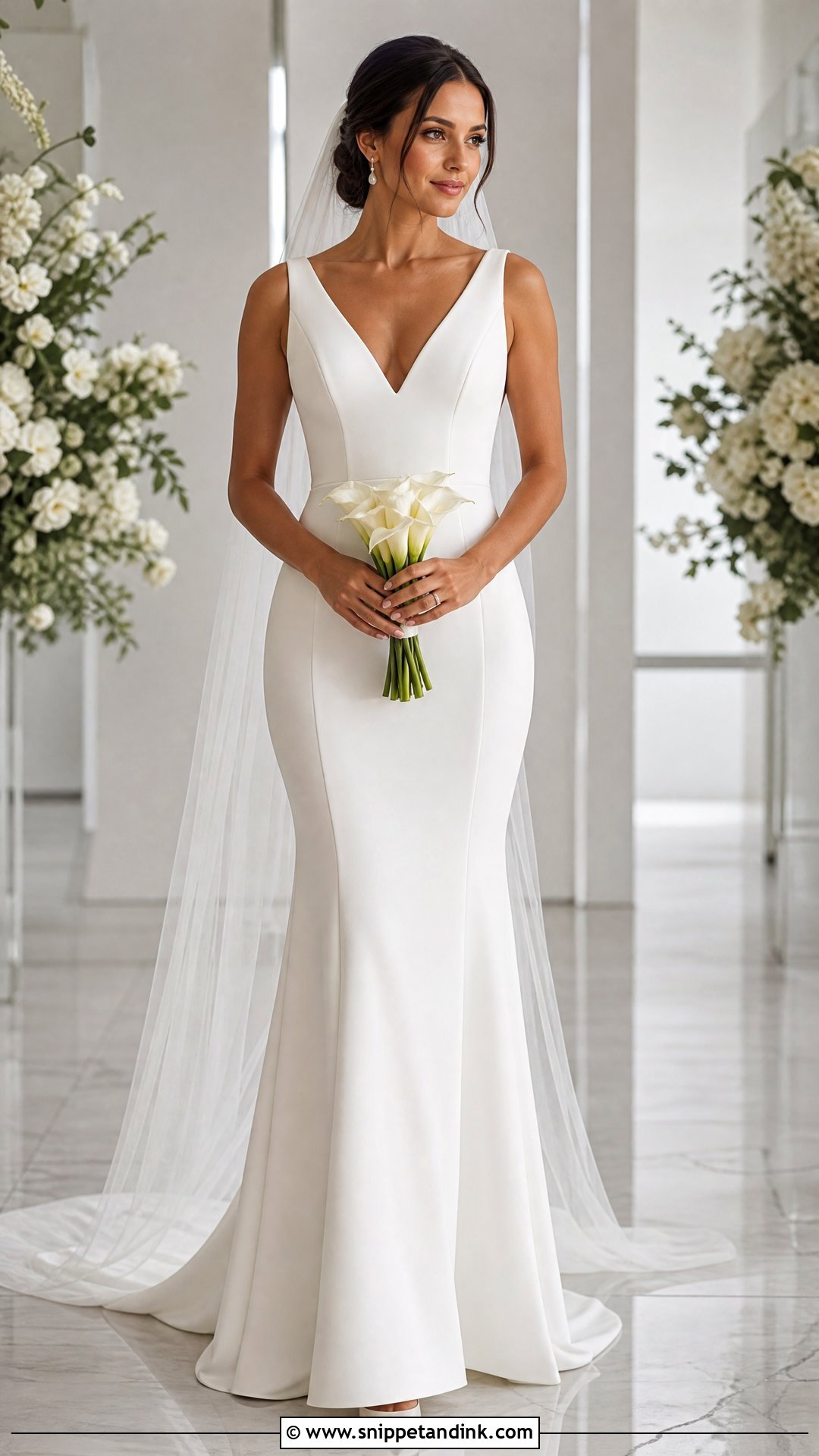
Crepe and a V-neck make a very clean, long line, and curved seams can define the waist without a single bead. It’s also the least forgiving combination for what you wear underneath. Crepe shows every cup edge and seam allowance, so I raise support at the first alteration appointment, not the last. A moderate V with illusion mesh, wider straps and a built-in corset suits a fuller bust. Sewn-in cups and smooth bonded shorts usually look smoother than several separate shapewear pieces stacked together. The skirt should skim the hips without tension. Chapel veil, modern pearls, pointed pumps and a small architectural bouquet suit the minimal mood.
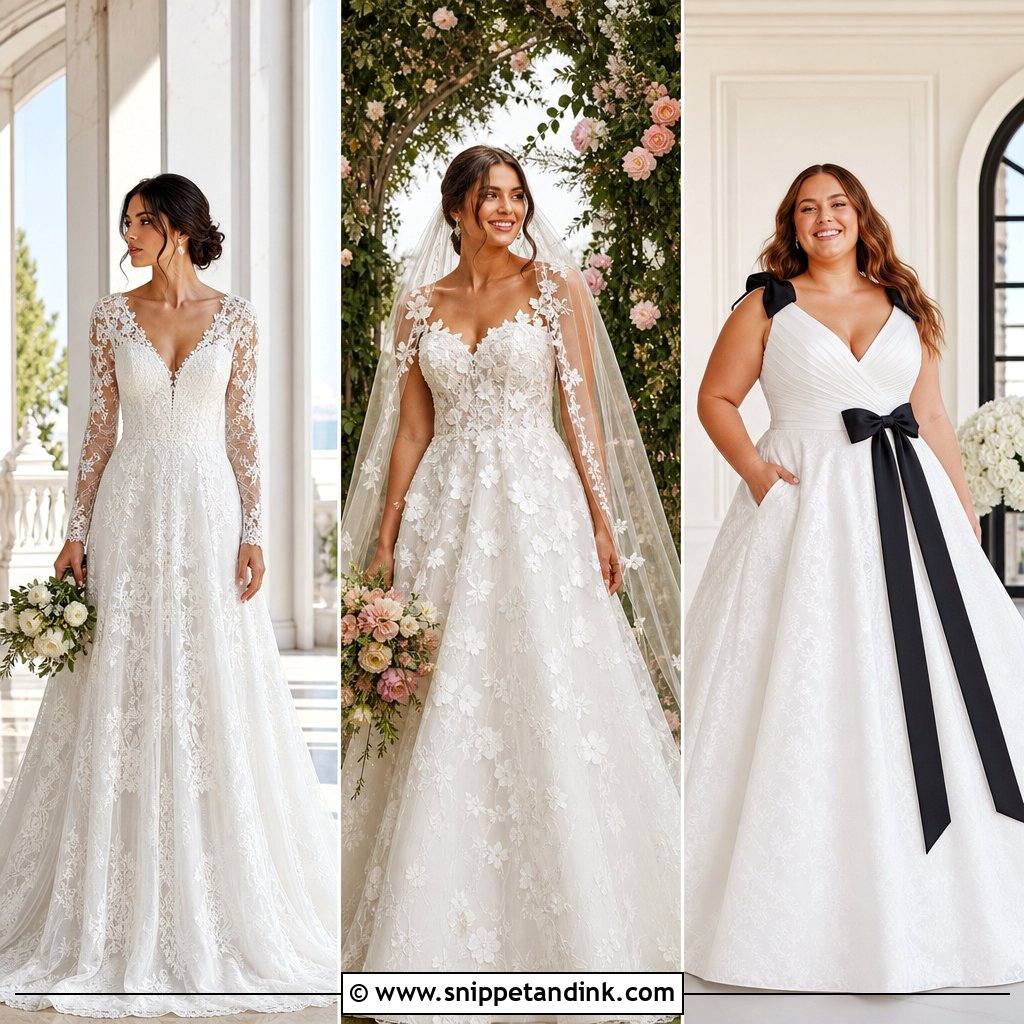
6. Square-Neck A-Line Wedding Dress
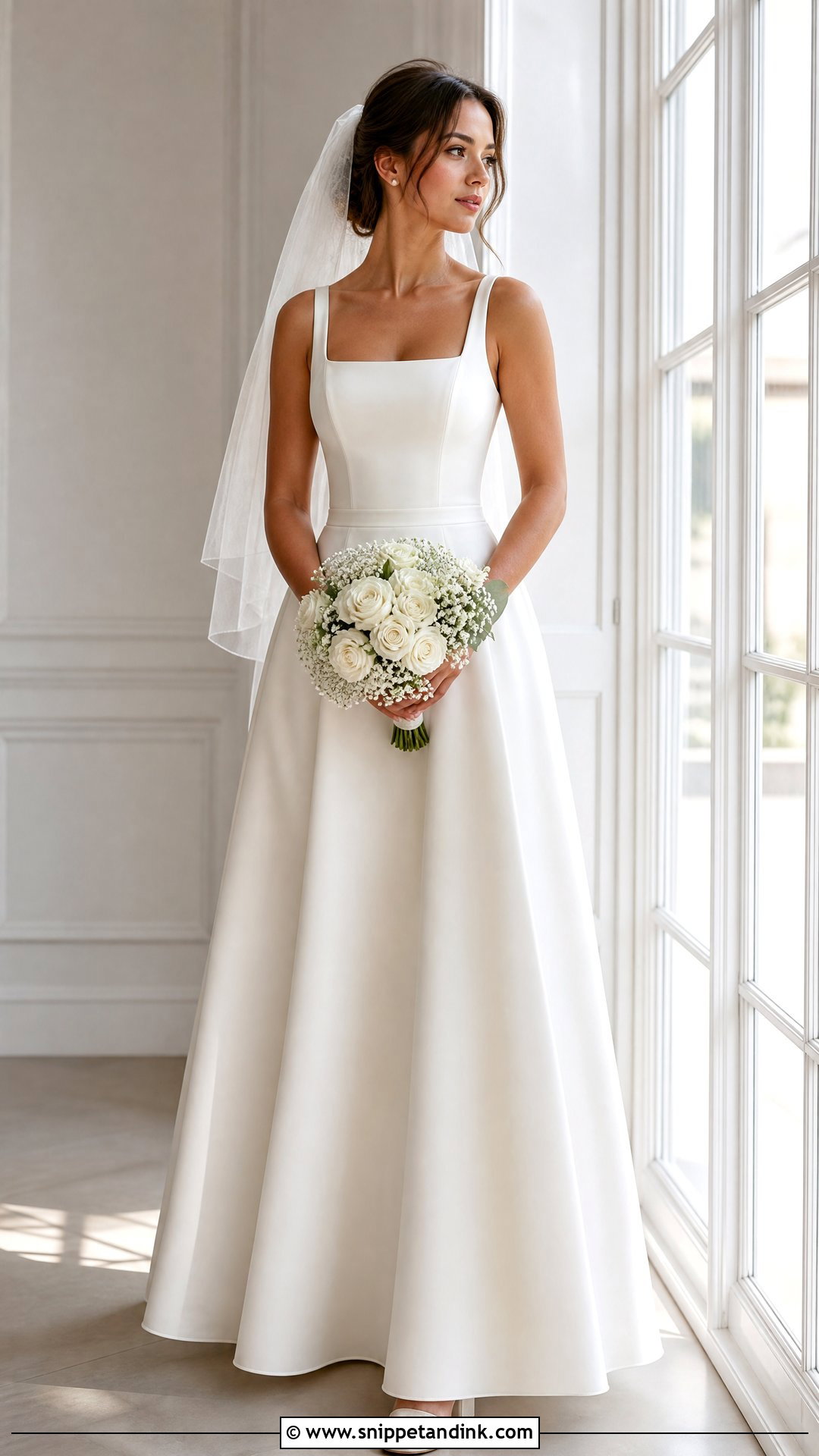
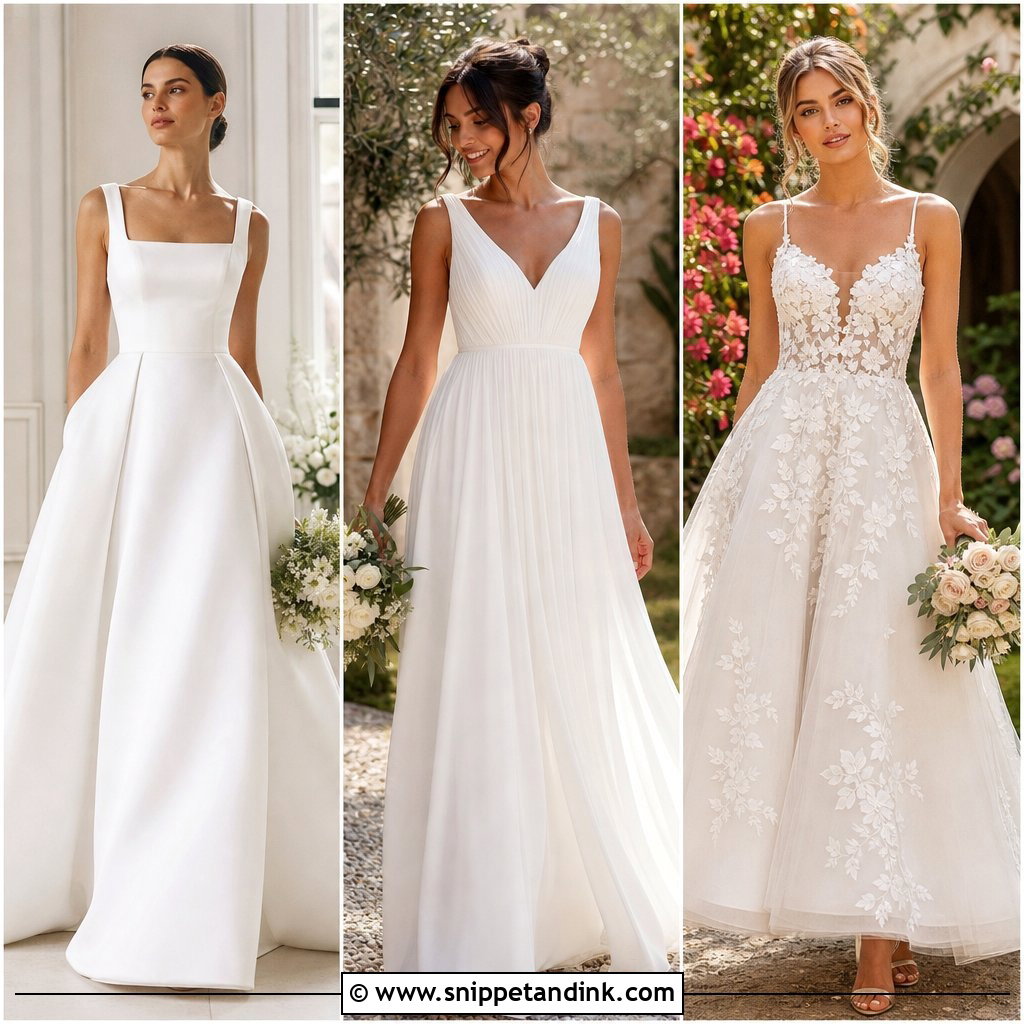
Not every hourglass bride wants a body-skimming gown, and a square-neck A-line is my answer when she doesn’t. The neckline frames the collarbone and wide straps carry a fuller bust comfortably. Below a precisely fitted waist the skirt falls away, so you keep your definition and gain room to walk and sit. Mikado gives the skirt crisp volume; chiffon or soft tulle moves more. The mistake is a loose bodice. If the top isn’t tailored at the side seams and straps, the A-line simply hides your shape. Waist-length veil, pearl studs, block-heel sandals and a rounded bouquet keep it relaxed.
7. Basque-Waist Ball Gown Wedding Dress
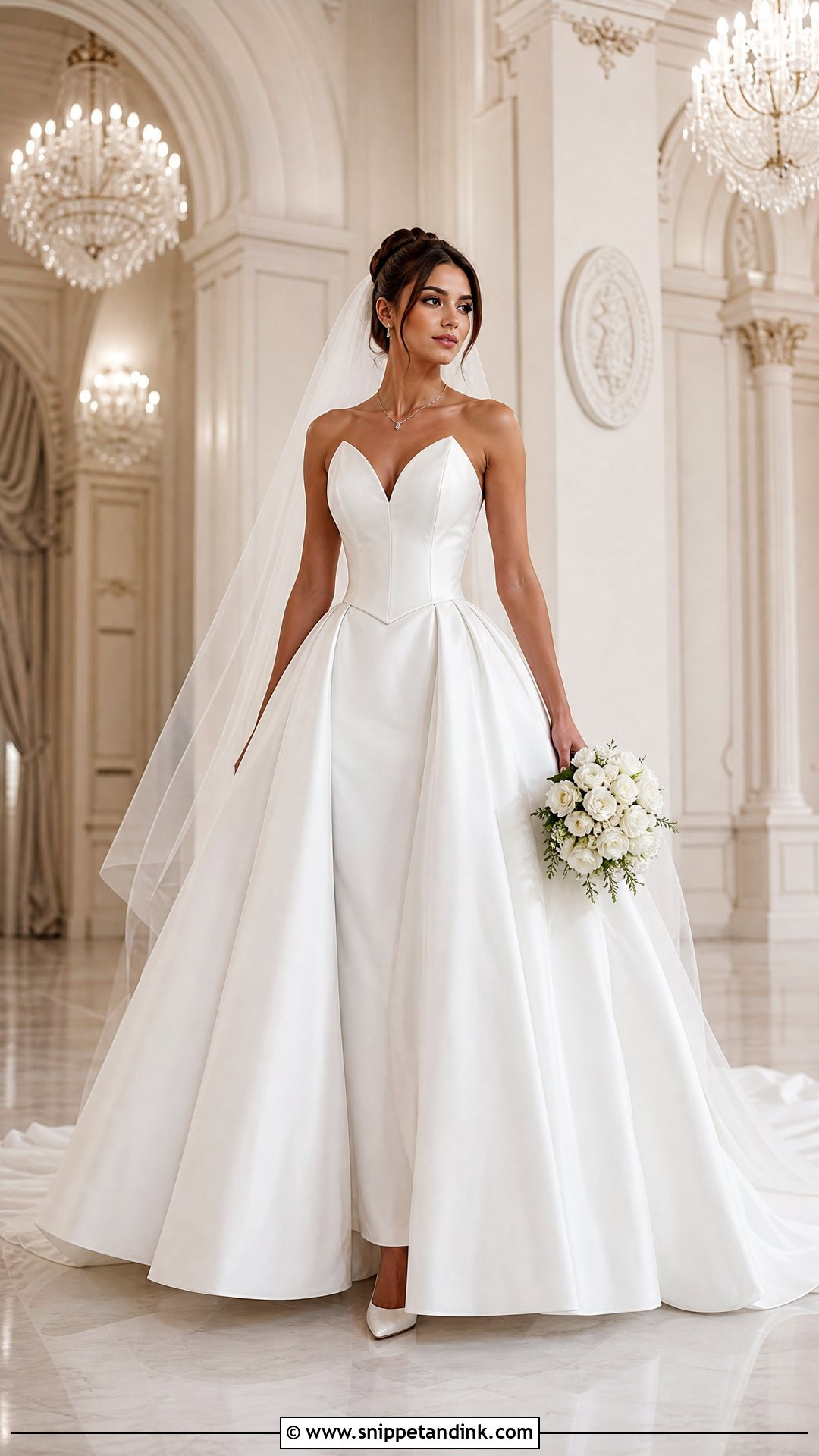
The front dip of a basque-waist ball gown lengthens the bodice and points straight at the narrowest part of the body. On an hourglass it looks sculpted, as long as the boning ends smoothly over the hips instead of creating a ridge. Satin or Mikado gives the skirt architectural volume; tulle is softer and much lighter. Full skirts get heavy by evening, so I ask about a lightweight crinoline and a bustle that a bridesmaid can actually fasten. A long veil, classic pumps, a delicate necklace and a medium bouquet keep the scale right. A bouquet too large hides the bodice you paid to have fitted.
8. Long-Sleeve Lace Mermaid Wedding Dress
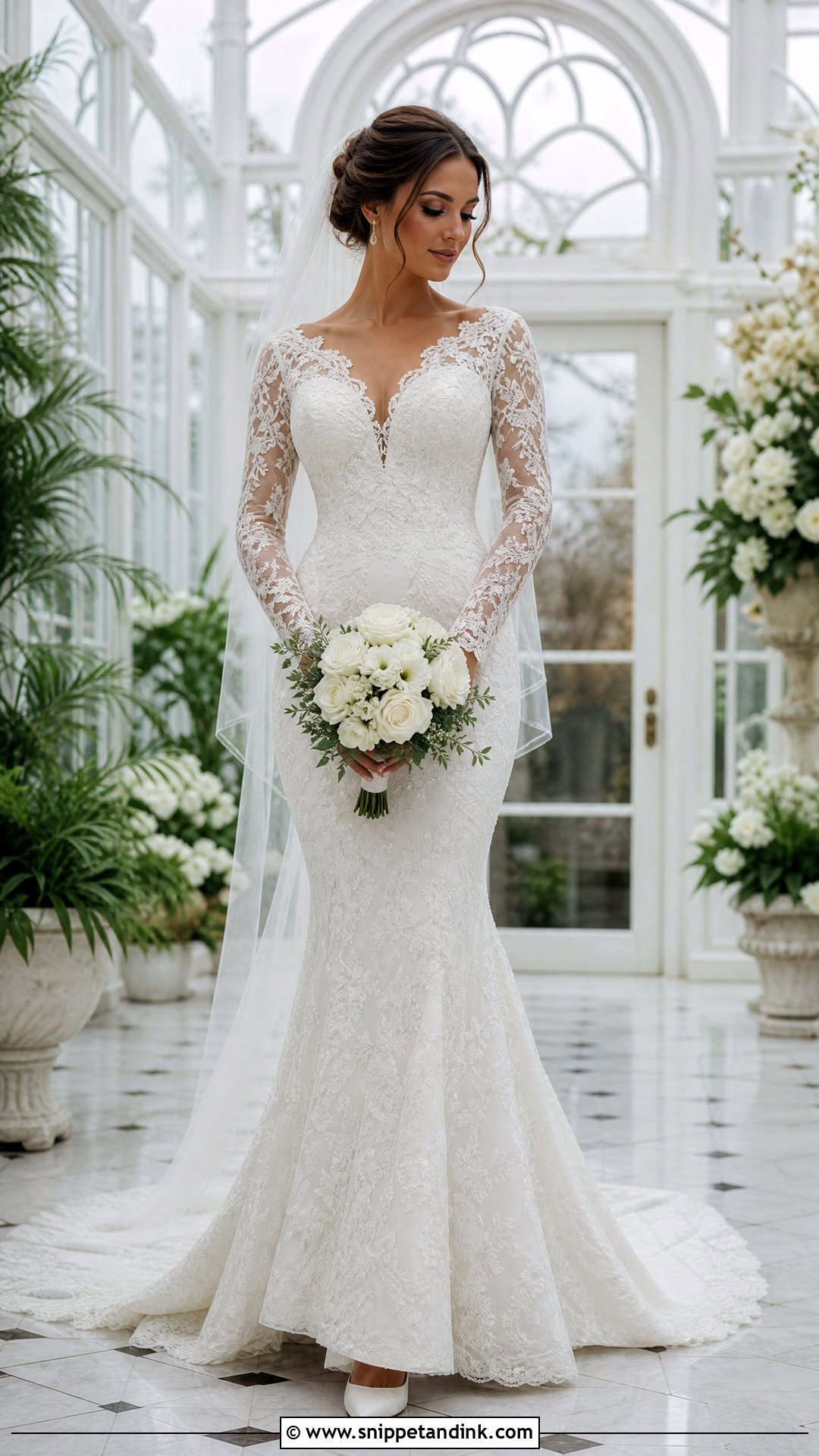
Long lace sleeves suit cool weather and formal rooms, and on a mermaid they keep the upper half light so the waist-to-hip curve stays the focus. What I check is the elbow. Sleeves fitted tight through the arm look perfect standing still and then bind the moment you reach forward to hug or lift flowers. Look for appliqués placed with room around the joint and lace that matches cleanly across the bodice seams. A bateau, scoop or modest V keeps it balanced. A simple veil, understated earrings, closed heels and a neat bouquet are all it needs. Reach overhead in every fitting.
9. Halter-Neck Sheath Wedding Dress
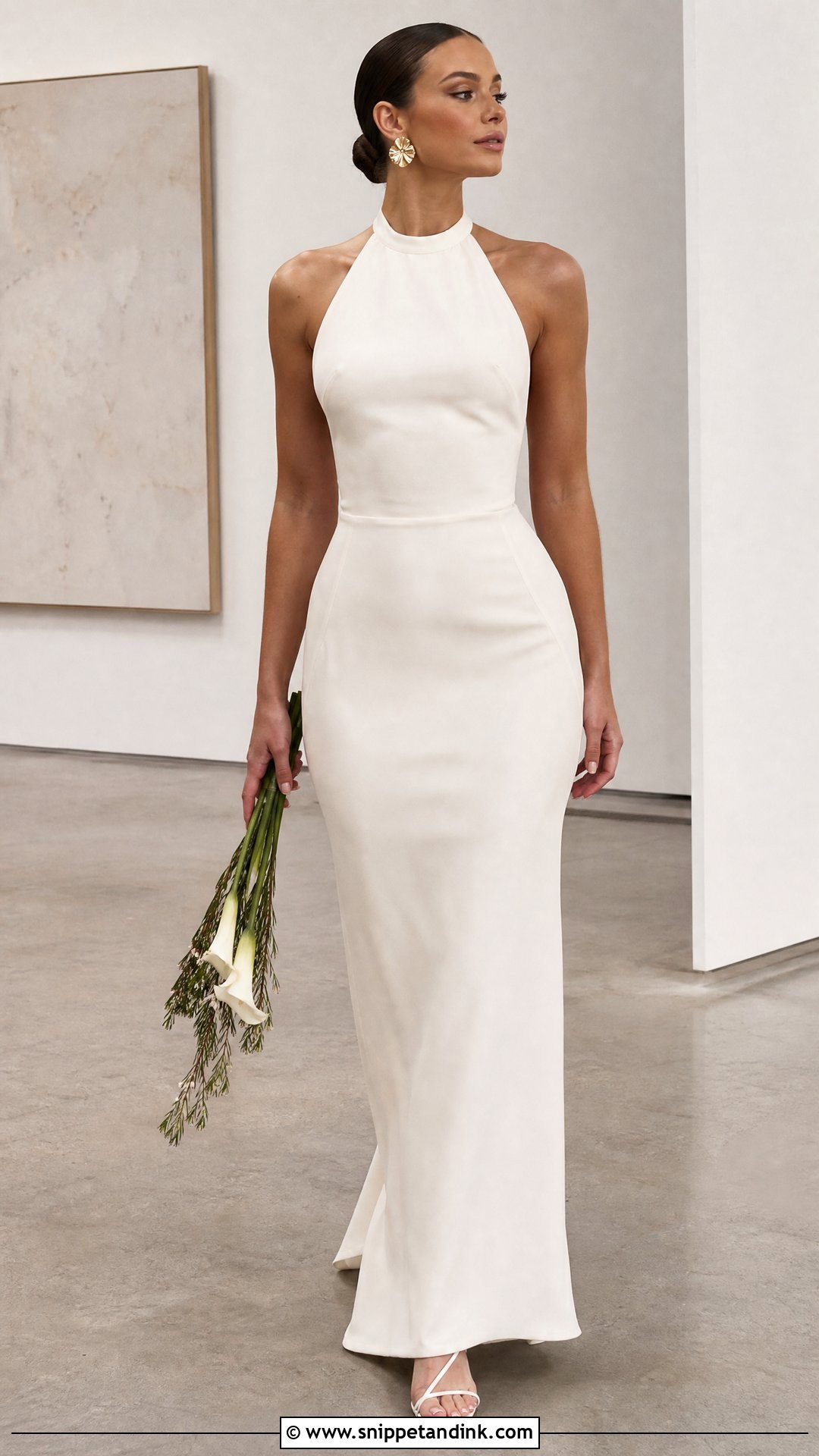
A halter-neck sheath wedding dress shows off the shoulders, but a straight cut can turn boxy on curves unless there’s a shaped waist seam or curved princess seams to bring it in. Fluid crepe, stretch satin or a lined silk blend follow the body without clinging. A low or keyhole back adds interest if the bodice still supports the bust. Here’s the sizing point I repeat to every hourglass bride: if it pulls across the hips, size up and take the waist in. Going smaller never works. Check the back vent too so you can stride. A low bun, sculptural earrings, strappy heels and a narrow bouquet finish it.
10. One-Shoulder Fit-And-Flare Wedding Dress
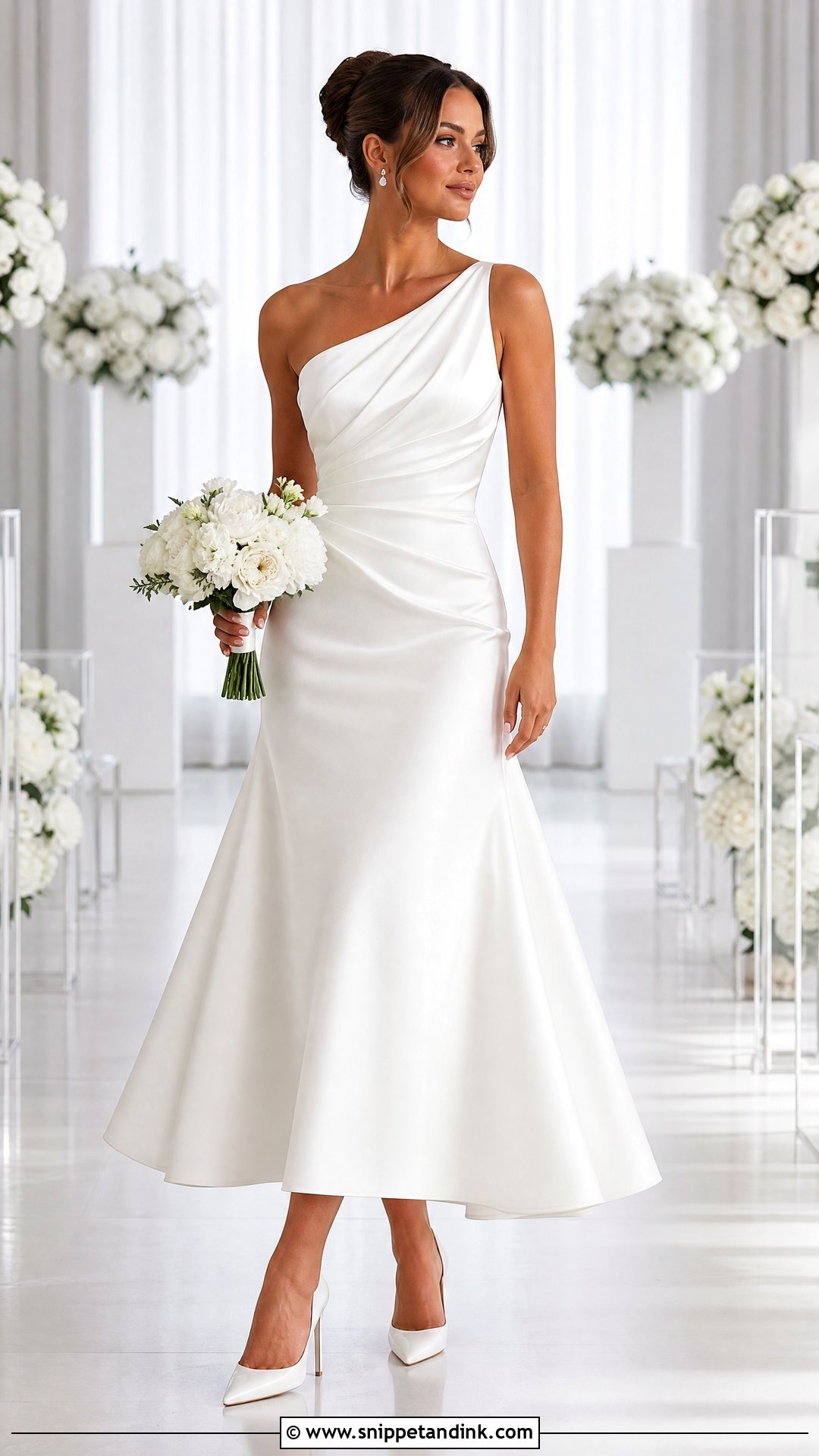
One shoulder draws a diagonal across the bodice and gives a fitted silhouette some movement. Ask for a wide strap. A thin one carries all the weight of the gown on a single point and starts to dig in, and it can twist when you dance. Draped satin looks sophisticated; crepe is cleaner. The unsupported side needs boning and properly placed cups so it stays secure when you bend. One statement earring or small drops, a sleek updo, pointed heels and a simple bouquet are plenty. Skip the necklace and let the neckline do the work.
11. Scoop-Neck Satin Trumpet Wedding Dress
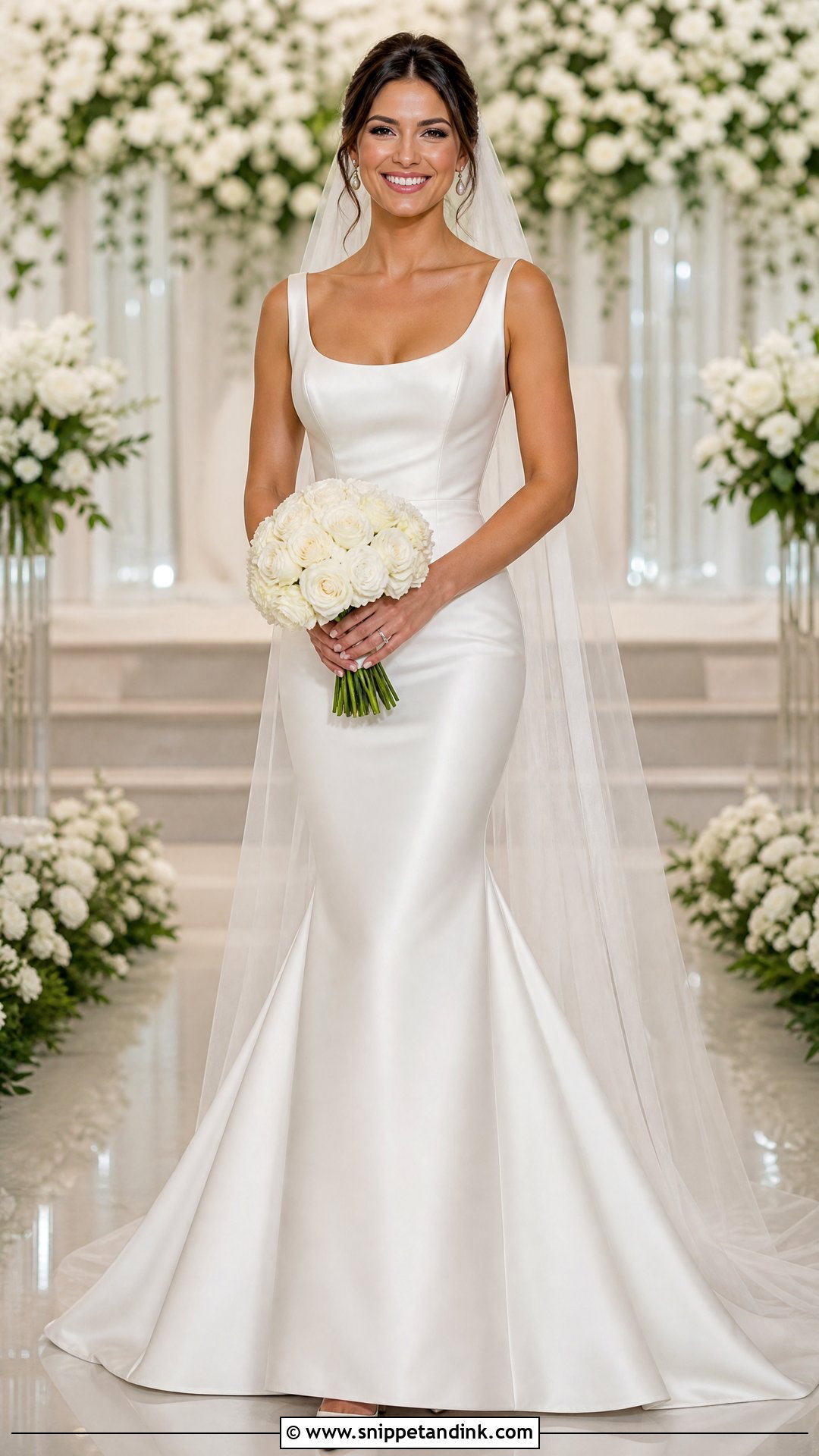
I like a scoop-neck satin trumpet for a bride who wants classic polish without a dramatic flare. The rounded neckline frames the bust when there are supportive straps underneath, and the skirt opens at mid-thigh, giving more stride than most mermaids. Matte satin is modern; luminous satin is formal. The fabric itself tells you what the alterations need. Horizontal creases across the hips mean the gown needs more room there, while gaping at the bodice means the waist or bust needs shaping. A chapel veil, pearl earrings, ivory pumps and rounded flowers complete the outfit.
12. Illusion-Neckline Lace Fit-And-Flare Wedding Dress
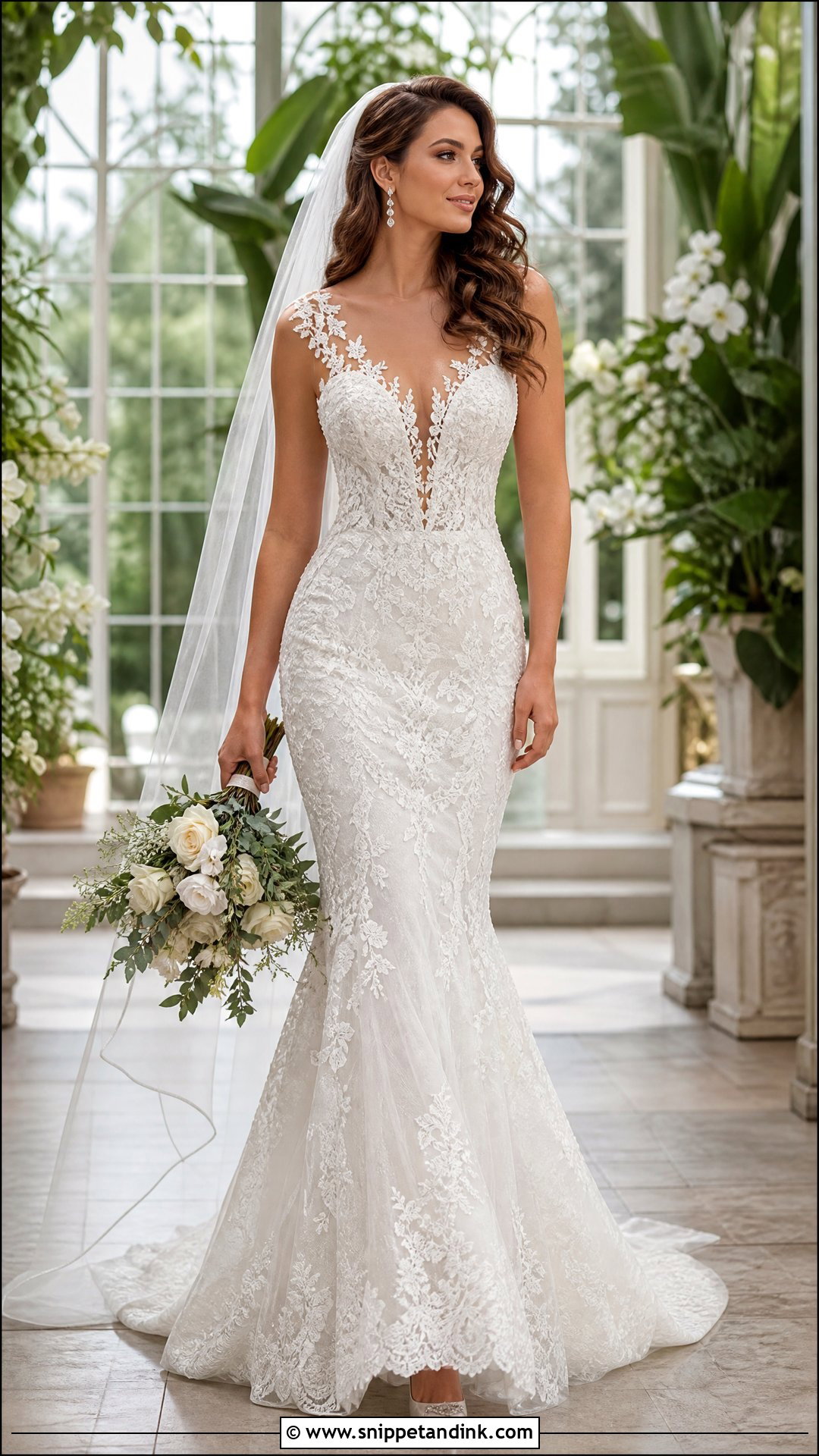
Illusion mesh lets lace float across the shoulders as if the bodice were strapless or plunging, with far more security. The fit should stay close through waist and hips before a moderate flare. Mesh shade matters more than brides expect: too pale or too shiny and it shows as a band in photographs, so view it by a window, not just under salon lights. The illusion panel must lie flat without buckling or cutting into the neck when you turn your head. A sheer-edged veil, fine earrings, almond-toe heels and an airy bouquet keep the lightness.
13. Cowl-Neck Bias-Cut Wedding Dress
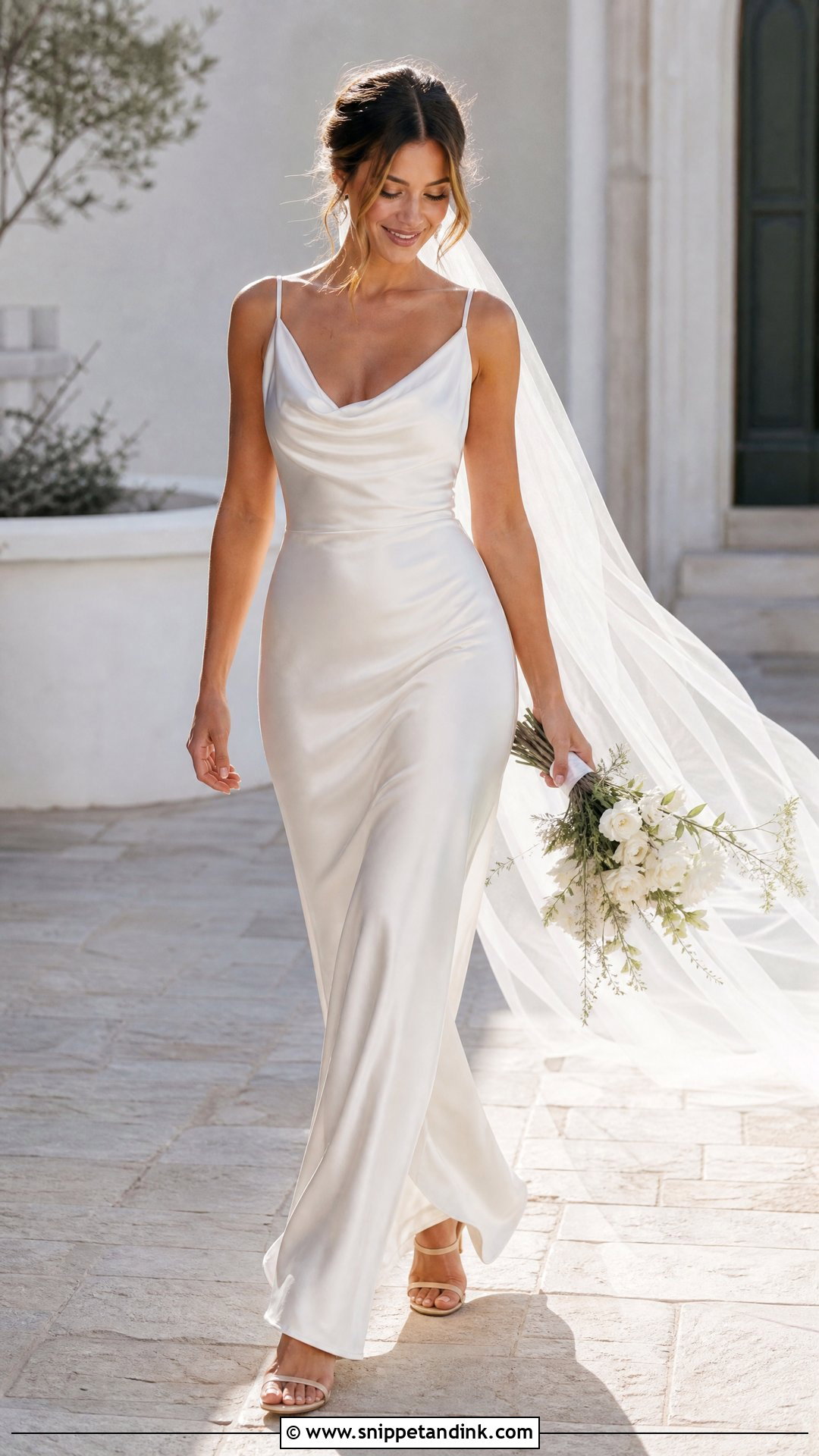
Fabric cut on the bias drapes diagonally and moves with the body, so a cowl-neck bias gown is the softest interpretation of an hourglass on this list. The cowl adds gentle volume at the bust. Without waist shaping or a curved back seam it can hang loose through the torso, so look for light internal support. Silk satin or a good satin blend drapes properly; cheap satin twists. Bias-cut fabric also relaxes and lengthens after hanging, which is why I always schedule the final hem close to the wedding date. Minimal earrings, a sheer veil, delicate sandals and a loose bouquet suit the fluid shape.
14. Cap-Sleeve Fit-And-Flare Wedding Dress
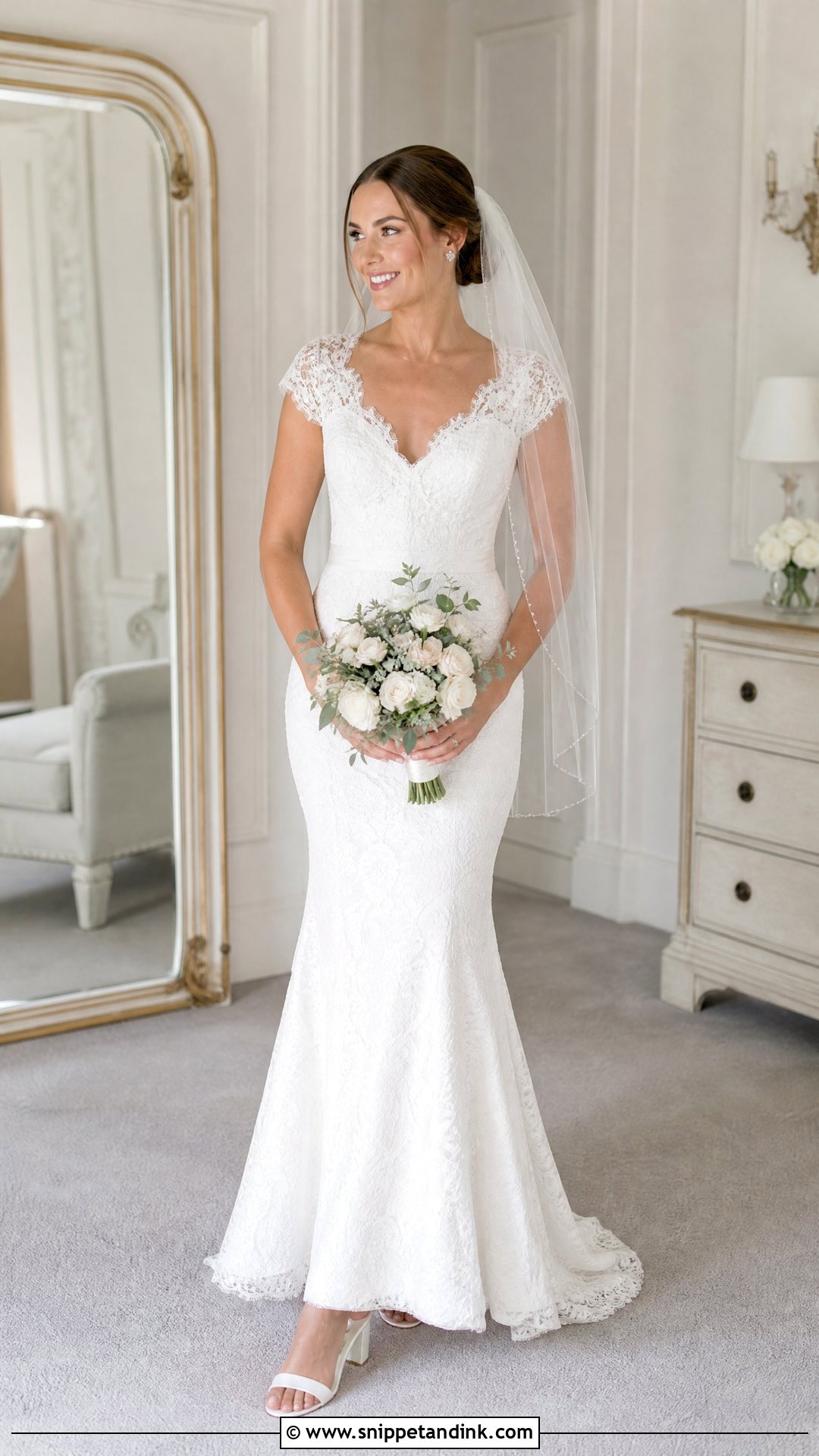
Cap sleeves soften the shoulder and add a little coverage over a sleeveless bodice. They should sit flat and stop before the widest part of the upper arm; any lower and they draw a line across it. Lace, beaded tulle or clean crepe all work if the waist shaping stays clear. A V-neck or sweetheart keeps the top open against the fitted skirt. Armholes are what I watch in alterations: snug enough to look tailored, loose enough not to rub over ten hours. Sleeves that ride up when you move usually mean the shoulder and bust need separate adjustments. Fingertip veil, small earrings, block heels and a compact bouquet suit it.
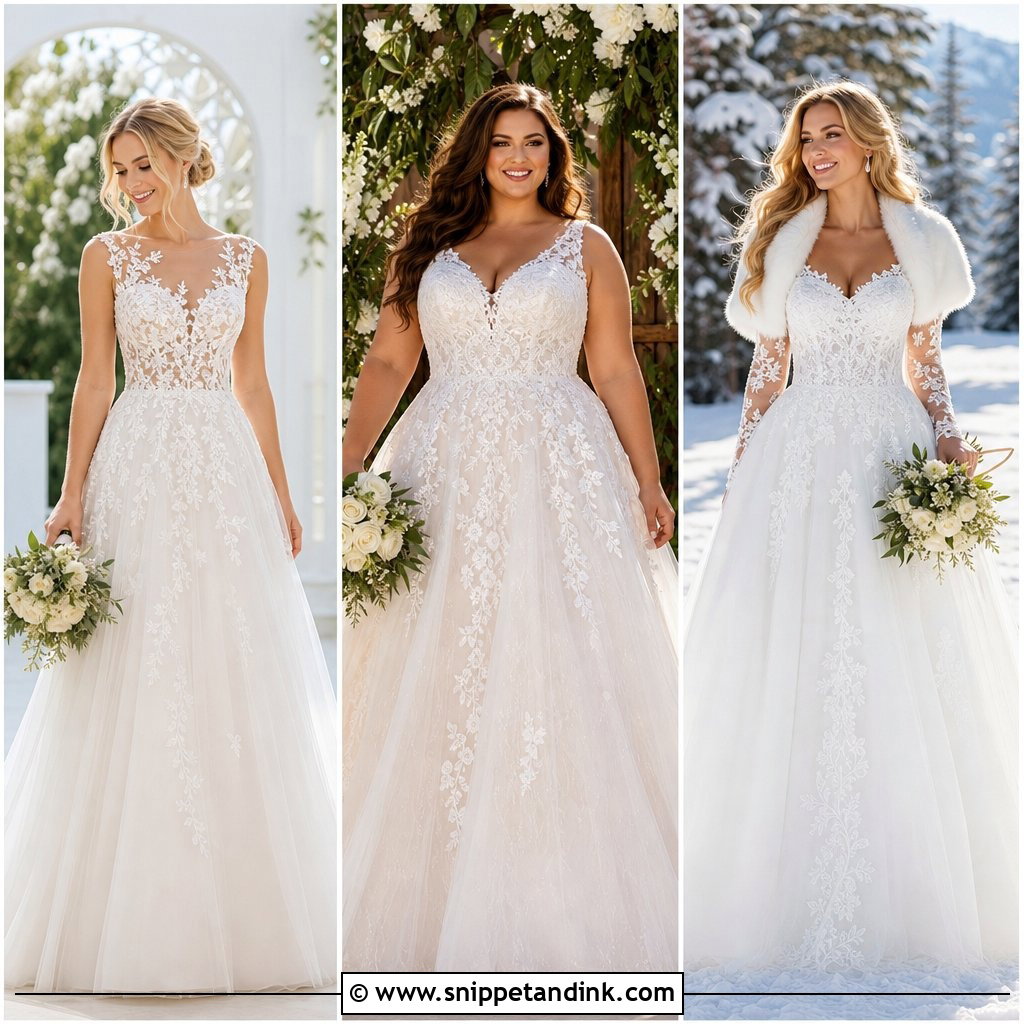
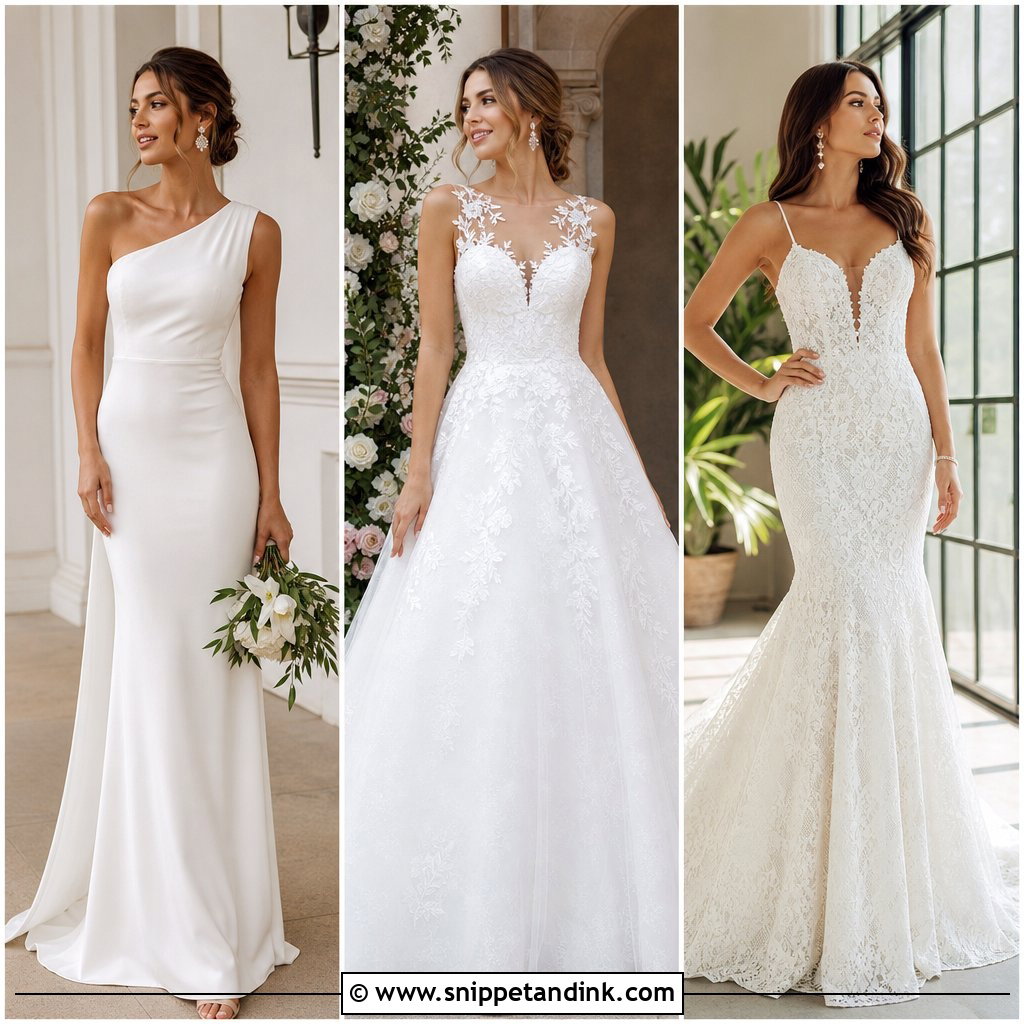
15. Drop-Waist Corset Wedding Dress
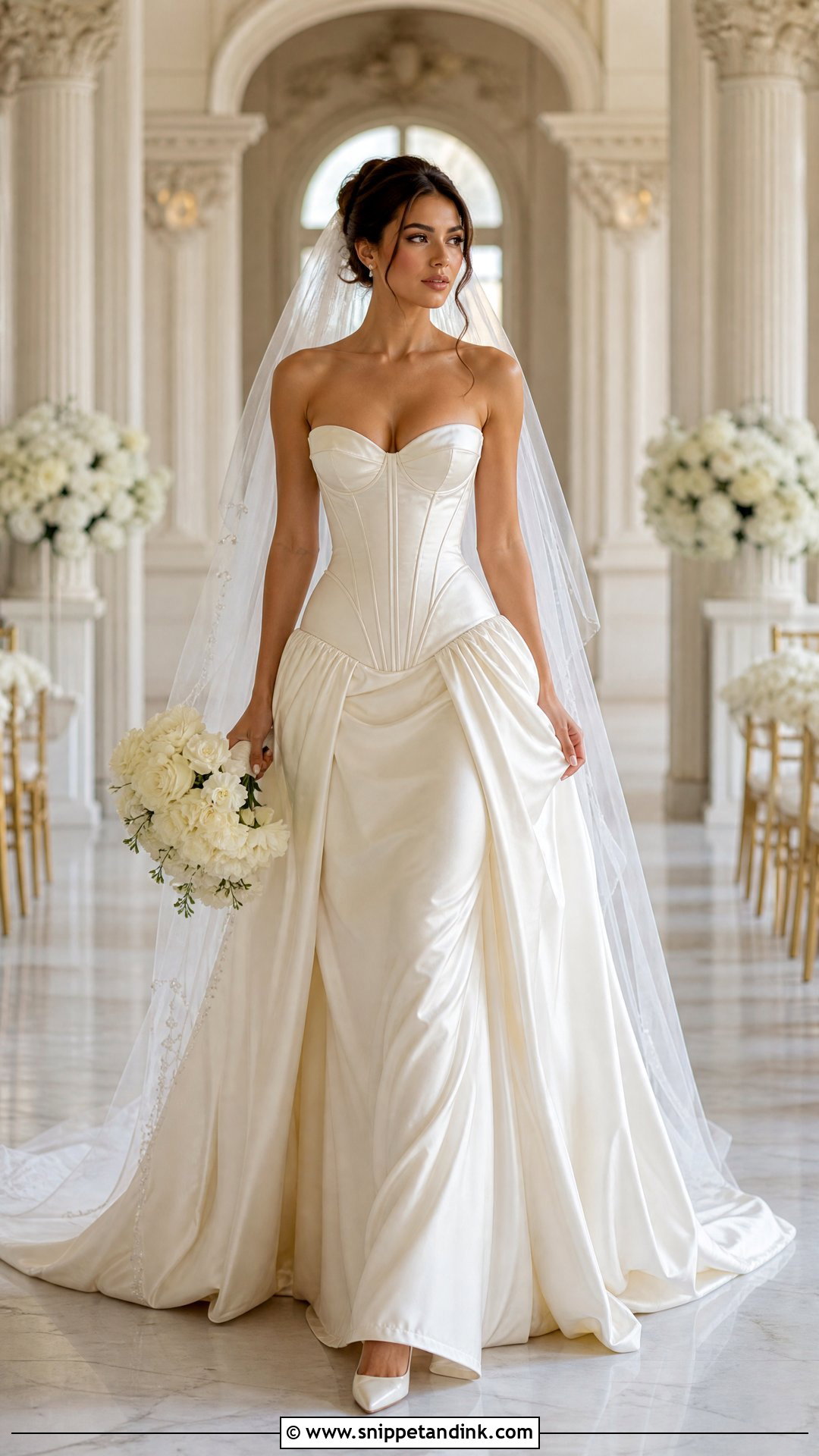
Extending the corset below the natural waist shows off the whole torso, and on an hourglass that long, structured line can look striking. Curved paneling is kinder than a rigid horizontal seam that slices across the hips. A softly dropped Basque waist looks romantic, a straighter corseted line more modern. The lower bodice is the risk: boning that ends at the hip crease digs in every time you sit, and the skirt bunches above it. Test sitting and bending before you commit. Pair with a long veil, refined studs, pointed pumps and a medium bouquet.
16. Tea-Length Cinched-Waist Wedding Dress
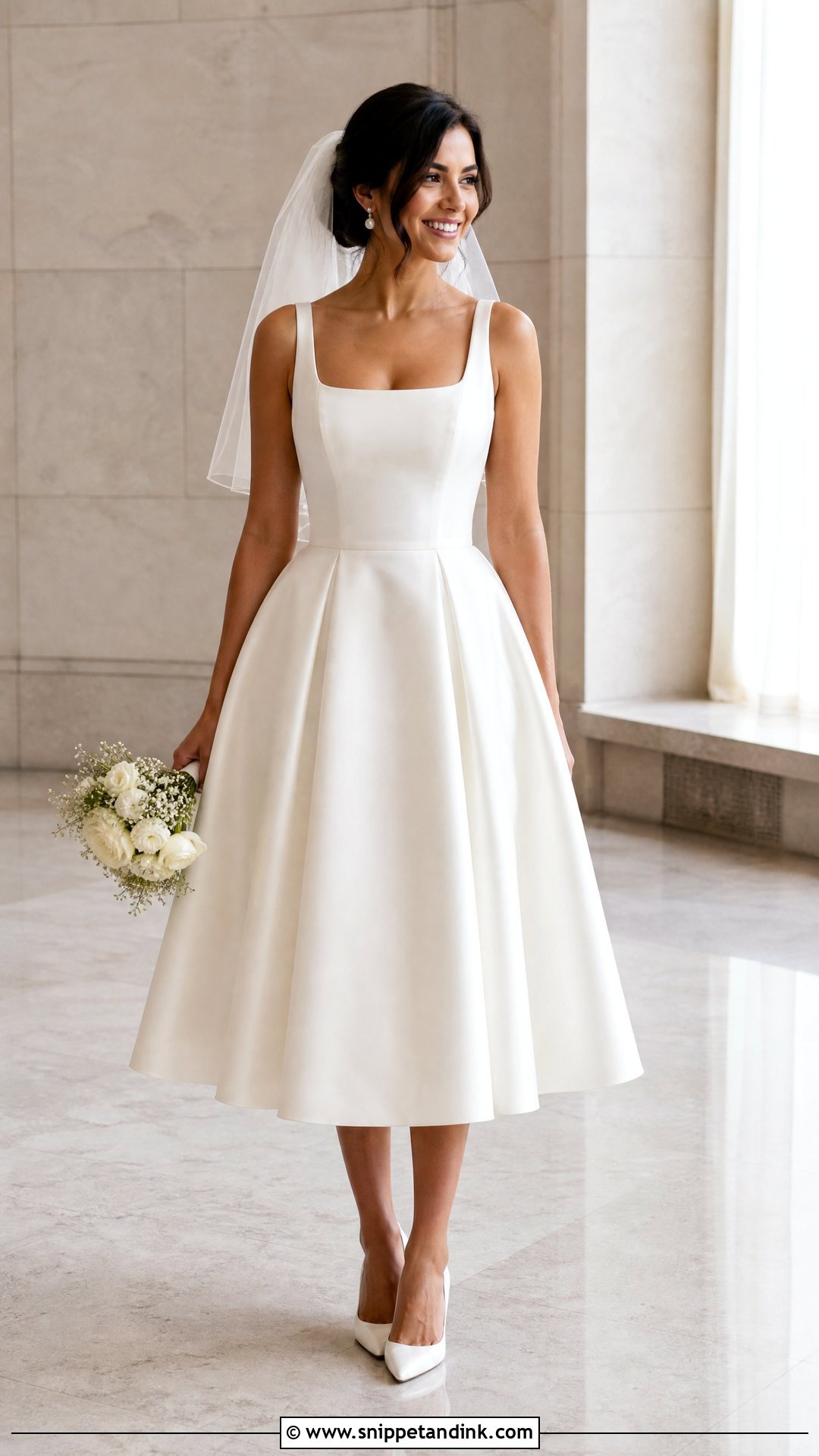
Tea length shows the shoes and keeps all the attention on a cinched waist. I look for a fitted bodice, a clear natural-waist seam and a skirt with controlled volume, never bulk. Hem placement makes or breaks it: between the knee and ankle but not at the widest part of the calf. A sweetheart, square or bateau neckline works depending on support. Structured satin gives a retro feel, organza a lighter modern one. Use a light petticoat only if the skirt needs it. Polished pumps, a birdcage or shoulder-length veil, pearls and a small bouquet complete it.
17. High-Neck Open-Back Wedding Dress
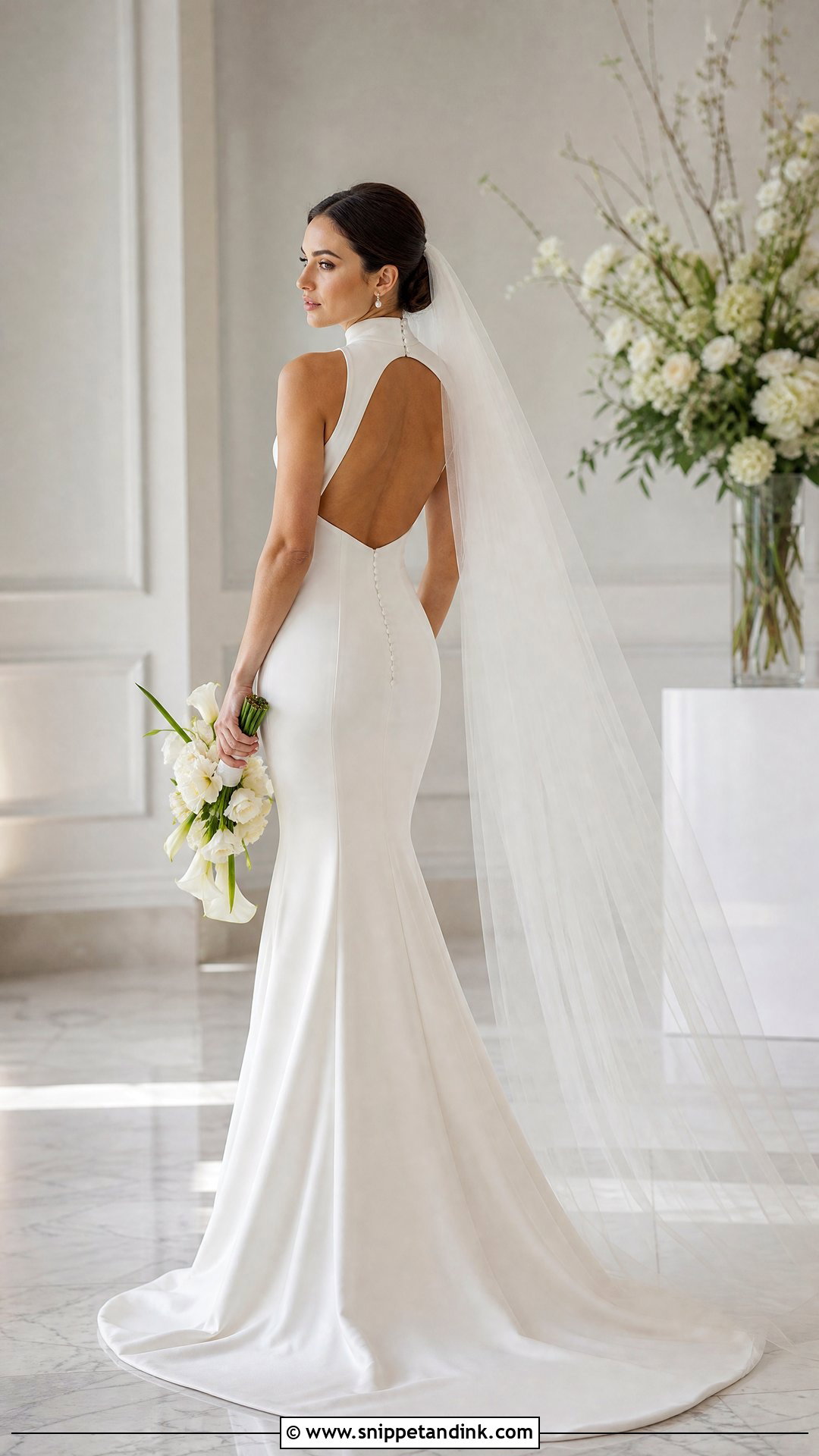
Covered at the front, open at the back: this is a gown for the ceremony moment when everyone sees you from behind. Choose fitted crepe or lace with seams that follow the waist and hips. The back opening, rounded, V-shaped or lace-framed, has to stop where internal support can still anchor. A standard bra won’t work; you’ll need sewn-in cups, supportive mesh or engineered side panels. One thing I always ask the seamstress to check after the back is altered is the collar, because taking in the opening too aggressively makes the high neck pull and wrinkle when you move your shoulders. An updo, a low-set veil, small earrings, closed pumps and a narrow bouquet suit it.
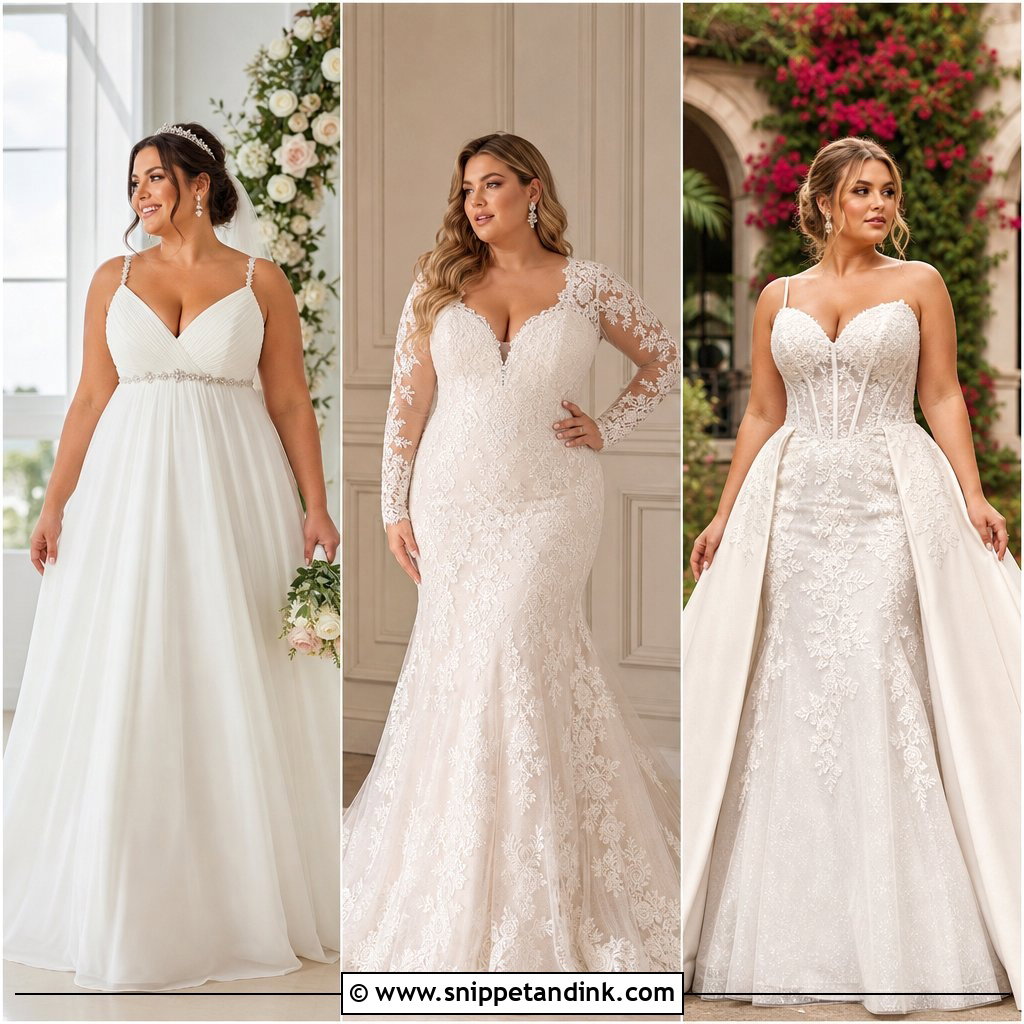
18. Plus-Size Corset Mermaid Wedding Dress
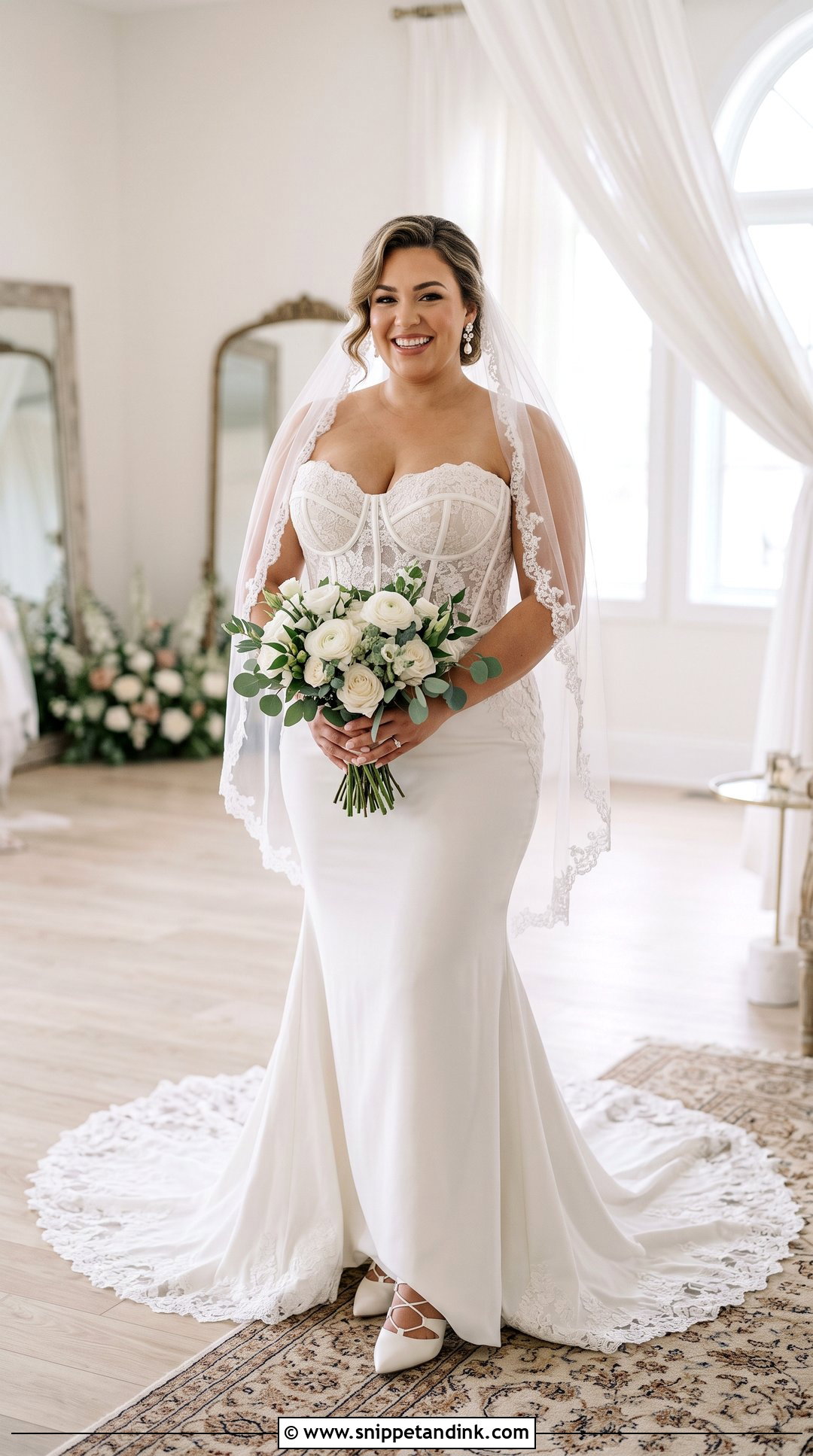
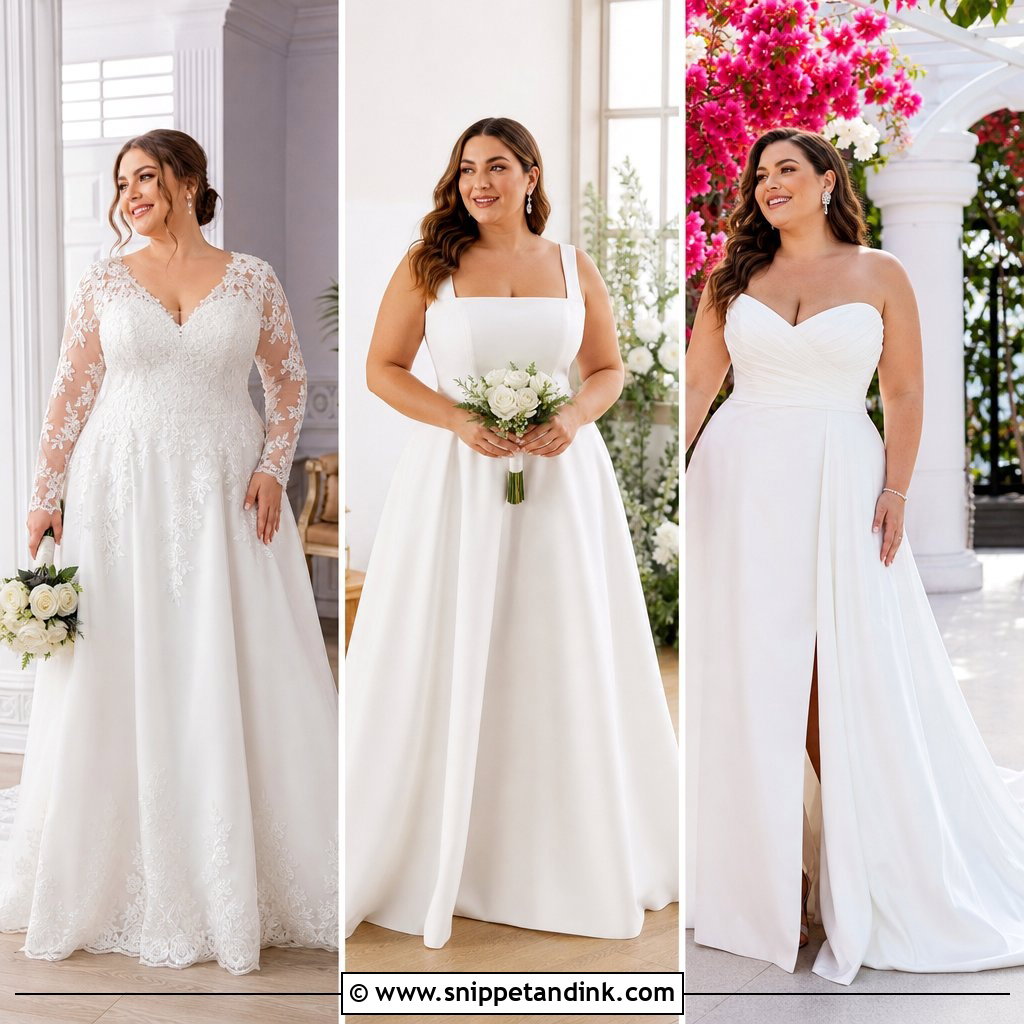
For a plus-size hourglass, the corset mermaid has to be built for it, not simply graded up. That means graded boning, proper cups, strong seams and enough stretch through the hips. A lace-up back adjusts on the day if your body changes slightly; a well-made zip bodice looks smoother. The flare should start where you can still take a natural step, not where your knees lock together. A mermaid or fit-and-flare is the usual suggestion for curvy proportions, but your comfort decides it, not a rule. Order to your largest measurement and tailor the waist down. A veil, drop earrings, supportive block heels and a balanced bouquet finish it.
19. Petite Trumpet Wedding Dress
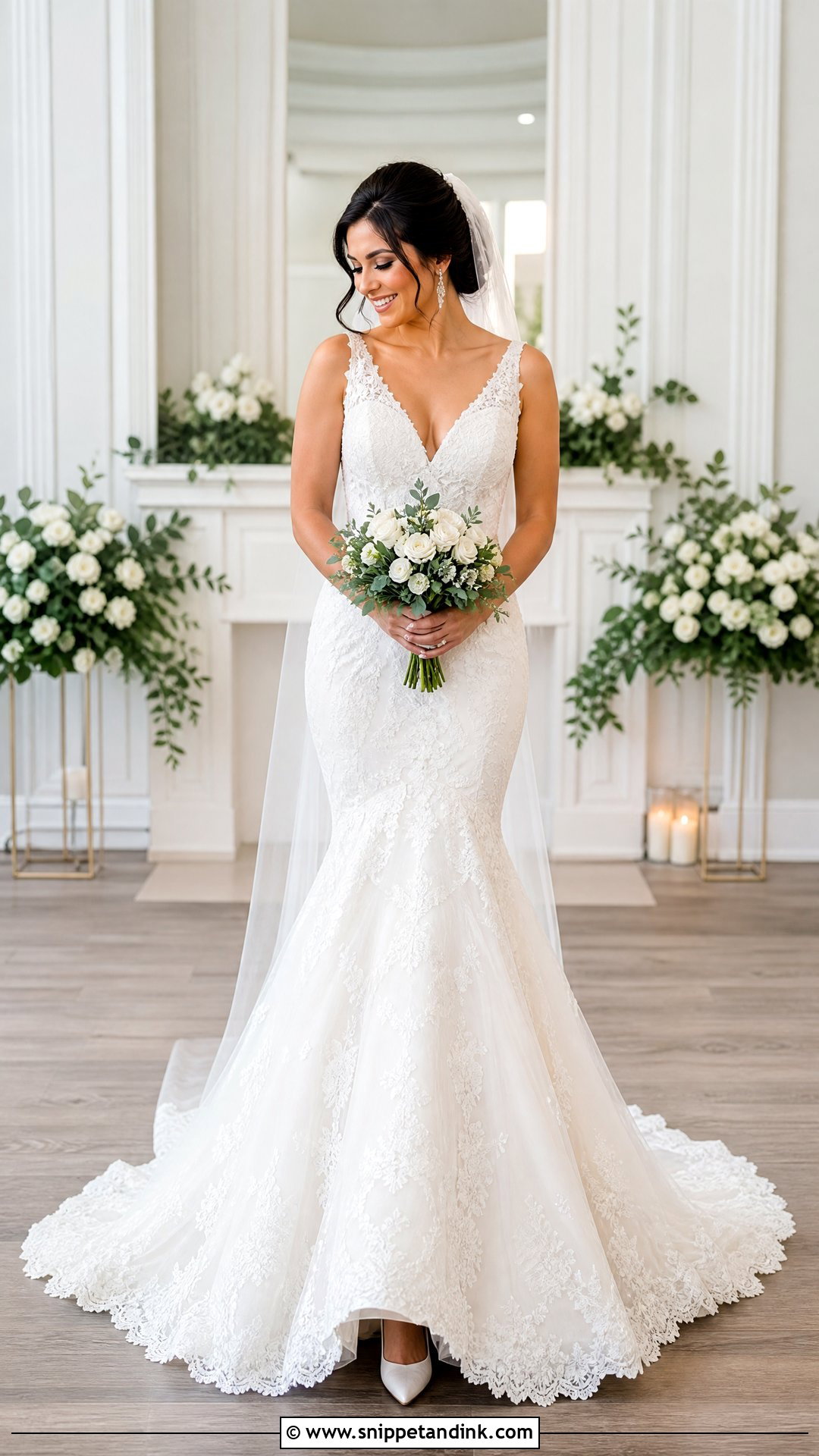
On a shorter hourglass bride, a trumpet needs a higher flare point and a skirt that builds length, not width. Oversized appliqués interrupt the vertical line, so smaller lace motifs or plain crepe usually look better in proportion. A V-neck, scoop or clean strapless top keeps the upper half open. Petite sizing can spare you bodice reconstruction, but watch the hem: simply cutting length off the bottom moves the flare lower and changes the whole shape. Ask your seamstress to take length from above the flare where possible. A narrow veil, delicate jewelry, pointed heels and a compact bouquet keep the scale right.
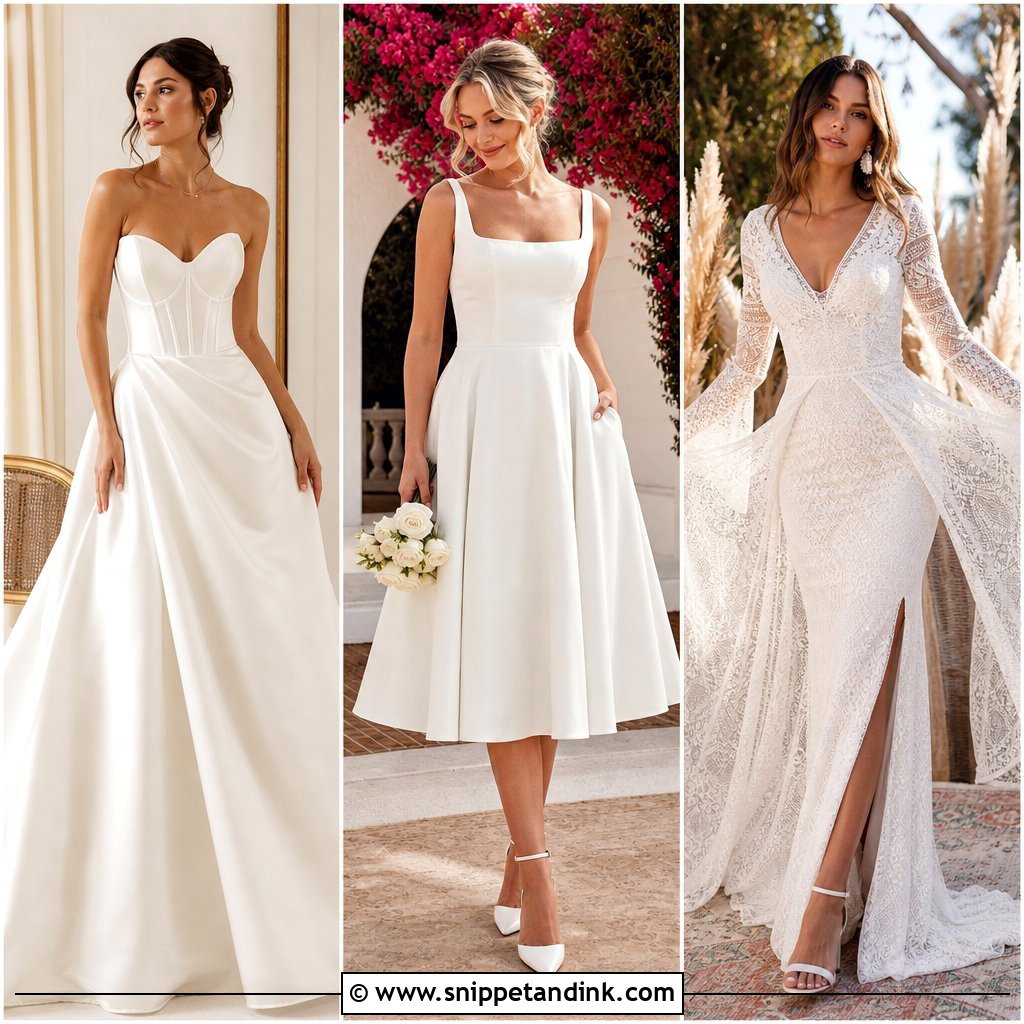

20. Minimalist Silk Fit-And-Flare Wedding Dress
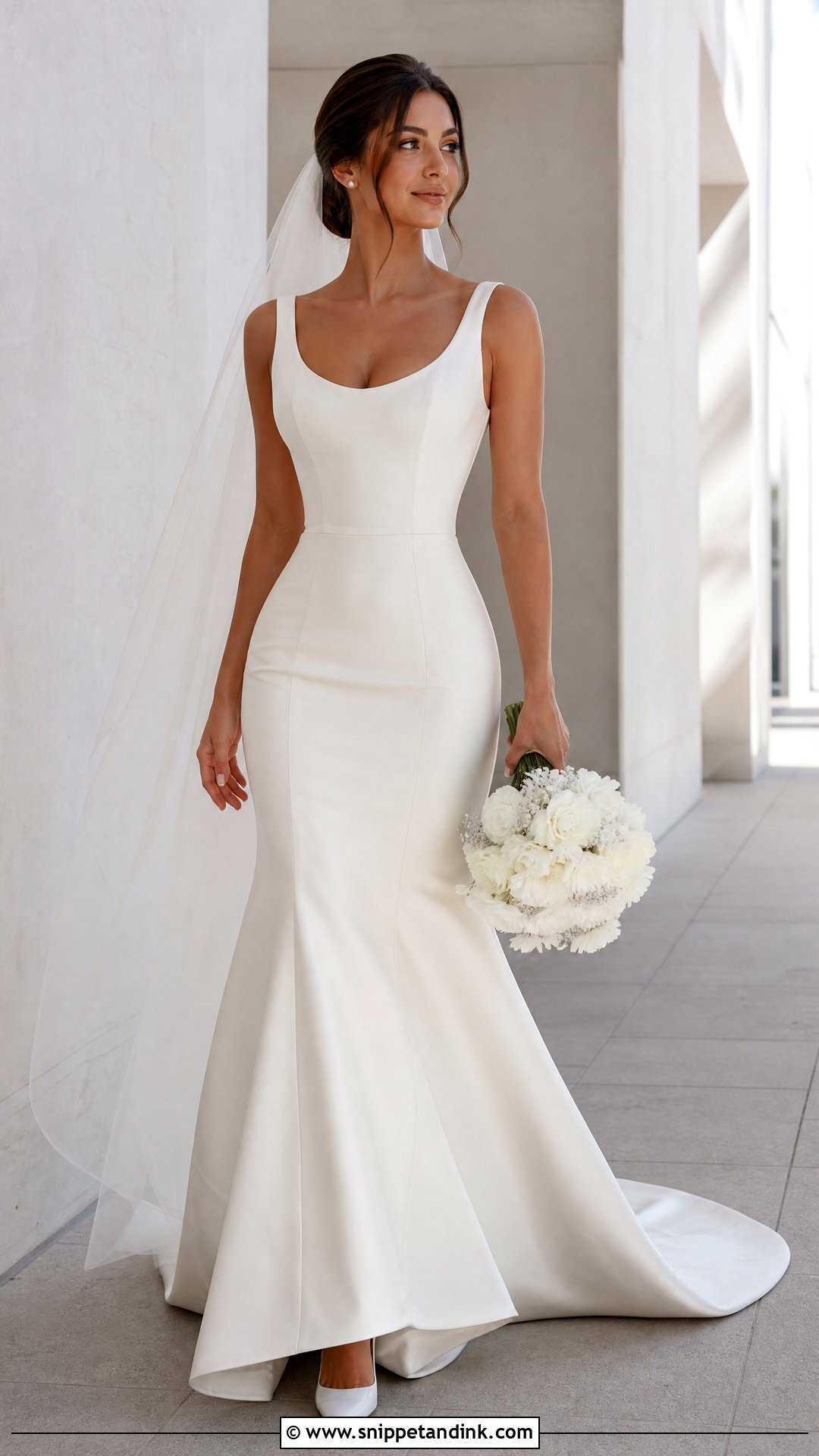
Plain silk hides nothing, so the gown is only as good as its fabric, seaming and fit. A softly curved neckline or a narrow V frames the bust, the waist is defined and the skirt flares gently. Silk wrinkles and shows tension the moment anything is slightly too tight, which is why I’d book an extra fitting for this one and look at it from the front, side and back by daylight. Pearl or diamond studs, a plain-edged veil, simple pumps and a single-flower or one-color bouquet suit its restraint. It should fall smoothly and feel like your taste, not the season’s trend.
Shapewear, Cups and What Sits Under a Fitted Gown
A fitted silhouette shows what’s under it, so the foundation deserves as much thought as the lace. My order of preference: sewn-in cups and boning first, then a longline strapless bra only if the gown has no built-in support, then smoothing shorts if fabric catches at the thigh.
- Avoid shapewear that rolls at the waist; under satin or crepe the roll becomes a visible line.
- Skip heavy compression under a corset bodice. Two layers of squeezing makes eating and breathing miserable by the evening.
- Buy undergarments before the second fitting and wear them to every appointment after, or the alterations are made for a body that isn’t wearing them.
How Fitted Silhouettes Behave by the Evening
Fabric relaxes with body heat, and most of us carry a little more around the middle after a meal and a long day on our feet. That’s why I suggest a waist that fits snugly but still lets you slide two fingers under the seam at the final fitting. A crepe or satin gown fitted to the breath will feel tight by the first dance.
Mermaid and trumpet skirts also collect wear at the hem as the train is walked over, and stretch fabrics can seat out at the back after hours of sitting. A steamer at the venue and a quick press between ceremony and reception fix most of it. If your bustle uses hooks rather than ribbon ties, have the person fastening it practise at the last fitting, because hooks on a heavy train pull loose more easily than ties do.
What Actually Makes a Gown Work on Your Hourglass
No single silhouette belongs to the hourglass figure. The right gown supports your bust, sits on your real waist, follows your hips without strain and lets you move freely. Try at least one shape you’d normally dismiss; brides surprise themselves with an A-line or a sheath more often than you’d think. Then compare neckline, fabric, waist placement and the inner construction. Bridal sizing runs small and inconsistent, so order to your largest measurement and budget for alterations. The dress should feel secure on you and look like your own choice.
You'll Like These Ideas:




Leave a Reply