
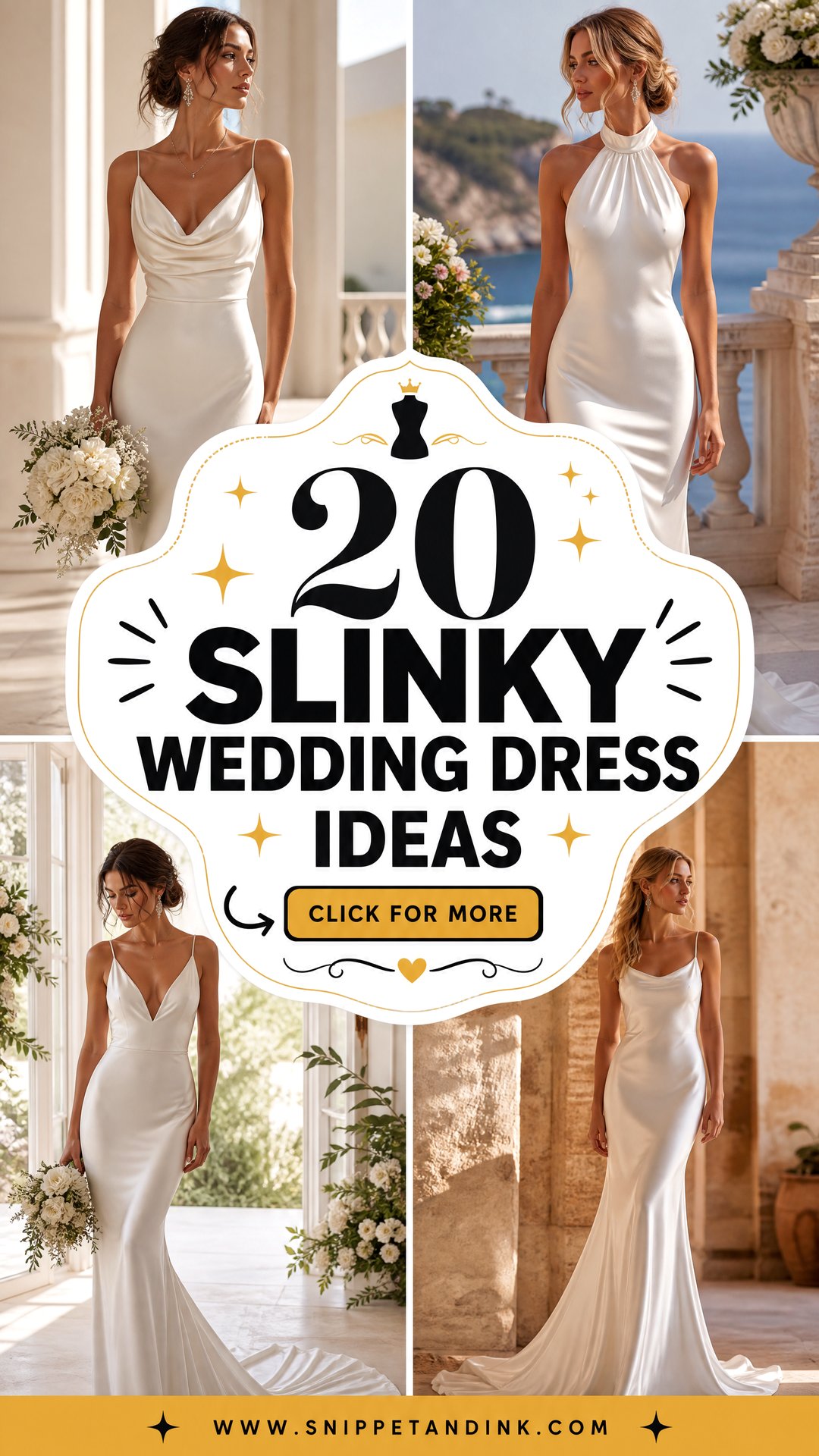
Slinky dresses look simple on the hanger and turn out to be the most technical gowns I dress a bride in. There’s no tulle to hide behind and no lace to distract the eye, so the fabric, the cut and the fit carry everything. Most of today’s versions borrow from the nineties slip dress, the bias-cut gowns of the thirties, draped necklines and plain satin columns. What I want a bride to settle first is security: a dress she trusts to stay where it should, in a venue it suits, with the coverage she’s comfortable with. Smooth fabric shows every seam and every pull, so tailoring matters more here than with any full skirt. Each look below comes styled head to toe.
Bias-Cut Hems Drop, So Don’t Rush the Length
Many slinky gowns are cut on the bias, diagonally across the weave, which is what gives them that liquid drape. It also means the fabric keeps relaxing under its own weight. A bias skirt that measures level on Monday can hang longer and uneven by Friday, especially in silk and lighter satins.
Good seamstresses know this and plan for it. Here is how I’d schedule the fittings for a bias-cut dress:
- Order or buy the gown early enough that it can hang on a padded hanger for a few days before anyone touches the hem.
- Do the bodice and side seams first. Changing the fit of the body changes how the skirt falls.
- Mark the hem with you standing in your wedding shoes, then let it hang again before the final cut.
- Go back for a last check within a couple of weeks of the wedding, and store the dress hanging, never folded, in the meantime.
If a salon wants to hem a bias gown in one quick appointment, ask how they handle the drop. A wavy hem is the most common fault I see on fluid dresses, and it is almost always a timing problem, not a sewing one.
1. Cowl Neck Slinky Wedding Dress
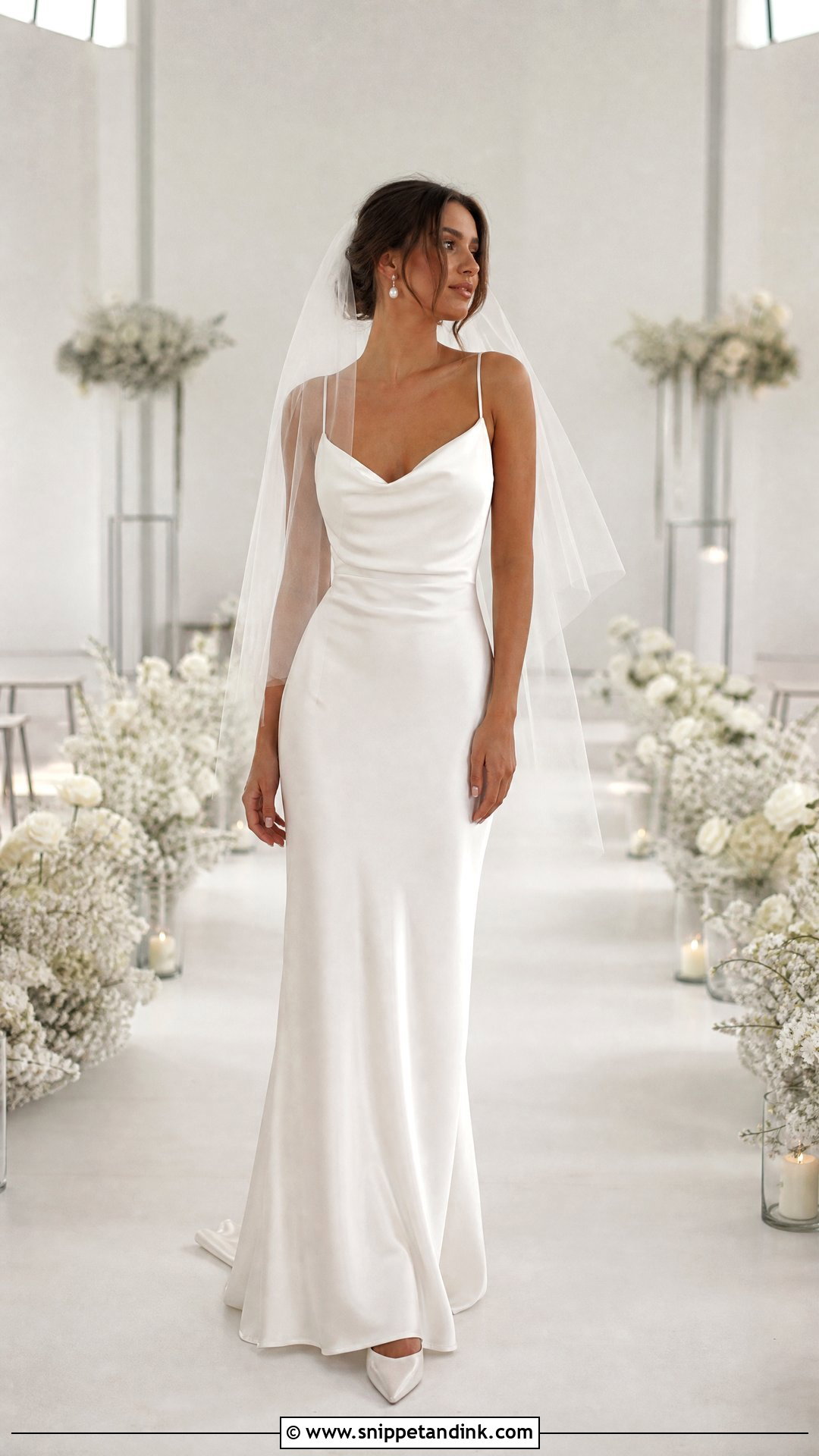
A cowl neck lays soft folds across the bust and gives a plain gown its only real detail. It works best cut on the bias in silk or satin, because fabric cut diagonally drapes into those folds on its own rather than being pinned into them. The catch is support: a cowl hides very little structure, so ask early for hidden cups, reinforced straps or a slim inner bodice. Pearl drops, a low twisted bun, pointed ivory heels and a fingertip veil that stops above the neckline finish it. I’d wear it to a garden, a restaurant or a small hotel wedding as happily as to a formal ceremony.
2. Backless Slinky Wedding Dress
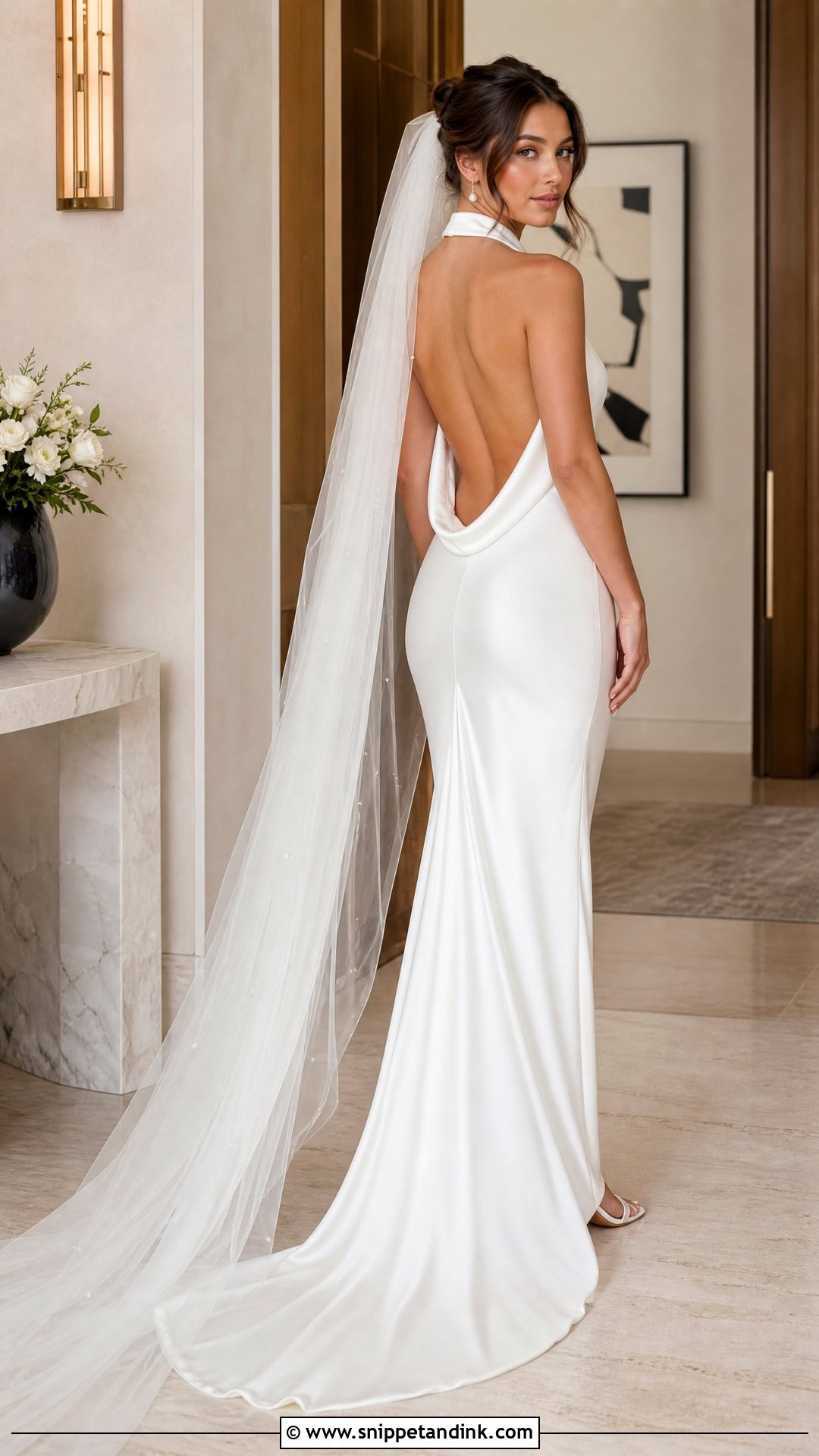
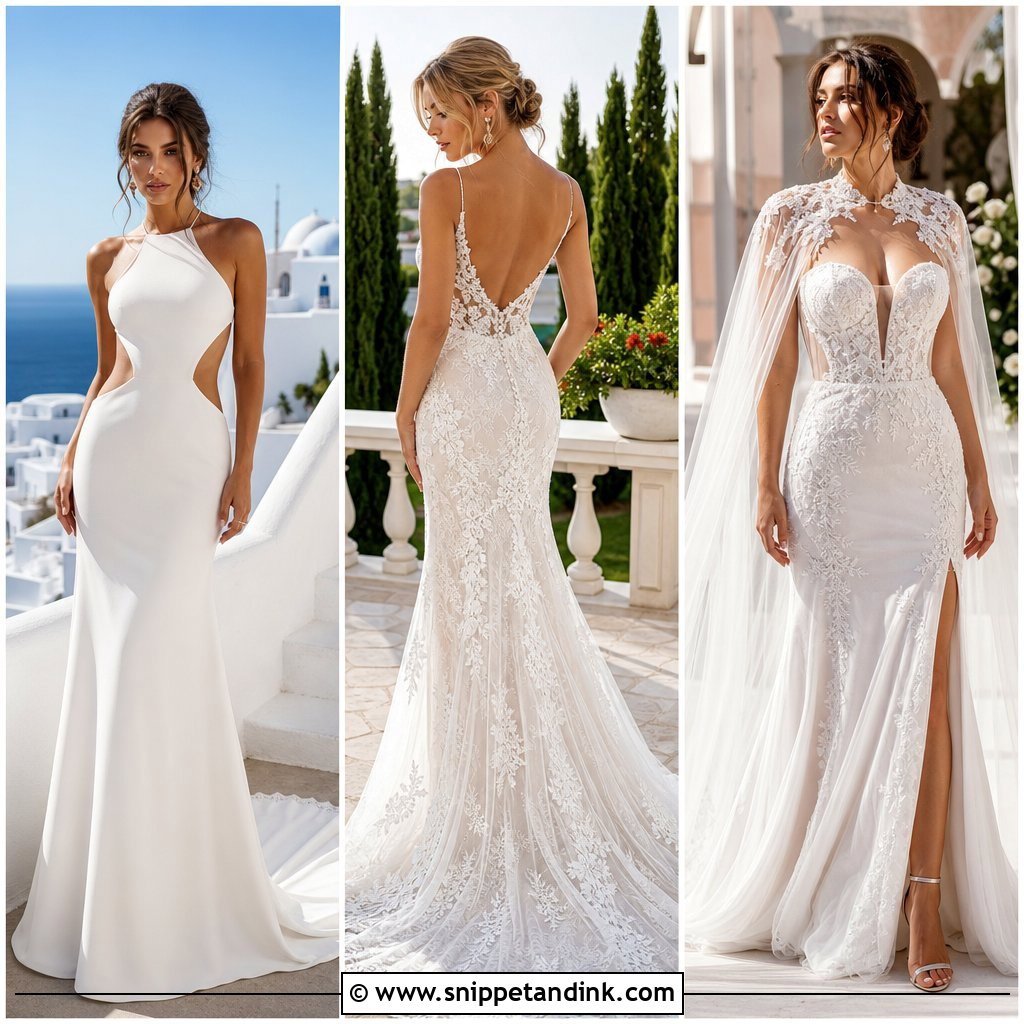
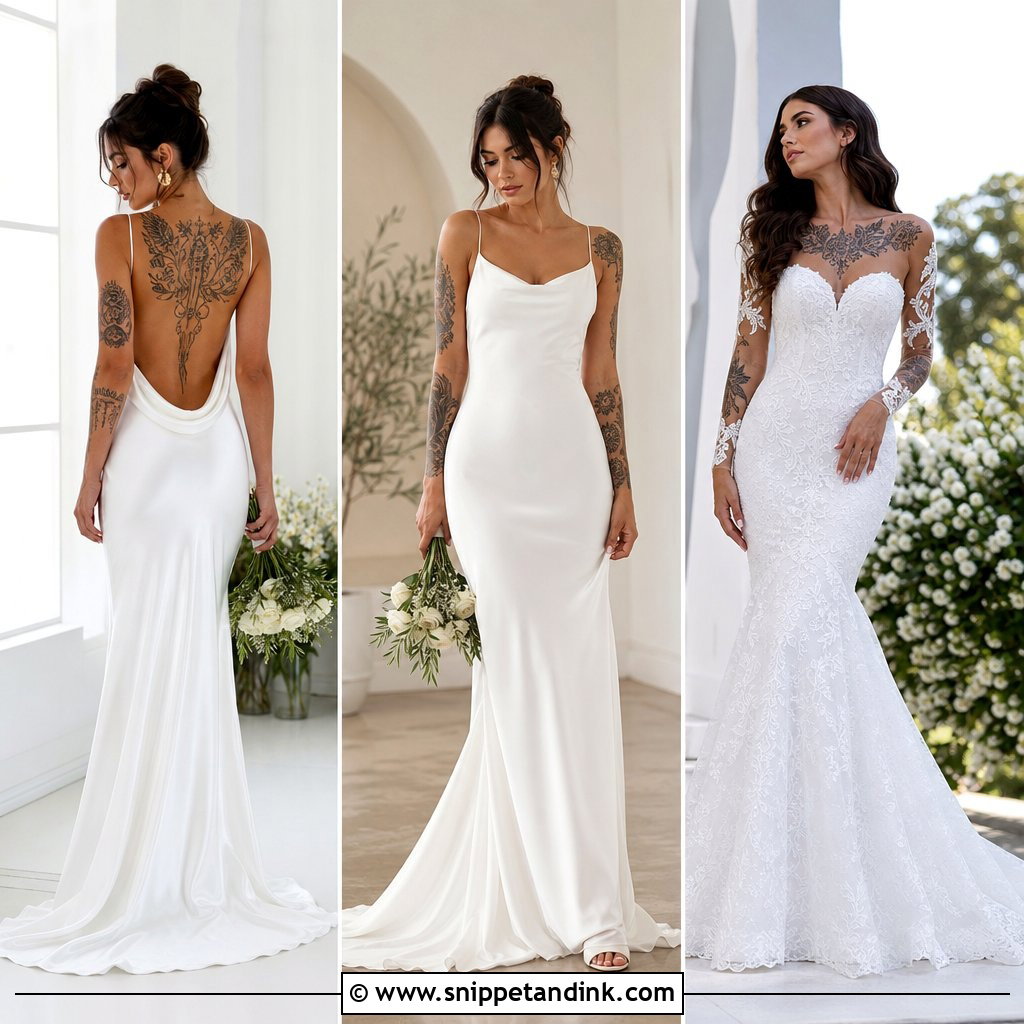
Most guests watch the ceremony from behind you, which is why a low open back earns its place. Balance it with a high front or a simple scoop so the gown reads polished rather than bare. Crossed straps, a draped cowl panel or covered buttons give the back its detail without beading. Fashion tape alone will not hold a deep back through dancing; sewn-in bust support and correctly placed straps will. Style it with a sleek bun, long earrings and a cathedral veil you can remove after the vows, with minimal slingbacks underfoot.
3. Long Sleeve Slinky Wedding Dress
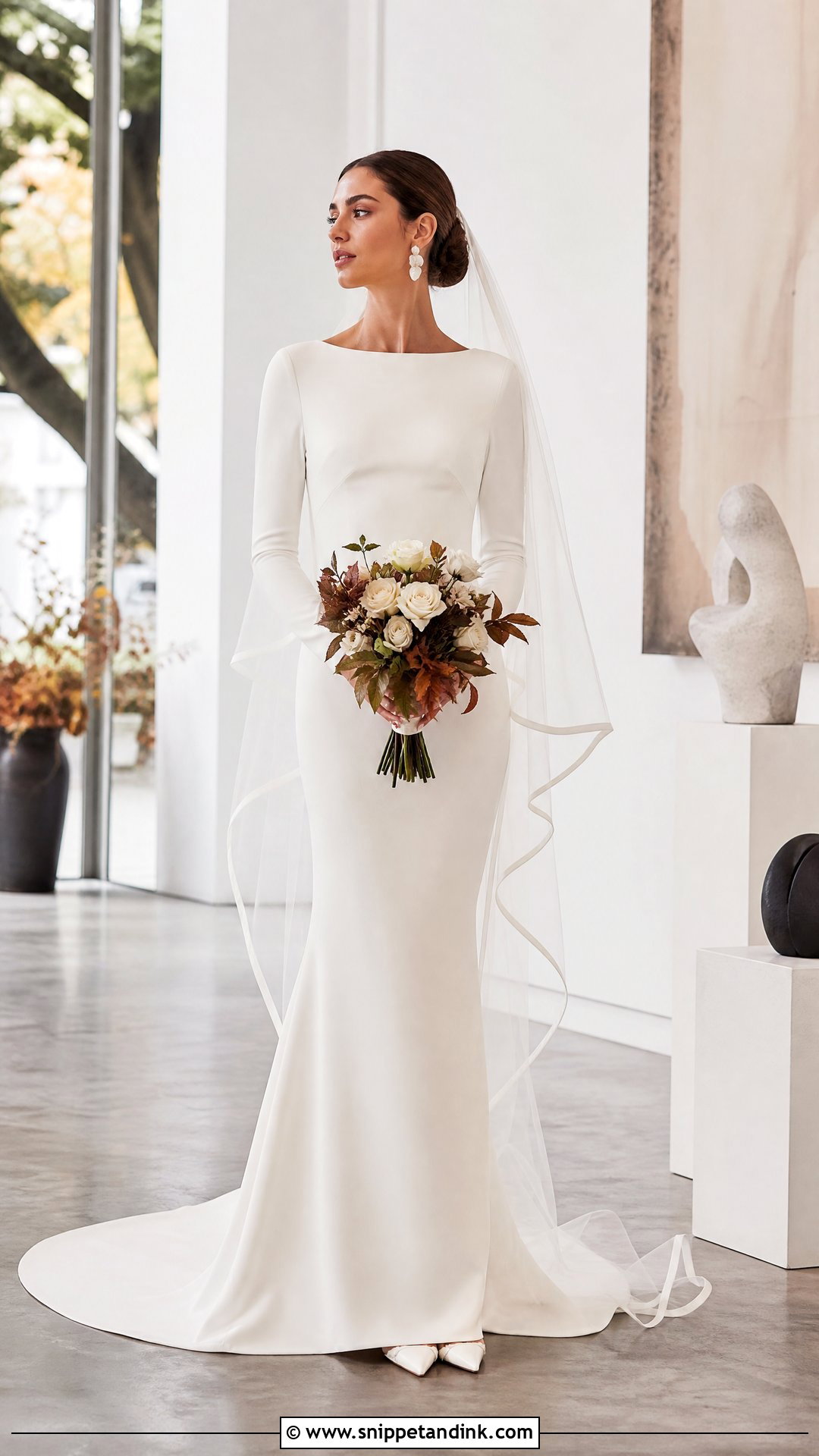
Sleeves on a close-fitting dress need fabric with some give. Stretch crepe, silk jersey or softly lined satin let the shoulders move; rigid satin sleeves on a slinky body will pull the whole bodice up when you lift your arms. Keep the neckline clean with a bateau, scoop or shallow V, and let a fitted skirt and small train add length. Sculptural earrings, a centre-parted bun, pointed pumps and a narrow satin-edged veil keep it sharp. This is the look I suggest most for autumn and winter weddings indoors. At the fitting, sit down, reach up and walk a few steps; shoulder seams that sit right make the entire gown look better.
4. Strapless Slinky Wedding Dress
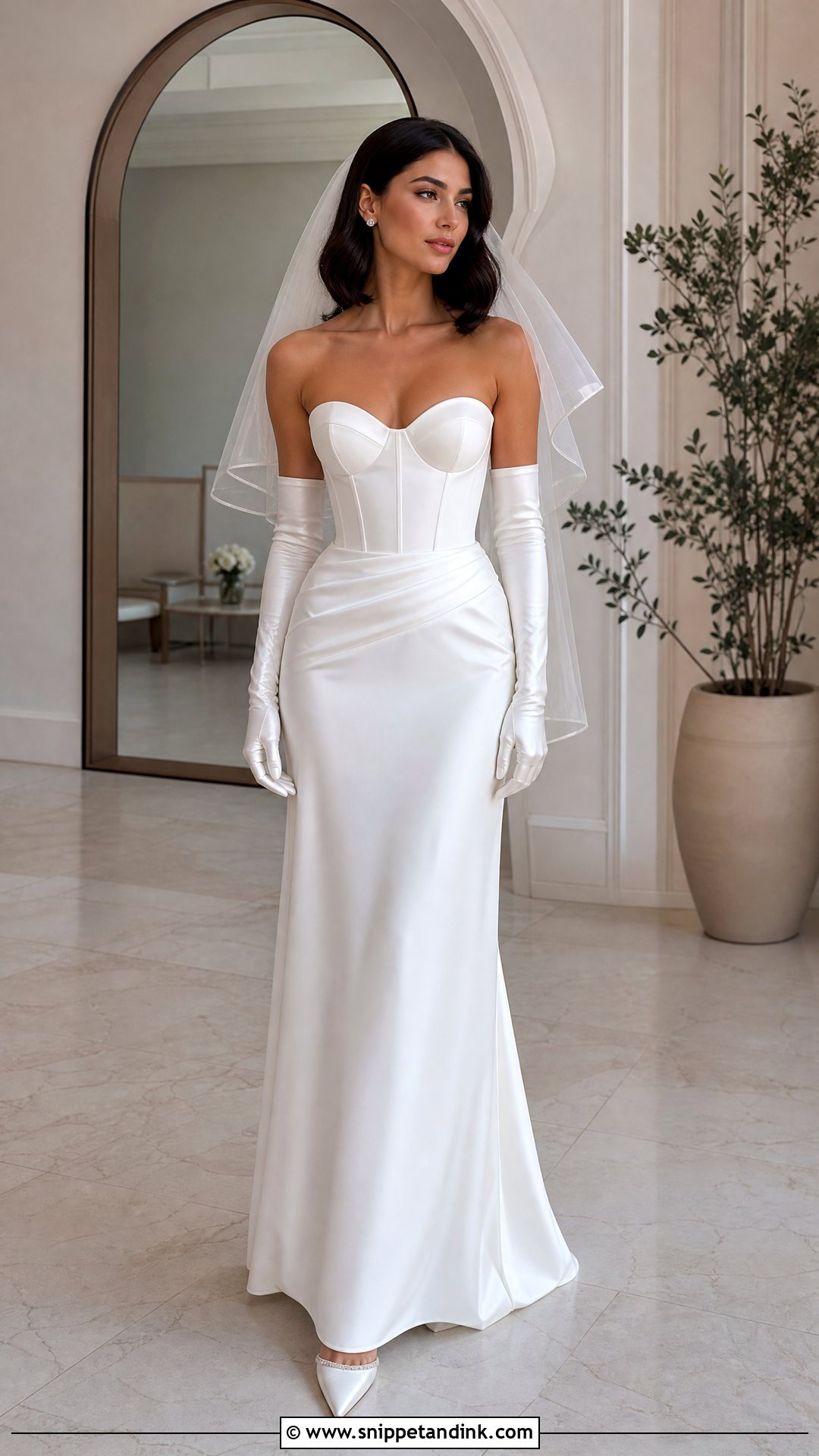
I don’t let brides wear a completely unstructured slip in strapless form. It needs an internal corset, boning or at least a shaped inner bodice, or you spend the evening hitching it up. A straight neckline reads modern, a soft sweetheart more romantic. Over that, the skirt can stay fluid. A sheer shoulder-length veil, crystal studs and satin pointed shoes suit it, and a small structured clutch keeps the minimal feel. Detachable opera gloves give you a ceremony look and a reception look. Dance a little at your fitting: the bodice should stay level while the skirt slides over your hips.
5. Halter Neck Slinky Wedding Dress
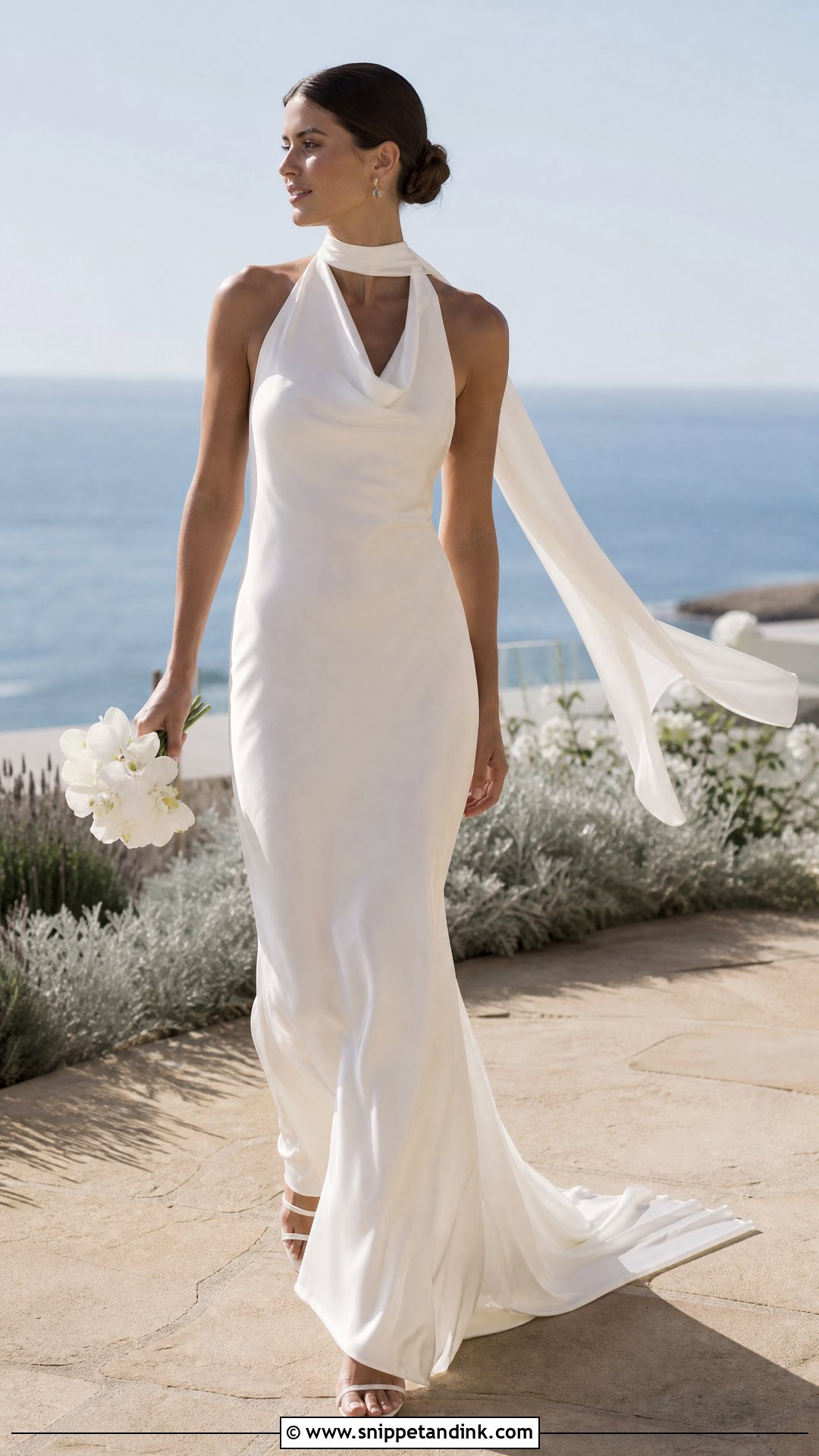
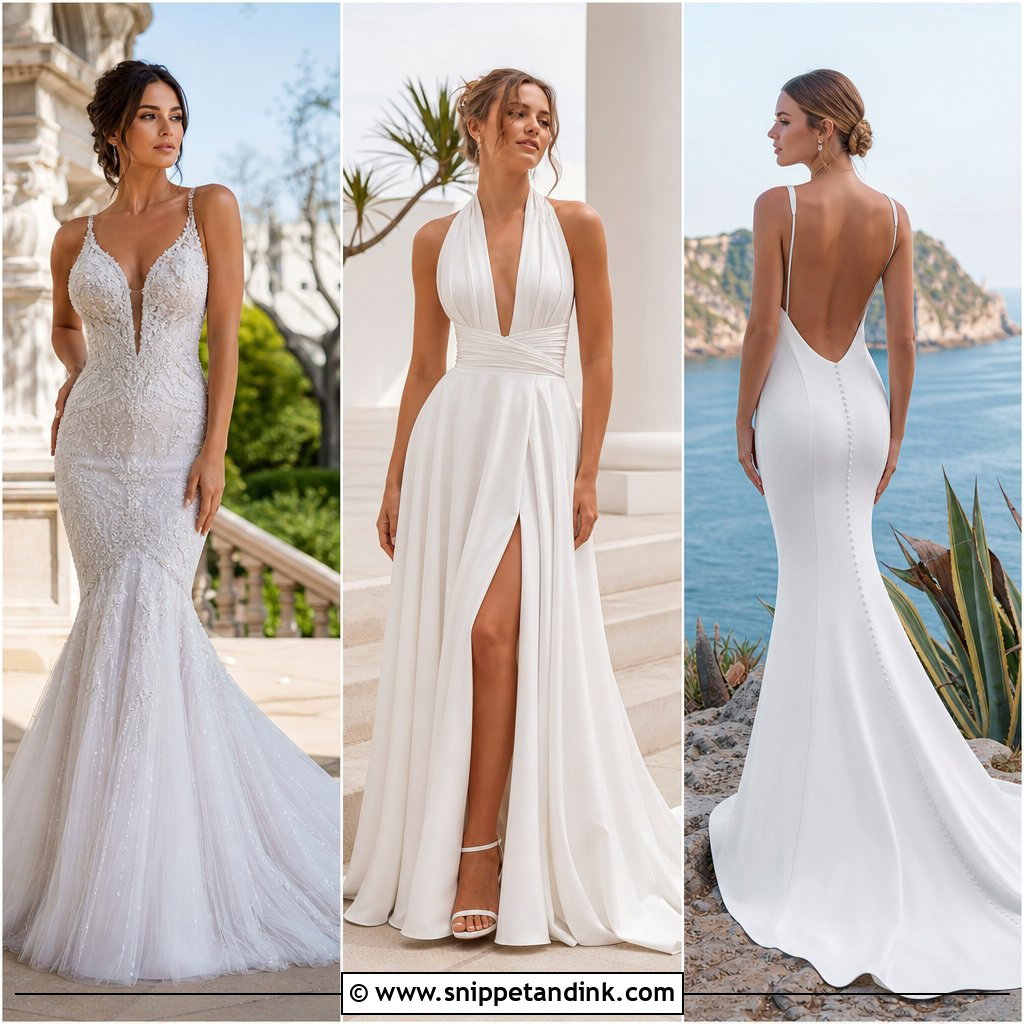
A halter pulls the eye up to the face and shoulders and lengthens the whole figure. Pick a softly draped high neck, an open back and a bias-cut skirt without extra volume. A scarf-style neck tie trailing down the back gives movement and replaces a necklace altogether. Wear a low knot or polished ponytail so nothing covers the neckline, with small hoops, a slim bracelet and barely-there ivory sandals. Galleries, rooftops, the coast and city hall ceremonies all suit it. If the halter drags on your neck after ten minutes, the bust support is too weak; a tailor can rebalance the tie and lining.
6. Square Neck Slinky Wedding Dress
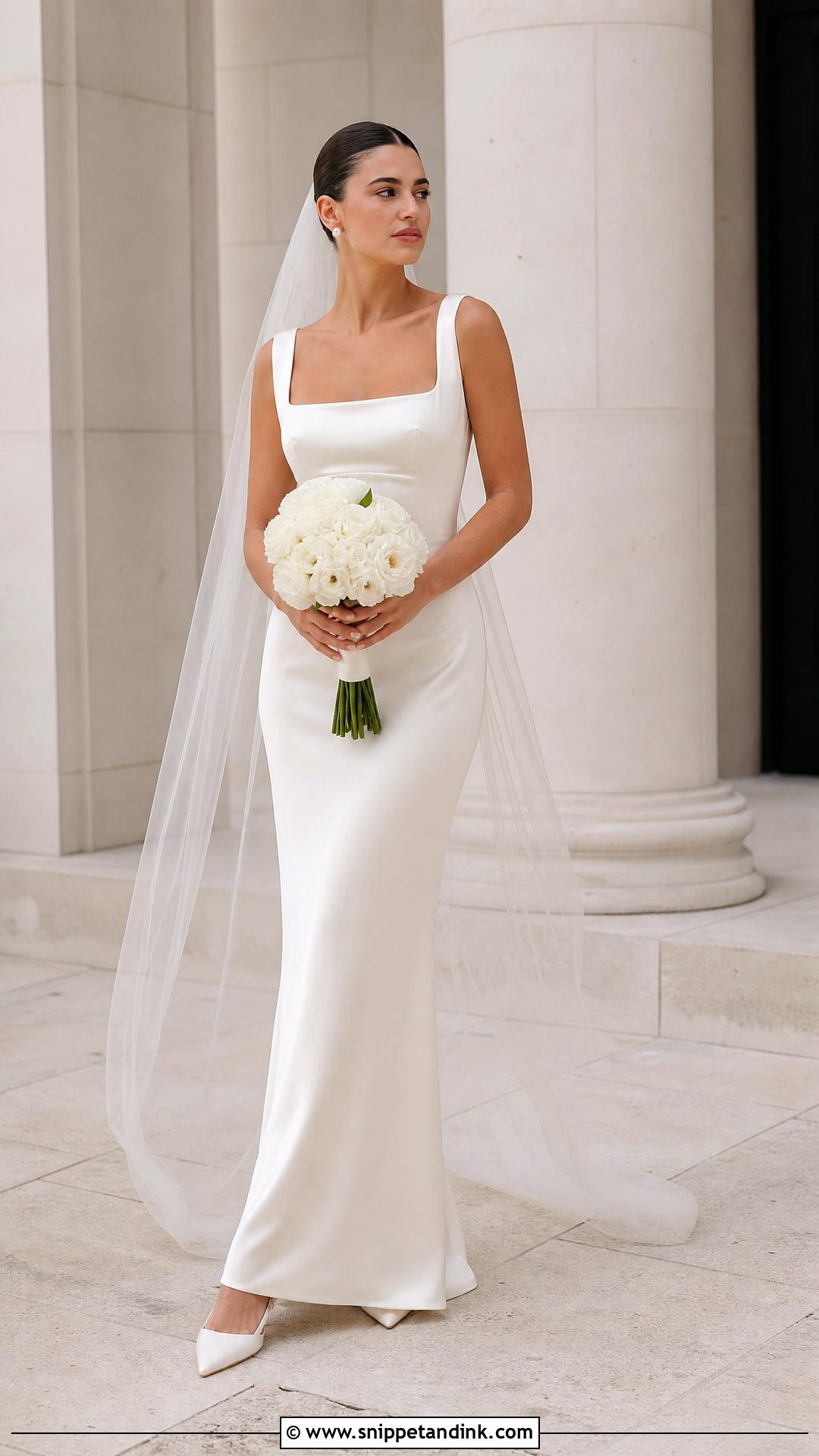
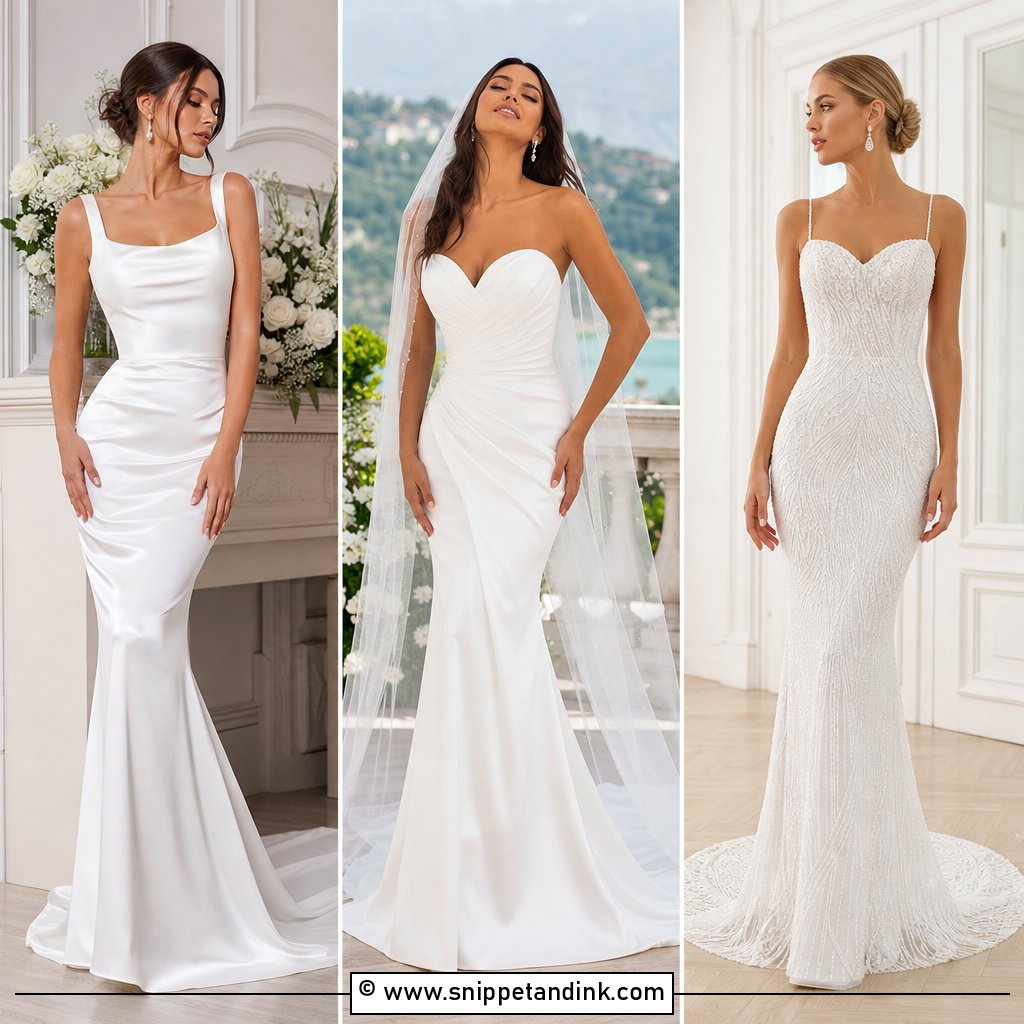
Square necklines give a fluid dress some architecture. Silk crepe or matte satin in a column cut, with medium straps, a defined waist seam and a skirt that skims rather than squeezes, balances that straight edge against a soft lower half. Gaping at the corners is the usual problem, and it shows in every photo, so have the neckline and underarms fitted closely. A smooth chignon, pearl studs and a long single-layer veil suit it; pointed slingbacks hold your foot better than an open sandal. With a dress this plain, a sculptural bouquet of one or two flower types looks more deliberate than a big mixed arrangement.
7. One Shoulder Slinky Wedding Dress
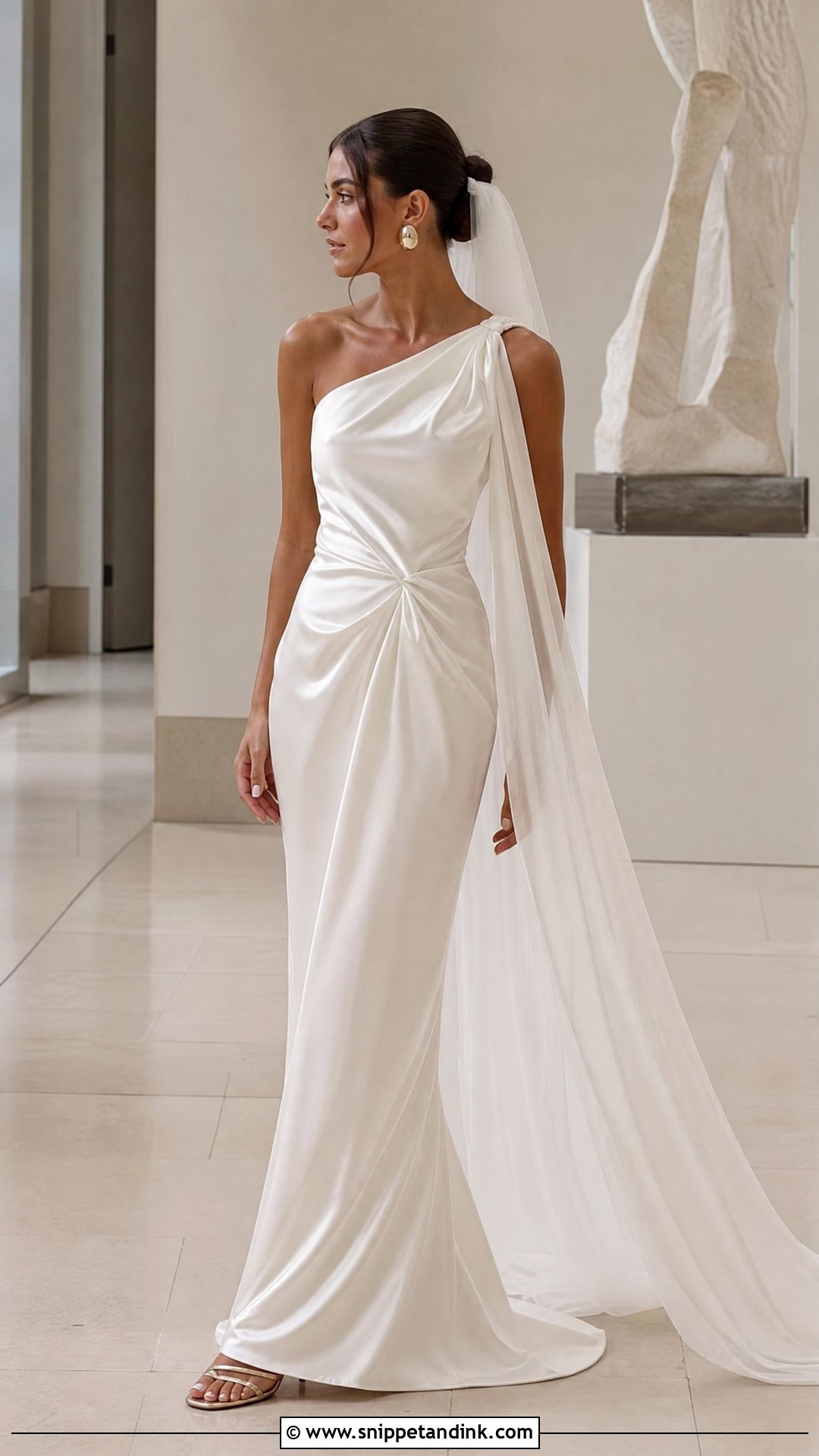
Asymmetry gives a smooth gown interest without a single bead. A one-shoulder satin dress with soft gathering at the waist and a skirt that follows the body before opening at the hem is my usual pick. A draped sleeve or trailing shoulder scarf adds movement. Bold studs or a slim ear cuff replace the necklace, with a swept-back style, metallic ivory sandals and a simple veil set below the bun. It looks right in a museum, a modern hotel or at an evening ceremony. Before you buy, swing both arms. If the dress drifts toward the covered shoulder, the waist fit needs work.
8. V Neck Slinky Wedding Dress
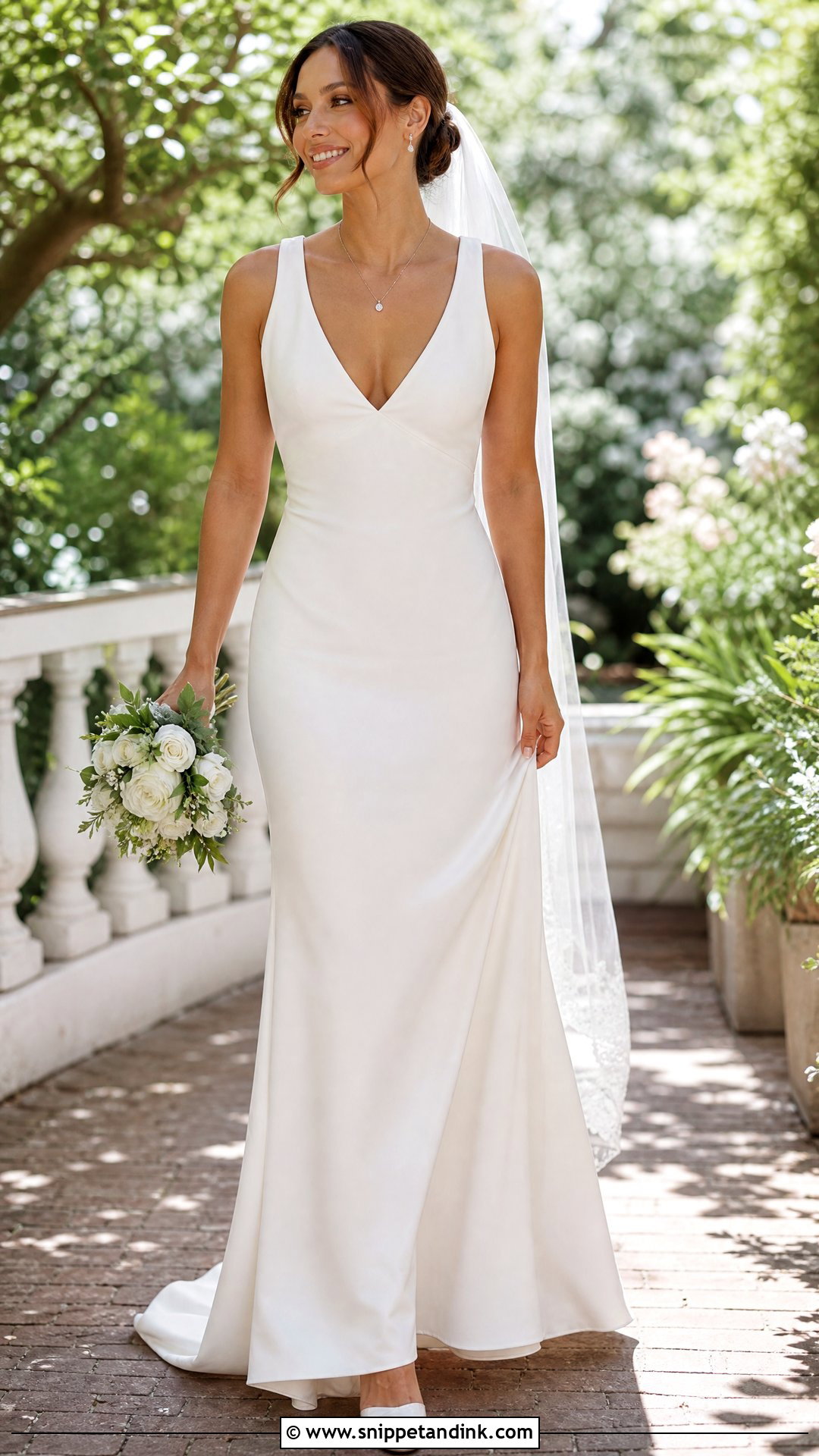
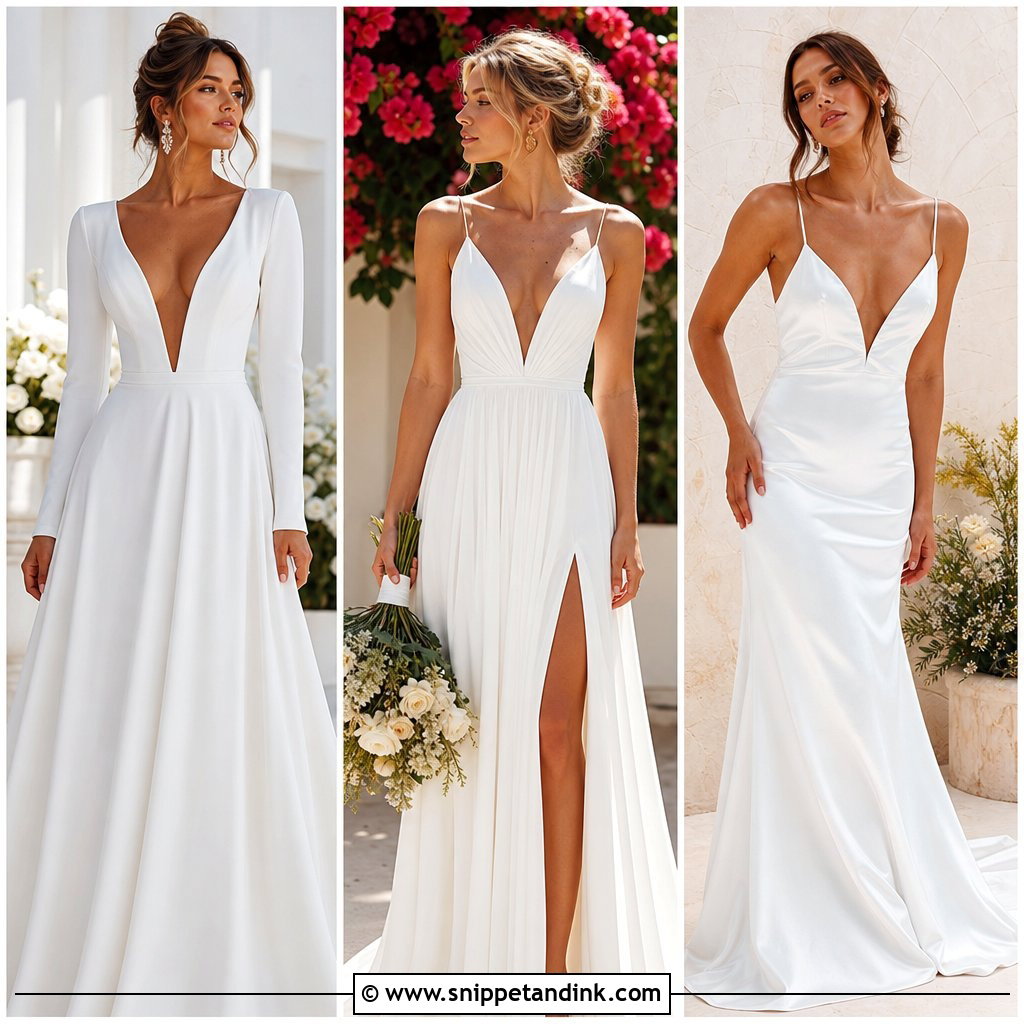
The V-neck is the most adaptable neckline I fit on a slinky gown. Wide straps give support; narrow ones give a lighter slip feel. A moderate V, fitted waist and gently flared hem let the satin or crepe take centre stage. Gaping across the bust is the thing I check, and an illusion panel or a shallower V solves it if coverage is a worry. Wear a fine pendant, pearl earrings and a loose low bun. Ivory block heels cope with grass and gravel, and a narrow chapel veil gives the dress more ceremony. Hem it carefully; a fluid skirt only flows cleanly at the right length.
9. Scoop Neck Slinky Wedding Dress
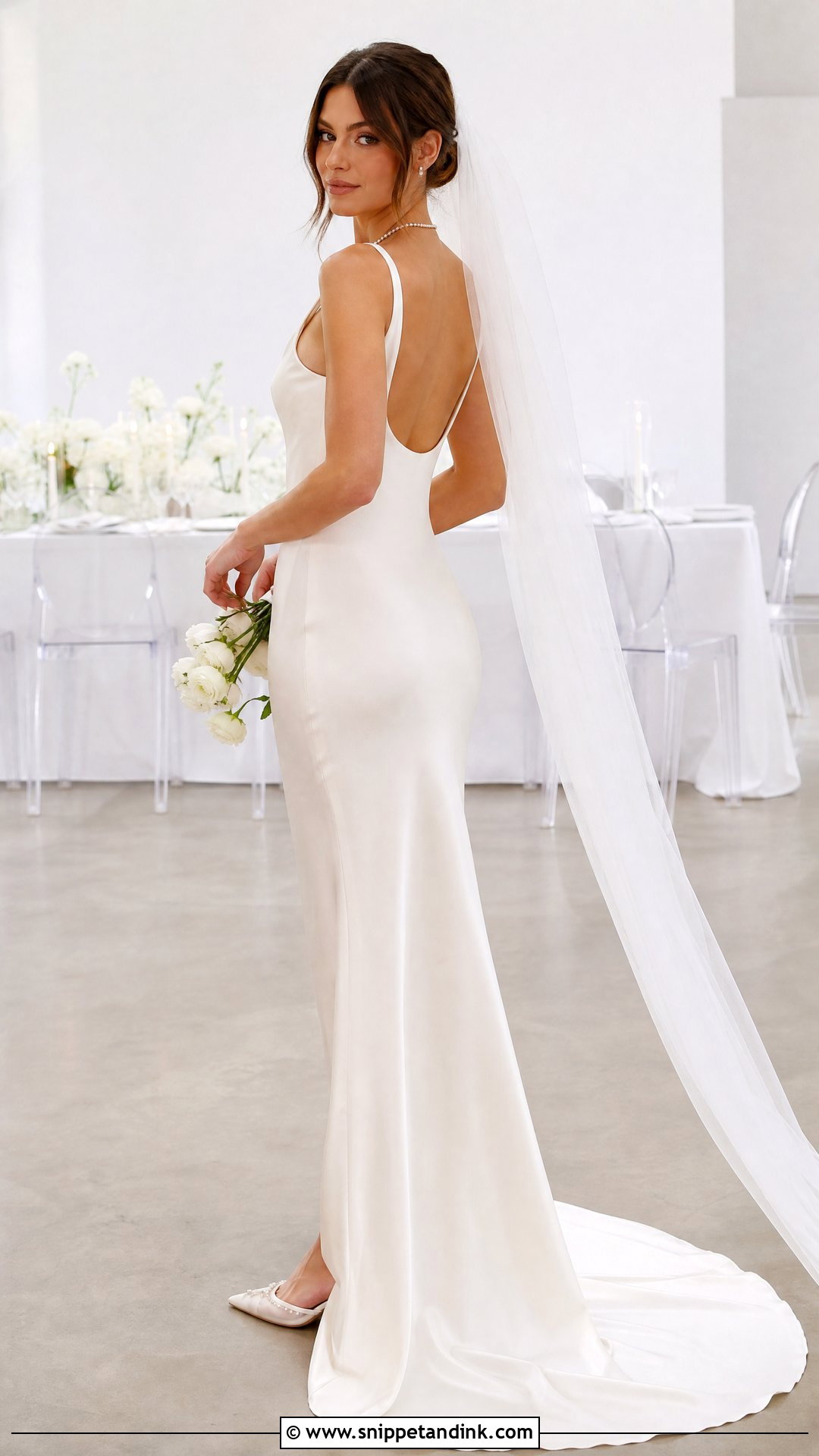
Soft and understated, a scoop neck suits the relaxed nature of fluid fabric. A silk satin gown with supportive tank straps, a low scoop back and a narrow train frames the collarbone without feeling sharp. Scoops vary a lot in depth, so check yours seated as well as standing; it drops further when you lean in. A fine tennis necklace, small earrings and a glossy low bun keep it delicate. Pointed mules work indoors, but choose secure slingbacks if the day involves a lot of walking. Strap and side-seam tailoring can add coverage without stiffening the shape.
10. High Neck Slinky Wedding Dress
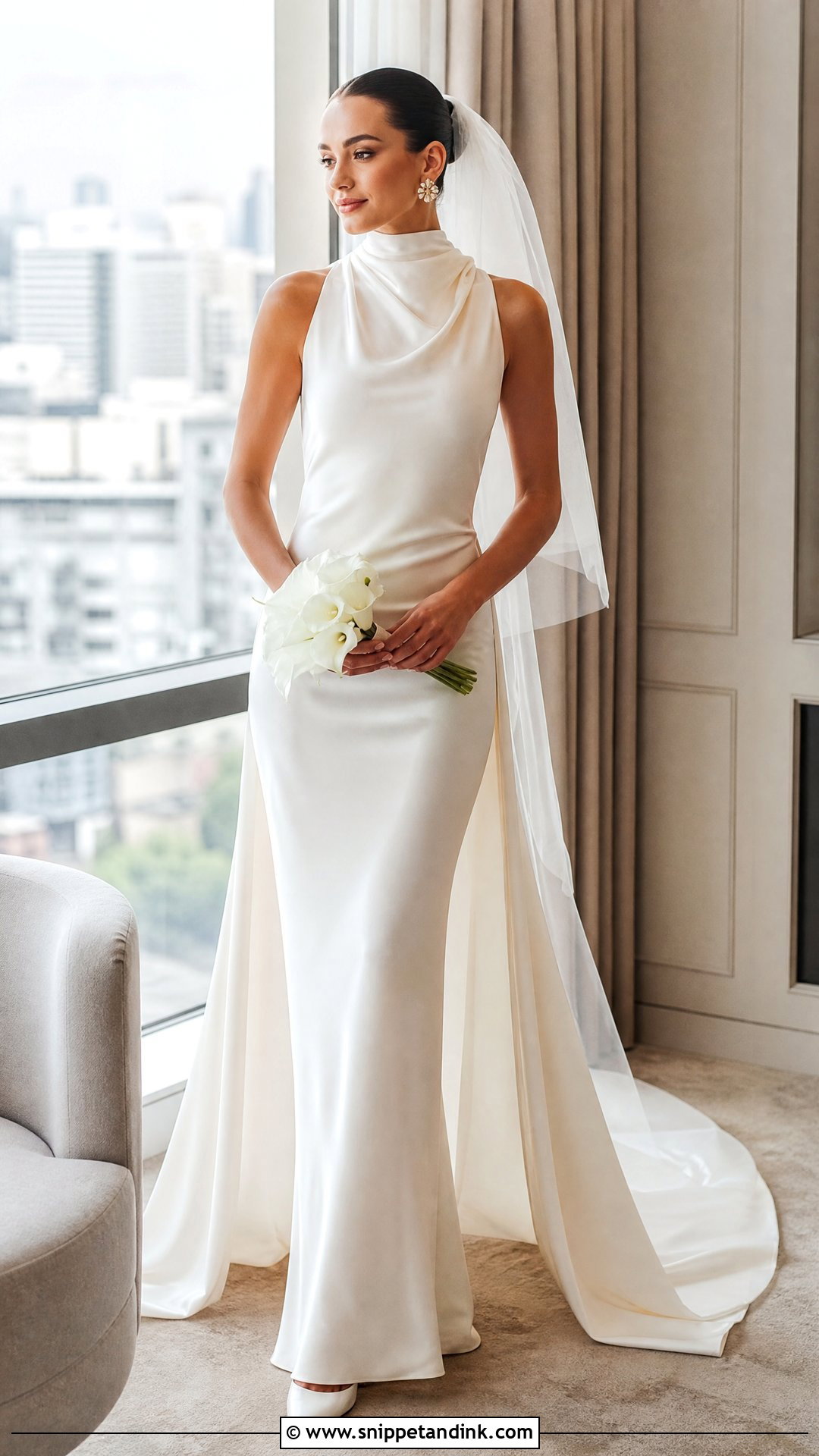
Cover the front and a simple column suddenly reads as fashion. A fluid satin or silk crepe gown with a draped high neck, sleeveless bodice and open or keyhole back keeps it from looking conservative. Hair up, sculptural earrings and no necklace. Closed-toe pumps, a compact bouquet and a veil fixed under the hairstyle finish it, and a detachable neck scarf gives a longer line for the ceremony. High necks on clingy fabric show tension fast: lines radiating from the armhole or across the upper back mean the fit is off. Look in a side mirror before you approve it.
11. Off Shoulder Slinky Wedding Dress
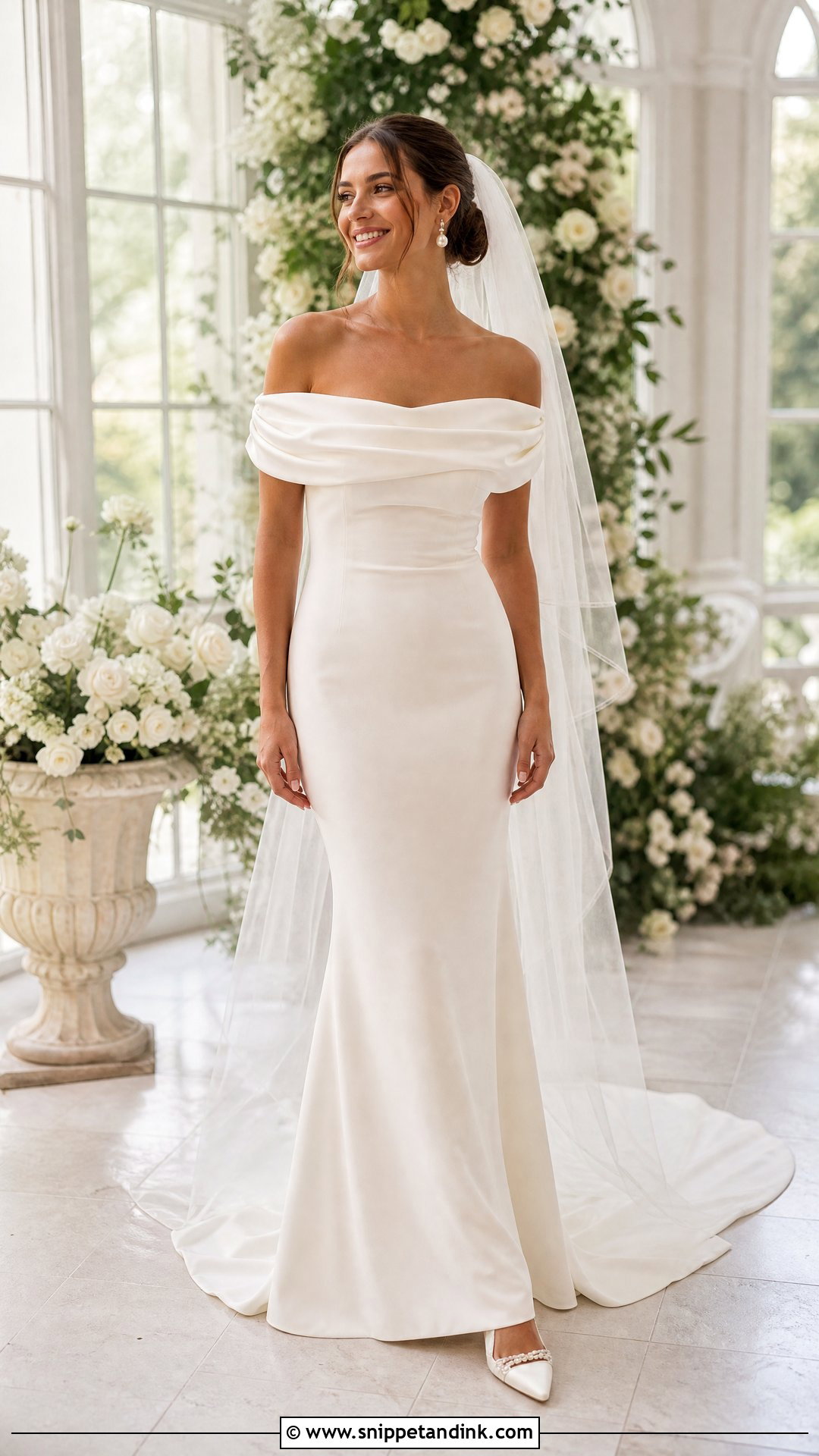
Off-the-shoulder softens a slinky gown into something more romantic. A fitted crepe dress with a folded satin band or draped sleeves, narrow through the hips and opening slightly toward a sweep or chapel train, is the classic version. Pair it with pearl earrings, a short necklace and loose waves tucked behind one ear, pointed satin heels and a light tulle veil. When the sleeves are attached to the bodice, raising your arms pulls the neckline down. Hold a bouquet and hug someone in the fitting room; hidden elastic or extra internal support keeps the band in place.
12. Lace Trim Slinky Wedding Dress
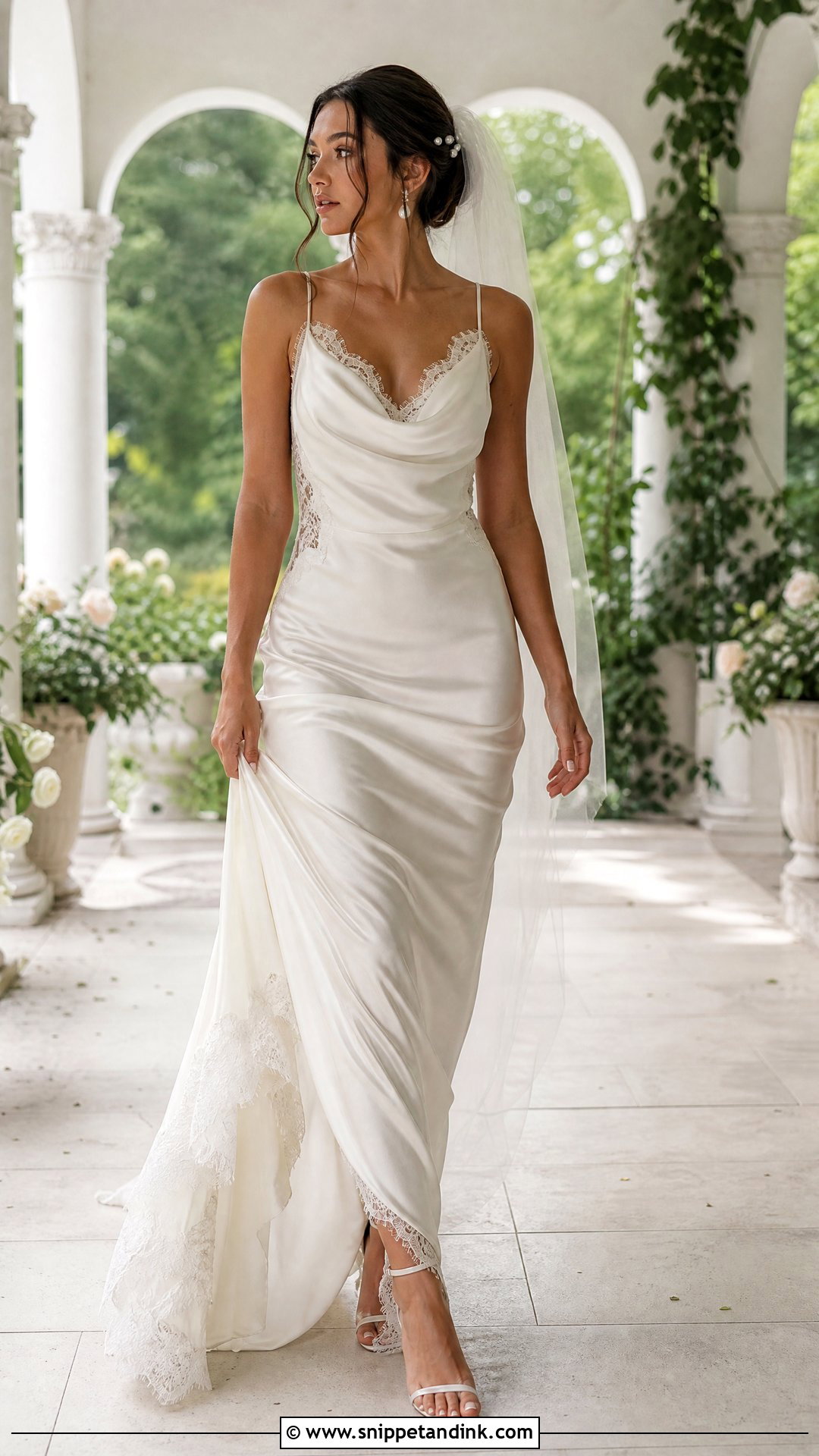
A little lace softens a slip gown; too much hides what makes it slinky. Keep it to the neckline, the straps, the back edge or the hem. An ivory satin dress with a lace-edged cowl and bias-cut skirt has a quiet vintage feel. Pearl hairpins, fine drops and slim ankle-strap sandals suit it, along with a plain veil, since a second lace pattern would fight the trim. Carry airy flowers and soft greenery instead of a tight structured bouquet. Run your fingers along the lace at the underarm; scratchy trim there gets miserable by the evening.
13. Satin Column Wedding Dress
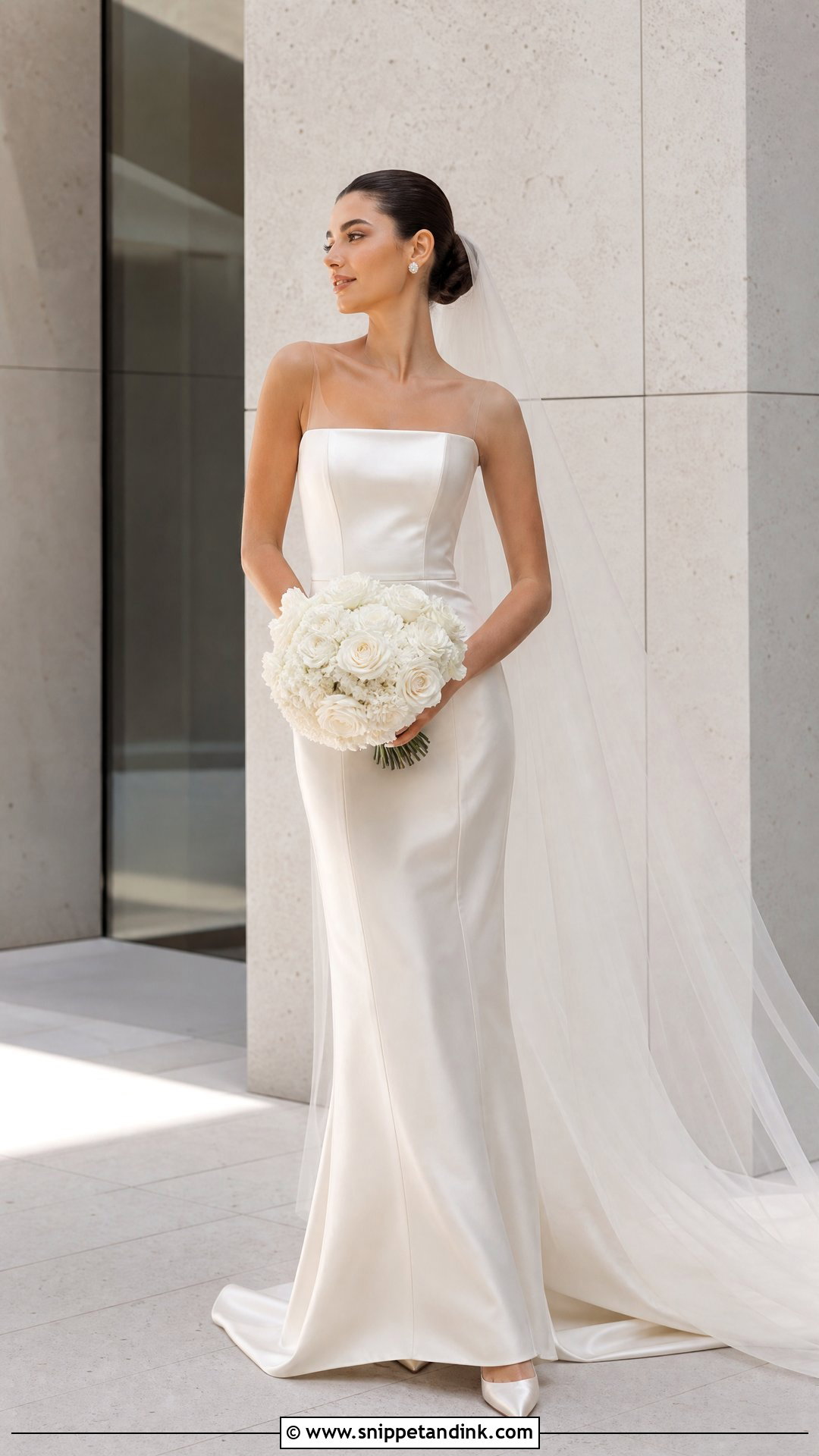
For clean lines and real shine, the satin column is hard to beat. A straight or softly curved neckline, defined side seams and a floor-length skirt with a small back vent or train keep it vertical with no flare at all. Add a long sheer veil, polished studs and pointed pumps, then a structured mini bag later. Satin bounces light, so any rippling at the hem or tension at a seam shows clearly. I always ask the seamstress to check lining, hem and seam placement by a window, in daylight, rather than under the shop’s warm bulbs. Smooth underlayers help the fabric hang the way it was cut to.
14. Bias Cut Silk Wedding Dress
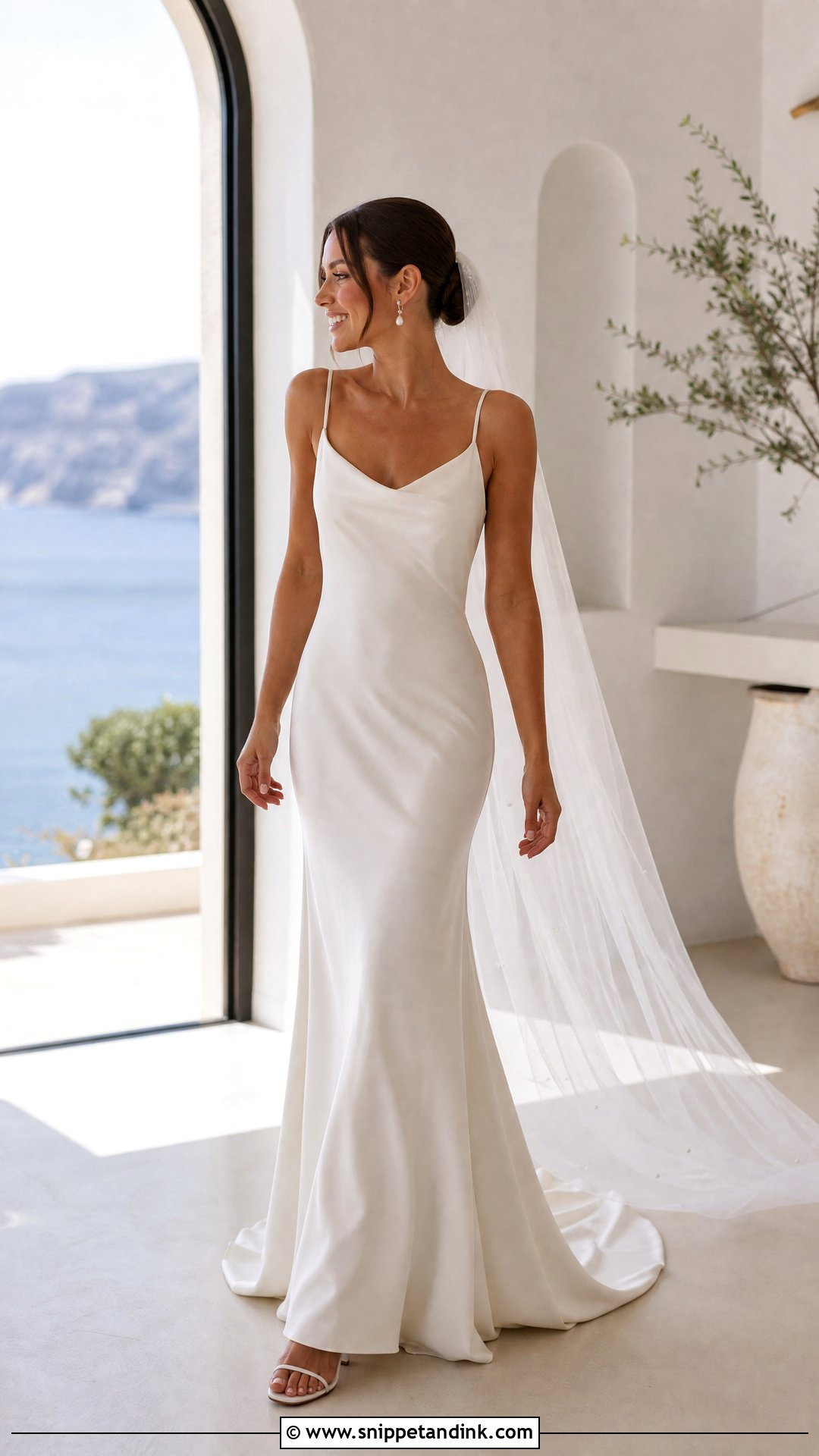
Nothing moves quite like bias-cut silk. Cutting across the grain lets the fabric drape, stretch a little and follow the body as you walk. Keep the neckline simple, the straps delicate and the train short enough to pool just behind the heels. Pearl drops, a sheer veil, minimal sandals and a low knot or side-parted waves keep the mood quiet. Silk snags easily, so leave off bracelets with prongs or rough edges. It should skim the waist and hips; horizontal pull lines mean it is too tight. Bring your actual underwear and shoes to every fitting, because both change how the bias falls.
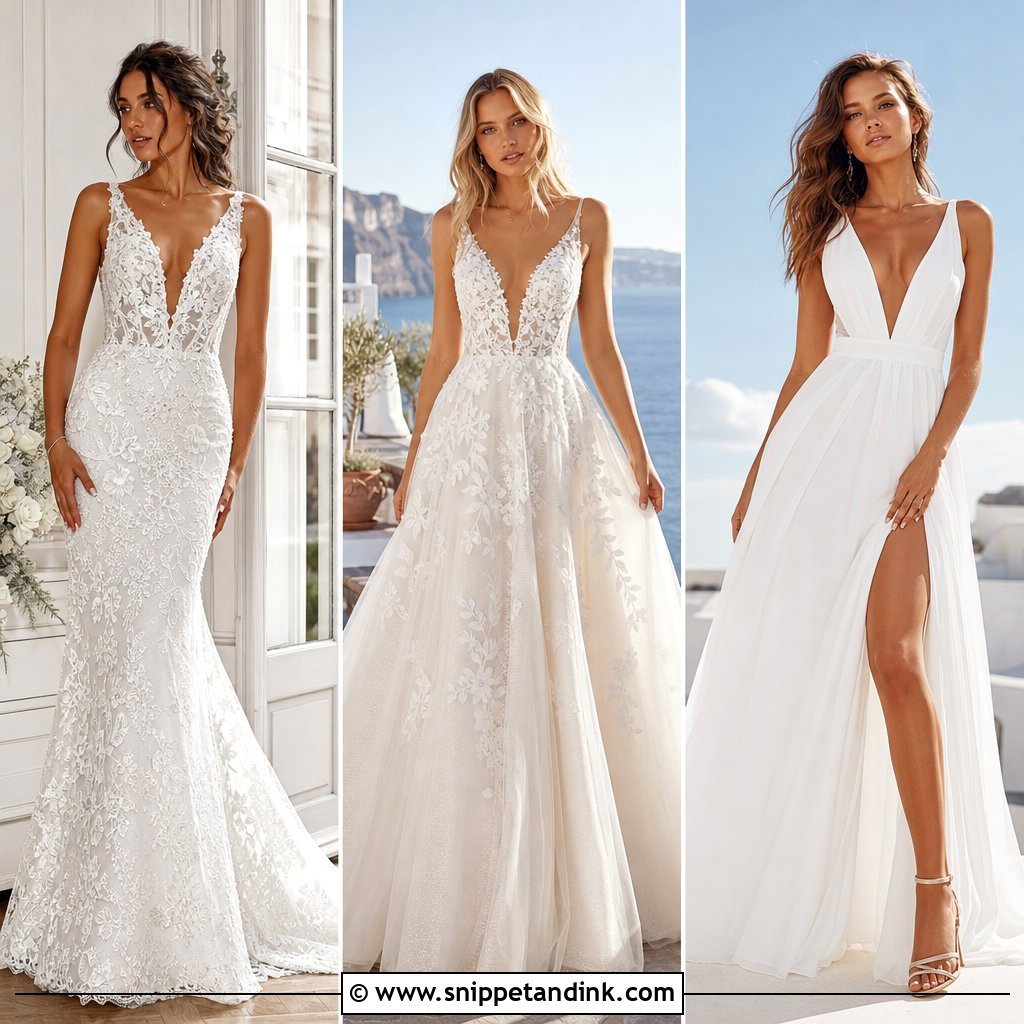
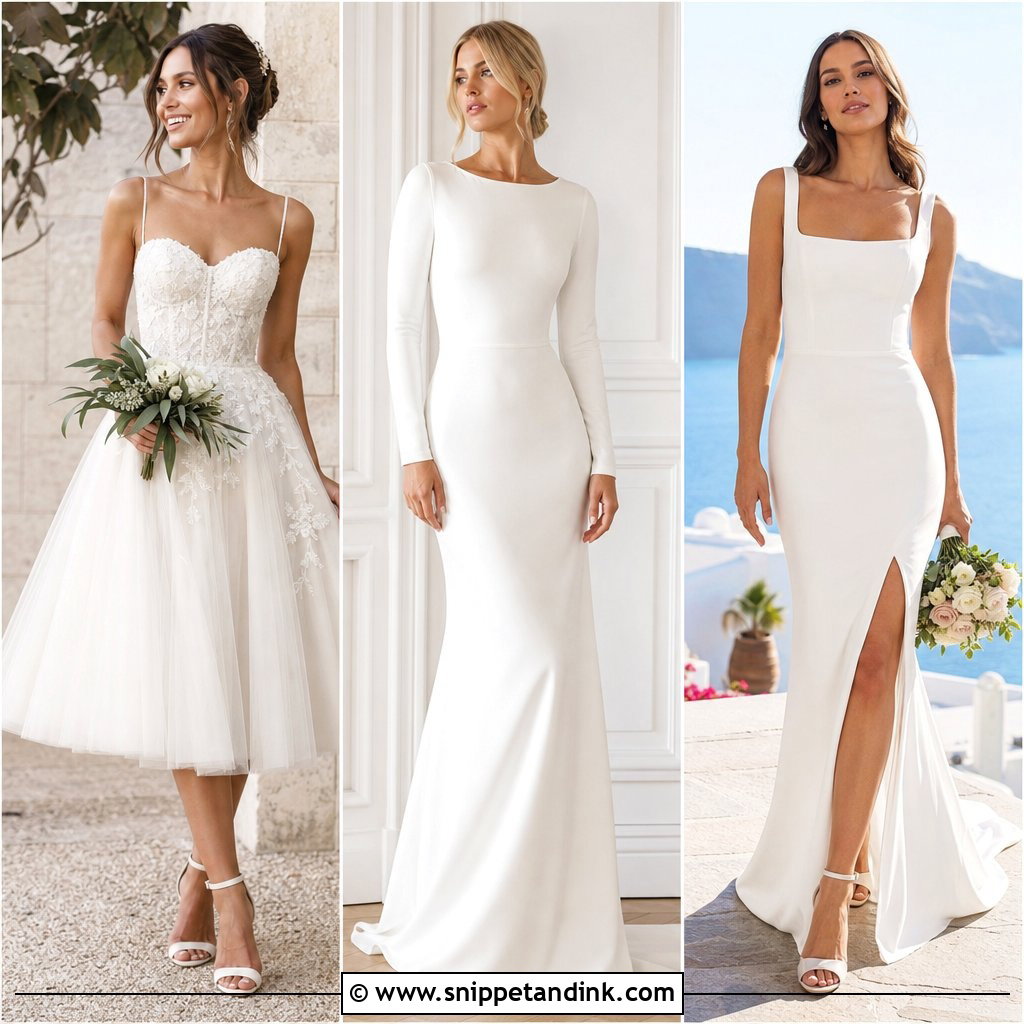
15. Draped Waist Slinky Wedding Dress
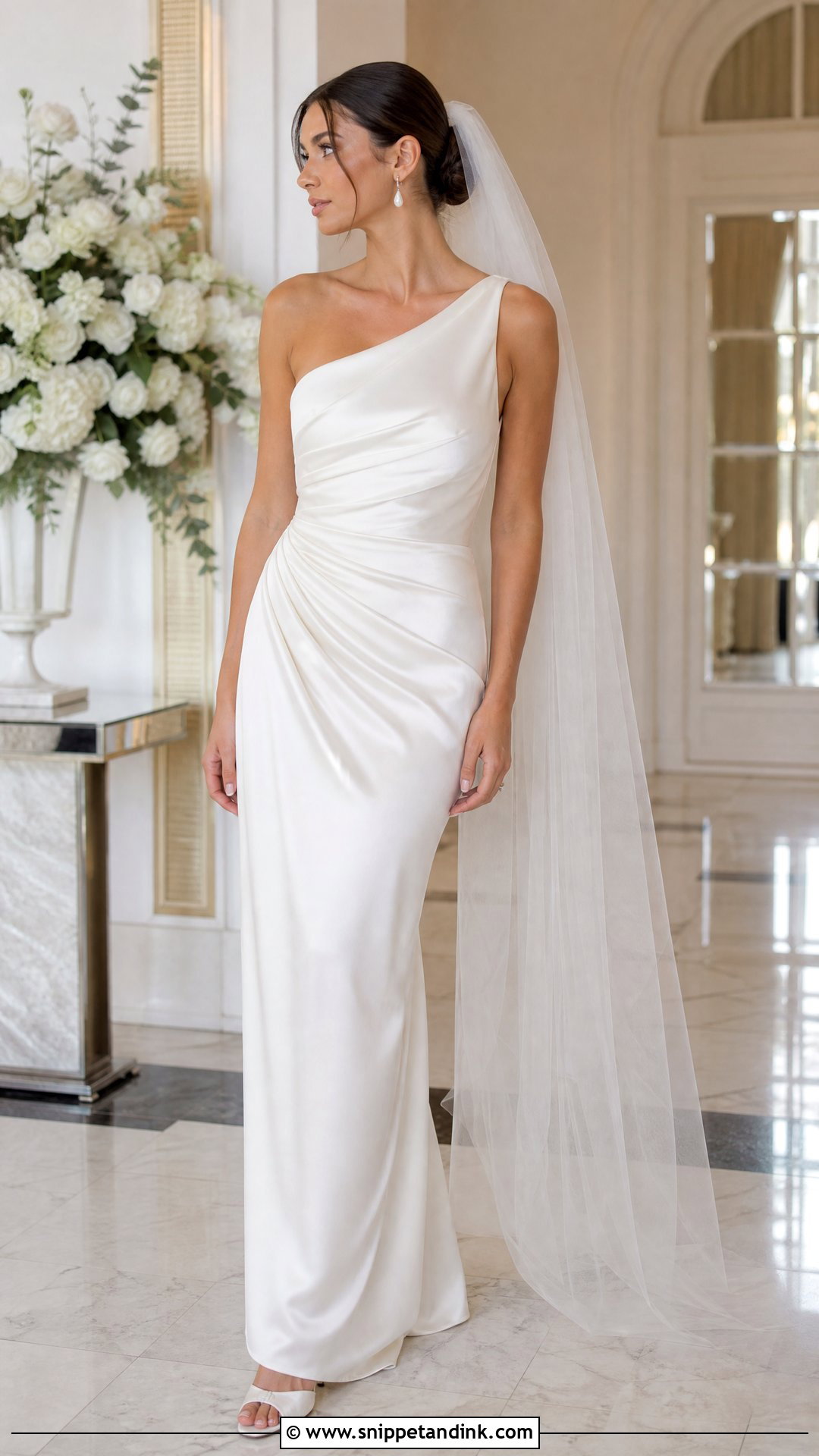
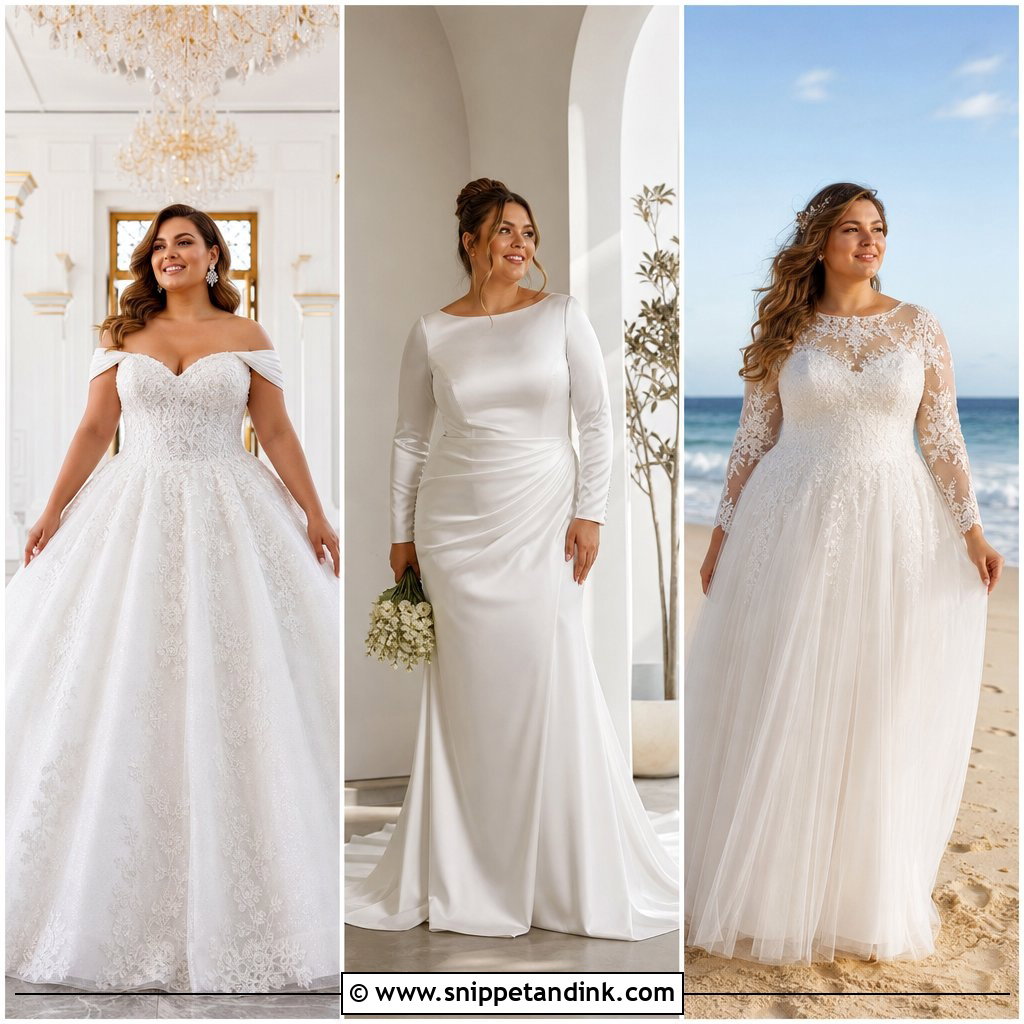
If completely smooth satin feels too exposing, a draped waist is the compromise I offer first. Diagonal pleats, soft ruching or a gathered hip give shape and texture, and they are more forgiving than a plain surface. Pair it with whichever bodice gives you the support you need: one-shoulder, scoop or strapless. Clean drop earrings, a low bun, ivory slingbacks and a plain tulle veil keep the waist detail visible in full-length photos. The folds should be stitched in place, not loose and bulky. Look at it from the front, side and back, then sit; good draping still lies flat when you are seated.
16. Front Slit Slinky Wedding Dress
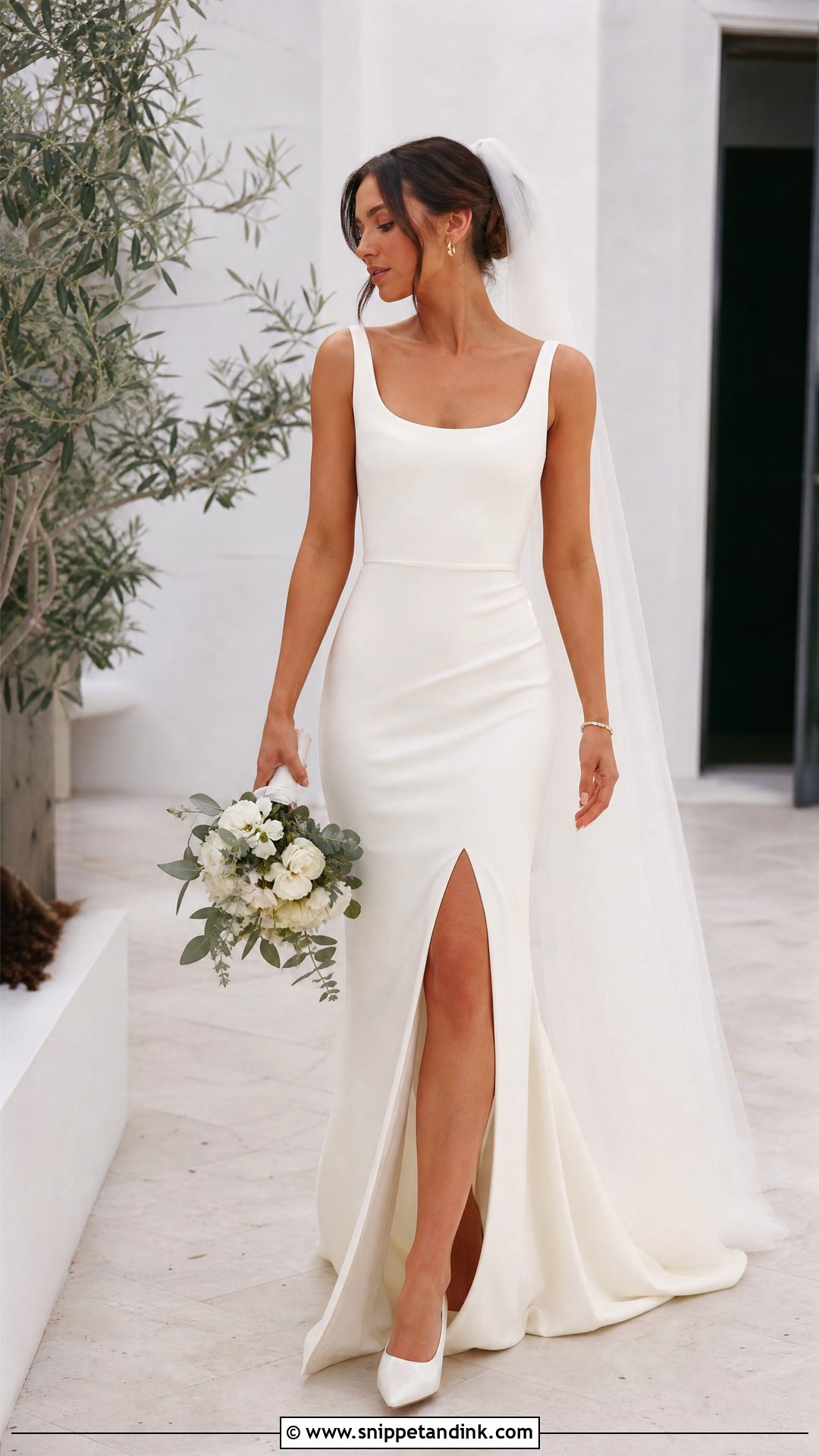
A front slit does two jobs on a narrow gown: it frees your stride and shows off the shoes. Set it slightly off-centre on a satin or stretch-crepe dress with a secure bodice. Closed-toe heels, a slim ankle-strap sandal or a decorative slingback all work, with small hoops and a fine bracelet. A long veil balances the visible leg and makes it unmistakably bridal. Take full steps and climb some stairs at your appointment. If the slit opens higher than you like, a tailor can lower it, reinforce the top so it doesn’t tear, and add a discreet lining.
17. Low Back Slinky Wedding Dress With Train
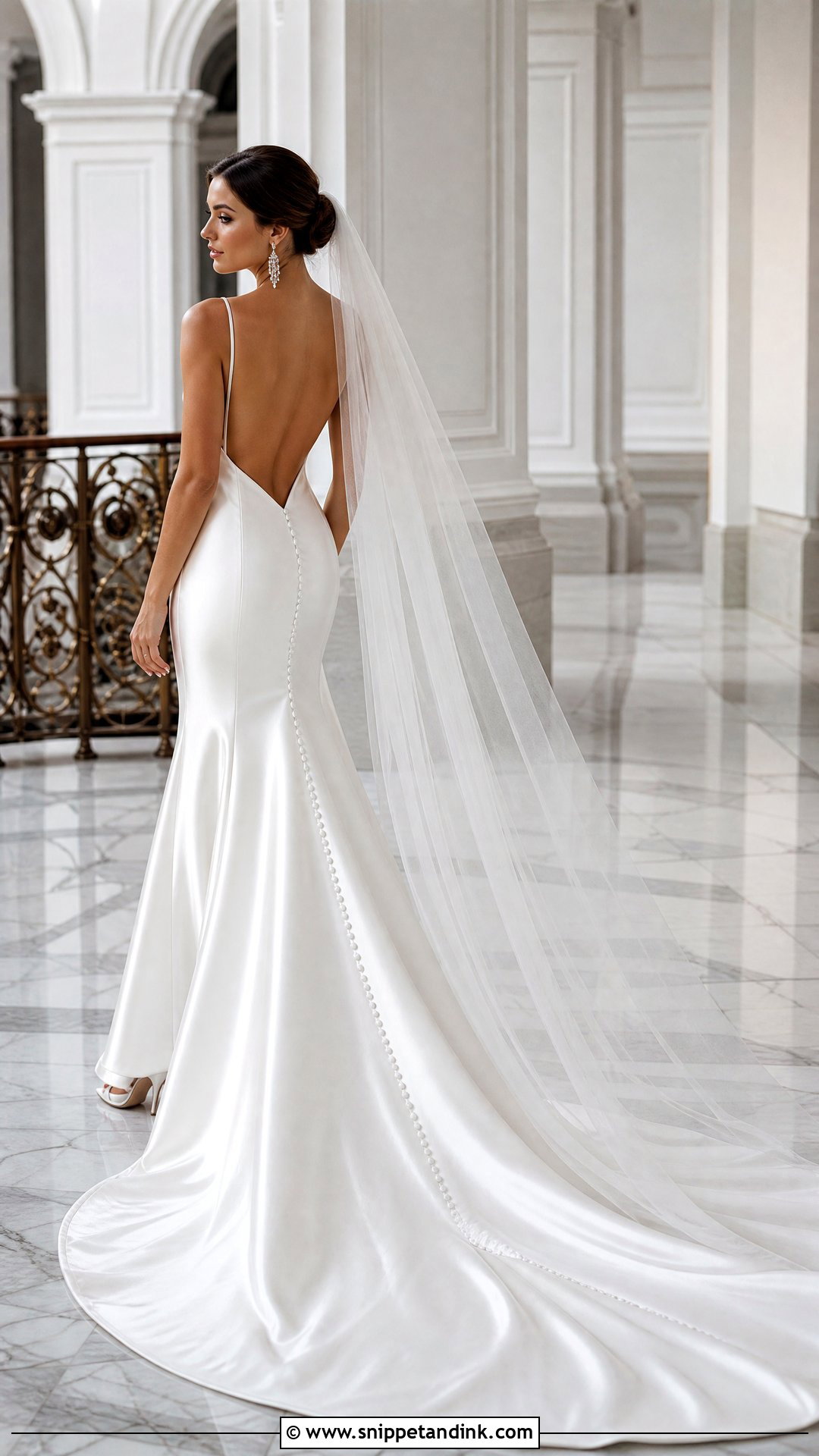
The entrance and the exit are when a low back and a long train show off. Look for a silk or satin gown with slim straps, a fitted waist and a back that curves just above the skirt. Covered buttons or a softly draped cowl can carry the line from the back into the train. Wear a low bun, statement earrings and a veil fixed below the hair, with plain satin pumps for stability. Match the train to the room: a sweep for a small space, a chapel length for a grand one. Ask for the bustle at your first alteration appointment, not the last.
18. Slinky Mermaid Wedding Dress
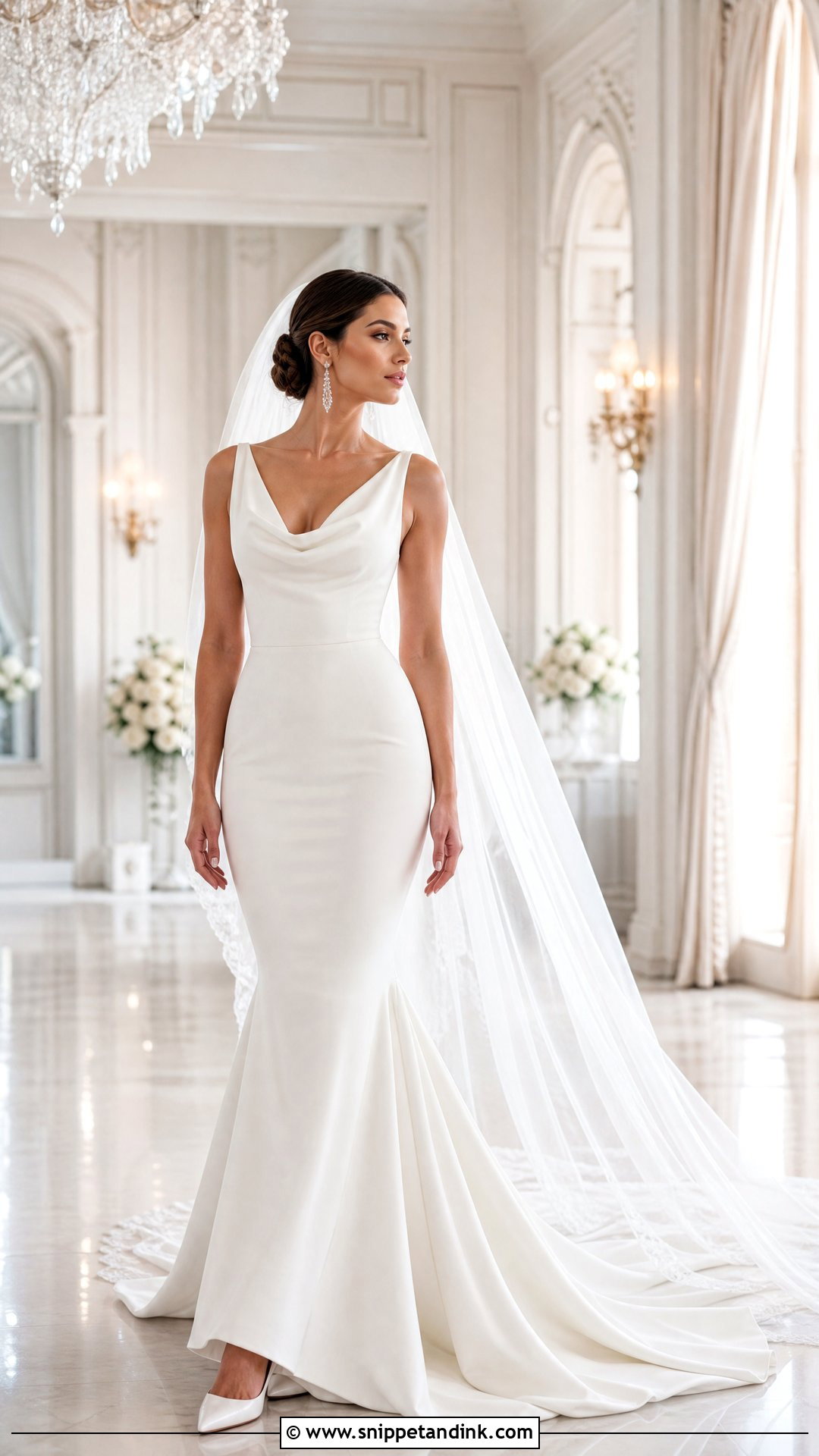
Want more shape than a slip without losing the smooth line? A slinky mermaid follows the torso and hips and widens near the knee. Stretch crepe, silk satin or lined jersey all work; unlined jersey shows too much. A cowl, square or off-the-shoulder neckline softens the fit. Long earrings, a clean updo, pointed pumps and a single-layer cathedral veil complete it. The flare point matters most, since it decides how freely you walk and whether you can sit. If you can only shuffle at the appointment, it will be worse after six hours. A bustle or wrist loop helps with the train.
19. Slinky Wedding Dress With Detachable Scarf
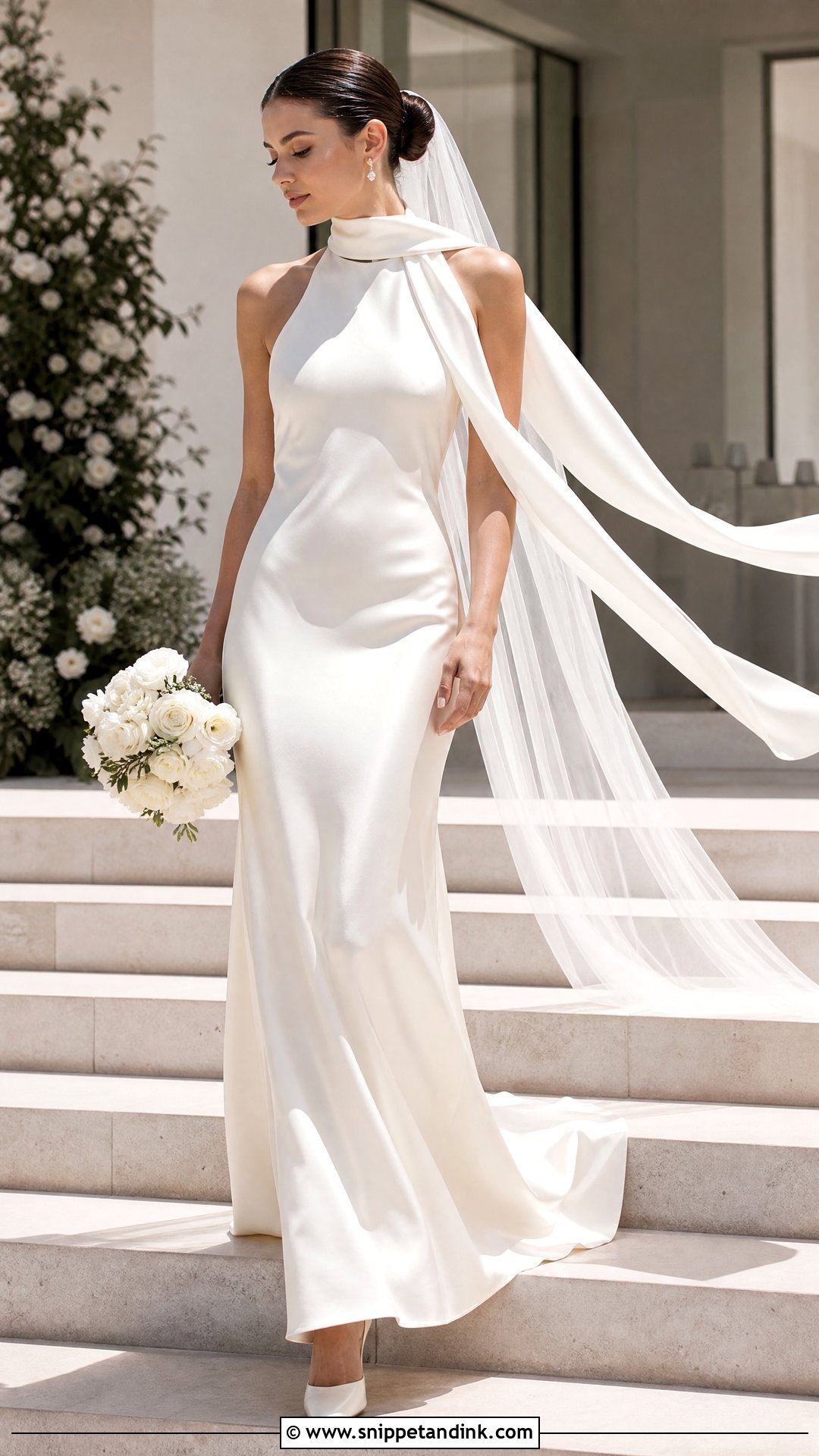
A detachable scarf gives you two looks from one gown. Start with a plain satin column or bias-cut slip with a high neck, strapless bodice or asymmetric neckline, then add a long matching scarf wrapped once at the neck and trailing down the back. Wear it for the ceremony; take it off for the reception. Sleek bun, small earrings, pointed ivory heels, no necklace. If you add a veil, keep it plain so the two fabrics don’t tangle. Wind is the real test here. Walk outside with it on, and have a small snap or loop added so it can’t slide off mid-aisle.
20. Slinky Mini Wedding Dress
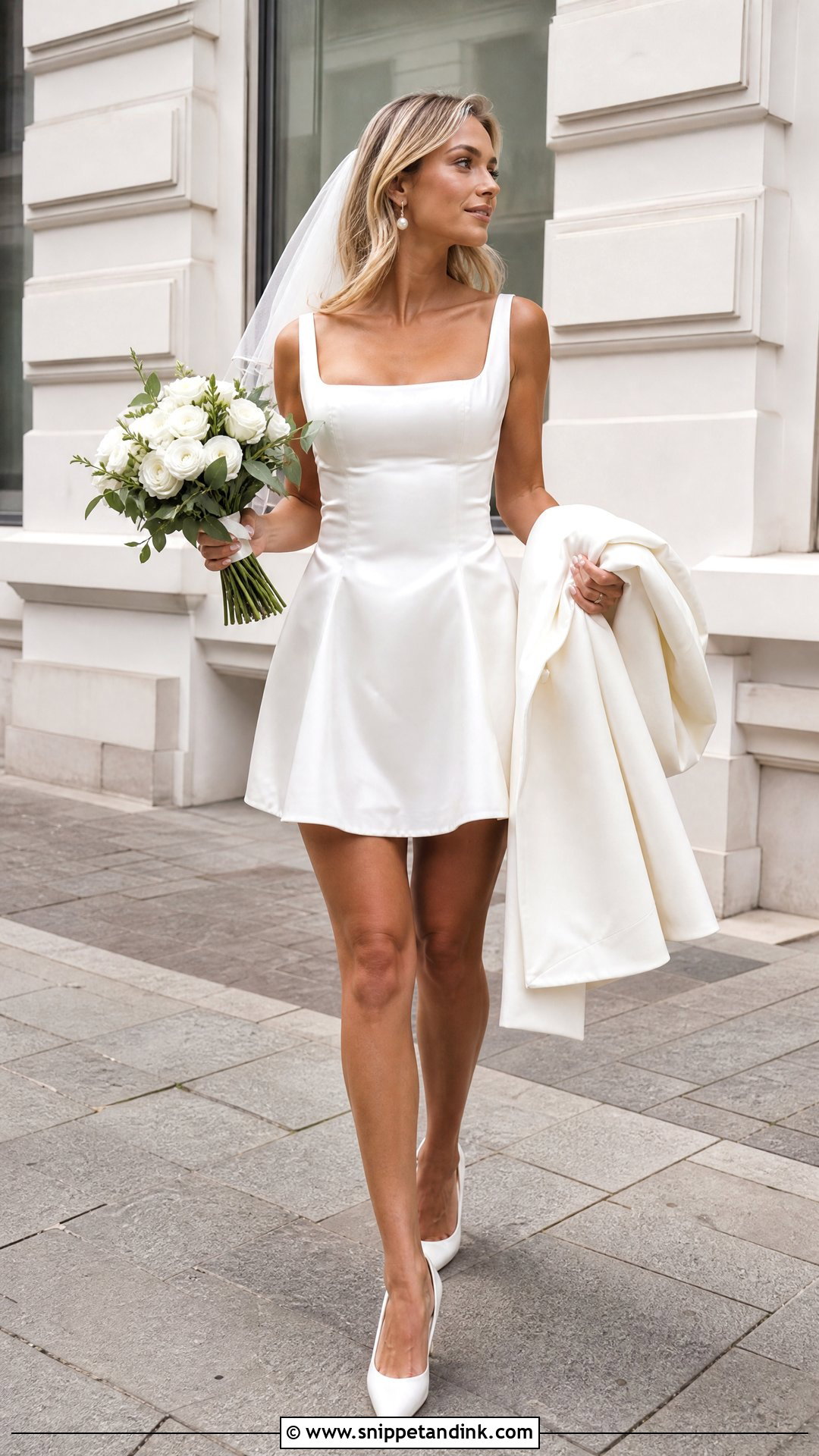
For a civil ceremony, a reception change or a small wedding, a slinky mini is a smart choice. Satin with a cowl, square or high neck works, at a hem you can actually sit in. A slight flare is easier to live with than a skin-tight skirt, and an open back adds drama. Pair it with a short veil, pearl earrings and pointed slingbacks, plus a tailored ivory coat or sheer detachable overskirt if you want coverage for the vows. Keep the bouquet compact. Straps, hem and lining are where the tailoring goes. The veil and accessories are what stop it looking like a party dress.
What Silk and Satin Do Over a Long Wedding Day
Fluid fabrics behave differently from structured ones once you are actually wearing them. Nothing here is a reason to avoid a slinky dress, but knowing it in advance saves a lot of panic in the getting-ready room.
Creasing where you sit
Satin and silk crease at the lap and the back of the skirt the first time you sit down. Plan to stand for the bulk of the portraits before the car ride, and keep sitting to a minimum until after the ceremony. A handheld steamer at the venue, used from the inside of the skirt and never pressed onto the face of the fabric, will lift most creases.
Water and perspiration
Silk can mark if water lands on it, and close-fitting satin shows damp patches under the arms and along the spine. Dress last, after hair and makeup are done, and keep drinks away until the dress is on and settled. On a hot day, ask your seamstress about sewn-in underarm shields, and keep a fan near you at the getting-ready location.
Static and cling
In dry air or over synthetic tights, a slip dress can grab at your legs. A silk or cotton slip underneath, or a quick anti-static spray on the slip rather than the gown, usually fixes it. Test any spray on an inside seam allowance first.
After the wedding
Take the gown to a specialist cleaner within a few weeks, before body oils and spilled drinks set and yellow. Point out any stains to them, especially clear ones like champagne or white wine that you can no longer see.
Fluid Satin Needs a Dress That Works Hard Underneath
A slinky gown should move with you, suit your venue and still look like your taste. Satin, silk and crepe make a lovely line, but construction and alterations are what keep that line in place. Think about neckline support, lining, straps, underwear, hem and bustle before you commit. A veil, scarf, gloves or detachable layer can give a minimal dress more ceremony. And judge every gown by how it behaves when you walk, sit and dance, not only by how it looks standing still in a mirror. Any of these twenty can be the starting point for a bridal look that is entirely yours.
You'll Like These Ideas:




Leave a Reply