
Braids are the most hard-working thing I can put in bridal hair. A curl drops in humidity and a loose wave flattens under a veil, but a braid locks the hair into a structure, so it survives hugs, wind, dancing and a long ceremony far better than most down styles. It also gives pins, combs, pearls and hair vines something solid to hold on to. Which braid suits you depends on your neckline, your venue, your hair’s texture and how much you’ll want to forget about your hair once the day starts. Below are twenty I do often, from classic updos and loose romantic braids to protective styles, with notes on lengths and textures each one needs.
Why Braids Grip Better on Day-Old Hair
Freshly washed, conditioned hair is slippery. Strands slide past each other, pins work loose and a braid that looks tight at nine in the morning has slackened by the speeches. For most braided styles I ask brides to wash the day before, skip heavy conditioner on the lengths and come in with clean but not silky hair. Very oily hair is the exception, and a morning wash with a dry texture spray afterward works better.
- Skip shine serums and oils the night before. They’re the main reason pins slide.
- Tell your stylist about any extensions you already wear, so the braid can hide the bonds or wefts.
- If your hair is fine, ask about a clip-in piece for fullness. It needs to be color-matched in daylight, not under salon lights.
- Bring a photo of the back of the style you want. Most inspiration photos only show the side.
Natural and coily hair works the other way: it should be freshly cleansed, moisturized and stretched so the braid lies smoothly, with the moisture applied the day before rather than on the morning itself.
1. Braided Crown Wedding Hairstyle
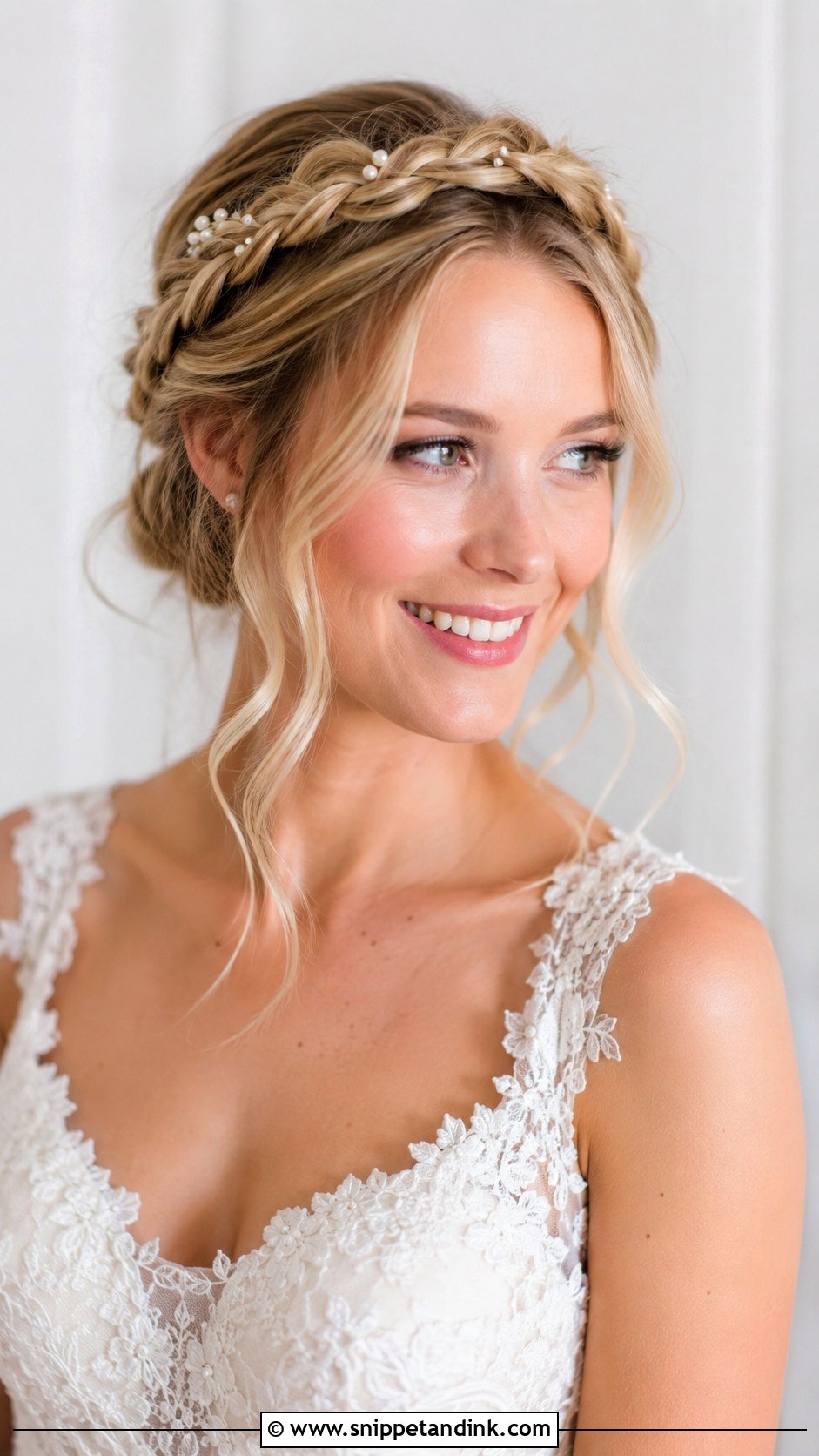
A crown braid wraps around the head like a soft halo, which keeps every strand off the face without looking scraped back. It needs length: hair should reach at least past the shoulders, or the braid won’t make it round, and I’ll add a clip-in piece if it falls short. Sleek suits a formal dress; loosened suits a garden or a vintage gown. I leave a few tendrils at the temples and pin the braid at intervals, crossing two pins at each point so it can’t slide. A veil comb tucks neatly underneath at the back.
2. Braided Low Bun Wedding Hairstyle
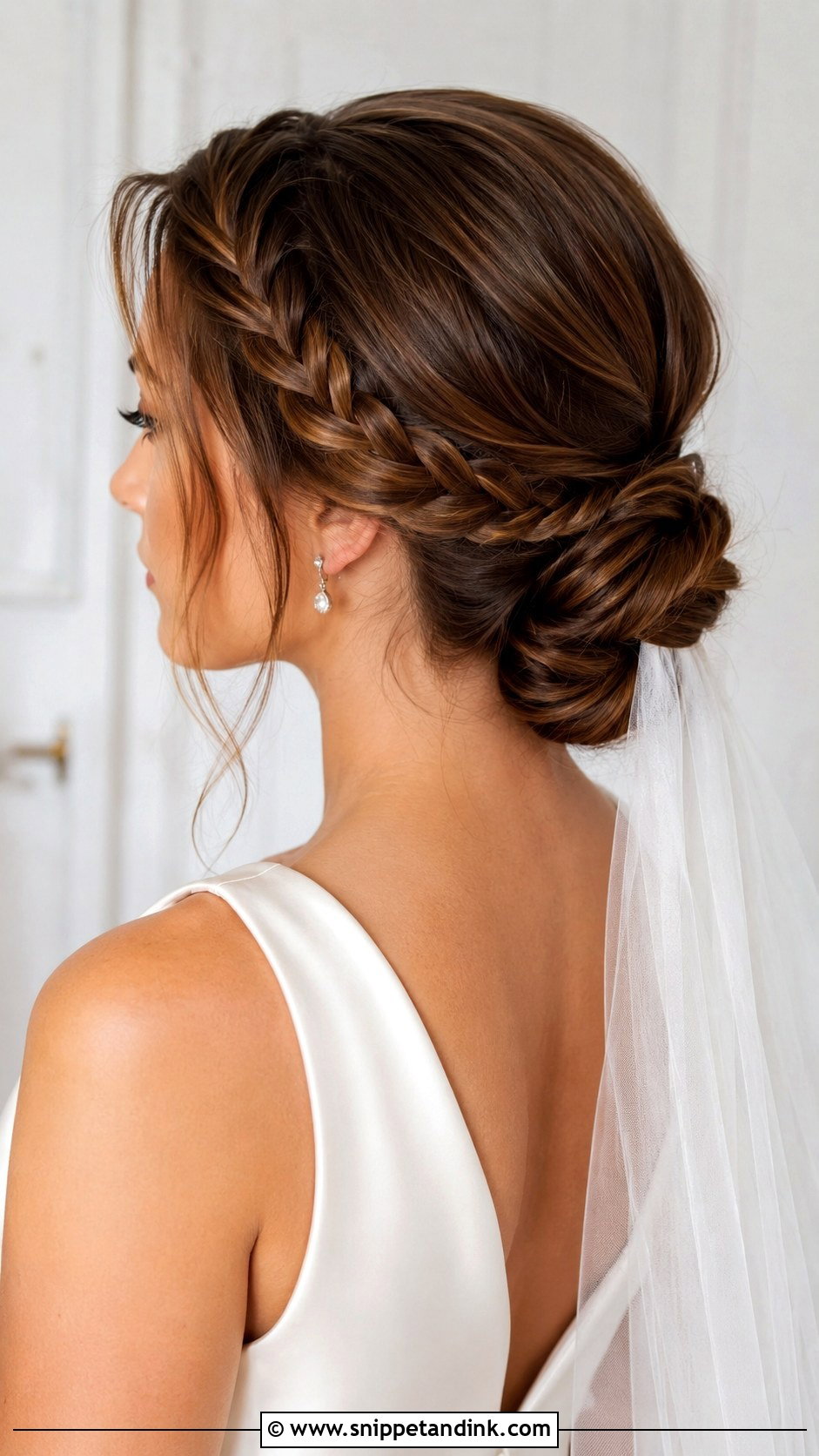
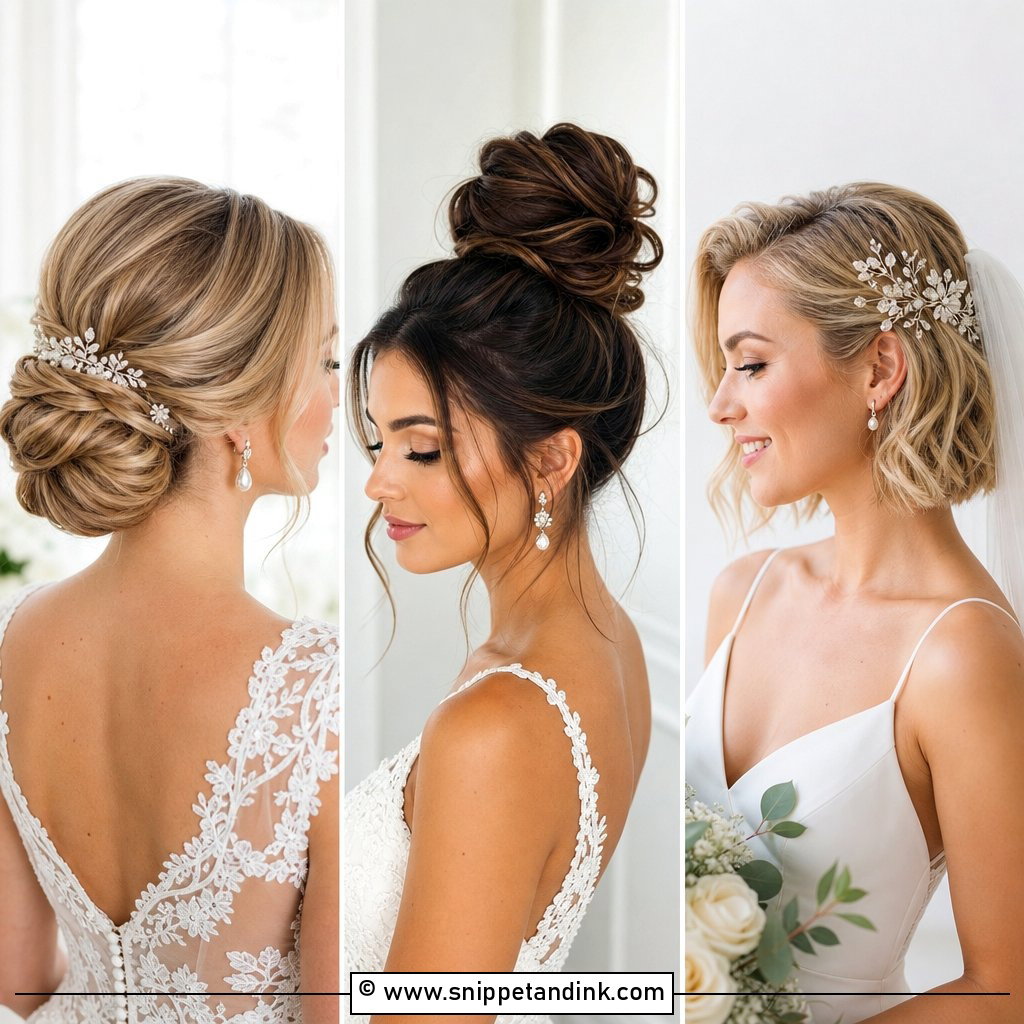
The low braided bun is the style I trust most under a heavy veil. All the weight sits at the nape, close to the neck, so the head doesn’t feel pulled backwards, and the woven sections add detail without bulk. Braids can wrap the bun, feed in from the side or run across the crown before being pinned low. Medium to long hair works, and a small padding piece inside the bun gives fullness to finer hair. It shows off a backless gown and statement earrings particularly well. Soft edges read romantic; a tight smooth bun reads formal.
3. Fishtail Braid Wedding Hairstyle
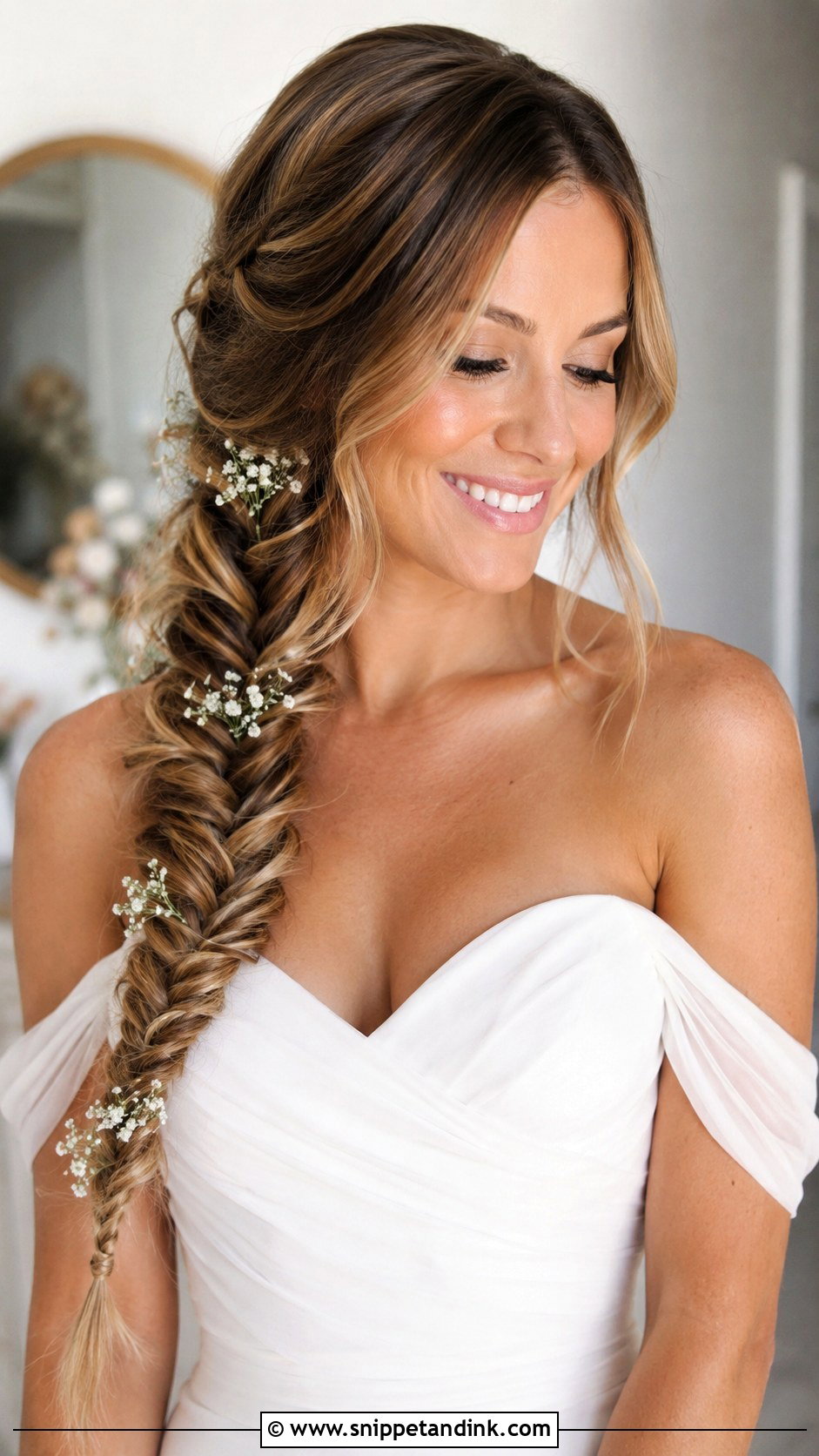
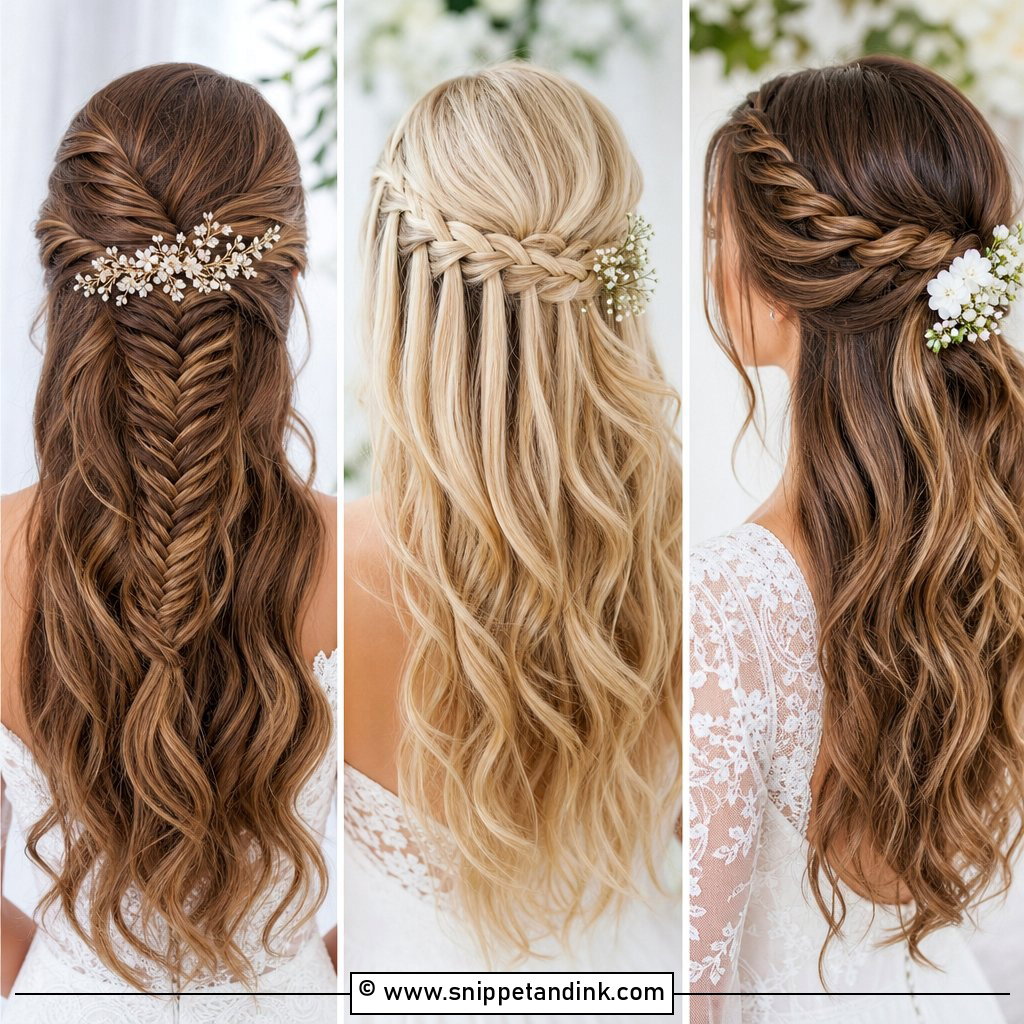
Fishtails show off dimensional color better than any other braid. With highlights or balayage, the tiny crossing sections let each shade appear in turn. I braid it fairly tight first, then pancake it, gently pulling the outer edges until it looks twice as wide. That order matters; pulling a loose fishtail just makes it fall apart. Heavily layered hair is the catch, as short layers poke out along the length, so I prep with a dry texture spray and sometimes add a clip-in. Wear it down the back, over a shoulder or worked into a half-up shape, finished with small pearl pins, a thin ribbon or baby’s breath for a beach or barn wedding.
4. Side Braid Wedding Hairstyle
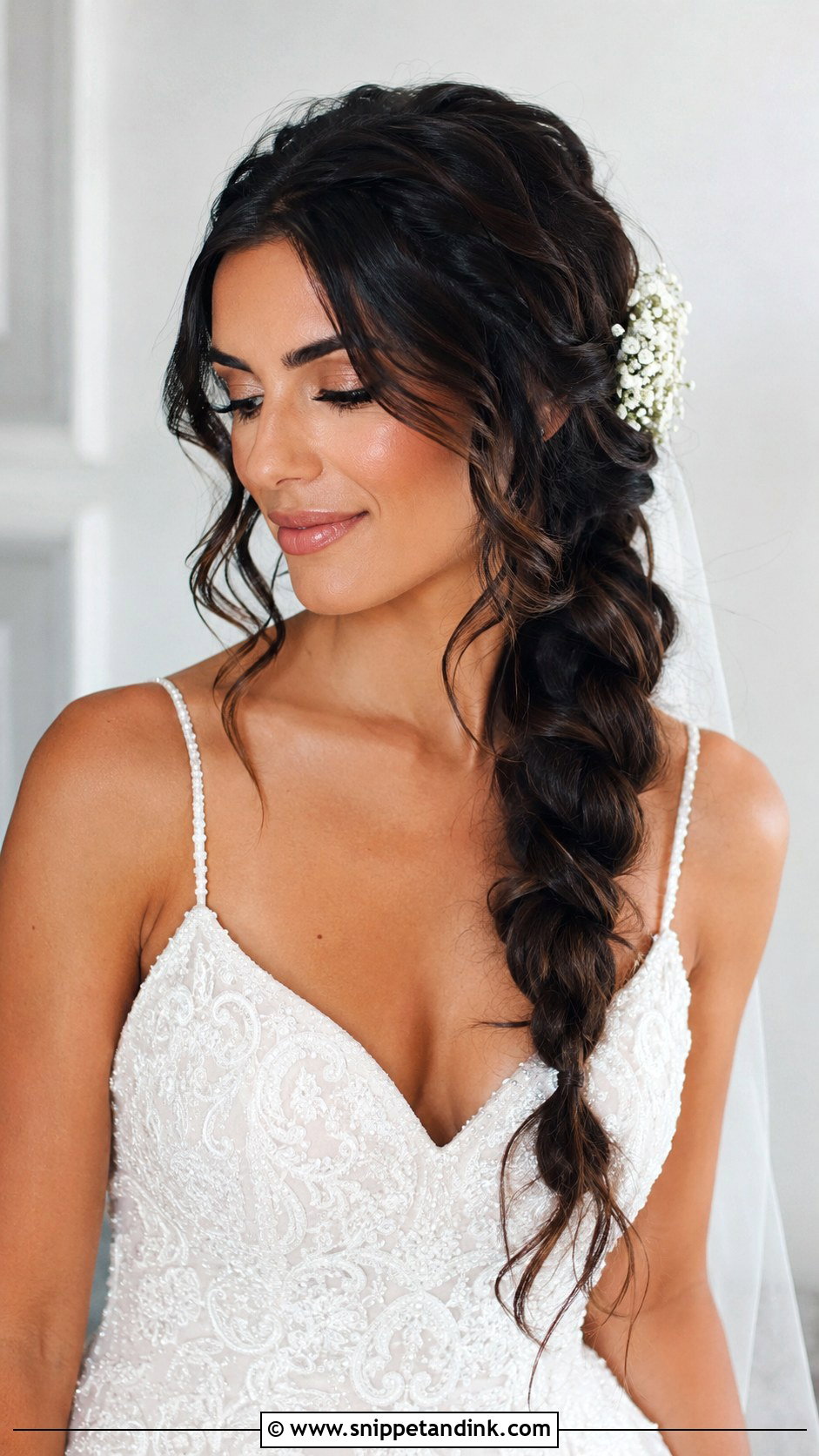
A side braid falls over one shoulder, which leaves an open back or delicate straps completely visible. Dutch, French, fishtail and soft three-strand all work. I add loose waves at the front so it looks bridal rather than weekend. On long hair it’s a smart way to keep the length under control while still showing it off. The detail that makes it look finished is the end: a hidden clear elastic with a small section of hair wrapped around it and pinned underneath. Expect it to slide toward your back as you move, so I anchor it behind the ear with a pin or two.
5. Half Up Braided Wedding Hairstyle
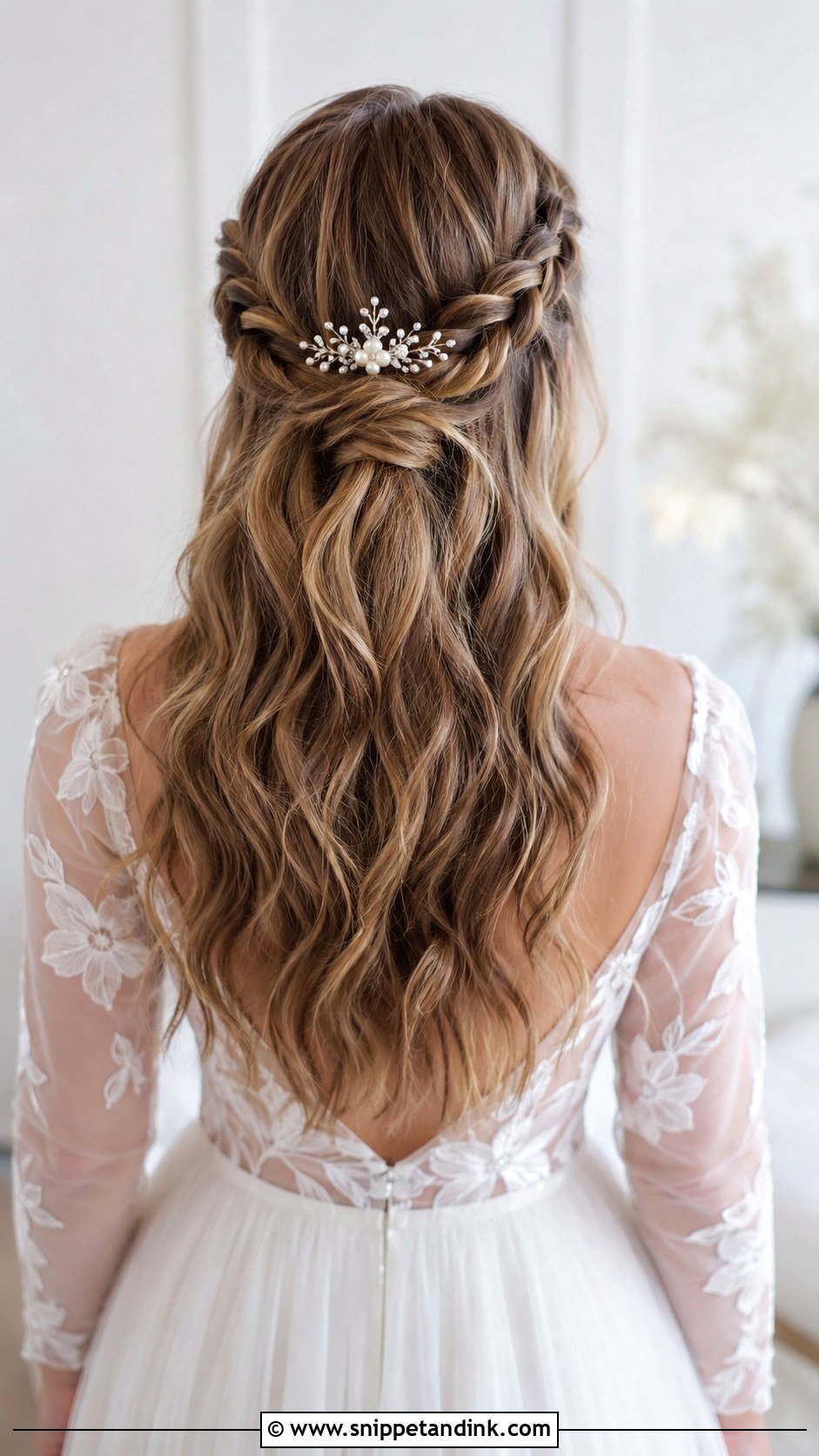
Half up gives you loose hair with a braid holding the top section back from the face, and the rest stays curled, waved or softly textured. The braided section is my favorite anchor for a veil, since a comb slides straight out of loose curls but grips a braid firmly. It suits bridesmaids, engagement shoots and outdoor weddings where hair needs gentle control. Braid both sides, one across the back or a single twist into the crown, and a pearl comb where the braids meet hides the pins. The down section is where things go wrong. If your hair drops curl quickly, I set it with a stronger hold and pin the curls up to cool before releasing them.
6. Waterfall Braid Wedding Hairstyle
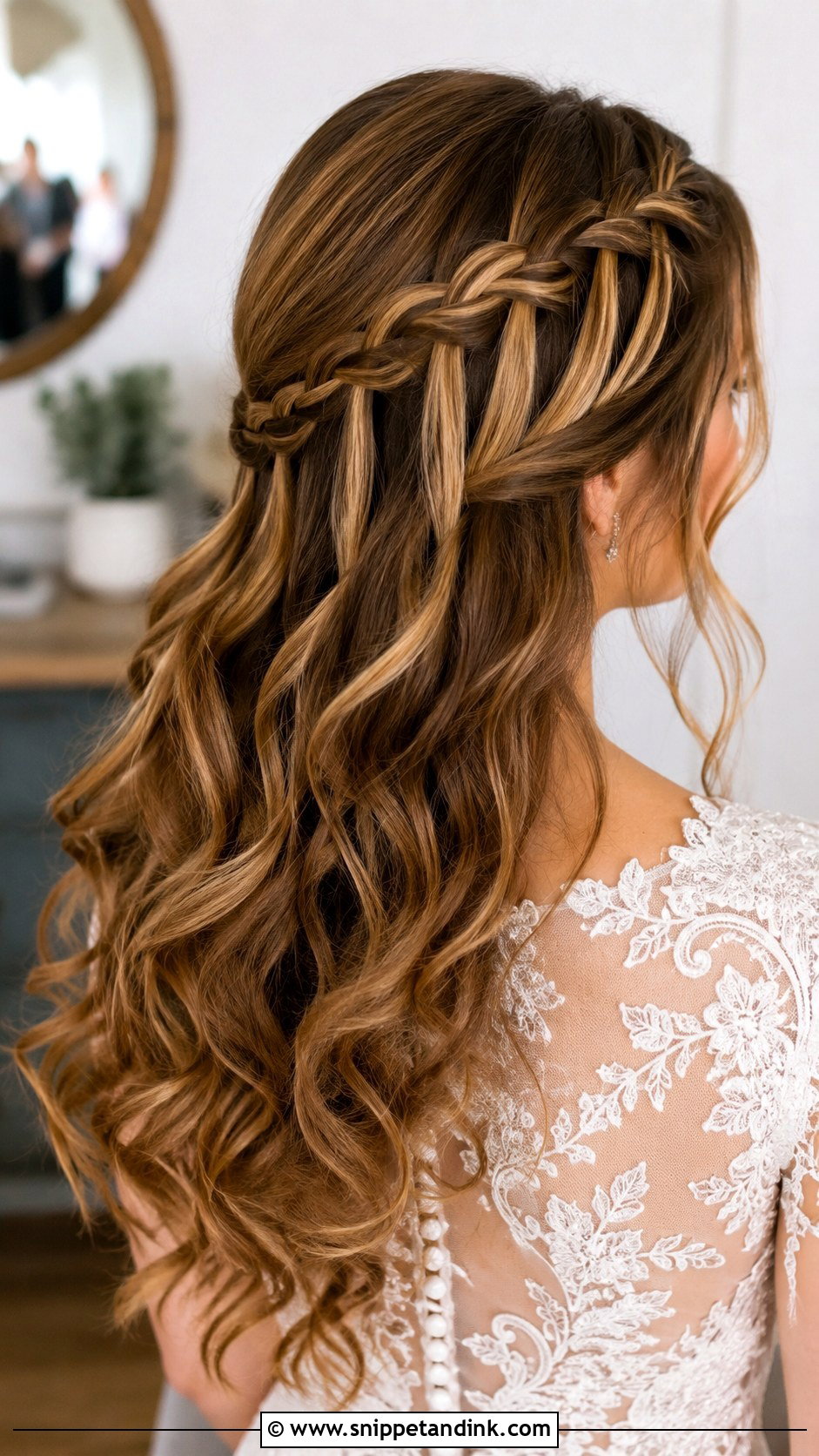
Hair falls through a waterfall braid like ribbons, and the dropped sections blend into the curls below. It needs long or medium hair that holds a curl, because on very straight, fine hair the dropped pieces flatten out and the pattern disappears. It’s the braid I suggest to brides who want their hair down but still want an obvious bridal detail near the crown. Run it on one side or across the back for balance. Subtle highlights catch in the braid pattern. I curl the falling pieces separately and keep them smooth and defined.
7. French Braid Wedding Updo
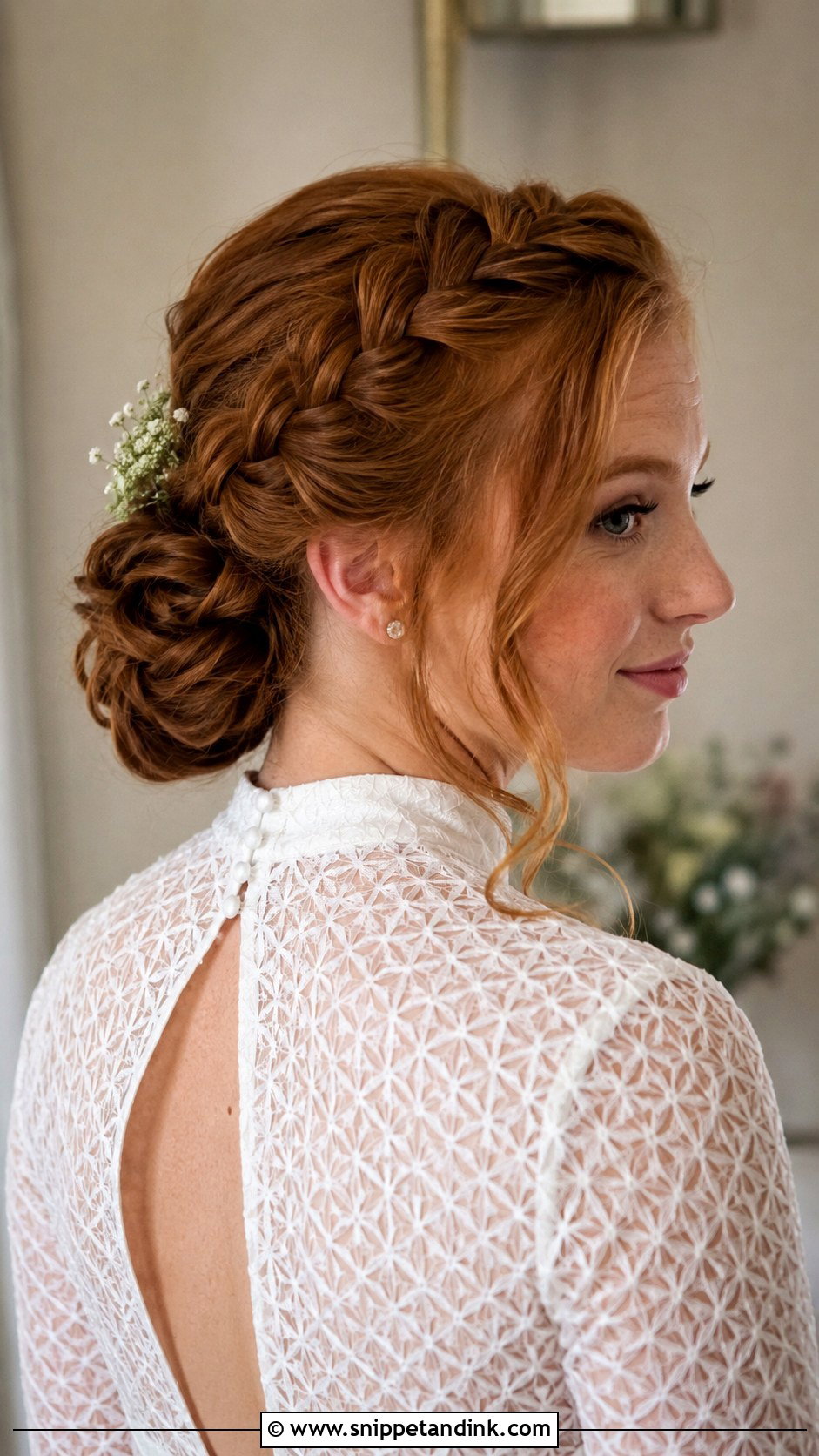
This updo starts at the hairline, travels back as a French braid and disappears into a bun or twist, so it looks structured from every side. In a French braid the strands cross over the middle, which makes it sit flatter and smoother than a Dutch braid. That flatness is why I choose it for formal venues, church ceremonies and classic gowns. Layered hair benefits most, because the braid traps the shorter pieces that would otherwise escape from a bun. I pull a few soft pieces around the face so it doesn’t look tight, then finish with shine spray and pins slid into the braid so nothing shows.
8. Dutch Braid Wedding Hairstyle
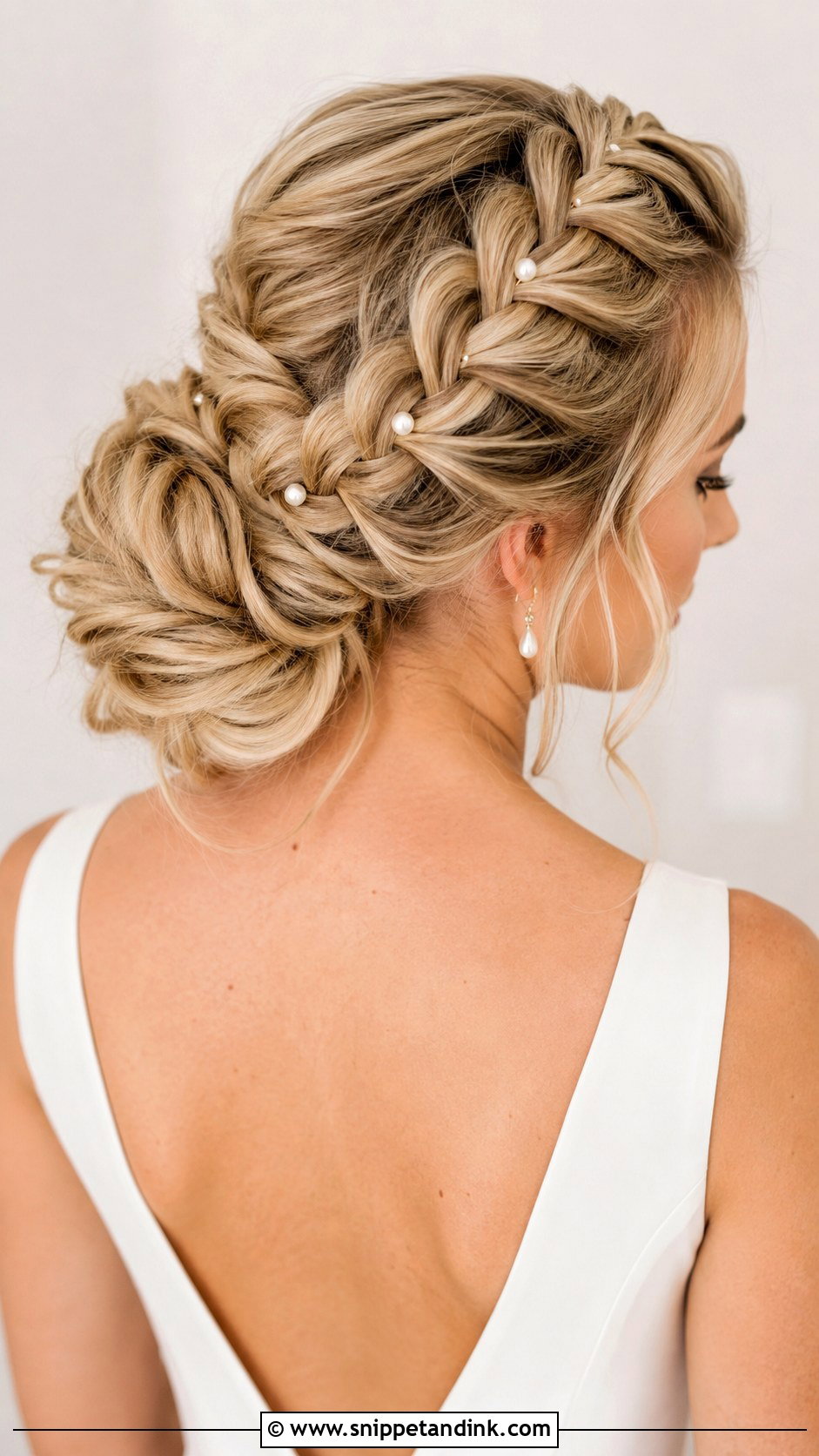
In a Dutch braid wedding hairstyle the strands cross under rather than over, so the braid stands up on top of the hair instead of melting into it. That raised pattern is why it shows clearly in photos. Wear it as a double braid, a side braid or leading into a bun. It’s also my go-to for fine hair, because once it’s gently loosened the braid looks noticeably thicker than the hair really is. I keep it neat and tight at the hairline and fuller through the length. Pearl pins, floral clips or a satin ribbon woven through all sit well in it.
9. Boho Braided Wedding Hairstyle
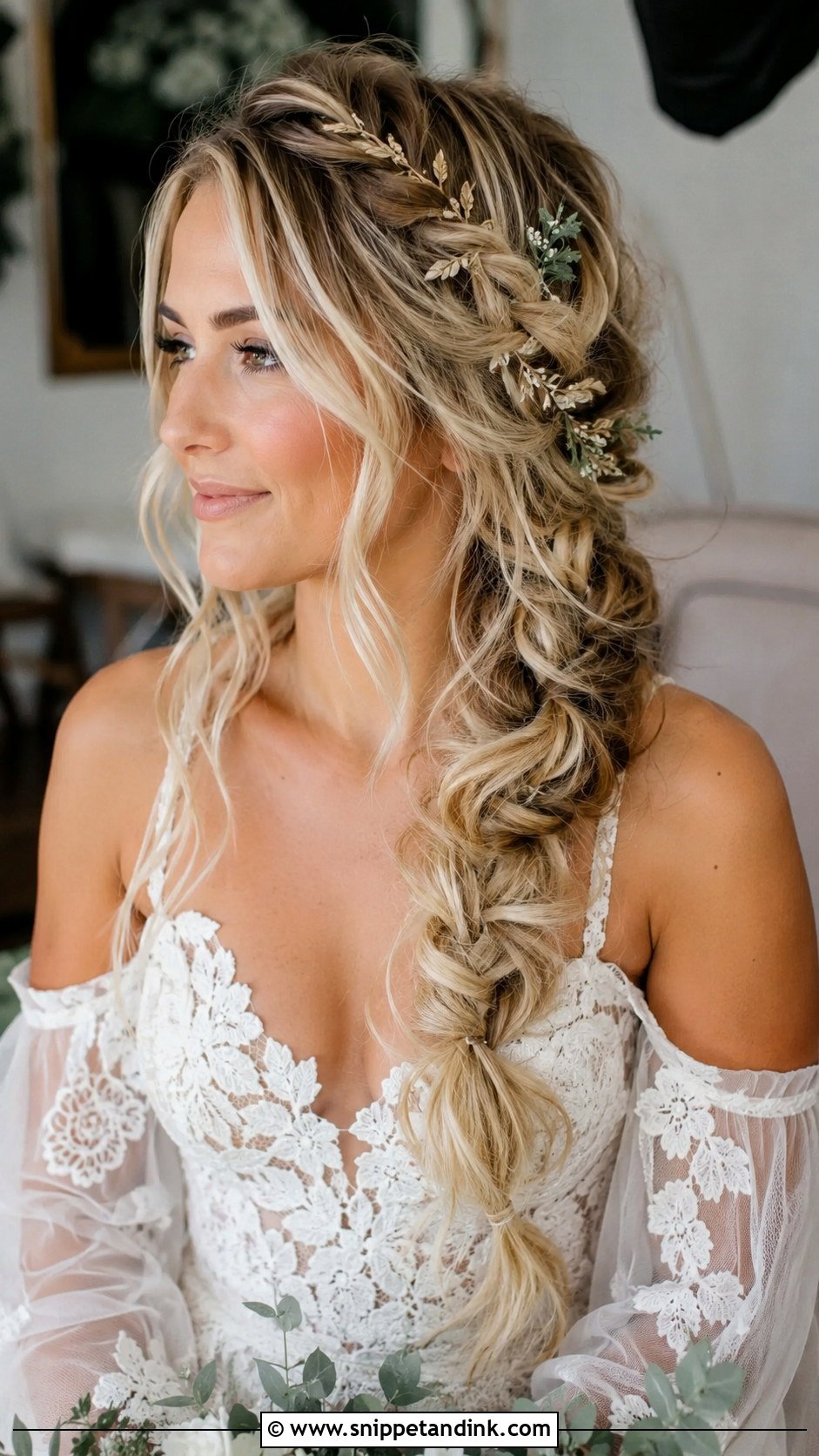
Boho braids combine loose waves, soft braids and a slightly undone finish. They suit outdoor weddings, beaches and rustic venues. The braid shouldn’t look perfect, but undone is harder than it sounds: I still build it on a solid base with hidden pins, then loosen the surface by hand, because hair that is simply loosely braided collapses within an hour. Small flowers, leafy pins or a dainty vine make it bridal. Keep some lift at the crown and the curls shaped, or it will look tired in close-up photos by the evening.
10. Braided Ponytail Wedding Hairstyle
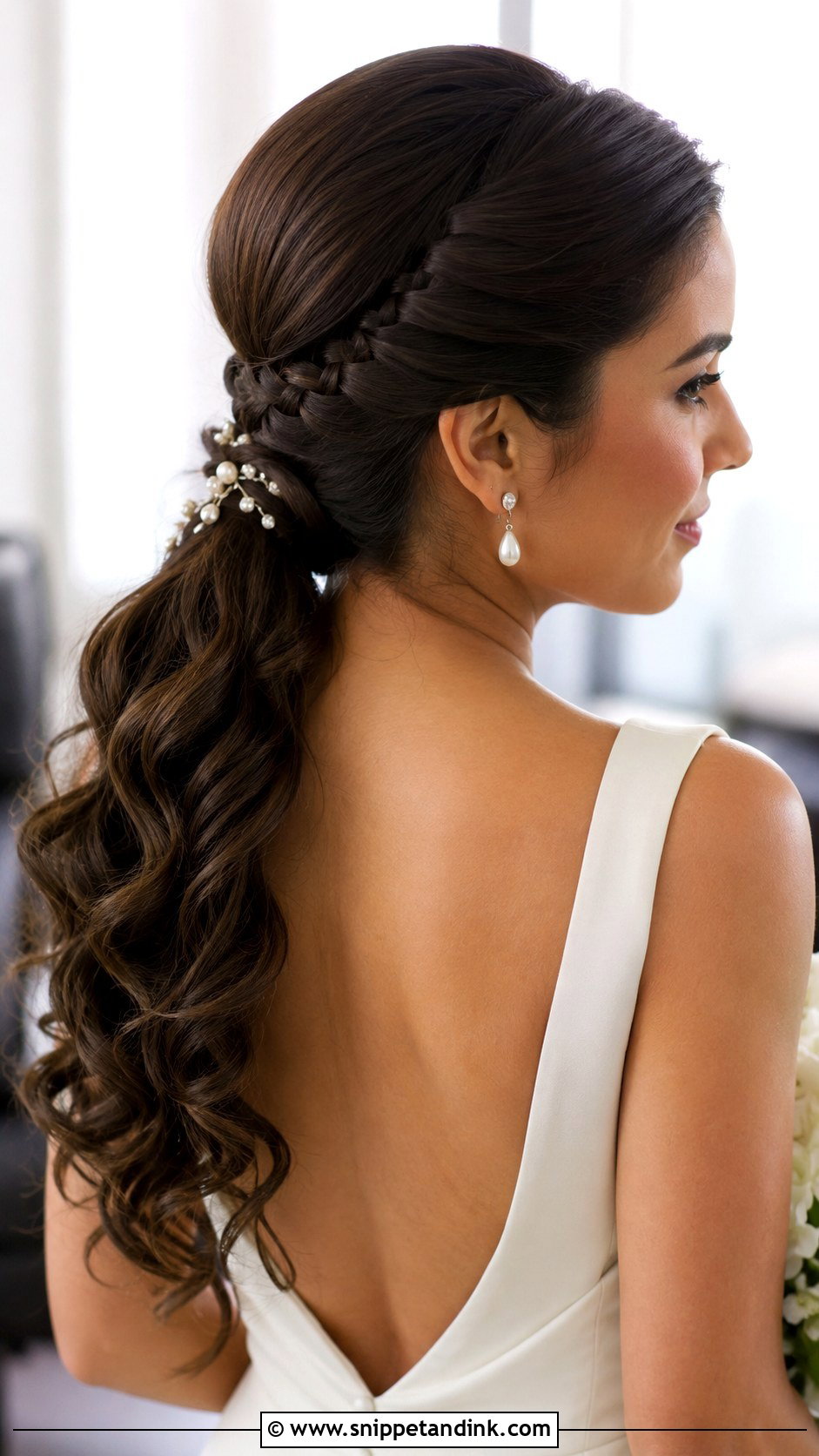
A braided ponytail suits a bride who wants her hair back without a bun. The braid can wrap the base, run down the length or sit along the crown before joining the tail. It looks sharp with a fitted gown, a minimalist dress or a reception outfit change. Two things decide how it lasts: I secure the base with a hidden elastic plus a pair of crossed pins, since a pony sags during a long day, and I set waves in the length before tying it so it keeps some volume. A smooth crown, a few pearl pins along the braid and a strand of hair wrapped over the elastic finish it.
11. Milkmaid Braid Wedding Hairstyle
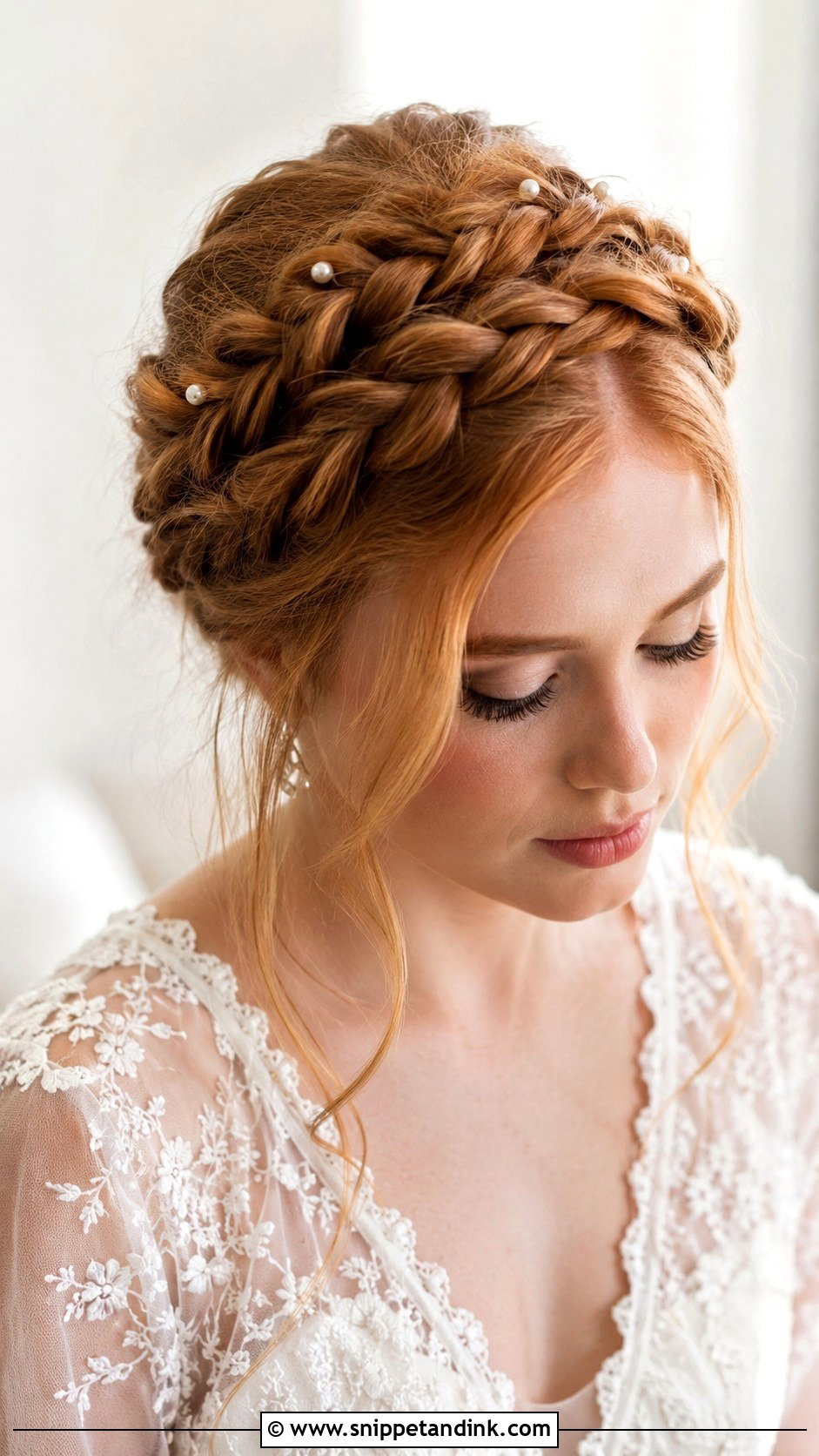
Milkmaid braids cross over the top of the head, so the neck stays completely clear, which is a relief at a summer wedding. The style feels vintage and very secure. It needs medium to long hair; if the braids won’t meet, I add clip-in extensions matched to your color to make them fuller and longer. Tug the edges of each braid slightly after pinning, or it can look a little schoolgirl. Tiny pearl pins or delicate flowers make it wedding-ready. Lace gowns, puff sleeves and soft veils suit it particularly well.
12. Braided Chignon Wedding Hairstyle
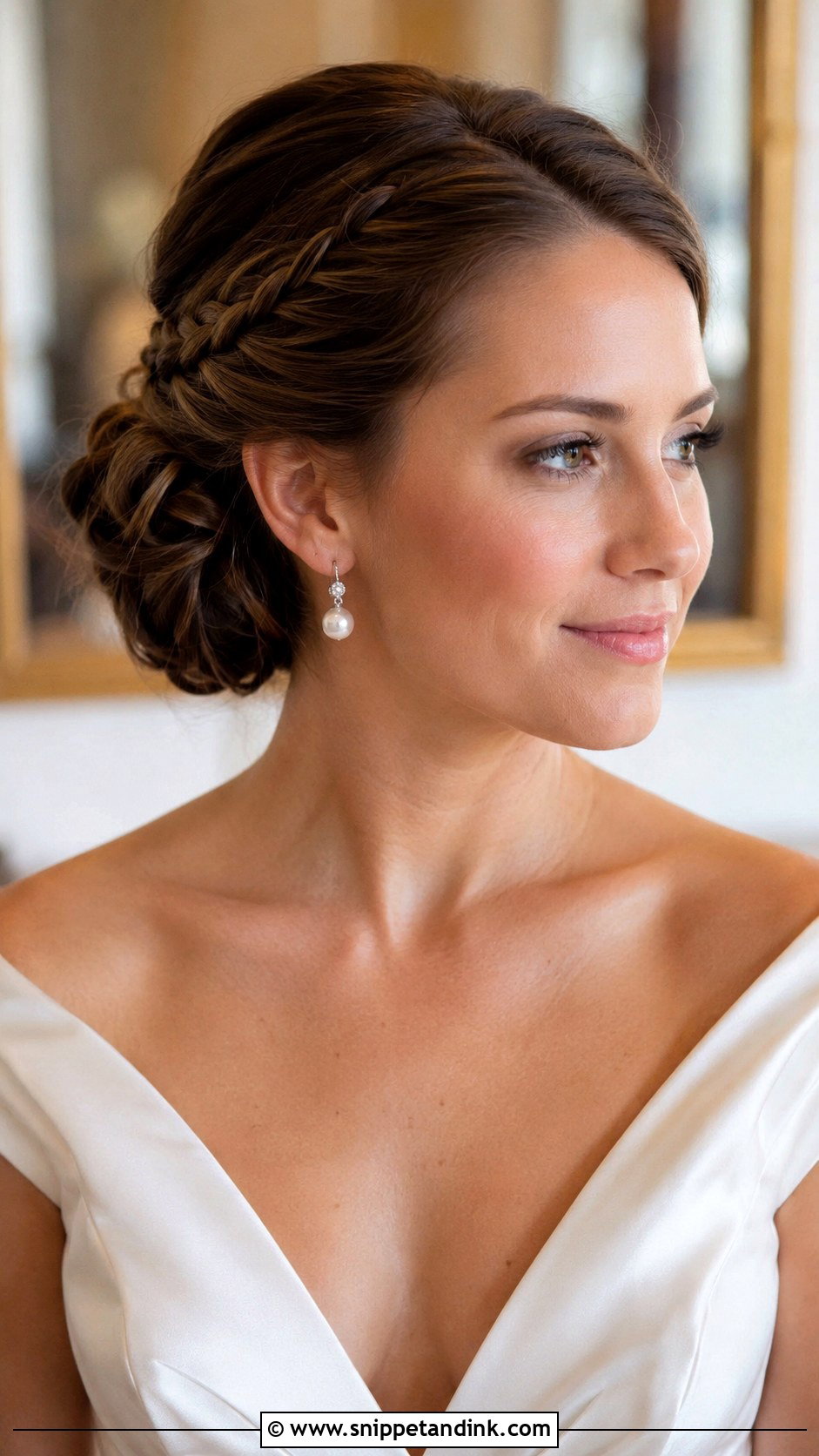
A braided chignon sits low at the nape, with braided sections giving it shape and interest. It’s the style I’d pick for a formal wedding with an off-the-shoulder dress, a satin gown or pearl earrings, since the neck and shoulders stay clear. Braids can be woven into the chignon or wrapped around it like a frame. Because the shape is visible from front, side and back, I check it in a hand mirror from all three angles at the trial. Ask your stylist for a smooth crown, balanced volume and firm hidden pinning; chignons fail when they’re pinned only to themselves rather than to a secure base underneath.
13. Box Braids Wedding Updo
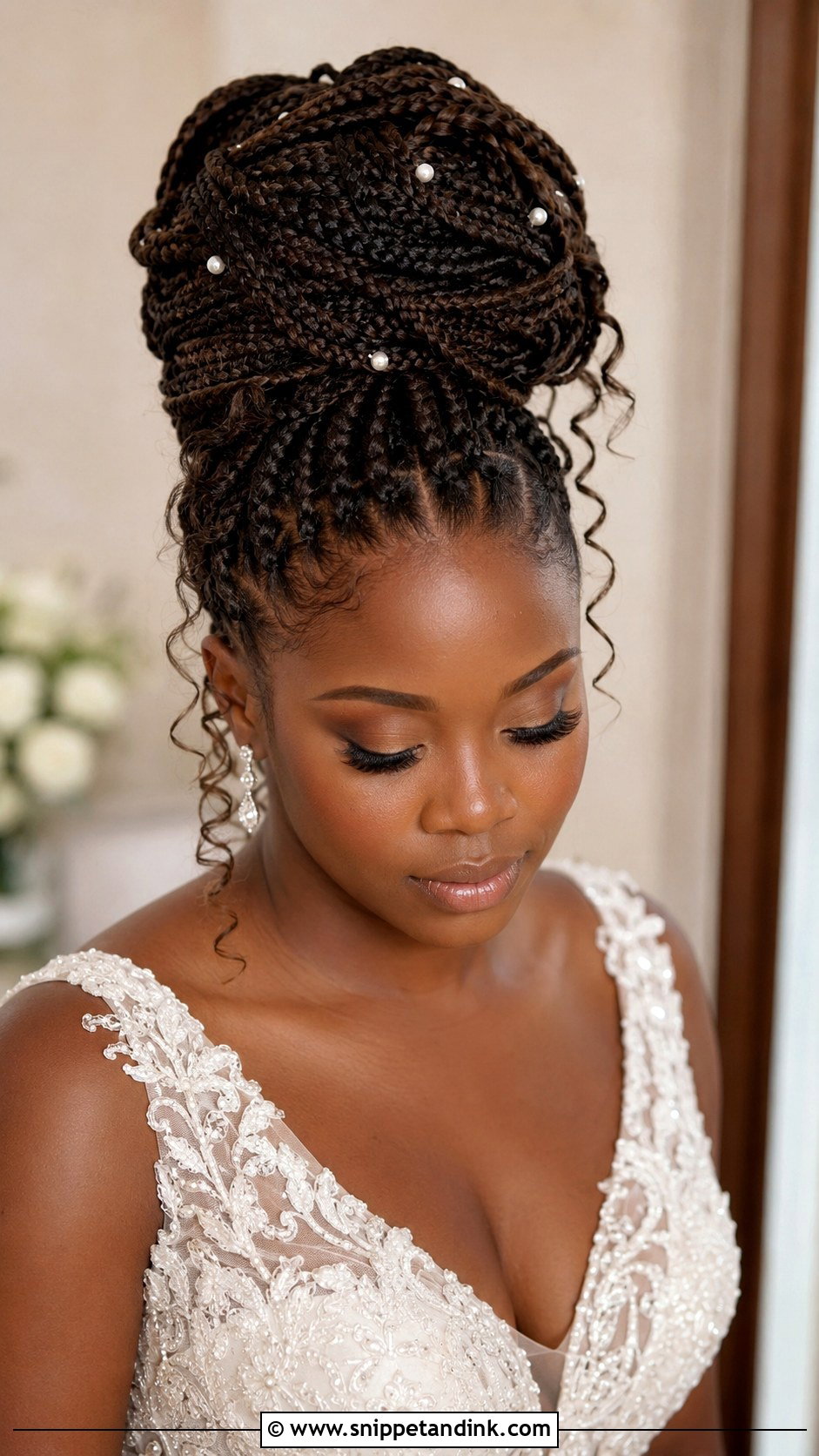
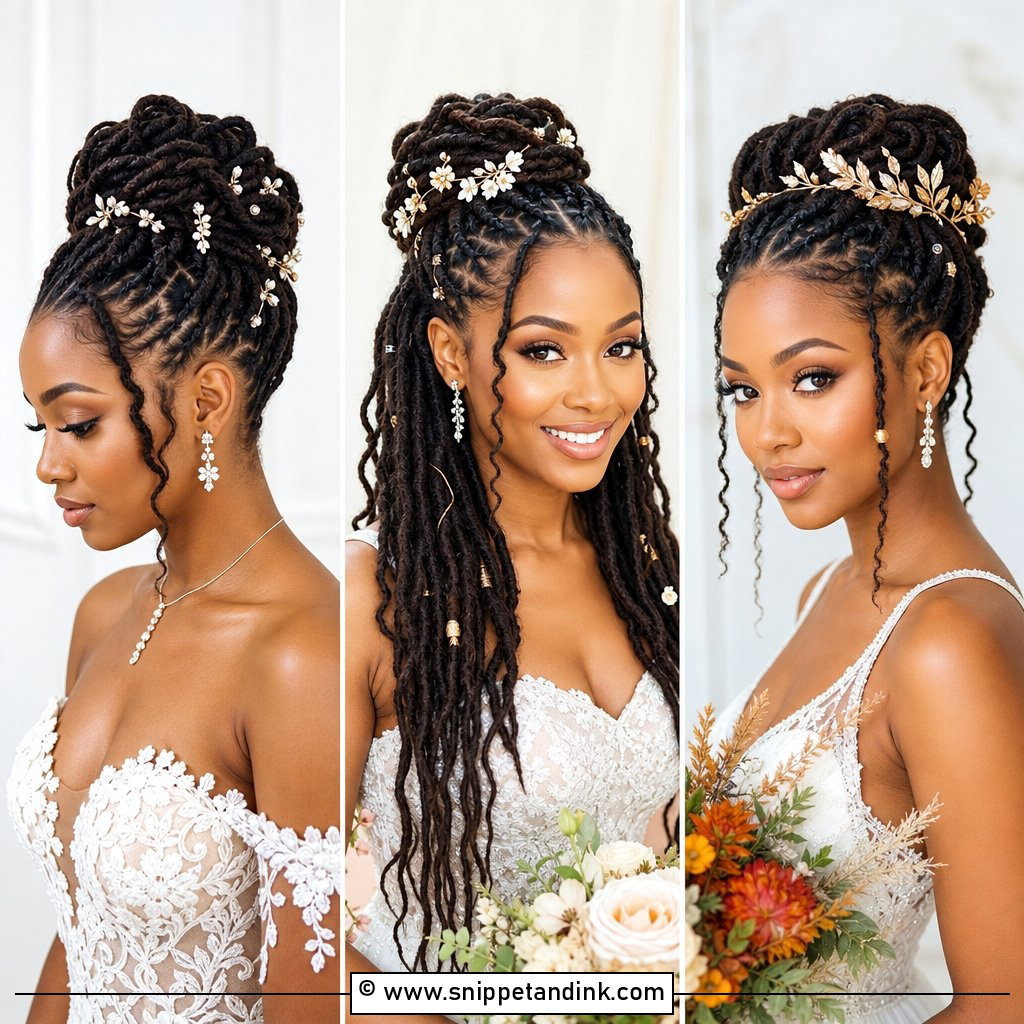
A box braids wedding updo is protective, structured and needs almost no heat on the day. The braids can be gathered into a high bun, a low bun, a twisted crown or a sculpted shape. The thing I watch most is weight. Long, thick braids pinned high can give a headache by the reception, so for a long day I’ll often suggest a lower shape that spreads the load. Gold cuffs, pearl pins, crystal accents or a clean veil all work with them. A few curled braid ends or face-framing pieces left loose soften the finish.
14. Goddess Braids Wedding Hairstyle
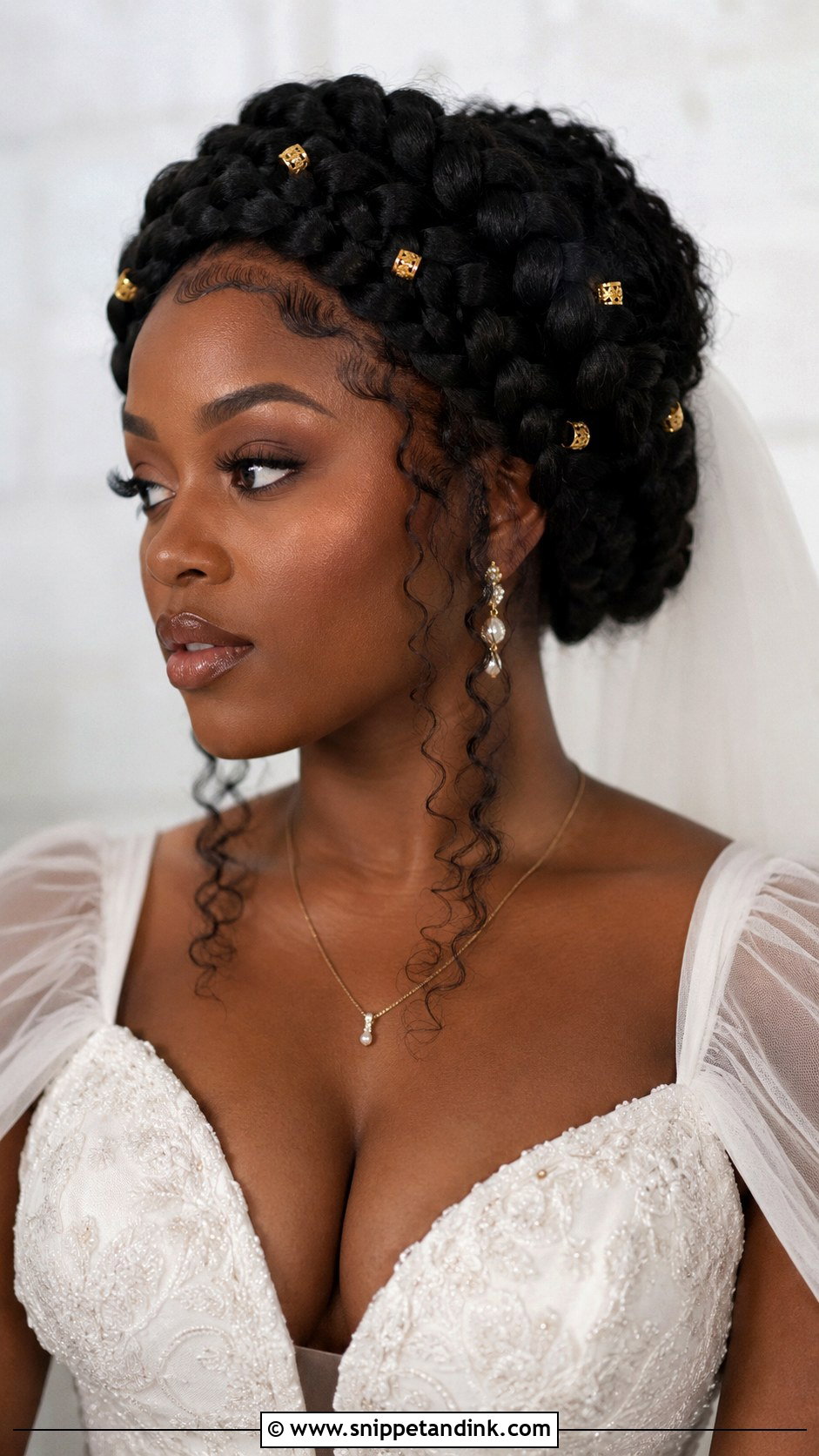
Goddess braids are larger braids with curly pieces left out or added for movement, and they can be styled into a crown, a bun, a side braid or a half-up shape. As a protective style, they look special enough for both the ceremony and the reception. Curly ends, laid edges and carefully placed accessories lift the whole look. Pearl pins, gold cuffs or a sparkling comb work well. The curly pieces will frizz and loosen in humidity, so I’d keep a light curl cream or mousse in the touch-up bag. And please don’t let anyone braid them tight at the hairline. The edges are the most fragile part of the hair.
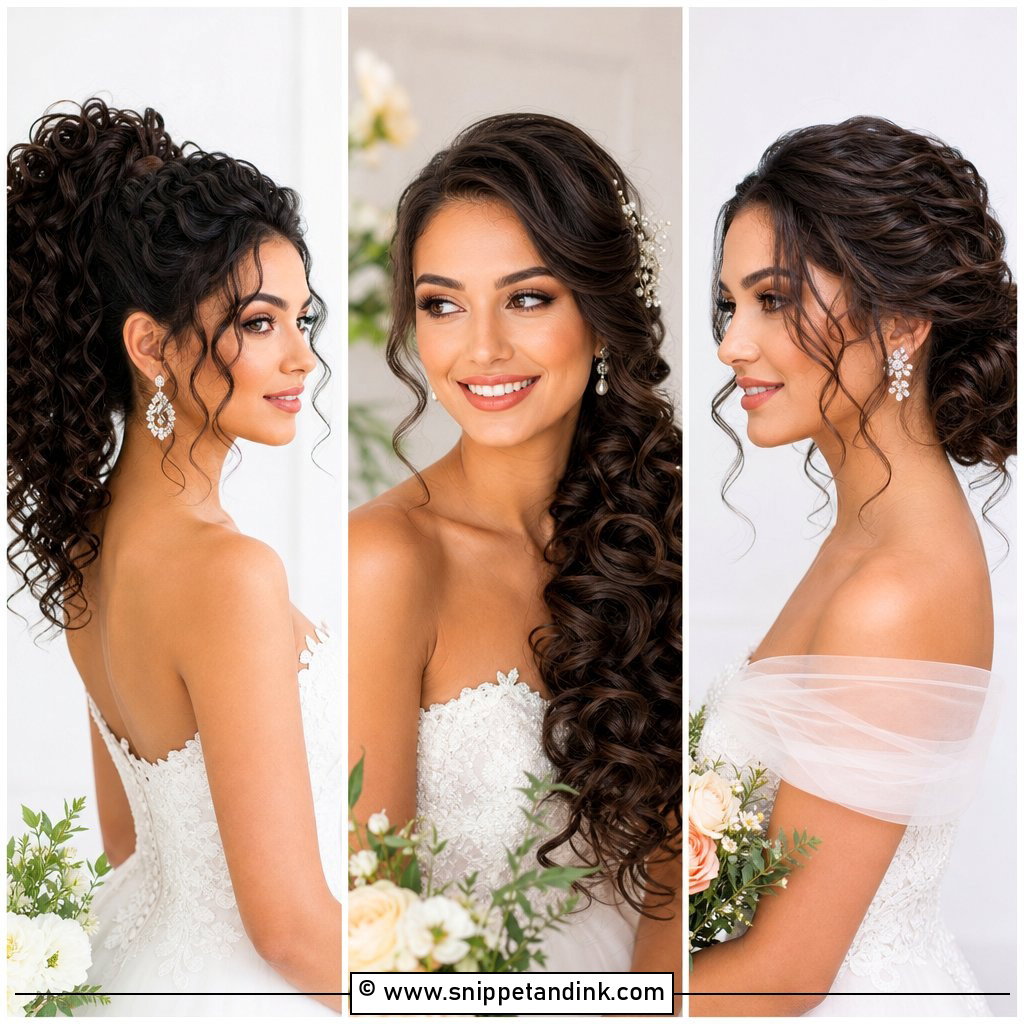

15. Cornrow Bun Wedding Hairstyle
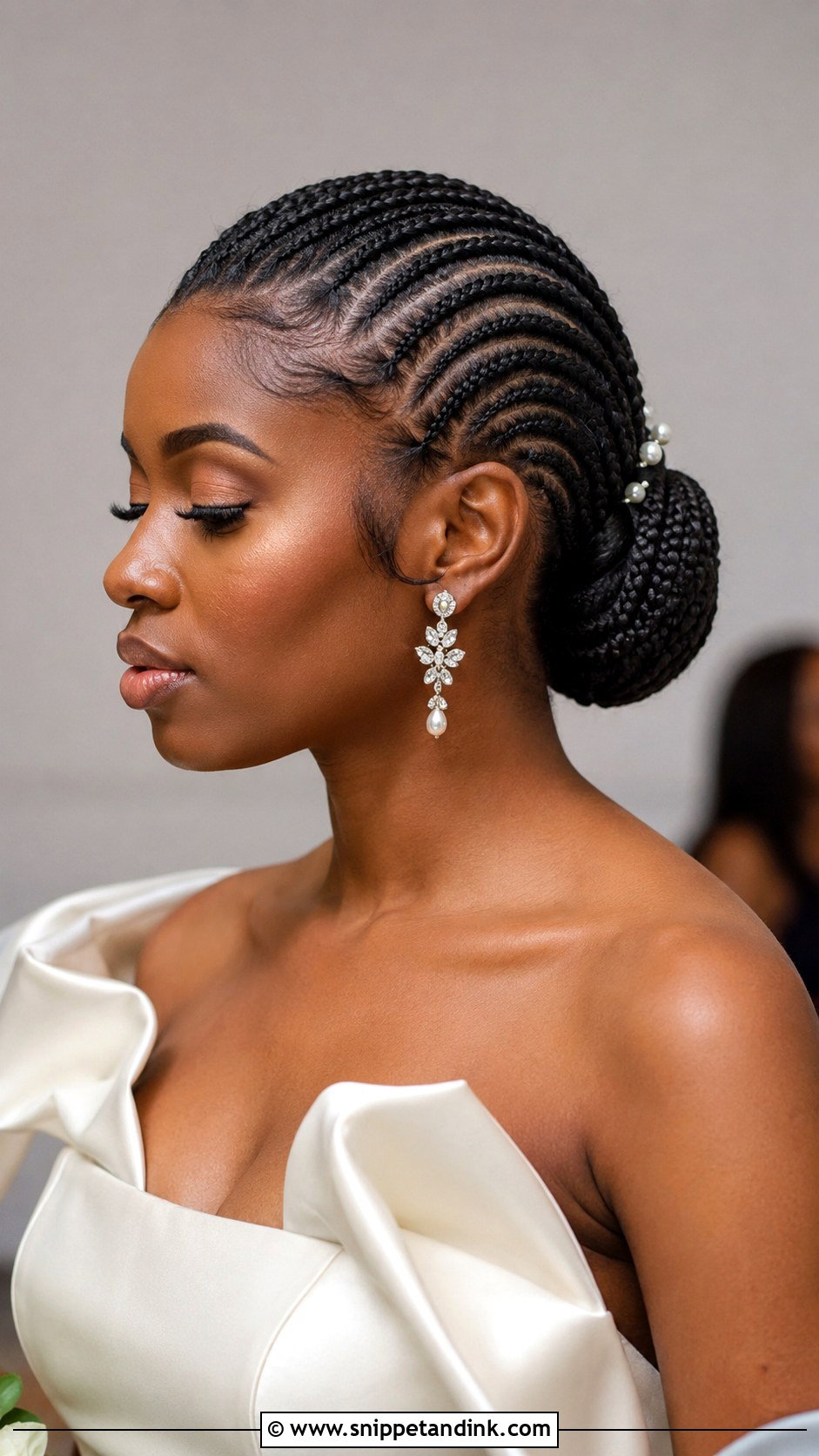
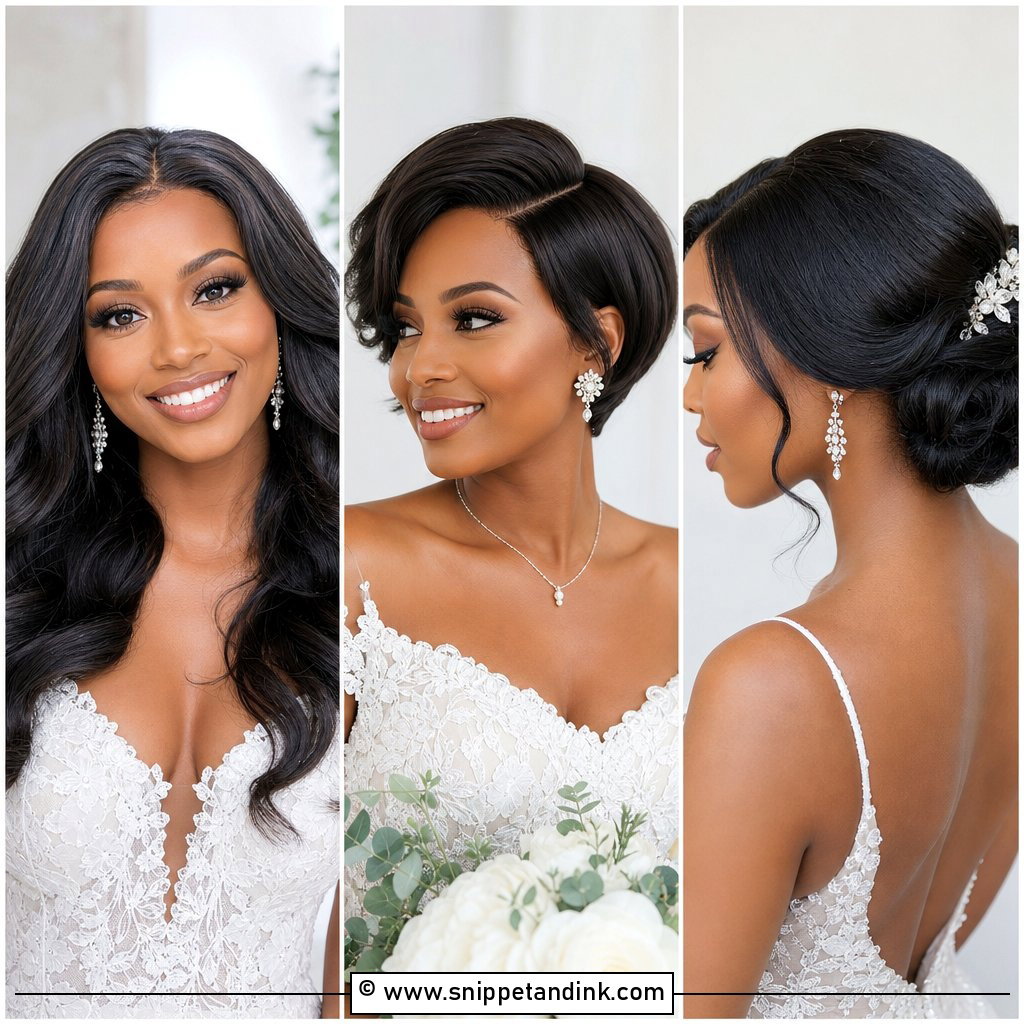
A cornrow bun wedding hairstyle keeps every section controlled, which makes it a strong choice for a formal wedding. The cornrows can run straight back, curve into a pattern or lead into a low or high bun. It sits comfortably under a veil and shows off statement earrings or a high neckline. The bun can be smooth, braided, twisted or curled. Clean parts and a healthy shine matter more here than anything else, since every line is on show. Comfortable tension is non-negotiable. If the scalp feels sore the day after install, the braids are too tight. Pearl pins or gold cuffs add a refined accent.
16. Twist Braid Wedding Hairstyle
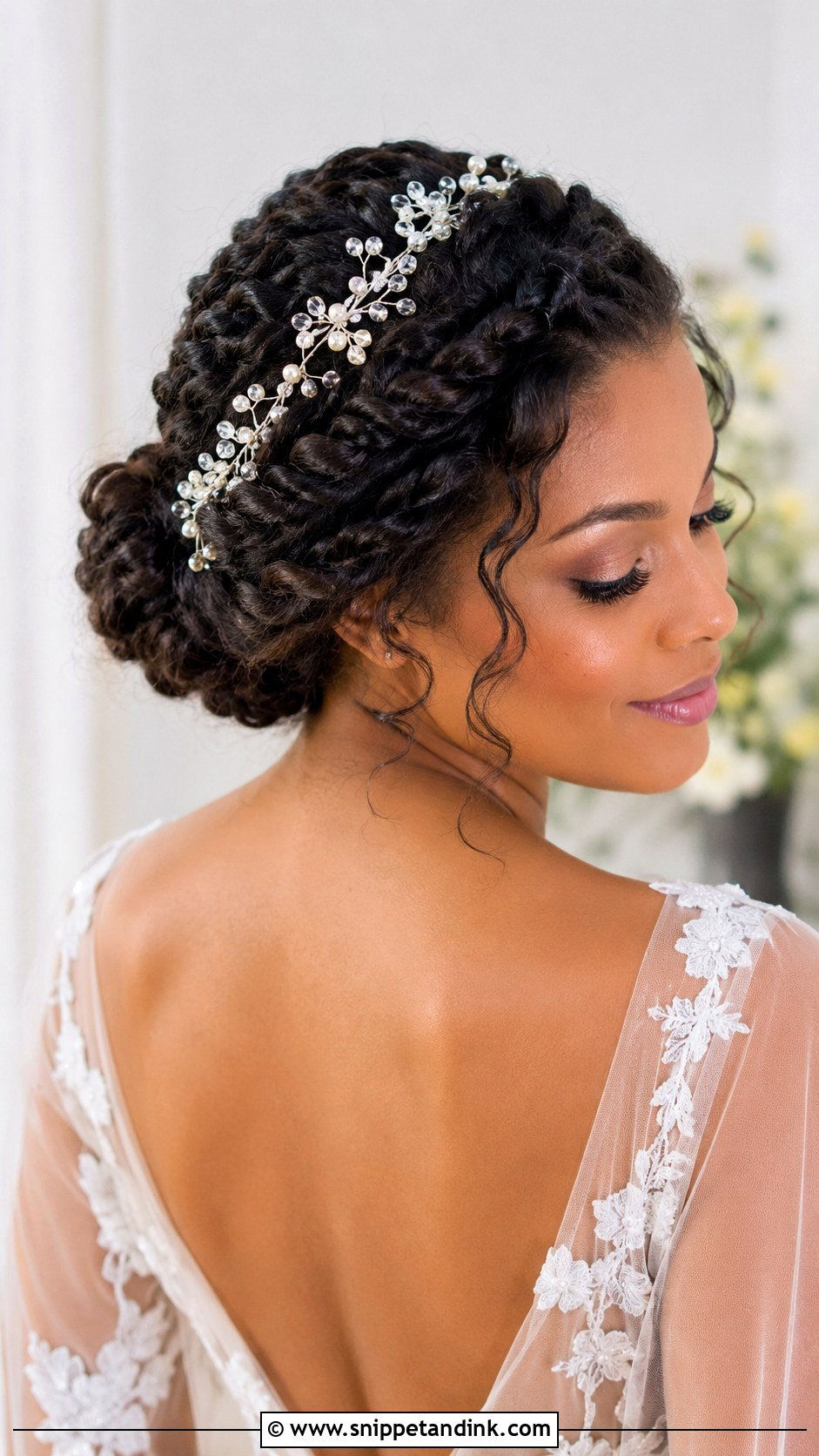
Twisted rope braids have a softer pattern than woven ones. The hair is twisted into sections that can be pinned into an updo, shaped over one shoulder or worn half up. On wavy, curly and coily hair they hold particularly well, because the natural texture grips the twist and stops it unwinding. I twist each section in the same direction, then twist the two together the opposite way, which is what locks a rope in place. Gentle pulling makes them fuller. Pearl pins, floral clips or a fine crystal vine sit neatly along the twist.
17. Loose Braid Wedding Hairstyle
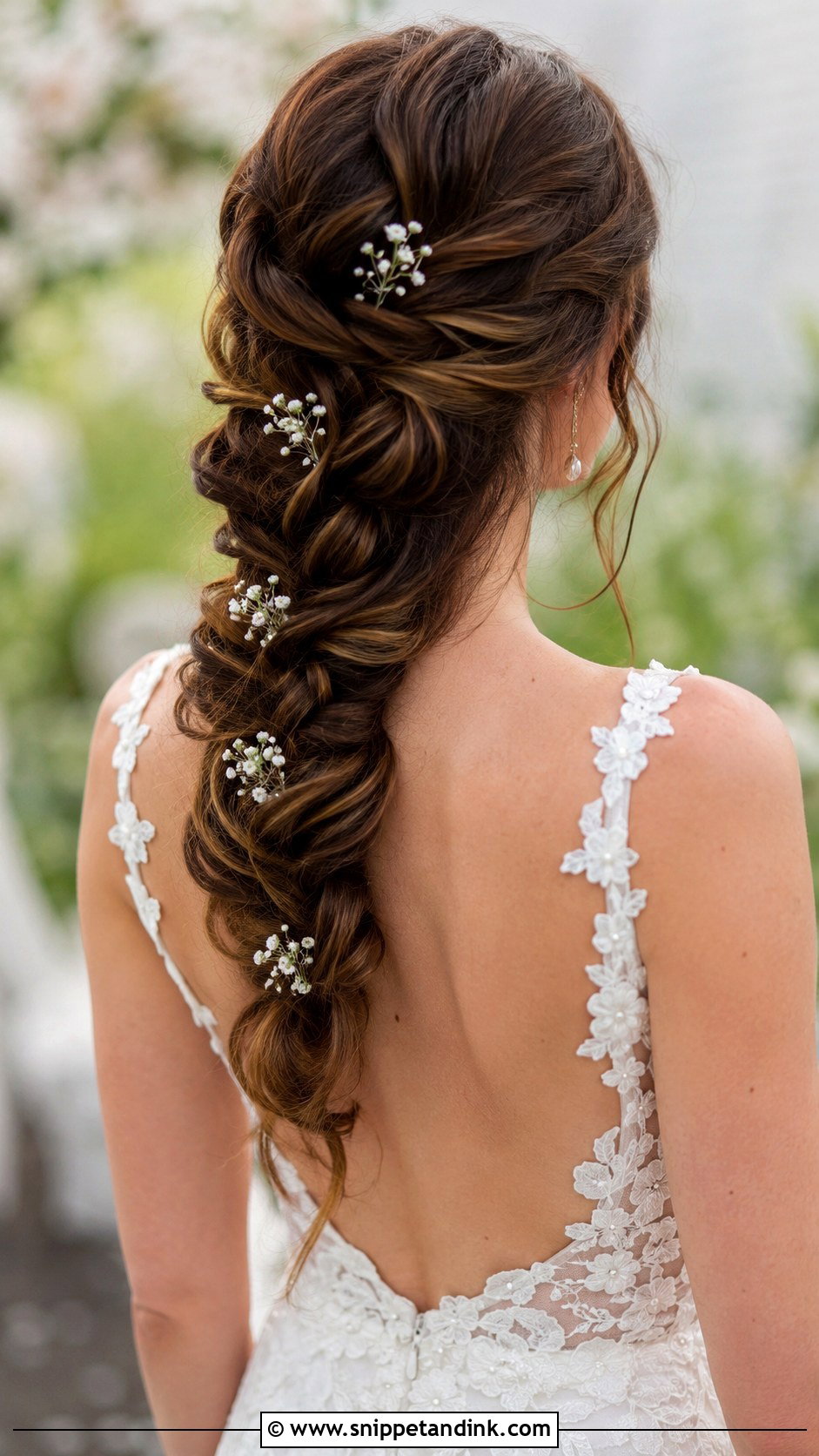
A loose braid is wide, airy and gently pulled apart so it looks fuller and more relaxed. It suits long and layered hair, since stray pieces blend into the look instead of fighting it. Wear it down the back or over one shoulder. The risk with a loose braid is that it keeps loosening all day, so I braid it firmly first, spray it, and only then open it up. Keep shape at the crown and polish in the curls so it still reads as bridal. Tiny flowers, pearls or a thin ribbon add detail without clutter.
18. Braided Bun With Pearls Wedding Hairstyle
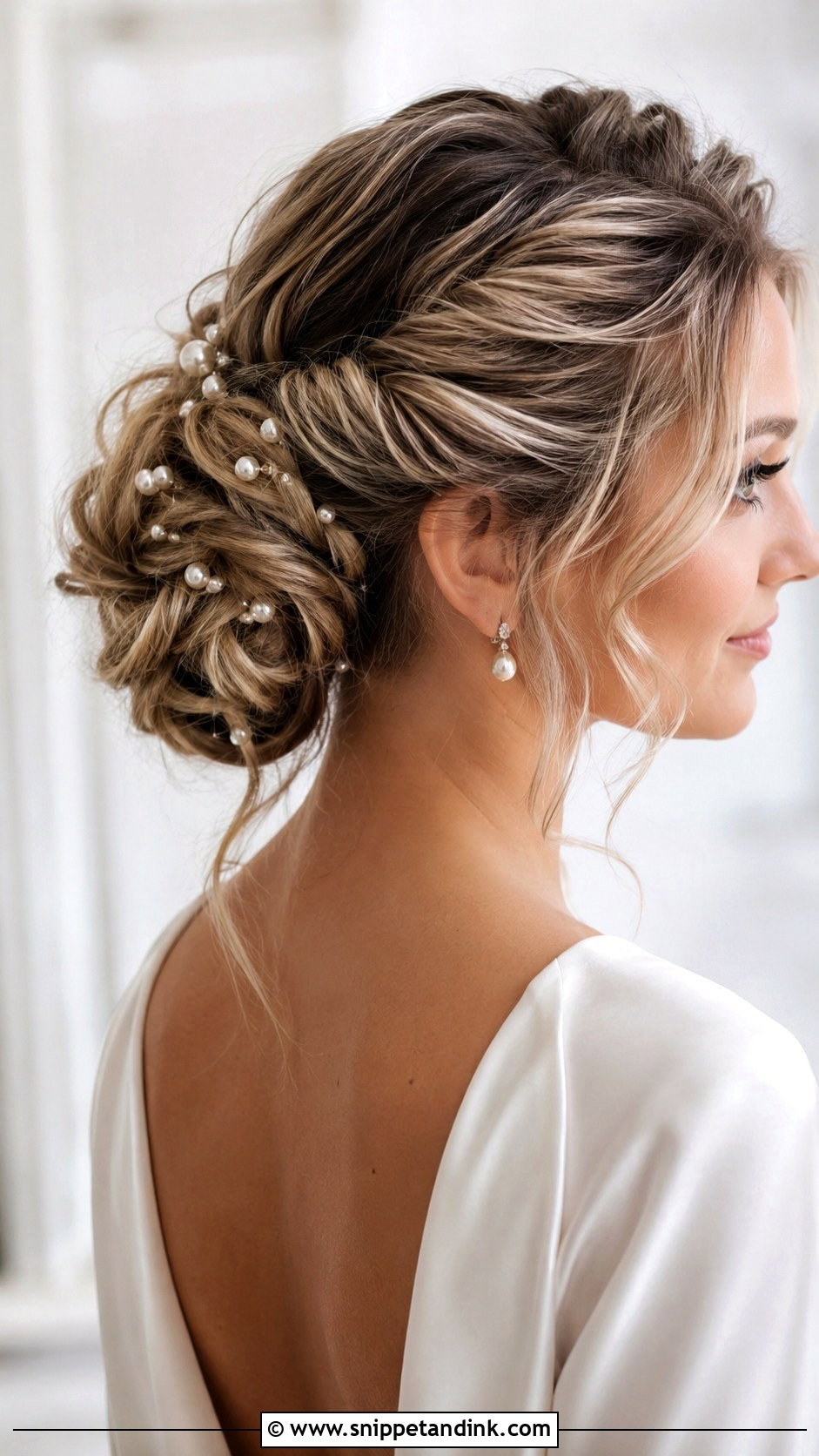
Braid and pearls together give texture and a soft glow at the same time. The bun can sit low, at the middle of the head or slightly undone, with braided pieces wrapped around it. Pearl earrings, satin, lace and simple veils all suit it. I place pearls with intention: a few pins along the braid and a cluster near the bun, angled so they catch the light from the camera side rather than facing the back wall. Scattering them everywhere just looks busy. Keep the front smooth or softly waved.
19. Long Bridal Braid With Flowers
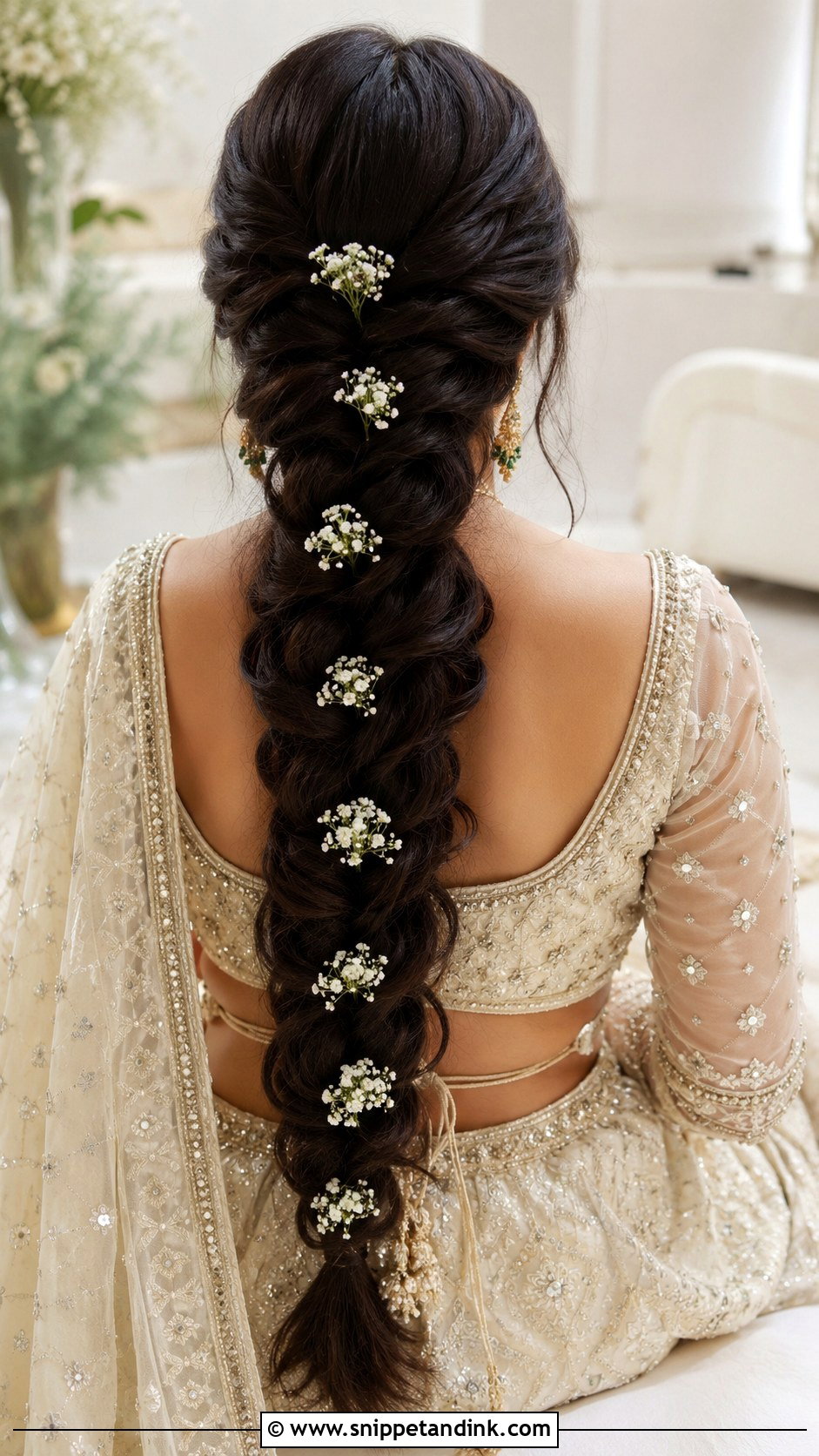
A long braid with flowers woven down it is a romantic, eye-catching choice. The base can be a classic three-strand, fishtail, Dutch or loose textured braid. I use small blooms that match the bouquet, and the florist should wire them or prepare them to last out of water, since fresh flowers wilt quickly in the heat of the hair. Faux flowers are a sensible backup for an outdoor summer wedding. Large blooms weigh the braid down and tug it sideways. Keep the braid full and smooth, secured with hidden pins, and it pairs naturally with a long dress and soft makeup.

20. Short Hair Braided Wedding Hairstyle
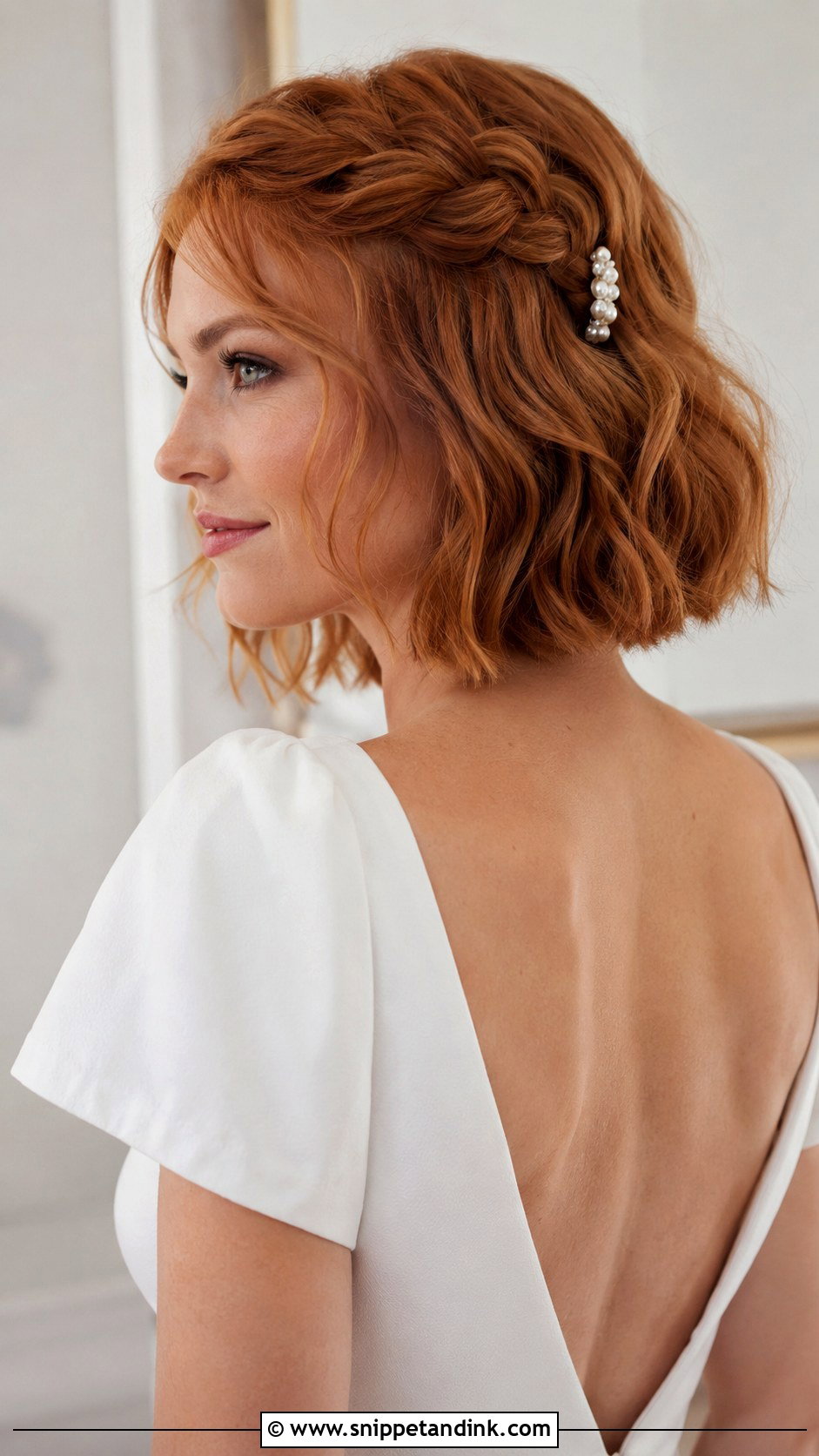
You don’t need long hair for a braided bridal look. Bob-length and lob-length hair can take a crown braid, side braids, braided bangs or a small braided half-up shape, with the rest waved, tucked or pinned. Short layers slip out of a braid, so texture spray before braiding is essential, and I use smaller braids with more pins than I would on long hair. Thick hair often holds a short braid better than fine hair does. A pearl clip, a tiny floral pin or a mini comb adds the bridal detail.
Planning a Protective Style Around the Wedding Week
Box braids, goddess braids and cornrows usually look their best a few days after installation. In the first day or two the scalp can feel tight and tender, and the edges need a little time to settle, so I’d book the install several days to a week before the wedding. That leaves time to loosen anything that’s too tight, and the style still looks fresh in photos.
Tension and edges
Tight braids can pull on the hairline enough to cause lasting thinning over time, so ask your braider to keep the perimeter gentle, even if that means slightly less sleek edges. Bumps along the hairline, a constant headache or pain when you move your eyebrows are all signs it’s too tight. Mention it straight away.
Securing a veil to braids
A veil comb needs something to bite into. On braided styles I slide the comb under two or three braids and pin across its teeth with crossed pins. Heavy cathedral veils may need a loop of hair or thread hidden behind the comb. Try the actual veil at your trial, as a light tulle and a heavily beaded one behave completely differently on the same braids.
Which Braid Lasts From the Aisle to the Last Dance
Braids earn their place in wedding hair because they combine looks with real staying power. One can make loose waves feel bridal, turn a plain bun into a feature or give a protective style a polished finish. The right one depends on your dress, venue, length, texture and how much you’ll be moving. Crown braids read romantic, braided buns read classic and floral braids feel dreamy. Book a trial and test your accessories, veil placement and hold together, then wear it for a few hours afterwards. If it still feels comfortable by dinner, you’ve found it.
You'll Like These Ideas:




Leave a Reply