
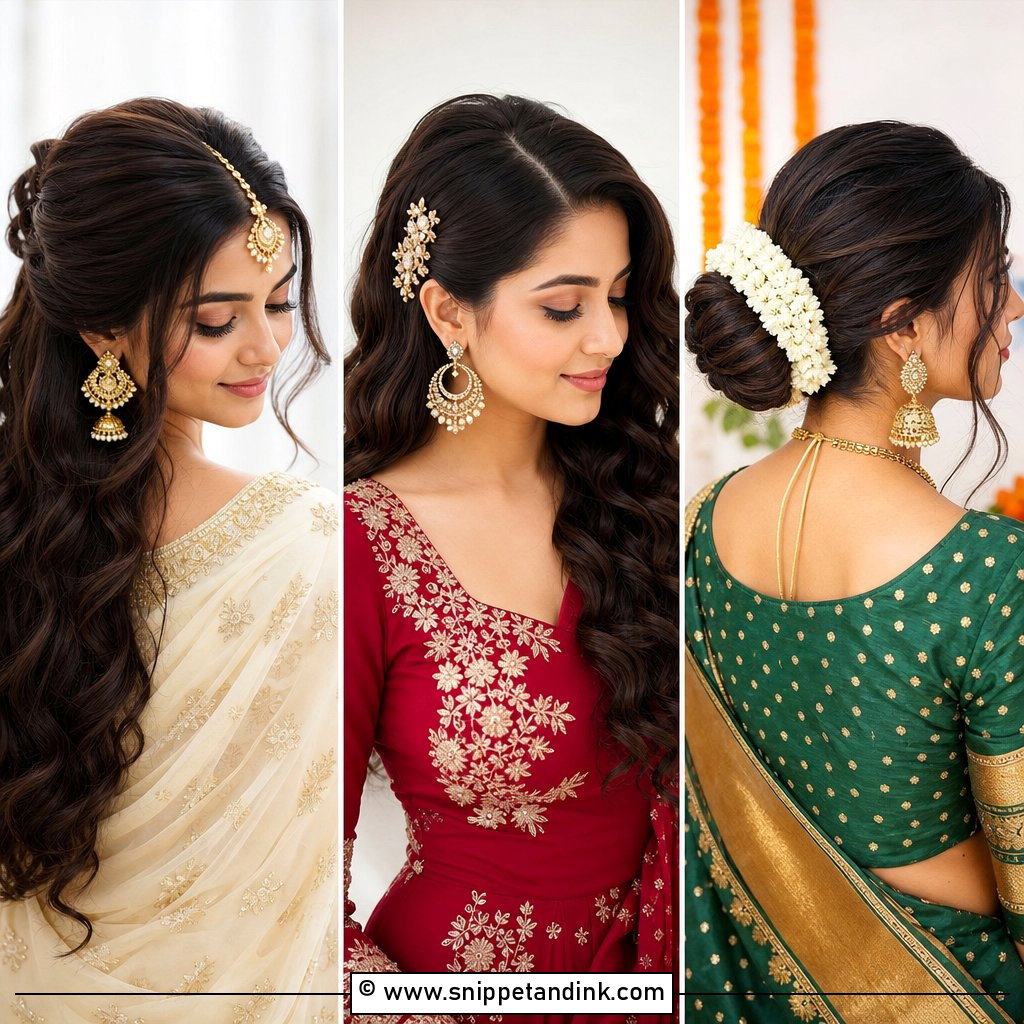
On an Indian bride, the front of the hair carries more than style. It holds the maang tikka on the part, takes the pull of a matha patti, and sits right under the edge of a dupatta that can weigh more than people expect. So when I plan a bridal look, the front gets decided with the jewelry and the drape, not after them. These 20 front Indian wedding bridal hairstyles run from gajra-wrapped buns to half-up waves for the reception, and for each one I’ve noted how it handles the weight and the long hours of a real wedding.
The Dupatta Goes On Last, but You Plan It First
Most bridal hair trouble I fix on the day comes from the dupatta. A heavy embroidered drape pinned to the head flattens a puff, catches on open curls and pulls a bun backward if it isn’t anchored. So before I design the front, I ask how the dupatta will be worn: over the head and pinned at the bun, draped from the crown, or worn on the shoulders only.
This is the order I work in on the morning, and why:
- Hair is finished and sprayed, including the bun or base the dupatta will grip.
- The maang tikka goes on next, with its hook pinned into the part using a bobby pin crossed over the chain, so it sits centered instead of sliding toward one eye.
- Matha patti or passa follows, with side chains pinned into the bun or behind the ears.
- Flowers or gajra are added after the jewelry, so they don’t get crushed when chains are adjusted.
- The dupatta goes on last, pinned with U-pins into the bun, not into loose hair.
If your dupatta is especially heavy, I’d choose a bun with a firm base over any open style. A bun gives the pins something solid; loose hair only gives them something to pull.
1. Front Puff Bun With Maang Tikka
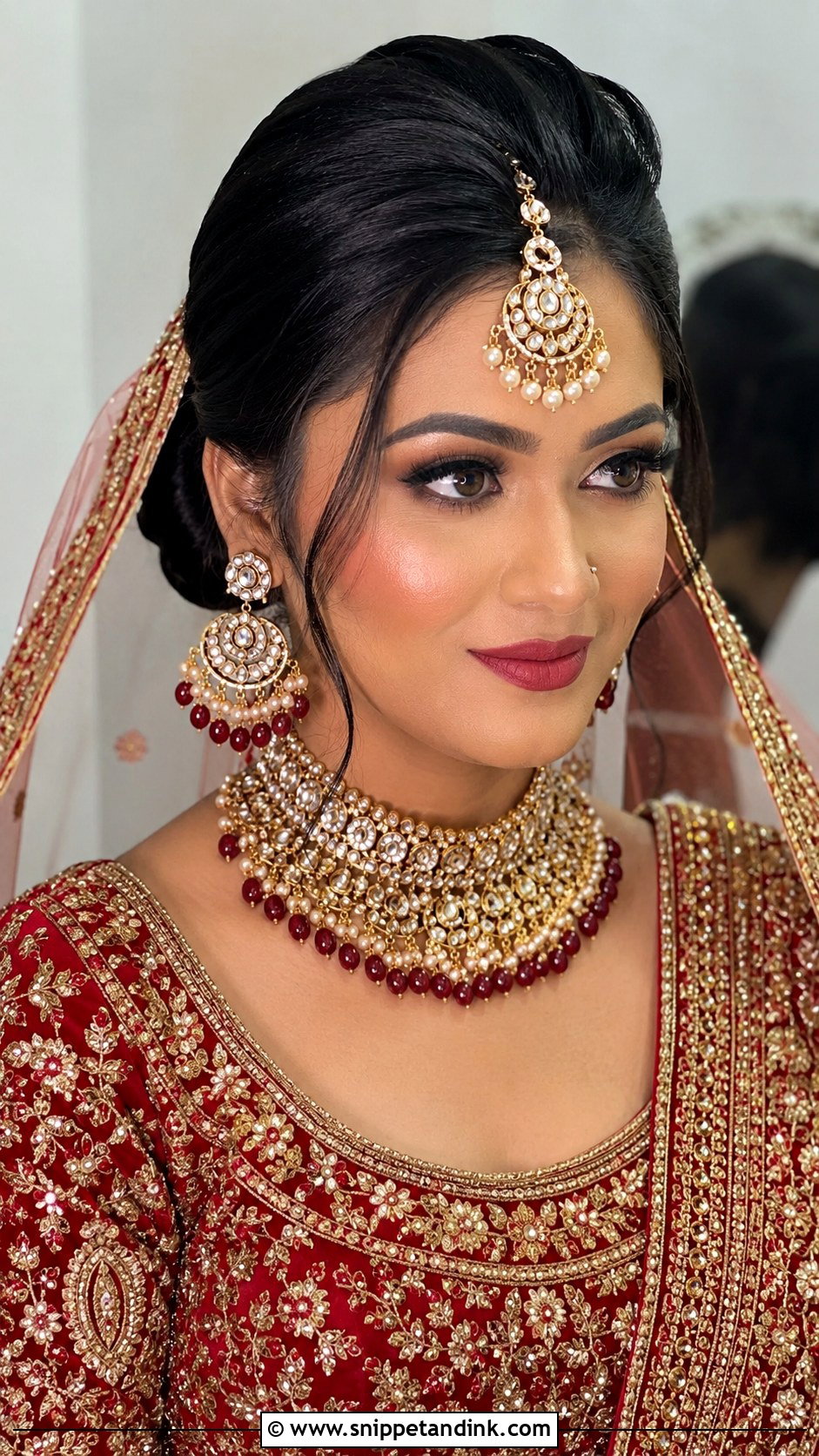
The front puff with a sleek bun is the look I’m asked for most for the pheras, and it earns its place. I backcomb a section about two fingers deep at the front, smooth the top layer over it and pin it from underneath, so the lift survives a dupatta resting on it. That height gives round and heart-shaped faces some length, and it leaves a clean center part for a statement maang tikka to sit on. Keep the bun low and tidy or make it fuller with a donut. One warning: a puff built on freshly washed, silky hair sinks within an hour, so I prefer hair washed the day before.
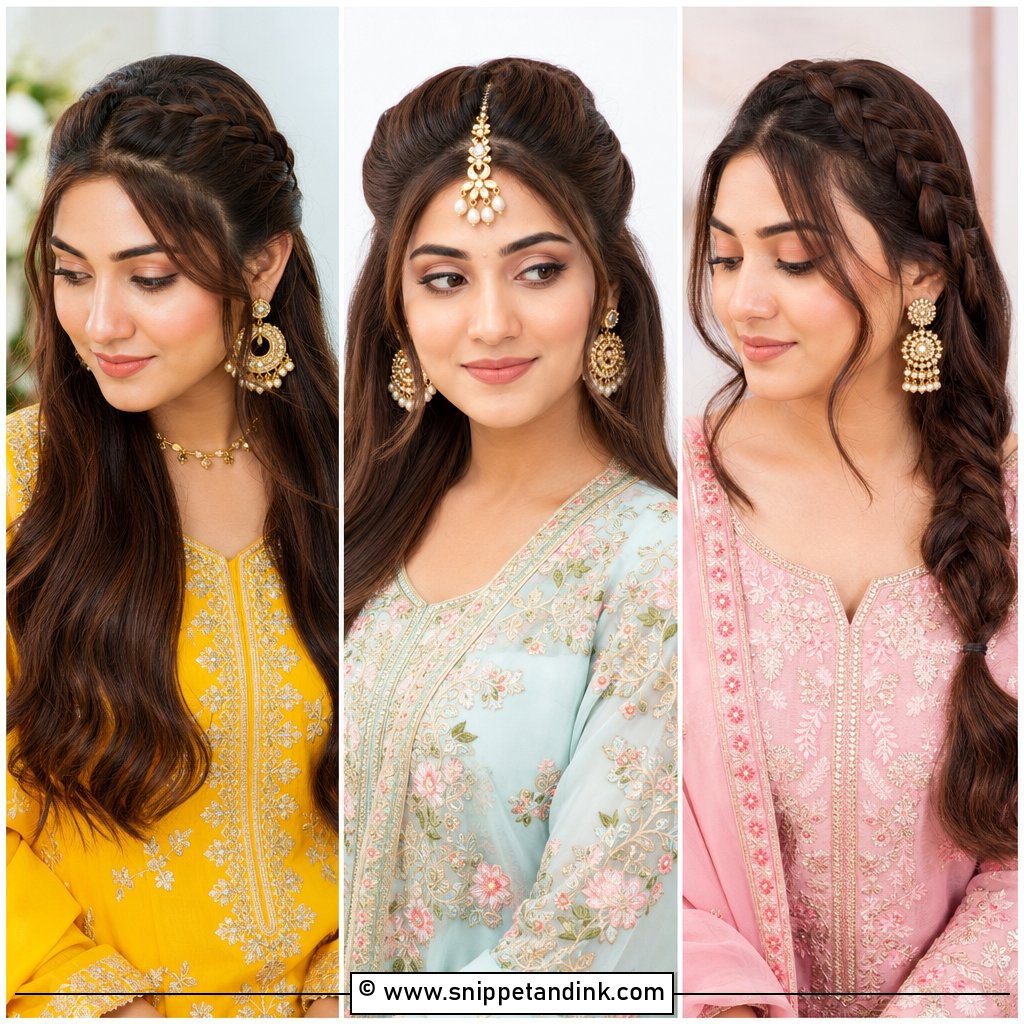
2. Side French Braid With Open Curls
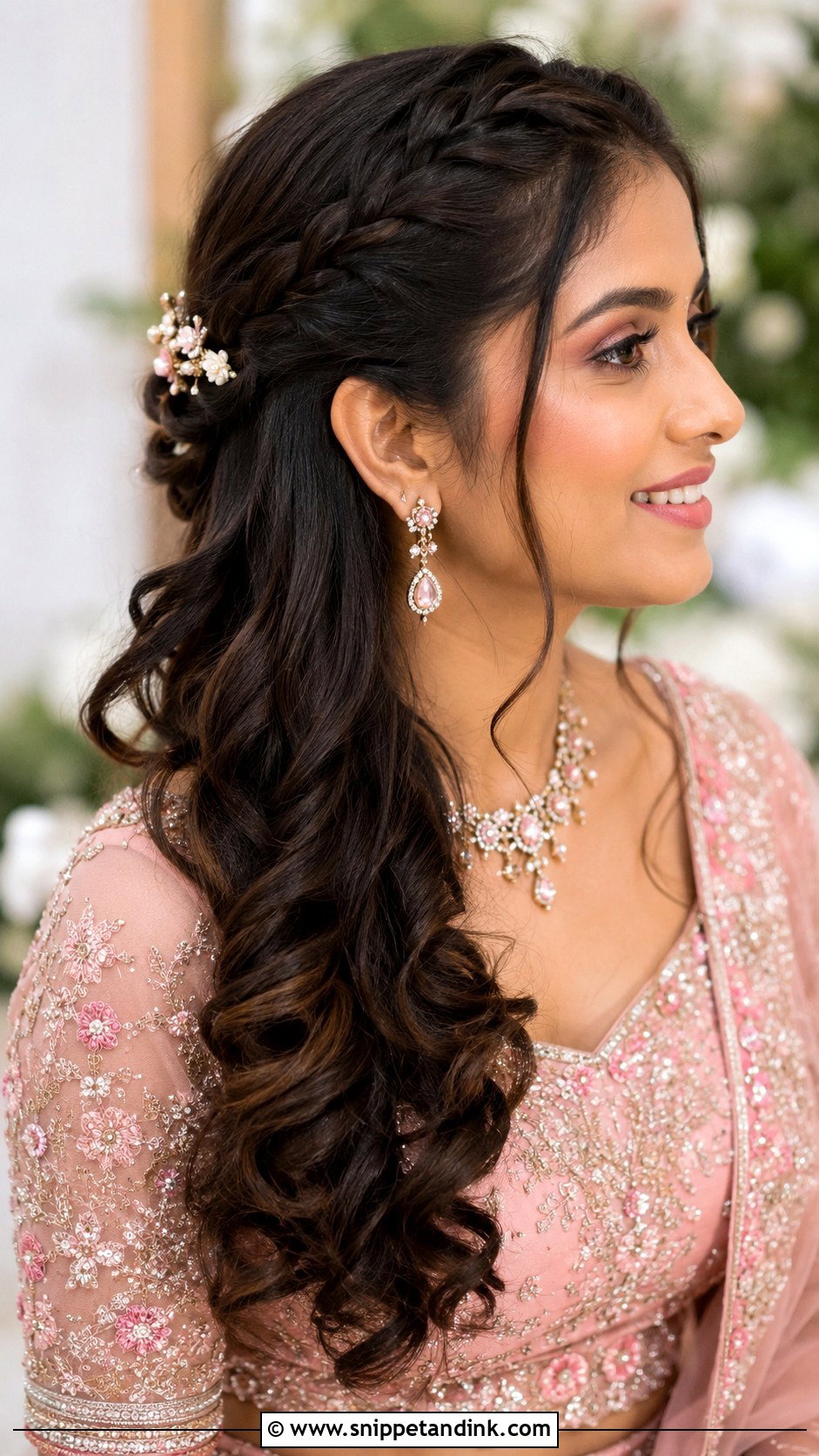
A French braid along one side with open curls down the back keeps the front tidy while still showing off length. I start the braid right at the part so it hides the hairline on that side, then curl the rest with a large barrel and pin the curls to set. It suits mehndi and reception events far more than the main ceremony; open curls under a heavy dupatta flatten and tangle with the embroidery. Small floral pins or sparkling clips along the braid catch the light without adding weight.
3. Floral Bun With Front Puff
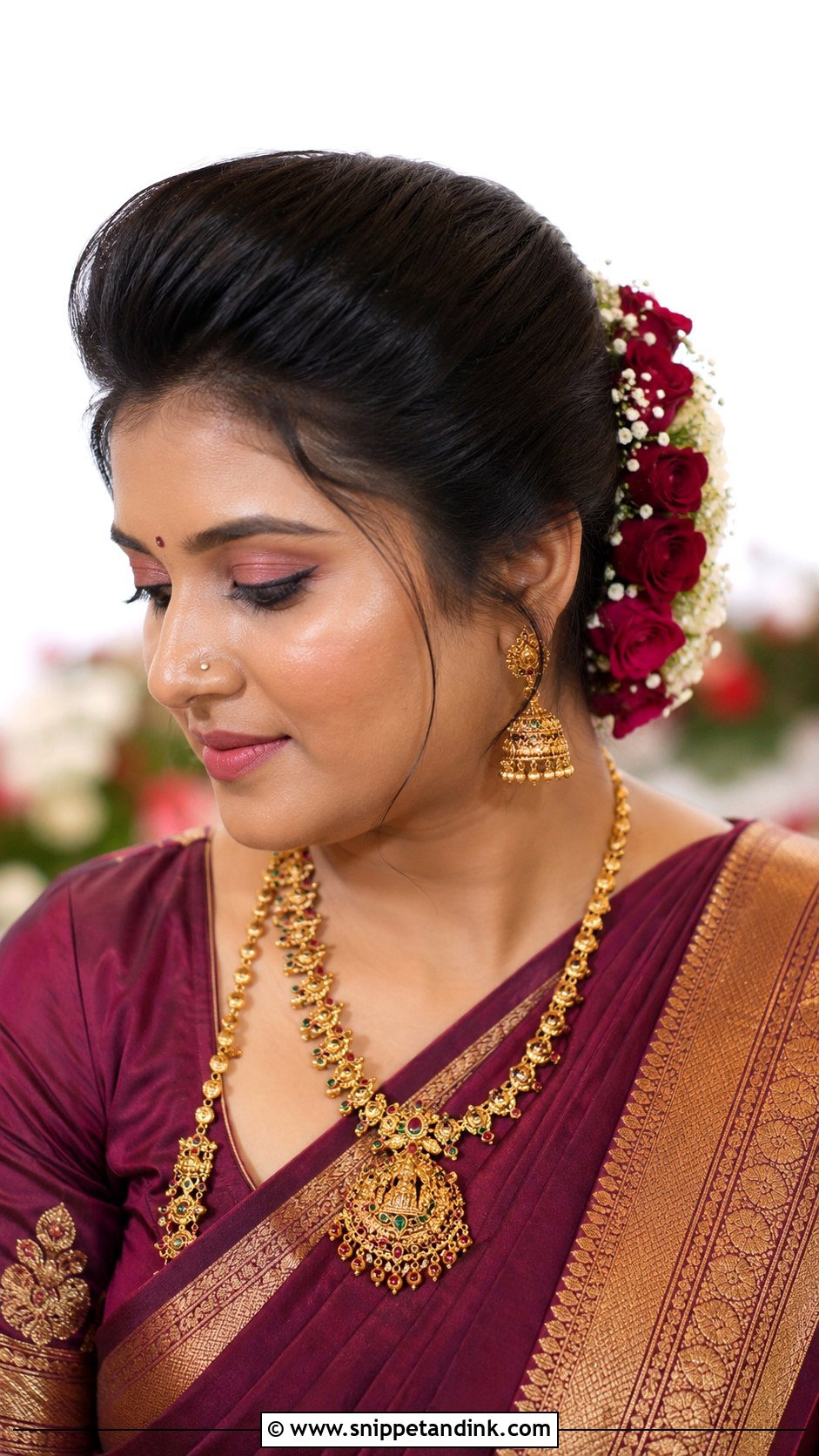
A floral bun crowned with a soft front puff is the traditional combination for a reason: the puff gives the tikka a raised spot to sit, and the bun gives the flowers something solid to pin into. Roses, orchids and jasmine all work. I’d pick blooms by how they’ll survive, not only by color. Orchids hold up for hours in heat, while open roses can brown at the edges by the reception. The puff doesn’t need to be big; on fine hair a small lift looks more natural than a tall one that shows backcombing from the side. It holds heavy jewelry well on most hair lengths.
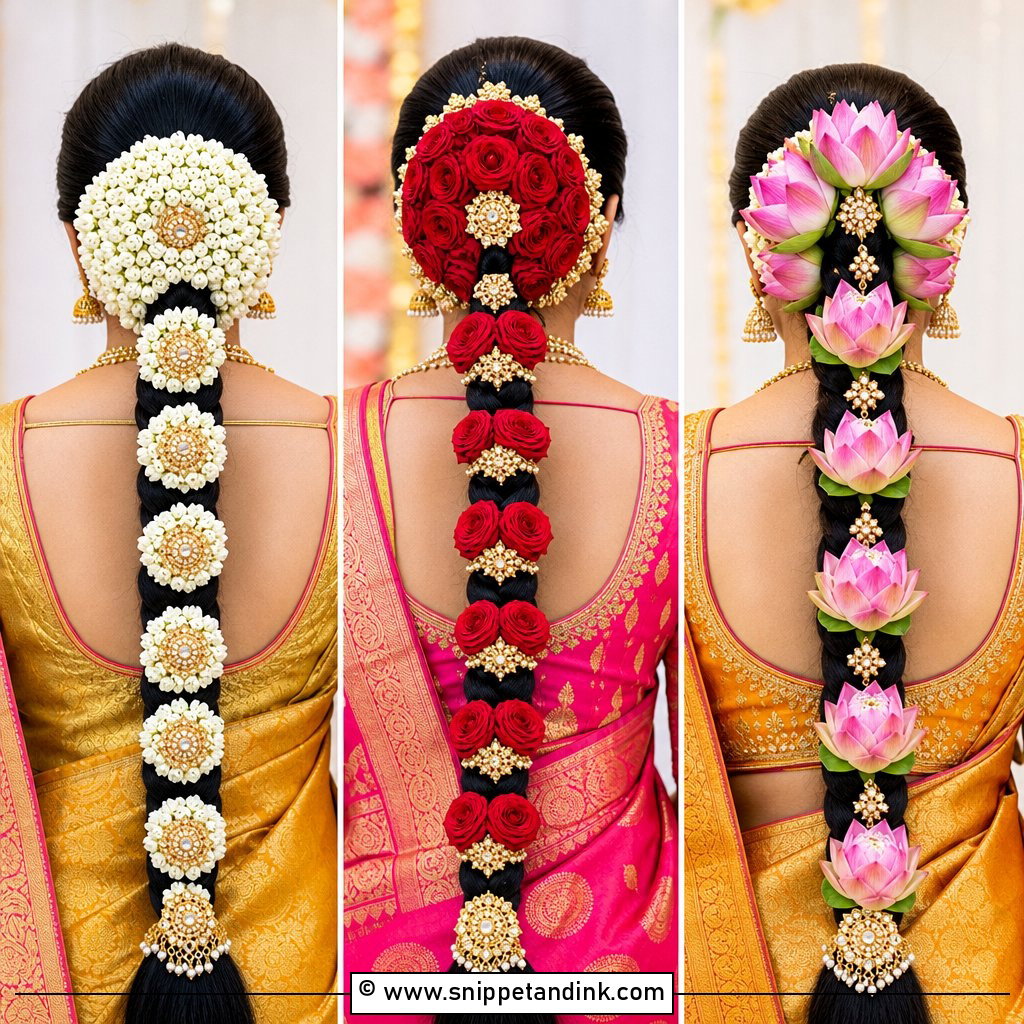
4. Fishtail Braid With Gajra
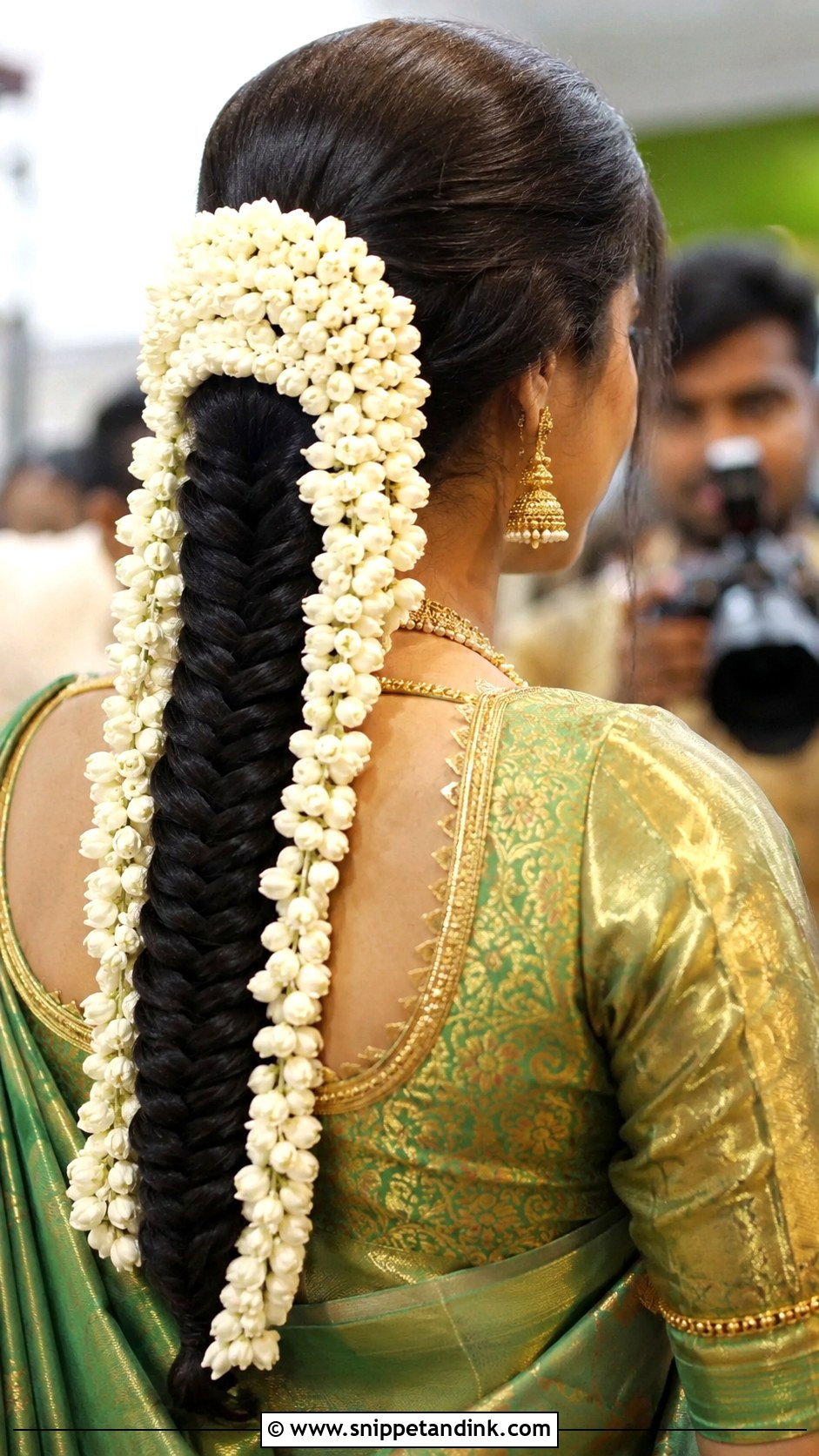
There’s something undeniably graceful about a thick fishtail braid wrapped with fragrant gajra. The fishtail looks intricate but sits light on the head, which matters on a day with a long temple ceremony. I lace the jasmine string through the braid rather than just wrapping it around, because a wrapped gajra slides down as the braid relaxes. It’s a natural fit for South Indian brides and anyone with long hair. If your hair is shoulder length, I add a braid extension matched to your color; a short fishtail tends to look thin once the gajra is on it.
5. Half-Up Hollywood Waves
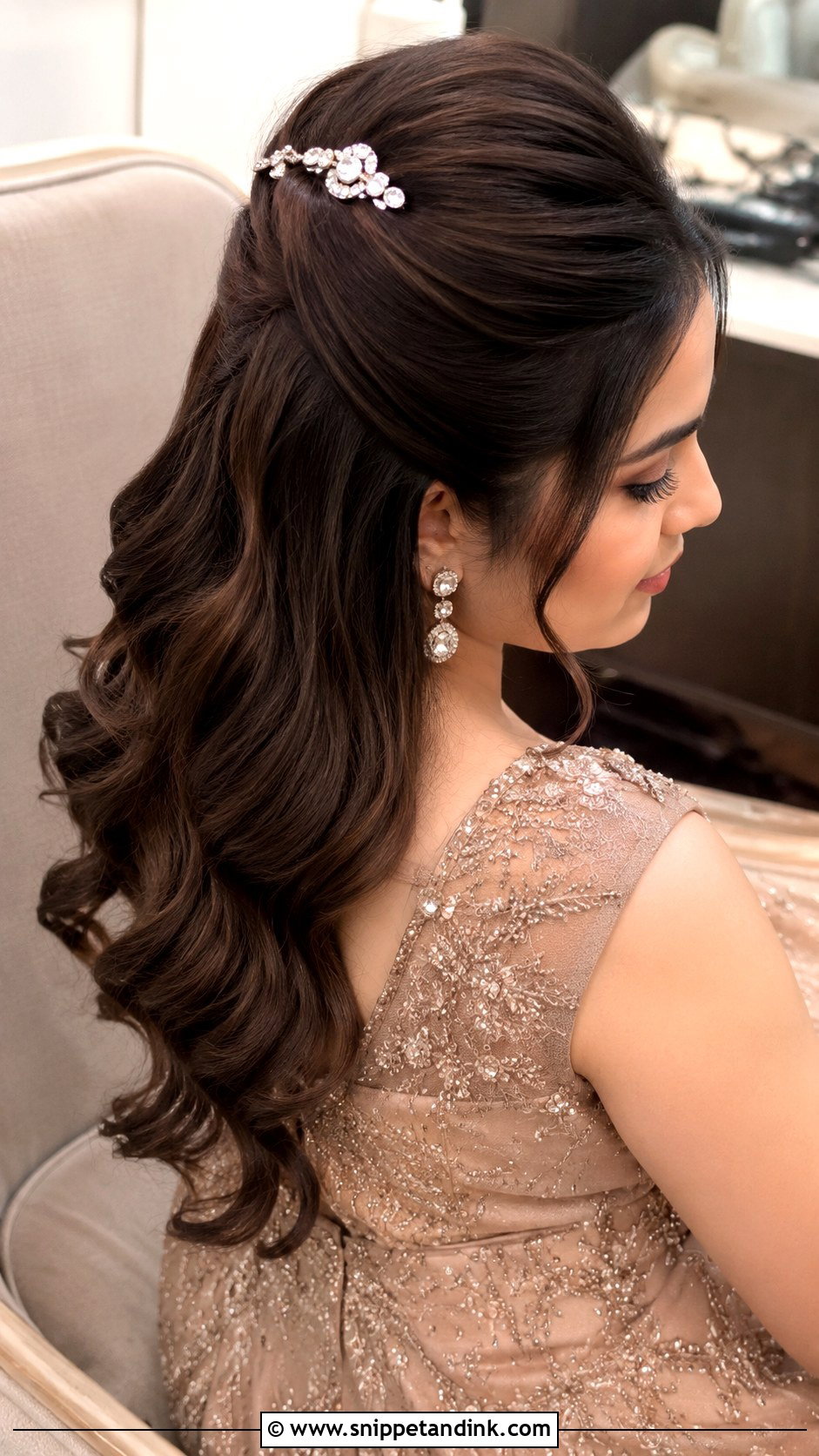
Hollywood waves bring a bit of old-glamour drama to a reception lehenga or gown. In this half-up version, the top section is pinned back smoothly and the waves fall below in one direction. I set them with a large iron, pin each curl to cool, then brush them out together so they form one connected wave rather than separate ringlets. This is the style I’d steer you away from on a humid outdoor night: soft waves loosen fast in damp air. A sparkling clip or small floral accent at the crown hides the anchor pins and finishes the look.
6. Sleek Low Bun With Matha Patti
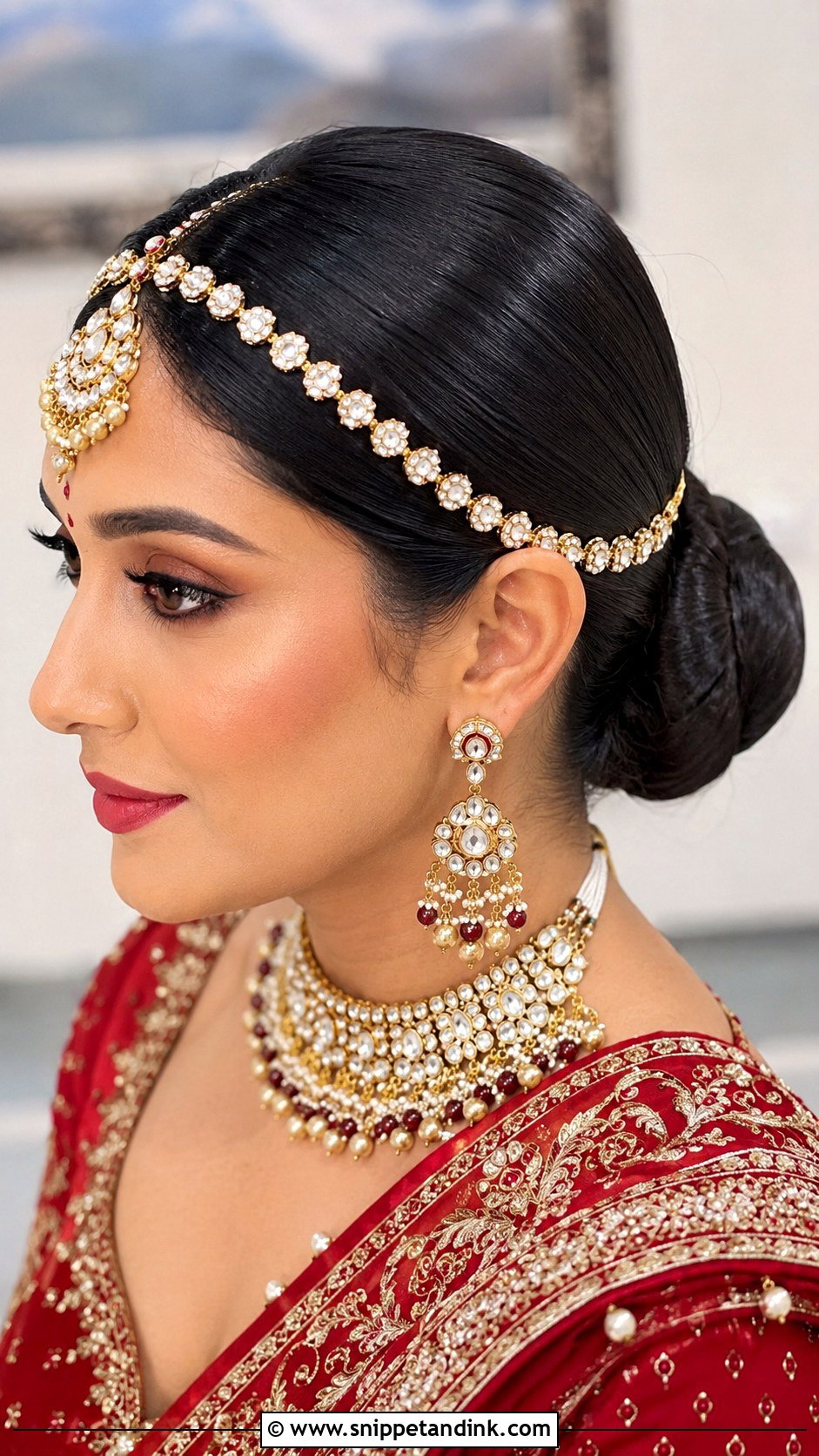
Sometimes the plainest hair gives the jewelry the most room. A sleek, low bun with a center part creates a clean canvas for a matha patti, which needs a perfectly straight part to sit evenly across the forehead. I smooth the front with gel and a fine brush, then anchor the matha patti’s side chains into the bun with U-pins so it doesn’t slide down the forehead as you move. The bun sits at the nape, under the weight of the headpiece, which keeps everything balanced. Oval and long faces suit it best. On a round face, I’d add a little lift at the crown first.
7. Side Swept Curls With Gajra
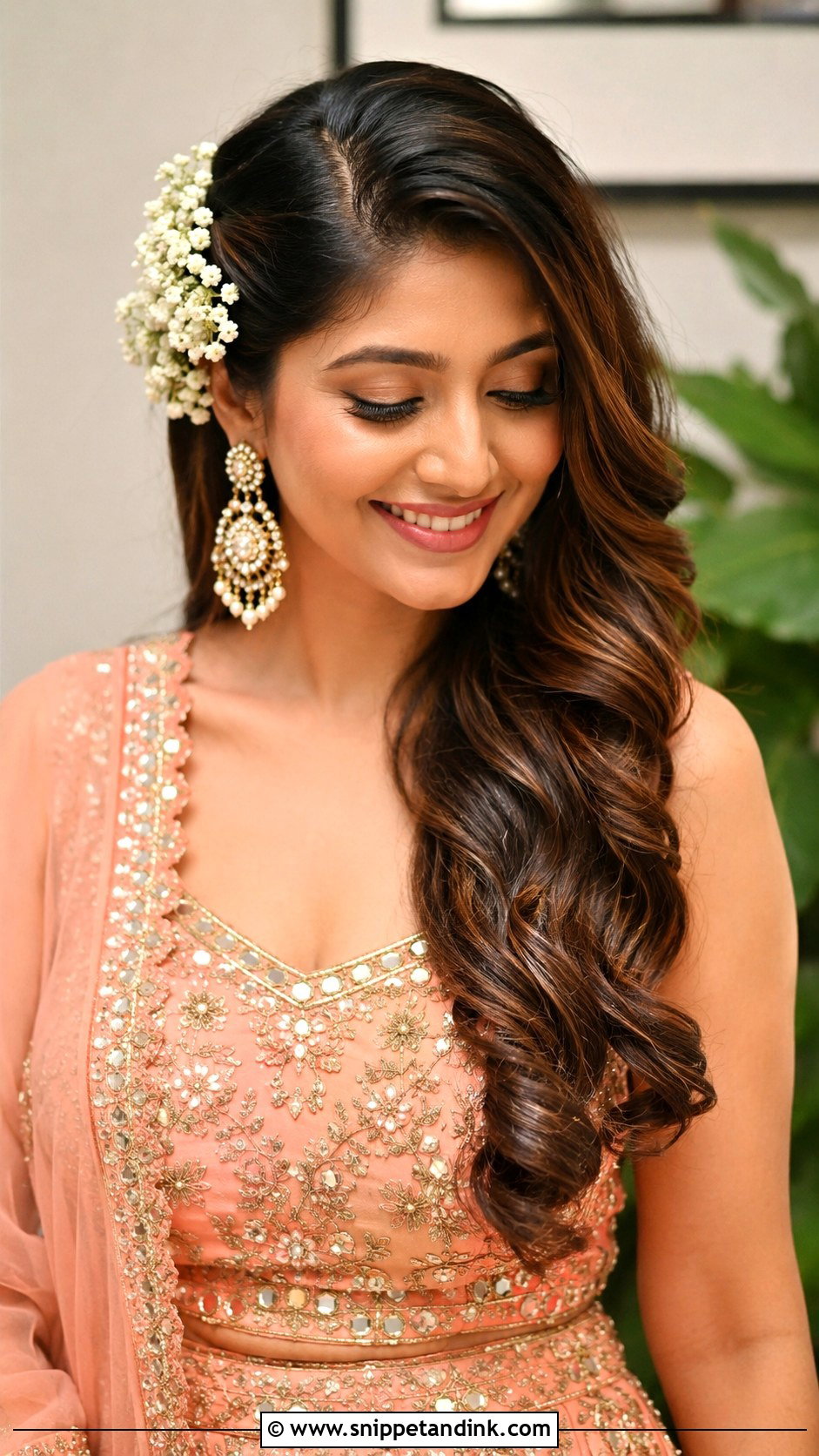
Sweeping all your curls over one shoulder gives a relaxed silhouette, with a delicate gajra tucked near the part for fragrance. This works best on long, thick hair, since the curls need enough body to stay over the shoulder rather than splitting back. I pin the curls along the back of the head in a hidden line so the sweep holds when you turn. It’s a good sangeet or reception choice where you’ll be dancing. Pair it with statement earrings on the open side; the hair already covers the other ear.
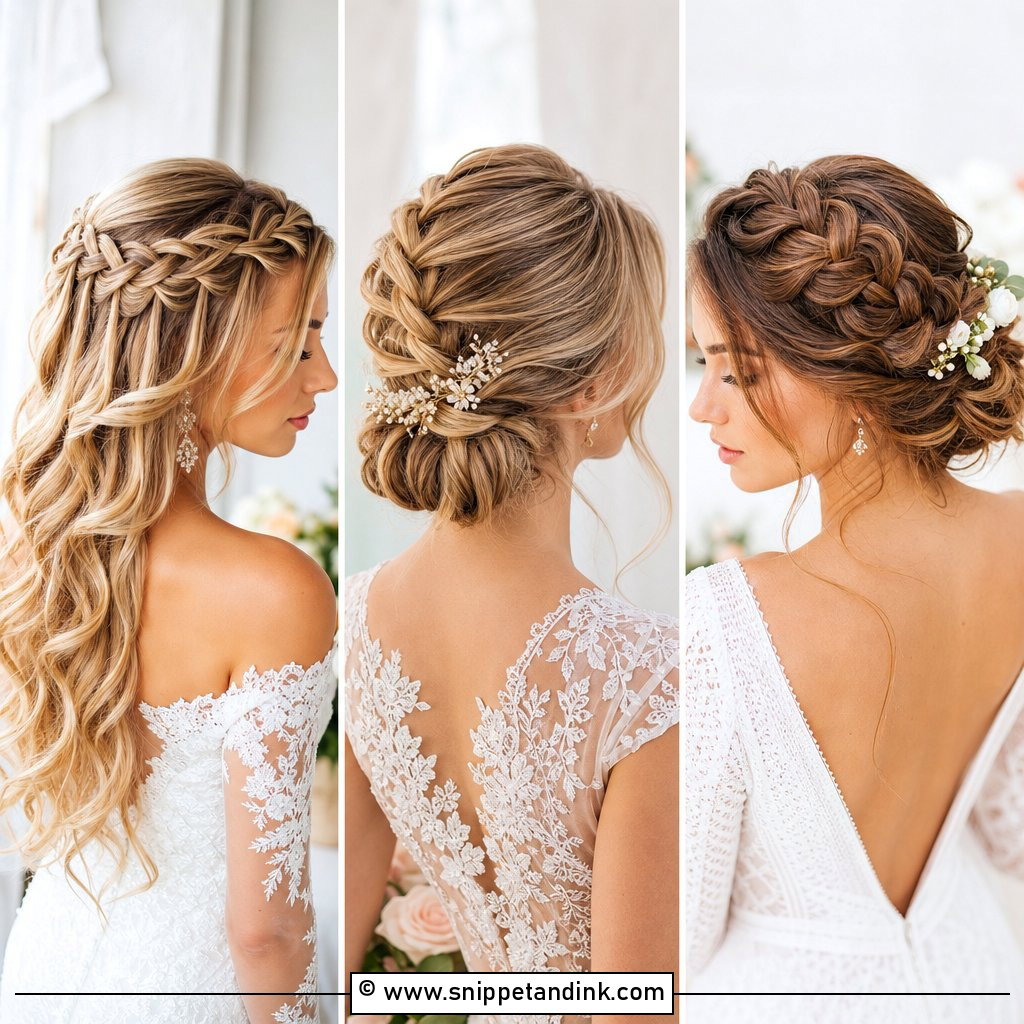
8. Pearl Braided Bun
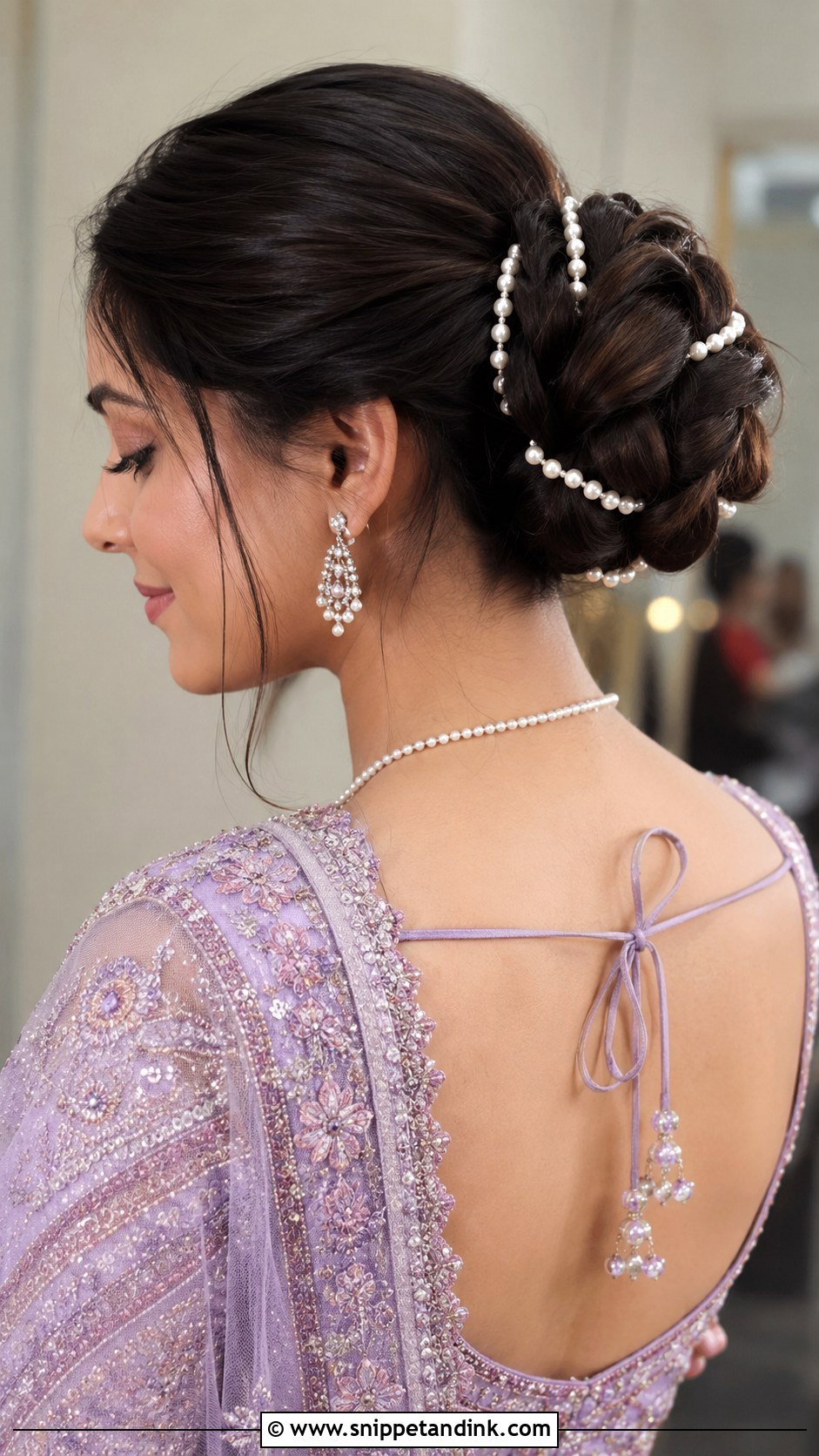
Pearls woven through a braid that wraps into a textured bun give a soft shimmer without the weight of heavy florals. I thread pearl strands into the braid as I plait, so they’re locked in, then coil the braid and pin it. Separate pearl pins added afterward are a nice extra, but threaded strands are the ones that stay put. The front stays smooth and refined. This one suits pastel lehengas and delicate jewelry best; next to heavy kundan sets, pearls can look a bit lost. It works for engagements, receptions or the wedding itself.
9. Twisted Front Braid Low Bun
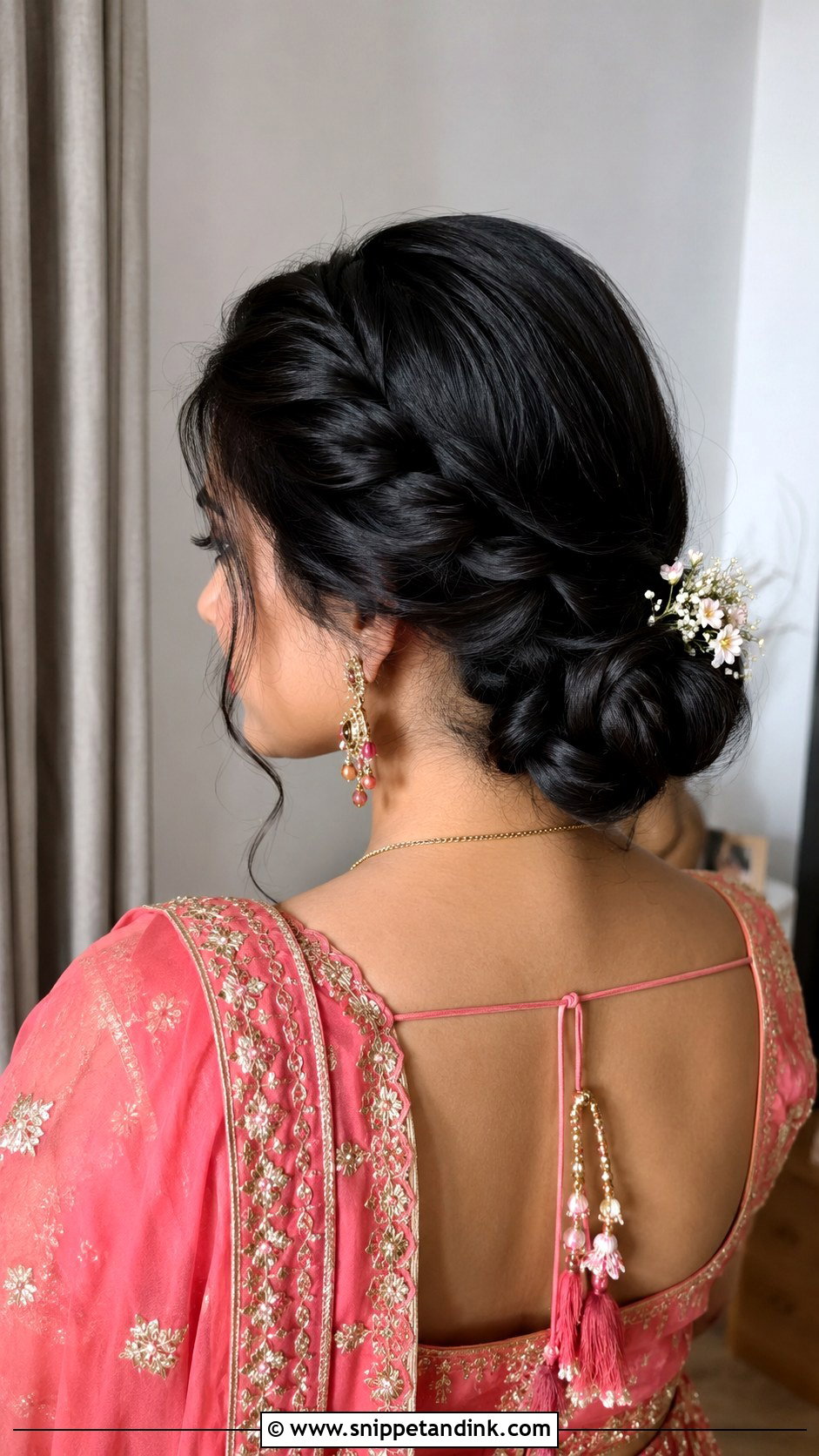
A twisted front section leading into a soft low bun gives texture along one side without the tightness of a braid. I take a section from the part, twist it back toward the nape and pin it every few inches, then build the bun around where it ends. Twists on slippery hair unravel slowly, so I roughen the section with dry texture spray before starting. This look reads well from the front and side, which helps during long seated ceremonies where the photographer works from both angles. Tiny flowers or jeweled pins along the twist add detail. Daytime ceremonies and smaller weddings suit it well.
10. Messy Bun With Jasmine Flowers
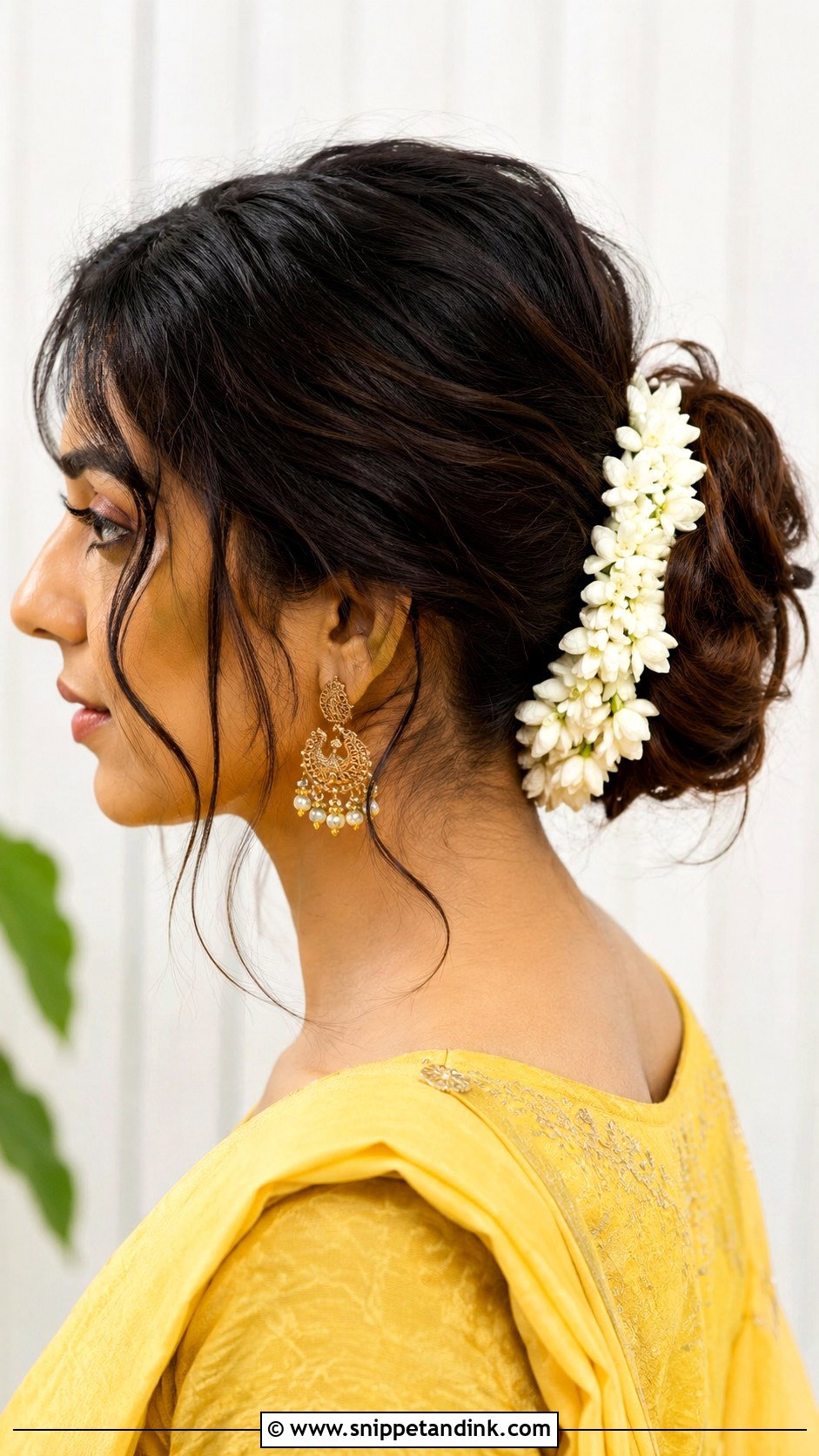
A loose, textured bun dressed with jasmine is my pick for mehndi and haldi, when comfort matters more than polish. The bun is pinned loosely enough that it can take a few tugs while you sit for hours with henna drying on your hands. A few face-framing strands stay loose at the front. Here’s the honest catch for haldi: turmeric paste stains light hair and stray strands, so I’d keep the front pinned back that morning and save the loose pieces for afterward. It goes with sarees and lehengas, and small pearls or buds add charm.
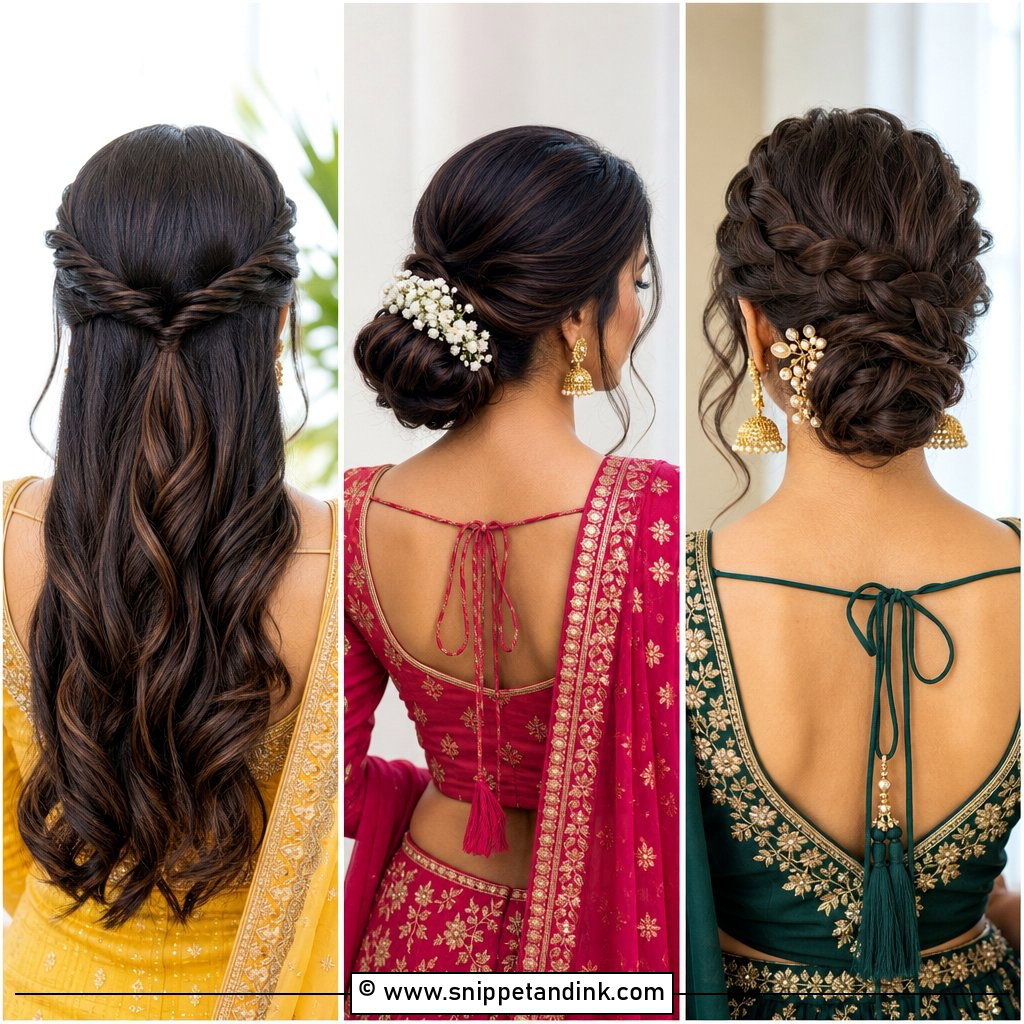
11. Open Hair With Front Twists
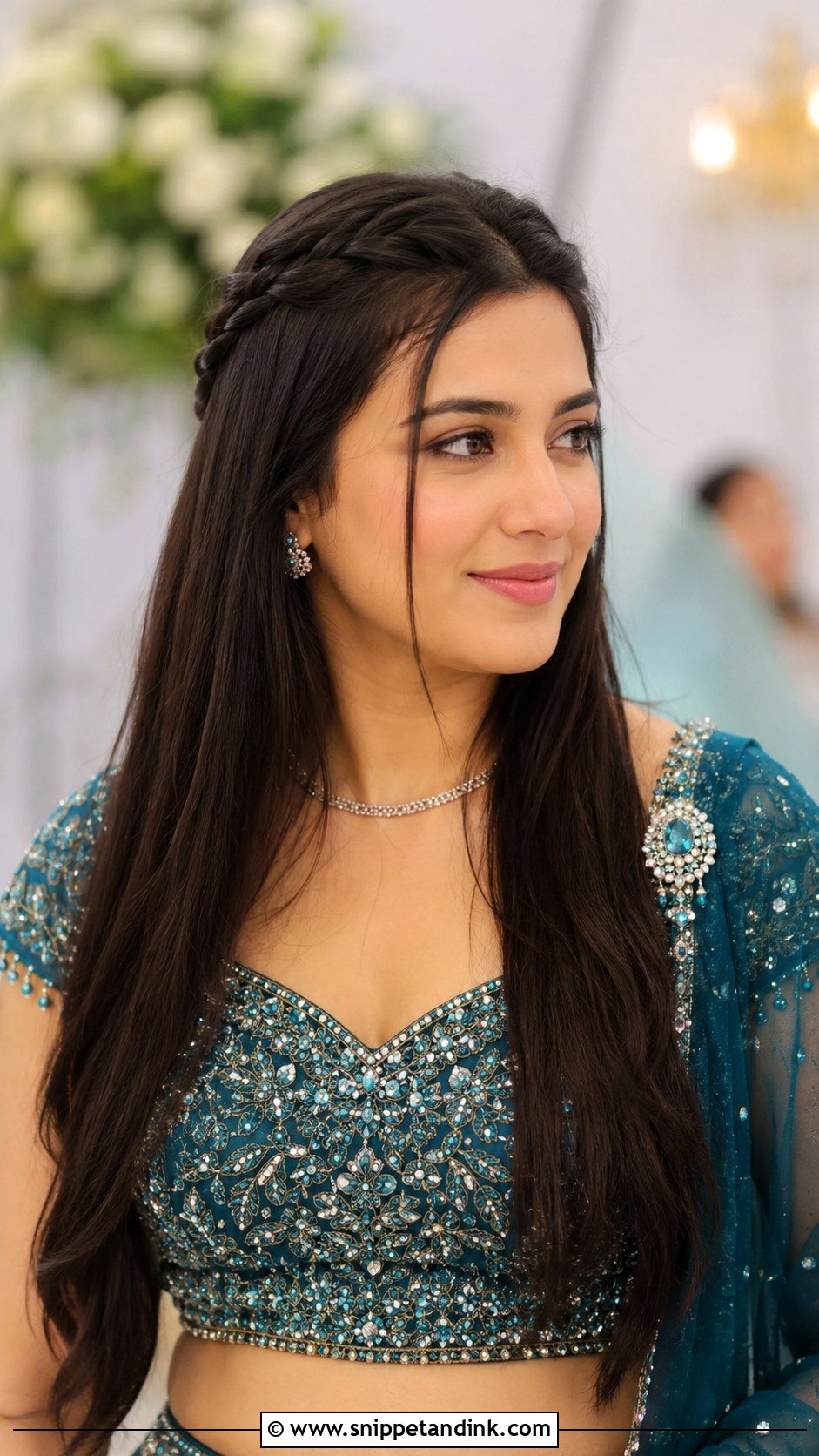
Open hair with small twists at the front keeps strands off the face while the length falls free. The twists meet at the back of the crown, and I pin them with a crossed pair of bobby pins so the weight of the hair below doesn’t pull them loose. This is best for long, healthy hair at receptions, cocktail events or pre-wedding shoots. Curl the ends or keep them sleek. A small jeweled pin where the twists meet covers the join. I wouldn’t wear it under a dupatta; the twists catch on the embroidery.
12. Crown Braid With Fresh Flowers
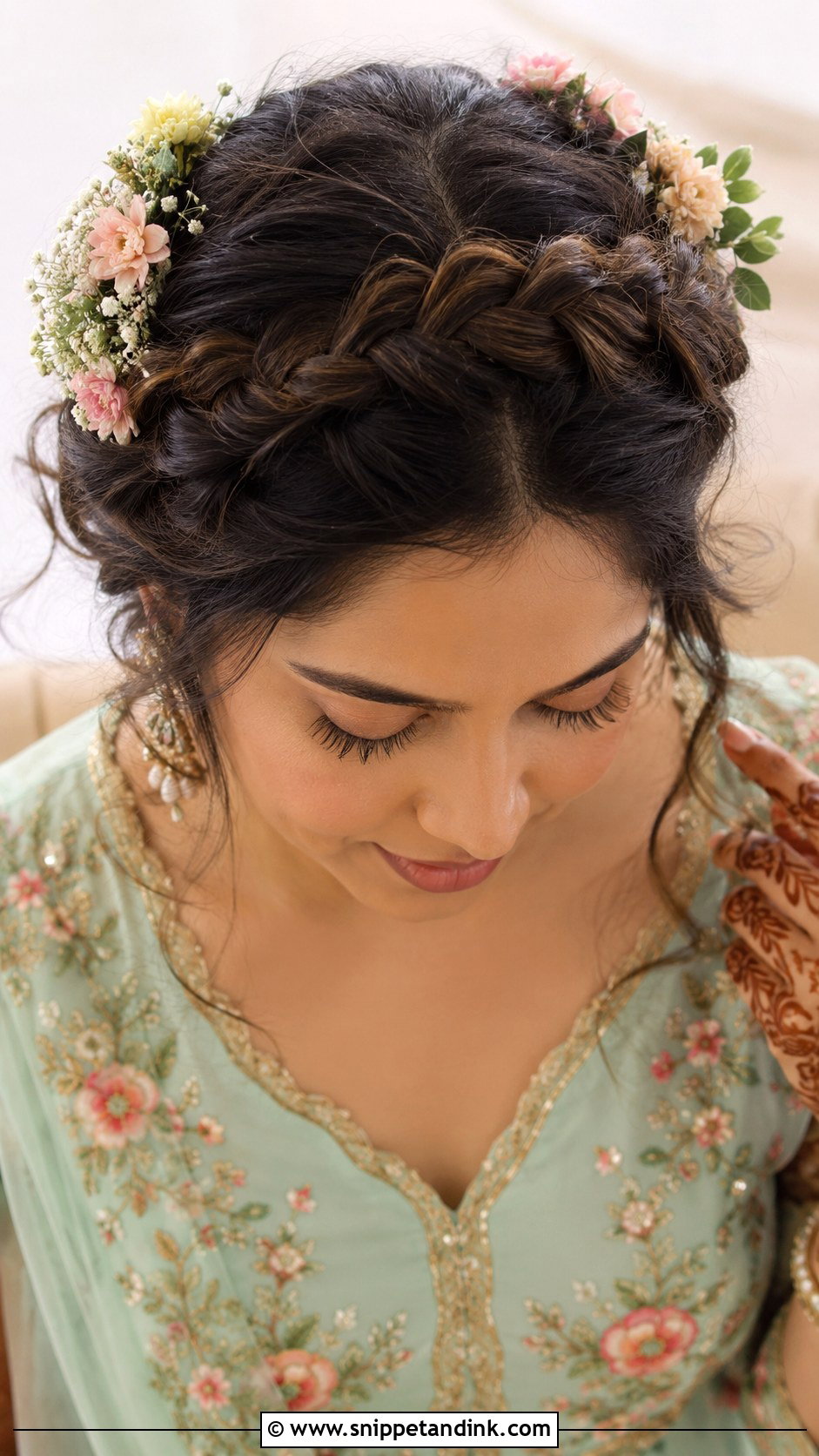
A crown braid wrapping around the head works like a natural tiara and keeps every strand off the face, which is a relief on a hot mehndi afternoon. Fresh flowers tuck into the braid easily because the plaits grip the stems. I’d suggest a boho yet traditional look like this for garden and haldi functions. Hair below the shoulders is needed to complete the circle; with shorter lengths I add a matched braid piece. Leave a few wispy strands loose at the front for softness, and pick sturdy blooms, since flowers pinned close to the scalp wilt quicker from body heat.
13. Voluminous Puff With Loose Waves
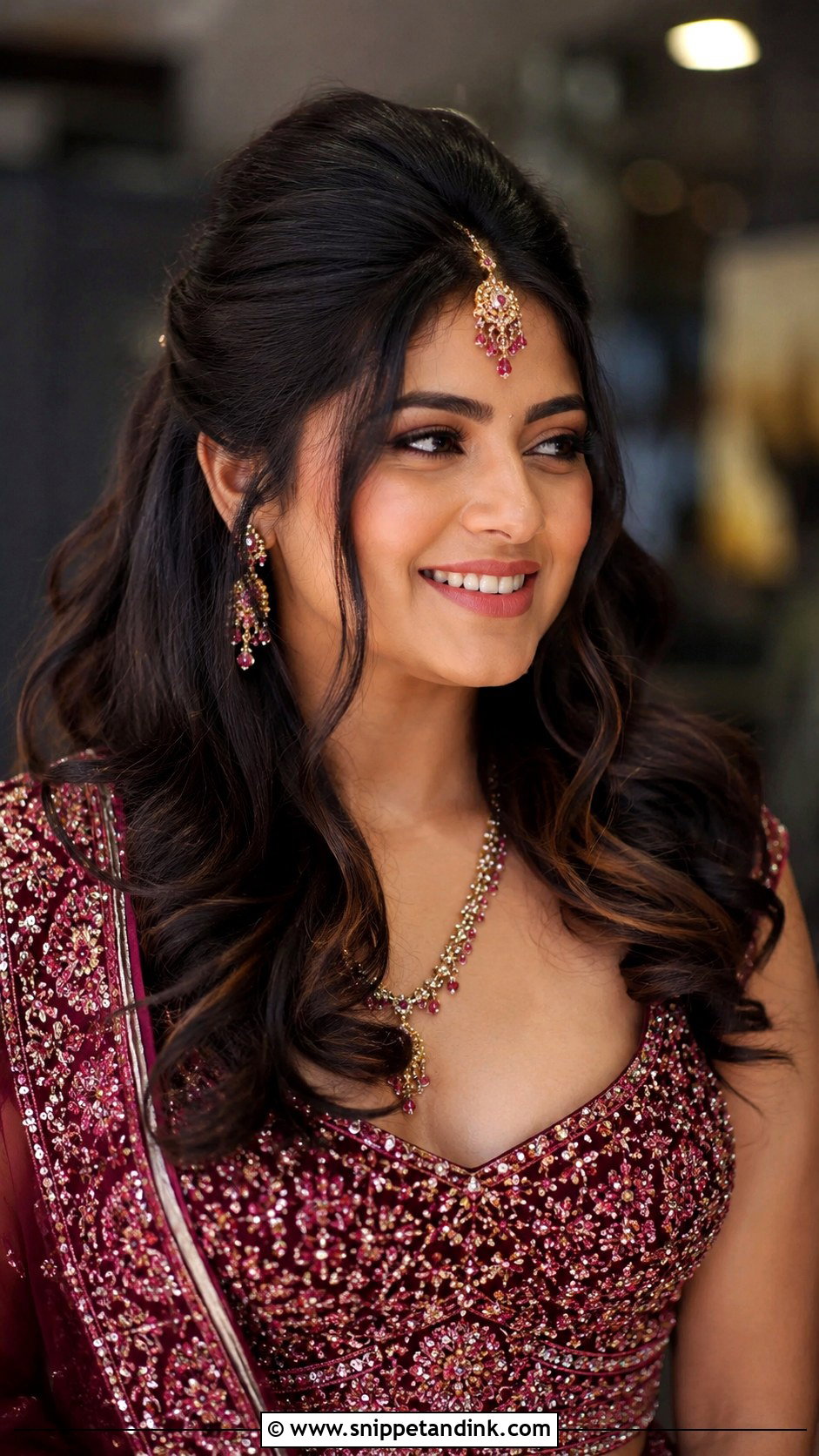
A voluminous front puff with loose waves below combines height and movement. The puff lengthens round and heart-shaped faces, and a maang tikka resting on it adds traditional flair. Below, I set soft waves and leave them open or pin half back. The puff here can be bigger than the one under a bun, because there’s no dupatta pressing on it at most receptions. The common mistake is teasing too far back from the hairline; that leaves a visible bump at the crown. I keep the backcombing to the first few inches.
14. Low Side Ponytail With Curls
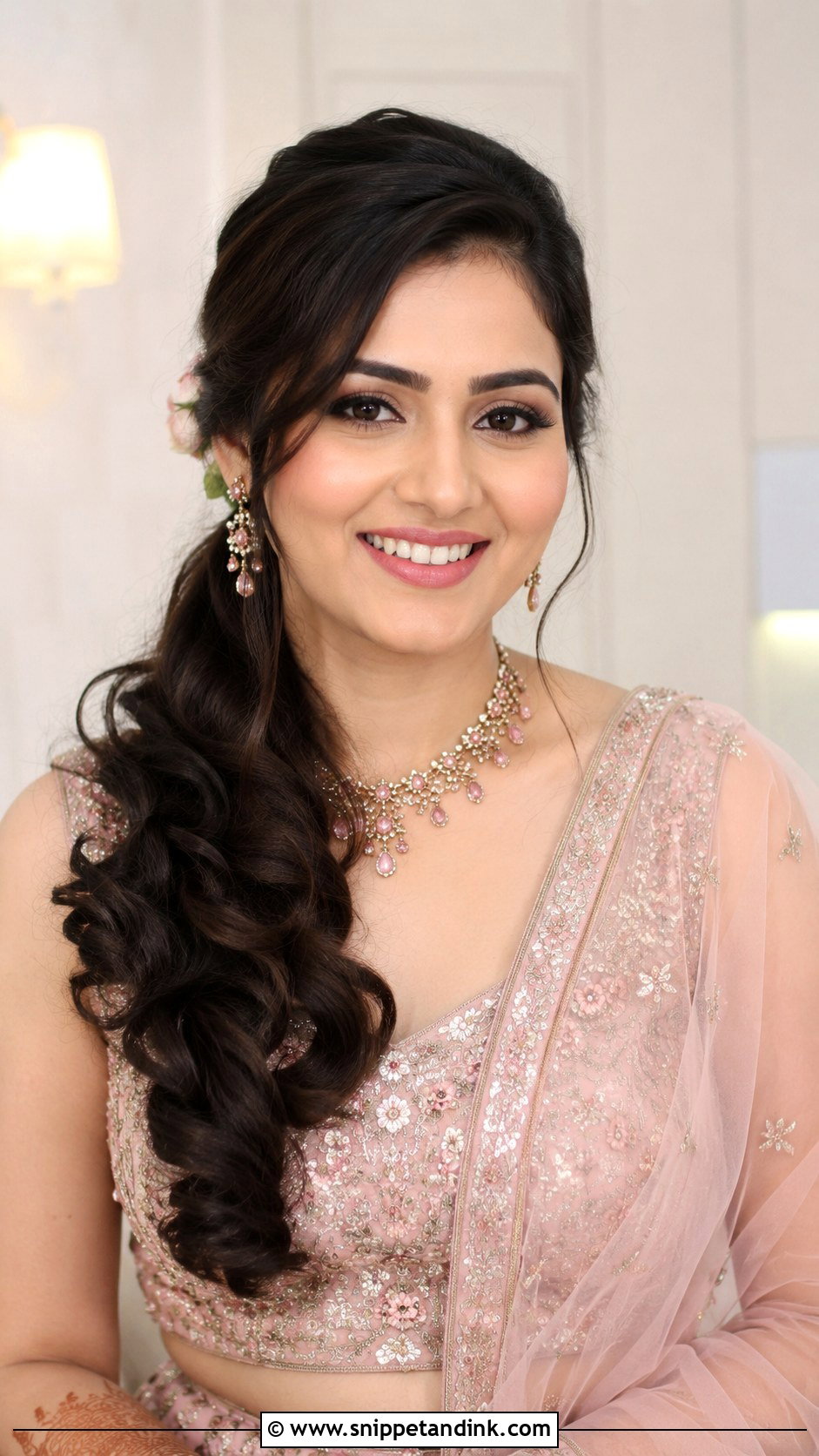
A curled ponytail swept over one shoulder looks relaxed and a little unexpected for a bride. I tie it low, at the side, and wrap a strand of hair or a string of pearls around the base to hide the tie. A flower behind the ear adds traditional charm. It suits sangeet, cocktail events and reception parties. On very thick hair, a single elastic struggles with the weight; I use two and add a pin through the base. It’s comfortable and easy to dance in, which brides tend to appreciate by the end of the night.
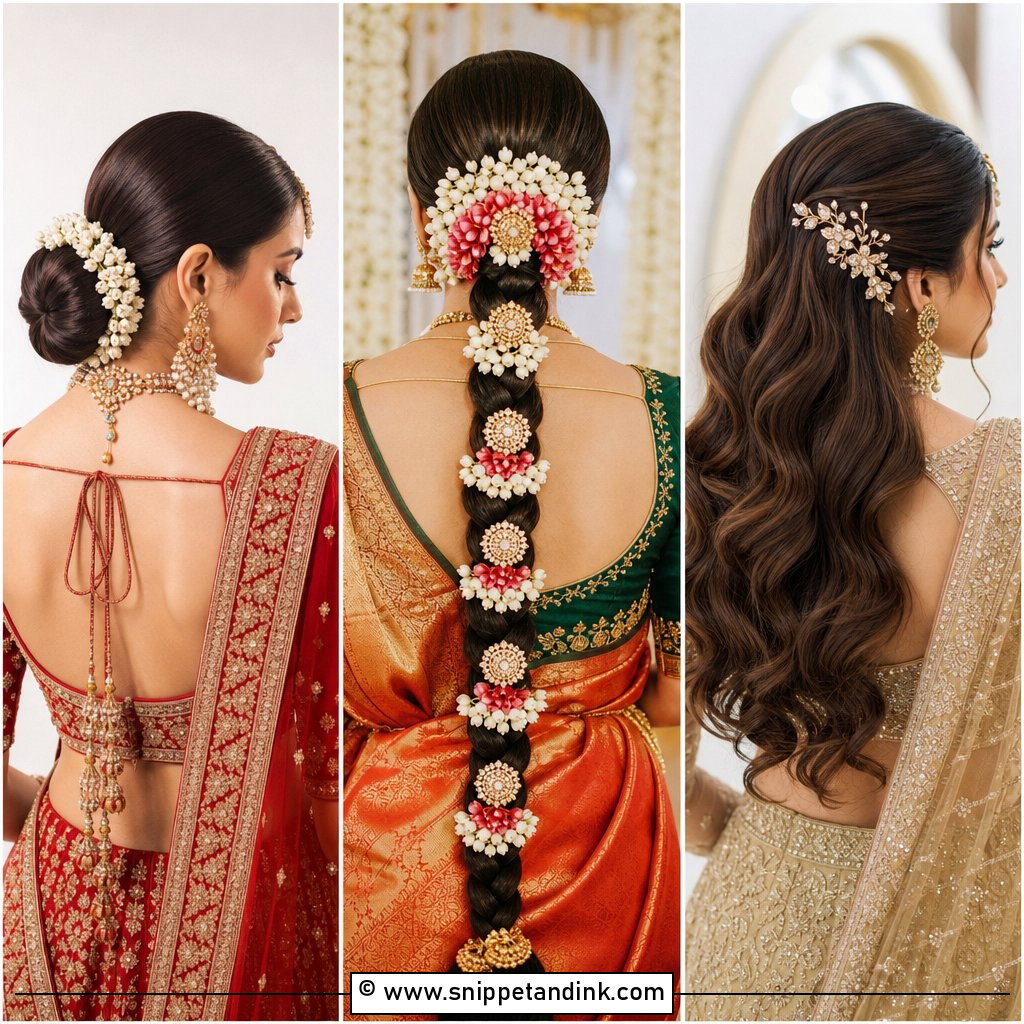

15. Braided Bun With Parandi
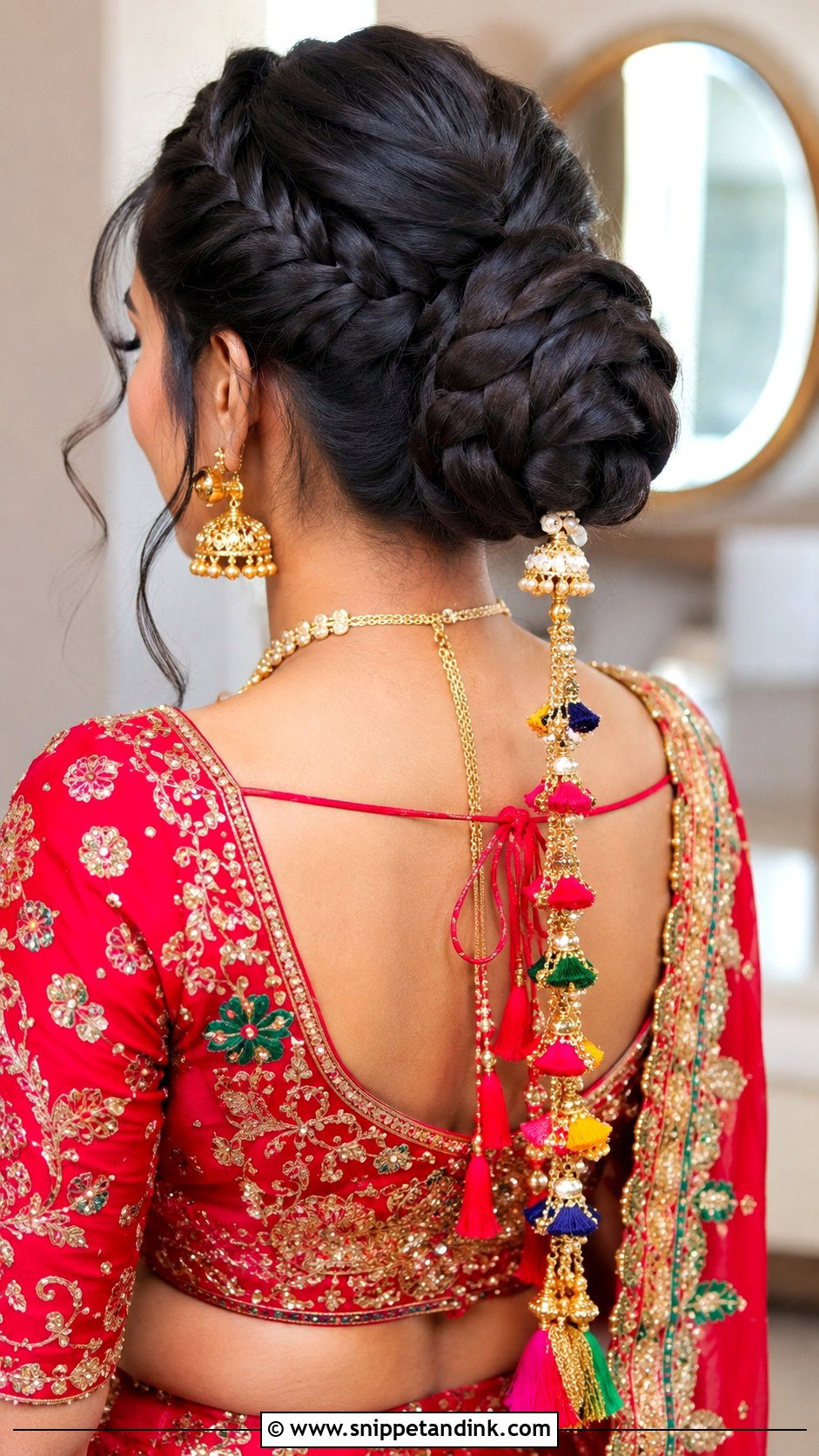
A braided bun with a parandi celebrates Punjabi and North Indian heritage. The parandi, a decorative tasseled braid extension, adds length and color, and here it is woven into a braid that coils into a bun for a rich, textured shape. I plait the parandi in from about a third of the way down so it carries the full length and the tassels can hang free below the bun. Matching its colors to your outfit ties the look together. The front stays polished. Fresh flowers or beads add more detail, though with a bright parandi I’d keep extra decoration minimal.
16. Rose Floral Updo
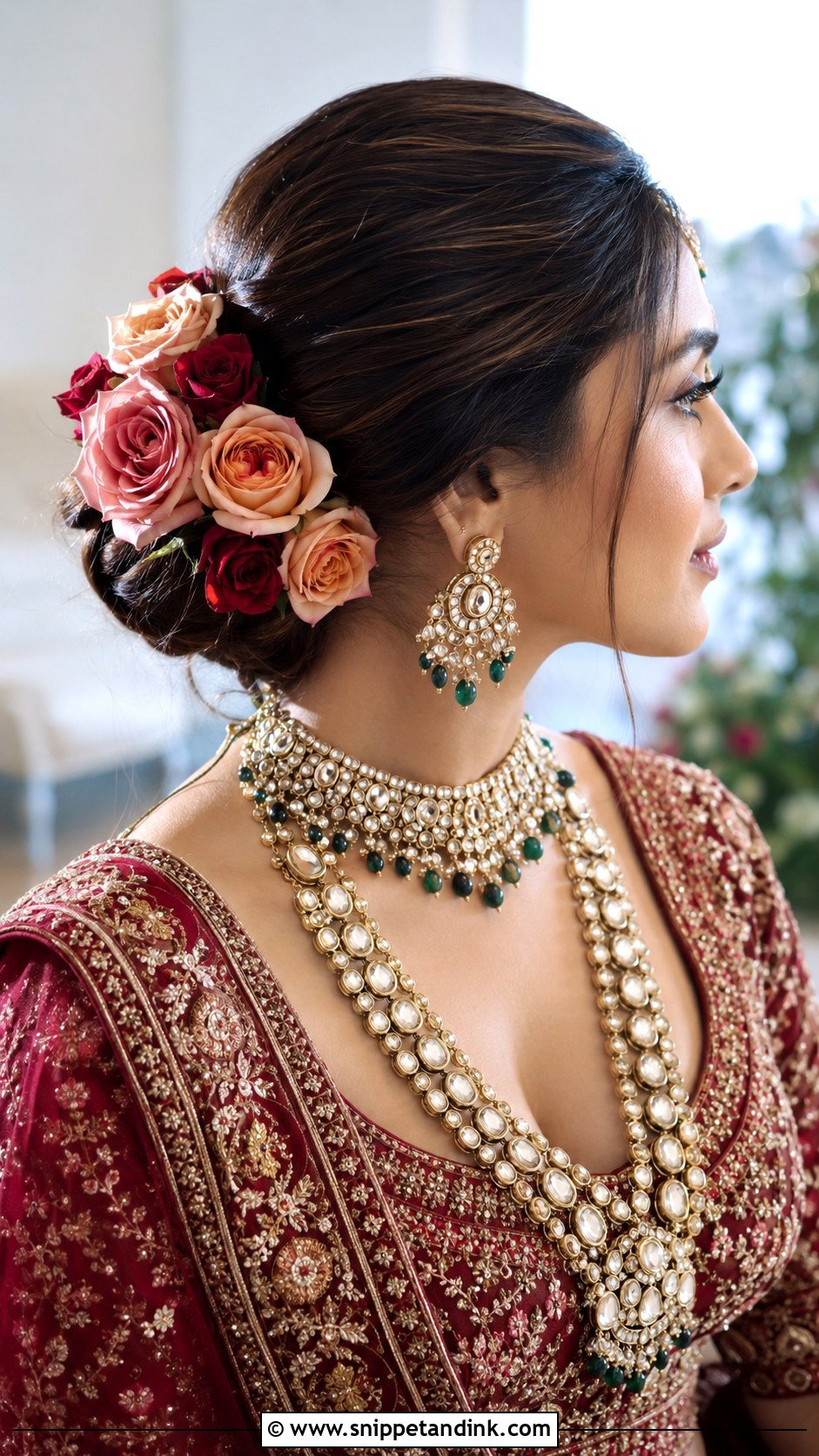
Soft roses tucked around a smooth updo give a garden feel and a clear focal point at the back. I’d pick roses that contrast with your lehenga rather than match it, because matching roses disappear against the fabric in photos. Roses are fragile; the petals bruise when the dupatta drags over them, so I place them low on the updo, below where the drape sits. The front stays clean and refined, and the updo holds heavy jewelry well through the ceremony. Ask your florist for buds just opening, which hold their shape longer than full blooms.
17. Bridal Bun With Side Braid
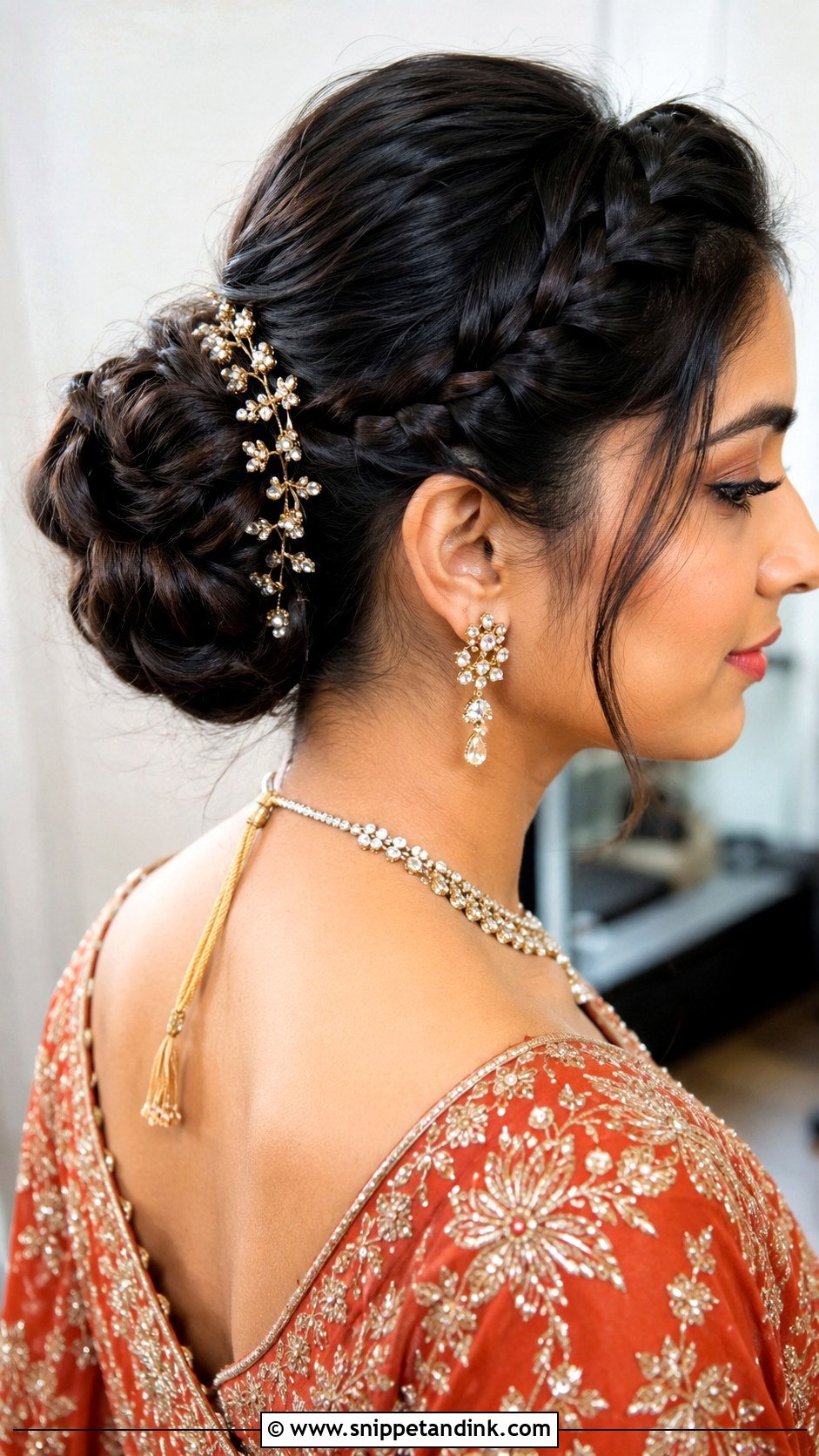
A structured bun with a delicate side braid gives the front a bit of interest without much bulk. The braid runs along one side of the hairline and flows into a polished bun at the back. I make the braid small and lift its edges slightly so it reads from a distance. Tiny flowers, pearls or jeweled pins along the braid add detail. It’s a quiet, versatile choice for engagements, receptions or the wedding day, and I’d suggest it for brides whose jewelry is the main event.
18. Curly Open Hair With Diamond Pins
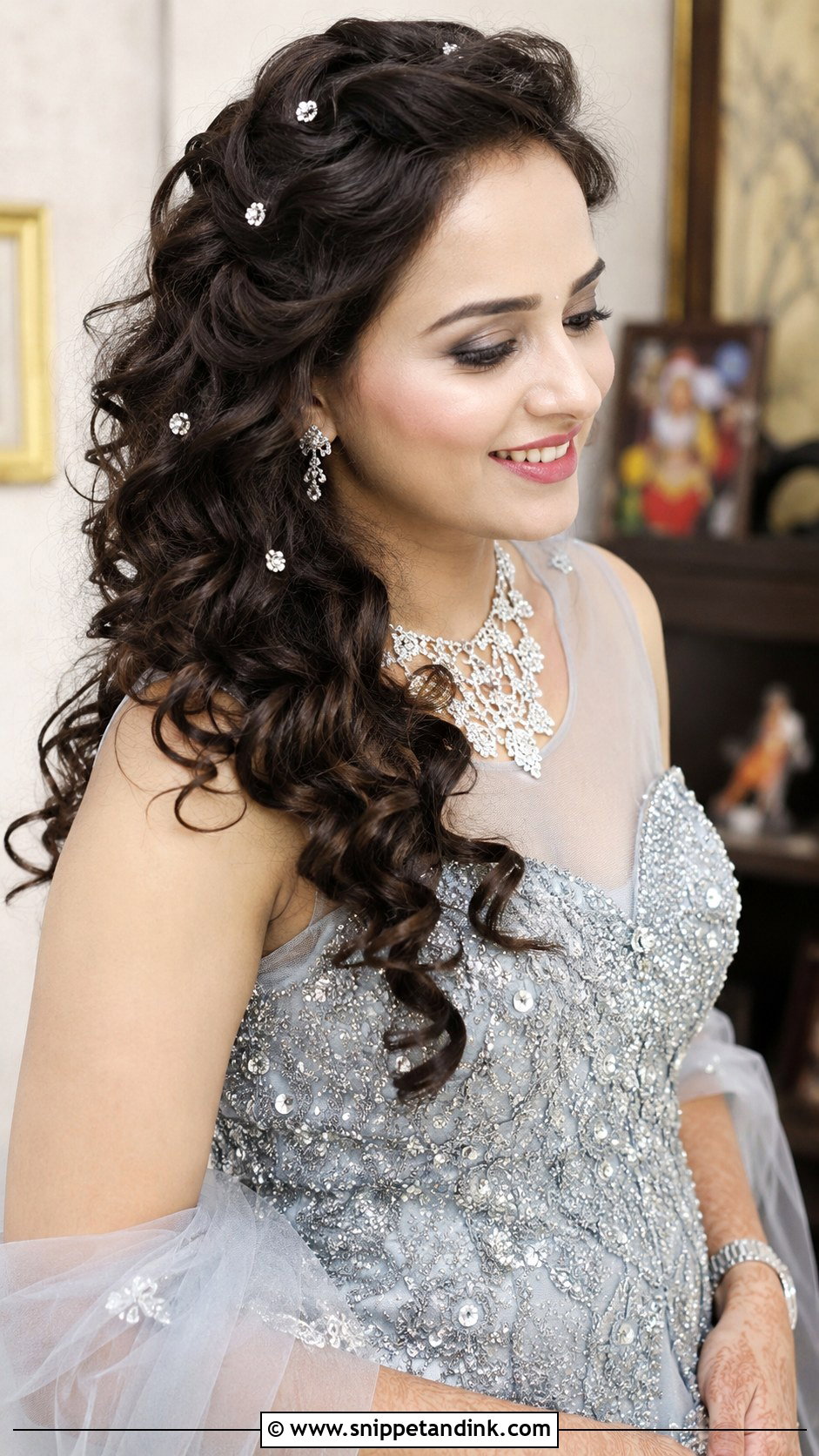
Loose curls left open with diamond or crystal pins scattered near the front give movement and sparkle together. I place the pins after the curls are brushed out, sliding each over a plain bobby pin hidden beneath, so the decorative pin doesn’t take the weight and slip out mid-dance. It’s a good fit for receptions, cocktail events or pre-wedding shoots. Sweep one side back to show off the pins or keep the curls full. Naturally curly hair suits this especially well; I’d enhance your own curl pattern rather than iron it into a new one.
19. Dutch Braid Half Updo
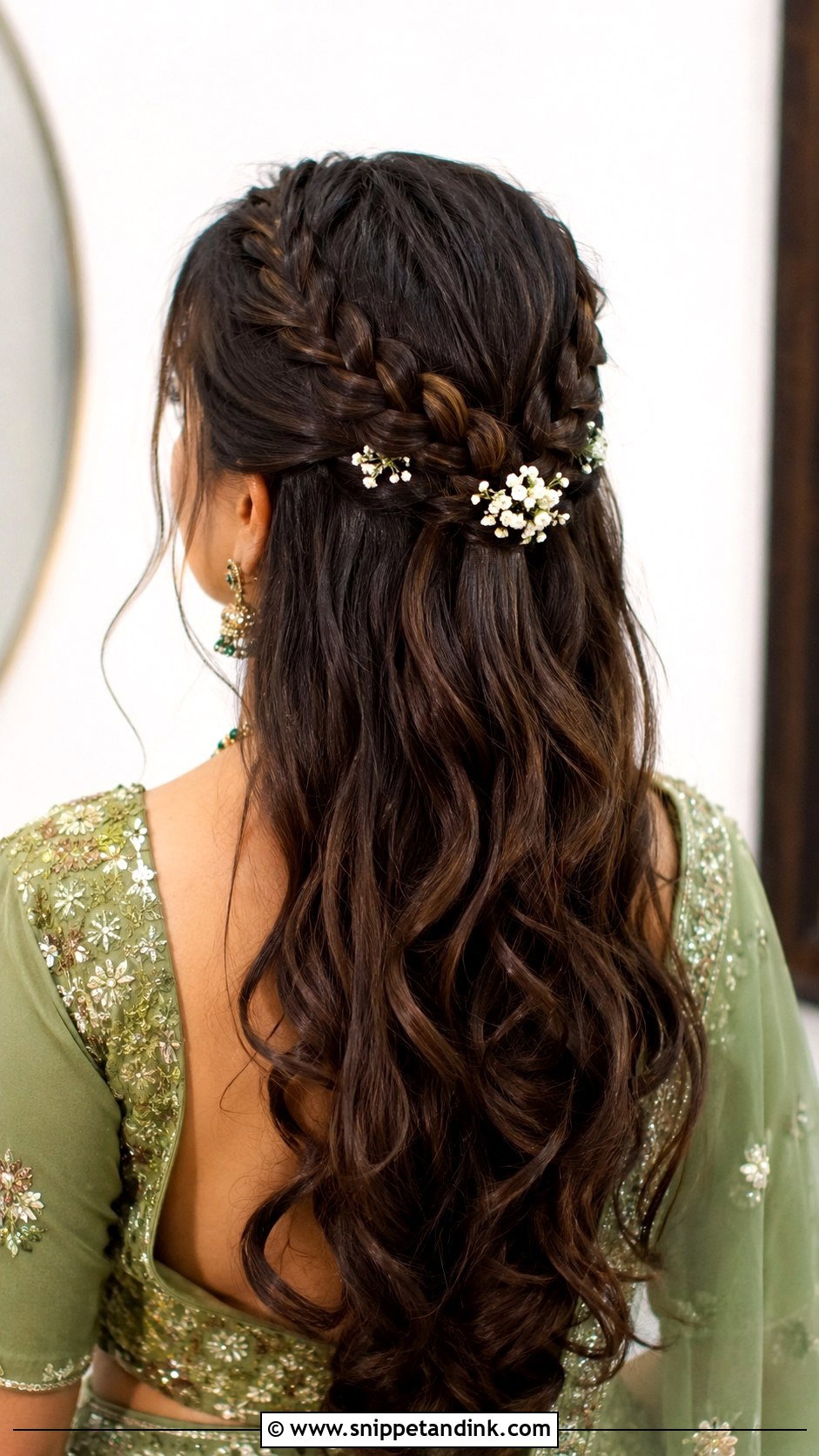
Two Dutch braids start at the front, meet at the crown, and leave the rest of the hair loose below. Because a Dutch braid sits on top of the hair rather than lying flat, it shows clearly in photos and adds dimension up top. I pancake the braids after tying them for extra width. It’s a youthful pick for mehndi, haldi and sangeet. Curl or straighten the length below, and add small flowers or pins where the braids meet. The braids hold for hours, which suits events where you’ll be dancing.

20. Donut Bun With Gajra and Tikka
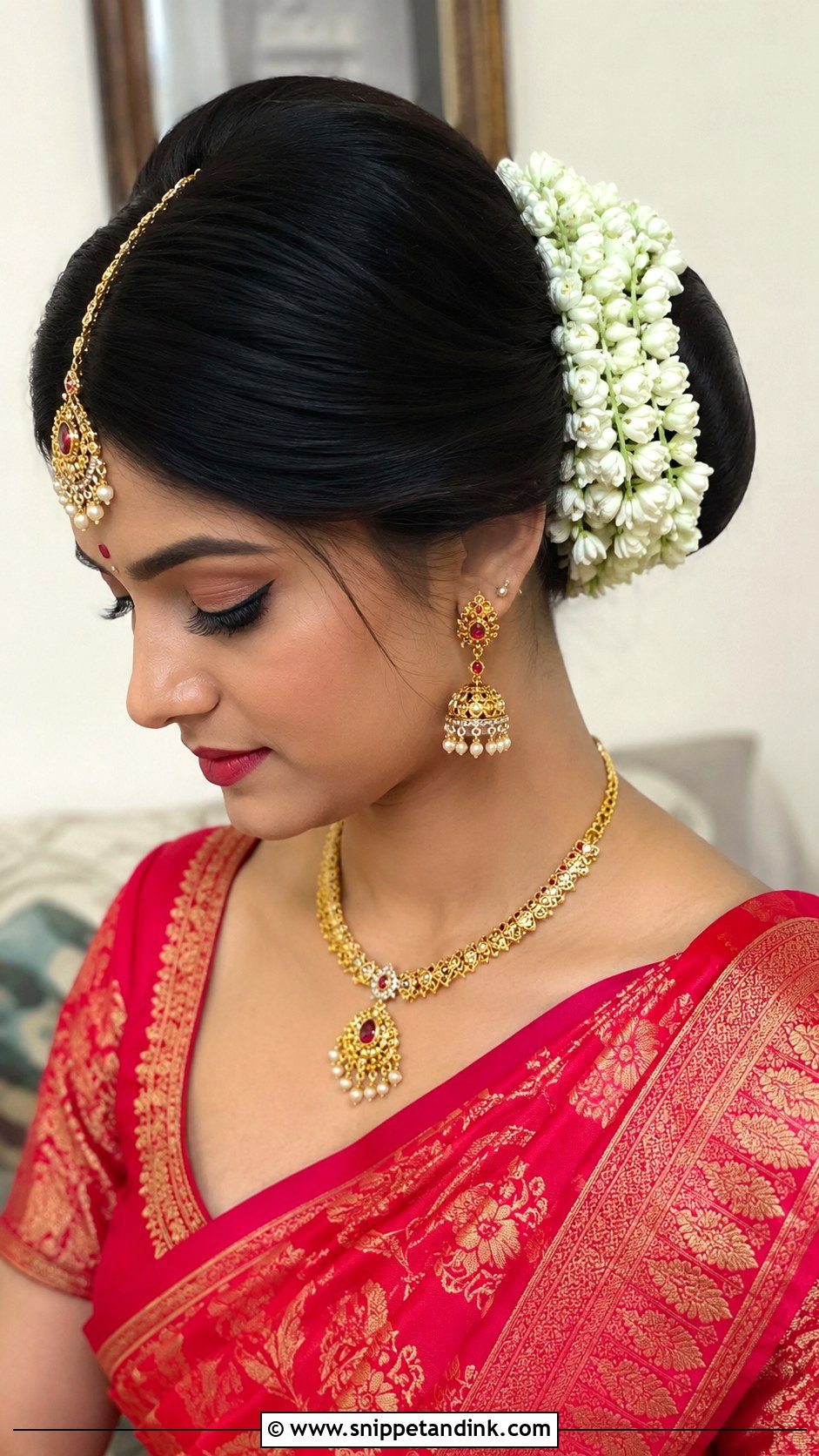
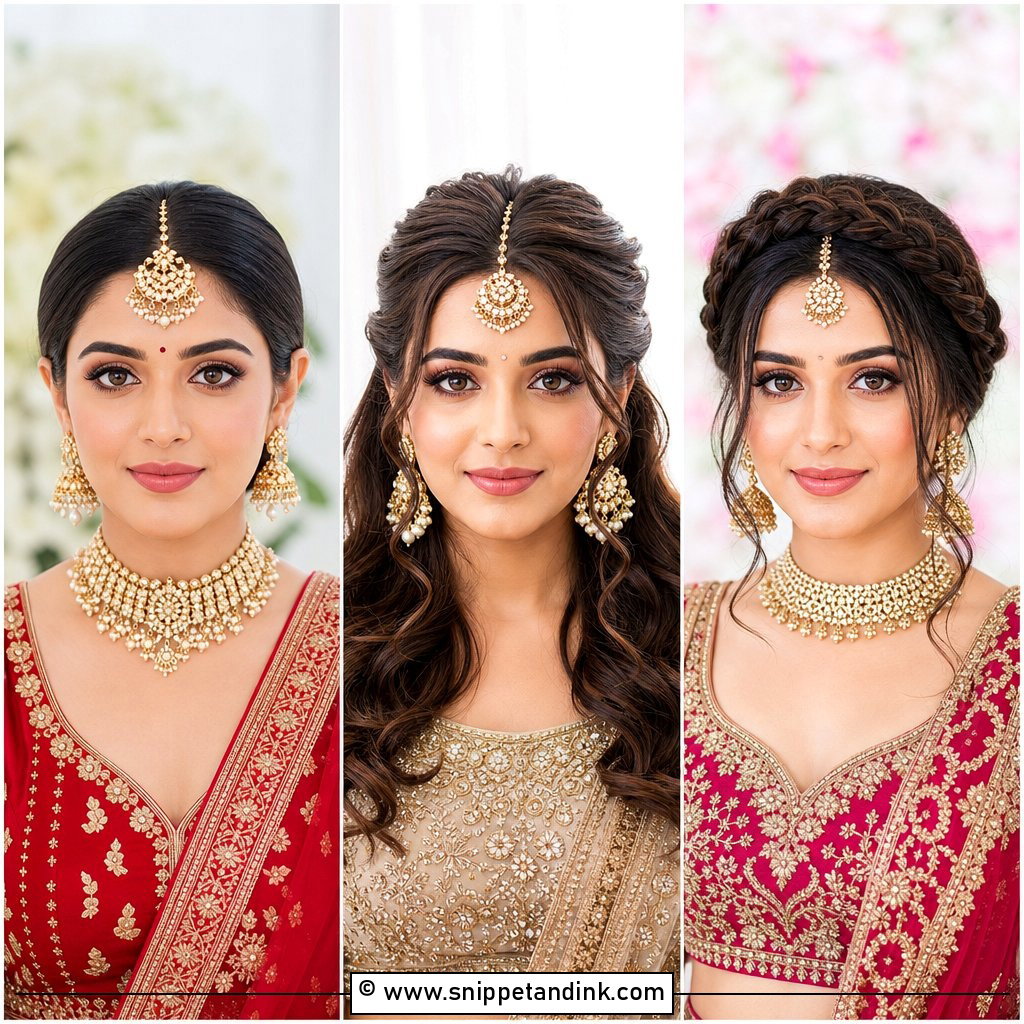
A neat donut bun wrapped with gajra is the traditional bridal classic. The smooth, rounded bun sits at the back, the jasmine strings add fragrance, and a maang tikka sits on the center part. I build the bun over a foam donut in a shade close to your hair, then pin the gajra in loops around it so the weight is spread rather than hanging from one point. It suits most face shapes, holds heavy jewelry securely and stays put through the ceremony. Keep the front sleek or add a soft puff for height.
Four Events in One Week: Pacing Your Hair So It Lasts
An Indian wedding is rarely one hairstyle. Mehndi, haldi, sangeet, the ceremony and the reception can fall within a few days, and the hair takes a lot of backcombing, heat and pins in that time. Pacing it makes a visible difference by the reception.
Wash on the right days
Hair washed the day before holds a puff and pins far better than hair washed that morning. I’d plan washes around the big styles: one wash before the ceremony, one before the reception if they’re on separate days. After haldi, wash out turmeric the same day, as it can tint light or highlighted hair the longer it sits.
Go easy on oil before the big days
A champi before the wedding is lovely, but leave a couple of days between oiling and the ceremony. Even after washing, oil residue at the roots makes backcombing slide and lets pins slip.
Keep the jasmine fresh
Gajra is best bought on the morning of the event. If it arrives early, wrap it in a damp cloth and keep it cool, away from fruit. I pin it on as close to leaving as possible, because jasmine starts to brown once it has been against warm hair for a few hours.
Between events, take styles down gently. Remove every pin, brush out backcombing from the ends upward with a wide-tooth comb, and use a little conditioner on the lengths. Ripping out a teased puff at midnight is how brides end up with breakage at the front before the reception.
Which Front Will Carry Your Heaviest Jewelry?
Of all the decisions here, the jewelry and the drape should guide the front more than the trend. A puff or donut bun handles a heavy tikka and dupatta; open curls and twists are for the lighter events. For the trial, bring the actual tikka, matha patti and dupatta, or something of similar weight, and wear the style for a few hours. That’s when you find out whether the chain pulls, the puff sinks or the pins dig in. Pick one look for each event and let the reception be the one where you play.
You'll Like These Ideas:








Leave a Reply