
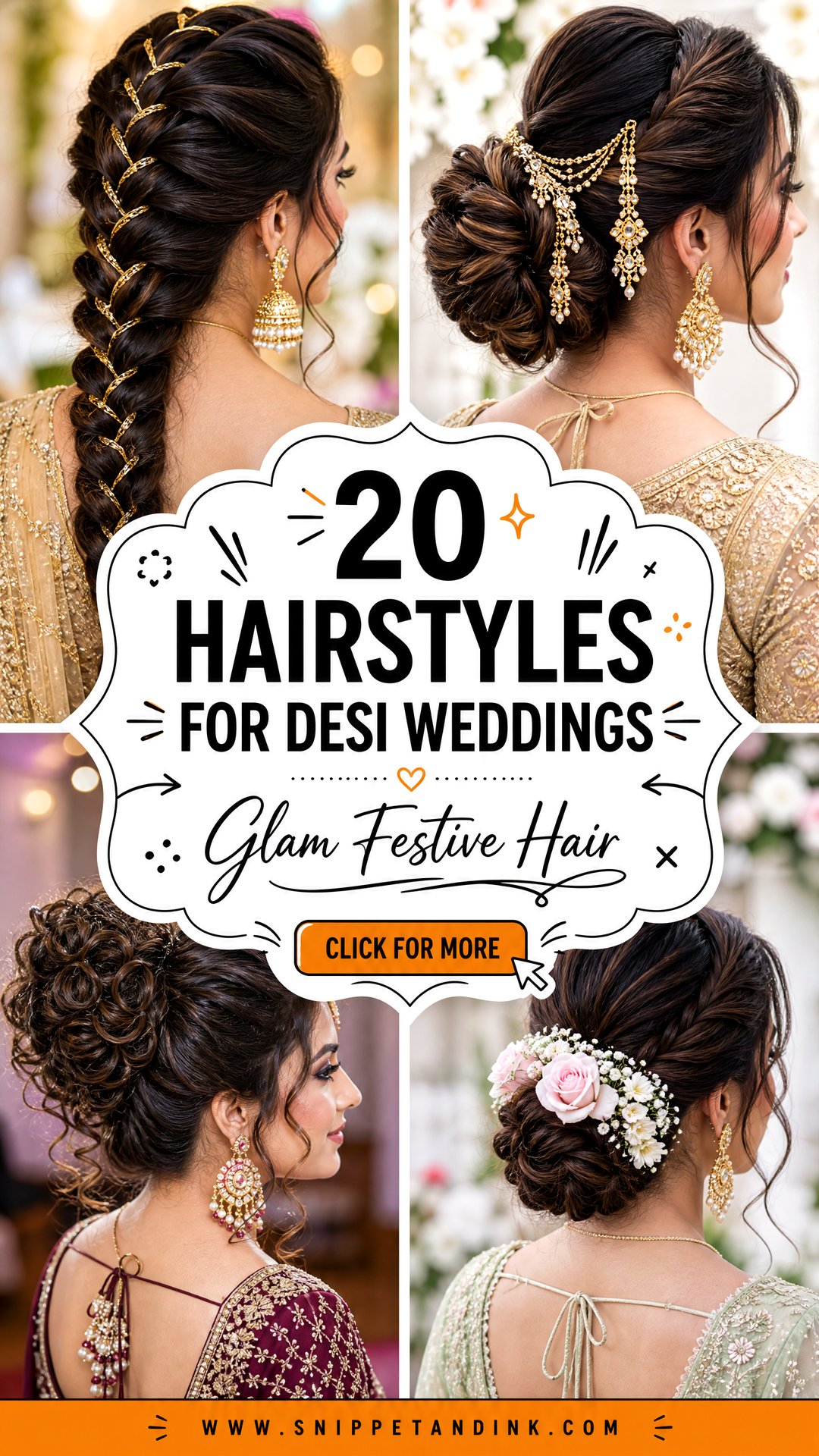
A desi wedding isn’t one hairstyle, it’s four or five, spread across mehendi, sangeet, the ceremony and the reception, often with only a night’s sleep between them. Bride, bridesmaid or cousin, your hair has to sit under a dupatta, carry a tikka and survive hours of dancing. I’ve gathered twenty styles I use across those functions, from jasmine-wrapped buns to Hollywood waves and pearl-threaded braids, and for each I’ve noted what makes it hold and when I’d choose something else.
Mapping Hair Across Mehendi, Sangeet, Shaadi and Reception
When I’m booked for several days, I plan the hair as a sequence, not a list of favourites. Heavy styling every day is hard on the scalp, and teased, sprayed hair needs a gentle wash before it can be styled well again. So I put the most structured look on the day that needs it most, usually the ceremony, and keep the days around it lighter.
- Mehendi: a braid or pinned-back curls, because your hands are out of action for hours.
- Sangeet: something pinned firmly enough to dance in, like a soft bun or high bun.
- Ceremony: the most secure base, built to hold a dupatta, tikka and flowers.
- Reception: the glamour style, often open waves, since nothing has to sit on your head.
If two functions fall on the same day, tell your stylist early. I’ll choose a first style that can be taken down quickly, such as soft curls pinned half up, so the curl is still there to build the second look on.
1. Floral Bun for Desi Wedding
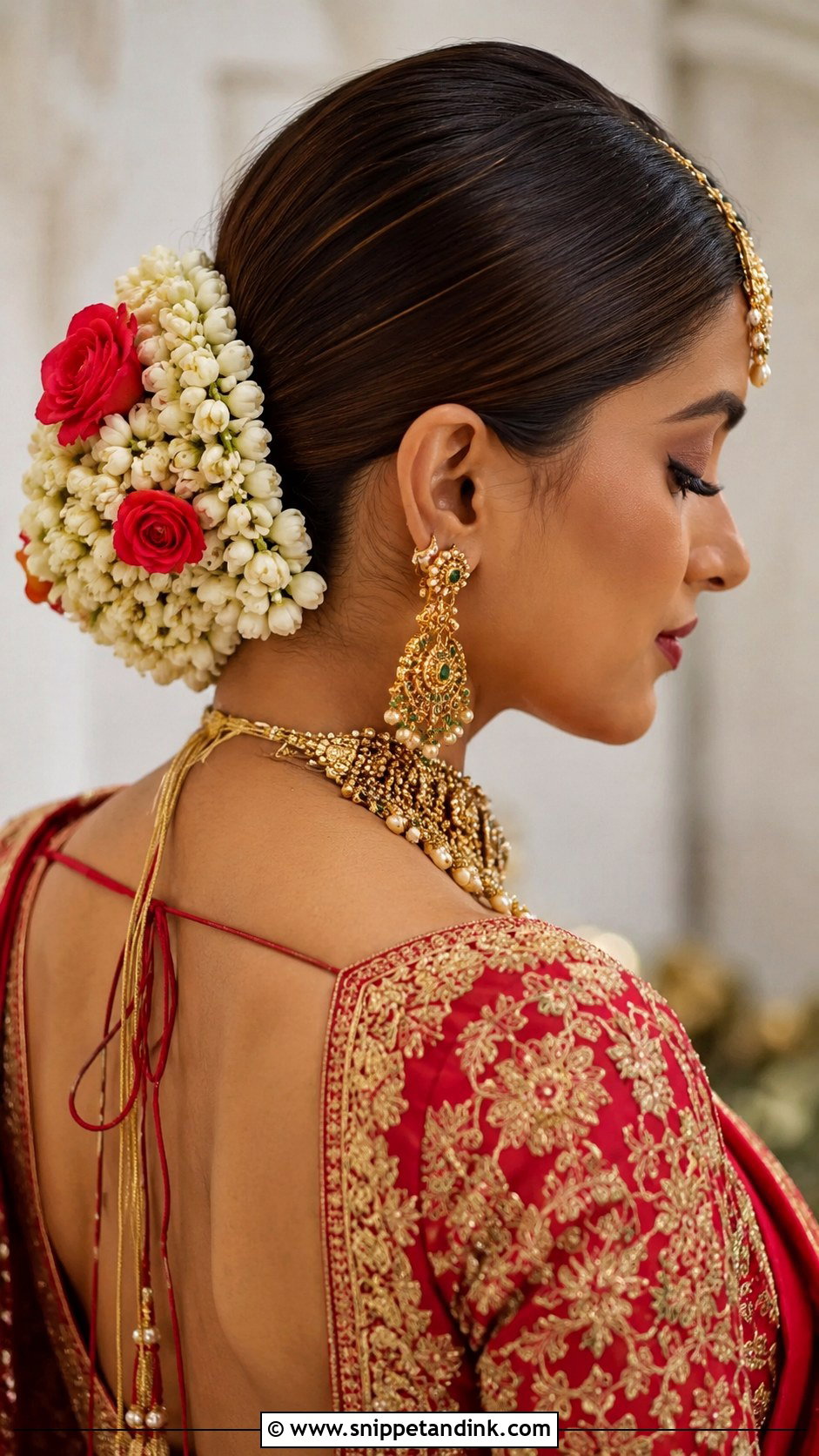
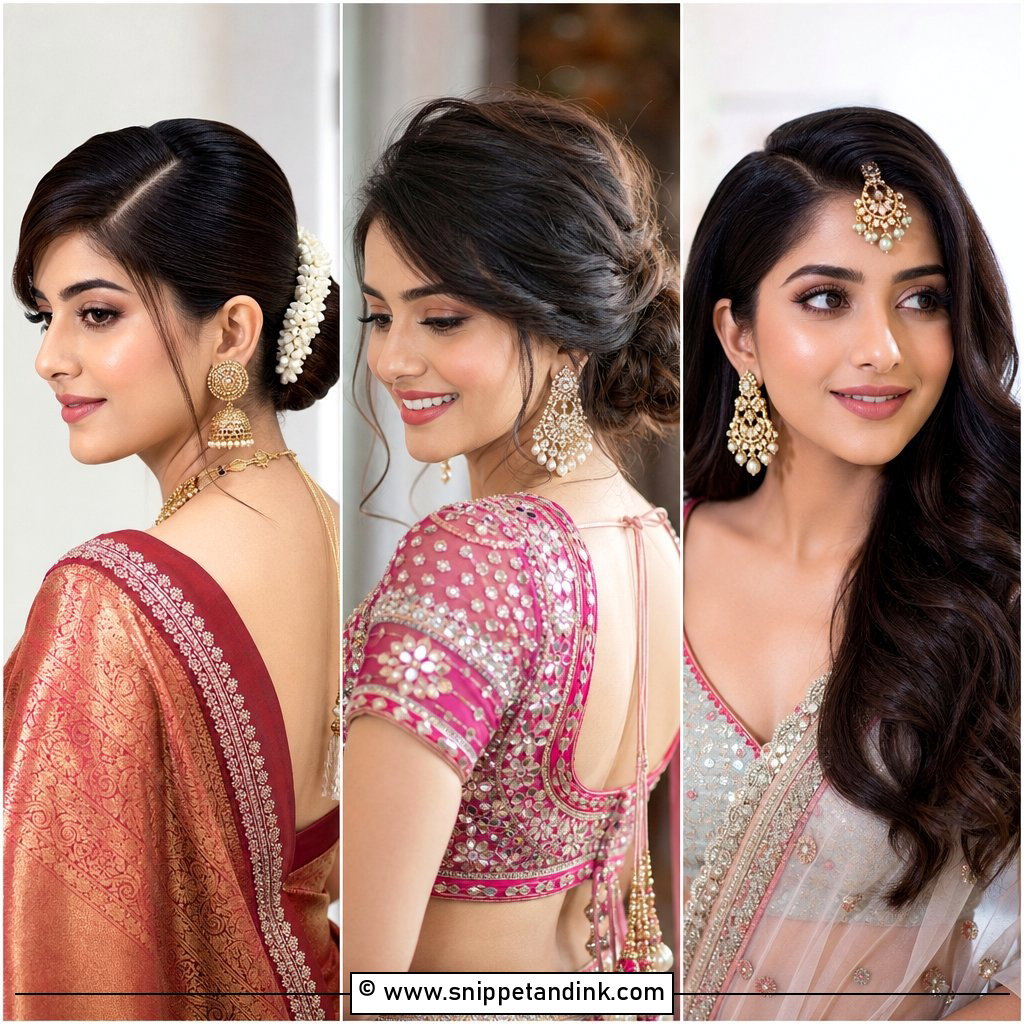
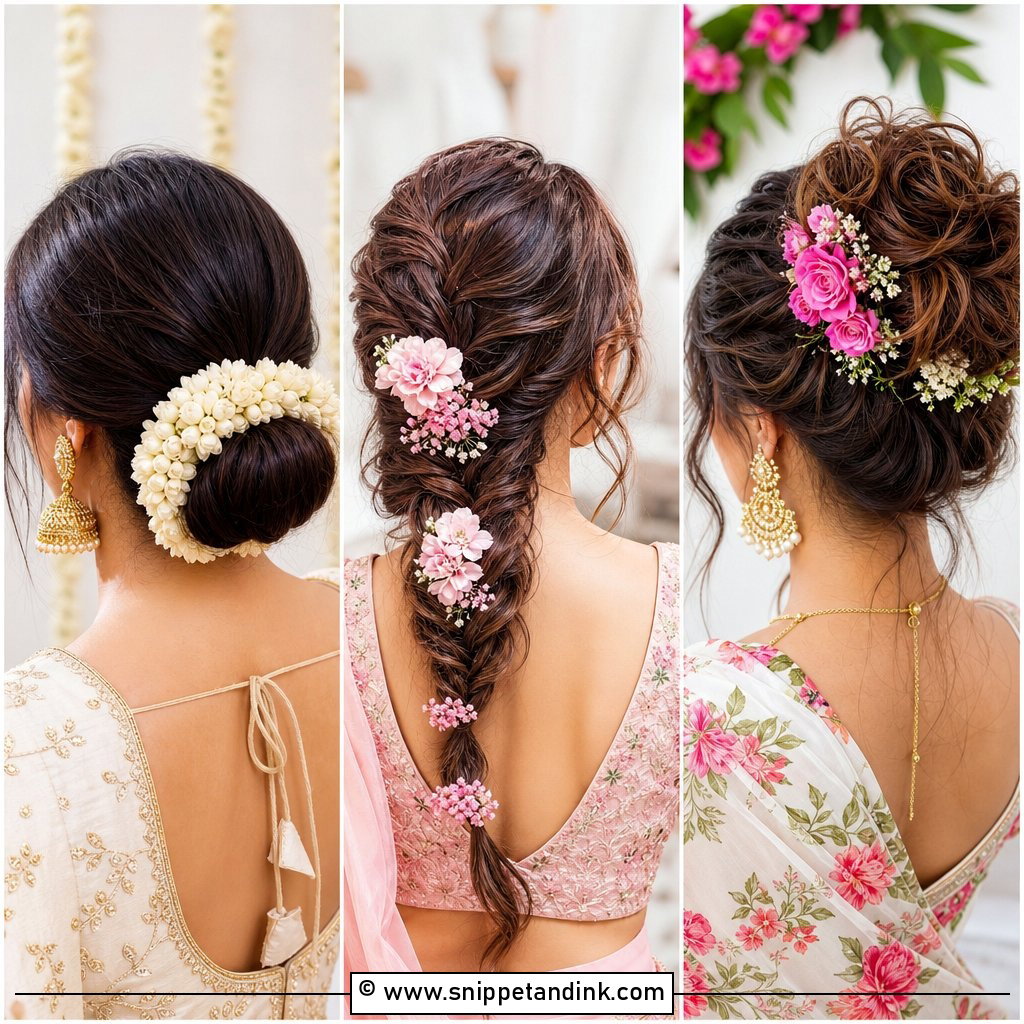
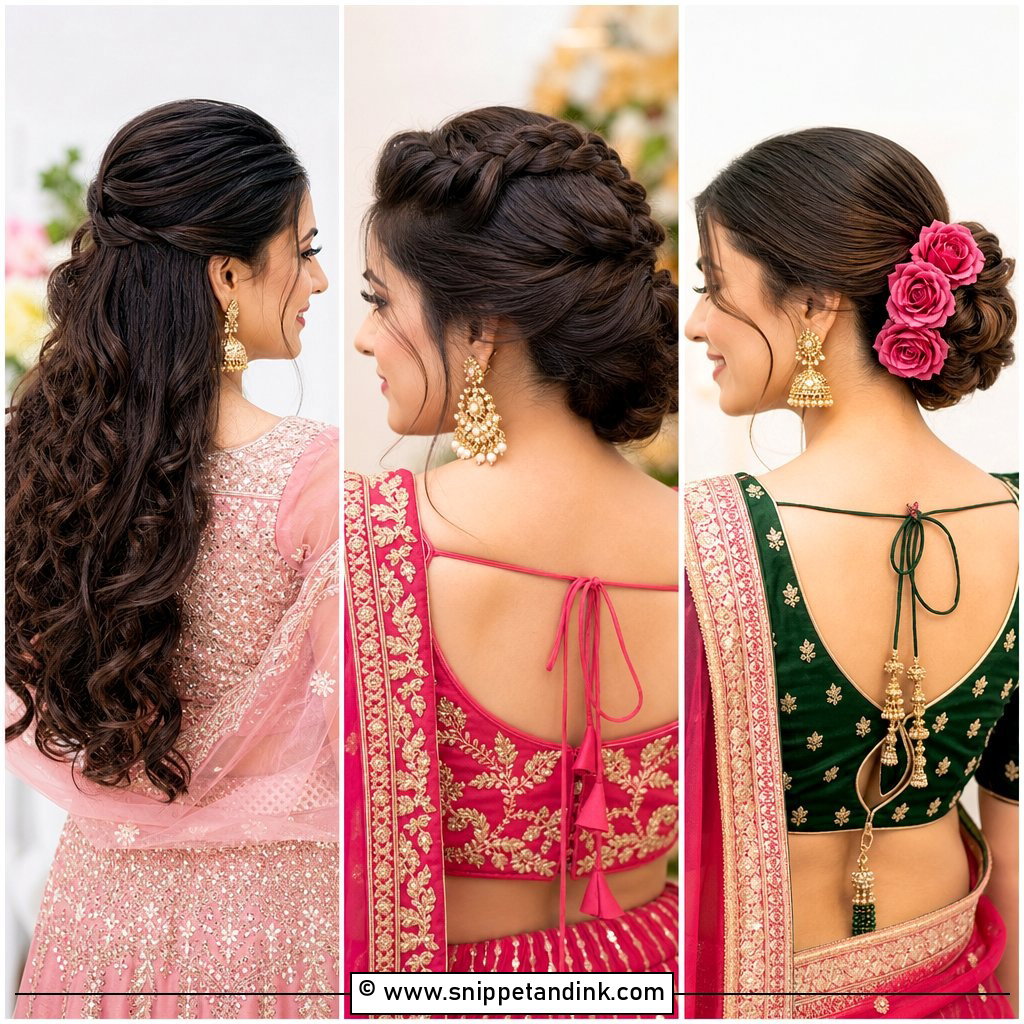
The flower-wrapped bun is the one I’m asked for most for the main ceremony. I build a smooth low bun, often over a padded donut so it keeps its size under the weight, then wrap strings of fresh jasmine or small roses around it with U-pins pushed through the strands into the bun. It sits well with silk sarees and heavy lehengas, and the fragrance is half the point. Tight and polished reads formal; slightly loose reads softer. Pin the maang tikka before the flowers so its hook isn’t buried.
2. South Indian Bridal Braid
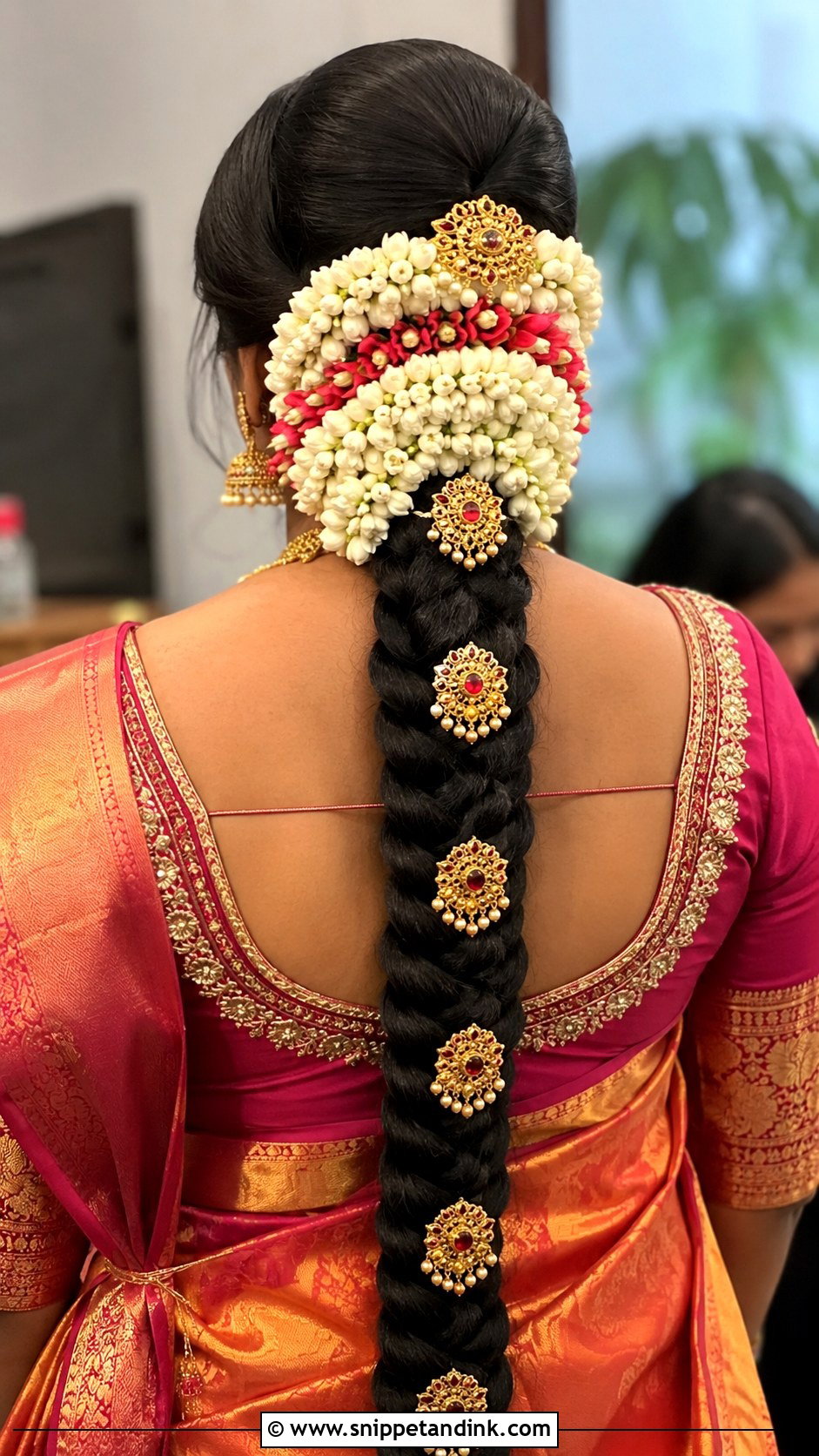
The South Indian bridal braid needs real length, and most brides wear a matching hair extension braided into their own hair to get the full length and thickness down the back. Then come the rows of flowers, the gold jadanagam pieces sewn or pinned along the plait, and the rakodi at the top. It belongs with a Kanjeevaram silk saree and temple jewellery. Once it’s built, it barely moves through hours of rituals. The trade-off is weight; I stitch the jewellery to the braid at several points so it doesn’t pull on one spot at the crown.
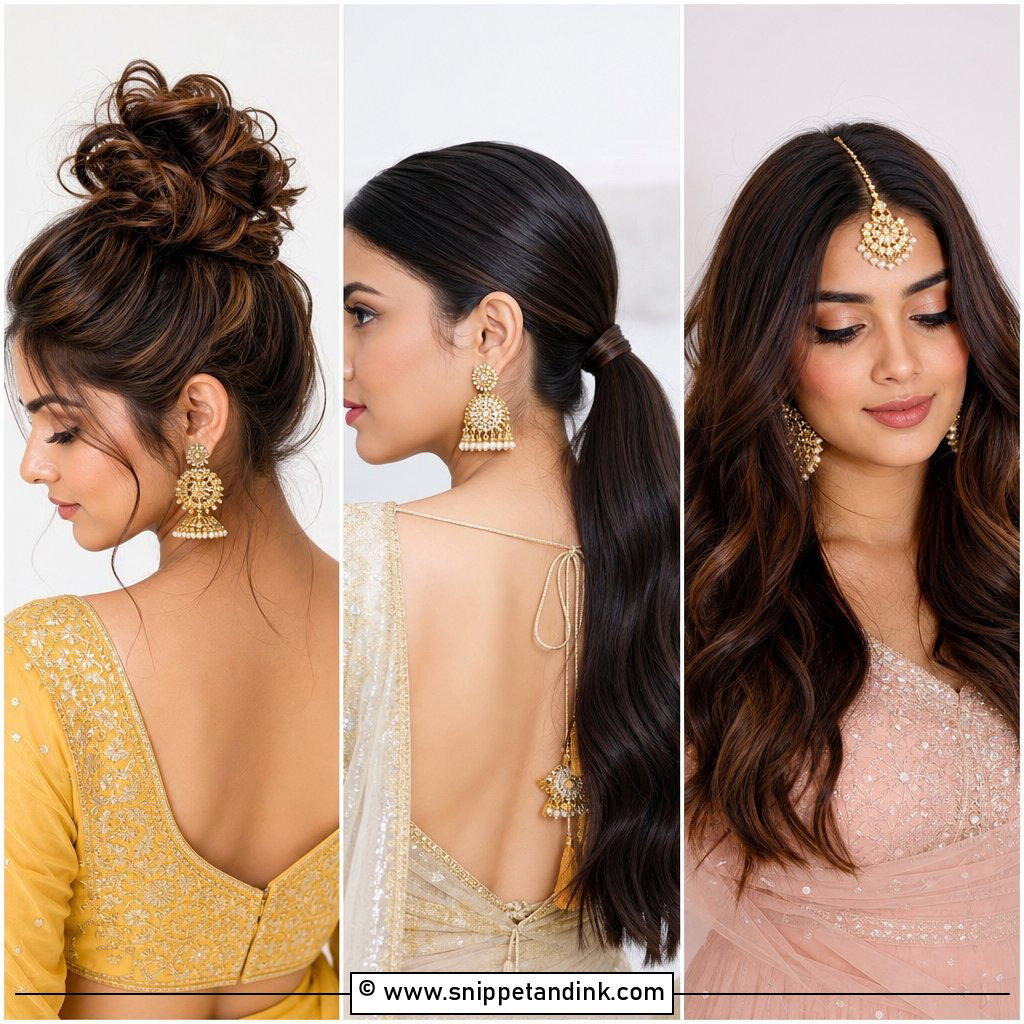
3. Messy Bun for Sangeet Night
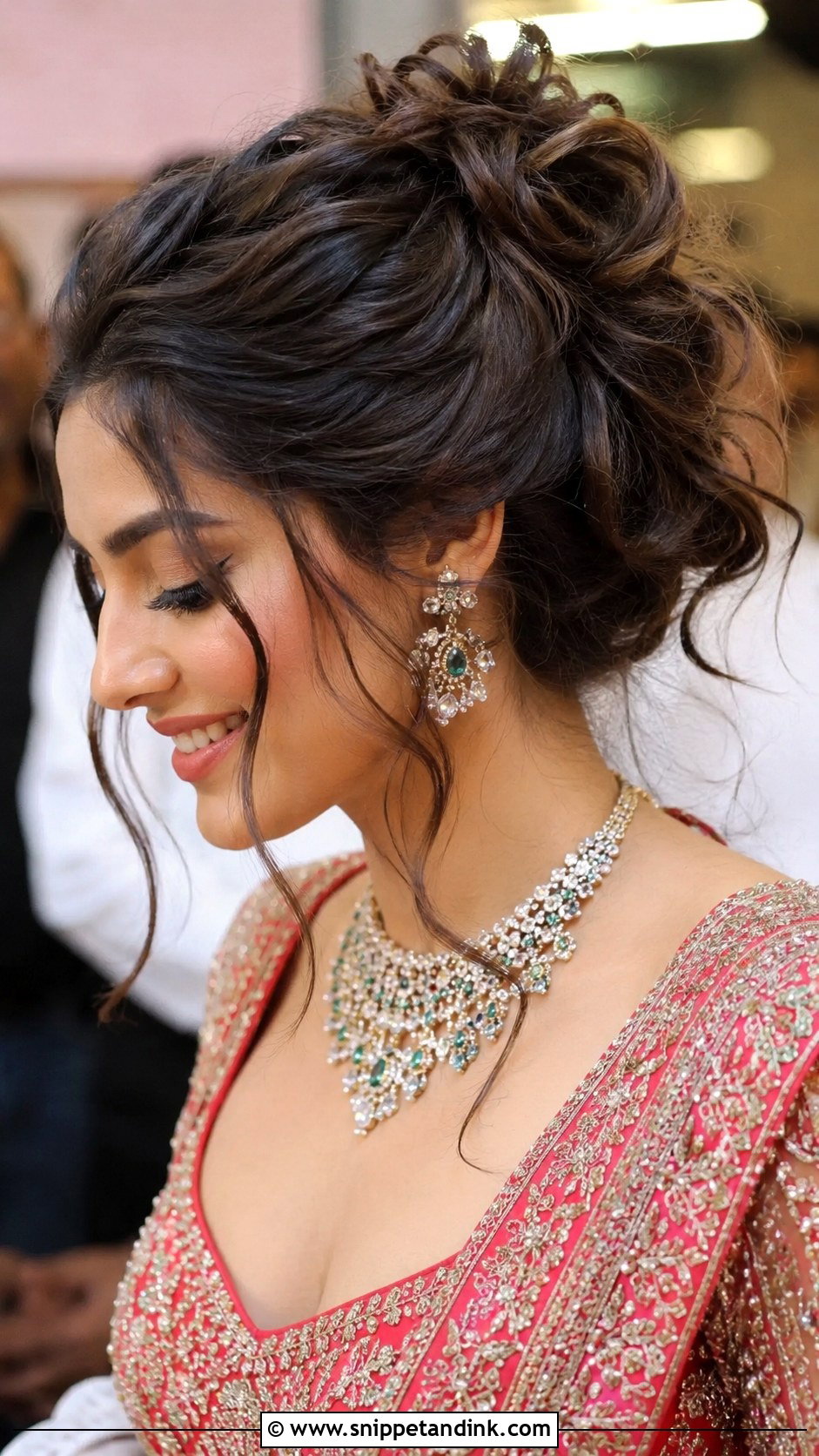
For the sangeet, I’ll give you a soft bun you can dance in. It’s loose tendrils at the face and a little crown height, but the bun itself is pinned firmly from four directions, which is the part nobody sees. Statement earrings and a flowy lehenga or sharara suit it. A small floral clip or a couple of jewelled pins finish it off. If your hair is very silky, I’ll curl it first so the bun has something to grip; otherwise it slides by the second song.
4. Hollywood Waves for Reception
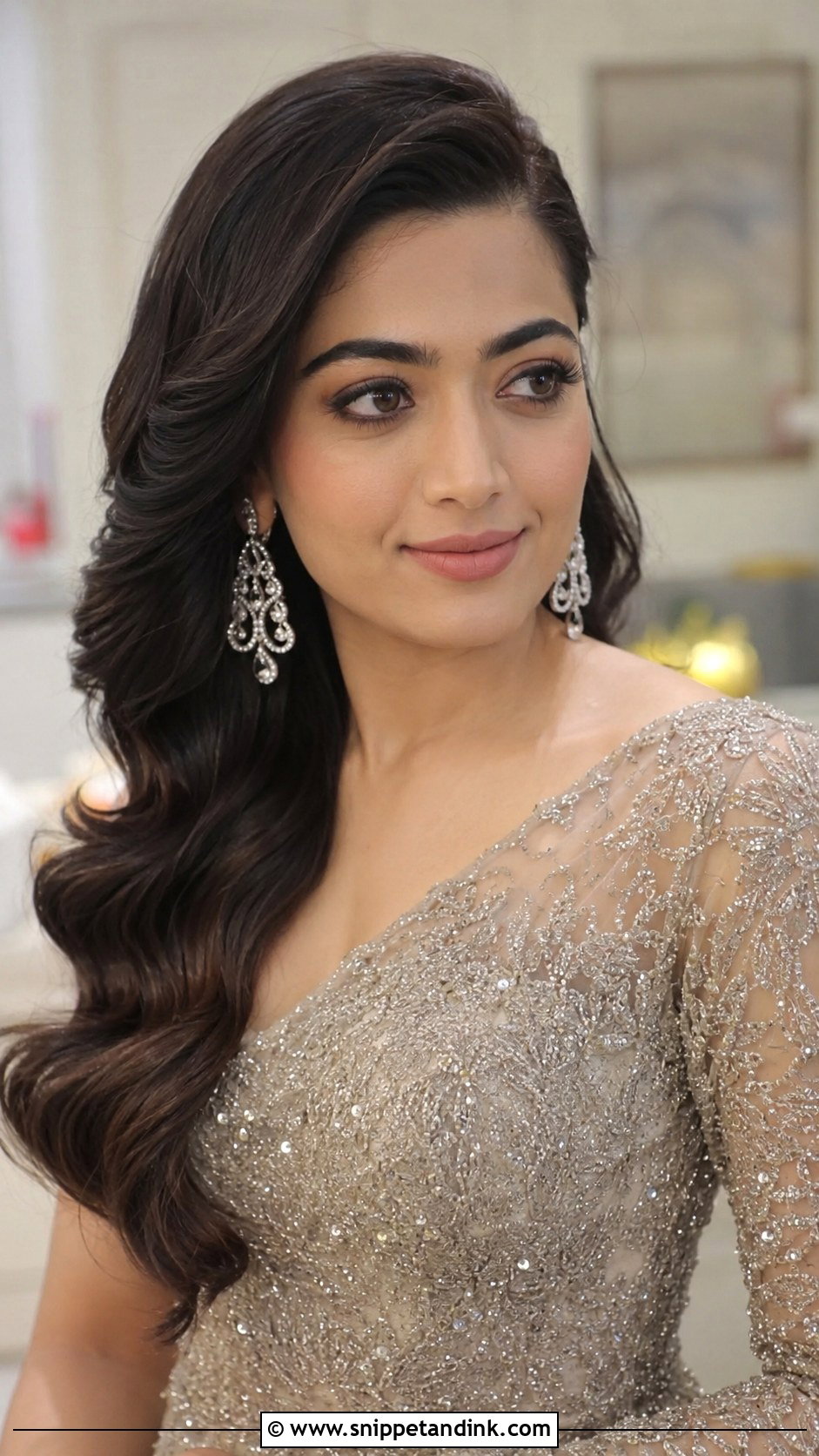
Reception night is where I bring out Hollywood waves. Each curl is set in the same direction, clipped to cool, then brushed into a continuous S-shaped wave that falls over the shoulders. A sleek side part with a sparkling gown or modern lehenga is the classic pairing. Under reception lighting the gloss catches beautifully, which is why I finish with a shine spray rather than more hold. Bold lipstick and chandelier earrings complete the look. Be warned, it’s a hairstyle that takes time; budget at least an hour in the chair.
5. Half-Up Half-Down Style
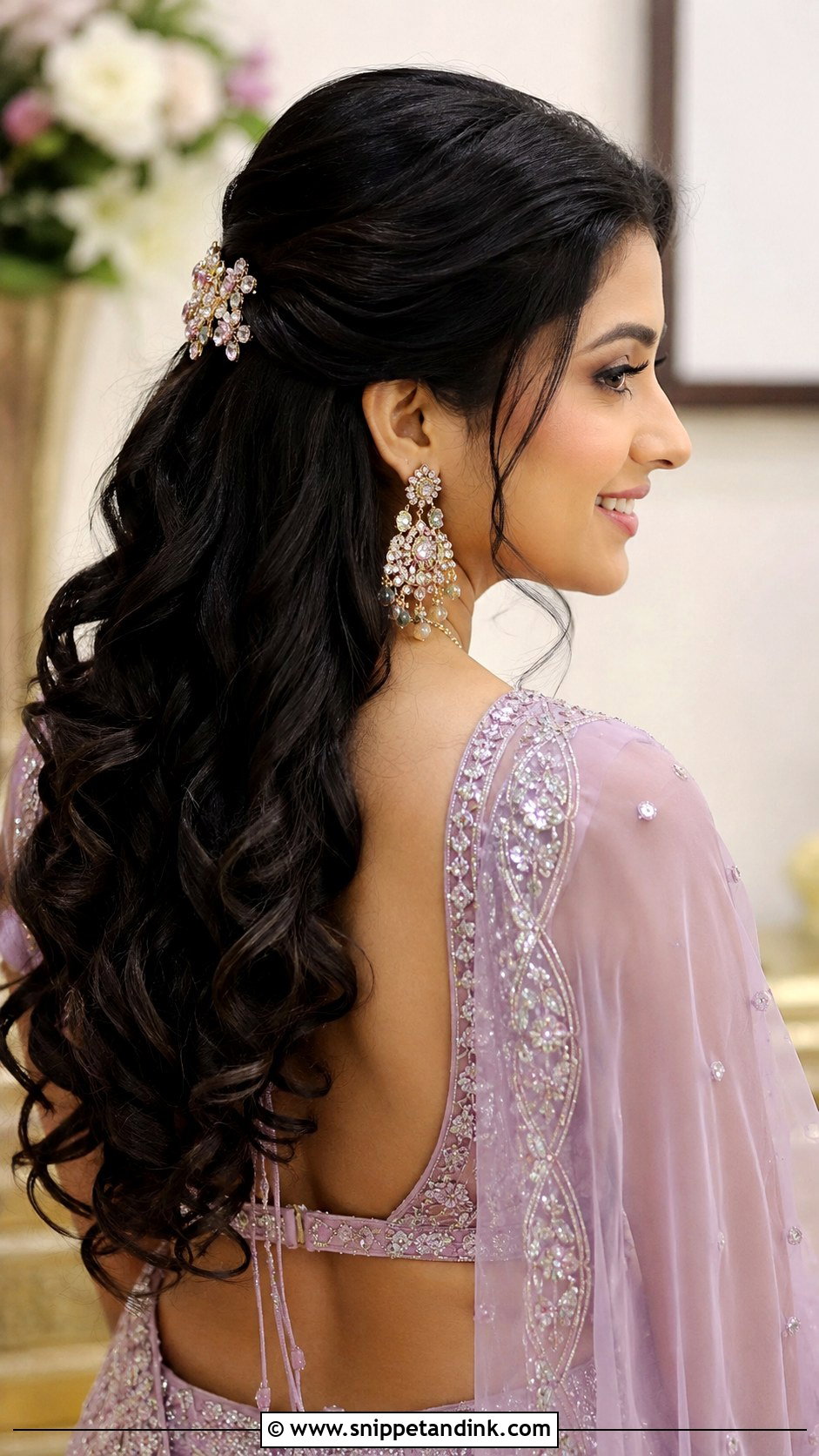
Can’t decide between an updo and open hair? Half up, half down solves it, and it works from haldi to the cocktail night. I pin the top back with crossed pins under a small twist so it stays put under a dupatta, while the rest falls in soft waves. A jewelled clip, a small braid or a few flowers at the crown all dress it up. One honest caution: on a very hot outdoor day, the loose length will stick to your neck, so I’d save it for evening or indoor functions.
6. Gajra Bun for Traditional Look
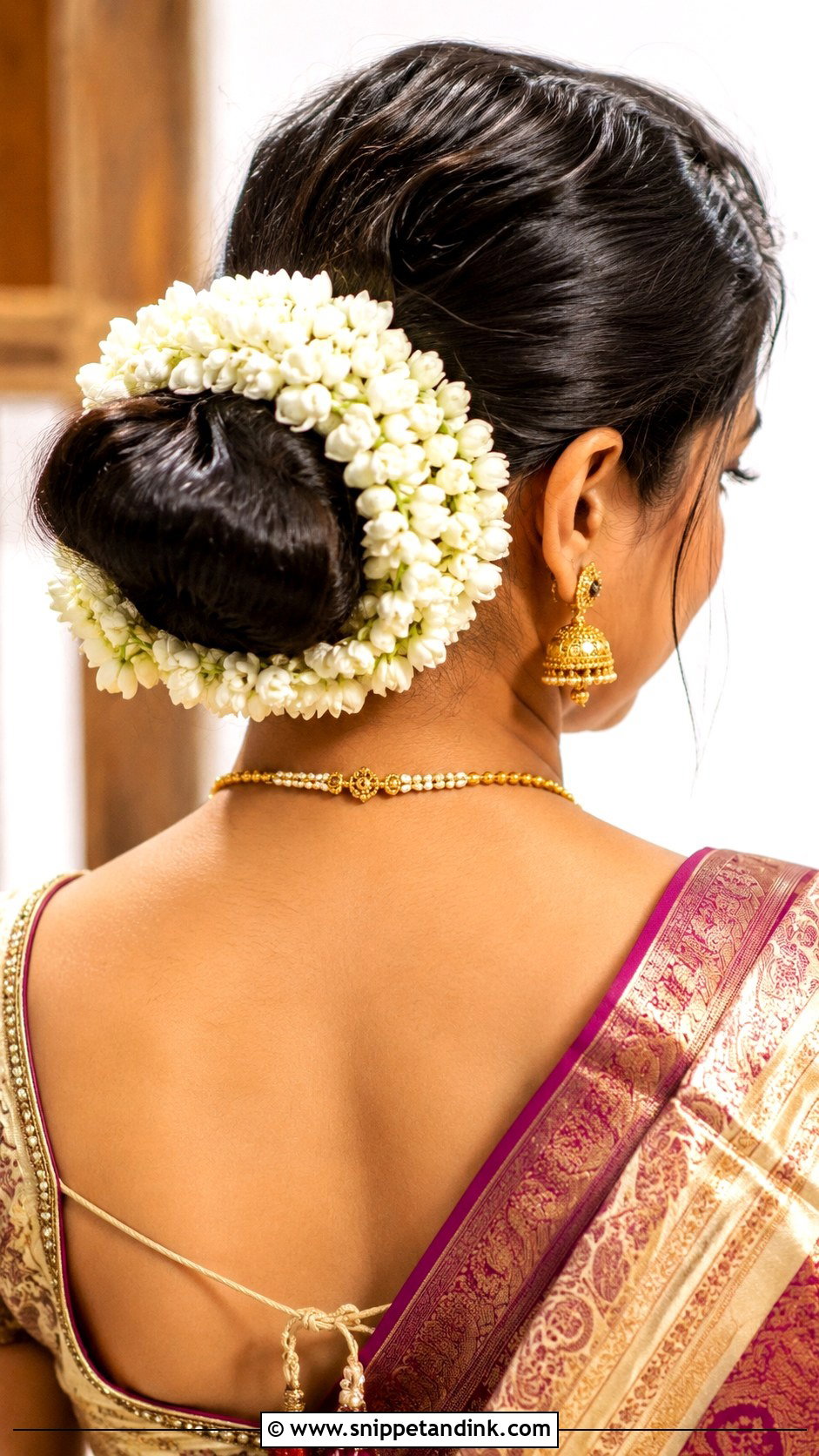
A gajra bun is a neat low bun circled by a garland of jasmine, and at a temple wedding or traditional ceremony it still feels exactly right. Silk sarees and gold temple jewellery pair with it naturally. I attach the gajra last, after the dupatta is settled, because jasmine bruises easily and goes brown where it’s handled or pressed. A slight pouf at the front adds height if you’d like it. Ask your florist to deliver the gajra in a damp cloth so the buds open slowly through the ceremony rather than all at once.
7. Fishtail Braid With Pearls
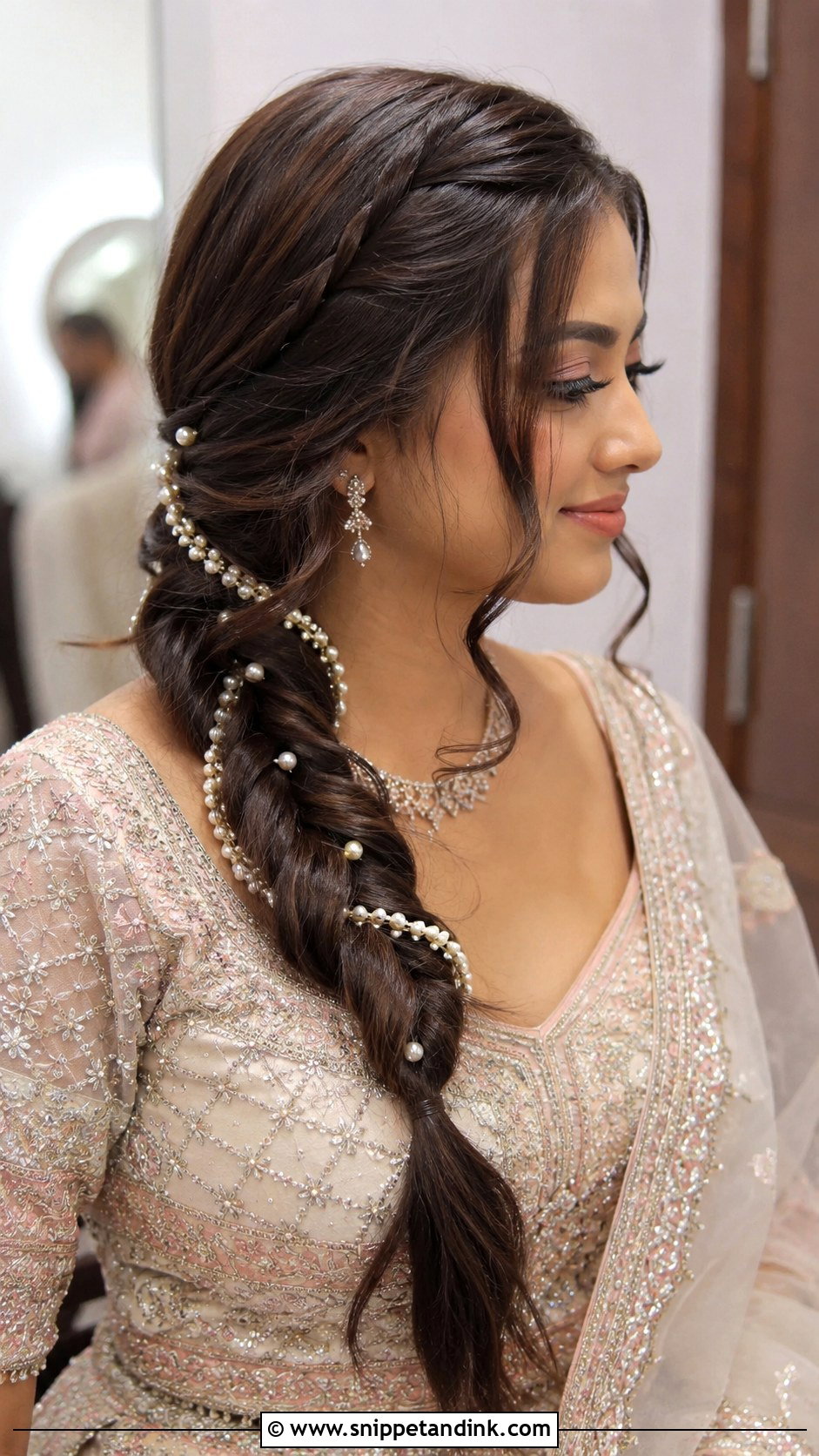
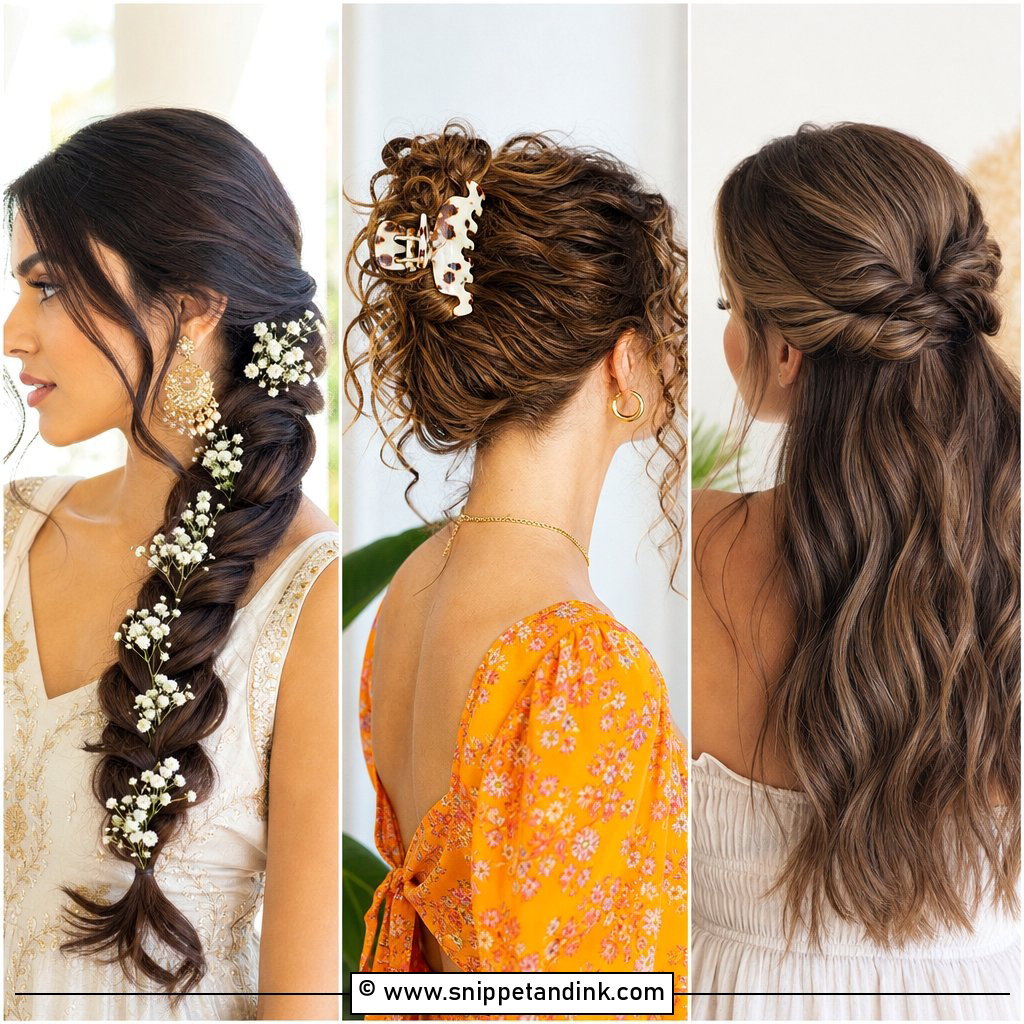
A fishtail braid woven with pearls works best at the engagement or cocktail night. The fishtail looks intricate, and pearls bring a soft shimmer. I thread pearl pins in after braiding, angled into the braid’s edges so they stay put, rather than weaving strands of pearls through, which tangle. It goes with lehengas, suits and fusion outfits. Worn to one side it feels romantic; centred, it’s symmetrical. Fine hair benefits from texture spray before braiding, or the fishtail looks thin.
8. Dutch Braid With Gold Thread
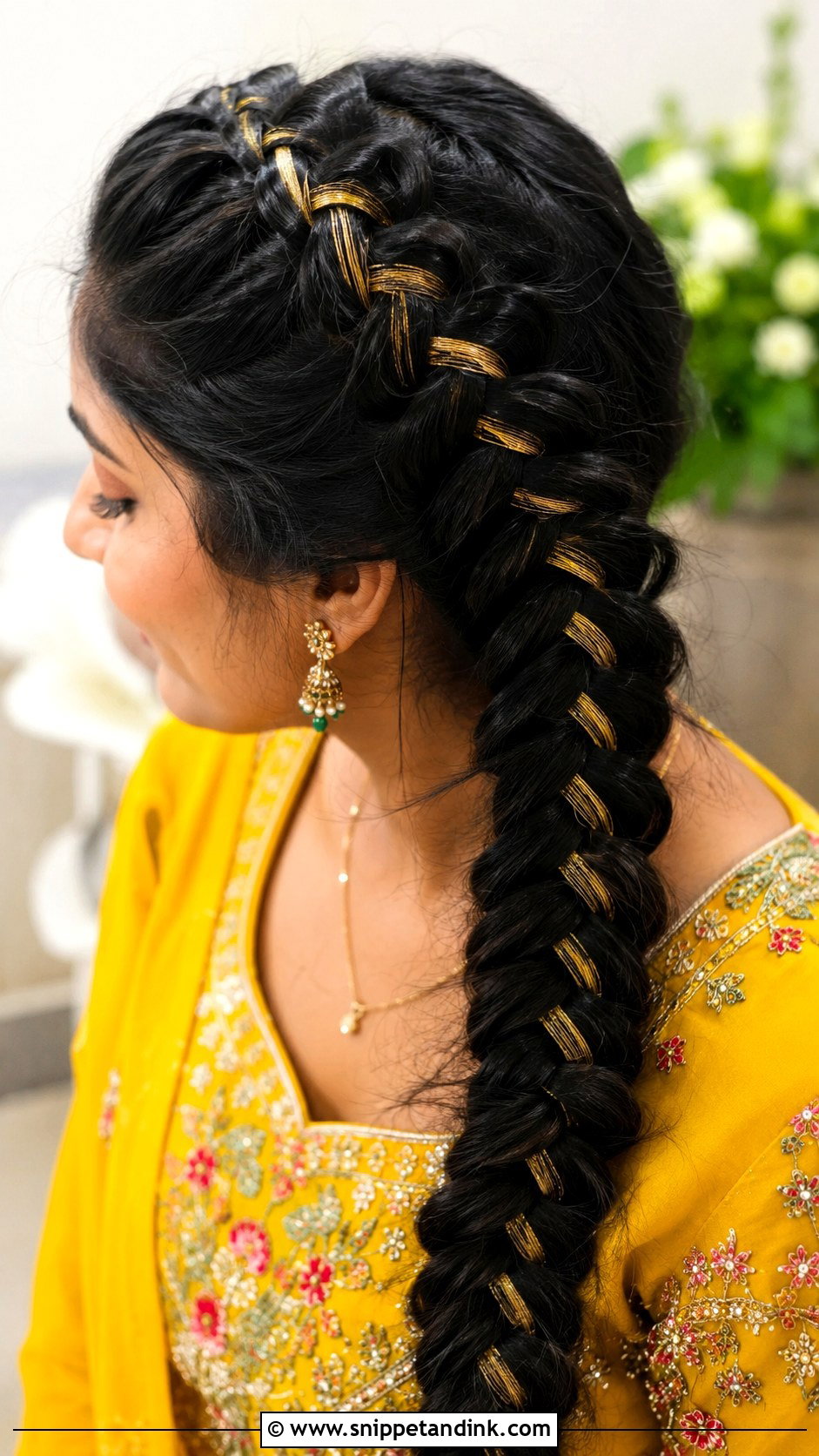
A Dutch braid laced with gold thread suits the mehendi or haldi function, where you’re sitting for hours and want hair completely out of the way. The braid sits raised on the head, so the gold shows clearly against dark hair. One thick braid or two both work with bright yellows, greens and floral prints. I tie the thread in at the start and braid it in as a fourth strand. For haldi, remember the turmeric paste stains; this braid keeps hair away from it, but wear an old scrunchie, not your best clip.
9. Low Bun With Middle Parting
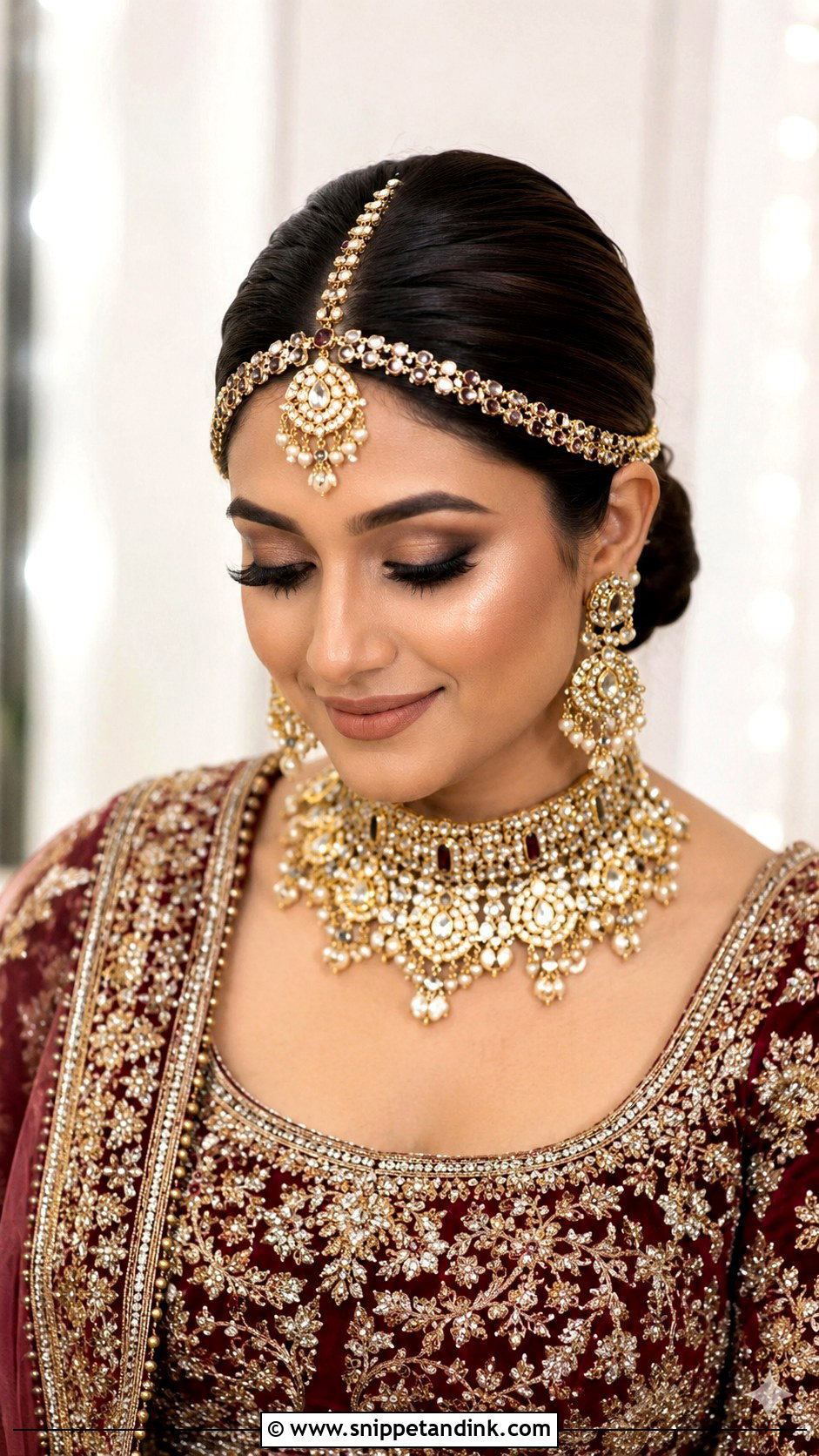
The low bun with a clean centre part is the most traditional bridal shape there is. The part also carries the maang tikka, so I make it dead straight with a tail comb and set it with a little gel; a wobbly part shows in every close-up. A matha patti sits naturally over it. Small florals or jewelled pins along the bun add detail. It flatters most faces. If your forehead is broad, I’ll leave the front slightly softer so the part doesn’t look severe.
10. Loose Curls for Mehendi
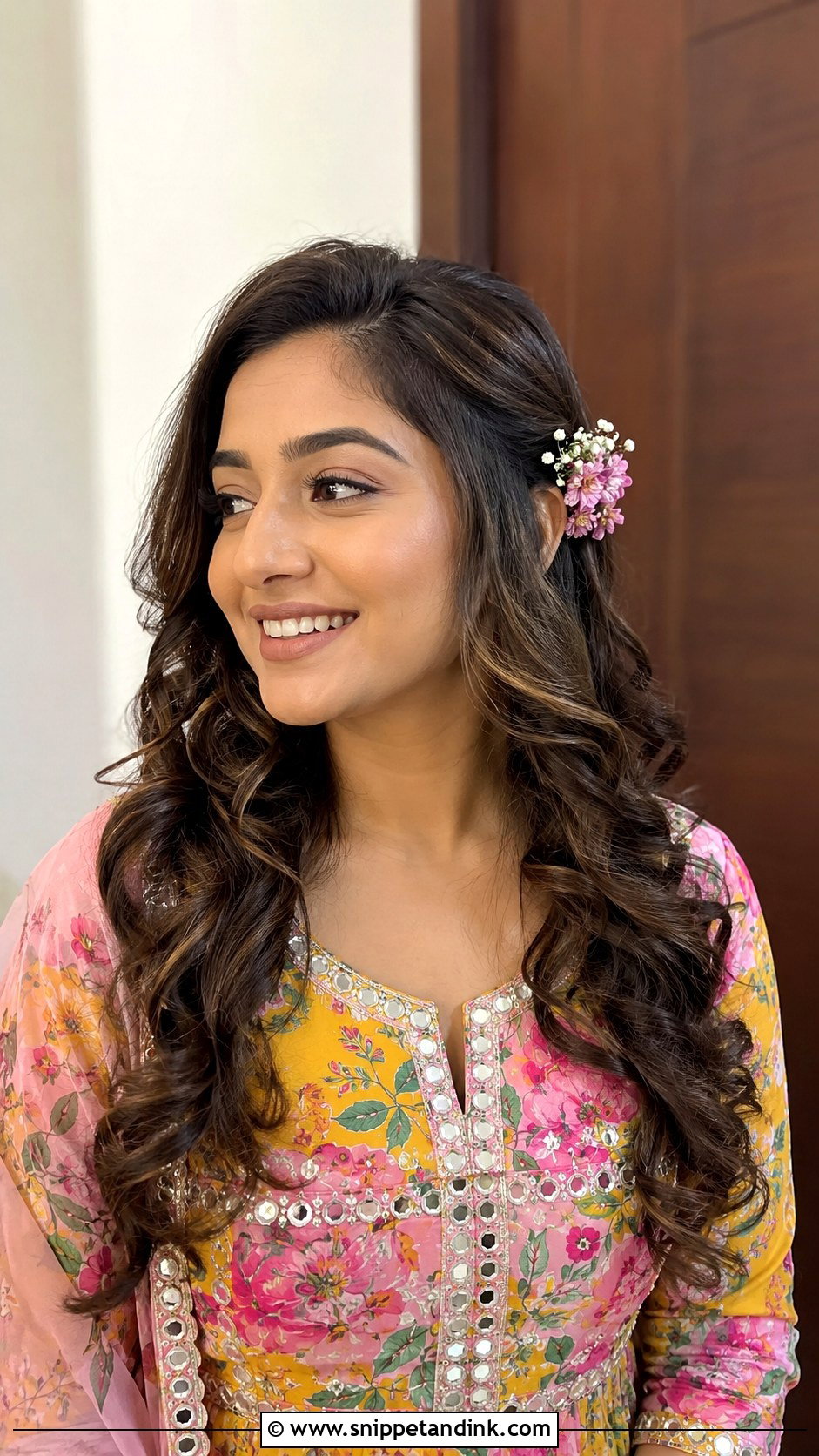
For the mehendi, open loose curls are comfortable while you sit for hours with your hands out. The catch is that you can’t touch your hair once the henna is on, so I pin one side back behind the ear with a small flower clip before application starts. Bright florals, mirror work and flowy outfits match the mood. A thin hairband keeps the front off your face. Keep the curls loose: tight ringlets drop anyway in the hours you’re sitting.
11. Braided Crown Updo
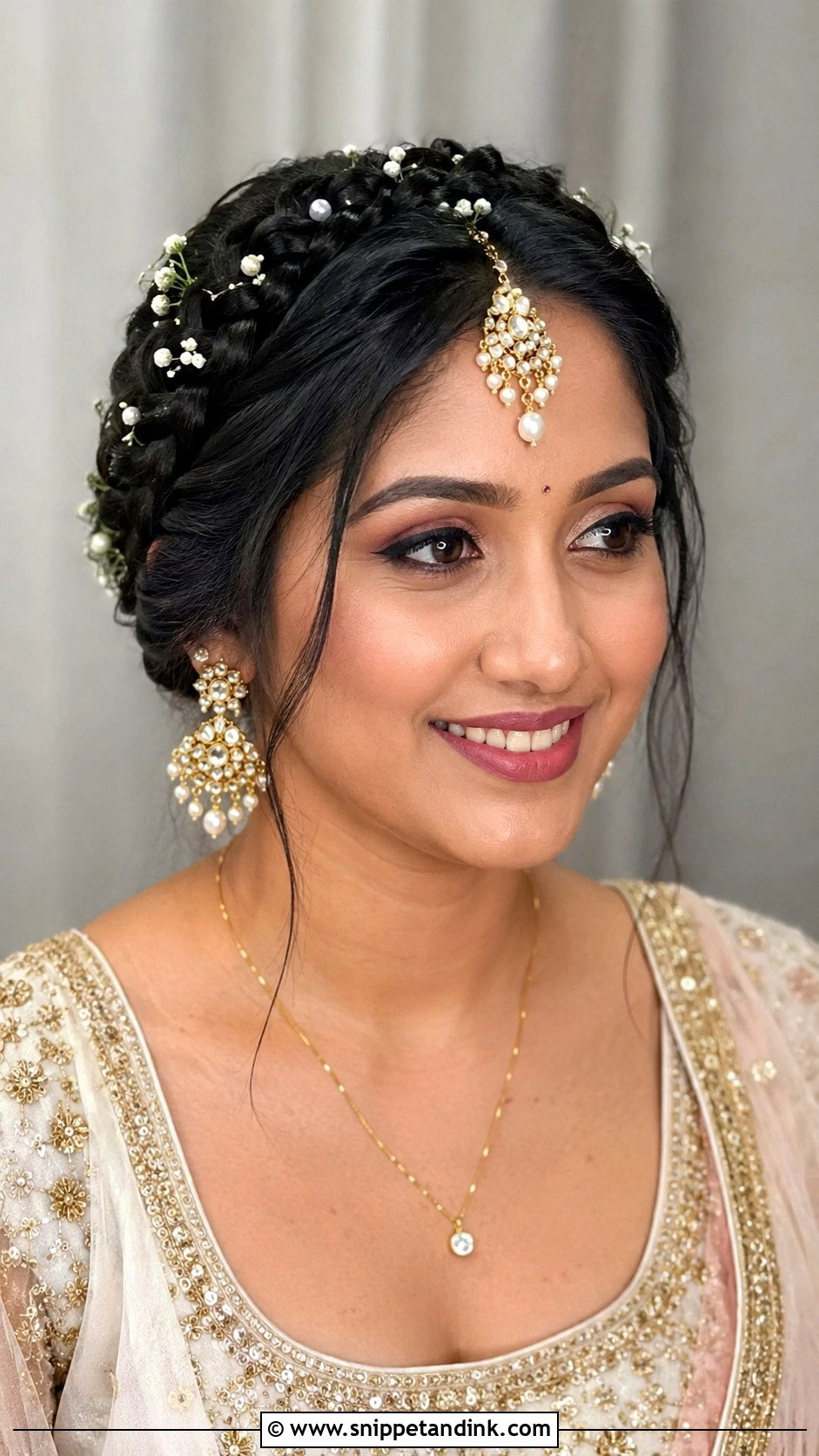
A braided crown wraps around the head and keeps hair off your neck, which is a relief at a summer function. I start the braid behind one ear, carry it round and hide the end under the opposite side. Statement earrings and a maang tikka sit well with it. Tiny flowers or pearl pins dress it up. It suits brides and guests across several functions, and because it’s pinned flat against the head, a dupatta drapes over it without any lumps.
12. Sleek Low Ponytail
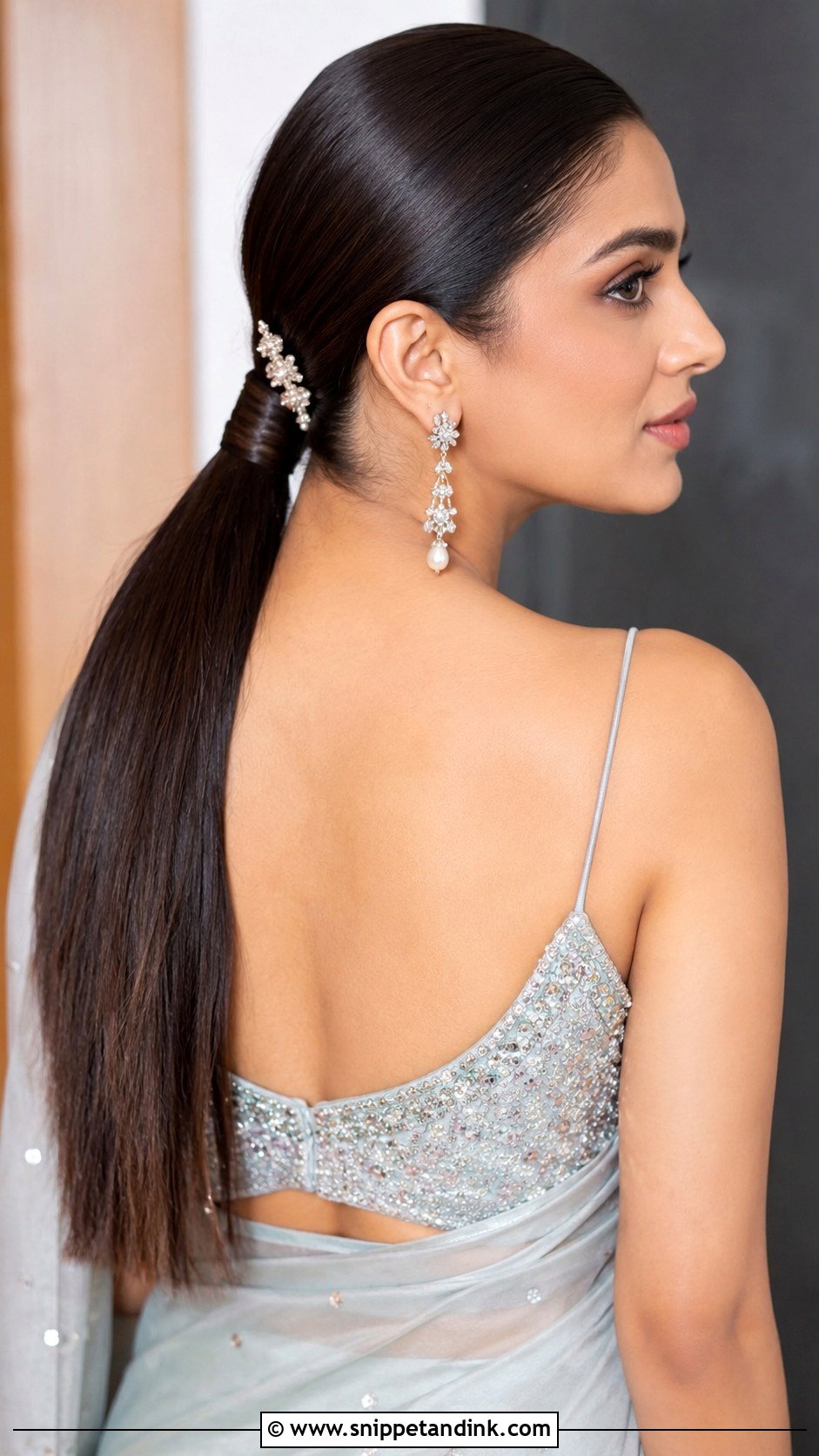
The sleek low ponytail has become a go-to for cocktail nights and engagements. The smooth finish leaves all the attention on your jewellery and face, and it suits fusion outfits, sarees and structured gowns. I wrap a strand around the base and pin it from underneath to hide the elastic. A sparkly pin at the base adds a little glamour. The weakness is humidity: a sleek style shows every flyaway, so I’d finish with a smoothing cream and carry a tiny brush.
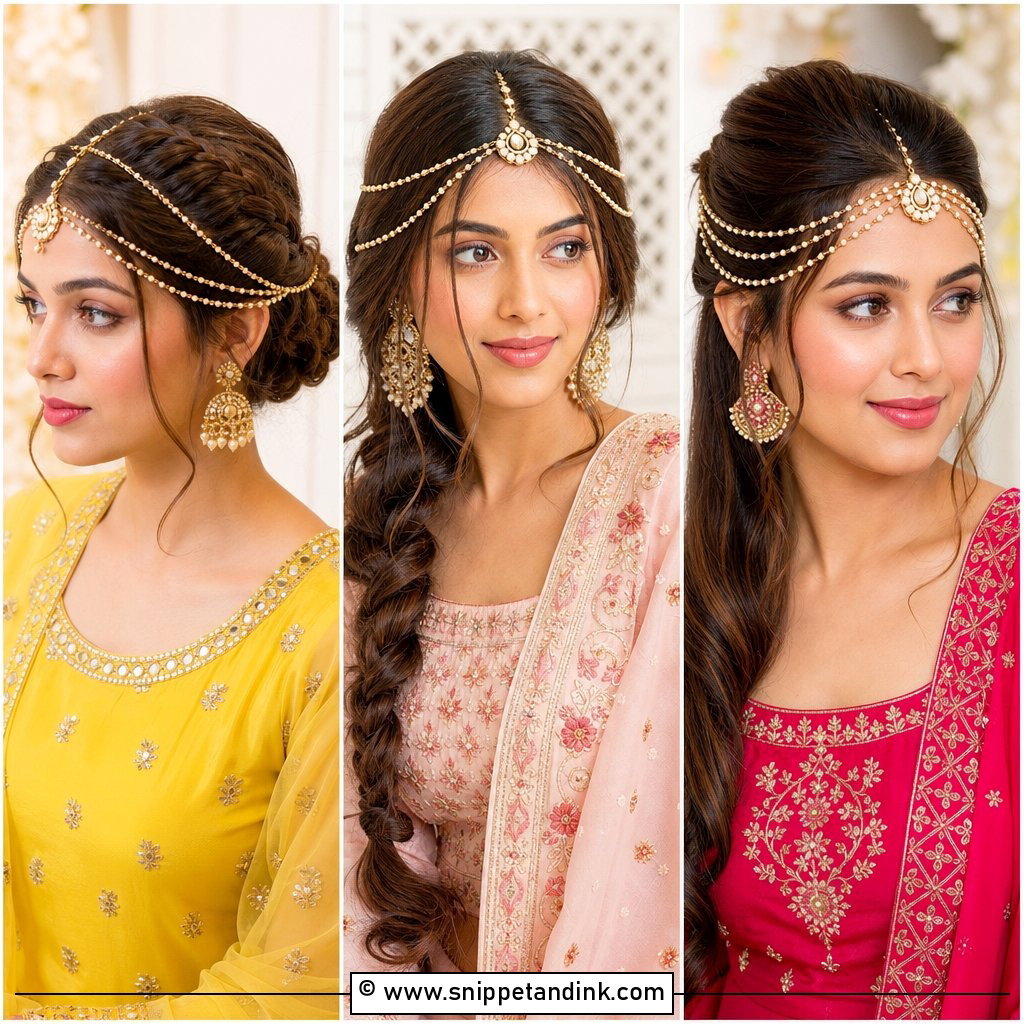
13. Side Swept Curls With Maang Tikka
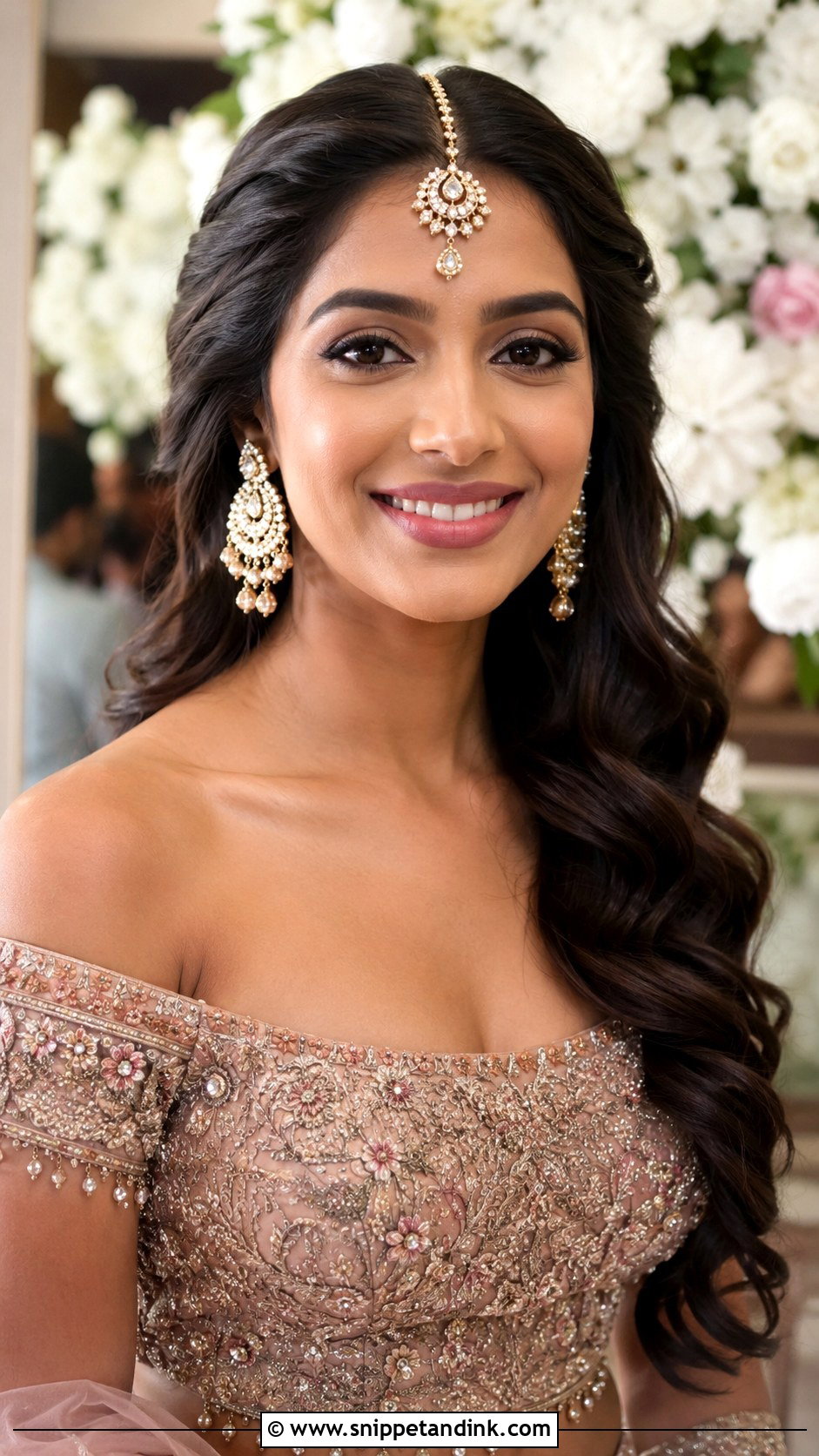
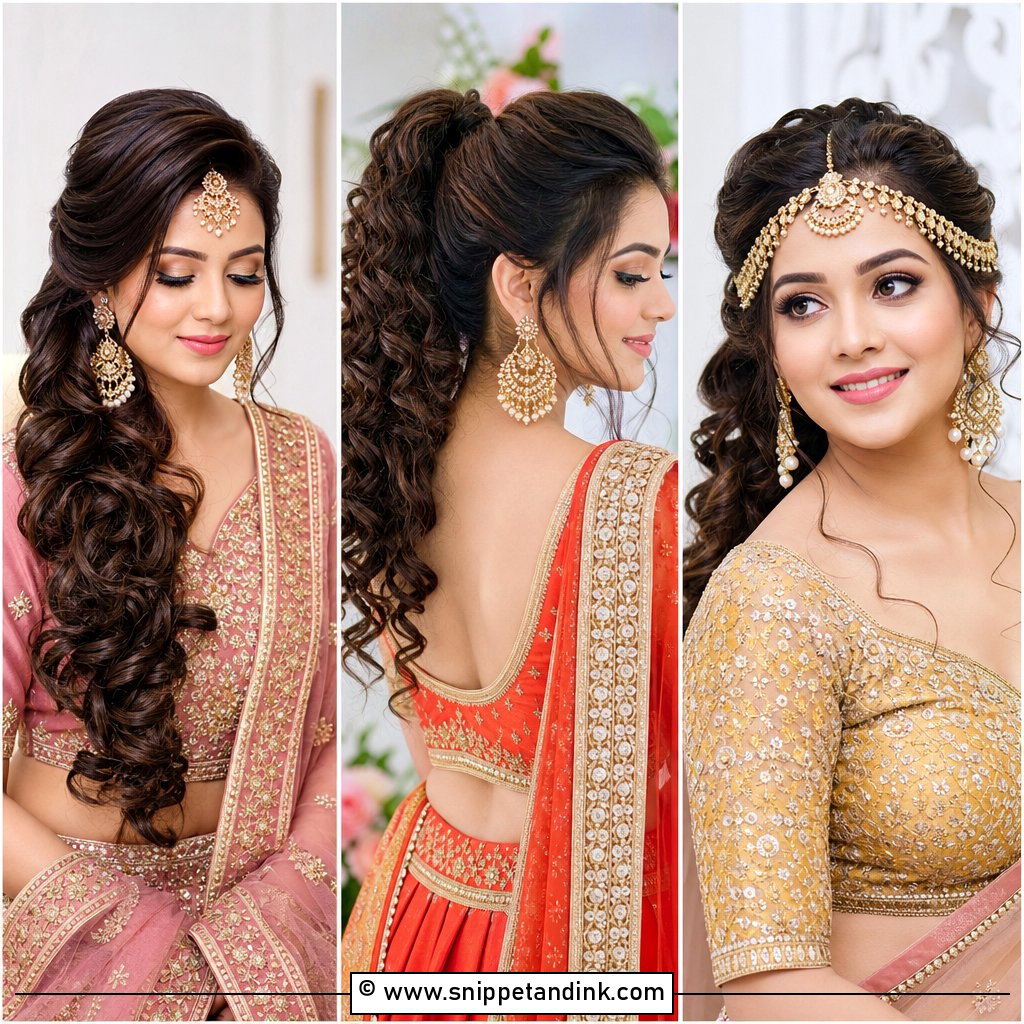
Side-swept curls send all the hair over one shoulder in glossy waves. With a maang tikka along the parting, it reads traditional and glamorous at once. Receptions and sangeet nights suit it, as do off-shoulder blouses and heavy earrings. The pinning on the hidden side matters most: I lock it with a tight flat twist behind the ear so the curls don’t creep back during dancing. Heavy earrings can tangle in the curls on that side, so I’d keep the jhumka side clear.
14. Bun With Maang Tikka and Veil
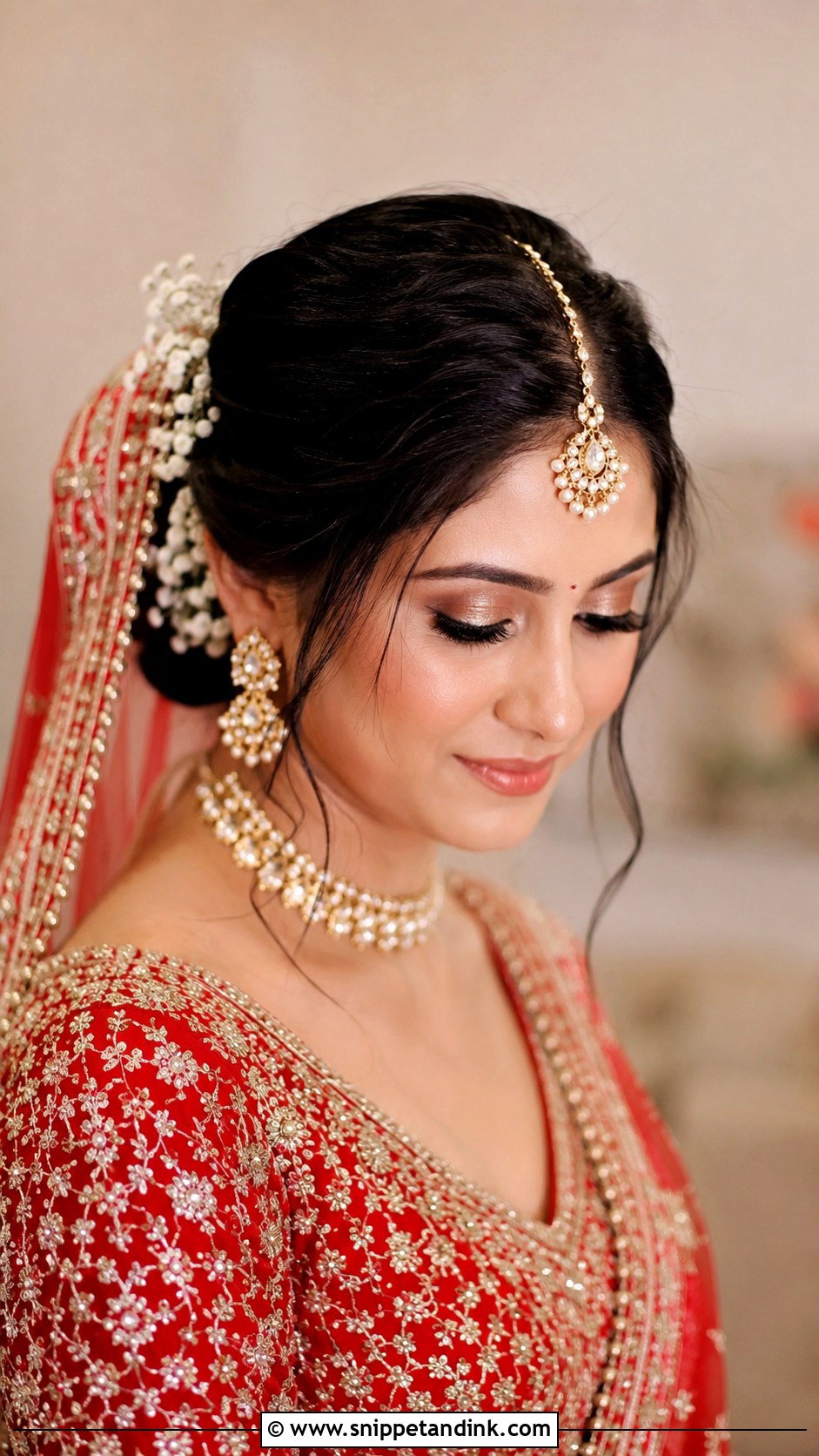
For the ceremony itself, a structured bun with a maang tikka and a dupatta veil is the most secure base I know. The bun is the anchor: I pin the dupatta into the sides of the bun with crossed bobby pins, so its weight rests on the bun rather than on your scalp. The tikka sits along the parting. Fresh flowers or jewelled pins around the bun add detail. It looks regal and holds through every ritual, which is why I default to it for brides with heavy embroidered dupattas.
15. Boho Waves With Flowers
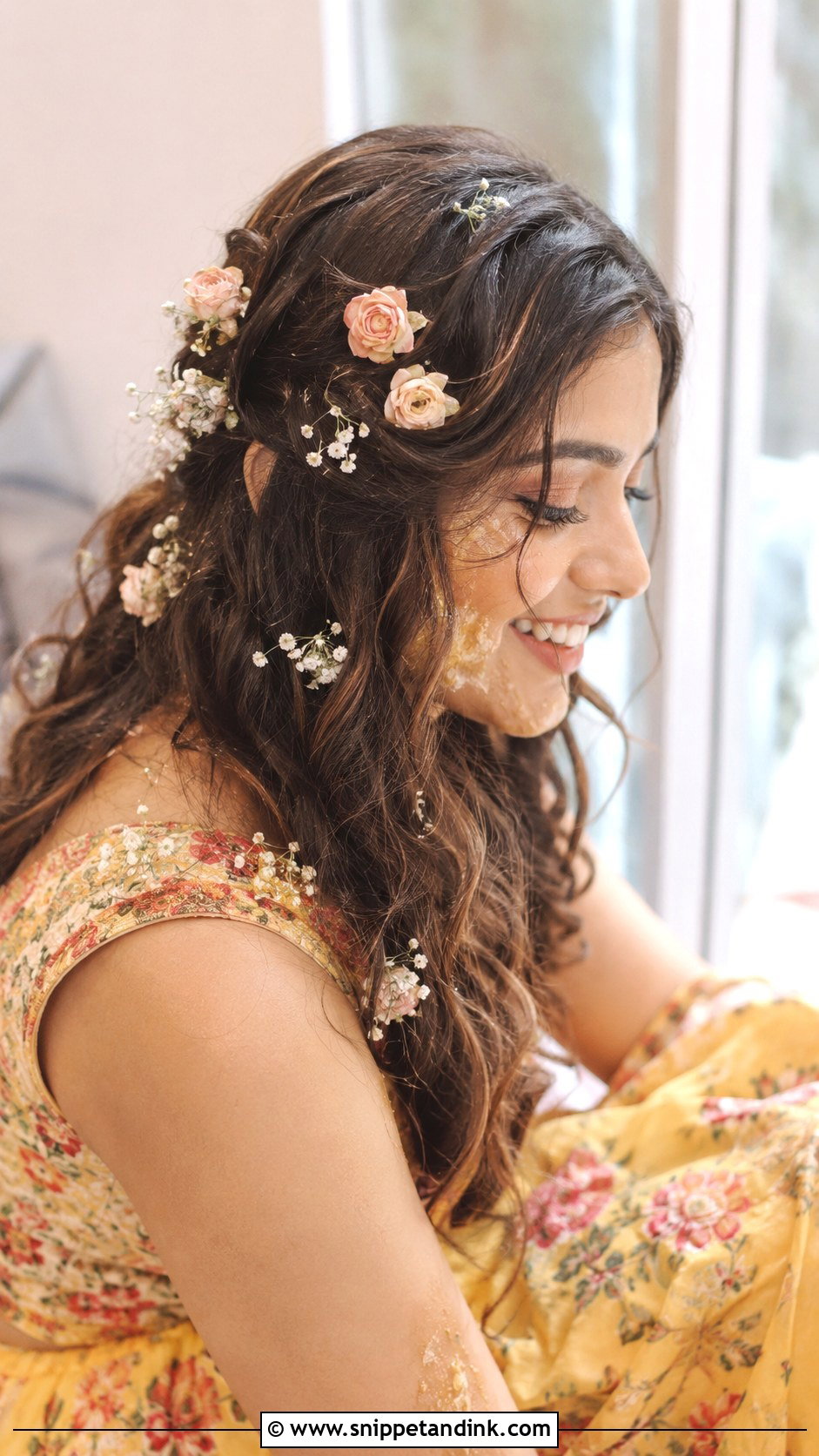
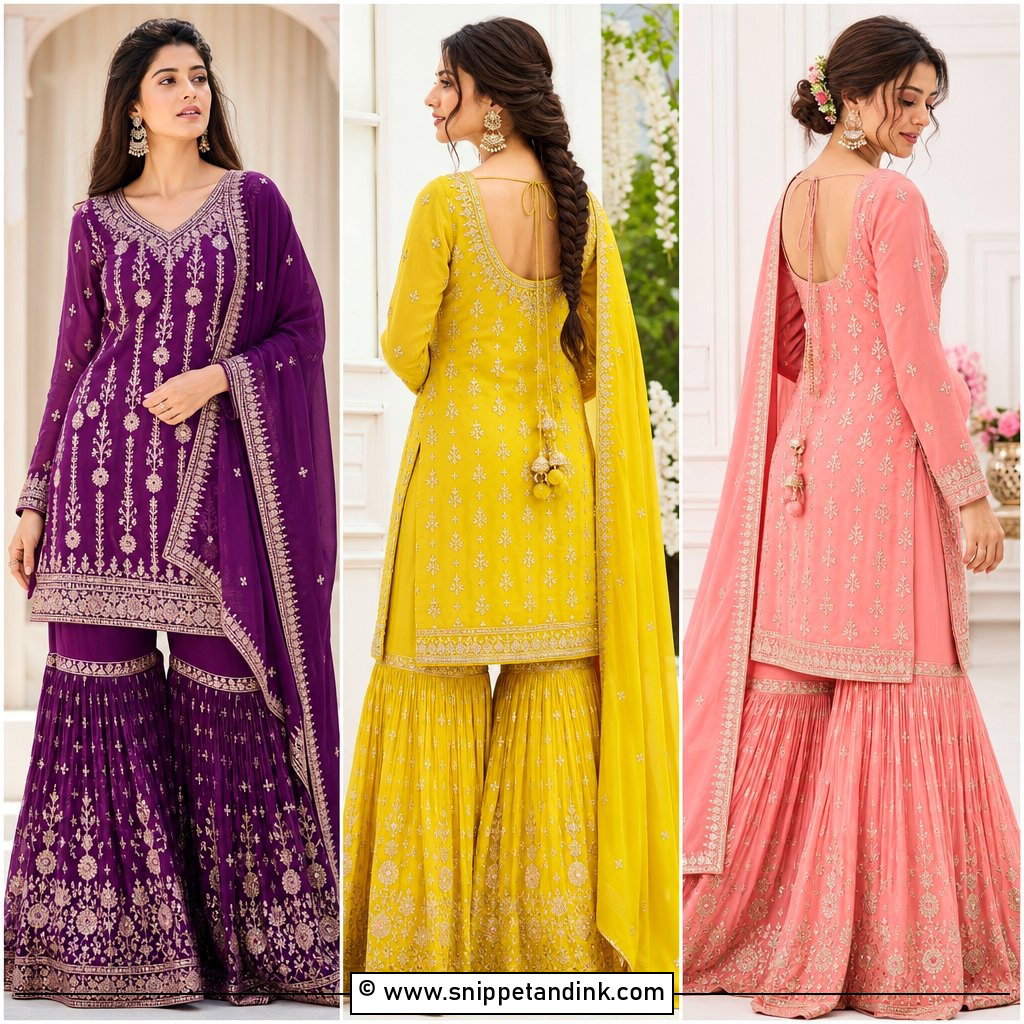
Boho waves with tiny flowers belong at an outdoor haldi or mehendi. The texture is tousled, with baby’s breath or small roses tucked in, and it suits flowy fabrics, floral prints and mirror-work outfits. In daylight it looks fresh and natural. I spray the waves with a light texturising spray rather than a strong hairspray so they still move. Small, hardy blooms survive the sun; delicate flowers wilt within an hour against warm hair.
16. Twisted Bun With Jewelry
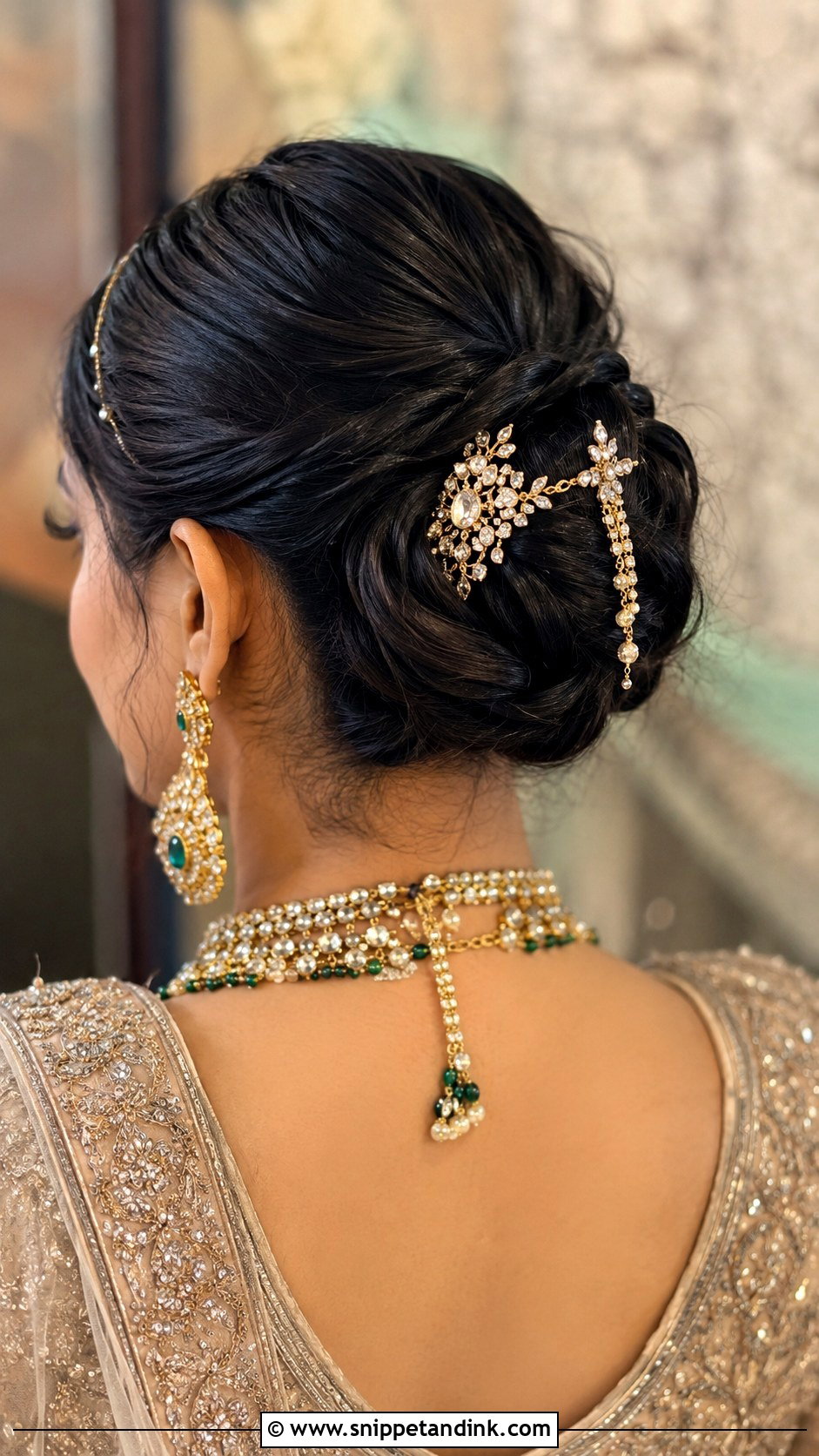
A twisted bun is made of rope-twisted sections gathered into a sculpted shape, then dressed with jeweled pins, chains, or a passa. The twists give texture so the jewellery has something to sit in. It suits heavy lehengas and big jewellery sets, for the ceremony or reception. Low reads traditional; higher reads dramatic. The passa on the side is heavy, so I pin it in three places, not one, otherwise it drags the hair near your temple.
17. Curly High Bun for Reception
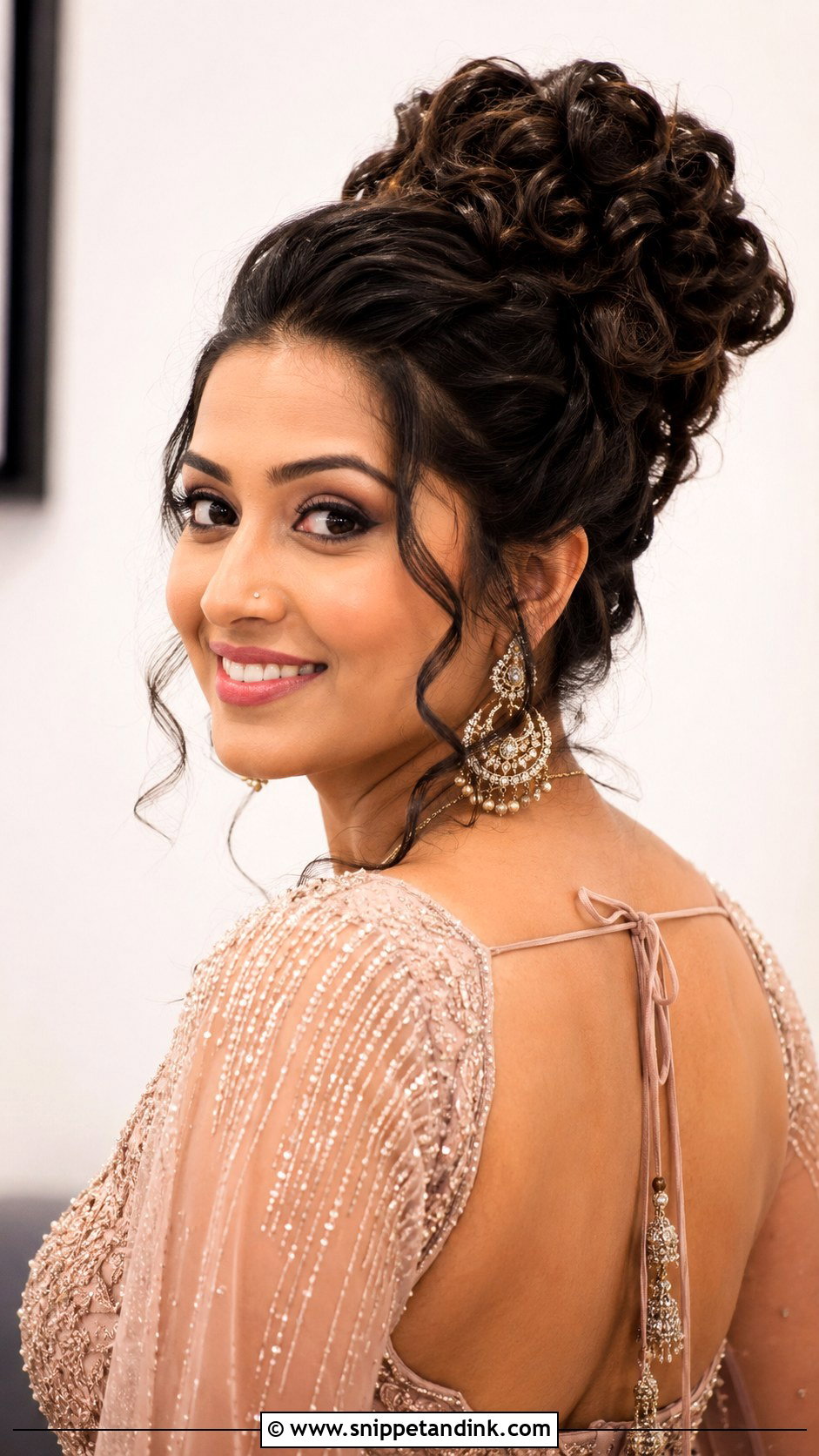
A curly high bun is a reception style for dancing: height, volume, nothing on your shoulders. It goes with gowns, structured blouses and bold earrings. The curls give softness against a strong shape. A few tendrils at the face soften it. I set the curls with a hot iron and pin each curl into the bun separately; that way, if one comes loose under the lights and heat, it just looks like texture. On fine hair I’ll add a few clip-in wefts so the bun isn’t small.
18. Open Hair With Hair Accessories
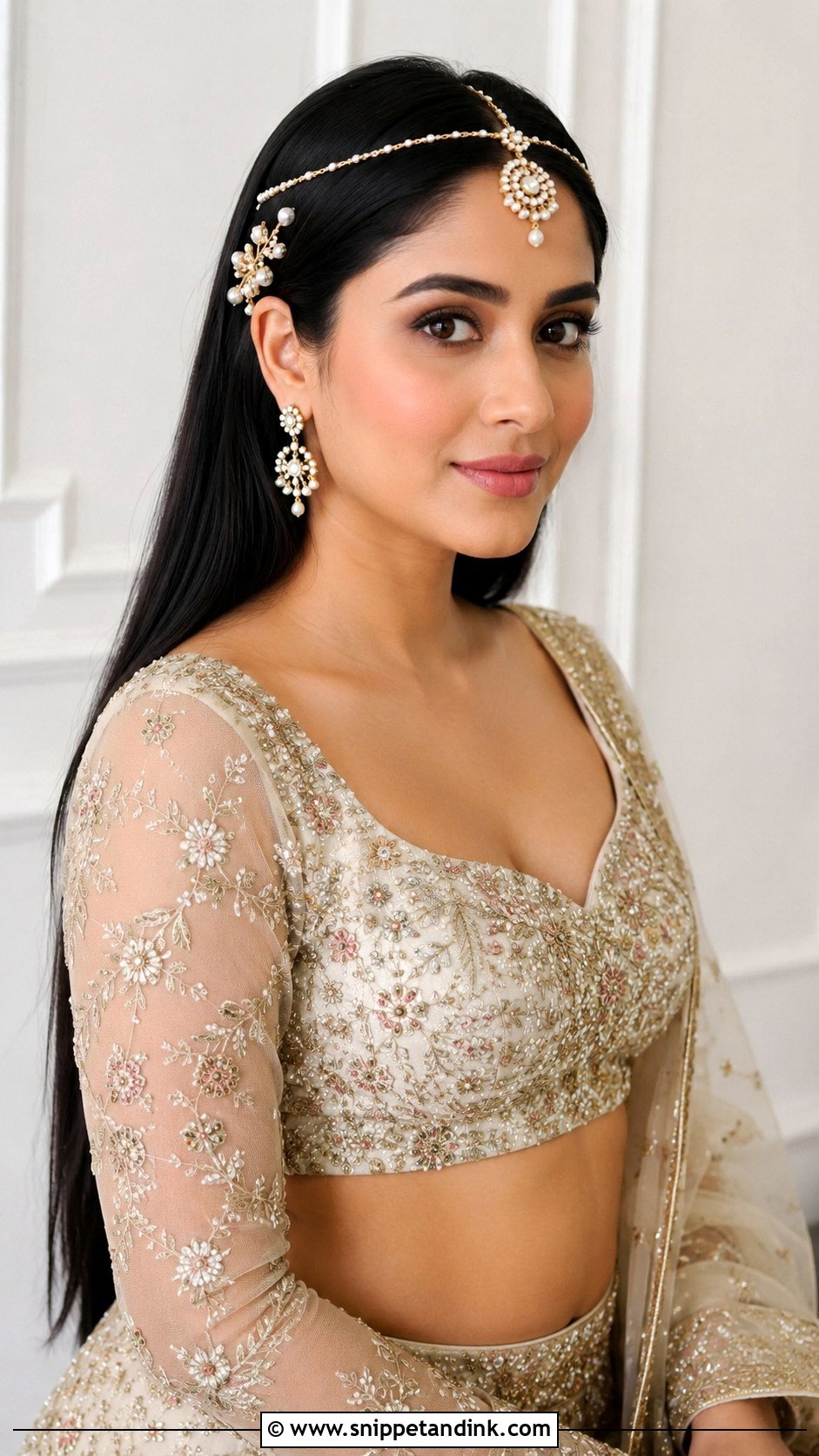
Open hair can look properly festive with the right accessories. Sleek, straight or softly waved, it’s then finished with jewelled pins, a delicate matha patti or one sparkling clip. Cocktail nights and engagements suit it, as do fusion outfits and modern lehengas. Centre or side part, whichever you prefer. The thing I check is the matha patti’s side chains: they need a secure pin behind each ear, since open hair gives them nothing to hook onto.
19. Braided Low Bun With Flowers
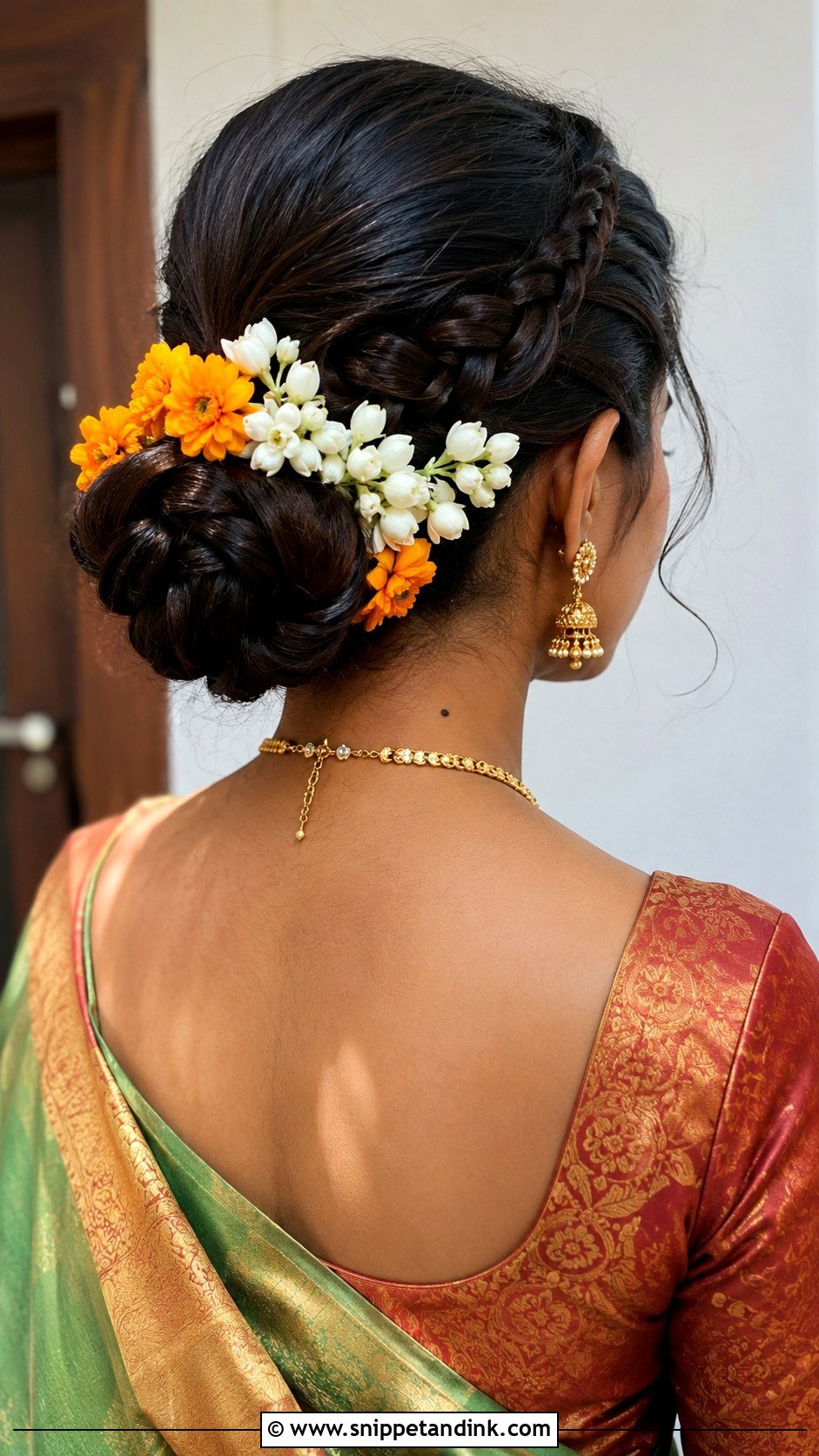
A braided low bun combines two traditional shapes. Braided sections are wrapped into a soft low bun and decorated with fresh flowers. It suits the main ceremony, silk sarees and gold jewellery. The braids give the bun a tight grip, which is why it holds through long rituals and photographs. Jasmine, roses or marigolds can all match your outfit; marigolds are the hardiest in heat. I’d pick this over a plain bun for anyone with layers, since the braids catch short pieces that would otherwise escape.
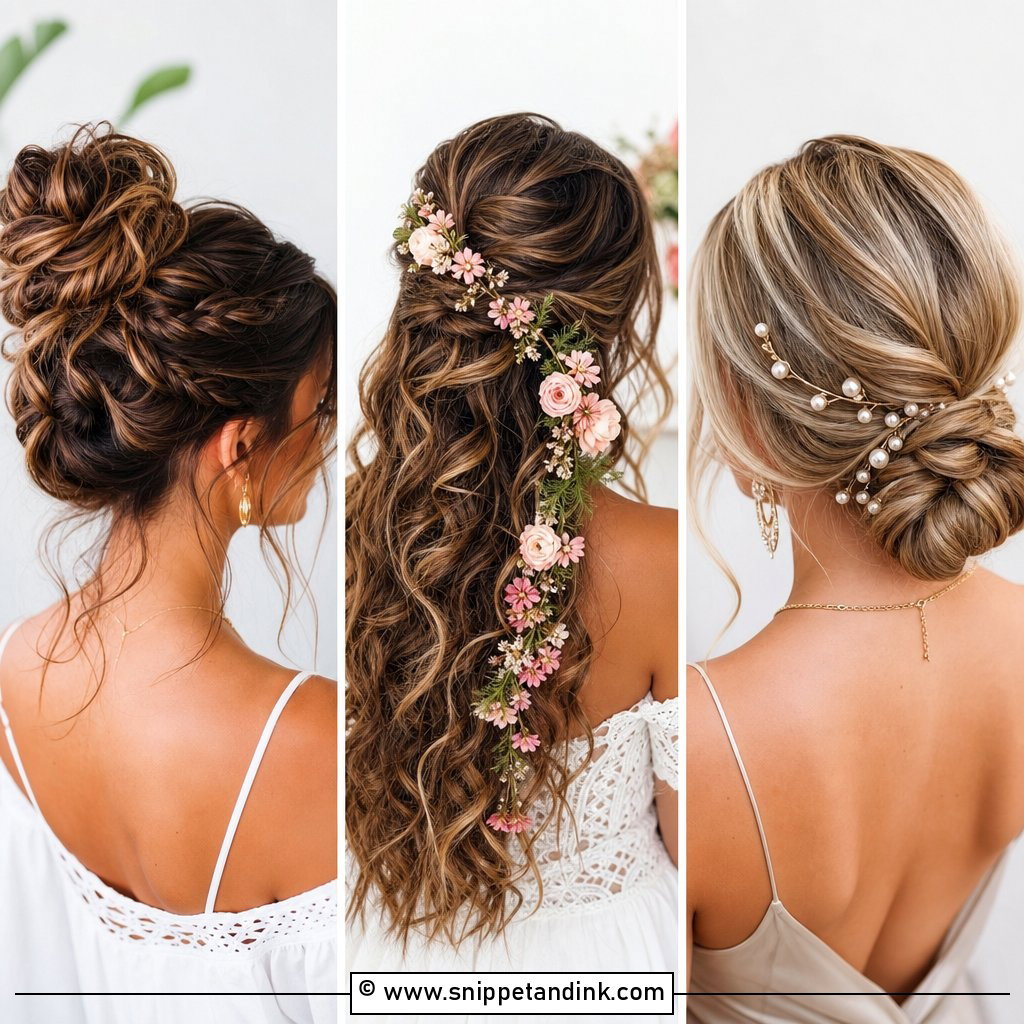
20. Puff Hairstyle With Loose Curls
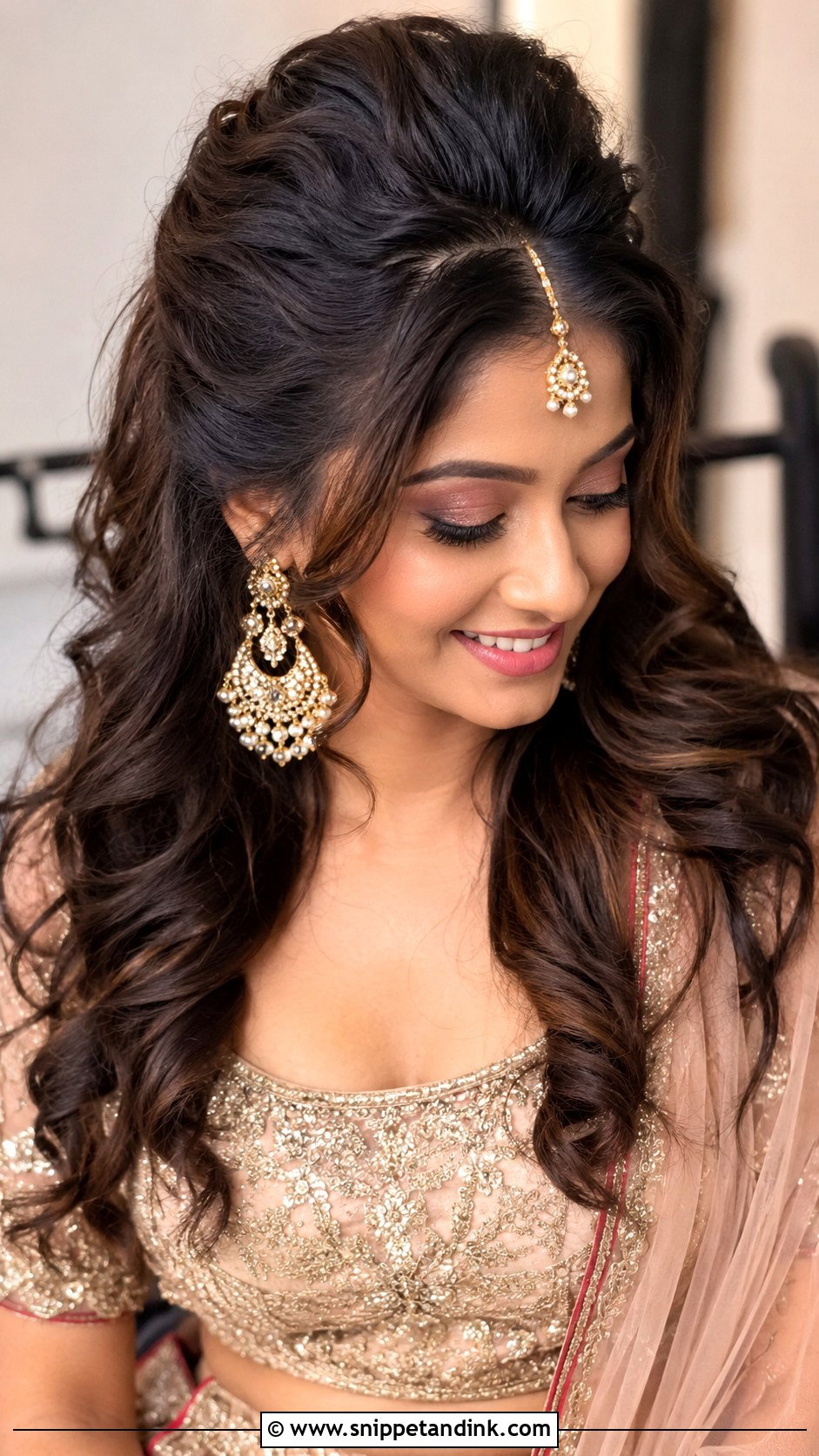
A front puff paired with loose curls combines height with movement. I backcomb a section at the crown, smooth the top layer over it and pin it, then curl everything below. Sangeet and reception nights suit it, along with lehengas and statement earrings. The puff lifts the face, but size matters; too big looks dated. A maang tikka along the parting adds sparkle. Sides can be pinned back or left loose. If you’ll wear a dupatta on your head, keep the puff low, or the dupatta perches on it.
Carrying a Dupatta, Tikka and Gajra for Six Hours
The most common complaint I hear by the end of a ceremony isn’t about how the hair looks. It’s a headache. A heavy embroidered dupatta, a tikka, a passa and a gajra all pull on the scalp, and if they’re pinned only into the top layer of hair, they pull on a small patch of it.
How I spread the weight
I build a firm base first, usually a bun or a flat braided anchor at the crown, and pin every accessory into that rather than into loose hair. The dupatta is pinned at the crown and at both sides of the bun so no single pin takes the load. Tikka hooks go into a small pin curl at the part, not just tucked in.
Keeping fresh flowers fresh
Jasmine and roses wilt fast against a warm head. Ask for them to arrive wrapped in a damp cotton cloth, keep them cool until the last minute, and have them pinned after the dupatta is settled. Have someone hold a spare string, because a gajra crushed during a hug can be replaced in two minutes.
Do a full trial with the real dupatta and jewellery, not similar ones. Their actual weight is what tells me how the base has to be built.
Send Your Stylist the Function Schedule, Not Just Pictures
Desi wedding hair works best when each function has its own plan, matched to the outfit, the length of the event and how much you’ll be moving. Traditional gajra buns and South Indian braids sit beside Hollywood waves and sleek ponytails here, and each has a function where it shines. Flowers, pearls, gold thread or jewellery personalise any of them. Share your outfit photos and function schedule with your stylist, try the main ceremony style at a trial, and keep the most comfortable looks for the nights you’ll dance.
You'll Like These Ideas:




Leave a Reply