
A wedding wig lets you have the length, curl or updo you want without putting your own hair through hours of heat and tension, and a well-fitted unit is often more secure than natural hair pinned up. But a wig is only as convincing as its hairline and its fit. When I style brides in wigs, most of my time goes into the lace, the parting and how the unit sits under a veil, not the curls themselves. The fifteen styles below are the ones I recommend most, with notes on which construction suits each and where things usually go wrong.
Why the Unit Needs Customising Weeks Before the Install
Straight out of the box, most lace wigs aren’t ready to wear to a wedding. The hairline is usually too dense and too straight, the knots show as tiny dark dots along the part, and the lace may be the wrong shade for your skin. All of that is fixable, but it takes time, and some steps can’t be rushed the night before.
- Order the wig two to three months ahead. That allows for returns if the colour, cap size or density is wrong.
- Have the hairline plucked so it thins out gradually, and the knots bleached at the part on human hair units.
- Tint the lace to your skin tone, then cut it close to your hairline. Leave cutting until the fit is confirmed.
- Have it cut and coloured to suit your face, ideally by someone who works with wigs regularly.
- Wear it at your hair and makeup trial so both artists see how the lace and foundation meet.
Synthetic units can’t be bleached or dyed in the same way, so if a natural-looking part matters most to you, human hair gives you more room to fix things.
1. Lace Front Wig With Soft Waves
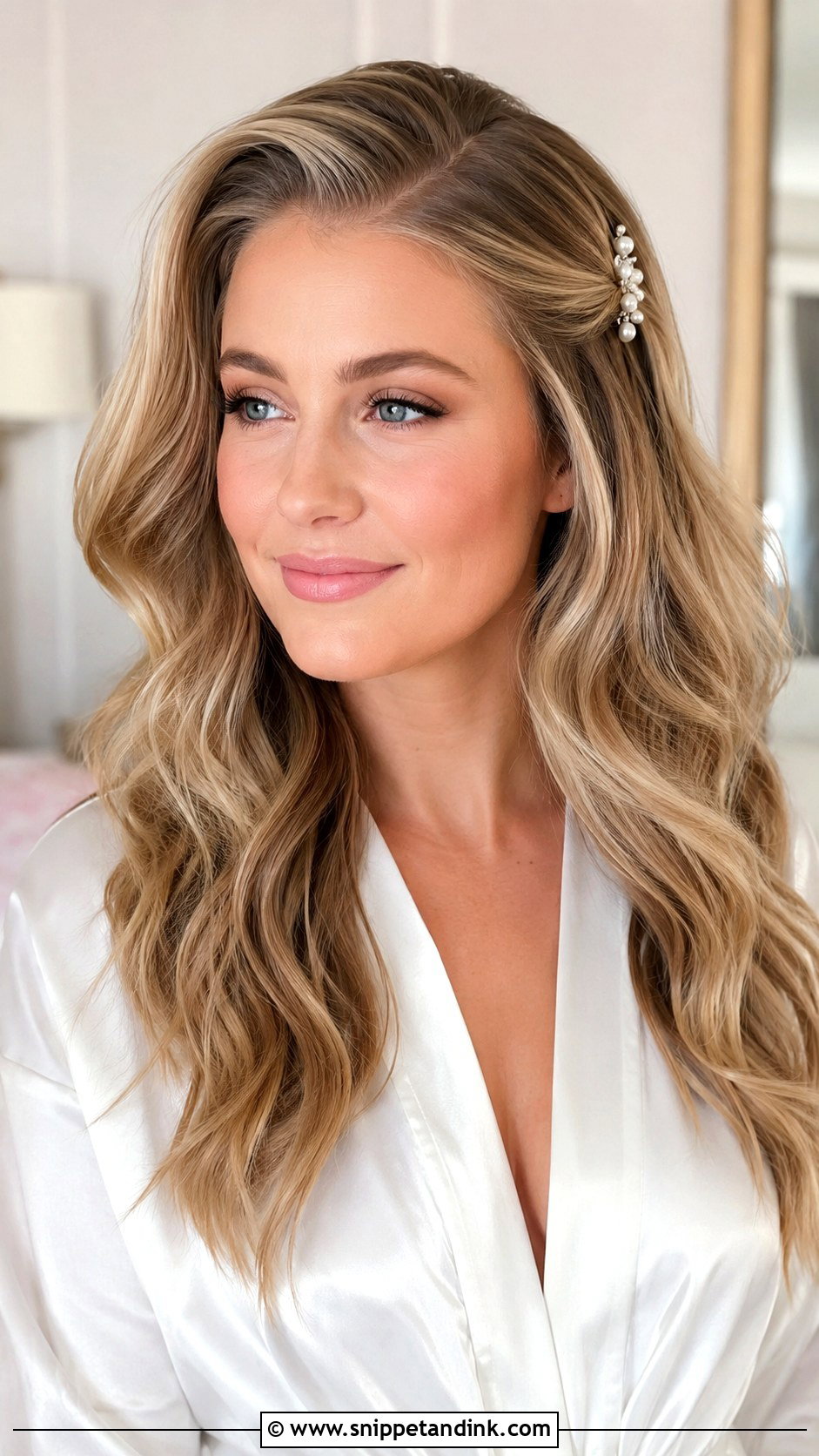
Soft waves on a lace front are the style I’m asked for most, and for good reason: the lace hairline holds up in close-ups and veil shots far better than a wefted edge. They suit strapless and off-shoulder gowns. Human hair takes a curling iron at normal heat and holds the wave longer; a heat-friendly synthetic needs a lower setting and won’t take a new curl as firmly, so buy it already waved if you go synthetic. A side part softens the face, a middle part looks cleaner. One or two pearl pins near the part are enough.
2. Full Lace Wig Low Bun
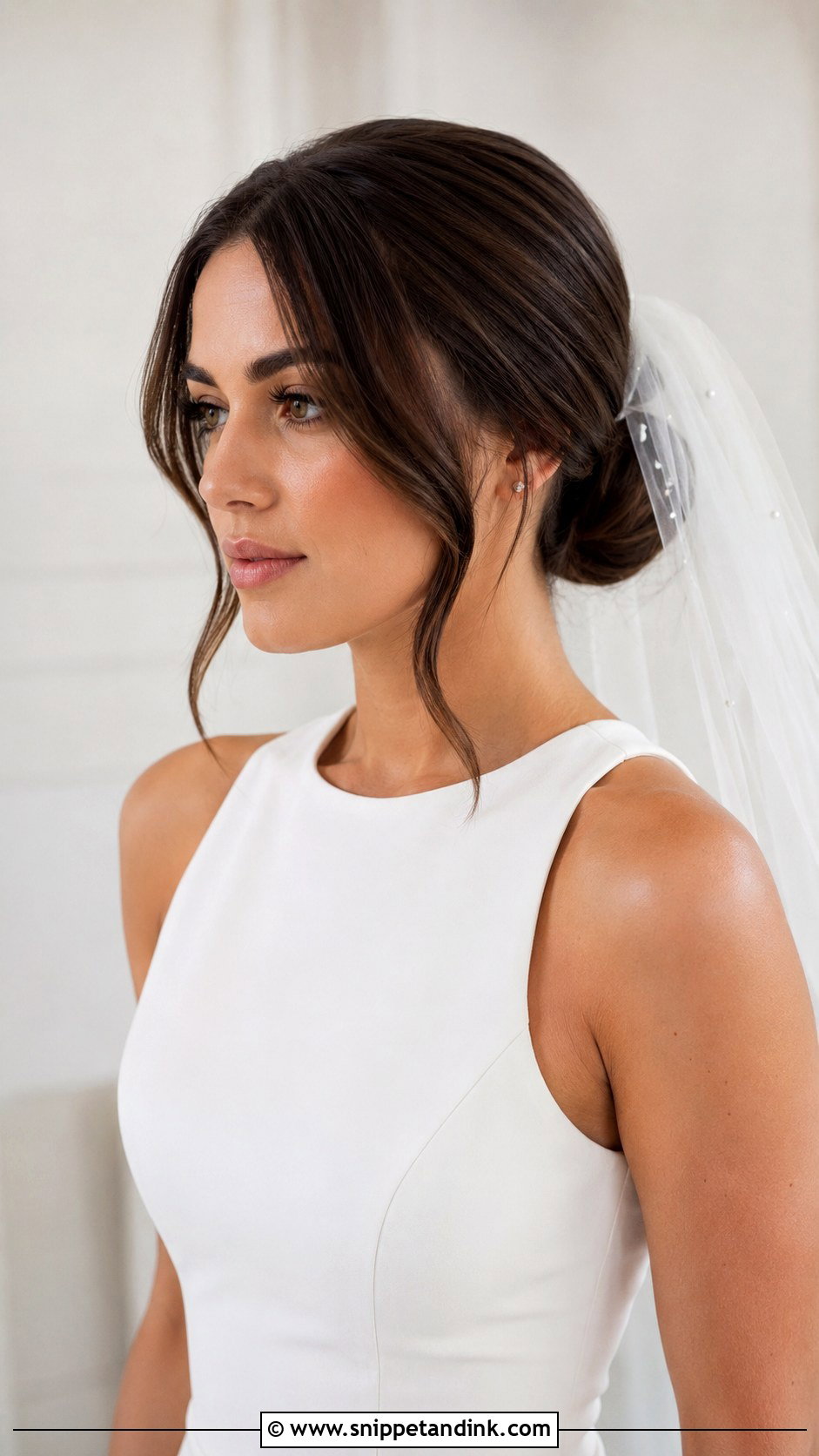
Only a full lace unit can go into a low bun convincingly, because the lace runs all the way round to the nape and the hairline looks natural when everything is pulled back. A lace front scraped into a bun shows its wefts at the back. This shape sits well under high necklines, long sleeves and cathedral veils, and keeps hair off your face on a hot day. I leave a few soft pieces loose at the front so the hairline isn’t fully exposed, which also hides any small lift in the lace later on.
3. Wedding Wig Half Up Half Down
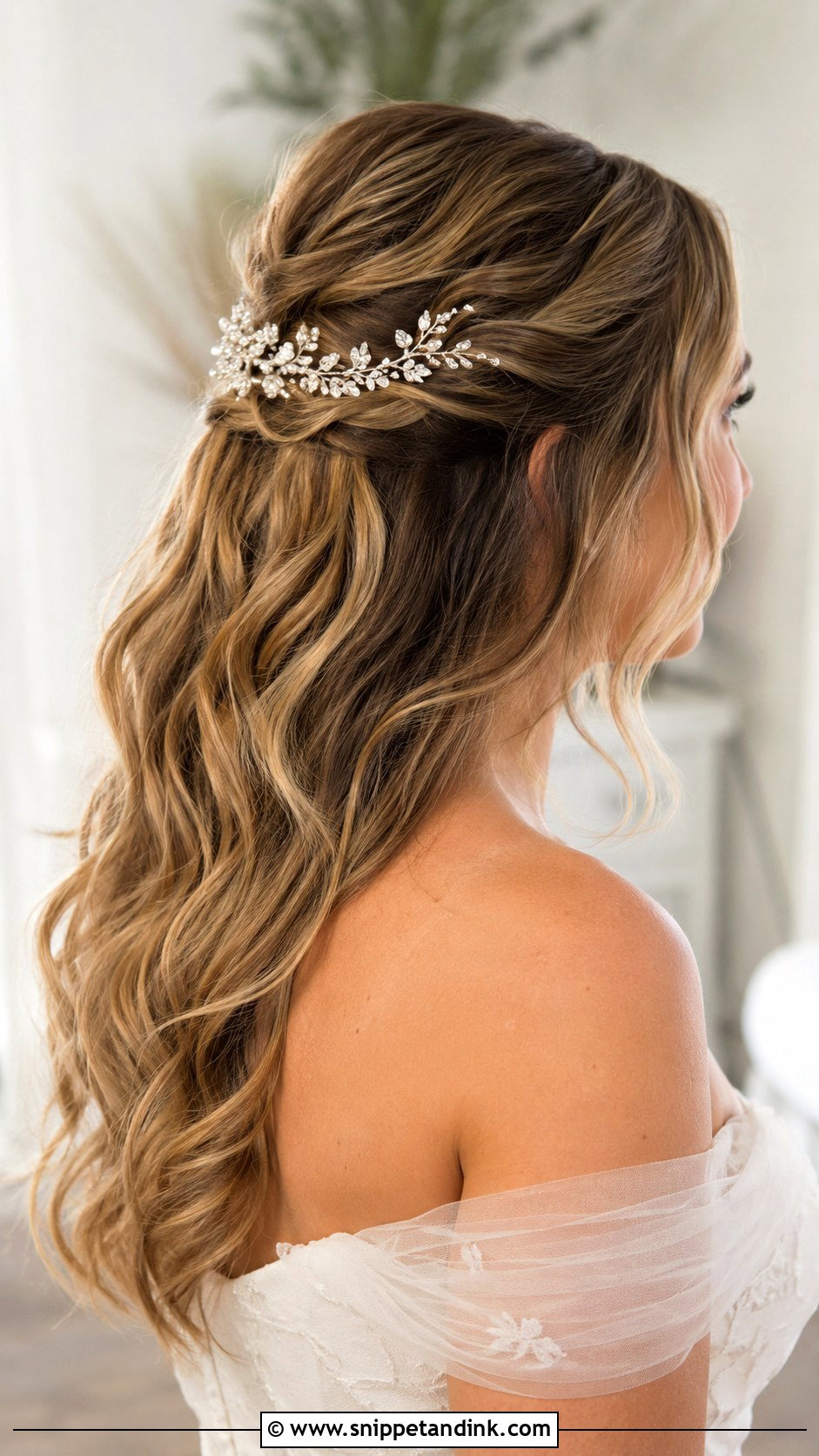
A wedding wig half up half down look suits lace fronts and long layered units because the top section covers the point where the lace ends and the cap begins. The lifted crown gives shape, and the curled lengths stay soft around the shoulders. It takes a veil, hair vine, tiara or small floral pins without fuss. I pin the top section through the wig into my own base braid underneath, which keeps it from shifting the whole unit when someone hugs you.
4. Long Straight Wig Middle Part
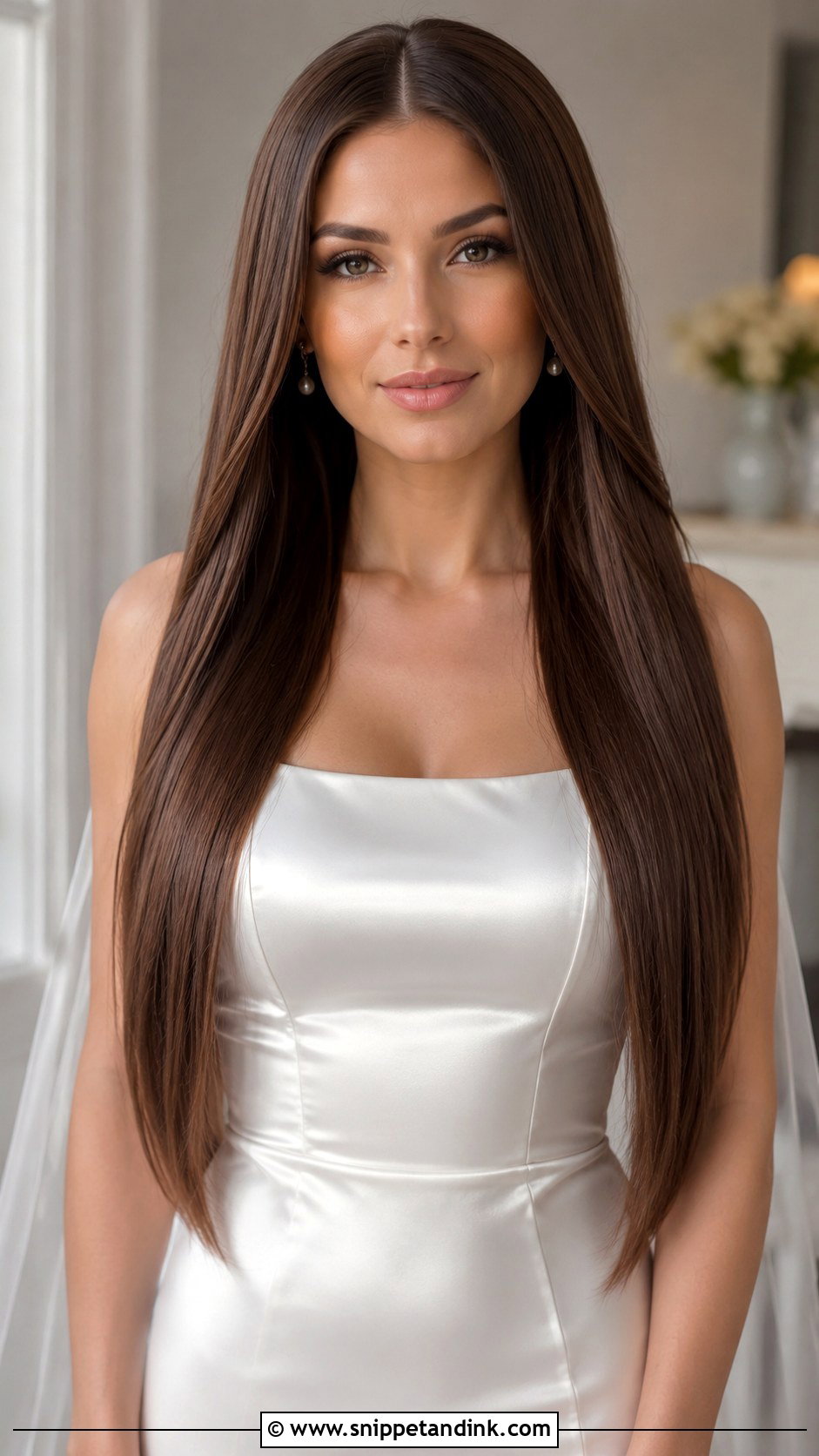
Long, straight hair with a middle part is minimal, so every flaw shows. I’ll only recommend it if the unit has a realistic density and a clean lace or monofilament part; too much hair at the crown makes it look like a helmet. Ask for light face-framing layers or softly bevelled ends so it moves when you turn your head. Go easy on shine spray. Wig fibres, especially synthetic, can go glassy and plastic-looking under flash. It pairs best with fitted gowns, square necklines and statement earrings.
5. Curly Wig Bridal Updo
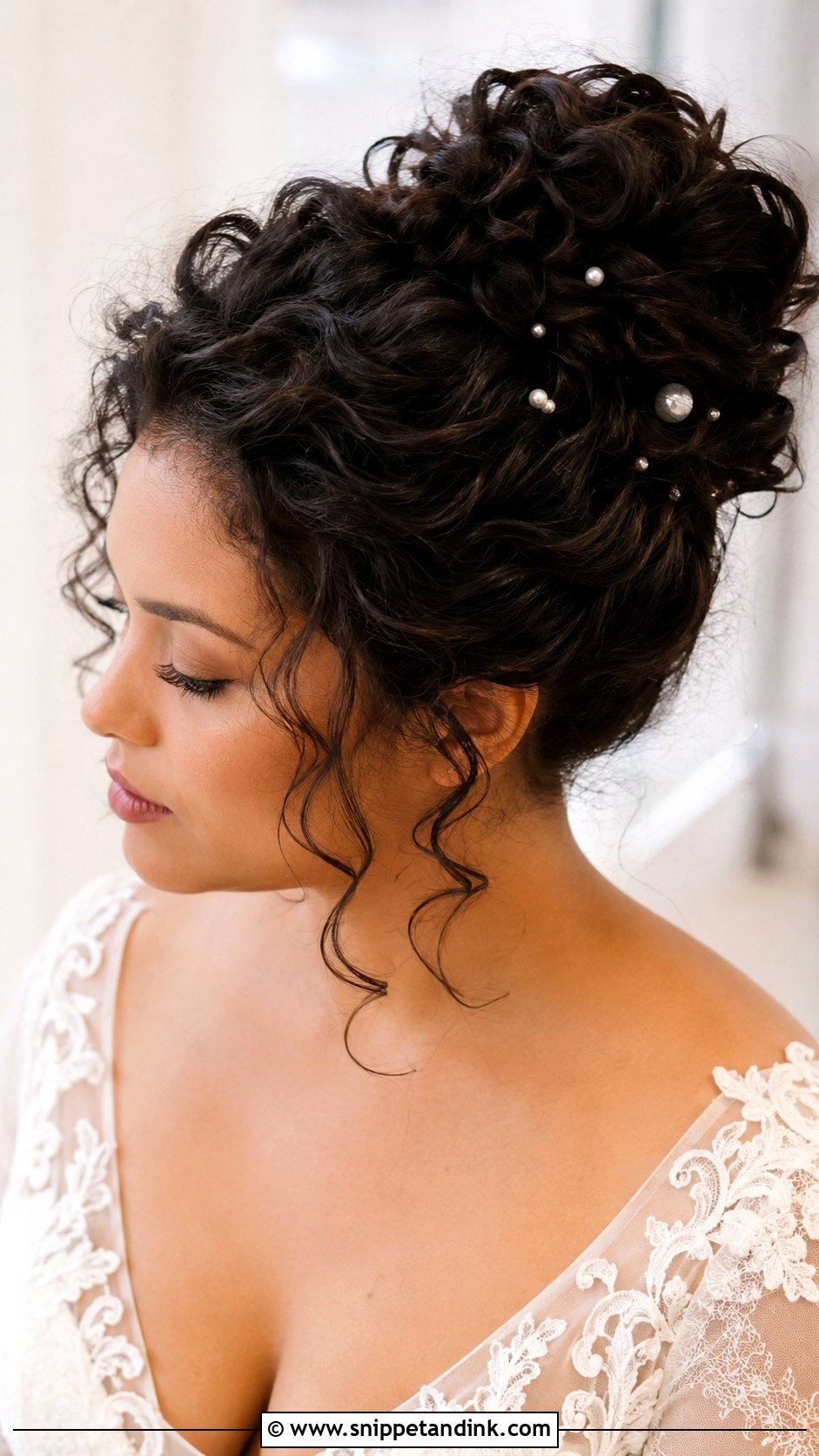
Curly units pinned up give volume and texture without a single curl being disturbed by heat. Lace front or full lace both work, as long as the parting and hairline look like they grow from the scalp. I gather the curls into a loose bun or tucked chignon and leave a few at the temples and nape so it doesn’t look scraped back. Curly fibre is prone to frizz when handled a lot, so I set the shape the day before and only refresh it with a light mist on the morning.
6. Short Bob Wig For Wedding
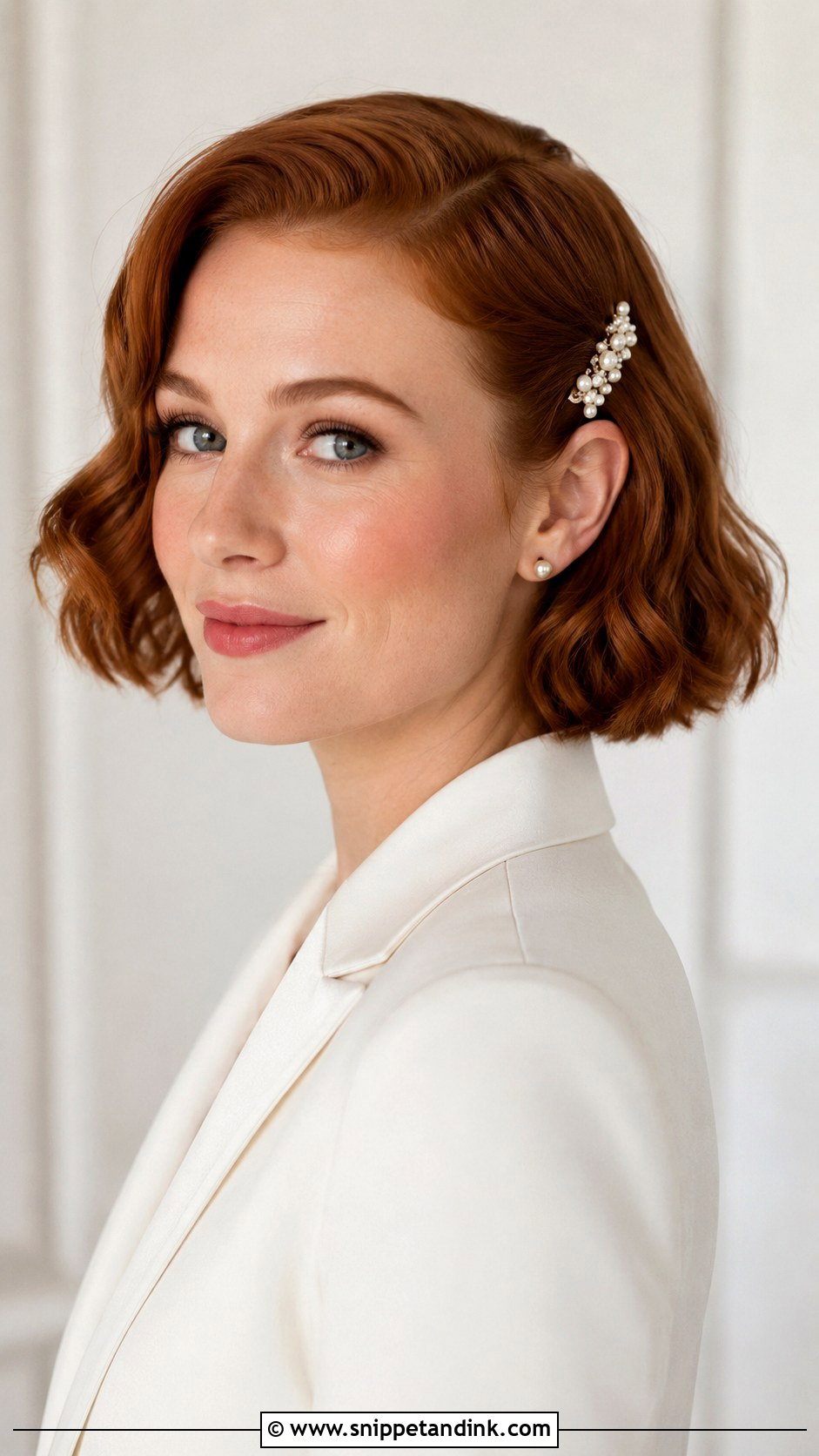
A short bob wig is the most comfortable unit to wear all day, with very little weight pulling on the edges. A blunt bob reads fashion-forward, a soft wave reads romantic. Courthouse weddings and intimate ceremonies suit it especially well. If you want to tuck one side behind your ear, you need lace that reaches past the ear, so check the lace size before ordering. A pearl barrette, satin headband or short veil finishes it, and the shape should look brushed rather than sprayed solid.
7. Glueless Wig With Loose Curls
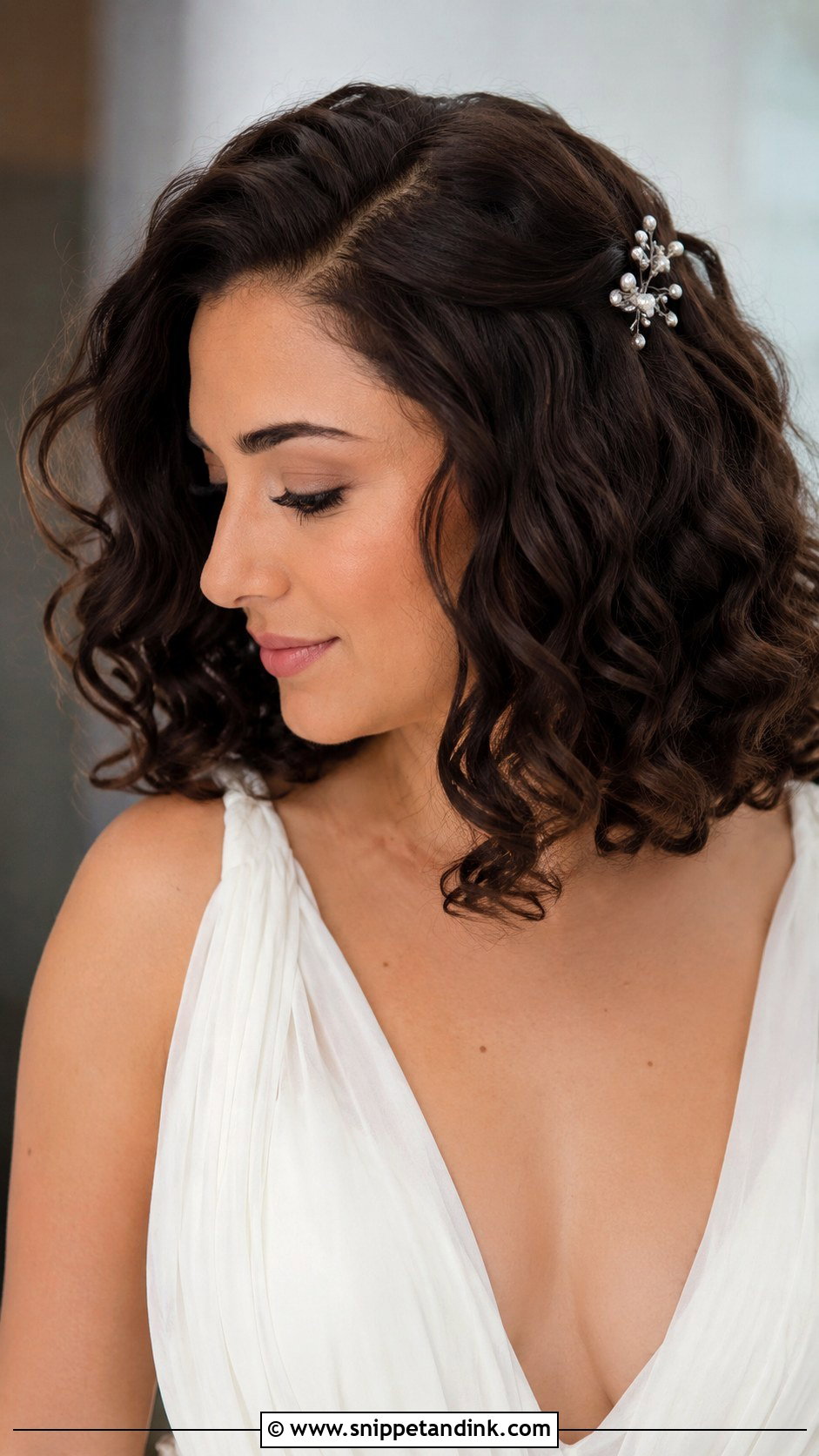
Glueless units suit brides, bridesmaids and guests who want to skip adhesive and take the wig off easily at the end of the night. The security comes from an adjustable elastic band, combs inside the cap and a snug fit, so get the cap size right before anything else. Loose curls add body and help disguise the band line at the back. Test a glueless wig by dancing in it at home for twenty minutes; if it slides when you shake your head, add a wig grip band underneath.
8. Wig Chignon For Wedding
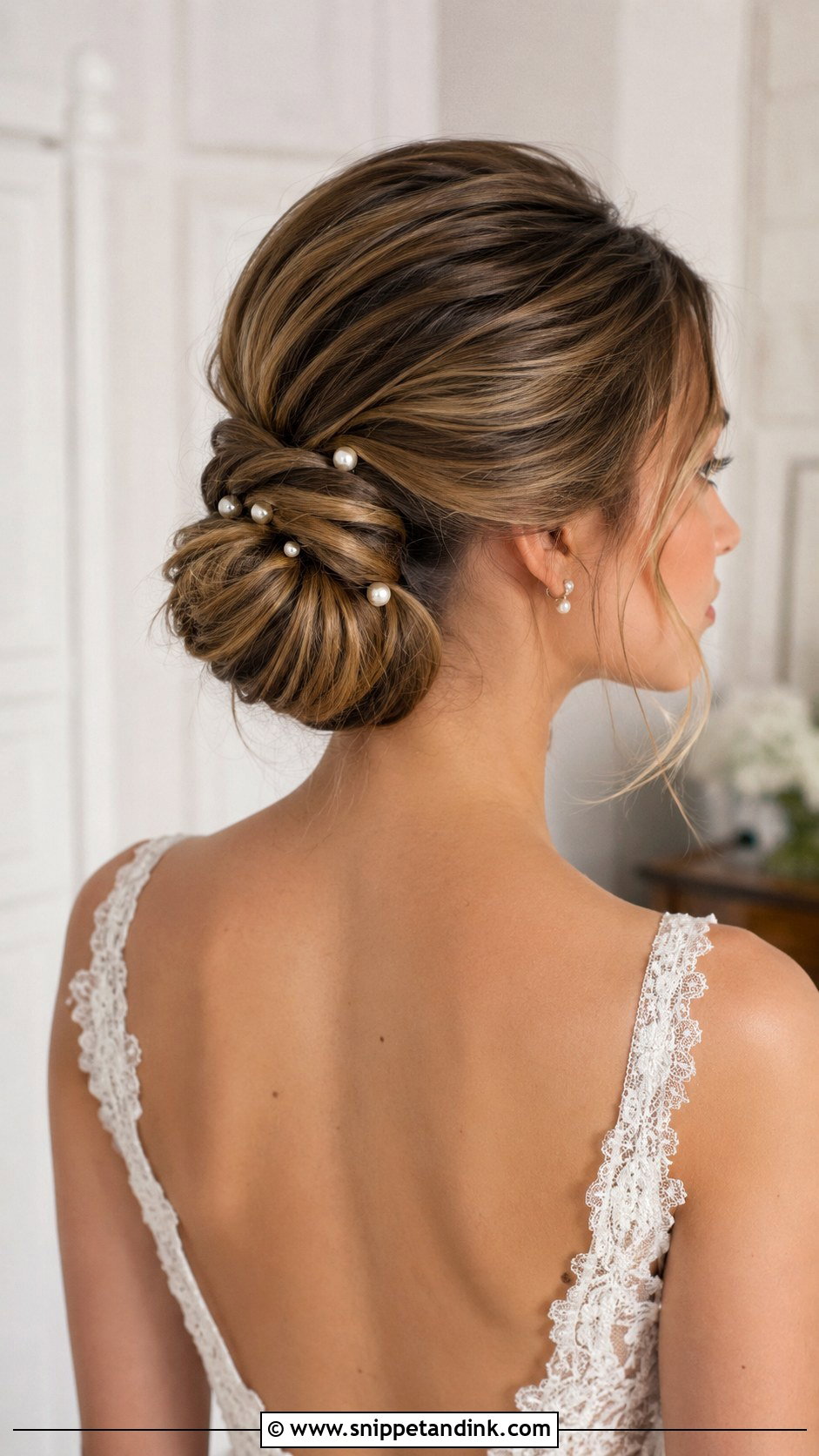
A chignon in a wig needs a lot of control at the hairline, which is why I prefer a full lace or a lace front with good coverage at the temples. Set it low and smooth, lightly twisted or loosely textured, depending on the dress. Veils can go above or below it. It keeps the neck and shoulders clear, so it suits backless gowns. Soften the front with a gentle sweep and add a few pearl pins rather than a large comb, which adds weight to one side of the unit.
9. Side Part Wig With Hollywood Waves
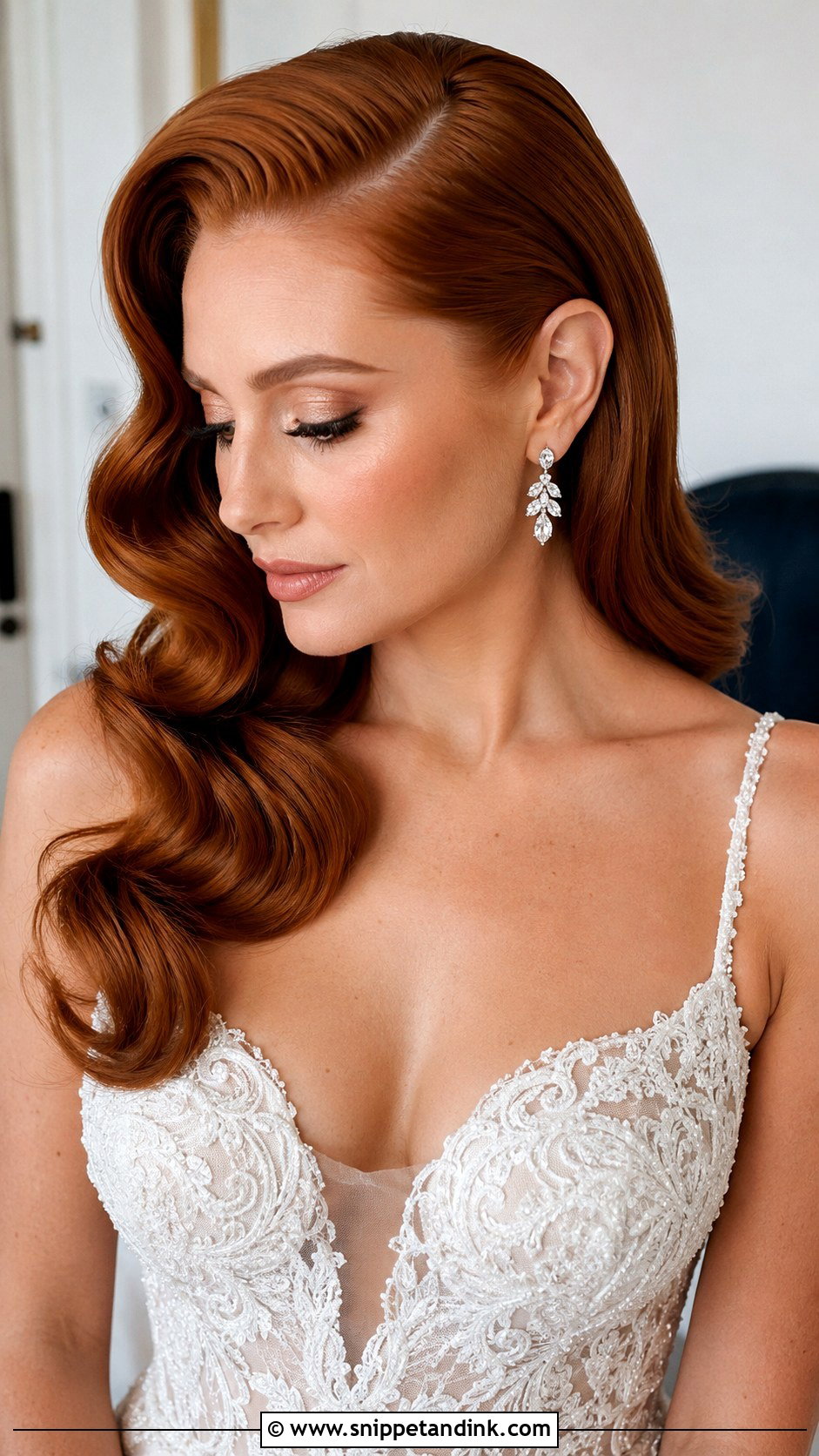
Hollywood waves on a wig work only with enough density to hold the pattern; a thin unit shows gaps between the waves. Medium to long lengths are best. The deep side part relies on a convincing lace part, especially if one side gets tucked behind the ear. It goes with fitted gowns, red lipstick, winged liner and drop earrings. I set the waves on human hair the same way as natural hair, pinned to cool and brushed out, and use light hold so they stay soft. It’s at its best at an evening or formal venue.
10. Afro Wig For Wedding
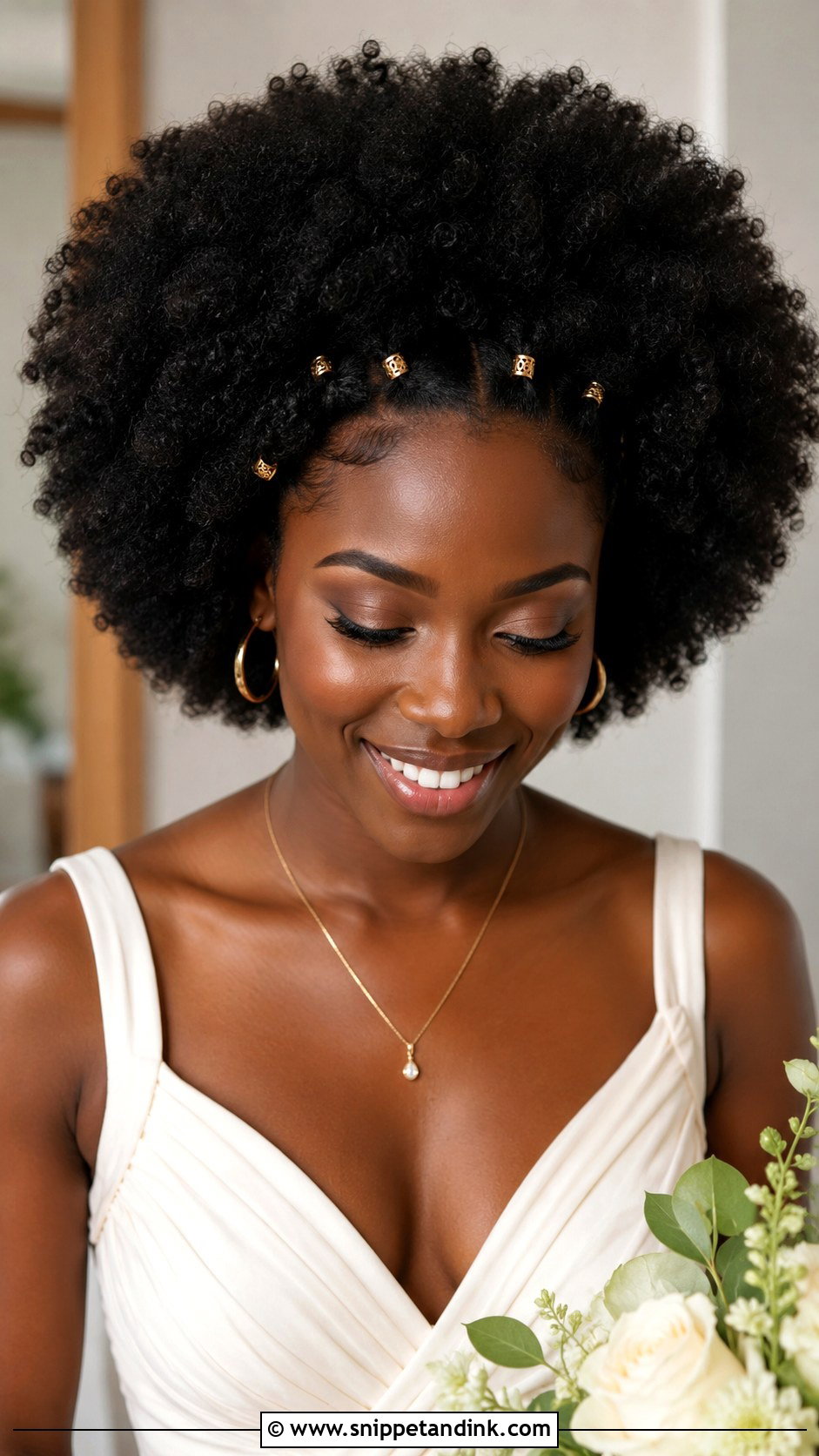
An afro unit celebrates coily texture and frames the face with volume that needs almost no accessories. The shape can be rounded, slightly tapered or softly picked out. Choose a wig whose texture matches real coils and whose density is balanced, because too dense reads as a hat. Simple gowns, cultural bridal details, floral crowns and gold cuffs all suit it. Shape the silhouette a day or two ahead, keep the edges neat, and refresh the fibres with a light leave-in spray if they look dry.
11. Braided Wig Crown Updo
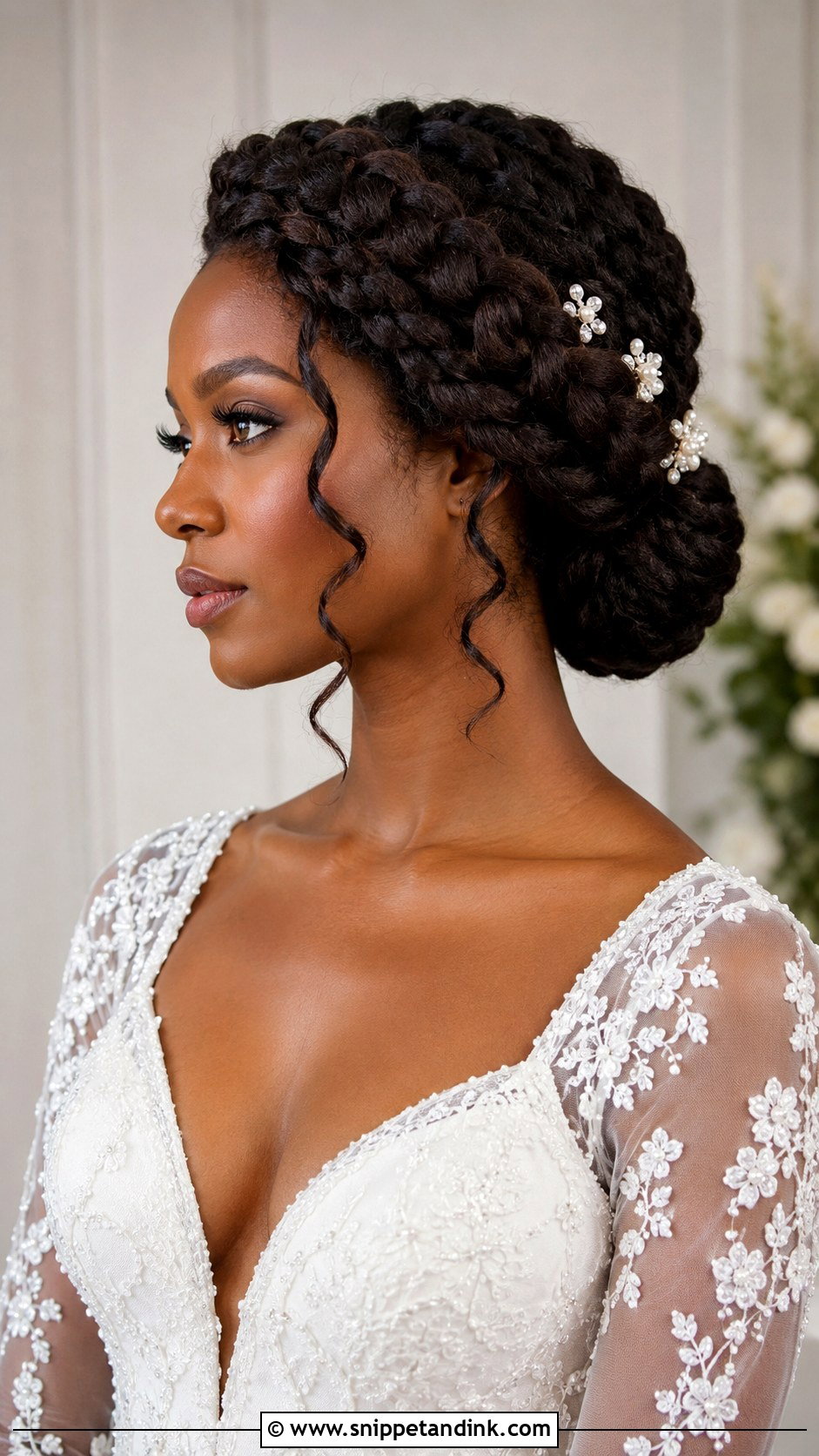
Braided crown units hold their shape through the ceremony, every photo and hours of dancing, because nothing in them can drop. They come as lace front braided wigs or custom braided units, and the crown wraps around into a bun or tucked updo at the back. There’s room on top for a veil, tiara or small florals. Ask for the braid to look neat but not tight, and add a few soft tendrils at the face. The weight is the thing to check: a heavy braided unit can feel tight by evening, so wear it for a full afternoon before the day.
12. Ponytail Wig For Wedding
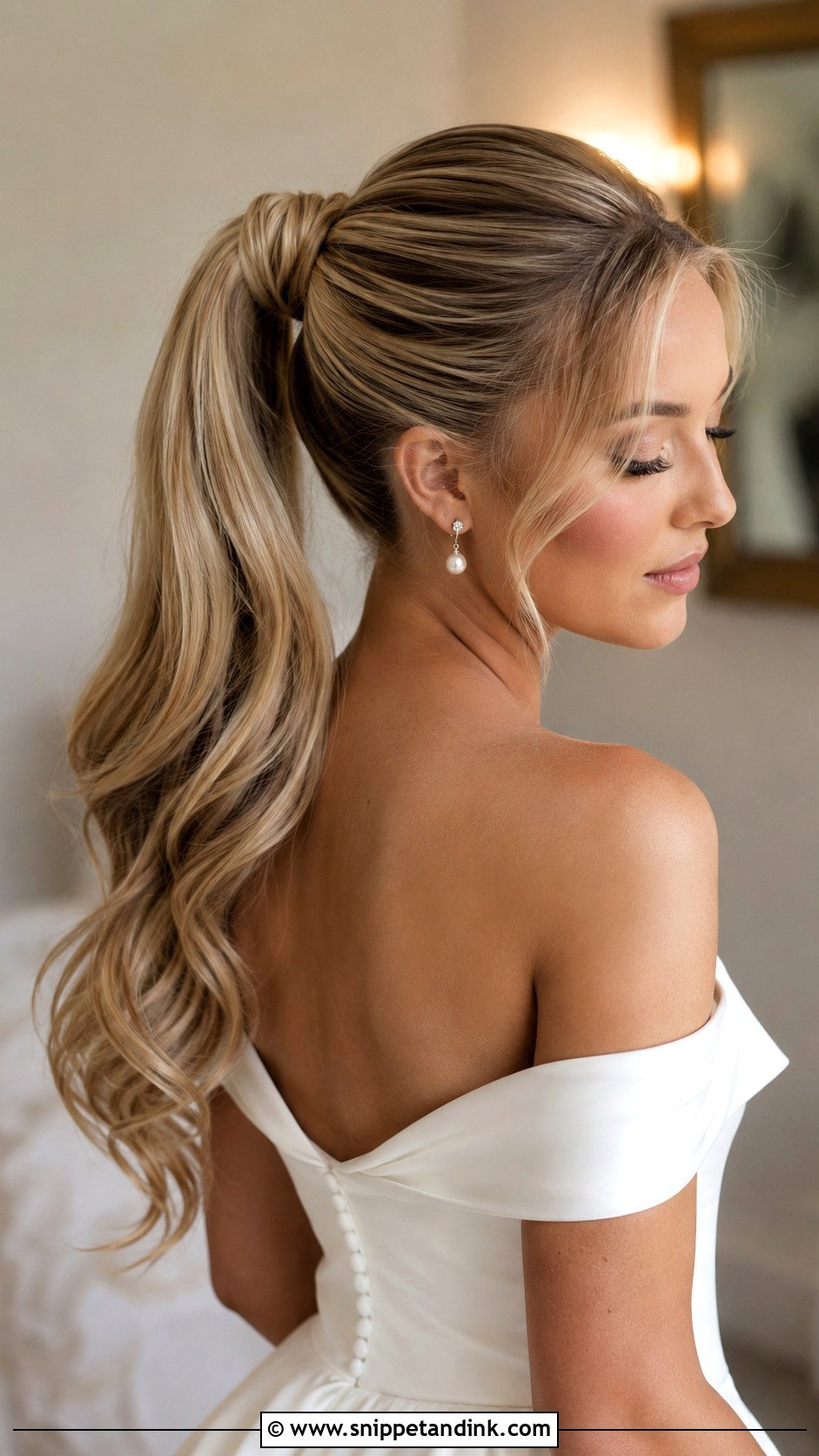
Ponytails expose the nape, so a full lace unit is the honest choice here; a lace front pulled up shows the cap at the back. High, mid or low each changes the mood. A sleek high ponytail looks confident, a wavy low one softer. Wrap a strip of hair around the base to hide the band. It works with statement earrings, simple veils and gowns with clean lines or open backs. I’d test the height with your neckline, since a high ponytail and a high collar can compete.
13. Pixie Wig For Wedding
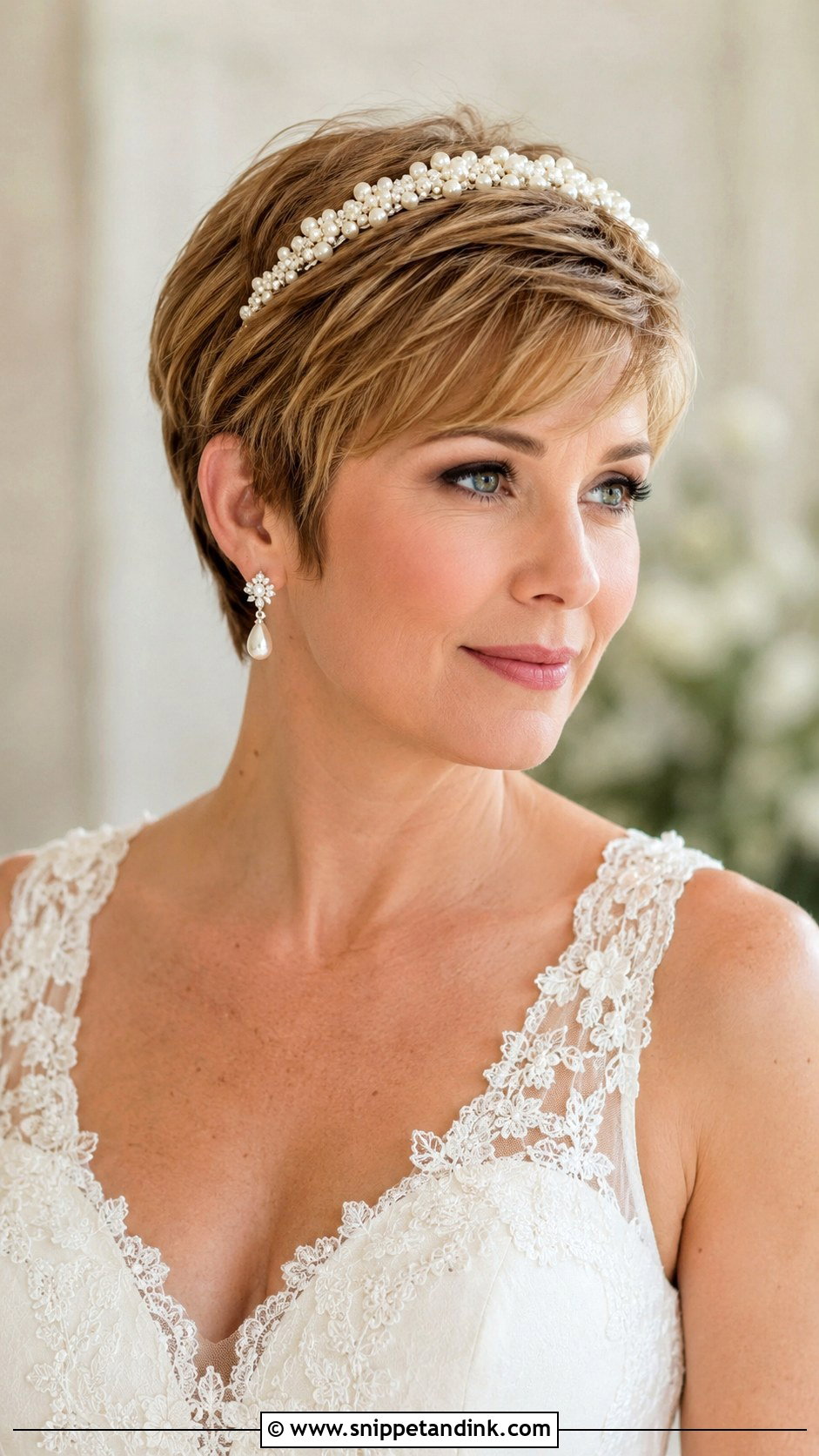
A pixie wig for a wedding is light and cool to wear, which matters at a summer ceremony or for brides who find long hair heavy. The cut needs texture and a fringe or side sweep that moves; a helmet-like finish is the giveaway that it’s a wig. A jeweled headband, birdcage veil, pearl pins or small comb all make it bridal. Bold earrings and detailed necklines get room to show, and your makeup artist will have the whole face to work with.
14. Wig With Veil And Loose Waves
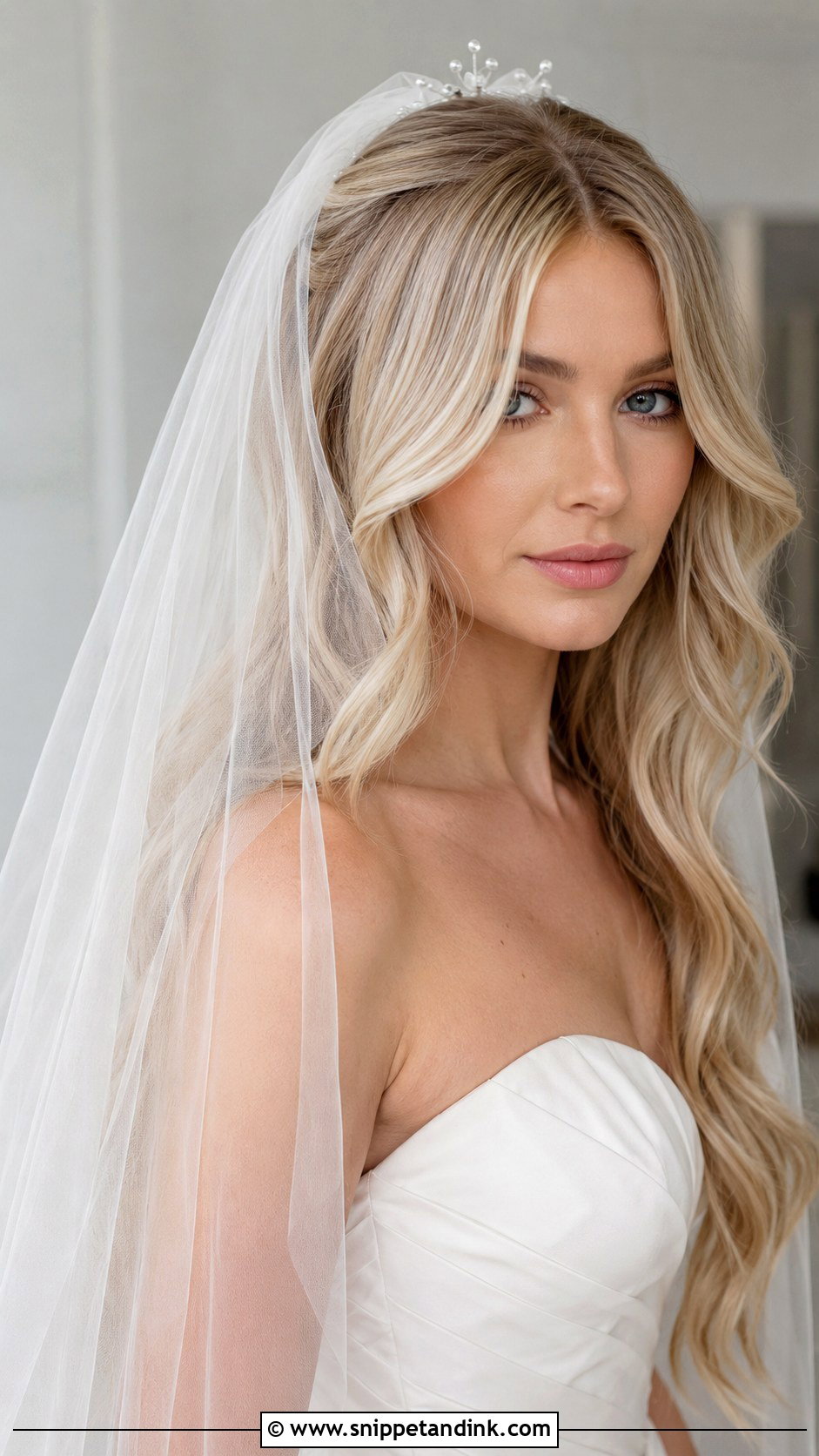
Loose waves under a veil is the most traditional pairing, and on a wig it’s also the one most likely to cause trouble. A veil comb pushed straight into a lace front can lift the edges or drag the unit back. I anchor the comb into a hidden braid or the wig’s own clips at the crown and add a couple of crossed pins for support. A lace front with a natural part and soft layers looks best here. Practise lifting the veil off so the crown doesn’t flatten when it goes.
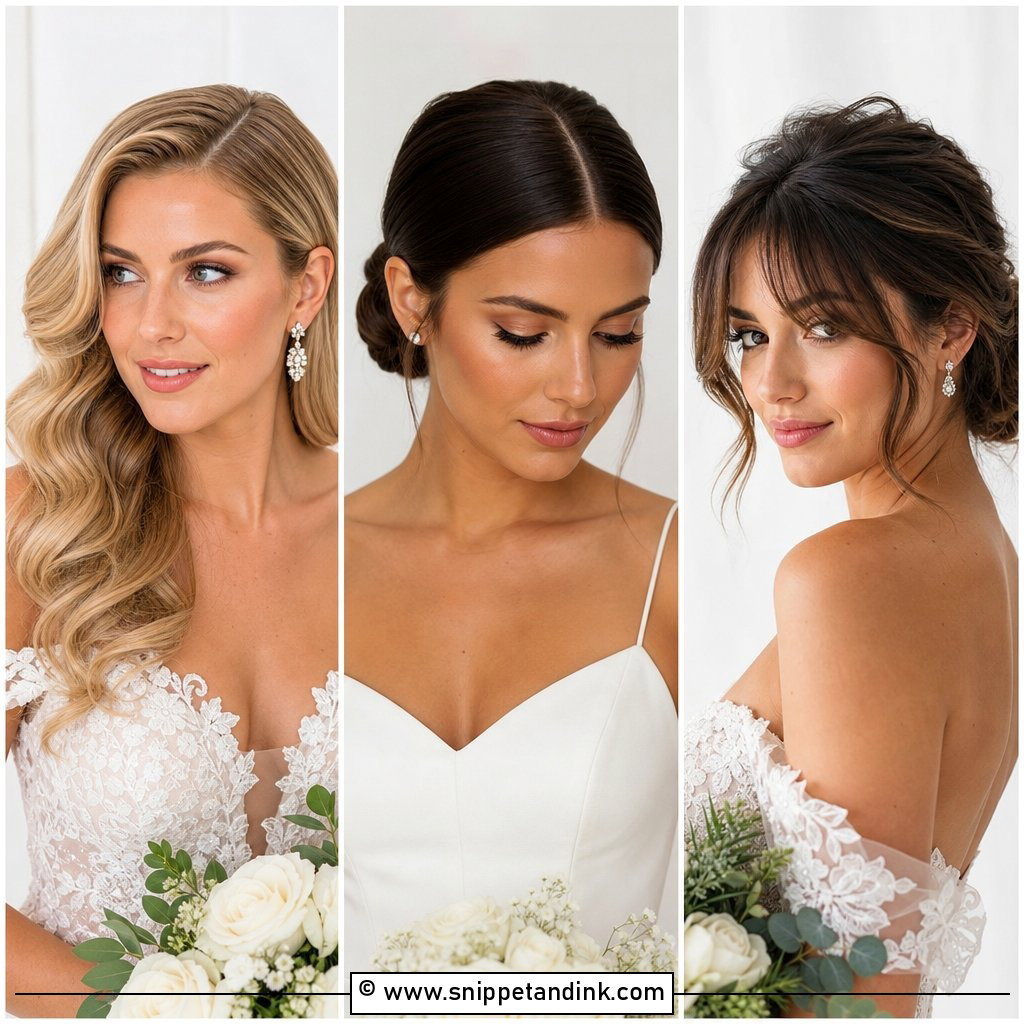
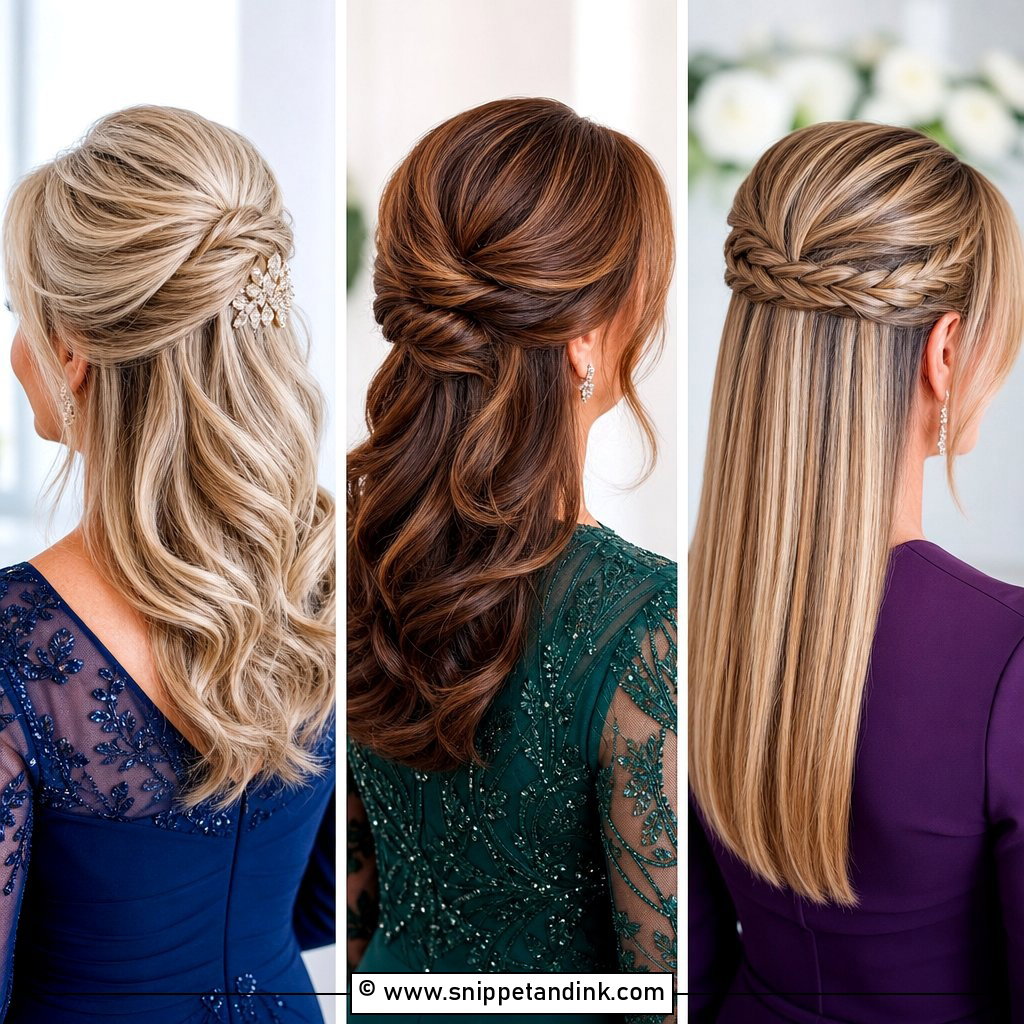

15. Wig With Pearl Hair Accessories
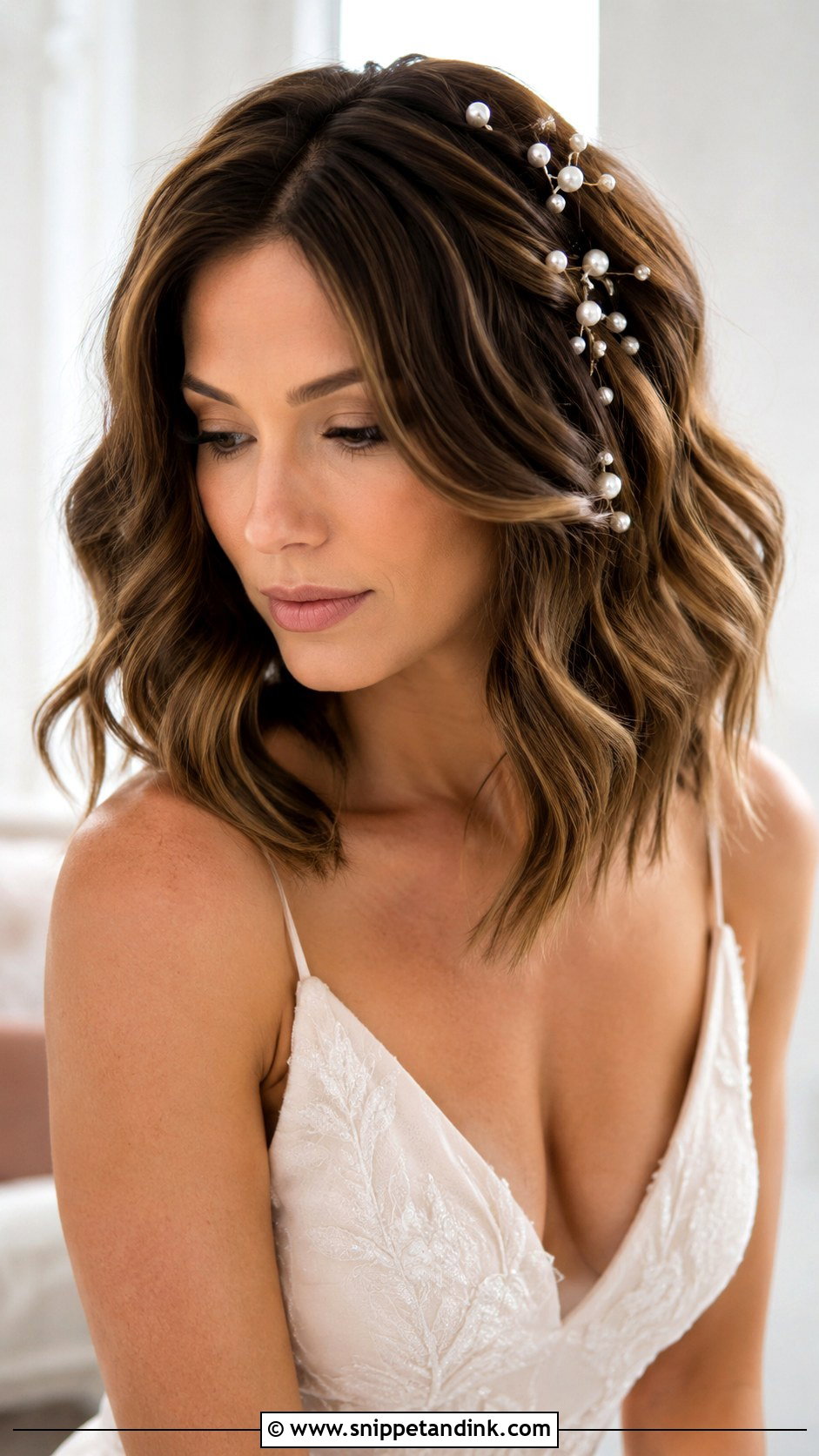
Pearls suit waves, buns, ponytails, bobs, pixies and half up looks, so they’re easy to add to any unit. Scale them to the hair: small pins in curly or voluminous wigs, a comb or headband in sleek styles. On a lace front, a pearl pin placed near the part or side sweep draws the eye to the hairline, so only do it if your lace is well blended. Keep the number low and the spacing even. Too many and the style looks crowded.
Keeping the Lace Down Through Heat, Hugs and the Dance Floor
Adhesive installs are the most secure, but sweat is their weak point. At a hot outdoor ceremony or a crowded reception, the bond at the temples can soften and the lace starts to lift. Glueless installs avoid that but rely on a good fit and an elastic band. Talk to your installer about which suits your skin, the season and how long you’ll wear it.
- Install on the morning or the evening before, never several days early, so the bond is fresh.
- Your makeup artist should know there’s lace on your forehead. Foundation is blended over it lightly and set with powder, and heavy rubbing at the edges can lift it.
- Ask a bridesmaid to carry a small kit: a little adhesive or melt spray, a rat tail comb, blotting papers and spare pins.
- Blot the hairline between the ceremony and photos; it stops sweat collecting under the lace.
At the end of the night
Don’t peel the lace off when you’re tired. Soak the edges with the adhesive remover your installer recommends, wait, and lift slowly, or you’ll tear the lace and pull out your own baby hairs. Rinse the wig gently, let it dry on a wig head and store it in a breathable bag, and it will be ready for your honeymoon photos.
Fit and Hairline Come Before Any Style
Soft waves, a sleek bun, a textured afro, a polished bob or a dramatic ponytail can all look natural on a wig, and all of them protect your own hair while you wear them. What decides whether a wig looks real is the fit, the lace, the density and how secure it feels after six hours. Settle those first, then choose the style. Book a trial with the actual unit, veil and accessories, and wear it long enough to know how it feels by evening.
You'll Like These Ideas:





Leave a Reply