
Your lehenga will get most of the attention, but your hair decides how comfortable you are for the next twelve hours. It has to hold a tikka, sit under a dupatta, survive a dance floor and still look tidy at the vidaai. These 30 Indian wedding hairstyles run from gold-threaded buns to open reception waves, and for each one I’ve noted what it asks of your hair and where it tends to go wrong. Brides will find their ceremony look here, and bridesmaids and guests can borrow the simpler braids and half-up styles for their own functions.
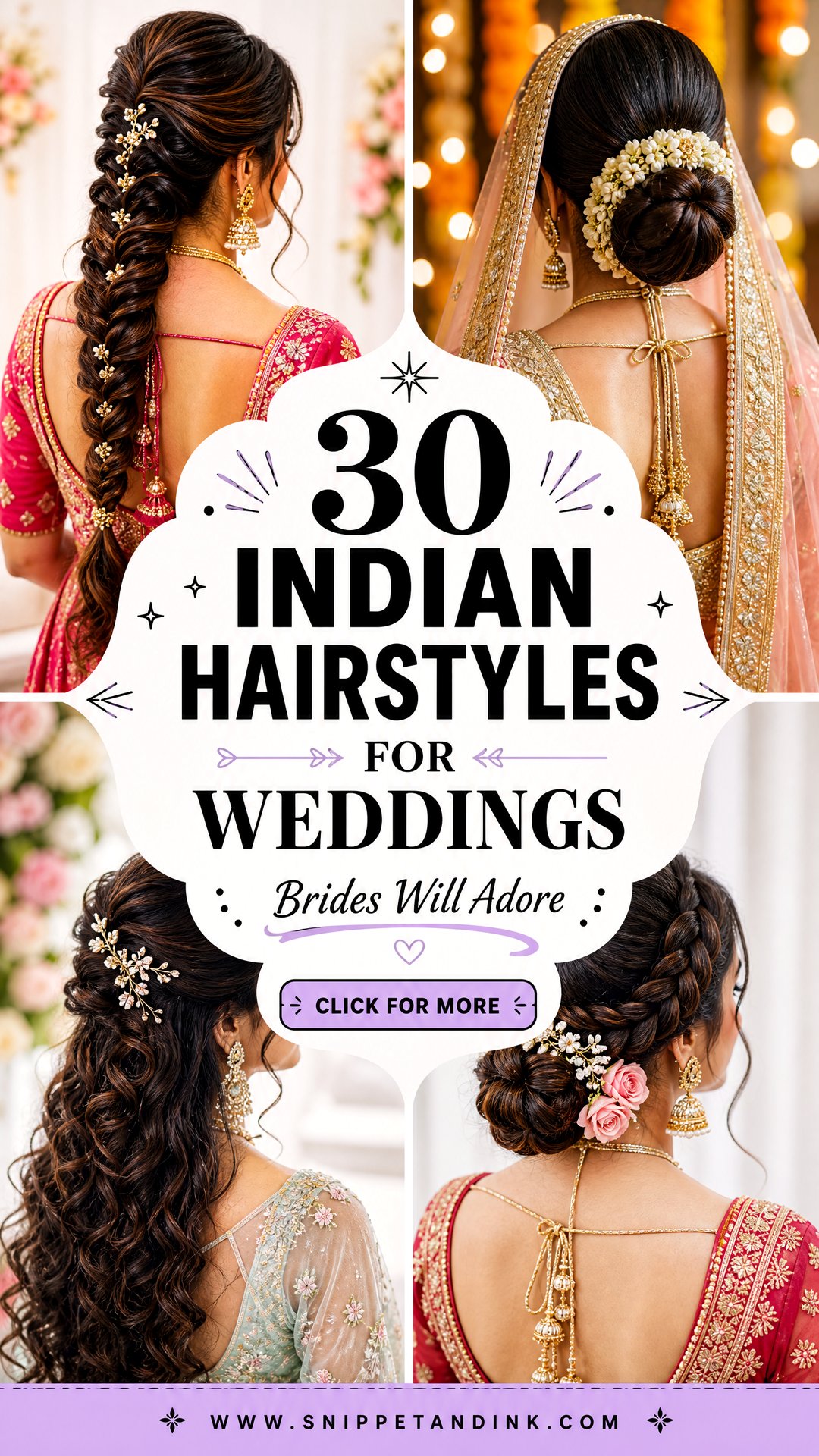
Run Your Hair Trial Like the Wedding Morning
A trial is only useful if it copies the real day. I like to do it roughly four to eight weeks ahead, close enough that your hair length and colour won’t change much, but with time to adjust. Come with hair washed the day before, the way it will be on the morning, and bring the actual maang tikka, matha patti and dupatta, not photos of them.
- Wear the finished style for at least a few hours afterwards. Most pain points, like a heavy tikka pulling or pins pressing, show up after the first hour.
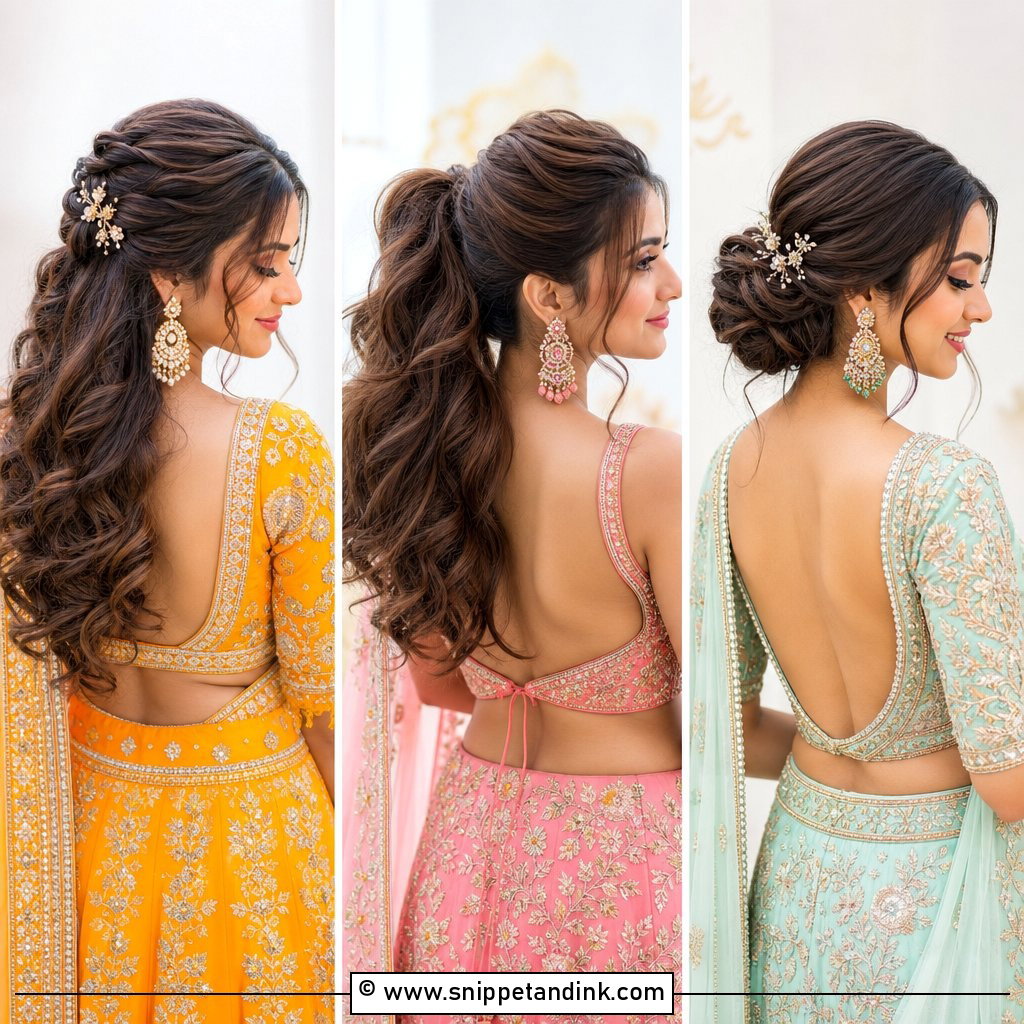
- Take photos in daylight and with flash. Flyaways and uneven partings show far more under flash.
- Book your makeup trial on the same day if possible, since a hair change can shift how the whole face reads.
- Note the time each style took. That number decides the getting-ready schedule for you and your bridal party.
If something feels wrong at the trial, say so then. It’s far easier to change a parting or lower a bun weeks ahead than at 7am on the wedding day.
1. Traditional Low Bun With Maang Tikka
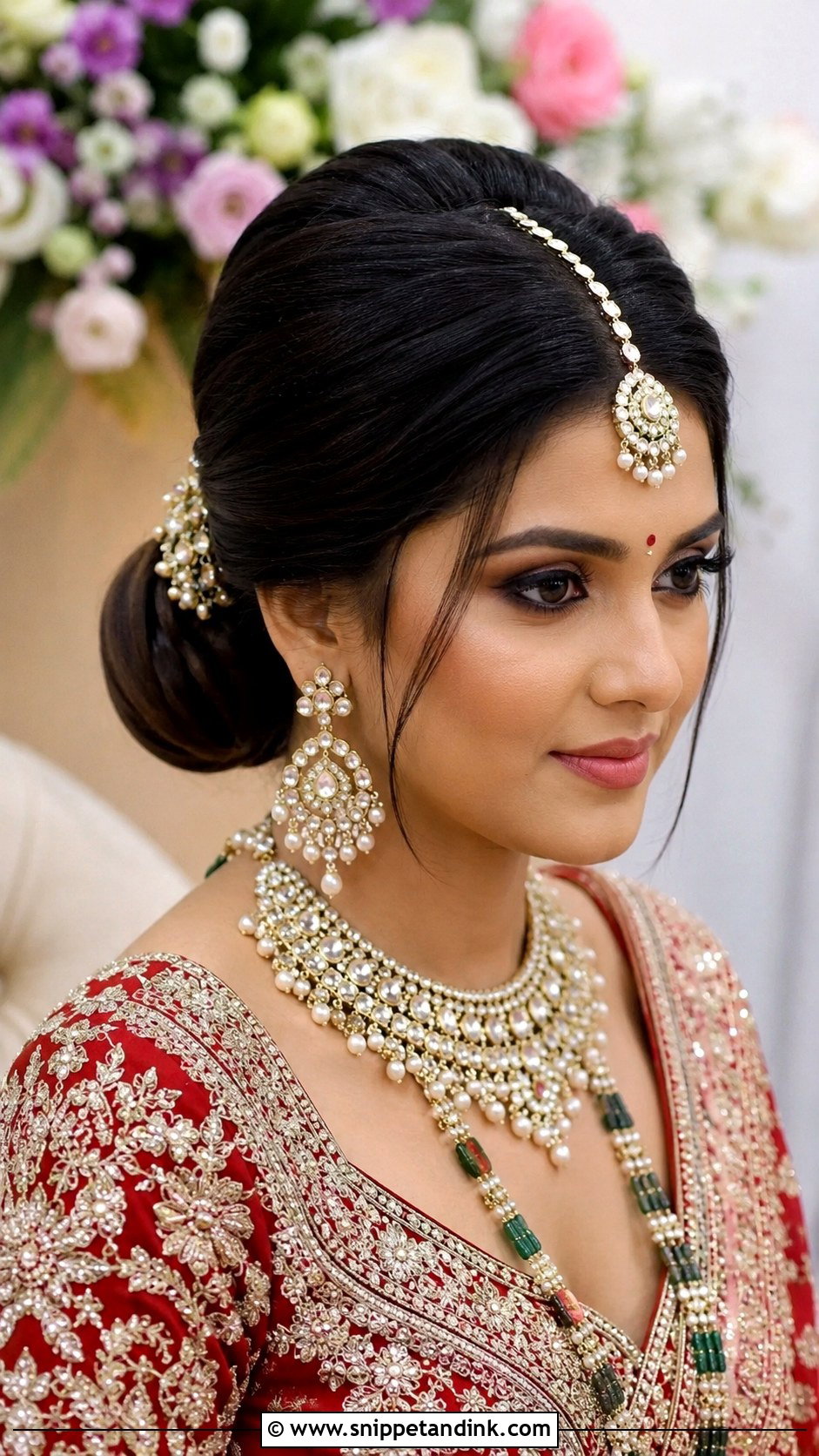
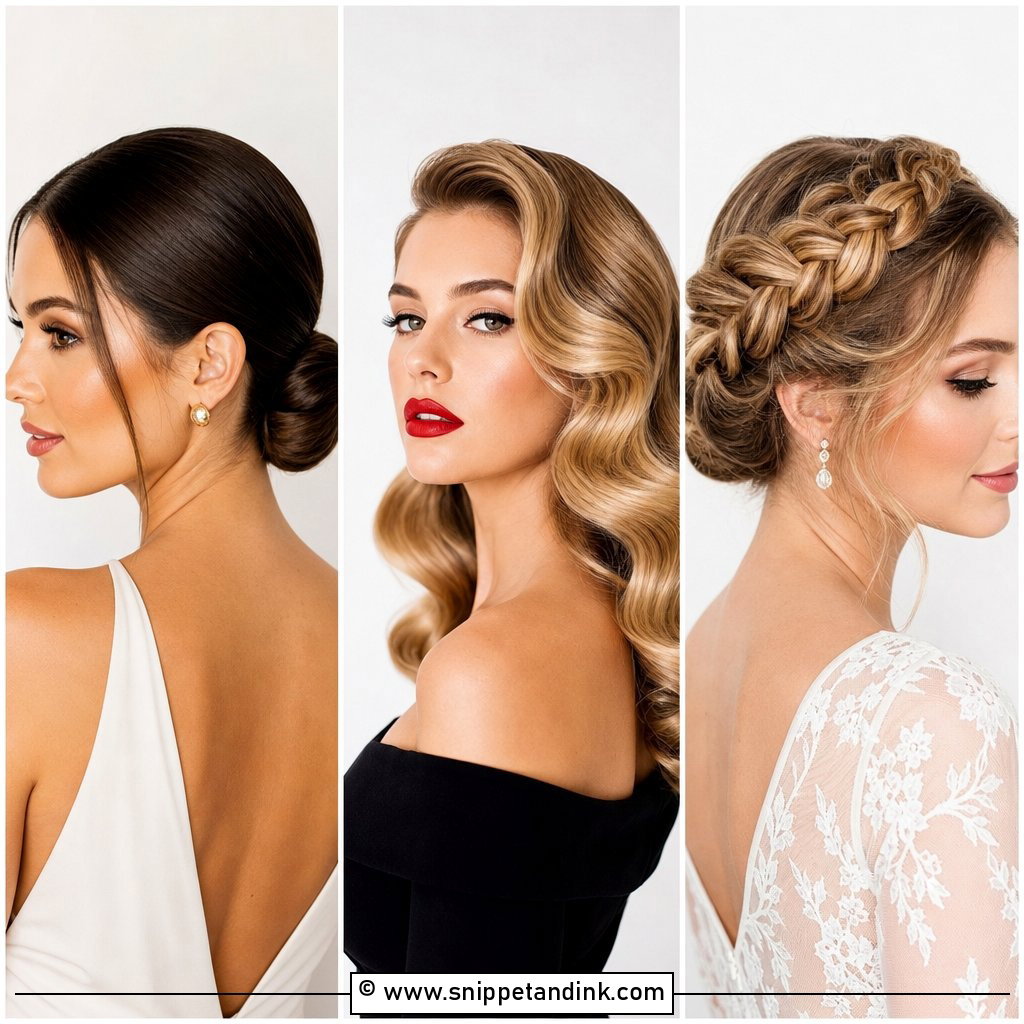
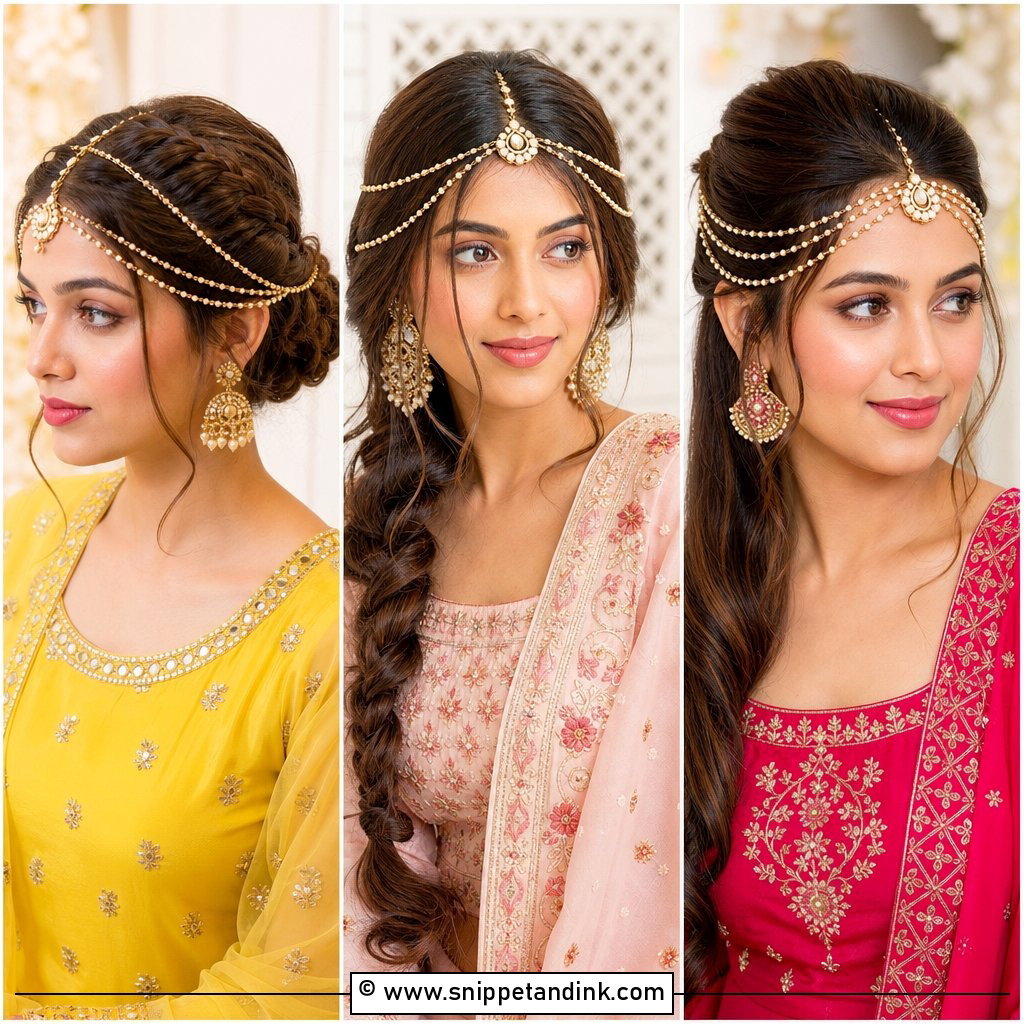
If I had to name the safest bridal look on this page, it would be this one. A low bun at the nape is the favourite of North Indian brides for a practical reason: it gives a heavy dupatta and jewellery a firm base. I add a little height at the crown, then lay the tikka along a perfectly straight center part. A few fresh flowers or pearl pins tucked into the side finish it. Because the bun is pinned close to the head, it rarely moves between the mandap and the reception.
2. South Indian Bridal Braid
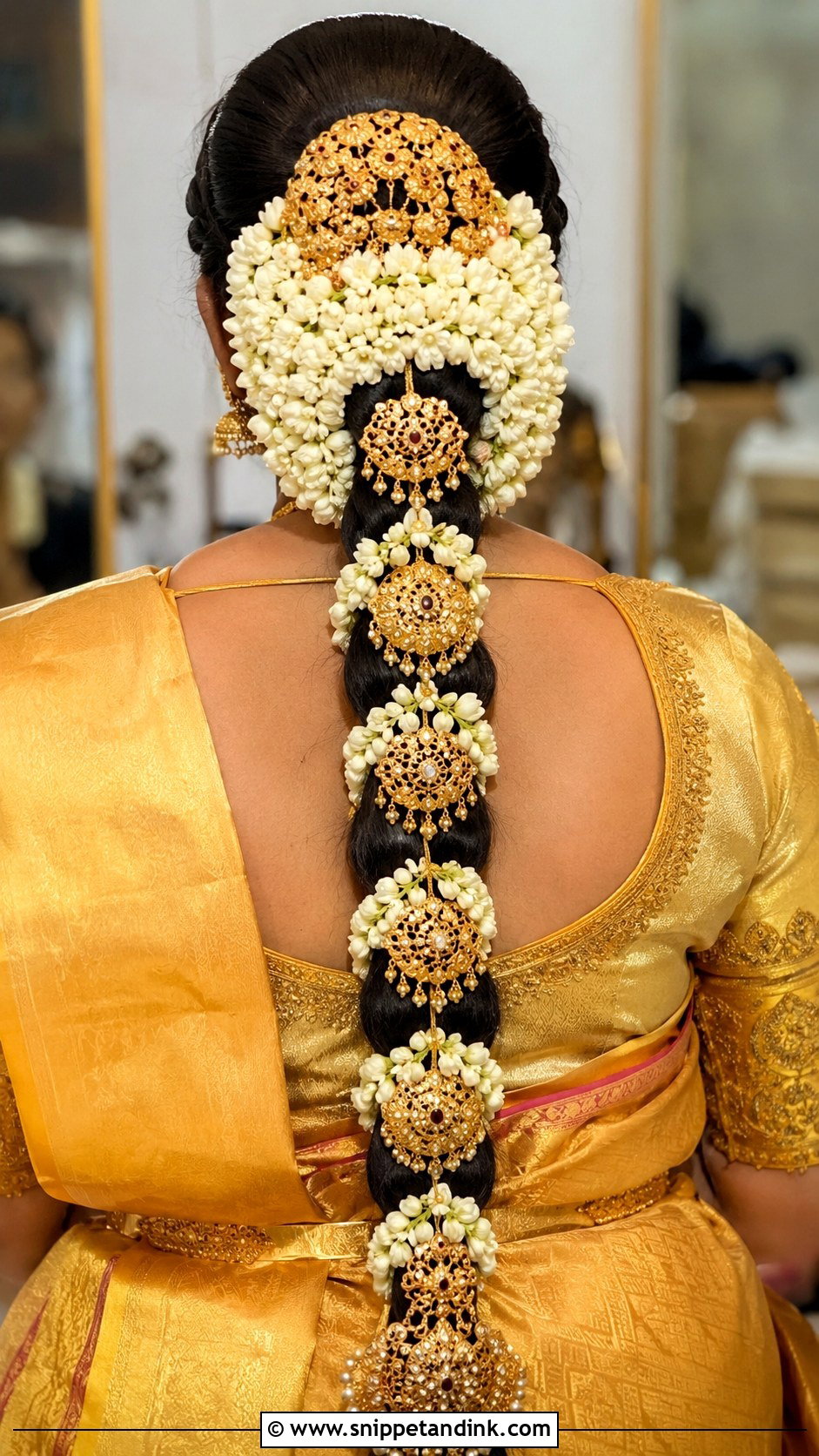
A South Indian bridal braid is long, dense and decorated from top to tip, and it belongs with a silk Kanjeevaram. Traditionally the plait is covered in jasmine and gold ornaments, with a temple-style piece at the crown. Most brides need a false plait to reach that length, and I attach it before braiding so the join sits under the first ornament. The braid naturally looks fuller at the bottom once the extension and flowers are in. Plan for the weight: I’d rather spread the ornaments along a few anchor pins than hang them all from one elastic.
3. Floral Bun for Mehendi
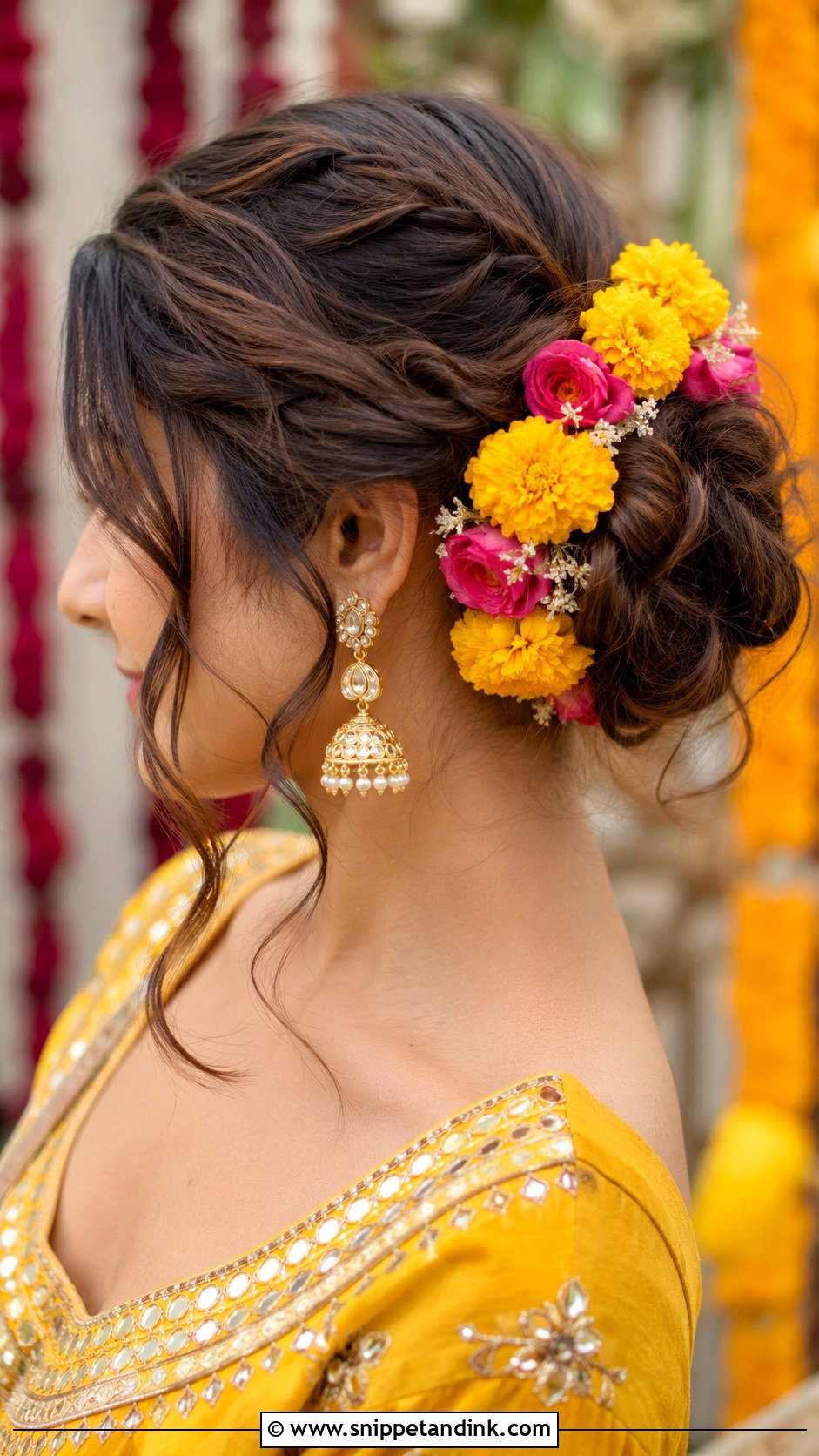
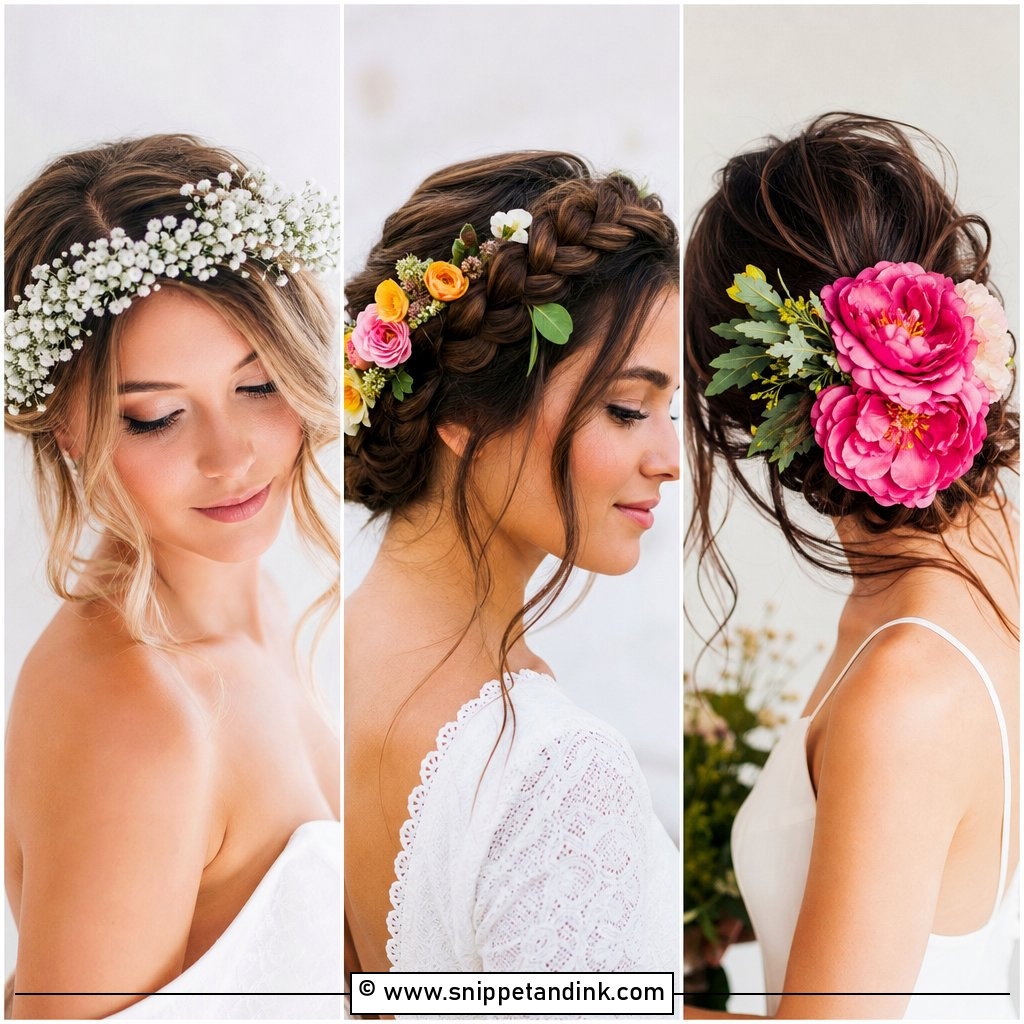
Mehendi mornings are long and seated, and a soft floral bun suits them. I gather the hair loosely, pin it firmly underneath, and surround it with marigolds, roses or baby’s breath, colours that match the festive, joyful energy of the day. Outdoors in sun, marigolds outlast roses by hours. The bun keeps hair away from wet henna while you sit with your hands out. Let one or two tendrils fall at the face, and pin them so they don’t brush the design.
4. Hollywood Waves for Reception
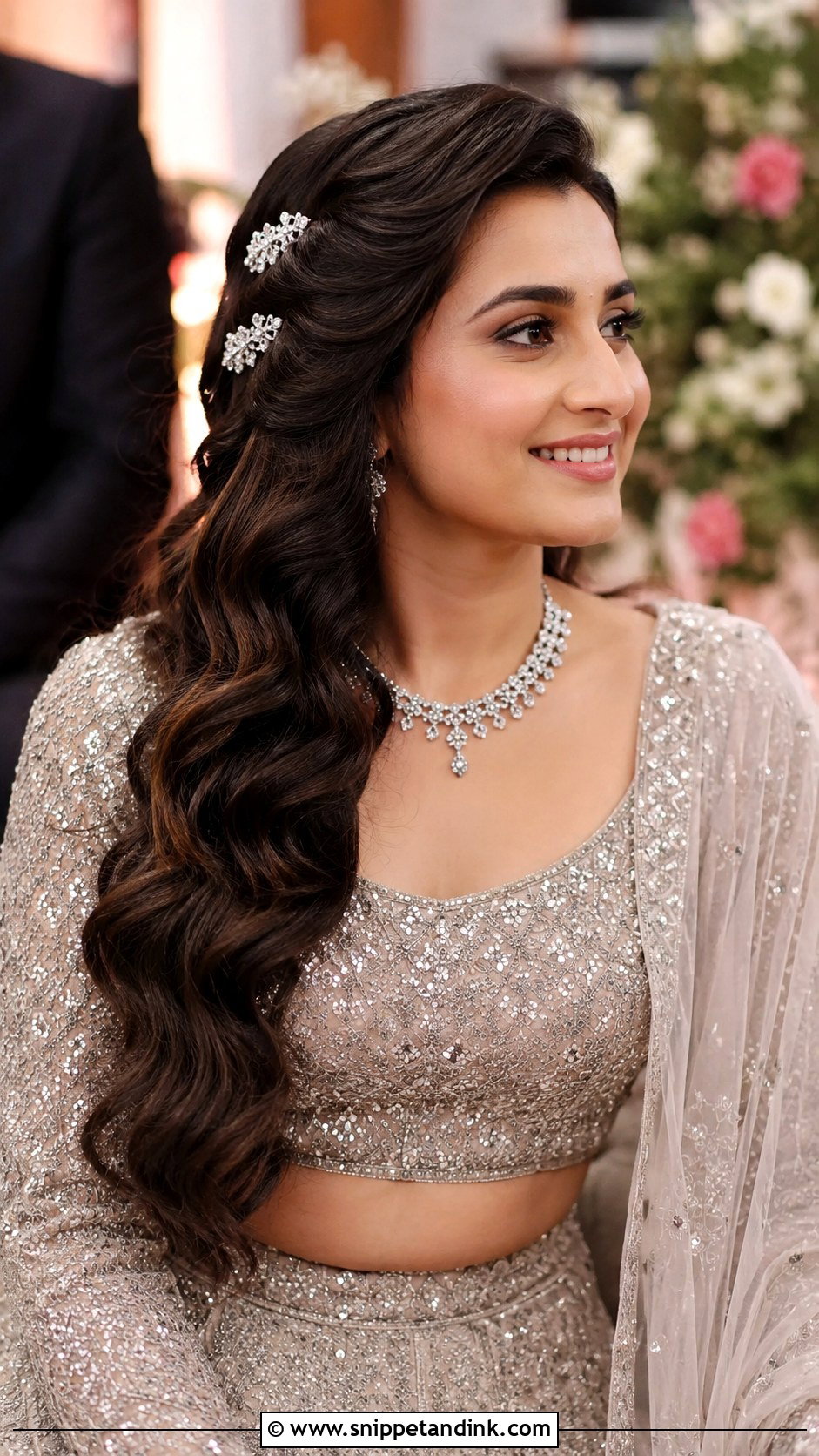
Reception night is where Hollywood waves come into their own. Deep, glossy S-shaped waves fall over one shoulder, and they suit modern lehengas, gowns and Indo-Western outfits. The shape depends on curling every section in the same direction and brushing through once it’s cool; rushed waves turn into frizz. A deep side part gives the most vintage effect. Diamond-accented clips at the part add sparkle without competing with your earrings. Under a camera flash, the smooth surface reflects light, so a shine spray at the end is worth the extra minute.
5. Fishtail Braid With Pearls
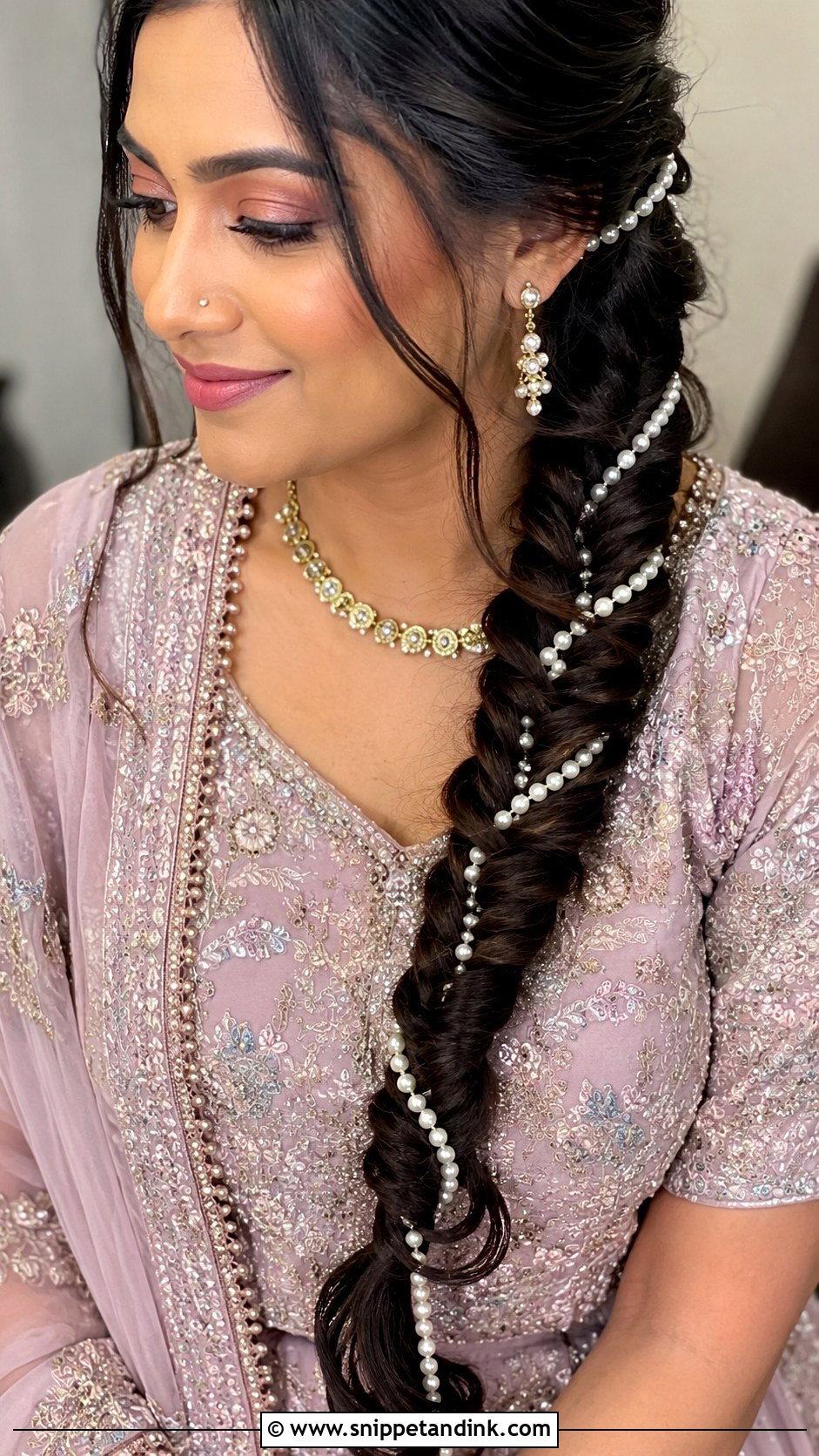
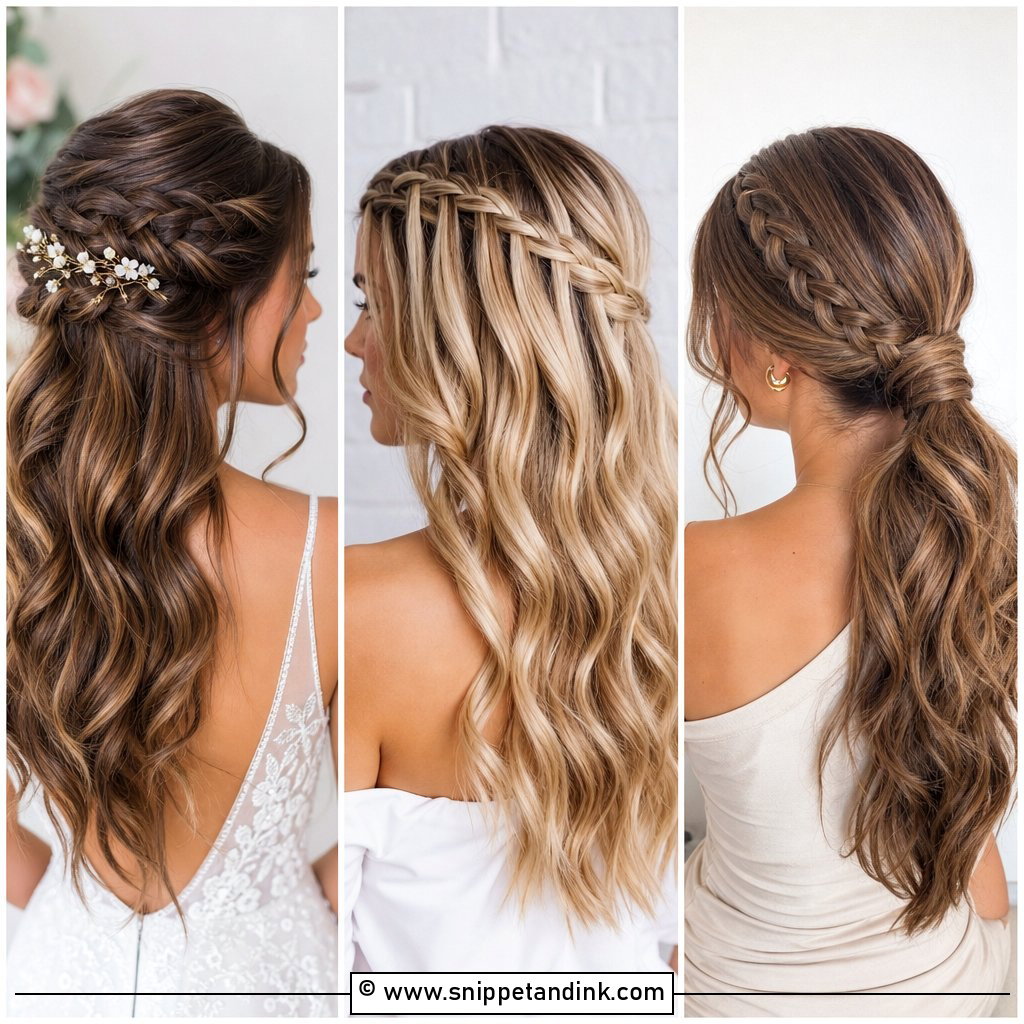
A fishtail looks complicated, yet it’s comfortable to wear because the tension is spread across dozens of tiny crossings rather than three thick strands. Laced with pearls, it suits sangeet nights and daytime functions. I usually drape it over one shoulder and leave a few face-framing pieces loose. Pearls sit best when threaded on a fine wire or pinned along the outer edge of the plait. Fine hair can look thin in a fishtail, so I gently stretch the braid once it’s finished to widen it.
6. Half-Up Half-Down Bridal Look
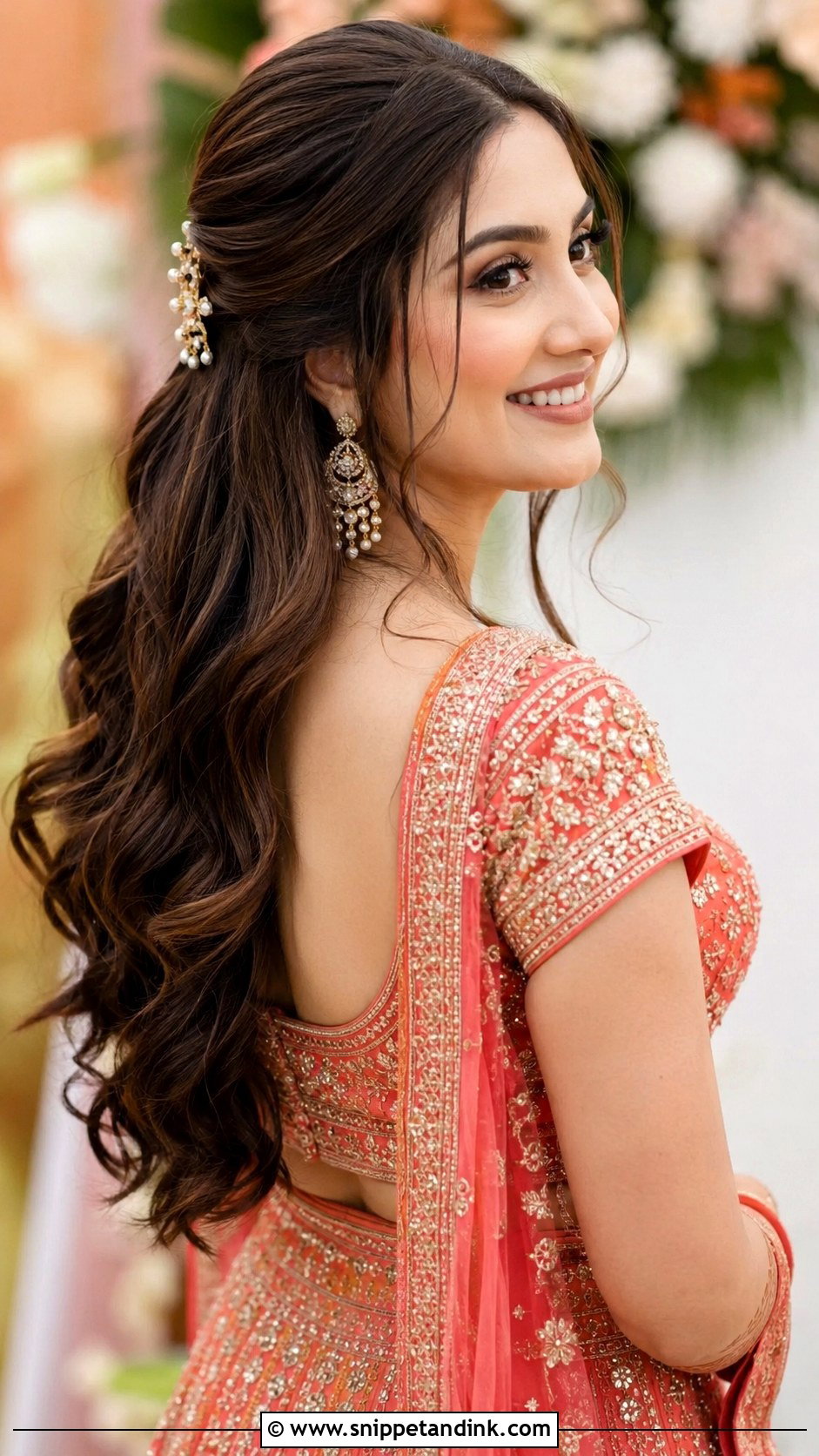
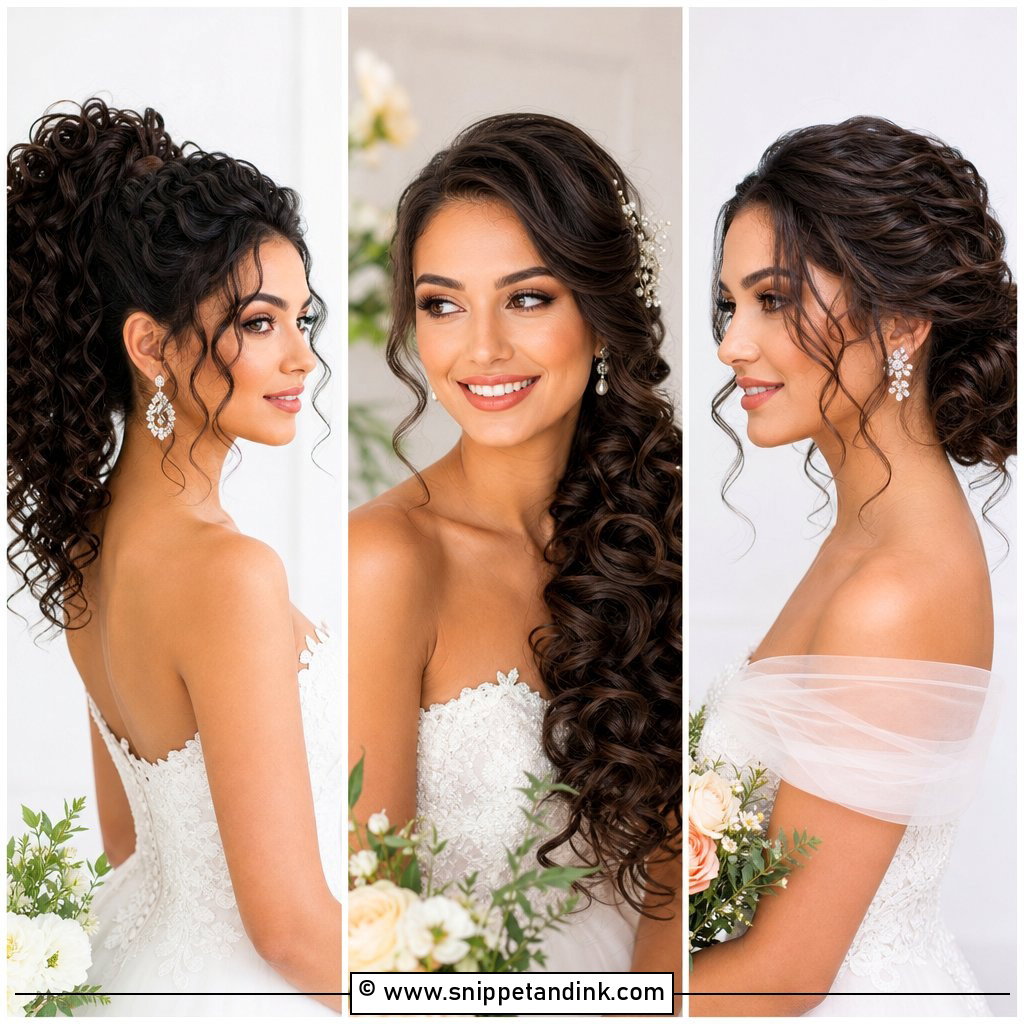
Can’t decide between an updo and open hair? Half-up, half-down splits the difference. The top section is pulled back for a neat frame and the bottom falls in soft waves. It suits engagement parties, sangeets and relaxed receptions. A maang tikka or jewelled clip at the crown hides the pins. The weak point is humidity: waves on straight hair loosen over the evening, so I set them with clips and a flexible spray. Nearly every face shape can wear it.
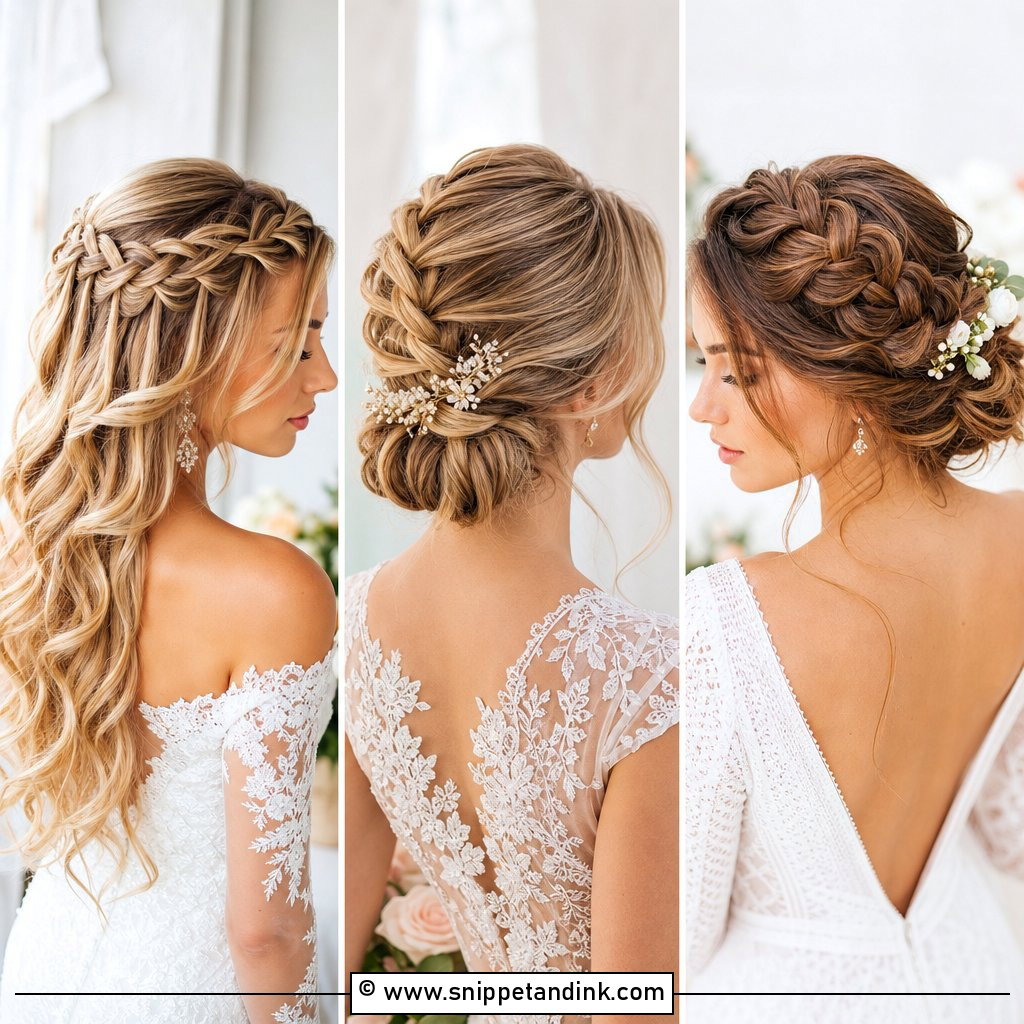
7. Dutch Braid Crown
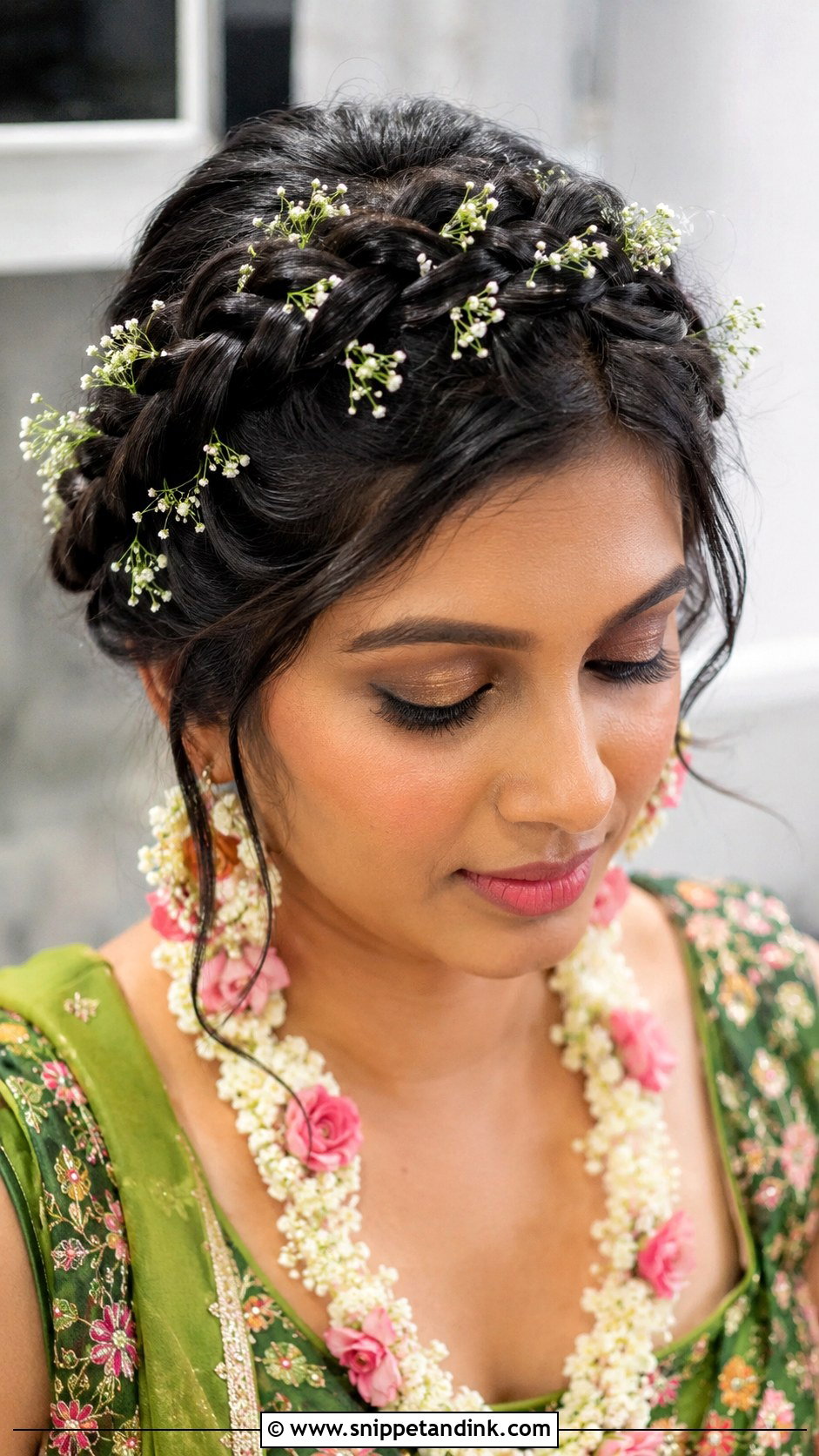
A Dutch braid crown sits on top of the hair like a woven halo, because the strands are crossed underneath rather than over. Since it keeps every strand off your face and neck, it’s practical in warm weather and through long ceremonies. Tiny flowers or gold thread slip into the raised braid easily. I’d mention one catch: a crown braid sits right where a matha patti or heavy dupatta would go, so it tends to work best for the mehendi, sangeet or a bridesmaid. Younger brides and bridal parties often pick it for its fairytale feel.
8. Sleek Low Ponytail
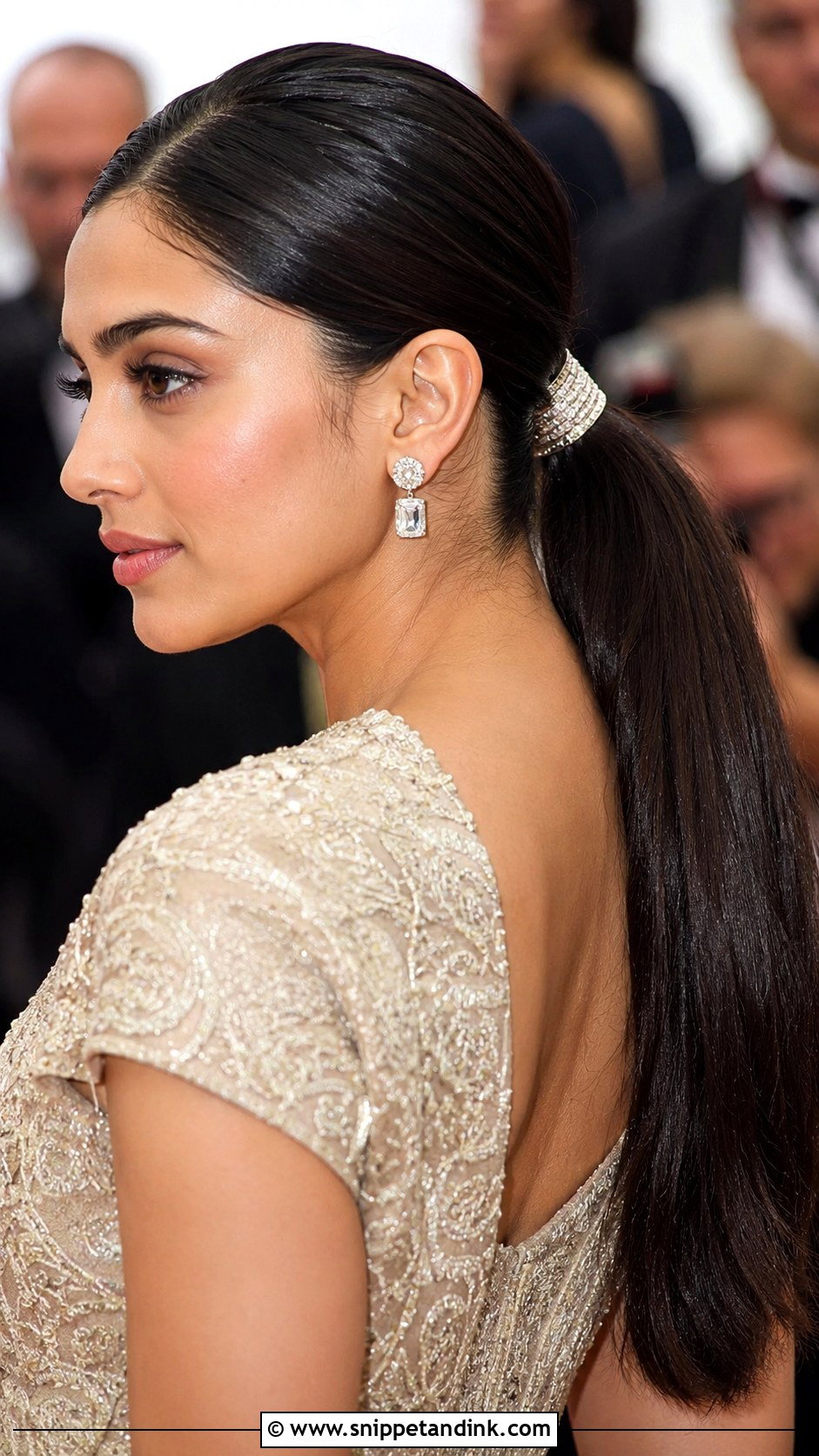
A sleek low ponytail looks simple in photos, but getting that glass-like finish takes time. I blow-dry every section straight, smooth it back with a cream or serum, and secure it low at the nape. A strand wrapped around the band hides the elastic, and a sparkling hair cuff adds a little drama. It’s a good fit for cocktail evenings, receptions and Indo-Western outfits, when your jewellery should do the talking. Once it’s done, it needs almost no touching up, which makes it easy to wear over a long evening.
9. Messy Bun With Loose Curls
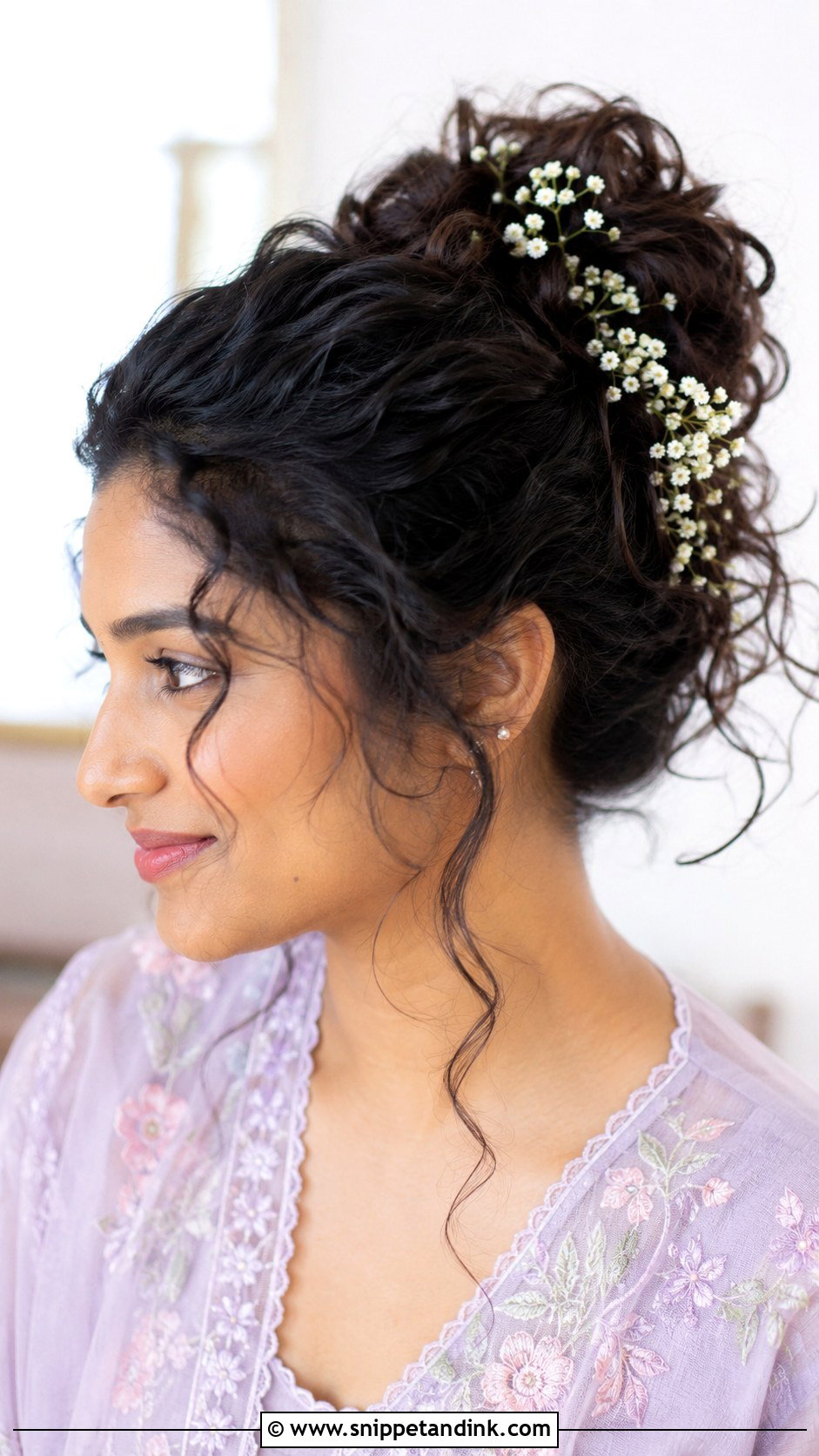
The messy bun is never really messy. I pin a secure base first, then pull out loose curls around the face, so the relaxed look holds through haldi, mehendi or a daytime function. Fresh flowers or baby’s breath pinned into the bun add a festive note. Haldi is worth a warning, since turmeric paste will stain light accessories. Add a delicate maang tikka if you want a touch of tradition. Natural light suits the undone texture more than flash.
10. Gajra-Adorned Bun
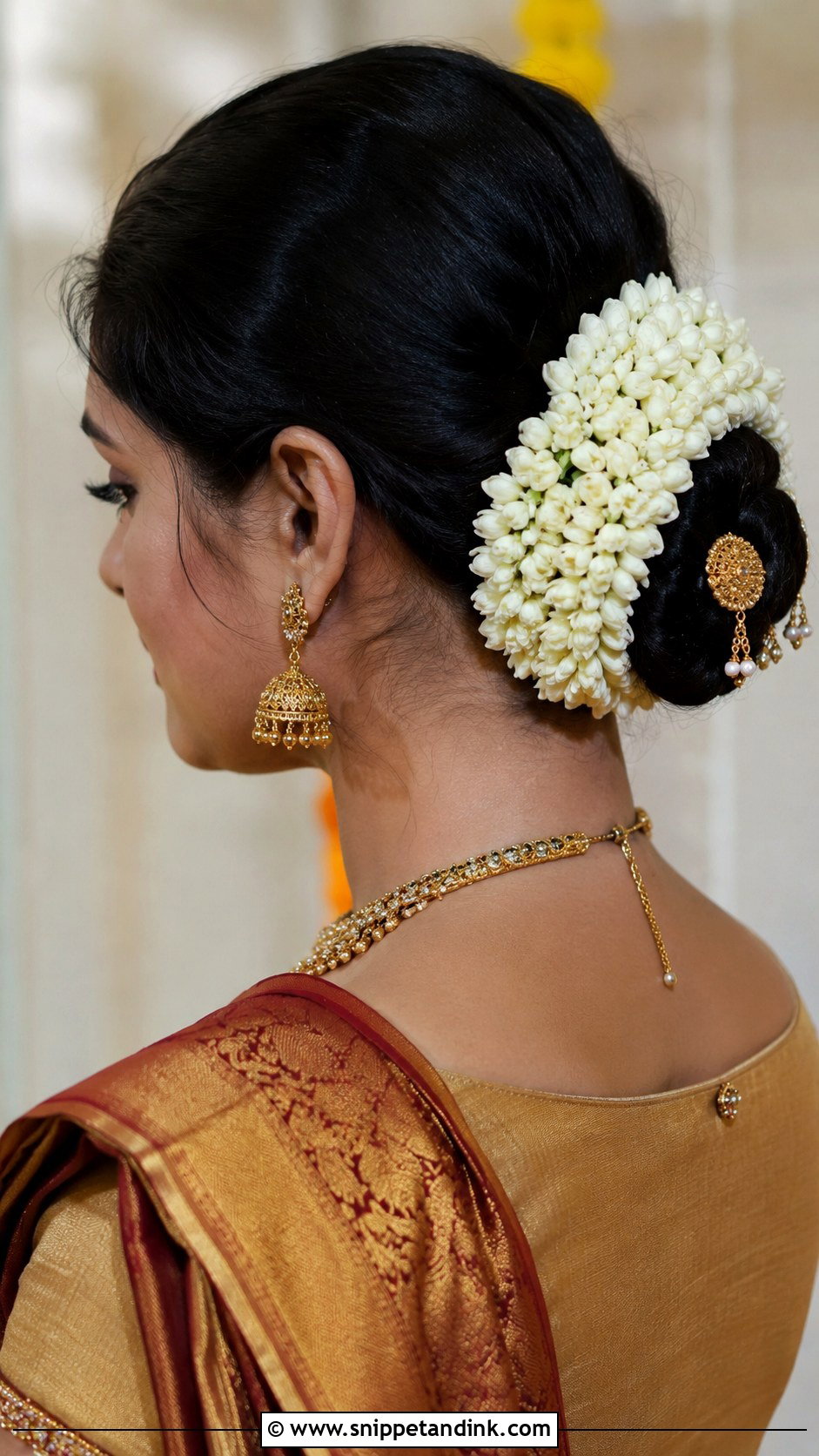
The gajra-adorned bun is one of the oldest bridal looks in India. Strings of jasmine wrap around a neat bun, with gold pins tucked between them. White flowers against dark hair show up well in photos, and the scent stays with you all evening. Fresh jasmine opens and browns in heat, so I ask for it to be delivered as close to the ceremony as possible. The bun can sit low or at the crown, depending on whether you’ll be wearing your dupatta over your head.
11. Boho Waves With Floral Vine
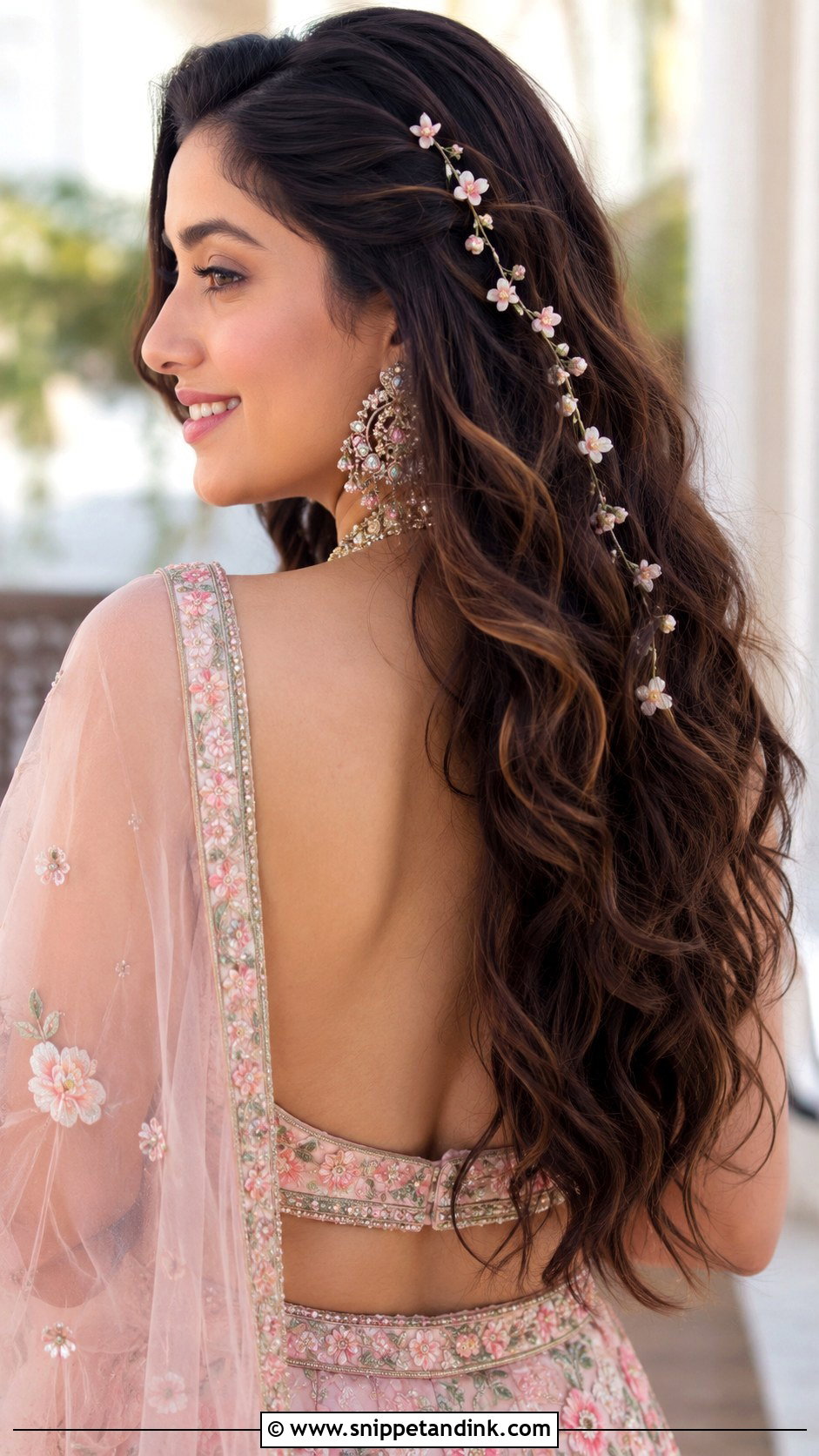
Boho waves with a floral vine suit relaxed outdoor and destination weddings. The vine is usually a thin wire with tiny flowers, and I weave it through loose waves so the wire disappears. Real flowers on a vine wilt faster than a bun’s flowers because they sit exposed, so for a hot afternoon I often suggest silk or preserved blooms. Pair it with flowing lehengas or pastel gowns. Sea air drops waves quickly, so set the curls with a strong hold spray first.
12. Braided Updo With Gold Thread
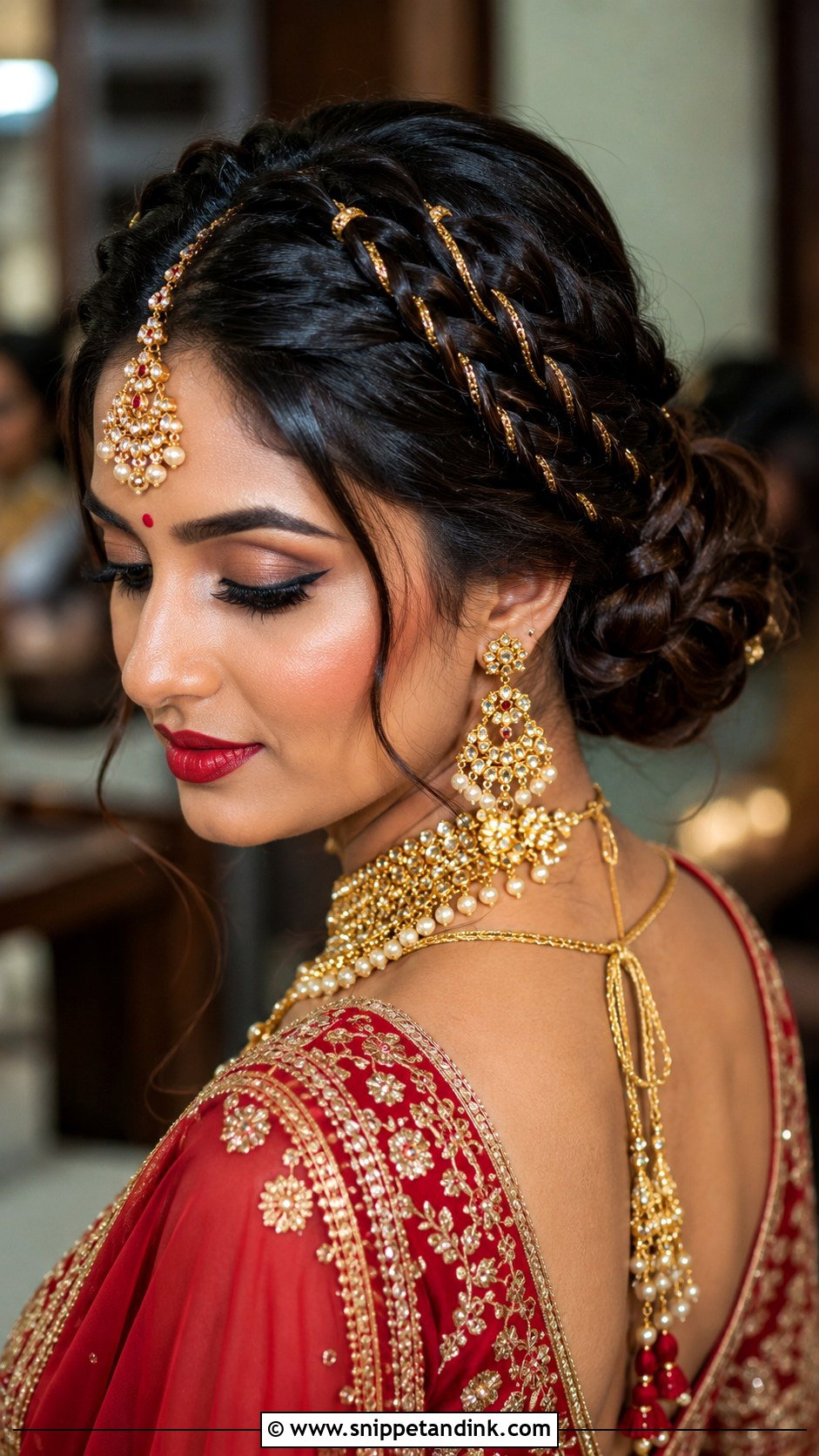
Gold thread woven through a braided updo gives warmth and catches light without the weight of a full hair ornament. I wrap the thread around a section before braiding, so it runs through the plait rather than sitting on top. Tucked into a low or mid bun, the braids stay secure through the whole ceremony. It suits brides who want a statement updo without fresh flowers. A tikka along the part adds a little more sparkle. Match the thread to your jewellery: yellow gold and antique gold read very differently in daylight.
13. Side Swept Curls With Hair Accessories
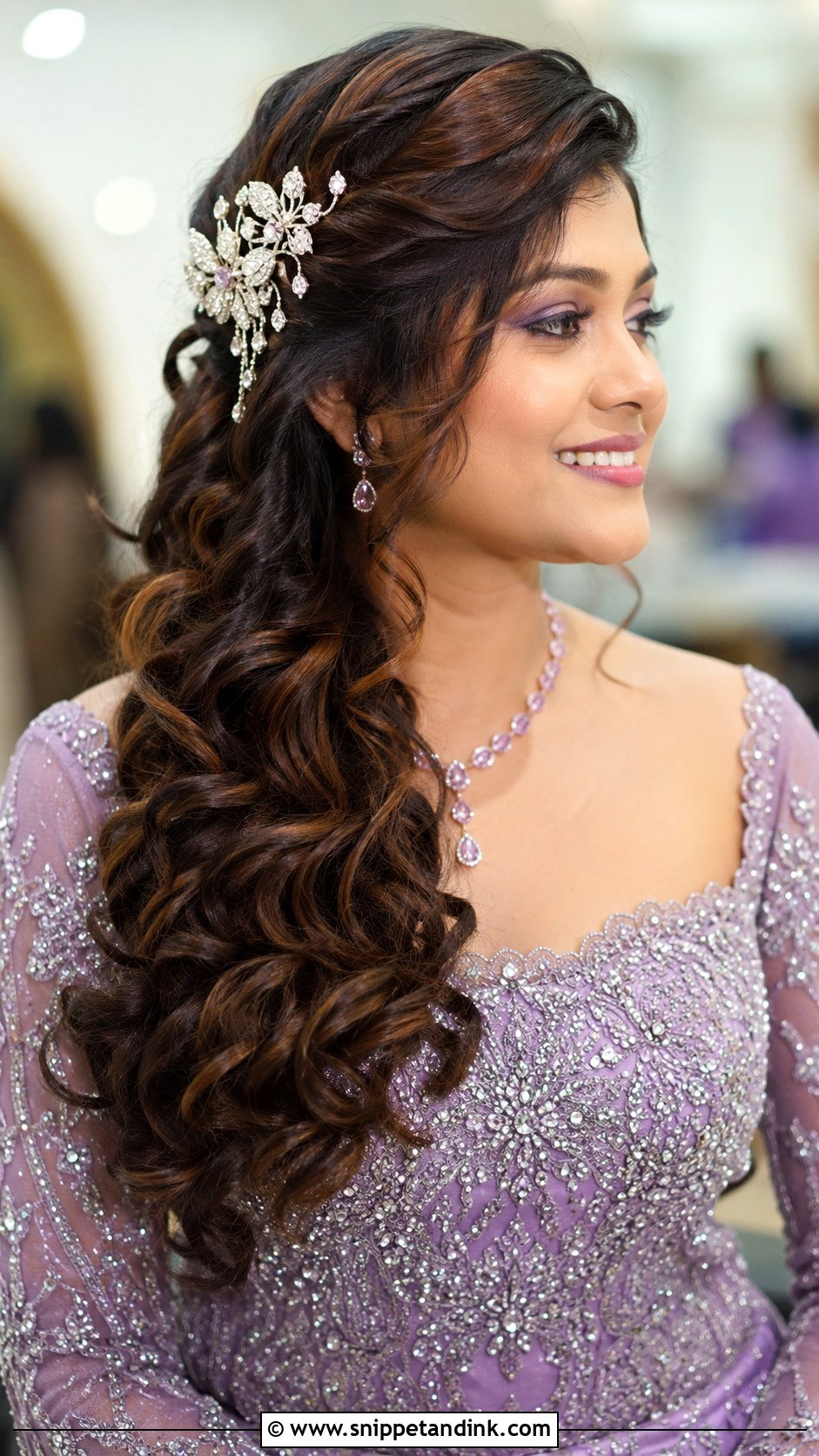
Side-swept curls fall over one shoulder, leaving the neck and earrings on the other side on show. I secure the swept section with crossed pins behind the ear and finish with a jewelled clip or floral accessory. Without that anchor, the curls drift back toward center as you move. The look sits well at receptions and engagement parties, with modern lehengas or gowns. Glossy curls also move nicely in candid photos.
14. Sleek Center Part Bun
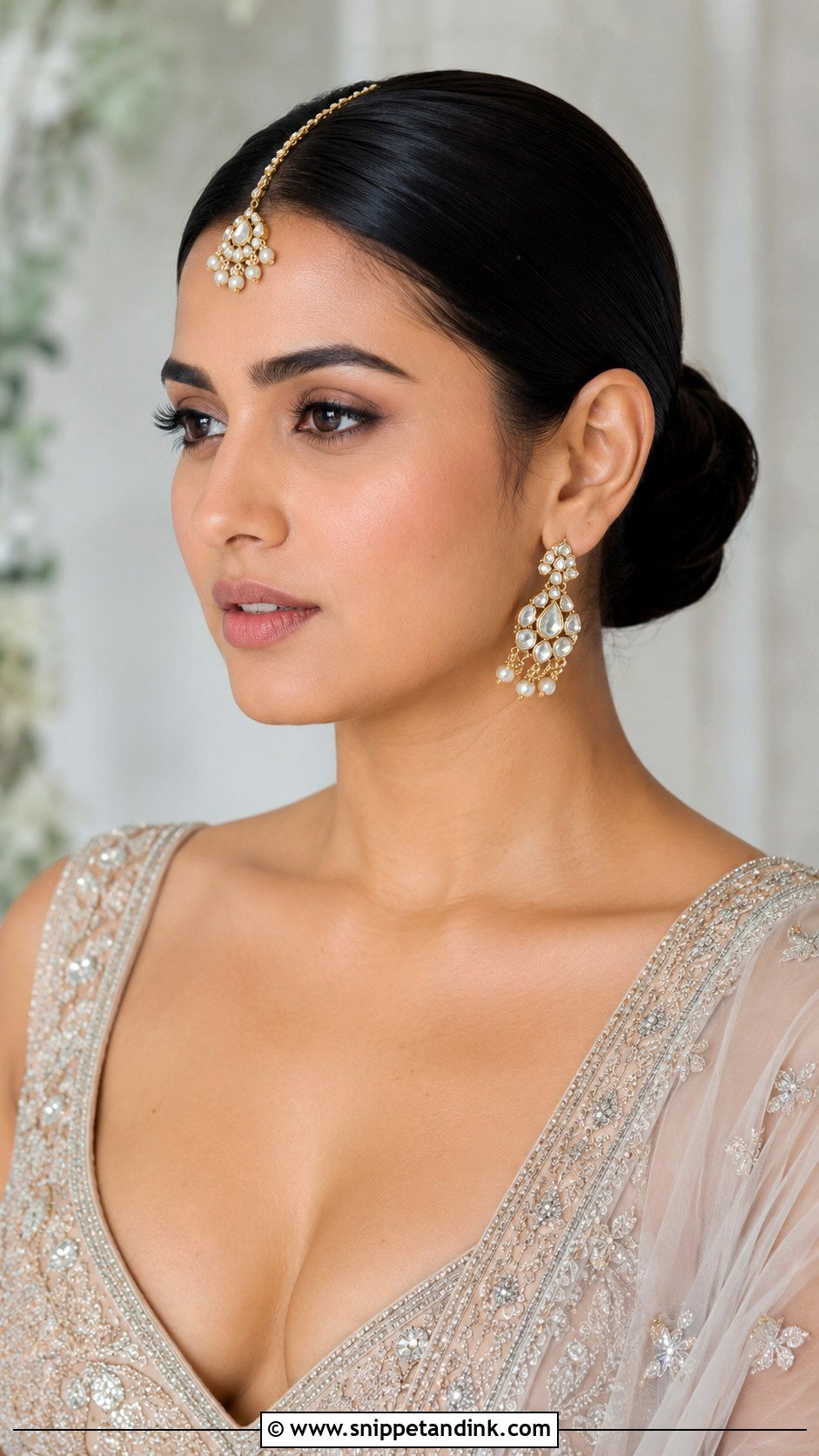
A sleek center-part bun relies entirely on precision. The part must be straight, the hair smoothed without a single bump, and the bun pinned low and round. Any flaw shows, so I work section by section with a fine-tooth comb. It lets your jewellery and outfit take over, and a simple maang tikka adds tradition. Strong, symmetrical features suit it best; if you’re self-conscious about a wide forehead, a softer side part may sit better.
15. Twisted Rope Braid
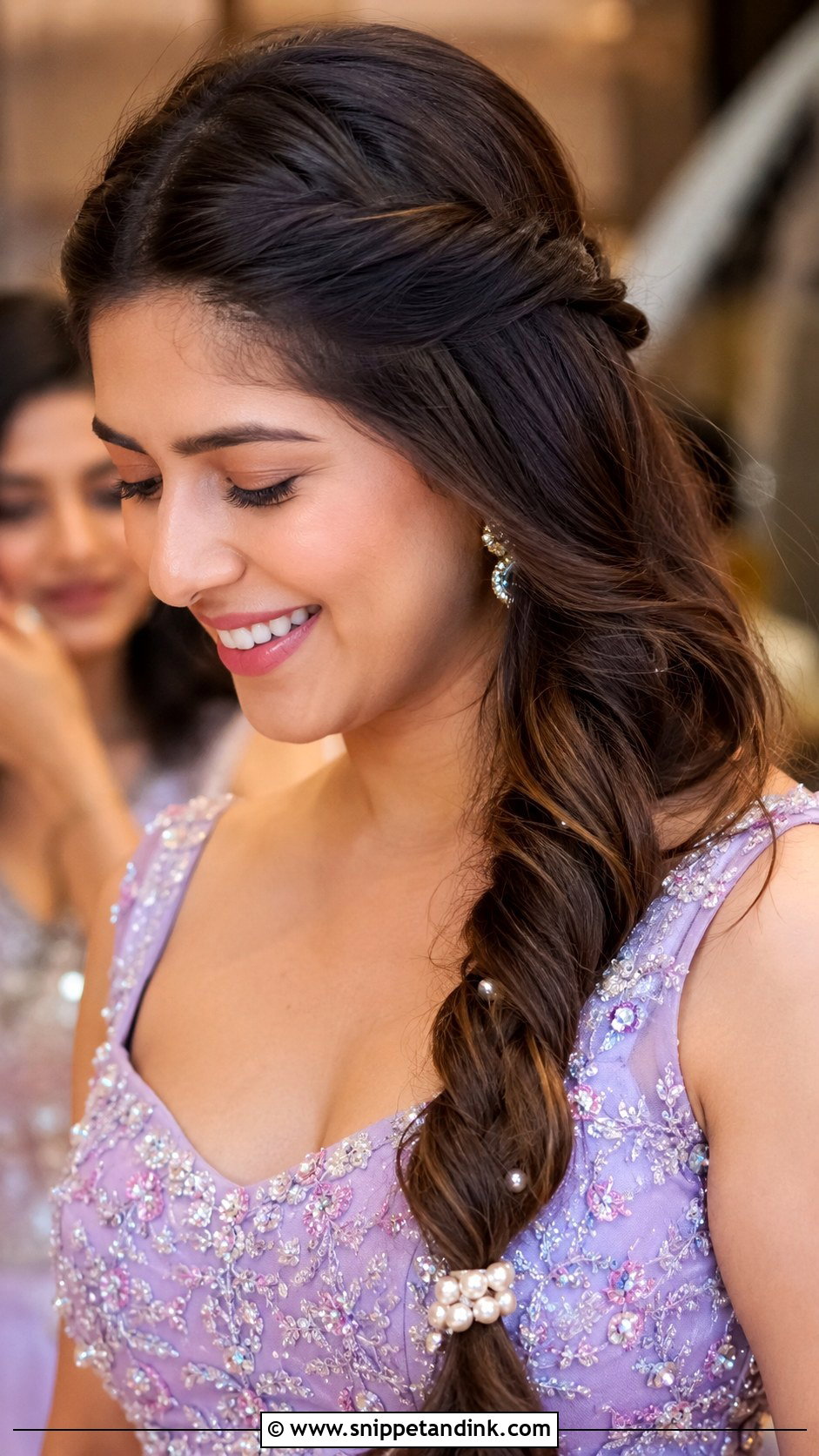
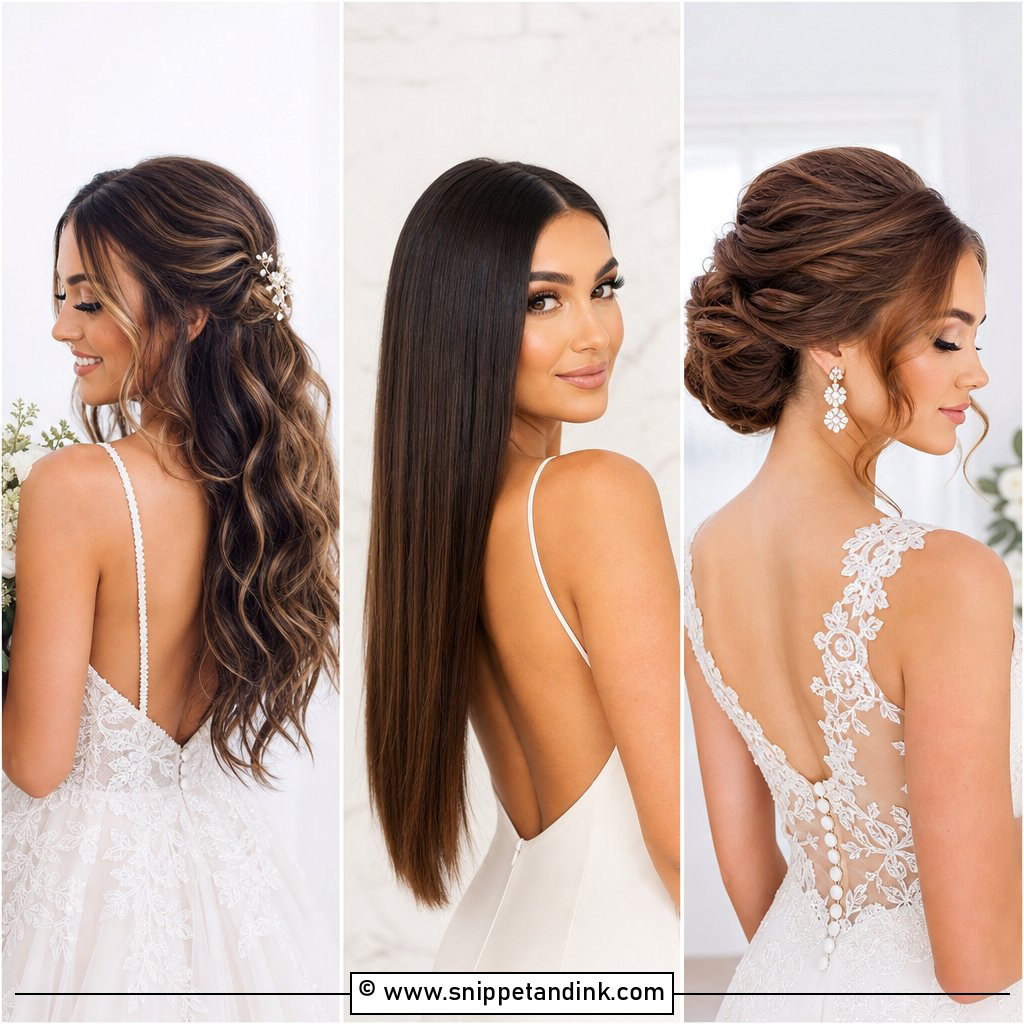
A rope braid is made from two sections twisted around each other, so it’s quicker than a plait and has a smooth, corded texture. It suits sangeet evenings or daytime functions, draped over one shoulder. Pearls or small flowers can be woven through. The catch: rope braids unravel if the twisting isn’t consistent, so I twist each section the same direction as the wrap and finish with a clear elastic. A little hair jewellery near the top adds charm.
16. Open Hair With Maang Tikka
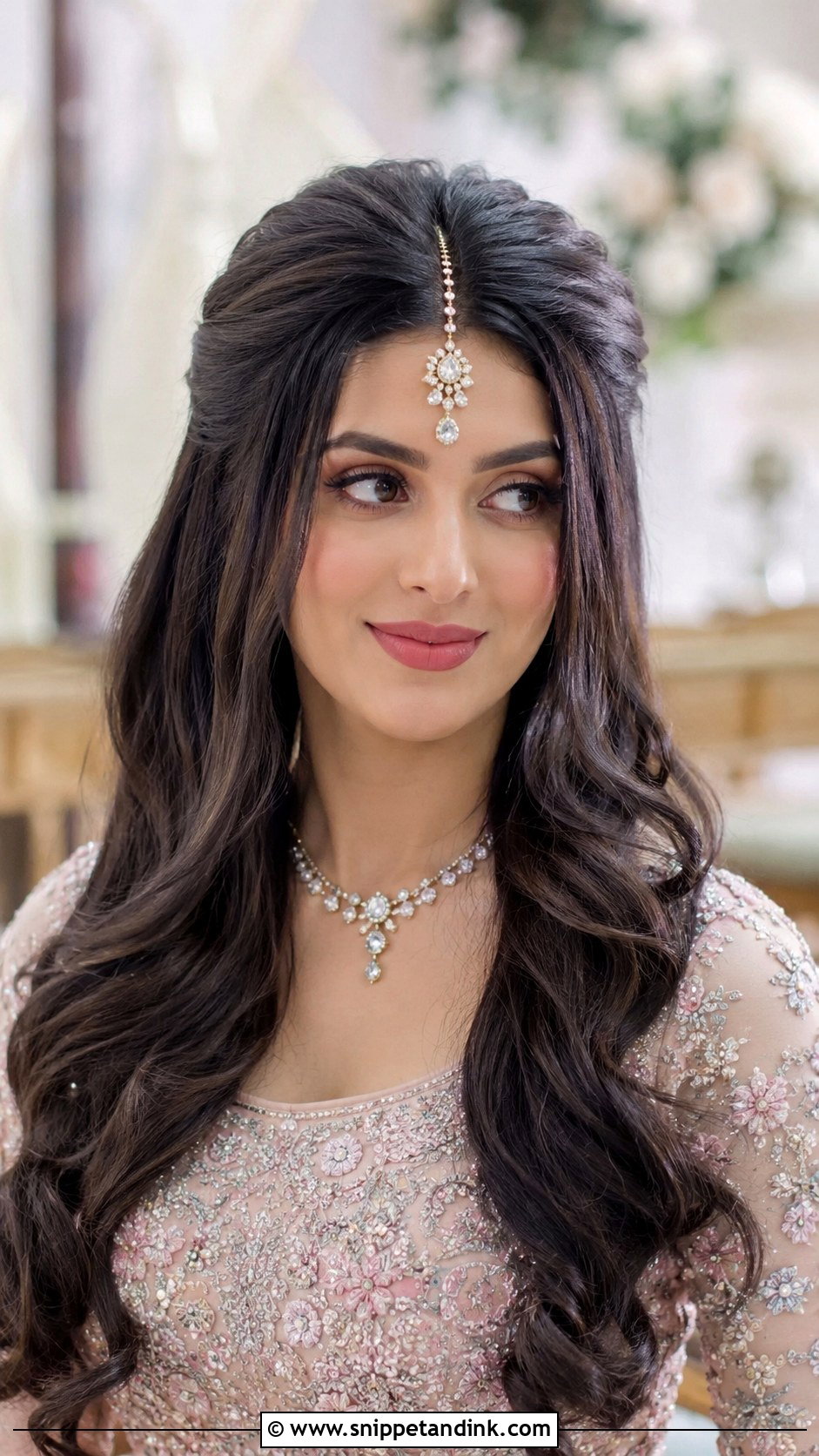
Open hair with a maang tikka is the simplest bridal look here. Wear your length in soft waves or sleek and straight, with the tikka along a center part. I make a small pinned base at the top so the tikka chain doesn’t slide. It suits engagement parties, haldi and relaxed ceremonies, and brides who feel most themselves with their hair down. A little volume at the crown stops it from looking flat under the jewellery.
17. Bun With Dupatta Draping
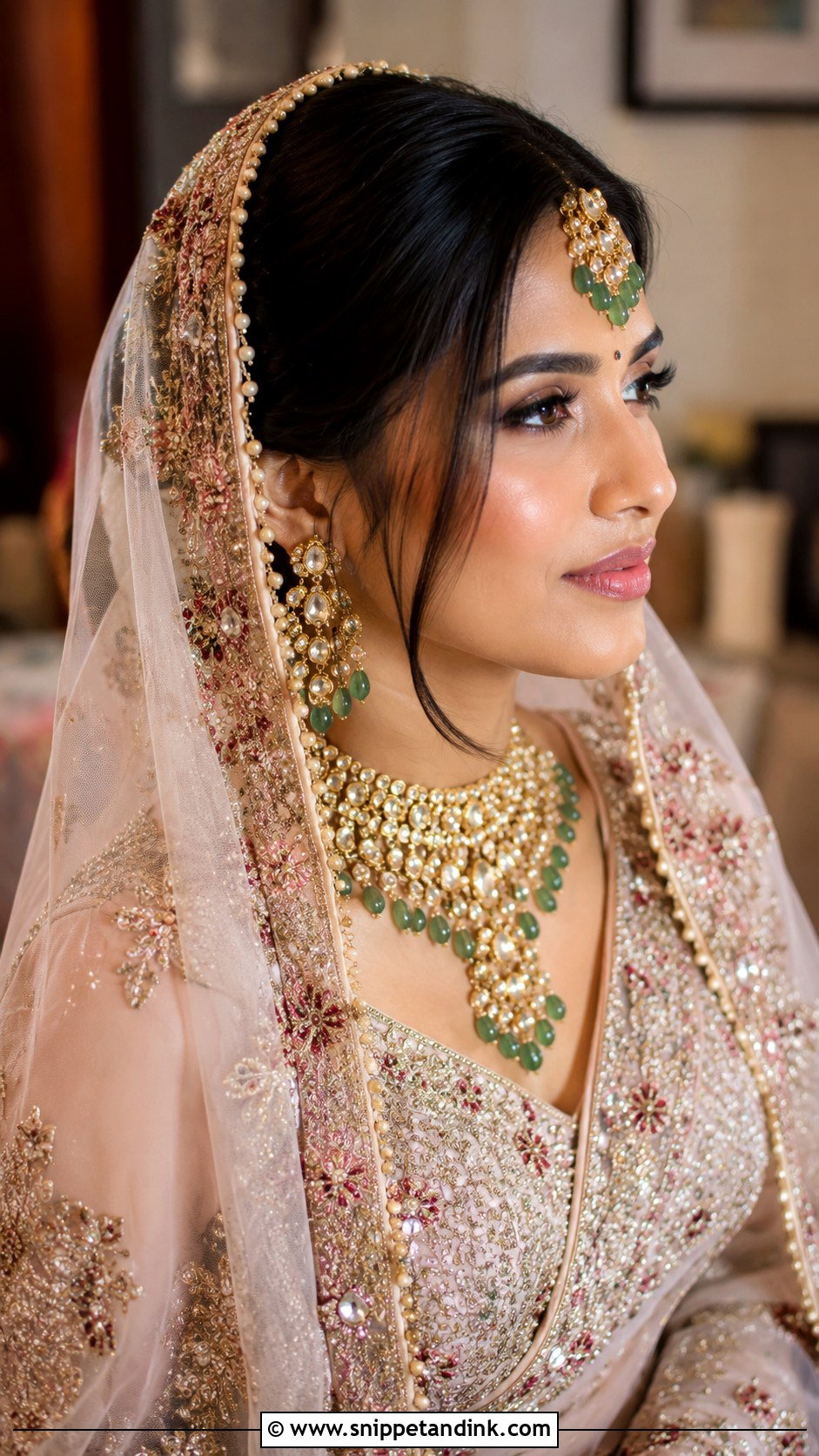
A bun paired with dupatta draping is a favourite with North Indian and Sikh brides. The sheer, embellished dupatta wraps over and around the bun, framing your face. I pin the dupatta into the bun with several hidden pins so it stays in place when you bow your head. A low bun gives the fabric a smooth curve, and a matha patti or tikka adds sparkle. Bring the actual dupatta to your trial, because embroidered borders vary a lot in weight.
18. Curly Hair Half Updo
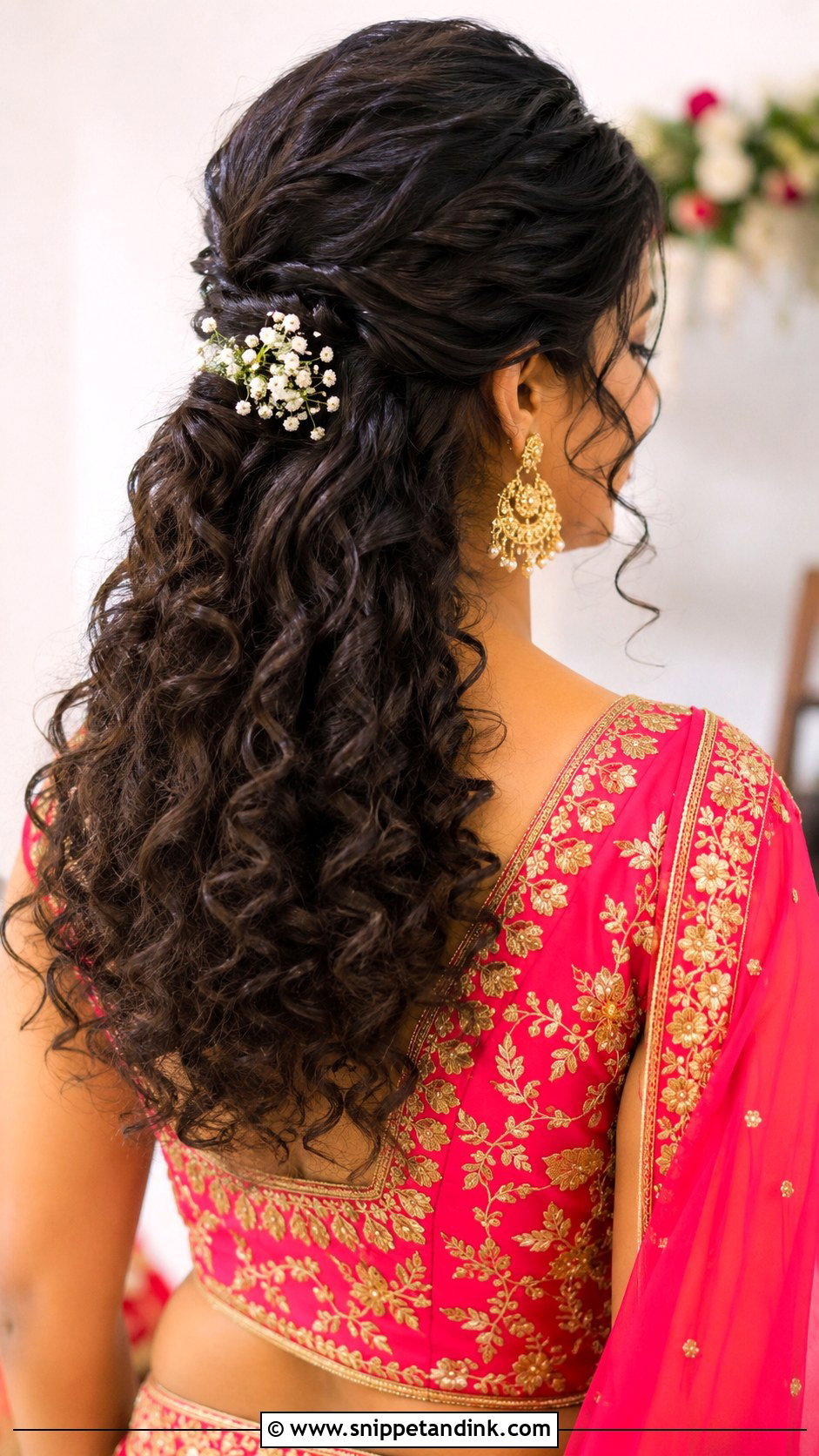
Naturally curly hair is easiest to style when you work with it rather than against it, and a half updo shows it off. I pull the top section back to frame your face and let the curls fall below. Defined curls need moisture, not heat, so I usually refresh them with a leave-in and a gel or cream instead of using a curling iron. A jewelled clip or floral pin at the crown gives a bridal finish. It suits sangeets, receptions and daytime functions.
19. Braided Bun With Fresh Flowers
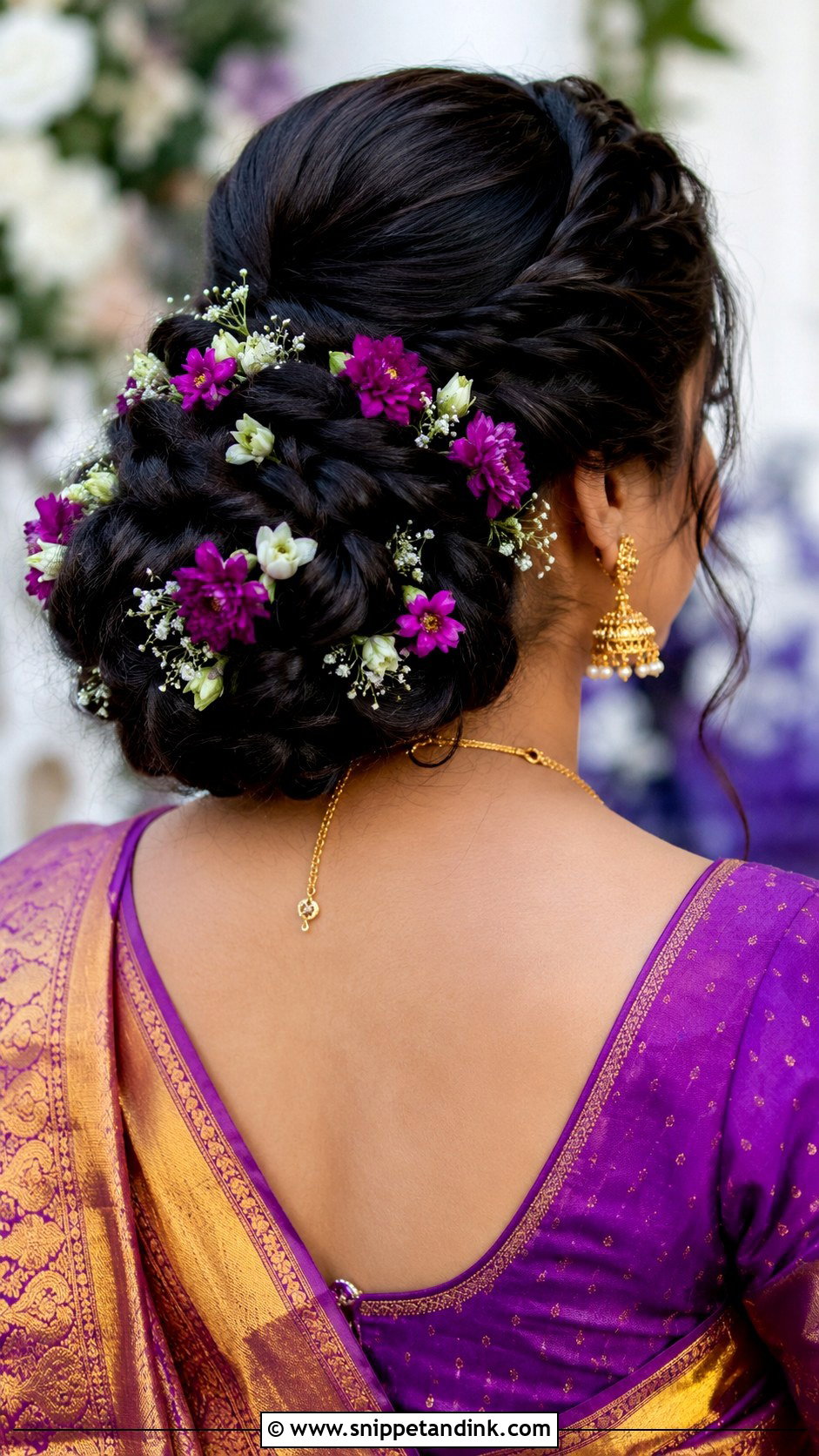
Braids give a bun more grip than smooth hair ever does, which makes this one of the most secure updos on the list. The plaits are coiled into a full, textured bun, and fresh blooms go into the folds afterwards. I pin each flower into a braid rather than the center of the bun, so the stems lie flat and can’t work loose when you turn your head. Gold hair jewellery gives it a regal edge for the main ceremony, though it’s just as at home at a daytime function.
20. Sleek Straight Open Hair
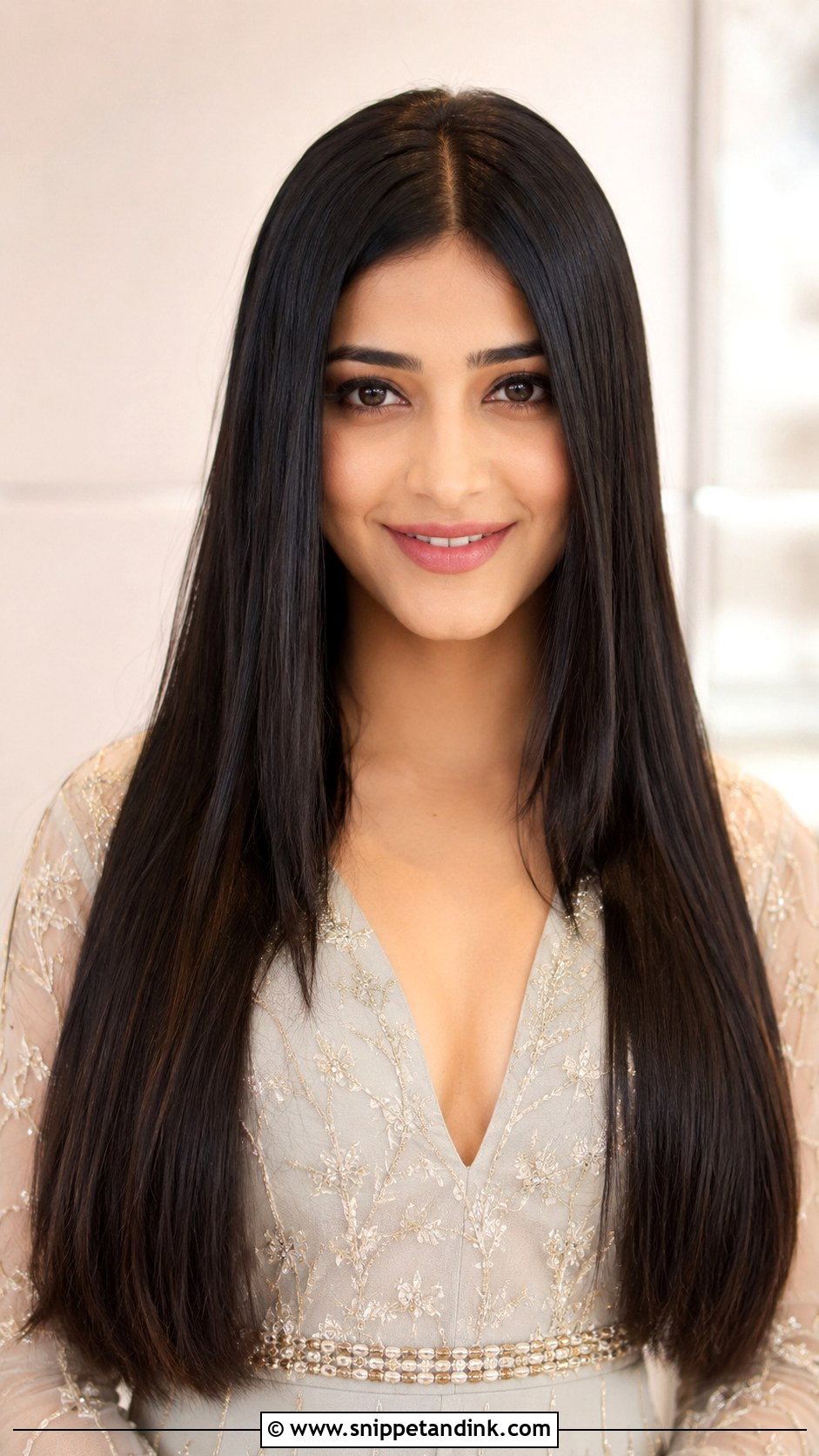
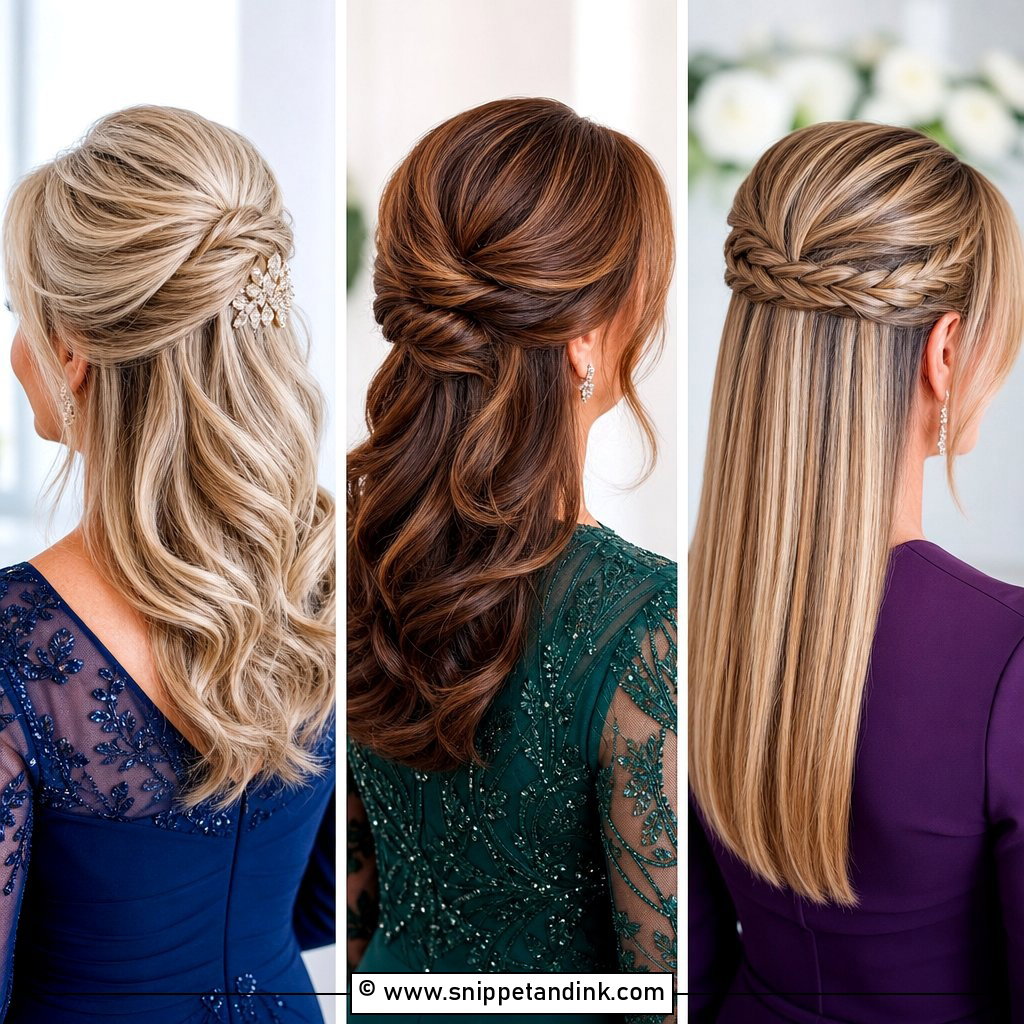
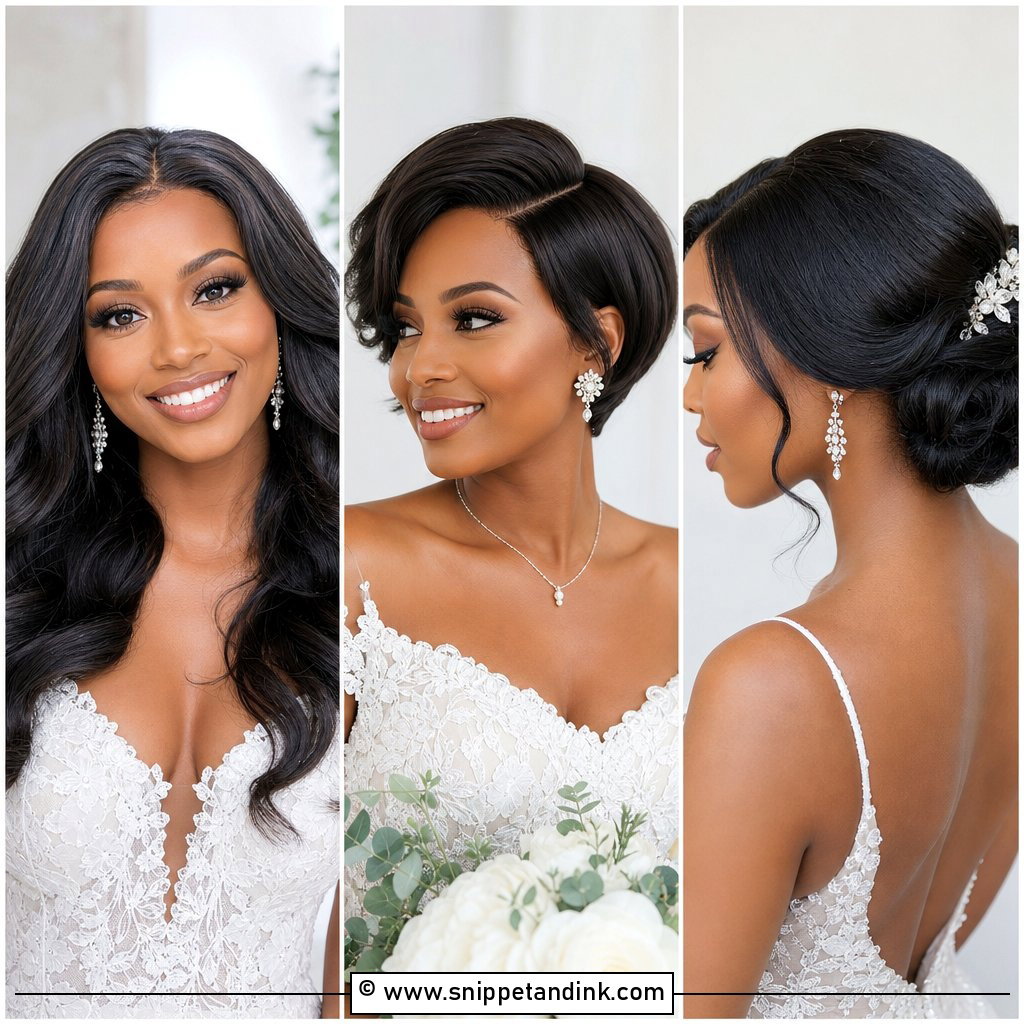
Straight, glossy open hair looks like the easiest option, and it’s the one I’d be most careful with in humid weather. I flat-iron small sections, finish with a light serum for that mirror shine, and set an anti-humidity spray over the ends, where frizz starts first. A sharp center part makes it look intentional rather than undone. Contemporary lehengas, gowns and Indo-Western outfits all sit well with it. Keep the accessory delicate, since the shine itself is the feature.
21. Vintage Roll Updo
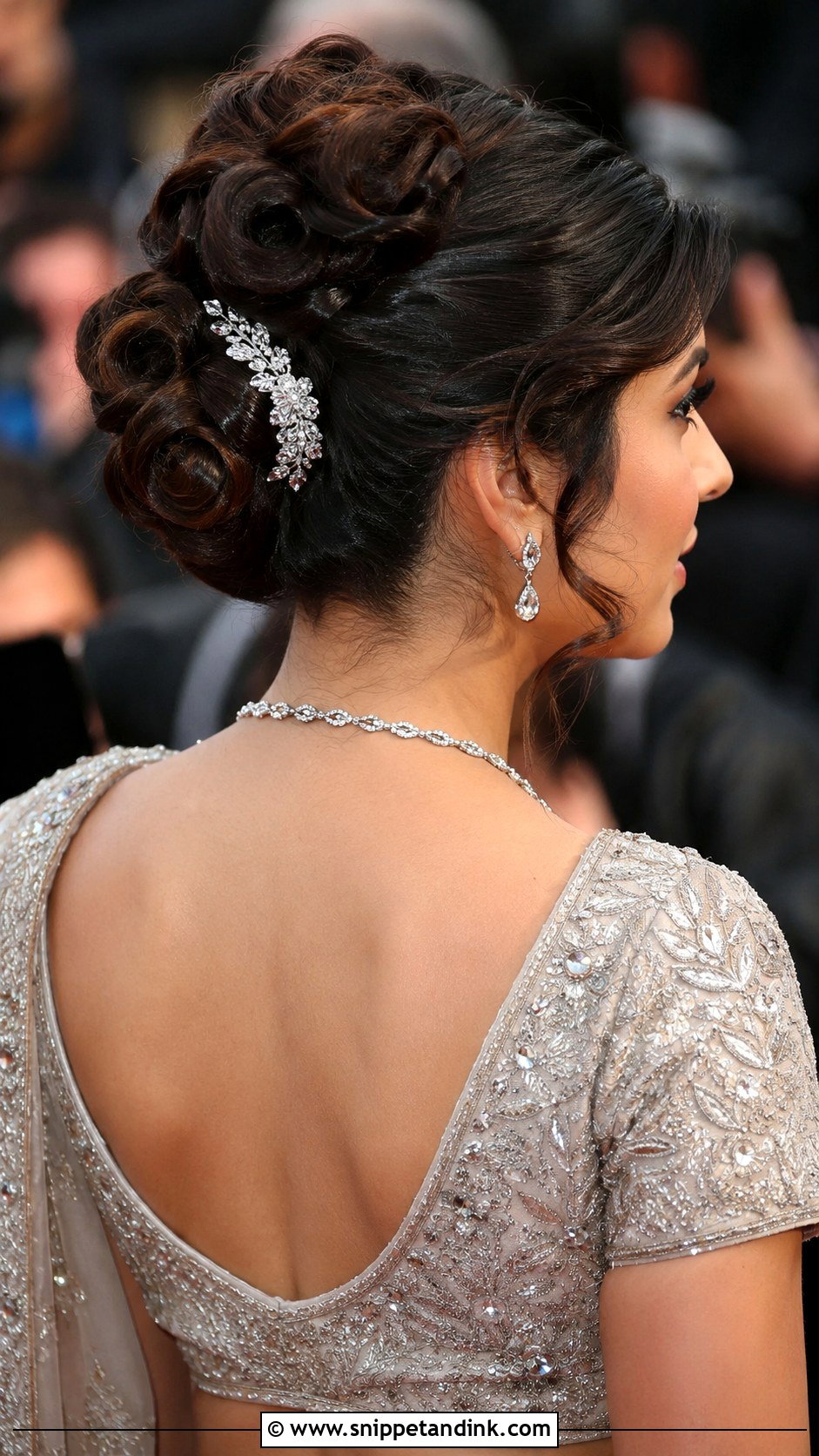
Vintage rolls are smooth sections of hair rolled back and pinned along a line into a sculpted shape. They only hold when the hair has been set in hot rollers first; freshly washed, flat hair simply unrolls. I like this for formal evening functions and receptions, finished with a sparkling clip or tikka and strong earrings. One practical note: if you’re planning a haircut with short layers before the wedding, those pieces will spring out of the rolls, so book the cut after your trial.
22. Loose Braid With Ribbon
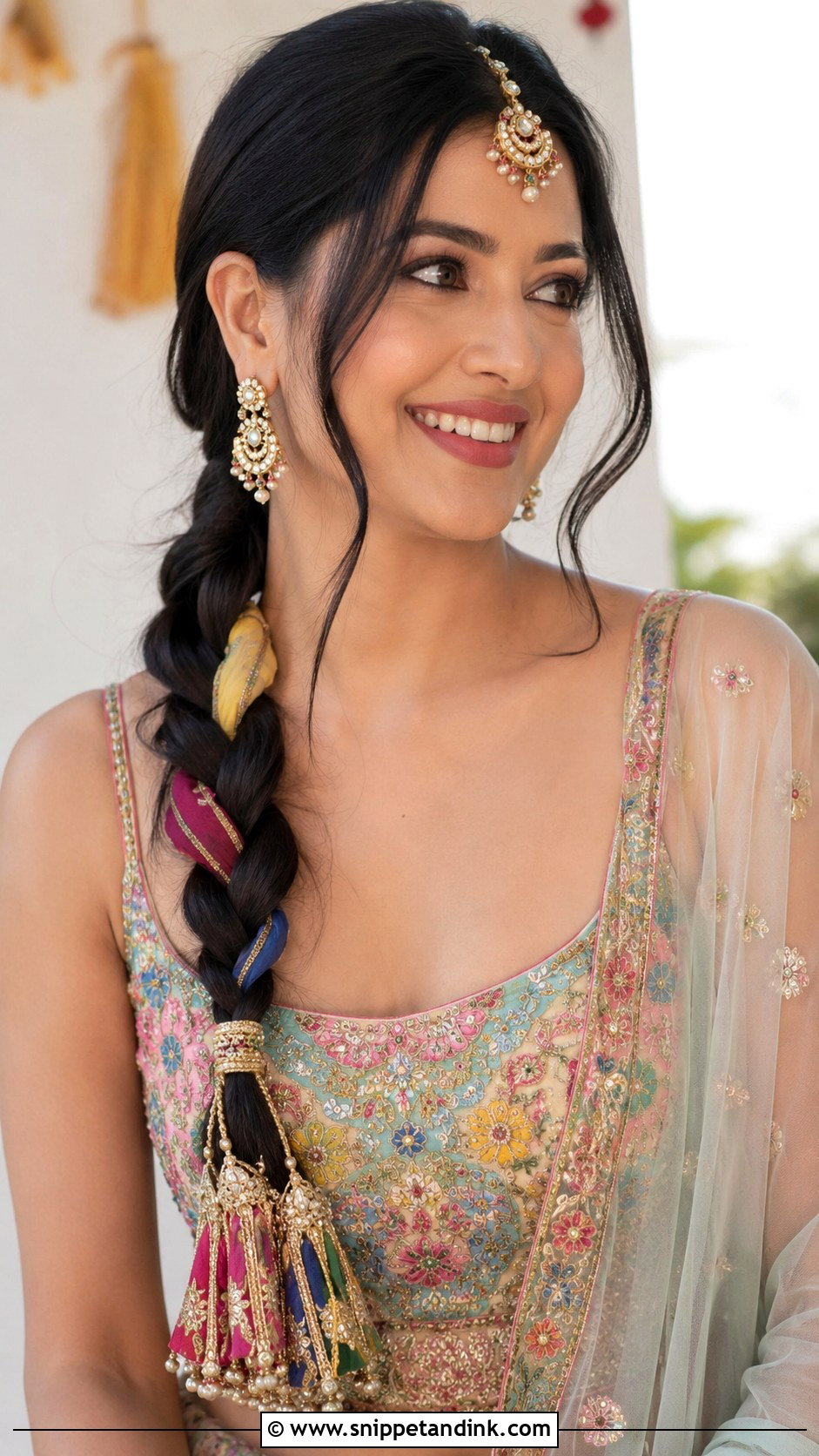
The paranda is a Punjabi tradition: silk or velvet cords braided into the hair and finished with heavy tassels. I start it at the nape and work it into the plait from the first crossing, so it hangs centered and doesn’t twist to one side as you dance. A paranda adds visual length, which makes it a clever pick for shorter hair at the sangeet or a daytime function. Pick cord colours from your outfit’s embroidery rather than the base fabric. Tassels swing a lot, so keep the braid itself loose and comfortable.
23. Bun With Matha Patti
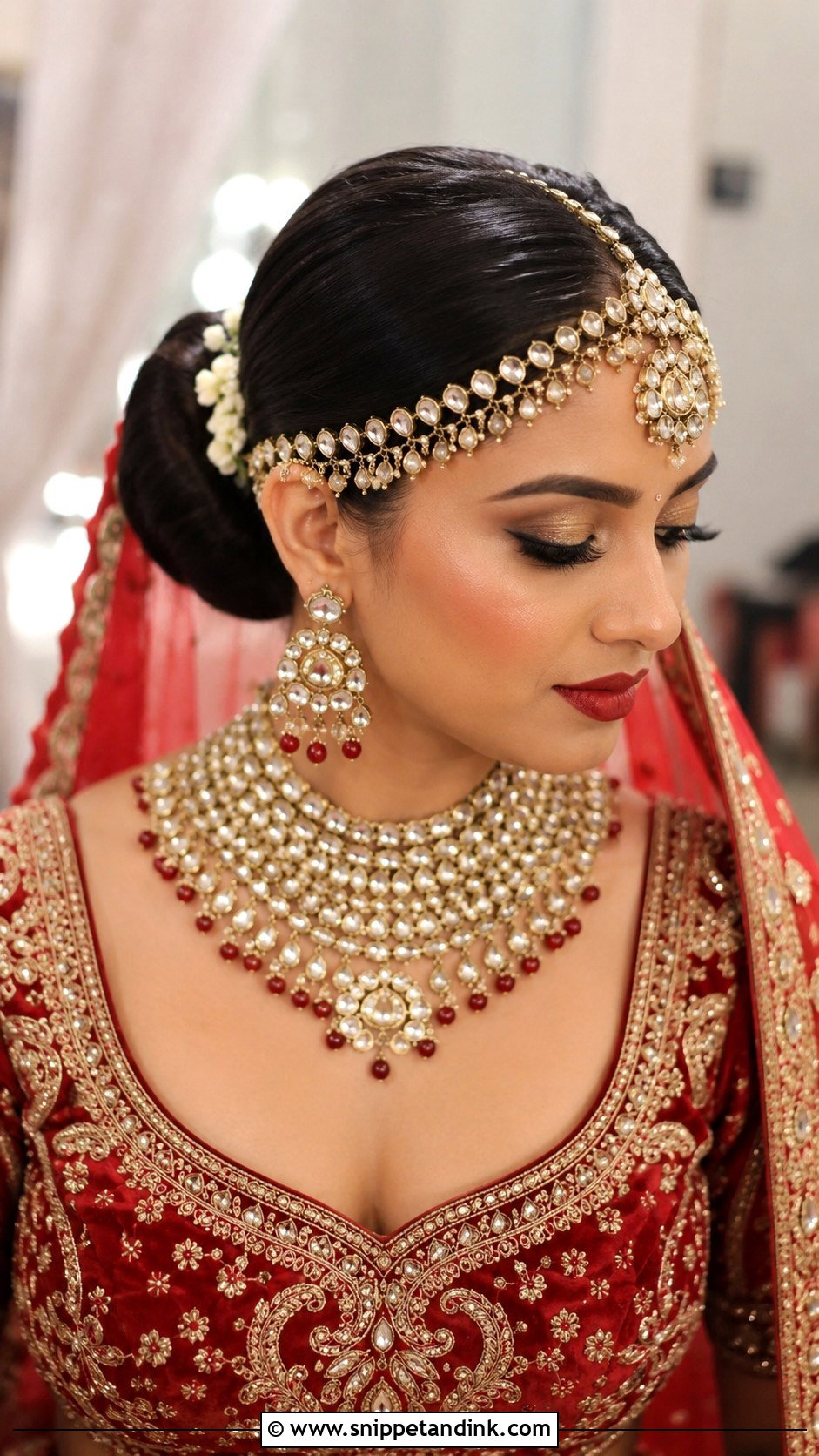
For the main ceremony, a polished bun paired with a matha patti is hard to beat. The matha patti runs across the forehead and down the part, so the hair beneath must be completely smooth or the chains sit unevenly. I pin the side chains into the hair behind the ears, and the bun anchors the back. Fresh flowers or pearl pins can go into the bun if you want softness. Wear the piece for a full hour at your trial; some brides find the forehead band presses more than they expected.
24. Beach Waves for Destination Wedding
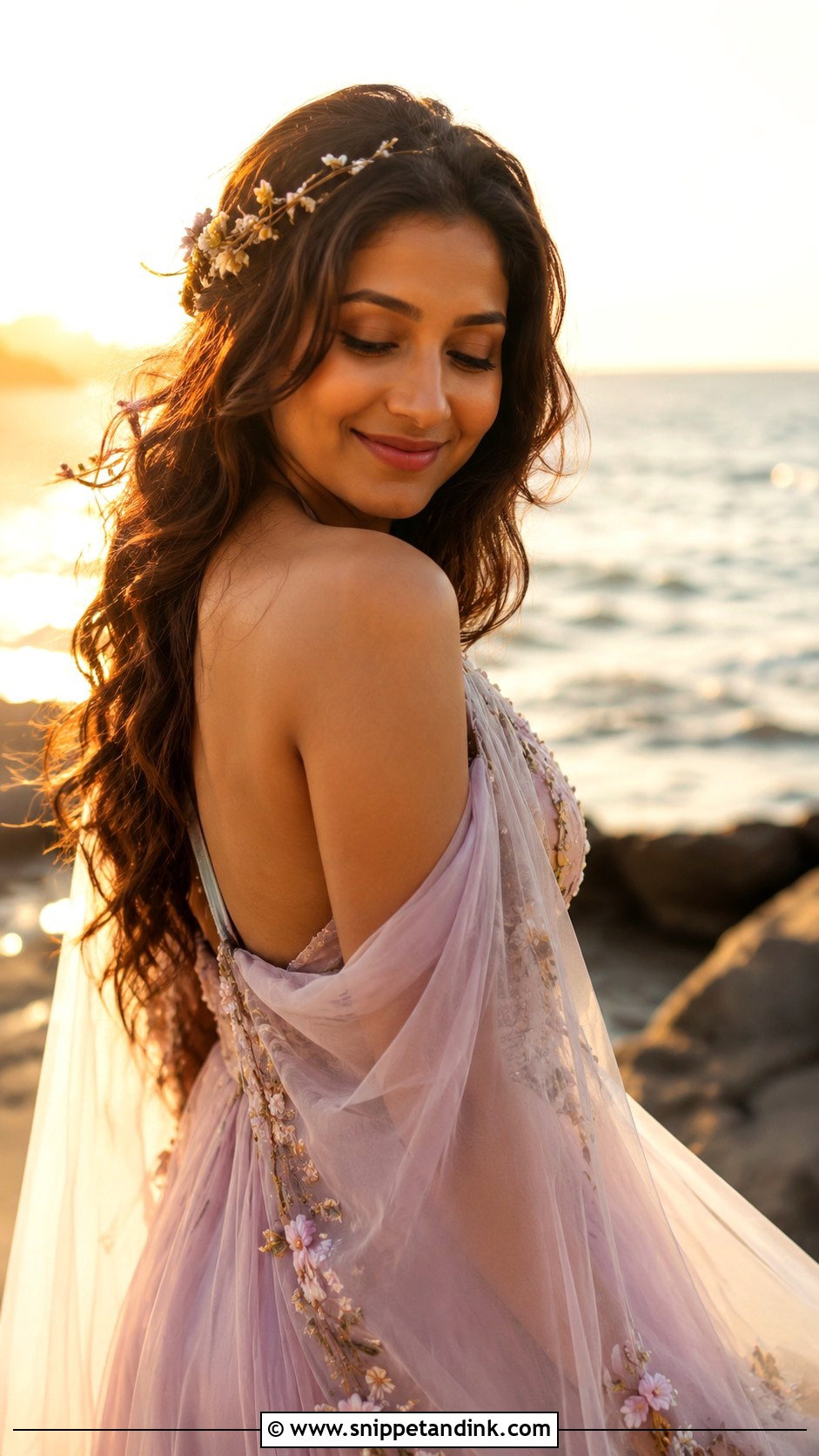
At a beach or garden destination, the wind does half the styling, whether you like it or not. Loose beach waves look relaxed with flowing lehengas and pastel gowns, but I always pin the front sections back lightly so the breeze can’t blow hair into your face during the vows. Sea air relaxes curls, so I set them with texture spray rather than a stiff lacquer. A floral vine or a few pearl pins keeps it bridal. Golden-hour light flatters this kind of soft texture.

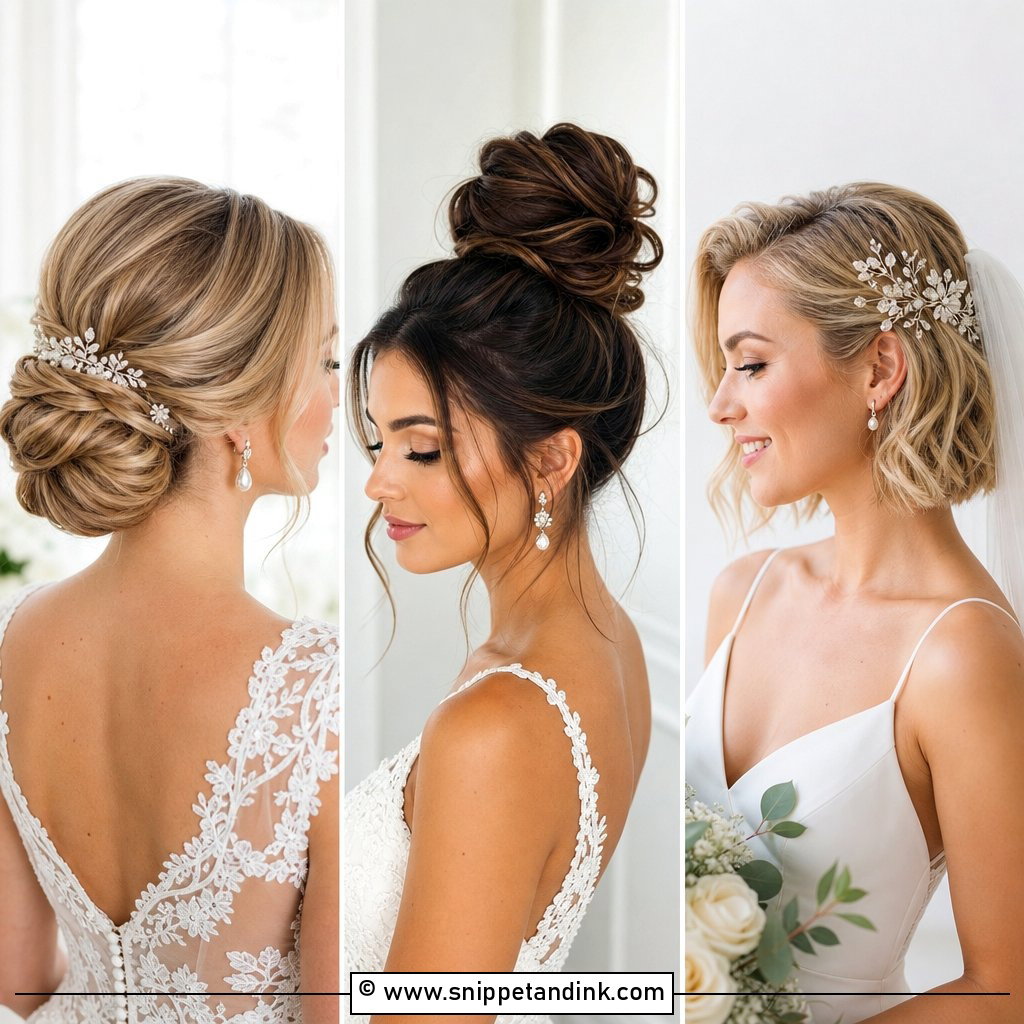
25. Crown Braid With Bun
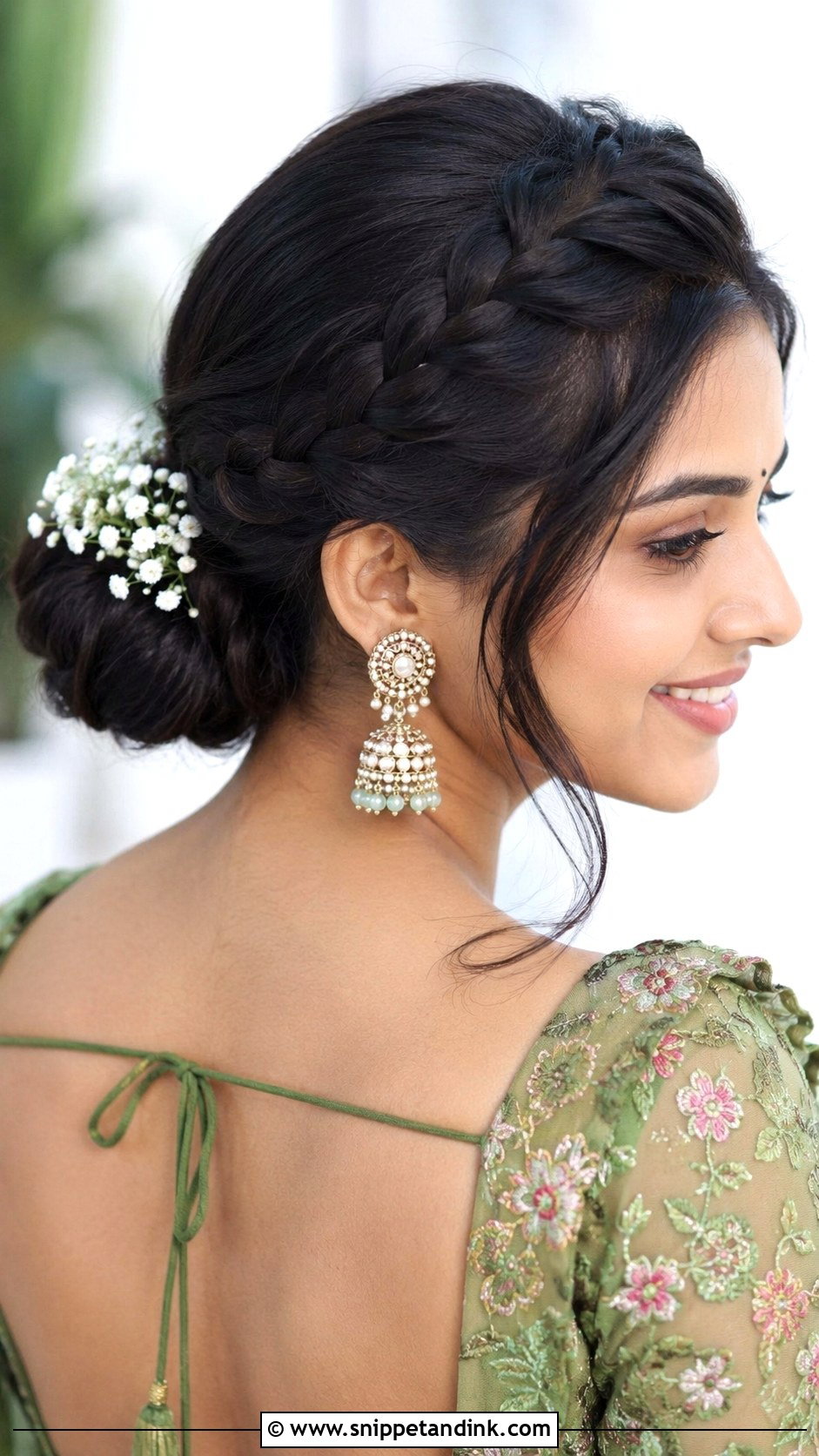
Here the braid circles the crown and leads straight into a soft bun at the back. I braid the crown first and pin it flat against the head, then gather the remaining length into the bun, which keeps the whole style balanced. Every strand is off your face and neck, a real comfort through a long outdoor ceremony. Tiny flowers or gold thread add detail. Because the braid takes the space where a matha patti or jhoomar would sit, decide on your head jewellery before you commit to this one.
26. Side Bun With Floral Accents
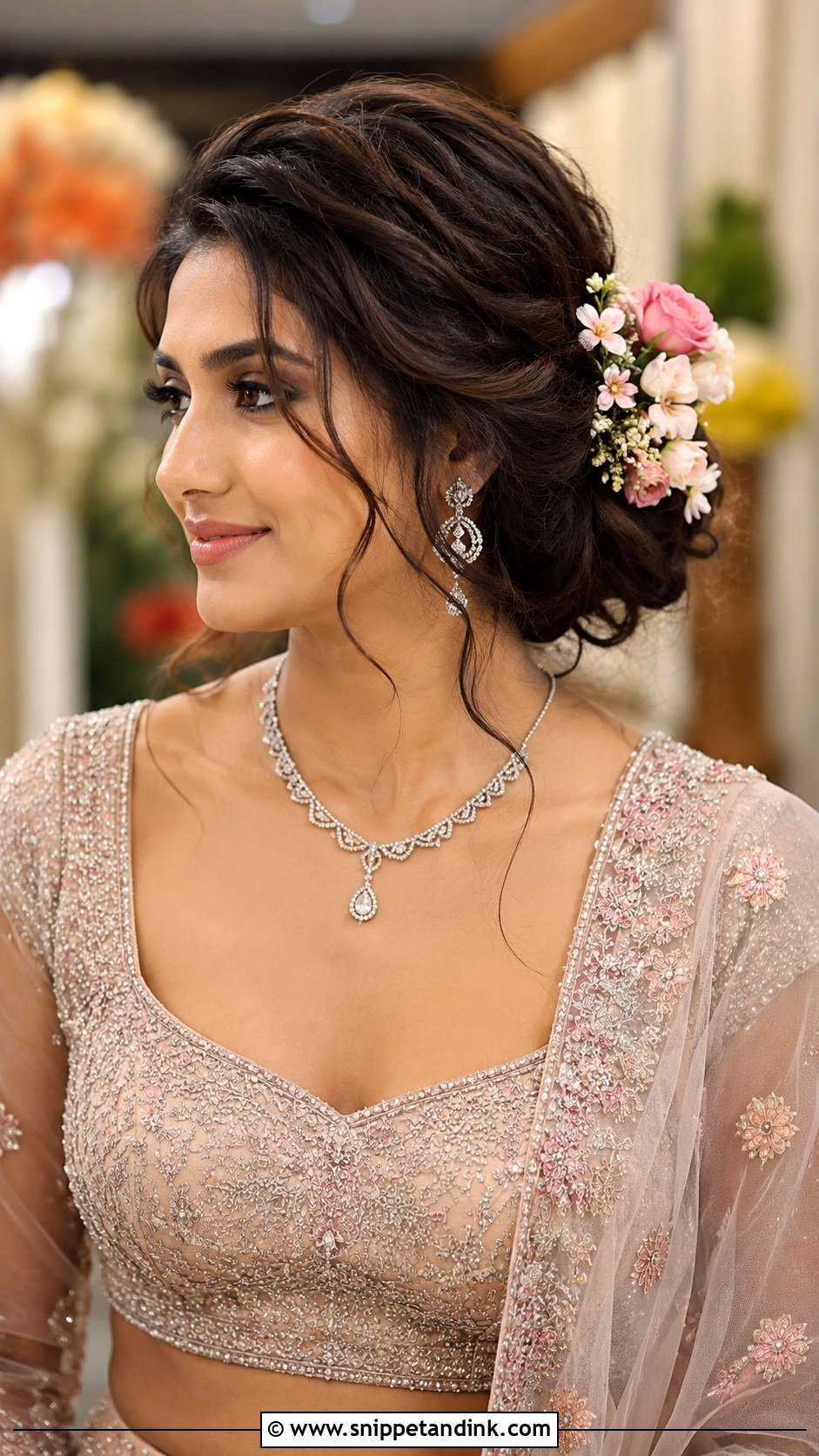
Shifting the bun to one side changes the whole picture: one earring and the neckline are on display, the other side stays soft. Fresh flowers tuck into its twists. I build it slightly behind the ear, because a side bun sitting right on the jaw brushes the shoulder every time you turn and loosens by evening. It’s at home at receptions, sangeets and daytime functions, and a maang tikka gives it a traditional finish. Leave a face-framing piece on the open side only.
27. Voluminous Curls With Side Part
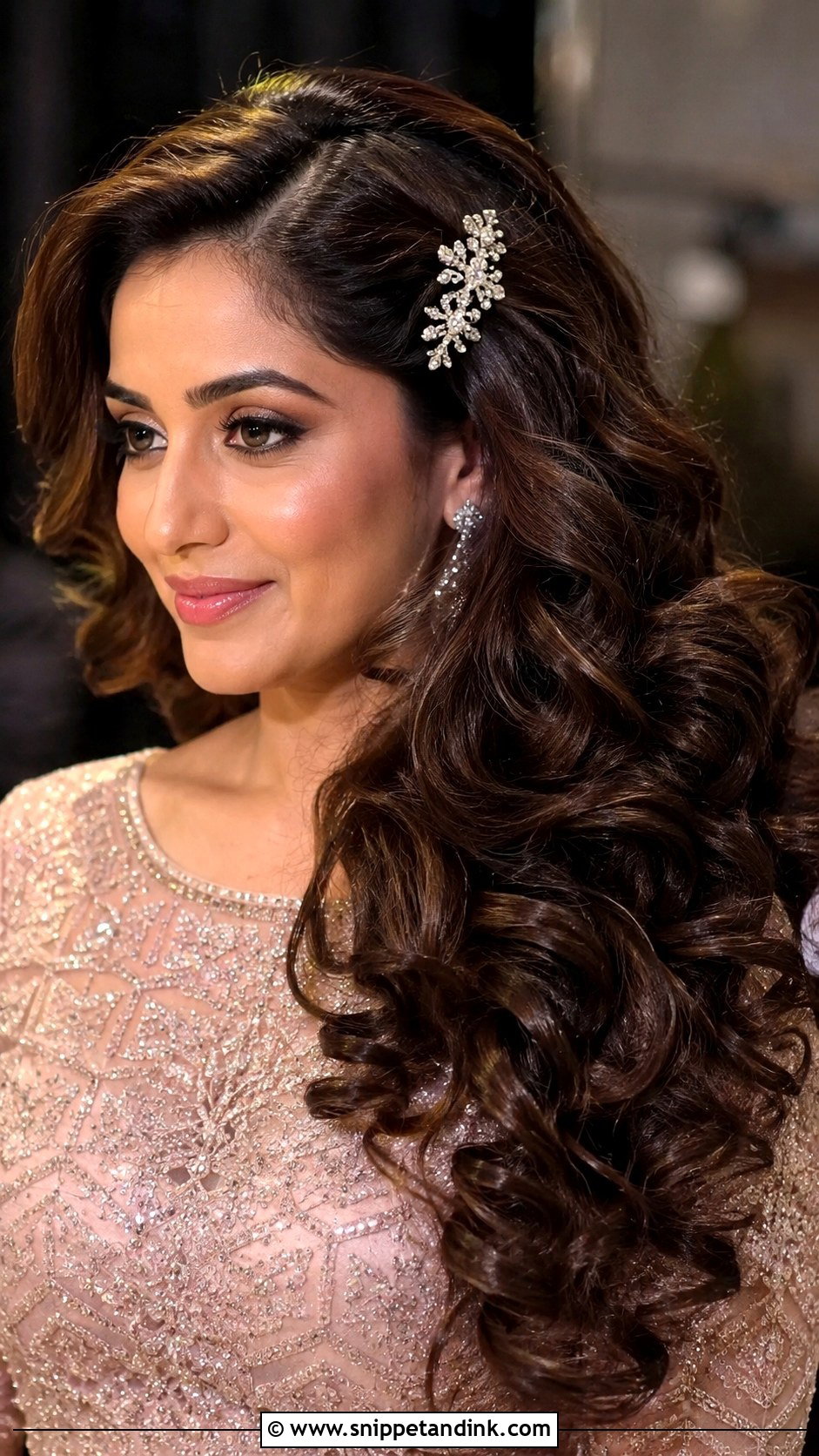
Big, bouncy curls with a deep side part give the most volume of anything here. I set them in large rollers and brush out gently, because curling-iron ringlets brushed hard turn into frizz. The style looks right at receptions and engagement parties. Pinning one side back with a jewelled accessory adds polish and stops hair falling across your face in every photo. Volume drops in humid rooms, so plan a quick touch-up halfway through the night.
28. Braided Ponytail
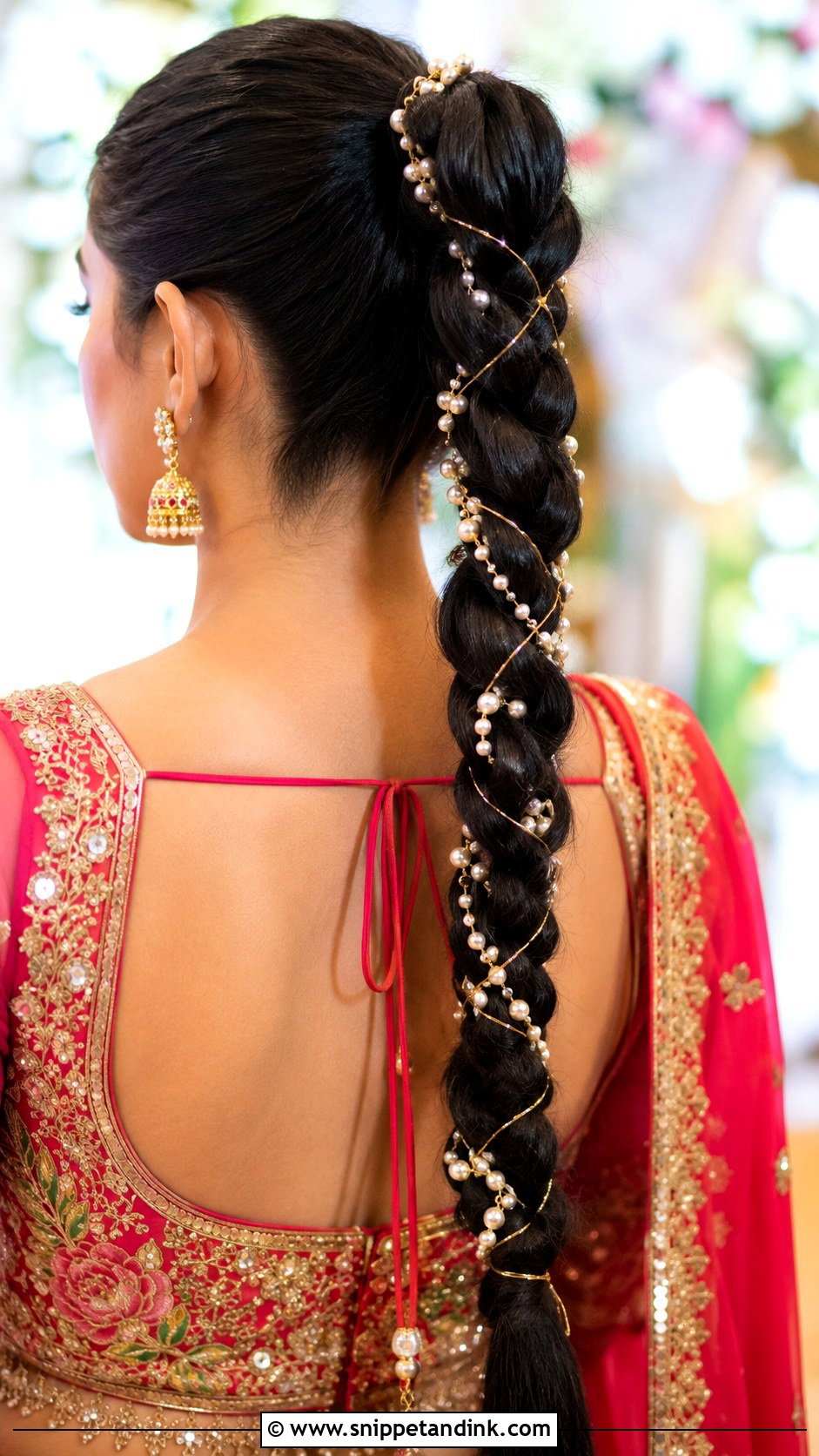
Mixing a ponytail with a braid gives you something that holds up to hours of dancing. Gather the hair high or low, then braid down the length. I braid tightly near the elastic and loosen toward the ends so the top stays firm while the tail looks soft. Pearls, small flowers or gold thread can be woven in as you go. Sangeet nights and mehendi suit it, and it’s a quick, reliable choice for bridesmaids too.
29. Bun With Jasmine and Pearls
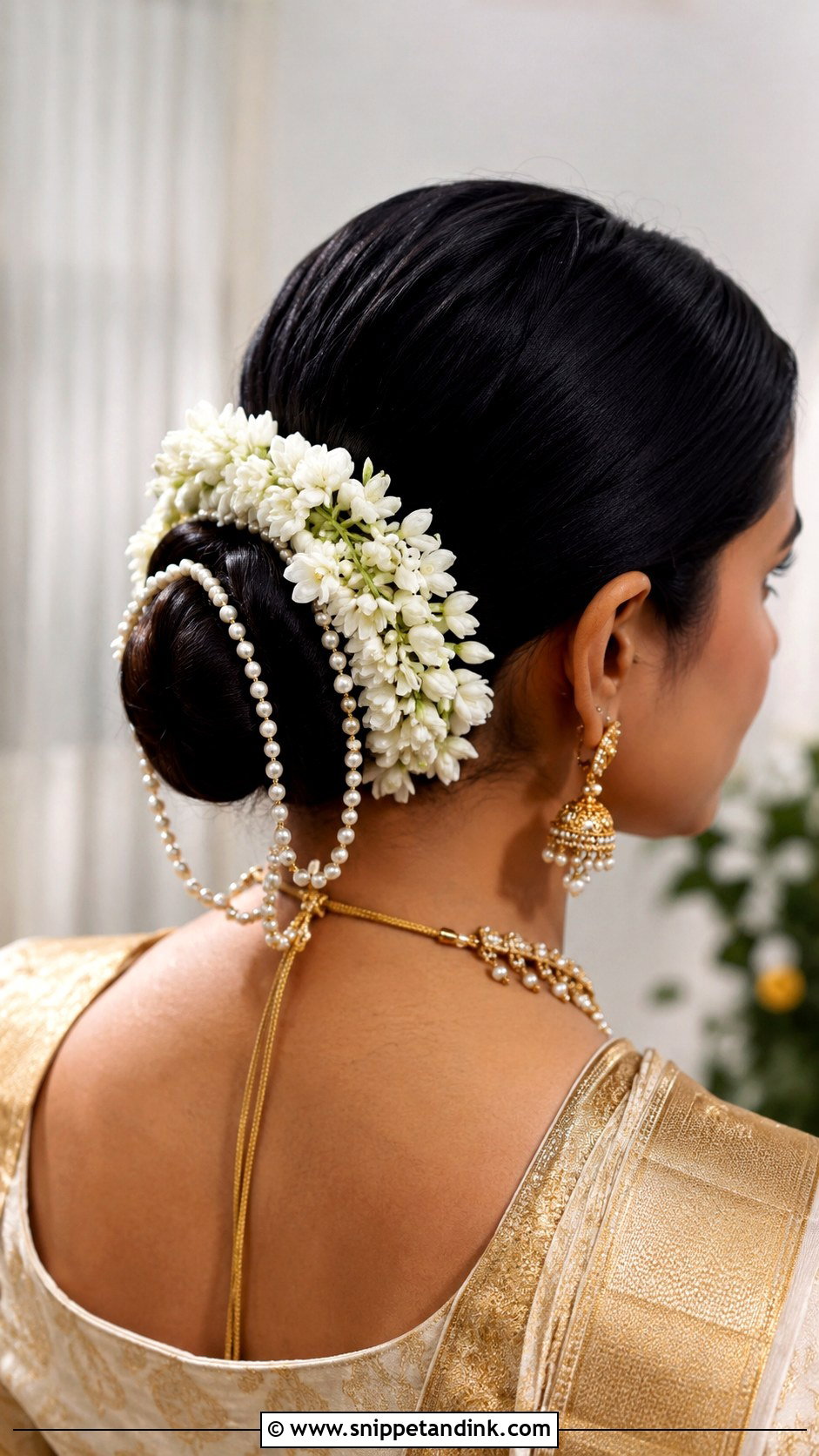
Jasmine and pearls give a bun two whites at once: matte, fragrant petals and glossy beads. I wrap the jasmine first, then pin pearl strands between the coils. The detail that matters is order: jasmine browns in heat while pearls stay bright, so the flowers go in as late as possible. Anchor the bun low and pair it with gold jewellery. It carries from the main ceremony into an evening reception without needing changes.
30. Curtain Bangs With Open Waves
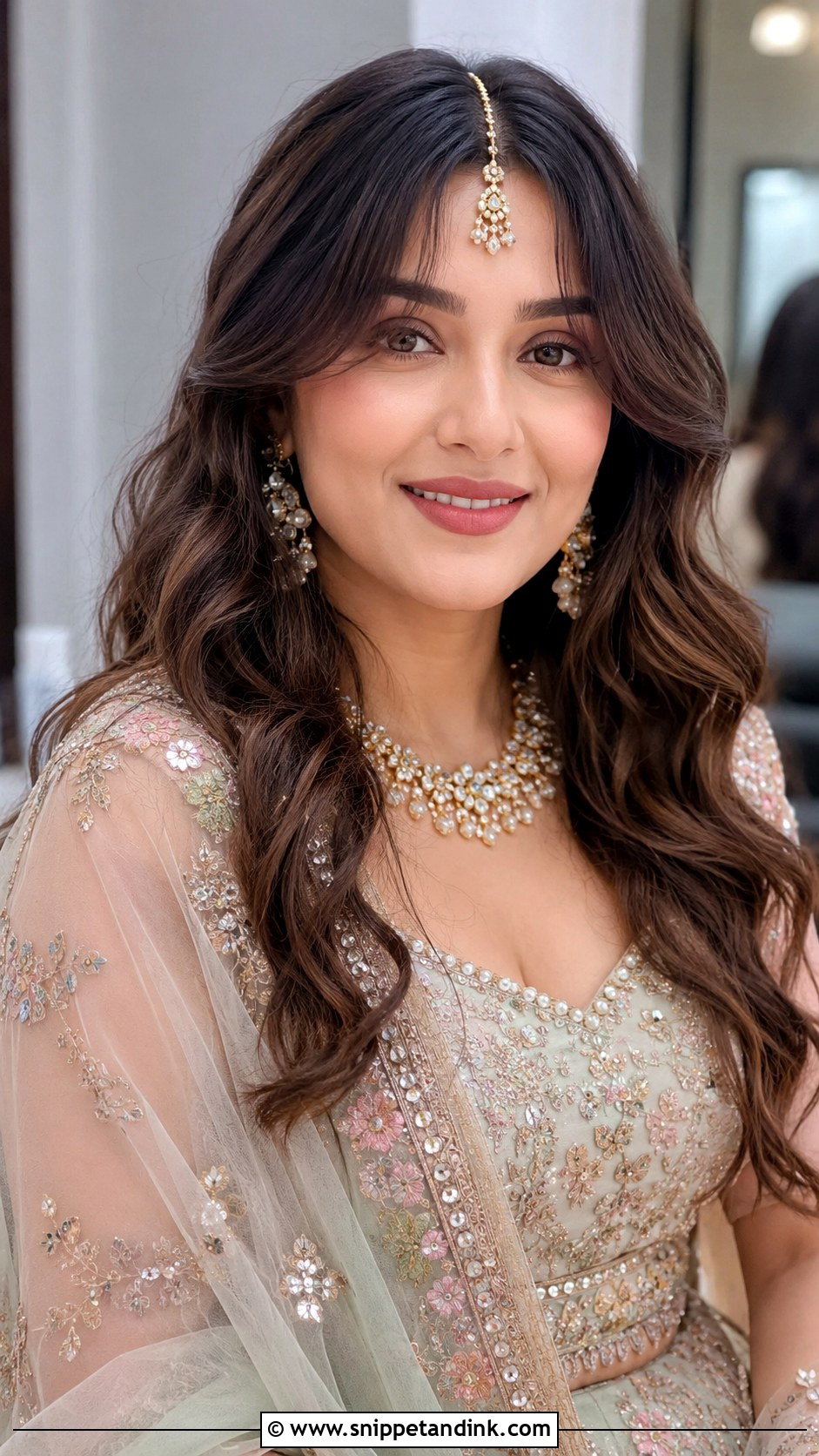
Curtain bangs parted down the middle frame the face while soft waves fall below. If you don’t have bangs yet, cut them several weeks before the wedding, not days before, so they settle and you know how they fall. They need a round brush and a little heat each morning to sit right. Engagement parties, sangeets and relaxed receptions all suit this look. A delicate tikka or floral pins keep it bridal without hiding the fringe.
Monsoon Mandaps and Humid Halls
Many Indian weddings happen in heat, humidity or both, and moisture is what undoes curls and smooth finishes. Straight hair that has been curled tends to fall within a few hours, while naturally textured hair swells and frizzes. My approach changes with the forecast.
- In humid weather I lean toward updos and braids for the ceremony and save open curls for an air-conditioned reception.
- I curl in smaller sections and let each curl cool fully pinned, since a hot curl brushed out early drops fastest.
- Anti-humidity sprays seal the outside of the hair; I use them on lengths and ends rather than roots, where they can weigh hair down.
- Outdoor ceremonies need a plan for wind, which usually means pinning the front sections back even in open styles.
The Pouch Your Bridesmaid Should Carry
Even a well-pinned style needs small fixes over a long day. Hand a cousin or bridesmaid a little pouch so you’re not hunting for pins at the mandap.
- Bobby pins and U-pins in your hair colour
- A travel-size hairspray and a tail comb
- A few spare flowers if your style uses fresh ones
- Clear elastics for braids and ponytails
- Blotting papers, since the same hands will be touching your face too
Ask whoever holds it to check the back of your hair before major photos. You can’t see it, and that’s where loose pieces usually appear.
Which of These Will Your Hair Actually Hold?
Match the style to the function, then to your hair, and only then to the photo you love. A gold-threaded braid or paranda for the sangeet, a secure bun with a matha patti for the ceremony, natural curls or glossy waves for the reception. Comfort counts more than people expect over a long day. Take your saved looks, your jewellery and your dupatta to your trial, and ask your stylist which ones your hair will genuinely hold until the last photo.
You'll Like These Ideas:






Leave a Reply