
Regional tradition shapes Indian bridal hair more than trend does. A South Indian bride may want a long braid dressed in jasmine and gold, a Punjabi bride often wants a paranda, a Maharashtrian bride a mogra veni, and many brides need the parting left clear for sindoor. On top of that comes hair type, length and the outfit. I’ve put together 25 styles I regularly create, from regal braids and gajra buns to sleek ponytails and natural curls, each with a note on how it’s built, which ceremony it suits and what kind of hair it needs. Take the ones you like to your trial and we can adapt from there.
Rituals That Decide the Hairstyle Before the Mood Board Does
Before I talk about buns or braids, I ask about the ceremonies themselves. Many Indian wedding rituals touch the bride’s head, and a style that looks perfect in a photo can get in the way of them.
- Sindoor: in many Hindu ceremonies the groom applies it along the parting, so a clean, visible parting matters more than a deep side sweep.
- Head coverings: if the dupatta or a ghoonghat will cover your head for much of the ceremony, a low bun or braid sits flatter under it than a high style.
- Garlands and varmala: a heavy garland lifted over the head can catch on tall buns and jeweled pins at the crown.
- Floral traditions: jasmine for many South Indian and Maharashtrian brides, parandas for Punjabi brides. These often come from family, so ask who is bringing them and when.
Elders in the family often have strong views on what’s appropriate for each ritual. Asking early saves a last-minute change on the morning of the wedding.
1. Low Bun With Middle Parting
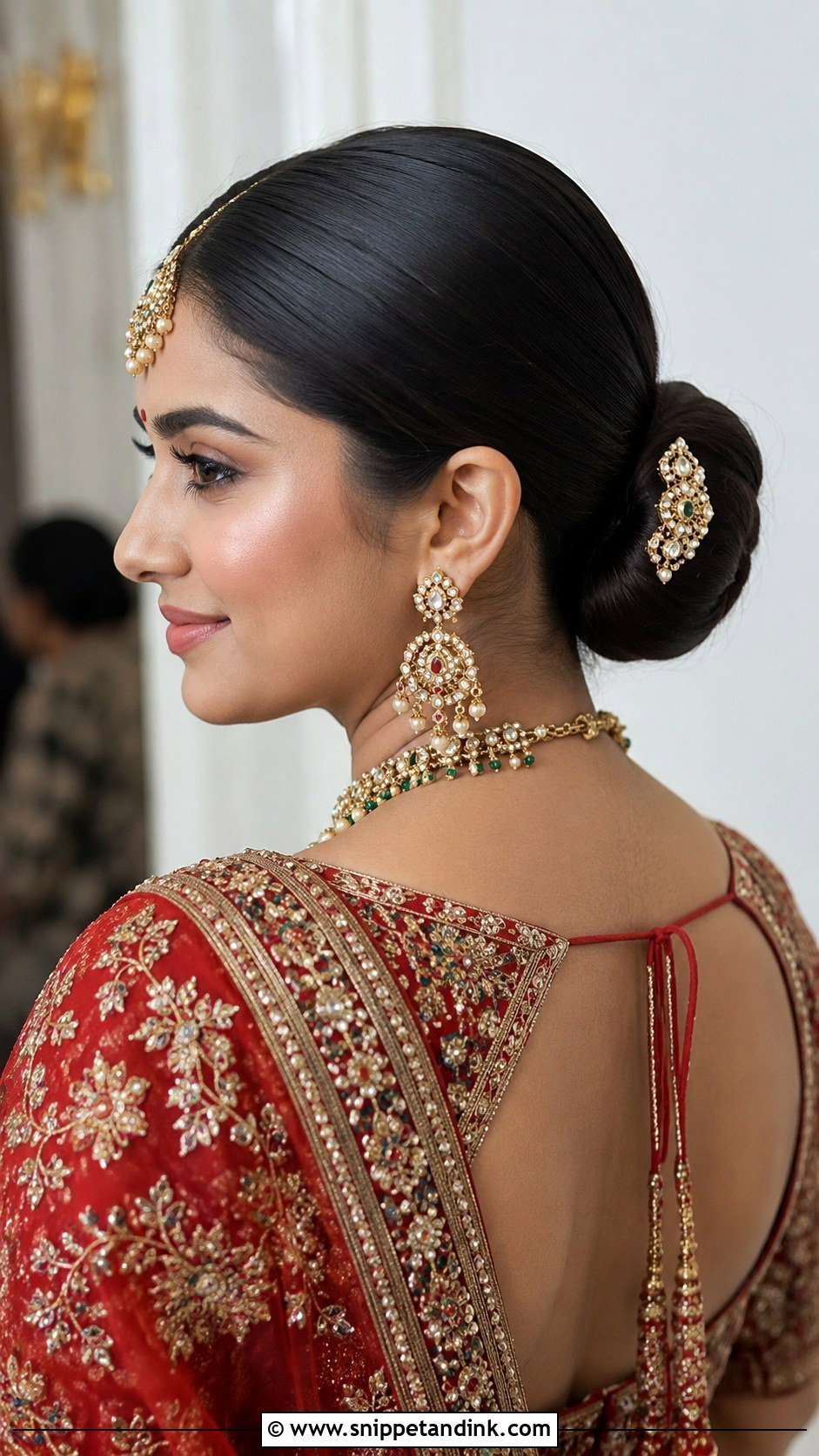
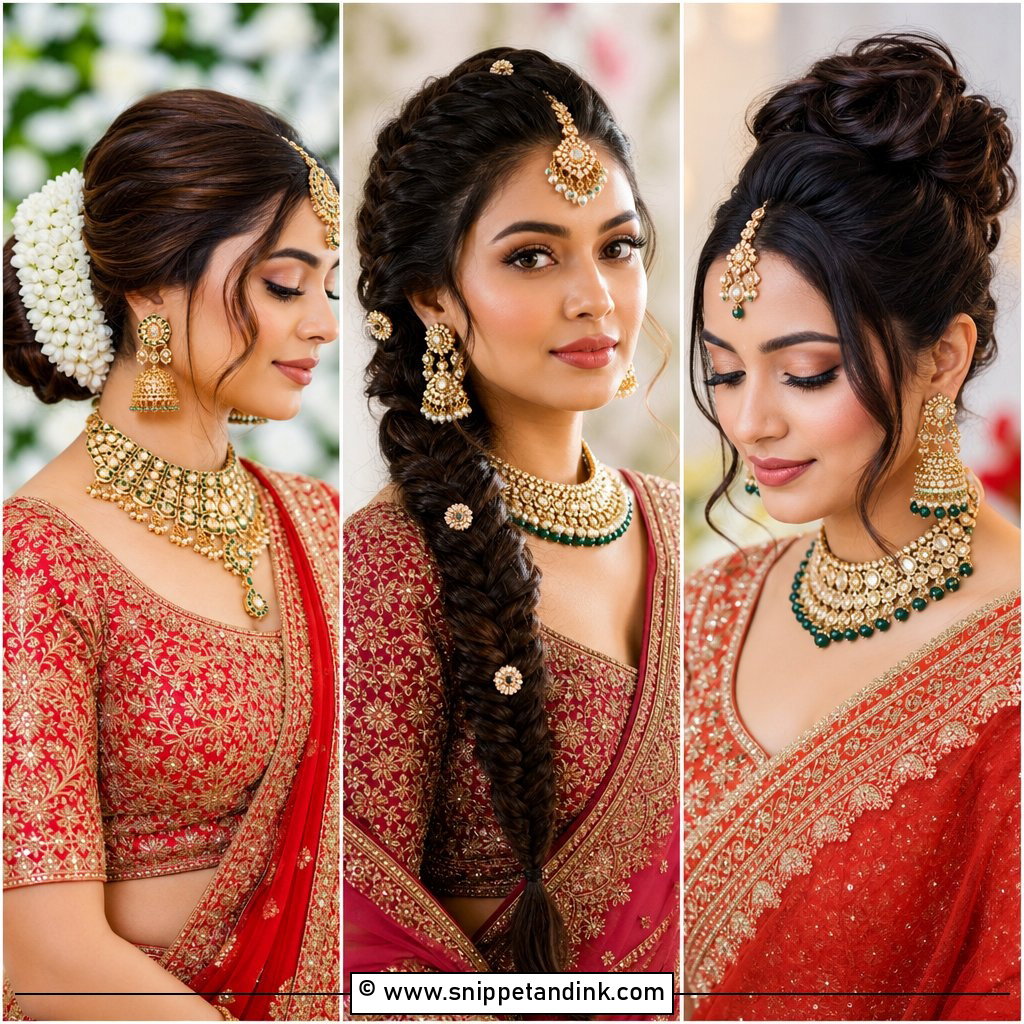
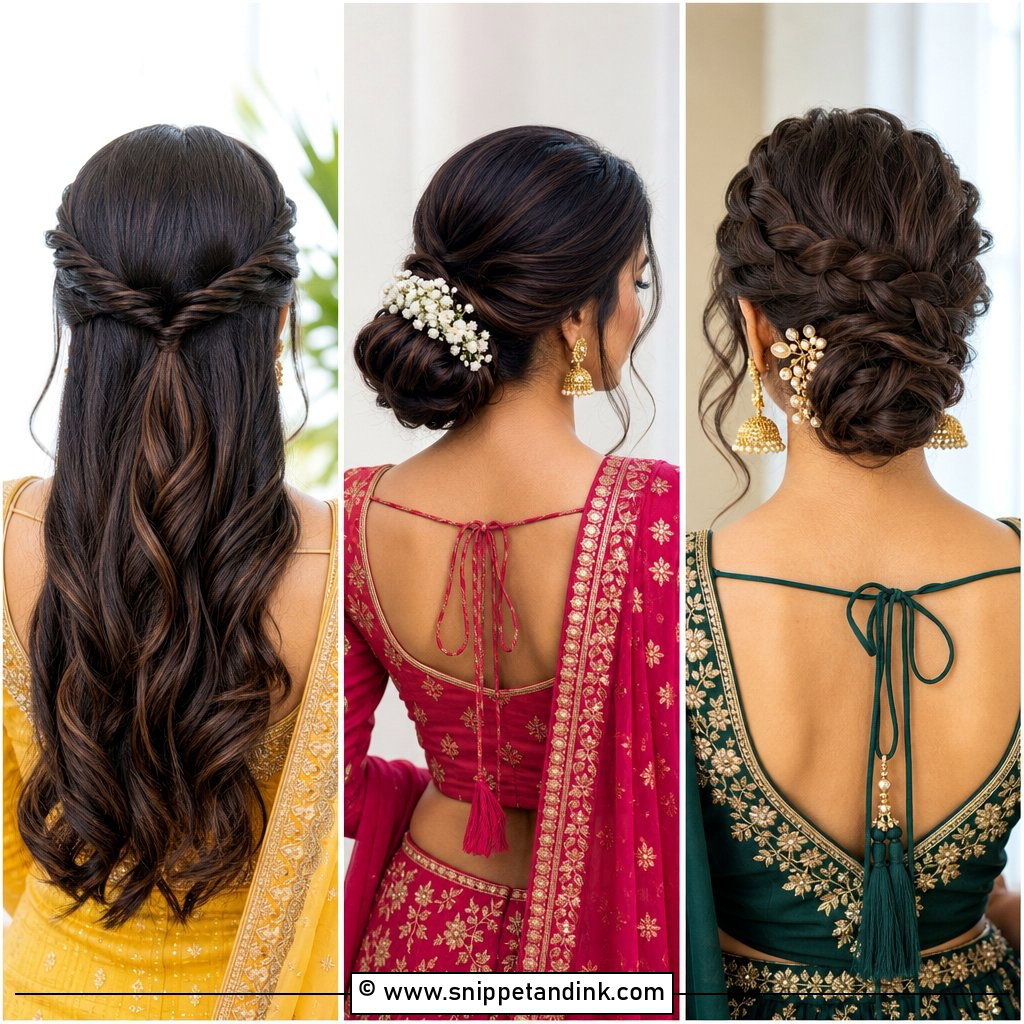
The low bun with a center parting is the style traditional brides ask for most, and for good reason. It sits at the nape, keeps the face open for a heavy tikka and big earrings, and takes a gajra or a side brooch easily. The middle parting leaves a clean line for the sindoor ceremony, which matters for many Hindu brides. I set the parting with a tail comb before anything else, because once the bun is pinned, shifting it means starting again. It suits saree and lehenga alike.
2. Gajra And Rose Bun
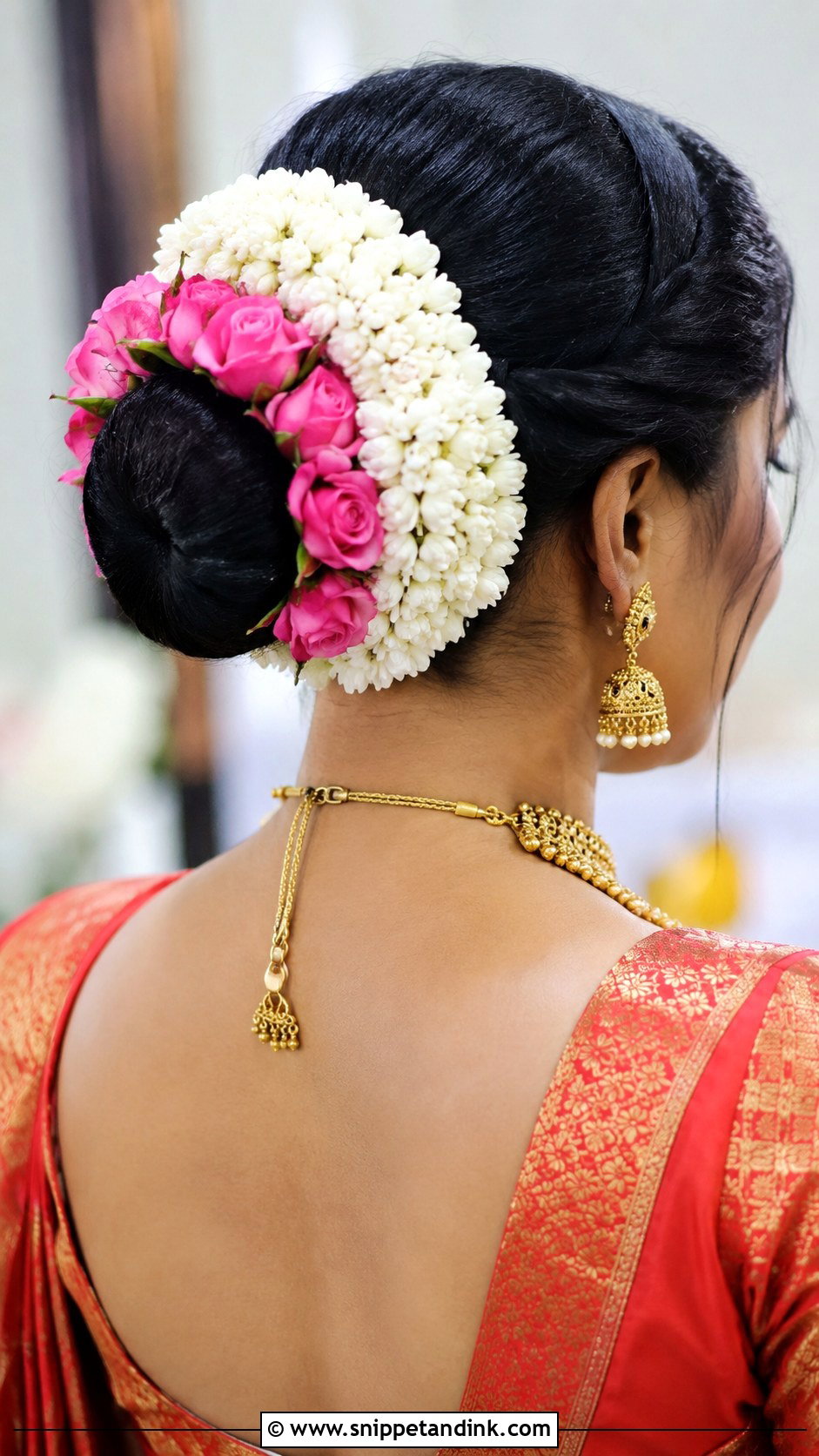
Nothing reads as traditional quite like a bun wrapped in fragrant jasmine and roses. I layer mogra strings around a sleek base and tuck roses into the gaps, and the scent carries through the whole ceremony. It suits red and gold outfits, and it’s a long-standing favorite for South Indian and Maharashtrian brides at daytime and temple weddings. Keep it to white jasmine or add pink roses for contrast. Jasmine buds open and start browning within a few hours in heat, so I ask for the strings to be delivered as close to dressing time as possible.
3. Rani Jhoomar Braid
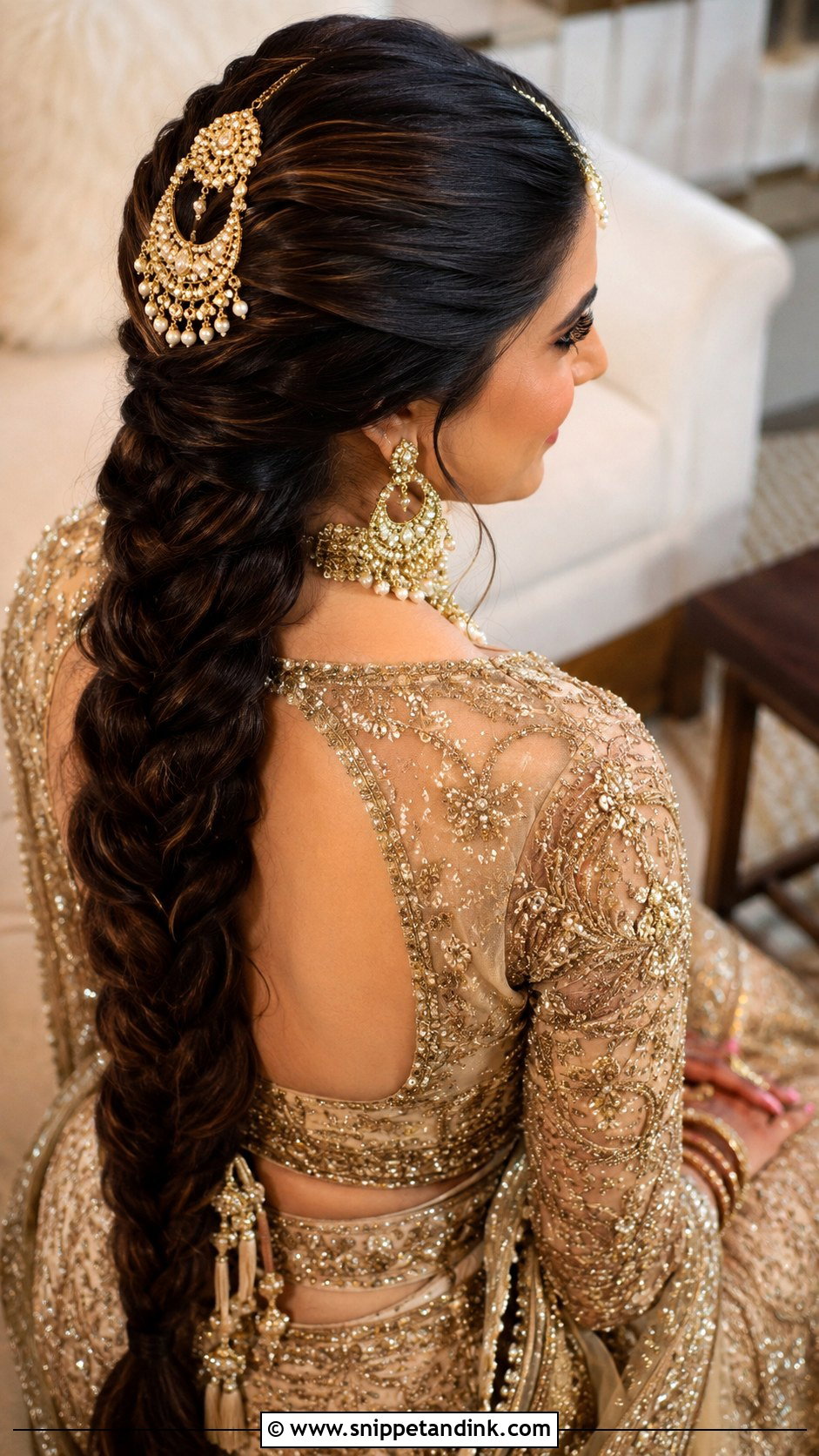
Inspired by royal portraits, the Rani Jhoomar braid is pure drama in the old regal sense. A thick braid runs from the crown down the back, with the jhoomar or tikka placed high on the head. It pairs with heavy lehengas and antique gold, and pearls, gold thread or fresh flowers can trail along the braid. That thickness rarely comes from natural hair alone; I add clip-in wefts before braiding so the plait keeps its width all the way down instead of thinning out at the bottom.
4. Messy Bun With Loose Strands
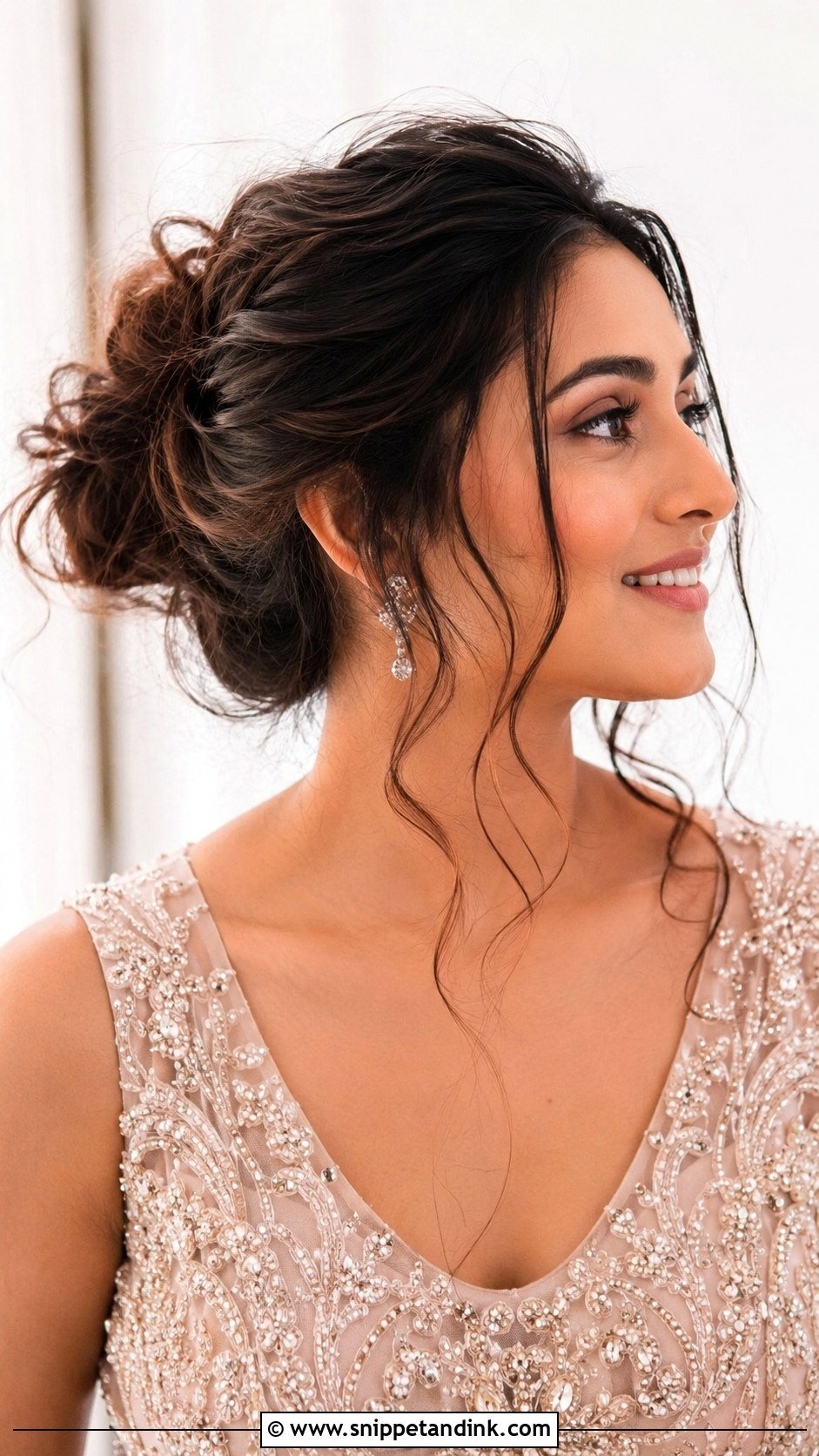
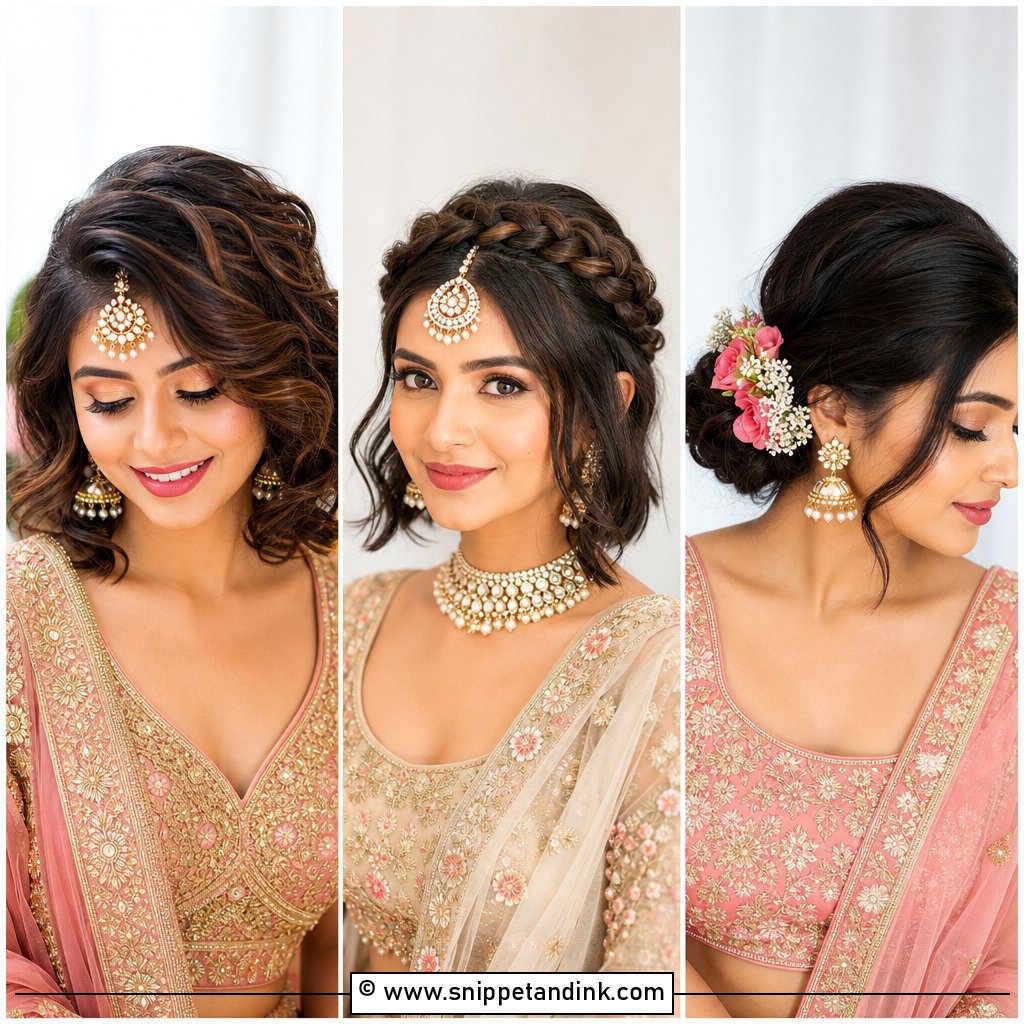
A messy bun is harder to build than a sleek one, because the undone look has to stay put for hours. I add texture spray or dry shampoo first, form the bun loosely, then pull a few wispy strands out around the face. It suits reception parties and sangeet nights and looks good in candid shots. Delicate accessories or a few flowers finish it. Round and oval faces suit it especially well. On very fine, silky hair the texture prep is everything; without it, the bun falls flat by the second hour.
5. South Indian Traditional Braid
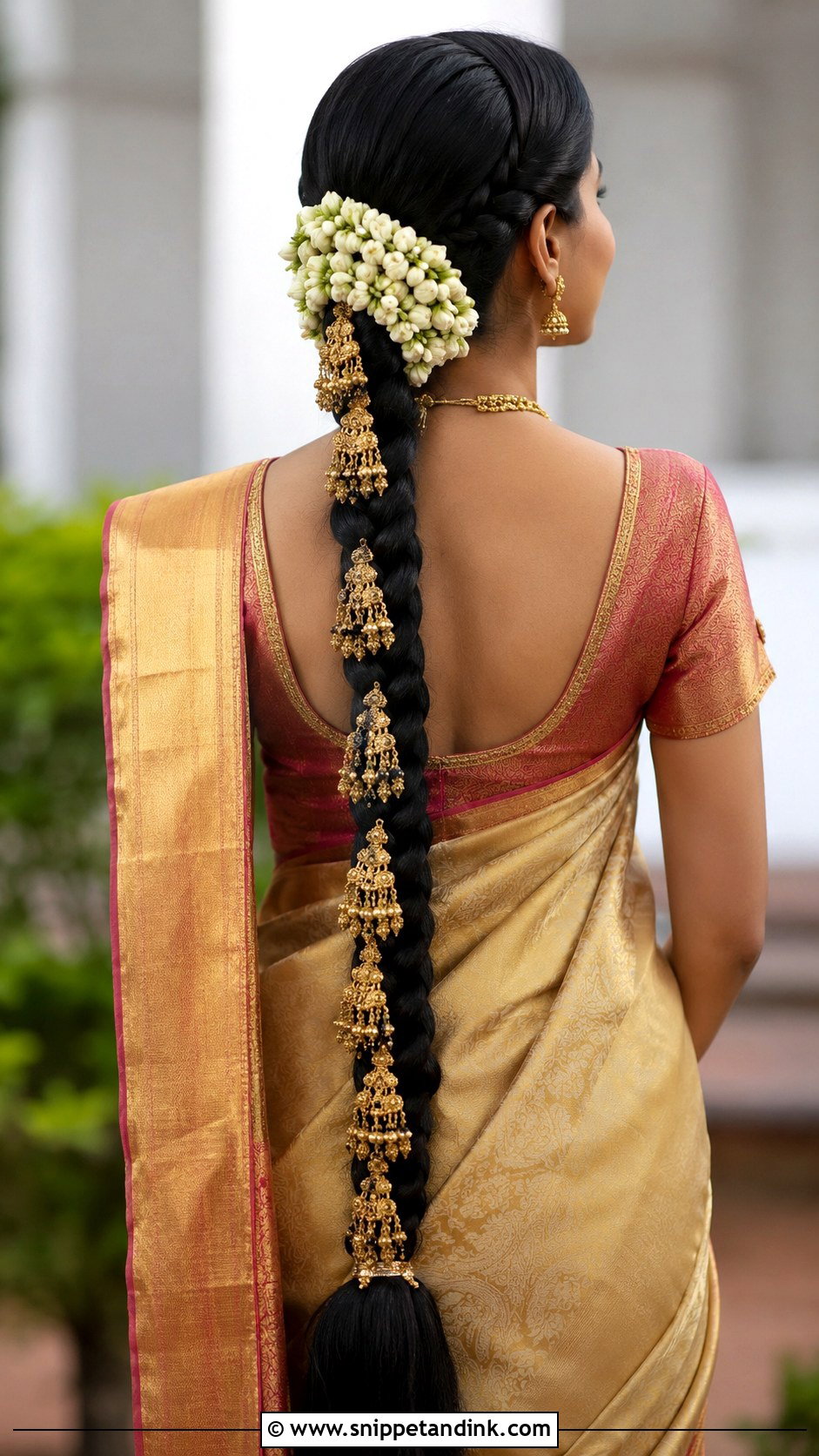
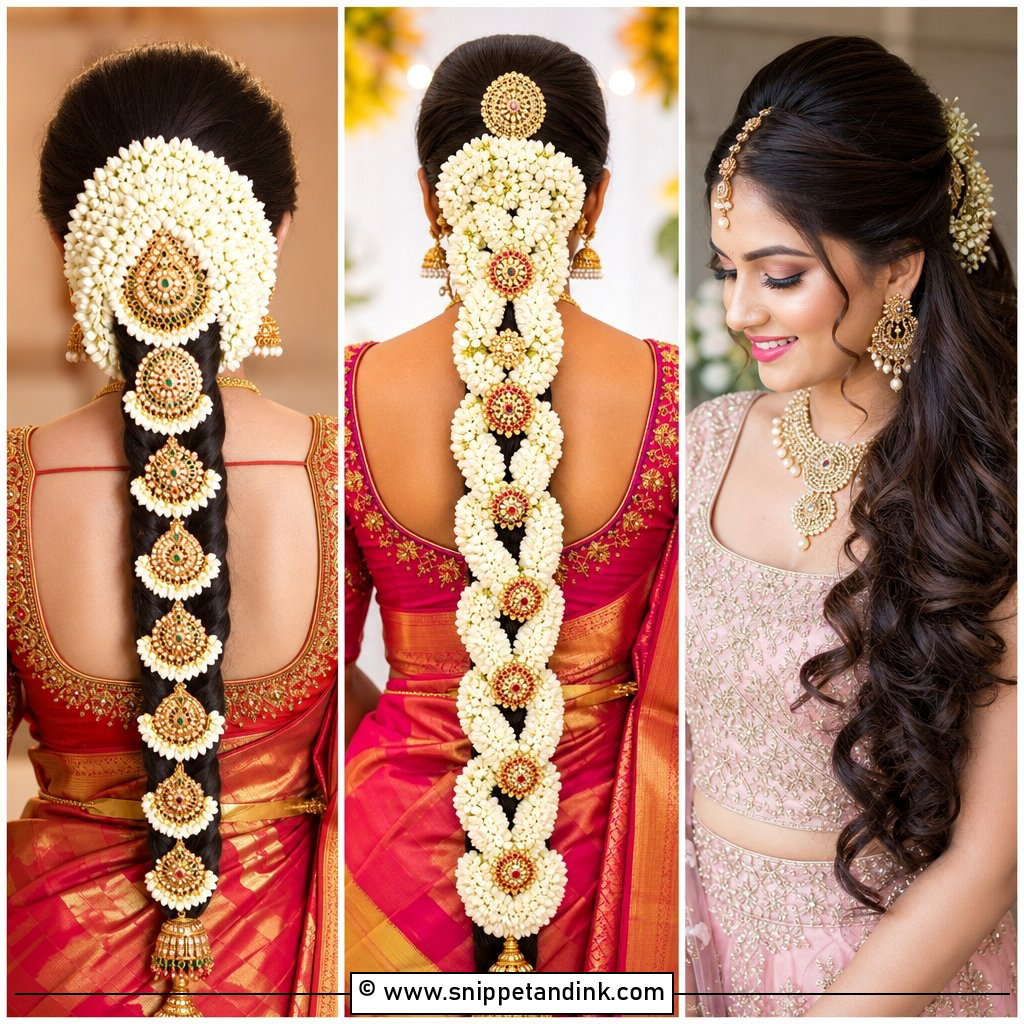
The South Indian braid is a single long plait down the back, dressed with rows of jasmine, kunjalam tassels at the end and gold hair ornaments along its length. It’s tied to ideas of prosperity and auspiciousness in many South Indian families and sits naturally with a silk Kanjeevaram and temple jewelry. The jadanagam or gold braid ornament is heavy, so I braid firmly and sew or pin the ornament through the plaits at several points. Brides without long hair often wear a braided extension underneath, and once the flowers go on, nobody can tell.
6. Punjabi Braided Bun With Paranda
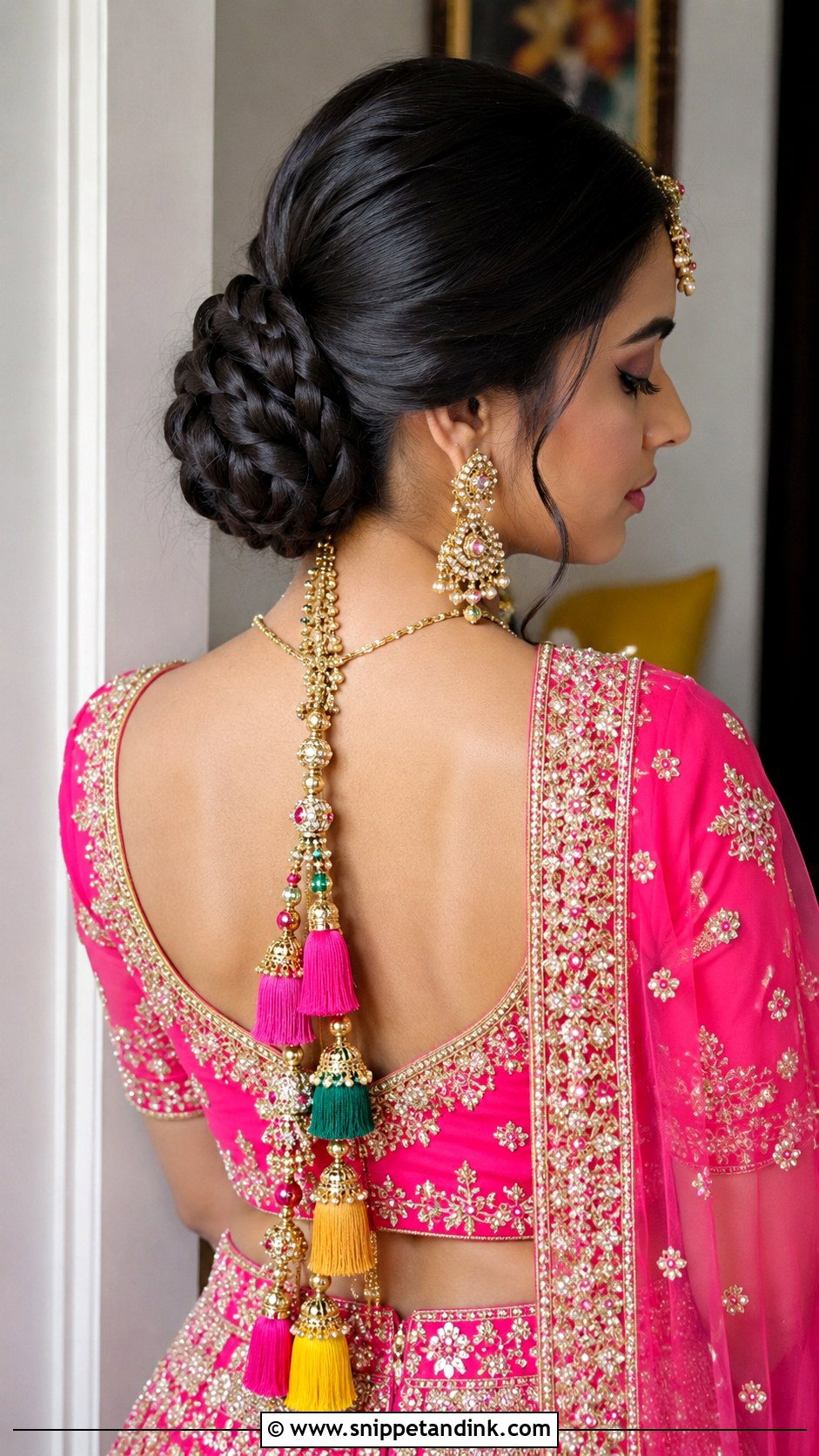
A braided bun with a colorful paranda brings Punjabi festivity straight into the hair. I braid the paranda’s threads into the plait, then coil it into a neat bun at the nape so the tassels hang just below. A maang tikka finishes the head, while the kalire stay on the wrists. It suits bright pink and red lehengas. The paranda adds length and volume as well as color, so it’s a good choice for brides with shorter or thinner hair who still want a full braid.
7. Half-Up Half-Down With Curls
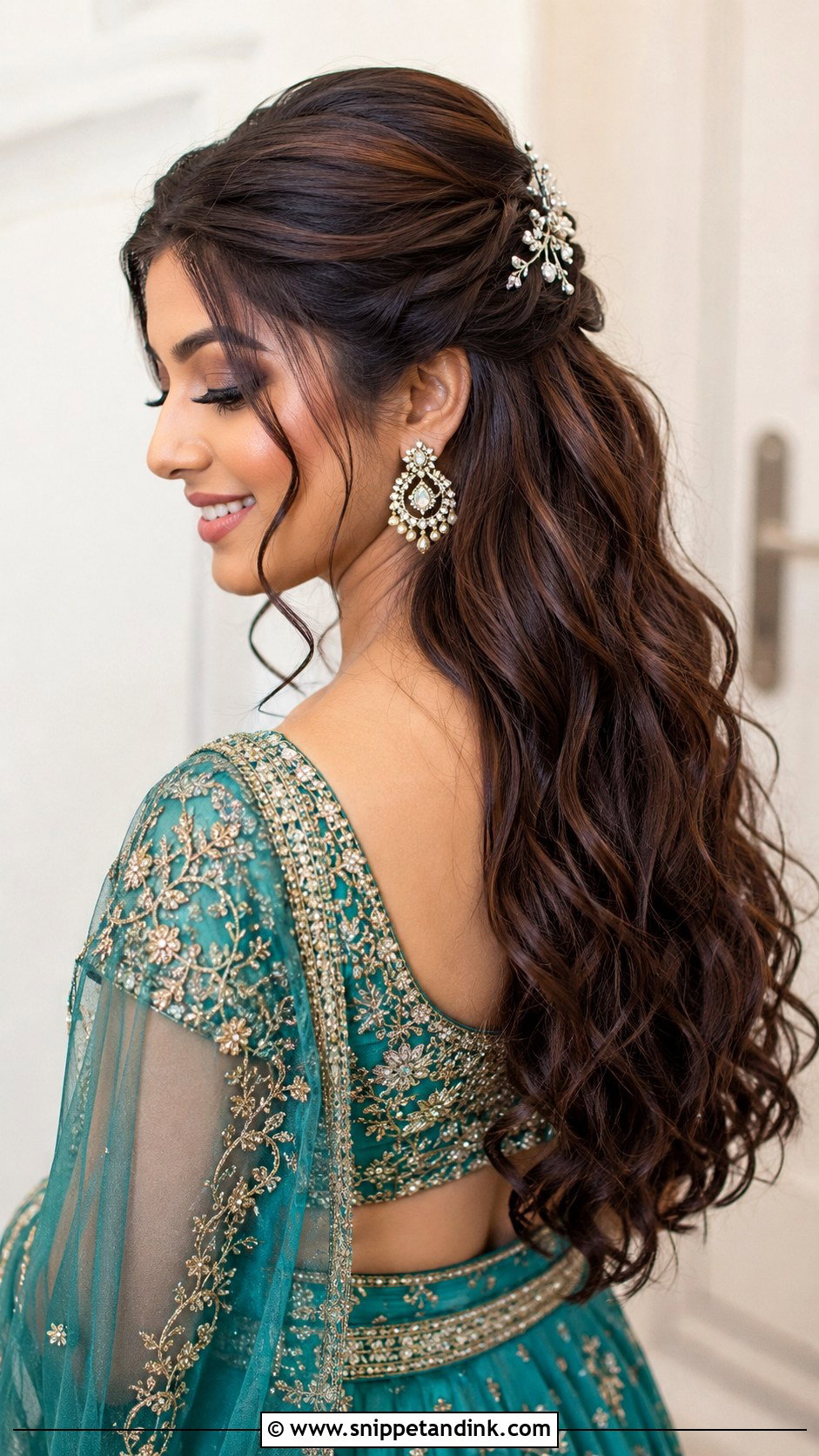
Half-up, half-down suits a bride who doesn’t want to commit to either open hair or an updo. The top section is pinned back neatly and soft curls fall over the shoulders. A jeweled pin or small floral clip covers the join. I recommend it for cocktail receptions and sangeet functions, where movement matters more than structure. Medium to long hair works best. The top section gives a dupatta something firm to hold onto, which is a practical advantage over fully open hair.
8. Floral Crown Bun
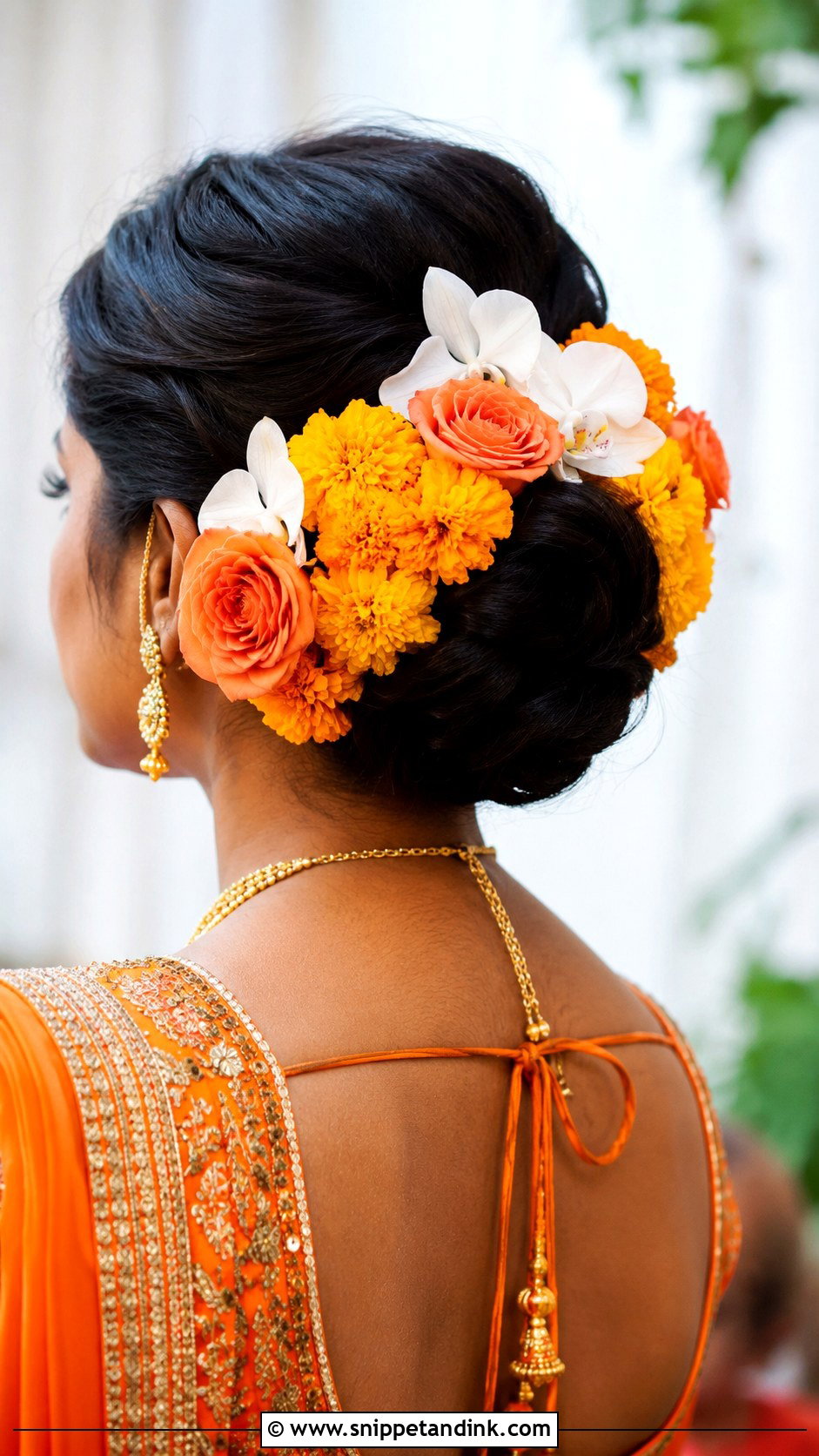
A floral crown bun circles a soft bun with roses, marigolds or orchids, almost like a small garland at the back of the head. It suits daytime mandap ceremonies and outdoor weddings with bright outfits. I match flower colors to a detail in the lehenga or the jewelry. Marigolds hold up well in heat, while roses and orchids bruise if pressed, so I wire them before pinning. The scent stays with you through the celebration, which brides tend to remember long after.
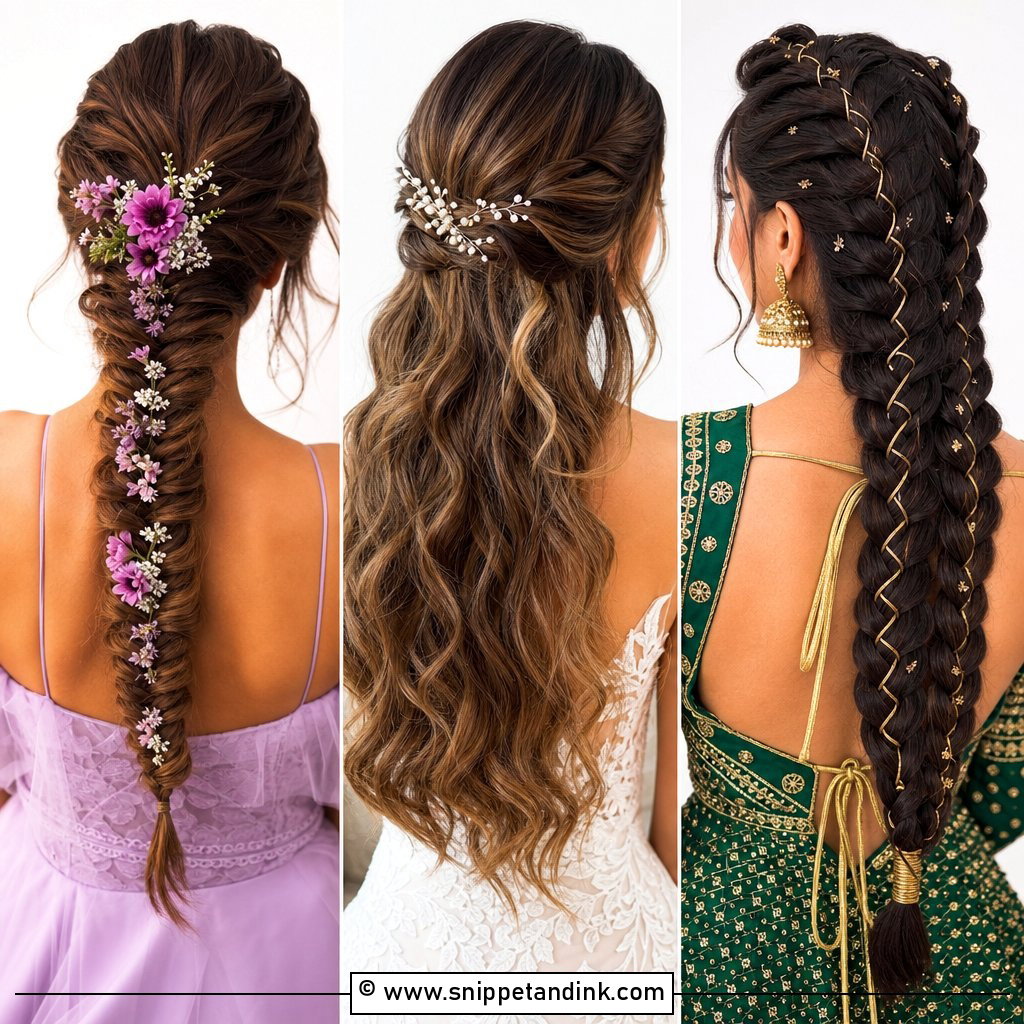
9. Fishtail Braid With Flowers
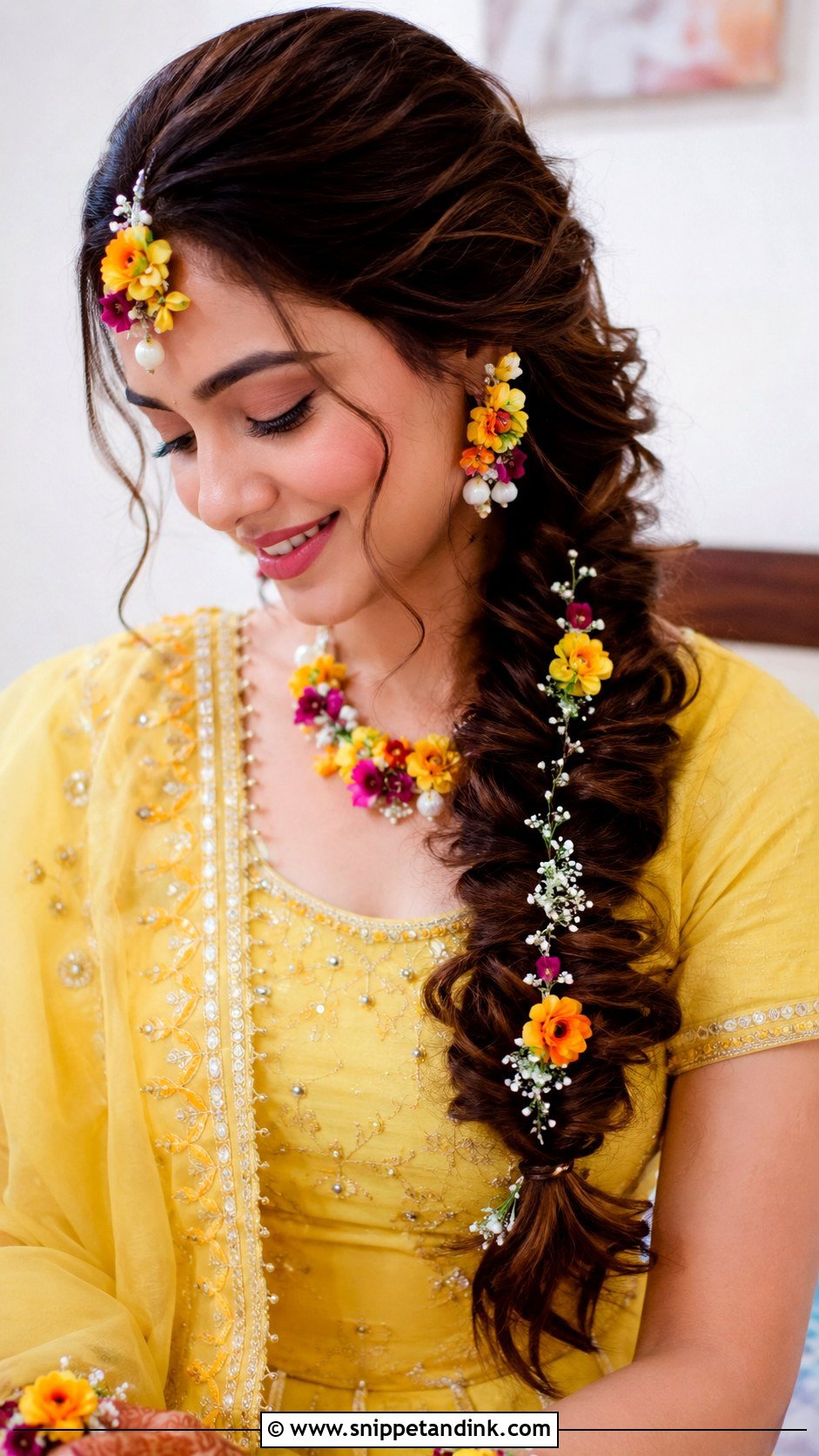
A fishtail braid looks complicated but is really two sections crossed back and forth in thin pieces, producing a herringbone pattern. Small flowers tucked between the weaves suit mehndi and haldi functions, and the braid can drape over one shoulder. Pair it with floral jewelry for a coordinated look. The thinner the pieces, the finer the pattern; on very thick hair I take slightly larger sections so the braid doesn’t take an hour. It’s also easy to touch up: a slipping strand tucks back without undoing anything.
10. Sleek Low Ponytail
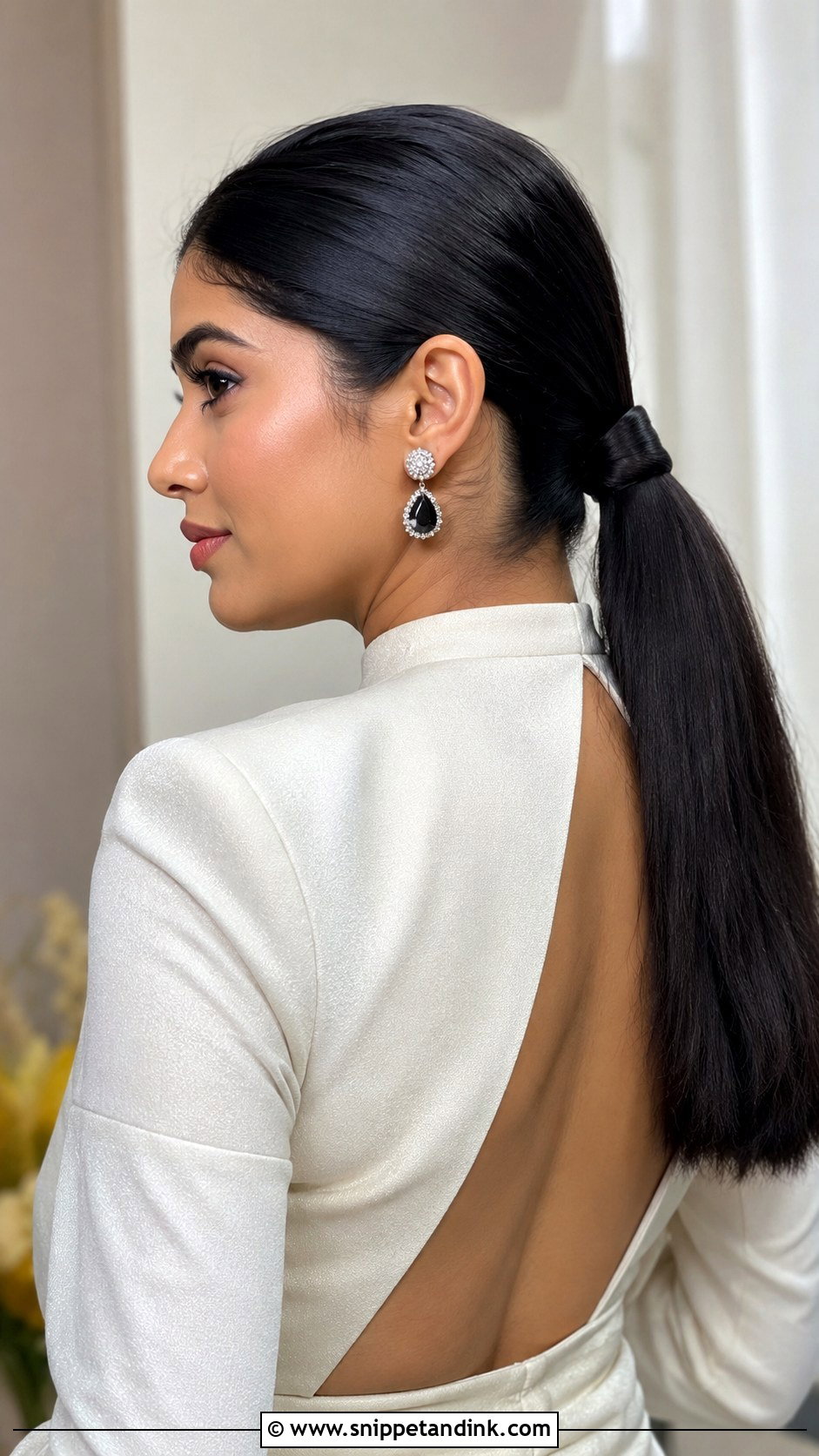
A sleek low ponytail suits a minimalist bride who prefers clean lines to ornament. I blow-dry the hair straight, gather it smoothly at the nape and wrap a strand around the base to hide the elastic. It shows off statement earrings and bold makeup and pairs with structured gowns or sleek lehengas at receptions and fusion weddings. The challenge is flyaways around the hairline, which show in every close-up. A little gel brushed on with a toothbrush keeps the front perfectly smooth.
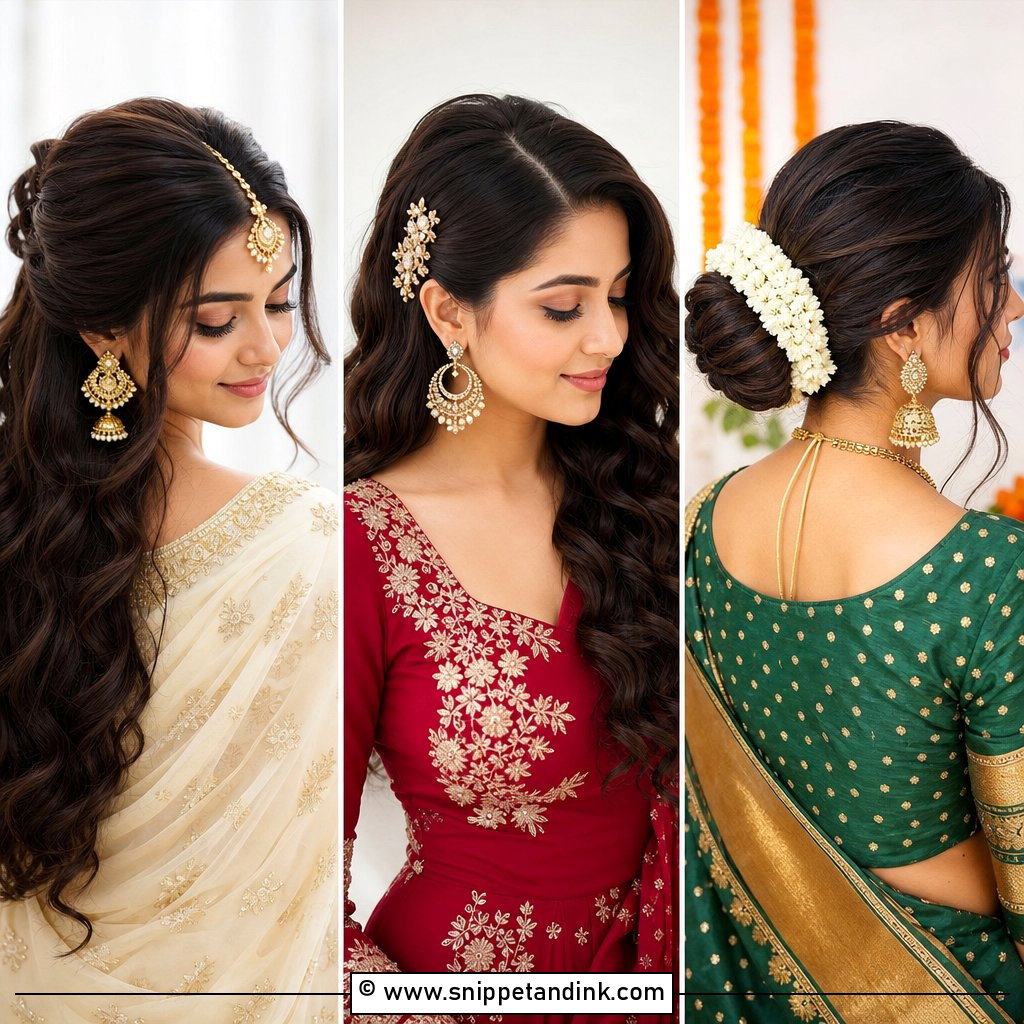
11. Open Hair With Soft Waves
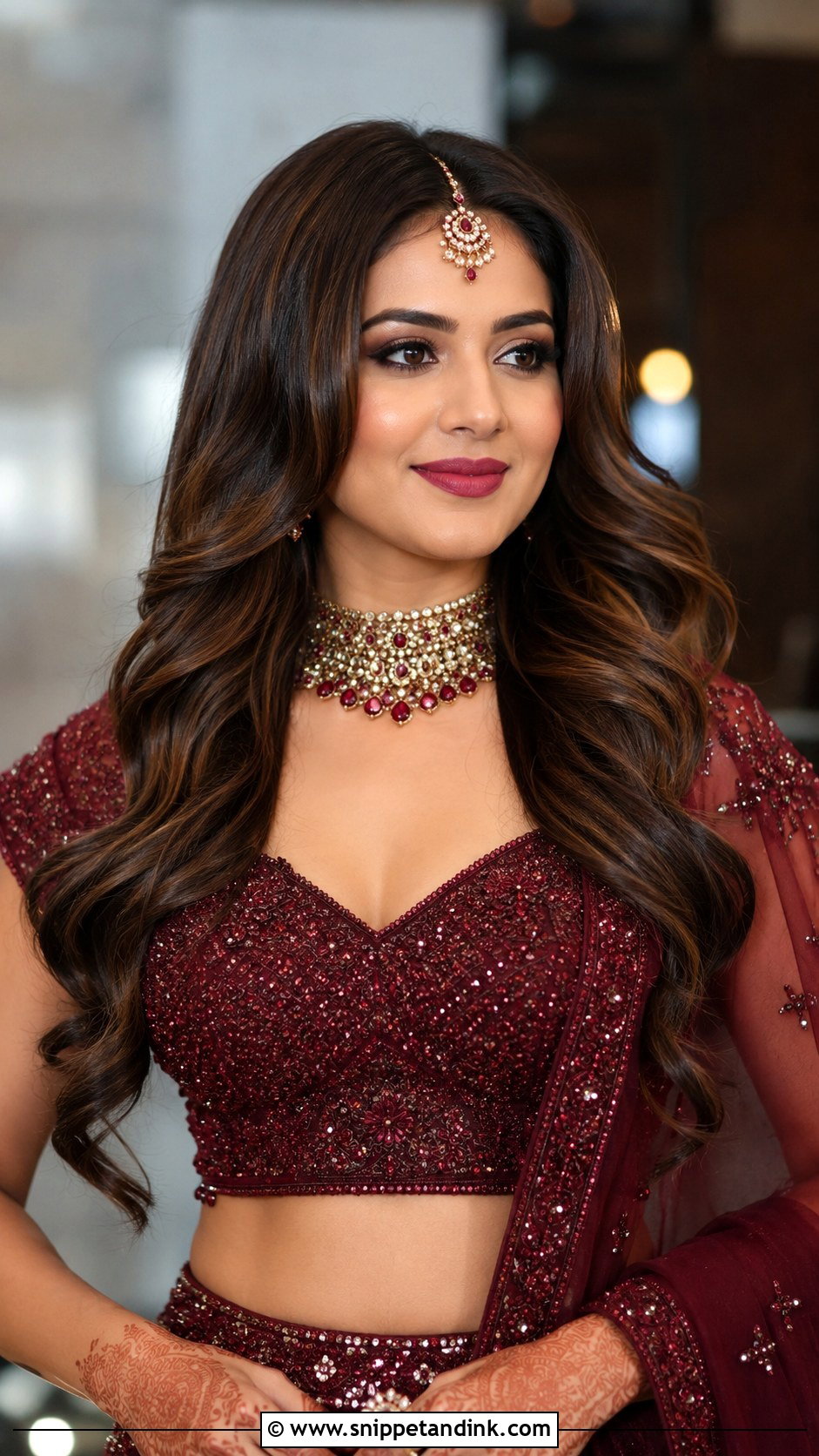
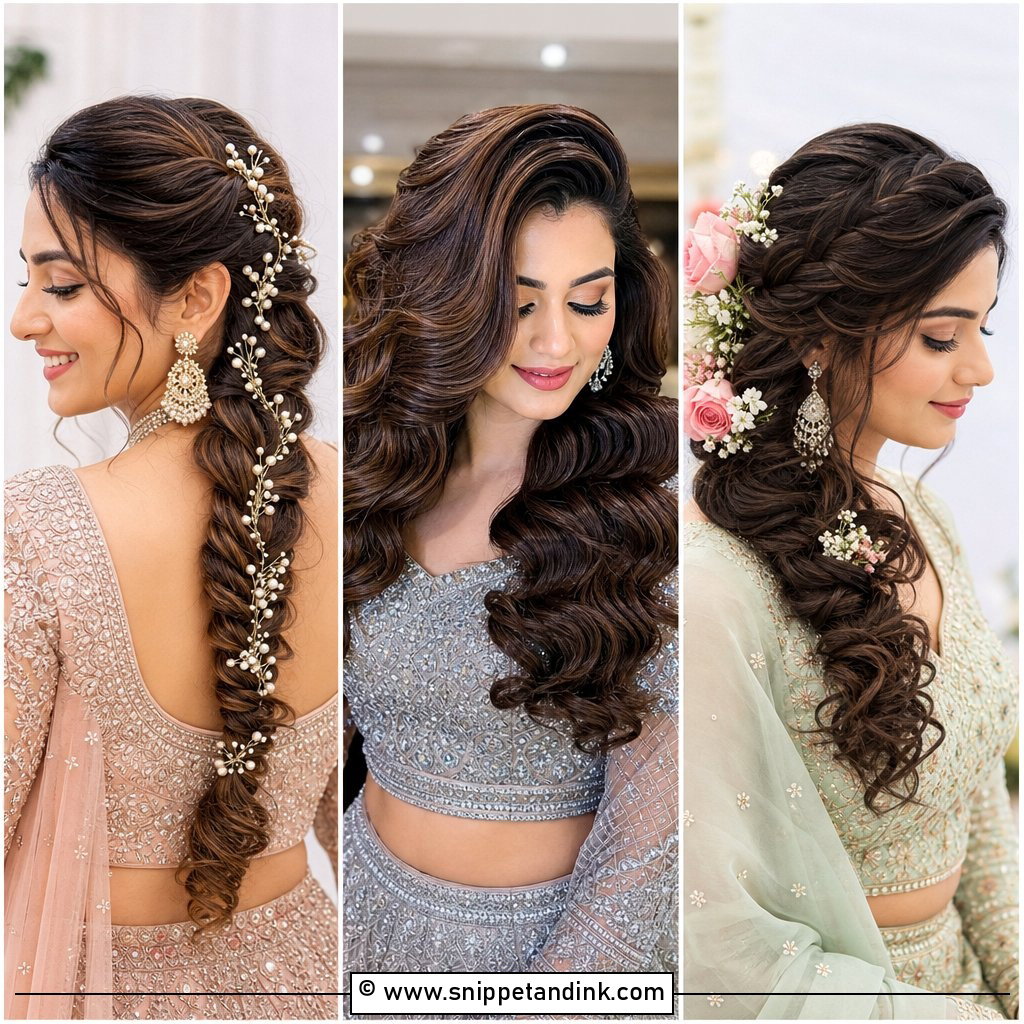
Open hair styled in soft, glamorous waves brings a Hollywood feel to an Indian wedding. I curl in one direction and brush the curls out so they join into waves with volume and movement. A delicate tikka or a side pin adds a traditional touch. Receptions and pre-wedding shoots suit it. Long, thick hair gives the most impact, and the waves flatter nearly every face shape. If your event is outdoors in humid weather, I’d plan a backup pin-up option, since waves loosen fast in moist air.
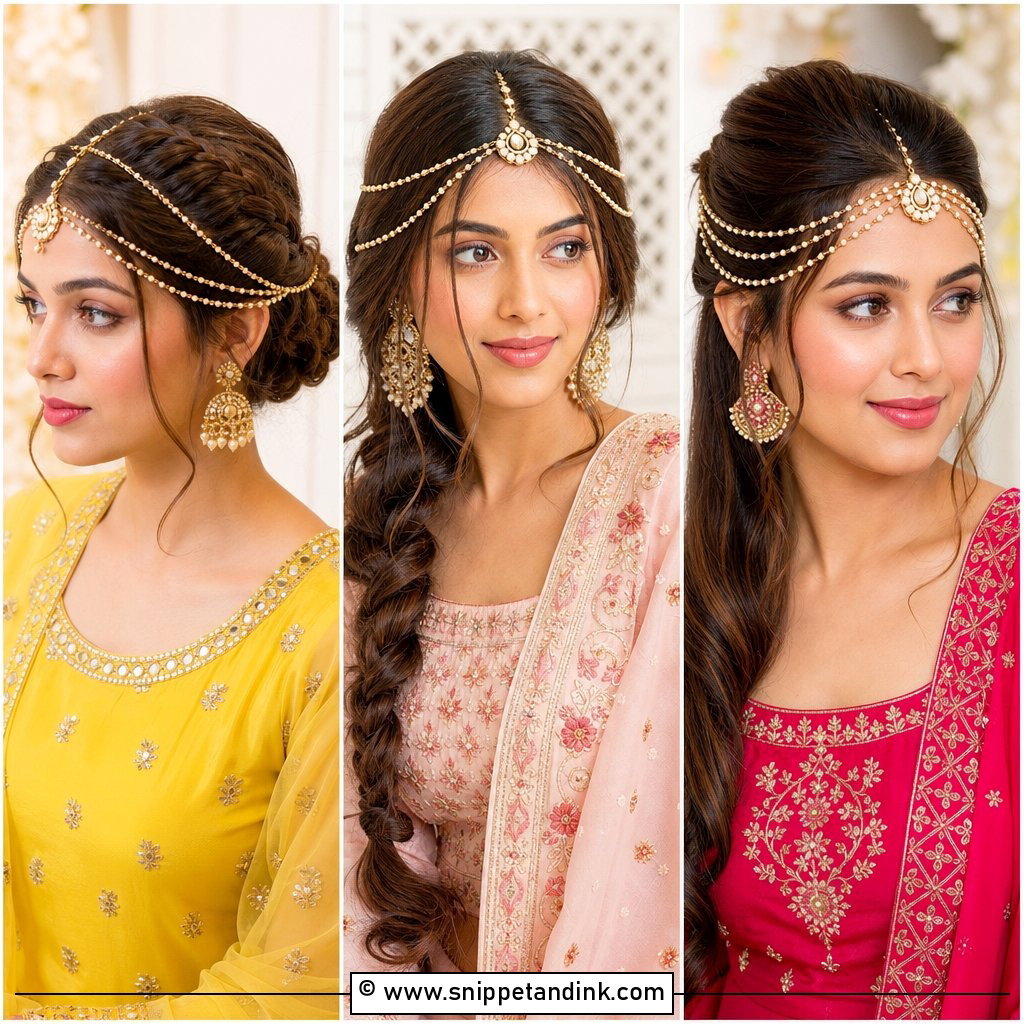
12. Maang Tikka Bun
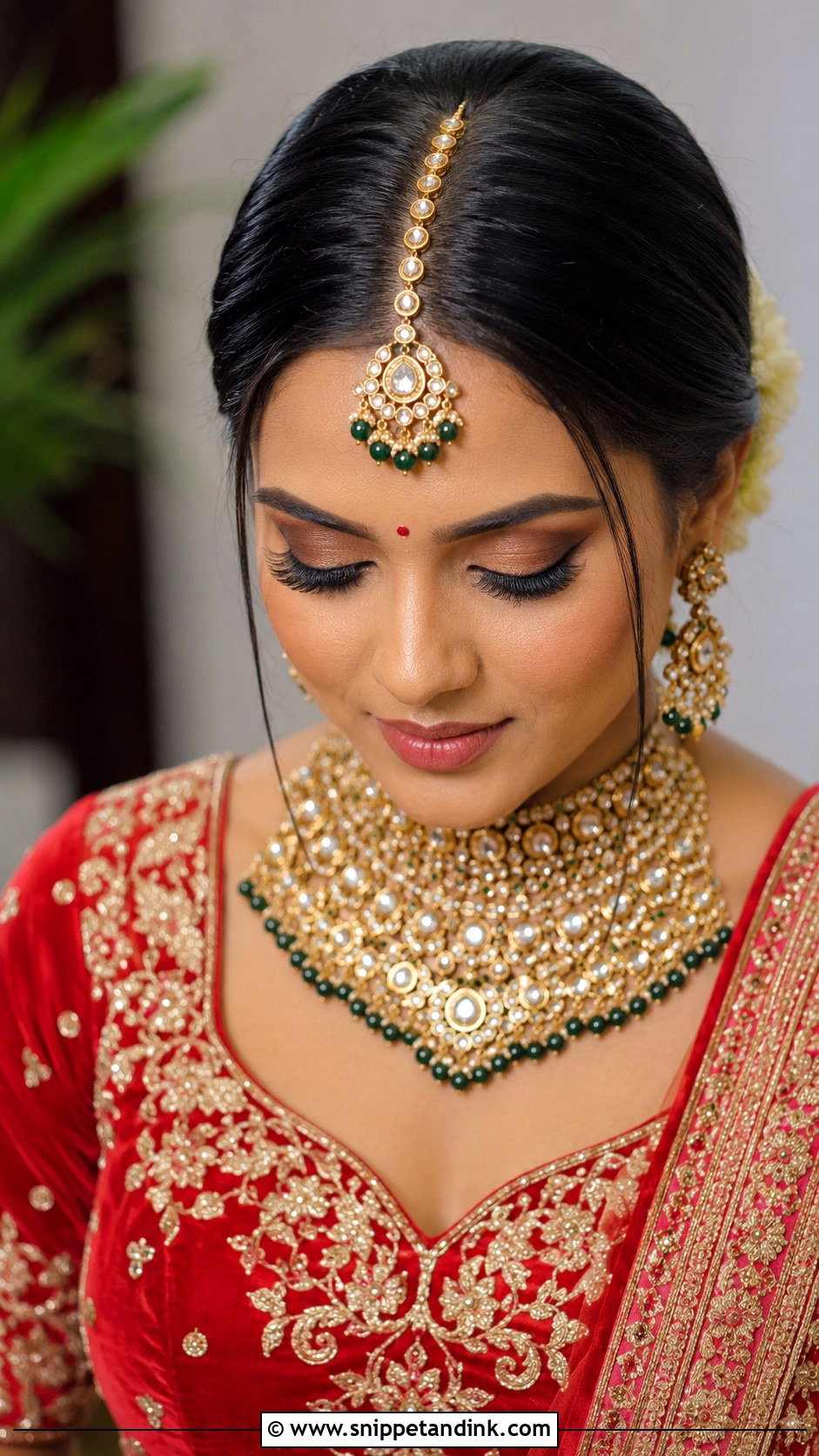
The maang tikka bun keeps everything else simple so the tikka can be the center of the look. Hair goes into a smooth bun with a center parting for the tikka to rest on. It pairs with heavy bridal jewelry and red lehengas and works best for the main ceremony. The tikka’s chain needs to be hooked into the hair a couple of inches behind the hairline, with a second pin behind that; otherwise it shifts every time you bow your head during rituals.
13. Braided Crown Updo
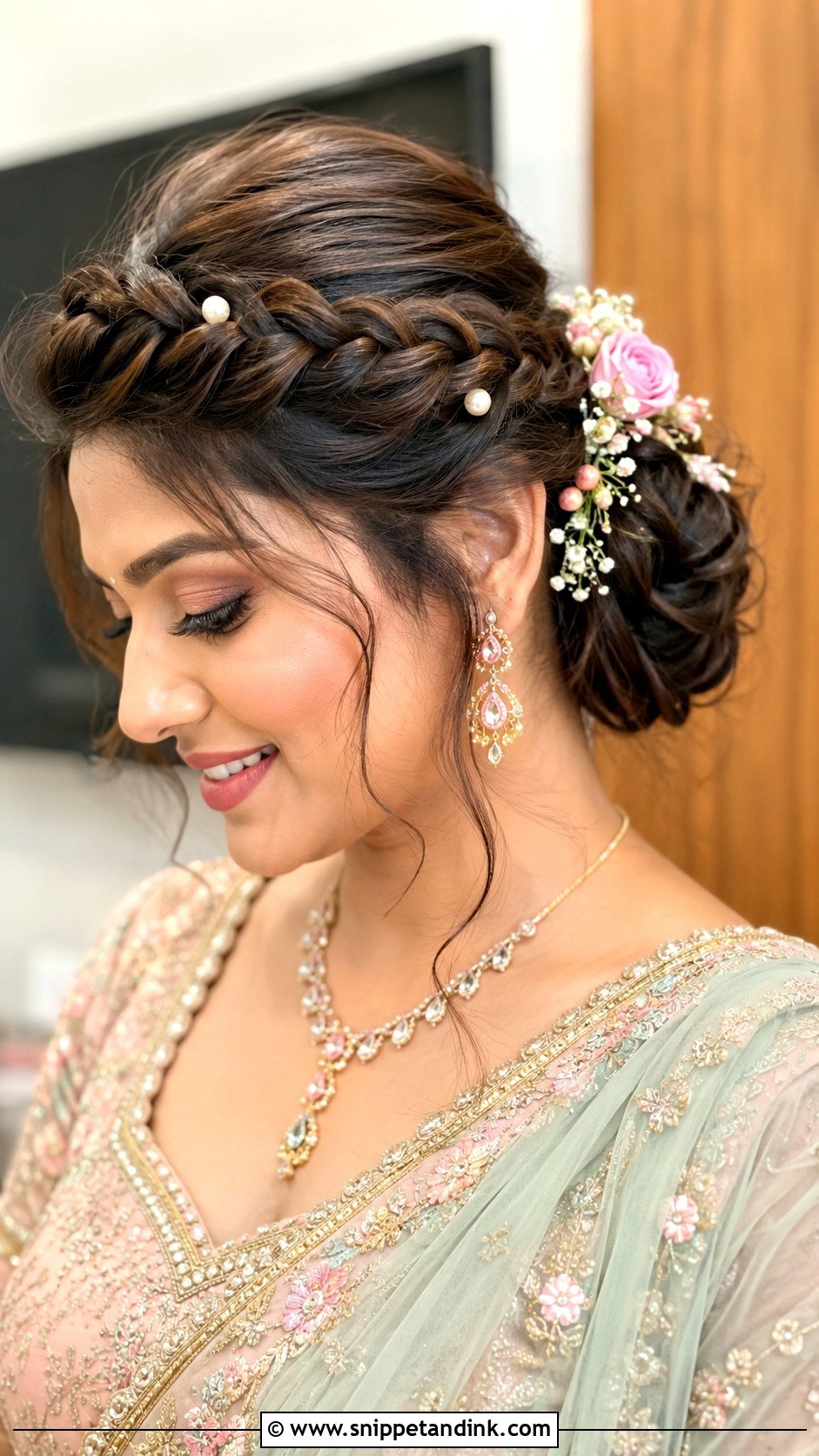
A plait wrapped around the head like a halo keeps hair off the face and neck, which makes the braided crown one of my choices for warm-weather ceremonies. Small flowers or pearls tucked into the braid add detail. It suits traditional and fusion weddings, adds a little height and holds securely. The braid needs enough length to reach around the head; on shoulder-length hair I use two braids meeting at the back, which gives the same effect with less hair.
14. Side Swept Curls With Hairpin
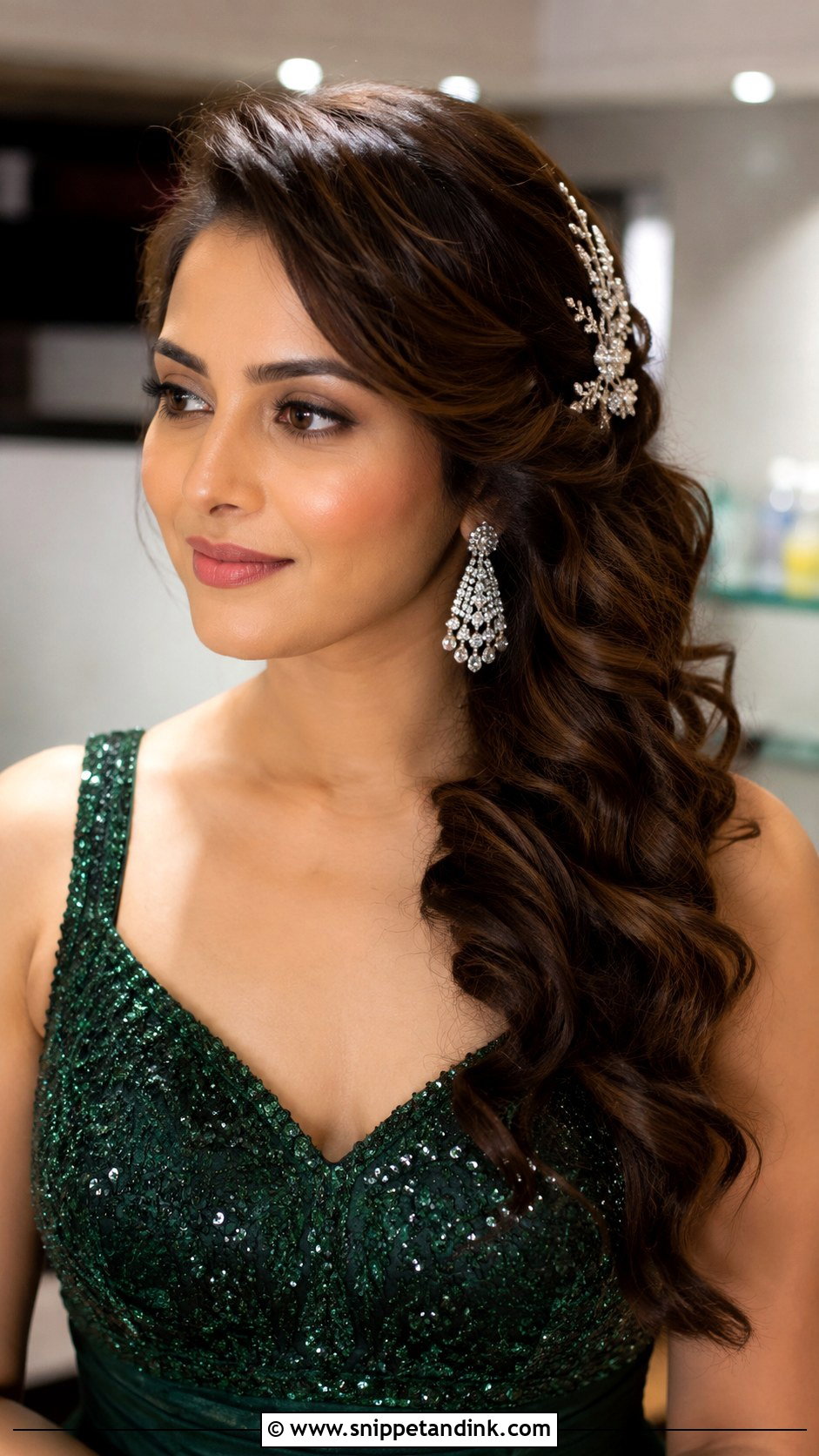
Curls swept over one shoulder, held with a sparkling pin or floral clip, give a glamorous asymmetry. I’d put this on a bride at a cocktail reception or sangeet evening. It flatters long and medium hair with good volume. Wear a statement earring on the exposed side for balance. The pin holding the sweep back on the opposite side is what keeps the shape, so I hide two crossed bobby pins under the decorative one for strength.
15. Bridal Bun With Pearls
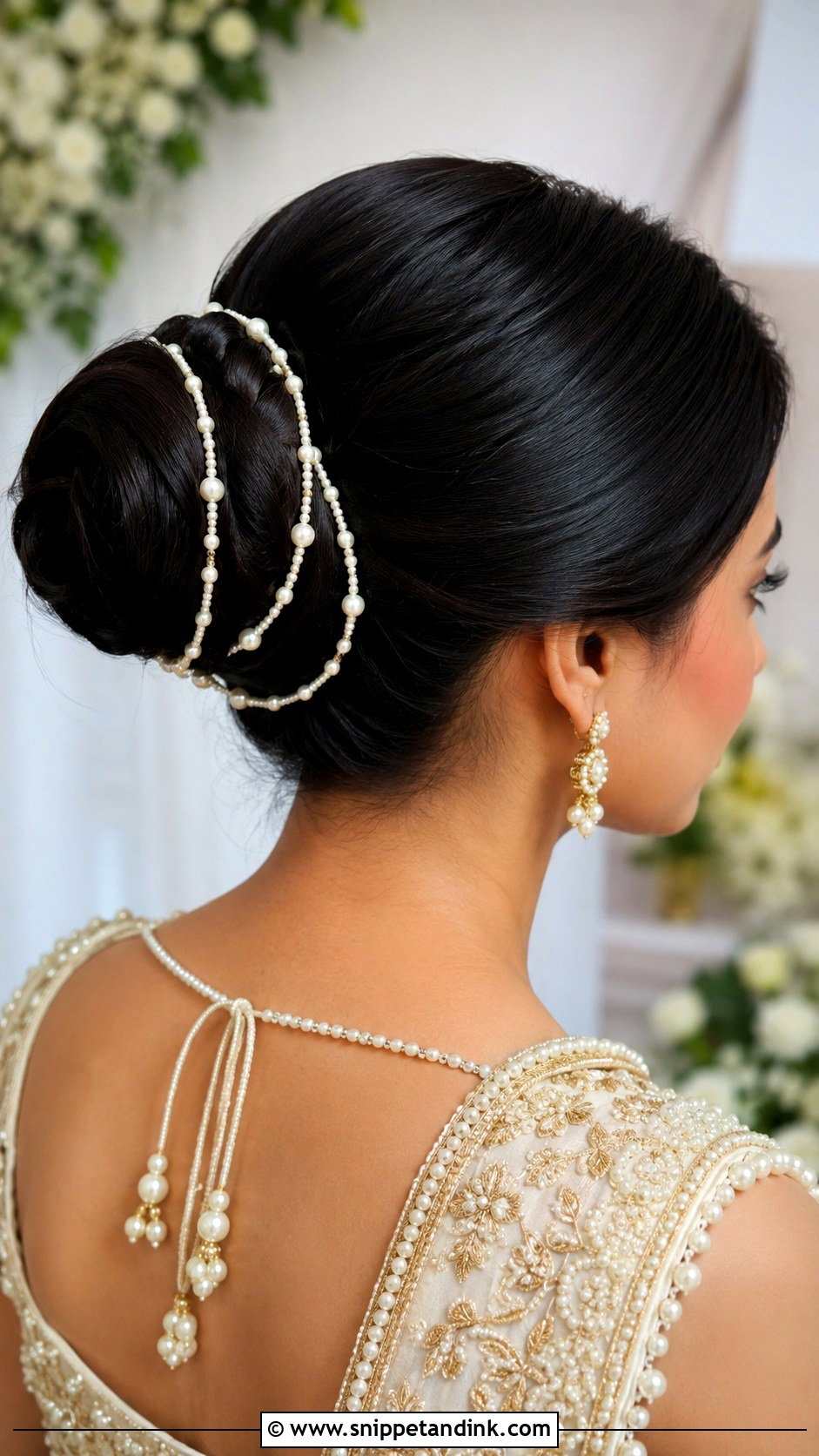
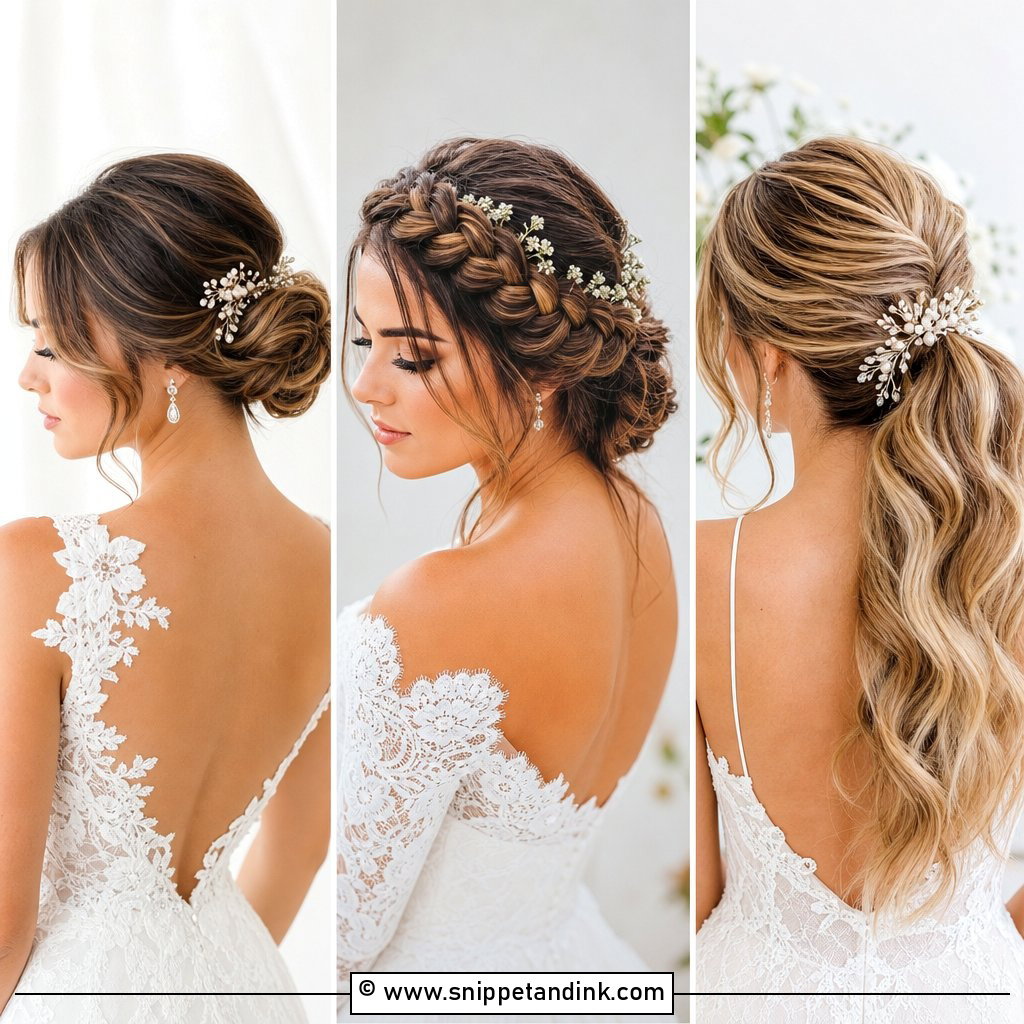
Strings of pearls woven through a smooth bun give a soft sheen that works with gold or silver jewelry. It’s a popular choice for Christian-Indian fusion weddings and elegant receptions. Pearl earrings make it a coordinated set. Pearl strings are surprisingly slippery and slide off a sleek bun, so I fasten them with small pins at both ends and at least once in the middle. The pearls should add texture without overpowering the look, so I keep them in one or two loops rather than wrapping the whole bun.
16. Dutch Braid Bun
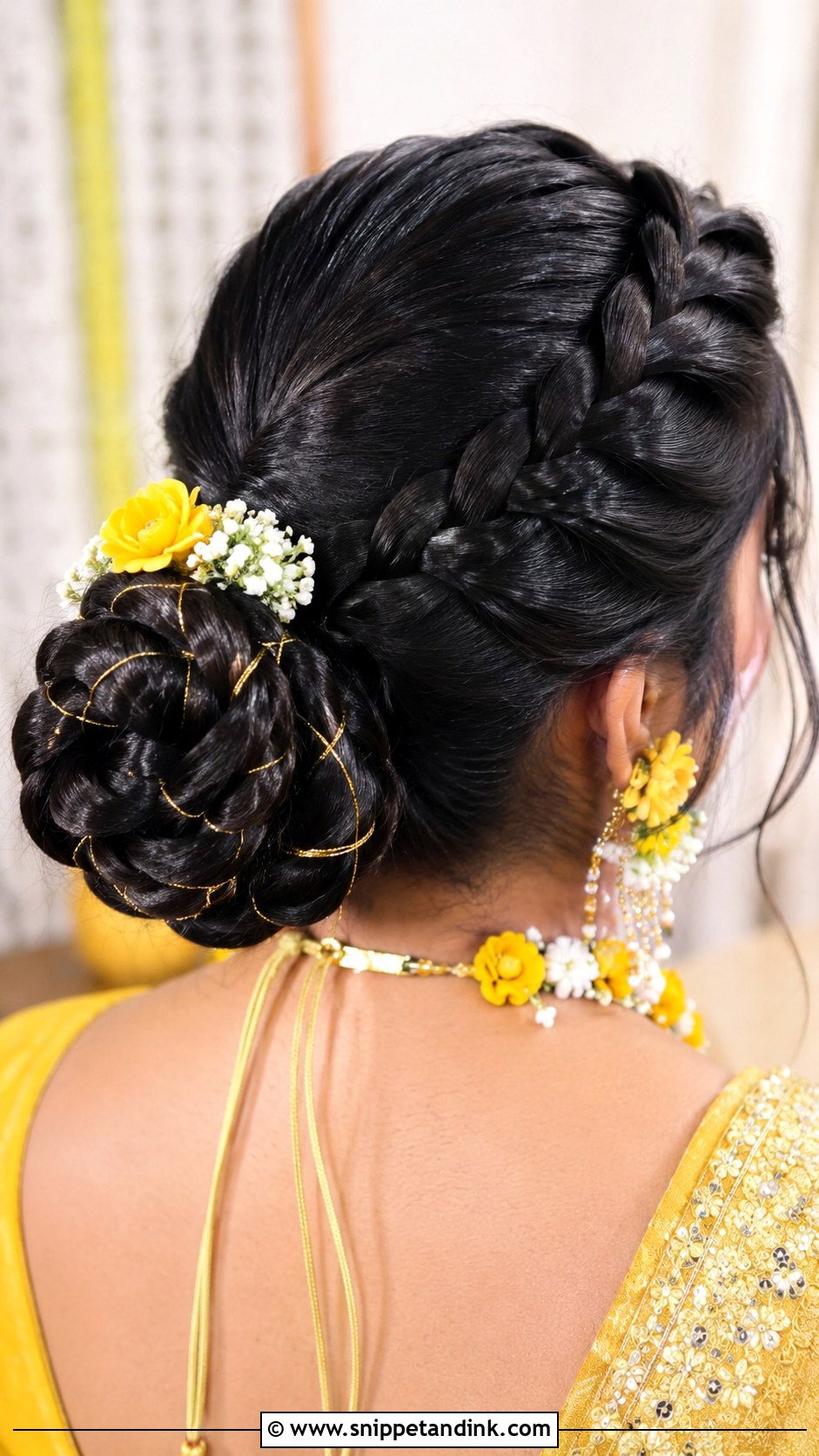
A Dutch braid is braided inside-out, so it stands up from the scalp, and here it flows into a neat coiled bun. Gold thread, pearls or small flowers add detail. It suits mehndi and haldi ceremonies where you want something pretty and secure. Thick, long hair works best. I braid it slightly tight at the scalp and then gently pull the edges outward so the braid looks wider in photos without loosening the hold.
17. Loose Braid With Curls
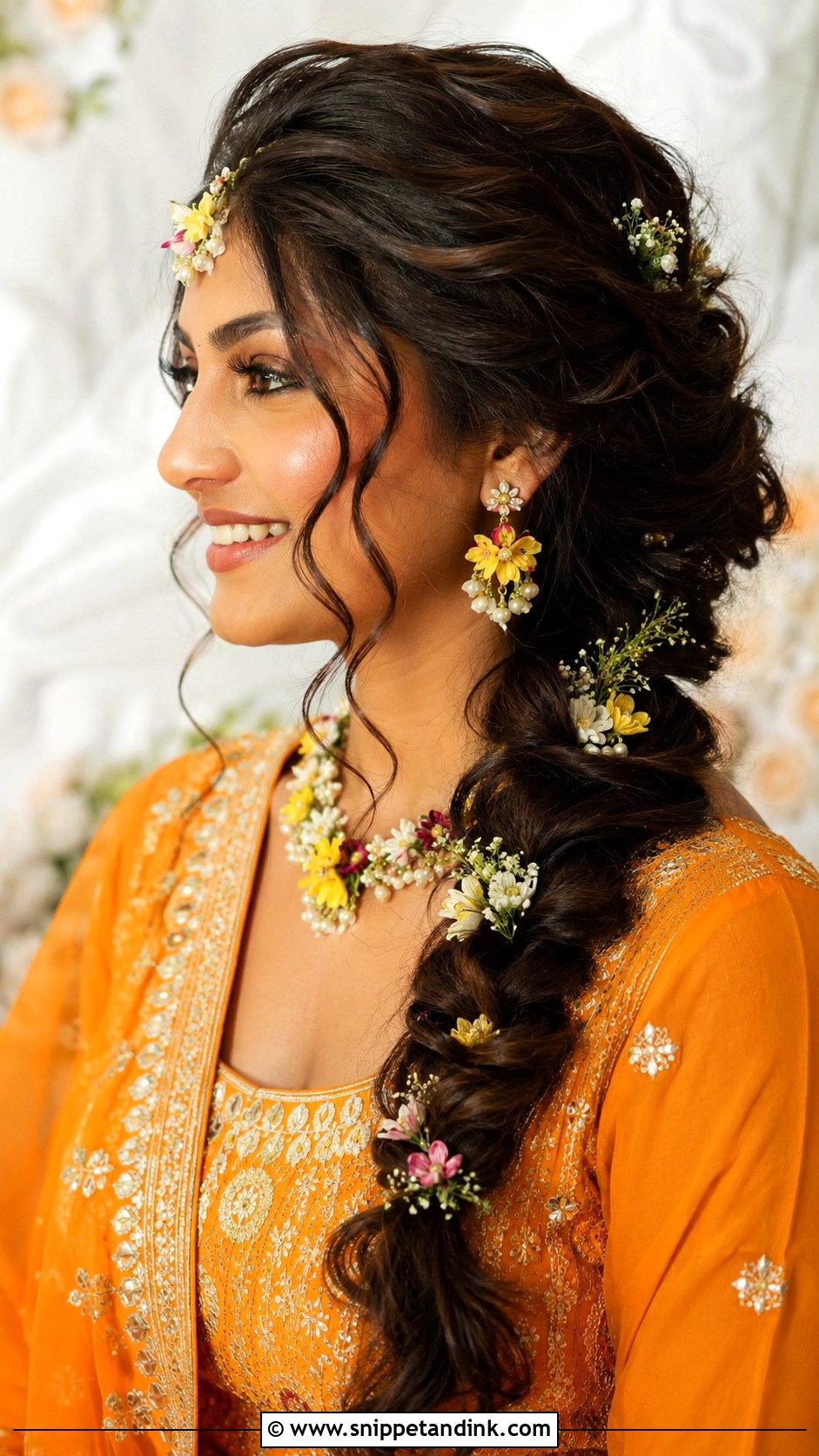
A loose braid with curled tendrils framing the face has a relaxed, bohemian feel. I curl the hair before braiding, which keeps the texture visible through the plait, then scatter tiny flowers through it. It suits haldi and mehndi functions where comfort matters, and it works well for medium to long wavy hair. Pair it with delicate floral jewelry. Loose braids loosen further over the day, so I start a little tighter than the final look and pull it out at the end.
18. High Bun With Jhoomar
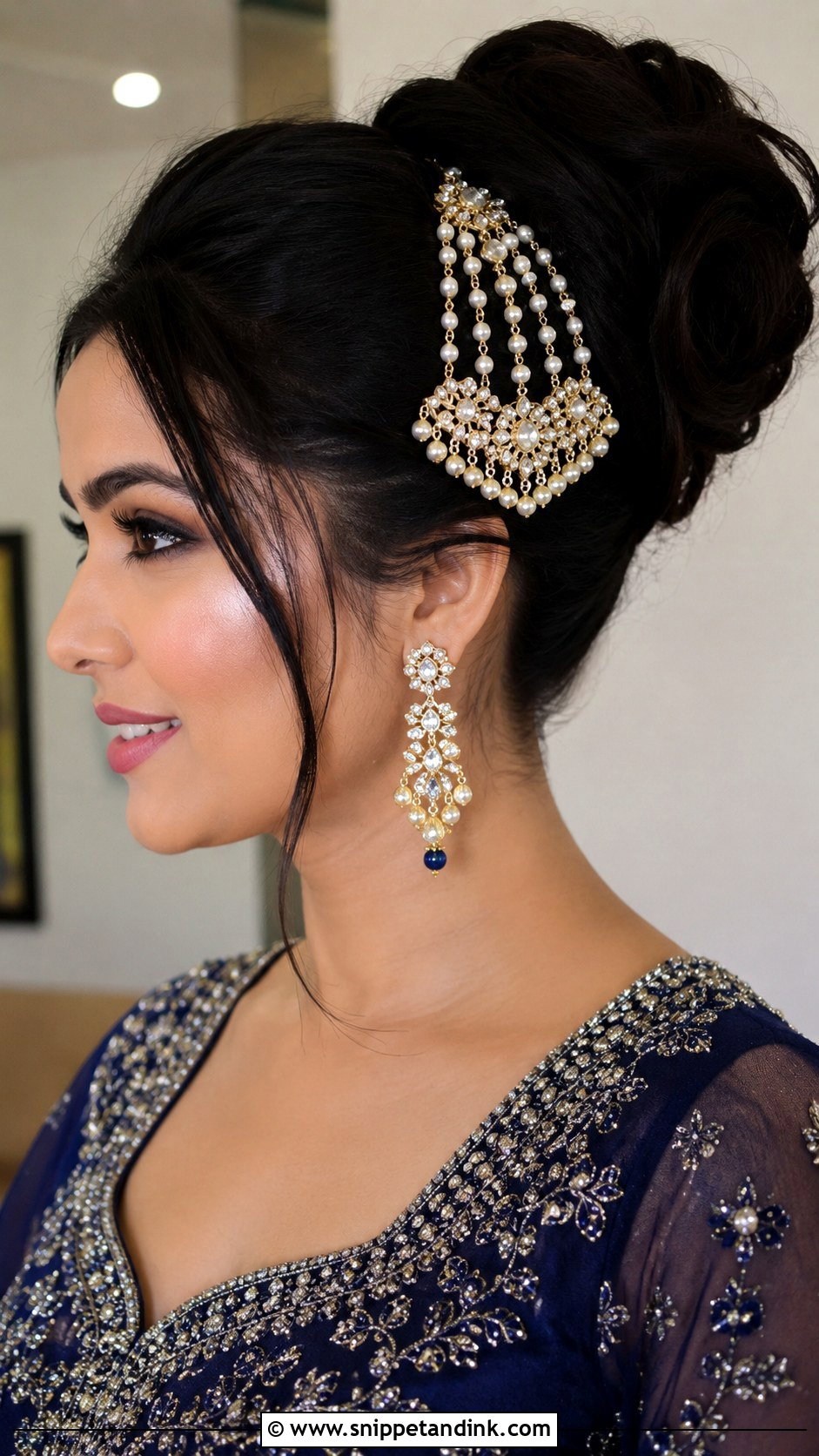
A high bun on the crown adds height and shows off the neck and statement earrings, while a jhoomar on one side adds traditional shimmer. It suits grand reception parties and royal-themed weddings. Thick hair holds this volume best; on finer hair I use padding inside the bun. The jhoomar is heavy and pulls sideways, so I pin it into a small anchor near the bun rather than letting it hang from loose hair. Brides with a long neck carry this well; on a shorter neck, a mid-height bun usually looks more balanced.
19. French Braid Updo
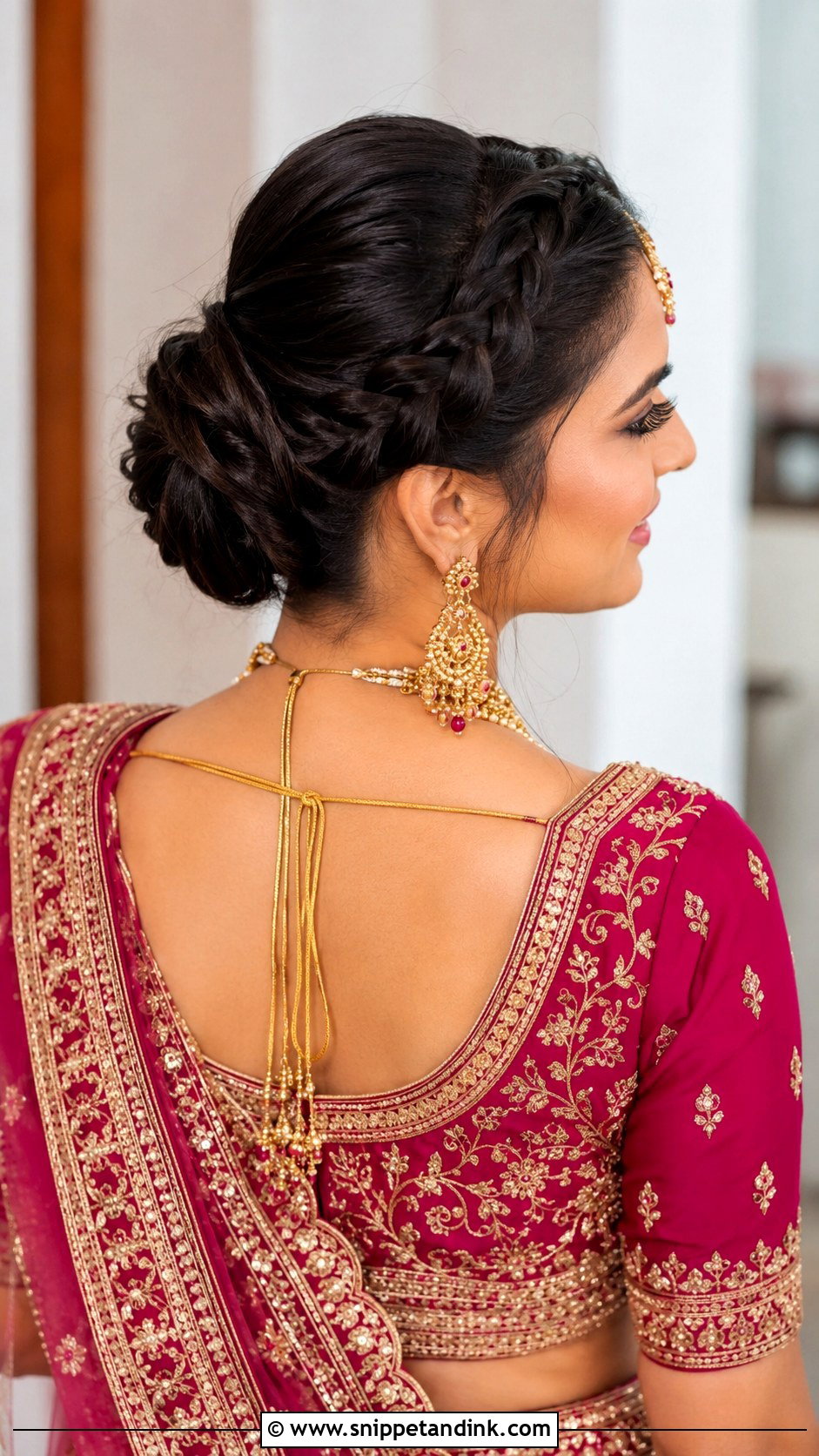
A French braid lies close to the scalp and tucks into a smooth updo at the back, so it stays neat through long ceremonies. A maang tikka or floral pins add a traditional touch. It suits traditional and modern weddings and adds a little texture to the updo. I’d recommend it for a bride who doesn’t want to worry about her hair all day. Because the braid grips the scalp, it also gives a reliable base for pinning a dupatta.
20. Curly Hair Half Updo
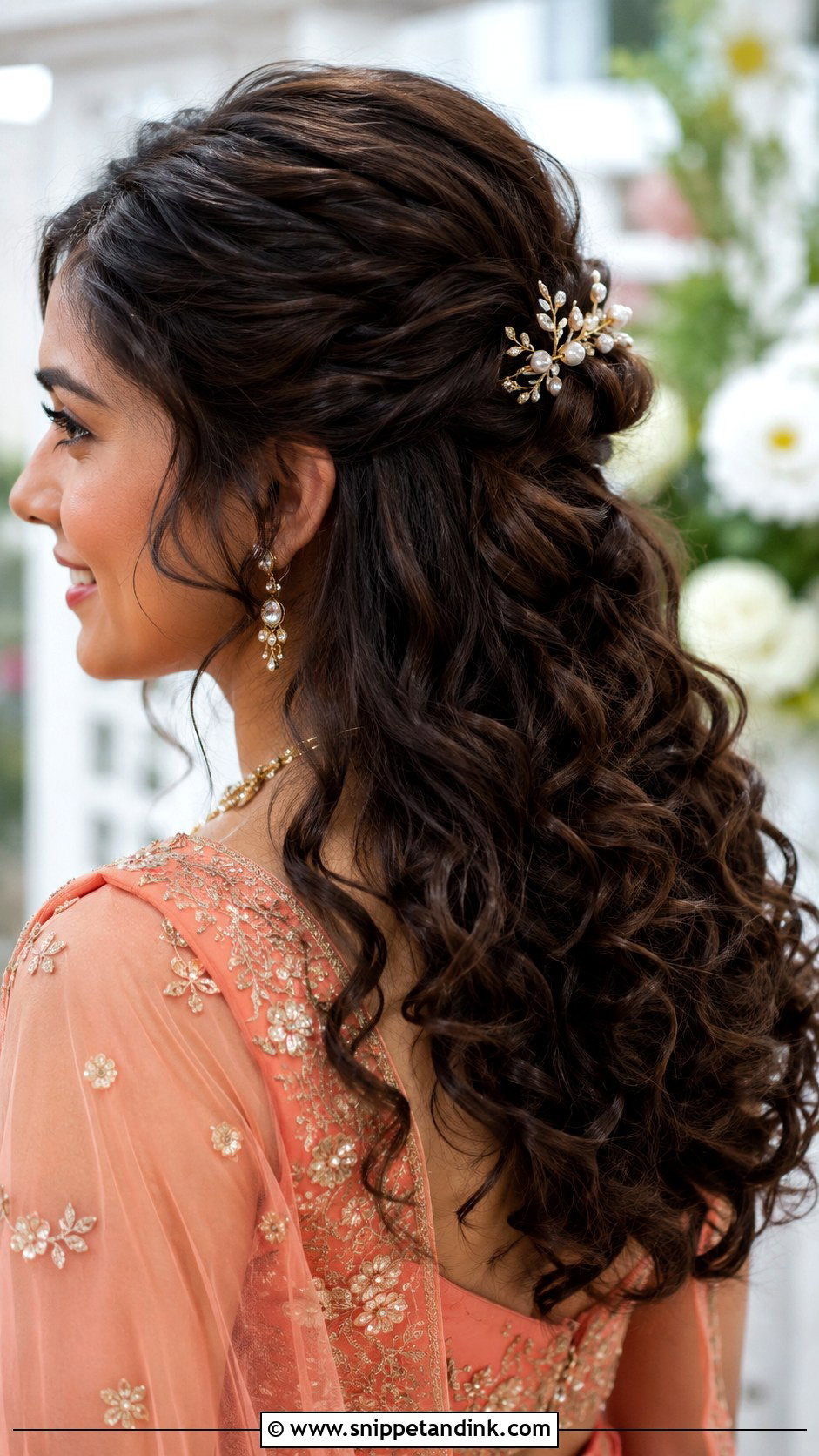
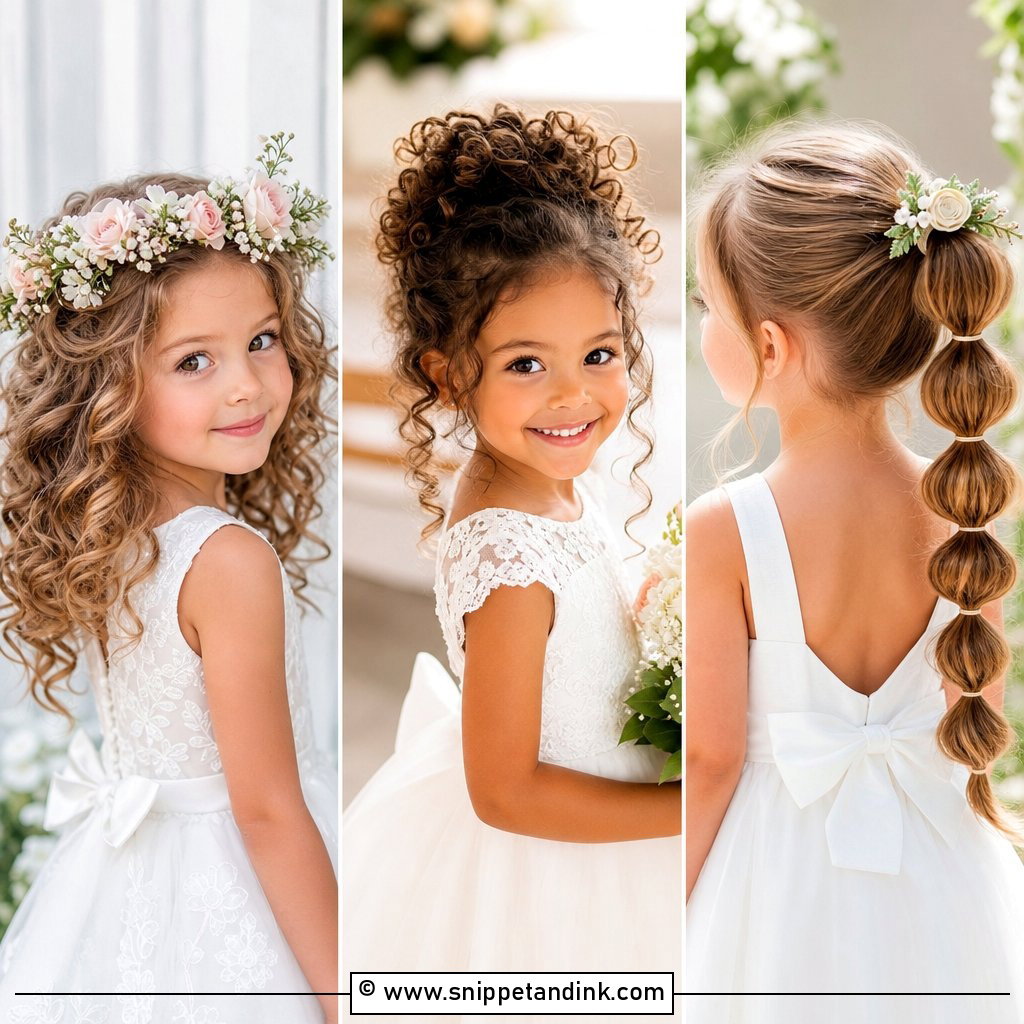
Naturally curly hair doesn’t need to be straightened for a wedding. A half updo pins the top section back and lets the curls fall freely below, keeping your own texture. A jeweled clip or fresh flower adds a bridal touch. It suits the sangeet and reception. I work with curls wet or damp, define them with a cream or gel and let them dry fully before pinning; brushing dry curls turns them into frizz. Bring your usual curl products to the trial, since your hair already knows them.
21. Bun With Hair Vine Accessory
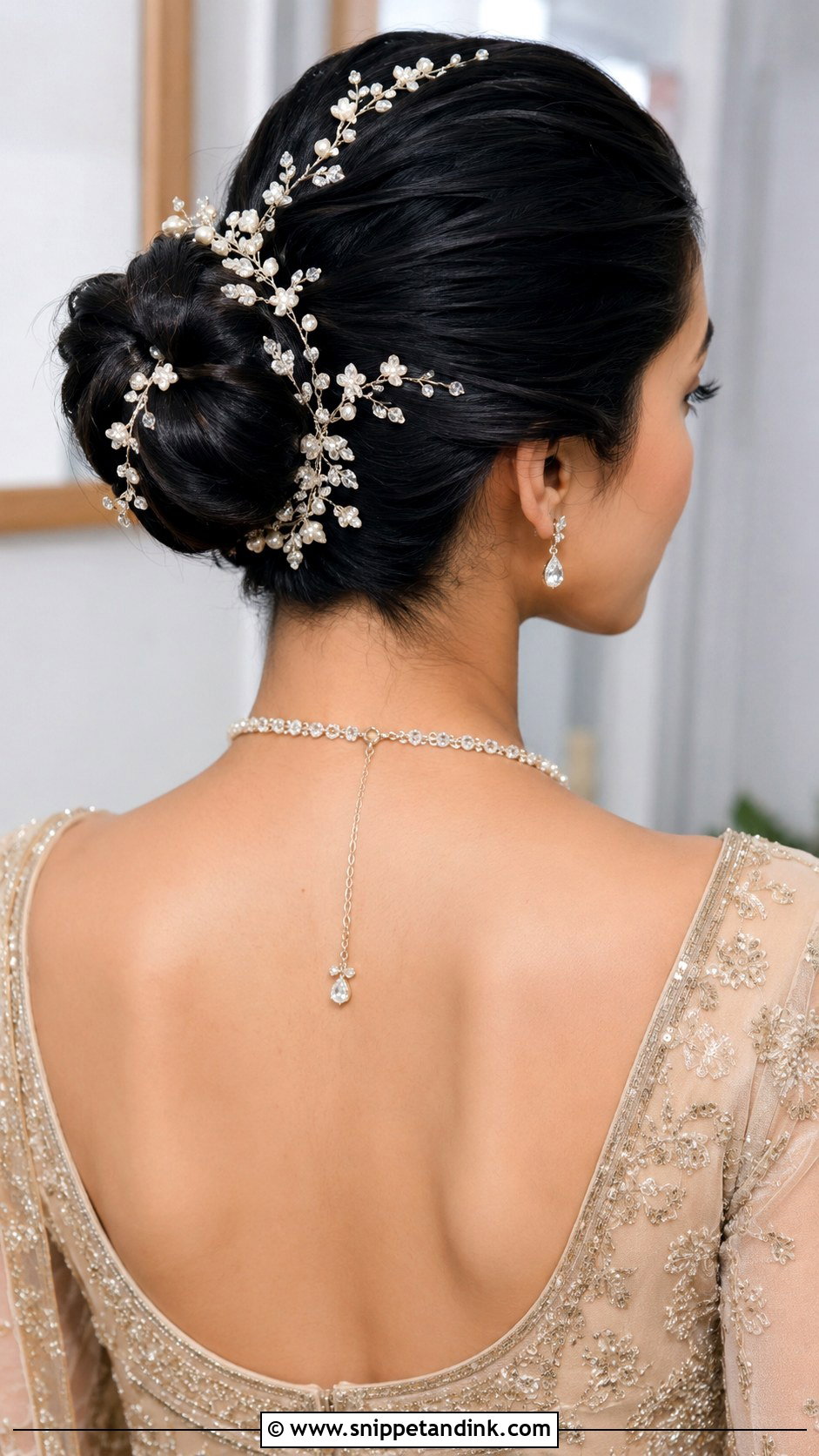
A hair vine is a flexible strand of crystals or pearls on wire, threaded through and around a smooth bun. It catches light from every angle and suits fusion weddings and receptions with minimal jewelry. It works on sleek or slightly textured buns. The wire is the advantage: I can bend it to follow the shape of the bun exactly. The disadvantage is that loose wire ends can scratch, so I tuck them in and check the back of the neck before you leave.
22. Mogra Veni Braid
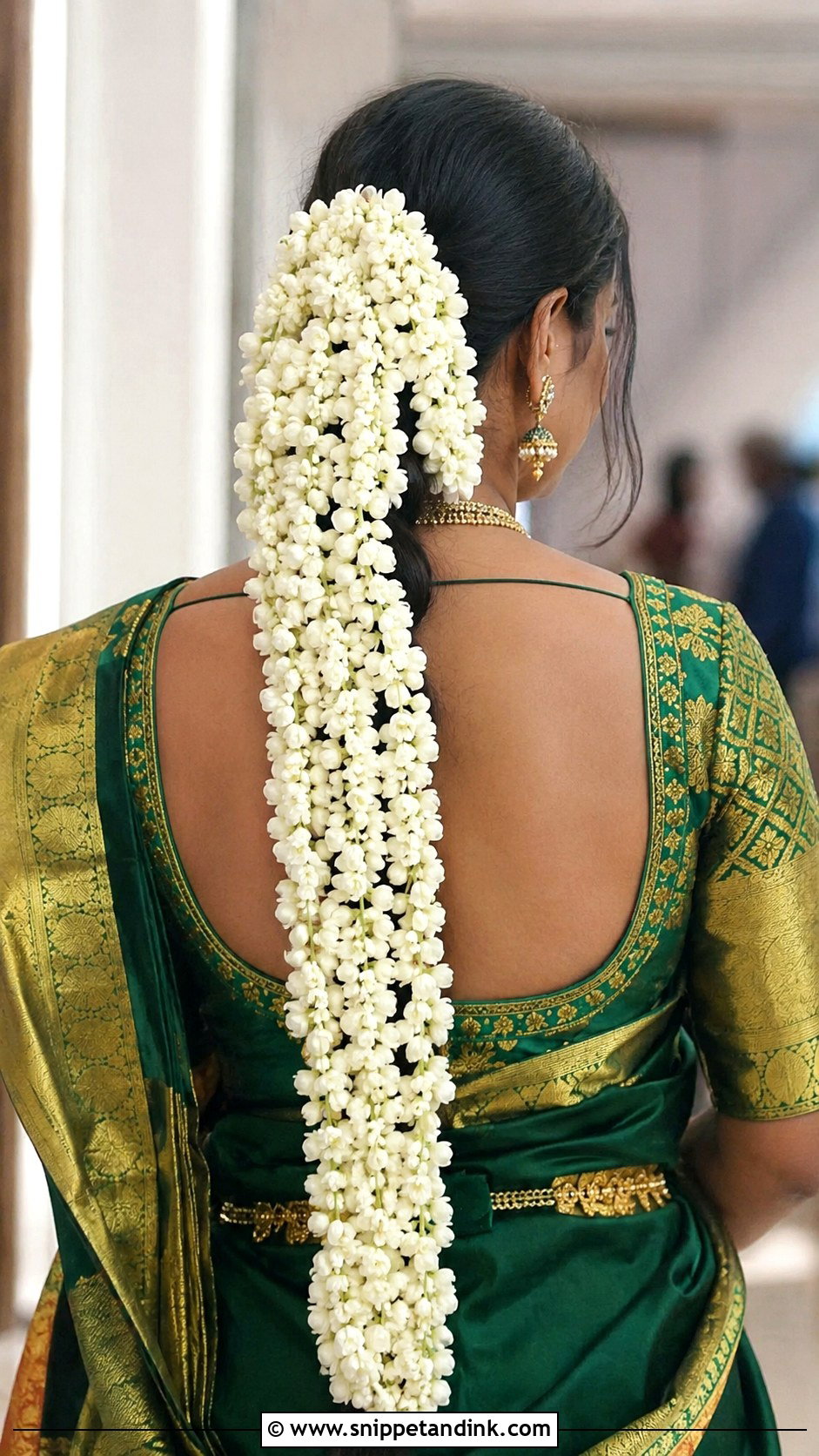
The mogra veni is a long braid dressed with a continuous string of jasmine along its full length, a long-standing favorite of Maharashtrian and South Indian brides. The white flowers stand out against dark hair, and the scent lasts through the ceremony. It pairs with silk sarees and temple jewelry at daytime and traditional functions. The veni string is stitched or pinned to the braid at several points so it follows the plait instead of hanging loose. For a bride honoring regional custom, the mogra veni braid is hard to improve on.
23. Twisted Side Bun
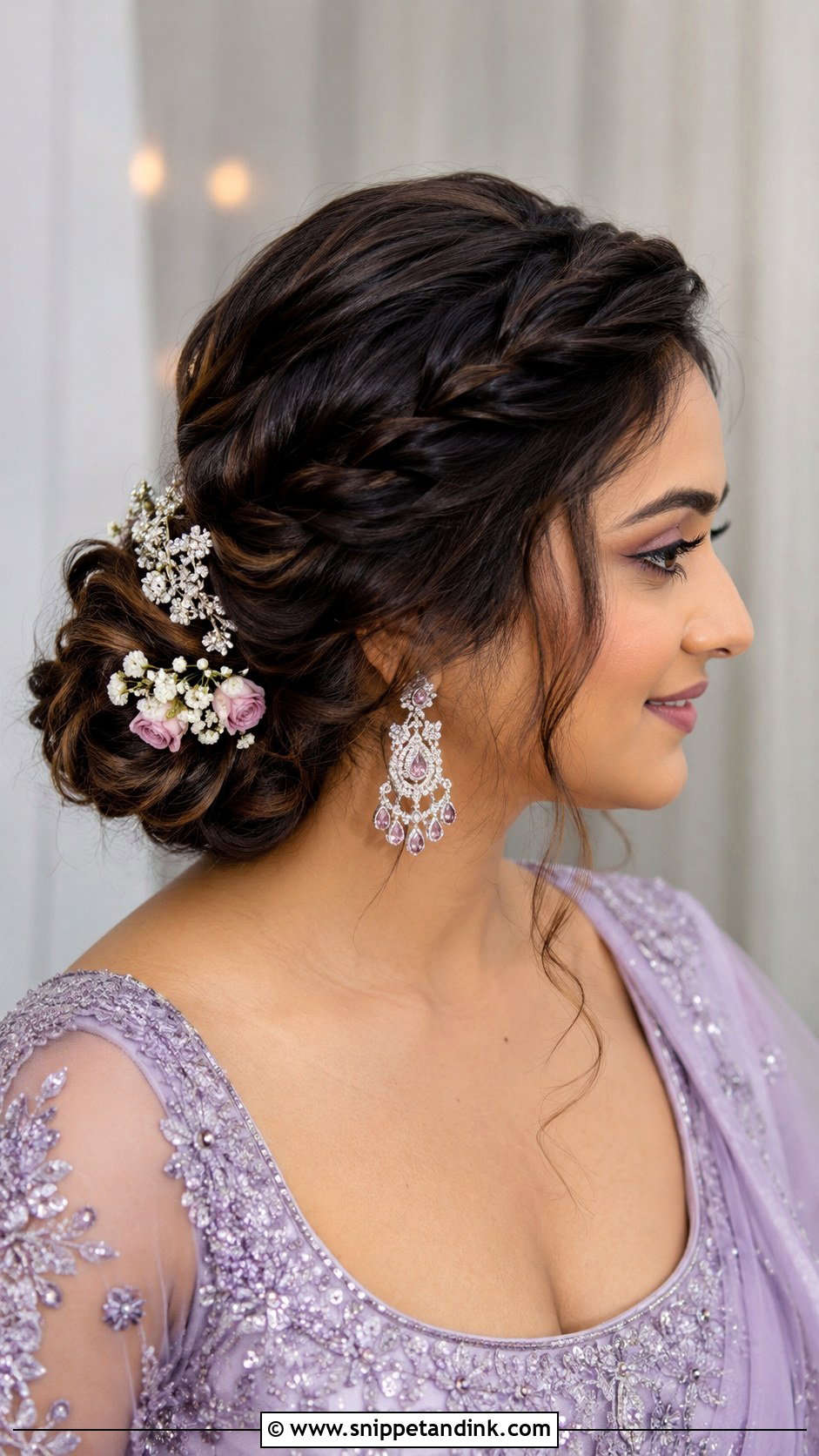
A twisted side bun gathers twisted sections into a low bun on one side of the neck. Fresh flowers or a decorative pin on the opposite side balances it. It suits receptions and engagement ceremonies and shows off the neckline and earrings. Medium to long hair with some texture works best. A side bun puts weight on one side, so if you’ll be wearing a heavy dupatta, I place the bun slightly lower and closer to the center so the dupatta doesn’t push it out of shape.
24. Braided Bun With Fresh Flowers
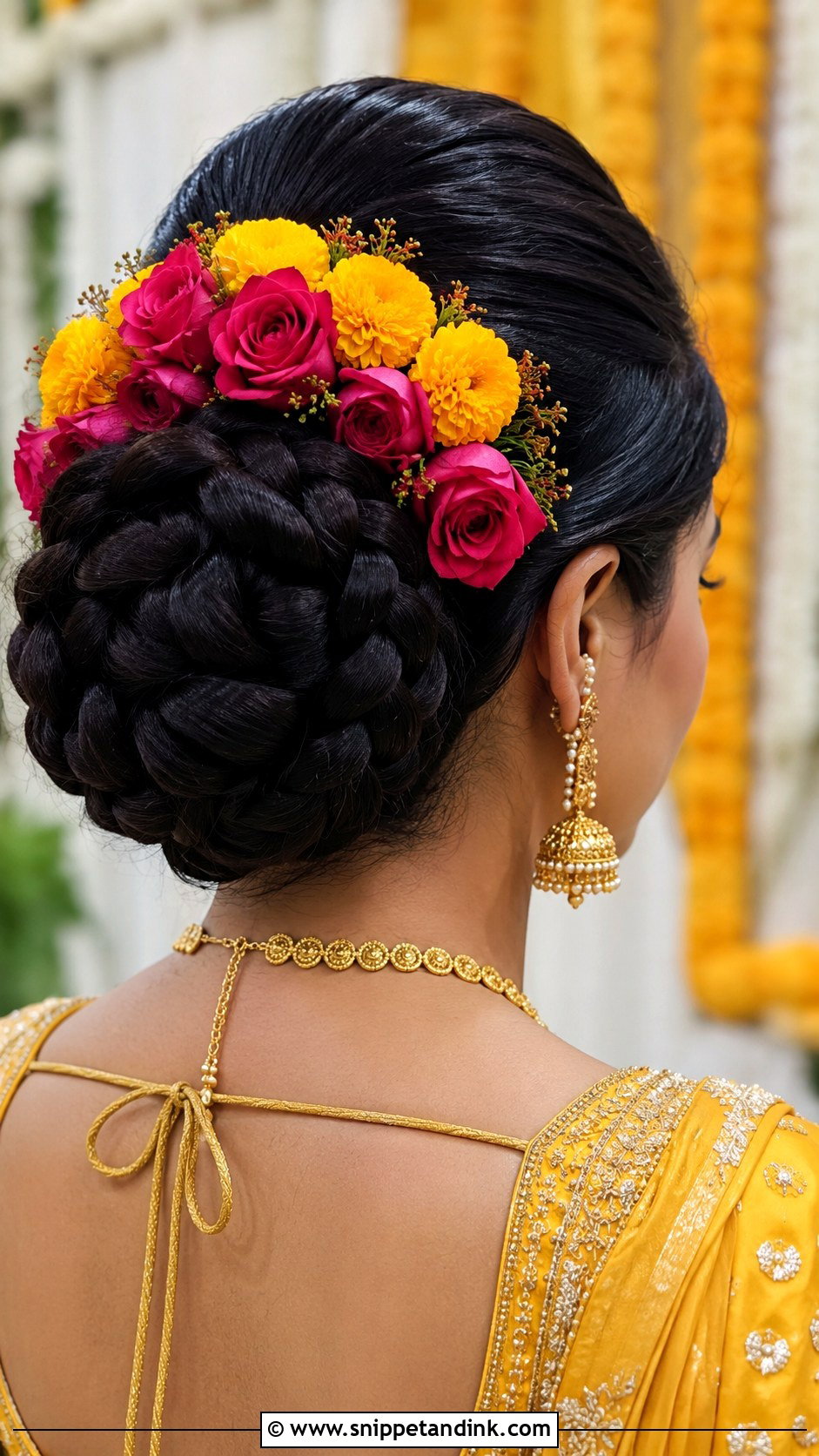
A braid coiled into a tidy bun and topped with fresh flowers suits haldi, mehndi and morning mandap ceremonies. The braid adds structure and the flowers bring color, whether marigolds, roses or jasmine. I’d choose marigolds for a haldi outfit; they’re sturdy and their orange suits the yellow fabrics. Pin the flowers last, after any hairspray, since spray can spot the petals. This is a forgiving style for a bride with medium-length hair.
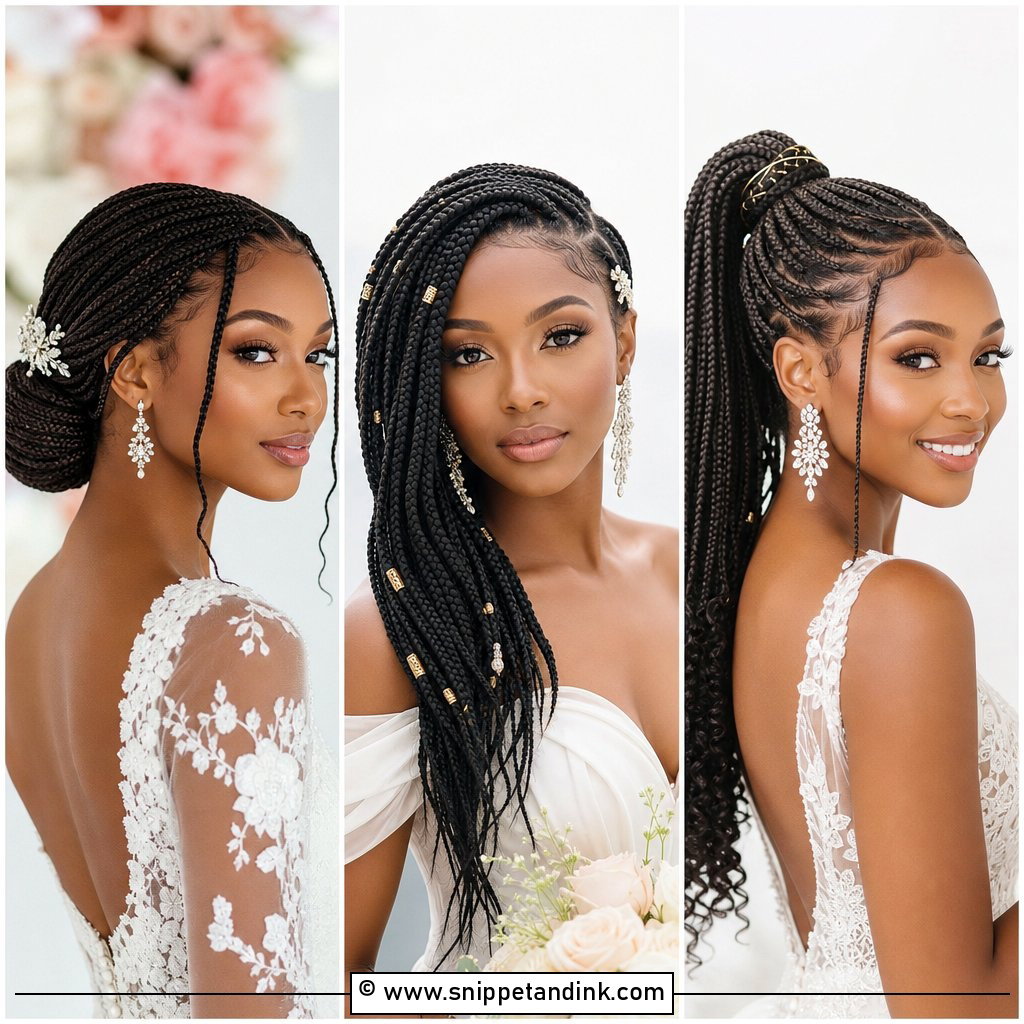
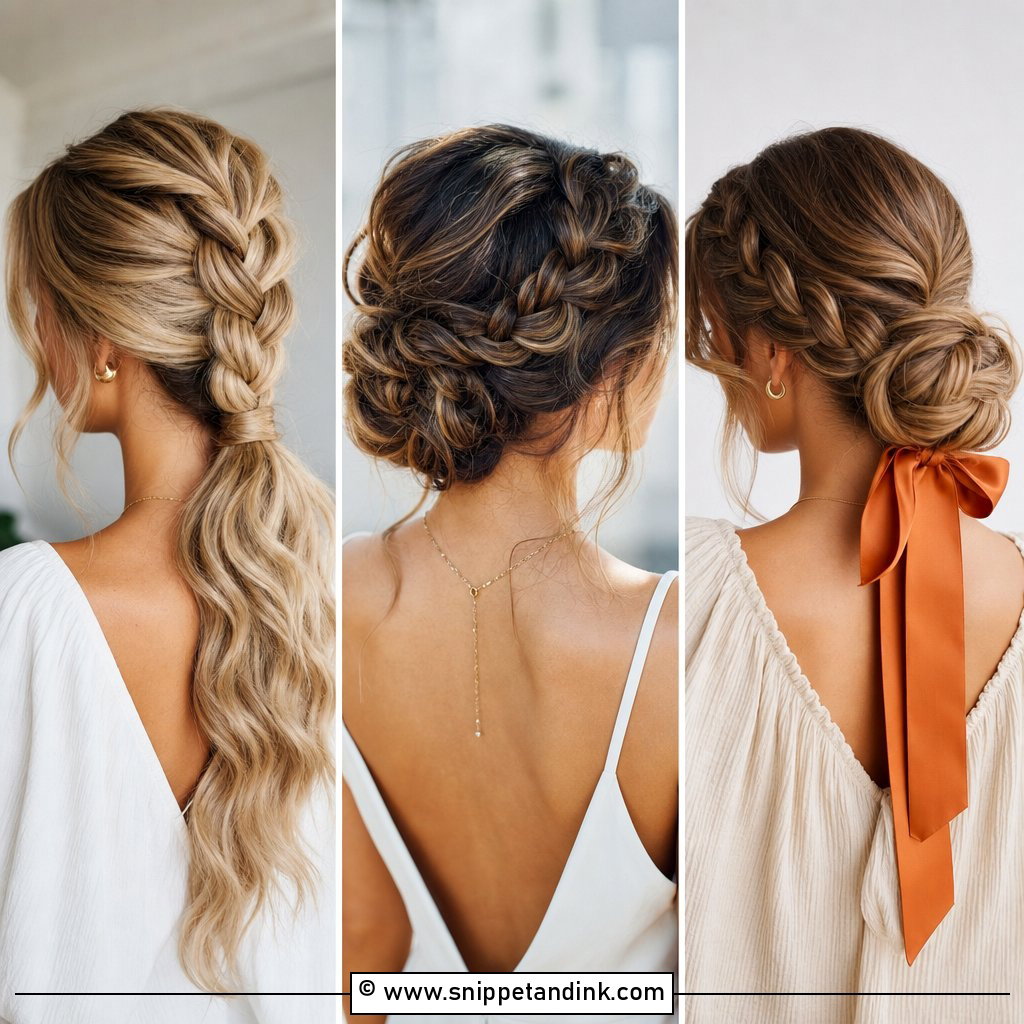
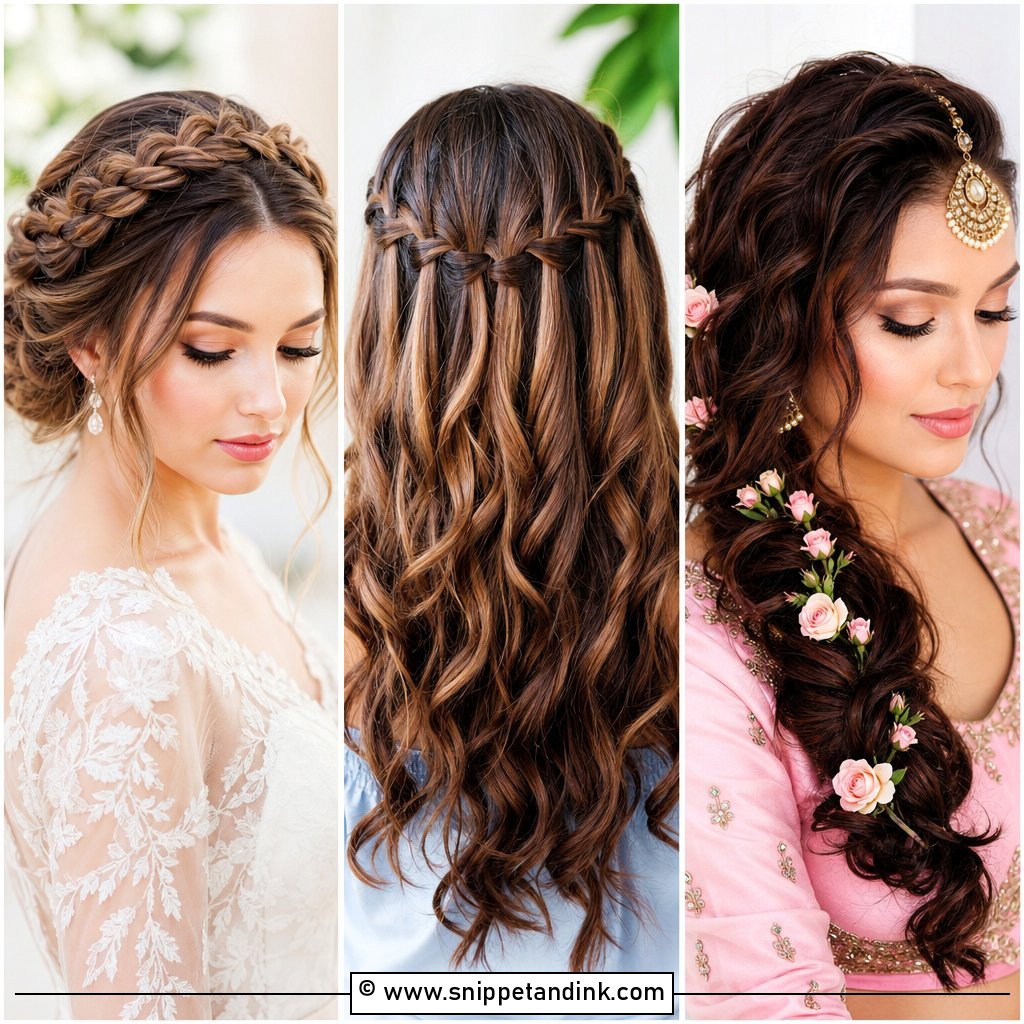
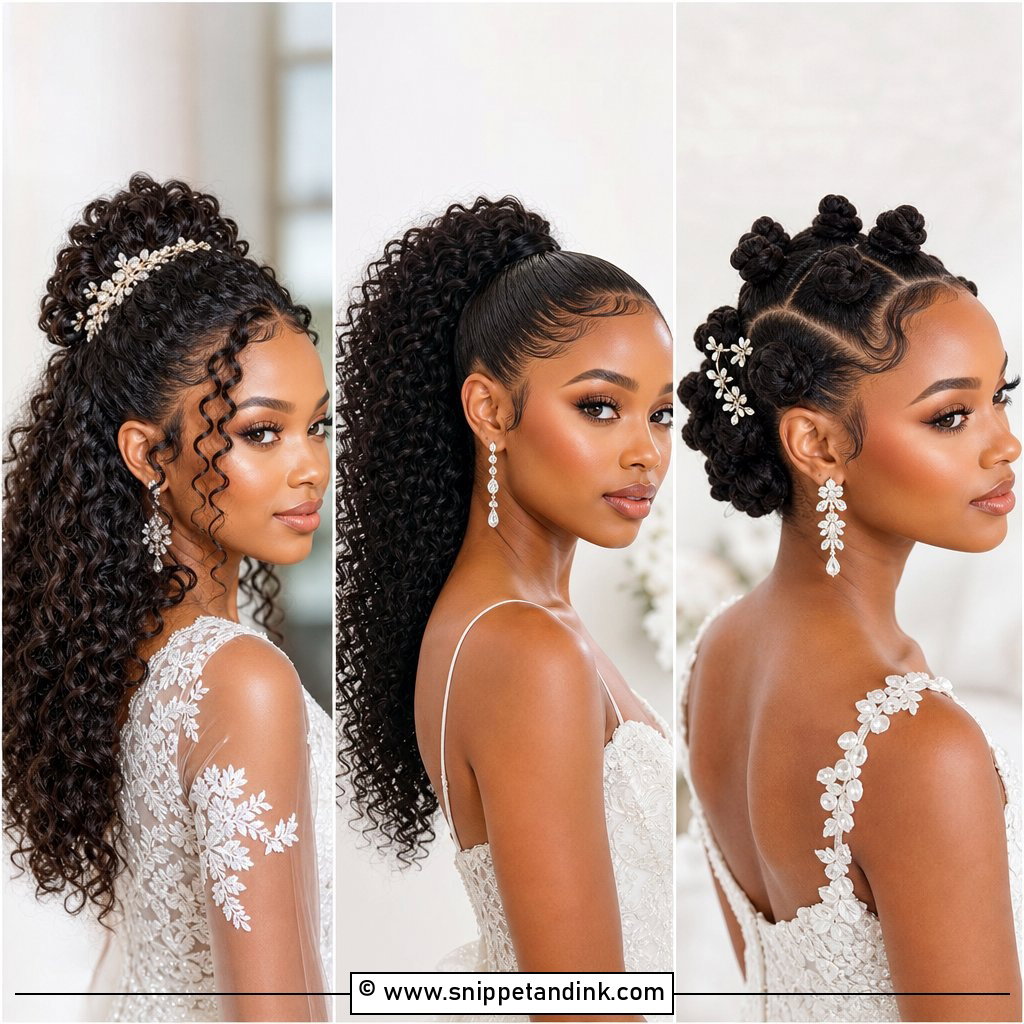
25. Sleek Straight Hair With Maang Tikka
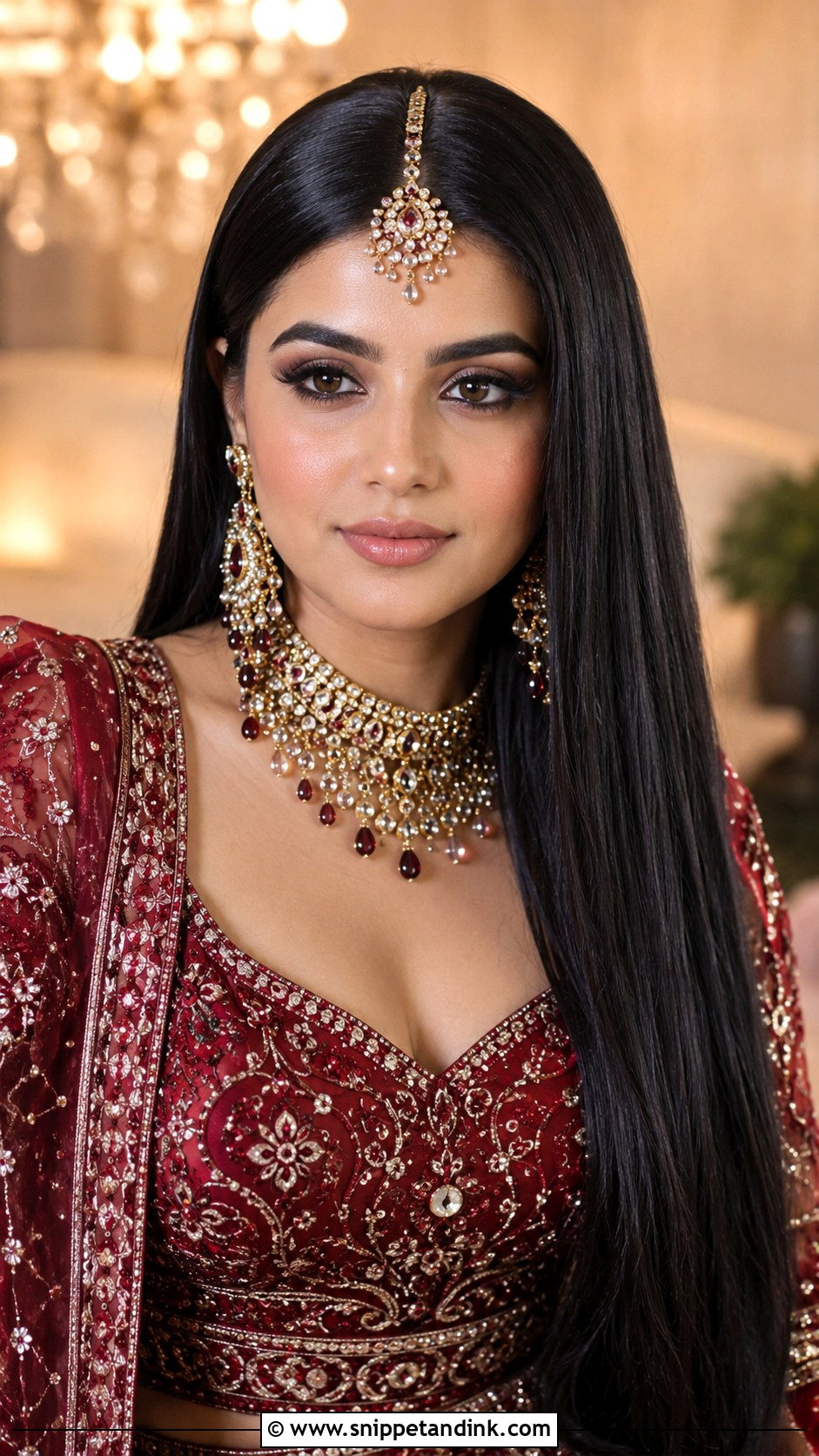
Naturally straight, healthy hair looks modern and clean worn sleek and open, parted in the center with a statement maang tikka. The polished finish puts the focus on the face and jewelry and suits fusion weddings and receptions. It needs good length and shine to look intentional rather than undone. I flat-iron at a moderate heat and finish with a light shine spray; too much serum makes straight hair look greasy in flash photos by the evening.
Why I Ask Brides to Skip Keratin Before the Wedding
The hair care you do in the months before the wedding affects how well your hair holds a style on the day. The most common problem I see is a keratin or smoothing treatment done shortly before the wedding. It makes hair glossy and manageable, but also so slippery that curls drop and pins slide out. If you want one, do it well in advance, and tell your stylist so she can plan extra texture prep.
A rough timeline that works for most hair
- Several months out: decide if you will grow your hair or add extensions. Hair grows slowly, roughly half an inch a month, so a big length change isn’t realistic in a few weeks.
- Three to four weeks out: a trim to remove split ends. Cutting any closer to the date risks layers that haven’t settled.
- Two weeks out: any color touch-up, so the tone has softened by the wedding and the hair has had time to recover.
- The night before: if you oil your hair, wash it out thoroughly the next morning or the evening before. Oiled hair won’t hold curls or pins.
Start With Your Family’s Rituals, Then Pick the Style
Your hairstyle carries your heritage as well as your taste. From the Rani Jhoomar braid to gajra buns and sleek ponytails, there’s a style for every ceremony and hair type here. A South Indian braid honors one tradition, soft waves suit a modern reception, and a mogra veni or paranda carries a regional custom of its own. Take the photos you like to your stylist, along with your jewelry and the details of each ritual, and build the look from there. A style that respects both your hair and your family’s customs is the one you’ll be glad you chose.
You'll Like These Ideas:





Leave a Reply