
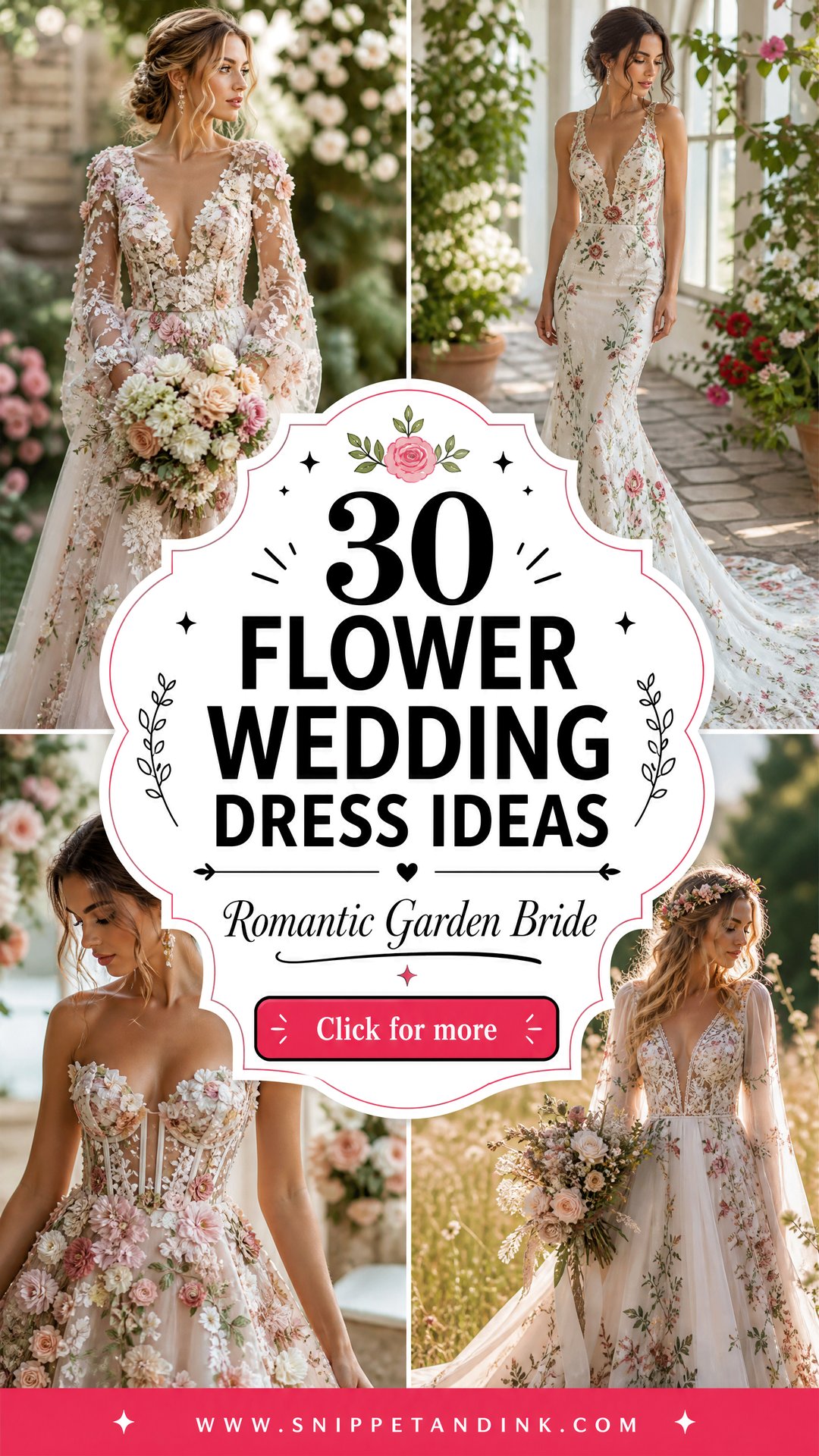
Flowers on a wedding dress can mean almost anything, from a few embroidered sprigs you only notice up close to sculpted petals that stand off the skirt. I’ve grouped thirty versions here, from barely-there lace blooms to bold 3D appliqué, watercolor prints, floral sleeves and short dresses for a courthouse or a reception change. Most of them travel well between venues. What decides whether a floral gown works is everything around it: the veil, the shoes, the bouquet and the jewelry either give the flowers room or crowd them out, so I’ve noted how I’d style each one.
Sizing the Flowers to Your Frame and to the Room
The first thing I look at with a floral gown is scale. Small embroidered sprigs read as texture from across a room and only show as flowers up close, while large appliqué blooms are visible from the back row. Neither is better, but they suit different weddings and different bodies.
- Petite frames usually look best with small or medium motifs; a single bloom the size of a dinner plate can swallow the bodice.
- Tall brides and full skirts can carry larger flowers, especially near the hem where they add weight and movement.
- Big venues and long aisles favor bigger, raised flowers, because fine lace flattens into plain white at a distance.
- Small rooms and close-up photography reward delicate embroidery, which looks richer the nearer you stand.
At a try-on, I ask the bride to walk to the far end of the boutique and turn around. If the flowers vanish from that distance and you want them seen at the altar, go bigger or add contrast, such as a blush lining under ivory lace. Also check where the motifs fall on your body. A cluster of raised petals right at the hip widens that point, and a band of flowers at the waist draws the eye there, which some brides want and others don’t.
1. Floral Lace Ball Gown Wedding Dress
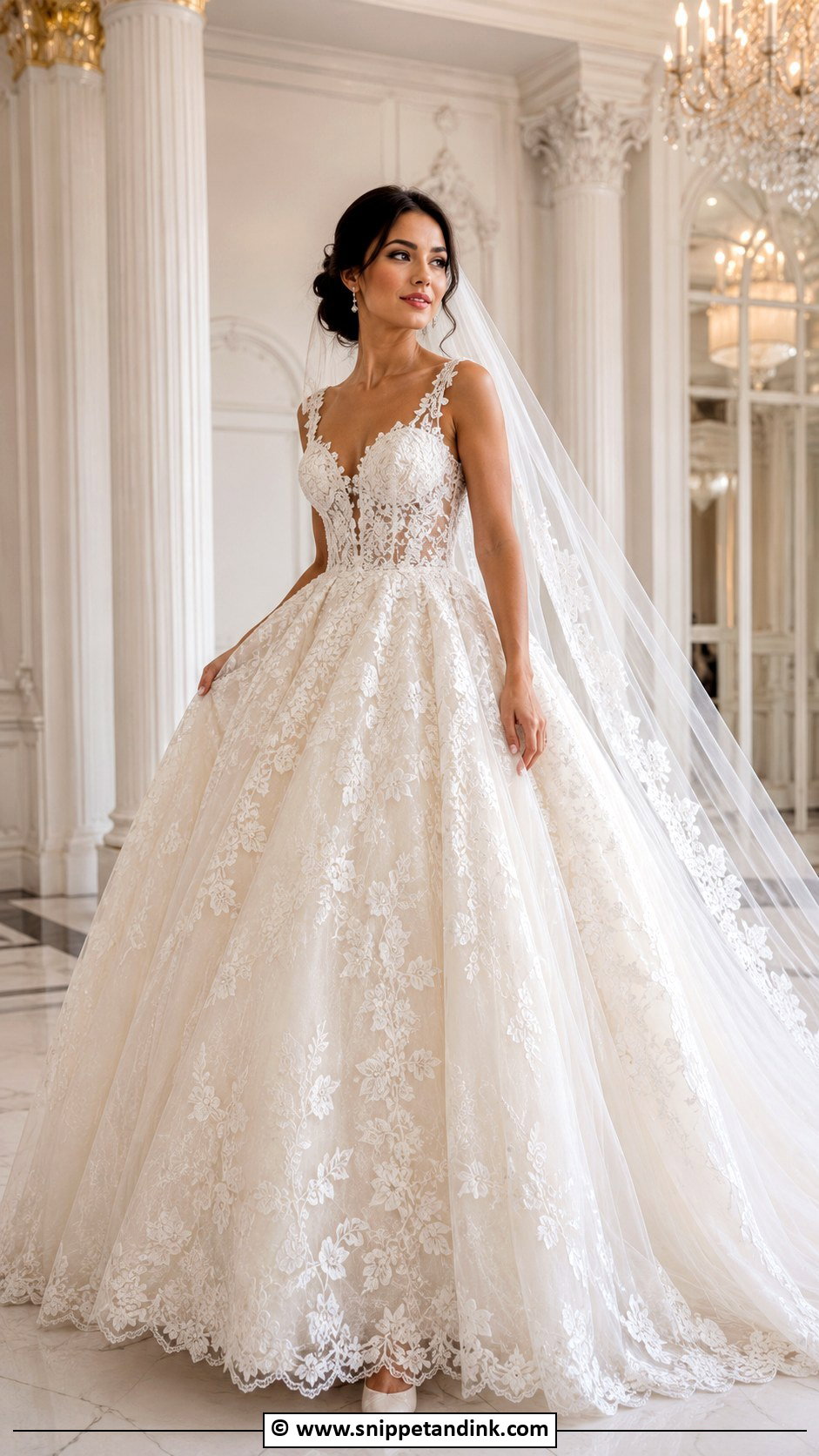
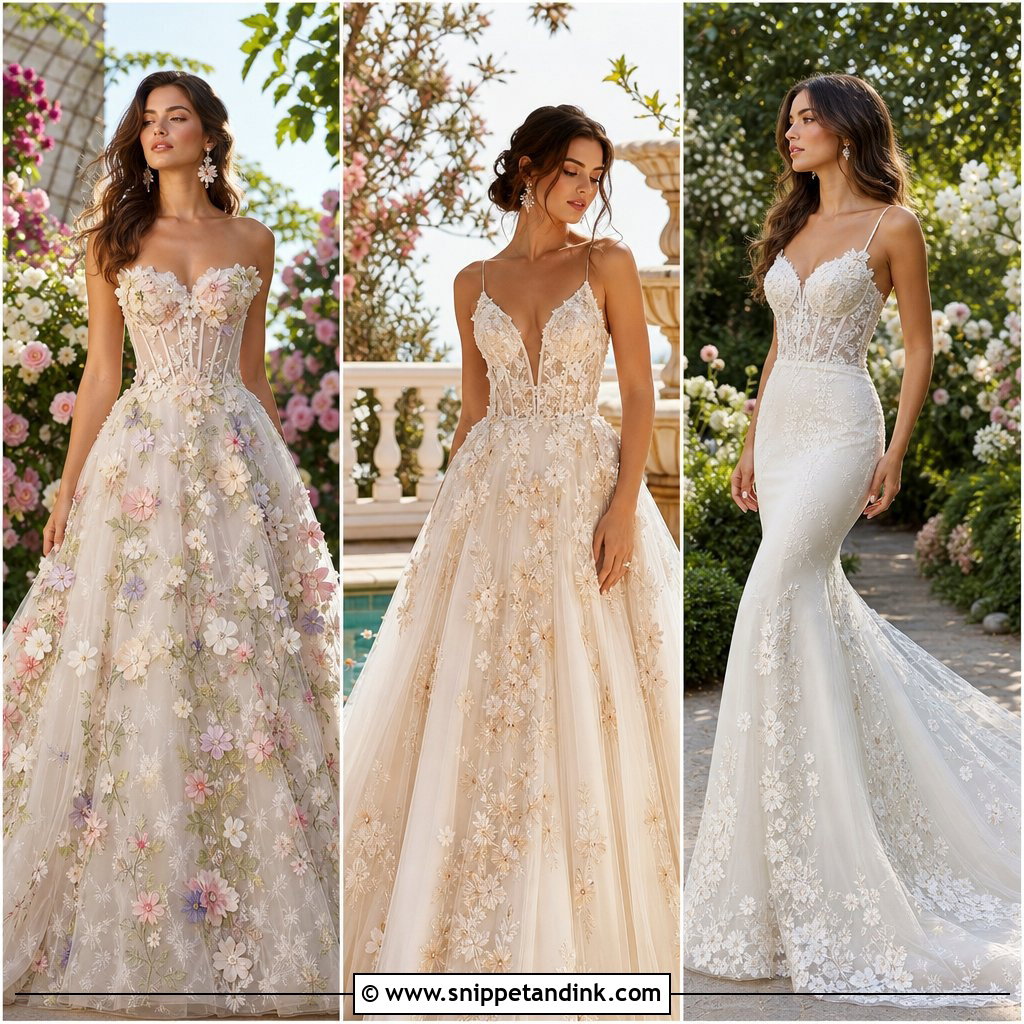
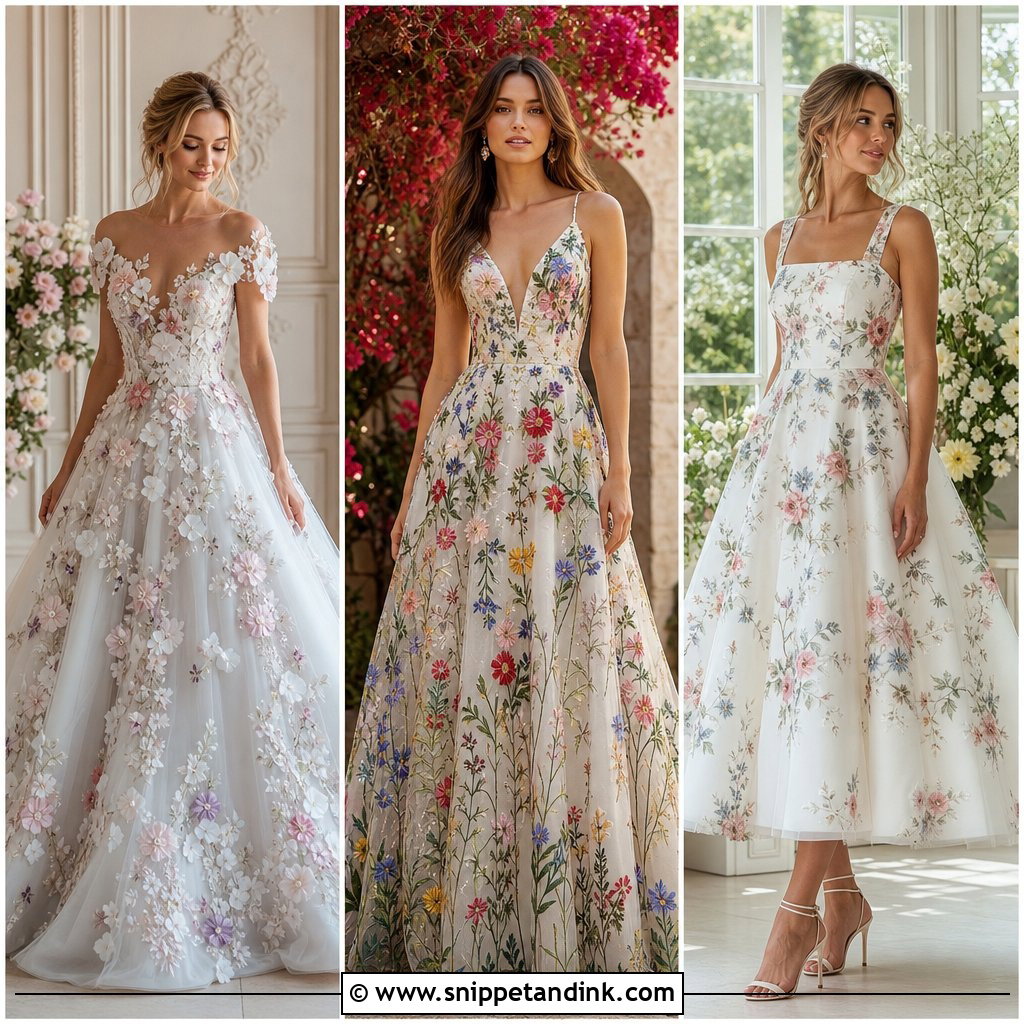
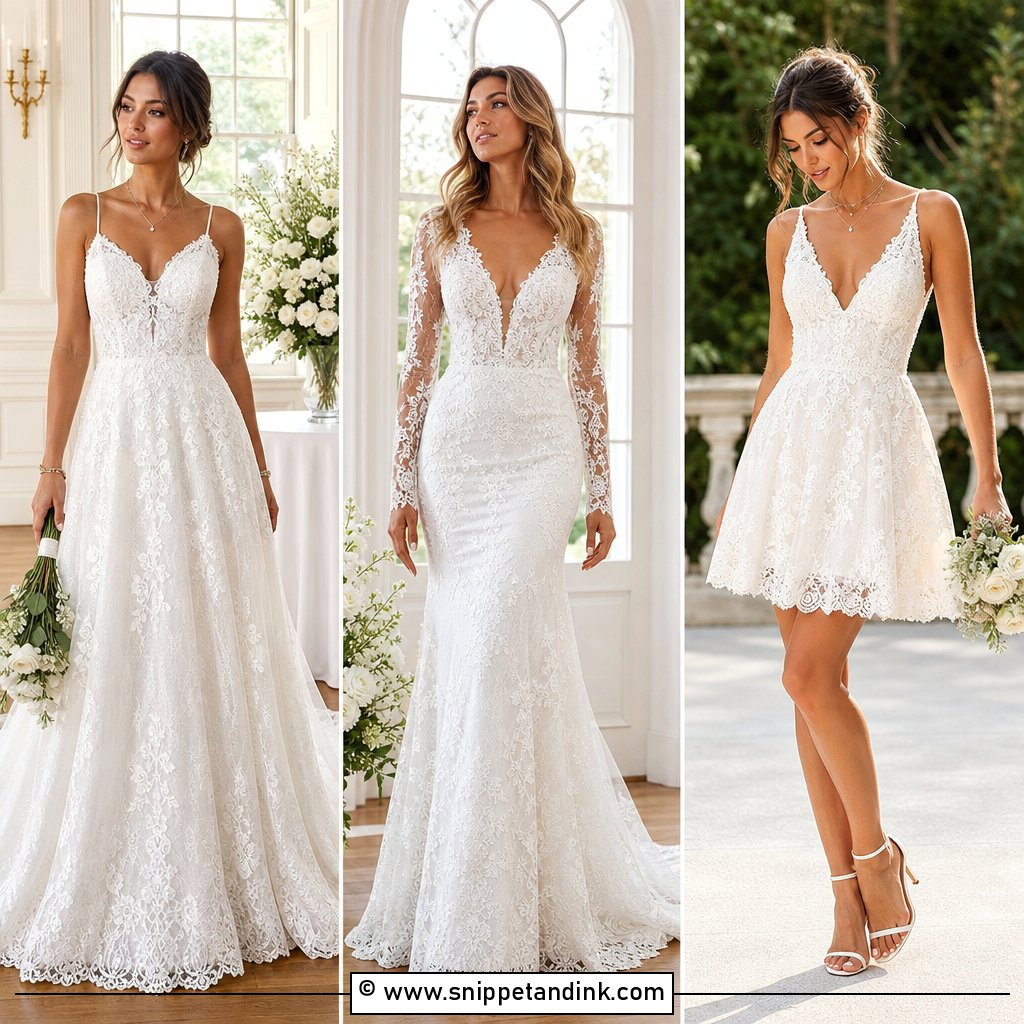
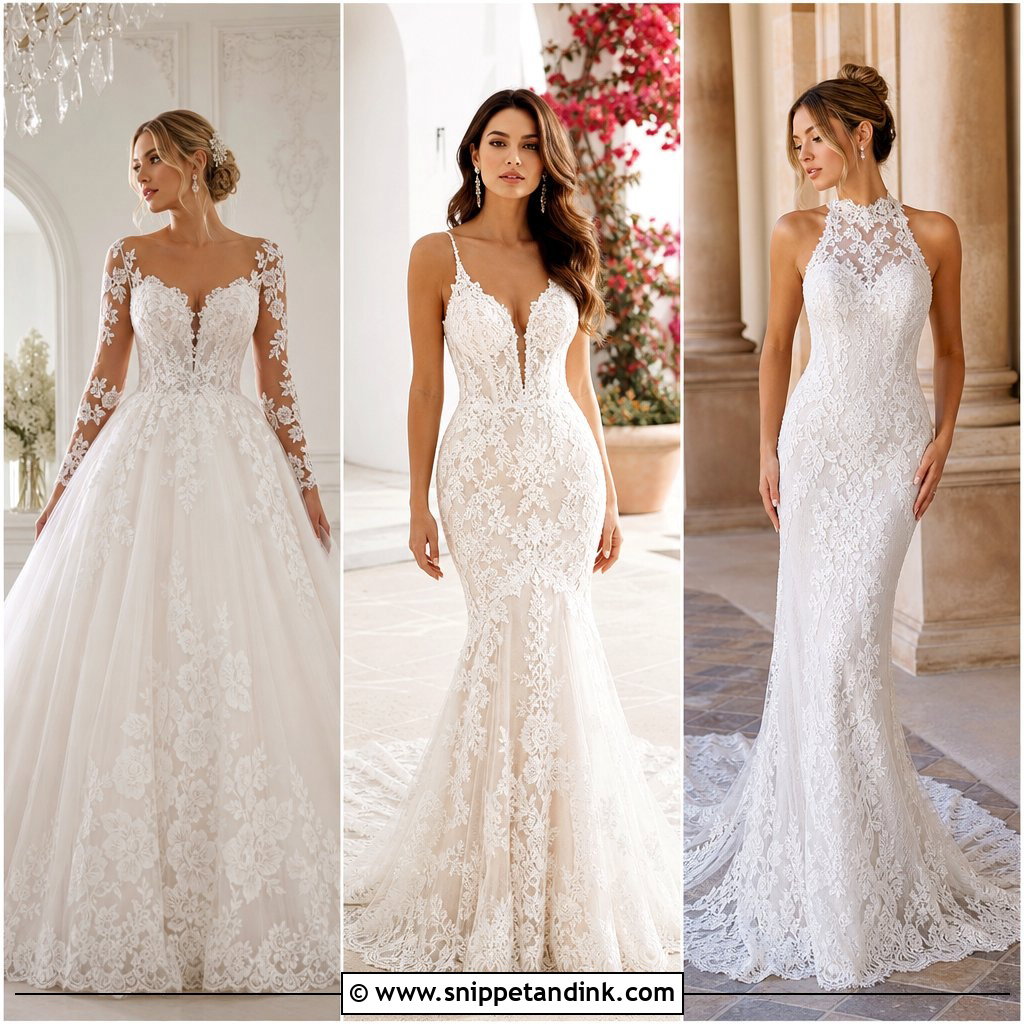
Lace over tulle is the gentlest way to put flowers on a full skirt, because the motifs sit flat and the volume comes from the layers underneath. When I fit one of these, I look at where the lace motifs land on the bodice seams; a good maker matches them so a flower isn’t sliced in half at the side. Pearl drops, a cathedral veil and satin or mesh heels keep it classic, and a round bouquet of roses, ranunculus or peonies balances the width of the skirt. Ballrooms and estate venues suit it best, since the skirt needs floor space.
2. 3D Flower Appliqué Wedding Dress
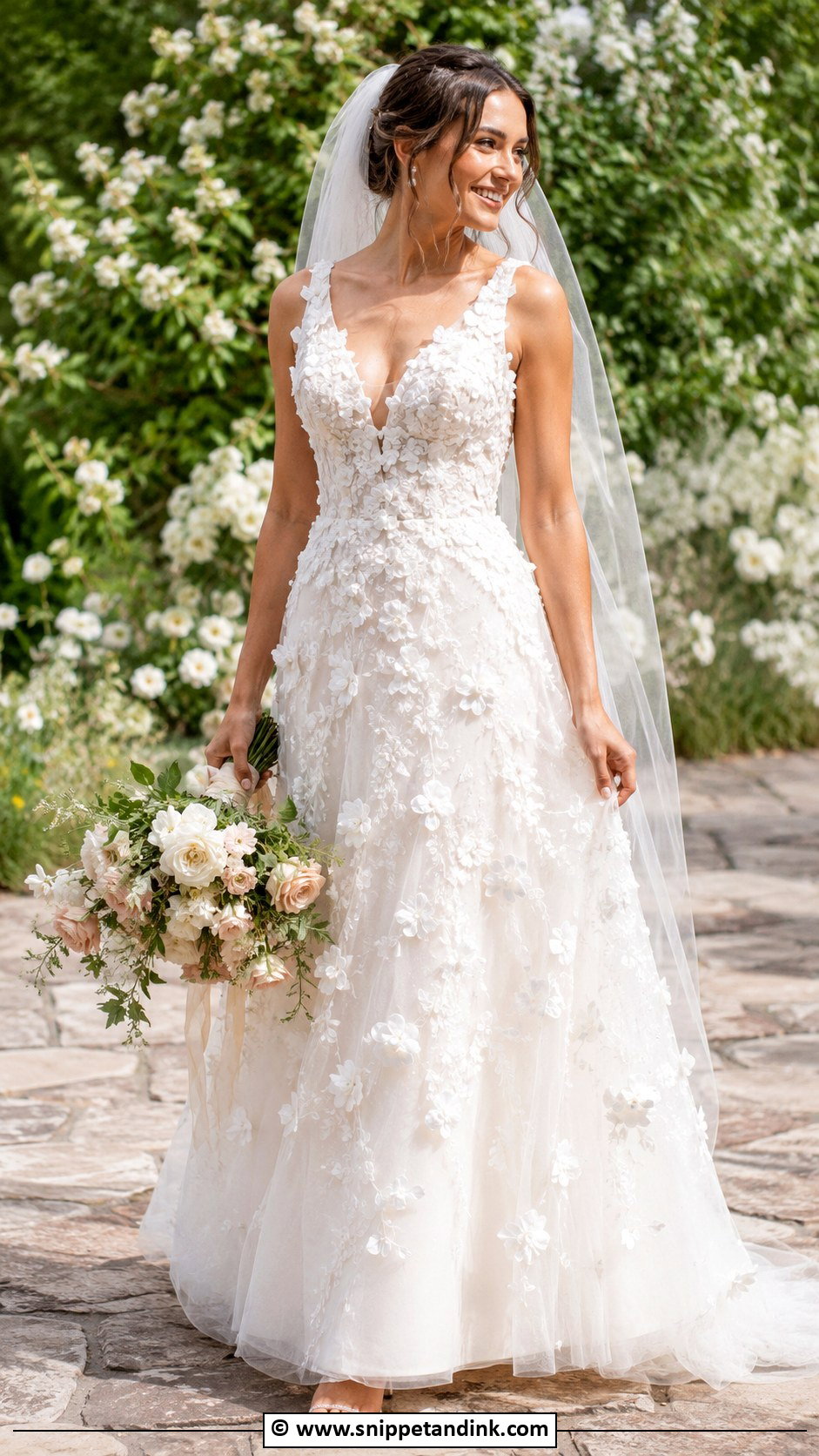
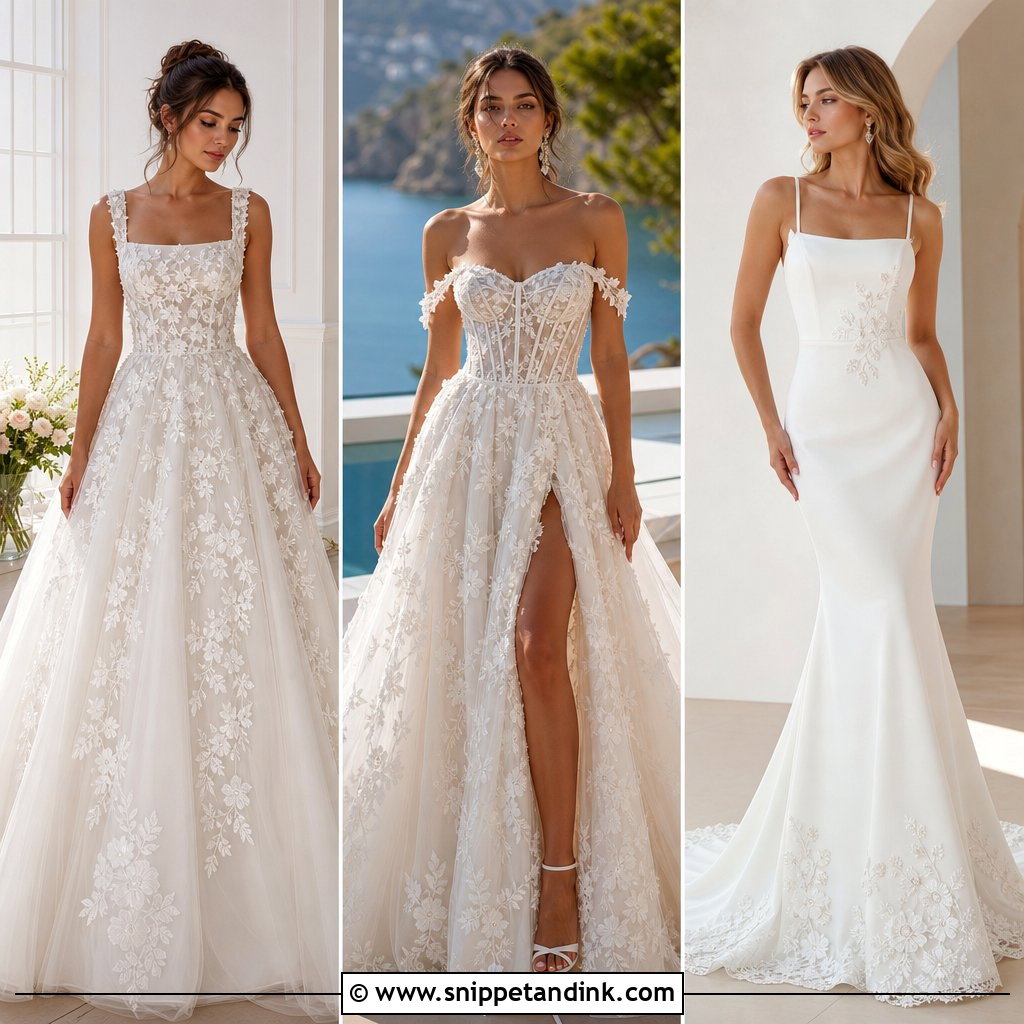
Raised petals catch light and throw small shadows, which is why appliqué reads so clearly in photos while flat lace can disappear. The catch is weight and snagging: dimensional flowers on a skirt will catch on a bouquet wire or a rough chair. I keep the silhouette quiet here, an A-line, sheath or soft flare, and choose a veil with no trim, because two textured surfaces against each other look busy. Spring and garden weddings are where this shape feels most at home.
3. Blush Floral Wedding Dress
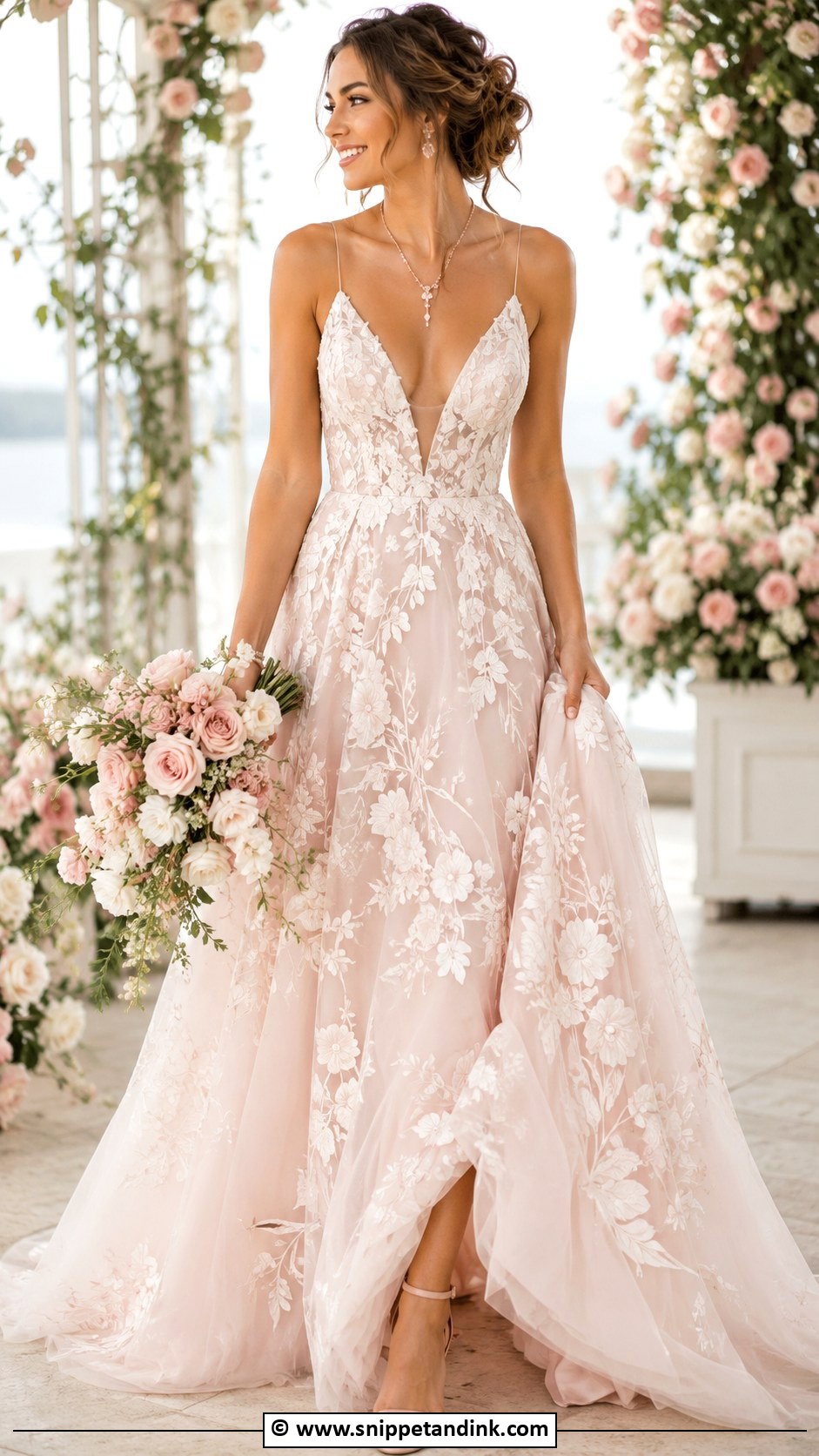
Blush works because the color sits underneath the ivory lace rather than on top, so the flowers outline themselves against the pink lining. Hold the fabric against your face in daylight before you commit; on some skin tones a cool pink washes out, and a champagne or nude lining is safer. I’d add blush heels, rose gold jewelry and a soft pink bouquet, and keep the veil plain. Sunset ceremonies flatter it most, since warm light deepens the blush.
4. Floral Embroidered A-Line Wedding Dress
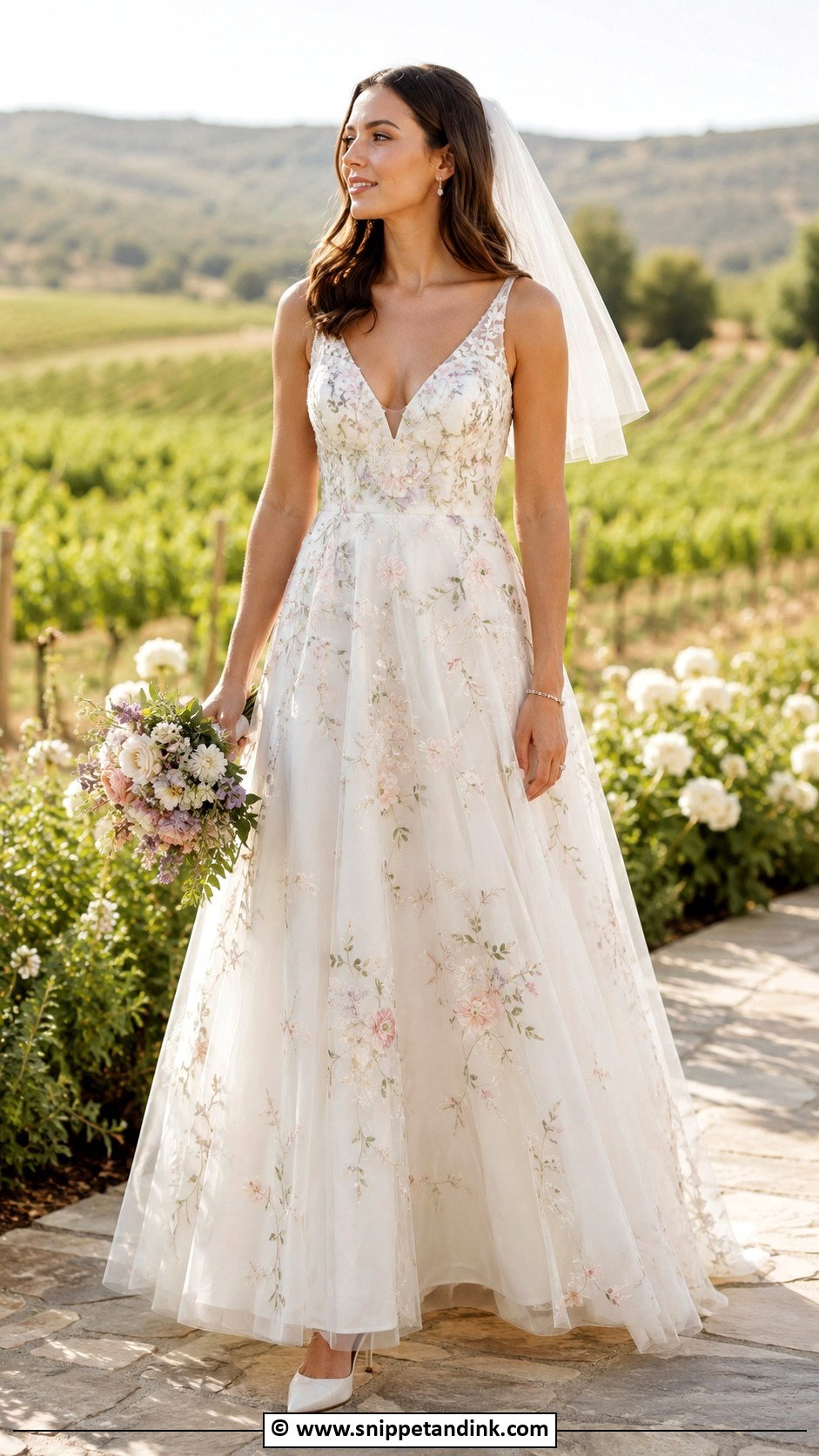
The A-line is the shape I reach for when a bride isn’t sure what she likes yet. It skims the waist and falls away from the hips, so it suits most figures and sits comfortably through a long day. Embroidery in ivory, silver, blush, sage or pale blue can pick up your palette. Pointed heels, a slim bracelet and a medium-length veil finish it, with a hand-tied bouquet in tones close to the thread color. Vineyards and country clubs are natural matches.
5. Floral Tulle Wedding Dress
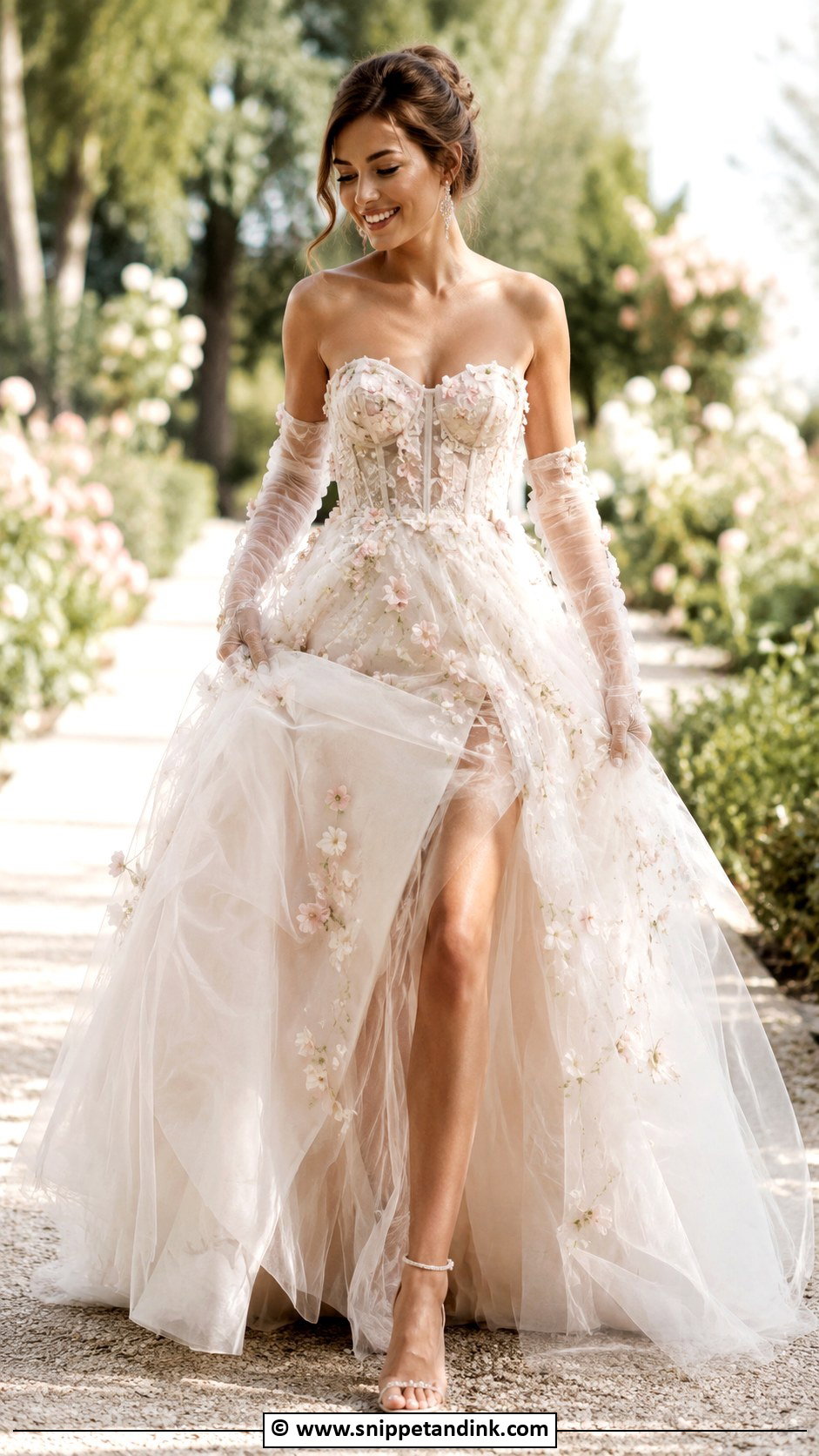
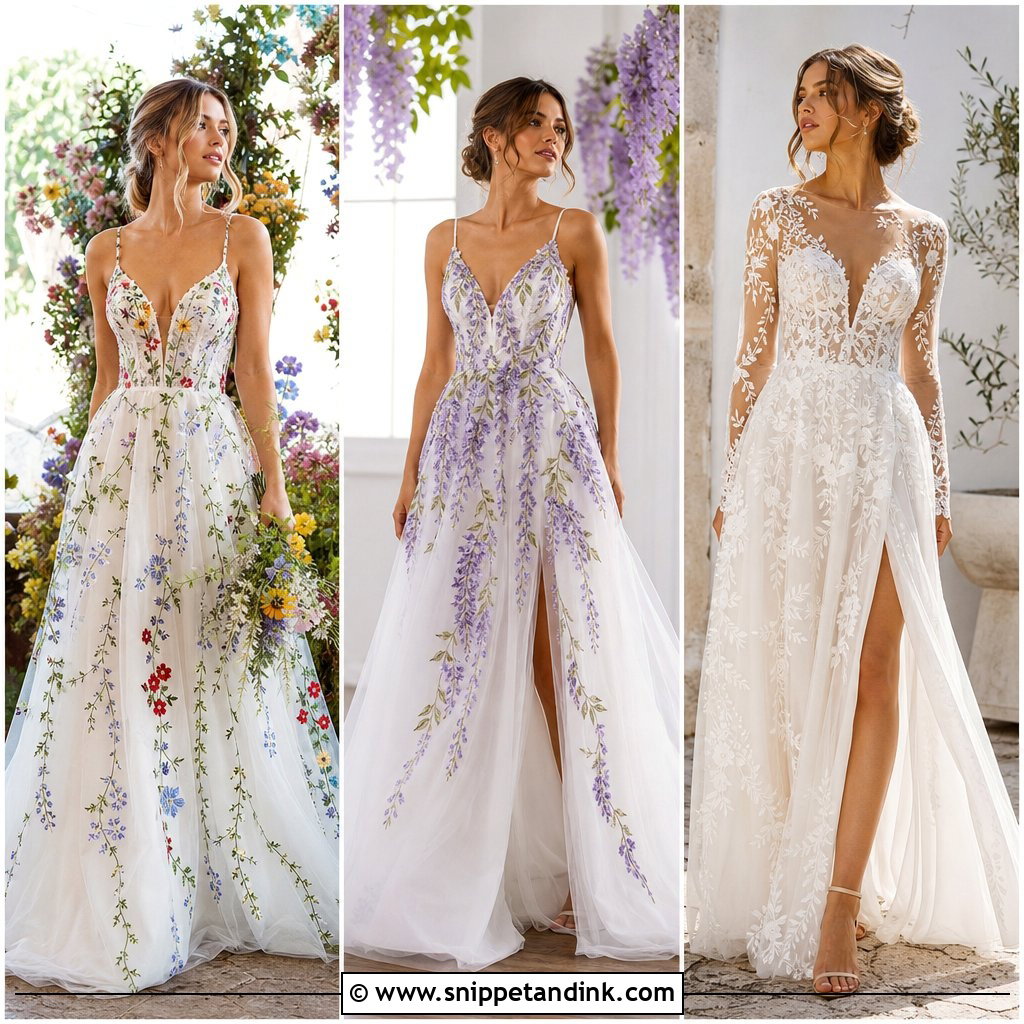
Tulle is so sheer that embroidered vines and scattered petals look like they’re floating. That airiness has a cost: tulle snags on jewelry and Velcro, and it flattens in a humid marquee. A fitted bodice with several skirt layers gives volume without the weight of satin. I’d style it with sheer gloves, crystal earrings and barely-there heels, and a loose bouquet with trailing greenery. Outdoor spring and summer weddings let the skirt move the way it should.
6. Floral Off Shoulder Wedding Dress
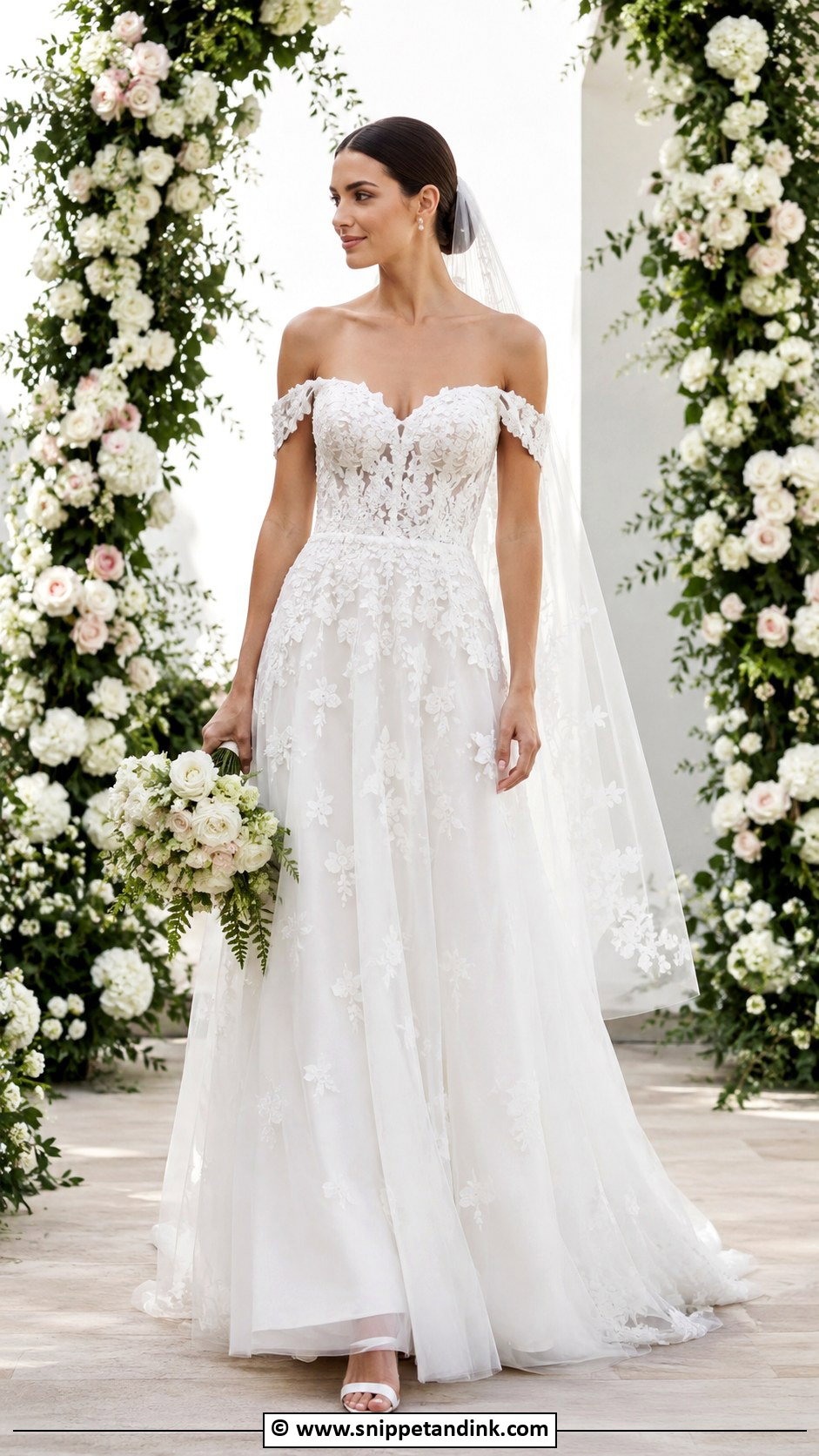
Before anything else, I check how an off-shoulder neckline behaves when the bride lifts her arms to hug someone. If the band rides up, it needs a hidden silicone grip or a slightly firmer fit at alterations. The bare shoulders look best with lace sleeves dropped below them or appliqué straps. A mermaid skirt suits a glamorous room; an A-line feels softer outdoors. Pearl studs, a low bun and a fingertip veil finish it, and skip the necklace because the neckline already frames the face.
7. Floral Long Sleeve Wedding Dress
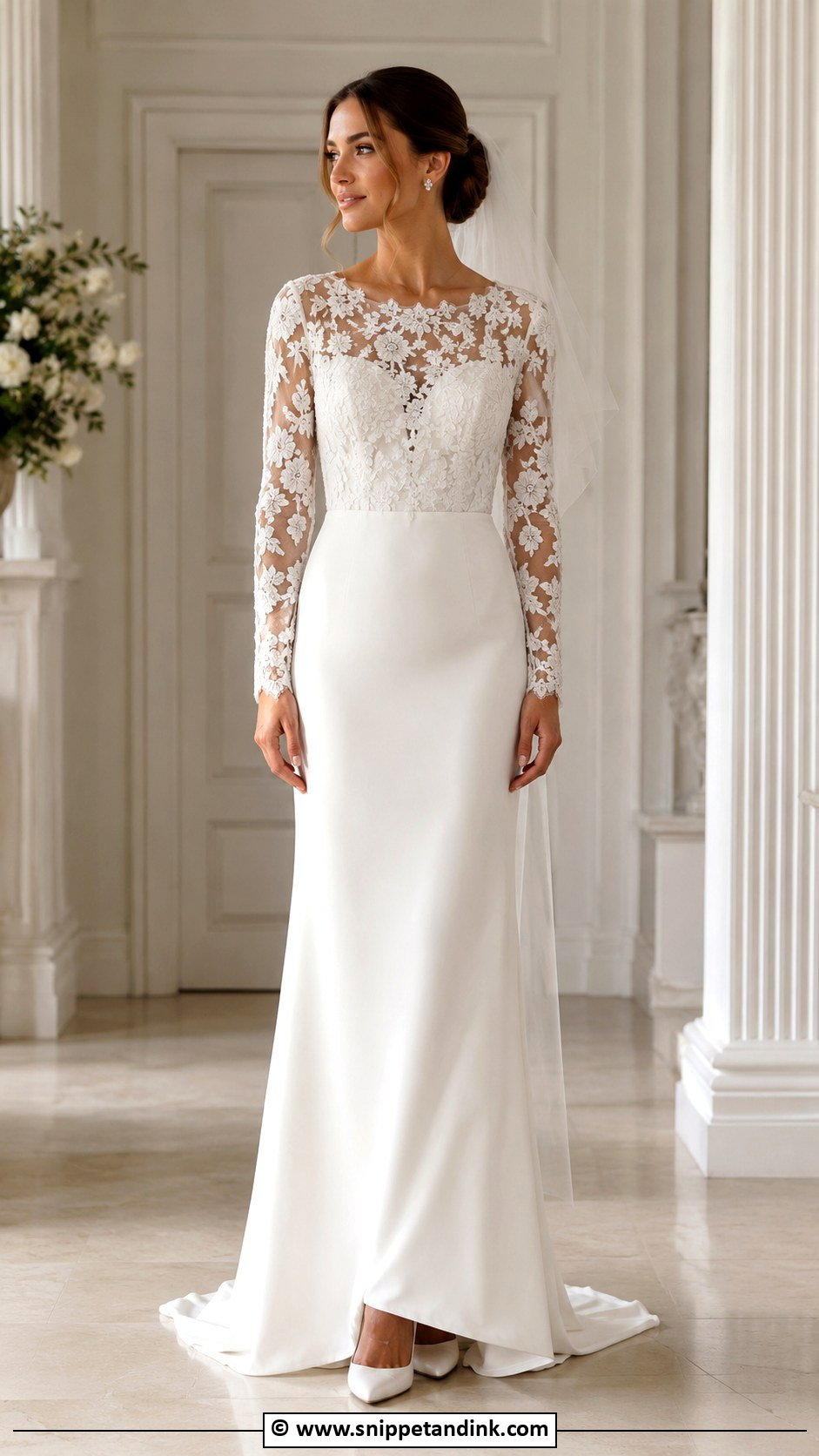
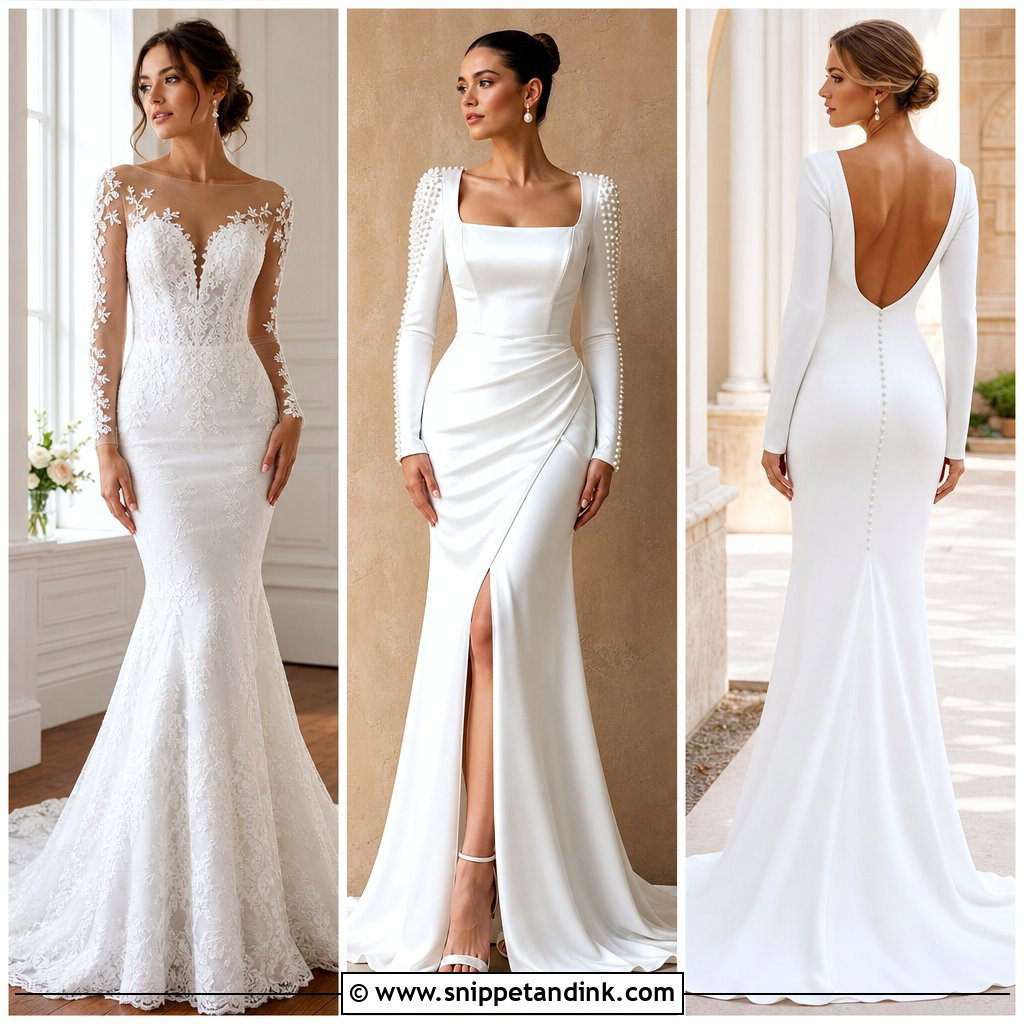
A floral long sleeve wedding dress gives coverage without heaviness when the sleeves are sheer and the flowers are placed on top. Ask how the sleeve is finished at the wrist: a scalloped lace edge looks lighter than a hem, and a few covered buttons let you push it up to eat. A crepe skirt makes it modern; tulle or lace makes it softer. I’d pair it with closed-toe heels, a sleek updo and a simple veil, plus white flowers with seasonal greenery. Historic buildings and mountain venues in fall or winter suit it well.
8. Floral Mermaid Wedding Dress
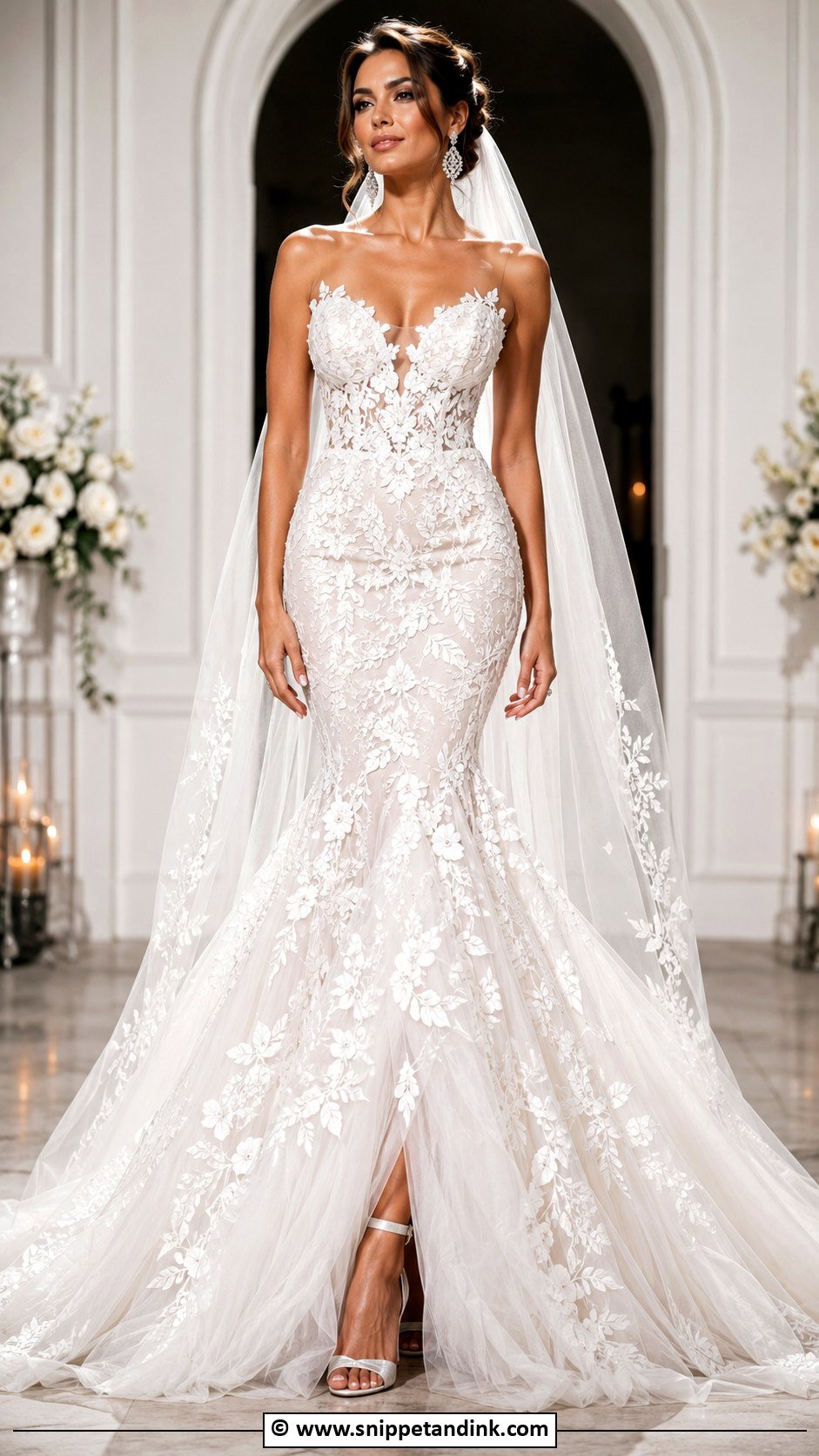
Mermaid gowns fit closely through the bodice and hips and flare near the knee, so the flare point has to match your walk. Too low and you’ll shuffle; I always ask brides to climb a step and sit at the fitting. Floral lace softens how fitted the shape is. A long veil, high heels and statement earrings suit the drama, along with a structured bouquet of white roses or orchids. Formal evening weddings give it the right backdrop.
9. Floral Sheath Wedding Dress
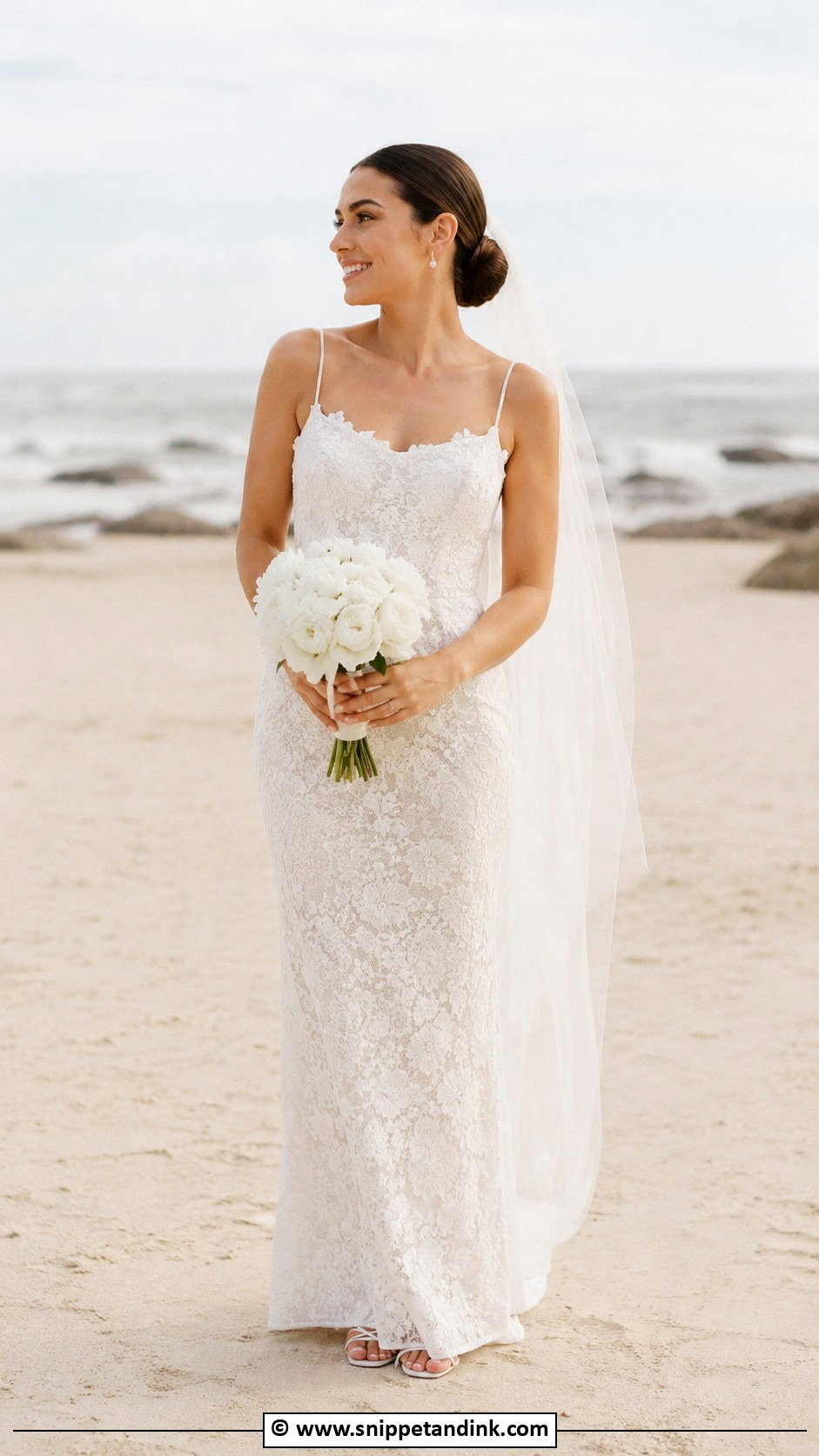
A sheath follows the body with no big skirt, so the flowers do all the decorating. Fine lace or tiny appliqués work better here than large blooms, which can overwhelm the narrow shape. It packs well for destination trips, which matters more than people think. Strappy heels, small earrings and a soft veil or flower pin finish it, with one or two flower varieties in the bouquet. Beaches, courthouses and small venues suit it.
10. Floral Corset Wedding Dress
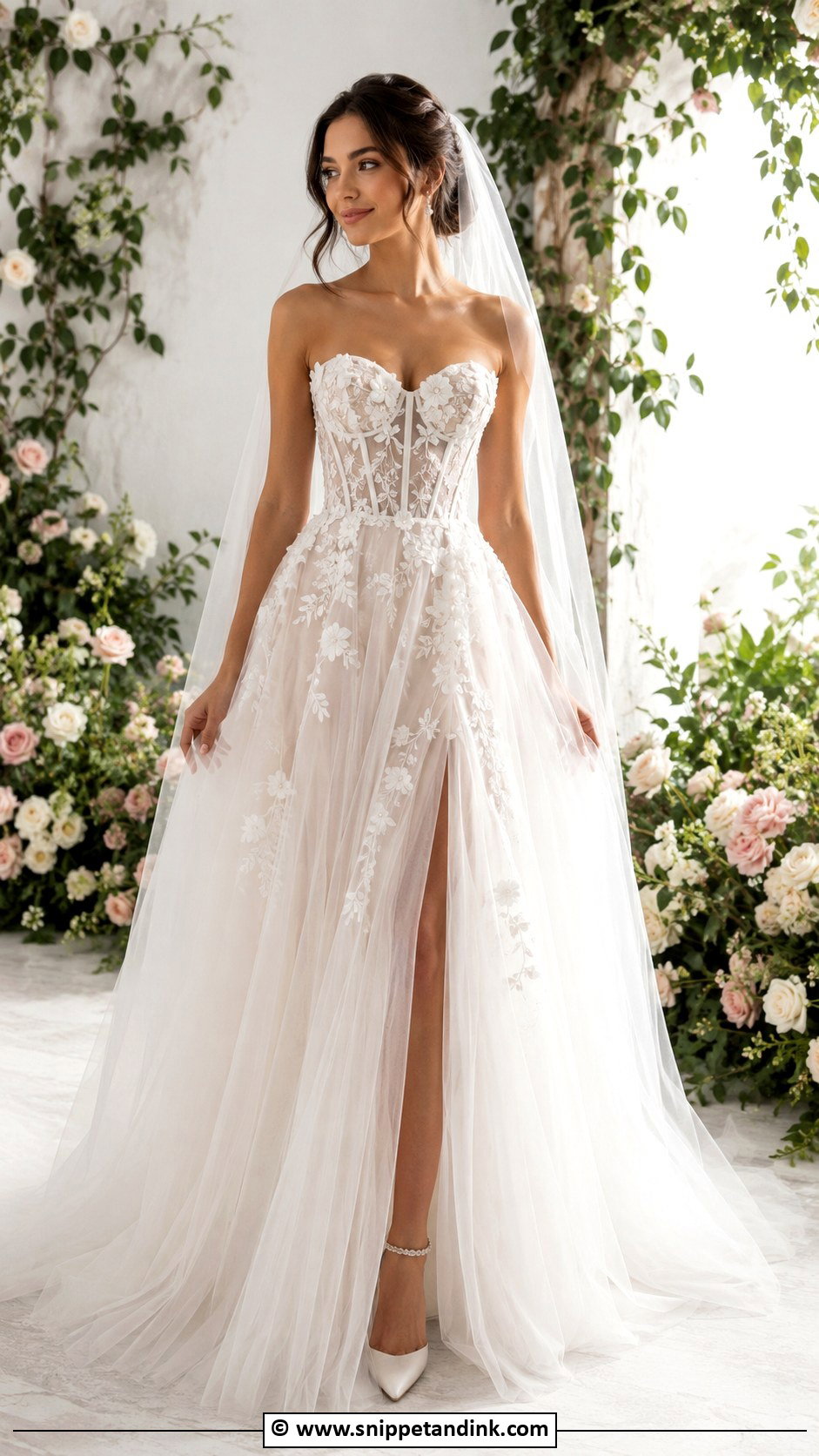
Boning is what makes a floral corset wedding dress hold you in place, and it’s also why the fit has to be exact; a corset that’s slightly long digs in when you sit. Lace or appliqué over the bodice softens the structure. Put it on a full tulle skirt for a fairytale effect or a slim satin one for something sharper. I’d attach the veil below the crown so it starts behind the shoulders and doesn’t hide the waist, and add pearl earrings, pointed heels and soft roses, sweet peas or orchids.
11. Floral Print Wedding Dress
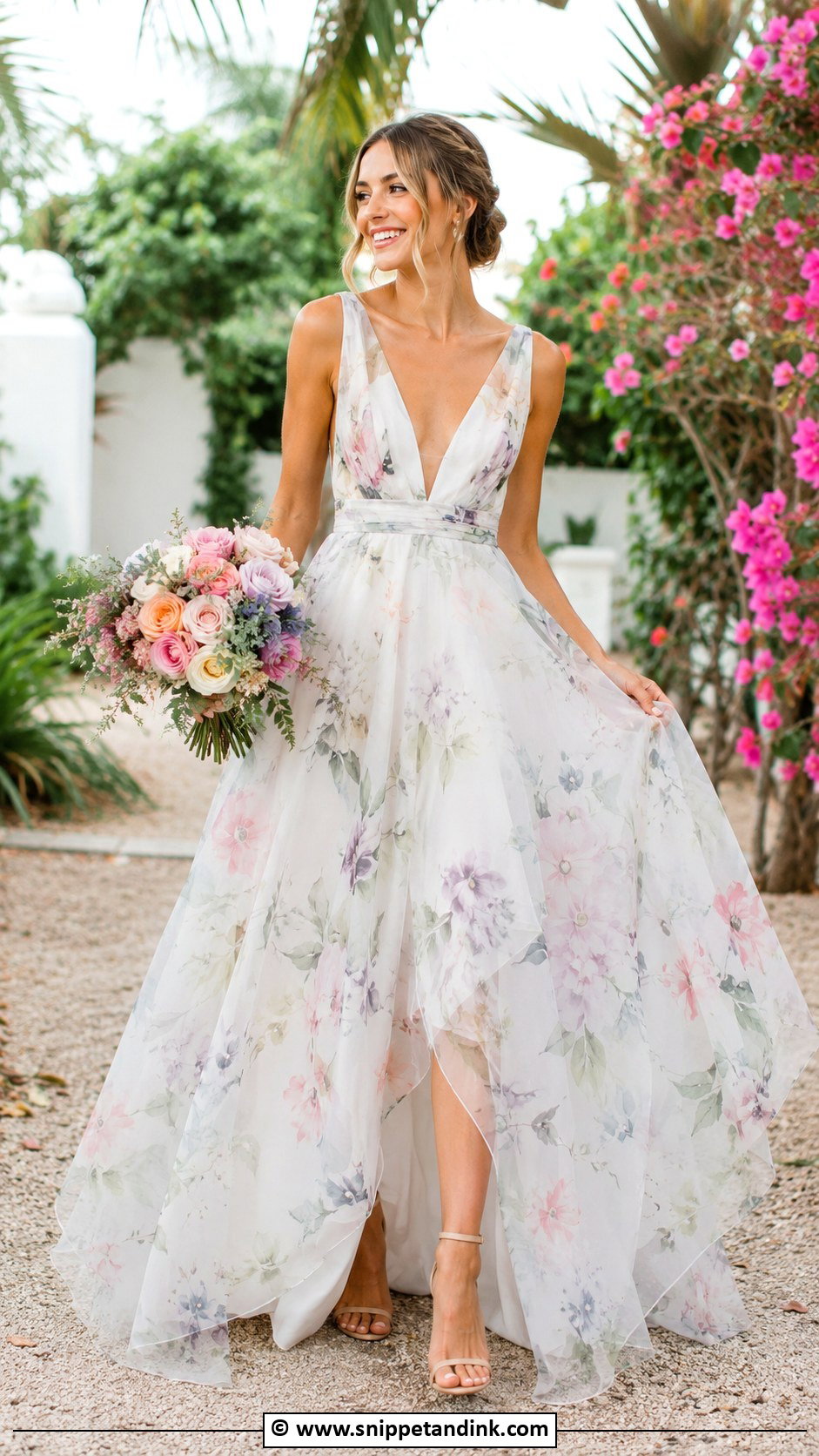
A printed gown changes the styling rules because the pattern already carries color. My rule is that only one accessory should repeat a print color, usually the bouquet, and everything else stays neutral: nude or ivory heels, small earrings, a plain veil or none. Watercolor or botanical prints on organza, chiffon or silk keep it feeling bridal. It suits outdoor and destination weddings where a fully white dress might feel too formal.
12. Watercolor Floral Wedding Dress
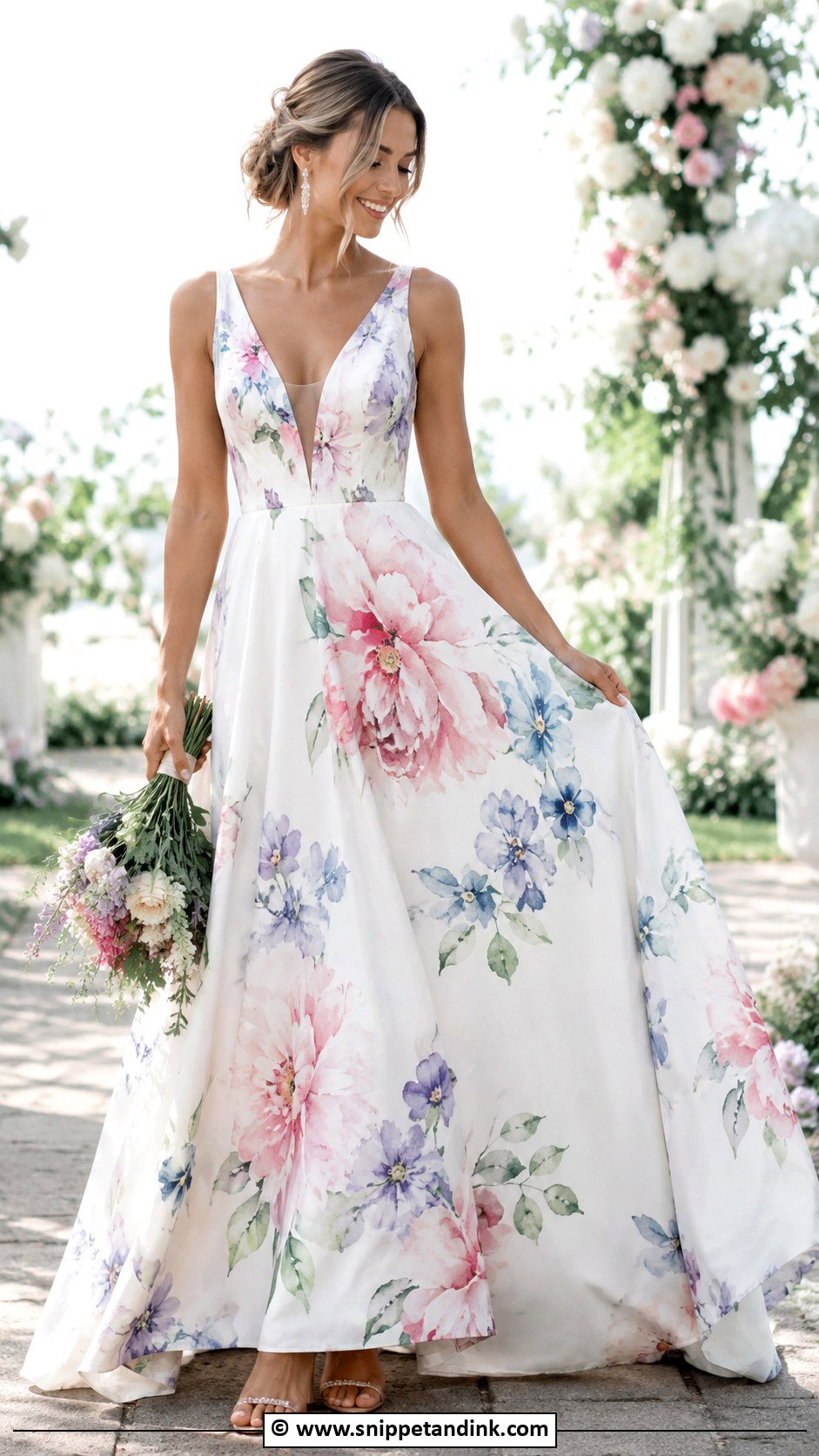
Watercolor florals blend into the fabric instead of sitting on it, so the effect is softer than a crisp print. Look closely at where the darkest patches of color fall; a deep bloom right at the hip or bust draws the eye there. Flowing A-line, empire and soft sheath shapes show the painted effect best. Clear or nude heels, delicate earrings, a loose bouquet in matching tones and a sheer veil keep the color visible. Garden ceremonies in spring are its natural setting.
13. Floral Organza Wedding Dress
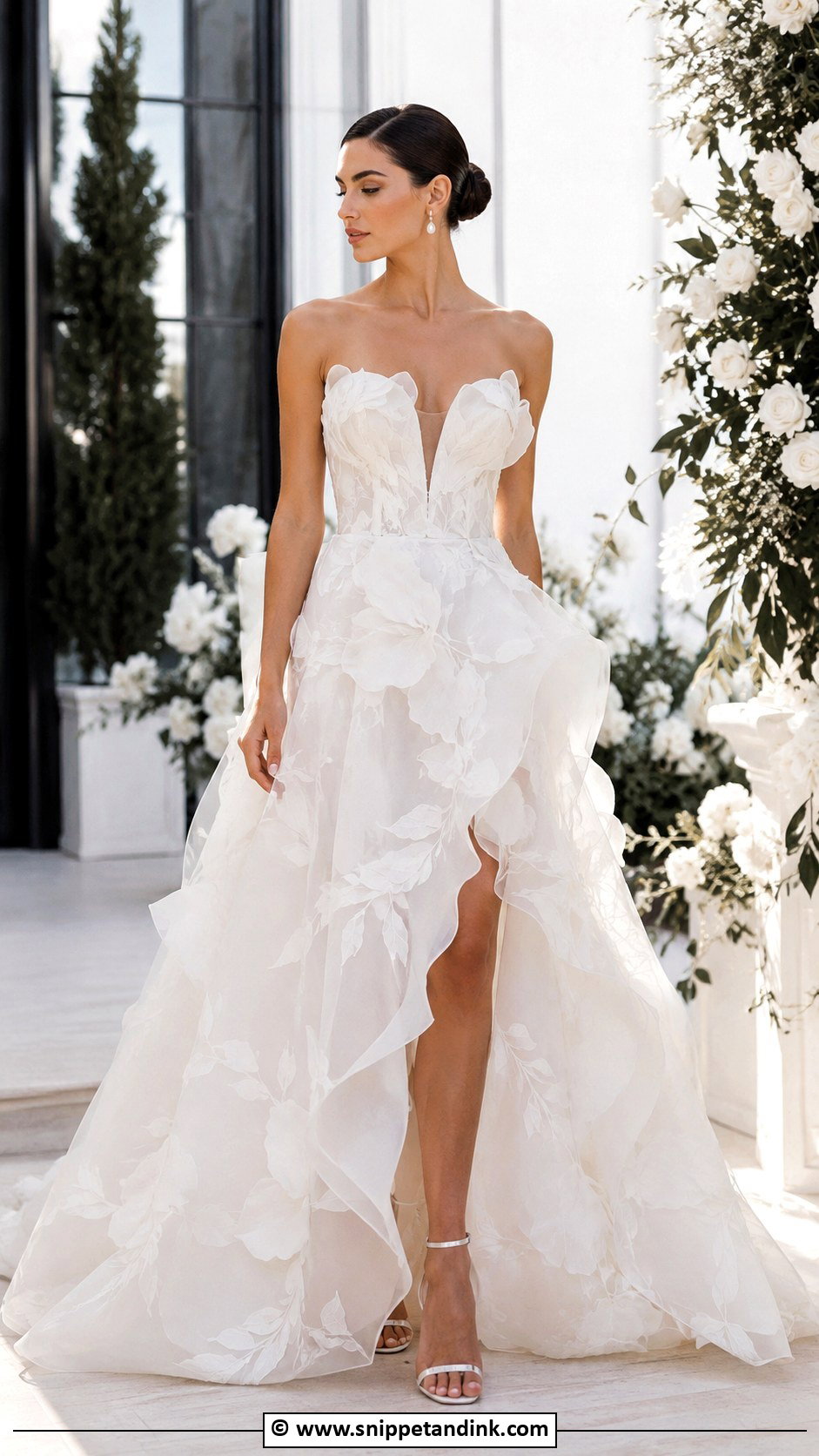
Organza is crisper than chiffon and holds a shape, which is why it can carry oversized appliqués and full overlays without collapsing. It also creases more visibly, so I steam it on site rather than trusting it to arrive smooth. A plain bodice with a floral organza skirt keeps it modern. Sleek heels, pearl earrings and a smooth bun or soft waves finish it, with long-stem flowers in the bouquet. Formal gardens and gallery venues suit its sculptural feel.
14. Floral Chiffon Wedding Dress
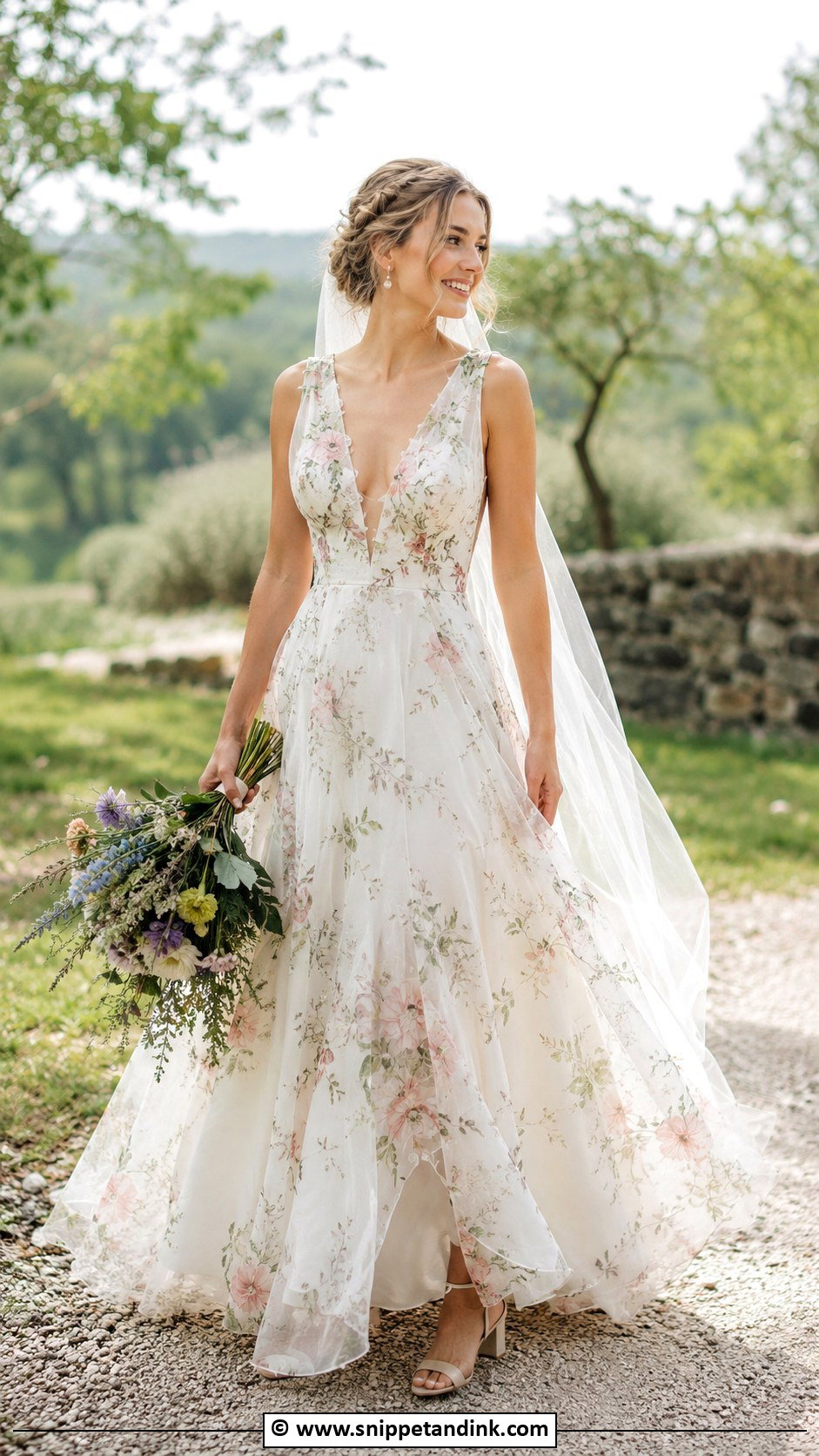
Chiffon is the most forgiving fabric in the heat because it breathes and barely creases when packed, so a floral chiffon wedding dress is my first suggestion for a warm-weather trip. The downside is that it shows sweat marks under the arms and can cling in wind. A flowing A-line or empire waist gives an easy fit. Block heels or fine sandals, simple earrings, a light veil and a loose wildflower bouquet suit beaches and summer ceremonies.
15. Floral Slip Wedding Dress
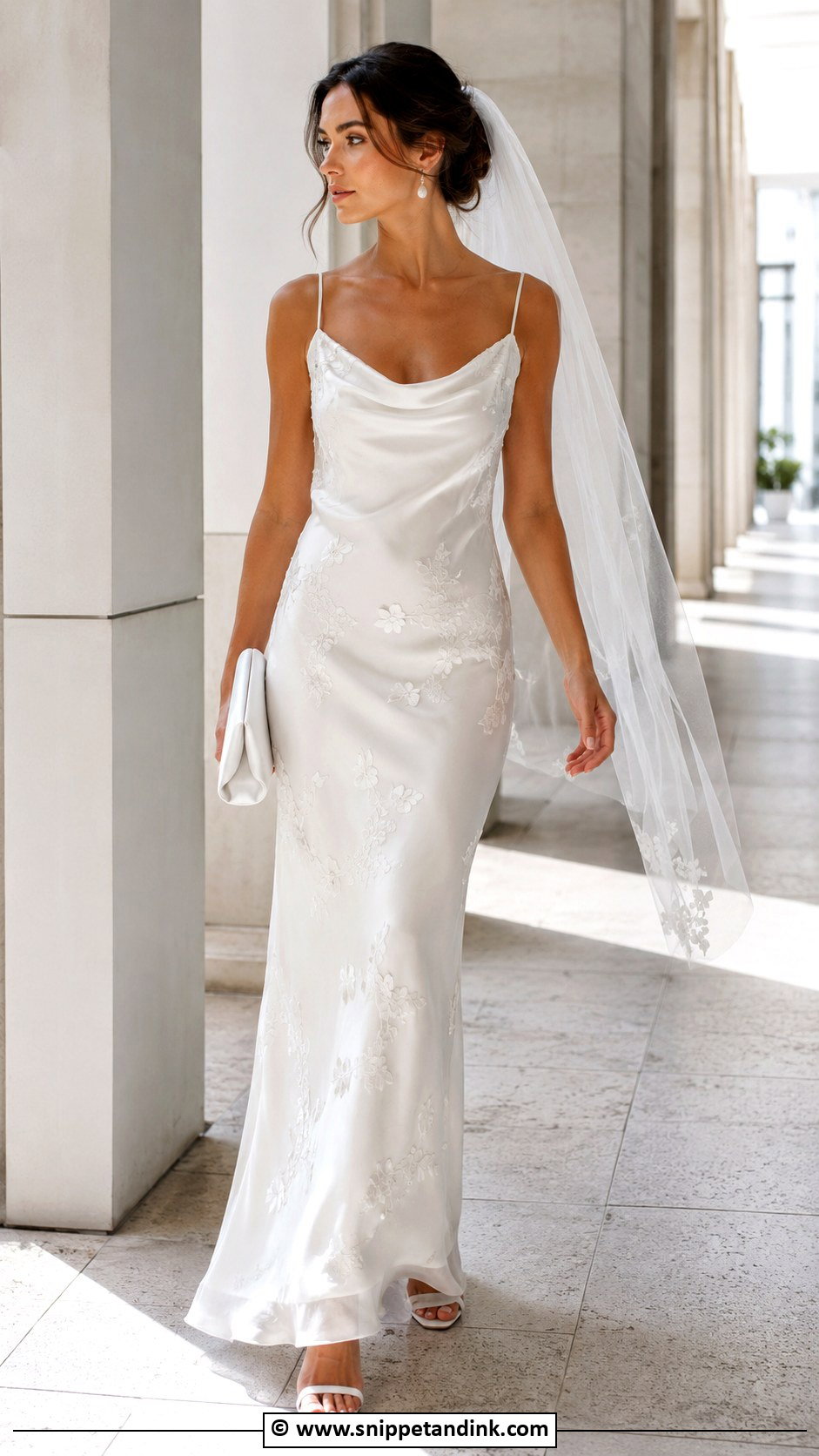
Silk and satin slips show every line underneath, so the right underwear and a proper fitting matter more here than in any other style. Subtle floral embroidery, a lace overlay or soft printed blooms keep the simple shape bridal. Sleek heels, a satin clutch, small drop earrings and a sheer cape or veil for the ceremony finish it. A single-variety bouquet of white roses or calla lilies matches the clean line. City weddings, rooftops and courthouses suit it best.
16. Floral Mini Wedding Dress
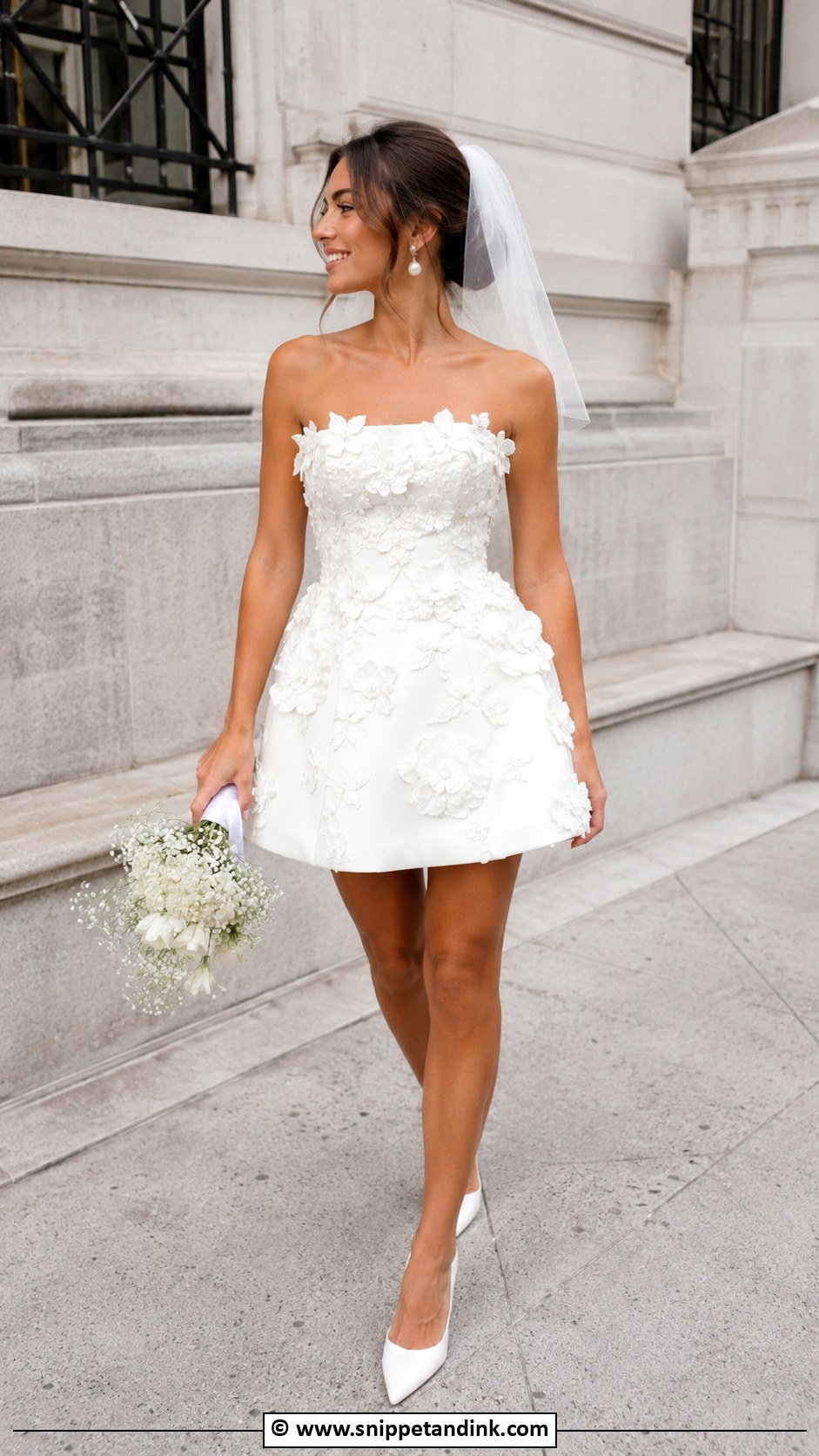
Short dresses put your shoes and legs on display, so I treat the heels as part of the dress rather than an afterthought. A structured mini with 3D flowers, floral lace or an embroidered bodice still reads as bridal. Pointed white heels, pearl earrings and a short veil or bow accessory finish it, with a small bouquet or floral bag. It works for elopements, courthouse ceremonies and reception changes, anywhere you’d rather dance than manage a train.
17. Floral Tea Length Wedding Dress
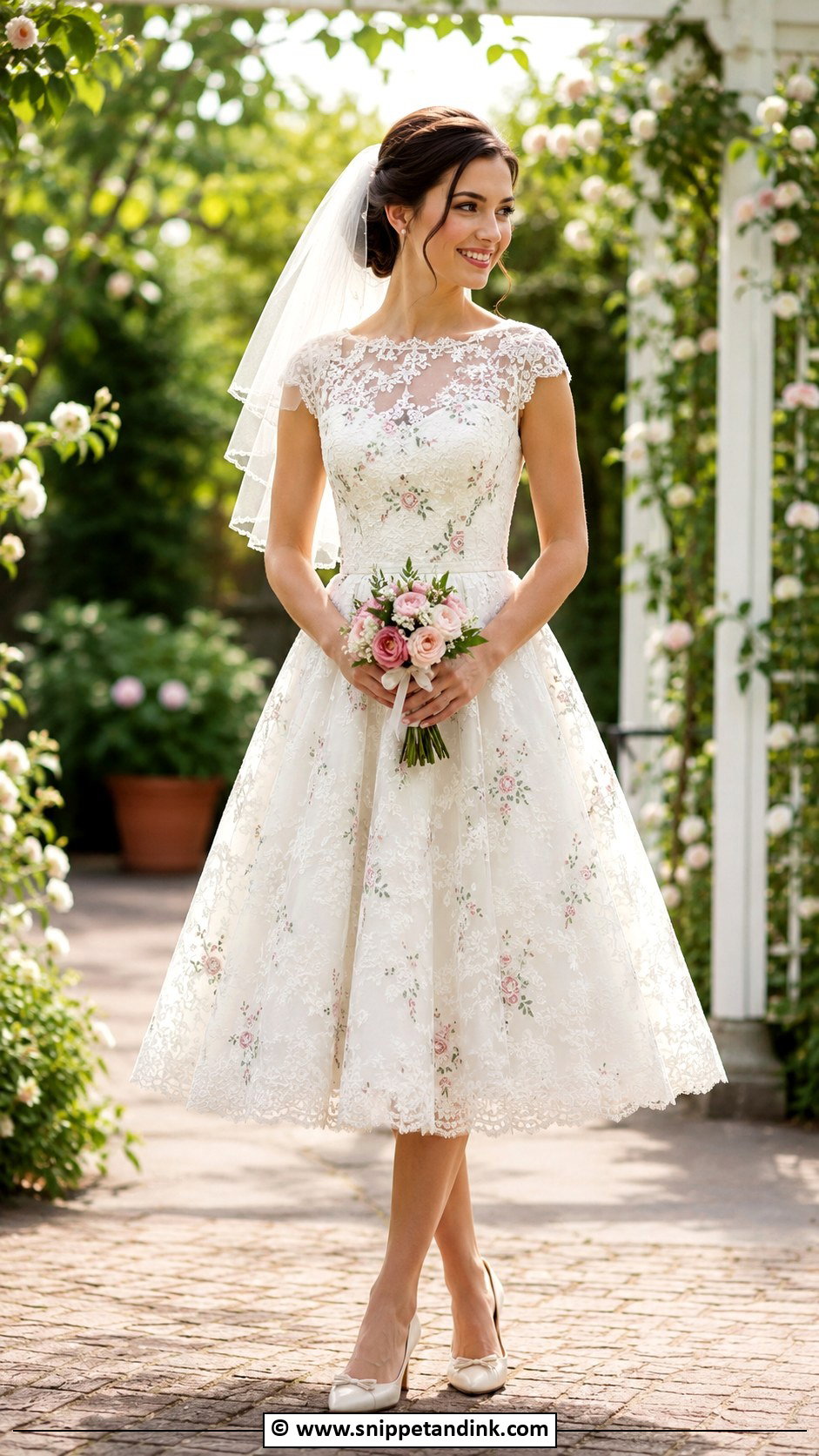
The hem of a floral tea length wedding dress falls between knee and ankle, which is the most practical length on grass and garden paths. Take your actual shoes to the hem fitting, because an inch of heel changes where the line hits on the calf. Floral lace, embroidered tulle or a soft print give it a vintage feel. Kitten heels, pearl studs, a short veil and a small bouquet suit backyard weddings and brunch receptions.
18. Floral High Low Wedding Dress
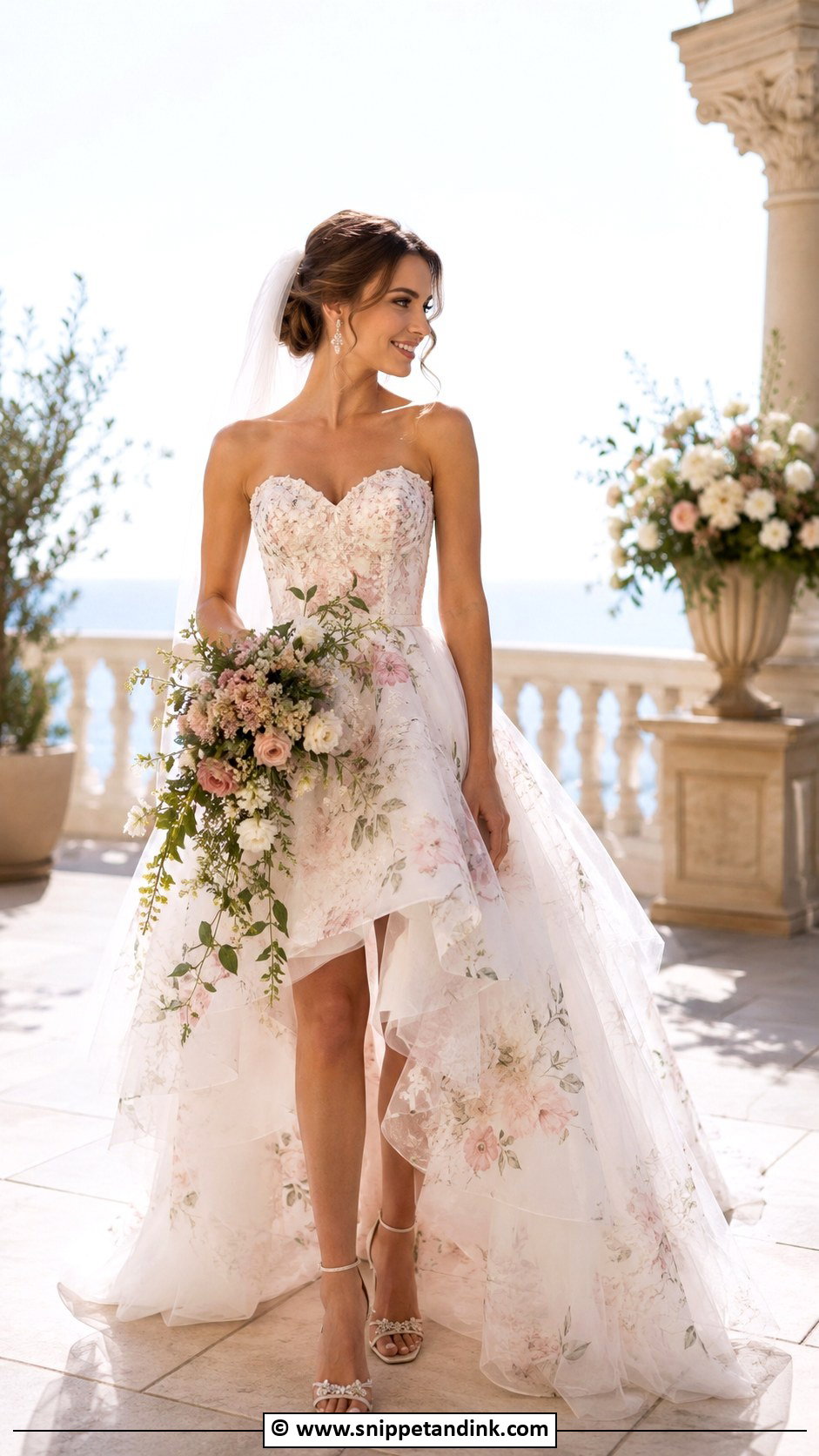
High-low hems give you a train at the back and your shoes at the front. The tricky part is the transition at the sides; if the curve is too steep, the hem looks unfinished in profile photos. Floral tulle, lace or appliqué should flow down from the bodice into the skirt. Embellished heels, delicate earrings and a simple veil finish it, and a cascading bouquet echoes the line of the hem. Terraces and garden receptions suit it.
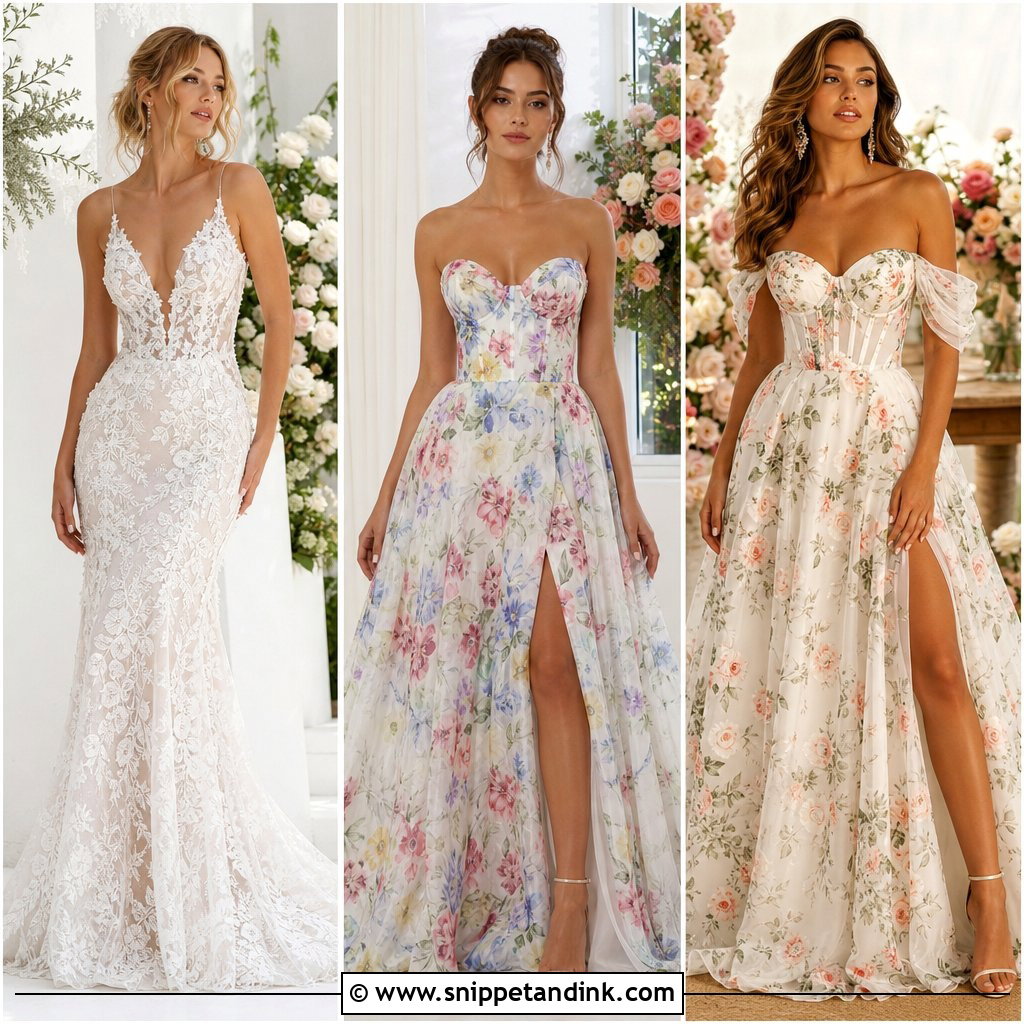
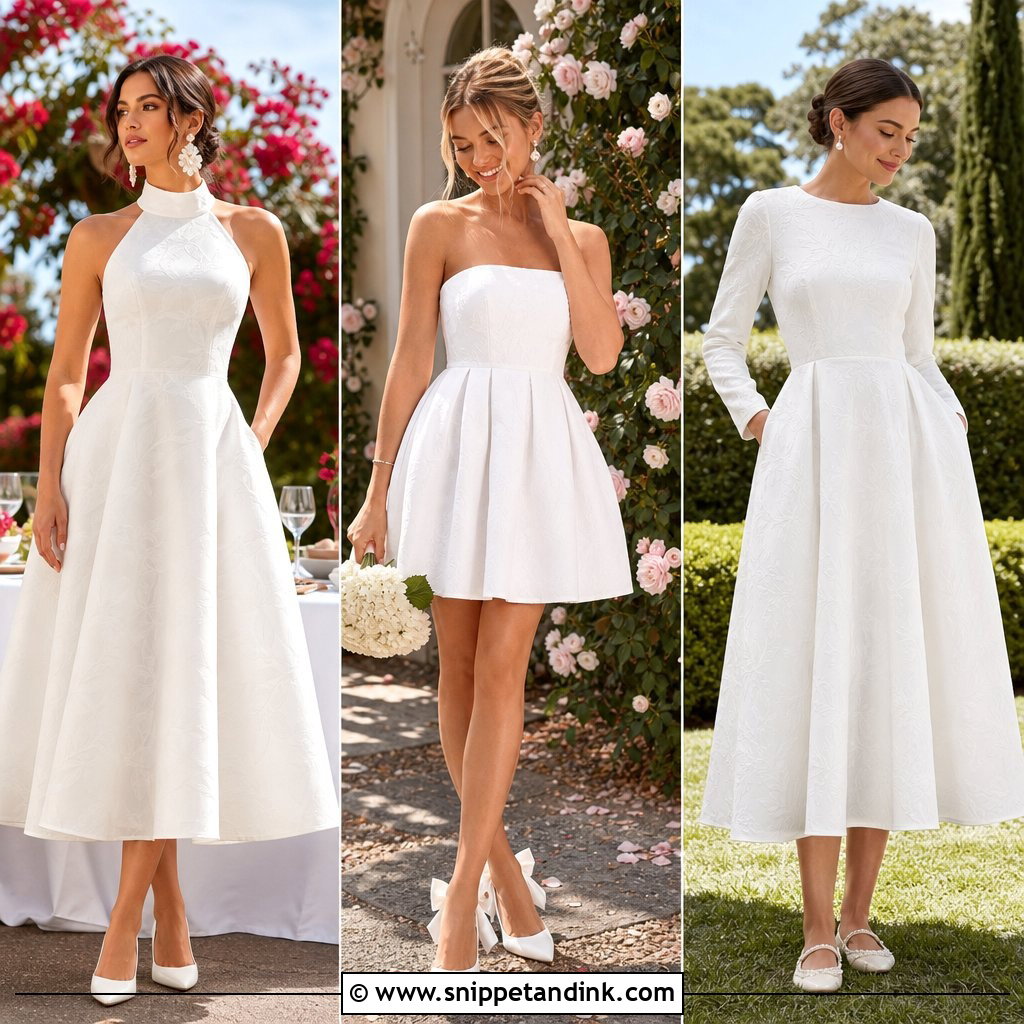
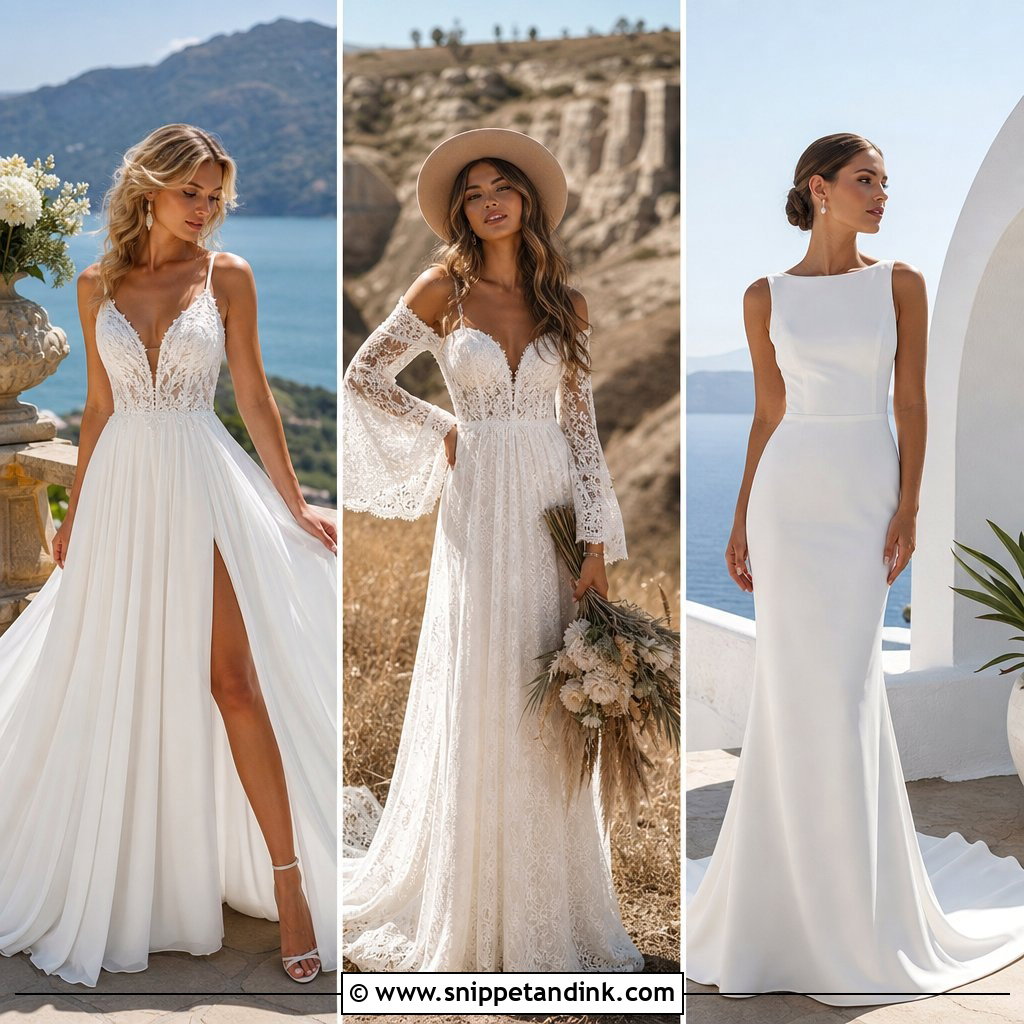
19. Floral Cape Wedding Dress
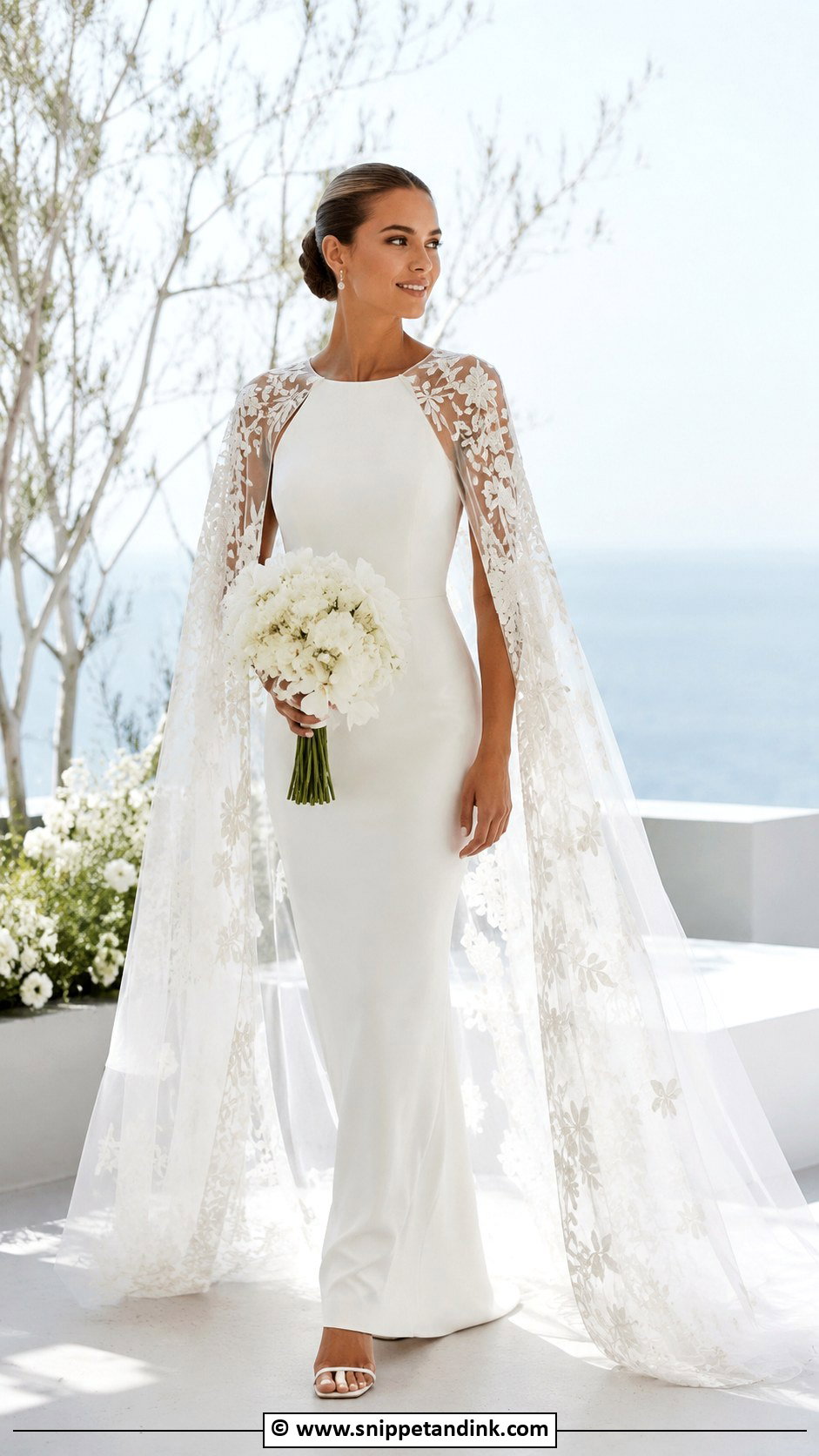
A cape can replace the veil completely. Sheer tulle, lace or organza with floral embroidery falls from the shoulders and trails behind, so the dress underneath should be plain: a sheath, a column or a strapless gown. Check how the cape attaches; snaps at the shoulder seams are steadier than ties at the neck. Keep the jewelry to small earrings and a bracelet, with sleek heels and a clean bouquet. Long aisles and evening receptions show it off.
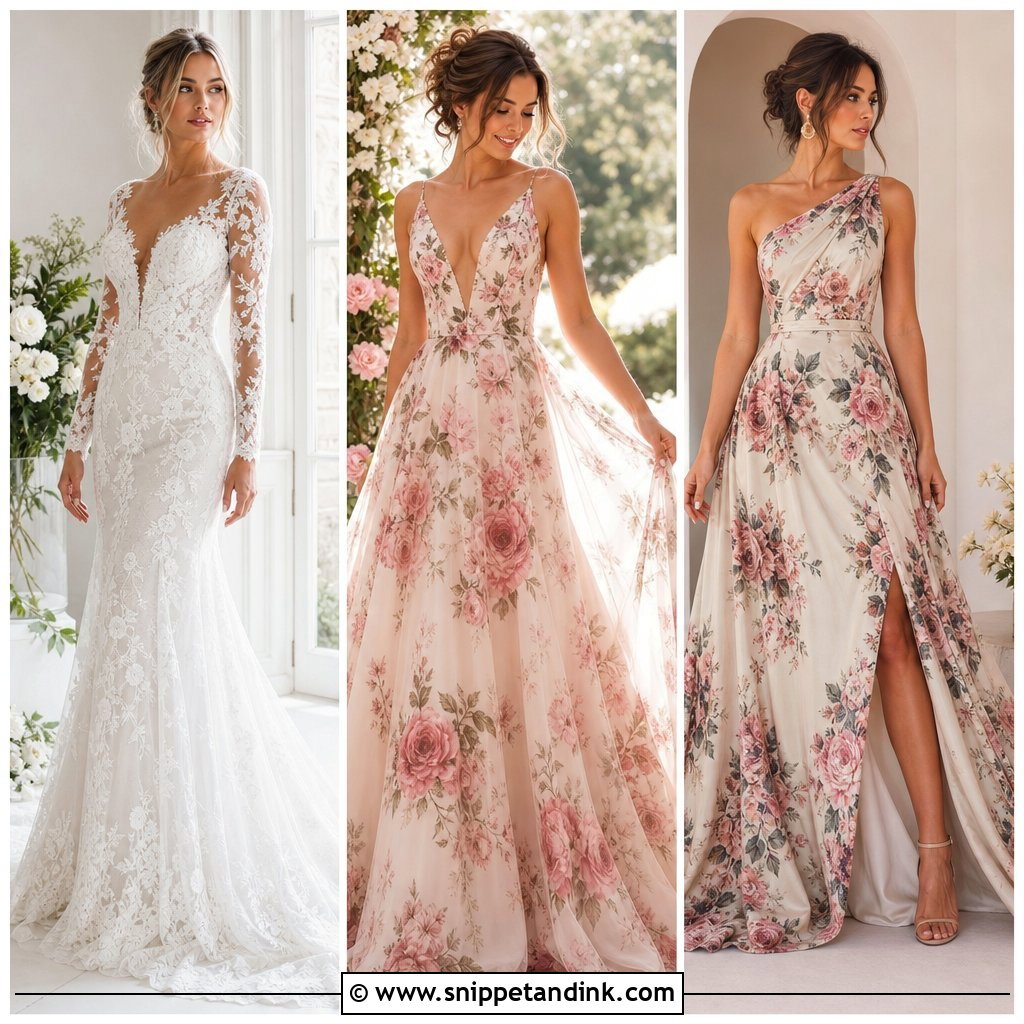
20. Floral Veil Wedding Dress
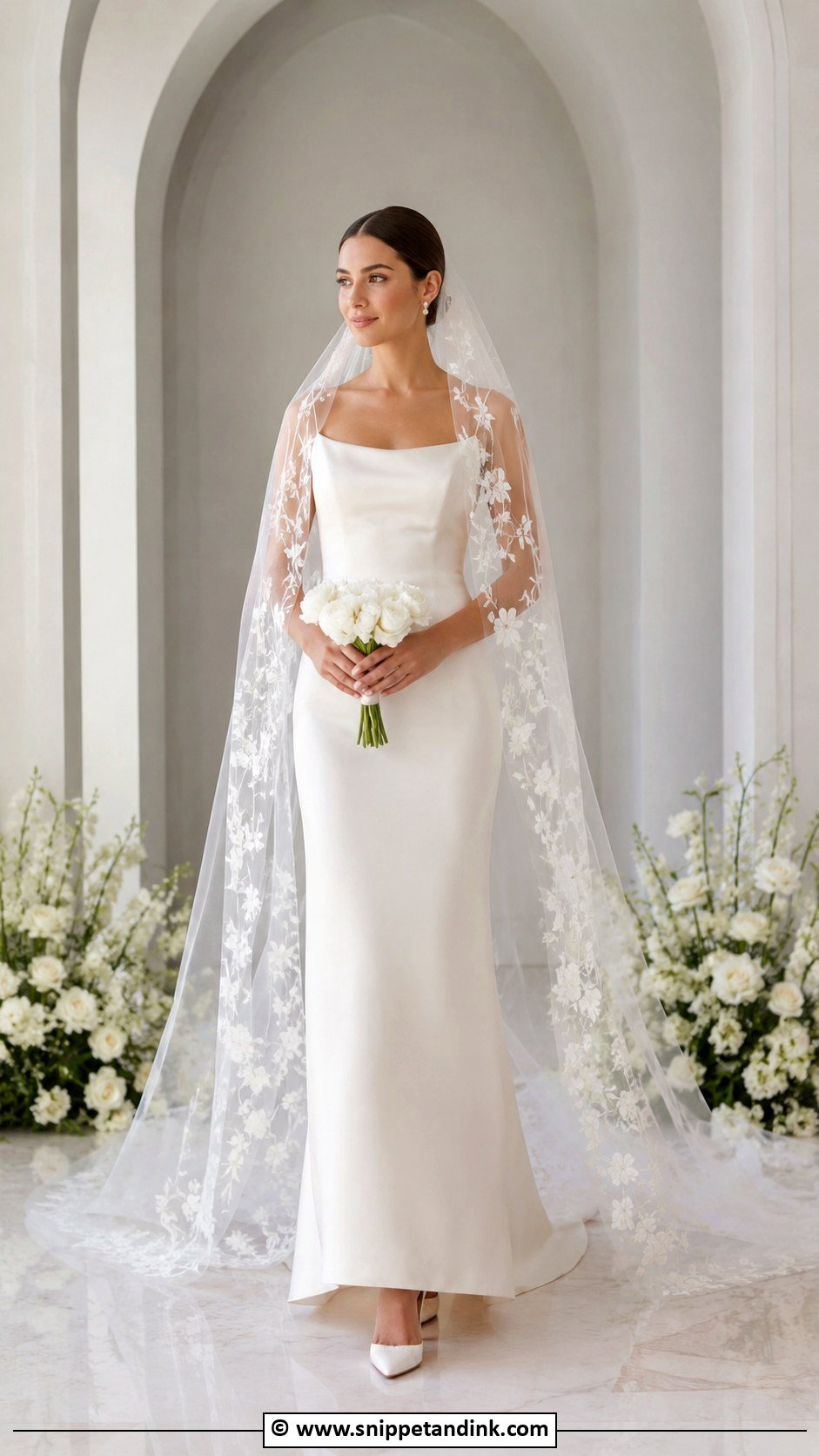
Putting the flowers on the veil instead of the gown is the easiest way to keep a simple satin, crepe or mikado dress while still wearing a floral look. Embroidery is heavier than plain tulle, so the comb needs to be secured into a solid base in the hair, not just slid into loose curls. Classic heels, pearl earrings and a smooth hairstyle help the veil sit flat. A simple bouquet keeps attention on the embroidery. Minimalist brides tend to love it.
21. Floral Train Wedding Dress
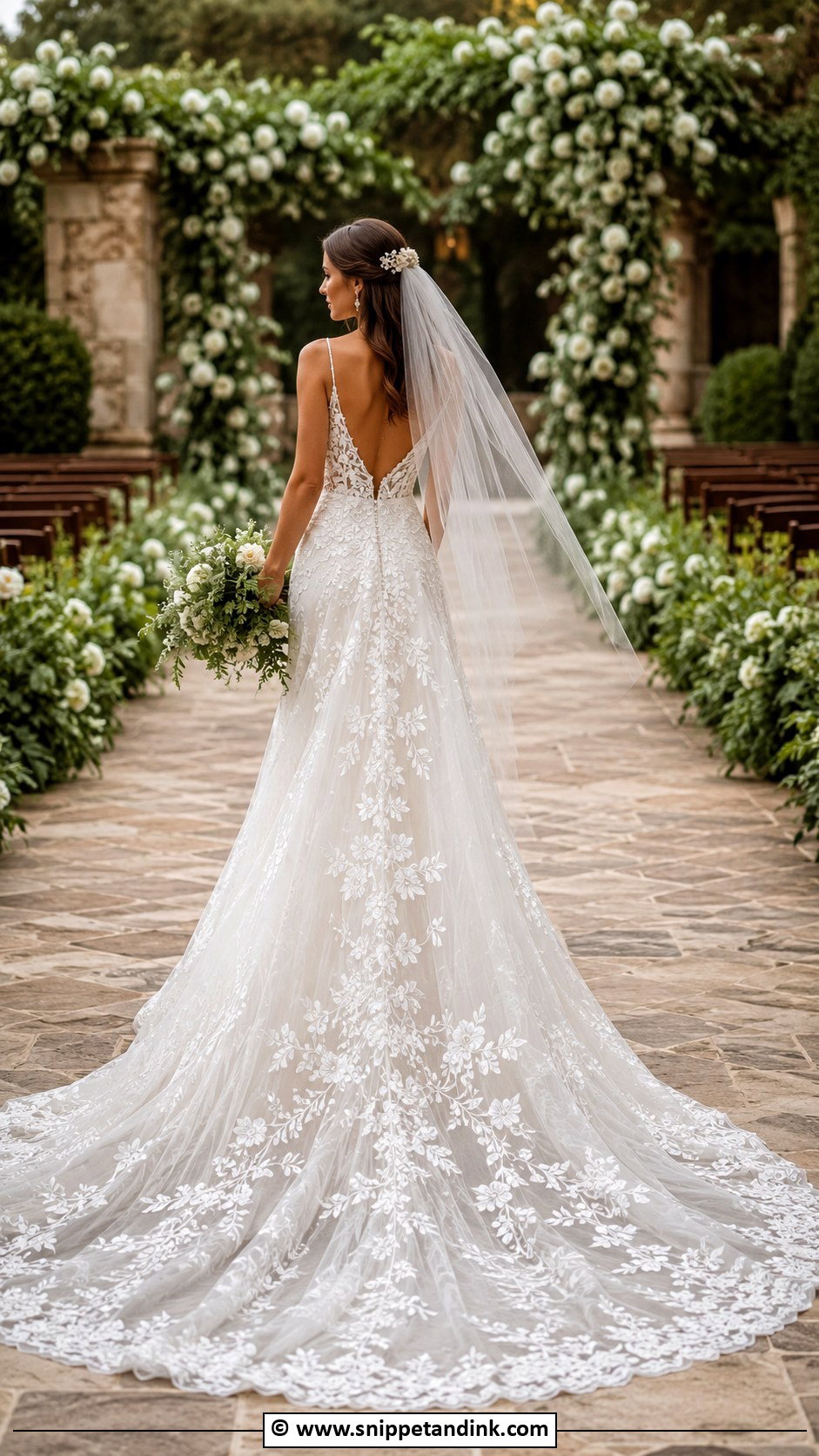
A plain front and a train covered in embroidered flowers, lace vines or 3D appliqués puts all the decoration where the guests see it during the ceremony. A heavy train needs a bustle, and with appliqués it should be planned so the flowers still show once it’s lifted. A long veil, elegant heels and subtle earrings suit it, plus a bouquet with soft greenery. Formal venues and long outdoor aisles give the back view the space it needs.
22. Floral Bodice Wedding Dress
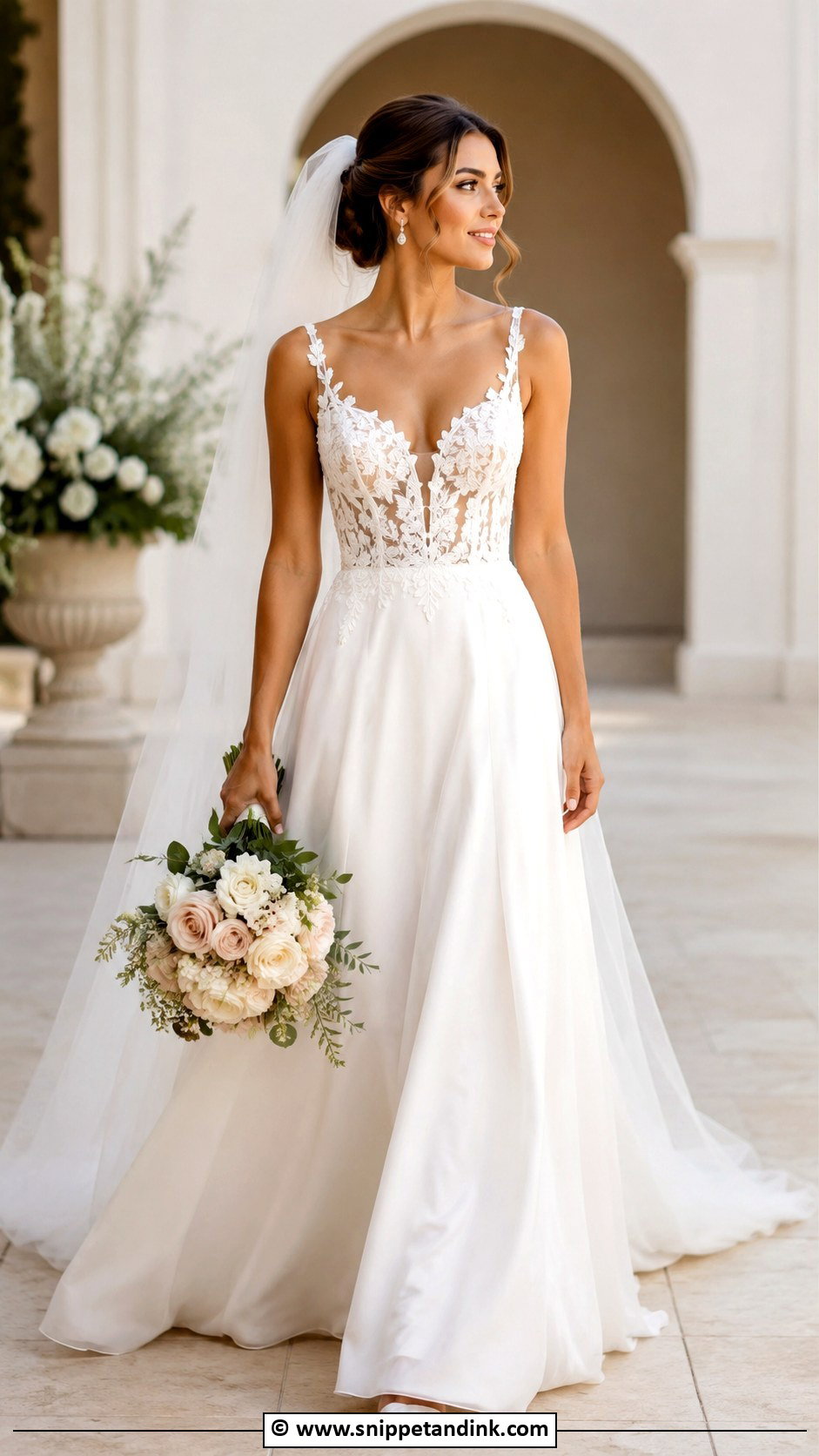
Detail near the face is the main reason brides choose a floral bodice wedding dress, since the flowers sit on the bust, straps and waist and the skirt stays plain. Satin, tulle, chiffon or crepe can carry the skirt depending on the venue. I’d keep the veil plain and the earrings small, with shoes that match the skirt fabric. A medium bouquet of soft blooms ties it together. Hold the bouquet a little lower than usual, at hip height, so it doesn’t cover the embroidery in photos.
23. Floral Skirt Wedding Dress
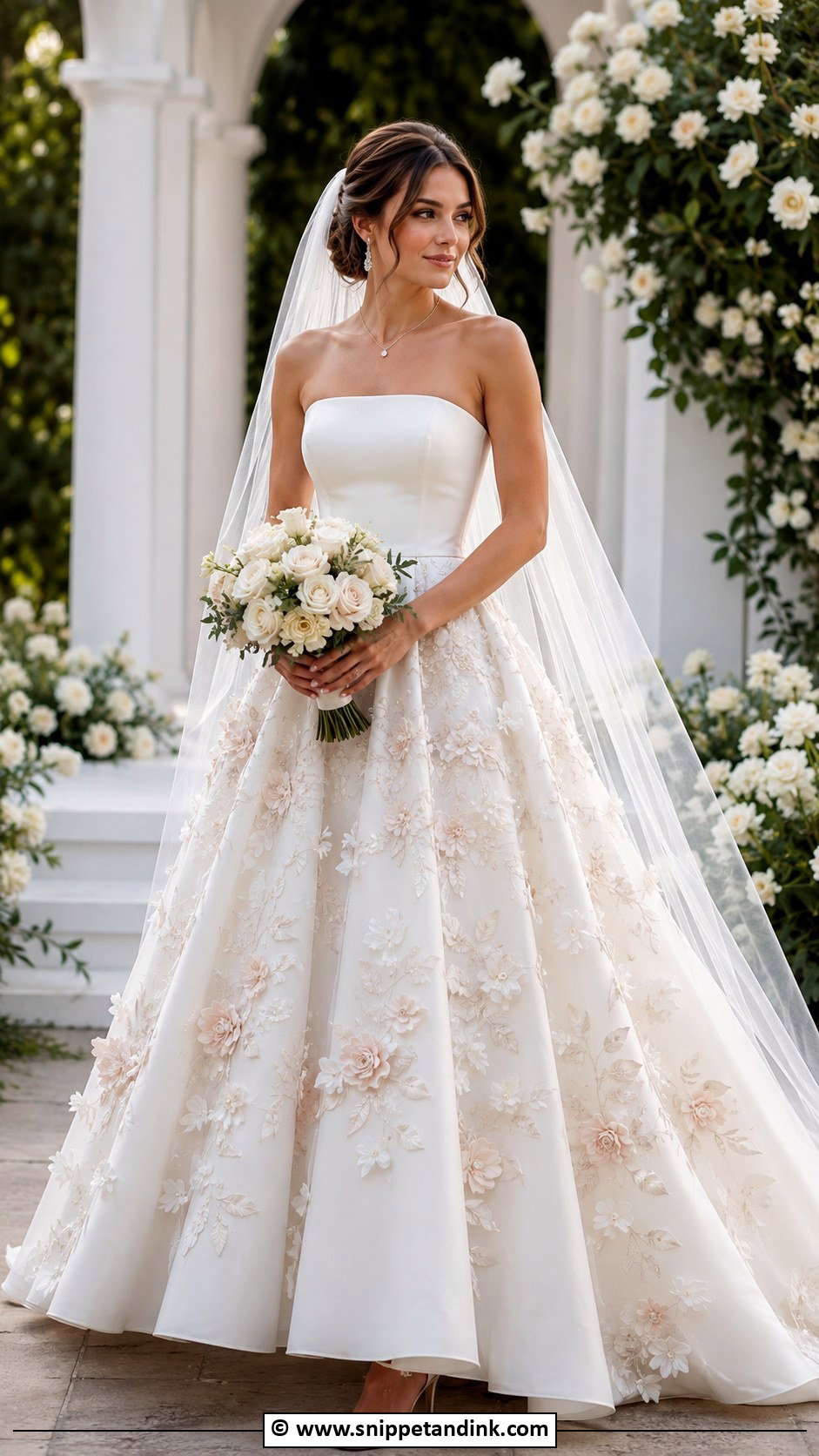
Putting the flowers on the skirt and keeping the bodice clean gives the eye one clear focal point. The top can be strapless, square neck or long sleeve, and the skirt can carry floral lace, printed blooms or raised appliqués. A clean neckline also means you can wear one stronger necklace if you like. Classic heels and a smooth veil finish it. Choose bouquet flowers with a similar shape to the skirt motifs so the two read as a pair.
24. Floral Square Neck Wedding Dress
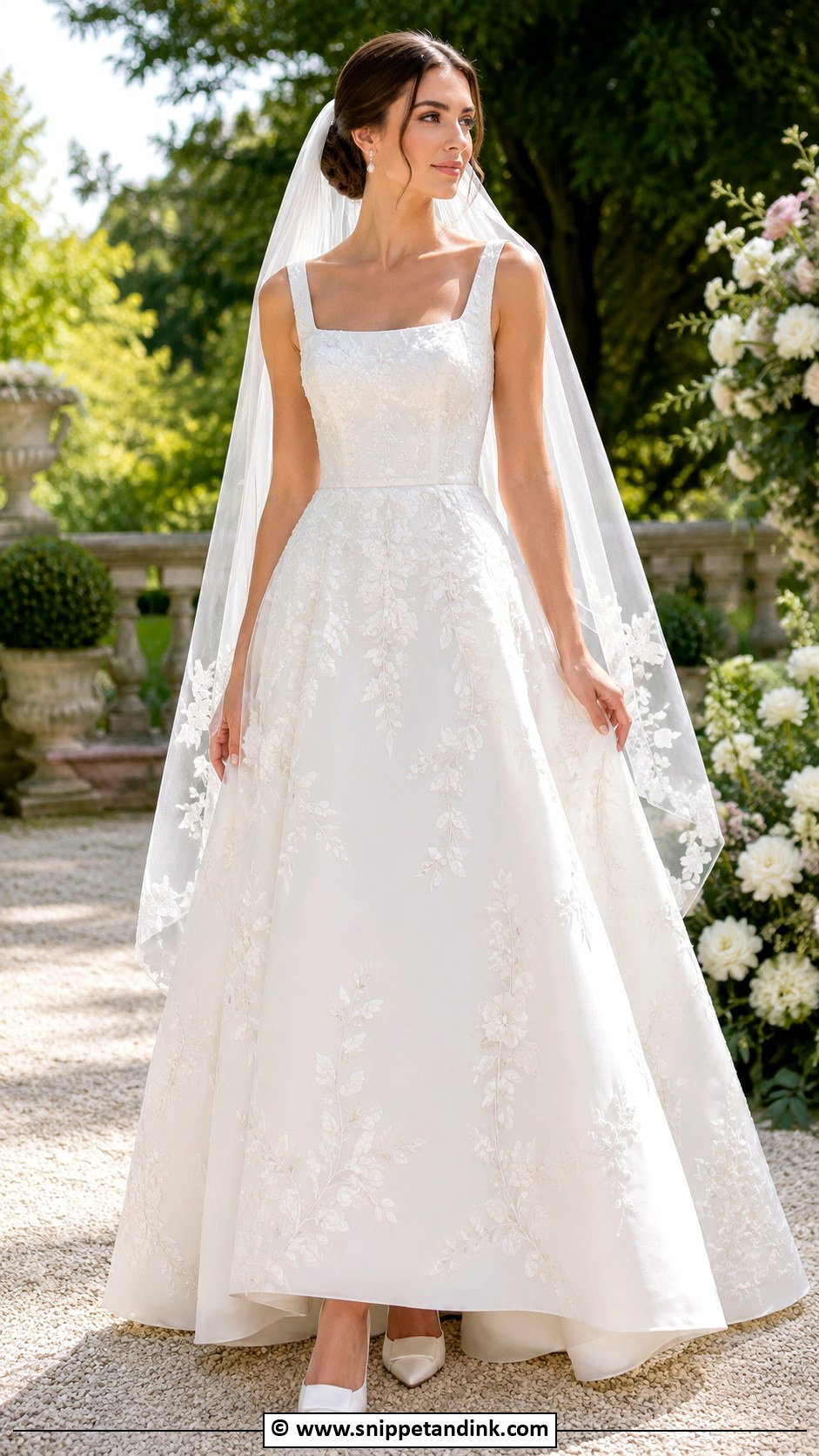
Square necklines frame the collarbones and work with straps, cap sleeves or long sleeves. Floral lace or embroidery across the bodice and skirt softens the straight line. Pearl earrings, a low bun and satin heels suit it, with a fingertip or chapel veil that keeps the neckline visible. I’d choose rounded blooms like garden roses for the bouquet to soften the right angles. Estate venues and gardens are good matches.



25. Floral Strapless Wedding Dress
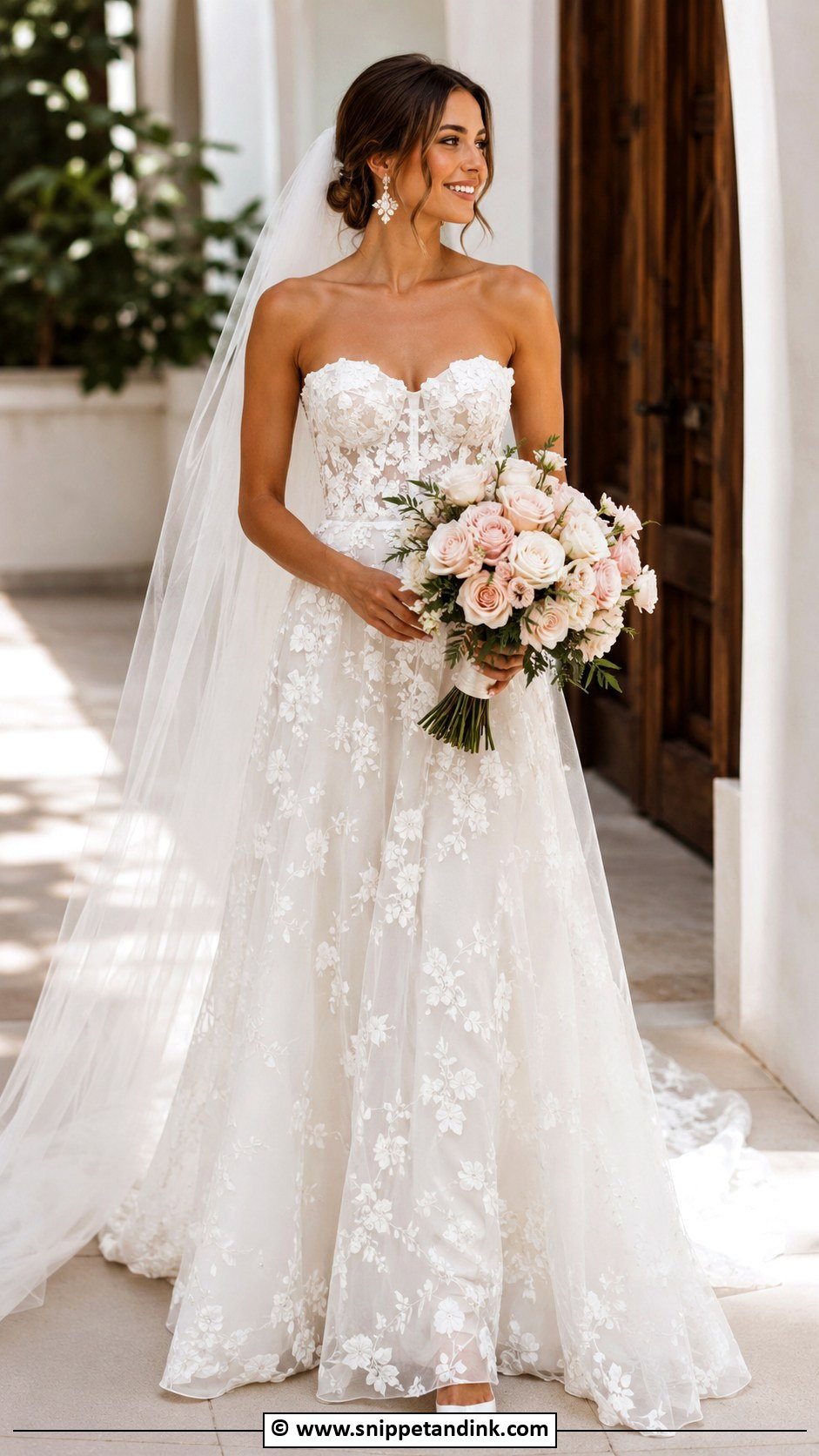
Strapless gowns rely completely on the bodice fit, so I check that the bride can bend and lift her arms without tugging the neckline up. Floral lace or appliqués trailing from the neckline into the skirt make the shape feel fresh. With bare shoulders, wear statement earrings or a delicate necklace, not both. A long veil, smooth waves and elegant heels balance it, and a bouquet of roses, orchids or peonies suits formal and warm-weather weddings.
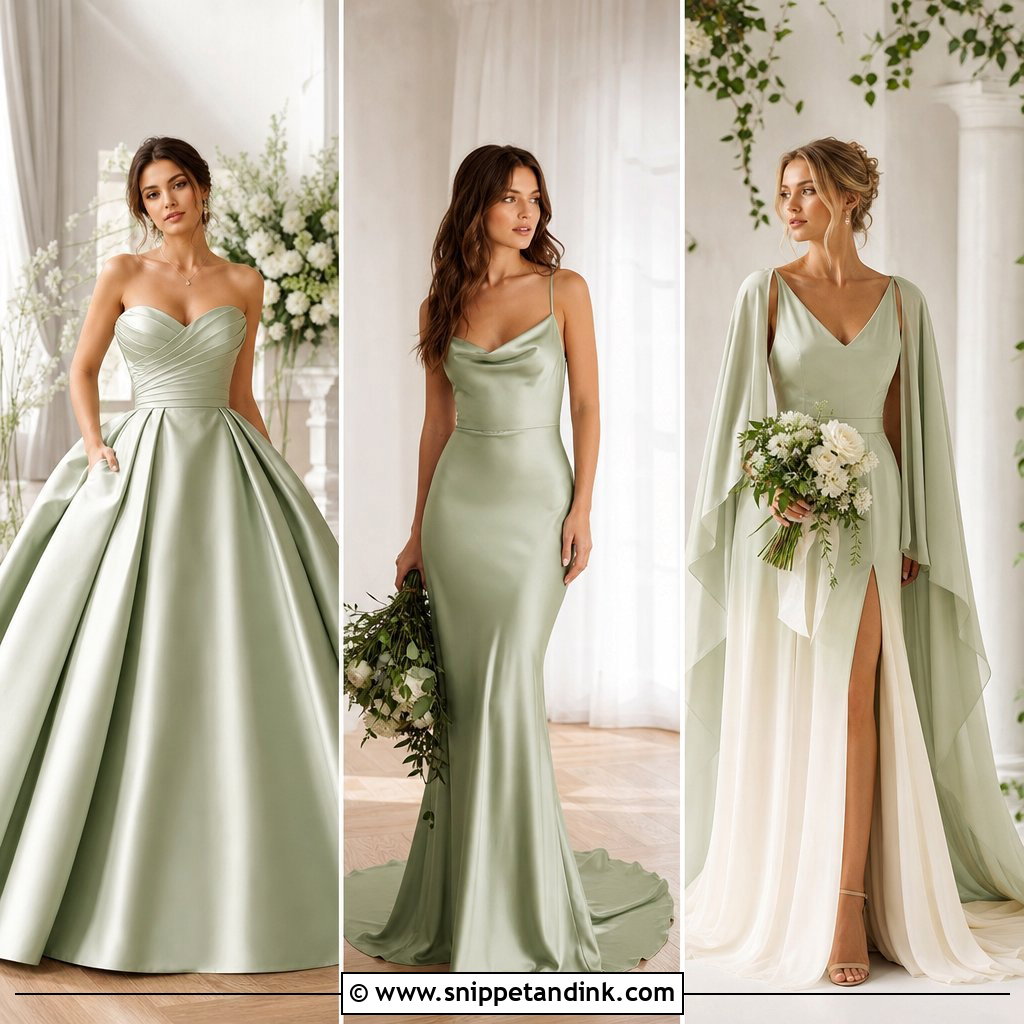
26. Floral Satin Wedding Dress
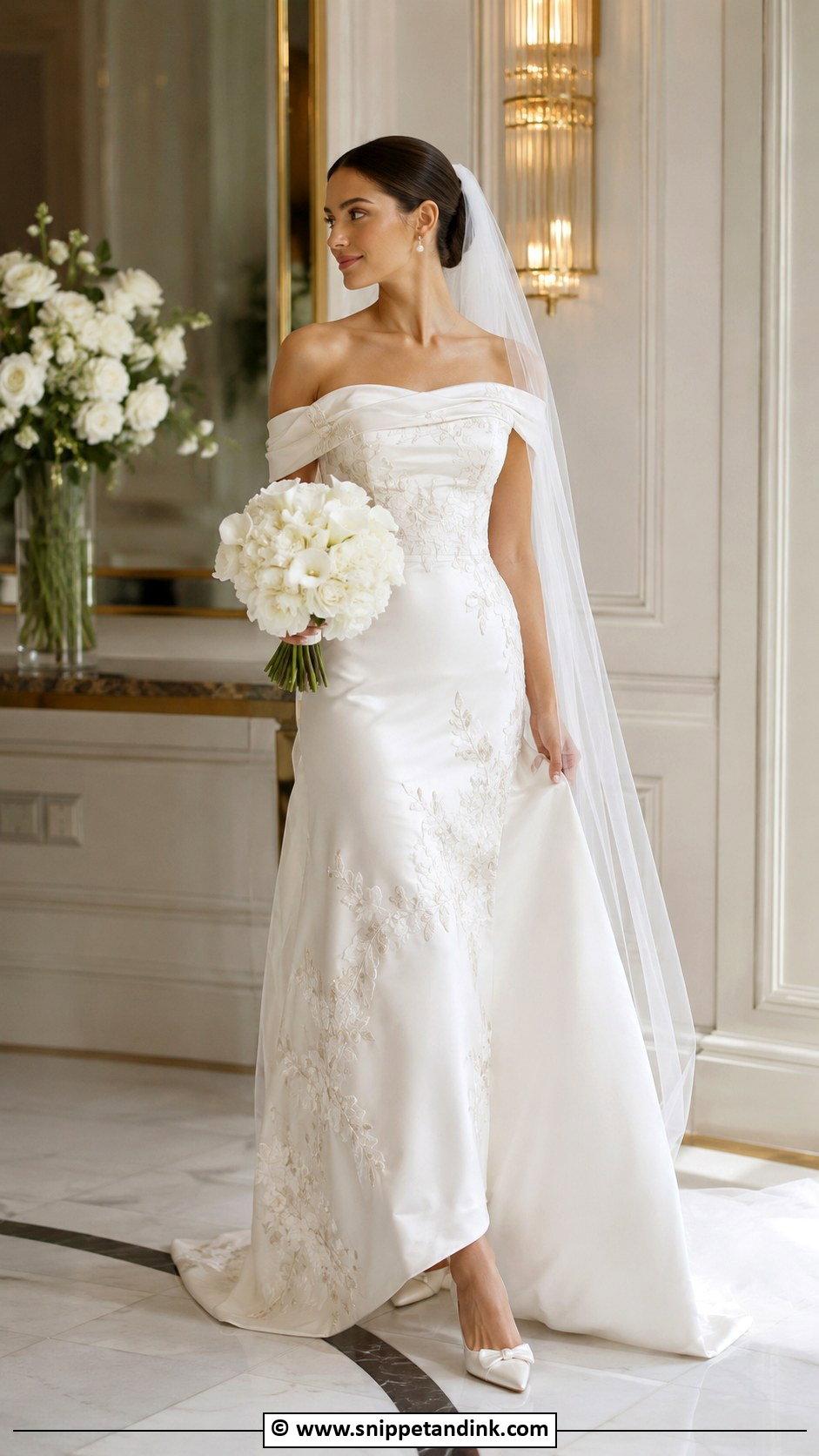
Satin has its own shine and structure, so the floral detail can be embroidery, appliqué, jacquard texture or a detachable floral overskirt. Satin also creases where you sit and shows water spots, so keep a steamer handy and avoid spritzing perfume near it. Pointed heels, pearl or crystal earrings and a smooth veil keep it refined. A structured bouquet with one or two flower types matches the clean fabric. Hotels and indoor venues suit it.
27. Floral Boho Wedding Dress
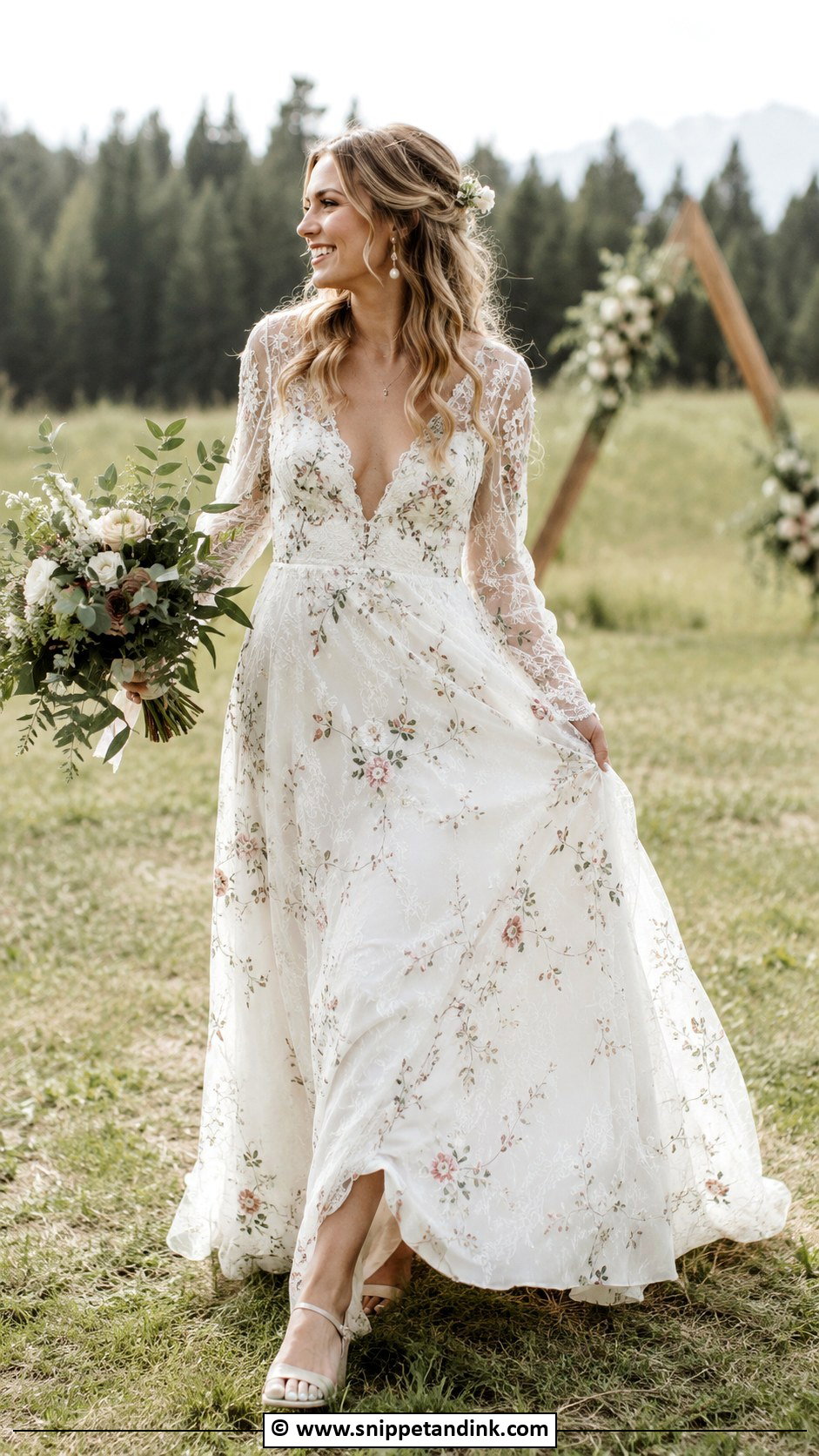
Boho floral dresses are the comfortable end of this list: soft lace, crochet-style flowers, bell sleeves and flowing skirts with embroidered wildflowers. Crochet lace stretches and can lose shape if the dress hangs for months, so store it folded until the final pressing. Low block heels, loose waves, delicate earrings and a natural bouquet with greenery finish it, with a soft tulle veil or flower comb. Meadows, mountains and rustic venues are its home.
28. Floral Garden Wedding Dress
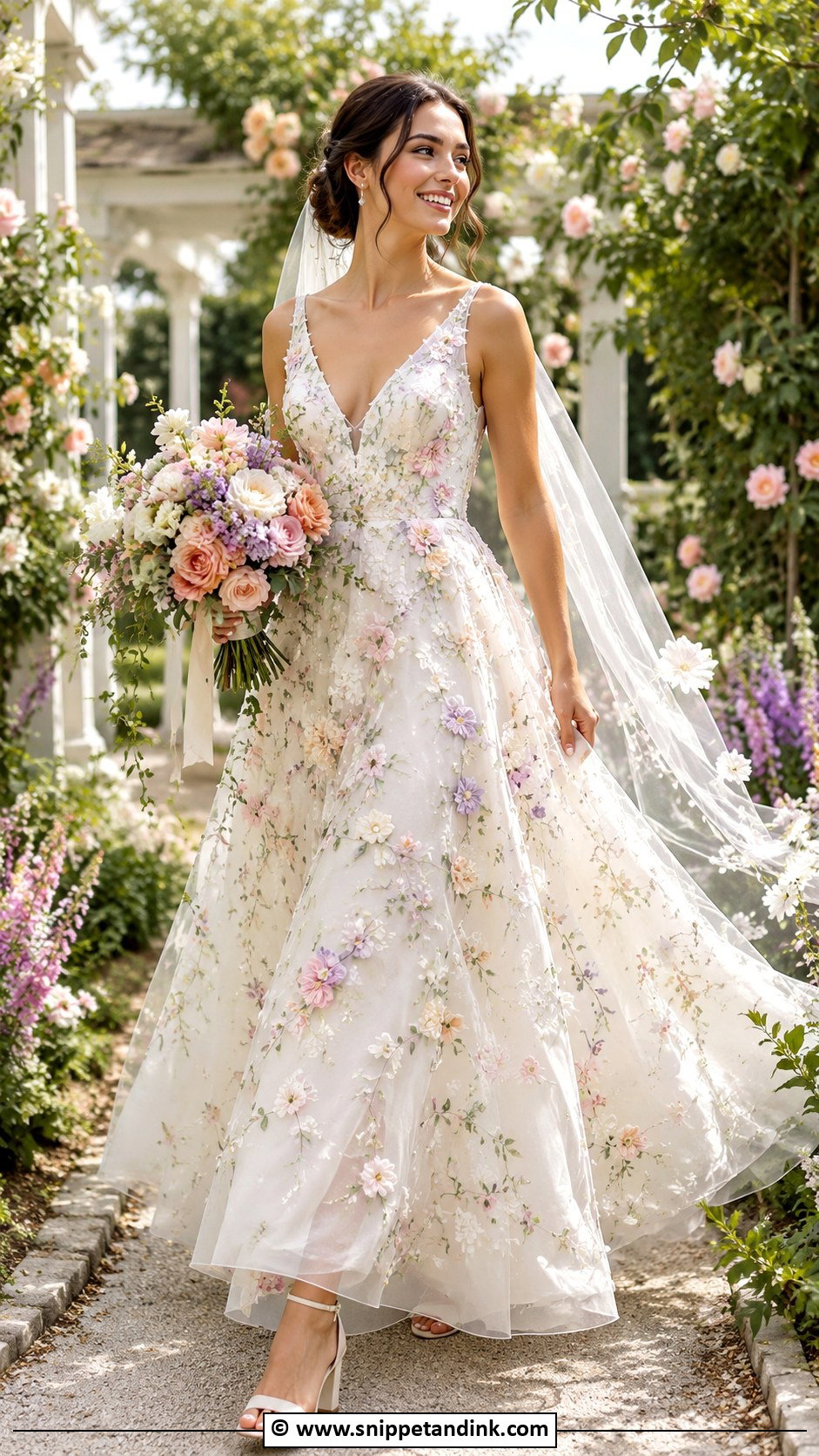
A garden dress should belong to the setting without disappearing into it, so I avoid green-toned embroidery that blends with hedges in photos. Embroidered flowers, soft pastel blooms or 3D appliqués suit an outdoor ceremony, and a flowing A-line or tulle skirt moves well on lawns and paths. Block heels stop you sinking into grass. A light veil, delicate earrings and seasonal garden flowers in the bouquet tie the look to the venue.
29. Floral Beach Wedding Dress
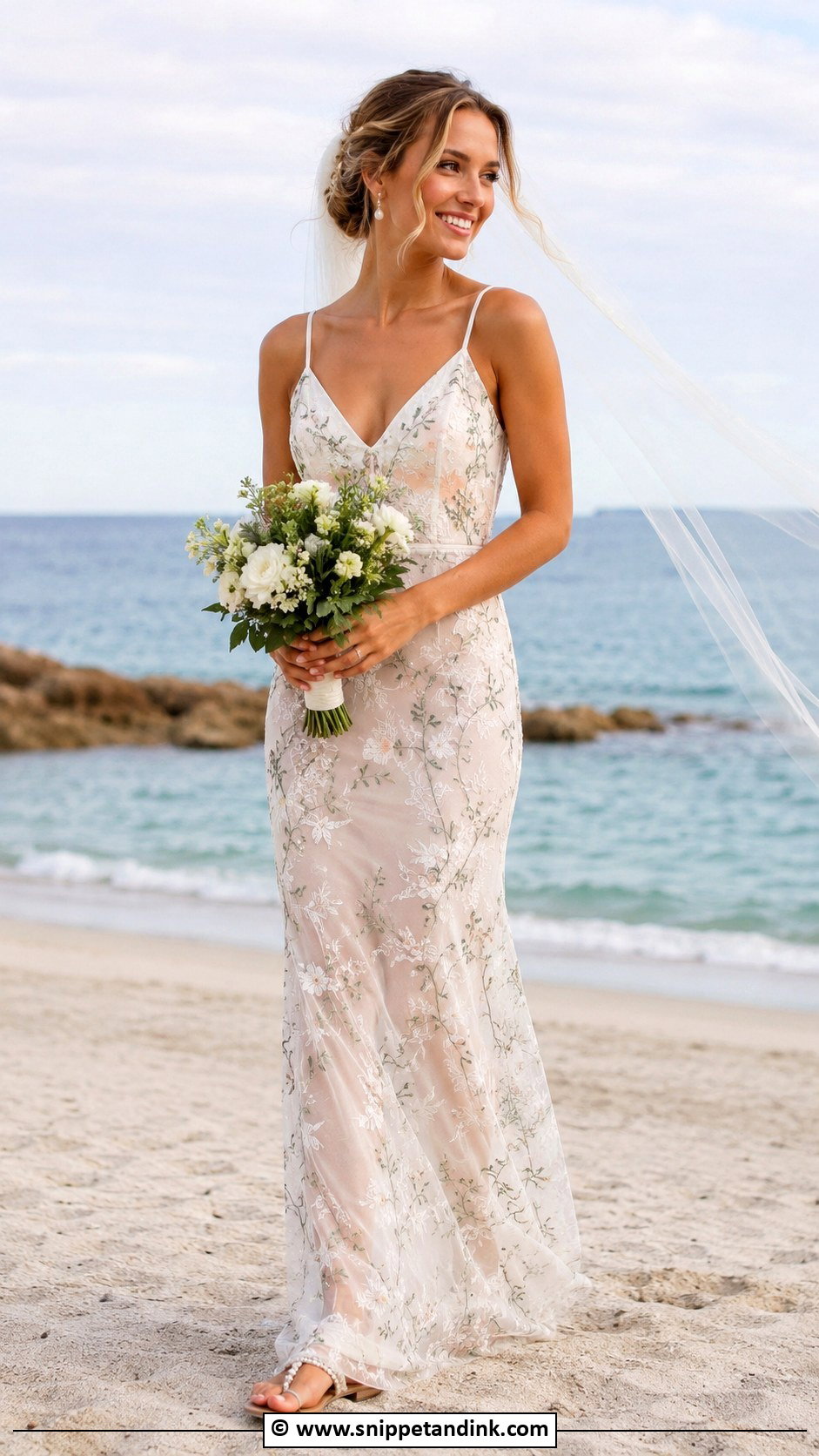
Salt air and sand are hard on beading, so a floral beach wedding dress should rely on embroidery or light appliqué instead. Chiffon, tulle, lace or soft organza breathe in the heat. A sheath, empire waist or relaxed A-line moves with the breeze. Flat sandals, pearl earrings and a simple veil or hair flower suit it, with a small white and green bouquet. Destination and seaside ceremonies give it the right relaxed feel.
30. Floral Reception Wedding Dress
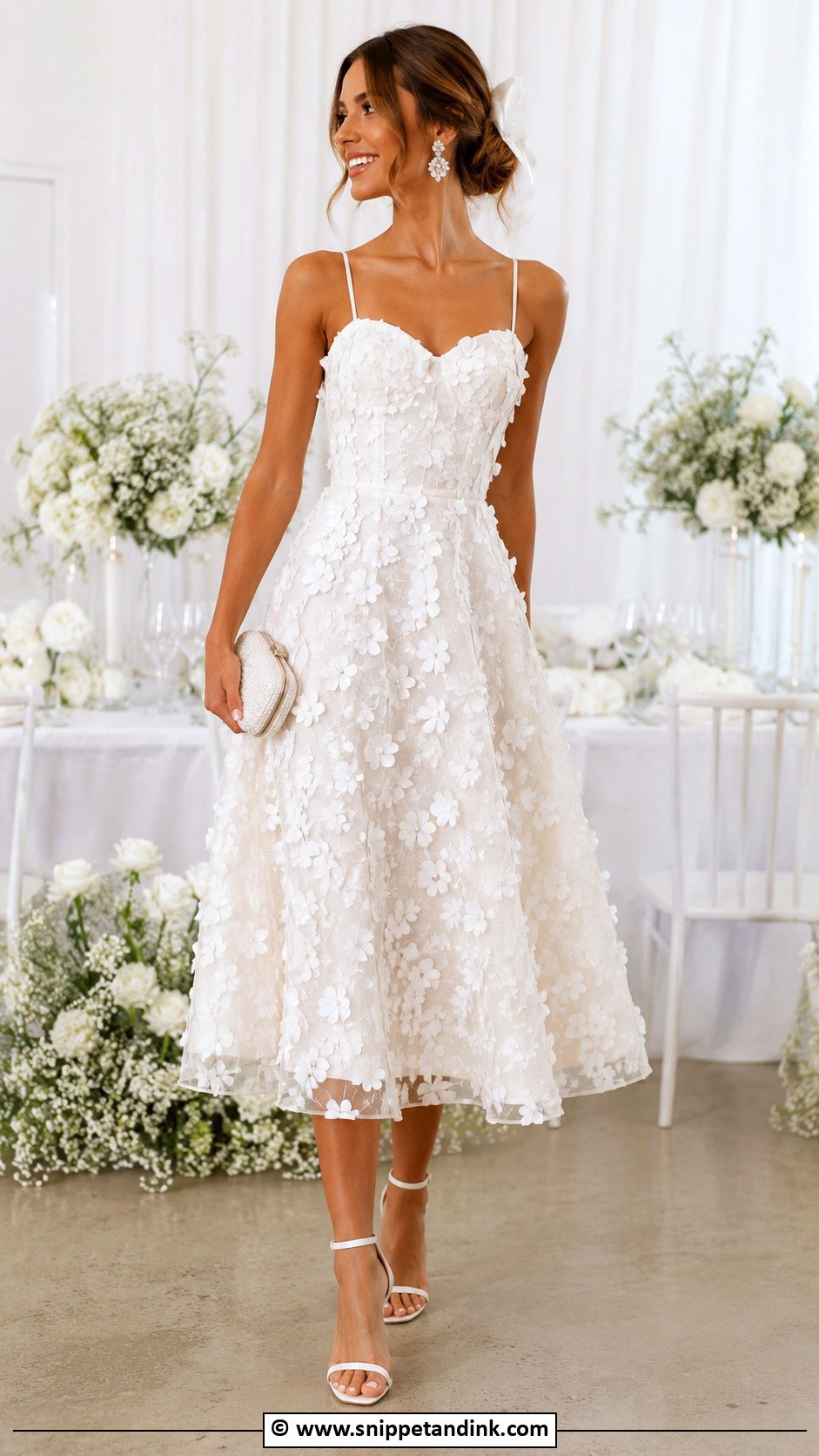
A second dress after the ceremony is about movement: a midi, mini, slip or fitted gown with floral appliqué, embroidery or rosettes keeps the theme while letting you dance. I usually suggest skipping the veil and switching to a bow, flower pin or sleek headband. Comfortable heels, sparkly earrings and a small clutch finish it. Pick something that echoes one detail of the main gown so the two outfits feel connected in the album.
What Raised Petals and Floral Lace Need From Fitting to Storage
Flowers make a dress harder to alter and care for, and very few brides are told this when they buy it. Plan for it early and none of it becomes a problem.
Alterations take longer
A seamstress can’t just cut through appliqué or a scalloped lace hem. The flowers along a seam have to be unpicked by hand, the seam adjusted, then the motifs stitched back so they still look continuous. That is slow work, so ask your seamstress how much time she needs for an appliquéd gown and expect it to be more than for a plain one. Bring your wedding shoes and undergarments to every fitting so the hem and bodice are set once.
Steaming and transport
Never iron raised flowers or lace directly. I steam from the inside of the skirt with the nozzle held off the fabric, and I fluff 3D petals by hand afterward. In the car, lay the dress over the back seat in its bag rather than folding it into a box, because crushed appliqué petals don’t always spring back on the day.
After the wedding
- Have the gown professionally cleaned within a few weeks. Spilled champagne and sugary drinks can dry clear and then yellow over time.
- Don’t hang a heavy appliquéd gown by its shoulder straps for months; use the inner hanging loops, or store it flat in a box with acid-free tissue between the folds.
- Keep it in a breathable cotton bag, not plastic, which can trap moisture and discolor fabric.
- Before the gown goes in the box, check for loose petals or beads and have them stitched back.
One Floral Detail Should Lead the Whole Outfit
Floral bridal dresses range from soft and classic to bold and modern, and the shape and styling decide which way yours goes. A 3D flower gown makes a strong statement, while a floral veil or embroidered bodice stays subtle. Printed blooms suit outdoor weddings, and lace florals hold up in formal rooms. Decide which floral element leads, then let the shoes, bouquet, veil and jewelry support it rather than compete with it.
You'll Like These Ideas:




Leave a Reply