
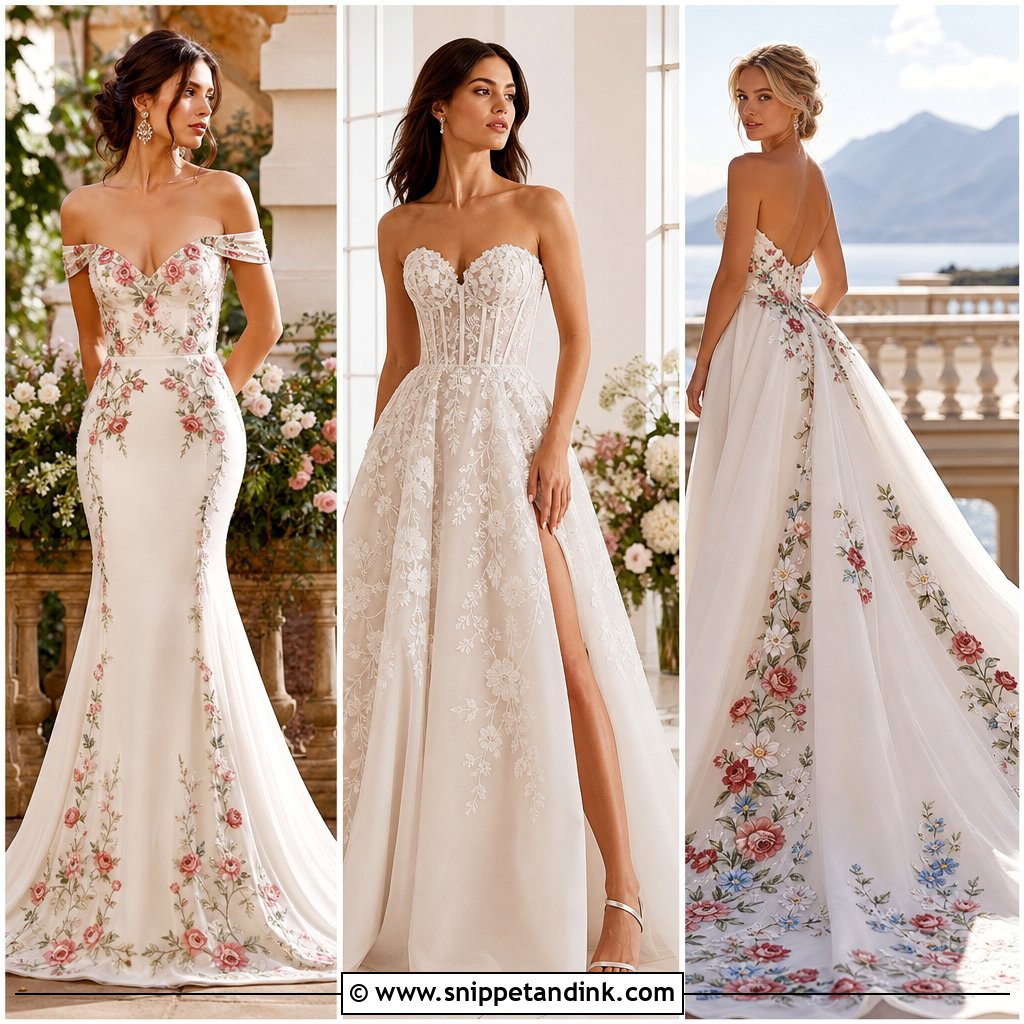
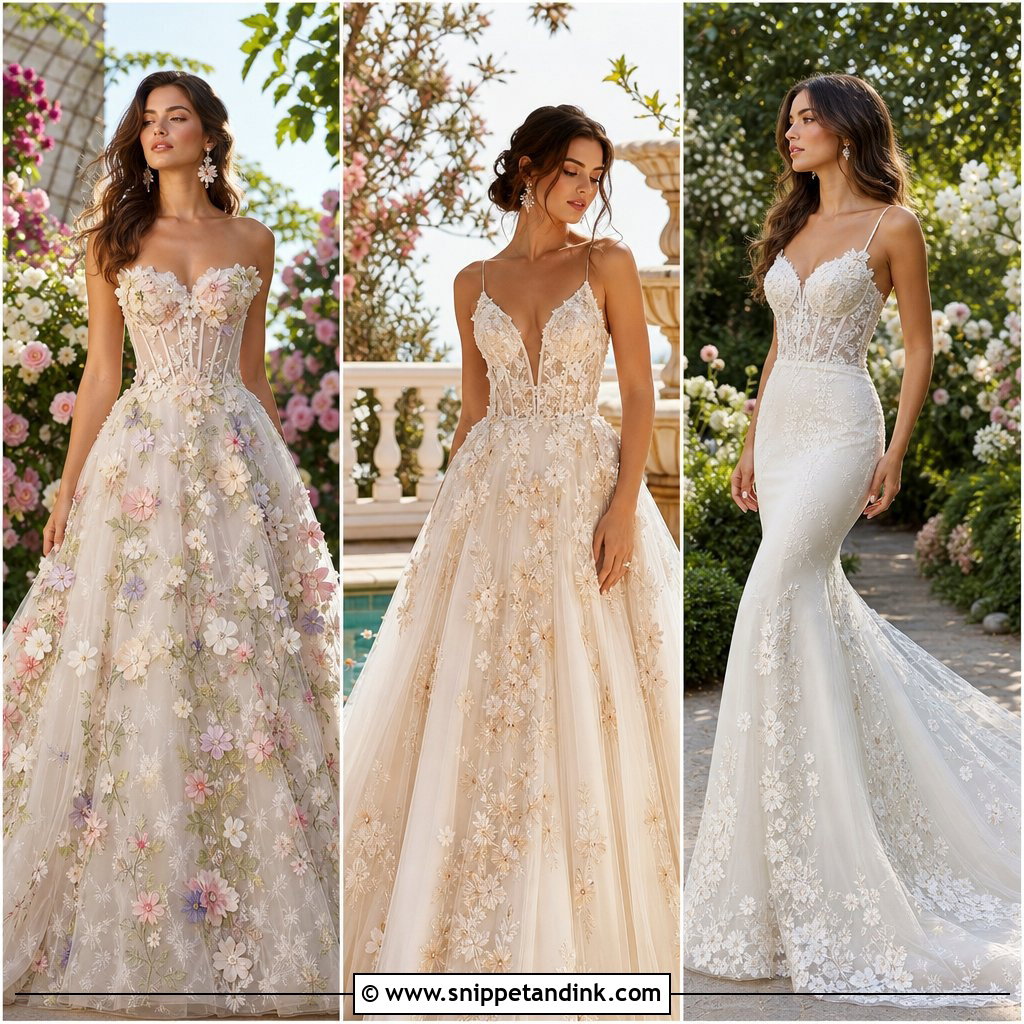
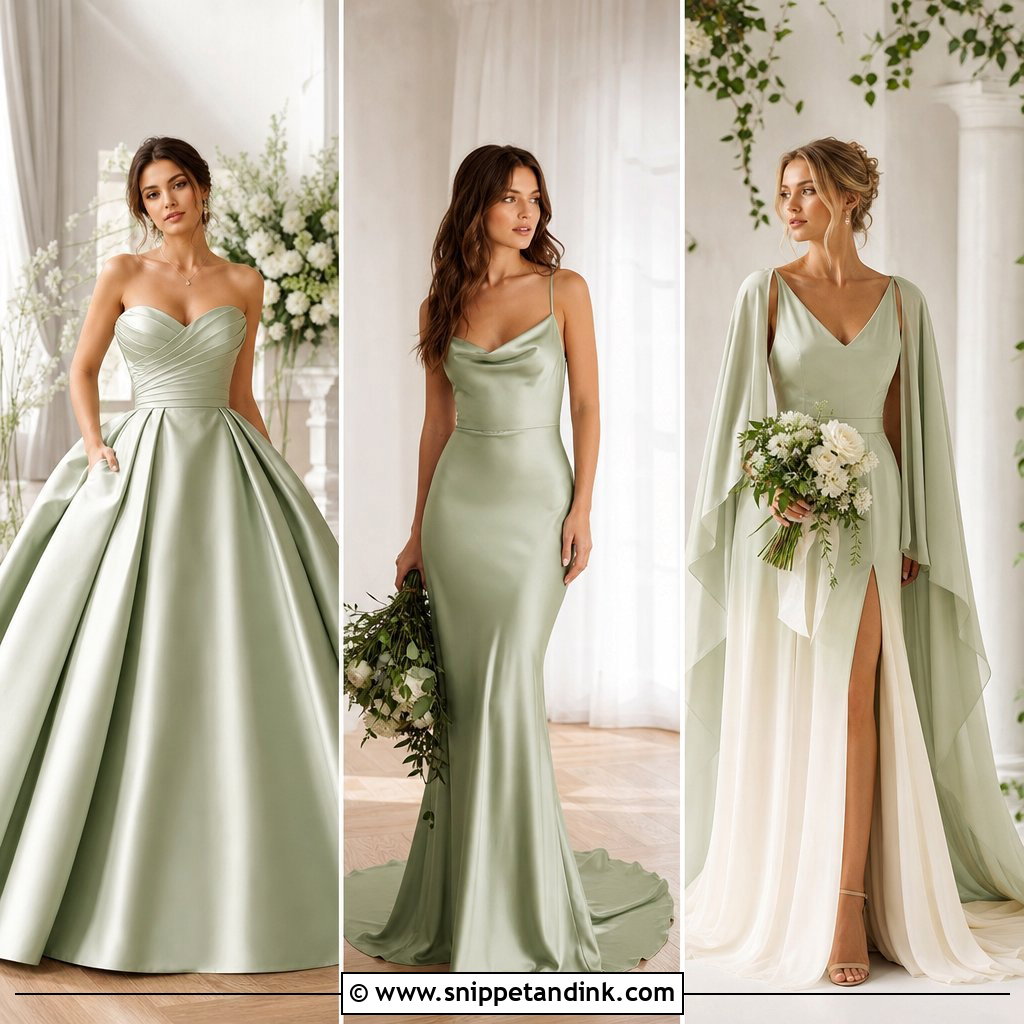
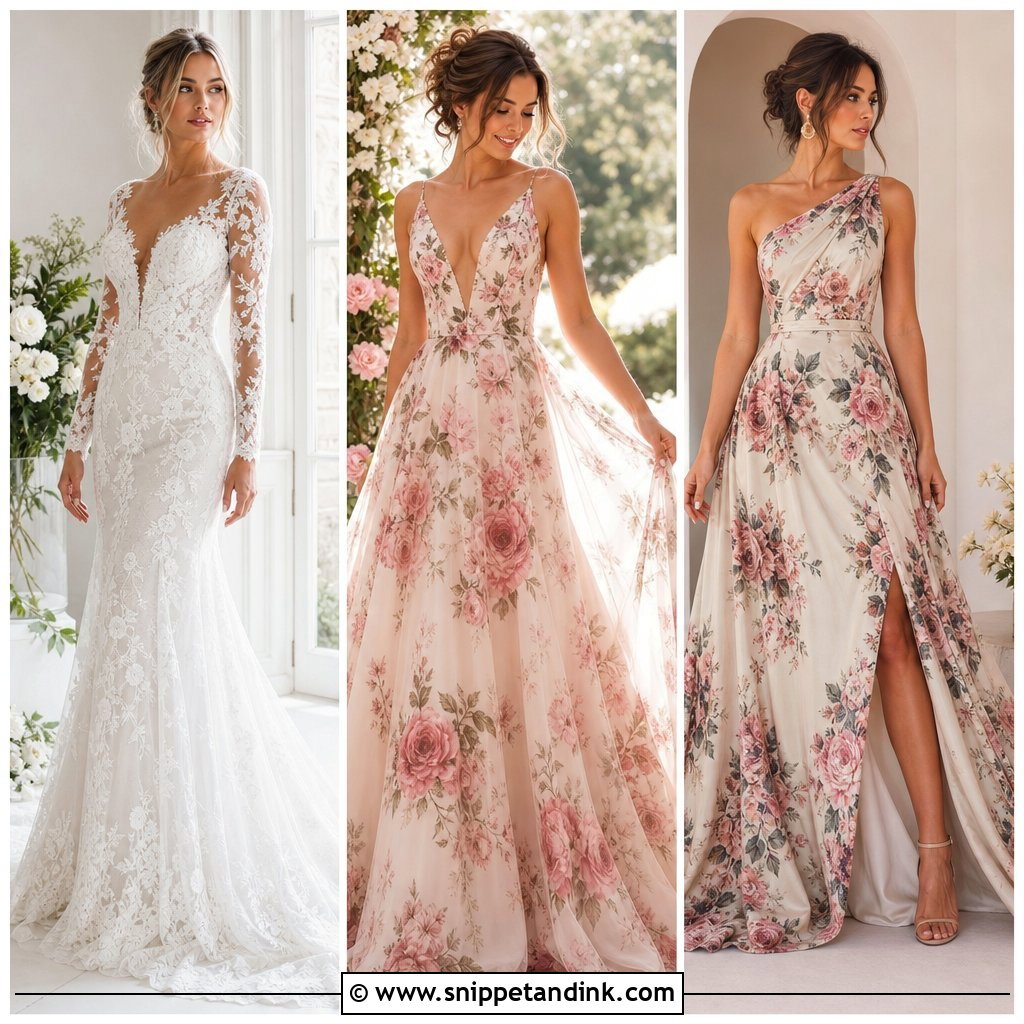
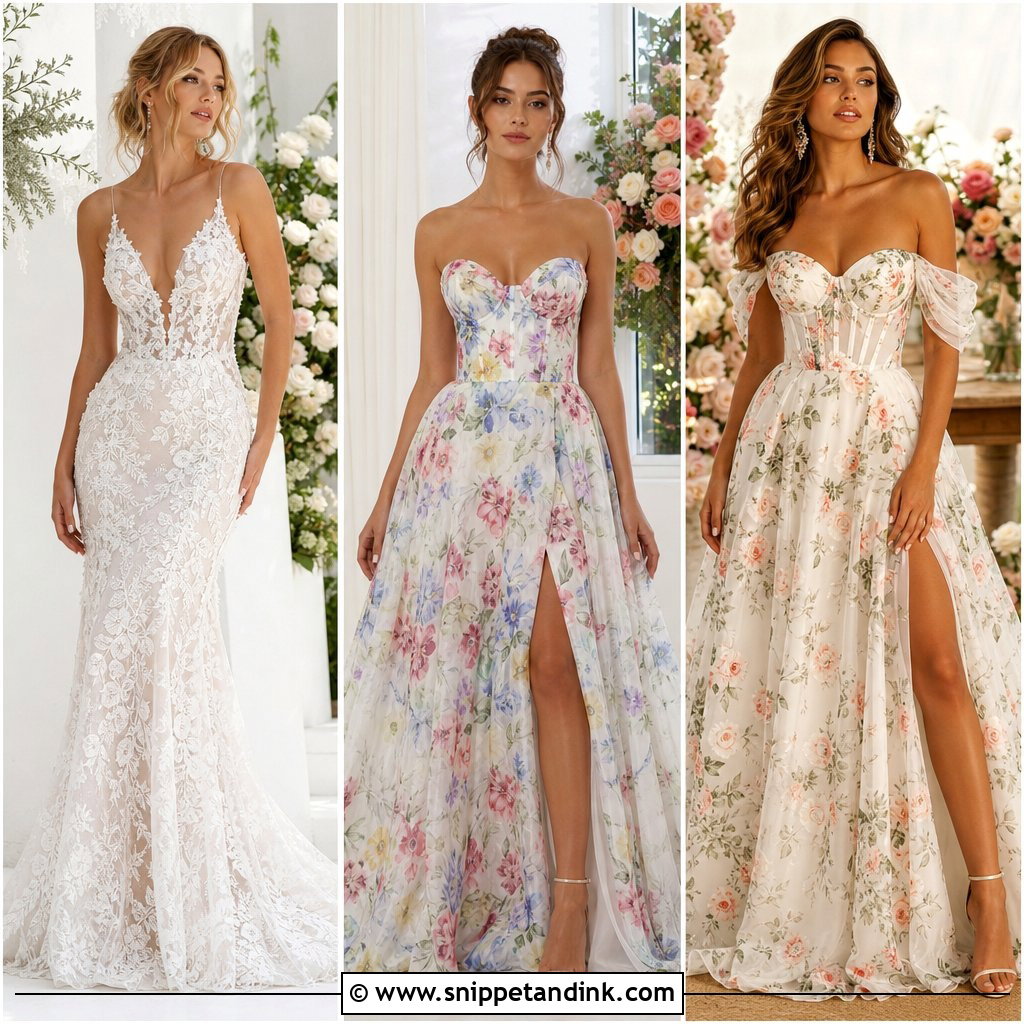
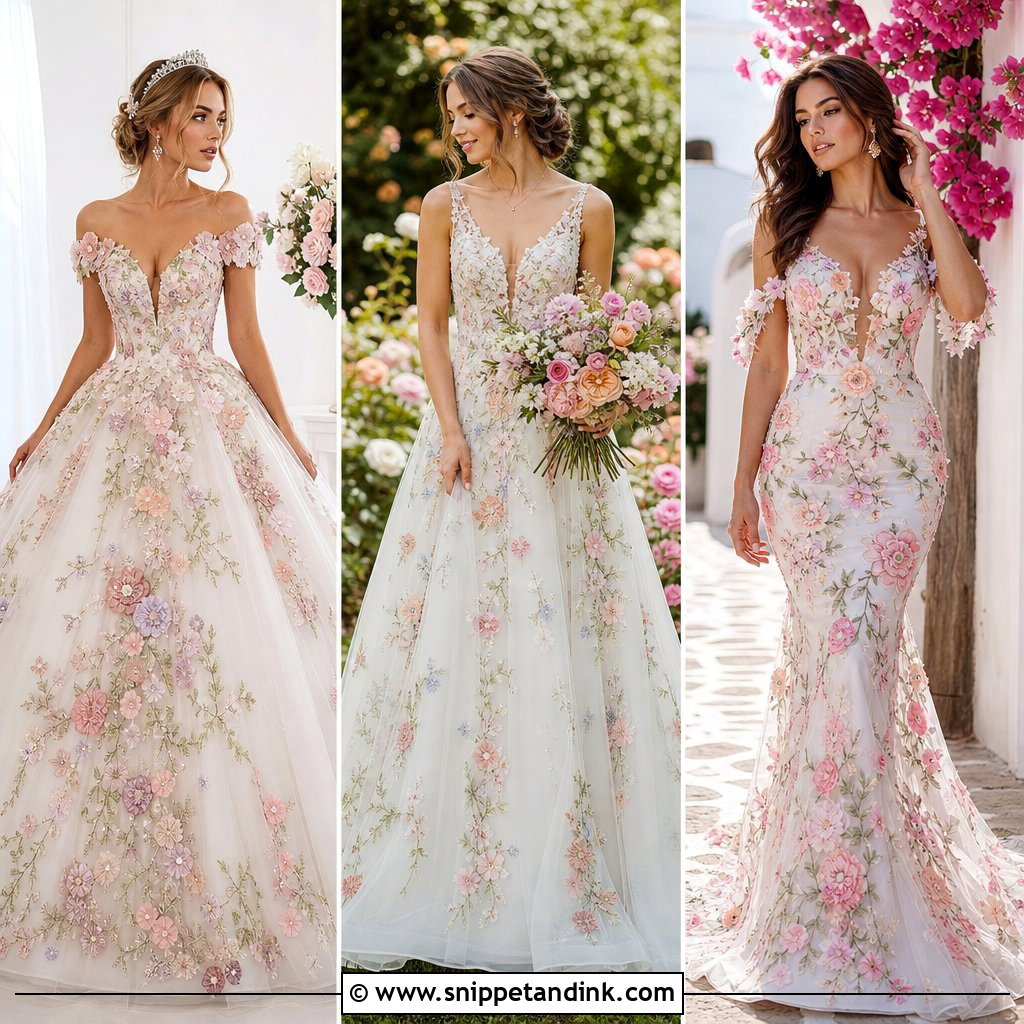
A floral gown is really two decisions stacked together: the shape of the dress, and how the flowers are made and where they sit on it. Bridal collections right now lean on dimensional appliqués, fine embroidery and textured lace, and I see them on classic ball gowns as often as on slim modern columns. When the blooms are stitched in the same white as the fabric, the effect stays quiet and only shows up close. Coloured thread or leafy green accents push it the other way. Whichever way you go, I style everything else around the gown so the shoes, jewellery, veil and bouquet support the flowers rather than compete with them. The twenty dresses below run from flowing A-lines to fitted mermaid shapes, each with notes on what I’d pair with it and what to watch for.
Reading the Flowers on a Gown at Your Appointment
Two dresses can both be called floral and be completely different garments. When I pull samples, I look at how the flowers were made before I look at the overall shape, because that tells me how the dress will behave on the day and how it will hold up afterward.
- Lace that is part of the fabric moves and breathes with the gown. Chantilly is fine and flat, alençon has a corded outline that gives the flowers a raised edge, and guipure is heavier with no net behind it.
- Appliqués are cut flowers stitched on top. Turn the bodice inside out: you want tiny hand stitches around each motif, not glue, which can yellow and lift.
- 3D petals in organza, tulle or satin add drama but crush under a seatbelt or a bouquet arm. Sit, hug and lean forward in the sample to see where they flatten.
- Embroidery is sewn straight into the base fabric. It lies flat, travels well, and coloured thread lets you add personality without changing the white of the dress.
Look at the gown under daylight too, if the salon has a window. Ivory flowers on a bright white base can read as grey or cream in outdoor photos, and colour shifts are much easier to catch before you order than after.
1. White A-Line Wedding Dress With Floral Lace
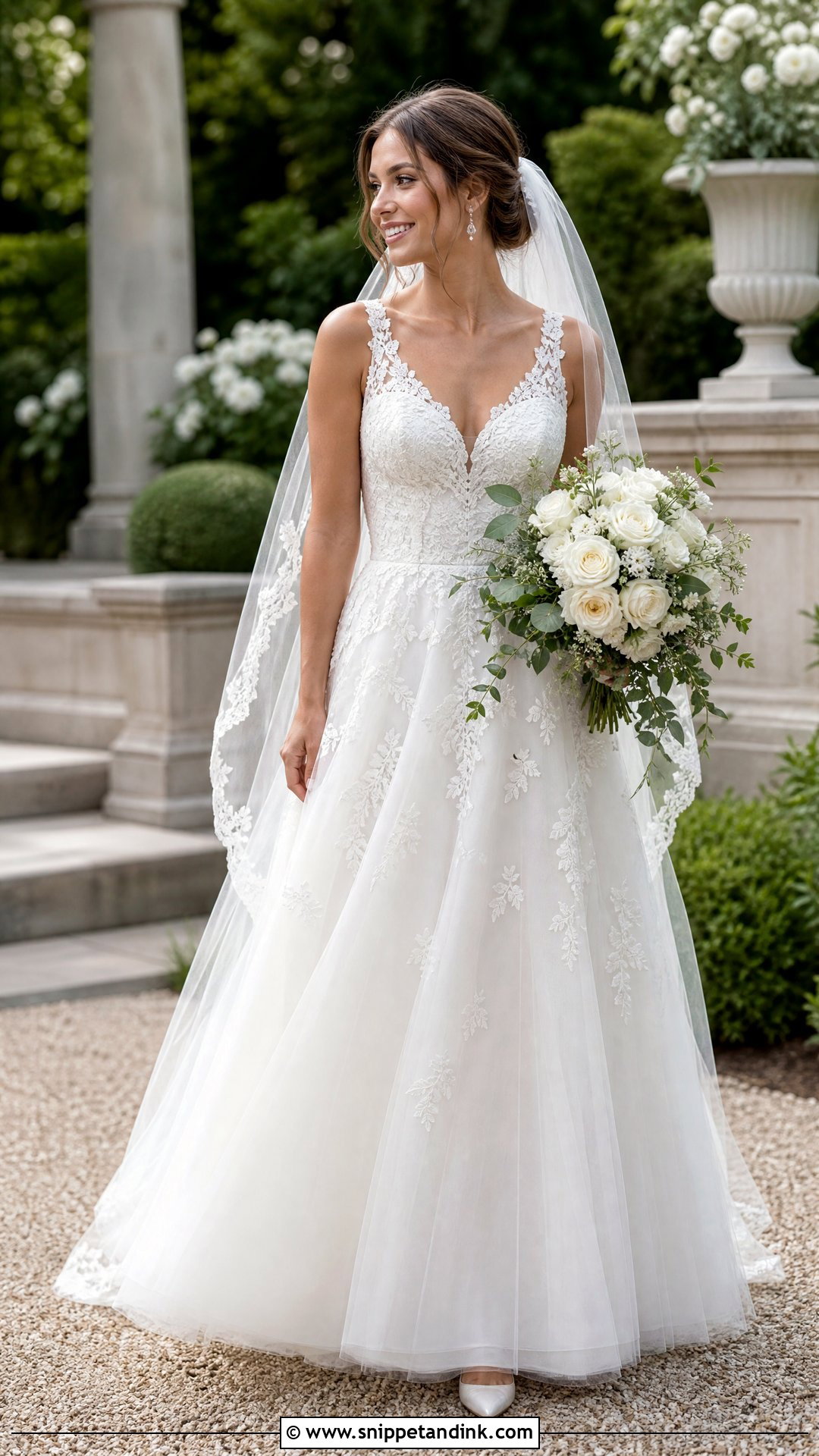
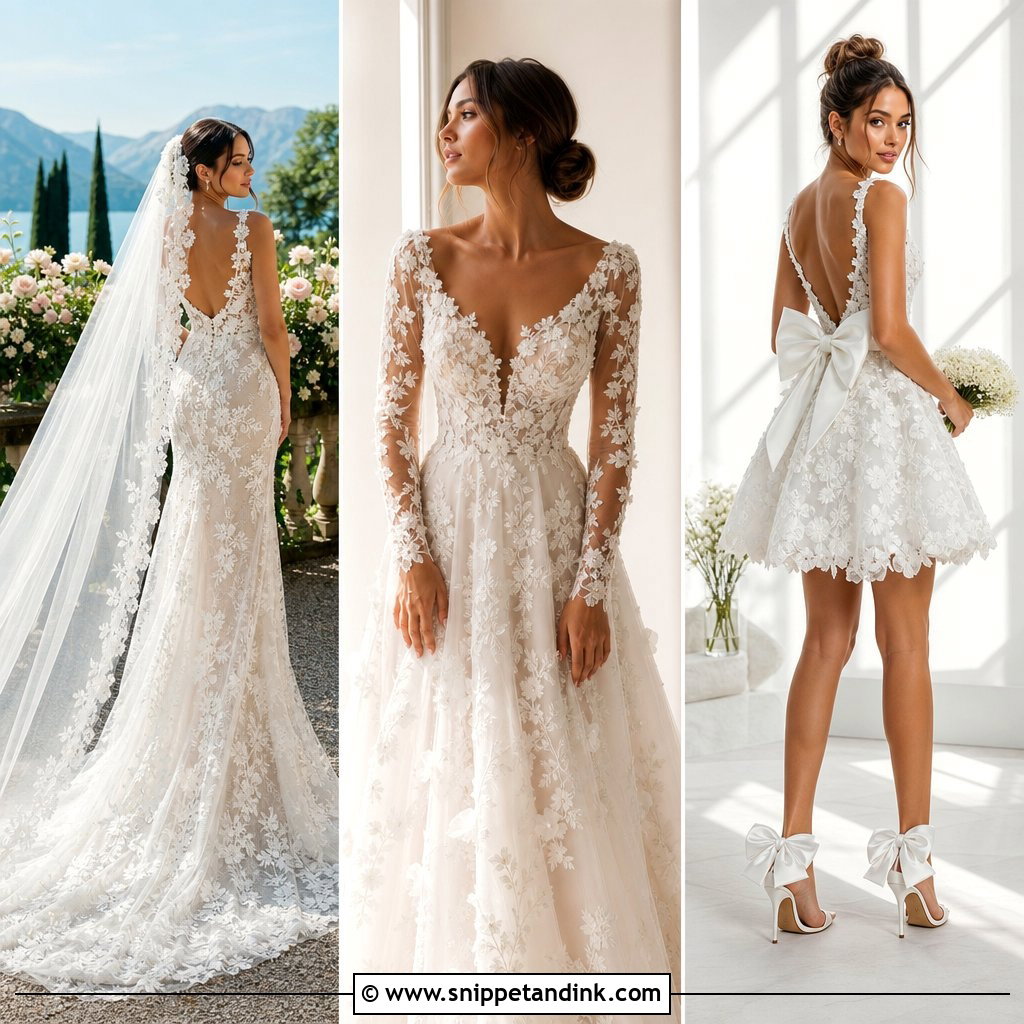
This is the dress I pull first for a bride who isn’t sure about flowers, because the lace does the work without fighting the shape. Look for lace that is densest on a fitted bodice and then thins out as it drifts onto a tulle or chiffon skirt; that fade keeps the waist defined and stops the gown from feeling heavy. At a fitting I check where the lace motifs have been cut and hand-placed along the hem, since a cheap finish shows as a straight scalloped edge chopped mid-flower. Pair it with a fingertip veil with a plain edge so the pattern stays visible, pearl drops, and pointed ivory pumps or a block heel if you’ll be on grass. A loose bouquet of white roses and seasonal greens finishes it, and the shape adapts to a ballroom or a lawn equally well.
2. White Strapless Ball Gown With 3D Flowers
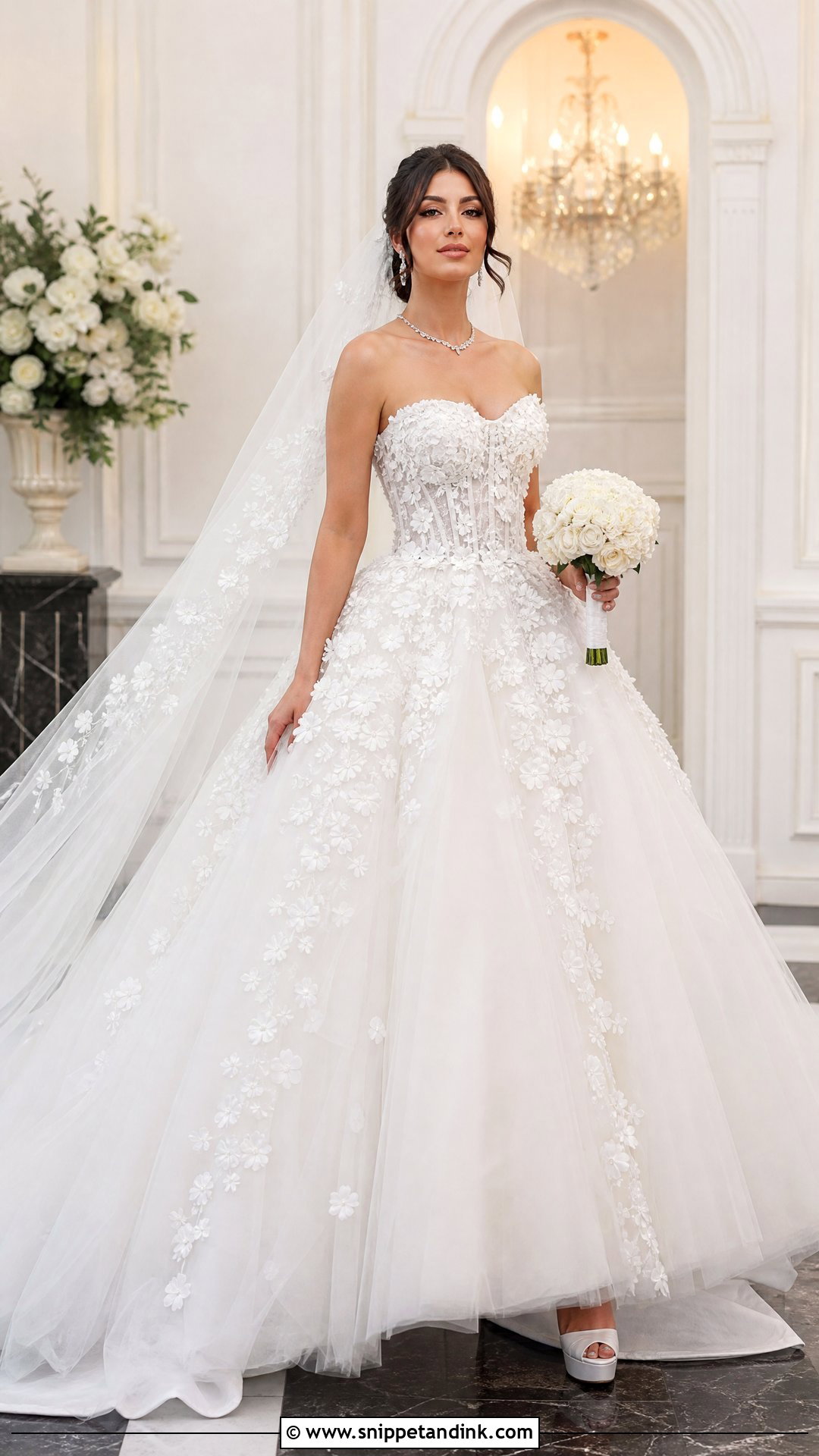
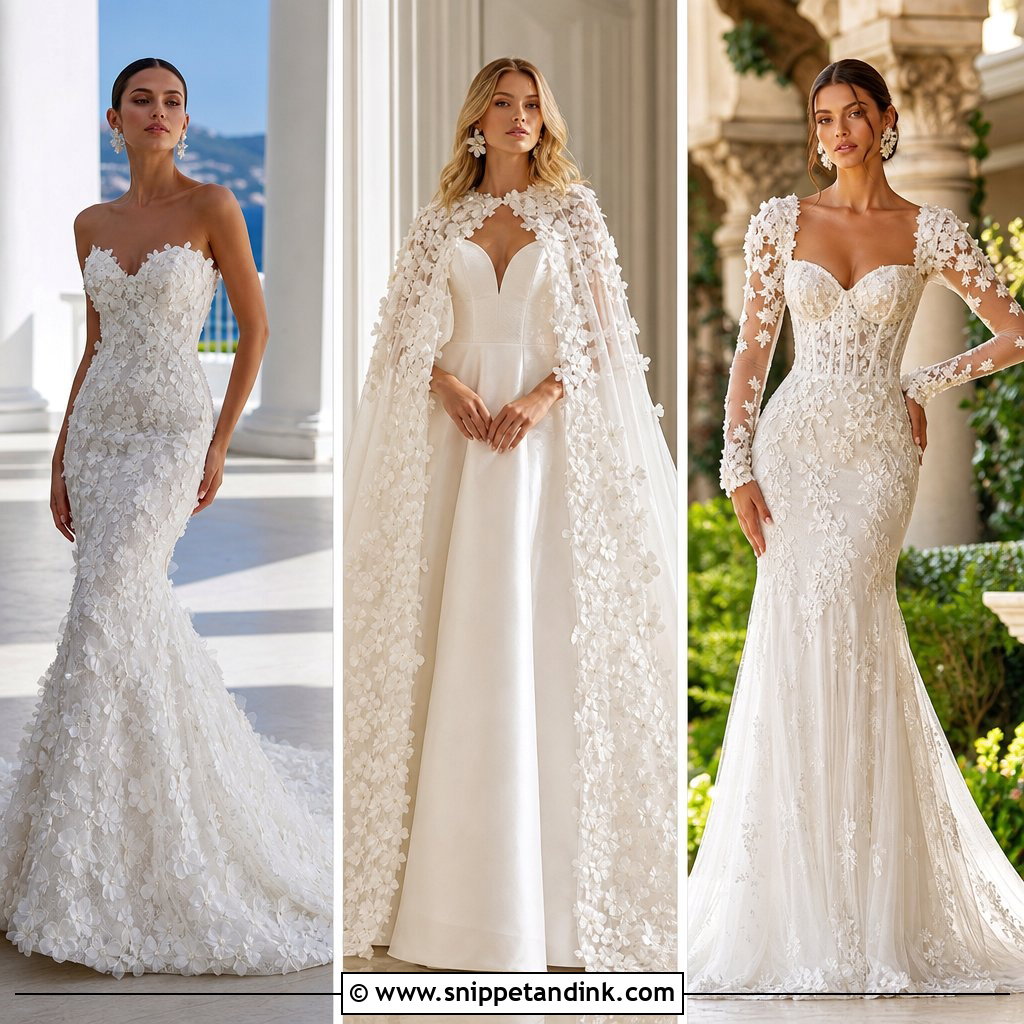
Three-dimensional flowers need room, and a full tulle skirt gives them that. The corset bodice is doing the heavy lifting here, so I always ask a bride to sit down in this one at the fitting: raised petals on the hip can crush flat in a car or a church pew, and the good ateliers reinforce them with a few hidden stitches at the base. Keep the neckline clean and wear a fine diamond or crystal necklace instead of anything chunky. A cathedral veil with a few scattered appliqués ties it together without hiding the skirt. Satin platforms and a compact white bouquet are all it needs. Since the gown carries so much texture, I keep hair polished and makeup simple. Save this one for a ballroom, a grand estate or a formal destination venue where the scale makes sense.
3. White Long Sleeve Wedding Dress With Embroidered Flowers
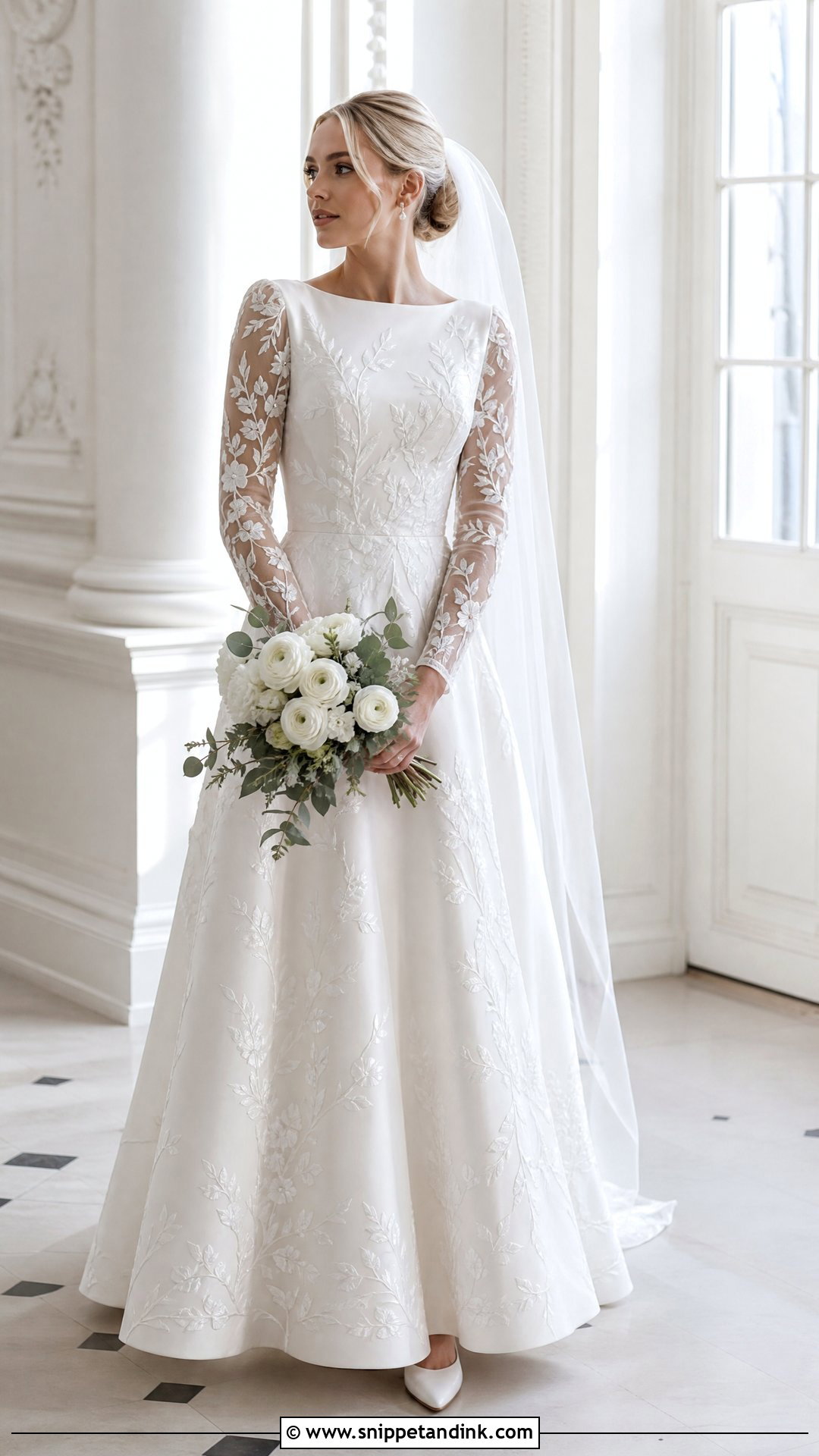
In autumn and winter I reach for sleeves, and embroidered vines on a sheer sleeve give coverage without bulk. Ask for an opaque bodice under the sheer layer so you aren’t relying on the embroidery for modesty. The thing I check is the armhole: embroidered sleeves have almost no stretch, so lift your arms above your head and hug someone at the fitting before you sign off. An A-line or softly fitted skirt keeps it easy to walk in. Keep jewellery to pearl studs and a slim bracelet with closed-toe satin shoes, and wear your hair in a low bun so the sleeve detail and back of the dress stay on show.
4. White Off-Shoulder Wedding Dress With Floral Appliqué
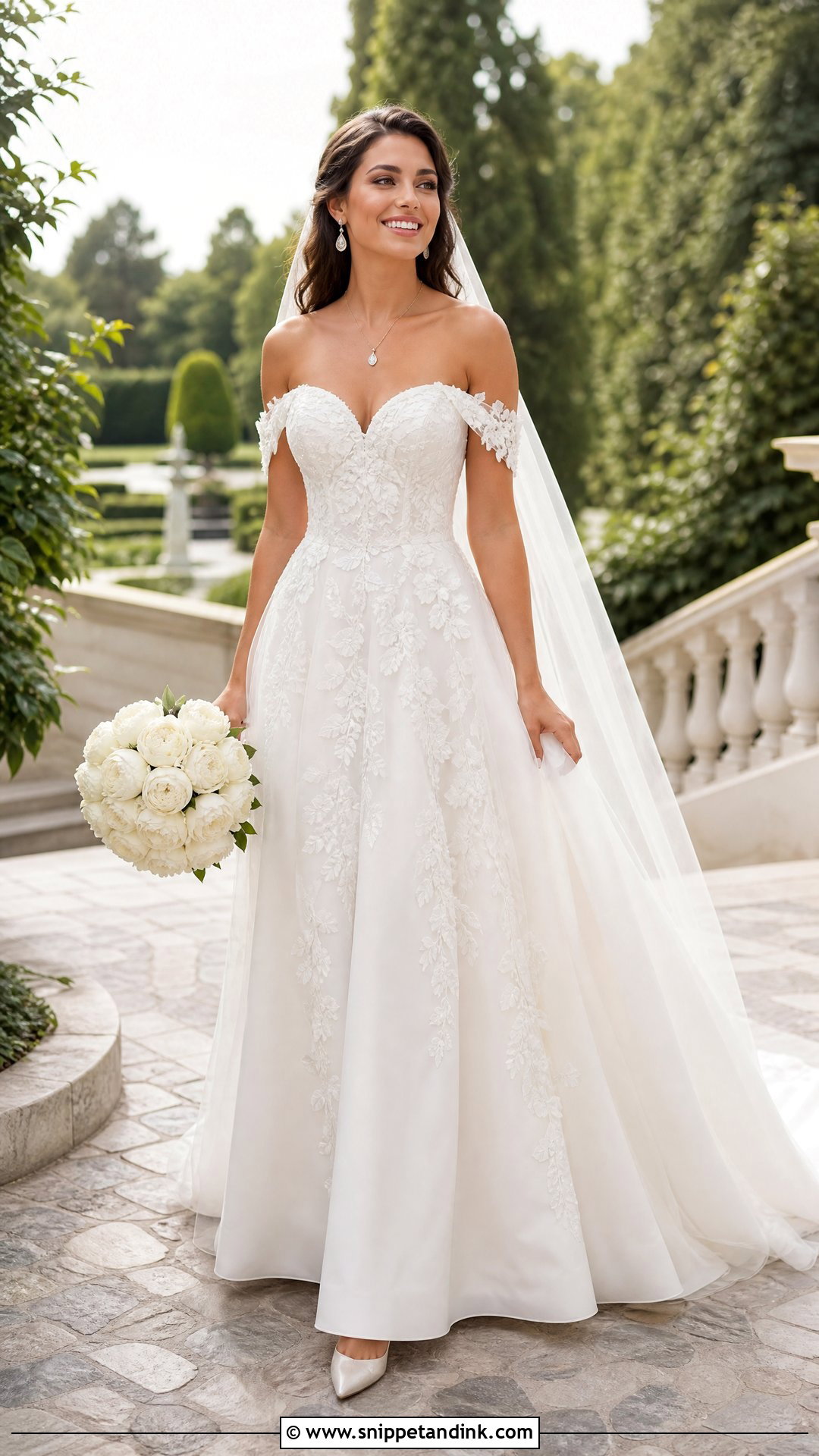
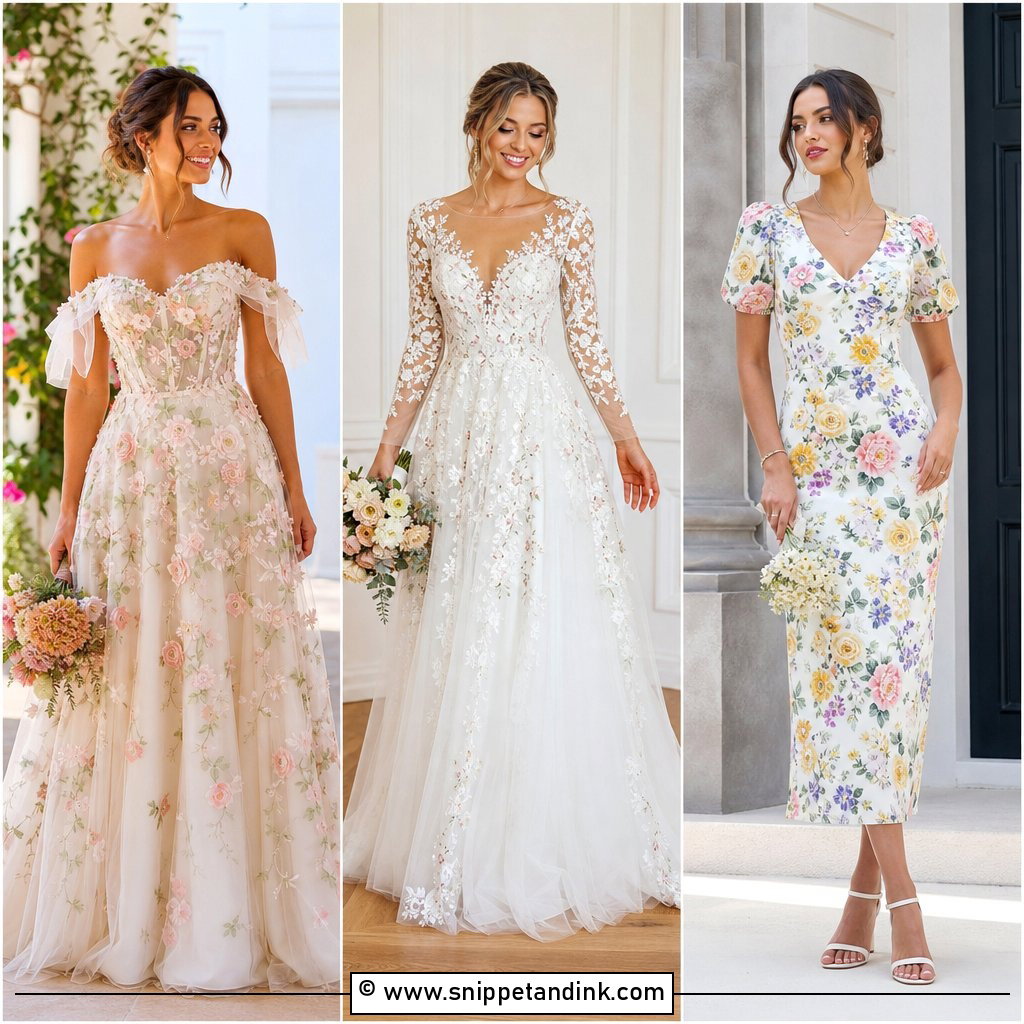
Off-shoulder sleeves are a gorgeous frame for appliqués, but they only work if the dress has a proper inner bodice holding it up; otherwise you spend the evening hitching it. Flowers grouped at the neckline, waist and upper skirt read best here. Bare shoulders suit a small pendant, short drop earrings and a swept-back hairstyle that leaves the collarbone clear. I’d choose a plain chapel veil so the appliqués stay the focus. Shoes depend on the venue: pointed pumps indoors, embellished flats on a lawn. A rounded bouquet of white peonies with a little greenery keeps the floral thread going. One warning from fittings: off-shoulder bands restrict how high you can lift your arms, so practise your first-dance hold.
5. White Mermaid Wedding Dress With Floral Lace
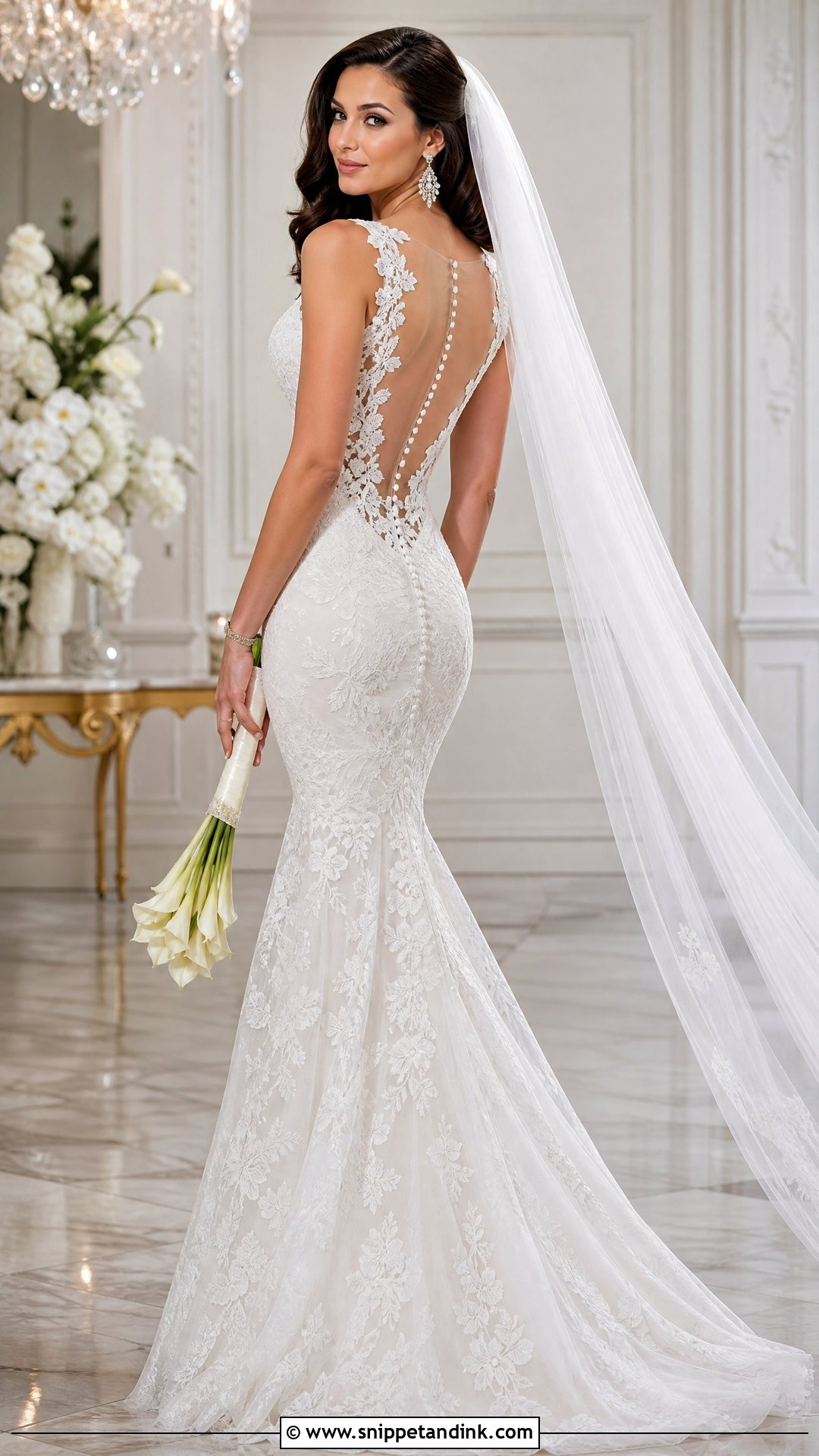
A mermaid cut gives floral lace a sculpted line, flat through the hips and flaring below the knee. Where the flare starts matters more than anything. Too low and you’ll shuffle; I have brides walk up a step in the sample before deciding. Lace can cover the whole gown or sit only on the bodice and train, and a sheer back with covered buttons adds detail without clutter. Crystal earrings, a simple bracelet and heels at the exact height you’ll wear on the day (the hem is cut to them) keep it clean. A long plain veil frames the shape, and a slim bouquet of calla lilies or orchids follows the narrow line instead of breaking it.
6. White Square Neck Wedding Dress With Organza Flowers
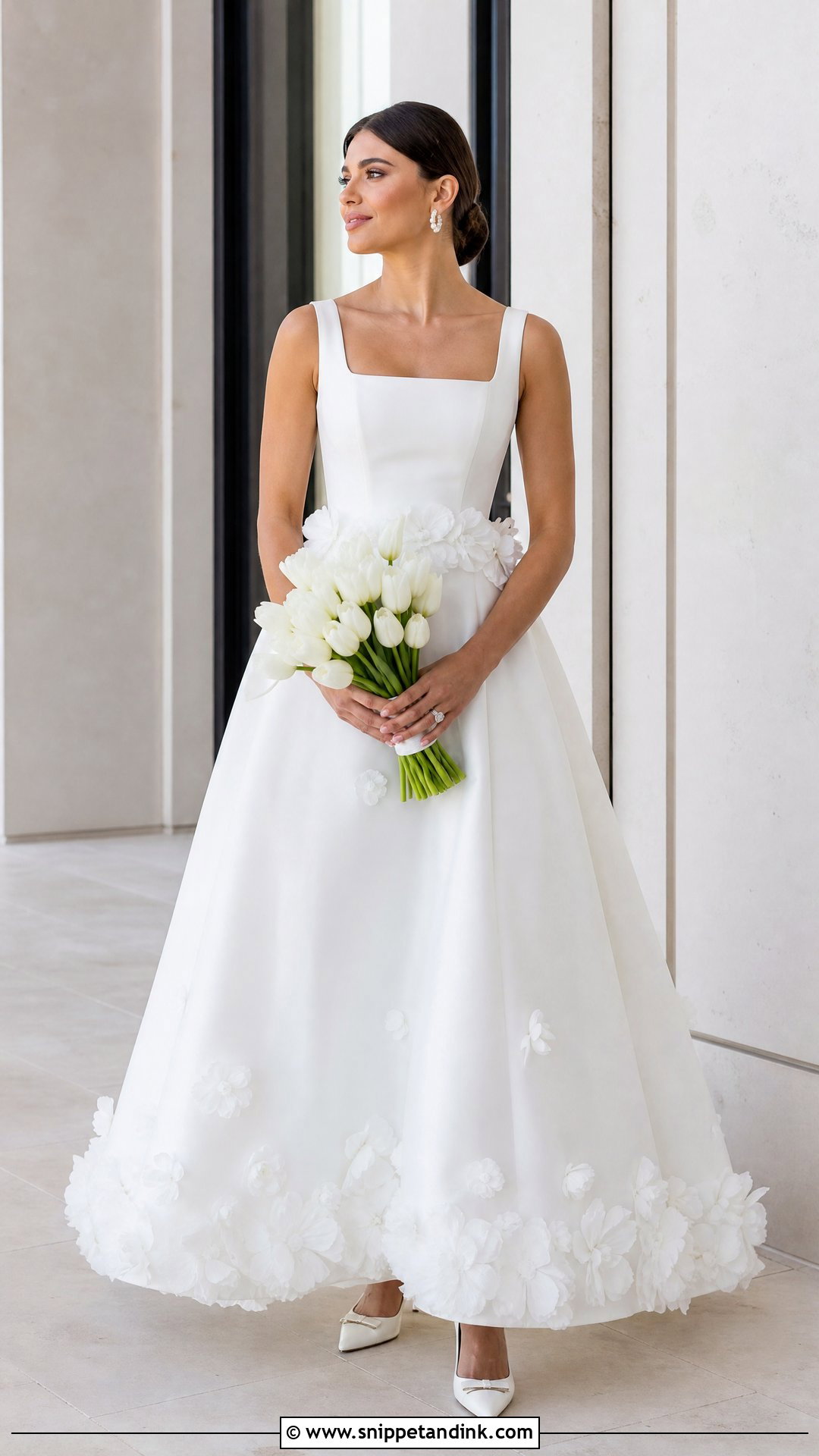
Organza flowers are light and slightly translucent, so they soften a square neckline without the weight of lace. That geometric neck is a modern base, and wide straps or short sleeves give it real support. Keep the petals around the waist and hem of an A-line skirt. One practical point: organza petals crease if they’re packed flat, so I fluff each one with cool steam from a distance after the dress arrives at the venue. Pearl hoops and a smooth low bun suit the neckline. Wear plain ivory heels and carry a structured bouquet of tulips or roses. Finish with a shoulder-length veil or a sleek hair bow, which looks right in a gallery or a pared-back modern space.
7. White Wedding Dress With Colorful Embroidered Flowers
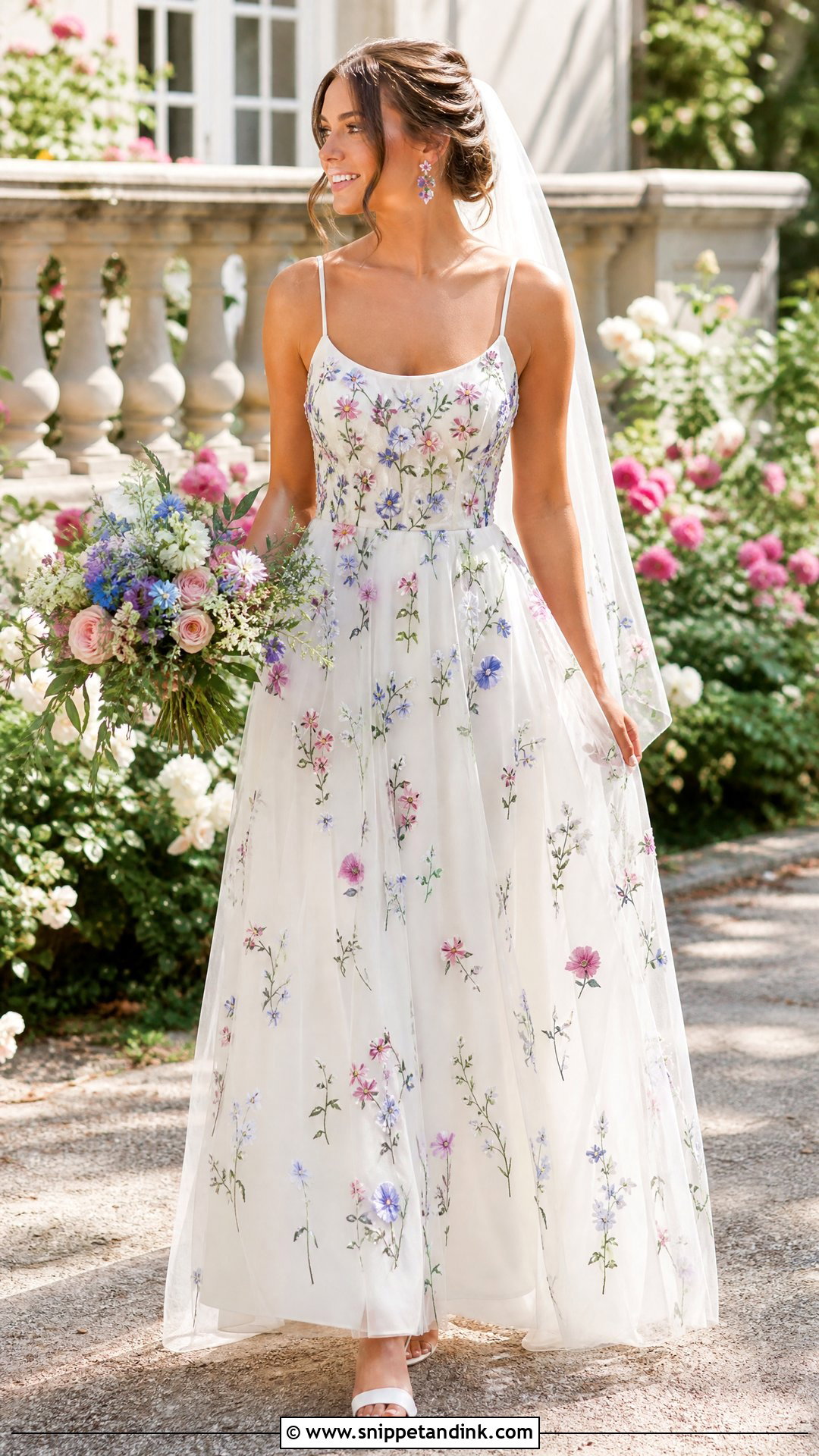
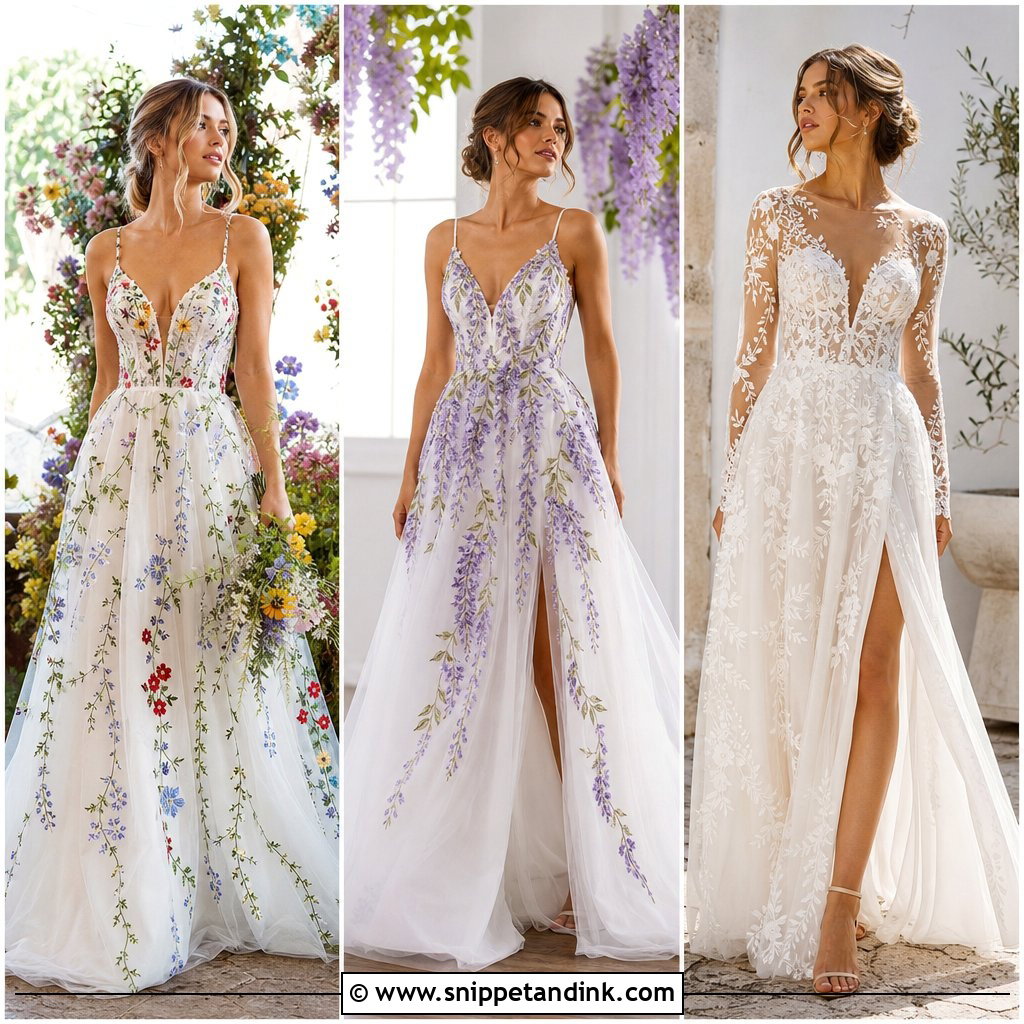
Coloured embroidery is where a white gown starts to feel personal. Soft blue, pink, lavender and sage are gentle, while deeper wildflower colors give real contrast. The embroidery should flow from bodice to skirt rather than appear in random patches. I pick one thread colour and repeat it once more, in a shoe or a bouquet ribbon, not everywhere. Keep the veil plain white. Before your florist builds the bouquet, take a swatch photo in daylight, because coloured thread can read cooler or warmer than you expect, and matching every shade makes the whole picture busy.
8. White Tulle Wedding Dress With Wildflower Embroidery
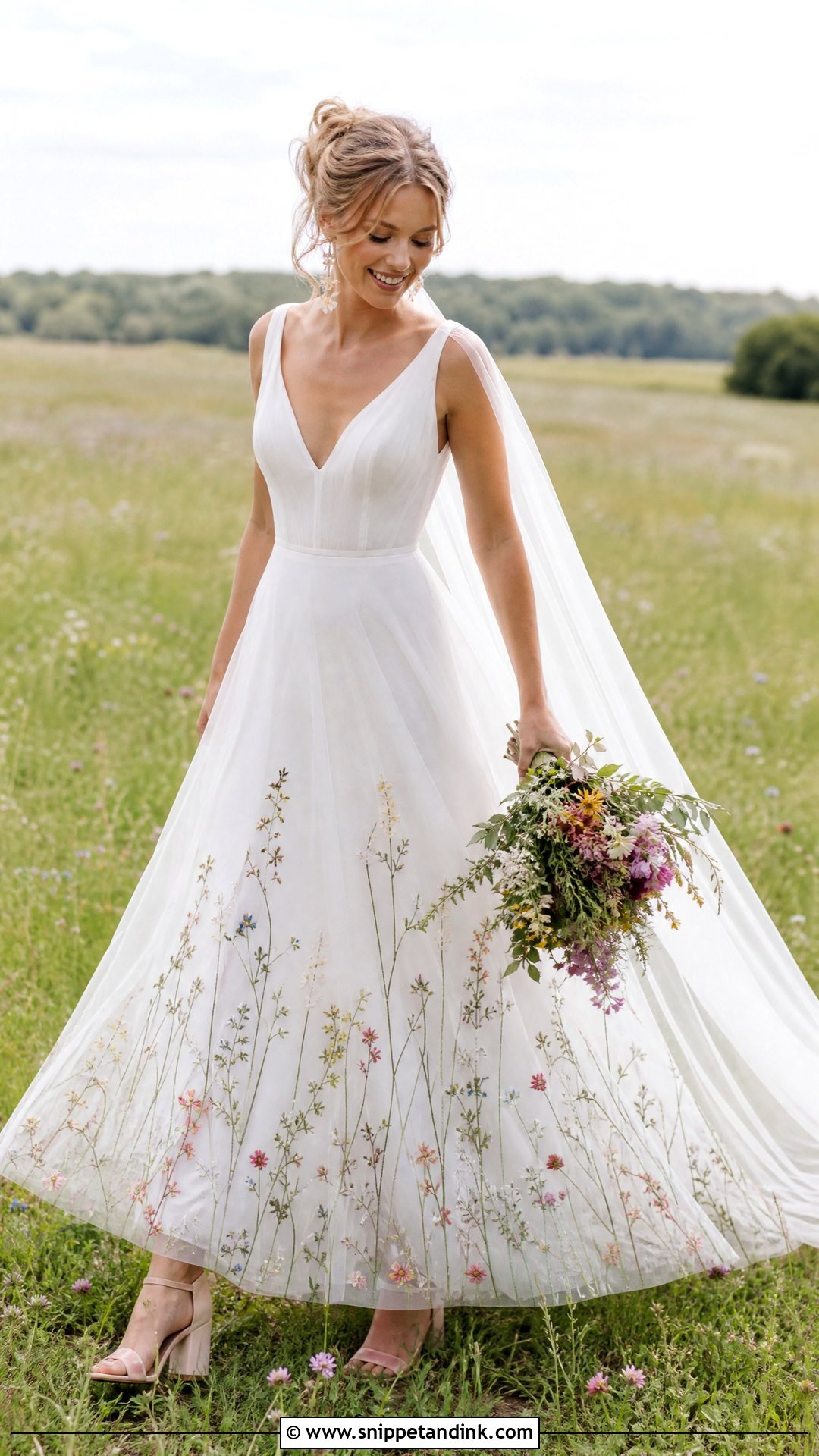
Wildflowers stitched to look as if they’re growing up from the hem give a soft, natural fade that lightens toward the bodice. I like an airy A-line with a supportive sleeveless top here. A nude-lined tulle makes fine stems and petal colours stand out more crisply than a white lining does, which is worth asking about at the appointment. Style it with small botanical earrings, block heels and a loose braided updo. If you want coverage, a sheer cape keeps the embroidery visible. Be aware that the hem is where the embroidery lives, and the hem is what drags through wet grass at a meadow or woodland ceremony, so plan a bustle and a hem guard.
9. White Wedding Dress With Rose Appliqués
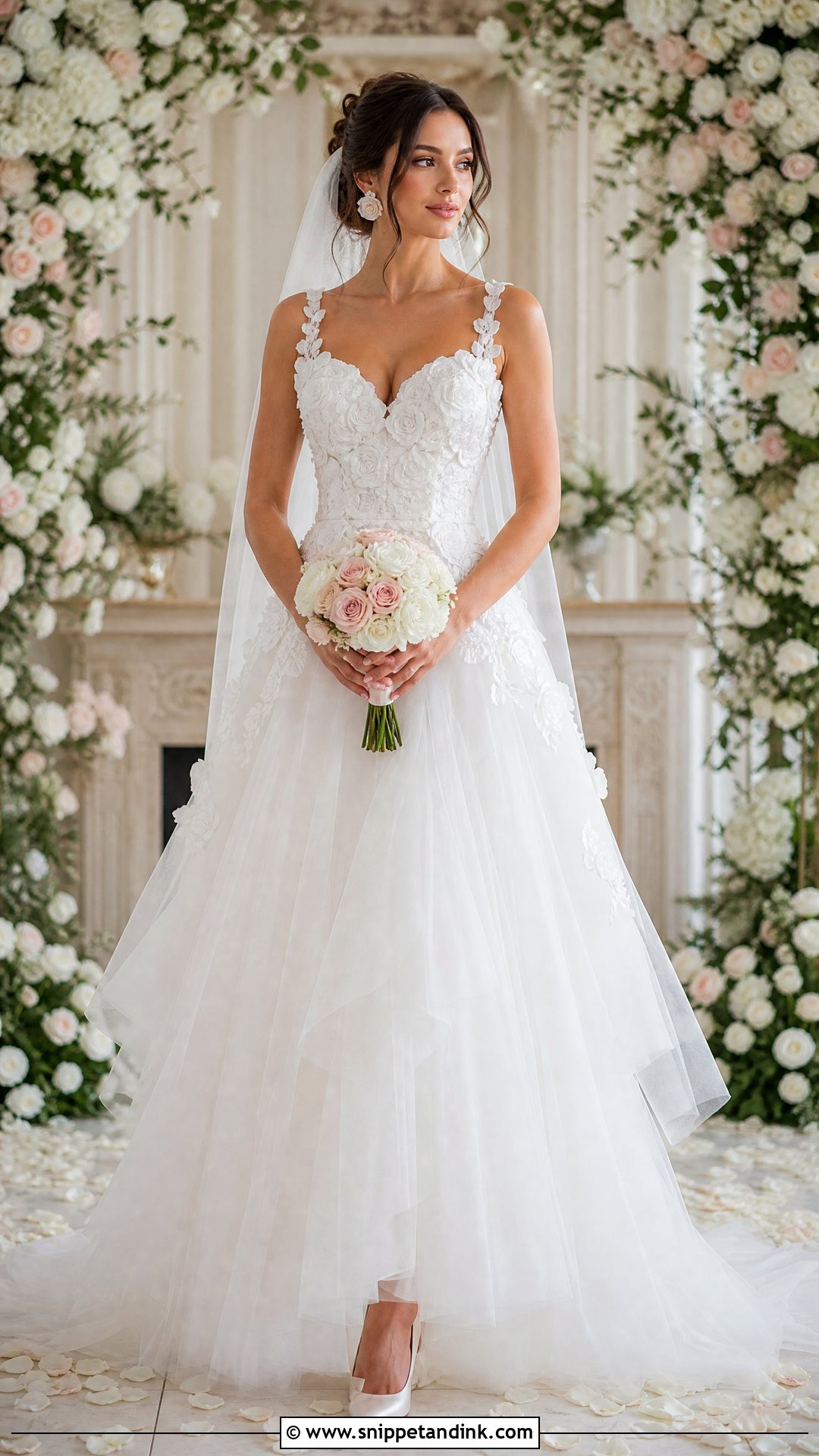
Rose appliqués are instantly recognisable, and their size sets the mood. Medium roses around the neckline and waist feel classic; oversized sculpted ones look editorial. I keep the skirt smooth satin or layered tulle so the outfit doesn’t turn into all texture. Rose studs, a plain veil and satin pumps on a stable heel finish it. A white or blush rose bouquet connects naturally, but keep it compact, since a large bouquet held at the waist covers exactly the part of the bodice the roses decorate. Hair should stay polished and simple.
10. White Tea-Length Wedding Dress With Daisy Lace
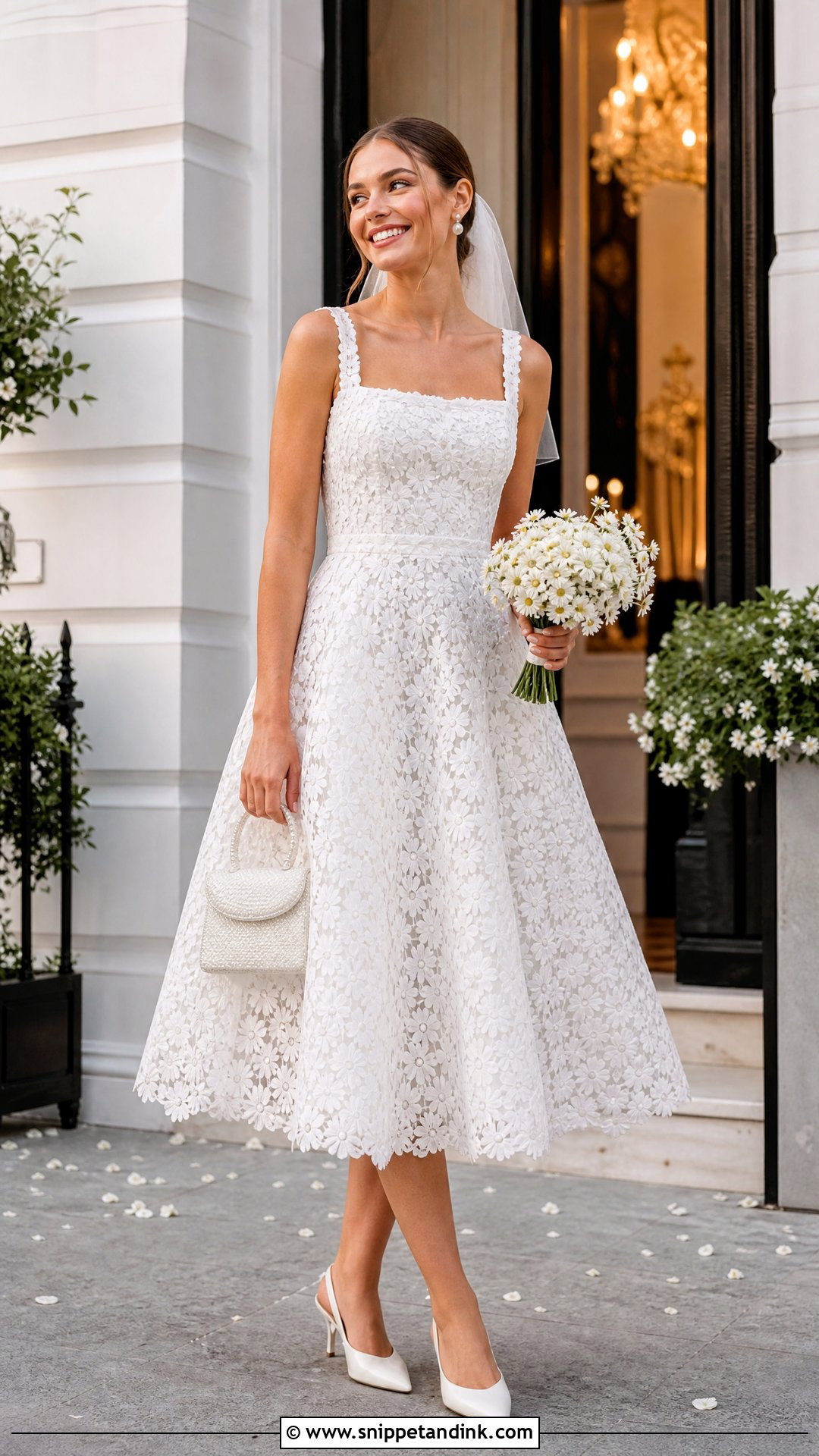
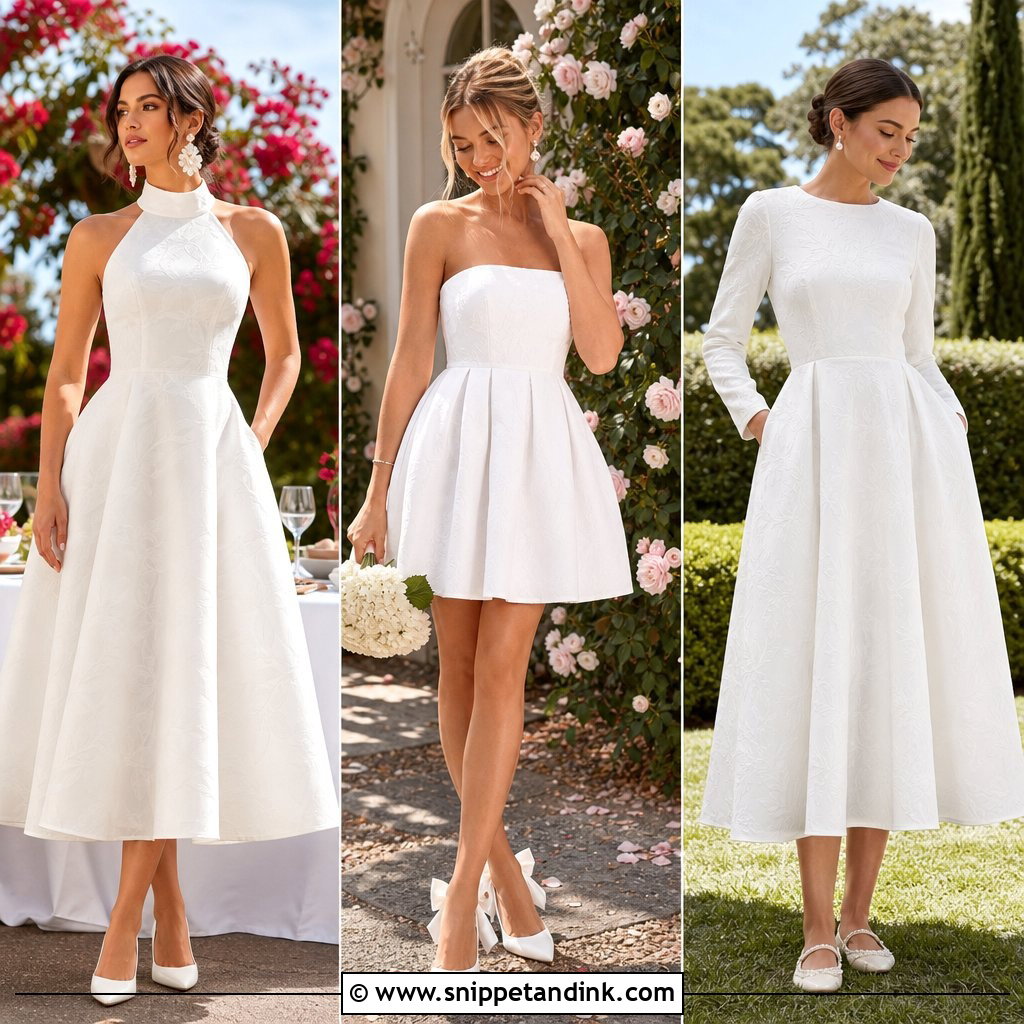
A tea-length wedding dress with daisy lace has a playful, vintage feel, and because the hem stops mid-calf, your shoes are part of the outfit. I’d pick pointed slingbacks, a low block heel or proper bridal flats and treat them as seriously as the dress. A fitted bodice and defined waist give structure while the daisy pattern keeps things light. Add a short veil, pearl earrings and a small top-handle bag. Daisies mixed with white roses support the theme; a whole bouquet of daisies alone can tip into costume. It suits courthouse ceremonies and daytime parties, and it’s a smart second outfit if your ceremony gown is too formal for dancing.
11. White Satin Wedding Dress With Flower Neckline
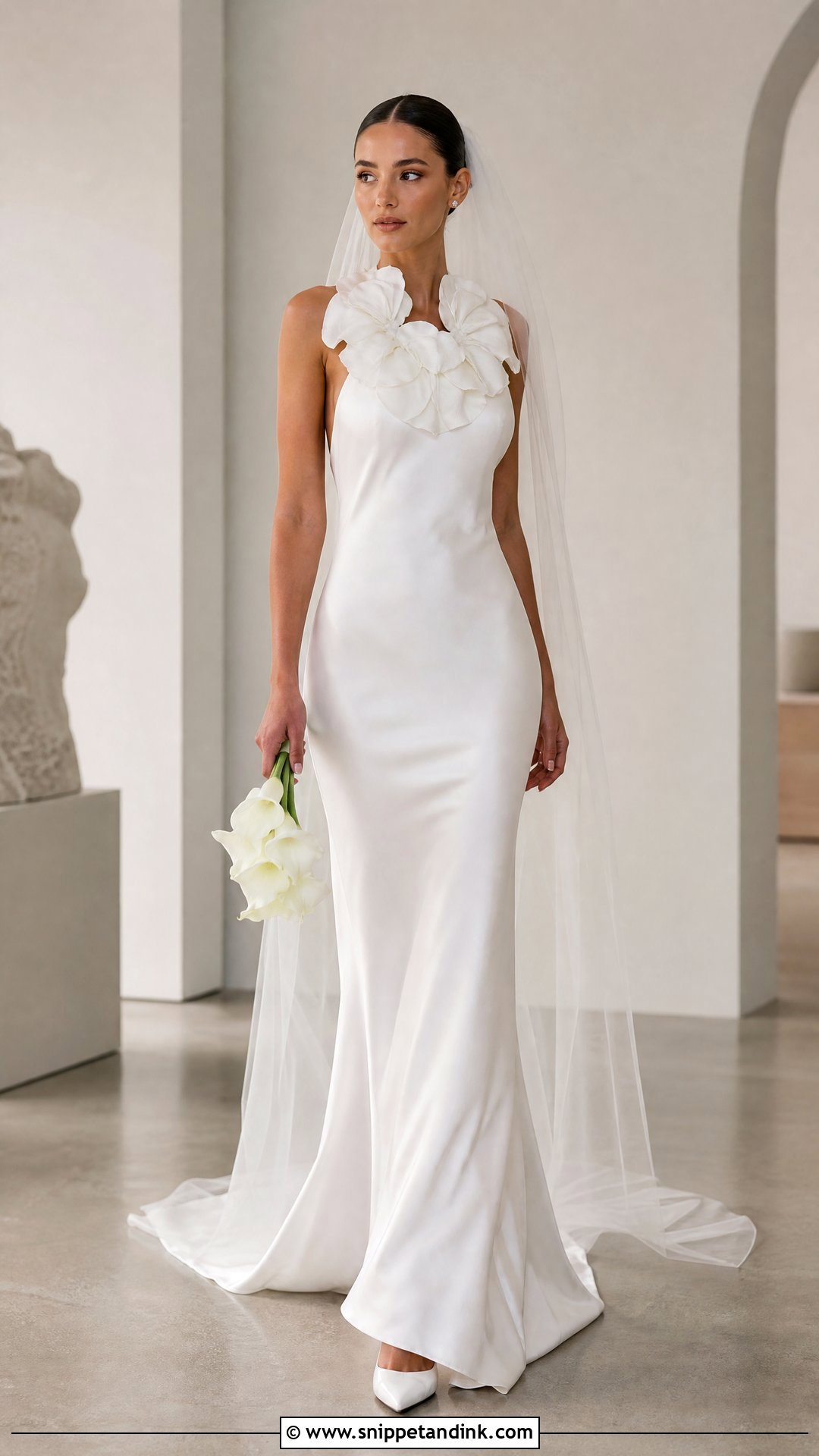
For a minimalist, one sculpted flower at the neckline of a satin gown says more than a hundred small ones. A column, sheath or softly flared skirt keeps the line clean. Satin shows everything, including the outline of a bra and every crease from sitting, so I fit it over the exact underwear she’ll wear and steam it last thing before photos. Small diamond studs, a sleek bun and pointed white pumps are enough. Skip the necklace if the flower sits near the shoulder or centre of the bodice. A plain cathedral veil brings drama for the ceremony, and a small bunch of calla lilies keeps the rest restrained. It reads best in a hotel, gallery or rooftop setting.
12. White Corset Wedding Dress With Floral Tulle
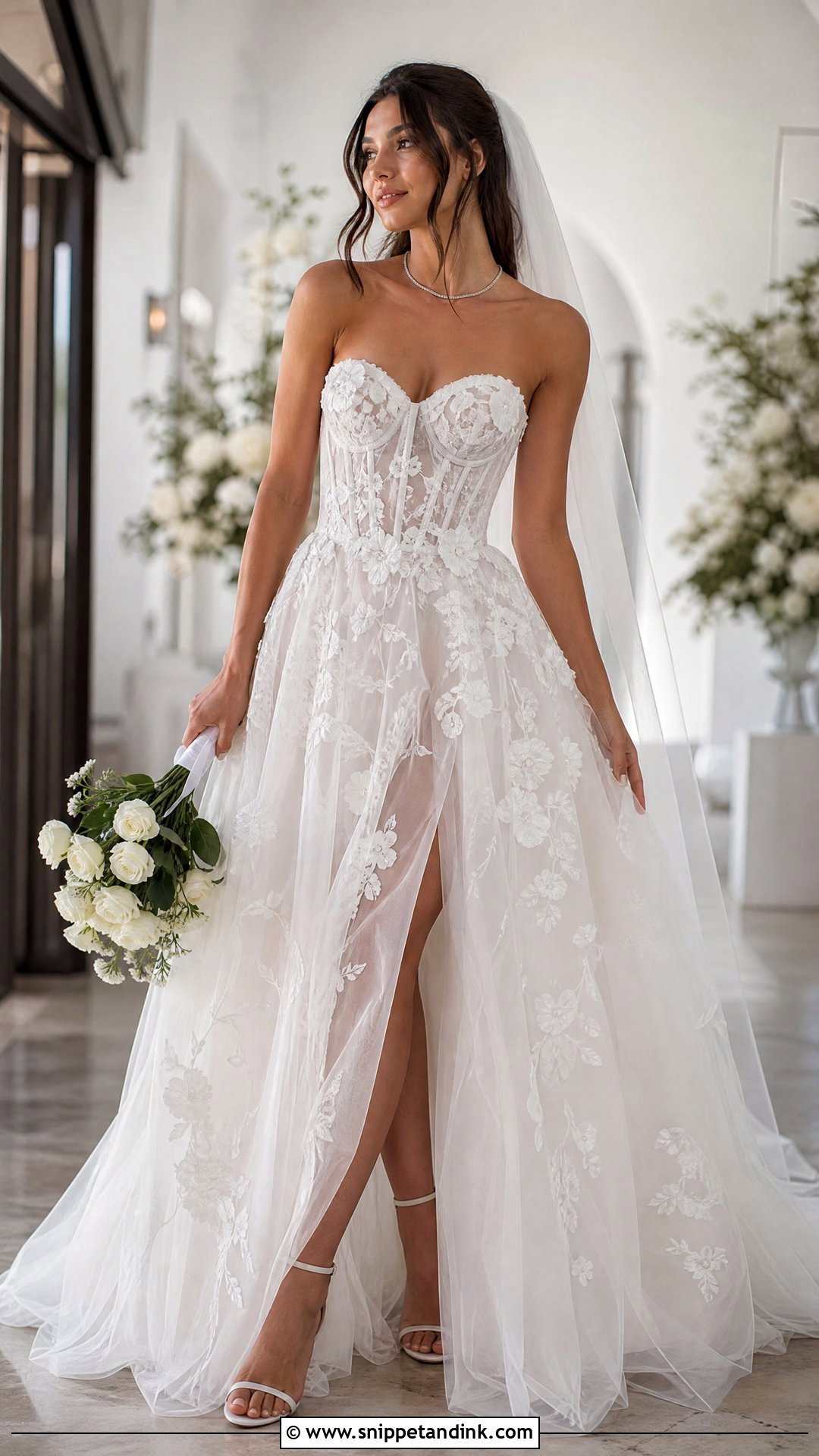
A visible corset is structure and softness in one gown. Look for real boning, a gently curved neckline, and embroidered flowers laid over the bodice seams so the seams themselves disappear. A layered A-line skirt keeps the outfit comfortable. Corsets are the one style I won’t let anyone skip a final fitting on: the cups and waist should sit flat with no gap at the top edge and no pinching at the ribs when you breathe deeply. Add a fine tennis necklace, small earrings and satin heels with an ankle strap. A raw-edge tulle veil blends into the skirt and lets the flowers show through. Carry a loose bouquet of white roses and pale seasonal blooms.
13. White Wedding Dress With Floral Cape Sleeves
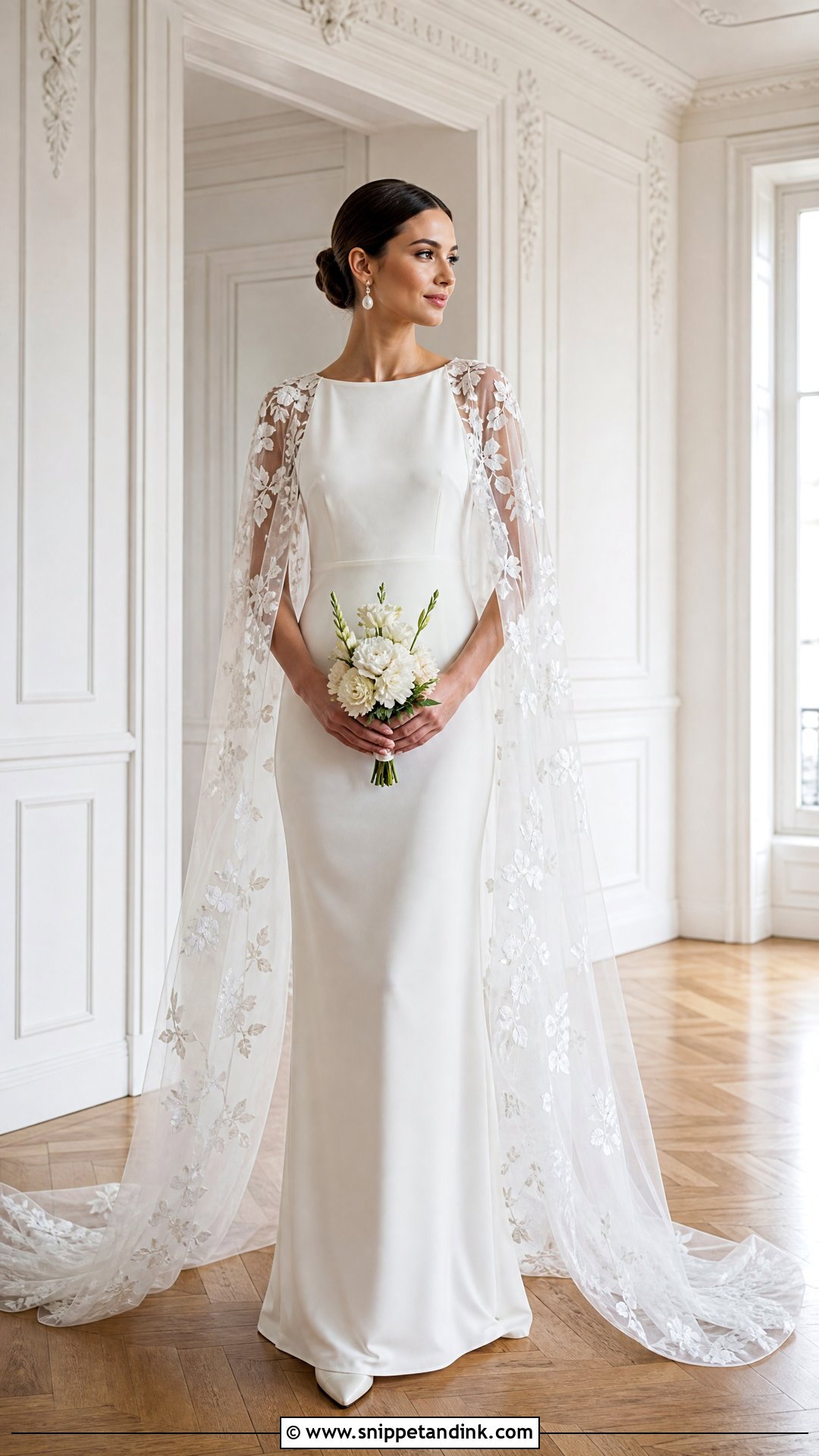
Cape sleeves give coverage and movement at once, and they swing nicely when you walk. Look for sheer tulle panels falling from the shoulders with embroidered vines along the edges, over a plain column or A-line gown. Because the cape already behaves like a veil, I usually suggest skipping one or wearing something very short pinned low. Understated earrings, a smooth updo and closed-toe heels keep the outfit calm. Keep the bouquet narrow so it doesn’t snag on the cape edges. Do a test hug at the fitting, since a cape can catch on watches and cufflinks.
14. White High Neck Wedding Dress With Vintage Floral Lace
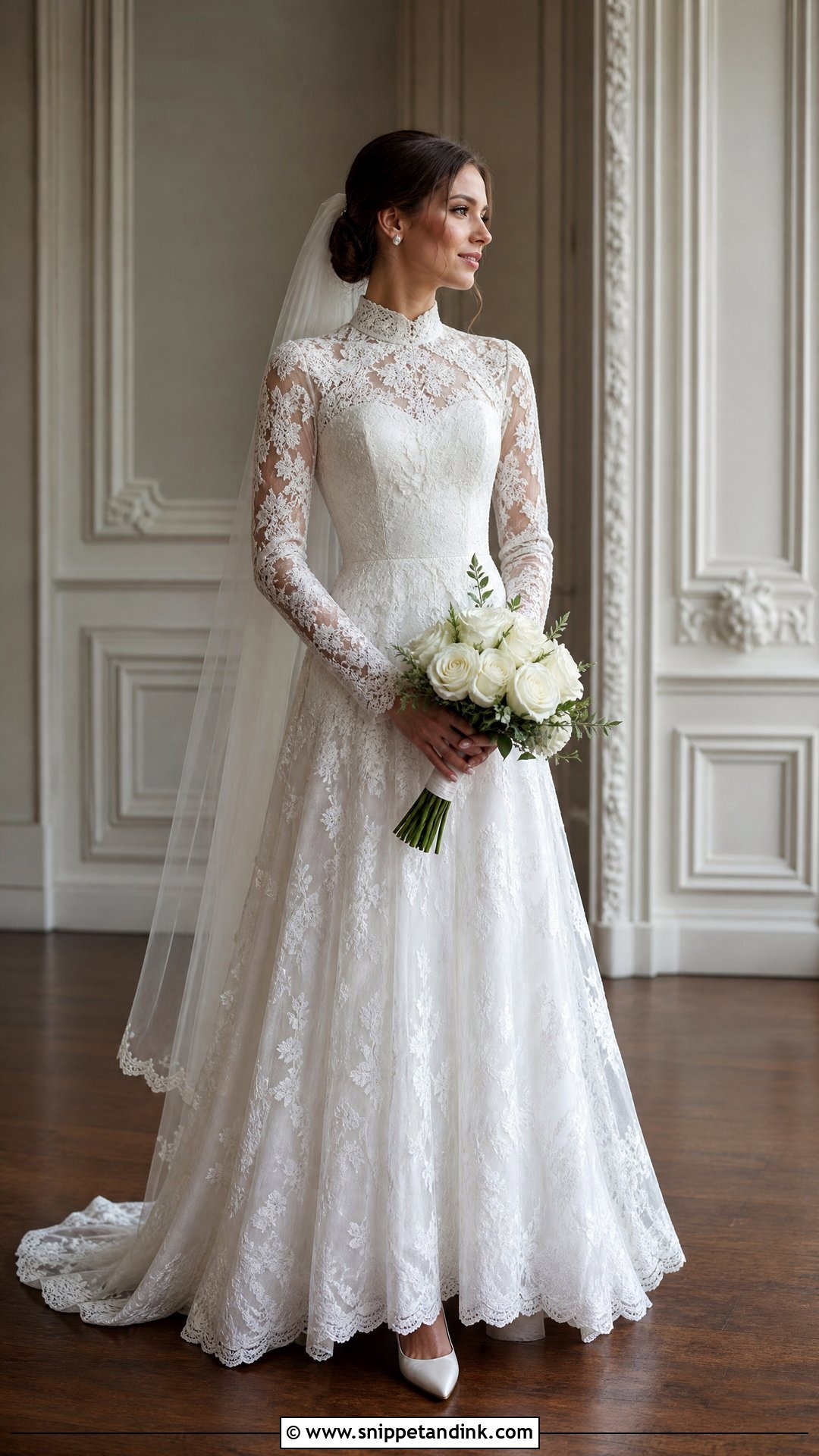
A high neck in vintage-style lace offers coverage and a lot of character. Choose sheer lace at the neck and sleeves over a fitted opaque bodice lining. A defined waist and gently flowing skirt keep the high neckline from looking severe. Style it with pearl studs, a low chignon, and either lace-trimmed or plain satin shoes. Leave the necklace off; the neckline is the jewellery. I attach the veil underneath the chignon rather than on top, so the lace across the back of the neck stays visible. A modest bouquet of white roses with trailing greenery suits historic venues and formal ceremonies.
15. White Boho Wedding Dress With Floral Embroidery
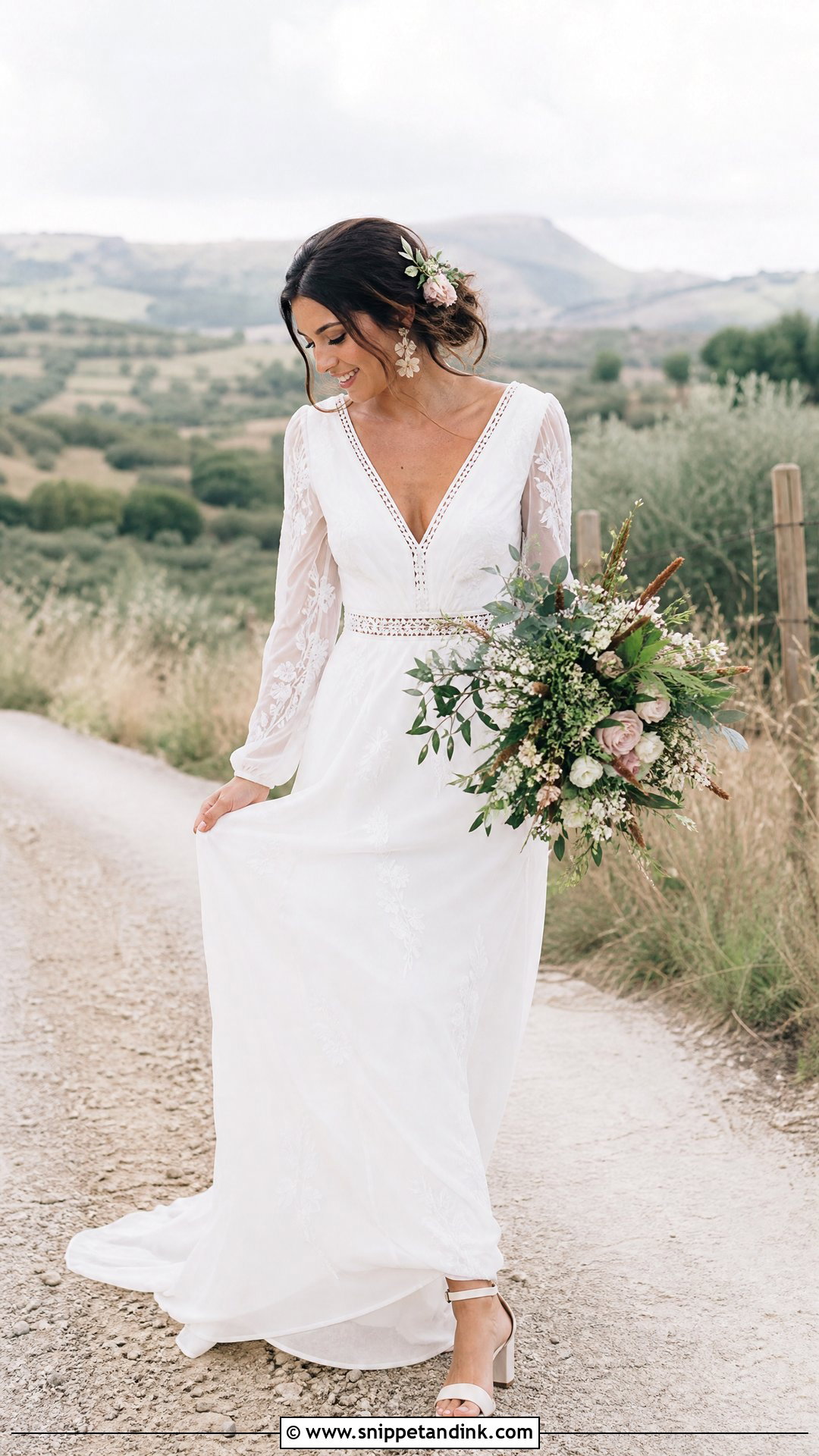
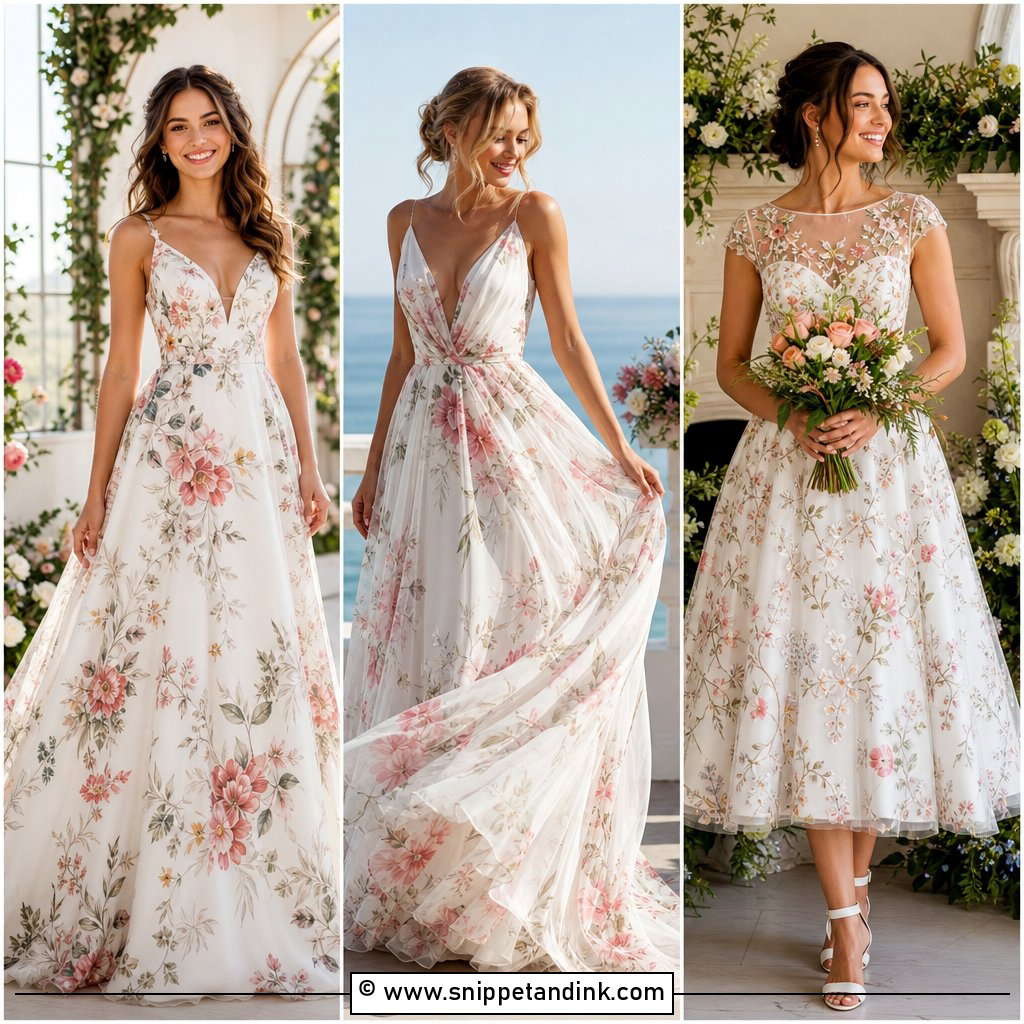
Boho done well still looks bridal; done badly it looks like a beach cover-up. Choose a flowing chiffon or soft tulle gown with floral embroidery on the bodice, sleeves or skirt, plus a gentle V-neck, a defined waist and a light train. Then add only one or two relaxed touches. My rule is to pick one boho element besides the dress, either a floral comb or a loose pinned hairstyle, not both plus a flower crown and fringe sandals. Block-heel sandals, botanical earrings and a textured bouquet tied with natural ribbon keep it grounded. Chiffon frays where it drags, so on sand or a dirt path I’d keep the train short.
16. White Basque Waist Ball Gown With Flowers
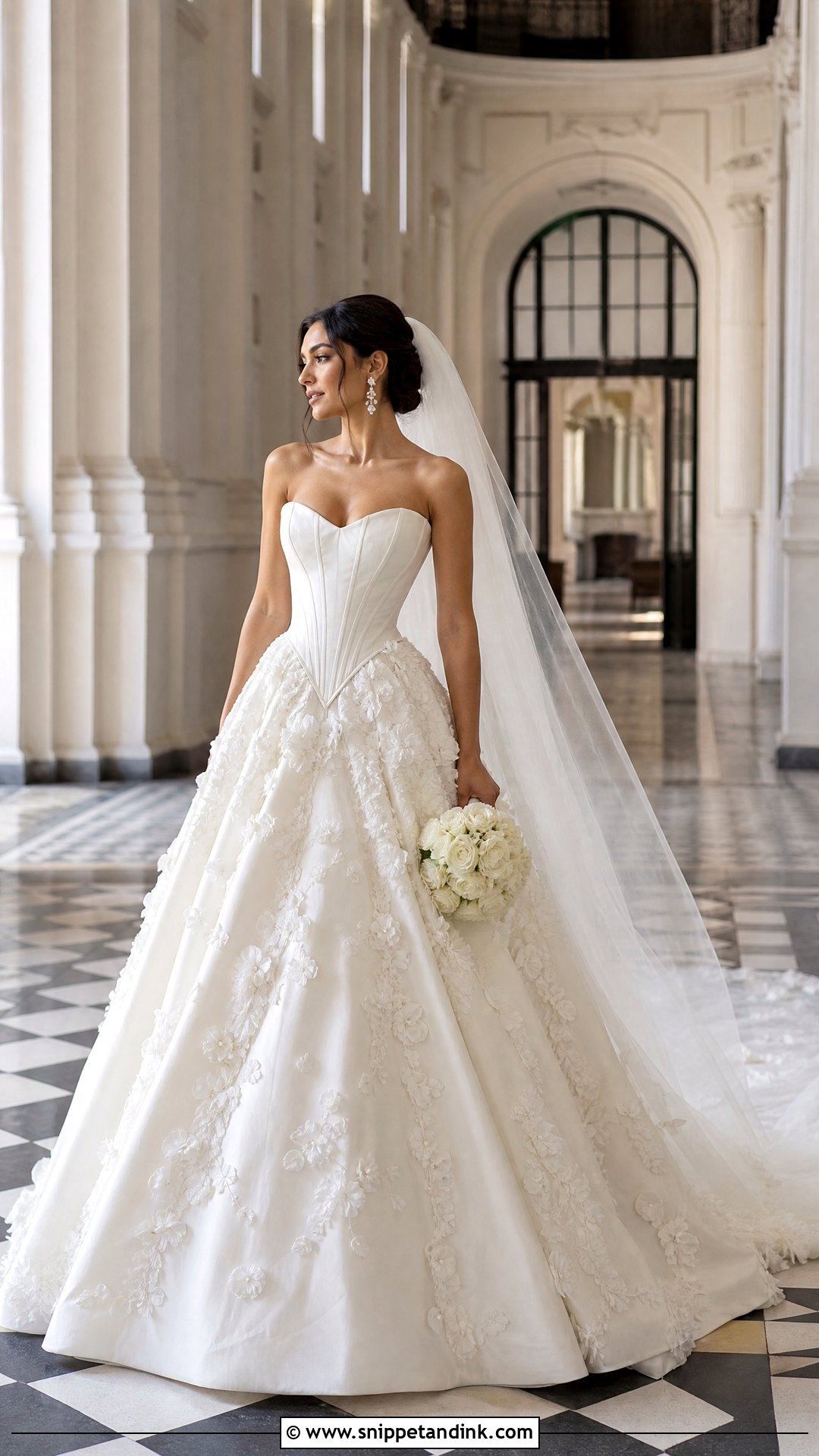
A basque waist dips into a V below the natural waistline, which lengthens the torso before the skirt opens out. It’s a formal shape, and it carries flower appliqués well when they start on the bodice and spread gradually over the upper skirt. Strapless or wide straps both suit this construction. Add a long plain veil, delicate drop earrings and supportive platform heels under the skirt. Keep the bouquet compact so the point of the waist stays visible in photos. A full skirt with a train like this needs a bustle for easier movement at the reception, and I ask the seamstress to place the bustle points where they won’t catch on appliqués. Choose a venue with space for the skirt to be seen.
17. White Asymmetrical Wedding Dress With Floral Detail
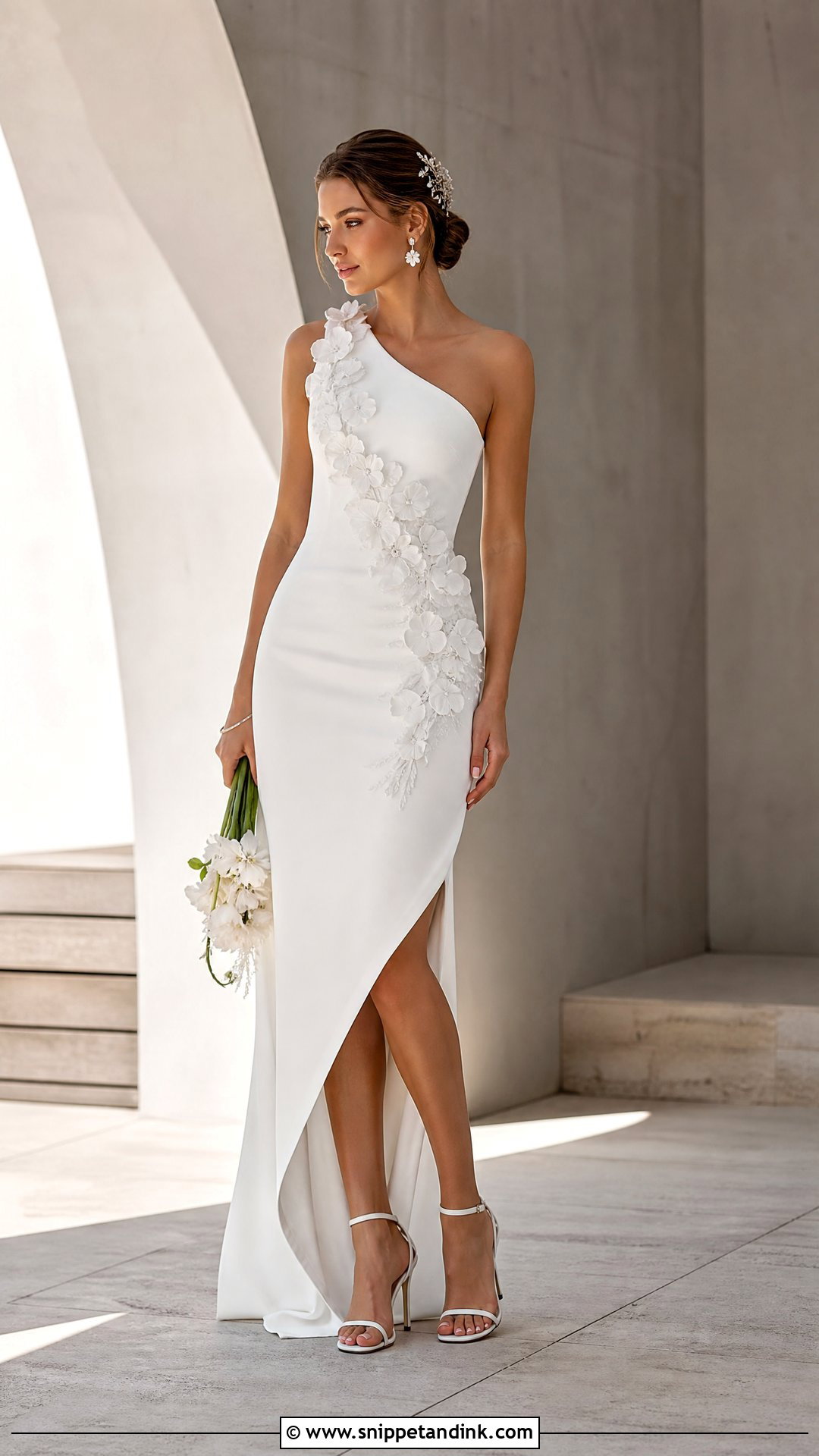
Flowers travelling diagonally from one shoulder to the opposite hip, or running down one side of the skirt, make a modern alternative to evenly scattered detail. The diagonal pulls the eye across the body and creates movement. Keep the silhouette clean, a fitted column or a restrained A-line, so the placement is the point. I like mismatched but coordinated earrings, sleek heels and one simple hair accessory on the bare side. A plain veil works, though with a one-shoulder neckline I’d often go without. Hold the bouquet on the side with fewer appliqués so you don’t cover the detail you chose the dress for.
18. Plus Size White Wedding Dress With Floral Appliqué
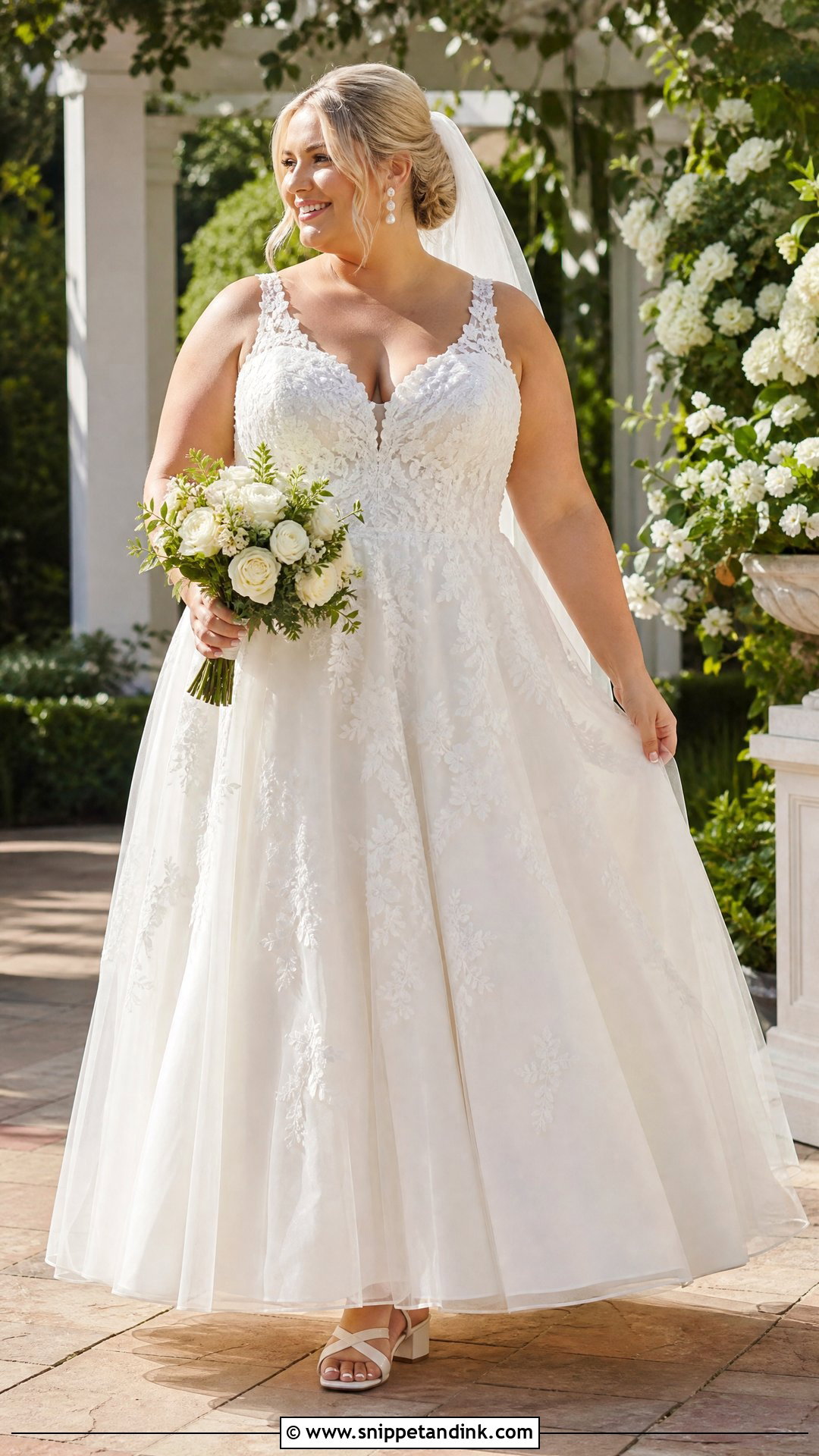
Support comes first for a plus size floral gown, and the embellishment comes second. Consider an A-line with wide straps, a structured bodice, and appliqués around the neckline and waist that continue gradually down the skirt so the look feels connected. Ignore any rule that says you can’t wear a certain shape; wear what makes you feel strong. I have every bride bring her actual undergarments and shoes to every fitting, because the bodice and hem are cut to them and swapping later undoes the work. Cushioned block heels, drop earrings and a veil on a sturdy comb finish it, with a medium bouquet that stays in proportion.
19. Petite White Wedding Dress With Small Floral Embroidery
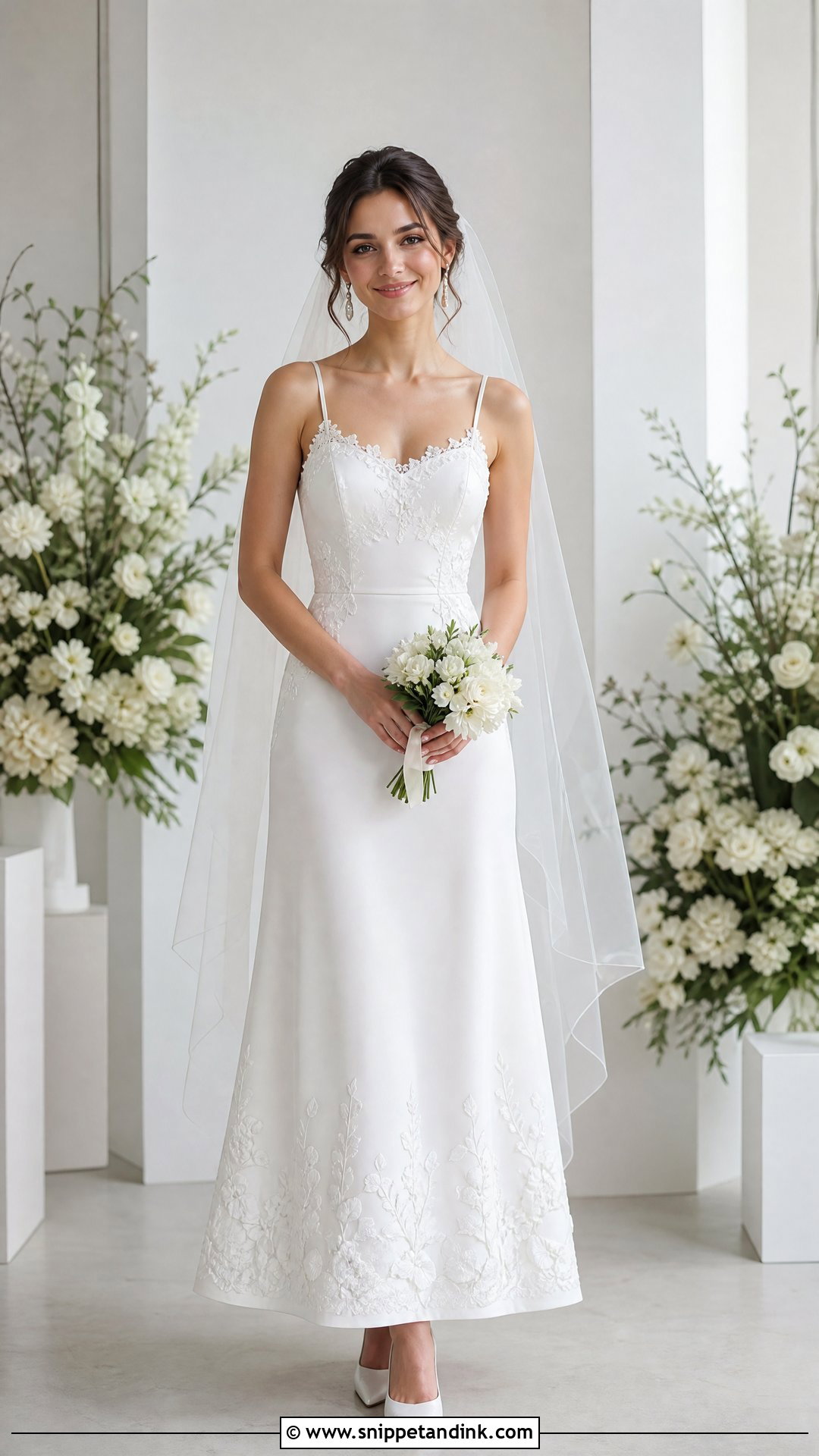
Small-scale embroidery suits a petite frame because it doesn’t swamp the silhouette. A column, sheath or narrow A-line with fine embroidery concentrated at the bodice and hem works best, and a natural or slightly raised waistline lengthens the leg line. Very wide skirts on a petite frame often need so much shortening that the shape collapses. That is also where embroidery gets lost: if the flowers sit at the hem, taking up six inches can cut straight through them, so I ask whether the hem can be shortened from the waist instead. Pointed heels, delicate earrings and a slim bouquet keep things in proportion. Choose a veil that works with your train rather than defaulting to the longest one.
20. White Wedding Dress With Detachable Floral Overskirt
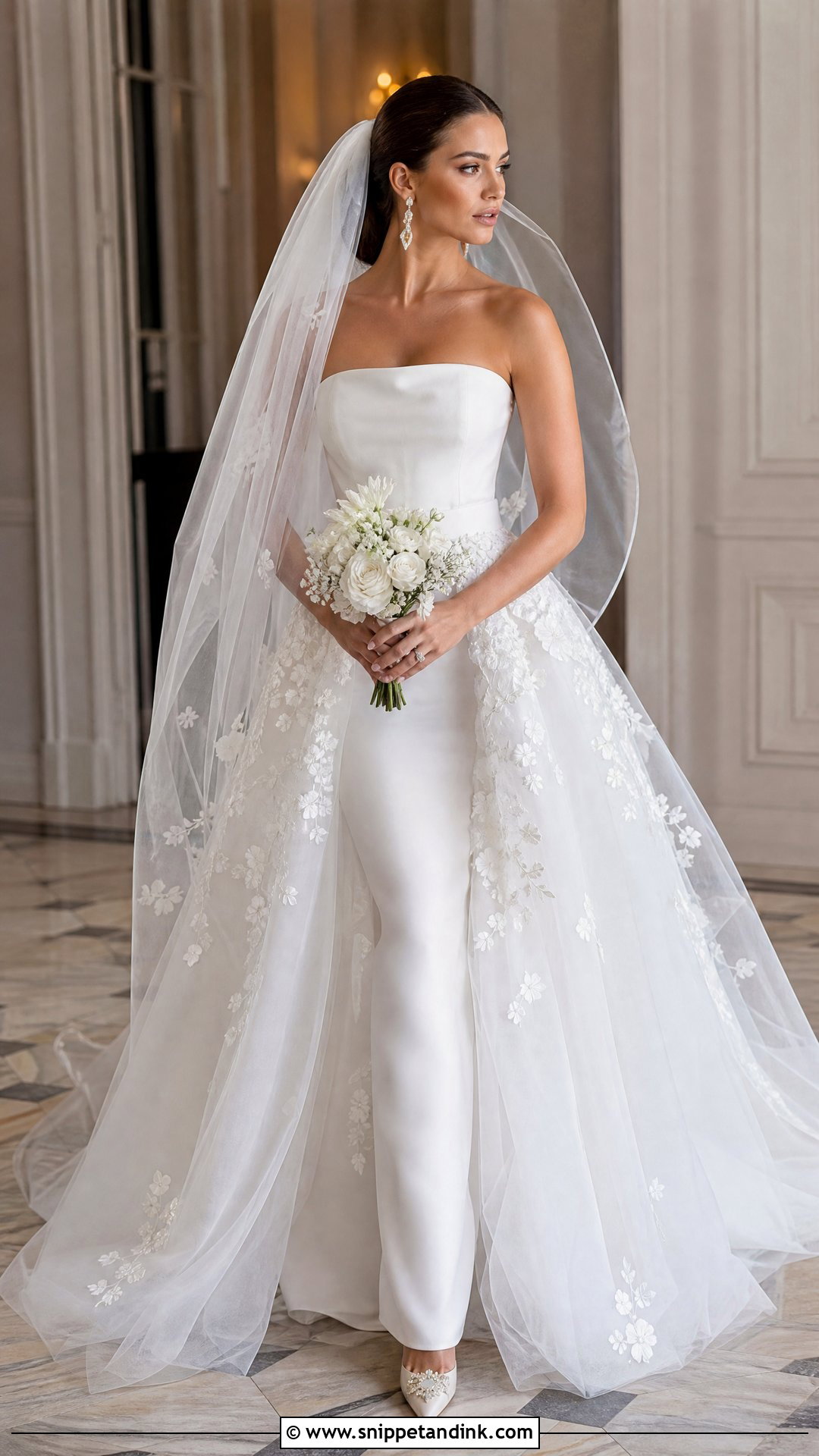
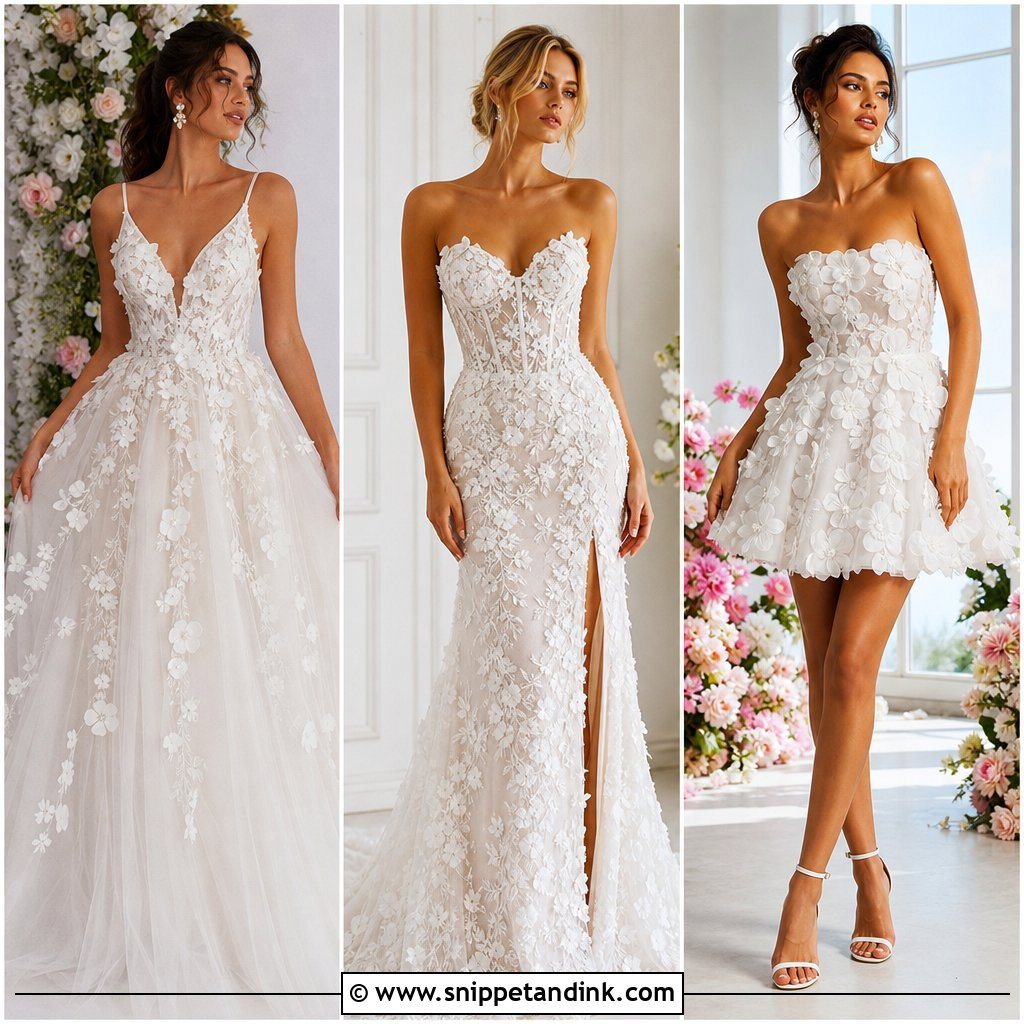
A detachable floral overskirt gives you two outfits without buying a second dress. Start with a fitted white sheath, crepe gown or plain satin dress, then add a full tulle overskirt with embroidered flowers or raised petals for the ceremony. You get volume and a train, and the clean dress stays protected underneath. Wear it with a long veil, drop earrings and elegant heels. After portraits, take off the overskirt and veil for a sleek reception look. The waistband is where these succeed or fail. I check that it closes flat with hooks or snaps hidden under a band, and I have the bride practise removing it with a bridesmaid before the day.
What Raised Petals Go Through Between the Aisle and the Last Dance
Floral gowns take more wear than plain ones, mostly because the decoration sits on the surface. A little planning keeps the flowers looking fresh in the late-evening photos, not just the first ones.
On the day
I travel the dress on a padded hanger inside a breathable garment bag and lay it across a back seat rather than folding it into a trunk. At the venue, raised petals get a gentle hand-steam held well back, then a quick fluff with fingertips. Put a few safety pins, a needle and white thread in your bridesmaid’s bag; a loose appliqué can be tacked down in two minutes, while a lost one can’t be replaced at the reception. If the bustle uses hooks, ask that they’re placed on plain fabric, not on lace, so nothing tears when the train is lifted.
After the wedding
Take the gown to a specialist cleaner within a few weeks, before invisible spills like champagne and sweat oxidise into brown marks. Tell them which flowers are glued and which are sewn, and ask for a colourfastness test on any coloured embroidery. At home, store it flat or lightly folded with acid-free tissue between the layers, in a breathable box away from light. Heavy appliquéd gowns shouldn’t hang by their straps for months, because the weight slowly stretches the shoulders out of shape.
Flowers, Fit and a Dress That Feels Like Yours
Botanical detail suits almost every silhouette on this list, from traditional floral lace to colourful thread, sculpted roses and raised petals. Start with a shape that supports you and feels comfortable, then judge the flowers by size, placement and colour against your venue and your build. Keep the veil, shoes, jewellery and bouquet in a supporting role. Most of all, book your alterations early and wear the complete outfit together at least once before the wedding. If it moves well and you forget you’re wearing it, you’ve found the right one.
You'll Like These Ideas:


Leave a Reply