
The right gown sets the mood for the whole day before anyone says a word. My job is turning a fantasy into something you can wear from the first photo to the last dance, and that usually means fewer ideas done well. Below are twenty dresses, from regal ball gowns to woodland lace, starry tulle and hooded capes, each styled with the shoes, veil and flowers I’d actually put with it. Alongside castle, ballroom, forest and small outdoor settings, you’ll find notes on what each dress asks of you physically.
Why a Fantasy Gown Needs a Longer Runway
Embellished, corseted and multi-layered gowns take longer to make and longer to alter than a plain sheath, and that catches people out. Production times vary a great deal between designers, so ask each salon for its own figures, but this is the rhythm I plan around.
- Ten to twelve months out: shop and try shapes. Bring photos of your venue so you judge volume against the real space.
- Eight to ten months out: place the order. Made-to-order gowns often take several months to arrive, and custom colour, added sleeves or a detachable train can add more.
- About three months out: first fitting, wearing the actual undergarments and shoes you’ll marry in.
- Six to four weeks out: second and third fittings. Corset bodices and beaded hems often need that extra round.
- Final week: collect the gown, learn the bustle and practise putting on any cape, sleeves or overskirt.
On a shorter timeline, a sample gown or an off-the-rack style with added details is the honest route. Rush fees buy speed, but rushed alterations rarely produce a clean fit on a structured bodice.
1. Princess Ball Gown Wedding Dress
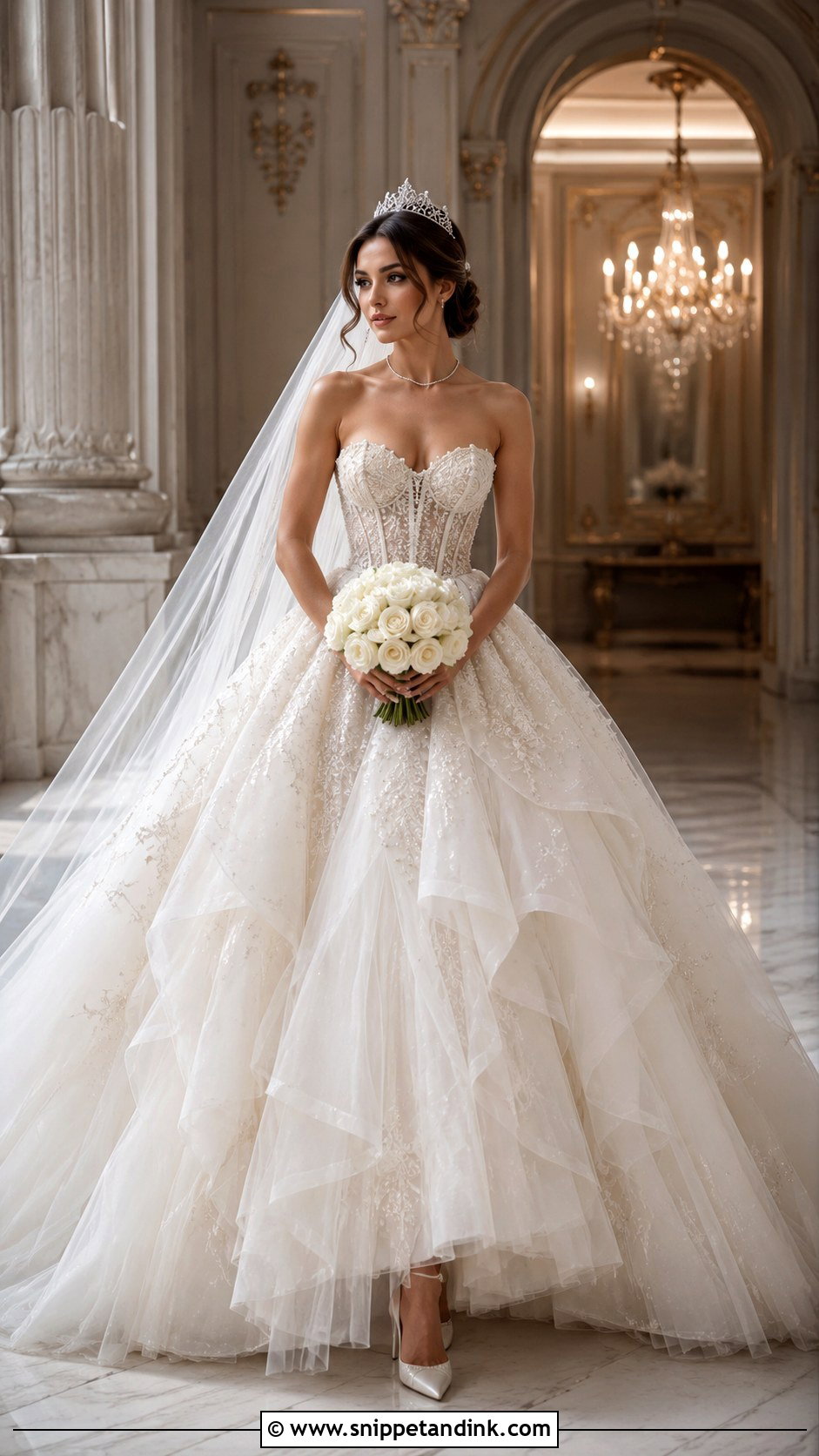
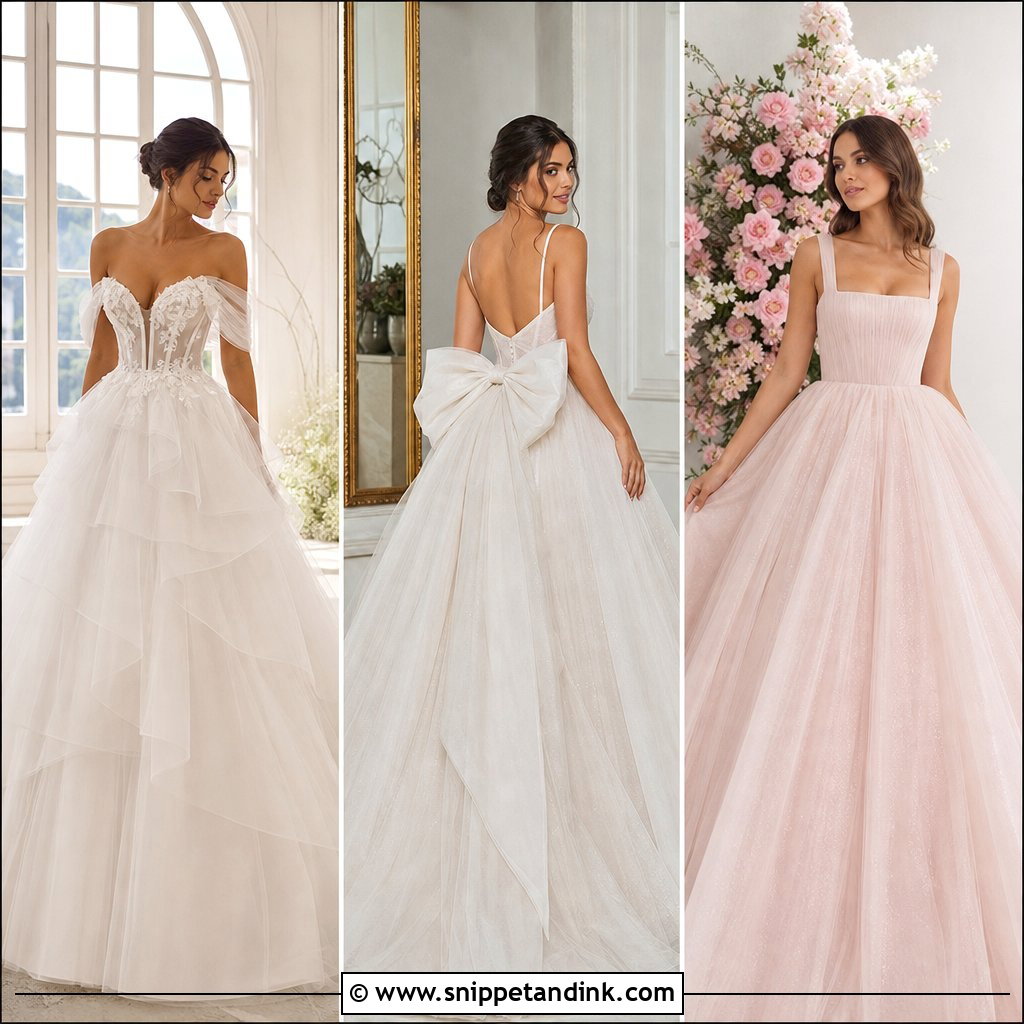
Ivory tulle over a structured corset is the shape most brides try first, and its weight surprises nearly all of them. A full layered skirt pulls on the waist by evening, so I check that the bodice has a waist stay inside, a grosgrain band that takes the strain off the zip. Keep crystal beading light so the ivory stays soft. A cathedral veil with a narrow embellished edge, crystal drops and a delicate tiara suit it, and I’d wear embellished flats under all that skirt, since nobody sees your feet. A compact bouquet of white roses keeps your arms close to the body, which matters when the skirt is this wide.
2. Cinderella Wedding Dress With Sparkle
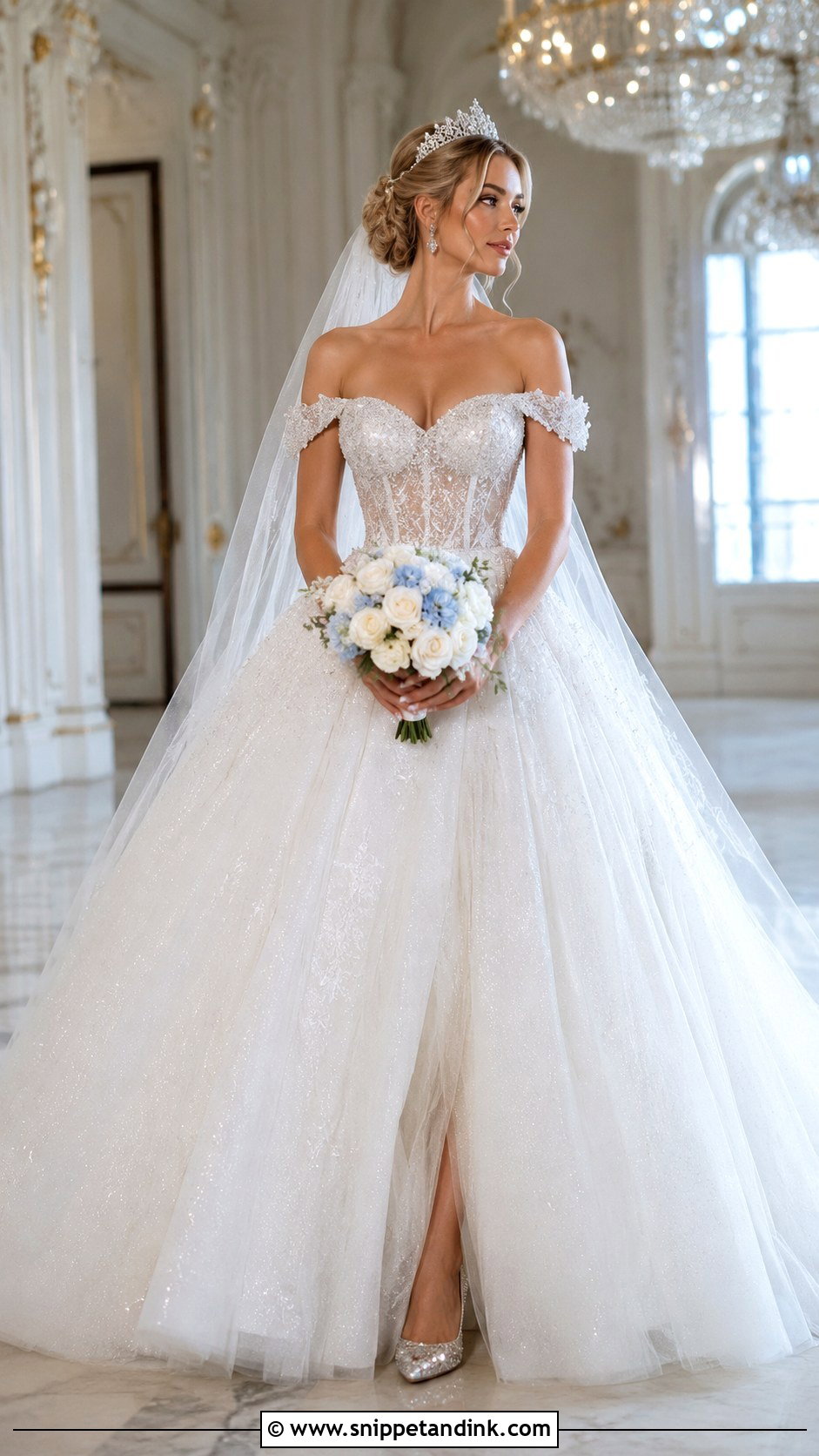
The glow in a Cinderella dress comes from scattered crystals on pale ivory tulle rather than heavy beading. That difference shows most under a camera flash, where densely packed crystals turn into white glare. A fitted illusion bodice with off-the-shoulder straps sets the silhouette. Crystal pumps hint at glass slippers; ask for a non-slip sole, since ballroom floors are polished. White peonies with a few pale blue stems, a silver tiara and a polished low bun complete it.
3. Floral Appliqué Fairy Wedding Gown
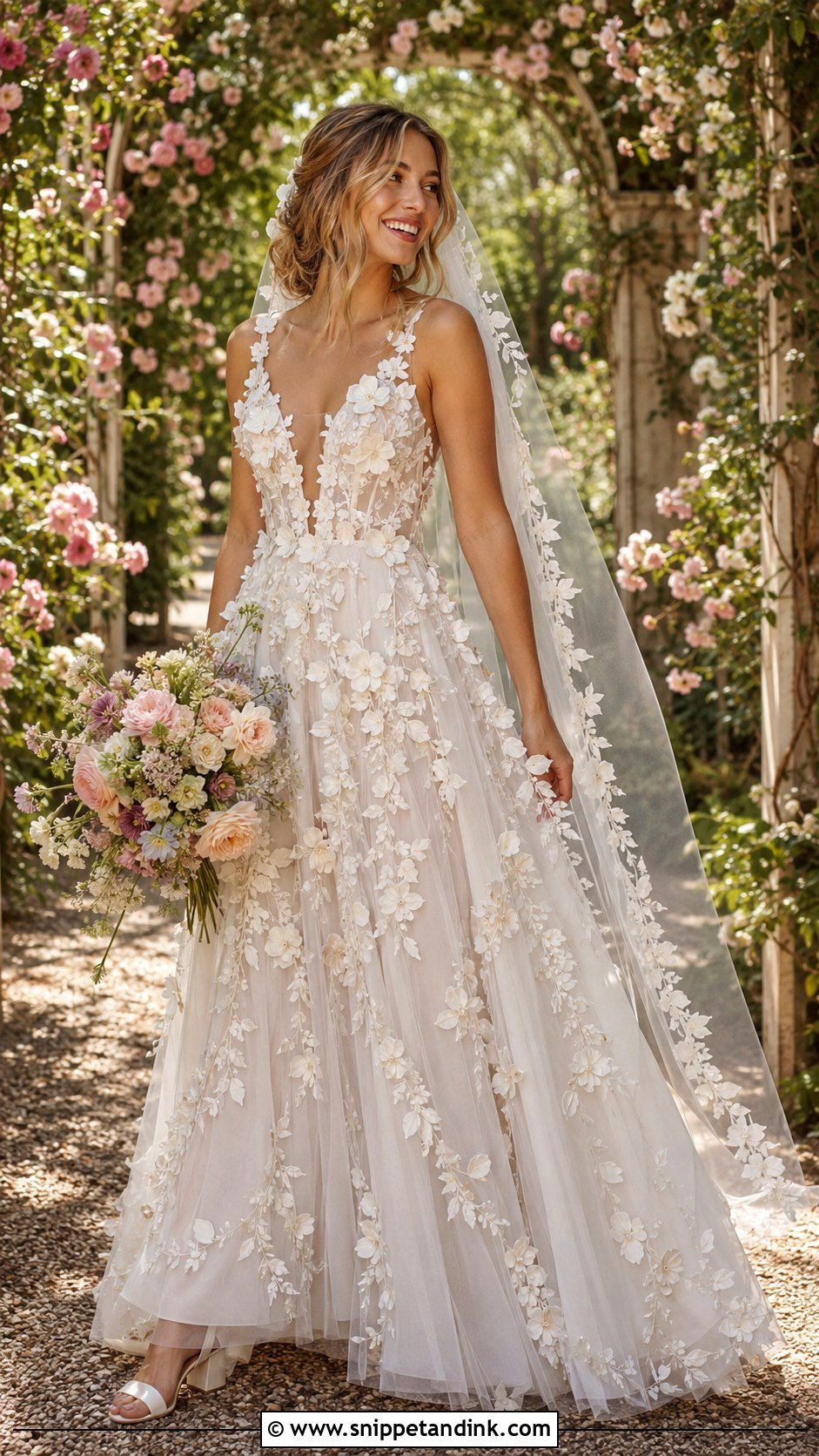
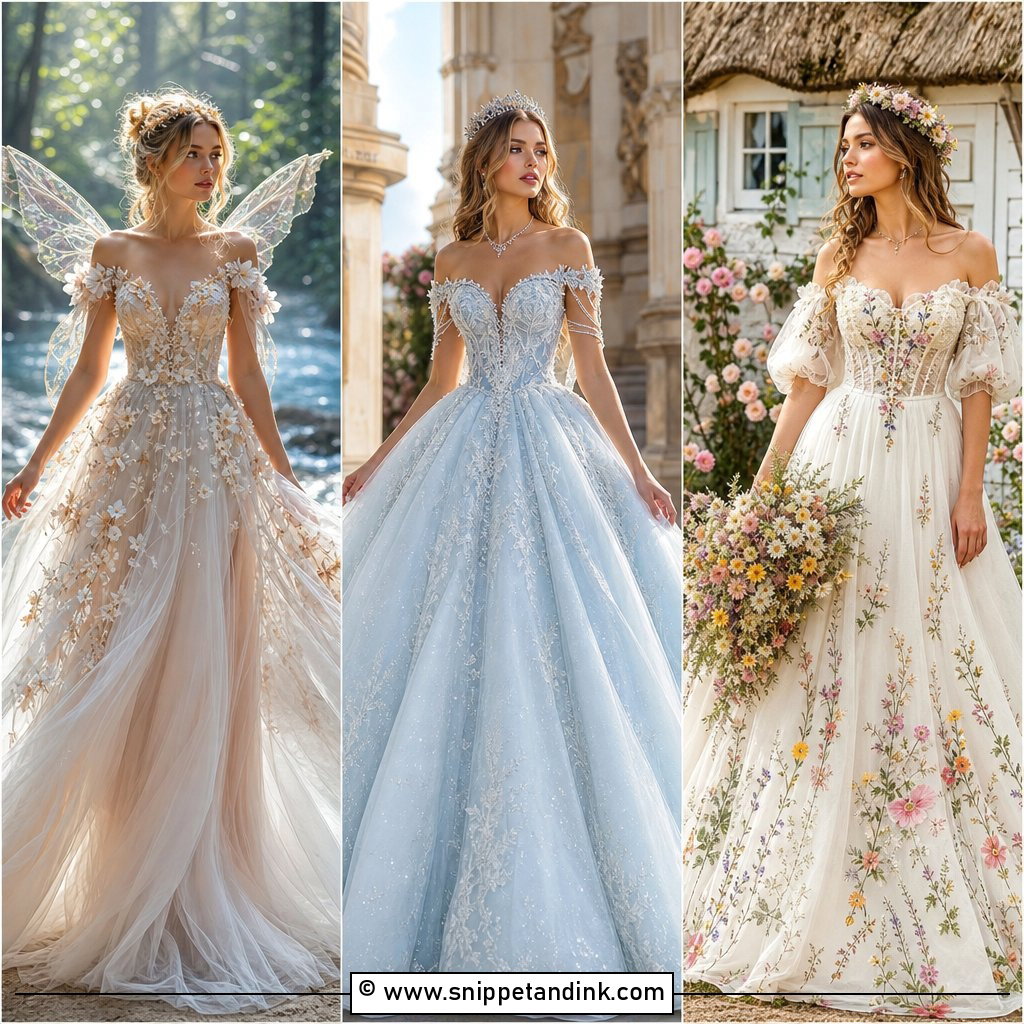
Flowers climbing a sheer bodice can look as if the dress grew in an enchanted garden, and the illusion mesh underneath is what makes it wearable. With a plunging neckline, I check the mesh shade against the bride’s skin in daylight, because the wrong tone shows as a visible panel in photos. The three-dimensional appliqués and scattered pearls should thin out below the hip. Ivory block-heel sandals manage garden paths, and a loose bouquet of sweet peas and pale pink roses echoes the embroidery.
4. Long Sleeve Lace Fantasy Wedding Dress
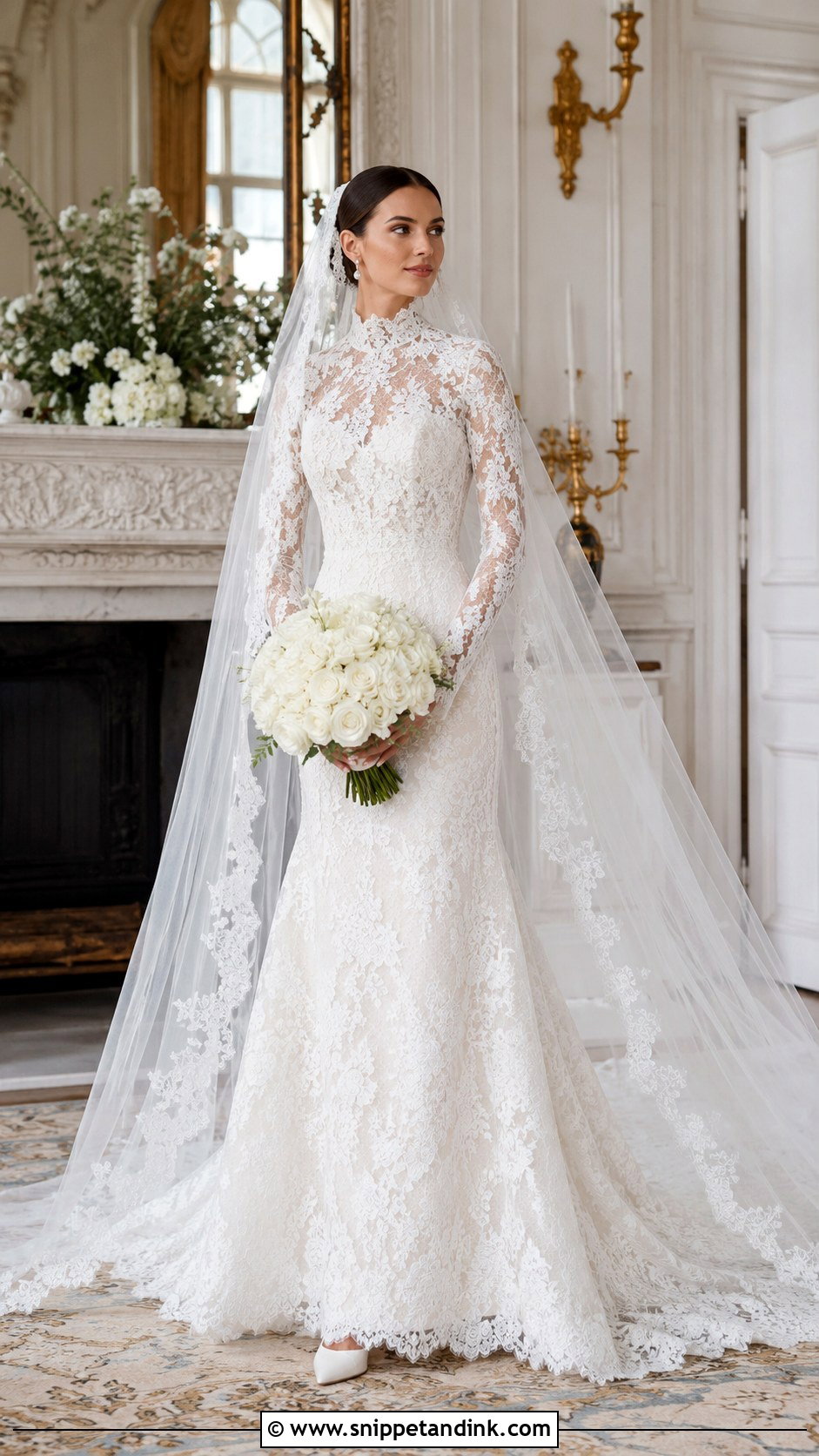
Long lace sleeves need more room than they appear to. At the fitting I ask brides to hug me and lift a bouquet, because sleeves cut tight at the armhole restrict both movements and most lace has very little stretch. A high illusion neckline, covered buttons and a softly flared skirt with a chapel train make a graceful shape you can still manage. A plain tulle cathedral veil leaves the lace as the focus. Pearl drops, ivory closed-toe pumps and a smooth chignon suit autumn dates and historic venues.
5. Woodland Fairy Wedding Gown
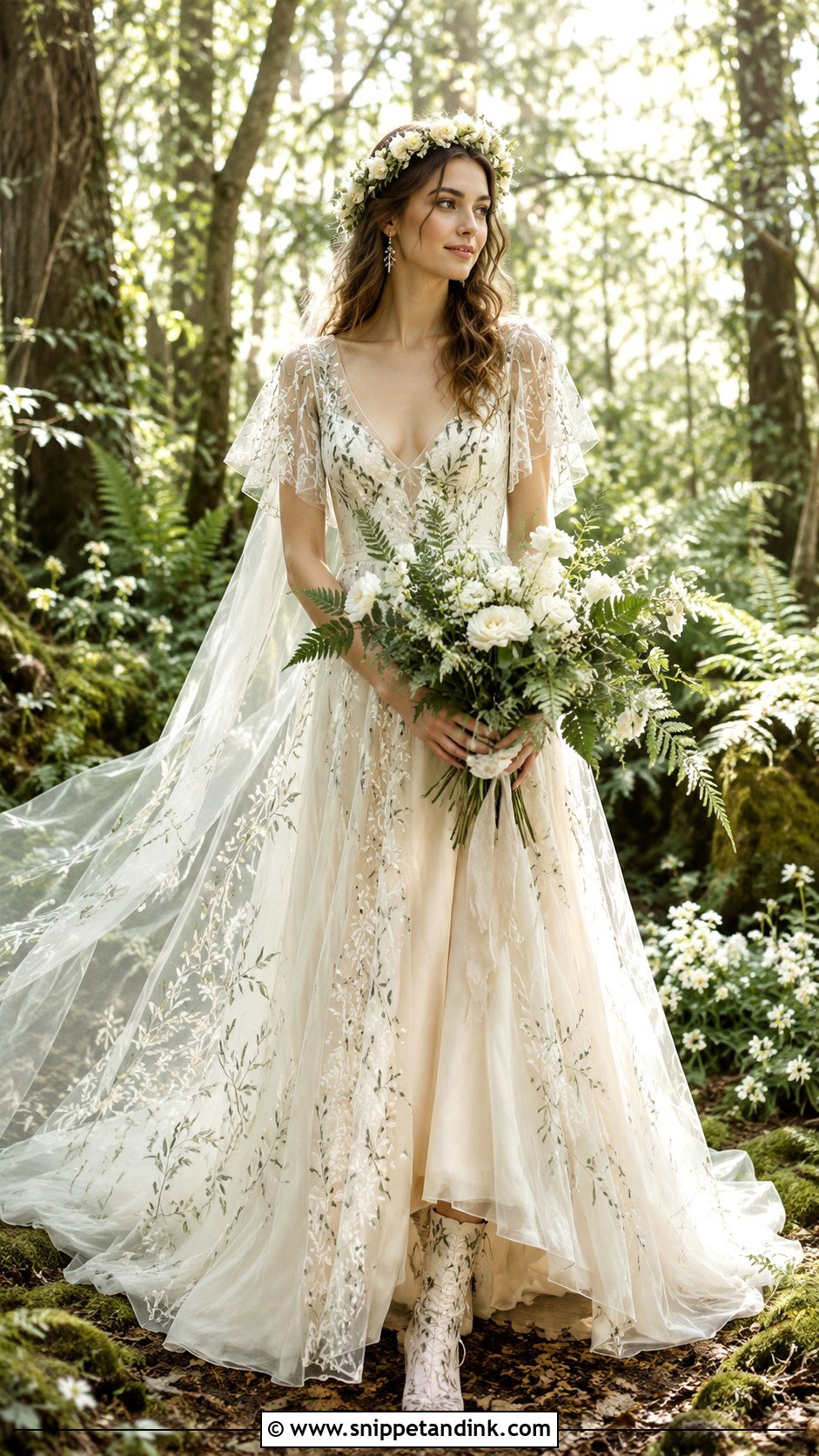
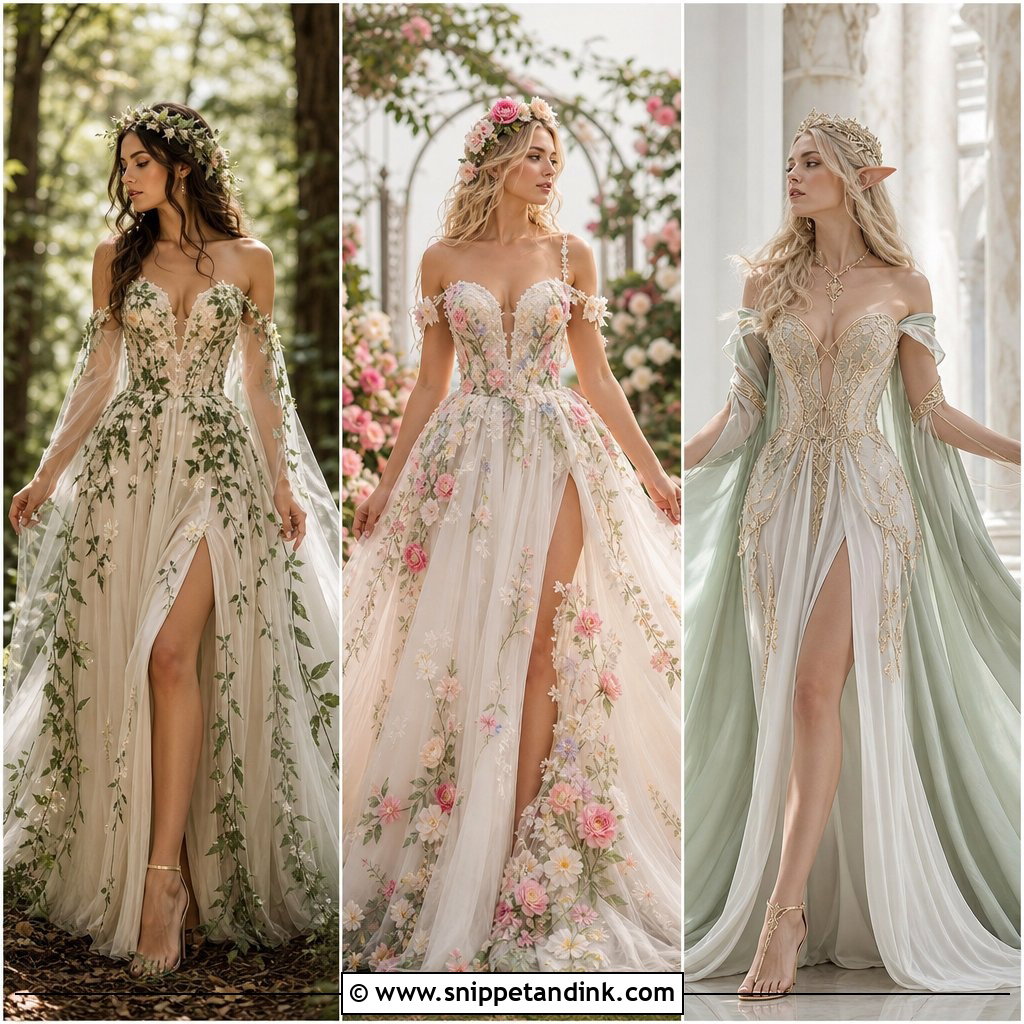
Forest ceremonies mean roots, damp ground and uneven paths, so I dress a woodland bride from the feet up. Low block heels or ivory bridal boots come first. Then a flowing A-line with leafy embroidery, flutter sleeves and a light chiffon skirt that won’t hold mud, over a champagne lining that helps the ivory embroidery show. A sheer cape veil and a narrow floral crown move well in open air, and a loose braid can take a breeze.
6. Off Shoulder Royal Wedding Gown
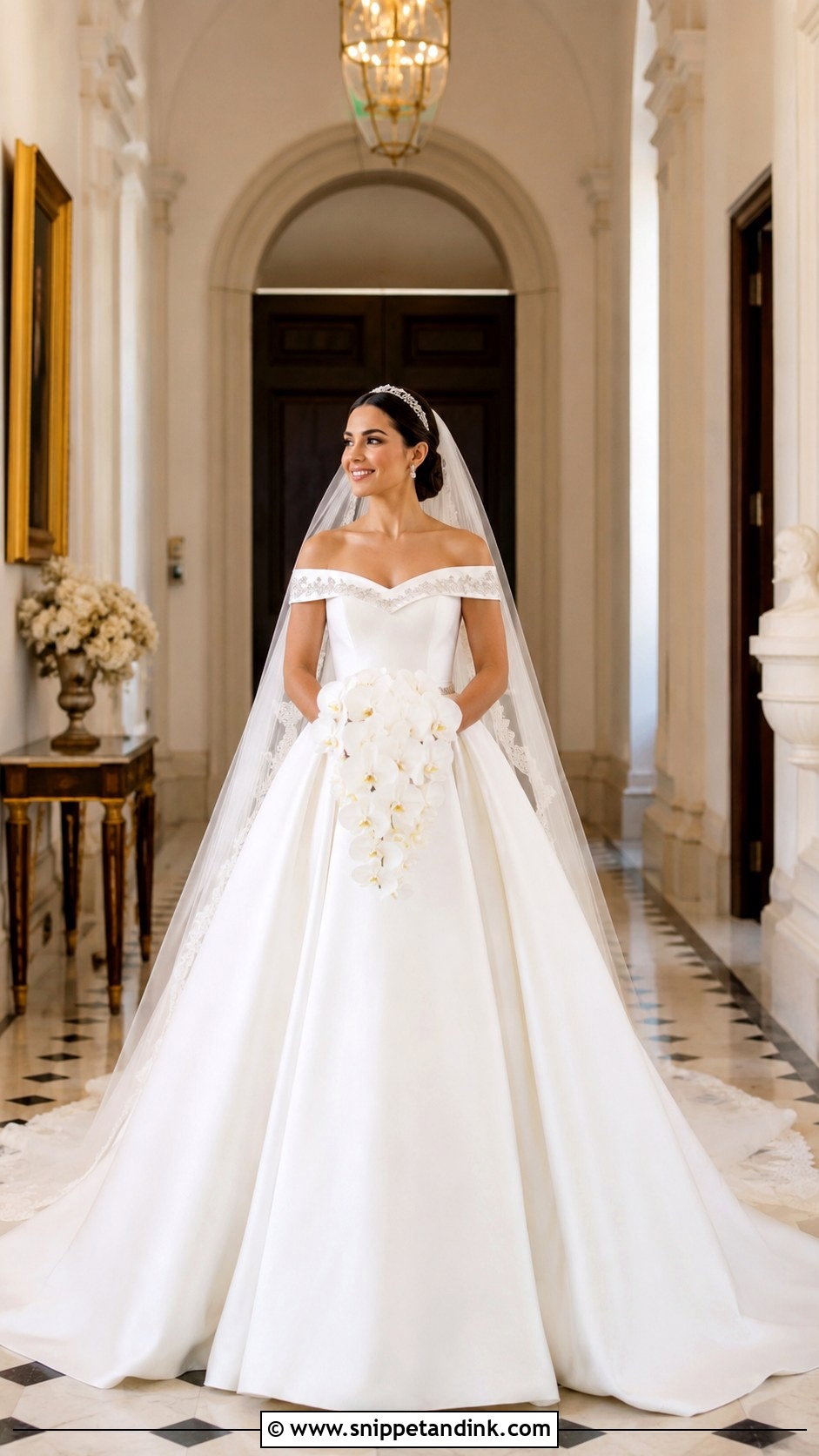
Smooth satin or mikado shows every line. That’s why an off-the-shoulder neckline in it looks so regal, and why the fit has to be exact. The straps sit on the upper arm and limit how high you can lift it, so I often suggest detachable straps you can drop for the reception. A fitted waist balances the full skirt and cathedral train. A jeweled headband, classic studs, a long veil anchored under a polished updo and white orchids keep it formal.
7. Butterfly Fantasy Wedding Dress
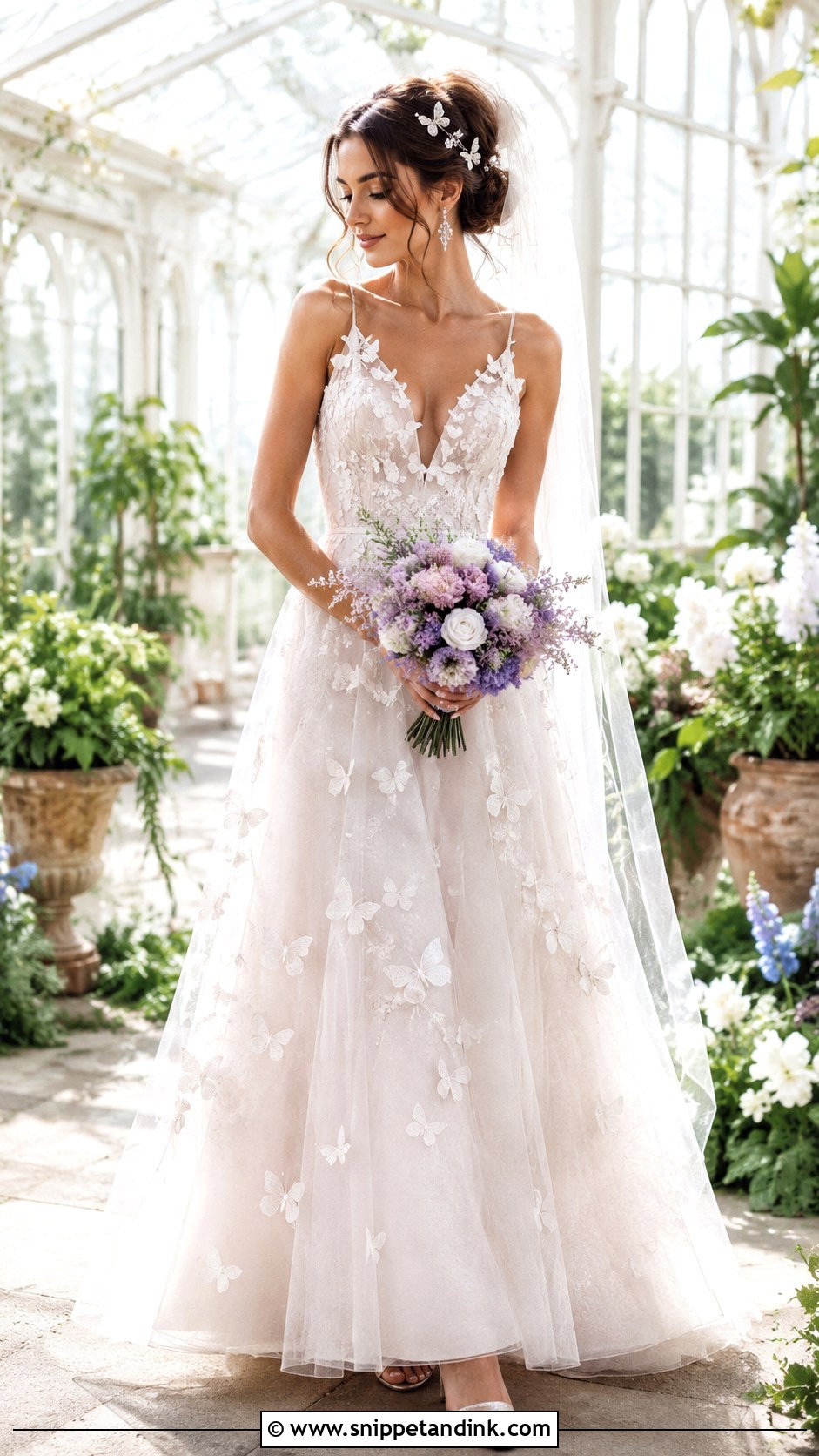
Butterflies give a fantasy gown movement, provided they’re placed with restraint. I prefer them clustered on the bodice and shoulders, drifting onto the upper skirt and then stopping; carried all the way down, they read as wallpaper. Tonal ivory is the grown-up version and pale pastel the playful one. A plain chapel veil and a few small butterfly pins in half-up hair continue the idea, with metallic ivory sandals and a loose ranunculus bouquet.
8. Corset Fantasy Wedding Ball Gown
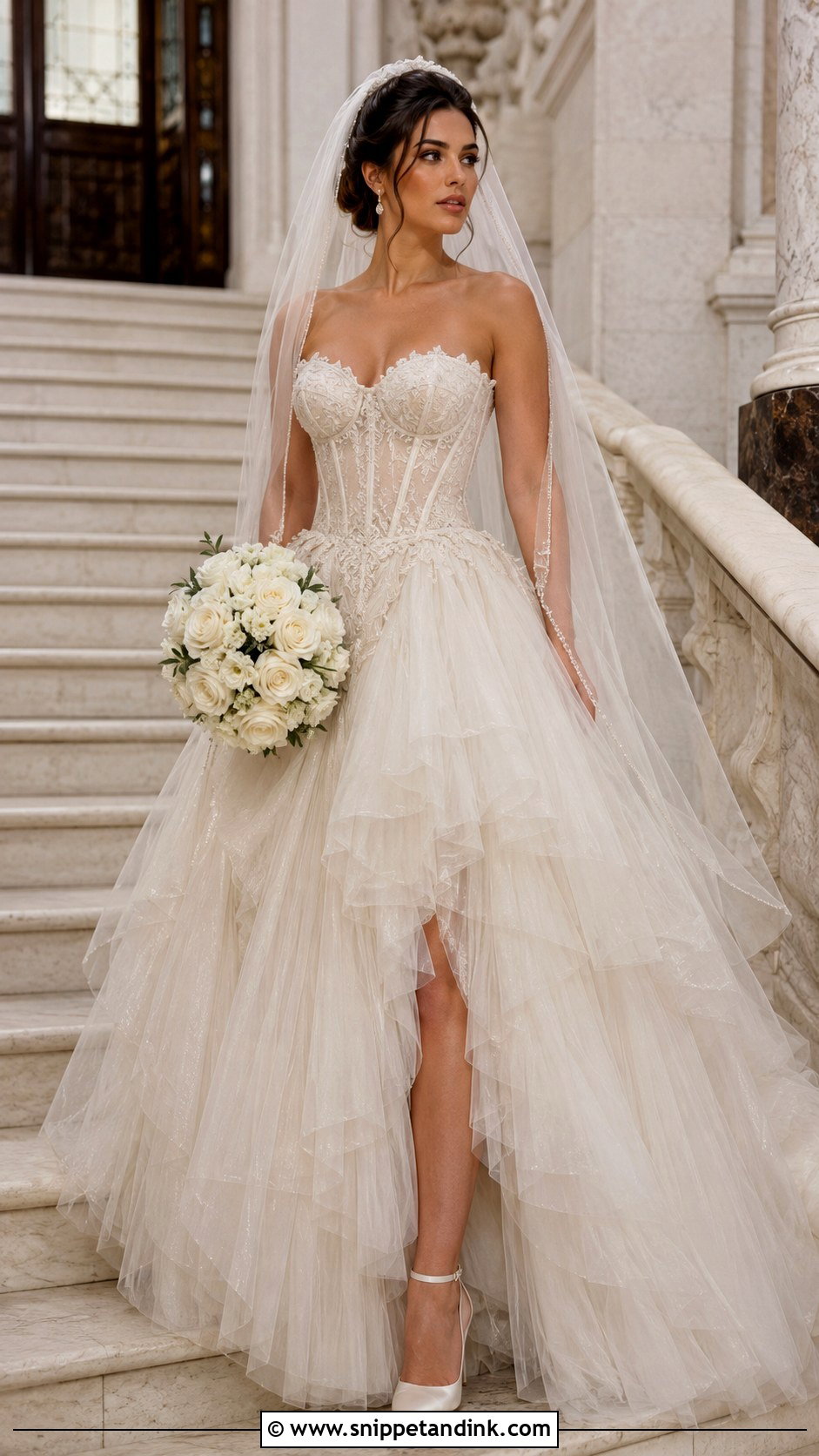
A visible corset gives a fantasy ball gown real shape and support, as long as it’s fitted to you rather than to a sample. Expect the bodice to be taken in over more than one fitting. Spiral steel boning bends with you when you sit, while cheap plastic boning can kink and dig in. Embroidered cups and a basque waist dipping into layered tulle make the shape, and pointed pumps with ankle straps stay on through the dancing. Wear loose waves swept off the face, or a braided updo for a medieval note.
9. Cape Sleeve Fairy Tale Wedding Dress
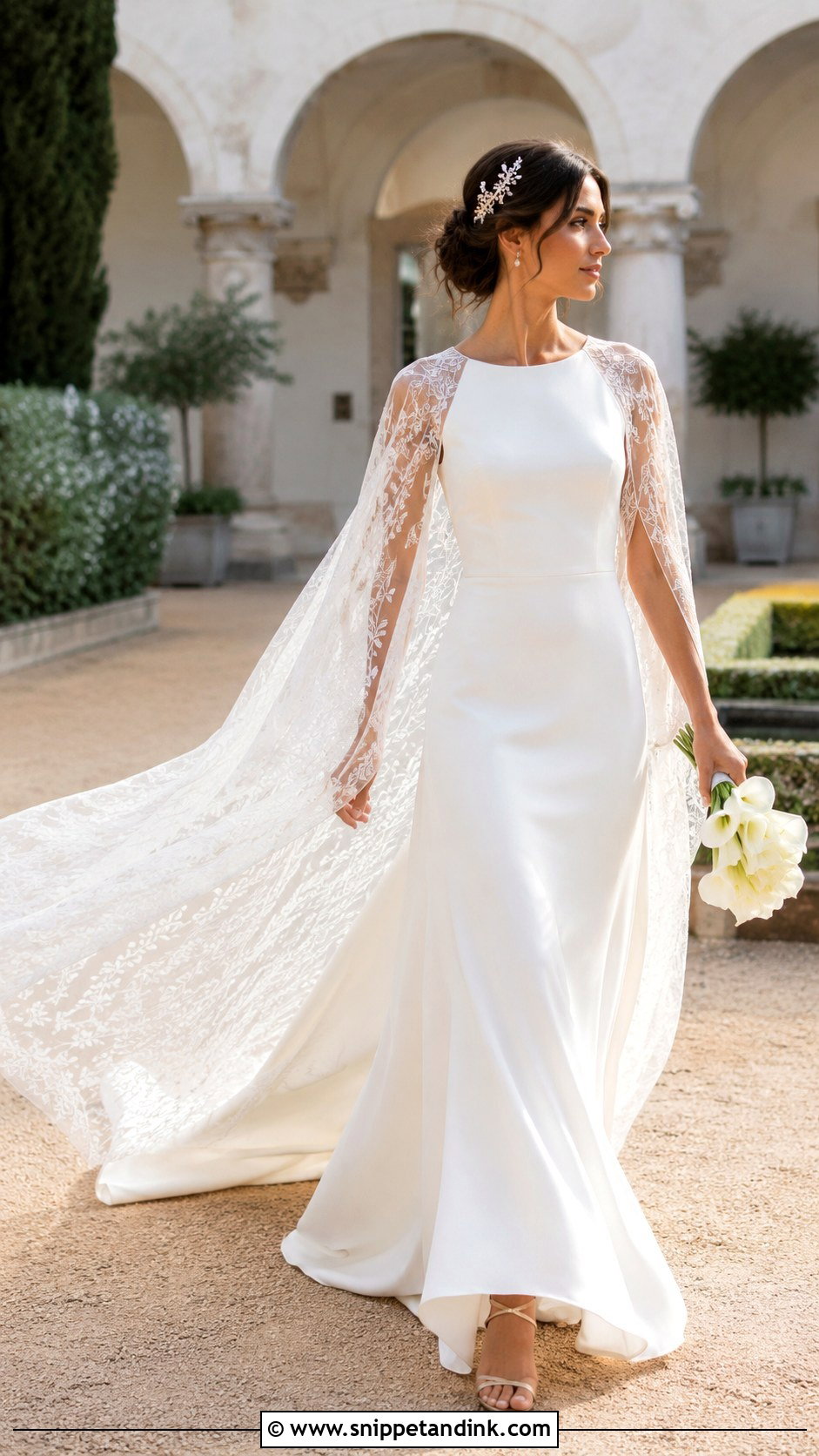
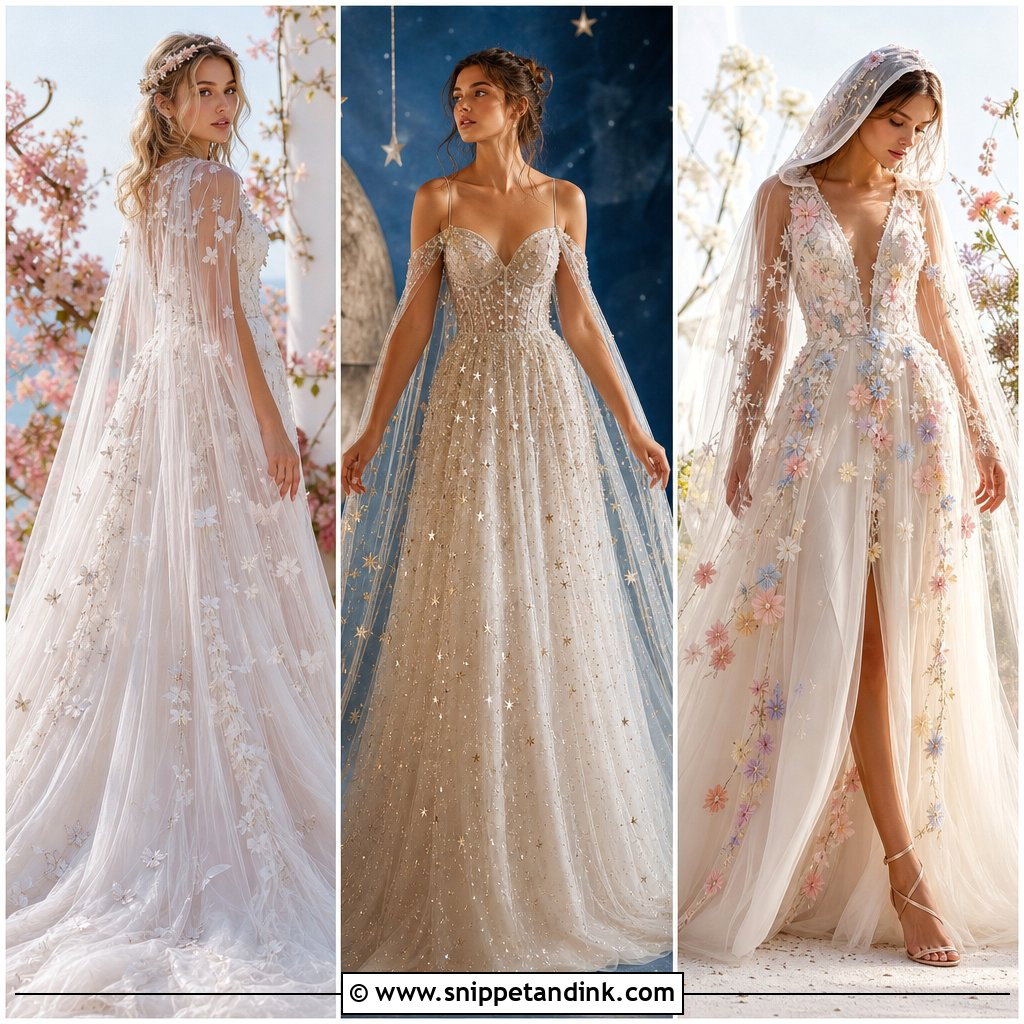
Would you rather have movement without a traditional veil? Cape sleeves answer that. The sheer tulle panels attach at the shoulder of a fitted A-line or column gown, and embroidered stars or vines on the cape keep the dress itself clean. I always walk the bride outdoors in it at the final fitting, because a long cape catches wind like a sail. A low bun stops the panels tangling with hair, and a simple bouquet of calla lilies lets the cape lead.
10. Blush Pink Fantasy Wedding Gown
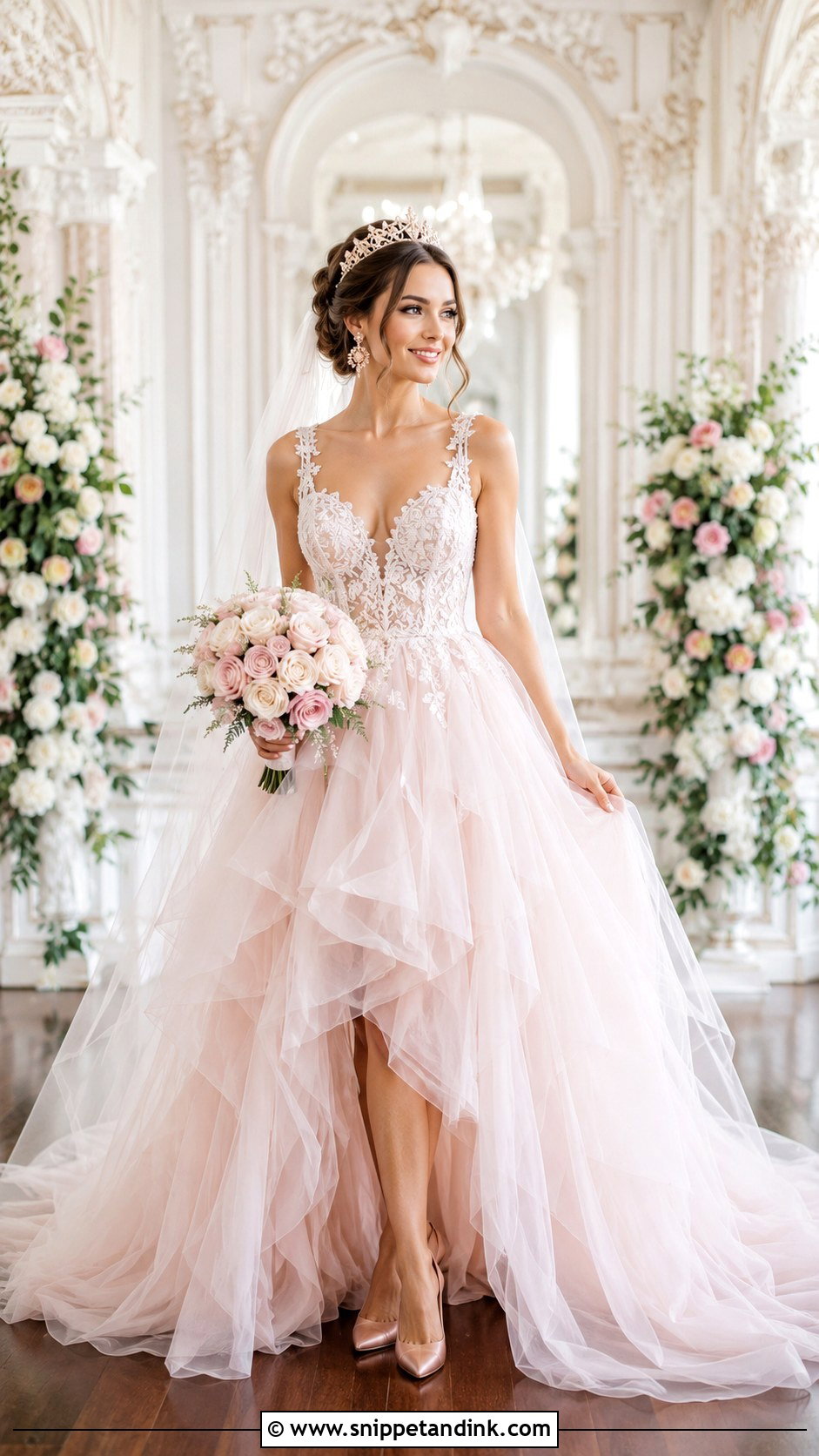
Blush works best as a hint. A pale pink underlayer beneath ivory lace and tulle gives a warm glow that reads as colour in person and as soft bridal in photos. Check it in daylight and in your venue’s light, because warm indoor bulbs can wash the pink out almost entirely. A sweetheart bodice, rose gold earrings and blush satin pumps suit it; keep the veil plain ivory so the palette stays balanced.
11. Medieval Princess Wedding Dress
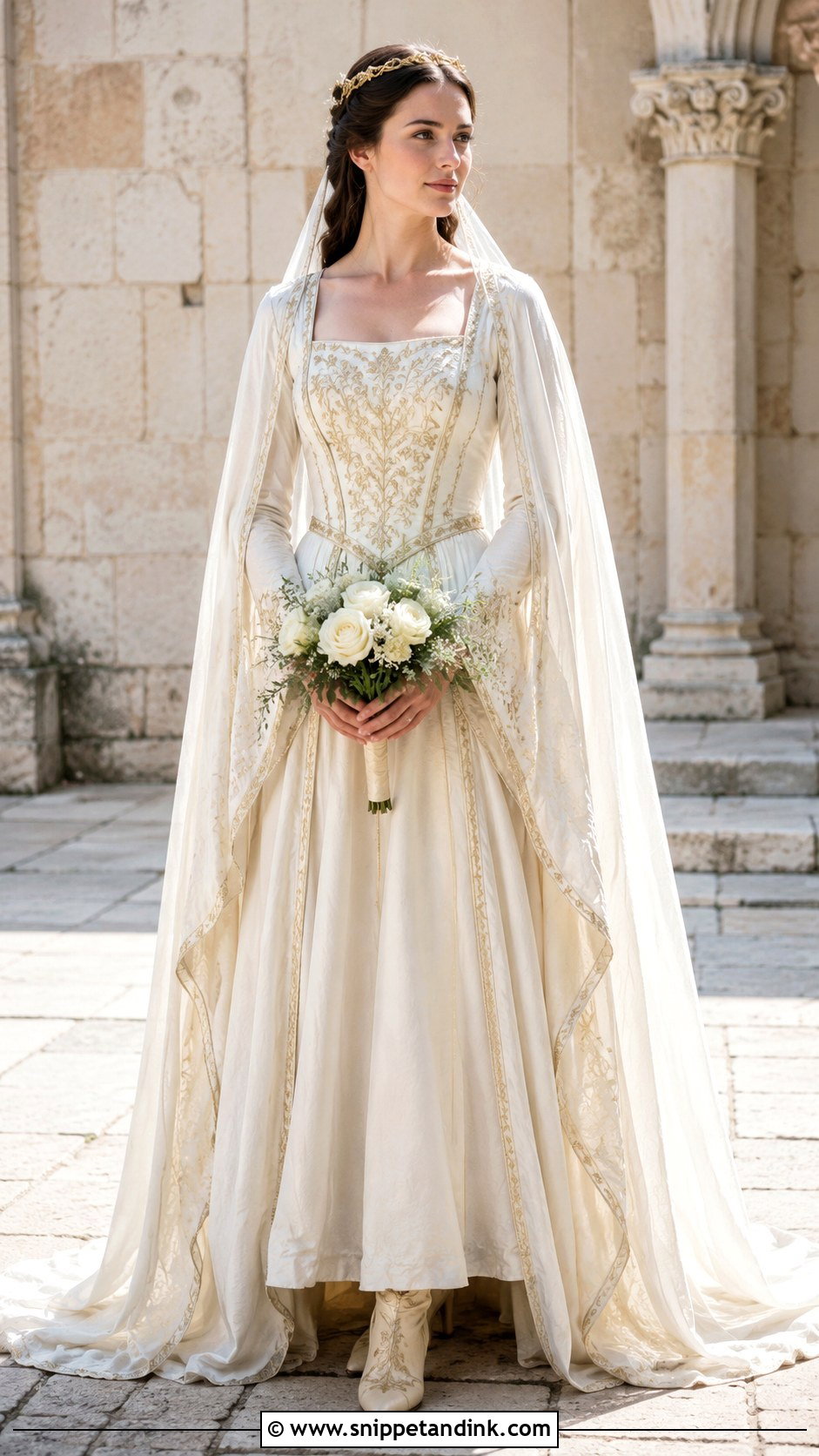
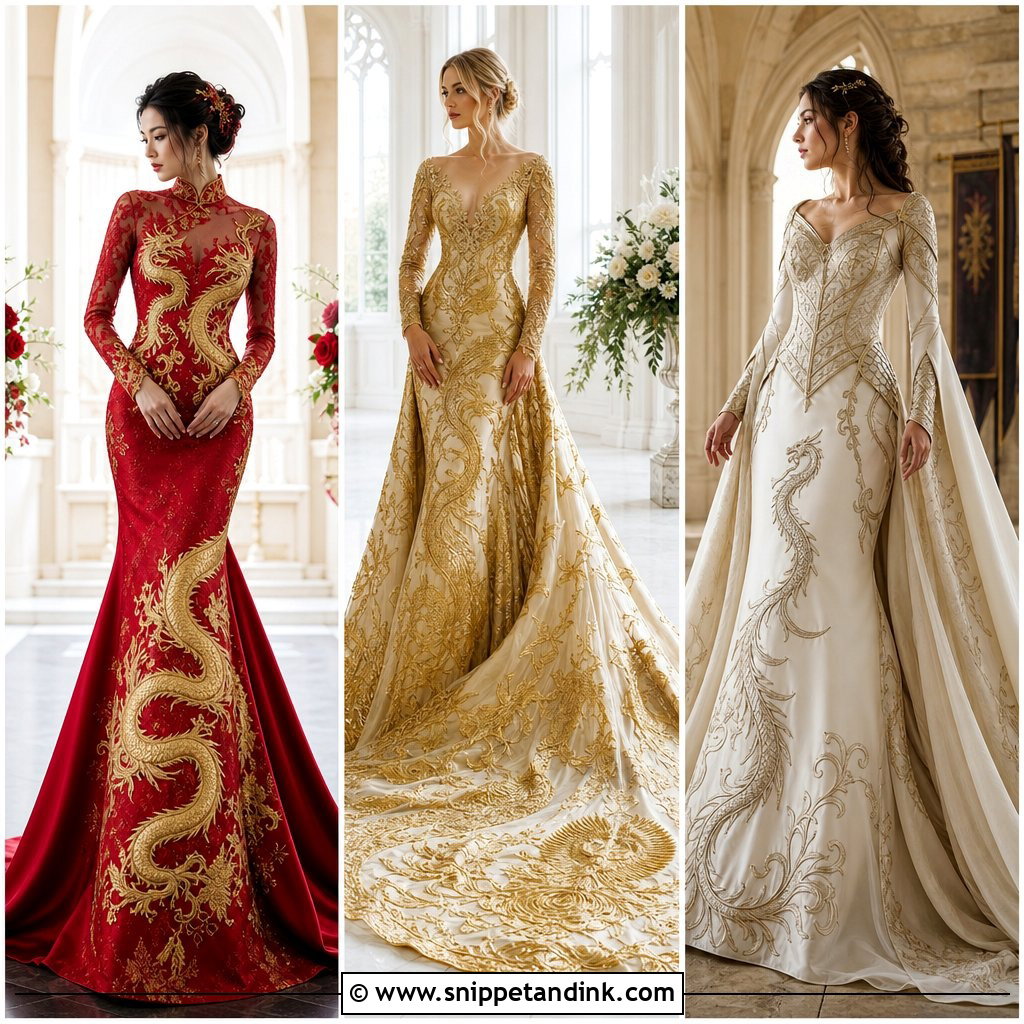
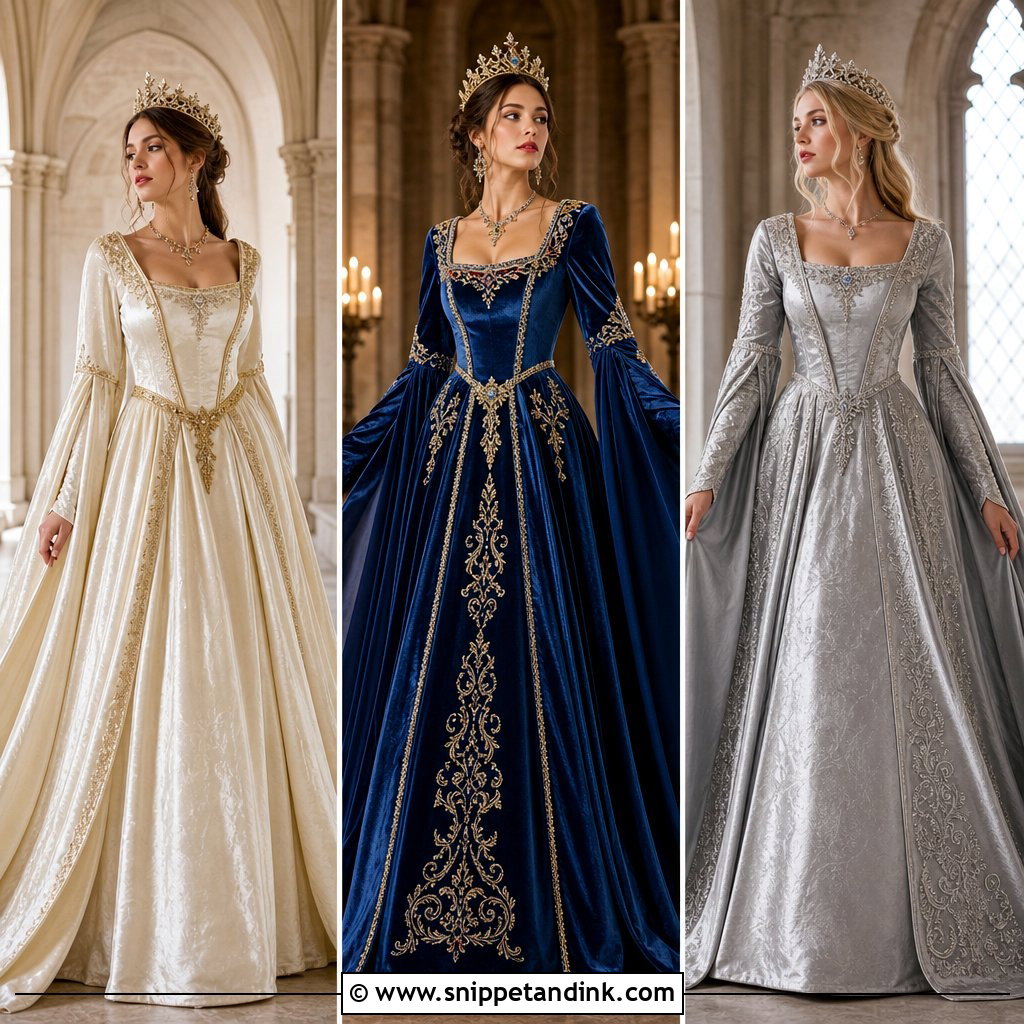
Medieval looks go wrong when they chase authenticity too hard. I keep the gown ivory, with a square neck, an embroidered fitted bodice, long bell sleeves and a fluid floor-length skirt, then let the accessories carry the period: a narrow gold circlet, small pearls and a bouquet of roses and herbs tied in silk ribbon. A velvet cape is welcome in a cold stone hall. Pointed flats or low boots hide under the hem, and long waves or a crown braid finish it.
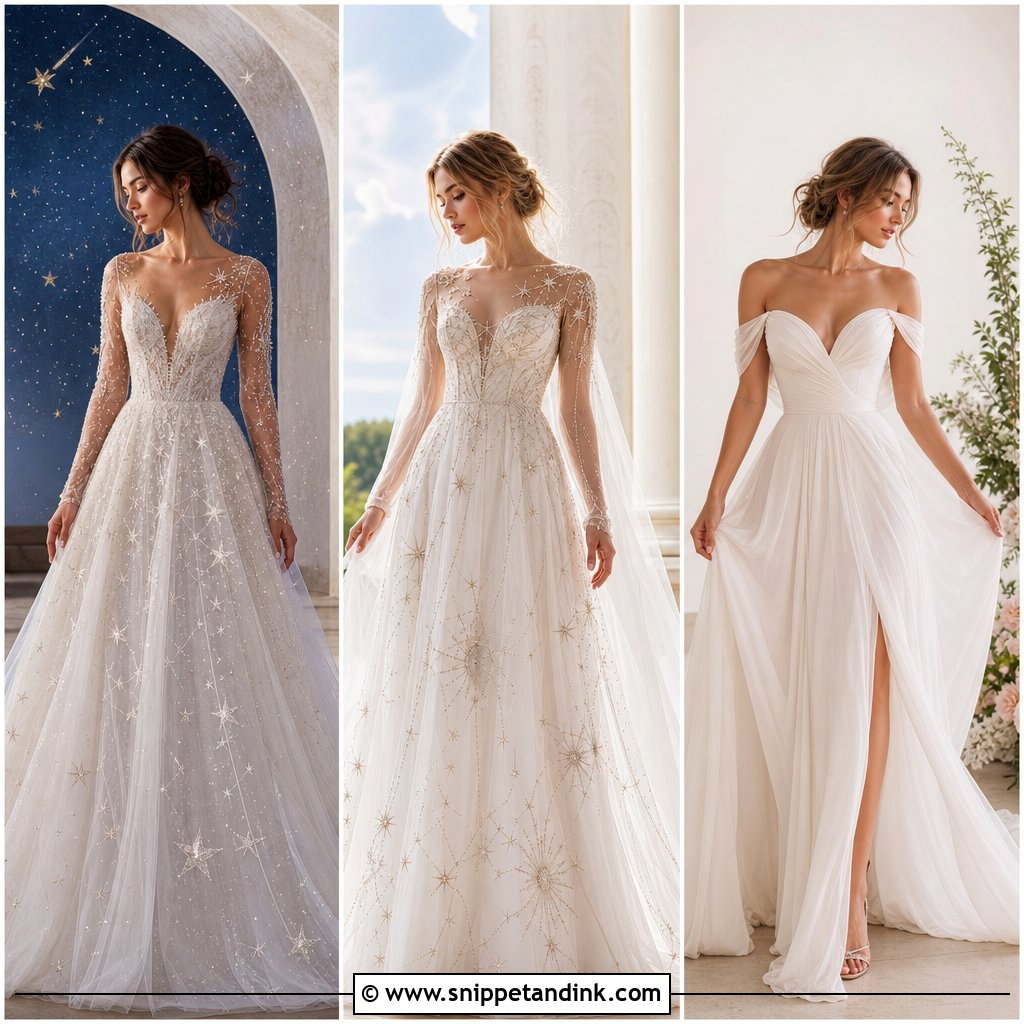
12. Starry Tulle Fantasy Wedding Gown
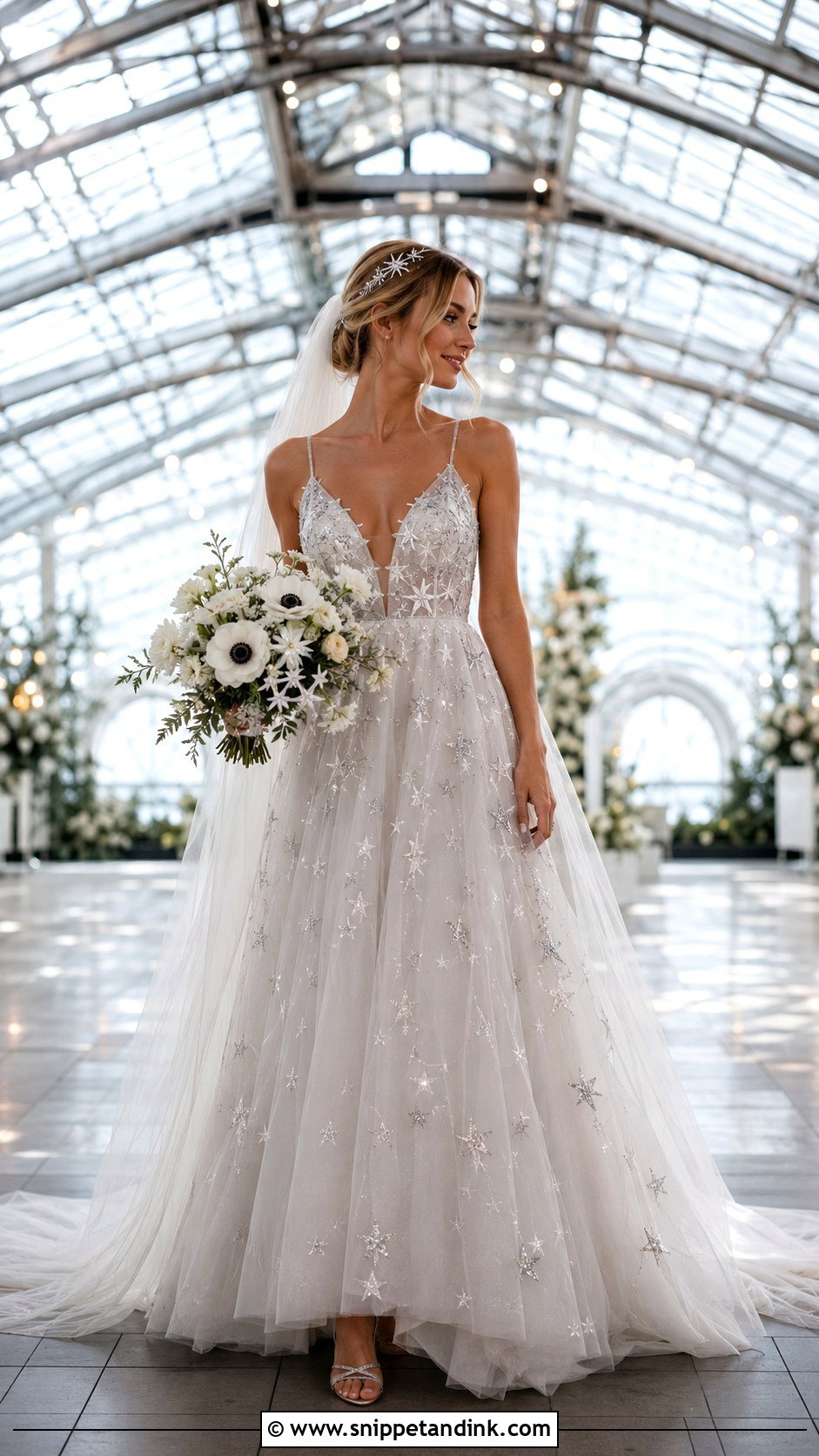
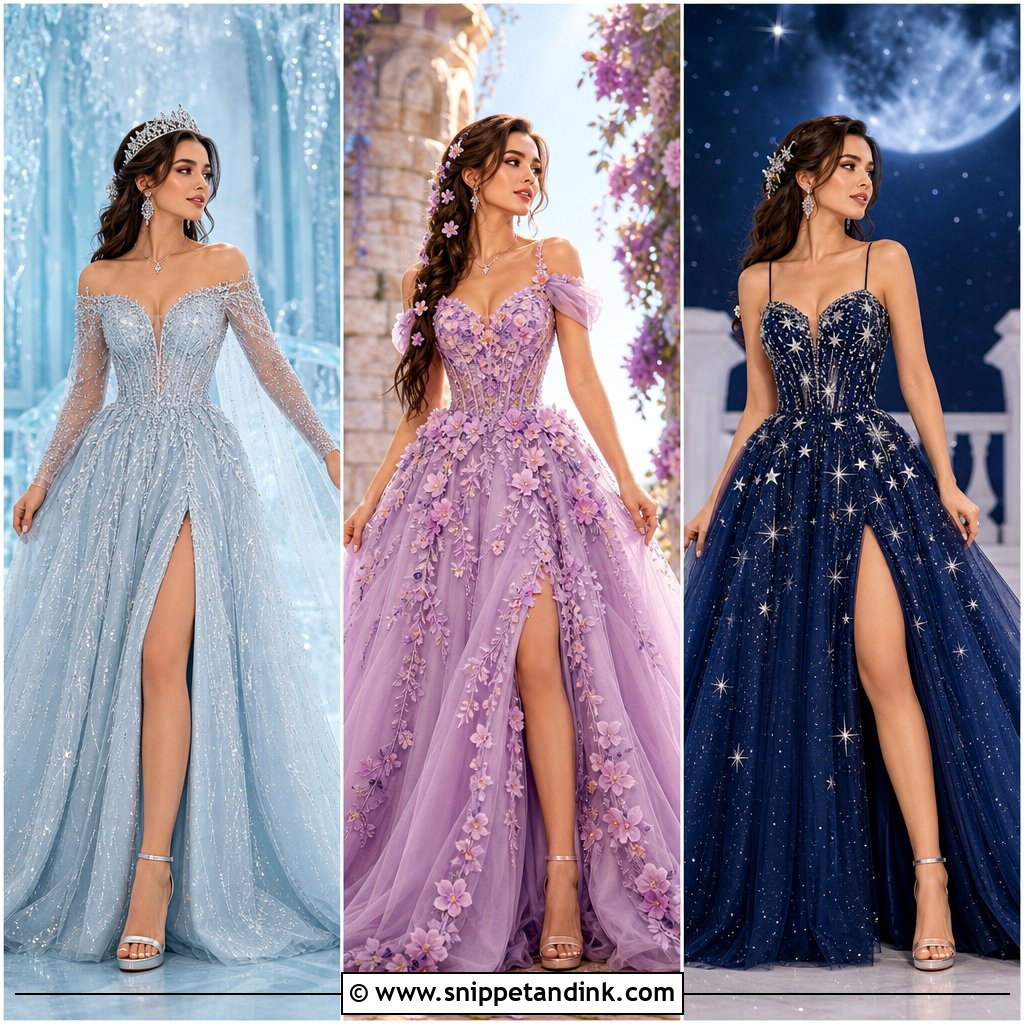
Stars embroidered in thread behave differently from sequined stars. Thread stays matte and subtle in daylight, while sequins flash at night, so I ask what time the ceremony starts before recommending either. A fitted bodice with fine straps, stars spilling into an A-line skirt and a soft shimmer underlayer give the celestial effect. Wear a plain cathedral veil so the pattern reads, with silver sandals, a star-shaped comb and anemones with silvery foliage.
13. Puff Sleeve Princess Wedding Dress
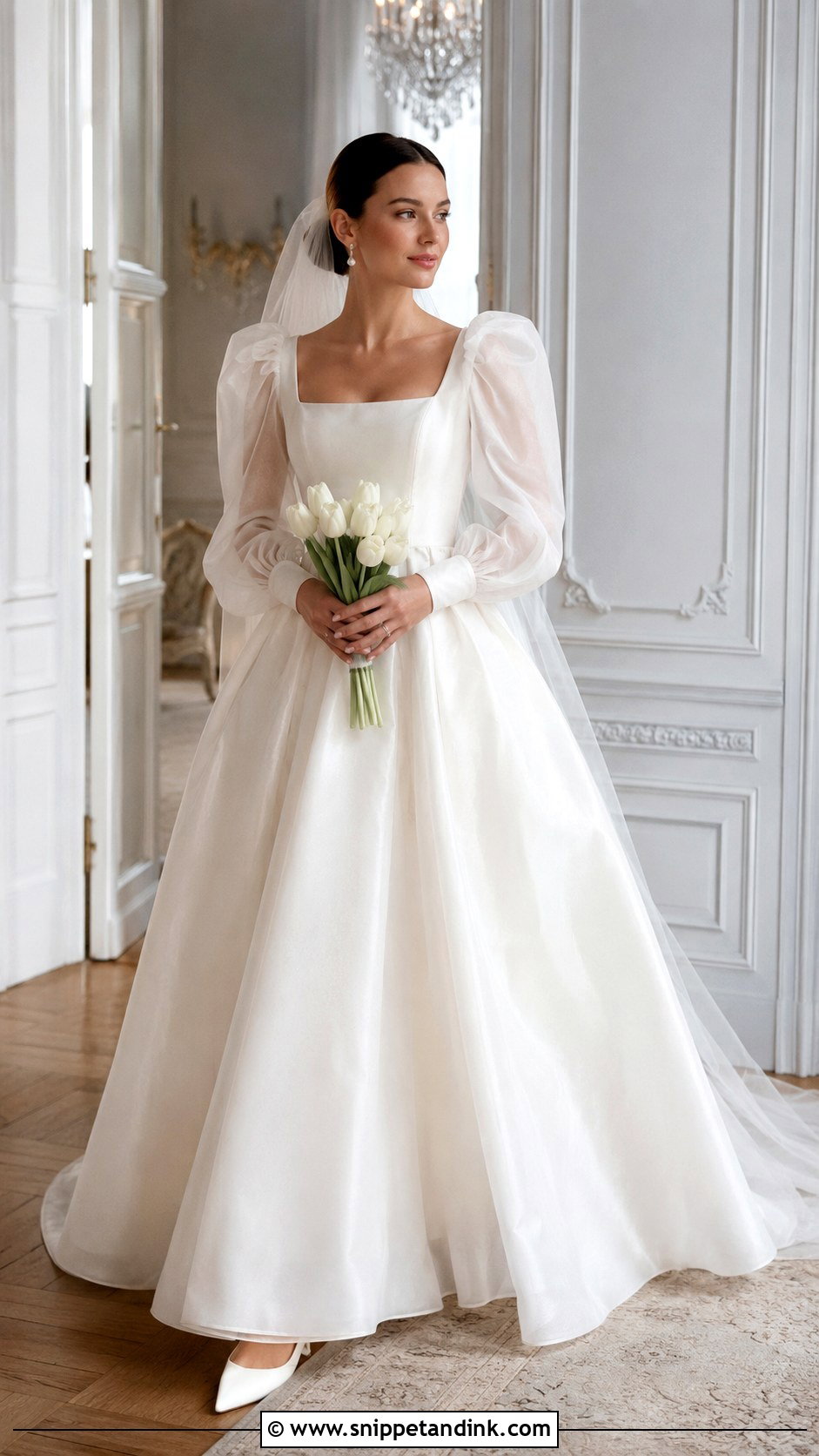
Puff sleeves add storybook character quickly, and proportion decides whether they look fresh or dated. I keep them sheer and detachable with fitted cuffs, so they can come off before dancing, and pair them with a structured square neck. A full satin or organza skirt only gives a balanced princess silhouette if the waist is clearly defined. Pointed ivory pumps lengthen the line, with a fingertip veil behind a textured updo and a few white tulips.
14. Mermaid Fantasy Wedding Gown
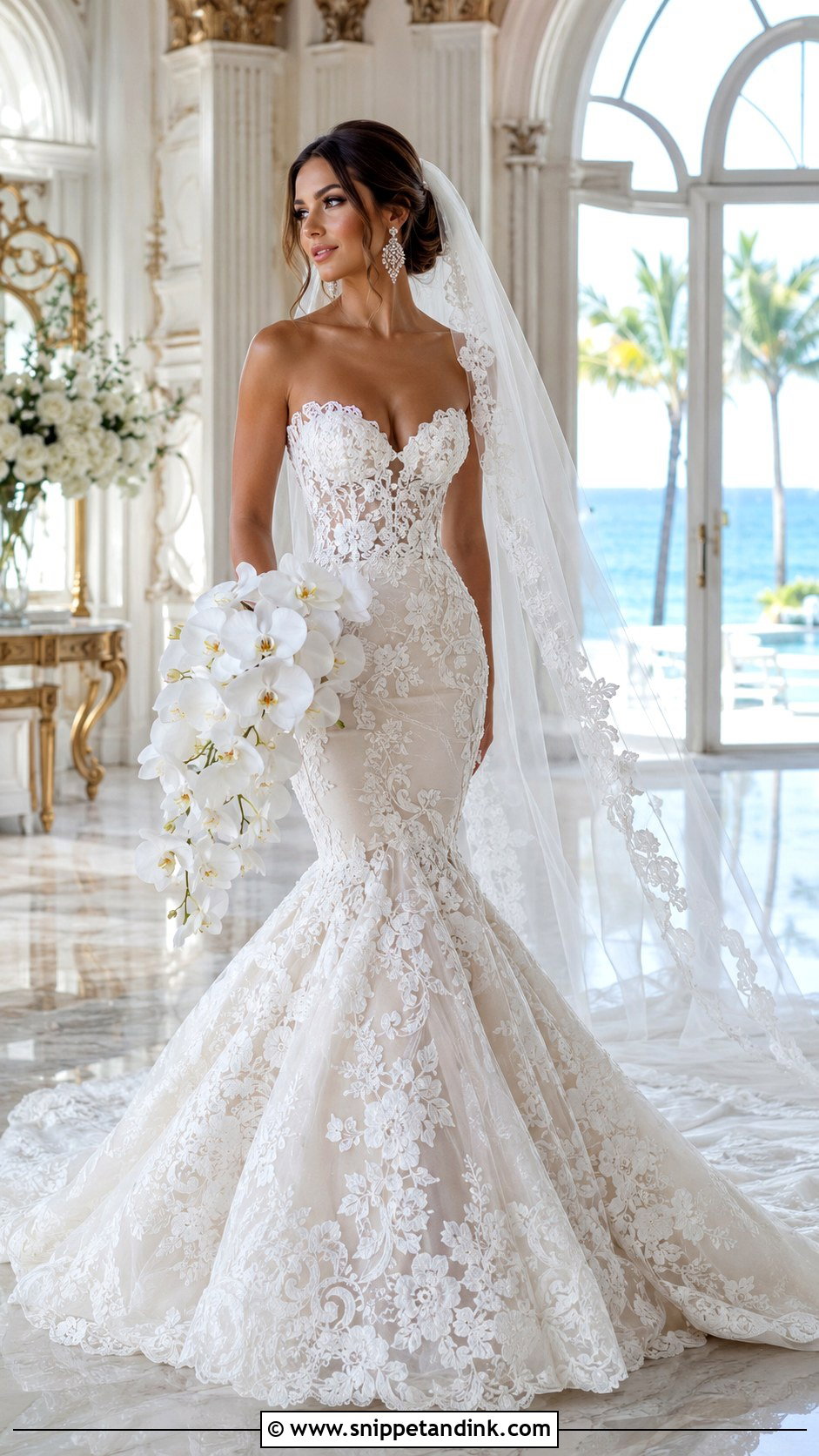
Not every fairy tale dress needs a wide skirt. Sculpted lace following the body, then spreading across a flared hem, can do the same job. One thing I insist on: have the hem set while you wear the exact platform heels you’ll marry in, because a fitted skirt has no room to hide a hem that’s slightly too long. Choose a sweetheart bodice with real support, a long sheer veil and an elongated orchid bouquet that follows the vertical line. Hollywood waves or a sleek low bun keep it glamorous.


15. Enchanted Garden Wedding Dress
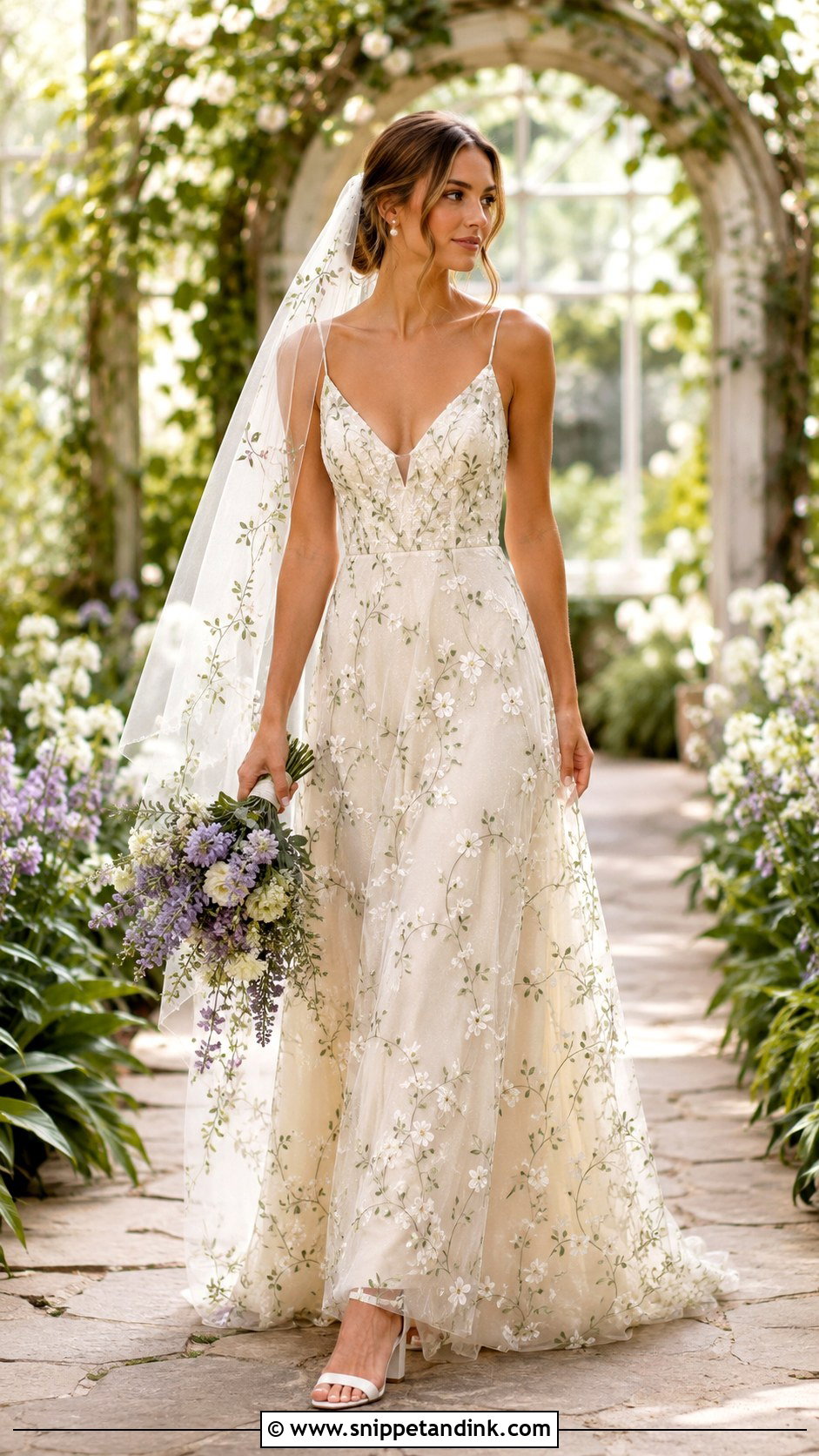
Garden ceremonies need a gown that can handle grass, gravel and a bit of wind. Embroidered vines on a soft A-line with delicate straps and a light layered skirt, over a nude or champagne lining, keep the botanical pattern visible. I keep the train moderate here, since a long one picks up cut grass and needs constant fluffing for photos. Block-heel sandals, pearl studs and a flower-trimmed veil, with small floral pins in a low textured bun, complete it.
16. Satin Fairy Tale Wedding Ball Gown
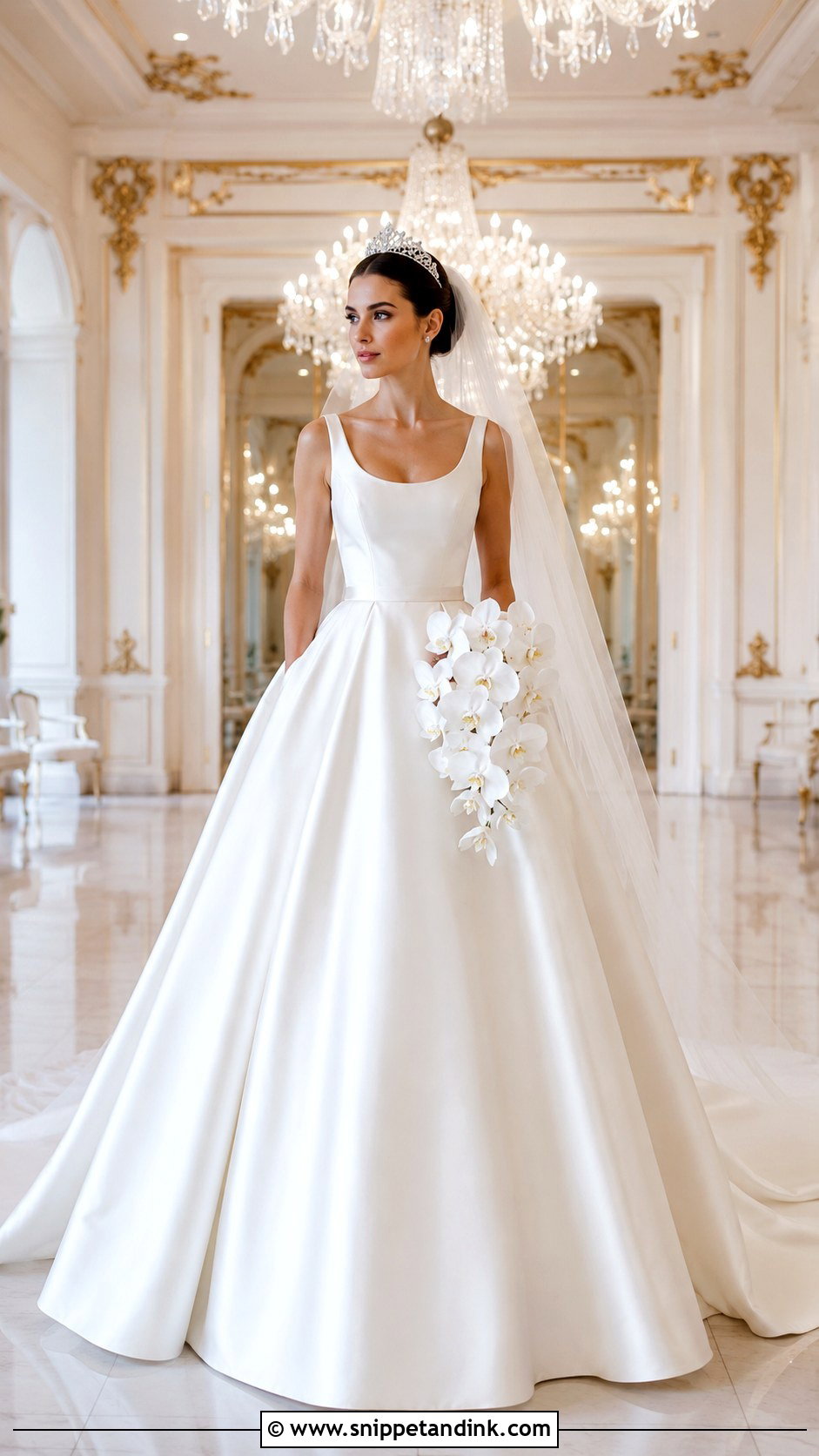
Satin earns its fairy tale status through shape and shine, with almost no decoration. The catch is creasing. Heavy duchess satin wrinkles across the lap after the car ride and the ceremony seating, so I tell brides to expect it and to have a steamer at the venue. A sweetheart neckline, fitted waist, covered buttons down the back and hidden pockets keep it classic, finished with a crystal tiara and a clean-cut cathedral veil. Against chandeliers and carved walls, the plain fabric gives the eye somewhere to rest.
17. Beaded Illusion Fantasy Wedding Gown
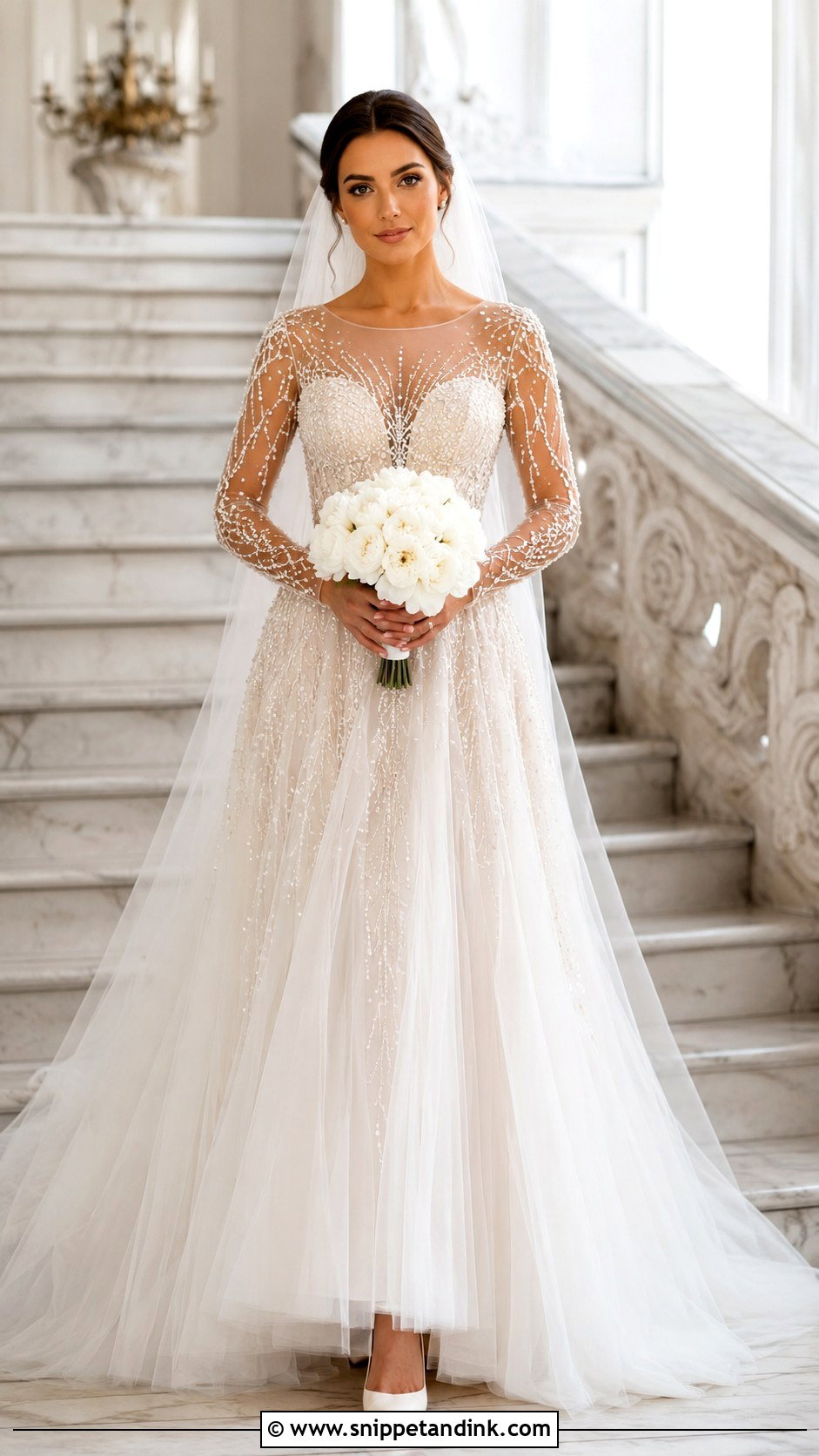
Beadwork on a sheer illusion neckline catches the light like nothing else, and it also weighs on the mesh. I look closely at how the beading is attached: hand-stitched pearls and crystals sit flatter and drop fewer pieces than a heavily glued panel. Long illusion sleeves add coverage, and a flowing tulle skirt calms the busy bodice. Skip the necklace, since the neckline already acts as jewelry, and wear a low chignon to show the beading across the shoulders and back.
18. Blue Fantasy Wedding Dress
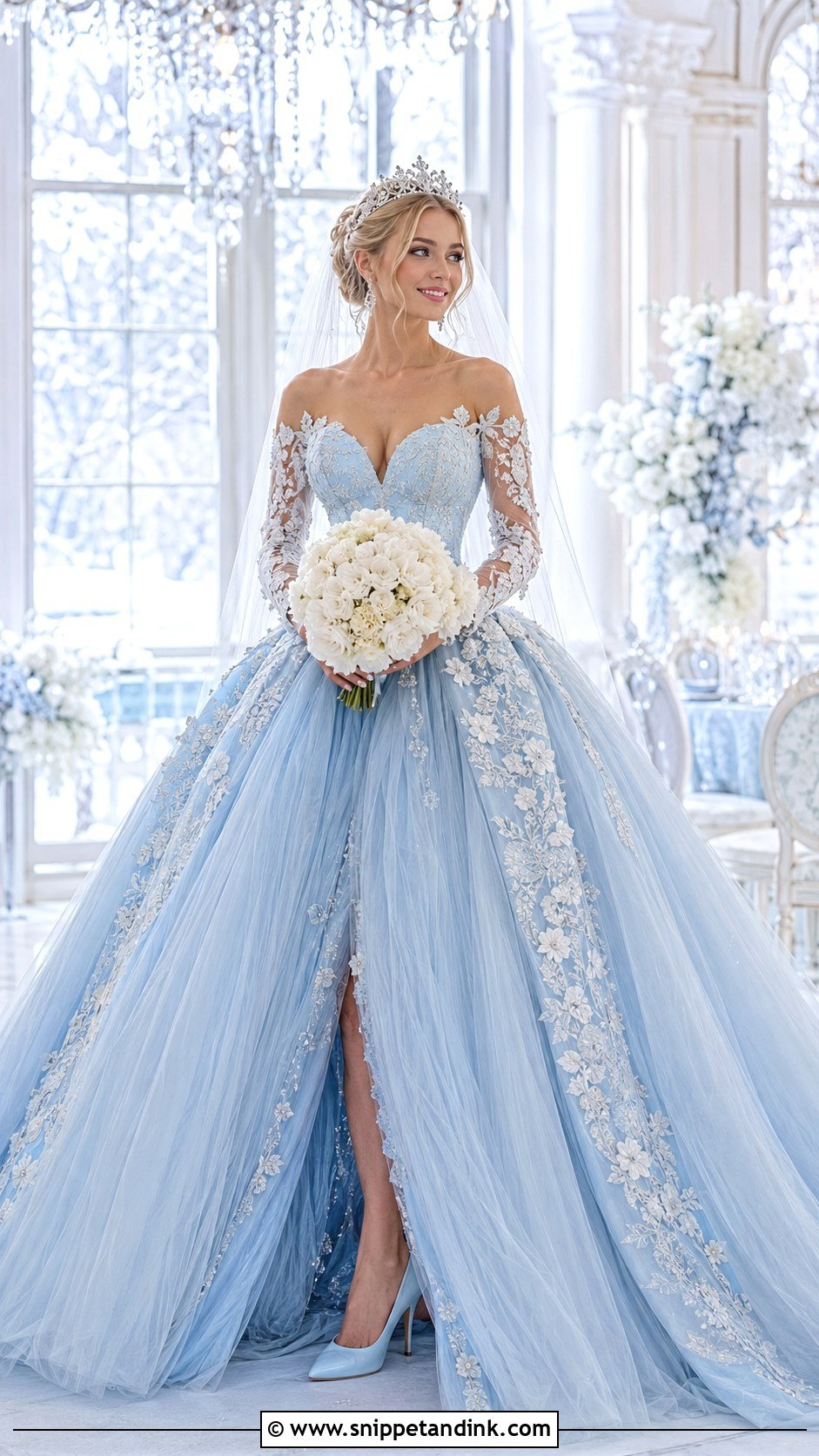
Pale blue is the most magical colour on this list and the easiest to overdo. Icy blue tulle with ivory floral appliqués over a structured bodice keeps it bridal, and a removable overskirt gives ceremony volume and a lighter reception silhouette. I always pair it with an ivory veil, which frames the colour instead of hiding it, and an all-white bouquet for contrast. Silver crystal earrings and smooth half-up hair suit a winter ballroom with silver decor.
19. Detachable Train Fantasy Wedding Gown
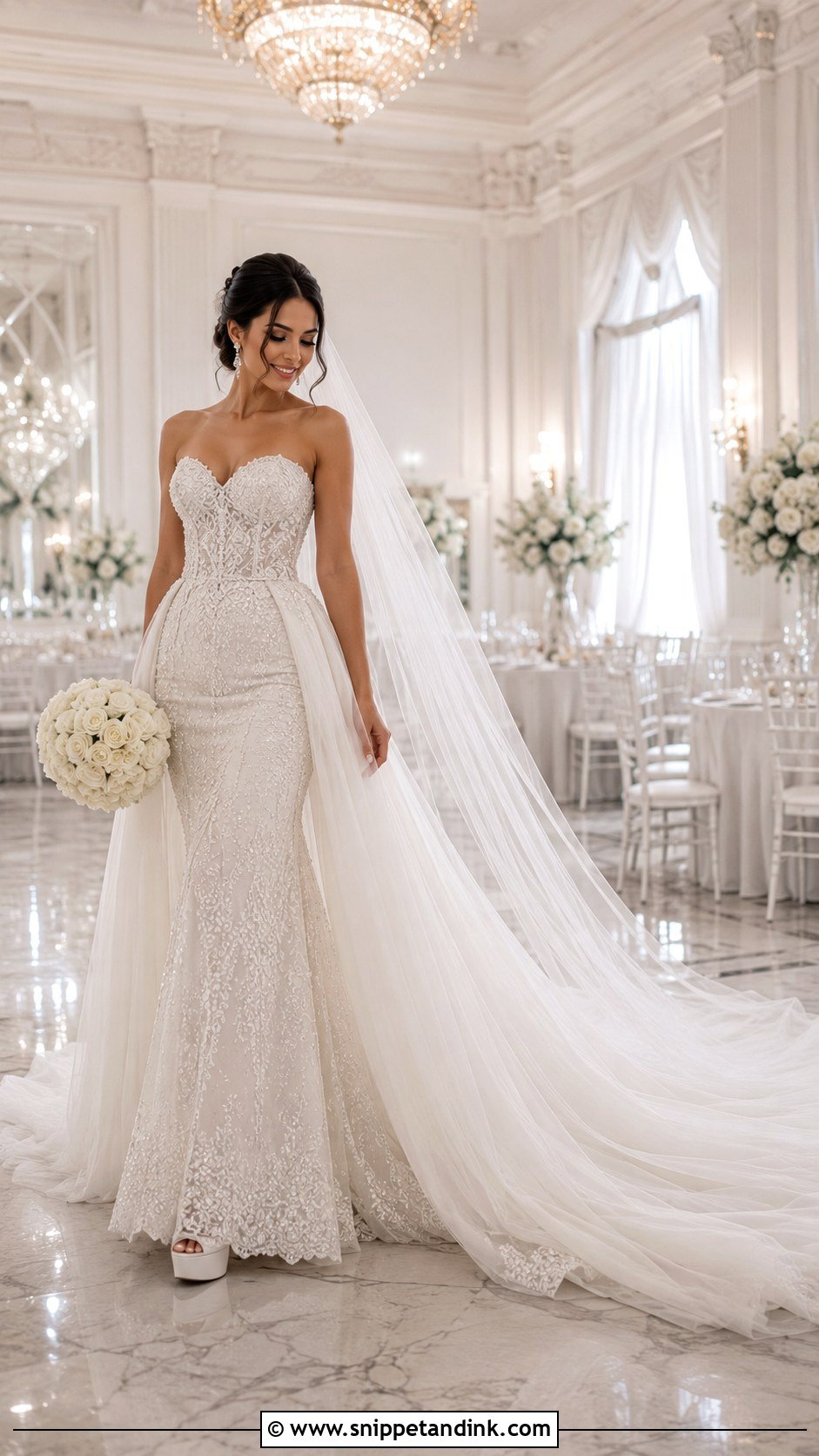
A detachable train gives you dramatic fairy tale volume for the ceremony and freedom for the reception. The fastening is what I test hardest. Hooks plus a hidden snap at the waist hold better than a single button, and the overskirt should come away without lifting the gown underneath. The fitted lace or beaded dress below is your second look, so it needs to stand on its own. Comfortable platform heels and a sleek low bun keep attention on the changing silhouette.

20. Hooded Cape Fantasy Wedding Dress
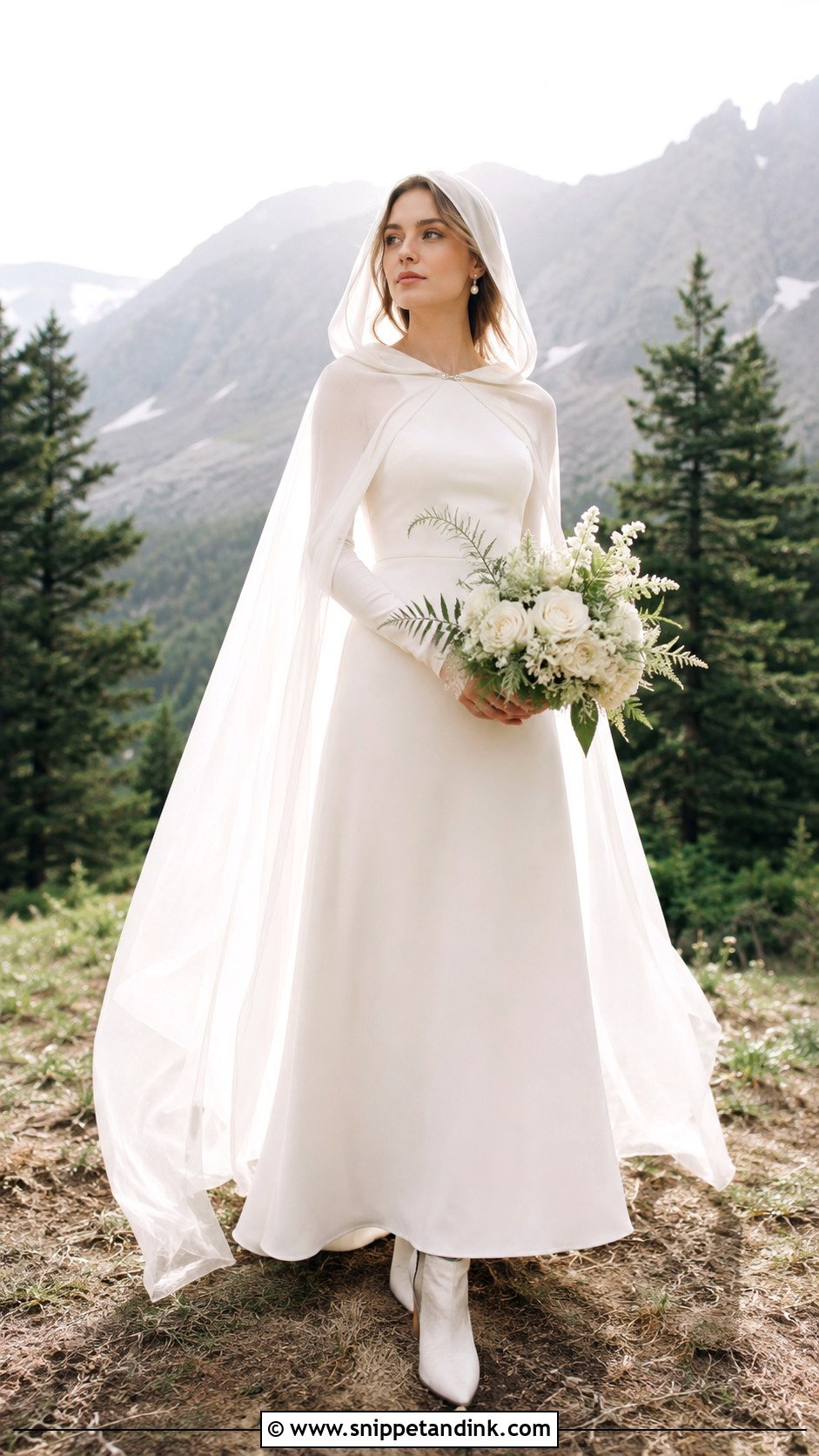
A hooded bridal cape belongs at forest, mountain and cool-weather ceremonies, where it’s practical as well as dramatic. Under it, a simple long sleeve A-line in crepe or satin stops the outfit crowding. Sheer ivory reads delicate; velvet actually keeps you warm. Hoods flatten volume, so plan loose waves that can recover, or a low braid if it’s windy. Take the cape off indoors and you have a clean second version of the look.
What Goes Underneath a Corset or Ball Gown
The parts nobody sees decide how the gown looks and how you feel by the evening. I sort these out at the first fitting, because changing them later shifts every measurement.
Support and shapewear
Most structured bridal bodices have support built in, and a separate bra usually fights the boning and shows at the back. I’d ask the seamstress to sew cups into the gown instead. For a slim mermaid or a bias-cut slip, smooth skin-toned shapewear in your size, not a size down, avoids lines without cutting in when you sit.
Hoops versus soft petticoats
A ball gown often needs a petticoat to hold its outline. Hoops give the widest skirt, but they make sitting, car rides and bathroom trips awkward, while layered crinoline petticoats flex with you. Try the gown with both at a fitting and decide there, not on the morning.
Matching the headpiece to the neckline
A high illusion neck or heavy beading wants a quiet comb, while a plain satin bodice can carry a full tiara. Wear the headpiece to a fitting so you see the whole silhouette at once, and send a photo to your hairstylist so the pins go where the headpiece needs them.
Twenty Gowns, One Walk Down the Aisle
The most memorable fantasy dress is rarely the biggest. It’s the one that suits your venue, lets you move and matches the picture you’ve carried in your head. Princess ball gowns, woodland lace, starry tulle, mermaid lines and hooded capes all have a place, so test each shortlisted shape while walking, sitting and turning. Let accessories support the theme instead of competing with it, and treat alterations, secure shoes and manageable layers as part of the design. Get those right and the dress keeps its magic long after the first photograph.
You'll Like These Ideas:




Leave a Reply