
Medieval queen bridalwear borrows royal drama and makes it wearable: long sleeves, decorative belts, layered fabrics and heavy embroidery. White wasn’t the default bridal colour in the Middle Ages. Wealthy brides wore their richest clothes, often in red, green or blue, because dyed cloth showed status. That history is why so many medieval-inspired wedding dresses work in colour. You can go all in with a full velvet gown, or keep it to one detail such as a square neckline, a cape or metallic trim. Each look below comes with the shoes, jewellery and headpiece I’d pair with it, and the practical catch to watch for.
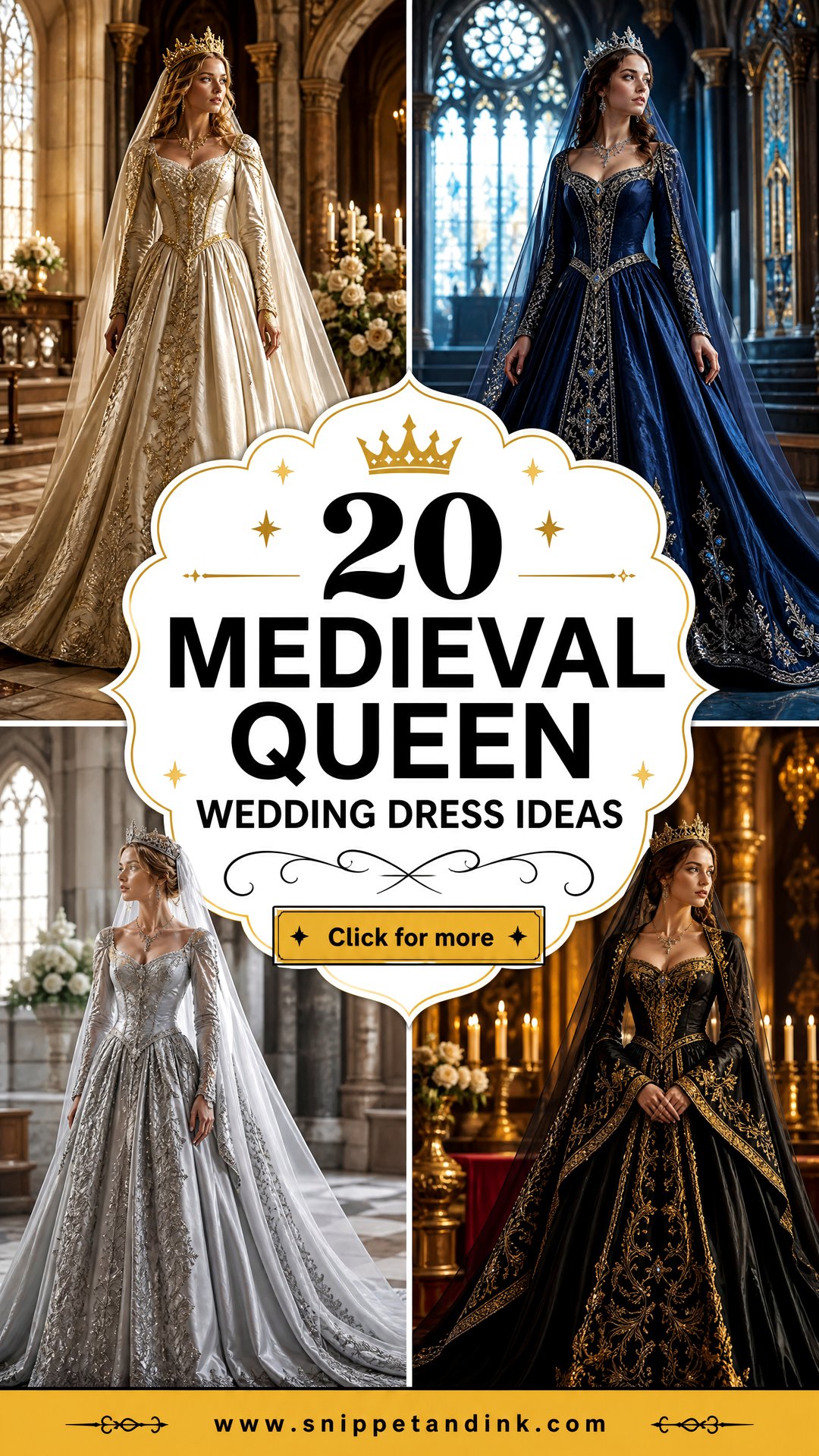
Bridal Shop, Costume Maker or Custom Dressmaker?
Where you buy a medieval-style gown changes what you get. Most bridal salons carry a few square-neck or bell-sleeve designs, but they’re modern dresses with a historical nod. If you want velvet, a surcoat or real lacing, you’ll usually need a dressmaker or a maker who specialises in historical clothing.
- Bridal salon: familiar fitting process and bridal fabrics, limited medieval detail.
- Historical or costume maker: authentic cuts and layering, but ask to see finished bridal pieces, since stage costumes are built to be seen from a distance and not up close.
- Custom dressmaker: anything you want, but you’re designing as well as buying, which takes longer and needs more fittings.
Custom and historical work often takes several months, and velvet and brocade can need ordering in. I’d start the conversation at least nine months out and ask for a fabric sample before you commit. Velvet colour on a screen is rarely the colour in your hand.
1. Ivory Velvet Medieval Queen Wedding Dress
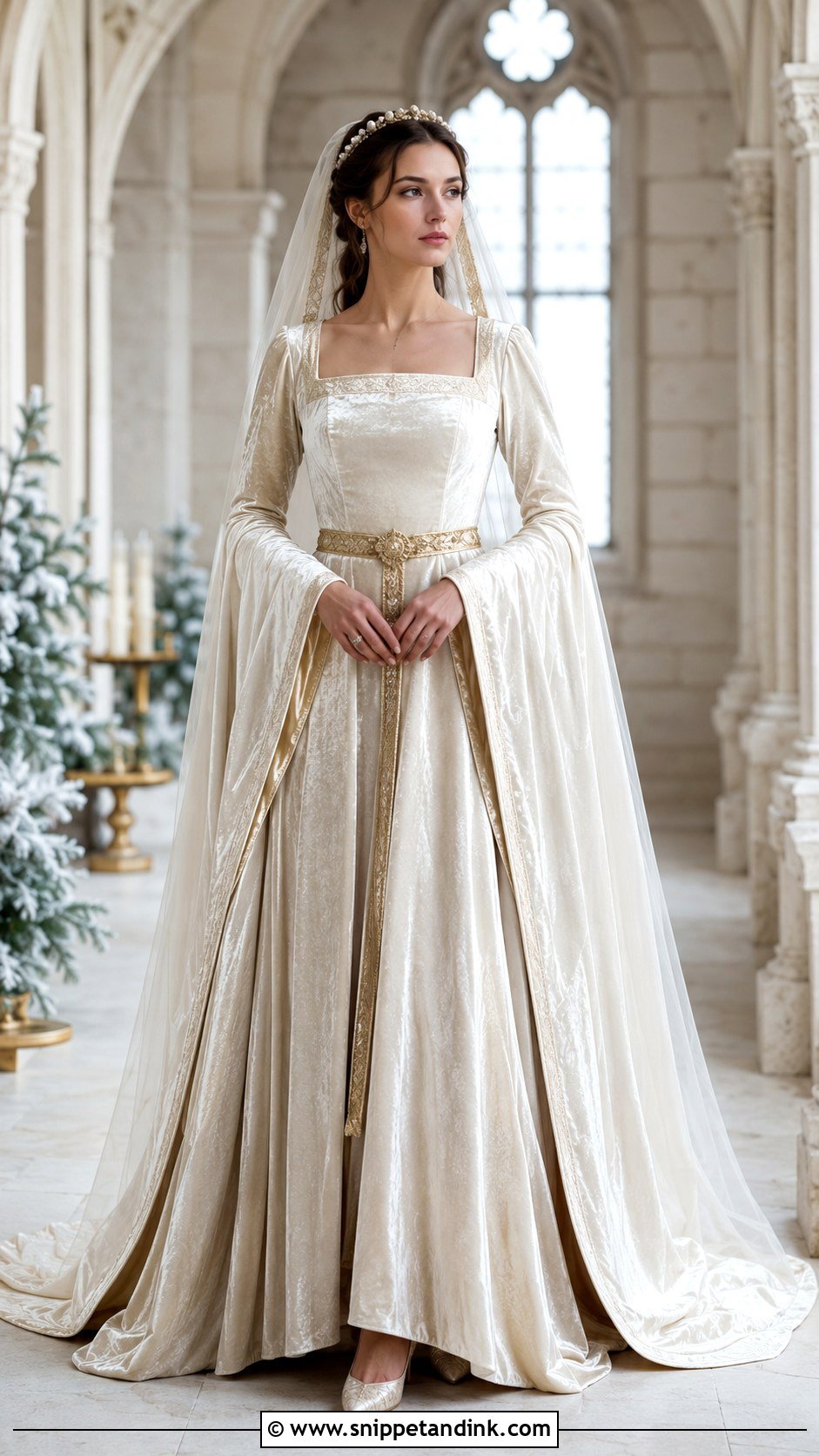
Velvet gives an ivory gown weight straight away, and that weight is the point. A fitted bodice with a square neck, a slightly raised waist and a skirt that falls straight to the floor looks regal without any beading. Bell sleeves add movement. A narrow gold belt marks the waist, and a pearl circlet, drop earrings and an ivory cathedral veil complete it. Velvet is warm, so save it for a fall or winter castle wedding. Matching velvet flats or low block heels under the skirt will keep you comfortable on stone floors.
2. Gold Brocade Medieval Queen Wedding Dress
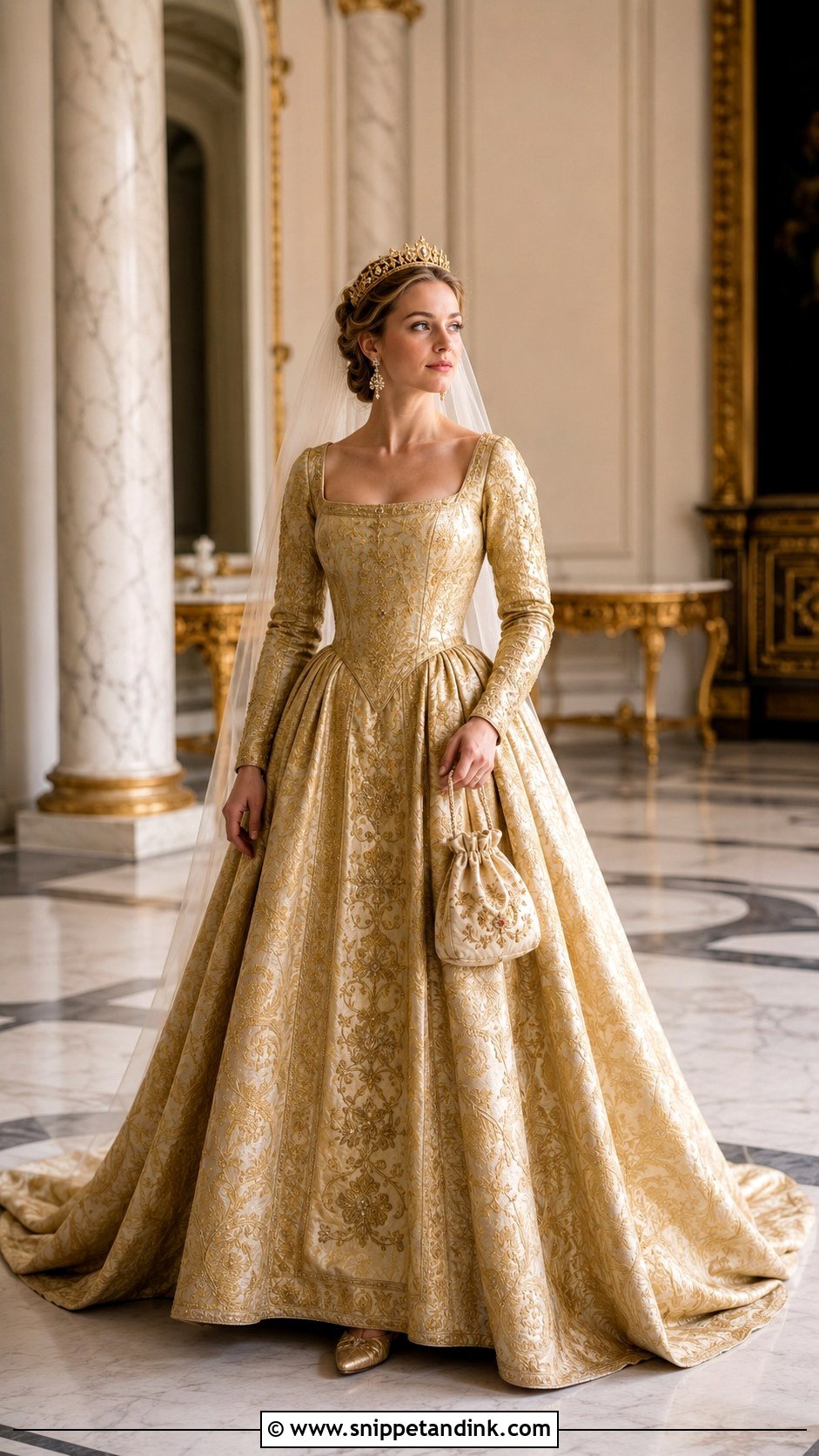
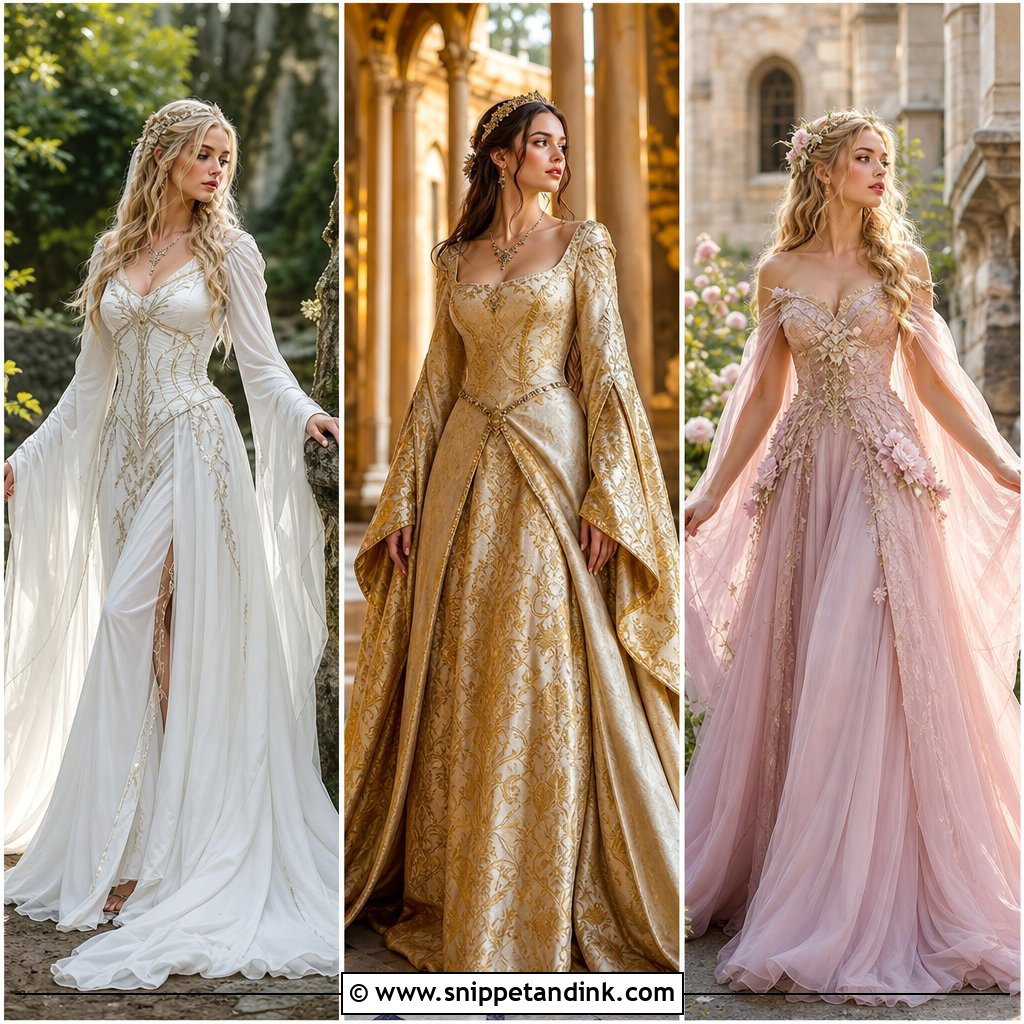
Brocade is stiff, and that’s what makes it look royal. A gold brocade on an ivory or champagne base, with a fitted bodice, portrait neckline and full A-line skirt, needs little else. Long fitted sleeves balance the volume and keep it from tipping into costume. The thing I warn brides about: brocade doesn’t stretch or ease, so the bodice has to be fitted precisely and you’ll feel every seam if it’s off. A delicate crown, crystal earrings and a plain ivory veil under the headpiece, gold pointed shoes and a small embroidered drawstring purse finish it. White roses and trailing greenery keep the bouquet calm. Candlelit stone halls make the metallic thread glow.
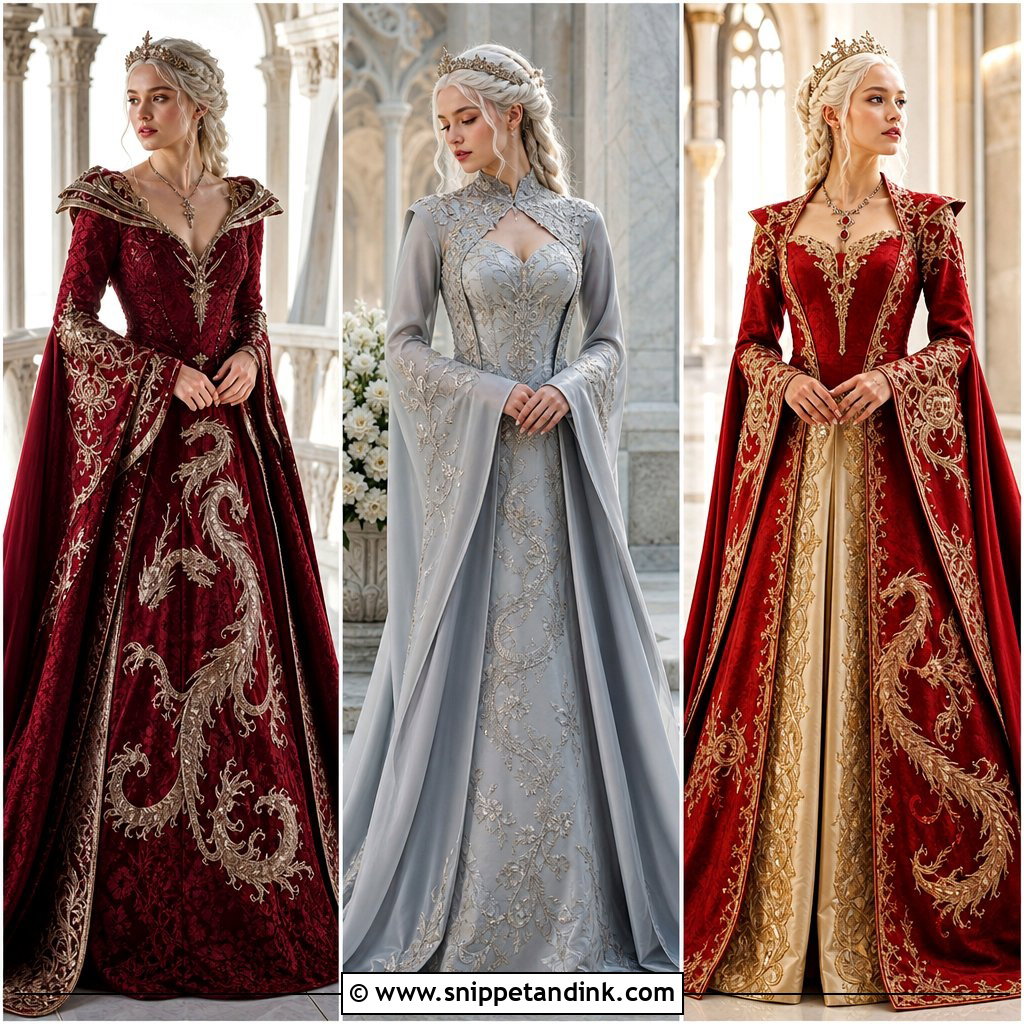
3. Burgundy Velvet Medieval Queen Wedding Dress
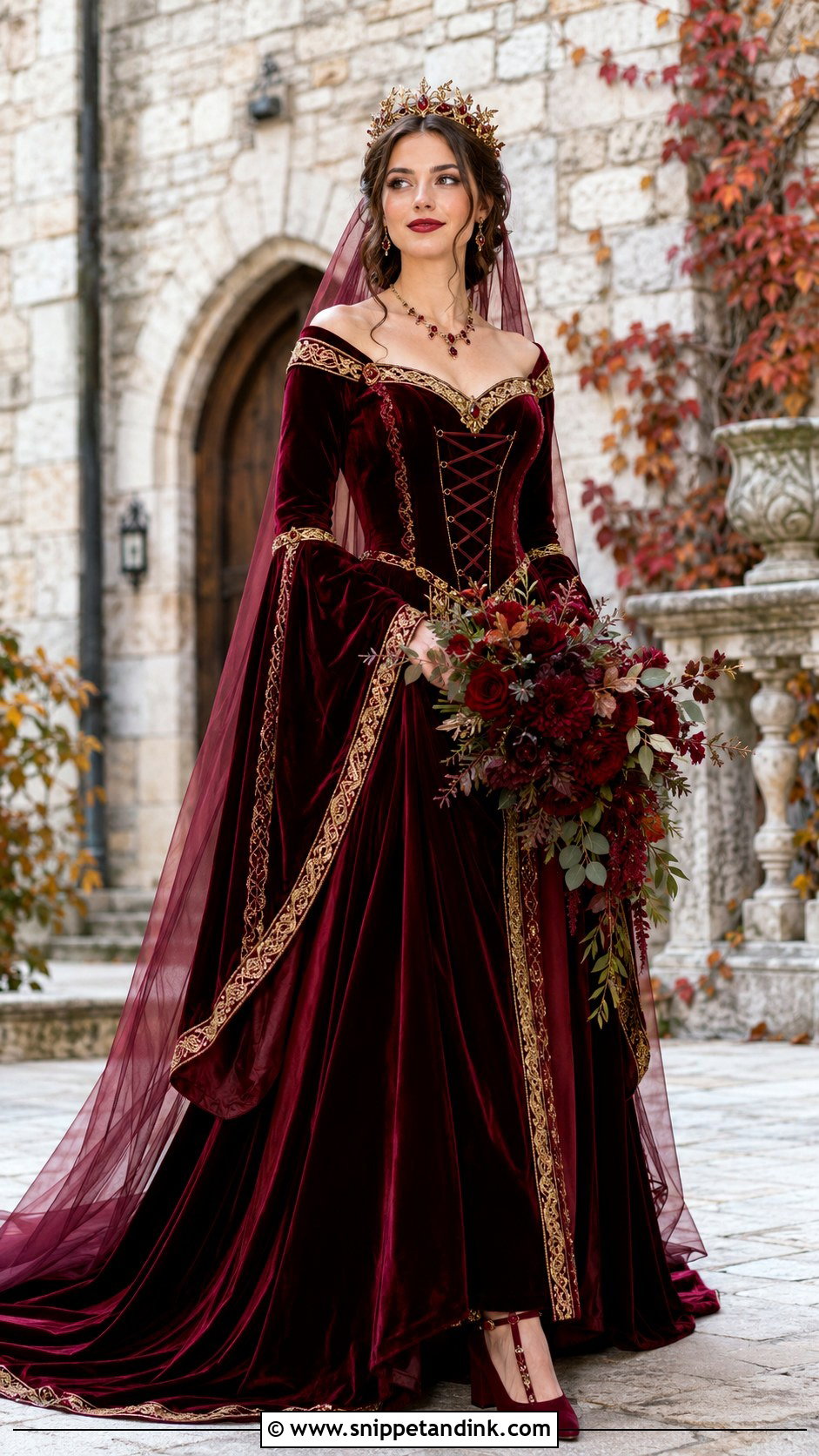
Burgundy is the colour I’d suggest to a bride who wants to break from white without going dark. Velvet with a lace-up bodice, long trumpet sleeves and a modest train looks rich in autumn light. Gold piping at the neck and cuffs brightens the dark fabric. A gold leaf crown, garnet earrings and a pendant sitting close to the collarbone suit it. Dark brown leather flats or burgundy block heels are comfortable underneath. Instead of a standard veil, try a sheer burgundy shoulder veil or a light cloak fastened with an antique-style brooch, with stone walls and dark wood around you.
4. Emerald Green Medieval Queen Wedding Dress
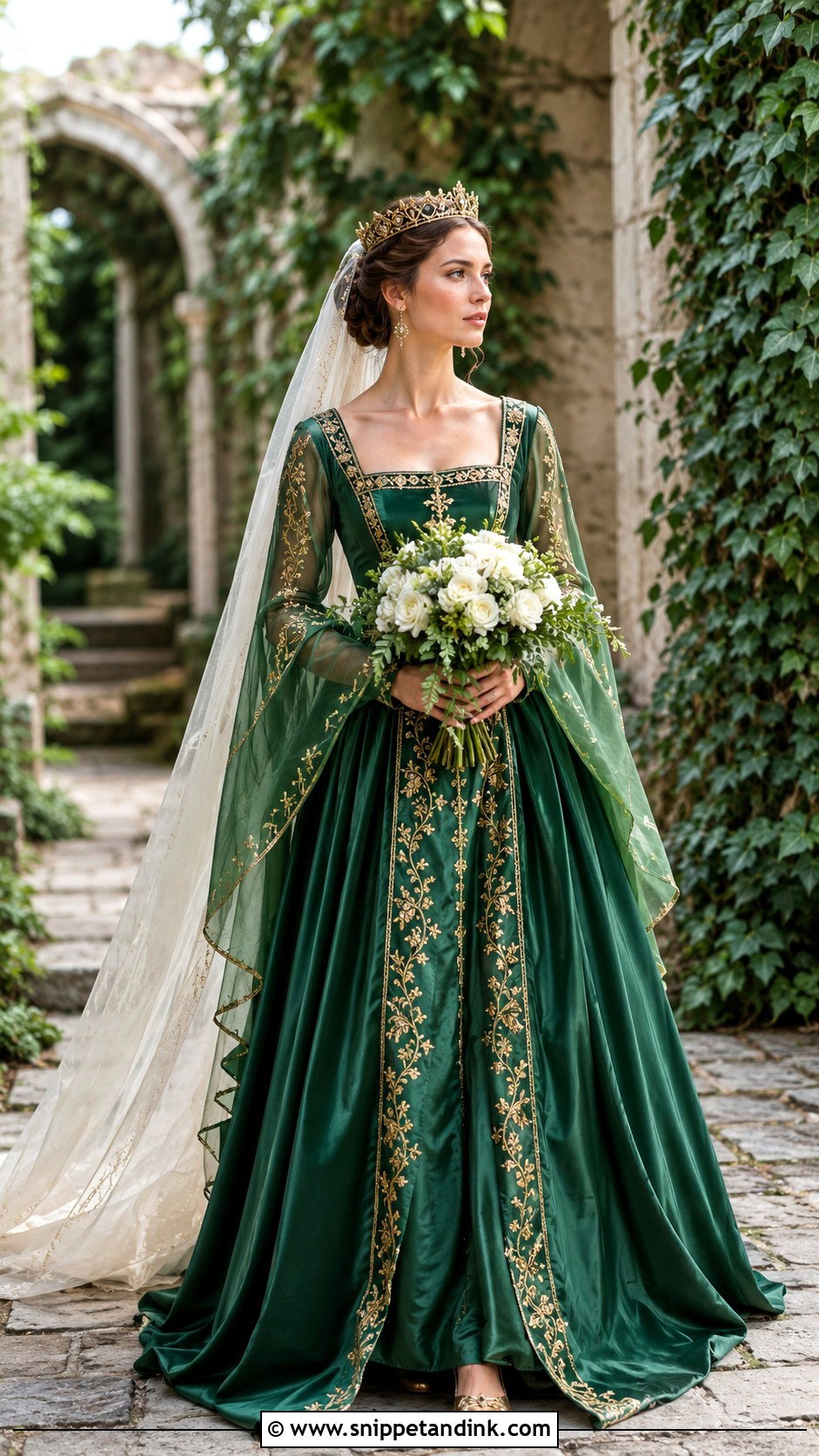
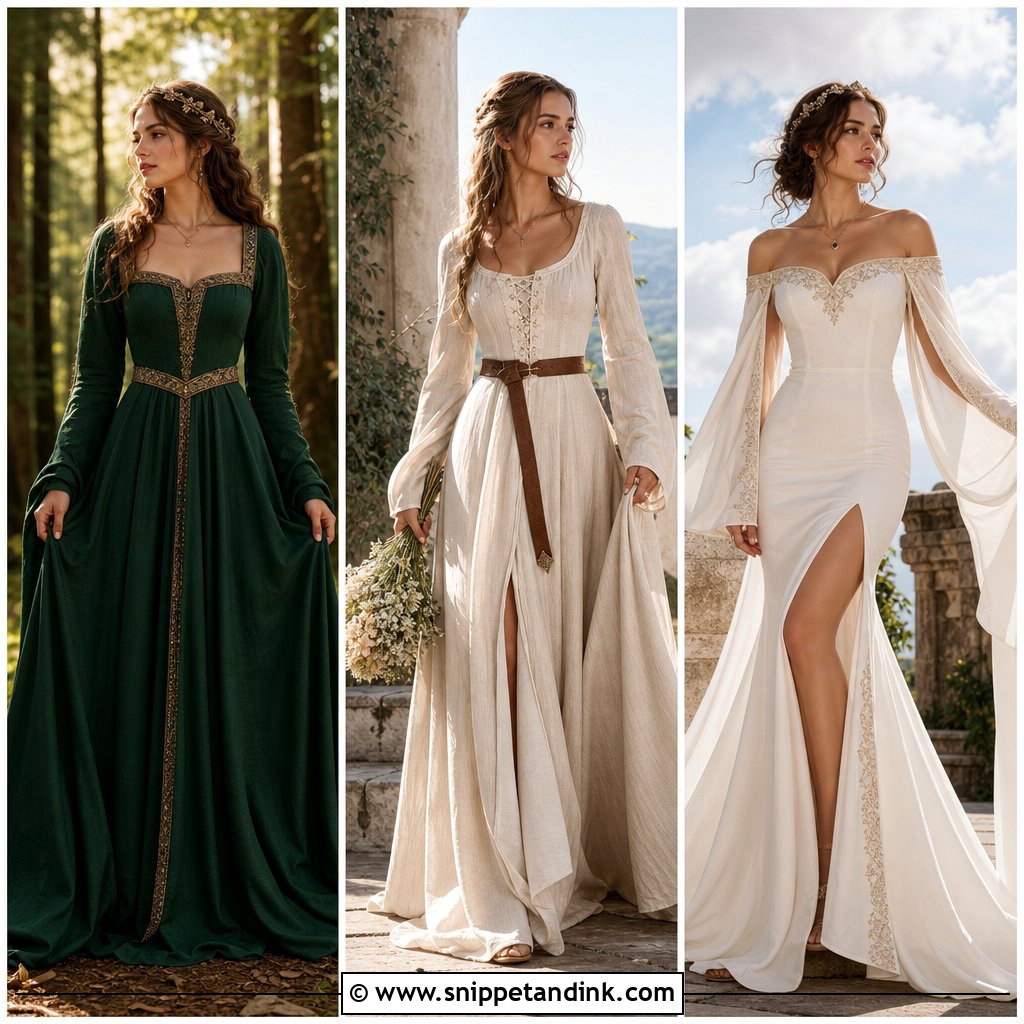
Emerald connects naturally to woodland settings. A floor-length gown with a softly structured bodice, wide square neck and flowing chiffon sleeves over satin gives movement, and gold embroidery at the neck, waist and cuffs makes it ceremonial. A long ivory veil keeps a strong colour clearly bridal; I’d never skip it with green. A gold circlet set with small green stones, gold ballet flats, teardrop earrings and a velvet pouch finish it, with white flowers, ferns and trailing vines. This medieval queen wedding dress belongs at a forest ceremony or an ivy-covered estate.
5. Sapphire Blue Medieval Queen Wedding Dress
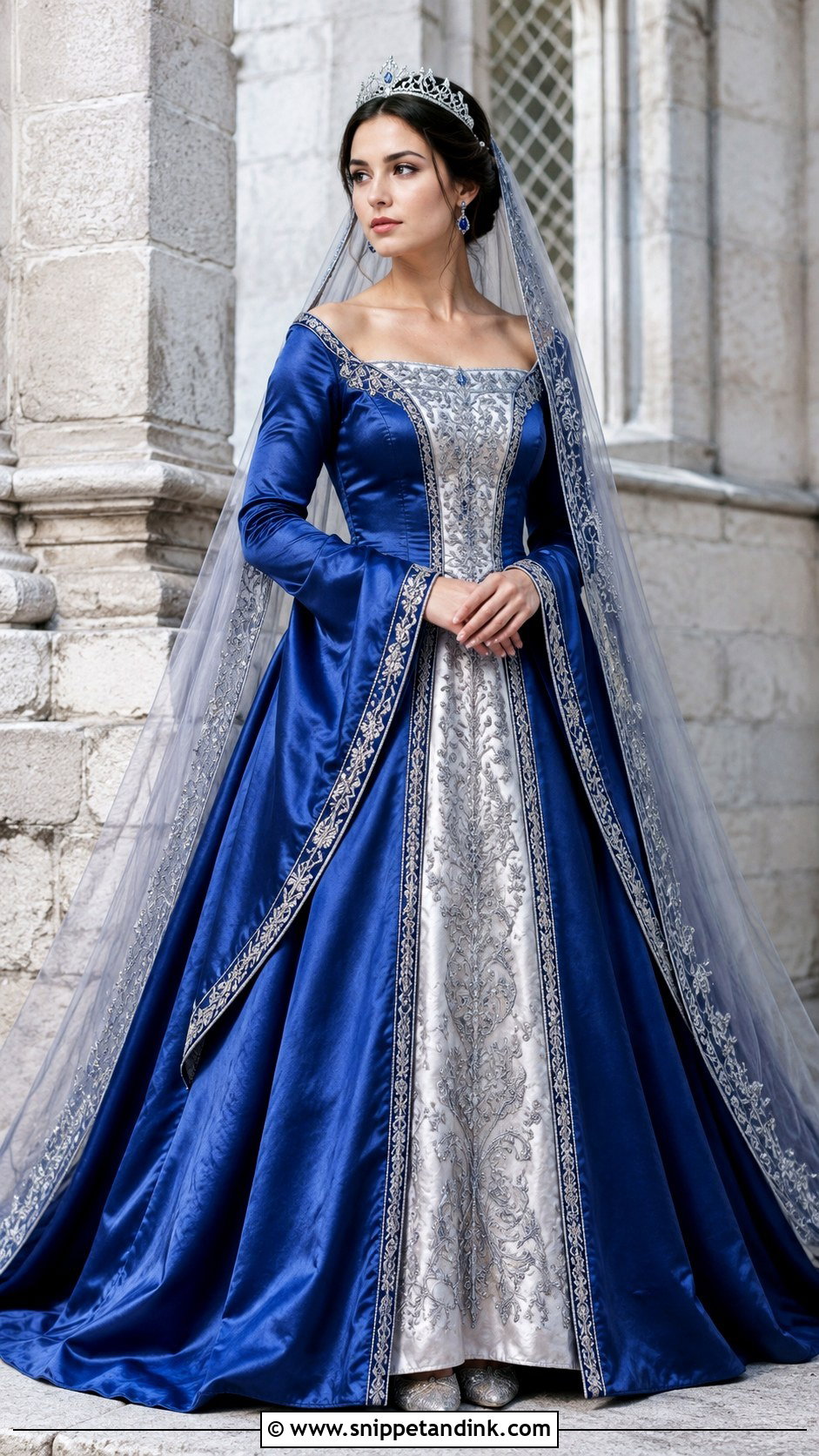
Sapphire satin reads royal from across a room. A full-length gown with a fitted waist, long narrow sleeves and a softly flared skirt keeps it graceful. A silver embroidered panel down the centre front draws the eye vertically and adds length. Satin in a saturated blue shows water marks, so keep a napkin handy at dinner. Wear a silver tiara, sapphire drops, a floor-length silver-grey veil and silver low heels or embellished flats. White delphiniums, pale roses and eucalyptus lighten the palette against castle stone or a winter landscape.
6. Silver Embroidered Medieval Queen Wedding Dress
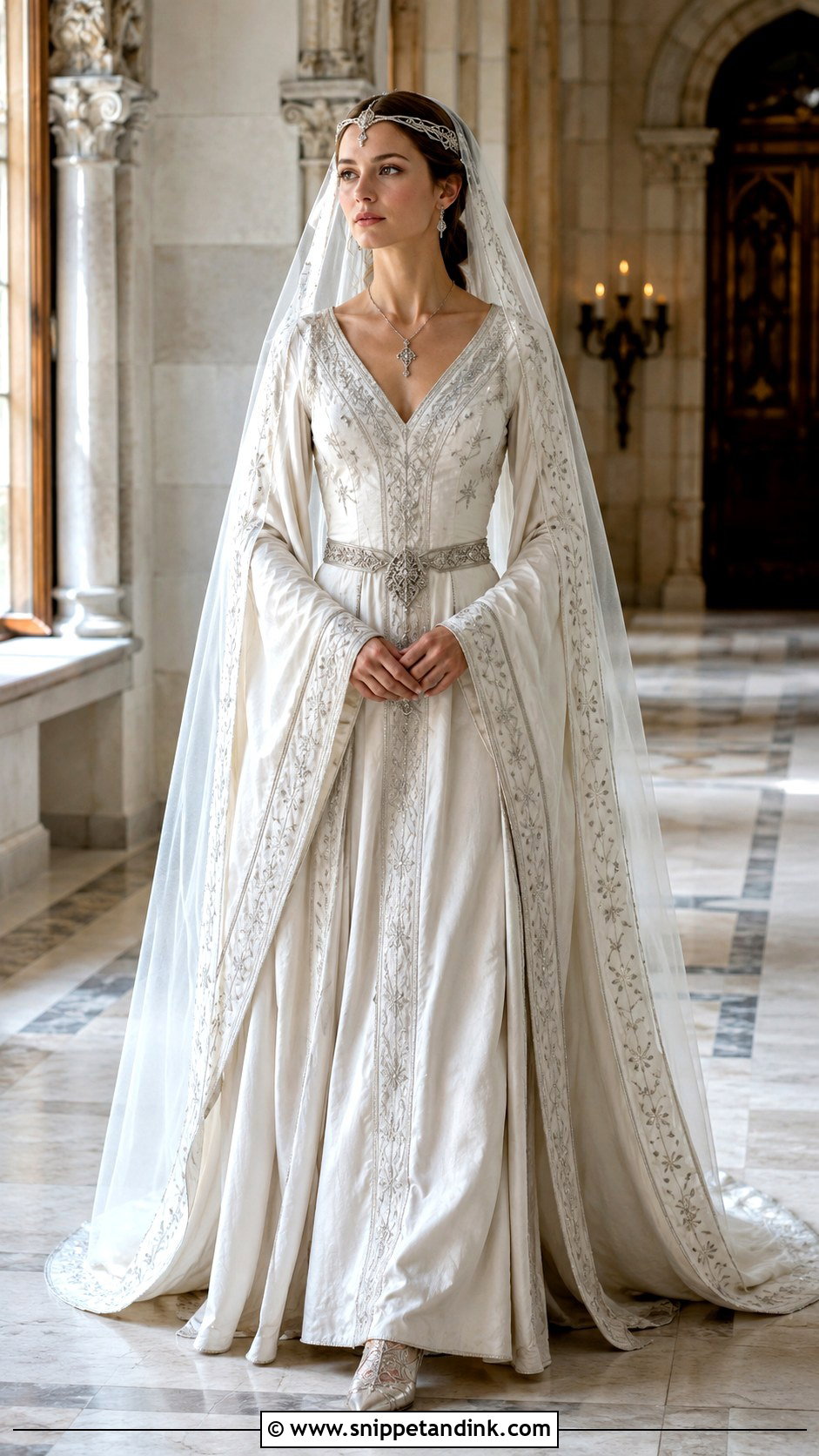
Silver thread turns a simple ivory gown into something ceremonial. Matte crepe or silk with a fitted torso, soft V-neck and long draped sleeves is the base; add the silverwork at the neckline, cuffs, waist and train. Metallic embroidery can scratch, so check the inside of the cuffs, where it touches your wrists all day. A crystal circlet over loose waves lifts light to the face, while a fingertip veil keeps things light. Silver pointed flats, a slim metallic belt and a small crystal pendant complete it, with white roses and silvery foliage. You get the medieval feel without moving away from a classic bridal palette.
7. Long Sleeve Lace Medieval Queen Wedding Dress
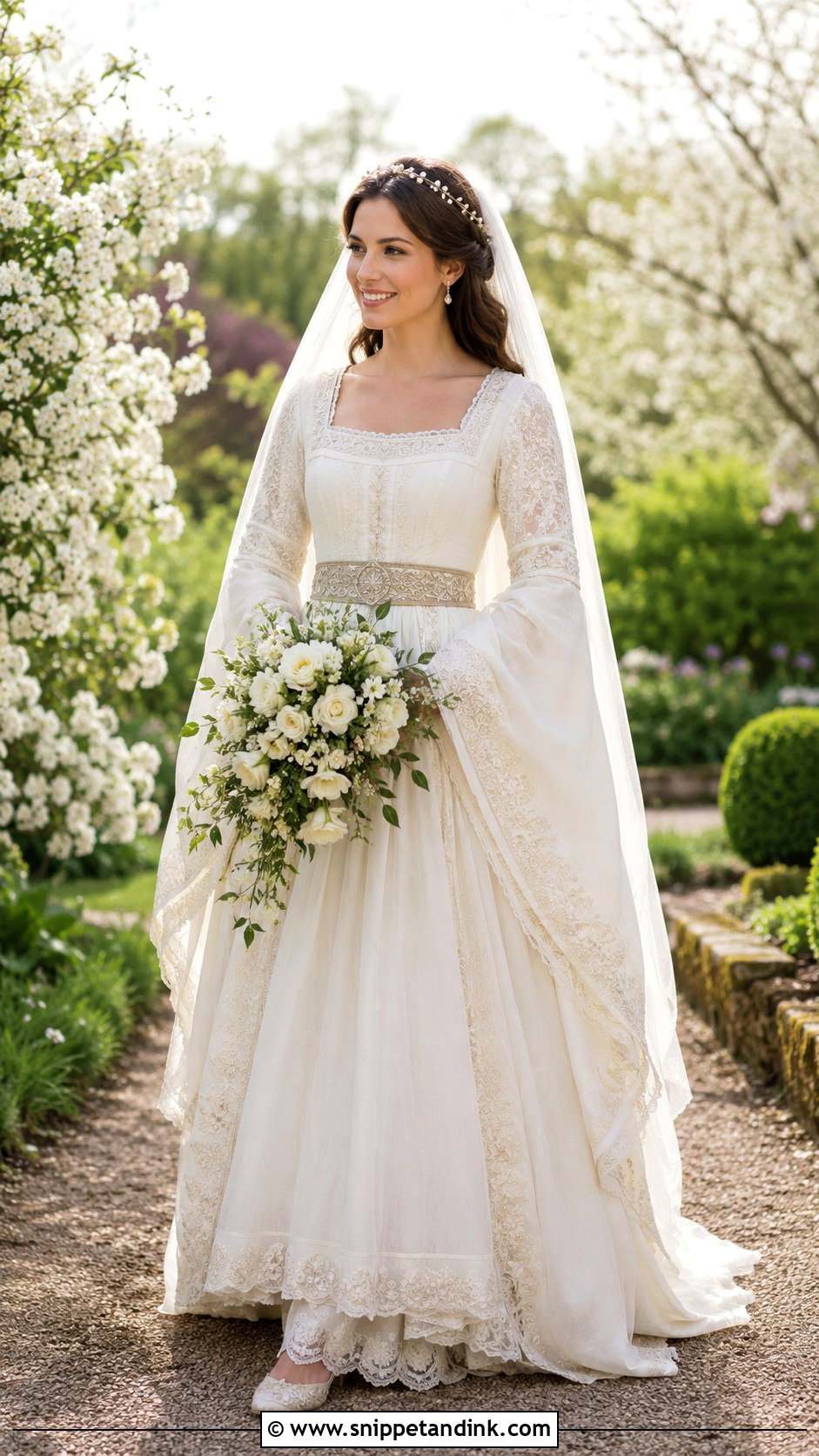
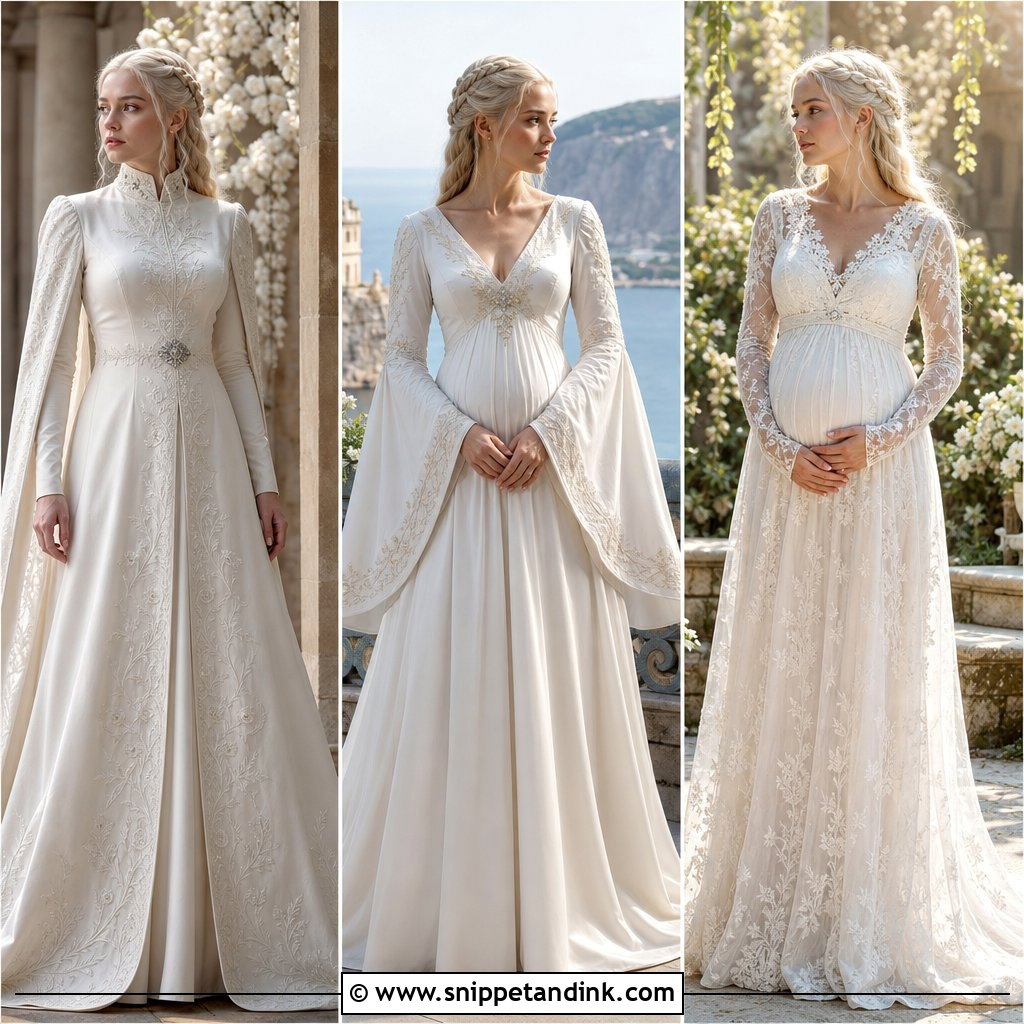
Lace is the softest way to wear this theme. An ivory gown with a fitted lace bodice, a modest scoop neck and bell sleeves that widen below the elbow, over a chiffon or georgette skirt, stays light enough for spring. A narrow embroidered belt sets the waist. Bell sleeves trail, though. They’ll sweep through your plate at dinner unless you loop them back with a hidden button or ribbon. A pearl and crystal circlet, a chapel veil, ivory lace flats and pearl drops are enough, with white garden roses and trailing ribbon for a garden venue.
8. Square Neck Medieval Queen Wedding Dress
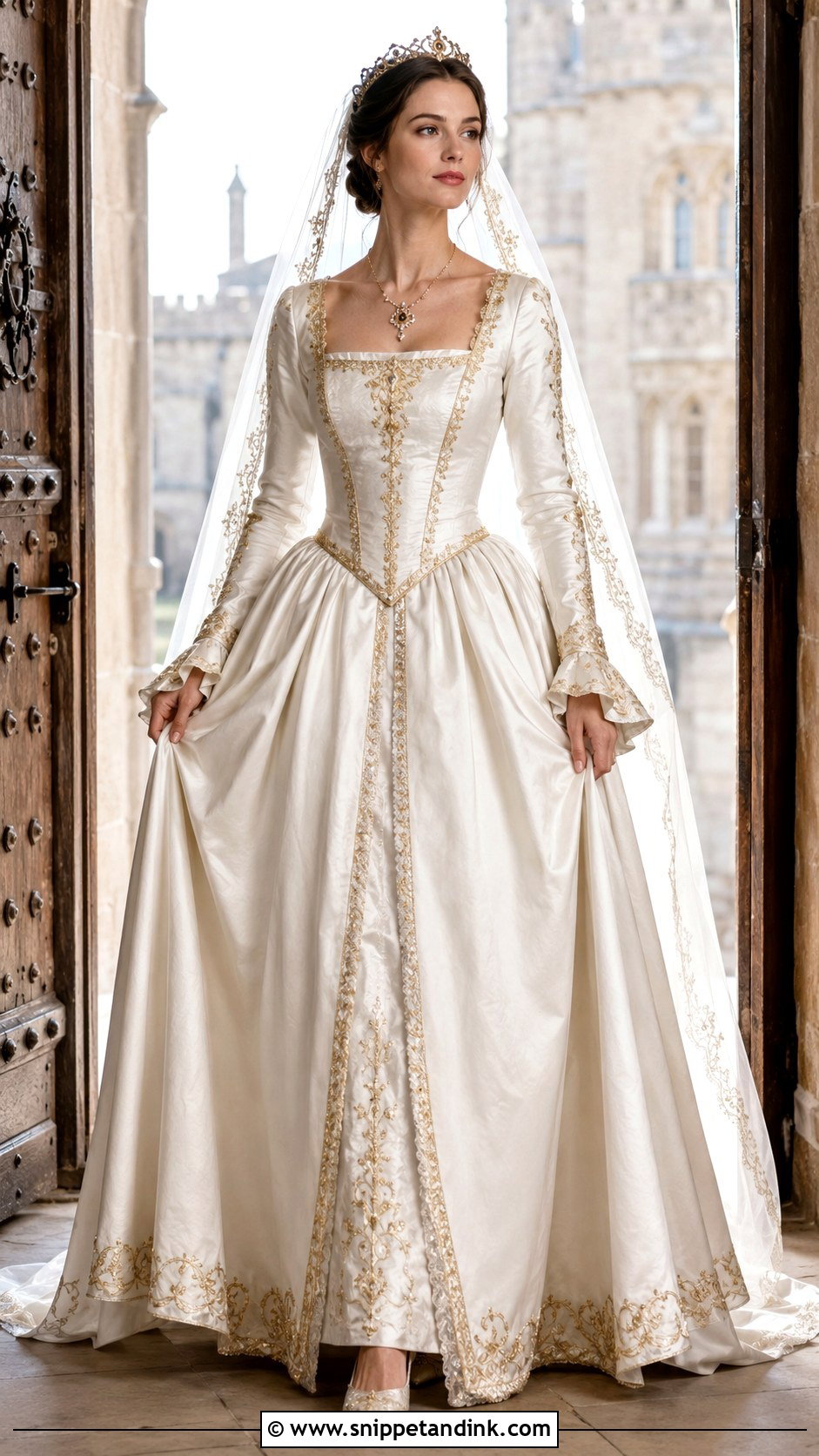
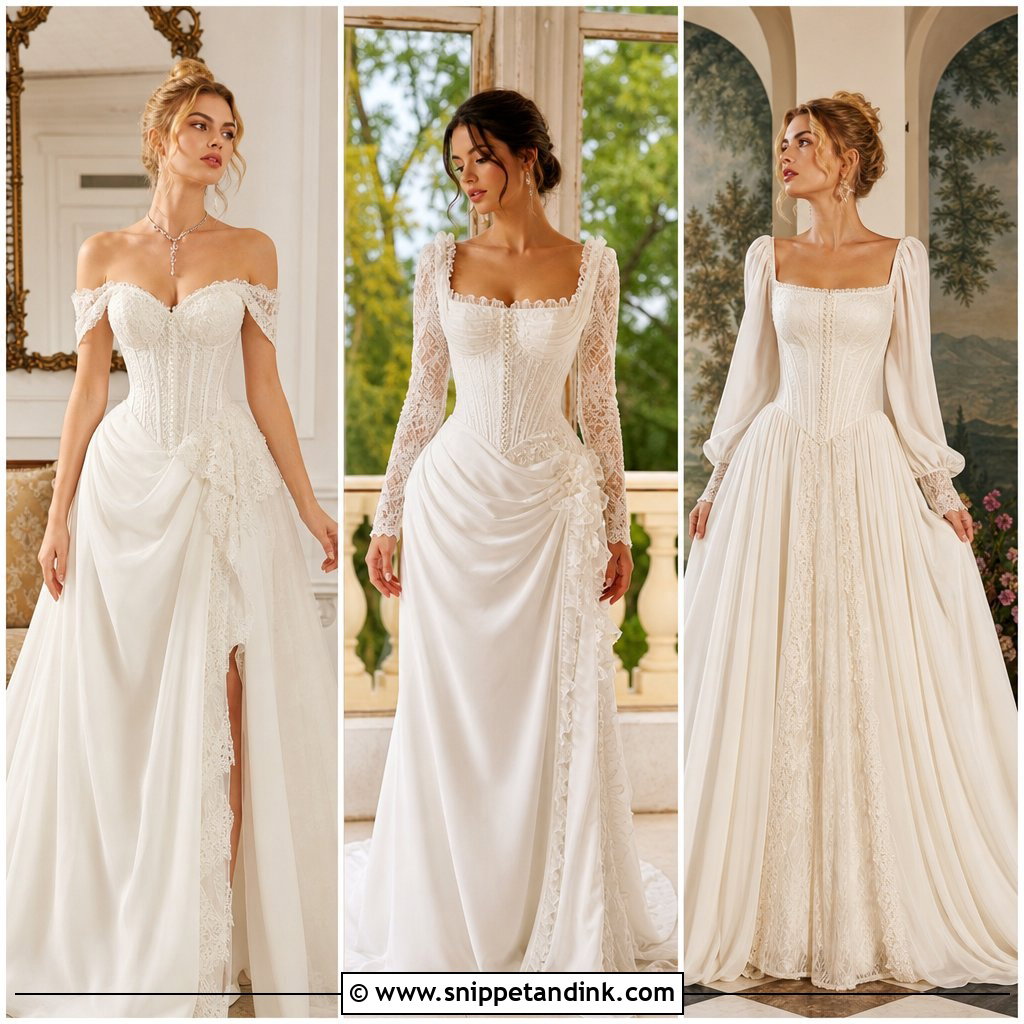
Of all the medieval details, the square neckline is the easiest to wear and the one people recognise immediately. An ivory satin gown with a structured bodice, a lightly gathered skirt and long sleeves ending in small flared cuffs keeps it clean. Fine gold embroidery or seed pearls along the neckline draw the eye to your face. Wear a slender pendant, pearl earrings and a low-profile gold crown, and attach a cathedral veil behind it for drama at the back. Ivory low heels and a gold-trimmed pouch finish it. The open collarbone and defined waist suit a wide range of figures.
9. Corset Bodice Medieval Queen Wedding Dress
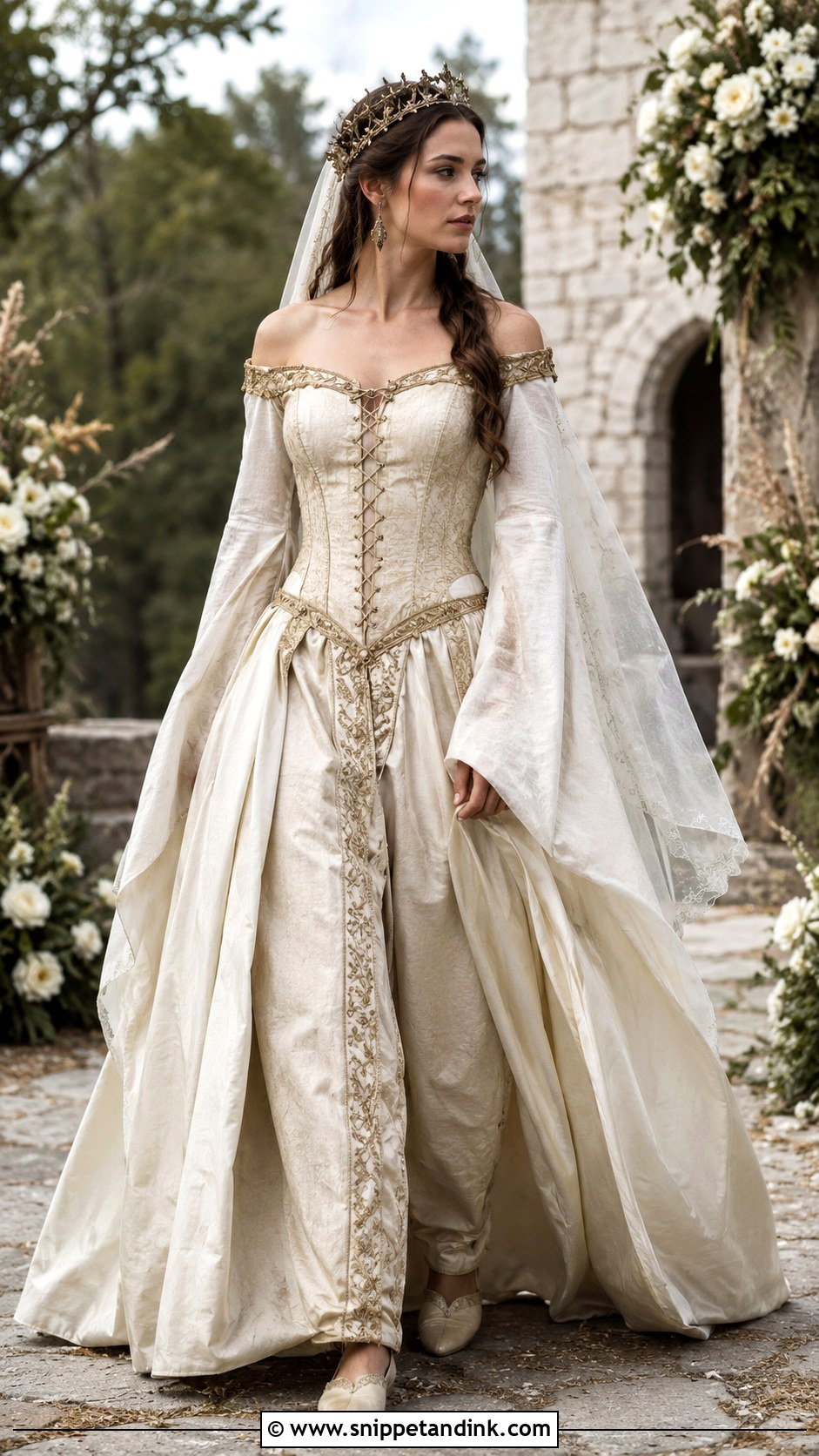
Front lacing on a corset bodice is genuinely practical: it can be loosened after dinner, which a zip can’t. Keep the lacing refined, tonal ribbon or narrow gold cord rather than thick leather, so it reads bridal and not tavern. A soft scoop neck, off-white linen sleeves and a full ivory overskirt with an embroidered waist panel complete the dress. A floral metal circlet, a light shoulder veil and simple drop earrings suit it. Cream leather flats or low boots stay hidden and grip on grass. Tie white flowers and herbs with silk ribbon for a rustic castle or woodland ceremony.
10. Hooded Cape Medieval Queen Wedding Dress
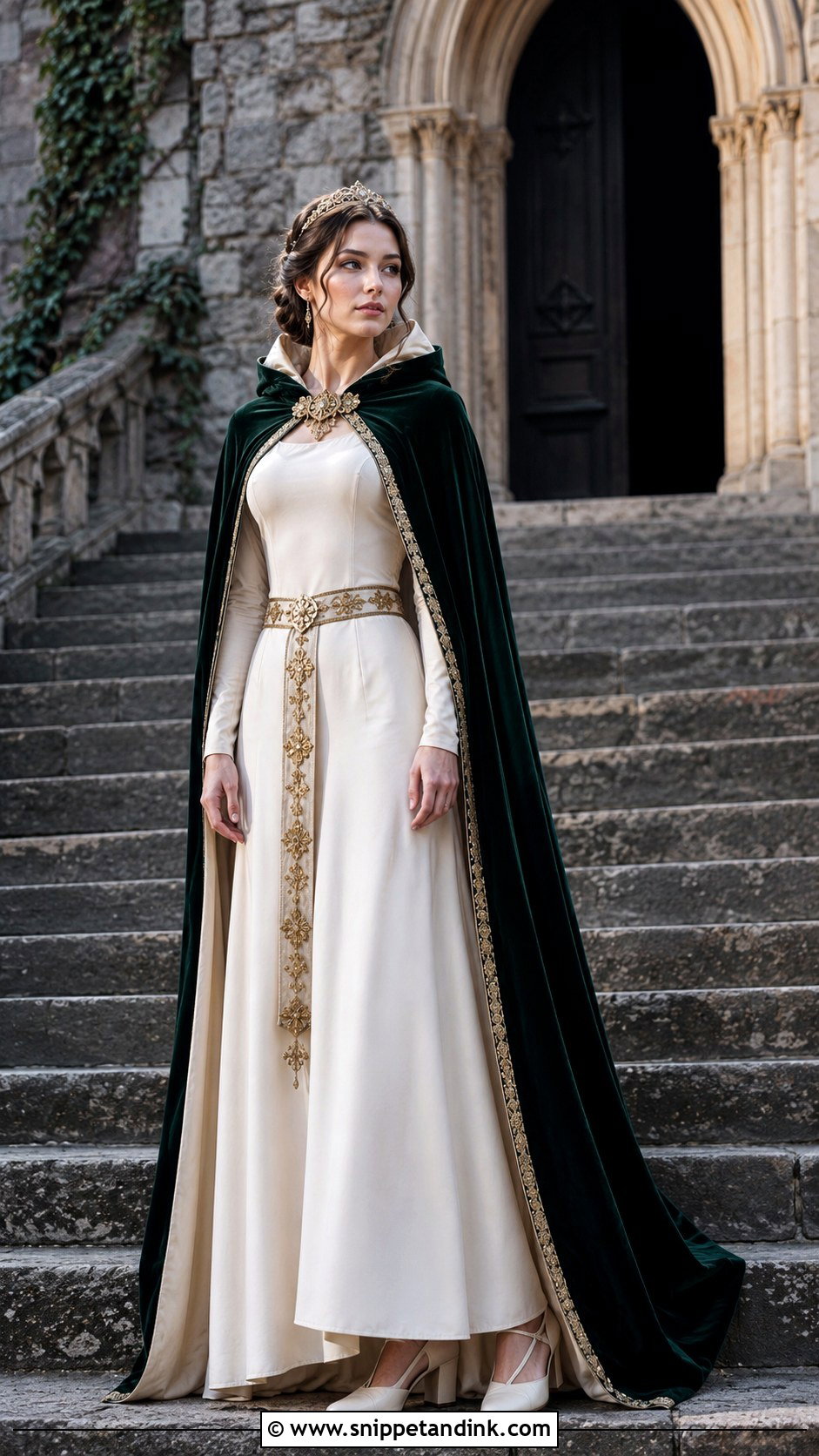
A hooded cape turns a simple gown into a medieval entrance. Start with a plain ivory A-line, long fitted sleeves and a modest neck, then layer a floor-length velvet or satin cape in ivory, pale grey or deep forest green, fastened at the collar with a gold or silver brooch. Velvet capes are heavy, and all that weight hangs from the throat, so the fastening needs a hidden hook as well as the brooch. Wear a crystal headband under the hood and small earrings, with closed block heels, an embroidered belt and a compact bouquet of white roses. It can replace the veil entirely.
11. Fur Trim Medieval Queen Wedding Dress
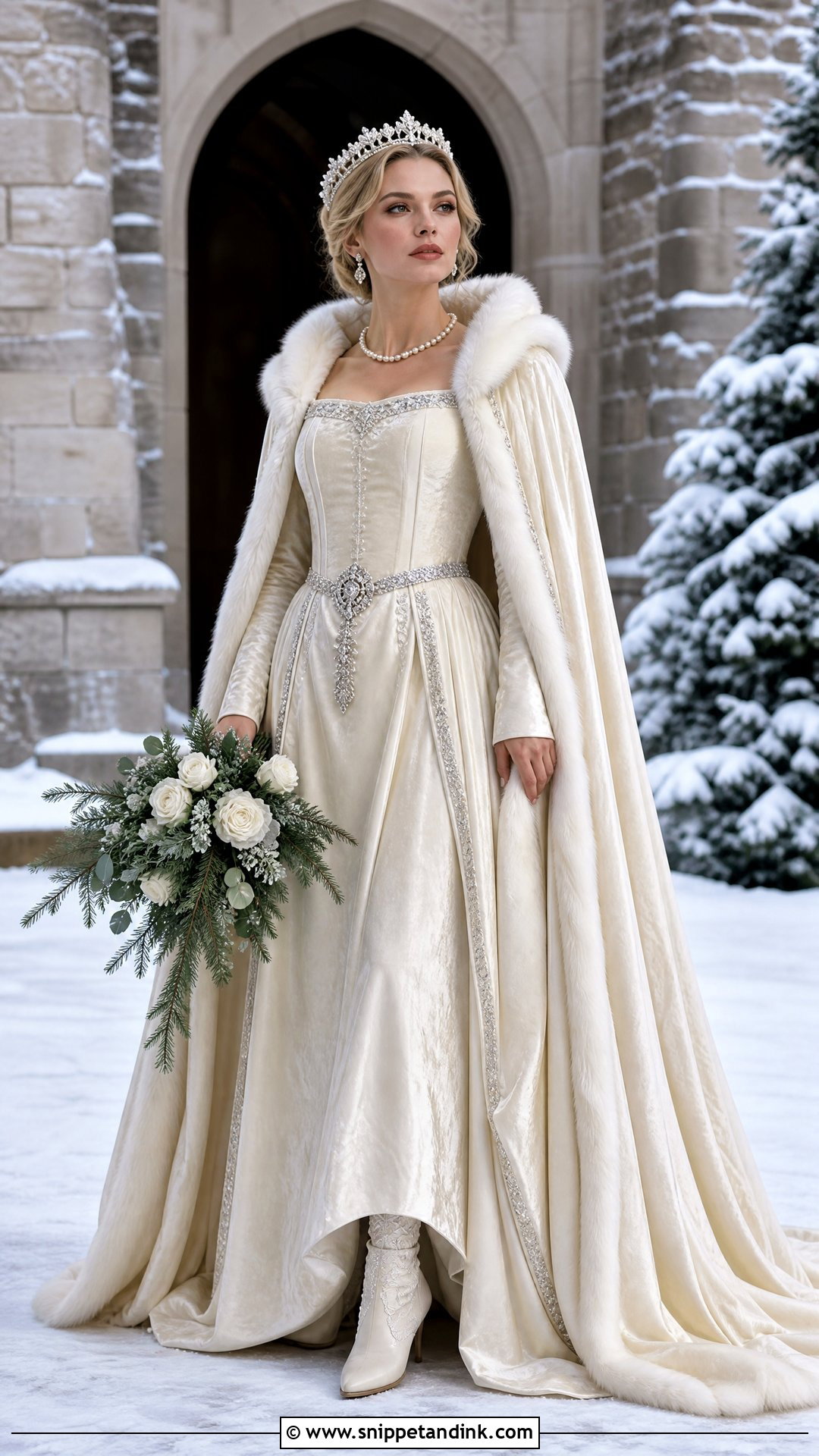
Cold venues are where faux fur earns its place. A long-sleeved ivory velvet dress with a high waist and a flared skirt, with removable faux-fur edging at the cuffs, neckline and matching cloak, lets you take the trim off indoors when the room warms up. Fur trim at the neck can tickle and shed onto makeup, so ask for a short, dense pile. A silver belt, crystal crown, pearl earrings and a simple pendant add light. Low-heeled ivory ankle boots with cushioned soles, plus white roses, evergreens and silver ribbon, finish it for a snowy or drafty historic venue.
12. Floral Embroidered Medieval Queen Wedding Dress
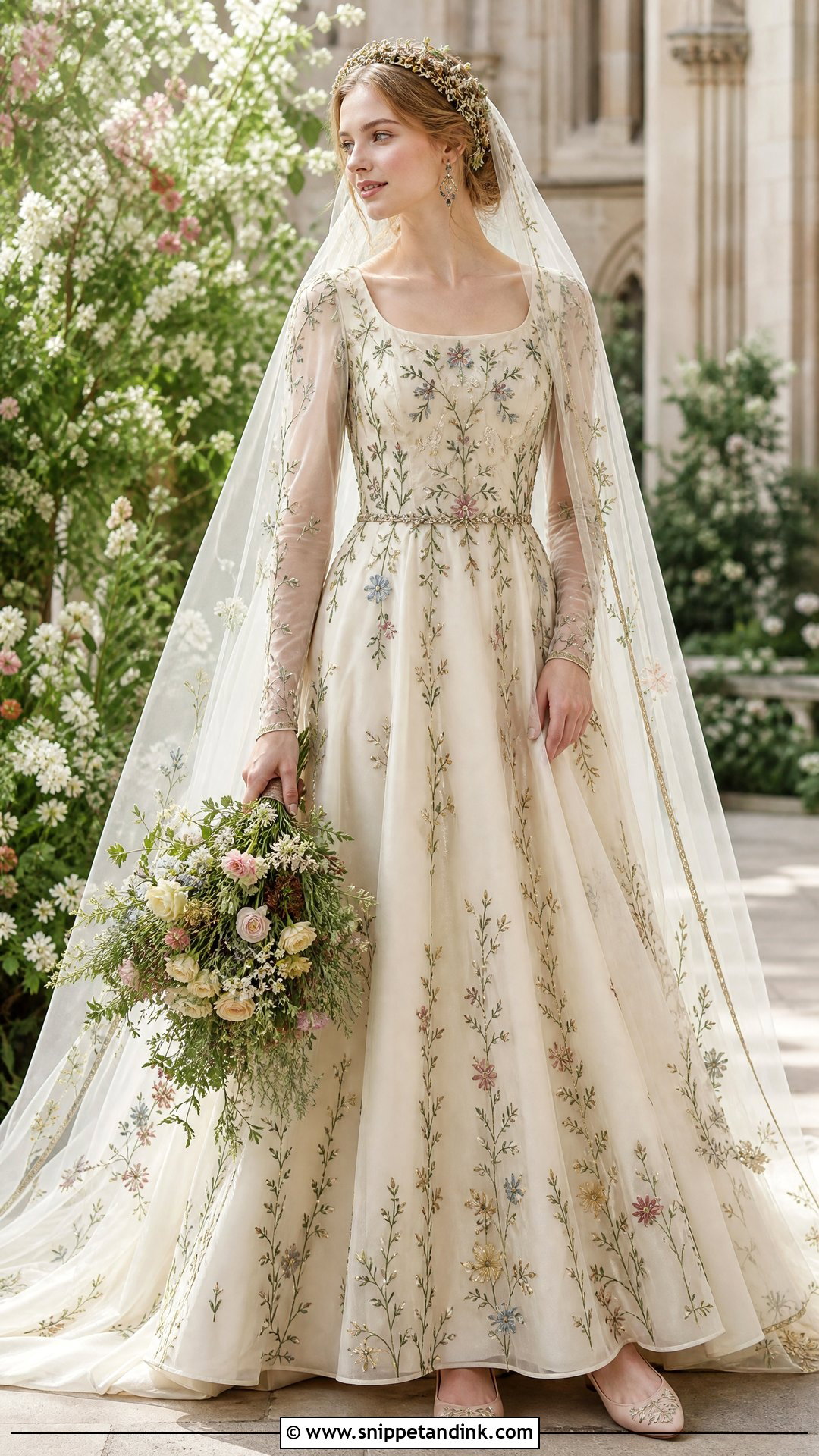
Coloured embroidery brings warmth to an ivory A-line gown, but placement matters. Keep the botanical work around the neck, cuffs, waist and lower skirt and leave open fabric between; covering the whole gown makes it look busy in photographs. Muted green, blush, blue and gold threads read romantic. An embroidered veil, a fine flower crown, small gemstone earrings and blush or ivory flats with subtle vine motifs complete it. A loose bouquet of seasonal flowers and trailing foliage continues the garden mood without matching exactly. Spring and summer courtyards suit it.
13. Pearl Beaded Medieval Queen Wedding Dress
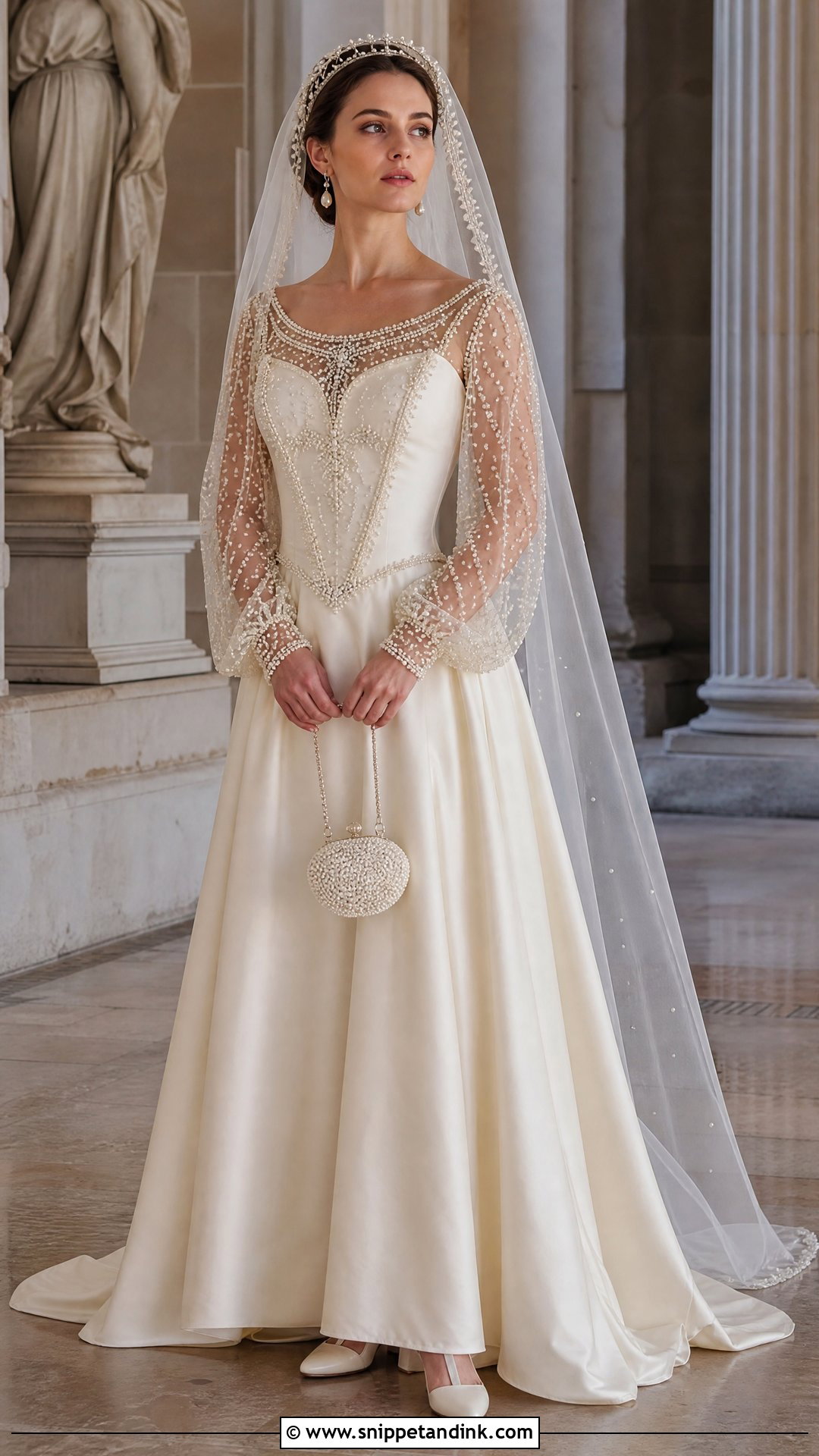
Pearls add a soft glow rather than sparkle, and they’re heavy in quantity. That’s why I’d keep them to the sheer sleeves, waist and upper skirt of an ivory silk gown and leave the lower skirt plain, or the dress drags. A rounded neck and fitted bodice keep the shape simple. A pearl circlet, a sheer cathedral veil and pearl drops make a single story; add ivory satin low block heels and a small pouch with a pearl clasp. White roses and pale greenery keep the palette monochrome, formal enough for a grand hall.
14. Silk Surcoat Medieval Queen Wedding Dress
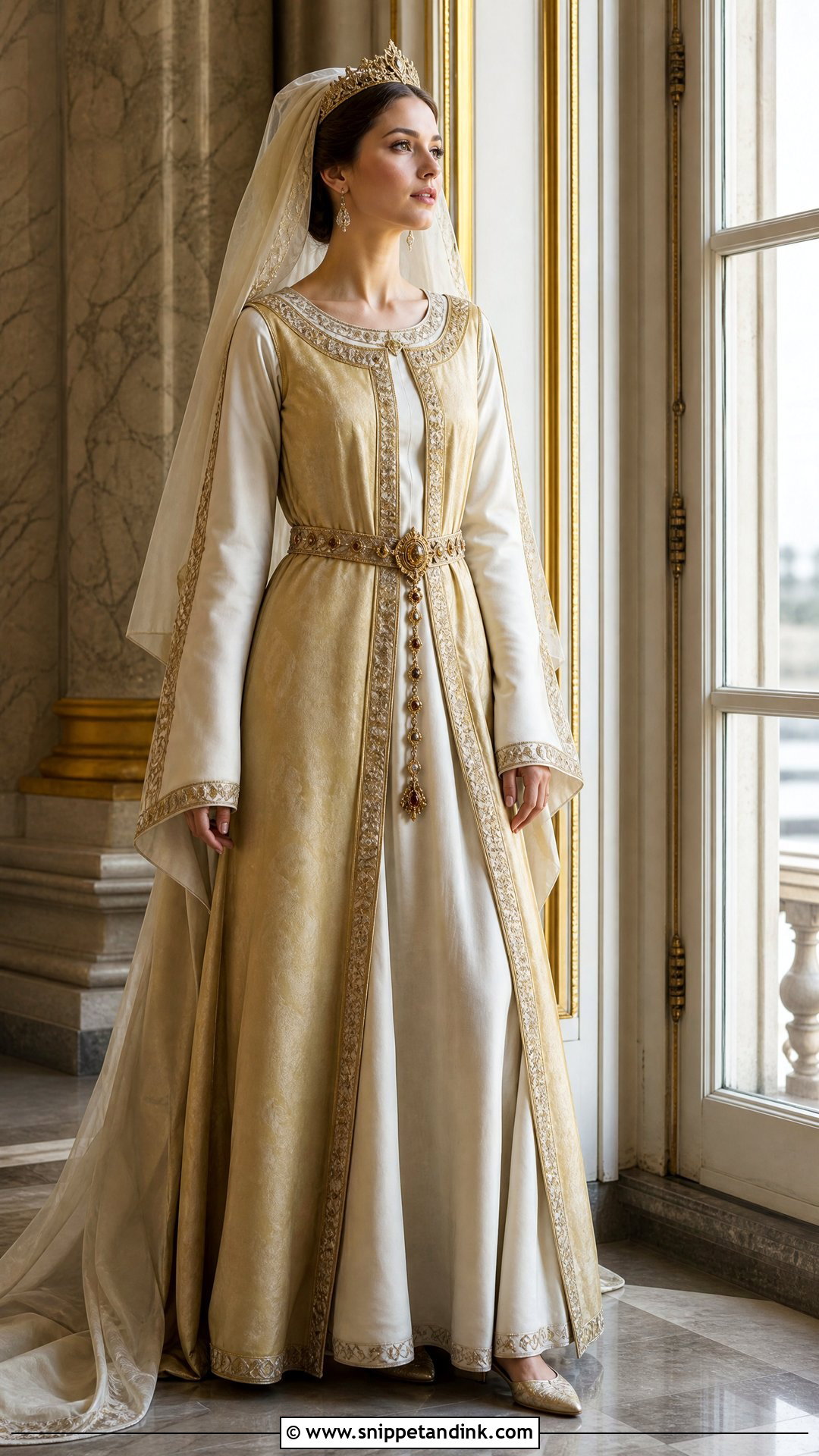
Layering is the most historically recognisable way to wear this theme. A long ivory underdress with fitted sleeves and a high plain neckline goes under a sleeveless silk surcoat with open sides, a fitted top and an embroidered border. Champagne, pale gold or soft blue for the surcoat adds depth without losing the bridal base. A slim jewelled belt that dips slightly at the front sets the waist. Two layers of silk in summer are warm, so pick lightweight silk for the underdress. A structured veil, small crown, pointed flats and drops complete it, with a narrow vertical bouquet.

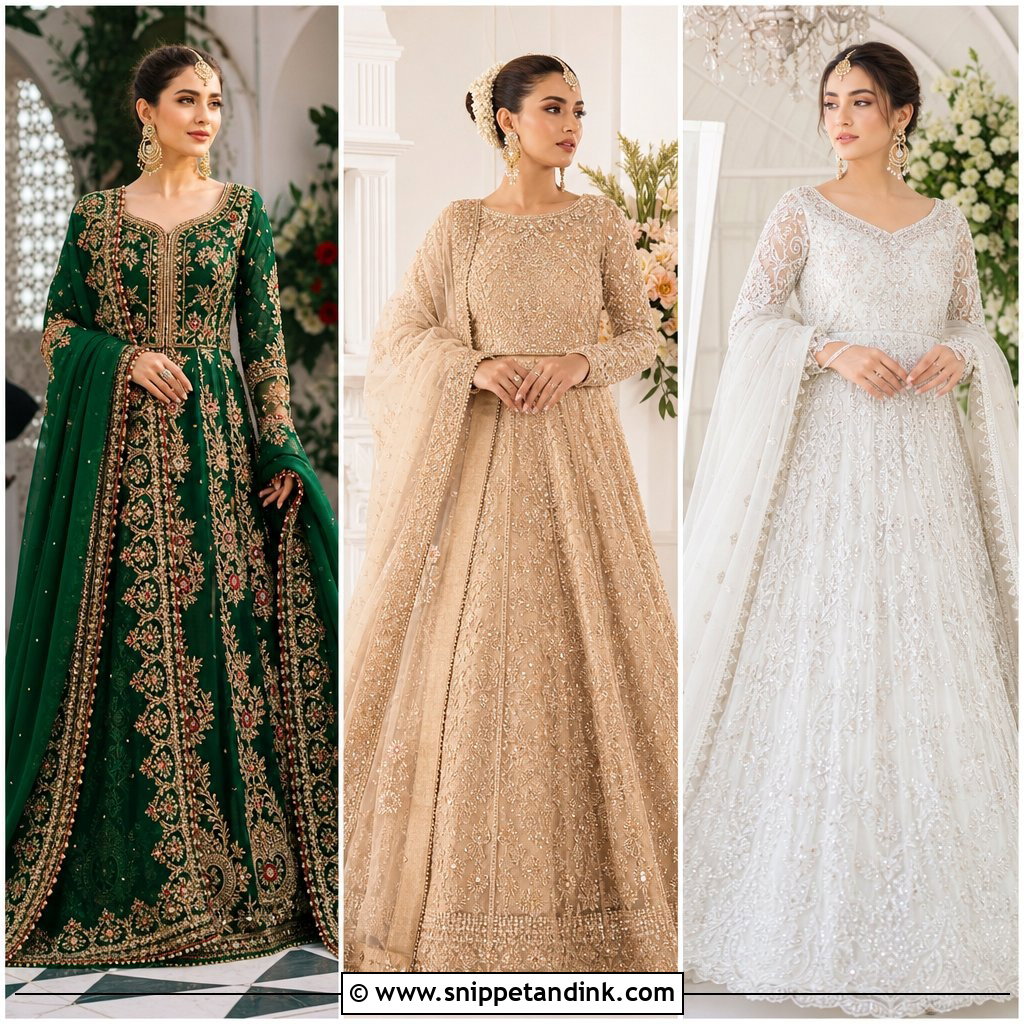
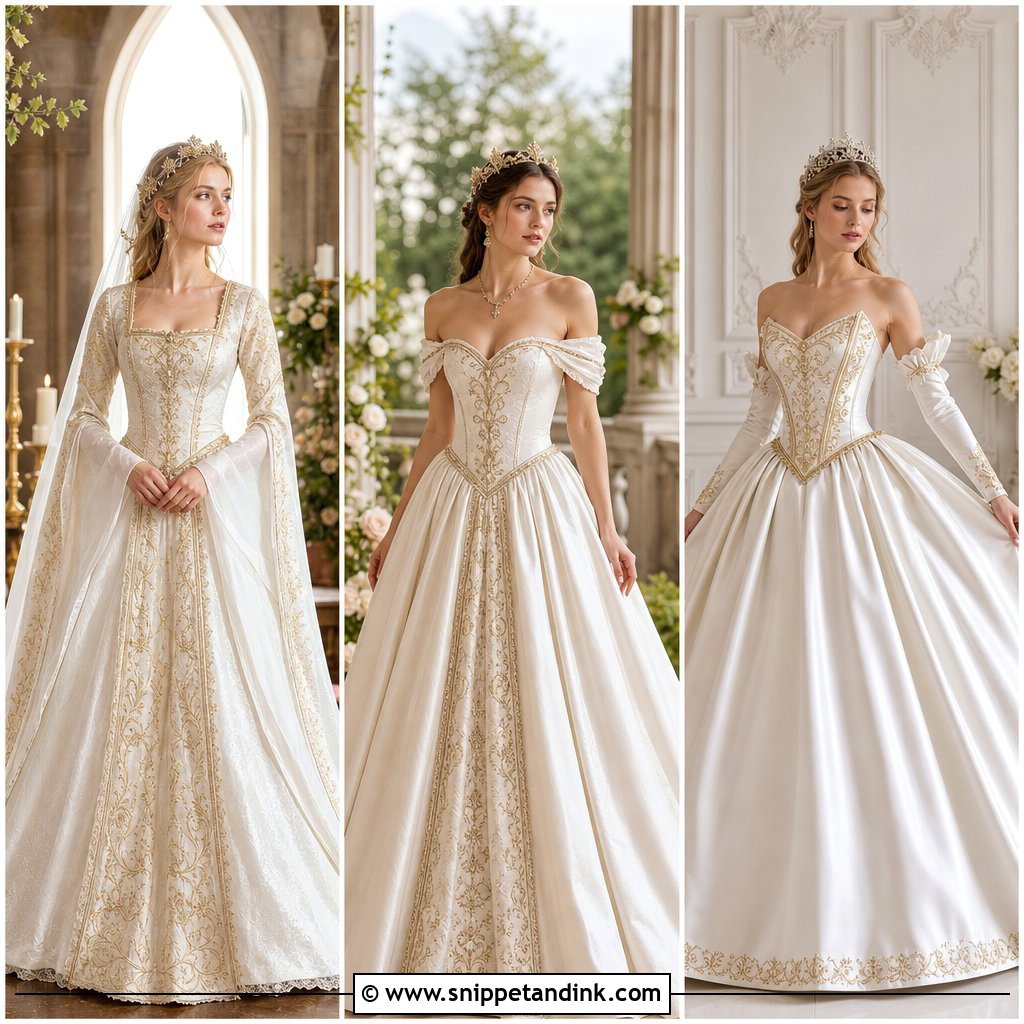
15. Celtic Knot Medieval Queen Wedding Dress
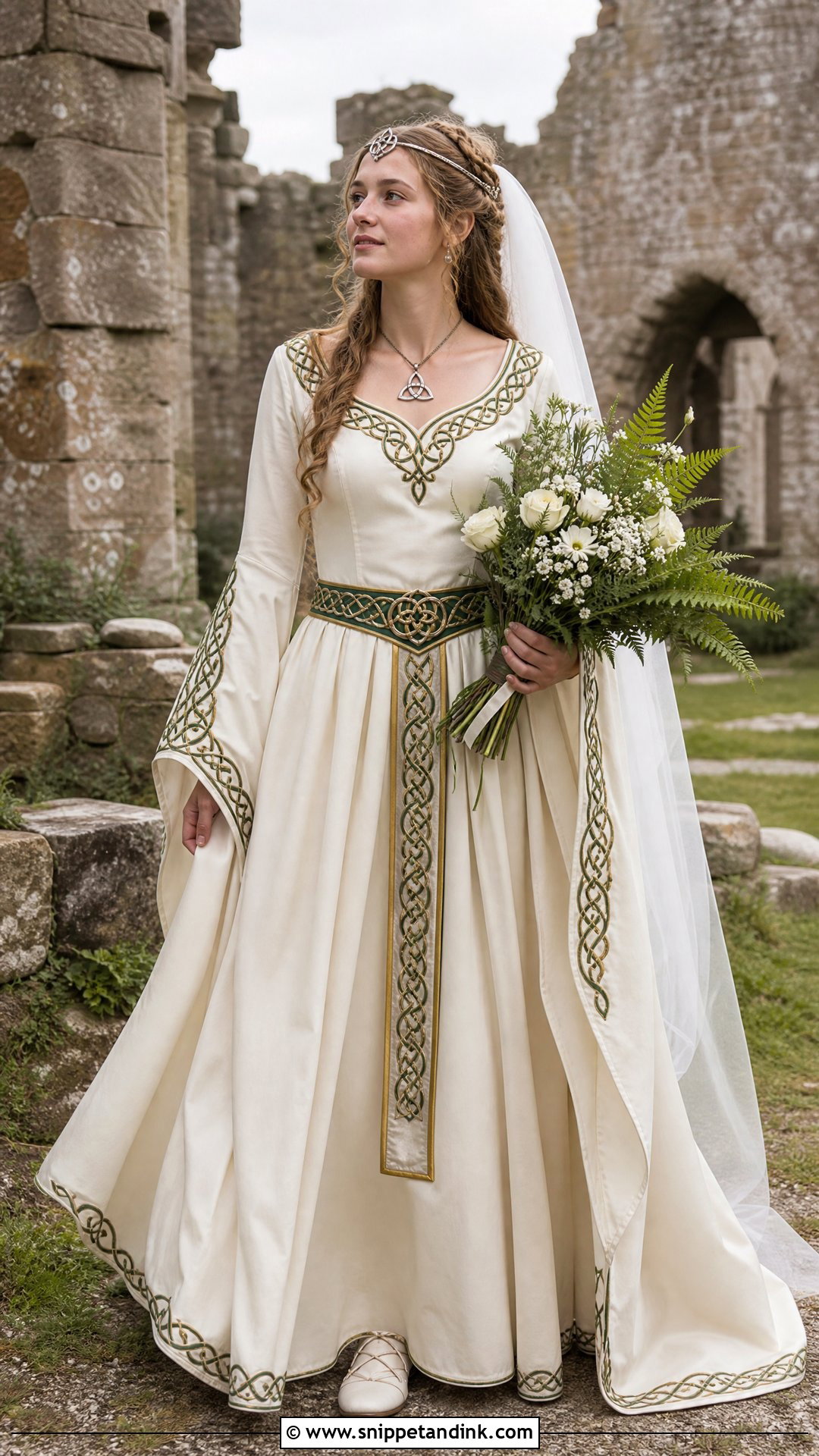
Celtic knot embroidery adds meaning without sparkle. On a soft ivory gown with a fitted waist, flowing skirt and wide bell sleeves, keep the green or gold knotwork to the neckline, cuffs, waist and hem and leave plenty of plain fabric between. Braided hair is the natural partner, and I set the circlet just behind the hairline with the veil secured underneath. A knot pendant with matching earrings, cream or muted gold leather flats, and white blooms with ferns and ivy finish it. Outdoor ceremonies and old stone venues suit it best.
16. Black And Gold Medieval Queen Wedding Dress
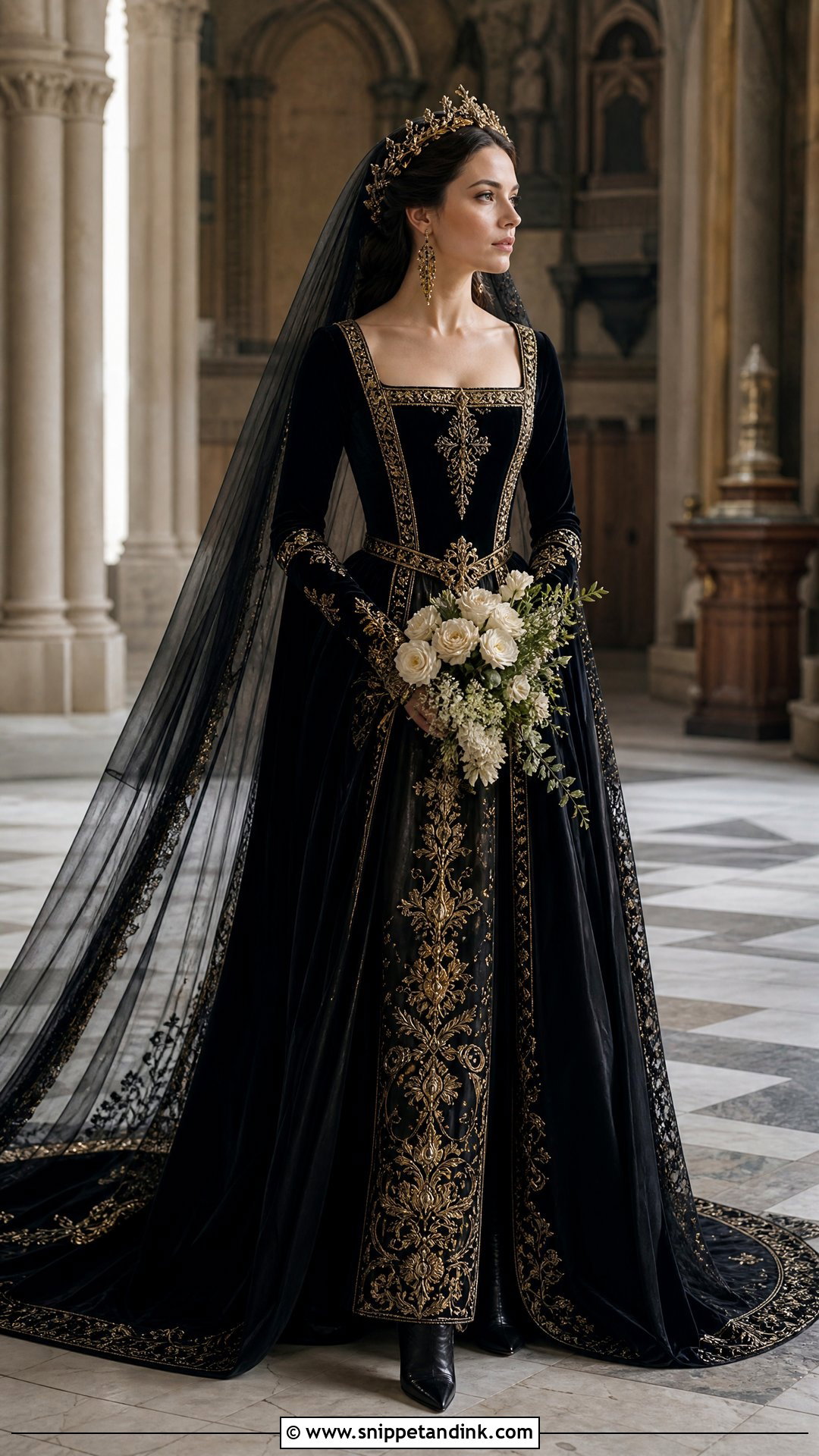
Black and gold is the boldest look here, for a bride who’s sure. Black velvet or matte satin with a structured square-neck bodice, long sleeves and a full skirt needs the gold embroidery at the neckline, waist, cuffs and train, or it photographs as a flat dark shape. A gold leaf crown, matching drops and a black cathedral veil edged in metallic thread complete it. Black pointed boots or low heels keep the colour story going. Carry ivory flowers with dark greenery so the bouquet shows up against the dress. It needs a big historic room to breathe.
17. Blush Medieval Queen Wedding Dress
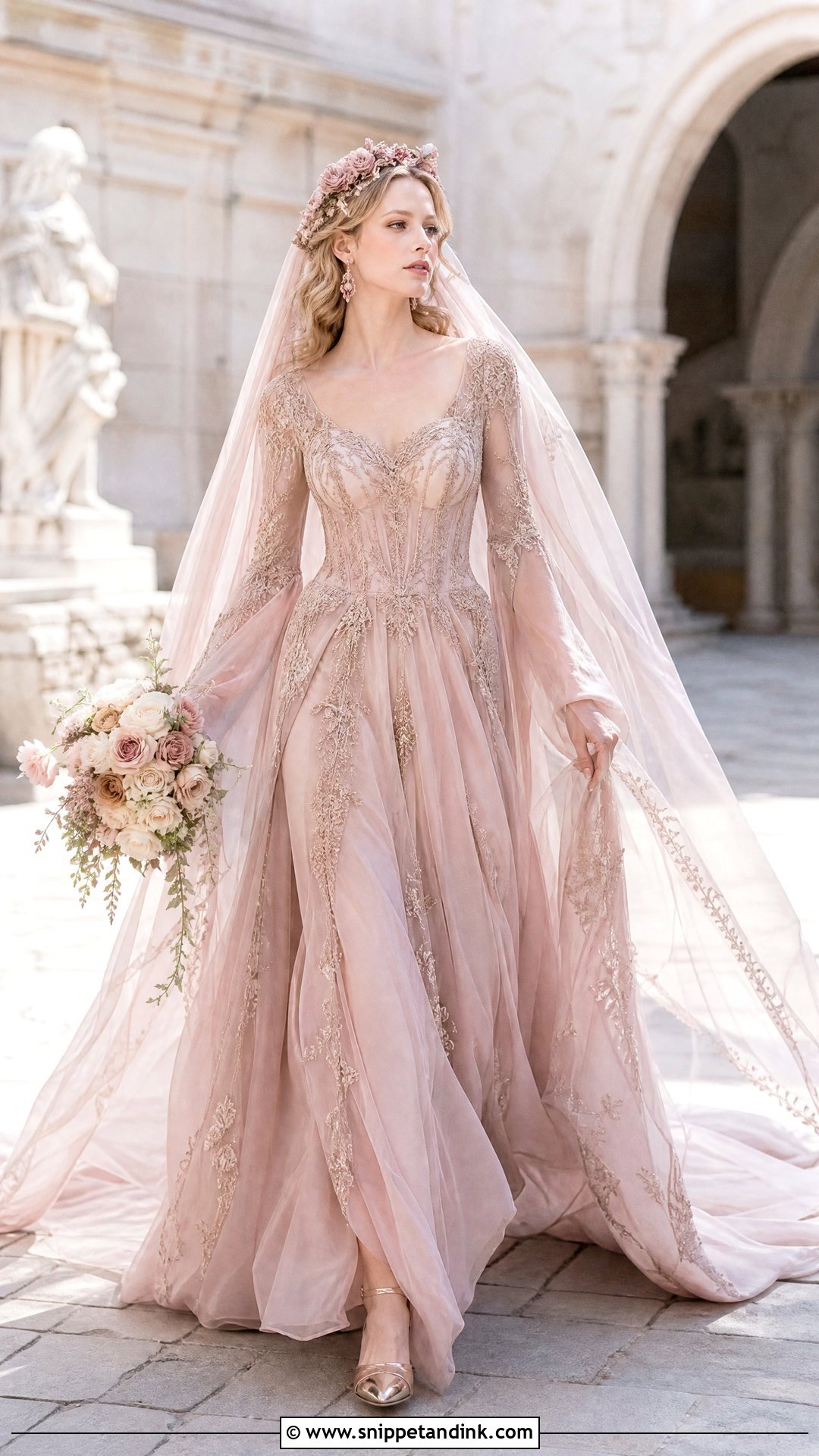
Blush keeps a bridal feel while moving away from ivory, and in silk or chiffon it looks warm in daylight. A fitted bodice, soft draped neck and long sheer bell sleeves keep the shape medieval. Rose-gold embroidery at the waist and cuffs gives the pale fabric definition. Check the blush against your skin in daylight; some shades go beige next to fair skin. A floral crown, a blush cathedral veil, small pink gemstone earrings and rose-gold flats finish it, with cream and blush flowers and trailing silk ribbon for a spring garden or a pale stone courtyard.
18. Plus Size Empire Waist Medieval Queen Wedding Dress
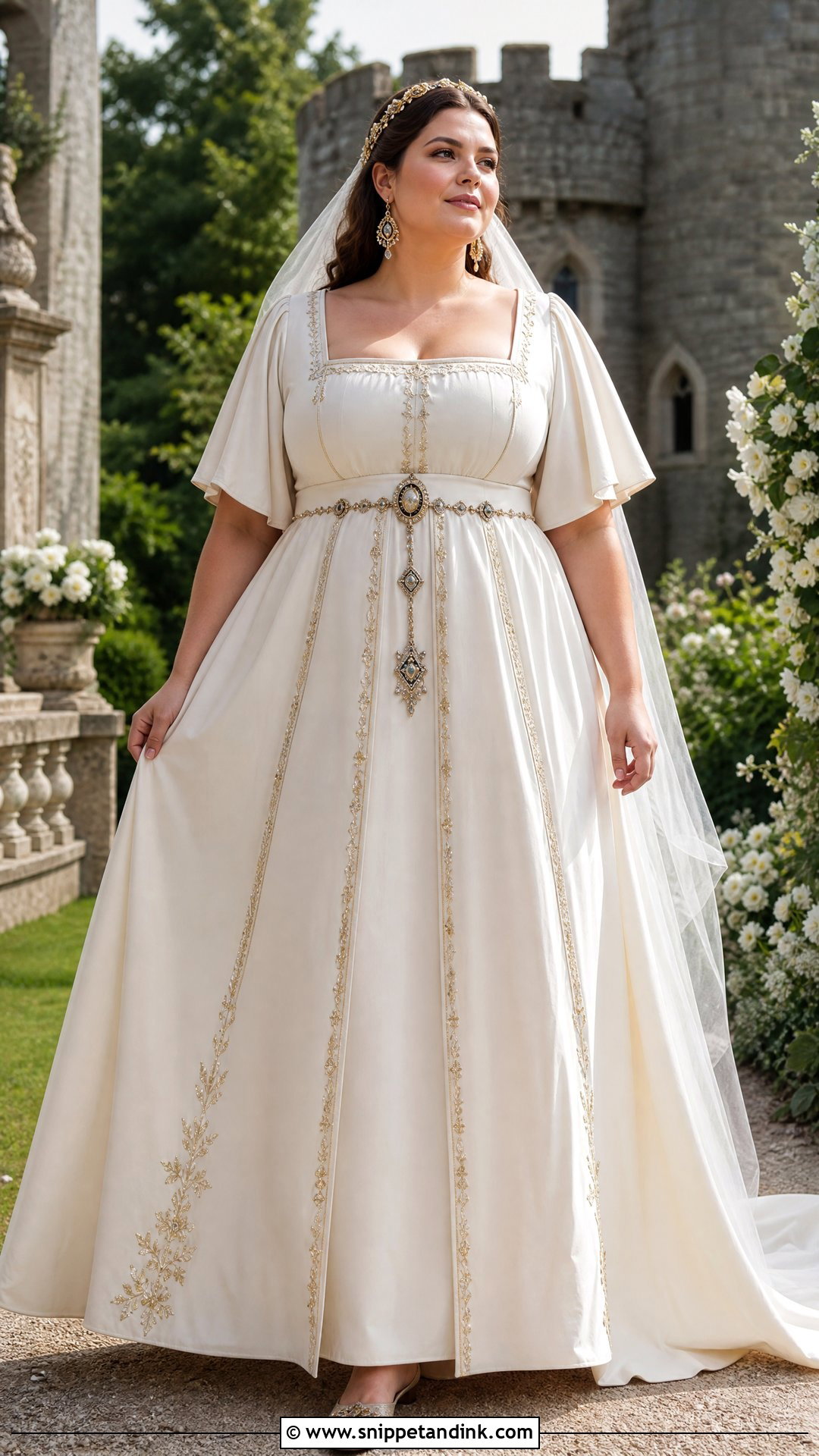
Empire waists sit just under the bust and let the skirt fall freely, which is comfortable over a long day and authentic to many historical shapes. For plus-size brides I look for a skirt that skims rather than adds volume, a wide square neck, firm internal support and long fluttering sleeves. Ivory crepe or velvet with gold embroidery running vertically draws the eye down the full length. A comfortable crown headband, a light veil and statement earrings frame the face. Low block heels or embellished flats keep you steady, and a long pendant belt can add definition. Have a professional fit the neckline, sleeves and support.
19. High Neck Medieval Queen Wedding Dress
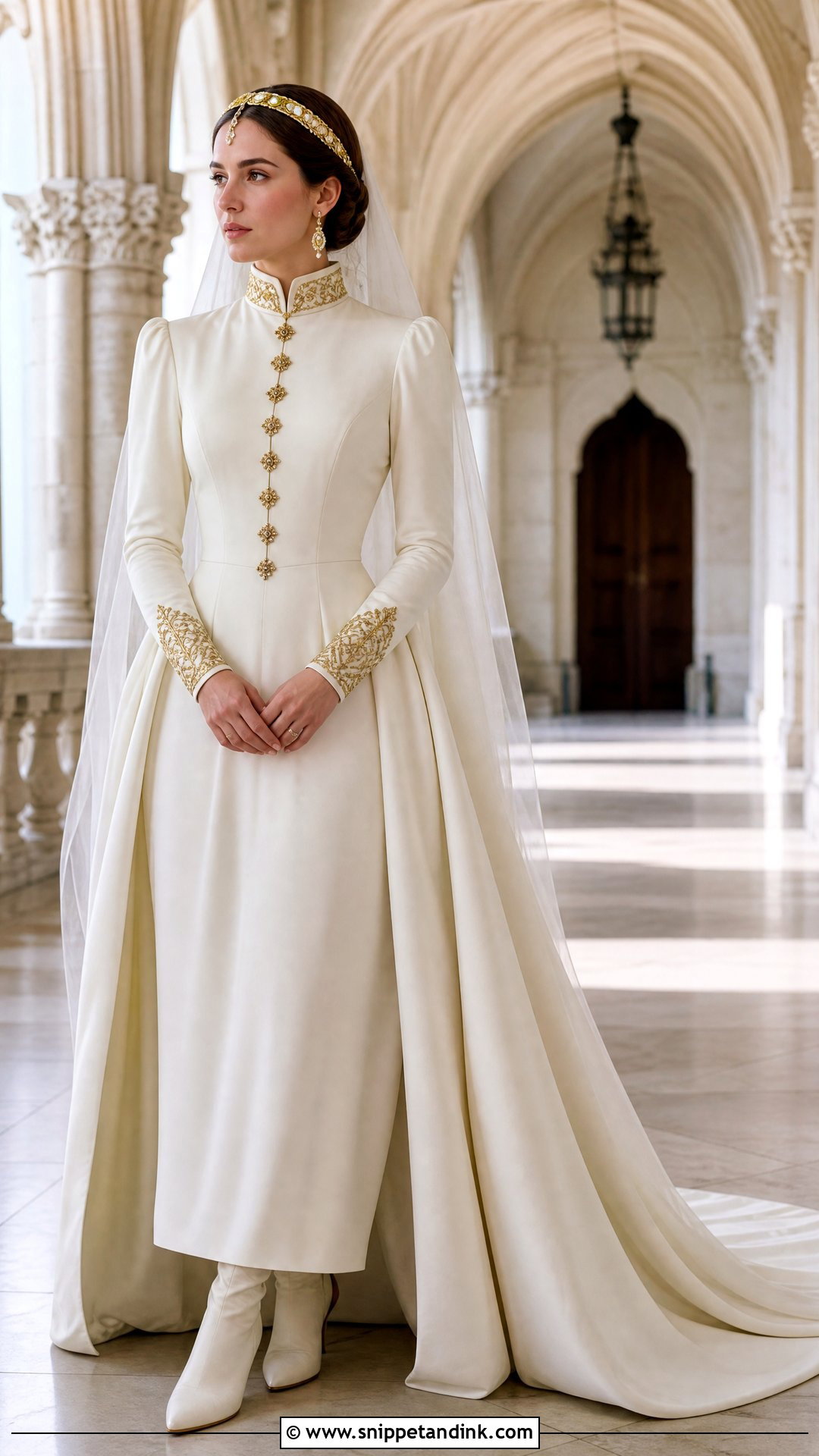
A high collar gives a covered, formal look with real presence. Ivory crepe with a softly structured collar, fitted torso, long sleeves and a full skirt into a chapel train is the shape; fine gold embroidery at the collar and cuffs stops it looking plain. Skip the necklace. Pearl drops and a jewelled circlet send the eye to your face, and a long sheer veil attached behind the headpiece leaves the collar visible from the front. Turn your head fully at fittings; a stiff collar shouldn’t rub. Ivory pointed flats or low boots keep the line clean for a cool-season historic venue.
20. Simple Linen Medieval Queen Wedding Dress
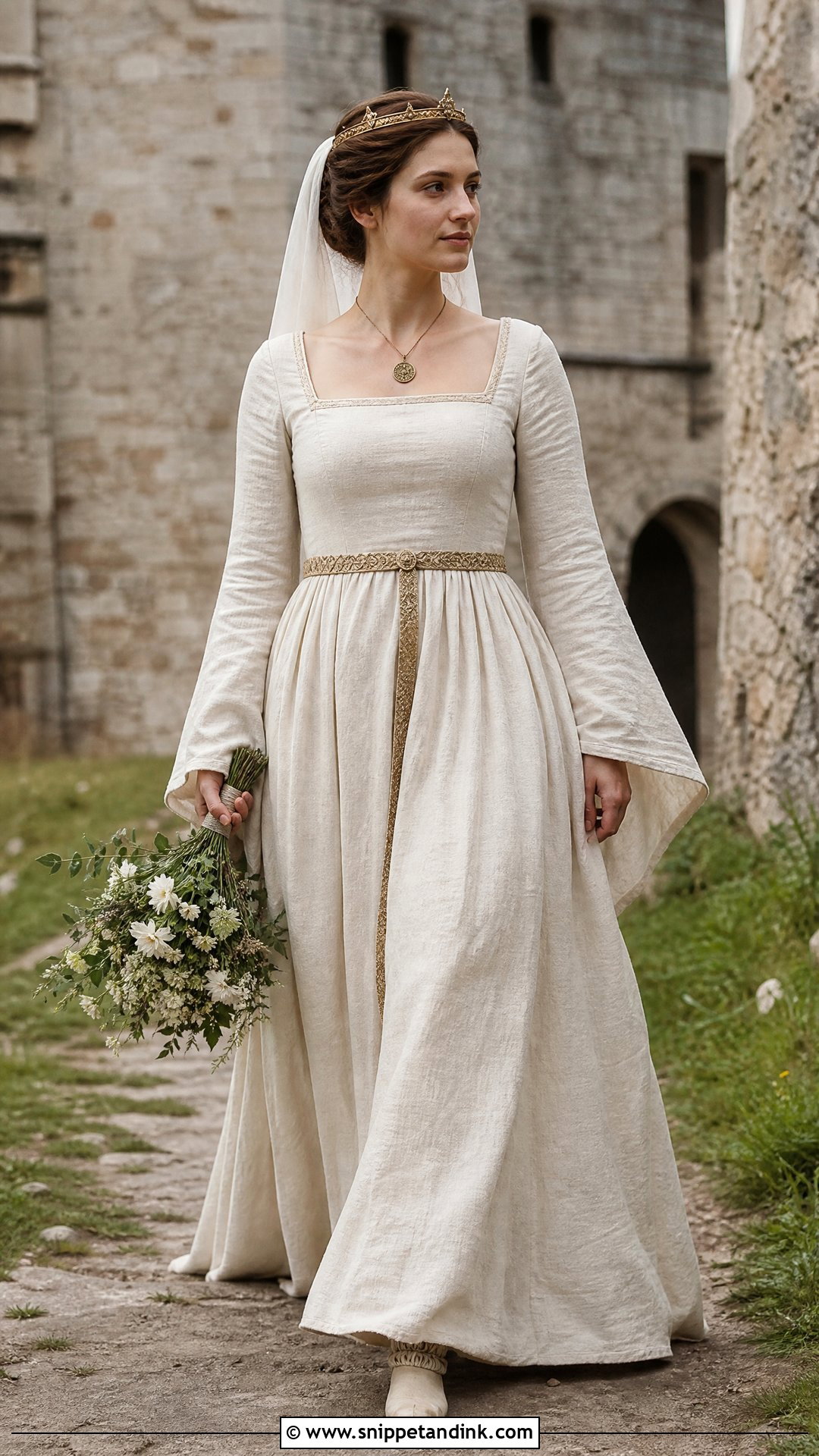
Not every medieval look needs velvet or crystals. Natural linen in off-white, with a square neck, fitted waist, long bell sleeves and a gathered floor-length skirt, feels close to how real clothing of the period looked. Linen creases as soon as you sit, and that softness is part of its charm; I tell brides to accept the wrinkles rather than fight them. A woven gold belt, a small pendant and a simple metal circlet add definition, and a light shoulder veil keeps it bridal. Cream leather flats handle grass and uneven stone. Tie white flowers and greenery with natural silk ribbon. It breathes well in summer heat.
Crowns, Bell Sleeves and Cloaks After Hour Six
Medieval looks have more moving parts than a regular gown, and each one has a habit worth knowing before the day.
Keeping the circlet in place
A circlet balanced on top of the head slides forward the first time you bow your head for a photo. Ask your hairstylist to anchor it with crossed bobby pins through small loops on the band, or choose one with combs built in. Wear it at your trial for a few hours; a heavy metal crown pressing on the temples can cause a headache by mid-afternoon.
Sleeves at the table
Wide bell and hanging sleeves dip into sauce and candle flames. Have a small loop and button sewn inside so you can tie them back for dinner, and keep tapers away from your end of the table.
Cloak weight
A full velvet cloak can weigh more than the dress and it hangs from your neck. Plan to wear it for the entrance and portraits only, and give it to someone you trust for the reception, with a hanger ready.
One Dramatic Feature, Everything Else Practical
There’s no single medieval queen look, and that’s what makes the theme fun for royal bridal fashion. Velvet and brocade bring grandeur; chiffon, lace and linen soften it. White still works, but emerald, sapphire, burgundy, blush and black make it more personal. The outfits that work best pick one dramatic feature and keep everything else practical. Think about the season, the venue, how much you’ll move and how historical you want to look, then let the crown, veil, belt, shoes and bouquet support the dress rather than compete with it.
You'll Like These Ideas:





Leave a Reply