
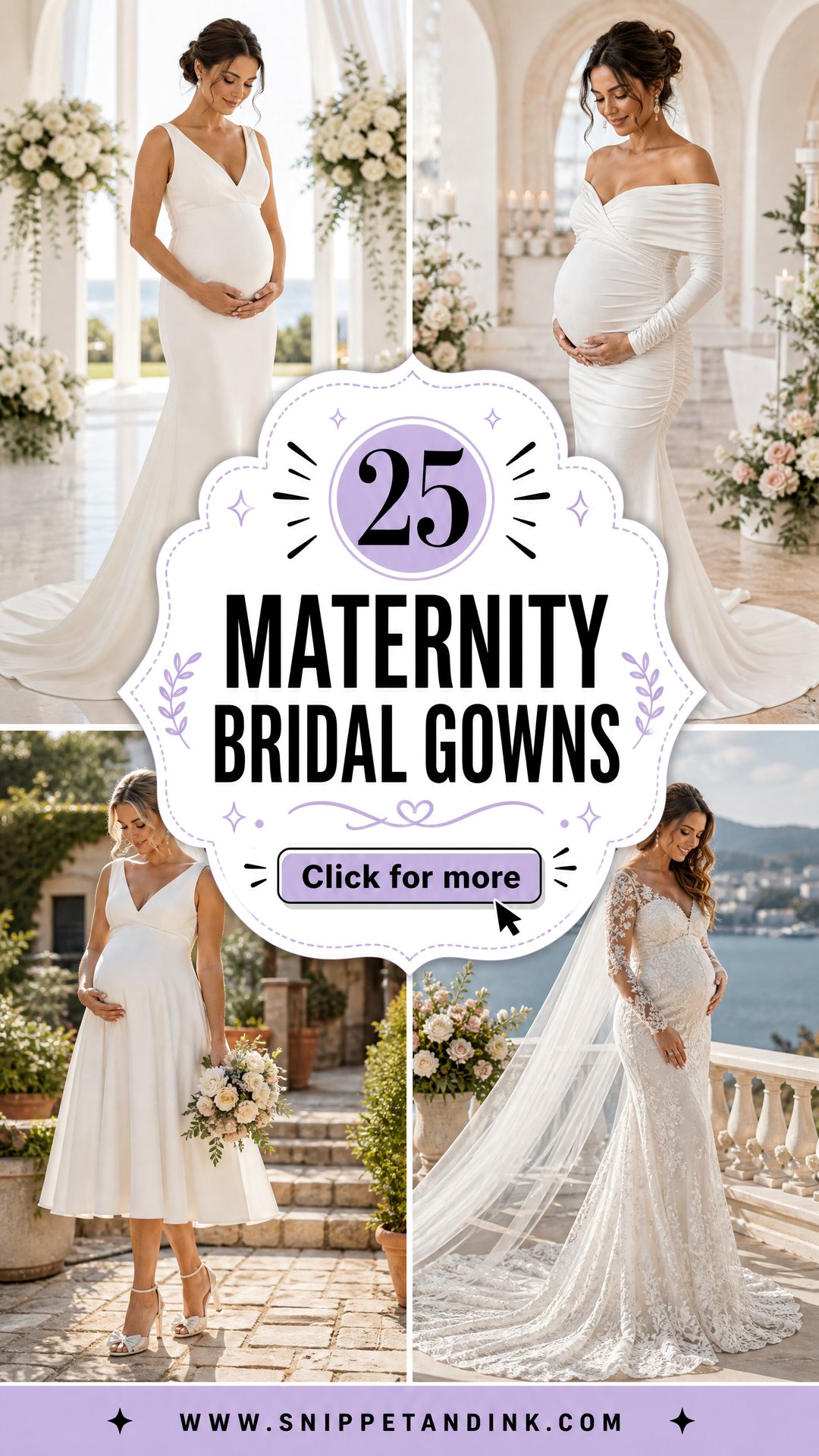
Shopping for a wedding dress while pregnant changes one thing above all: the body you’re fitting today is not the body that will wear the dress. Good maternity bridal gowns are built for that. They use empire seams, generous A-line skirts, stretch jersey, light chiffon and backs that adjust, so the fit can follow you rather than fight you. When I dress an expectant bride, I ask three questions before we look at a single neckline: how far along will you be, how long is the day, and will you be outdoors? The answers rule out half the racks. Below are the shapes that consistently work, with the fitting notes I’d give you for each.
Ordering a Gown When Your Wedding-Day Size Is a Guess
The hardest part of maternity bridal shopping isn’t style, it’s timing. Most made-to-order bridal gowns take months to arrive, and your measurements will change while you wait. I plan backward from the wedding date rather than forward from the order date.
- Tell the shop your due date and how many weeks pregnant you’ll be on the day. Many maternity lines size for that week, not today.
- Pick a construction that can absorb change: stretch fabric, an empire seam and a lace-up or corset back. A fixed zip and non-stretch lace leave no margin.
- Ask how much seam allowance is built in at the bust and sides, since that’s where a seamstress can let out.
- Book the final fitting as close to the date as your seamstress allows, often within the last week or two, and bring the exact shoes and bra you’ll wear.
If the wedding is only a few weeks away, ready-to-wear maternity gowns and stretch jersey styles are the realistic route. They’re also kinder on a tight budget, because they need fewer alterations.
1. Empire Waist Maternity Bridal Gown
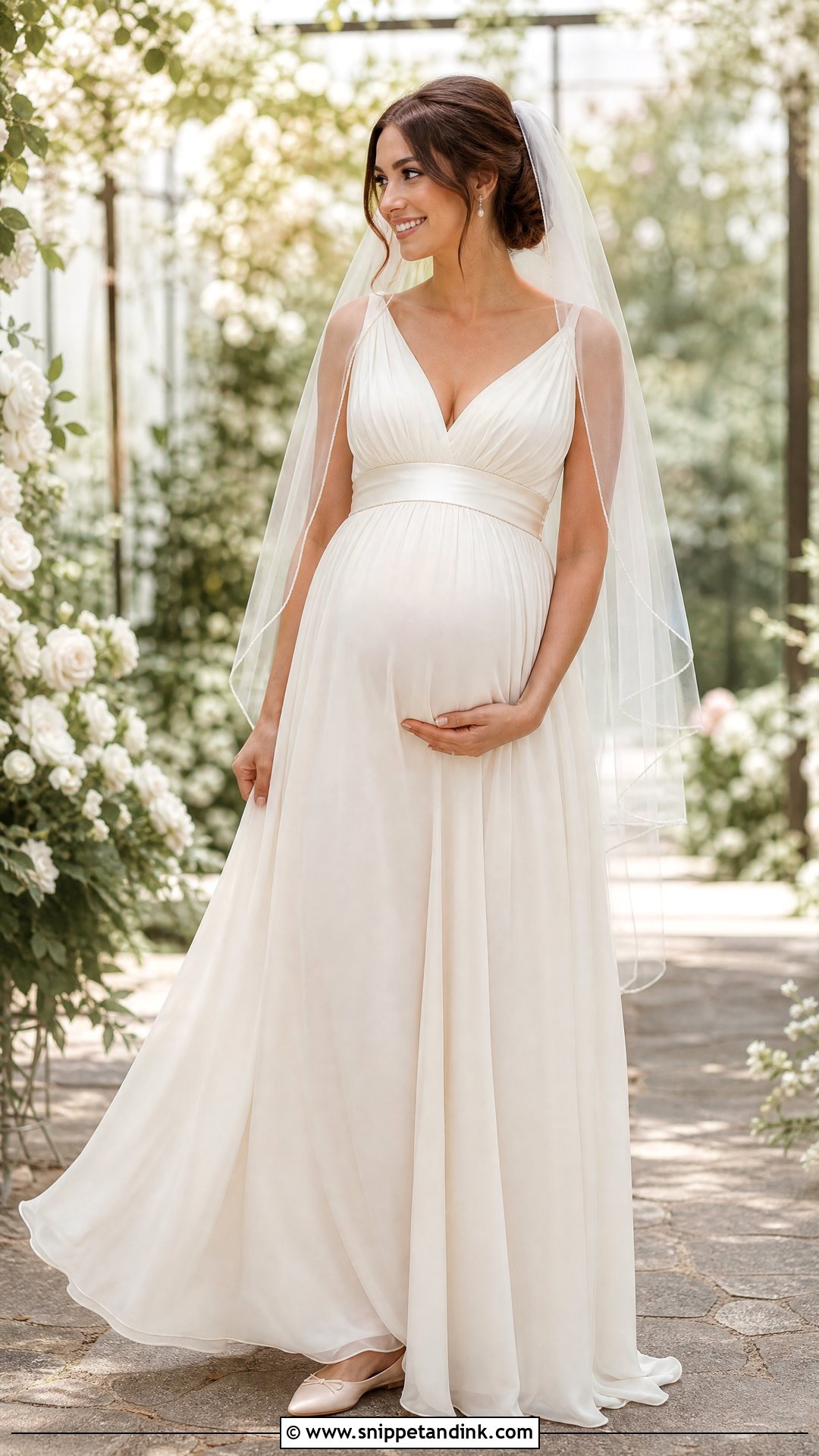
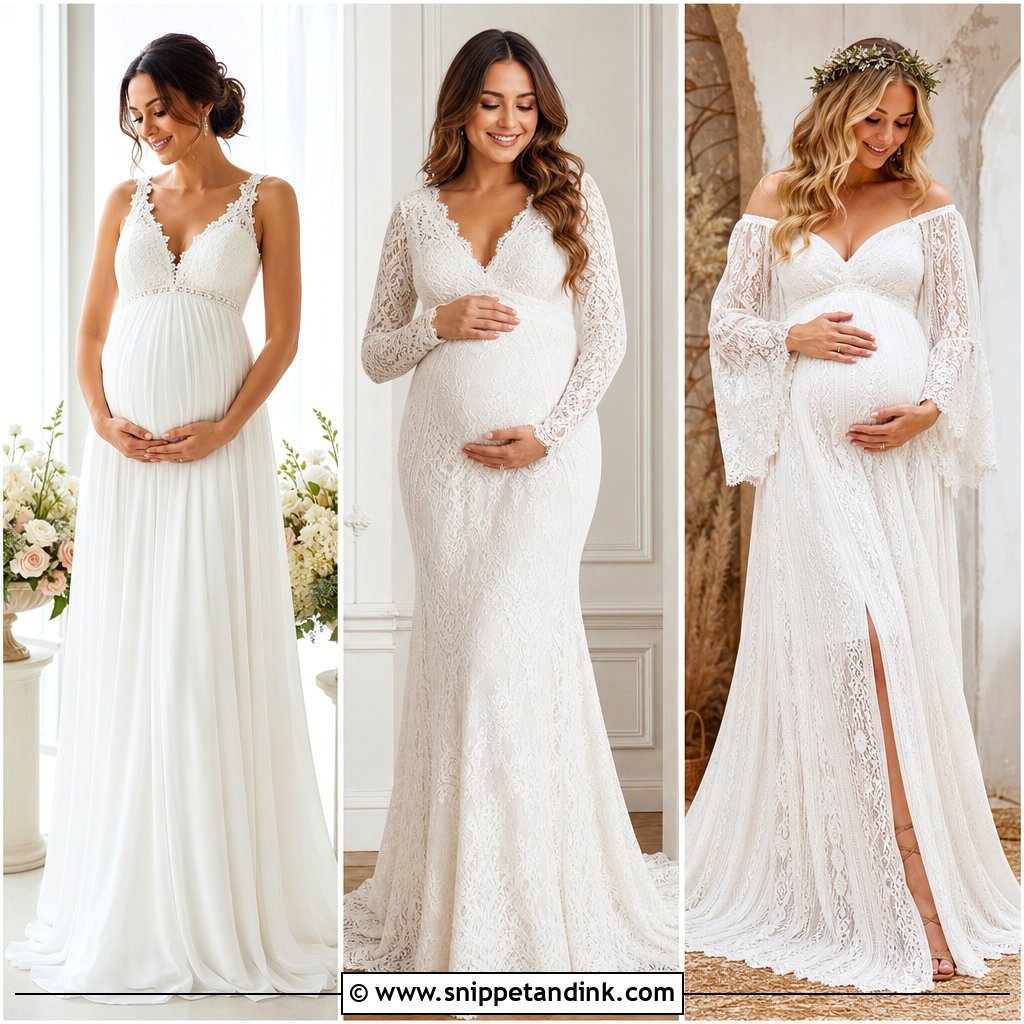
The empire waist is where I start almost every maternity fitting, because the skirt begins just under the bust and the bump has nowhere to be squeezed. A gathered chiffon skirt under a supportive V-neck bodice with wide straps is the classic version. Ivory satin trim at the seam defines the shape without any pressure. I’d wear it with pointed ballet flats, pearl drops and a fingertip veil pinned into a low textured bun, and keep the bouquet small and structured so the proportions don’t tip forward. Ask for a smooth lining and an adjustable back. It suits garden ceremonies and indoor venues equally well, and you can move freely all evening.
2. Lace A-Line Maternity Bridal Gown
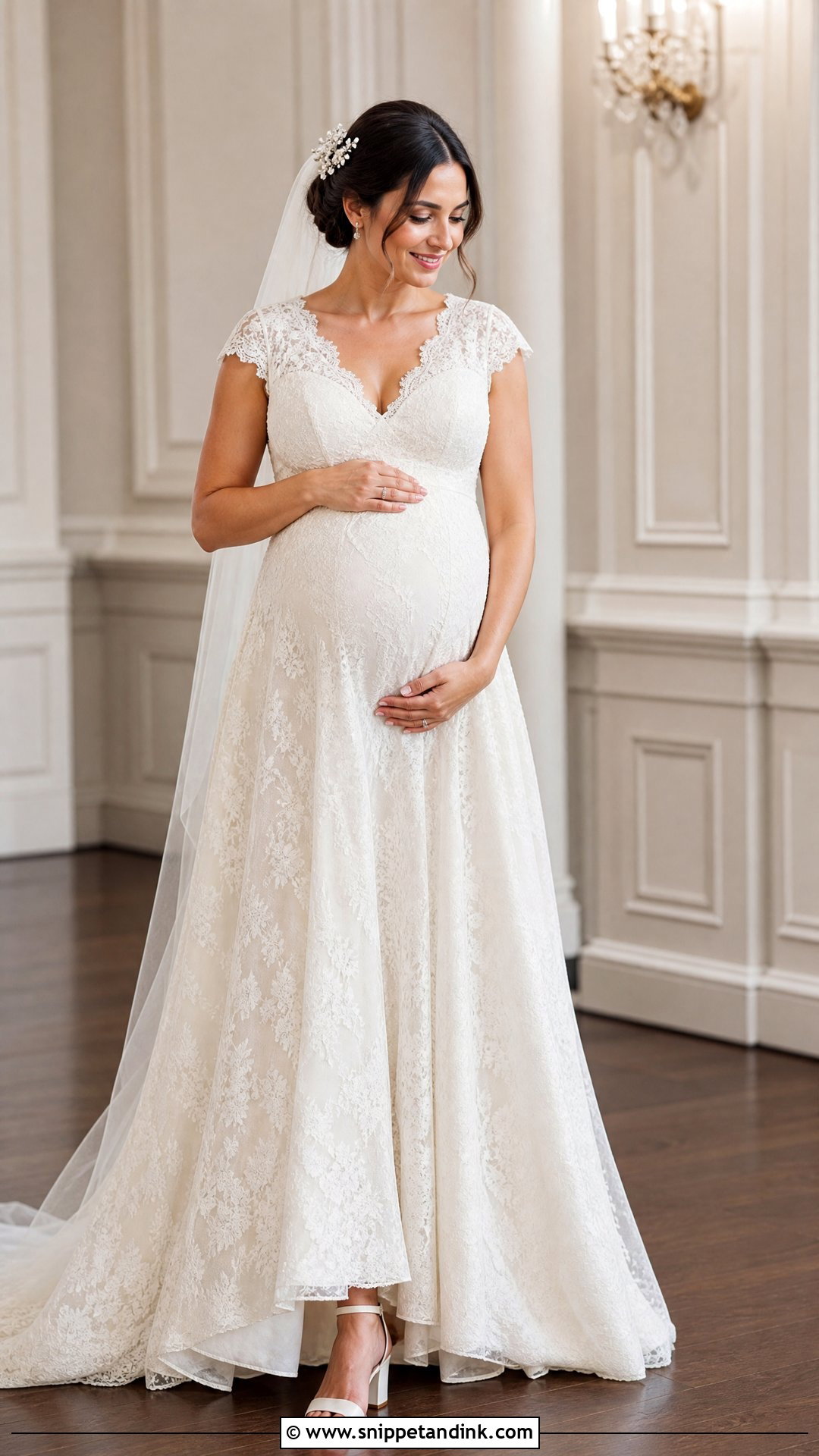
Lace on an A-line skirt gives a recognizably bridal look with very little weight. The bodice should end above the bump, with the skirt flaring gently from there over a comfortable lining. Scalloped cap sleeves and a modest V-neck keep the upper body open. Style it with ivory block-heel sandals, a small floral comb, pearl studs and a light chapel veil. Here is the fitting issue I watch for: most bridal lace has very little stretch, so a zip back that fits at your first appointment may not close at the last. A corset or lace-up back buys you several centimeters of growth, and I’d treat it as essential rather than optional.
3. Long Sleeve Maternity Bridal Gown
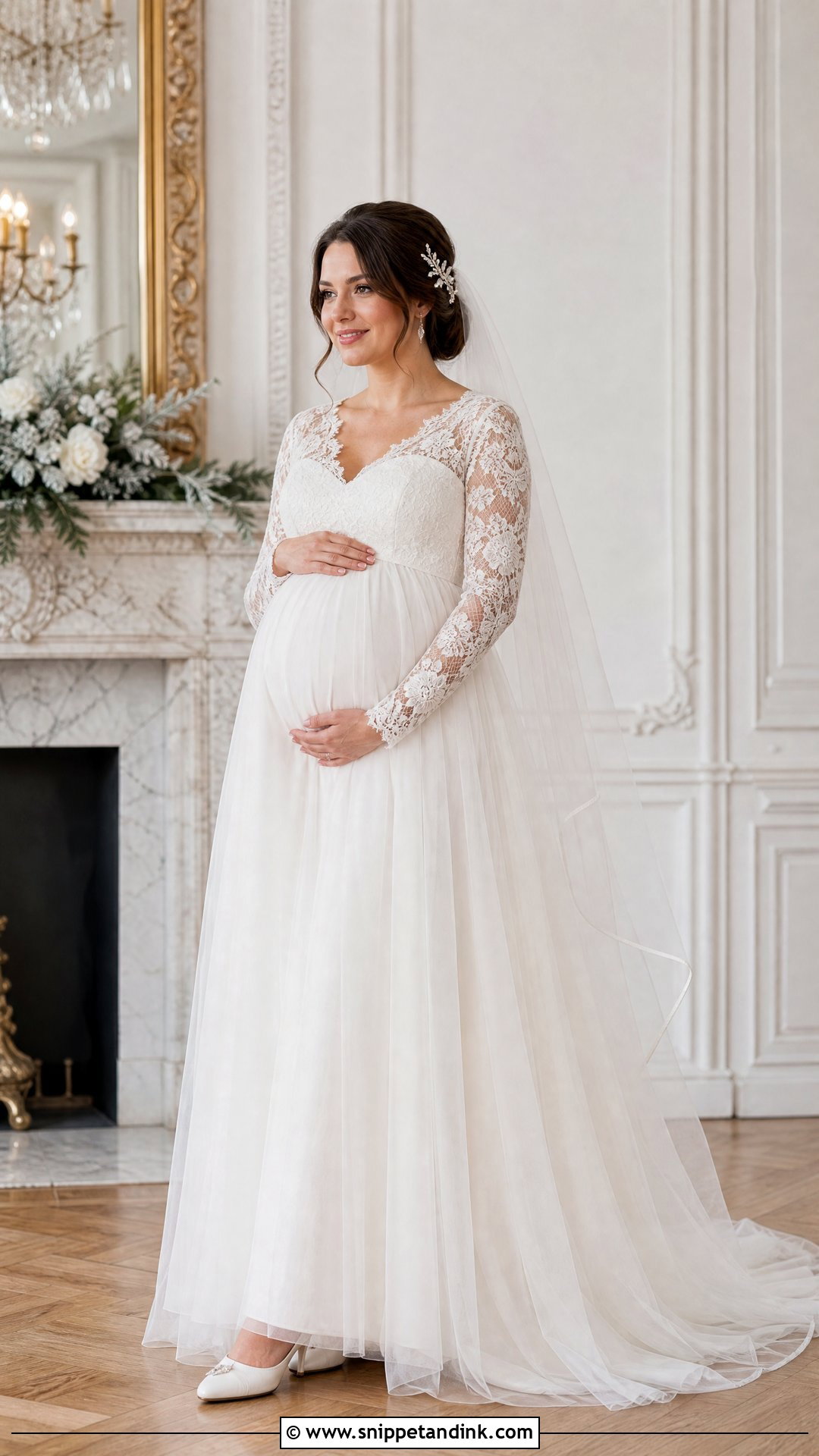
Long sleeves are the obvious answer for fall and winter weddings or for venues with fierce air-conditioning. Choose stretch lace for the sleeves, a soft sweetheart lining and a raised waist that sits comfortably above the bump, then let a chiffon or tulle skirt keep it from feeling heavy. Closed-toe low heels, a crystal hairpin and a medium veil with a clean edge finish it; skip the necklace and let the lace neckline lead. At a fitting I ask brides to hug me and raise both arms. Non-stretch lace sleeves often bind at the elbow and shoulder, and you’ll be hugging people all day.
4. Off-Shoulder Maternity Bridal Gown
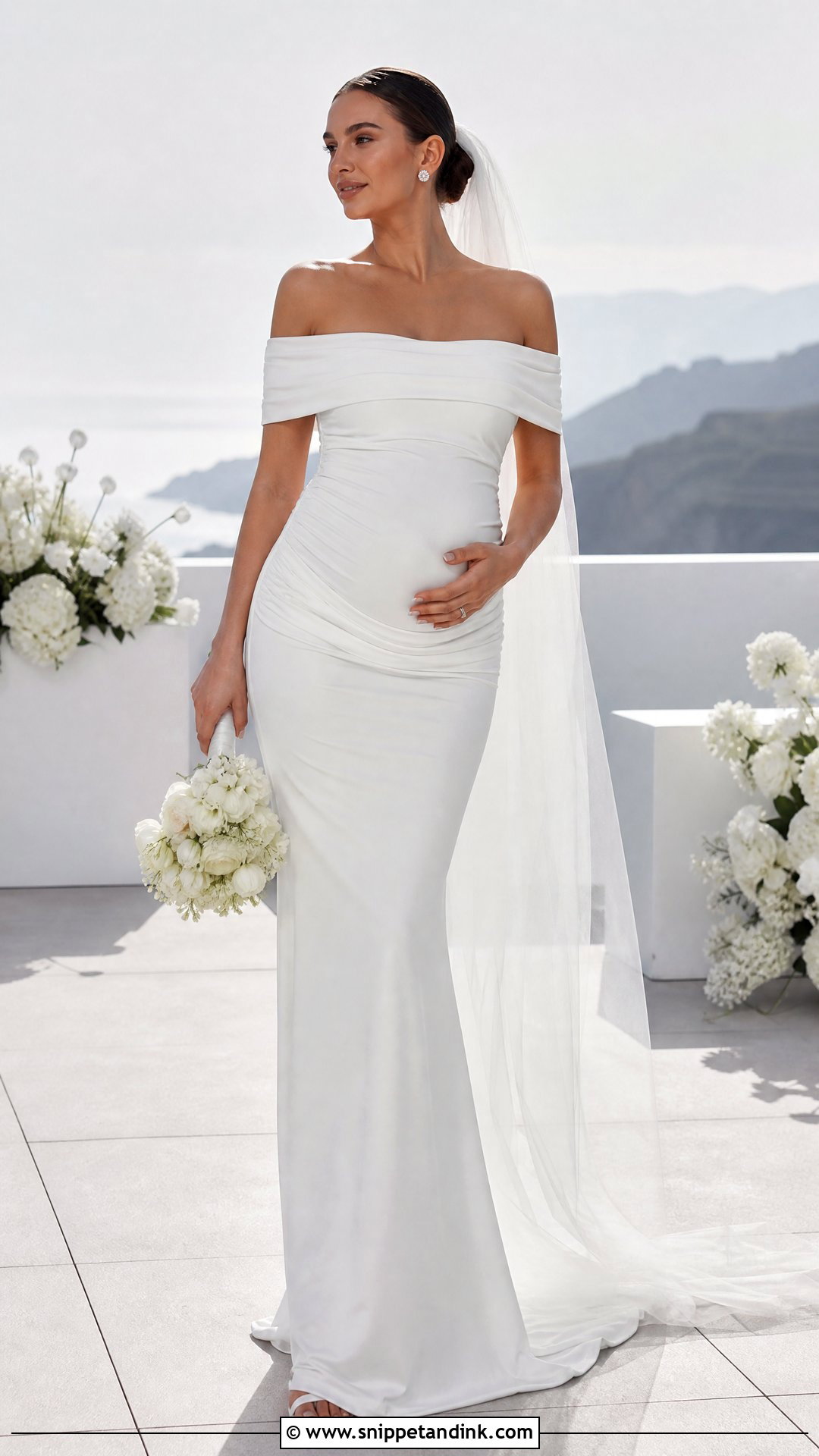
An off-shoulder neckline with a fold-over band gives a soft, modern line, especially on stretch crepe or jersey. Gentle side ruching defines the bump without pressing on it. I pair it with a loose chignon, small sparkling studs and a sheer shoulder-length veil set beneath the hair, plus low slingbacks or flats for a long day. Because the neckline does the talking, a necklace is unnecessary. The honest trade-off: off-shoulder styles need a firm inner bodice to stay put, and if your bust is changing quickly that support needs checking at every fitting. Rooftops and minimalist venues suit it well.
5. Chiffon Maternity Bridal Gown
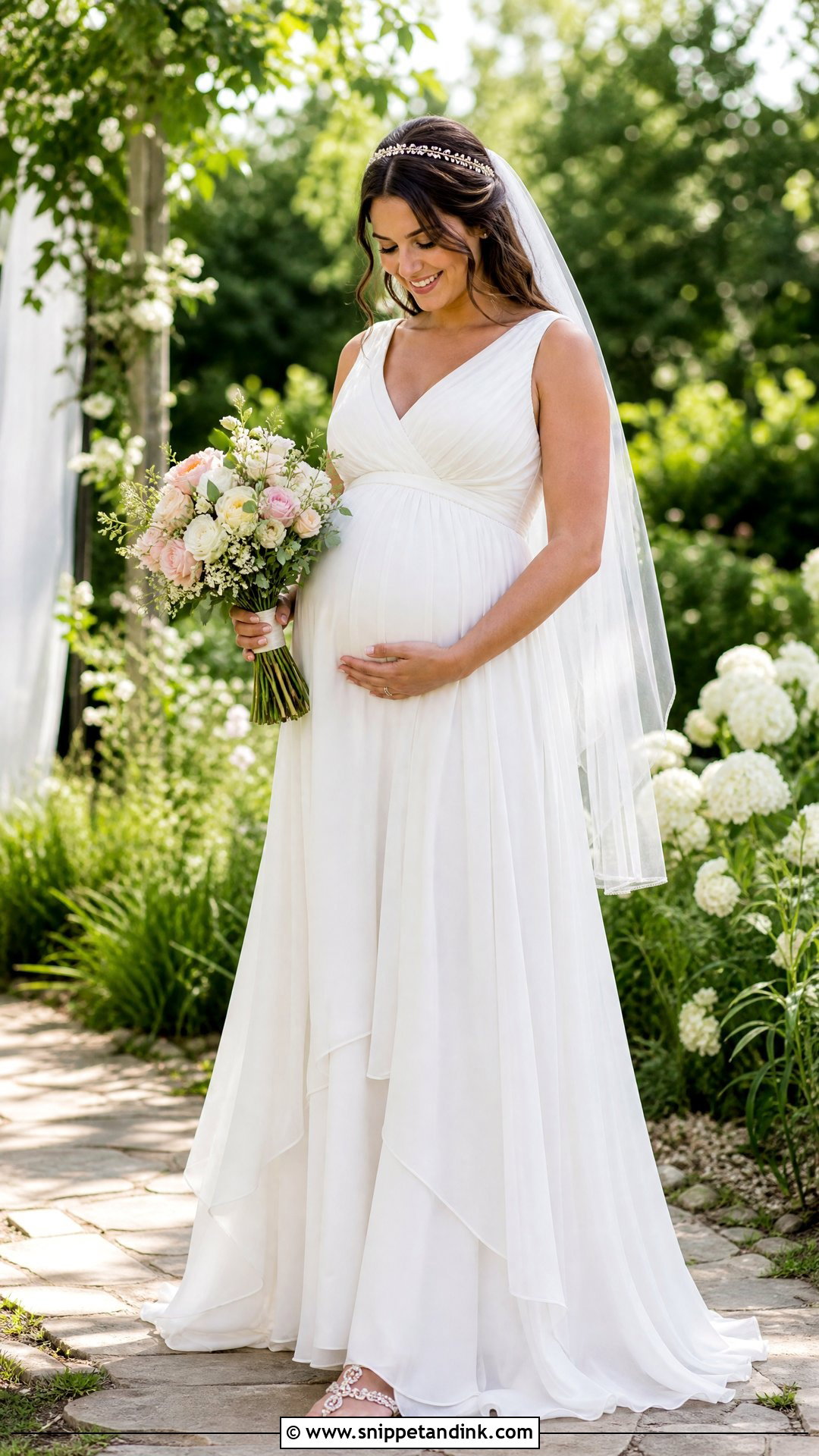
Chiffon is the most comfortable fabric I can offer a pregnant bride in warm weather. It breathes, it moves, and it hides the small fit changes that happen between fittings. A pleated crossover bodice with an empire waist and a layered floor-length skirt looks airy from every angle. Choose wide straps for support or add removable flutter sleeves. Flat embellished sandals, a thin crystal headband, a single-layer veil and a pastel bouquet complete it. Before you buy, hold the skirt up to a window. Unlined or thinly lined chiffon can turn see-through in bright sun, and you’ll want that lining to reach the hem.
6. Satin Cowl Neck Maternity Bridal Gown
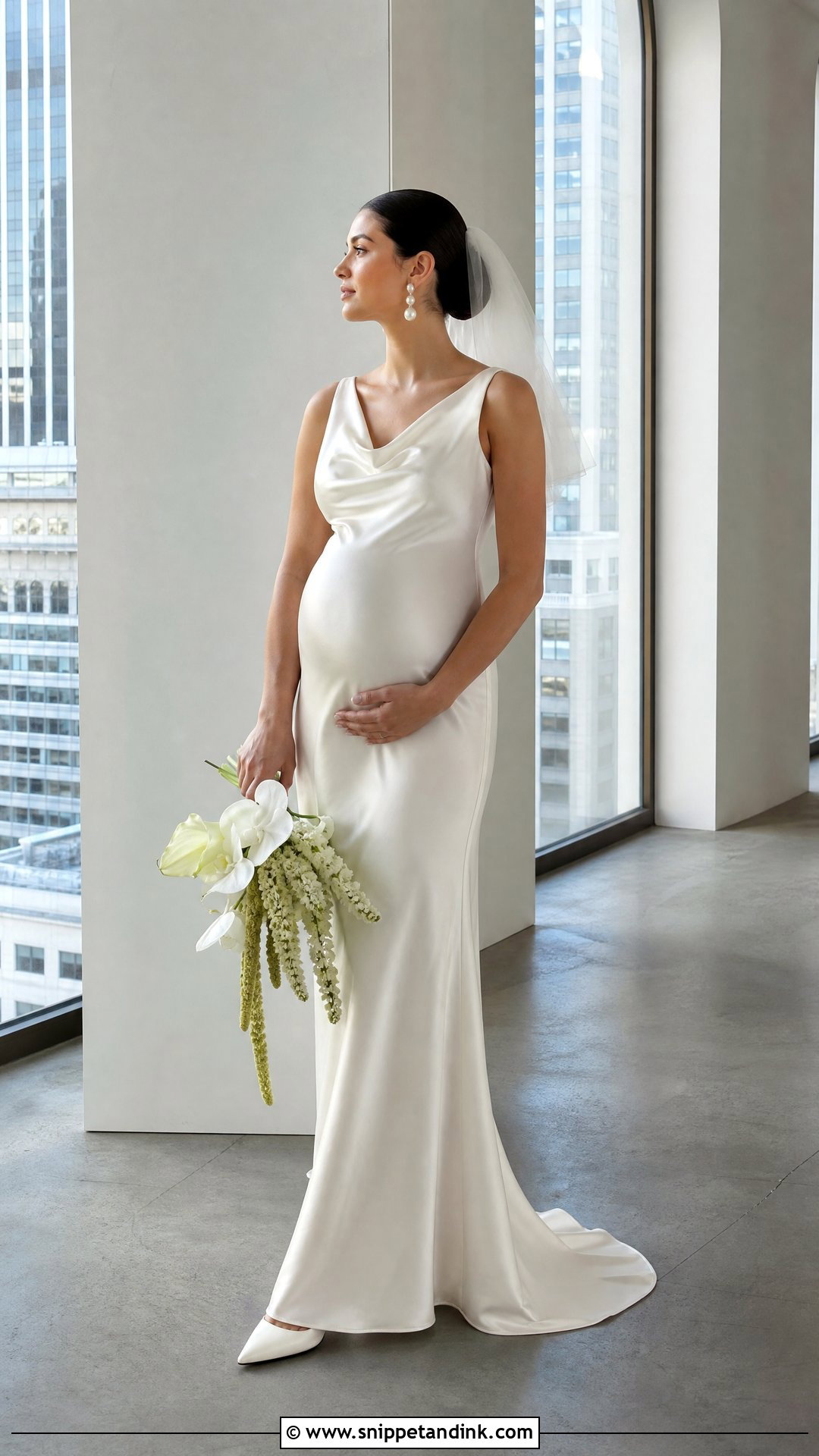
A bias-cut satin gown with a draped cowl neck is the sleek option, and it’s the one I fit most carefully. Satin shows everything: a seam that pulls, a bra line, a crease where you sat. The fabric should skim the bump rather than cling, so look for stretch or extra room through the waist and hips, choose a heavier satin that falls smoothly, and plan the underlayer around the neckline. Pointed ivory flats, sculptural pearl earrings, a polished low bun and a short tulle veil keep the focus on the fabric. It belongs in city ceremonies, galleries and small gatherings where plain beats elaborate.
7. Boho Lace Maternity Bridal Gown
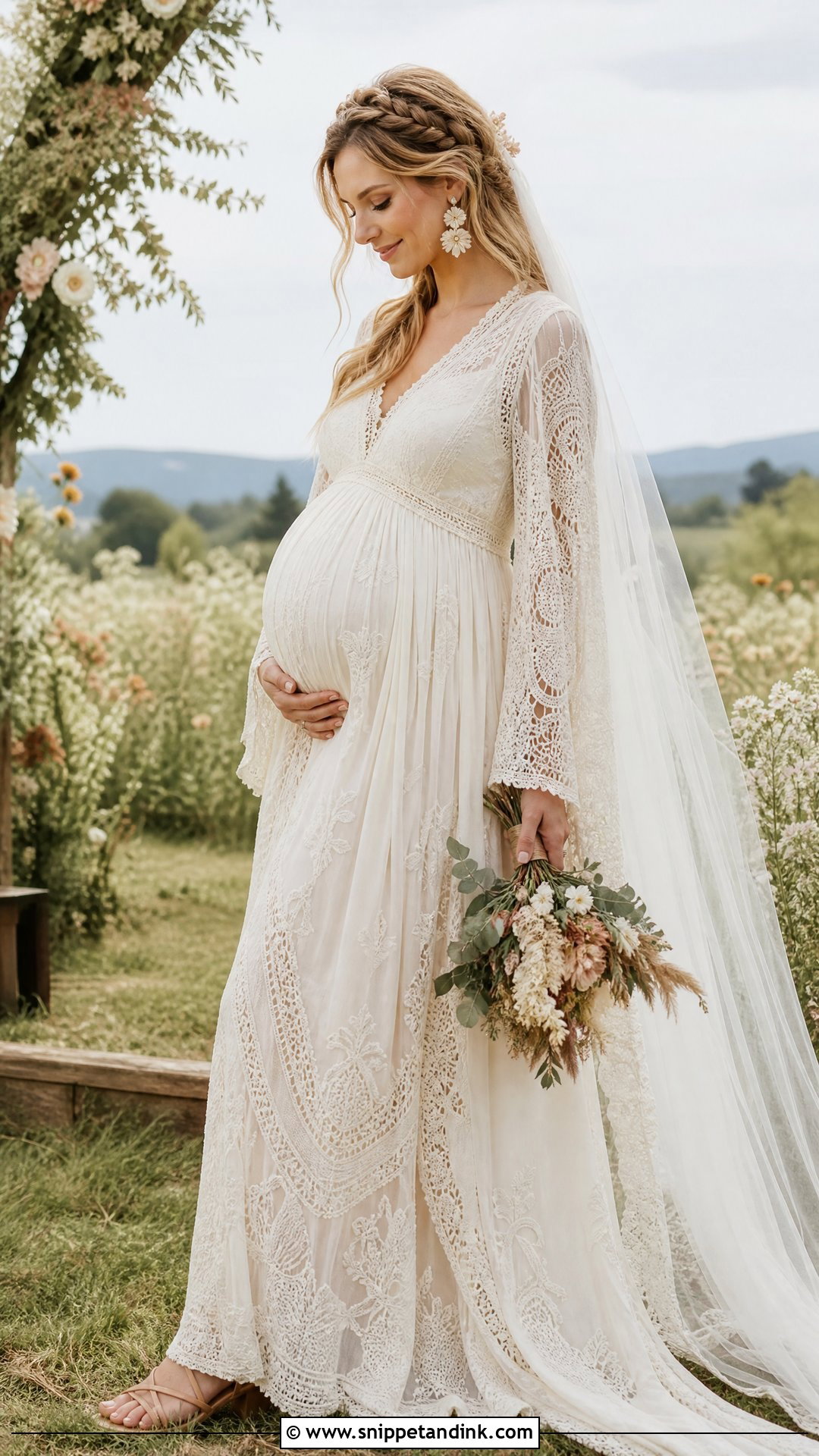
Lace, relaxed sleeves and a flowing skirt make a bohemian bridal look that still feels finished. For pregnancy, look for an empire seam, soft crochet-style lace and a comfortable ivory lining. Bell or loose bishop sleeves let your arms move. I’d style it with flat ivory sandals, small floral earrings, a braided half-up style and a light tulle veil held with a botanical comb, plus a loose bouquet of whatever is in season. Avoid stiff corsetry and heavy underskirts entirely; they fight the relaxed shape and add heat. Meadows, woodland and barns suit it best.
8. Minimalist Crepe Maternity Bridal Gown
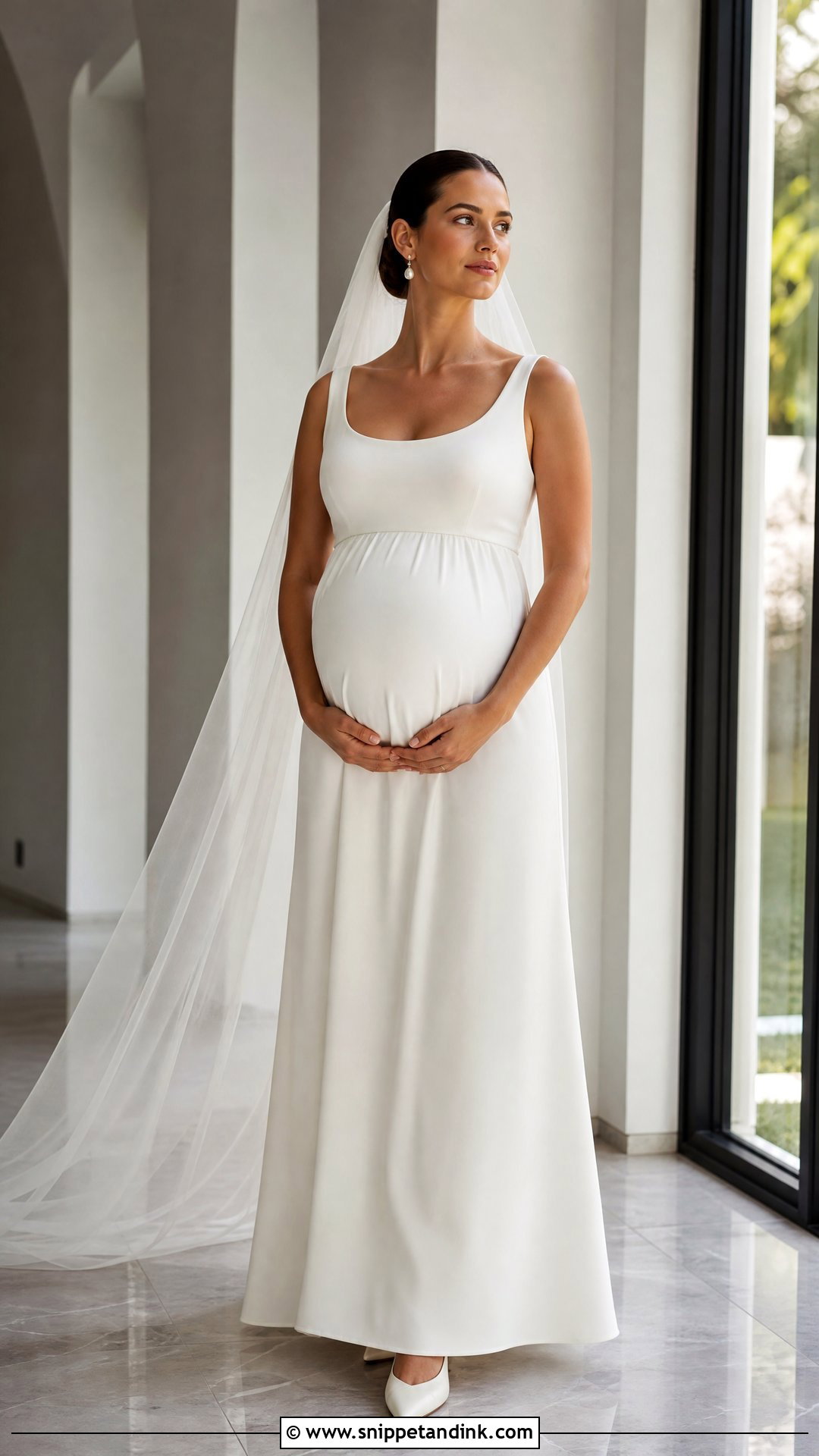
Plain crepe is my favorite fabric for brides who dress simply every other day of their lives. A smooth A-line with a high empire seam, wide straps and a gently curved neckline looks tailored, and a touch of stretch lets it adapt as the bump grows. Add pointed low heels, a small structured bag for reception essentials and simple gold or pearl earrings. A sleek bun with a plain cathedral veil brings the drama. One detail is enough here, such as covered buttons down the back or a detachable bow. Crepe does show sweat marks in heat, so I’d save it for air-conditioned hotels, architectural venues and civil ceremonies.
9. Sweetheart Neckline Maternity Bridal Gown
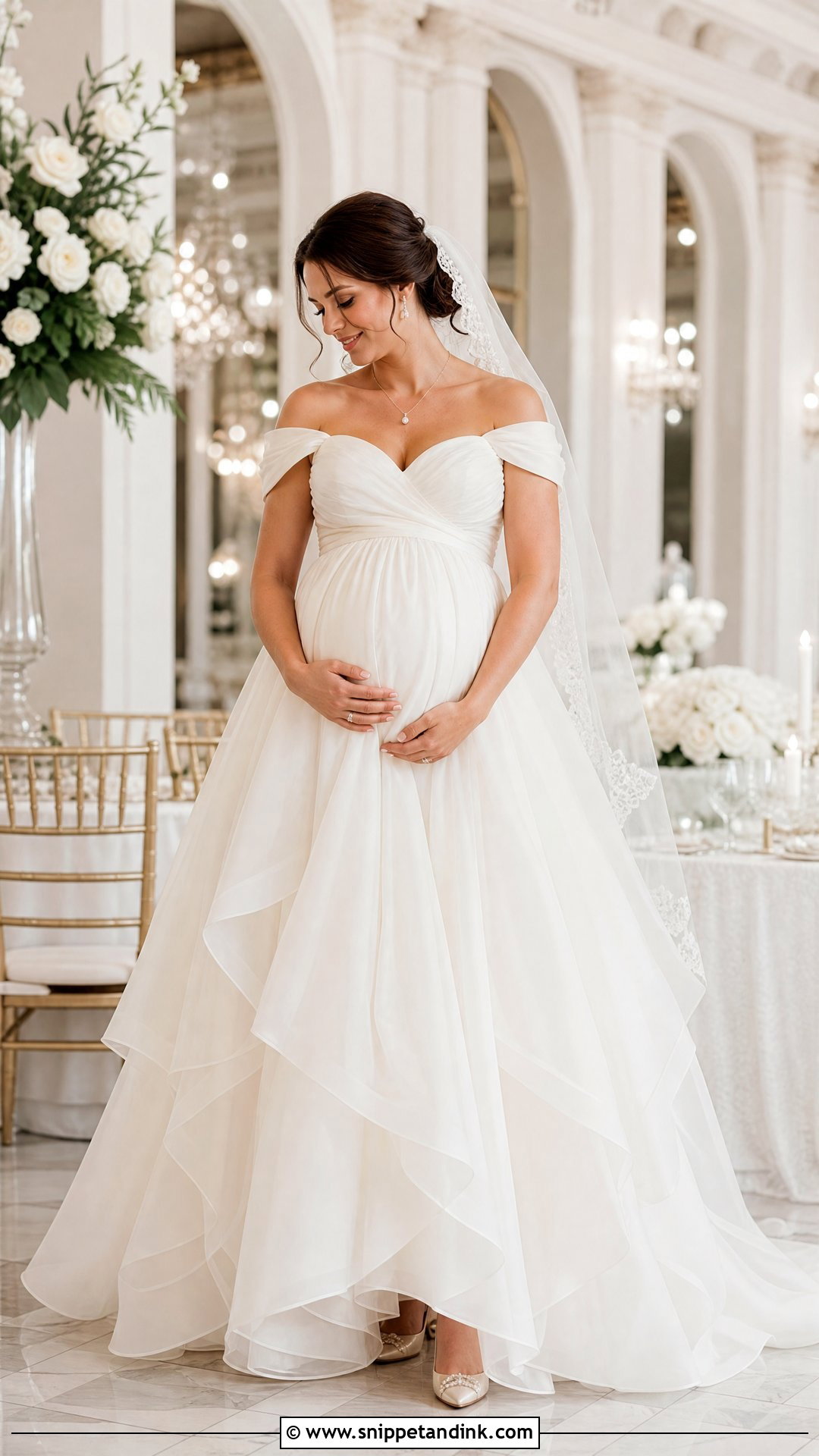
The sweetheart neckline is the classic bridal shape, but I rarely let a pregnant bride wear it strapless. A growing bust needs real support, and a rigid strapless bodice pressing on the ribs gets uncomfortable by the reception. Wide off-shoulder straps or cap sleeves solve that. The waist should sit above the bump with an organza or chiffon skirt falling freely. Pearl-trimmed low heels, a fine pendant and a soft updo with face-framing pieces suit it, along with a medium veil edged in narrow lace. Ask your seamstress to check the bust while you sit and lean, not just while you stand.
10. V-Neck Maternity Bridal Gown
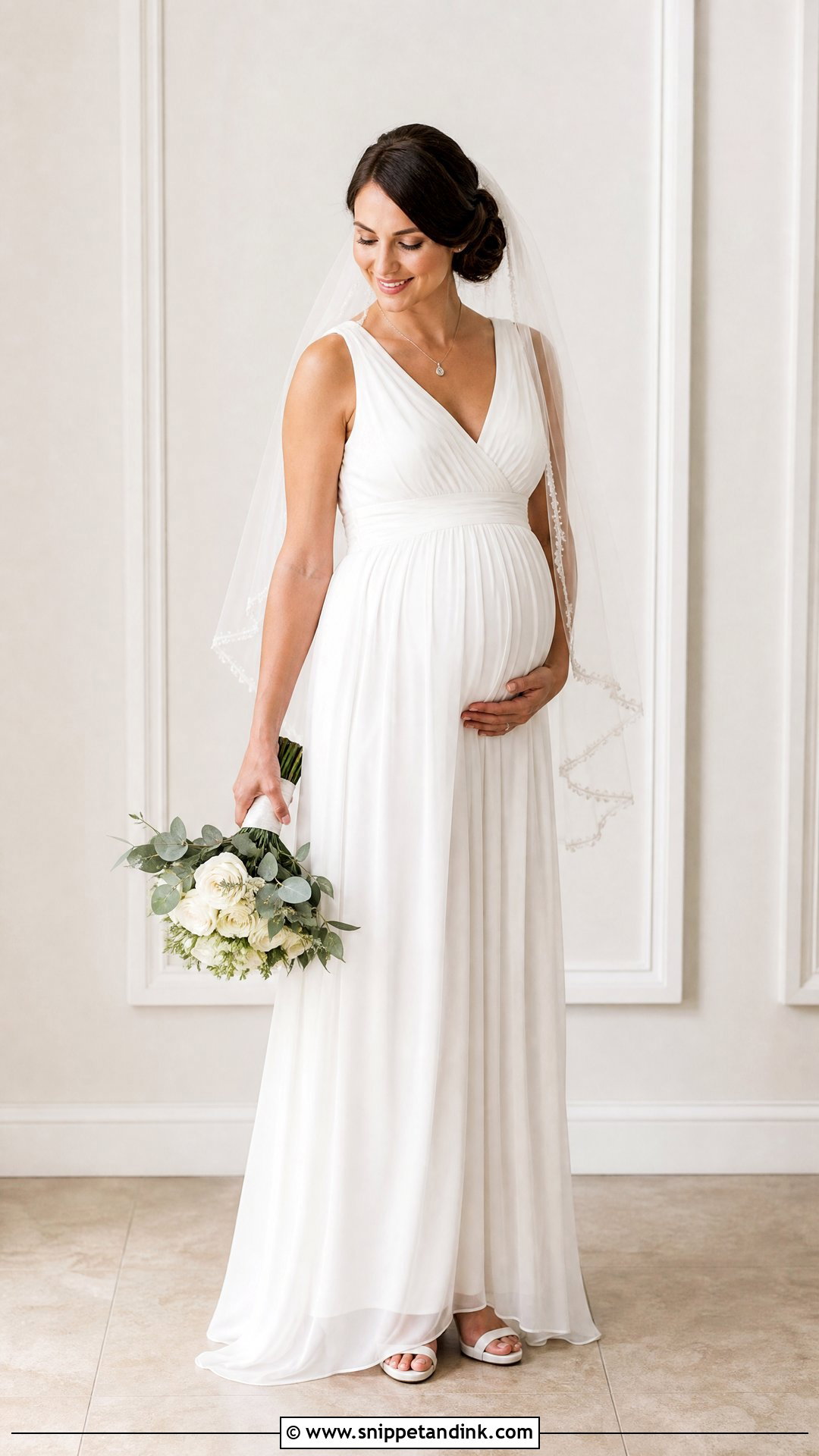
A well-cut V-neck lengthens the torso, which helps balance a bump in photos. Choose wide straps, a supportive waistband and a modest V-back or adjustable lace-up closure, in jersey, chiffon or stretch lace so the dress moves with you. Comfortable block heels, a delicate pendant and a fingertip veil finish it. I like a side-parted low bun here because it keeps the neckline visible. If the V is lower than you’d like, a matching lace modesty panel can be sewn in without changing the look. It adapts to almost any season or formality through fabric and accessories alone.
11. Square Neck Maternity Bridal Gown
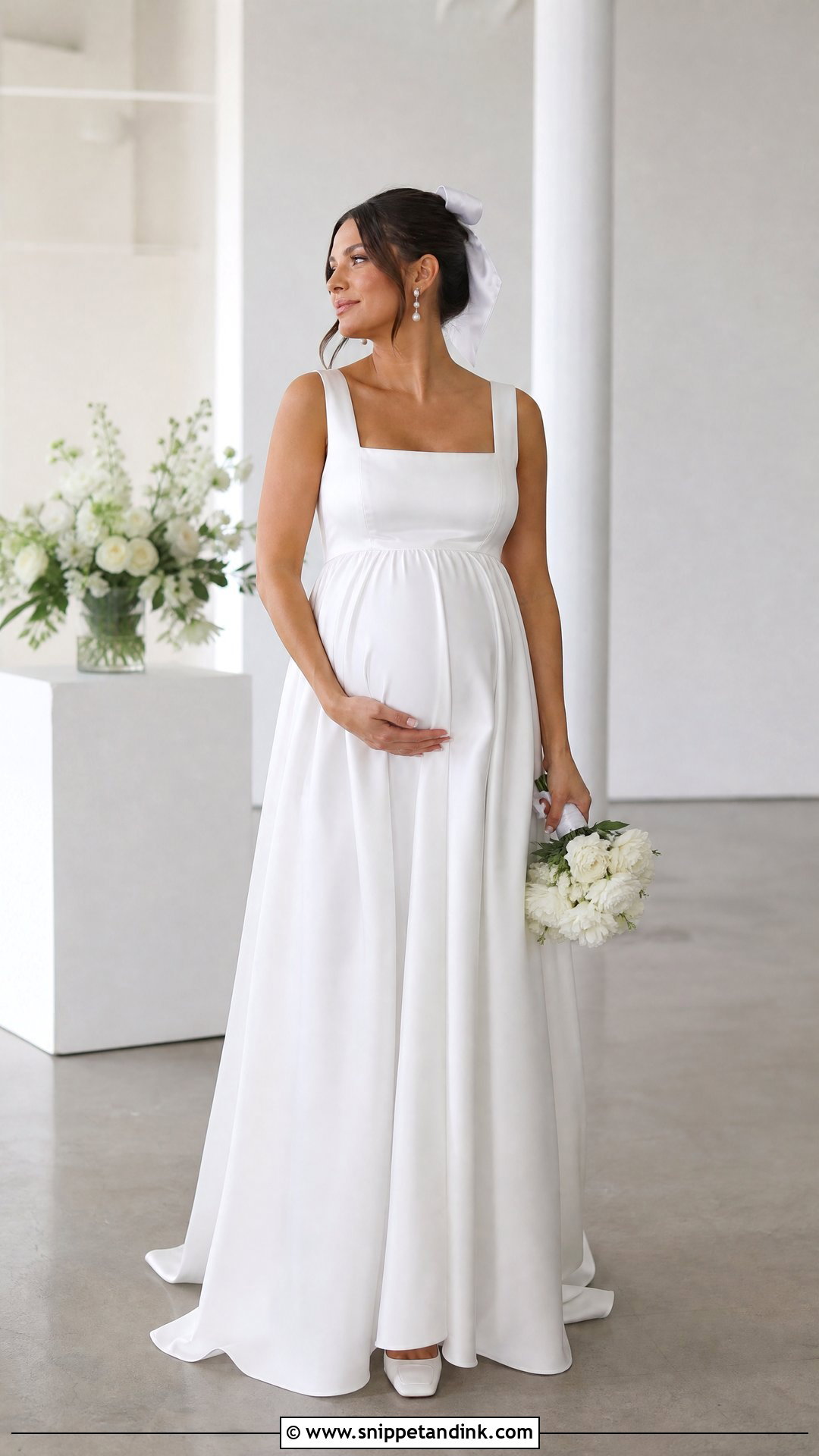
A square neckline is a modern, slightly vintage alternative to the sweetheart and the V. Look for wide straps, a fitted stretch bodice and a raised waist seam that leaves room for the bump, with a smooth crepe or matte satin skirt keeping the line clean. Pearl drops, low square-toe shoes and a compact bouquet suit it, along with a short veil or a structured hair bow. The test I use: the neckline should lie flat across the chest while you take a deep breath. If it gapes or digs, the bodice needs adjusting, and that can change again in a few weeks.
12. Flutter Sleeve Maternity Bridal Gown
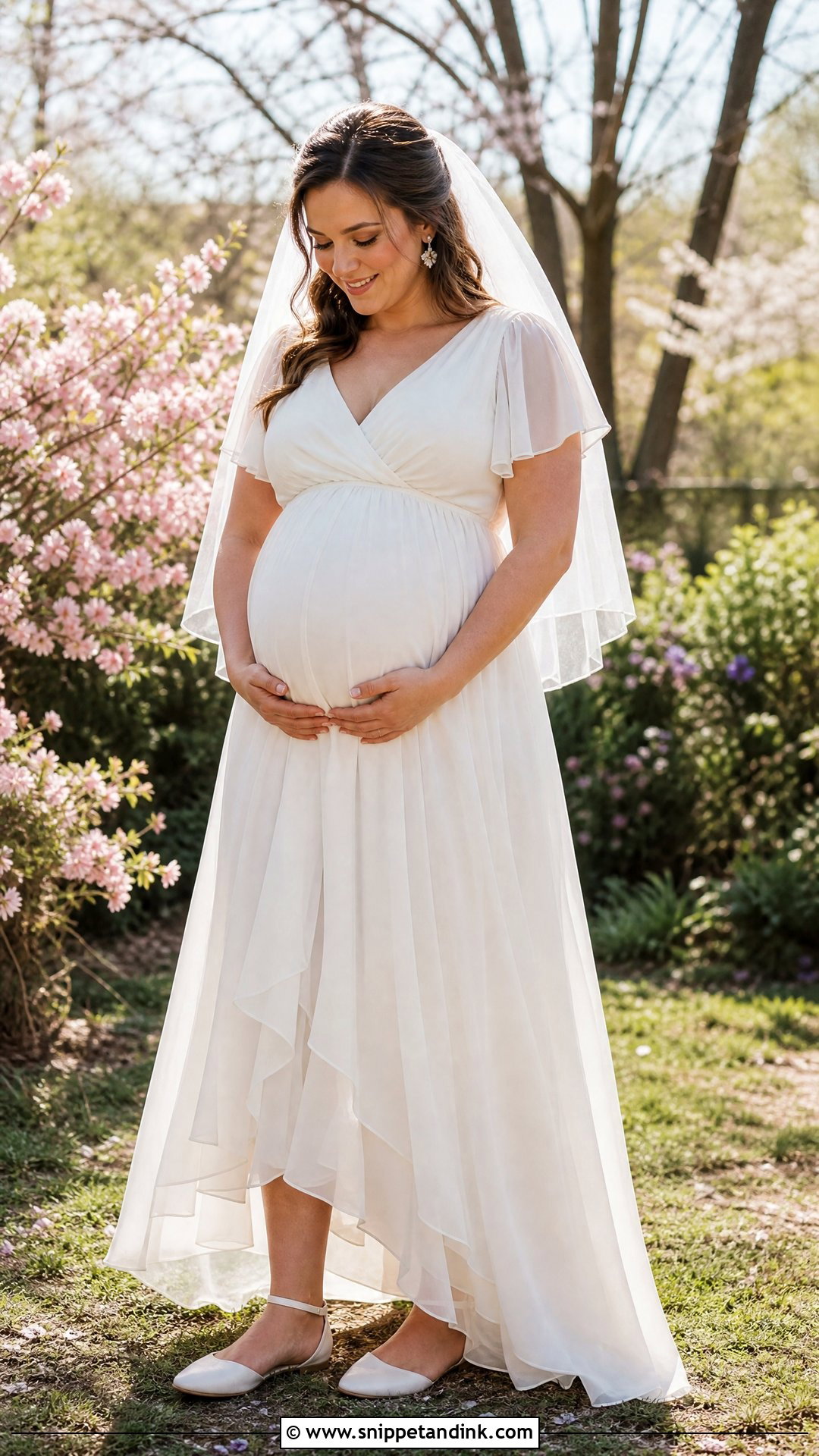
Flutter sleeves give light coverage on the upper arm without any of the heat or weight of lace. Pair them with a crossover bodice, a raised waist and a layered chiffon skirt. The sleeves should fall loose from the shoulder; if they’re cut tight around the arm they lose the movement that makes them worth wearing. Ankle-strap flats, floral studs, soft half-up waves and a fingertip veil under a small comb finish it, and I’d keep everything else quiet because the sleeves and skirt already move a lot. It’s one of the most comfortable choices for spring and summer outdoor weddings.
13. Cape Sleeve Maternity Bridal Gown
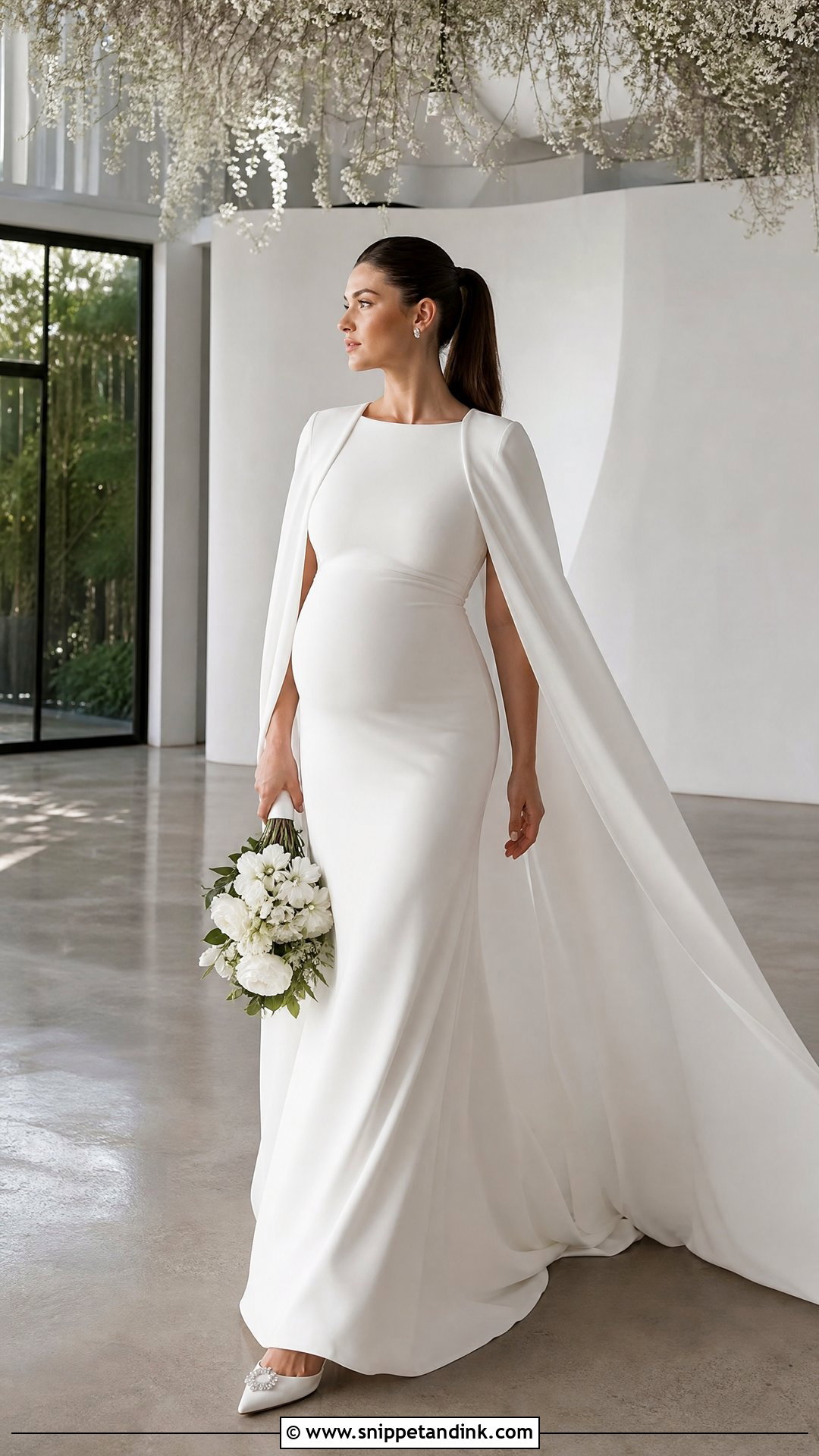
Cape sleeves add drama and arm coverage at once. Put them on a plain stretch-crepe column or relaxed A-line so the cape is the only feature. A removable cape is worth asking for, since it gives you a second look for the reception and lets you cool down. Low pointed heels, crystal studs and a sleek low ponytail keep it modern. I usually suggest skipping the veil, because a veil and a cape tangle every time you turn; if you want one, keep it short and plain. Large indoor venues and evening celebrations suit it best.
14. High Neck Maternity Bridal Gown
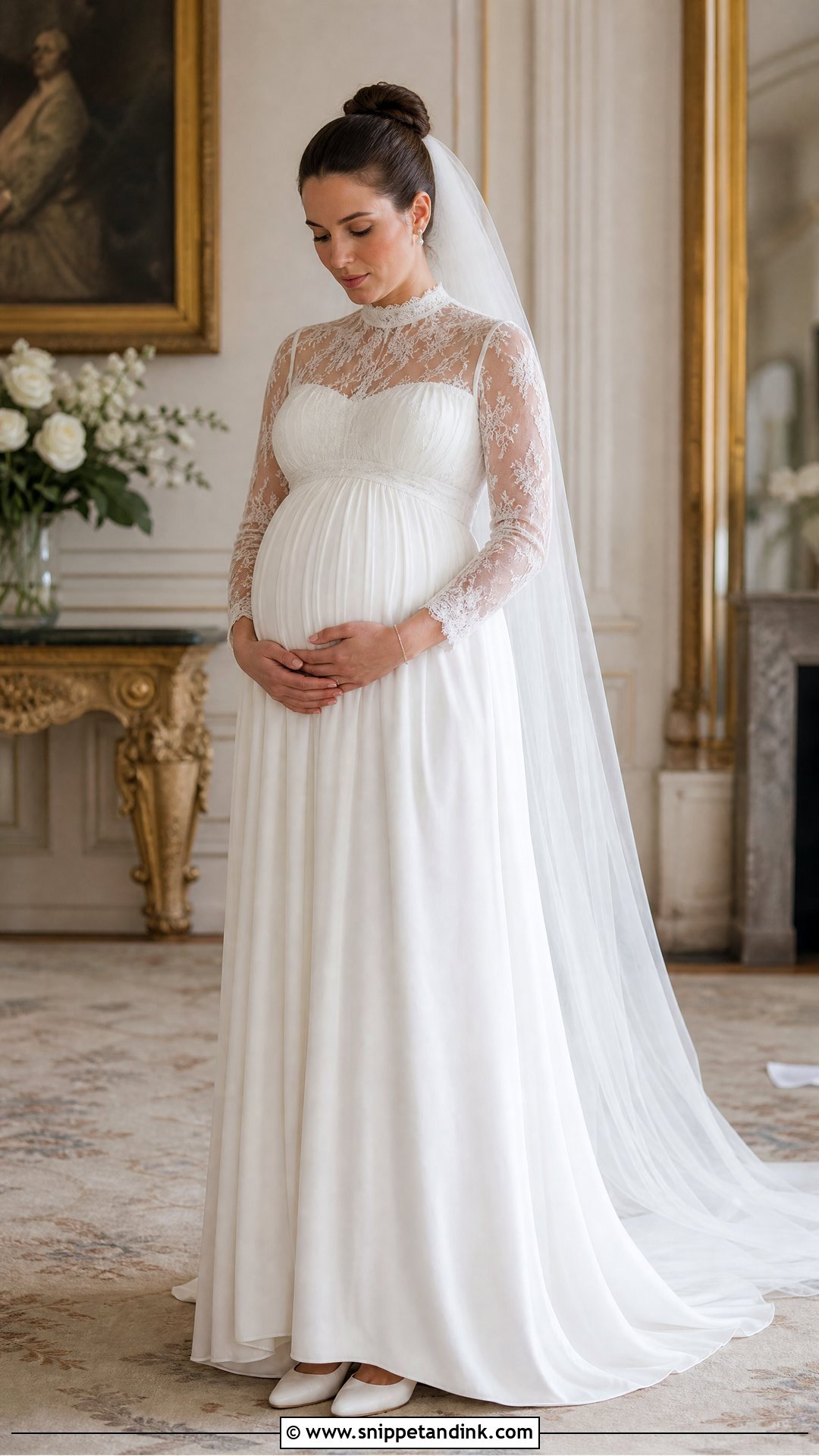
A high neck in light lace looks refined rather than buttoned-up, as long as the rest of the dress is soft. Choose a lined sweetheart or scoop bodice under a sheer lace yoke, then an empire seam and chiffon skirt to balance the coverage. Pearl studs, a tidy bun, low closed-toe shoes and a slim bracelet instead of a necklace are all it needs. Pin the veil below the bun so the lace shows from behind. Sit down in it before you commit. A collar that’s fine standing can rub the neck once you’re seated at dinner.

15. Ruched Jersey Maternity Bridal Gown
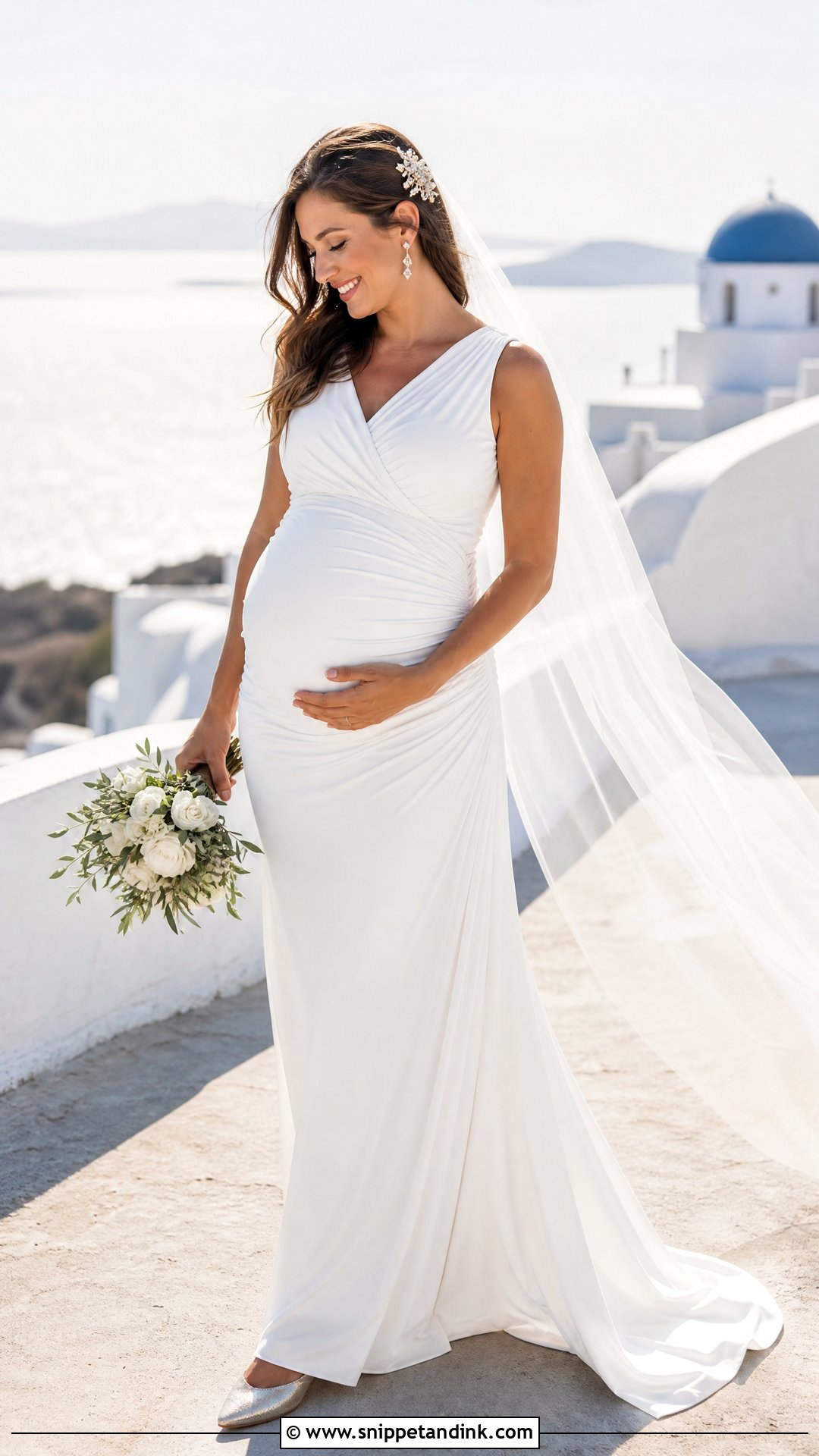
Stretch jersey is what I recommend for later pregnancy, because it adapts by the day and shows the bump without squeezing it. Look for side ruching, a crossover neckline and a gently flared hem, with gathering under the bust for definition. Jersey on its own can look like an everyday maxi, so dress it up with crystal earrings, a beaded comb and refined low heels or metallic flats, plus a light veil. Choose double-layered jersey; a single layer shows every line underneath. It packs into a suitcase without creasing badly, which makes it a strong choice for elopements and destination weddings.
16. Mermaid Maternity Bridal Gown
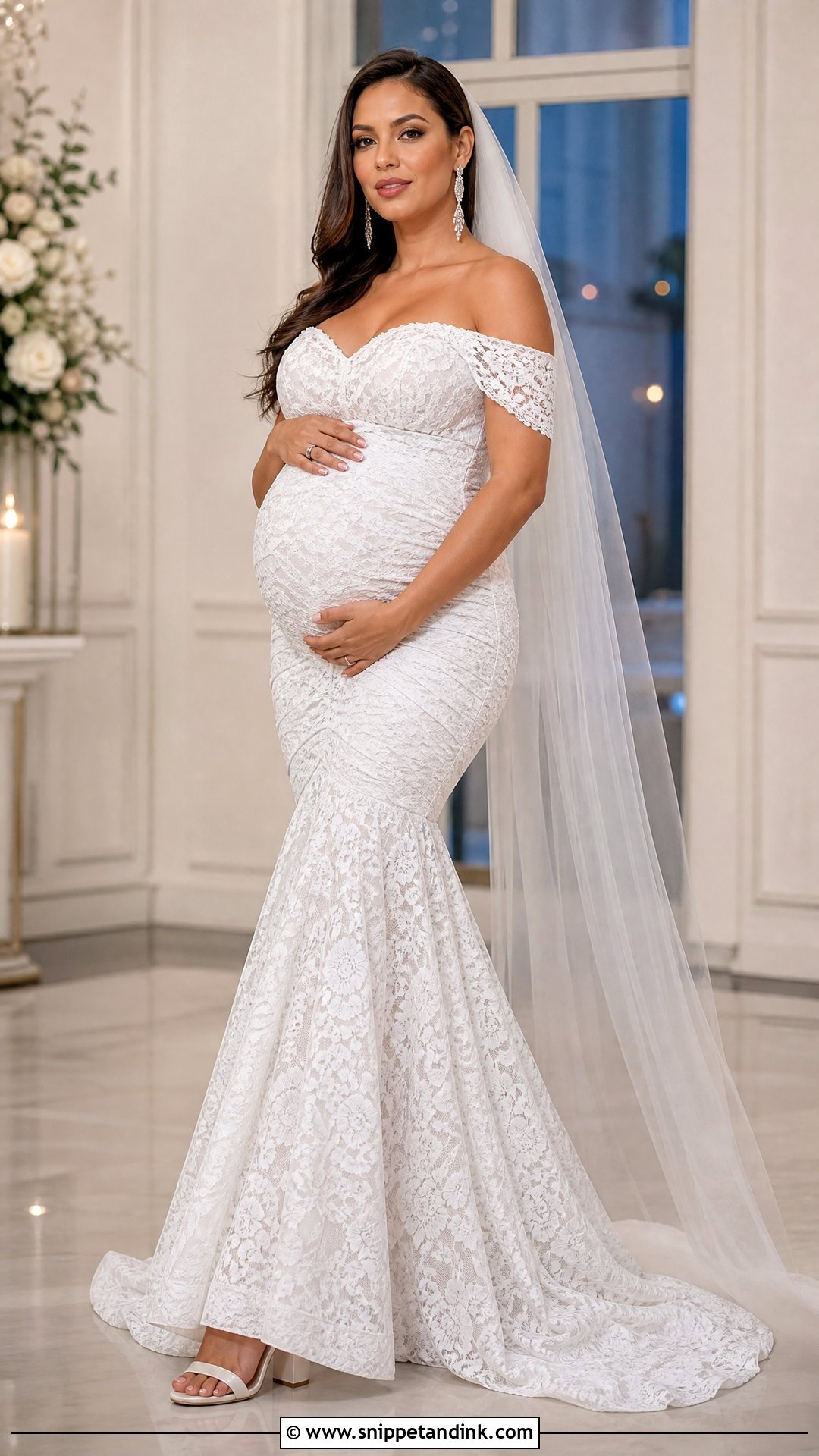
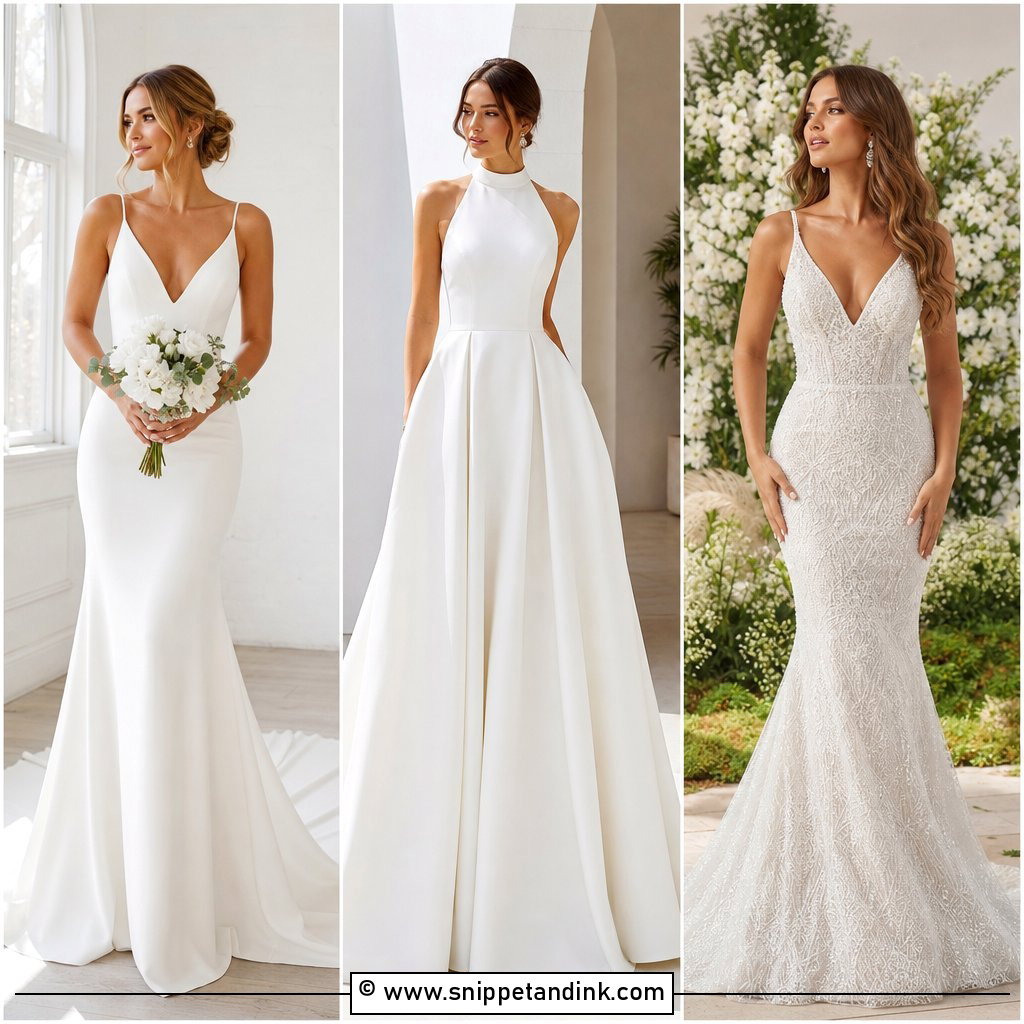
A mermaid gown is for the bride who wants to show her pregnancy, not soften it. Comfort decides everything here, so I’d choose stretch lace or flexible crepe and avoid stiff boning or heavily structured satin. Ruching around the waist gives shape while leaving room to breathe. Block heels, long drop earrings, a sleek side-parted style and a plain chapel veil balance the fitted line. The most common problem is a flare that starts too low, which shortens your stride to a shuffle. Walk, climb a step and sit down at the fitting before you agree to the hem.
17. Tea-Length Maternity Bridal Gown
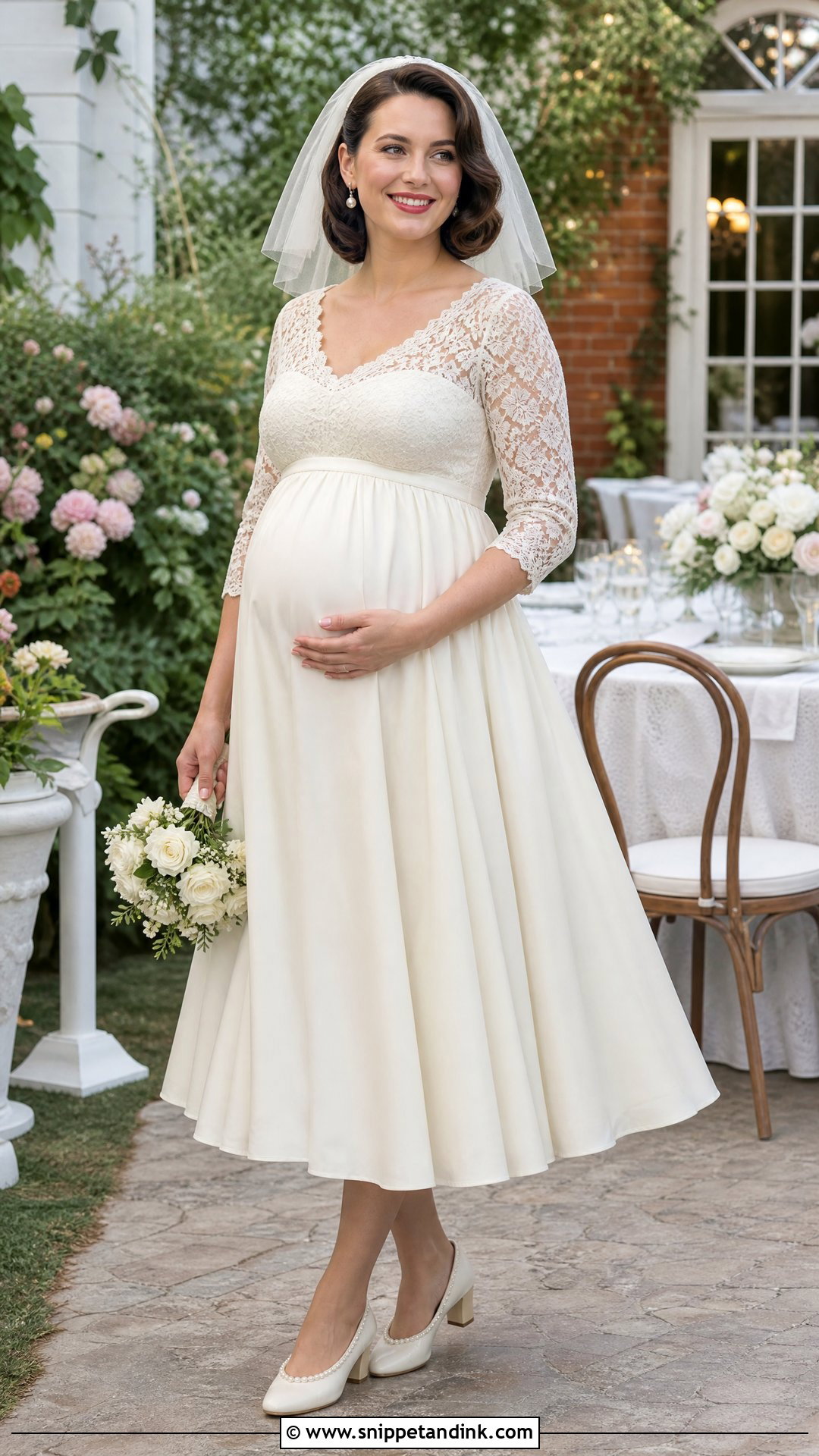
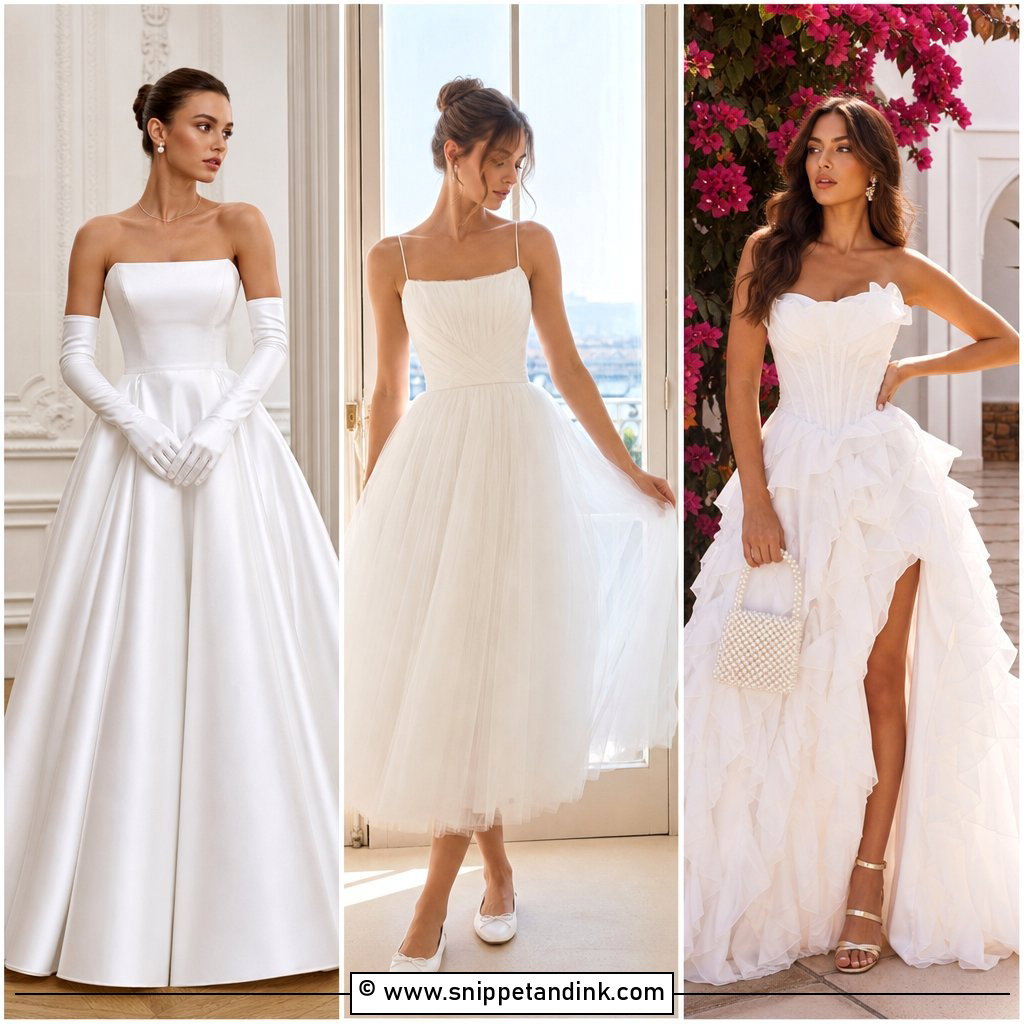
Tea length is the practical choice I wish more pregnant brides considered. With the hem between the knee and ankle, there’s nothing to trip on, nothing to hold up and much less fabric in the heat. A fitted stretch-lace bodice with a raised waist and a softly flared skirt is the usual shape. Since the shoes show, choose pearl-trimmed flats or low block heels that feel special. Short gloves, pearl earrings and a birdcage or shoulder-length veil suit the retro mood. Courthouses, daytime parties and garden venues are its natural home.
18. Short Maternity Bridal Gown
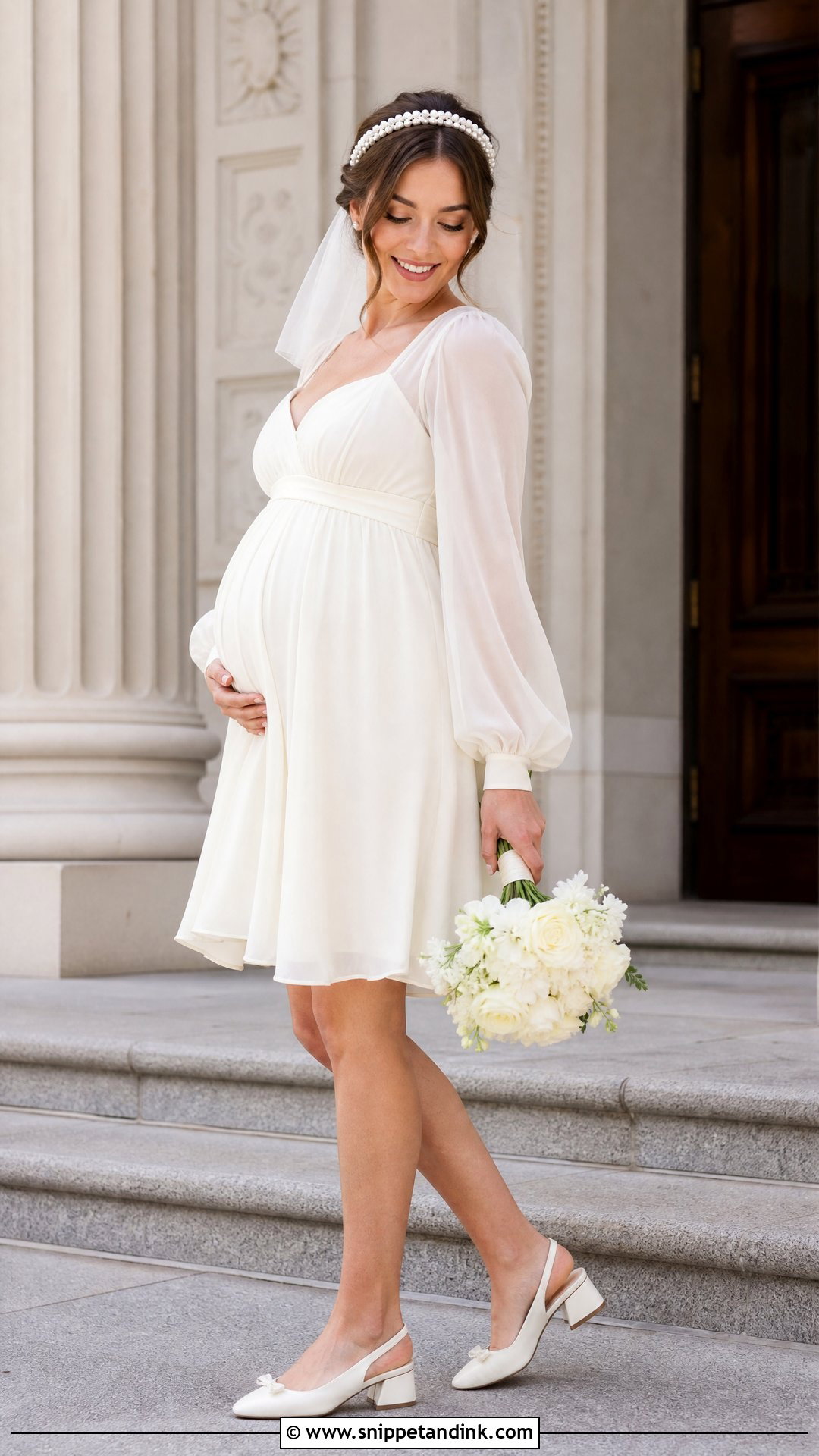
A short gown feels modern and easy, for a casual ceremony or as a second look for the party. Knee-length or just above, with an empire waist, a supportive bodice and a gently flared skirt, is the shape to look for. Long sheer sleeves balance the short hem; sleeveless suits summer. Low slingbacks, a pearl headband, a small structured bouquet and a short veil complete it. I’d avoid a very fitted skirt, which tends to ride up as the bump grows and whenever you sit. City hall weddings, restaurant receptions and travel all suit it, and it’s a dress you can genuinely wear again.
19. Maternity Bridal Gown With Train
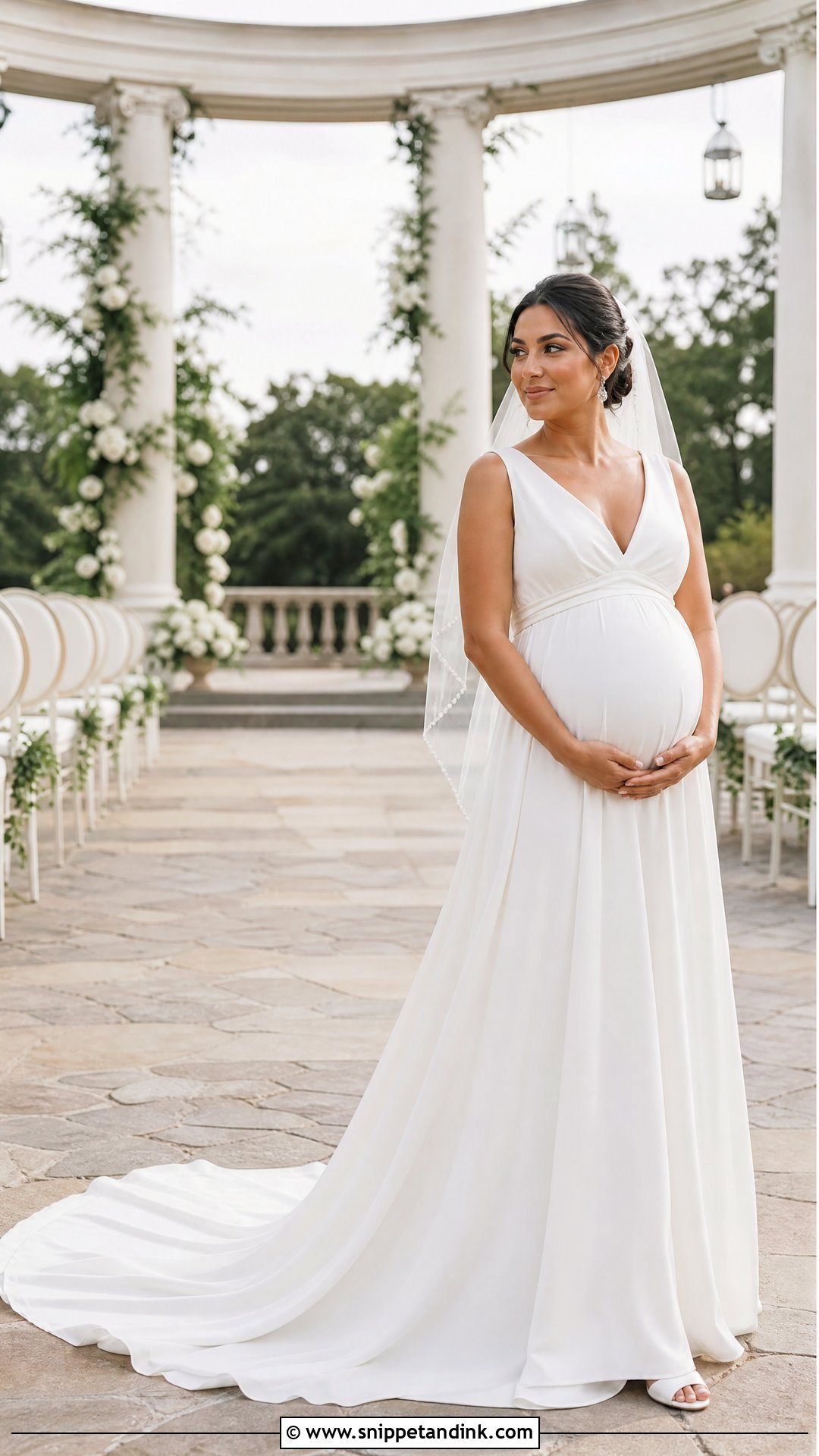
You can have a long train without a heavy dress. Choose a raised waist, light crepe or chiffon and a chapel-length train, with a V-neck or softly draped bodice. Secure low heels, drop earrings, a polished updo and a plain fingertip veil let the train stay the focus. Two practical requests: ask for a wrist loop or bustle so you can walk and dance hands-free, and have the hem set while you’re wearing the actual wedding shoes. A pregnant bride’s posture shifts slightly backward, and a hem pinned in different shoes will often catch at the front.
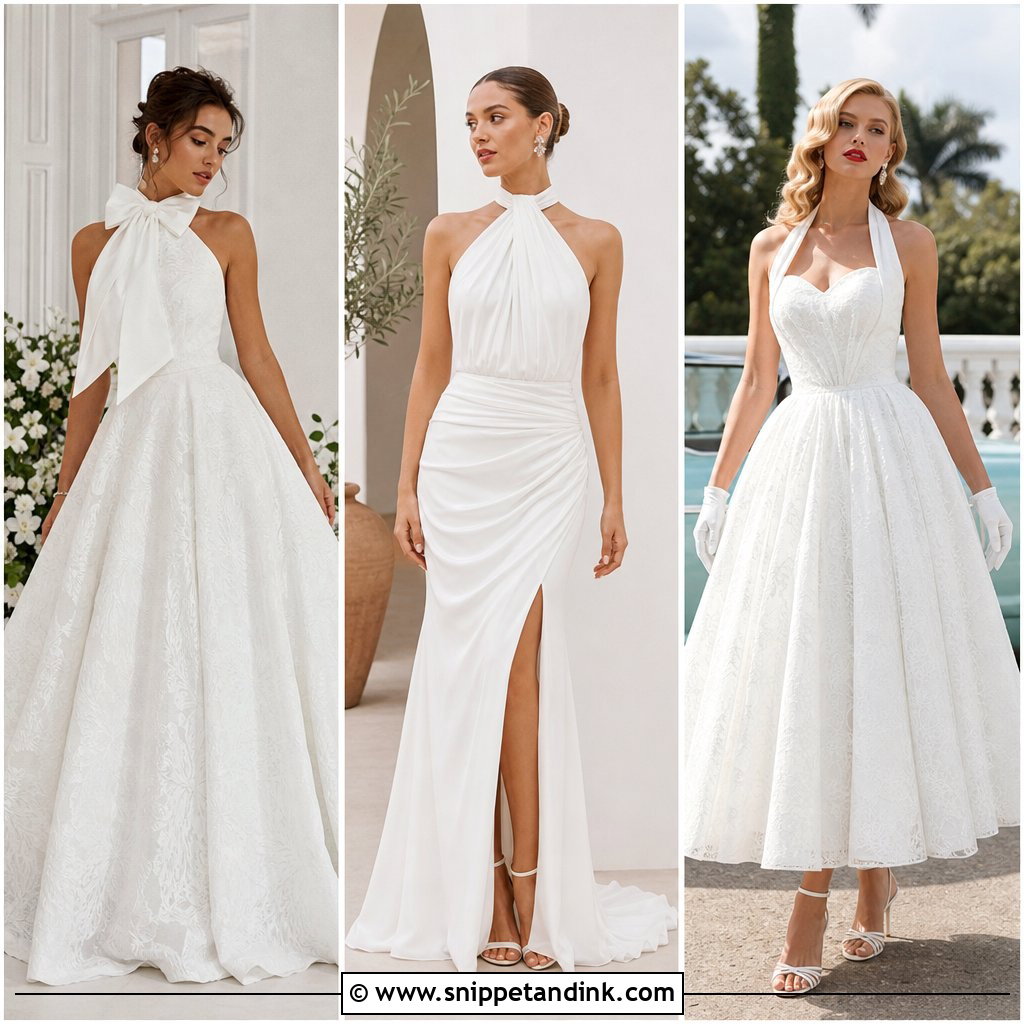

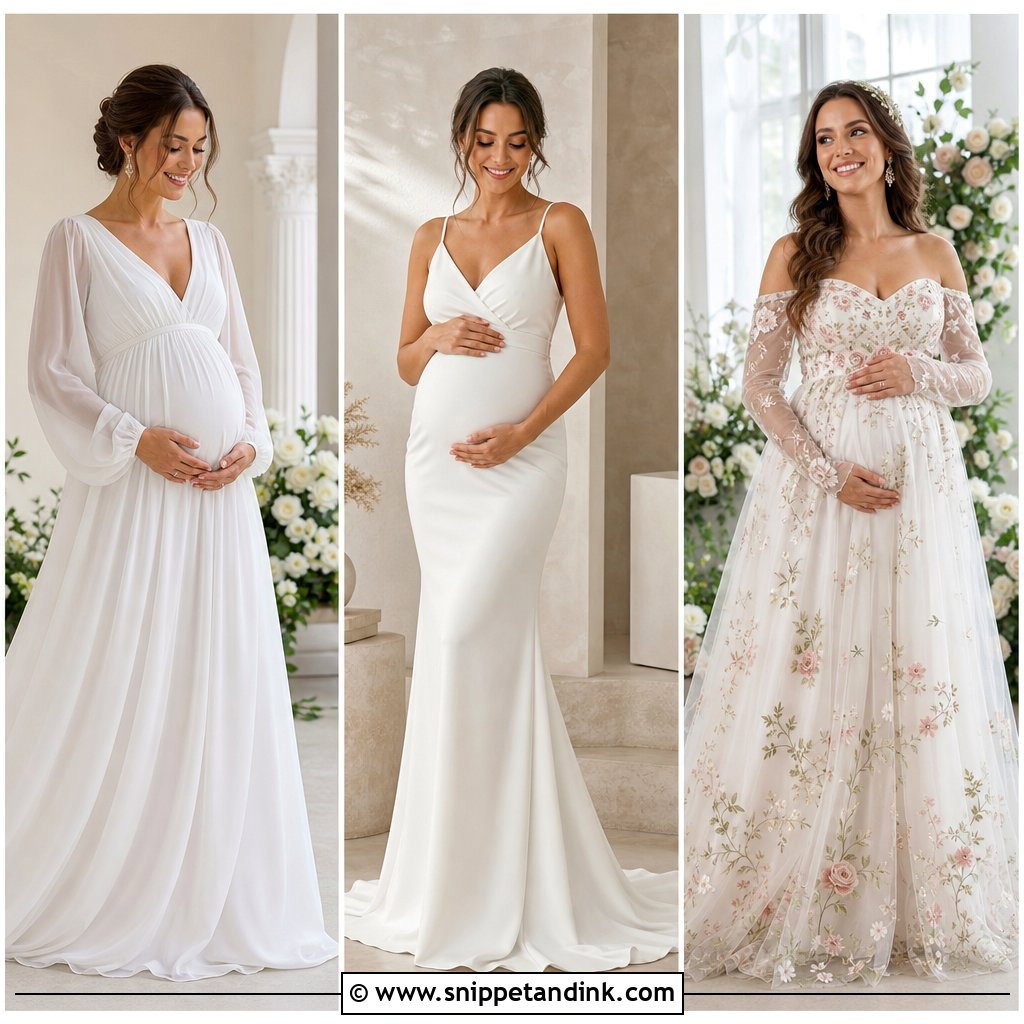
20. Beaded Maternity Bridal Gown
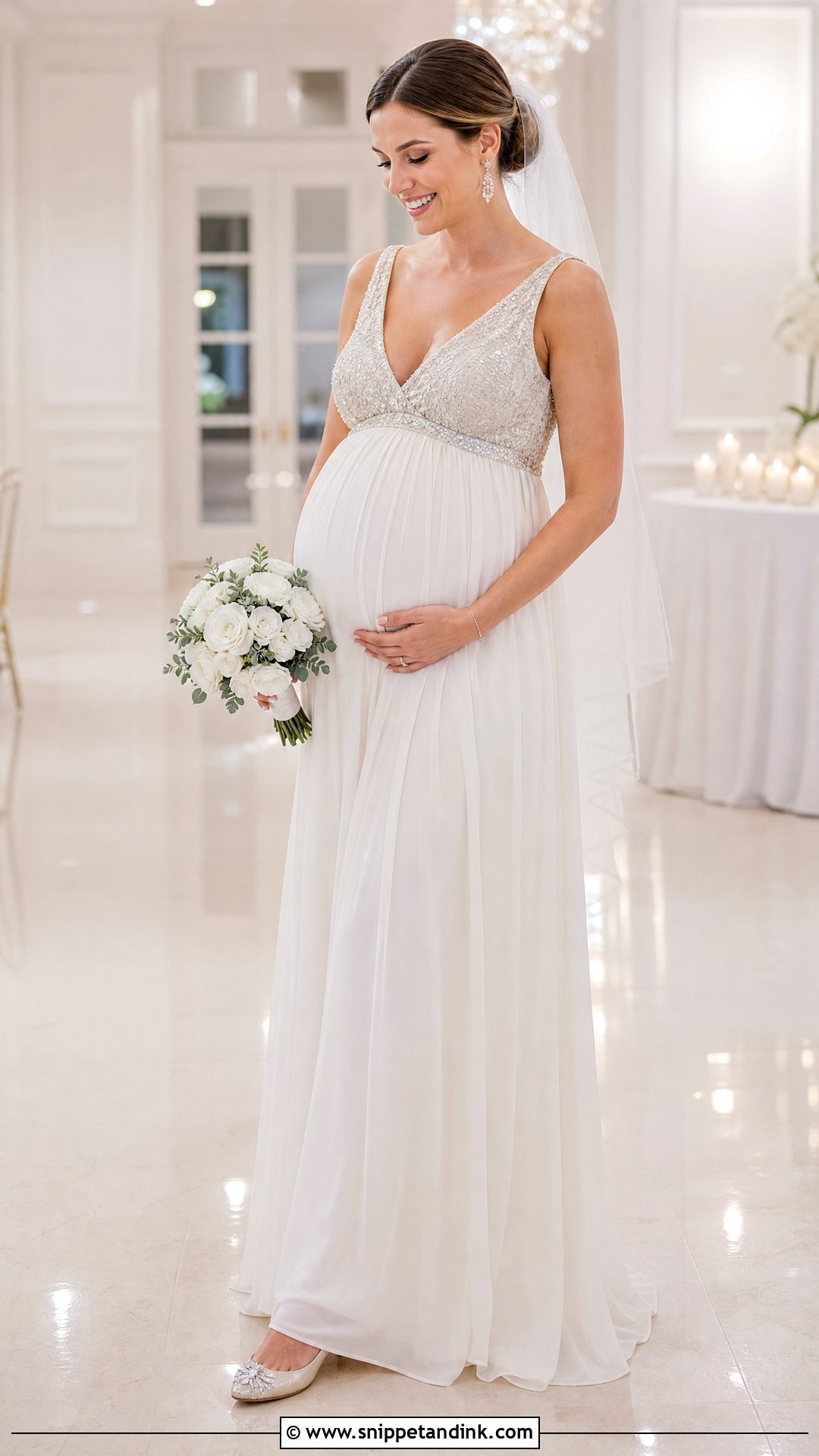
Light beading adds evening sparkle without a complicated cut. I place it on the bodice, around the neckline or on the sleeves, and keep the bump area plain chiffon or tulle so it stays soft and flexible. Understated metallic flats, small crystal earrings, a low bun and a plain veil keep it balanced. Turn the bodice inside out before you buy: beads stitched through without a smooth lining will scratch skin that is often more sensitive in pregnancy. A heavily beaded skirt is tiring to wear for hours, so let the sparkle stay above the waist.
21. Floral Applique Maternity Bridal Gown
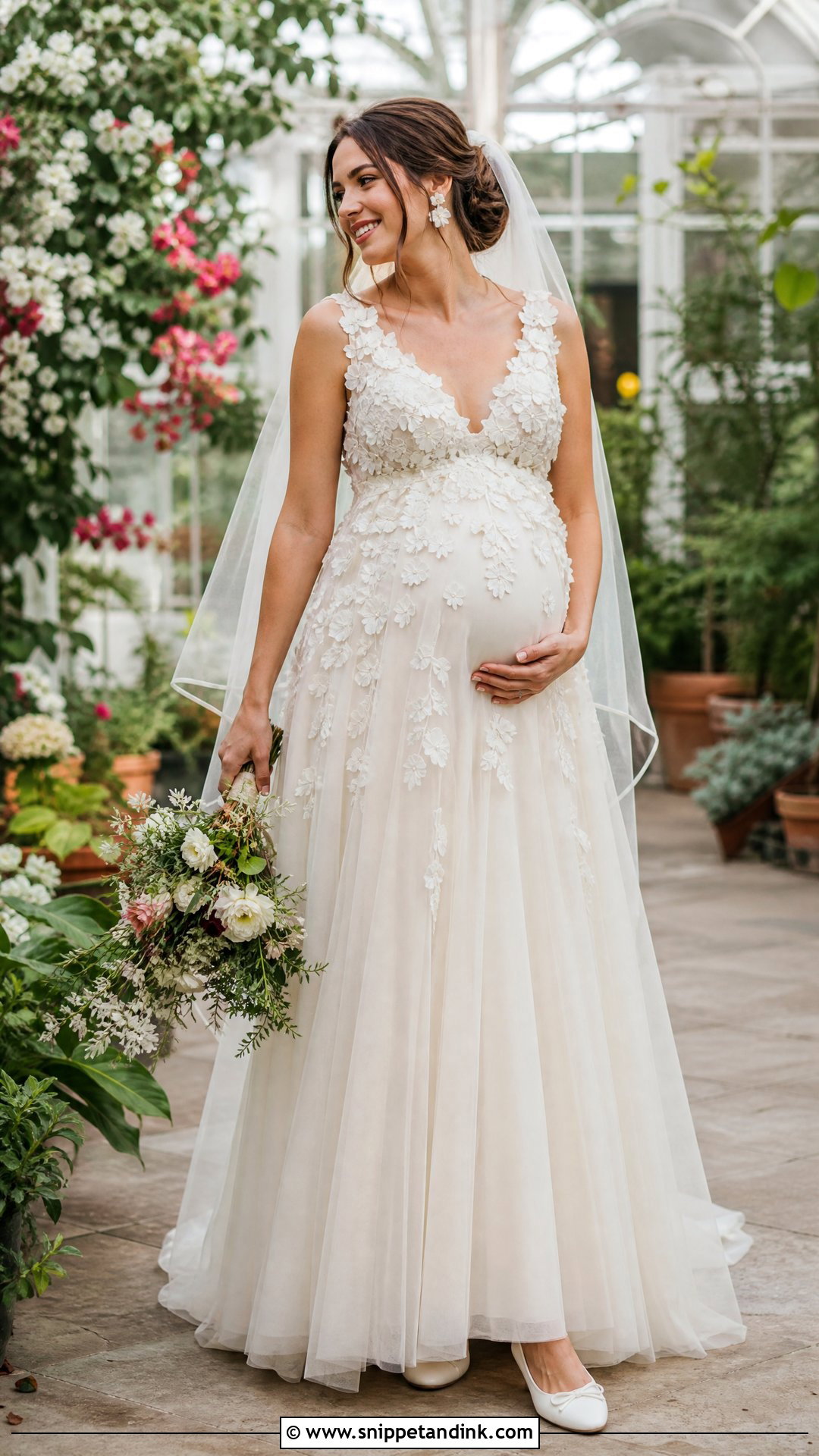
Three-dimensional floral appliqués look romantic when they start on the bodice and thin out down the skirt. An empire seam lets the flowers frame the bump instead of crowding it. Plain ivory flats, small flower earrings, a loose low bun and a simple tulle veil keep the detail readable, and a bouquet with one or two matching varieties ties it together. My caution is practical: raised petals catch on veil tulle and scratch the inner arm, so check both before the wedding. Spring gardens and conservatories suit it best.
22. Tulle Maternity Bridal Gown
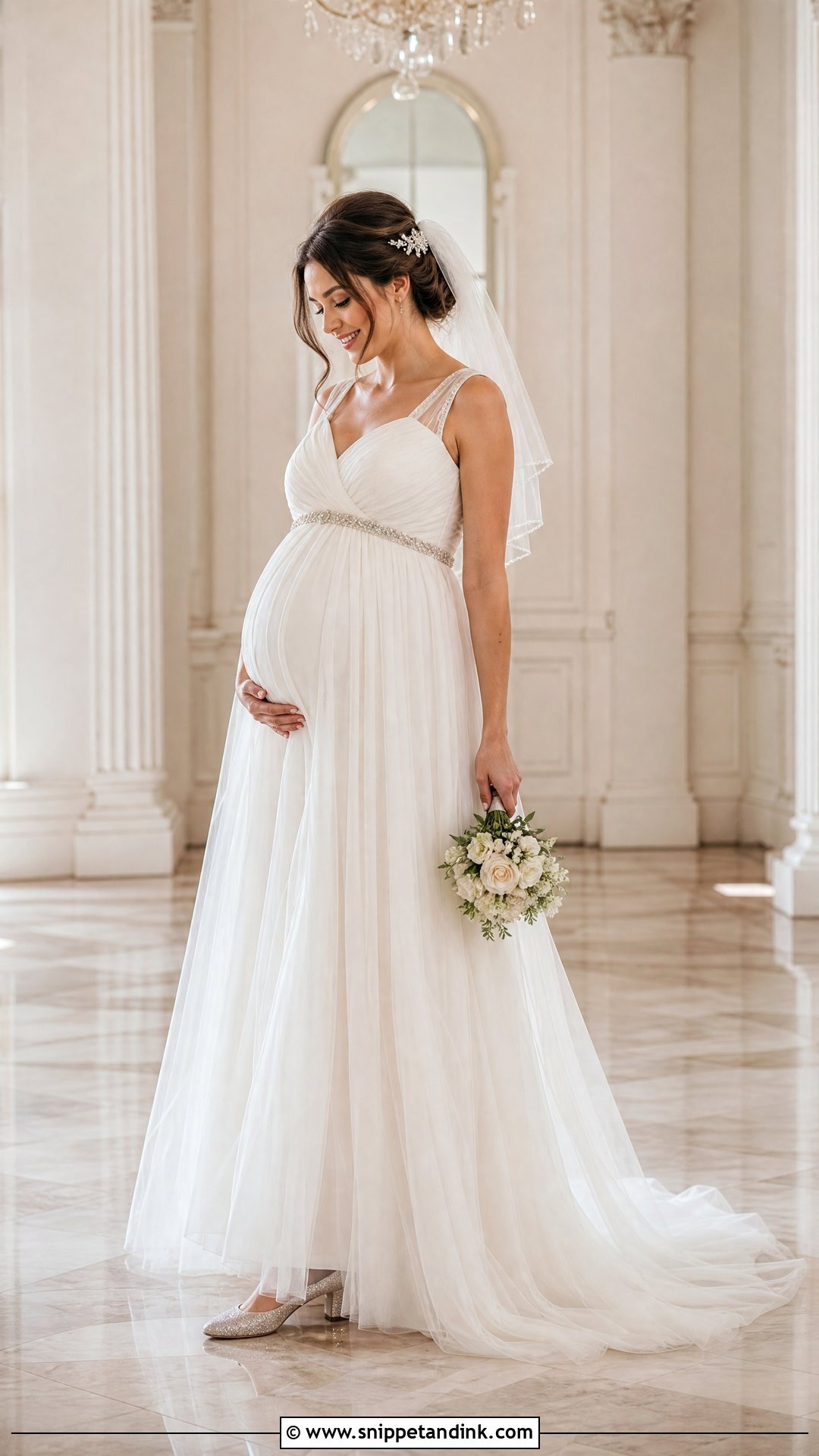
Tulle gives you a princess skirt with very little weight, provided it’s soft tulle and not stiff netting. Choose a supportive empire bodice, fine flexible layers and Cap sleeves or wide straps to balance the volume. Low glittering heels, a crystal comb and a veil that stops above the fullest part of the skirt finish it, with small jewelry. I check the waistband weight at every fitting. Many tulle skirts hang from the waist on a heavy petticoat, and for a pregnant bride that weight should be carried at the empire seam instead.
23. Plus Size Maternity Bridal Gown
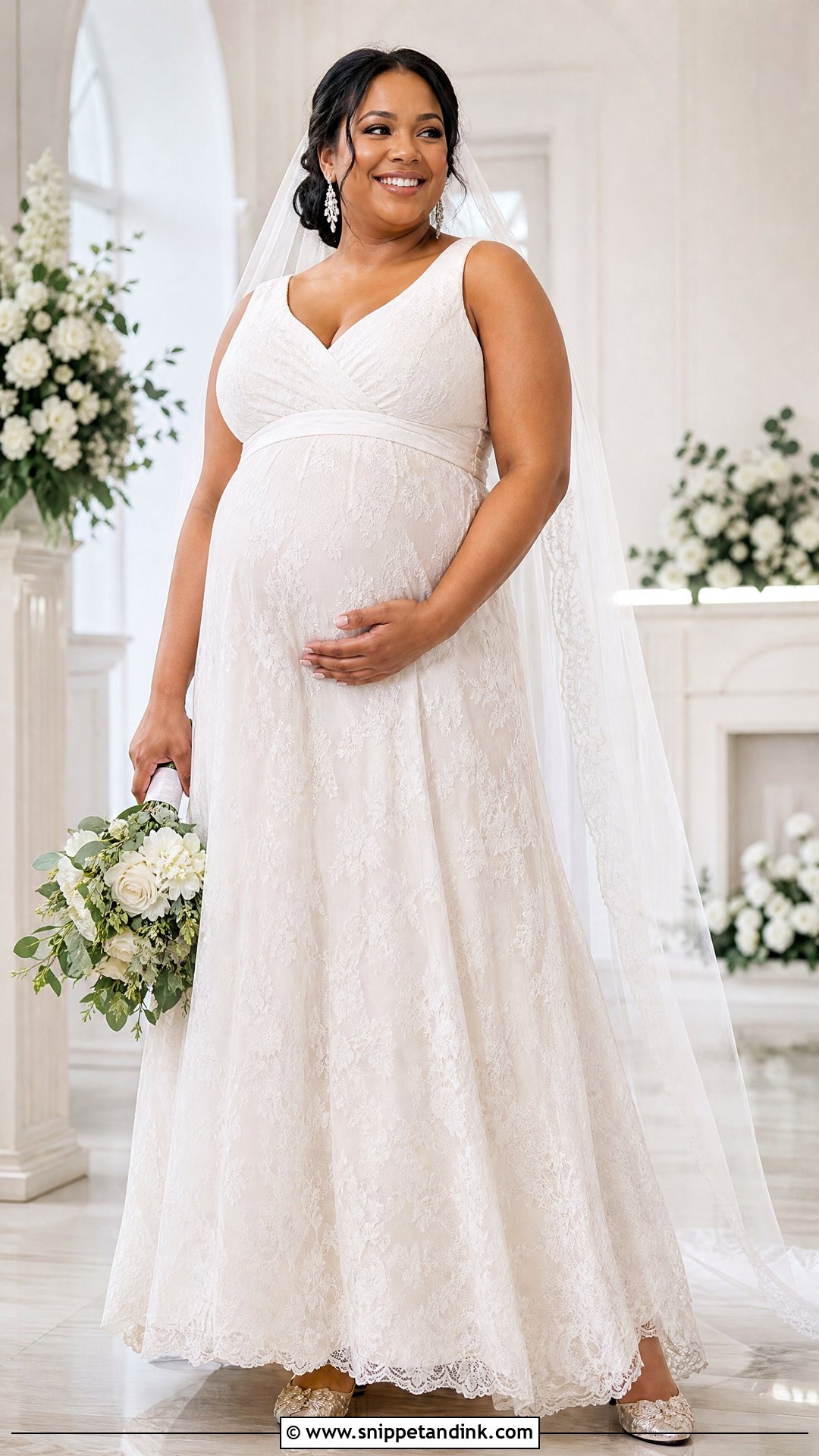
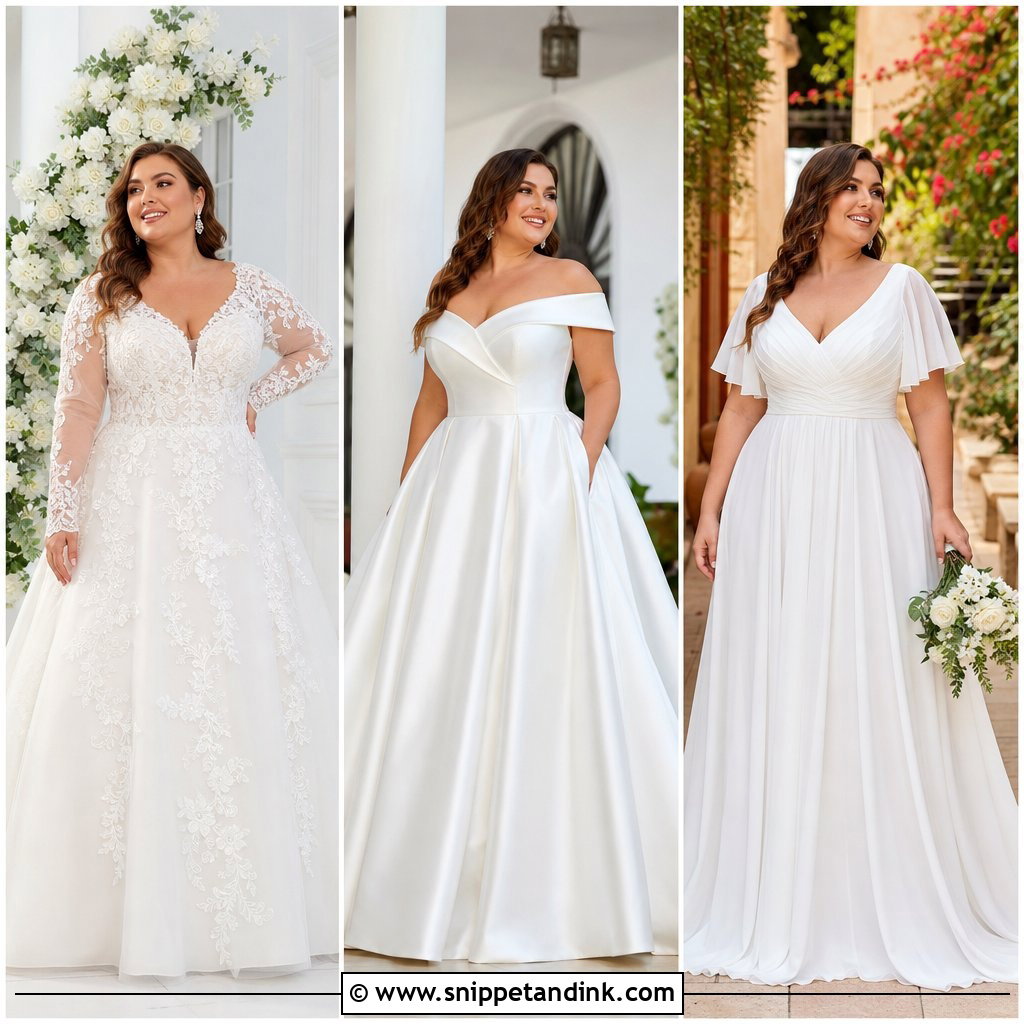
For plus size brides who are expecting, support is the first thing I fit and the last thing I check. An A-line with a crossover bodice, wide straps and an empire band that sits securely above the bump is a reliable base, in stretch lace or lined jersey. Look for built-in cups, reinforced seams or enough coverage for a supportive bra of your own. Cushioned block heels or embellished flats, statement earrings and a fingertip veil complete it. Please don’t order by your pre-pregnancy size. Use current measurements against that brand’s own chart, and change sleeves and fabric weight to suit the season.
24. Winter Maternity Bridal Gown
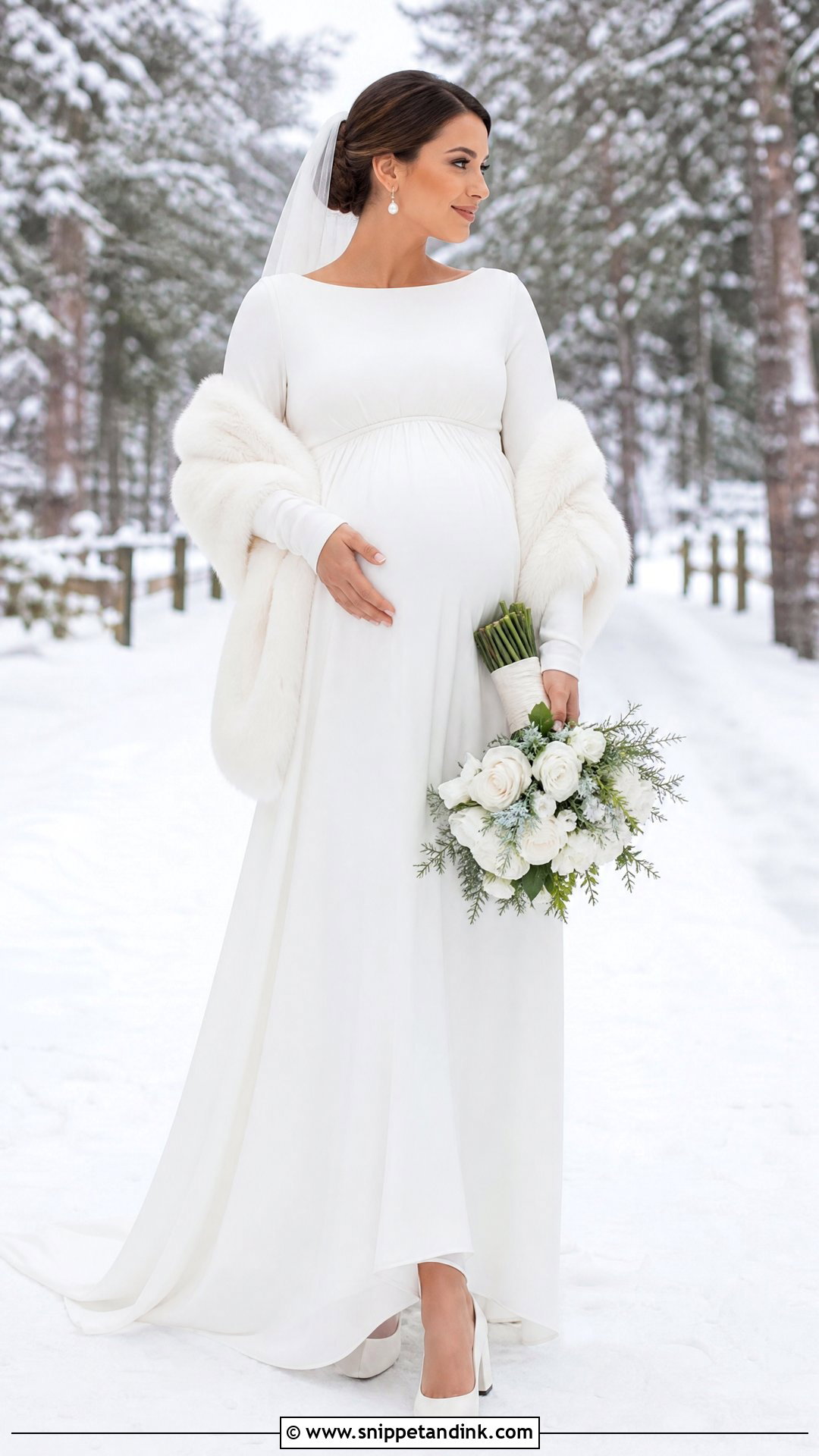
Winter gowns need warmth that doesn’t add bulk or weight at the waist. A long-sleeve stretch-crepe dress with a raised waist, soft lining and gently flared skirt is my go-to, topped with a detachable faux-fur wrap or tailored ivory cape for outdoor photos and removed indoors. Closed-toe block heels, pearl earrings, a smooth low bun and a chapel veil complete it. Heavier crepe still needs stretch through the stomach. Tights add warmth if they’re comfortable, and maternity tights with a soft over-bump panel are kinder than standard ones. Plan the layers so they look intentional rather than borrowed.


25. Beach Maternity Bridal Gown
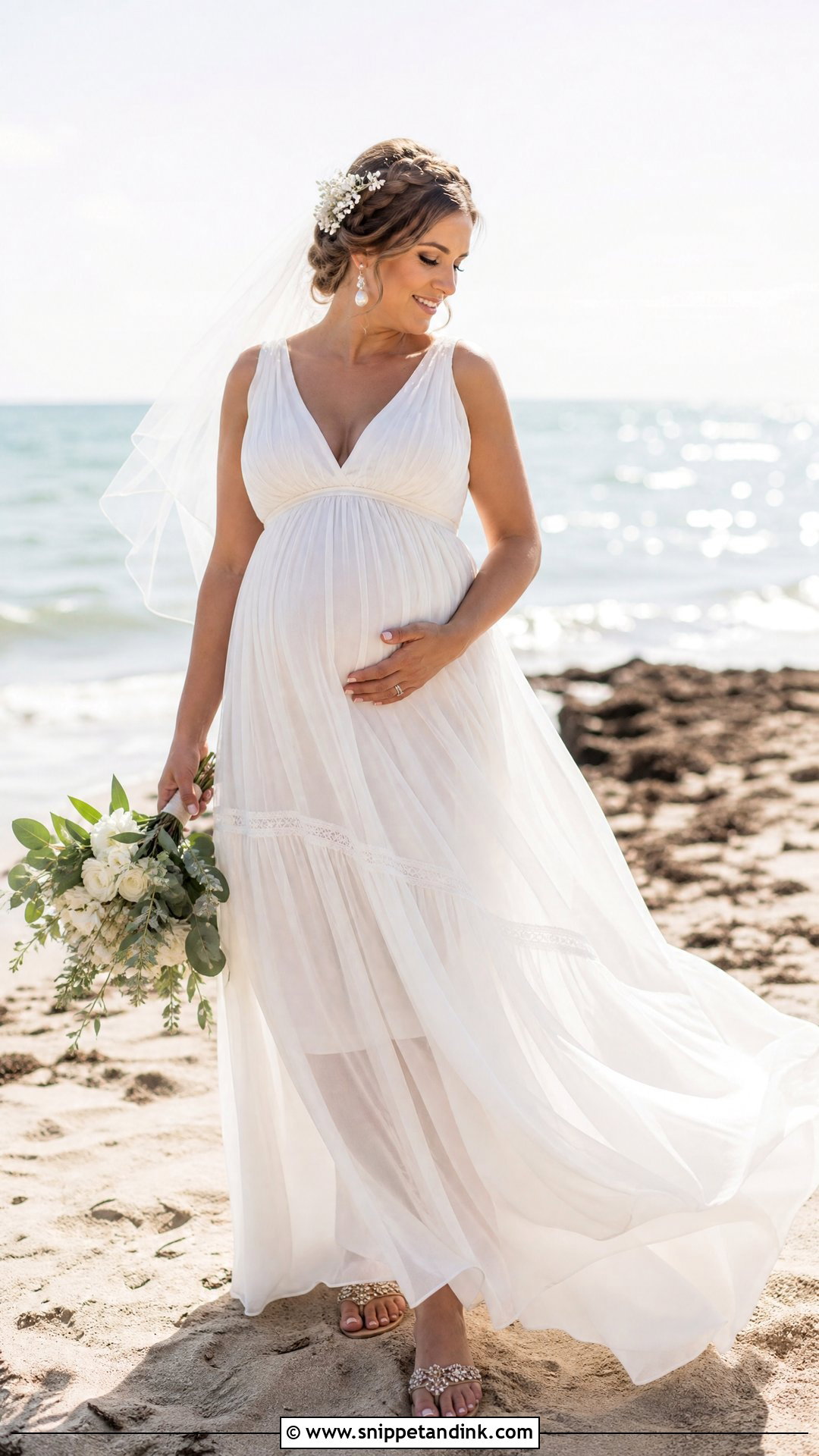
A beach gown has to breathe and stay light even when the air is salty and damp. Choose chiffon or soft lace with an empire waist, a V-neck bodice and a skirt that ends just above the sand. Flat embellished sandals or bare feet both work, depending on the location. Pearl studs, a loose braid and a floral comb pinned firmly against the breeze finish it, with a short light veil or just a hair accessory. Leave trains and rigid corsetry at home. Heat and swelling are real at a beach wedding, so I’d also bring a pair of flat sandals one size up.
Getting Through Ten-Plus Hours in Your Gown Comfortably
The dress that feels fine at a forty-minute fitting is not always the dress you’ll love at hour nine. Pregnancy brings swelling, heat sensitivity and frequent bathroom trips, so I plan for those before the day rather than on it.
Feet, heat and what goes underneath
Feet often swell by the evening, so I have every expectant bride carry a second pair of flats, ideally half a size larger. Skip shapewear that compresses the bump; a soft maternity slip under a lined dress does the smoothing without pressure. Choose your bra early, since the bodice should be fitted around it.
Small arrangements that make a big difference
- Ask one person to be your bathroom helper. A long skirt, a bustle or a train is far easier with a second pair of hands.
- Keep a chair near you during photos, and ask the photographer to shoot portraits early, before fatigue sets in.
- Bring water and small snacks to the getting-ready room, and keep a few in your helper’s bag for later.
- Check how the bodice feels after a full meal at your final fitting. A waist that is snug before dinner can feel tight after it.
A Wedding Dress That Grows With You
Every shape here, from empire chiffon to fitted stretch lace, has the same job: support a body that is still changing and still look unmistakably bridal. Start with comfort, then neckline, fabric and how much you want to move. Let shoes and accessories add very little weight. Fit to your current measurements, use each brand’s own size chart, and book the final adjustment close to the date. Then wear the dress that makes you feel most like yourself. Pregnancy doesn’t narrow your options; it just makes good construction matter more.
You'll Like These Ideas:



Leave a Reply