
A princess gown makes its point the moment you walk in: fitted bodice, defined waist, a skirt that fills the aisle. Bridal collections keep reworking it with corsetry, Basque waists, floral appliqués, bows, layered tulle and heavy modern satin, and full skirts with structured bodices are firmly back in favor. It suits formal ceremonies and big rooms best. Below are twenty complete looks, each with the neckline, fabric, train, veil, jewelry and shoes I’d pair with it, plus what to test at fittings so all that volume stays comfortable through a long day.
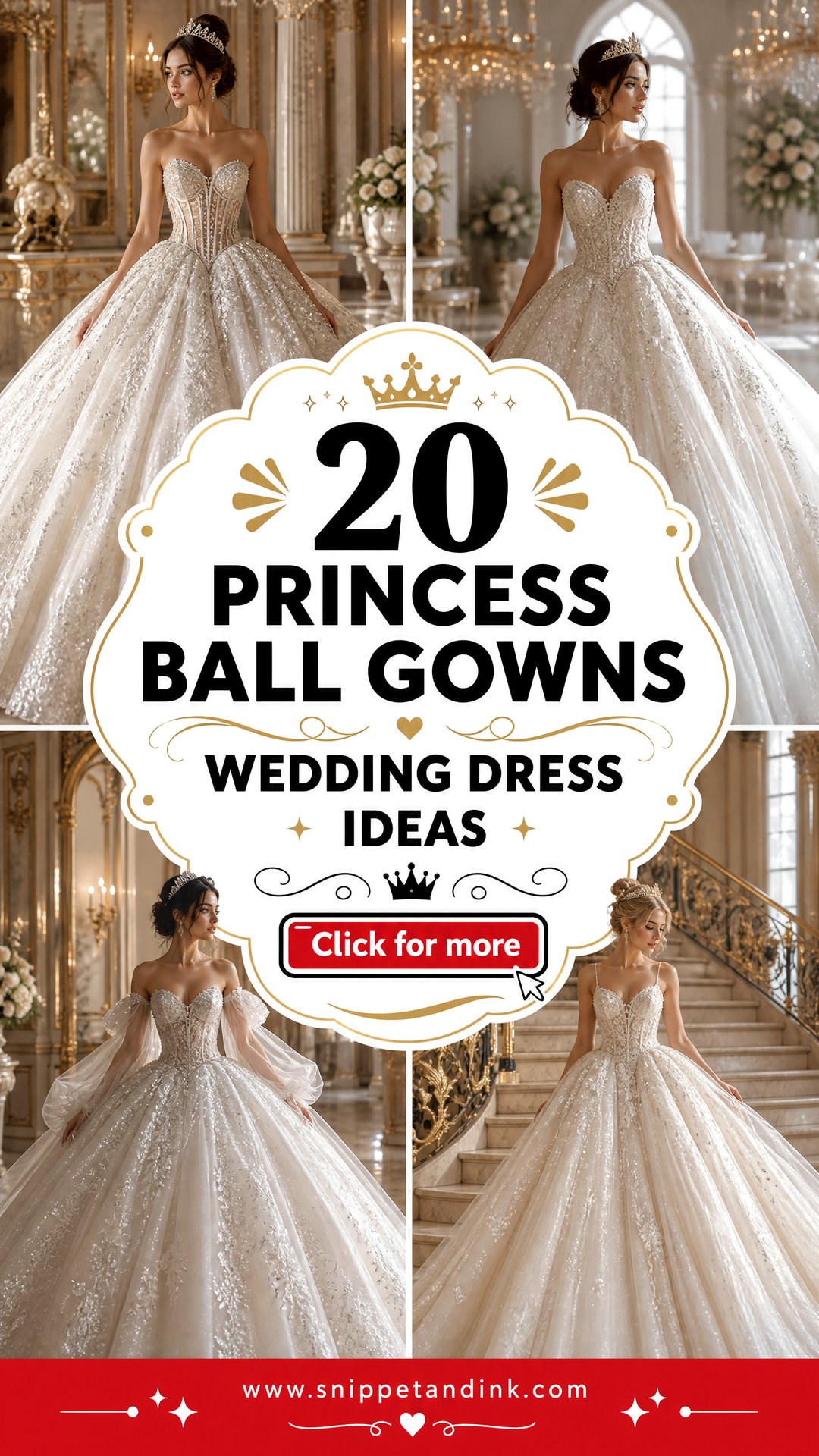
Hoops, Petticoats and the Layers That Hold a Skirt Out
Most of the volume in a ball gown doesn’t come from the skirt you see. It comes from what’s underneath, and that decides how heavy the dress feels, how you sit and how much it sways when you walk. At a first appointment I always ask which of these the gown relies on, and I’d suggest you do the same.
- Built-in tulle or crinoline layers: stitched into the skirt, nothing extra to put on. Comfortable to sit in, though very full versions trap heat.
- A separate petticoat: layers of stiff net on a waistband. Easy to swap for a fuller or flatter one, and you can take it off for dancing if the hem allows.
- A hoop: flexible wire rings in fabric. The widest, most even shape, but the front lifts when you sit, so practice sitting slowly and pressing the front ring down.
I insist that whatever holds the skirt out comes to every fitting, starting with the first one. The hem is measured with it on and with your wedding shoes on, and a skirt hemmed without the petticoat can end up an inch short on the day.
1. Strapless Satin Princess Ball Gown Wedding Dress
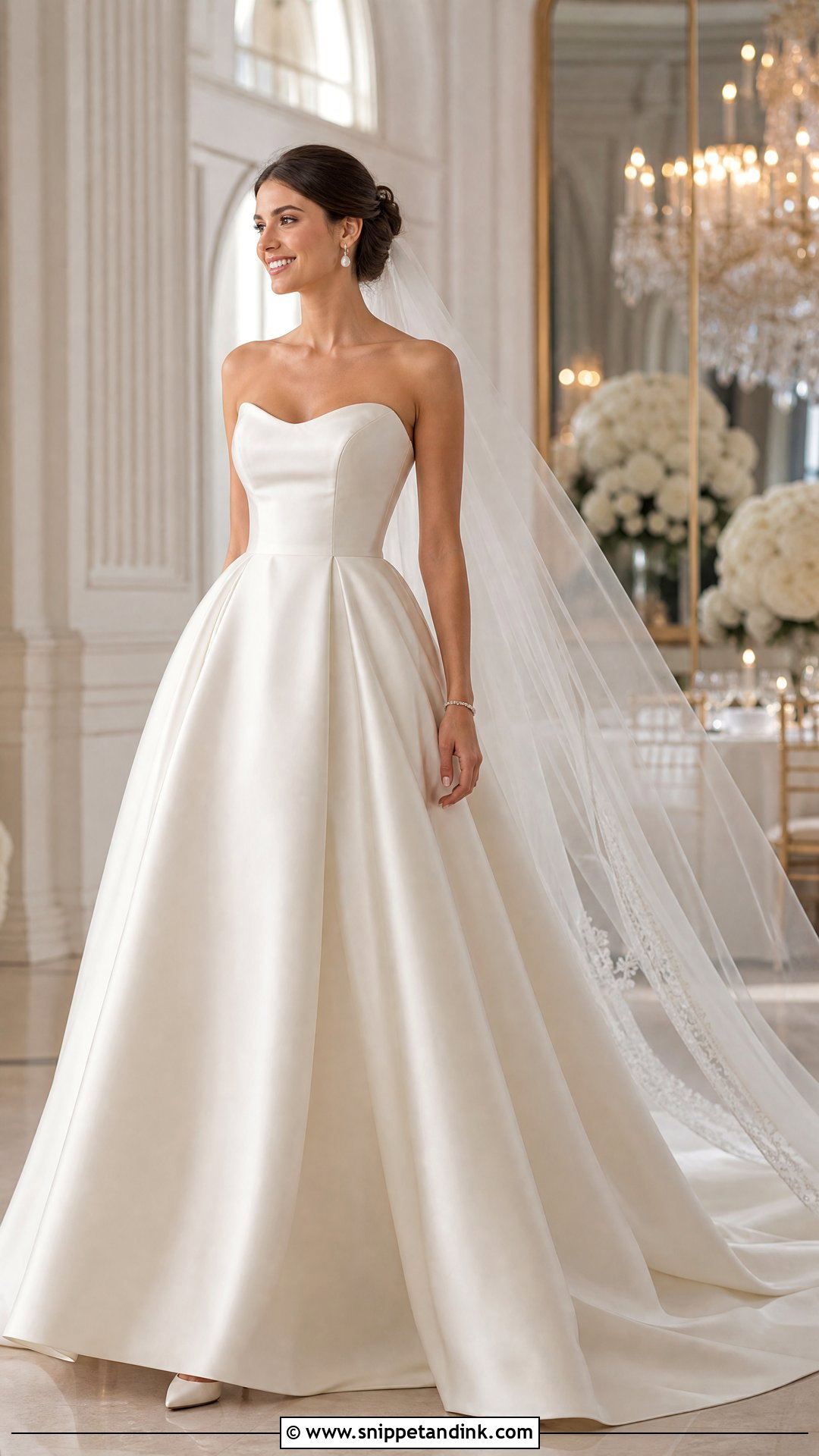
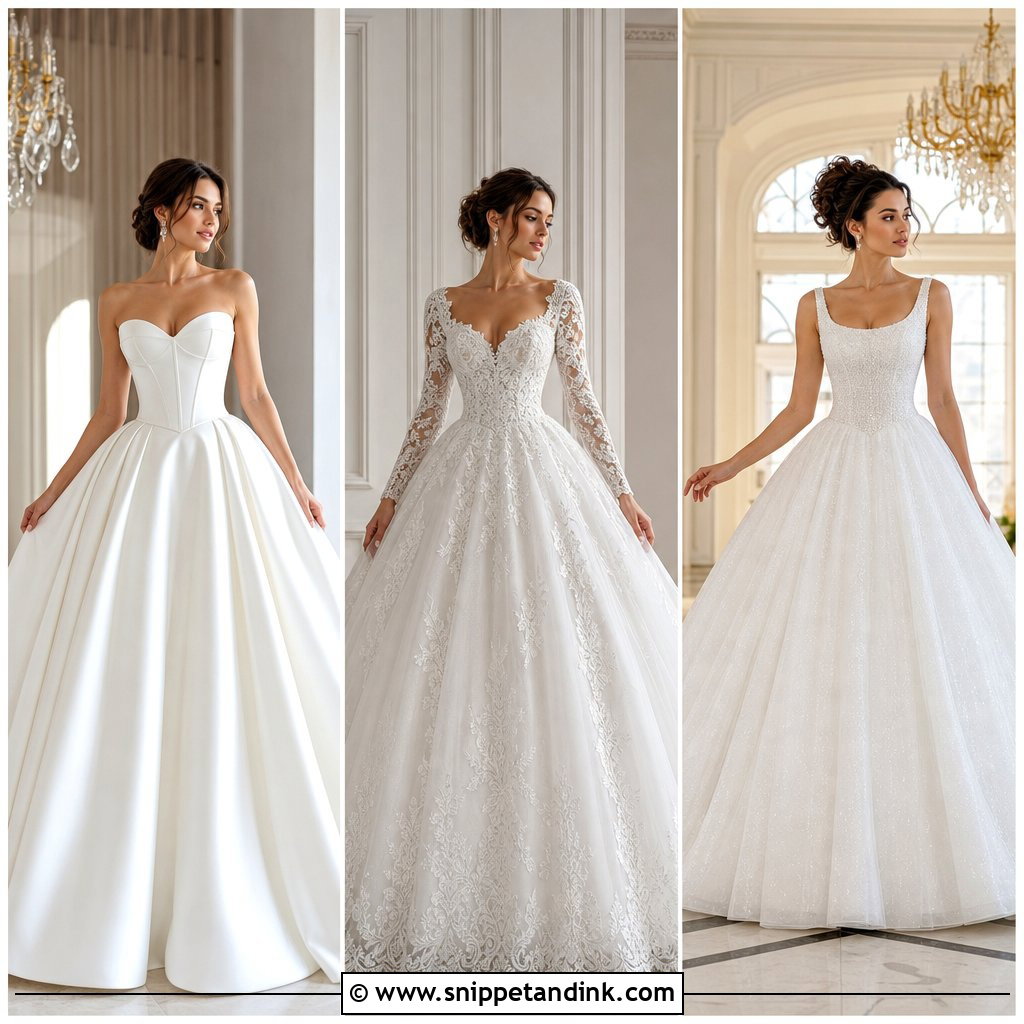
Strapless satin depends entirely on what’s inside the bodice. Internal boning and a waist stay, a firm band sewn inside at the natural waist, are what keep it from slipping down as you breathe and move, so ask to see the inside before you fall for the outside. A gently curved neckline is more comfortable than a straight one, and a natural or Basque waist sets up the contrast with the skirt. A cathedral veil with a plain cut edge leaves the satin as the focus, with pearl drops, a fine bracelet and pointed ivory pumps. Wear a low bun or sleek waves, and have a sturdy bustle sewn in for a ballroom or grand estate.
2. Long Sleeve Lace Princess Ball Gown Wedding Dress
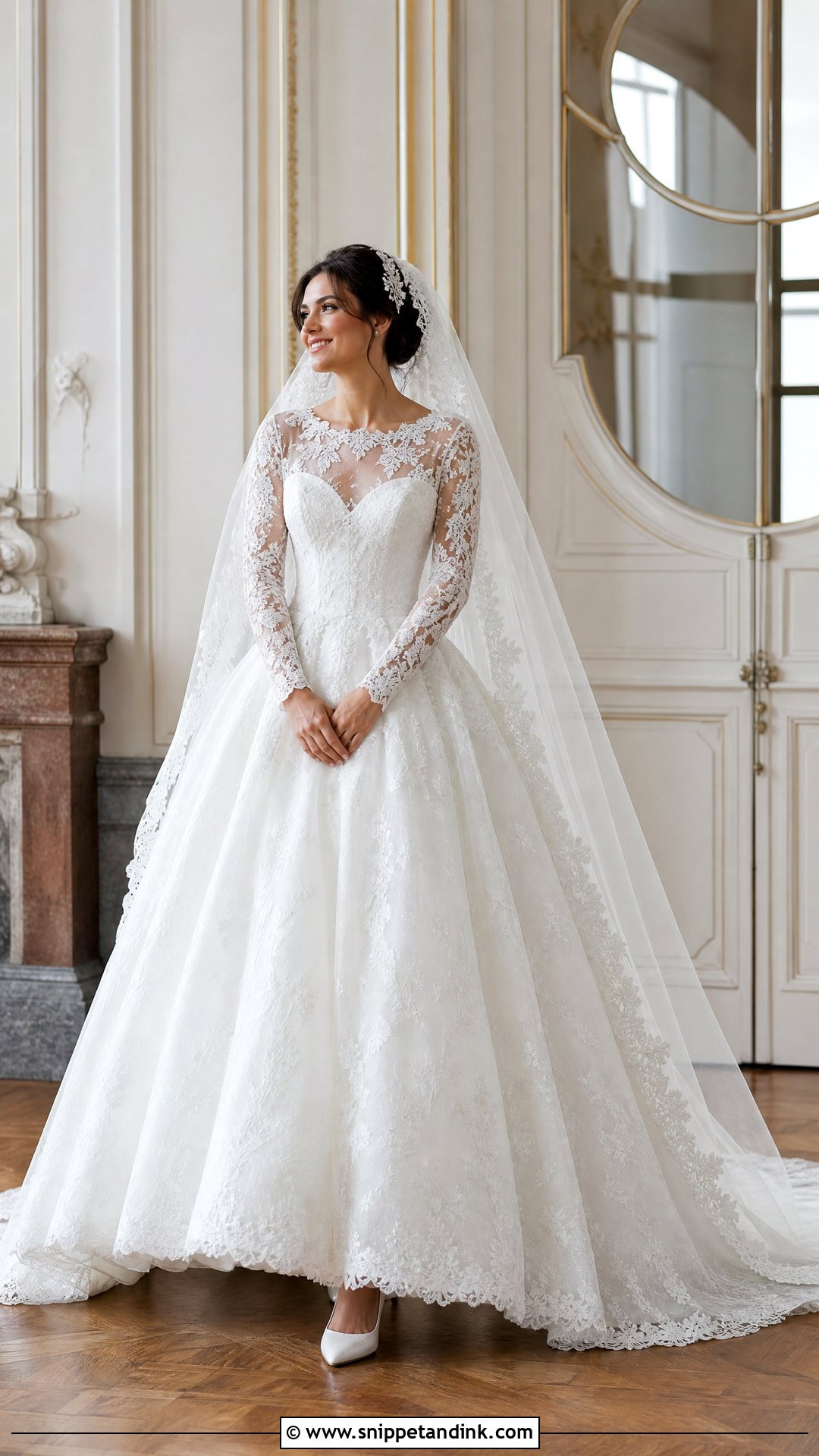
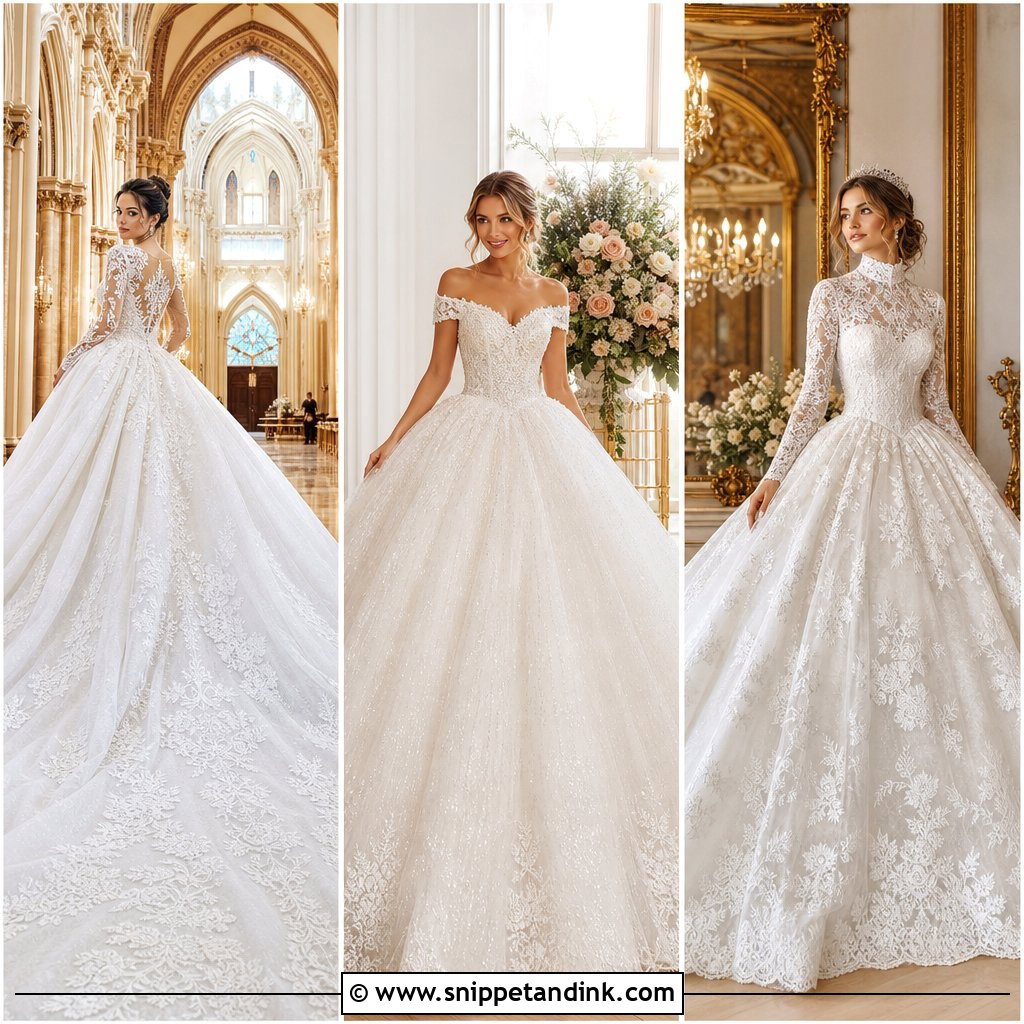
Lace sleeves give coverage without dimming the drama. Look for fitted illusion sleeves with appliqués placed at the wrist, shoulder and neckline; a lined bodice reads modest, while an unlined lace yoke feels lighter. Illusion mesh is usually tinted to blend with skin, so ask for a swatch held against your arm in daylight, since the wrong shade shows up as a grey or pink band in photos. A fingertip or chapel veil edged in matching lace, pearl studs, a floral comb and closed satin heels finish it. Carry white and pale green flowers in a historic venue in fall or winter, where detailed lace looks at home.
3. Off Shoulder Tulle Princess Ball Gown Wedding Dress
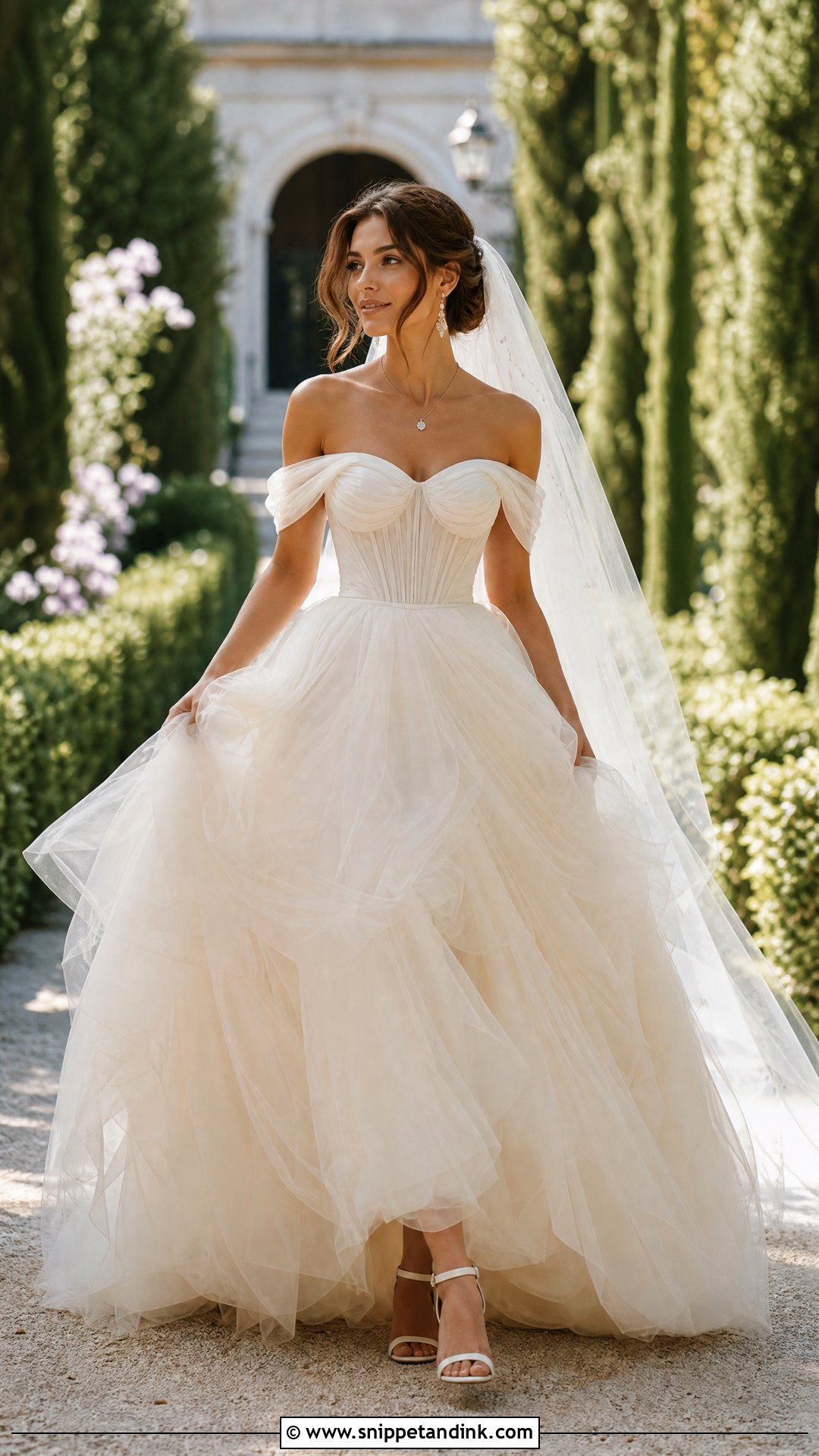
Tulle off the shoulder is the romantic version, and the softest to move in. Draped straps frame the collarbone while a fitted bodice does the structural work under the layers. If you want to dance freely, choose controlled volume over a stiff, wide skirt. Tulle is light, but many layers add up and trap heat, so try it on for a while rather than just a quick twirl. A sheer cathedral veil, crystal studs and a fine pendant sitting above the neckline suit it, along with ivory block-heel sandals that stay steady under the hem. A loose chignon with a few soft pieces finishes the look for a garden estate or bright ballroom.
4. Corset Princess Ball Gown Wedding Dress
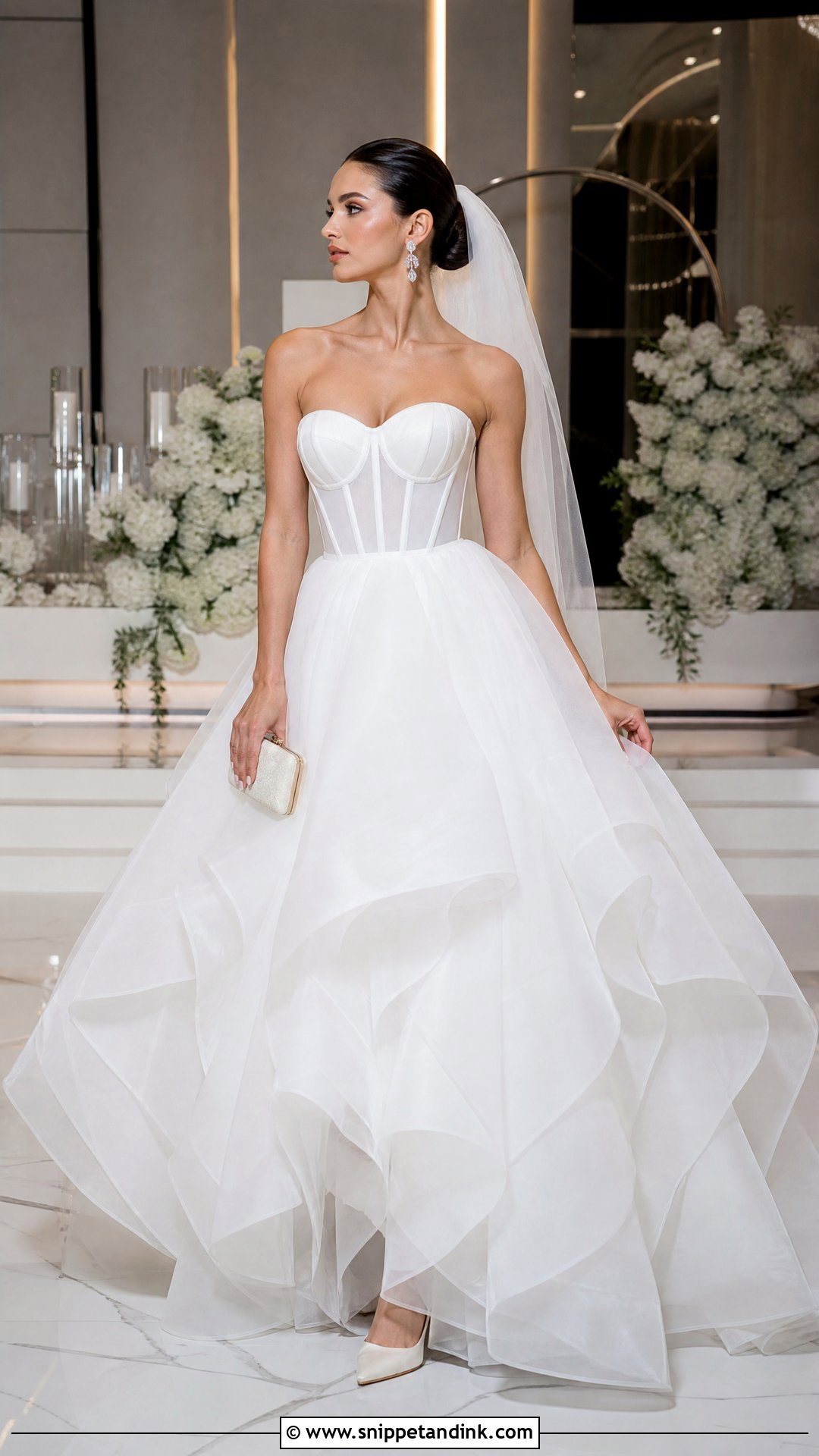
An exposed corset sharpens the princess shape and looks more current than a smooth bodice. I check three things on these: proper boning, shaped cups, and whether the back laces up or closes with a hidden zip. A lace-up back gives more room for adjustment on the day, which helps if your weight shifts in the final weeks. Tulle, organza and satin skirts all work, as long as the waist seam lies flat. A plain chapel veil, crystal earrings, a small structured clutch and pointed pumps with padded insoles go well with it, plus a sleek bun to show off the bodice. At alterations, sit and dance in it; secure is the goal, not tight.
5. Basque Waist Princess Ball Gown Wedding Dress
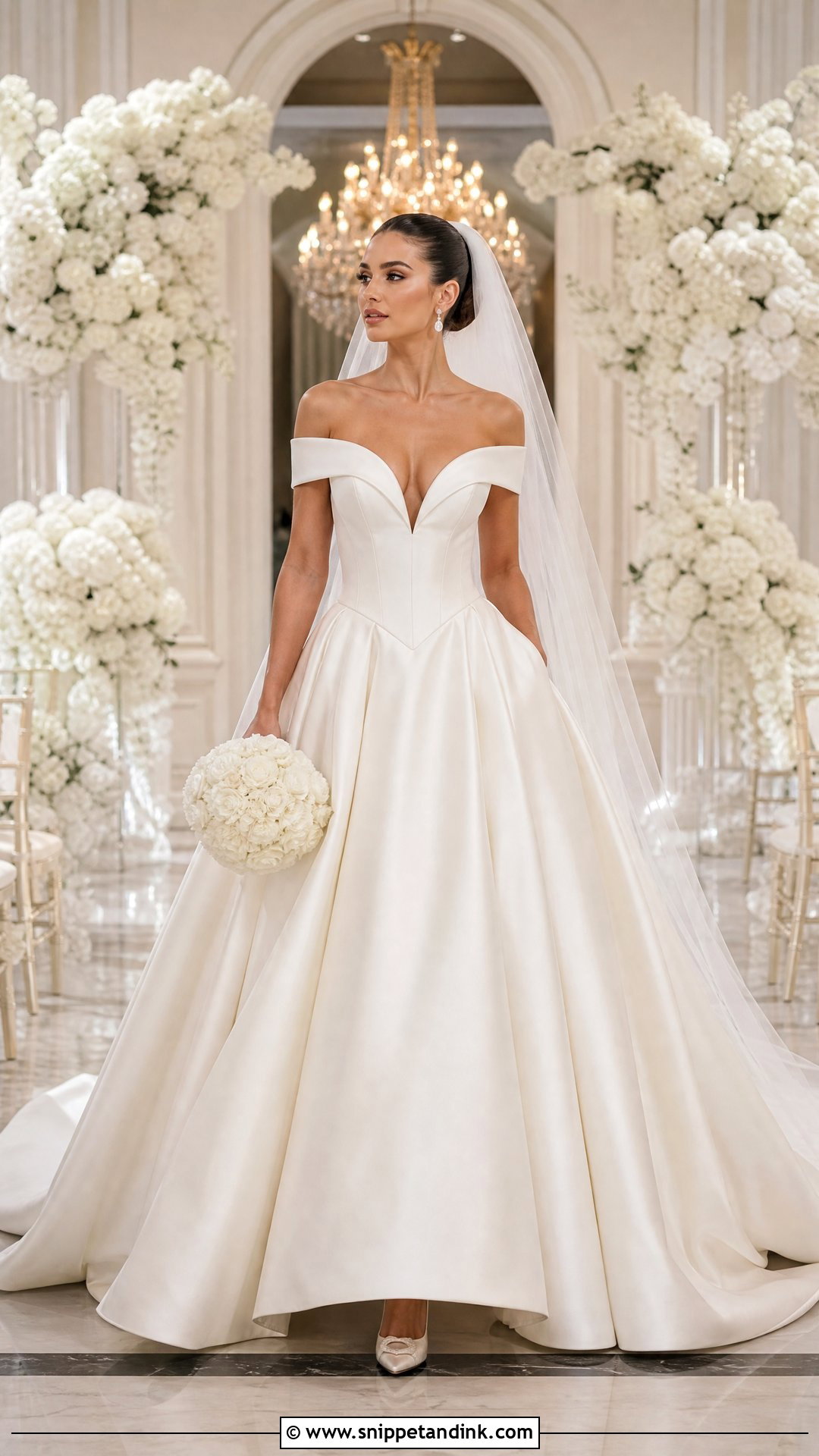
A Basque waist dips into a V at the front, which lengthens the torso and makes the skirt look even fuller. It can feel historic, so clean satin or plain tulle keeps it current, and a strapless or off-the-shoulder neckline balances the strong waist. The tailoring here is unforgiving. The point of the V must sit dead center and lie flat; if it buckles when you sit, the waist needs adjusting rather than the skirt. A long plain veil, pear-shaped earrings, ivory heels and a rounded bouquet complete it, with hair in a low bun so the waist stays visible in formal hall photos.
6. Sweetheart Princess Ball Gown Wedding Dress
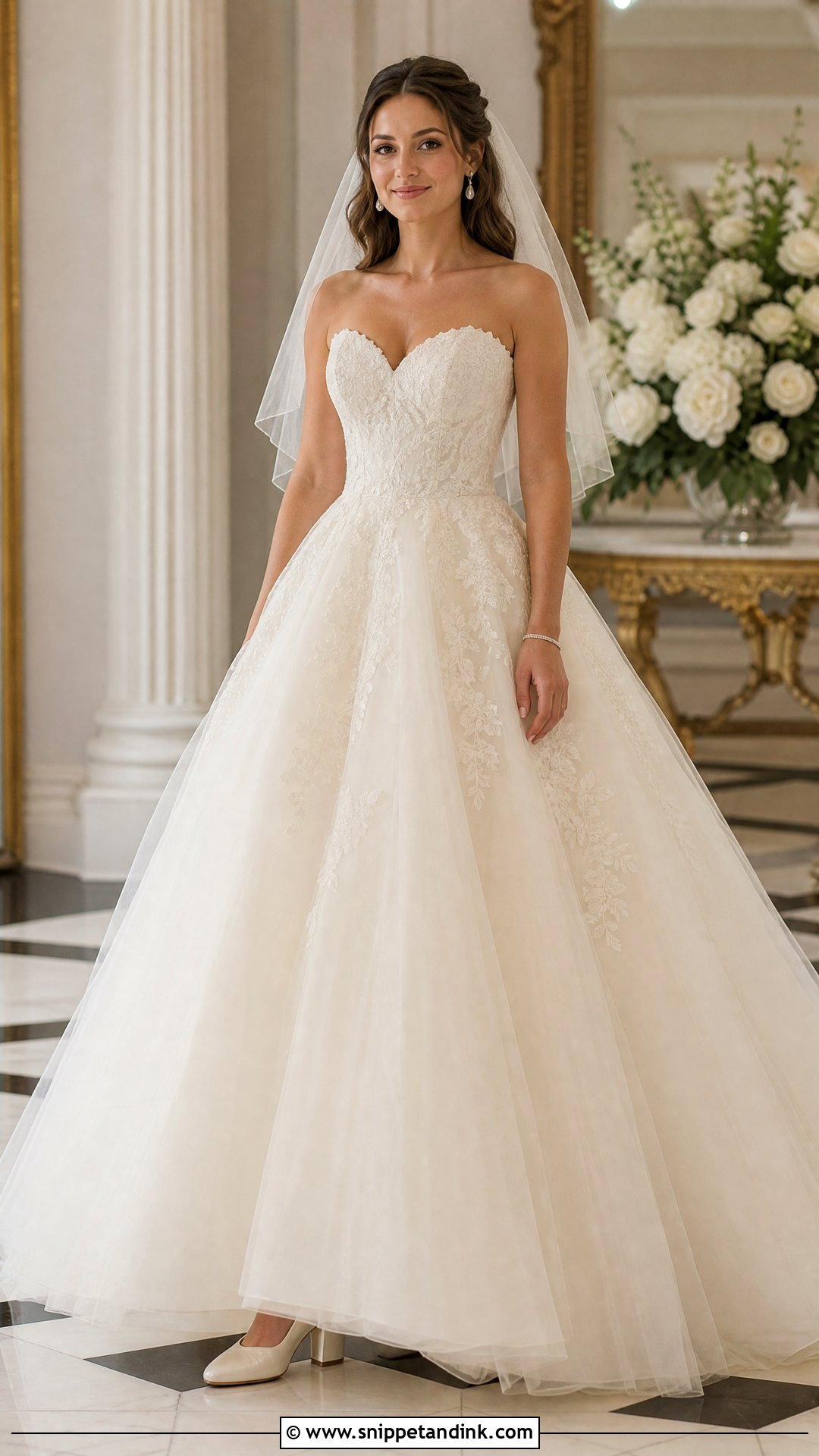
The heart-shaped curve of a sweetheart neckline softens a full skirt, and it pairs well with structured satin, floral lace or lightly beaded tulle. Fit is the risk: a sweetheart that’s slightly loose gaps at the dip when you lean forward to hug someone. If you want more security, add discreet straps, detachable sleeves or an illusion panel between the curves. A shoulder-length veil, teardrop earrings, a tennis bracelet and classic pumps or low block heels suit it, with half-up polished waves. At fittings, reach and bend naturally; you shouldn’t need to hitch it up all night.
7. Square Neck Princess Ball Gown Wedding Dress
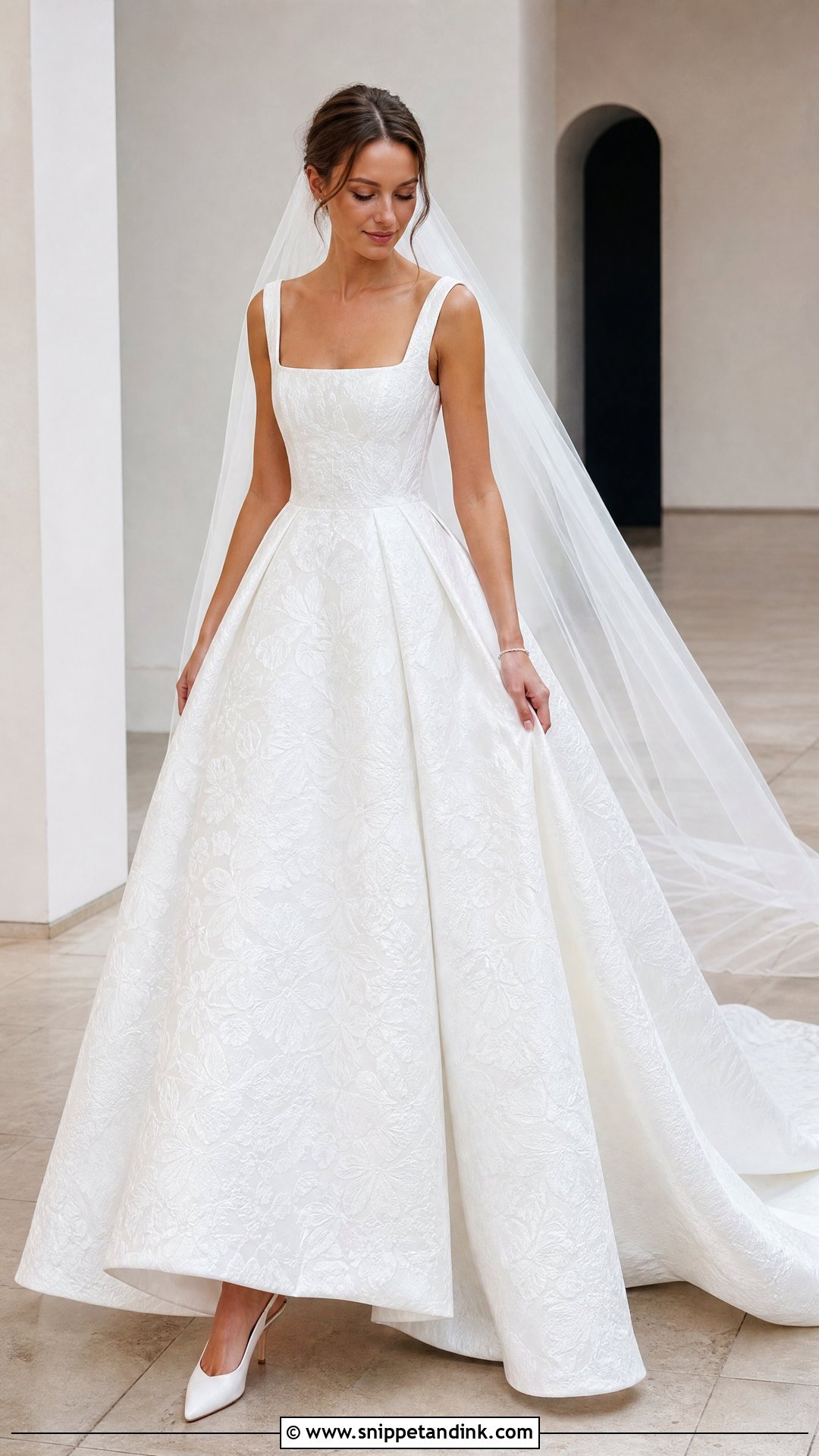
Square necklines give the softness of a ball gown some edges. Medium or wide straps support it and frame the collarbone. Choose smooth mikado for a minimal look or floral jacquard for texture. A square neck shows quickly when the straps sit wrong; the corners lift away from the chest if the straps are set too far out, so have your seamstress check it while you raise your arms. Wear a long sheer veil, small studs and a bracelet rather than a necklace, with pointed slingbacks, or cushioned closed pumps when it’s cold. A low bun or side-parted waves keep it refined.
8. High Neck Princess Ball Gown Wedding Dress
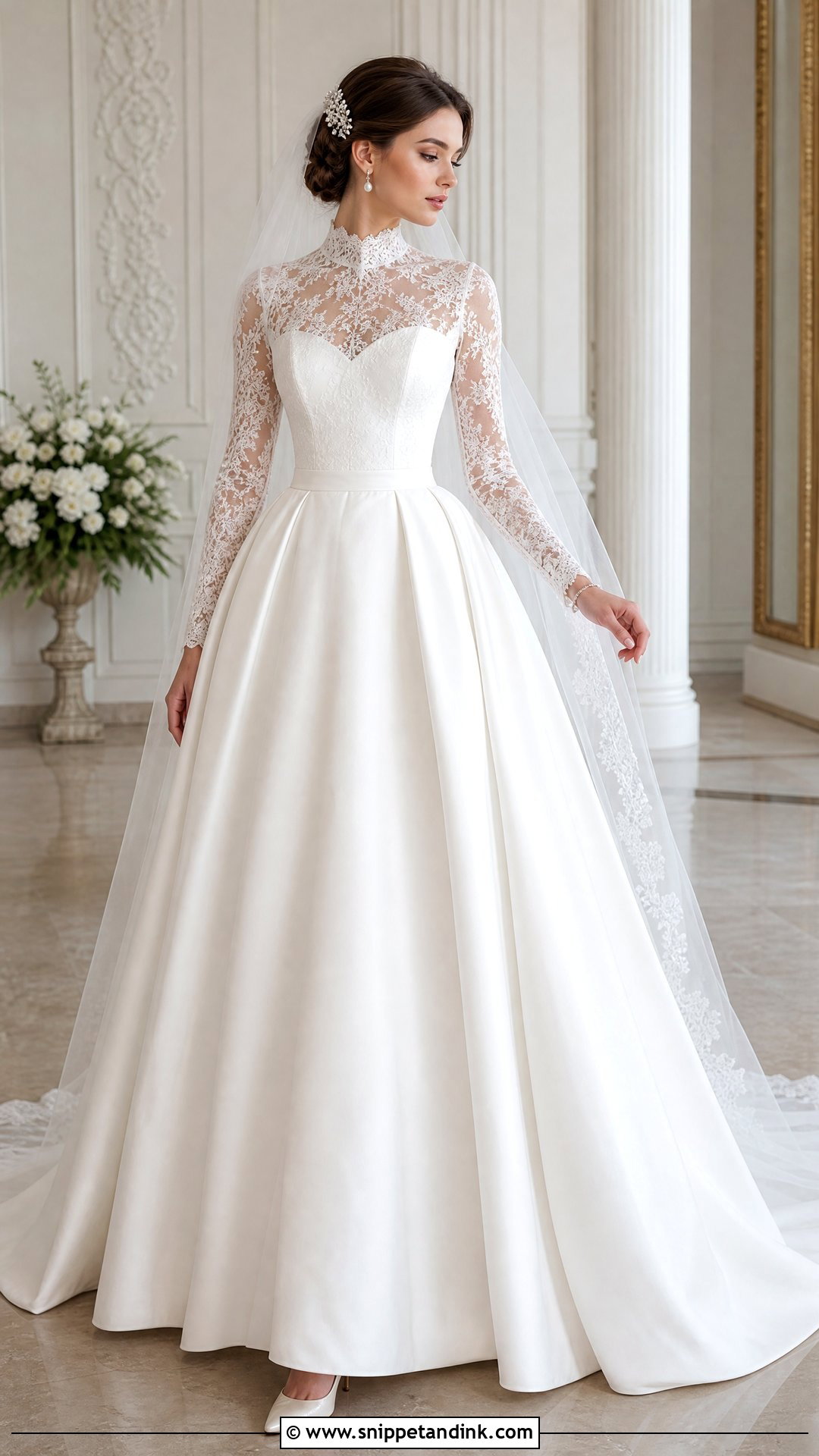
High necks bring the most coverage and the most formality. An illusion lace neckline feels light, while an opaque satin one looks architectural. Long sleeves make it very formal, sleeveless keeps it fresh. Because so much fabric sits up top, I’d keep the skirt clean, or the whole dress starts to look busy. Skip the necklace for pearl earrings, a slim bracelet and a refined comb, then tuck a chapel veil beneath a low chignon so the neckline stays visible. Closed-toe heels finish it for a cool-season or formal indoor wedding.
9. Pearl Princess Ball Gown Wedding Dress
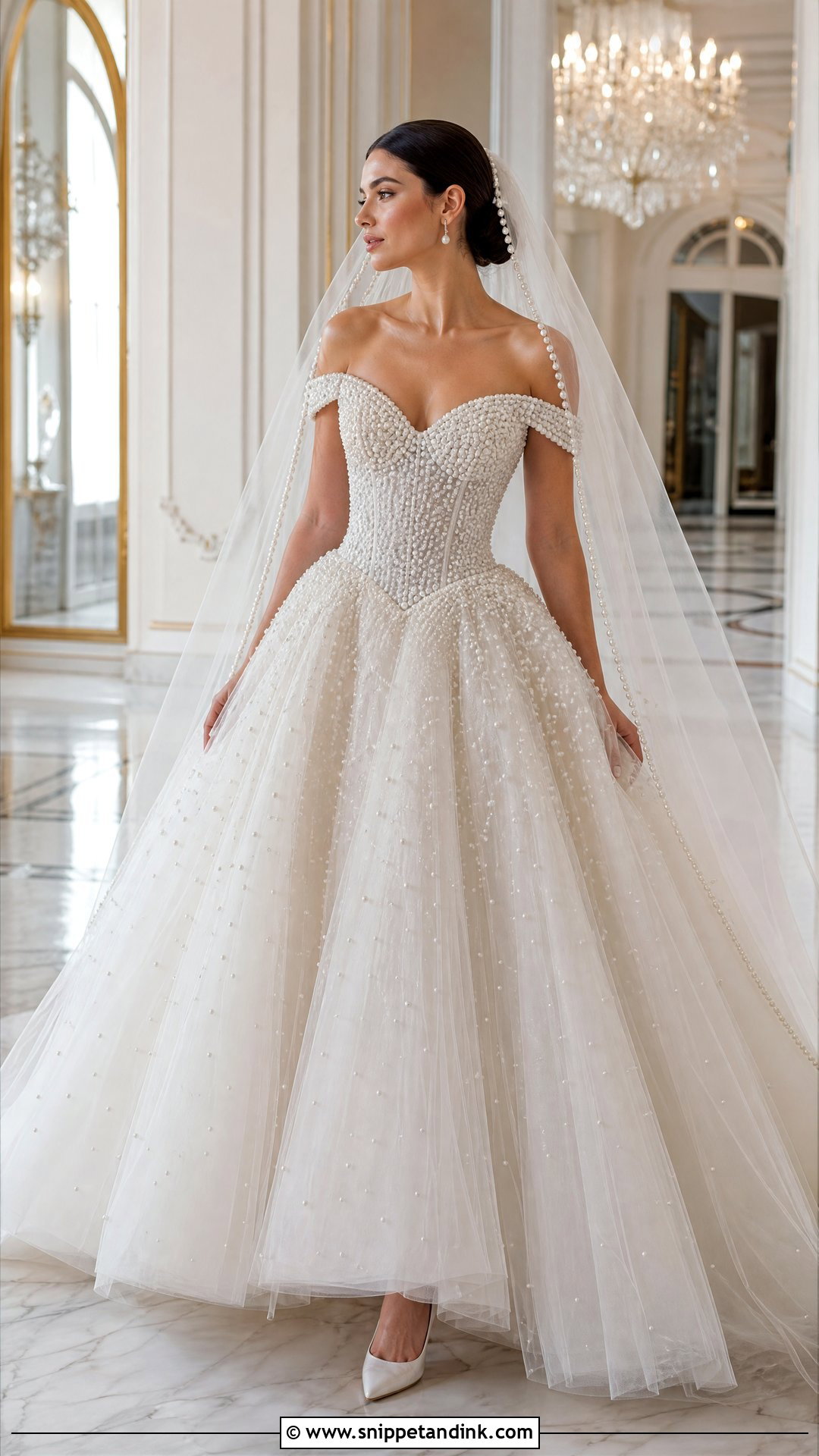
Pearls add a soft glow instead of sparkle. Scattered across a corset bodice they look delicate; concentrated around the neckline they look formal. Keep the skirt mostly plain or let the pearls thin out through the top layers of tulle. One pearl size used consistently across the dress and accessories looks more cohesive than a mix. Pearl studs, a pearl-edged veil and plain satin pumps suit it, with a smooth bun or soft vintage waves. Beaded gowns are heavy and catch on veil netting, so ask how to store it (flat or in a breathable bag, never hanging by the straps) and how the veil should be attached to avoid snags.
10. Crystal Princess Ball Gown Wedding Dress
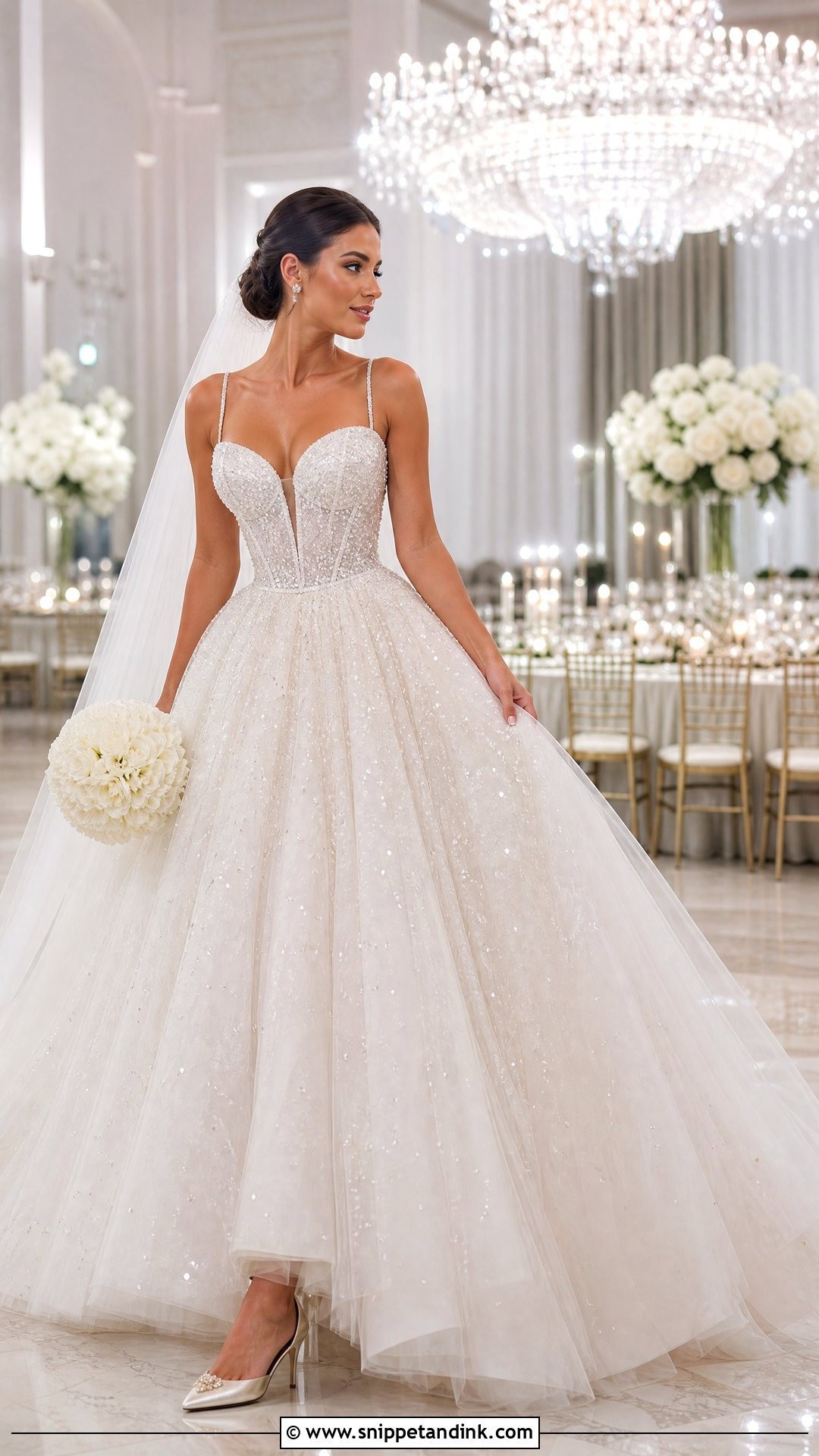
Crystals belong at an evening wedding. I like the sparkle concentrated at the neckline and waist, then fading lighter across the skirt. That placement defines your shape and keeps the gown from becoming heavy. Rub the inside of your arm along the bodice at the fitting, since sharp-edged stones can scratch skin during a long reception. A plain cathedral veil, crystal studs, metallic ivory heels, a sleek updo and luminous makeup are enough. Under venue spotlights even moderate beading throws a lot of light, so view the gown under several kinds of lighting before deciding.
11. Floral Princess Ball Gown Wedding Dress
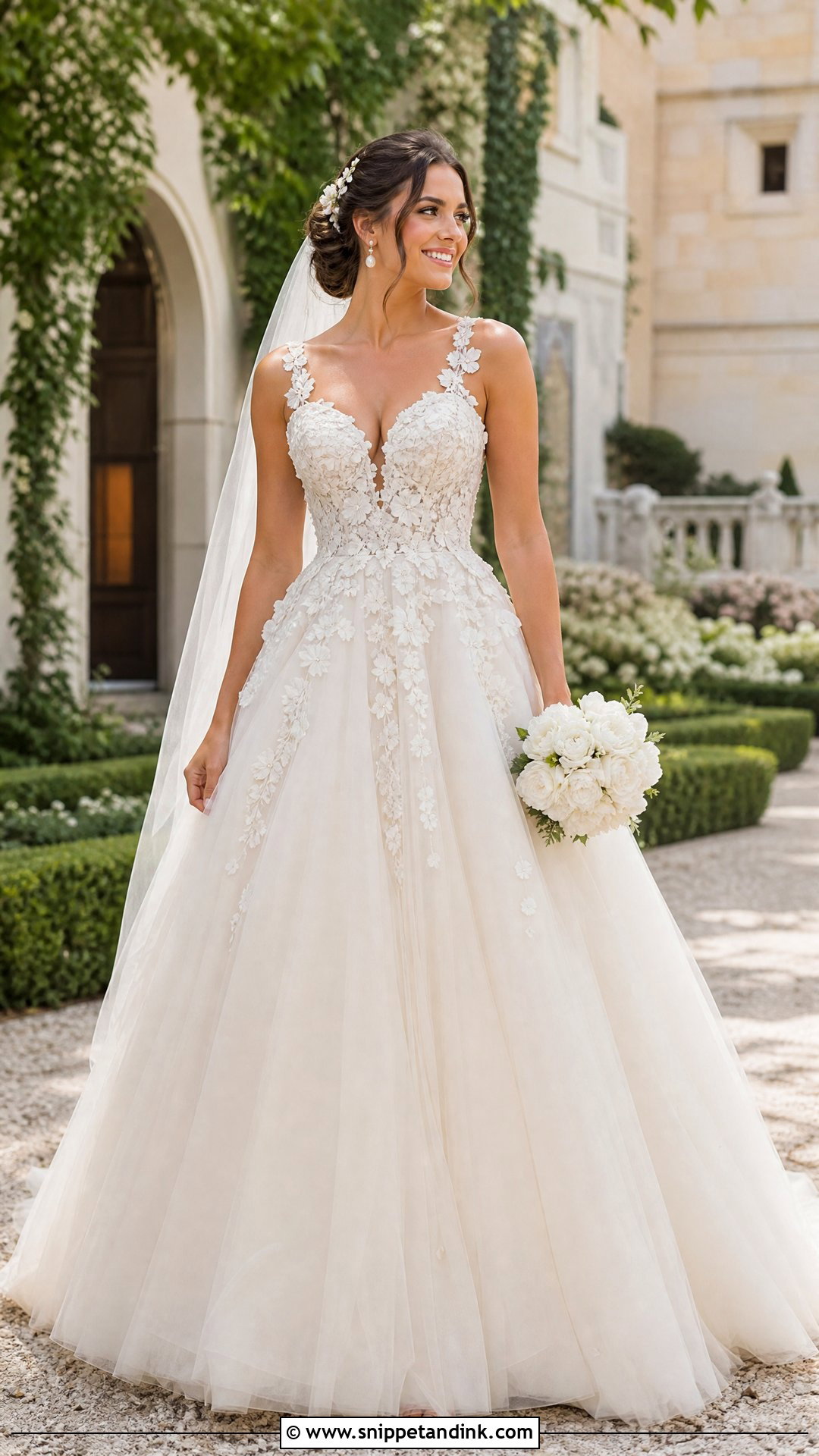
Raised flowers turn the classic silhouette into something textured and romantic. Look for appliqués clustered at the bodice and drifting down onto the skirt. Tulle keeps them airy, while organza gives the petals more structure and holds them up. A plain veil lets the flowers show, while floral hair pins, small pearl earrings and ivory sandals stop short of repeating the motif too many times. Carry flowers that complement the gown rather than copy it. Petals snag on veil netting, so ask whether any appliqués should be reinforced before alterations and steaming.
12. Bow Back Princess Ball Gown Wedding Dress
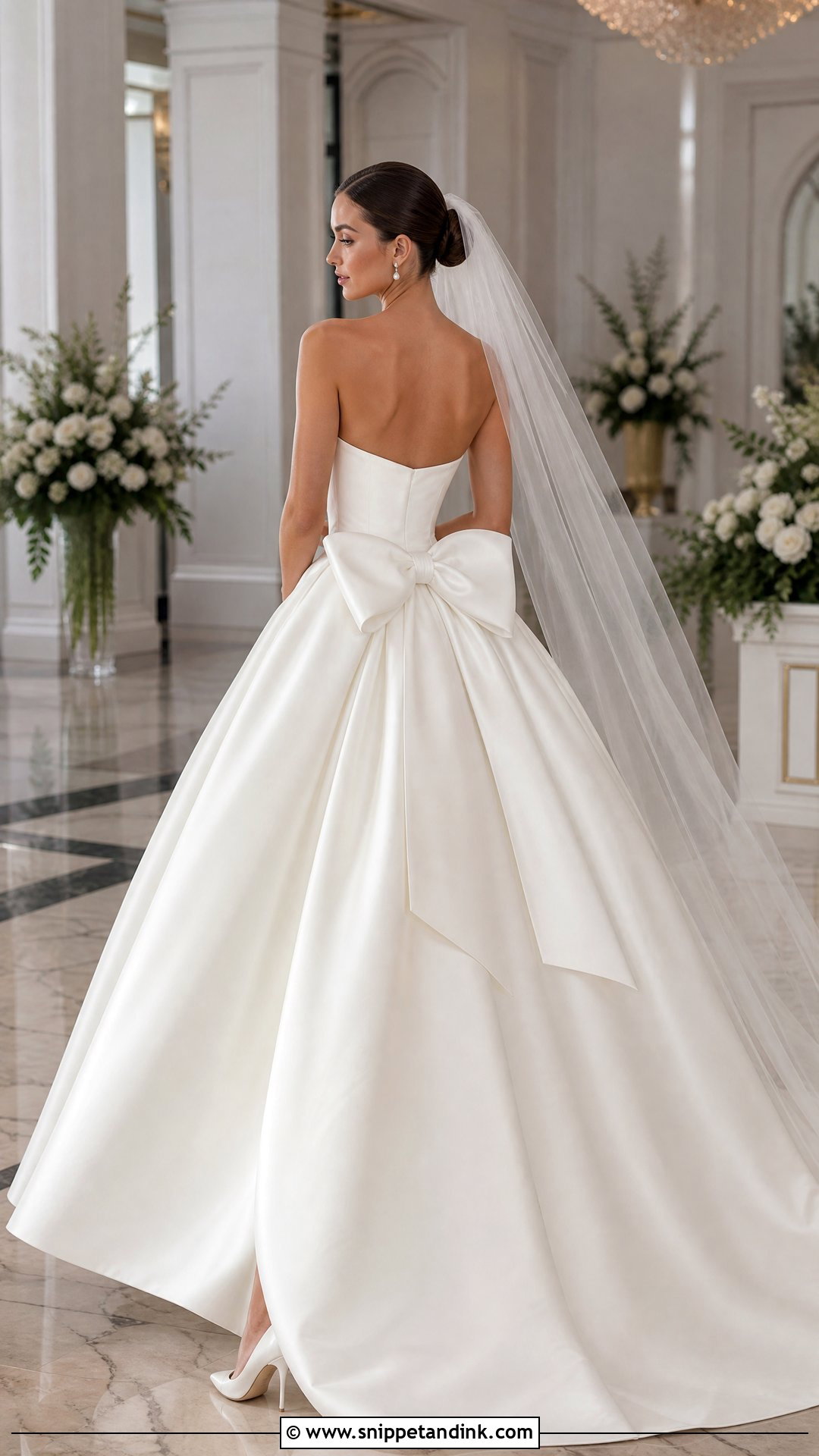
A big bow at the back is made for the walk up the aisle and for portraits from behind. Structured satin or mikado holds a crisp shape; a tulle bow is softer and lighter. Keep the front clean with a strapless, scoop or square neckline, and choose a veil you can take off after the ceremony so the bow is visible at the reception. Pearl earrings, a sleek bun and pointed satin pumps are all it needs. Ask whether the bow detaches, because sitting back in a chair on a firm bow is uncomfortable for a three-course meal. The bustle points also need placing so they don’t crush it.
13. Cathedral Train Princess Ball Gown Wedding Dress
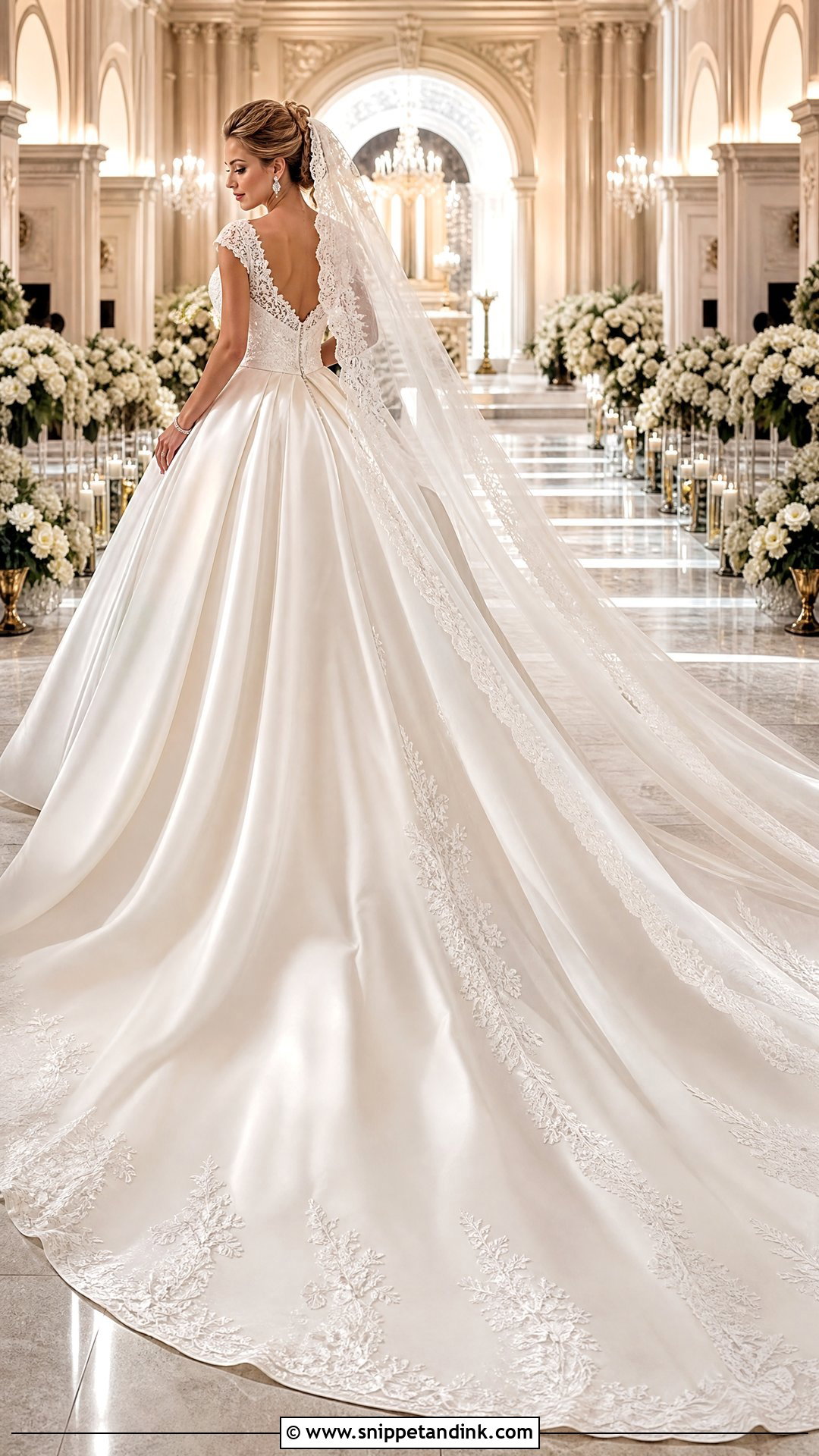
Nothing adds drama quite like a cathedral train behind a full skirt, but it needs the right room. It balances best with a structured bodice and a skirt in satin, lace or layered tulle, plus a veil matching or slightly exceeding the train. Keep accessories quiet, with studs, a slim bracelet and classic pumps, and wear your hair up so the back details show. Practice turning and walking at home before the day. Give one attendant the job of arranging the train for photos and bustling it before dinner and dancing; crowded reception spaces and a loose train don’t mix.
14. Detachable Sleeve Princess Ball Gown Wedding Dress
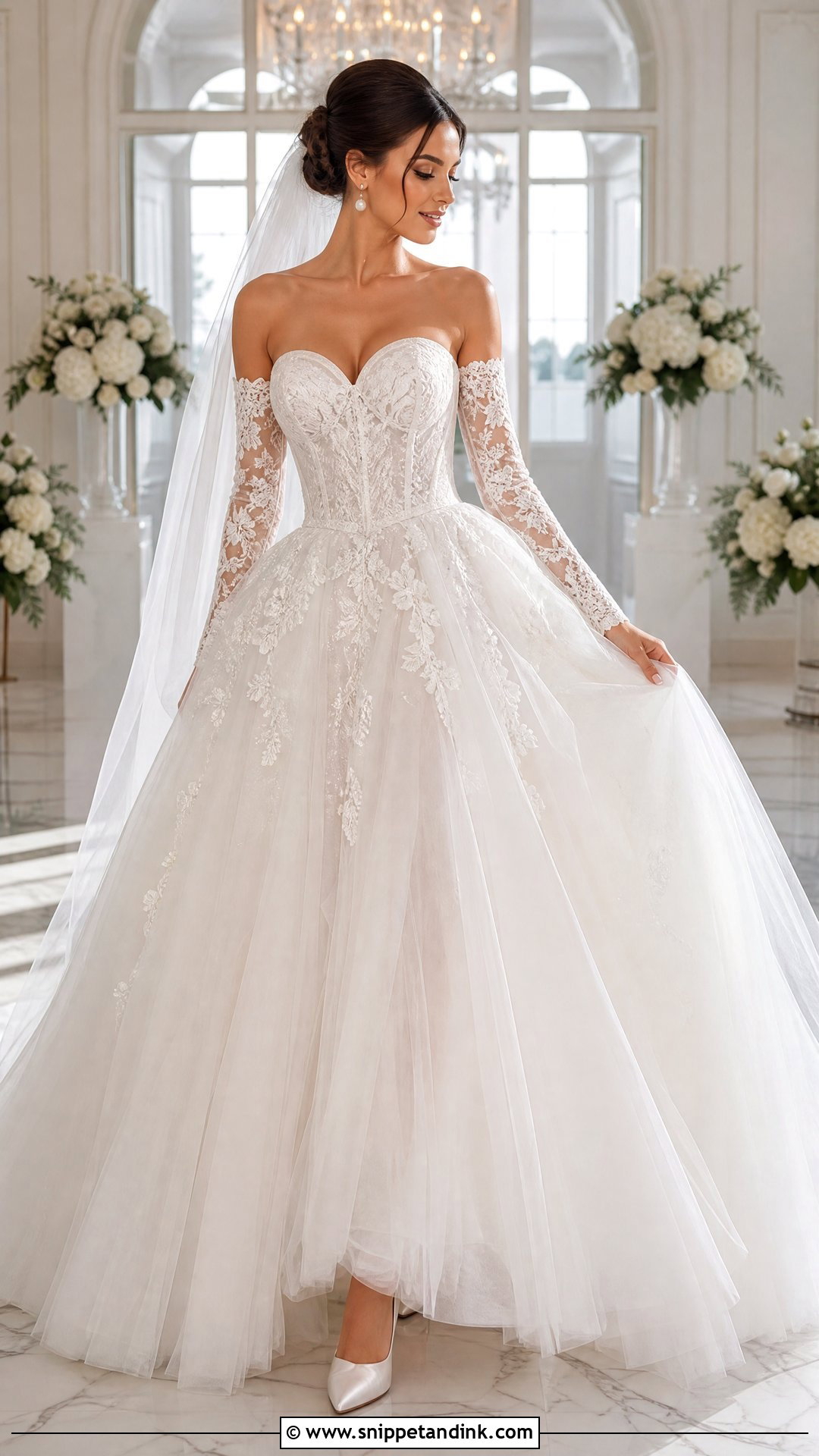
Two looks from one dress is the appeal here. Fitted lace sleeves or draped off-shoulder straps for the ceremony come off for a lighter reception. The bodice underneath has to be fully structured and strapless, or it slips once the sleeves are gone. Look for attachment points that look intentional in both versions; small snaps or hooks are quicker than a row of buttons. Pair it with a long veil, pearl earrings and closed satin heels, then swap the veil for a comb later. Practice the change at a fitting and keep the removed sleeves in a labeled bag so they don’t get lost in the chaos.



15. Cape Veil Princess Ball Gown Wedding Dress
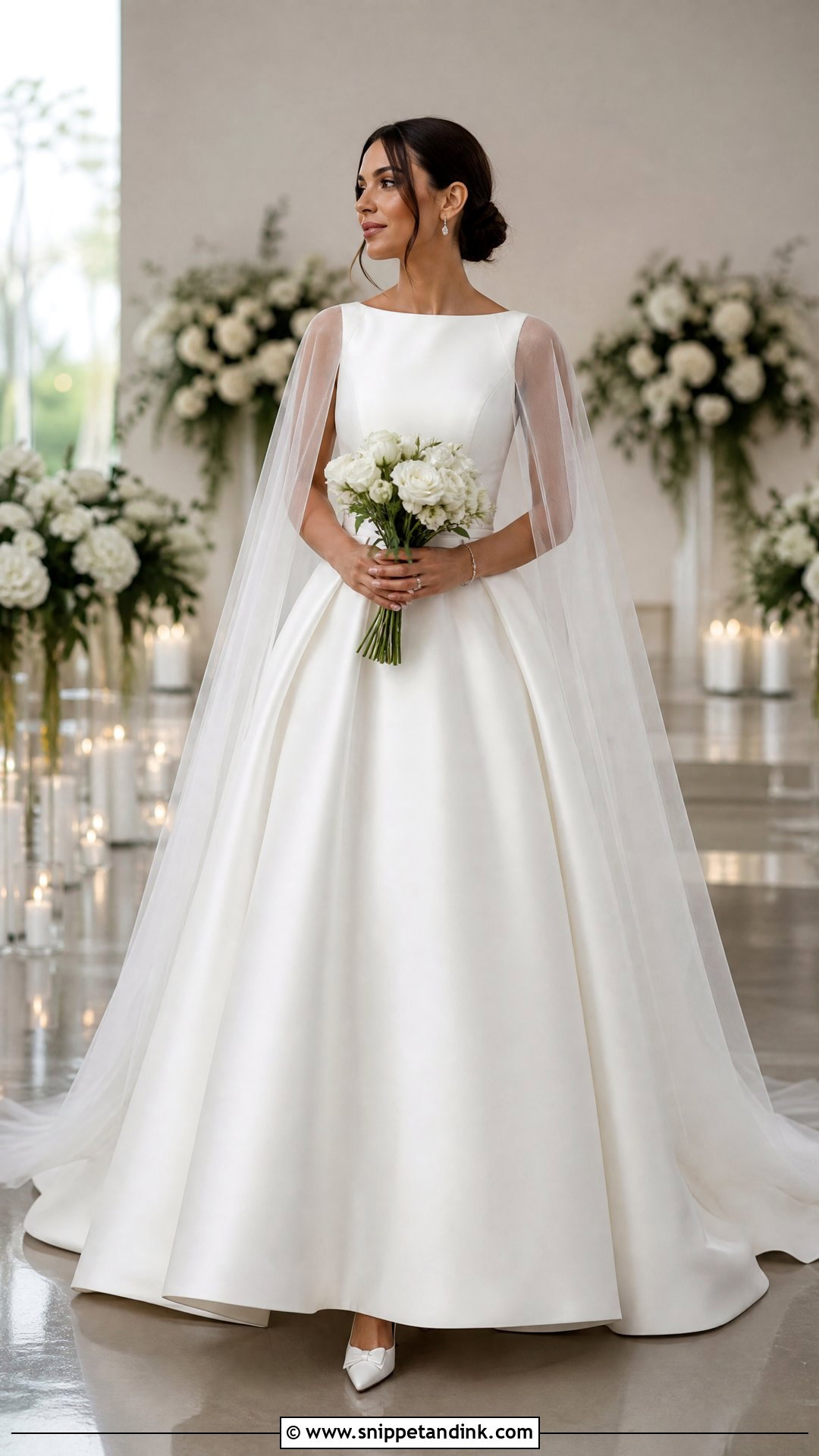
A cape veil hangs from the shoulders rather than the head, so it suits anyone who hates combs and pins in a finished hairstyle. Sheer capes look best over plain satin; a lightly embellished cape can carry a minimal tulle gown. Small drop earrings and a delicate bracelet are enough, and a low bun, sleek ponytail or waves can stay fully visible. Make sure the cape fastens to the dress or straps without dragging the neckline backward, which is the usual fitting complaint. Its length should sit comfortably with the train so you can turn and walk without stepping on it.
16. Blush Princess Ball Gown Wedding Dress
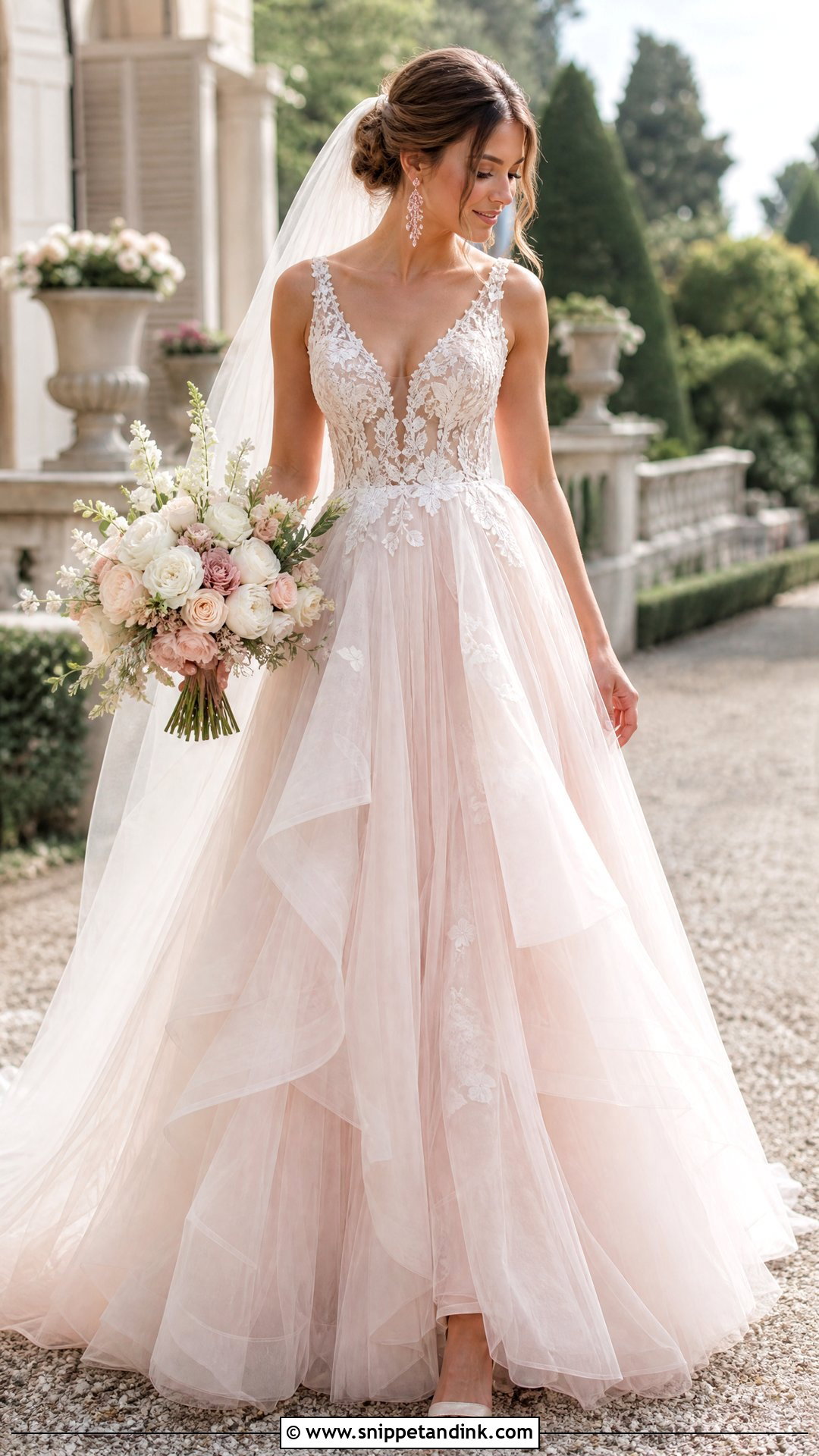
Blush brings soft color without losing the romance. Pale pink tulle over an ivory lining gives depth without looking bright, and an ivory lace overlay on a blush underlayer is even quieter. Rose-gold earrings, neutral ivory heels and a sheer veil matched to the gown’s lightest tone suit it, with a loose low bun and white, blush and muted green flowers. Blush shifts a lot between daylight and warm indoor light, sometimes toward peach and sometimes toward grey, so see it under both before ordering. It should flatter your skin and sit comfortably with your partner’s outfit and the wedding party colors.
17. Champagne Princess Ball Gown Wedding Dress
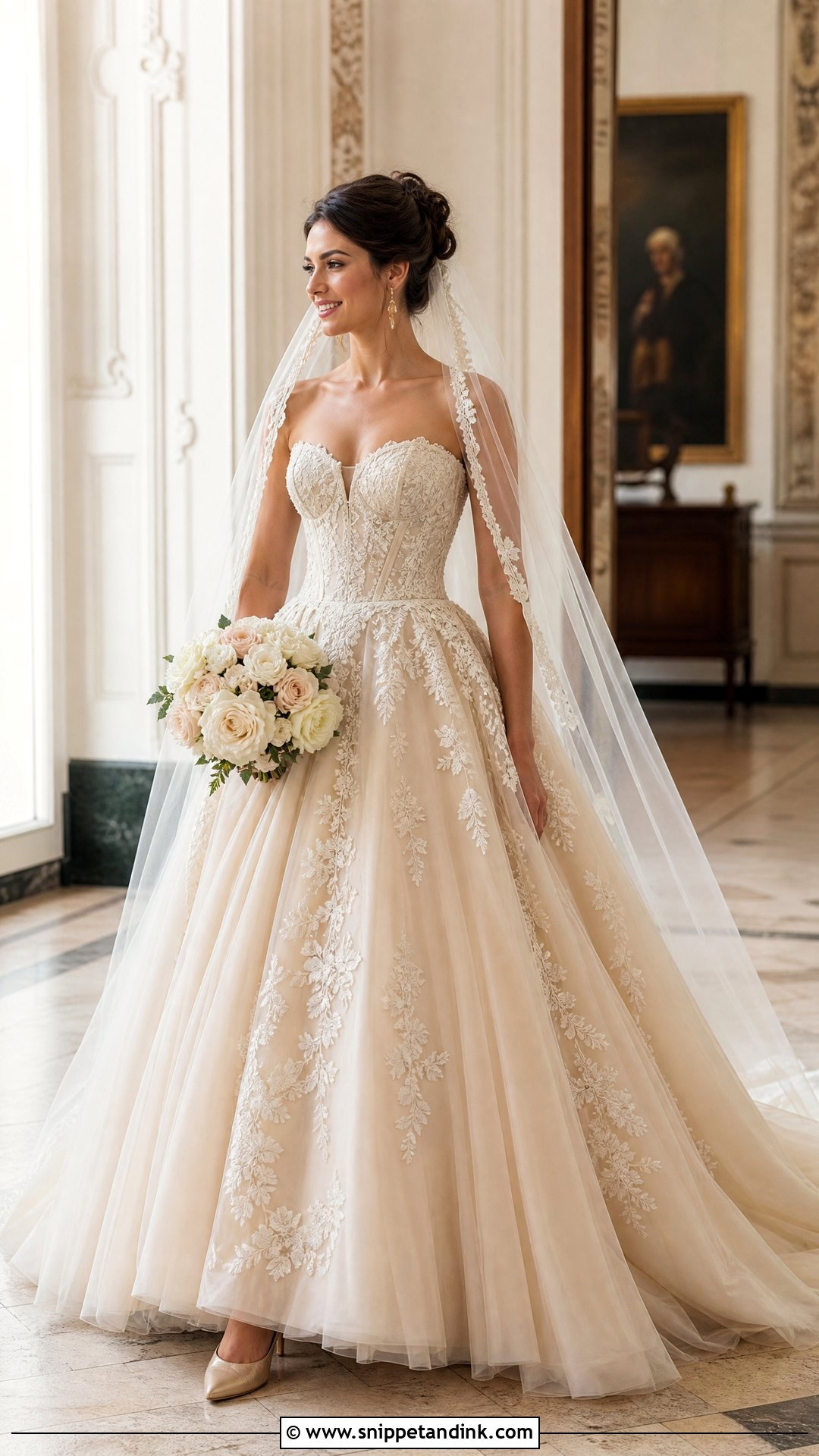
Champagne warms up a full gown and makes ivory lace and beading stand out against it. That contrast is the reason to choose it. Gold earrings, ivory or champagne pumps and a soft fingertip veil go well, and a polished updo keeps it formal while loose waves relax it. Pick cream flowers rather than stark white, which can make champagne look dingy next to them. Champagne, sand, nude and light gold linings all look different on skin, so compare them and photograph each under daylight and indoor light. It suits historic estates and evening receptions with gold or neutral decor.
18. Modest Princess Ball Gown Wedding Dress
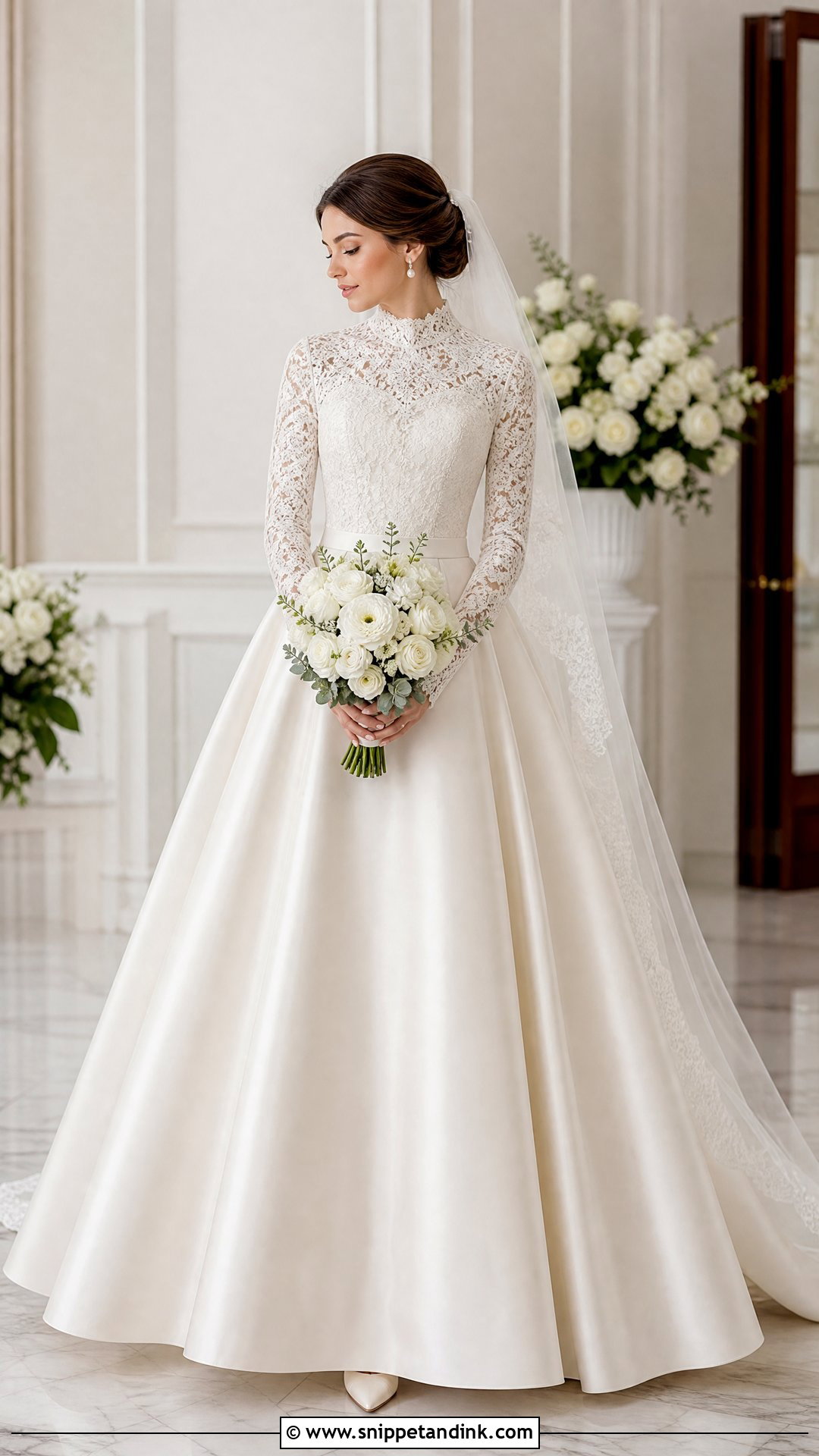
Coverage and a grand skirt sit together well. Look for a lined bodice, a higher neckline, a full back and three-quarter or long sleeves; satin is the cleanest, while lace sleeves add detail without showing more skin. In summer, sleeve weight and breathability matter far more than you’d think, so ask about lighter lace or a cotton lining. A seamstress can add lining, raise a neckline or fill illusion panels. Finish with a chapel veil, pearl earrings, low closed heels and a classic bouquet, and check you can lift your arms, sit and walk easily.
19. Plus Size Princess Ball Gown Wedding Dress
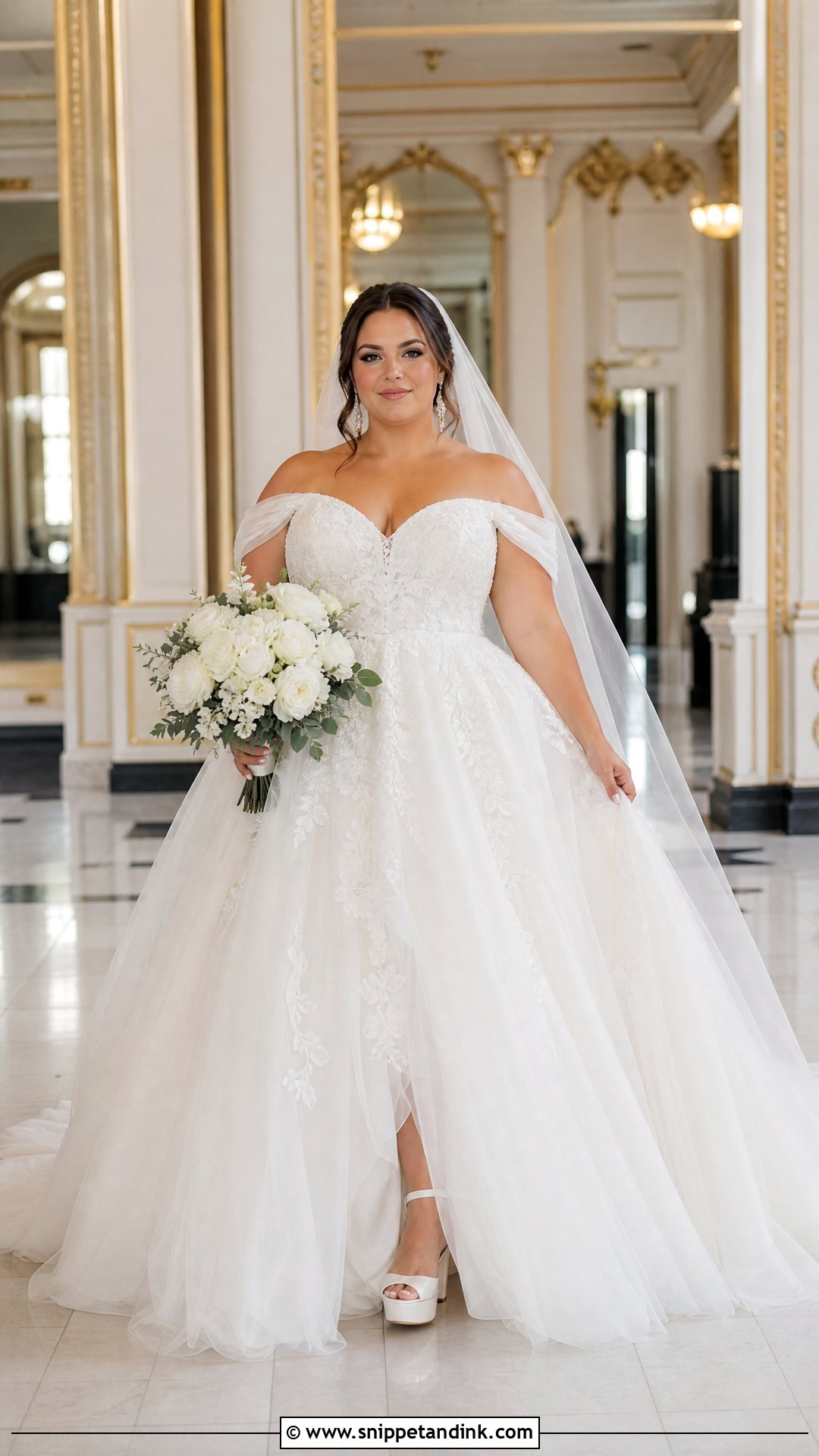
A well-built ball gown gives definition and support on a fuller figure, and I’d focus on fit rather than old rules about who should wear a full skirt. A structured bodice, a waistline placed at your actual waist and built-in cups make the biggest difference. Wide straps, off-shoulder sleeves or a secure strapless neckline all work; it depends on what you trust. Add a long veil, statement earrings, comfortable block heels and a bouquet scaled to the skirt. At fittings, sit, walk, dance and breathe deeply. Ask the salon about available sample sizes before booking, so you try on gowns that actually close on you.


20. Petite Princess Ball Gown Wedding Dress
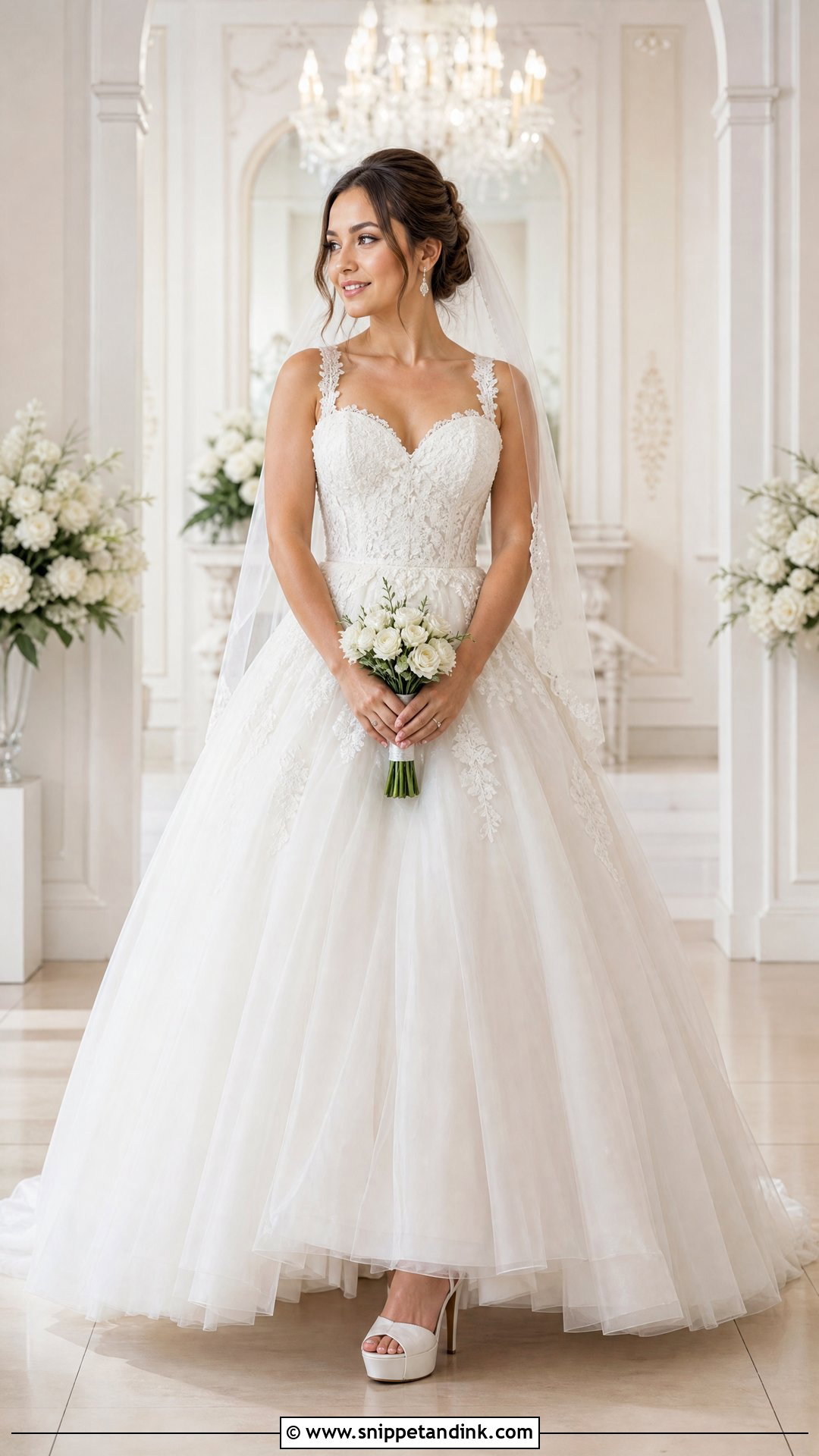
Petite brides can carry a full skirt when the proportions are scaled. The bodice should fit your torso length and the waist shouldn’t sit too low, because a dropped waist shortens the legs visually. Lightweight tulle, controlled volume and vertical seams keep it balanced. Pair the princess ball gown wedding dress with a simple fingertip veil, small drop earrings, comfortable platform or block heels and a compact bouquet. Petite alterations often go beyond hemming. When a lace border runs along the hem, it has to be lifted off and re-sewn higher, which takes time, so start fittings early.
Getting a Ball Gown Into a Car, a Chair and a Restroom
Nobody shows these moments in photos, but they’re where a full skirt causes the most stress on the day. I walk every ball-gown bride through these at the final fitting.
The car
Back in bottom first, sit, then lift your legs and gather the skirt in after you. Ask for a car with a wide rear door, and have someone tuck the train onto your lap so it doesn’t catch in the door or touch a dusty floor.
Sitting at the table
Bustle before you sit down to eat. Gather the back of the skirt slightly as you sit so you aren’t crushing it all evening, and choose a chair without arms if you get a say in it.
The restroom
My advice here always gets a laugh: sit facing the cistern rather than away from it. It sounds odd, but the skirt then falls away from you and you need far less help. If you’ll still want someone with you, choose that person ahead of time and do a run-through at your final fitting.
A Full Skirt Is Only Half of a Princess Gown
A princess gown is not a contest for the widest skirt. Bodice, waist placement, fabric, neckline, train and accessories have to work as one look you can live in for hours. Satin gives clean structure, while tulle, lace, pearls, crystals and appliqués each add a different kind of softness. Think about your venue, season, how much you want to move and how much coverage you like. Then test the gown sitting, walking, turning and dancing. Good alterations make even a dramatic dress feel surprisingly manageable, and that is when it starts to feel like yours.
You'll Like These Ideas:










Leave a Reply