
Medieval fantasy wedding dresses walk a narrow line. Done well, they look like a bride from an old story; done carelessly, they look like a rental from a fancy-dress shop. The difference is almost always fabric quality, fit and restraint, not the amount of detail. Flowing sleeves, embroidered bodices, layered skirts, velvet and capes all belong here, chosen to suit the venue and the season. A woodland ceremony wants soft chiffon and botanical embroidery; a castle can carry brocade, structured lacing and a long train. Below are the looks I’d build, from ethereal and royal to rustic, gothic, modest and size-inclusive, with what I’d check at the fitting for each.
Having a Fantasy Gown Made Instead of Bought
Mainstream bridal shops carry a few gowns with bell sleeves or lacing, but most brides who want a true medieval look end up with a custom or small-maker gown. That changes the process. You’re commissioning a garment, so the questions are different and the timeline is usually longer.
- Ask for fabric swatches before you pay a deposit. Photos of velvet and brocade online rarely match the real color or weight.
- Ask whether the maker builds a mock-up, a test version in cheap fabric, before cutting the real one. For corseted bodices this is the step that prevents painful fit problems.
- Confirm how many fittings are included, and whether the maker can do them in person or will rely on your own measurements.
- Start early. Custom gowns from small makers often take several months, and embroidery adds time. Ask for the maker’s lead time in writing.
When I measure for a corset bodice, I take measurements in the bra or underpinnings the bride will actually wear. A few centimeters of difference at the ribs is enough to make lacing gape or pinch.
1. Ivory Medieval Fantasy Wedding Dress With Bell Sleeves
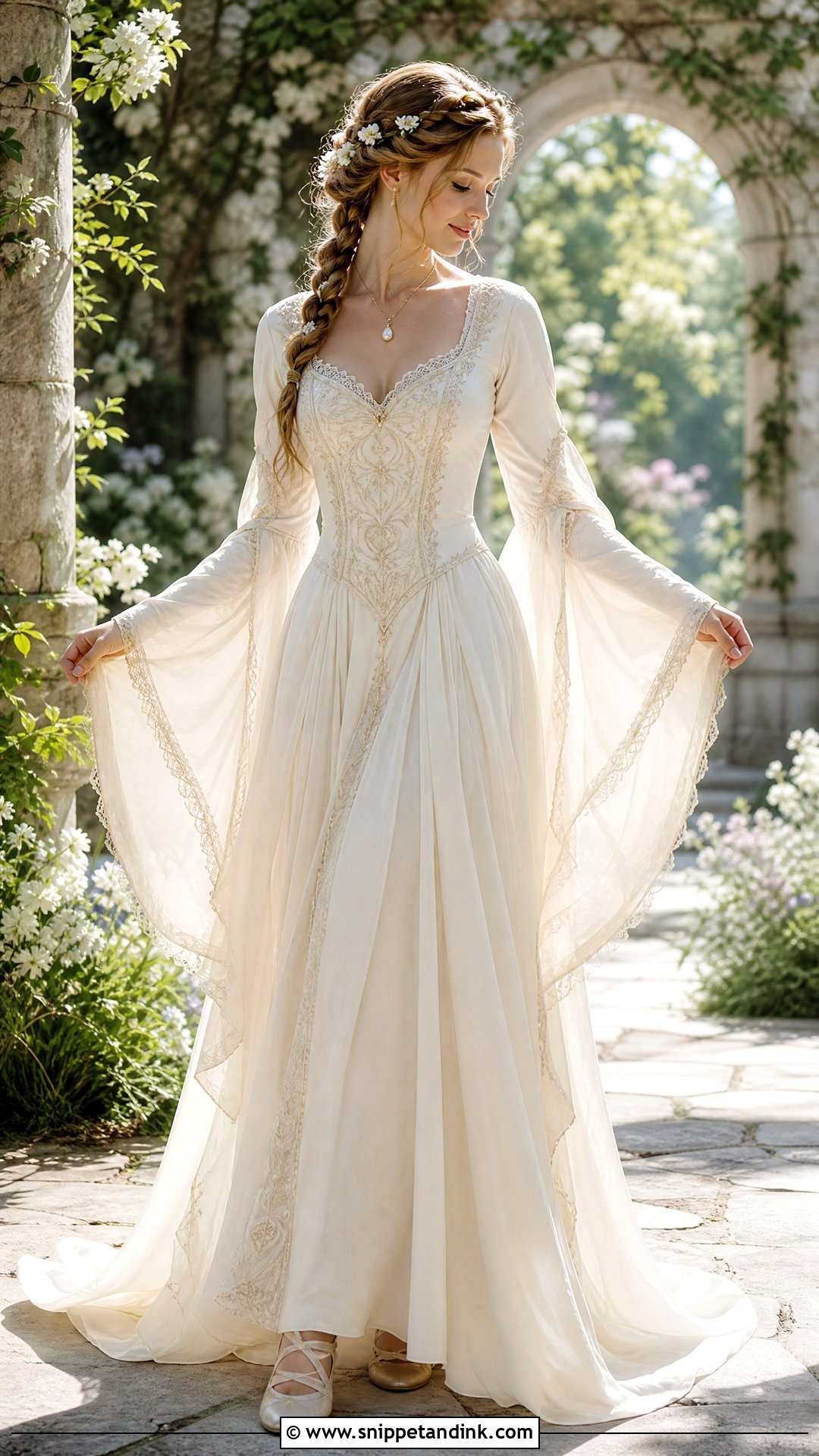
Ivory with long bell sleeves is the gentlest way into this style, and the one I suggest to brides who want a hint of fantasy rather than a full theme. A softly fitted bodice with a scoop or square neck, a skirt falling naturally from the waist, and chiffon or light crepe to keep it fluid. Lace on the sleeves and neckline adds detail without crowding. An embroidered belt, ivory ballet flats, a pearl drop and a loose braid with small white flowers finish it. It still reads unmistakably bridal, which matters if your family is more traditional than your Pinterest board.
2. Forest Green Medieval Fantasy Wedding Dress
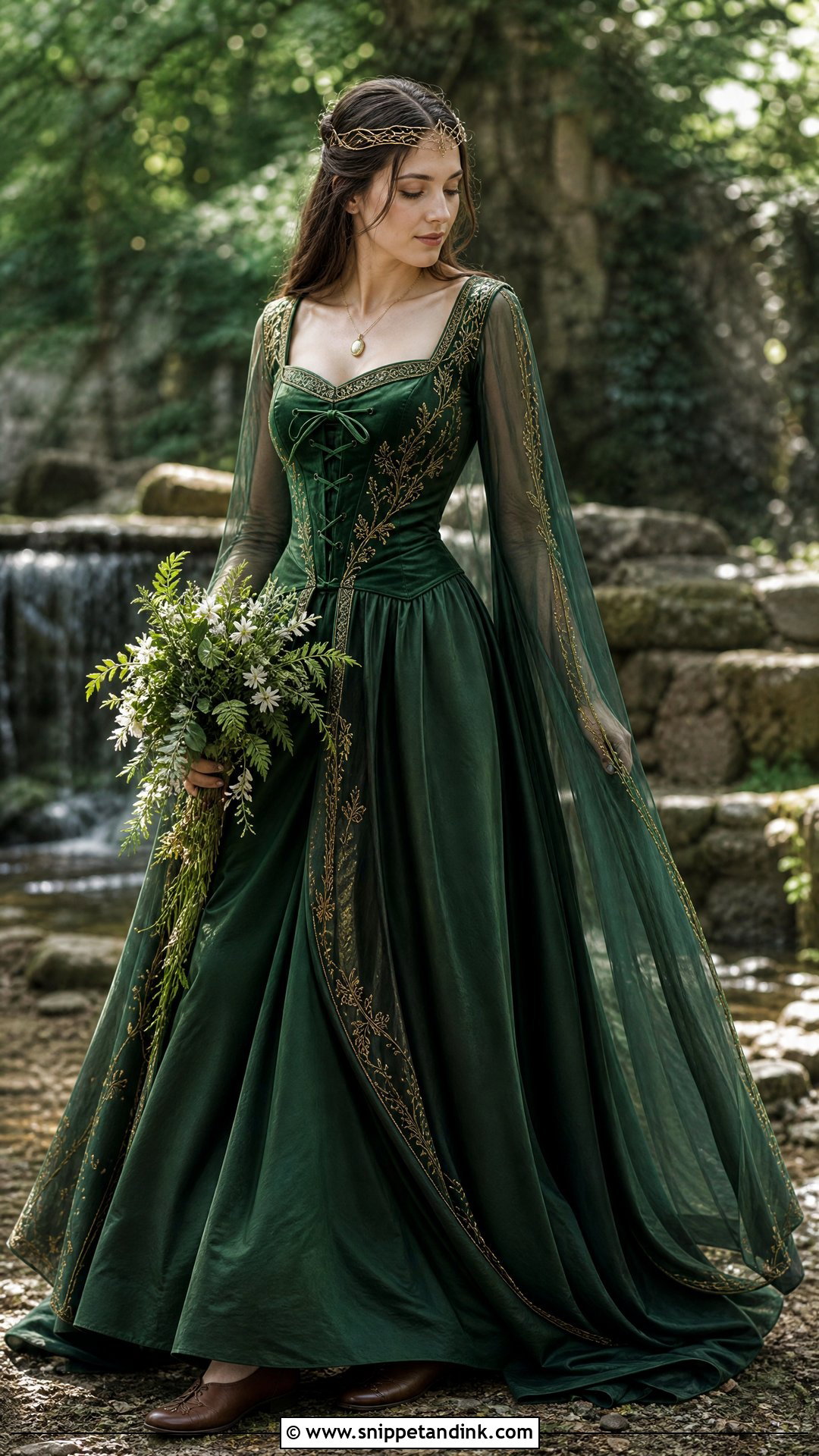
Forest green is the color I’d pick for a fall woodland wedding, because it sits naturally against trees and moss in photographs. A floor-length velvet or satin gown with a fitted lace-up bodice and a gently flared skirt, softened by sheer sleeves and gold embroidery at the neckline, is enough. Brown leather-look flats, a fine gold circlet and a small bouquet of ferns and pale flowers complete it. Keep the jewelry minimal and let the color lead. Dark green velvet shows lint and pet hair badly, so a lint roller belongs in the getting-ready kit.
3. Lace-Up Medieval Fantasy Wedding Dress
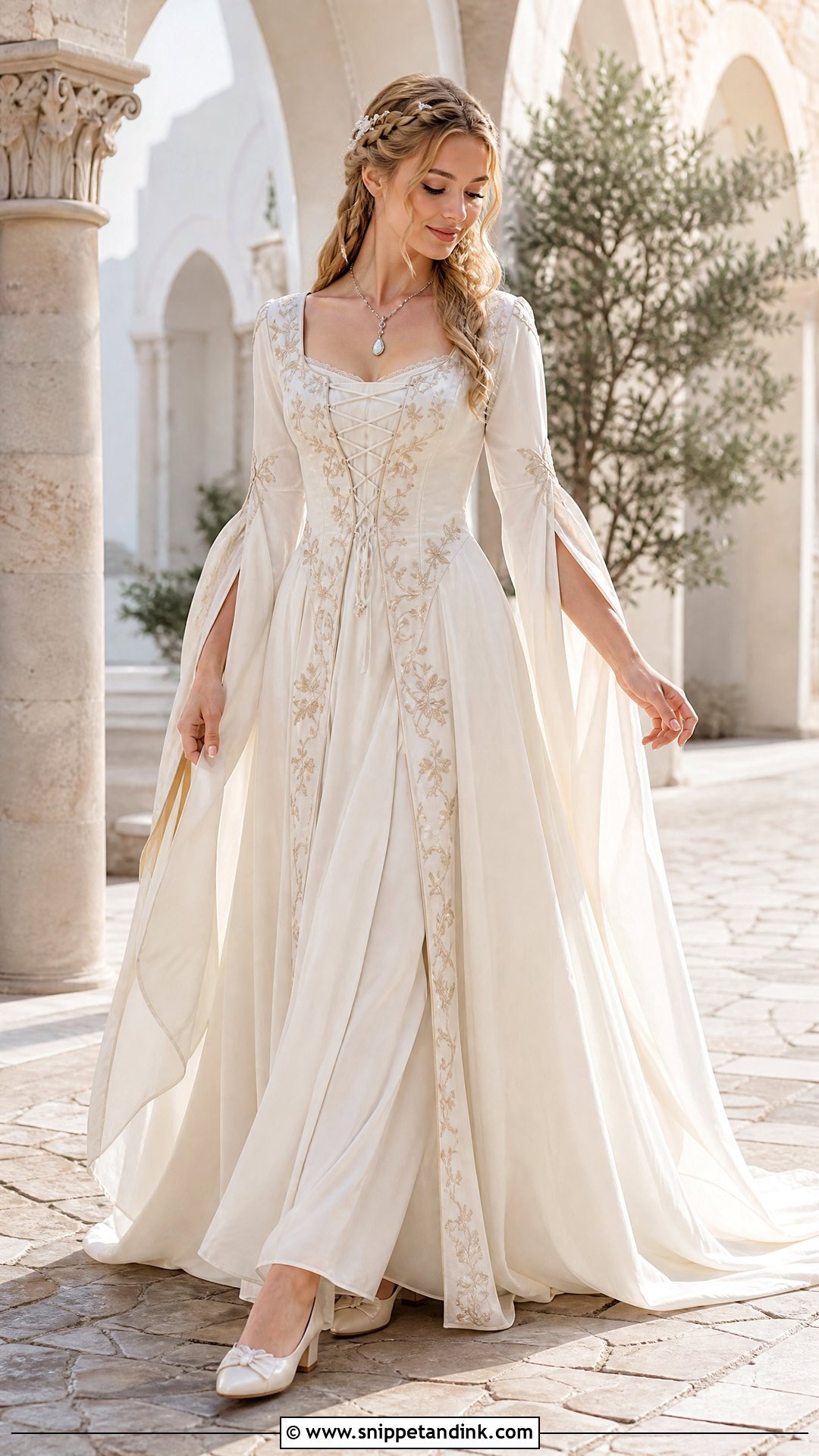
Lacing is the detail most people recognize as medieval, but decorative lacing alone won’t hold anything up. I always ask what’s underneath: a good lace-up gown has boning or an internal corset doing the support, and the lacing on top is mostly for show. An ivory underdress with a fitted embroidered bodice adds depth. Split sleeves, a full A-line skirt and low block heels hidden under the hem keep it wearable, with a gemstone pendant and a braided half-up style. It flatters many shapes because it defines the waist. Fit the bust, waist and shoulder seams carefully, since lacing pulls unevenly if they’re off.
4. Hooded Cape Medieval Fantasy Wedding Dress
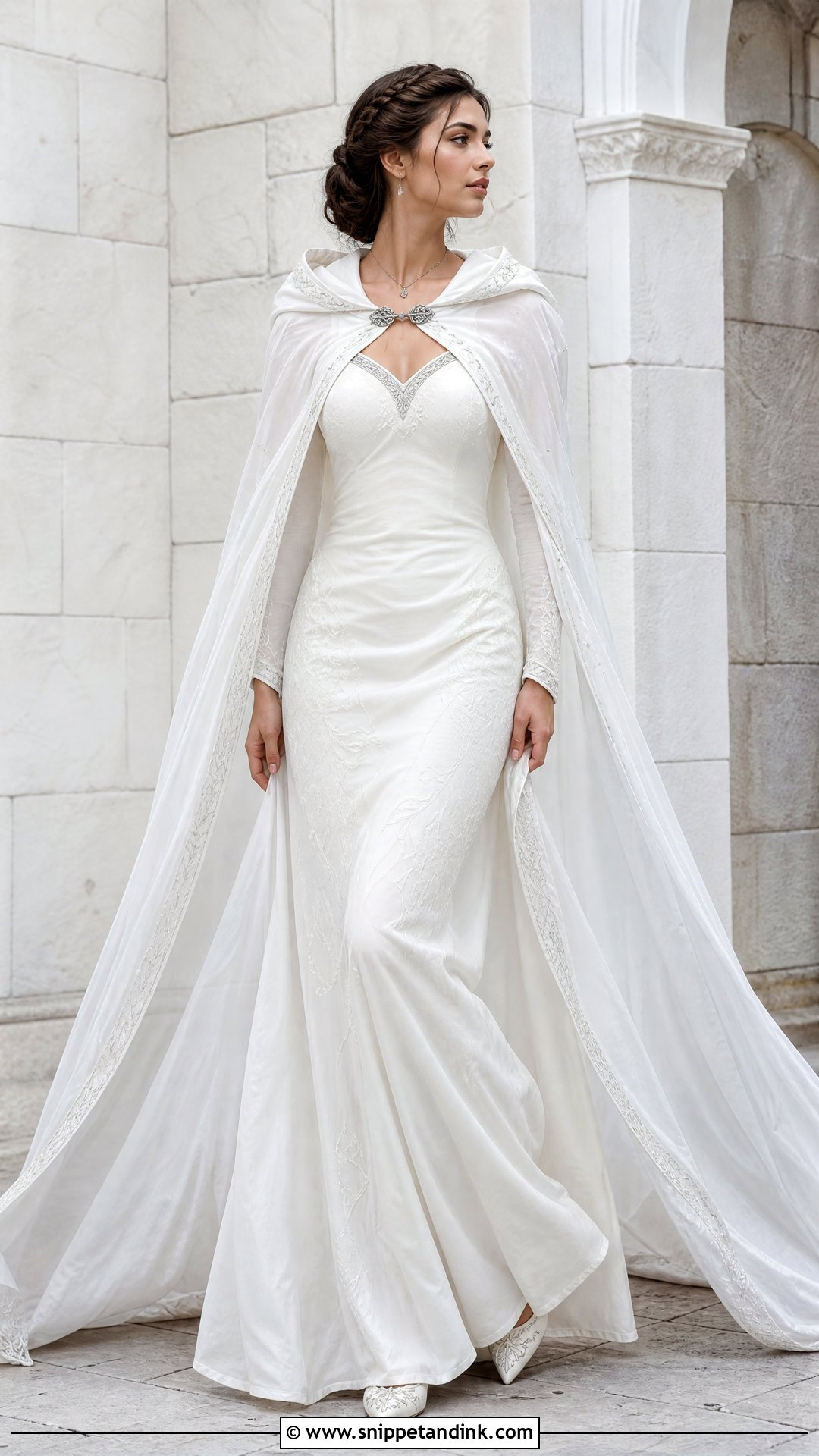
A hooded cape turns a plain long-sleeved gown into something dramatic. Start with a clean ivory dress with a fitted waist, then add a floor-length chiffon, velvet or light wool cape fastened with a clasp near the collarbone. Wear the hood down for the ceremony so it frames the hair instead of hiding it, and save it raised for a moody portrait. Pointed flats, a silver pendant and soft waves or a low braided bun keep it refined. Walk your outdoor route in it. A cape that brushes the floor will collect leaves, mud and twigs within minutes.
5. Celtic Medieval Fantasy Wedding Dress
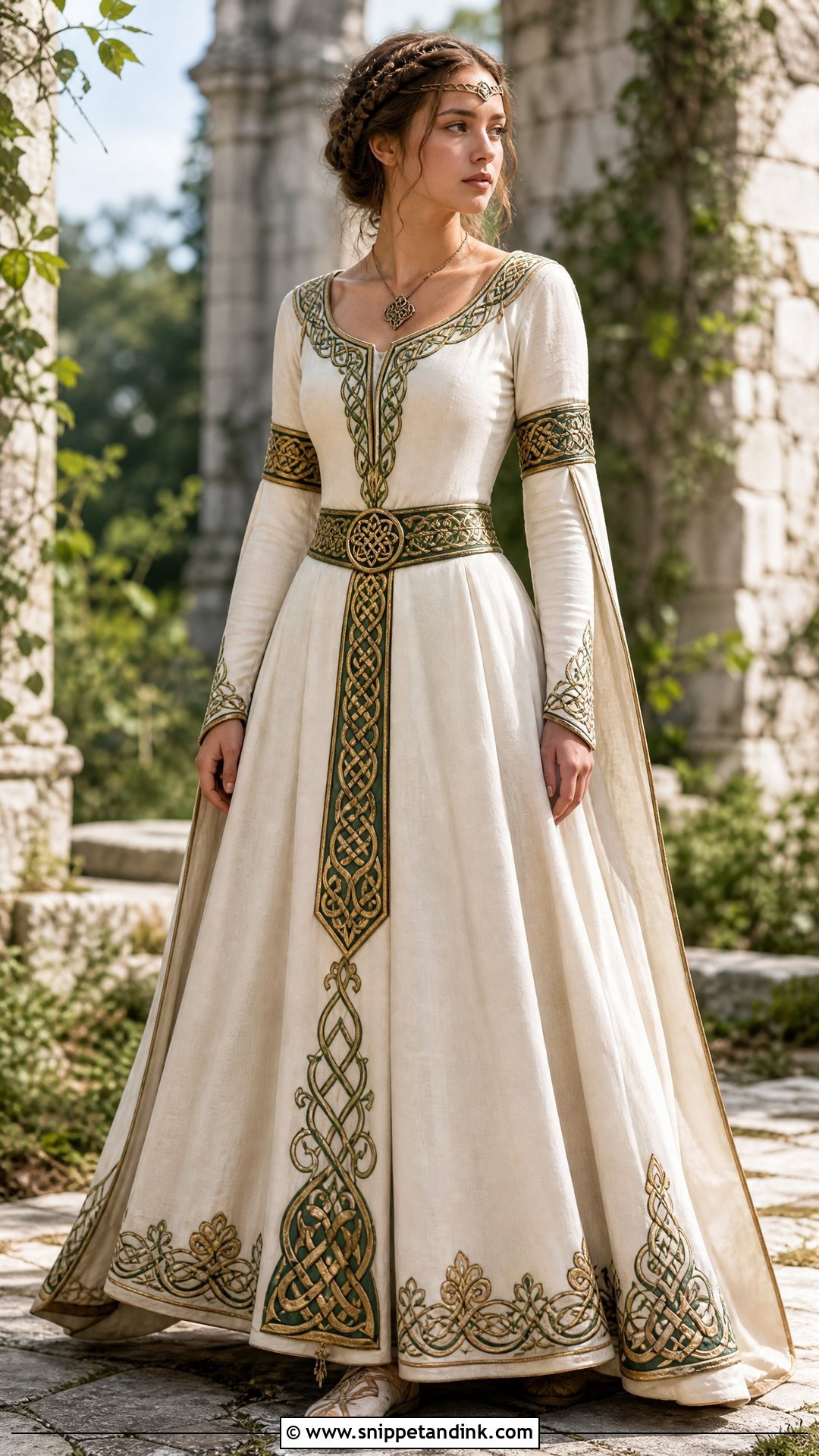
Celtic-inspired embroidery gives a gown pattern with meaning behind it. Knotwork trim at the neckline, cuffs, waist or hem on a softly structured dress is the place to start. Ivory, moss green, muted blue and antique gold sit well together without shouting. A wide embroidered waistband defines the figure, and an A-line skirt keeps it moving. Leather-look shoes, a braided crown and a small circlet suit it, with perhaps one knot pendant repeating the motif. I keep the knotwork to two or three areas; covering the whole gown in it starts to look like trim from a craft shop.
6. Elven Medieval Fantasy Wedding Dress
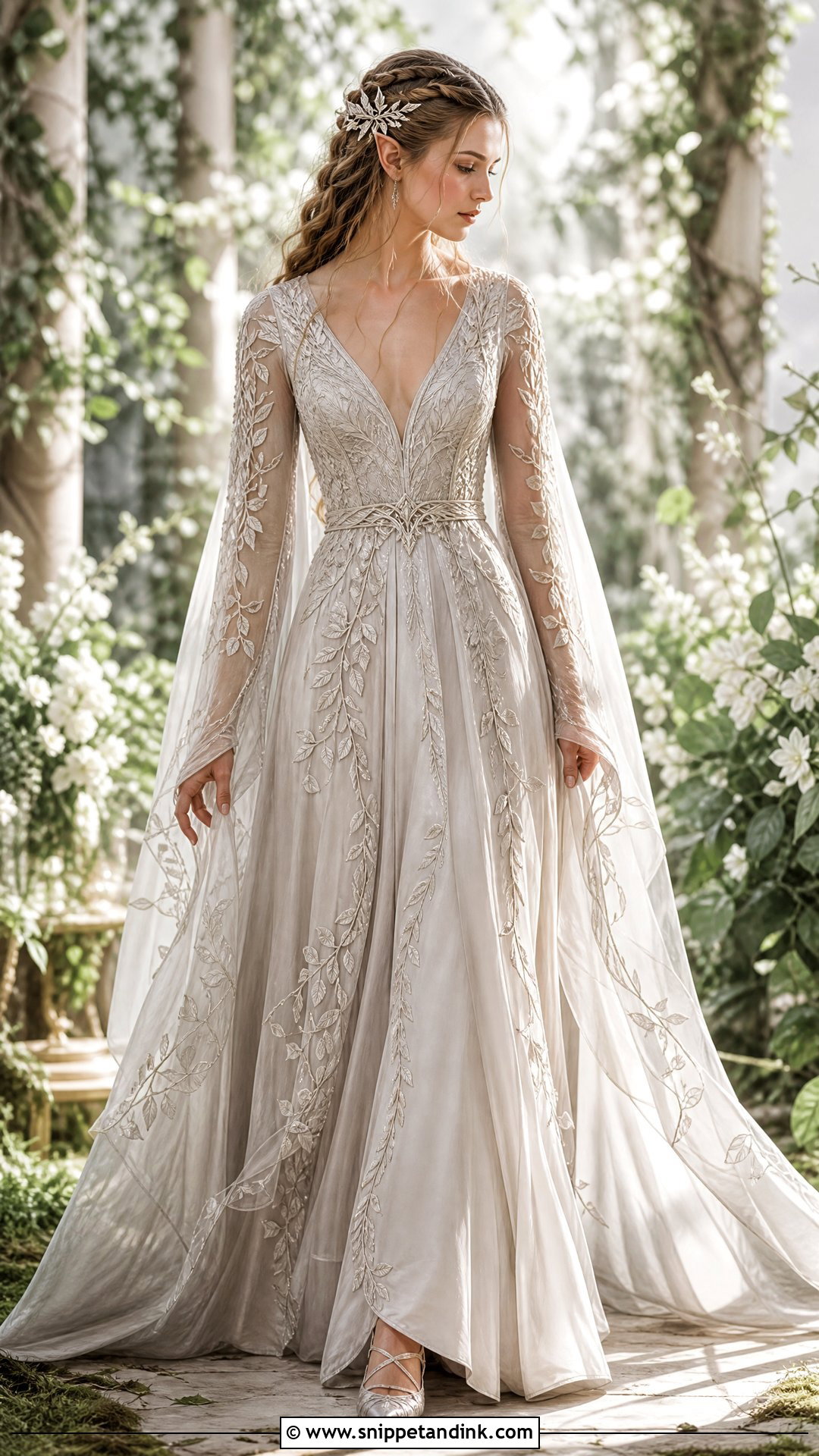
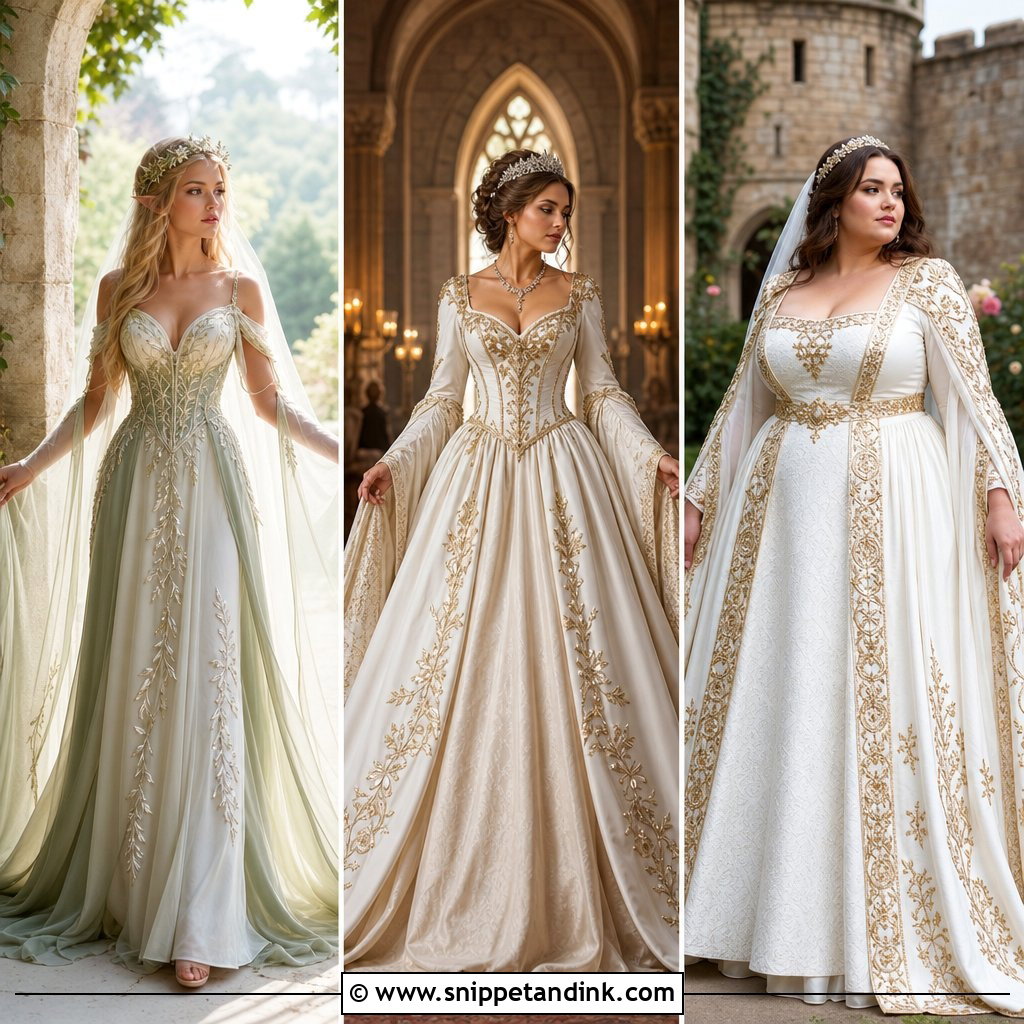
The appeal of an elven medieval fantasy wedding dress is its long, light line. Ivory or pale silver with a fitted waist, a soft V-neck and a flowing skirt is the base; sheer pointed sleeves or a split cape add movement. Vine embroidery along the bodice and shoulders keeps it organic. Silver flats, a leaf comb and minimal crystal jewelry are enough, with long waves and two small braids pulled back from the face. The moment you add big accessories, the airiness disappears. Woodland and garden ceremonies suit it best.
7. Royal Blue Medieval Fantasy Wedding Dress
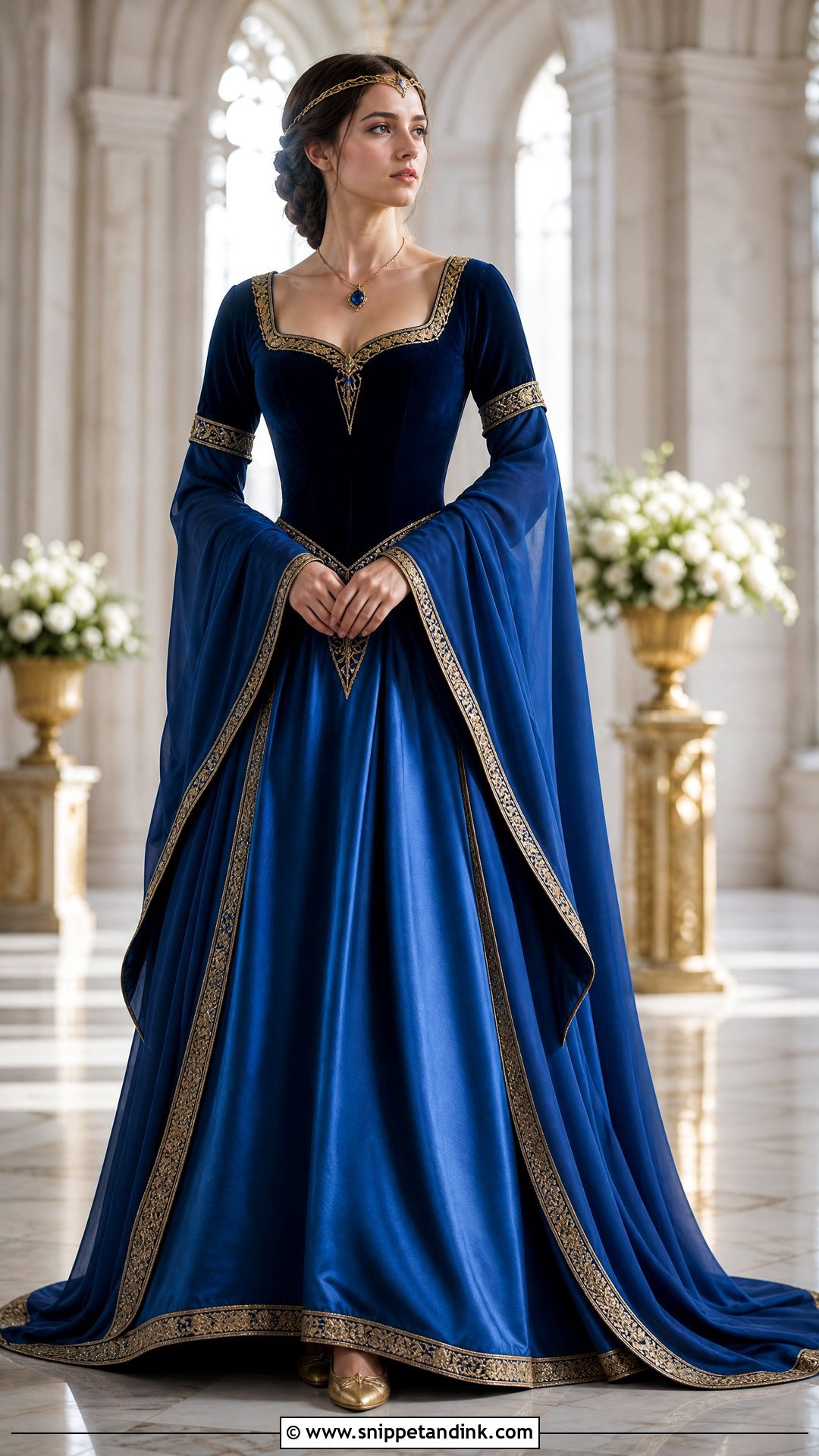
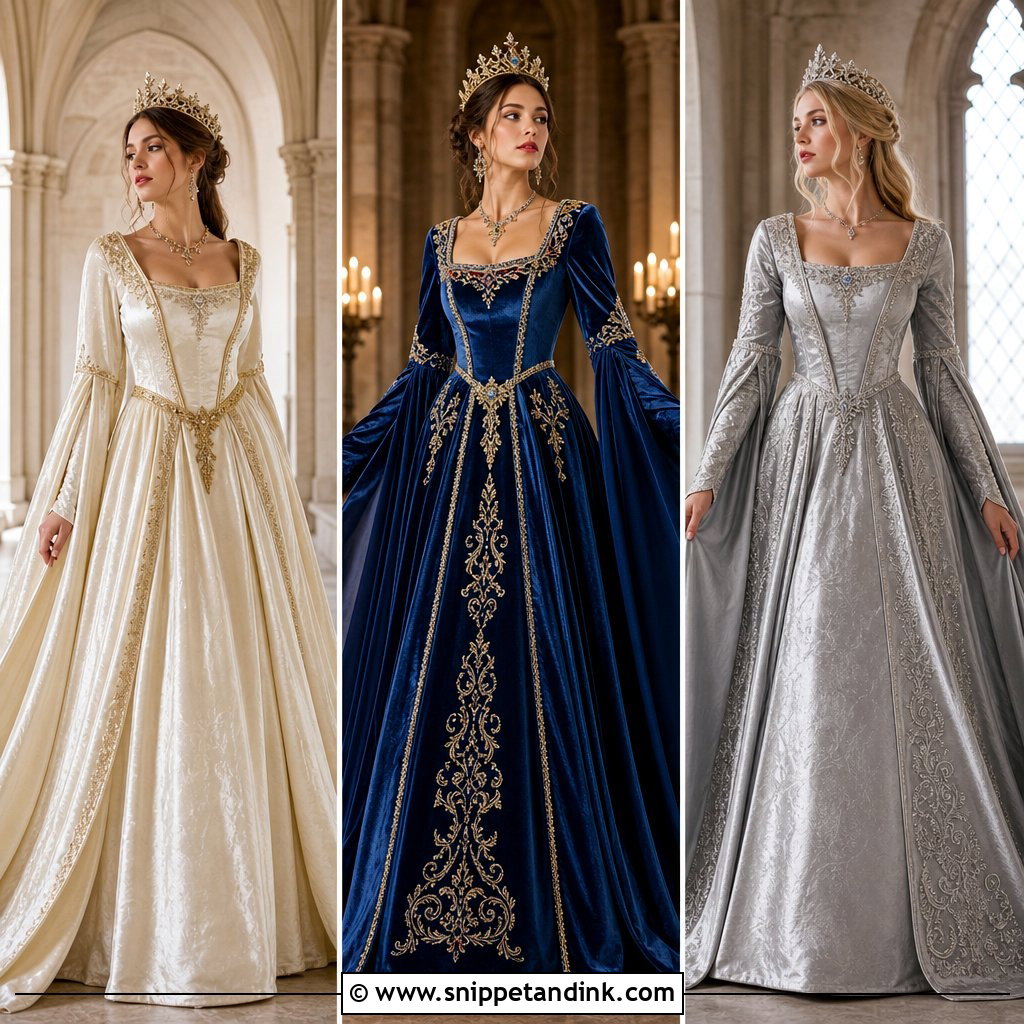
Royal blue gives real presence. A blue velvet bodice over a satin or chiffon skirt feels luxurious without the weight of an all-velvet gown, and gold trim at the neckline, waist and cuffs outlines the shape. Fitted sleeves suit winter; open trumpet sleeves suit warmer months. Gold flats, a slim circlet, a blue-stone pendant and a low braid finish it. If full blue feels too bold, an ivory underskirt or detachable ivory cape brings it back toward bridal. Blue velvet can shift tone under different lights, so I look at it under the venue’s lighting if possible.
8. Burgundy Velvet Medieval Fantasy Wedding Dress
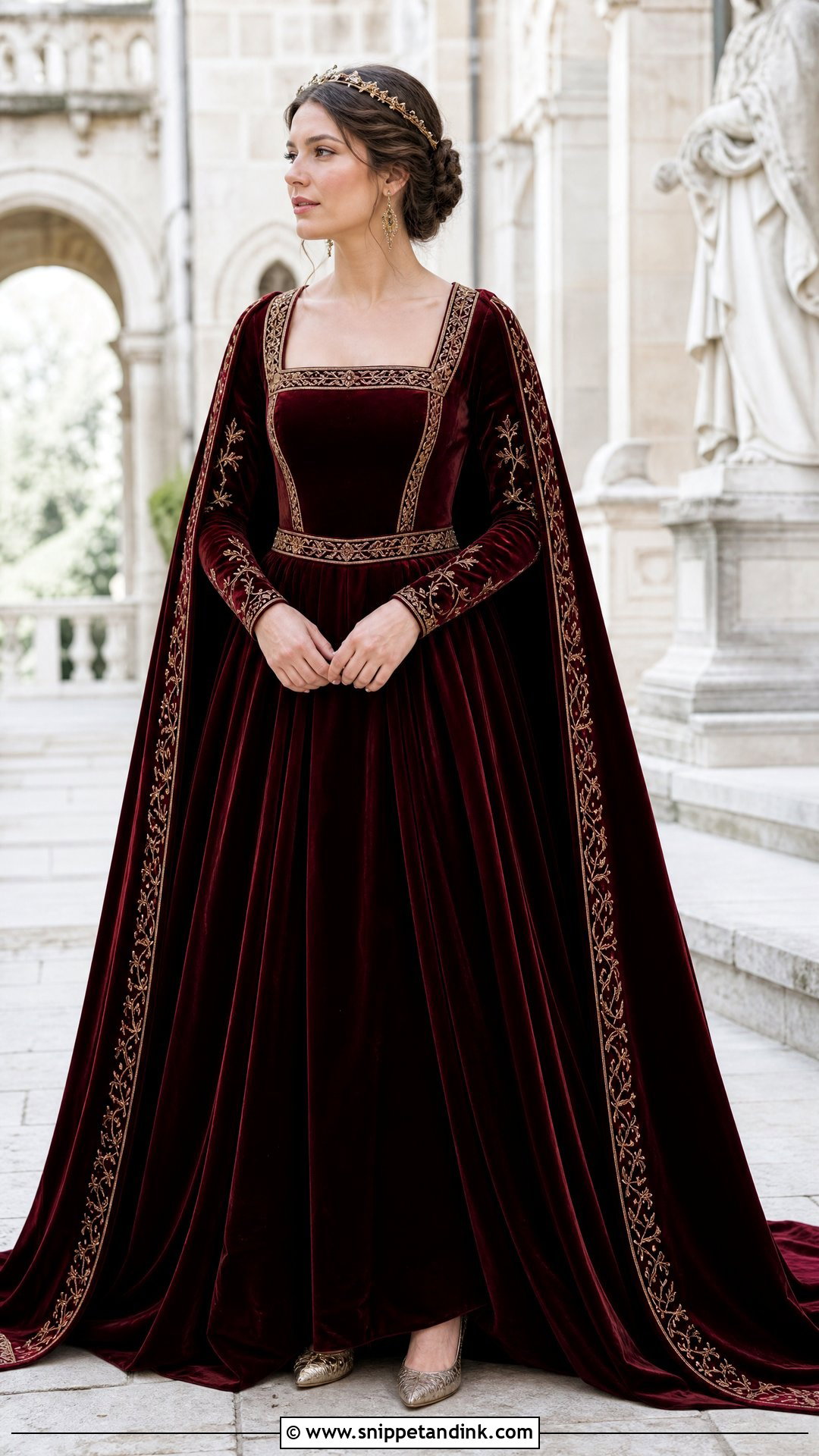
Burgundy velvet is warm and regal for fall and winter. A fitted bodice with a square neck, long sleeves and subtle antique-gold embroidery, over a softly pleated full skirt, lets the velvet move without losing its weight. A matching or dark ivory cape suits outdoor portraits, though I’d shorten any train if the ceremony is on grass. Gold drops, a fine circlet and low heels complete it, and a braided updo keeps the heavy fabric from crowding the face. Stone halls and rooms dressed in greenery and neutral flowers show it off best.
9. Gold Brocade Medieval Fantasy Wedding Dress
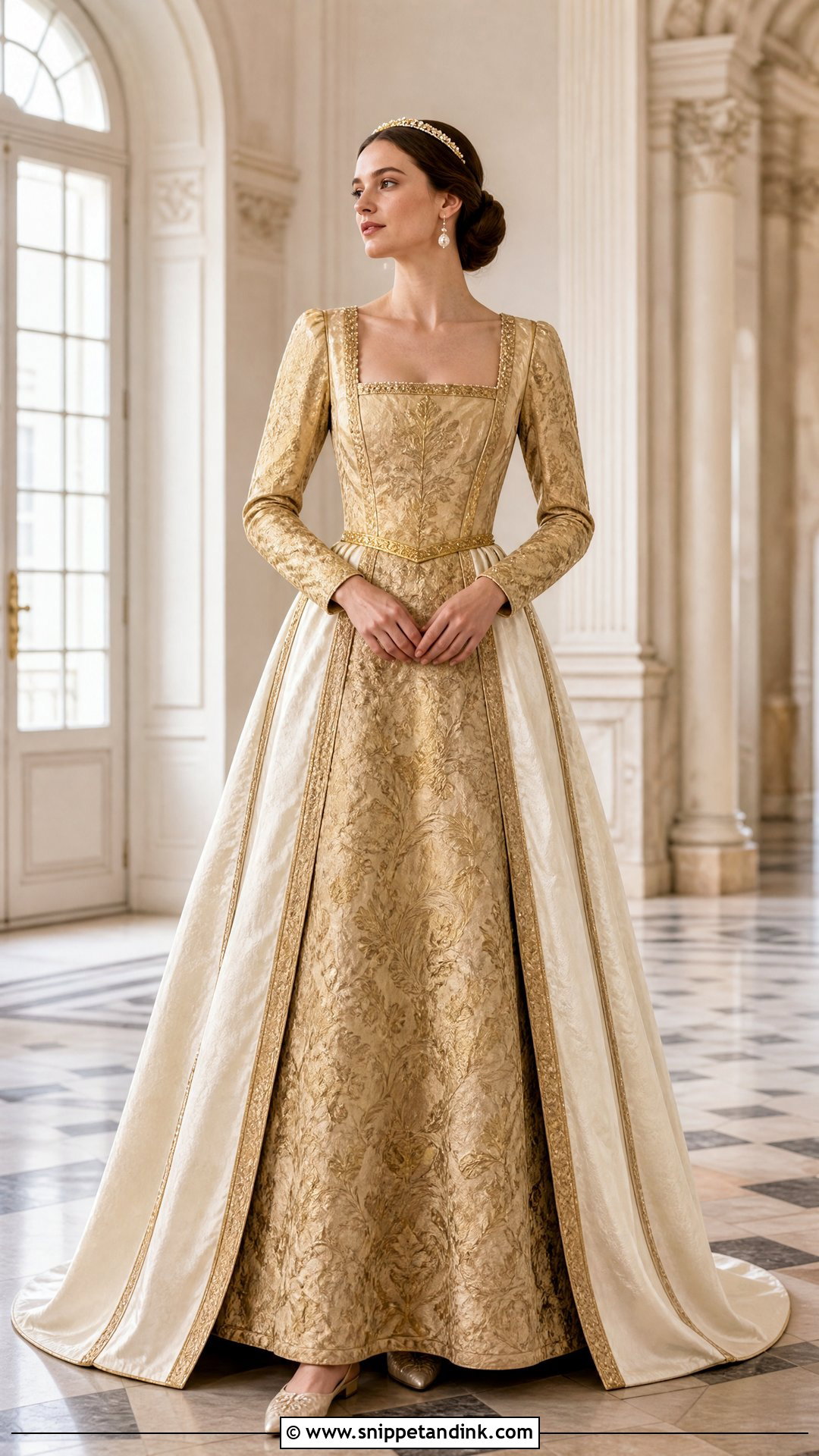
Gold brocade is already patterned and stiff, so the cut should be simple: fitted bodice, square neck, long A-line skirt. Ivory side panels or a plain underskirt break up the metallic surface. Neutral pointed flats, small pearls and a narrow gold band are better than a large crown, with a smooth low bun or controlled waves. Brocade is warm and doesn’t drape, which is why I keep it for cool seasons and indoor venues. It also frays quickly at cut edges, so seams need to be properly finished, and tailoring at the waist, bust and sleeves needs a skilled hand.
10. Silver Embroidered Medieval Fantasy Wedding Dress
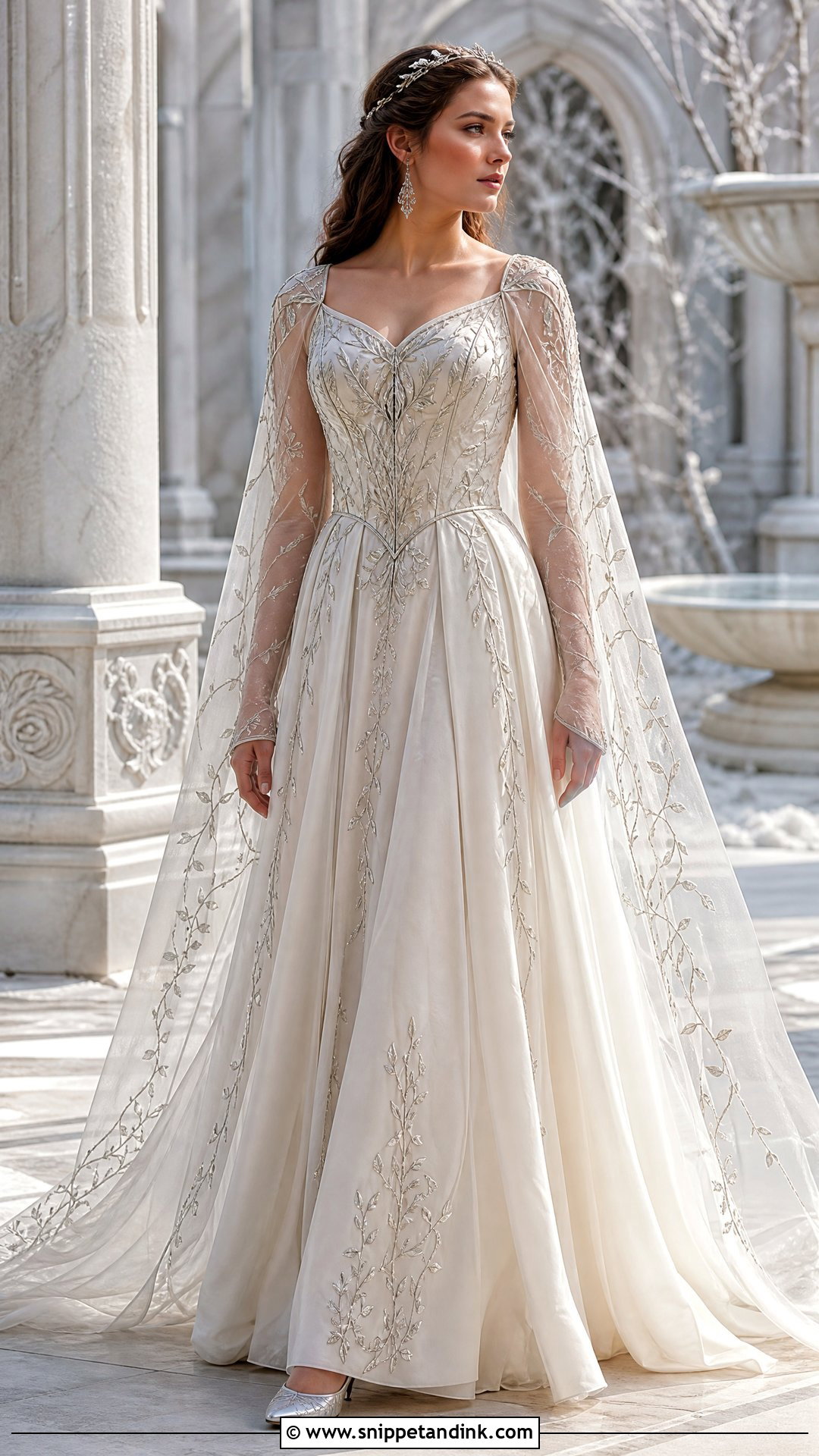
Silver embroidery on ivory keeps a classic bridal palette while adding fantasy detail. Vines, stars or botanical motifs across the bodice, fading onto the skirt, look delicate; sheer fitted sleeves can carry the work to the wrist. Silver flats, crystal drops and a thin circlet or hair vine suit it. A translucent cape with a matching embroidered border is a striking alternative to a veil. Keep the bouquet pale. Metallic thread can scratch the inner arm, so I check for a soft lining behind any embroidery on the sleeves. It suits winter weddings and grand interiors.
11. Off-Shoulder Medieval Fantasy Wedding Dress
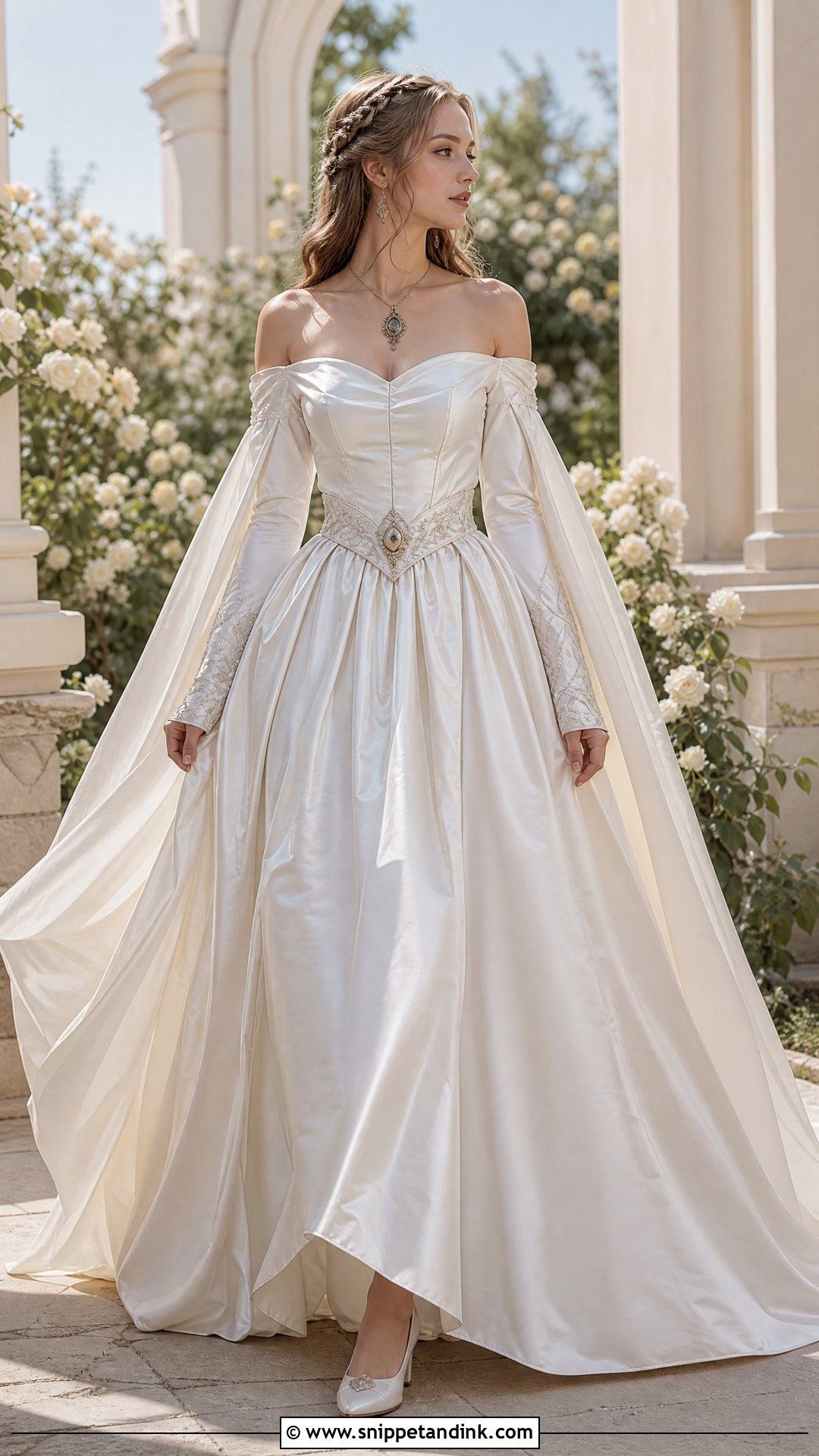
Off-shoulder necklines are romantic, and long draped sleeves keep the medieval character. The bodice must be structured enough to stay put, with a full skirt in satin, crepe or layered chiffon. Lace at the neckline and a narrow embroidered belt add definition. A gemstone pendant, low block heels and a half-up braid finish it, plus a light cape for the ceremony. My fitting test is to have the bride raise both arms and hug. Off-shoulder sleeves restrict arm movement more than any other cut, and the neckline should not slip when you do either.
12. Square-Neck Medieval Fantasy Wedding Dress
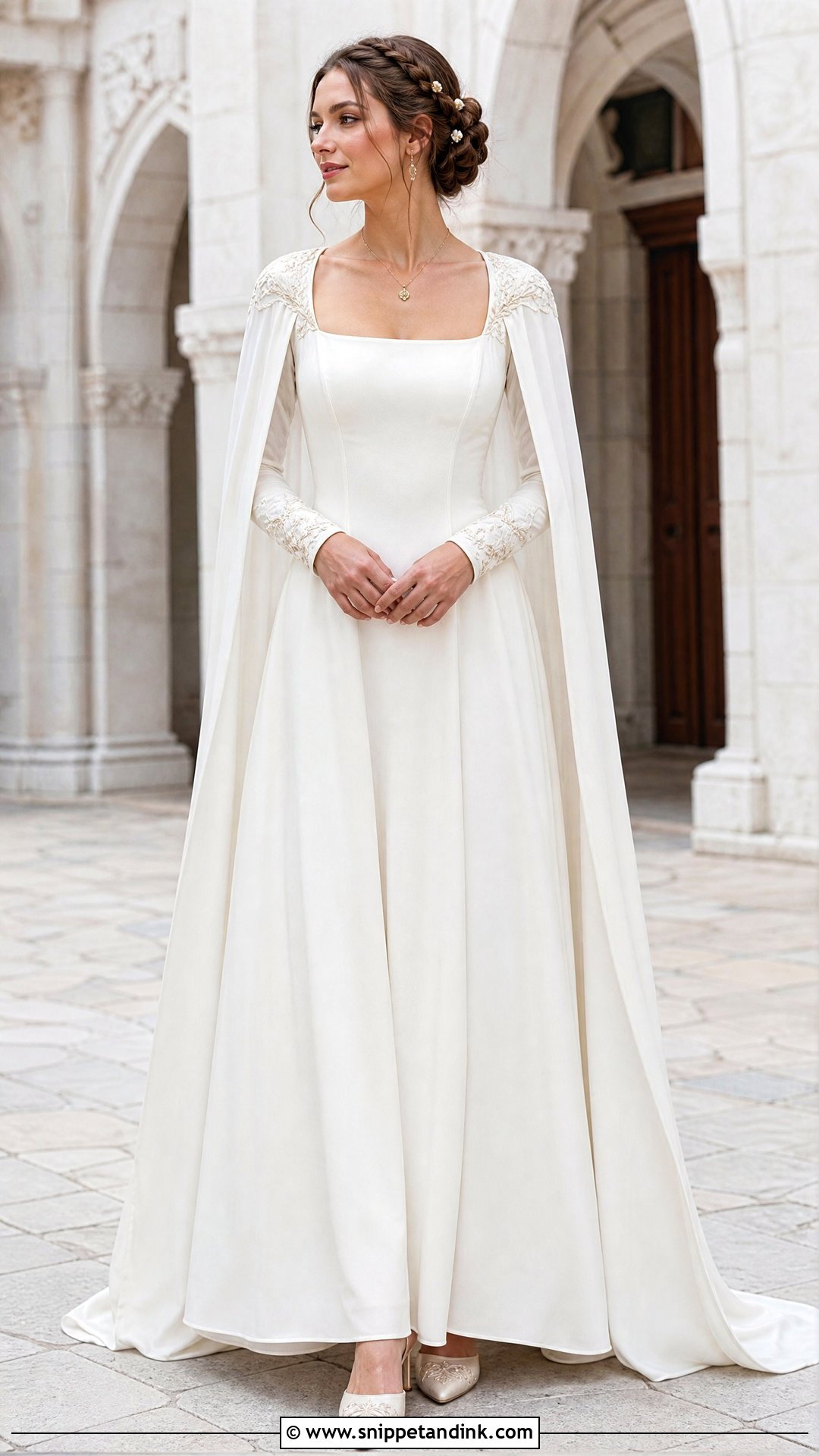
A square neck looks structured and regal, especially with a fitted bodice, natural waist and long flowing skirt. Slim sleeves with embroidered cuffs add history without volume. Ivory linen blends, matte satin or soft crepe keep it refined rather than formal. A pendant that sits neatly inside the neckline, low slippers and a braided bun with pearl pins complete it, and a detachable train or light shoulder cape adds drama for the ceremony. This is the one I recommend to brides who like simple shapes and precise tailoring.
13. High-Neck Medieval Fantasy Wedding Dress
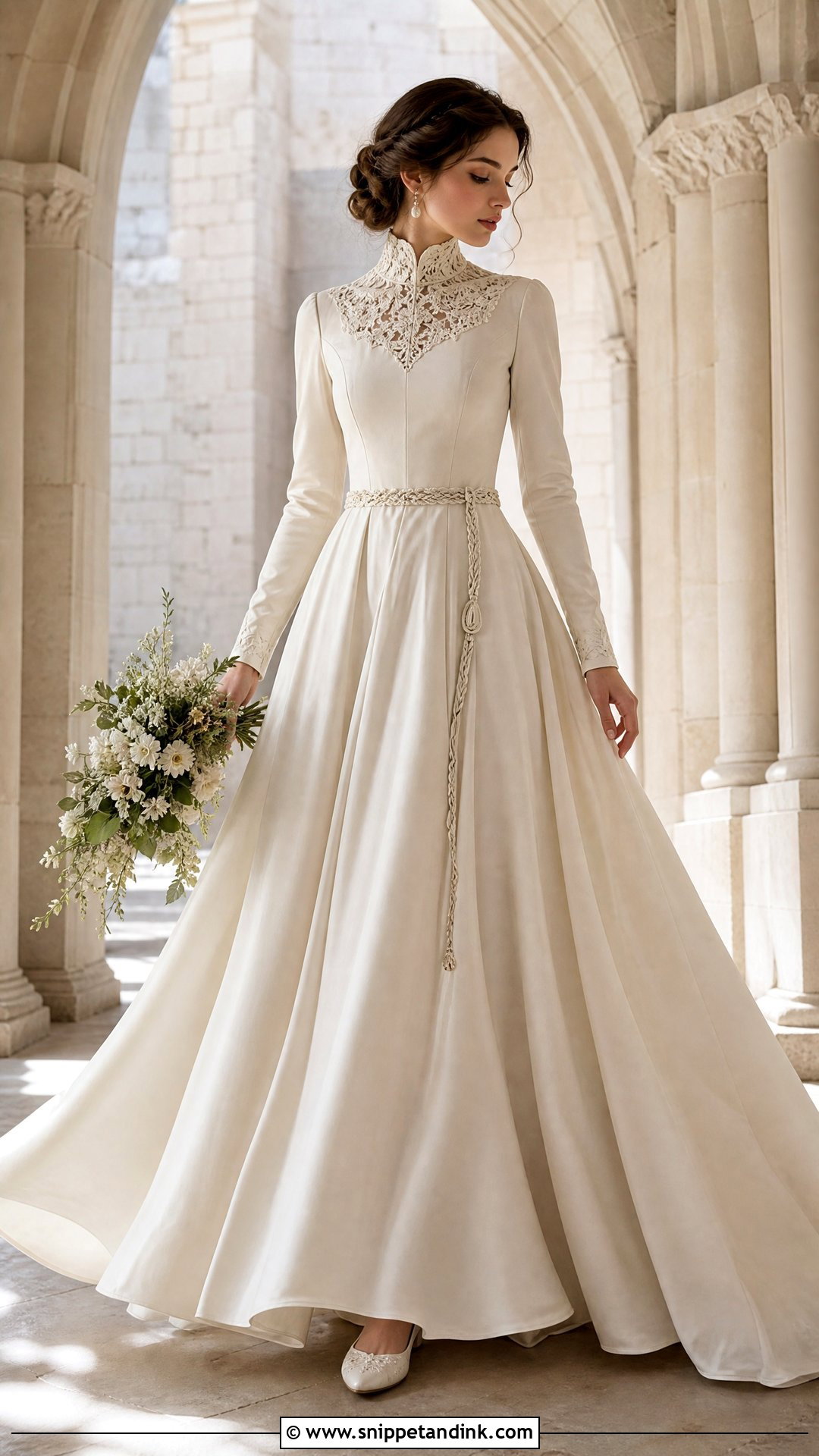
High necks give modest coverage and still look romantic in lace or with an embroidered yoke. Pair long sleeves with a softly fitted bodice and a full skirt from the natural waist; covered buttons down the back add a vintage note. The collar must be light, so I ask brides to turn their heads fully and swallow at the fitting. Pearl earrings, a thin braided belt, ivory flats and a low twisted updo suit it, with hair pins or a slender circlet in place of a necklace. Cooler weather and formal ceremonies suit it.
14. Layered Chiffon Medieval Fantasy Wedding Dress
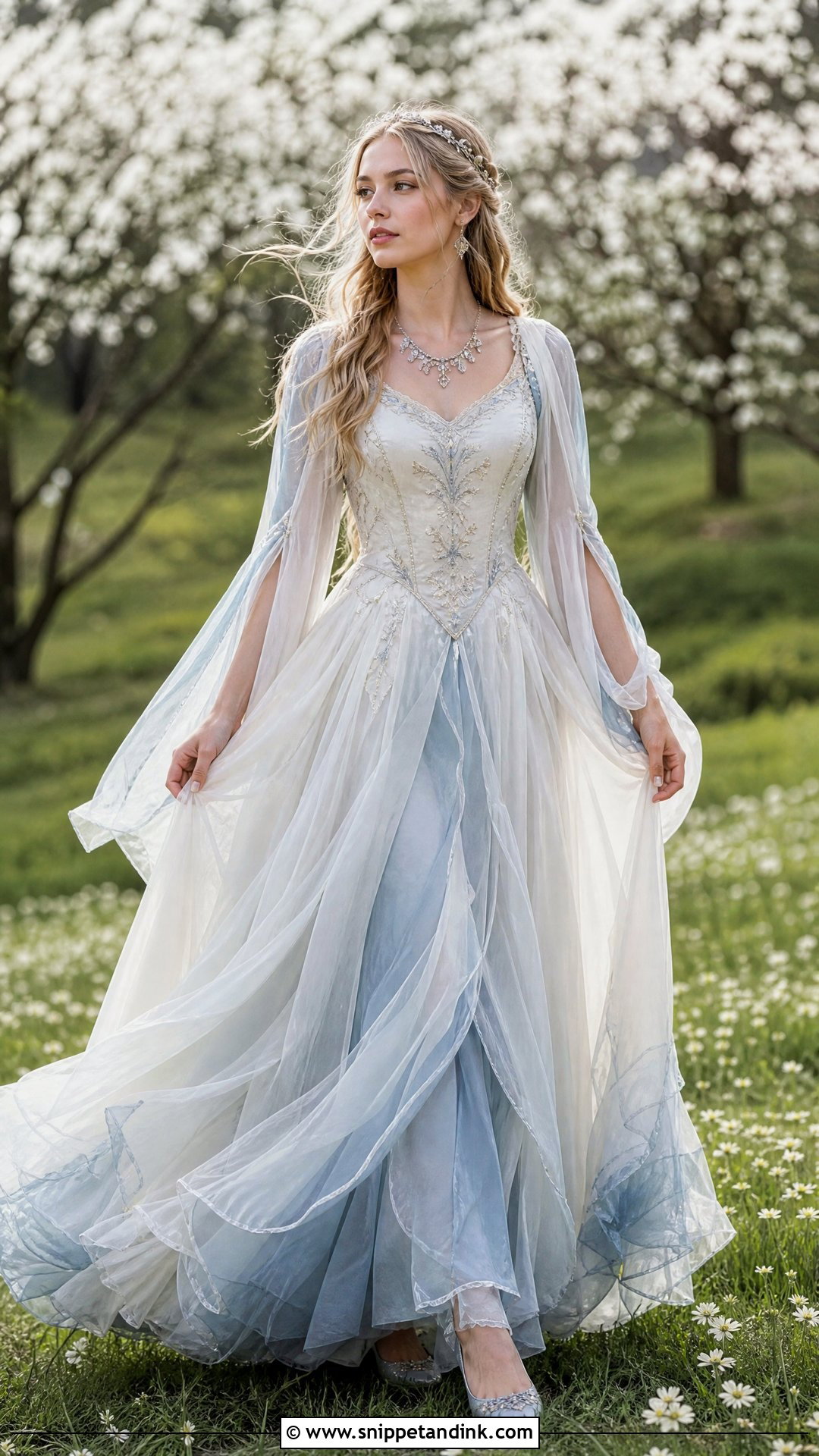
Several light layers of chiffon give the soft movement of an ethereal fantasy bridal look far better than one heavy fabric. Use a fitted embroidered bodice and long split sleeves that echo the skirt in walking portraits. Ivory is classic; pale gray, misty blue or lavender underlayers add depth. Embellished flats, fine silver and loose waves held back by a hair vine complete it. Ask for a secure inner lining, because layered chiffon can still turn see-through in bright light. Spring and summer gardens, fields and woodland paths suit it.
15. Lace Trumpet-Sleeve Medieval Fantasy Wedding Dress
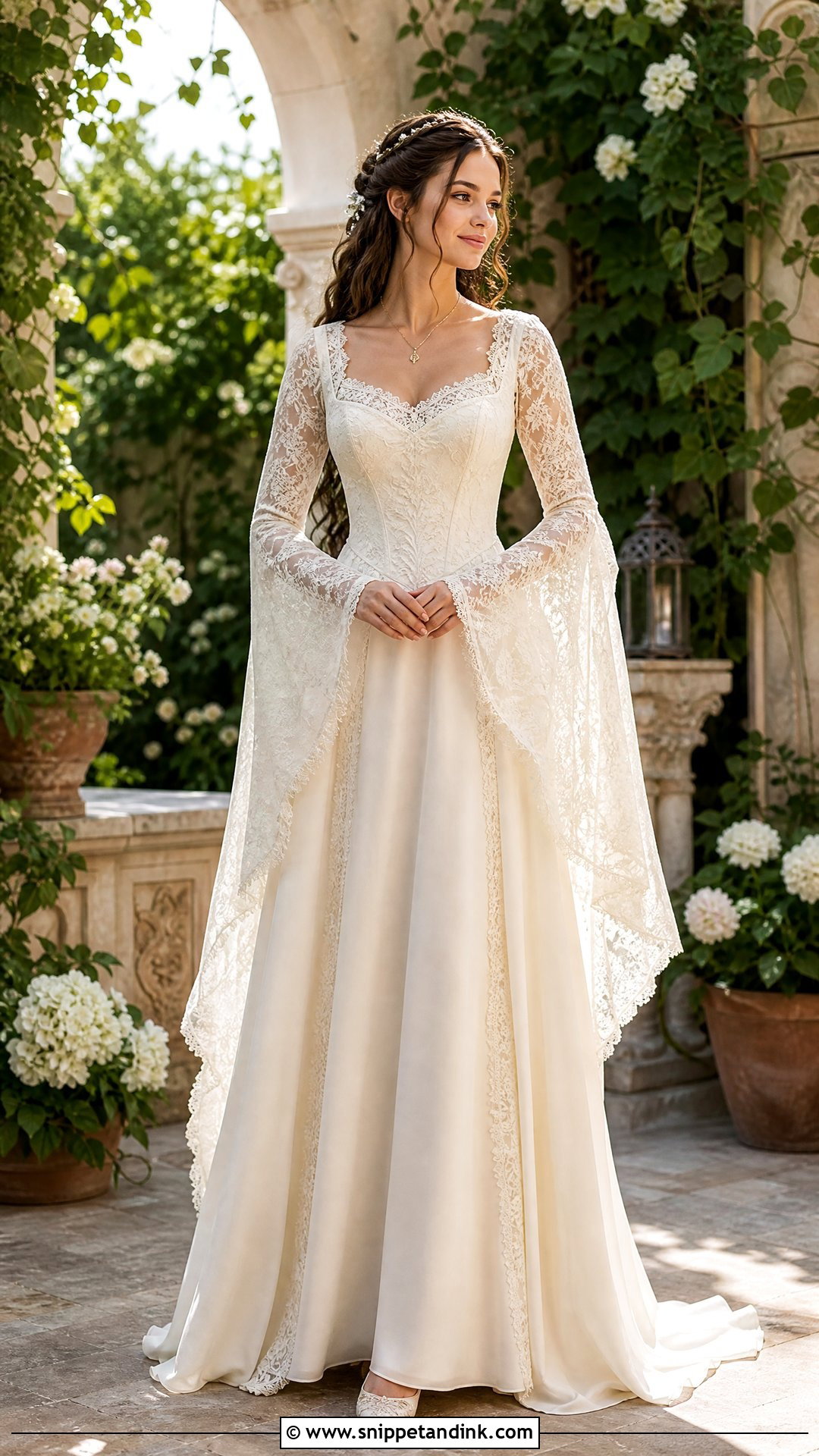
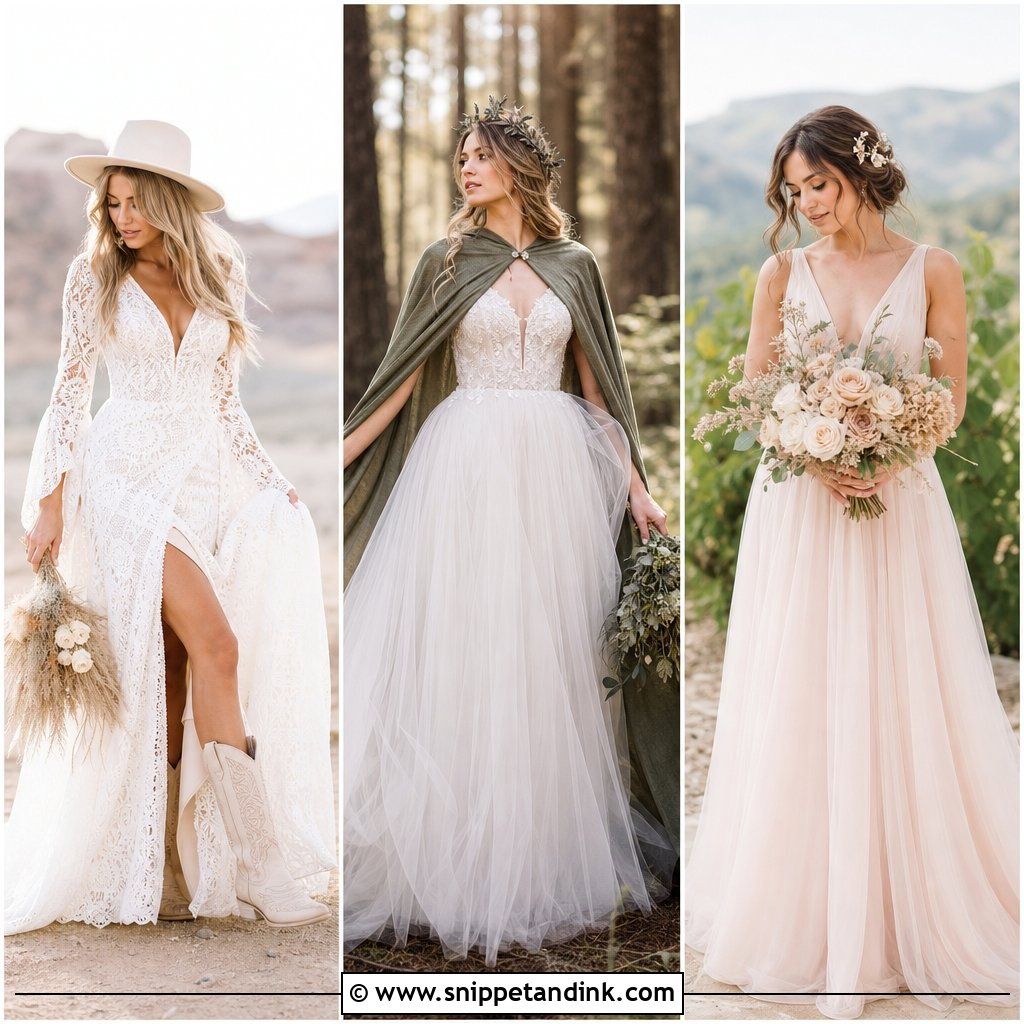
Trumpet sleeves fit to the elbow and open into lace or chiffon below, which gives drama without bulk on the upper arm. A supportive bodice and smooth A-line skirt balance the volume. Repeat the sleeve lace at the neckline, waist or hem rather than adding a second pattern. Pointed flats, a small pendant and a half-up braid with small flowers suit it. Sit at a table in it before the wedding. Wide sleeve ends drag through plates and candles, and that is the moment brides wish they’d asked for a discreet wrist loop.
16. Renaissance Corset Medieval Fantasy Wedding Dress
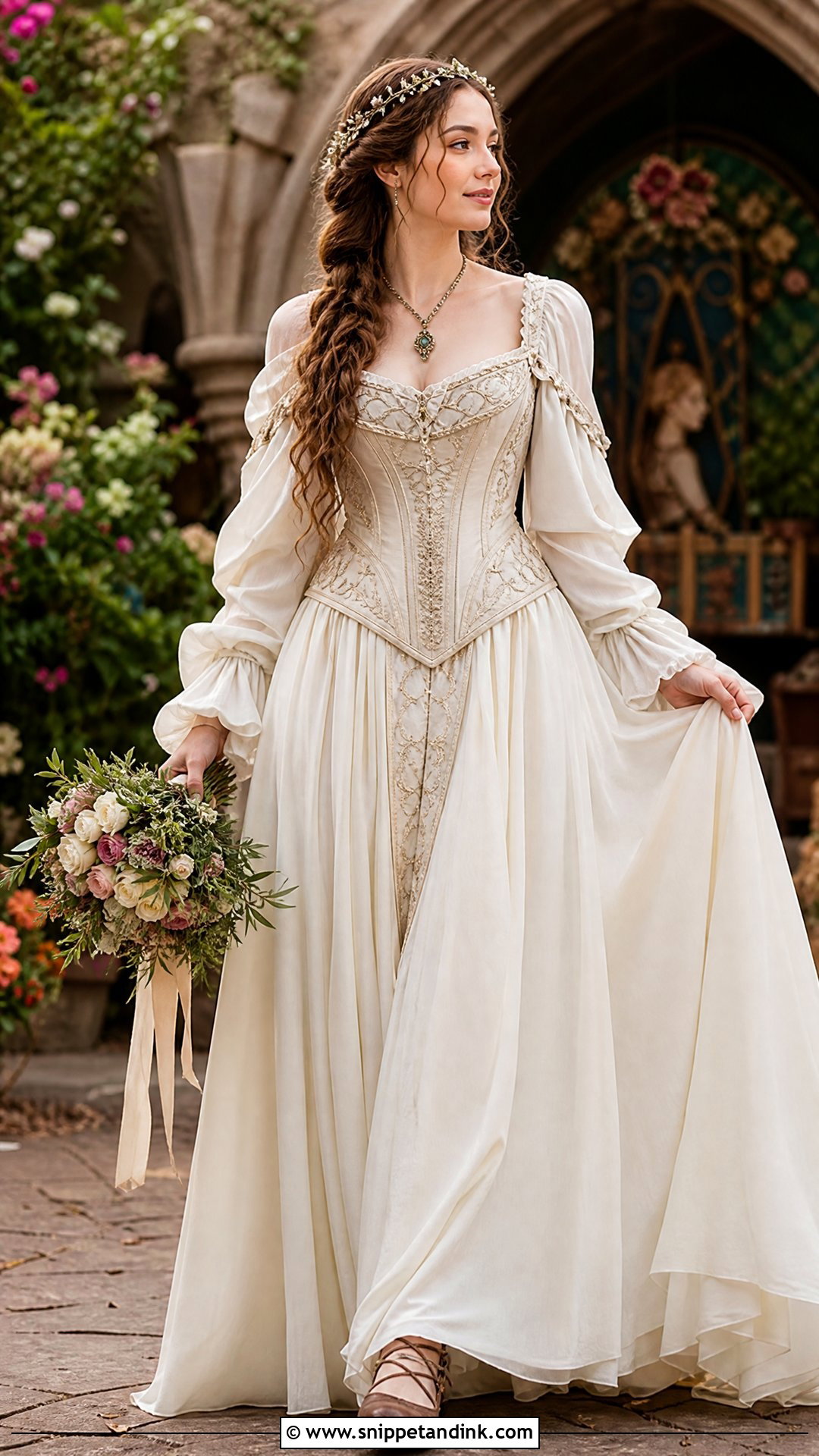
A Renaissance-style corset gown works when the construction is genuinely good. A structured over-bodice over a soft chemise-style underdress with long gathered sleeves, and a skirt in satin, cotton velvet or crepe, is the shape. Lacing should tone with the embroidery, not contrast in harsh cord. Low leather-look shoes, a gemstone necklace and a floral circlet or braids complete it. Have it fitted by someone who works with corsetry. A badly fitted bodice shifts, digs at the hip and gets painful by the reception, and that’s not something you can fix on the day.
17. Black Medieval Fantasy Wedding Dress
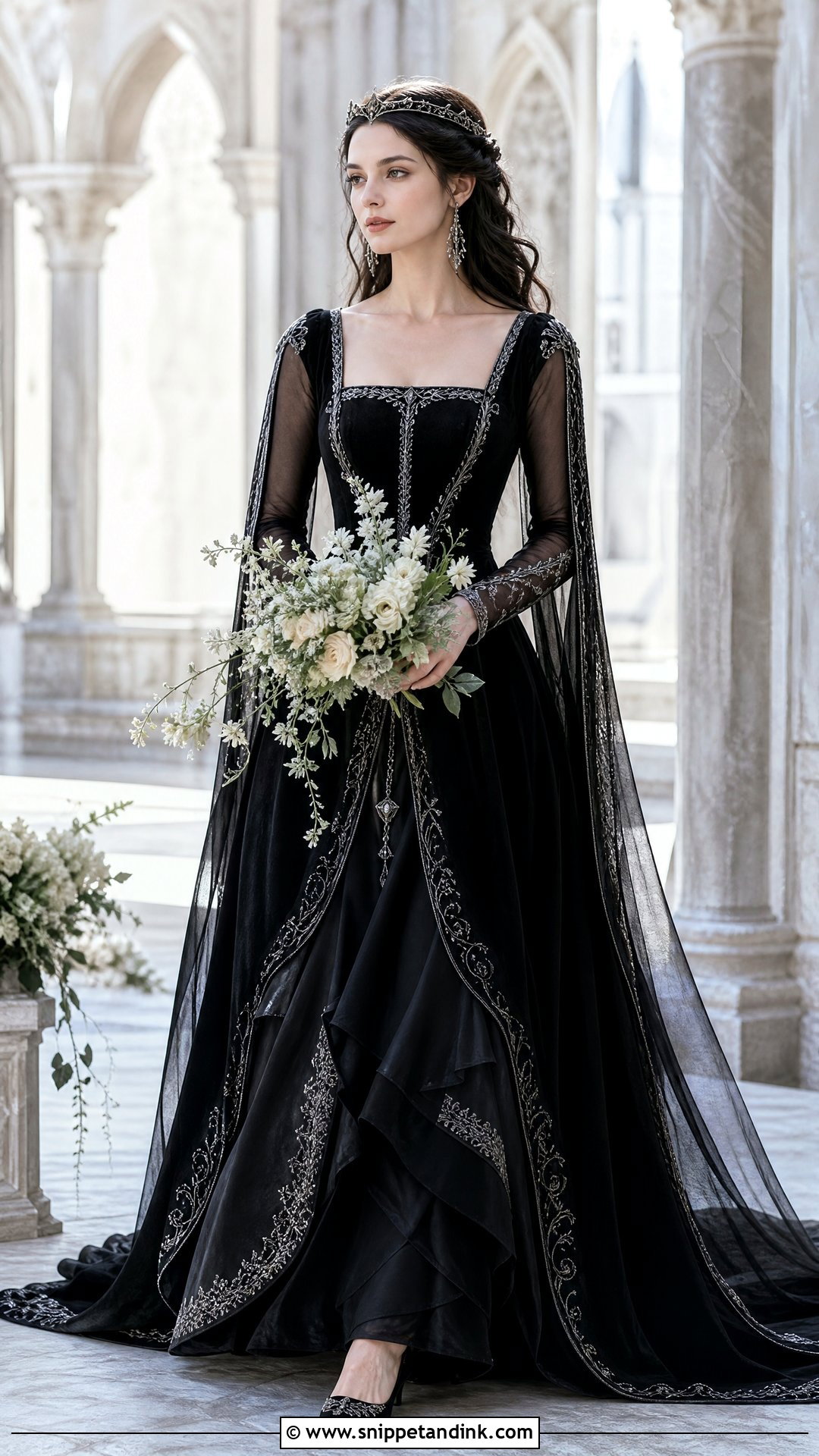
Black is the dramatic alternative, and texture is what keeps it from looking flat in photos. Matte velvet, satin or layered tulle all give the camera something to read. Silver embroidery, sheer sleeves and a square neck add definition; an ivory or gray underskirt adds contrast while keeping the mood. Black pointed flats, silver drops and a fine metal circlet suit it. White, lavender or deep red flowers stand out against it. Keep the makeup luminous rather than theatrical. Tell your photographer in advance, since black gowns need exposure adjusted to hold their detail.
18. Blush Fairy Medieval Fantasy Wedding Dress
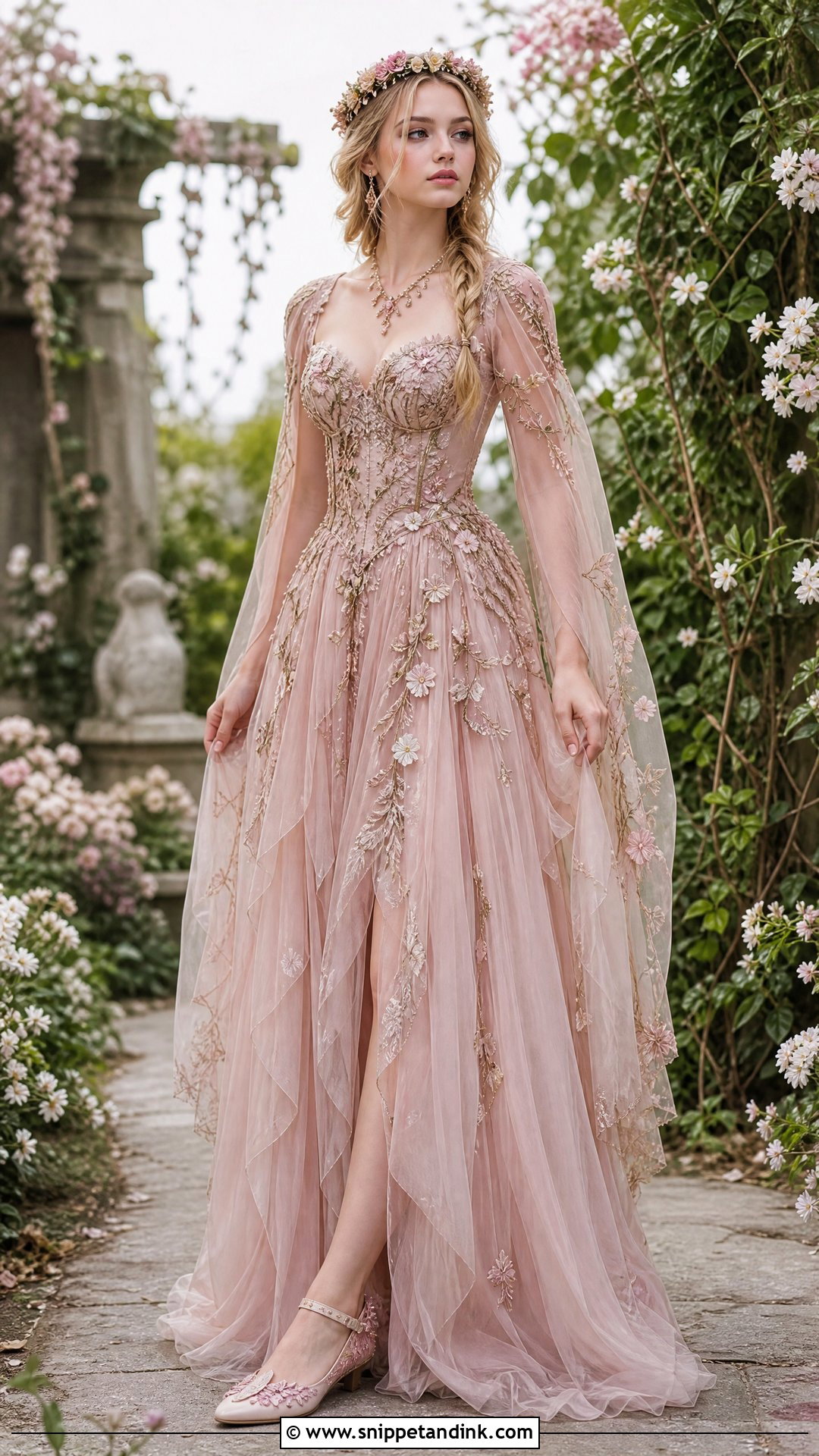
Blush brings warmth to a fairy-inspired medieval bridal gown. A flowing chiffon skirt, a fitted embroidered bodice and sheer sleeves with small florals are the base; an ivory lining keeps the pink subtle, and scattered appliqués add depth at the waist and shoulders. Blush or ivory flats, a delicate flower crown and fine rose-gold jewelry complete it, with loose waves or a relaxed braided updo. Skip heavy glitter and wings. They push it into costume straight away, and a sheer floral cape gives plenty of movement on its own.
19. Plus-Size Medieval Fantasy Wedding Dress
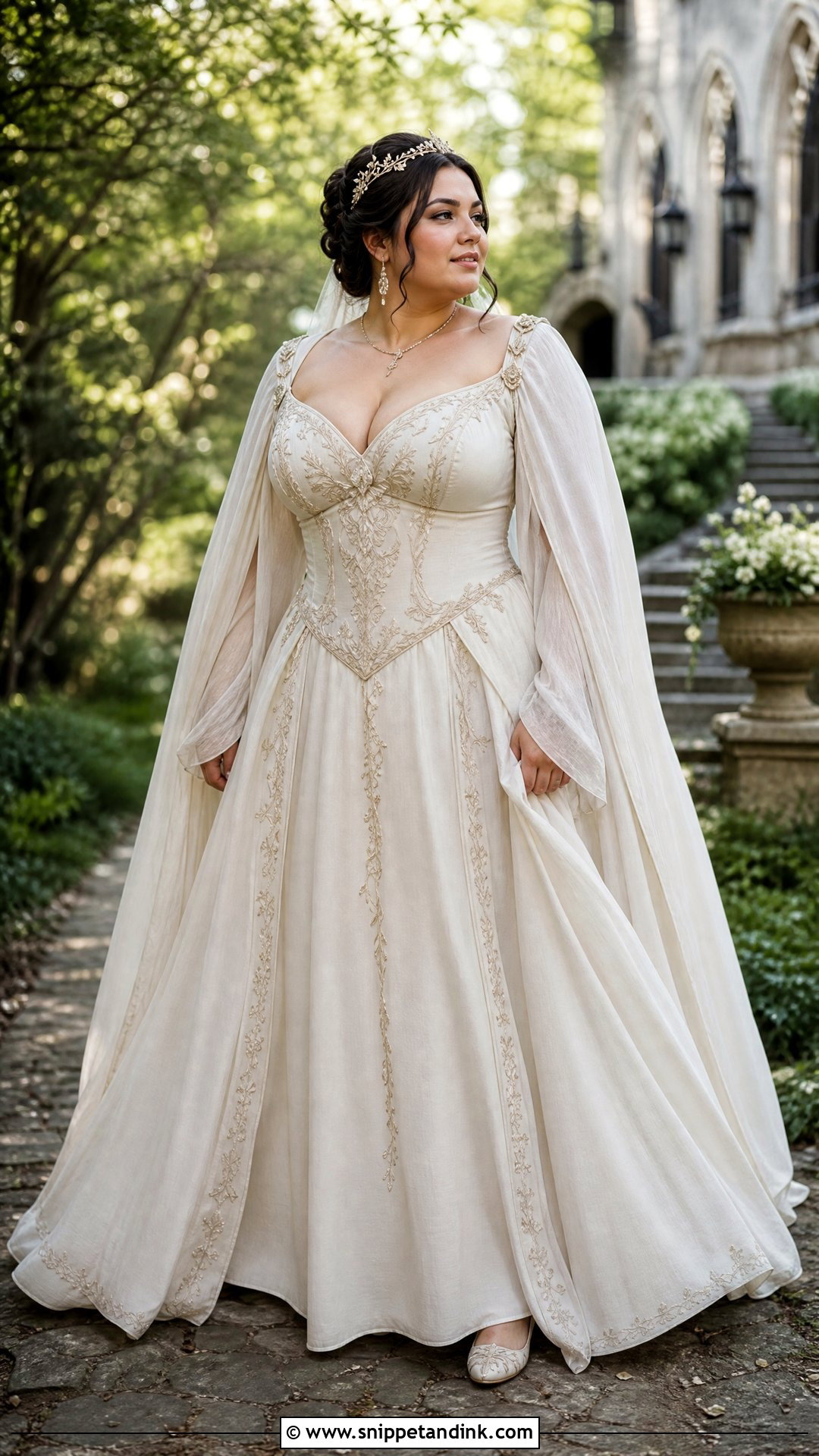
For plus-size brides, support is engineered from the inside. An internal corset or structured bodice gives definition, so the decorative lacing doesn’t have to be pulled tight. A square or softly curved neckline, flowing sleeves and an A-line skirt from the natural waist all work, with embroidery along the neckline and center bodice drawing the eye up. Supportive flats or low heels, a light cape and a braided updo with fine metal pieces complete it. Ask for custom sleeve and hem lengths instead of accepting standard proportions. Ivory, forest green, burgundy and deep blue all suit.
20. Modest Medieval Fantasy Wedding Dress
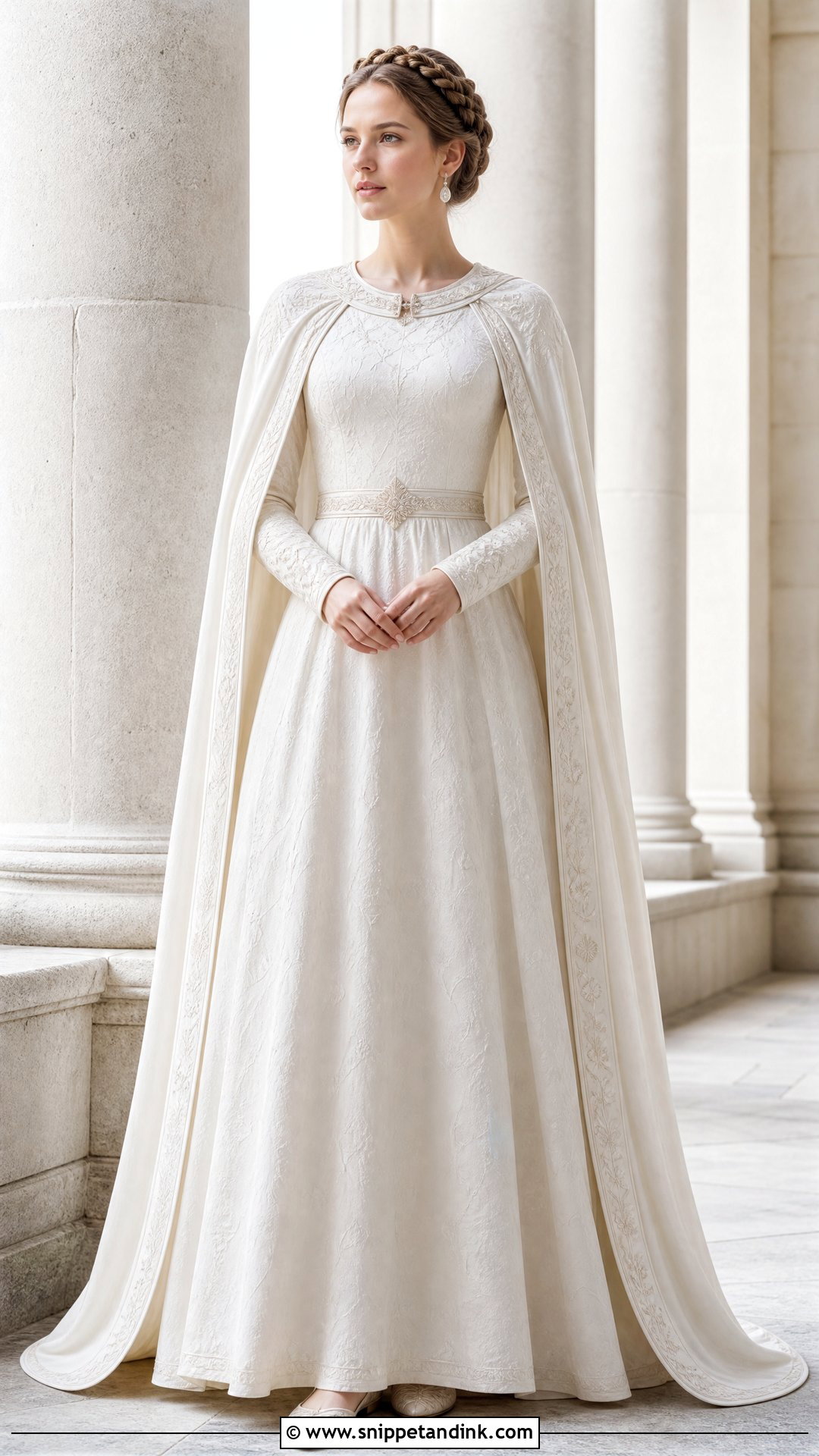
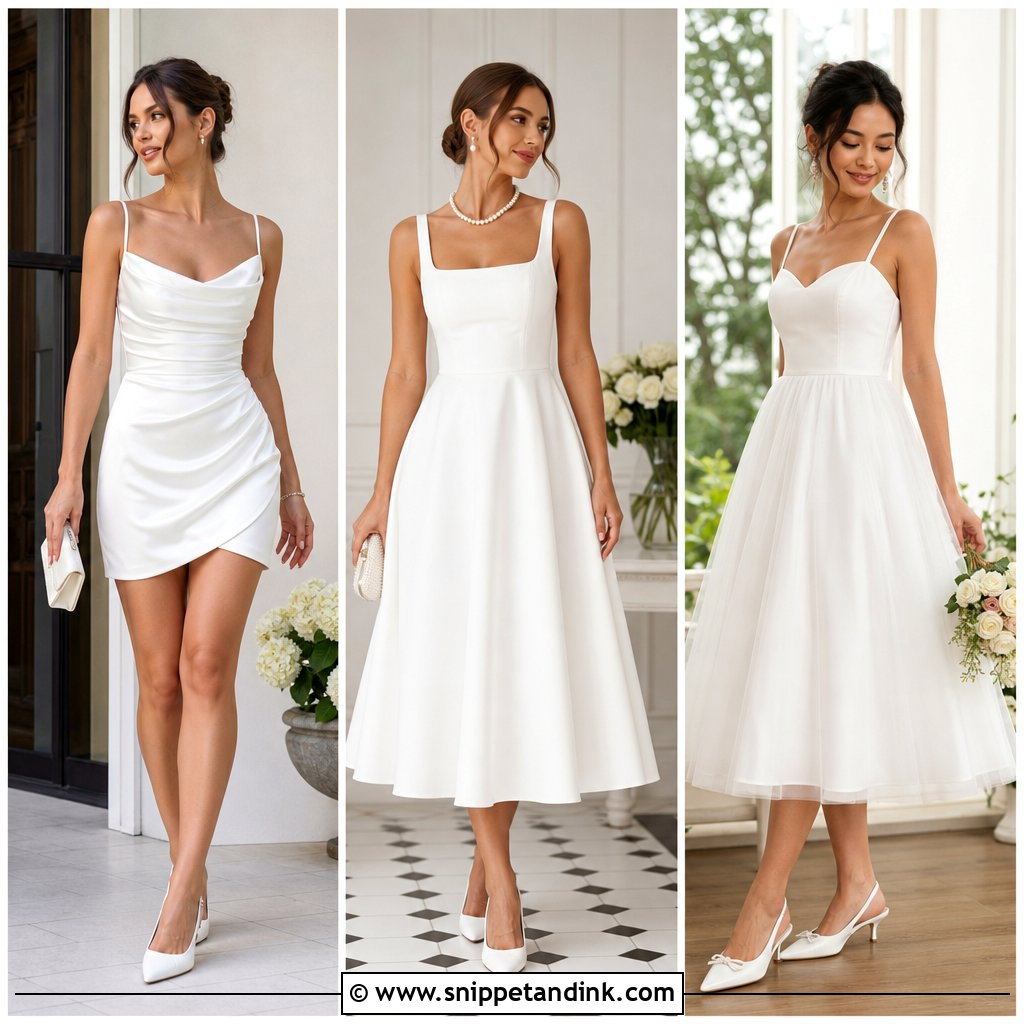
Full coverage looks regal rather than plain when texture and proportion get the attention. A floor-length gown with a high or softly rounded neckline, long sleeves and a defined waist is the base; lace cuffs, embroidered borders and covered buttons add interest. A flowing overskirt or detachable cape adds ceremony drama. Closed-toe flats, pearl earrings and a braided crown or low bun suit it. I concentrate detail at the neckline and waist rather than spreading it everywhere. Breathable sleeves and a light lining make it wearable through any season.
21. Winter Medieval Fantasy Wedding Dress
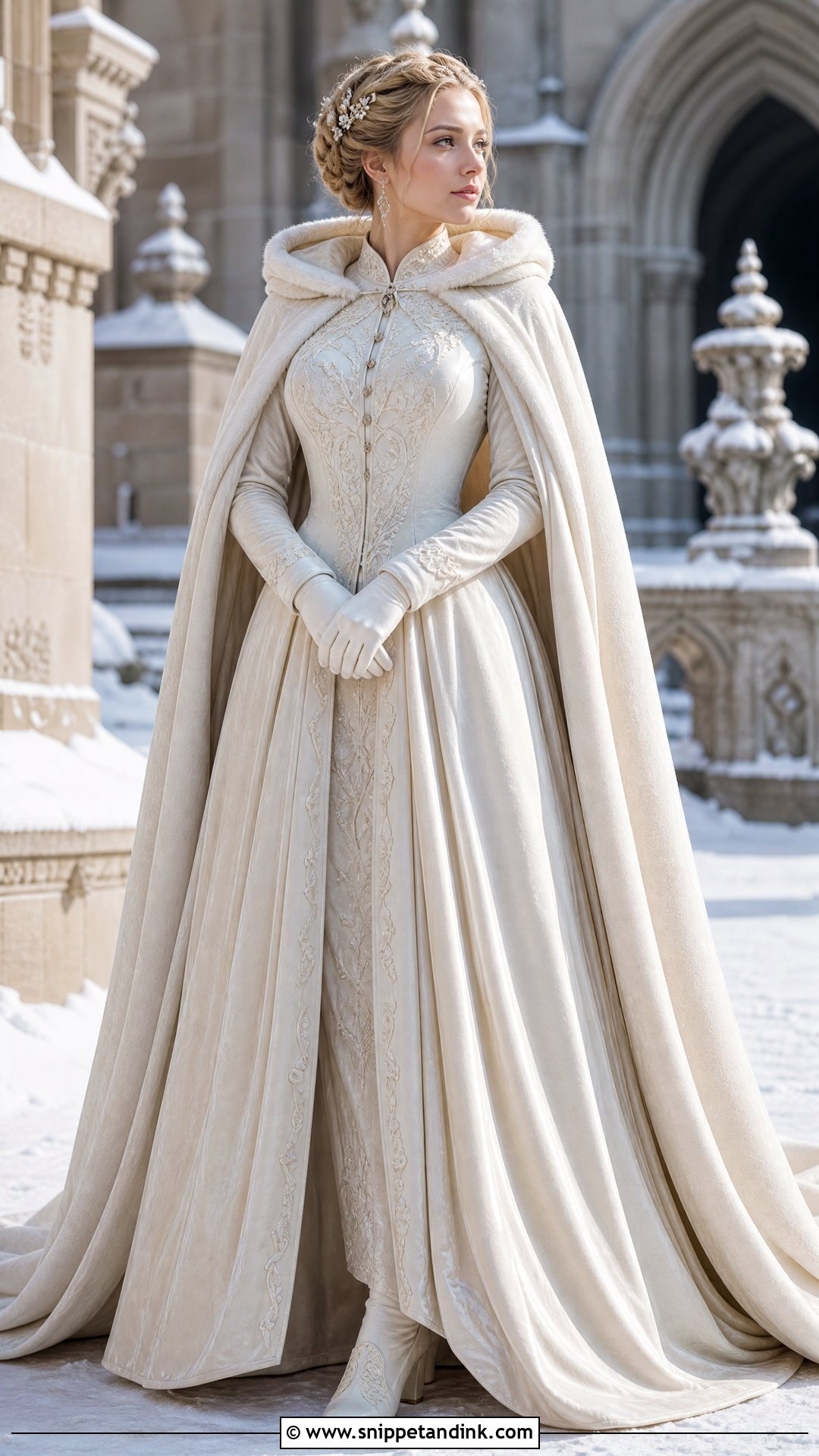
Winter is when this style makes the most sense: velvet, long sleeves, layered skirts and lined capes. Start with ivory or a deep jewel tone with a fitted bodice and full skirt, then add a lined hooded cape in matching velvet or faux fur-trimmed fabric. Closed-toe block heels, opaque stockings and fitted gloves help through outdoor portraits. The clasp should sit smooth and secure, because a heavy cape pulls on the neckline. A braided updo, crystal pins and silver drops finish it. Have the gown fitted with your thermal base layer on, not without it.
22. Summer Medieval Fantasy Wedding Dress
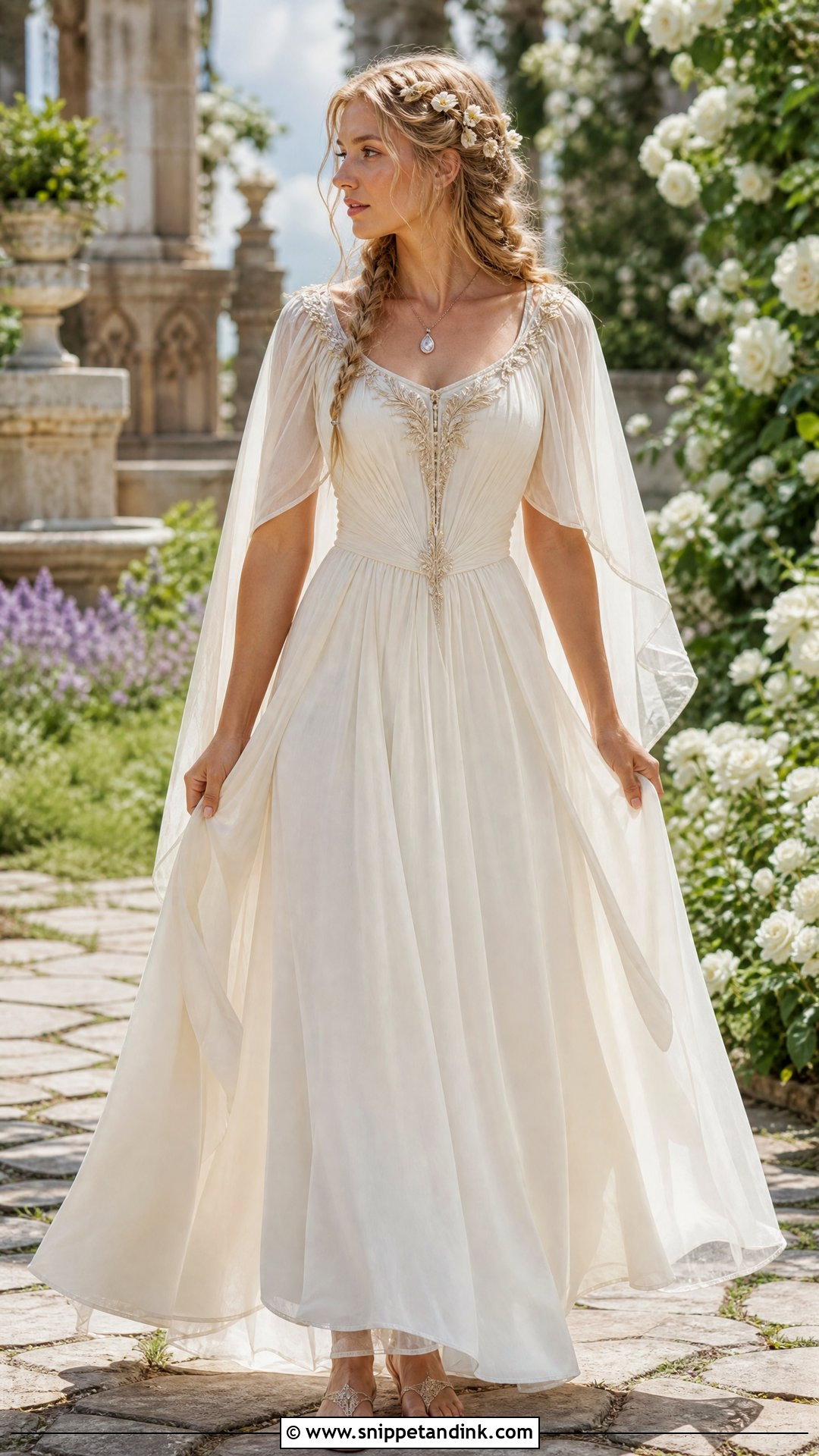
Summer means fewer layers and lighter fabric. Chiffon, linen blends, cotton voile or soft crepe with a smooth lining all breathe. A flexible fitted bodice, short flutter sleeves and an airy A-line skirt give shape without trapping heat, with subtle embroidery at the neckline and waist for the fantasy note. Flat sandals, a small pendant and a loose braid with flowers complete it, and a short sheer cape replaces a heavy cloak. Thick velvet, dense corsetry and multiple underskirts are a real risk of overheating at an outdoor summer ceremony.
23. Woodland Medieval Fantasy Wedding Dress
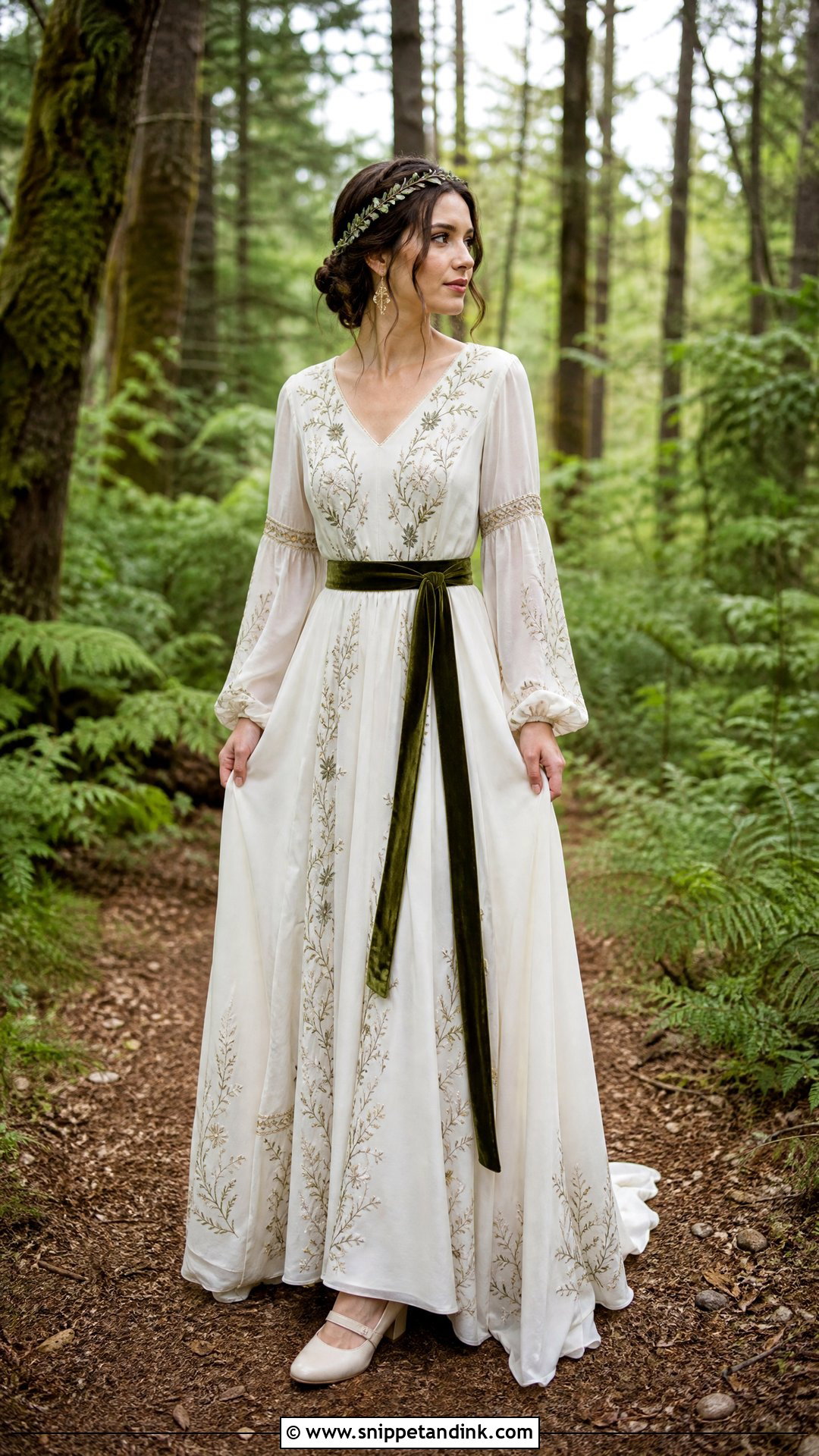
Woodland ceremonies suit botanical embroidery, flowing fabric and earthy accessories. Choose an ivory gown with vines along the bodice, sleeves and hem, and connect it to the setting with a moss green overskirt or a narrow velvet belt. Sturdy flats or low block heels handle grass and roots. A leaf hair vine, small earrings and a loose braided updo finish it. Keep the train short or add a wrist loop, and check the hem after the walk to the ceremony site for burrs and seeds.
24. Castle Medieval Fantasy Wedding Dress
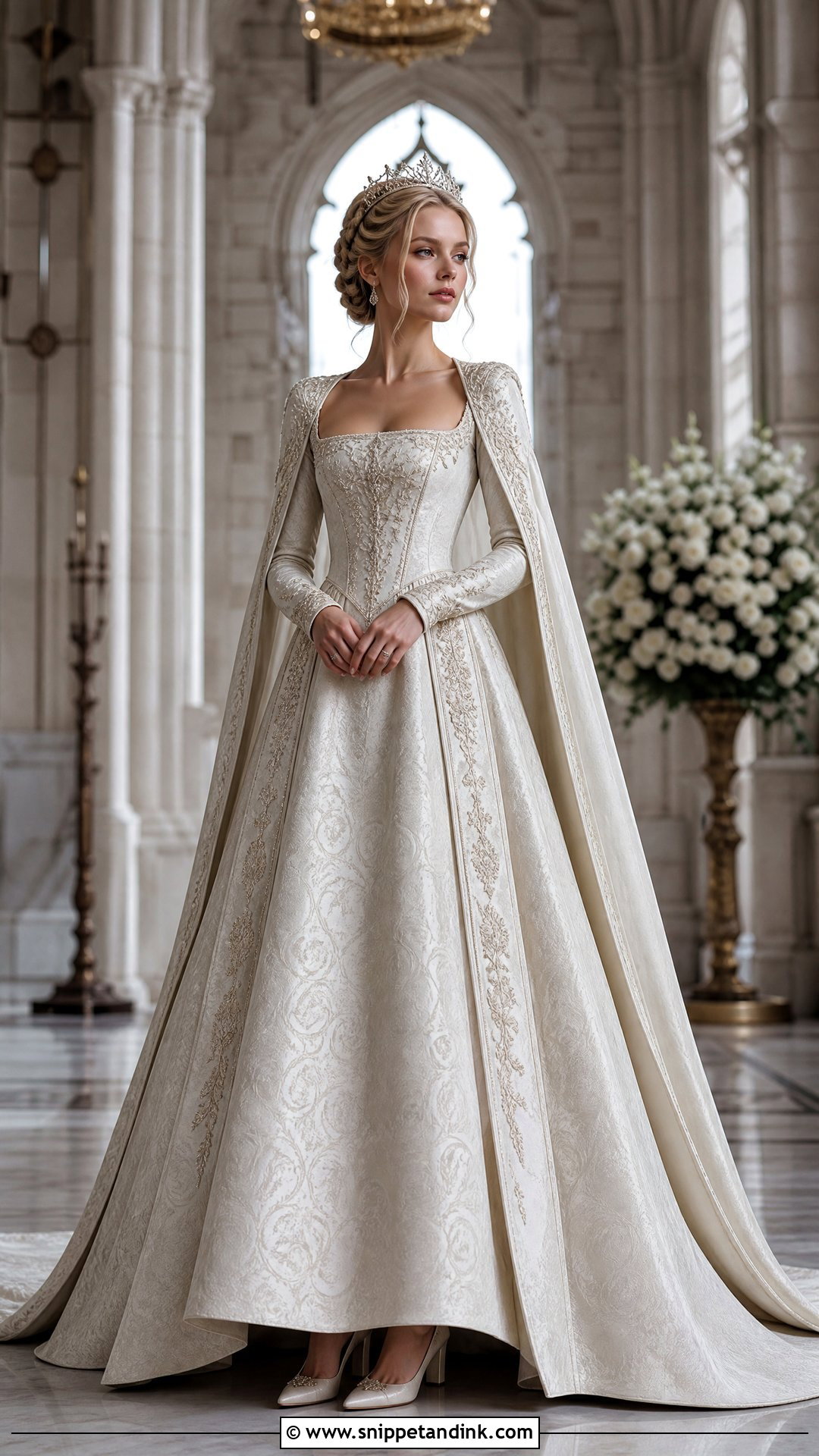
A castle venue can carry the most structure of any setting. A square neck, embroidered corset bodice, long sleeves and a sweeping satin or brocade skirt all hold their own against stone walls. A cathedral-length cape fastened at the shoulders adds movement without hiding the back of the gown. Choose metallic embroidery that catches light without swamping the fabric. Pointed block heels, a slim crown and a formal braided updo complete it, in ivory, silver, royal blue or burgundy. Old stone floors and spiral stairs are hard on trains, so make sure it bustles for the reception.
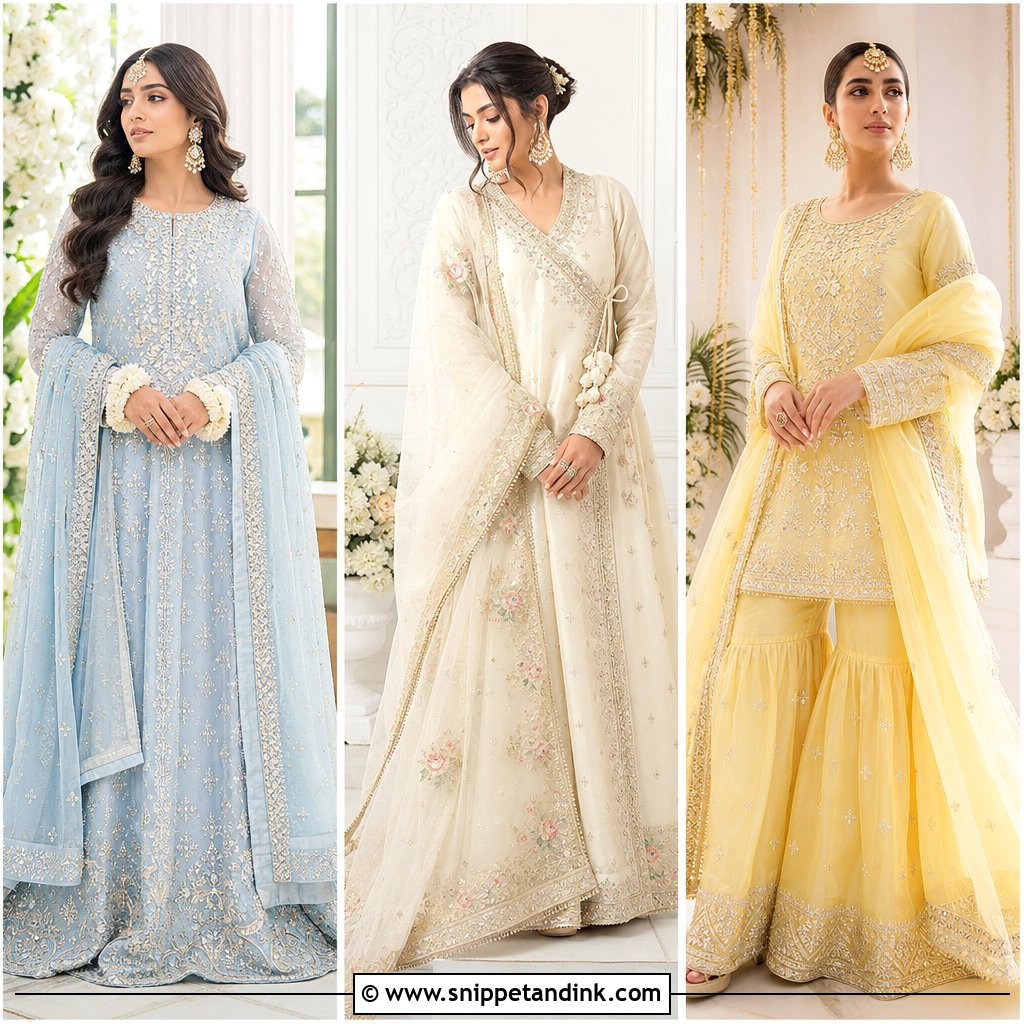

25. Two-Piece Medieval Fantasy Wedding Dress
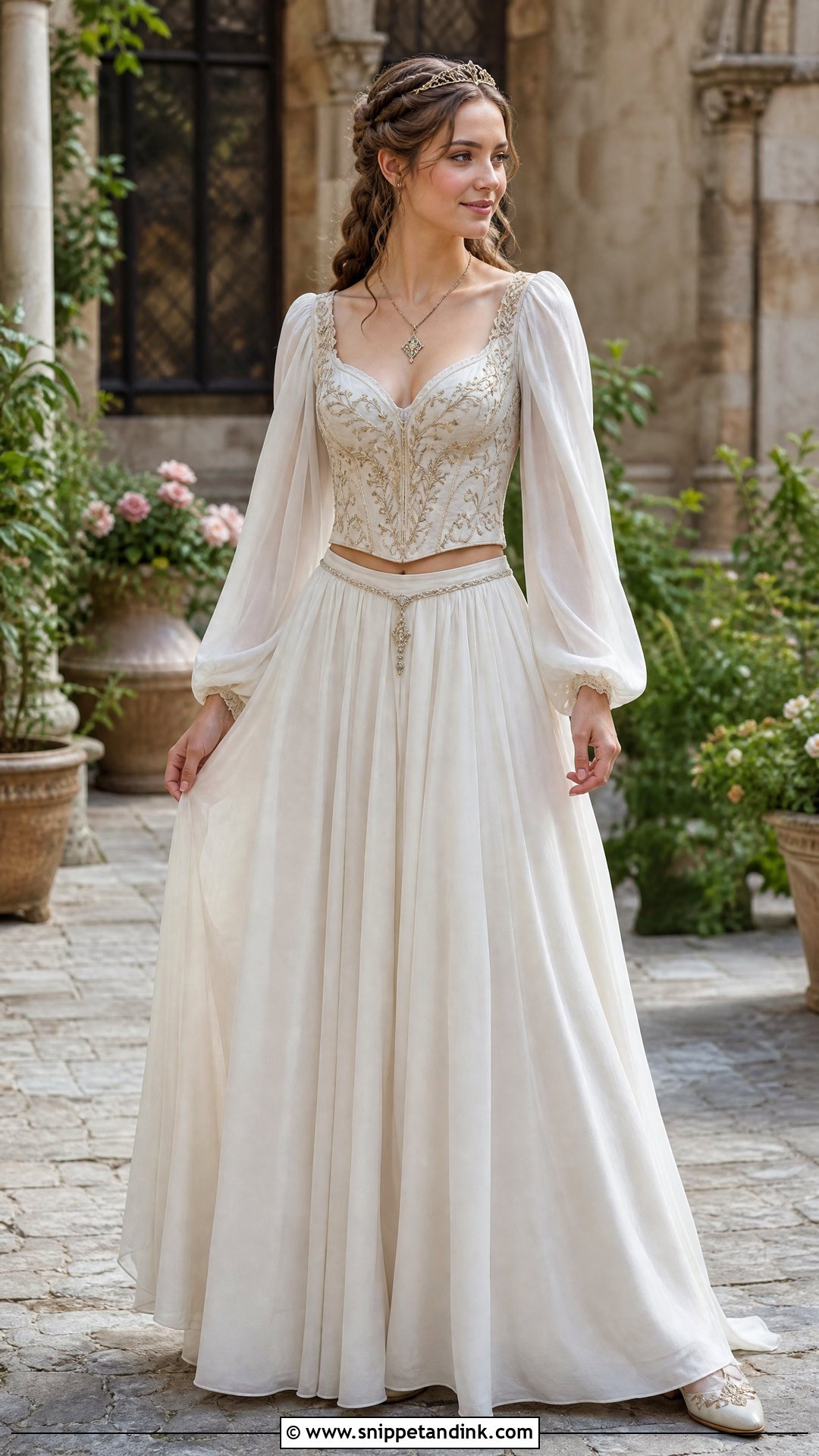
Separates give you a full gown look with more flexibility. An embroidered corset-style top with a high-waisted floor-length skirt in matching satin, chiffon or velvet, plus a soft underblouse with full sleeves for coverage, is the classic set. Keep every piece in one color family so it reads as one outfit. Low heels, a pendant and a braid with a simple circlet finish it. I like separates for alterations, because top and skirt can be fitted independently, and the blouse can come off for a lighter reception look.
Bell Sleeves at Dinner and Other Practical Snags
The features that make these gowns special are the same ones that cause trouble once the ceremony ends. None of them are reasons to avoid the style; they just need a plan.
Sleeves and capes
Long hanging sleeves trail through food and brush candle flames. A hidden wrist loop or a small button that tucks the sleeve end up during dinner solves it. Capes and veils tangle together, so I usually advise choosing one or the other, or having the cape detach after portraits.
Lacing, layers and the bathroom
A laced bodice loosens slightly as the fabric warms up, so have someone who knows how it’s laced available to retighten it before the first dance. Multiple skirts and underskirts make bathroom trips tricky. Practice once at home with a helper, and decide in advance which layers can be gathered up together.
- Carry spare lacing cord, since cord can snap or fray at the eyelets.
- Bring a small sewing kit with thread matched to the gown.
- Keep flat shoes nearby if the venue has stone stairs or uneven floors.
Storybook, Not Stage Costume
A fantasy gown succeeds when the imagination is backed by good construction, comfortable fabric and details that suit the setting. Bell sleeves, structured bodices, botanical embroidery, velvet capes and rich color can all give a bridal look that old-story feeling without tipping into costume. Think about how the dress will move, photograph and feel after several hours. Let shoes, jewelry, hair and outer layers support the gown rather than compete with it. Elven, royal, gothic, rustic or softly romantic, the right version is the one you can wear all day and still feel like yourself.
You'll Like These Ideas:


Leave a Reply