
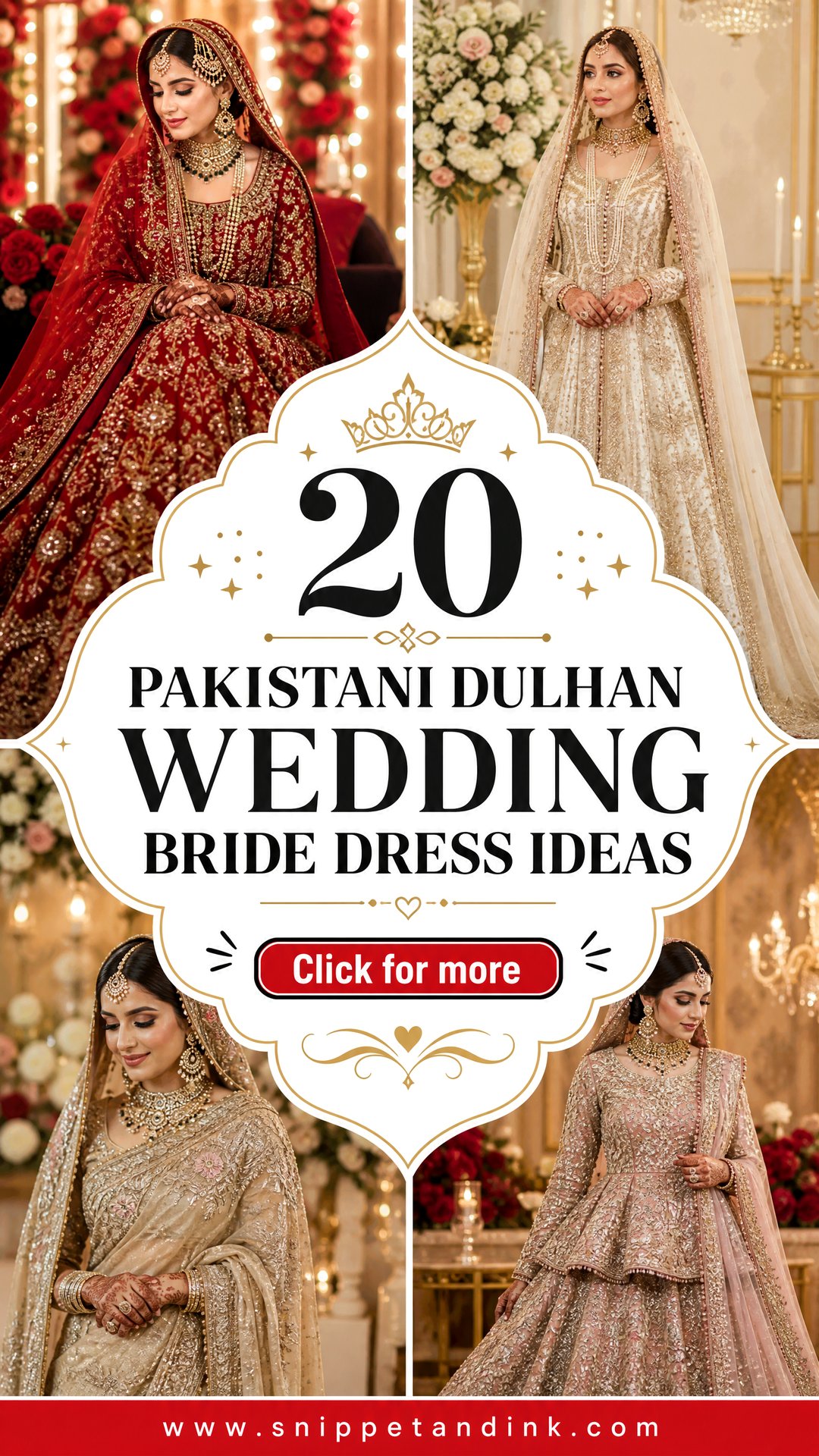
A dulhan’s wardrobe has to carry four very different moods: the quiet nikkah, the loud mehndi, the formal baraat and the reception-style walima. Classic lehengas still lead, but ghararas, shararas and flowing pishwas are firmly back, and pastels now sit comfortably beside the reds. I’d tell any bride to pick by the ceremony, the venue, the weather and her own comfort first, then leave space in the plan for the jewelry and the dupatta, because those two change how any dress reads. Below are twenty complete looks, from zardozi-heavy red lehengas to tonal modern pieces, each with the fitting or styling detail I’d want you to know about.
Proportion Notes for Petite, Tall and Curvy Brides
Most bridal pictures are shot on one body type, and real brides aren’t built like that. When I fit a dulhan, I start with where the eye travels: up and down lengthens, side to side widens. Embroidery placement, shirt length and seam height do more for your shape than any amount of tailoring after the fact.
Petite brides
Keep the shirt or kameez shorter, the waist seam at or slightly above the natural waist, and the embroidery running in vertical lines. Very wide ghararas and farshi trails can swallow a small frame, so I’d moderate the flare and keep the dupatta border narrower.
Tall brides
You can carry the drama: long shirts over lehengas, farshi trails, broad borders and horizontal bands of work. The thing I watch is sleeve and hem length, because ready-made pieces often run short on tall frames.
Curvy brides
Structure through the bust and a defined waist matter most. Full or three-quarter sleeves with a little ease, a slightly wider neckline and heavier work at the hem rather than the hips all help. Soft fabrics like chiffon and organza drape kindly; very stiff tissue can add bulk.
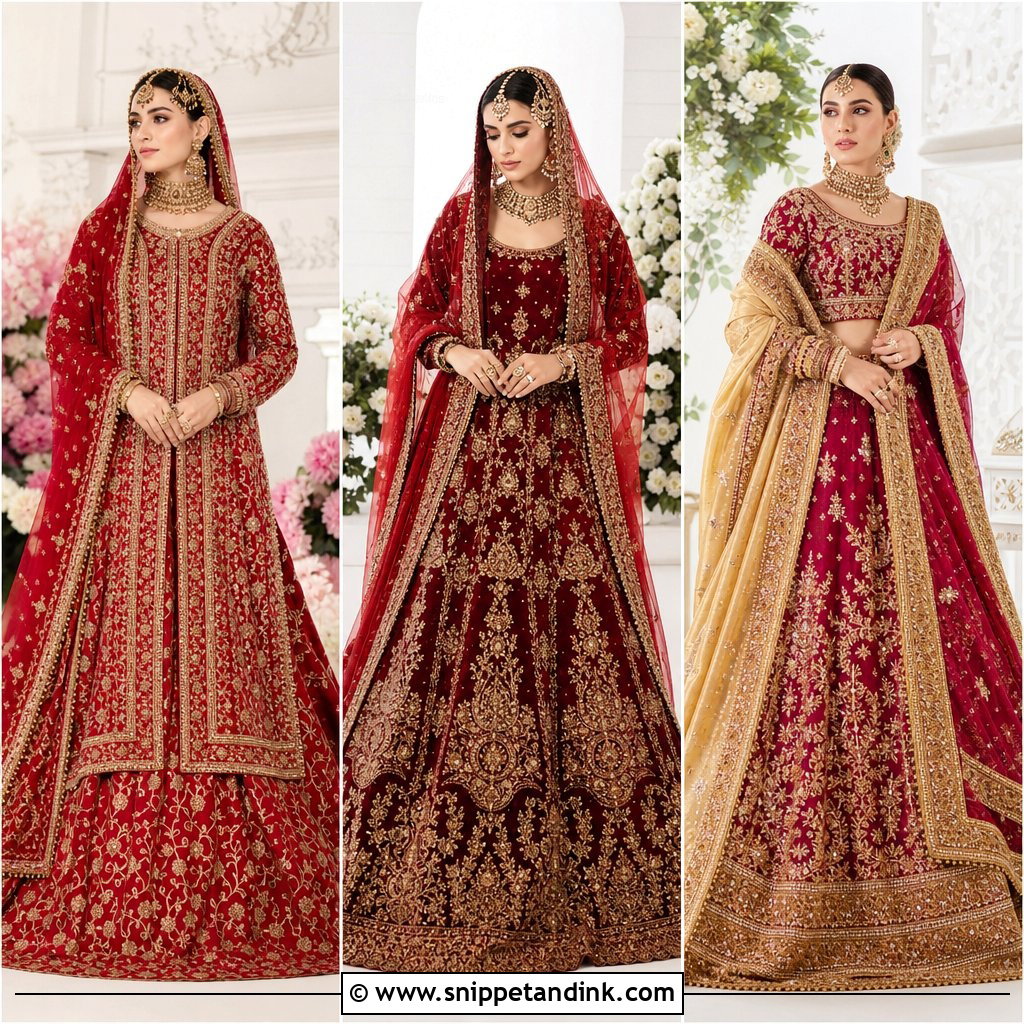
1. Red Pakistani Bridal Lehenga
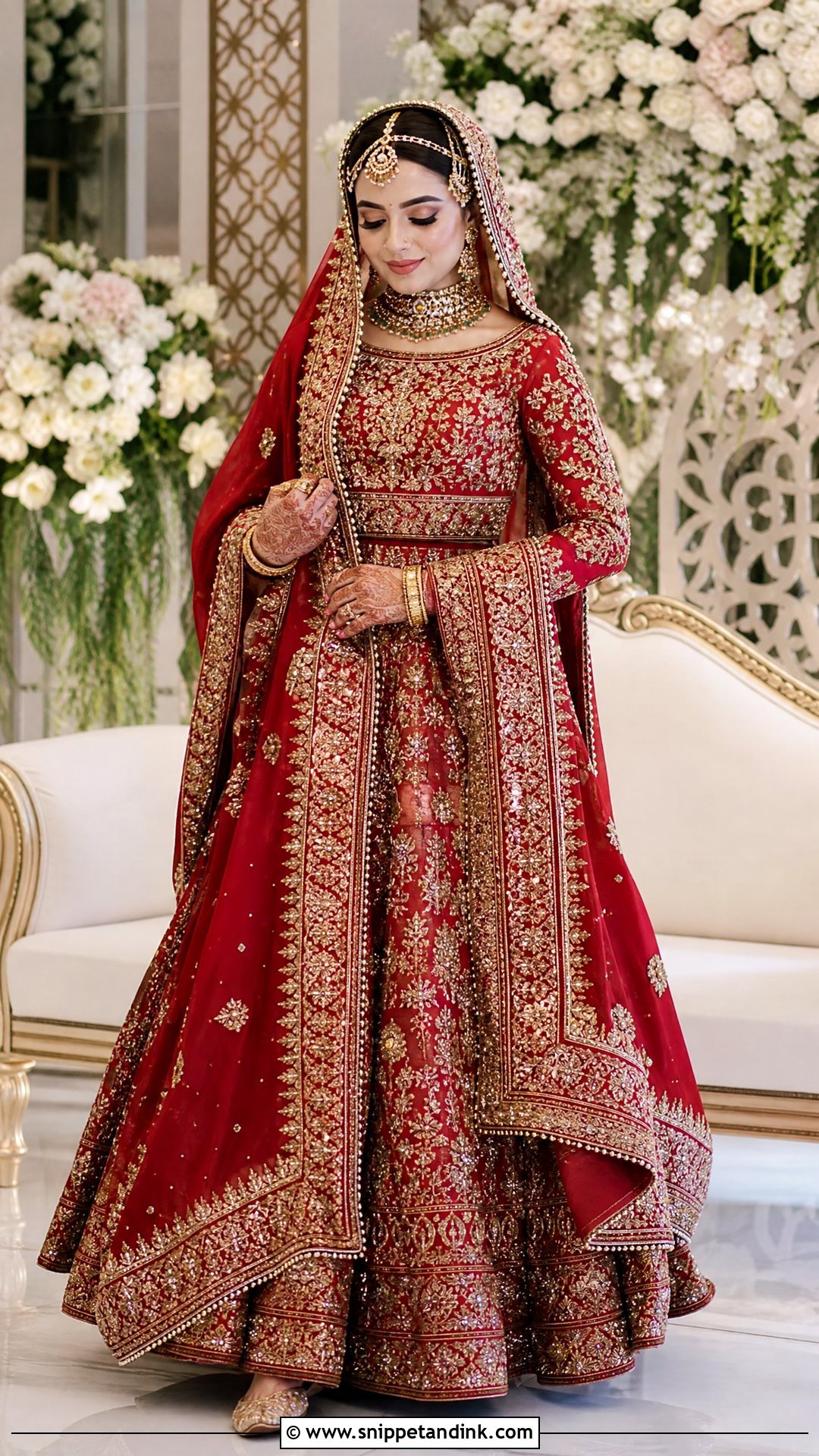
A traditional red Pakistani bridal lehenga remains the baraat benchmark. Raw silk or jamawar takes zari, dabka, nakshi and stonework well, and a fitted blouse or modest choli with matching borders and elbow or full sleeves keeps it balanced. A heavily worked red dupatta covers the head; a lighter second one crosses a shoulder. Gold choker, long necklace, jhumkas, matha patti, bangles and khussas complete the set. My usual adjustment is to keep the blouse structured and push the heaviest motifs down toward the hem, which grounds the outfit and stops the top half from feeling crowded. Soft bronze makeup and a neat bun finish it.
2. Maroon Velvet Pakistani Bridal Lehenga
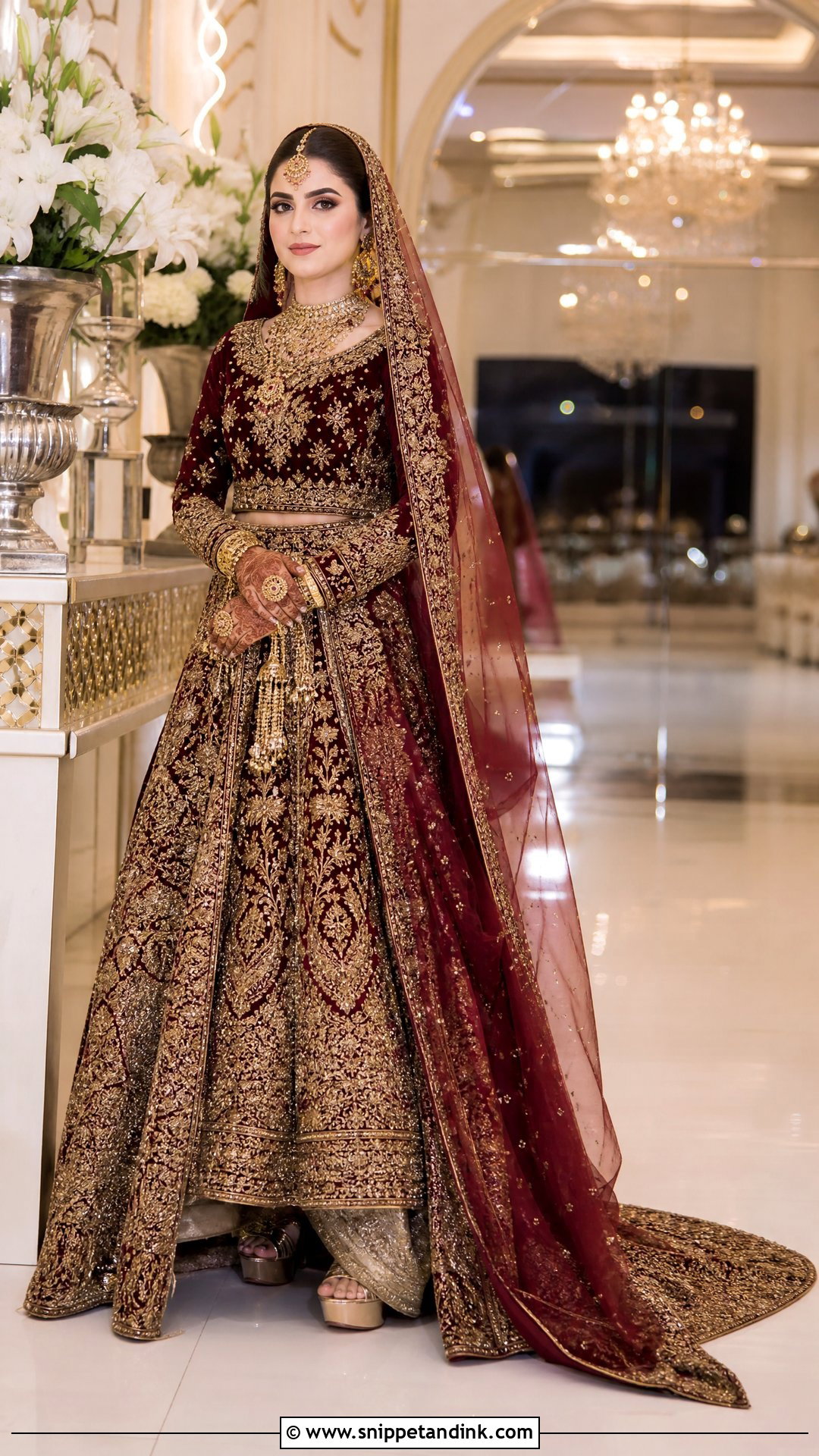
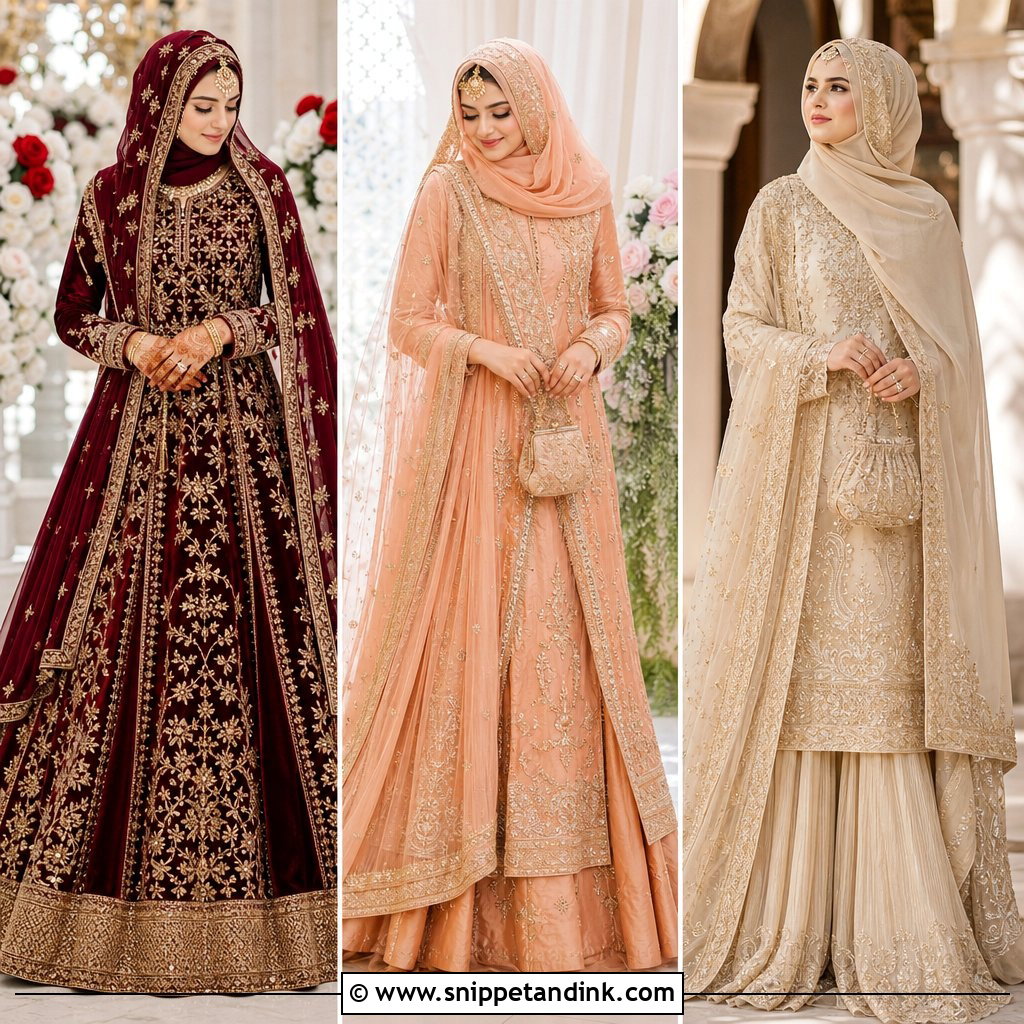
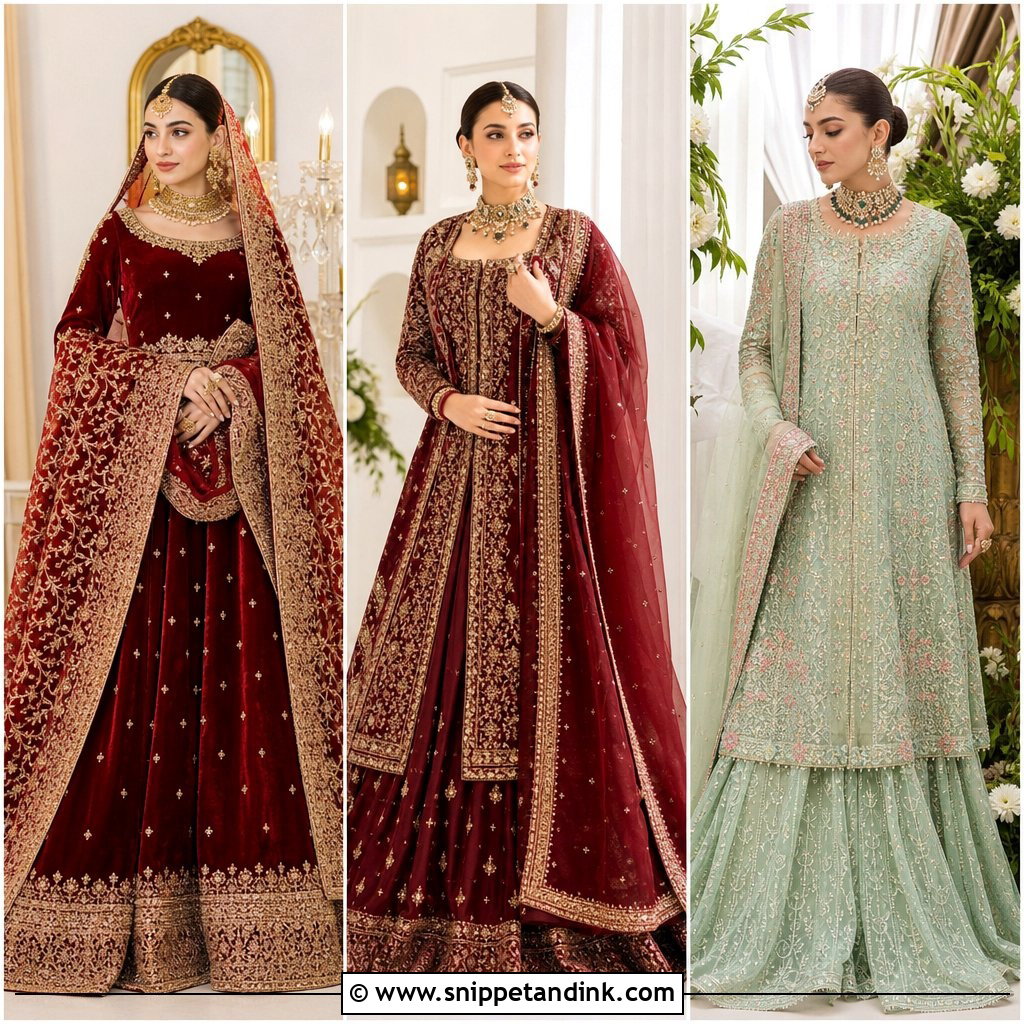
Maroon velvet belongs to winter and evening. A paneled velvet lehenga with antique gold zardozi, resham, pearls and spaced florals pairs with a supportive long-sleeved blouse. Keep the dupatta to sheer net with a broad border; velvet plus a heavy dupatta is more weight than most brides expect. Padded khussas or gold platforms go underneath, with an antique necklace, statement earrings, a jhoomar and bangles. Velvet already looks deep, so I’d embroider the neck, sleeves, waist and hem and leave the panels between them plain. The garment moves far better that way.
3. Ivory Pakistani Bridal Pishwas
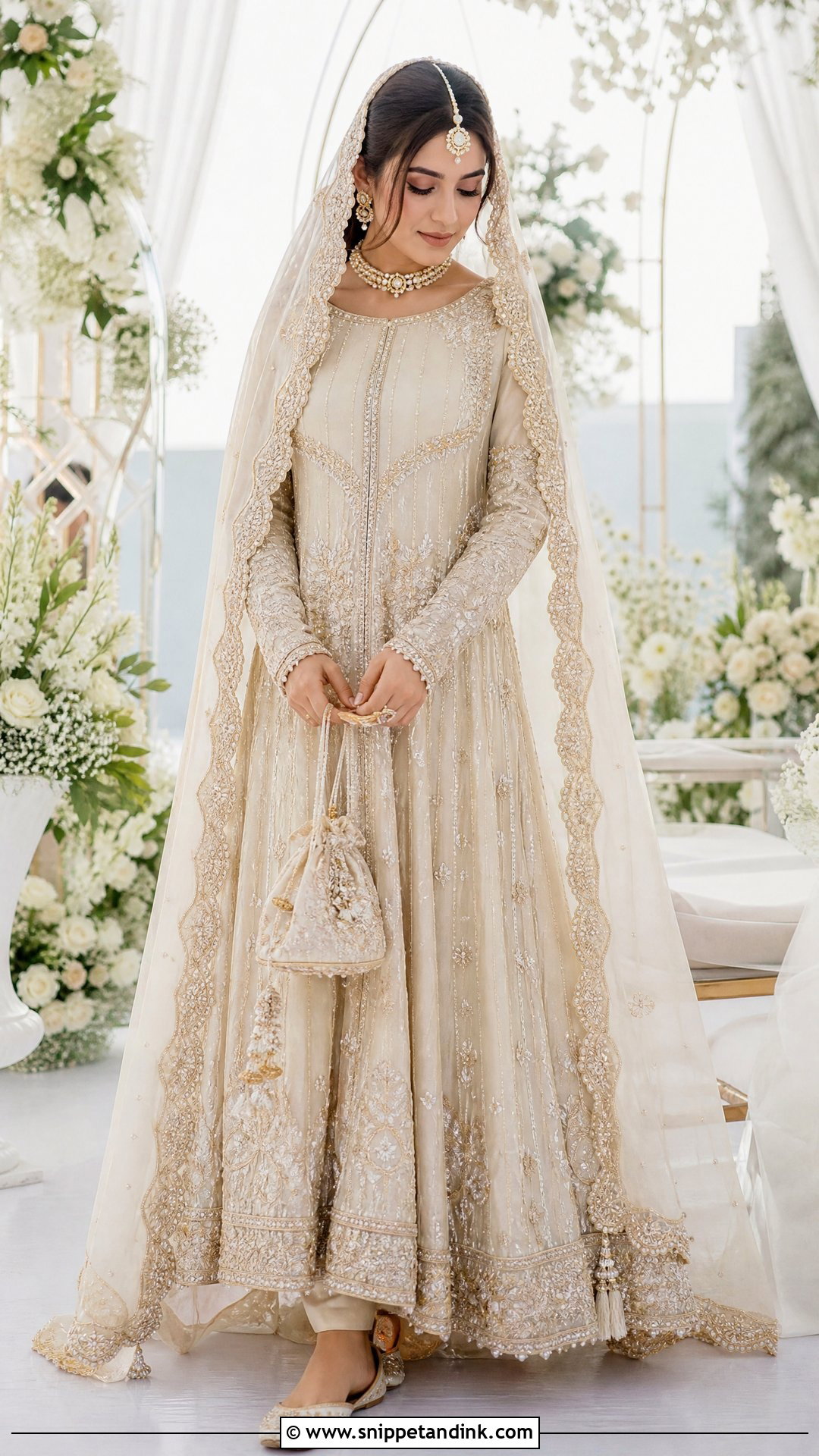
Ivory gives a Pakistani bridal pishwas a soft glow for a daytime nikkah. Tissue silk, organza or raw silk with gold thread, pearls, sequins and fine florals all suit it. The fitted bodice and generous flare move well while keeping the waist covered, and straight pants or a light inner lehenga go underneath. An ivory scalloped dupatta goes over the head or pins at the shoulders, with pearl and kundan jewelry, ivory khussas and a potli. I’d define the waist with embroidery placement rather than tight tailoring; a pishwas pulled tight at the waist creases badly the moment you sit.
4. Blush Pink Pakistani Bridal Lehenga
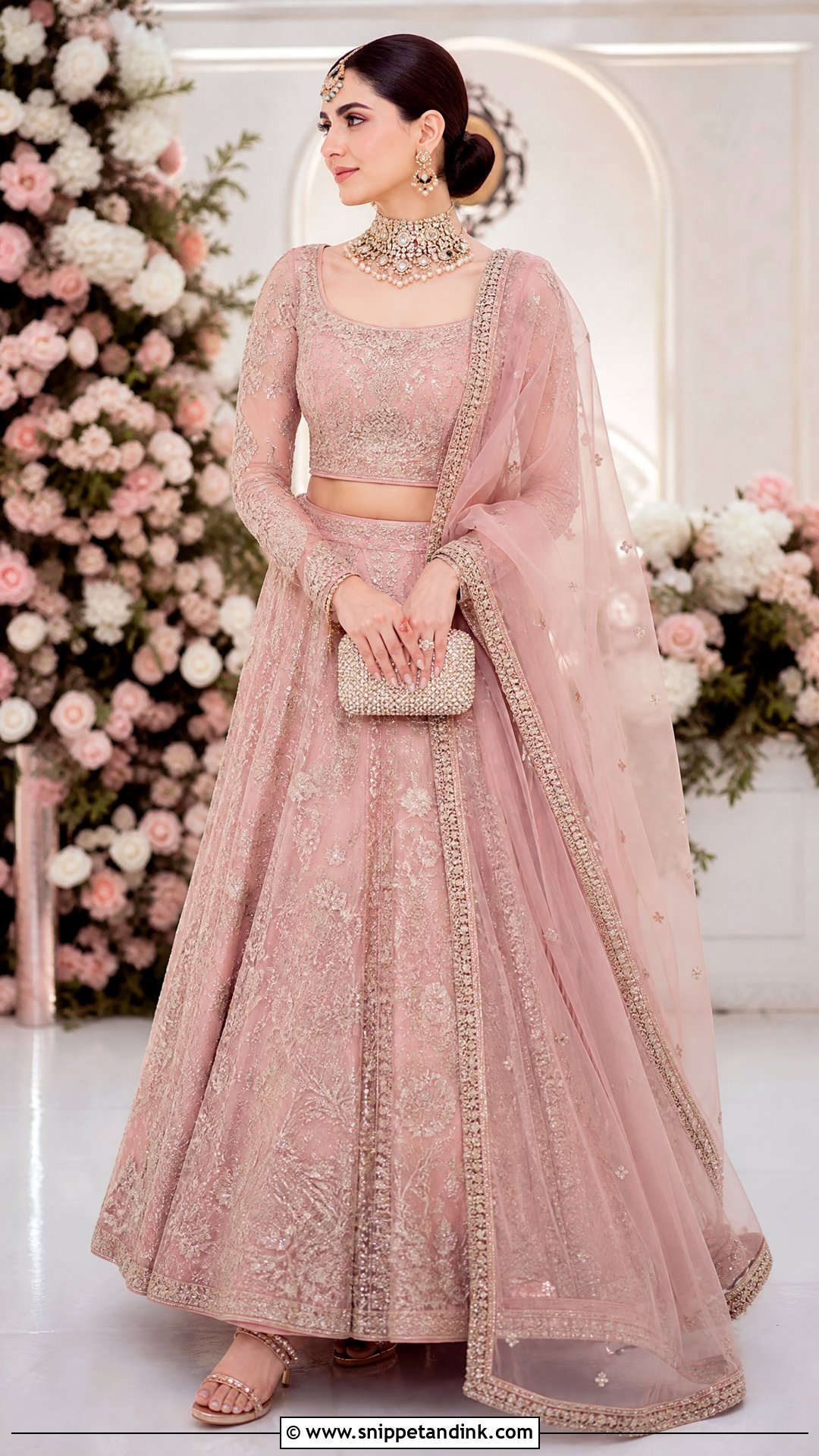
Blush pink lehengas suit a walima, engagement or softly decorated daytime event. Tonal threadwork, silver sequins, pearls and small crystals across the skirt, plus a structured blouse that fits securely, set the base. A sheer pink dupatta with worked corners drapes over both arms, and a light second veil adds formality. Rose gold heels, a crystal clutch and diamond, polki or pearl jewelry complete it. For a fuller bust, I’d widen the neckline slightly and use a full, supportive sleeve; a narrow neck and cap sleeve make the upper body look heavier than it is. Spread the embroidery evenly so photos look balanced.
5. Gold Pakistani Bridal Gharara
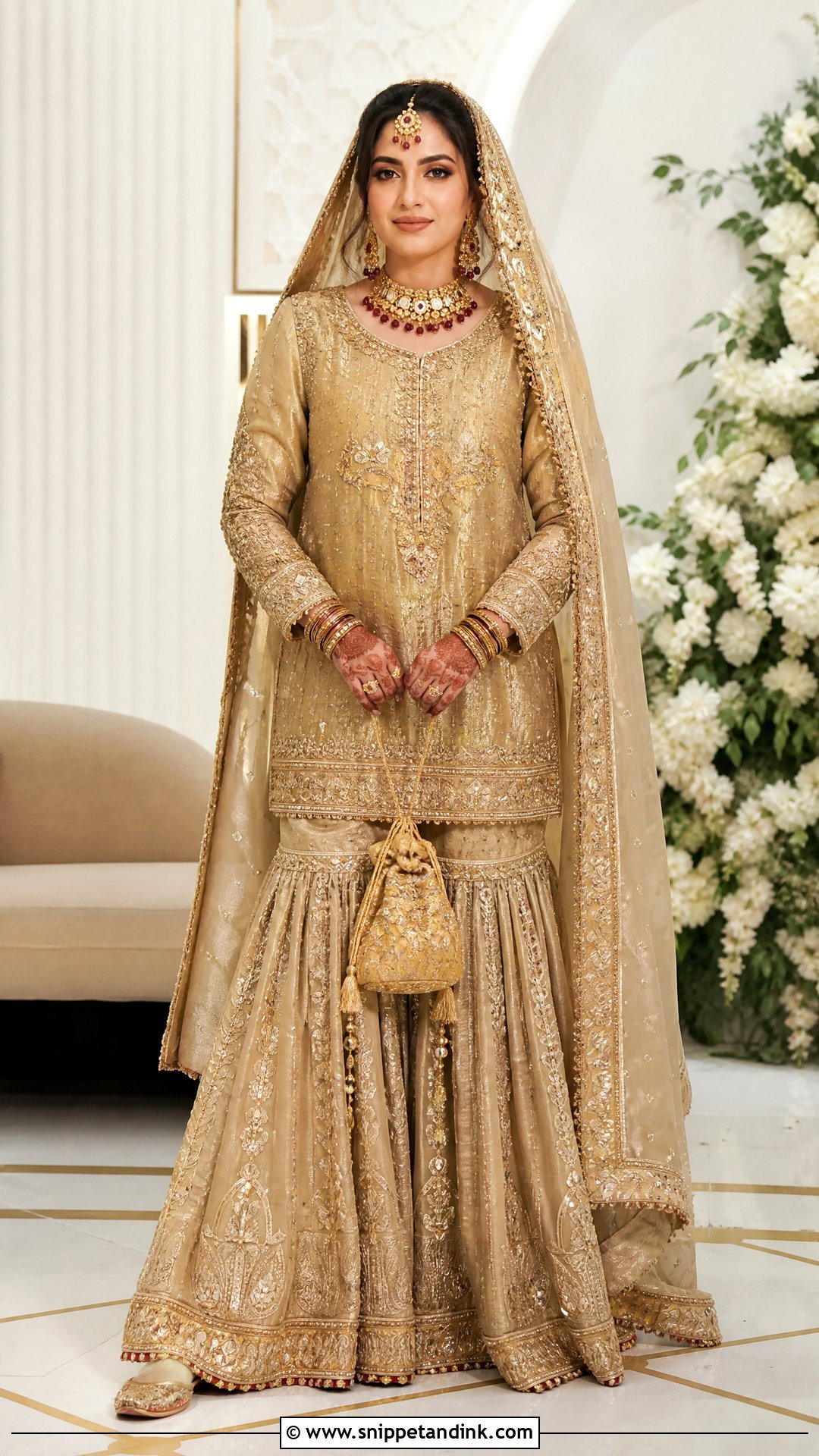
Gold ghararas are traditional in the best way. A short or mid-length kameez in tissue silk, brocade or jamawar sits over a gharara fitted above the knee and flared below. The knee seam is the feature, so trim it with gota, pearls, kiran or zardozi. A gold organza dupatta with a rich border gives structure. Emerald or ruby-accented kundan breaks up the gold, with metallic khussas and a potli. Shirt length changes the whole look: longer gives coverage, shorter shows off the gharara’s construction. Whichever you choose, I’d walk and sit in it before the day; gharara length is unforgiving.
6. Emerald Green Pakistani Bridal Sharara
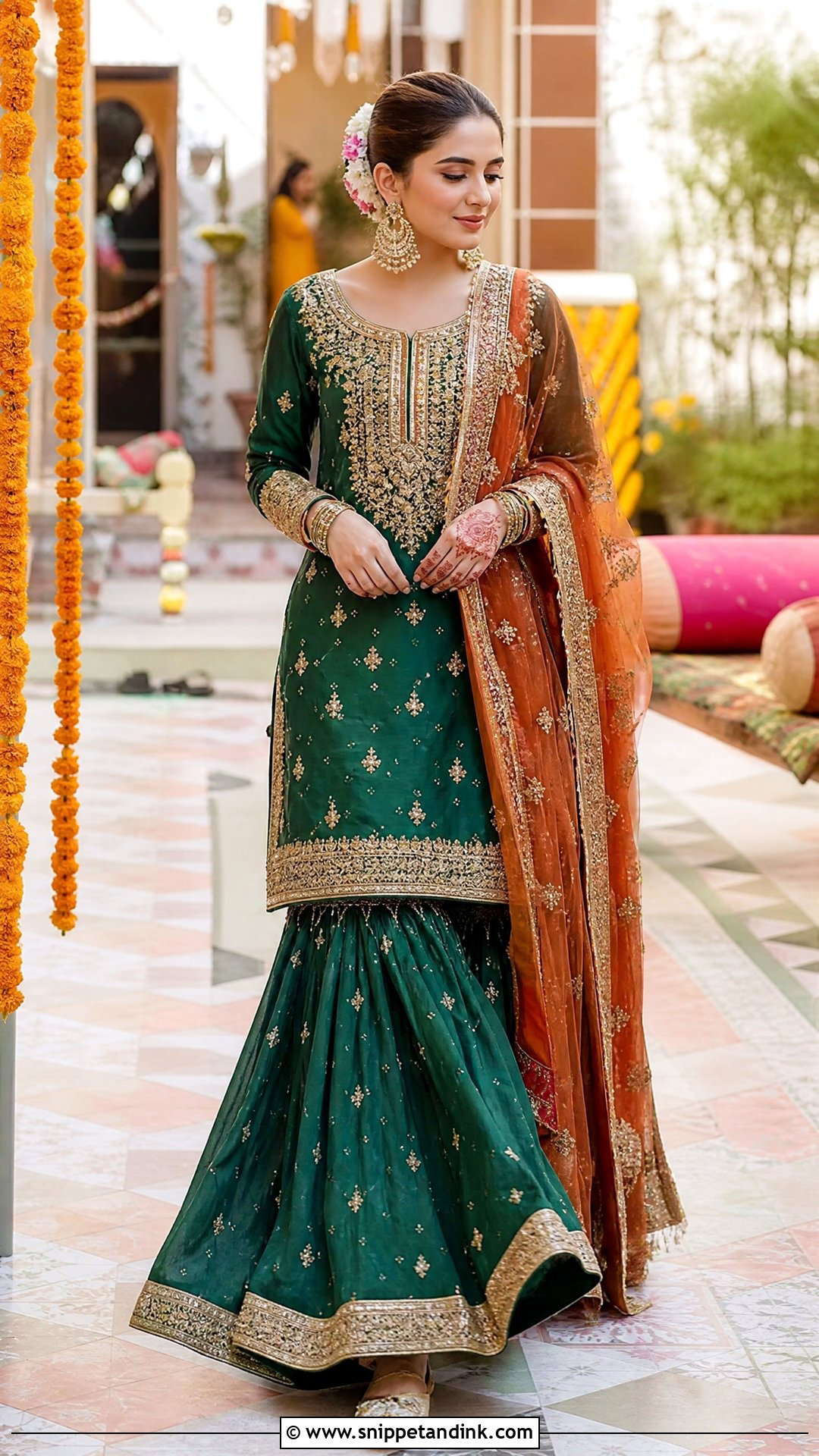
Emerald sharara outfits suit a mehndi, a nikkah or a small evening function. A medium-length worked kameez sits over a wide sharara in silk, chiffon or lightly crushed fabric. Gold dabka, mirror work and multicoloured resham brighten the green. A rust, pink or gold dupatta adds contrast, with embellished khussas, bangles, chandbalis and a potli. Shararas carry all their volume below the waist, so the kameez has to be sharply fitted at the shoulders and bust or the outfit looks shapeless. Full sleeves and a higher neck add coverage. A braided bun with fresh flowers finishes it.
7. Mustard Mehndi Pakistani Bridal Lehenga
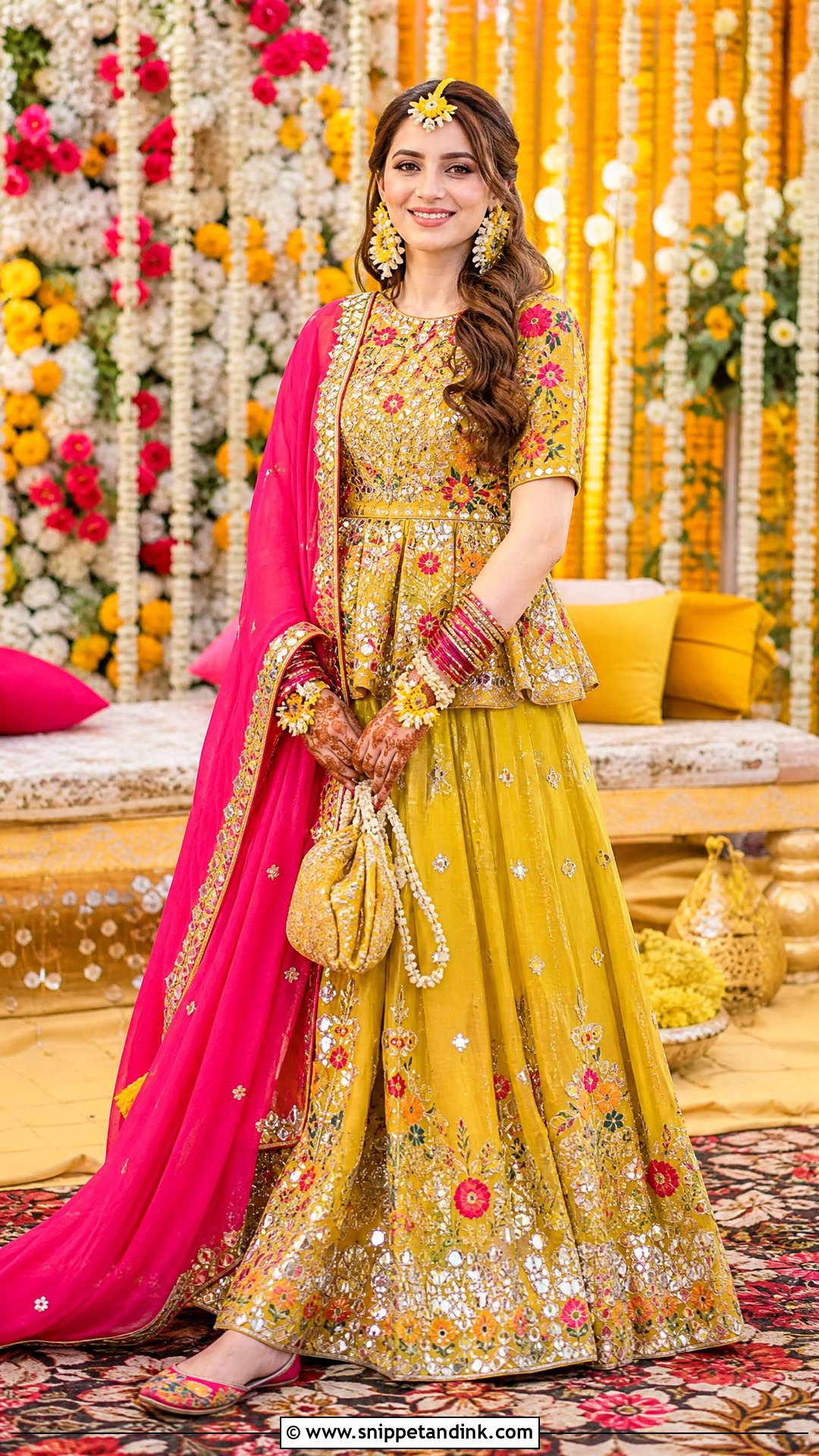
Mustard yellow is the mehndi colour that photographs warmest under evening lights. A lightweight skirt with gota patti, mirror work and small pink, green and orange florals pairs with a peplum blouse or modest short kameez you can dance in. A bright pink or green dupatta with a decorative border adds contrast. Floral jewelry, bangles, khussas and a drawstring potli complete it. Skip any train; mehndi floors are crowded with cushions, thaals and relatives, and a trailing hem gets stood on constantly. Soft curls or a flower braid suit the mood.
8. Multicolor Pakistani Bridal Gharara
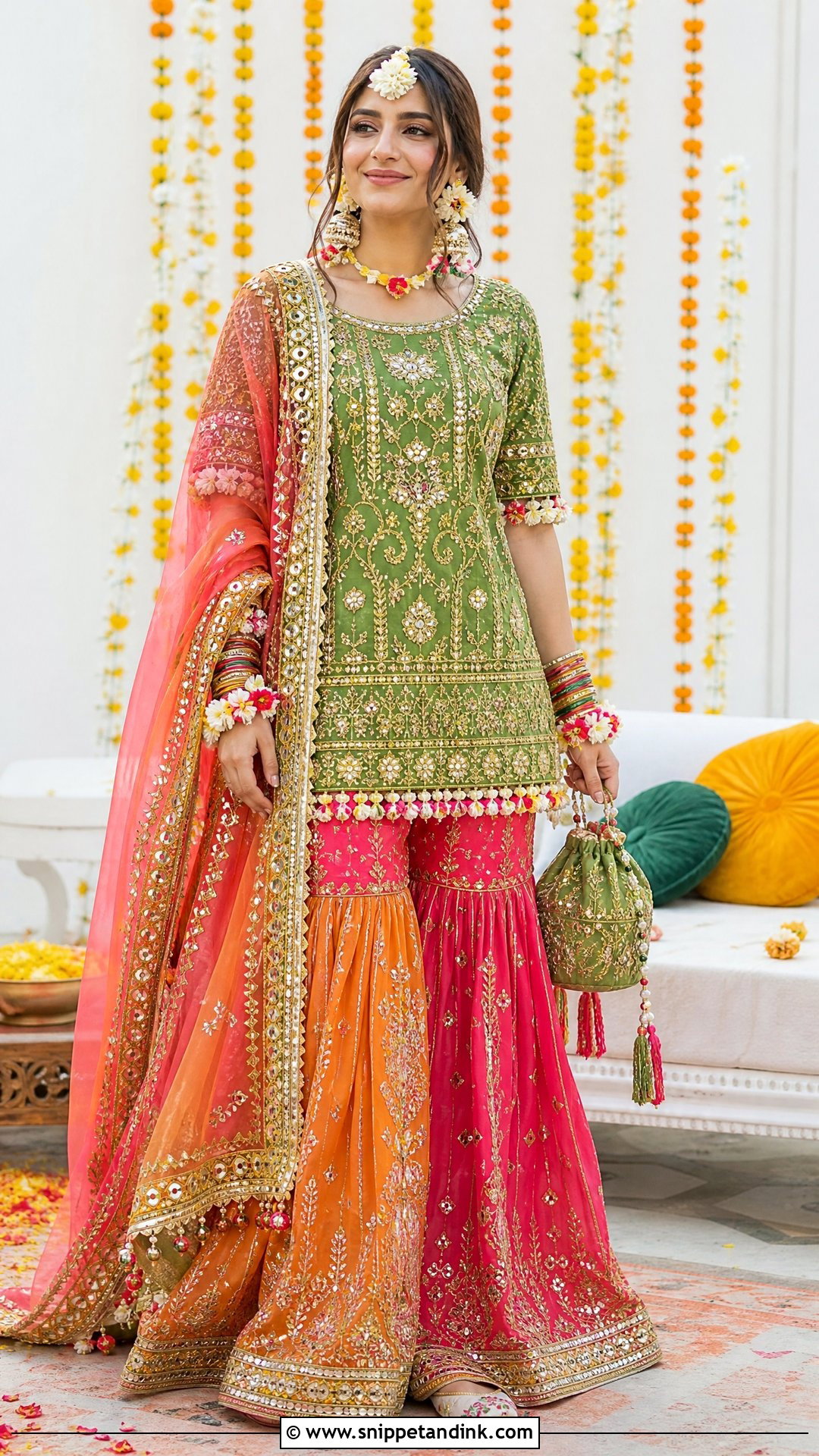
A multicolour gharara suits a vibrant mehndi celebration. A short green, pink or orange kameez with mirror work, gota and florals sits over a gharara that mixes colours through panels, borders or patchwork. Drape a lighter dupatta diagonally so the embroidery still shows. Khussas, glass bangles, jhumkas and fresh flower jewelry finish it. My rule for multicolour outfits is to pick two lead colours and repeat them in clothing and accessories, then keep every other shade to small accents. Get the waist and knee flare placement right and the shape takes care of itself.
9. White Nikkah Pakistani Bridal Dress
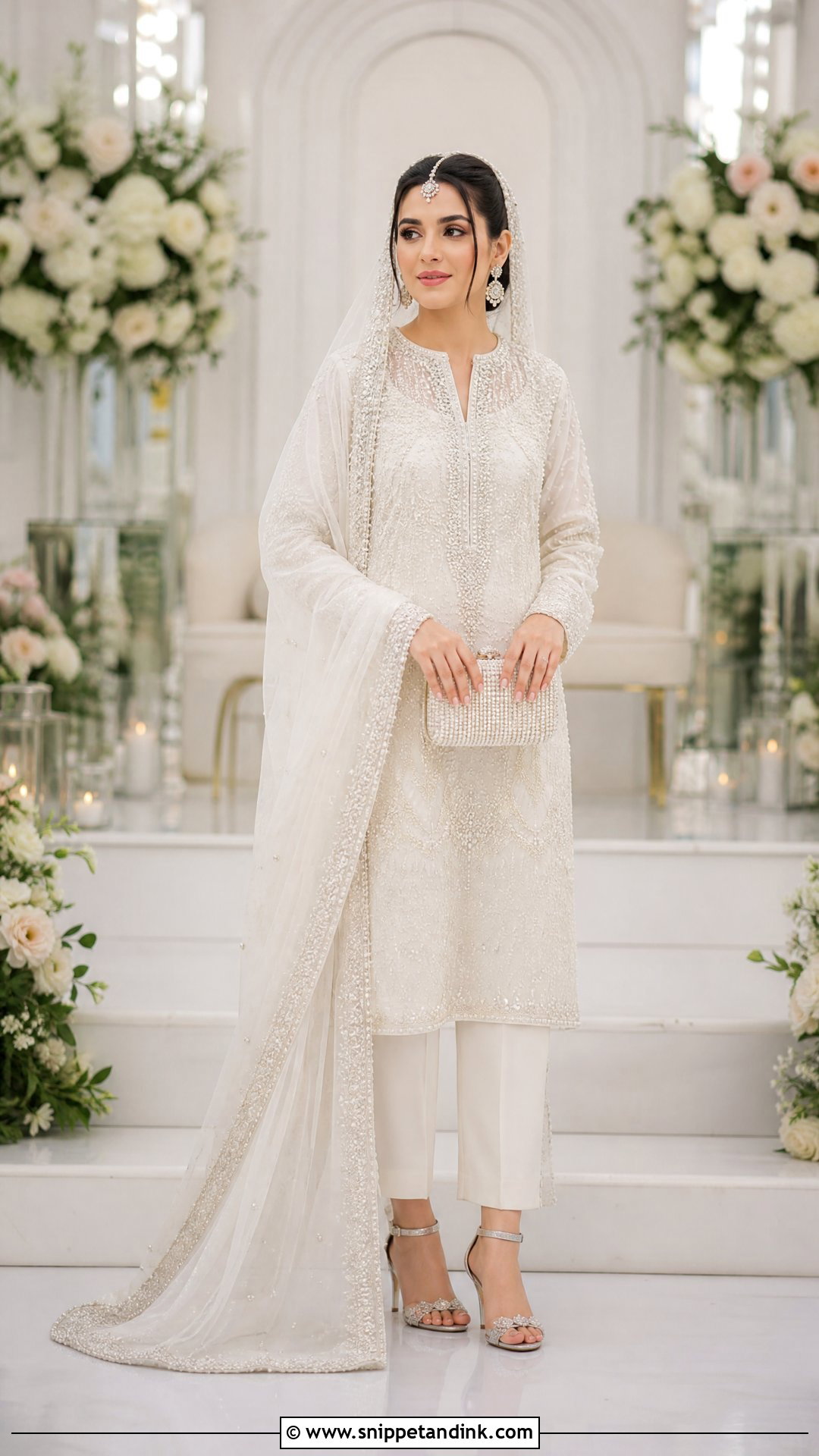
White suits a simple nikkah. A long worked shirt with straight pants, a light lehenga or softly flared trousers keeps it modest, and organza, silk, chiffon or tissue gives the pale palette some life. Pearl work, silver thread, white resham and subtle sequins suit it better than contrasting embellishment. Secure a white dupatta over the head discreetly. Pearl earrings, a delicate tikka, silver heels and a white clutch complete it, with pale pink flowers or emerald jewelry for a touch of colour. All-white flattens in photographs unless it has texture, so I mix at least two fabrics or two kinds of handwork.
10. Champagne Walima Pakistani Bridal Gown
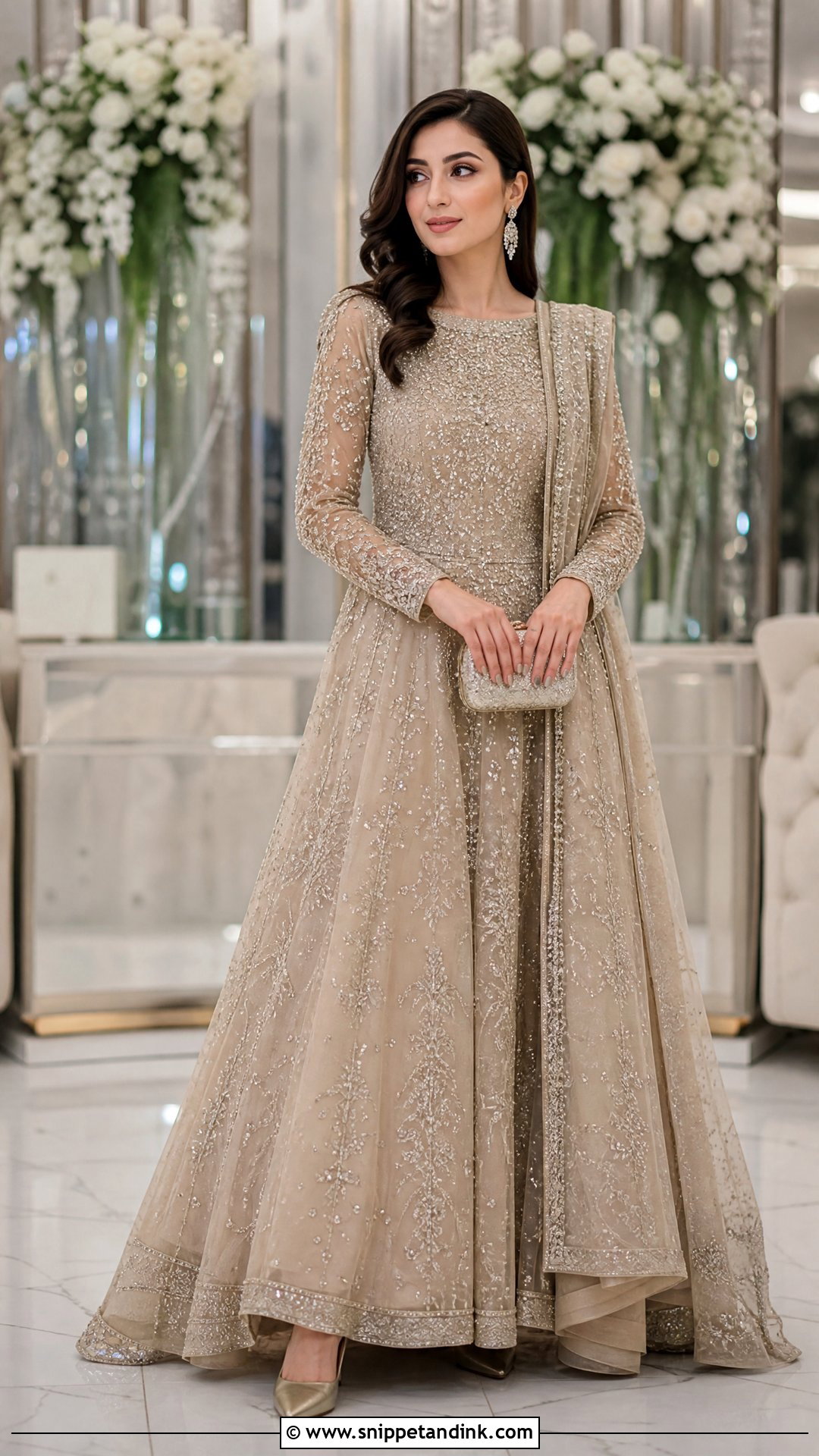
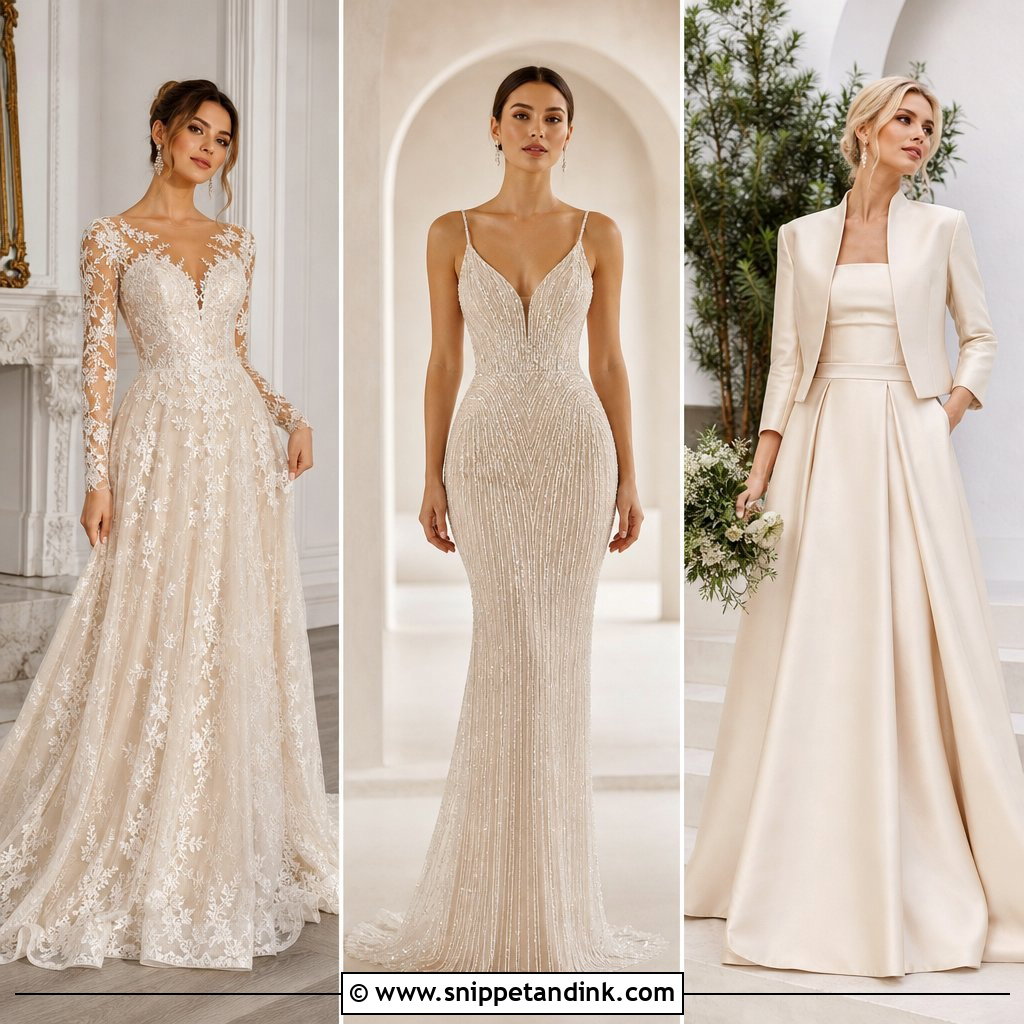
Champagne gowns give the walima a sleek, formal line. A floor-length design with a fitted bodice, defined waist and soft flare carries tonal crystals, pearls, sequins and metallic thread. Full sleeves, an illusion neckline or an attached cape add coverage and a current finish. Pointed metallic heels, a crystal clutch and diamond or zircon jewelry complete it; a light champagne dupatta from the head or one shoulder adds tradition. On petite brides I cut the skirt volume back and run the embroidery vertically, which adds visible height. A polished bun and neutral rose lip finish it.
11. Silver Gray Pakistani Bridal Lehenga
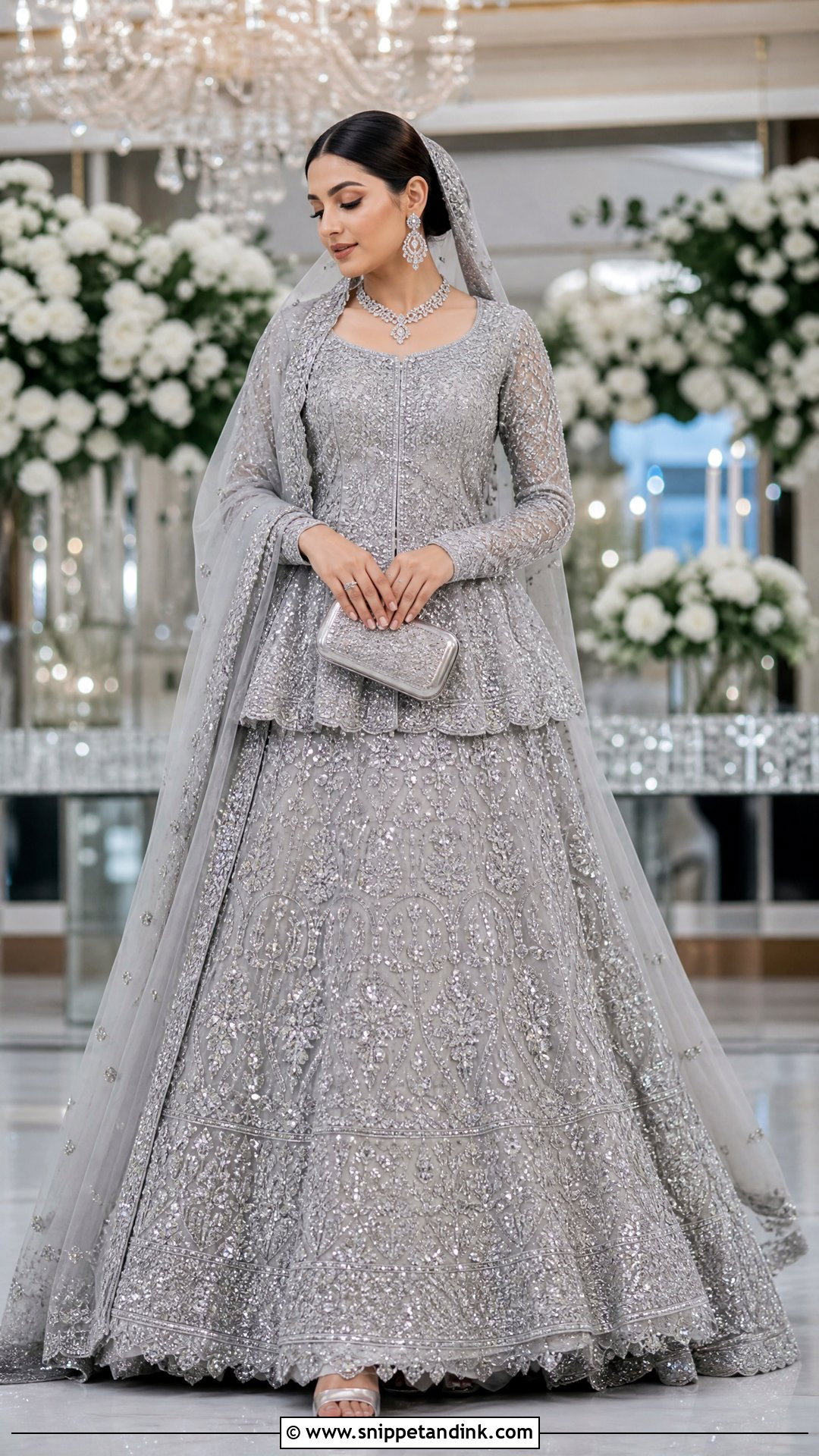
Silver gray is a cool, modern walima option. A gray silk or net lehenga with crystal embroidery, silver zari, pearls and soft sequins pairs with a fitted full-sleeve blouse or a longer peplum. A sheer crystal-edged dupatta covers the head, with another drape across the arms. Silver heels, a structured clutch, diamond-style earrings and a fine necklace complete it. Gray is not one colour: icy silver suits cool undertones, while charcoal or mushroom gray is kinder to warm skin. I’d hold both against your face in daylight before choosing. Several shades of gray in the embroidery give it depth.
12. Pastel Blue Pakistani Bridal Maxi
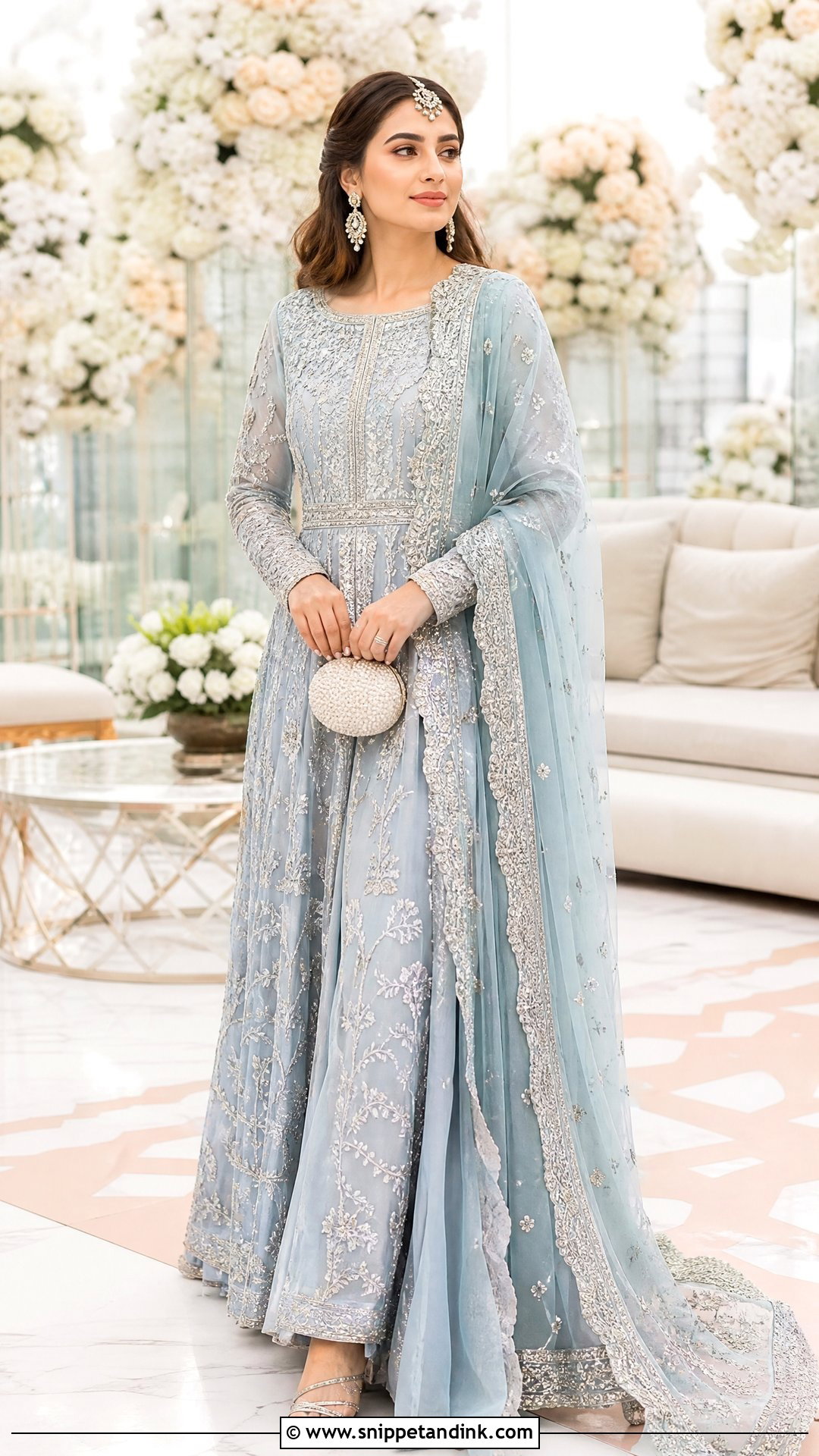
Pastel blue maxis are airy for a daytime walima or nikkah. A fitted top and flowing skirt in organza, net, chiffon or tissue silk carry silver thread, pearls, crystals and pale florals. A matching dupatta with scattered motifs completes it, with silver sandals, a pearl clutch, crystal earrings and a headpiece. Pale blue can disappear in photographs, so I choose embroidery with raised texture and insist on a lining matched exactly to the outer fabric; a white lining under blue organza turns it chalky. An embroidered waist panel adds shape if you want it.
13. Sage Green Pakistani Bridal Pishwas
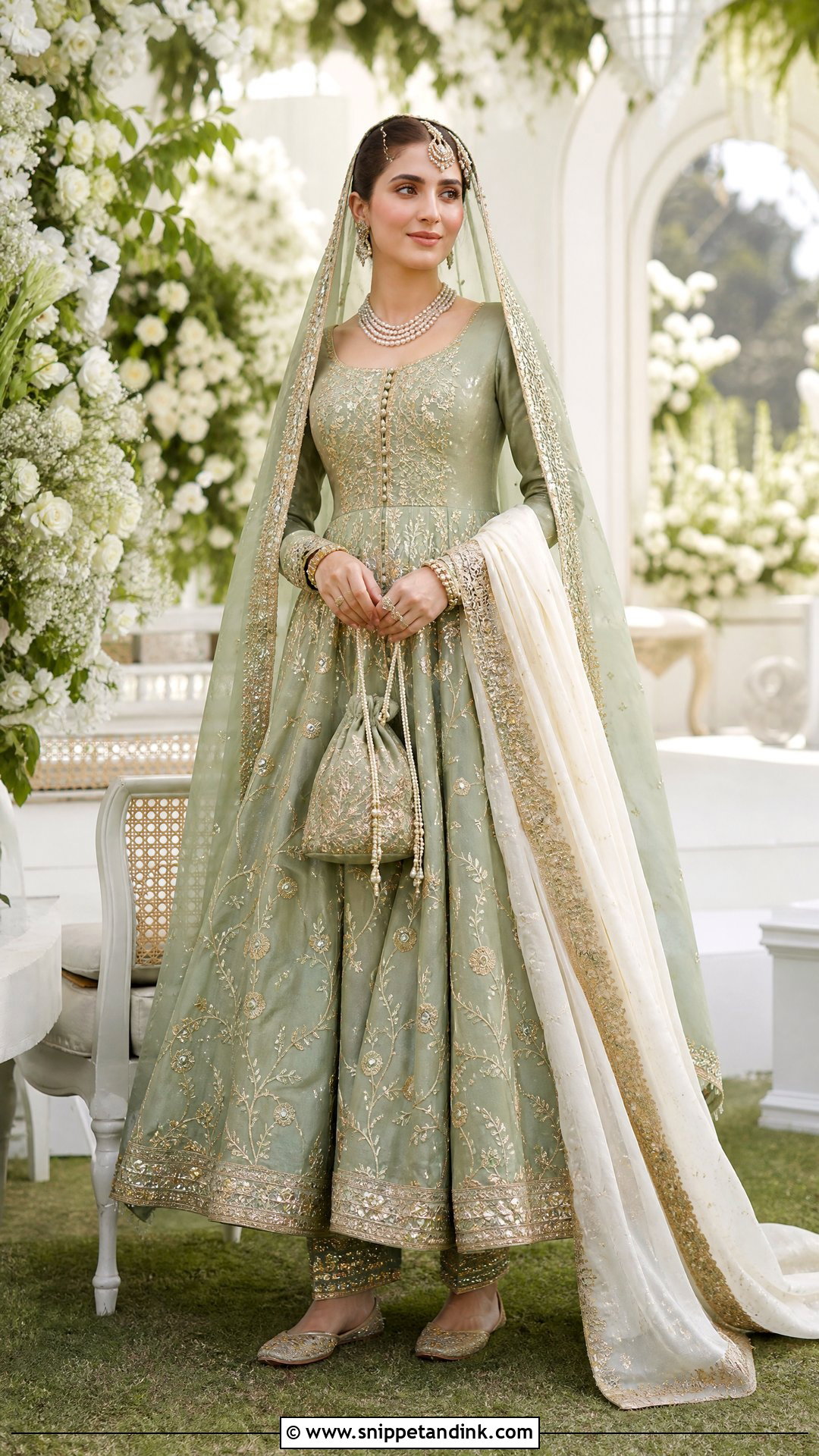
Sage green makes a pishwas feel fresh and understated. A long, generously flared design with a structured bodice and gold, pearl or ivory embroidery sits over straight pants or a plain inner lehenga. A sage organza dupatta with a gold scalloped border covers the head, and an ivory second dupatta adds contrast. Antique gold khussas, a potli, pearl strands and kundan earrings complete it. Sage suits botanical borders and florals, and it looks right in a garden nikkah. Narrow panels and vertical embroidery add a little height. A floral low bun and a nude-pink lip finish it.
14. Farshi Pakistani Bridal Gharara
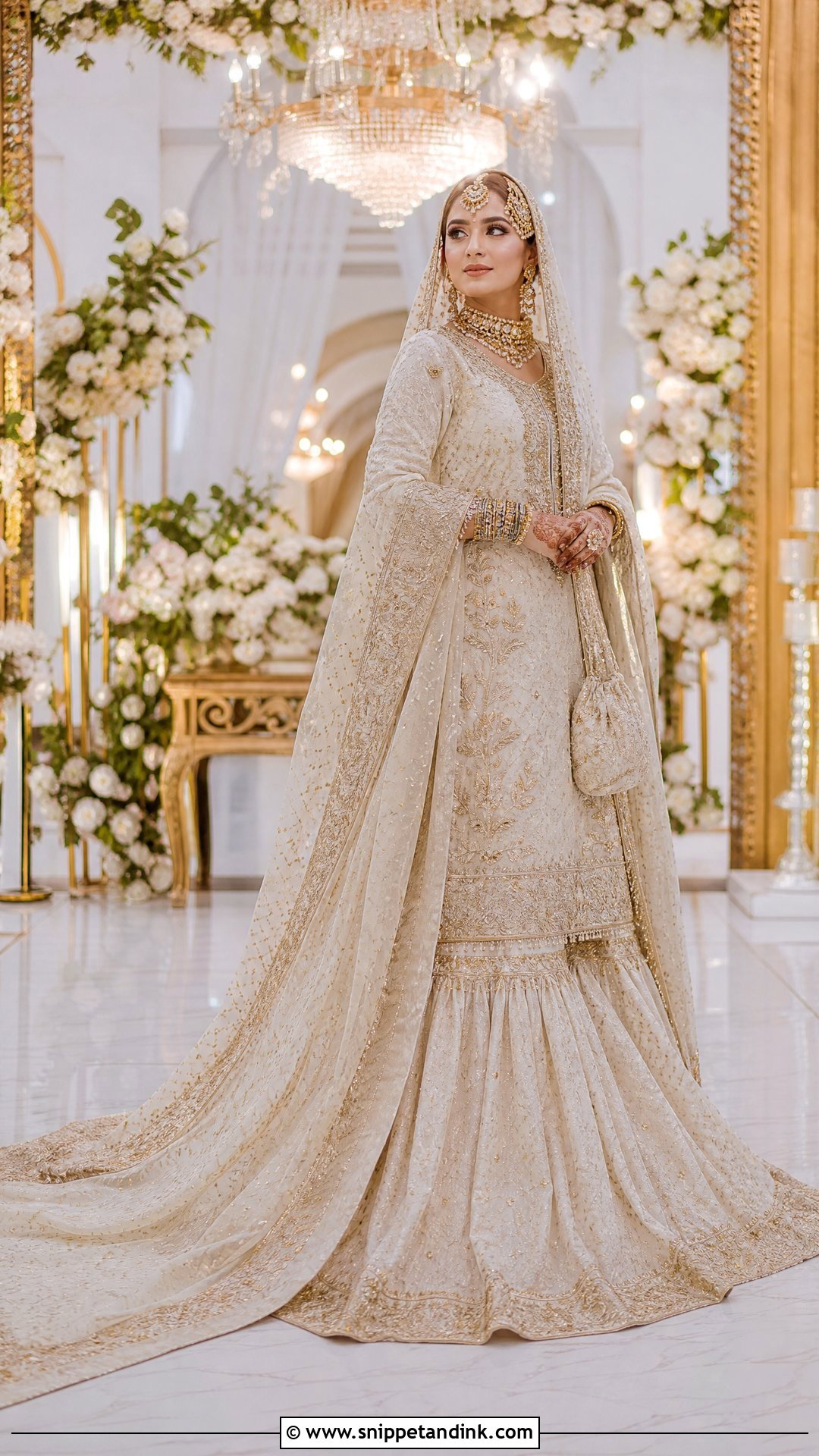
A farshi gharara trails along the floor in a way no other outfit does. Pair a richly worked farshi with a long or knee-length kameez in red, ivory, gold or deep green, a matching dupatta over the head and a lighter one on the shoulder. Hidden platforms, kundan, a jhoomar and a decorative potli complete it. The farshi has made a strong return for nikkah and walima dressing, and it rewards preparation. Practise walking in it before the event. I also ask the tailor to set the trail so it fans out evenly behind you rather than twisting to one side when you turn.
15. Long Shirt Pakistani Bridal Lehenga
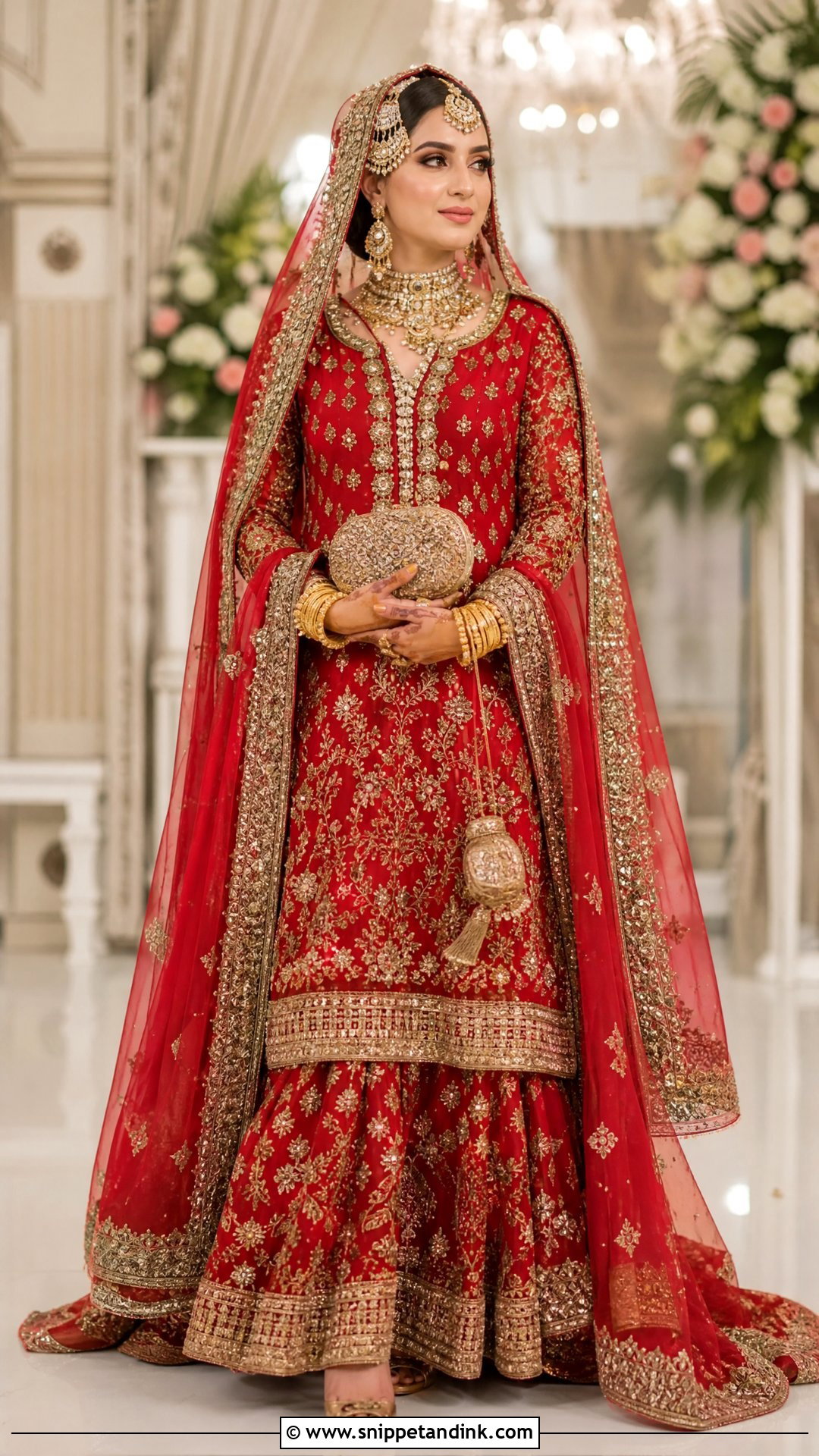
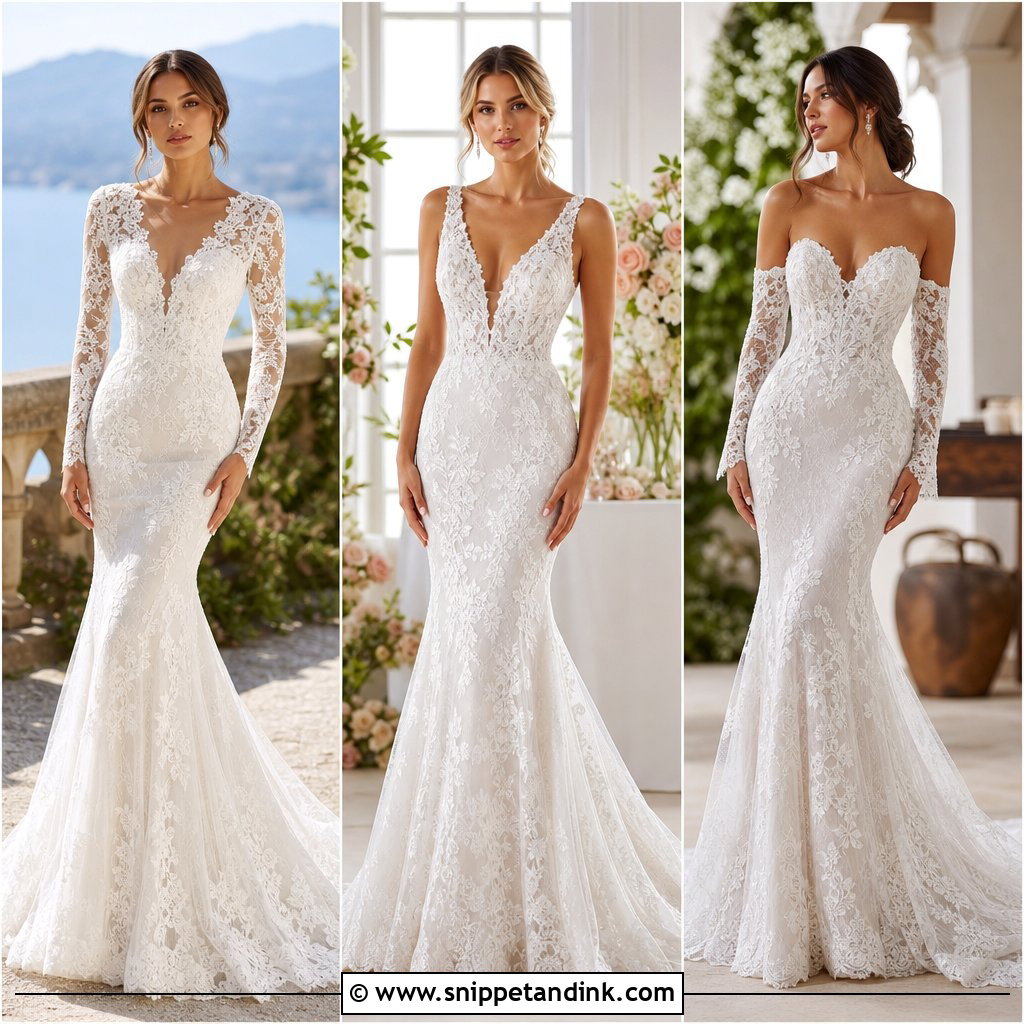
A long shirt over a lehenga keeps the classic bridal skirt while adding coverage. The shirt falls below the knee, straight or slightly flared, with work at the neck, sleeves, side panels and hem, over a lehenga with heavier borders near the floor. That split keeps the two pieces from competing. A net dupatta covers the head with a second drape at the shoulder or wrist. Heels, a jeweled clutch, layered necklaces, earrings and bangles finish it. Side slits help you walk, but I set them where they open over the lehenga, not over skin. A narrow shirt suits a full skirt; an A-line shirt suits brides who want less structure.
16. Pakistani Bridal Saree
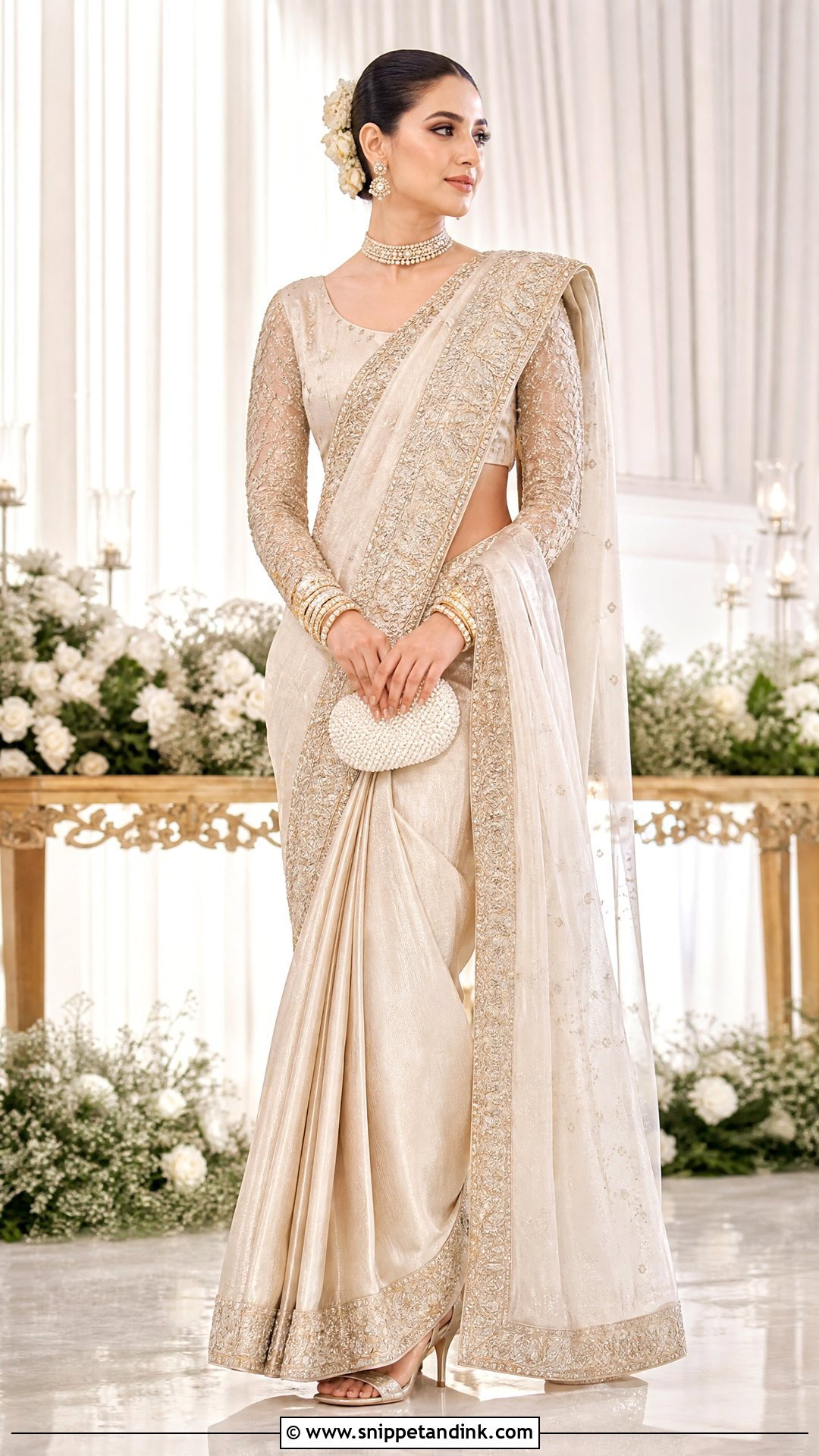
A Pakistani bridal saree is streamlined for a walima, engagement or formal nikkah. Silk, tissue, organza or velvet-trimmed fabric with zardozi, pearls, sequins or resham borders suits it. The blouse does a lot of the modesty work here, so I’d ask for full sleeves, a high back or a longer hem. Pin the pleats and shoulder drape firmly. Metallic heels, a small clutch, statement earrings, bangles and a choker or long necklace complete it, and a light dupatta over the head adds a veil if you want one. A belt at the waist holds the drape and adds definition.
17. Anarkali Pakistani Bridal Dress
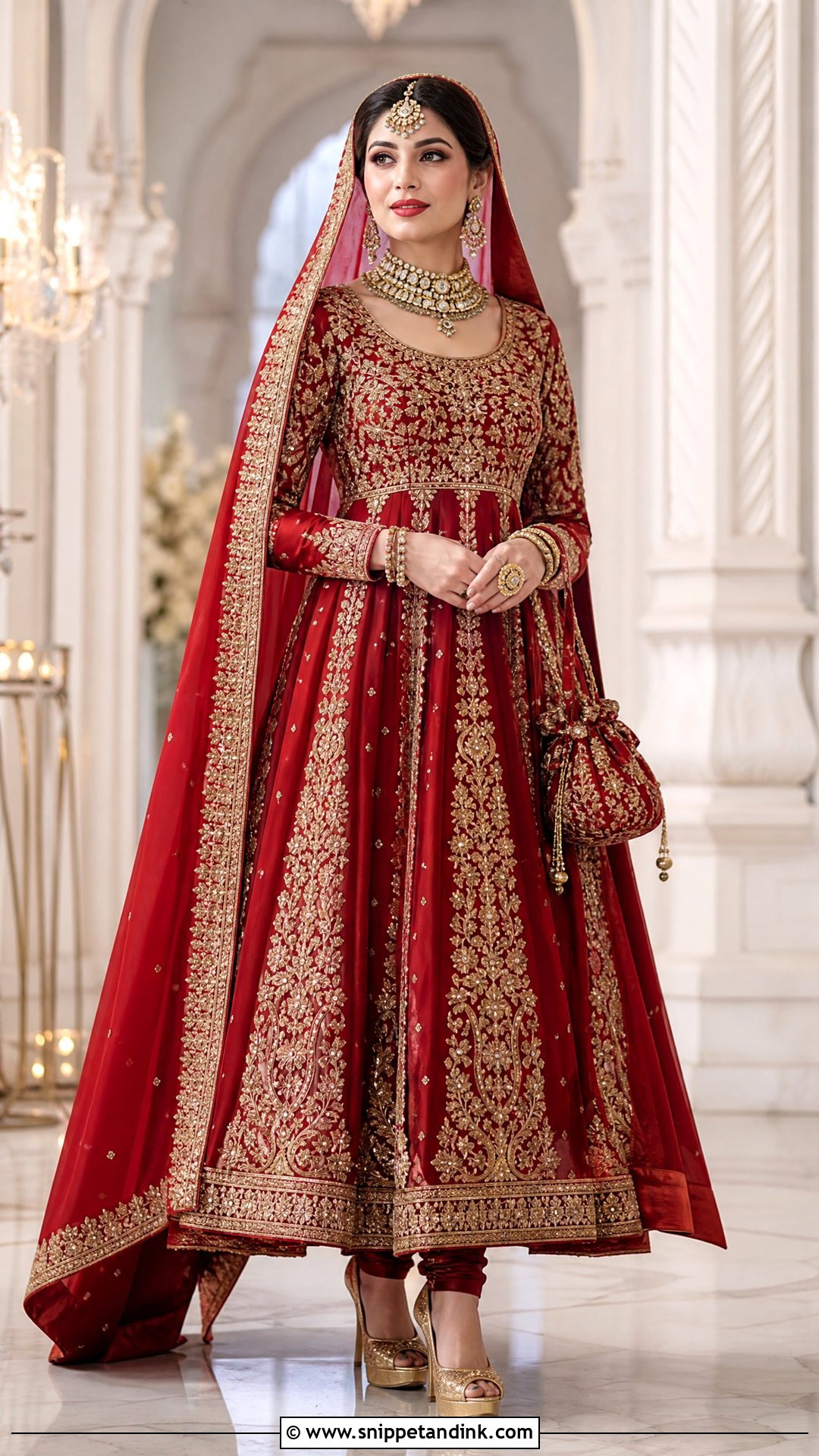
An Anarkali gives you a romantic flare without a separate structured skirt. A fitted bodice flows into wide panels from waist to floor. Deep red, ivory, rose and emerald all suit it. Concentrate embroidery at the neck, cuffs, waist and lower border, and wear it with churidar or straight trousers under a richly bordered dupatta. Platforms, a potli, kundan, bangles and a tikka complete it. Waist seam height is the detail I check first. On shorter brides, a very low seam shortens the legs; a natural or slightly raised waist corrects it.
18. Peplum Pakistani Bridal Lehenga
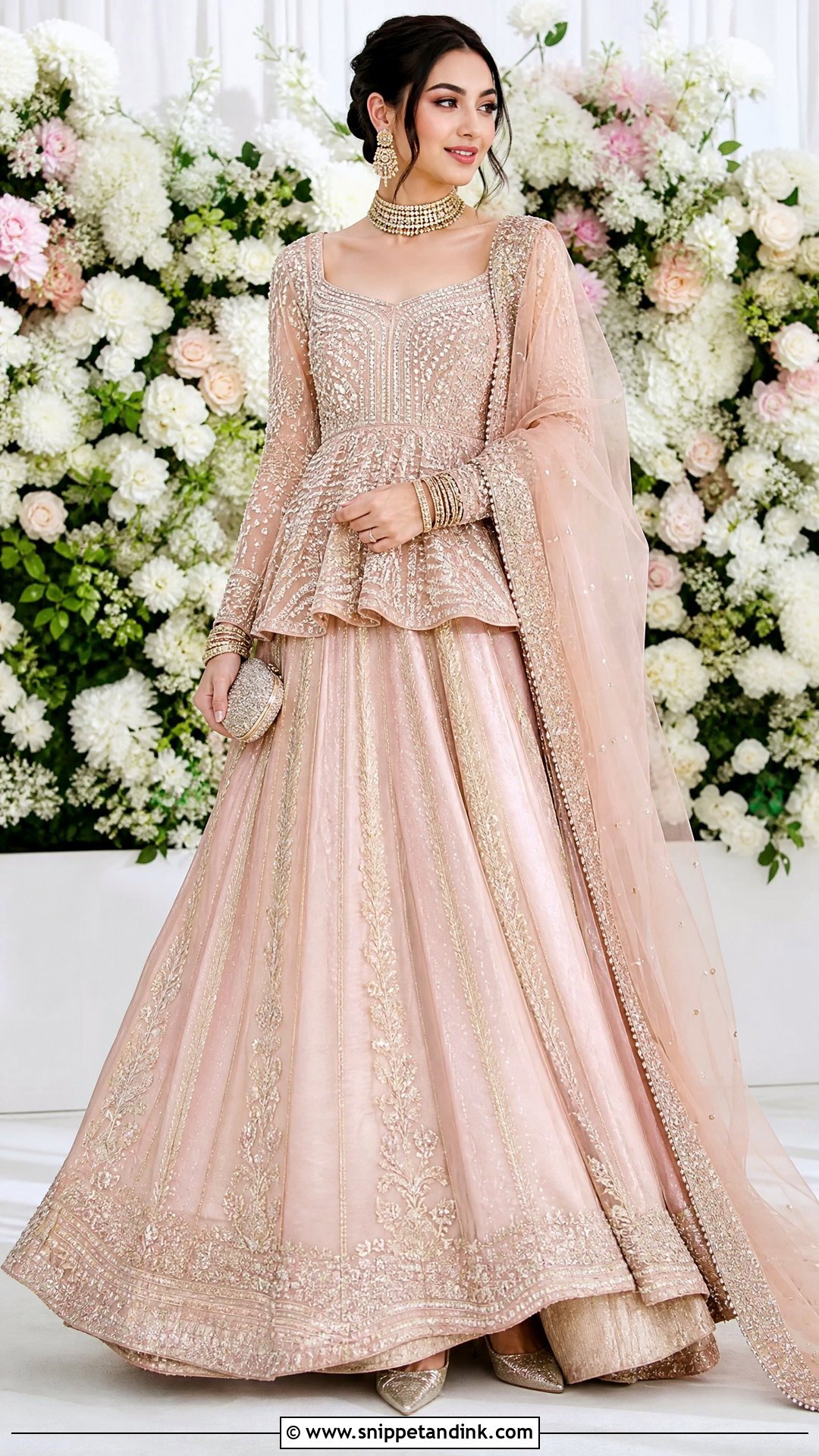
A peplum blouse over a bridal lehenga pairs modern tailoring with traditional volume. The peplum fits through the bodice and flares at the waist over a paneled silk, jamawar or organza lehenga, with matching embroidery tying the two together. Longer peplums cover more; shorter ones look sharper. A sheer dupatta over the head or from one shoulder keeps the waist visible. Pointed heels, a compact clutch, choker and bangles finish it. For fuller hips, I choose a softer peplum ending above the widest point and ask for a flat, smooth lehenga waistband so nothing bunches under the top.
19. Velvet Pakistani Bridal Sharara
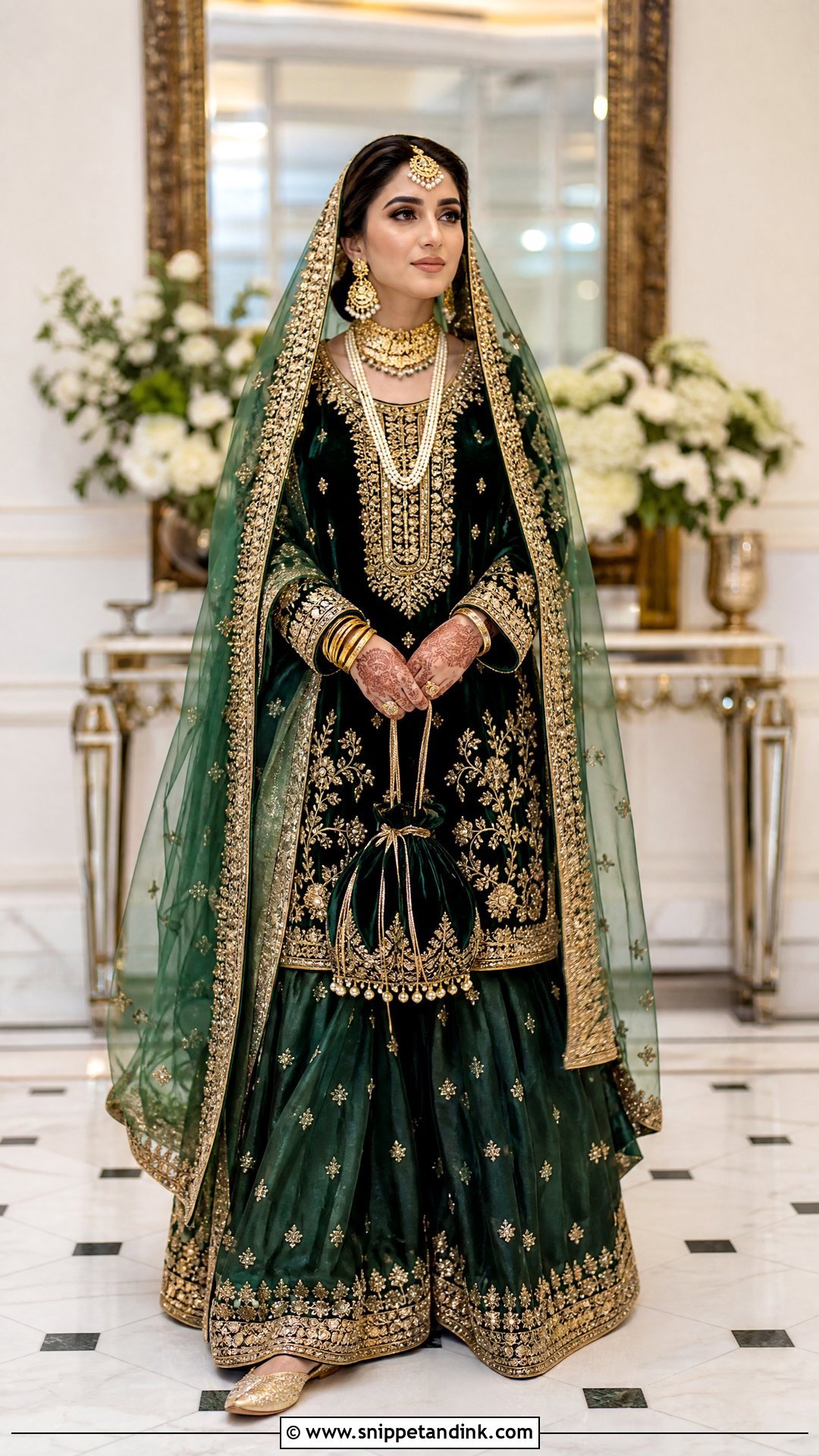
A velvet bridal sharara keeps you warm at a winter ceremony and still moves well. A velvet kameez in maroon, navy, emerald or deep plum sits over wide silk or chiffon sharara pants, so the weight stays on top and the legs stay light. Keep antique gold work to the neck, cuffs, shirt hem and dupatta border. A sheer organza or net dupatta balances the dense fabric. Padded khussas, a velvet potli, gold chandbalis, a layered necklace and bangles complete it. A medium-length shirt shows the sharara shape most clearly. If oversized silhouettes overwhelm you, reduce the trouser volume.
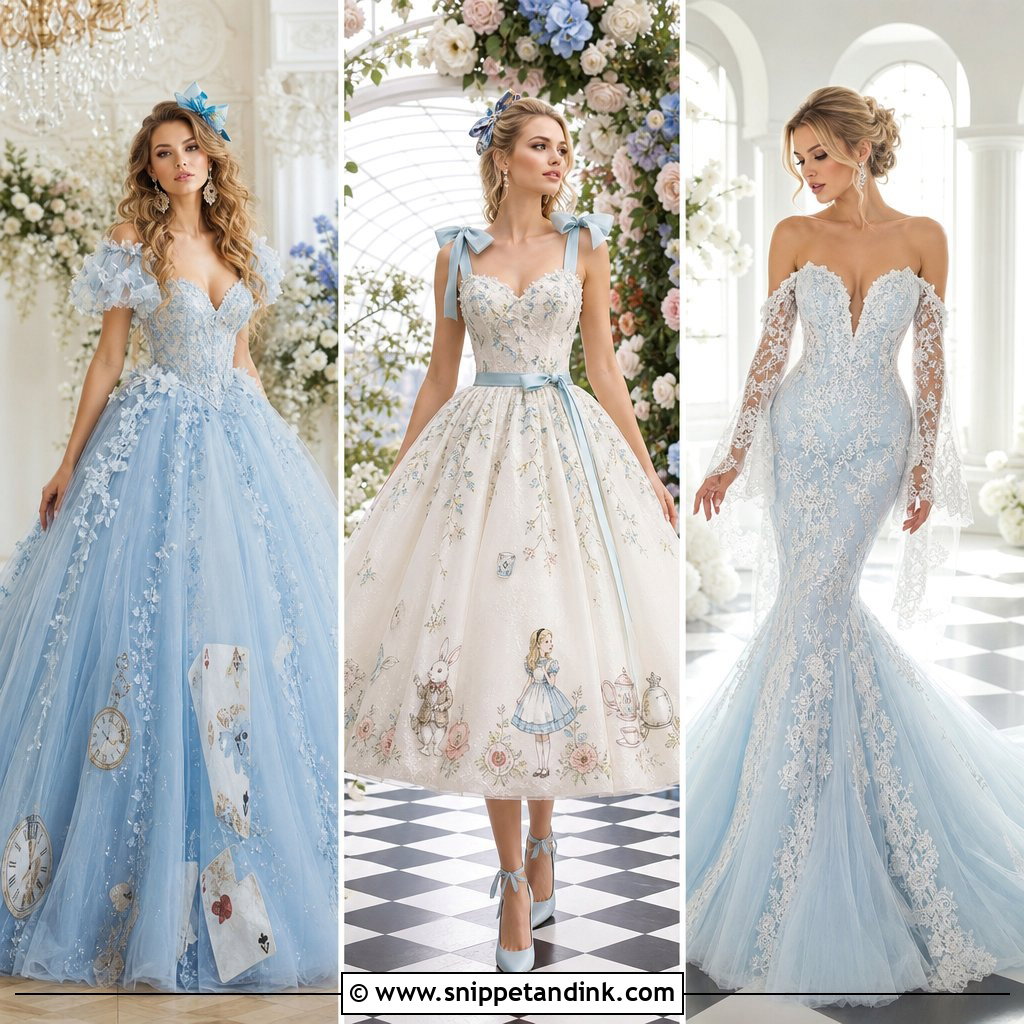
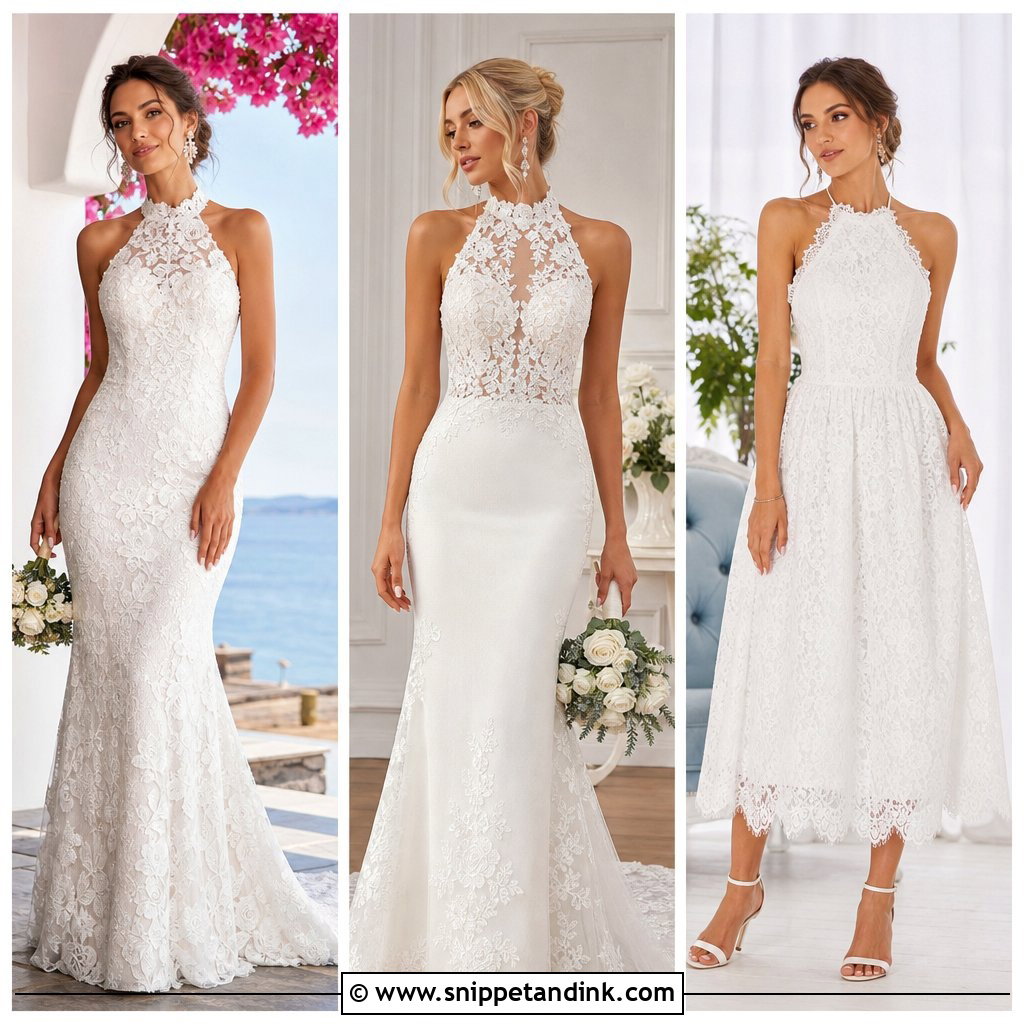

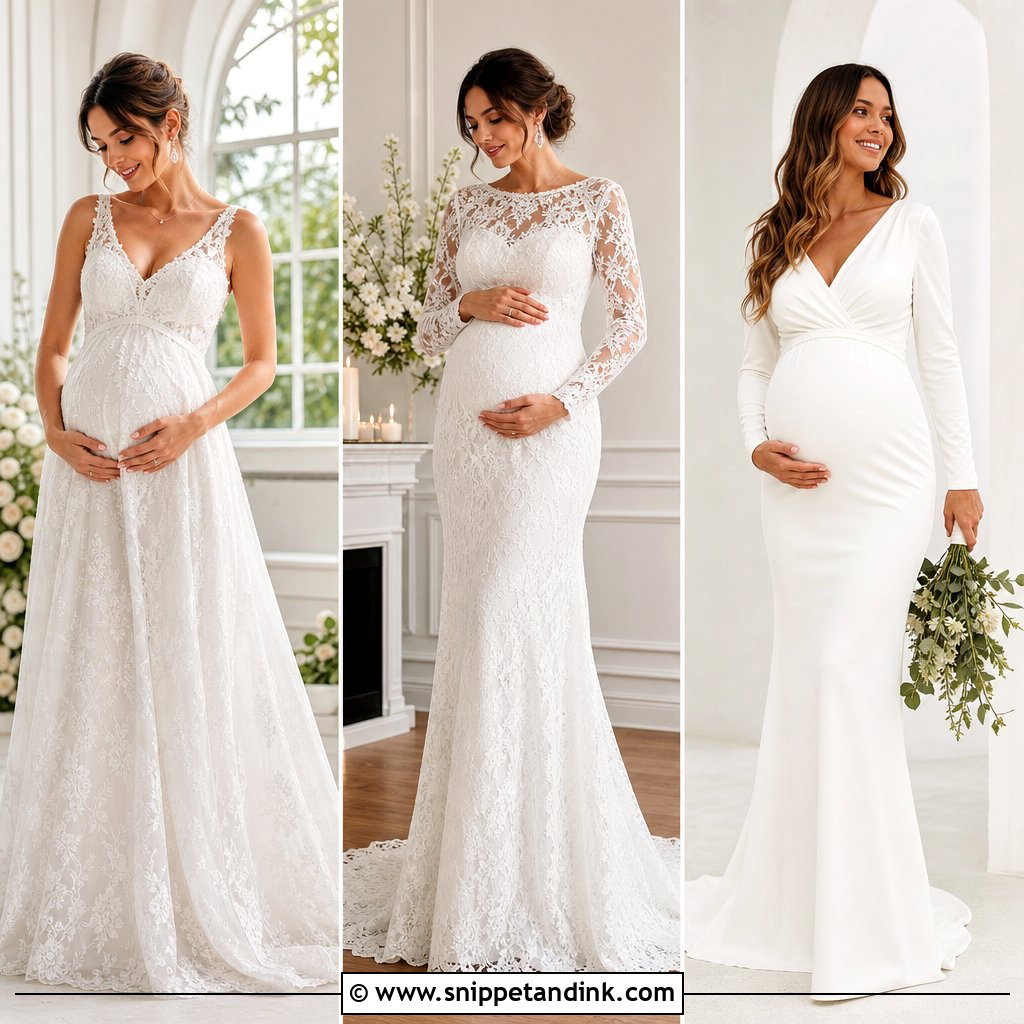
20. Minimal Pakistani Bridal Dress
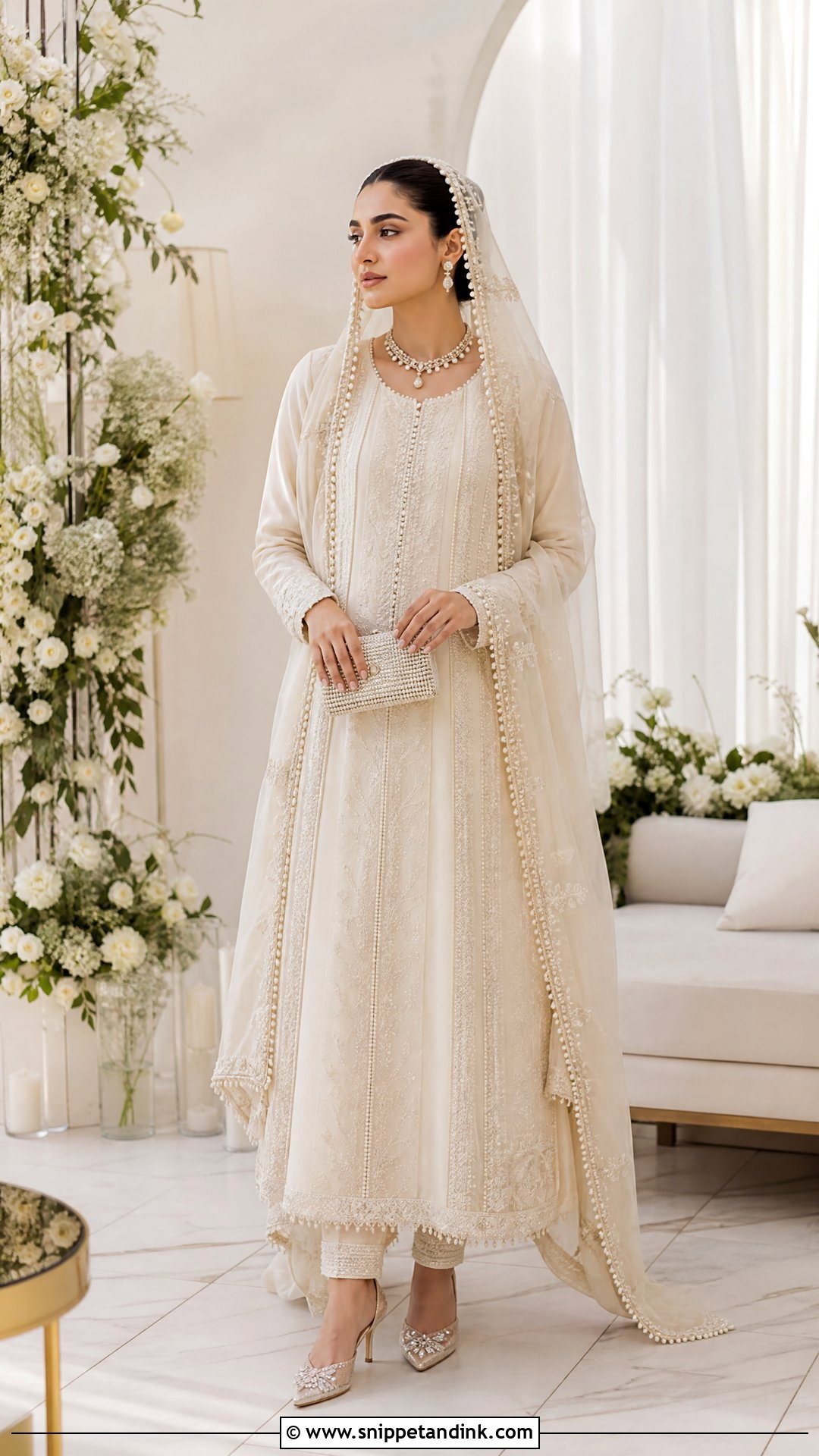
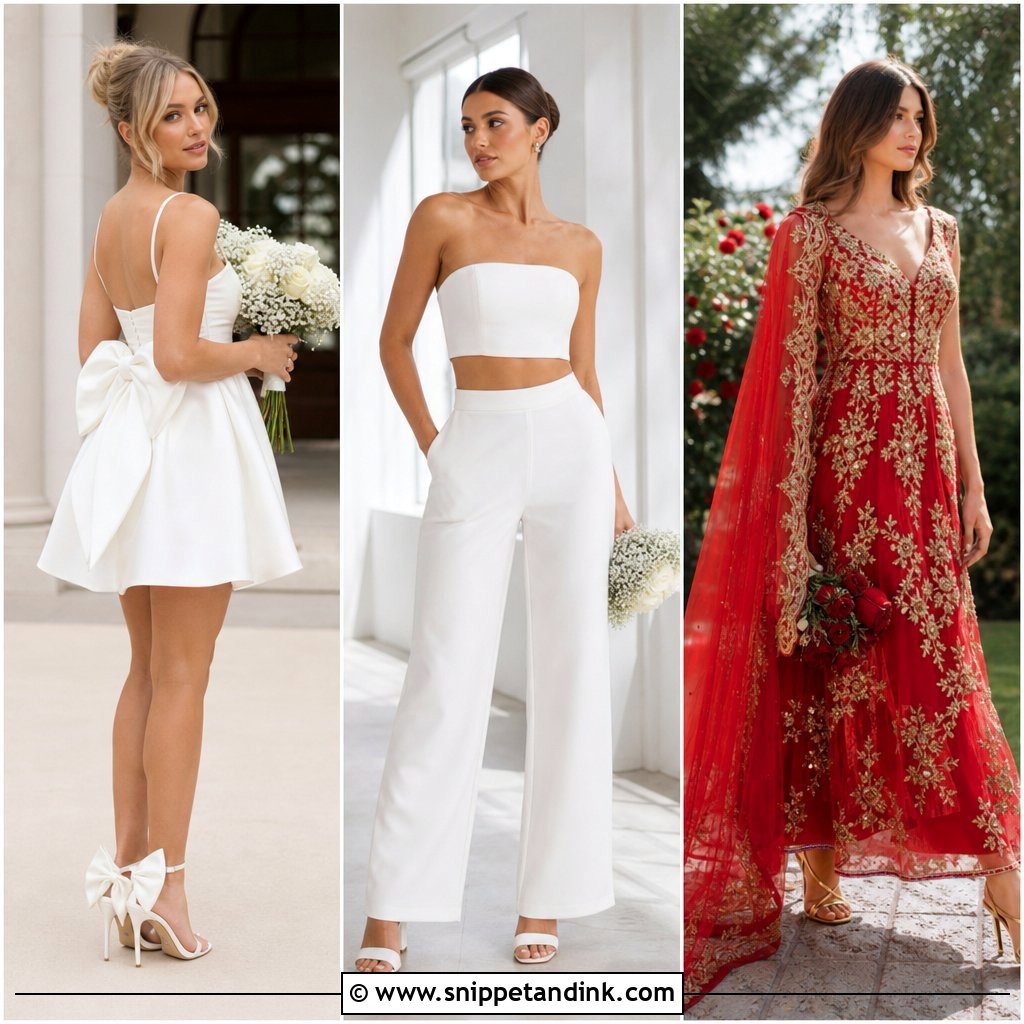
Some brides don’t want heavy embroidery at all, and a minimal outfit can still feel special through fabric, cut and a few focused details. An ivory, blush, red or champagne long dress with clean panels, a defined waist and handwork at the neck, sleeves and hem is the idea, over straight pants or a lightly flared skirt. A delicately bordered dupatta brings the bridal element. Elegant heels, pearl or polki earrings, a small clutch and one statement necklace complete it. With so little embellishment, every seam and hem is on show, so I’d spend the money saved on a better tailor. It suits an intimate nikkah, a registry ceremony or a smaller reception.
The Order I Dress a Dulhan In on the Day
A Pakistani bridal outfit with two dupattas and a full jewelry set can take a long time to put on properly, and the order matters. Done in the wrong sequence, the hair gets disturbed, makeup marks the shirt and the dupatta gets pinned twice.
- Hair and makeup first, wearing a front-opening top so nothing passes over the face.
- Bottom layer next: lehenga, gharara or sharara, with the waistband settled at its fitted height.
- Shirt or blouse, stepped into or put on with a scarf over the face to protect the makeup.
- Necklaces and earrings, then bangles, before any dupatta goes on.
- Head dupatta, pinned to the hair at several points, then the matha patti or jhoomar set over it.
- Shoulder dupatta last, pinned to the blouse lining so the outer fabric isn’t pierced.
I’d allow at least an hour for dressing alone, separate from hair and makeup time, and have one calm person in the room who knows the plan. Photograph the finished dupatta setting on a phone so it can be fixed exactly if it slips later in the evening.
Which Dulhan Look Is Yours?
Rich baraat lehengas, bright mehndi outfits, graceful nikkah dresses and polished walima looks all appear above, and every one can work for the right bride. Before you finalise, think about the venue, the season, how long the ceremony runs, the embroidery weight and how easily you can move. Book full fittings with the shoes, jewelry and underlayers you’ll wear. Try both dupatta drapes, and practise sitting and walking in the finished outfit. Balanced colour and embellishment usually do more than extra detail. Red lehenga, farshi gharara, pishwas, saree or a minimal gown: the right one is the one that still feels like you.
You'll Like These Ideas:



Leave a Reply