
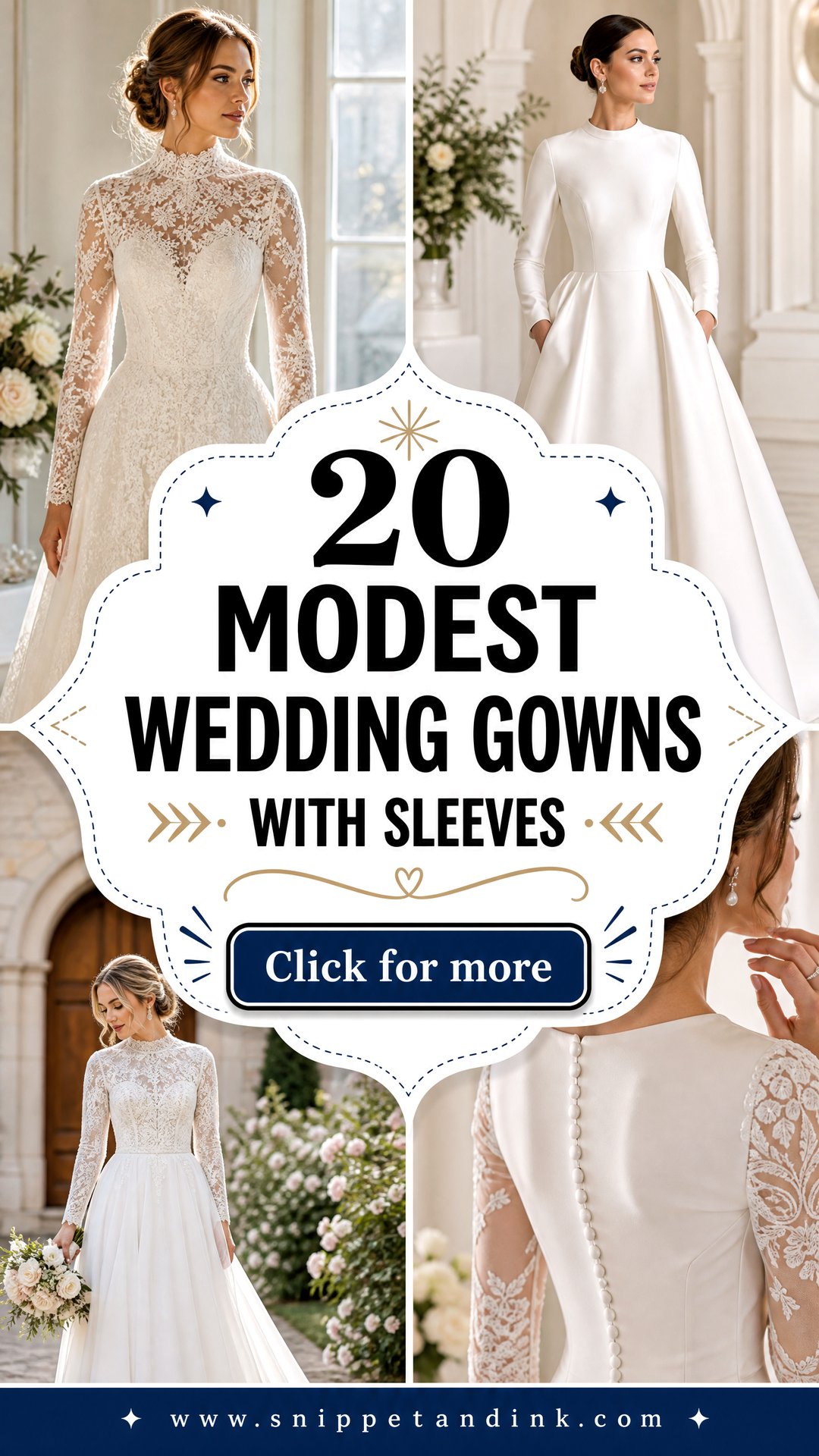
Sleeves change a wedding dress more than most brides expect. They decide how warm you’ll be, how high you can raise your arms for a first dance, and how the gown reads from the back of the room. In my fittings, the sleeve is often the part that needs the most adjusting, because ready-made sleeves are cut for an average arm and very few of us have one. Fabric sets the tone: satin is structured, crepe is clean and tulle is soft. Small finishing details such as covered buttons, pearl beading and embroidered cuffs give a covered gown its personality. Below are twenty sleeved gowns with the accessories and fitting notes I’d give each one.
Sleeve Shapes and How Much Movement Each One Allows
The cut of the armhole matters more than the sleeve itself. A high, close armhole lets you lift your arm without the bodice rising with it; a low, loose one looks relaxed on the hanger but pulls the whole dress up when you reach. I look at that first, then the sleeve shape.
- Fitted long sleeves in lace or crepe: the cleanest look, but the least forgiving. They need stretch or a properly set armhole.
- Bishop and bell sleeves: plenty of room through the arm, cooler in summer, but fuller fabric can catch on things.
- Three-quarter sleeves: freer at the wrist, good for showing a bracelet or a watch you want to keep on.
- Puff and cap sleeves: light coverage at the top of the arm only, best when you feel hot in fabric.
- Cape and detachable sleeves: flexible, but they rely on how securely they’re fastened.
Think about season too. Fitted satin sleeves feel warm in a summer marquee, while sheer lined chiffon or open lace breathes. For winter, velvet or heavy crepe sleeves mean you may skip a wrap entirely.
1. Long Sleeve Lace A-Line Wedding Gown
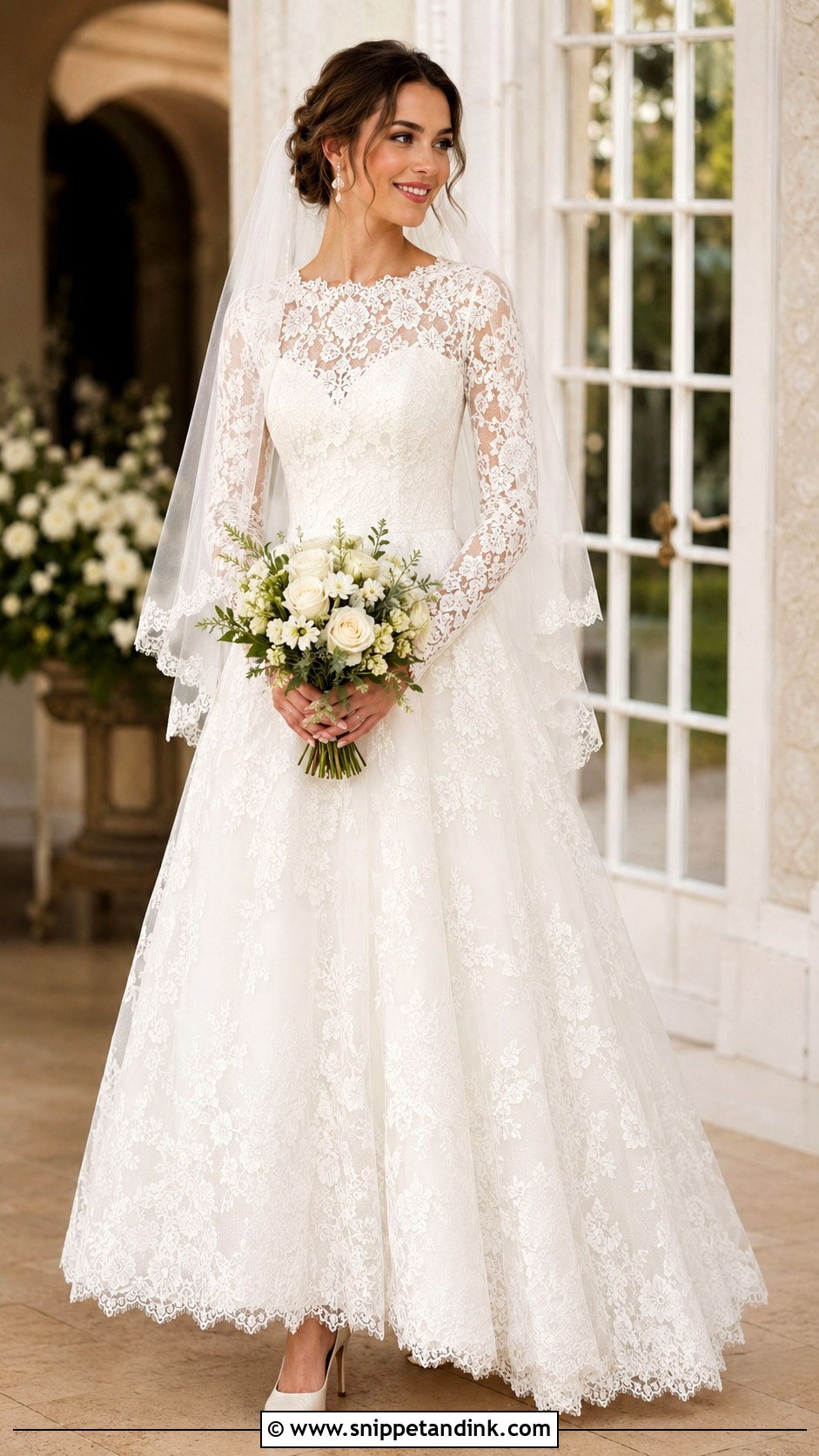
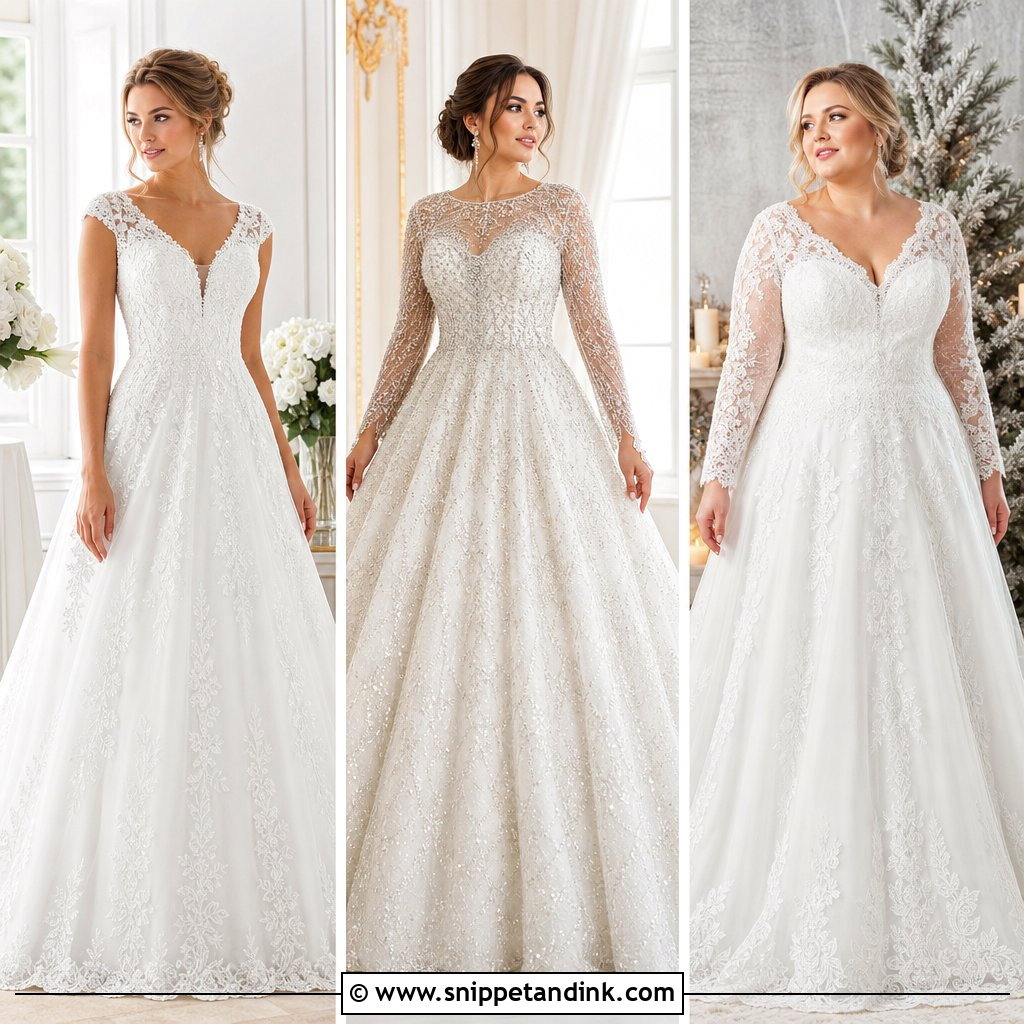
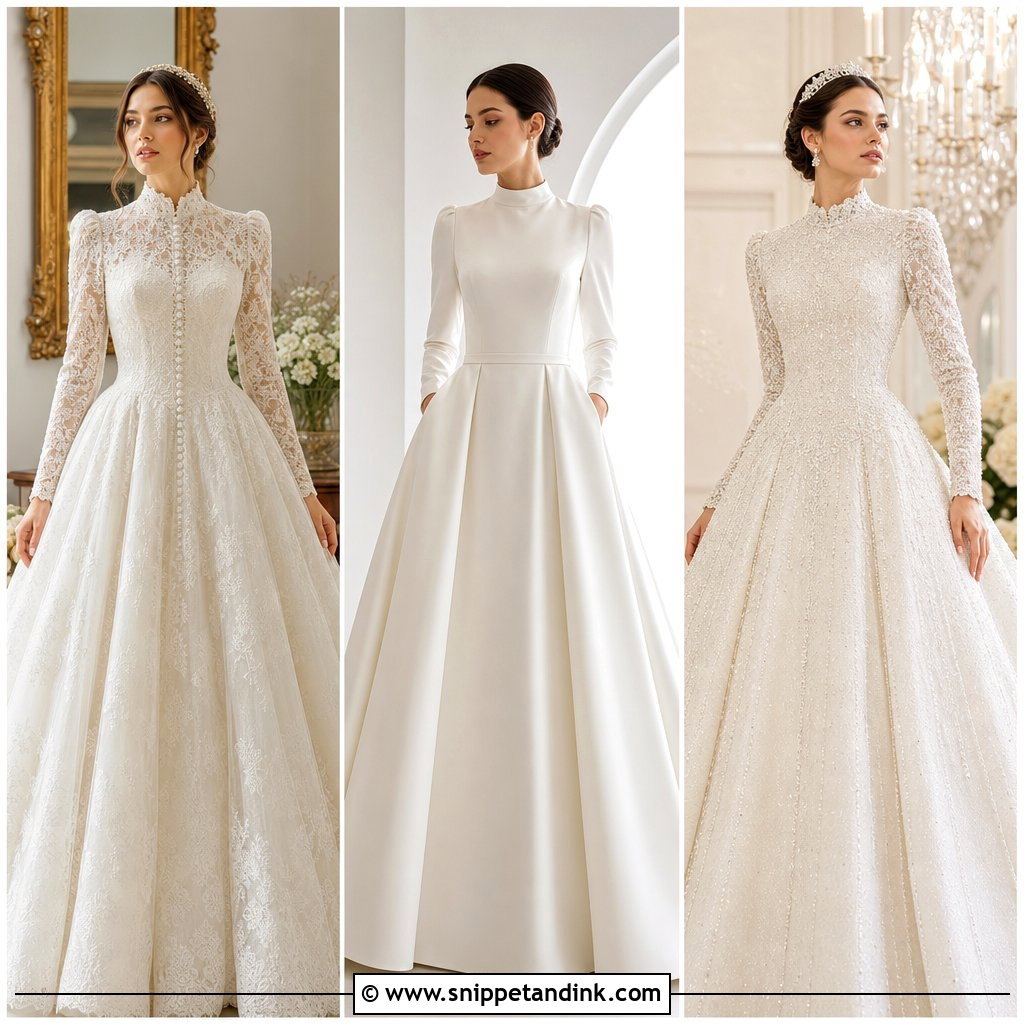
Lined lace on an A-line is the easiest place to start. The same pattern running from bodice to wrist looks cohesive, and the gentle flare of the skirt suits most figures. If you want solid arm coverage, ask for lined sleeves rather than sheer illusion lace; the difference is obvious in daylight. The two spots I tailor most on this style are the shoulder seam and the wrist, where excess fabric bunches. Satin pumps, pearl drops, a small clutch and a fingertip or chapel veil with a narrow edge keep the lace as the focus.
2. High Neck Satin Ball Gown With Sleeves
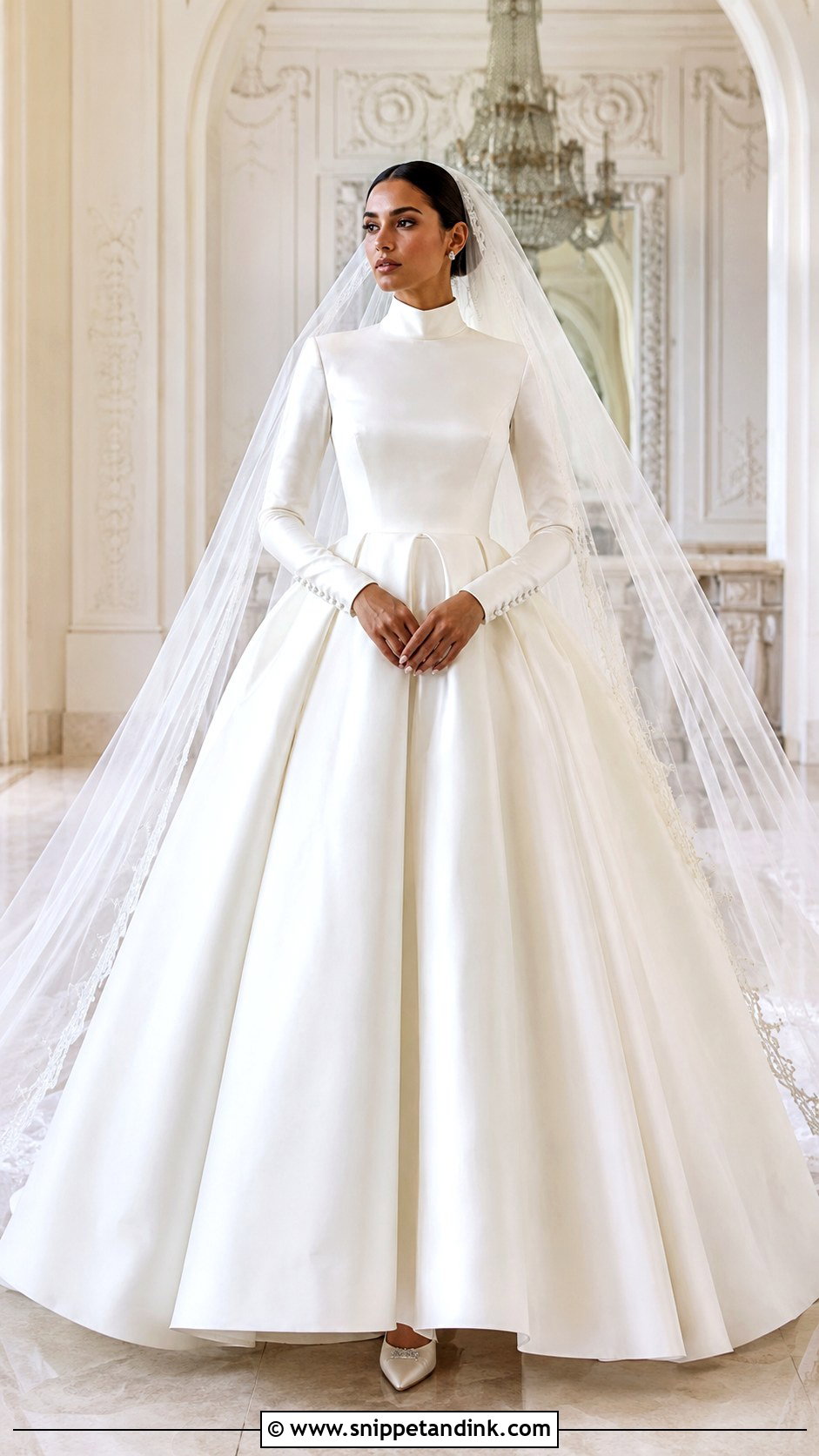
High-neck satin ball gowns look sculpted in formal rooms, but they’re heavy. The bodice should sit close without pulling across the shoulder blades, which is where satin shows strain first. Long satin sleeves with covered cuff buttons give it a traditional finish. I’d suggest asking about a lighter petticoat if the skirt drags, and a hidden wrist loop to lift the train when you walk. Pointed heels, crystal studs, a sleek low bun and a plain cathedral veil complete it without making it busy.
3. Simple Crepe Column Wedding Gown With Sleeves
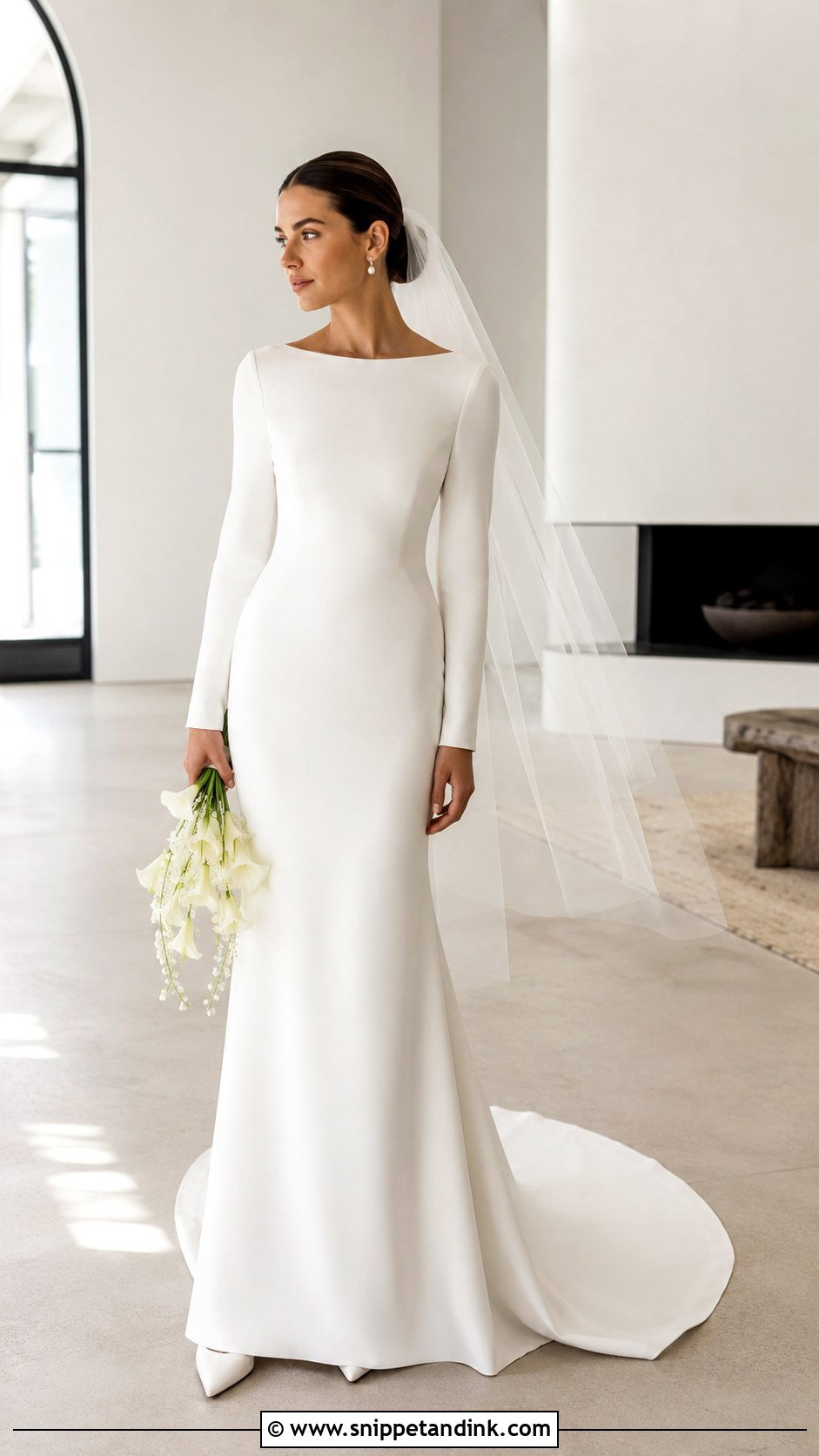
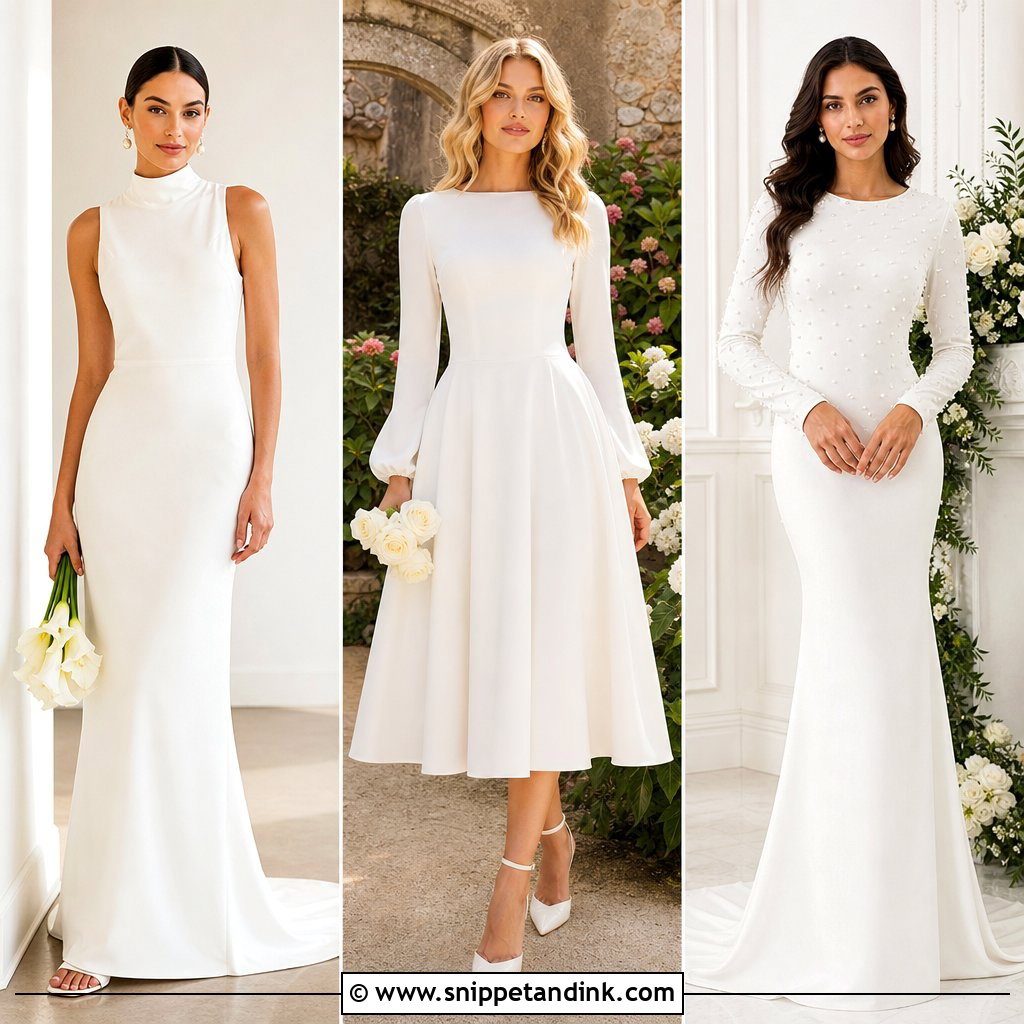
Matte stretch crepe is the fabric I’d pick for a column gown, since it follows the body instead of clinging. A bateau neckline, covered back and slim full-length sleeves keep coverage consistent, and the skirt falls straight into a short sweep train. Crepe is honest about what’s underneath it, so test your undergarments under the dress at every alteration. Seam-free pieces are essential. Pointed slingbacks, small pearls, a structured mini bag, a low chignon and a single-layer veil keep it minimal.
4. Square Neck Wedding Gown With Long Sleeves
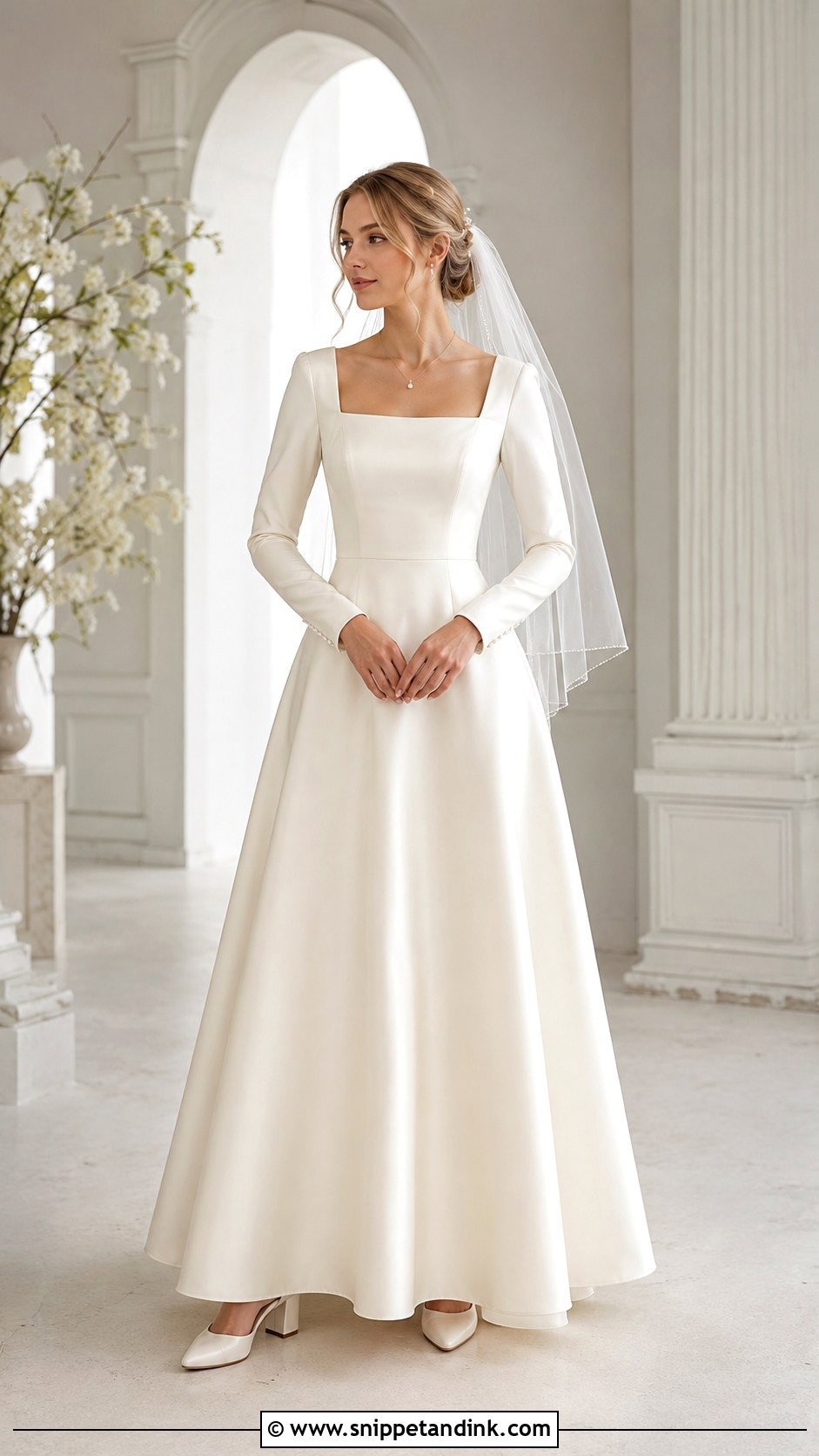
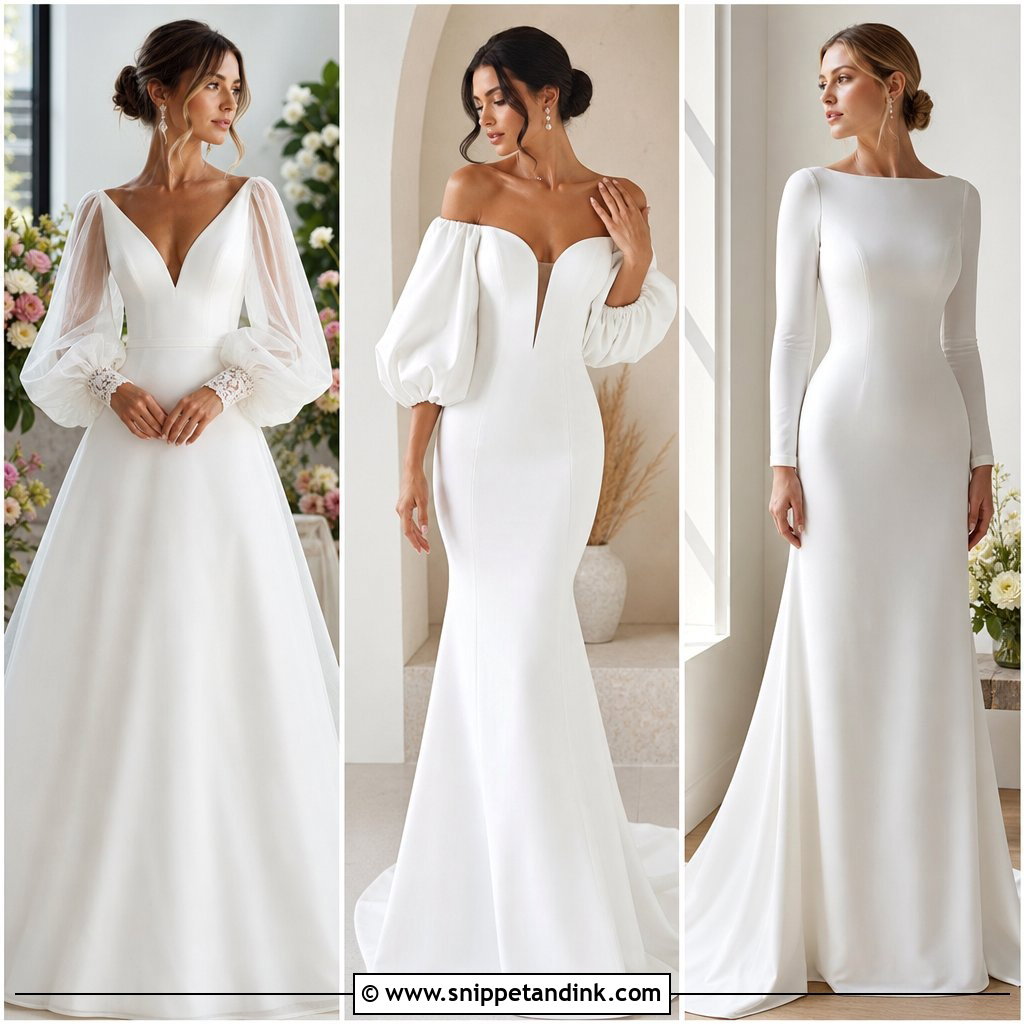
Square necklines frame the face and collarbone with more cover than a low bodice. Fitted long sleeves and an A-line or gathered skirt keep it balanced, in structured satin, matte crepe or lined lace. Sit and bend forward at the fitting; if the neckline gapes, ask for it to be raised slightly, which keeps the shape and adds reassurance. Block-heel pumps, a fine pendant and pearl pins around a low bun suit it. A waist-length veil leaves the neckline on show, while a longer plain one looks more formal.
5. Bishop Sleeve Chiffon A-Line Wedding Gown
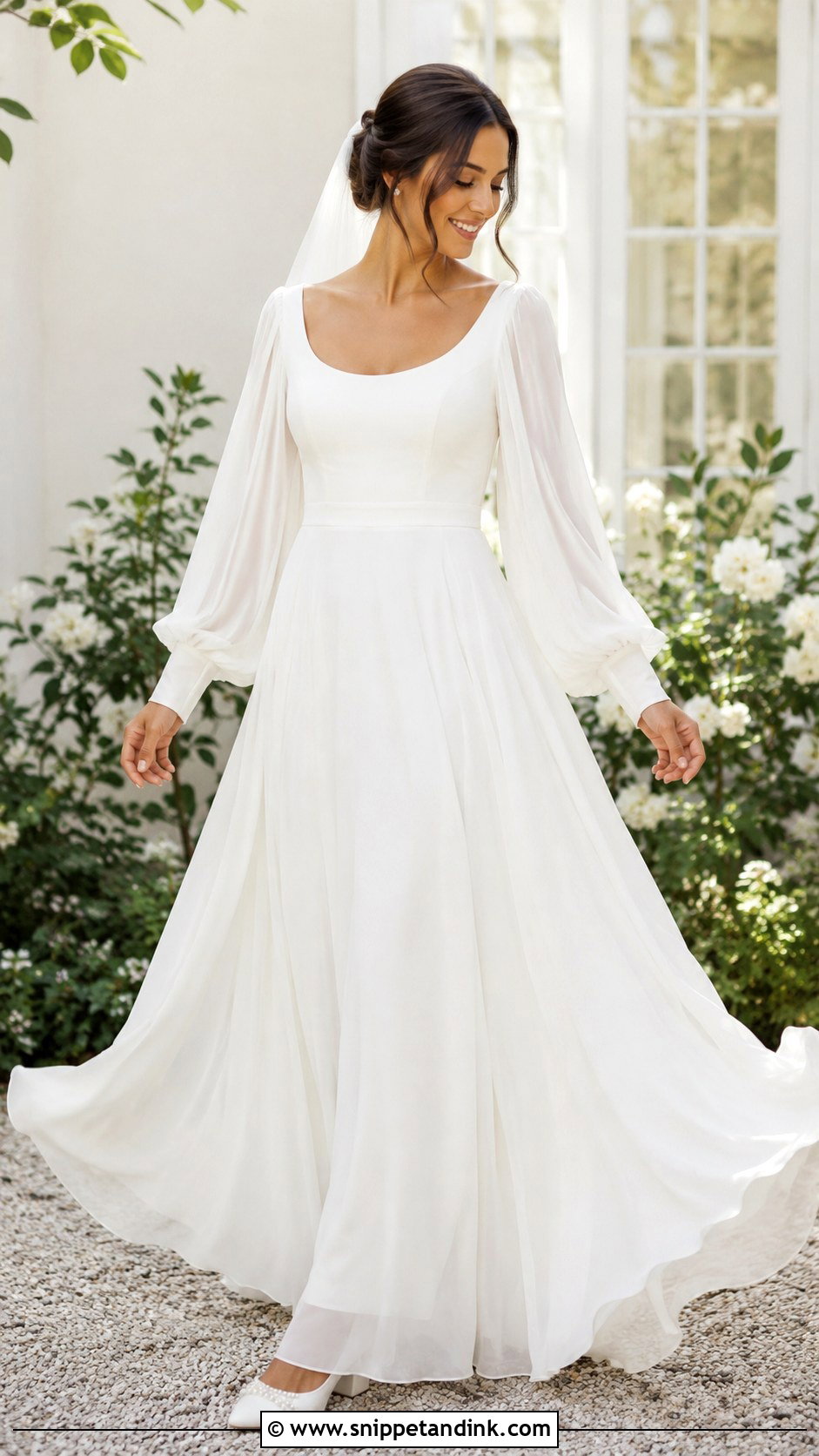
Bishop sleeves are full through the arm and gathered into a fitted cuff, which gives movement and hides any arm you feel self-conscious about. In light chiffon bishop sleeves are also cooler than fitted ones because air moves inside them. The bodice, skirt and sleeves all need lining, since chiffon is see-through on its own. A waist seam or narrow belt stops the airy shape looking like a nightdress. Low block heels, pearl studs, a floral comb and a light veil suit garden and coastal venues best.
6. Three Quarter Sleeve Tea Length Wedding Gown
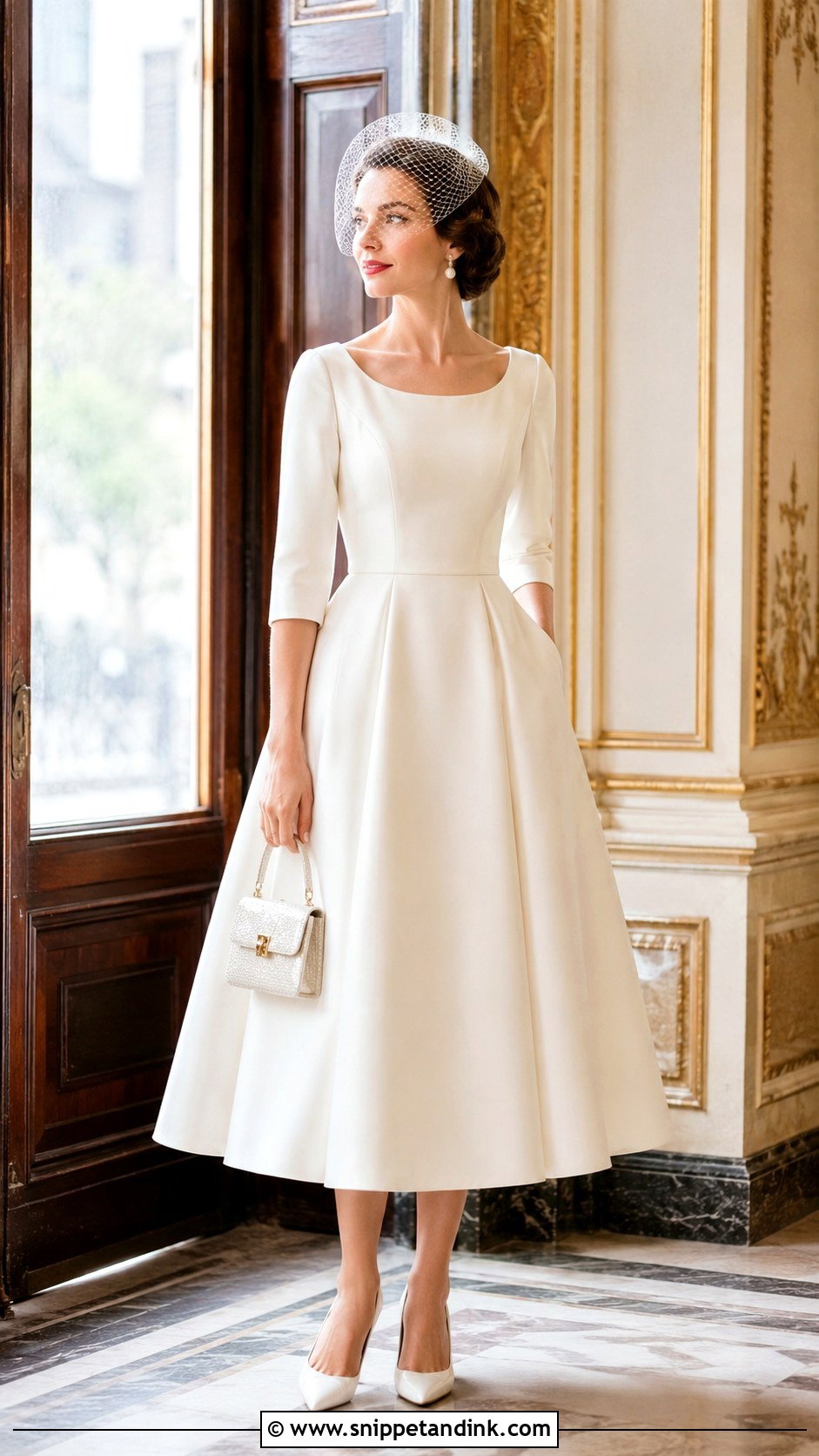
Tea-length hems put your shoes on display, so choose them as carefully as the dress. Pointed pumps, low slingbacks or embellished block heels all work, provided you can dance in them. I’d pair a fitted bodice and modest scoop neck with a structured, softly flared skirt and three-quarter sleeves. The hem point matters more than people think: half an inch higher or lower on the calf can change how long your legs look, so stand in front of a full mirror while the seamstress pins it. Pearl earrings, short gloves, a top-handle bag and a birdcage or shoulder-length veil finish the vintage feel.
7. Pearl Beaded Long Sleeve Wedding Gown
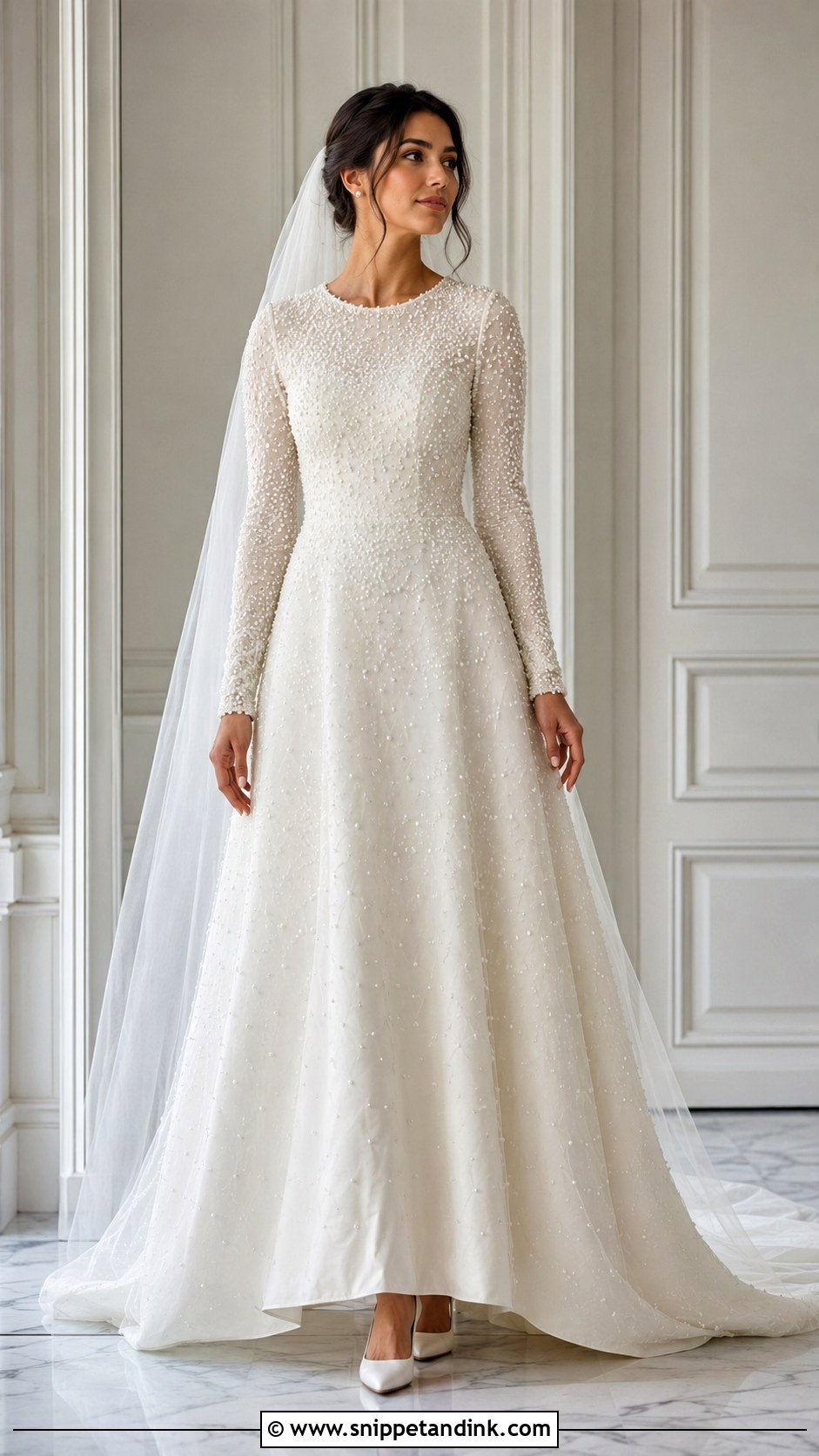
Pearls look best when they’re concentrated on the bodice, shoulders and sleeves, getting sparser toward the skirt. That keeps the top from feeling weighed down. A high scoop neck, fitted sleeves and an A-line skirt give the decoration a calm base. Check under the arms at each fitting: pearls stitched there rub with every movement, and a soft lining or a slight shift in bead placement stops it. Pearl studs, satin pumps, a plain veil and a neat bun or pinned waves keep the shoulders visible.
8. Mock Neck Lace Wedding Gown With Sleeves
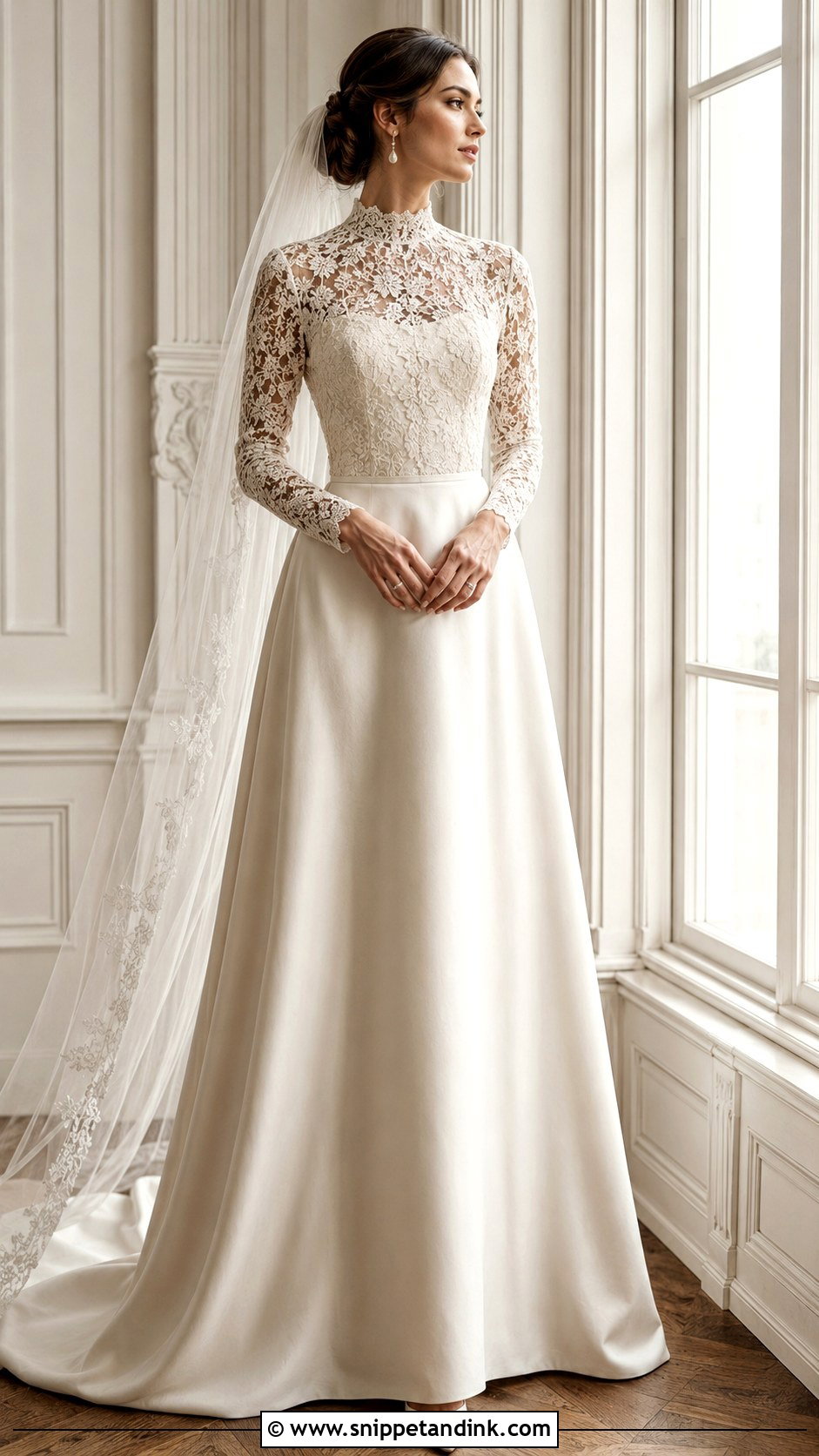
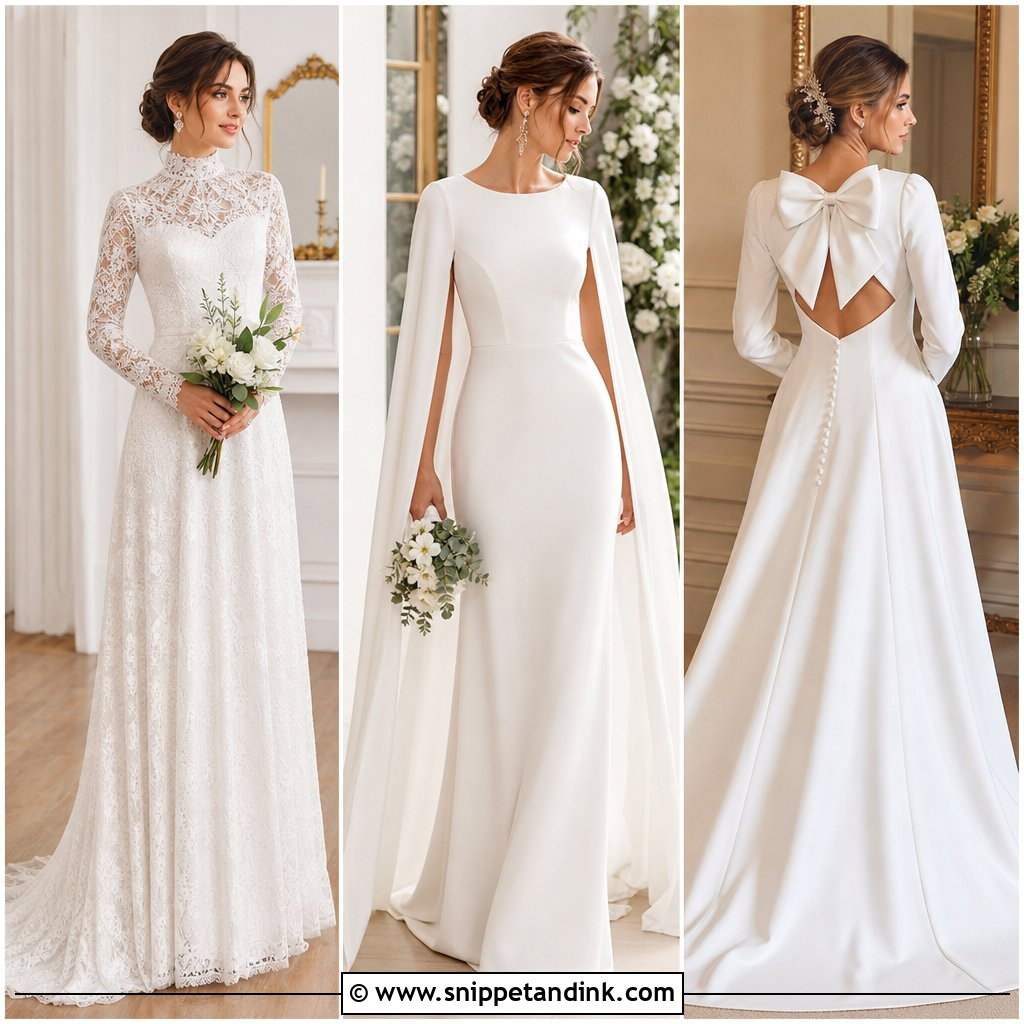
A mock neck lace wedding gown has a vintage feel and covers the whole upper body. The collar should rest at the base of the neck, not grip it like a turtleneck. Lined floral lace across the bodice and sleeves can lead into satin or tulle for contrast. With a collar this high, skip the necklace and let drop earrings lengthen the neck instead. Secure the veil under a low bun so it doesn’t hide the collar. Turn your head side to side at the fitting; lace that rubs at the jaw will drive you mad by evening.
9. Mikado Wedding Gown With Pockets and Sleeves
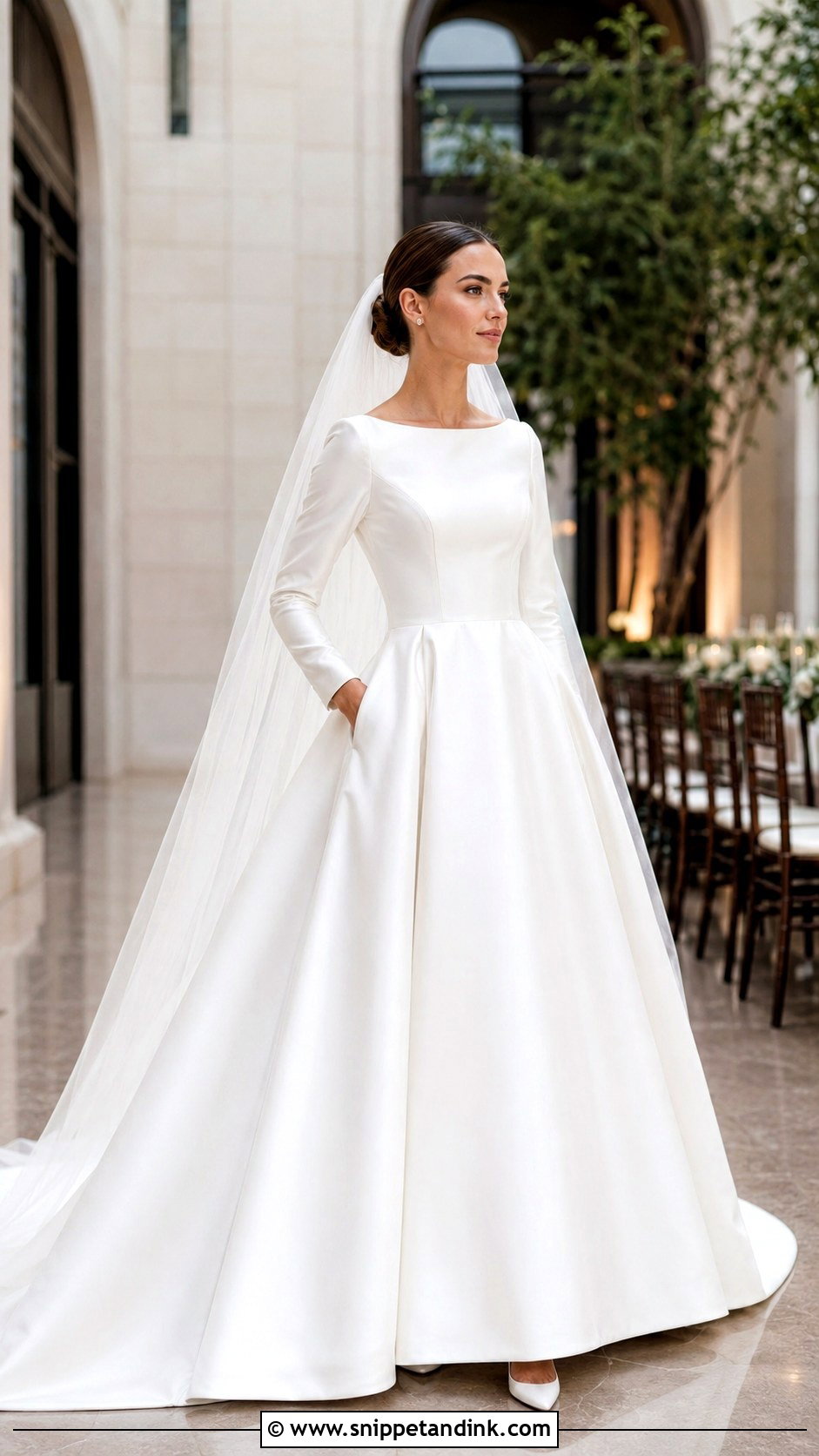
Mikado holds a crisp line, so the sleeves become part of the architecture of the dress. A fitted bodice, raised bateau neckline and full skirt with hidden pockets give a classic shape. The issue with structured sleeves is mobility: stiff fabric doesn’t give at the elbow, so ask the tailor for extra room there and at the upper arm. Keep pockets light; a phone and lipstick are fine, anything heavier drags the skirt. Closed-toe pumps, crystal studs, a sleek bun and a long plain veil soften the structure.
10. Floral Appliqué Wedding Gown With Long Sleeves
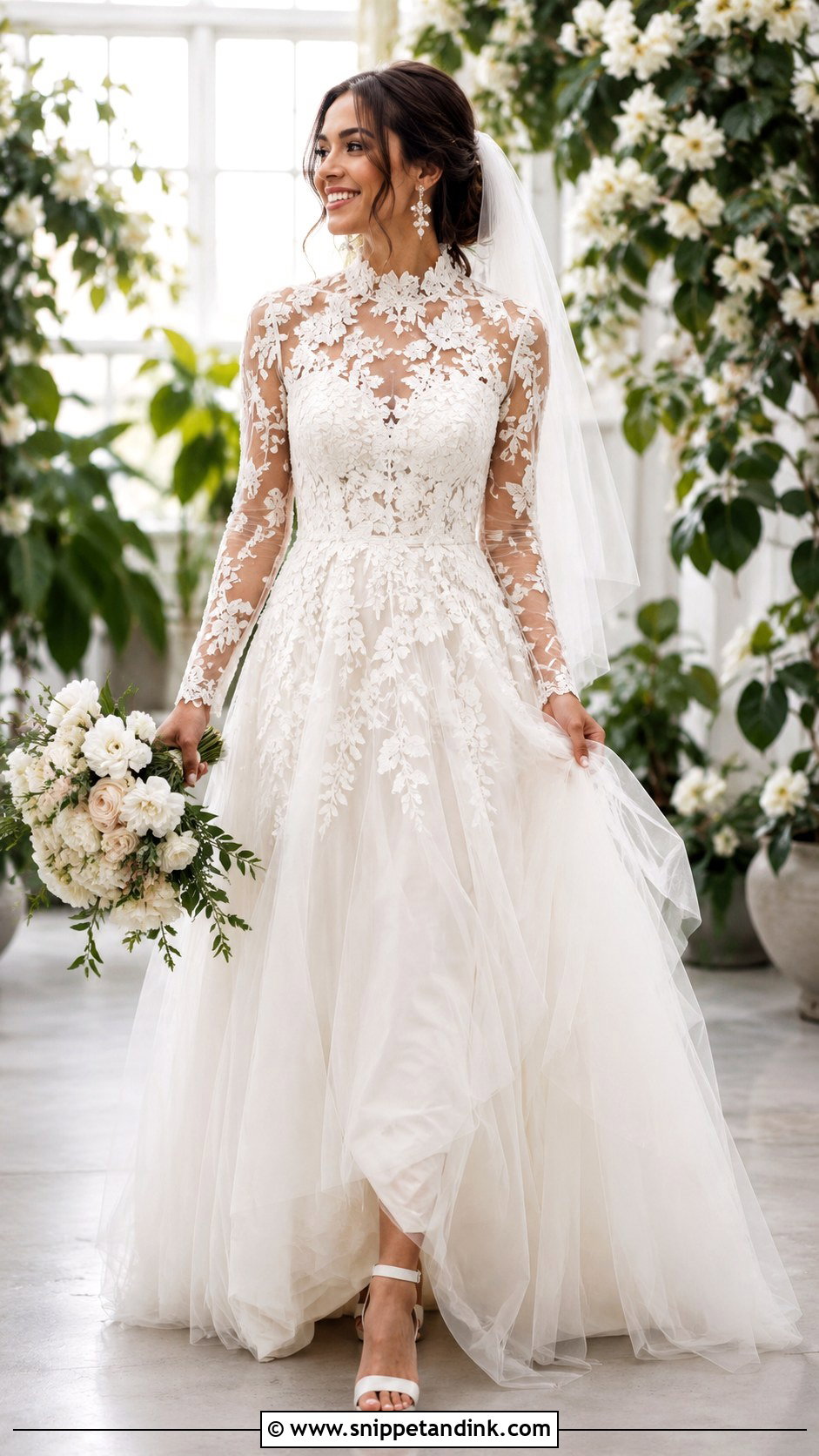
Appliqués work when they look as if they grew on the gown, travelling from bodice onto sleeves and thinning out across the skirt. A lined illusion neckline and lined sleeves give modest cover while the flowers keep it delicate. The places I check are the elbow crease, waist and underarm, where stiff appliqués can stop you bending. Moving a few motifs a little makes a big difference to comfort. Satin block heels, floral earrings, a lightly trimmed veil and a slim bouquet that doesn’t hide the bodice suit it.
11. Plus Size Modest Wedding Gown With Sleeves
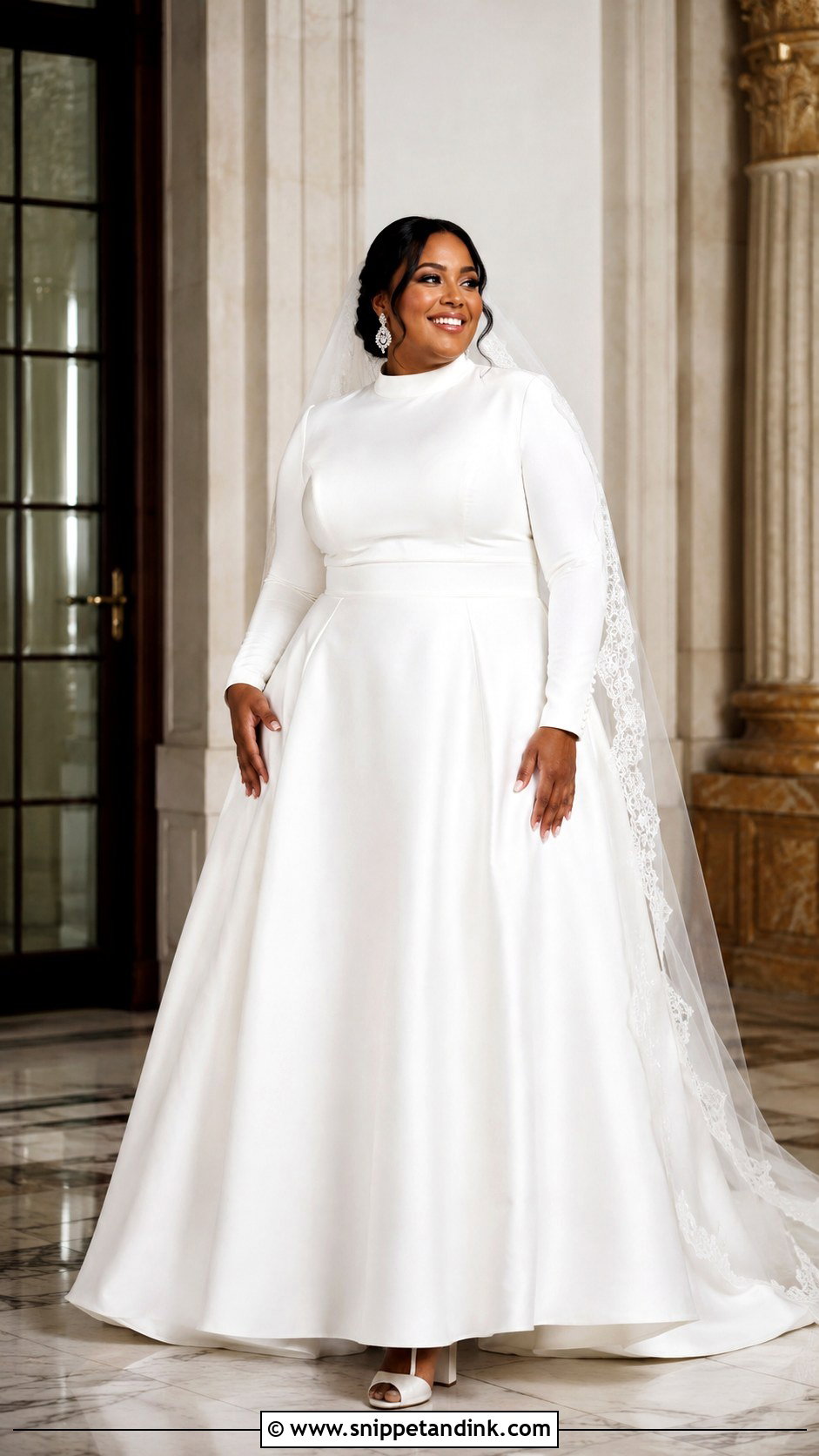
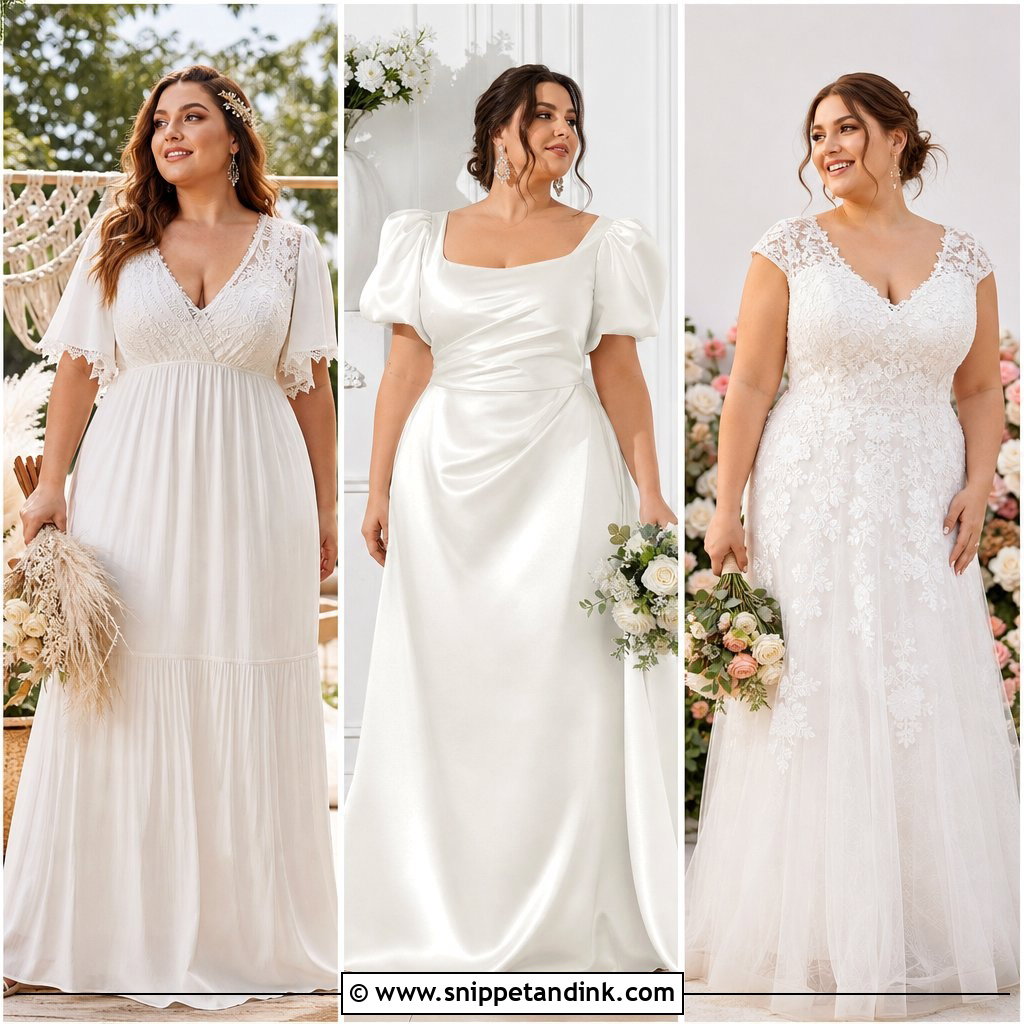
Plus-size gowns with sleeves need room in the upper arm first. Many brides size up just to get the sleeves on, then the rest of the dress is too big to alter well. Ask instead whether the sleeves can be recut or customised. An A-line with a structured bodice, supportive lining and well-placed seams defines the waist comfortably, and a V-shaped waist seam adds length while the neckline and back stay covered. Stable block heels, statement earrings and a chapel veil finish it. Good construction and careful alterations do more than the size label ever will.
12. Petite Modest Wedding Gown With Sleeves
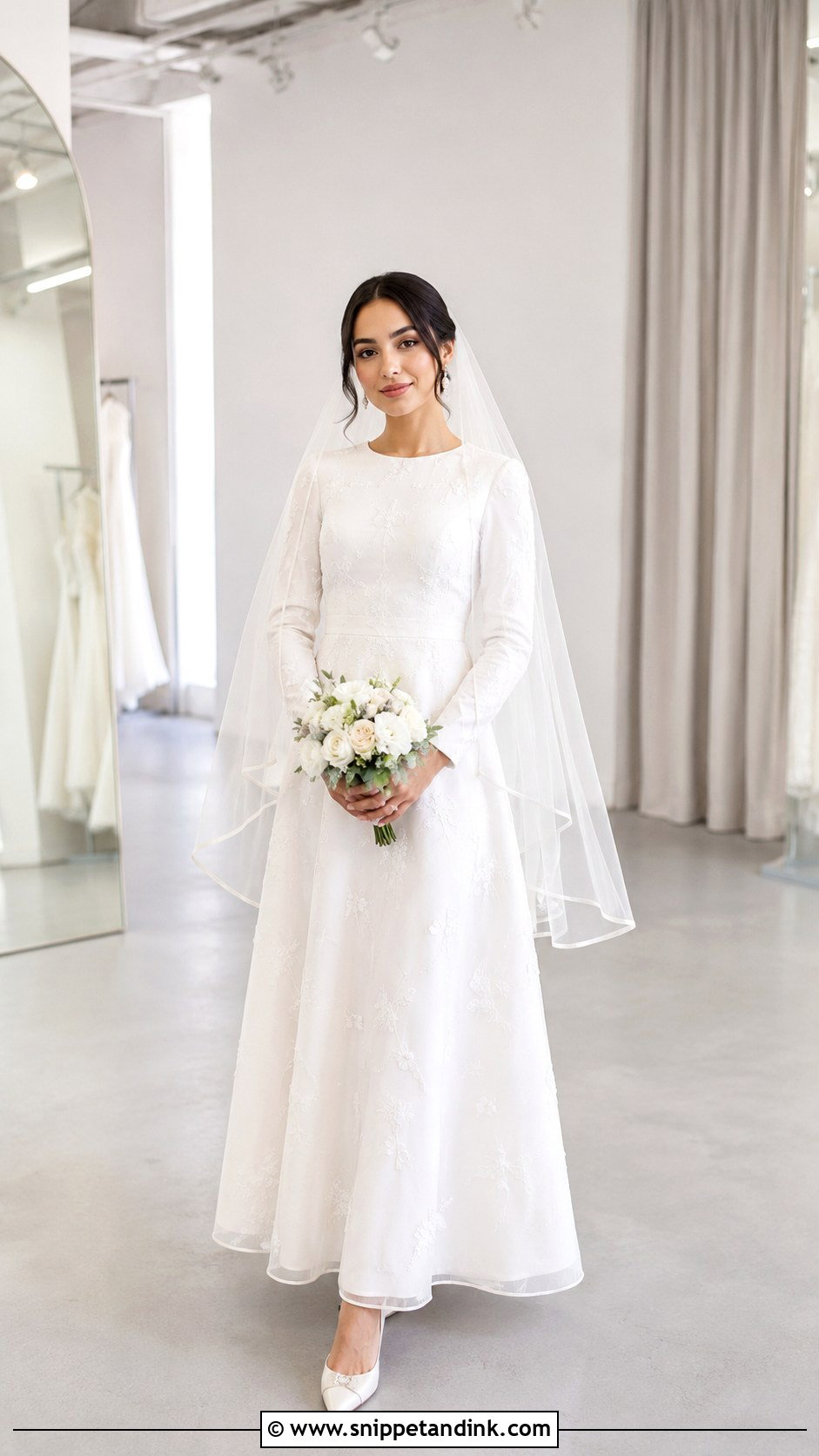
Petite brides need controlled proportions. A slightly raised waist, gently flared skirt and slim fitted sleeves lengthen the line; oversized appliqués and very full layers swamp it. Smaller lace motifs and narrow cuffs keep the scale right. The shoulder fit matters most, since spare fabric there makes the whole gown look borrowed. Also check where waist seams and skirt details fall, because shortening the hem alone often leaves them sitting too low. Pointed ivory heels, fine earrings, a compact bouquet and a fingertip veil keep it in balance.
13. Modest Mermaid Wedding Gown With Long Sleeves
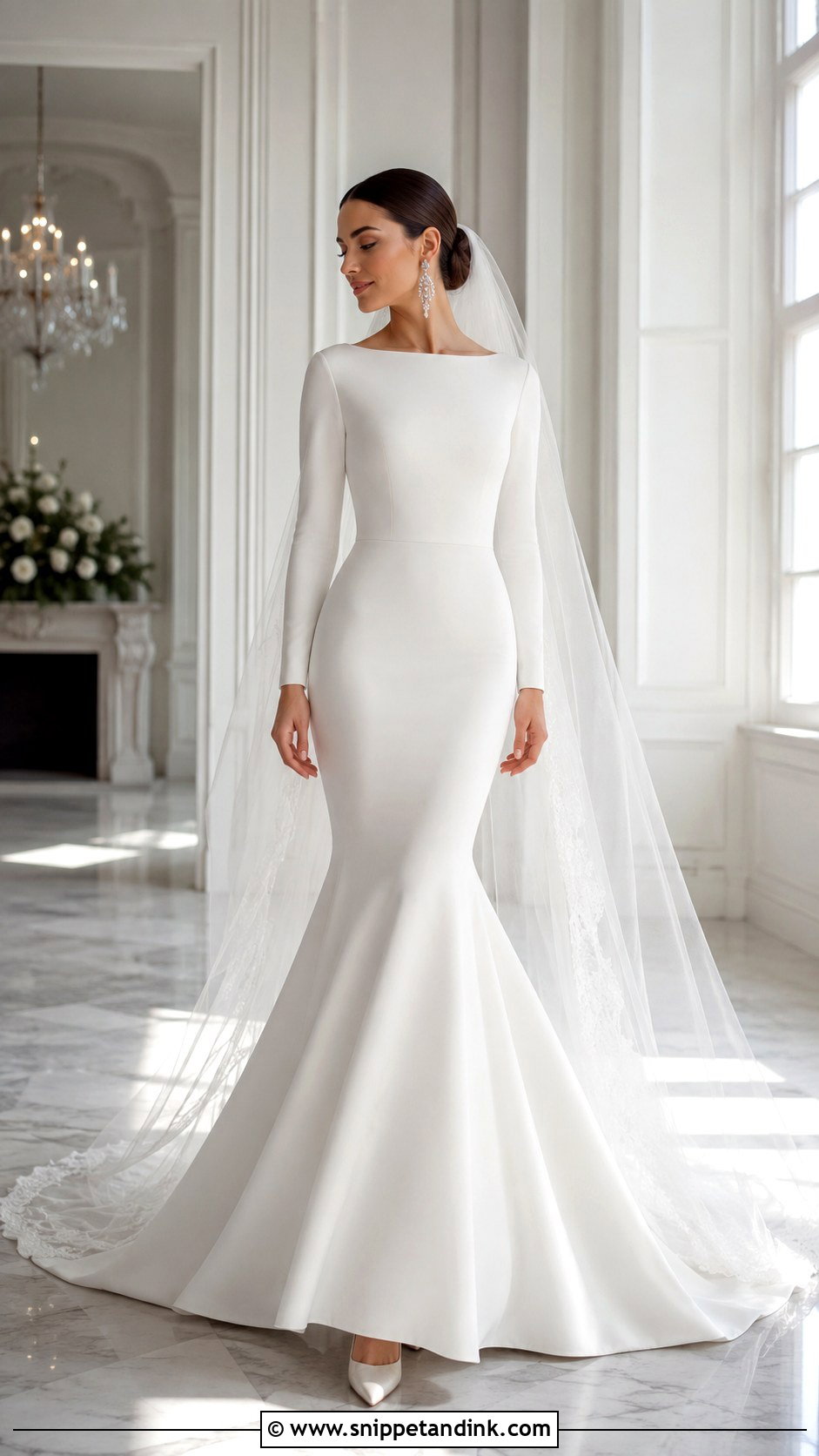
Mermaid gowns can be modest if the coverage comes from the top: a bateau or raised scoop neckline, long sleeves and a covered back. Substantial crepe, lined lace or structured satin skims rather than clings before flaring near the knee. The honest trade-off is movement. Practise sitting, walking and climbing steps in the final fitting. If you feel trapped, a tailor can often raise the flare point a little or add stretch lining without losing the shape. Pointed heels, chandelier earrings, a sleek updo and a plain chapel veil complete it.
14. Boho Wedding Gown With Bell Sleeves
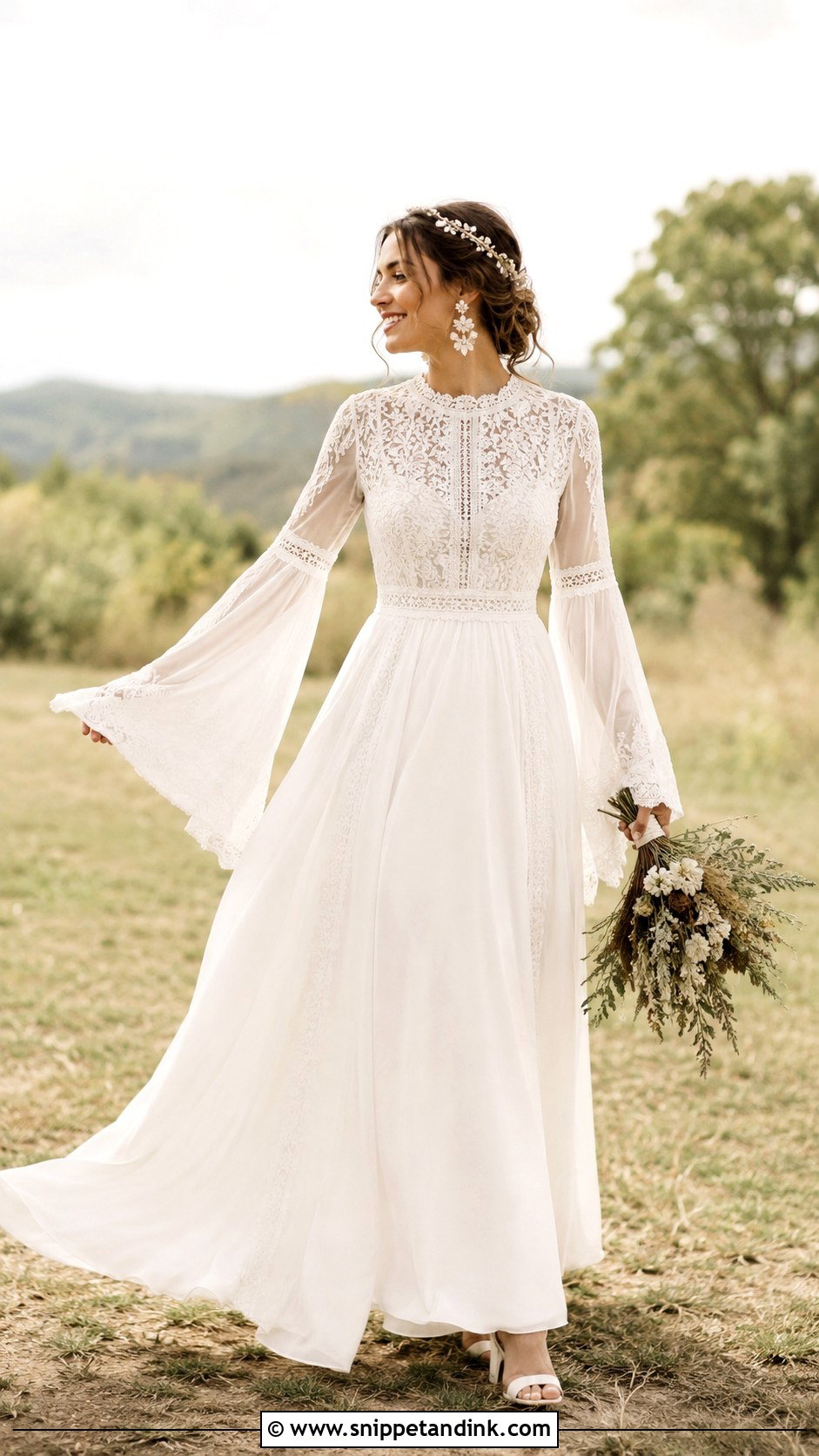
Bell sleeves fit at the shoulder and widen below the elbow, which gives a boho gown its relaxed character. Lined lace or light chiffon both work, over a covered bodice and flowing A-line skirt. Wide cuffs do trail into gravy and candle flames at dinner, so I add a discreet wrist loop to lift them when you’re eating. Low block heels, a delicate hair vine and natural pearl or floral earrings suit the mood, with a loose braided updo. If the lace is already busy, keep the veil to plain tulle.
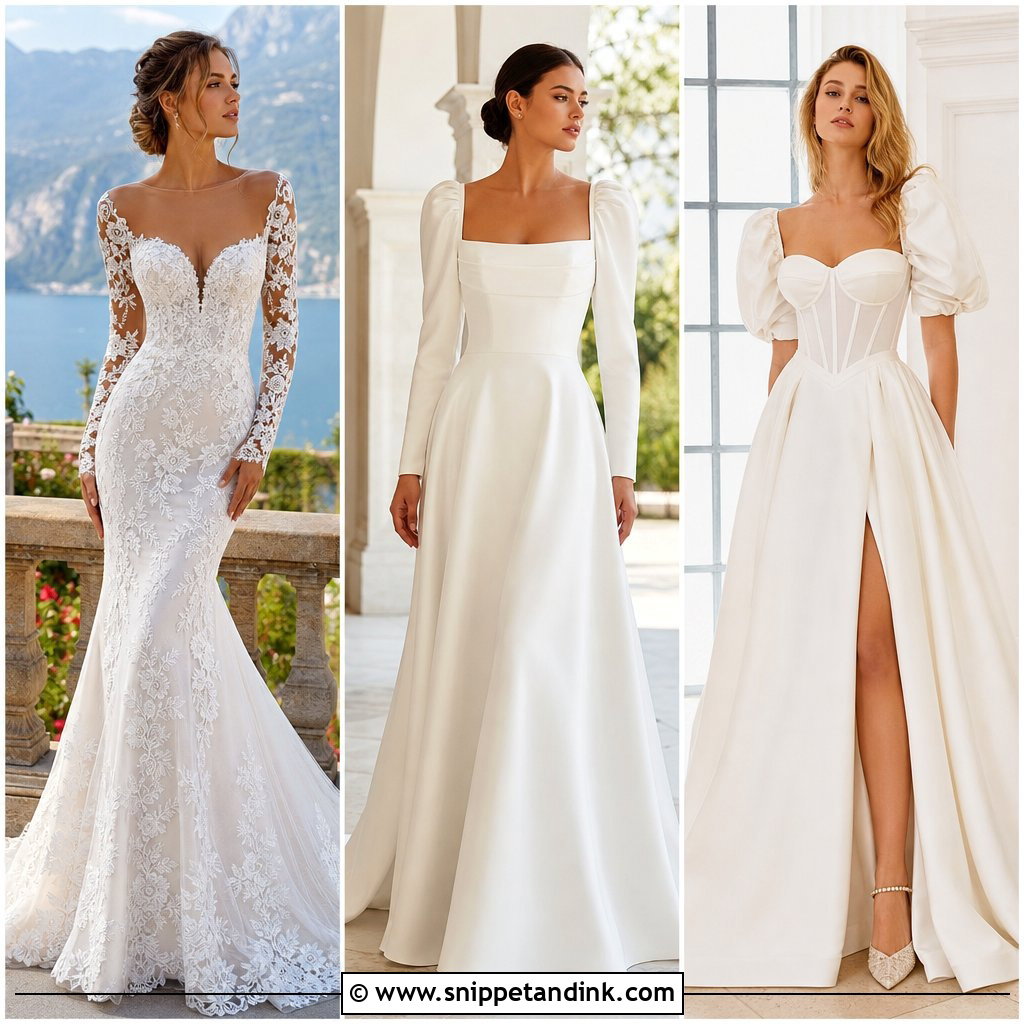
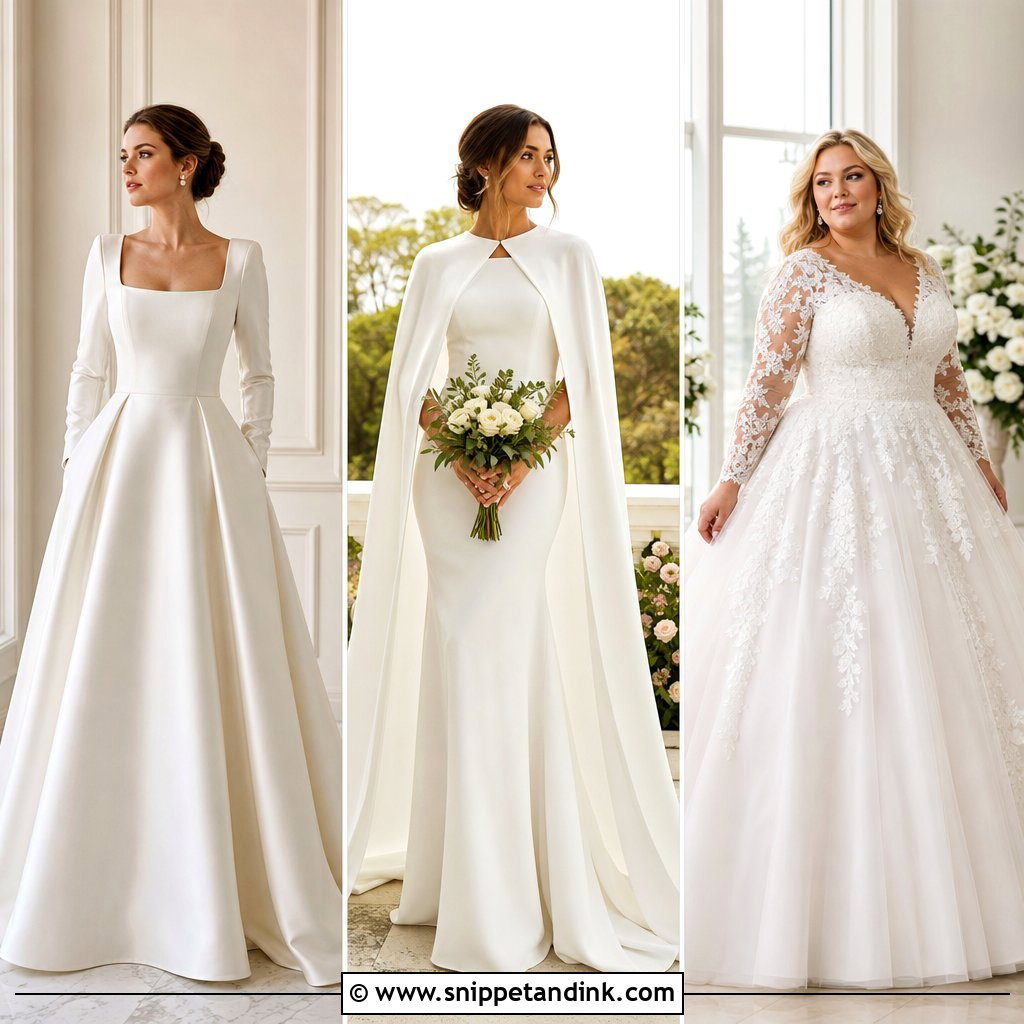
15. Vintage Wedding Gown With Puff Sleeves
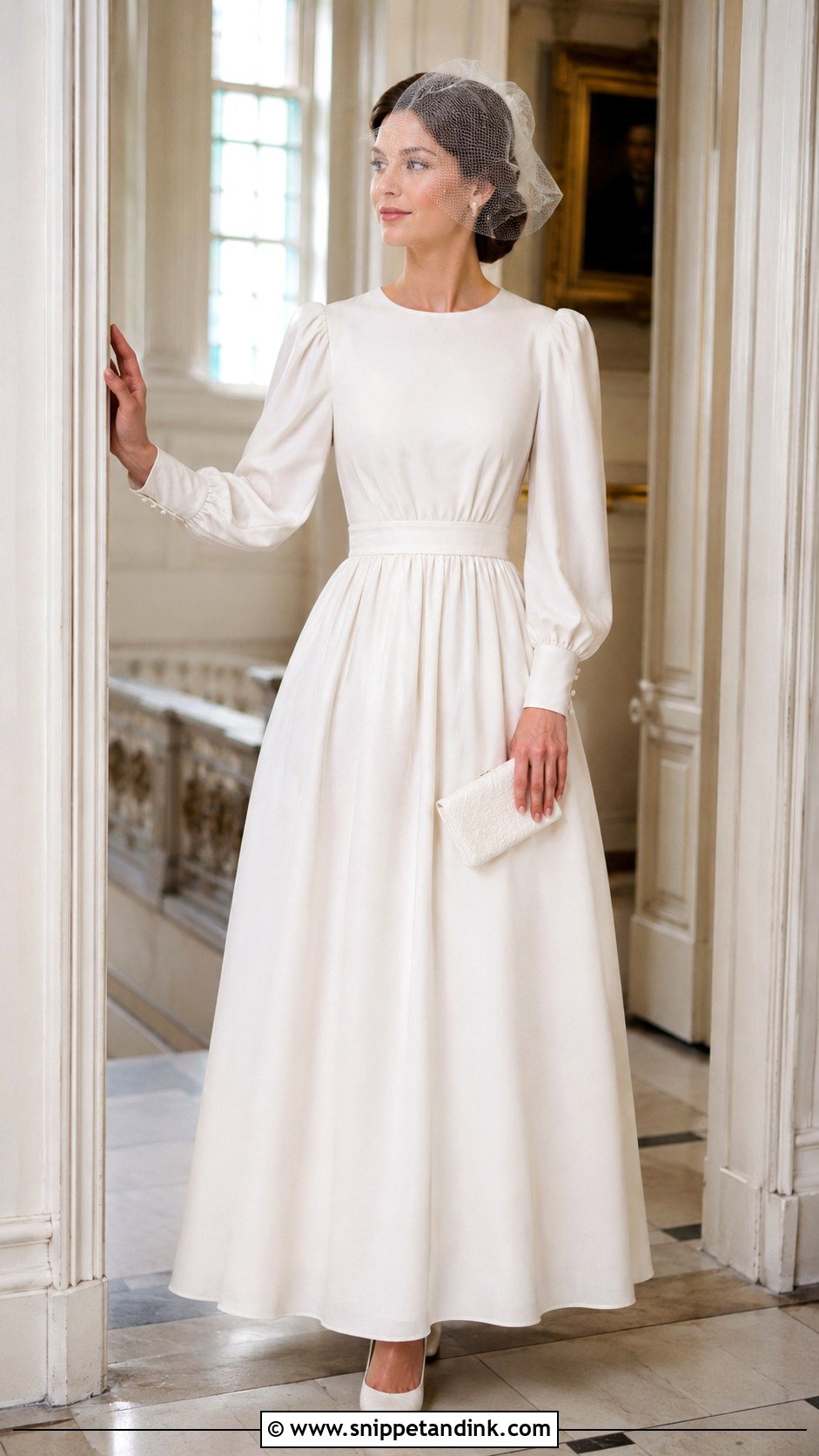
Puff sleeves on a vintage-style gown should rise gently and taper into fitted cuffs; tall puffs tip it into costume. A high scoop neckline, natural waist and softly gathered skirt keep it traditional. If your shoulders are broad, I’d start the puff slightly below the shoulder seam and keep it small. View the gown from the side as well as the front, because sleeve volume has to match skirt volume. Closed-toe pumps, pearl drops, a fabric-covered clutch and a blusher or fingertip veil add to the vintage mood.
16. Winter Velvet Wedding Gown With Long Sleeves
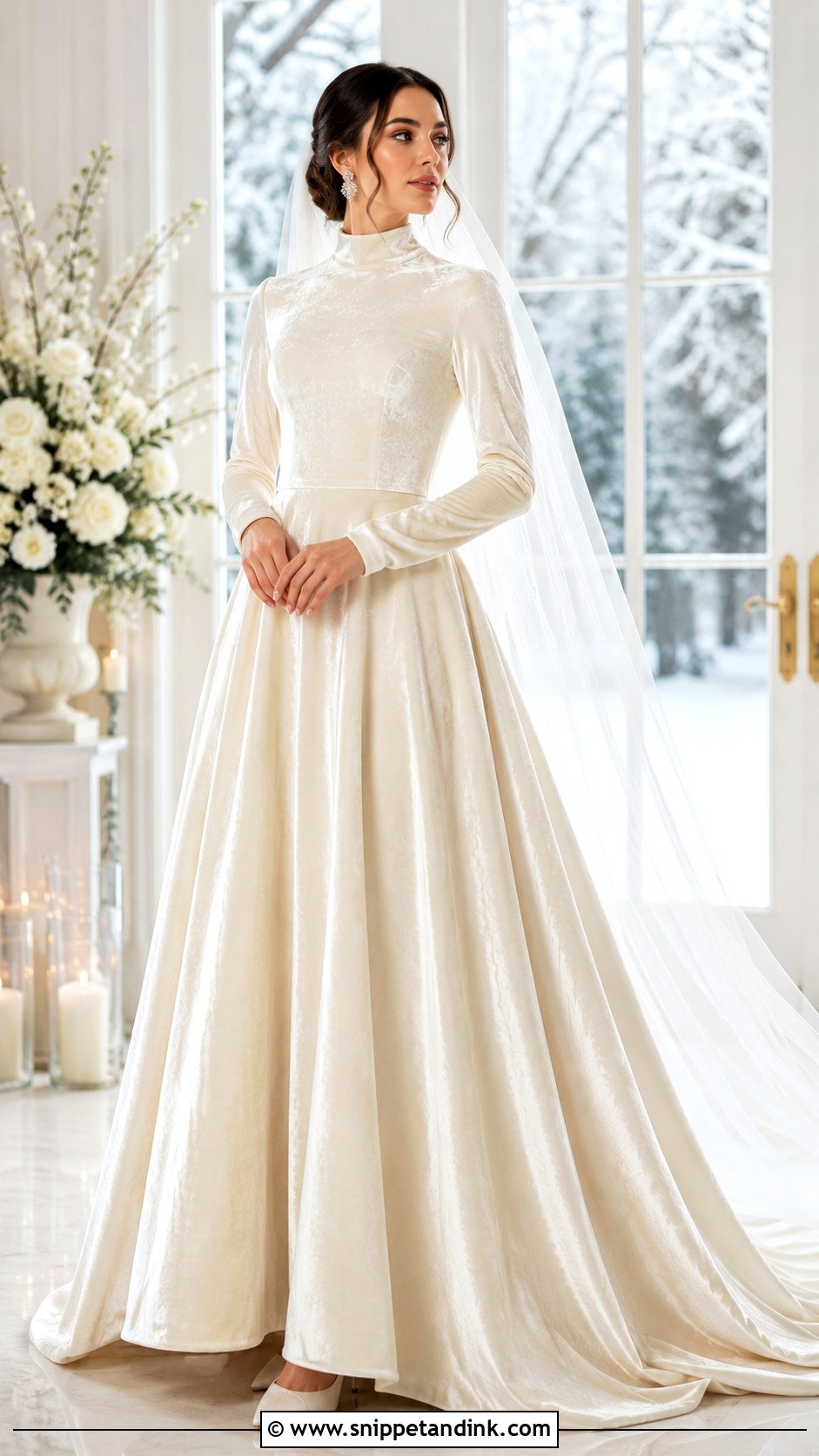
Velvet is the warmest bridal fabric and looks rich in winter light. A fitted bodice, long sleeves and A-line skirt let it shine without bulk. Choose ivory, winter white or cream and keep decoration minimal. Velvet has a pile that catches light differently depending on direction, so look at the gown in daylight and lamplight before deciding. It’s also heavy, which your tailor should account for at the waist, sleeves, bustle and train. Satin pumps, crystal earrings, a structured wrap for travel and a smooth veil for contrast finish it.
17. Hijab Wedding Gown With Long Sleeves
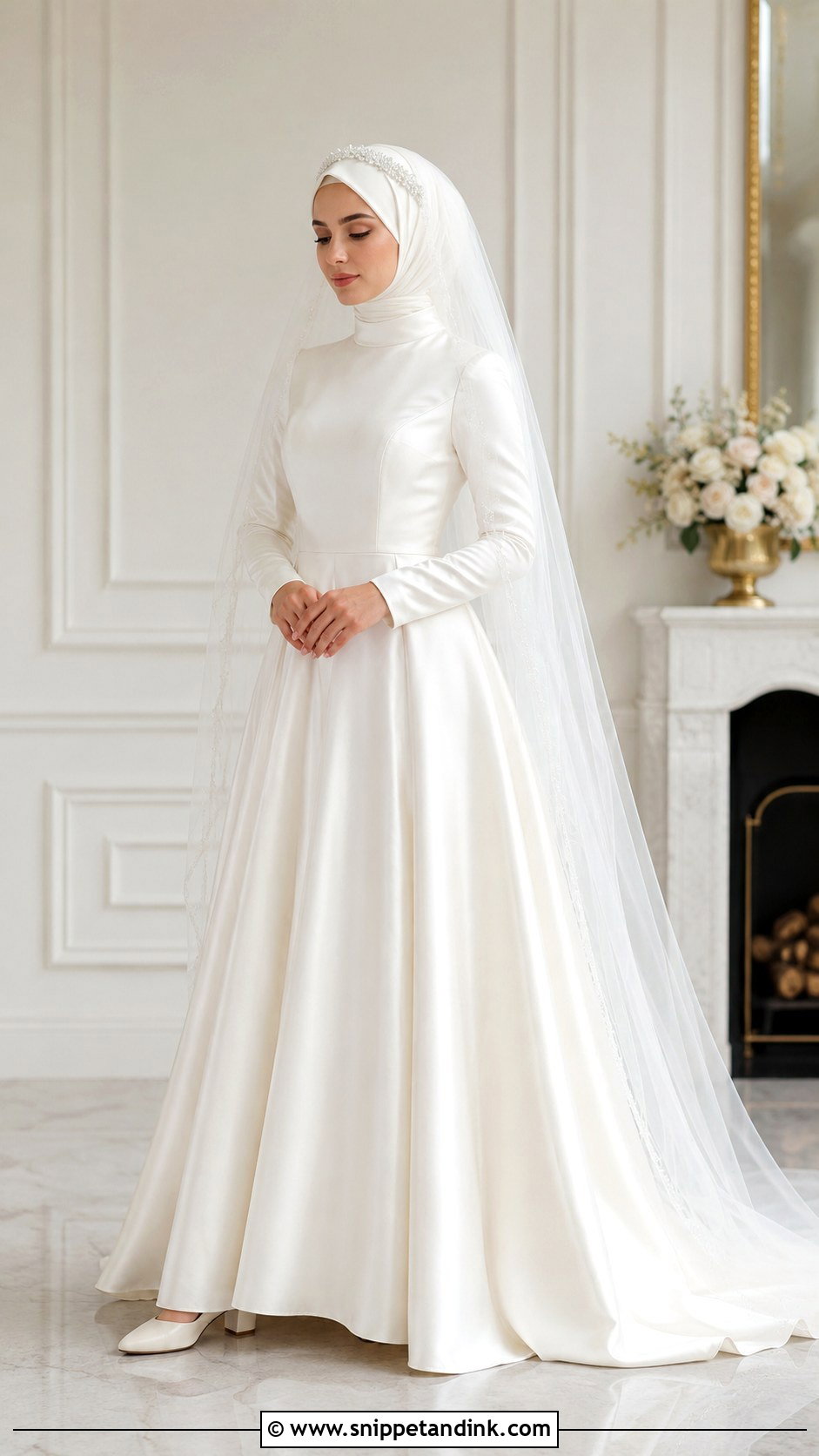
A hijab-friendly gown should cover fully without extra layers underneath: an opaque high neckline, lined long sleeves, a covered back and a skirt with enough ease. Satin, crepe or lined lace all coordinate well with a bridal hijab, as long as the undertone matches, white with white, ivory with ivory. Keep the neckline free of bulky decoration so the hijab drapes cleanly. Bring the exact hijab and undercap to every fitting so we can judge neckline, headpiece and veil together. A delicate headpiece, pearl earrings if they show and low block heels complete it.
18. Cape Sleeve Modest Wedding Gown
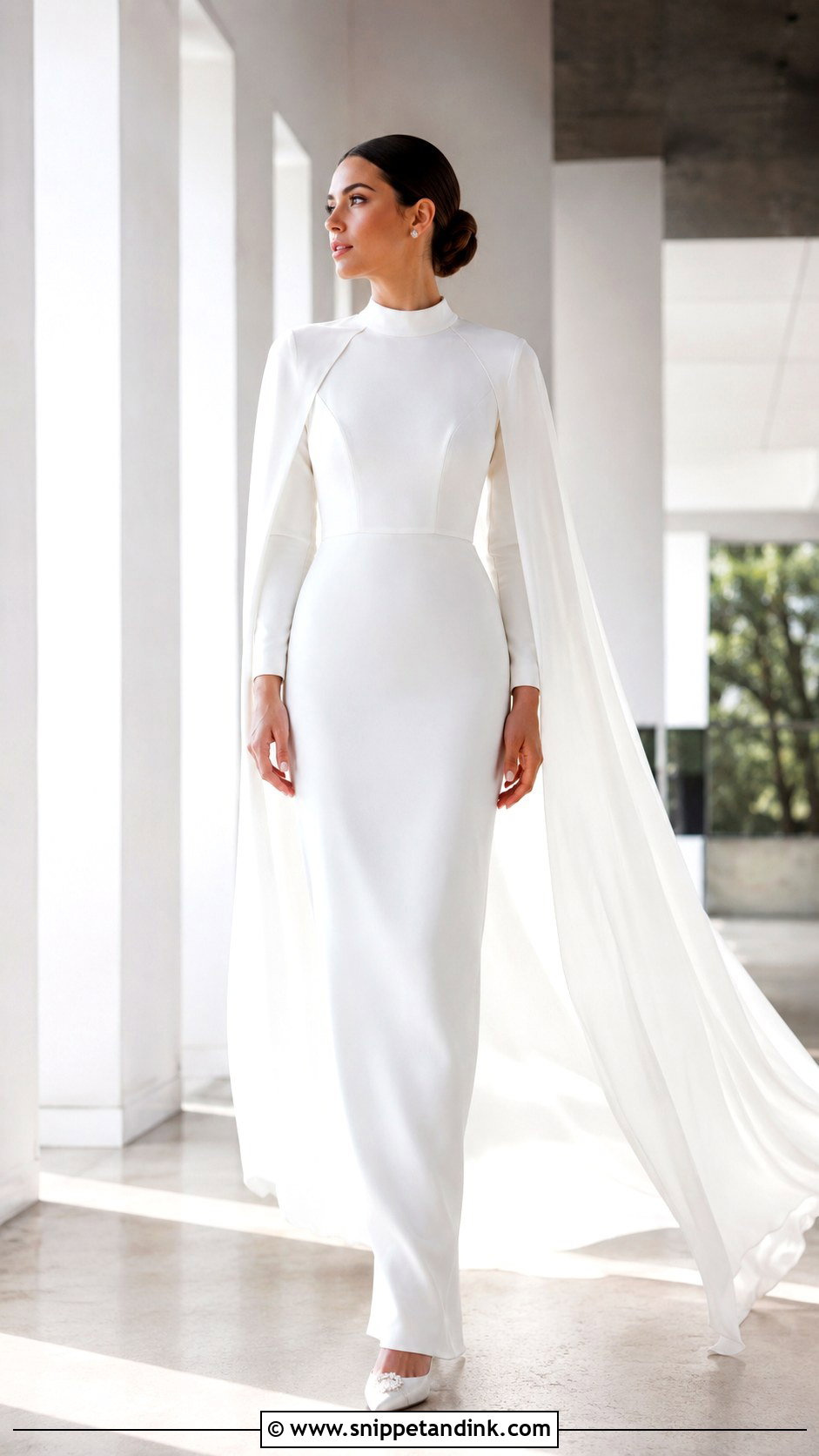
Cape sleeves make a gown move dramatically, but they don’t cover the arm on their own. For true coverage, choose a gown with fitted inner sleeves under the cape panels. A high neckline, structured bodice and column or A-line skirt keep it balanced. A full veil usually competes with the panels, so I’d go for a short veil or a minimal headpiece. Walk and turn at the fitting to check the cape doesn’t catch under your arms, and make sure it’s securely attached so it won’t drag the bodice back. Pointed pumps, sparkling studs and a sleek low bun suit it.
19. Detachable Sleeve Modest Wedding Gown
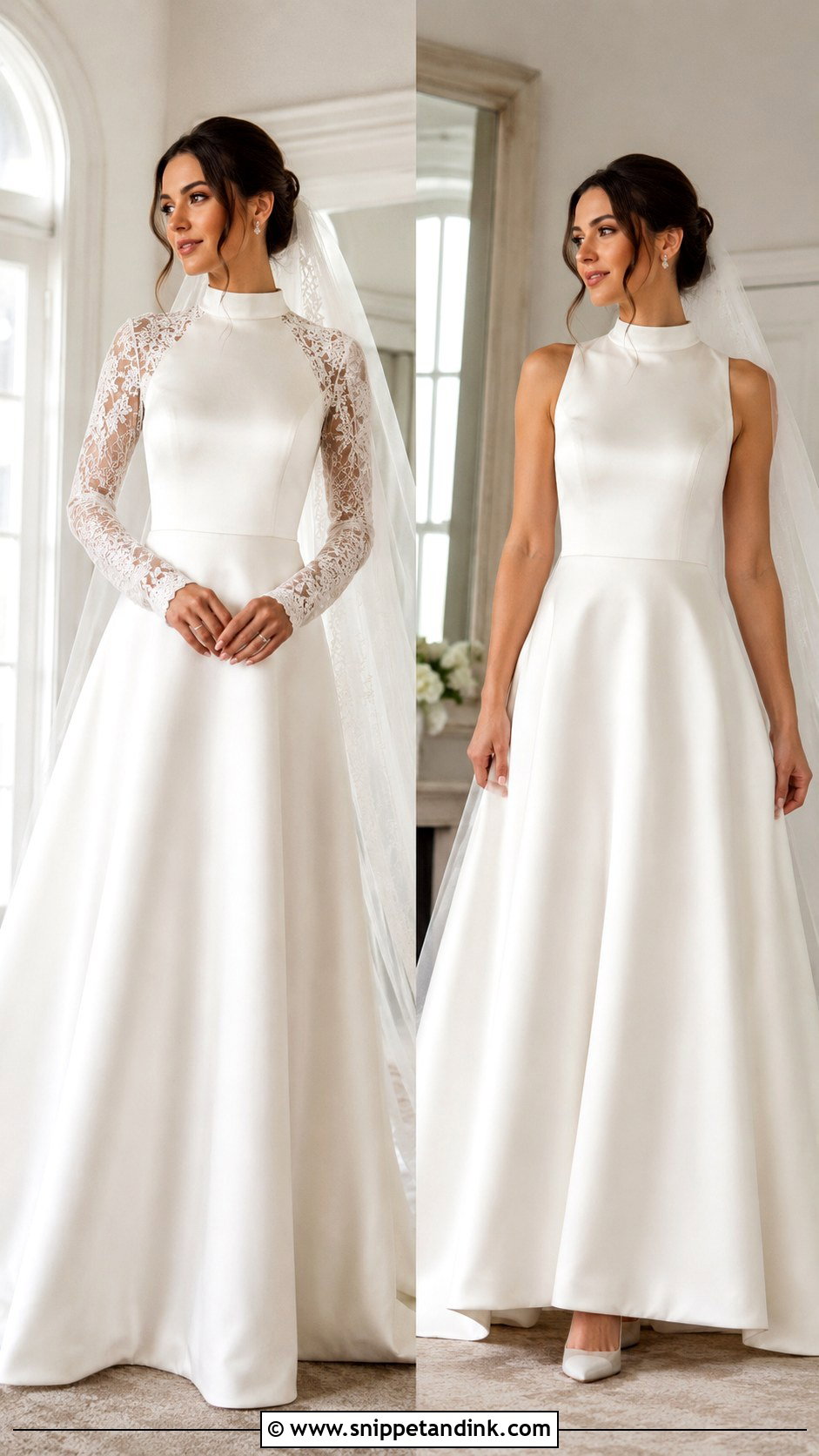
Detachable sleeves let you change the dress halfway through the day. Choose a gown designed with matching sleeves rather than adding odd fabric later, since mismatched lace is very noticeable. Sleeves can attach under the shoulder seam, at the neckline or as a removable bolero. Wear the full covered version for the ceremony with satin pumps and a long veil, then take the sleeves off at the reception if that suits you. Practise taking them on and off with your helper at a fitting, and keep jewellery simple enough for both looks.
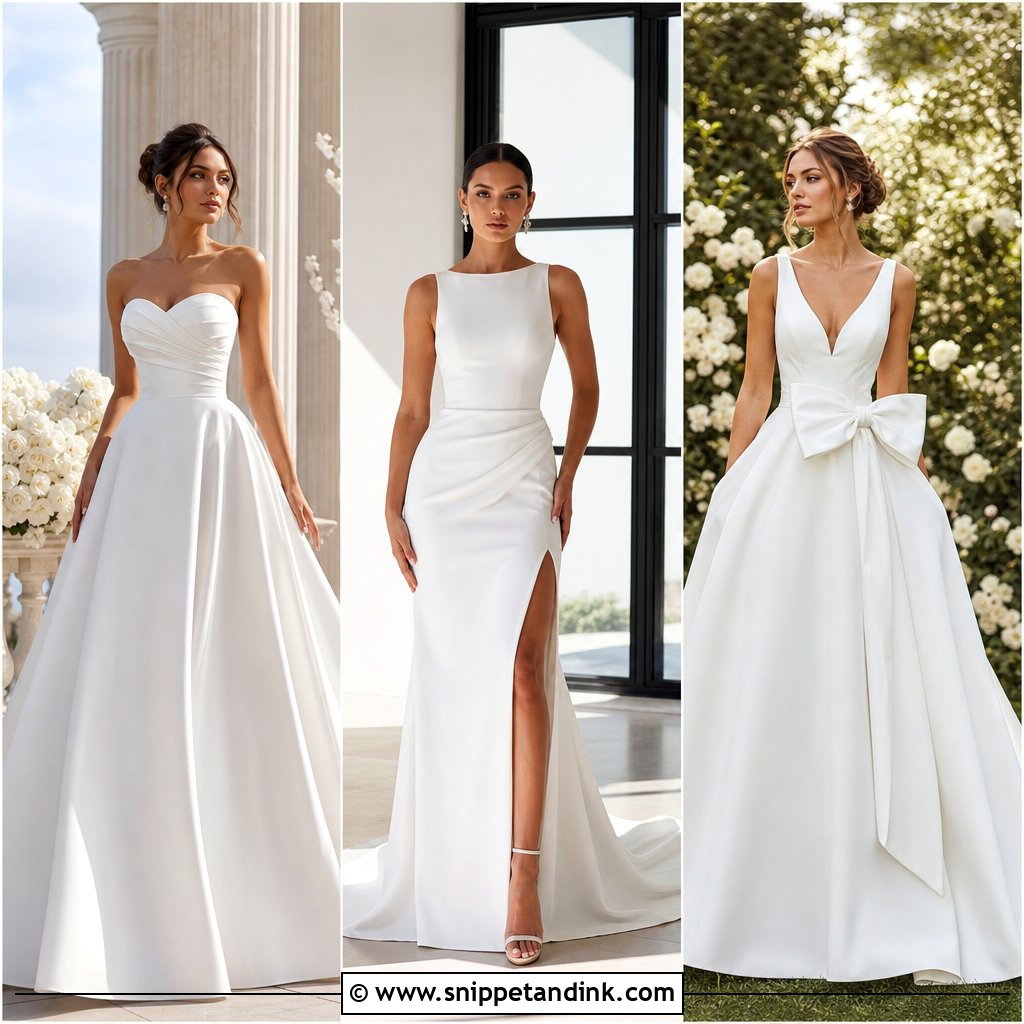

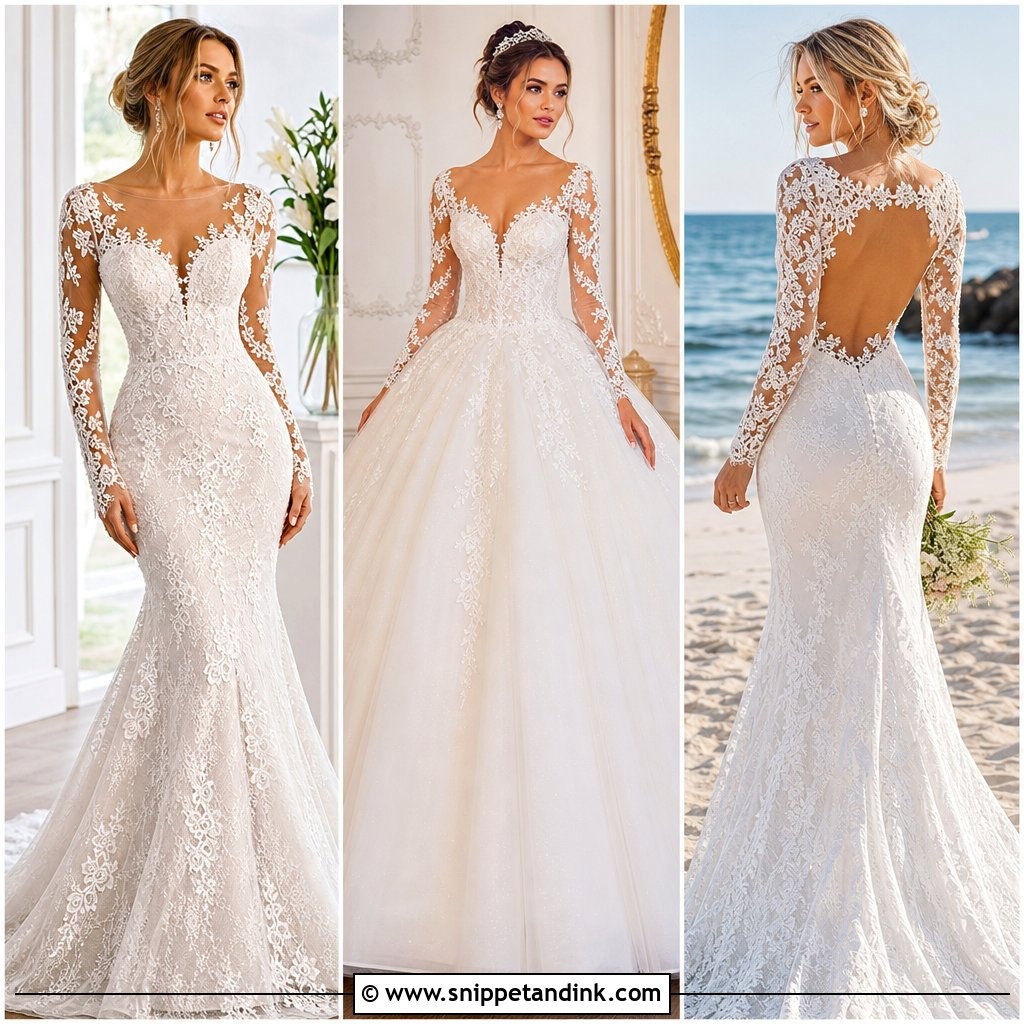
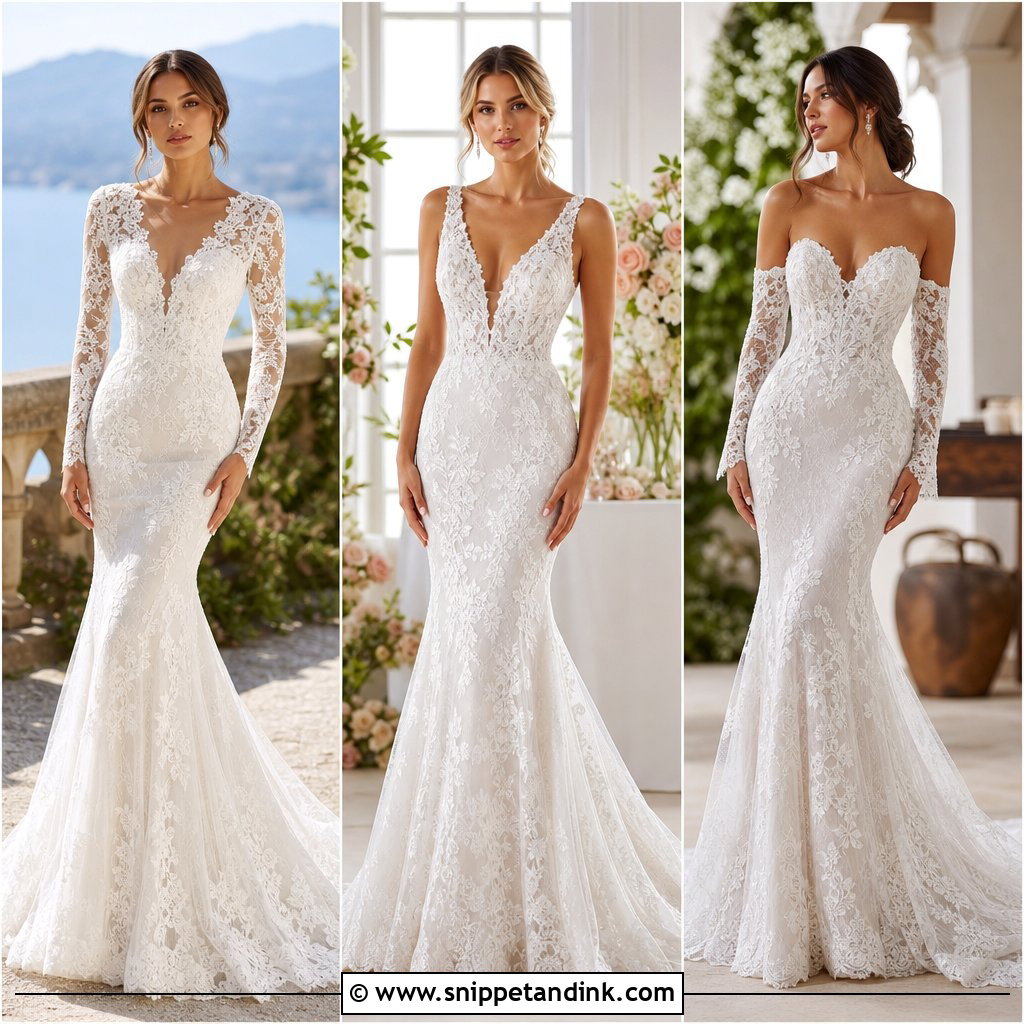
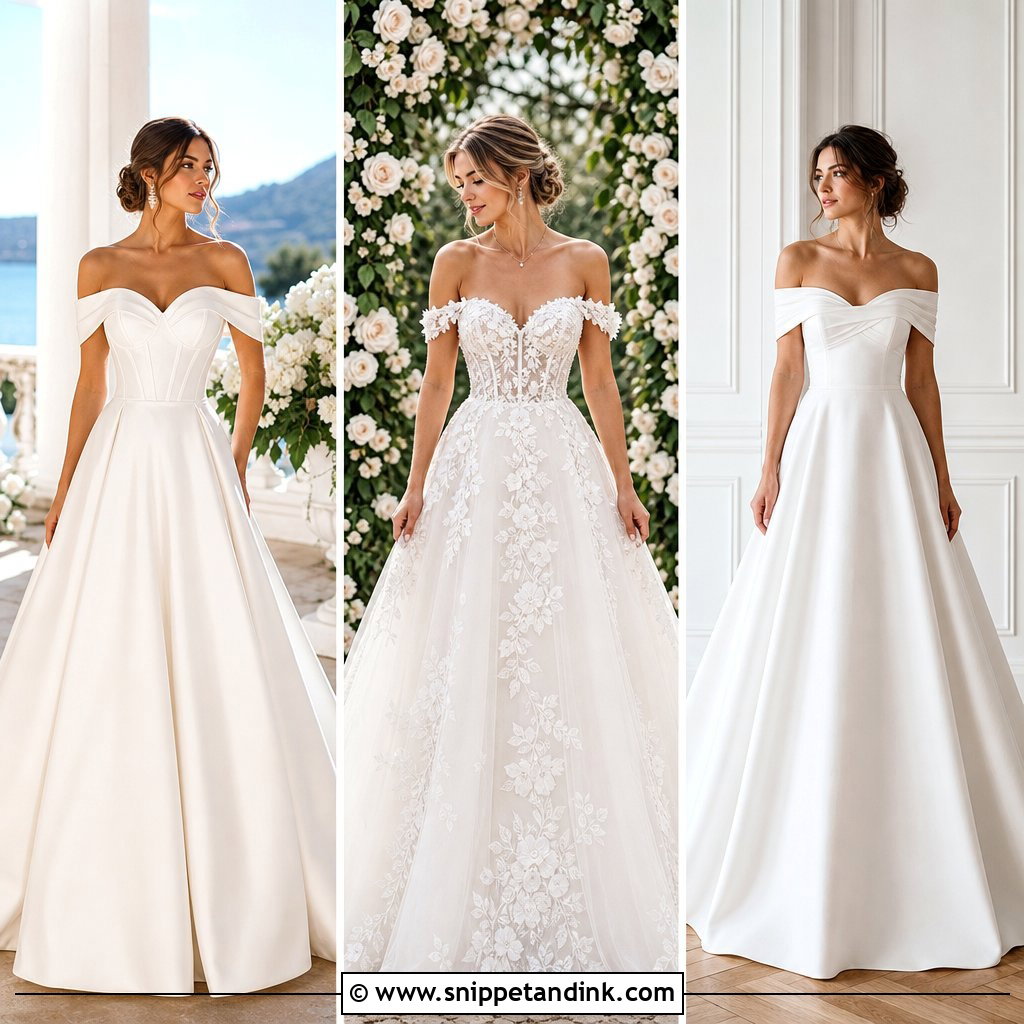
20. Wedding Gown With Lace Cuffs and Buttons
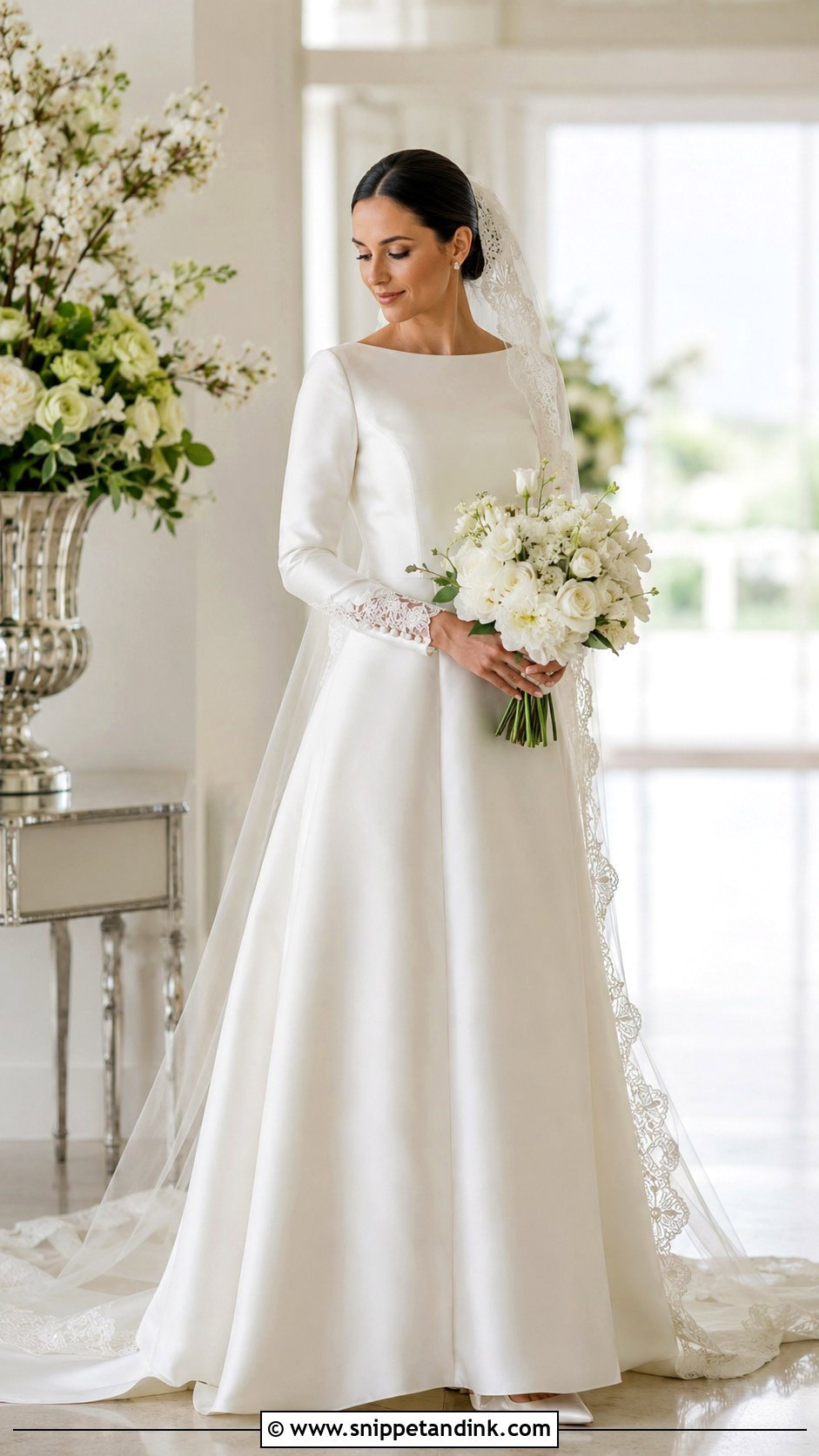
Small finishing touches make a plain satin A-line with long sleeves feel personal. Lace cuffs and fabric-covered buttons are my favourite way to do it. Carry the buttons down the back or onto the train for a long line, and pick a lace-edged veil that echoes the cuffs. Keep the neckline simple and moderately high. Working wrist buttons let you open the cuffs when you need to. At the final fitting, check that the lace is soft against your wrist and every loop holds without gaping.
Can Sleeves Be Added to a Gown You Already Love?
Often, yes. Many designers sell matching sleeves as an option, and a good bridal seamstress can make them from extra lace or fabric ordered with the dress. Ask the shop at the time you order, because matching lace from a later production run can differ slightly in shade.
- Order the extra fabric or lace with the gown, not afterwards.
- Have sleeves set into the armhole rather than attached to straps; they hang better and move with you.
- Allow an extra fitting for the sleeve work. Custom sleeves add time, so start alterations two to three months ahead.
- Expect the cost to vary widely by fabric and by how much lace needs hand-placing; get a quote at the first fitting.
A quick test at every fitting
Reach both arms forward as if hugging someone, lift one arm above your head, then bend your elbow to your mouth. If the sleeve pulls the shoulder seam inward, or the bodice rises at the waist, it needs more room in the armhole or the sleeve head.
Lift Your Arms Before You Say Yes
Coverage, construction and fit decide whether a sleeved gown feels good after the first hour. Work out how much you want covered at the neckline, back and arms, then compare shapes: lace A-lines feel romantic, satin ball gowns traditional, crepe columns modern. Bishop sleeves, pearl beading and buttoned cuffs add character. Then put your effort into alterations. Walk, sit and raise your arms in the dress, and keep asking for changes until you can do all three without thinking about it.
You'll Like These Ideas:





Leave a Reply