
An Indian bridal gown has to do more work than most wedding dresses. It may need to survive a seated ceremony, a jaimala where you lift your arms, hours of greeting relatives and a dance floor, sometimes all in one evening. The designs below run from traditional zardozi and mirror work to draped silhouettes, capes, crystal surfaces and gown-lehenga hybrids. For each one I’ve noted the styling I’d pair with it and, more usefully, the construction detail I’d check before you commit, because embellishment that looks light on a hanger can feel very different by the third hour.

Gown, Gown Lehenga or Anarkali for Each Event
Before colour, I sort the events. A ceremony where you sit for long stretches suits a full skirt or an Anarkali, because both leave room at the hips and knees. A reception where you mostly stand and greet guests can take a mermaid, a cape gown or heavy crystal work. The sangeet and mehndi need something you can dance in for hours, which usually means lighter fabric and embellishment kept to the bodice.
- Seated rituals: full A-line, gown lehenga or Anarkali, with the heaviest work at the hem rather than the hips.
- Reception: any silhouette, including fitted shapes, sequins and crystals.
- Dance-heavy events: organza, georgette or light net, hem cut clear of your shoes.
Then plan backwards. Hand embroidery like zardozi and dabka is slow work, so a custom gown is usually ordered several months ahead, and most makers want at least two fittings plus time for alterations. Rush orders are possible but often mean machine embroidery or less detail. Ask the maker directly how long the handwork alone will take.
1. Red Zardozi Indian Bridal Gown
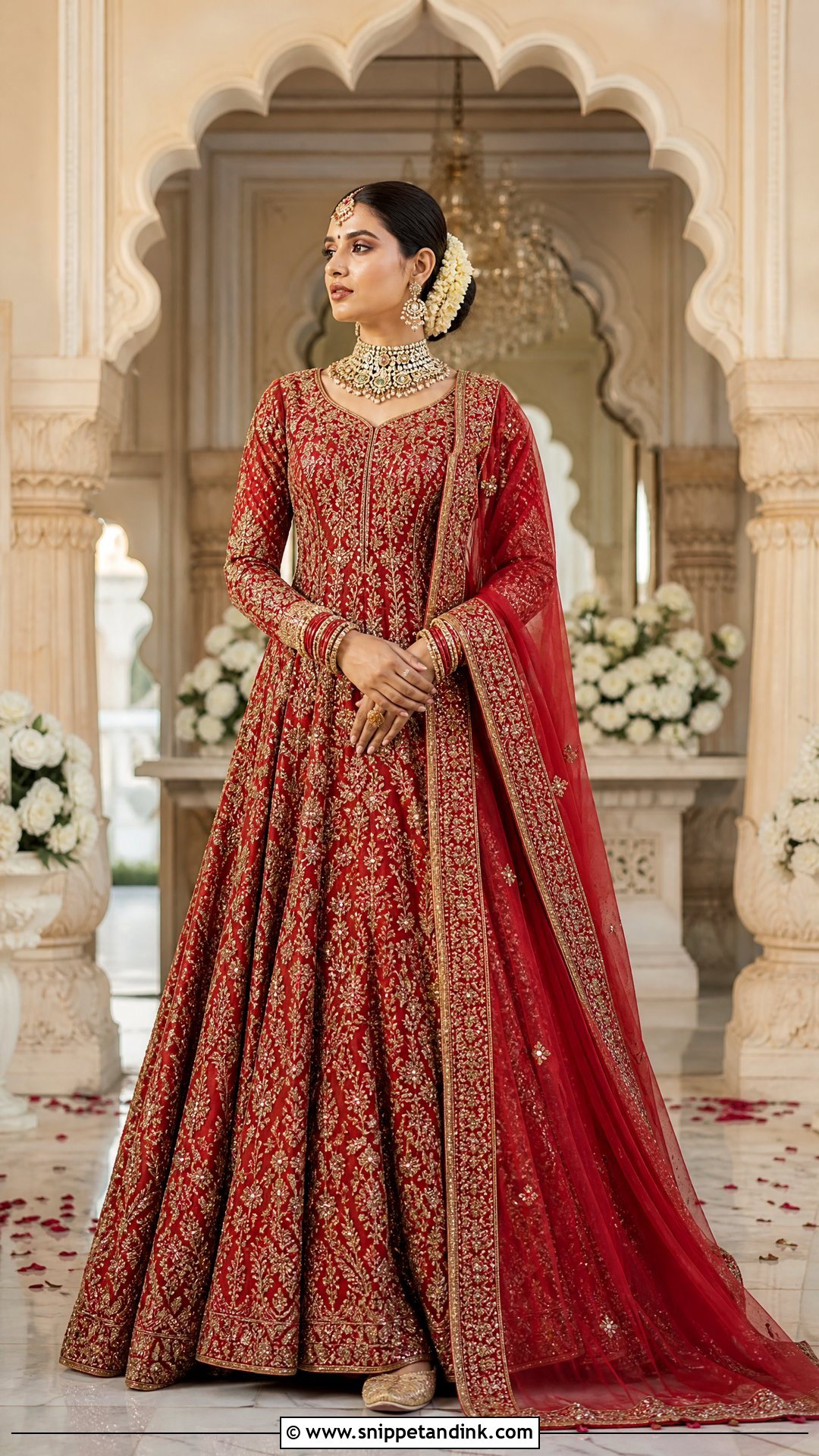
Deep red with gold zardozi is the gown I’m asked about most for the ceremony itself. Zardozi is metal thread, and it is heavy, so I like it concentrated at the neckline, waist, cuffs and hem rather than spread across the whole skirt. That placement keeps the weight off your hips. Pair it with a red net dupatta edged in gold, a kundan choker, red bangles and gold juttis. A sleek bun with fresh flowers leaves the neckline clear. If your ceremony is seated around a fire, ask for a skirt with enough ease to sit cross-legged, and keep a synthetic net dupatta well away from the flame.
2. Ivory Pearl Indian Bridal Gown
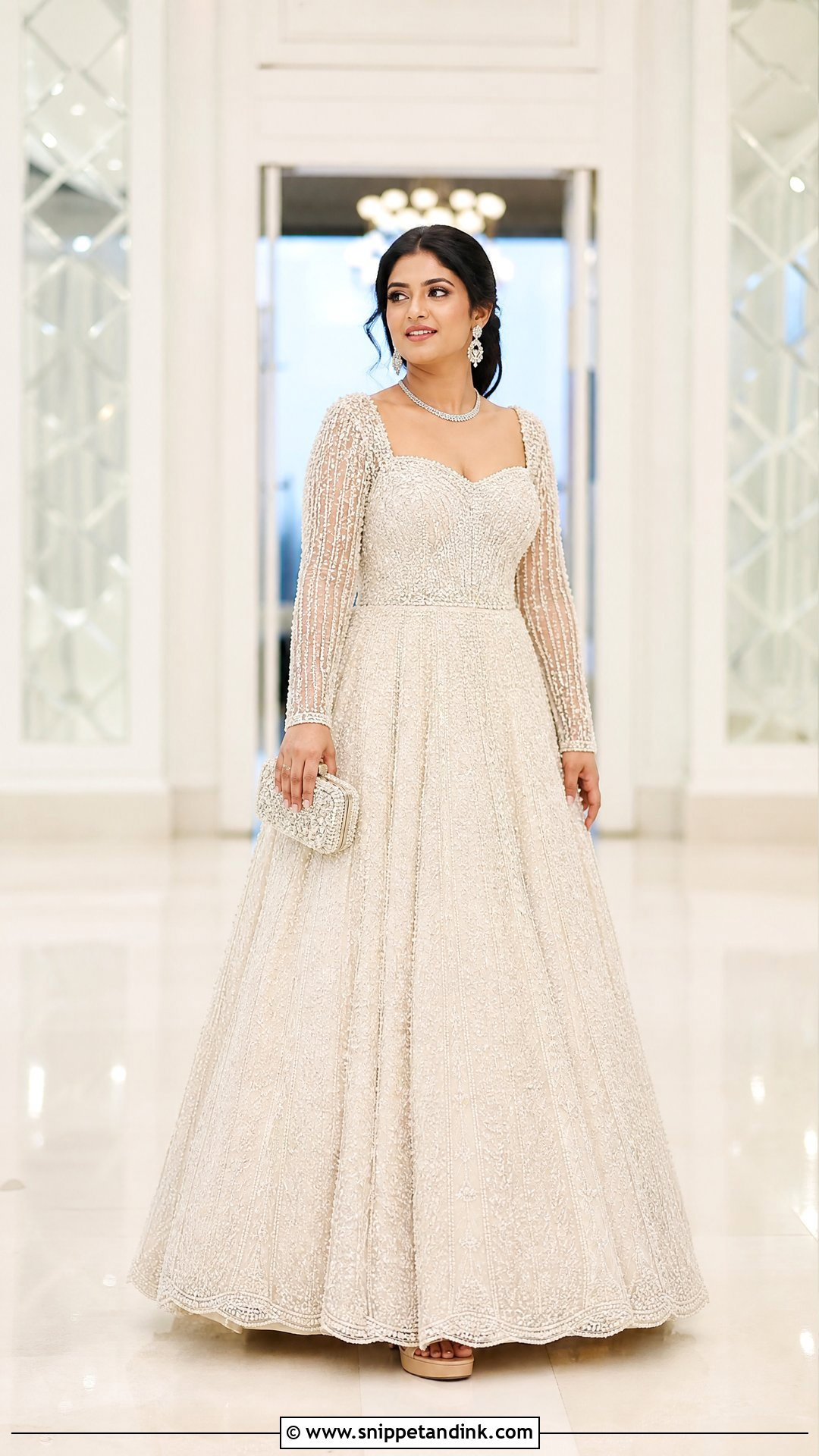
Ivory with pearl work suits a reception, and the detail I always check first is how the pearls are attached. Hand-stitched pearls stay put; glued ones pop off the first time you sit down. I prefer the beading dense at the waist and thinning toward the hem, which shapes the figure without weighing down the skirt. Illusion sleeves give support without bulk. A diamond or polki necklace, pearl drops, champagne heels and a plain ivory clutch finish it. Hold your jewelry against the fabric in daylight, since bright white stones can make a warm ivory read slightly yellow.
3. Blush Floral Indian Bridal Gown
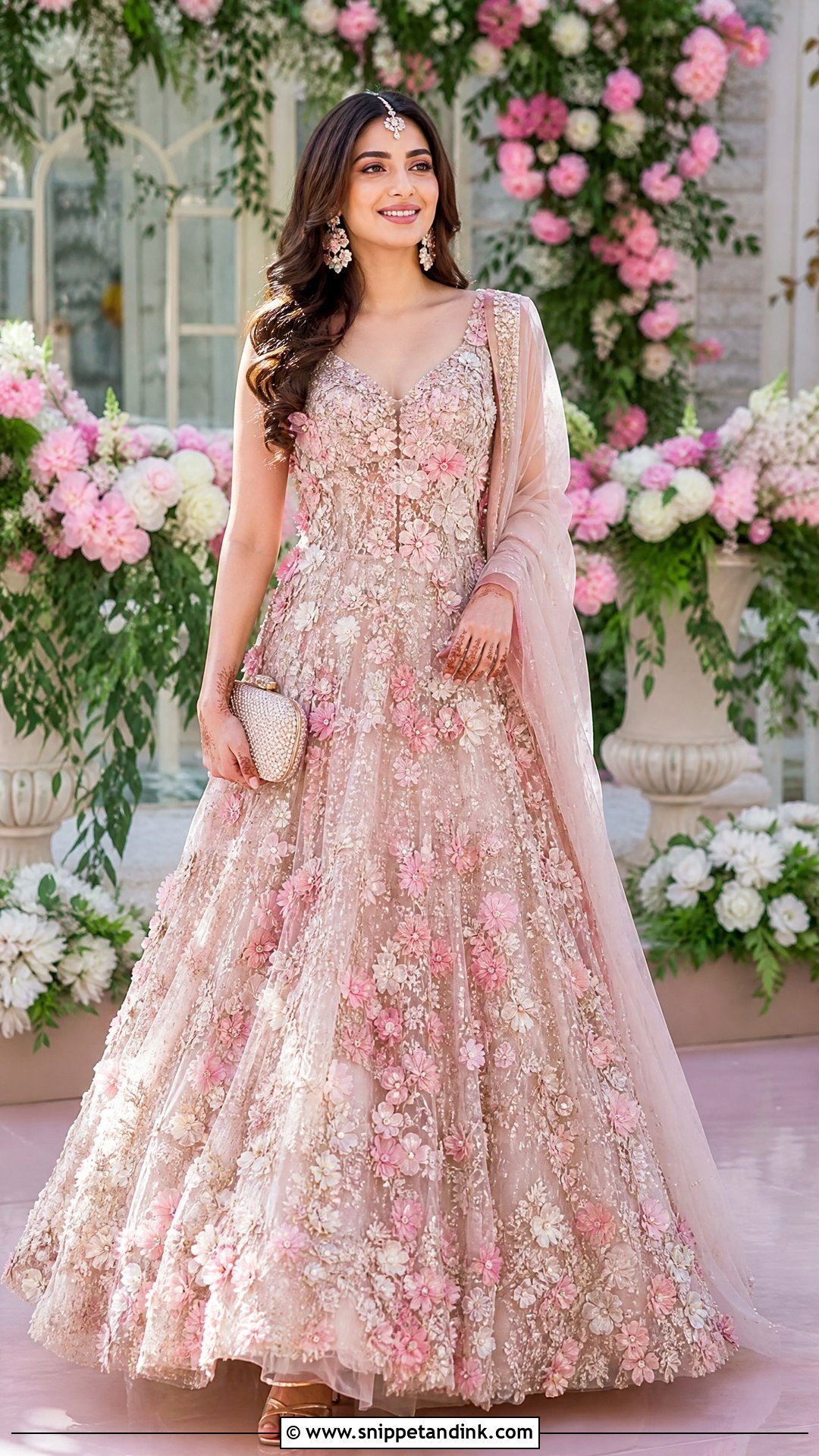
Three-dimensional floral appliqué on blush is best at a daytime event: an engagement, a garden ceremony or the sangeet. The flowers are raised, so they flatten when you sit in a car for an hour. I tell brides to travel in the gown with the skirt spread out, or dress at the venue. Keep the bodice fitted and the skirt only gently flared. Rose-gold heels, a small beaded bag, floral earrings and a delicate maang tikka are enough; a necklace fights with appliqué at the neckline. Very fair skin can disappear into pale blush, so try it outdoors before deciding.
4. Gold Sequin Indian Bridal Gown
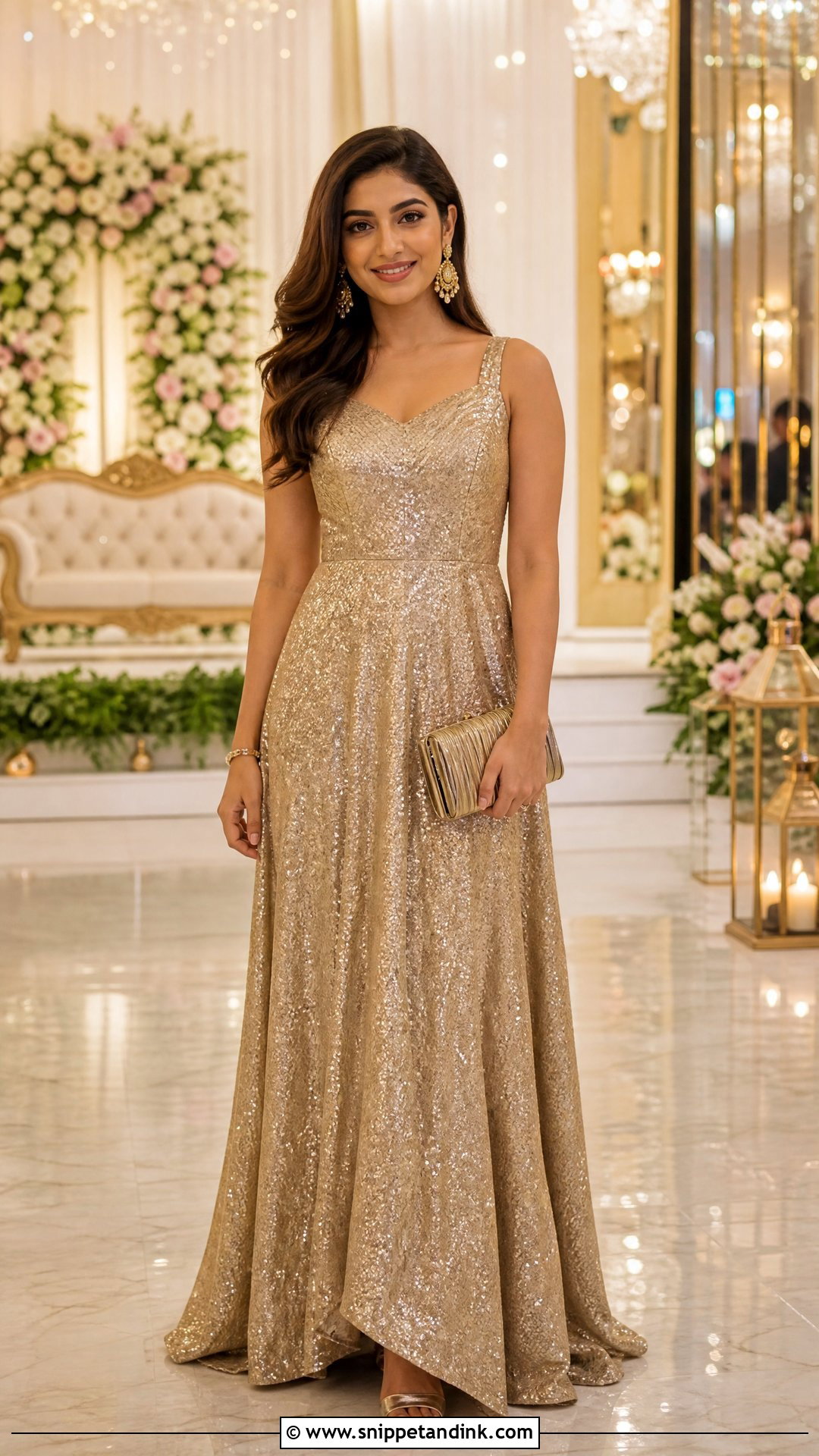
A gold sequin gown is pure reception. My one firm rule with all-over sequins is to leave the inner arm and the side seams plain, or you’ll spend the night with scratched skin. A fitted bodice over a flowing skirt moves better than a tight column and keeps the reflective surface from looking stiff. Mixing sequins with beadwork and threadwork gives depth. Antique-gold earrings, a slim bracelet, metallic heels and a structured clutch are plenty. Polished waves or a high ponytail and warm bronze eyes keep the face from competing with the dress.
5. Emerald Velvet Indian Bridal Gown
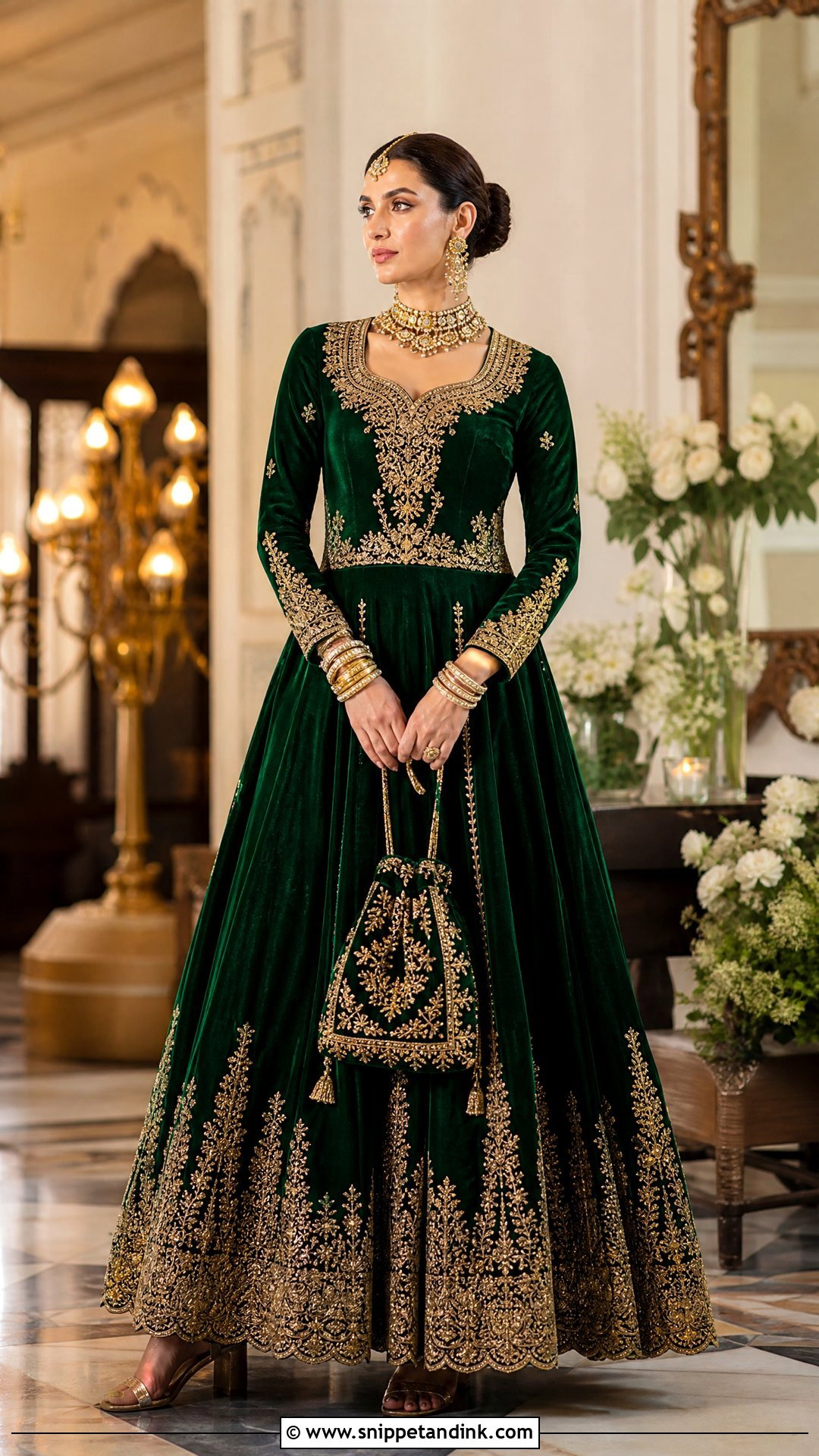
Emerald velvet belongs to winter evenings. Velvet already looks rich, so I keep the zari, dabka or sequin work to the neckline, cuffs, waist and border. A long-sleeve bodice with an A-line skirt gives coverage and balance. The catch with velvet is handling: the pile crushes and holds marks, so it should be steamed from the inside, never pressed flat, and it gets warm under lights. Insist on a breathable lining. Style it with a gold polki necklace, emerald earrings, stacked bangles, a velvet potli and block heels, then a low centre-parted bun, defined liner and a deep rose lip.
6. Navy Cape Indian Bridal Gown
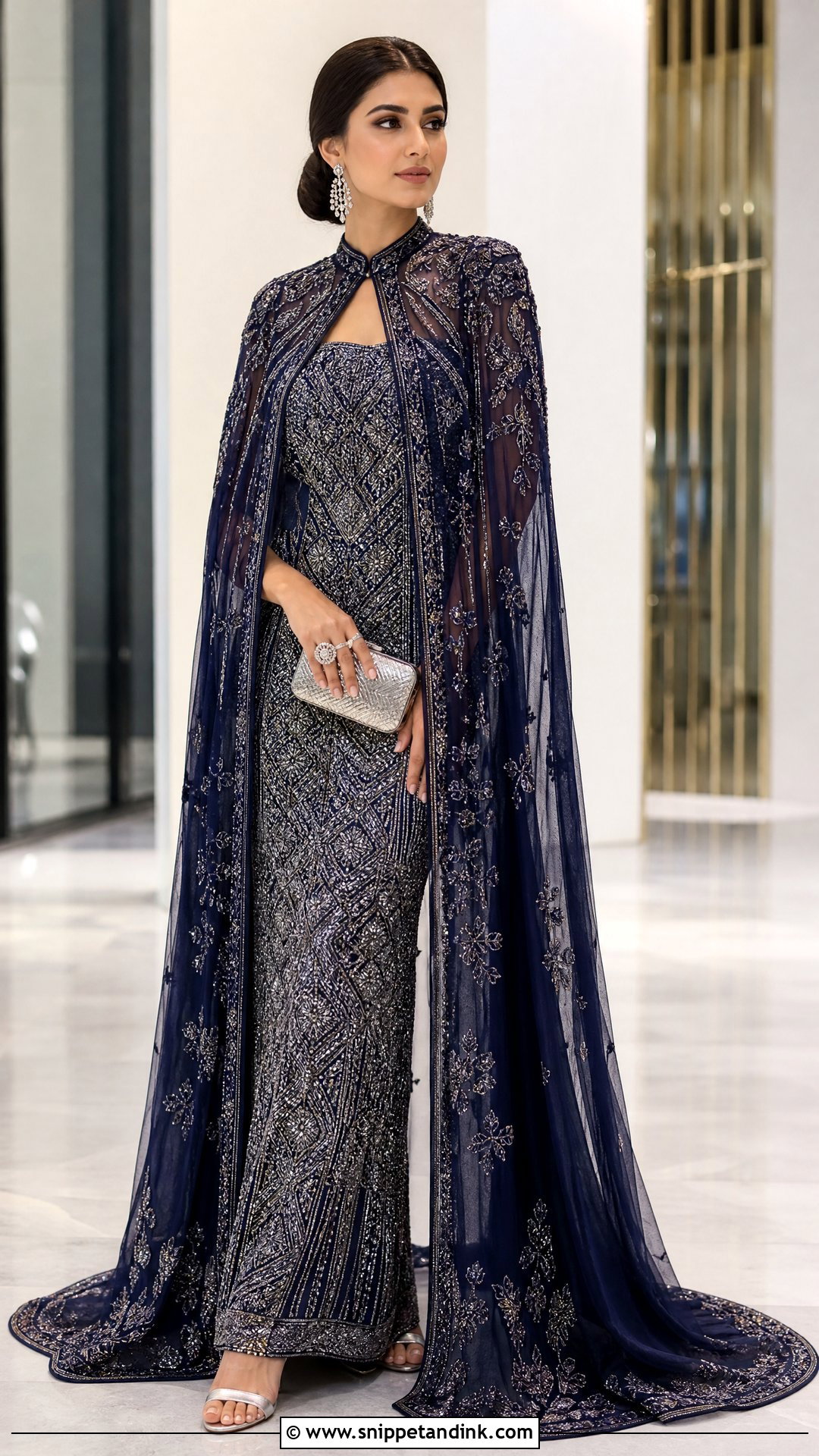
The navy cape gown is for the bride who wants coverage without a dupatta. Start with a sleeveless or short-sleeve fitted gown with silver beadwork, then add a sheer floor-length cape embroidered at the shoulders and edges. I always ask how the cape attaches. A heavily worked cape pulls the neckline backwards unless it is anchored with hidden hooks or snaps at the shoulder seam. Crystal drops, a cocktail ring, silver heels and a compact clutch are enough. Petite brides do better with a narrow, light cape; taller brides can carry a fuller one with a slight train.
7. Champagne Mermaid Indian Bridal Gown
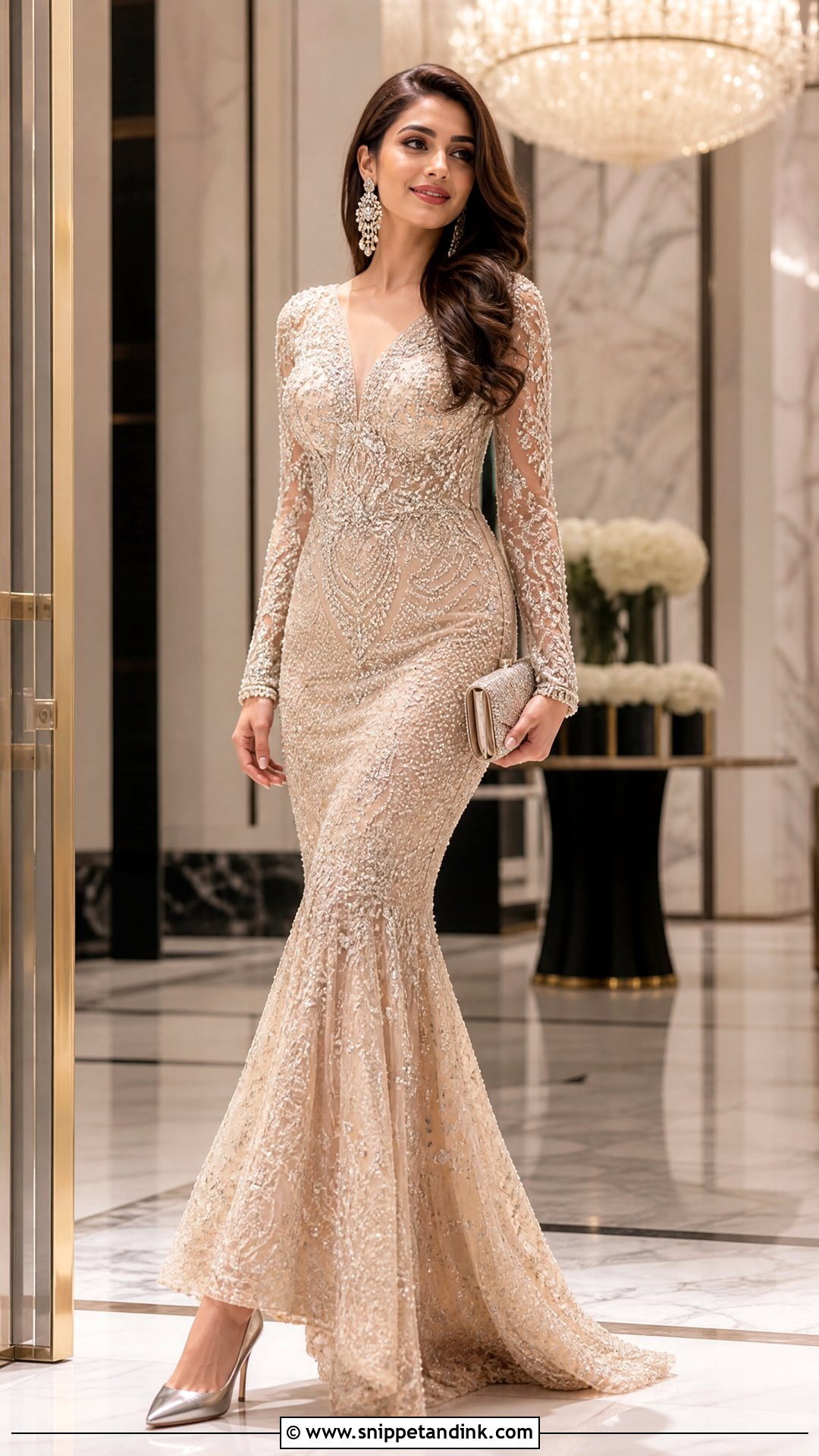
A mermaid gown shapes the body from bust to knee, and that is exactly why I’d keep this one for the reception rather than a ceremony on the floor. Look for real support through the bust and waist and a flare that begins around the knee. Embroidery running in curved vertical lines lengthens the silhouette. Champagne net, satin or tulle with crystals and metallic thread all work. Choose pointed metallic heels, chandelier earrings and a slim clutch, and skip the heavy necklace. At fittings, climb stairs and sit on a low chair. Champagne can also read close to skin tone on some complexions, so check it in photos.
8. Pastel Blue Anarkali Bridal Gown
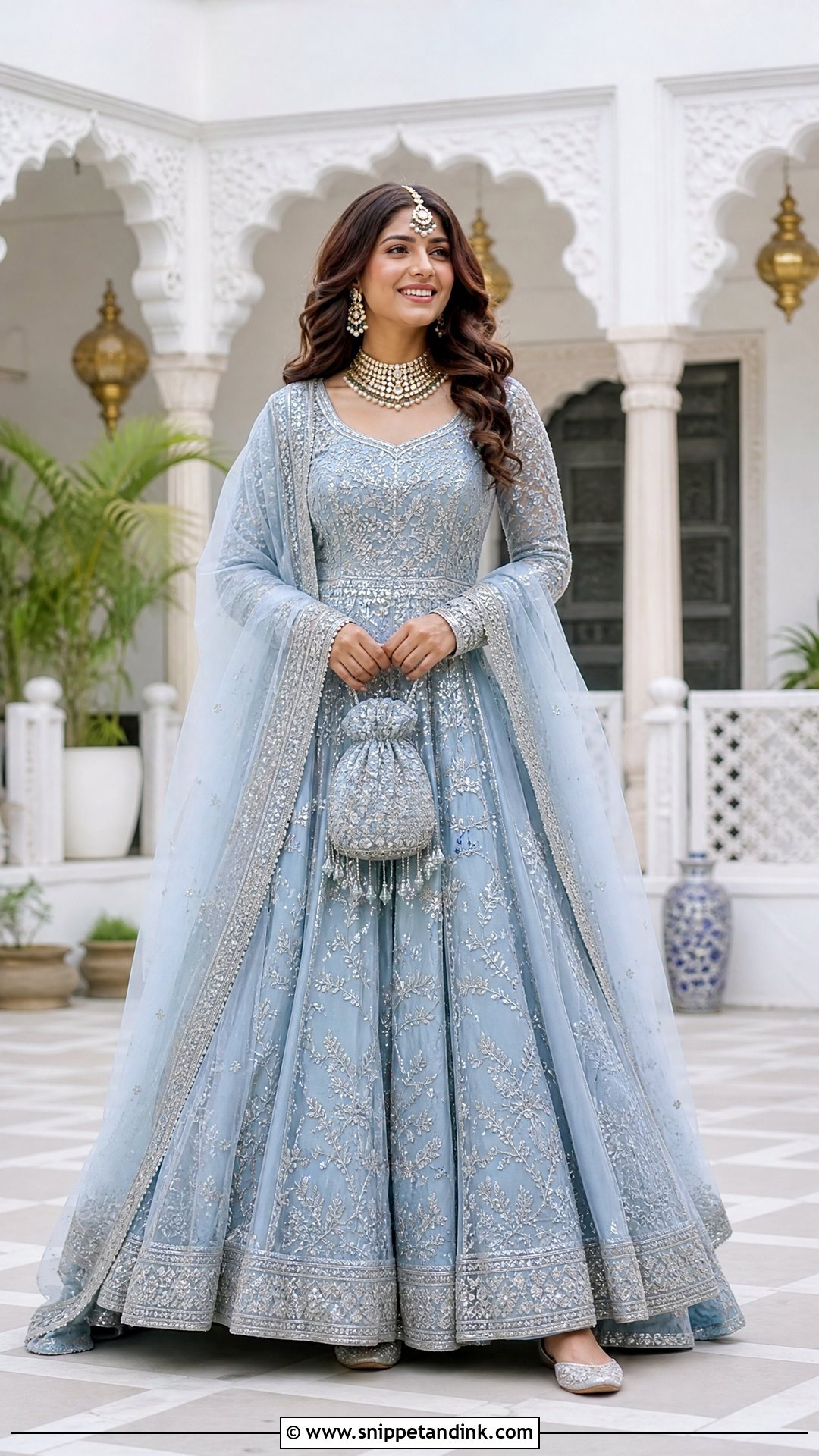
An Anarkali is the most forgiving silhouette here. A pastel blue Anarkali gown gets its fullness from many panels, called kalis, sewn below the bust or waist, which leaves room around the hips and legs. Silver zari, resham flowers, pearls and small sequins sit well on powder blue. Drape the dupatta over one shoulder or loop it to the wrist so your hands stay free. Silver juttis, a pearl-and-kundan necklace, a small potli and a braided bun complete it. The hem matters more than anything else: get it altered with the exact shoes, because a wide circular hem that is a touch long catches under your feet on every step.
9. Maroon Gown Lehenga
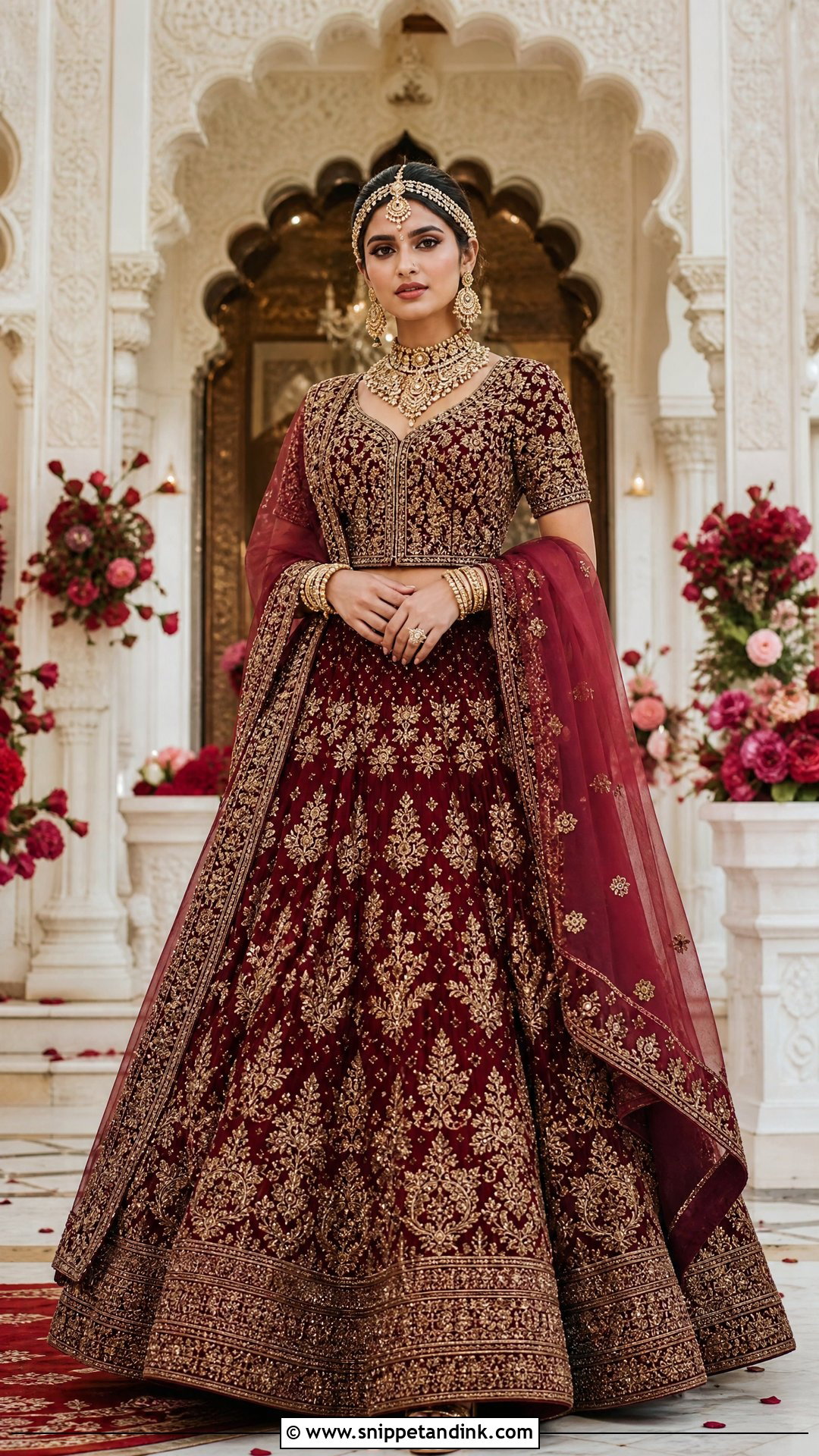
A maroon gown lehenga gives you lehenga volume with the security of a joined bodice. The trade-off is that a separate lehenga skirt can be loosened at the drawstring, while a gown lehenga can’t. The bodice carries the whole skirt, so the waist seam has to fit you sitting down as well as standing. Antique-gold zardozi and velvet appliqué suit the deep colour. Pin a detachable dupatta across one shoulder for the ceremony and take it off before dancing. A layered polki necklace, jhumkas, maroon bangles and a matha patti with a centre-parted bun keep it traditional. Fuller busts are better served by a wider neckline and supportive sleeves.
10. Lavender Draped Indian Bridal Gown
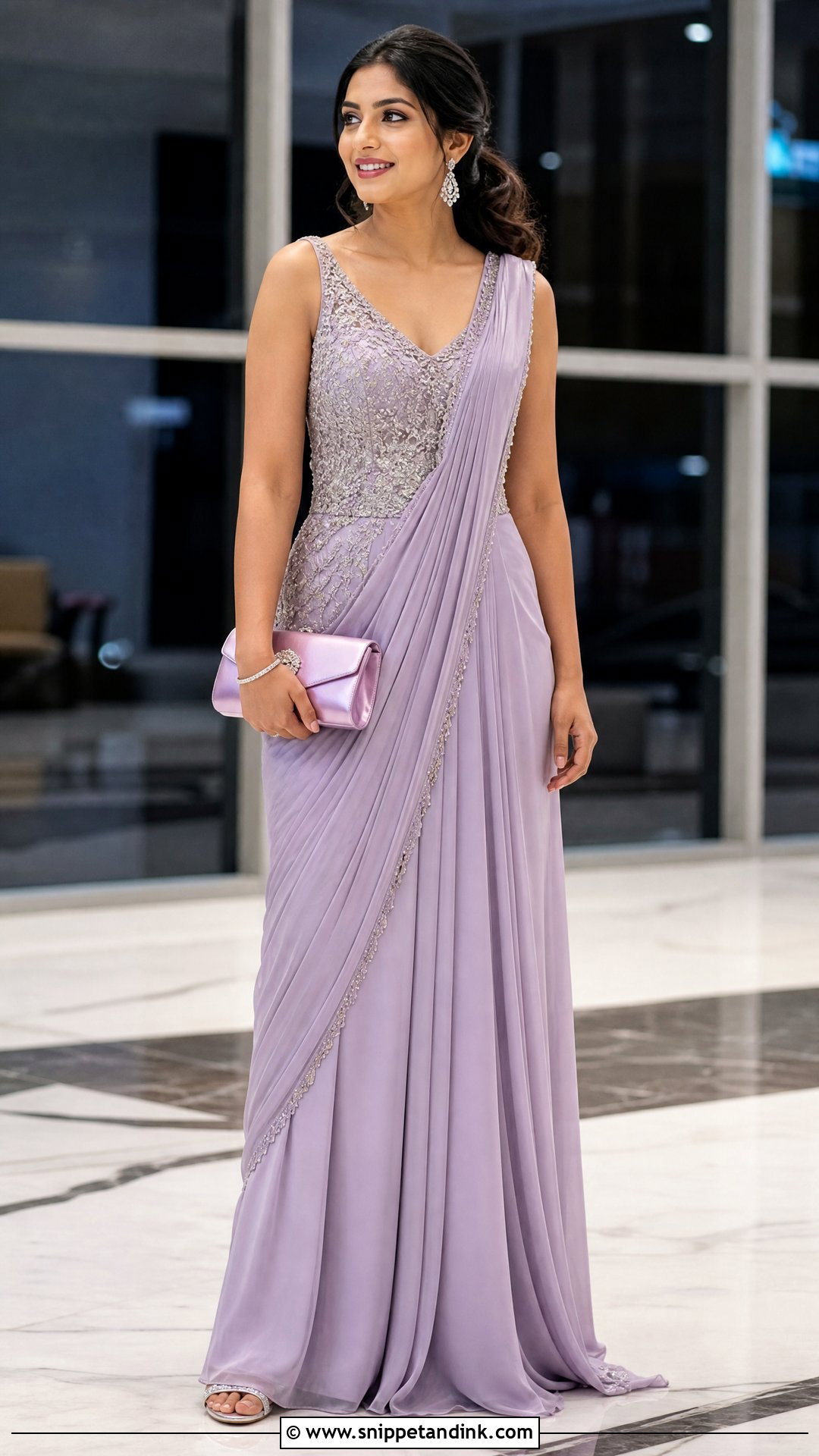
Lavender drapes give a sari feel without anyone having to pleat six yards in a hotel room. I’d choose a fitted embroidered bodice, soft pleats at the waist and an attached pallu across one shoulder. Ask whether the drape is stitched down or held with hooks; loose drapes slide off during dancing, and safety pins tear fine chiffon. Silver beadwork and tonal embroidery keep the finish calm. Diamond earrings, silver sandals and a satin clutch are enough. One thing to know: lavender drifts toward grey under warm indoor lighting, so look at the fabric in the actual venue light if you can.
11. Rani Pink Mirror Work Indian Bridal Gown
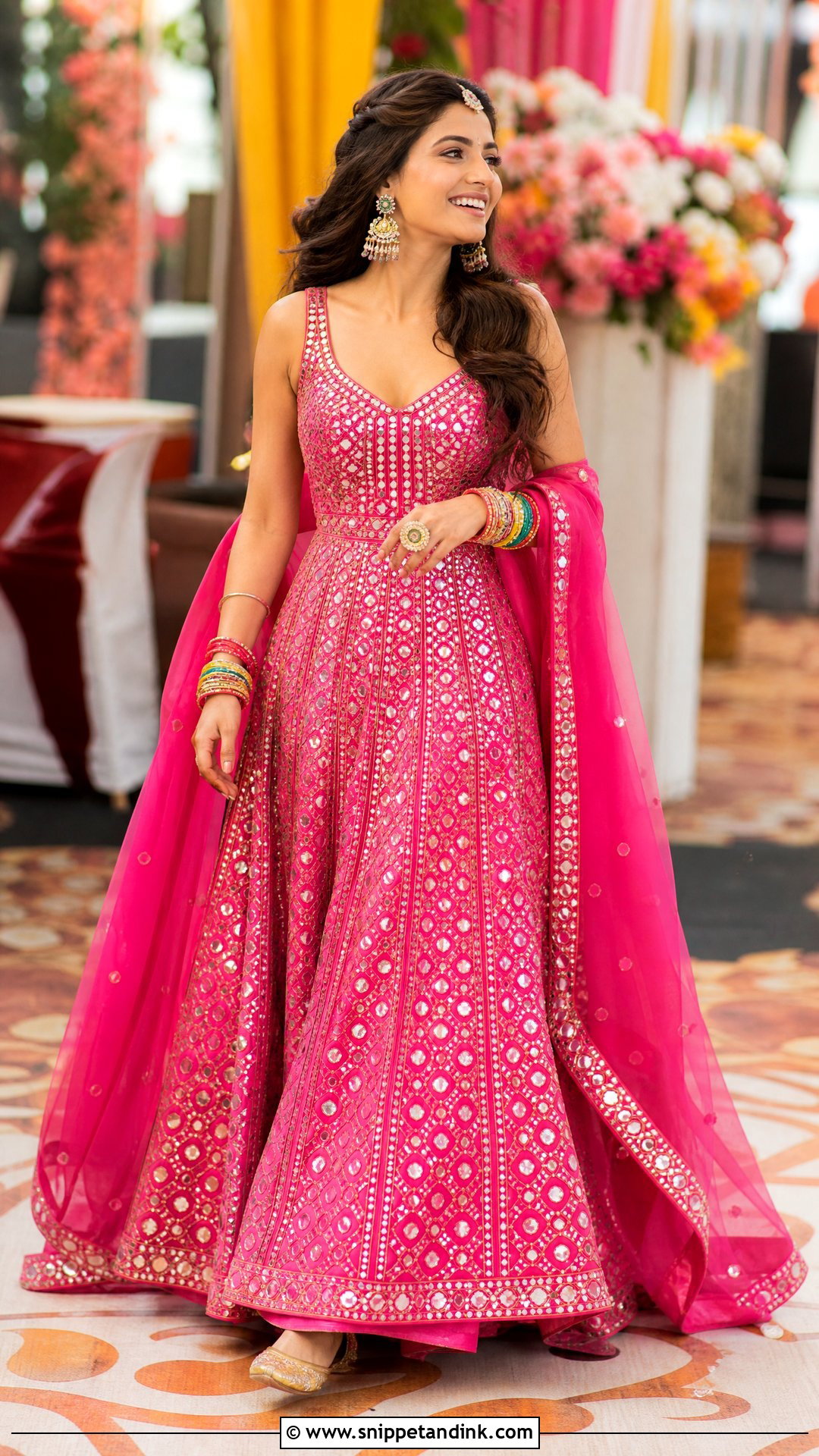
Rani pink mirror work is made for a sangeet or mehndi where you will move a lot. The mirrors catch light with every turn, and I like smaller pieces on the bodice with larger ones toward the border. Mirror edges are the practical problem. Unfinished edges snag a net dupatta and scratch the inside of your arm, so check that each piece is fully wrapped in thread. A light matching dupatta, meenakari earrings, colourful bangles and gold juttis finish it. A braided ponytail or half-up style stays secure through dancing, and flash photography will make the mirrors flare, which most brides love.
12. White And Gold Indian Bridal Gown
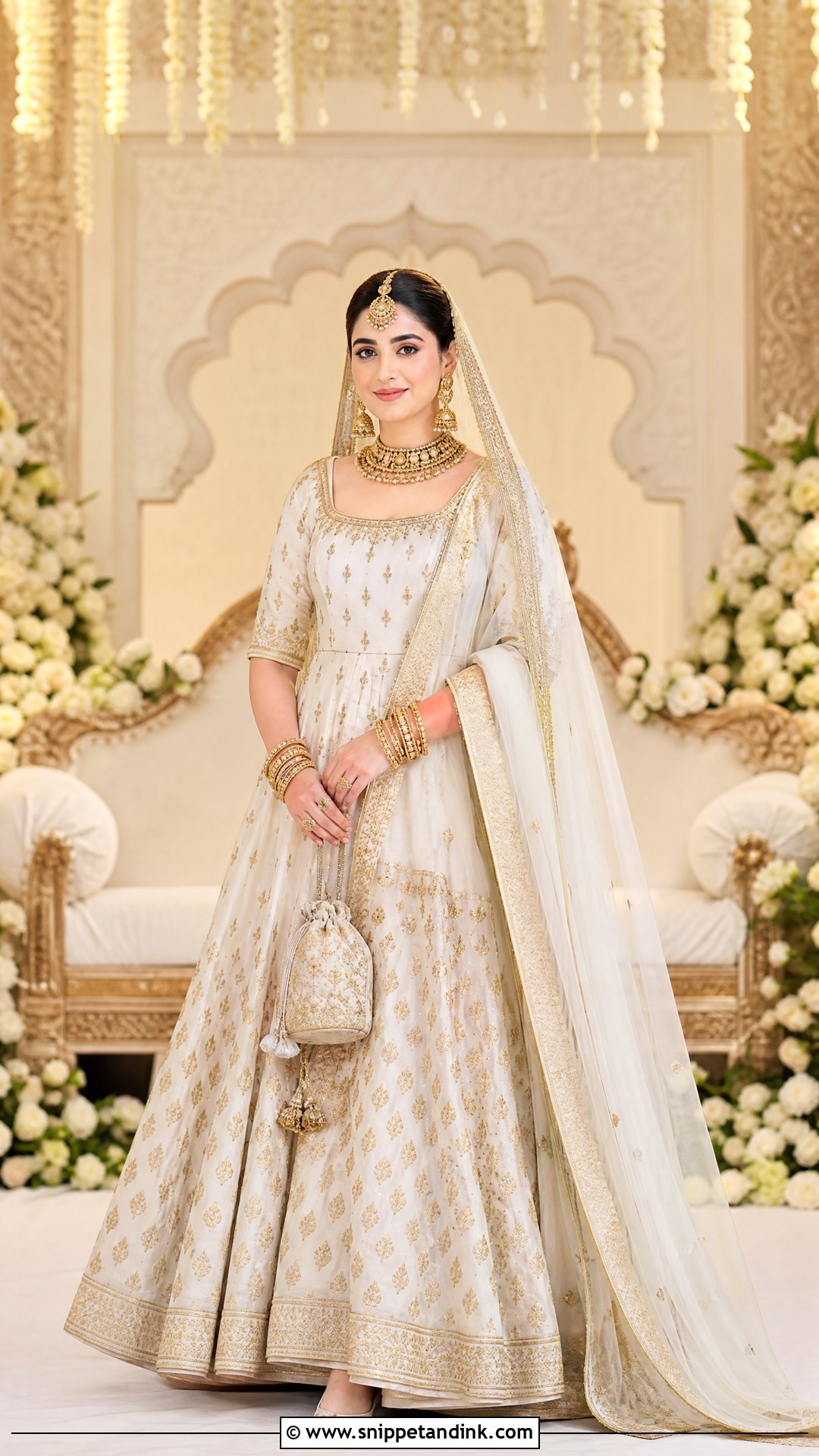
White and gold is a beautiful pairing, but it is also the one I discuss with the family before anything else. In some communities white is linked to mourning; in others, ivory and gold is the traditional bridal combination. Once that is settled, an ivory base with paisley or floral gold threadwork, a modest bodice, elbow sleeves and a wide A-line skirt gives structure and movement. Choose a soft white dupatta with a narrow gold border instead of a heavy veil. Temple jewelry, antique-gold bangles, embroidered ivory juttis and a bun with jasmine finish it. Golden eye makeup and a warm rose lip keep the face from looking washed out against the pale fabric.
13. Peach Off Shoulder Indian Bridal Gown
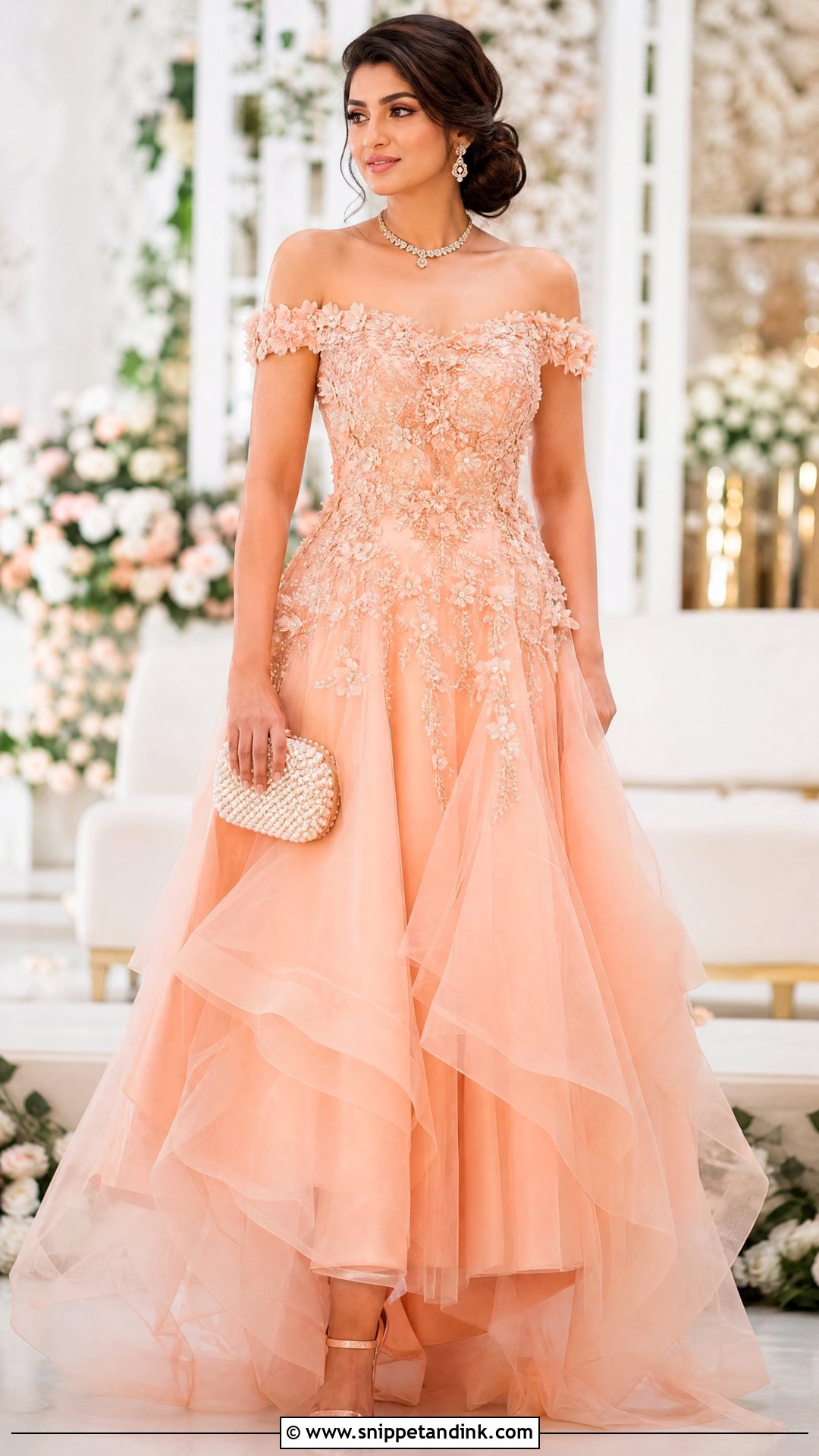
Off-shoulder necklines have one problem at an Indian wedding: the jaimala. You have to lift your arms high to place a heavy garland, and a true off-shoulder bodice restricts that movement. I ask for internal boning, silicone grip at the neckline and optional detachable straps. A fitted embroidered bodice over layered tulle or organza in peach, with tonal flowers, pearls and rose-gold thread, keeps the palette soft. A short diamond necklace, studs, rose-gold heels and a pearl clutch suit it. Wear the hair swept back so the shoulders show, and if you want coverage, add a removable cape rather than recutting the neckline.
14. Teal Jacket Indian Bridal Gown
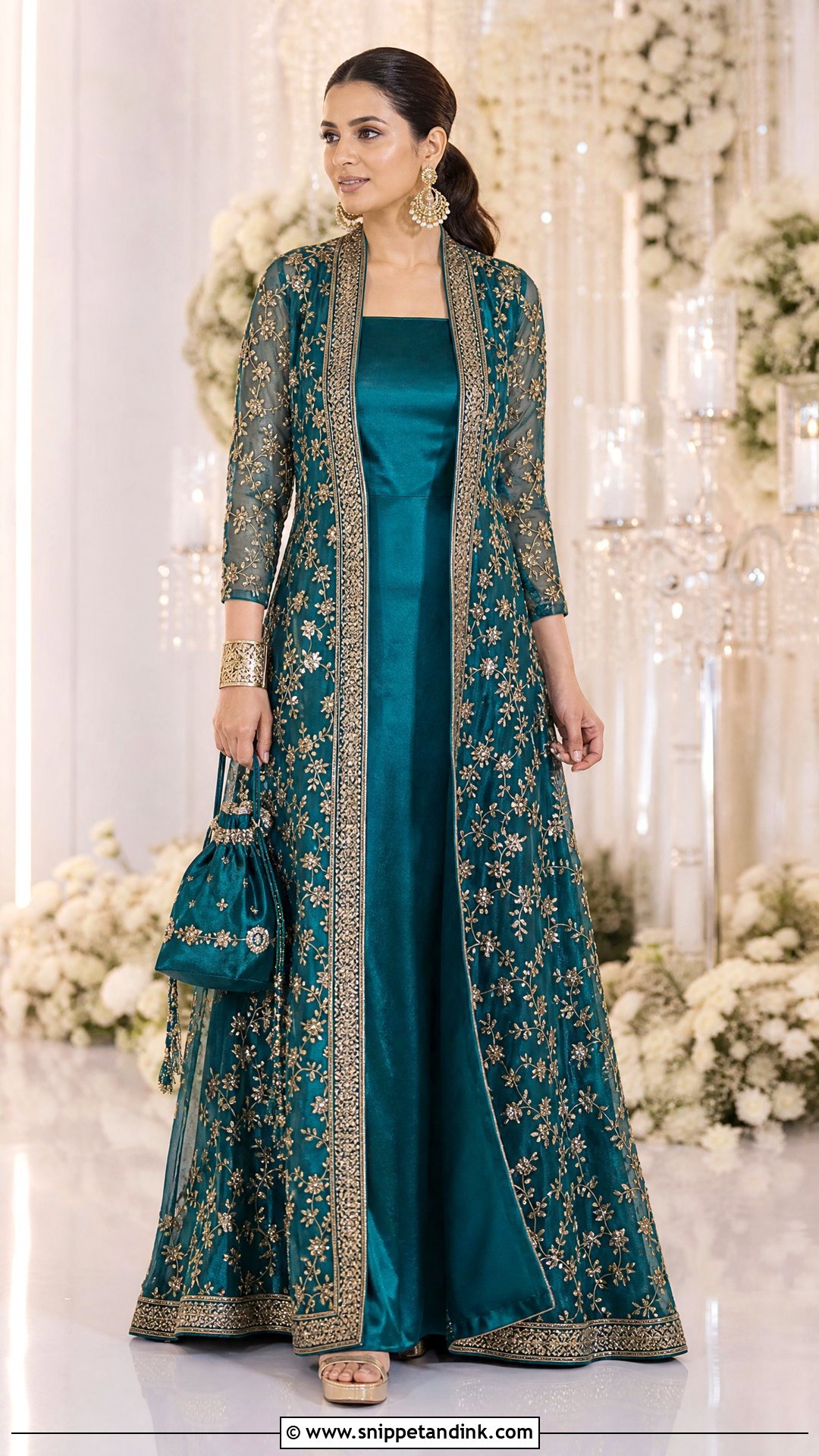
A teal jacket gown is two garments, and that’s its advantage. Start with a plain floor-length gown in satin, crepe or a silk blend, then layer a long sheer jacket with gold embroidery and defined shoulders that opens down the front. The vertical lines lengthen you and cover your arms. Be aware that the jacket adds warmth, so in summer or a packed hall I’d make it detachable from the start. The jacket hem should clear the floor by a little more than the gown so you don’t step on two layers. Antique-gold earrings, a cuff, a teal potli and gold block heels; keep the necklace delicate.


15. Burgundy Long Sleeve Indian Bridal Gown
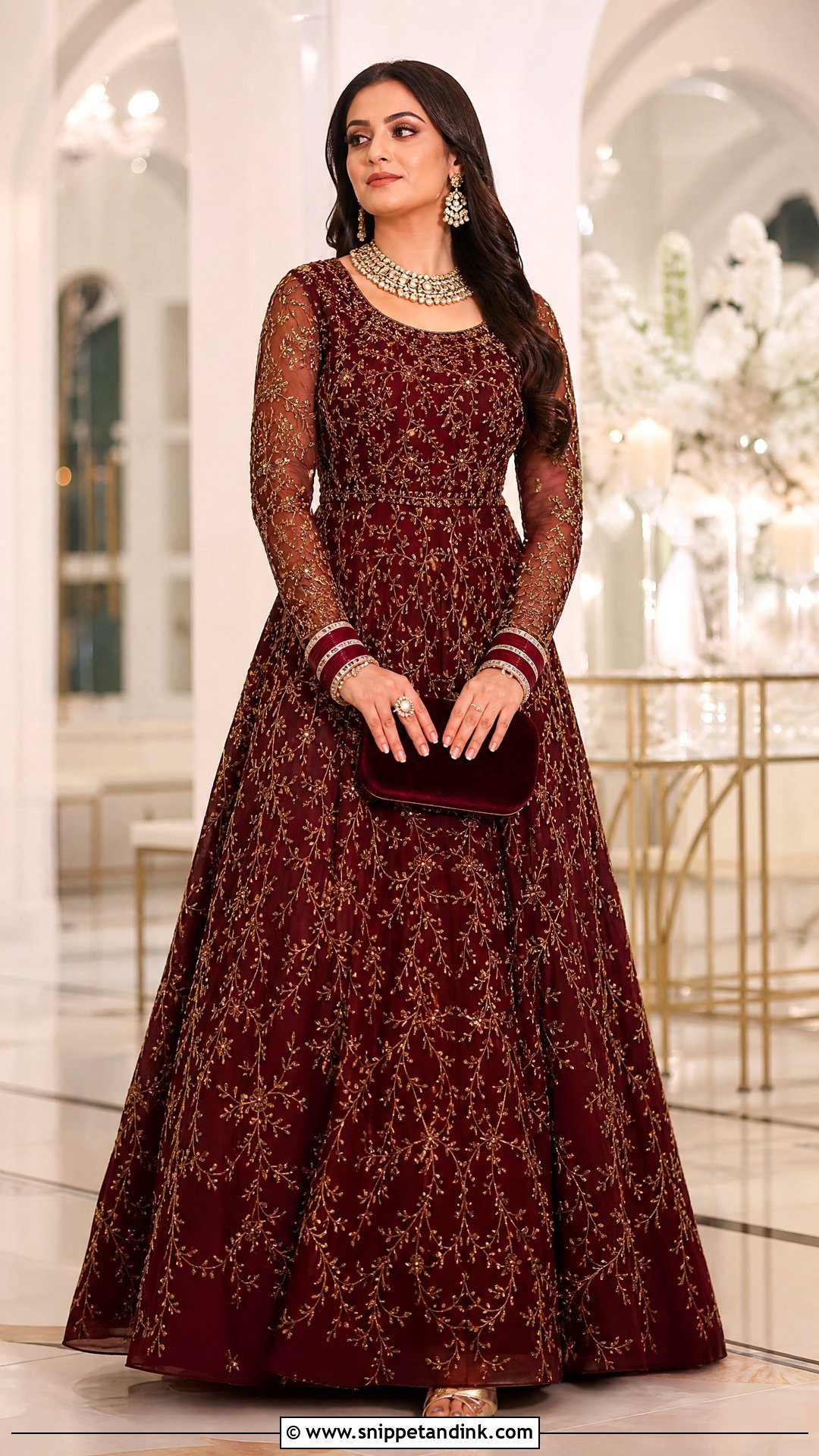
Burgundy gives you red’s depth with a moodier finish for evening. A structured bodice, defined waist, full skirt and sheer sleeves embroidered with gold vines add coverage without bulk. Before you decide on sleeve length, think about your bangles. If you’ll wear a chooda or a full stack, a fitted embroidered cuff will sit on top of it and rub, so I size the cuffs over the bangles or end the sleeve above the wrist. A kundan necklace, matching earrings, a velvet clutch and antique-gold heels finish the look, with polished waves or a low braided bun and a berry lip.
16. Silver Crystal Indian Bridal Gown
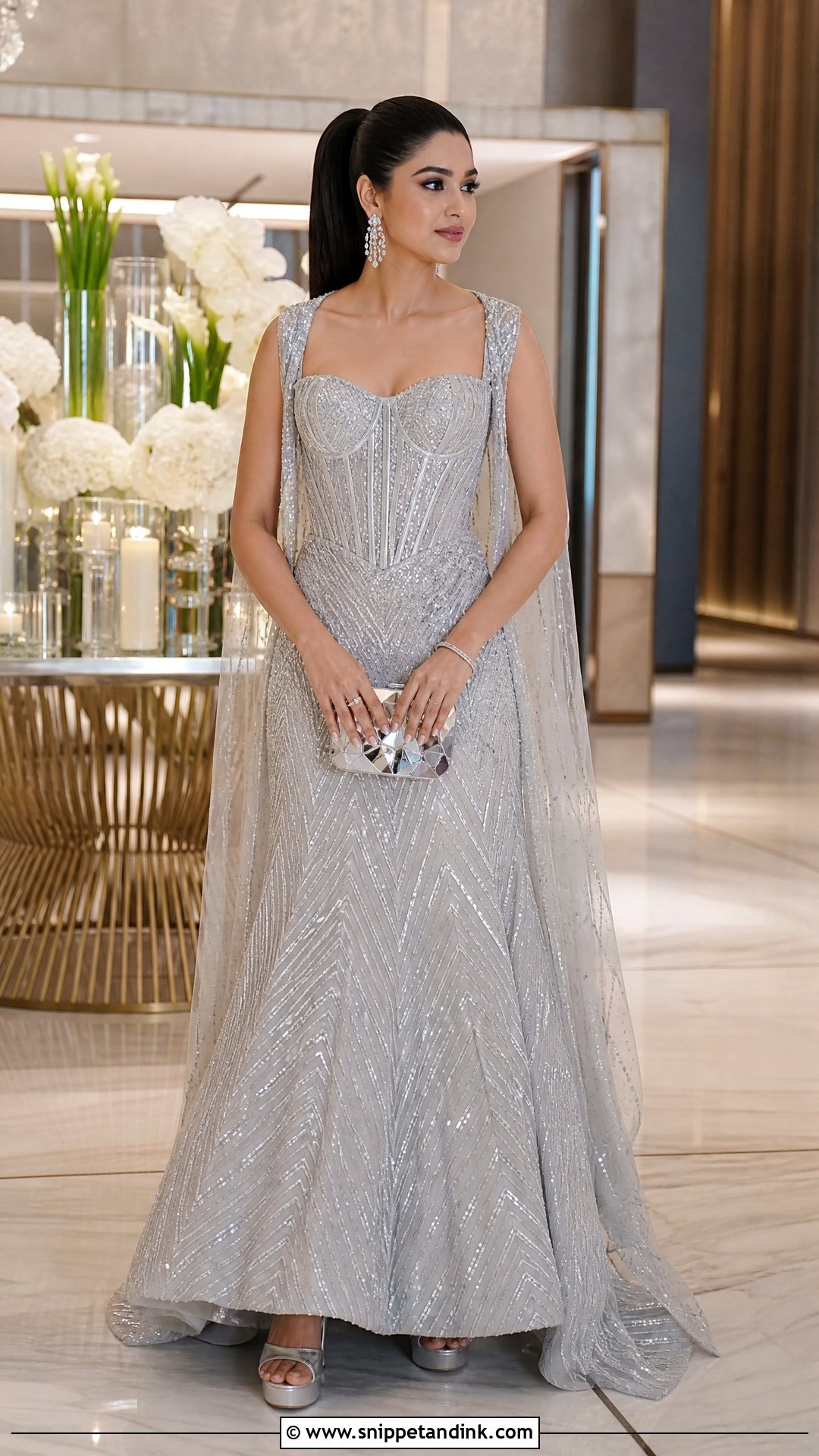
Silver crystal gowns come alive under reception lighting. Crystals, bugle beads and sequins on a pale grey base, laid in vertical or geometric lines, keep the shape sleek, with a gently flared skirt for walking and dancing. Crystal work is heavier than it looks, so I ask the maker for a proper inner corset and sturdy straps, and I check that stones near the underarm are flat-backed or left off. Crystal earrings, a tennis bracelet, silver platform heels and a mirrored clutch are enough. Skip the necklace if the bodice is busy. A high ponytail or sleek bun suits the modern finish.
17. Coral Ruffle Indian Bridal Gown
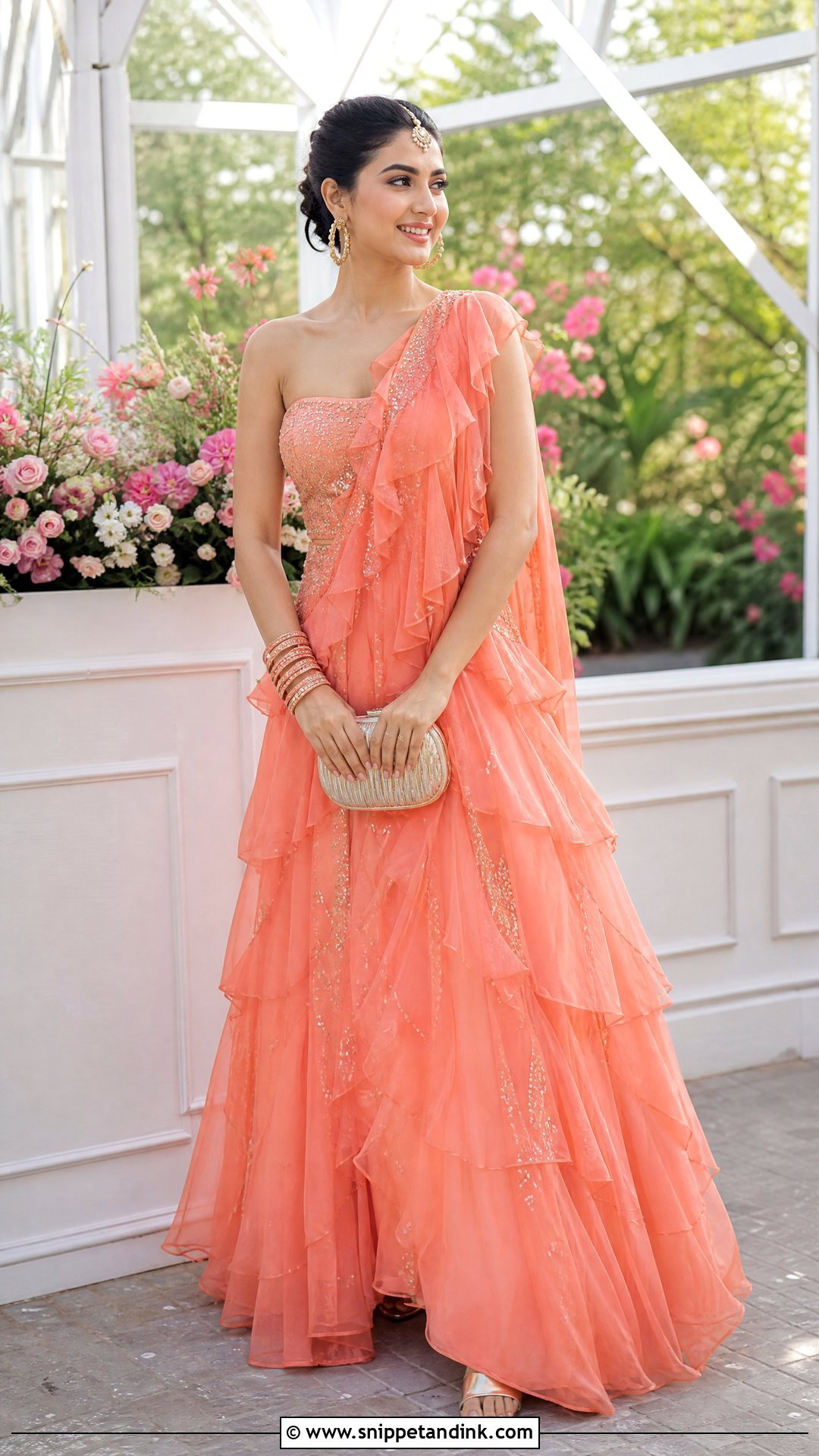
Coral ruffles bring movement to a mehndi, sangeet or daytime reception, and restraint is what makes them work. Keep ruffles along one shoulder, at the hem or on a detachable drape, never everywhere. Organza is the fabric I’d pick, because it holds a ruffle’s shape all day, whereas chiffon ruffles collapse in heat. A clean fitted bodice balances the volume. Light sequins or tonal beading add sparkle. Gold hoops, a slim maang tikka, coral-and-gold bangles, metallic sandals and a small structured clutch finish it, with a soft ponytail and peach blush.
18. Black And Gold Indian Bridal Gown
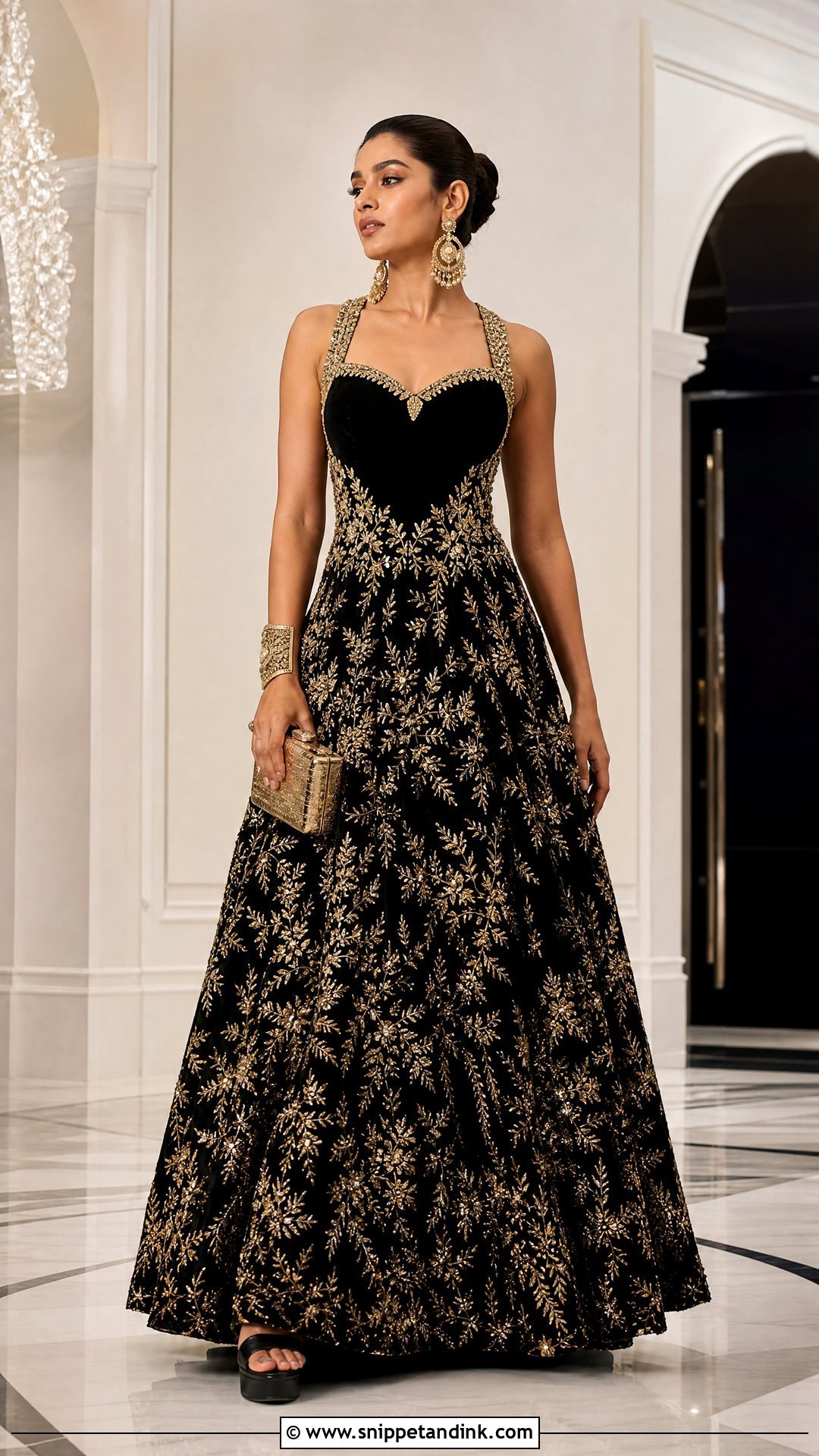
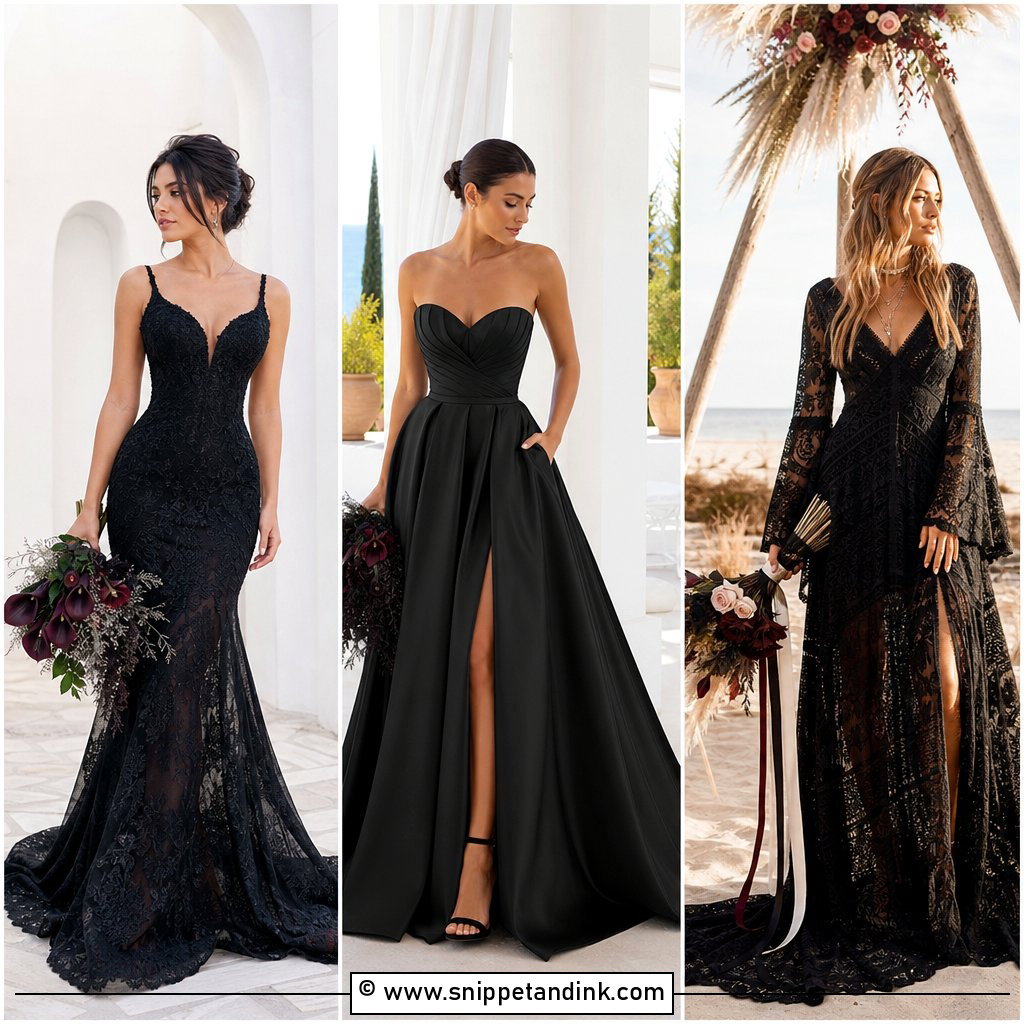
Black and gold makes a dramatic reception look, and it’s worth checking with your family first, since some households still consider black unlucky at a wedding. Black velvet, satin or layered net with gold embroidery at the neckline, waist and skirt panels gives formality, and a full or A-line skirt is easier to move in than a fitted one. Bold gold earrings, a sculptural cuff, black platform heels and a metallic box clutch are plenty. A sleek bun, bronze eyes and a neutral lip keep the face clean. Resist adding more accessories; black against gold already carries the look.
19. Mint Green Organza Indian Bridal Gown
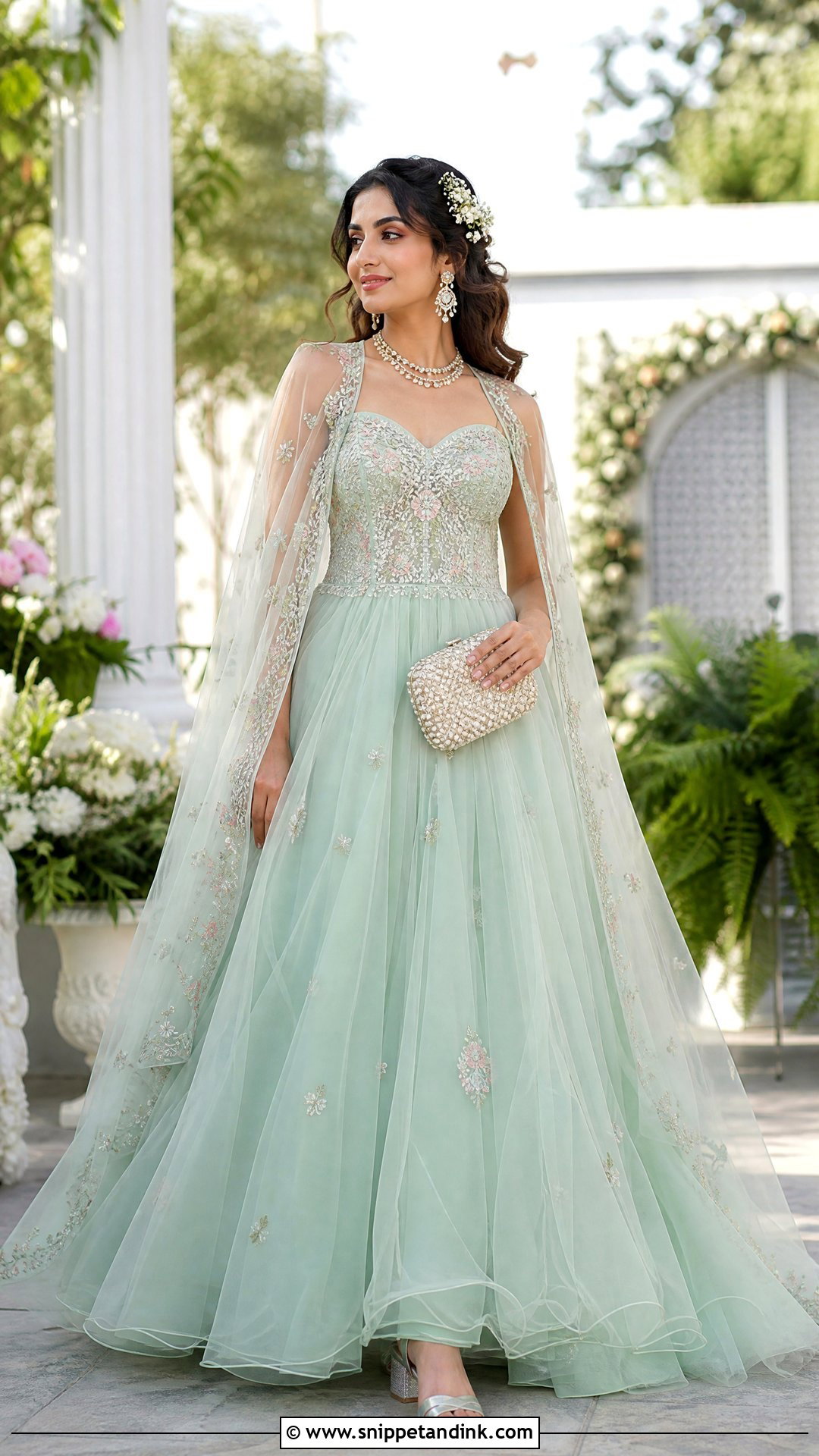
Mint organza is airy and fresh at a daytime wedding or outdoor reception. Organza is crisp, which is good for a layered skirt that holds its shape, but it can feel scratchy against skin and it turns see-through when the sun is behind you. Both are solved with a smooth full lining, which I’d never skip on this one. A supportive bodice with ivory, silver and soft pink threadwork adds depth to the pale green. Add a sheer mint cape for coverage, then pearl earrings, a fine kundan necklace, silver block heels and soft curls with small white flowers.



20. Multicolor Embroidered Indian Bridal Gown
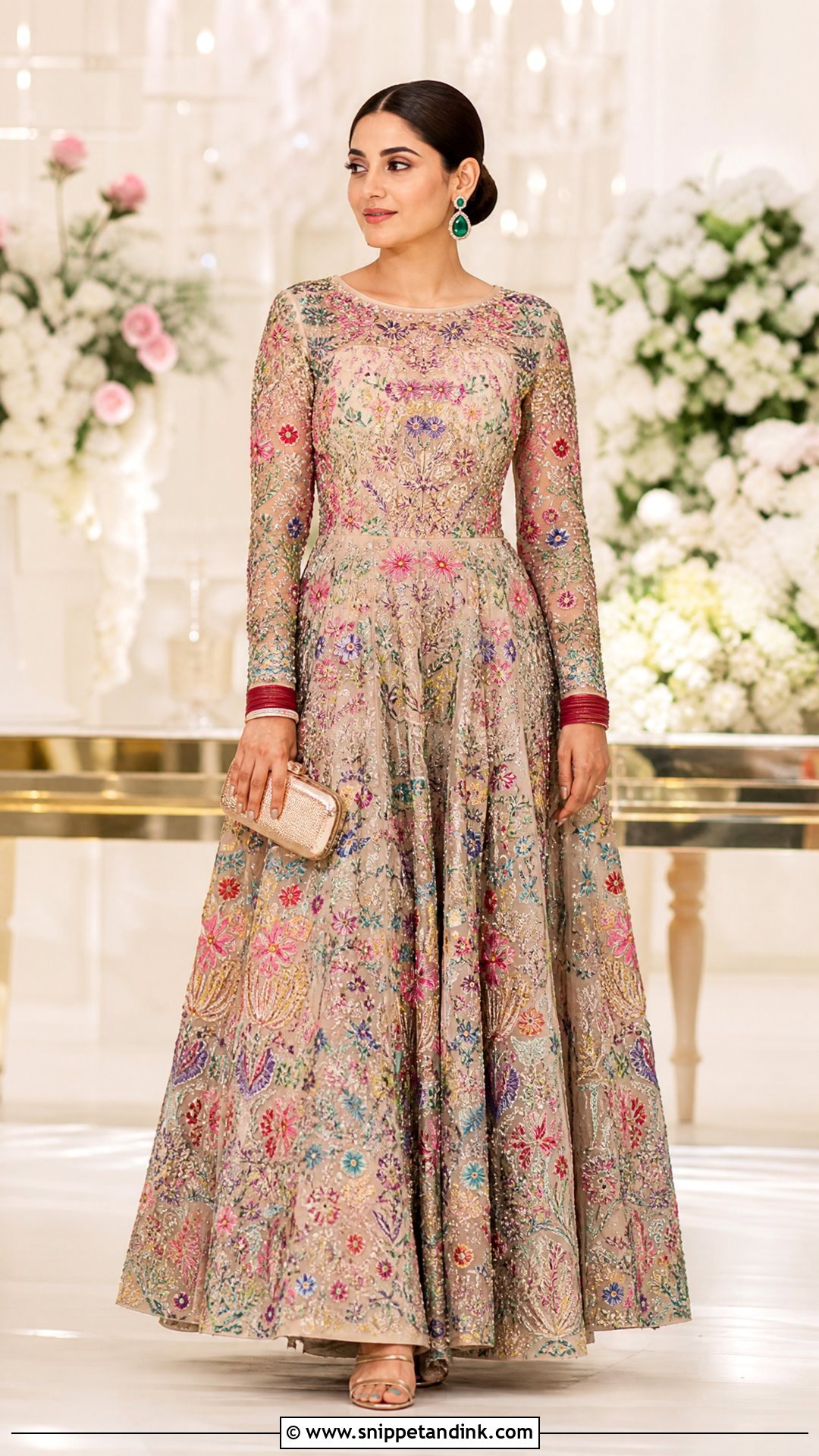
Can’t settle on one colour? A multicolour embroidered gown lets you carry several. Start from a neutral base in champagne, ivory or muted pink and add floral embroidery in jewel tones or pastels. Keep the bodice fitted and the skirt cleanly flared so the surface does the talking. I pick jewelry that repeats one embroidery colour, perhaps emerald earrings or ruby-toned bangles, and keep heels and clutch in plain gold. A centre-parted low bun frames it neatly. Always ask for an embroidery swatch and look at it in daylight and under warm indoor light, because some thread colours shift a lot between the two.
Wear It for an Hour Before the Final Pickup
A short fitting tells you very little about a heavily worked gown. At the last fitting I ask brides to keep the gown on for a full hour with their real jewelry and shoes. Weight that felt fine for ten minutes starts to drag on the shoulders, and seams that looked smooth begin to dig in once you sit.
- Sit on the floor or a low stool for ten minutes, then stand up without help.
- Raise both arms above your head as if placing a garland.
- Walk up and down a few stairs holding your skirt with one hand.
- Have someone fasten and unfasten every hook, zip and cape snap, and time it.
- Check the inside of your arms and waist afterwards for red marks from beads or mirror edges.
After the Wedding, Fold It; Don’t Hang It
Heavy embroidered gowns stretch out of shape on a hanger, because the work pulls the fabric down at the shoulders. I fold them with acid-free tissue between the layers, wrap them in clean cotton or muslin rather than plastic, and store them somewhere dry and dark. Metallic zari dulls with damp and handling, so wipe nothing and leave cleaning to a dry cleaner who handles bridal embroidery. Refold the gown along different lines every few months so permanent creases don’t set into velvet or net.
The Fitting Questions That Matter More Than Colour
These 20 Indian Bridal Gowns cover the ceremony, the colourful pre-wedding events and the reception. Whichever one you pick, judge it by how it behaves, not only how it hangs. Can you sit cross-legged in it, lift a garland, hug an aunt and dance? Red, maroon and velvet bring grandeur; pastels, capes and drapes feel more current. Take your real shoes and jewelry to every fitting, open and close every zip and hook, and wear the gown for a full hour before the final pickup. The gown that suits your personality and lets you move will always look better in photos than the one chosen for a trend.
You'll Like These Ideas:







Leave a Reply