
Medieval princess wedding dresses borrow from history, but most of what we picture comes from storybooks and film rather than any real century. That is good news, because it frees you to pick the parts you love: long flowing skirts, laced bodices, bell or hanging sleeves, velvet capes, pearls, circlets and soft veils. Current bridal shops have caught on, with detachable sleeves, capes, dropped basque waists and textured fabrics that make the look wearable rather than costume-like. It suits castles and ballrooms, but also gardens, rustic estates and fantasy-themed weddings. Below are thirty ways to wear it, with the movement and comfort points I check at fittings, because these gowns are often heavier and longer than brides expect.
Kirtle, Cotehardie or Houppelande? Words That Help a Dressmaker
If you are having a gown made or adapted, a few historical terms make the conversation far quicker. Most bridal shops will understand a picture, but a seamstress who knows these shapes can get much closer to what you have in mind.
- Kirtle: a fitted, laced underdress. On its own it gives a sleek medieval outline that works well for summer.
- Cotehardie: a closely fitted gown, often buttoned down the front or sleeves, with the skirt flaring from the hips.
- Houppelande: a voluminous gown with very wide sleeves and a high belt under the bust. Lovely, but it is a lot of fabric.
- Hanging sleeves or tippets: long fabric streamers falling from the elbow. They give drama without the weight of a full bell sleeve.
I’d also mention the colour question early. White wedding dresses became the norm only centuries later, so an ivory gown with a coloured lining or embroidery is, if anything, closer to the period. Custom historical gowns usually need a test version in cheap fabric before the real one is cut, so allow several months and plan at least three fittings.
1. Medieval Princess Wedding Dress With Long Sleeves
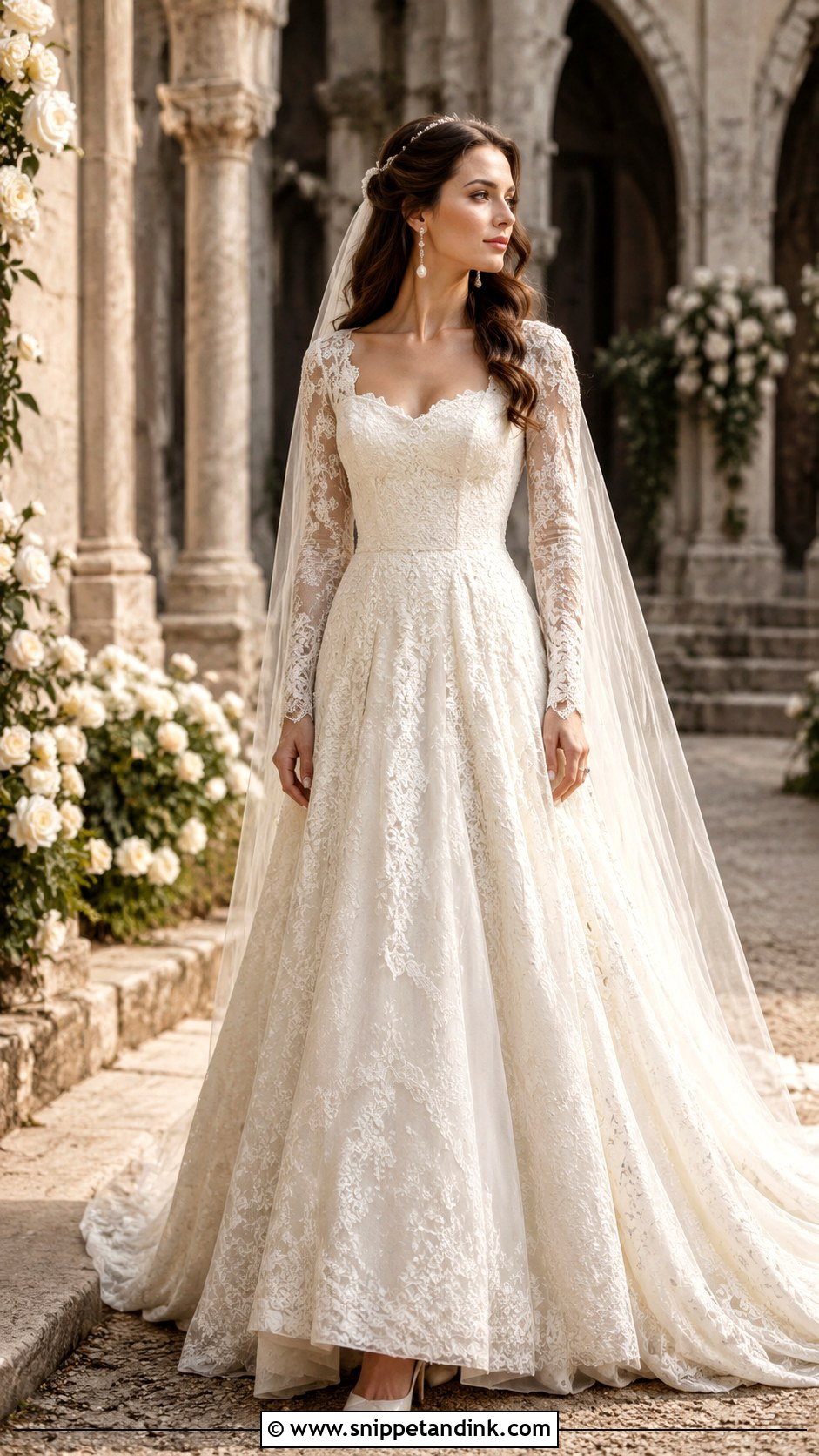
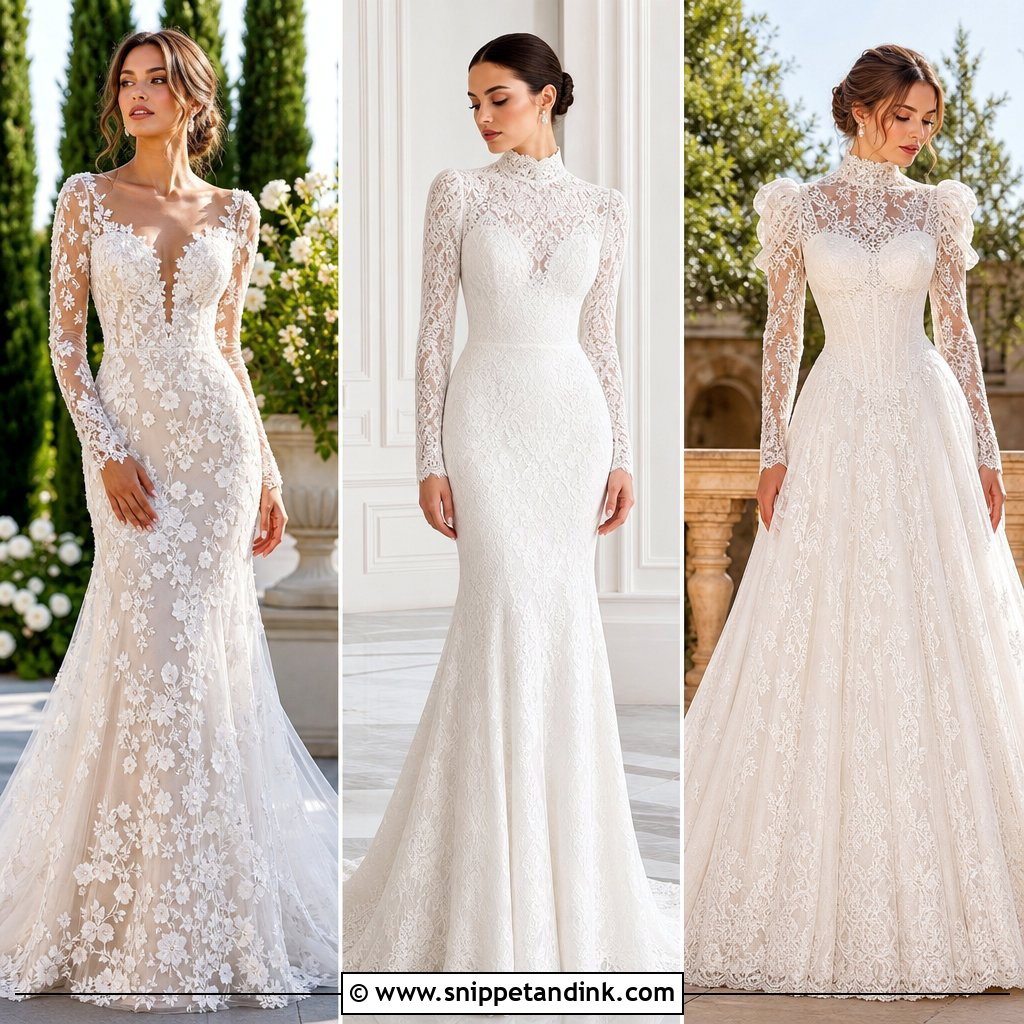
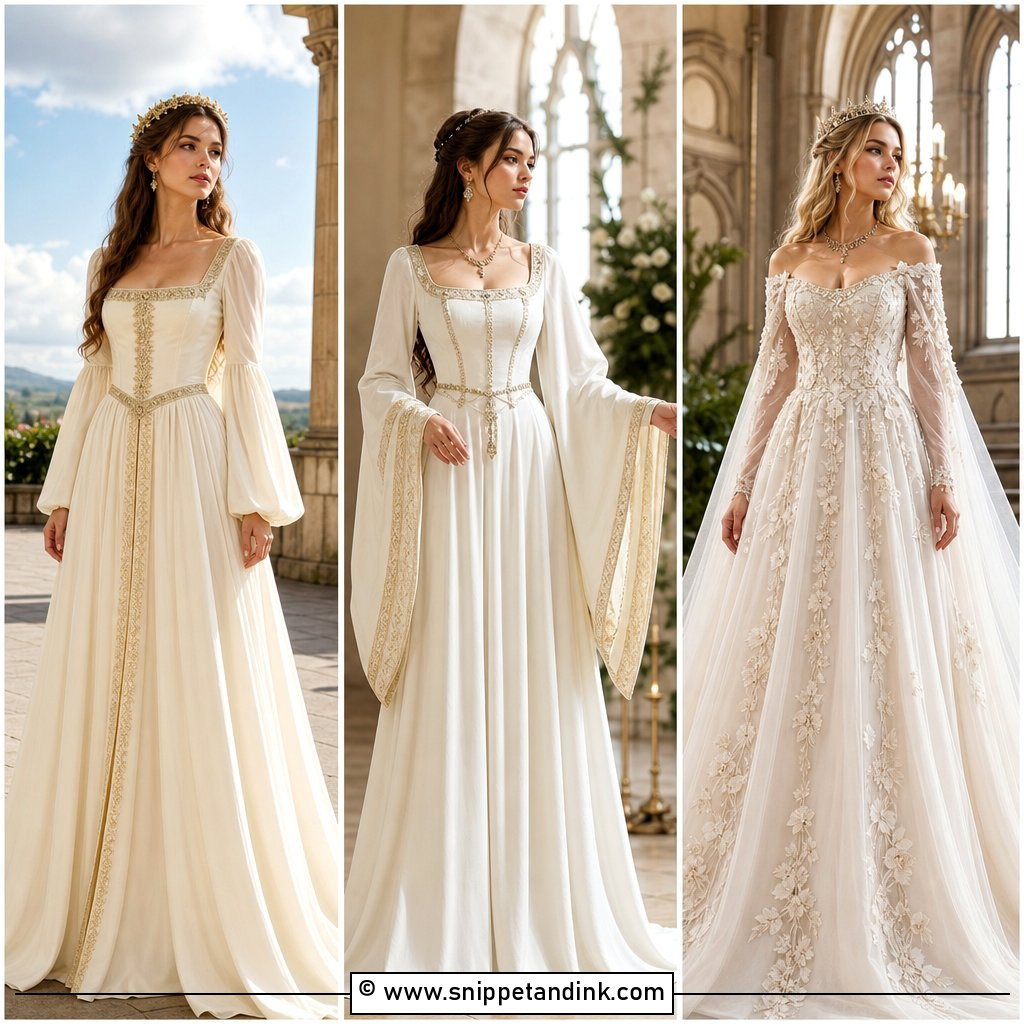
Long sleeves are the quickest route to a storybook outline, and they give coverage at the same time. Fitted lace sleeves look clean, sheer illusion sleeves look light and bishop sleeves gather softly at the wrist. Pair them with a structured bodice and an A-line or ball gown skirt in ivory, soft white, champagne or pearl. Fitted sleeves need to be cut with your arms bent, not straight, or they pull at the elbow every time you lift your bouquet. A delicate veil, pearl drops and pointed satin flats or low heels finish it.
2. Medieval Princess Wedding Dress With Corset Bodice
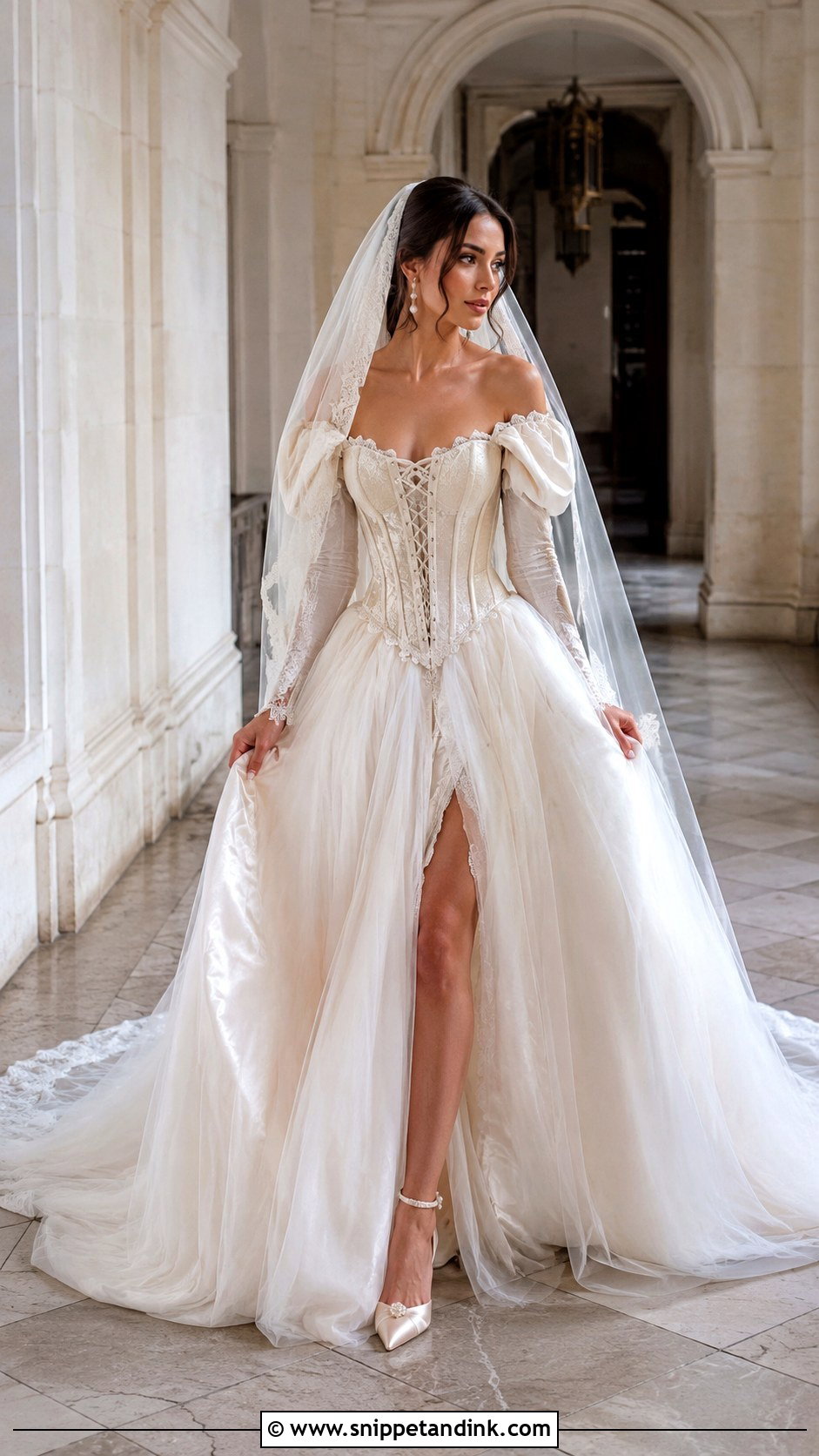
Here is a small history note that helps in fittings: medieval gowns were shaped by cut and lacing, while boned corsets belong to later centuries. So if you want the most medieval feel, a laced, closely fitted bodice reads more true than visible boning. If you prefer the modern bridal shape, a boned corset gives more support and a sharper waist. Either pairs with a full tulle skirt, a satin overskirt or flowing chiffon. A braided updo, a simple tiara and ankle-strap heels keep it polished. Sit down and breathe deeply in the bodice before you agree to the fit.
3. Medieval Princess Wedding Dress With Bell Sleeves
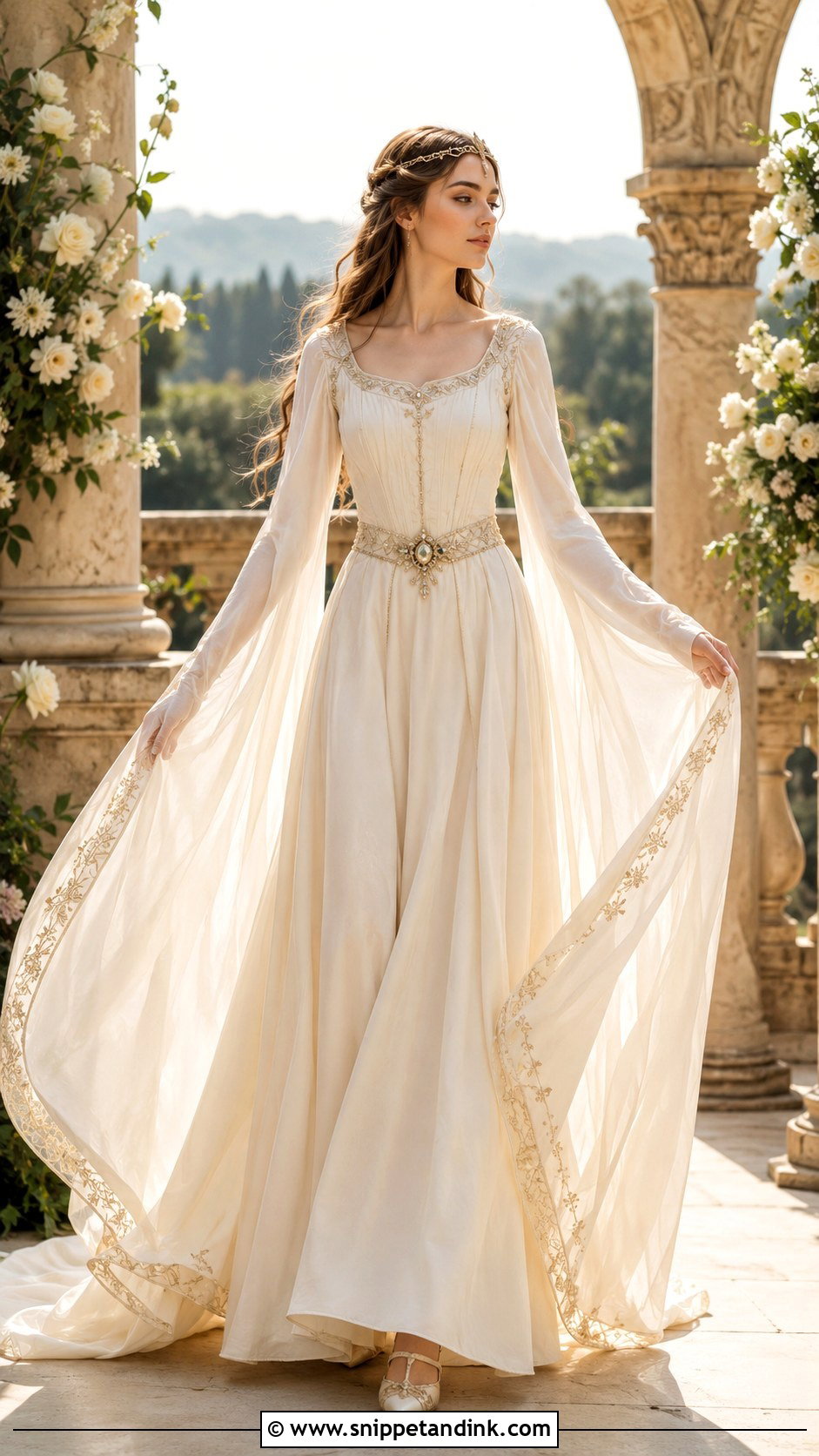
Bell sleeves move with every gesture, which is their whole charm and their main hazard. Very wide sleeves drag across plates at dinner and catch on the bouquet, so I usually suggest a sleeve that flares from the elbow rather than the shoulder. Soft crepe, chiffon, lace and light satin hang best. A fitted bodice and slim A-line skirt balance the volume, and a jeweled belt or embroidered waist adds a royal touch. Loose waves, a circlet and simple ivory shoes keep the sleeves in charge.
4. Medieval Princess Wedding Dress With Cape
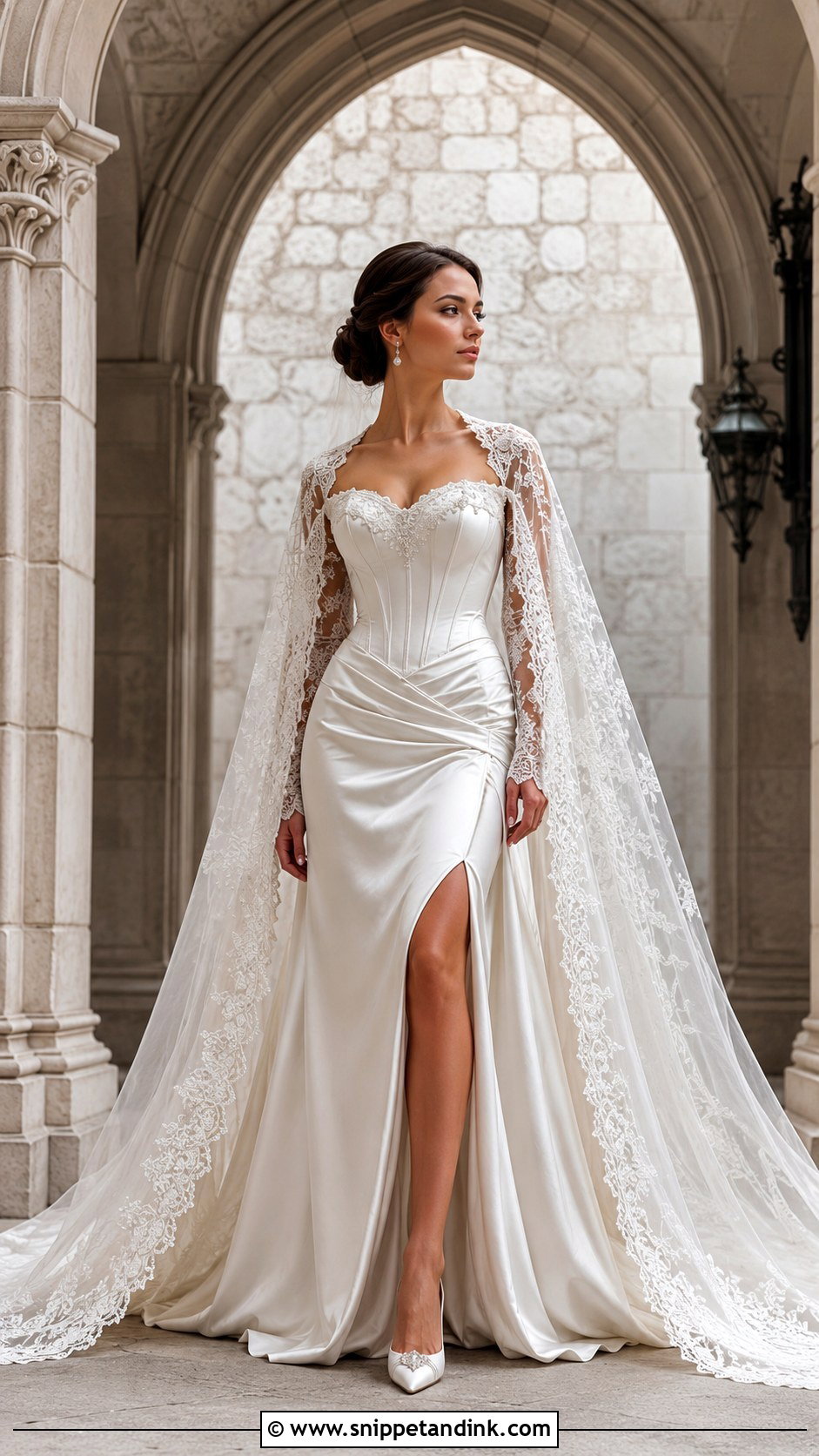
A cape can turn a plain gown into a princess one, and it can replace a veil for the entrance. Sheer tulle reads ethereal, lace romantic, velvet castle-rich. How it attaches matters more than people think: a cape hooked only at the neckline pulls the bodice backward all day, so I prefer one that fastens at the shoulder seams or straps. A detachable cape comes off after the ceremony. Underneath, a corset dress, A-line or clean satin ball gown all work. Pearl earrings, a soft bun and elegant heels finish it.
5. Medieval Princess Wedding Dress With Hooded Cloak
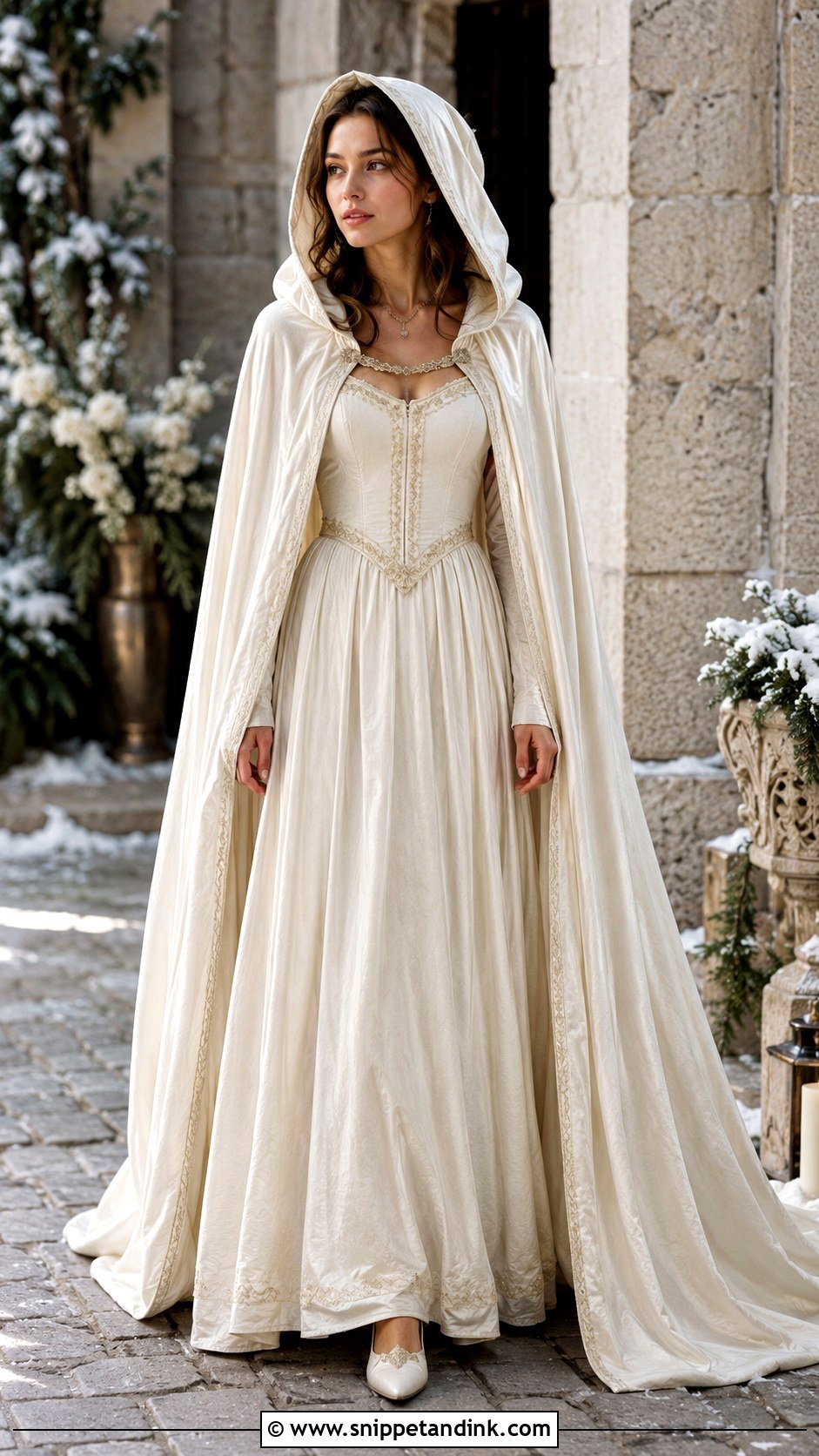
A hooded cloak is the most cinematic option on this list, and it suits cool seasons, castles, forests and outdoor estates. Velvet looks rich, satin smooth, lace and sheer tulle lighter. The hood will flatten any hairstyle, so I plan it as an entrance moment: hood up for the walk, then lowered gently by a bridesmaid at the altar. Underneath, a fitted bodice and flowing skirt keep the dress visible. Loose curls or a low braid sit nicely under the hood, with simple jewelry and closed-toe shoes.
6. Medieval Princess Wedding Dress With Square Neckline
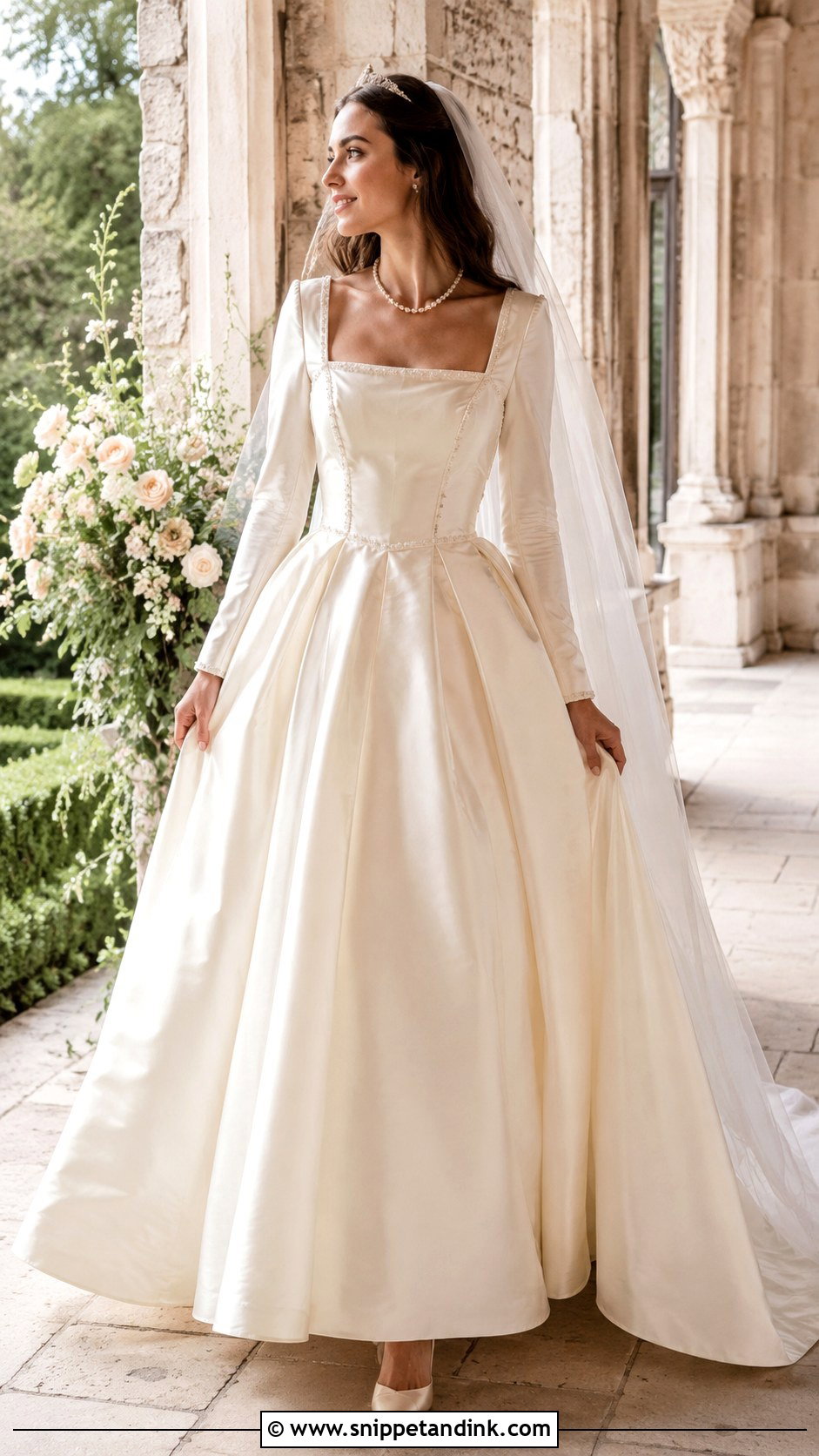
Square necklines feel both historical and current, and they frame the collarbone well with long, puff or simple sleeves. A structured bodice and full skirt give a portrait-like shape, while lace or brocade adds texture; plain satin with minimal jewelry keeps it cleaner. Check that the corners lie flat against your chest when you lift your arms, since a square neck that gapes is impossible to fix on the day. A short pearl necklace, soft veil and satin pumps finish it.
7. Medieval Princess Wedding Dress With Basque Waist
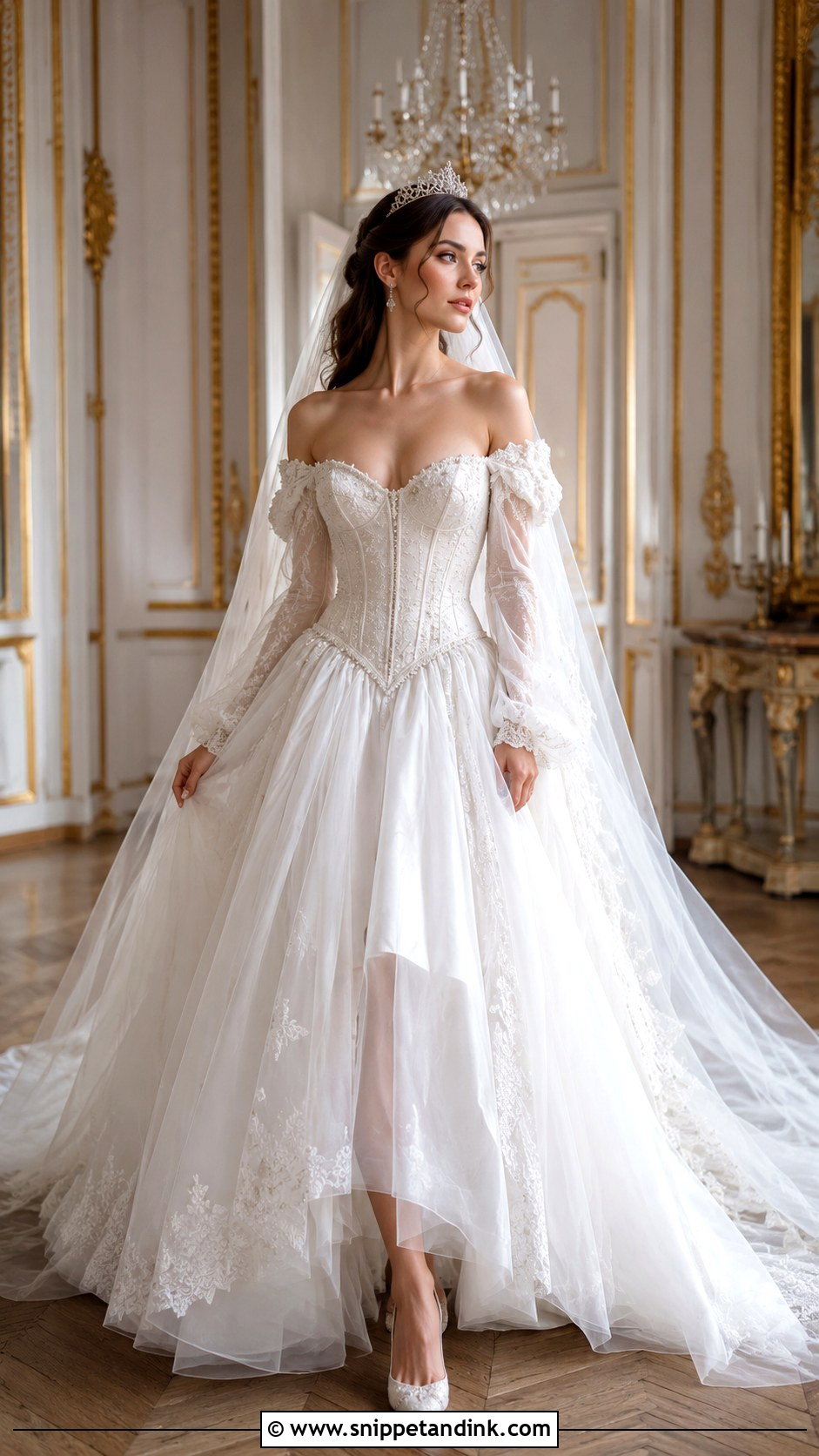
A basque waist dips into a point below the natural waistline, which visually lengthens the torso. That makes it a strong choice if you are short-waisted, and less necessary if your torso is already long. It looks best over a full skirt of layered tulle or satin, with a laced or corset-style bodice for the historical mood. Lace appliqué softens it; clean fabric keeps it regal. Keep accessories simple so the line of the point stays clear, and add a tiara, long veil and pointed heels.
8. Medieval Princess Wedding Dress With Lace Up Back
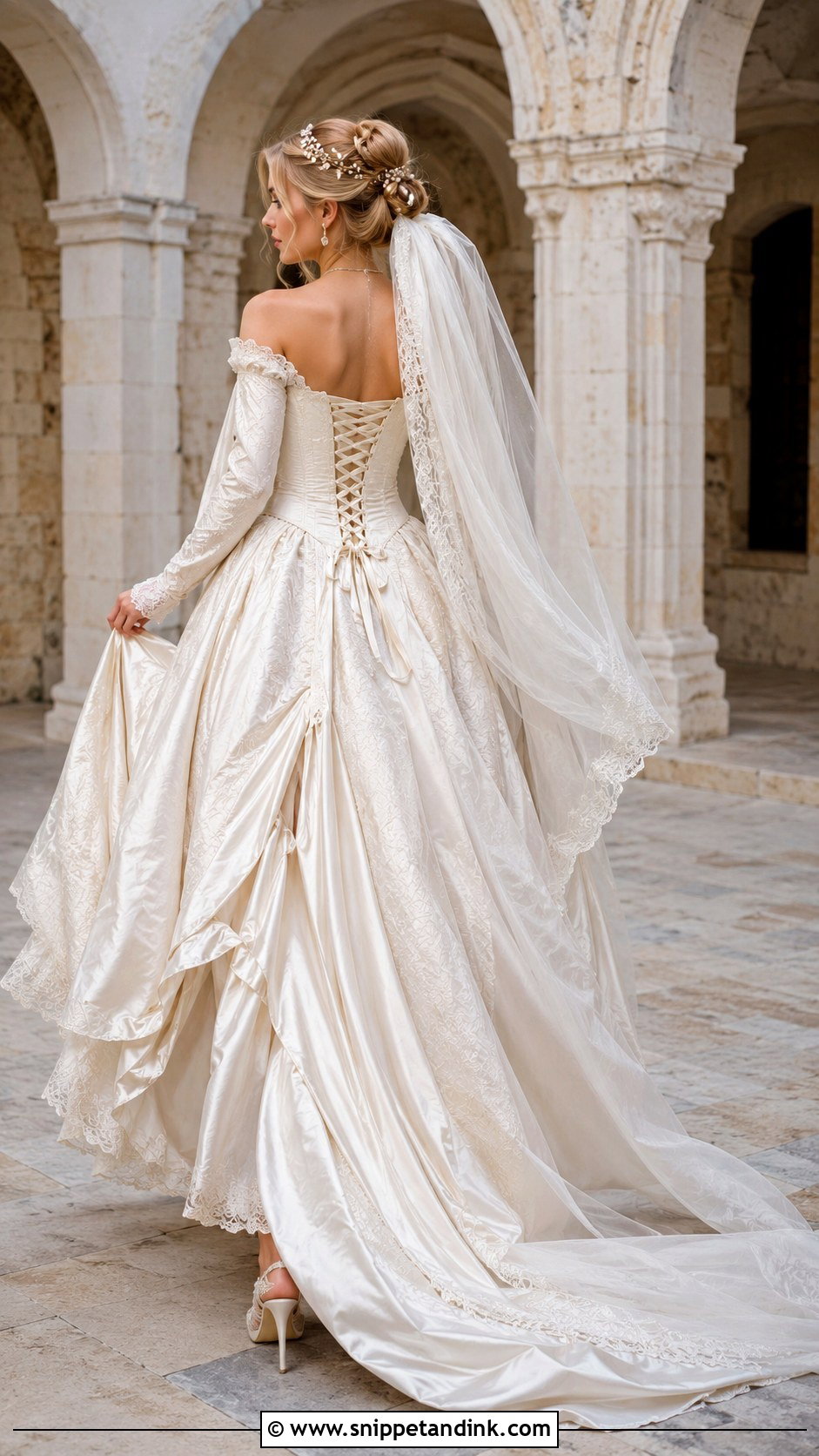
Lacing up the back is the easiest medieval detail to add, and it has a practical bonus: it gives a little adjustment if your size shifts before the wedding. Delicate ribbon lacing looks soft, wider satin ties or cord look dramatic. Make sure there is a modesty panel underneath, and practise the lacing with whoever will dress you, as it takes longer than a zip. The front can stay simple with a sweetheart, square or off-shoulder neckline. A veil that doesn’t hide the back, pearl hairpins and a small bouquet complete it.
9. Medieval Princess Wedding Dress With Embroidery
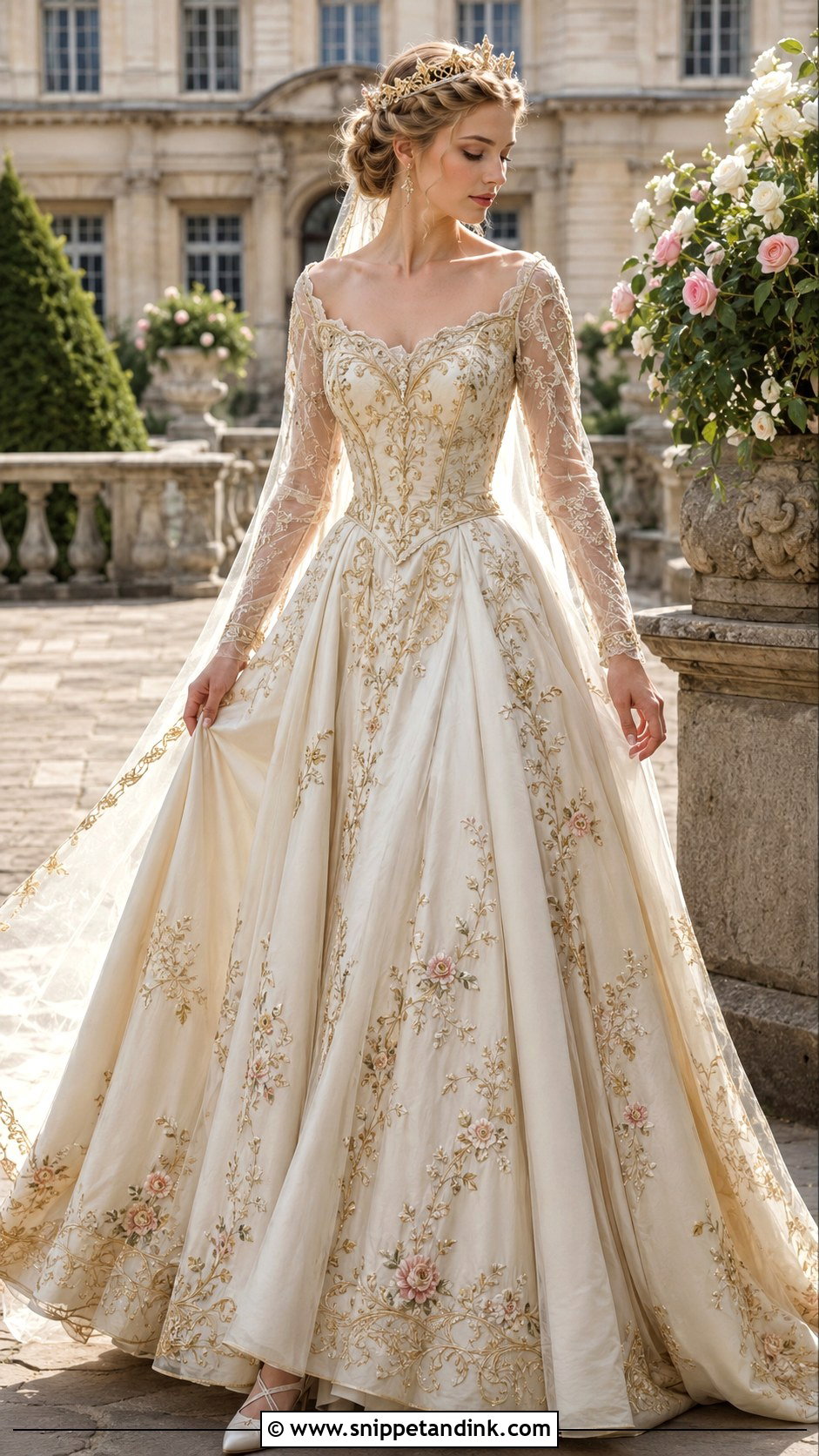
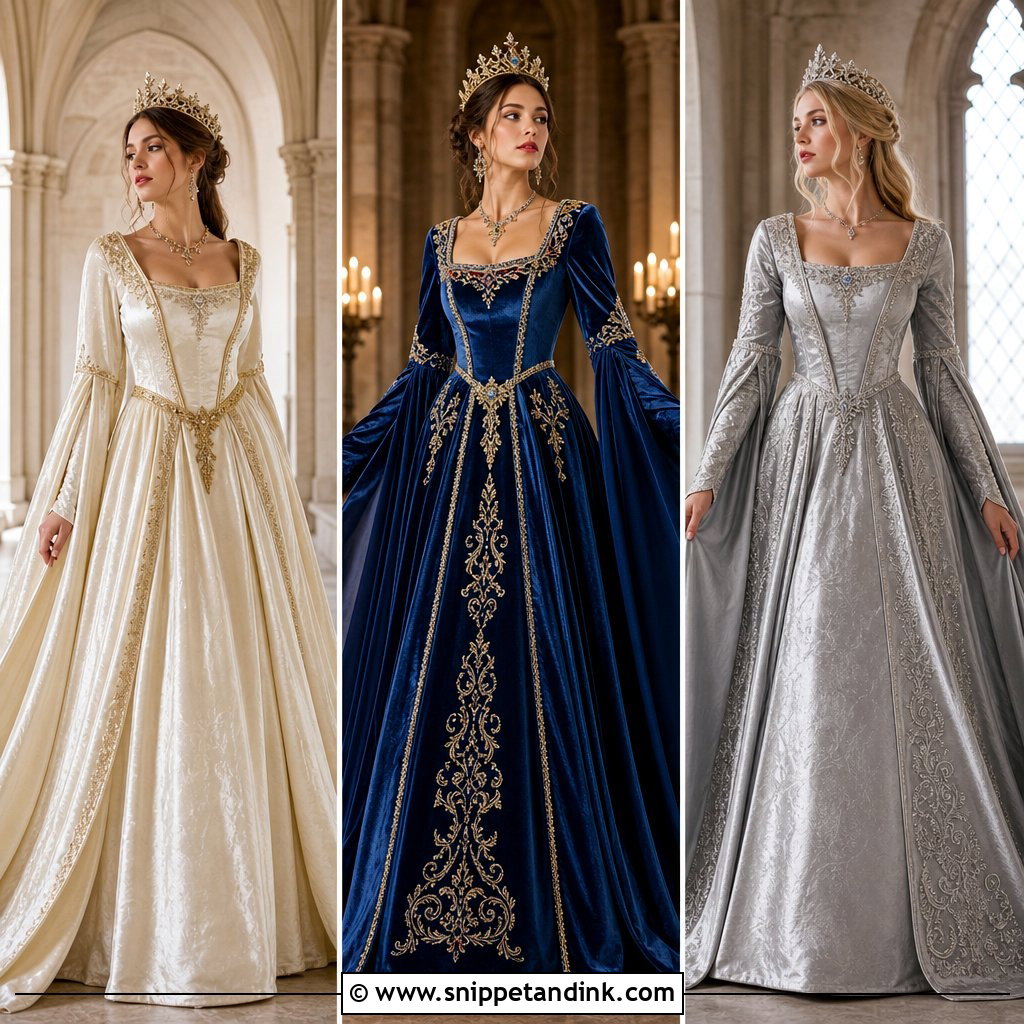
Embroidery gives the gown depth: floral vines, gold thread, pearl patterns and leafy motifs on the bodice, sleeves, hem or train. Heavy embroidery adds real weight, especially along a hem, so I check how the skirt hangs after the gown has been on for a while. Metallic thread on the inner sleeves can also scratch. A softly structured bodice and flowing skirt keep it from feeling heavy, in champagne, ivory, pale gold or soft blush. Understated jewelry, a braided style, a small crown and satin shoes let the needlework lead.
10. Medieval Princess Wedding Dress With Velvet Details
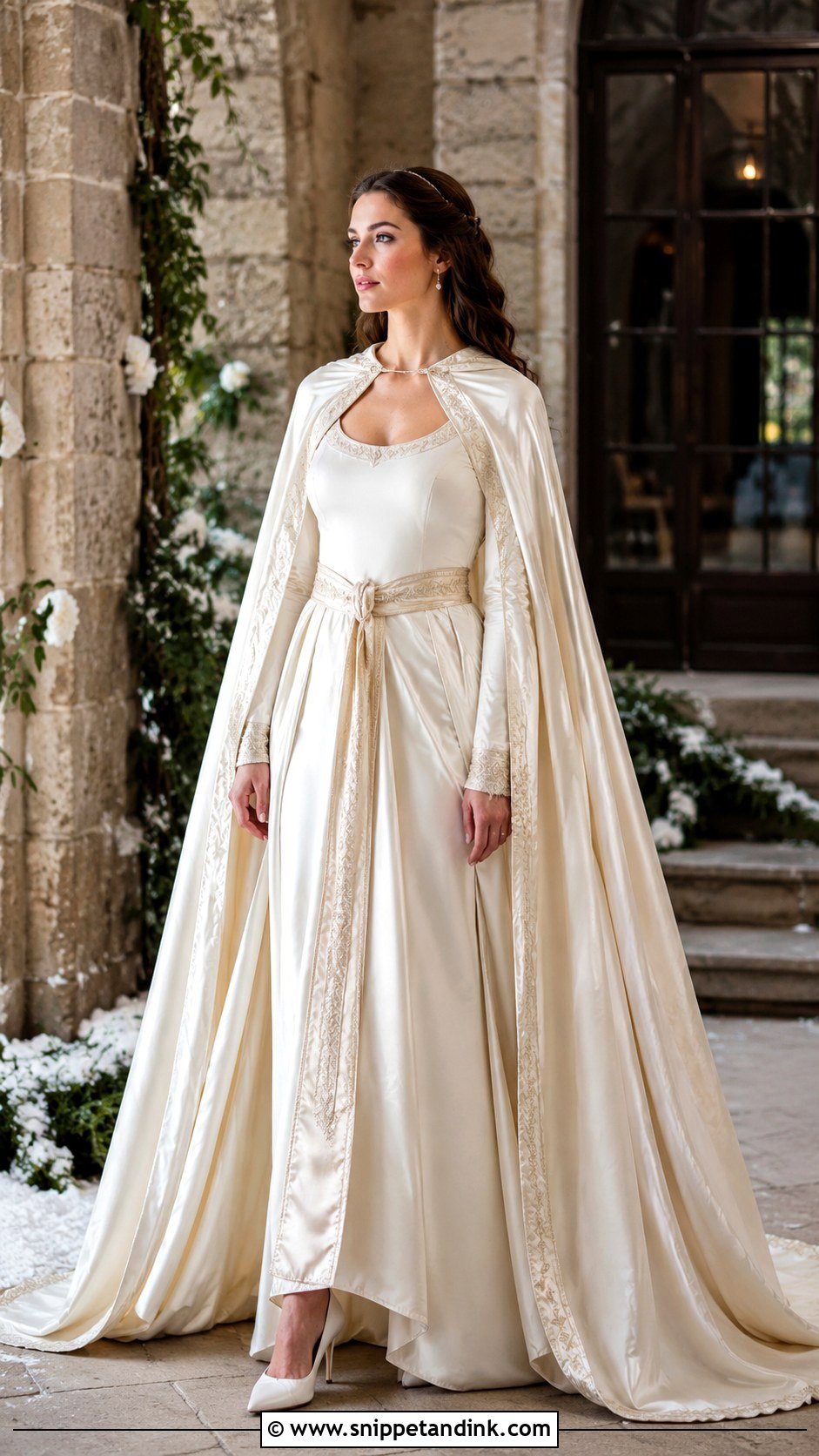
Velvet gives richness as a sash, cape, sleeve trim, bodice accent or lacing ribbon. It suits fall and winter weddings best, because velvet is warm to wear; a full velvet gown in summer is uncomfortable. Deep ivory, champagne, soft blue or muted green all work, set against satin, lace or tulle. A velvet waist ribbon over a full skirt is the subtlest version. Velvet also marks where it is pressed, so I steam velvet trims from the back rather than ironing. Pearl earrings, soft waves and closed-toe heels finish it.
11. Medieval Princess Wedding Dress With Gold Accents
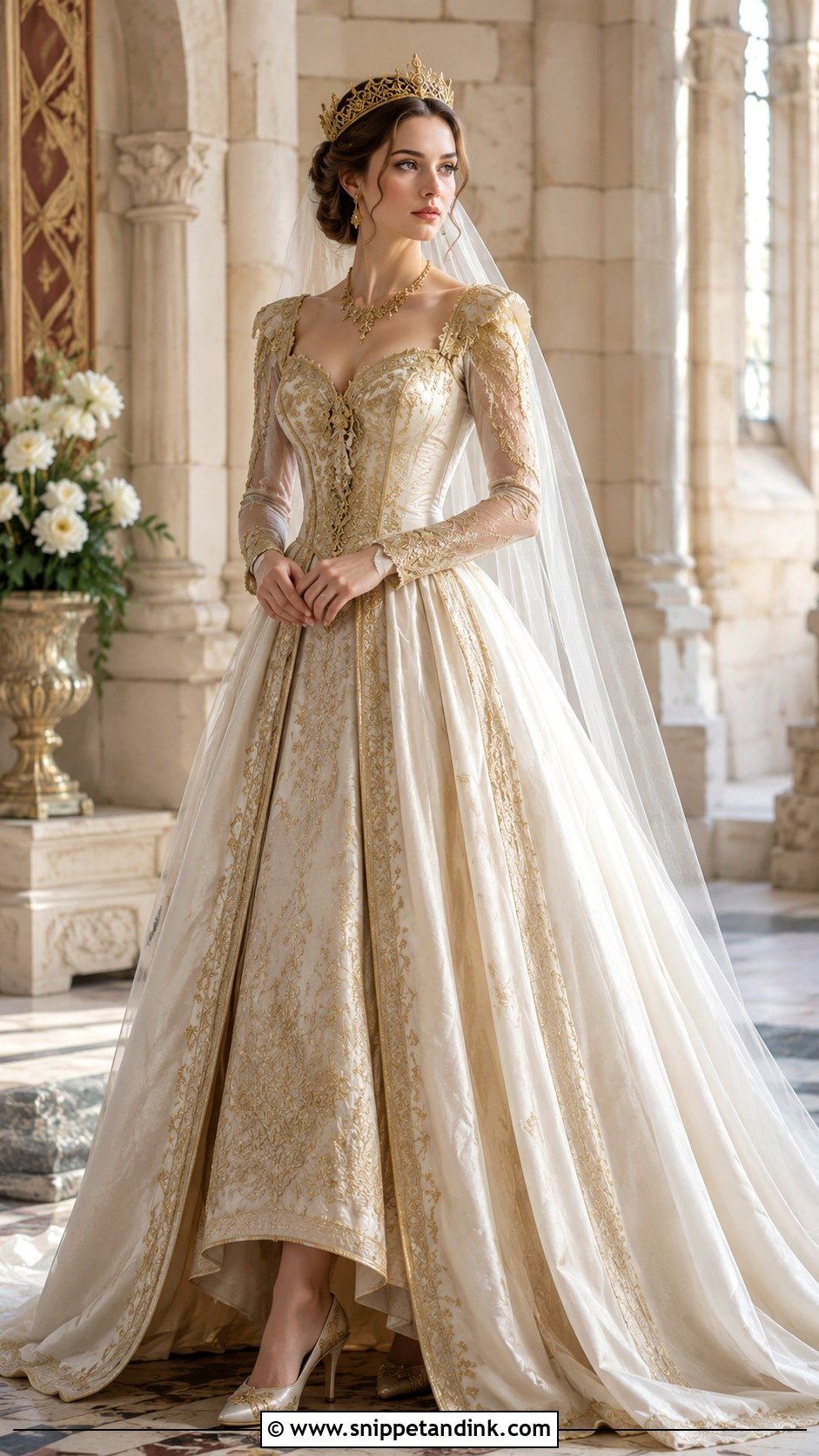
Gold can tip a bridal gown into theatre if there’s too much of it. I use it in one or two places: gold embroidery, metallic thread, a slim belt, antique-style buttons or a delicate crown. Ivory and champagne blend with gold more softly than bright white, which can make gold look brassy. A laced bodice, long sleeves and full skirt give the royal base. Neutral shoes, such as ivory satin heels or gold-trimmed flats, soft makeup and small gold earrings keep it warm and old-world.
12. Medieval Princess Wedding Dress With Pearl Details
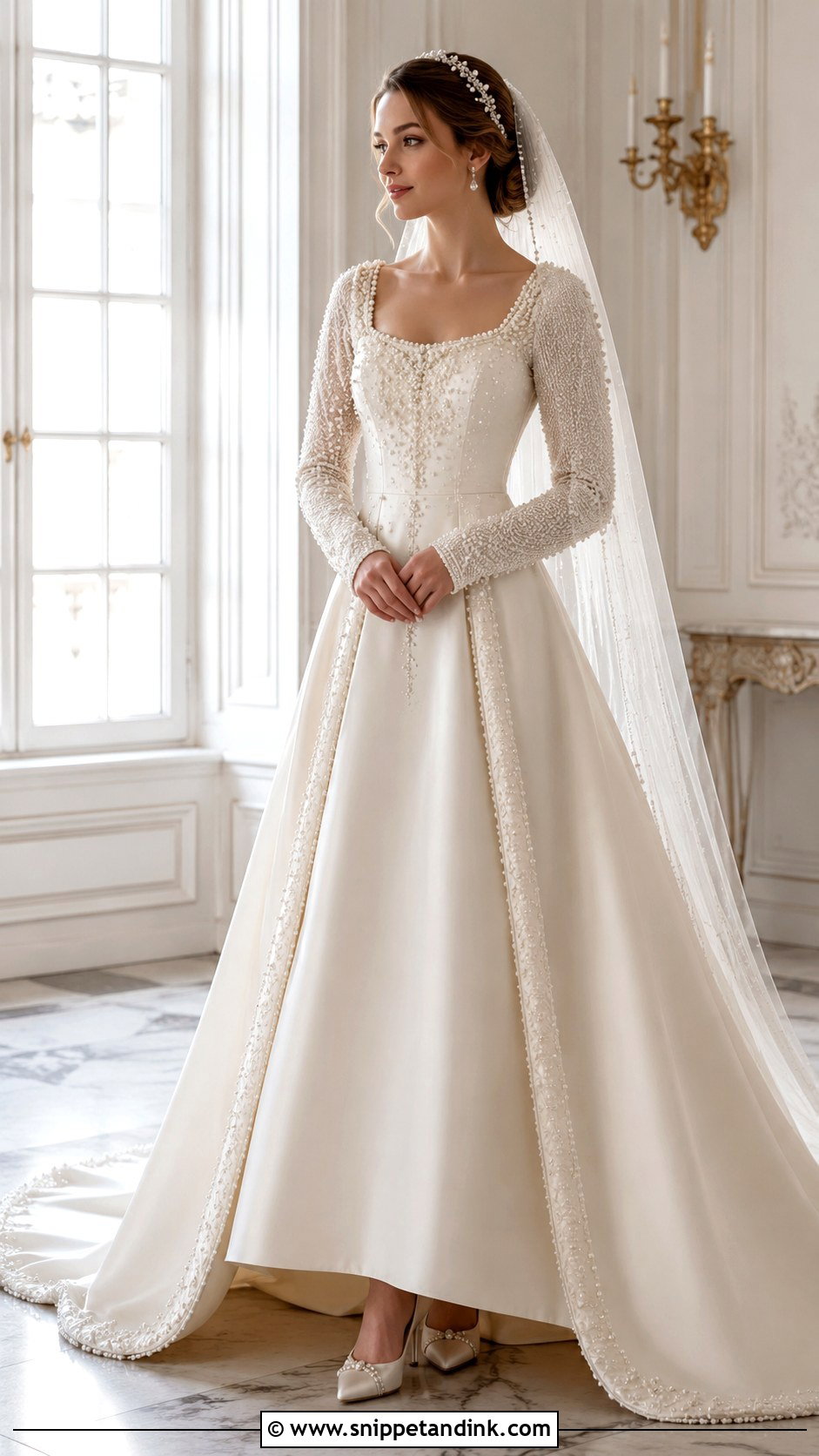
Pearls look noble and quiet, on the neckline, sleeves, bodice, veil, gloves or crown. They suit a clean silhouette such as an A-line, ball gown or fitted bodice with a flowing skirt, and they get lost among other embellishments. Pearl-scattered veils look delicate but are heavier than plain tulle, so the comb needs to be anchored firmly into a braid or bun. Pearl drop earrings, pearl pins and simple satin heels finish it.
13. Medieval Princess Wedding Dress With Off Shoulder Sleeves
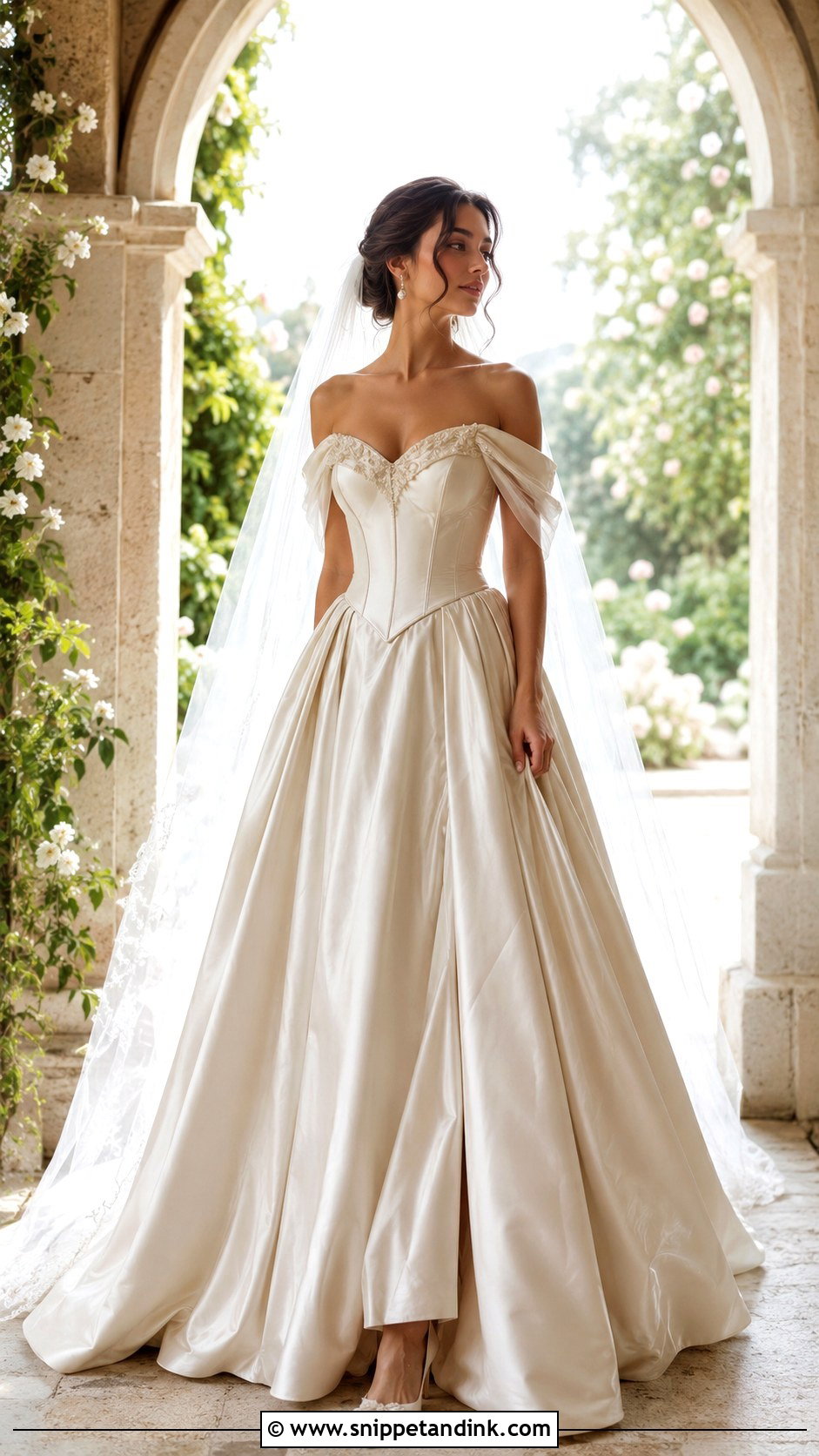
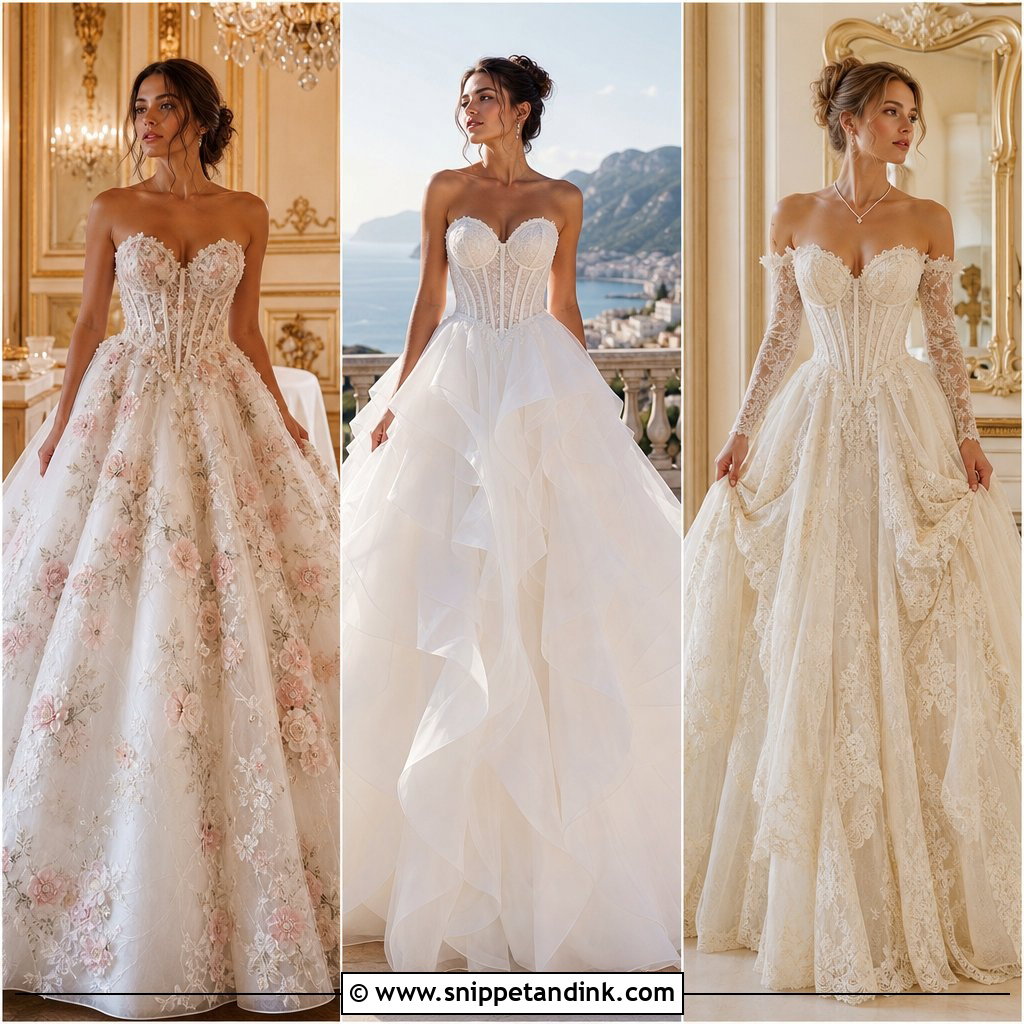
Off-shoulder sleeves frame the neck and shoulders, and with a laced bodice and full skirt they give a grand but soft outline. They can be fitted, puffed or draped; lace feels delicate and satin smoother. The trade-off is movement: you can’t raise your arms high in them, so hugs and bouquet tosses need a little care. A basque waist adds more history. Skip the necklace, and add a long veil, pearl earrings and bridal heels.
14. Medieval Princess Wedding Dress With Puff Sleeves
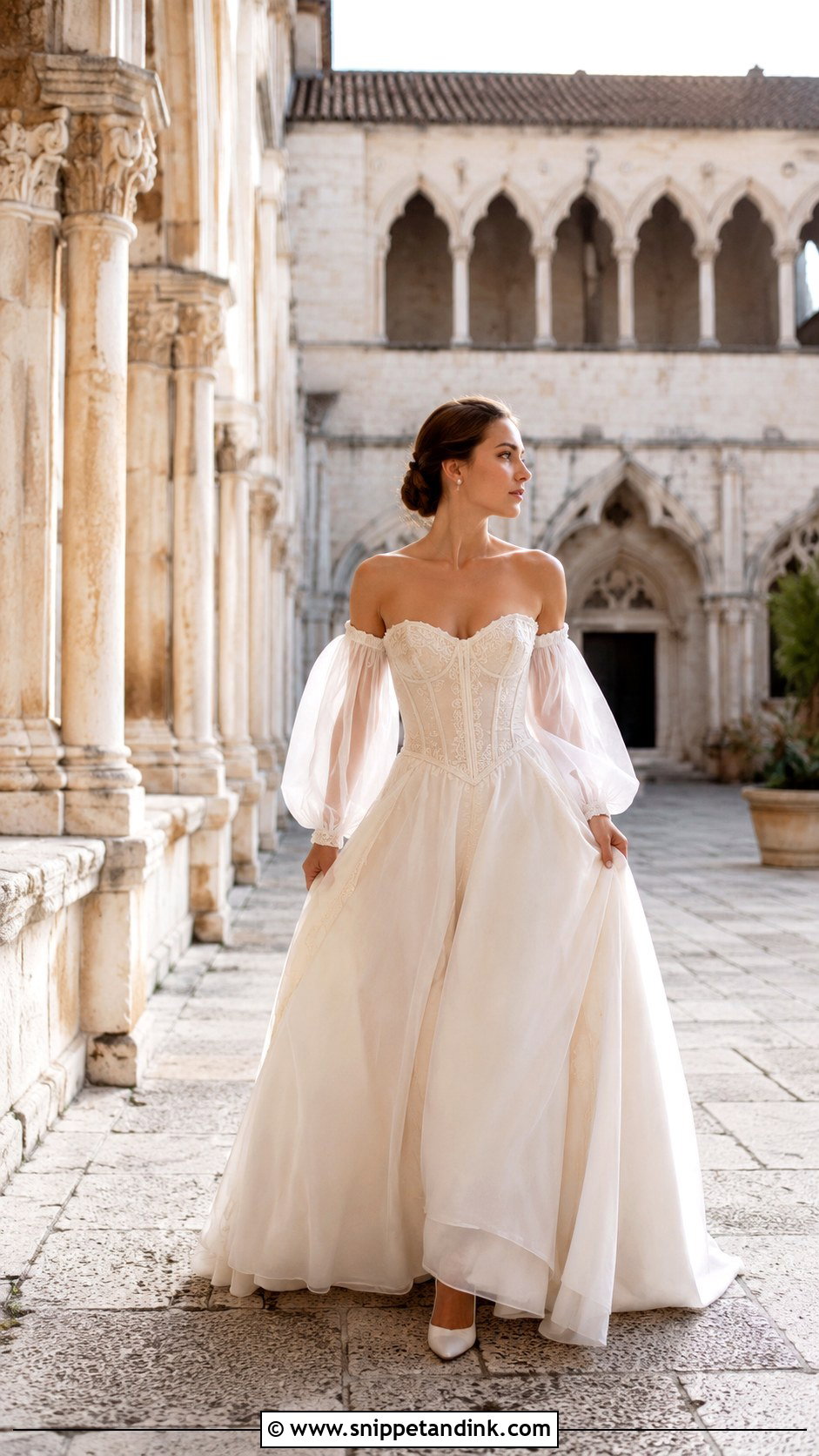
Puff sleeves should frame the bodice, not swallow it. Sheer organza puffs are light; satin puffs are more dramatic. Organza crushes when hugged, so I ask whether the sleeves have a tulle support inside that helps them bounce back. A fitted waist and A-line skirt keep the shape flattering. Detachable puffs give you a ceremony look and a simpler reception look. Delicate earrings, a low bun and elegant pumps keep the rest calm.
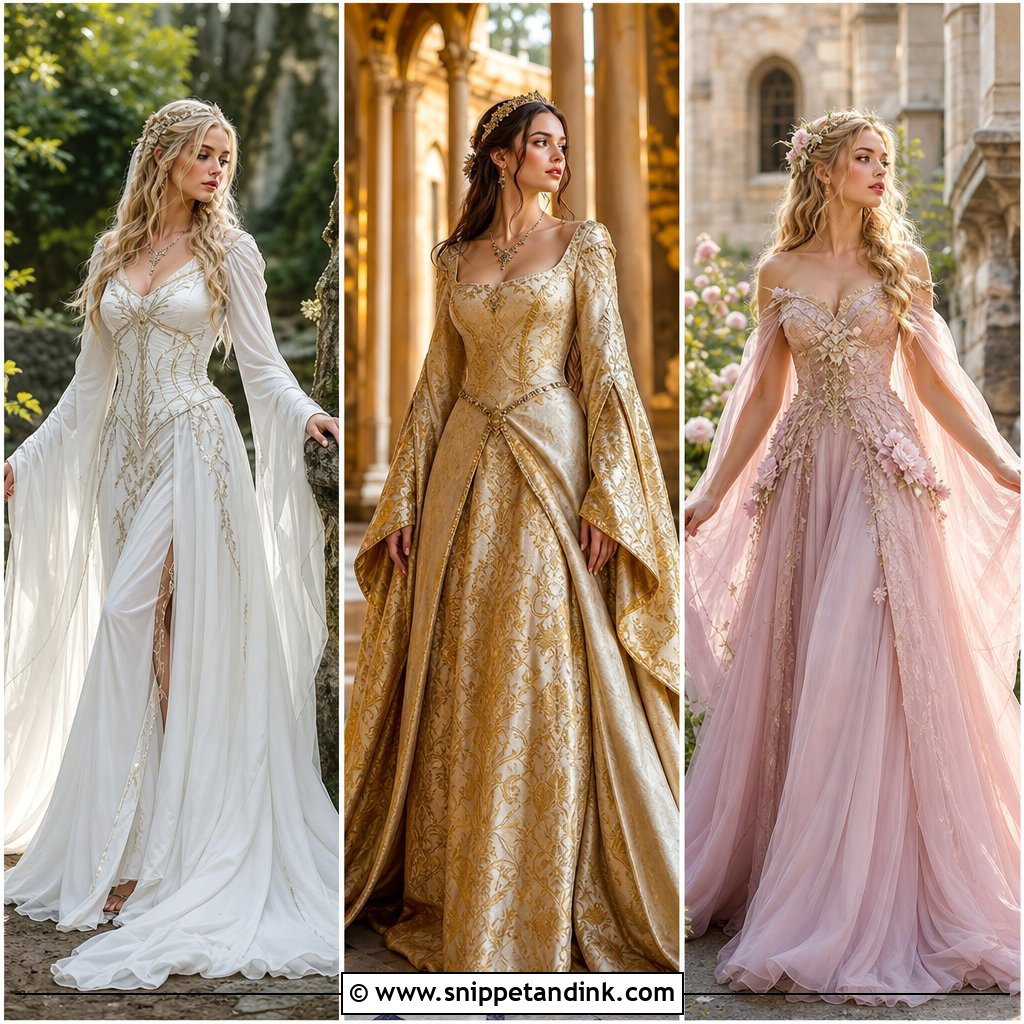
15. Medieval Princess Wedding Dress With High Neck
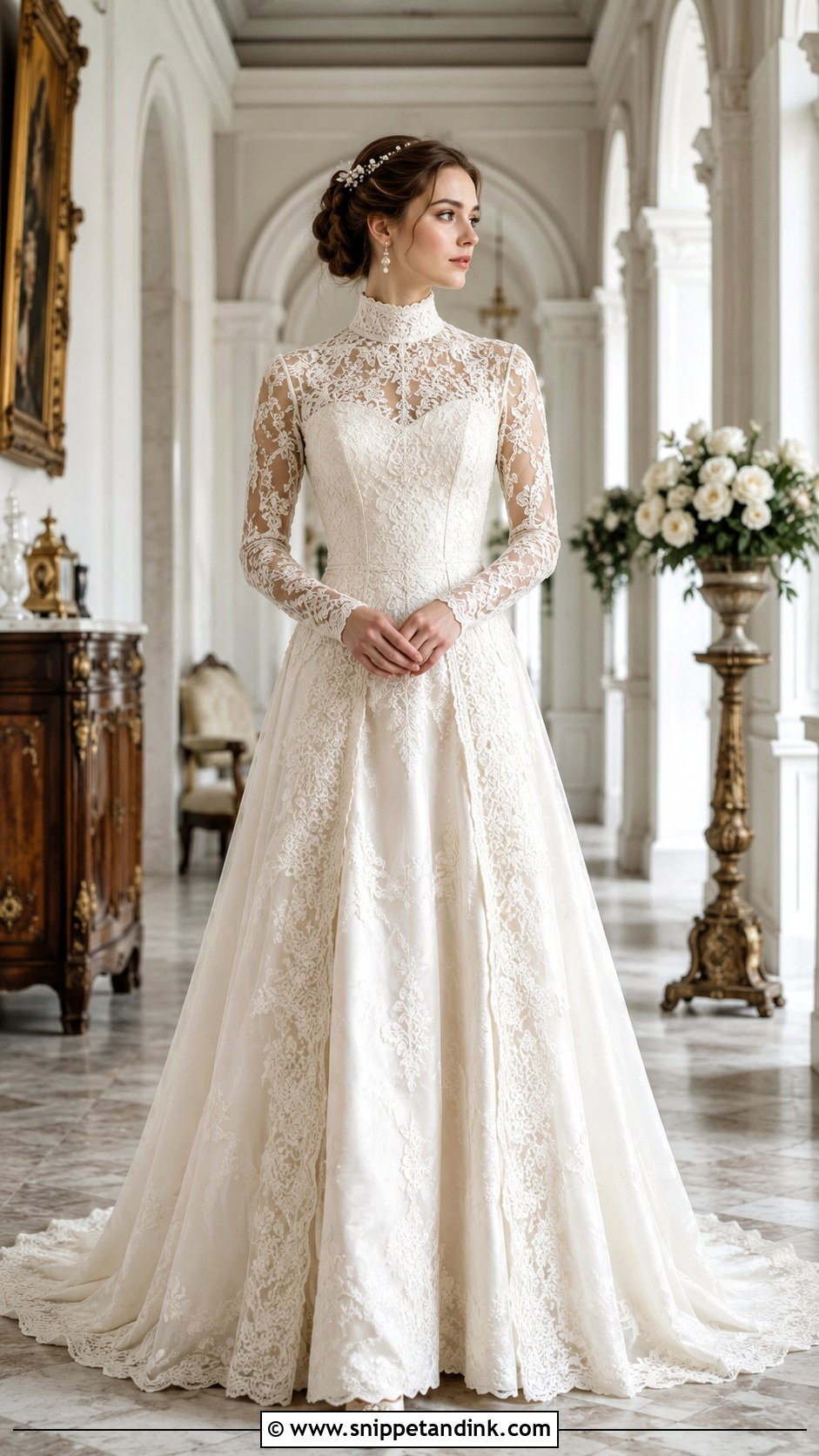
High necklines look noble in a medieval gown: lace collars, sheer illusion panels or embroidered bands. They give coverage without losing elegance, and they pair best with long sleeves and a flowing skirt. Lace at the throat can itch over a long day, so I check that the edge is finished softly or lined. A fitted bodice keeps the gown from looking shapeless, and a subtle train adds ceremony. Skip the necklace and let earrings, hairpins or a crown do the work, with closed-toe heels or embroidered flats.
16. Medieval Princess Wedding Dress With Full Skirt
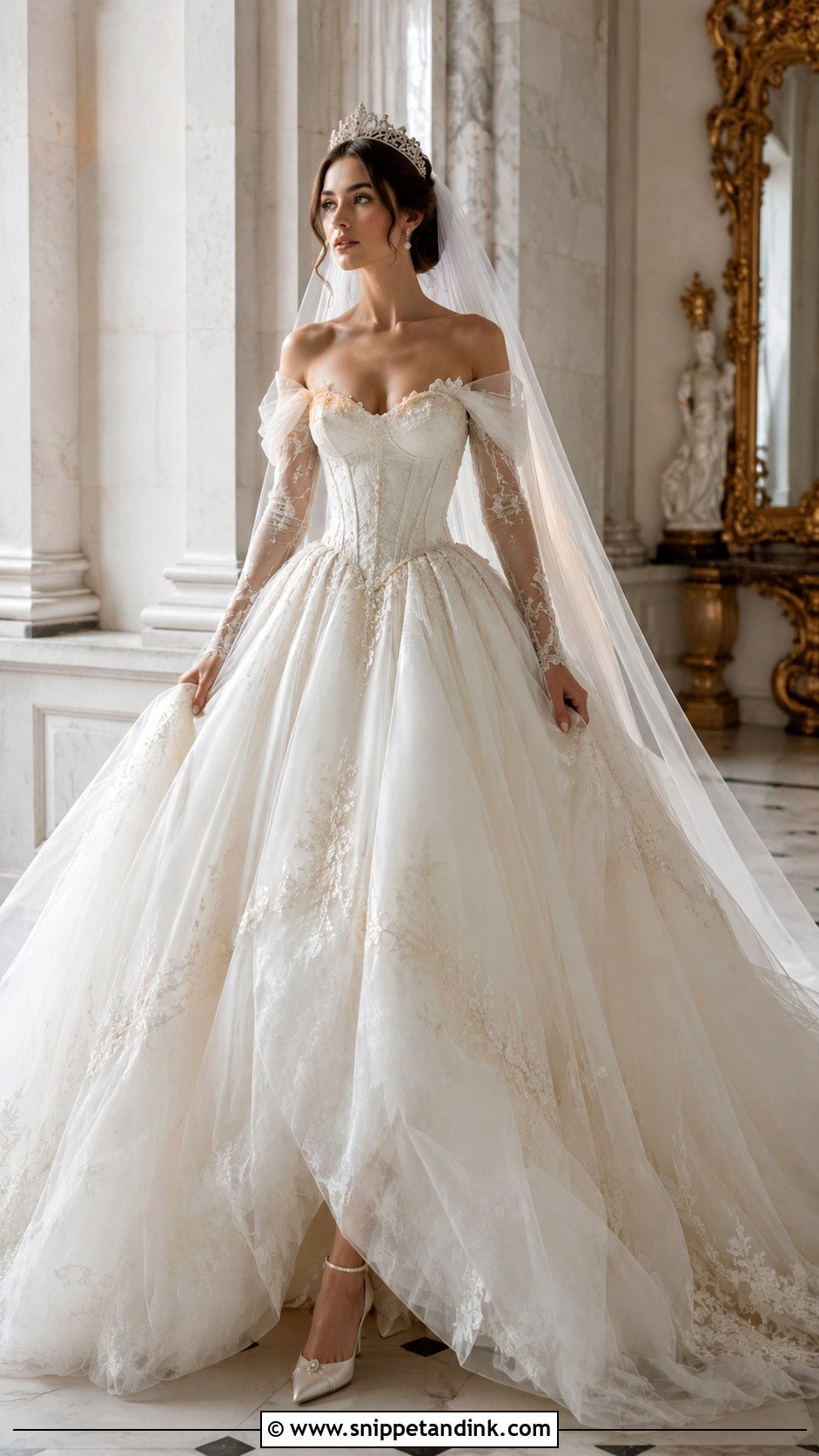
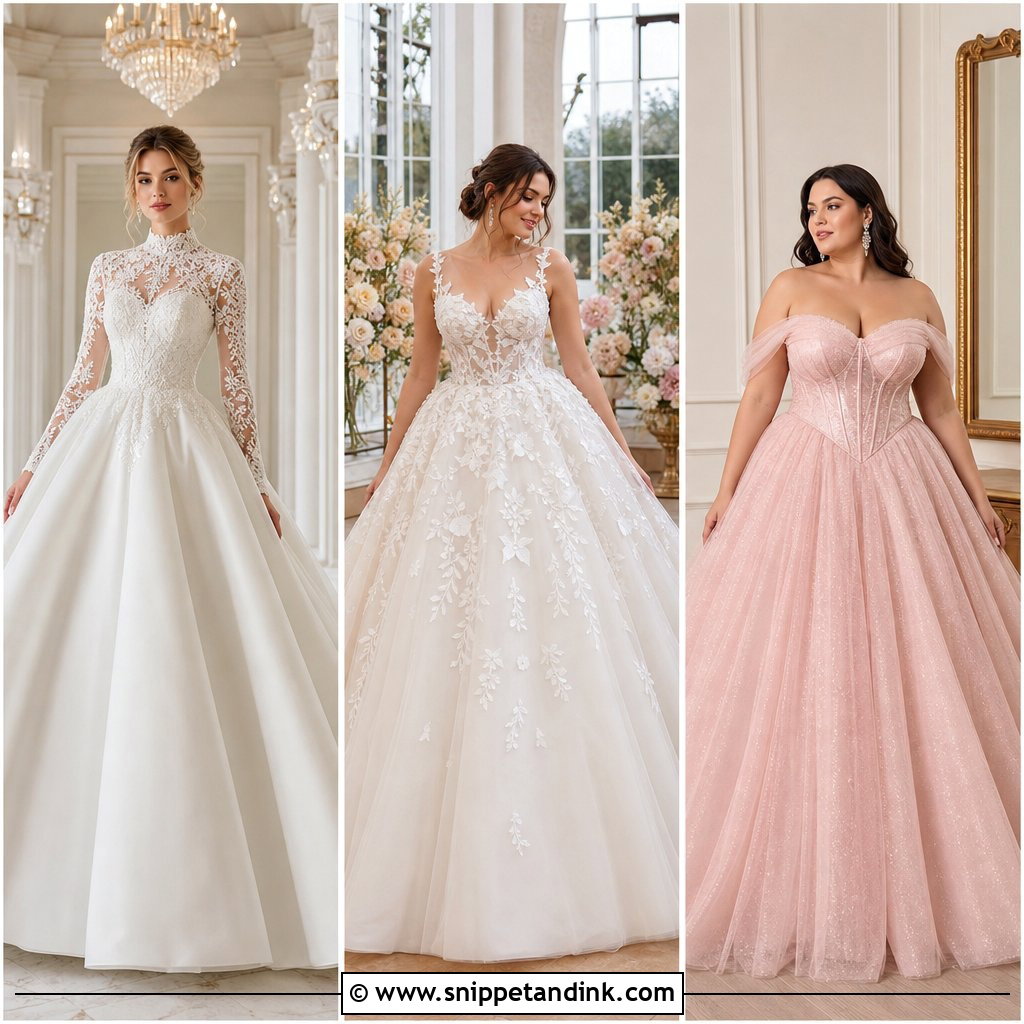
The full skirt is the foundation of the whole look, and what’s underneath decides how it moves. Tulle layers are soft, satin is structured and organza gives volume without weight. Most full skirts rely on a petticoat or hoop, and a hoop makes sitting, cars and bathroom trips trickier, so I’d try both at the fitting. The bodice has to be supportive, through lacing, boning or a fitted waist. With a dramatic skirt, a tiara, veil and elegant shoes are enough.
17. Medieval Princess Wedding Dress With Train
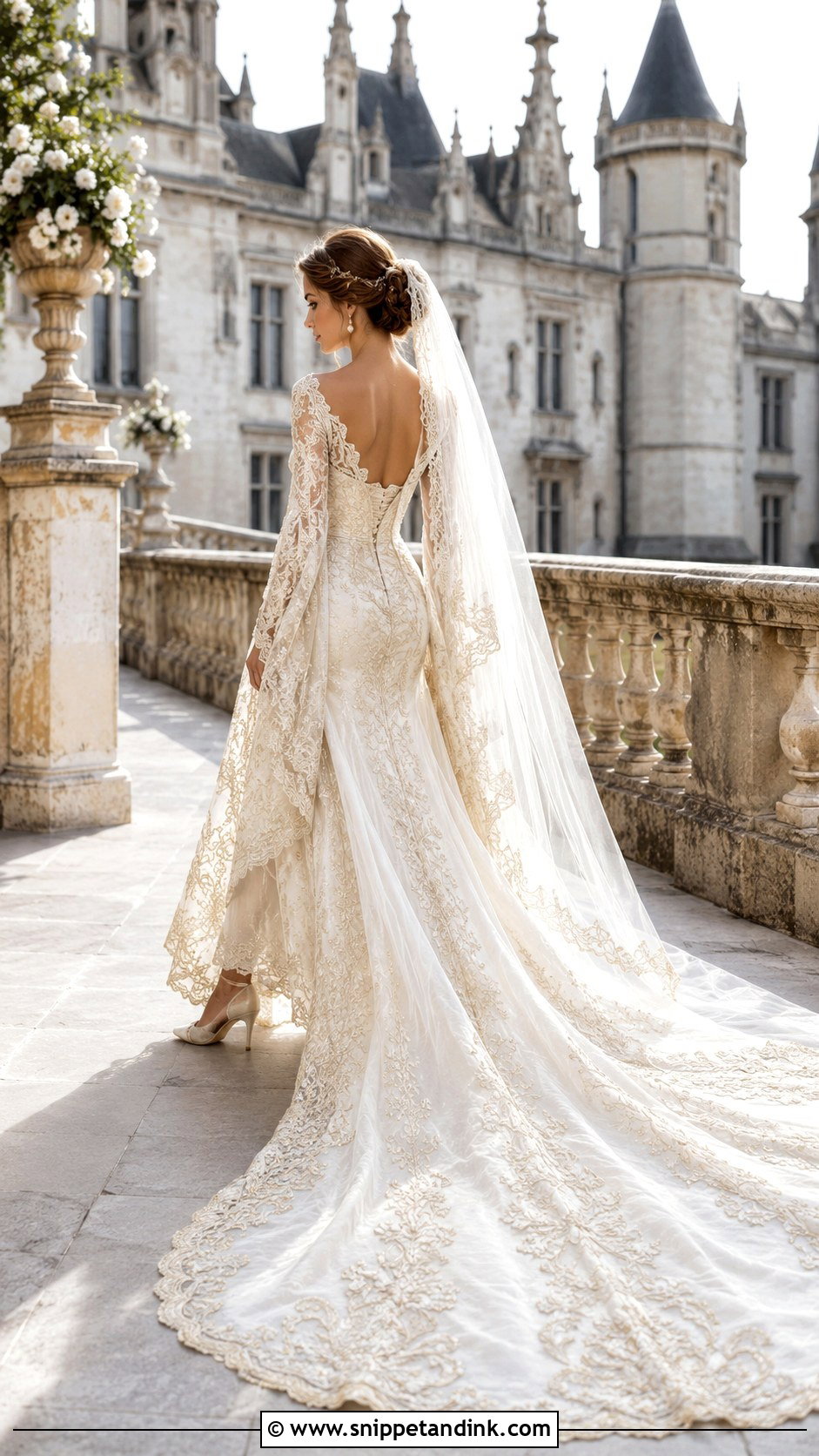
Trains look regal from behind, but they need a plan for after the ceremony. Chapel and cathedral lengths both work; a shorter train is wiser for stairs, gardens or narrow paths, because a long train on grass collects leaves and damp. Ask your seamstress for bustle points so the train lifts for the reception. Embroidered hems, lace appliqué or pearl edging make it special, and a detachable train is another option. A soft veil, low updo and classic heels finish it.
18. Medieval Princess Wedding Dress With Floral Lace
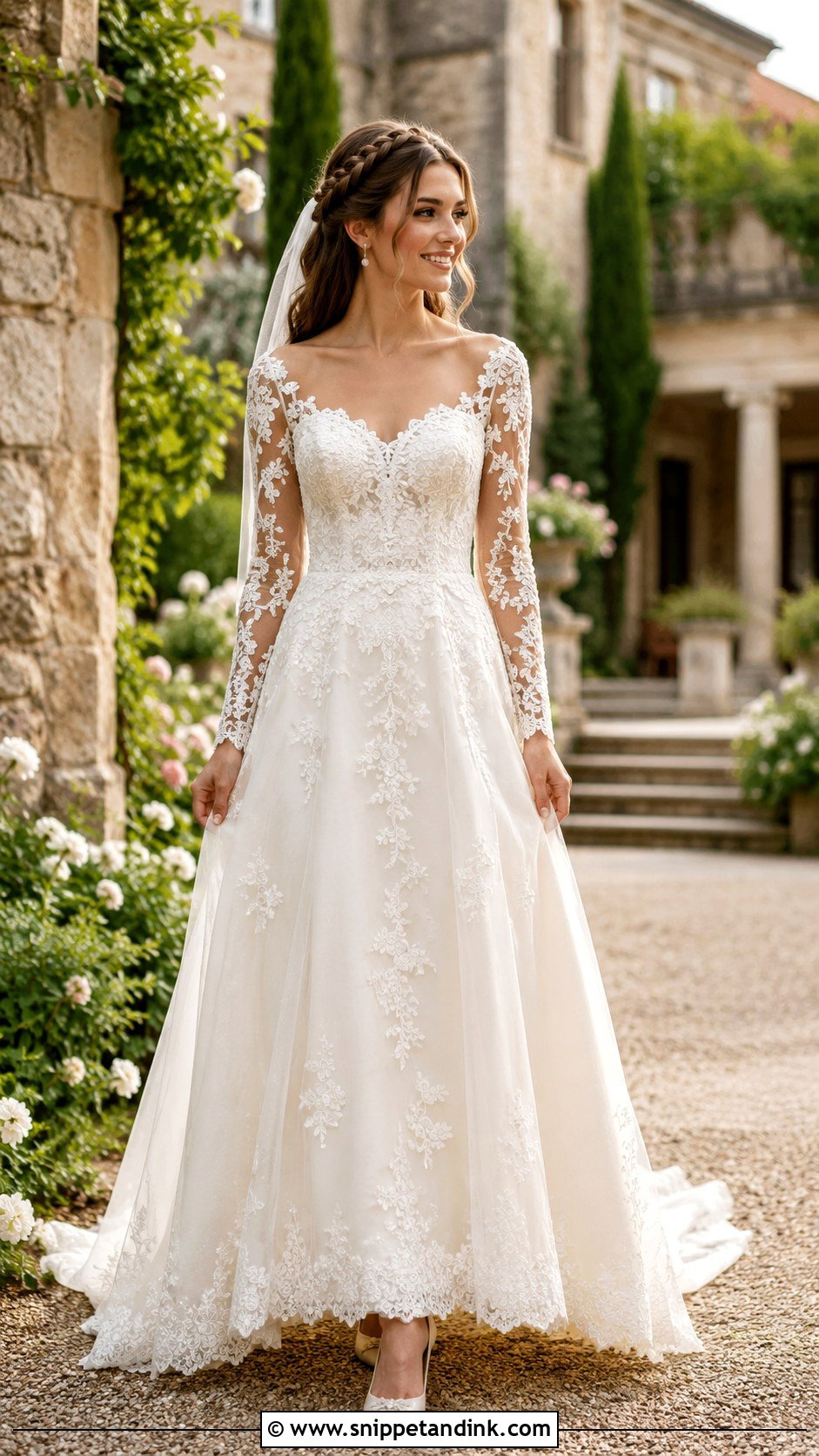
Floral lace keeps a medieval gown from looking severe. Vine lace, leafy patterns and botanical appliqué echo old garden motifs, on the sleeves, bodice, skirt or veil. The lining shade changes the effect: nude or champagne makes the pattern stand out, ivory keeps it classic. I always compare both under the venue’s light if I can. A laced bodice, soft A-line skirt, simple pearls and a half-up braid suit it, with ivory heels or ballet flats.
19. Medieval Princess Wedding Dress With Satin Ball Gown
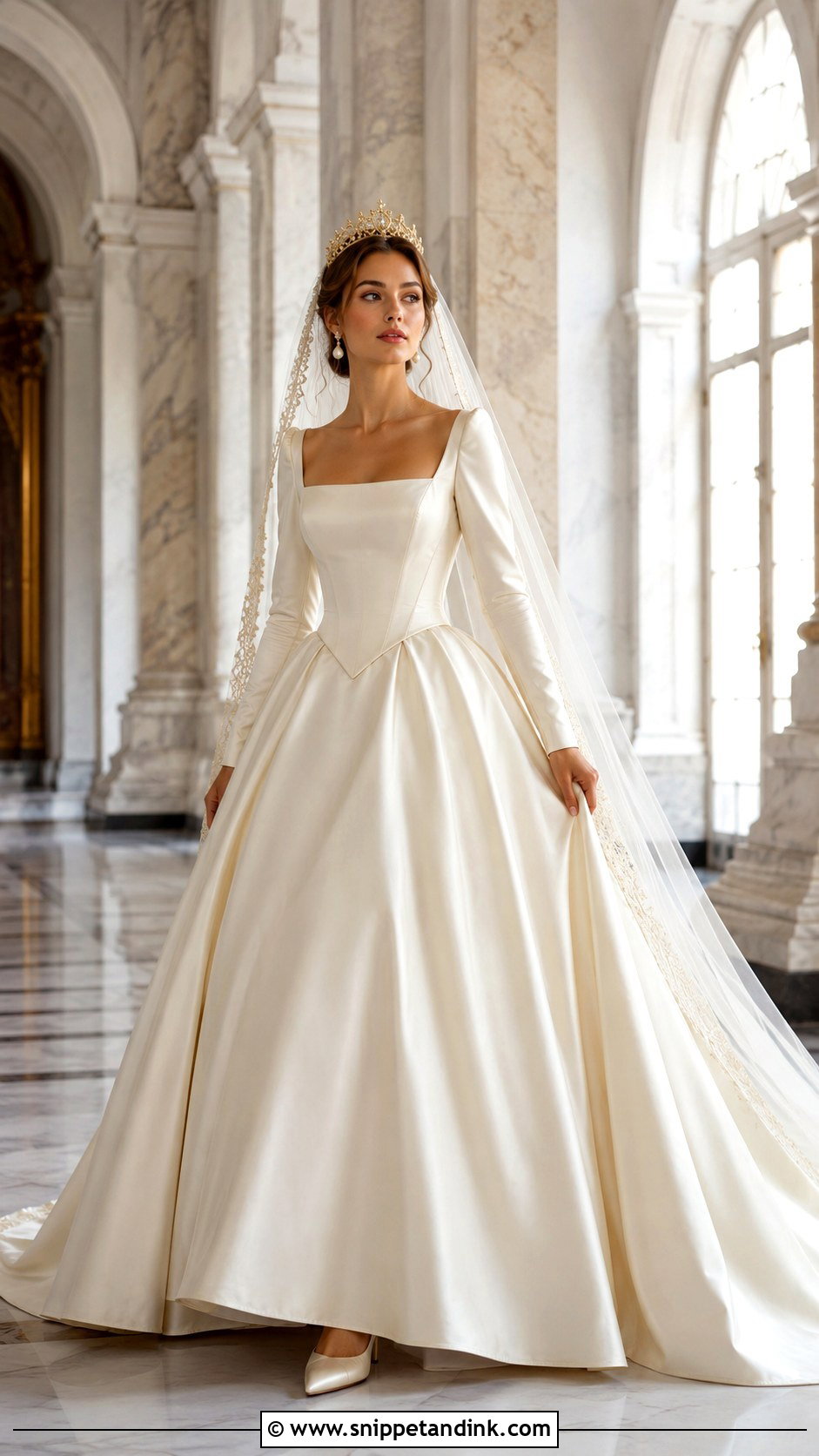
Satin carries a medieval shape with very few details, since the fabric’s own weight and sheen look formal. Bring in history through a square neck, basque waist, long sleeves or lace-up back. A clean satin skirt with a long veil and simple crown is enough, and a pearl belt or embroidered cape adds texture if you want it. Thin satin creases badly when you sit, so for a long day I’d choose a heavier duchess-style satin. Ivory pumps or satin block heels finish it.
20. Medieval Princess Wedding Dress With Chiffon Skirt
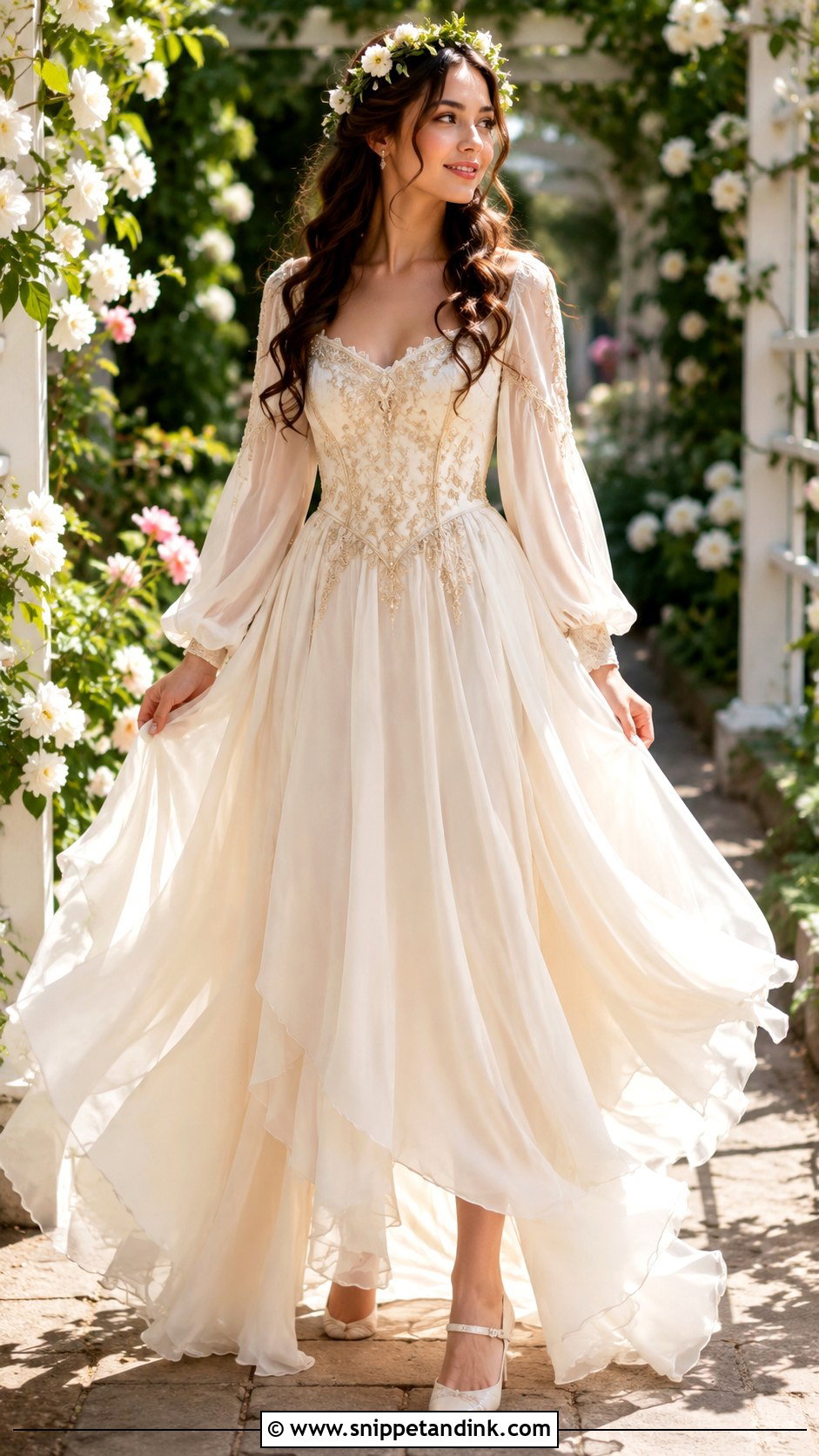
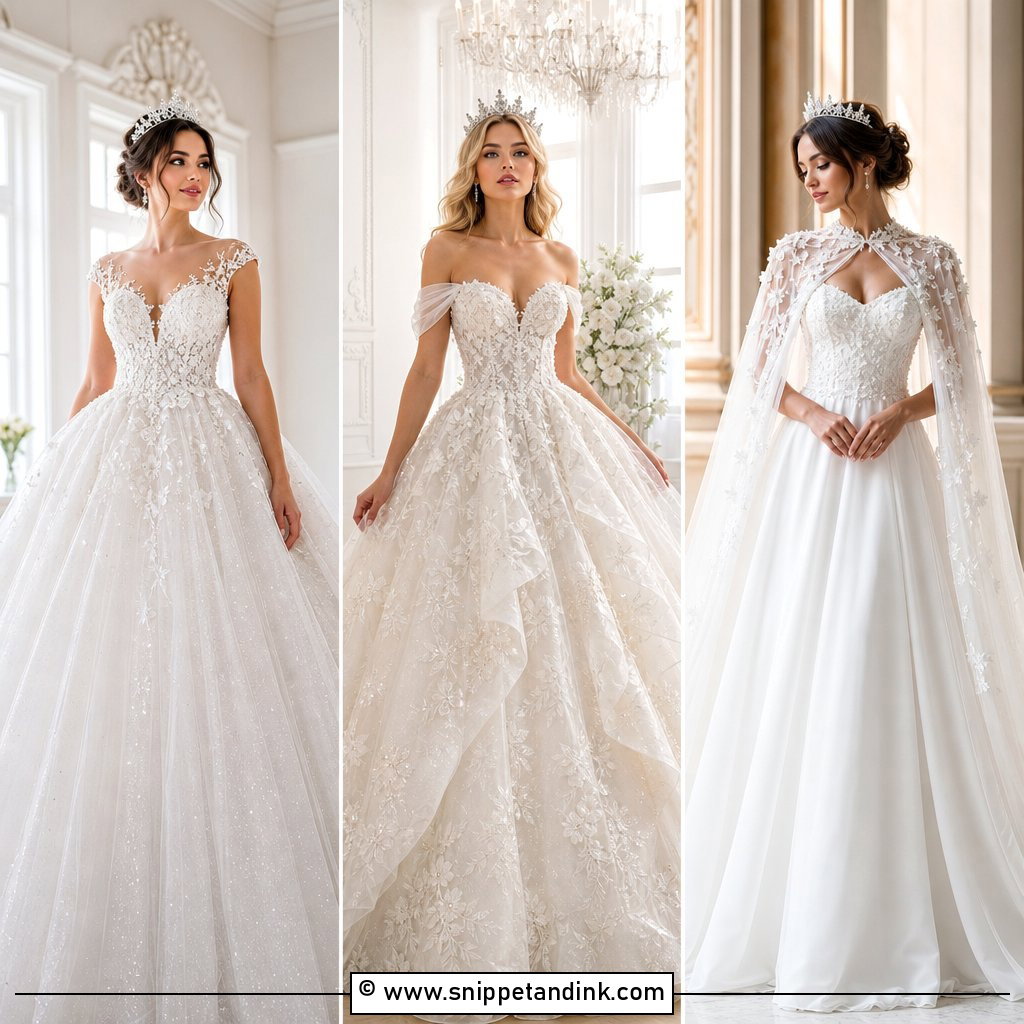
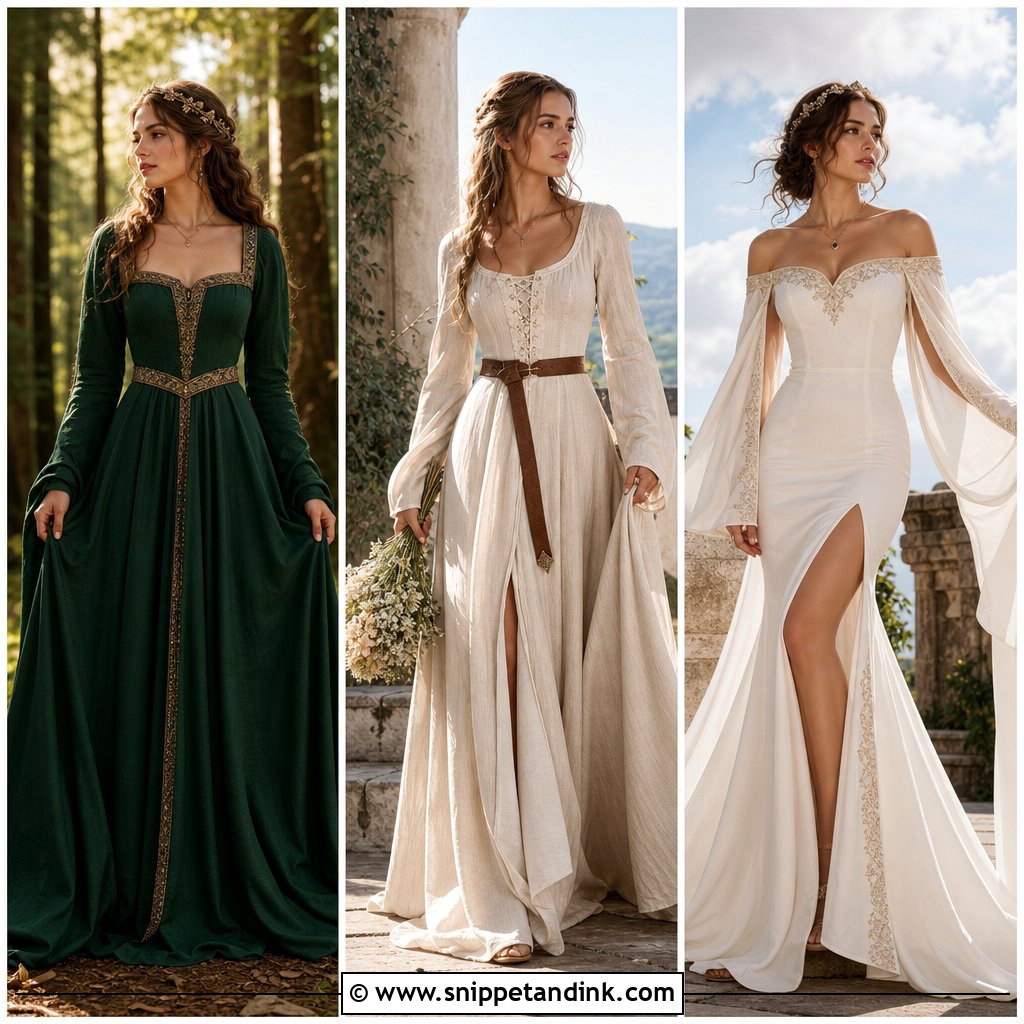
Chiffon gives the romance without the weight of a ball gown, and it floats as you walk. A fitted laced bodice or embroidered waist anchors it, and long, bell or cape sleeves suit the lighter skirt. Ivory, cream or pale blush keep it soft. Chiffon can cling with static in dry weather, so a lining and a quick spray of anti-static on the inside layer help. Loose curls, a floral crown and comfortable sandals or low heels suit gardens and outdoor estates.
21. Medieval Princess Wedding Dress With Tulle Layers
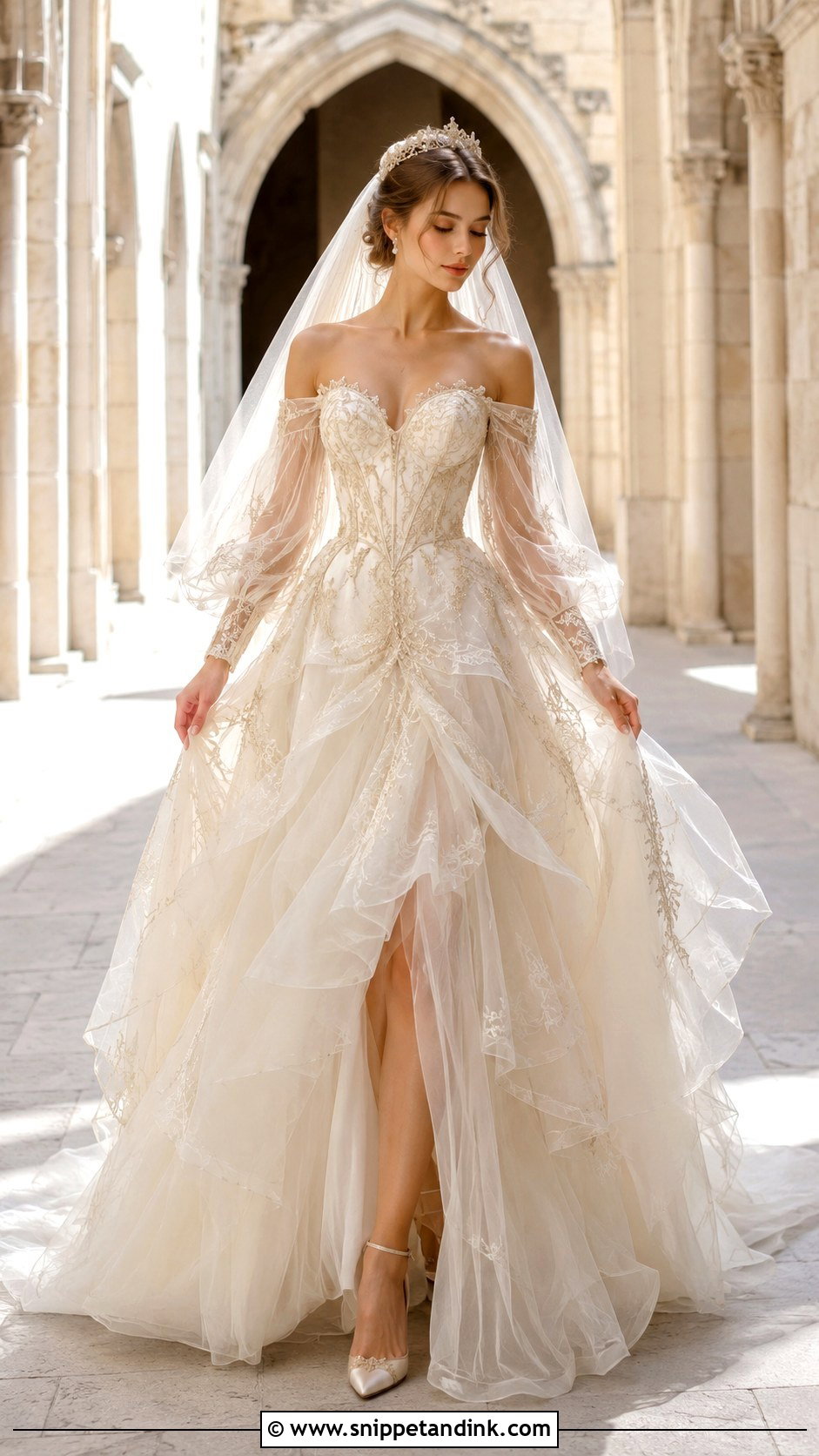
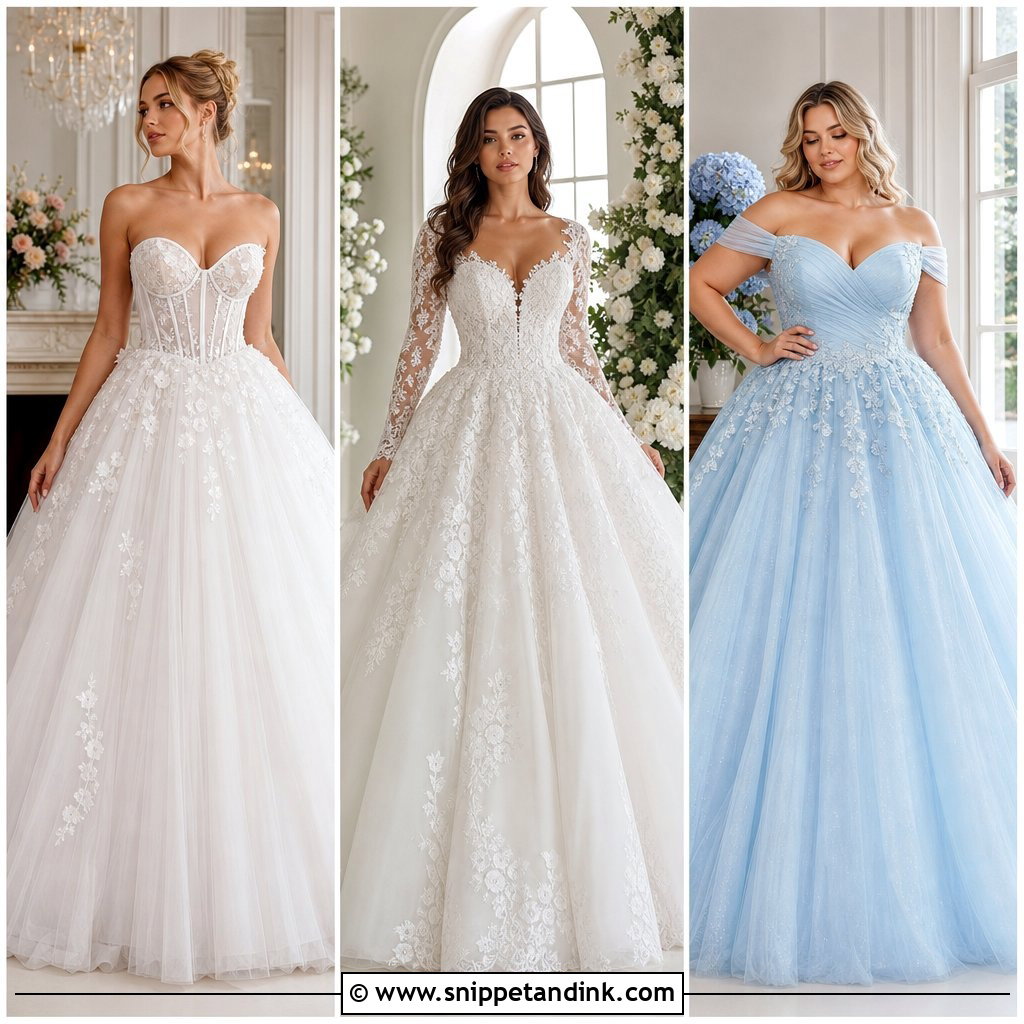
Layered tulle gives you fullness without heavy satin. Soft tulle over a structured underskirt holds the shape, while embroidered or glitter tulle adds dimension. A laced bodice frames the waist, and long sheer sleeves or an off-shoulder neckline bring romance. Tulle snags on rough beading, rings and bouquet wire, so I wrap bouquet stems with ribbon and keep the top layer away from anything sharp. Pearl studs or a small crown, satin heels and a flowing veil complete it.
22. Medieval Princess Wedding Dress With Detachable Sleeves
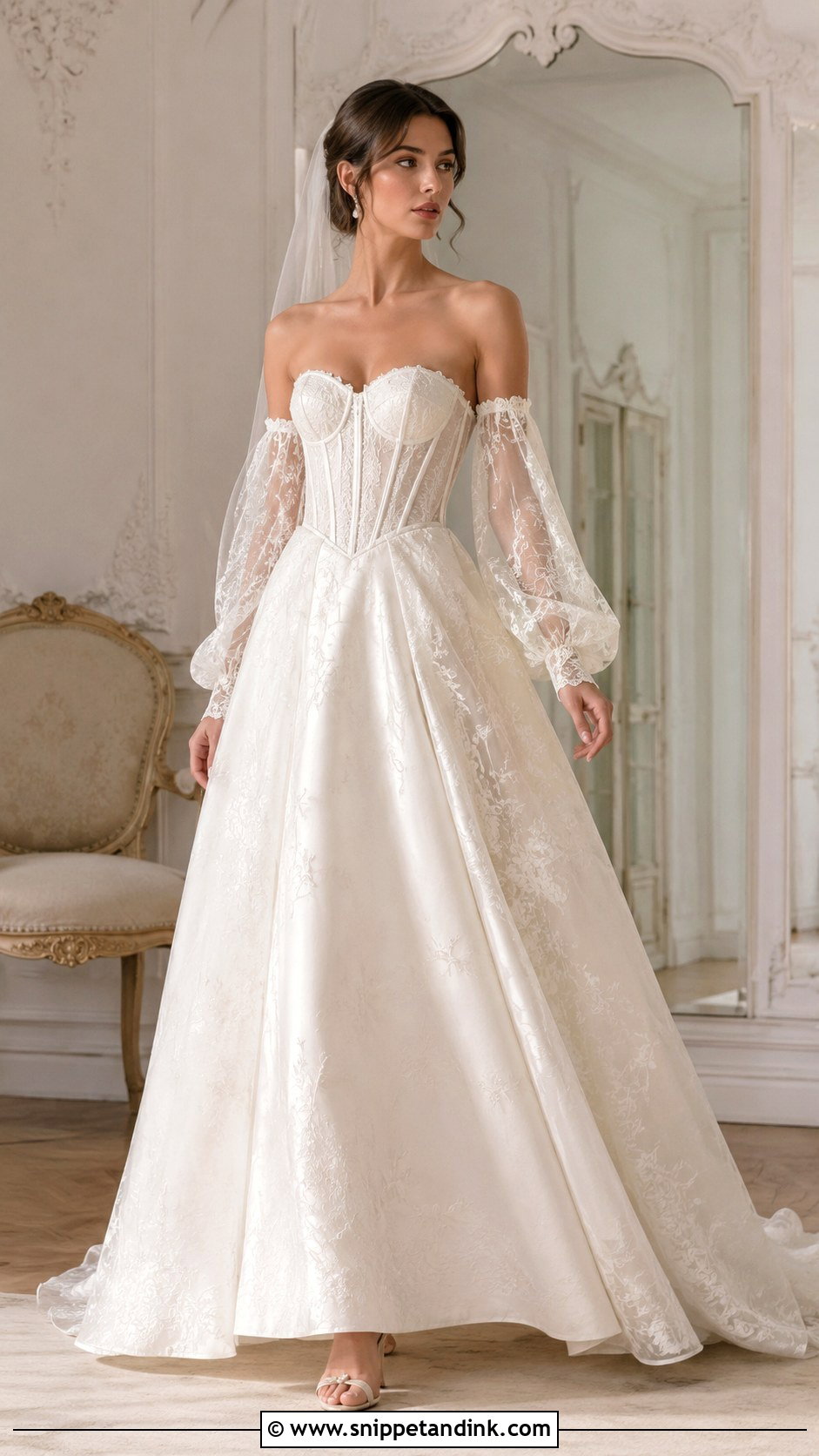
Detachable sleeves give you two looks: long lace, puff or bell sleeves for the ceremony, then bare arms for dancing. They suit strapless laced gowns, square necks and satin ball gowns. Check how they attach, usually with hooks, buttons or elastic under the strap, and practise taking them off so a bridesmaid can do it in a couple of minutes. Matching fabric looks unified; sheer lace gives softer contrast. A veil, pearl earrings and comfortable heels finish it.
23. Medieval Princess Wedding Dress With Detachable Overskirt
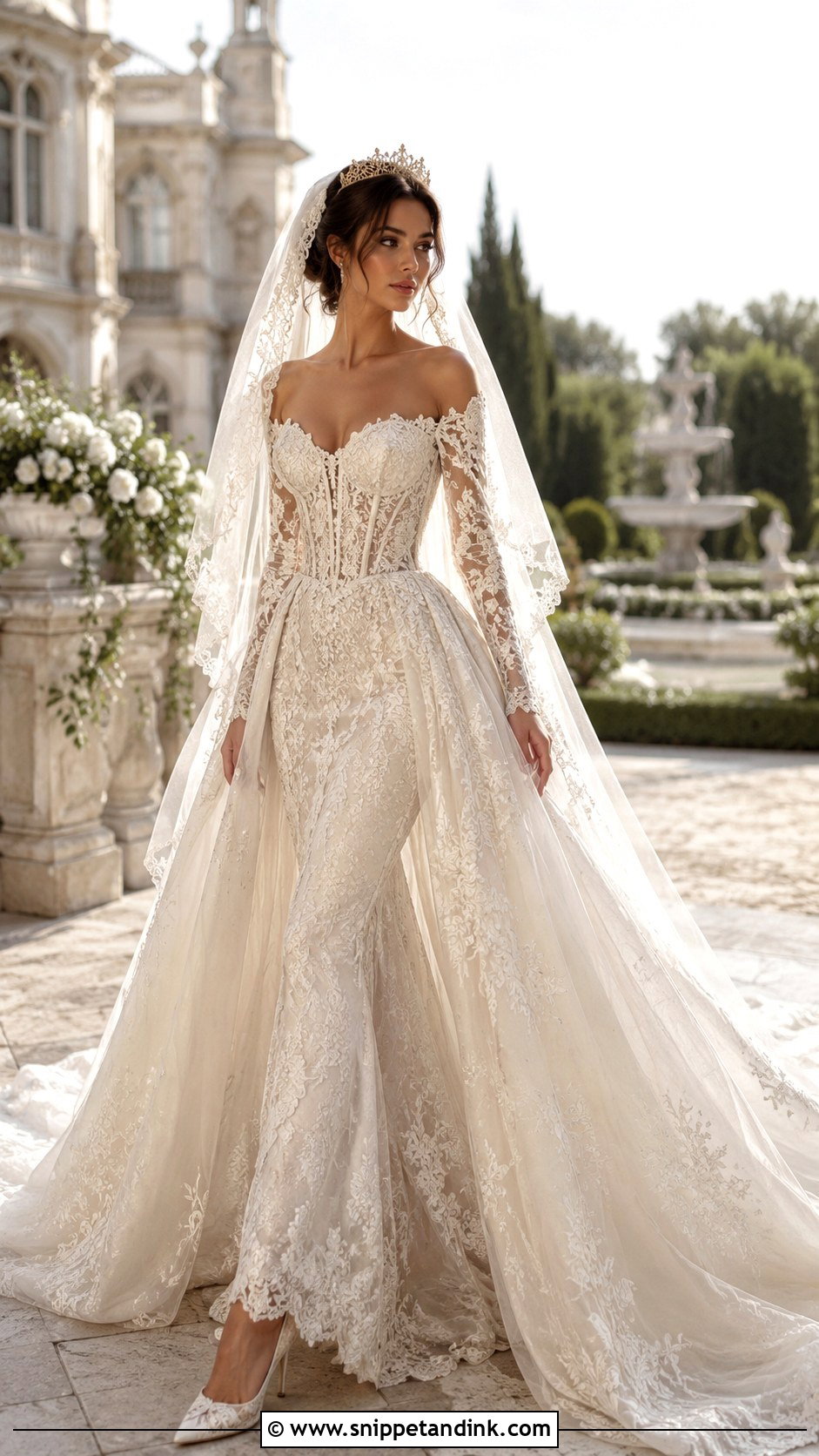
An overskirt adds volume for the ceremony and comes off for the evening. A fitted gown underneath, with a full satin, tulle or organza overskirt fastened at the waist, gives you both a princess entrance and a streamlined second look. A laced bodice ties the two pieces together, and a lace-up back or pearl buttons add medieval detail. Satin overskirts are heavy, so I check that the waist hooks sit on a reinforced band. A slim crown and soft veil keep the accessories elegant.
24. Medieval Princess Wedding Dress With Brocade Fabric
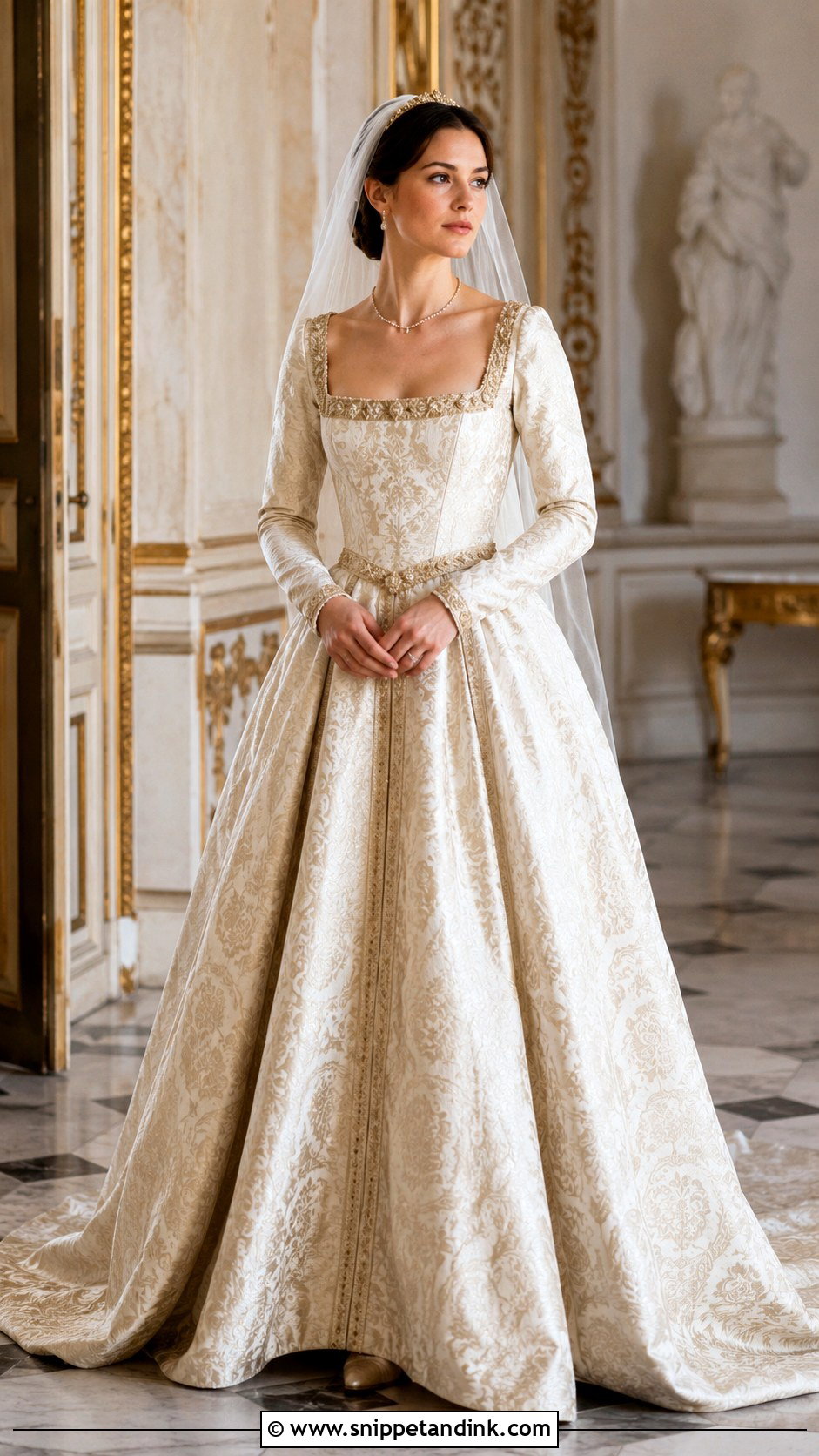
Brocade is woven, not printed, so the pattern runs through the fabric and gives real visual weight. That means the cut can stay plain: a square neck, fitted bodice and full skirt are enough, in ivory, champagne, pale gold or soft silver. Brocade is stiff and warm, and alterations are harder because the pattern has to match at the seams, so get the size close from the start. Long sleeves make it more traditional; a plain veil keeps it from getting busy. Minimal jewelry, satin shoes and a neat updo finish it.

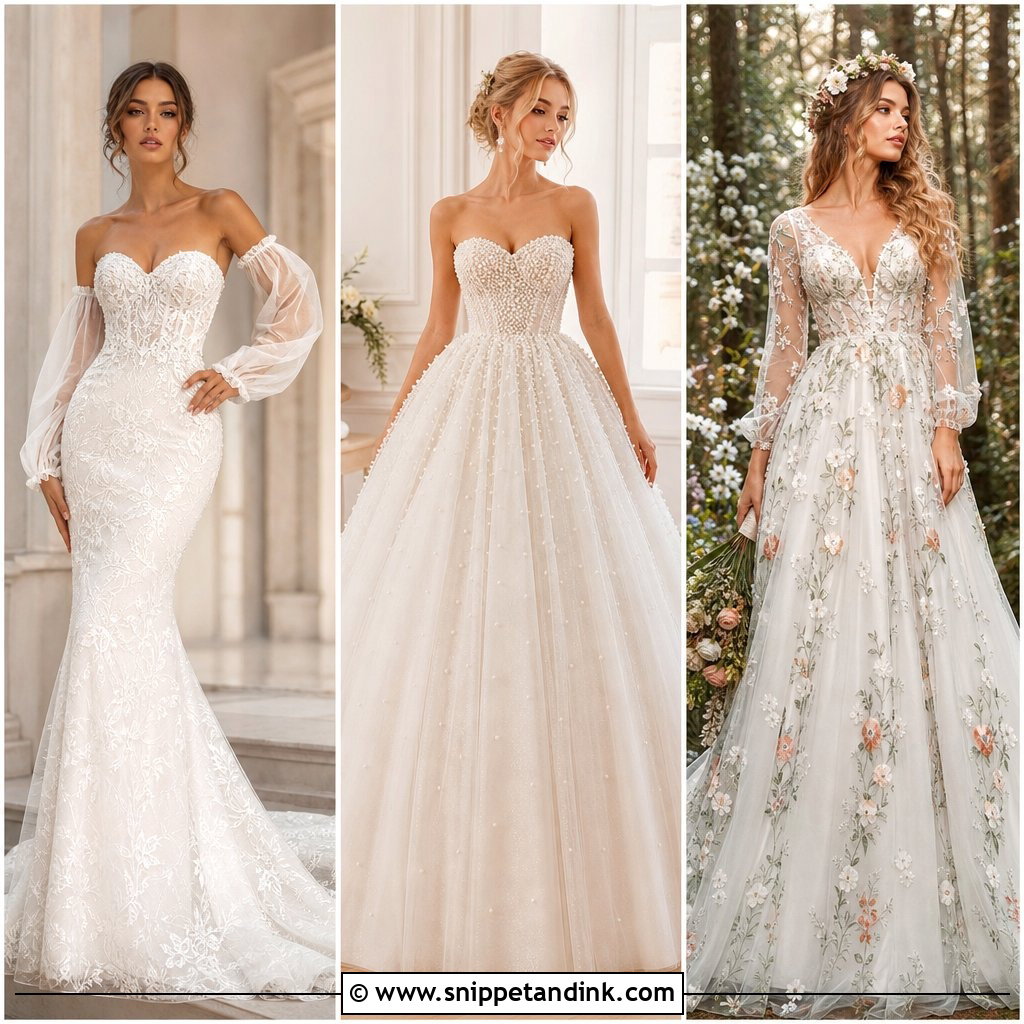
25. Medieval Princess Wedding Dress With Sheer Sleeves
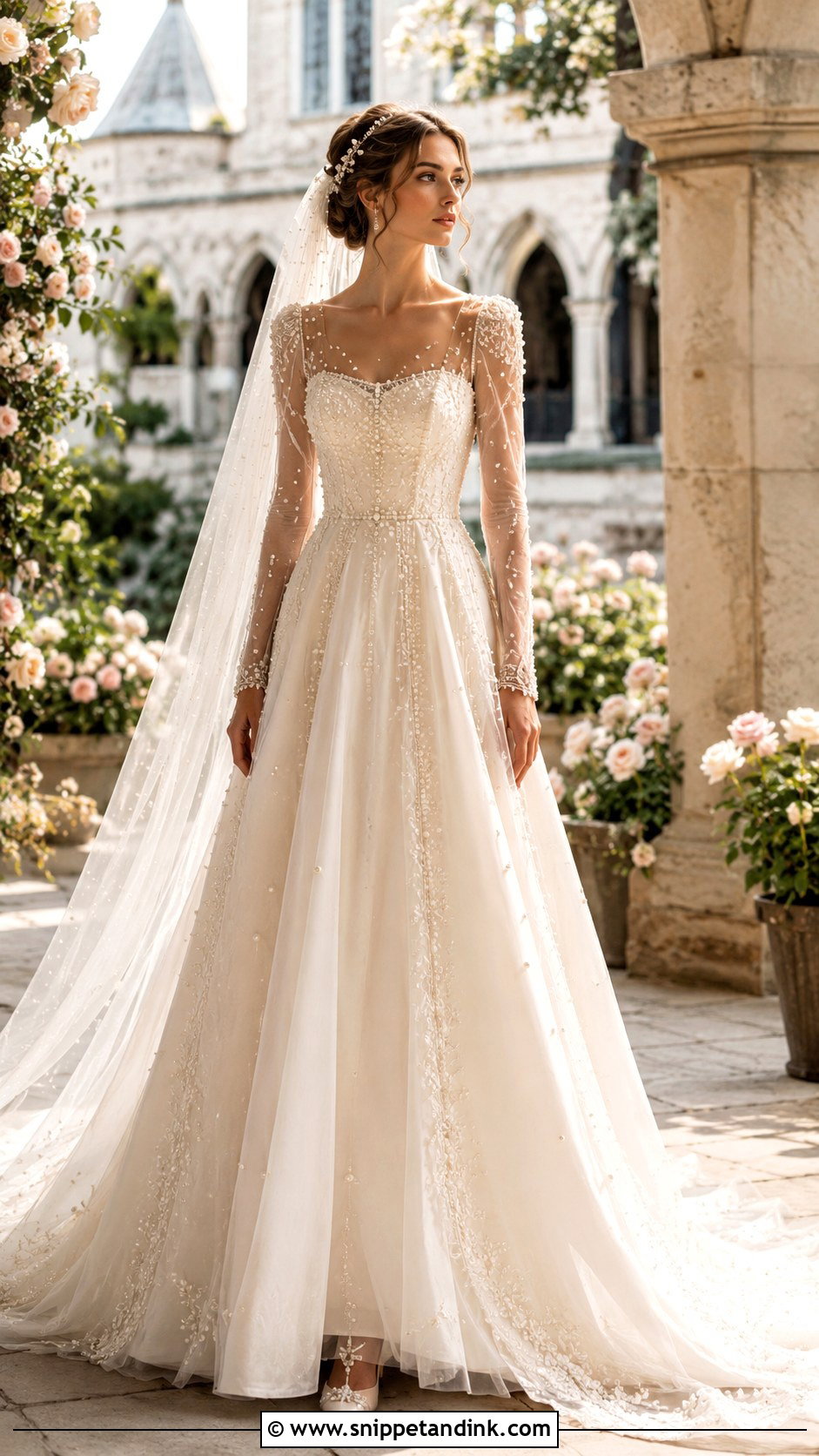
Sheer sleeves keep the medieval mood lighter. Sheer lace, embroidered tulle or plain illusion sleeves with pearl accents give coverage without bulk, and they suit every season. Plain tulle can bag at the elbow by evening; stretch mesh or lace holds its shape better. A structured bodice and A-line skirt keep the silhouette polished. Small floral appliqués on the sleeves add romance. A long veil, pearl hairpins and simple heels complete it.
26. Medieval Princess Wedding Dress With Crown
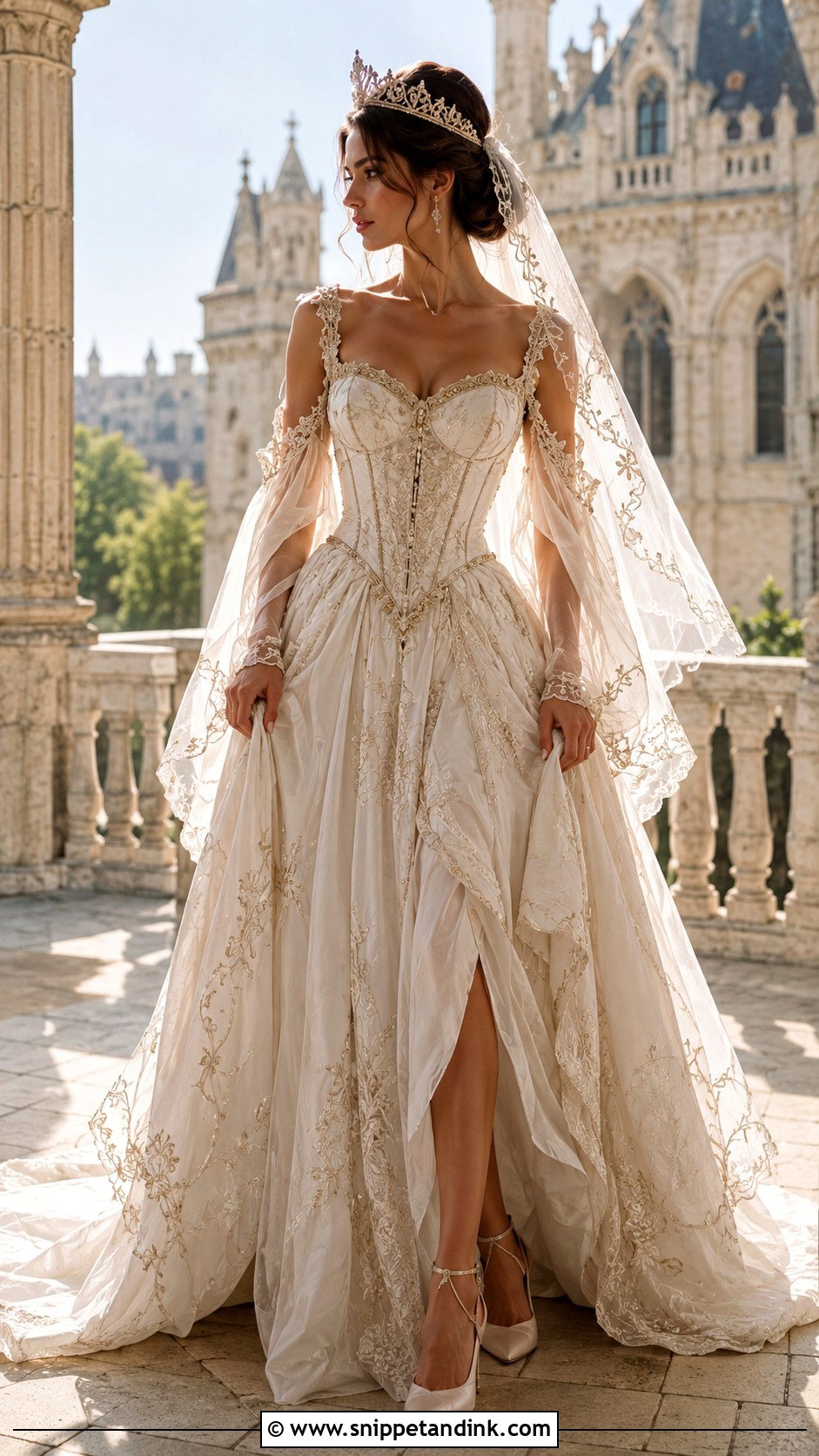
Choose the crown by the gown. Gold suits embroidered or champagne dresses; pearl suits lace and ivory. A heavily detailed gown needs a smaller crown or circlet, while a plain one can carry a statement piece. Heavy crowns press on the head over hours, so I have them secured with combs and pins into a braided base rather than balanced on top. Keep earrings light and add a soft veil, structured bodice and flowing skirt.
27. Medieval Princess Wedding Dress With Braided Hair
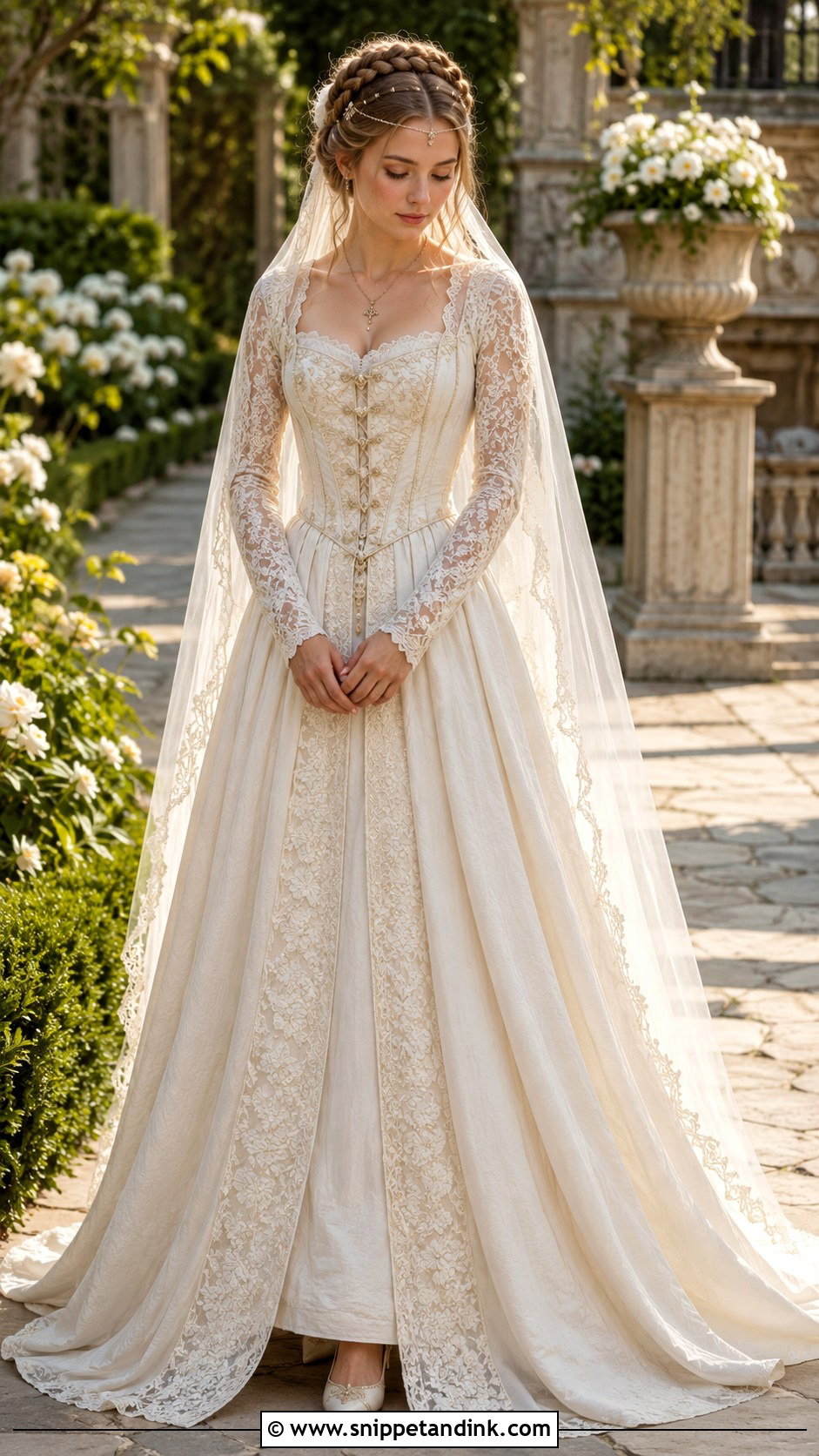
Braids grip pins and headpieces better than smooth hair, which is a practical reason they suit this look as well as a romantic one. A crown braid, loose side braid or half-up braid can follow the neckline: braided updos with long sleeves and lace, loose waves with small braids for off-shoulder. Pearl pins, tiny flowers or a slim circlet finish the hair. The gown can carry a laced bodice, flowing skirt and fine embroidery. Simple earrings and ivory shoes keep it natural.
28. Medieval Princess Wedding Dress With Veil
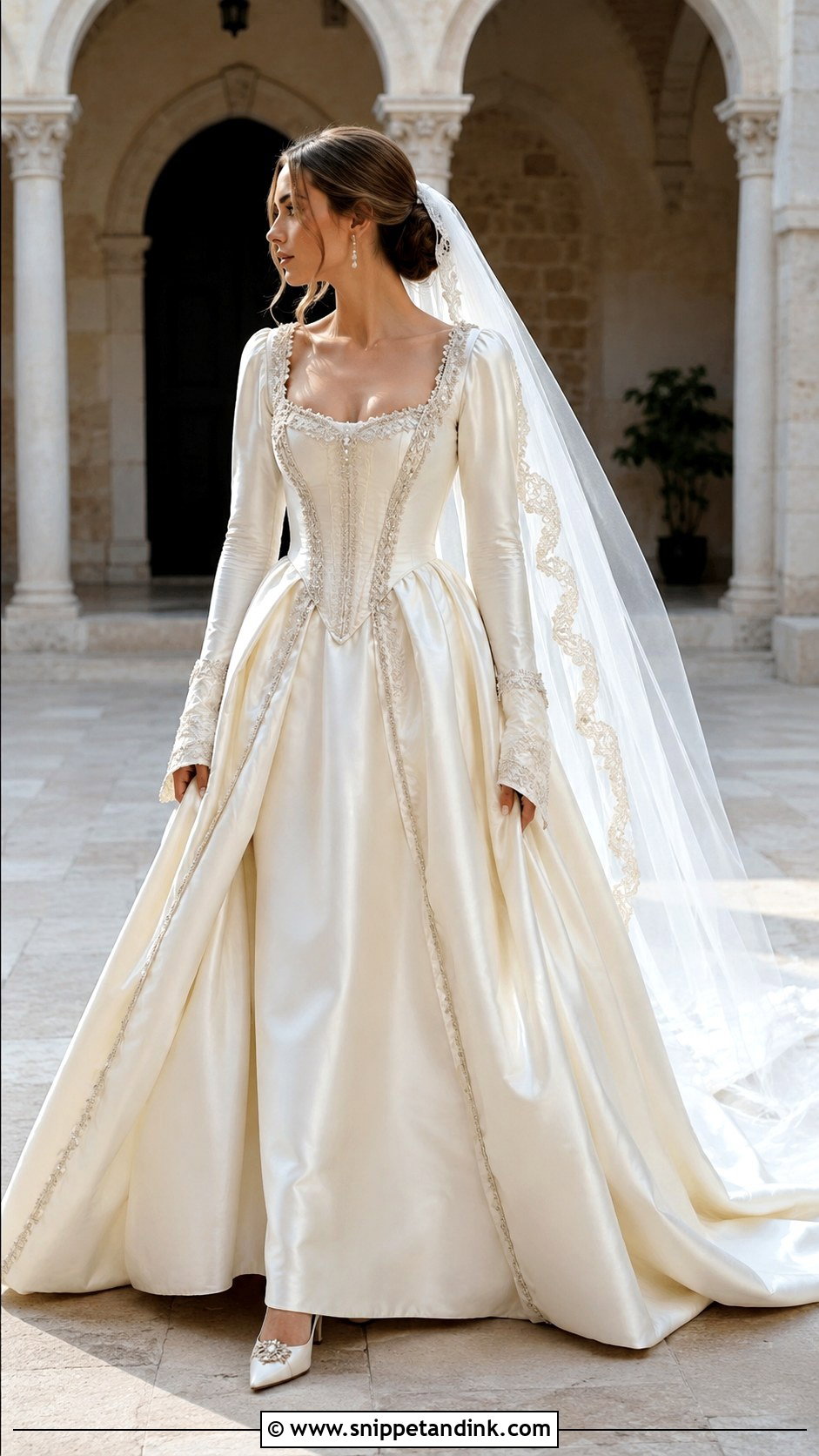
Long veils feel royal, and lace-edged ones add a historic edge. A sheer cathedral veil suits satin ball gowns, laced dresses and long-sleeve lace gowns. If the back of the dress is detailed, choose a lighter veil so the design shows through. With a crown, the veil comb sits behind it, not under it, or the crown lifts. Pearl, embroidered and drop veils also suit the look. A low bun, crown or headband, classic shoes and simple jewelry complete it.
29. Medieval Princess Wedding Dress With Colored Accents
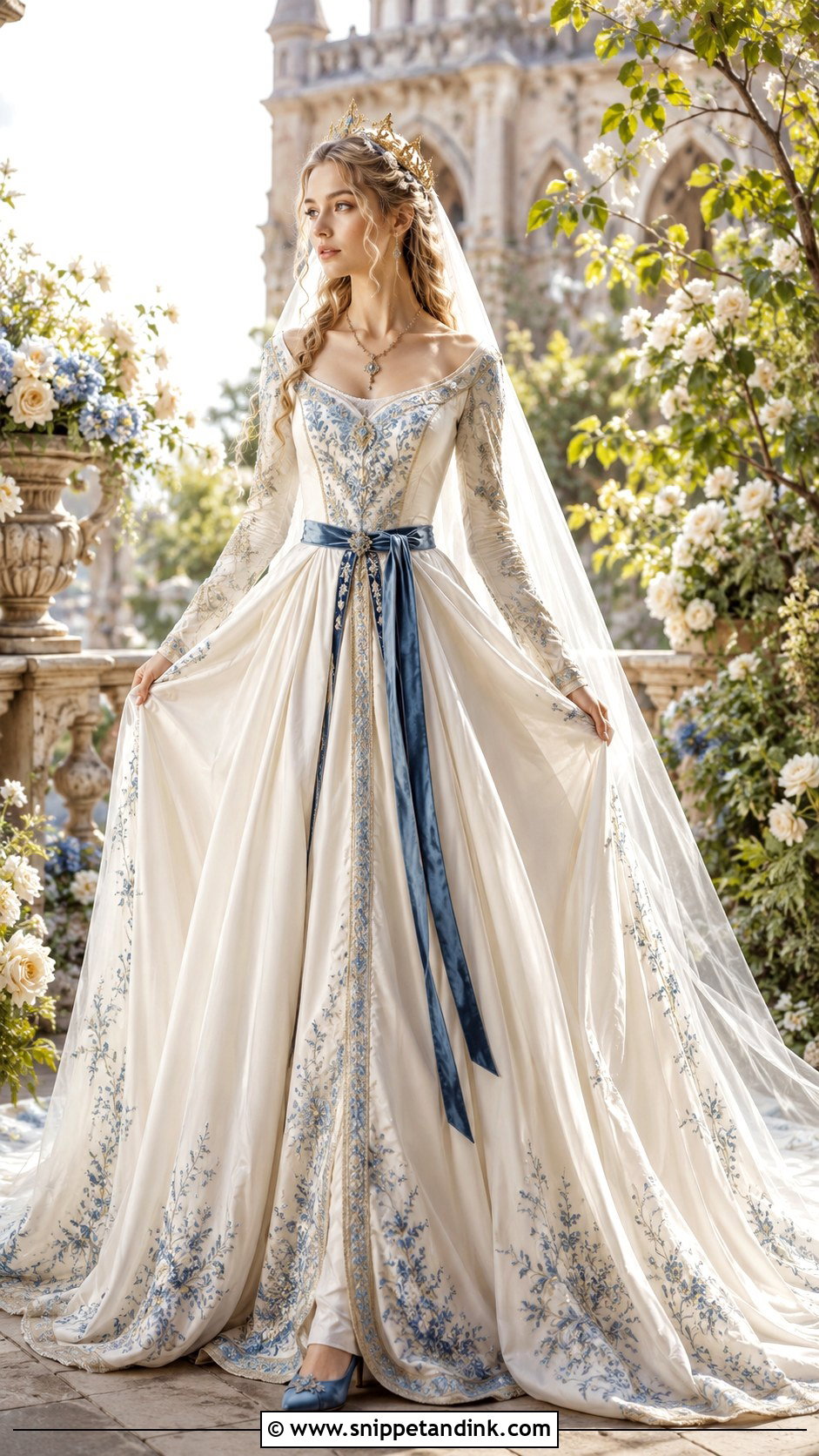
Colour is closer to history than white is. Medieval brides typically married in their best gown, often coloured, and blue was a favourite. Soft gold, dusty blue, sage, blush, silver and pale lavender all sit well on ivory or champagne, through embroidery, velvet ribbon, cape lining, appliqué or a sash. Keep the palette soft so it still reads bridal. Match accessories to one accent, such as a gold crown with gold embroidery or blue shoes with blue florals.
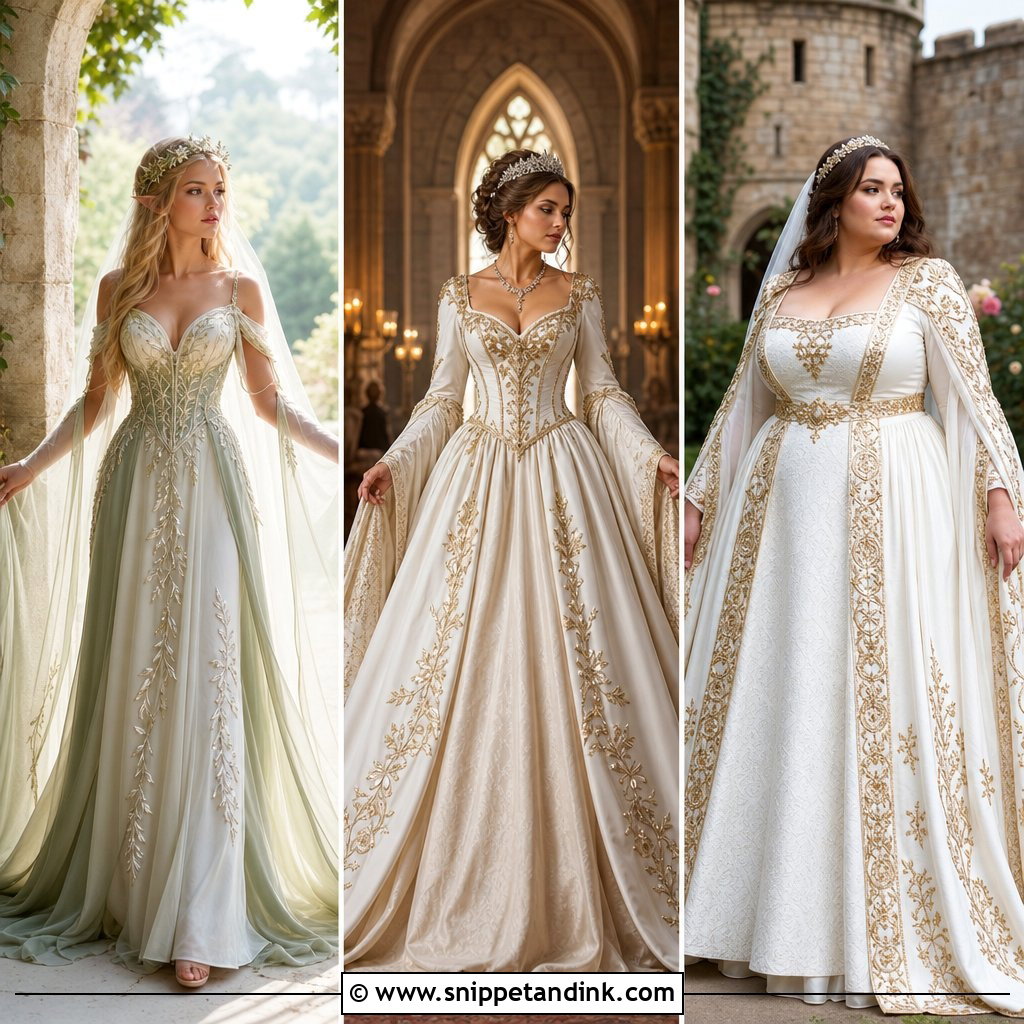
30. Medieval Princess Wedding Dress With Elven Details
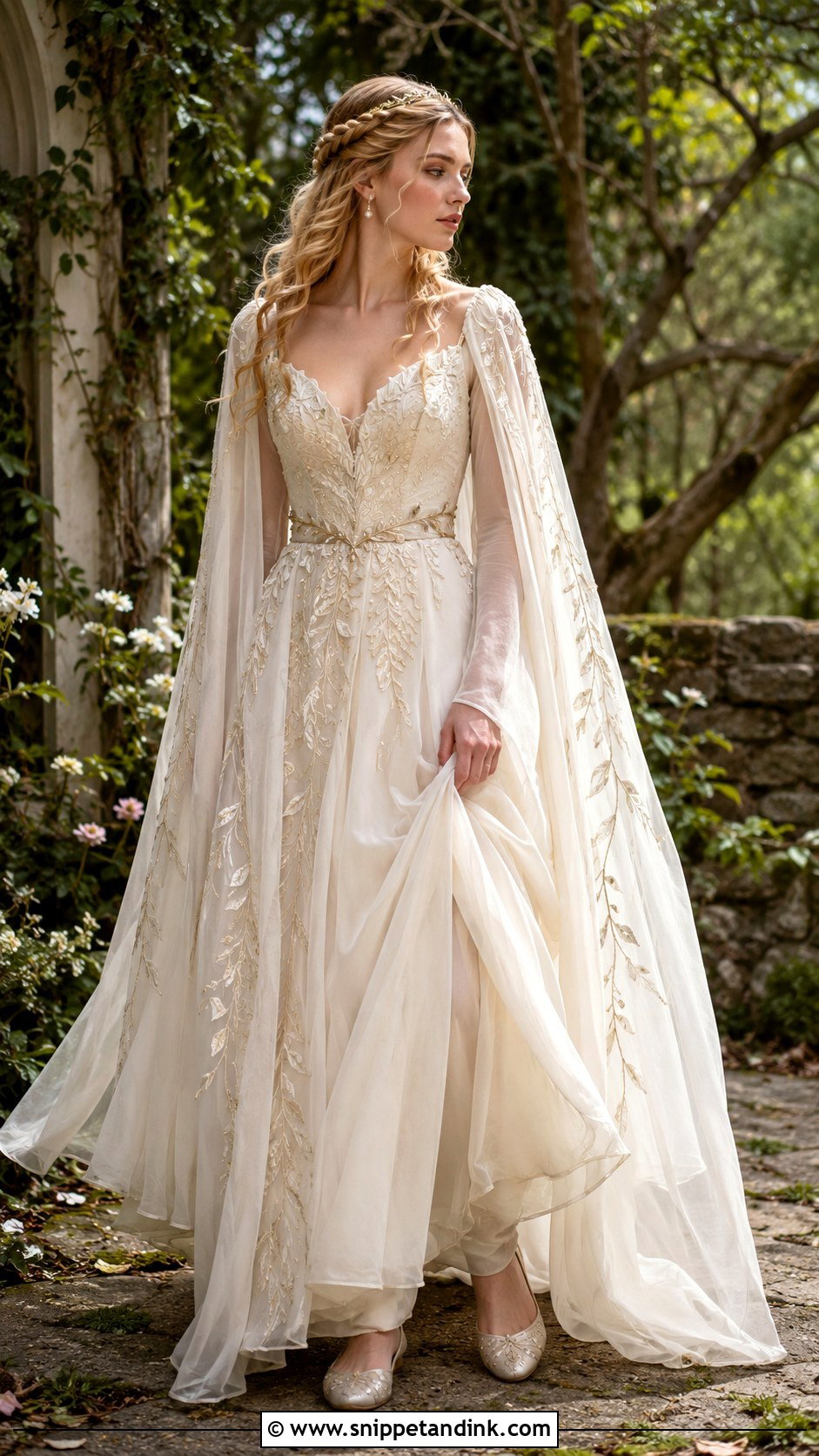
Elven details push the look toward fantasy without tipping into costume: flowing sleeves, leaf embroidery, soft chiffon, delicate headpieces and light capes. The silhouette should be long and fluid, so a fitted bodice over a gentle A-line skirt suits it best. Natural textures, vine lace, pearls and soft metallics finish the gown. Pointed flats or delicate sandals keep you grounded on grass, and loose waves, braids or a circlet complete the nature-inspired effect.
Stone Stairs, Cold Halls and a Train on Wet Grass
Castles and old estates look perfect in photos, but they are hard on long gowns. Stone floors are cold, staircases are narrow and uneven, and lawns are often damp in the morning. Before the day, I walk the route a bride will take and plan around it.
- Ask the venue where you will walk, then wear the gown and shoes up and down a staircase at home or at the shop.
- Have a bridesmaid shown how to lift the train and bustle it, ideally at the final fitting.
- For cold stone halls, add a lined cape or a fitted under-layer rather than a modern cardigan over the dress.
- Choose shoes with grip for stone and block heels for grass; stilettos sink and slip.
- Pack a clean towel to blot a damp hem before you go inside, and a small sewing kit for snapped lacing.
Wide sleeves, capes and hoods all add weight and catch in doorways. Rehearse the entrance once in the full outfit, and you’ll walk it calmly on the day.
One Strong Medieval Detail Is Usually Enough
Royalty can look very different from bride to bride. Some will want a dramatic satin ball gown with a long train; others prefer soft chiffon, lace sleeves or a detachable cape. The medieval look can lean bold, delicate, classic or fantasy depending on fabric, silhouette and accessories. I work on balance first: dramatic sleeves mean simple jewelry, and a clean dress can take a crown, cape or embroidered veil. Then walk, sit and climb a step in it, because a gown you can move in is the one that looks regal all day.
You'll Like These Ideas:





Leave a Reply